WO2012127739A1 - 近赤外光によりrnaを細胞質内に送達するための新規なキャリア分子ならびに方法 - Google Patents
近赤外光によりrnaを細胞質内に送達するための新規なキャリア分子ならびに方法 Download PDFInfo
- Publication number
- WO2012127739A1 WO2012127739A1 PCT/JP2011/077075 JP2011077075W WO2012127739A1 WO 2012127739 A1 WO2012127739 A1 WO 2012127739A1 JP 2011077075 W JP2011077075 W JP 2011077075W WO 2012127739 A1 WO2012127739 A1 WO 2012127739A1
- Authority
- WO
- WIPO (PCT)
- Prior art keywords
- rna
- carrier molecule
- carrier
- protein
- cell
- Prior art date
- Legal status (The legal status is an assumption and is not a legal conclusion. Google has not performed a legal analysis and makes no representation as to the accuracy of the status listed.)
- Ceased
Links
Images




Classifications
-
- C—CHEMISTRY; METALLURGY
- C12—BIOCHEMISTRY; BEER; SPIRITS; WINE; VINEGAR; MICROBIOLOGY; ENZYMOLOGY; MUTATION OR GENETIC ENGINEERING
- C12N—MICROORGANISMS OR ENZYMES; COMPOSITIONS THEREOF; PROPAGATING, PRESERVING, OR MAINTAINING MICROORGANISMS; MUTATION OR GENETIC ENGINEERING; CULTURE MEDIA
- C12N13/00—Treatment of microorganisms or enzymes with electrical or wave energy, e.g. magnetism, sonic waves
-
- A—HUMAN NECESSITIES
- A61—MEDICAL OR VETERINARY SCIENCE; HYGIENE
- A61K—PREPARATIONS FOR MEDICAL, DENTAL OR TOILETRY PURPOSES
- A61K31/00—Medicinal preparations containing organic active ingredients
- A61K31/70—Carbohydrates; Sugars; Derivatives thereof
- A61K31/7088—Compounds having three or more nucleosides or nucleotides
- A61K31/7105—Natural ribonucleic acids, i.e. containing only riboses attached to adenine, guanine, cytosine or uracil and having 3'-5' phosphodiester links
-
- A—HUMAN NECESSITIES
- A61—MEDICAL OR VETERINARY SCIENCE; HYGIENE
- A61K—PREPARATIONS FOR MEDICAL, DENTAL OR TOILETRY PURPOSES
- A61K41/00—Medicinal preparations obtained by treating materials with wave energy or particle radiation ; Therapies using these preparations
-
- A—HUMAN NECESSITIES
- A61—MEDICAL OR VETERINARY SCIENCE; HYGIENE
- A61K—PREPARATIONS FOR MEDICAL, DENTAL OR TOILETRY PURPOSES
- A61K41/00—Medicinal preparations obtained by treating materials with wave energy or particle radiation ; Therapies using these preparations
- A61K41/0038—Radiosensitizing, i.e. administration of pharmaceutical agents that enhance the effect of radiotherapy
-
- A—HUMAN NECESSITIES
- A61—MEDICAL OR VETERINARY SCIENCE; HYGIENE
- A61K—PREPARATIONS FOR MEDICAL, DENTAL OR TOILETRY PURPOSES
- A61K47/00—Medicinal preparations characterised by the non-active ingredients used, e.g. carriers or inert additives; Targeting or modifying agents chemically bound to the active ingredient
- A61K47/50—Medicinal preparations characterised by the non-active ingredients used, e.g. carriers or inert additives; Targeting or modifying agents chemically bound to the active ingredient the non-active ingredient being chemically bound to the active ingredient, e.g. polymer-drug conjugates
- A61K47/51—Medicinal preparations characterised by the non-active ingredients used, e.g. carriers or inert additives; Targeting or modifying agents chemically bound to the active ingredient the non-active ingredient being chemically bound to the active ingredient, e.g. polymer-drug conjugates the non-active ingredient being a modifying agent
- A61K47/62—Medicinal preparations characterised by the non-active ingredients used, e.g. carriers or inert additives; Targeting or modifying agents chemically bound to the active ingredient the non-active ingredient being chemically bound to the active ingredient, e.g. polymer-drug conjugates the non-active ingredient being a modifying agent the modifying agent being a protein, peptide or polyamino acid
-
- A—HUMAN NECESSITIES
- A61—MEDICAL OR VETERINARY SCIENCE; HYGIENE
- A61P—SPECIFIC THERAPEUTIC ACTIVITY OF CHEMICAL COMPOUNDS OR MEDICINAL PREPARATIONS
- A61P31/00—Antiinfectives, i.e. antibiotics, antiseptics, chemotherapeutics
- A61P31/12—Antivirals
-
- A—HUMAN NECESSITIES
- A61—MEDICAL OR VETERINARY SCIENCE; HYGIENE
- A61P—SPECIFIC THERAPEUTIC ACTIVITY OF CHEMICAL COMPOUNDS OR MEDICINAL PREPARATIONS
- A61P35/00—Antineoplastic agents
-
- C—CHEMISTRY; METALLURGY
- C07—ORGANIC CHEMISTRY
- C07K—PEPTIDES
- C07K14/00—Peptides having more than 20 amino acids; Gastrins; Somatostatins; Melanotropins; Derivatives thereof
- C07K14/005—Peptides having more than 20 amino acids; Gastrins; Somatostatins; Melanotropins; Derivatives thereof from viruses
-
- C—CHEMISTRY; METALLURGY
- C12—BIOCHEMISTRY; BEER; SPIRITS; WINE; VINEGAR; MICROBIOLOGY; ENZYMOLOGY; MUTATION OR GENETIC ENGINEERING
- C12N—MICROORGANISMS OR ENZYMES; COMPOSITIONS THEREOF; PROPAGATING, PRESERVING, OR MAINTAINING MICROORGANISMS; MUTATION OR GENETIC ENGINEERING; CULTURE MEDIA
- C12N15/00—Mutation or genetic engineering; DNA or RNA concerning genetic engineering, vectors, e.g. plasmids, or their isolation, preparation or purification; Use of hosts therefor
- C12N15/09—Recombinant DNA-technology
- C12N15/87—Introduction of foreign genetic material using processes not otherwise provided for, e.g. co-transformation
-
- C—CHEMISTRY; METALLURGY
- C07—ORGANIC CHEMISTRY
- C07K—PEPTIDES
- C07K2319/00—Fusion polypeptide
- C07K2319/01—Fusion polypeptide containing a localisation/targetting motif
- C07K2319/02—Fusion polypeptide containing a localisation/targetting motif containing a signal sequence
-
- C—CHEMISTRY; METALLURGY
- C07—ORGANIC CHEMISTRY
- C07K—PEPTIDES
- C07K2319/00—Fusion polypeptide
- C07K2319/01—Fusion polypeptide containing a localisation/targetting motif
- C07K2319/10—Fusion polypeptide containing a localisation/targetting motif containing a tag for extracellular membrane crossing, e.g. TAT or VP22
-
- C—CHEMISTRY; METALLURGY
- C07—ORGANIC CHEMISTRY
- C07K—PEPTIDES
- C07K2319/00—Fusion polypeptide
- C07K2319/20—Fusion polypeptide containing a tag with affinity for a non-protein ligand
- C07K2319/21—Fusion polypeptide containing a tag with affinity for a non-protein ligand containing a His-tag
-
- C—CHEMISTRY; METALLURGY
- C07—ORGANIC CHEMISTRY
- C07K—PEPTIDES
- C07K2319/00—Fusion polypeptide
- C07K2319/85—Fusion polypeptide containing an RNA binding domain
-
- C—CHEMISTRY; METALLURGY
- C12—BIOCHEMISTRY; BEER; SPIRITS; WINE; VINEGAR; MICROBIOLOGY; ENZYMOLOGY; MUTATION OR GENETIC ENGINEERING
- C12N—MICROORGANISMS OR ENZYMES; COMPOSITIONS THEREOF; PROPAGATING, PRESERVING, OR MAINTAINING MICROORGANISMS; MUTATION OR GENETIC ENGINEERING; CULTURE MEDIA
- C12N2740/00—Reverse transcribing RNA viruses
- C12N2740/00011—Details
- C12N2740/10011—Retroviridae
- C12N2740/16011—Human Immunodeficiency Virus, HIV
- C12N2740/16311—Human Immunodeficiency Virus, HIV concerning HIV regulatory proteins
- C12N2740/16322—New viral proteins or individual genes, new structural or functional aspects of known viral proteins or genes
Definitions
- the present invention relates to a method for expressing a function by introducing RNA (functional RNA) capable of expressing a predetermined function into a cell and irradiating light having a predetermined wavelength, and a carrier used in the method It relates to molecules.
- RNA functional RNA
- RNAi is a phenomenon in which the expression of a specific gene is suppressed depending on the nucleotide sequence of shRNA or siRNA, and since it can be applied to the treatment of diseases based on the suppression of the expression of a gene causing a disease or a viral gene, it has recently received much attention. Has been. For this purpose, research and development of means for efficiently introducing RNA into the cytoplasm is underway.
- RNA having a recognition sequence for an RNA-binding protein and an arbitrary sequence is bound to a fusion protein comprising an RNA-binding protein and a membrane-permeable carrier peptide, and this conjugate is mixed with an arbitrary cell.
- a method for introducing the RNA into cells is described.
- Non-Patent Documents 1 and 2 include a fusion protein containing a fluorescent dye (for example, Alexa ⁇ Fluor 546, excitation wavelength 530-550 nm) that is excited with light having a wavelength in the visible region in addition to an RNA-binding protein and a membrane-permeable carrier peptide. Complexes with siRNA bound are described. The conjugate is then brought into contact with the cell, and the conjugate is taken up into the cell by endocytosis and localized in the endosome, and then irradiated with excitation light, whereby the fluorescent dye acts as a photosensitizer. , It is described that siRNA can be released from endosomes into the cytoplasm and achieve a predetermined RNAi effect (see FIG. 1). Non-Patent Documents 1 and 2 neither describe nor suggest that the above-described effects can be achieved even when a fluorescent dye excited by light having a wavelength in the near infrared region is used.
- a fluorescent dye for example, Alexa ⁇
- Patent Document 2 gold nanorods are used as a functional molecular carrier, a complex of gold nanorod aggregates and DNA is added to cultured cells, and irradiated with a pulsed laser in the near infrared region (wavelength 1064 nm).
- a pulsed laser in the near infrared region (wavelength 1064 nm).
- the gold nanorod has a photothermal conversion function, and is also a material that is used for photothermal treatment of the tissue around the target site where the gold nanorod is accumulated (to kill tumor cells and the like with the generated heat) (for example, see Patent Document 3), there is a concern about cytotoxicity and safety in such a use that is not intended.
- Non-Patent Documents 1 and 2 When RNA is introduced into cells by the methods described in Non-Patent Documents 1 and 2, visible light is used as excitation light, but visible light is inferior in permeability into a living body. Therefore, it can be applied to the introduction of RNA into cells on the surface of the living body (for example, the skin surface), but is inappropriate for the introduction of RNA into cells deep in the living body.
- the present invention provides a means for introducing RNA into cells using near-infrared light having good biological permeability (preferably having a wavelength of about 700 to 1000 nm) without causing cell damage or fever problems. Objective.
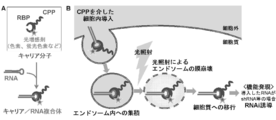
- the present inventors irradiate near-infrared light when a specific one of fluorescent dyes having near-infrared light as excitation light is used as a fluorescent dye in a complex described in Non-Patent Document 1 or the like. Has been found to have the ability to act as a photosensitizer and to release RNA from the endosome into the cytoplasm (see FIG. 1). Furthermore, it has been found that the efficiency of introducing RNA into the cytoplasm can be further increased by further adding a specific peptide to the fusion protein in the complex, and the present invention has been completed.
- the present invention includes the following matters.
- It functions with light having a wavelength in the near-infrared region connected to a carrier protein including a cell membrane permeable peptide (CPP) and an RNA-binding protein (RBP) and the N-terminal side or C-terminal side of the carrier protein.
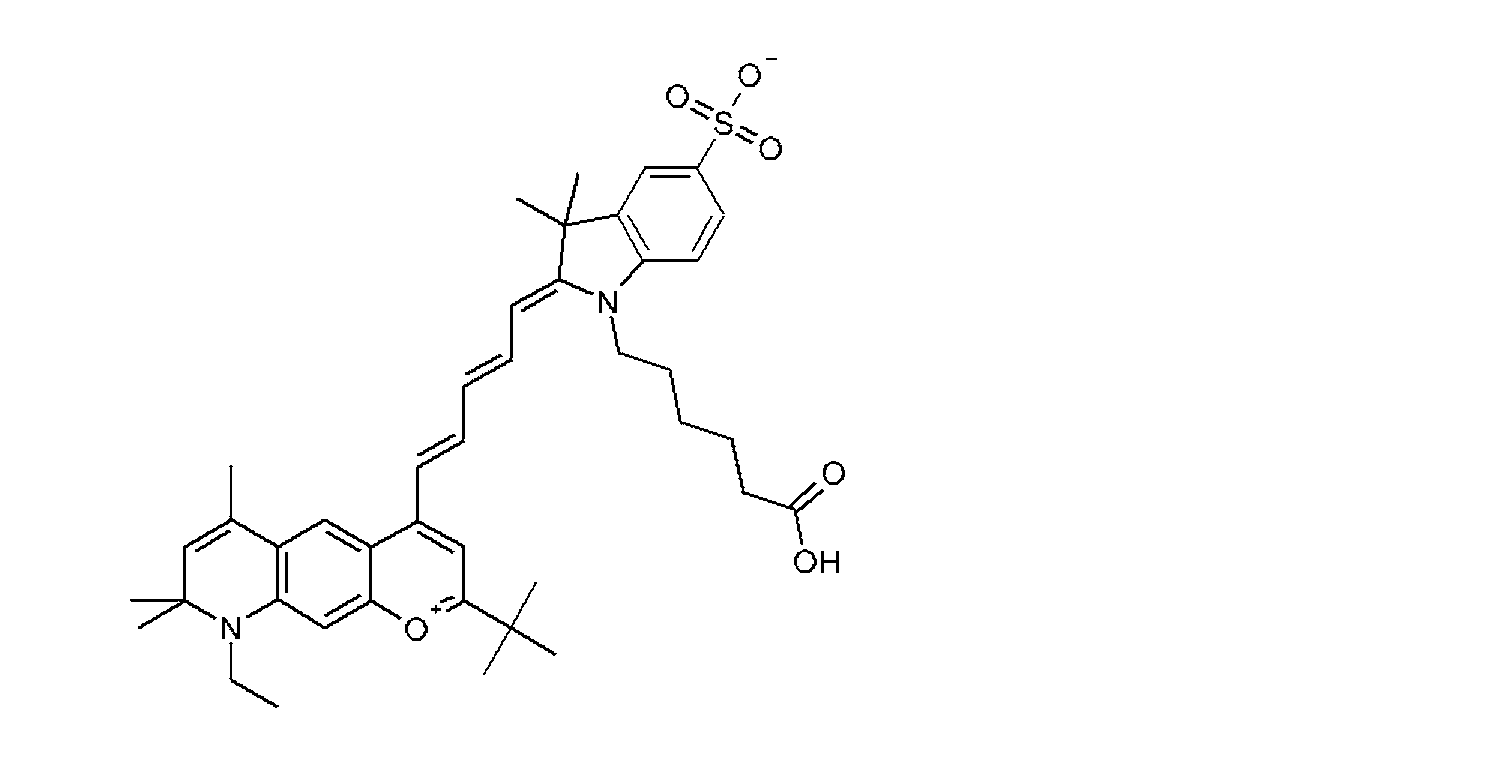
- the photosensitizer (PST) is a compound represented by the following structural formula (DY750), a compound having the fluorescence spectrum shown in FIG. 3 (Alexa Fluor750), or a compound having the absorption spectrum shown in FIG. 4 (IRDye800CW).
- DY750 a compound having the fluorescence spectrum shown in FIG. 3
- RIDye800CW a compound having the absorption spectrum shown in FIG. 4
- [4] The carrier molecule according to any one of [1] to [3], wherein the carrier protein further contains a proteasome degradation signal sequence tag (PDS) and / or a His-rich tag (HR).
- PDS proteasome degradation signal sequence tag
- HR His-rich tag
- carrier protein from the N-terminal side, cell membrane permeable peptide (CPP), RNA binding protein (RBP), proteasome degradation signal sequence tag (PDS) and / or His-rich tag (HR) are arranged in this order.
- CPP cell membrane permeable peptide
- RBP RNA binding protein
- PDS proteasome degradation signal sequence tag
- HR His-rich tag
- [7] The carrier molecule according to any one of [1] to [6], wherein the RBP is an RNA binding domain of human-derived U1A (U1 small nuclear riboprotein A) having the amino acid sequence represented by SEQ ID NO: 2.
- RBP is an RNA binding domain of human-derived U1A (U1 small nuclear riboprotein A) having the amino acid sequence represented by SEQ ID NO: 2.
- AVPETRPNHTIYINNLNEKIKKDELKYKSLYAIFSQFGQILDILVVSLSLKMRGQAFVIFKEVSSATNANRRSQGFPFYDKPMRIQYAKTDSDIIAKMK SEQ ID NO: 2
- a carrier molecule / RNA complex having a structure comprising the carrier molecule according to any one of [1] to [7] and RNA bound to RBP in the RNA carrier molecule.
- a gene therapy agent or diagnostic agent comprising the carrier molecule / RNA complex according to [8] or [9].
- the gene therapy agent or diagnostic agent according to [10] which targets cancer or viral diseases.
- a step of contacting the carrier molecule / RNA complex according to [8] or [9] with a cell to localize it in an endosome in the cell in vitro, and in the carrier molecule / RNA complex A method of delivering RNA into the cytoplasm comprising the step of irradiating light having a wavelength in the near-infrared region in which the PST functions to diffuse the carrier molecule / RNA complex into the cytoplasm.
- RNA carrier Since most of the RNA carrier according to the present invention can be synthesized with a protein that is a biomolecule, it can be used as a safe RNA carrier that is biodegradable and non-cytotoxic. Furthermore, since RNA diffuses into the cytoplasm only when irradiated with near-infrared light, the RNA can be delivered into the cytoplasm by specifying the position and timing, and the expression of RNA functions such as RNAi can be caused.
- FIG. 1 shows an outline of a method for delivering RNA into the cytoplasm by irradiation with light having a predetermined wavelength.
- CPP-RBP to which a fluorescent group is added is first introduced into cells via 1) CPP and 2) taken up into endosomes via endocytosis.
- FIG. 2 represents the excitation spectrum (left) and fluorescence spectrum (right) of DY750.
- FIG. 3 shows the fluorescence spectrum (right) of Alexa Fluor 750 (for comparison, the fluorescence spectrum of Cy7 (left) is also shown).
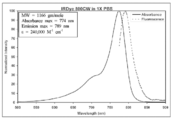
- FIG. 4 represents the excitation spectrum of IRDye800CW (fluorescence spectrum is also shown).
- FIG. 5 is an image showing the presence / absence of transfer of the carrier / shRNA complex to the cytoplasm by irradiation with near-infrared light performed in Example 3).
- Alexa Fluor 750, DY750, and IRDye800CW show RNA in the cytoplasm, especially DY750, and when these fluorescent dyes are used, the carrier / shRNA-complex can be diffused into the cytoplasm by irradiation with near infrared light. It was confirmed that it was possible.
- FIG. 6 is a graph showing the RNAi effect by near-infrared light irradiation using TatU1A-DY750 produced in Example 4).
- FIG. 7 is a graph showing the RNAi effect of near-infrared light irradiation using TatU1A-His6-DY750 produced in Example 6).
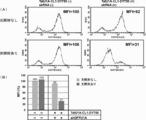
- FIG. 8 is a graph showing the RNAi effect in human tumor cells performed in Example 7).
- A Measurement results by flow cytometry.
- B Average fluorescence intensity calculated from the results of flow cytometry.
- the carrier protein in the present invention contains at least a cell membrane permeable peptide (CPP) and an RNA binding protein (RBP) as essential components, and preferably further comprises a proteasome degradation signal sequence tag (PDS) and / or a His-rich tag ( HR) refers to a peptide (fusion protein) containing a constituent element.
- CPP cell membrane permeable peptide
- RBP RNA binding protein
- PDS proteasome degradation signal sequence tag
- HR His-rich tag
- Elements of CPP, RBP, PDS, and His 6 may be linked directly via a peptide bond, or linked via a peptide peptide (usually composed of about 1 to 20 amino acids). May be.
- the entire carrier protein including the predetermined element and the linker is composed of only a peptide (amino acid).
- a carrier protein using a compound other than the peptide (amino acid) as the linker for example, PEG (polyethylene glycol) or the like. It is also possible to configure.
- a peptide other than the above-mentioned elements may be contained inside or at the end of the carrier protein.
- a His tag or GST tag for purifying and recovering the carrier protein of the present invention produced by the expression vector by affinity chromatography may be linked to the vicinity of the N-terminus of the carrier protein (after the recovery of the carrier protein, the His).
- the His tag can be used as an HR for enhancing membrane permeability, and such HR may be linked to both the N-terminal side and the C-terminal side of the carrier protein. .
- cysteine may be located near the terminal.
- CPP Cell membrane permeable peptide
- PTD Protein Transduction Domain
- various CPPs can be used as long as they correspond to a target cell (usually a mammalian cell), and the kind thereof is not particularly limited.
- the CPP may have a wild-type amino acid sequence, or may be substituted for the wild-type amino acid sequence as long as it has the ability to enter cells (preferably better than the wild-type). , May have a mutant amino acid sequence that has been deleted or added.
- a polypeptide having the amino acid sequence represented by SEQ ID NO: 1 contained in a trans-activator of transcription protein (Tat protein) derived from human immunodeficiency virus type I (HIV-1) is suitable as the CPP in the present invention. It is. YGRKKRRQRRRG SEQ ID NO: 1
- a polypeptide having the amino acid sequence represented by SEQ ID NO: 3 derived from flockhouse virus (FHV) and CTP512 (Cytoplasmic Transduction Peptide) having the amino acid sequence represented by SEQ ID NO: 4 are also cited as preferred CPPs in the present invention. It is done.
- Rev peptide, feline herpesvirus Coat protein-derived peptide, polyarginine and the like are also exemplified as CPP.
- RNA binding protein (RBP) RBP is known as a protein that binds in an independent or independent manner to the base sequence or three-dimensional structure of RNA.
- RBPs can be used, and the kind thereof is not particularly limited, but usually, those that recognize a specific base sequence or three-dimensional structure of RNA and specifically bind to specific RNA. Use it.
- the RBP may have a wild-type amino acid sequence, or may be substituted for the wild-type amino acid sequence as long as it has the ability to bind to RNA (preferably better than the wild-type). It may have a mutant amino acid sequence subjected to deletion or addition.
- RNA binding domain of human-derived U1A (U1 small nuclear riboprotein A) having the amino acid sequence represented by SEQ ID NO: 2 is suitable as the RBP in the present invention.
- the sex-letal protein is slightly inferior in RNA carrying ability than the human U1A, but may be used as the RBP of the present invention.
- a known RBP such as an aminoacyl-tRNA synthetase, an elongation factor Tu, or a protein having an RRM motif in its structure can also be used.
- proteasome degradation signal sequence tag is an amino acid sequence added to the end of a protein, and ubiquitin binds to the sequence and is known to be capable of degrading a protein having the sequence in the proteasome. Sometimes referred to as a degradation promoting sequence.
- various PDSs can be used, and the type thereof is not particularly limited.
- the PDS may have a wild-type amino acid sequence, or may be substituted for the wild-type amino acid sequence as long as it has the ability to be degraded by the proteasome (preferably better than the wild-type). , May have a mutant amino acid sequence that has been deleted or added.
- known PDSs such as CL1, CL2, CL6, CL9, CL10, CL11, CL12, CL15, CL16, SL17, and PEST can be used.
- HR is a peptide that is typically composed of 6 histidines (His) and can further increase the efficiency of introduction of the complex into the cell.
- His histidines
- a peptide consisting of 6 histidines is also known as the His tag, which is used for affinity chromatography.
- the HR in the present invention may be a peptide consisting only of (six) histidines as in the case of such a His tag, or the His has a capability of improving intracellular invasion compared to the case where HR is not used.
- a peptide in which 6 is modified for example, a peptide in which the number of histidines is increased to about 7 to 10, or a peptide in which amino acids other than histidine are interwoven may be used.
- the number of amino acids constituting HR is usually about 6 to 20, and the ratio of histidine in all amino acids is usually in the range of 50% to 100%.
- the carrier protein containing said element can be prepared by a well-known means.
- DNA having a base sequence corresponding to a polypeptide containing a predetermined element of the present invention is prepared using PCR, and 2) the prepared DNA is introduced into a vector such as a plasmid.
- a vector having a base sequence corresponding to a polypeptide having a cysteine at the C-terminus was prepared, and 4) the resulting vector was expressed.
- a method of recovering the target carrier protein can be mentioned.
- the carrier molecule in the present invention refers to a molecule in which the above-described carrier protein is linked to a photosensitizer that functions with light having a wavelength in the near infrared region (near infrared light).
- Photosensitizer A photosensitizer that "functions with light in the near-infrared region (near-infrared light)" is a complex that has been incorporated into cells and localized to endosomes when irradiated with near-infrared light. A photosensitizer that can be diffused into the cytoplasm to exhibit a predetermined function. It is assumed that the mechanism is that the photosensitizer excited by irradiation with near-infrared light generates singlet oxygen, which destabilizes (destroys) the endosomal membrane.
- the “near infrared region” refers to 700 nm to 2500 nm. In the present invention, it functions with light having such a wavelength in the near infrared region, more preferably 700 to 1000 nm, and particularly preferably 700 to 850 nm. In other words, the optical enhancement having a maximum excitation wavelength in these regions. A sensitizer is used. The reason why the wavelength in the near-infrared region is preferable is that the wavelength is high in tissue permeability, avoiding absorption by hemoglobin and water in the living body.
- DY750 is a compound having the structural formula shown in the following formula and the excitation spectrum shown in FIG. 2 (maximum excitation wavelength is 747 nm) (see DYOMICS GmbH website, http://www.dyomics.com/dy-750.html).
- Alexa Fluor 750 whose structural formula has not been clarified, is a compound having the fluorescence spectrum shown in FIG.
- IRDye800CW is a compound having an excitation spectrum (maximum excitation wavelength is 774 nm) shown in FIG. 4 although the structural formula has not been clarified (catalog available from the LI-COR website, http: // biosupport. see licor.com/docs/800CW#Micro#08618.pdf).
- Carrier molecules can be prepared by linking a carrier protein and PST by a known method.
- the only cysteine in the carrier protein is placed near the N-terminus or C-terminus, while PST reacts selectively with the cysteine thiol group (other amino acid residues in the carrier protein).
- Such a method is to remove unreacted PST with a gel filtration spin column after mixing with a carrier protein containing cysteine at one end using a commercially available “PST with a maleimide group”. Can be done.
- the carrier molecule / RNA complex (sometimes simply referred to as “complex”) in the present invention refers to a complex in which RNA is bound to the above-described carrier molecule via RBP.
- RNA may form a complex with a carrier molecule by specific binding to RBP and electrostatic / non-specific binding to CPP having a large positive charge (for example, Tat).
- RNA to be bound to the RBP in the carrier protein includes an oligonucleotide having a base sequence recognized at the RNA recognition site of the RBP and an oligonucleotide having a base sequence that exhibits a predetermined function when introduced into the cytoplasm (hereinafter referred to as the RNA). These are referred to as “functional RNA”), and may be bound directly or via an oligonucleotide serving as a linker.
- RNAs can be used, and the kind thereof is not particularly limited.
- Representative functional RNAs in the present invention include shRNA (short hairpin RNA), siRNA (small interfering RNA), and miRNA (micro RNA) for suppressing the expression of a specific gene.
- shRNA short hairpin RNA
- siRNA small interfering RNA
- miRNA miRNA
- mRNA for synthesizing a specific protein in a cell
- modified tRNA for introducing an unnatural amino acid into a specific site of the protein
- antisense RNA, aptamer RNA, ribozyme and the like can also be functional RNA in the present invention.
- the carrier molecule / RNA complex can be easily formed by mixing a carrier molecule and RNA prepared in advance in a solution.
- the ratio of these mixed amounts (moles) can be adjusted as appropriate.
- RNA: carrier molecule 1: 5 to 10 is preferable.
- the carrier molecule / RNA complex according to the present invention can be delivered into the cytoplasm by the following procedure.
- a carrier molecule / RNA complex is brought into contact with a cell to localize to the endosome in the cell.
- the carrier molecule / RNA complex is naturally taken up by endocytosis after a certain period of time and is localized in the endosome in the cell.
- the cells are usually animal cells (including human cells) and may be in vivo or in vitro (cultured cells). That is, the method for delivering RNA into the cytoplasm according to the present invention can be applied both in vivo and in vitro.
- the carrier molecule / RNA complex is diffused in the cytoplasm by irradiating light having a wavelength in the near infrared region where the PST in the carrier molecule / RNA complex functions. Without such predetermined near-infrared light, the carrier molecule / RNA complex remains mostly localized in the endosome, and the predetermined function of RNA is not substantially expressed.
- the means for irradiating the excitation light is not particularly limited. Using a xenon arc lamp or dye pump laser that emits near-infrared light of a predetermined wavelength as the light source, and using an appropriate filter as necessary, the near-infrared light is applied to cells at the desired site where RNA functions are to be expressed. Irradiation is sufficient.
- RNAi RNAi
- the carrier molecule of the present invention can introduce any RNA capable of binding to the carrier molecule into the cytoplasm, and its use is not particularly limited.
- the carrier molecule / RNA complex of the present invention can be used, for example, as a gene therapy drug for cancer and viral diseases.
- RNA functional RNA having an appropriate base sequence capable of suppressing the expression of a specific gene causing cancer or viral disease by RNAi is selected.
- RNA binding of human immunodeficiency virus-derived Tat Preparation CPP carrier protein (t rans- a ctivator of t ranscription ) and transmembrane domain of 11 amino acids of the protein, human U1A as RBP (U1 small nuclear ribonucleoprotein A)
- a carrier protein TatU1A having the amino acid sequence represented by SEQ ID NO: 5 fused with the domain was prepared (FIG. 1A).
- the double underline (positions 13-24) is Tat, and the underline (positions 36-132) is U1A.
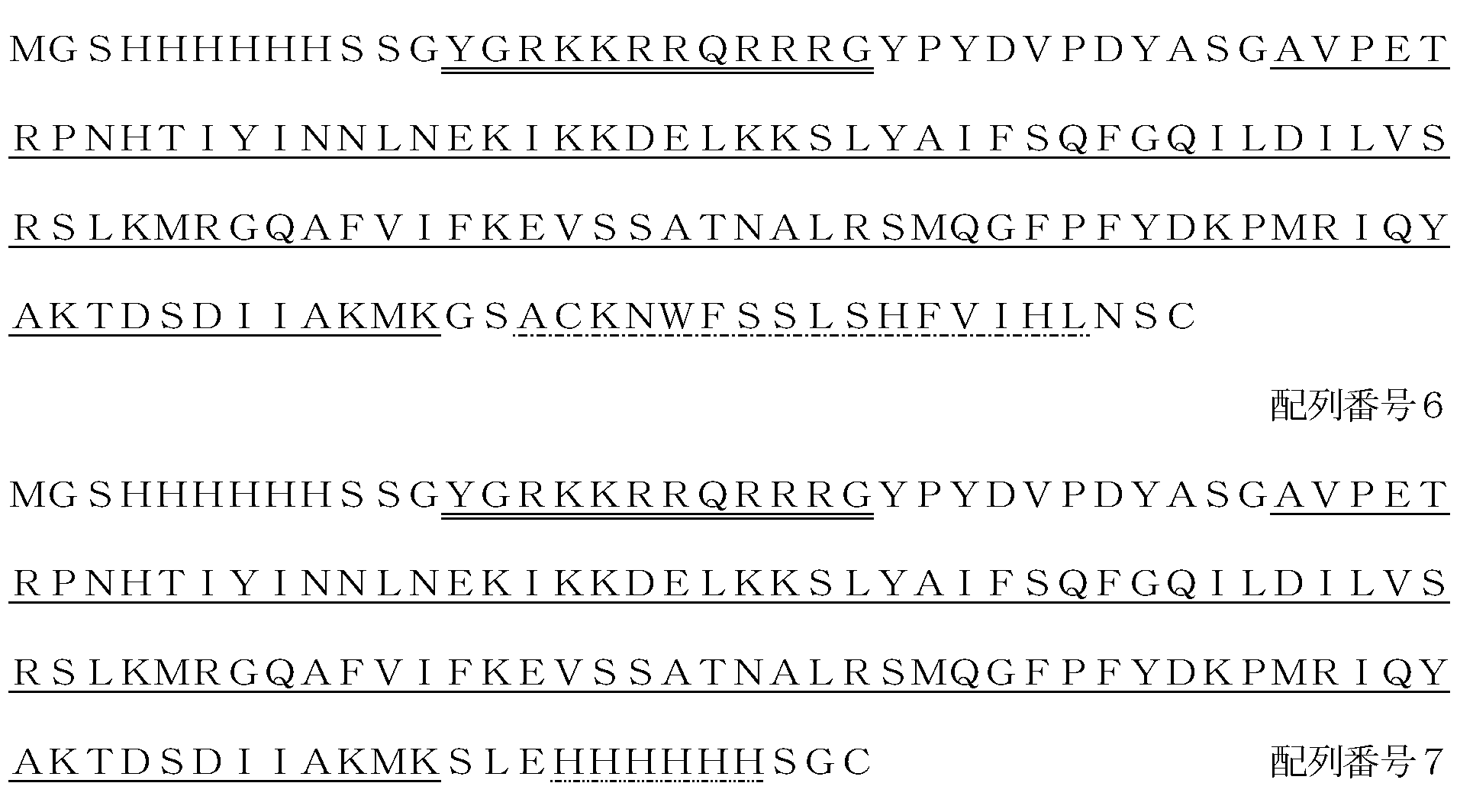
- carrier proteins TatU1A-CL1 and TatU1A-His 6 having the amino acid sequences shown in SEQ ID NOs: 6 and 7, respectively, added with CL1 as PDS or His 6 tag as HR at the C-terminus of this protein are also present.
- the double underline (positions 13-24) is Tat
- the underline (positions 36-132) is U1A
- the alternate long and short dash line (positions 135-150) is CL1.
- the double underlined (position 13-24) is Tat
- underlined (position 36-132) is U1A
- two-dot chain line position 135-141) is a sequence of His 6.
- Each carrier protein has a cysteine at the C-terminus for later addition of a thiol-reactive dye (photosensitizer). This C-terminal cysteine is the only cysteine in the carrier protein.
- RNA into intracellular endosome by carrier protein with near-infrared fluorescent dye and diffusion to cytoplasm by near-infrared light U1A recognizes carrier protein (here, TatU1A) labeled with various fluorescent dyes Attempts were made to transfer cytoplasm of shRNA to which sequences were added.
- Carrier / shRNA complex by mixing shRNA and TatU1A-fluorescent dye conjugate (hereinafter referred to as carrier) to a final concentration of 200 nM and 2 mM, respectively, and incubating at 37 ° C for 10 minutes under light-shielded conditions The body was prepared.
- FAM-labeled shRNA was used to visualize the intracellular localization of the complex.
- the above-mentioned carrier / shRNA mixed solution was added to mammalian cells (CHO cells) cultured until they became about 70% confluent, and cultured in a CO 2 incubator at 37 ° C. for 2 hours.
- Light was irradiated at the excitation wavelength of each fluorescent dye, and intracellular localization of the carrier / shRNA complex was evaluated by observation with a fluorescence microscope. Only when Alexa Fluor 750, DY750, and IRDye800CW were used as fluorescent dyes (photosensitizers), shRNA that had been scattered within cells (localized in endosomes) diffused into the cytoplasm by irradiation with near-infrared light. (Figure 5).
- a carrier / shRNA complex can be introduced into the cytoplasm specifically with near-infrared light irradiation.
- HiLyte Fluor750, Alexa Fluor 750, and DyLight750 light of 750 ⁇ 20 nm (Infrared illuminator L750-66-60 manufactured by epitex), light of 780 ⁇ 20 nm when using IRDye800CW and DyLight800 ( Epitex Infrared illuminator L780-66-60) was used as excitation light.
- TatU1A-DY750 a fluorescent dye DY750 that absorbs at around 750 nm
- TatU1A-DY750 / shRNA complex was prepared by mixing shRNA and TatU1A-DY750 at final concentrations of 200 nM and 2 mM, respectively, and incubating at 37 ° C. for 10 minutes under light-shielded conditions.
- shRNA with anti-EGFP sequence was used.
- CHO cells stably expressing EGFP (EGFP-CHO cells) were cultured until they became about 70% confluent, the above TatU1A-DY750 / shRNA mixed solution was added, and further cultured in a CO 2 incubator at 37 ° C. for 2 hours. After irradiating light at the excitation wavelength of DY750 and culturing in a CO 2 incubator at 37 ° C. for 20 hours, the cells were collected, and the RNAi effect was examined by flow cytometry. As a result, the EGFP average fluorescence intensity of the cell group irradiated with light was remarkably reduced as compared with the cell group not irradiated with light (FIG. 6). That is, an RNAi effect on EGFP was observed in cells irradiated with light.
- shRNA can be introduced into cells with TatU1A-DY750, and shRNA can be transferred to the cytoplasm only when irradiated with light, that is, when irradiated with near infrared light.
- RNAi expression of shRNA function
- CPP part is FHV (Flockhouse virus-derived arginine peptide; RRRRNRTRRNRRRVR) or CTP512 (cytoplasmic transduction peptide; YGRARRRRRRR).
- RRRRNRTRRNRRRVR Lockhouse virus-derived arginine peptide
- CTP512 cytoplasmic transduction peptide
- SEQ ID NO: 4 the amino acid sequence shown in SEQ ID NO: 4 in which R at position 4 was deleted was used.
- the ability of FHV-U1A and CTP-U1A to transport RNA into the cytoplasm was not significantly different from TatU1A.
- Tat was used as CPP, and the RBP part was made into Sxl protein or bacteriophage ⁇ -N peptide. Although this TatSxl had RNA carrying ability, it was inferior to TatU1A. Tat ⁇ N did not show any RNA carrying ability.
- TatU1A-CL1 and TatU1A-His 6 showed higher RNA carrying ability than TatU1A. That is, as the carrier protein portion, TatU1A-CL1 and TatU1A-His 6 had the highest ability as an RNA carrier among those examined above.
- RNAi RNA into the cytoplasm of mammalian cells using near-infrared light and confirmation of functional expression of the RNA (RNAi) TatU1A-His 6 with the addition of the fluorescent dye DY750, which absorbs at around 750 nm, as in 4)
- TatU1A-His 6 -DY750 was used to examine RNAi induction by near-infrared light irradiation.
- Prepare TatU1A-His 6 -DY750 / shRNA complex by mixing shRNA and TatU1A-His 6 -DY750 to a final concentration of 200 nM and 2 mM, respectively, and incubating for 10 minutes at 37 ° C in the dark. did.
- shRNA with anti-EGFP sequence was used. Culturing CHO cells that stably express EGFP (EGFP-CHO cells) until they are about 70% confluent, add the above TatU1A-His 6- DY750 / shRNA mixture, and further culture in a CO 2 incubator at 37 ° C for 2 hours did. After irradiating light at the excitation wavelength of DY750 and culturing in a CO 2 incubator at 37 ° C. for 20 hours, the cells were collected, and the RNAi effect was examined by flow cytometry.
- TatU1A-His 6 -DY750 introduced shRNA into cells, and was able to transfer shRNA to the cytoplasm in a light irradiation-specific manner, and to induce RNAi (expression of shRNA function).
- TatU1A-CL1 TatU1A-CL1-DY750
- shRNA shRNA
- TatU1A-CL1-DY750 a fluorescent dye having absorption near 750 nm was added.
- TatU1A-CL1-DY750 / shRNA complex was prepared by mixing shRNA and TatU1A-CL1-DY750 at final concentrations of 200 nM and 2 mM, respectively, and incubating at 37 ° C. for 10 minutes under light-shielded conditions.
- malignant mesothelioma cell 211H which is a human tumor cell, was used.
- 211H cells stably expressing EGFP were cultured until they became about 70% confluent, the above TatU1A-CL1-DY750 / shRNA mixed solution was added, and further cultured at 37 ° C. for 2 hours in a CO 2 incubator. After irradiating light at the excitation wavelength of DY750 and culturing in a CO 2 incubator at 37 ° C. for 20 hours, the cells were collected, and the RNAi effect was examined by flow cytometry. As a result, the EGFP average fluorescence intensity of the cell group irradiated with light was remarkably reduced as compared with those not irradiated with light (FIG. 8). That is, an RNAi effect on EGFP was observed in cells irradiated with light.
- Sequence number 4 CTP512 Sequence number 5: TatU1A Sequence number 6: TatU1A-CL1 Sequence number 7: TatU1A-His6
Landscapes
- Health & Medical Sciences (AREA)
- Life Sciences & Earth Sciences (AREA)
- Chemical & Material Sciences (AREA)
- General Health & Medical Sciences (AREA)
- Organic Chemistry (AREA)
- Medicinal Chemistry (AREA)
- Genetics & Genomics (AREA)
- Pharmacology & Pharmacy (AREA)
- Animal Behavior & Ethology (AREA)
- Public Health (AREA)
- Veterinary Medicine (AREA)
- Engineering & Computer Science (AREA)
- Bioinformatics & Cheminformatics (AREA)
- Wood Science & Technology (AREA)
- Biochemistry (AREA)
- Epidemiology (AREA)
- Zoology (AREA)
- Biotechnology (AREA)
- Biomedical Technology (AREA)
- Molecular Biology (AREA)
- General Engineering & Computer Science (AREA)
- Microbiology (AREA)
- Proteomics, Peptides & Aminoacids (AREA)
- Biophysics (AREA)
- Nuclear Medicine, Radiotherapy & Molecular Imaging (AREA)
- Virology (AREA)
- Chemical Kinetics & Catalysis (AREA)
- General Chemical & Material Sciences (AREA)
- Communicable Diseases (AREA)
- Oncology (AREA)
- Plant Pathology (AREA)
- Physics & Mathematics (AREA)
- Gastroenterology & Hepatology (AREA)
- Pharmaceuticals Containing Other Organic And Inorganic Compounds (AREA)
- Medicines That Contain Protein Lipid Enzymes And Other Medicines (AREA)
- Medicinal Preparation (AREA)
- Medicines Containing Antibodies Or Antigens For Use As Internal Diagnostic Agents (AREA)
- Peptides Or Proteins (AREA)
Abstract
本発明では、細胞障害や発熱の問題を起こさず、生体透過性のよい(好ましくは波長700~1000nm程度の)近赤外光を利用してRNAを細胞内に導入する手段を提供することを目的とする。本発明に係るキャリア分子は、細胞膜透過性ペプチド(CPP)およびRNA結合性蛋白質(RBP)を含むキャリア蛋白質と、該キャリア蛋白質のN末端側またはC末端側に連結した、近赤外線領域の波長を有する光で機能する光増感剤(PST)とからなる構造を有することを特徴とする。該キャリア分子と該キャリア分子中のRBPに結合したRNAとからなるキャリア分子/RNA複合体を形成させ、該複合体を細胞と接触させて該細胞内のエンドソームに局在化させた後、該キャリア分子/RNA複合体中のPSTが機能する近赤外光を照射することにより、該キャリア分子/RNA複合体を細胞質中に拡散させて、導入したRNAの機能を発現させることができる。
Description
本発明は、所定の機能を発現しうるRNA(機能性RNA)を細胞内に導入し、所定の波長を有する光を照射することによりその機能を発現させるための方法および当該方法に用いられるキャリア分子などに関する。
RNAiは、shRNAやsiRNAの塩基配列に依存して特定遺伝子の発現が抑制される現象であり、病気の原因となる遺伝子やウイルス遺伝子の発現抑制に基づく疾患治療などに応用できるため近年非常に注目されている。このような目的のために、RNAを細胞質内に効率的に導入する手段の研究開発が進められている。
特許文献1には、RNA結合性タンパク質および膜透過性キャリアペプチドを含む融合タンパク質に、該RNA結合性タンパク質に対する認識配列および任意の配列を有するRNAを結合させ、この結合体を任意の細胞と混合することにより、該RNAを細胞内に導入する方法が記載されている。
非特許文献1および2には、RNA結合性タンパク質および膜透過性キャリアペプチドに加えて可視領域の波長の光で励起する蛍光色素(たとえばAlexa Fluor 546、励起波長530-550nm)を含む融合タンパク質にsiRNAを結合させた複合体が記載されている。そして、この結合体と細胞を接触させ、当該結合体がエンドサイトーシスにより細胞内に取り込まれエンドソームに局在化した後、励起光を照射することにより、蛍光色素が光増感剤として作用し、siRNAがエンドソームから細胞質に放出され、所定のRNAi効果を達成できることが記載されている(図1参照)。なお、非特許文献1および2には、近赤外領域の波長の光で励起する蛍光色素を用いても上記のような作用効果が奏されることは、記載も示唆もされていない。
一方、特許文献2には、機能性分子キャリアとして金ナノロッドを用い、金ナノロッド凝集体とDNAとの複合体を培養細胞に添加し、近赤外域(波長1064nm)のパルスレーザーを照射することにより、DNAを金ナノロッドから脱離させて、当該DNAからの遺伝子を効率的に発現させる方法が記載されている(実施例参照)。しかしながら、金ナノロッドは光熱変換機能を有し、金ナノロッドを集積させた標的部位周辺組織へのフォトサーマル治療(腫瘍細胞等を発生した熱で死滅させる)ために用いられている材料でもあるため(たとえば特許文献3参照)、そのようなことを目的としない使用における細胞毒性や安全性について懸念される。
T. Endoh, M. Sisido and T.Ohtsuki (2008) Cellular siRNA delivery mediated by a cell permeant RNA-binding protein and photoinduced RNA interference. Bioconjugate chemistry 19(5), 1017-1024.
T. Endoh, M. Sisido and T.Ohtsuki (2009) Spatial regulation of specific gene expression through photoactivation of RNAi. Journal of Controlled Release 137, 241-245.
非特許文献1および2に記載された方法によりRNAを細胞内に導入する場合、励起光として可視光が用いられるが、可視光は生体内への透過性に劣る。そのため、生体の表層(たとえば皮膚表面)にある細胞へのRNAの導入には適用できるが、生体内の深部にある細胞へのRNAの導入には不適当である。
本発明は、細胞障害や発熱の問題を起こさず、生体透過性のよい(好ましくは波長700~1000nm程度の)近赤外光を利用してRNAを細胞内に導入する手段を提供することを目的とする。
本発明者らは、近赤外光を励起光とする蛍光色素のうち特定のものが、非特許文献1等に記載の複合体中の蛍光色素として用いた場合に、近赤外光の照射により光増感剤として作用し、エンドソームから細胞質にRNAを放出させる能力を有することを見いだした(図1参照)。さらに、その複合体中の融合タンパク質に特定のペプチドをさらに加えることにより、RNAの細胞質内への導入効率をさらに高めることができることを見出し、本発明を完成させるに至った。
すなわち、本発明は下記の事項を包含する。
[1]細胞膜透過性ペプチド(CPP)およびRNA結合性蛋白質(RBP)を含むキャリア蛋白質と、該キャリア蛋白質のN末端側またはC末端側に連結した、近赤外線領域の波長を有する光で機能する光増感剤(PST)とからなる構造を有することを特徴とするキャリア分子。
[1]細胞膜透過性ペプチド(CPP)およびRNA結合性蛋白質(RBP)を含むキャリア蛋白質と、該キャリア蛋白質のN末端側またはC末端側に連結した、近赤外線領域の波長を有する光で機能する光増感剤(PST)とからなる構造を有することを特徴とするキャリア分子。
[2]前記光増感剤(PST)が700nm~1000nmの波長を有する光で機能するものである、[1]に記載のキャリア分子。
[3]前記光増感剤(PST)が、下記構造式で表される化合物(DY750)、図3に示す蛍光スペクトルを有する化合物(Alexa Fluor750)または図4に示す吸収スペクトルを有する化合物(IRDye800CW)である、[1]または[2]に記載のキャリア分子。
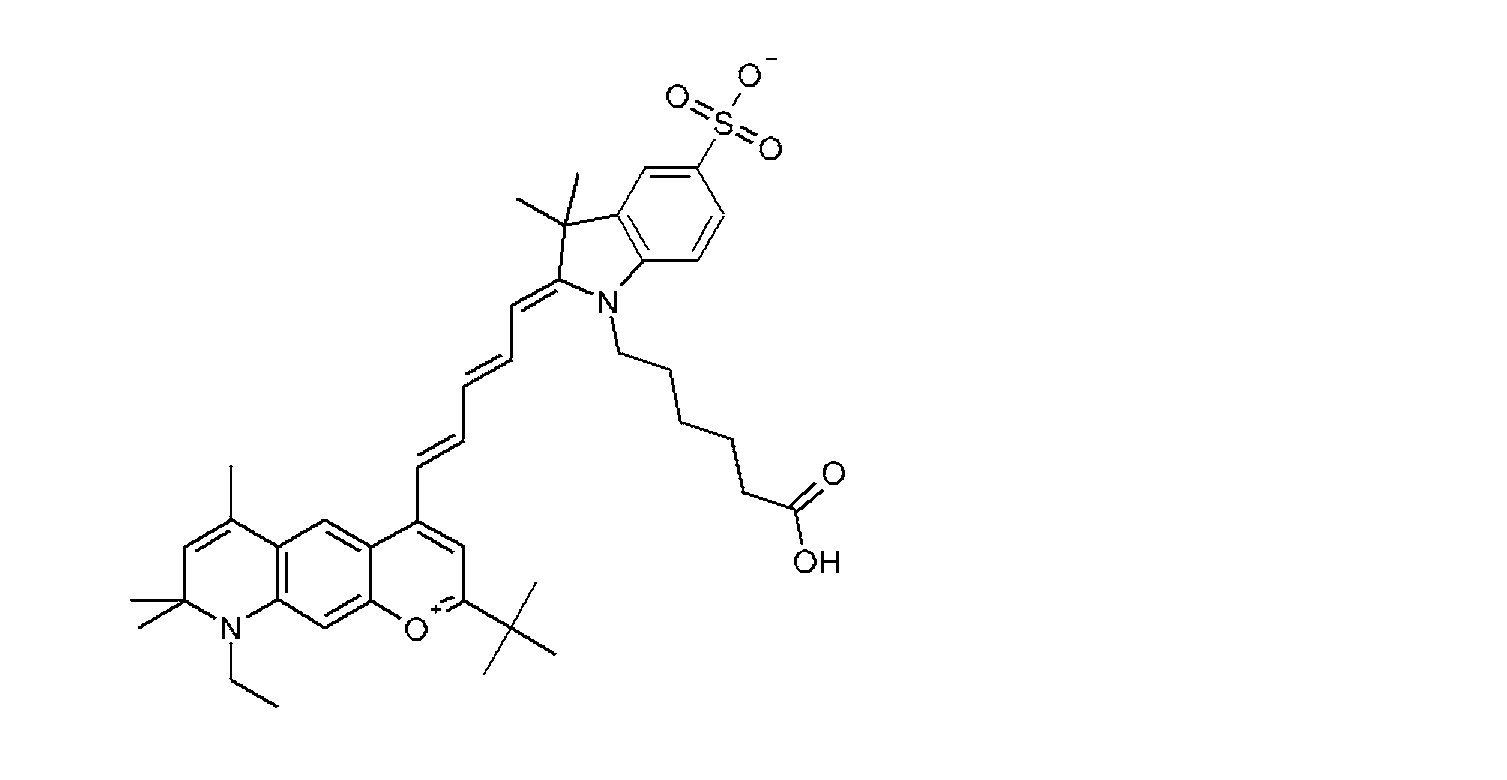
[3]前記光増感剤(PST)が、下記構造式で表される化合物(DY750)、図3に示す蛍光スペクトルを有する化合物(Alexa Fluor750)または図4に示す吸収スペクトルを有する化合物(IRDye800CW)である、[1]または[2]に記載のキャリア分子。
[4]前記キャリア蛋白質が、さらにプロテアソーム分解シグナル配列タグ(PDS)および/またはHis-richタグ(HR)を含む、[1]~[3]のいずれかに記載のキャリア分子。
[5]前記キャリア蛋白質において、N末端側から、細胞膜透過性ペプチド(CPP)、RNA結合性蛋白質(RBP)、プロテアソーム分解シグナル配列タグ(PDS)および/またはHis-richタグ(HR)がこの順序で連結されており、かつ当該キャリア蛋白質のC末端側に前記光増感剤(PST)が連結されている、[1]~[4]のいずれかに記載のキャリア分子。
[6]前記CPPが、配列番号1で示されるアミノ酸配列を有する、ヒト免疫不全ウイルス由来Tat(trans-activator of transcription)蛋白質中の12アミノ酸からなるペプチドである、[1]~[5]のいずれかに記載のキャリア分子。
YGRKKRRQRRRG 配列番号1
YGRKKRRQRRRG 配列番号1
[7]前記RBPが、配列番号2で示されるアミノ酸配列を有する、ヒト由来U1A(U1 small nuclear ribonucleoprotein A)のRNA結合ドメインである、[1]~[6]のいずれかに記載のキャリア分子。
AVPETRPNHTIYINNLNEKIKKDELKKSLYAIFSQFGQILDILVSRSLKMRGQAFVIFKEVSSATNALRSMQGFPFYDKPMRIQYAKTDSDIIAKMK 配列番号2
AVPETRPNHTIYINNLNEKIKKDELKKSLYAIFSQFGQILDILVSRSLKMRGQAFVIFKEVSSATNALRSMQGFPFYDKPMRIQYAKTDSDIIAKMK 配列番号2
[8][1]~[7]のいずれかに記載のキャリア分子と、該RNAキャリア分子中のRBPに結合したRNAとからなる構造を有するキャリア分子/RNA複合体。
[9]前記RNAが、short hairpin RNA(shRNA)、small interfering RNA(siRNA)またはmicroRNA(miRNA)である、[8]に記載のRNA複合体。
[9]前記RNAが、short hairpin RNA(shRNA)、small interfering RNA(siRNA)またはmicroRNA(miRNA)である、[8]に記載のRNA複合体。
[10][8]または[9]に記載のキャリア分子/RNA複合体を含む遺伝子治療薬または診断薬。
[11]がんまたはウイルス疾患を対象とする、[10]に記載の遺伝子治療薬または診断薬。
[11]がんまたはウイルス疾患を対象とする、[10]に記載の遺伝子治療薬または診断薬。
[12]生体外において、[8]または[9]に記載のキャリア分子/RNA複合体を細胞と接触させて当該細胞内のエンドソームに局在化させる工程、および該キャリア分子/RNA複合体中のPSTが機能する近赤外線領域の波長を有する光を照射して該キャリア分子/RNA複合体を細胞質中に拡散させる工程を含むことを特徴とする、細胞質内へのRNAの送達方法。
本発明によるRNAキャリアは大部分を生体分子である蛋白質で合成することができるため、生分解性で細胞毒性がなく、安全なRNAキャリアとして使用することができる。また、近赤外光を照射したときのみRNAが細胞質内に拡散するので、位置やタイミングを指定してRNAを細胞質内に送達させ、RNAi等のRNA機能の発現を引き起こすことができる。
―キャリア蛋白質―
本発明におけるキャリア蛋白質は、少なくとも細胞膜透過性ペプチド(CPP)とRNA結合性蛋白質(RBP)を必須の構成要素として含み、好ましくはさらにプロテアソーム分解シグナル配列タグ(PDS)および/またはHis-richタグ(HR)を構成要素として含むペプチド(融合タンパク質)を指す。
本発明におけるキャリア蛋白質は、少なくとも細胞膜透過性ペプチド(CPP)とRNA結合性蛋白質(RBP)を必須の構成要素として含み、好ましくはさらにプロテアソーム分解シグナル配列タグ(PDS)および/またはHis-richタグ(HR)を構成要素として含むペプチド(融合タンパク質)を指す。
CPP、RBP、PDS、His6の要素同士は、直接ペプチド結合を介して連結していてもよいし、リンカーとなるペプチド(通常1~20個程度のアミノ酸からなるもの)を介して連結していてもよい。また、上記所定の要素およびリンカーを含むキャリア蛋白質全体がペプチド(アミノ酸)のみで構成されることが望ましいが、リンカーとしてペプチド(アミノ酸)以外の化合物、たとえばPEG(ポリエチレングリコール)などを用いてキャリア蛋白質を構成することも可能である。
必要に応じて、キャリア蛋白質の内部または末端に上記要素以外のペプチドが含まれていてもよい。たとえば、発現ベクターが産生した本発明のキャリア蛋白質をアフィニティ・クロマトグラフィによって精製・回収するためのHisタグまたはGSTタグがキャリア蛋白質のN末端付近に連結されていてもよい(キャリア蛋白質の回収後に上記Hisタグを切断しない場合は、当該Hisタグを膜透過性を高めるためのHRとして利用することができる。そのようなHRはキャリア蛋白質のN末端側およびC末端側の両方に連結されていてもよい。)。また、後述するような手法によりPSTをキャリア蛋白質に連結させるために、システインを末端付近に位置させておいてもよい。
・細胞膜透過性ペプチド(CPP)
CPPは、一般的にアルギニンなどの塩基性アミノ酸に富んだアミノ酸配列を有する、細胞膜と結合し自身を細胞内に取り込ませる働きを持つポリペプチドとして知られており、膜透過性ドメイン(Protein Transduction Domain: PTD)と称されることもある。当初、CPPは、細胞膜を透過して自発的に細胞内に侵入すると考えられたため「細胞膜透過性ペプチド」と命名されているが、現在では一般的に、主に細胞のエンドサイトーシス経路を経て細胞内に取り込まれると考えられている。そして、CPPに連結させて細胞内に運ぼうとする積み荷の性質により、そのままエンドソームに局在化することも多い。本発明においてCPPは、これと連結した複合体の他の要素と共にエンドソームに局在化する能力を有するペプチドを指す用語として定義される。
CPPは、一般的にアルギニンなどの塩基性アミノ酸に富んだアミノ酸配列を有する、細胞膜と結合し自身を細胞内に取り込ませる働きを持つポリペプチドとして知られており、膜透過性ドメイン(Protein Transduction Domain: PTD)と称されることもある。当初、CPPは、細胞膜を透過して自発的に細胞内に侵入すると考えられたため「細胞膜透過性ペプチド」と命名されているが、現在では一般的に、主に細胞のエンドサイトーシス経路を経て細胞内に取り込まれると考えられている。そして、CPPに連結させて細胞内に運ぼうとする積み荷の性質により、そのままエンドソームに局在化することも多い。本発明においてCPPは、これと連結した複合体の他の要素と共にエンドソームに局在化する能力を有するペプチドを指す用語として定義される。
本発明では様々なCPPを用いることができ、目的とする細胞(通常は哺乳動物細胞)に対応するものであればよく、その種類は特に限定されるものではない。また、CPPは、野生型のアミノ酸配列を有するものであってもよいし、細胞内に侵入する(好ましくは野生型よりも優れた)能力を有する範囲で、野生型のアミノ酸配列に対して置換、欠失、付加を施した変異型のアミノ酸配列を有するものであってもよい。
たとえば、ヒト免疫不全ウイルスI型(HIV-1)に由来するTrans-activator of transcription protein(Tatタンパク質)に含まれる、配列番号1で示されるアミノ酸配列を有するポリペプチドは、本発明におけるCPPとして好適である。
YGRKKRRQRRRG 配列番号1
YGRKKRRQRRRG 配列番号1
また、フロックハウスウイルス(FHV)に由来する配列番号3で示されるアミノ酸配列を有するポリペプチド、および配列番号4で示されるアミノ酸配列を有するCTP512(Cytoplasmic Transduction Peptide)も、本発明における好ましいCPPとして挙げられる。
RRRRNRTRRNRRRVR 配列番号3
YGRRARRRRRRR 配列番号4
その他、Revペプチド、ネコヘルペスウイルスCoatタンパク質由来ペプチド、ポリアルギニンなどもCPPとして挙げられる。
RRRRNRTRRNRRRVR 配列番号3
YGRRARRRRRRR 配列番号4
その他、Revペプチド、ネコヘルペスウイルスCoatタンパク質由来ペプチド、ポリアルギニンなどもCPPとして挙げられる。
・RNA結合性蛋白質(RBP)
RBPは、RNAの塩基配列または立体構造に依存的または非依存的に結合するタンパク質として公知である。
RBPは、RNAの塩基配列または立体構造に依存的または非依存的に結合するタンパク質として公知である。
本発明では様々なRBPを用いることができ、その種類は特に限定されるものではないが、通常、RNAの特定の塩基配列または立体構造を認識し、特定のRNAと特異的に結合するものを用いるようにする。また、RBPは、野生型のアミノ酸配列を有するものであってもよいし、RNAと結合する(好ましくは野生型よりも優れた)能力を有する範囲で、野生型のアミノ酸配列に対して置換、欠失、付加を施した変異型のアミノ酸配列を有するものであってもよい。
たとえば、配列番号2で示されるアミノ酸配列を有する、ヒト由来U1A(U1 small nuclear ribonucleoprotein A)のRNA結合ドメインは、本発明におけるRBPとして好適である。
AVPETRPNHTIYINNLNEKIKKDELKKSLYAIFSQFGQILDILVSRSLKMRGQAFVIFKEVSSATNALRSMQGFPFYDKPMRIQYAKTDSDIIAKMK 配列番号2
AVPETRPNHTIYINNLNEKIKKDELKKSLYAIFSQFGQILDILVSRSLKMRGQAFVIFKEVSSATNALRSMQGFPFYDKPMRIQYAKTDSDIIAKMK 配列番号2
また、sex-lethalタンパク質は、上記ヒト由来U1AよりもRNA運搬能にやや劣るが、本発明のRBPとして用いてもよい。その他、アミノアシルtRNA合成酵素、伸長因子Tu、RRMモチーフを構造中に有するタンパク質などの、公知のRBPを用いることもできる。
・プロテアソーム分解シグナル配列タグ(PDS)
プロテアソーム分解シグナル配列は、タンパク質の末端に付加されるアミノ酸配列であって、そこにユビキチンが結合し、プロテアソームでその配列を有するタンパク質を分解しうるものとして公知であり、タンパク質分解(シグナル)配列、分解促進配列などと称されることもある。
プロテアソーム分解シグナル配列は、タンパク質の末端に付加されるアミノ酸配列であって、そこにユビキチンが結合し、プロテアソームでその配列を有するタンパク質を分解しうるものとして公知であり、タンパク質分解(シグナル)配列、分解促進配列などと称されることもある。
本発明では様々なPDSを用いることができ、その種類は特に限定されるものではない。また、PDSは、野生型のアミノ酸配列を有するものであってもよいし、プロテアソームにより分解される(好ましくは野生型よりも優れた)能力を有する範囲で、野生型のアミノ酸配列に対して置換、欠失、付加を施した変異型のアミノ酸配列を有するものであってもよい。たとえば、CL1、CL2、CL6,CL9,CL10、CL11、CL12、CL15、CL16、SL17、PESTなどの公知のPDSを用いることができる。
なお、PDSを用いた場合、複合体が細胞質内に導入された後、キャリア蛋白質がプロテアソーム分解系を介して分解され、キャリアタンパク質とRNAの解離が促進されることにより、RNAの機能発現の効果が高くなるものと考えられる。
・His-richタグ(HR)
HRは、典型的には6個のヒスチジン(His)からなる、複合体の細胞内への導入効率をより高めることのできるペプチドである。6個のヒスチジンからなるペプチドはアフィニティ・クロマトグラフィのために利用されているHisタグとしても知られている。本発明におけるHRは、そのようなHisタグと同じく(6個の)ヒスチジンのみからなるペプチドであってもよいし、HRを用いない場合よりも細胞内侵入性を向上させる能力を有する範囲でHis6を改変したペプチド、たとえばヒスチジンの数を7~10個程度に増加させたペプチドや、ヒスチジン以外のアミノ酸を織り交ぜたペプチドであってもよい。HRを構成するアミノ酸数は通常は6~20個程度であり、また全アミノ酸中のヒスチジンの割合は通常は50%~100%の範囲である。
HRは、典型的には6個のヒスチジン(His)からなる、複合体の細胞内への導入効率をより高めることのできるペプチドである。6個のヒスチジンからなるペプチドはアフィニティ・クロマトグラフィのために利用されているHisタグとしても知られている。本発明におけるHRは、そのようなHisタグと同じく(6個の)ヒスチジンのみからなるペプチドであってもよいし、HRを用いない場合よりも細胞内侵入性を向上させる能力を有する範囲でHis6を改変したペプチド、たとえばヒスチジンの数を7~10個程度に増加させたペプチドや、ヒスチジン以外のアミノ酸を織り交ぜたペプチドであってもよい。HRを構成するアミノ酸数は通常は6~20個程度であり、また全アミノ酸中のヒスチジンの割合は通常は50%~100%の範囲である。
・作製方法
上記の要素を含むキャリア蛋白質は公知の手段により作製することができる。代表的には、1)PCR法を利用して本発明の所定の要素を含むポリペプチドに対応する塩基配列を有するDNAを作製し、2)作製したDNAをプラスミド等のベクターに導入し、3)部位特異的変異導入法(Site-Directed Mutagenesis)を利用して、C末端にシステインが配置されたポリペプチドに対応する塩基配列を有するベクターを作製し、4)得られたベクターを発現させて目的とするキャリア蛋白質を回収する、という方法が挙げられる。
上記の要素を含むキャリア蛋白質は公知の手段により作製することができる。代表的には、1)PCR法を利用して本発明の所定の要素を含むポリペプチドに対応する塩基配列を有するDNAを作製し、2)作製したDNAをプラスミド等のベクターに導入し、3)部位特異的変異導入法(Site-Directed Mutagenesis)を利用して、C末端にシステインが配置されたポリペプチドに対応する塩基配列を有するベクターを作製し、4)得られたベクターを発現させて目的とするキャリア蛋白質を回収する、という方法が挙げられる。
―キャリア分子―
本発明におけるキャリア分子は、上述したキャリア蛋白質と、近赤外線領域の波長の光(近赤外光)で機能する光増感剤とが連結した分子を指す。
本発明におけるキャリア分子は、上述したキャリア蛋白質と、近赤外線領域の波長の光(近赤外光)で機能する光増感剤とが連結した分子を指す。
・光増感剤(PST)
「近赤外線領域の波長の光(近赤外光)で機能する」光増感剤とは、近赤外光を照射することにより、細胞内に取り込まれエンドソームに局在化していた複合体を細胞質中に拡散させ所定の機能を発揮させる状態にすることが可能である光増感剤をいう。なお、そのメカニズムとしては、近赤外光の照射により励起された光増感剤が一重項酸素を発生させ、これがエンドソーム膜を不安定化させる(破壊する)ためであると推測される。
「近赤外線領域の波長の光(近赤外光)で機能する」光増感剤とは、近赤外光を照射することにより、細胞内に取り込まれエンドソームに局在化していた複合体を細胞質中に拡散させ所定の機能を発揮させる状態にすることが可能である光増感剤をいう。なお、そのメカニズムとしては、近赤外光の照射により励起された光増感剤が一重項酸素を発生させ、これがエンドソーム膜を不安定化させる(破壊する)ためであると推測される。
本発明において、「近赤外領域」は700nm~2500nmを指す。本発明では、そのような近赤外線領域の波長、より好ましくは700~1000nmの波長、特に好ましくは700~850nmの波長の光で機能する、換言すれば極大励起波長がこれらの領域にある光増感剤が用いられる。上記の近赤外線領域の波長が好ましい理由は、生体中のヘモグロビンや水による吸収を回避して、生体組織透過性が高い波長だからである。
本発明におけるPSTの具体例としては、DY750(DYOMICS GmbH社製)、Alexa Fluor 750(登録商標、Invitrogen社製)、IRDye800CW(登録商標、LI-COR社製)が挙げられる。DY750は、下記式に示す構造式および図2に示す励起スペクトル(極大励起波長は747nm)を有する化合物である(DYOMICS GmbH社ホームページ、http://www.dyomics.com/dy-750.html参照)。Alexa Fluor 750は、構造式は明らかにされていないが、図3に示す蛍光スペクトルを有する化合物で極大励起波長は749nmである(Invitrogen社ホームページ、http://www.invitrogen.jp/catalogue/molecular#probes/alexa/alexa#index.htmlおよびhttp://www.invitrogen.jp/catalogue/molecular#probes/alexa/alexafluor750/index.html参照)。IRDye800CWは、構造式は明らかにされていないが、図4に示す励起スペクトル(極大励起波長は774nm)を有する化合物である(LI-COR社のホームページより入手可能なカタログ、http://biosupport.licor.com/docs/800CW#Micro#08618.pdf参照)。
キャリア分子は公知の手法によりキャリア蛋白質とPSTとを連結させて作製することができる。代表的には、キャリア蛋白質中唯一のシステインをN末端付近またはC末端付近に配置しておき、一方PSTには当該システインのチオール基と選択的に反応する(キャリア蛋白質中の他のアミノ酸残基とは反応しない)マレイミド基を導入しておき、これらの官能基を反応させてキャリア蛋白質にPSTを結合させる手法が挙げられる。このような手法は、市販の「マレイミド基の付いたPST」を用いて、末端1箇所にシステインを含むキャリア蛋白質と混ぜ合わせたのちに、ゲル濾過スピンカラムなどで未反応のPSTを除去することで行うことができる。
―キャリア分子/RNA複合体―
本発明におけるキャリア分子/RNA複合体(単に「複合体」と称するときもある。)は、上述したキャリア分子にRBPを介してRNAが結合した複合体を指す。ただし、RNAはRBPとの特異的な結合とともに、正電荷を多く有するCPP(たとえばTat)との静電気的・非特異的な結合によってキャリア分子と複合体を形成していてもよい。
本発明におけるキャリア分子/RNA複合体(単に「複合体」と称するときもある。)は、上述したキャリア分子にRBPを介してRNAが結合した複合体を指す。ただし、RNAはRBPとの特異的な結合とともに、正電荷を多く有するCPP(たとえばTat)との静電気的・非特異的な結合によってキャリア分子と複合体を形成していてもよい。
・RNA
キャリア蛋白質中のRBPに結合させるRNAは、当該RBPのRNA認識部位に認識される塩基配列を有するオリゴヌクレオチドと、細胞質内に導入することにより所定の機能を発揮する塩基配列を有するオリゴヌクレオチド(以下「機能性RNA」と称する。)とを含み、これらは直接結合していても、リンカーとなるオリゴヌクレオチドを介して結合していてもよい。
キャリア蛋白質中のRBPに結合させるRNAは、当該RBPのRNA認識部位に認識される塩基配列を有するオリゴヌクレオチドと、細胞質内に導入することにより所定の機能を発揮する塩基配列を有するオリゴヌクレオチド(以下「機能性RNA」と称する。)とを含み、これらは直接結合していても、リンカーとなるオリゴヌクレオチドを介して結合していてもよい。
機能性RNAとしては様々なRNAを用いることができ、その種類は特に限定されるものではない。本発明における代表的な機能性RNAとしては、特定の遺伝子の発現を抑制するためのshRNA(short hairpin RNA)、siRNA(small interfering RNA)、miRNA(micro RNA)が挙げられる。また、細胞内で特定のタンパク質を合成するためのmRNAや、タンパク質の特定の部位に非天然アミノ酸を導入するための改変されたtRNAも本発明における機能性RNAとして用いることができる。その他、アンチセンスRNA、アプタマーRNA、リボザイムなども本発明における機能性RNAとなり得る。
・形成方法
キャリア分子/RNA複合体は、あらかじめ作製したキャリア分子とRNAとを溶液中で混合することにより、容易に形成させることができる。これらの混合量(モル)の比率は適宜調整することができるが、たとえば、実施例で用いているキャリア(TatU1A, TatU1A-CL1, TatU1A-His6)の場合、RNA:キャリア分子=1:5~10とすることが好ましい。
キャリア分子/RNA複合体は、あらかじめ作製したキャリア分子とRNAとを溶液中で混合することにより、容易に形成させることができる。これらの混合量(モル)の比率は適宜調整することができるが、たとえば、実施例で用いているキャリア(TatU1A, TatU1A-CL1, TatU1A-His6)の場合、RNA:キャリア分子=1:5~10とすることが好ましい。
―キャリア分子/RNA複合体の細胞質内への送達方法―
本発明によるキャリア分子/RNA複合体は、以下のような手順により細胞質内に送達することができる。
本発明によるキャリア分子/RNA複合体は、以下のような手順により細胞質内に送達することができる。
まず、キャリア分子/RNA複合体を細胞と接触させて当該細胞内のエンドソームに局在化させる。通常、細胞にキャリア分子/RNA複合体を含む溶液を添加すれば、一定の時間の経過の後、エンドサイトーシスにより自ずとキャリア分子/RNA複合体は取り込まれ、細胞内のエンドソームに局在化する。細胞は、通常は動物細胞(ヒトの細胞を含む)であり、生体内にあるものでも、生体外にあるもの(培養細胞)でもよい。すなわち、本発明による細胞質内へのRNAの送達方法は、生体内、生体外どちらにおいても適用することができる。
次いで、キャリア分子/RNA複合体中のPSTが機能する近赤外線領域の波長を有する光を照射して該キャリア分子/RNA複合体を細胞質中に拡散させる。そのような所定の近赤外光を照射しなければ、キャリア分子/RNA複合体はほとんどエンドソーム中に局在化したままであり、RNAの所定の機能は実質的に発現しない。
励起光を照射する手段は特に限定されるものではない。所定の波長の近赤外光を発するキセノンアークランプや色素ポンプレーザーを光源とし、必要に応じて適切なフィルターを用いて、RNAの機能を発現させたい所望の部位の細胞に近赤外光を照射すればよい。
このような手順によりキャリア分子/RNA複合体が細胞質内に送達された後は、細胞質中の各種の生体物質の作用によりRNAの所定の機能が発揮される。たとえば、機能性RNAとしてsiRNAまたはshRNAを用いた場合、Dicer酵素の作用によりリンカー配列部分および一本鎖ループ配列部分が切断・分解され、二本鎖部分が細胞固有の特定の構造体に認識されることにより、mRNAからの翻訳反応を阻害し、RNAiが達成される。
―用途―
本発明のキャリア分子は、当該キャリア分子に結合しうる任意のRNAを細胞質内に導入することができ、その用途は特に限定されるものではない。代表的には、本発明のキャリア分子/RNA複合体は、たとえばがんやウイルス疾患を対象とする遺伝子治療薬として使用することができる。この場合、RNA(機能性RNA)としては、RNAiによりがんまたはウイルス疾患の原因となっている特定の遺伝子の発現を抑制することのできる、適切な塩基配列を有するものが選択される。
本発明のキャリア分子は、当該キャリア分子に結合しうる任意のRNAを細胞質内に導入することができ、その用途は特に限定されるものではない。代表的には、本発明のキャリア分子/RNA複合体は、たとえばがんやウイルス疾患を対象とする遺伝子治療薬として使用することができる。この場合、RNA(機能性RNA)としては、RNAiによりがんまたはウイルス疾患の原因となっている特定の遺伝子の発現を抑制することのできる、適切な塩基配列を有するものが選択される。
1) キャリア蛋白質の調製
CPPとしてヒト免疫不全ウィルス由来Tat (trans-activator of transcription) 蛋白質の11アミノ酸からなる膜透過ドメインと、RBPとしてヒト由来U1A (U1 small nuclear ribonucleoprotein A) のRNA結合ドメインとを融合した、配列番号5で示されるアミノ酸配列を有するキャリア蛋白質TatU1Aを調製した (図1A)。下記配列番号5のアミノ酸配列中、二重下線部(13-24位)がTat、下線部(36-132位)がU1Aの配列である。
CPPとしてヒト免疫不全ウィルス由来Tat (trans-activator of transcription) 蛋白質の11アミノ酸からなる膜透過ドメインと、RBPとしてヒト由来U1A (U1 small nuclear ribonucleoprotein A) のRNA結合ドメインとを融合した、配列番号5で示されるアミノ酸配列を有するキャリア蛋白質TatU1Aを調製した (図1A)。下記配列番号5のアミノ酸配列中、二重下線部(13-24位)がTat、下線部(36-132位)がU1Aの配列である。

2) キャリア蛋白質への(光増感剤としての)近赤外蛍光色素の付加
1)で調製したキャリア蛋白質に、近赤外光で励起される蛍光色素を付加した。蛍光色素として、DY750 (DYOMICS GMMBH社製)、HiLyte Fluor750 (Anaspec社製)、IRDye800CW (LI-COR社製)、Alexa Fluor 750 (Invitrogen社製) 、DyLight750 (Takara社製) 、DyLight800 (Takara社製)を用いた。Protein Assay Kitを用いて定量したキャリア分子の蛋白質濃度と、分光光度計を用いて吸光度測定により定量した蛍光色素濃度から、蛍光色素付加率を求めた。付加率が10~30%程度になるように、未標識のキャリア蛋白質を添加し調製した。
1)で調製したキャリア蛋白質に、近赤外光で励起される蛍光色素を付加した。蛍光色素として、DY750 (DYOMICS GMMBH社製)、HiLyte Fluor750 (Anaspec社製)、IRDye800CW (LI-COR社製)、Alexa Fluor 750 (Invitrogen社製) 、DyLight750 (Takara社製) 、DyLight800 (Takara社製)を用いた。Protein Assay Kitを用いて定量したキャリア分子の蛋白質濃度と、分光光度計を用いて吸光度測定により定量した蛍光色素濃度から、蛍光色素付加率を求めた。付加率が10~30%程度になるように、未標識のキャリア蛋白質を添加し調製した。
3) 近赤外蛍光色素の付いたキャリア蛋白質によるRNAの細胞内エンドソーム内導入と近赤外光による細胞質への拡散
種々の蛍光色素で標識したキャリア蛋白質(ここではTatU1A)について、U1Aが認識する配列を付加したshRNAの細胞質移行を試みた。shRNAとTatU1A-蛍光色素コンジュゲート(以下これをキャリアと呼ぶ)をそれぞれ最終濃度200 nMおよび2 mMとなるように混合し、遮光条件下で37 ℃で10分間インキュベーションすることにより、キャリア/shRNA 複合体を調製した。ここでは、複合体の細胞内局在を可視化するために、FAM標識したshRNAを用いた。約70%コンフルエントになるまで培養した哺乳動物細胞 (CHO細胞) に、上記キャリア/shRNA混合液を添加し、37 ℃で2時間、CO2インキュベーターで培養した。それぞれの蛍光色素の励起波長で光照射し、キャリア/shRNA 複合体の細胞内局在を蛍光顕微鏡観察により評価した。蛍光色素(光増感剤)としてAlexa Fluor 750, DY750, IRDye800CW を用いた場合にのみ、細胞内に点在 (エンドソームに局在) していたshRNAが近赤外光の照射により細胞質に拡散した (図5)。すなわち、近赤外光照射特異的にキャリア/shRNA 複合体を細胞質に導入できることを示した。このときHiLyte Fluor750、Alexa Fluor 750、およびDyLight750を用いた場合は750±20nmの光(epitex社製 Infrared illuminator L750-66-60)、IRDye800CWおよびDyLight800を用いた場合には780±20 nmの光(epitex社製 Infrared illuminator L780-66-60)を励起光として用いた。
種々の蛍光色素で標識したキャリア蛋白質(ここではTatU1A)について、U1Aが認識する配列を付加したshRNAの細胞質移行を試みた。shRNAとTatU1A-蛍光色素コンジュゲート(以下これをキャリアと呼ぶ)をそれぞれ最終濃度200 nMおよび2 mMとなるように混合し、遮光条件下で37 ℃で10分間インキュベーションすることにより、キャリア/shRNA 複合体を調製した。ここでは、複合体の細胞内局在を可視化するために、FAM標識したshRNAを用いた。約70%コンフルエントになるまで培養した哺乳動物細胞 (CHO細胞) に、上記キャリア/shRNA混合液を添加し、37 ℃で2時間、CO2インキュベーターで培養した。それぞれの蛍光色素の励起波長で光照射し、キャリア/shRNA 複合体の細胞内局在を蛍光顕微鏡観察により評価した。蛍光色素(光増感剤)としてAlexa Fluor 750, DY750, IRDye800CW を用いた場合にのみ、細胞内に点在 (エンドソームに局在) していたshRNAが近赤外光の照射により細胞質に拡散した (図5)。すなわち、近赤外光照射特異的にキャリア/shRNA 複合体を細胞質に導入できることを示した。このときHiLyte Fluor750、Alexa Fluor 750、およびDyLight750を用いた場合は750±20nmの光(epitex社製 Infrared illuminator L750-66-60)、IRDye800CWおよびDyLight800を用いた場合には780±20 nmの光(epitex社製 Infrared illuminator L780-66-60)を励起光として用いた。
4) 近赤外光による哺乳動物細胞の細胞質内へのRNA導入とそのRNAの機能発現(RNAi)の確認
750 nm付近に吸収をもつ蛍光色素DY750を付加したTatU1A (TatU1A-DY750) を用いて、近赤外光照射によるRNAi誘導の検討を行った。shRNAとTatU1A-DY750をそれぞれ最終濃度200 nMおよび2 mMとなるように混合し、遮光条件下で37 ℃で10分間インキュベーションすることにより、TatU1A-DY750/shRNA複合体を調製した。ここでは、EGFPのmRNAを標的とするため、anti-EGFP配列のshRNAを用いた。EGFPを安定発現するCHO細胞 (EGFP-CHO細胞) を約70%コンフルエントになるまで培養し、上記TatU1A-DY750/shRNA 混合液を添加し、さらに37 ℃、2時間CO2インキュベーターで培養した。DY750の励起波長で光照射し、37 ℃で20時間CO2インキュベーターで培養した後、細胞を回収し、フローサイトメトリー法によりRNAi効果を検討した。その結果、光照射した細胞集団のEGFP平均蛍光強度は、光照射しなかったものと比較し、顕著に減少した (図6)。すなわち、光照射を行った細胞において、EGFPに対するRNAi効果が認められた。
750 nm付近に吸収をもつ蛍光色素DY750を付加したTatU1A (TatU1A-DY750) を用いて、近赤外光照射によるRNAi誘導の検討を行った。shRNAとTatU1A-DY750をそれぞれ最終濃度200 nMおよび2 mMとなるように混合し、遮光条件下で37 ℃で10分間インキュベーションすることにより、TatU1A-DY750/shRNA複合体を調製した。ここでは、EGFPのmRNAを標的とするため、anti-EGFP配列のshRNAを用いた。EGFPを安定発現するCHO細胞 (EGFP-CHO細胞) を約70%コンフルエントになるまで培養し、上記TatU1A-DY750/shRNA 混合液を添加し、さらに37 ℃、2時間CO2インキュベーターで培養した。DY750の励起波長で光照射し、37 ℃で20時間CO2インキュベーターで培養した後、細胞を回収し、フローサイトメトリー法によりRNAi効果を検討した。その結果、光照射した細胞集団のEGFP平均蛍光強度は、光照射しなかったものと比較し、顕著に減少した (図6)。すなわち、光照射を行った細胞において、EGFPに対するRNAi効果が認められた。
以上の結果から、TatU1A-DY750によりshRNAを細胞内に導入し、光照射特異的に、つまり近赤外光を照射したときのみshRNAを細胞質に移行させることができ、RNAi(shRNAの機能発現)を誘導することができた。
5) RNA運搬能の高いキャリア蛋白質の選抜
上記1)で作製したTatU1Aに対して、CPP部分をFHV (フロックハウスウイルス由来のアルギニンペプチド; RRRRNRTRRNRRRVR)またはCTP512 (cytoplasmic transduction peptide;YGRARRRRRRR。変異導入のしやすさを考慮して、配列番号4に記載のアミノ酸配列の4位のRが欠失したものを用いた。)に変えたものを作製した。しかし、FHV-U1AやCTP-U1Aの細胞質へのRNA運搬能はTatU1Aと大差なかった。次に、CPPとしてTatを用い、RBP部分をSxl蛋白質またはバクテリオファージλ-Nペプチドにしたものを作製した。このTatSxlはのRNA運搬能を持っていたもののTatU1Aより劣っていた。TatλNはRNA運搬能が全く見られなかった。
上記1)で作製したTatU1Aに対して、CPP部分をFHV (フロックハウスウイルス由来のアルギニンペプチド; RRRRNRTRRNRRRVR)またはCTP512 (cytoplasmic transduction peptide;YGRARRRRRRR。変異導入のしやすさを考慮して、配列番号4に記載のアミノ酸配列の4位のRが欠失したものを用いた。)に変えたものを作製した。しかし、FHV-U1AやCTP-U1Aの細胞質へのRNA運搬能はTatU1Aと大差なかった。次に、CPPとしてTatを用い、RBP部分をSxl蛋白質またはバクテリオファージλ-Nペプチドにしたものを作製した。このTatSxlはのRNA運搬能を持っていたもののTatU1Aより劣っていた。TatλNはRNA運搬能が全く見られなかった。
次に、1)で作製したTatU1A-CL1、TatU1A-His6およびTatU1AのRNA運搬能を調べたところ、TatU1A-CL1およびTatU1A-His6はTatU1AよりもRNA運搬能が高かった。すなわち、キャリア蛋白質部分としては、TatU1A-CL1およびTatU1A-His6が、以上で検討された中で最もRNAキャリアとしての能力が高かった。
6) 近赤外光による哺乳動物細胞の細胞質内へのRNA導入とそのRNAの機能発現(RNAi)の確認
4)と同様、750 nm付近に吸収をもつ蛍光色素DY750を付加したTatU1A-His6 (TatU1A-His6-DY750) を用いて、近赤外光照射によるRNAi誘導の検討を行った。shRNAとTatU1A-His6-DY750をそれぞれ最終濃度200 nMおよび2 mMとなるように混合し、遮光条件下で37 ℃で10分間インキュベーションすることにより、TatU1A-His6-DY750/shRNA複合体を調製した。ここでは、EGFPのmRNAを標的とするため、anti-EGFP配列のshRNAを用いた。EGFPを安定発現するCHO細胞 (EGFP-CHO細胞) を約70%コンフルエントになるまで培養し、上記TatU1A-His6-DY750/shRNA 混合液を添加し、さらに37 ℃、2時間CO2インキュベーターで培養した。DY750の励起波長で光照射し、37 ℃で20時間CO2インキュベーターで培養した後、細胞を回収し、フローサイトメトリー法によりRNAi効果を検討した。その結果、光照射した細胞集団のEGFP平均蛍光強度は、光照射しなかったものと比較し、顕著に減少した (図7)。すなわち、光照射を行った細胞において、EGFPに対するRNAi効果が認められた。以上の結果から、TatU1A-His6-DY750によりshRNAを細胞内に導入し、光照射特異的にshRNAを細胞質に移行させることができ、RNAi(shRNAの機能発現)を誘導することができた。
4)と同様、750 nm付近に吸収をもつ蛍光色素DY750を付加したTatU1A-His6 (TatU1A-His6-DY750) を用いて、近赤外光照射によるRNAi誘導の検討を行った。shRNAとTatU1A-His6-DY750をそれぞれ最終濃度200 nMおよび2 mMとなるように混合し、遮光条件下で37 ℃で10分間インキュベーションすることにより、TatU1A-His6-DY750/shRNA複合体を調製した。ここでは、EGFPのmRNAを標的とするため、anti-EGFP配列のshRNAを用いた。EGFPを安定発現するCHO細胞 (EGFP-CHO細胞) を約70%コンフルエントになるまで培養し、上記TatU1A-His6-DY750/shRNA 混合液を添加し、さらに37 ℃、2時間CO2インキュベーターで培養した。DY750の励起波長で光照射し、37 ℃で20時間CO2インキュベーターで培養した後、細胞を回収し、フローサイトメトリー法によりRNAi効果を検討した。その結果、光照射した細胞集団のEGFP平均蛍光強度は、光照射しなかったものと比較し、顕著に減少した (図7)。すなわち、光照射を行った細胞において、EGFPに対するRNAi効果が認められた。以上の結果から、TatU1A-His6-DY750によりshRNAを細胞内に導入し、光照射特異的にshRNAを細胞質に移行させることができ、RNAi(shRNAの機能発現)を誘導することができた。
7) ヒトの腫瘍細胞における近赤外光RNAi誘導
4)と同様、750 nm付近に吸収をもつ蛍光色素DY750を付加したTatU1A-CL1 (TatU1A-CL1-DY750) を用いて、近赤外光照射によるRNAi誘導の検討を行った。shRNAとTatU1A-CL1-DY750をそれぞれ最終濃度200 nMおよび2 mMとなるように混合し、遮光条件下で37 ℃で10分間インキュベーションすることにより、TatU1A-CL1-DY750/shRNA複合体を調製した。ここではヒト腫瘍細胞である悪性中皮腫細胞211H を用いた。EGFPを安定発現する211H 細胞を約70%コンフルエントになるまで培養し、上記TatU1A-CL1-DY750/shRNA 混合液を添加し、さらに37 ℃、2時間CO2インキュベーターで培養した。DY750の励起波長で光照射し、37 ℃で20時間CO2インキュベーターで培養した後、細胞を回収し、フローサイトメトリー法によりRNAi効果を検討した。その結果、光照射した細胞集団のEGFP平均蛍光強度は、光照射しなかったものと比較し、顕著に減少した (図8)。すなわち、光照射を行った細胞において、EGFPに対するRNAi効果が認められた。
4)と同様、750 nm付近に吸収をもつ蛍光色素DY750を付加したTatU1A-CL1 (TatU1A-CL1-DY750) を用いて、近赤外光照射によるRNAi誘導の検討を行った。shRNAとTatU1A-CL1-DY750をそれぞれ最終濃度200 nMおよび2 mMとなるように混合し、遮光条件下で37 ℃で10分間インキュベーションすることにより、TatU1A-CL1-DY750/shRNA複合体を調製した。ここではヒト腫瘍細胞である悪性中皮腫細胞211H を用いた。EGFPを安定発現する211H 細胞を約70%コンフルエントになるまで培養し、上記TatU1A-CL1-DY750/shRNA 混合液を添加し、さらに37 ℃、2時間CO2インキュベーターで培養した。DY750の励起波長で光照射し、37 ℃で20時間CO2インキュベーターで培養した後、細胞を回収し、フローサイトメトリー法によりRNAi効果を検討した。その結果、光照射した細胞集団のEGFP平均蛍光強度は、光照射しなかったものと比較し、顕著に減少した (図8)。すなわち、光照射を行った細胞において、EGFPに対するRNAi効果が認められた。
配列番号4:CTP512
配列番号5:TatU1A
配列番号6:TatU1A-CL1
配列番号7:TatU1A-His6
配列番号5:TatU1A
配列番号6:TatU1A-CL1
配列番号7:TatU1A-His6
Claims (12)
- 細胞膜透過性ペプチド(CPP)およびRNA結合性蛋白質(RBP)を含むキャリア蛋白質と、該キャリア蛋白質のN末端側またはC末端側に連結した、近赤外線領域の波長を有する光で機能する光増感剤(PST)とからなる構造を有することを特徴とするキャリア分子。
- 前記光増感剤(PST)が700nm~1000nmの波長を有する光で機能するものである、請求項1に記載のキャリア分子。
- 前記光増感剤(PST)が、下記構造式で表される化合物(DY750)、図3に示す蛍光スペクトルを有する化合物(Alexa Fluor750)または図4に示す吸収スペクトルを有する化合物(IRDye800CW)である、請求項1または2に記載のキャリア分子。

- 前記キャリア蛋白質が、さらにプロテアソーム分解シグナル配列タグ(PDS)および/またはHis-richタグ(HR)を含む、請求項1~3のいずれかに記載のキャリア分子。
- 前記キャリア蛋白質において、N末端側から、細胞膜透過性ペプチド(CPP)、RNA結合性蛋白質(RBP)、プロテアソーム分解シグナル配列タグ(PDS)および/またはHis-richタグ(HR)がこの順序で連結されており、かつ当該キャリア蛋白質のC末端側に前記光増感剤(PST)が連結されている、請求項1~4のいずれかに記載のキャリア分子。
- 前記CPPが、配列番号1で示されるアミノ酸配列を有する、ヒト免疫不全ウイルス由来Tat(trans-activator of transcription)蛋白質中の12アミノ酸からなるペプチドである、請求項1~5のいずれかに記載のキャリア分子。
YGRKKRRQRRRG 配列番号1 - 前記RBPが、配列番号4で示されるアミノ酸配列を有する、ヒト由来U1A(U1 small nuclear ribonucleoprotein A)のRNA結合ドメインである、請求項1~6のいずれかに記載のキャリア分子。
AVPETRPNHTIYINNLNEKIKKDELKKSLYAIFSQFGQILDILVSRSLKMRGQAFVIFKEVSSATNALRSMQGFPFYDKPMRIQYAKTDSDIIAKMK 配列番号4 - 請求項1~7のいずれかに記載のキャリア分子と、該RNAキャリア分子中のRBPに結合したRNAとからなる構造を有するキャリア分子/RNA複合体。
- 前記RNAが、short hairpin RNA(shRNA)、small interfering RNA(siRNA)またはmicroRNA(miRNA)である、請求項8に記載のRNA複合体。
- 請求項8または9に記載のキャリア分子/RNA複合体を含む遺伝子治療薬。
- がんまたはウイルス疾患を対象とする、請求項10に記載の遺伝子治療薬。
- 生体外において、請求項8または9に記載のキャリア分子/RNA複合体を細胞と接触させて当該細胞内のエンドソームに局在化させる工程、および該キャリア分子/RNA複合体中のPSTが機能する近赤外線領域の波長を有する光を照射して該キャリア分子/RNA複合体を細胞質中に拡散させる工程を含むことを特徴とする、細胞質内へのRNAの送達方法。
Priority Applications (1)
| Application Number | Priority Date | Filing Date | Title |
|---|---|---|---|
| JP2013505776A JP5900895B2 (ja) | 2011-03-23 | 2011-11-24 | 近赤外光によりrnaを細胞質内に送達するための新規なキャリア分子ならびに方法 |
Applications Claiming Priority (2)
| Application Number | Priority Date | Filing Date | Title |
|---|---|---|---|
| JP2011063953 | 2011-03-23 | ||
| JP2011-063953 | 2011-03-23 |
Publications (1)
| Publication Number | Publication Date |
|---|---|
| WO2012127739A1 true WO2012127739A1 (ja) | 2012-09-27 |
Family
ID=46878927
Family Applications (1)
| Application Number | Title | Priority Date | Filing Date |
|---|---|---|---|
| PCT/JP2011/077075 Ceased WO2012127739A1 (ja) | 2011-03-23 | 2011-11-24 | 近赤外光によりrnaを細胞質内に送達するための新規なキャリア分子ならびに方法 |
Country Status (2)
| Country | Link |
|---|---|
| JP (1) | JP5900895B2 (ja) |
| WO (1) | WO2012127739A1 (ja) |
Cited By (1)
| Publication number | Priority date | Publication date | Assignee | Title |
|---|---|---|---|---|
| WO2016072500A1 (ja) * | 2014-11-08 | 2016-05-12 | 国立大学法人岡山大学 | 修飾rnaを含有する分子集合体及びそれを用いたrna送達システム |
Citations (1)
| Publication number | Priority date | Publication date | Assignee | Title |
|---|---|---|---|---|
| JP2006280261A (ja) * | 2005-03-31 | 2006-10-19 | Toyobo Co Ltd | 細胞内へ核酸を導入する為の新規な分子並びに細胞内へ導入する核酸および細胞内へ核酸を導入する為の新規な方法 |
-
2011
- 2011-11-24 JP JP2013505776A patent/JP5900895B2/ja not_active Expired - Fee Related
- 2011-11-24 WO PCT/JP2011/077075 patent/WO2012127739A1/ja not_active Ceased
Patent Citations (1)
| Publication number | Priority date | Publication date | Assignee | Title |
|---|---|---|---|---|
| JP2006280261A (ja) * | 2005-03-31 | 2006-10-19 | Toyobo Co Ltd | 細胞内へ核酸を導入する為の新規な分子並びに細胞内へ導入する核酸および細胞内へ核酸を導入する為の新規な方法 |
Non-Patent Citations (10)
| Title |
|---|
| ENDOH, T. ET AL.: "Cellular siRNA delivery mediated by a cell-permeant RNA-binding protein and photoinduced RNA interference.", BIOCONJUGATE CHEM., vol. 19, no. 5, 2008, pages 1017 - 1024 * |
| ENDOH, T. ET AL.: "Cellular siRNA delivery using cell-penetrating peptides modified for endosomal escape.", ADV. DRUG DELIV. REV., vol. 61, no. 9, 2009, pages 704 - 709 * |
| ENDOH, T. ET AL.: "Cellular siRNA delivery using TatUlA and photo-induced RNA interference.", METHODS MOL. BIOL., vol. 623, 2010, pages 271 - 281 * |
| ENDOH, T. ET AL.: "Photo inducible RNA interference using cell permeable protein carrier.", NUCLEIC ACIDS SYMP. SER., 2007, pages 127 - 128 * |
| ENDOH, T.: "Spatial regulation of specific gene expression through photoactivation of RNAi.", J. CONTROL. RELEASE, vol. 137, no. 3, 2009, pages 241 - 245 * |
| MAIOLO, J.R. III ET AL.: "Specific redistribution of cell-penetrating peptides from endosomes to the cytoplasm and nucleus upon laser illumination.", J. AM. CHEM. SOC., vol. 126, no. 47, 2004, pages 15376 - 15377 * |
| MATSUSHITA-ISHIODORI, Y. ET AL.: "Photosensitizing carrier proteins for photoinducible RNA interference.", BIOCONJUGATE CHEM., vol. 22, no. 11, October 2011 (2011-10-01), pages 2222 - 2226 * |
| TAKASHI OTSUKI ET AL.: "Cellular RNA delivery using carrier peptides", JOURNAL OF JAPANESE BIOCHEMICAL SOCIETY, vol. 81, no. 2, 2009, pages 110 - 112 * |
| TAKASHI OTSUKI ET AL.: "RNA Delivery using Cell-Permeable RNA-Binding Protein", KOBUNSHI, vol. 58, no. 3, 2009, pages 140 - 141 * |
| YUKA ISHIODORI ET AL.: "Kashiko Shosha ni yoru RNAi no Jikukanteki Seigyoho (CLIP-RNAi-ho)", EXPERIMENTAL MEDICINE, vol. 29, no. 8, May 2011 (2011-05-01), pages 1297 - 1302 * |
Cited By (2)
| Publication number | Priority date | Publication date | Assignee | Title |
|---|---|---|---|---|
| WO2016072500A1 (ja) * | 2014-11-08 | 2016-05-12 | 国立大学法人岡山大学 | 修飾rnaを含有する分子集合体及びそれを用いたrna送達システム |
| JPWO2016072500A1 (ja) * | 2014-11-08 | 2017-08-17 | 国立大学法人 岡山大学 | 修飾rnaを含有する分子集合体及びそれを用いたrna送達システム |
Also Published As
| Publication number | Publication date |
|---|---|
| JP5900895B2 (ja) | 2016-04-06 |
| JPWO2012127739A1 (ja) | 2014-07-24 |
Similar Documents
| Publication | Publication Date | Title |
|---|---|---|
| Lönn et al. | Enhancing endosomal escape for intracellular delivery of macromolecular biologic therapeutics | |
| US10352945B2 (en) | Optogenetic probes for measuring membrane potential | |
| Huang et al. | Delivery of nucleic acids and nanomaterials by cell‐penetrating peptides: Opportunities and challenges | |
| Yang et al. | NIR light controlled photorelease of siRNA and its targeted intracellular delivery based on upconversion nanoparticles | |
| Endoh et al. | Cellular siRNA delivery mediated by a cell-permeant RNA-binding protein and photoinduced RNA interference | |
| EP3158338B1 (en) | Optogenetic probes for measuring membrane potential | |
| AU2014318839B2 (en) | Compositions and methods for the delivery of molecules into live cells | |
| Cordier et al. | Delivery of antisense peptide nucleic acids to cells by conjugation with small arginine-rich cell-penetrating peptide (R/W) 9 | |
| Miyoshi et al. | Endosomal escape of peptide-photosensitizer conjugates is affected by amino acid sequences near the photosensitizer | |
| AU2014318839A1 (en) | Compositions and methods for the delivery of molecules into live cells | |
| Anton et al. | Investigating the cellular distribution and interactions of HIV-1 nucleocapsid protein by quantitative fluorescence microscopy | |
| Endoh et al. | Spatial regulation of specific gene expression through photoactivation of RNAi | |
| Wang et al. | Imaging mRNA expression levels in living cells with PNA· DNA binary FRET probes delivered by cationic shell-crosslinked nanoparticles | |
| Yoo et al. | Evaluation of multimeric siRNA conjugates for efficient protamine-based delivery into breast cancer cells | |
| JP6586103B2 (ja) | 修飾rnaを含有する分子集合体及びそれを用いたrna送達システム | |
| Sakamoto et al. | An artificial viral capsid decorated with a DNA aptamer internalizing into lymphoma cells | |
| Wang et al. | Permeabilization-tolerant plasma membrane imaging reagent based on amine-rich glycol chitosan derivatives | |
| JP5900895B2 (ja) | 近赤外光によりrnaを細胞質内に送達するための新規なキャリア分子ならびに方法 | |
| WO2010067811A1 (ja) | RNPモチーフを利用した、蛋白質応答型shRNA/RNAi制御システムの構築 | |
| US20180078612A1 (en) | Intracellular delivery system and methods | |
| Zhong et al. | Advances in cell-penetrating peptides for cytoplasmic delivery of fluorescent probes | |
| FitzGerald et al. | SNAPSwitch: A molecular sensor to quantify the localization of proteins, DNA and nanoparticles in cells | |
| Kadletz et al. | LipiGo: A Versatile DNA-Lipid Nanoparticle Hybrid for Precision Drug Delivery | |
| Morales III | Towards Real-time Control of Biological Activity Using Plasmonic Nanoparticles | |
| WO2006093083A1 (ja) | 架橋剤、架橋法、遺伝子発現調節法及び遺伝子機能調査法 |
Legal Events
| Date | Code | Title | Description |
|---|---|---|---|
| 121 | Ep: the epo has been informed by wipo that ep was designated in this application |
Ref document number: 11861756 Country of ref document: EP Kind code of ref document: A1 |
|
| ENP | Entry into the national phase |
Ref document number: 2013505776 Country of ref document: JP Kind code of ref document: A |
|
| NENP | Non-entry into the national phase |
Ref country code: DE |
|
| 122 | Ep: pct application non-entry in european phase |
Ref document number: 11861756 Country of ref document: EP Kind code of ref document: A1 |