WO2012121094A1 - アルブミン含有静注剤 - Google Patents
アルブミン含有静注剤 Download PDFInfo
- Publication number
- WO2012121094A1 WO2012121094A1 PCT/JP2012/055195 JP2012055195W WO2012121094A1 WO 2012121094 A1 WO2012121094 A1 WO 2012121094A1 JP 2012055195 W JP2012055195 W JP 2012055195W WO 2012121094 A1 WO2012121094 A1 WO 2012121094A1
- Authority
- WO
- WIPO (PCT)
- Prior art keywords
- albumin
- intravenous
- agent
- intravenous injection
- chamber
- Prior art date
- Legal status (The legal status is an assumption and is not a legal conclusion. Google has not performed a legal analysis and makes no representation as to the accuracy of the status listed.)
- Ceased
Links
Images




Classifications
-
- A—HUMAN NECESSITIES
- A61—MEDICAL OR VETERINARY SCIENCE; HYGIENE
- A61K—PREPARATIONS FOR MEDICAL, DENTAL OR TOILETRY PURPOSES
- A61K38/00—Medicinal preparations containing peptides
- A61K38/16—Peptides having more than 20 amino acids; Gastrins; Somatostatins; Melanotropins; Derivatives thereof
- A61K38/17—Peptides having more than 20 amino acids; Gastrins; Somatostatins; Melanotropins; Derivatives thereof from animals; from humans
- A61K38/38—Albumins
-
- A—HUMAN NECESSITIES
- A61—MEDICAL OR VETERINARY SCIENCE; HYGIENE
- A61K—PREPARATIONS FOR MEDICAL, DENTAL OR TOILETRY PURPOSES
- A61K31/00—Medicinal preparations containing organic active ingredients
- A61K31/185—Acids; Anhydrides, halides or salts thereof, e.g. sulfur acids, imidic, hydrazonic or hydroximic acids
- A61K31/19—Carboxylic acids, e.g. valproic acid
- A61K31/195—Carboxylic acids, e.g. valproic acid having an amino group
- A61K31/197—Carboxylic acids, e.g. valproic acid having an amino group the amino and the carboxyl groups being attached to the same acyclic carbon chain, e.g. gamma-aminobutyric acid [GABA], beta-alanine, epsilon-aminocaproic acid or pantothenic acid
- A61K31/198—Alpha-amino acids, e.g. alanine or edetic acid [EDTA]
-
- A—HUMAN NECESSITIES
- A61—MEDICAL OR VETERINARY SCIENCE; HYGIENE
- A61K—PREPARATIONS FOR MEDICAL, DENTAL OR TOILETRY PURPOSES
- A61K9/00—Medicinal preparations characterised by special physical form
- A61K9/0012—Galenical forms characterised by the site of application
- A61K9/0019—Injectable compositions; Intramuscular, intravenous, arterial, subcutaneous administration; Compositions to be administered through the skin in an invasive manner
-
- A—HUMAN NECESSITIES
- A61—MEDICAL OR VETERINARY SCIENCE; HYGIENE
- A61P—SPECIFIC THERAPEUTIC ACTIVITY OF CHEMICAL COMPOUNDS OR MEDICINAL PREPARATIONS
- A61P7/00—Drugs for disorders of the blood or the extracellular fluid
- A61P7/10—Antioedematous agents; Diuretics
Definitions
- the present invention relates to an albumin-containing intravenous agent, a method for preparing the albumin-containing intravenous agent, a medical solution bag containing the albumin-containing intravenous agent, and a kit including the albumin-containing intravenous agent.
- Edema symptoms such as ascites appear due to cirrhosis, hepatocellular carcinoma, bacterial peritonitis, congestive heart disease, nephrotic syndrome, inflammatory lesions of various organs in the abdominal cavity, and peritonitis.
- the appearance of edema due to cirrhosis is a sign of entering the decompensation period, and is also emphasized as a very important symptom that affects prognosis.
- the amount of serum albumin has been used as a laboratory test item related to edema (see, for example, Non-Patent Document 1).
- the serum albumin level decreased to about 2.5 to 2.0 g / dl or less, the colloid osmotic pressure was considered to decrease and ascites was generated, and the therapeutic effect was monitored using this as an index.
- the difference in albumin concentration between serum and ascites exceeds 1.1 g / dl, differentiation from leaked liquid and when it is less than that, it is also used to select the ascites treatment method.
- Albumin is the most abundant protein in the living body. As physiological functions of albumin, maintenance of colloid osmotic pressure, transport of substances, supply of amino acids, pH buffering action, redox buffering action and the like are known. In recent years, it has been clarified that microheterogeneity by post-translational modification exists in albumin, and the relationship between the difference in quality, not the amount of albumin, and the difference in function has been discussed.
- Serum albumin is a reduced albumin in which the SH group of the cysteine residue present 34th from the N-terminus is free, and an oxidized albumin in which disulfide (SS) bonds with cysteine, glutathione, etc. in blood.
- SS disulfide
- the reduced form is present at a ratio of about 75%
- the oxidized form is present at a ratio of about 25%.
- cirrhosis patients see, for example, Non-Patent Document 2
- chronic renal failure patients diabetic patients, anesthesia or surgery
- the ratio of oxidized albumin is increasing in patients (see, for example, Non-Patent Document 3).
- the oxidized / reduced albumin ratio shows a high correlation with edema compared to the amount of albumin, and the reduced albumin ratio is obtained by administering reduced albumin to patients suffering from edema associated with cirrhosis. It has been reported that edema can be improved more effectively than when normal albumin containing oxidized albumin is administered when the amount is actively decreased (see, for example, Patent Document 1). That is, by administering albumin with a high content ratio of reduced albumin, a higher therapeutic effect can be expected for edema due to liver disease than when albumin with a high content ratio of oxidized albumin is administered. Therefore, Patent Document 1 discloses an albumin-containing intravenous injection in which the content of reduced albumin is increased by adding a reducing agent.
- An object of the present invention is to provide an albumin-containing intravenous agent having a higher therapeutic effect by simply increasing the content ratio of reduced albumin in the existing albumin-containing intravenous agent.
- the present inventor has administered an albumin-containing intravenous agent after maintaining it for a certain period in a state mixed with an intravenous agent containing cysteine or the like having reducing ability.
- the present inventors have found that the ratio of reduced albumin contained in an intravenous injection containing albumin can be increased and higher therapeutic effects can be expected, and the present invention has been completed.
- the present invention provides an albumin-containing intravenous agent having the following constitution, a method for preparing the albumin-containing intravenous agent, a medical liquid bag containing the albumin-containing intravenous agent, And a kit containing the albumin-containing intravenous injection.
- An albumin-containing intravenous agent comprising a mixture of a first intravenous agent containing albumin as an active ingredient and a second intravenous agent containing cysteine or a related compound thereof.
- cysteine derived from the second intravenous agent or a similar compound thereof is intravenously injected after the coexistence of both so that 0.5 ⁇ mol or more per 1 g of albumin derived from the first intravenous agent exists.
- the albumin derived from the first intravenous agent is intravenously injected after coexisting for 10 minutes or more with the cysteine derived from the second intravenous agent or an analogous compound thereof, as described in (1) or (2) above Albumin-containing intravenous injection.
- Using an injector with A first intravenous agent containing albumin as an active ingredient is injected from the first inlet, a second intravenous agent containing cysteine or a similar compound is injected from the second inlet, and the first intravenous agent is injected.
- a method for preparing an albumin-containing intravenous injection wherein the mixture of the second intravenous injection and the second intravenous injection is allowed to reach the spout over 10 minutes or more from the merging portion of the third flow path.
- a medical solution bag A first chamber, a second chamber, and a subchamber, each enclosed by a flexible resin film and capable of sealing and storing a liquid;
- the first chamber contains a first intravenous agent containing albumin as an active ingredient
- the second chamber contains a second intravenous injection containing cysteine or a related compound thereof
- the sub chamber includes a spout that can pour liquid to the outside.
- a first easy peel seal is disposed between the first chamber and the sub chamber;
- a second easy peel seal is disposed between the second chamber and the sub chamber; The first easy peel seal is peeled off by pressing the first intravenous agent accommodated in the first chamber from the outside through the resin film, and the first chamber and the sub chamber are communicated with each other.
- the second easy peel seal is peeled off by pressing the second intravenous agent in the second chamber or the liquid in the sub chamber from the outside, and makes the second chamber and the sub chamber communicate with each other.
- a medical solution bag. (22) At least a first intravenous agent containing albumin as an active ingredient, a second intravenous agent containing cysteine or a similar compound thereof, and an injector, The injector is A first flow path extending from the first inlet; A second flow path extending from the second inlet; A merging portion where the first flow path and the second flow path merge; A third flow path extending from the junction and having a spout;
- a kit comprising:
- an albumin-containing intravenous agent in which the content of reduced albumin is increased can be easily prepared without greatly changing the conventional production process. Therefore, the albumin-containing intravenous injection of the present invention obtained by the preparation method can be expected to have a higher therapeutic effect than conventional albumin-containing intravenous injections.
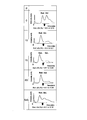
- Example 1 it is the figure which showed the chart of HPLC of 15 minutes after mixing before SNMC mixing of each formulation. In Example 1, it is the figure which showed the chart of HPLC after progress for 0 minutes, 15 minutes, 60 minutes, and 540 minutes after SNMC mixing of the preparation A.
- an implementation relating to an albumin-containing intravenous agent of the present invention a method for preparing the albumin-containing intravenous agent, a medical solution bag containing the albumin-containing intravenous agent, and a kit including the albumin-containing intravenous agent A form is demonstrated.
- Oxidized albumin refers to albumin in which a thiol compound (such as cysteine or glutathione) in vivo other than albumin is bonded to a cysteine residue present at the 34th position from the N-terminus via a disulfide bond.
- Reduced albumin refers to albumin in which the SH group of the cysteine residue present 34th from the N-terminus is in a free state.
- the albumin-containing intravenous agent of the present embodiment is characterized by mixing a first intravenous agent containing albumin as an active ingredient and a second intravenous agent containing cysteine or a related compound thereof. Before being administered, by coexisting with an intravenous injection containing cysteine having a reducing ability or a similar compound, the content of reduced albumin in the total albumin (sum of oxidized albumin and reduced albumin) It can be higher than 1 intravenous injection.
- the first intravenous agent used in the present embodiment may be an intravenous agent containing albumin as an active ingredient.
- an existing intravenous agent containing albumin can be used as it is.
- an intravenous injection is a drug that is directly administered to the veins of animals, and may be administered to humans, and mammals other than humans (rodents such as mice, rats, hamsters, guinea pigs, etc.
- Laboratory animals such as rabbits; domestic animals such as pigs, cows, goats, horses, sheep, minks; pets such as dogs and cats; primates such as monkeys, rhesus monkeys, marmosets, orangutans, chimpanzees, etc.) May be.
- Albumin contained in the first intravenous agent of this embodiment is usually serum albumin of the above mammal (preferably human).
- human serum albumin include a polypeptide comprising the amino acid sequence represented by SEQ ID NO: 1.
- the albumin contained in the albumin-containing intravenous agent of the present embodiment may be either albumin isolated or purified from serum or recombinant albumin produced by a gene recombination technique.
- albumin examples include the following albumins disclosed in JP-A-2002-12553.
- the coloring degree of the first intravenous agent is preferably 0.0035 to 0 at an absorbance ratio of A 350 nm / A 280 nm.
- the absorbance ratio of A 405 nm / A 280 nm is 0.0018 to 0.0179.
- a fusion protein of albumin and another protein is also included in albumin used for the first intravenous agent of this embodiment.
- the fusion protein include JP-T 2007-522806, JP-T 2004-506407, JP-T 2003-530838, JP-T 2003-530839, JP-T 2003-530846, JP-T 2003-.
- the following albumin fusion proteins disclosed in JP-A-530847, JP-T2003-530852, and JP-T2003-53590 can be mentioned.
- a therapeutic protein X and albumin comprising the amino acid sequence of SEQ ID NO: 1;
- B A therapeutic protein: X and a fragment or variant of the amino acid sequence of SEQ ID NO: 1 having albumin activity;
- C The amino acid sequence of SEQ ID NO: 1 further having albumin activity that can extend the shelf life of therapeutic protein: X compared to the shelf life of therapeutic protein: X and non-fused therapeutic protein: X Fragments or variants of
- D Therapeutic protein: X and a fragment or variant of the amino acid sequence of SEQ ID NO: 1 having albumin activity and further comprising the amino acid sequence of amino acids 1 to 387 of SEQ ID NO: 1;
- E Therapeutic protein: Therapeutic protein having X biological activity: X fragment or mutant, and albumin comprising the amino acid sequence of SEQ ID NO: 1;
- F Therapeutic protein: X or a fragment or variant thereof and albumin or a fragment or variant thereof (a) to (e) (wherein the therapeutic protein: X or
- the albumin fusion proteins [2] -1 to [2] -3 may not be glycosylated.
- the albumin fusion proteins [2] -1 to [2] -3 described above can be expressed in yeast (eg, yeast lacking glycosylation; yeast lacking glycosylation and protease).
- the mammalian cell can be a mammalian cell in culture.
- the albumin fusion protein of [2] -1 to [2] -3 may further contain a secretory leader sequence.
- the therapeutic protein used in the albumin fusion protein of [2] -1 to [2] -3 above is a protein, polypeptide, antibody, peptide or fragment thereof having one or more therapeutic and / or biological activities Say variant.
- the therapeutic proteins encompassed by this embodiment include proteins, polypeptides, peptides, antibodies, and biologics (the terms peptide, protein, and polypeptide are used interchangeably herein) It is not limited to these. It is specifically contemplated that the term “therapeutic protein” includes antibodies and fragments and variants thereof. Thus, the protein of this embodiment may comprise at least one fragment or variant of a therapeutic protein and / or at least one fragment or variant of an antibody. Furthermore, the term “therapeutic protein” may refer to the endogenous or naturally occurring counterpart of a therapeutic protein.
- a therapeutic protein such as one or more therapeutic proteins described herein or known in the art by a polypeptide that exhibits "therapeutic activity” or a protein that is "therapeutically active”
- a polypeptide having one or more known biological and / or therapeutic activities related to is meant.
- a “therapeutic protein” is a protein useful for the treatment, prevention or amelioration of a disease, condition or disorder, but is not limited thereto.
- a “therapeutic protein” may specifically bind to a particular cell type (normal (eg, lymphocyte) or abnormal (eg, cancer cell)), and therefore, the compound ( Drug or cytotoxic agent) may be used to specifically target the cell type.
- the therapeutic proteins used in the albumin fusion proteins [2] -1 to [2] -3 are GLP-I, GLP-2, PACAP-27, PACAP-28, VIP, CD4M33, secretin, glicentin, and oxin.
- Interferon hybrids can also be used as therapeutic proteins.
- Interferon hybrids include interferon alpha-interferon alpha hybrids (referred to herein as alpha-alpha hybrids).
- the alpha-alpha hybrid can consist of or comprise interferon alpha A fused to interferon alpha D (A / D hybrid).
- the alpha-alpha hybrid consists of or comprises interferon alpha A fused to interferon alpha F (A / F hybrid).
- the alpha-alpha hybrid portion consists of or comprises interferon alpha A fused to interferon alpha B (A / B hybrid).
- Interferon hybrids include interferon alpha-interferon beta hybrids (referred to herein as alpha-beta hybrids).
- the alpha-beta hybrid consists of or comprises interferon alpha D (also referred to as interferon alpha-1) fused to interferon beta-1. (Alpha D / beta-1 hybrid).
- Further therapeutic proteins include JP-T 2007-522806, JP-T 2004-506407, JP-T 2003-530838, JP-T 2003-530839, JP-T 2003-530846, JP-T 2003.
- One or more therapeutic proteins disclosed in the column (column 1) of “Therapeutic protein X” in Table 1 of JP-A-530847, JP-T 2003-530852, and JP-T 2003-53590 Including but not limited to peptides or fragments or variants.
- the first intravenous agent of this embodiment can be produced by a method known per se.
- an intravenous agent containing albumin used as the first intravenous agent of the present embodiment can be obtained by dissolving albumin in an aqueous solvent capable of intravenous injection.
- aqueous solvent for dissolving albumin examples include sterilized water, physiological saline, and physiological buffer.
- pharmaceutically acceptable additives for example, the above-mentioned vitamins, electrolytes, trace elements, nutrients, stabilizers, antioxidants, etc.
- the content of albumin in the first intravenous agent of the present embodiment is not particularly limited, but is usually 0.01 to 30 g / ml (0.01 to 30 w / v%), preferably 0.1 ⁇ 25 g / ml. If the albumin content is less than 0.01 g / ml, the desired preventive or therapeutic effect (for example, the prophylactic or therapeutic effect on edema associated with liver disease) may not be sufficiently obtained. If the serum albumin content exceeds 30 g / ml, the first intravenous injection may become unstable as a preparation.
- the 1st intravenous injection of this embodiment should just contain at least albumin as an active ingredient, and may contain the other medicinal component, as long as the effect of this embodiment is not impaired.
- the second intravenous agent used in the present embodiment is cysteine having a reducing ability for oxidized albumin or a similar compound thereof (hereinafter, “ Intravenous preparations containing cysteine or the like.
- the intravenous injection may be administered to humans as in the case of the first intravenous injection, and may be administered to mammals other than humans.
- cysteine contained in the second intravenous injection of this embodiment examples include L-cysteine, D-cysteine, and DL-cysteine, with L-cysteine being preferred.
- the cysteine-related compound contained in the second intravenous agent of the present embodiment may be a compound having a structure similar to cysteine and having a reducing ability for oxidized albumin, and the thiol group of cysteine Examples include compounds in which other sites are substituted with other groups. Specific examples of the compound include N-acetylcysteine.
- cysteine or the like may be contained as a pharmacologically acceptable salt such as L-cysteine hydrochloride.
- the content of cysteine or the like in the second intravenous agent of the present embodiment is particularly limited as long as it is an amount that can exert a reducing ability with respect to at least a part of oxidized albumin in the first intravenous agent.
- the albumin content in the first intravenous injection considering the albumin content in the first intravenous injection, the content ratio of oxidized albumin, the mixing ratio and mixing time of the first intravenous injection and the second intravenous injection, the mode of mixing, etc. Can be adjusted.
- an intravenous agent having a cysteine content of preferably 1 mM to 5M, more preferably 5 mM to 1.5M can be used as the second intravenous agent of this embodiment.
- the second intravenous agent of this embodiment may be an intravenous agent containing cysteine or the like as a main medicinal component, or may be an intravenous agent containing a medicinal component other than cysteine or the like.
- the medicinal component other than cysteine and the like that may be contained in the second intravenous agent of this embodiment is not particularly limited as long as it is a medicinal component that is generally administered intravenously. Although it can be appropriately selected depending on the state, administration purpose, etc., it is preferably a medicinal component administered for the treatment or prevention of liver disease, edema and the like.
- the second intravenous injection of this embodiment can be produced by dissolving cysteine or the like and other medicinal ingredients as required in an aqueous solvent that can be injected intravenously.
- aqueous solvent for dissolving cysteine and the like include the same solvents as those for dissolving albumin.
- the existing intravenous injection containing cysteine or the like can be used as it is as the second intravenous injection of the present embodiment.
- the intravenous injection for example, as an intravenous injection containing L-cysteine or its hydrochloride, 20 mL of strong neominophagency (registered trademark) intravenous injection, which is an agent for liver diseases and allergies, strong neominophagency (Registered trademark) Intravenous injection 50 mL, Strong Neominophagen C (registered trademark) P 20 mL (all manufactured by Minophagen Pharmaceutical); Ascorbine's injection of Calashimin C injection solution 25% (manufactured by Tsuruhara Pharmaceutical); Christophane, a metabolic preparation (Registered trademark) Note (manufactured by Nissin Pharmaceutical); Morihepamine (registered trademark) intravenous infusion (Ajinomoto Pharmaceutical Co., Ltd.), an amino acid injection solution for liver failure; Preamine (registered trademark)
- an intravenous injection containing N-acetylcysteine and its salts 17.6% “showa” (showa Yakuhin Kako), an acetaminophen poisoning antidote, is a high-calorie infusion sugar
- Examples include ELNEOPA (registered trademark) No. 1 infusion, ELNEOPA (registered trademark) No. 2 infusion (all manufactured by Otsuka Pharmaceutical Co., Ltd.), which are electrolytes, amino acids, general vitamins, and trace element solutions.
- Intravenous infusion is preferably used as the second intravenous infusion of the present embodiment.
- the first intravenous agent and the second intravenous agent used in this embodiment are preferably sterilized.
- a sterilization method a normal high-pressure steam sterilization method, a low-temperature heat sterilization method, a filtration sterilization method, or the like can be used alone or in combination.
- the first intravenous agent and the second intravenous agent used in the present embodiment have a pH of 5.0 to 7.4, preferably pH 6.0 to 7.4.
- an acid such as hydrochloric acid, acetic acid, citric acid, malic acid or the like may be used.
- the first intravenous agent and the second intravenous agent used in the present embodiment include necessary amounts of vitamins such as vitamin A, B1, B2, B6, C, D, E, nicotinic acid, pantothenic acid, biotin, Vitamins such as folic acid and vitamin-like compounds, electrolytes such as sodium, potassium, calcium, chloro, and phosphorus, and trace elements such as iron, zinc, manganese, copper, iodine, and selenium can be added.
- vitamins such as vitamin A, B1, B2, B6, C, D, E, nicotinic acid, pantothenic acid, biotin, Vitamins such as folic acid and vitamin-like compounds, electrolytes such as sodium, potassium, calcium, chloro, and phosphorus, and trace elements such as iron, zinc, manganese, copper, iodine, and selenium can be added.
- sugars such as maltose, fructose and xylitol
- lipids such as soybean oil, cottonseed oil and sesame oil
- amino acids such as glycine, valine, leucine and isoleucine
- stabilizers such as sodium bisulfite, or other substances that can be administered to the human body can be added.
- the albumin-containing intravenous injection of this embodiment can be prepared by mixing the first intravenous injection and the second intravenous injection before being administered to the animal.
- the mixing ratio of the first intravenous injection and the second intravenous injection is such that at least a part of oxidized albumin in the first intravenous injection can be reduced by cysteine or the like in the second intravenous injection after mixing. If it is, it will not specifically limit, It considers the albumin content in a 1st intravenous agent, the content rate of oxidized albumin, the aspect of a 1st intravenous agent, a 2nd intravenous agent, etc., and adjusts suitably. can do.
- the amount of cysteine and the like derived from the second intravenous injection is sufficient with respect to the amount of oxidized albumin derived from the first intravenous injection
- the content of reduced albumin can be increased more efficiently.
- the reduced albumin content relative to the total albumin content can be increased as compared with the first intravenous agent before mixing.
- the first intravenous injection and the second intravenous injection are allowed to coexist so that cysteine or the like derived from the second intravenous injection is present in an amount of 5 ⁇ mol or more and 200 ⁇ mol or less per gram of albumin derived from the first intravenous injection. .
- the time for allowing the first intravenous injection and the second intravenous injection to coexist by mixing is particularly limited as long as it is sufficient to reduce at least part of oxidized albumin derived from the first intravenous injection. Instead, it can be appropriately adjusted in consideration of the mixing ratio of the first intravenous injection and the second intravenous injection.
- the first intravenous agent-derived albumin is replaced with a sufficient amount of cysteine derived from the second intravenous agent (for example, 0.5 ⁇ mol or more cysteine or the like per 1 g of albumin).
- the animal is injected into a vein.
- the upper limit of the coexistence time is not particularly limited, but the coexistence time is preferably 9 hours or less, more preferably 5 hours or less, and even more preferably 2 hours or less.
- the albumin-containing intravenous agent of this embodiment is a mixture of a first intravenous agent prepared as an intravenous agent and a second intravenous agent that is also intravenously injected as an intravenous agent before being injected into an animal vein.
- a first intravenous agent prepared as an intravenous agent and a second intravenous agent that is also intravenously injected as an intravenous agent before being injected into an animal vein.
- Mixing of the first intravenous injection and the second intravenous injection is preferably performed within 12 hours before administration, more preferably performed 9 hours before, and further preferably performed 1 hour before, More preferably, it is performed immediately before administration.
- the intravenous injection containing albumin of the present embodiment is intravenously administered into a peripheral vein or central vein, and is generally about 100 to 2000 ml, preferably about 500 to 1000 ml per adult per day. This is divided into 1 to 2 times per day, and the dose is increased or decreased as appropriate in consideration of the disease state, nutritional status, age, weight, etc. of the patient to be administered.
- the total amount of the first intravenous agent may be mixed with the total amount of the second intravenous agent in one mixing operation, or may be gradually mixed part by part. Good.
- the mixing condition is that the albumin derived from the first intravenous agent is sufficient for a sufficient amount of time for the albumin derived from the first intravenous agent and the cysteine derived from the second intravenous agent to be sufficiently injected. It is adjusted so that it can coexist.
- the total amount of the first intravenous agent and the total amount of the second intravenous agent are mixed and incubated at room temperature for 10 minutes or more, preferably 10 minutes to 1 hour, and then the resulting mixture (containing the albumin of the present embodiment) IV) can be set in an intravenous syringe and administered to animals.
- the container for incubating the mixed solution of the first intravenous injection and the second intravenous injection is not particularly limited, but the sterilized first intravenous injection and the sterilized second intravenous injection are aseptically mixed.
- the container can be mixed and incubated.
- the first intravenous agent and the second intravenous agent can be mixed in a medical liquid pack provided with a spout that can be connected to an intravenous injector, and the first intravenous agent and the second intravenous agent. And then incubating both at the same time in the medical solution pack, the medical solution pack can be set in an injector. Moreover, after injecting and incubating the other intravenous injection agent into the chemical solution pack in which one of the first intravenous injection agent and the second intravenous injection agent is stored in advance, the medical solution pack is set in the injector You can also
- the first intravenous injection and the second intravenous injection can be stored independently, and after storage, the first intravenous injection storage section (first chamber) and the second intravenous injection storage section (
- the albumin-containing intravenous injection of the present embodiment is prepared by using a medical liquid bag capable of mixing the first intravenous injection and the second intravenous injection by communicating with the second chamber). You can also.
- a medical liquid bag capable of mixing the first intravenous injection and the second intravenous injection by communicating with the second chamber. You can also.
- a medical solution bag for example, a first chamber containing a first intravenous agent, which is formed by fusing the periphery of two flexible resin films, provides an extraction port, and a second intravenous agent is provided.
- a medical solution bag in which the second chamber for storing the liquid is separated by a partition wall made of an easy peel seal, a flexible resin film having a weakened portion, or the like.
- Such a medical liquid bag is configured such that when the first chamber and the second chamber are pressed from the outside, the partition wall between the first chamber and the second chamber is easily peeled or broken, and as a result, Two rooms communicate.
- a stirring and mixing process is performed in order to sufficiently mix the first intravenous agent and the second intravenous agent.
- ultrasonic treatment using a water bath sonicator or the like can be performed on the medical drug solution bag after the first chamber and the second chamber are communicated.
- the medical drug solution bag may be provided with a stirrer for mixing the first intravenous injection and the second intravenous injection in advance.
- a stirrer is sealed in a third chamber separated from at least one of the first chamber and the second chamber by a partition wall made of a flexible resin film having an easy peel seal or a weakened portion. .
- the partition in the third chamber is easily peeled or broken, and stirred.
- the child is put into the mixture.
- the stirrer moves in the mixed solution, so that the mixed solution is sufficiently stirred and mixed.
- the shape, material, size, etc. of the stirrer are the amount of the first intravenous agent and the second intravenous agent and the amount of the medical solution back. It can be appropriately prepared in consideration of the material and the like.
- the first intravenous injection and the second intravenous injection can be stirred and mixed using a magnetic field generator for stirring such as a magnetic stirrer.
- a first chamber containing a first intravenous agent, a second chamber containing a second intravenous agent, and a sub-portion provided with a spout It is also possible to use a medical solution bag that has a chamber, the first chamber and the second chamber do not communicate with each other, and the sub chamber can communicate with both the first chamber and the second chamber.
- the medical medicinal solution bag is surrounded by a flexible resin film and has a first chamber, a second chamber, and a sub chamber that can seal and store a liquid.
- the first chamber contains a first intravenous agent
- the second chamber contains a second intravenous agent
- the sub-chamber allows the liquid to flow to the outside.
- a spout that can be poured out is provided
- a first easy peel seal is disposed between the first chamber and the sub chamber
- a second easy peel seal is disposed between the second chamber and the sub chamber.
- the first intravenous injection contained in the first chamber can flow into the sub chamber by peeling the first easy peel seal by pressing the first intravenous injection from the outside through the resin film.
- the second easy peel seal is peeled off by pressing the second intravenous agent in the second chamber or the liquid in the sub chamber from the outside, and allows the second chamber and the sub chamber to communicate with each other. .
- the first intravenous agent contained in the first chamber is gradually allowed to flow into the sub chamber by peeling off the first easy peel seal, and further, the second easy peel seal is peeled off and then contained in the second chamber.
- the first intravenous agent and the second intravenous agent can gradually coexist in the sub chamber.
- albumin derived from the first intravenous agent is present in the subchamber, and the albumin derived from the first intravenous agent that has flowed into the subchamber is injected through the spout for intravenous injection.
- the amount of albumin contained in the first intravenous solution contained in the first chamber is accommodated in the second chamber so that the time until it is injected into the animal's vein via the vessel is 10 minutes to 1 hour.
- the flow rate at which the first intravenous flow flows from the first chamber to the sub chamber, and the flow at which the second intravenous flow flows from the second chamber to the sub chamber It is preferable to adjust the speed and the like as appropriate.
- the inflow speed from the first chamber or the second chamber to the sub chamber can be adjusted, for example, by adjusting the width of the first easy peel seal or the second easy peel seal.
- the stirrer When the stirrer is previously stored in the sub chamber, the first intravenous agent and the second intravenous agent flowing into the sub chamber are sufficiently mixed by stirring using the stirrer. You can also.
- the stirrer can be appropriately selected from those generally used for mixing solutions, as in the above. For example, when a magnetic stirrer is used, the magnetic stirrer in the sub chamber is vibrated by bringing the magnetic field generator close to the sub chamber, and the first and second intravenous agents are mixed. can do.
- a kit for preparing an albumin-containing intravenous agent of this embodiment is prepared by storing the first intravenous agent in the first chamber and the second intravenous agent in the second chamber in the medical solution bag. Can do. Further, instructions and cautions may be printed on the surface of the medical solution bag.
- the spout provided in these medical medicinal solution bags functions as a connector that can be connected to the injection port of a known intravenous infusion device, so that the first intravenous injection prepared in the medical medicinal solution bag is provided.
- a mixture of the agent and the second intravenous agent can be injected into the vein of the animal.
- the injection port include a medical drug solution bag such as a puncture needle for puncturing the injection port of an intravenous injection device and a rubber stopper that can be punctured by a puncture needle provided in the injection port of an intravenous injection device.
- a known connector can be used. Especially, it is preferable that it can be aseptically connected to the injection port of a known intravenous injection device without requiring a special sterilization operation.
- the medical device can be opened by opening the package immediately before being connected to the intravenous injector.
- the liquid mixture of the first intravenous solution and the second intravenous solution in the medical solution bag can be simply injected into the intravenous injector while maintaining the sterility of the mixed solution.
- the albumin-containing intravenous injection of the present embodiment has two or more injection ports and one injection port inserted into a vein, and is a mixture of two or more types of intravenous injections injected from different injection ports. It can also be prepared using an injector for intravenous injection in which the liquid is discharged from the outlet. When such an intravenous injector is used, the first intravenous agent and the second intravenous agent injected into the intravenous injector are mixed with each other while flowing to the outlet.
- the time from when both are mixed to the time when the albumin is discharged from the spout is the time during which albumin derived from the first intravenous agent coexists with cysteine derived from the second intravenous agent or a similar compound thereof (first intravenous injection). Reaction time during which oxidized albumin derived from the injection is reduced).
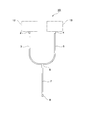
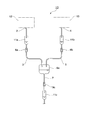
- a first flow path 3 extending from the first injection port 2 a second flow path 5 extending from the second injection port 4, the first flow path 3 and the above-described An injector 1A (hereinafter referred to as “injector of the present embodiment”) having a junction 6 where the second channel 5 merges and a third channel 7 extending from the junction 6 and provided with a spout 8. May be used).
- injector of the present embodiment By connecting the container 12 containing the first intravenous agent to the first inlet 2, the first intravenous agent is injected from the first inlet 2, and the second intravenous agent is contained in the second inlet 4.
- each component of the injector of the present embodiment can be used by appropriately combining those commonly used in an intravenous injector (for example, an infusion device).
- an intravenous injector for example, an infusion device.
- flexible tubes that are widely used for drip can be used.
- albumin derived from the first intravenous agent and cysteine derived from the second intravenous agent coexist in the third flow path 7. Therefore, in order to sufficiently increase the content ratio of the reduced albumin content, the concentration of cysteine or the like in the liquid flowing through the third flow path is 0.5 ⁇ mol / ml or more per 1 g / ml of albumin concentration in the liquid.
- the albumin content in the first intravenous injection, the concentration of cysteine and the like in the second intravenous injection, the flow rate of the first intravenous flow through the first flow path, and the second intravenous flow through the second flow path It is preferable to appropriately adjust the flow rate of the injection.
- the time required for the albumin derived from the first intravenous injection to reach the spout 8 from the junction 6 is 10 minutes or longer, preferably 10 minutes to 1 hour.
- Each channel may be provided with a flow rate controller in order to adjust the flow rate of the liquid flowing through the channel (specifically, the flow rate controllers 9a to 9c shown in FIGS. 2 to 4).
- a flow rate control unit for example, a tube that adjusts the flow rate of the liquid flowing in the flexible tube by changing the inner diameter of the flexible tube by sandwiching the flexible tube with an appropriate force by a clamp.
- an infusion pump that adjusts the flow rate of the liquid flowing in the flexible tube by squeezing the clamp or the flexible tube and moving the compressed portion to the front of the flexible tube at a constant speed
- the flow rate control unit can be used.
- the flow rate control unit may be installed in only one of the first flow channel, the second flow channel, and the third flow channel, or may be installed in two flow channels. You may install in all.
- each flow path of the injector of this embodiment can be provided with a droplet confirmation unit for confirming the flow velocity (specifically, the droplet confirmation units 11a to 11c shown in FIG. 4).
- a droplet confirmation unit for confirming the flow velocity
- the flow velocity of the liquid flowing through each dew can be easily adjusted within a desired range.
- the injector of this embodiment may be provided with a storage part.
- the storage part 6a which serves as the junction part 6.
- FIG. 1 The first intravenous agent flowing in from the first flow path 3 and the second intravenous injection flowing in from the second flow path 5 are more fully mixed by being stored together for a certain time in the storage portion 6a. In this state, the mixed liquid can be flowed into the third flow path 7.
- the storage portion 10 may be provided in the third flow path 7.
- a 1st intravenous injection and a 2nd intravenous injection can be mixed more fully rather than a flow path.
- the injector shown in FIG. 3 can also be manufactured by inserting a needle-attached tube for intravenous injection into the spout of an existing medical infusion bag such as “Arime Bag” (manufactured by Nipro). .
- the first intravenous injection and the second intravenous injection are used in the storage unit. Can be thoroughly mixed in.
- the flow rate control unit 9a is provided in the first flow path 3
- the flow rate control unit 9b is provided in the second flow path 5
- the flow rate control unit 9c is provided downstream of the storage unit 10.
- the flow rate control unit 9c closes the flow path (that is, the flow rate is adjusted to 0 min / ml), and the first intravenous injection agent and the second intravenous injection agent respectively flow into the storage unit 6a and mix. Store liquid.
- the flow path is closed by the flow rate control unit 9a and the flow rate control unit 9b.
- the flow control part 9c is closed again, and the flow control part 9a and the flow control part 9b are opened.
- the solution in the reservoir 6a is discharged from the first intravenous agent-derived oxidized albumin and the second intravenous agent-derived cysteine, etc., in a sufficiently mixed state, so that the remaining third flow path 7 Can be efficiently converted to the reduced form of oxidized albumin derived from the first intravenous agent.
- the storage unit 6a and the storage unit 10 may be provided with stirring means.
- stirring means include a fine vibration device and an ultrasonic generator.
- the storage part may be made of a material having sufficient hardness, and the storage part may be provided with a magnetic stirring bar. By generating an appropriate magnetic field in the reservoir containing the magnetic stirrer, the liquid in the reservoir can be sufficiently mixed by the rotational force of the magnetic stirrer.
- tip of one flow path exists in the other flow path (for example, 2nd flow path 5). It can also be formed.
- Such a double tube structure increases the contact area between the solution discharged from the inner tube and the solution flowing through the outer tube, and as a result, the first intravenous agent and the second intravenous agent are more sufficiently mixed. Can do.
- merging part 6c can be improved also by providing a some discharge port in the front-end
- various members that are generally provided in an infusion set or the like used for infusion can be installed in each component of the injector of the present embodiment.
- the injector, the first intravenous agent, and the second intravenous agent of the present embodiment be one kit or packaged product.
- a kit or packaged product is not particularly limited in its production, and can be appropriately determined by conventional methods.
- These kits and packages preferably contain instructions describing how to take them, symptoms that must be stopped, and cautions describing how to deal with side effects.
- these kits and packaged products may include a drug or the like administered simultaneously with the albumin-containing intravenous injection of the present embodiment.
- the albumin containing intravenous injection of this embodiment should just contain the 1st intravenous injection and the 2nd intravenous injection at least.
- the albumin-containing intravenous agent of this embodiment contains other drugs as long as the reducing action on oxidized albumin derived from the first intravenous agent by cysteine derived from the second intravenous agent is not impaired. Also good.
- the content of reduced albumin or oxidized albumin in the albumin-containing intravenous agent of the present embodiment can be measured by appropriately selecting from known quantification methods in the technical field.
- Specific examples of the measurement method include the following methods.
- (I) A dye binding method using bromcresol green (BCG) and bromcresol purple (BCP). Since the BCP method has different reactivities to reduced albumin and oxidized albumin, the ratio of oxidized albumin can be calculated from the difference in the albumin quantitative values determined by the BCP method and the BCG method.
- BCG bromcresol green
- BCP bromcresol purple
- the ratio of oxidized albumin can be calculated from the difference in the albumin quantitative values determined by the BCP method and the BCG method.
- (II) A method for quantifying SH groups derived from reduced albumin using a free SH group quantification reagent such as Elman's reagent (Sogami M, Int. Pept.
- the oxidized albumin ratio in the biological sample is preferably quantified by any one of the above methods (III) to (V). More preferably, it is quantified by the method.
- the albumin-containing intravenous injection of the present embodiment can be used for the treatment and prevention of various diseases like other albumin-containing intravenous injections. Among them, it is preferably used for the treatment and prevention of liver diseases and related diseases, and more preferably used for the treatment and prevention of edema associated with liver diseases.
- liver diseases include cirrhosis, hepatitis (viral hepatitis (such as hepatitis C and B), alcoholic hepatitis, nonalcoholic hepatitis, etc.).
- edema refers to a state where fluid is excessively stored in the cell stroma (water retention). Edema associated with liver disease is manifested primarily as a symptom of ascites.
- Example 1 Four types of commercially available intravenous albumin preparations were mixed with 20 mL of strong Neominophagen C (registered trademark) IV [cysteine hydrochloride 22.29 mg / 20 ml (20 mg / 20 ml as L-cysteine), 53 mg / 20 ml monoammonium glycyrrhizinate ( Glycyrrhizic acid (40 mg / 20 ml); manufactured by Minofagen Co., Ltd. (hereinafter referred to as SNMC)] was mixed, and the change in the content of reduced albumin in each albumin preparation was examined. The following four types of albumin preparations for intravenous injection were used.
- Formulation A Albuminer 25% (manufactured by CLS Behring, Lot: OF209B)
- Formulation B Blood donation albumin 20 “Kakekenken” (manufactured by Astellas Pharma Inc., Lot: SA1058)
- Formulation C Blood donation albumin 25% (Venesis, Lot: R312PX)
- Formulation D Blood donation albumin 4.4% (Nippon Pharmaceutical, Lot: N258MN)
- the contents of reduced albumin and oxidized albumin in each albumin preparation were measured by HPLC method. Specifically, reduced albumin and oxidized albumin were separated and detected by HPLC, and the reduced albumin ratio was determined from the peak area ratio on the separated chromatogram.
- Table 1 shows the measured value (average value ⁇ standard deviation) of the reduced albumin content ratio in each preparation for each elapsed time after mixing. In Table 1, “-” indicates that measurement was not performed.
- FIG. 7 shows HPLC charts of each albumin preparation before SNMC mixing and after 15 minutes from mixing.
- FIG. 8 shows an HPLC chart of Formulation A after 0 minutes, 15 minutes, 60 minutes, and 540 minutes have elapsed since mixing with SNMC. 7 and 8, “Red.” Is a peak of reduced albumin, and “Oxi.” Is a peak of oxidized albumin.
- the content of reduced albumin increased after the SMNC mixing. The increasing tendency reached a peak after about 15 minutes, and then gradually decreased.
- the reduced albumin content ratio was higher than that before SNMC mixing, although it was lower than the peak even after 9 hours from mixing. Further, when the average value of reduced albumin of preparations A to D before mixing (elapsed time 0 minutes after mixing) and 15 minutes after mixing was determined, it was 36.45 ⁇ 1.03% before mixing. On the other hand, it was 76.3 ⁇ 1.5% after 15 minutes of mixing. From these results, it is clear that the ratio of the reduced albumin content can be dramatically increased by mixing an intravenous agent containing albumin with an intravenous agent containing cysteine or the like.
- Example 2 Reducing albumin in preparations A to D in the same manner as in Example 1 except that 100 ⁇ L or 50 ⁇ L of SNMC was added to each 0.625 g of each albumin preparation and the mixing time was 15 minutes. The content of oxidized albumin was measured. Tables 2 and 3 show the measured values (average value ⁇ standard deviation) of the reduced albumin content in each preparation. Table 2 shows the results when 100 ⁇ L of SNMC was added, and Table 3 shows the results when 50 ⁇ L of SNMC was added.
- Example 1 In all albumin preparations, the content ratio of reduced albumin after 15 minutes after mixing was lower in Example 1 which was 200 ⁇ L than in the case where the amount of SNMC was 50 ⁇ L. Furthermore, also in the albumin preparations A and B, the content of reduced albumin was higher when the amount of SNMC mixed was 100 ⁇ L than 50 ⁇ L. From these results, it can be seen that as the amount of cysteine added to the albumin-containing intravenous injection increases, the effect of improving the reduced albumin content ratio is higher. For 0.625 g of albumin, 50 ⁇ g of cysteine hydrochloride (with cysteine) It is apparent that the effect of improving the content ratio of reduced albumin can be obtained by mixing about 0.5 ⁇ mol).
- the albumin-containing intravenous agent of the present invention has a higher content ratio of reduced albumin than conventional albumin-containing intravenous agents, and therefore a higher therapeutic effect can be expected. It can be suitably used as a drug for the prevention or treatment of liver disease, particularly for the prevention or treatment of edema associated with liver disease.
Landscapes
- Health & Medical Sciences (AREA)
- Life Sciences & Earth Sciences (AREA)
- Veterinary Medicine (AREA)
- Public Health (AREA)
- Chemical & Material Sciences (AREA)
- General Health & Medical Sciences (AREA)
- Animal Behavior & Ethology (AREA)
- Medicinal Chemistry (AREA)
- Pharmacology & Pharmacy (AREA)
- Epidemiology (AREA)
- Bioinformatics & Cheminformatics (AREA)
- Engineering & Computer Science (AREA)
- Hematology (AREA)
- General Chemical & Material Sciences (AREA)
- Gastroenterology & Hepatology (AREA)
- Zoology (AREA)
- Diabetes (AREA)
- Proteomics, Peptides & Aminoacids (AREA)
- Chemical Kinetics & Catalysis (AREA)
- Immunology (AREA)
- Nuclear Medicine, Radiotherapy & Molecular Imaging (AREA)
- Organic Chemistry (AREA)
- Dermatology (AREA)
- Medicinal Preparation (AREA)
- Medicines That Contain Protein Lipid Enzymes And Other Medicines (AREA)
- Medical Preparation Storing Or Oral Administration Devices (AREA)
Abstract
このアルブミン含有静注剤の調製方法では、ルブミンを有効成分とする第1静注剤と、システイン又はその類縁化合物を含有する第2静注剤とを混合してなることを特徴とするアルブミン含有静注剤、並びに、アルブミンを有効成分とする第1静注剤と、システイン又はその類縁化合物を含有する第2静注剤とを混合した後、10分間~1時間、室温にてインキュベートする。
Description
本発明は、アルブミン含有静注剤、当該アルブミン含有静注剤を調製する方法、当該アルブミン含有静注剤が収容された医療用薬液バッグ、及び当該アルブミン含有静注剤を含むキットに関する。
本願は、2011年3月4日に、日本に出願された特願2011-047777号に基づき優先権を主張し、その内容をここに援用する。
本願は、2011年3月4日に、日本に出願された特願2011-047777号に基づき優先権を主張し、その内容をここに援用する。
腹水等の浮腫症状は肝硬変や肝細胞癌、細菌性腹膜炎、うっ血性心疾患、ネフローゼ症候群、腹腔内諸臓器の炎症性病変、腹膜炎によって出現する。特に肝硬変での浮腫の出現は非代償期に入った徴候であり、予後を左右する極めて重要な症状としても重視されている。
従来、浮腫に関連する臨床検査上の検査項目として血清アルブミン量が用いられている(例えば、非特許文献1参照。)。血清アルブミン値がおよそ2.5~2.0g/dl以下に低下するとコロイド浸透圧は低下し、腹水が発生すると考えられ、これを指標にして治療効果のモニタリングが行われていた。また、血清と腹水のアルブミン濃度差が1.1g/dlを上回れば漏出液、それ以下であれば滲出液との鑑別も腹水治療方法の選択に用いられていた。
アルブミンは生体内で最も多く存在するタンパク質である。アルブミンの生理機能としては、膠質浸透圧の維持、物質の輸送、アミノ酸の供給、pH緩衝作用、酸化還元緩衝作用等が知られている。近年、翻訳後修飾によるミクロヘテロジェニティーがアルブミンに存在することが明らかとなり、アルブミンの量ではなく質の違いと機能の違いとの関連性が議論されるようになってきた。
血清アルブミンは、N末端から34番目に存在するシステイン残基のSH基が遊離の状態の還元型アルブミンと、血中のシステインやグルタチオンなどとジスルフィド(S-S)結合した状態の酸化型アルブミンとの混合物として存在している。正常ヒト血清では還元型が約75%、酸化型が約25%の割合で存在するが、肝硬変患者(例えば、非特許文献2参照。)、慢性腎不全患者、糖尿病患者や麻酔又は手術時の患者では酸化型アルブミンの割合が増加していると報告されている(例えば、非特許文献3参照。)。
その他、酸化型/還元型アルブミン比はアルブミン量と比較して、浮腫との間に高い相関を示すこと、及び、肝硬変に伴う浮腫を患っている患者に還元型アルブミンを投与し酸化型アルブミン比率を積極的に減少させると、酸化型アルブミンを含有する通常のアルブミンを投与した場合よりも効果的に浮腫を改善し得ることが報告されている(例えば、特許文献1参照。)。すなわち、還元型アルブミンの含有割合の高いアルブミンを投与することにより、酸化型アルブミンの含有割合の高いアルブミンを投与するよりも、肝疾患による浮腫に対して、より高い治療効果が期待できる。そこで、特許文献1においては、還元剤を添加することにより、還元型アルブミンの含有割合を高めたアルブミン含有静注剤が開示されている。
福井博、「治療学」、2007年、第41巻、第4号、第45~48ページ。
Watanabe, A.、ニュートリション(Nutrition)、2004年、第20巻、第351ページ。
恵良聖一、「臨床検査」2004年、第48巻、第501~511ページ。
しかしながら、医薬品の場合、その製造工程を変更することは一般的に難しく、還元剤を添加したアルブミン静注剤を製造し、治療に用いることは困難である。
本発明は、既存のアルブミン含有静注剤中の還元型アルブミンの含有割合を、簡便に高めることにより、より治療効果の高いアルブミン含有静注剤を提供することを目的とする。
本発明者は、上記課題を解決すべく鋭意研究した結果、アルブミン含有静注剤を、還元能を有するシステイン等を含む静注剤と混合した状態で一定期間維持した後に投与することにより、当該アルブミン含有静注剤の還元型アルブミンの含有割合を高められ、より高い治療効果が期待できることを見出し、本発明を完成させた。
すなわち、本発明は、上記目的を達成するために、下記の構成のアルブミン含有静注剤、当該アルブミン含有静注剤を調製する方法、当該アルブミン含有静注剤が収容された医療用薬液バッグ、及び当該アルブミン含有静注剤を含むキットを提供する。
(1) アルブミンを有効成分とする第1静注剤と、システイン又はその類縁化合物を含有する第2静注剤とを混合してなることを特徴とするアルブミン含有静注剤。
(2) 前記第2静注剤由来のシステイン又はその類縁化合物が、前記第1静注剤由来のアルブミン1g当たり0.5μmol以上存在するように、両者を共存させた後に静注される前記(1)に記載のアルブミン含有静注剤。
(3) 前記第1静注剤由来のアルブミンが、前記第2静注剤由来のシステイン又はその類縁化合物と10分間以上共存させた後に静注される前記(1)又は(2)に記載のアルブミン含有静注剤。
(4) 前記第1静注剤由来のアルブミンと前記第2静注剤由来のシステイン又はその類縁化合物との共存時間が、5時間以下である前記(3)に記載のアルブミン含有静注剤。
(5) 前記第1静注剤と前記第2静注剤とを混合した後に、静注用注入器に注入される前記(1)~(4)のいずれか一つに記載のアルブミン含有静注剤。
(6) 前記第1静注剤及び前記第2静注剤を混合した後、前記静注用注入器に注入される前に、10分間以上室温にてインキュベートされる前記(5)に記載のアルブミン含有静注剤。
(7) 前記第2静注剤中のシステイン又はその類縁化合物の濃度が、1mg/ml以上である前記(1)~(6)のいずれか一つに記載のアルブミン含有静注剤。
(8) 浮腫の改善のために投与されることを特徴とする前記(1)~(7)のいずれか一つに記載のアルブミン含有静注剤。
(9) 第1注入口からのびる第1流路と、
第2注入口からのびる第2流路と、
前記第1流路と前記第2流路とが合流する合流部と、
前記合流部からのび、かつ注出口を備える第3流路と、
を有する注入器を用い、
前記第1注入口からアルブミンを有効成分とする第1静注剤を注入し、前記第2注入口からシステイン又はその類縁化合物を含有する第2静注剤を注入し、前記第1静注剤と前記第2静注剤との混合液を、前記第3流路の前記合流部から10分間以上かけて前記注出口までを到達させることにより調製されることを特徴とするアルブミン含有静注剤。
(10) 前記第3流路を流れる液体中のシステイン又はその類縁化合物の濃度が、当該液体中のアルブミン濃度1g/ml当たり0.5μmol/ml以上である前記(9)に記載のアルブミン含有静注剤。
(11) 前記第1静注剤中のアルブミン含有量が0.01~30g/mlであり、前記第2静注剤中のシステイン又はその類縁化合物含有量が1mM~5Mである前記(9)又は(10)に記載のアルブミン含有静注剤。
(12) 前記合流部又は第3流路に、貯留部が設けられている前記(9)~(11)のいずれか一つに記載のアルブミン含有静注剤。
(13) 前記第1流路、前記第2流路、及び前記第3流路のうち、少なくとも一つの流路において、流量制御部が設けられている前記(9)~(12)のいずれか一つに記載のアルブミン含有静注剤。
(14) 浮腫の改善のために投与されることを特徴とする前記(9)~(13)のいずれか一つに記載のアルブミン含有静注剤。
(15) 第1注入口からのびる第1流路と、
第2注入口からのびる第2流路と、
前記第1流路と前記第2流路とが合流する合流部と、
前記合流部からのび、かつ注出口を備える第3流路と、
を有する注入器を用い、
前記第1注入口からアルブミンを有効成分とする第1静注剤を注入し、前記第2注入口からシステイン又はその類縁化合物を含有する第2静注剤を注入し、前記第1静注剤と前記第2静注剤との混合液を、前記第3流路の前記合流部から10分間以上かけて前記注出口までを到達させることを特徴とするアルブミン含有静注剤の調製方法。
(16) 前記第3流路を流れる液体中のシステイン又はその類縁化合物の濃度が、当該液体中のアルブミン濃度1g/ml当たり0.5μmol/ml以上である(15)に記載のアルブミン含有静注剤の調製方法。
(17) 前記第1静注剤中のアルブミン含有量が0.01~30g/mlであり、前記第2静注剤中のシステイン又はその類縁化合物含有量が1mM~5Mである(15)又は(16)に記載のアルブミン含有静注剤の調製方法。
(18) 前記合流部又は第3流路に設けられた貯留部を用い、前記第1静注剤と前記第2静注剤とを一定時間貯留する(15)~(17)のいずれか一つに記載のアルブミン含有静注剤の調製方法。
(19) 前記第1流路、前記第2流路、及び前記第3流路のうち、少なくとも一つの流路に設けられた流量制御部を用い、流量制御を行う(15)~(18)のいずれか一つに記載のアルブミン含有静注剤の調製方法。
(20) 前記混合液を10分間~1時間、室温にてインキュベートする(15)~(19)のいずれか一つに記載のアルブミン含有静注剤の調製方法。
(21) 医療用薬液バックであって、
可撓性樹脂フィルムにより包囲されそれぞれ液体を密封し収容可能な第1室、第2室及び副室を有し、
前記第1室にはアルブミンを有効成分とする第1静注剤が収容されており、
前記第2室にはシステイン又はその類縁化合物を含有する第2静注剤が収容されており、
前記副室は、液体を外部へ注出できる注出口を備え、
前記第1室と前記副室との間に第1イージーピールシールが配置され、
前記第2室と前記副室との間に第2イージーピールシールが配置され、
前記第1イージーピールシールが、前記樹脂フィルムを介して前記第1室に収容された第1静注剤を外部から押圧することにより剥離され、前記第1室と前記副室とを連通させ、
前記第2イージーピールシールが、前記第2室内の前記第2静注剤又は前記副室内の液体を外部から押圧することにより剥離され、前記第2室と前記副室とを連通させることを特徴とする医療用薬液バッグ。
(22) 少なくとも、アルブミンを有効成分とする第1静注剤と、システイン又はその類縁化合物を含有する第2静注剤と、注入器とを有し、
前記注入器は、
第1注入口からのびる第1流路と、
第2注入口からのびる第2流路と、
前記第1流路と前記第2流路とが合流する合流部と、
前記合流部からのび、かつ注出口を備える第3流路と、
を有することを特徴とするキット。
(1) アルブミンを有効成分とする第1静注剤と、システイン又はその類縁化合物を含有する第2静注剤とを混合してなることを特徴とするアルブミン含有静注剤。
(2) 前記第2静注剤由来のシステイン又はその類縁化合物が、前記第1静注剤由来のアルブミン1g当たり0.5μmol以上存在するように、両者を共存させた後に静注される前記(1)に記載のアルブミン含有静注剤。
(3) 前記第1静注剤由来のアルブミンが、前記第2静注剤由来のシステイン又はその類縁化合物と10分間以上共存させた後に静注される前記(1)又は(2)に記載のアルブミン含有静注剤。
(4) 前記第1静注剤由来のアルブミンと前記第2静注剤由来のシステイン又はその類縁化合物との共存時間が、5時間以下である前記(3)に記載のアルブミン含有静注剤。
(5) 前記第1静注剤と前記第2静注剤とを混合した後に、静注用注入器に注入される前記(1)~(4)のいずれか一つに記載のアルブミン含有静注剤。
(6) 前記第1静注剤及び前記第2静注剤を混合した後、前記静注用注入器に注入される前に、10分間以上室温にてインキュベートされる前記(5)に記載のアルブミン含有静注剤。
(7) 前記第2静注剤中のシステイン又はその類縁化合物の濃度が、1mg/ml以上である前記(1)~(6)のいずれか一つに記載のアルブミン含有静注剤。
(8) 浮腫の改善のために投与されることを特徴とする前記(1)~(7)のいずれか一つに記載のアルブミン含有静注剤。
(9) 第1注入口からのびる第1流路と、
第2注入口からのびる第2流路と、
前記第1流路と前記第2流路とが合流する合流部と、
前記合流部からのび、かつ注出口を備える第3流路と、
を有する注入器を用い、
前記第1注入口からアルブミンを有効成分とする第1静注剤を注入し、前記第2注入口からシステイン又はその類縁化合物を含有する第2静注剤を注入し、前記第1静注剤と前記第2静注剤との混合液を、前記第3流路の前記合流部から10分間以上かけて前記注出口までを到達させることにより調製されることを特徴とするアルブミン含有静注剤。
(10) 前記第3流路を流れる液体中のシステイン又はその類縁化合物の濃度が、当該液体中のアルブミン濃度1g/ml当たり0.5μmol/ml以上である前記(9)に記載のアルブミン含有静注剤。
(11) 前記第1静注剤中のアルブミン含有量が0.01~30g/mlであり、前記第2静注剤中のシステイン又はその類縁化合物含有量が1mM~5Mである前記(9)又は(10)に記載のアルブミン含有静注剤。
(12) 前記合流部又は第3流路に、貯留部が設けられている前記(9)~(11)のいずれか一つに記載のアルブミン含有静注剤。
(13) 前記第1流路、前記第2流路、及び前記第3流路のうち、少なくとも一つの流路において、流量制御部が設けられている前記(9)~(12)のいずれか一つに記載のアルブミン含有静注剤。
(14) 浮腫の改善のために投与されることを特徴とする前記(9)~(13)のいずれか一つに記載のアルブミン含有静注剤。
(15) 第1注入口からのびる第1流路と、
第2注入口からのびる第2流路と、
前記第1流路と前記第2流路とが合流する合流部と、
前記合流部からのび、かつ注出口を備える第3流路と、
を有する注入器を用い、
前記第1注入口からアルブミンを有効成分とする第1静注剤を注入し、前記第2注入口からシステイン又はその類縁化合物を含有する第2静注剤を注入し、前記第1静注剤と前記第2静注剤との混合液を、前記第3流路の前記合流部から10分間以上かけて前記注出口までを到達させることを特徴とするアルブミン含有静注剤の調製方法。
(16) 前記第3流路を流れる液体中のシステイン又はその類縁化合物の濃度が、当該液体中のアルブミン濃度1g/ml当たり0.5μmol/ml以上である(15)に記載のアルブミン含有静注剤の調製方法。
(17) 前記第1静注剤中のアルブミン含有量が0.01~30g/mlであり、前記第2静注剤中のシステイン又はその類縁化合物含有量が1mM~5Mである(15)又は(16)に記載のアルブミン含有静注剤の調製方法。
(18) 前記合流部又は第3流路に設けられた貯留部を用い、前記第1静注剤と前記第2静注剤とを一定時間貯留する(15)~(17)のいずれか一つに記載のアルブミン含有静注剤の調製方法。
(19) 前記第1流路、前記第2流路、及び前記第3流路のうち、少なくとも一つの流路に設けられた流量制御部を用い、流量制御を行う(15)~(18)のいずれか一つに記載のアルブミン含有静注剤の調製方法。
(20) 前記混合液を10分間~1時間、室温にてインキュベートする(15)~(19)のいずれか一つに記載のアルブミン含有静注剤の調製方法。
(21) 医療用薬液バックであって、
可撓性樹脂フィルムにより包囲されそれぞれ液体を密封し収容可能な第1室、第2室及び副室を有し、
前記第1室にはアルブミンを有効成分とする第1静注剤が収容されており、
前記第2室にはシステイン又はその類縁化合物を含有する第2静注剤が収容されており、
前記副室は、液体を外部へ注出できる注出口を備え、
前記第1室と前記副室との間に第1イージーピールシールが配置され、
前記第2室と前記副室との間に第2イージーピールシールが配置され、
前記第1イージーピールシールが、前記樹脂フィルムを介して前記第1室に収容された第1静注剤を外部から押圧することにより剥離され、前記第1室と前記副室とを連通させ、
前記第2イージーピールシールが、前記第2室内の前記第2静注剤又は前記副室内の液体を外部から押圧することにより剥離され、前記第2室と前記副室とを連通させることを特徴とする医療用薬液バッグ。
(22) 少なくとも、アルブミンを有効成分とする第1静注剤と、システイン又はその類縁化合物を含有する第2静注剤と、注入器とを有し、
前記注入器は、
第1注入口からのびる第1流路と、
第2注入口からのびる第2流路と、
前記第1流路と前記第2流路とが合流する合流部と、
前記合流部からのび、かつ注出口を備える第3流路と、
を有することを特徴とするキット。
本発明のアルブミン含有静注剤の調製方法により、従来の製造工程を大きく変更することなく、還元型アルブミンの含有割合が高められたアルブミン含有静注剤を簡便に調製することができる。したがって、当該調製方法により得られた本発明のアルブミン含有静注剤は、従来のアルブミン含有静注剤と比較してより高い治療効果が期待できる。
以下、本発明のアルブミン含有静注剤、当該アルブミン含有静注剤を調製する方法、当該アルブミン含有静注剤が収容された医療用薬液バッグ、及び当該アルブミン含有静注剤を含むキットに関する一実施形態を説明する。
酸化型アルブミンとは、N末端から34番目に存在するシステイン残基にアルブミン以外の生体内のチオール化合物(システインやグルタチオン等)がジスルフィド結合を介して結合したアルブミンをいう。還元型アルブミンとは、N末端から34番目に存在するシステイン残基のSH基が遊離状態にあるアルブミンをいう。
本実施形態のアルブミン含有静注剤は、アルブミンを有効成分とする第1静注剤と、システイン又はその類縁化合物を含有する第2静注剤とを混合してなることを特徴とする。投与される前に、還元能を有するシステイン又はその類縁化合物を含む静注剤と共存させることにより、総アルブミン(酸化型アルブミンと還元型アルブミンの総和)に占める還元型アルブミンの含有割合を、第1静注剤よりも高めることができる。
本実施形態において用いられる第1静注剤(以下、「本実施形態の第1静注剤」ということがある。)は、アルブミンを有効成分として含有する静注剤であればよい。例えば、アルブミンを含有する既存の静注剤をそのまま用いることができる。なお、静注剤は、動物の静脈に直接投与される薬剤であり、ヒトに投与されるものであってもよく、ヒト以外の哺乳動物(マウス、ラット、ハムスター、モルモット等のげっ歯類やウサギ等の実験動物;ブタ、ウシ、ヤギ、ウマ、ヒツジ、ミンク等の家畜;イヌ、ネコ等のペット;サル、アカゲザル、マーモセット、オランウータン、チンパンジーなどの霊長類等)に投与されるものであってもよい。
本実施形態の第1静注剤に含まれるアルブミンは、通常上記哺乳動物(好ましくはヒト)の血清アルブミンである。ヒト血清アルブミンとしては、配列番号1で表されるアミノ酸配列を含むポリペプチドを例示することができる。本実施形態のアルブミン含有静注剤に含まれるアルブミンは、血清から単離又は精製されたアルブミン又は遺伝子組み換え技術により製造された組み換え型アルブミンのいずれであってもよい。
本実施形態の第1静注剤に用いることのできるアルブミンとして、特開2002-12553号公報に開示された以下のアルブミンを挙げることができる。
[1]遺伝子操作により調製したヒト血清アルブミン産生宿主を培養してヒト血清アルブミンを発現させる際に、陰イオン交換体、疎水性担体及び活性炭からなる群より選ばれた少なくとも一つを添加した培養液中で当該宿主を培養することにより、ヒト血清アルブミンと着色成分とが結合する前に当該ヒト血清アルブミンと当該着色成分とを分離して発現させたヒト血清アルブミン。該ヒト血清アルブミンの着色抑制方法により得られる、遺伝子操作により発現されるヒト血清アルブミンは、着色成分が結合していない。該アルブミンを含有する組成物を本実施形態の第1静注剤として使用した場合、当該第1静注剤の着色度は、好ましくは、A350nm/A280nmの吸光度比で0.0035~0.0163であり、A405nm/A280nmの吸光度比で0.0018~0.0179である。
また、アルブミンと他のタンパク質との融合タンパク質も、本実施形態の第1静注剤に用いられるアルブミンに包含される。該融合タンパク質としては、特表2007-522806号公報、特表2004-506407号公報、特表2003-530838号公報、特表2003-530839号公報、特表2003-530846号公報、特表2003-530847号公報、特表2003-530852号公報、及び特表2003-531590号公報に開示された以下のアルブミン融合蛋白質を挙げることができる。
[2]-1
(a)治療用蛋白質:Xと、配列番号:1のアミノ酸配列を含むアルブミン;
(b)治療用蛋白質:Xと、アルブミン活性を有する配列番号:1のアミノ酸配列の断片もしくは変異体;
(c)治療用蛋白質:Xと、非融合状態の治療用蛋白質:Xの貯蔵寿命と比べて治療用蛋白質:Xの貯蔵寿命を延長し得るアルブミン活性をさらに有する、配列番号:1のアミノ酸配列の断片もしくは変異体;
(d)治療用蛋白質:Xと、アルブミン活性を有し、さらに配列番号:1のアミノ酸1~387のアミノ酸配列を含む、配列番号:1のアミノ酸配列の断片もしくは変異体;
(e)治療用蛋白質:Xの生物活性を有する治療用蛋白質:Xの断片もしくは変異体と、配列番号:1のアミノ酸配列を含むアルブミン;
(f)治療用蛋白質:X又はその断片もしくは変異体と、(a)~(e)のアルブミン又はその断片もしくは変異体(ここで、該治療用蛋白質:X又はその断片もしくは変異体は、アルブミンのN-末端又はアルブミンの断片もしくは変異体のN-末端に融合されている);
(g)治療用蛋白質:X又はその断片もしくは変異体と、(a)~(e)のアルブミン又はその断片もしくは変異体(ここで、該治療用蛋白質:X又はその断片もしくは変異体は、アルブミンのC-末端又はアルブミンの断片もしくは変異体のC-末端に融合されている);
(h)治療用蛋白質:X又はその断片もしくは変異体と、(a)~(e)のアルブミン又はその断片もしくは変異体(ここで、該治療用蛋白質:X又はその断片もしくは変異体は、アルブミンのN-末端及びC-末端又はアルブミンの断片もしくは変異体のN-末端及びC-末端に融合されている);
(i)第一の治療用蛋白質:X又はその断片もしくは変異体、及び第二の治療用蛋白質:X又はその断片もしくは変異体を含み、
第一の治療用蛋白質:X又はその断片もしくは変異体は、第二の治療用蛋白質:X又はその断片もしくは変異体と異なるものである、
治療用蛋白質:X又はその断片もしくは変異体と、(a)~(e)のアルブミン又はその断片もしくは変異体;
(j)治療用蛋白質:X又はその断片もしくは変異体と、(a)~(i)のアルブミン又はその断片もしくは変異体(ここで、該治療用蛋白質: X又はその断片もしくは変異体はリンカーによりアルブミン又はアルブミンの断片もしくは変異体から分離されている);及び
(k)治療用蛋白質:X又はその断片もしくは変異体と、(a)~(j)のアルブミン又はその断片もしくは変異体(ここで、アルブミン融合蛋白質は、以下の式:
R1-L-R2;R2-L-R1;又はR1-L-R2-L-R1
を有し、さらに、R1は治療用蛋白質:X又はその断片もしくは変異体であり、Lはペプチドリンカーであり、及びR2は配列番号:1のアミノ酸配列を含むアルブミン又はアルブミンの断片もしくは変異体である);
からなる群より選択されるメンバーを含む、アルブミン融合蛋白質(特表2007-522806号公報)。
(a)治療用蛋白質:Xと、配列番号:1のアミノ酸配列を含むアルブミン;
(b)治療用蛋白質:Xと、アルブミン活性を有する配列番号:1のアミノ酸配列の断片もしくは変異体;
(c)治療用蛋白質:Xと、非融合状態の治療用蛋白質:Xの貯蔵寿命と比べて治療用蛋白質:Xの貯蔵寿命を延長し得るアルブミン活性をさらに有する、配列番号:1のアミノ酸配列の断片もしくは変異体;
(d)治療用蛋白質:Xと、アルブミン活性を有し、さらに配列番号:1のアミノ酸1~387のアミノ酸配列を含む、配列番号:1のアミノ酸配列の断片もしくは変異体;
(e)治療用蛋白質:Xの生物活性を有する治療用蛋白質:Xの断片もしくは変異体と、配列番号:1のアミノ酸配列を含むアルブミン;
(f)治療用蛋白質:X又はその断片もしくは変異体と、(a)~(e)のアルブミン又はその断片もしくは変異体(ここで、該治療用蛋白質:X又はその断片もしくは変異体は、アルブミンのN-末端又はアルブミンの断片もしくは変異体のN-末端に融合されている);
(g)治療用蛋白質:X又はその断片もしくは変異体と、(a)~(e)のアルブミン又はその断片もしくは変異体(ここで、該治療用蛋白質:X又はその断片もしくは変異体は、アルブミンのC-末端又はアルブミンの断片もしくは変異体のC-末端に融合されている);
(h)治療用蛋白質:X又はその断片もしくは変異体と、(a)~(e)のアルブミン又はその断片もしくは変異体(ここで、該治療用蛋白質:X又はその断片もしくは変異体は、アルブミンのN-末端及びC-末端又はアルブミンの断片もしくは変異体のN-末端及びC-末端に融合されている);
(i)第一の治療用蛋白質:X又はその断片もしくは変異体、及び第二の治療用蛋白質:X又はその断片もしくは変異体を含み、
第一の治療用蛋白質:X又はその断片もしくは変異体は、第二の治療用蛋白質:X又はその断片もしくは変異体と異なるものである、
治療用蛋白質:X又はその断片もしくは変異体と、(a)~(e)のアルブミン又はその断片もしくは変異体;
(j)治療用蛋白質:X又はその断片もしくは変異体と、(a)~(i)のアルブミン又はその断片もしくは変異体(ここで、該治療用蛋白質: X又はその断片もしくは変異体はリンカーによりアルブミン又はアルブミンの断片もしくは変異体から分離されている);及び
(k)治療用蛋白質:X又はその断片もしくは変異体と、(a)~(j)のアルブミン又はその断片もしくは変異体(ここで、アルブミン融合蛋白質は、以下の式:
R1-L-R2;R2-L-R1;又はR1-L-R2-L-R1
を有し、さらに、R1は治療用蛋白質:X又はその断片もしくは変異体であり、Lはペプチドリンカーであり、及びR2は配列番号:1のアミノ酸配列を含むアルブミン又はアルブミンの断片もしくは変異体である);
からなる群より選択されるメンバーを含む、アルブミン融合蛋白質(特表2007-522806号公報)。
[2]-2
配列番号:1のアミノ酸配列又はその断片もしくは変異体を含むアルブミン又はその断片もしくは変異体に挿入された治療用蛋白質:X又はその断片もしくは変異体を含む、アルブミン融合蛋白質(特表2007-522806号公報)。
配列番号:1のアミノ酸配列又はその断片もしくは変異体を含むアルブミン又はその断片もしくは変異体に挿入された治療用蛋白質:X又はその断片もしくは変異体を含む、アルブミン融合蛋白質(特表2007-522806号公報)。
[2]-3
(a)配列番号:1のアミノ酸54~61;
(b)配列番号:1のアミノ酸76~89;
(c)配列番号:1のアミノ酸92~100;
(d)配列番号:1のアミノ酸170~176;
(e)配列番号:1のアミノ酸247~252;
(f)配列番号:1のアミノ酸266~277;
(g)配列番号:1のアミノ酸280~288;
(h)配列番号:1のアミノ酸362~368;
(i)配列番号:1のアミノ酸439~447;
(j)配列番号:1のアミノ酸462~475;
(k)配列番号:1のアミノ酸478~486;及び
(1)配列番号:1のアミノ酸560~566:
からなる群より選択されるアミノ酸配列を含むアルブミン又はその断片もしくは変異体に挿入された治療用蛋白質: X又はその断片もしくは変異体を含む、アルブミン融合蛋白質(特表2007-522806号公報)。
(a)配列番号:1のアミノ酸54~61;
(b)配列番号:1のアミノ酸76~89;
(c)配列番号:1のアミノ酸92~100;
(d)配列番号:1のアミノ酸170~176;
(e)配列番号:1のアミノ酸247~252;
(f)配列番号:1のアミノ酸266~277;
(g)配列番号:1のアミノ酸280~288;
(h)配列番号:1のアミノ酸362~368;
(i)配列番号:1のアミノ酸439~447;
(j)配列番号:1のアミノ酸462~475;
(k)配列番号:1のアミノ酸478~486;及び
(1)配列番号:1のアミノ酸560~566:
からなる群より選択されるアミノ酸配列を含むアルブミン又はその断片もしくは変異体に挿入された治療用蛋白質: X又はその断片もしくは変異体を含む、アルブミン融合蛋白質(特表2007-522806号公報)。
上記[2]-1~[2]-3のアルブミン融合蛋白質は、グリコシル化されていなくてもよい。
上記[2]-1~[2]-3のアルブミン融合蛋白質は、酵母(グリコシル化欠損の酵母;グリコシル化及びプロテアーゼ欠損の酵母等)において発現され得る。
該哺乳類細胞は、培養下の哺乳類細胞であり得る。
上記[2]-1~[2]-3のアルブミン融合蛋白質は、分泌リーダー配列をさらに含み得る。
上記[2]-1~[2]-3のアルブミン融合蛋白質は、酵母(グリコシル化欠損の酵母;グリコシル化及びプロテアーゼ欠損の酵母等)において発現され得る。
該哺乳類細胞は、培養下の哺乳類細胞であり得る。
上記[2]-1~[2]-3のアルブミン融合蛋白質は、分泌リーダー配列をさらに含み得る。
上記[2]-1~[2]-3のアルブミン融合蛋白質において用いられる治療用蛋白質は、1又はそれ以上の治療活性及び/又は生物活性を有する蛋白質、ポリペプチド、抗体、ペプチド又はその断片もしくは変異体を言う。本実施形態に包含される治療用蛋白質は、蛋白質、ポリペプチド、ペプチド、抗体、及び生物製剤(ペプチド、蛋白質、及びポリペプチドなる用語は本明細書中、同義的に用いられる)を含むが、これらに限定されない。用語「治療用蛋白質」が抗体及びその断片及び変異体を含むことが特に熟慮される。故に、本実施形態の蛋白質は、治療用蛋白質の少なくとも1つの断片もしくは変異体及び/又は抗体の少なくとも1つの断片もしくは変異体を含んでもよい。さらに、用語「治療用蛋白質」は、治療用蛋白質の内在性又は天然に存在する対応物に言及してもよい。
「治療活性」を示すポリペプチド又は「治療上活性」のある蛋白質により、本明細書中に記載されている又は当該技術分野において知られている1又はそれ以上の治療用蛋白質のごとき治療用蛋白質に関連する1又はそれ以上の知られている生物活性及び/又は治療活性を有するポリペプチドが意味される。例えば、「治療用蛋白質」は、疾患、状態又は障害の処置、予防又は改善に有用な蛋白質であるが、これらに限定されない。非限定的な例として、「治療用蛋白質」は、特定の細胞型(正常な(例えばリンパ球)又は異常な(例えば癌細胞))に特異的に結合してもよく、それ故に、化合物(薬剤又は細胞傷害性剤)をその細胞型へ特異的にターゲッティングするために用いてもよい。
上記[2]-1~[2]-3のアルブミン融合蛋白質において用いられる治療用蛋白質としては、GLP-I、GLP-2、PACAP-27、PACAP-28、VIP、CD4M33、セクレチン、グリセンチン、オキシントモジュリン、PHM、IFNa、IFNp、ANP、BNP、NGF、BDNF、GDNF、IFN-ベータ、IFN-アルファ、ソマトスタチン、IGF-1、IL-2可溶性受容体、IL-2受容体アンタゴニスト、CTLL-2、カルシトニン、成長ホルモン放出因子、副甲状腺ホルモン、GMCSF、EPO、GCSF、インシュリン、免疫グロブリン、血清コリンエステラーゼ、α-1アンチトリプシン、アプロチニン、前駆体形態及び活性形態にある凝固因子(フォン・ビルブラント因子、フィブリノーゲン、第II因子、第VII因子、活性第VIIA因子、第VIII因子、第IX因子、第X因子、第XIII因子、c1インアクチベーター、アンチトロンビンIII、トロンビン、プロトロンビン、アポ-リポタンパク質、c-反応性タンパク質及びプロテインCなどが含まれるがこれらに限定されない)、ヒト成長ホルモン(hGH)、一本鎖抗体、自己分泌運動因子、分散因子、ラミニン、ヒルジン、アプラギン(applaggin)、単球走化性タンパク質(MCP/MCAF)、マクロファージコロニー刺激因子(M-CSF)、オステオポンチン、血小板第4因子、テネイシン、ビトロネクチン、ヒト絨毛性ゴナドトロピン、レプチン、酵素(例えば、ウロキナーゼ、Bグルコセレブロシダーゼ(B-glucocerebrosidase)等)、TNF受容体、成長因子(例えば、EGF、FGF-1、FGF-2、NGF、PDGF、VEGF-1等)、インターロイキン(例えば、IL-1、IL-4、IL-8、IL-10、IL-11、IL-12等)、インターロイキン受容体(例えば、IL-4受容体等)、インターフェロン(例えば、インターフェロンガンマ、インターフェロンオメガ等)、トランスフォーミング成長因子(例えば、TGF-ベータ、TGF-ベータ-1、TGF-ベータ-3)、腫瘍壊死因子(例えば、TNF-アルファ)、ホルモン(例えば、ゴナドトロピン、ヒト黄体形成ホルモン、卵胞刺激ホルモン等)、DNase、デコリン、オステオプロテグリン、Tie-2、t-PA等を挙げることができるが、これらに限定されない。治療用蛋白質は、モノマー又はタンデム融合物の態様で用いられ得る。
インターフェロンハイブリッドも治療用蛋白質として用いることができる。インターフェロンハイブリッドには、インターフェロンアルファ-インターフェロンアルファハイブリッド(本明細書中、アルファ-アルファハイブリッドと言う)が含まれる。一態様において、アルファ-アルファハイブリッドは、インターフェロンアルファDに融合されたインターフェロンアルファAからなる或いはそれを含み得る(A/Dハイブリッド)。別の態様において、アルファ-アルファハイブリッドは、インターフェロンアルファFに融合されたインターフェロンアルファAからなる或いはそれを含む(A/Fハイブリッド)。さらなる一態様において、アルファ-アルファハイブリッド部分は、インターフェロンアルファBに融合されたインターフェロンアルファAからなる或いはそれを含む(A/Bハイブリッド)。これらのハイブリッドは米国特許第4,414,510号パンフレットにさらに記載されており該文献は出典明示によりその全てが本明細書の一部となる。
インターフェロンハイブリッドには、インターフェロンアルファ-インターフェロンベータハイブリッド(本明細書中、アルファ-ベータハイブリッドと言う)が含まれる。一態様において、アルファ-ベータハイブリッドは、インターフェロンベータ-1に融合されたインターフェロンアルファD(インターフェロンアルファ-1とも言う)からなる或いはそれを含む(アルファD/ベータ-1ハイブリッド)。これらのハイブリッドは米国特許第4,758,428号パンフレットにさらに記載されており、該文献は出典明示によりその全てが本明細書の一部となる。
さらなる治療用蛋白質としては、特表2007-522806号公報、特表2004-506407号公報、特表2003-530838号公報、特表2003-530839号公報、特表2003-530846号公報、特表2003-530847号公報、特表2003-530852号公報、及び特表2003-531590号公報の表1の「治療用蛋白質X」の欄(欄1)に開示される1又はそれ以上の治療用蛋白質又はペプチド又は断片又は可変体を含むが、これらに限定されない。
本実施形態の第1静注剤は、自体公知の方法により製造することができる。例えば、アルブミンを静脈注入が可能な水性溶媒に溶解することにより、本実施形態の第1静注剤として用いられるアルブミンを含有する静注剤を得ることができる。
アルブミンを溶解させる水性溶媒としては、滅菌水、生理食塩水、生理的な緩衝液等を挙げることができる。アルブミンと供に、医薬上許容される添加剤(例えば上述のビタミン類、電解質、微量元素、栄養素、安定化剤、酸化防止剤等)を溶解してもよい。
本実施形態の第1静注剤中のアルブミンの含有量は、特に限定はされないが、通常0.01~30g/ml(0.01~30w/v%)であり、好ましくは、0.1~25g/mlである。アルブミン含有量が0.01g/ml未満であると、所望の予防又は治療効果(例えば、肝疾患に伴う浮腫に対する予防又は治療効果)が十分に得られない可能性がある。また、血清アルブミン含有量が30g/mlを超えると、第1静注剤が、製剤として不安定化する可能性がある。
また、本実施形態の第1静注剤は、有効成分として、少なくともアルブミンを含有していればよく、本実施形態の効果を損なわない限り、その他の薬効成分を含有していてもよい。
本実施形態において用いられる第2静注剤(以下、「本実施形態の第2静注剤」ということがある。)は、酸化型アルブミンに対する還元能を有するシステイン又はその類縁化合物(以下、「システイン等」ということがある。)を含有する静注剤であればよい。なお、静注剤は、第1静注剤と同様、ヒトに投与されるものであってもよく、ヒト以外の哺乳動物に投与されるものであってもよい。
本実施形態の第2静注剤に含まれるシステインとしては、L-システイン、D-システイン、DL-システインが挙げられるが、好ましくはL-システインである。本実施形態の第2静注剤に含まれるシステインの類縁化合物としては、システインと構造が類似する化合物であって、酸化型アルブミンに対する還元能を備えている化合物であればよく、システインのチオール基以外の部位が、他の基に置換等された化合物等が挙げられる。具体的な化合物としては、N-アセチルシステイン等が挙げられる。なお、本実施形態の第2静注剤には、システイン等は、L-システイン塩酸塩等のような薬理学的に許容される塩として含まれていてもよい。
本実施形態の第2静注剤中のシステイン等の含有量は、第1静注剤中の酸化型アルブミンの少なくとも一部に対して還元能を発揮し得る量であれば、特に限定されるものではなく、第1静注剤中のアルブミン含有量や酸化型アルブミンの含有割合、第1静注剤と第2静注剤の混合割合や混合時間、混合の態様等を考慮して、適宜調整することができる。例えば、システイン等の含有量が、好ましくは1mM~5M、より好ましくは5mM~1.5Mである静注剤を、本実施形態の第2静注剤として用いることができる。
本実施形態の第2静注剤は、システイン等を主たる薬効成分として含有する静注剤であってもよく、システイン等以外にも薬効成分を含有する静注剤であってもよい。本実施形態の第2静注剤が含んでいてもよいシステイン等以外の薬効成分としては、一般的に静注投与される薬効成分であれば特に限定されるものではなく、投与される患者の状態や投与目的等に応じて適宜選択することができるが、肝疾患や浮腫等の治療や予防のために投与される薬効成分であることが好ましい。
本実施形態の第2静注剤は、システイン等、及び必要に応じてその他の薬効成分を、静脈注入が可能な水性溶媒に溶解することにより、製造することができる。システイン等を溶解させる水性溶媒としては、アルブミンを溶解させる水性溶媒と同様のものを挙げることができる。
また、本実施形態の第2静注剤は、システイン等を含有する既存の静注剤をそのまま用いることができる。当該静注剤としては、例えば、L-システインやその塩酸塩を含有する静注剤として、肝臓疾患用剤・アレルギー用薬である強力ネオミノファーゲンシー(登録商標)静注20mL、強力ネオミノファーゲンシー(登録商標)静注50mL、強力ネオミノファーゲンシー(登録商標)P20mL(いずれもミノファーゲン製薬製);アスコルビンさん注射液であるカラシミンC注射液25%(鶴原製薬製);代謝性製剤であるクリストファン(登録商標)注(日新製薬製);肝不全用アミノ酸注射液であるモリヘパミン(登録商標)点滴静注(味の素製薬製);小児TPN用総合アミノ酸製剤であるプレアミン(登録商標)-P注射液等が挙げられる。また、N-アセチルシステインやその塩を含有する静注剤として、アセトアミノフェン中毒解毒剤であるアセチルシステイン内用液17.6%「ショーワ」(昭和薬品化工製);高カロリー輸液用糖・電解質・アミノ酸・総合ビタミン・微量元素液であるエルネオパ(登録商標)1号輸液、エルネオパ(登録商標)2号輸液(いずれも大塚製薬製)等が挙げられる。中でも、従来から肝疾患治療に用いられている強力ネオミノファーゲンシー(登録商標)静注20mL、強力ネオミノファーゲンシー(登録商標)静注50mL、強力ネオミノファーゲンシー(登録商標)P20mL、又はモリヘパミン(登録商標)点滴静注が、本実施形態の第2静注剤として好ましく用いられる。
本実施形態において用いられる第1静注剤及び第2静注剤は、滅菌されていることが好ましい。滅菌の方法としては、通常の高圧蒸気滅菌法、低温加熱滅菌法、濾過滅菌法などを単独であるいは組み合わせて用いることができる。
本実施形態において用いられる第1静注剤及び第2静注剤は、ヒト体液のpHを考慮して、pHは、5.0~7.4、好ましくはpH6.0~7.4である。pH調整剤としては、塩酸、酢酸、クエン酸、リンゴ酸などの酸を使用してもよい。
本実施形態において用いられる第1静注剤及び第2静注剤には、必要量のビタミン、例えば、ビタミンA、B1、B2、B6、C、D、E、ニコチン酸、パントテン酸、ビオチン、葉酸などのビタミン類及びビタミン様化合物、ナトリウム、カリウム、カルシウム、クロル、リンなどの電解質、並びに鉄、亜鉛、マンガン、銅、ヨウ素、セレンなどの微量元素を添加することができる。
さらに、マルトース、フルクトース、キシリトールなどの糖、大豆油、綿実油、ゴマ油などの脂質、グリシン、バリン、ロイシン、イソロイシンなどのアミノ酸などを添加することができる。その他、亜硫酸水素ナトリウムなどの安定化剤など、又は人体に投与可能な他の物質を添加することができる。
第1静注剤と第2静注剤とを、動物に投与する前に混合することにより、本実施形態のアルブミン含有静注剤を調製することができる。第1静注剤と第2静注剤との混合比は、混合後に、第1静注剤中の酸化型アルブミンの少なくとも一部が、第2静注剤中のシステイン等により還元可能な状態であれば特に限定されるものではなく、第1静注剤中のアルブミン含有量や酸化型アルブミンの含有割合、第1静注剤と第2静注剤の態様等を考慮して、適宜調整することができる。
混合により第1静注剤と第2静注剤とを共存させた状態において、第2静注剤由来のシステイン等の量が、第1静注剤由来の酸化型アルブミンの量に対して十分量存在することにより、より効率よく、還元型アルブミンの含有割合を増大させることができる。例えば、第2静注剤由来のシステイン等が、第1静注剤由来のアルブミン1g当たり0.5μmol以上存在するように、第1静注剤と第2静注剤とを共存させることにより、混合前の第1静注剤よりも、総アルブミン含有量に対する還元型アルブミン含有量を高めることができる。より好ましくは、第2静注剤由来のシステイン等が、第1静注剤由来のアルブミン1g当たり5μmol以上、200μmol以下存在するように、第1静注剤と第2静注剤とを共存させる。
混合により第1静注剤と第2静注剤とを共存させる時間は、第1静注剤由来の酸化型アルブミンの少なくとも一部を還元させるために十分な時間であれば特に限定されるものではなく、第1静注剤と第2静注剤の混合割合等を考慮して適宜調整することができる。例えば、本実施形態のアルブミン含有静注剤は、第1静注剤由来のアルブミンを、十分量の第2静注剤由来のシステイン等(例えば、アルブミン1g当たり0.5μmol以上のシステイン等)と、好ましくは10分間以上、より好ましくは15分間以上、さらに好ましくは30分間~1時間共存させた後に、動物の静脈へ注入されることが好ましい。共存時間の上限は特に限定されるものではないが、共存時間は9時間以下であることが好ましく、5時間以下であることがより好ましく、2時間以下であることがさらに好ましい。
本実施形態のアルブミン含有静注剤は、静注剤として調製された第1静注剤と、同じく静注剤として静注された第2静注剤とを、動物の静脈へ注入前に混合することにより、調製されるものである。第1静注剤と第2静注剤との混合は、投与前12時間以内に行われることが好ましく、9時間前に行われることがより好ましく、1時間前に行われることが更に好ましく、投与直前に行われることがよりさらに好ましい。
本実施形態のアルブミン含有静注剤は、末梢静脈内又は中心静脈内等へ経静脈内投与され、一般には、1日、成人1人当たり、約100~2000ml、好ましくは約500~1000mlを目安として、これを1日当たり1~2回に分けて、投与すべき患者の病態、栄養状態、年齢、体重等を考慮して、適宜、増減させて使用する。
本実施形態のアルブミン含有静注剤は、第1静注剤量の全量を、第2静注剤の全量と、一度の混合操作で混合してもよく、一部分ずつを徐々に混合させてもよい。なお、徐々に混合させる場合、混合条件は、実際に動物の静脈へ注入されるまでに、第1静注剤由来のアルブミンが、十分量の第2静注剤由来のシステイン等と十分な時間共存することができるように調整される。
例えば、第1静注剤の全量と第2静注剤の全量とを混合し、室温で10分間以上、好ましくは10分間~1時間インキュベートした後に、得られた混合物(本実施形態のアルブミン含有静注剤)を静注用の注入器にセットして、動物に投与することができる。第1静注剤と第2静注剤の混合液をインキュベートする容器は特に限定されるものではないが、滅菌済みの第1静注剤と滅菌済みの第2静注剤とを、無菌的に混合しインキュベートすることが可能な容器であることが好ましい。第1静注剤と第2静注剤の混合は、例えば、静注用注入器への連結が可能な注出口を備える医療用薬液パックに、第1静注剤と第2静注剤とをそれぞれ投入し、当該医療用薬液パック中で両者を共存させて室温でインキュベートした後、当該医療用薬液パックを、注入器にセットすることができる。また、第1静注剤と第2静注剤のいずれか一方が予め収容されている薬液パックに、他方の静注剤を投入してインキュベートした後、当該医療用薬液パックを注入器にセットすることもできる。
また、第1静注剤と第2静注剤とをそれぞれ独立して収容可能であり、収容後に、第1静注剤の収容部(第1室)と第2静注剤の収容部(第2室)とを連通させることにより、第1静注剤と第2静注剤を混合することが可能な医療用薬液バックを用いることにより、本実施形態のアルブミン含有静注剤を調製することもできる。当該医療用薬液バックとしては、例えば、2枚の可撓性樹脂フィルムの周囲を融着してなり、抽出口を供え、第1静注剤を収容する第1室と、第2静注剤を収容する第2室とが、イージーピールシールや弱化部を有する可撓性樹脂フィルム等により構成された隔壁によって隔てられた医療用薬液バックが挙げられる。このような医療用薬液バックは、第1室や第2室を外部から押圧することにより、第1室と第2室との間の隔壁が容易に剥離や破断する結果、第1室と第2室が連通する。
このような医療用薬液バックは、第1室と第2室とを連通させた後、第1静注剤と第2静注剤とを十分に混合させるために、攪拌混合処理が行われても良い。例えば、第1室と第2室とを連通させた後の医療用薬液バックに対して、水浴型ソニケーター等を用いた超音波処理等を行うことができる。その他、医療用薬液バックに、予め、第1静注剤と第2静注剤とを混合するための攪拌子を備えていてもよい。例えば、イージーピールシールや弱化部を有する可撓性樹脂フィルム等により構成された隔壁によって第1室と第2室の少なくともずれか一方と隔てられた第3室に、攪拌子を封入しておく。第1室と第2室の連通時又は連通後に、第1静注剤と第2静注剤の混合液を外部から押圧することにより、第3室の隔壁が容易に剥離や破断し、攪拌子が当該混合液に投入される。この状態で医療用薬液バックを振ることにより、混合液中で攪拌子が移動する結果、混合液が十分に攪拌混合される。攪拌子は、一般的に溶液の混合に用いられるものを利用することができ、その形状、材質、大きさ等は、第1静注剤と第2静注剤の量や医療用薬液バックの材質等を考慮して適宜調製することができる。例えば、磁性攪拌子を用いることにより、マグネチックスターラー等の汎用されている攪拌用磁場発生装置を利用して、第1静注剤と第2静注剤とを攪拌混合することもできる。
その他、例えば、特開2000-316951号公報に記載されているような、第1静注剤を収容する第1室と、第2静注剤を収容する第2室と、注出口を備える副室とを有し、第1室と第2室は互いに連通せず、副室は第1室と第2室の両方と連通可能な医療用薬液バックを用いることもできる。具体的には、可撓性樹脂フィルムにより包囲され、それぞれ液体を密封し収容可能な第1室、第2室及び副室を有する医療用薬液バックである。この医療用薬液バックでは、前記第1室には第1静注剤が収容されており、前記第2室には第2静注剤が収容されており、前記副室は、液体を外部へ注出できる注出口を備え、前記第1室と前記副室との間に第1イージーピールシールが配置され、前記第2室と前記副室との間に第2イージーピールシールが配置されている。前記第1室に収容された第1静注剤が、樹脂フィルムを介して当該第1静注剤を外部から押圧することにより前記第1イージーピールシールを剥離させて副室へ流入可能である。前記第2イージーピールシールは、前記第2室内の前記第2静注剤又は前記副室内の液体を外部から押圧することにより剥離され、前記第2室と前記副室とを連通させることができる。第1イージーピールシールを剥離することによって第1室に収容されていた第1静注剤を副室へ徐々に流入させ、さらに第2イージーピールシールを剥離することによって第2室に収容されていた第2静注剤を副室へ徐々に流入させることにより、副室で第1静注剤と第2静注剤とを徐々に共存させることができる。当該医療用薬液バッグの注出口を静注用注入器にセットすることにより、副室中の第1静注剤及び第2静注剤の混合液(本実施形態のアルブミン含有静注剤)を動物に投与することができる。この際、副室において、第1静注剤由来のアルブミン1g当たり0.5μmol以上存在しており、かつ、副室に流入した第1静注剤由来のアルブミンが、注出口から静注用注入器を経由して動物の静脈に注入されるまでの時間が10分間~1時間となるように、第1室に収容される第1静注剤中のアルブミンの含有量、第2室に収容される第2静注剤中のシステイン等の含有量、第1室から副室へ第1静注剤が流入する流入速度、及び第2室から副室へ第2静注剤が流入する流入速度等を適宜調整することが好ましい。なお、第1室や第2室から副室への流入速度は、例えば、第1イージーピールシールや第2イージーピールシールの幅等を調節することにより、調整することができる。
副室に、予め攪拌子を収容しておいた場合には、当該攪拌子を用いて攪拌することにより、副室へ流入した第1静注剤と第2静注剤とを十分に混合することもできる。攪拌子としては、前記のものと同様に、一般的に溶液の混合に用いられるものの中から適宜選択して用いることができる。例えば、磁性攪拌子を用いた場合には、副室の近傍に、磁場発生装置を近づけることにより、副室内の磁性攪拌子を振動させて第1静注剤と第2静注剤とを混合することができる。
これらの医療用薬液バックに、第1室に第1静注剤、第2室に第2静注剤を収容させたものを、本実施形態のアルブミン含有静注剤の調製用キットとすることができる。さらに、当該医療用薬液バックの表面に指示書、注意書きを印刷しておいてもよい。
これらの医療用薬液バックが備える注出口が、公知の静注用注入器の注入口に導通可能なコネクターとして機能するものであることにより、当該医療用薬液バック内で調製された第1静注剤及び第2静注剤の混合液を、動物の静脈へ注入することができる。当該注入口としては、静注用注入器の注入口に穿刺するための穿刺針や、静注用注入器の注入口に備えられた穿刺針によって穿刺可能なゴム栓等の、医療用薬液バック等で公知のコネクターを用いることができる。中でも、特段の滅菌操作を要することなく、公知の静注用注入器の注入口に無菌的に導通可能なものであることが好ましい。例えば、医療用薬液バックの注出口に備えられた穿刺針やゴム栓を予め無菌包装しておいた場合には、静注用注入器に導通させる直前に当該包装を開封することにより、当該医療用薬液バック中の第1静注剤と第2静注剤の混合液の無菌状態を維持したまま、静注用注入器に簡便に注入することができる。
また、本実施形態のアルブミン含有静注剤は、2以上の注入口と、静脈へ挿し込まれる1の注出口とを有し、異なる注入口から注入された2種類以上の静注剤の混合液が注出口から排出される静注用注入器を用いて調製することもできる。このような静注用注入器を用いた場合には、当該静注用注入器に注入された第1静注剤と第2静注剤は、注出口へと流れる間に互いに混合される。つまり、両者が混合された時点から、注出口から排出されるまでの時間が、第1静注剤由来のアルブミンが第2静注剤由来のシステイン又はその類縁化合物と共存する時間(第1静注剤由来の酸化型アルブミンが還元される反応時間)である。
具体的には、例えば、図1に示すような、第1注入口2からのびる第1流路3と、第2注入口4からのびる第2流路5と、前記第1流路3と前記第2流路5とが合流する合流部6と、前記合流部6からのび、かつ注出口8を備える第3流路7と、を有する注入器1A(以下、「本実施形態の注入器」ということがある。)を用いることができる。第1注入口2に第1静注剤を含有する容器12を接続させることにより第1注入口2から第1静注剤を注入し、第2注入口4に第2静注剤を含有する容器13を接続させることにより第2注入口4から第2静注剤を注入すると、第1静注剤と第2静注剤は合流部6で合流し、両者の混合液(本実施形態のアルブミン含有静注剤)が、第3流路7を通って注出口8まで流れる。
なお、本実施形態の注入器の各構成部材は、静注用注入器(例えば、点滴用具等)において一般的に用いられているものを適宜組み合わせて使用することができる。例えば、第1~3流路は、点滴用として汎用されている可撓性チューブを用いることができる。
本実施形態の注入器においては、第3流路7中において、第1静注剤由来のアルブミンと第2静注剤由来のシステイン等が共存した状態で存在する。したがって、還元型アルブミン含有量の含有割合をより十分に高めるために、第3流路を流れる液体中のシステイン等の濃度が、当該液体中のアルブミン濃度1g/ml当たり0.5μmol/ml以上となるように、第1静注剤中のアルブミン含有量、第2静注剤注のシステイン等の濃度、第1流路を流れる第1静注剤の流速、第2流路を流れる第2静注剤の流速等を適宜調整することが好ましい。
本実施形態の注入器においては、第1静注剤由来のアルブミンが、合流部6から注出口8まで到達するために要する時間が、10分間以上、好ましくは10分間~1時間となるように、第1流路から合流部6へ流入する第1静注剤の流速、第2流路から合流部6へ流入する第2静注剤の流速、第3流路7を流れる液体の流速、第3流路7の流路長等を調整することが好ましい。
各流路には、当該流路を流れる液体の流速を調節するために、流量制御部を設置してもよい(具体的には、図2~図4で示す流量制御部9a~9c等)。流量制御部としては、例えば、クランプにより適当な力で可撓性チューブを挟むことによって当該可撓性チューブの内径を変化させることにより、当該可撓性チューブ内を流れる液体の流量を調整するチューブ・クランプや、可撓性チューブを圧搾し、この圧搾部を可撓性チューブの前方へ一定速度で移動させることにより当該可撓性チューブ内を流れる液体の流量を調整する輸液ポンプ等の、公知の流量制御部を用いることができる。具体的には、特開2002-276831号公報、特許第4298230号公報、特許第3198289号公報等に記載されているチューブ・クランプや、特許第4237884号公報に記載されているローラー・ポンプ等が挙げられる。なお、流量制御部は、第1流路、第2流路、及び第3流路のうち、一の流路においてのみ設置してもよく、二の流路において設置してもよく、三流路全てに設置してもよい。
さらに、本実施形態の注入器の各流路には、流速を確認するための液滴確認部を設けることができる(具体的には、図4で示す液滴確認部11a~11c等)。特に、流量制御部を設けている場合には、当該流量制御部の下流に液滴確認部を設けることにより、各流露を流れる液体の流速を所望の範囲により簡便に調整することができる。
また、本実施形態の注入器には、貯留部を設けてもよい。例えば、図2の注入器1Bに示すように、合流部6を兼ねる貯留部6aとしてもよい。第1流路3から流入した第1静注剤と、第2流路5から流入した第2静注剤とが、貯留部6aで一定時間共に貯留されることにより、より十分に混合された状態で、混合液を第3流路7へ流入させることができる。その他にも、図3の注入器1Cに示すように、第3流路7に貯留部10を設けてもよい。貯留部に流入した液体が貯留部内に貯留された液体に滴下する際には、重力に基づく拡散混合力が生じる。このため、貯留部内では、流路よりも第1静注剤と第2静注剤とをより十分に混合させることができる。なお、図3に示すような注入器は、「アリメバッグ」(ニプロ製)のような既存の医療用輸液バックの注出口に、静脈注入用の針付チューブを差し込むことにより、製造することもできる。
特に、図2及び図3で示すように、貯留部6aや貯留部10の下流に、流量制御部9cを設置することにより、第1静注剤と第2静注剤とが、当該貯留部中で完全に混合させることができる。例えば、図4の注入器1Dに示すように、第1流路3に流量制御部9aを、第2流路5に流量制御部9bを、貯留部10の下流に流量制御部9cを設けた場合に、まず、流量制御部9cで流路を閉塞(つまり、流速を0min/mlに調節する。)させ、貯留部6aに第1静注剤と第2静注剤をそれぞれ流入させ、混合液を貯留させる。一定量の混合液が溜まった後、流量制御部9a及び流量制御部9bで流路を閉塞させる。この状態で一定時間保持することにより、貯留部6a中で、第1静注剤と第2静注剤とを十分に混合することができる。その後、流量制御部9cを開通させて貯留部6a中の溶液を全て排出させた後、再度流量制御部9cを閉塞させ、流量制御部9a及び流量制御部9bを開通させる。貯留部6a内の溶液は、第1静注剤由来の酸化型アルブミンと第2静注剤由来のシステイン等は、互いに十分に混合された状態で排出されるため、残りの第3流路7を注出口8まで移動する間に、第1静注剤由来の酸化型アルブミンを還元型への変換反応を効率よく行うことができる。
また、貯留部6aや貯留部10には、攪拌手段を設けてもよい。このような攪拌手段としては、例えば、微細振動装置や超音波発生装置等が挙げられる。その他、貯留部を十分な硬度を備える材質で構成させ、かつ当該貯留部に磁性攪拌子を備えていてもよい。磁性攪拌子を含む貯留部に、適当な磁場を発生させることにより、磁性攪拌子の回転力により貯留部内の液体を十分に混合することができる。
その他、図5の注入器1Eに示すように、合流部6bを一方の流路(例えば、第1流路3)の先端が他方の流路(例えば、第2流路5)内に存在するように形成させることもできる。このような二重管構造により、内管から排出される溶液と外管を流れる溶液との接触面積が大きくなる結果、第1静注剤と第2静注剤とをより十分に混合させることができる。また、図6の注入器1Fに示すように、内管の先端に複数の吐出口を設けることによっても、合流部6cにおける第1静注剤と第2静注剤の接触効率を高めることができる。
さらに、本実施形態の注入器の各構成部材には、点滴に用いられる輸液セット等において一般的に設けられている各種部材を設置することもできる。例えば、注出口やその近傍に、疎水性フィルター等のエア除去装置を設けてもよい。
また、本実施形態の注入器と、第1静注剤と、第2静注剤とは、一のキット又は包装品とすることが好ましい。このようなキットや包装品は、その作成には特別の制限はなく、適宜常法によることができる。これらのキットや包装品には、服用方法を記載した指示書、服用を中止しなければならない症状、副作用時の対応が記載された注意書きを入れることが好ましい。その他、これらのキットや包装品には、本実施形態のアルブミン含有静注剤と同時に投与等される薬剤等も含めてもよい。
なお、本実施形態のアルブミン含有静注剤は、少なくとも、第1静注剤と第2静注剤とを含んでいればよい。例えば、本実施形態のアルブミン含有静注剤は、第2静注剤由来のシステイン等による、第1静注剤由来の酸化型アルブミンに対する還元作用を損なわない限り、その他の薬剤を含有していてもよい。
本実施形態のアルブミン含有静注剤中の還元型アルブミンや酸化型アルブミンの含有量は、当該技術分野において公知の定量方法の中から適宜選択して測定することができる。具体的な測定方法としては、例えば下記の方法が挙げられる。
(I)ブロムクレゾールグリーン(BCG)とブロムクレゾールパープル(BCP)を利用した色素結合法。BCP法は、還元型アルブミンと酸化型アルブミンに対する反応性が異なるため、BCP法とBCG法で求めたアルブミン定量値の差から、酸化型アルブミン比率を算出することが出来る。
(II)エルマン試薬などの遊離SH基定量試薬を用いて、還元型アルブミン由来のSH基を定量する方法(Sogami M, Int. Pept. Protein Res., 24(2), 96-103, 1984)。
(III)高速液体クロマトグラフィー(HPLC)を用いる方法(Sogami M., J. Chromatogr., 332, 19-27, 1985;特開昭61-155397号公報;特公平2-4863号公報;Int. J. Peptide Protein Res. 24:96; 1984)。還元型アルブミンと酸化型アルブミンとを分離して検出し、分離したクロマトグラム上におけるピーク面積比から、酸化型アルブミン比率を求めることができる。
(IV)質量分析計を用いたアルブミンの分析方法(安川恵子, 臨床検査, 44(8), 907-910, 2000)。酸化型アルブミンは、付加した化合物(例えばシステイン)の質量分だけ、還元型アルブミンよりも重くなる。従って、十分な質量分解能を有する質量分析計で測定することにより、還元型アルブミンと酸化型アルブミンを分離して検出することが可能となる。
(V)試料溶液のpHを特定範囲(pH4~9、好ましくは5.8~6.2)に調整することにより改良された、HPLC又は質量分析を用いる方法(国際公開第2007/013679号パンフレット)。試料溶液のpHを特定範囲に調整し、好ましくは試料を特定範囲の割合で希釈した希釈溶液とするかあるいはクロマトグラフィー手段や限外ろ過などにより低分子物質を除去することにより、試料溶液中の還元型アルブミンの酸化が著しく抑制され、極めて安定で精度の高いアルブミン測定が可能となる。
(I)ブロムクレゾールグリーン(BCG)とブロムクレゾールパープル(BCP)を利用した色素結合法。BCP法は、還元型アルブミンと酸化型アルブミンに対する反応性が異なるため、BCP法とBCG法で求めたアルブミン定量値の差から、酸化型アルブミン比率を算出することが出来る。
(II)エルマン試薬などの遊離SH基定量試薬を用いて、還元型アルブミン由来のSH基を定量する方法(Sogami M, Int. Pept. Protein Res., 24(2), 96-103, 1984)。
(III)高速液体クロマトグラフィー(HPLC)を用いる方法(Sogami M., J. Chromatogr., 332, 19-27, 1985;特開昭61-155397号公報;特公平2-4863号公報;Int. J. Peptide Protein Res. 24:96; 1984)。還元型アルブミンと酸化型アルブミンとを分離して検出し、分離したクロマトグラム上におけるピーク面積比から、酸化型アルブミン比率を求めることができる。
(IV)質量分析計を用いたアルブミンの分析方法(安川恵子, 臨床検査, 44(8), 907-910, 2000)。酸化型アルブミンは、付加した化合物(例えばシステイン)の質量分だけ、還元型アルブミンよりも重くなる。従って、十分な質量分解能を有する質量分析計で測定することにより、還元型アルブミンと酸化型アルブミンを分離して検出することが可能となる。
(V)試料溶液のpHを特定範囲(pH4~9、好ましくは5.8~6.2)に調整することにより改良された、HPLC又は質量分析を用いる方法(国際公開第2007/013679号パンフレット)。試料溶液のpHを特定範囲に調整し、好ましくは試料を特定範囲の割合で希釈した希釈溶液とするかあるいはクロマトグラフィー手段や限外ろ過などにより低分子物質を除去することにより、試料溶液中の還元型アルブミンの酸化が著しく抑制され、極めて安定で精度の高いアルブミン測定が可能となる。
分析精度の安定性や高さを考慮すると、生体試料中の酸化型アルブミン比率は、上記の(III)~(V)のいずれかの方法により定量されることが好ましく、上記の(III)の方法により定量されることがより好ましい。
本実施形態のアルブミン含有静注剤は、他のアルブミン含有静注剤と同様、様々な疾患の治療や予防のために用いることができる。中でも、肝疾患やそれに関連して発症する疾患の治療や予防のために用いることが好ましく、肝疾患に伴う浮腫の治療や予防のために用いることがより好ましい。なお、肝疾患としては、肝硬変、肝炎(ウイルス性肝炎(C型肝炎、B型肝炎等)、アルコール性肝炎、非アルコール性肝炎等)等を挙げることができる。また、浮腫とは、細胞間質に体液が過剰に貯留する状態(水分貯留)をいう。肝疾患に伴う浮腫は、主に腹水の症状として表出する。
次に実施例を示して本発明をさらに詳細に説明するが、本発明は以下の実施例に限定されるものではない。
[実施例1]
4種類の市販の静注用アルブミン製剤に、強力ネオミノファーゲンシー(登録商標)静注20mL〔システイン塩酸塩22.29mg/20ml(L-システインとして20mg/20ml)、グリチルリチン酸モノアンモニウム53mg/20ml(グリチルリチン酸として40mg/20ml);株式会社ミノファーゲン製)(以下、SNMC)〕を混合して、各アルブミン製剤中の還元型アルブミンの含有割合の変化を調べた。静注用アルブミン製剤として、下記の4種類を用いた。
製剤A:アルブミナー25%(CLSベーリング製、Lot:OF209B)
製剤B:献血アルブミン20“化血研”(アステラス製薬製、Lot:SA1058)
製剤C:献血アルブミン25%(ベネシス製、Lot:R312PX)
製剤D:献血アルブミネート4.4%(日本製薬製、Lot:N258MN)
4種類の市販の静注用アルブミン製剤に、強力ネオミノファーゲンシー(登録商標)静注20mL〔システイン塩酸塩22.29mg/20ml(L-システインとして20mg/20ml)、グリチルリチン酸モノアンモニウム53mg/20ml(グリチルリチン酸として40mg/20ml);株式会社ミノファーゲン製)(以下、SNMC)〕を混合して、各アルブミン製剤中の還元型アルブミンの含有割合の変化を調べた。静注用アルブミン製剤として、下記の4種類を用いた。
製剤A:アルブミナー25%(CLSベーリング製、Lot:OF209B)
製剤B:献血アルブミン20“化血研”(アステラス製薬製、Lot:SA1058)
製剤C:献血アルブミン25%(ベネシス製、Lot:R312PX)
製剤D:献血アルブミネート4.4%(日本製薬製、Lot:N258MN)
まず、各アルブミン製剤の還元型アルブミンと酸化型アルブミンの含有量を測定した。
その後、0.625gの各アルブミン製剤に対して、それぞれ、200μLのSNMCを添加して常温でインキュベートし、経時的に還元型アルブミンと酸化型アルブミンの含有量を測定した。
その後、0.625gの各アルブミン製剤に対して、それぞれ、200μLのSNMCを添加して常温でインキュベートし、経時的に還元型アルブミンと酸化型アルブミンの含有量を測定した。
なお、各アルブミン製剤の還元型アルブミンと酸化型アルブミンの含有量は、HPLC法により測定した。具体的にはHPLCにより還元型アルブミンと酸化型アルブミンとを分離して検出し、分離したクロマトグラム上におけるピーク面積比から、還元型アルブミン比率を求めた。

表1に各製剤中の還元型アルブミン含有比率の測定値(平均値±標準偏差)を、混合後の経過時間ごとに示した。表1中、「-」は、測定を行わなかったことを示す。また、図7に、各アルブミン製剤の、SNMC混合前と、混合してから15分経過後のHPLCのチャートを示す。図8に、製剤Aの、SNMC混合後0分、15分、60分、及び540分経過後のHPLCのチャートを示す。図7及び8中、「Red.」は還元型アルブミンのピークであり、「Oxi.」は酸化型アルブミンのピークを示す。この結果、いずれの製剤においても、SMNC混合後に還元型アルブミン含有量が増大していた。また、増大傾向は、約15分経過後にはピークに達しており、その後徐々に低下するようであった。ただ、製剤Aの結果では、混合から9時間経過後であっても、ピーク時よりも低いものの、SNMC混合前よりも還元型アルブミン含有割合が高かった。
また、混合前(混合後経過時間0分)と混合から15分経過後における製剤A~Dの還元型アルブミンの平均値を求めたところ、混合前は36.45±1.03%であったのに対して、混合15分後は76.3±1.5%であった。
これらの結果から、アルブミンを含有する静注剤にシステイン等を含む静注剤を混合することにより、還元型アルブミン含有割合を飛躍的に高められること明らかである。
また、混合前(混合後経過時間0分)と混合から15分経過後における製剤A~Dの還元型アルブミンの平均値を求めたところ、混合前は36.45±1.03%であったのに対して、混合15分後は76.3±1.5%であった。
これらの結果から、アルブミンを含有する静注剤にシステイン等を含む静注剤を混合することにより、還元型アルブミン含有割合を飛躍的に高められること明らかである。
[実施例2]
0.625gの各アルブミン製剤に対して、それぞれ、100μL若しくは50μLのSNMCを添加し、混合時間を15分間とした以外は、実施例1と同様にして、製剤A~D中の還元型アルブミンと酸化型アルブミンの含有量を測定した。
表2及び3に、各製剤中の還元型アルブミン含有量の測定値(平均値±標準偏差)を示した。表2は、100μLのSNMCを添加した場合の結果であり、表3は50μLのSNMCを添加した場合の結果である。
0.625gの各アルブミン製剤に対して、それぞれ、100μL若しくは50μLのSNMCを添加し、混合時間を15分間とした以外は、実施例1と同様にして、製剤A~D中の還元型アルブミンと酸化型アルブミンの含有量を測定した。
表2及び3に、各製剤中の還元型アルブミン含有量の測定値(平均値±標準偏差)を示した。表2は、100μLのSNMCを添加した場合の結果であり、表3は50μLのSNMCを添加した場合の結果である。


全てのアルブミン製剤において、SNMCの混合量が50μLであった場合よりも、200μLであった実施例1のほうが混合後15分経過後の還元型アルブミンの含有割合は低かった。
さらに、アルブミン製剤A及びBにおいても、SNMCの混合量が50μLよりも100μLのほうが、還元型アルブミンの含有割合は高かった。これらの結果から、アルブミン含有静注剤に添加するシステイン等の量が多いほど、還元型アルブミン含有割合の向上効果が高いこと、0.625gのアルブミンに対して、50μgのシステイン塩酸塩(システインで約0.5μmol)を混合することにより、還元型アルブミン含有割合の向上効果が得られることが明らかである。
さらに、アルブミン製剤A及びBにおいても、SNMCの混合量が50μLよりも100μLのほうが、還元型アルブミンの含有割合は高かった。これらの結果から、アルブミン含有静注剤に添加するシステイン等の量が多いほど、還元型アルブミン含有割合の向上効果が高いこと、0.625gのアルブミンに対して、50μgのシステイン塩酸塩(システインで約0.5μmol)を混合することにより、還元型アルブミン含有割合の向上効果が得られることが明らかである。
本発明のアルブミン含有静注剤は、従来のアルブミン含有静注剤よりも還元型アルブミンの含有割合が高く、このため、より高い治療効果が期待できることから、本発明のアルブミン含有静注剤は、肝疾患の予防又は治療、特に肝疾患に伴う浮腫の予防又は治療のための薬剤として好適に用いることができる。
1A、1B、1C、1D、1E、1F…注入器
2…第1注入口
3…第1流路
4…第2注入口
5…第2流路
6、6b、6c…合流部
6a、10…貯留部
7…第3流路
8…注出口
9a、9b、9c…流量制御部
11a、11b、11c…液滴確認部
12…第1静注剤を含有する容器
13…第2静注剤を含有する容器
2…第1注入口
3…第1流路
4…第2注入口
5…第2流路
6、6b、6c…合流部
6a、10…貯留部
7…第3流路
8…注出口
9a、9b、9c…流量制御部
11a、11b、11c…液滴確認部
12…第1静注剤を含有する容器
13…第2静注剤を含有する容器
Claims (16)
- アルブミンを有効成分とする第1静注剤と、システイン又はその類縁化合物を含有する第2静注剤とを混合してなることを特徴とするアルブミン含有静注剤。
- 前記第2静注剤由来のシステイン又はその類縁化合物が、前記第1静注剤由来のアルブミン1g当たり0.5μmol以上存在するように、両者を共存させた後に静注される請求項1に記載のアルブミン含有静注剤。
- 前記第1静注剤由来のアルブミンが、前記第2静注剤由来のシステイン又はその類縁化合物と10分間以上共存させた後に静注される請求項1又は2に記載のアルブミン含有静注剤。
- 前記第1静注剤由来のアルブミンと前記第2静注剤由来のシステイン又はその類縁化合物との共存時間が、5時間以下である請求項3に記載のアルブミン含有静注剤。
- 前記第1静注剤と前記第2静注剤とを混合した後に、静注用注入器に注入される請求項1~4のいずれか一項に記載のアルブミン含有静注剤。
- 前記第1静注剤及び前記第2静注剤を混合した後、前記静注用注入器に注入される前に、10分間以上室温にてインキュベートされる請求項5に記載のアルブミン含有静注剤。
- 前記第2静注剤中のシステイン又はその類縁化合物の濃度が、1mg/ml以上である請求項1~6のいずれか一項に記載のアルブミン含有静注剤。
- 浮腫の改善のために投与される請求項1~7のいずれか一項に記載のアルブミン含有静注剤。
- 第1注入口からのびる第1流路と、
第2注入口からのびる第2流路と、
前記第1流路と前記第2流路とが合流する合流部と、
前記合流部からのび、かつ注出口を備える第3流路と、
を有する注入器を用い、
前記第1注入口からアルブミンを有効成分とする第1静注剤を注入し、前記第2注入口からシステイン又はその類縁化合物を含有する第2静注剤を注入し、前記第1静注剤と前記第2静注剤との混合液を、前記第3流路の前記合流部から10分間以上かけて前記注出口までを到達させることを特徴とするアルブミン含有静注剤の調製方法。 - 前記第3流路を流れる液体中のシステイン又はその類縁化合物の濃度が、当該液体中のアルブミン濃度1g/ml当たり0.5μmol/ml以上である請求項9に記載のアルブミン含有静注剤の調製方法。
- 前記第1静注剤中のアルブミン含有量が0.01~30g/mlであり、前記第2静注剤中のシステイン又はその類縁化合物含有量が1mM~5Mである請求項9又は10に記載のアルブミン含有静注剤の調製方法。
- 前記合流部又は第3流路に設けられた貯留部を用い、前記第1静注剤と前記第2静注剤とを一定時間貯留する請求項9~11のいずれか一項に記載のアルブミン含有静注剤の調製方法。
- 前記第1流路、前記第2流路、及び前記第3流路のうち、少なくとも一つの流路に設けられた流量制御部を用い、流量制御を行う請求項9~12のいずれか一項に記載のアルブミン含有静注剤の調製方法。
- 前記混合液を10分間~1時間、室温にてインキュベートする請求項9~13のいずれか一項に記載のアルブミン含有静注剤の調製方法。
- 医療用薬液バックであって、
可撓性樹脂フィルムにより包囲されそれぞれ液体を密封し収容可能な第1室、第2室及び副室を有し、
前記第1室にはアルブミンを有効成分とする第1静注剤が収容されており、
前記第2室にはシステイン又はその類縁化合物を含有する第2静注剤が収容されており、
前記副室は、液体を外部へ注出できる注出口を備え、
前記第1室と前記副室との間に第1イージーピールシールが配置され、
前記第2室と前記副室との間に第2イージーピールシールが配置され、
前記第1イージーピールシールが、前記樹脂フィルムを介して前記第1室に収容された第1静注剤を外部から押圧することにより剥離され、前記第1室と前記副室とを連通させ、
前記第2イージーピールシールが、前記第2室内の前記第2静注剤又は前記副室内の液体を外部から押圧することにより剥離され、前記第2室と前記副室とを連通させることを特徴とする医療用薬液バッグ。 - 少なくとも、アルブミンを有効成分とする第1静注剤と、システイン又はその類縁化合物を含有する第2静注剤と、注入器とを有し、
前記注入器は、
第1注入口からのびる第1流路と、
第2注入口からのびる第2流路と、
前記第1流路と前記第2流路とが合流する合流部と、
前記合流部からのび、かつ注出口を備える第3流路と、
を有することを特徴とするキット。
Priority Applications (1)
| Application Number | Priority Date | Filing Date | Title |
|---|---|---|---|
| JP2013503479A JP5967622B2 (ja) | 2011-03-04 | 2012-03-01 | アルブミン含有静注剤の調製方法 |
Applications Claiming Priority (2)
| Application Number | Priority Date | Filing Date | Title |
|---|---|---|---|
| JP2011047777 | 2011-03-04 | ||
| JP2011-047777 | 2011-03-04 |
Publications (1)
| Publication Number | Publication Date |
|---|---|
| WO2012121094A1 true WO2012121094A1 (ja) | 2012-09-13 |
Family
ID=46798062
Family Applications (1)
| Application Number | Title | Priority Date | Filing Date |
|---|---|---|---|
| PCT/JP2012/055195 Ceased WO2012121094A1 (ja) | 2011-03-04 | 2012-03-01 | アルブミン含有静注剤 |
Country Status (2)
| Country | Link |
|---|---|
| JP (1) | JP5967622B2 (ja) |
| WO (1) | WO2012121094A1 (ja) |
Citations (5)
| Publication number | Priority date | Publication date | Assignee | Title |
|---|---|---|---|---|
| JPS62500573A (ja) * | 1984-10-26 | 1987-03-12 | バクスタ−、インターナショナル、インコ−ポレイテッド | 調合システム |
| JPH0614975A (ja) * | 1992-05-03 | 1994-01-25 | Otsuka Pharmaceut Factory Inc | 複室容器 |
| JP2000316951A (ja) * | 1999-05-12 | 2000-11-21 | Ajinomoto Faruma Kk | 医療用薬液バック |
| JP2004166847A (ja) * | 2002-11-18 | 2004-06-17 | Otsuka Pharmaceut Factory Inc | 点滴用調合装置、混合管、薬液容器、混合液容器、点滴用調合システムおよび点滴用の調合方法 |
| WO2009123162A1 (ja) * | 2008-03-31 | 2009-10-08 | 学校法人久留米大学 | 肝疾患に伴う浮腫の判定方法 |
-
2012
- 2012-03-01 JP JP2013503479A patent/JP5967622B2/ja not_active Expired - Fee Related
- 2012-03-01 WO PCT/JP2012/055195 patent/WO2012121094A1/ja not_active Ceased
Patent Citations (5)
| Publication number | Priority date | Publication date | Assignee | Title |
|---|---|---|---|---|
| JPS62500573A (ja) * | 1984-10-26 | 1987-03-12 | バクスタ−、インターナショナル、インコ−ポレイテッド | 調合システム |
| JPH0614975A (ja) * | 1992-05-03 | 1994-01-25 | Otsuka Pharmaceut Factory Inc | 複室容器 |
| JP2000316951A (ja) * | 1999-05-12 | 2000-11-21 | Ajinomoto Faruma Kk | 医療用薬液バック |
| JP2004166847A (ja) * | 2002-11-18 | 2004-06-17 | Otsuka Pharmaceut Factory Inc | 点滴用調合装置、混合管、薬液容器、混合液容器、点滴用調合システムおよび点滴用の調合方法 |
| WO2009123162A1 (ja) * | 2008-03-31 | 2009-10-08 | 学校法人久留米大学 | 肝疾患に伴う浮腫の判定方法 |
Also Published As
| Publication number | Publication date |
|---|---|
| JP5967622B2 (ja) | 2016-08-10 |
| JPWO2012121094A1 (ja) | 2014-07-17 |
Similar Documents
| Publication | Publication Date | Title |
|---|---|---|
| US10786551B2 (en) | Use of interleukin-22 in the treatment of fatty liver disease | |
| Akash et al. | Development of therapeutic proteins: advances and challenges | |
| JP6066982B2 (ja) | 経口的に生物学的に利用可能な脂質ベースの構築物 | |
| CN114901683B (zh) | 胰岛素衍生物 | |
| US20140186351A1 (en) | STABLE PHARMACEUTICAL LIQUID FORMULATIONS OF THE FUSION PROTEIN TNFR:Fc | |
| CN101951888B (zh) | 治疗性蛋白质的功效的增强 | |
| JP3580816B2 (ja) | インシュリン状成長因子を含有する安定溶液 | |
| CN101534847A (zh) | 修饰型促红细胞生成素 | |
| JP5967622B2 (ja) | アルブミン含有静注剤の調製方法 | |
| CN100391979C (zh) | 一种单甲氧基聚乙二醇-胰岛素复合物及其制备方法 | |
| CN107849108A (zh) | 聚乙二醇化的il‑11的组合物和方法 | |
| JP5476538B2 (ja) | 肝疾患に伴う浮腫の判定方法 | |
| WO2016046101A1 (en) | Stable, benzyl alcohol-free aqueous solution formulations containing alpha-type interferon | |
| CN120676958A (zh) | 门冬胰岛素组合物(实施方式) | |
| US10052361B2 (en) | Liquid pharmaceutical composition of conjugated erythropoietin | |
| CN101381412B (zh) | 聚合物/重组人促红素偶联物 | |
| JP2002338599A (ja) | 血中滞留性が向上した生理活性タンパク質およびその調製方法 | |
| CN117582517A (zh) | 白介素-2复合物、含白介素-2复合物的药物组合物及用途 | |
| AA et al. | APTI ijper | |
| JPH03127741A (ja) | 悪性腫瘍治療剤 | |
| HK40000201A (en) | Pharmaceutical preparation containing polyethylene gylcol loxenatide and preparation method thereof | |
| HK1127615B (en) | Polymer/ recombinant human erythropoietin conjugate |
Legal Events
| Date | Code | Title | Description |
|---|---|---|---|
| 121 | Ep: the epo has been informed by wipo that ep was designated in this application |
Ref document number: 12754731 Country of ref document: EP Kind code of ref document: A1 |
|
| ENP | Entry into the national phase |
Ref document number: 2013503479 Country of ref document: JP Kind code of ref document: A |
|
| NENP | Non-entry into the national phase |
Ref country code: DE |
|
| 122 | Ep: pct application non-entry in european phase |
Ref document number: 12754731 Country of ref document: EP Kind code of ref document: A1 |