WO2012121029A1 - タンパク質の植物細胞内への蓄積方法 - Google Patents
タンパク質の植物細胞内への蓄積方法 Download PDFInfo
- Publication number
- WO2012121029A1 WO2012121029A1 PCT/JP2012/054569 JP2012054569W WO2012121029A1 WO 2012121029 A1 WO2012121029 A1 WO 2012121029A1 JP 2012054569 W JP2012054569 W JP 2012054569W WO 2012121029 A1 WO2012121029 A1 WO 2012121029A1
- Authority
- WO
- WIPO (PCT)
- Prior art keywords
- protein
- mutant
- plant
- gene
- target protein
- Prior art date
- Legal status (The legal status is an assumption and is not a legal conclusion. Google has not performed a legal analysis and makes no representation as to the accuracy of the status listed.)
- Ceased
Links
Images

Classifications
-
- C—CHEMISTRY; METALLURGY
- C12—BIOCHEMISTRY; BEER; SPIRITS; WINE; VINEGAR; MICROBIOLOGY; ENZYMOLOGY; MUTATION OR GENETIC ENGINEERING
- C12N—MICROORGANISMS OR ENZYMES; COMPOSITIONS THEREOF; PROPAGATING, PRESERVING, OR MAINTAINING MICROORGANISMS; MUTATION OR GENETIC ENGINEERING; CULTURE MEDIA
- C12N9/00—Enzymes; Proenzymes; Compositions thereof; Processes for preparing, activating, inhibiting, separating or purifying enzymes
- C12N9/14—Hydrolases (3)
- C12N9/24—Hydrolases (3) acting on glycosyl compounds (3.2)
- C12N9/2402—Hydrolases (3) acting on glycosyl compounds (3.2) hydrolysing O- and S- glycosyl compounds (3.2.1)
- C12N9/2405—Glucanases
-
- C—CHEMISTRY; METALLURGY
- C12—BIOCHEMISTRY; BEER; SPIRITS; WINE; VINEGAR; MICROBIOLOGY; ENZYMOLOGY; MUTATION OR GENETIC ENGINEERING
- C12N—MICROORGANISMS OR ENZYMES; COMPOSITIONS THEREOF; PROPAGATING, PRESERVING, OR MAINTAINING MICROORGANISMS; MUTATION OR GENETIC ENGINEERING; CULTURE MEDIA
- C12N15/00—Mutation or genetic engineering; DNA or RNA concerning genetic engineering, vectors, e.g. plasmids, or their isolation, preparation or purification; Use of hosts therefor
- C12N15/09—Recombinant DNA-technology
- C12N15/63—Introduction of foreign genetic material using vectors; Vectors; Use of hosts therefor; Regulation of expression
- C12N15/79—Vectors or expression systems specially adapted for eukaryotic hosts
- C12N15/82—Vectors or expression systems specially adapted for eukaryotic hosts for plant cells, e.g. plant artificial chromosomes (PACs)
- C12N15/8216—Methods for controlling, regulating or enhancing expression of transgenes in plant cells
- C12N15/8221—Transit peptides
-
- C—CHEMISTRY; METALLURGY
- C12—BIOCHEMISTRY; BEER; SPIRITS; WINE; VINEGAR; MICROBIOLOGY; ENZYMOLOGY; MUTATION OR GENETIC ENGINEERING
- C12N—MICROORGANISMS OR ENZYMES; COMPOSITIONS THEREOF; PROPAGATING, PRESERVING, OR MAINTAINING MICROORGANISMS; MUTATION OR GENETIC ENGINEERING; CULTURE MEDIA
- C12N9/00—Enzymes; Proenzymes; Compositions thereof; Processes for preparing, activating, inhibiting, separating or purifying enzymes
- C12N9/14—Hydrolases (3)
- C12N9/24—Hydrolases (3) acting on glycosyl compounds (3.2)
- C12N9/2402—Hydrolases (3) acting on glycosyl compounds (3.2) hydrolysing O- and S- glycosyl compounds (3.2.1)
- C12N9/2405—Glucanases
- C12N9/2408—Glucanases acting on alpha -1,4-glucosidic bonds
-
- C—CHEMISTRY; METALLURGY
- C12—BIOCHEMISTRY; BEER; SPIRITS; WINE; VINEGAR; MICROBIOLOGY; ENZYMOLOGY; MUTATION OR GENETIC ENGINEERING
- C12Y—ENZYMES
- C12Y302/00—Hydrolases acting on glycosyl compounds, i.e. glycosylases (3.2)
- C12Y302/01—Glycosidases, i.e. enzymes hydrolysing O- and S-glycosyl compounds (3.2.1)
- C12Y302/01147—Thioglucosidase (3.2.1.147), i.e. myrosinase
-
- C—CHEMISTRY; METALLURGY
- C07—ORGANIC CHEMISTRY
- C07K—PEPTIDES
- C07K2319/00—Fusion polypeptide
- C07K2319/01—Fusion polypeptide containing a localisation/targetting motif
Definitions
- the present invention relates to a method for accumulating proteins in specific intracellular organelles in plant cells, and a transformed plant produced by the method.
- Non-Patent Document 1 Can be transferred to and accumulated in a part called an intracellular organelle or an extracellular region (apoplast) (see Non-Patent Document 1).
- apoplast extracellular region
- vacuoles are intracellular organelles with the largest volume in plant cells, and are expected as a place for foreign protein accumulation.
- a vacuolar translocation signal By adding an amino acid sequence called a vacuolar translocation signal to the N-terminus or C-terminus of the target protein, it is possible to localize the target protein in the vacuole.
- proteins necessary for germination are specifically accumulated in vacuoles, which are called protein accumulation type vacuoles.
- a transformed plant in which an exogenous cellulolytic enzyme is accumulated in a seed accumulation type vacuole is known (see, for example, Non-Patent Document 3).
- seeds occupy a low percentage of plant biomass, and there is a problem that there are few proteins per total biomass produced.
- proteins are accumulated in vacuoles that occupy a large volume in cells in vegetative organs that occupy most of plant biomass, especially in above-ground tissues such as leaves and stems that are easy to harvest. It is hoped that However, it exists in proteolytic vacuoles rich in proteolytic enzymes (proteases) in cells of vegetative organs such as leaves and stems. For this reason, it is not suitable for protein accumulation, and even if a foreign protein is localized in the vacuole of leaves or stems using a vacuolar translocation signal, it is very difficult to accumulate the foreign protein at a high concentration. (See, for example, Non-Patent Documents 4 and 5).
- myrosin cells which are one type of atypical cells with a special shape present in plants, are present in leaves and can accumulate a large amount of protein in vacuoles.
- TGG liquid thioglucoside glucohydrolase
- Myrosin cells are limited in tissues to be formed and are not suitable as accumulation organs for protein production. In addition, since a large amount of endogenous proteins including enzymes are accumulated in myrosin cells, it is considered difficult to simultaneously accumulate a large amount of foreign target proteins.
- An object of the present invention is to provide a method for stably accumulating a target protein in plant cells and plants, and a transformed plant in which the protein is accumulated.
- the present inventors have found that myrosin cells lacking endogenous proteins such as TGG1 and TGG2 are present not only in the vicinity of the vascular bundle but also in other sites. It was found that by expressing a protein to which an intracellular membrane system translocation signal and a vacuolar translocation signal are added, the protein can be accumulated in a plant body in a state of being encapsulated in myrosin cells, and the present invention has been completed. *
- the present invention (1) A method for accumulating proteins in plant cells, Myrosin cells deficient in vacuolar endogenous protein have intracellular translocation signals at the N terminus and vacuolar migration at the C terminus in multiple mutants that are also present in plants other than around the vascular bundle By expressing a gene encoding a target protein having a signal, the target protein or a protein lacking the N-terminal region of the target protein is accumulated in the vacuole of the myrosin cell in the multiple mutant.
- a method for accumulating proteins in plant cells (2) The method for accumulating the protein according to (1) above in a plant cell, wherein the vacuolar endogenous protein is thioglucoside glucohydrolase (TGG), (3) The method for accumulating the protein according to (1) or (2), wherein the multiple mutant is deficient in a vam3 gene, (4) The method for accumulating a protein according to any one of (1) to (3) above, wherein the multiple mutant is a cruciferous mutant, (5) The multiple mutant is a plant in which the tgg1 gene and / or the tgg2 gene is further deleted from the atvam3-3 mutant or the atvam3-4 / ssm mutant.
- a method for accumulating the protein according to any one of (4) in a plant cell (6) The method for accumulating a protein according to any one of (1) to (5) above, wherein the target protein is a saccharifying enzyme that hydrolyzes cellulose to sugar, (7) an Arabidopsis thaliana multiple mutant characterized by further lacking the tgg1 gene and / or the tgg2 gene from the atvam3-3 mutant or the atvam3-4 / ssm mutant, (8) A multiple mutant of a cruciferous plant characterized by lacking the vam3 gene, the tgg1 gene, and the tgg2 gene, (9) A plant characterized by being a progeny or clone individual of a multiple mutant of the Brassicaceae plant according to (8), (10) A method for accumulating proteins in plant cells, wherein a mutant lacking thioglucoside glucohydrolase (TGG) in the vacuole of myrosin cells has an intracellular translocation signal at the N-terminus
- the target foreign protein can be accumulated in more myrosin cells by the method of accumulating the protein of the present invention in plant cells.
- the multiple mutant of the present invention can relatively stably accumulate foreign proteins in vacuoles in cells at a high proportion of plant biomass such as leaves and stems.
- Example 1 it is the figure which showed typically each produced expression cassette.
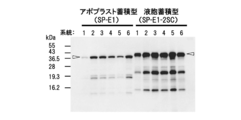
- Example 1 it is the figure which showed the dyeing
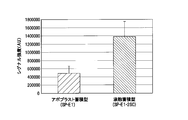
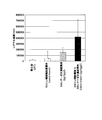
- Example 1 the figure which showed the abundance in the protein sample of the HA tag fusion protein obtained by image-analyzing the dyeing
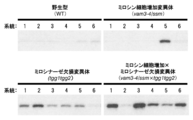
- Example 2 it is the figure which showed the dyeing
- Example 2 among the results of immunoblot analysis using an anti-HA tag antibody, the amount of HA tag fusion protein present in the protein sample obtained by image analysis of the stained image of FIG. 5 was shown. It is.
- the method for accumulating proteins in plant cells of the present invention is a multiple mutation in which the number of myrosin cells is increased and the vacuolar endogenous protein is deficient as a plant into which a target gene for protein expression / accumulation is introduced. It is characterized by using the body.
- the vacuolar endogenous protein of myrosin cell is deficient, foreign protein can be accumulated in myrosin cell.
- myrosin cells are present not only in the vicinity of the vascular bundle but also in a wide area of leaves and stems, and the number of myrosin cells is remarkably increased. For this reason, the target protein can be accumulated more than before by using the mylosin cell of the multiple mutant as an accumulation site.
- the target protein of interest is accumulated in the myrosin cell
- the target protein of interest can be accumulated in the plant cell while sufficiently reducing the influence of the overexpression on the plant cell or plant individual. That is, the multiple mutant used in the present invention is obtained by forming myrosin cells such as leaves and stems, which are originally difficult to accumulate proteins, as protein accumulation organs.
- the method for accumulating the protein of the present invention in a plant cell is a method of accumulating the protein in a plant cell, wherein the myrosin cell lacking the vacuolar endogenous protein is also present in the plant body other than the vicinity of the vascular bundle.
- a gene encoding a target protein having an intracellular translocation signal at the N-terminus and a vacuolar translocation signal at the N-terminus in an existing multiple variant (hereinafter also referred to as the multiple variant of the present invention) By expressing the target protein or the protein lacking the N-terminal region of the target protein inside the vacuole of the myrosin cell in the multiple mutant.
- a gene includes a nucleotide sequence that encodes a protein, and is introduced into a cell so that the encoded protein is synthesized by a transcription / translation mechanism provided in the cell or It means its derivative.
- the gene includes not only a natural gene possessed by an organism but also a gene artificially designed and synthesized using a gene recombination technique.
- the multiple mutant of the present invention is not particularly limited as long as it is a plant originally having myrosin cells.
- it is preferably a cruciferous plant.
- the cruciferous plants include cabbage, Chinese cabbage, radish, broccoli, cauliflower, Arabidopsis thaliana, watercress, wasabi and rape.
- the multiple mutant myrosin cells of the present invention are deficient in at least one vacuolar endogenous protein.
- One type of vacuolar endogenous protein may be deficient, or two or more types of vacuolar endogenous protein may be deficient.
- it is sufficient that at least one cell in the multiple mutant is deficient in the vacuolar endogenous protein, and it is not necessary to be deficient in all cells constituting the multiple mutant plant individual.
- the deficient vacuolar endogenous protein is not particularly limited as long as it is present in the vacuole in the myrosin cell of the wild type plant body, but the vacuole of the myrosin cell is not limited.
- Other than the composition of the protein inherent in the effect of mutation on the whole plant can be suppressed, so that it is preferably a protein specific to myrosin cells.
- the vacuolar endogenous protein deficient in the multiple mutant of the present invention is preferably an enzyme, and more preferably TGG (EC 3.2.1.147).
- TGG EC 3.2.1.147
- TGG1 and TGG2 are TGGs that are present in the vacuoles of myrosin cells in the above-ground tissue of leaves and stems, and are deficient so that they are targeted in the vacuoles of myrosin cells in leaves and stems. Protein can be accumulated.
- TGG4 At least one of TGG4 (At1g47600) and TGG5 (At1g51470) is deficient. More preferably.
- the multiple mutant myrosin cells of the present invention are present not only in the vicinity of the vascular bundle but also in other sites. For this reason, the multiple mutant myrosin cells of the present invention have an increased number of myrosin cells per plant than the wild type.
- the number of myrosin cells can be increased by deleting genes that affect the differentiation of myrosin cells such as the vam3 gene or introducing mutations that cause dysfunction.
- the mutation causing the dysfunction of the vam3 gene includes SNARE motifs and the like, as in the atam3-4 / ssm mutant vam3 gene described in Non-Patent Documents 7 and 8. Examples include mutations in which 19 amino acids are deleted between the transmembrane domain.
- the multiple mutant of the present invention can be obtained, for example, by deleting the wild-type vam3 gene and the tgg gene, introducing a mutation that causes dysfunction in the vam3 gene, and deleting the tgg gene.
- gene deletion and mutation can be introduced by gene modification techniques known in the art.
- Multiple mutants of the present invention are obtained by deleting a gene encoding a vacuolar endogenous protein present in the vacuole of myrosin cells from a mutant in which myrosin cells are also present in plants other than around the vascular bundle. Can be produced.
- the multiple mutant of the present invention can also be produced by deleting the vam3 gene or introducing a mutation that causes dysfunction to a mutant lacking a vacuolar endogenous protein such as TGG. Can do.
- a hybrid obtained by mating a mutant in which myrosin cells are also present in plants other than the vicinity of the vascular bundle and a mutant deficient in vacuolar endogenous proteins present in the vacuoles of myrosin cells It can also be produced by self-mating first generation individuals.
- the multiple mutant of the present invention is Arabidopsis thaliana
- it is prepared by deleting the tgg1 gene or the tgg2 gene from the atvam3-3 mutant or the atvam3-4 / ssm mutant described in Non-Patent Documents 7 and 8. Can do. It can also be prepared by deleting the vam3 gene from the attgg1tgg2 mutant described in Non-Patent Document 9.
- the vacuolar endogenous protein is deficient but the location and number of myrosin cells are the same as those in the wild type, and the N-terminal cell
- the target protein can be accumulated in myrosin cells by expressing a gene that encodes a target protein having an inner membrane translocation signal and a vacuolar translocation signal at the C-terminus.
- the multiple mutant of the present invention encodes a target protein having an intracellular translocation signal at the N-terminus and a vacuolar translocation signal at the C-terminus.
- the target protein synthesized by the ribosome moves into the ER.
- the target protein can be transferred from the ER to the vacuole by having a vacuole transfer signal at the C-terminal.
- the intracellular membrane translocation signal provided in the target protein is particularly limited as long as it is an amino acid sequence having an ability to migrate to the inner membrane including ER (hereinafter also referred to as ER translocation ability). It can be used by appropriately selecting from signals present at the N-terminus of the secreted protein. Moreover, the peptide which deleted, substituted, or added one or several amino acids may be sufficient, without impairing ER transfer ability with respect to a well-known intracellular membrane system transfer signal.
- Specific examples of the intracellular membrane transition signal include an intracellular membrane transition signal (see Non-Patent Document 10) possessed by the Pr1a protein of tobacco mosaic virus.
- the vacuole translocation signal included in the target protein is not particularly limited as long as it is an amino acid sequence having a vacuole translocation ability. Can be appropriately selected and used. Specific examples of the vacuolar translocation signal include a pumpkin 2S albumin C-terminal vacuolar translocation signal (2SC) (see, for example, Non-Patent Document 11).
- the type of intracellular membrane transition signal of the target protein not the target protein but a protein lacking the N-terminal region of the target protein is accumulated inside the myrosin cell.
- the N-terminal cleavage site varies depending on the type of target protein, particularly the amino acid sequence of the polypeptide linked to the intracellular membrane transition signal. In many cases, only the transmembrane signal is lost by cleavage, but a wider N-terminal region including the transmembrane signal is lost, or only a part of the transmembrane signal is present. It may be missing.
- the gene that encodes the protein is the target protein. Can be accumulated in the myrosin cell, in which the protein or the protein lacking the N-terminal region of the protein is expressed.
- the target protein to be accumulated in the cell does not have an intracellular membrane signal or a vacuolar signal, an intracellular membrane signal at the N-terminus of the protein
- a target protein a protein obtained by adding a vacuolar translocation signal to a target protein to be accumulated in a cell directly or directly at the C-terminus of a protein originally having an intracellular membrane translocation signal at the N-terminus, It may be a chimeric protein fused via an appropriate spacer.
- the method for expressing and accumulating the target protein in the multiple mutant of the present invention is not particularly limited, and any method known in the art may be used.
- any method known in the art may be used.
- by introducing an expression vector having a base sequence encoding a target protein into cells of the multiple mutant of the present invention by a method usually used for producing transformed plant cells or transformed plants A plant body in which the target protein is accumulated in the vacuole of the cell (hereinafter sometimes referred to as the transformant of the present invention) can be produced.
- An expression vector having a base sequence encoding a target protein can be prepared by incorporating DNA having a base sequence encoding these proteins into the expression vector using a known gene recombination technique.
- a commercially available expression vector preparation kit may be used.
- an expression vector having a promoter sequence that can be transcribed in plant cells and a terminator sequence including a polyadenylation site, which is a polypeptide encoded by an incorporated polynucleotide when introduced into a plant cell.
- Any vector can be used as long as it is a vector that can express the expression vector, and any expression vector that is usually used for producing a transformed plant cell or a transformed plant can be used.
- Expression cassette consisting of DNA having a base sequence encoding a target protein, DNA having a terminator sequence, DNA having a promoter sequence, DNA having a base sequence encoding another protein, DNA having a terminator sequence It is necessary to have a cassette.
- expression vectors include MultiRound Gateway (see Non-Patent Document 12) entry vectors, binary vectors such as pIG121 and pIG121Hm, and the like.
- promoters that can be used include nopaline synthase gene promoter, cauliflower mosaic virus 35S promoter, and maize ubi1 promoter.
- usable terminators include nopaline synthase gene terminators.
- promoters specific to tissues and organs may be used. For example, as a leaf-specific expression promoter, a rice rbcS promoter and the like can be mentioned. By using such a tissue or organ-specific promoter, the target protein can be expressed only in a specific tissue or organ, not in the whole plant.
- the expression vector is preferably an expression vector into which not only a DNA having a base sequence encoding a target protein but also a drug resistance gene or the like is incorporated. This is because it is possible to easily select a plant transformed with an expression vector and a plant not transformed.
- the drug resistance gene include a kanamycin resistance gene, a hygromycin resistance gene, and a bialaphos resistance gene.
- Examples of methods for introducing the expression vector into the cells of the multiple mutant of the present invention include the Agrobacterium method, the particle gun method, the electroporation method, and the PEG (polyethylene glycol) method. Among these, it is preferable to carry out by the Agrobacterium method. Note that transformed cells and transformants into which an expression vector has been introduced can be selected using drug resistance or the like as an index.
- plant cultured cells may be used as the host, and plant organs and plant tissues may be used. That is, the plant cell that expresses the gene encoding the target protein may be a cell in the plant individual of the multiple mutant of the present invention, may be a cell collected from the plant individual, It may be a cell that has been subjected to a treatment such as a dedifferentiation treatment, or may be a cultured cell established from the plant individual.
- a plant tissue culture method or the like By using a well-known plant tissue culture method or the like from a transformed cell obtained by introducing a gene encoding a target protein into a callus obtained by dedifferentiation treatment of the multiple mutant of the present invention, leaves and A plant individual (transformant) in which a target protein or a protein lacking the N-terminal region of the target protein is accumulated in the myrosin cell of the stem can be obtained.
- the plant tissue culture method for example, transformed plant cells are cultured using a hormone-free regeneration medium or the like, and the obtained rooted seedlings are transplanted and cultivated in soil or the like. A transformed plant can be obtained.
- the transformant of the present invention in which the target protein is accumulated in the multiple mutant of the present invention is cultivated in the same manner as the multiple mutant of the present invention before transformation, cuttings are obtained, and progeny individuals are obtained by crossing or the like. be able to.
- a clone individual can also be obtained by a known cloning technique.
- the target protein accumulated in the vacuole of myrosin cells or the protein lacking the N-terminal region of the target protein can be recovered.
- the method for recovering the target protein and the like from the transformant of the present invention is not particularly limited, and is appropriately selected from methods usually used for extracting and purifying recombinant proteins from cells and living tissues. You can choose to do it. Examples of the method include the method of Kawazu et al. (See Non-Patent Document 13) and the method of Kimura et al. (See Non-Patent Document 14).
- the catalytic region (E1-cat) of Acidothermus cellulolyticus-derived endoglucanase E1 gene (see Non-Patent Documents 15 and 16) and Pyrococcus furiosus-derived ⁇ -
- a trait that is a suitable biomass raw material for bioethanol production Convertible plants can be made.
- the saccharifying enzyme is accumulated in the vacuole of the myrosin cell, so that it can be cultivated in the same manner as the plant that became the host at the time of transformation.
- the saccharification enzyme accumulated from the vacuoles of myrosin cells is released by subjecting it to a pretreatment for bioethanol production. Cellulose in plants is easily decomposed.
- the tobacco mosaic virus Pr1a protein signal is located at the 5 ′ end of the coding region of the region containing the catalytic domain of the endoglucanase E1 gene derived from Acidothermus cellulolyticus, which is a saccharification enzyme (see Non-Patent Documents 15 and 16). (See Non-Patent Document 10) was added, and a DNA fragment in which a tag sequence (tag) in which an HA tag and a polyhistidine tag were linked was added to the 3 ′ end of the coding region was synthesized.
- a myrosin cell-specific promoter (TGG1pro) is ligated to the DNA fragment by ligase reaction with an Agrobacterium nos terminator (NOSt) on the binary vector R4pGWB401 or R4pGWB501 (see Non-Patent Document 18) to express apoplast accumulation type E1
- a cassette (SP-E1) was prepared.
- a vacuolar accumulation in which a pumpkin 2S albumin C-terminal vacuolar translocation signal (2SC) is inserted between the tag sequence and terminator sequence of the apoplast accumulation type E1 expression cassette (SP-E1).
- a type E1 expression cassette (SP-E1-2SC) was prepared.
- FIG. 1 schematically shows each of the produced expression cassettes.
- a binary vector having these expression cassettes was introduced into Agrobacterium GV3101 strain (see Non-Patent Document 19).
- ⁇ Immunoblot analysis> The grown transformant leaves were crushed in SDS-PAGE sample buffer to obtain a protein sample.
- the protein sample was fractionated by SDS-PAGE electrophoresis and then transferred to a PVDF membrane.
- a monoclonal antibody against HA tag (manufactured by COVANCE) was used as the primary antibody, and horseradish peroxidase-labeled anti-mouse IgG antibody (manufactured by GE Healthcare) was used as the secondary antibody. Blot analysis was performed.
- FIG. 2 shows a stained image of Western blot with anti-HA tag antibody after SDS-PAGE.
- FIG. 3 shows the abundance [signal intensity (AU)] of the HA tag fusion protein in the protein sample obtained by image analysis of the stained image of FIG.
- a transformant (apoplast accumulation type) obtained by introducing a binary vector having an apoplast accumulation type E1 expression cassette (SP-E1) and a vacuole accumulation type E1 expression cassette (SP-E1-2SC) were obtained.
- the expression of the HA tag fusion protein (the band indicated by the arrowhead in FIG. 2) was confirmed in both of the transformants (vacuum accumulation type) obtained by introducing the binary vector. That is, the endoglucanase E1 protein could be accumulated in the vacuole of the vegetative organ that had been difficult to accumulate.
- the amount of the HA tag fusion protein accumulated in the leaves was clearly higher in the transformant (vacuum accumulation type) than in the transformant (apoplast accumulation type).
- the atvam3-4 / ssm ⁇ tgg1tgg2 mutant can accumulate a large amount of foreign protein in myrosin cells.
- the size of the target HA tag fusion protein differs between the transformant (apoplast accumulation type) and the transformant (vacuum accumulation type) depending on the presence or absence of the pumpkin 2S albumin C-terminal vacuole translocation signal (2SC). Is.
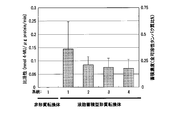
- FIG. 4 shows the measurement results of the enzyme activity of the endoglucanase E1 protein and the calculation results of the accumulated concentration. Almost no activity was observed from the non-transformants, and the endoglucanase E1 protein was not accumulated. In contrast, in the transformant introduced with the region containing the catalytic domain of the endoglucanase E1 gene (E1-cat), endoglucanase activity was observed and the endoglucanase E1 protein was accumulated in the plant body. all right. In particular, one of the four transformants measured has a specific activity of about 0.15 nmol 4-MU / ⁇ g protein / min, and the proportion of endoglucanase E1 protein in the total soluble protein is about 0.001. Calculated as 375%. From the above, it was shown that E1 protein accumulated in vacuoles in myrosin cells retains endoglucanase activity.
- Example 2 Wild-type Arabidopsis thaliana (Col-0), atvam3-4 / ssm mutant with increased number of myrosin cells, attgg1tgg2 mutant lacking TGG1 and TGG2, and atvam3-4 / ssm ⁇ produced in Example 1 Endoglucanase E1 was introduced into the tgg1tgg2 mutant, and the amount of expression and accumulation in the cells was examined.
- the same Agrobacterium holding the binary vector having the vacuolar accumulation type E1 expression cassette (SP-E1-2SC) was used as in Example 1.
- Example 1 After growing each plant individual, in planta method using Agrobacterium holding a binary vector having a vacuole accumulation type E1 expression cassette (SP-E1-2SC) used in Example 1 (See Non-Patent Document 20). Six plant individuals were selected for each line and proceeded to immunoblot analysis. In the same manner as in Example 1, a protein sample was prepared from the leaves of the grown transformant, and the protein was fractionated by SDS-PAGE electrophoresis, then transferred to a PVDF membrane, and an anti-HA tag antibody was used. Immunoblot analysis was performed.
- SP-E1-2SC vacuole accumulation type E1 expression cassette
- FIGS. 5 shows a stained image of Western blot with anti-HA tag antibody after SDS-PAGE.
- FIG. 6 shows the abundance of the HA tag fusion protein in the protein sample obtained by image analysis of the stained image of FIG.
- the wild type Arabidopsis (Col-0) or atvam3-4 / ssm mutant is used as the host, although the variation is somewhat large.
- the attgg1tgg2 mutant is used as a host, the HA tag fusion protein is present in a larger amount, and when the atvag3-4 / ssm ⁇ tgg1tgg2 mutant is used as a host than when the attgg1tgg2 mutant is used as a host, A larger amount of E1 protein was accumulated in the transformant.
- myrosin cells deficient in vacuolar endogenous protein have multiple membranes present in plants other than those around the vascular bundle, have an intracellular membrane transition signal at the N-terminus, and C It is apparent that the target protein can be accumulated at a high concentration by expressing a gene encoding the target protein having a vacuole translocation signal at the terminal.
- the protein of the present invention can be accumulated in the vacuole of myrosin cells while sufficiently reducing the influence of overexpression on plant cells and plant individuals by the method of accumulating in plant cells,
- the method can be used in fields such as mass production of proteins and modification of plant traits.
Landscapes
- Health & Medical Sciences (AREA)
- Life Sciences & Earth Sciences (AREA)
- Chemical & Material Sciences (AREA)
- Genetics & Genomics (AREA)
- Organic Chemistry (AREA)
- Engineering & Computer Science (AREA)
- Zoology (AREA)
- Wood Science & Technology (AREA)
- Bioinformatics & Cheminformatics (AREA)
- General Engineering & Computer Science (AREA)
- General Health & Medical Sciences (AREA)
- Biochemistry (AREA)
- Biotechnology (AREA)
- Biomedical Technology (AREA)
- Microbiology (AREA)
- Molecular Biology (AREA)
- Medicinal Chemistry (AREA)
- Cell Biology (AREA)
- Physics & Mathematics (AREA)
- Biophysics (AREA)
- Plant Pathology (AREA)
- Breeding Of Plants And Reproduction By Means Of Culturing (AREA)
- Micro-Organisms Or Cultivation Processes Thereof (AREA)
- Preparation Of Compounds By Using Micro-Organisms (AREA)
- Peptides Or Proteins (AREA)
Abstract
本発明により、目的のタンパク質を、植物細胞や植物体に安定して蓄積させる方法、及び、タンパク質を蓄積させた形質転換植物が提供される。本発明の方法は、タンパク質を植物細胞内に蓄積させる方法であって、液胞内在性タンパク質が欠損したミロシン細胞が、維管束周辺以外の植物体内にも存在している多重変異体に、N末端に細胞内膜系移行シグナルを有し、かつC末端に液胞移行シグナルを有する標的タンパク質をコードする遺伝子を発現させることにより、当該多重変異体内のミロシン細胞の内部に、前記標的タンパク質又は前記標的タンパク質のN末端領域が欠損したタンパク質を蓄積させることを特徴とする、タンパク質の植物細胞内への蓄積方法である。
Description
本発明は、タンパク質を植物細胞内の特定の細胞内小器官に蓄積させる方法、及び、当該方法により作製された形質転換植物に関する。
本願は、2011年3月9日に、日本に出願された特願2011-051528号に基づき優先権を主張し、その内容をここに援用する。
本願は、2011年3月9日に、日本に出願された特願2011-051528号に基づき優先権を主張し、その内容をここに援用する。
遺伝子組換技術の進歩により、培養細胞や植物個体中の細胞に、目的のタンパク質をコードする遺伝子を導入し、当該タンパク質を細胞内に発現させることができるようになった。一般的には、植物の核ゲノムに遺伝子を導入してタンパク質を発現させる際に、目的タンパク質をコードする遺伝子領域のみを細胞内に導入した場合には、発現したタンパク質は細胞質に蓄積する。また、目的タンパク質のN末端及びC末端に移行シグナルと呼ばれる数アミノ酸を付加したタンパク質をコードする遺伝子を導入することにより、発現させたタンパク質を、ER(小胞体)、液胞、葉緑体などの細胞内小器官と呼ばれる箇所あるいは細胞外領域(アポプラスト)に移行・蓄積させることができる(非特許文献1参照。)。その他、目的タンパク質をコードする遺伝子を、葉緑体のゲノムそのものに導入し、葉緑体内で遺伝子発現からタンパク質蓄積までを行う技術もある(非特許文献2参照。)。
中でも液胞は、植物細胞内で最大の容積をもつ細胞内小器官であり、外来タンパク質蓄積の場所として期待される。目的タンパク質のN末端あるいはC末端に液胞移行シグナルと呼ばれるアミノ酸配列を付加することにより、目的タンパク質を液胞に局在させることが可能である。実際に、種子では液胞に、発芽時に必要なタンパク質が特異的に蓄積されており、タンパク質蓄積型液胞と呼ばれている。例えば、外来のセルロース分解酵素を種子の蓄積型液胞に蓄積させた形質転換植物が知られている(例えば、非特許文献3参照。)。しかし、種子は植物バイオマスに占める割合が低く、生産される総バイオマスあたりのタンパク質は少ないという問題がある。
植物体でタンパク質大量生産を行なうためには、植物バイオマスの大部分を占める栄養器官、特に収穫が容易な葉や茎などの地上部組織において、細胞内で大容量を占める液胞にタンパク質を蓄積させることが望まれる。しかしながら、葉や茎などの栄養器官の細胞内では、タンパク質分解酵素(プロテアーゼ)に富むタンパク質分解型液胞として存在している。このため、タンパク質の蓄積には適しておらず、仮に液胞移行シグナルを用いて外来タンパク質を葉や茎の液胞に局在させたとしても、当該外来タンパク質を高濃度で蓄積させることは非常に困難である(例えば、非特許文献4及び5参照。)。
一方で、植物に存在する特殊な形状をもつ異型細胞の1種であるミロシン細胞は、葉に存在し、液胞にタンパク質を大量に蓄積することが可能である。アブラナ科を含むフウチョウソウ目植物の葉などに存在するミロシン細胞は、植物体の病害虫からの防御に関連すると考えられている酵素タンパク質であるthioglucoside glucohydrolase(TGG)(別名:myrosinase)を特異的に液胞に蓄積することが知られている(例えば、非特許文献6参照。)。フウチョウソウ目アブラナ科に属するシロイヌナズナ(Arabidopsis thaliana)の野生型植物ではミロシン細胞は維管束周辺の限られた領域にしか存在しないが、ミロシン細胞が増加し、これに伴って内在するミロシナーゼが増加するシロイヌナズナの変異体vam3-4/ssmやシロイヌナズナの変異体vam3-3も見つかっている(例えば、非特許文献7及び8参照。)atvam3-4/ssm変異体は、vam3遺伝子の第6イントロン中で34bpが欠損したことによりフレームシフトが生じた変異体であり、atvam3-3変異体はvam3遺伝子が欠損した変異体である。また、ミロシン細胞中の液胞に内在するミロシナーゼが欠損しているシロイヌナズナ変異体tgg1tgg2も知られている(例えば、非特許文献9参照。)。
Twyman, et al., Trends Biotechnol. 2003, 21(12):570-578.
Verma, et al., Plant Physiol. 2007, 145(4):1129-1143.
Hood, et al., Plant Biotechnol J. 2007, 5(6):709-19.
Marty, Plant Cell. 1999, 11(4):587-600.
Dai, et al., Molecular Breeding, 2000, 6:277-285.
Rask, et al., Plant Mol Biol. 2000, 42(1):93-113.
Ohtomo, et al., Plant Cell Physiol. 2005, 46(8):1358-65.
Ueda, et al., Plant Cell Physiol. 2006, 47(1):164-75.
Barth, et al., Plant J. 2006, 46(4):549-62.
Cornelissen , et al., Nucleic Acids Res. 1987, 15(17):6799-6811.
Shimada, et al., Plant Cell Physiol. 1997, 38(12):1414-20.
Chen, et al., Plant Mol Biol. 2006, 62(6):927-936.
Kawazu et al., 1999,、Journal of bioscience and bioengineering, 88:421-425.
Kimura et al., Applied microbiology and biotechnology, 2003, 62:374-379.
Ziegler, et al., Mol Breed. 2000, 6:37-46.
Tucker, et al., Nature Biotechnology, 1989, 7: 817 - 820.
Kengen, et al., Eur J Biochem. 1993, 213:305-312.
Nakagawa, et al., Biosci Biotechnol Biochem. 2008, 72(2):624-9.
Van Larebeke, et al., Nature. 1974, 252(5479):169-70.
Bechtold, et al., Methods Mol Biol. 1998, 82:259-66.
Ziegelhoffer, et al., Molecular Breeding 2000, 8:147-158.
ミロシン細胞は形成される組織が限定されており、タンパク質生産のための蓄積器官としては適しているとは言い難い。また、ミロシン細胞には酵素をはじめとする内在性のタンパク質が大量に蓄積しているため、これらに加えて外来の目的タンパク質を同時に大量蓄積させるのは困難であると考えられる。
本発明は、目的のタンパク質を、植物細胞や植物体に安定して蓄積させる方法、及び、タンパク質を蓄積させた形質転換植物を提供することを目的とする。
本発明者らは、上記課題を解決すべく鋭意研究した結果、TGG1やTGG2等の内在性タンパク質が欠損したミロシン細胞が、維管束周辺のみならずその他の部位にも多く存在する植物体に、細胞内膜系移行シグナルと液胞移行シグナルを付加したタンパク質を発現させることにより、当該タンパク質をミロシン細胞に内包された状態で植物体内に蓄積させられることを見出し、本発明を完成させた。
すなわち、本発明は、
(1) タンパク質を植物細胞内に蓄積させる方法であって、
液胞内在性タンパク質が欠損したミロシン細胞が、維管束周辺以外の植物体内にも存在している多重変異体に、N末端に細胞内膜系移行シグナルを有し、かつC末端に液胞移行シグナルを有する標的タンパク質をコードする遺伝子を発現させることにより、当該多重変異体内のミロシン細胞の液胞内部に、前記標的タンパク質又は前記標的タンパク質のN末端領域が欠損したタンパク質を蓄積させることを特徴とする、タンパク質の植物細胞内への蓄積方法、
(2) 前記液胞内在性タンパク質がthioglucoside glucohydrolase(TGG)であることを特徴とする前記(1)に記載のタンパク質の植物細胞内への蓄積方法、
(3) 前記多重変異体が、vam3遺伝子が欠損していることを特徴とする前記(1)又は(2)に記載のタンパク質の植物細胞内への蓄積方法、
(4) 前記多重変異体が、アブラナ科植物の変異体であることを特徴とする前記(1)~(3)のいずれか一つに記載のタンパク質の植物細胞内への蓄積方法、
(5) 前記多重変異体が、atvam3-3変異体又はatvam3-4/ssm変異体から、tgg1遺伝子及び/又はtgg2遺伝子がさらに欠損された植物体であることを特徴とする前記(1)~(4)のいずれか一つに記載のタンパク質の植物細胞内への蓄積方法、
(6) 前記標的タンパク質が、セルロースを糖に加水分解する糖化酵素であることを特徴とする前記(1)~(5)のいずれか一つに記載のタンパク質の植物細胞内への蓄積方法、
(7) atvam3-3変異体又はatvam3-4/ssm変異体から、tgg1遺伝子及び/又はtgg2遺伝子がさらに欠損していることを特徴とするシロイヌナズナ(Arabidopsis thaliana)多重変異体、
(8) vam3遺伝子、tgg1遺伝子、及びtgg2遺伝子が欠損していることを特徴とするアブラナ科植物の多重変異体、
(9) 前記(8)に記載のアブラナ科植物の多重変異体の後代個体又はクローン個体であることを特徴とする植物、
(10) タンパク質を植物細胞内に蓄積させる方法であって、ミロシン細胞の液胞内にthioglucoside glucohydrolase(TGG)が欠損している変異体に、N末端に細胞内膜系移行シグナルを有し、かつC末端に液胞移行シグナルを有する標的タンパク質をコードする遺伝子を発現させることにより、当該多重変異体内のミロシン細胞の液胞内部に、前記標的タンパク質又は前記標的タンパク質のN末端領域が欠損したタンパク質を蓄積させることを特徴とする、タンパク質の植物細胞内への蓄積方法、
(11) 前記変異体が、アブラナ科植物であることを特徴とする前記(10)に記載のタンパク質の植物細胞内への蓄積方法、
(12) 前記変異体が、シロイヌナズナ(Arabidopsis thaliana)であることを特徴とする前記(10)又は(11)に記載のタンパク質の植物細胞内への蓄積方法、を、提供するものである。
(1) タンパク質を植物細胞内に蓄積させる方法であって、
液胞内在性タンパク質が欠損したミロシン細胞が、維管束周辺以外の植物体内にも存在している多重変異体に、N末端に細胞内膜系移行シグナルを有し、かつC末端に液胞移行シグナルを有する標的タンパク質をコードする遺伝子を発現させることにより、当該多重変異体内のミロシン細胞の液胞内部に、前記標的タンパク質又は前記標的タンパク質のN末端領域が欠損したタンパク質を蓄積させることを特徴とする、タンパク質の植物細胞内への蓄積方法、
(2) 前記液胞内在性タンパク質がthioglucoside glucohydrolase(TGG)であることを特徴とする前記(1)に記載のタンパク質の植物細胞内への蓄積方法、
(3) 前記多重変異体が、vam3遺伝子が欠損していることを特徴とする前記(1)又は(2)に記載のタンパク質の植物細胞内への蓄積方法、
(4) 前記多重変異体が、アブラナ科植物の変異体であることを特徴とする前記(1)~(3)のいずれか一つに記載のタンパク質の植物細胞内への蓄積方法、
(5) 前記多重変異体が、atvam3-3変異体又はatvam3-4/ssm変異体から、tgg1遺伝子及び/又はtgg2遺伝子がさらに欠損された植物体であることを特徴とする前記(1)~(4)のいずれか一つに記載のタンパク質の植物細胞内への蓄積方法、
(6) 前記標的タンパク質が、セルロースを糖に加水分解する糖化酵素であることを特徴とする前記(1)~(5)のいずれか一つに記載のタンパク質の植物細胞内への蓄積方法、
(7) atvam3-3変異体又はatvam3-4/ssm変異体から、tgg1遺伝子及び/又はtgg2遺伝子がさらに欠損していることを特徴とするシロイヌナズナ(Arabidopsis thaliana)多重変異体、
(8) vam3遺伝子、tgg1遺伝子、及びtgg2遺伝子が欠損していることを特徴とするアブラナ科植物の多重変異体、
(9) 前記(8)に記載のアブラナ科植物の多重変異体の後代個体又はクローン個体であることを特徴とする植物、
(10) タンパク質を植物細胞内に蓄積させる方法であって、ミロシン細胞の液胞内にthioglucoside glucohydrolase(TGG)が欠損している変異体に、N末端に細胞内膜系移行シグナルを有し、かつC末端に液胞移行シグナルを有する標的タンパク質をコードする遺伝子を発現させることにより、当該多重変異体内のミロシン細胞の液胞内部に、前記標的タンパク質又は前記標的タンパク質のN末端領域が欠損したタンパク質を蓄積させることを特徴とする、タンパク質の植物細胞内への蓄積方法、
(11) 前記変異体が、アブラナ科植物であることを特徴とする前記(10)に記載のタンパク質の植物細胞内への蓄積方法、
(12) 前記変異体が、シロイヌナズナ(Arabidopsis thaliana)であることを特徴とする前記(10)又は(11)に記載のタンパク質の植物細胞内への蓄積方法、を、提供するものである。
本発明のタンパク質の植物細胞内への蓄積方法により、目的の外来タンパク質をより多くのミロシン細胞内に蓄積させることができる。
また、本発明の多重変異体は、外来タンパク質を葉や茎等の植物バイオマスに占める割合の高い部位の細胞中の液胞に、比較的安定して蓄積させることができる。
また、本発明の多重変異体は、外来タンパク質を葉や茎等の植物バイオマスに占める割合の高い部位の細胞中の液胞に、比較的安定して蓄積させることができる。
本発明のタンパク質の植物細胞内への蓄積方法は、タンパク質発現・蓄積のための標的遺伝子を導入する植物体として、ミロシン細胞数が増加しており、かつ液胞内在性タンパク質が欠損した多重変異体を用いたことを特徴とする。当該多重変異体では、ミロシン細胞の液胞内在性タンパク質が欠損しているため、ミロシン細胞内に外来タンパク質を蓄積させることができる。また、当該多重変異体は、ミロシン細胞が維管束周辺のみならず、葉や茎の広い部位において存在しており、ミロシン細胞の細胞数が顕著に増大している。
このため、当該多重変異体のミロシン細胞を蓄積部位にすることにより、従来よりも多くの標的タンパク質を蓄積することができる。さらに、目的の標的タンパク質をミロシン細胞内に蓄積させるため、過剰発現による植物細胞や植物個体に対する影響を充分に低減させつつ、目的の標的タンパク質を植物細胞内に蓄積させることができる。つまり、本発明において用いられる多重変異体は、本来はタンパク質蓄積が困難な葉や茎などのミロシン細胞を、タンパク質蓄積器官として形成させたものである。
このため、当該多重変異体のミロシン細胞を蓄積部位にすることにより、従来よりも多くの標的タンパク質を蓄積することができる。さらに、目的の標的タンパク質をミロシン細胞内に蓄積させるため、過剰発現による植物細胞や植物個体に対する影響を充分に低減させつつ、目的の標的タンパク質を植物細胞内に蓄積させることができる。つまり、本発明において用いられる多重変異体は、本来はタンパク質蓄積が困難な葉や茎などのミロシン細胞を、タンパク質蓄積器官として形成させたものである。
すなわち、本発明のタンパク質の植物細胞内への蓄積方法は、タンパク質を植物細胞内に蓄積させる方法であって、液胞内在性タンパク質が欠損したミロシン細胞が、維管束周辺以外の植物体内にも存在している多重変異体(以下、本発明の多重変異体ともいう)に、N末端に細胞内膜系移行シグナルを有し、かつC末端に液胞移行シグナルを有する標的タンパク質をコードする遺伝子を発現させることにより、当該多重変異体内のミロシン細胞の液胞内部に、前記標的タンパク質又は前記標的タンパク質のN末端領域が欠損したタンパク質を蓄積させることを特徴とする。
なお、本発明及び本願明細書において、遺伝子とは、タンパク質をコードする塩基配列を含み、細胞に導入されることにより、コードされたタンパク質が、細胞が備える転写・翻訳機構によって合成される核酸またはその誘導体を意味する。遺伝子は、生物が有する天然の遺伝子のみならず、遺伝子組換技術を用いて人工的に設計・合成された遺伝子も含まれる。
本発明の多重変異体は、ミロシン細胞を元々有している植物であれば特に限定されるものではない。本発明においては、アブラナ科植物であることが好ましい。アブラナ科植物としては、例えば、キャベツ、ハクサイ、ダイコン、ブロッコリー、カリフラワー、シロイヌナズナ、クレソン、ワサビ、アブラナ等が挙げられる。
本発明の多重変異体のミロシン細胞は、少なくとも1種類の液胞内在性タンパク質が欠損している。1種類の液胞内在性タンパク質が欠損していてもよく、2種類以上の液胞内在性タンパク質が欠損していてもよい。さらに、多重変異体中の少なくとも1の細胞において液胞内在性タンパク質が欠損していればよく、多重変異体の植物個体を構成する全細胞で欠損している必要はない。また、欠損している液胞内在性タンパク質は、野生型の植物体のミロシン細胞内の液胞中に存在しているものであれば、特に限定されるものではないが、ミロシン細胞の液胞に内在するタンパク質の組成以外は、植物体全体に対する変異の影響を抑制することができるため、ミロシン細胞特異的なタンパク質であることが好ましい。
本発明の多重変異体において欠損している液胞内在性タンパク質は、酵素であることが好ましく、TGG(EC3.2.1.147)であることがより好ましい。ミロシン細胞の液胞に含まれる酵素の含有量を低減させることにより、内在性タンパク質に影響されることなく、発現させた標的タンパク質をより安定的に蓄積させることが可能になる。
例えば、本発明の多重変異体がシロイヌナズナの場合、TGG1(At5g26000)及びTGG2(At5g25980)の少なくとも一方が欠損していることが好ましく、両タンパク質が欠損していることがより好ましい。TGG1及びTGG2は、葉や茎の地上部の組織のミロシン細胞の液胞内に存在しているTGGであり、これらが欠損していることにより、葉や茎のミロシン細胞の液胞内に標的タンパク質を蓄積させることができる。その他、シロイヌナズナにおいて、根のミロシン細胞の液胞内に標的タンパク質を蓄積させる場合には、TGG4(At1g47600)及びTGG5(At1g51470)の少なくとも一方が欠損していることが好ましく、両タンパク質が欠損していることがより好ましい。
本発明の多重変異体のミロシン細胞は、維管束周辺に加えてその他の部位にも存在している。このため、本発明の多重変異体のミロシン細胞は、野生株よりも植物体当たりのミロシン細胞数が増大している。例えば、vam3遺伝子等のミロシン細胞の分化に影響を与える遺伝子を欠損させたり、機能不全を引き起こす変異を導入することにより、ミロシン細胞数を増大させることができる。
本発明の多重変異体がシロイヌナズナの場合、vam3遺伝子の機能不全を引き起こす変異としては、非特許文献7及び8に記載されているatvam3-4/ssm変異体のvam3遺伝子のように、SNAREモチーフと膜貫通ドメインとの間に19アミノ酸が欠損する変異等が挙げられる。
本発明の多重変異体は、例えば、野生体のvam3遺伝子とtgg遺伝子とを欠損させたり、vam3遺伝子に機能不全を引き起こす変異を導入し、かつtgg遺伝子を欠損させることにより、得ることができる。なお、遺伝子の欠損や変異の導入は、当該技術分野で公知の遺伝子改変技術により実施することができる。
ミロシン細胞が維管束周辺以外の植物体内にも存在している変異体から、ミロシン細胞の液胞内に存在する液胞内在性タンパク質をコードする遺伝子を欠損させることにより、本発明の多重変異体を作製することができる。また、TGG等の液胞内在性タンパク質が欠損した変異体に対して、vam3遺伝子を欠損させたり、当該遺伝子に機能不全を引き起こす変異を導入することによっても本発明の多重変異体を作製することができる。その他、ミロシン細胞が維管束周辺以外の植物体内にも存在している変異体と、ミロシン細胞の液胞内に存在する液胞内在性タンパク質が欠損した変異体とを交配し、得られた雑種第1世代の個体を自家交配さることによっても作製することができる。
本発明の多重変異体がシロイヌナズナの場合には、非特許文献7及び8に記載のatvam3-3変異体又はatvam3-4/ssm変異体から、tgg1遺伝子やtgg2遺伝子を欠損させることにより作製することができる。また、非特許文献9に記載のattgg1tgg2変異体からvam3遺伝子を欠損させることにより作製することができる。その他、atvam3-3変異体又はatvam3-4/ssm変異体と、attgg1tgg2変異体とを交雑させ、得られた雑種第1世代を自家交配させて得られた雑種第2代の植物個体から、ミロシン細胞が維管束周辺のみならず、葉や茎の広い部位において存在しており、かつTGG1とTGG2が欠損している多重変異体を作製することができる。
その他、非特許文献9に記載のattgg1tgg2変異体のように、液胞内在性タンパク質は欠損しているが、ミロシン細胞の局在や数は野生株と同様である変異体に、N末端に細胞内膜系移行シグナルを有し、かつC末端に液胞移行シグナルを有する標的タンパク質をコードする遺伝子を発現させることにより、ミロシン細胞に標的タンパク質を蓄積させることができる。
本発明のタンパク質の植物細胞内への蓄積方法は、本発明の多重変異体に、N末端に細胞内膜系移行シグナルを有し、かつC末端に液胞移行シグナルを有する標的タンパク質をコードする遺伝子を発現させる。N末端に細胞内膜系移行シグナルがあることにより、リボソームで合成された標的タンパク質は、ER内部へ移行する。また、C末端に液胞移行シグナルがあることにより、当該標的タンパク質をERから液胞へ移行させることができる。
本発明において、標的タンパク質が備える細胞内膜系移行シグナルとしては、ERをはじめとする細胞内膜への移行能(以下、ER移行能ともいう)を有するアミノ酸配列であれば、特に限定されるものではなく、分泌タンパク質のN末端に存在するシグナルの中から適宜選択して用いることができる。また、公知の細胞内膜系移行シグナルに対して、ER移行能を損なうことなく、1若しくは数個のアミノ酸を欠失、置換若しくは付加したペプチドであってもよい。細胞内膜系移行シグナルとしては、具体的には、タバコモザイクウイルスのPr1aタンパク質が有する細胞内膜系移行シグナル(非特許文献10参照。)等が挙げられる。
本発明において、標的タンパク質が備える液胞移行シグナルとしては、液胞移行能を有するアミノ酸配列であれば、特に限定されるものではなく、液胞に移行するタンパク質のC末端に存在するシグナルの中から適宜選択して用いることができる。液胞移行シグナルとしては、具体的には、カボチャ2SアルブミンC末端液胞移行シグナル(2SC)(例えば、非特許文献11参照。)等が挙げられる。
液胞内部に蓄積されるタンパク質の中には、N末端の細胞内膜系移行シグナルの少なくとも一部が切断されるものがある。本発明においても、標的タンパク質が備える細胞内膜系移行シグナルの種類によっては、標的タンパク質ではなく、標的タンパク質のN末端領域が欠損したタンパク質が、ミロシン細胞内部に蓄積される。なお、N末端の切断部位は、標的タンパク質の種類、特に、細胞内膜系移行シグナルに連結させたポリペプチドのアミノ酸配列等により異なる。多くの場合では、細胞内膜系移行シグナルのみが切断により欠損されるが、細胞内膜系移行シグナルを含むより広いN末端領域が欠損する場合や、細胞内膜系移行シグナルの一部のみが欠損する場合もある。
本発明の多重変異体の細胞内に蓄積させる目的のタンパク質が、細胞内膜系移行シグナルや液胞移行シグナルを元々備えている場合には、当該タンパク質を標的タンパク質とし、当該タンパク質をコードする遺伝子を発現させることにより、当該タンパク質又は当該タンパク質のN末端領域が欠損したタンパク質をミロシン細胞内に蓄積させることができる。一方で、細胞内に蓄積させたい目的のタンパク質が、細胞内膜系移行シグナルや液胞移行シグナルを備えていない場合には、当該タンパク質のN末端に細胞内膜系移行シグナルを、C末端に液胞移行シグナルをそれぞれ付加したタンパク質を標的タンパク質とすることにより、当該標的タンパク質又は当該タンパク質のN末端領域が欠損したタンパク質をミロシン細胞内に蓄積させることができる。
本発明においては、標的タンパク質として、N末端に細胞内膜系移行シグナルを元々備えるタンパク質のC末端に、細胞内に蓄積させたい目的のタンパク質に液胞移行シグナルを付加させたタンパク質を、直接又は適当なスペーサーを介して融合させたキメラタンパク質であってもよい。
本発明の多重変異体に、標的タンパク質を発現・蓄積させる方法は、特に限定されるものではなく、当該技術分野において公知のいずれの方法で行ってもよい。例えば、形質転換植物細胞や形質転換植物を作製する場合に通常用いられている方法により、標的タンパク質をコードする塩基配列を有する発現ベクターを本発明の多重変異体の細胞へ導入することにより、ミロシン細胞の液胞内に当該標的タンパク質が蓄積された植物体(以下、本発明の形質転換体、ということがある。)を作製することができる。
標的タンパク質をコードする塩基配列を有する発現ベクターは、これらのタンパク質をコードする塩基配列を有するDNAを、周知の遺伝子組換技術を用いて発現ベクターに組み込むことにより作製することができる。市販の発現ベクター作製キットを用いてもよい。
発現ベクターとしては、植物細胞において転写が可能なプロモーター配列と、ポリアデニレーション部位を含むターミネーター配列を有する発現ベクターであって、植物細胞に導入した場合に、組み込まれたポリヌクレオチドがコードするポリペプチドを発現させることが可能なベクターであれば特に限定されるものではなく、形質転換植物細胞や形質転換植物の作製のために通常用いられる任意の発現ベクターを用いることができる。なお、標的タンパク質をコードする塩基配列をその他のタンパク質をコードする塩基配列と共に一の発現ベクターに組み込む場合には、両タンパク質が独立して細胞内に発現されるように、プロモーター配列を有するDNA、標的タンパク質をコードする塩基配列を有するDNA、ターミネーター配列を有するDNAからなる発現用カセットと、プロモーター配列を有するDNA、その他のタンパク質をコードする塩基配列を有するDNA、ターミネーター配列を有するDNAからなる発現用カセットとを備えていることが必要である。
発現ベクターとしては、例えば、MultiRound Gateway(非特許文献12参照。)エントリーベクターや、pIG121、pIG121Hm等のバイナリーベクター等がある。使用可能なプロモーターとして、例えば、ノパリン合成酵素遺伝子のプロモーター、カリフラワーモザイクウイルス35Sのプロモーター、トウモロコシubi1のプロモーター等がある。また、使用可能なターミネーターとして、例えば、ノパリン合成酵素遺伝子のターミネーター等がある。その他、組織や器官に特異的なプロモーターを用いてもよい。例えば、葉特異的な発現プロモーターとして、イネrbcSのプロモーター等が挙げられる。このような組織又は器官特異的プロモーターを用いることにより、植物全体ではなく、特定の組織や器官にのみ標的タンパク質を発現させることができる。
当該発現ベクターは、標的タンパク質をコードする塩基配列を有するDNAのみならず、薬剤耐性遺伝子等も組み込まれた発現ベクターであることが好ましい。発現ベクターにより形質転換された植物と形質転換されていない植物の選抜を容易に行うことができるためである。該薬剤耐性遺伝子として、例えば、カナマイシン耐性遺伝子、ハイグロマイシン耐性遺伝子、ビアラホス耐性遺伝子等がある。
発現ベクターを本発明の多重変異体の細胞へ導入する方法として、例えば、アグロバクテリウム法、パーティクルガン法、エレクトロポレーション法、及びPEG(ポリエチレングリコール)法等がある。このうち、アグロバクテリウム法で行うことが好ましい。なお、発現ベクターが導入された形質転換細胞や形質転換体は、薬剤耐性等を指標として選抜することができる。
また、宿主として、植物培養細胞を用いてもよく、植物器官や植物組織を用いてもよい。すなわち、標的タンパク質をコードする遺伝子を発現させる植物細胞は、本発明の多重変異体の植物個体中の細胞であってもよく、当該植物個体から採取された細胞であってもよく、採取後さらに脱分化処理等の処理が施された細胞であってもよく、当該植物個体から樹立された培養細胞であってもよい。
本発明の多重変異体を脱分化処理することにより得られたカルスに標的タンパク質をコードする遺伝子を導入して得られた形質転換細胞から、周知の植物組織培養法等を用いることにより、葉や茎のミロシン細胞の内部に標的タンパク質又は標的タンパク質のN末端領域が欠損したタンパク質が蓄積された植物個体(形質転換体)を得ることができる。該植物組織培養法としては、例えば、形質転換植物細胞を、ホルモンフリーの再分化培地等を用いて培養して、得られた発根した幼植物体を土壌等に移植して栽培することにより、形質転換植物を得ることができる。
本発明の多重変異体に標的タンパク質を蓄積させた本発明の形質転換体は、形質転換前の本発明の多重変異体と同様に栽培したり、挿し木をしたり、交配等により後代個体を得ることができる。また、公知のクローニング技術によりクローン個体を得ることもできる。
本発明の形質転換体からは、ミロシン細胞の液胞内に蓄積されている標的タンパク質又は標的タンパク質のN末端領域が欠損したタンパク質を回収することができる。本発明の形質転換体から標的タンパク質等を回収する方法としては、特に限定されるものではなく、細胞や生体組織から組換えタンパク質を抽出・精製する場合に通常用いられている方法の中から適宜選択して行うことができる。当該方法として、例えば、Kawazuらの方法(非特許文献13参照。)や、Kimuraらの方法(非特許文献14参照。)等がある。
また、本発明のタンパク質の植物細胞内への蓄積方法における標的タンパク質として、Acidothermus cellulolyticus由来エンドグルカナーゼE1遺伝子の触媒領域(E1-cat)(非特許文献15及び16参照。)やPyrococcus furiosus由来β-グルコシダーゼCelB遺伝子(非特許文献17参照。)等の超耐熱性グルカナーゼのような、植物細胞壁由来のセルロースを糖に加水分解する糖化酵素を用いることにより、バイオエタノール生産に好適なバイオマス原料となる形質転換植物を作製することができる。得られた形質転換植物では、糖化酵素はミロシン細胞の液胞内に蓄積されているため、形質転換の際に宿主となった植物と同様に栽培することができる。その上、当該形質転換植物をバイオマス原料とする場合には、バイオエタノール生産のための前処理に供することにより、ミロシン細胞の液胞から蓄積されている糖化酵素が放出される結果、当該形質転換植物中のセルロースが分解されやすくなる。
次に実施例を示して本発明をさらに詳細に説明するが、本発明は以下の実施例に限定されるものではない。
[実施例1]
vam3遺伝子、tgg1遺伝子、及びtgg2遺伝子が欠損しているシロイヌナズナ変異体の葉や茎のミロシン細胞の液胞に、超耐熱性グルカナーゼを蓄積させた。
vam3遺伝子、tgg1遺伝子、及びtgg2遺伝子が欠損しているシロイヌナズナ変異体の葉や茎のミロシン細胞の液胞に、超耐熱性グルカナーゼを蓄積させた。
<遺伝子発現ベクターの作製>
糖化酵素であるAcidothermus cellulolyticus由来エンドグルカナーゼE1遺伝子の触媒ドメインを含む領域(E1-cat)(非特許文献15及び16参照。)のうちの、コード領域の5’末端にはタバコモザイクウイルスPr1aタンパク質シグナル(非特許文献10参照。)を付加し、当該コード領域の3’末端にはHAタグ及びポリヒスチジンタグを連結したタグ配列(tag)を付加したDNA断片を合成した。当該DNA断片に、ミロシン細胞特異的プロモーター(TGG1pro)を、バイナリーベクターR4pGWB401又はR4pGWB501(非特許文献18参照。)上のアグロバクテリムnosターミネーター(NOSt)とリガーゼ反応により連結し、アポプラスト蓄積型E1発現カセット(SP-E1)を作製した。
同様に、アポプラスト蓄積型E1発現カセット(SP-E1)のタグ配列とターミネーター配列の間に、カボチャ2SアルブミンC末端液胞移行シグナル(2SC)(非特許文献11参照。)を挿入した液胞蓄積型E1発現カセット(SP-E1-2SC)を作製した。
糖化酵素であるAcidothermus cellulolyticus由来エンドグルカナーゼE1遺伝子の触媒ドメインを含む領域(E1-cat)(非特許文献15及び16参照。)のうちの、コード領域の5’末端にはタバコモザイクウイルスPr1aタンパク質シグナル(非特許文献10参照。)を付加し、当該コード領域の3’末端にはHAタグ及びポリヒスチジンタグを連結したタグ配列(tag)を付加したDNA断片を合成した。当該DNA断片に、ミロシン細胞特異的プロモーター(TGG1pro)を、バイナリーベクターR4pGWB401又はR4pGWB501(非特許文献18参照。)上のアグロバクテリムnosターミネーター(NOSt)とリガーゼ反応により連結し、アポプラスト蓄積型E1発現カセット(SP-E1)を作製した。
同様に、アポプラスト蓄積型E1発現カセット(SP-E1)のタグ配列とターミネーター配列の間に、カボチャ2SアルブミンC末端液胞移行シグナル(2SC)(非特許文献11参照。)を挿入した液胞蓄積型E1発現カセット(SP-E1-2SC)を作製した。
図1に、作製された各発現カセットを模式的に示す。
これらの発現カセットを有するバイナリーベクターを、アグロバクテリウムGV3101株(非特許文献19参照。)に導入した。
これらの発現カセットを有するバイナリーベクターを、アグロバクテリウムGV3101株(非特許文献19参照。)に導入した。
<シロイヌナズナ変異体の作製>
ミロシン細胞数が増加したatvam3-4/ssm変異体(非特許文献7及び8参照。)と、TGG1及びTGG2が欠損したattgg1tgg2変異体とを交雑し、ミロシン細胞数が増加しており、かつ当該ミロシン細胞内の液胞にTGG1及びTGG2が欠損している多重変異体(vam3-4/ssm×tgg1tgg2)を得た。
ミロシン細胞数が増加したatvam3-4/ssm変異体(非特許文献7及び8参照。)と、TGG1及びTGG2が欠損したattgg1tgg2変異体とを交雑し、ミロシン細胞数が増加しており、かつ当該ミロシン細胞内の液胞にTGG1及びTGG2が欠損している多重変異体(vam3-4/ssm×tgg1tgg2)を得た。
<シロイヌナズナ形質転換体の作製>
atvam3-4/ssm×tgg1tgg2変異体を育成し、前述のバイナリーベクターを保持するアグロバクテリウムを用いてin planta法(非特許文献20参照。)により形質転換した。
atvam3-4/ssm×tgg1tgg2変異体を育成し、前述のバイナリーベクターを保持するアグロバクテリウムを用いてin planta法(非特許文献20参照。)により形質転換した。
<イムノブロット解析>
育成した形質転換体の葉をSDS-PAGEサンプルバッファー中で破砕し、タンパク質試料とした。当該タンパク質試料をSDS-PAGE電気泳動法により分画した後に、PVDF膜に転写した。一次抗体としてHAタグに対するモノクローナル抗体(COVANCE社製)、二次抗体として西洋ワサビペルオキシダーゼ標識抗マウスIgG抗体(GEヘルスケア社製)を用い、ECLウェスタンブロッティング検出システム(GEヘルスケア社製)によりイムノブロット解析を行った。
育成した形質転換体の葉をSDS-PAGEサンプルバッファー中で破砕し、タンパク質試料とした。当該タンパク質試料をSDS-PAGE電気泳動法により分画した後に、PVDF膜に転写した。一次抗体としてHAタグに対するモノクローナル抗体(COVANCE社製)、二次抗体として西洋ワサビペルオキシダーゼ標識抗マウスIgG抗体(GEヘルスケア社製)を用い、ECLウェスタンブロッティング検出システム(GEヘルスケア社製)によりイムノブロット解析を行った。
抗HAタグ抗体を用いたイムノブロット解析の結果を図2及び3に示す。図2には、SDS-PAGE後の抗HAタグ抗体によるウェスタンブロットの染色像を示す。また、図3には、図2の染色像を画像解析することによって得られた、HAタグ融合タンパク質のタンパク質試料中の存在量〔シグナル強度(AU)〕を示す。
この結果、アポプラスト蓄積型E1発現カセット(SP-E1)を有するバイナリーベクターを導入して得られた形質転換体(アポプラスト蓄積型)と、液胞蓄積型E1発現カセット(SP-E1-2SC)を有するバイナリーベクターを導入して得られた形質転換体(液胞蓄積型)の両方において、HAタグ融合タンパク質(図2中、矢頭で示したバンド)の発現が確認された。すなわち、これまで蓄積が困難であるとされてきた栄養器官の液胞にエンドグルカナーゼE1タンパク質を蓄積させることができた。また、葉中におけるHAタグ融合タンパク質の蓄積量は、形質転換体(液胞蓄積型)のほうが形質転換体(アポプラスト蓄積型)よりも明らかに多かった。これにより、atvam3-4/ssm×tgg1tgg2変異体は、ミロシン細胞内に外来タンパク質を大量に蓄積可能であることが明らかである。なお、形質転換体(アポプラスト蓄積型)と形質転換体(液胞蓄積型)で目的のHAタグ融合タンパク質の大きさが異なるのは、カボチャ2SアルブミンC末端液胞移行シグナル(2SC)の有無によるものである。
<酵素活性測定>
Ziegelhofferらの方法(非特許文献21参照。)に基づき、atvam3-4/ssm変異体(非形質転換体)及び形質転換体の実生から抽出した全可溶性タンパク質を用いて、4-methylumbelliferyl β-D-cellobioside(MUC)を基質として酵素活性(nmol 4-MU/μg protein/min)を測定した。さらに、Streptomyces産生E1の酵素活性(40nmol 4-MU/μg protein/min)を100%とし、これと算出された各形質転換体の比活性を比較することによって、全可溶性タンパク質に占めるエンドグルカナーゼE1タンパク質の割合(蓄積濃度)を算出した。
Ziegelhofferらの方法(非特許文献21参照。)に基づき、atvam3-4/ssm変異体(非形質転換体)及び形質転換体の実生から抽出した全可溶性タンパク質を用いて、4-methylumbelliferyl β-D-cellobioside(MUC)を基質として酵素活性(nmol 4-MU/μg protein/min)を測定した。さらに、Streptomyces産生E1の酵素活性(40nmol 4-MU/μg protein/min)を100%とし、これと算出された各形質転換体の比活性を比較することによって、全可溶性タンパク質に占めるエンドグルカナーゼE1タンパク質の割合(蓄積濃度)を算出した。
エンドグルカナーゼE1タンパク質の酵素活性の測定結果及び蓄積濃度の算出結果を図4に示す。非形質転換体からは活性はほとんど認められず、エンドグルカナーゼE1タンパク質は蓄積されていなかった。これに対して、エンドグルカナーゼE1遺伝子の触媒ドメインを含む領域(E1-cat)を導入した形質転換体では、エンドグルカナーゼ活性が認められ、エンドグルカナーゼE1タンパク質が植物体中に蓄積されていることがわかった。特に、測定した4系統の形質転換体のうちの一系統では、比活性が約0.15nmol 4-MU/μg protein/minであり、全可溶性タンパク質に占めるエンドグルカナーゼE1タンパク質の割合は約0.375%と算出された。以上より、ミロシン細胞中の液胞に蓄積されたE1タンパク質は、エンドグルカナーゼ活性を保持していることが示された。
[実施例2]
野生型シロイヌナズナ(Col-0)、ミロシン細胞数が増大しているatvam3-4/ssm変異体、TGG1及びTGG2が欠損しているattgg1tgg2変異体、及び実施例1で作製したatvam3-4/ssm×tgg1tgg2変異体に、エンドグルカナーゼE1を導入し、発現及び細胞内への蓄積量を調べた。
なお、液胞蓄積型E1発現カセット(SP-E1-2SC)を有するバイナリーベクターを保持するアグロバクテリウムは、実施例1と同じものを用いた。
野生型シロイヌナズナ(Col-0)、ミロシン細胞数が増大しているatvam3-4/ssm変異体、TGG1及びTGG2が欠損しているattgg1tgg2変異体、及び実施例1で作製したatvam3-4/ssm×tgg1tgg2変異体に、エンドグルカナーゼE1を導入し、発現及び細胞内への蓄積量を調べた。
なお、液胞蓄積型E1発現カセット(SP-E1-2SC)を有するバイナリーベクターを保持するアグロバクテリウムは、実施例1と同じものを用いた。
具体的には、各植物個体を育成した後、実施例1で用いた液胞蓄積型E1発現カセット(SP-E1-2SC)を有するバイナリーベクターを保持するアグロバクテリウムを用いて、in planta法(非特許文献20参照。)により形質転換した。系統ごとに6植物個体を選抜し、イムノブロット解析へ進んだ。
実施例1と同様にして、育成した形質転換体の葉からタンパク質試料を調製し、当該タンパク質をSDS-PAGE電気泳動法により分画した後に、PVDF膜に転写し、抗HAタグ抗体を用いてイムノブロット解析を行った。
実施例1と同様にして、育成した形質転換体の葉からタンパク質試料を調製し、当該タンパク質をSDS-PAGE電気泳動法により分画した後に、PVDF膜に転写し、抗HAタグ抗体を用いてイムノブロット解析を行った。
各形質転換体のイムノブロット解析の結果を図5及び6に示す。図5には、SDS-PAGE後の抗HAタグ抗体によるウェスタンブロットの染色像を示す。また、図6には、図5の染色像を画像解析することによって得られた、HAタグ融合タンパク質のタンパク質試料中の存在量を示す。
この結果、ミロシン細胞が野生型シロイヌナズナ(Col-0)を宿主とした場合では、HAタグ融合タンパク質(液胞蓄積型E1タンパク質に相当)のバンドは薄く、当該タンパク質の蓄積は僅かであった。ミロシン細胞数が増加したatvam3-4/ssm変異体を宿主とした場合では、一個体を除き、野生型シロイヌナズナ(Col-0)と同様にHAタグ融合タンパク質は蓄積されていなかった。これに対して、attgg1tgg2変異体及びatvam3-4/ssm×tgg1tgg2変異体を宿主とした場合では、6個体中5個体において、HAタグ融合タンパク質のバンドがはっきりと検出された。
図6に示すように、各系統のHAタグ融合タンパク質の存在量の平均を比較すると、ややばらつきは大きいものの、野生型シロイヌナズナ(Col-0)やatvam3-4/ssm変異体を宿主とした場合よりも、attgg1tgg2変異体を宿主とした場合のほうがHAタグ融合タンパク質の存在量が多く、attgg1tgg2変異体を宿主とした場合よりもatvam3-4/ssm×tgg1tgg2変異体を宿主とした場合のほうが、形質転換体中により大量のE1タンパクが蓄積されていた。すなわち、これらの結果から、外来タンパク質をミロシン細胞の液胞中に高濃度に蓄積させるためには、TGG1やTGG2等の液胞内在性タンパク質を欠損させる必要があることが分かった。また、ミロシン細胞数が増大しているatvam3-4/ssm×tgg1tgg2変異体は、ミロシン細胞が維管束周辺に限定されているattgg1tgg2変異体よりも、大量の外来タンパク質を蓄積可能であることが確認された。
図6に示すように、各系統のHAタグ融合タンパク質の存在量の平均を比較すると、ややばらつきは大きいものの、野生型シロイヌナズナ(Col-0)やatvam3-4/ssm変異体を宿主とした場合よりも、attgg1tgg2変異体を宿主とした場合のほうがHAタグ融合タンパク質の存在量が多く、attgg1tgg2変異体を宿主とした場合よりもatvam3-4/ssm×tgg1tgg2変異体を宿主とした場合のほうが、形質転換体中により大量のE1タンパクが蓄積されていた。すなわち、これらの結果から、外来タンパク質をミロシン細胞の液胞中に高濃度に蓄積させるためには、TGG1やTGG2等の液胞内在性タンパク質を欠損させる必要があることが分かった。また、ミロシン細胞数が増大しているatvam3-4/ssm×tgg1tgg2変異体は、ミロシン細胞が維管束周辺に限定されているattgg1tgg2変異体よりも、大量の外来タンパク質を蓄積可能であることが確認された。
以上の結果から、液胞内在性タンパク質が欠損したミロシン細胞が、維管束周辺以外の植物体内にも存在している多重変異体に、N末端に細胞内膜系移行シグナルを有し、かつC末端に液胞移行シグナルを有する標的タンパク質をコードする遺伝子を発現させることにより、当該標的タンパク質を高濃度に蓄積させられることが明らかである。
本発明のタンパク質の植物細胞内への蓄積方法により、過剰発現による植物細胞や植物個体に対する影響を充分に低減させつつ、目的のタンパク質をミロシン細胞の液胞内に蓄積させることができるため、当該方法は、例えばタンパク質の大量生産や植物の形質改変等の分野において利用が可能である。
Claims (12)
- タンパク質を植物細胞内に蓄積させる方法であって、
液胞内在性タンパク質が欠損したミロシン細胞が、維管束周辺以外の植物体内にも存在している多重変異体に、N末端に細胞内膜系移行シグナルを有し、かつC末端に液胞移行シグナルを有する標的タンパク質をコードする遺伝子を発現させることにより、当該多重変異体内のミロシン細胞の液胞内部に、前記標的タンパク質又は前記標的タンパク質のN末端領域が欠損したタンパク質を蓄積させることを特徴とする、タンパク質の植物細胞内への蓄積方法。 - 前記液胞内在性タンパク質がthioglucoside glucohydrolase(TGG)であることを特徴とする請求項1に記載のタンパク質の植物細胞内への蓄積方法。
- 前記多重変異体が、vam3遺伝子が欠損していることを特徴とする請求項1又は2に記載のタンパク質の植物細胞内への蓄積方法。
- 前記多重変異体が、アブラナ科植物の変異体であることを特徴とする請求項1~3のいずれか一項に記載のタンパク質の植物細胞内への蓄積方法。
- 前記多重変異体が、atvam3-3変異体又はatvam3-4/ssm変異体から、tgg1遺伝子及び/又はtgg2遺伝子がさらに欠損された植物体であることを特徴とする請求項1~4のいずれか一項に記載のタンパク質の植物細胞内への蓄積方法。
- 前記標的タンパク質が、セルロースを糖に加水分解する糖化酵素であることを特徴とする請求項1~5のいずれか一項に記載のタンパク質の植物細胞内への蓄積方法。
- atvam3-3変異体又はatvam3-4/ssm変異体から、tgg1遺伝子及び/又はtgg2遺伝子がさらに欠損していることを特徴とするシロイヌナズナ(Arabidopsis thaliana)多重変異体。
- vam3遺伝子、tgg1遺伝子、及びtgg2遺伝子が欠損していることを特徴とするアブラナ科植物の多重変異体。
- 請求項8に記載のアブラナ科植物の多重変異体の後代個体又はクローン個体であることを特徴とする植物。
- タンパク質を植物細胞内に蓄積させる方法であって、ミロシン細胞の液胞内にthioglucoside glucohydrolase(TGG)が欠損している変異体に、N末端に細胞内膜系移行シグナルを有し、かつC末端に液胞移行シグナルを有する標的タンパク質をコードする遺伝子を発現させることにより、当該多重変異体内のミロシン細胞の液胞内部に、前記標的タンパク質又は前記標的タンパク質のN末端領域が欠損したタンパク質を蓄積させることを特徴とする、タンパク質の植物細胞内への蓄積方法。
- 前記変異体が、アブラナ科植物であることを特徴とする請求項10に記載のタンパク質の植物細胞内への蓄積方法。
- 前記変異体が、シロイヌナズナ(Arabidopsis thaliana)であることを特徴とする請求項10又は11に記載のタンパク質の植物細胞内への蓄積方法。
Priority Applications (1)
| Application Number | Priority Date | Filing Date | Title |
|---|---|---|---|
| US14/003,278 US9447396B2 (en) | 2011-03-09 | 2012-02-24 | Method for accumulating protein in plant cells |
Applications Claiming Priority (2)
| Application Number | Priority Date | Filing Date | Title |
|---|---|---|---|
| JP2011051528A JP5809817B2 (ja) | 2011-03-09 | 2011-03-09 | タンパク質の植物細胞内への蓄積方法 |
| JP2011-051528 | 2011-03-09 |
Publications (1)
| Publication Number | Publication Date |
|---|---|
| WO2012121029A1 true WO2012121029A1 (ja) | 2012-09-13 |
Family
ID=46797998
Family Applications (1)
| Application Number | Title | Priority Date | Filing Date |
|---|---|---|---|
| PCT/JP2012/054569 Ceased WO2012121029A1 (ja) | 2011-03-09 | 2012-02-24 | タンパク質の植物細胞内への蓄積方法 |
Country Status (3)
| Country | Link |
|---|---|
| US (1) | US9447396B2 (ja) |
| JP (1) | JP5809817B2 (ja) |
| WO (1) | WO2012121029A1 (ja) |
Citations (1)
| Publication number | Priority date | Publication date | Assignee | Title |
|---|---|---|---|---|
| JP2010525806A (ja) * | 2007-04-30 | 2010-07-29 | プロタリクス リミテッド | 植物培養での高マンノース型タンパク質の製造 |
-
2011
- 2011-03-09 JP JP2011051528A patent/JP5809817B2/ja not_active Expired - Fee Related
-
2012
- 2012-02-24 US US14/003,278 patent/US9447396B2/en not_active Expired - Fee Related
- 2012-02-24 WO PCT/JP2012/054569 patent/WO2012121029A1/ja not_active Ceased
Patent Citations (1)
| Publication number | Priority date | Publication date | Assignee | Title |
|---|---|---|---|---|
| JP2010525806A (ja) * | 2007-04-30 | 2010-07-29 | プロタリクス リミテッド | 植物培養での高マンノース型タンパク質の製造 |
Non-Patent Citations (3)
| Title |
|---|
| THANGSTAD, OP ET AL.: "Cell specific, cross- species expression of myrosinases in Brassica napus, Arabidopsis thaliana and Nicotiana tabacum.", PLANT MOL BIOL., vol. 54, no. 4, March 2004 (2004-03-01), pages 597 - 611 * |
| TOMOO SHIMADA ET AL.: "The roles of membrane trafficking to vacuoles in Arabidopsis", JOURNAL OF JAPANESE BIOCHEMICAL SOCIETY, 2009, SHOROKU CD, pages 2S14A - 3 * |
| UEDA, H ET AL.: "AtVAM3 is required for normal specification of idioblasts, myrosin cells.", PLANT CELL PHYSIOL., vol. 47, no. 1, January 2006 (2006-01-01), pages 164 - 175 * |
Also Published As
| Publication number | Publication date |
|---|---|
| JP2012187016A (ja) | 2012-10-04 |
| US9447396B2 (en) | 2016-09-20 |
| US20130347145A1 (en) | 2013-12-26 |
| JP5809817B2 (ja) | 2015-11-11 |
Similar Documents
| Publication | Publication Date | Title |
|---|---|---|
| Bernal et al. | Disruption of ATCSLD5 results in reduced growth, reduced xylan and homogalacturonan synthase activity and altered xylan occurrence in Arabidopsis | |
| Dai et al. | Improved plant-based production of E1 endoglucanase using potato: expression optimization and tissue targeting | |
| Zhao et al. | P opulus endo‐beta‐mannanase P tr MAN 6 plays a role in coordinating cell wall remodeling with suppression of secondary wall thickening through generation of oligosaccharide signals | |
| CN104244705B (zh) | 病原体抗性的柑橘组合物、生物体、系统和方法 | |
| US7786345B2 (en) | Transgenic plants expressing cellulase for autohydrolysis of cellulose components and methods for production of soluble sugar | |
| Dai et al. | Expression of Trichoderma reesei exo-cellobiohydrolase I in transgenic tobacco leaves and calli | |
| US20150232876A1 (en) | Use of a Receptor Kinase Having LysM Motifs in Order to Improve the Response of Plants to Lipochitooligosaccharides | |
| KR20100132516A (ko) | 식물에서 인간 단백질, 특히 곡물 내배유에서 인간 재조합 리소좀 효소의 제조를 위한 방법 | |
| ES2272333T3 (es) | Procedimiento para aumentar el nivel de una sustancia de fermentacion. | |
| TWI534265B (zh) | 用於操縱植物之光合細胞中果聚糖生合成之方法、基因建構體及基因轉殖植物細胞 | |
| JP4948704B2 (ja) | トレハロース−6−ホスフェート・シンターゼ活性の特異的な遺伝的修飾および相同性または異型性の環境における発現 | |
| CN107058317B (zh) | 一种花粉特异性启动子及其应用 | |
| JP5809817B2 (ja) | タンパク質の植物細胞内への蓄積方法 | |
| US6429359B1 (en) | Production of cellulase in plastids of transgenic plants | |
| US9631199B2 (en) | Stem-specific promoter from sugarcane dirigent gene | |
| CN103451169B (zh) | 一种调控木材发育的相关基因及其应用 | |
| JP5809810B2 (ja) | タンパク質の植物細胞内への蓄積方法 | |
| JP2009077703A (ja) | 形質転換植物 | |
| CN100424177C (zh) | 融合杀虫基因cryci及其应用 | |
| US20110265226A1 (en) | Improved production of proteins with downstream box fusions in plastids and in bacteria | |
| US10087457B2 (en) | Plant with enhanced growth and method for producing the same | |
| US20170037419A1 (en) | Methods And Materials For Producing Enhanced Sugar, Starch, Oil, And Cellulose Output Traits In Crop Plants | |
| US20160083738A1 (en) | Production of bacterial microcompartments in eukaryotic cells | |
| CN121992021A (zh) | 一种甘薯耐低温相关蛋白IbNAC90及其相关生物材料与应用 | |
| CN105821041A (zh) | 一种调控木材发育的相关基因及其应用 |
Legal Events
| Date | Code | Title | Description |
|---|---|---|---|
| 121 | Ep: the epo has been informed by wipo that ep was designated in this application |
Ref document number: 12754650 Country of ref document: EP Kind code of ref document: A1 |
|
| WWE | Wipo information: entry into national phase |
Ref document number: 14003278 Country of ref document: US |
|
| NENP | Non-entry into the national phase |
Ref country code: DE |
|
| 122 | Ep: pct application non-entry in european phase |
Ref document number: 12754650 Country of ref document: EP Kind code of ref document: A1 |