WO2012111735A1 - 移動通信システム、基地局装置、sgsn及び移動局装置 - Google Patents
移動通信システム、基地局装置、sgsn及び移動局装置 Download PDFInfo
- Publication number
- WO2012111735A1 WO2012111735A1 PCT/JP2012/053623 JP2012053623W WO2012111735A1 WO 2012111735 A1 WO2012111735 A1 WO 2012111735A1 JP 2012053623 W JP2012053623 W JP 2012053623W WO 2012111735 A1 WO2012111735 A1 WO 2012111735A1
- Authority
- WO
- WIPO (PCT)
- Prior art keywords
- mbms
- mbms bearer
- sgsn
- service
- bearer context
- Prior art date
- Legal status (The legal status is an assumption and is not a legal conclusion. Google has not performed a legal analysis and makes no representation as to the accuracy of the status listed.)
- Ceased
Links
Images





Classifications
-
- H—ELECTRICITY
- H04—ELECTRIC COMMUNICATION TECHNIQUE
- H04W—WIRELESS COMMUNICATION NETWORKS
- H04W72/00—Local resource management
- H04W72/30—Resource management for broadcast services
-
- H—ELECTRICITY
- H04—ELECTRIC COMMUNICATION TECHNIQUE
- H04W—WIRELESS COMMUNICATION NETWORKS
- H04W4/00—Services specially adapted for wireless communication networks; Facilities therefor
- H04W4/06—Selective distribution of broadcast services, e.g. multimedia broadcast multicast service [MBMS]; Services to user groups; One-way selective calling services
-
- H—ELECTRICITY
- H04—ELECTRIC COMMUNICATION TECHNIQUE
- H04W—WIRELESS COMMUNICATION NETWORKS
- H04W76/00—Connection management
- H04W76/40—Connection management for selective distribution or broadcast
Definitions
- the present invention relates to a mobile communication system in which multicast data is distributed from a BM-SC by a mobile station apparatus connected to a base station apparatus via a GGSN and an SGSN in which an MBMS bearer is established.
- MBMS Multimedia Broadcast / Multicast Service
- GPRS General Packet Radio Service
- an MBMS service area is defined as a range for performing a certain MBMS session.
- a service area is set in units of regions such as nationwide and Kanto, and is configured by cells of a plurality of base station devices in the service area.
- a multicast distribution route is set in a radio access network such as UTRAN connected to the core network, and the base station device (NodeB, NB) or radio network control station (RNC) of each cell in the service area UE) sets up an MBMS bearer and distributes data.
- NodeB, NB base station device
- RNC radio network control station
- MBMS registration is the creation of a distribution list that describes a delivery destination device in a data delivery device.
- a distribution list is created by a device in a radio access network such as URTRAN or a device in a core network.
- the mobile station device can receive data from the delivery source device via a plurality of devices by starting an MBMS session.
- Such conventional multicast data distribution is performed in units of MBMS service areas, not in units of cells of the base station apparatus. Therefore, even when there is a cell in the MBMS service area where a terminal to be distributed is not located, multicast data is distributed to the base station apparatus of that cell.
- multicast data distribution services are expected to diversify, such as an increase in the number of broadcast services targeting only a narrow range in addition to the conventional broadcast service with a relatively wide service area.
- the service forms diversify in this way it is expected that the multicast data to be distributed will also be diversified from public use for wide distribution to those for the personal community, and the types will be significantly increased.
- Non-Patent Document 2 there are use cases such as a guided tour of travel.
- a multicast service for customers at a customer collection facility such as a sports or concert venue or a shopping center can be considered.
- a customer collection facility such as a sports or concert venue or a shopping center
- information is distributed only to the victims in the disaster-stricken area.
- a base station device has started to study a counting function for counting terminals that are receiving multicast data.
- the base station apparatus detects that there is no receiving terminal, the communication band of the radio link allocated for multicast data delivery between the base station apparatus and the terminal is released or optimized by changing the mode, etc. Efficient use of resources in the radio section. Further, when the terminal appears again, the radio resources are reassigned. As described above, studies have been made on the efficient use of radio resources by the counting function.
- the efficiency improvement based on the counting result of the conventional base station apparatus is only a method of efficiently using the resources of the wireless communication section between the base station apparatus and the terminal, and between the base station apparatus and the multicast data distribution source apparatus. There was no way to efficiently use resources in the communication section inside the network.
- the base station device detects that there is no terminal that receives the multicast data by the counting function, the multicast data is delivered from the multicast distribution source device installed in the network to the base station device.
- the counting function uses the counting function to reduce traffic and efficiently use network resources.
- Non-Patent Document 1 a procedure for canceling MBMS registration for a certain service is shown.
- the base station device takes the lead in sending MBMS to a multicast data and broadcast data delivery source device.
- the procedure for canceling registration is shown.
- a deactivation procedure for requesting the user to leave the service is performed, and the MBMS deregistration procedure is started upon completion. Furthermore, activation for service participation is also required when resuming distribution. Therefore, even when the mobile station apparatus is temporarily powered off or temporarily disconnected from the base station apparatus that provides the MBMS service, a deactivation procedure is necessary.
- communication resources are used inefficiently, such as the need to send and receive control messages such as deactivation procedures for MBMS deregistration.
- the MBMS deregistration procedure originally does not require processing in the mobile station device, but the deactivation procedure requires transmission / reception of a control message to / from the mobile station device.
- the mobile station apparatus requires a complicated procedure that does not require MBMS deregistration without processing, which is inefficient.
- the base station apparatus detects that there is no data receiving terminal based on the counting result, the mobile station apparatus (terminal) has moved to a different base station apparatus without requesting resource release,
- the base station apparatus detects that the power of the station apparatus has been turned off, the MBMS deregistration that does not involve the mobile station apparatus cannot be performed efficiently.
- network resources are not actually required, traffic flows while being allocated, and resources are wasted.
- a conventional session stop procedure can be considered.
- a procedure for stopping a session from the distribution source to the distribution destination is defined, and it is impossible to request a session stop from the distribution destination to the distribution source. That is, the session stop cannot be requested from the base station apparatus to the distribution source.
- the device that has received the session stop request can stop distribution and temporarily release resources, but does not delete the distribution list. Therefore, for example, conventionally, when 1) a session is started and 2) only the session is stopped by the base station apparatus, 3) all the sessions are led by the delivery source of multicast data (broadcast data). 4) When all sessions are restarted led by the distribution source of multicast data (broadcast data) after being stopped, all nodes included in the distribution list (for example, GGSN, SGSN, base station apparatus) ) Was allocated communication resources, and even a session stopped by the base station device was resumed. That is, although unnecessary resources are released in 1), unnecessary resources are allocated again.
- the distribution list is updated by the MBMS deregistration procedure, and the session is resumed at the initiative of the multicast data (broadcast data) delivery source as in 4), for example.
- the multicast data broadcast data
- an object of the present invention is to provide a mobile communication system or the like that can effectively use network resources by defining a control method for efficiently allocating network resources by a counting function of a base station apparatus. It is an object.
- the mobile communication system according to the present invention has the following features.
- the mobile communication system of the present invention passes from a BM-SC (Broadcast Multicast Service Center) via a GGSN (Gateway GPRS Support Node) and a SGSN (Serving GPRS Support Node) in which MBMS (Multimedia Broadcast / Multicast Service) bearers are established.
- BM-SC Broadcast Multicast Service Center
- GGSN Gateway GPRS Support Node
- SGSN Serving GPRS Support Node
- MBMS Multimedia Broadcast / Multicast Service
- the SGSN has MBMS registered the base station device, In the MBMS bearer service, MBMS bearer context information including MBMS bearer resources allocated and established is included in the MBMS bearer context, The base station device A confirmation message including a service identifier is transmitted to the mobile station device, and the number of mobile station devices that require multicast data distribution is counted based on a response from the mobile station device, and the counted number is 0 In this case, an MBMS deregistration request for the multicast data is transmitted to the SGSN.
- the service identifier includes TMGI (Temporary Mobile Group Identify).
- the SGSN When the SGSN receives an MBMS deregistration request, the SGSN deletes the base station apparatus that has transmitted the MBMS deregistration request from the distribution list of the MBMS bearer context.
- the base station apparatus means that an MBMS bearer resource is released together with transmitting an MBMS deregistration request to the SGSN.
- the SGSN sends an MBMS deregistration request associated with the MBMS bearer context to the GGSN when the base station apparatus included in the delivery list of the MBMS bearer context disappears,
- the GGSN deletes the SGSN that has transmitted the MBMS deregistration request from the distribution list in the MBMS bearer context.
- the GGSN transmits an MBMS deregistration request associated with the MBMS bearer context to the BM-SC when the base station apparatus that performs multicast data distribution included in the distribution list of the MBMS bearer context disappears
- the BM-SC is characterized by deleting the GGSN that transmitted the MBMS deregistration request from the distribution list in the MBMS bearer context.
- the mobile communication system of the present invention passes from a BM-SC (Broadcast Multicast Service Center) via a GGSN (Gateway GPRS Support Node) and a SGSN (Serving GPRS Support Node) in which MBMS (Multimedia Broadcast / Multicast Service) bearers are established.
- BM-SC Broadcast Multicast Service Center
- GGSN Gateway GPRS Support Node
- SGSN Serving GPRS Support Node
- MBMS Multimedia Broadcast / Multicast Service
- the SGSN has MBMS registered the base station device, In the MBMS bearer service, MBMS bearer context information including MBMS bearer resources allocated and established is included in the MBMS bearer context, The base station device A confirmation message including a service identifier is transmitted to the mobile station device, and the number of mobile station devices that require broadcast data distribution is counted based on a response from the mobile station device, and the counted number is 0 In this case, an MBMS deregistration request for the broadcast data is transmitted to the SGSN.
- the service identifier includes TMGI (Temporary Mobile Group Identify).
- the SGSN When the SGSN receives an MBMS deregistration request, the SGSN deletes the base station apparatus that has transmitted the MBMS deregistration request from the distribution list of the MBMS bearer context.
- the base station apparatus transmits a session including a stop request together with transmitting an MBMS deregistration request to the SGSN.
- the SGSN sends an MBMS deregistration request associated with the MBMS bearer context to the GGSN when the base station apparatus that performs broadcast data delivery included in the delivery list of the MBMS bearer context disappears,
- the GGSN deletes the SGSN that has transmitted the MBMS deregistration request from the distribution list in the MBMS bearer context.
- the GGSN sends an MBMS deregistration request associated with the MBMS bearer context to the BM-SC when there is no SGSN that performs broadcast data delivery included in the delivery list of the MBMS bearer context
- the BM-SC is characterized by deleting the GGSN that transmitted the MBMS deregistration request from the distribution list in the MBMS bearer context.
- the base station apparatus of the present invention passes from a BM-SC (Broadcast Multicast Service Center) via a GGSN (Gateway GPRS Support Node) and an SGSN (Serving GPRS Support Node) in which MBMS (Multimedia Broadcast / Multicast Service) bearers are established.
- BM-SC Broadcast Multicast Service Center
- GGSN Gateway GPRS Support Node
- SGSN Serving GPRS Support Node
- MBMS Multimedia Broadcast / Multicast Service
- a base station device connected to a mobile communication system that performs multicast data distribution by MBMS bearer service to a mobile station device connected to the base station device
- MBMS bearer context information including MBMS bearer resources allocated and established is included in the MBMS bearer context
- the base station apparatus transmits an MBMS deregistration request for multicast data to be transmitted to the SGSN when there is no mobile station apparatus requiring multicast data distribution.
- the base station apparatus of the present invention passes from a BM-SC (Broadcast Multicast Service Center) via a GGSN (Gateway GPRS Support Node) and an SGSN (Serving GPRS Support Node) in which MBMS (Multimedia Broadcast / Multicast Service) bearers are established.
- BM-SC Broadcast Multicast Service Center
- GGSN Gateway GPRS Support Node
- SGSN Serving GPRS Support Node
- MBMS Multimedia Broadcast / Multicast Service
- MBMS bearer context information including MBMS bearer resources allocated and established is included in the MBMS bearer context
- a confirmation message including a service identifier is transmitted to the mobile station device, and the number of mobile station devices requiring broadcast data distribution is counted based on a response from the mobile station device, and the counted number is 0
- an MBMS deregistration request for the broadcast data is transmitted to the SGSN.
- the SGSN of the present invention is transmitted from the BM-SC (Broadcast Multicast Service Center) via the GGSN (Gateway GPRS Support Node) and the SGSN (Serving GPRS Support Node) where MBMS (Multimedia Broadcast / Multicast Service) bearers are established.
- BM-SC Broadcast Multicast Service Center
- GGSN Gateway GPRS Support Node
- SGSN Serving GPRS Support Node
- MBMS Multimedia Broadcast / Multicast Service
- MBMS registration of the base station device In the MBMS bearer service, MBMS bearer context information including MBMS bearer resources allocated and established is included in the MBMS bearer context, Receiving from the base station device an MBMS deregistration request for multicast data transmitted when there is no mobile station device requiring multicast data distribution; When the MBMS deregistration request is received, the base station apparatus that has transmitted the MBMS deregistration request is deleted from the MBMS bearer context distribution list.
- the SGSN of the present invention is transmitted from the BM-SC (Broadcast Multicast Service Center) via the GGSN (Gateway GPRS Support Node) and the SGSN (Serving GPRS Support Node) where MBMS (Multimedia Broadcast / Multicast Service) bearers are established.
- BM-SC Broadcast Multicast Service Center
- GGSN Gateway GPRS Support Node
- SGSN Serving GPRS Support Node
- MBMS Multimedia Broadcast / Multicast Service
- MBMS registration of the base station device In the MBMS bearer service, MBMS bearer context information including MBMS bearer resources allocated and established is included in the MBMS bearer context, Receiving an MBMS deregistration request for broadcast data transmitted when there is no mobile station device requiring broadcast data distribution from the base station device; When the MBMS deregistration request is received, the base station apparatus that has transmitted the MBMS deregistration request is deleted from the MBMS bearer context distribution list.
- the mobile station apparatus of the present invention is connected to a mobile communication system to which the present invention described above is applied.
- multicast data is distributed from the BM-SC to the mobile station apparatus (UE) connected to the base station apparatus (NB) via the GGSN and the SGSN where the MBMS bearer is established by the MBMS bearer service.
- the base station apparatus detects that the number of UEs receiving multicast data is 0 using the counting function and decides to deregister MBMS for multicast data distribution, the MBMS Sending a deregistration request to the SGSN, deleting the delivery destination device (NB) in the multicast data distribution list, and releasing the resource from the conventional session stop, thereby stopping the distribution from the SGSN It will be.
- the procedure for canceling the MBMS registration was regulated by the base station device, but the MBMS registration procedure and the MBMS registration cancellation procedure could not be performed in response to the presence or absence of the user's viewing.
- the base station device deletes the delivery destination device in the distribution list by the MBMS deregistration procedure based on the result of the necessity of reception of the mobile station device, and also releases the resources performed by the session stop procedure. Will be able to do.
- a deactivation procedure for requesting the user to leave the service is performed, and the MBMS deregistration procedure is started upon completion of the deactivation procedure.
- the mobile station apparatus is temporarily powered off or temporarily disconnected from the base station apparatus that provides the MBMS service, it is not necessary to perform the deactivation procedure.
- the deactivation procedure does not require transmission / reception of a control message to / from the mobile station apparatus, and MBMS registration can be efficiently canceled by the base station apparatus without performing processing by the mobile station apparatus.
- the base station apparatus detects that there is no data receiving terminal based on the counting result, the mobile station apparatus (terminal) has moved to a different base station apparatus without requesting resource release,
- the base station apparatus detects that the power of the station apparatus is turned off, it is possible to perform efficient MBMS deregistration without processing in the mobile station apparatus.
- the apparatus that receives the session stop request can stop the distribution and temporarily release the resources, but does not delete the distribution list.
- FIG. 1 is a diagram for explaining an outline of a mobile communication system 1 when the present invention is applied.
- the mobile communication system 1 includes a BM-SC (Broadcast-Multicast Service Center) 10 that is a broadcast / multicast service center, a GGSN (Gateway GPRS Support Node) 20 that is a gateway device, and an SGSN (Serving GPRS Support Node) that is a service control device.
- BM-SC Broadcast-Multicast Service Center
- GGSN Globalstar-GPRS Support Node
- SGSN Serving GPRS Support Node
- 30 includes a core network 5 including NB 40, which is a base station apparatus, and a UE 50 which is a mobile station apparatus.
- the NB 40 is connected to the core network 5, and the UE 50 can be connected to the NB 40.
- the GGSN 20 is connected to the lower level of the BM-SC 10
- the NB 40 is connected to the lower level of the GGSN 20 via the SGSN 30 or directly.
- UE50 is connected to the lower level of NB40.
- each component device is described as one for convenience of explanation, but a plurality of devices may be connected.
- the mobile communication system 1 includes one or a plurality of GGSNs, and one or a plurality of SGSNs and NBs are connected to the lower layers of each GGSN. Also, one or more UEs can be connected to the NB.
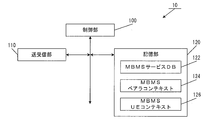
- BM-SC A functional configuration of the BM-SC 10 will be described with reference to FIG.
- a transmission / reception unit 110 and a storage unit 120 are connected to the control unit 100.
- the control unit 100 is a functional unit for controlling the entire BM-SC 10.
- the control unit 100 implements various functions by reading and executing various programs stored in the storage unit 120, and is configured by, for example, a CPU (Central Process Unit).
- a CPU Central Process Unit
- the transmission / reception unit 110 is an interface unit connected to the network, and is connected to the GGSN 20 via the network, for example.
- the storage unit 120 is a functional unit that stores various programs and various data necessary for the operation of the BM-SC 10.
- the storage unit 120 includes, for example, a semiconductor memory, an HDD (Hard Disk Drive), or the like.
- an MBMS service DB 122, an MBMS bearer context 124, and an MBMS UE context 126 are stored.
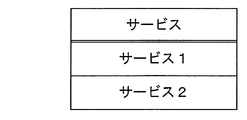
- the MBMS service DB 122 is a DB that stores a service identifier of distribution data for each MBMS bearer service in order to manage a distributable MBMS bearer service.
- FIG. 3 shows an example of the data configuration of the MBMS service DB 122.
- TMGI Temporal Mobile Group Identity
- Other identifiers for example, identifiers assigned by businesses that operate the BM-SC 10 and perform service businesses
- TMGI TMGI that identifies the MBMS bearer context 124 generated for each service is used when multicast data is distributed in the MBMS bearer service.
- TMGI is temporarily assigned subscriber identification information used in a conventional cellular phone service, but is used as information for identifying an MBMS bearer service in MBMS.
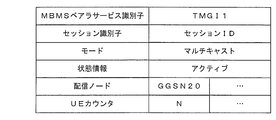
- the MBMS bearer context 124 is MBMS bearer management information that is generated for each MBMS bearer service and is established to deliver multicast data.
- FIG. 4 shows an example of the data configuration of the MBMS bearer context 124.
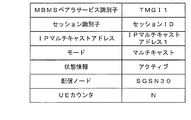
- the MBMS bearer context 124 includes an MBMS bearer service identifier (eg, “TMGI1”) required for MBMS registration, an identifier of a session established for distribution (eg, “session ID”), multicast, A mode (for example, “multicast”) for identifying the mode or broadcast mode, status information (for example, “active”) that manages whether the MBMS bearer is active or suspended, and a data distribution destination distribution node ( For example, “GGSN20”) and a UE counter (eg, “N”) are included.
- TMGI1 MBMS bearer service identifier
- session ID e.g, “session ID”
- a mode for example, “multicast”
- status information for example, “active”
- GGSN20 data distribution destination distribution node
- N a UE counter
- the distribution node stores information for specifying the node to be distributed, for example, an IP address (in the case of FIG. 4, the IP address of the GGSN 20) is stored.
- an IP address in the case of FIG. 4, the IP address of the GGSN 20
- one or a plurality of distribution nodes can be stored.
- the UE counter is the number of UEs that need to receive multicast data of the MBMS bearer service. This is based on the number counted by the counting function of the base station apparatus (NB40). For example, it may be the number of UEs 50 connected to the NB 40, or the UE 50 is participating in a multicast group. The number of UEs 50 may be used. Furthermore, the number of the terminal (UE50) that the user is actually viewing, that is, the number excluding the UE50 that is not viewing temporarily by detecting a state in which the user has not activated the viewing application, It may be the number of UEs 50 that notify the user that reception is necessary.
- the BM-SC 10 when the BM-SC 10 stores information on GGSNs that are a plurality of distribution nodes in the MBMS bearer context 124, the BM-SC 10 can store different UE counters for each GGSN and count the number of UEs. Therefore, the BM-SC 10 can store the number of viewing terminals of multicast data distributed to the GGSN 20.
- the MBMS UE context 126 is generated for each MBMS service and is UE management information indicating that the UE participates in the MBMS service.
- the BM-SC 10 can refer to the MBMS UE context 126, perform user registration for each MBMS service, and charge for each MBMS service.
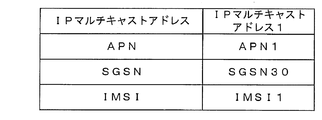
- FIG. 5 shows an example of the data structure of the MBMS UE context 126.
- the MBMS UE context 126 includes an IP multicast address (for example, “IP multicast address 1”) required when activating to the MBMS service, and an APN (when the UE 50 acquires an IP address at the initial connection).
- IP multicast address 1 for example, “IP multicast address 1”
- APN when the UE 50 acquires an IP address at the initial connection.
- (Access Point Name) information for example, “APN1”
- IMSI International Mobile Subscriber Identity
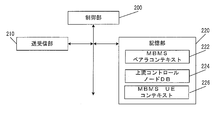
- GGSN 20 [1.2.2 GGSN] Subsequently, the functional configuration of the GGSN 20 will be described with reference to FIG. In the GGSN 20, a transmission / reception unit 210 and a storage unit 220 are connected to the control unit 200.
- the control unit 200 is a functional unit for controlling the entire GGSN 20.
- the control unit 200 realizes various functions by reading and executing various programs stored in the storage unit 220, and is configured by a CPU (Central Process Unit), for example.
- CPU Central Process Unit
- the transmission / reception unit 210 is an interface unit connected to the network, and is connected to the BM-SC 10, SGSN 30, and NB 40 via the network, for example.
- the storage unit 220 is a functional unit that stores various programs and various data necessary for the operation of the GGSN 20.
- the storage unit 220 includes, for example, a semiconductor memory, an HDD (Hard Disk Drive), or the like.
- an MBMS bearer context 222, an upstream control node DB 224, and an MBMS UE context 226 are stored.
- the MBMS bearer context 222 can be uniquely identified by TMGI.
- the MBMS bearer context 222 is management information that is generated for each MBMS bearer service and necessary for delivering multicast data.
- FIG. 7 an example of a data structure of the MBMS bearer context 222 is shown.
- the MBMS bearer context 222 includes an MBMS bearer service identifier such as TMGI (for example, “TMGI1”), an identifier of a session established for distribution (for example, “session ID”), and an IP multicast for performing IP multicast communication.
- An address for example, “IP multicast address 1”
- a mode for identifying the multicast mode or the broadcast mode for example, “multicast”
- status information for managing whether the state of the MBMS bearer is active or suspended for example, “Active”
- a data delivery destination delivery node eg, “SGSN30”
- a UE counter eg, “N”.
- the distribution node stores information for specifying the node to be distributed, for example, an IP address (in the case of FIG. 7, the IP address of the SGSN 30) is stored.
- IP address in the case of FIG. 7, the IP address of the SGSN 30
- a plurality of distribution nodes can be stored.
- the IP multicast address is stored for each MBMS bearer service corresponding to the MBMS bearer context 222.
- the UE counter is the number of mobile station apparatuses (terminals) that receive the multicast data of the MBMS bearer service. This is based on the number counted by the counting function of the base station apparatus (NB40), and is the number of mobile station apparatuses actually viewed by the user.
- NB40 base station apparatus
- the GGSN 20 when the GGSN 20 stores information on SGSNs as a plurality of distribution nodes in the MBMS bearer context 222, the GGSN 20 can store different UE counters for each SGSN and count the number of UEs. Therefore, the GGSN 20 can store the number of viewing terminals of multicast data distributed to the SGSN 30.
- the upstream control node DB 224 is a DB for storing information for specifying an upstream multicast data distribution apparatus.
- FIG. 8 shows an example of the configuration of the upstream control node DB 224.
- information related to the BM-SC 10 is stored, for example, the IP address of the BM-SC 10 is stored.
- the upstream control node DB 224 stores one upstream control node (BM-SC 10) as shown in FIG.
- BM-SC upstream control nodes
- the information is stored for each MBMS bearer context 222 that can be identified by TMGI or the like.
- the MBMS UE context 226 is management information of the UE 50 that is generated for each MBMS service and indicates that the UE 50 participates in the MBMS service.
- the GGSN 20 performs MBMS registration when the first MBMS UE context 226 is generated in a certain MBMS service. In addition, in a certain MBMS service, when the last MBMS UE context 226 is deleted, MBMS deregistration is performed.
- FIG. 9 shows an example of the data structure of the MBMS UE context 226.
- the MBMS UE context 226 includes an IP multicast address (for example, “IP multicast address 1”) required for activation to the MBMS service, and an APN required for the UE 50 to acquire an IP address at the initial connection.
- IP multicast address 1 for example, “IP multicast address 1”
- APN for example, “APN1”
- SGSN for example, “SGSN30”
- IMSI information for example, “IMSI1”
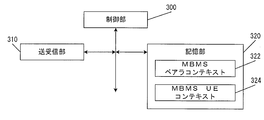
- the SGSN 30 is configured such that a transmission / reception unit 310 and a storage unit 320 are connected to the control unit 300.
- the control unit 300 is a functional unit for controlling the entire SGSN 30.
- the control unit 300 implements various functions by reading and executing various programs stored in the storage unit 320, and is configured by, for example, a CPU (Central Process Unit).
- a CPU Central Process Unit
- the transmission / reception unit 310 is an interface unit connected to the network, and is connected to the GGSN 20 and the NB 40 via the network, for example.
- the storage unit 320 is a functional unit that stores various programs and various data necessary for the operation of the SGSN 30.
- the storage unit 320 includes, for example, a semiconductor memory, an HDD (Hard Disk Drive), or the like.
- an MBMS bearer context 322 and an MBMS UE context 324 are stored.
- the MBMS bearer context 322 is generated for each MBMS bearer service and is management information necessary for delivering multicast data.
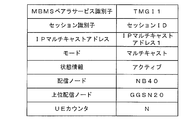
- FIG. 11 an example of a data structure of the MBMS bearer context 322 is shown.
- the MBMS bearer context 322 can be uniquely identified by TMGI.
- the MBMS bearer context 322 includes an MBMS bearer service identifier such as TMGI (eg, “TMGI1”), an identifier of a session established for distribution (eg, “session ID”), and an IP multicast for performing IP multicast communication.
- An address for example, “IP multicast address 1”
- a mode for identifying the multicast mode or the broadcast mode for example, “multicast”
- status information for managing whether the MBMS bearer is active or suspended for example, , “Active”
- a data distribution destination distribution node for example, “NB40”
- GGSN20 higher level distribution node
- UE counter for example, “N”
- the distribution node and the higher-level distribution node store information for identifying the respective nodes, and for example, IP addresses (in the case of FIG. 11, NB40 and the IP address of GGSN 20) are stored.
- IP addresses in the case of FIG. 11, NB40 and the IP address of GGSN 20
- a plurality of distribution nodes can be stored.
- the IP multicast address is stored for each MBMS bearer service corresponding to the MBMS bearer context 322.
- the UE counter is the number of mobile station apparatuses (terminals) that receive the multicast data of the MBMS bearer service. This is based on the number counted by the counting function of the base station apparatus (NB40), and is the number of mobile station apparatuses (UE) that the user is actually viewing.
- each SGNB 30 can store different UE counters and count the number of UEs. Therefore, the SGSN 30 can store the number of viewing terminals of multicast data distributed to the NB 40.
- the MBMS UE context 324 is generated for each MBMS bearer service and is management information of the UE 50 in multicast data distribution.
- the SGSN 30 performs MBMS registration when the first MBMS UE context 324 is generated in a certain MBMS service. Also, when the last MBMS UE context 324 is generated in a certain MBMS service, MBMS deregistration is performed.
- FIG. 12 shows an example of the data structure of the MBMS UE context 324.
- the MBMS UE context 324 includes an IP multicast address (for example, “IP multicast address 1”) required for activation to the MBMS service, and an APN required for the UE 50 to acquire an IP address at the initial connection.
- IP multicast address 1 for example, “IP multicast address 1”
- APN for example, “APN1”
- GGSN for example, “GGSN20”
- TMGI for example, “TMGI1”
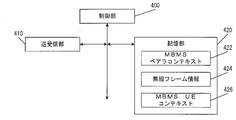
- a transmission / reception unit 410 and a storage unit 420 are connected to the control unit 400.
- the control unit 400 is a functional unit for controlling the entire NB 40.
- the control unit 400 implements various functions by reading and executing various programs stored in the storage unit 420, and is configured by, for example, a CPU (Central Process Unit).
- a CPU Central Process Unit
- the transmission / reception unit 410 is an interface unit connected to the network, and is connected to, for example, the GGSN 20 and the SGSN 30 via the network, and further can be connected to the UE 50.
- the storage unit 420 is a functional unit in which various programs necessary for the operation of the NB 40 and various data are stored.
- the storage unit 420 includes, for example, a semiconductor memory, an HDD (Hard Disk Drive), or the like.
- an MBMS bearer context 422, radio frame information 424, and an MBMS UE context 426 are stored.
- the MBMS bearer context 422 can be uniquely identified by TMGI.
- the MBMS bearer context 422 is generated for each MSMS bearer service and is management information necessary for delivering multicast data.
- FIG. 14 an example of a data structure of the MBMS bearer context 422 is shown.
- the MBMS bearer context 422 includes an MBMS bearer service identifier such as TMGI (eg, “TMGI1”), an identifier of a session established for distribution (eg, “session ID”), and an IP multicast for performing IP multicast communication.
- An address for example, “IP multicast address 1”
- a mode for identifying the multicast mode or the broadcast mode for example, “multicast”
- status information for managing whether the MBMS bearer is active or suspended for example, , “Active”
- information on a higher-level distribution node for example, “SGSN30” serving as a higher-level distribution node
- a UE counter for example, “N”.
- information for specifying the node is stored, for example, an IP address (in the case of FIG. 14, the IP address of the SGSN 30) is stored.
- the IP multicast address is stored for each MBMS bearer service corresponding to the MBMS bearer context 422.
- the UE counter is the number of mobile station apparatuses (terminals) that receive the multicast data of the MBMS bearer service. This is based on the number counted by the counting function of the base station apparatus (NB40), and is the number of mobile station apparatuses (UE50) that the user is actually viewing.
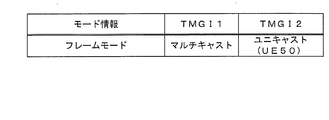
- the radio frame information 424 stores information on a radio frame for the NB 40 to transmit to the UE 50 through the radio section for each MBMS bearer service.
- FIG. 15 shows an example of the data configuration of the radio frame information 424.
- mode information (for example, “frame mode”) indicating the multicast mode or the unicast mode is stored for each identifier for identifying the MBMS bearer service (for example, for each TMGI).
- identification information such as IMSI (International Mobile Subscriber Identity) of the UE 50 that delivers the frame is stored.
- IMSI International Mobile Subscriber Identity
- a plurality of UEs (identification information) for frame delivery can be stored.
- the MBMS UE context 426 is generated for each MBMS bearer service, and is management information of the UE 50 in multicast data distribution.
- the NB 40 performs MBMS registration when the first MBMS UE context is generated in a certain MBMS service.
- MBMS deregistration is performed.
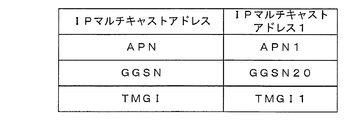
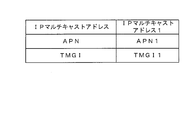
- FIG. 16 shows an example of the data structure of the MBMS UE context 426.
- IP multicast address for example, IP multicast address 1
- APN for example, “ APN1 ”
- TMGI for example, TMGI1
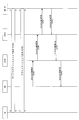
- the BM-SC 10 first performs a service announcement procedure for the UE 50 (S100). That is, the BM-SC 10 notifies the UE 50 of services that can be distributed. The UE 50 thereby detects the multicast service.
- the BM-SC 10 notifies the UE 50 by notifying the service identifier that the service managed by the MBMS service DB 122 can be distributed. Furthermore, information describing a service such as a program title, a content title, and a distribution start time may be added and notified.
- TMGI TMGI
- Etc identifiers that can be set by the operator to identify the MBMS bearer service
- description will be made assuming that TMGI of (1) is used.
- SMS Short Message Service
- the information may be posted on the WEB, and the UE 50 may acquire the information by accessing the WEB server.
- This procedure starts the activation procedure when the UE 50 makes an IGMP participation request to the GGSN 20 (S200).
- the UE 50 can notify the GGSN 20 of information uniquely indicating the service notified from the service announcement. is there. Specifically, when communicating with IPv4, an IGMP Membership Report is transmitted, and when communicating with IPv6, an MLD Membership Report is transmitted.
- the GGSN 20 transmits an MBMS approval request for the UE 50 to participate in the service to the BM-SC 10 (S202).
- the BM-SC 10 that has received the MBMS approval request approves the UE 50 that requested the participation based on the service agreement.
- the charging process may be performed on the UE 50 to be approved.
- the BM-SC 10 transmits an approval response indicating that the UE 50 has been approved to the GGSN 20 (S204).
- the BM-SC 10 transmits the approval response including the APN.
- the approval response need not be transmitted.
- the GGSN 20 transmits an MBMS notification request to the SGSN 30 (S206).
- the GGSN 20 transmits the IP multicast address and the APN.
- the IP multicast address is an address at which the UE 50 has requested to participate.
- the SGSN 30 transmits an MBMS notification response to the GGSN 20 (S208).
- the SGSN 30 transmits an MBMS context activation request to the UE 50 in order to validate the MBMS UE context (S210).
- the SGSN 30 transmits the MBMS context request including the IP multicast address and the APN.
- the UE 50 that has received the MBMS context activation request creates an MBMS UE context and transmits an MBMS context activation response to the SGSN 30 (S212).
- the MBMS context activation response includes an IP multicast address, an APN, and information on QoS that the UE 50 can process.
- the MBMS UE context includes an IP multicast address, an APN, GGSN information that is a higher-level delivery node, and TMGI information.
- the SGSN 30 that has received the MBMS UE context activation response from the UE 50 creates an MBMS UE context and transmits an MBMS context request to the GGSN 20 (S214).
- the SGSN 30 transmits the MBMS context request including the IP multicast address and the APN.
- the MBMS UE context includes an IP multicast address, an APN, and an SGSN that is a distribution node.
- the GGSN 20 that has received the MBMS context request from the SGSN 30 transmits an MBMS approval request to the BM-SC 10 in order to confirm service participation by the UE 50 (S216).
- the BM-SC 10 that has received the MBMS approval request from the GGSN 20 confirms service participation by the UE 50 and then creates an MBMS UE context.
- the MBMS UE context includes an IP multicast address and an APN.
- the BM-SC 10 transmits an MBMS approval response to the GGSN 20 (S220).
- the GGSN 20 that has received the MBMS approval response from the BM-SC 10 creates an MBMS UE context and transmits the MBMS context response to the SGSN 30 (S222).
- the SGSN 30 transmits an MBMS UE context notification to the NB 40 (S224).
- the NB 40 that has received the MBMS UE context notification from the SGSN 30 creates an MBMS UE context.
- the MBMS UE context includes an IP multicast address, APN, and TMGI.
- the SGSN 30 transmits an MBMS context activation permission response to the UE 50 (S226).
- the SGSN 30 transmits TMGI in the MBMS context activation permission response.
- TMGI is an identifier that uniquely indicates the MBMS service.
- the MBMS bearer context 124 is created in the BM-SC 10
- the MBMS bearer context 222 is created in the GGSN 20
- the MBMS bearer context 322 is created in the SGSN 30
- the MBMS bearer context 422 is created in the NB 40
- the MBMS bearer context 124 and GGSN 20 in the BM-SC 10 are created.
- the MBMS bearer context 222 in SGSN 30 the MBMS bearer context 322 in SGSN 30, and the MBMS bearer context 422 in NB 40 need to be registered in the respective distribution node lists.
- the MBMS bearer context (identifiable by TMGI) is generated in the BM-SC 10, the GGSN 20, and the SGSN 30, respectively.
- the MBMS bearer context 124 in the BM-SC 10 the MBMS bearer context 222 in the GGSN 20, the MBMS bearer context 322 in the SGSN 30, and the MBMS bearer in the NB 40.
- Each downlink node is registered in each distribution list in the context 422.
- GGSN 20 is registered in the distribution list in BM-SC 10
- SGSN 30 is registered in the distribution list in GGSN 20
- NB 40 is registered in the distribution list in SGSN 30.
- a plurality of downlink nodes may be registered in each distribution list in the BM-SC 10, GGSN 20, SGSN 30, and NB 40.
- the NB 40 starts the MBMS registration procedure by detecting the UE 50 participating in the MBMS service.
- the UE 50 can notify the NB 40 of information uniquely indicating the service notified from the service announcement.
- the NB 40 may generate an MBMS UE context corresponding to the service.
- the MBMS UE context includes an IP multicast address, APN, and TMGI. Furthermore, if the NB 40 has generated the first MBMS UE context including this TMGI, the NB 40 may signal the MBMS registration start procedure.
- the trigger for the NB 40 to start the MBMS registration procedure may be performed at any timing other than the above, depending on the policy of the operator.
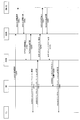
- the NB 40 transmits an MBMS registration request for MBMS registration of the service designated by the UE 50 to the SGSN 30 (S104).
- the NB 40 transmits the MBMS registration request including TMGI, the IP multicast address, and the APN.
- the SGSN 30 that has received the MBMS registration request from the NB 40 transmits the MBMS registration request to the GGSN 20 (S106).
- the MBMS registration request includes TMGI, IP multicast address, and APN.
- the SGSN 30 generates an MBMS bearer context 322 corresponding to the service.
- the MBMS bearer context 322 includes TMGI that identifies the service. Further, the status information of the bearer resource in the MBMS bearer context 322 is set to “standby”.
- the MBMS UE context 324 of the UE 50 participating in the service may be generated.
- the MBMS UE context 324 includes an IP multicast address, an APN, a TMGI, and information on a GGSN that is a higher delivery node.
- the GGSN 20 that has received the MBMS registration request from the SGSN 30 generates the MBMS bearer context 222 and transmits the MBMS registration request to the BM-SC 10 (S108).
- the state information of the bearer resource in the MBMS bearer context 222 is set to “standby”.
- the GGSN 20 may generate the MBMS UE context 226 of the UE 50 that participates in the service.
- the MBMS UE context 226 includes an IP multicast address, an APN, and information on the SGSN that is the distribution node.
- the BM-SC 10 that has received the MBMS registration request from the GGSN 20 registers the identifier of the GGSN 20 that has transmitted the MBMS registration request to the MBMS bearer context 124 in the distribution list, and returns an MBMS registration response (S110).
- S110 the information regarding TMGI and QoS is included in the MBMS registration response.
- the GGSN 20 that has received the MBMS registration request from the SGSN 30 in S106 registers the identifier of the SGSN 30 that has transmitted the MBMS registration request in the distribution list of the MBMS bearer context 222, and returns an MBMS registration response (S112).
- the information regarding TMGI and the bearer required for this MBMS service is included in the MBMS registration response.
- the SGSN 30 that has received the MBMS registration request from the NB 40 in S104 registers the identifier of the NB 40 that has transmitted the MBMS registration request in the distribution list of the MBMS bearer context 322, and returns an MBMS registration response (S114).
- the multicast distribution data of the service transmitted by the BM-SC 10 is delivered to the NB 40.
- a route for the can be generated.
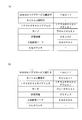
- FIG. 19A shows the MBMS bearer context 422 stored in the NB 40 after the MBMS registration procedure.
- the MBMS bearer service identifier is “TMGI1”
- the IP multicast address is “IP multicast address 1”
- the mode is “multicast”
- the status information is “standby”.
- the information of “SGSN30” is stored in the higher-level delivery node.
- the process when the GGSN 20 receives the MBMS registration request has been described, but when the other GGSN receives the MBMS registration request from the SGSN, the same procedure as the GGSN 20 is performed.
- BM-SC 10 receives an MBMS registration request has been described. However, when other BM-SCs also receive MBMS registration requests from GGNS, the same processing as BM-SC 10 is performed. Perform the procedure.
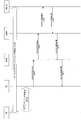
- the session start procedure to be executed will be described with reference to FIG.
- an MBMS bearer is established and preparations for data transmission are made.
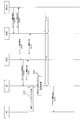
- the BM-SC 10 specifies a service and transmits a session start request to the GGSN 20 (S300).
- a session identifier for identifying the session is generated, and the generated session identifier and TMGI for designating the service are included in the session start request and transmitted. This starts the session start procedure.
- a session identifier is registered in the corresponding MBMS bearer context 124 (identifiable by TMGI), and status information is registered actively.
- the session start request is transmitted to all GGSNs 20 registered in the delivery node of the MBMS bearer context 124.
- the GGSN 20 receives the session start request, transmits a session start response to the BM-SC 10, and responds (S302).
- the session identifier is registered in the corresponding MBMS bearer context 222 (identifiable by TMGI), and the state information is registered actively.
- Information related to the SGSN 30 is registered in the distribution list. Here, a plurality of SGSNs are registered in the distribution node.
- the SGSN 30 that is a distribution node to be registered may be registered in advance by an operator, or uses a list of distribution nodes (such as SGSN 30) for each MBMS service area registered through the MBMS registration procedure. The corresponding SGSN 30 may be selected based on the MBMS service area identifier included in the session start request transmitted from the BM-SC 10.
- an MBMS bearer which is a delivery path that secures communication quality for multicast data delivery between the BM-SC 10 and the GGSN 20, is established.
- an IP multicast address is assigned to the service and registered in the MBMS bearer context 222.
- the GGSN 20 transmits a session start request (S304) to the SGSN 30 registered in the delivery node of the MBMS bearer context 222.
- the session start request includes TMGI, a session identifier, and an IP multicast address.
- the session start request is transmitted to all SGSNs registered in the delivery node of the MBMS bearer context 222.
- SGSN 30 receives the session start request, transmits a session start response to GGSN 20, and responds (S310). Also, an MBMS bearer context 322 is generated, TMGI, a session identifier, and an IP multicast address are registered, and status information is registered actively.
- Information regarding the NB 40 is registered in the distribution node.
- a plurality of NBs are registered in the distribution node.
- an MBMS bearer that is a delivery path that secures communication quality of multicast data delivery between the GGSN 20 and the SGSN 30 is established.
- the SGSN 30 transmits a session start request (S306) to NB 40 registered in the delivery node of MBMS bearer context 322.
- the session start request includes TMGI, a session identifier, and an IP multicast address.
- the session start request is transmitted to all NBs registered in the delivery node of the MBMS bearer context 322.
- the NB 40 receives the session start request, transmits a session start response to the SGSN 30, and responds (S308).
- the MBMS bearer context 422 is generated, the TMGI, the session identifier, and the IP multicast address are registered, and the state information is registered actively.
- requirement is registered.
- an MBMS bearer which is a delivery path that secures communication quality for multicast data delivery between the SGSN 30 and the NB 40, is established.
- the NB 40 performs IP multicast participation processing (S314).
- the NB 40 refers to the MBMS bearer context 422 and makes a participation request using the IP multicast address corresponding to the service. Specifically, when communicating by IPv4, an IGMP Membership Report message is transmitted, and when communicating by IPv6, an MLD Membership Report is transmitted.
- the IP multicast packet is delivered to the MBMS bearer established by the BM-SC 10, the GGSN 20, the SGSN 30 and the NB 40.
- the multicast data is transmitted from the BM-SC 10 to the NB 40 by IP multicast.
- the NB 40 performs radio resource allocation processing to be transmitted to the UE 50 (S312), and registers information for delivery in the radio frame information 424. Specifically, mode information indicating whether the radio frame mode is the multicast mode or the unicast mode is registered for each service identifier. TMGI can be used as the service identifier.
- the frame when transmitting in the multicast mode, the frame is transmitted to an unspecified number of UEs, so it is not necessary to retain UE information, but when transmitting in the unicast mode, a radio frame is transmitted to each UE.
- the IMSI is stored as UE information and registered as UE information.
- a communication path is established between the UE 50 and the BM-SC 10, and the data transmitted by the BM-SC 10 can be delivered to the NB 40.
- the NB 40 transmits an MBMS start notification to the UE 50 (S316).
- the start notification includes a service identifier for identifying the service. Thereby, UE50 starts reception of multicast data.
- TMGI registered in the MBMS bearer context 422
- Session ID registered in MBMS bearer context 422
- Other identifiers for example, identifiers that can identify the MBMS bearer service between the NB 40 and the UE 50
- Etc Etc
- the TMGI of (1) is used.
- the service identifier and the MBMS bearer context 422 are registered in association with each other.
- the processing when the GGSN 20 receives a session start request has been described. However, when other GGSNs receive a session start request from the BM-SC 10, the same procedure as the GGSN 20 is performed.
- the processing when the SGSN 30 receives a session start request has been described. However, when other SGSNs receive a session start request from the GGSN, the same procedure as the SGSN 30 is performed.
- the processing when the NB 40 receives a session start request has been described.
- the other NB receives a session start request from the SGNS, the same procedure as the NB 40 is performed.
- the process when the UE 50 receives the session start request has been described. However, when other UEs receive the session start request from the NB, the same procedure as the UE 50 is performed.
- the multicast data distributed by the BM-SC 10 is hierarchically delivered to the UE via a plurality of GGSNs, SGSNs, and NBs.
- FIG. 19B shows the MBMS bearer context 422 held by the NB 40 after the session start procedure.
- TMGI1 is the MBMS bearer service identifier
- session 1 is the session identifier
- IP multicast address 1 is the IP multicast address
- multicast is the mode.
- active is stored in the status information
- information on “SGSN30” is stored in the higher-level delivery node.
- the session identifier is newly stored, and the status information is changed from “standby” to “active”.
- the session stop process is described as being performed after the MBMS deregistration process.
- the order is not limited to this order, and the MBMS deregistration process may be performed after the session stop process.
- the start trigger is not limited to this, and the procedure can be started from the NB 40.
- the procedure is performed between the NB 40 and the UE 50.
- NB40 transmits the message which confirms whether it receives service including a service identifier with respect to UE50 connected.
- the NB 40 sends a message to the UE 50 registered in the radio frame information 424 to confirm whether or not the service is received, but may send it to all UEs to be connected.
- TMGI registered in the MBMS bearer context 422
- Session ID registered in MBMS bearer context 422
- Other identifiers for example, identifiers that can identify the MBMS bearer service between the NB 40 and the UE 50
- Etc Etc.
- the NB 40 can acquire the number of UEs 50 that actually need to receive multicast data.
- the obtained number of UEs 50 is registered in the UE counter of the MBMS bearer context 422.
- the number of UEs 50 that actually need to receive multicast data may be, for example, the number of UEs 50 connected to the base station apparatus, or the number of UEs 50 participating in the multicast group among these UEs 50. .
- the number may be the number excluding the UE 50 that is not temporarily viewed by detecting a state in which the user has not activated the viewing application, or the UE 50 that notifies the user that reception is necessary. You may register by counting.
- the confirmation message of the NB 40 may be transmitted without including the service identifier.
- the UE 50 responds including the service identifier.
- the service identifier can be selected by acquiring and storing it in the service announcement procedure.
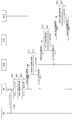
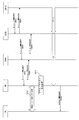
- the NB 40 performs a counting process for confirming whether the UE counter of the MBMS bearer context 422 has become zero (S402). When the UE counter becomes zero, the NB 40 performs MBMS deregistration processing (S404). The NB 40 refers to the TMGI to be counted and deletes the UE 50 from the distribution list of the corresponding MBMS bearer context 422.
- the NB 40 performs a session stop process (S406).
- the bearer resource is allocated to the service identified by TMGI between the UE 50 and the NB 40
- the NB 40 releases the bearer resource.
- the status information in the MBMS bearer context 422 is “active”, the state is set to “standby”.
- the NB 40 transmits an MBMS deregistration request for the corresponding service to the SGSN 30 (S408).
- the SGSN to be transmitted is resolved by the SGSN information of the MBMS bearer context 422, and is transmitted to the SGSN 30 in this embodiment.
- the NB 40 transmits an MBMS deregistration request including the TMGI registered in the MBMS bearer context 422, the service identifier, the session identifier, and the information of the NB 40 to the SGSN 30.
- the SGSN 30 that has received the MBMS deregistration request performs MBMS deregistration processing (S410).
- the SGSN 30 refers to the TMGI included in the MBMS deregistration request received from the NB 40, and deletes the NB 40 from the distribution list of the corresponding MBMS bearer context 322.
- the SGSN 30 performs a session stop process (S412).
- the bearer resource is allocated to the service identified by TMGI between the NB 40 and the SGSN 30, the SGSN 30 releases the bearer resource.
- the status information in the MBMS bearer context 322 is “active”, the status information is set to “standby”.
- the SGSN 30 transmits an MBMS registration cancellation response to the NB 40 (S414).
- the NB 40 that has received the MBMS deregistration response deletes the MBMS bearer context 422 corresponding to the TMGI included in the MBMS deregistration request in S408.
- the SGSN 30 confirms the NB (or NB identifier) of the distribution list in the MBMS bearer context 322, and completes this process if the NB is registered.
- the SGSN 30 transmits an MBMS deregistration request for the corresponding service to the GGSN 20 (S416).
- the GGSN to be transmitted is resolved by the GGSN information of the MBMS bearer context 422, and is transmitted to the GGSN 20 in this embodiment.
- the SGSN 30 transmits an MBMS deregistration request including the TMGI registered in the MBMS bearer context 422, the service identifier, the session identifier, and the SGSN 30 information to the GGSN 20.
- the GGSN 20 that has received the MBMS deregistration request performs MBMS deregistration processing (S418).
- the SGSN 30 With reference to the TMGI included in the MBMS deregistration request received from the SGSN 30, the SGSN 30 is deleted from the distribution list of the corresponding MBMS bearer context 222. Subsequently, the GGSN 20 performs a session stop process (S420).
- the bearer resource is allocated to the service identified by TMGI between the SGSN 30 and the GGSN 20, the GGSN 20 releases the bearer resource.
- the state information in the MBMS bearer context 222 is active, it is set to standby.
- the GGSN 20 transmits an MBMSMBMS deregistration response to the SGSN 30 (S422).
- the SGSN 30 that has received the MBMS deregistration response deletes the MBMS bearer context 222 corresponding to the TMGI included in the MBMS deregistration request transmitted in S416.
- the GGSN 20 confirms the SGSN (or SGSN identifier) of the distribution list in the MBMS bearer context 222, and completes this process when the SGSN is registered.
- the GGSN 20 transmits an MBMS deregistration request for the corresponding service to the BM-SC 10 (S424).
- the BM-SC to be transmitted is resolved by the BM-SC information of the MBMS bearer context 124, and is transmitted to the BM-SC 10 in this embodiment.
- the GGSN 20 transmits an MBMS deregistration request including TMGI, service identifier, session identifier, and GGSN 20 information registered in the MBMS bearer context 222 to the BM-SC 10.
- the BM-SC 10 that has received the MBMS deregistration request performs MBMS deregistration processing (S426).
- the TMGI included in the MBMS deregistration request received from the GGSN 20 is referenced, and the GGSN 20 is deleted from the distribution list of the corresponding MBMS bearer context 124.
- the BM-SC 10 performs session stop processing (S428).
- session stop processing S428.
- the BM-SC 10 releases the bearer resource.
- the state information in the MBMS bearer context 124 is active, the standby state is set.
- the BM-SC 10 transmits an MBMSMBMS deregistration response to the GGSN 20 (S430).
- the GGSN 20 that has received the MBMS deregistration response deletes the MBMS bearer context 124 corresponding to the TMGI included in the MBMS deregistration request transmitted in S424. Further, when the GGSN 20 holds the MBMS UE context 226 corresponding to the TMGI included in the MBMS deregistration request, the GGSN 20 may delete all the MBMS UE contexts 226 including the TMGI.
- the BM-SC 10 deletes the MBMS bearer context 124 identified by TMGI that has requested MBMS deregistration.
- the BM-SC 10 confirms the GGSN 20 (or the identifier of the GGSN 20) in the distribution list in the MBMS bearer context 124, and completes this process if the GGSN 20 is registered.
- the BM-SC 10 deletes the MBMS bearer context 124 when all GGSNs are deleted from the distribution list in the MBMS bearer context 124 (EMPTY).
- the MBMS registration can be efficiently canceled by the NB 40 using the counting function.
- the MBMS deregistration procedure of the NB 40 can detect that the distribution of the multicast service for each MBMS bearer that can be identified by TMGI or the like is unnecessary by the counting procedure.
- the MBMS deregistration procedure can be started with this detection as a trigger.
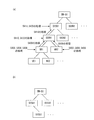
- FIG. 22A shows the distribution tree before the MBMS deregistration procedure and the session stop process
- FIG. 22B shows the distribution tree after the MBMS deregistration procedure and the session stop process.
- the distribution tree indicates a route through which data is distributed from the BM-SC to the UE via the GGSN, SGSN, and NB.
- FIG. 22 shows that NB1 and NB2 perform counting processing (S402) for arbitrary services, the UE counter becomes zero, and the MBMS deregistration procedure and session processing are started.
- NB1 and NB2 that have decided to perform the MBMS deregistration procedure and the session stop process each perform an MBMS deregistration process (S404). That is, the UE connected to NB1 or the UE connected to NB2 is deleted from the distribution list of the MBMS bearer context 422.
- NB1 and NB2 each perform session stop processing (S406). That is, when a bearer resource is allocated between UEs connected to NB1 and NB1, the bearer resource is released, and a bearer resource is allocated between UEs connected to NB2 and NB2. If so, the bearer resource is released.
- S406 session stop processing
- NB1 and NB2 each send an MBMS deregistration request to SGSN1 (S408).
- SGSN1 performs MBMS deregistration processing based on MBMS deregistration requests from NB1 and NB2 (S410). That is, NB1 and NB2 are deleted from the delivery list of the MBMS bearer context 322 held by SGSN1.
- the SGSN 1 performs a session stop process (S412). That is, when a bearer resource is allocated between SGSN1 and NB1 or NB2, the bearer resource is released.
- SGSN1 confirms that the distribution list in MBMS bearer context 322 is EMPTY, and transmits an MBMS deregistration request to GGSN1 (S416).
- GGSN1 performs MBMS deregistration processing based on the MBMS deregistration request from SGSN1 (S418). That is, SGSN1 is released from the distribution list of the MBMS bearer context 222 held by the GGSN.
- the GGSN 1 performs a session stop process (S420). That is, when a bearer resource is allocated between GGSN1 and SGSN1, the bearer resource is released.
- SGSN2 is registered in the distribution list of MBMS bearer context 222 in GGSN1, the MBMS deregistration procedure is completed. It is a distribution tree after the MBMS deregistration procedure and the session stop process, and it can be seen that SGSN1 is deleted from the distribution list of GGSN1.
- the deactivation process (service deregistration by the UE) was not performed.
- the NB 40 can detect that the UE has requested to receive the service using the counting function or the like, the service reception can be resumed without performing the activation process by the UE.
- MBMS deregistration was triggered when the UE counter became zero, but after performing the deactivation procedure, all MBMS UE contexts in a service were deleted.
- the MBMS deregistration procedure may be performed using this as a trigger.
- the deactivation registration procedure is performed, the BM-SC service is removed from registration and the billing process can be stopped.
- each device recognizes that the service to be registered is the multicast mode
- the BM-SC 10 registers with the mode of the MBMS bearer context 124 as multicast
- the GGSN 20 registers with the mode of the MBMS bearer context 222
- the SGSN 30 registers with the MBMS bearer.
- NB 40 registers multicast in the context 322 mode
- NB 40 registers multicast in the MBMS bearer context 422 mode.
- MBMS bearer context 124 in BM-SC 10 when referring to MBMS bearer context 124 in BM-SC 10, MBMS bearer context 222 in GGSN 20, MBMS bearer context 322 in SGSN 30, and MBMS bearer context 422 in NB 40, respectively, in multicast mode Can cancel MBMS registration.
- the state information in the MBMS bearer context 124 in the BM-SC 10 when the state information in the MBMS bearer context 124 in the BM-SC 10, the MBMS bearer context 222 in the GGSN 20, the MBMS bearer context 322 in the SGSN 30, and the MBMS bearer context 422 in the NB 40 is active, the state information is You can change to standby and stop session, multicast data distribution, and reception.
- the MBMS deregistration request when the multicast MBMS deregistration request is transmitted (S408), when the mode of the MBMS bearer context 422 is multicast, the MBMS deregistration request is transmitted, the MBMS deregistration process, the release of the MBMS bearer, Multicast data distribution and reception stop.
- SGSN 30 when a multicast MBMS deregistration request is transmitted (S416), if the mode of MBMS bearer context 322 is multicast, MBMS deregistration request transmission, MBMS deregistration processing, MBMS bearer release, multicast data distribution, and reception stop I do.
- the BM-SC 10 When receiving the multicast MBMS registration cancellation request (S424), the BM-SC 10 performs MBMS registration cancellation processing, MBMS bearer release, and multicast data distribution stop when the mode of the MBMS bearer context 222 is multicast.
- the base station apparatus can perform the MBMS deregistration procedure and the session stop procedure based on the result of necessity of reception of the mobile station apparatus without performing the activation procedure and the deactivation procedure. become. In other words, MBMS deregistration and session suspension can be performed while maintaining activation of the mobile station apparatus.
- the session stop procedure required for session stop can be omitted and simplified. If the session is not stopped when canceling the MBMS registration, the session is not started unless the MBMS registration is performed again by canceling the MBMS registration and stopping the session.
- the conventional method only a procedure for stopping a session from the distribution source to the distribution destination is defined, and it is impossible to request a session stop from the distribution destination to the distribution source. That is, the session stop cannot be requested from the base station apparatus (NB) to the distribution source. Furthermore, even if the base station device (NB) expands to request a session stop from the distribution source, the device that has received the session stop request can stop the distribution and temporarily release resources, but the distribution list is deleted. Do not do.
- the exchange of control information required when starting the session can be reduced, and communication resources required for the session start procedure are used inefficiently.
- communication resources required for the session start procedure are used inefficiently.
- the MBMS registration procedure is started by performing the activation procedure and performing service registration from the UE.
- the MBMS registration procedure may be performed without performing the activation procedure. It becomes possible.
- the activation procedure is not performed, so that the MBMS UE context is not generated.
- the system configuration and each device configuration in the second embodiment are the same as the system configuration and each device configuration shown in the first embodiment, and a description thereof will be omitted.
- the MBMS UE context is not created in each of the NB 40, SGSN 30, GGSN 20, and BM-SC 10.
- the UE counter in the second embodiment is the number of UEs that need to receive the MBMS bearer service broadcast data. This is based on the number counted by the counting function of the base station apparatus (NB 40), and may be the number of UEs 50 connected to the NB 40, for example. Furthermore, it is the number excluding UE 50 that is not viewed temporarily by detecting the terminal (UE 50) that the user is actually viewing, that is, the state in which the user has not activated the viewing application. The number of UEs 50 that notify the user that reception is necessary may be used.
- the service announcement procedure in this embodiment will be described. As shown in FIG. 23, the BM-SC 10 first performs a service announcement procedure for the UE 50. The BM-SC 10 notifies the UE 50 of services that can be distributed (S500). The UE 50 thereby detects the broadcast service.
- the BM-SC 10 notifies the UE 50 by notifying the service identifier that the service managed by the MBMS service DB 122 can be distributed. Furthermore, information describing a service such as a program title, a content title, and a distribution start time may be added and notified.
- TMGI TMGI
- Etc identifiers that can be set by the operator to identify the MBMS bearer service
- description will be made assuming that TMGI of (1) is used.
- SMS Short Message Service
- the information may be posted on the WEB, and the UE 50 may acquire the information by accessing the WEB server.
- FIG. 23 shows an MBMS registration procedure in the MBMS service. A communication path from the BM-SC 10 to the UE 50 is established by the MBMS registration procedure.
- an MBMS bearer context 124 in the BM-SC 10 For establishing a communication path, an MBMS bearer context 124 in the BM-SC 10, an MBMS bearer context 222 in the GGSN 20, an MBMS bearer context 322 in the SGSN 30, and an MBMS bearer context 422 in the NB 40 are generated, respectively. It is necessary to register the MBMS bearer context 222 in the GGSN 20, the MBMS bearer context 322 in the SGSN 30, and the MBMS bearer context 422 in the NB 40 in the respective distribution node lists.
- the MBMS bearer context 124, the MBMS bearer context 222, the MBMS bearer context 322, and the MBMS bearer context 422 can be identified by TMGI.
- GGSN 20 is registered in the distribution list in BM-SC 10
- SGSN 30 is registered in the distribution list in GGSN 20
- NB 40 is registered in the distribution list in SGSN 30.
- a plurality of downlink nodes may be registered in each distribution list in the BM-SC 10, GGSN 20, SGSN 30, and NB 40.
- the NB 40 starts the MBMS registration procedure by detecting the UE that receives the MBMS service.
- the UE that the NB 40 receives the MBMS service may be detected using the counting function in the NB 40.
- the UE 50 can request MBMS registration to the NB 40 by the counting procedure.
- the NB 40 transmits a message for confirming whether or not a service including the service identifier is received to the UE 50 to be connected.
- the NB 40 sends a message to the UE 50 registered in the radio frame information 424 to confirm whether or not the service is received, but may send it to all UEs to be connected.
- TMGI registered in the MBMS bearer context 422
- Session ID registered in MBMS bearer context 422
- Other identifiers for example, identifiers that can identify the MBMS bearer service between the NB 40 and the UE 50
- Etc. are available.
- description will be made assuming that TMGI of (1) is used.
- the NB 40 can acquire the number of UEs 50 that actually need to receive broadcast data.
- the obtained number of UEs 50 is registered in the UE counter of the MBMS bearer context 422.
- the number of UEs 50 that actually need to receive broadcast data may be, for example, the number of UEs 50 connected to the NB 40. Furthermore, the number may be the number excluding the UE 50 that is not temporarily viewing by detecting a state in which the user has not activated the viewing application, or the UE 50 that notifies the user that reception is necessary. You may register by counting.
- the confirmation message of the NB 40 may be transmitted without including the service identifier. In that case, if there is a service that needs to be received, the UE 50 responds including a service identifier.
- the service identifier can be selected by storing it by acquiring it in the service announcement procedure.
- the NB40 which received the response specifies MBMS bearer context 422 from a service identifier, and registers the number of UE50 which responded in UE counter. Thus, the counting procedure is completed (S502). If it is determined that the UE counter is not 0 as a result of the counting procedure, the MBMS registration procedure may be started.
- the trigger for the NB 40 to start the MBMS registration procedure may be performed at an arbitrary timing according to an operator policy or the like. Other than the above, it may be performed at an arbitrary timing according to the policy of the operator when the base station apparatus is installed or when the operation is started.
- the NB 40 transmits an MBMS registration request for MBMS registration of the service designated by the UE to the SGSN 30 (S504).
- the NB 40 includes the TMGI and IP multicast address in the MBMS registration request.
- the SGSN 30 that has received the MBMS registration request from the NB 40 transmits the MBMS registration request to the GGSN 20 (S506).
- the TMGI and IP multicast address are included in the MBMS registration request.
- the SGSN 30 generates an MBMS bearer context 322 corresponding to the service.
- the MBMS bearer context 322 includes TMGI that identifies the service. Further, the status information of the bearer resource in the MBMS bearer context 322 is set to “standby”.
- the GGSN 20 that has received the MBMS registration request from the SGSN 30 generates an MBMS bearer context 222 and transmits the MBMS registration request to the BM-SC 10 (S508).
- the state information of the bearer resource in the MBMS bearer context 222 is set to “standby”.
- the BM-SC 10 that has received the MBMS registration request from the GGSN 20 registers the identifier of the GGSN 20 that has transmitted the MBMS registration request to the MBMS bearer context 124 in the distribution list, and returns an MBMS registration response (S510).
- the MBMS registration response includes TMGI and the bearer capacity required for the service.
- the GGSN 20 that has received the MBMS registration request from the SGSN 30 registers the identifier of the SGSN 30 that has transmitted the MBMS registration request in the distribution list of the MBMS bearer context 222, and returns an MBMS registration response (S512).
- the information regarding TMGI and the bearer required for this MBMS service is included in the MBMS registration response.
- the SGSN 30 that has received the MBMS registration request from the NB 40 in S504 registers the identifier of the NB 40 that has transmitted the MBMS registration request in the distribution list of the MBMS bearer context 322, and transmits an MBMS registration response (S514).
- a route for delivering the broadcast distribution data of the service transmitted by the BM-SC 10 to the NB 40 is generated. can do.
- the nodes registered in the distribution list need not follow the above, and may be registered in advance by an operator.
- FIG. 24A shows the MBMS bearer context 422 held by the NB 40 after the MBMS registration procedure.
- the MBMS bearer service identifier is “TMGI1”
- the IP multicast address is “IP multicast address 1”
- the mode is “broadcast”
- the status information is “standby”.
- “SGSN20” is stored in the higher-level delivery node.
- the processing when the GGSN 20 receives the MBMS registration request has been described, but when the other GGSN receives the MBMS registration request from the SGSN 30, the same procedure as the GGSN 20 is performed.
- the processing when the BM-SC 10 receives the MBMS registration cancellation request has been described.
- the BM-SC 10 follows the same procedure.
- the session start procedure to be executed will be described with reference to FIG.
- an MBMS bearer is established and preparations for data transmission are made.
- the BM-SC 10 specifies a service and transmits a session start request to the GGSN 20 (S600).
- a session identifier for identifying the session is generated, and the generated session identifier and TMGI for designating the service are included in the session start request and transmitted. This starts the session start procedure.
- a session identifier is registered in the corresponding MBMS bearer context 124 (identifiable by TMGI), and status information is registered as “active”.
- the session start request is transmitted to all GGSNs registered in the delivery node of the MBMS bearer context 124.
- the GGSN 20 receives the session start request, transmits a session start response to the BM-SC 10, and responds (S602).
- the session identifier is registered in the corresponding MBMS bearer context 222 (identifiable by TMGI), and the state information is registered actively.
- Information related to the SGSN 30 is registered in the distribution list. Here, a plurality of SGSNs are registered in the distribution node.
- the SGSN 30 that is a distribution node to be registered may be registered in advance by an operator, or uses a list of distribution nodes (such as SGSN 30) for each MBMS service area registered through the MBMS registration procedure. The corresponding SGSN 30 may be selected based on the MBMS service area identifier included in the session start request transmitted from the BM-SC 10.
- an MBMS bearer which is a delivery path that ensures communication quality for broadcast data distribution between the BM-SC 10 and the GGSN 20, is established.
- an IP multicast address is assigned to the service and registered in the MBMS bearer context 222.
- the GGSN 20 transmits a session start request (S604) to the SGSN 30 registered in the delivery node of the MBMS bearer context 222.
- the session start request includes TMGI, a session identifier, and an IP multicast address.
- the session start request is transmitted to all SGSNs registered in the delivery node of the MBMS bearer context 222.
- SGSN 30 receives the session start request, transmits a session start response to GGSN 20, and responds (S610). Also, TMGI, session identifier, and IP multicast address are registered in the MBMS bearer context 322, and status information is registered actively.
- Information regarding the NB 40 is registered in the distribution node.
- a plurality of NBs are registered in the distribution node.
- an MBMS bearer which is a delivery path that ensures the communication quality of broadcast data delivery between the GGSN 20 and the SGSN 30, is established.
- the SGSN 30 transmits a session start request (S606) to NB 40 registered in the delivery node of MBMS bearer context 322.
- the session start request includes TMGI, a session identifier, and an IP multicast address.
- the session start request is transmitted to all NBs registered in the delivery node of the MBMS bearer context 322.
- the NB 40 receives the session start request, transmits a session start response to the SGSN 30, and responds (S608).
- the MBMS bearer context 422 is generated, the TMGI, the session identifier, and the IP multicast address are registered, and the state information is registered actively.
- requirement is registered.
- an MBMS bearer which is a delivery path that secures communication quality for broadcast data delivery between the SGSN 30 and the NB 40, is established.
- the IP multicast packet is delivered to the MBMS bearer established by the BM-SC 10, the GGSN 20, the SGSN 30 and the NB 40.
- Broadcast data is transmitted from the BM-SC 10 to the NB 40 by IP multicast.
- the NB 40 performs IP multicast participation processing (S614).
- the NB 40 refers to the MBMS bearer context 422 and makes a participation request using the IP multicast address corresponding to the service. Specifically, when communicating by IPv4, an IGMP Membership Report message is transmitted, and when communicating by IPv6, an MLD Membership Report is transmitted.
- the NB 40 performs radio resource allocation processing to be transmitted to the UE 50 (S612), and registers information for delivery in the radio frame information 424. Specifically, mode information indicating whether the radio frame mode is the broadcast mode or the unicast mode is registered for each service identifier. TMGI can be used as the service identifier.
- the frame when transmitting in broadcast mode, the frame is transmitted to an unspecified number of UEs, so there is no need to retain UE information, but when transmitting in unicast mode, radio frames are transmitted to individual UEs.
- the IMSI is held as UE information and registered as UE information.
- a communication path is established between the UE 50 and the BM-SC 10, and the data transmitted by the BM-SC 10 can be delivered to the NB 40.
- the NB 40 transmits an MBMS start notification to the UE 50 (S616).
- the start notification includes a service identifier for identifying the service. Thereby, UE50 starts reception of broadcast data.
- TMGI registered in the MBMS bearer context 422
- Session ID registered in MBMS bearer context 422
- Other identifiers for example, identifiers that can identify the MBMS bearer service between the NB 40 and the UE 50
- Etc. are available.
- the TMGI of (1) is used.
- the service identifier and the MBMS bearer context 422 are registered in association with each other.
- the processing when the GGSN 20 receives a session start request has been described. However, when other GGSNs receive a session start request from the BM-SC 10, the same procedure as the GGSN 20 is performed.
- the processing when the SGSN 30 receives a session start request has been described. However, when other SGSNs receive a session start request from the GGSN, the same procedure as the SGSN 30 is performed.
- the processing when the NB 40 receives a session start request has been described.
- the other NB receives a session start request from the SGNS, the same procedure as the NB 40 is performed.
- the process when the UE 50 receives the session start request has been described. However, when other UEs receive the session start request from the NB, the same procedure as the UE 50 is performed.
- the broadcast data distributed by the BM-SC 10 is hierarchically delivered to the UE via a plurality of GGSNs, SGSNs, and NBs.
- the MBMS bearer context 422 held by the NB 40 after the session start procedure is shown in FIG.
- the MBMS bearer service identifier is “TMGI1”
- the session identifier is “session 1”
- the IP multicast address is “IP multicast address 1”
- the mode is “broadcast”.
- “active” is stored in the status information
- “SGSN20” information is stored in the upper distribution node.
- the session identifier is newly stored, and the status information is changed from “standby” to “active”.
- the session stop process is described as being performed after the MBMS deregistration process.
- the order is not limited to this order, and the MBMS deregistration process procedure may be performed after the session stop process.
- the MBMS deregistration procedure an example of starting based on the counting procedure result in the NB 40 will be described, but the start trigger is not limited to this, and the procedure can be started from the NB 40.
- the procedure is performed between the NB 40 and the UE 50.
- NB40 transmits the message which confirms whether it receives service including a service identifier with respect to UE50 connected.
- the NB 40 sends a message to the UE 50 registered in the radio frame information 424 to confirm whether or not the service is received, but may send it to all UEs to be connected.
- TMGI registered in the MBMS bearer context 422
- Session ID registered in MBMS bearer context 422
- Other identifiers for example, identifiers that can identify the MBMS bearer service between the NB 40 and the UE 50
- Etc. are available.
- description will be made assuming that TMGI of (1) is used.
- the NB 40 can acquire the number of UEs 50 that actually need to receive multicast data.
- the obtained number of UEs 50 is registered in the UE counter of the MBMS bearer context 422.
- the confirmation message of the NB 40 may be transmitted without including the service identifier. In that case, if there is a service that needs to be received, the UE 50 responds including a service identifier.
- the service identifier can be selected by storing it by acquiring it in the service announcement procedure.
- the NB 40 performs a counting process for confirming whether the UE counter of the MBMS bearer context 422 has become zero (S702). When the UE counter becomes zero, the NB 40 performs MBMS deregistration processing (S704).
- the NB 40 refers to the TMGI that is the target of the counting process, and deletes the UE 50 from the distribution list of the corresponding MBMS bearer context 422.
- the NB 40 performs a session stop process (S706).
- the bearer resource is allocated to the service identified by TMGI between the UE 50 and the NB 40
- the NB 40 releases the bearer resource.
- the status information in the MBMS bearer context 422 is “active”, the state is set to “standby”.
- the NB 40 transmits an MBMS deregistration request for the corresponding service to the SGSN 30 (S708).
- the SGSN to be transmitted is resolved by the SGSN information of the MBMS bearer context 422, and is transmitted to the SGSN 30 in this embodiment.
- the NB 40 transmits an MBMS deregistration request including the TMGI registered in the MBMS bearer context 422, the service identifier, the session identifier, and the NB 40 information to the SGSN 30 (S708).
- the SGSN 30 that has received the MBMS deregistration request performs MBMS deregistration processing (S710).
- the SGSN 30 refers to the TMGI included in the MBMS deregistration request received from the NB 40, and deletes the NB 40 from the distribution list of the corresponding MBMS bearer context 322. Subsequently, the SGSN 30 performs a session stop process (S712).
- the bearer resource is allocated to the service identified by TMGI between the NB 40 and the SGSN 30, the SGSN 30 releases the bearer resource.
- the state information in the MBMS bearer context 322 is active, it is set to standby.
- the SGSN 30 transmits an MBMS registration cancellation response to the NB 40 (S714).
- the NB 40 that has received the MBMS deregistration response deletes the MBMS bearer context 422 corresponding to the TMGI included in the MBMS deregistration request (S708).
- the SGSN 30 confirms the NB (or NB identifier) of the distribution list in the MBMS bearer context 322, and completes this process if the NB is registered.
- the SGSN 30 transmits an MBMS deregistration request for the corresponding service to the GGSN 20 (S716).
- the GGSN to be transmitted is resolved by the GGSN information of the MBMS bearer context 322, and is transmitted to the GGSN 20 in this embodiment.
- the SGSN 30 transmits an MBMS deregistration request including the TMGI, service identifier, session identifier, and SGSN 30 information registered in the MBMS bearer context 322 to the GGSN 20.
- the GGSN 20 that has received the MBMS deregistration request performs MBMS deregistration processing (S718).
- the SGSN 30 is deleted from the distribution list of the corresponding MBMS bearer context 222.
- the GGSN 20 performs a session stop process (S720).
- the bearer resource is allocated to the service identified by TMGI between the SGSN 30 and the GGSN 20
- the GGSN 20 releases the bearer resource.
- the state information in the MBMS bearer context 222 is active, it is set to standby.
- the GGSN 20 transmits an MBMS registration cancellation response to the SGSN 30 (S722).
- the SGSN 30 that has received the MBMS deregistration response deletes the MBMS bearer context 322 corresponding to the TMGI included in the MBMS deregistration request (S716).
- the GGSN 20 confirms the SGSN (or SGSN identifier) of the distribution list in the MBMS bearer context 222, and completes this process when the SGSN is registered.
- the GGSN 20 transmits an MBMS deregistration request for the corresponding service to the BM-SC 10 (S724).
- the BM-SC to be transmitted is resolved by the BM-SC information of the MBMS bearer context 222, and is transmitted to the BM-SC 10 in this embodiment.
- the GGSN 20 transmits an MBMS deregistration request including the TMGI, service identifier, session identifier, and GGSN 20 information registered in the MBMS bearer context 222 to the BM-SC 10.
- the BM-SC 10 that has received the MBMS deregistration request performs MBMS deregistration processing (S726).
- the TMGI included in the MBMS deregistration request received from the GGSN 20 is referenced, and the GGSN 20 is deleted from the distribution list of the corresponding MBMS bearer context 124.
- the BM-SC 10 performs a session stop process (S728).
- a bearer resource is allocated to a service identified by TMGI between the GGSN 20 and the BM-SC 10
- the BM-SC 10 releases the bearer resource.
- the state information in the MBMS bearer context 124 is active, the standby state is set.
- the BM-SC 10 transmits an MBMS registration cancellation response to the GGSN 20 (S730).
- the GGSN 20 that has received the MBMS deregistration response deletes the MBMS bearer context 222 corresponding to the TMGI included in the MBMS deregistration request (S724).
- the BM-SC 10 deletes the MBMS bearer context 124 identified by TMGI that has requested MBMS deregistration.
- the NB 40 can efficiently cancel the MBMS registration and stop the session using the counting function.
- the MBMS deregistration procedure of the NB 40 can detect that the delivery of the broadcast service for each MBMS bearer that can be identified by TMGI or the like is unnecessary by the counting procedure.
- the MBMS deregistration procedure can be started with this detection as a trigger.
- each device recognizes that the service to be registered is broadcast mode, the BM-SC 10 registers as broadcast in the mode of the MBMS bearer context 124, the GGSN 20 registers as broadcast in the mode of the MBMS bearer context 222, and the SGSN 30 registers the MBMS bearer.
- the NB 40 registers broadcast in the context 322 mode, and the NB 40 registers broadcast in the MBMS bearer context 422 mode.
- BM-SC 10 refers to MBMS bearer context 124
- GGSN 20 refers to MBMS bearer context 222
- SGSN 30 refers to MBMS bearer context 322
- NB 40 refers to MBMS bearer context 422, and is in broadcast mode. Can unsubscribe from MBMS.
- the state information in the MBMS bearer context 124 in the BM-SC 10 when the state information in the MBMS bearer context 124 in the BM-SC 10, the MBMS bearer context 222 in the GGSN 20, the MBMS bearer context 322 in the SGSN 30, and the MBMS bearer context 422 in the NB 40 is active, You can change the information to standby and stop the session, broadcast data distribution, and reception.
- the broadcast MBMS deregistration request is transmitted (S708)
- the mode of the MBMS bearer context 422 is broadcast
- the MBMS deregistration request is transmitted, the MBMS deregistration process, the release of the MBMS bearer, Broadcast data distribution and reception stop.
- the GGSN 20 When transmitting the broadcast MBMS registration cancellation request (S724), the GGSN 20 transmits the MBMS registration cancellation request, releases the MBMS bearer, broadcast data distribution, and reception stop when the mode of the MBMS bearer context 222 is broadcast.
- the BM-SC 10 When receiving the broadcast MBMS registration cancellation request (S724), the BM-SC 10 performs MBMS registration cancellation processing, MBMS bearer release, and broadcast data distribution stop when the mode of the MBMS bearer context 222 is broadcast.
- the base station device (NB) confirms whether the mobile station device (UE) needs to be received and distributes it.
- the MBMS registration could not be canceled efficiently.
- the base station apparatus can perform the MBMS deregistration procedure and the session stop procedure based on the result of necessity of reception of the mobile station apparatus (UE). Further, only by the MBMS deregistration procedure, it is possible to delete the delivery destination device from the delivery destination list and to release the resources that were conventionally performed by stopping the session. Furthermore, the session stop procedure required for session stop can be omitted.
- the session is not stopped when MBMS registration is cancelled, the session is not started unless MBMS registration is performed again by canceling the MBMS registration and stopping the session.
- the apparatus that receives the session stop request can stop the distribution and temporarily release the resources, but does not delete the distribution list.
- the exchange of control information required when starting the session can be reduced, and communication resources required for the session start procedure are used inefficiently.
- communication resources required for the session start procedure are used inefficiently.
- the session is not stopped when MBMS registration is cancelled, the session is not started unless MBMS registration is performed again by canceling the MBMS registration and stopping the session.
- MBMS registration is performed again by canceling the MBMS registration and stopping the session.
- BM-SC BM-SC
- the program that operates in each device is a program that controls the CPU or the like (a program that causes a computer to function) so as to realize the functions of the above-described embodiments.
- Information handled by these devices is temporarily stored in a temporary storage device (for example, RAM) at the time of processing, then stored in various ROM or HDD storage devices, and read and corrected by the CPU as necessary. • Writing is performed.
- a recording medium for storing the program a semiconductor medium (for example, ROM, a non-volatile memory card, etc.), an optical recording medium / a magneto-optical recording medium (for example, DVD (Digital Versatile Disc), MO (Magneto Optical) Disc), MD (Mini Disc), CD (Compact Disc), BD, etc.), magnetic recording medium (eg, magnetic tape, flexible disk, etc.), etc.
- a semiconductor medium for example, ROM, a non-volatile memory card, etc.
- an optical recording medium / a magneto-optical recording medium for example, DVD (Digital Versatile Disc), MO (Magneto Optical) Disc), MD (Mini Disc), CD (Compact Disc), BD, etc.
- magnetic recording medium eg, magnetic tape, flexible disk, etc.
- the program when distributing to the market, can be stored in a portable recording medium for distribution, or transferred to a server computer connected via a network such as the Internet.
- a server computer connected via a network such as the Internet.
- the storage device of the server computer is also included in the present invention.
- each device in the above-described embodiments may be realized as an LSI (Large Scale Integration) which is typically an integrated circuit.
- LSI Large Scale Integration
- Each functional block of each device may be individually formed as a chip, or a part or all of them may be integrated into a chip.
- the method of circuit integration is not limited to LSI, and may be realized by a dedicated circuit or a general-purpose processor.
- integrated circuit technology that replaces LSI emerges due to advances in semiconductor technology, it is of course possible to use an integrated circuit based on this technology.
- BM-SC 100 Control Unit 110 Transmission / Reception Unit 120 Storage Unit 122 MBMS Service DB 124 MBMS bearer context 126 MBMS UE context 20 GGSN 200 Control Unit 210 Transmission / Reception Unit 220 Storage Unit 222 MBMS Bearer Context 224 Upstream Control Node DB 226 MBMS UE Context 30 SGSN 300 Control Unit 310 Transmission / Reception Unit 320 Storage Unit 322 MBMS Bearer Context 324 MBMS UE Context 40 NB 400 Control Unit 410 Transmission / Reception Unit 420 Storage Unit 422 MBMS Bearer Context 424 Radio Frame Information 426 MBMS UE Context 50 UE
Landscapes
- Engineering & Computer Science (AREA)
- Computer Networks & Wireless Communication (AREA)
- Signal Processing (AREA)
- Multimedia (AREA)
- Mobile Radio Communication Systems (AREA)
Abstract
MBMSベアラサービスにおいて、MBMSベアラリソースを割り当てて確立するMBMSベアラの情報がMBMSベアラコンテキストに含まれており、基地局装置(NB)は、移動局装置(UE)に、サービス識別子を含む確認メッセージを送信し、移動局装置(UE)からの応答に基づいて、マルチキャストデータ配信に参加している移動局装置(UE)の数をカウントし、前記カウントした数が0の場合には、前記マルチキャストデータのMBMS登録解除要求をSGSNに送信することを特徴とする。これにより、基地局装置のカウンティング機能によりネットワークリソースを効率的に割り当てる制御方法を定めることにより、ネットワークリソースを有効活用出来る移動通信システム等を提供することができる。
Description
本発明は、BM-SCから、MBMSベアラが確立されたGGSN及びSGSNを経由して基地局装置に接続される移動局装置によりマルチキャストデータ配信を行う移動通信システム等に関する。
3GPPにて、GPRS(General Packet Radio Service)によるマルチキャストデータ配信およびブロードキャストデータ配信を行うMBMSベアラサービスを提供する方法としてMBMS(Multimedia Broadcast/Multicast Service)が規格化されている。
例えば、非特許文献1によれば、MBMSサービスエリアは、あるMBMSセッションを行う範囲として定義される。例えば全国や関東等の地域単位でサービスエリアを設定し、当該サービスエリア内の複数の基地局装置のセルによって構成される。そして、コアネットワークに接続するUTRAN等の無線アクセスネットワークにマルチキャストの配信経路を設定し、サービスエリア内の各セルの基地局装置(NodeB、NB)や、無線ネットワーク制御局(RNC)が、端末(UE)にMBMSベアラを設定し、データを配信する。
ここで、MBMSサービスを開始するにあたり、まず、MBMS登録を行わなければならない。MBMS登録とは、データ配信を行う装置において、配送先の装置を記した配信リストを作成することである。
MBMS登録では、URTRANなどの無線アクセスネットワーク内の装置やコアネットワーク内の装置で配信リストを作成する。これによりMBMS登録を行った後に、MBMSセッションを開始することによって、配送元装置から複数の装置を経由して、移動局装置はデータを受信することができる。
こうした従来のマルチキャストデータ配信は、基地局装置のセル単位ではなく、MBMSサービスエリア単位で配信している。そのため、MBMSサービスエリア内に配信すべき端末が在圏していないセルがある場合も、そのセルの基地局装置にマルチキャストデータが配信される。
今後こうしたマルチキャストデータ配信のサービスは、サービスエリアを比較的広範囲としている従来のブロードキャストサービスに加え、狭い範囲のみを対象としたブロードキャストサービスも増加していく等多様化していくことが予想される。
さらには、こうしてサービス形態が多様化すれば、配信するマルチキャストデータも広く配信する公共的な用途のものからパーソナルコミュニティに向けたもの等多様化し、種類も著しく増加していくことが予想される。
例えば、非特許文献2にあるように、旅行のガイドツアー等のユースケースが挙げられている。また、例えばスポーツやコンサート会場、ショッピングセンター等の集客施設の客を対象としたマルチキャストサービスも考えられる。さらに、災害被災地の被災者に対してのみ情報配信を行うようなケースも考えられる。
こうしたサービス形態や配信データの増加していく流れに対して最適化することなく、すべて一元的に個々のマルチキャスト配信データに対してMBMSベアラ等の通信路を確立し、受信端末の有無に関わらず通信路にデータを配信していた。これにより、トラフィックが増加したり、無線リソースが不足したりするといった新たな問題が発生してしまう。
このような問題点を解決するために、近年では、基地局装置においてマルチキャストデータを受信している端末をカウンティングするカウンティング機能の検討が始まっている。基地局装置は受信端末がいなくなったことを検知した場合には、基地局装置と端末間でマルチキャストデータ配送のために割り当てた無線リンクの通信帯域を解放、またはモード変更等により最適化をする等無線区間のリソースを効率的に利用する。さらに、端末が再度現れた場合には無線リソースの再割り当てを行う。このように、カウンティング機能による無線リソースの効率利用の検討が行われている。
TS 23.246、Technical Specification Group Services and Architecture; Multimedia Broadcast/Multicast Service (MBMS); Architecture and functional description
3GPP TR 22.947、Technical Specification Group Services and System Aspects; Study on Personal Broadcast Service
従来の基地局装置のカウンティング結果に基づいた効率化は、基地局装置と端末間の無線通信区間のリソースを効率利用する方法のみであり、マルチキャストデータの配信元の装置から基地局装置の間のネットワーク内部の通信区間のリソースを効率利用する方法はなかった。
つまり、カウンティング機能により、基地局装置がマルチキャストデータを受信する端末がいないことを検知したとしても、ネットワーク内部に設置されるマルチキャスト配信元の装置から基地局装置まではマルチキャストデータが配送されてしまう。これまでは、カウンティング機能を利用してトラフィックを削減し、ネットワークリソースを効率的に利用する解決方法がなかった。
このように、カウンティング機能により基地局装置と端末間の無線リソースの有効利用については考慮されているものの、ネットワーク内のネットワークリソースを効率的に利用することはできないという問題点があった。
上述した非特許文献1では、あるサービスへのMBMS登録を解除する手続きが示されているが、その方法として、基地局装置が主導してマルチキャストデータおよびブロードキャストデータの配送元の装置に対してMBMS登録を解除する手続きが示されている。
しかしながら、基地局装置において、MBMS登録解除手続きの開始を判断する具体的な手段についてはなんら示されていなかった。さらに、データ配送経路の上流に位置する各装置においても、更なる上流のデータ配送元の装置に対してMBMS登録解除手続きを開始する具体的手段について示されていない。
さらに、ユーザの利便性を考慮すると、ユーザの視聴の有無に即応してMBMS登録手続きやMBMS登録解除手続きが行われる必要があるが、従来では効率的にそれらを行うことができなかった。
具体的には、マルチキャストモードでは、ユーザによるサービスからの離脱を要求するデアクティベーション手続きを行い、その完了を契機にMBMS登録解除手続きが開始される。さらに、配信を再開する際にもサービス参加のためのアクティベーションを必要とする。そのため、移動局装置において一時的に電源OFFとなったり、一時的にMBMSサービスを提供する基地局装置から外れてしまったりした場合などにおいても、デアクティベーション手続きが必要であった。
上記のように、MBMS登録解除に対してデアクティベーション手続きなどの制御メッセージの送受信が必要になるなど、通信リソースが非効率に利用されている。また、MBMS登録解除手続きは本来移動局装置に処理を必要としないが、デアクティベーション手続きには移動局装置に制御メッセージの送受信が必要となる。つまり移動局装置に処理を必要としないMBMS登録解除が行えない複雑な手続きを要し、非効率であった。
これにより、基地局装置がカウンティング結果に基づいてデータ受信端末がいないことを検知した場合や、移動局装置(端末)がリソース解放の要求を行わずに異なる基地局装置に移動したことや、移動局装置の電源をオフにしたことを基地局装置が検知した場合等においては、移動局装置に処理を伴わない効率的なMBMS登録解除ができなかった。結果、ネットワークリソースは実際に必要でないにも関わらず、割り当てられたままトラヒックが流れ、リソースを無駄にしていた。
また、ネットワークリソースを有効に利用するために一時的に配信を停止する方法としては、従来のセッション停止手続きを行う方法が考えられる。しかしながら、従来手法では、配信元から配信先にセッションを停止する手続きしか規定されておらず、配信先から配信元へセッション停止を要求することができなかった。つまり、基地局装置から配信元へセッション停止を要求することができなかった。
また、基地局装置から配信元へセッション停止を要求するよう拡張したとしても新たな課題が生じる。セッション停止要求を受けた装置は、配信を止めリソースを一時的に解放することができるが、配信リストの削除は行わない。そのため、例えば、従来は、1)セッションが開始された状態で、2)基地局装置主導でセッションのみを停止した場合に、3)マルチキャストデータ(ブロードキャストデータ)の配送元主導で総てのセッションが停止された後に、4)マルチキャストデータ(ブロードキャストデータ)の配送元主導で総てのセッションが再開された場合には、配信リストに含められた総てのノード(例えば、GGSN、SGSN、基地局装置)に通信リソースが割り当てられてしまい、基地局装置主導で停止したセッションさえも再開されてしまっていた。つまり、1)において不必要なリソースを解放したものの、再度不必要なリソースが割り当てられることになる。
したがって、通信リソースを効率的に活用するためには、MBMS登録解除手続きにより配信リストの更新を行い、例えば4)のようにマルチキャストデータ(ブロードキャストデータ)の配送元の主導でセッションが再開された場合にも、必要のない装置への配信は再開されないようにする必要がある。これは、データ配送のためのリソースの効率化だけでなく、不必要な装置への制御手続きを不要とするためにも必要となる。
上述した課題を解決するために、本発明の目的は、基地局装置のカウンティング機能によりネットワークリソースを効率的に割り当てる制御方法を定めることにより、ネットワークリソースを有効活用出来る移動通信システム等を提供することを目的としている。
上記課題を解決するために、本発明に係る移動通信システム等は、以下の特徴を備えている。
本発明の移動通信システムは、BM-SC(Broadcast Multicast Service Center)から、MBMS(Multimedia Broadcast/Multicast Service)ベアラが確立されたGGSN(Gateway GPRS Support Node)及びSGSN(Serving GPRS Support Node)を経由して基地局装置に接続される移動局装置にMBMSベアラサービスによりマルチキャストデータ配信を行う移動通信システムにおいて、
前記SGSNは、前記基地局装置をMBMS登録しており、
前記MBMSベアラサービスにおいて、MBMSベアラリソースを割り当てて確立するMBMSベアラの情報がMBMSベアラコンテキストに含まれており、
前記基地局装置は、
前記移動局装置に、サービス識別子を含む確認メッセージを送信し、前記移動局装置からの応答に基づいて、マルチキャストデータ配信を必要としている移動局装置の数をカウントし、前記カウントした数が0の場合には、前記マルチキャストデータのMBMS登録解除要求をSGSNに送信することを特徴とする。
前記SGSNは、前記基地局装置をMBMS登録しており、
前記MBMSベアラサービスにおいて、MBMSベアラリソースを割り当てて確立するMBMSベアラの情報がMBMSベアラコンテキストに含まれており、
前記基地局装置は、
前記移動局装置に、サービス識別子を含む確認メッセージを送信し、前記移動局装置からの応答に基づいて、マルチキャストデータ配信を必要としている移動局装置の数をカウントし、前記カウントした数が0の場合には、前記マルチキャストデータのMBMS登録解除要求をSGSNに送信することを特徴とする。
また、本発明の移動通信システムにおいて、
前記サービス識別子には、TMGI(Temporary Mobile Group Identify)を含むこと
を特徴とする。
前記サービス識別子には、TMGI(Temporary Mobile Group Identify)を含むこと
を特徴とする。
また、本発明の移動通信システムにおいて、
前記SGSNは、MBMS登録解除要求を受信した場合には、MBMSベアラコンテキストの配信リストから、MBMS登録解除要求を送信した基地局装置を削除することを特徴とする。
前記SGSNは、MBMS登録解除要求を受信した場合には、MBMSベアラコンテキストの配信リストから、MBMS登録解除要求を送信した基地局装置を削除することを特徴とする。
また、本発明の移動通信システムにおいて、
前記基地局装置は、MBMS登録解除要求をSGSNに送信するのと併せて、MBMSベアラリソースを解放することを意味する ことを特徴とする。
前記基地局装置は、MBMS登録解除要求をSGSNに送信するのと併せて、MBMSベアラリソースを解放することを意味する ことを特徴とする。
また、本発明の移動通信システムにおいて、
前記SGSNは、前記MBMSベアラコンテキストの配信リストに含まれる前記基地局装置が無くなった場合には、MBMSベアラコンテキストに対応づけられるMBMS登録解除要求をGGSNに送信し、
GGSNは、MBMSベアラコンテキスト内の配信リストからMBMS登録解除要求を送信したSGSNを削除することを特徴とする。
前記SGSNは、前記MBMSベアラコンテキストの配信リストに含まれる前記基地局装置が無くなった場合には、MBMSベアラコンテキストに対応づけられるMBMS登録解除要求をGGSNに送信し、
GGSNは、MBMSベアラコンテキスト内の配信リストからMBMS登録解除要求を送信したSGSNを削除することを特徴とする。
また、本発明の移動通信システムにおいて、
前記GGSNは、前記MBMSベアラコンテキストの配信リストに含まれるマルチキャストデータ配信を行う前記基地局装置が無くなった場合には、MBMSベアラコンテキストに対応づけられるMBMS登録解除要求をBM-SCに送信し、
BM-SCは、MBMSベアラコンテキスト内の配信リストからMBMS登録解除要求を送信したGGSNを削除することを特徴とする。
前記GGSNは、前記MBMSベアラコンテキストの配信リストに含まれるマルチキャストデータ配信を行う前記基地局装置が無くなった場合には、MBMSベアラコンテキストに対応づけられるMBMS登録解除要求をBM-SCに送信し、
BM-SCは、MBMSベアラコンテキスト内の配信リストからMBMS登録解除要求を送信したGGSNを削除することを特徴とする。
本発明の移動通信システムは、BM-SC(Broadcast Multicast Service Center)から、MBMS(Multimedia Broadcast/Multicast Service)ベアラが確立されたGGSN(Gateway GPRS Support Node)及びSGSN(Serving GPRS Support Node)を経由して基地局装置に接続される移動局装置にMBMSベアラサービスによりブロードキャストデータ配信を行う移動通信システムにおいて、
前記SGSNは、前記基地局装置をMBMS登録しており、
前記MBMSベアラサービスにおいて、MBMSベアラリソースを割り当てて確立するMBMSベアラの情報がMBMSベアラコンテキストに含まれており、
前記基地局装置は、
前記移動局装置に、サービス識別子を含む確認メッセージを送信し、前記移動局装置からの応答に基づいて、ブロードキャストデータ配信を必要としている移動局装置の数をカウントし、前記カウントした数が0の場合には、前記ブロードキャストデータのMBMS登録解除要求をSGSNに送信することを特徴とする。
前記SGSNは、前記基地局装置をMBMS登録しており、
前記MBMSベアラサービスにおいて、MBMSベアラリソースを割り当てて確立するMBMSベアラの情報がMBMSベアラコンテキストに含まれており、
前記基地局装置は、
前記移動局装置に、サービス識別子を含む確認メッセージを送信し、前記移動局装置からの応答に基づいて、ブロードキャストデータ配信を必要としている移動局装置の数をカウントし、前記カウントした数が0の場合には、前記ブロードキャストデータのMBMS登録解除要求をSGSNに送信することを特徴とする。
また、本発明の移動通信システムにおいて、
前記サービス識別子には、TMGI(Temporary Mobile Group Identify)を含むこと
を特徴とする。
前記サービス識別子には、TMGI(Temporary Mobile Group Identify)を含むこと
を特徴とする。
また、本発明の移動通信システムにおいて、
前記SGSNは、MBMS登録解除要求を受信した場合には、MBMSベアラコンテキストの配信リストから、MBMS登録解除要求を送信した基地局装置を削除することを特徴とする。
前記SGSNは、MBMS登録解除要求を受信した場合には、MBMSベアラコンテキストの配信リストから、MBMS登録解除要求を送信した基地局装置を削除することを特徴とする。
また、本発明の移動通信システムにおいて、
前記基地局装置は、MBMS登録解除要求をSGSNに送信するのと併せて、セッションを停止要求を含めて送信することを特徴とする。
前記基地局装置は、MBMS登録解除要求をSGSNに送信するのと併せて、セッションを停止要求を含めて送信することを特徴とする。
また、本発明の移動通信システムにおいて、
前記SGSNは、前記MBMSベアラコンテキストの配信リストに含まれるブロードキャストデータ配信を行う前記基地局装置が無くなった場合には、MBMSベアラコンテキストに対応づけられるMBMS登録解除要求をGGSNに送信し、
GGSNは、MBMSベアラコンテキスト内の配信リストからMBMS登録解除要求を送信したSGSNを削除することを特徴とする。
前記SGSNは、前記MBMSベアラコンテキストの配信リストに含まれるブロードキャストデータ配信を行う前記基地局装置が無くなった場合には、MBMSベアラコンテキストに対応づけられるMBMS登録解除要求をGGSNに送信し、
GGSNは、MBMSベアラコンテキスト内の配信リストからMBMS登録解除要求を送信したSGSNを削除することを特徴とする。
また、本発明の移動通信システムにおいて、
前記GGSNは、前記MBMSベアラコンテキストの配信リストに含まれるブロードキャストデータ配信を行うSGSNが無くなった場合には、MBMSベアラコンテキストに対応づけられるMBMS登録解除要求をBM-SCに送信し、
BM-SCは、MBMSベアラコンテキスト内の配信リストからMBMS登録解除要求を送信したGGSNを削除することを特徴とする。
前記GGSNは、前記MBMSベアラコンテキストの配信リストに含まれるブロードキャストデータ配信を行うSGSNが無くなった場合には、MBMSベアラコンテキストに対応づけられるMBMS登録解除要求をBM-SCに送信し、
BM-SCは、MBMSベアラコンテキスト内の配信リストからMBMS登録解除要求を送信したGGSNを削除することを特徴とする。
本発明の基地局装置は、BM-SC(Broadcast Multicast Service Center)から、MBMS(Multimedia Broadcast/Multicast Service)ベアラが確立されたGGSN(Gateway GPRS Support Node)及びSGSN(Serving GPRS Support Node)を経由して基地局装置に接続される移動局装置にMBMSベアラサービスによりマルチキャストデータ配信を行う移動通信システムに接続される基地局装置において、
前記MBMSベアラサービスにおいて、MBMSベアラリソースを割り当てて確立するMBMSベアラの情報がMBMSベアラコンテキストに含まれており、
前記基地局装置において、マルチキャストデータ配信を必要としている移動局装置がいない場合に送信されるマルチキャストデータのMBMS登録解除要求をSGSNに送信することを特徴とする。
前記MBMSベアラサービスにおいて、MBMSベアラリソースを割り当てて確立するMBMSベアラの情報がMBMSベアラコンテキストに含まれており、
前記基地局装置において、マルチキャストデータ配信を必要としている移動局装置がいない場合に送信されるマルチキャストデータのMBMS登録解除要求をSGSNに送信することを特徴とする。
本発明の基地局装置は、BM-SC(Broadcast Multicast Service Center)から、MBMS(Multimedia Broadcast/Multicast Service)ベアラが確立されたGGSN(Gateway GPRS Support Node)及びSGSN(Serving GPRS Support Node)を経由して基地局装置に接続される移動局装置にMBMSベアラサービスによりブロードキャストデータ配信を行う移動通信システムに接続される基地局装置において、
前記MBMSベアラサービスにおいて、MBMSベアラリソースを割り当てて確立するMBMSベアラの情報がMBMSベアラコンテキストに含まれており、
前記移動局装置に、サービス識別子を含む確認メッセージを送信し、前記移動局装置からの応答に基づいて、ブロードキャストデータ配信を必要としている移動局装置の数をカウントし、前記カウントした数が0の場合には、前記ブロードキャストデータのMBMS登録解除要求をSGSNに送信することを特徴とする。
前記MBMSベアラサービスにおいて、MBMSベアラリソースを割り当てて確立するMBMSベアラの情報がMBMSベアラコンテキストに含まれており、
前記移動局装置に、サービス識別子を含む確認メッセージを送信し、前記移動局装置からの応答に基づいて、ブロードキャストデータ配信を必要としている移動局装置の数をカウントし、前記カウントした数が0の場合には、前記ブロードキャストデータのMBMS登録解除要求をSGSNに送信することを特徴とする。
本発明のSGSNは、BM-SC(Broadcast Multicast Service Center)から、MBMS(Multimedia Broadcast/Multicast Service)ベアラが確立されたGGSN(Gateway GPRS Support Node)及びSGSN(Serving GPRS Support Node)を経由して基地局装置に接続される移動局装置にMBMSベアラサービスによりマルチキャストデータ配信を行う移動通信システムに接続されるSGSNにおいて、
前記基地局装置をMBMS登録しており、
前記MBMSベアラサービスにおいて、MBMSベアラリソースを割り当てて確立するMBMSベアラの情報がMBMSベアラコンテキストに含まれており、
前記基地局装置から、マルチキャストデータ配信を必要としている移動局装置が無くなった場合に送信されるマルチキャストデータのMBMS登録解除要求を受信し、
前記MBMS登録解除要求を受信した場合には、MBMSベアラコンテキストの配信リストから、MBMS登録解除要求を送信した基地局装置を削除することを特徴とする。
前記基地局装置をMBMS登録しており、
前記MBMSベアラサービスにおいて、MBMSベアラリソースを割り当てて確立するMBMSベアラの情報がMBMSベアラコンテキストに含まれており、
前記基地局装置から、マルチキャストデータ配信を必要としている移動局装置が無くなった場合に送信されるマルチキャストデータのMBMS登録解除要求を受信し、
前記MBMS登録解除要求を受信した場合には、MBMSベアラコンテキストの配信リストから、MBMS登録解除要求を送信した基地局装置を削除することを特徴とする。
本発明のSGSNは、BM-SC(Broadcast Multicast Service Center)から、MBMS(Multimedia Broadcast/Multicast Service)ベアラが確立されたGGSN(Gateway GPRS Support Node)及びSGSN(Serving GPRS Support Node)を経由して基地局装置に接続される移動局装置にMBMSベアラサービスによりブロードキャストデータ配信を行う移動通信システムに接続されるSGSNにおいて、
前記基地局装置をMBMS登録しており、
前記MBMSベアラサービスにおいて、MBMSベアラリソースを割り当てて確立するMBMSベアラの情報がMBMSベアラコンテキストに含まれており、
前記基地局装置から、ブロードキャストデータ配信を必要としている移動局装置が無くなった場合に送信されるブロードキャストデータのMBMS登録解除要求を受信し、
前記MBMS登録解除要求を受信した場合には、MBMSベアラコンテキストの配信リストから、MBMS登録解除要求を送信した基地局装置を削除することを特徴とする。
前記基地局装置をMBMS登録しており、
前記MBMSベアラサービスにおいて、MBMSベアラリソースを割り当てて確立するMBMSベアラの情報がMBMSベアラコンテキストに含まれており、
前記基地局装置から、ブロードキャストデータ配信を必要としている移動局装置が無くなった場合に送信されるブロードキャストデータのMBMS登録解除要求を受信し、
前記MBMS登録解除要求を受信した場合には、MBMSベアラコンテキストの配信リストから、MBMS登録解除要求を送信した基地局装置を削除することを特徴とする。
本発明の移動局装置は、上述した本発明を適用した移動通信システムに接続されることを特徴とする。
本発明によれば、BM-SCから、MBMSベアラが確立されたGGSN及びSGSNを経由して基地局装置(NB)に接続される移動局装置(UE)にMBMSベアラサービスによりマルチキャストデータ配信を行う移動通信システムにおいて、基地局装置は、カウンティング機能を利用して、マルチキャストデータを受信するUEの数が0であると検知し、マルチキャストデータ配信のMBMS登録解除することを決定した場合には、MBMS登録解除要求をSGSNに送信し、マルチキャストデータの配信リストにおける配送先装置(NB)を削除するとともに従来セッション停止で行われていたリソースの解放を併せて行うことにより、SGSNからの配信を停止することとなる。
これにより、従来は、基地局装置が主導してMBMS登録を解除手続きが規定されていたが、ユーザの視聴の有無に即応してMBMS登録手続きやMBMS登録解除手続きを行うことができなかった。しかしながら、基地局装置が、移動局装置の受信の要否の結果に基づいて、MBMS登録解除手続きによる配信リストにおける配送先装置を削除するとともに、セッション停止手続きで行われたリソースの解放を併せて行うことができるようになる。
また、マルチキャストモードのように、ユーザによるサービスからの離脱を要求するデアクティベーション手続きを行い、その完了を契機にMBMS登録解除手続きが開始され、配信を再開する際にもサービス参加のためのアクティベーションを必要としていたが、ユーザの視聴の有無をカウンティング機能により検出することで、デアクティベーション手続きを行うことなくサービス配信を停止することができ、また、そのような場合にサービス配信を再開する際にもアクティベーション手続きを行うことなく、サービスを受信することが可能となる。また、移動局装置において一時的に電源OFFとなったり、一時的にMBMSサービスを提供する基地局装置から外れてしまったりした場合などにおいても、デアクティベーション手続きを行う必要がなくなる。
上記のように、MBMS登録解除に対してデアクティベーション手続きなどの制御メッセージの送受信が不要になるため、通信リソースを効率に利用することができる。また、デアクティベーション手続きには移動局装置に制御メッセージの送受信が不要となり、移動局装置による処理を行うことなく、基地局装置主導で効率的にMBMS登録解除が行うことができる。
これにより、基地局装置がカウンティング結果に基づいてデータ受信端末がいないことを検知した場合や、移動局装置(端末)がリソース解放の要求を行わずに異なる基地局装置に移動したことや、移動局装置の電源をオフにしたことを基地局装置が検知した場合等において、移動局装置に処理を伴わない効率的なMBMS登録解除を行うことができる。結果、ネットワークリソースは実際に必要でないにも関わらず、割り当てられたままトラヒックが流れ、リソースを無駄にするという状況を回避することができる。
また、従来手法では、配信元から配信先にセッションを停止する手続きしか規定されておらず、配信先から配信元へセッション停止を要求することができなかった。つまり、基地局装置から配信元へセッション停止を要求することができなかった。さらに、基地局装置から配信元へセッション停止を要求するよう拡張したとしてもセッション停止要求を受けた装置は、配信を止めリソースを一時的に解放することができるが、配信リストの削除は行わない。
そのため、例えば、1)セッションが開始された状態で、2)NB主導でセッションのみを停止した場合に、3)BM-SC主導で総てのセッションが停止された後に、4)BM-SC主導で総てのセッションが再開された場合には、配信リストに含められた総てのノード(GGSN、SGSN、NB)に通信リソースが割り当てられてしまい、NB主導で停止したセッションさえも再開されてしまうという問題があった。
しかしながら、MBMS登録解除手続きにより配信リストからの配信先装置の更新を行い、例えば4)のようにBM-SC主導でセッションが再開された場合にも、不必要なセッションが開始されなくなる。
また、セッションを不必要に開始されないことにより、セッションを開始する際に必要とする制御情報のやりとりを減らすことができ、セッション開始手続きに要する通信リソースを非効率に利用されることなく、通信リソースを有効に活用することが可能となる。
以下、図面を参照して本発明を実施するための最良の形態について説明する。
[1.第1実施形態]
[1.1 システム構成]
図1は、本発明を適用した場合における移動通信システム1の概要を説明するための図である。移動通信システム1は、ブロードキャスト・マルチキャストサービスセンタであるBM-SC(Broadcast-Multicast Service Center)10、ゲートウェイ装置であるGGSN(Gateway GPRS Support Node)20及びサービス制御装置であるSGSN(Serving GPRS Support Node)30を含むコアネットワーク5と、基地局装置であるNB40と、移動局装置であるUE50とを含んで構成されている。
[1.1 システム構成]
図1は、本発明を適用した場合における移動通信システム1の概要を説明するための図である。移動通信システム1は、ブロードキャスト・マルチキャストサービスセンタであるBM-SC(Broadcast-Multicast Service Center)10、ゲートウェイ装置であるGGSN(Gateway GPRS Support Node)20及びサービス制御装置であるSGSN(Serving GPRS Support Node)30を含むコアネットワーク5と、基地局装置であるNB40と、移動局装置であるUE50とを含んで構成されている。
コアネットワーク5にNB40が接続されており、NB40にUE50が接続可能な状態で構成されている。具体的には、BM-SC10の下位にはGGSN20が接続されており、GGSN20の下位にはSGSN30を介して又は直接NB40が接続されている。さらに、NB40の下位にはUE50が接続されている。
ここで、本実施形態の図1においては、説明の都合上、各構成装置が1つとして記載されているが、複数の装置が接続されていてもよい。例えば、一又は複数のGGSNを移動通信システム1は含んでおり、各GGSNの下位に一又は複数のSGSN、NBがそれぞれ接続されている。また、UEもNBに一又は複数接続可能である。
[1.2 装置構成]
続いて、各装置の機能構成について、図を用いて説明する。
続いて、各装置の機能構成について、図を用いて説明する。
[1.2.1 BM-SC]
BM-SC10の機能構成について、図2を用いて説明する。BM-SC10は、制御部100に、送受信部110と記憶部120とが接続されている。
BM-SC10の機能構成について、図2を用いて説明する。BM-SC10は、制御部100に、送受信部110と記憶部120とが接続されている。
制御部100は、BM-SC10の全体を制御するための機能部である。制御部100は、記憶部120に記憶されている各種プログラムを読み出して実行することにより各種機能を実現しており、例えばCPU(Central Process Unit)により構成されている。
送受信部110は、ネットワークに接続されるインタフェース部であり、例えばネットワークを介してGGSN20と接続される。
記憶部120は、BM-SC10の動作に必要な各種プログラムや、各種データが記憶されている機能部である。記憶部120は、例えば、半導体メモリや、HDD(Hard Disk Drive)等により構成されている。また、本実施形態においては、MBMSサービスDB122と、MBMSベアラコンテキスト124と、MBMS UEコンテキスト126とがそれぞれ記憶されている。
MBMSサービスDB122は、配信可能なMBMSベアラサービスを管理するために、MBMSベアラサービス毎の配信データのサービス識別子を記憶するDBである。図3に、MBMSサービスDB122のデータ構成の一例を示す。
ここで、「サービス識別子」としては種々のものが用いられるが、例えば、
(1)MBMSベアラコンテキストを識別するTMGI(Temporary Mobile Group Identity)
(2)その他の識別子(例えば、BM-SC10を運用してサービス事業を行う事業者が割り当てる識別子)等が利用可能である。
(1)MBMSベアラコンテキストを識別するTMGI(Temporary Mobile Group Identity)
(2)その他の識別子(例えば、BM-SC10を運用してサービス事業を行う事業者が割り当てる識別子)等が利用可能である。
本実施形態では、(1)のTMGIを利用することとして説明する。具体的には、MBMSベアラサービスでマルチキャストデータ配信時、サービス毎に生成するMBMSベアラコンテキスト124を識別するTMGIを用いる。ここで、TMGIとは、従来携帯電話サービスで利用されている一時的に割り当てられた加入者識別情報だが、MBMSにおいてはMBMSベアラサービスを識別する情報として利用されている。
MBMSベアラコンテキスト124は、MBMSベアラサービス毎に生成され、マルチキャストデータを配送するために確立するMBMSベアラの管理情報である。図4に、MBMSベアラコンテキスト124のデータ構成の一例を示す。
MBMSベアラコンテキスト124は、MBMS登録の際に必要とするTMGI等のMBMSベアラサービス識別子(例えば、「TMGI1」)と、配信のために確立するセッションの識別子(例えば、「セッションID」)と、マルチキャストモードかブロードキャストモードかを識別するためのモード(例えば、「マルチキャスト」)と、MBMSベアラの状態をアクティブかサスペンドかを管理する状態情報(例えば、「アクティブ」)と、データ配信先の配信ノード(例えば、「GGSN20」)と、UEカウンタ(例えば、「N」)とが含まれている。
ここで、配信ノードは、配信するノードを特定する情報を記憶しており、例えばIPアドレス(図4の場合はGGSN20のIPアドレス)が記憶される。ここで、配信ノードは一又は複数記憶することができる。
UEカウンタは、MBMSベアラサービスのマルチキャストデータの受信が必要なUEの数である。これは基地局装置(NB40)のカウンティング機能によりカウントされた数に基づいたものであり、例えば、NB40に接続しているUE50自体の数でもよいし、UE50の内、マルチキャストグループに参加しているUE50の数でも良い。更に、ユーザが実際に視聴している端末(UE50)、すなわちユーザが視聴アプリケーションを起動していない状態を検知するなどして、一時的に視聴をしていないUE50を除いた数であったり、ユーザにより受信が必要であることを通知するUE50の数であってもよい。
さらに、BM-SC10は、MBMSベアラコンテキスト124に複数の配信ノードであるGGSNの情報を記憶している場合、GGSN毎にそれぞれ異なるUEカウンタを記憶し、UEの数をカウントすることが出来る。したがって、BM-SC10は、GGSN20へ配信するマルチキャストデータの視聴端末数を記憶することが可能である。
MBMS UEコンテキスト126は、MBMSサービス毎に生成され、UEがMBMSサービスに参加することを示すUEの管理情報である。BM-SC10は、MBMS UEコンテキスト126を参照し、MBMSサービス毎にユーザ登録し、MBMSサービス毎に課金を行うことができる。図5に、MBMS UEコンテキスト126のデータ構成の一例を示す。
MBMS UEコンテキスト126は、MBMSサービスへアクティベーションする場合に必要とするIPマルチキャストアドレス(例えば、「IPマルチキャストアドレス1」)と、UE50が初期接続時に、IPアドレスを取得する際に必要とするAPN(Access Point Name)の情報(例えば、「APN1」)と、UEを識別するために用いられるIMSI(International Mobile Subscriber Identity)の情報(例えば「IMSI1」)とが含まれている。
[1.2.2 GGSN]
続いて、GGSN20の機能構成について、図6を用いて説明する。GGSN20は、制御部200に、送受信部210と記憶部220とが接続されている。
続いて、GGSN20の機能構成について、図6を用いて説明する。GGSN20は、制御部200に、送受信部210と記憶部220とが接続されている。
制御部200は、GGSN20の全体を制御するための機能部である。制御部200は、記憶部220に記憶されている各種プログラムを読み出して実行することにより各種機能を実現しており、例えばCPU(Central Process Unit)により構成されている。
送受信部210は、ネットワークに接続されるインタフェース部であり、例えばネットワークを介してBM-SC10と、SGSN30と、NB40とに接続されている。
記憶部220は、GGSN20の動作に必要な各種プログラムや、各種データが記憶されている機能部である。記憶部220は、例えば、半導体メモリや、HDD(Hard Disk Drive)等により構成されている。また、本実施形態においては、MBMSベアラコンテキスト222と、上流コントロールノードDB224と、MBMS UEコンテキスト226とがそれぞれ記憶されている。ここで、MBMSベアラコンテキスト222は、TMGIで一意に識別することができる。
MBMSベアラコンテキスト222は、MBMSベアラサービス毎に生成し、マルチキャストデータを配送するために必要な管理情報である。図7に、MBMSベアラコンテキスト222のデータ構成の一例を示す。
MBMSベアラコンテキスト222は、TMGI等のMBMSベアラサービス識別子(例えば、「TMGI1」)と、配信のために確立するセッションの識別子(例えば、「セッションID」)と、IPマルチキャスト通信を行うためのIPマルチキャストアドレス(例えば、「IPマルチキャストアドレス1」)と、マルチキャストモードかブロードキャストモードかを識別するためのモード(例えば「マルチキャスト」)と、MBMSベアラの状態をアクティブかサスペンドかを管理する状態情報(例えば、「アクティブ」)と、データ配信先の配信ノード(例えば、「SGSN30」)と、UEカウンタ(例えば、「N」)とが含まれている。
ここで、配信ノードは、配信するノードを特定する情報を記憶しており、例えばIPアドレス(図7の場合はSGSN30のIPアドレス)が記憶される。また、配信ノードは複数記憶することができる。
IPマルチキャストアドレスは、MBMSベアラコンテキスト222に対応するMBMSベアラサービス毎に記憶される。
UEカウンタは、MBMSベアラサービスのマルチキャストデータを受信する移動局装置(端末)の数である。これは基地局装置(NB40)のカウンティング機能によりカウントされた数に基づいたものであり、ユーザが実際に視聴している移動局装置の数等である。
さらに、GGSN20は、MBMSベアラコンテキスト222に複数の配信ノードであるSGSNの情報を記憶している場合、SGSN毎にそれぞれことなるUEカウンタを記憶し、UEの数をカウントすることが出来る。したがって、GGSN20は、SGSN30へ配信するマルチキャストデータの視聴端末数を記憶することが可能である。
上流コントロールノードDB224は、上流のマルチキャストデータ配信装置を特定するための情報を記憶するためのDBである。図8に上流コントロールノードDB224の構成の一例を示す。本実施形態においては、BM-SC10に関する情報について記憶しており、例えば、BM-SC10のIPアドレスが記憶されている。
上流コントロールノードDB224は、図8に示すように一つの上流コントロールノード(BM-SC10)を記憶する。あるいは、サービス毎に複数の上流コントロールノード(BM-SC)を記憶してもよい。その場合には、TMGI等で識別できるMBMSベアラコンテキスト222毎に記憶する。
MBMS UEコンテキスト226は、MBMSサービス毎に生成され、UE50がMBMSサービスに参加することを示すUE50の管理情報である。GGSN20は、あるMBMSサービスにおいて最初のMBMS UEコンテキスト226が生成された場合、MBMS登録を行う。また、あるMBMSサービスにおいて、最後のMBMS UEコンテキスト226が削除された場合、MBMS登録解除を行う。図9に、MBMS UEコンテキスト226のデータ構成の一例を示す。
MBMS UEコンテキスト226は、MBMSサービスへアクティベーションする場合に必要とするIPマルチキャストアドレス(例えば、「IPマルチキャストアドレス1」)と、UE50が初期接続時に、IPアドレスを取得する際に必要とするAPNの情報(例えば、「APN1」)と、サービス配信において経由するSGSN(例えば、「SGSN30」)と、UEを識別するために用いられるIMSIの情報(例えば、「IMSI1」)とが含まれている。
[1.2.3 SGSN]
続いて、SGSN30の機能構成について、図10を用いて説明する。SGSN30は、制御部300に、送受信部310と記憶部320とが接続されている。
続いて、SGSN30の機能構成について、図10を用いて説明する。SGSN30は、制御部300に、送受信部310と記憶部320とが接続されている。
制御部300は、SGSN30の全体を制御するための機能部である。制御部300は、記憶部320に記憶されている各種プログラムを読み出して実行することにより各種機能を実現しており、例えばCPU(Central Process Unit)により構成されている。
送受信部310は、ネットワークに接続されるインタフェース部であり、例えばネットワークを介してGGSN20と、NB40とに接続されている。
記憶部320は、SGSN30の動作に必要な各種プログラムや、各種データが記憶されている機能部である。記憶部320は、例えば、半導体メモリや、HDD(Hard Disk Drive)等により構成されている。また、本実施形態においては、MBMSベアラコンテキスト322とMBMS UEコンテキスト324とが記憶されている。
MBMSベアラコンテキスト322は、MBMSベアラサービス毎に生成され、マルチキャストデータを配送するために必要な管理情報である。図11に、MBMSベアラコンテキスト322のデータ構成の一例を示す。ここで、MBMSベアラコンテキスト322は、TMGIで一意に識別することができる。
MBMSベアラコンテキスト322は、TMGI等のMBMSベアラサービス識別子(例えば、「TMGI1」)と、配信のために確立するセッションの識別子(例えば、「セッションID」)と、IPマルチキャスト通信を行うためのIPマルチキャストアドレス(例えば、「IPマルチキャストアドレス1」)と、マルチキャストモードかブロードキャストモードかを識別するためのモード(例えば、「マルチキャスト」)と、MBMSベアラの状態をアクティブかサスペンドかを管理する状態情報(例えば、「アクティブ」)と、データ配信先の配信ノード(例えば、「NB40」)と、上位の配信ノードとなる上位配信ノード(例えば、「GGSN20」)と、UEカウンタ(例えば、「N」)とが含まれている。
ここで、配信ノード及び上位配信ノードは、それぞれのノードを特定する情報を記憶しており、例えばIPアドレス(図11の場合はNB40や、GGSN20のIPアドレス)が記憶される。また、配信ノードは複数記憶することができる。
IPマルチキャストアドレスは、MBMSベアラコンテキスト322に対応するMBMSベアラサービス毎に記憶する。
UEカウンタは、MBMSベアラサービスのマルチキャストデータを受信する移動局装置(端末)の数である。これは基地局装置(NB40)のカウンティング機能によりカウントされた数に基づいたものであり、ユーザが実際に視聴している移動局装置(UE)の数等である。
さらに、SGSN30は、MBMSベアラコンテキスト322に複数の配信ノードであるNBの情報を記憶している場合、NB毎にそれぞれことなるUEカウンタを記憶し、UEの数をカウントすることが出来る。したがって、SGSN30は、NB40へ配信するマルチキャストデータの視聴端末数を記憶することが可能である。
MBMS UEコンテキスト324は、MBMSベアラサービス毎に生成され、マルチキャストデータ配信におけるUE50の管理情報である。SGSN30は、あるMBMSサービスにおいて最初のMBMS UEコンテキスト324が生成された場合、MBMS登録を行う。また、あるMBMSサービスにおいて、最後のMBMS UEコンテキスト324が生成された場合、MBMS登録解除を行う。図12に、MBMS UEコンテキスト324のデータ構成の一例を示す。
MBMS UEコンテキスト324は、MBMSサービスへアクティベーションする場合に必要とするIPマルチキャストアドレス(例えば、「IPマルチキャストアドレス1」)と、UE50が初期接続時に、IPアドレスを取得する場合に必要とするAPNの情報(例えば、「APN1」)と、サービス配信において経由するGGSN(例えば、「GGSN20」)と、UE50が参加するマルチキャストサービスを示すTMGI(例えば、「TMGI1」)とが含まれている。
[1.2.4 NB]
続いて、NB40の機能構成について、図13を用いて説明する。NB40は、制御部400に、送受信部410と記憶部420とが接続されている。
続いて、NB40の機能構成について、図13を用いて説明する。NB40は、制御部400に、送受信部410と記憶部420とが接続されている。
制御部400は、NB40の全体を制御するための機能部である。制御部400は、記憶部420に記憶されている各種プログラムを読み出して実行することにより各種機能を実現しており、例えばCPU(Central Process Unit)により構成されている。
送受信部410は、ネットワークに接続されるインタフェース部であり、例えばネットワークを介してGGSN20と、SGSN30と接続されており、更にUE50が接続可能である。
記憶部420は、NB40の動作に必要な各種プログラムや、各種データが記憶されている機能部である。記憶部420は、例えば、半導体メモリや、HDD(Hard Disk Drive)等により構成されている。また、本実施形態においては、MBMSベアラコンテキスト422と、無線フレーム情報424と、MBMS UEコンテキスト426とがそれぞれ記憶されている。ここで、MBMSベアラコンテキスト422は、TMGIで一意に識別することができる。
MBMSベアラコンテキスト422は、MSMSベアラサービス毎に生成され、マルチキャストデータを配送するために必要な管理情報である。図14に、MBMSベアラコンテキスト422のデータ構成の一例を示す。
MBMSベアラコンテキスト422は、TMGI等のMBMSベアラサービス識別子(例えば、「TMGI1」)と、配信のために確立するセッションの識別子(例えば、「セッションID」)と、IPマルチキャスト通信を行うためのIPマルチキャストアドレス(例えば、「IPマルチキャストアドレス1」)と、マルチキャストモードかブロードキャストモードかを識別するためのモード(例えば、「マルチキャスト」)と、MBMSベアラの状態をアクティブかサスペンドかを管理する状態情報(例えば、「アクティブ」)と、上位の配信ノードとなる上位配信ノードの情報(例えば、「SGSN30」)と、UEカウンタ(例えば、「N」)とが含まれている。
ここで、上位配信ノードの情報としては、ノードを特定する情報を記憶しており、例えばIPアドレス(図14の場合はSGSN30のIPアドレス)が記憶される。
IPマルチキャストアドレスは、MBMSベアラコンテキスト422に対応するMBMSベアラサービス毎に記憶される。
UEカウンタは、MBMSベアラサービスのマルチキャストデータを受信する移動局装置(端末)の数である。これは基地局装置(NB40)のカウンティング機能によりカウントされた数に基づいたものであり、ユーザが実際に視聴している移動局装置(UE50)の数等である。
無線フレーム情報424は、MBMSベアラサービス毎に、NB40がUE50へ無線区間を通して送信するための無線フレームの情報を記憶する。図15に、無線フレーム情報424のデータ構成の一例を示す。
具体的には、MBMSベアラサービスを識別する識別子毎に(例えばTMGI毎)、マルチキャストモードかユニキャストモードかを示すモード情報(例えば、「フレームモード」)を記憶する。さらに、ユニキャストモードの場合には、フレーム配送するUE50のIMSI(International Mobile Subscriber Identity)等の識別情報が記憶されている。ここで、フレーム配送するUE(識別情報)については複数記憶することができる。
MBMS UEコンテキスト426は、MBMSベアラサービス毎に生成され、マルチキャストデータ配信におけるUE50の管理情報である。NB40は、あるMBMSサービスにおいて最初のMBMS UEコンテキストが生成された場合、MBMS登録を行う。また、あるMBMSサービスにおいて、最後のMBMS UEコンテキストが生成された場合、MBMS登録解除を行う。図16に、MBMS UEコンテキスト426のデータ構成の一例を示す。
具体的には、MBMSサービスへアクティベーションする際に必要とするIPマルチキャストアドレス(例えば、IPマルチキャストアドレス1)と、UEが初期接続時に、IPアドレスを取得する際に必要とするAPN(例えば、「APN1」)と、UE50が参加するマルチキャストサービスを示すTMGI(例えば、「TMGI1」)とが含まれている。
[1.3 手続き処理]
続いて、本実施形態における移動通信システム1の手続き処理について、図を用いて説明する。
続いて、本実施形態における移動通信システム1の手続き処理について、図を用いて説明する。
[1.3.1 サービスアナウンスメント手続き]
まず、図17に示すように、BM-SC10はまず始めにUE50に対してサービスアナウンスメント手続きを行う(S100)。すなわち、BM-SC10は配信可能なサービスをUE50へ通知する。UE50は、これによりマルチキャストサービスを検知する。
まず、図17に示すように、BM-SC10はまず始めにUE50に対してサービスアナウンスメント手続きを行う(S100)。すなわち、BM-SC10は配信可能なサービスをUE50へ通知する。UE50は、これによりマルチキャストサービスを検知する。
BM-SC10は、MBMSサービスDB122で管理されているサービスの配信が可能であることを、サービス識別子を通知することでUE50へ伝える。さらには、番組タイトルやコンテンツタイトル、配信開始時間等のサービスを説明する情報を付与して通知してもよい。
ここで、サービス識別子としては種々のものが用いられるが、例えば、
(1)TMGI
(2)その他の識別子(例えば、事業者の設定したでMBMSベアラサービスを識別することができるその他の識別子)
等が利用可能である。本実施形態では、(1)のTMGIを利用することとして説明する。
(1)TMGI
(2)その他の識別子(例えば、事業者の設定したでMBMSベアラサービスを識別することができるその他の識別子)
等が利用可能である。本実施形態では、(1)のTMGIを利用することとして説明する。
また、具体的な通知方法としては、種々の方法が考えられるが、例えば、SMS(Short Message Service)等を用いて、予め登録されている配信可能なUE50へ通知したり、不特定多数のUE50へ通知したり、WEBに情報を掲示して、UE50がWEBサーバにアクセスすることで情報を取得したりしてもよい。
[1.3.2 アクティベーション手続き]
続いて、UE50は、サービスアナウンスメントで通知されたマルチキャストサービスに参加するためのアクティベーション手続きを行う(S102)。ここで、UE50がマルチキャストサービスに参加するためのアクティベーション手続きについて、図18を用いて説明する。
続いて、UE50は、サービスアナウンスメントで通知されたマルチキャストサービスに参加するためのアクティベーション手続きを行う(S102)。ここで、UE50がマルチキャストサービスに参加するためのアクティベーション手続きについて、図18を用いて説明する。
本手続きは、UE50はGGSN20へIGMP参加要求を行うことにより、アクティベーション手続きが開始される(S200)。ここで、UE50がGGSN20へMBMSサービスに参加するための要求方法は種々存在するが、例えば、上記サービスアナウンスメントより通知されてきたサービスを一意に示す情報をUE50がGGSN20へ通知することが可能である。具体的には、IPv4で通信する場合には、IGMP Membership Reportを送信し、IPv6で通信する場合にはMLD Membership Reportを送信する。
次に、GGSN20は、BM-SC10へUE50が参加要求をサービスに参加するためのMBMS承認要求を送信する(S202)。MBMS承認要求を受信したBM-SC10は、そのサービス規約に基づいて参加要求のあったUE50を承認する。ここで、承認対象となるUE50に対して課金処理を行っても良い。
続いて、BM-SC10は、GGSN20へUE50を承認したことを示す承認応答を送信する(S204)。ここで、BM-SC10は、承認応答にAPNを含めて送信する。ただし、BM-SC10がUE50にサービスの参加を許可しない場合には、承認応答を送信しなくても良い。
次に、GGSN20は、SGSN30へMBMS通知要求を送信する(S206)。ここで、GGSN20は、IPマルチキャストアドレスと、APNとを含めて送信する。また、IPマルチキャストアドレスは、UE50が参加要求を行ったアドレスである。次に、SGSN30は、GGSN20へMBMS通知応答を送信する(S208)。
さらに、SGSN30は、UE50へMBMS UEコンテキストを有効にするために、MBMSコンテキストアクティベーション要求を送信する(S210)。ここで、SGSN30は、MBMSコンテキスト要求に、IPマルチキャストアドレスと、APNとを含めて送信する。
MBMSコンテキストアクティベーション要求を受信したUE50は、MBMS UEコンテキストを作成し、MBMSコンテキストアクティベーション応答をSGSN30へ送信する(S212)。ここで、MBMSコンテキストアクティベーション応答には、IPマルチキャストアドレスと、APNと、UE50が処理することができるQoSに関する情報とを含める。また、MBMS UEコンテキストには、IPマルチキャストアドレスと、APNと、上位配信ノードであるGGSNの情報と、TMGIの情報とを含める。
次に、UE50からMBMS UEコンテキストアクティベーション応答を受信したSGSN30は、MBMS UEコンテキストを作成し、MBMSコンテキスト要求をGGSN20へ送信する(S214)。ここで、SGSN30は、MBMSコンテキスト要求にIPマルチキャストアドレスと、APNとを含めて送信する。また、MBMS UEコンテキストには、IPマルチキャストアドレスと、APNと、配信ノードであるSGSNとを含める。
次に、SGSN30からMBMSコンテキスト要求を受信したGGSN20は、UE50によるサービス参加を確認するために、MBMS承認要求をBM-SC10へ送信する(S216)。GGSN20からMBMS承認要求を受信したBM-SC10は、UE50によるサービス参加を確認した後、MBMS UEコンテキストを作成する。MBMS UEコンテキストには、IPマルチキャストアドレスと、APNとを含める。続いて、BM-SC10は、MBMS承認応答をGGSN20へ送信する(S220)。
BM-SC10からMBMS承認応答を受信したGGSN20は、MBMS UEコンテキストを作成し、MBMSコンテキスト応答をSGSN30へ送信する(S222)。
続いて、SGSN30は、MBMS UEコンテキストの通知をNB40へ送信する(S224)。SGSN30からMBMS UEコンテキストの通知を受信したNB40は、MBMS UEコンテキストを作成する。MBMS UEコンテキストには、IPマルチキャストアドレスと、APNと、TMGIとを含める。
次に、SGSN30は、UE50へMBMSコンテキストアクティベーション許可応答を送信する(S226)。SGSN30は、MBMSコンテキストアクティベーション許可応答にTMGIを含めて送信する。ここで、TMGIは、MBMSサービスを一意に示す識別子である。
[1.3.3 MBMS登録手続き]
続いて、あるMBMSサービスにおけるMBMS登録手続きについて、図17に戻って説明する。MBMS登録手続きにより、BM-SC10からUE50への通信経路が確立される。
続いて、あるMBMSサービスにおけるMBMS登録手続きについて、図17に戻って説明する。MBMS登録手続きにより、BM-SC10からUE50への通信経路が確立される。
通信経路の確立には、BM-SC10においてMBMSベアラコンテキスト124、GGSN20においてMBMSベアラコンテキスト222、SGSN30においてMBMSベアラコンテキスト322、NB40においてMBMSベアラコンテキスト422を生成し、BM-SC10におけるMBMSベアラコンテキスト124、GGSN20におけるMBMSベアラコンテキスト222、SGSN30におけるMBMSベアラコンテキスト322、NB40におけるMBMSベアラコンテキスト422内それぞれの配信ノードのリストに登録する必要がある。
MBMSベアラコンテキスト(TMGIで識別可能)は、BM-SC10、GGSN20、SGSN30においてそれぞれ生成され、BM-SC10におけるMBMSベアラコンテキスト124、GGSN20におけるMBMSベアラコンテキスト222、SGSN30におけるMBMSベアラコンテキスト322、NB40におけるMBMSベアラコンテキスト422内それぞれの配信リストに下りリンクノードをそれぞれ登録する。
すなわち、BM-SC10における配信リストにはGGSN20が登録され、GGSN20における配信リストにはSGSN30が登録され、SGSN30における配信リストにはNB40がそれぞれ登録される。また、BM-SC10、GGSN20、SGSN30、NB40におけるそれぞれの配信リストには、複数の下りリンクノードが登録される場合もある。
まず、NB40は、MBMSサービスに参加するUE50を検出することにより、MBMS登録手続きを開始する。ここで、NB40がMBMSサービスに参加するUE50の検出方法は種々存在するが、例えば、上記サービスアナウンスメントより通知されてきたサービスを一意に示す情報をUE50がNB40へ通知することが可能である。
ここで、NB40は、サービスに対応するMBMS UEコンテキストを生成しても良い。MBMS UEコンテキストには、IPマルチキャストアドレスと、APNと、TMGIとを含める。さらに、NB40は、このTMGIが含まれる最初のMBMS UEコンテキストを生成した場合であれば、MBMS登録開始手続きの合図としても良い。
さらに、NB40がMBMS登録手続きを開始するトリガは、上記以外でもオペレータのポリシ等により、任意のタイミングで行ってもよい。
次に、NB40は、UE50に指定されたサービスをMBMS登録するためのMBMS登録要求をSGSN30に送信する(S104)。ここで、NB40は、MBMS登録要求にTMGIと、IPマルチキャストアドレスと、APNとを含めて送信する。
NB40からMBMS登録要求を受信したSGSN30は、GGSN20へMBMS登録要求を送信する(S106)。ここで、MBMS登録要求には、TMGIと、IPマルチキャストアドレスと、APNとを含める。
ここで、SGSN30は、サービスに対応するMBMSベアラコンテキスト322を生成する。MBMSベアラコンテキスト322には、サービスを識別するTMGIを含める。さらに、MBMSベアラコンテキスト322におけるベアラリソースの状態情報を“スタンバイ”に設定する。
ここで、サービスに参加するUE50のMBMS UEコンテキスト324を生成しても良い。MBMS UEコンテキスト324には、IPマルチキャストアドレスと、APNと、TMGIと、上位配信ノードであるGGSNの情報とを含める。
SGSN30からMBMS登録要求を受信したGGSN20は、MBMSベアラコンテキスト222を生成し、MBMS登録要求をBM-SC10へ送信する(S108)。ここで、MBMSベアラコンテキスト222におけるベアラリソースの状態情報を“スタンバイ”に設定する。ここで、GGSN20は、サービスに参加するUE50のMBMS UEコンテキスト226を生成しても良い。MBMS UEコンテキスト226には、IPマルチキャストアドレスと、APNと、配信ノードであるSGSNの情報とを含める。
GGSN20からMBMS登録要求を受信したBM-SC10は、MBMSベアラコンテキスト124にMBMS登録要求を送信したGGSN20の識別子を配信リストに登録し、MBMS登録応答を返信する(S110)。ここで、MBMS登録応答には、TMGI及びQoSに関する情報を含める。
S106でSGSN30からMBMS登録要求を受信したGGSN20は、MBMSベアラコンテキスト222の配信リストにMBMS登録要求を送信したSGSN30の識別子を登録し、MBMS登録応答を返信する(S112)。ここで、MBMS登録応答には、TMGI及びこのMBMSサービスに必要とされるベアラに関する情報を含める。
S104でNB40からMBMS登録要求を受信したSGSN30は、MBMSベアラコンテキスト322の配信リストにMBMS登録要求を送信したNB40の識別子を登録し、MBMS登録応答を返信する(S114)。
以上のサービスアナウンスメント手続きと、アクティベーション手続きと、MBMS登録手続きにより、UE50とBM-SC10の間で配信リストを形成することにより、BM-SC10が送信したサービスのマルチキャスト配信データはNB40まで配送するための経路を生成することができる。
なお、配信リストに登録されるノードは、上記に従う必要はなく、オペレータによって予め登録されていてもよい。ここで、MBMS登録手続き後におけるNB40が記憶するMBMSベアラコンテキスト422を図19(a)に示す。図19(a)に示すように、MBMSベアラサービス識別子には「TMGI1」が、IPマルチキャストアドレスには「IPマルチキャストアドレス1」が、モードには「マルチキャスト」が、状態情報には「スタンバイ」が、上位配信ノードには「SGSN30」の情報がそれぞれ記憶される。
なお、上記では、SGSN30がMBMS登録解除要求を受信した場合の処理を説明したが、その他のSGSNがNB40からMBMS登録解除要求を受信した場合にも、SGSN30と同様の手続きを行う。
同様にGGSN20においても、GGSN20がMBMS登録要求を受信した場合の処理を説明したが、その他のGGSNがSGSNからMBMS登録要求を受信した場合にも、GGSN20と同様の手続きを行う。
同様にBM-SC10においても、BM-SC10がMBMS登録要求を受信した場合の処理を説明したが、その他のBM-SCがGGNSからMBMS登録要求を受信した場合にも、BM-SC10と同様の手続きを行う。
[1.3.4 セッション開始手続き]
続いて実行するセッション開始手続きを、図20を用いて説明する。セッション開始手続きにより、MBMSベアラを確立し、データを送信する準備を行う。まず、BM-SC10は、サービスを指定してセッション開始要求をGGSN20に送信する(S300)。ここで、セッションを識別するためのセッション識別子を生成し、生成したセッション識別子とサービスを指定するためのTMGIとをセッション開始要求に含めて送信する。これによりセッション開始手続きを開始する。
続いて実行するセッション開始手続きを、図20を用いて説明する。セッション開始手続きにより、MBMSベアラを確立し、データを送信する準備を行う。まず、BM-SC10は、サービスを指定してセッション開始要求をGGSN20に送信する(S300)。ここで、セッションを識別するためのセッション識別子を生成し、生成したセッション識別子とサービスを指定するためのTMGIとをセッション開始要求に含めて送信する。これによりセッション開始手続きを開始する。
また、対応するMBMSベアラコンテキスト124(TMGIで識別可能)には、セッション識別子を登録し、状態情報をアクティブに登録する。
また、セッション開始要求は、MBMSベアラコンテキスト124の配信ノードに登録される総てのGGSN20へ送信する。
GGSN20は、セッション開始要求を受信し、セッション開始応答をBM-SC10に送信し、応答する(S302)。また、対応するMBMSベアラコンテキスト222(TMGIで識別可能)にセッション識別子を登録し、状態情報をアクティブに登録する。配信リストには、SGSN30に関する情報が登録されている。ここで、配信ノードには、複数のSGSNが登録されている。
なお、登録される配信ノードであるSGSN30は、オペレータによって予め登録されているものでも良いし、上記MBMS登録手続きを経て登録されたMBMSサービスエリア毎の配信ノード(SGSN30等)のリストを利用し、BM-SC10から送信されたセッション開始要求に含まれるMBMSサービスエリア識別子に基づいて対応するSGSN30を選択してもよい。
以上の手続きにより、BM-SC10とGGSN20間でマルチキャストデータ配信のための通信品質を確保した配送路であるMBMSベアラが確立される。
さらに、MBMSベアラでの送信をIPマルチキャスト通信で行うため、サービスに対してIPマルチキャストアドレスを割り当て、MBMSベアラコンテキスト222に登録する。
GGSN20は、MBMSベアラコンテキスト222の配信ノードに登録されるSGSN30へセッション開始要求(S304)を送信する。サービスを指定するために、セッション開始要求にはTMGIと、セッション識別子と、IPマルチキャストアドレスとが含まれている。
また、セッション開始要求は、MBMSベアラコンテキスト222の配信ノードに登録される総てのSGSNへ送信される。
SGSN30は、セッション開始要求を受信し、セッション開始応答をGGSN20に送信し、応答する(S310)。また、MBMSベアラコンテキスト322を生成し、TMGIとセッション識別子とIPマルチキャストアドレスとを登録し、状態情報をアクティブに登録する。
配信ノードには、NB40に関する情報が登録されている。ここで、配信ノードには、複数のNBが登録されている。
以上の手続きにより、GGSN20とSGSN30間でマルチキャストデータ配信の通信品質を確保した配送路であるMBMSベアラが確立される。
SGSN30は、MBMSベアラコンテキスト322の配信ノードに登録されるNB40へセッション開始要求(S306)を送信する。セッション開始要求にはTMGIと、セッション識別子と、IPマルチキャストアドレスとが含まれている。
また、セッション開始要求は、MBMSベアラコンテキスト322の配信ノードに登録される総てのNBへ送信される。
NB40は、セッション開始要求を受信し、セッション開始応答をSGSN30に送信し、応答する(S308)。また、MBMSベアラコンテキスト422を生成し、TMGIとセッション識別子とIPマルチキャストアドレスとを登録し、状態情報をアクティブに登録する。さらに、要求を送信した上位の配信ノードとなるSGSN30に関する情報を登録する。
以上の手続きにより、SGSN30とNB40間でマルチキャストデータ配信のための通信品質を確保した配送路であるMBMSベアラが確立される。
ここで、NB40は、IPマルチキャスト参加処理を行う(S314)。NB40は、MBMSベアラコンテキスト422を参照し、サービスに対応するIPマルチキャストアドレスを用いて参加要求を行う。具体的には、IPv4で通信する場合には、IGMP Membership Reportメッセージを送信し、IPv6で通信する場合にはMLD Membership Reportを送信する。
これにより、BM-SC10、GGSN20、SGSN30及びNB40で確立したMBMSベアラに、IPマルチキャストパケットが配送される。また、マルチキャストデータは、IPマルチキャストによりBM-SC10からNB40まで送信される。
さらに、NB40は、UE50へ送信する無線リソース割り当て処理を行い(S312)、配送するための情報を無線フレーム情報424に登録する。具体的には、無線フレームのモードがマルチキャストモードであるか、ユニキャストモードであるかのモード情報をサービス識別子毎に登録する。サービス識別子としてはTMGIを用いることができる。
また、マルチキャストモードで送信する場合は、フレームは不特定多数のUEへ送信するためUE情報を保持する必要はないが、ユニキャストモードで送信する場合には、個々のUEに無線フレームを送信する必要があるため、その場合には、アクティベーション手続きの場合、UE情報としてIMSIを記憶しておきUE情報として登録する。
以上のサービスアナウンスメント手続き、MBMS登録手続き、セッション開始手続きにより、UE50とBM-SC10の間で通信路が確立され、BM-SC10が送信したデータはNB40まで配送することができる。
最後に、NB40はUE50に対してMBMS開始通知を送信する(S316)。開始通知にはサービスを識別するサービス識別子を含めて通知する。これにより、UE50はマルチキャストデータの受信を開始する。
ここで、サービス識別子としては種々のものが用いられるが、例えば、
(1)MBMSベアラコンテキスト422に登録されるTMGI
(2)MBMSベアラコンテキスト422に登録されるセッションID
(3)その他の識別子(例えば、NB40とUE50とでMBMSベアラサービスを識別することができる識別子)
等を利用する。本実施形態では、(1)のTMGIを利用することとして説明するが、(3)の場合には、サービス識別子とMBMSベアラコンテキスト422とを対応づけて登録することとなる。
(1)MBMSベアラコンテキスト422に登録されるTMGI
(2)MBMSベアラコンテキスト422に登録されるセッションID
(3)その他の識別子(例えば、NB40とUE50とでMBMSベアラサービスを識別することができる識別子)
等を利用する。本実施形態では、(1)のTMGIを利用することとして説明するが、(3)の場合には、サービス識別子とMBMSベアラコンテキスト422とを対応づけて登録することとなる。
上記の例では、GGSN20がセッション開始要求を受信した場合の処理を説明したが、その他のGGSNがBM-SC10からセッション開始要求を受信した場合にも、GGSN20と同様の手続きを行う。
同様にSGSNにおいても、SGSN30がセッション開始要求を受信した場合の処理を説明したが、その他のSGSNがGGSNからセッション開始要求を受信した場合にも、SGSN30と同様の手続きを行う。
同様にNBにおいても、NB40がセッション開始要求を受信した場合の処理を説明したが、その他のNBがSGNSからセッション開始要求を受信した場合にも、NB40と同様の手続きを行う。
同様にUEにおいても、UE50がセッション開始要求を受信した場合の処理を説明したが、その他のUEがNBからセッション開始要求を受信した場合にも、UE50と同様の手続きを行う。
これにより、BM-SC10が配信するマルチキャストデータは、複数のGGSN、SGSN、NBを介して階層的にUEへ配送される。
ここで、セッション開始手続き後におけるNB40が保持するMBMSベアラコンテキスト422を図19(b)に示す。図19(b)に示すように、MBMSベアラサービス識別子には「TMGI1」が、セッション識別子には「セッション1」が、IPマルチキャストアドレスには「IPマルチキャストアドレス1」が、モードには「マルチキャスト」が、状態情報には「アクティブ」が、上位配信ノードには「SGSN30」に関する情報がそれぞれ格納される。図19(a)と比較すると、セッション識別子が新たに記憶され、状態情報が「スタンバイ」から「アクティブ」へ変更される。
[1.3.5 MBMS登録解除手続きとセッション停止手続き]
次に、MBMS登録解除手続きとセッション停止手続きについて図21を用いて説明する。
次に、MBMS登録解除手続きとセッション停止手続きについて図21を用いて説明する。
本実施形態では、MBMS登録解除処理の後にセッション停止処理を行うよう説明するが、この順番に限るものでなく、セッション停止処理の後に、MBMS登録解除処理を行っても良い。また、MBMS登録解除処理では、NB40におけるカウンティング手続き結果を基に開始する例を説明するが、開始トリガはこれに限らず、NB40から手続きを開始することができる。
まず、MBMS登録解除手続きのトリガとなるカウンティング手続きを説明する。手続きはNB40とUE50との間で行う。NB40は、接続するUE50に対して、サービス識別子を含めてサービスを受けているかどうかを確認するメッセージを送信する。
ここで、NB40は、無線フレーム情報424に登録されているUE50に宛てて、サービスを受けているかどうかを確認するメッセージを送信するが、接続する総てのUEに送信してもよい。
ここで、サービス識別子としては種々のものが用いられるが、例えば、
(1)MBMSベアラコンテキスト422に登録されるTMGI
(2)MBMSベアラコンテキスト422に登録されるセッションID
(3)その他の識別子(例えば、NB40とUE50とでMBMSベアラサービスを識別することができる識別子)
等を利用することができる。本実施形態では、(1)のTMGIを利用することとして説明する。
(1)MBMSベアラコンテキスト422に登録されるTMGI
(2)MBMSベアラコンテキスト422に登録されるセッションID
(3)その他の識別子(例えば、NB40とUE50とでMBMSベアラサービスを識別することができる識別子)
等を利用することができる。本実施形態では、(1)のTMGIを利用することとして説明する。
これにより、NB40は、実際にマルチキャストデータの受信が必要なUE50の数を取得することができる。取得したUE50の数は、MBMSベアラコンテキスト422のUEカウンタに登録される。実際にマルチキャストデータの受信が必要なUE50の数としては、例えば、基地局装置に接続しているUE50自体の数でもよいし、それらUE50の内、マルチキャストグループに参加しているUE50の数でもよい。さらには、ユーザが視聴アプリケーションを起動してない状態を検知するなどして、一時的に視聴をしていないUE50を除いた数でもよいし、ユーザにより受信が必要であることを通知するUE50をカウントして登録してもよい。
また、NB40の確認メッセージには、サービス識別子を含めないで送信してもよい。その場合UE50は、受信を必要とするサービスがあると、サービス識別子を含めて応答する。サービス識別子は、サービスアナウンスメント手続きで取得する等して記憶しておくことで、選択可能となる。
応答を受信したNB40は、サービス識別子からMBMSベアラコンテキスト422を特定し、応答のあったUE50の数をUEカウンタに登録する。以上によりカウンティング手続き(S400)を完了する。
NB40は、MBMSベアラコンテキスト422のUEカウンタがゼロになったかどうかを確認するカウンティング処理を行う(S402)。UEカウンタがゼロになった場合、NB40は、MBMS登録解除処理を行う(S404)。NB40は、カウンティング処理の対象となるTMGIを参照し、対応するMBMSベアラコンテキスト422の配信リストからUE50を削除する。
続いて、NB40は、セッション停止処理を行う(S406)。ここで、NB40は、UE50とNB40間にTMGIで識別されるサービスにベアラリソースが割り当てられている場合、そのベアラリソースを解放する。さらに、MBMSベアラコンテキスト422における状態情報が「アクティブ」である場合には、「スタンバイ」に設定する。
次に、NB40は対応するサービスのMBMS登録解除要求をSGSN30へ送信する(S408)。送信するSGSNは、MBMSベアラコンテキスト422のSGSNの情報により解決し、本実施形態ではSGSN30へ送信する。NB40は、MBMSベアラコンテキスト422に登録されているTMGIと、サービス識別子と、セッション識別子と、NB40の情報とを含めたMBMS登録解除要求をSGSN30に送信する。
MBMS登録解除要求を受信したSGSN30は、MBMS登録解除処理を行う(S410)。SGSN30は、NB40から受信したMBMS登録解除要求に含まれたTMGIを参照し、対応するMBMSベアラコンテキスト322の配信リストからNB40を削除する。
続いて、SGSN30は、セッション停止処理を行う(S412)。ここで、SGSN30は、NB40とSGSN30間にTMGIで識別されるサービスにベアラリソースが割り当てられている場合には、そのベアラリソースを解放する。さらに、MBMSベアラコンテキスト322における状態情報が「アクティブ」である場合には、「スタンバイ」に設定する。
次に、SGSN30は、NB40にMBMS登録解除応答を送信する(S414)。MBMS登録解除応答を受信したNB40は、S408のMBMS登録解除要求に含めたTMGIに対応するMBMSベアラコンテキスト422を削除する。
SGSN30は、MBMSベアラコンテキスト322における配信リストのNB(またはNBの識別子)を確認し、NBが登録されている場合には本処理を完了する。
一方、SGSN30は、MBMSベアラコンテキスト322における配信リストから総てのNBが削除されている場合(EMPTY)には、SGSN30は対応するサービスのMBMS登録解除要求をGGSN20へ送信する(S416)。送信するGGSNは、MBMSベアラコンテキスト422のGGSNの情報により解決し、本実施形態ではGGSN20へ送信する。SGSN30は、MBMSベアラコンテキスト422に登録されているTMGI、サービス識別子と、セッション識別子と、SGSN30の情報とを含めたMBMS登録解除要求をGGSN20に送信する。
MBMS登録解除要求を受信したGGSN20は、MBMS登録解除処理を行う(S418)。SGSN30から受信したMBMS登録解除要求に含まれたTMGIを参照し、対応するMBMSベアラコンテキスト222の配信リストからSGSN30を削除する。続いて、GGSN20は、セッション停止処理を行う(S420)。ここで、GGSN20は、SGSN30とGGSN20間にTMGIで識別されるサービスにベアラリソースが割り当てられている場合には、そのベアラリソースを解放する。さらに、MBMSベアラコンテキスト222における状態情報がアクティブである場合には、スタンバイに設定する。
次に、GGSN20は、SGSN30にMBMSMBMS登録解除応答を送信する(S422)。MBMS登録解除応答を受信したSGSN30は、S416において送信したMBMS登録解除要求に含めたTMGIに対応するMBMSベアラコンテキスト222を削除する。
GGSN20は、MBMSベアラコンテキスト222における配信リストのSGSN(又はSGSNの識別子)を確認し、SGSNが登録されている場合には本処理を完了する。
一方、GGSN20は、MBMSベアラコンテキスト222における配信リストから総てのSGSNが削除されている場合(EMPTY)には、GGSN20は対応するサービスのMBMS登録解除要求をBM-SC10へ送信する(S424)。送信するBM-SCは、MBMSベアラコンテキスト124のBM-SCの情報により解決し、本実施形態ではBM-SC10へ送信する。GGSN20は、MBMSベアラコンテキスト222に登録されているTMGI、サービス識別子と、セッション識別子と、GGSN20の情報とを含めたMBMS登録解除要求をBM-SC10に送信する。
MBMS登録解除要求を受信したBM-SC10は、MBMS登録解除処理を行う(S426)。GGSN20から受信したMBMS登録解除要求に含まれたTMGIを参照し、対応するMBMSベアラコンテキスト124の配信リストからGGSN20を削除する。続いて、BM-SC10は、セッション停止処理を行う(S428)。ここで、BM-SC10は、GGSN20とBM-SC10間にTMGIで識別されるサービスにベアラリソースが割り当てられている場合には、そのベアラリソースを解放する。さらに、MBMSベアラコンテキスト124における状態情報がアクティブである場合には、スタンバイに設定する。
次に、BM-SC10は、GGSN20にMBMSMBMS登録解除応答を送信する(S430)。MBMS登録解除応答を受信したGGSN20は、S424において送信したMBMS登録解除要求に含めたTMGIに対応するMBMSベアラコンテキスト124を削除する。さらに、GGSN20は、MBMS登録解除要求に含めたTMGIに対応するMBMS UEコンテキスト226を保持している場合にはそのTMGIが含められたMBMS UEコンテキスト226を総て削除しても良い。
BM-SC10は、MBMS登録解除要求のあったTMGIで識別されるMBMSベアラコンテキスト124を削除する。BM-SC10は、MBMSベアラコンテキスト124における配信リストのGGSN20(またはGGSN20の識別子)を確認し、GGSN20が登録されている場合には本処理を完了する。
一方、BM-SC10は、MBMSベアラコンテキスト124における配信リストから総てのGGSNが削除されている場合(EMPTY)には、MBMSベアラコンテキスト124を削除する。
以上の手続きにより、NB40により、カウンティング機能を利用して効率的にMBMS登録を解除することができる。NB40のMBMS登録解除手続きは、カウンティング手続きにより、TMGI等で識別可能なMBMSベアラ毎のマルチキャストサービスの配信が不要であることを検知することができる。
さらに、アプリケーション等がオフになっていること等により視聴していないようなケースのように、視聴していないことを検知することで開始することもできる。そして、この検知をトリガにMBMS登録解除手続きを開始することができる。
図22(a)にMBMS登録解除手続きとセッション停止処理前の配信ツリーを示し、図22(b)にMBMS登録解除手続きとセッション停止処理後の配信ツリーを示す。配信ツリーとは、BM-SCからGGSN、SGSN、NBを経由してUEにデータが配信されるルートを示すものである。
図22では、NB1とNB2とがそれぞれ任意のサービスに対してカウンティング処理(S402)を行い、UEカウンタがゼロとなり、MBMS登録解除手続きとセッション処理を開始していることを示している。
MBMS登録解除手続きとセッション停止処理を行うことを決めたNB1とNB2とはそれぞれ、MBMS登録解除処理(S404)を行う。つまり、MBMSベアラコンテキスト422の配信リストからNB1に接続されるUE又はNB2に接続されるUEを削除する。
また、NB1とNB2とは、それぞれセッション停止処理を行う(S406)。つまり、NB1とNB1とに接続されるUE間において、ベアラリソースが割り当てられている場合には、そのベアラリソースを解放し、NB2とNB2とに接続されるUE間において、ベアラリソースが割り当てられている場合には、そのベアラリソースを解放する。
続いて、NB1とNB2とはそれぞれSGSN1へMBMS登録解除要求を送信する(S408)。SGSN1は、NB1とNB2とからのMBMS登録解除要求に基づいて、MBMS登録解除処理を行う(S410)。つまり、SGSN1が保持するMBMSベアラコンテキスト322の配信リストからNB1とNB2とを削除する。
続いて、SGSN1は、セッション停止処理を行う(S412)。つまり、SGSN1とNB1又はNB2間において、ベアラリソースが割り当てられている場合には、そのベアラリソースを解放する。ここで、SGSN1は、MBMSベアラコンテキスト322における配信リストがEMPTYであることを確認し、GGSN1へMBMS登録解除要求を送信する(S416)。GGSN1は、SGSN1からのMBMS登録解除要求に基づいて、MBMS登録解除処理を行う(S418)。つまり、GGSNが保持するMBMSベアラコンテキスト222の配信リストからSGSN1を解放する。
続いて、GGSN1は、セッション停止処理を行う(S420)。つまり、GGSN1とSGSN1間において、ベアラリソースが割り当てられている場合には、そのベアラリソースを解放する。ここで、GGSN1におけるMBMSベアラコンテキスト222の配信リストには、SGSN2が登録されているので、MBMS登録解除手続きを完了する。MBMS登録解除手続きとセッション停止処理後の配信ツリーであり、GGSN1の配信リストからSGSN1が削除されていることが分かる。
以上の手続きでは、デアクティベーション処理(UEによるサービスの登録解除)を行わなかった。NB40により、UEがサービス受信の要求があるとカウンティング機能などで検知できる場合には、UEによるアクティベーション処理を行うことなく、サービス受信を再開することができる。
一方、NB40によるカウンティング機能を利用して、UEカウンタがゼロになったことをトリガとしてMBMS登録解除を行ったが、デアクティベーション手続きを行った後に、あるサービスにおけるMBMS UEコンテキストが総て削除されたことをトリガとして、MBMS登録解除手続きを行っても良い。デアクティベーション登録手続きを行った場合、BM-SCのサービスの登録から外され、課金処理を止めることができる。
こうして各装置は登録するサービスがマルチキャストモードであると認識し、BM-SC10はMBMSベアラコンテキスト124のモードにマルチキャストと登録し、GGSN20はMBMSベアラコンテキスト222のモードにマルチキャストと登録し、SGSN30はMBMSベアラコンテキスト322のモードにマルチキャストと登録し、NB40はMBMSベアラコンテキスト422のモードにマルチキャストと登録する。
これにより、MBMS登録解除を決定する場合、BM-SC10におけるMBMSベアラコンテキスト124、GGSN20におけるMBMSベアラコンテキスト222、SGSN30におけるMBMSベアラコンテキスト322、NB40におけるMBMSベアラコンテキスト422をそれぞれ参照し、マルチキャストモードである場合にはMBMS登録を解除することができる。
さらに、上記の場合において、BM-SC10におけるMBMSベアラコンテキスト124、GGSN20におけるMBMSベアラコンテキスト222、SGSN30におけるMBMSベアラコンテキスト322、NB40におけるMBMSベアラコンテキスト422における状態情報がアクティブである場合には、状態情報をスタンバイに変更し、セッション停止やマルチキャストデータ配信、受信停止することができる。
具体的には、NB40では、マルチキャストMBMS登録解除要求の送信時(S408)、MBMSベアラコンテキスト422のモードがマルチキャストである場合、MBMS登録解除要求の送信、やMBMS登録解除処理やMBMSベアラの解放やマルチキャストデータ配信、受信停止を行う。
SGSN30では、マルチキャストMBMS登録解除要求の送信時(S416)、MBMSベアラコンテキスト322のモードがマルチキャストである場合、MBMS登録解除要求の送信、MBMS登録解除処理やMBMSベアラの解放やマルチキャストデータ配信、受信停止を行う。
GGSN20では、マルチキャストMBMS登録解除要求の送信時(S424)、MBMSベアラコンテキスト222のモードがマルチキャストである場合、MBMS登録解除要求の送信やMBMSベアラの解放やマルチキャストデータ配信、受信停止を行う。
BM-SC10では、マルチキャストMBMS登録解除要求の受信時(S424)、MBMSベアラコンテキスト222のモードがマルチキャストである場合、MBMS登録解除処理やMBMSベアラの解放やマルチキャストデータ配信停止を行う。
従来では、基地局装置であるNB40が主導してMBMS登録を解除することが規定されていたが、アクティベーション手続き、デアクティベーション手続きを行うことなく、基地局装置で移動局装置の受信の要否を確認し、配信の必要がないと検知できた場合に、効率的にMBMS登録を解除することができなかった。本実施形態では、アクティベーション手続き、デアクティベーション手続きを行うことなく、基地局装置が、移動局装置の受信の要否の結果に基づいて、MBMS登録解除手続き、セッション停止手続きを行うことができるようになる。言い換えると、移動局装置のアクティベーションを維持したまま、MBMS登録解除とセッション停止を行うことができる。
また、MBMS登録解除手続きのみによって、配信先リストから配送先装置を削除するとともに、従来セッション停止で行われていたリソースの解放を併せて行うことが可能になる。さらに、セッション停止に要するセッション停止手続きを省略することができ簡易化できる。また、MBMS登録解除するときに、セッションが停止されていない場合には、MBMS登録解除とともに、セッション停止を行うことにより、再度MBMS登録されない限り、セッションを開始されることがない。
例えば、従来手法では、配信元から配信先にセッションを停止する手続きしか規定されておらず、配信先から配信元へセッション停止を要求することができなかった。つまり、基地局装置(NB)から配信元へセッション停止を要求することができなかった。さらに、基地局装置(NB)から配信元へセッション停止を要求するよう拡張したとしてもセッション停止要求を受けた装置は、配信を止めリソースを一時的に解放することができるが、配信リストの削除は行わない。
そのため、例えば、1)セッションが開始された状態で、2)NB主導でセッションのみを停止した場合に、3)BM-SC主導で総てのセッションが停止された後に、4)BM-SC主導で総てのセッションが再開された場合には、配信リストに含められた総てのノード(GGSN、SGSN、NB)に通信リソースが割り当てられてしまい、NB主導で停止したセッションさえも再開されてしまうという問題があった。
しかしながら、MBMS登録解除手続きにより配信リストからの配信先装置の更新を行い、例えば4)のようにBM-SC主導でセッションが再開された場合にも、不必要なセッションが開始されなくなる。
本実施形態によれば、セッションを不必要に開始しないことにより、セッションを開始する際に必要とする制御情報のやりとりを減らすことができ、セッション開始手続きに要する通信リソースを非効率に利用されることなく、通信リソースを有効に活用することが可能となる。
セッションが開始されないということは、不必要に通信リソースを利用されることがなく、通信リソースを効率的に活用することが可能となる。また、セッションを不必要に開始されないことにより、セッションを開始する際に必要とする制御情報のやりとりを減らすことができ、セッション開始手続きに要する通信リソースを非効率に利用されることなく、通信リソースを有効に活用することが可能となる。
[2.第2実施形態]
続いて第2実施形態について説明する。第2実施形態では、ブロードキャスト配信を対象とするシステムにおいて、カウンティング機能を利用してMBMS登録解除手続きを行う。
続いて第2実施形態について説明する。第2実施形態では、ブロードキャスト配信を対象とするシステムにおいて、カウンティング機能を利用してMBMS登録解除手続きを行う。
第1実施形態では、アクティベーション手続きを行い、サービス登録をUEから行うことによってMBMS登録手続きが開始されていたが、ブロードキャストの場合には、アクティベーション手続きを行わずにMBMS登録手続きを行うことが可能となる。ここで、ブロードキャスト配信では、マルチキャスト配信と違い、アクティベーション手続きを行わないために、MBMS UEコンテキストが生成されない。
なお、第2実施形態におけるシステムの構成及び各装置構成は、第1実施形態において示したシステムの構成及び各装置構成と同様であるため、その説明を省略する。
なお、ブロードキャスト配信を対象とするシステムでは、UE50からサービス登録を要求せず、アクティベーション手続きが発生しない。そのため、NB40、SGSN30、GGSN20、BM-SC10それぞれにおいて、MBMS UEコンテキストが作成されない点が異なる。
また、第1実施形態において「マルチキャストサービス」の配信について説明したが、第2実施形態では「ブロードキャストサービス」に適用して説明する。例えば、第2実施形態におけるUEカウンタは、MBMSベアラサービスのブロードデータの受信が必要なUEの数である。これは基地局装置(NB40)のカウンティング機能によりカウントされた数に基づいたものであり、例えば、NB40に接続しているUE50自体の数でもよい。さらには、ユーザが実際に視聴している端末(UE50)、すなわちユーザが視聴アプリケーションを起動していない状態を検知するなどして、一時的に視聴をしていないUE50を除いた数であったり、ユーザにより受信が必要であることを通知するUE50の数であってもよい。
[2.1 処理の流れ]
それでは、第2実施形態における処理の流れについて図を用いて説明する。
それでは、第2実施形態における処理の流れについて図を用いて説明する。
[2.1.1 サービスアナウンスメント手続き]
本実施形態におけるサービスアナウンスメント手続きについて、説明する。図23に示すように、BM-SC10は、まず始めにUE50に対してサービスアナウンスメント手続きを行う。BM-SC10は配信可能なサービスをUE50へ通知する(S500)。UE50は、これによりブロードキャストサービスを検知する。
本実施形態におけるサービスアナウンスメント手続きについて、説明する。図23に示すように、BM-SC10は、まず始めにUE50に対してサービスアナウンスメント手続きを行う。BM-SC10は配信可能なサービスをUE50へ通知する(S500)。UE50は、これによりブロードキャストサービスを検知する。
BM-SC10は、MBMSサービスDB122で管理されているサービスの配信が可能であることを、サービス識別子を通知することでUE50へ伝える。さらに、番組タイトルやコンテンツタイトル、配信開始時間等のサービスを説明する情報を付与して通知してもよい。
ここで、サービス識別子としては種々のものが用いられるが、例えば、
(1)TMGI
(2)その他の識別子(例えば、事業者の設定したでMBMSベアラサービスを識別することができるその他の識別子)
等が利用可能である。本実施形態では、(1)のTMGIを利用することとして説明する。
(1)TMGI
(2)その他の識別子(例えば、事業者の設定したでMBMSベアラサービスを識別することができるその他の識別子)
等が利用可能である。本実施形態では、(1)のTMGIを利用することとして説明する。
また、具体的な通知方法としては、種々の方法が考えられるが、例えば、SMS(Short Message Service)等を用いて、予め登録されている配信可能なUE50へ通知したり、不特定多数のUE50へ通知したり、WEBに情報を掲示して、UE50がWEBサーバにアクセスすることで情報を取得したりしてもよい。
[2.1.2 MBMS登録手続き]
つづいて、MBMS登録手続きについて説明する。MBMSサービスにおけるMBMS登録手続きを、図23に示す。MBMS登録手続きにより、BM-SC10からUE50への通信経路が確立される。
つづいて、MBMS登録手続きについて説明する。MBMSサービスにおけるMBMS登録手続きを、図23に示す。MBMS登録手続きにより、BM-SC10からUE50への通信経路が確立される。
通信経路の確立には、BM-SC10におけるMBMSベアラコンテキスト124、GGSN20におけるMBMSベアラコンテキスト222、SGSN30におけるMBMSベアラコンテキスト322、NB40におけるMBMSベアラコンテキスト422をそれぞれ生成し、BM-SC10におけるMBMSベアラコンテキスト124、GGSN20におけるMBMSベアラコンテキスト222、SGSN30におけるMBMSベアラコンテキスト322、NB40におけるMBMSベアラコンテキスト422をそれぞれの配信ノードのリストに登録する必要がある。MBMSベアラコンテキスト124、MBMSベアラコンテキスト222、MBMSベアラコンテキスト322、MBMSベアラコンテキスト422はそれぞれTMGIで識別可能である。
すなわち、BM-SC10における配信リストにはGGSN20が登録され、GGSN20における配信リストにはSGSN30が登録され、SGSN30における配信リストにはNB40がそれぞれ登録される。また、BM-SC10、GGSN20、SGSN30、NB40におけるそれぞれの配信リストには、複数の下りリンクノードが登録される場合もある。
まず、NB40は、MBMSサービスを受信するUEを検出することにより、MBMS登録手続きを開始する。ここで、NB40がMBMSサービスを受信するUEの検出方法は種々存在するが、例えば、NB40におけるカウンティング機能を利用して、MBMSサービスを受信するUE50を検出してもよい。言い換えると、カウンティング手続きにより、UE50がNB40に対して、MBMS登録を要求することができる。
まず、NB40は、接続するUE50に対して、サービス識別子を含めてサービスを受けているかどうかを確認するメッセージを送信する。
ここで、NB40は、無線フレーム情報424に登録されているUE50に宛てて、サービスを受けているかどうかを確認するメッセージを送信するが、接続する総てのUEに送信してもよい。
ここで、サービス識別子としては種々のものが用いられるが、例えば、
(1)MBMSベアラコンテキスト422に登録されるTMGI
(2)MBMSベアラコンテキスト422に登録されるセッションID
(3)その他の識別子(例えば、NB40とUE50とでMBMSベアラサービスを識別することができる識別子)
等が利用可能である。本実施形態では、(1)のTMGIを利用することとして説明する。
(1)MBMSベアラコンテキスト422に登録されるTMGI
(2)MBMSベアラコンテキスト422に登録されるセッションID
(3)その他の識別子(例えば、NB40とUE50とでMBMSベアラサービスを識別することができる識別子)
等が利用可能である。本実施形態では、(1)のTMGIを利用することとして説明する。
これにより、NB40は、実際にブロードキャストデータの受信が必要なUE50の数を取得することができる。取得したUE50の数は、MBMSベアラコンテキスト422のUEカウンタに登録される。実際にブロードキャストデータの受信が必要なUE50の数としては、例えば、NB40に接続しているUE50自体の数でもよい。さらには、ユーザが視聴アプリケーションを起動していない状態を検知するなどして、一時的に視聴をしていないUE50を除いた数でもよいし、ユーザにより受信が必要であることを通知するUE50をカウントして登録してもよい。
また、NB40の確認メッセージには、サービス識別子を含めないで送信してもよい。その場合には、UE50は、受信を必要とするサービスがある場合には、サービス識別子を含めて応答する。
サービス識別子は、サービスアナウンスメント手続きで取得する等して記憶しておくことで、選択可能となる。
応答を受信したNB40は、サービス識別子からMBMSベアラコンテキスト422を特定し、応答のあったUE50の数をUEカウンタに登録する。以上によりカウンティング手続きを完了する(S502)。カウンティング手続きの結果、UEカウンタが0でないと判断すれば、MBMS登録手続きを開始しても良い。
さらに、NB40がMBMS登録手続きを開始するトリガは、オペレータのポリシ等により、任意のタイミングで行ってもよい。上記以外でも基地局装置の設置時や運用開始時などでオペレータのポリシ等により、任意のタイミングで行っても良い。
次に、NB40は、UEに指定されたサービスをMBMS登録するためのMBMS登録要求をSGSN30に送信する(S504)。ここで、NB40は、MBMS登録要求にTMGI、IPマルチキャストアドレスを含める。
NB40からMBMS登録要求を受信したSGSN30は、GGSN20へMBMS登録要求を送信する(S506)。ここで、MBMS登録要求には、TMGI、IPマルチキャストアドレスを含める。
ここで、SGSN30は、サービスに対応するMBMSベアラコンテキスト322を生成する。MBMSベアラコンテキスト322には、サービスを識別するTMGIを含める。さらに、MBMSベアラコンテキスト322におけるベアラリソースの状態情報を「スタンバイ」に設定する。
SGSN30からMBMS登録要求を受信したGGSN20は、MBMSベアラコンテキスト222を生成し、MBMS登録要求をBM-SC10へ送信する(S508)。ここで、MBMSベアラコンテキスト222におけるベアラリソースの状態情報を「スタンバイ」に設定する。
GGSN20からMBMS登録要求を受信したBM-SC10は、MBMSベアラコンテキスト124にMBMS登録要求を送信したGGSN20の識別子を配信リストに登録し、MBMS登録応答を返信する(S510)。ここで、MBMS登録応答には、TMGIと、サービスに必要とされるベアラの容量とを含める。
S506でSGSN30からMBMS登録要求を受信したGGSN20は、MBMSベアラコンテキスト222の配信リストにMBMS登録要求を送信したSGSN30の識別子を登録し、MBMS登録応答を返信する(S512)。ここで、MBMS登録応答には、TMGI及びこのMBMSサービスに必要とされるベアラに関する情報を含める。
S504でNB40からMBMS登録要求を受信したSGSN30は、MBMSベアラコンテキスト322の配信リストにMBMS登録要求を送信したNB40の識別子を登録し、MBMS登録応答を送信する(S514)。
以上のサービスアナウンスメント手続きとMBMS登録手続きにより、UE50とBM-SC10との間で配信リストを形成することにより、BM-SC10が送信したサービスのブロードキャスト配信データはNB40まで配送するための経路を生成することができる。なお、配信リストに登録されるノードは、上記に従う必要はなく、オペレータによって予め登録されていてもよい。
ここで、MBMS登録手続き後におけるNB40が保持するMBMSベアラコンテキスト422を図24(a)に示す。図24(a)に示すように、MBMSベアラサービス識別子には「TMGI1」が、IPマルチキャストアドレスには「IPマルチキャストアドレス1」が、モードには「ブロードキャスト」が、状態情報には「スタンバイ」が、上位配信ノードには「SGSN20」がそれぞれ記憶される。
上記の例では、SGSN30がMBMS登録解除要求を受信した場合の処理を説明したが、その他のSGSNがNB40からMBMS登録解除要求を受信した場合にも、SGSN30と同様の手続きを行う。
同様にGGSN20においても、GGSN20がMBMS登録要求を受信した場合の処理を説明したが、その他のGGSNがSGSN30からMBMS登録要求を受信した場合にも、GGSN20と同様の手続きを行う。
同様にBM-SC10においても、BM-SC10がMBMS登録解除要求を受信した場合の処理を説明したが、その他のBM-SCがGGNS20からMBMS登録解除要求を受信した場合にも、BM-SC10と同様の手続きを行う。
[2.1.3 セッション開始手続き]
続いて実行するセッション開始手続きを、図25を用いて説明する。セッション開始手続きにより、MBMSベアラを確立し、データを送信する準備を行う。BM-SC10は、サービスを指定してセッション開始要求をGGSN20に送信する(S600)。ここで、セッションを識別するためのセッション識別子を生成し、生成したセッション識別子とサービスを指定するためのTMGIとをセッション開始要求に含めて送信する。これによりセッション開始手続きを開始する。
続いて実行するセッション開始手続きを、図25を用いて説明する。セッション開始手続きにより、MBMSベアラを確立し、データを送信する準備を行う。BM-SC10は、サービスを指定してセッション開始要求をGGSN20に送信する(S600)。ここで、セッションを識別するためのセッション識別子を生成し、生成したセッション識別子とサービスを指定するためのTMGIとをセッション開始要求に含めて送信する。これによりセッション開始手続きを開始する。
また、対応するMBMSベアラコンテキスト124(TMGIで識別可能)には、セッション識別子を登録し、状態情報を「アクティブ」に登録する。
また、セッション開始要求は、MBMSベアラコンテキスト124の配信ノードに登録される総てのGGSNへ送信する。
GGSN20は、セッション開始要求を受信し、セッション開始応答をBM-SC10に送信し、応答する(S602)。また、対応するMBMSベアラコンテキスト222(TMGIで識別可能)にセッション識別子を登録し、状態情報をアクティブに登録する。配信リストには、SGSN30に関する情報が登録されている。ここで、配信ノードには、複数のSGSNが登録されている。
なお、登録される配信ノードであるSGSN30は、オペレータによって予め登録されているものでも良いし、上記MBMS登録手続きを経て登録されたMBMSサービスエリア毎の配信ノード(SGSN30等)のリストを利用し、BM-SC10から送信されたセッション開始要求に含まれるMBMSサービスエリア識別子に基づいて対応するSGSN30を選択してもよい。
以上の手続きにより、BM-SC10とGGSN20間でブロードキャストデータ配信のための通信品質を確保した配送路であるMBMSベアラが確立される。
さらに、MBMSベアラでの送信をIPマルチキャスト通信で行うため、サービスに対してIPマルチキャストアドレスを割り当て、MBMSベアラコンテキスト222に登録する。
GGSN20は、MBMSベアラコンテキスト222の配信ノードに登録されるSGSN30へセッション開始要求(S604)を送信する。サービスを指定するために、セッション開始要求にはTMGIと、セッション識別子と、IPマルチキャストアドレスとが含まれている。
また、セッション開始要求は、MBMSベアラコンテキスト222の配信ノードに登録される総てのSGSNへ送信される。
SGSN30は、セッション開始要求を受信し、セッション開始応答をGGSN20に送信し、応答する(S610)。また、MBMSベアラコンテキスト322にTMGIとセッション識別子とIPマルチキャストアドレスを登録し、状態情報をアクティブに登録する。
配信ノードには、NB40に関する情報が登録されている。ここで、配信ノードには、複数のNBを登録されている。
以上の手続きにより、GGSN20とSGSN30間でブロードキャストデータ配信の通信品質を確保した配送路であるMBMSベアラが確立される。
SGSN30は、MBMSベアラコンテキスト322の配信ノードに登録されるNB40へセッション開始要求(S606)を送信する。セッション開始要求にはTMGIと、セッション識別子と、IPマルチキャストアドレスとが含まれている。
また、セッション開始要求は、MBMSベアラコンテキスト322の配信ノードに登録される総てのNBへ送信される。
NB40は、セッション開始要求を受信し、セッション開始応答をSGSN30に送信し、応答する(S608)。また、MBMSベアラコンテキスト422を生成し、TMGIとセッション識別子とIPマルチキャストアドレスを登録し、状態情報をアクティブに登録する。さらに、要求を送信した上位の配信ノードとなるSGSN30に関する情報を登録する。
以上の手続きにより、SGSN30とNB40間でブロードキャストデータ配信のための通信品質を確保した配送路であるMBMSベアラが確立される。
これにより、BM-SC10、GGSN20、SGSN30及びNB40で確立したMBMSベアラに、IPマルチキャストパケットが配送される。また、ブロードキャストデータは、IPマルチキャストによりBM-SC10からNB40まで送信される。
ここで、NB40は、IPマルチキャスト参加処理を行う(S614)。NB40は、MBMSベアラコンテキスト422を参照し、サービスに対応するIPマルチキャストアドレスを用いて参加要求を行う。具体的には、IPv4で通信する場合には、IGMP Membership Reportメッセージを送信し、IPv6で通信する場合にはMLD Membership Reportを送信する。
さらに、NB40は、UE50へ送信する無線リソース割り当て処理を行い(S612)、配送するための情報を無線フレーム情報424に登録する。具体的には、無線フレームのモードがブロードキャストモードであるか、ユニキャストモードであるかのモード情報をサービス識別子毎に登録する。サービス識別子としてはTMGIを用いることができる。
また、ブロードキャストモードで送信する場合は、フレームは不特定多数のUEへ送信するためUE情報を保持する必要はないが、ユニキャストモードで送信する場合には、個々のUEに無線フレームを送信する必要があるため、その場合には、アクティベーション手続きの場合、UE情報としてIMSIを保持しておきUE情報として登録する。
以上のサービスアナウンスメント手続き、MBMS登録手続き、セッション開始手続きにより、UE50とBM-SC10の間で通信路が確立され、BM-SC10が送信したデータはNB40まで配送することができる。
最後に、NB40はUE50に対してMBMS開始通知を送信する(S616)。開始通知にはサービスを識別するサービス識別子を含めて通知する。これにより、UE50はブロードキャストデータの受信を開始する。
ここで、サービス識別子としては種々のものが用いられるが、例えば、
(1)MBMSベアラコンテキスト422に登録されるTMGI
(2)MBMSベアラコンテキスト422に登録されるセッションID
(3)その他の識別子(例えば、NB40とUE50とでMBMSベアラサービスを識別することができる識別子)
等を利用可能である。本実施形態では、(1)のTMGIを利用することとして説明するが、(3)の場合には、サービス識別子とMBMSベアラコンテキスト422とを対応づけて登録することとなる。
(1)MBMSベアラコンテキスト422に登録されるTMGI
(2)MBMSベアラコンテキスト422に登録されるセッションID
(3)その他の識別子(例えば、NB40とUE50とでMBMSベアラサービスを識別することができる識別子)
等を利用可能である。本実施形態では、(1)のTMGIを利用することとして説明するが、(3)の場合には、サービス識別子とMBMSベアラコンテキスト422とを対応づけて登録することとなる。
上記の例では、GGSN20がセッション開始要求を受信した場合の処理を説明したが、その他のGGSNがBM-SC10からセッション開始要求を受信した場合にも、GGSN20と同様の手続きを行う。
同様にSGSNにおいても、SGSN30がセッション開始要求を受信した場合の処理を説明したが、その他のSGSNがGGSNからセッション開始要求を受信した場合にも、SGSN30と同様の手続きを行う。
同様にNBにおいても、NB40がセッション開始要求を受信した場合の処理を説明したが、その他のNBがSGNSからセッション開始要求を受信した場合にも、NB40と同様の手続きを行う。
同様にUEにおいても、UE50がセッション開始要求を受信した場合の処理を説明したが、その他のUEがNBからセッション開始要求を受信した場合にも、UE50と同様の手続きを行う。
これにより、BM-SC10が配信するブロードキャストデータは、複数のGGSN、SGSN、NBを介して階層的にUEへ配送される。
ここで、セッション開始手続き後におけるNB40が保持するMBMSベアラコンテキスト422を図24(b)に示す。図24(b)に示すように、MBMSベアラサービス識別子には「TMGI1」が、セッション識別子には「セッション1」が、IPマルチキャストアドレスには「IPマルチキャストアドレス1」が、モードには「ブロードキャスト」が、状態情報には「アクティブ」が、上位配信ノードには「SGSN20」の情報がそれぞれ格納される。図24(a)と比較すると、セッション識別子が新たに格納され、状態情報が「スタンバイ」から「アクティブ」へ変更されている。
[2.1.4 MBMS登録解除手続きとセッション停止手続き]
次に、MBMS登録解除手続きとセッション停止手続きについて図26を用いて説明する。
次に、MBMS登録解除手続きとセッション停止手続きについて図26を用いて説明する。
本実施形態では、MBMS登録解除処理の後にセッション停止処理を行うよう説明するが、この順番に限るものでなく、セッション停止処理の後に、MBMS登録解除処理手続きを行っても良い。MBMS登録解除手続きでは、NB40におけるカウンティング手続き結果を基に開始する例を説明するが、開始トリガはこれに限らず、NB40から手続きを開始することができる。
まず、MBMS登録解除手続きのトリガとなるカウンティング手続きを説明する。手続きはNB40とUE50との間で行う。NB40は、接続するUE50に対して、サービス識別子を含めてサービスを受けているかどうかを確認するメッセージを送信する。
ここで、NB40は、無線フレーム情報424に登録されているUE50に宛てて、サービスを受けているかどうかを確認するメッセージを送信するが、接続する総てのUEに送信してもよい。
ここで、サービス識別子としては種々のものが用いられるが、例えば、
(1)MBMSベアラコンテキスト422に登録されるTMGI
(2)MBMSベアラコンテキスト422に登録されるセッションID
(3)その他の識別子(例えば、NB40とUE50とでMBMSベアラサービスを識別することができる識別子)
等が利用可能である。本実施形態では、(1)のTMGIを利用することとして説明する。
(1)MBMSベアラコンテキスト422に登録されるTMGI
(2)MBMSベアラコンテキスト422に登録されるセッションID
(3)その他の識別子(例えば、NB40とUE50とでMBMSベアラサービスを識別することができる識別子)
等が利用可能である。本実施形態では、(1)のTMGIを利用することとして説明する。
これにより、NB40は、実際にマルチキャストデータの受信が必要なUE50の数を取得することができる。取得したUE50の数は、MBMSベアラコンテキスト422のUEカウンタに登録される。
また、NB40の確認メッセージには、サービス識別子を含めないで送信してもよい。その場合には、UE50は、受信を必要とするサービスがある場合には、サービス識別子を含めて応答する。
サービス識別子は、サービスアナウンスメント手続きで取得する等して記憶しておくことで、選択可能となる。
応答を受信したNB40は、サービス識別子からMBMSベアラコンテキスト422を特定し、応答のあったUE50の数をUEカウンタに登録する。以上によりカウンティング手続き(S700)を完了する。
NB40は、MBMSベアラコンテキスト422のUEカウンタがゼロになったかどうかを確認するカウンティング処理を行う(S702)。UEカウンタがゼロになった場合、NB40は、MBMS登録解除処理を行う(S704)。NB40は、カウンティング処理の対象となるTMGIを参照し、対応するMBMSベアラコンテキスト422の配信リストからUE50を削除する。
続いて、NB40は、セッション停止処理を行う(S706)。ここで、NB40は、UE50とNB40間にTMGIで識別されるサービスにベアラリソースが割り当てられている場合、そのベアラリソースを解放する。さらに、MBMSベアラコンテキスト422における状態情報が「アクティブ」である場合には、「スタンバイ」に設定する。
次に、NB40は対応するサービスのMBMS登録解除要求をSGSN30へ送信する(S708)。送信するSGSNは、MBMSベアラコンテキスト422のSGSNの情報により解決し、本実施形態ではSGSN30へ送信する。NB40は、MBMSベアラコンテキスト422に登録されているTMGIと、サービス識別子、セッション識別子とNB40の情報とを含めたMBMS登録解除要求をSGSN30に送信する(S708)。
MBMS登録解除要求を受信したSGSN30は、MBMS登録解除処理を行う(S710)。SGSN30は、NB40から受信したMBMS登録解除要求に含まれたTMGIを参照し、対応するMBMSベアラコンテキスト322の配信リストからNB40を削除する。続いて、SGSN30は、セッション停止処理を行う(S712)。ここで、SGSN30は、NB40とSGSN30間にTMGIで識別されるサービスにベアラリソースが割り当てられている場合には、そのベアラリソースを解放する。さらに、MBMSベアラコンテキスト322における状態情報がアクティブである場合には、スタンバイに設定する。
次に、SGSN30は、NB40にMBMS登録解除応答を送信する(S714)。MBMS登録解除応答を受信したNB40は、MBMS登録解除要求(S708)に含めたTMGIに対応するMBMSベアラコンテキスト422を削除する。
SGSN30は、MBMSベアラコンテキスト322における配信リストのNB(又はNBの識別子)を確認し、NBが登録されている場合には本処理を完了する。
一方、SGSN30は、MBMSベアラコンテキスト322における配信リストから総てのNBが削除されている場合(EMPTY)は、SGSN30は対応するサービスのMBMS登録解除要求をGGSN20へ送信する(S716)。送信するGGSNは、MBMSベアラコンテキスト322のGGSNの情報により解決し、本実施形態ではGGSN20へ送信する。
SGSN30は、MBMSベアラコンテキスト322に登録されているTMGI、サービス識別子と、セッション識別子と、SGSN30の情報とを含めたMBMS登録解除要求をGGSN20に送信する。
MBMS登録解除要求を受信したGGSN20は、MBMS登録解除処理を行う(S718)。SGSN30から受信したMBMS登録解除要求に含まれたTMGIを参照し、対応するMBMSベアラコンテキスト222の配信リストからSGSN30を削除する。
続いて、GGSN20は、セッション停止処理を行う(S720)。ここで、GGSN20は、SGSN30とGGSN20間にTMGIで識別されるサービスにベアラリソースが割り当てられている場合には、そのベアラリソースを解放する。さらに、MBMSベアラコンテキスト222における状態情報がアクティブである場合には、スタンバイに設定する。
次に、GGSN20は、SGSN30にMBMS登録解除応答を送信する(S722)。MBMS登録解除応答を受信したSGSN30は、MBMS登録解除要求(S716)に含めたTMGIに対応するMBMSベアラコンテキスト322を削除する。
GGSN20は、MBMSベアラコンテキスト222における配信リストのSGSN(またはSGSNの識別子)を確認し、SGSNが登録されている場合には本処理を完了する。
一方、GGSN20は、MBMSベアラコンテキスト222における配信リストから総てのSGSNが削除されている場合(EMPTY)には、GGSN20は対応するサービスのMBMS登録解除要求をBM-SC10へ送信する(S724)。送信するBM-SCは、MBMSベアラコンテキスト222のBM-SCの情報により解決し、本実施形態ではBM-SC10へ送信する。
GGSN20は、MBMSベアラコンテキスト222に登録されているTMGI、サービス識別子と、セッション識別子と、GGSN20の情報とを含めたMBMS登録解除要求をBM-SC10に送信する。
MBMS登録解除要求を受信したBM-SC10は、MBMS登録解除処理を行う(S726)。GGSN20から受信したMBMS登録解除要求に含まれたTMGIを参照し、対応するMBMSベアラコンテキスト124の配信リストからGGSN20を削除する。
続いて、BM-SC10は、セッション停止処理を行う(S728)。ここで、BM-SC10は、GGSN20とBM-SC10間にTMGIで識別されるサービスにベアラリソースが割り当てられている場合には、そのベアラリソースを解放する。さらに、MBMSベアラコンテキスト124における状態情報がアクティブである場合には、スタンバイに設定する。
次に、BM-SC10は、GGSN20にMBMS登録解除応答を送信する(S730)。MBMS登録解除応答を受信したGGSN20は、MBMS登録解除要求(S724)に含めたTMGIに対応するMBMSベアラコンテキスト222を削除する。
BM-SC10は、MBMS登録解除要求のあったTMGIで識別されるMBMSベアラコンテキスト124を削除する。
以上の手続きにより、NB40により、カウンティング機能を利用して効率的にMBMS登録を解除するとともに、セッション停止することができる。NB40のMBMS登録解除手続きは、カウンティング手続きにより、TMGI等で識別可能なMBMSベアラ毎のブロードキャストサービスの配信が不要であることを検知することができる。
さらに、アプリケーション等がオフになっていること等により視聴していないようなケースのように、視聴していないことを検知することで開始することもできる。そして、この検知をトリガにMBMS登録解除手続きを開始することができる。
こうして各装置は登録するサービスがブロードキャストモードであると認識し、BM-SC10はMBMSベアラコンテキスト124のモードにブロードキャストと登録し、GGSN20はMBMSベアラコンテキスト222のモードにブロードキャストと登録し、SGSN30はMBMSベアラコンテキスト322のモードにブロードキャストと登録し、NB40はMBMSベアラコンテキスト422のモードにブロードキャストと登録する。
これにより、MBMS登録解除を決定する場合、BM-SC10はMBMSベアラコンテキスト124、GGSN20はMBMSベアラコンテキスト222、SGSN30はMBMSベアラコンテキスト322、NB40はMBMSベアラコンテキスト422を参照し、ブロードキャストモードである場合にはMBMS登録を解除することができる。
さらに、上記の場合において、BM-SC10におけるMBMSベアラコンテキスト124、GGSN20におけるMBMSベアラコンテキスト222、SGSN30におけるMBMSベアラコンテキスト322、NB40におけるMBMSベアラコンテキスト422におけるそれぞれの状態情報がアクティブである場合には、状態情報をスタンバイに変更し、セッション停止やブロードキャストデータ配信、受信停止することができる。
具体的には、NB40では、ブロードキャストMBMS登録解除要求の送信時(S708)、MBMSベアラコンテキスト422のモードがブロードキャストである場合、MBMS登録解除要求の送信、やMBMS登録解除処理やMBMSベアラの解放やブロードキャストデータ配信、受信停止を行う。
SGSN30では、ブロードキャストMBMS登録解除要求の送信時(S716)、MBMSベアラコンテキスト322のモードがブロードキャストである場合、MBMS登録解除要求の送信、MBMS登録解除処理やMBMSベアラの解放やブロードキャストデータ配信、受信停止を行う。
GGSN20では、ブロードキャストMBMS登録解除要求の送信時(S724)、MBMSベアラコンテキスト222のモードがブロードキャストである場合、MBMS登録解除要求の送信やMBMSベアラの解放やブロードキャストデータ配信、受信停止を行う。
BM-SC10では、ブロードキャストMBMS登録解除要求の受信時(S724)、MBMSベアラコンテキスト222のモードがブロードキャストである場合、MBMS登録解除処理やMBMSベアラの解放やブロードキャストデータ配信停止を行う。
従来では、基地局装置(NB)が主導してMBMS登録を解除することが規定されていたが、基地局装置(NB)で移動局装置(UE)の受信の要否を確認し、配信の必要がないと検知できた場合に、効率的にMBMS登録を解除することができなかった。
本実施形態によれば、基地局装置(NB)が、移動局装置(UE)の受信の要否の結果に基づいて、MBMS登録解除手続き、セッション停止手続きを行うことができるようになる。また、MBMS登録解除手続きのみによって、配信先リストから配送先装置を削除するとともに、従来セッション停止で行われていたリソースの解放を併せて行うことが可能になる。さらに、セッション停止に要するセッション停止手続きを省略することができる。
また、MBMS登録解除する際に、セッションが停止されていない場合には、MBMS登録解除とともに、セッション停止を行うことにより、再度MBMS登録されない限り、セッションを開始されることがない。
例えば、従来手法では、配信元から配信先にセッションを停止する手続きしか規定されておらず、配信先から配信元へセッション停止を要求することができなかった。つまり、基地局装置から配信元へセッション停止を要求することができなかった。さらに、基地局装置から配信元へセッション停止を要求するよう拡張したとしてもセッション停止要求を受けた装置は、配信を止めリソースを一時的に解放することができるが、配信リストの削除は行わない。
そのため、例えば、1)セッションが開始された状態で、2)NB主導でセッションのみを停止した場合に、3)BM-SC主導で総てのセッションが停止された後に、4)BM-SC主導で総てのセッションが再開された場合には、配信リストに含められた総てのノード(GGSN、SGSN、NB)に通信リソースが割り当てられてしまい、NB主導で停止したセッションさえも再開されてしまうという問題があった。
しかしながら、MBMS登録解除手続きにより配信リストからの配信先装置の更新を行い、例えば4)のようにBM-SC主導でセッションが再開された場合にも、不必要なセッションが開始されなくなる。
本実施形態によれば、セッションを不必要に開始しないことにより、セッションを開始する際に必要とする制御情報のやりとりを減らすことができ、セッション開始手続きに要する通信リソースを非効率に利用されることなく、通信リソースを有効に活用することが可能となる。
また、MBMS登録解除する際に、セッションが停止されていない場合には、MBMS登録解除とともに、セッション停止を行うことにより、再度MBMS登録されない限り、セッションを開始されることがない。例えば、従来は、1)セッションが開始された状態で、2)NB主導でセッションのみを停止した場合に、3)BM-SC主導で総てのセッションが停止された後に、4)BM-SC主導で総てのセッションが再開された場合には、配信リストに含められた総てのノード(GGSN、SGSN、NB)に通信リソースが割り当てられてしまい、NB主導で停止したセッションさえも再開されてしまっていた。
本実施形態においては、MBMS登録解除することによって、上記、3)BM-SC主導で総てのセッションが停止された後に、4)BM-SC主導で総てのセッションが再開された場合においても、不必要にセッション開始されることがない。セッションが開始されないということは、不必要に通信リソースを利用されることがなく、通信リソースを効率的に活用することが可能となる。
また、セッションを不必要に開始されないことにより、セッションを開始する際に必要とする制御情報のやりとりを減らすことができ、セッション開始手続きに要する通信リソースを非効率に利用されることなく、通信リソースを有効に活用することが可能となる。
[3.変形例]
以上、この発明の実施形態について図面を参照して詳述してきたが、具体的な構成はこの実施形態に限られるものではなく、この発明の要旨を逸脱しない範囲の設計等も特許請求の範囲に含まれる。
以上、この発明の実施形態について図面を参照して詳述してきたが、具体的な構成はこの実施形態に限られるものではなく、この発明の要旨を逸脱しない範囲の設計等も特許請求の範囲に含まれる。
また、各実施形態において各装置で動作するプログラムは、上述した実施形態の機能を実現するように、CPU等を制御するプログラム(コンピュータを機能させるプログラム)である。そして、これら装置で取り扱われる情報は、その処理時に一時的に一時記憶装置(例えば、RAM)に蓄積され、その後、各種ROMやHDDの記憶装置に格納され、必要に応じてCPUによって読み出し、修正・書き込みが行なわれる。
ここで、プログラムを格納する記録媒体としては、半導体媒体(例えば、ROMや、不揮発性のメモリカード等)、光記録媒体・光磁気記録媒体(例えば、DVD(Digital Versatile Disc)、MO(Magneto Optical Disc)、MD(Mini Disc)、CD(Compact Disc)、BD等)、磁気記録媒体(例えば、磁気テープ、フレキシブルディスク等)等のいずれであってもよい。また、ロードしたプログラムを実行することにより、上述した実施形態の機能が実現されるだけでなく、そのプログラムの指示に基づき、オペレーティングシステムあるいは他のアプリケーションプログラム等と共同して処理することにより、本発明の機能が実現される場合もある。
また、市場に流通させる場合には、可搬型の記録媒体にプログラムを格納して流通させたり、インターネット等のネットワークを介して接続されたサーバコンピュータに転送したりすることができる。この場合、サーバコンピュータの記憶装置も本発明に含まれるのは勿論である。
また、上述した実施形態における各装置の一部又は全部を典型的には集積回路であるLSI(Large Scale Integration)として実現してもよい。各装置の各機能ブロックは個
別にチップ化してもよいし、一部、または全部を集積してチップ化してもよい。また、集積回路化の手法はLSIに限らず専用回路、または汎用プロセッサで実現しても良い。また、半導体技術の進歩によりLSIに代替する集積回路化の技術が出現した場合、当該技術による集積回路を用いることも可能であることは勿論である。
別にチップ化してもよいし、一部、または全部を集積してチップ化してもよい。また、集積回路化の手法はLSIに限らず専用回路、または汎用プロセッサで実現しても良い。また、半導体技術の進歩によりLSIに代替する集積回路化の技術が出現した場合、当該技術による集積回路を用いることも可能であることは勿論である。
10 BM-SC
100 制御部
110 送受信部
120 記憶部
122 MBMSサービスDB
124 MBMSベアラコンテキスト
126 MBMS UEコンテキスト
20 GGSN
200 制御部
210 送受信部
220 記憶部
222 MBMSベアラコンテキスト
224 上流コントロールノードDB
226 MBMS UEコンテキスト
30 SGSN
300 制御部
310 送受信部
320 記憶部
322 MBMSベアラコンテキスト
324 MBMS UEコンテキスト
40 NB
400 制御部
410 送受信部
420 記憶部
422 MBMSベアラコンテキスト
424 無線フレーム情報
426 MBMS UEコンテキスト
50 UE
100 制御部
110 送受信部
120 記憶部
122 MBMSサービスDB
124 MBMSベアラコンテキスト
126 MBMS UEコンテキスト
20 GGSN
200 制御部
210 送受信部
220 記憶部
222 MBMSベアラコンテキスト
224 上流コントロールノードDB
226 MBMS UEコンテキスト
30 SGSN
300 制御部
310 送受信部
320 記憶部
322 MBMSベアラコンテキスト
324 MBMS UEコンテキスト
40 NB
400 制御部
410 送受信部
420 記憶部
422 MBMSベアラコンテキスト
424 無線フレーム情報
426 MBMS UEコンテキスト
50 UE
Claims (17)
- BM-SC(Broadcast Multicast Service Center)から、MBMS(Multimedia Broadcast/Multicast Service)ベアラが確立されたGGSN(Gateway GPRS Support Node)及びSGSN(Serving GPRS Support Node)を経由して基地局装置に接続される移動局装置にMBMSベアラサービスによりマルチキャストデータ配信を行う移動通信システムにおいて、
前記SGSNは、前記基地局装置をMBMS登録しており、
前記MBMSベアラサービスにおいて、MBMSベアラリソースを割り当てて確立するMBMSベアラの情報がMBMSベアラコンテキストに含まれており、
前記基地局装置は、
前記移動局装置に、サービス識別子を含む確認メッセージを送信し、前記移動局装置からの応答に基づいて、マルチキャストデータ配信を必要としている移動局装置の数をカウントし、前記カウントした数が0の場合には、前記マルチキャストデータのMBMS登録解除要求をSGSNに送信することを特徴とする移動通信システム。 - 前記サービス識別子には、TMGI(Temporary Mobile Group Identify)を含むことを特徴とする請求項1に記載の移動通信システム。
- 前記SGSNは、MBMS登録解除要求を受信した場合には、MBMSベアラコンテキストの配信リストから、MBMS登録解除要求を送信した基地局装置を削除することを特徴とする請求項1又は2に記載の移動通信システム。
- 前記基地局装置は、MBMS登録解除要求をSGSNに送信するのと併せて、MBMSベアラリソースを解放することを特徴とする請求項1から3の何れか一項に記載の移動通信システム。
- 前記SGSNは、前記MBMSベアラコンテキストの配信リストに含まれる前記基地局装置が無くなった場合には、MBMSベアラコンテキストに対応づけられるMBMS登録解除要求をGGSNに送信し、
GGSNは、MBMSベアラコンテキスト内の配信リストからMBMS登録解除要求を送信したSGSNを削除することを特徴とする請求項1から4の何れか一項に記載の移動通信システム。 - 前記GGSNは、前記MBMSベアラコンテキストの配信リストに含まれるマルチキャストデータ配信を行う前記基地局装置が無くなった場合には、MBMSベアラコンテキストに対応づけられるMBMS登録解除要求をBM-SCに送信し、
BM-SCは、MBMSベアラコンテキスト内の配信リストからMBMS登録解除要求を送信したGGSNを削除することを特徴とする請求項1から5の何れか一項に記載の移動通信システム。 - BM-SC(Broadcast Multicast Service Center)から、MBMS(Multimedia Broadcast/Multicast Service)ベアラが確立されたGGSN(Gateway GPRS Support Node)及びSGSN(Serving GPRS Support Node)を経由して基地局装置に接続される移動局装置にMBMSベアラサービスによりブロードキャストデータ配信を行う移動通信システムにおいて、
前記SGSNは、前記基地局装置をMBMS登録しており、
前記MBMSベアラサービスにおいて、MBMSベアラリソースを割り当てて確立するMBMSベアラの情報がMBMSベアラコンテキストに含まれており、
前記基地局装置は、
前記移動局装置に、サービス識別子を含む確認メッセージを送信し、前記移動局装置からの応答に基づいて、ブロードキャストデータ配信を必要としている移動局装置の数をカウントし、前記カウントした数が0の場合には、前記ブロードキャストデータのMBMS登録解除要求をSGSNに送信することを特徴とする移動通信システム。 - 前記サービス識別子には、TMGI(Temporary Mobile Group Identify)を含むことを特徴とする請求項7に記載の移動通信システム。
- 前記SGSNは、MBMS登録解除要求を受信した場合には、MBMSベアラコンテキストの配信リストから、MBMS登録解除要求を送信した基地局装置を削除することを特徴とする請求項7又は8に記載の移動通信システム。
- 前記基地局装置は、MBMS登録解除要求をSGSNに送信するのと併せて、セッションを停止要求を含めて送信することを特徴とする請求項7から9の何れか一項に記載の移動通信システム。
- 前記SGSNは、前記MBMSベアラコンテキストの配信リストに含まれるブロードキャストデータ配信を行う前記基地局装置が無くなった場合には、MBMSベアラコンテキストに対応づけられるMBMS登録解除要求をGGSNに送信し、
GGSNは、MBMSベアラコンテキスト内の配信リストからMBMS登録解除要求を送信したSGSNを削除することを特徴とする請求項7から10の何れか一項に記載の移動通信システム。 - 前記GGSNは、前記MBMSベアラコンテキストの配信リストに含まれるブロードキャストデータ配信を行うSGSNが無くなった場合には、MBMSベアラコンテキストに対応づけられるMBMS登録解除要求をBM-SCに送信し、
BM-SCは、MBMSベアラコンテキスト内の配信リストからMBMS登録解除要求を送信したGGSNを削除することを特徴とする請求項7から11の何れか一項に記載の移動通信システム。 - BM-SC(Broadcast Multicast Service Center)から、MBMS(Multimedia Broadcast/Multicast Service)ベアラが確立されたGGSN(Gateway GPRS Support Node)及びSGSN(Serving GPRS Support Node)を経由して基地局装置に接続される移動局装置にMBMSベアラサービスによりマルチキャストデータ配信を行う移動通信システムに接続される基地局装置において、
前記MBMSベアラサービスにおいて、MBMSベアラリソースを割り当てて確立するMBMSベアラの情報がMBMSベアラコンテキストに含まれており、
前記基地局装置において、マルチキャストデータ配信を必要としている移動局装置がいない場合に送信されるマルチキャストデータのMBMS登録解除要求をSGSNに送信することを特徴とする基地局装置。 - BM-SC(Broadcast Multicast Service Center)から、MBMS(Multimedia Broadcast/Multicast Service)ベアラが確立されたGGSN(Gateway GPRS Support Node)及びSGSN(Serving GPRS Support Node)を経由して基地局装置に接続される移動局装置にMBMSベアラサービスによりブロードキャストデータ配信を行う移動通信システムに接続される基地局装置において、
前記MBMSベアラサービスにおいて、MBMSベアラリソースを割り当てて確立するMBMSベアラの情報がMBMSベアラコンテキストに含まれており、
前記移動局装置に、サービス識別子を含む確認メッセージを送信し、前記移動局装置からの応答に基づいて、ブロードキャストデータ配信を必要としている移動局装置の数をカウントし、前記カウントした数が0の場合には、前記ブロードキャストデータのMBMS登録解除要求をSGSNに送信することを特徴とする基地局装置。 - BM-SC(Broadcast Multicast Service Center)から、MBMS(Multimedia Broadcast/Multicast Service)ベアラが確立されたGGSN(Gateway GPRS Support Node)及びSGSN(Serving GPRS Support Node)を経由して基地局装置に接続される移動局装置にMBMSベアラサービスによりマルチキャストデータ配信を行う移動通信システムに接続されるSGSNにおいて、
前記基地局装置をMBMS登録しており、
前記MBMSベアラサービスにおいて、MBMSベアラリソースを割り当てて確立するMBMSベアラの情報がMBMSベアラコンテキストに含まれており、
前記基地局装置から、マルチキャストデータ配信を必要としている移動局装置が無くなった場合に送信されるマルチキャストデータのMBMS登録解除要求を受信し、
前記MBMS登録解除要求を受信した場合には、MBMSベアラコンテキストの配信リストから、MBMS登録解除要求を送信した基地局装置を削除することを特徴とするSGSN。 - BM-SC(Broadcast Multicast Service Center)から、MBMS(Multimedia Broadcast/Multicast Service)ベアラが確立されたGGSN(Gateway GPRS Support Node)及びSGSN(Serving GPRS Support Node)を経由して基地局装置に接続される移動局装置にMBMSベアラサービスによりブロードキャストデータ配信を行う移動通信システムに接続されるSGSNにおいて、
前記基地局装置をMBMS登録しており、
前記MBMSベアラサービスにおいて、MBMSベアラリソースを割り当てて確立するMBMSベアラの情報がMBMSベアラコンテキストに含まれており、
前記基地局装置から、ブロードキャストデータ配信を必要としている移動局装置が無くなった場合に送信されるブロードキャストデータのMBMS登録解除要求を受信し、
前記MBMS登録解除要求を受信した場合には、MBMSベアラコンテキストの配信リストから、MBMS登録解除要求を送信した基地局装置を削除することを特徴とするSGSN。 - 前記請求項1から12の何れか一項に記載の移動通信システムに接続されることを特徴とする移動局装置。
Priority Applications (1)
| Application Number | Priority Date | Filing Date | Title |
|---|---|---|---|
| US13/984,898 US20130315130A1 (en) | 2011-02-16 | 2012-02-16 | Mobile communication system, base station device, sgsn, and mobile station device |
Applications Claiming Priority (2)
| Application Number | Priority Date | Filing Date | Title |
|---|---|---|---|
| JP2011-031309 | 2011-02-16 | ||
| JP2011031309A JP5718670B2 (ja) | 2011-02-16 | 2011-02-16 | 移動通信システム、基地局装置及び移動局装置 |
Publications (1)
| Publication Number | Publication Date |
|---|---|
| WO2012111735A1 true WO2012111735A1 (ja) | 2012-08-23 |
Family
ID=46672647
Family Applications (1)
| Application Number | Title | Priority Date | Filing Date |
|---|---|---|---|
| PCT/JP2012/053623 Ceased WO2012111735A1 (ja) | 2011-02-16 | 2012-02-16 | 移動通信システム、基地局装置、sgsn及び移動局装置 |
Country Status (3)
| Country | Link |
|---|---|
| US (1) | US20130315130A1 (ja) |
| JP (1) | JP5718670B2 (ja) |
| WO (1) | WO2012111735A1 (ja) |
Cited By (1)
| Publication number | Priority date | Publication date | Assignee | Title |
|---|---|---|---|---|
| WO2013178161A1 (zh) * | 2012-09-05 | 2013-12-05 | 中兴通讯股份有限公司 | 一种集群系统组呼资源分配方法及装置 |
Families Citing this family (6)
| Publication number | Priority date | Publication date | Assignee | Title |
|---|---|---|---|---|
| GB2522043A (en) * | 2014-01-10 | 2015-07-15 | Samsung Electronics Co Ltd | Multicast user service delivery |
| US20170251342A1 (en) * | 2014-10-02 | 2017-08-31 | Rajesh Bhalla | Group communication with a logical group of wireless devices operating in different networks |
| US11259360B2 (en) * | 2018-02-26 | 2022-02-22 | Nokia Technologies Oy | Multicast traffic area management and mobility for wireless network |
| NL2022415B1 (en) | 2019-01-18 | 2020-08-18 | One2Many B V | System and method for distributing multimedia public warning alerts in a mobile telecommunications network |
| CN115226218B (zh) * | 2021-04-21 | 2025-12-19 | 维沃移动通信有限公司 | 资源释放方法、装置、网络节点及存储介质 |
| CN115915357A (zh) * | 2021-09-30 | 2023-04-04 | 维沃移动通信有限公司 | 多播会话处理方法、装置、用户设备及存储介质 |
Citations (1)
| Publication number | Priority date | Publication date | Assignee | Title |
|---|---|---|---|---|
| JP2002094562A (ja) * | 2000-09-20 | 2002-03-29 | Nec Corp | Ipパケット・マルチキャスト方法 |
Family Cites Families (11)
| Publication number | Priority date | Publication date | Assignee | Title |
|---|---|---|---|---|
| KR100664278B1 (ko) * | 2004-01-09 | 2007-01-04 | 엘지전자 주식회사 | Mbms 무선통신 시스템 |
| CN1278532C (zh) * | 2004-04-15 | 2006-10-04 | 华为技术有限公司 | 多媒体广播组播业务用户数量的统计方法 |
| US7953006B2 (en) * | 2006-02-09 | 2011-05-31 | Nokia Corporation | Handling multiple point-to-multipoint services |
| GB0704100D0 (en) * | 2006-03-17 | 2007-04-11 | Vodafone Plc | Improvements in an ehspa architecture |
| US8447284B1 (en) * | 2006-06-09 | 2013-05-21 | At&T Mobility Ii Llc | Multi-service content broadcast for user controlled selective service receive |
| CN100454819C (zh) * | 2006-06-19 | 2009-01-21 | 华为技术有限公司 | 一种多播服务实现方法 |
| KR100740874B1 (ko) * | 2006-09-29 | 2007-07-19 | 한국전자통신연구원 | 부하 분산을 위한 멀티미디어 방송형 멀티캐스트 서비스제어 시스템 및 그 제어 방법 |
| WO2008044971A1 (en) * | 2006-10-12 | 2008-04-17 | Telefonaktiebolaget Lm Ericsson | Efficient mbms backbone distribution using one tunnel approach |
| EP1914930A1 (en) * | 2006-10-17 | 2008-04-23 | Matsushita Electric Industrial Co., Ltd. | User plane entity selection in a mobile communication system having overlapping pool areas |
| US20130279395A1 (en) * | 2010-11-08 | 2013-10-24 | Sharp Kabushiki Kaisha | Mobile communication system, mobile station device, base station device, sgsn, ggsn, mme, mbms gw and mobile communication method |
| US20130279394A1 (en) * | 2010-11-08 | 2013-10-24 | Sharp Kabushiki Kaisha | Mobile communication system, mobile station device, base station device, sgsn, ggsn, mme, mbms gw and mobile communication method |
-
2011
- 2011-02-16 JP JP2011031309A patent/JP5718670B2/ja not_active Expired - Fee Related
-
2012
- 2012-02-16 WO PCT/JP2012/053623 patent/WO2012111735A1/ja not_active Ceased
- 2012-02-16 US US13/984,898 patent/US20130315130A1/en not_active Abandoned
Patent Citations (1)
| Publication number | Priority date | Publication date | Assignee | Title |
|---|---|---|---|---|
| JP2002094562A (ja) * | 2000-09-20 | 2002-03-29 | Nec Corp | Ipパケット・マルチキャスト方法 |
Non-Patent Citations (1)
| Title |
|---|
| "3rd Generation Partnership Project; Technical Specification Group Services and System Aspects; Multimedia Broadcast/Multicast Service (MBMS); Architecture and functional description (Release 9)", 3GPP TS 23.246 V9.5.0 (2010-06), June 2010 (2010-06-01), pages 10 - 30, 46 - 47 * |
Cited By (6)
| Publication number | Priority date | Publication date | Assignee | Title |
|---|---|---|---|---|
| WO2013178161A1 (zh) * | 2012-09-05 | 2013-12-05 | 中兴通讯股份有限公司 | 一种集群系统组呼资源分配方法及装置 |
| CN103686614A (zh) * | 2012-09-05 | 2014-03-26 | 中兴通讯股份有限公司 | 一种集群系统组呼资源分配方法及装置 |
| EP2894885A4 (en) * | 2012-09-05 | 2015-08-26 | Zte Corp | METHOD AND DEVICE FOR ASSIGNING RESOURCES FOR GROUP CALLS IN A CLUSTER SYSTEM |
| JP2015529421A (ja) * | 2012-09-05 | 2015-10-05 | 中▲興▼通▲訊▼股▲フン▼有限公司 | クラスタシステムにおけるグループ通話リソース割当て方法及び装置 |
| US9596684B2 (en) | 2012-09-05 | 2017-03-14 | Zte Corporation | Method and apparatus for allocating resources for group call in cluster system |
| CN103686614B (zh) * | 2012-09-05 | 2017-11-24 | 中兴通讯股份有限公司 | 一种集群系统组呼资源分配方法及装置 |
Also Published As
| Publication number | Publication date |
|---|---|
| JP5718670B2 (ja) | 2015-05-13 |
| US20130315130A1 (en) | 2013-11-28 |
| JP2012170022A (ja) | 2012-09-06 |
Similar Documents
| Publication | Publication Date | Title |
|---|---|---|
| WO2012063813A1 (ja) | 移動通信システム、移動局装置、基地局装置、sgsn、ggsn、mme、mbms gw及び移動通信方法 | |
| JP5718670B2 (ja) | 移動通信システム、基地局装置及び移動局装置 | |
| WO2012063821A1 (ja) | 移動通信システム、移動局装置、基地局装置、sgsn、ggsn、mme、mbms gw及び移動通信方法 | |
| US7400593B2 (en) | Method for distinguishing MBMS service request from other service requests | |
| KR102013504B1 (ko) | 통신 네트워크들에서 그룹 통신 메시지들을 전달하는 그룹 통신 기능 | |
| JP4028495B2 (ja) | マルチメディア放送/マルチキャストサービスにおける使用者端末機を呼び出すためのサービスコンテキスト管理方法 | |
| JP5706343B2 (ja) | モビリティ管理装置、マルチキャストサービス配信装置、移動通信システム、移動局装置及び移動通信方法 | |
| CN102687540A (zh) | 移动通信系统、移动管理装置、数据分布装置、移动通信方法及程序 | |
| JP4604038B2 (ja) | 移動体通信システムにおけるマルチメディアのブロードキャスト/マルチキャストサービスを提供する方法及び装置 | |
| CN102572710B (zh) | 用于机器类型通信服务的数据传送方法和移动通信系统 | |
| JP5679773B2 (ja) | 移動通信システム、移動局装置、基地局装置、mme、mbms gw及び移動通信方法 | |
| CN103974219A (zh) | 一种组计费标识的分配及下发方法、组计费标识处理实体 | |
| JP2013102334A (ja) | モビリティ管理装置、第1移動局装置、第2移動局装置、移動通信システム及び通信方法 | |
| JP2012182587A (ja) | 移動通信システム、基地局装置、mme及び移動局装置 | |
| JP5619573B2 (ja) | 移動通信システム、移動局装置、基地局装置、sgsn、ggsn及び移動通信方法 | |
| JP2012104976A (ja) | 移動通信システム、移動局装置、基地局装置、mme、mbmsgw及び移動通信方法 | |
| CN101112020A (zh) | 在多媒体广播/组播服务系统中发送/接收用户设备的会话不感兴趣指示信息的方法和系统 | |
| CN101668246A (zh) | 服务区调整的通知方法和无线网络控制器 | |
| CN100464530C (zh) | 通知多媒体广播组播会话开始的方法 | |
| JP2012104975A (ja) | 移動通信システム、移動局装置、基地局装置、sgsn、ggsn及び移動通信方法 | |
| JP2012104972A (ja) | 移動通信システム、移動局装置、基地局装置、sgsn、ggsn及び移動通信方法 | |
| WO2017163695A1 (ja) | コアノード、加入者情報管理装置、通信システム、通信方法、及び、コンピュータ可読媒体 | |
| CN101174966A (zh) | Mbms的业务发送方式确定方法和装置 | |
| KR20050017319A (ko) | 이동통신시스템에서 방송 서비스 제공을 위한 전용시그널링 베어러 관리방법 | |
| CN101257397B (zh) | 从无线网络控制器接入组播业务的方法 |
Legal Events
| Date | Code | Title | Description |
|---|---|---|---|
| 121 | Ep: the epo has been informed by wipo that ep was designated in this application |
Ref document number: 12746650 Country of ref document: EP Kind code of ref document: A1 |
|
| WWE | Wipo information: entry into national phase |
Ref document number: 13984898 Country of ref document: US |
|
| NENP | Non-entry into the national phase |
Ref country code: DE |
|
| 122 | Ep: pct application non-entry in european phase |
Ref document number: 12746650 Country of ref document: EP Kind code of ref document: A1 |