WO2012105541A1 - 新規ヒノキ花粉アレルゲン - Google Patents
新規ヒノキ花粉アレルゲン Download PDFInfo
- Publication number
- WO2012105541A1 WO2012105541A1 PCT/JP2012/052110 JP2012052110W WO2012105541A1 WO 2012105541 A1 WO2012105541 A1 WO 2012105541A1 JP 2012052110 W JP2012052110 W JP 2012052110W WO 2012105541 A1 WO2012105541 A1 WO 2012105541A1
- Authority
- WO
- WIPO (PCT)
- Prior art keywords
- cypress pollen
- cypress
- pollen allergen
- protein
- amino acid
- Prior art date
- Legal status (The legal status is an assumption and is not a legal conclusion. Google has not performed a legal analysis and makes no representation as to the accuracy of the status listed.)
- Ceased
Links
Images

Classifications
-
- C—CHEMISTRY; METALLURGY
- C07—ORGANIC CHEMISTRY
- C07K—PEPTIDES
- C07K14/00—Peptides having more than 20 amino acids; Gastrins; Somatostatins; Melanotropins; Derivatives thereof
- C07K14/415—Peptides having more than 20 amino acids; Gastrins; Somatostatins; Melanotropins; Derivatives thereof from plants
-
- A—HUMAN NECESSITIES
- A61—MEDICAL OR VETERINARY SCIENCE; HYGIENE
- A61K—PREPARATIONS FOR MEDICAL, DENTAL OR TOILETRY PURPOSES
- A61K39/00—Medicinal preparations containing antigens or antibodies
- A61K39/35—Allergens
- A61K39/36—Allergens from pollen
-
- A—HUMAN NECESSITIES
- A61—MEDICAL OR VETERINARY SCIENCE; HYGIENE
- A61P—SPECIFIC THERAPEUTIC ACTIVITY OF CHEMICAL COMPOUNDS OR MEDICINAL PREPARATIONS
- A61P37/00—Drugs for immunological or allergic disorders
- A61P37/08—Antiallergic agents
Definitions
- the present invention relates to a novel allergen protein derived from cypress pollen and use of the protein.
- Pollenosis is an allergic disease that develops by inhaling pollen scattered in the air and presents symptoms such as allergic conjunctivitis such as itchy eyes and pain, rhinitis, skin inflammation, and asthma. Many plants that cause hay fever are known, but the most common hay fever in Japan is cedar pollinosis. On the other hand, when allergy tests were performed on people diagnosed with Japanese cedar pollinosis in Japan, a large number (61%) showed a positive reaction against cypress pollen. Japanese cedar pollen begins to scatter nationwide from mid-February, whereas cypress begins to scatter one month after that half-month. In mid-April, the peak of scattering will continue for another month from the cedar that ends the peak of scattering.
- Non-Patent Document 1 Non-Patent Documents 1 and 2. These have been shown to have high cross-reactivity with Cry j 1 and Cry j 2 which are cedar pollen allergens (Non-Patent Documents 3 and 4). Immunotherapy with cedar pollen allergens including 1 and Cry j 2 has been studied. However, in reality, there are many cases where cypress pollinosis is not successful in many cases (Non-patent Document 5). It has been demanded.
- the present invention relates to providing a novel cypress pollinosis allergen protein, a diagnostic agent, a preventive agent, a therapeutic agent, and the like for cypress pollen allergy using the same.
- the inventors of the present invention have studied to solve the above-mentioned problem.
- cypress pollen crude antigen a new protein having a molecular weight of around 66 kDa, which shows high reactivity with lymphocytes from cypress allergy patients and IgE in serum, It has been successfully obtained and has been found to be useful as a diagnostic, preventive or therapeutic agent for cypress pollen allergy. That is, the present invention relates to the following 1) to 13).
- A a protein comprising the amino acid sequence represented by SEQ ID NO: 2
- B consisting of an amino acid sequence in which one or several amino acids are substituted, deleted or added in the amino acid sequence represented by SEQ ID NO: 2
- a protein having pollen allergen activity c
- the following (a) to (c) A gene encoding a Japanese cypress pollen allergen selected from or a fragment peptide thereof.
- A a protein comprising the amino acid sequence represented by SEQ ID NO: 2
- (b) consisting of an amino acid sequence in which one or several amino acids are substituted, deleted or added in the amino acid sequence represented by SEQ ID NO: 2
- Protein having pollen allergen activity (c) A protein comprising an amino acid sequence having 90% or more identity with the amino acid sequence shown in SEQ ID NO: 2 and having cypress pollen allergen activity 3)
- the following (d) to (f) A gene comprising a polynucleotide selected from.
- a polynucleotide comprising the nucleotide sequence represented by SEQ ID NO: 1
- a cypress pollen allergen that hybridizes with a polynucleotide comprising a nucleotide sequence complementary to the nucleotide sequence represented by SEQ ID NO: 1 under stringent conditions
- a polynucleotide encoding a protein having activity (f) a polynucleotide consisting of a base sequence having 90% or more identity with the base sequence represented by SEQ ID NO: 1 and encoding a protein having cypress pollen allergen activity 4)
- a prophylactic or therapeutic agent for cypress pollen allergic disease comprising the cypress pollen allergen of 1) or a fragment peptide thereof as an active ingredient.
- a diagnostic agent for cypress pollen allergic diseases comprising the cypress pollen allergen of 1) above or a fragment peptide thereof as an active ingredient. 6) An antibody against the cypress pollen allergen of 1) above or a fragment peptide thereof. 7) An antibody against the cypress pollen allergen of 6) above, which is a monoclonal antibody. 8) Use of the cypress pollen allergen of 1) or a fragment peptide thereof for producing a preventive or therapeutic agent for cypress pollen allergic diseases. 9) Use of the cypress pollen allergen of 1) or a fragment peptide thereof for producing a diagnostic agent for cypress pollen allergic diseases.
- a method for diagnosing cypress pollen allergic disease comprising administering the cypress pollen allergen of 1) above or a fragment peptide thereof to a patient.
- the cypress pollen allergen protein of the present invention can be used as a diagnostic agent, preventive agent, therapeutic agent or the like for cypress pollen allergy. Since the cypress pollen allergen protein is an allergen different from Cha o 1 and Cha o 2, a more useful desensitization treatment can be achieved by combining them.
- Cypress pollen allergen protein The cypress pollen allergen of the present invention is a protein selected from the following (a) to (c) or a fragment peptide thereof.
- A a protein comprising the amino acid sequence represented by SEQ ID NO: 2
- B consisting of an amino acid sequence in which one or several amino acids are substituted, deleted or added in the amino acid sequence represented by SEQ ID NO: 2
- Protein having pollen allergen activity c
- the protein consisting of the amino acid sequence represented by SEQ ID NO: 2 in (a) is a protein that has been separated and purified from hinoki pollen by cation exchange chromatography and anion exchange chromatography, and has the following properties: .
- the molecular weight measured by SDS-polyacrylamide gel electrophoresis (SDS-PAGE) is about 66 kDa. Therefore, the protein is a novel cypress pollen allergen different from Cha o 1 (molecular weight of about 50 kDa) and Cha o 2 (molecular weight of 46 kDa).
- the cypress pollen allergen of the present invention includes a protein comprising an amino acid sequence in which one or several amino acids are substituted, deleted, or added in the amino acid sequence represented by SEQ ID NO: 2 as long as it has cypress pollen allergen activity ( The above (b)) is included.
- Examples of the cypress pollen allergen having such an amino acid sequence include an isoform of a cypress pollen allergen having the amino acid sequence represented by SEQ ID NO: 2.
- the several amino acids to be deleted, substituted or added mean, for example, 1 to 10, more preferably 1 to 5 amino acids.
- the above addition includes addition of 1 to several amino acids at both ends.
- Specific examples of isoforms include, for example, an amino acid sequence represented by SEQ ID NO: 2, wherein Pro No. 2 is replaced with Thr, Val No. 230 is replaced with Ile, and Val No. 271 is replaced with Ile. It is done.
- press pollen allergen activity includes not only the activity of binding to IgE on mast cells and causing an immediate allergic reaction in atopic humans, but also the activity of simply binding to IgE in serum. .
- the cypress pollen allergen of the present invention has 90% or more of the amino acid sequence represented by SEQ ID NO: 2 when the corresponding sequence in the amino acid sequence represented by SEQ ID NO: 2 is appropriately aligned as long as it has cypress pollen allergen activity.
- Proteins consisting of proteins having the same identity ((c) above) are included.
- the identity with the amino acid sequence represented by SEQ ID NO: 2 is preferably 95% or more, more preferably 98% or more.
- a basic local alignment search tool at the National Center for Biological Information (BLAST) is used, and a method of calculating an optional parameter with an initial value can be applied.
- the cypress pollen allergen of the present invention may also be part of a larger protein, such as a fusion protein.
- a fusion protein examples include sequences useful for purification, such as multiple histidine residues, and additional sequences that ensure stability during recombinant production.
- the cypress pollen allergen of the present invention may be a fragment peptide only in a region essential for allergen activity.
- a partial fragment containing an epitope (T cell epitope) specifically recognized by T cells of a cypress pollinosis patient is particularly preferable.
- the gene of the present invention encodes the cypress pollen allergen or a fragment peptide thereof, preferably (d) a polynucleotide comprising the nucleotide sequence shown in SEQ ID NO: 1, (e) A polynucleotide that hybridizes with a polynucleotide comprising a nucleotide sequence complementary to the nucleotide sequence represented by SEQ ID NO: 1 under stringent conditions and encodes a protein having cypress pollen allergen activity; (f) SEQ ID NO: 1 Examples thereof include a polynucleotide encoding a protein consisting of a base sequence having 90% or more identity with the indicated base sequence and having cypress pollen allergen activity.
- polynucleotides (e) and (f) include variants of the polynucleotide (d). Such variants include naturally occurring allelic variants and non-naturally occurring variants that can be generated using mutagenesis techniques well known in the art.
- the polynucleotide of the present invention includes not only double-stranded DNA but also various single-stranded DNA and RNA such as sense strand and antisense strand constituting the DNA.
- the antisense strand can be used as a probe or the like.
- DNA includes, for example, cDNA and genomic DNA obtained by cloning, chemical synthesis techniques, or a combination thereof.
- the polynucleotide according to the present invention includes a base sequence such as an untranslated region (UTR) sequence and a vector sequence (including an expression vector sequence) in addition to the base sequence encoding the polypeptide according to the present invention. There may be.
- the stringent conditions include, for example, conditions described in Molecular Cloning: A Laboratory Manual (Second Edition, J. Sambrook et. Al, 1989). That is, in a solution containing 6 ⁇ SSC (composition of 1 ⁇ SSC: 0.15M sodium chloride, 0.015M sodium citrate, pH 7.0), 0.5% SDS, 5 ⁇ Denhart and 100 mg / mL herring sperm DNA. Examples of the conditions include hybridization with a probe at 65 ° C. for 8 to 16 hours. Further, the identity with the base sequence represented by SEQ ID NO: 1 is preferably 95% or more, more preferably 98% or more. For the identity of the base sequence, for example, a method of using BLAST and calculating an optional parameter with an initial setting value can be applied.
- variants of the polynucleotide include, for example, in the base sequence represented by SEQ ID NO: 1, the 88th c is a, the 264th a is c, the 681st c is t, and the 772th g is Examples of a include those in which the 792nd a is changed to g, the 870th c is changed to t, the 895th g is changed to a, and the 1029th g is changed to a.
- Cypress pollen allergen gene of obtaining the present invention of a gene encoding a Japanese cypress pollen allergen can be cloned from Japanese cypress pollen, as a cloning method, known means, for example, shotgun method, a method carried out using a PCR method Can be mentioned.
- a probe that specifically hybridizes with a part of the base sequence of the polynucleotide of the present invention may be prepared, and a genomic DNA library or cDNA library may be screened using the probe.
- any probe having any sequence and length may be used as long as it specifically hybridizes to at least part of the polynucleotide according to the present invention or its complementary strand.
- the gene of the present invention can also be obtained by obtaining a sequence that hybridizes to a polynucleotide containing a part or all of the gene of the present invention using an appropriate principle. Examples thereof include a PCR method using a polynucleotide containing a part of the gene of the present invention as a primer, and a method using a polynucleotide containing a part of the gene of the present invention as a probe.
- primers are prepared from the 5 ′ side and 3 ′ side sequences (or their complementary sequences) of the polynucleotide of the present invention, and genomic DNA ( Alternatively, by performing an amplification reaction such as PCR using cDNA) as a template and amplifying a DNA region sandwiched between both primers, a large amount of DNA fragments containing the polynucleotide can be obtained.
- amplification means such as PCR
- the gene provided by the present invention can also be prepared by modifying a polynucleotide comprising the base sequence shown in SEQ ID NO: 1 by a method such as planned or random mutagenesis.
- the design of the mutation when introducing the mutation systematically can be performed, for example, by taking into account the characteristic sequence on the gene sequence.
- methods for randomly introducing mutations include a PCR method and a mutagen treatment method.
- site-directed mutagenesis can be mentioned, and more specifically, for example, using Site-Directed Mutagenesis System Mutan-Super Express Km kit (Takara Bio) etc. Can do.
- the recombinant PCR method (PCR protocols, Academic Press, New York, 1990) can also be used.
- the cypress pollen allergen of the present invention can be obtained by separating and purifying from cypress pollen.
- the separation and purification method is not particularly limited.
- the hinoki pollen extract may be separated and purified using a conventionally known method such as gel filtration, ion exchange chromatography, affinity chromatography, or the like.
- the vector for inserting the gene of the present invention is not particularly limited as long as it can be replicated in a host such as bacteria such as Escherichia coli and Bacillus subtilis, yeast or animal cells.
- plasmid DNA, phage DNA and the like can be used. Can be mentioned.
- the vector DNA used for the construction of the expression vector a widely spread and easily available DNA is used. Examples thereof include pUC19 (Takara Bio), pTV118N (Takara Bio), pMAMneo (Clontech), pGEX (GE Healthcare), pET160 (Invitrogen), pDEST (Invitrogen) and the like.
- Transformation of a host using the recombinant vector can be performed using a protoplast method, a competent cell method, an electroporation method, or the like.
- the host is not particularly limited, and any host can be used.
- animals, animal-derived cells, plants, plant-derived cells, microorganisms, and the like can be used.
- the obtained transformant may be cultured under suitable conditions using a medium containing an assimilating carbon source, nitrogen source, metal salt, vitamin and the like. From the culture solution thus obtained, the protein can be collected and purified by a general method to obtain the cypress pollen allergen of the present invention.
- cypress pollen allergic diseases include allergic diseases caused by specific antigens of cypress pollen, and specifically include atopic bronchial asthma, allergic rhinitis, allergic conjunctivitis, atopic dermatitis, etc. Is mentioned.
- Such a preventive or therapeutic agent for cypress pollen allergic diseases can be used as a desensitization therapeutic agent for cypress pollen allergic diseases, for example. Since the cypress pollen allergen protein of the present invention is an allergen different from the conventionally known Cha o 1 and Cha o 2, a more useful desensitization treatment becomes possible by combining them.
- the preventive or therapeutic agent for cypress pollen allergic disease of the present invention is used as a desensitization therapeutic agent, the cypress pollen allergen or its fragment peptide is used as it is or after drying to form a powder, or generally used as necessary.
- Adjuvants and various additives such as stabilizers, excipients, solubilizers, emulsifying agents, buffering agents, soothing agents, preservatives, coloring agents, etc. are prepared as conventional additives. Is preferred.
- a powdered purified cypress pollen allergen can be dissolved in physiological saline supplemented with phenol and used as a stock solution for antigen for desensitization treatment.
- the preventive or therapeutic agent for cypress pollen allergic disease of the present invention can be carried out by usual administration routes such as transdermal, oral, intradermal, subcutaneous, intramuscular and intraperitoneal administration methods. Furthermore, it can also be used as transdermal, transmucosal drugs such as lozenges, sublingual tablets, eye drops, intranasal sprays, poultices, creams, lotions and the like.
- the dose and frequency of administration of the preventive or therapeutic agent for cypress pollen allergic diseases of the present invention vary depending on the administration route, symptoms, etc., but are appropriately selected, for example, to be in the range of about 0.1 to 1000 ⁇ g per adult. It is administered once to several times a week.
- the Japanese cypress pollen allergen of the present invention or a fragment peptide thereof can be used for diagnosing cypress pollen allergic disease by being administered to a human (patient) in need thereof.
- a hinoki pollen allergic disease diagnostic agent is used as an intradermal reaction diagnostic reagent for cypress pollen allergic diseases.
- the cypress pollen allergen of the present invention or a fragment peptide thereof obtained by the above method is dried, for example, into a powder form, dissolved in a physiological saline containing phenol, and diluted. Used.
- the antibody against cypress pollen allergen or fragment peptide of the present invention is an antibody that can specifically bind to the cypress pollen allergen or fragment peptide of the present invention.
- the above-mentioned antibodies mean immunoglobulins (IgA, IgD, IgE, IgG, IgM and their Fab fragments, F (ab ′) 2 fragments, Fc fragments), for example, polyclonal antibodies, monoclonal antibodies, single chain antibodies, anti-antibodies Examples include, but are not limited to, idiotype antibodies and humanized antibodies.
- the antibody can be prepared using various known methods, and the preparation method is not particularly limited.
- the above antibody can be used for identification of an organism expressing the cypress pollen allergen of the present invention, or a tissue or cell thereof. For example, it can be used to measure the presence or absence of cypress pollen allergens in the atmosphere, indoor spaces, or human mucous membranes. The measurement can be performed by a known immunological method, for example, by ELISA.
- EXAMPLES Hereinafter, although an Example demonstrates this invention concretely, this invention is not limited by these Examples.
- Example 1 Purification of cypress protein 4.2 g of cypress pollen was defatted three times with diethyl ether and air-dried. 25 ml of extraction buffer (10 mM Tris buffer, pH 7.8) was added to the dried pollen, and homogenized with a Teflon (registered trademark) homogenizer. After adding an extraction buffer to adjust the volume to 60 ml, the mixture was further mixed at 4 ° C. for 1 hour, and then centrifuged (12,000 g, 20 minutes) to obtain a supernatant. This supernatant was added to a DE52 anion exchange column equilibrated with 10 mM Tris buffer (pH 7.8), and the non-adsorbed fraction was collected.
- extraction buffer 10 mM Tris buffer, pH 7.8
- Teflon registered trademark
- Example 2 Confirmation of allergen activity of purified antigen (i) Lymphocyte proliferative response of cypress pollinosis patients Peripheral blood mononuclear cells were isolated from 30 mL of peripheral blood obtained from cypress pollinosis patients (cypress RAST ⁇ 2), and 10% autologous serum It was suspended in RPMI-1640 medium containing 1.11 ⁇ 10 6 cells / mL. The prepared cell suspension (180 ⁇ L) and 20 ⁇ L of purified protein solution (concentration: 85 ⁇ g / ml) were seeded in a 96-well plate (2 ⁇ 10 5 cells / well). After culturing at 37 ° C.
- FIG. 2 shows the results of calculating the value obtained by dividing the 3 H-thymidine incorporation amount when the purified allergen was added by the incorporation amount when the purified allergen was not added as a stimulation index.
- a stimulation index of 1.8 or higher is regarded as a positive standard (Shigeyuki Uchida et al., Liver Vol. 30, No. 4, 439-443, 1989). By following this standard, all 15 cases were determined to be positive.
- Basophils stimulated with allergens are known to enhance CD203c expression (De Weck, AL. et al., Int. Arch. Allergy). Immunol., 146: 177-189, 2008). Basophil activation in patient blood was analyzed using an Allergenicity kit (Beckman Coulter) based on this principle. To 100 ⁇ l of heparinized whole blood, 20 ⁇ l of the protein allergen solution of the present invention (final concentration 1 to 100 ng / ml) and 20 ⁇ l of an antibody cocktail containing CD3-PC7, CRTH2-FITC and CD203c-PE were added and incubated at 37 ° C.
- Example 3 Determination of nucleotide sequence and amino acid sequence ⁇ Determination of N-terminal amino acid sequence>
- 20 ⁇ g of the purified protein was transferred to a PVDF membrane after SDS-PAGE, and a gel around a molecular weight 66 kDa band was cut out.
- a protein sequencer Procise 492cLC; Applied Biosystems
- Lysyl endopeptidase dissolved in 0.025 mol / L ammonium bicarbonate was added at an enzyme / substrate ratio of 1/20 and allowed to stand on ice to swell the gel for 1 hour. After adding 0.025 mol / L ammonium hydrogen carbonate to completely infiltrate the gel, the reaction was further carried out at 37 ° C. for 17 hours to collect the reaction solution ([1] solution). In order to extract the peptide, 100 ⁇ L of 0.1 vol% trifluoroacetic acid / 50 vol% acetonitrile was added to the remaining gel and stirred for 20 minutes, and then the extract was collected ([2] solution).
- FIG. 5 shows the elution pattern.
- cDNA was synthesized using Superscript III First-Strand Synthesis System for RT-PCR (Invitrogen). 3 ⁇ g of total RNA was suspended in 8 ⁇ l of purified water, 1 ⁇ l of oligo (dT) 20 and 1 ⁇ l of 10 mM dNTP were added, and incubated at 65 ° C. for 5 minutes.
- a primer 5′-CAG CAC AGC ACC ACT TGG GCT TAC TCA C-3 ′ (SEQ ID NO: 6) corresponding to a region where the amino acid sequence coincides with that of CAO65892 downstream was designed.
- PCR using KOD-Plus ver2 polymerase (TOYOBO) was performed using these primers and cypress cDNA as a template.
- the PCR product was purified using QIAquick PCR Purification Kit (QIAGEN) and transformed into E. coli (One Shot TOP10 Chemically Competent E coli; Invitrogen) using Zero Blunt TOPO PCR Cloning Kit for Sequencing (Invitrogen).
- a plasmid was prepared from the obtained transformant, and the nucleotide sequence was analyzed using BigDye Xterminator Kit (Applied Biosystems) and a DNA sequencer (3130xl; Applied Biosystems). Based on the obtained sequence, a primer 5′-CTG GTG TCA TGG TCA TAT TG-3 ′ (SEQ ID NO: 7) was designed.
- 5′-GTT CAT CCT GCA TTT CCA CTC AAG G-3 ′ (SEQ ID NO: 9) is prepared as a primer for 3 ′ RACE, and C-terminal using GeneRacer kit (Invitrogen). The sequence was analyzed. For 5'RACE, two-step primers of SEQ ID NO: 6 and 5'-CTC CGG ATT GTT GTG CTC GAT TC-3 '(SEQ ID NO: 10) are set, and 5' / 3 'RACE Kit (Roche) Was used to analyze the N-terminal sequence. As a result, the full-length cDNA sequence (SEQ ID NO: 1) and amino acid sequence (SEQ ID NO: 2) of the cypress pollen allergen protein of the present invention were obtained.
- the cDNA encoding the cypress pollen allergen protein of the present invention was composed of a 1671 bp ORF.
- the number of amino acids deduced from the base sequence is 556.
- the first 28 amino acids are signal peptides. Therefore, the number of amino acids of the cypress pollen allergen protein of the present invention as a natural product is 528, and the molecular weight of the cypress pollen allergen protein of the present invention predicted from this amino acid sequence is 59 kDa. Since the molecular weight in SDS-PAGE is about 66 kDa, it is presumed that the natural cypress pollen allergen protein of the present invention has undergone sugar chain modification.
- a homology search of the amino acid sequence deduced from the determined nucleotide sequence was performed using BDB search of DDBJ.
- the identity with ChaCo 1 was 10% or less, and the identity with Cha o 2 was 10%. It was the following.
Landscapes
- Health & Medical Sciences (AREA)
- Chemical & Material Sciences (AREA)
- Life Sciences & Earth Sciences (AREA)
- General Health & Medical Sciences (AREA)
- Medicinal Chemistry (AREA)
- Organic Chemistry (AREA)
- Pharmacology & Pharmacy (AREA)
- Veterinary Medicine (AREA)
- Public Health (AREA)
- Immunology (AREA)
- Animal Behavior & Ethology (AREA)
- General Chemical & Material Sciences (AREA)
- Botany (AREA)
- Chemical Kinetics & Catalysis (AREA)
- Bioinformatics & Cheminformatics (AREA)
- Engineering & Computer Science (AREA)
- Pulmonology (AREA)
- Microbiology (AREA)
- Mycology (AREA)
- Epidemiology (AREA)
- Nuclear Medicine, Radiotherapy & Molecular Imaging (AREA)
- Gastroenterology & Hepatology (AREA)
- Biochemistry (AREA)
- Biophysics (AREA)
- Genetics & Genomics (AREA)
- Molecular Biology (AREA)
- Proteomics, Peptides & Aminoacids (AREA)
- Peptides Or Proteins (AREA)
- Medicines Containing Antibodies Or Antigens For Use As Internal Diagnostic Agents (AREA)
- Medicines That Contain Protein Lipid Enzymes And Other Medicines (AREA)
- Preparation Of Compounds By Using Micro-Organisms (AREA)
Abstract
新規なヒノキ花粉症アレルゲンタンパク質、及びそれを用いたヒノキ花粉アレルギーの診断薬、予防薬、及び治療薬等の提供。 以下の(a)~(c)から選択されるヒノキ花粉アレルゲン又はその断片ペプチド。 (a)配列番号2で示されるアミノ酸配列からなるタンパク質 (b)配列番号2で示されるアミノ酸配列において、1個若しくは数個のアミノ酸が置換、欠失又は付加されたアミノ酸配列からなり、且つヒノキ花粉アレルゲン活性を有するタンパク質 (c)配列番号2で示されるアミノ酸配列と90%以上の同一性を有するアミノ酸配列からなり、且つヒノキ花粉アレルゲン活性を有するタンパク質
Description
本発明は、ヒノキ花粉に由来する新規なアレルゲンタンパク質、及び該タンパク質の利用に関する。
花粉症は、空中に飛散している花粉を吸入することにより発症し、眼のかゆみや痛み等のアレルギー性結膜炎、鼻炎、皮膚の炎症あるいは喘息等の症状を呈するアレルギー疾患である。花粉症の原因となる植物は数多く知られているが、日本でもっとも多い花粉症はスギ花粉症である。一方、日本でスギ花粉症と診断された人のアレルギー検査を行ったところ、多数(61%)がヒノキ花粉に対しても陽性反応を示す。スギ花粉が全国的に2月中旬から飛散を開始するのに対して、ヒノキはその半月から1ヵ月遅れて飛散を開始する。4月中旬には飛散のピークを終えるスギから、さらに1ヶ月ほど飛散のピークが続くことになる。
ヒノキ花粉の飛散量は昭和40年代にはわずかであったが、その後の20年ほどの間に3倍以上に増えた。スギの植林は昭和20年代に集中的に行われ、昭和40年代後半には花粉を飛ばし始める壮年期を迎えた。ヒノキはスギ植林の後の昭和30年代に集中的に植林され、スギに遅れて壮年期を迎えたところである。近年の比較では、ヒノキの植生数がスギの植生数に匹敵しつつあり、今後はヒノキアレルギーが増えてくるものと予想される。
ヒノキ花粉アレルゲンとしては、これまでに、Cha o 1、Cha o 2が報告されている(特許文献1、非特許文献1及び2)。これらは、スギ花粉アレルゲンであるCry j 1、Cry j 2と交叉反応性が高いことが明らかにされており(非特許文献3及び4)、それ故、ヒノキ花粉症に対しては、Cry j 1やCry j 2を含むスギ花粉アレルゲンによる免疫療法が検討されていた。しかしながら、実際にはヒノキ花粉症に対しては奏功しない場合が多く(非特許文献5)、より有用性の高いヒノキ花粉症の免疫療法を目的とした、ヒノキ花粉に特徴的な新規アレルゲンタンパク質が求められている。
Suzuki, M. et al., Mol. Immunol., 33:451-460, 1996
Mori, T. et al., Biochem. Biophys. Res. Commun., 263:166-171, 1999
Sone, T. et al., Clin. Exp. Allergy, 35:664-671, 2005
Sone, T. et al., Allergol. Int., 58:237-245, 2009
岡野光博、アレルギー vol 58, No 8・9, 1188, 2009
本発明は、新規なヒノキ花粉症アレルゲンタンパク質、及びそれを用いたヒノキ花粉アレルギーの診断薬、予防薬、及び治療薬等を提供することに関する。
本発明者らは、上記の課題を解決すべく検討したところ、ヒノキ花粉粗抗原から、ヒノキアレルギー患者由来のリンパ球ならびに血清中IgEと高い反応性を示す、分子量66 kDa付近の新たなタンパク質を取得することに成功し、これがヒノキ花粉アレルギーの診断薬、予防薬、又は治療薬として有用であることを見出した。
すなわち、本発明は、以下の1)~13)に係るものである。
1)以下の(a)~(c)から選択されるヒノキ花粉アレルゲン又はその断片ペプチド。
(a)配列番号2で示されるアミノ酸配列からなるタンパク質
(b)配列番号2で示されるアミノ酸配列において、1個若しくは数個のアミノ酸が置換、欠失又は付加されたアミノ酸配列からなり、且つヒノキ花粉アレルゲン活性を有するタンパク質
(c)配列番号2で示されるアミノ酸配列と90%以上の同一性を有するアミノ酸配列からなり、且つヒノキ花粉アレルゲン活性を有するタンパク質
2)以下の(a)~(c)から選択されるヒノキ花粉アレルゲン又はその断片ペプチドをコードする遺伝子。
(a)配列番号2で示されるアミノ酸配列からなるタンパク質
(b)配列番号2で示されるアミノ酸配列において、1個若しくは数個のアミノ酸が置換、欠失又は付加されたアミノ酸配列からなり、且つヒノキ花粉アレルゲン活性を有するタンパク質
(c)配列番号2で示されるアミノ酸配列と90%以上の同一性を有するアミノ酸配列からなり、且つヒノキ花粉アレルゲン活性を有するタンパク質
3)以下の(d)~(f)から選択されるポリヌクレオチドからなる遺伝子。
(d)配列番号1で示される塩基配列からなるポリヌクレオチド
(e)配列番号1で示される塩基配列と相補的な塩基配列からなるポリヌクレオチドとストリンジェントな条件下でハイブリダイズし、ヒノキ花粉アレルゲン活性を有するタンパク質をコードするポリヌクレオチド
(f)配列番号1で示される塩基配列と90%以上の同一性を有する塩基配列からなり、且つヒノキ花粉アレルゲン活性を有するタンパク質をコードするポリヌクレオチド
4)上記1)のヒノキ花粉アレルゲン又はその断片ペプチドを有効成分とするヒノキ花粉アレルギー疾患の予防又は治療剤。
5)上記1)のヒノキ花粉アレルゲン又はその断片ペプチドを有効成分とするヒノキ花粉アレルギー疾患の診断薬。
6)上記1)のヒノキ花粉アレルゲン又はその断片ペプチドに対する抗体。
7)モノクローナル抗体である上記6)のヒノキ花粉アレルゲンに対する抗体。
8)ヒノキ花粉アレルギー疾患の予防又は治療剤を製造するための、上記1)のヒノキ花粉アレルゲン又はその断片ペプチドの使用。
9)ヒノキ花粉アレルギー疾患の診断薬を製造するための、上記1)のヒノキ花粉アレルゲン又はその断片ペプチドの使用。
10)ヒノキ花粉アレルギー疾患を予防又は治療するための、上記1)のヒノキ花粉アレルゲン又はその断片ペプチド。
11)ヒノキ花粉アレルギー疾患を診断するための、上記1)のヒノキ花粉アレルゲン又はその断片ペプチド。
12)上記1)のヒノキ花粉アレルゲン又はその断片ペプチドを患者に投与することを特徴とするヒノキ花粉アレルギー疾患の予防又は治療方法。
13)上記1)のヒノキ花粉アレルゲン又はその断片ペプチドを患者に投与することを特徴とするヒノキ花粉アレルギー疾患の診断方法。
すなわち、本発明は、以下の1)~13)に係るものである。
1)以下の(a)~(c)から選択されるヒノキ花粉アレルゲン又はその断片ペプチド。
(a)配列番号2で示されるアミノ酸配列からなるタンパク質
(b)配列番号2で示されるアミノ酸配列において、1個若しくは数個のアミノ酸が置換、欠失又は付加されたアミノ酸配列からなり、且つヒノキ花粉アレルゲン活性を有するタンパク質
(c)配列番号2で示されるアミノ酸配列と90%以上の同一性を有するアミノ酸配列からなり、且つヒノキ花粉アレルゲン活性を有するタンパク質
2)以下の(a)~(c)から選択されるヒノキ花粉アレルゲン又はその断片ペプチドをコードする遺伝子。
(a)配列番号2で示されるアミノ酸配列からなるタンパク質
(b)配列番号2で示されるアミノ酸配列において、1個若しくは数個のアミノ酸が置換、欠失又は付加されたアミノ酸配列からなり、且つヒノキ花粉アレルゲン活性を有するタンパク質
(c)配列番号2で示されるアミノ酸配列と90%以上の同一性を有するアミノ酸配列からなり、且つヒノキ花粉アレルゲン活性を有するタンパク質
3)以下の(d)~(f)から選択されるポリヌクレオチドからなる遺伝子。
(d)配列番号1で示される塩基配列からなるポリヌクレオチド
(e)配列番号1で示される塩基配列と相補的な塩基配列からなるポリヌクレオチドとストリンジェントな条件下でハイブリダイズし、ヒノキ花粉アレルゲン活性を有するタンパク質をコードするポリヌクレオチド
(f)配列番号1で示される塩基配列と90%以上の同一性を有する塩基配列からなり、且つヒノキ花粉アレルゲン活性を有するタンパク質をコードするポリヌクレオチド
4)上記1)のヒノキ花粉アレルゲン又はその断片ペプチドを有効成分とするヒノキ花粉アレルギー疾患の予防又は治療剤。
5)上記1)のヒノキ花粉アレルゲン又はその断片ペプチドを有効成分とするヒノキ花粉アレルギー疾患の診断薬。
6)上記1)のヒノキ花粉アレルゲン又はその断片ペプチドに対する抗体。
7)モノクローナル抗体である上記6)のヒノキ花粉アレルゲンに対する抗体。
8)ヒノキ花粉アレルギー疾患の予防又は治療剤を製造するための、上記1)のヒノキ花粉アレルゲン又はその断片ペプチドの使用。
9)ヒノキ花粉アレルギー疾患の診断薬を製造するための、上記1)のヒノキ花粉アレルゲン又はその断片ペプチドの使用。
10)ヒノキ花粉アレルギー疾患を予防又は治療するための、上記1)のヒノキ花粉アレルゲン又はその断片ペプチド。
11)ヒノキ花粉アレルギー疾患を診断するための、上記1)のヒノキ花粉アレルゲン又はその断片ペプチド。
12)上記1)のヒノキ花粉アレルゲン又はその断片ペプチドを患者に投与することを特徴とするヒノキ花粉アレルギー疾患の予防又は治療方法。
13)上記1)のヒノキ花粉アレルゲン又はその断片ペプチドを患者に投与することを特徴とするヒノキ花粉アレルギー疾患の診断方法。
本発明のヒノキ花粉アレルゲンタンパク質は、ヒノキ花粉アレルギーの診断薬、予防薬、及び治療薬等に利用することができる。当該ヒノキ花粉アレルゲンタンパク質は、Cha o 1、Cha o 2とは異なるアレルゲンであることから、これらと組み合わせることによって、より有用な減感作治療が可能となる。
ヒノキ花粉アレルゲンタンパク質
本発明のヒノキ花粉アレルゲンは、以下の(a)~(c)から選択されるタンパク質又はその断片ペプチドである。
(a)配列番号2で示されるアミノ酸配列からなるタンパク質
(b)配列番号2で示されるアミノ酸配列において、1個若しくは数個のアミノ酸が置換、欠失又は付加されたアミノ酸配列からなり、且つヒノキ花粉アレルゲン活性を有するタンパク質
(c)配列番号2で示されるアミノ酸配列と90%以上の同一性を有するアミノ酸配列からなり、且つヒノキ花粉アレルゲン活性を有するタンパク質
本発明のヒノキ花粉アレルゲンは、以下の(a)~(c)から選択されるタンパク質又はその断片ペプチドである。
(a)配列番号2で示されるアミノ酸配列からなるタンパク質
(b)配列番号2で示されるアミノ酸配列において、1個若しくは数個のアミノ酸が置換、欠失又は付加されたアミノ酸配列からなり、且つヒノキ花粉アレルゲン活性を有するタンパク質
(c)配列番号2で示されるアミノ酸配列と90%以上の同一性を有するアミノ酸配列からなり、且つヒノキ花粉アレルゲン活性を有するタンパク質
(a)の配列番号2で示されるアミノ酸配列からなるタンパク質は、ヒノキ花粉から、陽イオン交換クロマトグラフィー及び陰イオン交換クロマトグラフィーを行うことにより、分離・精製されたタンパク質で、以下の性質を有する。
i)ヒノキ花粉症患者末梢血細胞に添加すると、特異的リンパ球の増殖を誘導する。
ii)ヒノキ花粉症患者の血清中IgEと結合反応を示す。
iii)ヒノキ花粉症患者の好塩基球を活性化する。
iv)SDS-ポリアクリルアミドゲル電気泳動(SDS-PAGE)で測定した分子量は、約66 kDaである。
従って、当該タンパク質は、Cha o 1(分子量 約50 kDa)、Cha o 2(分子量 46 kDa)とは異なる、新規なヒノキ花粉アレルゲンである。
i)ヒノキ花粉症患者末梢血細胞に添加すると、特異的リンパ球の増殖を誘導する。
ii)ヒノキ花粉症患者の血清中IgEと結合反応を示す。
iii)ヒノキ花粉症患者の好塩基球を活性化する。
iv)SDS-ポリアクリルアミドゲル電気泳動(SDS-PAGE)で測定した分子量は、約66 kDaである。
従って、当該タンパク質は、Cha o 1(分子量 約50 kDa)、Cha o 2(分子量 46 kDa)とは異なる、新規なヒノキ花粉アレルゲンである。
本発明のヒノキ花粉アレルゲンには、ヒノキ花粉アレルゲン活性を有する限り、当該配列番号2で示されるアミノ酸配列において、1個若しくは数個のアミノ酸が置換、欠失又は付加されたアミノ酸配列からなるタンパク質(上記(b))が包含される。このようなアミノ酸配列からなるヒノキ花粉アレルゲンとしては、例えば配列番号2で示されるアミノ酸配列を有するヒノキ花粉アレルゲンのアイソフォーム等が挙げられる。
ここで、欠失、置換又は付加される数個のアミノ酸とは、例えば1~10個、さらに好ましくは1~5個のアミノ酸を意味する。また、上記の付加には、両末端への1~数個のアミノ酸の付加が含まれる。
アイソフォームの具体例としては、例えば、配列番号2で示されるアミノ酸配列において、2番のProがThrに、230番のValがIleに、271番のValがIleに、それぞれ置換したものが挙げられる。
ここで、欠失、置換又は付加される数個のアミノ酸とは、例えば1~10個、さらに好ましくは1~5個のアミノ酸を意味する。また、上記の付加には、両末端への1~数個のアミノ酸の付加が含まれる。
アイソフォームの具体例としては、例えば、配列番号2で示されるアミノ酸配列において、2番のProがThrに、230番のValがIleに、271番のValがIleに、それぞれ置換したものが挙げられる。
ここで、「ヒノキ花粉アレルゲン活性」とは、肥満細胞上のIgEと結合し、アトピー性のヒトに即時型アレルギー反応を引き起こす活性のみならず、単に血清中のIgEと結合する活性が包含される。
また、本発明のヒノキ花粉アレルゲンには、ヒノキ花粉アレルゲン活性を有する限り、配列番号2で示されるアミノ酸配列において相当する配列を適切にアライメントした時、配列番号2で示されるアミノ酸配列と90%以上の同一性を有するタンパク質からなるタンパク質((上記(c))が包含される。
ここで、配列番号2で示されるアミノ酸配列との同一性は、好ましくは95%以上、より好ましくは98%以上である。当該アミノ酸配列の同一性は、例えばBLAST(Basic Local Alignment Search Tool at the National Center for Biological Information)を使用し、オプションパラメータを初期設定値で計算する方法が適用できる。
ここで、配列番号2で示されるアミノ酸配列との同一性は、好ましくは95%以上、より好ましくは98%以上である。当該アミノ酸配列の同一性は、例えばBLAST(Basic Local Alignment Search Tool at the National Center for Biological Information)を使用し、オプションパラメータを初期設定値で計算する方法が適用できる。
また、本発明のヒノキ花粉アレルゲンは、融合タンパク質のような、より大きいタンパク質の一部であってもよい。ここで、融合タンパク質において付加される配列としては、例えば、多重ヒスチジン残基のような精製に役立つ配列、組み換え生産の際の安定性を確保する付加配列等が挙げられる。
本発明のヒノキ花粉アレルゲンは、アレルゲン活性に必須な領域のみの断片ペプチドであってもよい。例えば、特にヒノキ花粉症患者のT細胞によって特異的に認識されるエピトープ(T細胞エピトープ)を含む部分断片が好適に挙げられる。
ヒノキ花粉アレルゲンをコードする遺伝子
本発明の遺伝子は、上記ヒノキ花粉アレルゲン又はその断片ペプチドをコードするものであり、好適には、(d)配列番号1に示す塩基配列からなるポリヌクレオチド、(e)配列番号1で示される塩基配列と相補的な塩基配列からなるポリヌクレオチドとストリンジェントな条件下でハイブリダイズし、且つヒノキ花粉アレルゲン活性を有するタンパク質をコードするポリヌクレオチド、(f)配列番号1に示される塩基配列と90%以上の同一性を有する塩基配列からなり、且つヒノキ花粉アレルゲン活性を有するタンパク質をコードするポリヌクレオチドが挙げられる。
(e)及び(f)のポリヌクレオチドには、(d)のポリヌクレオチドの変異体が含まれる。当該変異体には、天然の対立遺伝子変異体や、当該分野で周知の変異誘発技術を用いて生成され得る天然に存在しない変異体が包含される。
本発明の遺伝子は、上記ヒノキ花粉アレルゲン又はその断片ペプチドをコードするものであり、好適には、(d)配列番号1に示す塩基配列からなるポリヌクレオチド、(e)配列番号1で示される塩基配列と相補的な塩基配列からなるポリヌクレオチドとストリンジェントな条件下でハイブリダイズし、且つヒノキ花粉アレルゲン活性を有するタンパク質をコードするポリヌクレオチド、(f)配列番号1に示される塩基配列と90%以上の同一性を有する塩基配列からなり、且つヒノキ花粉アレルゲン活性を有するタンパク質をコードするポリヌクレオチドが挙げられる。
(e)及び(f)のポリヌクレオチドには、(d)のポリヌクレオチドの変異体が含まれる。当該変異体には、天然の対立遺伝子変異体や、当該分野で周知の変異誘発技術を用いて生成され得る天然に存在しない変異体が包含される。
本発明のポリヌクレオチドは、2本鎖DNAのみならず、それを構成するセンス鎖及びアンチセンス鎖といった各種1本鎖DNAやRNAをも包含する。アンチセンス鎖は、プローブ等として利用可能である。DNAには、例えばクローニングや化学合成技術又はそれらの組み合わせで得られるようなcDNAやゲノムDNAなどが含まれる。さらに、本発明にかかるポリヌクレオチドは、本発明にかかるポリペプチドをコードする塩基配列以外に、非翻訳領域(UTR)の配列やベクター配列(発現ベクター配列を含む)などの塩基配列を含むものであってもよい。
ここで、ストリンジエントな条件とは、例えばMolecular Cloning:A Laboratory Manual (Second Edition, J.Sambrook et.al, 1989)に記載の条件等が挙げられる。すなわち、6×SSC(1×SSCの組成:0.15M塩化ナトリウム、0.015Mクエン酸ナトリウム、pH7.0)、0.5%SDS、5×デンハート及び100mg/mLニシン精子DNAを含む溶液にプローブとともに65℃で8~16時間恒温し、ハイブリダイズさせる条件等が挙げられる。
また、配列番号1で示される塩基配列との同一性は、好ましくは95%以上、より好ましくは98%以上である。当該塩基配列の同一性は、例えばBLASTを使用し、オプションパラメータを初期設定値で計算する方法が適用できる。
また、配列番号1で示される塩基配列との同一性は、好ましくは95%以上、より好ましくは98%以上である。当該塩基配列の同一性は、例えばBLASTを使用し、オプションパラメータを初期設定値で計算する方法が適用できる。
上記ポリヌクレオチドの変異体としては、例えば、配列番号1に示される塩基配列において、88番目のcがaに、264番目のaがcに、681番目のcがtに、772番目のgがaに、792番目のaがgに、870番目のcがtに、895番目のgがaに、1029番目のgがaに、それぞれ変異したものが挙げられる。
ヒノキ花粉アレルゲンをコードする遺伝子の取得
本発明のヒノキ花粉アレルゲン遺伝子は、ヒノキ花粉からクローン化することができ、クローニング方法としては、既知の手段、例えばショットガン法、PCR法を用いて行う方法が挙げられる。
例えば、本発明のポリヌクレオチドの塩基配列の一部と特異的にハイブリダイズするプローブを調製し、当該プローブを用いてゲノムDNAライブラリーやcDNAライブラリーに対してスクリーニングを行えばよい。このようなプローブとしては、本発明にかかるポリヌクレオチドまたはその相補鎖の少なくとも一部に特異的にハイブリダイズするプローブであれば、いかなる配列および長さのものを用いてもよい。
本発明のヒノキ花粉アレルゲン遺伝子は、ヒノキ花粉からクローン化することができ、クローニング方法としては、既知の手段、例えばショットガン法、PCR法を用いて行う方法が挙げられる。
例えば、本発明のポリヌクレオチドの塩基配列の一部と特異的にハイブリダイズするプローブを調製し、当該プローブを用いてゲノムDNAライブラリーやcDNAライブラリーに対してスクリーニングを行えばよい。このようなプローブとしては、本発明にかかるポリヌクレオチドまたはその相補鎖の少なくとも一部に特異的にハイブリダイズするプローブであれば、いかなる配列および長さのものを用いてもよい。
また、本発明の遺伝子は、本発明の遺伝子の一部又は全部を含むポリヌクレオチドにハイブリダイズする配列を適当な原理を用いて取得することにより得ることもできる。例えば、上記の本発明の遺伝子の一部を含むポリヌクレオチドをプライマーとして用いて行うPCR法、上記の本発明の遺伝子の一部を含むポリヌクレオチドをプローブとして用いる方法が挙げられる。
例えば、PCR等の増幅手段を用いる方法は、本発明のポリヌクレオチドの5’側および3’側の配列(またはその相補配列)の中からそれぞれプライマーを調製し、これらプライマーを用いてゲノムDNA(またはcDNA)等を鋳型にしてPCR等の増幅反応を行い、両プライマー間に挟まれるDNA領域を増幅することで、当該ポリヌクレオチドを含むDNA断片を大量に取得することができる。
例えば、PCR等の増幅手段を用いる方法は、本発明のポリヌクレオチドの5’側および3’側の配列(またはその相補配列)の中からそれぞれプライマーを調製し、これらプライマーを用いてゲノムDNA(またはcDNA)等を鋳型にしてPCR等の増幅反応を行い、両プライマー間に挟まれるDNA領域を増幅することで、当該ポリヌクレオチドを含むDNA断片を大量に取得することができる。
また、本発明で提供する遺伝子は、例えば、計画的な若しくはランダムな変異導入法等の方法により、配列番号1に示す塩基配列からなるポリヌクレオチドを改変することにより作製することもできる。
ここで、計画的に変異を導入する際の変異の計画は、例えば、遺伝子配列上の特徴的な配列を参酌することにより行うことができる。また、ランダムに変異を導入する方法としては、例えば、PCR法、変異原処理による方法が挙げられる。計画的に変異を導入する方法としては、部位特異的突然変異誘発法が挙げられ、より具体的には、例えばSite-Directed Mutagenesis System Mutan-Super Express Kmキット(タカラバイオ)等を用いて行うことができる。また、リコンビナントPCR法(PCR protocols,Academic Press,New York,1990)を用いることもできる。
ここで、計画的に変異を導入する際の変異の計画は、例えば、遺伝子配列上の特徴的な配列を参酌することにより行うことができる。また、ランダムに変異を導入する方法としては、例えば、PCR法、変異原処理による方法が挙げられる。計画的に変異を導入する方法としては、部位特異的突然変異誘発法が挙げられ、より具体的には、例えばSite-Directed Mutagenesis System Mutan-Super Express Kmキット(タカラバイオ)等を用いて行うことができる。また、リコンビナントPCR法(PCR protocols,Academic Press,New York,1990)を用いることもできる。
ヒノキ花粉アレルゲンの製造
本発明のヒノキ花粉アレルゲンは、ヒノキ花粉から分離精製することにより得ることができる。分離精製方法は特に限定されるものではないが、例えば、ヒノキ花粉抽出液をゲルろ過、イオン交換クロマトグラフィー、アフィニティークロマトグラフィー、等の従来公知の手法を用いて分離・精製すればよい。
また、適当なベクターに本発明の遺伝子を組み込むことにより作製された組換えベクターを宿主細胞に導入して、ヒノキ花粉アレルゲンタンパク質を細胞内或いは細胞外に発現させて、採取することが可能である。
本発明の遺伝子を挿入するためのベクターは、大腸菌、枯草菌等の細菌、酵母又は動物細胞等の宿主中で複製可能なものであれば特に限定されず、例えば、プラスミド DNA、ファージDNA等が挙げられる。発現ベクターの構築に用いられるベクターDNAは、広く普及した入手の容易なものが用いられる。例えば、pUC19(タカラバイオ)、pTV118N (タカラバイオ)、pMAMneo(クロンテック)、pGEX(GEヘルスケア)、pET160(Invitrogen)、pDEST(Invitrogen)等が挙げられる。
当該組換えベクターを用いて宿主を形質転換するには、プロトプラスト法、コンピテントセル法、エレクトロポレーション法等を用いて行うことができる。宿主としては特に制限されず、あらゆるものを用いることができ、例えば、動物、動物由来の細胞、植物、植物由来の細胞、微生物等を用いることができる。
得られた形質転換体は、資化しうる炭素源、窒素源、金属塩、ビタミン等を含む培地を用いて適当な条件下で培養すればよい。斯くして得られた培養液から、一般的な方法によってタンパク質の採取、精製を行い、本発明のヒノキ花粉アレルゲンを得ることができる。
本発明のヒノキ花粉アレルゲンは、ヒノキ花粉から分離精製することにより得ることができる。分離精製方法は特に限定されるものではないが、例えば、ヒノキ花粉抽出液をゲルろ過、イオン交換クロマトグラフィー、アフィニティークロマトグラフィー、等の従来公知の手法を用いて分離・精製すればよい。
また、適当なベクターに本発明の遺伝子を組み込むことにより作製された組換えベクターを宿主細胞に導入して、ヒノキ花粉アレルゲンタンパク質を細胞内或いは細胞外に発現させて、採取することが可能である。
本発明の遺伝子を挿入するためのベクターは、大腸菌、枯草菌等の細菌、酵母又は動物細胞等の宿主中で複製可能なものであれば特に限定されず、例えば、プラスミド DNA、ファージDNA等が挙げられる。発現ベクターの構築に用いられるベクターDNAは、広く普及した入手の容易なものが用いられる。例えば、pUC19(タカラバイオ)、pTV118N (タカラバイオ)、pMAMneo(クロンテック)、pGEX(GEヘルスケア)、pET160(Invitrogen)、pDEST(Invitrogen)等が挙げられる。
当該組換えベクターを用いて宿主を形質転換するには、プロトプラスト法、コンピテントセル法、エレクトロポレーション法等を用いて行うことができる。宿主としては特に制限されず、あらゆるものを用いることができ、例えば、動物、動物由来の細胞、植物、植物由来の細胞、微生物等を用いることができる。
得られた形質転換体は、資化しうる炭素源、窒素源、金属塩、ビタミン等を含む培地を用いて適当な条件下で培養すればよい。斯くして得られた培養液から、一般的な方法によってタンパク質の採取、精製を行い、本発明のヒノキ花粉アレルゲンを得ることができる。
ヒノキ花粉アレルギー疾患の予防又は治療
本発明のヒノキ花粉アレルゲン又はその断片ペプチドは、ヒノキ花粉アレルギー疾患の予防又は治療剤となり、それを必要とするヒト(患者)に投与してヒノキ花粉アレルギー疾患を予防又は治療するために使用できる。
ここで、ヒノキ花粉アレルギー疾患としては、ヒノキ花粉の特異抗原が原因となるあらゆるアレルギー疾患が挙げられ、具体的には、例えばアトピー性気管支喘息、アレルギー性鼻炎、アレルギー性結膜炎、アトピー性皮膚炎等が挙げられる。
斯かるヒノキ花粉アレルギー疾患の予防又は治療剤は、例えば、ヒノキ花粉アレルギー疾患に対する減感作療法剤として用いることができる。
本発明のヒノキ花粉アレルゲンタンパク質は、従来公知のCha o 1、Cha o 2とは異なるアレルゲンであることから、これらと組み合わせることによって、より有用な減感作治療が可能となる。
本発明のヒノキ花粉アレルギー疾患の予防又は治療剤を減感作治療剤として用いる場合、ヒノキ花粉アレルゲン又はその断片ペプチドをそのまま、或いは乾燥して粉末状とし、又は必要に応じて一般的に用いられるアジュバントや各種の添加剤、例えば安定剤、賦形剤、溶解補助剤、乳濁化剤、緩衝剤、無痛化剤、保存剤、着色剤等を常法により添加した配合剤として調製されるのが好ましい。
例えば、粉末状の精製されたヒノキ花粉アレルゲンを、フェノールを添加した生理食塩水に溶解し、減感作治療用抗原の原液として用いることができる。
本発明のヒノキ花粉アレルゲン又はその断片ペプチドは、ヒノキ花粉アレルギー疾患の予防又は治療剤となり、それを必要とするヒト(患者)に投与してヒノキ花粉アレルギー疾患を予防又は治療するために使用できる。
ここで、ヒノキ花粉アレルギー疾患としては、ヒノキ花粉の特異抗原が原因となるあらゆるアレルギー疾患が挙げられ、具体的には、例えばアトピー性気管支喘息、アレルギー性鼻炎、アレルギー性結膜炎、アトピー性皮膚炎等が挙げられる。
斯かるヒノキ花粉アレルギー疾患の予防又は治療剤は、例えば、ヒノキ花粉アレルギー疾患に対する減感作療法剤として用いることができる。
本発明のヒノキ花粉アレルゲンタンパク質は、従来公知のCha o 1、Cha o 2とは異なるアレルゲンであることから、これらと組み合わせることによって、より有用な減感作治療が可能となる。
本発明のヒノキ花粉アレルギー疾患の予防又は治療剤を減感作治療剤として用いる場合、ヒノキ花粉アレルゲン又はその断片ペプチドをそのまま、或いは乾燥して粉末状とし、又は必要に応じて一般的に用いられるアジュバントや各種の添加剤、例えば安定剤、賦形剤、溶解補助剤、乳濁化剤、緩衝剤、無痛化剤、保存剤、着色剤等を常法により添加した配合剤として調製されるのが好ましい。
例えば、粉末状の精製されたヒノキ花粉アレルゲンを、フェノールを添加した生理食塩水に溶解し、減感作治療用抗原の原液として用いることができる。
本発明のヒノキ花粉アレルギー疾患の予防又は治療剤は、通常の投与経路例えば経皮、経口、皮内、皮下、筋肉内、腹腔内等の投与方法により行うことができる。更に、例えば、トローチ、舌下錠、点眼剤、鼻腔内噴霧剤、パップ剤、クリーム剤、ローション剤等の経皮、経粘膜薬としても使用することができる。
本発明のヒノキ花粉アレルギー疾患の予防又は治療剤の投与量及び投与回数は、投与経路、症状などに応じて異なるが、例えば、成人1回あたり約0.1~1000μgの範囲となるように適宜選択し、毎週1から数回程度投与される。
本発明のヒノキ花粉アレルギー疾患の予防又は治療剤の投与量及び投与回数は、投与経路、症状などに応じて異なるが、例えば、成人1回あたり約0.1~1000μgの範囲となるように適宜選択し、毎週1から数回程度投与される。
ヒノキ花粉アレルギー疾患の診断
本発明のヒノキ花粉アレルゲン又はその断片ペプチドは、ヒノキ花粉アレルギー疾患診断薬となり、それを必要とするヒト(患者)に投与してヒノキ花粉アレルギー疾患を診断するために使用できる。
斯かるヒノキ花粉アレルギー疾患診断薬は、ヒノキ花粉アレルギー疾患に対する皮内反応診断試薬等として用いられる。
皮内反応診断試薬として用いる場合、前記の方法により取得された本発明のヒノキ花粉アレルゲン又はその断片ペプチドを、例えば乾燥して粉末状とし、これをフェノールを含む生理食塩水に溶解し、希釈して用いられる。
本発明のヒノキ花粉アレルゲン又はその断片ペプチドは、ヒノキ花粉アレルギー疾患診断薬となり、それを必要とするヒト(患者)に投与してヒノキ花粉アレルギー疾患を診断するために使用できる。
斯かるヒノキ花粉アレルギー疾患診断薬は、ヒノキ花粉アレルギー疾患に対する皮内反応診断試薬等として用いられる。
皮内反応診断試薬として用いる場合、前記の方法により取得された本発明のヒノキ花粉アレルゲン又はその断片ペプチドを、例えば乾燥して粉末状とし、これをフェノールを含む生理食塩水に溶解し、希釈して用いられる。
ヒノキ花粉アレルゲン又はその断片ペプチドに対する抗体
本発明のヒノキ花粉アレルゲン又はその断片ペプチドに対する抗体は、本発明のヒノキ花粉アレルゲン又はその断片ペプチドと特異的に結合することができる抗体である。上記抗体とは免疫グロブリン(IgA、IgD、IgE、IgG、IgMおよびこれらのFabフラグメント、F(ab’)2フラグメント、Fcフラグメント)を意味し、例えば、ポリクローナル抗体、モノクローナル抗体、単鎖抗体、抗イディオタイプ抗体およびヒト化抗体が挙げられるがこれらに限定されるものではない。
本発明のヒノキ花粉アレルゲン又はその断片ペプチドに対する抗体は、本発明のヒノキ花粉アレルゲン又はその断片ペプチドと特異的に結合することができる抗体である。上記抗体とは免疫グロブリン(IgA、IgD、IgE、IgG、IgMおよびこれらのFabフラグメント、F(ab’)2フラグメント、Fcフラグメント)を意味し、例えば、ポリクローナル抗体、モノクローナル抗体、単鎖抗体、抗イディオタイプ抗体およびヒト化抗体が挙げられるがこれらに限定されるものではない。
上記抗体は、種々の公知の方法を用いて作製することができ、作製方法は特に限定されるものではない。
上記抗体は、本発明のヒノキ花粉アレルゲンを発現する生物体またはその組織もしくは細胞の同定などに利用することができる。例えば、大気中や屋内の空間またはヒトの粘膜におけるヒノキ花粉アレルゲンの有無等を測定するために利用することができる。該測定は公知の免疫学的方法により行うことができ、例えばELISAにより行うことができる。
以下、実施例により本発明を具体的に説明するが、本発明はこれらの実施例により限定されるものではない。
以下、実施例により本発明を具体的に説明するが、本発明はこれらの実施例により限定されるものではない。
実施例1 ヒノキタンパク質の精製
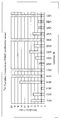
ヒノキ花粉4.2gをジエチルエーテルで3回脱脂し、風乾した。乾燥した花粉に抽出緩衝液(10mM Tris緩衝液、pH7.8)25mlを加え、テフロン(登録商標)ホモジナイザーでホモジェナイズした。抽出緩衝液を加えて容量を60mlに調整してから、さらに4℃で1時間混和した後、遠心(12,000g、20分)して上清を得た。この上清を10mM Tris緩衝液(pH7.8)で平衡化させたDE52陰イオン交換カラムに添加し、非吸着画分を集めた。これを10mM酢酸緩衝液(pH5.0)で透析し、同じ緩衝液で平衡化させたCM52陽イオン交換カラムに吸着させ、0.5M NaCl含10mM Tris緩衝液(pH7.8) でグラジエント溶出したものをフラクションに分割して回収した。各フラクションの一部をSDS-PAGEにより解析し、分子量66kDa付近のタンパク質を含むフラクションを合一した。その結果を図1に示す。
ヒノキ花粉4.2gをジエチルエーテルで3回脱脂し、風乾した。乾燥した花粉に抽出緩衝液(10mM Tris緩衝液、pH7.8)25mlを加え、テフロン(登録商標)ホモジナイザーでホモジェナイズした。抽出緩衝液を加えて容量を60mlに調整してから、さらに4℃で1時間混和した後、遠心(12,000g、20分)して上清を得た。この上清を10mM Tris緩衝液(pH7.8)で平衡化させたDE52陰イオン交換カラムに添加し、非吸着画分を集めた。これを10mM酢酸緩衝液(pH5.0)で透析し、同じ緩衝液で平衡化させたCM52陽イオン交換カラムに吸着させ、0.5M NaCl含10mM Tris緩衝液(pH7.8) でグラジエント溶出したものをフラクションに分割して回収した。各フラクションの一部をSDS-PAGEにより解析し、分子量66kDa付近のタンパク質を含むフラクションを合一した。その結果を図1に示す。
実施例2 精製抗原のアレルゲン活性確認
(i) ヒノキ花粉症患者リンパ球増殖応答
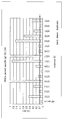
ヒノキ花粉症患者(ヒノキRAST≧2)より得た末梢血30mLより末梢血単核細胞を単離し、10%自己血清入りRPMI-1640培地に1.11×10⁶cells/mLとなるよう懸濁した。調製した細胞懸濁液180μLと、20μLの精製タンパク溶液(濃度85μg/ml)を96 穴プレートに播種した(2×10⁵cells/well)。37℃、5% CO2条件で3日間培養した後、3H-チミジンを添加し、16時間後までの取込量を放射活性として測定することにより細胞増殖を評価した。精製アレルゲン添加時の3H-チミジン取込量を非添加時の取込量で除した値をStimulation indexとして算出した結果を、図2に示す。一般に、臨床検査におけるリンパ球刺激試験では、Stimulation index 1.8以上が陽性基準とされている(内田重行ら、肝臓 30巻4号439-443, 1989)。この基準に則ることにより、15例中全例が陽性と判定された。
(i) ヒノキ花粉症患者リンパ球増殖応答
ヒノキ花粉症患者(ヒノキRAST≧2)より得た末梢血30mLより末梢血単核細胞を単離し、10%自己血清入りRPMI-1640培地に1.11×10⁶cells/mLとなるよう懸濁した。調製した細胞懸濁液180μLと、20μLの精製タンパク溶液(濃度85μg/ml)を96 穴プレートに播種した(2×10⁵cells/well)。37℃、5% CO2条件で3日間培養した後、3H-チミジンを添加し、16時間後までの取込量を放射活性として測定することにより細胞増殖を評価した。精製アレルゲン添加時の3H-チミジン取込量を非添加時の取込量で除した値をStimulation indexとして算出した結果を、図2に示す。一般に、臨床検査におけるリンパ球刺激試験では、Stimulation index 1.8以上が陽性基準とされている(内田重行ら、肝臓 30巻4号439-443, 1989)。この基準に則ることにより、15例中全例が陽性と判定された。
(ii)ヒノキ花粉症患者血清IgEとの反応性の確認
本発明タンパク質20μg/mL溶液を調製し、Maxisorp 96 穴プレート(ヌンク)に1μg/50μL/wellとなるように添加後、一晩4℃で静置することにより抗原を固相化した。翌日プレートを洗浄後、1%牛血清アルブミン含有PBSを添加、1時間室温静置することでブロッキングを実施した。プレート洗浄後、5倍希釈した患者血清を添加し2時間室温静置させた。陰性対照として、市販のヒトAB型血清(CELLectR Human AB serum; MP Biomedicals)を用いた。プレート洗浄後、1%牛血清アルブミン含有PBSで7000倍希釈した2次抗体(HRP標識ヤギ抗ヒトIgE抗体、Novus)を添加して、40分間室温静置した。プレートを洗浄後、TMB Substrate Reagent Set (BD Biosciences)にてTMB発色を室温静置、遮光状態で20分間実施した。終了後、1N 硫酸を添加することで発色を停止させ、マイクロプレートリーダーにて波長450nmの吸光度を測定した。その結果を図3に示す。
本発明タンパク質20μg/mL溶液を調製し、Maxisorp 96 穴プレート(ヌンク)に1μg/50μL/wellとなるように添加後、一晩4℃で静置することにより抗原を固相化した。翌日プレートを洗浄後、1%牛血清アルブミン含有PBSを添加、1時間室温静置することでブロッキングを実施した。プレート洗浄後、5倍希釈した患者血清を添加し2時間室温静置させた。陰性対照として、市販のヒトAB型血清(CELLectR Human AB serum; MP Biomedicals)を用いた。プレート洗浄後、1%牛血清アルブミン含有PBSで7000倍希釈した2次抗体(HRP標識ヤギ抗ヒトIgE抗体、Novus)を添加して、40分間室温静置した。プレートを洗浄後、TMB Substrate Reagent Set (BD Biosciences)にてTMB発色を室温静置、遮光状態で20分間実施した。終了後、1N 硫酸を添加することで発色を停止させ、マイクロプレートリーダーにて波長450nmの吸光度を測定した。その結果を図3に示す。
(iii) ヒノキ花粉症患者好塩基球の活性化
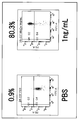
アレルゲンで刺激された好塩基球では、CD203cの発現が増強することが知られている(De Weck, AL. et al., Int. Arch. Allergy Immunol., 146:177-189, 2008)。この原理に基づくAllergenicityキット(ベックマン・コールター)を用いて、患者血液中の好塩基球活性化を解析した。ヘパリン採血した全血100μlに本発明タンパク質アレルゲン溶液(最終濃度 1~100 ng/ml)20μlとCD3-PC7,CRTH2-FITC及びCD203c-PEを含む抗体カクテル20μlを加え、37℃で15分間インキュベートした。反応停止液100μlと溶血固定液2mlを加え、室温で10分間反応した。遠心(200 x g、5分)の後、上清を除去し、リン酸緩衝液(PBS) 3mlを加えて再び遠心した。上清を除去後、細胞を0.1%ホルムアルデヒド加PBSに懸濁し、フローサイトメーター(FACScanto、BD Biosciences)により測定した。得られたデータについて、CD3-PC7陰性かつCRTH2-FITC陽性であることを指標として血球の中の好塩基球を選別し、CD203cの発現強度を解析した。代表的な結果を図4に示すが、5例中3例にて、PBSのみの添加時に比べて、アレルゲン添加時におけるCD203cの発現増強が認められた。
アレルゲンで刺激された好塩基球では、CD203cの発現が増強することが知られている(De Weck, AL. et al., Int. Arch. Allergy Immunol., 146:177-189, 2008)。この原理に基づくAllergenicityキット(ベックマン・コールター)を用いて、患者血液中の好塩基球活性化を解析した。ヘパリン採血した全血100μlに本発明タンパク質アレルゲン溶液(最終濃度 1~100 ng/ml)20μlとCD3-PC7,CRTH2-FITC及びCD203c-PEを含む抗体カクテル20μlを加え、37℃で15分間インキュベートした。反応停止液100μlと溶血固定液2mlを加え、室温で10分間反応した。遠心(200 x g、5分)の後、上清を除去し、リン酸緩衝液(PBS) 3mlを加えて再び遠心した。上清を除去後、細胞を0.1%ホルムアルデヒド加PBSに懸濁し、フローサイトメーター(FACScanto、BD Biosciences)により測定した。得られたデータについて、CD3-PC7陰性かつCRTH2-FITC陽性であることを指標として血球の中の好塩基球を選別し、CD203cの発現強度を解析した。代表的な結果を図4に示すが、5例中3例にて、PBSのみの添加時に比べて、アレルゲン添加時におけるCD203cの発現増強が認められた。
実施例3 塩基配列及びアミノ酸配列の決定
<N末端アミノ酸配列の決定>
本発明タンパク質のN末端配列を明らかにするために、精製したタンパク質20μgをSDS-PAGE後、PVDF膜に転写し、分子量66 kDaバンド付近のゲルを切り出した。これをプロテインシーケンサー(Procise 492cLC; Applied Biosystems)により分析した結果、次の配列を得た。Leu-Pro-Leu-Leu-Thr-Arg-Gly-Arg-Trp-Ile-Val-Asp-Glu-Ala-Thr-Gly-Leu-Arg-Val-Lys-Leu-Ala-X-Val-Asn-Trp-Val-Gly-His-Leu(Xは不明)〔部分配列1(配列番号3)〕。
<N末端アミノ酸配列の決定>
本発明タンパク質のN末端配列を明らかにするために、精製したタンパク質20μgをSDS-PAGE後、PVDF膜に転写し、分子量66 kDaバンド付近のゲルを切り出した。これをプロテインシーケンサー(Procise 492cLC; Applied Biosystems)により分析した結果、次の配列を得た。Leu-Pro-Leu-Leu-Thr-Arg-Gly-Arg-Trp-Ile-Val-Asp-Glu-Ala-Thr-Gly-Leu-Arg-Val-Lys-Leu-Ala-X-Val-Asn-Trp-Val-Gly-His-Leu(Xは不明)〔部分配列1(配列番号3)〕。
<部分内部アミノ酸配列の決定>
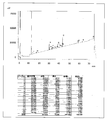
本発明タンパク質内部の部分アミノ酸配列を明らかにするために、プロテアーゼにより限定分解して得られる断片の解析を行った。精製タンパク50μgをSDS-PAGE後、分子量66 kDaバンド付近のゲルを細断して、1mLの精製水中で攪拌・洗浄(20分×2回)した。300μLの7mol/Lグアニジン/ 0.5mol/L Tris-HCl / 0.01mol/L EDTA(pH8.5)及び10μLの2-メルカプトエタノールを添加し、窒素置換と超音波処理を行ってから、2時間室温静置することにより還元した。次に10μLの4-ビニルピリジンを添加し、窒素置換と超音波処理(1分)の後に、30分室温静置することによりアルキル化を行った。反応液を廃棄後、新たに1mLの0.1vol%トリフルオロ酢酸を加え、酸性であることを確認後、1時間攪拌した。溶液を廃棄し、1mLの0.025mol/L炭酸水素アンモニウム / 50vol%アセトニトリル中で攪拌(20分×2回)した。溶液を廃棄し、1mLのアセトニトリル中で5分間攪拌した後に溶液を廃棄し、遠心エバポレーターでゲルを減圧乾固した。0.025mol/L炭酸水素アンモニウムに溶解したリシルエンドペプチダーゼを酵素/基質比1/20で添加して、氷上で静置しゲルを1時間膨潤させた。0.025mol/L炭酸水素アンモニウムを追加してゲルに完全に溶液を浸透させてから、さらに37℃で17時間反応し、反応液を回収した([1]液)。ペプチドを抽出するために、残ったゲルに100μLの0.1vol% トリフルオロ酢酸 / 50vol% アセトニトリルを添加して20分間攪拌後、抽出液を回収した([2]液)。さらに100μLのアセトニトリル中で20分間攪拌後、抽出液を回収した([3]液)。[1]~[3]液を混合して減圧濃縮した後、逆相の高速液体クロマトグラフィー(XBridge C18)にかけ、アセトニトリル0~80重量%のグラジエントで溶出・分画した。図5は、その溶出パターンを示している。図5におけるNo.7のピークのペプチド断片のN末端アミノ酸配列解析をプロテインシーケンサーにより行った結果、Ser-Pro-Leu-Ile-Ser-Thr-Asn-Glu-Cys-Ile-Cys-Ile-Thr-Asp-Ser-His-Cys-Tyr-Pro〔部分配列2(配列番号4)〕が得られた。
本発明タンパク質内部の部分アミノ酸配列を明らかにするために、プロテアーゼにより限定分解して得られる断片の解析を行った。精製タンパク50μgをSDS-PAGE後、分子量66 kDaバンド付近のゲルを細断して、1mLの精製水中で攪拌・洗浄(20分×2回)した。300μLの7mol/Lグアニジン/ 0.5mol/L Tris-HCl / 0.01mol/L EDTA(pH8.5)及び10μLの2-メルカプトエタノールを添加し、窒素置換と超音波処理を行ってから、2時間室温静置することにより還元した。次に10μLの4-ビニルピリジンを添加し、窒素置換と超音波処理(1分)の後に、30分室温静置することによりアルキル化を行った。反応液を廃棄後、新たに1mLの0.1vol%トリフルオロ酢酸を加え、酸性であることを確認後、1時間攪拌した。溶液を廃棄し、1mLの0.025mol/L炭酸水素アンモニウム / 50vol%アセトニトリル中で攪拌(20分×2回)した。溶液を廃棄し、1mLのアセトニトリル中で5分間攪拌した後に溶液を廃棄し、遠心エバポレーターでゲルを減圧乾固した。0.025mol/L炭酸水素アンモニウムに溶解したリシルエンドペプチダーゼを酵素/基質比1/20で添加して、氷上で静置しゲルを1時間膨潤させた。0.025mol/L炭酸水素アンモニウムを追加してゲルに完全に溶液を浸透させてから、さらに37℃で17時間反応し、反応液を回収した([1]液)。ペプチドを抽出するために、残ったゲルに100μLの0.1vol% トリフルオロ酢酸 / 50vol% アセトニトリルを添加して20分間攪拌後、抽出液を回収した([2]液)。さらに100μLのアセトニトリル中で20分間攪拌後、抽出液を回収した([3]液)。[1]~[3]液を混合して減圧濃縮した後、逆相の高速液体クロマトグラフィー(XBridge C18)にかけ、アセトニトリル0~80重量%のグラジエントで溶出・分画した。図5は、その溶出パターンを示している。図5におけるNo.7のピークのペプチド断片のN末端アミノ酸配列解析をプロテインシーケンサーにより行った結果、Ser-Pro-Leu-Ile-Ser-Thr-Asn-Glu-Cys-Ile-Cys-Ile-Thr-Asp-Ser-His-Cys-Tyr-Pro〔部分配列2(配列番号4)〕が得られた。
<ヒノキ葯RNAの抽出>
液体窒素中で凍結粉砕したヒノキ葯3gを、Plant RNA Isolation Reagent (Invitrogen)25mlが入っている50mlチューブに添加して混和した後、室温にて5分間静置した。4℃にて遠心(2600 x g、5分)の後、上層をデカントにより網目サイズ100μmのメッシュで濾過した。遠心と濾過を再度繰り返した後、1/5倍量の5M NaClと3/5倍量のクロロホルムを加えた。4℃にて遠心(2600 x g、30分)の後、上層を回収して、9/10倍量のイソプロピルアルコールを加え、撹拌した。室温にて10分間静置した後、4℃にて遠心(2600 x g、30分)し、RNAを沈殿させた。溶液を捨て、RNAに75%エタノール10mlを加えて洗浄した。4℃にて遠心(2600 x g、5分)の後、上清を捨ててTotal RNAを室温で乾燥してから、適量の精製水に溶解した。
液体窒素中で凍結粉砕したヒノキ葯3gを、Plant RNA Isolation Reagent (Invitrogen)25mlが入っている50mlチューブに添加して混和した後、室温にて5分間静置した。4℃にて遠心(2600 x g、5分)の後、上層をデカントにより網目サイズ100μmのメッシュで濾過した。遠心と濾過を再度繰り返した後、1/5倍量の5M NaClと3/5倍量のクロロホルムを加えた。4℃にて遠心(2600 x g、30分)の後、上層を回収して、9/10倍量のイソプロピルアルコールを加え、撹拌した。室温にて10分間静置した後、4℃にて遠心(2600 x g、30分)し、RNAを沈殿させた。溶液を捨て、RNAに75%エタノール10mlを加えて洗浄した。4℃にて遠心(2600 x g、5分)の後、上清を捨ててTotal RNAを室温で乾燥してから、適量の精製水に溶解した。
<ヒノキ葯cDNAの作製>
得られたtotal RNAから、Superscript III First-Strand Synthesis System for RT-PCR(Invitrogen)を用いてcDNAを合成した。Total RNA 3μgを8μlの精製水に懸濁し、oligo(dT)20を1μl、10mM dNTPを1μl加えてから、65℃で5分間インキュベートした。氷上で2分間冷却した後、10X RT bufferを2μl、25mM MgCl2を1μl、0.1M DTTを2μl、RNaseOUT(40U/μl)を1μl、SuperScript III Reverse Transcriptaseを1μl加えて混和した。50℃で50分間インキュベートした後、85℃で5分間処理して反応を停止した。
得られたtotal RNAから、Superscript III First-Strand Synthesis System for RT-PCR(Invitrogen)を用いてcDNAを合成した。Total RNA 3μgを8μlの精製水に懸濁し、oligo(dT)20を1μl、10mM dNTPを1μl加えてから、65℃で5分間インキュベートした。氷上で2分間冷却した後、10X RT bufferを2μl、25mM MgCl2を1μl、0.1M DTTを2μl、RNaseOUT(40U/μl)を1μl、SuperScript III Reverse Transcriptaseを1μl加えて混和した。50℃で50分間インキュベートした後、85℃で5分間処理して反応を停止した。
<cDNA配列の決定>
得られた部分配列1を検索子として、ForestGENのデータベースを検索したところ、Cryptomeria japonica(日本スギ)のCluster Cj.5792の翻訳配列と、29アミノ酸中26アミノ酸(89.7%)が一致することを見出した。同様に、部分配列2とCluster Cj.822の翻訳配列と、19アミノ酸中17アミノ酸(89.5%)が一致することを見出した。さらに、Cj.5792及びCj.822のいずれもがNCBIデータベースの中のVitis vinifera(ヨーロッパブドウ ヴィニフェラ種)のunnamed protein product(Accession number CAO65892)と相同性が高いことも判明した。そこで、Cj.5792の塩基配列のうち、CAO65892及び部分配列1とアミノ酸配列の相同性が高い領域に対応するプライマー5'-AGA GTA AAG CTA GCA TGC GTC AAT TGG-3'(配列番号5)、及び、その下流でCAO65892とアミノ酸配列が一致する領域に対応するプライマー5'-CAG CAC AGC ACC ACT TGG GCT TAC TCA C-3'(配列番号6)を設計した。これらのプライマーを用い、ヒノキ葯cDNAをテンプレートとして、KOD-Plus ver2 polymerase (TOYOBO)によるPCRを行った。PCR産物をQIAquick PCR Purification Kit (QIAGEN)を用いて精製し、Zero Blunt TOPO PCR Cloning Kit for Sequencing(Invitrogen)を用いて、大腸菌(One Shot TOP10 Chemically Competent E coli; Invitrogen)に形質転換した。得られた形質転換体からプラスミドを調製し、BigDye Xterminator Kit(Applied Biosystems)とDNAシークエンサー(3130xl; Applied Biosystems)を用いて塩基配列を解析した。得られた配列をもとにプライマー5'- CTG GTG TCA TGG TCA TAT TG -3'(配列番号7)を設計した。また、配列2とCj.822の間でアミノ酸配列の相同性の高い領域に対する縮重プライマー5'-GAG TCA GTG ATG CAI ATR CAY TC-3' (I=イノシン、R=A+G、Y=C+T)(配列番号8)を設計した。これらのプライマーを用い、ヒノキ葯cDNAをテンプレートとして、KOD-FX polymerase (TOYOBO)によるPCRを行い、得られたPCR産物の塩基配列を分析して中間領域の配列を取得した。この中間領域配列をもとに、3'RACE用プライマーとして5'-GTT CAT CCT GCA TTT CCA CTC AAG G-3'(配列番号9)を作製して、GeneRacer kit (Invitrogen) を用いてC末端配列を解析した。また、5'RACEには、配列番号6ならびに5'-CTC CGG ATT GTT GTG CTC GAT TC-3'(配列番号10)の二段階のプライマーを設定し、5'/3' RACE Kit (Roche)を用いてN末端配列を解析した。その結果、本発明のヒノキ花粉アレルゲンタンパク質の全長cDNA配列(配列番号1)及びアミノ酸配列(配列番号2)が得られた。
得られた部分配列1を検索子として、ForestGENのデータベースを検索したところ、Cryptomeria japonica(日本スギ)のCluster Cj.5792の翻訳配列と、29アミノ酸中26アミノ酸(89.7%)が一致することを見出した。同様に、部分配列2とCluster Cj.822の翻訳配列と、19アミノ酸中17アミノ酸(89.5%)が一致することを見出した。さらに、Cj.5792及びCj.822のいずれもがNCBIデータベースの中のVitis vinifera(ヨーロッパブドウ ヴィニフェラ種)のunnamed protein product(Accession number CAO65892)と相同性が高いことも判明した。そこで、Cj.5792の塩基配列のうち、CAO65892及び部分配列1とアミノ酸配列の相同性が高い領域に対応するプライマー5'-AGA GTA AAG CTA GCA TGC GTC AAT TGG-3'(配列番号5)、及び、その下流でCAO65892とアミノ酸配列が一致する領域に対応するプライマー5'-CAG CAC AGC ACC ACT TGG GCT TAC TCA C-3'(配列番号6)を設計した。これらのプライマーを用い、ヒノキ葯cDNAをテンプレートとして、KOD-Plus ver2 polymerase (TOYOBO)によるPCRを行った。PCR産物をQIAquick PCR Purification Kit (QIAGEN)を用いて精製し、Zero Blunt TOPO PCR Cloning Kit for Sequencing(Invitrogen)を用いて、大腸菌(One Shot TOP10 Chemically Competent E coli; Invitrogen)に形質転換した。得られた形質転換体からプラスミドを調製し、BigDye Xterminator Kit(Applied Biosystems)とDNAシークエンサー(3130xl; Applied Biosystems)を用いて塩基配列を解析した。得られた配列をもとにプライマー5'- CTG GTG TCA TGG TCA TAT TG -3'(配列番号7)を設計した。また、配列2とCj.822の間でアミノ酸配列の相同性の高い領域に対する縮重プライマー5'-GAG TCA GTG ATG CAI ATR CAY TC-3' (I=イノシン、R=A+G、Y=C+T)(配列番号8)を設計した。これらのプライマーを用い、ヒノキ葯cDNAをテンプレートとして、KOD-FX polymerase (TOYOBO)によるPCRを行い、得られたPCR産物の塩基配列を分析して中間領域の配列を取得した。この中間領域配列をもとに、3'RACE用プライマーとして5'-GTT CAT CCT GCA TTT CCA CTC AAG G-3'(配列番号9)を作製して、GeneRacer kit (Invitrogen) を用いてC末端配列を解析した。また、5'RACEには、配列番号6ならびに5'-CTC CGG ATT GTT GTG CTC GAT TC-3'(配列番号10)の二段階のプライマーを設定し、5'/3' RACE Kit (Roche)を用いてN末端配列を解析した。その結果、本発明のヒノキ花粉アレルゲンタンパク質の全長cDNA配列(配列番号1)及びアミノ酸配列(配列番号2)が得られた。
本発明のヒノキ花粉アレルゲンタンパク質をコードするcDNAは、1671bpのORFから構成されていた。塩基配列から推定されるアミノ酸数は556である。精製タンパクのN末端アミノ酸配列の結果によれば、最初の28アミノ酸はシグナルペプチドである。したがって天然物としての本発明のヒノキ花粉アレルゲンタンパク質のアミノ酸数は528、このアミノ酸配列から予想される本発明のヒノキ花粉アレルゲンタンパク質の分子量は59kDaである。SDS-PAGEにおける分子量は約66kDaであることから、天然物の本発明のヒノキ花粉アレルゲンタンパク質は、糖鎖修飾を受けていると推定される。
決定された塩基配列より推定されるアミノ酸配列の相同性検索を、DDBJのBLAST検索を用いて行ったところ、Cha o 1との同一性は10%以下、Cha o 2との同一性は10%以下であった。
Claims (13)
- 以下の(a)~(c)から選択されるヒノキ花粉アレルゲン又はその断片ペプチド。
(a)配列番号2で示されるアミノ酸配列からなるタンパク質
(b)配列番号2で示されるアミノ酸配列において、1個若しくは数個のアミノ酸が置換、欠失又は付加されたアミノ酸配列からなり、且つヒノキ花粉アレルゲン活性を有するタンパク質
(c)配列番号2で示されるアミノ酸配列と90%以上の同一性を有するアミノ酸配列からなり、且つヒノキ花粉アレルゲン活性を有するタンパク質 - 以下の(a)~(c)から選択されるヒノキ花粉アレルゲン又はその断片ペプチドをコードする遺伝子。
(a)配列番号2で示されるアミノ酸配列からなるタンパク質
(b)配列番号2で示されるアミノ酸配列において、1個若しくは数個のアミノ酸が置換、欠失又は付加されたアミノ酸配列からなり、且つヒノキ花粉アレルゲン活性を有するタンパク質
(c)配列番号2で示されるアミノ酸配列と90%以上の同一性を有するアミノ酸配列からなり、且つヒノキ花粉アレルゲン活性を有するタンパク質 - 以下の(d)~(f)から選択されるポリヌクレオチドからなる遺伝子。
(d)配列番号1で示される塩基配列からなるポリヌクレオチド
(e)配列番号1で示される塩基配列と相補的な塩基配列からなるポリヌクレオチドとストリンジェントな条件下でハイブリダイズし、ヒノキ花粉アレルゲン活性を有するタンパク質をコードするポリヌクレオチド
(f)配列番号1で示される塩基配列と90%以上の同一性を有する塩基配列からなり、且つヒノキ花粉アレルゲン活性を有するタンパク質をコードするポリヌクレオチド - 請求項1記載のヒノキ花粉アレルゲン又はその断片ペプチドを有効成分とするヒノキ花粉アレルギー疾患の予防又は治療剤。
- 請求項1記載のヒノキ花粉アレルゲン又はその断片ペプチドを有効成分とするヒノキ花粉アレルギー疾患の診断薬。
- 請求項1記載のヒノキ花粉アレルゲン又はその断片ペプチドに対する抗体。
- モノクローナル抗体である請求項6記載のヒノキ花粉アレルゲンに対する抗体。
- ヒノキ花粉アレルギー疾患の予防又は治療剤を製造するための、請求項1記載のヒノキ花粉アレルゲン又はその断片ペプチドの使用。
- ヒノキ花粉アレルギー疾患の診断薬を製造するための、請求項1記載のヒノキ花粉アレルゲン又はその断片ペプチドの使用。
- ヒノキ花粉アレルギー疾患を予防又は治療するための、請求項1記載のヒノキ花粉アレルゲン又はその断片ペプチド。
- ヒノキ花粉アレルギー疾患を診断するための、請求項1記載のヒノキ花粉アレルゲン又はその断片ペプチド。
- 請求項1記載のヒノキ花粉アレルゲン又はその断片ペプチドを患者に投与することを特徴とするヒノキ花粉アレルギー疾患の予防又は治療方法。
- 請求項1記載のヒノキ花粉アレルゲン又はその断片ペプチドを患者に投与することを特徴とするヒノキ花粉アレルギー疾患の診断方法。
Priority Applications (1)
| Application Number | Priority Date | Filing Date | Title |
|---|---|---|---|
| JP2012555884A JP5937970B2 (ja) | 2011-01-31 | 2012-01-31 | 新規ヒノキ花粉アレルゲン |
Applications Claiming Priority (2)
| Application Number | Priority Date | Filing Date | Title |
|---|---|---|---|
| JP2011018868 | 2011-01-31 | ||
| JP2011-018868 | 2011-01-31 |
Publications (1)
| Publication Number | Publication Date |
|---|---|
| WO2012105541A1 true WO2012105541A1 (ja) | 2012-08-09 |
Family
ID=46602753
Family Applications (1)
| Application Number | Title | Priority Date | Filing Date |
|---|---|---|---|
| PCT/JP2012/052110 Ceased WO2012105541A1 (ja) | 2011-01-31 | 2012-01-31 | 新規ヒノキ花粉アレルゲン |
Country Status (3)
| Country | Link |
|---|---|
| JP (1) | JP5937970B2 (ja) |
| TW (1) | TW201309723A (ja) |
| WO (1) | WO2012105541A1 (ja) |
Cited By (3)
| Publication number | Priority date | Publication date | Assignee | Title |
|---|---|---|---|---|
| WO2014017599A1 (ja) * | 2012-07-26 | 2014-01-30 | 大鵬薬品工業株式会社 | 新規ヒノキ花粉アレルゲンのt細胞エピトープペプチド |
| KR20190016446A (ko) * | 2017-08-08 | 2019-02-18 | 유로이뮨 메디지니쉐 라보디아그노스티카 아게 | 호염기구 활성화 검사 방법 |
| CN115927275A (zh) * | 2022-07-22 | 2023-04-07 | 江苏省肿瘤医院 | 一种果糖二磷酸醛缩酶类型的花粉过敏原及其应用 |
-
2012
- 2012-01-31 WO PCT/JP2012/052110 patent/WO2012105541A1/ja not_active Ceased
- 2012-01-31 JP JP2012555884A patent/JP5937970B2/ja active Active
- 2012-01-31 TW TW101103128A patent/TW201309723A/zh unknown
Non-Patent Citations (4)
| Title |
|---|
| DATABASE DDBJ/EMBL/GENBANK [online] 14 November 2008 (2008-11-14), FUTAMURA, N.: "Definition: Cryptomeria japonica male strobilus Cryptomeria japonica cDNA clone CMFL049_F06 3-, mRNA sequence", retrieved from http://www.ncbi.nlm.nih.gov/ nucest/BY912793 Database accession no. BY912793 * |
| ITO H. ET AL.: "Analysis of the allergenic components of Hinoki cypress (Chamaecyparis obtusa) pollen by immunoblotting with the sera from patients with Japanese cedar pollinosis", ALLERGOL. INT., vol. 45, 1996, pages 181 - 186 * |
| SONE T. ET AL.: "Cloning and sequencing of cDNA coding for Cry j I, a major allergen of Japanese cedar pollen", BIOCHEM. BIOPHYS. RES. COMMUN., vol. 199, no. 2, 1994, pages 619 - 625, XP024765492, DOI: doi:10.1006/bbrc.1994.1273 * |
| TAKESHI IDE: "Hinoki Kafun Kogen", JOURNAL OF CLINICAL AND EXPERIMENTAL MEDICINE, vol. 200, no. 5, 2002, pages 363 - 368 * |
Cited By (7)
| Publication number | Priority date | Publication date | Assignee | Title |
|---|---|---|---|---|
| WO2014017599A1 (ja) * | 2012-07-26 | 2014-01-30 | 大鵬薬品工業株式会社 | 新規ヒノキ花粉アレルゲンのt細胞エピトープペプチド |
| KR20190016446A (ko) * | 2017-08-08 | 2019-02-18 | 유로이뮨 메디지니쉐 라보디아그노스티카 아게 | 호염기구 활성화 검사 방법 |
| CN109387636A (zh) * | 2017-08-08 | 2019-02-26 | 欧蒙医学诊断技术有限公司 | 用于检验嗜碱性细胞活化的方法 |
| JP2019032317A (ja) * | 2017-08-08 | 2019-02-28 | オイロイムーン メディツィニシェ ラボルディアグノスティカ アーゲー | 好塩基球の活性化を検出するための方法 |
| JP7265325B2 (ja) | 2017-08-08 | 2023-04-26 | ユーロイミューン・メディツィニシェ・ラボルディアグノシュティカ・アクチエンゲゼルシャフト | 好塩基球の活性化を検出するための方法 |
| KR102547565B1 (ko) * | 2017-08-08 | 2023-06-26 | 유로이뮨 메디지니쉐 라보디아그노스티카 아게 | 호염기구 활성화 검사 방법 |
| CN115927275A (zh) * | 2022-07-22 | 2023-04-07 | 江苏省肿瘤医院 | 一种果糖二磷酸醛缩酶类型的花粉过敏原及其应用 |
Also Published As
| Publication number | Publication date |
|---|---|
| JPWO2012105541A1 (ja) | 2014-07-03 |
| JP5937970B2 (ja) | 2016-06-22 |
| TW201309723A (zh) | 2013-03-01 |
Similar Documents
| Publication | Publication Date | Title |
|---|---|---|
| Kettner et al. | Api m 6: a new bee venom allergen | |
| Jiang et al. | Characterization of Der f 29, a new allergen from dermatophagoides farinae | |
| JP5937970B2 (ja) | 新規ヒノキ花粉アレルゲン | |
| Wang et al. | Identification and characterization of natural PR-1 protein as major allergen from Humulus japonicus pollen | |
| US20250074954A1 (en) | New juniper pollen protein | |
| JP6813359B2 (ja) | 新規コナヒョウヒダニタンパク質 | |
| CN101932597B (zh) | 小麦变应原 | |
| CN115927275B (zh) | 一种果糖二磷酸醛缩酶类型的花粉过敏原及其应用 | |
| CA2634955C (en) | Hypoallergenic variants of the major allergen from betula verrucosa pollen | |
| JP6813577B2 (ja) | 新規スギ花粉タンパク質 | |
| RU2409589C2 (ru) | ВАРИАНТ АЛЛЕРГЕНА ГРУППЫ I ИЗ Роасеае, ХАРАКТЕРИЗУЮЩИЙСЯ СНИЖЕННОЙ АЛЛЕРГЕННОСТЬЮ И СОХРАНЕННОЙ Т-КЛЕТОЧНОЙ РЕАКТИВНОСТЬЮ (ВАРИАНТЫ), КОДИРУЮЩАЯ ЕГО МОЛЕКУЛА ДНК И ЕГО ПРИМЕНЕНИЕ | |
| HK40000836A (en) | New cedar pollen protein | |
| HK40000836B (en) | New cedar pollen protein | |
| HK1238653B (zh) | 新型粉尘蟎蛋白质 | |
| CN114891079A (zh) | 一种法国梧桐花粉过敏原及其应用 | |
| HK1238653A1 (en) | Novel dermatophagoides farinae protein |
Legal Events
| Date | Code | Title | Description |
|---|---|---|---|
| 121 | Ep: the epo has been informed by wipo that ep was designated in this application |
Ref document number: 12742250 Country of ref document: EP Kind code of ref document: A1 |
|
| ENP | Entry into the national phase |
Ref document number: 2012555884 Country of ref document: JP Kind code of ref document: A |
|
| NENP | Non-entry into the national phase |
Ref country code: DE |
|
| 122 | Ep: pct application non-entry in european phase |
Ref document number: 12742250 Country of ref document: EP Kind code of ref document: A1 |