WO2012020573A1 - 高タンパク質含有有機物の製造方法、高タンパク質含有有機物、飼料の製造方法、及び飼料 - Google Patents
高タンパク質含有有機物の製造方法、高タンパク質含有有機物、飼料の製造方法、及び飼料 Download PDFInfo
- Publication number
- WO2012020573A1 WO2012020573A1 PCT/JP2011/004558 JP2011004558W WO2012020573A1 WO 2012020573 A1 WO2012020573 A1 WO 2012020573A1 JP 2011004558 W JP2011004558 W JP 2011004558W WO 2012020573 A1 WO2012020573 A1 WO 2012020573A1
- Authority
- WO
- WIPO (PCT)
- Prior art keywords
- phorbol ester
- bacillus
- organic substance
- parts
- high protein
- Prior art date
- Legal status (The legal status is an assumption and is not a legal conclusion. Google has not performed a legal analysis and makes no representation as to the accuracy of the status listed.)
- Ceased
Links
Images






Classifications
-
- A—HUMAN NECESSITIES
- A23—FOODS OR FOODSTUFFS; TREATMENT THEREOF, NOT COVERED BY OTHER CLASSES
- A23K—FODDER
- A23K20/00—Accessory food factors for animal feeding-stuffs
- A23K20/10—Organic substances
- A23K20/142—Amino acids; Derivatives thereof
- A23K20/147—Polymeric derivatives, e.g. peptides or proteins
-
- A—HUMAN NECESSITIES
- A23—FOODS OR FOODSTUFFS; TREATMENT THEREOF, NOT COVERED BY OTHER CLASSES
- A23K—FODDER
- A23K10/00—Animal feeding-stuffs
- A23K10/10—Animal feeding-stuffs obtained by microbiological or biochemical processes
- A23K10/12—Animal feeding-stuffs obtained by microbiological or biochemical processes by fermentation of natural products, e.g. of vegetable material, animal waste material or biomass
-
- A—HUMAN NECESSITIES
- A23—FOODS OR FOODSTUFFS; TREATMENT THEREOF, NOT COVERED BY OTHER CLASSES
- A23K—FODDER
- A23K10/00—Animal feeding-stuffs
- A23K10/30—Animal feeding-stuffs from material of plant origin, e.g. roots, seeds or hay; from material of fungal origin, e.g. mushrooms
-
- Y—GENERAL TAGGING OF NEW TECHNOLOGICAL DEVELOPMENTS; GENERAL TAGGING OF CROSS-SECTIONAL TECHNOLOGIES SPANNING OVER SEVERAL SECTIONS OF THE IPC; TECHNICAL SUBJECTS COVERED BY FORMER USPC CROSS-REFERENCE ART COLLECTIONS [XRACs] AND DIGESTS
- Y02—TECHNOLOGIES OR APPLICATIONS FOR MITIGATION OR ADAPTATION AGAINST CLIMATE CHANGE
- Y02P—CLIMATE CHANGE MITIGATION TECHNOLOGIES IN THE PRODUCTION OR PROCESSING OF GOODS
- Y02P60/00—Technologies relating to agriculture, livestock or agroalimentary industries
- Y02P60/80—Food processing, e.g. use of renewable energies or variable speed drives in handling, conveying or stacking
- Y02P60/87—Re-use of by-products of food processing for fodder production
Definitions
- the present invention relates to a method for producing a high protein-containing organic substance and feed by removing phorbol ester from an organic substance containing phorbol ester.
- Patent Document 1 and Patent Document 2 describe processing methods for the purpose of removing the environmental pollutants and toxic substances contained in feed or feed material raw materials, which are intended for processing and production of animal feed or feed material. What is disclosed is given as a representative example.
- Patent Document 1 is a method of adding a fatty acid ester, a fatty acid amide, a free fatty acid or a hydrocarbon, which is a volatile working fluid, to a fat or oil containing an environmental pollutant or a toxic component, By stripping with a volatile working fluid, environmental pollutants or toxic components are separated from the fat or oil along with the volatile working fluid.
- the stripping process is performed by blowing vapor or gas into a liquid containing a specific substance to be removed, mixing a highly volatile liquid and then volatilizing it, or putting the whole liquid under vacuum conditions.
- the specific substance is removed from the liquid by moving the specific substance into a vapor, gas phase or volatile fluid phase, or volatilizing the specific substance itself.
- Patent Document 2 aims to remove phytic acid contained in grains as feed and food. If an animal ingests feed or food containing high concentrations of phytic acid, it can interfere with normal intestinal absorption of nutritionally important trace metals, resulting in a series of deficiency disorders. For this reason, it is required to remove phytic acid from grains containing phytic acid as described above.
- This technology inoculates cereals such as soybean koji containing phytic acid with koji molds and produces koji, and uses phytate-degrading enzymes called phytase and phosphatase produced during the growth of koji molds to make phytic acid in grains. Is removed.
- Patent Document 1 a volatile working fluid containing environmental pollutants or toxic components remains after the stripping process. Since it is not easy to separate environmental pollutants or toxic components from this volatile working fluid, it is difficult to reuse the volatile working fluid once it has undergone the stripping process. Therefore, it is required to use a new volatile working fluid for each stripping process, and the volatile working fluid that has undergone the stripping process contains environmental pollutants or toxic components. There is a problem that it is required to dispose of safely, and the running cost related to the processing becomes high.
- the stripping process used in this technology is the environment where the temperature and pressure in the tank and the supply rate of the volatile working fluid are not accurately controlled in the stripping tank that actually performs the stripping process.
- the removal rate of pollutants and toxic components does not increase. For this reason, in order to realize these, expensive control devices and equipment are inevitably required, and there is a problem that the initial cost at the time of installation of the equipment is increased.
- the stripping process used in this technology increases the removal rate if the environmental pollutants and toxic components in the processing object and the volatile working fluid are not sufficiently mixed and contacted with each other in the stripping tank. I can't.
- the object to be treated is necessarily limited to a liquid substance such as fat or oil. Therefore, it has the big problem that it is difficult to apply to solid processing objects such as soybean meal and other squeezed rice cakes.
- Patent Document 2 can be applied to solid processing objects such as soybean meal and other squeezed rice cakes, those that can be removed are included in the processing object. Limited to phytic acid. For this reason, there exists a problem that it cannot apply, when the other toxic component which cannot be decomposed
- Jatropha curcas L. seeds contain a high oil content of 30-40%, but this oil contains phorbol esters that have been reported as carcinogenic promoters. Therefore, it is not suitable for food. For this reason, in recent years, it has attracted attention as a promising renewable energy resource that does not cause competition with food applications. In addition, when a large amount of seeds is squeezed, a large amount of seed pomace is inevitably generated.
- the protein content of this pomace is about 60%, and the protein content of soybean pomace, which is the main feed ingredient ( Jatropha seed pomace has the potential to be used as a feed ingredient superior to soybean pomace.
- the present inventors have intensively studied and obtained phorbol ester from an organic substance containing phorbol ester at a low cost by utilizing microorganisms that are easily available while having high degradability for phorbol ester.
- the present invention has been completed by finding that it can be decomposed and removed with a high throughput. That is, the present invention relates to a method for producing a high protein-containing organic substance that can be suitably used as a livestock feed by removing phorbol ester from an organic substance containing phorbol ester using Bacillus sp. It aims at providing a feed manufacturing method and feed.
- the method for producing a high protein-containing organic material of the present invention comprises mixing and fermenting an organic material containing a phorbol ester and a bacterium belonging to the genus Bacillus to decompose the phorbol ester in the organic material. There is as a method.
- the high protein-containing organic substance of the present invention has a configuration in which an organic substance containing phorbol ester and a Bacillus genus are mixed and fermented to decompose the phorbol ester in the organic substance.
- the feed production method of the present invention is a method in which an organic substance containing phorbol ester and a Bacillus bacterium are mixed and fermented to decompose the phorbol ester in the organic substance.
- the feed of the present invention is configured to contain a fermentation product obtained by decomposing phorbol ester by mixing and fermenting an organic substance containing phorbol ester and Bacillus sp.
- waste liquid containing phorbol ester using an expensive volatile reagent or containing a toxic substance that is difficult to process.
- waste liquid containing phorbol ester using an expensive volatile reagent or containing a toxic substance that is difficult to process.
- phorbol esters are decomposed and removed more efficiently than when other microorganisms are used by fermenting organic substances containing phorbol esters under relatively mild conditions using inexpensive and readily available Bacillus spp. can do.
- the initial cost related to the treatment the production method of the high protein-containing organic substance, which can decompose and remove phorbol ester with excellent efficiency while keeping the running cost low, the high protein-containing organic substance, the production method of the feed, and The feed can be provided.
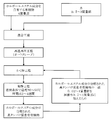
- FIGS. 1 is a figure showing a process of a manufacturing method of high protein content organic matter and feed of this embodiment.
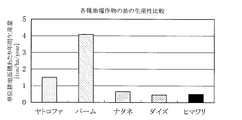
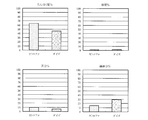
- FIGS. 2 to 5 are diagrams for explaining the productivity of Jatropha oil, diagrams for explaining the amount of squeezed squeezed sorghum in Jatropha, diagrams showing the degradation rate of phorbol ester in organic matter, and sorghum sorghum squeezed squeezed oil It is a figure explaining the predominance as feed materials.
- an organic substance containing a phorbol ester to be treated is mixed with a bacterium belonging to the genus Bacillus in a stirring step. Stir well until distribution.
- a fermentation process is performed in which the mixture obtained by the stirring process is transferred to a temperature-controlled fermentation chamber or fermentation vessel and fermented for a predetermined period.
- the mixture after treatment taken out from the fermentation chamber or the fermentation vessel is a high protein-containing organic substance in which the phorbol ester is decomposed by the action of Bacillus.
- components such as vitamins and minerals in the mixture after treatment are increased by the secondary action of Bacillus sp.
- the high protein-containing organic substance means an organic substance having a high protein content.
- an organic substance having a protein content of 40 to 65% or more can be referred to as a high protein-containing organic substance.
- the high protein-containing organic material thus obtained can be blended in livestock feed or used as it is to obtain a feed.
- the blending ratio is not particularly limited, but as described later in the examples, for example, even if 10% by weight of high protein-containing organic matter is added to the feed, chickens can be grown without any particular problems. It has been confirmed that this is possible.
- the livestock refers to mammals and birds other than humans such as dogs, cats, pigs, cows, horses, sheep, chickens, etc., and are used as those raised by humans.
- Examples of the organic substance containing a phorbol ester used in the method for producing a high protein-containing organic substance of the present embodiment include squeezed rice cakes after squeezing seeds of Jatropha curcas L.
- the squeezed rice cake after the oil extracted from the inner seed kernel (kernel) can be used.
- Fig. 2 compares the annual production of oil per unit cultivated area for various representative oil crops cultivated around the world. According to the figure, the oil production of palm is prominently large, followed by Jatropha. However, the area where palm can be cultivated is limited to the tropical region where precipitation is abundant and relatively fertile, and palm oil can be used as food. For this reason, it has become difficult to obtain a global consensus in recent years when palm is used in large quantities for fuel and industrial applications, and it is difficult to expand production using palm oil as a renewable energy resource.
- Jatropha has the second highest oil production after palm
- Jatropha oil contains phorbol ester which has been reported as a carcinogenic promoter, and therefore cannot be edible. For this reason, it does not cause competition with food use unlike palm oil.
- Jatropha can be cultivated not only in the rainy tropical areas where palm can be grown, but also in land where there is little precipitation and it is dry and where food crops are not grown. Attention has been paid.
- FIG. 3 compares the amount of Jatropha seeds produced from per unit area of Jatropha cultivated land with the amount of oil generated by squeezing the seeds and the amount of squeezed wrinkles.
- Jatropha when using Jatropha as a raw material, about 1.5 tons of oil per unit cultivated area can be produced per year, but at the same time, unit cultivated land equivalent to more than twice the amount of oil generated As much as 3.5 tons of oil squeezed per year is incidentally generated.
- squeezed pomace that is produced in large quantities at the same time as producing oil contains phorbol ester that has been reported as a carcinogenic promoter similar to oil. Therefore, as it is, it cannot be used as animal feed materials, and its use is limited to fertilizers with low added value and solid fuels with low unit prices, and the entire renewable resources obtained by growing Jatropha can be used. It was difficult to make effective use.
- the phorbol ester can be decomposed and removed by using the squeezed rice cake after squeezing the seeds of Jatropha as an organic substance containing the phorbol ester. It is possible to increase the value of the squeezed rice cake from which the slag has been removed as an animal feed material and put it on the market. As a result, it is possible to greatly improve the profitability of the business when making Jatropha cultivation as a business, and to supply lower-cost oil to the market. In addition, it is possible to more effectively utilize renewable biomass resources produced by growing Jatropha as a plant.
- the squeezed rice cake obtained by squeezing out the seed kernel (kernel) that has been unshelled from Jatropha seeds is treated in the method for producing a high protein-containing organic material of this embodiment.
- the advantage in the case of using as an organic substance containing the target phorbol ester will be described.
- the figure shows the result of comparison of important composition items as feed raw materials for post-pressing pomace of Jatropha seed kernels and post-soy pruning soybeans which is a typical feed raw material.
- the protein content which is the most important composition as a feed raw material, is about 45% for soybeans and 60% or more for Jatropha.
- Jatropha is not much different from soybean, and that the fiber content is less than Jatropha than soybean. From these, as long as the phorbol ester, which has been reported as a carcinogenic promoter, can be removed, high-protein and low-fiber Jatropha seeds after nuclear extraction can be a better feed ingredient than soybean pomace. Recognize.
- disassembles a phorbol ester by mixing and fermenting a Bacillus-genus microbe is not limited to Jatropha.
- the technical idea of the present embodiment can be applied in the same manner as long as it is a high protein-containing organic substance containing phorbol ester, and by suitably decomposing the phorbol ester with a Bacillus genus, a high protein-containing organic substance is suitably produced. Is possible.
- Bacillus bacteria used in the method for producing a high protein content organic matter present embodiment, for example, Bacillus coagulans (Bacillus coagulans), Bacillus smithii (Bacillus smithii), Bacillus subtilis ssp subtilis (Bacillus subtilis subsp. Subtilis ), Bacillus licheniformis , Bacillus cereus , Bacillus subtilis var. Natto, etc., but is not limited to this.
- Bacillus bacteria in the genus can be preferably used.
- FIG. 5 shows the result of comparative measurement of the phorbol ester decomposition rate in organic matter for each bacterium.
- 1% of the weight of the organic substance containing phorbol ester was mixed, and then the optimum culture temperature of each bacterium (Bacillus subtilis varietus natto) and 37 ° C for yeast, The koji mold was fermented at 30 ° C. for 3 weeks. And it was compared between each microbe what percentage of the amount of phorbol ester contained in the organic substance before a process was decomposed
- an organic substance containing a phorbol ester is used by using a Bacillus sp. Therefore, it is possible to remove the phorbol ester that has been reported as a carcinogenic promoter at a high decomposition removal rate and low cost.
- the squeezed squeeze that is generated in a larger amount than oil as a by-product of oil production by Jatropha cultivation
- the phorbol ester in the straw can be decomposed and removed, and the resulting oil-drawn squeezed meal can be increased in value as an animal feed material and put on the market.
- the squeezed rice cake jatropha seed squeezed squeezed rice cake
- the concentration of nutrients can be significantly increased, and a feed material superior to soybean pomace can be obtained.
- FIG. 6 is a diagram showing steps of a method for producing a high protein-containing organic material and feed according to the present embodiment.
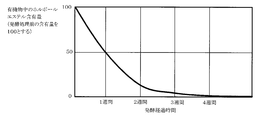
- FIG. 7 is a diagram showing changes in the phorbol ester content in organic materials.
- the method for producing a high protein-containing organic substance and feed according to the present embodiment includes (A1) a mixing step, (A2) a high-temperature and high-pressure step, (A3) a stirring step, and (A4) a fermentation step. be able to. About another point, it can be set as the thing similar to 1st embodiment, and after squeezing the seed of Jatropha curcas L.
- (A1) Mixing step First, water is mixed with an organic substance containing phorbol ester. At this time, it is preferable to mix 0.5 to 3 parts by mass of water with respect to 4 parts by mass of the organic substance containing phorbol ester. This is because the efficiency of fermentation increases when the mixing ratio of water is set in this way. From such a viewpoint, the mixing ratio of water is more preferably 2 to 3 parts by mass.
- A2 High-temperature and high-pressure process
- a mixture of an organic substance containing phorbol ester and water is sterilized at high temperature and high pressure. This kills microorganisms that can inhibit fermentation by Bacillus. This can be done in a general manner by autoclaving.
- Various kinds of microorganisms are included in the organic substances to be treated that are usually used, and some of them may include microorganisms that inhibit the action of degrading phorbol esters by Bacillus sp. Therefore, high temperature and high pressure sterilization is performed to kill these inhibitory microorganisms.
- the sterilized water which added the Bacillus-genus microbe is added, and the liquid mixture stirred is fermented on sealing conditions.
- the temperature condition is preferably 30 to 50 ° C, more preferably 37 to 50 ° C.
- the fermentation time is preferably 2 to 4 weeks.
- the mixture after treatment taken out from the fermentation chamber or the fermentation vessel is a high protein-containing organic substance in which the phorbol ester is decomposed by the action of Bacillus.
- components such as vitamins and minerals in the mixture after treatment are increased by the secondary action of Bacillus sp.
- the reason why the fermentation time is set to 2 to 4 weeks will be described with reference to FIG.
- the degradation rate of phorbol ester is about 50% at one week after the start of the fermentation process, but about 80% after 2 weeks, and about 95% after 3 weeks. It is about 99% after 4 weeks.
- the longer the fermentation time the higher the degradation rate of the phorbol ester, but if the treatment time is prolonged, the cost for maintaining the state increases, so the selection of the fermentation time that balances the degradation rate and cost is possible. Desired.
- the most efficient fermentation time is 2 to 4 weeks.
- phorbol ester can be decomposed and removed from organic substances containing phorbol ester at low cost and with high processing capacity, and is suitable for livestock feed. It becomes possible to produce a high protein-containing organic substance that can be used, and a feed using the same.
- the fermentation time of the organic matter to be treated by the Bacillus genus can be optimized, and the factor that inhibits the phorbol ester decomposition action by the Bacillus genus can be removed. For this reason, the maximum amount of phorbol ester decomposing action can be obtained with a minimum amount of Bacillus sp. Input, and the cost required for removing the phorbol ester in the organic matter can be further reduced.
- FIG. 1 is a figure which shows the process of the manufacturing method of the high protein containing organic substance and feed of this embodiment.
- This embodiment is different from the second embodiment in that the high protein-containing organic matter obtained in any of the embodiments of the present invention is not used as a Bacillus genus per se, but as an inoculum for fermentation.
- the (A1) mixing step and the (A2) high-temperature and high-pressure step in the method for producing a high protein-containing organic matter and feed according to this embodiment can be the same as those in the second embodiment.
- the (A3) stirring step in the method for producing a high protein-containing organic matter and feed according to this embodiment is different from that of the second embodiment in that a solution obtained by adding Bacillus to sterile water is not added to the mixture.
- the high protein-containing organic substance obtained by the production method of the embodiment is added to sterilized water, and this is added to the sterilized mixed liquid obtained by the high-temperature and high-pressure step and stirred. In this way, it is not necessary to prepare a new Bacillus genus every time, and it is possible to reduce the cost required for producing a high protein-containing organic substance.
- the mixing ratio of the high protein-containing organic substance is more preferably 0.2 to 0.4 parts by mass.
- the (A4) fermentation process in the manufacturing method of the high protein content organic substance and feed of this embodiment can be made the same as that of 2nd embodiment.
- the method for producing a high protein-containing organic substance and feed according to the present embodiment it is not necessary to prepare a new Bacillus bacterium each time. For this reason, the total amount of Bacillus necessary for decomposing phorbol ester can be further reduced as compared with the case of the second embodiment, and as a result, the cost required for the production of high protein-containing organic matter and feed is further increased. It can be kept low.
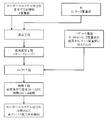
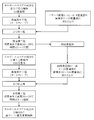
- FIG. 4th embodiment Next, the manufacturing method of the high protein content organic substance of 4th embodiment is demonstrated with reference to FIG.
- the figure is a figure which shows the process of the manufacturing method of the high protein containing organic substance and feed of this embodiment.
- an organic substance containing phorbol ester is mixed with a Bacillus bacterium and pre-cultured in advance, and the pre-culture product is added to the organic substance containing phorbol ester and subjected to main fermentation, whereby a high protein-containing organic substance is obtained. It differs from the second embodiment in that it is manufactured. About another point, it can be set as the thing similar to 2nd embodiment.
- Pre-culture> water is mixed with an organic substance containing a phorbol ester. At this time, it is preferable to mix 0.5 to 1.5 parts by mass of water with 2 parts by mass of the organic substance containing phorbol ester. This is because the efficiency of fermentation increases when the mixing ratio of water is set in this way. From such a viewpoint, the mixing ratio of water is more preferably 1 to 1.5 parts by mass.
- the liquid mixture obtained by the 1st stirring process is fermented on airtight conditions.
- the temperature condition is preferably 30 to 50 ° C, more preferably 37 to 50 ° C.
- the fermentation time is preferably 1 to 7 days.
- Second mixing step water is mixed with an organic substance containing phorbol ester. At this time, it is preferable to mix 2 to 4 parts by mass of water with 5 parts by mass of the organic substance containing phorbol ester. This is because the efficiency of fermentation increases when the mixing ratio of water is set in this way. From such a viewpoint, the mixing ratio of water is more preferably 3 to 4 parts by mass.
- the mixed liquid which added and stirred the Bacillus genus bacteria-containing water is fermented on airtight conditions.
- the temperature condition is preferably 30 to 50 ° C, more preferably 37 to 50 ° C.
- the fermentation time is preferably 2 to 4 weeks as described above in the second embodiment.
- the mixture after treatment taken out from the fermentation chamber or the fermentation vessel is a high protein-containing organic substance in which the phorbol ester is decomposed by the action of Bacillus.
- components such as vitamins and minerals in the mixture after treatment are increased by the secondary action of Bacillus sp.
- Bacillus spp. can be efficiently grown by preculture, and the obtained preculture product is converted into an organic material containing phorbol ester. Since it can be added and fermented, the fermentation action can be promoted. Thereby, it becomes possible to decompose
- FIG. 5th embodiment the manufacturing method of the high protein content organic substance of 5th embodiment is demonstrated with reference to FIG.
- the figure is a figure which shows the process of the manufacturing method of the high protein containing organic substance and feed of this embodiment.
- an organic substance containing phorbol ester is mixed with a Bacillus bacterium and pre-cultured in advance, and the pre-culture product is added to the organic substance containing phorbol ester and subjected to main fermentation, whereby a high protein-containing organic substance is obtained.
- the fourth embodiment is different from the fourth embodiment in that the first and second mixing steps are not provided, and the mixing ratio of the bacterial cells and the water is different. About another point, it can be set as the thing similar to 4th embodiment.
- Pre-culture> (C1) First High Temperature and High Pressure Step First, 10 parts by mass of an organic substance containing phorbol ester is sterilized at high temperature and high pressure. This kills microorganisms that can inhibit fermentation by Bacillus. This can be done in a general manner by autoclaving.
- the liquid mixture obtained by the 1st stirring process is fermented on sealing conditions.
- the temperature condition is preferably 30 to 50 ° C, more preferably 37 to 50 ° C.
- the fermentation time is preferably 1 to 7 days.
- the mixed liquid which added and stirred the Bacillus genus bacteria-containing water is fermented on airtight conditions.
- the temperature condition is preferably 30 to 50 ° C, more preferably 37 to 50 ° C.
- the fermentation time is preferably 2 to 4 weeks as described above in the second embodiment.
- the mixture after treatment taken out from the fermentation chamber or the fermentation vessel is a high protein-containing organic substance in which the phorbol ester is decomposed by the action of Bacillus.
- components such as vitamins and minerals in the mixture after treatment are increased by the secondary action of Bacillus sp.
- water is added not to an organic material containing a phorbol ester but to a Bacillus bacterium.
- the bacteria are more uniformly dispersed over a wider area, and the fermentation becomes more uniform throughout the organic matter. For this reason, it is anticipated that the fermentation efficiency of the whole organic substance will become high, and it becomes possible to decompose
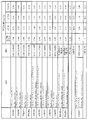
- FIGS. 11 and 12 are diagrams and graphs showing changes in the phorbol ester content in the organic matter in Examples and Comparative Examples, respectively.
- FIG. 13 is a figure which shows the breeding test result of the chicken by the feed of this invention, and a graph which shows average body weight transition.
- FIG. 14 is a diagram and a graph showing the feed intake of chickens by the feed of the present invention.
- Example 1 Prior to the steps of the method for producing high protein-containing organic matter and feed, oil was extracted from Jatropha by the following steps to obtain a Jatropha residue. First, 24 kg of Jatropha seeds were separated into a kernel part and a seed coat part using a molting machine, and only the kernel part was collected. The amount of kernel part collected was about 14.4 kg. Next, using a pulverizer, the kernel part was pulverized so as to have a diameter of about 2 mm.
- the collected Jatropha residue was about 7.2 kg.
- pre-culture and main fermentation were performed according to the following steps to obtain a high protein-containing organic material in which phorbol ester was decomposed.
- 10 g of Jatropha residue was sterilized with an autoclave at 120 ° C. for 15 minutes.
- Bacillus coagulans Bacillus coagulans , NBRC12583 strain, obtained from the National Institute of Technology and Evaluation Biological Genetic Resources Division
- 10 g of sterilized water containing 0.6 g of the cells is added.
- the mixture was added to the sterilized Jatropha residue and stirred well until the bacterial distribution became uniform, and then precultured at 37 ° C. for 3 days.
- Stirring was performed by horizontally tilting and rotating a beaker containing a mixed solution to which Bacillus was added. This is because, when stirring with a spatula or the like, the solid organic matter collapses into a mud and the ventilation becomes worse.
- the stirring method is the same in the following examples and comparative examples.
- Jatropha residue was sterilized by autoclaving at 120 ° C. for 15 minutes, and 50 g of sterilized water added with 10 g of a culture solution (culture product) obtained by pre-culture was added to the sterilized Jatropha residue to Stir well until the distribution is uniform. Then, 25 g of water was added every 8 days, and the mixture was stirred and subjected to main fermentation at 50 ° C. for 24 days.
- fermented Jatropha which is a high protein-containing organic substance in which phorbol ester was decomposed, was obtained.
- 10% by weight of this high protein-containing organic substance was added to a chicken test feed (WYNMOORE Chickbooster, Breeders Business Group (Philippines)) to produce the feed of this example.
- Example 2 Under the same conditions as in Example 1, the high protein-containing organic matter and feed of this example were produced.
- Examples 3 and 4 In the same manner as in Example 1, except that Bacillus smithi ( Bacillus smithii , NBRC15311 strain, obtained from the National Institute of Technology and Evaluation, Biological Genetic Resource Department) was used as the Bacillus genus. Protein-containing organic matter and feed were produced.
- Bacillus smithi Bacillus smithii , NBRC15311 strain, obtained from the National Institute of Technology and Evaluation, Biological Genetic Resource Department
- Example 5 As Bacillus, Bacillus subtilis ssp subtilis (Bacillus subtilis subsp. Subtilis, NBRC13719 strain, obtained by the National Institute of Technology and Evaluation Biological Resource Center) except using, in the same manner as in Example 1 Thus, a high protein-containing organic substance and feed of this example were produced.
- Bacillus subtilis ssp subtilis Bacillus subtilis subsp. Subtilis, NBRC13719 strain, obtained by the National Institute of Technology and Evaluation Biological Resource Center
- Example 7 In the same manner as in Example 1, except that Bacillus licheniformis ( Bacillus licheniformis , NBRC12200 strain, obtained from the National Institute of Technology and Evaluation Biological Genetic Resources Division) was used as the Bacillus genus. Protein-containing organic matter and feed were produced.
- Bacillus licheniformis Bacillus licheniformis , NBRC12200 strain, obtained from the National Institute of Technology and Evaluation Biological Genetic Resources Division
- Example 9 In the same manner as in Example 1, except that Bacillus cereus ( Bacillus cereus , NBRC15305 strain, obtained from the Biological Genetic Resource Department, National Institute of Technology and Evaluation) was used as the Bacillus genus. Protein-containing organic matter and feed were produced.
- Bacillus cereus Bacillus cereus , NBRC15305 strain, obtained from the Biological Genetic Resource Department, National Institute of Technology and Evaluation
- Example 10 Example 10
- Example 11 Example, except that Bacillus subtilis var. Natto (obtained from Miyagino Natto Factory, 4-29 Ginkgo-cho, Miyagino-ku, Sendai-shi, Miyagi) was used as the genus Bacillus .
- the high protein-containing organic matter and feed of this example were produced.
- Example 1 First, 10 g of the Jatropha residue obtained in Example 1 was sterilized at 120 ° C. for 15 minutes by an autoclave. Next, a bacteria added to the mixture, Lactobacillus Deruburikki ssp Deruburikki (Lactobacillus delbrueckii subsp. Delbrueckii, NBRC3202 strain obtained by the National Institute of Technology and Evaluation Biological Resource Center) was used to the bacteria 10 g of sterilized water to which 0.6 g of body was added was added to the sterilized mixed solution and stirred well until a uniform distribution was obtained, and then pre-cultured at 30 ° C. for 3 days.
- Lactobacillus Deruburikki ssp Deruburikki Lactobacillus delbrueckii subsp. Delbrueckii, NBRC3202 strain obtained by the National Institute of Technology and Evaluation Biological Resource Center
- Jatropha residue was sterilized by autoclaving at 120 ° C. for 15 minutes, and 50 g of sterilized water to which 10 g of a culture solution (culture product) obtained by pre-culture was added was added to the sterilized Jatropha residue, Stir well until the distribution is uniform. And it fermented for 24 days at 30 degreeC, and fermented Jatropha which is a high protein content organic substance by which phorbol ester was decomposed
- addition of water every 8 days and stirring are not performed, and the fermentation temperature is 30 ° C. This is because in the bacterial species of Comparative Example 1, these conditions are suitable for fermentation.
- 10% by weight of this high protein-containing organic substance was added to a chicken test feed (WYNMOORE Chickbooster, Breeders Business Group (Philippines)) to produce a feed for this comparative example.
- the organic substance containing phorbol ester was obtained by unshelling the seeds of Jatropha curcas L. and removing the internal seed kernel (kernel). Used.
- “bacterial species” in FIG. 11 indicates the species name of the bacterium used for decomposing the phorbol ester in the organic matter.
- the “strain” in Examples 10 and 11 indicates that it was obtained from the Miyagino Natto Factory (4-29 Ginkgo-cho, Miyagino-ku, Sendai City, Miyagi Prefecture) in Examples 10 and 11.
- NBRC NITE Biological It is obtained from the Resource Center
- PE content (mg / g) the content of phorbol ester in the mixture in the fermentation process is shown every 8 days from the start of the main fermentation.
- (1) Measuring method of PE content Content of the phorbol ester in the mixture in a fermentation process was measured as follows. First, 20 ml of dichloromethane (Dichloromethane) was added to 1.5 g of a sample to be measured, pulverized with a homogenizer for 2 minutes, and centrifuged to collect the residue. To this, 20 ml of dichloromethane (Dichloromethane) was added, vigorously vibrated for 1 minute, and filtered through a centrifuge five times. All filtrates were collected and dried under a stream of nitrogen gas.
- dichloromethane dichloromethane
- HPLC high performance liquid chromatography
- Example 1-11 Degradation rate of phorbol ester
- the PE content of Example 1-11 was 2.98 mg / g on the start day of the main fermentation.
- the average values are 1.17 mg / g, 0.25 mg / g, and 0.14 mg / g, respectively. Therefore, the phorbol ester decomposition rates on the 8th, 16th, and 24th days are 60.8%, 91.7%, and 95.4%, respectively.
- the PE content in Comparative Example 1 was 2.98 mg / g on the start day of the main fermentation, but 2.08 mg / g, 1 day on the 8th day, 16th day, and 24th day, respectively. 0.78 mg / g and 1.66 mg / g. Therefore, the phorbol ester decomposition rates on the 8th, 16th, and 24th days are 30.9%, 40.3%, and 44.3%, respectively.
- Chicken breeding test> Using the feeds obtained in Examples and Comparative Examples, chicken chick growth tests were conducted at Palawan Agribusiness Development Foundation Inc. (Philippines) in the following manner. In order to make sure that the chicken chicks on the 4th day after hatching are divided into groups of 3 chicks, divided into gauges A, B, and C, and fed to the feeds obtained in the examples, and that they grow sufficiently. The test was conducted.
- a high protein content organic substance (processed meal) obtained by degrading phorbol ester by Bacillus Smithy in Example 3 was used as a test feed for chicken WYNMOORE Chickbooster, manufactured by Breeders Business Group (Philippines). ) was added to the feed obtained by adding 10%. Further, the high protein-containing organic substance obtained by decomposing phorbol ester with Bacillus subtilis subsp. Subtilis subtilis in Example 6 is used for gauge B, and the Bacillus subtilis varietas of example 11 is used for gauge C. A feed obtained by adding 10% of the high protein-containing organic substance obtained by decomposing phorbol ester with natto to the same test feed for chickens as gauge A was fed.
- the chicken chicks used were 9 female chicks with no history of vaccine hatched from broiler breeder eggs, which were preliminarily raised for 4 days.
- the change in body weight of each chicken is shown in FIG. 13, and the amount of feed intake is shown in FIG.
- the present invention is not limited to the above-described embodiments and examples, and it goes without saying that various modifications can be made within the scope of the present invention.
- Jatropha is used in the above embodiment
- the present invention can be applied to other organic substances containing phorbol ester.
- said evaluation was performed about the chicken chick, the high protein content organic substance manufactured by this invention can also be used as a feed of a pig, a cow, a horse, and other livestock.
- the present invention can be suitably used for producing livestock feed such as chickens.
Landscapes
- Life Sciences & Earth Sciences (AREA)
- Chemical & Material Sciences (AREA)
- Polymers & Plastics (AREA)
- Engineering & Computer Science (AREA)
- Biotechnology (AREA)
- Animal Husbandry (AREA)
- Zoology (AREA)
- Food Science & Technology (AREA)
- Health & Medical Sciences (AREA)
- Proteomics, Peptides & Aminoacids (AREA)
- Molecular Biology (AREA)
- Physiology (AREA)
- Botany (AREA)
- Mycology (AREA)
- Sustainable Development (AREA)
- Biochemistry (AREA)
- Biomedical Technology (AREA)
- Microbiology (AREA)
- Fodder In General (AREA)
Abstract
Description
また、多量の種子を搾油する際には必然的に多量の種子絞り粕が発生するが、この絞り粕のタンパク質含有率は約60%と主な飼料原料である大豆絞り粕のタンパク質含有率(約45%)よりも高く、ヤトロファ種子絞り粕は大豆絞り粕よりも優れる飼料原料として利用できる可能性をもっている。
しかし、このヤトロファ種子絞り粕中にもホルボールエステル類が含まれるため、現実には飼料原料としての利用は困難であり、付加価値の低い肥料としての利用方法か、あるいは利用せずに廃棄するという方法しかないのが現状である。
すなわち、本発明は、バチルス属菌を用いて、ホルボールエステルを含んだ有機物からホルボールエステルを除去し、家畜の飼料として好適に用いることができる高タンパク質含有有機物の製造方法、高タンパク質含有有機物、飼料の製造方法、及び飼料の提供を目的とする。
また、安価で入手が容易なバチルス属菌を使ってホルボールエステルを含む有機物を比較的条件の緩い条件で発酵させることによって、他の微生物をつかった場合よりも効率良くホルボールエステルを分解除去することができる。
これらにより、処理に関わるイニシャルコスト、ランニングコストを低く抑えながらも優れた効率でホルボールエステルが分解除去することができる高タンパク質含有有機物の製造方法、その高タンパク質含有有機物、飼料の製造方法、及びその飼料を提供することが可能となる。
まず、本発明の第一実施形態の構成について、図1~図5を参照して説明する。図1は、本実施形態の高タンパク質含有有機物及び飼料の製造方法の工程を示す図である。図2~図5は、それぞれヤトロファの油の生産性を説明する図、ヤトロファの搾油絞り粕の発生量を説明する図、有機物中のホルボールエステル分解率を示す図、ヤトロファ種子核搾油絞り粕の、飼料原料としての優位性を説明する図である。
次に、かく拌工程により得られた混合物を、温度が管理された発酵室や発酵容器内に移して、所定の期間発酵させる発酵工程を行う。
発酵工程が終了した後、発酵室あるいは発酵容器内から取り出された処理後の混合物は、ホルボールエステルがバチルス属菌の働きによって分解された高タンパク質含有有機物となっている。また、バチルス属菌の副次的な働きによって処理後の混合物中のビタミンやミネラルなどの成分が増加されたものになっている。
このようにして得られた高タンパク質含有有機物を、家畜用の飼料に配合して、あるいはそのまま用いて、飼料を得ることができる。家畜用の飼料に配合して用いる場合、配合割合は特に限定されないが、実施例において後述するように、例えば高タンパク質含有有機物を飼料に10重量%添加しても、特に問題なく鶏の育成が可能であることが確認されている。なお、家畜とは、犬、猫、豚、牛、馬、羊、鶏等の人以外のほ乳類及び鳥類であって、人により飼育されるものとして用いている。
このように油を生産すると同時に大量に発生する搾油絞り粕には、油と同様の発がんプロモーターとしての報告があるホルボールエステルが含まれている。したがって、このままでは動物用の飼料原料とすることができず、その用途は、付加価値の低い肥料や、単価の低い固形燃料に限られ、ヤトロファを栽培することによって得られる再生可能な資源全体を有効に活用することが困難であった。
また、安価で入手が容易なバチルス属菌を使ってホルボールエステルを含む有機物を比較的条件の緩い条件で発酵させることにより、他の微生物をつかった場合よりも効率良くホルボールエステルを分解除去することができる。その結果、処理に関わるイニシャルコスト、ランニングコストを低く抑えながらも高いホルボールエステル除去率を実現することが可能となる。
さらに、バチルス属菌の副次的な働きにより、処理後の有機物中のビタミンやミネラルなどの成分を増加させることができ、特に処理後の有機物を動物飼料原料などに利用する際には、飼料中の栄養素を高めることも可能となる。
さらに、ホルボールエステルを含んだ有機物として、ヤトロファの種子を脱殻して内部の種子核を取り出したものを搾油した後の絞り粕(ヤトロファ種子核搾油絞り粕)を使うことで、飼料原料としての栄養素の濃度を格段に高めることができ、大豆絞り粕よりも優れた飼料原料とすることが可能となる。このため、処理後の搾油絞り粕を、動物用飼料原料としてさらに一層価値を高めて市場に出すことが可能となる。その結果、ヤトロファ栽培を事業とする際の事業の収益性の更なる改善に貢献でき、それにより再生可能エネルギー資源としてのヤトロファ油の市場価格を、より安価なレベルに安定させる効果が期待できる。
次に、本発明の第二実施形態の構成について、図6及び図7を参照して説明する。図6は、本実施形態の高タンパク質含有有機物及び飼料の製造方法の工程を示す図である。図7は、有機物中のホルボールエステル含有量の変化を示す図である。
本実施形態の高タンパク質含有有機物及び飼料の製造方法は、図6に示すように、(A1)混合工程、(A2)高温高圧工程、(A3)かく拌工程、(A4)発酵工程を含むものとすることができる。その他の点については、第一実施形態と同様のものとすることができ、本実施形態においてもホルボールエステルを含んだ有機物として、トウダイグサ科のヤトロファ(Jatropha curcas L.)の種子を搾油した後の絞り粕、又は、この種子を脱殻して内部の種子核(kernel)を取り出したものを搾油した後の絞り粕を用いることができる。
まず、ホルボールエステルを含んだ有機物に、水を混合する。このとき、混合割合としては、ホルボールエステルを含んだ有機物4質量部に対して、水0.5~3質量部を混合することが好ましい。水の混合割合をこのようにすれば、発酵の効率が高まるためである。また、このような観点から、水の混合割合を2~3質量部とすることがより好ましい。
次に、ホルボールエステルを含んだ有機物と水との混合液を高温高圧滅菌する。これにより、バチルス属菌による発酵を阻害し得る微生物を死滅させる。これは、オートクレーブにより、一般的な方法で行うことができる。
通常使用される処理対象有機物には様々な種類の微生物が含まれており、この中にはバチルス属菌によるホルボールエステル分解作用を阻害する微生物も含まれていることがある。そこで、これらの阻害微生物を死滅させるために、高温高圧滅菌が行われる。
次に、滅菌水にバチルス属菌を加えたものを、上述の滅菌した混合液に添加して、均一な分布になるまで十分にかく拌する。このとき、滅菌水0.5~1質量部に対してバチルス属菌0.004~0.2質量部を添加することが好ましい。バチルス属菌の混合割合をこのようにすれば、均一な発酵を実現できるためである。また、このような観点から、バチルス属菌の混合割合を、0.04~0.12質量部とすることがより好ましい。
次に、バチルス属菌を加えた滅菌水を添加してかく拌した混合液を、密閉条件下で発酵させる。効率的に発酵させる観点から、温度条件は、30~50℃とすることが好ましく、37~50℃とすることがより好ましい。また、発酵時間としては、2~4週間とすることが好ましい。
発酵工程が終了した後、発酵室あるいは発酵容器内から取り出された処理後の混合物は、ホルボールエステルがバチルス属菌の働きによって分解された高タンパク質含有有機物となっている。また、バチルス属菌の副次的な働きによって処理後の混合物中のビタミンやミネラルなどの成分が増加されたものになっている。
また、バチルス属菌による処理対象有機物の発酵時間を最適化することができ、またバチルス属菌によるホルボールエステル分解作用を阻害する要因を取り除くことができる。このため、最低限の量のバチルス属菌投入で最大限のホルボールエステル分解作用を得ることができ、有機物中のホルボールエステル除去に必要なコストをさらに低く抑えることが可能となる。
次に、本発明の第三実施形態の構成について、図8を参照して説明する。同図は、本実施形態の高タンパク質含有有機物及び飼料の製造方法の工程を示す図である。本実施形態は、バチルス属菌そのものを使うのではなく、本発明のいずれかの実施形態で得られた高タンパク質含有有機物を発酵用の種菌として使う点で、第二実施形態と異なる。その他の点については、第二実施形態と同様のものとすることができる。
すなわち、本実施形態の高タンパク質含有有機物及び飼料の製造方法における(A1)混合工程、(A2)高温高圧工程は、第二実施形態と同様のものとすることができる。
そして、本実施形態の高タンパク質含有有機物及び飼料の製造方法における(A4)発酵工程は、第二実施形態と同様のものとすることができる。
次に、第四実施形態の高タンパク質含有有機物の製造方法について、図9を参照して説明する。同図は、本実施形態の高タンパク質含有有機物及び飼料の製造方法の工程を示す図である。
本実施形態は、ホルボールエステルを含む有機物にバチルス属菌を混合して予め前培養し、前培養産物を、ホルボールエステルを含む有機物に添加して本発酵させることで、高タンパク質含有有機物を製造する点で、第二実施形態と異なる。その他の点については、第二実施形態と同様のものとすることができる。
(B1)第一混合工程
まず、ホルボールエステルを含んだ有機物に、水を混合する。このとき、ホルボールエステルを含んだ有機物2質量部に対して、水0.5~1.5質量部を混合することが好ましい。水の混合割合をこのようにすれば、発酵の効率が高まるためである。また、このような観点から、水の混合割合を1~1.5質量部とすることがより好ましい。
次に、第二実施形態における高温高圧工程と同様に、ホルボールエステルを含んだ有機物と水との混合液を高温高圧滅菌する。
次に、滅菌水にバチルス属菌を加えたものを、上述の滅菌した混合液に添加してかく拌する。このとき、滅菌水0.5質量部に対して、バチルス属菌0.002~0.1質量部を添加することが好ましい。バチルス属菌の混合割合をこのようにすれば、均一な発酵を実現できるためである。また、このような観点から、バチルス属菌の混合割合を0.02~0.06質量部とすることがより好ましい。
次に、第一かく拌工程により得られた混合液を、密閉条件下で発酵させる。効率的に発酵させる観点から、温度条件は、30~50℃とすることが好ましく、37~50℃とすることがより好ましい。また、発酵時間は、1~7日間とすることが好ましい。
(B5)第二混合工程
次に、ホルボールエステルを含んだ有機物に、水を混合する。このとき、ホルボールエステルを含んだ有機物5質量部に対して、水2~4質量部を混合することが好ましい。水の混合割合をこのようにすれば、発酵の効率が高まるためである。また、このような観点から、水の混合割合を3~4質量部とすることがより好ましい。
次に、第一高温高圧工程と同様に、ホルボールエステルを含んだ有機物と水との混合液を高温高圧滅菌する。
次に、前培養により得られた前培養産物を滅菌水に加える。そして、この前培養産物を加えた滅菌水を、第二高温高圧工程により滅菌した混合液に添加してかく拌する。
このとき、滅菌水1質量部に対して、前培養産物1~4質量部を加えることが好ましい。前培養産物の混合割合をこのようにすれば、低コストで高い発酵効率を実現できるためである。また、このような観点から、前培養産物の混合割合を2~4質量部とすることがより好ましい。
次に、バチルス属菌含有水を添加してかく拌した混合液を、密閉条件下で発酵させる。効率的に発酵させる観点から、温度条件は、30~50℃とすることが好ましく、37~50℃とすることがより好ましい。また、発酵時間は、第二実施形態において上述した通り、2~4週間とすることが好ましい。
発酵工程が終了した後、発酵室あるいは発酵容器内から取り出された処理後の混合物は、ホルボールエステルがバチルス属菌の働きによって分解された高タンパク質含有有機物となっている。また、バチルス属菌の副次的な働きによって処理後の混合物中のビタミンやミネラルなどの成分が増加されたものになっている。
これにより、有機物中のホルボールエステルをより効率的に分解することが可能となる。
次に、第五実施形態の高タンパク質含有有機物の製造方法について、図10を参照して説明する。同図は、本実施形態の高タンパク質含有有機物及び飼料の製造方法の工程を示す図である。
本実施形態は、ホルボールエステルを含む有機物にバチルス属菌を混合して予め前培養し、前培養産物を、ホルボールエステルを含む有機物に添加して本発酵させることで、高タンパク質含有有機物を製造するものである。第四実施形態とは、その第一及び第二混合工程を有さず、菌体等や水の配合割合が異なる点で異なっている。その他の点については、第四実施形態と同様のものとすることができる。
(C1)第一高温高圧工程
まず、ホルボールエステルを含んだ有機物10質量部を高温高圧滅菌する。これにより、バチルス属菌による発酵を阻害し得る微生物を死滅させる。これは、オートクレーブにより、一般的な方法で行うことができる。
次に、滅菌水にバチルス属菌を加えたものを、上述の滅菌した有機物に添加してかく拌する。このとき、滅菌水5~10質量部に対して、バチルス属菌0.01~0.6質量部を添加することが好ましい。バチルス属菌の混合割合をこのようにすれば、均一な発酵を実現できるためである。また、このような観点から、バチルス属菌の混合割合を0.1~0.6質量部とすることがより好ましい。
次に、第一かく拌工程により得られた混合液を、密閉条件下で発酵させる。効率的に発酵させる観点から、温度条件は、30~50℃とすることが好ましく、37~50℃とすることがより好ましい。また、発酵時間は、1~7日間とすることが好ましい。
(C4)第二高温高圧工程
次に、第一高温高圧工程と同様に、ホルボールエステルを含んだ有機物100質量部を高温高圧滅菌する。
次に、前培養により得られた前培養産物を滅菌水に加える。そして、この前培養産物を加えた滅菌水を、第二高温高圧工程により滅菌した有機物に添加してかく拌する。
このとき、滅菌水50~100質量部に対して、前培養産物5~20質量部を加えることが好ましい。前培養産物の混合割合をこのようにすれば、低コストで高い発酵効率を実現できるためである。また、このような観点から、前培養産物の混合割合を10~20質量部とすることがより好ましい。
次に、バチルス属菌含有水を添加してかく拌した混合液を、密閉条件下で発酵させる。効率的に発酵させる観点から、温度条件は、30~50℃とすることが好ましく、37~50℃とすることがより好ましい。また、発酵時間は、第二実施形態において上述した通り、2~4週間とすることが好ましい。
発酵工程が終了した後、発酵室あるいは発酵容器内から取り出された処理後の混合物は、ホルボールエステルがバチルス属菌の働きによって分解された高タンパク質含有有機物となっている。また、バチルス属菌の副次的な働きによって処理後の混合物中のビタミンやミネラルなどの成分が増加されたものになっている。
このため、有機物全体の発酵効率が高くなることが期待され、有機物中のホルボールエステルを一層効率的に分解することが可能となる。
高タンパク質含有有機物及び飼料の製造方法の工程に先立って、以下の工程により、ヤトロファから油を抽出して、ヤトロファ残渣を得た。
まず、ヤトロファの種子24kgを脱皮機にかけてカーネル部と種皮部とに分離し、カーネル部のみを集めた。集められたカーネル部の量は、約14.4kgであった。次に、粉砕機を用いて、カーネル部を直径2mm程度の大きさになるように粉砕した。
まず、ヤトロファ残渣10gをオートクレーブにより120℃、15分間滅菌した。
次に、バチルス属菌として、バチルス・コアギュランス(Bacillus coagulans、NBRC12583株、独立行政法人製品評価技術基盤機構 生物遺伝資源部門により入手)を使用し、その菌体0.6gを加えた滅菌水10gを、滅菌したヤトロファ残渣に添加して、菌の分布が均一になるまで十分にかく拌してから37℃で3日間前培養した。
そして、8日毎に水を25g追加で添加するとともにかく拌し、50℃で24日間本発酵させ、この発酵産物として、ホルボールエステルが分解された高タンパク質含有有機物である発酵ヤトロファを得た。
最後に、この高タンパク質含有有機物を鶏用試験飼料(WYNMOORE Chickbooster、Breeders Business Group社(フィリピン国)製)に10重量%添加し、本実施例の飼料を製造した。
実施例1と同条件で、本実施例の高タンパク質含有有機物及び飼料を製造した。
バチルス属菌として、バチルス・スミシー(Bacillus smithii、NBRC15311株、独立行政法人製品評価技術基盤機構 生物遺伝資源部門により入手)を使用した点以外は、実施例1と同様にして、本実施例の高タンパク質含有有機物及び飼料を製造した。
バチルス属菌として、バチルス・ズブチルス・サブスピーシズ・ズブチルス(Bacillus subtilis subsp. subtilis、NBRC13719株、独立行政法人製品評価技術基盤機構 生物遺伝資源部門により入手)を使用した点以外は、実施例1と同様にして、本実施例の高タンパク質含有有機物及び飼料を製造した。
バチルス属菌として、バチルス・リケニフォルミス(Bacillus licheniformis、NBRC12200株、独立行政法人製品評価技術基盤機構 生物遺伝資源部門により入手)を使用した点以外は、実施例1と同様にして、本実施例の高タンパク質含有有機物及び飼料を製造した。
バチルス属菌として、バチルス・セレウス(Bacillus cereus、NBRC15305株、独立行政法人製品評価技術基盤機構 生物遺伝資源部門により入手)を使用した点以外は、実施例1と同様にして、本実施例の高タンパク質含有有機物及び飼料を製造した。
バチルス属菌として、バチルス・ズブチルス・バリエタス・ナットー(Bacillus subtilis var. natto、有限会社宮城野納豆製造所(宮城県仙台市宮城野区銀杏町4-29)から入手)を使用した点以外は、実施例1と同様にして、本実施例の高タンパク質含有有機物及び飼料を製造した。
まず、実施例1において得られたヤトロファ残渣10gをオートクレーブにより120℃、15分間滅菌した。
次に、混合液に添加する菌として、ラクトバチルス・デルブリッキ・サブスピーシズ・デルブリッキ(Lactobacillus delbrueckii subsp. delbrueckii、NBRC3202株、独立行政法人製品評価技術基盤機構 生物遺伝資源部門により入手)を使用し、その菌体0.6gを加えた滅菌水10gを、滅菌した混合液に添加して、均一な分布になるまで十分にかく拌してから30℃で3日間前培養した。
そして、30℃で24日間本発酵させ、この発酵産物として、ホルボールエステルが分解された高タンパク質含有有機物である発酵ヤトロファを得た。
なお、比較例1においては、8日毎の水の追加及びかく拌を行わず、発酵温度は30℃としている。これは、比較例1の菌種では、これらの条件が発酵に適しているためである。
最後に、この高タンパク質含有有機物を鶏用試験飼料(WYNMOORE Chickbooster、Breeders Business Group社(フィリピン国)製)に10重量%添加し、本比較例の飼料を製造した。
<1.ホルボールエステルの分解率>
実施例及び比較例における高タンパク質含有有機物のホルボールエステル含有量(PE含有量)を、本発酵の開始日から24日目まで8日毎に測定して、ホルボールエステルの平均分解率を算出した。その結果を図11及び図12に示す。
発酵工程における混合物中のホルボールエステルの含有量は、以下のようにして測定した。
まず、測定対象となるサンプル1.5gに、ジクロロメタン(Dichloromethane)を20ml添加して、ホモジナイザーにより2分間粉砕し、遠心機にかけ、残滓を収集した。これに、ジクロロメタン(Dichloromethane)を20ml添加して1分間激しく振動し、遠心機にかけて濾過する工程を5回繰り返し、全ての濾過液を収集して窒素ガス流下で乾燥した。
・HPLC column:symmetry C18,3.5μm,100×4.6mm
・溶媒:A 1.75ml o-phosphoric acid(85%) in 1L distilled water、B Acetonitrile(HPLC grade)、C Tetrahydrofuran(HPLC grade)
・流量1ml/分
・工程:(1)A液60%,B液40%(15分)、(2)A液25%,B液75%まで(15分)、(3)B液100%まで(10分)、(4)C液100%(10分)
図11に示される通り、実施例1-11のPE含有量は、本発酵の開始日に2.98mg/gであったものが、8日目、16日目、24日目には、それぞれ平均で、1.17mg/g、0.25mg/g、0.14mg/gとなっている。
したがって、8日目、16日目、24日目のホルボールエステル分解率は、それぞれ60.8%、91.7%、95.4%である。
したがって、8日目、16日目、24日目のホルボールエステル分解率は、それぞれ30.9%、40.3%、44.3%である。
一方、ホルボールエステルを含有する有機物からホルボールエステルを分解するための菌として、その他の菌であるラクトバチルス・デルブリッキ・サブスピーシズ・デルブリッキを使用した場合には、ホルボールエステルを十分に除去することはできなかった。
実施例及び比較例により得られた飼料を用いて、鶏の雛の成長試験をPalawan Agribusiness Development Foundation Inc.(フィリピン国)において以下の方法で行った。
孵化後4日目の鶏の雛を1群3羽にして、ゲージA,B,Cに群分けし、それぞれに実施例で得られた飼料を与えて、十分に成長するかを確認するための試験を行った。
使用した鶏の雛は、ブロイラー種鶏由来の種卵より孵化したワクチン歴のない9羽の雌雛であり、これを4日間予備飼育したものである。各鶏の体重変化を図13に、飼料摂取量を図14に示す。
したがって、本発明の高タンパク質含有有機物及び飼料の製造方法により、バチルス属菌を用いて有機物中のホルボールエステルを分解して得られた高タンパク質含有有機物は、飼料として好適に用いることができることが明らかとなった。
例えば、上記の実施例ではヤトロファを用いているが、ホルボールエステルを含有するその他の有機物に、本発明を適用することも可能である。また、上記の評価は、鶏の雛について行ったものであるが、本発明により製造された高タンパク質含有有機物を、豚や牛、馬、その他の家畜の飼料として用いることも可能である。
Claims (11)
- ホルボールエステルを含有する有機物と、バチルス(Bacillus)属菌とを混合して発酵させ、前記有機物におけるホルボールエステルを分解させる
ことを特徴とする高タンパク質含有有機物の製造方法。 - ホルボールエステルを含有する有機物4質量部に対し、水0.5~3質量部を混合し、高温高圧滅菌した後、バチルス属菌0.004~0.2質量部を滅菌水0.5~1質量部に加えたものを添加して、30~50℃で2~4週間発酵させる
ことを特徴とする請求項1記載の高タンパク質含有有機物の製造方法。 - ホルボールエステルを含有する有機物4質量部に対し、水0.5~3質量部を混合し、高温高圧滅菌した後、水0.5~1質量部に請求項1又は2記載の製造方法により得られた高タンパク質含有有機物0.02~1質量部を加えたものを添加し、30~50℃で2~4週間発酵させる
ことを特徴とする高タンパク質含有有機物の製造方法。 - ホルボールエステルを含有する有機物とバチルス属菌とを混合して前培養し、次いでホルボールエステルを含有する有機物とバチルス属菌を混合し、この混合物に前培養産物を添加して本発酵させ、前記有機物におけるホルボールエステルを分解させる
ことを特徴とする請求項1記載の高タンパク質含有有機物の製造方法。 - ホルボールエステルを含有する有機物2質量部と、水0.5~1.5質量部を混合し、高温高圧滅菌した後、滅菌水0.5質量部にバチルス属菌0.002~0.1質量部を加えたものを添加して、30~50℃で1~7日間前培養し、
ホルボールエステルを含有する有機物5質量部と、水2~4質量部を混合し、高温高圧滅菌した後、滅菌水1質量部に前培養により得られた前培養産物1~4質量部を加えたものを添加し、30~50℃で2~4週間本発酵させる
ことを特徴とする請求項4記載の高タンパク質含有有機物の製造方法。 - ホルボールエステルを含有する有機物10質量部を高温高圧滅菌した後、滅菌水5~10質量部にバチルス属菌0.01~0.6質量部を加えたものを添加して、30~50℃で1~7日間前培養し、
ホルボールエステルを含有する有機物100質量部を高温高圧滅菌した後、滅菌水50~100質量部に前培養により得られた前培養産物5~20質量部を加えたものを添加し、30~50℃で2~4週間本発酵させる
ことを特徴とする請求項4記載の高タンパク質含有有機物の製造方法。 - 前記ホルボールエステルを含有する有機物として、トウダイグサ科のヤトロファ(Jatropha curcas L.)の種子を搾油した後の絞り粕、又は、この種子を脱殻して内部の種子核を取り出したものを搾油した後の絞り粕を用いる
ことを特徴とする請求項1~6のいずれかに記載の高タンパク質含有有機物の製造方法。 - ホルボールエステルを含有する有機物と、バチルス(Bacillus)属菌とを混合して発酵させ、前記有機物におけるホルボールエステルを分解させた
ことを特徴とする高タンパク質含有有機物。 - 前記ホルボールエステルを含有する有機物として、トウダイグサ科のヤトロファ(Jatropha curcas L.)の種子を搾油した後の絞り粕、又は、この種子を脱殻して内部の種子核を取り出したものを搾油した後の絞り粕を用いる
ことを特徴とする請求項8記載の高タンパク質含有有機物。 - ホルボールエステルを含有する有機物と、バチルス(Bacillus)属菌を混合して発酵させ、前記有機物におけるホルボールエステルを分解させる
ことを特徴とする飼料の製造方法。 - ホルボールエステルを含有する有機物と、バチルス(Bacillus)属菌とを混合して発酵させ、前記ホルボールエステルを分解して得られた発酵産物を含有する
ことを特徴とする飼料。
Priority Applications (2)
| Application Number | Priority Date | Filing Date | Title |
|---|---|---|---|
| CN2011800483660A CN103153083A (zh) | 2010-08-12 | 2011-08-11 | 含有高蛋白质的有机物的制造方法、含有高蛋白质的有机物、饲料的制造方法以及饲料 |
| PH1/2013/500390A PH12013500390A1 (en) | 2010-08-12 | 2011-08-11 | Manufacturing method for high-protein-containing organic product, high-protein-containing organic product, manufacturing method for animal feed, and animal feed |
Applications Claiming Priority (2)
| Application Number | Priority Date | Filing Date | Title |
|---|---|---|---|
| JP2010-181021 | 2010-08-12 | ||
| JP2010181021A JP5424268B2 (ja) | 2010-08-12 | 2010-08-12 | 高タンパク質含有有機物の製造方法、高タンパク質含有有機物、飼料の製造方法、及び飼料 |
Publications (1)
| Publication Number | Publication Date |
|---|---|
| WO2012020573A1 true WO2012020573A1 (ja) | 2012-02-16 |
Family
ID=45567547
Family Applications (1)
| Application Number | Title | Priority Date | Filing Date |
|---|---|---|---|
| PCT/JP2011/004558 Ceased WO2012020573A1 (ja) | 2010-08-12 | 2011-08-11 | 高タンパク質含有有機物の製造方法、高タンパク質含有有機物、飼料の製造方法、及び飼料 |
Country Status (4)
| Country | Link |
|---|---|
| JP (1) | JP5424268B2 (ja) |
| CN (1) | CN103153083A (ja) |
| PH (1) | PH12013500390A1 (ja) |
| WO (1) | WO2012020573A1 (ja) |
Cited By (1)
| Publication number | Priority date | Publication date | Assignee | Title |
|---|---|---|---|---|
| CN104082525A (zh) * | 2014-06-19 | 2014-10-08 | 四川大学 | 栖异地克雷伯氏菌在麻疯树饼粕发酵脱毒中的应用 |
Families Citing this family (1)
| Publication number | Priority date | Publication date | Assignee | Title |
|---|---|---|---|---|
| CN110241045B (zh) * | 2019-06-25 | 2021-03-02 | 四川农业大学 | 一种巨大芽孢杆菌及其在麻疯籽饼粕发酵脱毒中的应用 |
Citations (2)
| Publication number | Priority date | Publication date | Assignee | Title |
|---|---|---|---|---|
| JPH05268881A (ja) * | 1992-03-25 | 1993-10-19 | Kyoto Pref Gov | 養殖魚用餌料の製造方法並びに養殖魚用餌料 |
| WO2010092792A1 (ja) * | 2009-02-13 | 2010-08-19 | 出光興産株式会社 | 有機物中のホルボールエステル除去法、高タンパク質含有有機物の製造方法、高タンパク質含有有機物、飼料の製造方法、及び飼料 |
Family Cites Families (1)
| Publication number | Priority date | Publication date | Assignee | Title |
|---|---|---|---|---|
| CN101427730B (zh) * | 2008-10-14 | 2011-09-14 | 上海三瑞高分子材料有限公司 | 一种麻疯树籽油粕萃取脱除佛波酯的方法 |
-
2010
- 2010-08-12 JP JP2010181021A patent/JP5424268B2/ja not_active Expired - Fee Related
-
2011
- 2011-08-11 CN CN2011800483660A patent/CN103153083A/zh active Pending
- 2011-08-11 PH PH1/2013/500390A patent/PH12013500390A1/en unknown
- 2011-08-11 WO PCT/JP2011/004558 patent/WO2012020573A1/ja not_active Ceased
Patent Citations (2)
| Publication number | Priority date | Publication date | Assignee | Title |
|---|---|---|---|---|
| JPH05268881A (ja) * | 1992-03-25 | 1993-10-19 | Kyoto Pref Gov | 養殖魚用餌料の製造方法並びに養殖魚用餌料 |
| WO2010092792A1 (ja) * | 2009-02-13 | 2010-08-19 | 出光興産株式会社 | 有機物中のホルボールエステル除去法、高タンパク質含有有機物の製造方法、高タンパク質含有有機物、飼料の製造方法、及び飼料 |
Non-Patent Citations (2)
| Title |
|---|
| HARINDER PS MAKKAR: "Are Jatropha curcas phorbol esters degraded by rumen microbes?", JOURNAL OF THE SCIENCE OF FOOD AND AGRICULTURE, vol. 90, no. 9, July 2010 (2010-07-01), pages 1562 - 1565 * |
| RAKSHIT K DEVAPPA: "Biochemical and nutritional evaluation of Jatropha protein isolate prepared by steam injection heating for reduction of toxic and anti nutritional factors", JOURNAL OF THE SCIENCE OF FOOD AND AGRICULTURE, vol. 88, no. 5, 2008, pages 911 - 919 * |
Cited By (1)
| Publication number | Priority date | Publication date | Assignee | Title |
|---|---|---|---|---|
| CN104082525A (zh) * | 2014-06-19 | 2014-10-08 | 四川大学 | 栖异地克雷伯氏菌在麻疯树饼粕发酵脱毒中的应用 |
Also Published As
| Publication number | Publication date |
|---|---|
| JP5424268B2 (ja) | 2014-02-26 |
| PH12013500390A1 (en) | 2019-10-07 |
| CN103153083A (zh) | 2013-06-12 |
| JP2012039884A (ja) | 2012-03-01 |
Similar Documents
| Publication | Publication Date | Title |
|---|---|---|
| Kaczor et al. | The variety of applications of Hermetia illucens in industrial and agricultural areas | |
| KR100418016B1 (ko) | 성장촉진제로 유용한 미생물 조성물 | |
| JP5430012B2 (ja) | 有機物中のホルボールエステル除去法、高タンパク質含有有機物の製造方法、高タンパク質含有有機物、飼料の製造方法、及び飼料 | |
| AU2014393411B2 (en) | Selecting, producing, and feeding whole algae as a feed supplement for cattle and bison to produce meat high in Omega 3's for human health | |
| JP5424268B2 (ja) | 高タンパク質含有有機物の製造方法、高タンパク質含有有機物、飼料の製造方法、及び飼料 | |
| CN103848652B (zh) | 一种海藻生物肥料的制作方法 | |
| McClements | Designing a More Sustainable and Environmentally Friendly Food Supply: A Roadmap for Future Food and Agricultural Research | |
| CN1955276A (zh) | 有机微生物组合物和用途 | |
| Meganathan et al. | Utilization of animal waste to produce fertilizer, biogas, Bio-oils, and other value-added products | |
| RU2673749C1 (ru) | Способ получения кормового белково-липидного концентрата из отходов растительного и животного происхождения | |
| JP2021534749A (ja) | 有機物からリンを遊離する方法 | |
| Santos-Silva et al. | Bacteria associated with diplopods used to ferment brewery waste and develop insect feed | |
| CN108887477A (zh) | 一种秸秆生物发酵饲料的制作工艺 | |
| KR102139527B1 (ko) | 바이오플락 배양액, 바이오플락 사료 및 그를 이용한 다슬기 양식방법 | |
| JP2021137001A (ja) | 高蛋白質菜種ミールの製造方法 | |
| KR0170043B1 (ko) | 음식물 찌꺼기 또는 농축산 폐기물 등의 폐자원을 활용한 균체발효사료 및 균체퇴비의 제조방법 | |
| KR102838363B1 (ko) | 펩신 소화율이 우수한 고단백 미세조류 바이오매스, 배양 방법 및 이의 용도 | |
| GÜNGÖR et al. | OPTIMIZING SOLID-STATE FERMENTATION OF OLIVE POMACE WITH ENZYMES FOR IMPROVED NUTRIENT CONTENT | |
| GÜNGÖR et al. | IMPACT OF ENZYMATIC TREATMENT ON SOYBEAN MEAL FERMENTATION ON NUTRITIONAL COMPOSITION | |
| M. Tibbetts et al. | Nutritional Evaluation of Whole and Lipid-Extracted Biomass of the Microalga Scenedesmus sp. AMDD for Animal Feeds: Simulated Ruminal Fermentation and In Vitro Monogastric Digestibility | |
| Borowitzka et al. | ALGAE–CULTURE AND APPLICATIONS 7 | |
| CN102084932B (zh) | 一种有机铜酶制剂的制备方法 | |
| CN115418275A (zh) | 一种中链脂肪酸的提取方法及其应用 | |
| CN119257076A (zh) | 利用黑水虻生物转化蚕沙废弃物的方法及其产物应用 | |
| Bukola | Mini Review Conversion of Kola Nut Waste into Beneficial Products for Environmental Protection |
Legal Events
| Date | Code | Title | Description |
|---|---|---|---|
| WWE | Wipo information: entry into national phase |
Ref document number: 201180048366.0 Country of ref document: CN |
|
| 121 | Ep: the epo has been informed by wipo that ep was designated in this application |
Ref document number: 11816241 Country of ref document: EP Kind code of ref document: A1 |
|
| NENP | Non-entry into the national phase |
Ref country code: DE |
|
| WWE | Wipo information: entry into national phase |
Ref document number: 12013500390 Country of ref document: PH |
|
| 122 | Ep: pct application non-entry in european phase |
Ref document number: 11816241 Country of ref document: EP Kind code of ref document: A1 |