WO2012017651A1 - 基地局及び基地局の省電力方法 - Google Patents
基地局及び基地局の省電力方法 Download PDFInfo
- Publication number
- WO2012017651A1 WO2012017651A1 PCT/JP2011/004395 JP2011004395W WO2012017651A1 WO 2012017651 A1 WO2012017651 A1 WO 2012017651A1 JP 2011004395 W JP2011004395 W JP 2011004395W WO 2012017651 A1 WO2012017651 A1 WO 2012017651A1
- Authority
- WO
- WIPO (PCT)
- Prior art keywords
- timer
- base station
- power saving
- mobile station
- saving mode
- Prior art date
- Legal status (The legal status is an assumption and is not a legal conclusion. Google has not performed a legal analysis and makes no representation as to the accuracy of the status listed.)
- Ceased
Links
Images


Classifications
-
- H—ELECTRICITY
- H04—ELECTRIC COMMUNICATION TECHNIQUE
- H04W—WIRELESS COMMUNICATION NETWORKS
- H04W52/00—Power management, e.g. Transmission Power Control [TPC] or power classes
- H04W52/02—Power saving arrangements
- H04W52/0203—Power saving arrangements in the radio access network or backbone network of wireless communication networks
- H04W52/0206—Power saving arrangements in the radio access network or backbone network of wireless communication networks in access points, e.g. base stations
-
- H—ELECTRICITY
- H04—ELECTRIC COMMUNICATION TECHNIQUE
- H04W—WIRELESS COMMUNICATION NETWORKS
- H04W84/00—Network topologies
- H04W84/02—Hierarchically pre-organised networks, e.g. paging networks, cellular networks, WLAN [Wireless Local Area Network] or WLL [Wireless Local Loop]
- H04W84/10—Small scale networks; Flat hierarchical networks
- H04W84/105—PBS [Private Base Station] network
-
- H—ELECTRICITY
- H04—ELECTRIC COMMUNICATION TECHNIQUE
- H04W—WIRELESS COMMUNICATION NETWORKS
- H04W88/00—Devices specially adapted for wireless communication networks, e.g. terminals, base stations or access point devices
- H04W88/08—Access point devices
-
- Y—GENERAL TAGGING OF NEW TECHNOLOGICAL DEVELOPMENTS; GENERAL TAGGING OF CROSS-SECTIONAL TECHNOLOGIES SPANNING OVER SEVERAL SECTIONS OF THE IPC; TECHNICAL SUBJECTS COVERED BY FORMER USPC CROSS-REFERENCE ART COLLECTIONS [XRACs] AND DIGESTS
- Y02—TECHNOLOGIES OR APPLICATIONS FOR MITIGATION OR ADAPTATION AGAINST CLIMATE CHANGE
- Y02D—CLIMATE CHANGE MITIGATION TECHNOLOGIES IN INFORMATION AND COMMUNICATION TECHNOLOGIES [ICT], I.E. INFORMATION AND COMMUNICATION TECHNOLOGIES AIMING AT THE REDUCTION OF THEIR OWN ENERGY USE
- Y02D30/00—Reducing energy consumption in communication networks
- Y02D30/70—Reducing energy consumption in communication networks in wireless communication networks
Definitions
- the present invention relates to a base station and a power saving method for the base station.
- a wireless communication base station device (femtocell base station or Home Node-B, etc.) covering a narrow cell (femto cell) with a cell radius of several tens of meters or less
- Femtocell base station or “HNB”
- the femtocell base station studied in 3GPP (3rd Generation Partnership Project) LTE is limited, such as restricting access to only the family in the home, for example. It is considered to allow access only to group members.
- Such a cell may be referred to as an access-restricted cell (CSG cell: Closed Service Group cell).
- a UE User Equipment
- a mobile terminal that is allowed to access preferentially connects to a femtocell base station. That is, when the UE enters the area of the femtocell base station, radio waves of an existing base station (hereinafter referred to as “macrocell” or “macro base station”) having a cell radius larger than that of the femtocell base station can be received. Even so, the small cell radio communication base station apparatus is preferentially connected.
- the base station In order to receive a transmission signal from a mobile station that has been out of service (execute a random access procedure), the base station cannot be realized unless functions such as a synchronization signal, broadcast information transmission, and random access channel reception are in operation. Moreover, if these are always operated, an energy saving effect cannot be obtained.
- Patent Document 1 describes a base station and a shutdown method of a mobile communication system.
- the base station described in Patent Literature 1 detects a stop instruction of the base station, it determines whether the mobile device exists in the area of the base station, and when the mobile device does not exist in the area of the base station, Control the base station to stop.
- Patent Document 1 detect the absence of a user in a femtocell and shift to a power saving mode (power off or intermittent operation).
- the power saving mode is canceled by power-on, reception of a transmission signal from the mobile station, or user detection in conjunction with the security system.
- the base station and the shutdown method described in Patent Document 1 are configured to cancel the power saving mode by receiving a transmission signal from the mobile station, the mobile station transmits a transmission signal for canceling the power saving mode. There must be. In addition, the power saving mode may not be canceled at an appropriate timing for the mobile station.
- An object of the present invention is to provide a base station that can cancel a power saving mode at a timing appropriate for a mobile station, and a power saving method for the base station.
- the base station of the present invention is a base station used in a mobile communication system, and a registered mobile local area inquiry unit that inquires of neighboring base stations whether or not the registered mobile station exists, and a registered mobile station exists in its own cell.
- a registered mobile station presence / absence determining unit that detects that the mobile station is not in service as a transition to the power saving mode, a first timer that sets the registered mobile local area inquiry period to neighboring cells as an expiration value, and the power saving mode.
- a second timer whose expiration time is an expiration value, a timer control unit that resets and activates the first and second timers at the time of transition to the power saving mode, and a radio unit at the time of transition to the power saving mode.
- the power supply is turned off, and when the power saving mode is canceled by detecting the expiration of the second timer, the wireless unit power control unit that controls to turn on the power of the wireless unit is adopted.
- a base station power saving method is a base station power saving method used in a mobile communication system, the step of inquiring a neighboring base station whether or not a registered mobile station is located, and a mobile station registered in its own cell. Detecting that the mobile station is not in the power saving mode, and a first timer that sets the registered mobile local area inquiry period to neighboring cells as an expiration value at the time of the power saving mode transition; A timer control step for resetting and starting a second timer whose expiration time is a time until the power saving mode is canceled, and when the power saving mode is entered, the wireless unit is turned off, and the second timer A step of turning on the power of the wireless unit when the power saving mode is canceled due to expiration detection.
- the power saving mode can be canceled at an appropriate timing for a user (mobile station) who is out.
- FIG. 1 The block diagram which shows the structure of the femtocell base station which concerns on Embodiment 1 of this invention.
- the flowchart which shows the power saving mode control of the femtocell base station which concerns on the said Embodiment 1.
- FIG. 1 is a block diagram showing a configuration of a femtocell base station according to Embodiment 1 of the present invention.
- description of functional blocks not directly related to the power saving method of the base station is omitted.
- This embodiment is an example in which the base station power saving method is applied to the femtocell base station power saving method.
- the femtocell base station 100 includes a radio unit 101, a baseband signal processing unit 102, a base station control information processing unit 103, a radio unit power control unit 104, a registered mobile station presence / absence determination unit 105, a registered mobile A station storage unit 106, a first timer 111, a second timer 112, a timer control unit 113, a timer change pattern storage unit 121, a located state determination unit 122, and a registered moving local area inquiry unit 123 are provided.
- the wireless unit 101 converts a baseband signal into a wireless signal and transmits it at the time of transmission.
- the radio unit 101 converts the received radio signal into a baseband signal at the time of reception.
- the baseband signal processing unit 102 encodes and modulates broadcast information, paging information, a random access channel, data for each user, and control information in transmission. In reception, the baseband signal processing unit 102 demodulates and decodes a random access channel, data for each user, and control information.
- the base station control information processing unit 103 performs transmission / reception processing of control data (C-Plane) and user data (U-Plane) transmitted in the inter-station control station and the wired interface between the base stations (S1 and X2 in LTE). I do.
- the base station control information processing unit 103 processes base station control information and controls the base station.
- the wireless unit power control unit 104 controls the power on and off of the wireless unit 101.
- the radio unit power control unit 104 detects that there is no registered mobile station located in its own cell in the registered mobile station presence / absence determination unit 105 (in the case of shifting to the power saving mode), The wireless unit 101 is turned off.
- the wireless unit power control unit 104 detects the expiration of the second timer 112 (when the power saving mode is canceled)
- the wireless unit power control unit 104 turns on the power of the wireless unit 101.
- the registered mobile station presence / absence determining unit 105 detects that the registered mobile station is not located in its own cell when the power saving mode is entered.
- the state where there is no registered mobile station refers to a state where there is no RRC_CONNECTED_UE in the own cell, for example.
- the registered mobile station storage unit 106 stores mobile stations that can use the own femtocell base station 100.
- the first timer 111 is a timer whose expiration value is a registered mobile local area inquiry cycle to neighboring cells.
- the second timer 112 is a timer whose expiration value is the time until the power saving mode is canceled.
- the timer control unit 113 resets the first timer 111 and the second timer 112 and starts the timer at the time of shifting to the power saving mode. Specifically, the timer control unit 113 performs the following control.
- the timer control unit 113 activates the first timer 111 and the second timer 112 when all of the mobile stations are handed over outside the communication range of the own station, and the registered mobile local area inquiry unit 123, the first timer 111, and Other than the second timer 112 is shifted to the power saving mode.
- the timer control unit 113 changes the expiration time of the first timer 111 and the second timer 112 according to the base station where the registered mobile station is located.
- the expiration time is short when the mobile station is in a nearby base station, and is long when the mobile station is in a distant base station.
- the femtocell base station 100 holds the in-zone inquiry result and the inquiry time for a plurality of times, estimates the moving direction of the mobile station from these information, and the timer control unit 113 performs the estimation based on the estimated moving direction.
- the expiration time of the second timer 112 is shortened, and when the mobile station is moving away from the own station, the expiration time of the second timer 112 is increased.
- the timer control unit 113 resets the second timer 112 based on the estimated moving direction when the mobile station is at the same base station or away.
- the timer control unit 113 resets the first timer 111 when making an inquiry to the registered mobile station.
- the timer control unit 113 activates the function that has shifted to the power saving mode when the second timer 112 expires.
- the timer control unit 113 updates the timer values and timer expiration values of the first timer 111 and the second timer 112 according to the timer change pattern determined by the location state determination unit 122 when receiving the registered mobile local area inquiry result. To do.
- the timer change pattern storage unit 121 holds a timer change pattern corresponding to a change in the serving cell of the registered mobile station.
- the location state determination unit 122 refers to the timer change pattern held in the timer change pattern storage unit 121 according to the change of the location cell of the registered mobile station when the registered mobile local area inquiry result is received. Determine the change pattern.
- the located state determination unit 122 notifies the timer control unit 113 of the determined timer change pattern.
- the registered mobile local area inquiry unit 123 inquires the neighboring cell about the presence or absence of the registered mobile station via the base station control information processing unit 103.
- the neighboring base station determines the presence / absence of the registered mobile station in the femtocell base station 100 based on, for example, whether the mobile station inquired of its own cell is in the RRC_CONNECTED state.
- FIG. 2 is a flowchart showing the power saving mode control of the femtocell base station 100.
- step S1 the femtocell base station 100 determines whether or not it is in a power saving mode. If not in the power saving mode, in step S2, the femtocell base station 100 periodically determines the presence / absence of a mobile station in the service area while the power saving mode is cancelled.
- the in-zone mobile station presence / absence determination method is determined based on the number of RRC_CONNECTED_UEs in the own cell, for example. Specifically, it is determined whether or not the number of RRC_CONNECTED_UE is zero. When the number of RRC_CONNECTED_UE is not zero, this flow ends.
- the femtocell detects that the number of RRC_CONNECTED_UEs in its own cell has become zero (Yes in Step S2), initialization of the first timer 111 and the second timer 112 in Step S3 and thereafter, And it shifts to a power saving mode after starting.
- step S3 the timer control unit 113 initializes the first timer 111, and in step S4, the timer control unit 113 initializes the second timer 112.
- step S5 the timer control unit 113 starts the first timer 111, and in step S6, the timer control unit 113 starts the second timer 112.
- step S7 the femtocell base station 100 shifts to the power saving mode, turns off the power of the wireless unit 101, and ends this flow.
- step S1 the timer control unit 113 determines in step S8 whether or not the second timer 112 has expired.
- step S9 the timer control unit 113 determines whether or not the first timer 111 has expired. If the first timer 111 has not expired, this flow ends.
- step S10 the registered mobile local area inquiry unit 123 inquires of neighboring cells whether there is a mobile station registered in the own femtocell base station.
- the neighboring cell to be inquired is set when the femtocell base station is installed, and can be easily updated by restarting or updating according to the location change of the own cell or the installed state of the neighboring cell. Inquiries to neighboring cells are made using a wired interface that transmits base station control and mobile station user data and control data.
- step S11 the located state determining unit 122 determines the located state based on the inquiry result reported from the neighboring cells.
- the located state determination unit 122 selects a timer change pattern stored in the timer change pattern storage unit 121 from the located state.
- step S12 the timer control unit 113 updates the timer value and timer expiration value of the first timer 111 in accordance with the timer change pattern determined by the in-zone state determination unit 122.
- step S13 the timer of the second timer 112 is updated. Update value and timer expiry value.
- step S14 the femtocell base station 100 updates the previous serving cell and ends this flow. Specifically, when receiving the inquiry result, the femtocell base station 100 sets the “current cell” as the “previous cell” and the “current cell” as the registered mobile station. Is reported as a macro cell.
- step S8 when the second timer 112 expires in step S8, the femtocell base station 100 cancels the power saving mode in step S15, turns on the power of the wireless unit 101, and ends this flow.
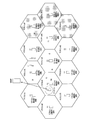
- FIG. 3 is a diagram illustrating an example of operation when the femtocell base station 100 shifts to the power saving mode.
- FIG. 4 is a diagram illustrating an operation example of the femtocell base station 100 in the power saving mode.
- FIG. 5 is a diagram illustrating an example of timer change patterns stored in the timer change pattern storage unit 121 of the femtocell base station 100.
- the mobile station 200 starts with the macro cell # 1 (FIG. 3 (2)) starting from the area in the available femto cell (the point in FIG. 3 (1)).
- macro cell # 2 points in FIGS. 3 (3) and (4) in order, move to macro cell # 1 (point in FIG. 3 (10)) and finally return to the femto cell (FIG. 3 (1)).
- Point Indicates movement.
- the femtocell base station 100 periodically determines the presence / absence of a mobile station in the service area while the power saving mode is cancelled.
- the determination method is determined based on, for example, the number of RRC_CONNECTED_UE in the own cell (see step S2 in FIG. 2).
- the femtocell shifts to the power saving mode when detecting that the number of RRC_CONNECTED_UEs of its own cell has become zero (see step S7 in FIG. 2).
- the first timer 111 and the second timer 112 are initialized. Subsequently, the first timer 111 and the second timer 112 are started. Subsequently, the wireless unit 101 is turned off.
- the femtocell base station 100 When the femtocell base station 100 detects the expiration of the first timer 111, the femtocell base station 100 inquires of the neighboring cells whether or not the mobile station registered in the own femtocell base station 100 exists (see step S10 in FIG. 2). ).
- the neighboring cell to be inquired is set when the femtocell base station 100 is installed, and can be easily updated by restarting or updating according to the position change of the own cell or the installed state of the neighboring cell.
- the femtocell base station 100 determines the location state based on the inquiry result reported from the neighboring cells (see step S11 in FIG. 2).
- the timer change pattern stored in the timer change pattern storage unit 121 is selected from the located state.
- the timer values and timer expiration values of the first timer 111 and the second timer 112 are updated according to the selected timer change pattern (see steps S12 and S13 in FIG. 2).
- the neighboring cell determines whether or not the registered mobile station is in the service area, for example, based on whether or not the mobile station 200 inquired of its own cell is in the RRC_CONNECTED state.
- the mobile station 200 is located in the macro cell # 2, and the registered mobile station is located only from the macro cell base station # 2.
- the femtocell base station 100 sets the “current serving cell” as the “previous serving cell”, and the “current serving cell” is reported as a macro cell in which the registered mobile station is located.
- the macro cell # 2 that has been the “current serving cell” until then is set as the “previous serving cell”, and the “current serving cell” is set as the macro cell #. 8 (see step S14 in FIG. 2).
- the timer change pattern refers to the combination of the macro cell # 2 that is the “previous visited cell” and the macro cell # 8 that is the “current visited cell” according to the pattern of FIG.
- the control of the timer in the movement from the macro cell # 2 to the macro cell # 8 is a movement in a direction in which the mobile station 200 moves away from the femto cell. Therefore, the control for the first and second timers 112 resets the timer value and extends the expiration value. This is because the inquiry cycle to the peripheral cells is lengthened, the inquiry frequency is reduced, and the time until the power saving mode is released is lengthened.
- the control state is not limited to the state shown in FIG. 5, but can be set to a specific numerical value or a state suitable for the situation in the operation to which the present invention is applied. Further, it can be easily updated by restarting or updating according to the position change of the own cell or the installation state of the neighboring cells.
- the femtocell base station 100 determines whether to cancel the power saving mode. Specifically, when the femtocell base station 100 detects the expiration of the second timer 112 during the power saving mode (see Yes in step S8 in FIG. 2), the femtocell base station 100 cancels the power saving mode, The power is turned on (see step S15 in FIG. 2).
- the femtocell base station 100 registers the registered mobile local area inquiry unit 123 that inquires the neighboring base station whether or not the registered mobile station is in the area, and the own cell. And a registered mobile station presence / absence determining unit 105 that detects that the mobile station is not located when the power saving mode is entered.
- the femtocell base station 100 includes a first timer 111 whose expiration value is a registered mobile local area inquiry cycle for neighboring cells, and a second timer 112 whose expiration time is a time until the power saving mode is canceled. Is provided.
- the femtocell base station 100 turns off the power of the timer control unit 113 that resets and activates the first timer 111 and the second timer 112 when the power saving mode is shifted, and the radio unit 101 when the power saving mode is shifted.
- the wireless unit power control unit 104 that turns on the power of the wireless unit 101 when the power saving mode is canceled by detecting the expiration of the second timer 112 is provided.
- the mobile station 200 registered in the femtocell base station 100 can estimate the time until the mobile station 200 enters the own cell again from the existing state in the surrounding cells, and the radio unit 101 is turned on. The time until can be changed dynamically. Therefore, the power saving mode can be canceled (the power of the wireless unit 101 can be turned on) at an appropriate timing for the user (mobile station). Power saving can be realized by controlling on / off of the power supply of the wireless unit 101 according to the presence or absence of the registered mobile station.
- FIG. 6 is a diagram illustrating an example of operation in the power saving mode of the femtocell base station according to Embodiment 2 of the present invention.
- the same components as those in FIG. 3 are denoted by the same reference numerals, and description of overlapping portions is omitted.
- the basic configuration and operation of the mobile radio terminal in the second embodiment of the present invention are the same as those in the first embodiment.
- This embodiment employs a configuration in which the location information of the mobile station in Embodiment 1 is replaced with the location information managed by the management server from the presence / absence of the location of the registered mobile station in the neighboring cell.
- the mobile station performs measurement using GPS (Global Positioning System), PRS (Positioning Reference Signals), and the like, and uses the location information managed by a management server such as MME (Mobility Management Entity). Change to the management server.
- GPS Global Positioning System
- PRS Positioning Reference Signals
- MME Mobility Management Entity
- the information for referring to the timer change pattern is changed from the “previous visited cell” and the “current visited cell” to the distance between the femtocell base station 100 and the mobile station.
- the distance between the femtocell base station 100 and the mobile station has a width, or the timer value and the timer expiration value are directly calculated from the distance.
- the base station is described as a femtocell base station, but the base station may be a picocell, a microcell, an IMCS (Inbuilding Mobile Communication System), or the like.
- IMCS Inbuilding Mobile Communication System
- a CSG Cell that can be used only by registered users or a Hybrid Cell that preferentially schedules registered users can be applied.
- the name of the base station and the power saving method of the base station is used.
- the apparatus is a femtocell base station, a mobile communication system, and the method is a power saving control method. There may be.
- each component constituting the femtocell base station for example, each timer, the type of determination unit, and the like are not limited to the above-described embodiment.
- each functional block used in the description of each of the above embodiments is typically realized as an LSI which is an integrated circuit. These may be individually made into one chip, or may be made into one chip so as to include a part or all of them. Although referred to as LSI here, it may be referred to as IC, system LSI, super LSI, or ultra LSI depending on the degree of integration.
- the method of circuit integration is not limited to LSI, and may be realized by a dedicated circuit or a general-purpose processor.
- An FPGA Field Programmable Gate Array
- a reconfigurable processor that can reconfigure the connection and setting of circuit cells inside the LSI may be used.
- the base station and the base station power saving method of the present invention are useful for applications such as mobile communication systems that use femtocell base stations for power saving.
Landscapes
- Engineering & Computer Science (AREA)
- Computer Networks & Wireless Communication (AREA)
- Signal Processing (AREA)
- Mobile Radio Communication Systems (AREA)
Abstract
移動局にとって適切なタイミングで省電力モードを解除することができる基地局、及び基地局の省電力方法を提供すること。フェムトセル基地局(100)は、周辺基地局に登録移動局の在圏有無を問い合わせる登録移動局在圏問い合わせ部(123)と、自セルに登録移動局が在圏していないことを、省電力モード移行時として検出する登録移動局有無判定部(105)と、周辺セルへの登録移動局在圏問い合わせ周期を満了値とする第1タイマ(111)と、省電力モードを解除するまでの時間を満了値とする第2タイマ(112)と、省電力モード移行時において、第1タイマ(111)及び第2タイマ(112)をリセット及び起動するタイマ制御部(113)と、省電力モード移行時、無線部(101)の電源をオフし、第2タイマ(112)の満了検出により省電力モード解除の場合、無線部(101)の電源をオンする無線部電源制御部(104)とを備える。
Description
本発明は、基地局及び基地局の省電力方法に関する。
一般家庭又はオフィスなどの建物内において、セル半径が数十メートル以下の狭小セル(フェムトセル:Femto Cell)をカバー範囲とする無線通信基地局装置(フェムトセル基地局、又はHome Node-B等と称される。以下、「フェムトセル基地局」又は「HNB」と記す。)の設置が検討されている。
3GPP(3rd Generation Partnership Project)LTE(Long term evolution)で検討されているフェムトセル基地局は、例えば、家庭に設置された場合、その家の家族だけにアクセスを制限するなどのように、限られたグループメンバーにだけアクセスを許可することが検討されている。このようなセルはアクセス限定セル(CSG cell: Closed Service Group cell)と呼ばれることもある。
また、アクセスが許可された携帯端末であるUE(User Equipment)は、フェムトセル基地局に優先的に接続する。すなわち、UEがフェムトセル基地局のエリアに入った場合、フェムトセル基地局よりもセル半径が大きい既存の基地局(以下、「マクロセル」又は「マクロ基地局」と記す。)の電波を受信できたとしても、優先的に小セル無線通信基地局装置に接続する。
現在、移動体通信システムではセル半径が狭い(半径数メートル~数十メートルの)小型基地局(フェムトセル)が開発されており、各住居に設置されることを想定されている。そして、そのメリット活用して移動体通信サービス(音声通話やデータ通信等)の他にホームセキュリティに用いることも検討されている。
自宅などで用いるフェムトセル基地局では、省電力のため不在時に電源をオフにしておきたい要望がある。手動操作では、消し忘れや点け忘れする場合があり、ユーザにとって不便である。オンを判定する手段としては、移動局の送信信号検出やタイマを用いる方法がある。
非在圏だった移動局からの送信信号を受信(ランダムアクセス手順を実行)するために、基地局は同期信号や報知情報送信、ランダムアクセスチャネル受信などの機能が稼動状態でなければ実現できない。また、これらを常時稼動状態とすると省エネ効果は得られない。
さらに、固定的に設定した時刻でのオン/オフでは、登録ユーザの予定外の行動に対応できない。なお、基地局の省電力技術について、3GPPで技術標準化される動きがある。
特許文献1には、移動体通信システムの基地局及びシャットダウン方法が記載されている。特許文献1記載の基地局は、基地局の停止指示を検出すると、移動機が基地局のエリア内に存在するか否かを判定し、移動機が基地局のエリア内に存在しない場合に、基地局を停止するように制御する。
特許文献1記載の装置及び方法は、フェムトセルにおいて、ユーザの不在を検出し、省電力モード(電源オフ又は間欠動作)に遷移する。省電力モードにおいては、電源投入、移動局からの送信信号を受信又はセキュリティシステムと連動によるユーザ検出により省電力モードを解除する。
しかしながら、特許文献1記載の基地局及びシャットダウン方法にあっては、移動局からの送信信号の受信により省電力モードを解除する構成となっていたため、移動局は省電力モード解除の送信信号を送らなければならない。また、移動局にとって、適切なタイミングでの省電力モード解除とならない場合がある。
本発明の目的は、移動局にとって適切なタイミングで省電力モードを解除することができる基地局、及び基地局の省電力方法を提供することである。
本発明の基地局は、移動通信システムで使用される基地局であって、周辺基地局に登録移動局の在圏有無を問い合わせる登録移動局在圏問い合わせ部と、自セルに登録移動局が在圏していないことを、省電力モード移行時として検出する登録移動局有無判定部と、周辺セルへの前記登録移動局在圏問い合わせ周期を満了値とする第1タイマと、前記省電力モードを解除するまでの時間を満了値とする第2タイマと、前記省電力モード移行時において、前記第1及び第2タイマをリセット及び起動するタイマ制御部と、前記省電力モード移行時、無線部の電源をオフするとともに、前記第2タイマの満了検出により省電力モード解除の場合、前記無線部の電源をオンする制御を行う無線部電源制御部と、を備える構成を採る。
本発明の基地局の省電力方法は、移動通信システムで使用される基地局の省電力方法であって、周辺基地局に登録移動局の在圏有無を問い合わせるステップと、自セルに登録移動局が在圏していないことを、省電力モード移行時として検出するステップと、前記省電力モード移行時において、周辺セルへの前記登録移動局在圏問い合わせ周期を満了値とする第1タイマと、前記省電力モードを解除するまでの時間を満了値とする第2タイマとをリセット及び起動するタイマ制御ステップと、前記省電力モード移行時、無線部の電源をオフするとともに、前記第2タイマの満了検出により省電力モード解除の場合、前記無線部の電源をオンするステップと、を有する。
本発明によれば、外出中のユーザ(移動局)にとって適切なタイミングで省電力モードを解除することができる。
以下、本発明の実施の形態について図面を参照して詳細に説明する。
(実施の形態1)
図1は、本発明の実施の形態1に係るフェムトセル基地局の構成を示すブロック図である。図1においては、基地局の省電力方法に直接関係しない機能ブロックの記載は省略されている。
図1は、本発明の実施の形態1に係るフェムトセル基地局の構成を示すブロック図である。図1においては、基地局の省電力方法に直接関係しない機能ブロックの記載は省略されている。
本実施の形態は、基地局の省電力方法をフェムトセル基地局の省電力方法に適用した例である。
図1に示すように、フェムトセル基地局100は、無線部101、ベースバンド信号処理部102、基地局制御情報処理部103、無線部電源制御部104、登録移動局有無判定部105、登録移動局記憶部106、第1タイマ111、第2タイマ112、タイマ制御部113、タイマ変更パターン記憶部121、在圏状態判定部122、及び登録移動局在圏問い合わせ部123を備える。
無線部101は、送信時にはベースバンド信号を無線信号に変換して送信する。無線部101は、受信時には受信した無線信号をベースバンド信号に変換する。
ベースバンド信号処理部102は、送信においては、報知情報、ページング情報、ランダムアクセスチャネル、ユーザ毎のデータ及び制御情報の符号化及び変調を行う。ベースバンド信号処理部102は、受信においては、ランダムアクセスチャネル、ユーザ毎のデータ及び制御情報の復調及び復号化を行う。
基地局制御情報処理部103は、局間制御局及び基地局間の有線インタフェース(LTEにおいてはS1及びX2)において伝送される制御データ(C-Plane)及びユーザデータ(U-Plane)の送受信処理を行う。また、基地局制御情報処理部103は、基地局の制御情報を処理し、基地局の制御を行う。
無線部電源制御部104は、無線部101の電源のオン及びオフを制御する。本実施の形態では、無線部電源制御部104は、登録移動局有無判定部105において、自セルに在圏している登録移動局がないことを検出した場合(省電力モード移行の場合)、無線部101をオフにする。また、無線部電源制御部104は、第2タイマ112の満了を検出した場合(省電力モード解除の場合)、無線部101の電源をオンにする。
登録移動局有無判定部105は、自セルに登録移動局が在圏していないことを、省電力モード移行時として検出する。登録移動局がいない状態とは、例えば、自セルにおけるRRC_CONNECTED_UEが存在しない状態を指す。
登録移動局記憶部106は、自フェムトセル基地局100を利用可能な移動局を記憶する。
第1タイマ111は、周辺セルへの登録移動局在圏問い合わせ周期を満了値とするタイマである。
第2タイマ112は、省電力モードを解除するまでの時間を満了値とするタイマである。
タイマ制御部113は、省電力モード移行時において、第1タイマ111及び第2タイマ112をリセット及びタイマを起動する。具体的には、タイマ制御部113は、以下の制御を行う。
タイマ制御部113は、移動局の全てが自局の通信圏外にハンドオーバした際に第1タイマ111及び第2タイマ112を起動し、かつ、登録移動局在圏問い合わせ部123及び第1タイマ111及び第2タイマ112以外を省電力モードに移行させる。
タイマ制御部113は、登録移動局が在圏する基地局に応じて、第1タイマ111及び第2タイマ112の満了時刻を変更する。満了時刻は、移動局が近隣の基地局に在圏する場合は短く、移動局が遠方の基地局に在圏する場合は長くする。
ここで、フェムトセル基地局100は、在圏問い合わせ結果及び問い合わせ時刻を複数回分保持し、これらの情報から移動局の移動方向を推定し、タイマ制御部113は、推定した前記移動方向に基づいて、移動局が自局に近づいている場合は第2タイマ112の満了時刻を短くし、移動局が自局から遠ざかっている場合は第2タイマ112の満了時刻を長くする。
タイマ制御部113は、推定した前記移動方向に基づいて、移動局が同じ基地局にいるとき、又は遠ざかる場合は第2タイマ112をリセットする。
タイマ制御部113は、登録移動局の問い合わせ時に第1タイマ111をリセットする。
タイマ制御部113は、第2タイマ112の時間満了時に、省電力モードに移行した機能を起動する。
タイマ制御部113は、登録移動局在圏問い合わせ結果受信時においては、在圏状態判定部122により決定されたタイマ変更パターンに従い第1タイマ111及び第2タイマ112のタイマ値及びタイマ満了値を更新する。
タイマ変更パターン記憶部121は、登録移動局の在圏セルの変化に応じたタイマ変更パターンを保持する。
在圏状態判定部122は、登録移動局在圏問い合わせ結果受信時において、登録移動局の在圏セルの変化に応じてタイマ変更パターン記憶部121に保持されているタイマ変更パターンを参照し、タイマ変更パターンを決定する。在圏状態判定部122は、決定したタイマ変更パターンをタイマ制御部113に通知する。
登録移動局在圏問い合わせ部123は、第1タイマ111の満了検出時に、基地局制御情報処理部103を介して周辺セルに登録移動局の在圏有無を問い合わせる。周辺基地局は、フェムトセル基地局100の登録移動局の在圏の有無を、例えば、自セルに問い合わせられた移動局がRRC_CONNECTED状態であるどうかにより判定する。
以下、上述のように構成されたフェムトセル基地局100の省電力動作について説明する。
図2は、フェムトセル基地局100の省電力モード制御を示すフローチャートである。
まず、ステップS1で、フェムトセル基地局100は、省電力モードか否かを判別する。省電力モードでない場合は、ステップS2で、フェムトセル基地局100は、省電力モード解除中に、定期的に在圏移動局の有無を判定する。在圏移動局有無判定方法は、例えば、自セルにおけるRRC_CONNECTED_UE数に基づいて判定する。具体的には、RRC_CONNECTED_UE数がゼロか否かを判定し、RRC_CONNECTED_UE数がゼロでない場合は、本フローを終了する。
移動局200の移動に伴い、フェムトセルは自セルのRRC_CONNECTED_UE数がゼロになったことを検出した場合(ステップS2のYes)、ステップS3以降で第1タイマ111及び第2タイマ112の初期化、及び起動後に省電力モードに移行する。
すなわち、ステップS3で、タイマ制御部113は、第1タイマ111を初期化し、ステップS4で、タイマ制御部113は、第2タイマ112を初期化する。
ステップS5で、タイマ制御部113は、第1タイマ111を起動し、ステップS6で、タイマ制御部113は、第2タイマ112を起動する。
ステップS7で、フェムトセル基地局100は、省電力モードに移行し、無線部101の電源をオフにして本フローを終了する。
上記ステップS1で省電力モードの場合、ステップS8で、タイマ制御部113は、第2タイマ112が満了か否かを判別する。
第2タイマ112が満了していない場合、ステップS9で、タイマ制御部113は、第1タイマ111が満了か否かを判別する。第1タイマ111が満了していない場合、本フローを終了する。
第1タイマ111が満了している場合、ステップS10で、登録移動局在圏問い合わせ部123は、周辺セルに対して自フェムトセル基地局に登録している移動局の在圏の有無を問い合わせる。
問い合わせ先となる周辺セルは、フェムトセル基地局設置時に設定し、自セルの位置変更や周辺セルの設置状態に応じて再起動やアップデートにより容易に更新できるものとする。周辺セルへの問い合わせは、基地局の制御や移動局のユーザデータ及び制御データを伝送する有線インタフェースを用いて行う。
ステップS11で、在圏状態判定部122は、周辺セルから報告された問い合わせ結果に基づいて、在圏状態を判定する。在圏状態判定部122は、在圏状態からタイマ変更パターン記憶部121に記憶されているタイマ変更パターンを選択する。
ステップS12で、タイマ制御部113は、在圏状態判定部122により決定されたタイマ変更パターンに従い、第1タイマ111のタイマ値及びタイマ満了値を更新し、ステップS13で、第2タイマ112のタイマ値及びタイマ満了値を更新する。
ステップS14で、フェムトセル基地局100は、前回の在圏セルを更新して本フローを終了する。具体的には、フェムトセル基地局100は、問い合わせ結果受信時に、「現在の在圏セル」を「前回の在圏セル」とし、「現在の在圏セル」を登録移動局の在圏があると報告されたマクロセルとする。
一方、上記ステップS8で第2タイマ112が満了した場合、ステップS15で、フェムトセル基地局100は、省電力モードを解除し、無線部101の電源をオンにして本フローを終了する。
上記省電力モード制御について、図3乃至図5を参照して詳細に説明する。
図3は、フェムトセル基地局100の省電力モード移行時の動作の例を示す図である。図4は、フェムトセル基地局100の省電力モード時の動作の例を示す図である。図5は、フェムトセル基地局100のタイマ変更パターン記憶部121に記憶されているタイマ変更パターンの例を示す図である。
[省電力モード移行時の動作]
図3に示すように、省電力モード移行時には、移動局200は、利用可能なフェムトセルでの在圏状態(図3(1)の地点)を起点に、マクロセル#1(図3(2)の地点)、マクロセル#2(図3(3)及び(4)の地点)の順に、マクロセル#1(図3(10)の地点)まで移動し、最後にフェムトセルに戻る(図3(1)の地点)動きを示している。
図3に示すように、省電力モード移行時には、移動局200は、利用可能なフェムトセルでの在圏状態(図3(1)の地点)を起点に、マクロセル#1(図3(2)の地点)、マクロセル#2(図3(3)及び(4)の地点)の順に、マクロセル#1(図3(10)の地点)まで移動し、最後にフェムトセルに戻る(図3(1)の地点)動きを示している。
フェムトセル基地局100は、省電力モード解除中に、定期的に在圏移動局の有無を判定する。判定方法は、例えば、自セルにおけるRRC_CONNECTED_UE数に基づき判定する(図2のステップS2参照)。
移動局200の移動に伴い、フェムトセルは自セルのRRC_CONNECTED_UE数がゼロになったことを検出した場合、省電力モードに移行する(図2のステップS7参照)。
上記省電力モード移行時に、第1タイマ111及び第2タイマ112を初期化する。続いて、第1タイマ111及び第2タイマ112を起動する。続いて、無線部101の電源をオフにする。
図3では、省電力モード移行において、移動局200がフェムトセル(図3(1)の地点)からマクロセル#1(図3(2)の地点)に移動(ハンドオーバ)するに伴い、RRC_CONNECTED_UE数ゼロと判定し、省電力モードに移行する。
[省電力モード時の動作]
図4に示すように、省電力モード時において、移動局200は、マクロセル#2(図4(4)の地点)に在圏し、その後に、マクロセル#8(図4(5)の地点)に移動してマクロセル#8に在圏している状態を示す。
図4に示すように、省電力モード時において、移動局200は、マクロセル#2(図4(4)の地点)に在圏し、その後に、マクロセル#8(図4(5)の地点)に移動してマクロセル#8に在圏している状態を示す。
フェムトセル基地局100は、第1タイマ111の満了を検出した時に、周辺セルに対して自フェムトセル基地局100に登録している移動局の在圏の有無を問い合わせる(図2のステップS10参照)。問い合わせ先となる周辺セルは、フェムトセル基地局100設置時に設定し、自セルの位置変更や周辺セルの設置状態に応じて再起動やアップデートにより容易に更新できる。
フェムトセル基地局100は、周辺セルから報告された問い合わせ結果に基づき、在圏状態を判定する(図2のステップS11参照)。在圏状態からタイマ変更パターン記憶部121に記憶されているタイマ変更パターンを選択する。選択したタイマ変更パターンに従い、第1タイマ111及び第2タイマ112のタイマ値及びタイマ満了値を更新する(図2のステップS12,S13参照)。
図4の状況においては、マクロセル基地局#8から登録移動局が在圏していることが報告され、他のマクロセル基地局(#1~7、#9及び#10)からは登録移動局の在圏がないことが報告される。
周辺セルは、登録移動局の在圏の有無を、例えば、自セルに問い合わせされた移動局200がRRC_CONNECTED状態であるどうかにより判定する。
ここで、前回の問い合わせ時には、移動局200は、マクロセル#2に在圏しており、マクロセル基地局#2からのみ登録移動局が在圏していることが報告されている。フェムトセル基地局100は、問い合わせ結果受信時に、「現在の在圏セル」を「前回の在圏セル」とし、「現在の在圏セル」を登録移動局の在圏があると報告されたマクロセルとする。図4において、周辺セルからの報告を受信した時に、それまでに「現在の在圏セル」であったマクロセル#2を「前回の在圏セル」とし、「現在の在圏セル」をマクロセル#8とする(図2のステップS14参照)。
[タイマ変更パターン例]
図5に示すように、タイマ変更パターンは、図5のパターンに従い、「前回の在圏セル」であるマクロセル#2と「現在の在圏セル」であるマクロセル#8の組み合わせを参照する。
図5に示すように、タイマ変更パターンは、図5のパターンに従い、「前回の在圏セル」であるマクロセル#2と「現在の在圏セル」であるマクロセル#8の組み合わせを参照する。
図5の例では、マクロセル#2からマクロセル#8への移動におけるタイマの制御は、移動局200が、フェムトセルから見て遠ざかる方向への移動である。このため、第1及び第2タイマ112に対する制御はタイマ値をリセットし満了値は延長としている。周辺セルへの問い合わせ周期を長くし、問い合わせ頻度を減らすと共に、省電力モード解除までの時間を長くするためである。
制御の状態は、図5中の状態に限らず、具体的数値や本発明を適用した運用において状況に適した状態を設定することができる。また、自セルの位置変更や周辺セルの設置状態に応じて再起動やアップデートにより容易に更新可能である。
[省電力モード解除の動作]
省電力モード時において、フェムトセル基地局100は、省電力モードを解除するか判定を行う。具体的には、フェムトセル基地局100は、省電力モード中に、第2タイマ112の満了を検出した場合(図2のステップS8のYes参照)、省電力モードを解除し、無線部101の電源をオンにする(図2のステップS15参照)。
省電力モード時において、フェムトセル基地局100は、省電力モードを解除するか判定を行う。具体的には、フェムトセル基地局100は、省電力モード中に、第2タイマ112の満了を検出した場合(図2のステップS8のYes参照)、省電力モードを解除し、無線部101の電源をオンにする(図2のステップS15参照)。
以上詳細に説明したように、本実施の形態によれば、フェムトセル基地局100は、周辺基地局に登録移動局の在圏有無を問い合わせる登録移動局在圏問い合わせ部123と、自セルに登録移動局が在圏していないことを、省電力モード移行時として検出する登録移動局有無判定部105とを備える。また、フェムトセル基地局100は、周辺セルへの登録移動局在圏問い合わせ周期を満了値とする第1タイマ111と、省電力モードを解除するまでの時間を満了値とする第2タイマ112とを備える。また、フェムトセル基地局100は、省電力モード移行時において、第1タイマ111及び第2タイマ112をリセット及び起動するタイマ制御部113と、省電力モード移行時、無線部101の電源をオフし、第2タイマ112の満了検出により省電力モード解除の場合、無線部101の電源をオンする無線部電源制御部104とを備える。
上記構成により、フェムトセル基地局100に登録している移動局200が、再度自セル内に入るまでの時間を周辺のセルでの在圏状態から推定することができ、無線部101の電源オンまでの時刻を動的に変更することができる。したがって、ユーザ(移動局)にとって適切なタイミングで省電力モードを解除(無線部101の電源をオン)することができる。登録移動局の在圏有無に応じて無線部101の電源をオン/オフを制御することで、省電力を実現することができる。
(実施の形態2)
図6は、本発明の実施の形態2に係るフェムトセル基地局の省電力モードの動作の例を示す図である。図3と同一構成部分には同一符号を付して重複箇所の説明を省略する。
図6は、本発明の実施の形態2に係るフェムトセル基地局の省電力モードの動作の例を示す図である。図3と同一構成部分には同一符号を付して重複箇所の説明を省略する。
本発明の実施の形態2における移動無線端末の基本的な構成及び動作は、実施の形態1と同様である。
本実施の形態は、実施の形態1における移動局の位置情報を、周辺セルにおける登録移動局の在圏有無から、移動局の位置情報を管理サーバが管理する位置情報に代えた構成を採る。
例えば、移動局は、GPS(Global Positioning System)やPRS(Positioning Reference Signals)などを用いて測定し、MME(Mobility Management Entity)などの管理サーバが管理する位置情報とし、問い合わせ先を周辺セルから上記管理サーバに変更する。
位置情報の形態の変更に伴い、タイマ変更パターンを参照するための情報を「前回の在圏セル」及び「現在の在圏セル」からフェムトセル基地局100と移動局との距離に変更する。
タイマ変更パターンの参照においては、フェムトセル基地局100と移動局との距離に幅を持たせたり、距離からタイマ値及びタイマ満了値を直接算出したりするものとする。
動作は実施の形態1と同様であり、同様の効果を得ることができる。
以上の説明は本発明の好適な実施の形態の例証であり、本発明の範囲はこれに限定されることはない。
例えば、上記実施の形態では、基地局がフェムトセル基地局で説明したが、基地局はピコセルやマイクロセル、IMCS(Inbuilding Mobile Communication System)等であっても構わない。
また、フェムトセル基地局でなくとも、登録したユーザのみ使用可能なCSG(Closed Subscriber Group) Cellもしくは、登録したユーザを優先的にスケジューリングするHybrid Cellであれば適用可能である。
上記各実施の形態では、基地局及び基地局の省電力方法という名称を用いたが、これは説明の便宜上であり、装置はフェムトセル基地局,移動通信システム、方法は省電力制御方法等であってもよい。
さらに、上記フェムトセル基地局を構成する各構成部、例えば、各タイマ、判定部の種類などは前述した実施の形態に限られない。
上記各実施の形態では、本発明をハードウェアで構成する場合を例にとって説明したが、本発明はソフトウェアで実現することも可能である。
また、上記各実施の形態の説明に用いた各機能ブロックは、典型的には集積回路であるLSIとして実現される。これらは個別に1チップ化されてもよいし、一部又は全てを含むように1チップ化されてもよい。ここでは、LSIとしたが、集積度の違いにより、IC、システムLSI、スーパーLSI、ウルトラLSIと呼称されることもある。
また、集積回路化の手法はLSIに限るものではなく、専用回路又は汎用プロセッサで実現してもよい。LSI製造後に、プログラムすることが可能なFPGA(Field Programmable Gate Array)や、LSI内部の回路セルの接続や設定を再構成可能なリコンフィギュラブル・プロセッサを利用してもよい。
さらには、半導体技術の進歩又は派生する別技術によりLSIに置き換わる集積回路化の技術が登場すれば、当然、その技術を用いて機能ブロックの集積化を行ってもよい。例えば、バイオ技術の適用等が可能である。
2010年8月5日出願の特願2010-176324の日本出願に含まれる明細書、図面及び要約書の開示内容は、すべて本願に援用される。
本発明の基地局及び基地局の省電力方法は、フェムトセル基地局を省電力に利用した移動通信システム等の用途に有用である。
100 フェムトセル基地局
101 無線部
102 ベースバンド信号処理部
103 基地局制御情報処理部
104 無線部電源制御部
105 登録移動局有無判定部
106 登録移動局記憶部
111 第1タイマ
112 第2タイマ
113 タイマ制御部
121 タイマ変更パターン記憶部
122 在圏状態判定部
123 登録移動局在圏問い合わせ部
200 移動局
101 無線部
102 ベースバンド信号処理部
103 基地局制御情報処理部
104 無線部電源制御部
105 登録移動局有無判定部
106 登録移動局記憶部
111 第1タイマ
112 第2タイマ
113 タイマ制御部
121 タイマ変更パターン記憶部
122 在圏状態判定部
123 登録移動局在圏問い合わせ部
200 移動局
Claims (15)
- 移動通信システムで使用される基地局であって、
周辺基地局に登録移動局の在圏有無を問い合わせる登録移動局在圏問い合わせ部と、
自セルに登録移動局が在圏していないことを、省電力モード移行時として検出する登録移動局有無判定部と、
周辺セルへの前記登録移動局在圏問い合わせ周期を満了値とする第1タイマと、
前記省電力モードを解除するまでの時間を満了値とする第2タイマと、
前記省電力モード移行時において、前記第1及び第2タイマをリセット及び起動するタイマ制御部と、
前記省電力モード移行時、無線部の電源をオフするとともに、前記第2タイマの満了検出により省電力モード解除の場合、前記無線部の電源をオンする制御を行う無線部電源制御部と、
を備える基地局。 - 前記登録移動局有無判定部は、
自セルに登録移動局が在圏していないことを、自セルにおけるRRC_CONNECTED_UEが存在しない状態により判定する、請求項1記載の基地局。 - 前記登録移動局在圏問い合わせ部は、
前記第1タイマ満了時に、周辺基地局へ登録移動局の在圏有無を問い合わせる、請求項1記載の基地局。 - 前記タイマ制御部は、
移動局の全てが自局の通信圏外にハンドオーバした際に前記第1及び第2タイマを起動し、かつ、前記登録移動局在圏問い合わせ部及び前記第1及び第2タイマ以外を前記省電力モードに移行させる、請求項1記載の基地局。 - 前記タイマ制御部は、
登録移動局が在圏する基地局に応じて、前記第1及び第2タイマの満了時刻を変更する、請求項1記載の基地局。 - 前記満了時刻は、移動局が近隣の基地局に在圏する場合は短く、移動局が遠方の基地局に在圏する場合は長くする、請求項5記載の基地局。
- 在圏問い合わせ結果及び問い合わせ時刻を複数回分保持し、これらの情報から移動局の移動方向を推定する推定部を備える請求項1記載の基地局。
- 前記タイマ制御部は、
推定した前記移動方向に基づいて、移動局が自局に近づいている場合は前記第2タイマの満了時刻を短くし、移動局が自局から遠ざかっている場合は前記第2タイマの満了時刻を長くする、請求項7記載の基地局。 - 前記タイマ制御部は、
推定した前記移動方向に基づいて、移動局が同じ基地局にいるとき、又は遠ざかる場合は前記第2タイマをリセットする、請求項7記載の基地局。 - 前記タイマ制御部は、
登録移動局の問い合わせ時に前記第1タイマをリセットする、請求項1記載の基地局。 - 前記タイマ制御部は、
前記第2タイマの時間満了時に、前記省電力モードに移行した機能を起動する、請求項1記載の基地局。 - 登録移動局の在圏セルの変化に応じたタイマ変更パターンを保持するタイマ変更パターン記憶部と、
前記登録移動局在圏問い合わせ結果受信時において、登録移動局の在圏セルの変化に応じて前記タイマ変更パターン記憶部に保持されているタイマ変更パターンを参照し、タイマ変更パターンを決定する在圏状態判定部とをさらに備え、
前記タイマ制御部は、
前記登録移動局在圏問い合わせ結果受信時、前記在圏状態判定部により決定されたタイマ変更パターンに従い前記第1及び第2タイマのタイマ値及びタイマ満了値を更新する、請求項1記載の基地局。 - 移動局の位置情報を管理サーバが管理する位置情報とし、前記位置情報の問い合わせ先が管理サーバである、請求項1記載の基地局。
- 移動通信システムで使用される基地局の省電力方法であって、
周辺基地局に登録移動局の在圏有無を問い合わせるステップと、
自セルに登録移動局が在圏していないことを、省電力モード移行時として検出するステップと、
前記省電力モード移行時において、
周辺セルへの前記登録移動局在圏問い合わせ周期を満了値とする第1タイマと、前記省電力モードを解除するまでの時間を満了値とする第2タイマとをリセット及び起動するタイマ制御ステップと、
前記省電力モード移行時、無線部の電源をオフするとともに、前記第2タイマの満了検出により省電力モード解除の場合、前記無線部の電源をオンするステップと、
を有する基地局の省電力方法。 - 登録移動局の在圏セルの変化に応じたタイマ変更パターンを保持するステップと、
前記登録移動局在圏問い合わせ結果受信時において、登録移動局の在圏セルの変化に応じて前記保持されているタイマ変更パターンを参照し、タイマ変更パターンを決定するステップとを有し、
前記タイマ制御ステップでは、
前記登録移動局在圏問い合わせ結果受信時、前記在圏状態判定部により決定されたタイマ変更パターンに従い前記第1及び第2タイマのタイマ値及びタイマ満了値を更新する、請求項14記載の基地局の省電力方法。
Applications Claiming Priority (2)
| Application Number | Priority Date | Filing Date | Title |
|---|---|---|---|
| JP2010-176324 | 2010-08-05 | ||
| JP2010176324A JP5039184B2 (ja) | 2010-08-05 | 2010-08-05 | 基地局及び基地局の省電力方法 |
Publications (1)
| Publication Number | Publication Date |
|---|---|
| WO2012017651A1 true WO2012017651A1 (ja) | 2012-02-09 |
Family
ID=45559172
Family Applications (1)
| Application Number | Title | Priority Date | Filing Date |
|---|---|---|---|
| PCT/JP2011/004395 Ceased WO2012017651A1 (ja) | 2010-08-05 | 2011-08-03 | 基地局及び基地局の省電力方法 |
Country Status (2)
| Country | Link |
|---|---|
| JP (1) | JP5039184B2 (ja) |
| WO (1) | WO2012017651A1 (ja) |
Cited By (1)
| Publication number | Priority date | Publication date | Assignee | Title |
|---|---|---|---|---|
| US9930617B1 (en) | 2017-03-17 | 2018-03-27 | At&T Intellectual Property I, L.P. | State change enabled by a hierarchical class of a radio access network device |
Families Citing this family (3)
| Publication number | Priority date | Publication date | Assignee | Title |
|---|---|---|---|---|
| JP6057638B2 (ja) * | 2012-09-18 | 2017-01-11 | 株式会社アイ・オー・データ機器 | 情報処理装置、通信システム、及び通信プログラム |
| JP6076150B2 (ja) * | 2013-03-13 | 2017-02-08 | 三菱電機株式会社 | 基地局、移動通信システムおよび移動通信方法 |
| JP2015220466A (ja) | 2014-05-13 | 2015-12-07 | 富士通株式会社 | 基地局 |
Citations (2)
| Publication number | Priority date | Publication date | Assignee | Title |
|---|---|---|---|---|
| JP2006332844A (ja) * | 2005-05-24 | 2006-12-07 | Fujitsu Ltd | 無線アクセスポイント |
| JP2009509464A (ja) * | 2005-09-19 | 2009-03-05 | クゥアルコム・インコーポレイテッド | マルチモード基地局を用いる無線通信システムにおいて使用するための無線端末の方法と装置 |
-
2010
- 2010-08-05 JP JP2010176324A patent/JP5039184B2/ja not_active Expired - Fee Related
-
2011
- 2011-08-03 WO PCT/JP2011/004395 patent/WO2012017651A1/ja not_active Ceased
Patent Citations (2)
| Publication number | Priority date | Publication date | Assignee | Title |
|---|---|---|---|---|
| JP2006332844A (ja) * | 2005-05-24 | 2006-12-07 | Fujitsu Ltd | 無線アクセスポイント |
| JP2009509464A (ja) * | 2005-09-19 | 2009-03-05 | クゥアルコム・インコーポレイテッド | マルチモード基地局を用いる無線通信システムにおいて使用するための無線端末の方法と装置 |
Cited By (3)
| Publication number | Priority date | Publication date | Assignee | Title |
|---|---|---|---|---|
| US9930617B1 (en) | 2017-03-17 | 2018-03-27 | At&T Intellectual Property I, L.P. | State change enabled by a hierarchical class of a radio access network device |
| US10182397B2 (en) | 2017-03-17 | 2019-01-15 | At&T Intellectual Property I, L.P. | State change enabled by a hierarchical class of a radio access network device |
| US10375631B2 (en) | 2017-03-17 | 2019-08-06 | At&T Intellectual Property I, L.P. | State change enabled by a hierarchical class of a radio access network device |
Also Published As
| Publication number | Publication date |
|---|---|
| JP5039184B2 (ja) | 2012-10-03 |
| JP2012039295A (ja) | 2012-02-23 |
Similar Documents
| Publication | Publication Date | Title |
|---|---|---|
| CN102893671B (zh) | 用于更新毫微微小区邻近信息的方法和装置 | |
| US9042918B2 (en) | Using fingerprints in proximity detection of wireless devices | |
| KR101197864B1 (ko) | 전력 효율적인 작은 기지국의 스캐닝 및 포착 | |
| JP5823972B2 (ja) | オーバーレイ無線ネットワーク内でのマクロセルおよびプライベート・セルの動作の調整 | |
| CN101505510B (zh) | 宏小区到私有小区的切换方法及其宏网络系统 | |
| CN104604311B (zh) | 通信系统中的寻呼信令负荷的降低 | |
| KR101206432B1 (ko) | 광대역 무선 통신 시스템에서 페이징 방법 | |
| JP5209060B2 (ja) | 移動端末を少なくとも1つの基地局によって検出することができるようにするための方法及びデバイス | |
| KR20100005084A (ko) | 근접성 기반의 전송 모드 변경을 통한 간섭 감소를 위한 방법 및 시스템 | |
| EP2628335A1 (en) | Methods, apparatuses and system for identifying a target femtocell for hand-in of a user equipment | |
| JP5039184B2 (ja) | 基地局及び基地局の省電力方法 | |
| US8260270B2 (en) | Femto BS for reducing inter-cell interference and method for transmitting signal using the same | |
| CN102550087B (zh) | 移动通信系统及其控制方法以及无线电基站装置 | |
| CN110945906A (zh) | 游牧中继突然关闭情况下的服务连续性 | |
| JP2011142377A (ja) | 無線通信システム、無線通信方法、送信局、プログラム、および端末局 | |
| WO2013126845A1 (en) | Method and system for joint parameter optimization for macro and femto cells | |
| JP2015204593A (ja) | 無線基地局、隣接セルリスト作成方法、および隣接セルリスト作成プログラム | |
| WO2012176474A1 (ja) | 無線通信システム | |
| JP2012060432A (ja) | 隣接セル処理装置および隣接セル処理方法 | |
| KR102261403B1 (ko) | 단말 간 통신을 위한 동기화 지원 방법 및 그 장치 | |
| WO2014041661A1 (ja) | 無線通信システム、基地局装置及び端末装置 | |
| KR101624331B1 (ko) | 인접 기지국 리스트 구성 방법 | |
| CN117241354A (zh) | 基站控制方法、装置、电子设备和存储介质 | |
| JP2012070075A (ja) | 隣接セル処理装置および隣接セル処理方法 |
Legal Events
| Date | Code | Title | Description |
|---|---|---|---|
| 121 | Ep: the epo has been informed by wipo that ep was designated in this application |
Ref document number: 11814288 Country of ref document: EP Kind code of ref document: A1 |
|
| NENP | Non-entry into the national phase |
Ref country code: DE |
|
| 122 | Ep: pct application non-entry in european phase |
Ref document number: 11814288 Country of ref document: EP Kind code of ref document: A1 |