WO2012004899A1 - 携帯端末およびナビゲーションシステム - Google Patents
携帯端末およびナビゲーションシステム Download PDFInfo
- Publication number
- WO2012004899A1 WO2012004899A1 PCT/JP2010/062020 JP2010062020W WO2012004899A1 WO 2012004899 A1 WO2012004899 A1 WO 2012004899A1 JP 2010062020 W JP2010062020 W JP 2010062020W WO 2012004899 A1 WO2012004899 A1 WO 2012004899A1
- Authority
- WO
- WIPO (PCT)
- Prior art keywords
- vehicle
- communication
- display device
- navigation
- mobile terminal
- Prior art date
- Legal status (The legal status is an assumption and is not a legal conclusion. Google has not performed a legal analysis and makes no representation as to the accuracy of the status listed.)
- Ceased
Links
Images

Classifications
-
- G—PHYSICS
- G01—MEASURING; TESTING
- G01C—MEASURING DISTANCES, LEVELS OR BEARINGS; SURVEYING; NAVIGATION; GYROSCOPIC INSTRUMENTS; PHOTOGRAMMETRY OR VIDEOGRAMMETRY
- G01C21/00—Navigation; Navigational instruments not provided for in groups G01C1/00 - G01C19/00
- G01C21/26—Navigation; Navigational instruments not provided for in groups G01C1/00 - G01C19/00 specially adapted for navigation in a road network
- G01C21/34—Route searching; Route guidance
- G01C21/36—Input/output arrangements for on-board computers
- G01C21/3688—Systems comprising multiple parts or multiple output devices (not client-server), e.g. detachable faceplates, key fobs or multiple output screens
Definitions
- the present invention relates to a portable terminal and a navigation system capable of executing vehicle navigation.
- portable navigation terminals that perform navigation suitable for vehicle travel guidance are known.
- Such a portable navigation terminal is proposed in, for example, Japanese Patent Application Laid-Open No. 2002-277274.
- portable navigation terminals have become highly sophisticated.
- recent vehicles are equipped with in-vehicle navigation devices. Therefore, if the vehicle occupant has such a portable navigation terminal, the in-vehicle navigation device is not always necessary.
- the present invention has been made to cope with the above-described problem, and an object of the present invention is to enable vehicle guidance with good visibility to be received without mounting an in-vehicle navigation device on the vehicle.
- a feature of the present invention is that, in a portable terminal capable of performing navigation for a vehicle, communication means for communicating with an in-vehicle display device, and communication with the in-vehicle display device by the communication means Communication determining means for determining whether or not communication has been established, and image data for executing navigation for the vehicle on the in-vehicle display device when the communication determining means determines that communication has been established.
- the image data generating means for generating and the image data transmitting means for transmitting the image data generated by the screen data generating means to the in-vehicle display device are provided.
- the portable terminal of the present invention includes a communication unit for communicating with the in-vehicle display device.
- the portable terminal of the present invention includes a communication determination unit, an image data generation unit, and an image data transmission unit in order to execute navigation for a vehicle with the in-vehicle display device.
- the communication determination unit determines whether communication with the in-vehicle display device has been established by the communication unit. For example, the communication determination unit determines whether or not a request signal is transmitted from the communication unit and a response signal can be received. If the in-vehicle display device can be recognized by receiving the response signal, communication is established.
- the image data generation unit generates image data for executing navigation for the vehicle on the in-vehicle display device when the communication determination unit determines that communication is established.
- the portable terminal and the in-vehicle display device have different screen standards (horizontal ⁇ vertical number of pixels). Therefore, the image data generation unit converts, for example, image data to be displayed on the portable terminal into image data suitable for the screen standard of the in-vehicle display device. In this case, image data with adjusted screen aspect ratio and resolution may be generated.
- the image used in the mobile terminal is displayed on the in-vehicle display device using the aspect ratio of the screen of the mobile terminal. Convert data. Moreover, it is preferable that at least one of the vertical direction and the horizontal direction of the screen of the in-vehicle display is used and displayed to the full screen.
- the image data transmission means transmits the generated image data to the in-vehicle display device. Thereby, a navigation image is projected on the in-vehicle display device.
- the in-vehicle display can increase the display area. For this reason, the vehicle occupant can receive vehicle travel guidance on a large screen.
- the vehicle travel guidance can be received on a large screen by providing the in-vehicle display device having the communication function. For this reason, cost reduction of a vehicle can be achieved.
- vehicle navigation can be started when communication is established between the mobile terminal and the in-vehicle display device. For this reason, it is very convenient for the occupant because the vehicle travel guidance can be received quickly.
- the communication means performs short-range wireless communication with the in-vehicle display device or communicates with the in-vehicle display device via a connection cable.
- the portable terminal and the in-vehicle device are mounted when the owner of the portable terminal is on the vehicle. Communication is established with the display device.
- the owner of the mobile terminal is away from the vehicle, communication is not established between the mobile terminal and the in-vehicle display device. Therefore, in a situation where the owner of the portable terminal is not in the vehicle, that is, in a situation where the vehicle travel guidance is not required, the image data generation process and the transmission process are not performed, and the power consumption can be suppressed.
- the vehicle travel guidance can be received at any time.
- communication is established between the portable terminal and the vehicle-mounted display device when the passenger carrying the mobile terminal gets into the vehicle. Can immediately receive the travel guidance of the vehicle without cable connection work.
- communication is not automatically established between the mobile terminal and the in-vehicle display device, and the navigation for the vehicle on the in-vehicle display ends. Therefore, the operability is very good.
- Another feature of the present invention includes a pedestrian navigation function for performing pedestrian navigation, and when the communication determination unit does not determine that communication with the in-vehicle display device is established, the walking To perform navigation for the user.
- the communication determination unit does not determine that communication with the in-vehicle display device is established, the walking To perform navigation for the user.
- the invention is not limited to the invention of a portable terminal, and a portable terminal capable of performing navigation for vehicles, and an in-vehicle display device having a communication function for communicating with the portable terminal; It can implement as a navigation system which performs navigation for vehicles using a display screen of the above-mentioned in-vehicle display device.
- FIG. 1 is a schematic configuration diagram of a navigation system using a mobile terminal according to an embodiment of the present invention.
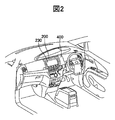
- FIG. 2 is a perspective view of the passenger compartment in which the in-vehicle display device is installed.
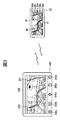
- FIG. 3 is a front view of the mobile terminal and the in-vehicle display device.
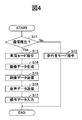
- FIG. 4 is a flowchart showing an in-vehicle display control routine.
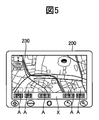
- FIG. 5 is an explanatory diagram showing a display screen according to a modification.
- FIG. 1 is a schematic configuration diagram of a navigation system including the mobile terminal 10 and the in-vehicle display device 200 according to the embodiment.
- This navigation system includes a mobile terminal 10 and an in-vehicle display device 200.
- the portable terminal 10 is a portable information terminal that stores various application programs and provides various kinds of information to the user by executing the application program.
- the mobile terminal 10 according to the present embodiment stores a navigation program, and performs vehicle navigation guidance or walking guidance to the user by an image and sound by executing the navigation program.
- the mobile terminal 10 has not only a navigation function but also a web browser function, a telephone function, and the like, but it may have only a navigation function.
- the in-vehicle display device 200 is a touch panel display device using liquid crystal or organic EL incorporated in a vehicle instrument panel 400, and the device alone has a function for performing navigation. Not. For this reason, as the vehicle-mounted display apparatus 200, compared with the conventional vehicle-mounted navigation apparatus, it is very cheap.
- control processing for performing navigation is performed by the mobile terminal 10
- the in-vehicle display device 200 is a graphical for performing information transmission to the driver by image and voice and operation input. Functions as a user interface.
- the in-vehicle display device 200 displays the same image as that displayed on the mobile terminal 10.
- the mobile terminal 10 includes an electronic control unit 100 (hereinafter referred to as an ECU 100), an external communication unit 20, a GPS unit 30, a display unit 40, an operation unit 50, a speaker 60, a nonvolatile memory 70, a terminal Side communication unit 80.
- the ECU 100 includes a microcomputer as a main part, and includes a CPU, a ROM, a RAM, an input / output interface, various drivers, and the like.
- a control program for executing navigation control is stored in the ROM.
- the external communication unit 20 is a wireless communication circuit for connecting to the Internet.
- the external communication unit 20 may be connected to the Internet via a base station of a mobile phone operator, or directly connected to the Internet. There may be.
- the portable terminal 10 can perform data communication with the information distribution center via the Internet.
- the GPS unit 30 detects the current position coordinates of the mobile terminal based on radio waves from GPS satellites, and outputs the current position coordinates to the ECU 100.
- the display unit 40 displays a navigation image (a road map, various types of guidance information, various types of setting information, etc.) based on an image signal output from the ECU 100.
- the mobile terminal 10 of this embodiment includes a touch panel display, and a display screen portion in the touch panel display is a display unit 40. Since the mobile terminal 10 is required to be compact, the screen size (area) of the display unit 40 is smaller than that of the in-vehicle display device 200 as shown in FIG. However, the screen of the display unit 40 has a high resolution.
- the screen standard of the display unit 40 in this embodiment is full-wide VGA. Therefore, the number of pixels constituting the screen is 960 ⁇ 480 (horizontal ⁇ vertical).
- the operation unit 50 includes a touch pad 51 (position input device) built in a touch panel display that also serves as the display unit 40, and an external operation unit 52 provided outside the touch panel display.
- the external operation unit 52 includes a home button 52a, a menu button 52b, a return button 52c, a search button 52d, and a pointer 52e.
- the button configuration of the external operation unit 52 can be arbitrarily set.
- the operation unit 50 outputs a coordinate signal indicating the coordinate position input to the touch pad 51, a button operation signal indicating a button operation of the external operation unit 52, and a pointer operation signal indicating a pointer operation of the external operation unit 52 to the ECU 100.
- the speaker 60 is operated by a sound signal output from the ECU 100 to generate a sound guide, an operation reaction sound, and the like.
- the non-volatile memory 70 is for storing information acquired from the outside, such as navigation information acquired from the information distribution center via the Internet. In this portable terminal 10, the control program for performing navigation and the map data are stored in the ROM of the ECU 100, and when the navigation is actually executed, traffic information, public transportation information, etc. are sent from the information distribution center.
- the terminal-side communication unit 80 is a communication interface that communicates with the in-vehicle display device 200.
- the mobile terminal 10 and the in-vehicle display device 200 are connected by short-range wireless communication.
- short-range wireless communication For example, although Bluetooth is used, a short-range wireless communication method using a wireless LAN such as Wi-Fi can also be employed.
- the ECU 100 includes a navigation control unit 110 for executing navigation on the mobile terminal 10 and a linkage control unit 150 for enabling the navigation to be executed also on the in-vehicle display device 200.
- the navigation control unit 110 includes a vehicle navigation program 111 that executes vehicle navigation suitable for guiding a vehicle to a destination, and a walker that executes pedestrian navigation suitable for guiding a pedestrian to the destination. Both the user navigation program 112 and the one are selectively executed.
- a control mode for executing vehicle navigation is called a vehicle mode
- a control mode for executing pedestrian navigation is called a pedestrian mode. In the vehicle mode, the vehicle travel route to the destination is set and guided based on various road information and traffic information.
- the cooperation control unit 150 includes a communication control unit 160, an image generation unit 170, an operation detection unit 180, and an audio output unit 190.
- the communication control unit 160 controls the operation of the terminal-side communication unit 80 in order to perform short-range wireless communication with a vehicle-side communication unit 220 (described later) provided in the in-vehicle display device 200.
- the communication control unit 160 transmits a request signal from the terminal side communication unit 80 and determines whether or not a response signal to the request signal is transmitted to the terminal side communication unit 80.
- the communication control unit 160 includes a determination unit 161 that determines whether communication between the mobile terminal 10 and the in-vehicle display device 200 is established based on whether or not such a response signal is received.
- the determination unit 161 outputs a communication determination signal indicating whether communication is established.
- a signal indicating that communication is established is referred to as a communication on signal
- a signal indicating that communication is not established is referred to as a communication off signal.
- the mobile terminal 10 Since the mobile terminal 10 performs short-range wireless communication with the in-vehicle display device 200, when the holder of the mobile terminal 10 is in the vehicle, communication is established between the mobile terminal 10 and the in-vehicle display device 200. When the holder of the portable terminal 10 is away from the vehicle, the specification is set so that communication is not established between the portable terminal 10 and the in-vehicle display device 200.
- the communication determination signal is output to the navigation control unit 110, the image generation unit 170, the operation detection unit 180, and the audio output unit 190.
- the navigation control unit 110 executes the vehicle navigation program 111 when the communication determination signal is a communication on signal, and executes the pedestrian navigation program 112 when the communication determination signal is a communication off signal.
- the image generation unit 170, the operation detection unit 180, and the audio output unit 190 execute each process when the communication determination signal is a communication on signal, and end the processing when the communication determination signal is a communication off signal.
- the image generation unit 170 is activated when a communication on signal is input, and converts the image data of the image displayed on the display unit 40 of the mobile terminal 10 into image data suitable for screen display on the in-vehicle display device 200.
- the screen size of the display unit 40 of the mobile terminal 10 is full-wide VGA (960 pixels wide ⁇ 480 pixels high)
- the screen size of the display unit 230 (described later) of the in-vehicle display device 200 is wide VGA ( Consider the case of 800 pixels wide ⁇ 480 pixels high).
- the image generation unit 170 transmits the generated image data to the in-vehicle display device 200 via the terminal side communication unit 80.
- the screen size of the in-vehicle display device 200 is larger than the screen size of the mobile terminal 10, interpolation pixels may be inserted on average.
- the image generation unit 170 stores an image conversion program corresponding to a plurality of types of screen size standards, and by executing the image conversion program corresponding to the screen size standard of the in-vehicle display device 200, the mobile terminal 10 The image data is converted to generate image data for the in-vehicle display device 200. Further, the screen size of the in-vehicle display device 200 is recognized by the communication control unit 160 and stored in the nonvolatile memory 70 at the time of the first pairing operation between the mobile terminal 10 and the in-vehicle display device 200. Alternatively, the user may input and set the screen size of the in-vehicle display device 200 using the operation unit 50.
- the operation detection unit 180 is activated when a communication on signal is input, and inputs operation data output from the in-vehicle display device 200 via the terminal side communication unit 80.
- the operation data includes coordinate data representing a position input to the touch panel display (described later) of the in-vehicle display device 200 and operation data of the external operation unit 242 (described later).
- the operation detection unit 180 converts the coordinate data into coordinate data on the display screen of the mobile terminal 10 and outputs the coordinate data to the navigation control unit 110.
- the voice output unit 190 is activated when a communication on signal is input, inputs voice data such as voice guidance performed by the navigation control unit 110 from the navigation control unit 110, and the voice data is input to the in-vehicle display via the terminal side communication unit 80.
- the in-vehicle display device 200 includes an electronic control unit 210 (hereinafter referred to as an ECU 210), a vehicle-side communication unit 220, a display unit 230, an operation unit 240, and a speaker 250.
- the ECU 210 is a main control unit as a graphical user interface for navigation executed by the mobile terminal 10, and includes a CPU, a ROM, a RAM, an input / output interface, various drivers, and the like.
- the vehicle-side communication unit 220 is a communication interface that performs short-range wireless communication with the terminal-side communication unit 80 of the mobile terminal 10.
- the ECU 210 controls the vehicle-side communication unit 220 to input image data and audio data from the mobile terminal 10 and output input operation data of the operation unit 240 to the mobile terminal 10 at a predetermined short cycle.
- the display unit 230 displays a navigation image based on the image signal output from the ECU 210.
- the in-vehicle display device 200 of the present embodiment includes a touch panel display, and a display screen portion in the touch panel display is a display unit 230.
- the screen size (area) of the display unit 230 is larger than that of the mobile terminal 10.
- the screen standard of the display unit 230 is wide VGA (800 pixels ⁇ 400 pixels), which has a lower resolution than the mobile terminal 10.
- the screen size (area) and screen standard of the display unit 230 can be arbitrarily set, but the screen size (area) is larger than that of the mobile terminal 10.
- the operation unit 240 includes a touch pad 241 (position input device) built in a touch panel display that also serves as the display unit 230, and an external operation unit 242 provided outside the touch panel display.
- the external operation unit 242 includes a home button 242a, a menu button 242b, a return button 242c, a search button 242d, and a pointer 242e.
- the button configuration of the external operation unit 242 can be arbitrarily set.
- the operation unit 240 outputs to the ECU 210 a coordinate signal indicating the coordinate position input to the touch pad 241, a button operation signal indicating a button operation of the external operation unit 242, and a pointer operation signal indicating a pointer operation of the external operation unit 242.
- the speaker 250 is operated by a sound signal output from the ECU 210 and generates a sound guide, an operation reaction sound, and the like.
- FIG. 4 shows an in-vehicle display control routine executed by the cooperation control unit 150.
- This in-vehicle display control routine is activated when the user operates the mobile terminal 10 and selects navigation execution, and is repeated at a predetermined short cycle.
- a Bluetooth device it is necessary to perform a pairing operation once in advance and specify a connection partner.
- the cooperation control unit 150 determines whether communication is established between the mobile terminal 10 and the in-vehicle display device 200 in step S11.
- the determination unit 161 transmits a request signal via the terminal-side communication unit 80, and determines whether to establish communication based on whether or not a response signal is received.
- cooperation control unit 150 outputs a pedestrian mode execution command to navigation control unit 110 in step S12.
- the navigation control part 110 performs navigation according to the navigation program 112 for pedestrians.
- a map suitable for pedestrian guidance is displayed on the display unit 40 to guide walking to the destination.
- step S11 the determination in step S11 is “Yes”, and the cooperation control unit 150 advances the process to step S13.
- Cooperation control part 150 outputs a vehicle mode execution command to navigation control part 110 in Step S13.
- the navigation control part 110 performs navigation according to the navigation program 113 for vehicles.
- a map suitable for vehicle guidance is displayed on the display unit 40, connected to the Internet via the external communication unit 20, traffic information is obtained from the information distribution center, and this traffic information is taken into account. Set the route to the destination.
- the traffic information is displayed on the display unit 40.
- the mobile terminal 10 has a selection function between a vertical display mode in which the display screen is displayed vertically and a horizontal display mode in which the display screen is displayed horizontally.
- the horizontal display mode is selected as shown in FIG.
- the cooperation control unit 150 When communication is established between the two, the horizontal display mode is selected as shown in FIG.
- the cooperation control unit 150 outputs a vehicle mode execution command in step S13, subsequently, in step S14, the cooperation control unit 150 generates image data of a screen to be displayed on the in-vehicle display device 200.
- This process is a process of converting image data of an image displayed on the display unit 40 of the mobile terminal 10 into image data suitable for display on the in-vehicle display device 200, and is performed by the image generation unit 170. .
- step S ⁇ b> 16 the cooperation control unit 150 transmits voice data to be generated by the in-vehicle display device 200 from the terminal side communication unit 80. Therefore, a sound similar to the sound generated in the mobile terminal 10 is generated from the speaker 250 of the in-vehicle display device 200. If the mobile terminal 10 is not producing a sound, since there is no audio data, the process of step S16 is skipped. Then, cooperation control part 150 inputs operation data showing operation input in in-vehicle display device 200 from terminal side communication part 80, and outputs to navigation control part 110 in Step S17.
- the operation data is operation data of the touch pad 241 and the external operation unit 242 constituting the operation unit 240 of the in-vehicle display device 200.
- the cooperation control unit 150 converts the coordinate data into coordinate data of the display screen of the mobile terminal 10. Output to the navigation control unit 110. Thereby, the navigation control unit 110 regards the operation input performed on the in-vehicle display device 200 as the operation input on the mobile terminal 10, and advances the navigation control process according to the operation input. If the input operation is not performed on the in-vehicle display device 200, the operation data does not exist, and thus the process of step S17 is skipped.
- the cooperation control part 150 will complete
- the in-vehicle display control routine is repeated at a predetermined short cycle.
- the mobile terminal 10 stops the control (steps S14 to S17) for performing navigation on the in-vehicle display device 200, the power consumption required for the mobile terminal 10 can be suppressed. In addition, since the operation of the in-vehicle display device 200 is stopped, the power consumption is reduced accordingly. Further, since the navigation mode is selected based on whether communication is established between the mobile terminal 10 and the in-vehicle display device 200, the mode is suitable for the situation of the owner of the posting terminal 10. become. Therefore, the mode switching operation is not necessary and it is very convenient.
- the communication method performed between the mobile terminal 10 and the in-vehicle display device 200 is short-range wireless communication
- the mobile terminal 10 and the in-vehicle display device 200 are automatically connected. If communication is established between the mobile terminals 10 and the owner of the mobile terminal 10 is away from the vehicle, communication is not automatically established between the mobile terminal 10 and the in-vehicle display device 200. For this reason, it is not necessary to attach or detach the connection cable compared to a system that performs wired communication.
- the mobile terminal and the navigation system according to the present embodiment have been described above. However, the present invention is not limited to the above-described embodiment, and various modifications can be made without departing from the object of the present invention.
- the screen aspect ratio between the mobile terminal 10 and the in-vehicle display device 200 is Are different, a non-display area is formed on the on-vehicle display device 200 screen.
- the screen size of the display unit 40 of the mobile terminal 10 is full-wide VGA (960 pixels wide ⁇ 480 pixels high), and the screen size of the display unit 230 of the in-vehicle display device 200 is wide VGA (800 pixels wide ⁇ 480 pixels high).
- a non-display area of horizontal 800 pixels ⁇ vertical 80 pixels is formed on the display screen of the in-vehicle display device 200 by adjusting the screen aspect ratio. Therefore, as shown in FIG. 5, it is also possible to employ a configuration in which the non-display area X is moved to the end of the display screen (the lower end in this example) and the button icon A is moved to the non-display area X.
- the image generation unit 170 may change the coordinate position of the button icon A when generating image data. According to this, the non-display area X can be used effectively, and an image such as a displayed map is easy to see. Further, the button icon layout may be freely changed in the display area.
- the in-vehicle display device 200 has a wider operation area than the mobile terminal 10, the number of button icons may be increased. Thereby, operability can be improved.
- the short-range wireless communication is performed between the mobile terminal 10 and the in-vehicle display device 200.
- the connection cable 300 (shown by a broken line in FIG. 1) is connected between the mobile terminal 10 and the in-vehicle display device 200. It is also possible to perform wired communication by connecting in a box. In this case, for example, USB connection, HDMI connection, or the like can be employed. In the case of such a configuration that performs wired communication, communication is established by connecting the two with the connection cable 300.
- the vehicle-mounted display device 200 performs navigation in the vehicle mode. Moreover, if the connection cable 300 is removed, the navigation of the in-vehicle display device 200 is completed and the navigation of the mobile terminal 10 is switched to the pedestrian mode. Therefore, an appropriate navigation mode is automatically selected according to the connection / disconnection of the connection cable 300.
- the mobile terminal 10 can be charged from the in-vehicle display device 200 using the connection cable 300.
- the terminal side communication part 80 and the communication control part 160 in this embodiment correspond to the communication means of this invention.
- the determination unit 161 in this embodiment corresponds to the communication determination unit of the present invention.
- the image generation unit 170 in this embodiment corresponds to the image data generation unit of the present invention.
- the terminal-side communication unit 80, the communication control unit 160, and the image generation unit 170 (the functional unit of step S15 in the cooperation control unit 150) in the present embodiment correspond to the image data transmission unit of the present invention.
Landscapes
- Engineering & Computer Science (AREA)
- Radar, Positioning & Navigation (AREA)
- Remote Sensing (AREA)
- Automation & Control Theory (AREA)
- Physics & Mathematics (AREA)
- General Physics & Mathematics (AREA)
- Navigation (AREA)
Abstract
連携制御部150は、携帯端末10と車載ディスプレイ装置200とのあいだの通信が確立したか否かを判断し、通信が確立している場合には、車載ディスプレイ装置200で車両用のナビゲーションを実行するための画像データを生成して車載ディスプレイ装置200に送信する。通信が確立していない場合には、携帯端末10で歩行者用のナビゲーションを実行する。これにより、車両に車載ナビゲーション装置を搭載しなくても、視認性のよい車両の走行案内が受けられるようなる。
Description
本発明は、車両用ナビゲーションを実行可能な携帯端末およびナビゲーションシステムに関する。
従来から、車両の走行案内に適したナビゲーションを実行する携帯ナビゲーション端末が知られている。こうした携帯ナビゲーション端末は、例えば、特開2002−277274号に提案されている。また、最近においては、携帯ナビゲーション端末は非常に高機能化されている。
一方、最近の車両には、車載ナビゲーション装置が装備されている。従って、車両の搭乗者がこうした携帯ナビゲーション端末を持っていれば、車載ナビゲーション装置は必ずしも必要ではない。
一方、最近の車両には、車載ナビゲーション装置が装備されている。従って、車両の搭乗者がこうした携帯ナビゲーション端末を持っていれば、車載ナビゲーション装置は必ずしも必要ではない。
しかしながら、携帯ナビゲーション端末の表示画面は、車載ナビゲーション装置の表示画面に比べて狭いため視認性が悪い。
本発明は、上記問題に対処するためになされたもので、車両に車載ナビゲーション装置を搭載しなくても、視認性のよい車両の走行案内が受けられるようにすることを目的とする。
上記目的を達成するために、本発明の特徴は、車両用のナビゲーションを実行可能な携帯端末において、車載ディスプレイ装置と通信を行うための通信手段と、前記通信手段により前記車載ディスプレイ装置との通信が確立したか否かを判定する通信判定手段と、前記通信判定手段により通信が確立していると判定された場合に、前記車載ディスプレイ装置で前記車両用のナビゲーションを実行するための画像データを生成する画像データ生成手段と、前記画面データ生成手段により生成された画像データを前記車載ディスプレイ装置に送信する画像データ送信手段とを備えたことことにある。
本発明の携帯端末は、車載ディスプレイ装置と通信を行うための通信手段を備えている。車載ディスプレイ装置が、携帯端末と通信可能な通信機能を備えている場合には、携帯端末と車載ディスプレイ装置とを通信回線で接続することにより、車載ディスプレイ装置にて車両用のナビゲーションを実行することができる。そこで、本発明の携帯端末は、車載ディスプレイ装置で車両用のナビゲーションを実行するために、通信判定手段と、画像データ生成手段と、画像データ送信手段とを備えている。
通信判定手段は、通信手段により車載ディスプレイ装置との通信が確立したか否かを判定する。例えば、通信判定手段は、通信手段からリクエスト信号を発信し、それに対してレスポンス信号を受信できたか否かを判定する。レスポンス信号を受信することにより車載ディスプレイ装置を認識できた場合には、通信が確立する。逆に、レスポンス信号を受信できず車載ディスプレイ装置を認識できなかった場合には、通信が確立しない。
画像データ生成手段は、通信判定手段により通信が確立していると判定された場合に、車載ディスプレイ装置で車両用のナビゲーションを実行するための画像データを生成する。携帯端末と車載ディスプレイ装置とでは画面規格(横×縦のピクセル数など)が異なる場合が多い。そこで、画像データ生成手段は、例えば、携帯端末で表示するための画像データを、車載ディスプレイ装置の画面規格に適した画像データに変換する。この場合、画面アスペクト比および解像度を調整した画像データを生成するとよい。例えば、携帯端末の画面と車載ディスプレイ装置の画面とで画面アスペクト比が相違する場合には、携帯端末の画面のアスペクト比を用いて車載ディスプレイ装置で表示されるように、携帯端末で使用する画像データを変換する。また、車載ディスプレイの画面の縦方向および横方向の少なくとも一方は、画面いっぱいまで使って表示することが好ましい。
画像データ送信手段は、生成された画像データを車載ディスプレイ装置に送信する。これにより、車載ディスプレイ装置にナビゲーション画像が写し出される。車載ディスプレイは、携帯端末と違って表示面積を大きくすることができる。このため、車両の乗員は、大きな画面で車両走行案内を受けることができる。
このように、本発明によれば、車両にナビゲーション装置を搭載しなくても、通信機能を有する車載ディスプレイ装置を設けることにより、大きな画面で車両走行案内を受けられるようになる。このため、車両の低コスト化を図ることができる。
また、携帯端末と車載ディスプレイ装置とのあいだで通信が確立した時点で車両用のナビゲーションを開始することができる。このため、乗員にとっては、迅速に車両走行案内を受けられるため非常に使い勝手がよい。
本発明の他の特徴は、前記通信手段は、前記車載ディスプレイ装置と近距離無線通信を行う、あるいは、前記車載ディスプレイ装置と接続ケーブルを介して通信を行うことにある。
本発明においては、車載ディスプレイ装置と近距離無線通信を行う、あるいは、車載ディスプレイ装置と接続ケーブルを介して通信を行うため、携帯端末の所持者が車両に乗っているときに、携帯端末と車載ディスプレイ装置とのあいだで通信が確立する。一方、携帯端末の所持者が車両から離れているときには、携帯端末と車載ディスプレイ装置とのあいだで通信が確立しない。従って、携帯端末の所持者が車両に乗っていない状況、つまり、車両走行案内が不要となる状況においては、画像データの生成処理や送信処理が行われなくなり、電力消費を抑えることができる。また、携帯端末の所持者が車両に乗っているときには、いつでも、車両走行案内を受けることができる。
特に、近距離無線通信にて車載ディスプレイ装置と通信する構成の場合には、携帯端末を所持する乗員が車両に乗り込んだ時に、携帯端末と車載ディスプレイ装置とのあいだで通信が確立するため、乗員は、ケーブル接続作業をすることなく、すぐに車両の走行案内を受けることができる。また、携帯端末の所持者が車両から離れたときには、自動的に携帯端末と車載ディスプレイ装置とのあいだで通信が確立しなくなり、車載ディスプレイでの車両用のナビゲーションが終了する。従って、操作性が非常に良い。
本発明の他の特徴は、歩行者用のナビゲーションを実行する歩行者用ナビゲーション機能を備え、前記通信判定手段により前記車載ディスプレイ装置との通信が確立していると判定されない場合には、前記歩行者用のナビゲーションを実行することにある。
本発明によれば、携帯端末の所持者が車両から離れたときには、車載ディスプレイ装置との通信が確立しないため、車両用のナビゲーションが終了して、歩行者用のナビゲーションが開始される。従って、携帯端末の所持者にとって適正なナビゲーションが実行され、使い勝手がよい。
更に、本発明の実施にあたっては、携帯端末の発明に限定されるものではなく、車両用のナビゲーションを実行可能な携帯端末と、前記携帯端末と通信するための通信機能を備えた車載ディスプレイ装置とを備え、前記車載ディスプレイ装置の表示画面を使って車両用のナビゲーションを実行するナビゲーションシステムとして実施し得るものである。
本発明は、上記問題に対処するためになされたもので、車両に車載ナビゲーション装置を搭載しなくても、視認性のよい車両の走行案内が受けられるようにすることを目的とする。
上記目的を達成するために、本発明の特徴は、車両用のナビゲーションを実行可能な携帯端末において、車載ディスプレイ装置と通信を行うための通信手段と、前記通信手段により前記車載ディスプレイ装置との通信が確立したか否かを判定する通信判定手段と、前記通信判定手段により通信が確立していると判定された場合に、前記車載ディスプレイ装置で前記車両用のナビゲーションを実行するための画像データを生成する画像データ生成手段と、前記画面データ生成手段により生成された画像データを前記車載ディスプレイ装置に送信する画像データ送信手段とを備えたことことにある。
本発明の携帯端末は、車載ディスプレイ装置と通信を行うための通信手段を備えている。車載ディスプレイ装置が、携帯端末と通信可能な通信機能を備えている場合には、携帯端末と車載ディスプレイ装置とを通信回線で接続することにより、車載ディスプレイ装置にて車両用のナビゲーションを実行することができる。そこで、本発明の携帯端末は、車載ディスプレイ装置で車両用のナビゲーションを実行するために、通信判定手段と、画像データ生成手段と、画像データ送信手段とを備えている。
通信判定手段は、通信手段により車載ディスプレイ装置との通信が確立したか否かを判定する。例えば、通信判定手段は、通信手段からリクエスト信号を発信し、それに対してレスポンス信号を受信できたか否かを判定する。レスポンス信号を受信することにより車載ディスプレイ装置を認識できた場合には、通信が確立する。逆に、レスポンス信号を受信できず車載ディスプレイ装置を認識できなかった場合には、通信が確立しない。
画像データ生成手段は、通信判定手段により通信が確立していると判定された場合に、車載ディスプレイ装置で車両用のナビゲーションを実行するための画像データを生成する。携帯端末と車載ディスプレイ装置とでは画面規格(横×縦のピクセル数など)が異なる場合が多い。そこで、画像データ生成手段は、例えば、携帯端末で表示するための画像データを、車載ディスプレイ装置の画面規格に適した画像データに変換する。この場合、画面アスペクト比および解像度を調整した画像データを生成するとよい。例えば、携帯端末の画面と車載ディスプレイ装置の画面とで画面アスペクト比が相違する場合には、携帯端末の画面のアスペクト比を用いて車載ディスプレイ装置で表示されるように、携帯端末で使用する画像データを変換する。また、車載ディスプレイの画面の縦方向および横方向の少なくとも一方は、画面いっぱいまで使って表示することが好ましい。
画像データ送信手段は、生成された画像データを車載ディスプレイ装置に送信する。これにより、車載ディスプレイ装置にナビゲーション画像が写し出される。車載ディスプレイは、携帯端末と違って表示面積を大きくすることができる。このため、車両の乗員は、大きな画面で車両走行案内を受けることができる。
このように、本発明によれば、車両にナビゲーション装置を搭載しなくても、通信機能を有する車載ディスプレイ装置を設けることにより、大きな画面で車両走行案内を受けられるようになる。このため、車両の低コスト化を図ることができる。
また、携帯端末と車載ディスプレイ装置とのあいだで通信が確立した時点で車両用のナビゲーションを開始することができる。このため、乗員にとっては、迅速に車両走行案内を受けられるため非常に使い勝手がよい。
本発明の他の特徴は、前記通信手段は、前記車載ディスプレイ装置と近距離無線通信を行う、あるいは、前記車載ディスプレイ装置と接続ケーブルを介して通信を行うことにある。
本発明においては、車載ディスプレイ装置と近距離無線通信を行う、あるいは、車載ディスプレイ装置と接続ケーブルを介して通信を行うため、携帯端末の所持者が車両に乗っているときに、携帯端末と車載ディスプレイ装置とのあいだで通信が確立する。一方、携帯端末の所持者が車両から離れているときには、携帯端末と車載ディスプレイ装置とのあいだで通信が確立しない。従って、携帯端末の所持者が車両に乗っていない状況、つまり、車両走行案内が不要となる状況においては、画像データの生成処理や送信処理が行われなくなり、電力消費を抑えることができる。また、携帯端末の所持者が車両に乗っているときには、いつでも、車両走行案内を受けることができる。
特に、近距離無線通信にて車載ディスプレイ装置と通信する構成の場合には、携帯端末を所持する乗員が車両に乗り込んだ時に、携帯端末と車載ディスプレイ装置とのあいだで通信が確立するため、乗員は、ケーブル接続作業をすることなく、すぐに車両の走行案内を受けることができる。また、携帯端末の所持者が車両から離れたときには、自動的に携帯端末と車載ディスプレイ装置とのあいだで通信が確立しなくなり、車載ディスプレイでの車両用のナビゲーションが終了する。従って、操作性が非常に良い。
本発明の他の特徴は、歩行者用のナビゲーションを実行する歩行者用ナビゲーション機能を備え、前記通信判定手段により前記車載ディスプレイ装置との通信が確立していると判定されない場合には、前記歩行者用のナビゲーションを実行することにある。
本発明によれば、携帯端末の所持者が車両から離れたときには、車載ディスプレイ装置との通信が確立しないため、車両用のナビゲーションが終了して、歩行者用のナビゲーションが開始される。従って、携帯端末の所持者にとって適正なナビゲーションが実行され、使い勝手がよい。
更に、本発明の実施にあたっては、携帯端末の発明に限定されるものではなく、車両用のナビゲーションを実行可能な携帯端末と、前記携帯端末と通信するための通信機能を備えた車載ディスプレイ装置とを備え、前記車載ディスプレイ装置の表示画面を使って車両用のナビゲーションを実行するナビゲーションシステムとして実施し得るものである。
図1は、本発明の実施形態に係る携帯端末を使ったナビゲーションシステムの概略構成図である。
図2は、車載ディスプレイ装置が設置された車室内の斜視図である。
図3は、携帯端末と車載ディスプレイ装置の正面図である。
図4は、車載ディスプレイ制御ルーチンを表すフローチャートである。
図5は、変形例に係る表示画面を示した説明図である。
図2は、車載ディスプレイ装置が設置された車室内の斜視図である。
図3は、携帯端末と車載ディスプレイ装置の正面図である。
図4は、車載ディスプレイ制御ルーチンを表すフローチャートである。
図5は、変形例に係る表示画面を示した説明図である。
以下、本発明の一実施形態に係る携帯端末について図面を用いて説明する。図1は、同実施形態に係る携帯端末10と車載ディスプレイ装置200とからなるナビゲーションシステムの概略構成図である。
このナビゲーションシステムは、携帯端末10と車載ディスプレイ装置200とを備えている。携帯端末10は、各種のアプリケーションプログラムを記憶し、アプリケーションプログラムを実行することにより色々な情報をユーザに提供する携帯情報端末である。本実施形態に係る携帯端末10は、ナビゲーションプログラムを記憶し、このナビゲーションプログラムを実行することにより、画像および音声によってユーザに車両走行案内あるいは歩行案内を行う。尚、携帯端末10は、ナビゲーション機能だけでなく、ウェブブラウザ機能、電話機能等を有するが、ナビゲーション機能だけを備えたものであってもよい。
車載ディスプレイ装置200は、図2に示すように、車両のインストルメントパネル400に組み込まれた液晶あるいは有機ELを用いたタッチパネル式ディスプレイ装置であって、装置単独では、ナビゲーションを行うための機能を備えていない。このため、車載ディスプレイ装置200としては、従来の車載ナビゲーション装置に比べて、非常に安価なものとなっている。本実施形態のナビゲーションシステムにおいては、ナビゲーションを行うための制御処理を携帯端末10で実施し、車載ディスプレイ装置200は、画像および音声による運転者への情報伝達、および、操作入力を行うためのグラフィカルユーザーインターフェースとして機能する。本実施形態においては、車載ディスプレイ装置200は、携帯端末10で表示される画像と同じ画像を表示する。
携帯端末10は、電子制御ユニット100(以下、ECU100と呼ぶ)と、外部通信部20と、GPSユニット30と、表示部40と、操作部50と、スピーカ60と、不揮発性メモリ70と、端末側通信部80とを備えている。ECU100は、マイコンを主要部とするもので、CPU、ROM,RAM,入出力インターフェース、各種ドライバ等を備えている。ROM内には、ナビゲーション制御を実行するための制御プログラムが記憶されている。
外部通信部20は、インターネットに接続するための無線通信回路であって、例えば、携帯電話事業者の基地局を介してインターネットに接続するものであってもよいし、直接インターネットに接続するものであってもよい。これにより、携帯端末10は、インターネットを介して情報配信センターとデータ通信が可能となっている。GPSユニット30は、GPS衛星からの電波に基づいて携帯端末の現在位置座標を検出するものであり、現在位置座標をECU100に出力する。
表示部40は、ECU100から出力された画像信号によりナビゲーション画像(道路地図、各種案内情報、各種設定情報等)を表示するものである。本実施形態の携帯端末10は、タッチパネル式ディスプレイを備えており、このタッチパネル式ディスプレイにおける表示画面部分が表示部40となる。この表示部40の画面の大きさ(面積)は、携帯端末10がコンパクト性を要求されることから、図3に示すように、車載ディスプレイ装置200に比べて小さいものとなっている。但し、表示部40の画面は、解像度の高いものが使用される。本実施形態における表示部40の画面規格は、フルワイドVGAである。従って、画面を構成するピクセル数は、960×480(横×縦)となっている。
操作部50は、表示部40と兼用されるタッチパネル式ディスプレイに内蔵されているタッチパッド51(位置入力装置)と、タッチパネル式ディスプレイの外に設けられた外部操作部52とから構成されている。外部操作部52は、ホームボタン52a、メニューボタン52b、戻りボタン52c、検索ボタン52d、および、ポインタ52eから構成されている。尚、外部操作部52のボタン構成は、任意に設定できるものである。操作部50は、タッチパッド51に入力された座標位置を表す座標信号、外部操作部52のボタン操作を表すボタン操作信号、外部操作部52のポインタ操作を表すポインタ操作信号をECU100に出力する。スピーカ60は、ECU100から出力された音声信号により作動して、音声ガイドや操作反応音等を発生する。
不揮発性メモリ70は、インターネットを経由して情報配信センターから取得したナビゲーション情報等、外部から取得した情報を記憶するためのものである。この携帯端末10では、ナビゲーションを行うための制御プログラム、および、地図データはECU100のROMに記憶されており、実際にナビゲーションを実行するときに、交通情報や公共交通機関情報等を情報配信センターから取得して不揮発性メモリ70に記憶する。尚、ナビゲーションを行うための制御プログラムや地図データは、最初からECU100のROMに記憶されている必要はなく、インターネットを介して取得されるものであってもよい。この場合、ダウンロードしたデータは、不揮発性メモリ70に記憶される。
端末側通信部80は、車載ディスプレイ装置200と通信を行う通信インターフェースである。本実施形態においては、携帯端末10と車載ディスプレイ装置200とを近距離無線通信で接続する。例えば、Bluetoothを用いるが、Wi−Fiなどの無線LAN等による近距離無線通信方式を採用することもできる。
ECU100は、その機能に着目すると、携帯端末10でナビゲーションを実行するためのナビゲーション制御部110と、そのナビゲーションを車載ディスプレイ装置200でも実行できるようにする連携制御部150とを備えている。ナビゲーション制御部110は、車両を目的地に案内するのに適した車両用ナビゲーションを実行する車両用ナビゲーションプログラム111と、歩行者を目的地に案内するのに適した歩行者用ナビゲーションを実行する歩行者用ナビゲーションプログラム112との両方を記憶しており、その一方を選択的に実行する。車両用ナビゲーションを実行する制御モードを車両モードと呼び、歩行者用ナビゲーションを実行する制御モードを歩行者モードと呼ぶ。
車両モードでは、各種の道路情報、交通情報に基づいて、目的地までの車両走行ルートを設定して案内する。一方、歩行者モードでは、歩道情報や公共交通機関情報に基づいて、目的地までの歩行ルートを設定して案内する。また、公共交通機関(電車、バス等)の時刻表情報、乗り継ぎ情報、運賃情報などをユーザに提供する。
連携制御部150は、通信制御部160と、画像生成部170と、操作検出部180と、音声出力部190とを備えている。通信制御部160は、車載ディスプレイ装置200に設けられた車両側通信部220(後述する)と近距離無線通信を行うために端末側通信部80の作動を制御する。この通信制御部160は、端末側通信部80からリクエスト信号を発信させ、それに対するレスポンス信号が端末側通信部80に送信されるか否かを判断する。端末側通信部80でレスポンス信号を受信できた場合には、携帯端末10と車載ディスプレイ装置200との通信が確立する。端末側通信部80でレスポンス信号を受信できなかった場合には、携帯端末10と車載ディスプレイ装置200との通信は確立しない。
通信制御部160は、こうしたレスポンス信号の受信の有無により、携帯端末10と車載ディスプレイ装置200との通信が確立しているか否かを判定する判定部161を備えている。判定部161は、通信が確立しているか否かを表す通信判定信号を出力する。以下、通信判定信号において、通信が確立していることを表す信号を通信オン信号と呼び、通信が確立していないことを表す信号を通信オフ信号と呼ぶ。尚、携帯端末10は、車載ディスプレイ装置200と近距離無線通信を行うため、携帯端末10の保持者が車内にいる場合には、携帯端末10と車載ディスプレイ装置200とのあいだで通信が確立し、携帯端末10の保持者が車両から離れている場合には、携帯端末10と車載ディスプレイ装置200とのあいだで通信が確立しないような仕様に設定されている。
通信判定信号は、ナビゲーション制御部110、画像生成部170、操作検出部180、音声出力部190に出力される。ナビゲーション制御部110は、通信判定信号が通信オン信号となる場合には車両用ナビゲーションプログラム111を実行し、通信判定信号が通信オフ信号となる場合には歩行者用ナビゲーションプログラム112を実行する。また、画像生成部170、操作検出部180、音声出力部190は、通信判定信号が通信オン信号となる場合にそれぞれの処理を実行し、通信判定信号が通信オフ信号になるとその処理を終了する。
画像生成部170は、通信オン信号を入力すると起動し、携帯端末10の表示部40で表示されている画像の画像データを車載ディスプレイ装置200での画面表示に適した画像データに変換する。例えば、携帯端末10の表示部40の画面サイズがフルワイドVGA(横960ピクセル×縦480ピクセル)であるのに対し、車載ディスプレイ装置200の表示部230(後述する)の画面サイズがワイドVGA(横800ピクセル×縦480ピクセル)である場合を考える。この場合においては、携帯端末10の表示部40が、車載ディスプレイ装置200の表示部230に比べて、横方向に160ピクセルだけ多い。そこで、画像生成部170は、携帯端末10の画像データから横方向に160ピクセルだけ平均的に間引く。また、画像生成部170は、携帯端末10の画面のアスペクト比を用いて車載ディスプレイ装置200で表示されるように、画像データの縦方向のピクセル数を調整する。この例では、携帯端末10の画面アスペクト比が(480/960)であるため、画像データの縦方向のピクセル数を800×(480/960)=400ピクセルにする。従って、画像生成部170は、携帯端末10の画像データから縦方向に80ピクセルだけ平均的に間引く。
こうして、画面アスペクト比および解像度が調整された画像データが生成される。従って、車載ディスプレイ装置200の画面の縦方向および横方向の少なくとも一方は、画面いっぱいまで使って表示することができる。画像生成部170は、生成した画像データを端末側通信部80を介して車載ディスプレイ装置200に送信する。
尚、携帯端末10の画面サイズに対して車載ディスプレイ装置200の画面サイズが大きい場合には、補間用ピクセルを平均的に挿入するようにすればよい。画像生成部170は、複数種類の画面サイズの規格に応じた画像変換プログラムを記憶しており、車載ディスプレイ装置200の画面サイズの規格に対応する画像変換プログラムを実行することで、携帯端末10の画像データを変換して車載ディスプレイ装置200用の画像データを生成する。また、車載ディスプレイ装置200の画面サイズは、携帯端末10と車載ディスプレイ装置200との最初のペアリング操作時に、通信制御部160に認識されて不揮発性メモリ70に記憶される。あるいは、ユーザが操作部50を使って車載ディスプレイ装置200の画面サイズを入力設定するようにしてもよい。
操作検出部180は、通信オン信号を入力すると起動し、車載ディスプレイ装置200から出力された操作データを端末側通信部80を介して入力する。操作データは、車載ディスプレイ装置200のタッチパネル式ディスプレイ(後述する)に入力操作された位置を表す座標データと、外部操作部242(後述する)の操作データからなる。操作検出部180は、座標データを入力した場合には、その座標データを携帯端末10の表示画面の座標データに変換してナビゲーション制御部110に出力する。
音声出力部190は、通信オン信号を入力すると起動し、ナビゲーション制御部110が行う音声案内等の音声データをナビゲーション制御部110から入力し、その音声データを端末側通信部80を介して車載ディスプレイ装置200に送信する。
次に、車載ディスプレイ装置200について説明する。車載ディスプレイ装置200は、電子制御ユニット210(以下、ECU210と呼ぶ)と、車両側通信部220と、表示部230と、操作部240と、スピーカ250と備えている。ECU210は、携帯端末10の実行するナビゲーションのグラフィカルユーザーインターフェースとしての主要制御部となるもので、CPU、ROM,RAM,入出力インターフェース、各種ドライバ等を備えている。
車両側通信部220は、携帯端末10の端末側通信部80と近距離無線通信を行う通信インターフェースである。ECU210は、車両側通信部220を制御して、所定の短い周期で、携帯端末10から画像データおよび音声データを入力するとともに、操作部240の入力操作データを携帯端末10に出力する。
表示部230は、ECU210から出力された画像信号によりナビゲーション画像を表示するものである。本実施形態の車載ディスプレイ装置200は、タッチパネル式ディスプレイを備えており、このタッチパネル式ディスプレイにおける表示画面部分が表示部230となる。この表示部230の画面の大きさ(面積)は、携帯端末10に比べて大きいものとなっている。また、表示部230の画面規格は、携帯端末10に比べて低い解像度となるワイドVGA(800ピクセル×400ピクセル)である。表示部230の画面の大きさ(面積)、および、画面規格は任意に設定できるものであるが、画面の大きさ(面積)に関しては、携帯端末10に比べて大きなものとする。
操作部240は、表示部230と兼用されるタッチパネル式ディスプレイに内蔵されているタッチパッド241(位置入力装置)と、タッチパネル式ディスプレイの外に設けられた外部操作部242とから構成されている。外部操作部242は、携帯端末10と同様に、ホームボタン242a、メニューボタン242b、戻りボタン242c、検索ボタン242d、および、ポインタ242eから構成されている。尚、外部操作部242のボタン構成は、任意に設定できるものである。操作部240は、タッチパッド241に入力された座標位置を表す座標信号、外部操作部242のボタン操作を表すボタン操作信号、外部操作部242のポインタ操作を表すポインタ操作信号をECU210に出力する。
スピーカ250は、ECU210から出力された音声信号により作動して、音声ガイドや操作反応音等を発生する。尚、スピーカ250は、車載ディスプレイ装置200に内蔵されるものに限らず、ドア等の車室内に設けられるオーディオスピーカを兼用することができる。
次に、携帯端末10の連携制御部150の実行する処理についてフローチャートを用いて説明する。図4は、連携制御部150の実行する車載ディスプレイ制御ルーチンを表す。この車載ディスプレイ制御ルーチンは、ユーザが携帯端末10を操作して、ナビゲーション実行を選択すると起動し、所定の短い周期で繰り返される。
尚、Bluetooth機器を使用する際には、予めペアリング操作を一度行って、接続相手を特定しておく必要がある。ここでは、そのペアリング操作が完了しているものとする。
車載ディスプレイ制御ルーチンが起動すると、連携制御部150は、ステップS11において、携帯端末10と車載ディスプレイ装置200との間で通信が確立しているか否かを判断する。このステップS11では、判定部161が端末側通信部80を介してリクエスト信号を送信し、それに対してレスポンス信号が受信されたか否かに基づいて、通信の確立を判断する。通信が確立していない場合、つまり、レスポンス信号が受信されない場合、連携制御部150は、ステップS12においてナビゲーション制御部110に対して歩行者モード実行指令を出力する。これにより、ナビゲーション制御部110は、歩行者用ナビゲーションプログラム112にしたがってナビゲーションを実行する。
歩行者モードにおいては、歩行者の案内に適した地図を表示部40に表示して目的地までの歩行案内を行う。また、必要に応じて、外部通信部20を介してインターネットに接続し、情報配信センターから電車・バスなどの公共交通機関情報を取得し表示部40に表示する。公共交通機関情報としては、例えば、時刻表情報、乗り継ぎ情報、運賃情報などである。
連携制御部150は、ステップS12において、歩行者モード実行指令を出力すると、本ルーチンを終了する。本ルーチンは、予め設定された短い周期で繰り返される。従って、携帯端末10と車載ディスプレイ装置200との間で通信が確立していない間は、携帯端末10側でのみナビゲーションが実行される。
携帯端末10の所持者が車両に乗っている場合には、携帯端末10と車載ディスプレイ装置200との間で通信が確立する。従って、この場合には、ステップS11の判断が「Yes」となり、連携制御部150は、その処理をステップS13に進める。連携制御部150は、ステップS13において、ナビゲーション制御部110に対して車両モード実行指令を出力する。これにより、ナビゲーション制御部110は、車両用ナビゲーションプログラム113にしたがってナビゲーションを実行する。
車両モードにおいては、車両の案内に適した地図を表示部40に表示するほか、外部通信部20を介してインターネットに接続し、情報配信センターから交通情報を取得し、この交通情報を加味して目的地までのルート設定を行う。また、交通情報は、表示部40に表示される。尚、携帯端末10は、表示画面を縦に使って表示する縦表示モードと、表示画面を横に使って表示する横表示モードとの選択機能を有するが、携帯端末10と車載ディスプレイ装置200との間で通信が確立している場合は、図3に示すように横表示モードを選択する。
連携制御部150は、ステップS13において、車両モード実行指令を出力すると、続いて、ステップS14において、車載ディスプレイ装置200に表示する画面の画像データを生成する。この処理は、携帯端末10の表示部40で表示されている画像の画像データを、車載ディスプレイ装置200での表示に適した画像データに変換する処理であって、画像生成部170により実施される。この例では、車載ディスプレイ装置200の画面サイズの規格がワイドVGAであるため、携帯端末10の表示部40の画面サイズであるフルワイドVGAの画像データをワイドVGAの画像データに変換する画像処理を行う。
続いて、連携制御部150は、ステップS15において、車載ディスプレイ装置200に表示する画像の画像データを端末側通信部80から送信する。これにより、車載ディスプレイ装置200は、この画像データを受信して、表示器230に画像を表示する。従って、図3に示すように、車載ディスプレイ装置200の表示部230には、携帯端末10の表示部40に表示される画像と同様な画像が表示される。
続いて、連携制御部150は、ステップS16において、車載ディスプレイ装置200で発音するための音声データを端末側通信部80から送信する。従って、車載ディスプレイ装置200のスピーカ250から、携帯端末10で発生する音声と同様な音声が発生する。尚、携帯端末10で発音していない状況であれば、音声データは存在しないため、このステップS16の処理はスキップされる。
続いて、連携制御部150は、ステップS17において、車載ディスプレイ装置200での操作入力を表す操作データを端末側通信部80から入力してナビゲーション制御部110に出力する。操作データは、車載ディスプレイ装置200の操作部240を構成するタッチパッド241と外部操作部242の操作データである。連携制御部150は、入力した操作データが、タッチパッド241の座標データ(タッチパネル式ディスプレイの入力位置データ)である場合には、その座標データを携帯端末10の表示画面の座標データに変換してナビゲーション制御部110に出力する。これにより、ナビゲーション制御部110は、車載ディスプレイ装置200で行われた操作入力を携帯端末10での操作入力とみなして、この操作入力にしたがってナビゲーションの制御処理を進める。尚、車載ディスプレイ装置200で入力操作されていない状況であれば、操作データは存在しないため、このステップS17の処理はスキップされる。
連携制御部150は、ステップS17の処理を行うと、車載ディスプレイ制御ルーチンを終了する。車載ディスプレイ制御ルーチンは、所定の短い周期で繰り返される。従って、携帯端末10の所持者が車両に乗っているときには、携帯端末10と車載ディスプレイ装置200とのあいだで通信が確立するため、自動的に車両用のナビゲーションが実行される。このとき、車載ディスプレイ装置200においても、携帯端末10で実行されるナビゲーションと同様のナビゲーションが実行される。また、携帯端末10の所持者が車両から離れているときには、携帯端末10と車載ディスプレイ装置200とのあいだで通信が確立しないため、携帯端末10にて歩行者用のナビゲーションが実行される。
以上説明した本実施形態における携帯端末10およびナビゲーションシステムによれば、車両に車載ナビゲーション装置を搭載しなくても、通信機能を有する車載ディスプレイ装置200を設けることにより、従来と変わらない大きな画面で車両の走行ガイドを受けられるようになる。また、車載ディスプレイ装置200の画面で操作入力することができるため操作性が良好である。このため、ナビゲーションの視認性および操作性を確保しつつ車両の低コスト化を図ることができる。
また、携帯端末10の所持者が車両に乗っているときには、携帯端末10と車載ディスプレイ装置200とのあいだで通信が確立しているため、車両用のナビゲーションが実行される。従って、乗員にとっては、迅速に走行ガイドを受けることができる。
また、携帯端末10の所持者が車両から離れた場合には、携帯端末10と車載ディスプレイ装置200とのあいだで通信が確立しなくなるため、歩行者用のナビゲーションが実行される。この場合、携帯端末10は、車載ディスプレイ装置200でナビゲーションを行うための制御(ステップS14~S17)を中止するため、それに必要な電力消費が抑えられる。また、車載ディスプレイ装置200の作動が停止するため、その分、電力消費が抑えられる。
また、携帯端末10と車載ディスプレイ装置200とのあいだで通信が確立しているか否かに基づいてナビゲーションモードが選択されるため、そのモードは、掲載端末10の所持者の状況に適したものとなる。従って、モード切替操作が不要となり、非常に使い勝手がよい。
また、携帯端末10と車載ディスプレイ装置200とで行う通信方式を近距離無線通信としているため、携帯端末10の所持者が車両に乗り込めば、自動的に、携帯端末10と車載ディスプレイ装置200とのあいだで通信が確立し、携帯端末10の所持者が車両から離れれば、自動的に、携帯端末10と車載ディスプレイ装置200とのあいだで通信が確立しなくなる。このため、有線通信を行うシステムに比べて、接続ケーブルの着脱が不要となる。
以上、本実施形態の携帯端末およびナビゲーションシステムについて説明したが、本発明は上記実施形態に限定されるものではなく、本発明の目的を逸脱しない限りにおいて種々の変更が可能である。
例えば、本実施形態においては、車載ディスプレイ装置200の表示画面が、携帯端末10の画面アスペクト比と同じになるように画像データを生成するため、携帯端末10と車載ディスプレイ装置200とで画面アスペクト比が異なる場合には、車載ディスプレイ装置200画面上に非表示領域が形成される。例えば、携帯端末10の表示部40の画面サイズをフルワイドVGA(横960ピクセル×縦480ピクセル)、車載ディスプレイ装置200の表示部230の画面サイズをワイドVGA(横800ピクセル×縦480ピクセル)とした場合、画面アスペクト比の調整により、車載ディスプレイ装置200の表示画面においては、横800ピクセル×縦80ピクセルの非表示領域が形成される。
そこで、図5に示すように、非表示領域Xを表示画面の端(この例では下端)に寄せ、この非表示領域XにボタンアイコンAを移動させる構成を採用することもできる。この場合、画像生成部170が、画像データを生成するときにボタンアイコンAの座標位置を変更すればよい。これによれば、非表示領域Xを有効利用することができ、表示される地図等の画像が見やすくなる。
また、ボタンアイコンのレイアウトを表示領域においても自由に変更してもよい。また、車載ディスプレイ装置200は携帯端末10に比べて広い操作面積を有するため、ボタンアイコンの数を増やすようにしてもよい。これにより、操作性を向上させることができる。
また、本実施形態においては、携帯端末10と車載ディスプレイ装置200とのあいだで近距離無線通信を行う構成であるが、携帯端末10と車載ディスプレイ装置200とを接続ケーブル300(図1に破線で囲んで示している)で接続して有線通信を行うようにしてもよい。この場合、例えば、USB接続、HDMI接続などを採用することができる。このような有線通信を行う構成の場合には、接続ケーブル300で両者を接続することにより通信が確立する。従って、携帯端末10と車載ディスプレイ装置200とを接続ケーブル300で接続すれば、車載ディスプレイ装置200で車両モードのナビゲーションが行われる。また、接続ケーブル300を外せば、車載ディスプレイ装置200のナビゲーションが終了するとともに、携帯端末10のナビゲーションが歩行者モードに切り替わる。従って、接続ケーブル300の着脱に応じて適切なナビゲーションモードが自動選択される。また、接続ケーブル300を使って車載ディスプレイ装置200から携帯端末10に充電することも可能となる。
尚、本実施形態における端末側通信部80および通信制御部160が本発明の通信手段に相当する。また、本実施形態における判定部161(連携制御部150におけるステップS11の機能部)が本発明の通信判定手段に相当する。また、本実施形態における画像生成部170(連携制御部150におけるステップS14の機能部)が本発明の画像データ生成手段に相当する。また、本実施形態における端末側通信部80,通信制御部160,画像生成部170(連携制御部150におけるステップS15の機能部)が本発明の画像データ送信手段に相当する。
このナビゲーションシステムは、携帯端末10と車載ディスプレイ装置200とを備えている。携帯端末10は、各種のアプリケーションプログラムを記憶し、アプリケーションプログラムを実行することにより色々な情報をユーザに提供する携帯情報端末である。本実施形態に係る携帯端末10は、ナビゲーションプログラムを記憶し、このナビゲーションプログラムを実行することにより、画像および音声によってユーザに車両走行案内あるいは歩行案内を行う。尚、携帯端末10は、ナビゲーション機能だけでなく、ウェブブラウザ機能、電話機能等を有するが、ナビゲーション機能だけを備えたものであってもよい。
車載ディスプレイ装置200は、図2に示すように、車両のインストルメントパネル400に組み込まれた液晶あるいは有機ELを用いたタッチパネル式ディスプレイ装置であって、装置単独では、ナビゲーションを行うための機能を備えていない。このため、車載ディスプレイ装置200としては、従来の車載ナビゲーション装置に比べて、非常に安価なものとなっている。本実施形態のナビゲーションシステムにおいては、ナビゲーションを行うための制御処理を携帯端末10で実施し、車載ディスプレイ装置200は、画像および音声による運転者への情報伝達、および、操作入力を行うためのグラフィカルユーザーインターフェースとして機能する。本実施形態においては、車載ディスプレイ装置200は、携帯端末10で表示される画像と同じ画像を表示する。
携帯端末10は、電子制御ユニット100(以下、ECU100と呼ぶ)と、外部通信部20と、GPSユニット30と、表示部40と、操作部50と、スピーカ60と、不揮発性メモリ70と、端末側通信部80とを備えている。ECU100は、マイコンを主要部とするもので、CPU、ROM,RAM,入出力インターフェース、各種ドライバ等を備えている。ROM内には、ナビゲーション制御を実行するための制御プログラムが記憶されている。
外部通信部20は、インターネットに接続するための無線通信回路であって、例えば、携帯電話事業者の基地局を介してインターネットに接続するものであってもよいし、直接インターネットに接続するものであってもよい。これにより、携帯端末10は、インターネットを介して情報配信センターとデータ通信が可能となっている。GPSユニット30は、GPS衛星からの電波に基づいて携帯端末の現在位置座標を検出するものであり、現在位置座標をECU100に出力する。
表示部40は、ECU100から出力された画像信号によりナビゲーション画像(道路地図、各種案内情報、各種設定情報等)を表示するものである。本実施形態の携帯端末10は、タッチパネル式ディスプレイを備えており、このタッチパネル式ディスプレイにおける表示画面部分が表示部40となる。この表示部40の画面の大きさ(面積)は、携帯端末10がコンパクト性を要求されることから、図3に示すように、車載ディスプレイ装置200に比べて小さいものとなっている。但し、表示部40の画面は、解像度の高いものが使用される。本実施形態における表示部40の画面規格は、フルワイドVGAである。従って、画面を構成するピクセル数は、960×480(横×縦)となっている。
操作部50は、表示部40と兼用されるタッチパネル式ディスプレイに内蔵されているタッチパッド51(位置入力装置)と、タッチパネル式ディスプレイの外に設けられた外部操作部52とから構成されている。外部操作部52は、ホームボタン52a、メニューボタン52b、戻りボタン52c、検索ボタン52d、および、ポインタ52eから構成されている。尚、外部操作部52のボタン構成は、任意に設定できるものである。操作部50は、タッチパッド51に入力された座標位置を表す座標信号、外部操作部52のボタン操作を表すボタン操作信号、外部操作部52のポインタ操作を表すポインタ操作信号をECU100に出力する。スピーカ60は、ECU100から出力された音声信号により作動して、音声ガイドや操作反応音等を発生する。
不揮発性メモリ70は、インターネットを経由して情報配信センターから取得したナビゲーション情報等、外部から取得した情報を記憶するためのものである。この携帯端末10では、ナビゲーションを行うための制御プログラム、および、地図データはECU100のROMに記憶されており、実際にナビゲーションを実行するときに、交通情報や公共交通機関情報等を情報配信センターから取得して不揮発性メモリ70に記憶する。尚、ナビゲーションを行うための制御プログラムや地図データは、最初からECU100のROMに記憶されている必要はなく、インターネットを介して取得されるものであってもよい。この場合、ダウンロードしたデータは、不揮発性メモリ70に記憶される。
端末側通信部80は、車載ディスプレイ装置200と通信を行う通信インターフェースである。本実施形態においては、携帯端末10と車載ディスプレイ装置200とを近距離無線通信で接続する。例えば、Bluetoothを用いるが、Wi−Fiなどの無線LAN等による近距離無線通信方式を採用することもできる。
ECU100は、その機能に着目すると、携帯端末10でナビゲーションを実行するためのナビゲーション制御部110と、そのナビゲーションを車載ディスプレイ装置200でも実行できるようにする連携制御部150とを備えている。ナビゲーション制御部110は、車両を目的地に案内するのに適した車両用ナビゲーションを実行する車両用ナビゲーションプログラム111と、歩行者を目的地に案内するのに適した歩行者用ナビゲーションを実行する歩行者用ナビゲーションプログラム112との両方を記憶しており、その一方を選択的に実行する。車両用ナビゲーションを実行する制御モードを車両モードと呼び、歩行者用ナビゲーションを実行する制御モードを歩行者モードと呼ぶ。
車両モードでは、各種の道路情報、交通情報に基づいて、目的地までの車両走行ルートを設定して案内する。一方、歩行者モードでは、歩道情報や公共交通機関情報に基づいて、目的地までの歩行ルートを設定して案内する。また、公共交通機関(電車、バス等)の時刻表情報、乗り継ぎ情報、運賃情報などをユーザに提供する。
連携制御部150は、通信制御部160と、画像生成部170と、操作検出部180と、音声出力部190とを備えている。通信制御部160は、車載ディスプレイ装置200に設けられた車両側通信部220(後述する)と近距離無線通信を行うために端末側通信部80の作動を制御する。この通信制御部160は、端末側通信部80からリクエスト信号を発信させ、それに対するレスポンス信号が端末側通信部80に送信されるか否かを判断する。端末側通信部80でレスポンス信号を受信できた場合には、携帯端末10と車載ディスプレイ装置200との通信が確立する。端末側通信部80でレスポンス信号を受信できなかった場合には、携帯端末10と車載ディスプレイ装置200との通信は確立しない。
通信制御部160は、こうしたレスポンス信号の受信の有無により、携帯端末10と車載ディスプレイ装置200との通信が確立しているか否かを判定する判定部161を備えている。判定部161は、通信が確立しているか否かを表す通信判定信号を出力する。以下、通信判定信号において、通信が確立していることを表す信号を通信オン信号と呼び、通信が確立していないことを表す信号を通信オフ信号と呼ぶ。尚、携帯端末10は、車載ディスプレイ装置200と近距離無線通信を行うため、携帯端末10の保持者が車内にいる場合には、携帯端末10と車載ディスプレイ装置200とのあいだで通信が確立し、携帯端末10の保持者が車両から離れている場合には、携帯端末10と車載ディスプレイ装置200とのあいだで通信が確立しないような仕様に設定されている。
通信判定信号は、ナビゲーション制御部110、画像生成部170、操作検出部180、音声出力部190に出力される。ナビゲーション制御部110は、通信判定信号が通信オン信号となる場合には車両用ナビゲーションプログラム111を実行し、通信判定信号が通信オフ信号となる場合には歩行者用ナビゲーションプログラム112を実行する。また、画像生成部170、操作検出部180、音声出力部190は、通信判定信号が通信オン信号となる場合にそれぞれの処理を実行し、通信判定信号が通信オフ信号になるとその処理を終了する。
画像生成部170は、通信オン信号を入力すると起動し、携帯端末10の表示部40で表示されている画像の画像データを車載ディスプレイ装置200での画面表示に適した画像データに変換する。例えば、携帯端末10の表示部40の画面サイズがフルワイドVGA(横960ピクセル×縦480ピクセル)であるのに対し、車載ディスプレイ装置200の表示部230(後述する)の画面サイズがワイドVGA(横800ピクセル×縦480ピクセル)である場合を考える。この場合においては、携帯端末10の表示部40が、車載ディスプレイ装置200の表示部230に比べて、横方向に160ピクセルだけ多い。そこで、画像生成部170は、携帯端末10の画像データから横方向に160ピクセルだけ平均的に間引く。また、画像生成部170は、携帯端末10の画面のアスペクト比を用いて車載ディスプレイ装置200で表示されるように、画像データの縦方向のピクセル数を調整する。この例では、携帯端末10の画面アスペクト比が(480/960)であるため、画像データの縦方向のピクセル数を800×(480/960)=400ピクセルにする。従って、画像生成部170は、携帯端末10の画像データから縦方向に80ピクセルだけ平均的に間引く。
こうして、画面アスペクト比および解像度が調整された画像データが生成される。従って、車載ディスプレイ装置200の画面の縦方向および横方向の少なくとも一方は、画面いっぱいまで使って表示することができる。画像生成部170は、生成した画像データを端末側通信部80を介して車載ディスプレイ装置200に送信する。
尚、携帯端末10の画面サイズに対して車載ディスプレイ装置200の画面サイズが大きい場合には、補間用ピクセルを平均的に挿入するようにすればよい。画像生成部170は、複数種類の画面サイズの規格に応じた画像変換プログラムを記憶しており、車載ディスプレイ装置200の画面サイズの規格に対応する画像変換プログラムを実行することで、携帯端末10の画像データを変換して車載ディスプレイ装置200用の画像データを生成する。また、車載ディスプレイ装置200の画面サイズは、携帯端末10と車載ディスプレイ装置200との最初のペアリング操作時に、通信制御部160に認識されて不揮発性メモリ70に記憶される。あるいは、ユーザが操作部50を使って車載ディスプレイ装置200の画面サイズを入力設定するようにしてもよい。
操作検出部180は、通信オン信号を入力すると起動し、車載ディスプレイ装置200から出力された操作データを端末側通信部80を介して入力する。操作データは、車載ディスプレイ装置200のタッチパネル式ディスプレイ(後述する)に入力操作された位置を表す座標データと、外部操作部242(後述する)の操作データからなる。操作検出部180は、座標データを入力した場合には、その座標データを携帯端末10の表示画面の座標データに変換してナビゲーション制御部110に出力する。
音声出力部190は、通信オン信号を入力すると起動し、ナビゲーション制御部110が行う音声案内等の音声データをナビゲーション制御部110から入力し、その音声データを端末側通信部80を介して車載ディスプレイ装置200に送信する。
次に、車載ディスプレイ装置200について説明する。車載ディスプレイ装置200は、電子制御ユニット210(以下、ECU210と呼ぶ)と、車両側通信部220と、表示部230と、操作部240と、スピーカ250と備えている。ECU210は、携帯端末10の実行するナビゲーションのグラフィカルユーザーインターフェースとしての主要制御部となるもので、CPU、ROM,RAM,入出力インターフェース、各種ドライバ等を備えている。
車両側通信部220は、携帯端末10の端末側通信部80と近距離無線通信を行う通信インターフェースである。ECU210は、車両側通信部220を制御して、所定の短い周期で、携帯端末10から画像データおよび音声データを入力するとともに、操作部240の入力操作データを携帯端末10に出力する。
表示部230は、ECU210から出力された画像信号によりナビゲーション画像を表示するものである。本実施形態の車載ディスプレイ装置200は、タッチパネル式ディスプレイを備えており、このタッチパネル式ディスプレイにおける表示画面部分が表示部230となる。この表示部230の画面の大きさ(面積)は、携帯端末10に比べて大きいものとなっている。また、表示部230の画面規格は、携帯端末10に比べて低い解像度となるワイドVGA(800ピクセル×400ピクセル)である。表示部230の画面の大きさ(面積)、および、画面規格は任意に設定できるものであるが、画面の大きさ(面積)に関しては、携帯端末10に比べて大きなものとする。
操作部240は、表示部230と兼用されるタッチパネル式ディスプレイに内蔵されているタッチパッド241(位置入力装置)と、タッチパネル式ディスプレイの外に設けられた外部操作部242とから構成されている。外部操作部242は、携帯端末10と同様に、ホームボタン242a、メニューボタン242b、戻りボタン242c、検索ボタン242d、および、ポインタ242eから構成されている。尚、外部操作部242のボタン構成は、任意に設定できるものである。操作部240は、タッチパッド241に入力された座標位置を表す座標信号、外部操作部242のボタン操作を表すボタン操作信号、外部操作部242のポインタ操作を表すポインタ操作信号をECU210に出力する。
スピーカ250は、ECU210から出力された音声信号により作動して、音声ガイドや操作反応音等を発生する。尚、スピーカ250は、車載ディスプレイ装置200に内蔵されるものに限らず、ドア等の車室内に設けられるオーディオスピーカを兼用することができる。
次に、携帯端末10の連携制御部150の実行する処理についてフローチャートを用いて説明する。図4は、連携制御部150の実行する車載ディスプレイ制御ルーチンを表す。この車載ディスプレイ制御ルーチンは、ユーザが携帯端末10を操作して、ナビゲーション実行を選択すると起動し、所定の短い周期で繰り返される。
尚、Bluetooth機器を使用する際には、予めペアリング操作を一度行って、接続相手を特定しておく必要がある。ここでは、そのペアリング操作が完了しているものとする。
車載ディスプレイ制御ルーチンが起動すると、連携制御部150は、ステップS11において、携帯端末10と車載ディスプレイ装置200との間で通信が確立しているか否かを判断する。このステップS11では、判定部161が端末側通信部80を介してリクエスト信号を送信し、それに対してレスポンス信号が受信されたか否かに基づいて、通信の確立を判断する。通信が確立していない場合、つまり、レスポンス信号が受信されない場合、連携制御部150は、ステップS12においてナビゲーション制御部110に対して歩行者モード実行指令を出力する。これにより、ナビゲーション制御部110は、歩行者用ナビゲーションプログラム112にしたがってナビゲーションを実行する。
歩行者モードにおいては、歩行者の案内に適した地図を表示部40に表示して目的地までの歩行案内を行う。また、必要に応じて、外部通信部20を介してインターネットに接続し、情報配信センターから電車・バスなどの公共交通機関情報を取得し表示部40に表示する。公共交通機関情報としては、例えば、時刻表情報、乗り継ぎ情報、運賃情報などである。
連携制御部150は、ステップS12において、歩行者モード実行指令を出力すると、本ルーチンを終了する。本ルーチンは、予め設定された短い周期で繰り返される。従って、携帯端末10と車載ディスプレイ装置200との間で通信が確立していない間は、携帯端末10側でのみナビゲーションが実行される。
携帯端末10の所持者が車両に乗っている場合には、携帯端末10と車載ディスプレイ装置200との間で通信が確立する。従って、この場合には、ステップS11の判断が「Yes」となり、連携制御部150は、その処理をステップS13に進める。連携制御部150は、ステップS13において、ナビゲーション制御部110に対して車両モード実行指令を出力する。これにより、ナビゲーション制御部110は、車両用ナビゲーションプログラム113にしたがってナビゲーションを実行する。
車両モードにおいては、車両の案内に適した地図を表示部40に表示するほか、外部通信部20を介してインターネットに接続し、情報配信センターから交通情報を取得し、この交通情報を加味して目的地までのルート設定を行う。また、交通情報は、表示部40に表示される。尚、携帯端末10は、表示画面を縦に使って表示する縦表示モードと、表示画面を横に使って表示する横表示モードとの選択機能を有するが、携帯端末10と車載ディスプレイ装置200との間で通信が確立している場合は、図3に示すように横表示モードを選択する。
連携制御部150は、ステップS13において、車両モード実行指令を出力すると、続いて、ステップS14において、車載ディスプレイ装置200に表示する画面の画像データを生成する。この処理は、携帯端末10の表示部40で表示されている画像の画像データを、車載ディスプレイ装置200での表示に適した画像データに変換する処理であって、画像生成部170により実施される。この例では、車載ディスプレイ装置200の画面サイズの規格がワイドVGAであるため、携帯端末10の表示部40の画面サイズであるフルワイドVGAの画像データをワイドVGAの画像データに変換する画像処理を行う。
続いて、連携制御部150は、ステップS15において、車載ディスプレイ装置200に表示する画像の画像データを端末側通信部80から送信する。これにより、車載ディスプレイ装置200は、この画像データを受信して、表示器230に画像を表示する。従って、図3に示すように、車載ディスプレイ装置200の表示部230には、携帯端末10の表示部40に表示される画像と同様な画像が表示される。
続いて、連携制御部150は、ステップS16において、車載ディスプレイ装置200で発音するための音声データを端末側通信部80から送信する。従って、車載ディスプレイ装置200のスピーカ250から、携帯端末10で発生する音声と同様な音声が発生する。尚、携帯端末10で発音していない状況であれば、音声データは存在しないため、このステップS16の処理はスキップされる。
続いて、連携制御部150は、ステップS17において、車載ディスプレイ装置200での操作入力を表す操作データを端末側通信部80から入力してナビゲーション制御部110に出力する。操作データは、車載ディスプレイ装置200の操作部240を構成するタッチパッド241と外部操作部242の操作データである。連携制御部150は、入力した操作データが、タッチパッド241の座標データ(タッチパネル式ディスプレイの入力位置データ)である場合には、その座標データを携帯端末10の表示画面の座標データに変換してナビゲーション制御部110に出力する。これにより、ナビゲーション制御部110は、車載ディスプレイ装置200で行われた操作入力を携帯端末10での操作入力とみなして、この操作入力にしたがってナビゲーションの制御処理を進める。尚、車載ディスプレイ装置200で入力操作されていない状況であれば、操作データは存在しないため、このステップS17の処理はスキップされる。
連携制御部150は、ステップS17の処理を行うと、車載ディスプレイ制御ルーチンを終了する。車載ディスプレイ制御ルーチンは、所定の短い周期で繰り返される。従って、携帯端末10の所持者が車両に乗っているときには、携帯端末10と車載ディスプレイ装置200とのあいだで通信が確立するため、自動的に車両用のナビゲーションが実行される。このとき、車載ディスプレイ装置200においても、携帯端末10で実行されるナビゲーションと同様のナビゲーションが実行される。また、携帯端末10の所持者が車両から離れているときには、携帯端末10と車載ディスプレイ装置200とのあいだで通信が確立しないため、携帯端末10にて歩行者用のナビゲーションが実行される。
以上説明した本実施形態における携帯端末10およびナビゲーションシステムによれば、車両に車載ナビゲーション装置を搭載しなくても、通信機能を有する車載ディスプレイ装置200を設けることにより、従来と変わらない大きな画面で車両の走行ガイドを受けられるようになる。また、車載ディスプレイ装置200の画面で操作入力することができるため操作性が良好である。このため、ナビゲーションの視認性および操作性を確保しつつ車両の低コスト化を図ることができる。
また、携帯端末10の所持者が車両に乗っているときには、携帯端末10と車載ディスプレイ装置200とのあいだで通信が確立しているため、車両用のナビゲーションが実行される。従って、乗員にとっては、迅速に走行ガイドを受けることができる。
また、携帯端末10の所持者が車両から離れた場合には、携帯端末10と車載ディスプレイ装置200とのあいだで通信が確立しなくなるため、歩行者用のナビゲーションが実行される。この場合、携帯端末10は、車載ディスプレイ装置200でナビゲーションを行うための制御(ステップS14~S17)を中止するため、それに必要な電力消費が抑えられる。また、車載ディスプレイ装置200の作動が停止するため、その分、電力消費が抑えられる。
また、携帯端末10と車載ディスプレイ装置200とのあいだで通信が確立しているか否かに基づいてナビゲーションモードが選択されるため、そのモードは、掲載端末10の所持者の状況に適したものとなる。従って、モード切替操作が不要となり、非常に使い勝手がよい。
また、携帯端末10と車載ディスプレイ装置200とで行う通信方式を近距離無線通信としているため、携帯端末10の所持者が車両に乗り込めば、自動的に、携帯端末10と車載ディスプレイ装置200とのあいだで通信が確立し、携帯端末10の所持者が車両から離れれば、自動的に、携帯端末10と車載ディスプレイ装置200とのあいだで通信が確立しなくなる。このため、有線通信を行うシステムに比べて、接続ケーブルの着脱が不要となる。
以上、本実施形態の携帯端末およびナビゲーションシステムについて説明したが、本発明は上記実施形態に限定されるものではなく、本発明の目的を逸脱しない限りにおいて種々の変更が可能である。
例えば、本実施形態においては、車載ディスプレイ装置200の表示画面が、携帯端末10の画面アスペクト比と同じになるように画像データを生成するため、携帯端末10と車載ディスプレイ装置200とで画面アスペクト比が異なる場合には、車載ディスプレイ装置200画面上に非表示領域が形成される。例えば、携帯端末10の表示部40の画面サイズをフルワイドVGA(横960ピクセル×縦480ピクセル)、車載ディスプレイ装置200の表示部230の画面サイズをワイドVGA(横800ピクセル×縦480ピクセル)とした場合、画面アスペクト比の調整により、車載ディスプレイ装置200の表示画面においては、横800ピクセル×縦80ピクセルの非表示領域が形成される。
そこで、図5に示すように、非表示領域Xを表示画面の端(この例では下端)に寄せ、この非表示領域XにボタンアイコンAを移動させる構成を採用することもできる。この場合、画像生成部170が、画像データを生成するときにボタンアイコンAの座標位置を変更すればよい。これによれば、非表示領域Xを有効利用することができ、表示される地図等の画像が見やすくなる。
また、ボタンアイコンのレイアウトを表示領域においても自由に変更してもよい。また、車載ディスプレイ装置200は携帯端末10に比べて広い操作面積を有するため、ボタンアイコンの数を増やすようにしてもよい。これにより、操作性を向上させることができる。
また、本実施形態においては、携帯端末10と車載ディスプレイ装置200とのあいだで近距離無線通信を行う構成であるが、携帯端末10と車載ディスプレイ装置200とを接続ケーブル300(図1に破線で囲んで示している)で接続して有線通信を行うようにしてもよい。この場合、例えば、USB接続、HDMI接続などを採用することができる。このような有線通信を行う構成の場合には、接続ケーブル300で両者を接続することにより通信が確立する。従って、携帯端末10と車載ディスプレイ装置200とを接続ケーブル300で接続すれば、車載ディスプレイ装置200で車両モードのナビゲーションが行われる。また、接続ケーブル300を外せば、車載ディスプレイ装置200のナビゲーションが終了するとともに、携帯端末10のナビゲーションが歩行者モードに切り替わる。従って、接続ケーブル300の着脱に応じて適切なナビゲーションモードが自動選択される。また、接続ケーブル300を使って車載ディスプレイ装置200から携帯端末10に充電することも可能となる。
尚、本実施形態における端末側通信部80および通信制御部160が本発明の通信手段に相当する。また、本実施形態における判定部161(連携制御部150におけるステップS11の機能部)が本発明の通信判定手段に相当する。また、本実施形態における画像生成部170(連携制御部150におけるステップS14の機能部)が本発明の画像データ生成手段に相当する。また、本実施形態における端末側通信部80,通信制御部160,画像生成部170(連携制御部150におけるステップS15の機能部)が本発明の画像データ送信手段に相当する。
Claims (4)
- 車両用のナビゲーションを実行可能な携帯端末において、
車載ディスプレイ装置と通信を行うための通信手段と、
前記通信手段により前記車載ディスプレイ装置との通信が確立したか否かを判定する通信判定手段と、
前記通信判定手段により通信が確立していると判定された場合に、前記車載ディスプレイ装置で前記車両用のナビゲーションを実行するための画像データを生成する画像データ生成手段と、
前記画面データ生成手段により生成された画像データを前記車載ディスプレイ装置に送信する画像データ送信手段と
を備えたことを特徴とする携帯端末。 - 前記通信手段は、前記車載ディスプレイ装置と近距離無線通信を行う、あるいは、前記車載ディスプレイ装置と接続ケーブルを介して通信を行うことを特徴とする請求項1記載の携帯端末。
- 歩行者用のナビゲーションを実行する歩行者用ナビゲーション機能を備え、
前記通信判定手段により前記車載ディスプレイ装置との通信が確立していると判定されない場合には、前記歩行者用のナビゲーションを実行することを特徴とする請求項2記載の携帯端末。 - 車両用のナビゲーションを実行可能な携帯端末と、前記携帯端末と通信するための通信機能を備えた車載ディスプレイ装置とを備え、前記車載ディスプレイ装置の表示画面を使って車両用のナビゲーションを実行するナビゲーションシステムであって、
前記携帯端末は、
前記車載ディスプレイ装置との通信が確立したか否かを判定する通信判定手段と、
前記通信判定手段により通信が確立していると判定された場合に、前記車載ディスプレイ装置で前記車両用のナビゲーションを実行するための画像データを生成する画像データ生成手段と、
前記画面データ生成手段により生成された画像データを前記車載ディスプレイ装置に送信する画像データ送信手段と
を備えたことを特徴とするナビゲーションシステム。
Priority Applications (1)
| Application Number | Priority Date | Filing Date | Title |
|---|---|---|---|
| PCT/JP2010/062020 WO2012004899A1 (ja) | 2010-07-09 | 2010-07-09 | 携帯端末およびナビゲーションシステム |
Applications Claiming Priority (1)
| Application Number | Priority Date | Filing Date | Title |
|---|---|---|---|
| PCT/JP2010/062020 WO2012004899A1 (ja) | 2010-07-09 | 2010-07-09 | 携帯端末およびナビゲーションシステム |
Publications (1)
| Publication Number | Publication Date |
|---|---|
| WO2012004899A1 true WO2012004899A1 (ja) | 2012-01-12 |
Family
ID=45440895
Family Applications (1)
| Application Number | Title | Priority Date | Filing Date |
|---|---|---|---|
| PCT/JP2010/062020 Ceased WO2012004899A1 (ja) | 2010-07-09 | 2010-07-09 | 携帯端末およびナビゲーションシステム |
Country Status (1)
| Country | Link |
|---|---|
| WO (1) | WO2012004899A1 (ja) |
Citations (3)
| Publication number | Priority date | Publication date | Assignee | Title |
|---|---|---|---|---|
| JP2007163386A (ja) * | 2005-12-16 | 2007-06-28 | Casio Hitachi Mobile Communications Co Ltd | ナビゲーション機能付き携帯端末装置及びプログラム |
| JP2009103521A (ja) * | 2007-10-22 | 2009-05-14 | Fujitsu Ten Ltd | ナビゲーションシステム、携帯端末装置および車載装置 |
| JP2009145158A (ja) * | 2007-12-13 | 2009-07-02 | Mazda Motor Corp | 車両のナビゲーション装置 |
-
2010
- 2010-07-09 WO PCT/JP2010/062020 patent/WO2012004899A1/ja not_active Ceased
Patent Citations (3)
| Publication number | Priority date | Publication date | Assignee | Title |
|---|---|---|---|---|
| JP2007163386A (ja) * | 2005-12-16 | 2007-06-28 | Casio Hitachi Mobile Communications Co Ltd | ナビゲーション機能付き携帯端末装置及びプログラム |
| JP2009103521A (ja) * | 2007-10-22 | 2009-05-14 | Fujitsu Ten Ltd | ナビゲーションシステム、携帯端末装置および車載装置 |
| JP2009145158A (ja) * | 2007-12-13 | 2009-07-02 | Mazda Motor Corp | 車両のナビゲーション装置 |
Similar Documents
| Publication | Publication Date | Title |
|---|---|---|
| JP5527064B2 (ja) | 画像表示システム | |
| US8406991B2 (en) | In-vehicle device and wireless communication system | |
| JP5633460B2 (ja) | 制御装置 | |
| JP7133025B2 (ja) | ヘッドアップディスプレイシステム | |
| JP2010130553A (ja) | 車載装置 | |
| JP2012222403A (ja) | 情報表示システム、当該システムを構成する車載装置及び携帯装置 | |
| JP5413321B2 (ja) | 通信システム、車載端末、および携帯端末 | |
| JP5494642B2 (ja) | 車両用装置と携帯端末との連携システム、プログラムおよび車両用装置 | |
| JP2012010287A (ja) | 携帯機器と連携し、携帯機器のアプリケーションを自動的に起動する車載機器 | |
| JP2013124042A (ja) | 車載通信システム | |
| WO2009151037A1 (ja) | 案内表示装置及び案内表示方法、ならびに表示装置および表示内容の切換え方法 | |
| JP2010190594A (ja) | ナビゲーション装置、ナビゲーション機能付き電子機器 | |
| JP2011166290A (ja) | 室内通信用中継装置、室内通信システム及び室内通信方法 | |
| JPWO2009107245A1 (ja) | 通信装置、通信方法、通信プログラムおよびコンピュータに読み取り可能な記憶媒体 | |
| KR20110076520A (ko) | 차량용 블루투스 인터페이스 장치 및 방법 | |
| JP2007249478A (ja) | 携帯電話使用警告装置 | |
| JP2012122777A (ja) | 車載装置 | |
| JP2011122848A (ja) | ナビゲーション装置 | |
| JP2013219659A (ja) | 車両用通信システム、車両用通信装置及び携帯通信端末 | |
| JP2013191979A (ja) | 車載器、携帯端末および携帯端末用のプログラム | |
| JP2009145158A (ja) | 車両のナビゲーション装置 | |
| JP2006120046A (ja) | 車載情報提供装置および情報提供方法 | |
| KR20140033294A (ko) | 자동차 및 그의 단말기 인터페이스 제어 방법 | |
| WO2012004899A1 (ja) | 携帯端末およびナビゲーションシステム | |
| JP2011112583A (ja) | 操作システム |
Legal Events
| Date | Code | Title | Description |
|---|---|---|---|
| 121 | Ep: the epo has been informed by wipo that ep was designated in this application |
Ref document number: 10854452 Country of ref document: EP Kind code of ref document: A1 |
|
| NENP | Non-entry into the national phase |
Ref country code: DE |
|
| 122 | Ep: pct application non-entry in european phase |
Ref document number: 10854452 Country of ref document: EP Kind code of ref document: A1 |
|
| NENP | Non-entry into the national phase |
Ref country code: JP |