WO2011122021A1 - 肝細胞癌の再発予測用マーカー - Google Patents
肝細胞癌の再発予測用マーカー Download PDFInfo
- Publication number
- WO2011122021A1 WO2011122021A1 PCT/JP2011/001905 JP2011001905W WO2011122021A1 WO 2011122021 A1 WO2011122021 A1 WO 2011122021A1 JP 2011001905 W JP2011001905 W JP 2011001905W WO 2011122021 A1 WO2011122021 A1 WO 2011122021A1
- Authority
- WO
- WIPO (PCT)
- Prior art keywords
- seq
- hepatocellular carcinoma
- recurrence
- region
- risk
- Prior art date
- Legal status (The legal status is an assumption and is not a legal conclusion. Google has not performed a legal analysis and makes no representation as to the accuracy of the status listed.)
- Ceased
Links
Images







Classifications
-
- C—CHEMISTRY; METALLURGY
- C12—BIOCHEMISTRY; BEER; SPIRITS; WINE; VINEGAR; MICROBIOLOGY; ENZYMOLOGY; MUTATION OR GENETIC ENGINEERING
- C12Q—MEASURING OR TESTING PROCESSES INVOLVING ENZYMES, NUCLEIC ACIDS OR MICROORGANISMS; COMPOSITIONS OR TEST PAPERS THEREFOR; PROCESSES OF PREPARING SUCH COMPOSITIONS; CONDITION-RESPONSIVE CONTROL IN MICROBIOLOGICAL OR ENZYMOLOGICAL PROCESSES
- C12Q1/00—Measuring or testing processes involving enzymes, nucleic acids or microorganisms; Compositions therefor; Processes of preparing such compositions
- C12Q1/68—Measuring or testing processes involving enzymes, nucleic acids or microorganisms; Compositions therefor; Processes of preparing such compositions involving nucleic acids
- C12Q1/6876—Nucleic acid products used in the analysis of nucleic acids, e.g. primers or probes
- C12Q1/6883—Nucleic acid products used in the analysis of nucleic acids, e.g. primers or probes for diseases caused by alterations of genetic material
- C12Q1/6886—Nucleic acid products used in the analysis of nucleic acids, e.g. primers or probes for diseases caused by alterations of genetic material for cancer
-
- C—CHEMISTRY; METALLURGY
- C12—BIOCHEMISTRY; BEER; SPIRITS; WINE; VINEGAR; MICROBIOLOGY; ENZYMOLOGY; MUTATION OR GENETIC ENGINEERING
- C12Q—MEASURING OR TESTING PROCESSES INVOLVING ENZYMES, NUCLEIC ACIDS OR MICROORGANISMS; COMPOSITIONS OR TEST PAPERS THEREFOR; PROCESSES OF PREPARING SUCH COMPOSITIONS; CONDITION-RESPONSIVE CONTROL IN MICROBIOLOGICAL OR ENZYMOLOGICAL PROCESSES
- C12Q2600/00—Oligonucleotides characterized by their use
- C12Q2600/154—Methylation markers
Definitions
- the present invention relates to a method for predicting the onset or recurrence risk of hepatocellular carcinoma and a kit for predicting the onset or recurrence risk of hepatocellular carcinoma.
- HCC Hepatocellular carcinoma
- HCC Hepatocellular carcinoma
- HCV hepatitis C virus
- the proportion of people is about 70%, and the proportion of people who are positive for hepatitis B virus (HBV) is about 20% (Non-patent Document 2).
- Non-patent Document 3 The recurrence of HCC in the remaining liver after excision of the cancerous part is considered to be the same mechanism as that of the first HCC, but the details are unknown (Non-Patent Document 4).
- the treatment of HCC is associated with a high risk of recurrence, and the development of biomarkers for predicting recurrence after surgery is extremely important from the viewpoint of QOL (qualityHof life) in HCC patients. Is important to.
- ATP-binding cassette transporter is a protein involved in extracellular transport of substances depending on ATP.
- Patent Document 2 discloses a method for determining the prognosis of HCC using ABCB6 gene expression and other gene expression as an index.
- Patent Document 3 discloses a method for detecting drug resistance of cancer using an increase in ABC transporter and BCL12 family genes as indices. However, the relationship between methylation of ABC transporter gene and cancer has not been known so far.
- An object of the present invention is to provide a marker for the onset or recurrence of HCC, which can identify a methylated region of genomic DNA involved in the onset or recurrence of hepatocellular carcinoma (HCC) and can be detected by a simpler operation. There is to do.
- the present inventors comprehensively analyzed gene expression in cancerous and / or non-cancerous liver tissues excised from HCC patients, and obtained liver tissues (patients with relapses) that had relapsed within one year. It was found that the expression level of ABCB6 mRNA in the tissue) was significantly higher than that of the liver tissue derived from a patient in whom recurrence was observed within one year (liver tissue without recurrence) (FIG. 9). Since gene expression is generally known to be suppressed by DNA methylation in the promoter region, the inventors have increased the expression of ABCB6 gene in liver tissue with recurrence, resulting in hypomethylation in the promoter region. Methylation analysis on ABCB6 gene was performed.
- the present inventors analyzed the DNA sequence in the vicinity of the ABCB6 gene, revealed that a CpG island exists in the promoter region of the ABCB6 gene, and examined the methylation rate in the CpG island.
- a CpG island exists in the promoter region of the ABCB6 gene, and examined the methylation rate in the CpG island.
- an inverse correlation was found between the mRNA expression and methylation rate in the cancerous part (FIG. 4).
- the results of analysis based on the presence or absence of recurrence have unexpectedly revealed that the methylation rate is high in the cancerous part of the liver tissue with relapse derived from the hepatitis C virus carrier.
- the methylation rate of the CpG island is low in the non-cancerous part of the liver tissue derived from the hepatitis C virus carrier without any recurrence, and in the liver tissue derived from the hepatitis B virus carrier, either the cancerous part or the non-cancerous part.
- the methylation rate was not related to the presence or absence of recurrence, and the present invention was completed.
- the present invention includes (1) (a) a step of extracting genomic DNA from liver tissue collected from a subject; (b) detecting the degree of cytosine methylation in the transcriptional control region of ABCB6 gene of the genomic DNA. (C) predicting the risk of developing hepatocellular carcinoma in the subject using as an indicator that the degree of cytosine methylation in the transcription control region and the risk of developing hepatocellular carcinoma are positively correlated And (2) (a) hepatocellular carcinoma infected with hepatitis C virus, comprising the steps of (a) to (c) A step of extracting genomic DNA from a non-cancerous liver tissue collected from a patient; (b) a step of detecting the degree of cytosine methylation in the transcriptional control region of the ABCB6 gene of the genomic DNA; c) predicting the recurrence risk of hepatocellular carcinoma in the hepatocellular carcinoma patient using as an index that the degree of cytosine methylation in the transcriptional control region
- the present invention it becomes possible to predict the recurrence risk of HCC using liver tissue collected from an HCC patient of a hepatitis C virus carrier, and provides useful information for determining a postoperative treatment policy can do.
- the risk of developing HCC can be predicted using liver tissue collected from a subject with a hepatitis C virus carrier, and for the prevention and early detection of HCC in the subject. Useful information can be provided.
- FIG. 3 is a diagram showing the positions of five methylation analysis regions (MSP1 to 5) in the transcription control region of ABCB6 gene.
- FIG. 1 The results of analyzing ABCB6 gene mRNA expression level (upper) or ABCB6 gene transcription control region DNA methylation rate (lower) in liver tissue collected from cancer patients in a group without recurrence and a group with recurrence are shown.
- FIG. The methylation rate was obtained by determining the ratio of the methylation rate of MSP2 and MSP3 to MSP5.
- the line in the box of the box plot represents the median.
- the ABCB6 gene mRNA expression level in the liver tissue collected from cancer patients or the DNA methylation rate of the ABCB6 gene transcription control region was determined within one year without recurrence (white column) and within one year with recurrence ( It is a figure which shows the result analyzed in each (black column).
- the upper left and lower left diagrams show the ABCB6 gene mRNA expression level, and the upper right and lower right diagrams show the DNA methylation rate of the ABCB6 gene transcription control region.
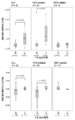
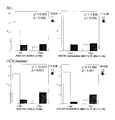
- the group with no recurrence and the group with recurrence within 1 year (upper) or 2 years (lower) of cancer in the DNA methylation rate of the ABCB6 gene transcription control region in liver tissue of non-cancerous part collected from cancer patients It is a figure which shows the result analyzed by each.
- the methylation rate indicates the ratio of the DNA methylation rate (MSP5) of the ABCB6 gene transcription control region to the DNA methylation rate of the RPPH1 gene region.
- the analysis results are shown for the group of all samples (left side), the group of hepatitis C virus (HCV) carriers (center), and the group that is not a hepatitis C virus carrier (right side).
- the line in the box of the box plot represents the median.
- the DNA methylation rate of the ABCB6 gene transcription control region in the liver tissue collected from cancer patients was determined in the group with no recurrence within 1 year (upper) or within 2 years (lower) and the group with recurrence. It is a figure which shows the result of having analyzed, respectively.
- the methylation rate indicates the ratio of the DNA methylation rate (MSP5) of the ABCB6 gene transcription control region to the DNA methylation rate of the RPPH1 gene region.
- MSP5 DNA methylation rate
- the line in the box of the box plot represents the median.
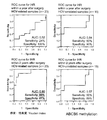
- Index of DNA methylation rate of ABCB6 gene transcription control region in non-cancerous liver tissues collected from cancer patients of hepatitis C virus (HCV) carrier group (left side) and non-hepatitis C virus carrier group (right side) It is a figure which shows the recurrence prediction diagnostic ability within 1 year (upper stage) or 2 years (lower stage) of cancer.
- the methylation rate indicates the ratio of the DNA methylation rate (MSP5) of the ABCB6 gene transcription control region to the DNA methylation rate of the RPPH1 gene region.
- the ratio of the DNA methylation rate (MSP5) of the ABCB6 gene transcription control region to the DNA methylation rate of the RPPH1 gene region in non-cancerous liver tissue was determined and used as the methylation rate.
- MSP5 for the DNA methylation rate of the ABCB6 gene transcription control region (upper), the DNA methylation rate of the ALU sequence (middle), or the DNA methylation rate of the ALU sequence in cancerous and non-cancerous liver tissues collected from cancer patients
- HCV hepatitis C virus
- the methylation rate is an index of the DNA methylation rate of the MSP5 region (upper), the DNA methylation rate of the ALU sequence (middle), or the ratio of the DNA methylation rate of the MSP5 region to the DNA methylation rate of the ALU sequence (lower). The results are shown.
- the method for predicting the risk of developing hepatocellular carcinoma of the present invention includes (a) a step of extracting genomic DNA from liver tissue collected from a subject; (b) in the transcriptional control region of ABCB6 gene of the genomic DNA. (C) detecting the degree of cytosine methylation; (c) in the subject using a positive correlation between the degree of cytosine methylation in the transcriptional control region and the risk of developing hepatocellular carcinoma.
- the method of predicting the risk of developing hepatocellular carcinoma is not particularly limited as long as it is a method (hereinafter also referred to as “onset risk prediction method”).
- a method for predicting the risk of recurrence of hepatocellular carcinoma (a) a step of extracting genomic DNA from non-cancerous liver tissue collected from a hepatocellular carcinoma patient infected with hepatitis C virus; b) a step of detecting the degree of cytosine methylation in the transcription control region of the ABCB6 gene of the genomic DNA; (c) the degree of cytosine methylation in the transcription control region is opposite to the recurrence risk of hepatocellular carcinoma;
- a method comprising the steps (a) to (c) of predicting the recurrence risk of hepatocellular carcinoma in the patient with hepatocellular carcinoma using the correlation as an index (hereinafter referred to as “recurrence risk prediction method (I)”) (A) a step of extracting genomic DNA from a liver tissue collected from a hepatocellular carcinoma patient infected with hepatitis C virus; (b) transcription of the ABCB6 gene of the genomic
- Method (II) ”), and there is no particular limitation.
- “ onset ” means that hepatocytes that have not become cancerous or precancerous hepatocytes become cancerous to form cancer tissue.
- “Relapse” means that in non-cancerous liver tissue after removal of the cancerous part for treatment, hepatocytes that are not cancerous or are precancerous It means that cancer cells that have metastasized from the cancerous part proliferate in the non-cancerous part of the liver tissue and a new cancerous tissue is formed.
- the “subject infected with the hepatitis C virus” in the step (a) of the onset risk prediction method of the present invention is not particularly limited as long as it is an HCV carrier infected with the hepatitis C virus (HCV).
- HCV hepatitis C virus
- it may be a persistent HCV virus carrier without clinical symptoms of hepatitis or an HCV virus carrier that develops chronic hepatitis and / or cirrhosis due to HCV.
- the “hepatitis C patient infected with hepatitis C virus” in the step (b) of the recurrence risk prediction method (I) of the present invention and the step (b) of the recurrence risk prediction method (II), If it is an HCV carrier infected with hepatitis C virus (HCV) and a hepatocellular carcinoma patient who has developed hepatocellular carcinoma, it is not particularly limited, but develops chronic hepatitis and / or cirrhosis due to HCV It is particularly preferred that it is an HCV virus carrier.
- Transcriptional control of ABCB6 gene of genomic DNA in step (b) of the onset risk prediction method of the present invention, step (b) of recurrence risk prediction method (I), and step (b) of recurrence risk prediction method (II) As a method for detecting the degree of cytosine methylation in a region, methylated cytosine is detected quantitatively or semi-quantitatively among cytosines having a CpG sequence contained in all or part of the transcription control region of ABCB6 gene.
- the transcription control region is preferably, for example, a region from 723 bp ( ⁇ 723 bp) upstream from the transcription start point of ABCB6 gene to 500 bp (+500 bp) downstream.
- MSP1 from +183 bp to +309 bp downstream from the transcription start point of ABCB6 gene MSP2 region from -50 bp upstream to +71 bp downstream from the ABCB6 gene transcription start point, MSP3 region from -50 bp upstream to +57 bp downstream from the ABCB6 gene transcription start point, and ABCB6 gene transcription start It is preferably an MSP4 region from ⁇ 268 bp to ⁇ 173 bp upstream from the point, an MSP5 region from ⁇ 433 bp to ⁇ 330 bp upstream from the transcription start point of ABCB6 gene, etc., and ⁇ upstream from the transcription start point of ABCB6 gene
- the MSP2 region from 50 bp to +71 bp downstream, and the MSP3 region from ⁇ 50 bp upstream to the transcription start point of ABCB6 gene to +57 bp downstream are more preferable.
- the method for detecting the degree of cytosine methylation is not particularly limited as long as it is a quantitative or semi-quantitative methylation detection method.
- the Methylight method, bisulfite sequencing method, methylation specific Examples of such a method include a typical PCR method (MSP method), a Combined bisulfite restriction (COBRA) method, and a High Resolution Melting (HRM) method, among which the Methylight method is particularly preferred.
- a primer comprising the nucleotide sequence shown in SEQ ID NOs: 5 and 6 A combination of a set and a probe containing the base sequence shown in SEQ ID NO: 7, (ii) a primer set consisting of the base sequences shown in SEQ ID NOs: 8 and 9, and a probe containing the base sequence shown in SEQ ID NO: 10 Combination, (iii) a combination of a primer set consisting of the base sequences shown in SEQ ID NOs: 11 and 12 and a probe containing the base sequence shown in SEQ ID NO: 13, and (iv) from the base sequences shown in SEQ ID NOs: 14 and 15 A combination of a primer set comprising: a probe comprising the base sequence shown in SEQ ID NO: 16; (v) shown in SEQ ID NOs: 17 and 18 A primer set consisting of the nucle
- the kit for predicting the risk of developing hepatocellular carcinoma of the present invention is not particularly limited as long as it comprises a primer set and a probe for detecting the degree of cytosine methylation in the transcriptional control region of the ABCB6 gene.
- the kit for predicting the risk of recurrence of hepatocellular carcinoma of the present invention is not particularly limited as long as it comprises a primer set and a probe for detecting the degree of cytosine methylation in the transcription control region of the ABCB6 gene.
- the transcription control region of the ABCB6 gene may be, for example, all or one of the region from 723 bp ( ⁇ 723 bp) upstream from the transcription start point of ABCB6 gene to 500 bp (+500 bp) downstream. Part of which can be preferably exemplified, and in particular, the transcriptional opening of ABCB6 gene.
- MSP1 region from +183 bp to +309 bp downstream from the point
- MSP2 region from ⁇ 50 bp upstream to the ABCB6 gene transcription start point to +71 bp downstream
- ⁇ 50 bp upstream from the transcription start point of ABCB6 gene to +57 bp downstream
- MSP3 region from ⁇ 268 bp to ⁇ 173 bp upstream from the transcription start point of ABCB6 gene
- MSP5 region from ⁇ 433 bp to ⁇ 330 bp upstream from the transcription start point of ABCB6 gene, etc.
- the MSP2 region from ⁇ 50 bp upstream from the ABCB6 gene transcription start point to +71 bp downstream and the MSP3 region from ⁇ 50 bp upstream to +57 bp downstream from the ABCB6 gene transcription start point are more preferable.
- the primer set and probe are not particularly limited as long as they are for detecting the degree of cytosine methylation in the transcription control region of ABCB6 gene.
- SEQ ID NOS: 5 and 6 A combination of a primer set consisting of the nucleotide sequence shown in SEQ ID NO: 7 and a probe containing the base sequence shown in SEQ ID NO: 7, (ii) a primer set consisting of the nucleotide sequences shown in SEQ ID NO: 8 and 9, and (Iii) a combination of a primer set consisting of the base sequences shown in SEQ ID NOs: 11 and 12 and a probe containing the base sequence shown in SEQ ID NO: 13, (iv) SEQ ID NO: 14 And a combination of a primer set consisting of the base sequence shown in 15 and a probe containing the base sequence shown in SEQ ID NO: 16 (v The combination of the primer set which consists of a base sequence shown by sequence number 17 and 18 and the probe containing the base sequence shown by sequence number 19 etc.
- kits comprising a primer set and a probe for detecting the degree of cytosine methylation in the transcription control region of ABCB6 gene is used for predicting the risk of developing hepatocellular carcinoma or predicting the risk of recurrence of hepatocellular carcinoma.
- the method can also be a variant of the implementation of the invention.
- the present invention also includes (a) a step of extracting genomic DNA from liver tissue collected from a subject infected with hepatitis C virus; (b) cytosine in the transcriptional regulatory region of ABCB6 gene of the genomic DNA; A step of detecting the degree of methylation of the liver; (c) hepatocytes in the subject using as an indicator that the degree of cytosine methylation in the transcriptional control region and the risk of developing hepatocellular carcinoma are positively correlated A method of collecting data for predicting the risk of developing hepatocellular carcinoma comprising the steps (a) to (c) of the step of predicting the onset risk of cancer (hereinafter referred to as “the onset risk prediction data collecting method”) And (a) a step of extracting genomic DNA from non-cancerous liver tissue collected from a hepatocellular carcinoma patient infected with hepatitis C virus; (b) A step of detecting the degree of cytosine methylation in the transcriptional regulatory region of the BCB6 gene;
- the operations for carrying out the onset risk prediction data collection method, recurrence risk prediction data collection method (I), and recurrence risk prediction data collection method (II) of the present invention are the same as those described above except that data is collected.
- the operations are the same as those when the onset risk prediction, recurrence risk prediction method (I), and recurrence risk prediction method (II) are performed.
- FIG. 1 shows the position of the CpG sequence and the CpG island region in the ABCB6 gene region.
- the methylation of cytosine in this CpG island was analyzed using six types of hepatoma cell lines (HLE, SK-HEP-1, Hep 3B, HuH-6, HuH-7, Hep G2).
- FIG. 2 shows the results of the bisulfite sequence. Based on the above analysis results, five methylation analysis regions (MSP1 to 5) used for analysis by the Methylight method were determined (FIG. 3).
- HCC Non-cancerous and cancerous tissues were collected from liver tissue obtained by surgical excision from liver cancer patients. The obtained non-cancerous and cancerous (HCC) samples were stored at ⁇ 80 ° C. and used for RNA and / or DNA extraction.
- RNA and genomic DNA extraction From the samples of the above 48 cases (no recurrence: 35 cases, with recurrence: 13 cases), TRIzol Reagent (manufactured by Invitrogen) and PureLink Micro-to-Midi Total RNA Purification Kit (manufactured by Invitrogen) To extract total RNA. Further, DNA extraction was performed from 46 samples (no recurrence: 35 cases, with recurrence: 11 cases) using an UltraClean Tissue DNA Spin Kit (manufactured by MO BIO). Of the above samples, 33 samples were used for extraction of both RNA and DNA.
- Reverse transcription reaction and calculation of ABCB6 expression level cDNA was synthesized from the total RNA extracted as described above using PrimeScript RT reagent Kit (manufactured by Takara Bio Inc.), and the ABCB6 mRNA expression level was examined by real-time PCR.
- Real-time PCR reaction was performed with LightCycler 480II (Roche) using 20 ⁇ L of a reaction solution containing cDNA (corresponding to 10 ng of initial RNA), primer (10 pmol), and hydrolysis probe (2 pmol).
- the sequences of primers and hydrolysis probes used for real-time PCR are shown below.
- Sense primer SEQ ID NO: 1: 5'-GGACCAAGATGTGGAAAGGA-3 ' Antisense primer (SEQ ID NO: 2): 5'-CCAAAATCTCGCCAGGTAGA-3 ' Probe: Universal Probe Library # 66 (Roche Diagnostics) ⁇ GAPDH> Sense primer (SEQ ID NO: 3): 5'-AGCCACATCGCTCAGACAC-3 ' Antisense primer (SEQ ID NO: 4): 5'-GCCCAATACGACCAAATCC-3 ' Probe: Universal Probe Library # 60 (Roche Diagnostics)
- the methylation rate was measured by methylation-specific PCR (MSP) in a 20 ⁇ L reaction system using a real-time PCR device, a primer (10 pmol) and a hydrolysis probe (2 pmol) with a slight modification of the Methylight method.
- MSP methylation-specific PCR
- 100 ng of bisulfite-treated genomic DNA was used as a template.
- the methylation rate of the ABCB6 gene region was determined for MSP 1 to 4 as a relative value to the methylation rate of MSP5 by the ⁇ Cq method ( ⁇ Ct method).
- the methylation rate was high in the cancerous part of the liver tissue that had relapsed within one year from the hepatitis C virus carrier. Furthermore, the methylation rate of the CpG island is low in the non-cancerous part of the liver tissue derived from the hepatitis C virus carrier within one year, and the cancerous part and non-cancerous in the liver tissue derived from the hepatitis B virus carrier. It was shown that no methylation rate in any part was associated with the presence or absence of recurrence within one year.
- a Receiver operating characteristic (ROC) curve was created to evaluate the recurrence prediction performance.
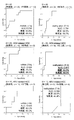
- FIG. 14 When combining the expression level of ABCB6 gene mRNA and the DNA methylation rate of the ABCB6 gene transcription control region as a marker, it is possible to obtain high accuracy in predicting recurrence within 1 year and within 2 years of cancer in the group of hepatitis C virus carriers. It has been shown.
Landscapes
- Chemical & Material Sciences (AREA)
- Life Sciences & Earth Sciences (AREA)
- Health & Medical Sciences (AREA)
- Organic Chemistry (AREA)
- Proteomics, Peptides & Aminoacids (AREA)
- Engineering & Computer Science (AREA)
- Immunology (AREA)
- Pathology (AREA)
- Analytical Chemistry (AREA)
- Zoology (AREA)
- Genetics & Genomics (AREA)
- Wood Science & Technology (AREA)
- Physics & Mathematics (AREA)
- Biotechnology (AREA)
- Microbiology (AREA)
- Molecular Biology (AREA)
- Hospice & Palliative Care (AREA)
- Biophysics (AREA)
- Oncology (AREA)
- Biochemistry (AREA)
- Bioinformatics & Cheminformatics (AREA)
- General Engineering & Computer Science (AREA)
- General Health & Medical Sciences (AREA)
- Measuring Or Testing Involving Enzymes Or Micro-Organisms (AREA)
Abstract
肝細胞癌の発症又は再発に関与するゲノムDNAのメチル化領域を特定し、より簡単な操作で検出することが可能な、HCCの発症又は再発のマーカーを提供することを課題とした。 解決手段として、C型肝炎ウイルスに感染している肝細胞癌患者より採取された肝臓組織からゲノムDNAを抽出してABCB6遺伝子の転写制御領域メチル化率を検出し、非癌部においては上記転写制御領域におけるシトシンのメチル化の程度と、肝細胞癌の再発リスクとが逆の相関関係にあること、癌部においては上記転写制御領域におけるシトシンのメチル化の程度と、肝細胞癌の再発リスクとが正の相関関係にあることを指標として肝細胞癌の再発リスクを予測する。また、肝臓組織におけるABCB6遺伝子の転写制御領域メチル化率を検出し、肝細胞癌を診断する。
Description
本発明は、肝細胞癌の発症又は再発リスクを予測する方法や、肝細胞癌の発症又は再発リスクを予測するためのキットに関する。
肝細胞癌(hepatocellular carcinoma;以下、「HCC」ということもある)は、世界中で最も頻出の高い固形癌のひとつであり、癌による死亡原因の中で三番目である(非特許文献1)。HCCは、その殆どがウイルス感染に起因する慢性肝炎や、慢性肝炎から進行した肝硬変を背景として発症することが知られており、HCC患者の中で、C型肝炎ウイルス(HCV)に陽性である人の割合は約70%、B型肝炎ウイルス(HBV)に陽性である人の割合は約20%にのぼる(非特許文献2)。これらの肝炎ウイルスがHCCを引き起こすメカニズムの詳細は明らかにされていないが、ウイルスの持続感染が慢性肝炎や肝硬変等を引き起こす過程で、肝細胞の癌化が起こると考えられている。
現在のところ、HCC治療法としては外科的な摘除手術が有効であるとされているが、術後の再発率はきわめて高く、予後不良であることが知られている(非特許文献3)。癌部切除後の残肝におけるHCCの再発は、初発HCCと同様のメカニズムであると考えられるが、その詳細については不明である(非特許文献4)。以上のように、HCCの治療には、高い再発の危険性が伴っており、外科手術後の再発を予測するためのバイオマーカーの開発は、HCC患者のQOL(quality of life)の観点から非常に重要である。
最近、マイクロアレイ解析等の網羅的解析方法を用いて、癌細胞における遺伝子発現解析が盛んに行われ、癌と関わりのある遺伝子が多数同定されており、HCCについても、HCC特異的な遺伝子発現プロファイルの解析結果に基づいて、様々な早期検出・分類・予後予測方法が開発されている(特許文献1及び非特許文献5~10)。しかし、これらの早期検出・分類・予後予測方法は、いずれもmRNAの発現を指標としたものであり、RNAの不安定性から実際に臨床に応用するのは困難であると考えられている。また、上記の従来技術においては、非常に多数の遺伝子発現を組み合わせて指標としているため、複雑な計算式を用いて診断する必要がある。このため、より簡単な操作で検出が可能な、DNAを用いたマーカーの開発が求められている。
ATP-binding cassetteトランスポーター(ABCトランスポーター)は、物質のATPに依存する細胞外輸送に関与するタンパク質である。特許文献2は、ABCB6遺伝子発現と他の遺伝子発現とを組み合わせて指標とするHCCの予後判定方法を開示している。また、特許文献3は、ABCトランスポーター及びBCL12ファミリー遺伝子の増加を指標とする癌の薬剤耐性検出方法を開示している。しかし、ABCトランスポーター遺伝子のメチル化と癌との関連についてはこれまで知られていない。
Bosch FX. et al., Semin Liver Dis 19, 271-85 (1999)
Kiyosawa K. et al., Gastroenterology 127, S17-26 (2004)
Makuuchi M. et al., Hepatogastroenterology 45, S1267-1274 (1998)
Poon RT. et al., Cancer 89, 500-507 (2000)
Chen et al., Mol Biol Cell. 13(6): 1929-1939 (2002)
Qin et al., J Cancer Res Clin Oncol. 130(9): 497-513 (2004)
Ye et al., Nat Med. Apr,9(4): 416-23 (2003)
Kurokawa et al., J Hepatol. 41(2): 284-291 (2004)
Lizuka et al., Lancet. 15, 361(9361): 923-929 (2003)
Lee et al., Hepatology. 40(3): 667-76 (2004)
本発明の課題は、肝細胞癌(HCC)の発症又は再発に関与するゲノムDNAのメチル化領域を特定し、より簡単な操作で検出することが可能な、HCCの発症又は再発のマーカーを提供することにある。
本発明者らは、HCC患者より切除された癌部及び/又は非癌部肝臓組織における遺伝子発現を網羅的に解析し、1年以内に再発が認められた患者由来の肝臓組織(再発有り肝臓組織)におけるABCB6mRNA発現量が、1年以内に再発が認められた患者由来の肝臓組織(再発無し肝臓組織)と比較して有意に高いことを見い出した(図9)。一般的に遺伝子発現は、プロモータ領域のDNAメチル化により抑制されることが知られていることから、発明者らは、再発有り肝臓組織におけるABCB6遺伝子の発現の増加に、プロモータ領域の低メチル化が関与している可能性があると考え、ABCB6遺伝子に関するメチル化解析を行った。本発明者らは、ABCB6遺伝子近傍のDNA配列を解析してABCB6遺伝子のプロモータ領域にCpGアイランドの存在することを明らかにし、該CpGアイランドにおけるメチル化率を調べた。また、非癌部においてはABCB6mRNA発現とメチル化率との相関は見られなかったが、癌部においてはmRNA発現とメチル化率との間に逆相関関係が見られた(図4)。しかしながら、再発の有無に基づいて解析を行った結果は予想外なことに、C型肝炎ウイルスキャリア由来の再発有り肝臓組織の癌部においてはメチル化率が高いことが明らかとなった。さらに、該CpGアイランドのメチル化率は、C型肝炎ウイルスキャリア由来の再発無し肝臓組織の非癌部においては低いこと、B型肝炎ウイルスキャリア由来の肝臓組織においては癌部及び非癌部のいずれのメチル化率も、再発の有無との関連が認められないことを見い出し、本発明を完成するに至った。
すなわち、本発明は(1)(a)被検者より採取された肝臓組織からゲノムDNAを抽出する工程;(b)上記ゲノムDNAのABCB6遺伝子の転写制御領域におけるシトシンのメチル化の程度を検出する工程;(c)上記転写制御領域におけるシトシンのメチル化の程度と、肝細胞癌の発症リスクとが正の相関関係にあることを指標として前記被検者における肝細胞癌の発症リスクを予測する工程;の工程(a)~(c)を順次備えることを特徴とする肝細胞癌の発症リスクを予測する方法や、(2)(a)C型肝炎ウイルスに感染している肝細胞癌患者より採取された非癌部肝臓組織からゲノムDNAを抽出する工程;(b)上記ゲノムDNAのABCB6遺伝子の転写制御領域におけるシトシンのメチル化の程度を検出する工程;(c)上記転写制御領域におけるシトシンのメチル化の程度と、肝細胞癌の再発リスクとが逆の相関関係にあることを指標として前記肝細胞癌患者における肝細胞癌の再発リスクを予測する工程;の工程(a)~(c)を順次備えることを特徴とする肝細胞癌の再発リスクを予測する方法や、(3)(a)C型肝炎ウイルスに感染している肝細胞癌患者より採取された癌部肝臓組織からゲノムDNAを抽出する工程;(b)上記ゲノムDNAのABCB6遺伝子の転写制御領域におけるシトシンのメチル化の程度を検出する工程;(c)上記転写制御領域におけるシトシンのメチル化の程度と、肝細胞癌の再発リスクとが正の相関関係にあることを指標として前記肝細胞癌患者における再発リスクを予測する工程;の工程(a)~(c)を順次備えることを特徴とする肝細胞癌の再発リスクを予測する方法や、(4)転写制御領域が、ABCB6遺伝子の転写開始点より上流の-723bpから、下流の+500bpまでの領域であることを特徴とする上記(1)~(3)のいずれかに記載の方法や、(5)転写制御領域が、(i)ABCB6遺伝子の転写開始点より下流の+183bpから+309bpまでのMSP1領域;(ii)ABCB6遺伝子の転写開始点より上流の-50bpから下流の+71bpまでのMSP2領域;(iii)ABCB6遺伝子の転写開始点より上流の-50bpから下流の+57bpまでのMSP3領域;(iv)ABCB6遺伝子の転写開始点より上流の-268bpから-173bpまでのMSP4領域;(v)ABCB6遺伝子の転写開始点より上流の-433bpから-330bpまでのMSP5領域;の(i)~(v)から選択される1以上の領域であることを特徴とする上記(1)~(4)のいずれかに記載の方法や、(6)(i)配列番号5及び6に示される塩基配列からなるプライマーセットと、配列番号7に示される塩基配列を含むプローブとの組合せ;(ii)配列番号8及び9に示される塩基配列からなるプライマーセットと、配列番号10に示される塩基配列を含むプローブとの組合せ;(iii)配列番号11及び12に示される塩基配列からなるプライマーセットと、配列番号13に示される塩基配列を含むプローブとの組合せ;(iv)配列番号14及び15に示される塩基配列からなるプライマーセットと、配列番号16に示される塩基配列を含むプローブとの組合せ;(v)配列番号17及び18に示される塩基配列からなるプライマーセットと、配列番号19に示される塩基配列を含むプローブとの組合せ;の(i)~(v)から選択される1以上のプライマーセットとプローブとの組合せを用いて、ABCB6遺伝子の転写制御領域におけるシトシンのメチル化の程度を検出することを特徴とする上記(1)~(5)のいずれかに記載の方法や、(7)ABCB6遺伝子の転写制御領域におけるシトシンのメチル化の程度を検出するためのプライマーセットとプローブとを備えることを特徴とする肝細胞癌の発症リスク予測用のキットや、(8)ABCB6遺伝子の転写制御領域におけるシトシンのメチル化の程度を検出するためのプライマーセットとプローブとを備えることを特徴とする肝細胞癌の再発リスク予測用のキットや、(9)プライマーセットとプローブとが、(i)配列番号5及び6に示される塩基配列からなるプライマーセットと、配列番号7に示される塩基配列を含むプローブとの組合せ;(ii)配列番号8及び9に示される塩基配列からなるプライマーセットと、配列番号10に示される塩基配列を含むプローブとの組合せ;(iii)配列番号11及び12に示される塩基配列からなるプライマーセットと、配列番号13に示される塩基配列を含むプローブとの組合せ;(iv)配列番号14及び15に示される塩基配列からなるプライマーセットと、配列番号16に示される塩基配列を含むプローブとの組合せ;(v)配列番号17及び18に示される塩基配列からなるプライマーセットと、配列番号19に示される塩基配列を含むプローブとの組合せ;の(i)~(v)から選択される1以上のプライマーセットとプローブとの組合せであることを特徴とする上記(7)又は(8)のいずれかに記載のキットに関する。
本発明によると、C型肝炎ウイルスキャリアのHCC患者より採取された肝臓組織を用いて、HCCの再発リスクを予測することが可能となり、術後の治療方針を決定する上で有用な情報を提供することができる。また、本発明によると、C型肝炎ウイルスキャリアの被検者より採取された肝臓組織を用いて、HCC発症リスクを予測することができ、該被検者におけるHCCの予防及び早期発見のために有用な情報を提供することができる。
本発明の肝細胞癌の発症リスクを予測する方法としては、(a)被検者より採取された肝臓組織からゲノムDNAを抽出する工程;(b)上記ゲノムDNAのABCB6遺伝子の転写制御領域におけるシトシンのメチル化の程度を検出する工程;(c)上記転写制御領域におけるシトシンのメチル化の程度と、肝細胞癌の発症リスクとが正の相関関係にあることを指標として前記被検者における肝細胞癌の発症リスクを予測する工程;の工程(a)~(c)を順次備える方法(以下、「発症リスク予測方法」ということもある)であれば特に制限されず、また、本発明の肝細胞癌の再発リスクを予測する方法としては、(a)C型肝炎ウイルスに感染している肝細胞癌患者より採取された非癌部肝臓組織からゲノムDNAを抽出する工程;(b)上記ゲノムDNAのABCB6遺伝子の転写制御領域におけるシトシンのメチル化の程度を検出する工程;(c)上記転写制御領域におけるシトシンのメチル化の程度と、肝細胞癌の再発リスクとが逆の相関関係にあることを指標として前記肝細胞癌患者における肝細胞癌の再発リスクを予測する工程;の工程(a)~(c)を順次備える方法(以下、「再発リスク予測方法(I)」ということもある)や、(a)C型肝炎ウイルスに感染している肝細胞癌患者より採取された癌部肝臓組織からゲノムDNAを抽出する工程;(b)上記ゲノムDNAのABCB6遺伝子の転写制御領域におけるシトシンのメチル化の程度を検出する工程;(c)上記転写制御領域におけるシトシンのメチル化の程度と、肝細胞癌の再発リスクとが正の相関関係にあることを指標として前記肝細胞癌患者における再発リスクを予測する工程;の工程(a)~(c)を順次備える肝細胞癌の再発リスクを予測する方法(以下、「再発リスク予測方法(II)」ということもある)であれば特に制限されず、ここで、「発症」とは、癌化していない肝細胞、若しくは前癌状態にある肝細胞が癌化して癌組織を形成することを意味し、「再発」とは、治療のために癌部を除去した後の非癌部肝臓組織において、癌化していない肝細胞、若しくは前癌状態にある肝細胞が新たに癌化することや、癌部より転移した癌細胞が非癌部肝臓組織中で増殖して新たに癌組織が形成されることを意味する。
本発明の発症リスク予測方法の工程(a)における「C型肝炎ウイルスに感染している被検者」としては、C型肝炎ウイルス(HCV)に感染しているHCVキャリアであれば特に制限されず、肝炎の臨床的症状のない持続的なHCVウイルスキャリアであっても、HCVによる慢性肝炎及び/又は肝硬変を発症しているHCVウイルスキャリアであってもよい。また、本発明の再発リスク予測方法(I)の工程(b)、及び再発リスク予測方法(II)の工程(b)における「C型肝炎ウイルスに感染している肝細胞癌患者」としては、C型肝炎ウイルス(HCV)に感染しているHCVキャリアであって、且つ、肝細胞癌を発症している肝細胞癌患者であれば特に制限されないが、HCVによる慢性肝炎及び/又は肝硬変を発症しているHCVウイルスキャリアであることが特に好適である。
上記本発明の発症リスク予測方法の工程(b)、再発リスク予測方法(I)の工程(b)、及び再発リスク予測方法(II)の工程(b)において、ゲノムDNAのABCB6遺伝子の転写制御領域におけるシトシンのメチル化の程度を検出する方法としては、ABCB6遺伝子の転写制御領域の全部又は一部に含まれるCpG配列のシトシンのうち、メチル化されているシトシンを定量又は半定量的に検出する方法であれば特に制限されず、上記転写制御領域としては、例えば、ABCB6遺伝子の転写開始点より上流の723bp(-723bp)から、下流の500bp(+500bp)までの領域を好適に例示することができるが、なかでも、ABCB6遺伝子の転写開始点より下流の+183bpから+309bpまでのMSP1領域や、ABCB6遺伝子の転写開始点より上流の-50bpから下流の+71bpまでのMSP2領域や、ABCB6遺伝子の転写開始点より上流の-50bpから下流の+57bpまでのMSP3領域や、ABCB6遺伝子の転写開始点より上流の-268bpから-173bpまでのMSP4領域や、ABCB6遺伝子の転写開始点より上流の-433bpから-330bpまでのMSP5領域等であることが好ましく、ABCB6遺伝子の転写開始点より上流の-50bpから下流の+71bpまでのMSP2領域や、ABCB6遺伝子の転写開始点より上流の-50bpから下流の+57bpまでのMSP3領域であることがさらに好ましい。また、上記シトシンのメチル化の程度の検出方法としては、定量的又は半定量的なメチル化検出方法であれば特に制限されず、具体的には、Methylight法、バイサルファイトシーケンス法、メチル化特異的PCR法(MSP法)、Combined bisulfite restriction assay(COBRA)法、High Resolution Melting(HRM)法等を例として好適に挙げることができるが、なかでも、Methylight法を特に好適に挙げることができる。上記本発明の方法において、Methylight法を用いてABCB6遺伝子の転写制御領域におけるシトシンのメチル化の程度を検出する場合には、例えば、(i)配列番号5及び6に示される塩基配列からなるプライマーセットと、配列番号7に示される塩基配列を含むプローブとの組合せ、(ii)配列番号8及び9に示される塩基配列からなるプライマーセットと、配列番号10に示される塩基配列を含むプローブとの組合せ、(iii)配列番号11及び12に示される塩基配列からなるプライマーセットと、配列番号13に示される塩基配列を含むプローブとの組合せ、(iv)配列番号14及び15に示される塩基配列からなるプライマーセットと、配列番号16に示される塩基配列を含むプローブとの組合せ、(v)配列番号17及び18に示される塩基配列からなるプライマーセットと、配列番号19に示される塩基配列を含むプローブとの組合せ等を用いることができる。
本発明の肝細胞癌の発症リスク予測用のキットとしては、ABCB6遺伝子の転写制御領域におけるシトシンのメチル化の程度を検出するためのプライマーセットとプローブとを備えるものであれば特に制限されず、また、本発明の肝細胞癌の再発リスク予測用のキットとしては、ABCB6遺伝子の転写制御領域におけるシトシンのメチル化の程度を検出するためのプライマーセットとプローブとを備えるものであれば特に制限されず、上記ABCB6遺伝子の転写制御領域としては、上記転写制御領域としては、例えば、ABCB6遺伝子の転写開始点より上流の723bp(-723bp)から、下流の500bp(+500bp)までの領域の全部又は一部を好適に例示することができるが、なかでも、ABCB6遺伝子の転写開始点より下流の+183bpから+309bpまでのMSP1領域や、ABCB6遺伝子の転写開始点より上流の-50bpから下流の+71bpまでのMSP2領域や、ABCB6遺伝子の転写開始点より上流の-50bpから下流の+57bpまでのMSP3領域や、ABCB6遺伝子の転写開始点より上流の-268bpから-173bpまでのMSP4領域や、ABCB6遺伝子の転写開始点より上流の-433bpから-330bpまでのMSP5領域等であることが好ましく、ABCB6遺伝子の転写開始点より上流の-50bpから下流の+71bpまでのMSP2領域や、ABCB6遺伝子の転写開始点より上流の-50bpから下流の+57bpまでのMSP3領域であることがさらに好ましい。また、上記プライマーセットとプローブとしては、ABCB6遺伝子の転写制御領域のシトシンのメチル化の程度を検出するためのものであれば特に制限されないが、具体的には、(i)配列番号5及び6に示される塩基配列からなるプライマーセットと、配列番号7に示される塩基配列を含むプローブとの組合せ、(ii)配列番号8及び9に示される塩基配列からなるプライマーセットと、配列番号10に示される塩基配列を含むプローブとの組合せ、(iii)配列番号11及び12に示される塩基配列からなるプライマーセットと、配列番号13に示される塩基配列を含むプローブとの組合せ、(iv)配列番号14及び15に示される塩基配列からなるプライマーセットと、配列番号16に示される塩基配列を含むプローブとの組合せ、(v)配列番号17及び18に示される塩基配列からなるプライマーセットと、配列番号19に示される塩基配列を含むプローブとの組合せ等を例として好適に挙げることができる。また、ABCB6遺伝子の転写制御領域におけるシトシンのメチル化の程度を検出するためのプライマーセットとプローブとを備えるキットを、肝細胞癌の発症リスクの予測又は肝細胞癌の再発リスクの予測に使用する方法も本発明の実施の変形とすることができる。
また、本発明は、(a)C型肝炎ウイルスに感染している被検者より採取された肝臓組織からゲノムDNAを抽出する工程;(b)上記ゲノムDNAのABCB6遺伝子の転写制御領域におけるシトシンのメチル化の程度を検出する工程;(c)上記転写制御領域におけるシトシンのメチル化の程度と、肝細胞癌の発症リスクが正の相関関係にあることを指標として前記被検者における肝細胞癌の発症リスクを予測する工程;の工程(a)~(c)を順次備える肝細胞癌の発症リスクを予測するためのデータを収集する方法(以下、「発症リスク予測データ収集方法」ということもある)や、(a)C型肝炎ウイルスに感染している肝細胞癌患者より採取された非癌部肝臓組織からゲノムDNAを抽出する工程;(b)上記ゲノムDNAのABCB6遺伝子の転写制御領域におけるシトシンのメチル化の程度を検出する工程;(c)上記転写制御領域におけるシトシンのメチル化の程度と、肝細胞癌の再発リスクが逆の相関関係にあることを指標として前記肝細胞癌患者における肝細胞癌の再発リスクを予測する工程;の工程(a)~(c)を順次備える肝細胞癌の再発リスクを予測するためのデータを収集する方法(以下、「再発リスク予測データ収集方法(I)」ということもある)や、(a)C型肝炎ウイルスに感染している肝細胞癌患者より採取された癌部肝臓組織からゲノムDNAを抽出する工程;(b)上記ゲノムDNAのABCB6遺伝子の転写制御領域におけるシトシンのメチル化の程度を検出する工程;(c)上記転写制御領域におけるシトシンのメチル化の程度と、肝細胞癌の再発リスクが正の相関関係にあることを指標として前記肝細胞癌患者における再発リスクを予測する工程;の工程(a)~(c)を順次備える肝細胞癌の再発リスクを予測するためのデータを収集する方法(以下、「再発リスク予測データ収集方法(II)」ということもある)を実施の変形として含むことがある。本発明の発症リスク予測データ収集方法、再発リスク予測データ収集方法(I)、及び再発リスク予測データ収集方法(II)を実施する際の操作は、データを収集することを除き、上記本発明の発症リスク予測、再発リスク予測方法(I)、及び再発リスク予測方法(II)を実施する際の操作と同様である。
以下、実施例により本発明を具体的に説明するが、本発明の技術的範囲はこれらの例示に限定されるものではない。
[ABCB6遺伝子のメチル化解析]
ABCB6遺伝子の転写調節領域付近をコンピュータ解析した結果、CpGアイランドが存在することが明らかとなった。図1に、ABCB6遺伝子領域における、CpG配列の位置、及びCpGアイランド領域を示す。このCpGアイランドにおけるシトシンのメチル化について、6種の肝癌細胞株(HLE、SK-HEP-1、Hep 3B、HuH-6、HuH-7、Hep G2)を用いて解析を行った。図2に、バイサルファイトシークエンスの結果を示す。以上の解析結果に基づいて、Methylight法による解析に用いる5箇所のメチル化解析領域(MSP1~5)を決定した(図3)。
ABCB6遺伝子の転写調節領域付近をコンピュータ解析した結果、CpGアイランドが存在することが明らかとなった。図1に、ABCB6遺伝子領域における、CpG配列の位置、及びCpGアイランド領域を示す。このCpGアイランドにおけるシトシンのメチル化について、6種の肝癌細胞株(HLE、SK-HEP-1、Hep 3B、HuH-6、HuH-7、Hep G2)を用いて解析を行った。図2に、バイサルファイトシークエンスの結果を示す。以上の解析結果に基づいて、Methylight法による解析に用いる5箇所のメチル化解析領域(MSP1~5)を決定した(図3)。
[肝臓組織におけるABCB6遺伝子のメチル化解析]
1.サンプル
肝臓癌患者より外科的に切除して得られた肝臓組織から、非癌部及び癌部(HCC)組織を採取した。得られた非癌部及び癌部(HCC)サンプルは-80℃にて保存し、RNA及び/又はDNAの抽出に用いた。
1.サンプル
肝臓癌患者より外科的に切除して得られた肝臓組織から、非癌部及び癌部(HCC)組織を採取した。得られた非癌部及び癌部(HCC)サンプルは-80℃にて保存し、RNA及び/又はDNAの抽出に用いた。
2.RNA及びゲノムDNA抽出
上記の48例(再発なし:35例、再発有り:13例)のサンプルから、TRIzol Reagent(インビトロジェン社製)とPureLink Micro-to-Midi Total RNA Purification Kit(インビトロジェン社製)を用いてtotal RNAを抽出した。また、46例(再発なし:35例、再発有り:11例)のサンプルから、UltraClean Tissue DNA Spin Kit(MO BIO社製)を用いてDNA抽出を行った。上記サンプルのうち、33例のサンプルはRNAとDNAの両方の抽出に用いた。
上記の48例(再発なし:35例、再発有り:13例)のサンプルから、TRIzol Reagent(インビトロジェン社製)とPureLink Micro-to-Midi Total RNA Purification Kit(インビトロジェン社製)を用いてtotal RNAを抽出した。また、46例(再発なし:35例、再発有り:11例)のサンプルから、UltraClean Tissue DNA Spin Kit(MO BIO社製)を用いてDNA抽出を行った。上記サンプルのうち、33例のサンプルはRNAとDNAの両方の抽出に用いた。
3.逆転写反応とABCB6発現レベルの算出
上記のようにして抽出されたtotal RNAから、PrimeScript RT reagent Kit(タカラバイオ社製)を用いてcDNAを合成し、リアルタイムPCRによりABCB6mRNA発現レベルを調べた。リアルタイムPCRの反応は、cDNA(10ngのinitial RNAに相当)、プライマー(10pmol)、及び加水分解プローブ(2pmol)を含む20μLの反応液を用い、LightCycler 480II(ロシュ社製)によって行った。ΔΔCq法(ΔΔCt法)により、非癌部サンプルにおけるABCB6mRNA発現量の平均値(N=48)を1.0として、癌部サンプルにおけるABCB6mRNA発現レベルを相対値として示した。また、リファレンス遺伝子としてGAPDH遺伝子の発現レベルを確認した。リアルタイムPCRに用いたプライマー及び加水分解プローブの配列を以下に示す。
<ABCB6>
センスプライマー(配列番号1):5'-GGACCAAGATGTGGAAAGGA-3'
アンチセンスプライマー(配列番号2):5'-CCAAAATCTCGCCAGGTAGA-3'
プローブ:Universal Probe Library #66(Roche Diagnostics社製)
<GAPDH>
センスプライマー(配列番号3):5'-AGCCACATCGCTCAGACAC-3'
アンチセンスプライマー(配列番号4):5'-GCCCAATACGACCAAATCC-3'
プローブ:Universal Probe Library #60(Roche Diagnostics社製)
上記のようにして抽出されたtotal RNAから、PrimeScript RT reagent Kit(タカラバイオ社製)を用いてcDNAを合成し、リアルタイムPCRによりABCB6mRNA発現レベルを調べた。リアルタイムPCRの反応は、cDNA(10ngのinitial RNAに相当)、プライマー(10pmol)、及び加水分解プローブ(2pmol)を含む20μLの反応液を用い、LightCycler 480II(ロシュ社製)によって行った。ΔΔCq法(ΔΔCt法)により、非癌部サンプルにおけるABCB6mRNA発現量の平均値(N=48)を1.0として、癌部サンプルにおけるABCB6mRNA発現レベルを相対値として示した。また、リファレンス遺伝子としてGAPDH遺伝子の発現レベルを確認した。リアルタイムPCRに用いたプライマー及び加水分解プローブの配列を以下に示す。
<ABCB6>
センスプライマー(配列番号1):5'-GGACCAAGATGTGGAAAGGA-3'
アンチセンスプライマー(配列番号2):5'-CCAAAATCTCGCCAGGTAGA-3'
プローブ:Universal Probe Library #66(Roche Diagnostics社製)
<GAPDH>
センスプライマー(配列番号3):5'-AGCCACATCGCTCAGACAC-3'
アンチセンスプライマー(配列番号4):5'-GCCCAATACGACCAAATCC-3'
プローブ:Universal Probe Library #60(Roche Diagnostics社製)
4.バイサルファイト処理とABCB6遺伝子領域のメチル化率の算出
各サンプルにおけるABCB6遺伝子領域のメチル化率を検討する目的で以下の実験を行った。上記1で抽出したDNAをEZ DNA Methylation-Gold Kit(ZYMO RESEARCH社製)によりバイサルファイト処理した。これによって、ゲノムDNA中のメチル化されていないシトシンはチミンへと変換され、メチル化されているシトシンは変換されずに残る。メチル化率の測定はMethylight法を若干改変し、リアルタイムPCR装置とプライマー(10pmol)及び加水分解プローブ(2pmol)を用いて20μL反応系でのメチル化特異的PCR(MSP)によって行った。鋳型には100ngのバイサルファイト処理したゲノムDNAを用いた。ABCB6遺伝子領域のメチル化率は、ΔΔCq法(ΔΔCt法)によりMSP5のメチル化率に対する相対値としてMSP1~4について求めた。あるいは、ABCB6遺伝子領域のメチル化率をRPPH1(ribonuclease P RNA component H1(NR_002312.1, X15624))又はALU(Alu repeat(The most plentiful short interspersed nucleotide element(SINE)in human DNA))配列のメチル化率に対する相対値としてMSP5について求めた。また、全ての実験においてコントロールとして100%メチル化コントロールDNA(QIAGEN社製)を鋳型に用いた。リアルタイムPCRに用いたプライマー及び加水分解プローブの配列を以下に示す。
<MSP1>
センスプライマー(配列番号5):5'-TAAGGTATTCGGATGTTCGC-3'
アンチセンスプライマー(配列番号6):5'-TCGACCTCGCAATAATTACC-3'
プローブ(配列番号7):5'-FAM-AGTGTTCGTAGTTTCGGTCGGCGTTT-BHQ-3'
<MSP2>
センスプライマー(配列番号8):5'-GGGGTTATAGTCGTGGAGC-3'
アンチセンスプライマー(配列番号9):5'-AAAACACGTACGCCGTCT-3'
プローブ(配列番号10):5'-FAM-GTGGGTTTGTAGTTGGTAGGAGGGTT-BHQ-3'
<MSP3>
センスプライマー(配列番号11):5'-GGGGTTATAGTCGTGGAGC-3'
アンチセンスプライマー(配列番号12):5'-GTCTCAACACGACCCCG-3'
プローブ(配列番号13):5'-FAM-GTGGGTTTGTAGTTGGTAGGAGGGTT-BHQ-3'
<MSP4>
センスプライマー(配列番号14):5'-GTGTTTTGTTTCGAGTTAGGATTTC-3'
アンチセンスプライマー(配列番号15):5'-GAAAAATCTAACGACCAAACCG-3'
プローブ(配列番号16):5'-FAM-TTTCGAGTTACGATTTCGTGGAGG-BHQ-3'
<MSP5>
センスプライマー(配列番号17):5'-TAGATTTTTTGTTGTTTCGC-3'
アンチセンスプライマー(配列番号18):5'-TCTAAACGACGACCTAAACA-3'
プローブ(配列番号19):5'-FAM-AAGAGAAATGGGATGGGGATTTTG-BHQ-3'
<RPPH1>
センスプライマー(配列番号20):5'-AATGAGGTGTAGAAGGTTGATGGT-3'
アンチセンスプライマー(配列番号21):5'-CATAATTAAATCACTTCCCACCAAA-3'
プローブ:Universal ProbeLibrary #10(Roche diagnostics社製)
<ALU>
センスプライマー(配列番号22):5'-GCGCGGTGGTTTACGTTT-3'
アンチセンスプライマー(配列番号23):5'-AACCGAACTAATCTCGAACTCCTAAC-3'
プローブ(配列番号24):5'-6FAM-AAATAATCCGCCCGCCTCGACCT-BHQ-3'
各サンプルにおけるABCB6遺伝子領域のメチル化率を検討する目的で以下の実験を行った。上記1で抽出したDNAをEZ DNA Methylation-Gold Kit(ZYMO RESEARCH社製)によりバイサルファイト処理した。これによって、ゲノムDNA中のメチル化されていないシトシンはチミンへと変換され、メチル化されているシトシンは変換されずに残る。メチル化率の測定はMethylight法を若干改変し、リアルタイムPCR装置とプライマー(10pmol)及び加水分解プローブ(2pmol)を用いて20μL反応系でのメチル化特異的PCR(MSP)によって行った。鋳型には100ngのバイサルファイト処理したゲノムDNAを用いた。ABCB6遺伝子領域のメチル化率は、ΔΔCq法(ΔΔCt法)によりMSP5のメチル化率に対する相対値としてMSP1~4について求めた。あるいは、ABCB6遺伝子領域のメチル化率をRPPH1(ribonuclease P RNA component H1(NR_002312.1, X15624))又はALU(Alu repeat(The most plentiful short interspersed nucleotide element(SINE)in human DNA))配列のメチル化率に対する相対値としてMSP5について求めた。また、全ての実験においてコントロールとして100%メチル化コントロールDNA(QIAGEN社製)を鋳型に用いた。リアルタイムPCRに用いたプライマー及び加水分解プローブの配列を以下に示す。
<MSP1>
センスプライマー(配列番号5):5'-TAAGGTATTCGGATGTTCGC-3'
アンチセンスプライマー(配列番号6):5'-TCGACCTCGCAATAATTACC-3'
プローブ(配列番号7):5'-FAM-AGTGTTCGTAGTTTCGGTCGGCGTTT-BHQ-3'
<MSP2>
センスプライマー(配列番号8):5'-GGGGTTATAGTCGTGGAGC-3'
アンチセンスプライマー(配列番号9):5'-AAAACACGTACGCCGTCT-3'
プローブ(配列番号10):5'-FAM-GTGGGTTTGTAGTTGGTAGGAGGGTT-BHQ-3'
<MSP3>
センスプライマー(配列番号11):5'-GGGGTTATAGTCGTGGAGC-3'
アンチセンスプライマー(配列番号12):5'-GTCTCAACACGACCCCG-3'
プローブ(配列番号13):5'-FAM-GTGGGTTTGTAGTTGGTAGGAGGGTT-BHQ-3'
<MSP4>
センスプライマー(配列番号14):5'-GTGTTTTGTTTCGAGTTAGGATTTC-3'
アンチセンスプライマー(配列番号15):5'-GAAAAATCTAACGACCAAACCG-3'
プローブ(配列番号16):5'-FAM-TTTCGAGTTACGATTTCGTGGAGG-BHQ-3'
<MSP5>
センスプライマー(配列番号17):5'-TAGATTTTTTGTTGTTTCGC-3'
アンチセンスプライマー(配列番号18):5'-TCTAAACGACGACCTAAACA-3'
プローブ(配列番号19):5'-FAM-AAGAGAAATGGGATGGGGATTTTG-BHQ-3'
<RPPH1>
センスプライマー(配列番号20):5'-AATGAGGTGTAGAAGGTTGATGGT-3'
アンチセンスプライマー(配列番号21):5'-CATAATTAAATCACTTCCCACCAAA-3'
プローブ:Universal ProbeLibrary #10(Roche diagnostics社製)
<ALU>
センスプライマー(配列番号22):5'-GCGCGGTGGTTTACGTTT-3'
アンチセンスプライマー(配列番号23):5'-AACCGAACTAATCTCGAACTCCTAAC-3'
プローブ(配列番号24):5'-6FAM-AAATAATCCGCCCGCCTCGACCT-BHQ-3'
5.再発・無再発診断能の評価
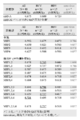
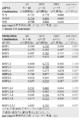
MSP5に対する相対値としてMSP1~4について求めたABCB6遺伝子領域のメチル化率を用いて解析した。非癌部においてはABCB6mRNA発現とメチル化率との相関は見られなかったが、癌部においてはmRNA発現とメチル化率との間に逆相関関係が見られた(図4)。また、再発の有無に基づいて、Receiver operating characteristic(ROC)曲線におけるArea Under the Curve(AUC)を用いて比較した(図5~10)。感度・特異度はROC曲線において最区分点の最大値での値を示した。C型肝炎ウイルスキャリア由来の1年以内再発有り肝臓組織の癌部においてはメチル化率が高いことが明らかとなった。さらに、該CpGアイランドのメチル化率は、C型肝炎ウイルスキャリア由来の1年以内再発無し肝臓組織の非癌部においては低いこと、B型肝炎ウイルスキャリア由来の肝臓組織においては癌部及び非癌部のいずれのメチル化率も、1年以内再発の有無との関連が認められないことが示された。
MSP5に対する相対値としてMSP1~4について求めたABCB6遺伝子領域のメチル化率を用いて解析した。非癌部においてはABCB6mRNA発現とメチル化率との相関は見られなかったが、癌部においてはmRNA発現とメチル化率との間に逆相関関係が見られた(図4)。また、再発の有無に基づいて、Receiver operating characteristic(ROC)曲線におけるArea Under the Curve(AUC)を用いて比較した(図5~10)。感度・特異度はROC曲線において最区分点の最大値での値を示した。C型肝炎ウイルスキャリア由来の1年以内再発有り肝臓組織の癌部においてはメチル化率が高いことが明らかとなった。さらに、該CpGアイランドのメチル化率は、C型肝炎ウイルスキャリア由来の1年以内再発無し肝臓組織の非癌部においては低いこと、B型肝炎ウイルスキャリア由来の肝臓組織においては癌部及び非癌部のいずれのメチル化率も、1年以内再発の有無との関連が認められないことが示された。
次に、RPPH1に対する相対値としてMSP5について求めたABCB6遺伝子領域のメチル化率を用いて解析した結果を図11、12に示す。癌の2年以内の再発については、全体及びC型肝炎ウイルスキャリアの群で非癌部の肝臓組織におけるABCB6遺伝子領域のメチル化率に有意差が認められた。また、非癌部の肝臓組織におけるABCB6遺伝子領域のメチル化率からReceiver operating characteristic(ROC)曲線を作成して再発予測性能を評価した結果により、C型肝炎ウイルスキャリアの群で癌の2年以内の再発予測精度が高いことが示された(図13)。
さらに、癌患者から採取した肝臓組織におけるABCB6遺伝子mRNA発現量をABCB6遺伝子転写制御領域のDNAメチル化率で除した値を用いてReceiver operating characteristic(ROC)曲線を作成して再発予測性能を評価した(図14)。ABCB6遺伝子mRNA発現量とABCB6遺伝子転写制御領域のDNAメチル化率を組合せてマーカーとすると、C型肝炎ウイルスキャリアの群で、癌の1年以内及び2年以内の高い再発予測精度を得られることが示された。
6.癌の診断マーカーとしての性能の解析
癌患者から採取した癌部及び非癌部の肝臓組織において、ALU配列に対する相対値としてMSP5について求めたABCB6遺伝子転写制御領域のDNAメチル化率は、C型肝炎ウイルスキャリアの有無に係らず癌部において高いことが示された(図15)。また、Receiver operating characteristic(ROC)曲線を作成して診断マーカーとしての性能を評価した結果、ALU配列に対する相対値としてMSP5について求めたABCB6遺伝子転写制御領域のDNAメチル化率は、C型肝炎ウイルスキャリアの有無に係らず、高性能に診断マーカーとして用いることができることが示された(図16)。
癌患者から採取した癌部及び非癌部の肝臓組織において、ALU配列に対する相対値としてMSP5について求めたABCB6遺伝子転写制御領域のDNAメチル化率は、C型肝炎ウイルスキャリアの有無に係らず癌部において高いことが示された(図15)。また、Receiver operating characteristic(ROC)曲線を作成して診断マーカーとしての性能を評価した結果、ALU配列に対する相対値としてMSP5について求めたABCB6遺伝子転写制御領域のDNAメチル化率は、C型肝炎ウイルスキャリアの有無に係らず、高性能に診断マーカーとして用いることができることが示された(図16)。
Claims (9)
- 以下の工程(a)~(c)を順次備えることを特徴とする肝細胞癌の発症リスクを予測する方法。
(a)被検者より採取された肝臓組織からゲノムDNAを抽出する工程;
(b)上記ゲノムDNAのABCB6遺伝子の転写制御領域におけるシトシンのメチル化の程度を検出する工程;
(c)上記転写制御領域におけるシトシンのメチル化の程度と、肝細胞癌の発症リスクとが正の相関関係にあることを指標として前記被検者における肝細胞癌の発症リスクを予測する工程; - 以下の工程(a)~(c)を順次備えることを特徴とする肝細胞癌の再発リスクを予測する方法。
(a)C型肝炎ウイルスに感染している肝細胞癌患者より採取された非癌部肝臓組織からゲノムDNAを抽出する工程;
(b)上記ゲノムDNAのABCB6遺伝子の転写制御領域におけるシトシンのメチル化の程度を検出する工程;
(c)上記転写制御領域におけるシトシンのメチル化の程度と、肝細胞癌の再発リスクとが逆の相関関係にあることを指標として前記肝細胞癌患者における肝細胞癌の再発リスクを予測する工程; - 以下の工程(a)~(c)を順次備えることを特徴とする肝細胞癌の再発リスクを予測する方法。
(a)C型肝炎ウイルスに感染している肝細胞癌患者より採取された癌部肝臓組織からゲノムDNAを抽出する工程;
(b)上記ゲノムDNAのABCB6遺伝子の転写制御領域におけるシトシンのメチル化の程度を検出する工程;
(c)上記転写制御領域におけるシトシンのメチル化の程度と、肝細胞癌の再発リスクとが正の相関関係にあることを指標として前記肝細胞癌患者における再発リスクを予測する工程; - 転写制御領域が、ABCB6遺伝子の転写開始点より上流の-723bpから、下流の+500bpまでの領域であることを特徴とする請求項1~3のいずれかに記載の方法。
- 転写制御領域が、以下の(i)~(v)から選択される1以上の領域であることを特徴とする請求項1~4のいずれかに記載の方法。
(i)ABCB6遺伝子の転写開始点より下流の+183bpから+309bpまでのMSP1領域;
(ii)ABCB6遺伝子の転写開始点より上流の-50bpから下流の+71bpまでのMSP2領域;
(iii)ABCB6遺伝子の転写開始点より上流の-50bpから下流の+57bpまでのMSP3領域;
(iv)ABCB6遺伝子の転写開始点より上流の-268bpから-173bpまでのMSP4領域;
(v)ABCB6遺伝子の転写開始点より上流の-433bpから-330bpまでのMSP5領域; - 以下の(i)~(v)から選択される1以上のプライマーセットとプローブとの組合せを用いて、ABCB6遺伝子の転写制御領域におけるシトシンのメチル化の程度を検出することを特徴とする請求項1~5のいずれかに記載の方法。
(i)配列番号5及び6に示される塩基配列からなるプライマーセットと、配列番号7に示される塩基配列を含むプローブとの組合せ;
(ii)配列番号8及び9に示される塩基配列からなるプライマーセットと、配列番号10に示される塩基配列を含むプローブとの組合せ;
(iii)配列番号11及び12に示される塩基配列からなるプライマーセットと、配列番号13に示される塩基配列を含むプローブとの組合せ;
(iv)配列番号14及び15に示される塩基配列からなるプライマーセットと、配列番号16に示される塩基配列を含むプローブとの組合せ;
(v)配列番号17及び18に示される塩基配列からなるプライマーセットと、配列番号19に示される塩基配列を含むプローブとの組合せ; - ABCB6遺伝子の転写制御領域におけるシトシンのメチル化の程度を検出するためのプライマーセットとプローブとを備えることを特徴とする肝細胞癌の発症リスク予測用のキット。
- ABCB6遺伝子の転写制御領域におけるシトシンのメチル化の程度を検出するためのプライマーセットとプローブとを備えることを特徴とする肝細胞癌の再発リスク予測用のキット。
- プライマーセットとプローブとが、以下の(i)~(v)から選択される1以上のプライマーセットとプローブとの組合せであることを特徴とする請求項7又は8のいずれかに記載のキット。
(i)配列番号5及び6に示される塩基配列からなるプライマーセットと、配列番号7に示される塩基配列を含むプローブとの組合せ;
(ii)配列番号8及び9に示される塩基配列からなるプライマーセットと、配列番号10に示される塩基配列を含むプローブとの組合せ;
(iii)配列番号11及び12に示される塩基配列からなるプライマーセットと、配列番号13に示される塩基配列を含むプローブとの組合せ;
(iv)配列番号14及び15に示される塩基配列からなるプライマーセットと、配列番号16に示される塩基配列を含むプローブとの組合せ;
(v)配列番号17及び18に示される塩基配列からなるプライマーセットと、配列番号19に示される塩基配列を含むプローブとの組合せ;
Priority Applications (1)
| Application Number | Priority Date | Filing Date | Title |
|---|---|---|---|
| JP2012508094A JP5804386B2 (ja) | 2010-03-30 | 2011-03-30 | 肝細胞癌の再発予測用マーカー |
Applications Claiming Priority (2)
| Application Number | Priority Date | Filing Date | Title |
|---|---|---|---|
| JP2010079801 | 2010-03-30 | ||
| JP2010-079801 | 2010-03-30 |
Publications (1)
| Publication Number | Publication Date |
|---|---|
| WO2011122021A1 true WO2011122021A1 (ja) | 2011-10-06 |
Family
ID=44711776
Family Applications (1)
| Application Number | Title | Priority Date | Filing Date |
|---|---|---|---|
| PCT/JP2011/001905 Ceased WO2011122021A1 (ja) | 2010-03-30 | 2011-03-30 | 肝細胞癌の再発予測用マーカー |
Country Status (2)
| Country | Link |
|---|---|
| JP (1) | JP5804386B2 (ja) |
| WO (1) | WO2011122021A1 (ja) |
Cited By (1)
| Publication number | Priority date | Publication date | Assignee | Title |
|---|---|---|---|---|
| CN108835122A (zh) * | 2018-08-09 | 2018-11-20 | 中国农业科学院深圳农业基因组研究所 | Abc转运蛋白作为靶点在防治害虫上的应用 |
Citations (1)
| Publication number | Priority date | Publication date | Assignee | Title |
|---|---|---|---|---|
| JP2009517064A (ja) * | 2005-11-30 | 2009-04-30 | アンスティテュ、ナショナル、ド、ラ、サント、エ、ド、ラ、ルシェルシュ、メディカル(アンセルム) | 肝細胞癌腫分類および予後判定のための方法 |
-
2011
- 2011-03-30 WO PCT/JP2011/001905 patent/WO2011122021A1/ja not_active Ceased
- 2011-03-30 JP JP2012508094A patent/JP5804386B2/ja active Active
Patent Citations (1)
| Publication number | Priority date | Publication date | Assignee | Title |
|---|---|---|---|---|
| JP2009517064A (ja) * | 2005-11-30 | 2009-04-30 | アンスティテュ、ナショナル、ド、ラ、サント、エ、ド、ラ、ルシェルシュ、メディカル(アンセルム) | 肝細胞癌腫分類および予後判定のための方法 |
Non-Patent Citations (6)
| Title |
|---|
| EMADI-KONJIN, H. ET AL.: "Isolation of a genomic clone containing the promoter region of the human ATP binding cassette (ABC) transporter, ABCB6", BIOCHIMICA ET BIOPHYSICA ACTA, vol. 1574, 2001, pages 117 - 130 * |
| KUWANO, M. ET AL.: "The basic and clinical implications of ABC transporters, Y-box-binding protein-1 (YB-1) and angiogenesis-related factors in human malignancies", CANCER SCI., vol. 94, no. 1, 2003, pages 9 - 14 * |
| MORIMASA WADA ET AL.: "Boko Gan no DNA methyl-ka Ijo to Rinsho Oyo", GENDAI IRYO, vol. 35, no. 5, 2003, pages 1061 - 1072 * |
| RYOICHI TSUNETOMI ET AL.: "ABCB6 Idenshi ni Motozuku HCV Kanren Kan Saibo Gan no Yogo Yosoku", YAMAGUCHI MEDICAL JOURNAL, vol. 59, no. 5/6, December 2010 (2010-12-01), pages 248 * |
| TO, K. K. W. ET AL.: "Aberrant Promoter Methylation of the ABCG2 Gene in Renal Carcinoma", MOLECULAR AND CELLULAR BIOLOGY, vol. 26, 2006, pages 8572 - 8585 * |
| TSUNEDOMI, R. ET AL.: "Methylation levels of ABCB6 gene might serve as a useful predictive biomarker for early intrahepatic recurrence of hepatocellular carcinoma", JOURNAL OF JAPANESE BIOCHEMICAL SOCIETY, vol. BMB2010, no. #4, December 2010 (2010-12-01), pages 0958 * |
Cited By (2)
| Publication number | Priority date | Publication date | Assignee | Title |
|---|---|---|---|---|
| CN108835122A (zh) * | 2018-08-09 | 2018-11-20 | 中国农业科学院深圳农业基因组研究所 | Abc转运蛋白作为靶点在防治害虫上的应用 |
| CN108835122B (zh) * | 2018-08-09 | 2020-11-03 | 中国农业科学院深圳农业基因组研究所 | Abc转运蛋白作为靶点在防治害虫上的应用 |
Also Published As
| Publication number | Publication date |
|---|---|
| JPWO2011122021A1 (ja) | 2013-07-04 |
| JP5804386B2 (ja) | 2015-11-04 |
Similar Documents
| Publication | Publication Date | Title |
|---|---|---|
| Zhao et al. | Multiplex methylated DNA testing in plasma with high sensitivity and specificity for colorectal cancer screening | |
| Clarke et al. | Human papillomavirus DNA methylation as a biomarker for cervical precancer: consistency across 12 genotypes and potential impact on management of HPV-positive women | |
| Vasiljević et al. | Credentialing of DNA methylation assays for human genes as diagnostic biomarkers of cervical intraepithelial neoplasia in high-risk HPV positive women | |
| Shen et al. | Genome‐wide DNA methylation profiles in hepatocellular carcinoma | |
| Toiyama et al. | A panel of methylated microRNA biomarkers for identifying high-risk patients with ulcerative colitis-associated colorectal cancer | |
| Nishida et al. | Characteristic patterns of altered DNA methylation predict emergence of human hepatocellular carcinoma | |
| Kaz et al. | Epigenetic biomarkers in esophageal cancer | |
| Wang et al. | An epigenetic biomarker combination of PCDH17 and POU4F2 detects bladder cancer accurately by methylation analyses of urine sediment DNA in Han Chinese | |
| CN101646783B (zh) | 新型癌症标记物 | |
| Arantes et al. | Validation of methylation markers for diagnosis of oral cavity cancer | |
| JP7850764B2 (ja) | がんの非侵襲的検出のためのdnaメチル化マーカーとその使用 | |
| Verma | The role of epigenomics in the study of cancer biomarkers and in the development of diagnostic tools | |
| CN111440863B (zh) | Kazn基因甲基化检测试剂在制备结直肠癌预后诊断试剂中的应用 | |
| JP2023527868A (ja) | 遺伝子マーカー組成物及びその使用 | |
| JP2009106191A (ja) | 肝臓癌関連遺伝子、及び肝臓癌リスクの判定方法 | |
| Park et al. | Analysis of syndecan-2 methylation in bowel lavage fluid for the detection of colorectal neoplasm | |
| JP6611411B2 (ja) | 膵臓がんの検出キット及び検出方法 | |
| Xiang et al. | Hypermethylation of secreted frizzled related protein 2 gene promoter serves as a noninvasive biomarker for HBV-associated hepatocellular carcinoma | |
| CN105755150A (zh) | 一种用于检测hbv相关肝细胞癌的生物学标志物及方法 | |
| US20140235455A1 (en) | Use of hoxa9 gene as a biomarker for the detection of hepatocellular carcinoma | |
| JP5804386B2 (ja) | 肝細胞癌の再発予測用マーカー | |
| Yan et al. | Detection of α‐fetoprotein and glypican‐3 mRNAs in the peripheral blood of hepatocellular carcinoma patients by using multiple FQ‐RT‐PCR | |
| CN113278692A (zh) | 鉴定肺结节状态的方法和试剂盒 | |
| US8568984B2 (en) | Methods of diagnosing non-urinary tract diseases by detecting aberrant methylation | |
| Zhang et al. | The value and clinical significance of ZNF582 gene methylation in the diagnosis of cervical cancer |
Legal Events
| Date | Code | Title | Description |
|---|---|---|---|
| 121 | Ep: the epo has been informed by wipo that ep was designated in this application |
Ref document number: 11762264 Country of ref document: EP Kind code of ref document: A1 |
|
| DPE2 | Request for preliminary examination filed before expiration of 19th month from priority date (pct application filed from 20040101) | ||
| WWE | Wipo information: entry into national phase |
Ref document number: 2012508094 Country of ref document: JP |
|
| NENP | Non-entry into the national phase |
Ref country code: DE |
|
| 122 | Ep: pct application non-entry in european phase |
Ref document number: 11762264 Country of ref document: EP Kind code of ref document: A1 |