WO2011037161A1 - 無線装置 - Google Patents
無線装置 Download PDFInfo
- Publication number
- WO2011037161A1 WO2011037161A1 PCT/JP2010/066499 JP2010066499W WO2011037161A1 WO 2011037161 A1 WO2011037161 A1 WO 2011037161A1 JP 2010066499 W JP2010066499 W JP 2010066499W WO 2011037161 A1 WO2011037161 A1 WO 2011037161A1
- Authority
- WO
- WIPO (PCT)
- Prior art keywords
- unit
- vehicle
- wireless device
- packet signal
- transmission
- Prior art date
- Legal status (The legal status is an assumption and is not a legal conclusion. Google has not performed a legal analysis and makes no representation as to the accuracy of the status listed.)
- Ceased
Links
Images




Classifications
-
- G—PHYSICS
- G08—SIGNALLING
- G08G—TRAFFIC CONTROL SYSTEMS
- G08G1/00—Traffic control systems for road vehicles
- G08G1/16—Anti-collision systems
- G08G1/161—Decentralised systems, e.g. inter-vehicle communication
- G08G1/163—Decentralised systems, e.g. inter-vehicle communication involving continuous checking
-
- H—ELECTRICITY
- H04—ELECTRIC COMMUNICATION TECHNIQUE
- H04W—WIRELESS COMMUNICATION NETWORKS
- H04W4/00—Services specially adapted for wireless communication networks; Facilities therefor
- H04W4/30—Services specially adapted for particular environments, situations or purposes
- H04W4/40—Services specially adapted for particular environments, situations or purposes for vehicles, e.g. vehicle-to-pedestrians [V2P]
-
- H—ELECTRICITY
- H04—ELECTRIC COMMUNICATION TECHNIQUE
- H04L—TRANSMISSION OF DIGITAL INFORMATION, e.g. TELEGRAPHIC COMMUNICATION
- H04L67/00—Network arrangements or protocols for supporting network services or applications
- H04L67/01—Protocols
- H04L67/12—Protocols specially adapted for proprietary or special-purpose networking environments, e.g. medical networks, sensor networks, networks in vehicles or remote metering networks
Definitions
- the present invention relates to communication technology, and more particularly to a wireless device mounted on a vehicle.
- the ITS (Intelligent Transport Systems) inter-vehicle communication system notifies other vehicles that are out of sight of the position and speed information of the host vehicle as one of the applications. By this notification, it is expected to prevent an encounter vehicle collision accident at an intersection with poor visibility.
- the number of vehicles equipped with such terminal devices compatible with the ITS inter-vehicle communication system increases, interference increases and interference increases.
- the situation of interference and interference varies depending on the communication conditions and the communication environment. To cope with this, control is performed such that the transmission power is reduced when the difference between the speed of the vehicle on which the terminal device to be communicated is mounted and the speed of the host vehicle is reduced, and the transmission power is increased when the difference is increased. (For example, refer to Patent Document 1).
- CSMA / CA Carrier Sense Multiple Access Avoidance
- an increase in the number of vehicles that is, an increase in the number of terminal devices increases traffic, so that an increase in signal collision is assumed.
- information included in the signal is not transmitted to other terminal devices. If such a state occurs in ITS inter-vehicle communication, the purpose of preventing a collision accident will not be achieved.
- the present invention has been made in view of such circumstances, and an object thereof is to provide a technique for reducing the probability of signal collision.
- a wireless device mounted on a vehicle, and includes a transmission unit that transmits a packet signal, an acquisition unit that acquires information on a traveling state of the vehicle, And an instruction unit that causes the transmission unit to stop transmitting the packet signal when the information acquired by the acquisition unit indicates a stop of the vehicle.
- the probability of signal collision can be reduced.
- Embodiments described herein relate generally to a communication system that performs data communication between wireless devices mounted on a vehicle.
- the wireless device transmits a packet signal storing information such as the speed and position of the vehicle (hereinafter referred to as “data”) (hereinafter, the packet signal storing data may also be referred to as “data”).
- the wireless device receives a packet signal transmitted by another wireless device and recognizes the approach of another vehicle on which the other wireless device is mounted based on the data.
- broadcast transmission is performed as transmission in order to efficiently cause a plurality of wireless devices to receive data.
- the collision probability of packet signals also increases, so it is desired to reduce the collision probability.
- the communication system executes the following processing.
- the wireless device acquires information on the running state of the vehicle.
- the information regarding the traveling state of the vehicle indicates, for example, whether the vehicle is traveling or stopped.
- the wireless device transmits a packet signal.
- the wireless device stops transmitting the packet signal.
- An example of a vehicle stop is when the vehicle is parked. Data transmitted in such a case is not necessary for the suppression of collision accidents. Therefore, in this embodiment, by stopping transmission when the vehicle is stopped, an increase in traffic is suppressed, and a collision probability of packet signals is reduced.
- another example of the stop of the vehicle is a case where the vehicle is stopped according to a red light at an intersection or the like. Since the vehicle is about to enter an intersection or the like, the data transmitted in such a case is necessary for suppressing a collision accident. Therefore, even when the wireless device is stopped, if the wireless device is stopped according to the red signal, it continues to transmit the packet signal.
- FIG. 1 shows a configuration of a communication system 100 according to an embodiment of the present invention. This corresponds to a case where one intersection is viewed from above.
- the communication system 100 includes a first vehicle 12a, a second vehicle 12b, a third vehicle 12c, a fourth vehicle 12d, a fifth vehicle 12e, a sixth vehicle 12f, a seventh vehicle 12g, and an eighth vehicle 12h, which are collectively referred to as a vehicle 12. including. Further, an area 200 centering on the intersection is defined.
- Each vehicle 12 is equipped with a wireless device (not shown).
- the road that goes in the horizontal direction of the drawing that is, the left and right direction
- intersects the vertical direction of the drawing that is, the road that goes in the up and down direction, at the central portion.
- the upper side of the drawing corresponds to the direction “north”
- the left side corresponds to the direction “west”
- the lower side corresponds to the direction “south”
- the right side corresponds to the direction “east”.
- the intersection of the two roads is an “intersection”.
- the first vehicle 12a and the second vehicle 12b are traveling from left to right
- the third vehicle 12c and the fourth vehicle 12d are traveling from right to left
- the fifth vehicle 12e and the sixth vehicle 12f are traveling from the top to the bottom
- the seventh vehicle 12g and the eighth vehicle 12h are traveling from the bottom to the top.
- the wireless device mounted on each vehicle 12 acquires the aforementioned data and broadcasts a packet signal storing the data.
- each wireless device is compatible with CSMA / CA as in a known wireless LAN, and performs broadcast transmission when it is determined that carrier sense is performed and transmission is possible. Further, each wireless device receives data from another wireless device and notifies the driver of the approach of the vehicle 12 equipped with the other wireless device.
- the wireless device stops data transmission. At that time, the wireless device assumes that the vehicle 12 is parked. As a result, the amount of traffic is reduced by suppressing transmission of unnecessary data.
- the stop position of the vehicle 12 is within the area 200, the wireless device continues the data transmission without stopping the data transmission.
- the area 200 is set, for example, near an intersection or near a traffic light. That is, the area 200 is set not to parking but to an area where the vehicle 12 may stop.
- the area 200 is defined in advance on the map data held in the wireless device.
- FIG. 2 shows a configuration of the wireless device 14 mounted on the vehicle 12.
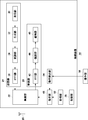
- the wireless device 14 includes an antenna 20, a wireless unit 22, a transmission unit 24, a reception unit 26, a control unit 28, an instruction unit 48, a position detection unit 50, and an acquisition unit 52.
- the transmission unit 24 includes a positioning unit 30, a generation unit 32, a modulation unit 34, and an IFFT unit 36.
- the reception unit 26 includes an FFT unit 42, a demodulation unit 44, and a notification unit 46.
- the positioning unit 30 includes a GPS (Global Positioning System) receiver, a gyroscope, a vehicle speed sensor, and the like, and acquires the location of the vehicle 12 on which the wireless device 14 is mounted, the traveling direction of the vehicle, the moving speed, and the like.
- the existence position is indicated by latitude and longitude. Since a well-known technique should just be used for acquisition of the presence position etc. by the positioning part 30, description is abbreviate
- the positioning unit 30 outputs information related to the location of the vehicle 12 (hereinafter also referred to as “position information”), that is, the above-described data to the generation unit 32.
- the generation unit 32 acquires data from the positioning unit 30.
- the generation unit 32 generates a packet signal so as to store data.
- the packet signal also includes information for identifying the wireless device 14.
- the generation unit 32 outputs the generated packet signal to the modulation unit 34.
- the modulation unit 34 modulates the packet signal from the generation unit 32.
- BPSK, QPSK, 16QAM, 64QAM and the like are defined.
- the modulation unit 34 outputs the modulated result to the IFFT unit 36 as a baseband packet signal.
- the baseband packet signal corresponds to an OFDM signal in the frequency domain.
- baseband packet signals are formed by in-phase and quadrature components, so two signal lines should be shown, but here only one signal line is shown for clarity. Shall be shown.
- the IFFT unit 36 inputs a baseband packet signal from the modulation unit 34.
- the IFFT unit 36 converts an OFDM signal in the frequency domain into an OFDM signal in the time domain by executing IFFT (Inverse Fast Fourier Transform).
- a time-domain OFDM signal is also referred to as a baseband packet signal.
- the radio unit 22 performs frequency conversion on the baseband packet signal input from the IFFT unit 36 to generate a radio frequency packet signal. Furthermore, the radio unit 22 broadcasts a radio frequency packet signal from the antenna 20.
- the wireless unit 22 includes a PA (Power Amplifier), a mixer, and a D / A conversion unit.
- the packet signal is transmitted in accordance with an access control function called CSMA / CA, similarly to a wireless LAN compliant with a standard such as IEEE 802.11.
- the radio unit 22 receives a packet signal broadcast from another radio device 14 (not shown) by the antenna 20 as a reception process.
- the other wireless device 14 is mounted on another vehicle 12 (not shown).
- the radio unit 22 performs frequency conversion on a radio frequency packet signal received via the antenna 20 to generate a baseband packet signal.
- the baseband packet signal is an OFDM signal in the time domain.
- the radio unit 22 outputs a baseband packet signal to the FFT unit 42.
- the wireless unit 22 also includes an LNA (Low Noise Amplifier), a mixer, an AGC, and an A / D conversion unit.
- LNA Low Noise Amplifier
- the FFT unit 42 inputs the time domain OFDM signal from the radio unit 22.
- the FFT unit 42 converts the time-domain OFDM signal into a frequency-domain OFDM signal by performing FFT on the time-domain OFDM signal.
- the frequency domain OFDM signal is formed by a plurality of subcarrier signals.
- the FFT unit 42 outputs the frequency domain OFDM signal to the demodulation unit 44.
- the demodulator 44 receives the frequency domain OFDM signal from the FFT unit 42.
- the demodulator 44 demodulates the frequency domain OFDM signal. As described above, since the OFDM signal in the frequency domain is formed by a plurality of subcarrier signals, the demodulation unit 44 performs a demodulation process on each of the plurality of subcarrier signals.
- the demodulation unit 44 outputs the demodulated result to the notification unit 46.
- the notification unit 46 receives the demodulation result from the demodulation unit 44.
- the notification unit 46 processes the demodulation result to obtain information on the location of other vehicles included in the packet signal.
- the notification unit 46 detects the presence position, approach, and the like of the other vehicle 12 based on information regarding the presence position of the other vehicle. At that time, the notification unit 46 may receive information on the location of the host vehicle from the positioning unit 30. Further, the notification unit 46 notifies the driver of an approach or the like via a monitor or a speaker (not shown). A collision accident is prevented when the driver recognizes the approach of another vehicle.
- the notification unit 46 may synthesize an image of the other vehicle on the map image displayed by the car navigation device.
- the acquisition unit 52 acquires information related to the traveling state of the vehicle 12 on which the wireless device 14 is mounted.
- the information regarding the running state of the vehicle 12 corresponds to whether the vehicle 12 is running or stopped.
- the acquisition unit 52 is connected to a speed sensor of the vehicle 12 (not shown), and receives a moving speed value from the speed sensor.
- the acquisition unit 52 sets a threshold value in advance, and determines that the vehicle 12 is stopped if the moving speed is lower than the threshold value. On the other hand, if the moving speed is equal to or higher than the threshold value, it is determined that the vehicle 12 is traveling.
- the acquisition unit 52 may determine whether the vehicle 12 is traveling or stopped by deriving the moving speed based on the time change of the position information received from the positioning unit 30.
- the acquisition unit 52 outputs information on whether the vehicle 12 is traveling or stopped to the instruction unit 48.
- the position detection unit 50 receives position information of the vehicle 12 on which the wireless device 14 is mounted from the positioning unit 30. Further, the position detection unit 50 holds map data, and the position information of the area 200 is included on the map data. The area 200 may be defined to correspond to a plurality of locations. Further, the map data may be held in a navigation device (not shown), and the position detection unit 50 may hold the position information of the area 200. The position detection unit 50 detects whether the vehicle 12 is present in any one of the areas 200 by comparing the position information of the area 200 with the position information of the vehicle 12. The position detection unit 50 outputs information related to whether or not the vehicle 12 is present in any area 200 to the instruction unit 48.
- the instruction unit 48 receives information on whether the vehicle 12 is traveling or stopped from the acquisition unit 52 and also determines whether the vehicle 12 is present in any area 200 from the position detection unit 50. Accept information.
- the instruction unit 48 causes the radio unit 22 to continue transmitting the packet signal when the information regarding whether the vehicle 12 is traveling or stopped indicates that the vehicle 12 is traveling.
- the instruction unit 48 causes the radio unit 22 to stop transmitting the packet signal when the information regarding whether the vehicle 12 is traveling or stopped indicates that the vehicle 12 is stopped.
- the instruction unit 48 determines whether or not the vehicle 12 exists in any of the areas 200 even if the information regarding whether the vehicle 12 is traveling or stopped indicates that the vehicle 12 is stopped. If the information related to this indicates the presence, the wireless unit 22 is allowed to continue without stopping the transmission of the packet signal.
- the instruction unit 48 may reduce the transmission frequency of the packet signal instead of causing the wireless unit 22 to stop transmitting the packet signal. In this case, it is assumed that the packet signal is periodically transmitted.
- the generation unit 32 sets the bit value corresponding to the operation mode control information to “1”, and if the mode is carried by a pedestrian, the generation unit 32 The bit value corresponding to the operation mode control information is set to “0”.
- the notification unit 46 may change the approach notification method according to the mode set for the wireless device 14. For example, when this radio
- the control unit 28 controls the timing of the entire wireless device 14.
- This configuration can be realized in terms of hardware by a CPU, memory, or other LSI of any computer, and in terms of software, it can be realized by a program loaded in the memory, but here it is realized by their cooperation.
- Draw functional blocks Accordingly, those skilled in the art will understand that these functional blocks can be realized in various forms by hardware only, software only, or a combination thereof.
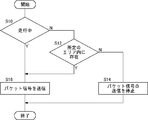
- FIG. 3 is a flowchart showing a procedure of transmission processing in the wireless device 14. If the vehicle 12 is not traveling (N in S10) and does not exist within the predetermined area 200 (N in S12), the instruction unit 48 causes the radio unit 22 to stop transmitting packet signals (S14). On the other hand, if the vehicle 12 exists in the predetermined area 200 (Y in S12), the instruction unit 48 causes the radio unit 22 to transmit a packet signal (S16). If the vehicle 12 is traveling (Y in S10), the instruction unit 48 causes the radio unit 22 to transmit a packet signal (S16).
- the modification of this invention is related with the communication system which performs data communication between the radio
- the wireless device according to the modification continues to transmit the packet signal if the vehicle is traveling, and stops transmitting the packet signal if the vehicle is stopped.
- the reference for transmitting the packet signal is determined so as to be different from that in the embodiment even when the vehicle is stopped.
- the radio apparatus according to the embodiment continues to transmit the packet signal when the radio apparatus exists in a predetermined area such as the vicinity of an intersection.
- the wireless device according to the modification continues to transmit the packet signal when the direction indicator or the hazard switch is operated. In such a case, it is assumed that the vehicle is stopping to turn right or left soon, or is temporarily stopped, so transmission of the packet signal should be continued.
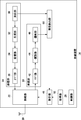
- FIG. 4 shows the configuration of the wireless device 14 according to a modification of the present invention. Compared with the wireless device 14 of FIG. 2, the wireless device 14 does not include the position detection unit 50 but includes an operation detection unit 54. The wireless device 14 is connected to the operation unit 56.
- the components indicated by the same reference numerals as those in FIG. 2 execute the same processing as the processing in FIG. Therefore, here, the description will focus on differences from FIG.
- the operation detection unit 54 is connected to the operation unit 56 and detects whether or not the operation unit 56 is operated. When the motion is detected, the motion detection unit 54 outputs the fact to the instruction unit 48.
- the instruction unit 48 receives information on whether the vehicle 12 is running or stopped from the acquisition unit 52 and receives information that the operation of the operation unit 56 is detected from the operation detection unit 54.
- the instruction unit 48 stops the transmission of the packet signal to the radio unit 22 even if the information acquired by the acquisition unit 52 indicates the stop of the vehicle 12 if the operation detection unit 54 detects the operation. Let it continue without letting it.
- FIG. 5 is a flowchart showing a procedure of transmission processing in the wireless device 14. If the vehicle 12 is not traveling (N in S30) and the direction indicator and the hazard switch are not operated (N in S32), the instruction unit 48 causes the radio unit 22 to stop transmitting packet signals (S34). ). On the other hand, if the direction indicator and the hazard switch are operated (Y in S32), the instruction unit 48 causes the radio unit 22 to transmit a packet signal (S36). If the vehicle 12 is traveling (Y in S30), the instruction unit 48 causes the radio unit 22 to transmit a packet signal (S36).
- Another modification of the present invention also relates to a communication system that performs data communication between wireless devices mounted on a vehicle, as before.
- the wireless device according to the modification continues to transmit the packet signal if the vehicle is traveling, and stops transmitting the packet signal if the vehicle is stopped.
- the reference for transmitting the packet signal is determined so as to be different from before.
- a wireless device according to another modification continues to transmit a packet signal when another vehicle is present behind a vehicle equipped with the wireless device. In such a case, it is assumed that the vehicle is temporarily stopped due to a traffic jam or the like, so the transmission of the packet signal should be continued.
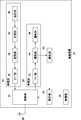
- FIG. 6 shows a configuration of a wireless device 14 according to another modification of the present invention.
- the wireless device 14 does not include the position detection unit 50 and includes a relationship detection unit 58.
- the components indicated by the same reference numerals as those in FIG. 2 execute the same processing as the processing in FIG. Therefore, here, the description will focus on differences from FIG.
- the relationship detection unit 58 receives position information of the vehicle 12 on which the wireless device 14 is mounted from the positioning unit 30. In addition, the relationship detection unit 58 also receives information regarding the location of the other vehicle 12 from the notification unit 46. The relationship detection unit 58 specifies the traveling direction and the current position of the vehicle 12 based on the history of the position information of the vehicle 12 on which the wireless device 14 is mounted. In addition, the relationship detection unit 58 specifies the traveling direction and the current position of the other vehicle 12 based on the information related to the location of the other vehicle 12. Further, the relationship detection unit 58 includes the other vehicle 12 behind the vehicle 12 based on the traveling direction and the current position of the vehicle 12 and the traveling direction and the current position of the other vehicle 12. Whether or not is detected. The relationship detection unit 58 outputs information regarding whether or not another vehicle 12 exists behind the vehicle 12 to the instruction unit 48.
- the instruction unit 48 receives information on whether the vehicle 12 is running or stopped from the acquisition unit 52 and also relates to whether or not another vehicle 12 exists behind the vehicle 12 from the relationship detection unit 58. Accept information. If the relationship detection unit 58 detects the presence, the instruction unit 48 stops transmission of the packet signal to the radio unit 22 even when the information acquired by the acquisition unit 52 indicates the stop of the vehicle 12. Let it continue without letting it.
- FIG. 7 is a flowchart showing a procedure of transmission processing in the wireless device 14. If the vehicle 12 is not traveling (N in S50) and there is no other vehicle 12 behind (N in S52), the instruction unit 48 causes the radio unit 22 to stop transmitting packet signals (S54). ). On the other hand, if there is another vehicle 12 behind (Y in S52), the instruction unit 48 causes the radio unit 22 to transmit a packet signal (S56). If the vehicle 12 is traveling (Y in S50), the instruction unit 48 causes the radio unit 22 to transmit a packet signal (S56).
- a wireless device according to another modification is targeted for a case where the wireless device is carried by a pedestrian.
- the wireless device stops transmitting the packet signal if the vehicle is stopped.
- a wireless device mounted on the vehicle by transmitting a packet signal to the wireless device carried by the stopped pedestrian It is desirable to inform the existence to. Even in such a case, in order to suppress the traffic of the packet signal and reduce the collision probability of the packet signal, the radio apparatus according to still another modification executes the following process.
- the wireless device When the wireless device receives a packet signal from another wireless device, the wireless device measures the reception strength of the packet signal and confirms the operation mode control information. If the operation mode control information indicates a mode carried by a pedestrian and the received signal is a packet signal whose reception intensity is greater than a threshold value, the wireless device increases the counter. If the counter value becomes equal to or larger than the predetermined value in the unit period, the wireless device reduces the transmission frequency of the packet signal.
- FIG. 8 shows a configuration of a wireless device 14 according to still another modified example of the present invention.
- the wireless device 14 does not include the position detection unit 50 and the acquisition unit 52 but includes the measurement unit 60.
- the components indicated by the same reference numerals as those in FIG. 2 execute the same processing as the processing in FIG. Therefore, here, the description will focus on differences from FIG.
- the demodulator 44 demodulates a packet signal from another wireless device.
- the demodulator 44 extracts operation mode control information from the packet signal.
- the demodulator 44 measures the reception strength of the packet signal.
- the demodulator 44 outputs the combination of the operation mode control information and the reception intensity to the measurement unit 60.
- the measurement unit 60 includes a counter.
- the measurement unit 60 increases the counter when the operation mode control information indicates a mode carried by a pedestrian and the reception intensity is greater than a threshold value. This process is performed every time a combination is received. If the counter value reaches a predetermined number or more in the unit period, the fact is output to the instruction unit 48. Note that the demodulator 44 resets the counter value when a predetermined period has elapsed. If the counter value becomes smaller than a predetermined number in the unit period, the fact may be output to the instruction unit 48.
- the instruction unit 48 reduces the transmission frequency of the packet signal to the radio unit 22 when notified that the counter value has reached a predetermined number or more in the unit period.
- the transmission of the packet signal may be stopped. Note that, in a situation where the transmission frequency of the packet signal is reduced, if the counter unit is notified that the counter value has become smaller than the predetermined number in the unit period, the instruction unit 48 may increase the transmission frequency of the packet signal. Good.
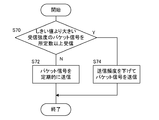
- FIG. 9 is a flowchart showing a procedure of transmission processing in the wireless device 14.
- the instruction unit 48 sends a packet signal to the wireless unit 22. It is transmitted periodically (S72).
- the instruction unit 48 The transmission frequency of the packet signal is lowered and transmitted (S74).
- a packet signal including position information and the like is transmitted, so that the driver of another vehicle can be notified of the approach.
- a packet signal including position information and the like is received from a wireless device mounted on a traveling vehicle, the driver can be notified of the approach.
- the approach is notified to the driver, the occurrence of a collision accident can be reduced.
- the transmission of the packet signal is stopped, so that the traffic volume can be reduced.
- the collision probability of packet signals can be reduced. Further, since the collision probability of packet signals is reduced, necessary packet signals can be transmitted reliably.
- the packet signal transmission is continued if the vehicle is in a predetermined area, so that the presence can be notified when the vehicle is stopped at an intersection or the like.
- the presence can be notified when the vehicle is stopped at an intersection or the like.
- necessary information can be notified while reducing the amount of traffic.
- the transmission of the packet signal is continued, so that the presence can be notified when the vehicle is temporarily stopped.
- the presence is notified when it is temporarily stopped, it is possible to notify necessary information while reducing the traffic volume.
- the transmission of the packet signal is continued if another vehicle is present behind, so that the presence can be notified when the vehicle is stopped due to a traffic jam.
- the presence is notified when the vehicle is stopped due to a traffic jam, necessary information can be notified while reducing the traffic volume.
- the transmission frequency is reduced when many packet signals with high reception strength are received, the transmission frequency can be reduced when a pedestrian is present nearby. In addition, since the transmission frequency is reduced when a pedestrian is present nearby, it can be notified that the pedestrian is present without transmitting a packet signal. In addition, since the transmission frequency is reduced when a pedestrian is nearby, the collision probability of packet signals can be reduced.
- the instruction unit 48 continues the transmission of the packet signal when the predetermined condition is satisfied even when the vehicle 12 is stopped.
- the present invention is not limited to this.
- the instruction unit 48 may stop the transmission of the packet signal without determining a predetermined condition. According to this modification, processing can be simplified.
- the probability of signal collision can be reduced.
Landscapes
- Physics & Mathematics (AREA)
- General Physics & Mathematics (AREA)
- Engineering & Computer Science (AREA)
- Computer Networks & Wireless Communication (AREA)
- Signal Processing (AREA)
- Traffic Control Systems (AREA)
- Mobile Radio Communication Systems (AREA)
Abstract
無線部22は、パケット信号を送信する。取得部52は、車両の走行状態に関する情報を取得する。指示部48は、取得した情報が車両の停止を示している場合に、無線部22に対してパケット信号の送信を停止させる。また、位置検出部50は、車両の位置情報をもとに、車両が所定の区域に存在するか否かを検出する。指示部48は、位置検出部50が存在を検出すれば、取得部52において取得した情報が車両の停止を示している場合であっても、無線部22に対してパケット信号の送信を続行させる。
Description
本発明は、通信技術に関し、特に車両に搭載された無線装置に関する。
ITS(Intelligent Transport Systems)車車間通信システムは、アプリケーションのひとつとして、自車両の位置や速度情報などを見通し外にある他車両へ通知する。この通知によって、見通しの悪い交差点等での出会い頭車両衝突事故防止が期待される。このようなITS車車間通信システムに対応した端末装置を搭載した車両が増加すると、干渉も増加したり、混信も増加したりする。また、干渉や混信の状況は、通信条件、通信環境によって異なる。これに対応するために、通信対象の端末装置が搭載された車両の速度と自車の速度との差異が小さくなると、送信電力を低減させ、差異が大きくなると、送信電力を増加させるような制御がなされる(例えば、特許文献1参照)。
IEEE802.11等の規格に準拠した無線LAN(Local Area Network)では、CSMA/CA(Carrier Sense Multiple Access with Collision Avoidance)と呼ばれるアクセス制御機能が使用されている。そのため、当該無線LANでは、複数の端末装置によって同一の無線チャネルが共有される。一方、無線チャネルが共有される無線LANをITS車車間通信システムに適用する場合、不特定多数の端末装置へ情報を送信する必要があるために、信号はブロードキャストにて送信されることが望ましい。ブロードキャスト送信では、通信対象の端末装置が特定されないので、通信対象の端末装置が搭載された車両の速度と自車の速度との差異による制御が困難になる。また、車両数の増加、つまり端末装置数の増加がトラヒックを増加させることによって、信号の衝突の増加が想定される。その結果、信号に含まれた情報が他の端末装置へ伝送されなくなる。このような状態が、ITS車車間通信において発生すれば、衝突事故を防止するという目的が達成されなくなる。
本発明はこうした状況に鑑みてなされたものであり、その目的は、信号の衝突確率を低減する技術を提供することにある。
上記課題を解決するために、本発明のある態様の無線装置は、車両に搭載された無線装置であって、パケット信号を送信する送信部と、車両の走行状態に関する情報を取得する取得部と、取得部において取得した情報が車両の停止を示している場合に、送信部に対してパケット信号の送信を停止させる指示部と、を備える。
なお、以上の構成要素の任意の組合せ、本発明の表現を方法、装置、システム、記録媒体、コンピュータプログラムなどの間で変換したものもまた、本発明の態様として有効である。
本発明によれば、信号の衝突確率を低減できる。
本発明を具体的に説明する前に、概要を述べる。本発明の実施例は、車両に搭載された無線装置間においてデータ通信を実行する通信システムに関する。無線装置は、車両の速度や位置等の情報(以下、これらを「データ」という)を格納したパケット信号(以下、データが格納されたパケット信号を「データ」ということもある)を送信する。一方、無線装置は、他の無線装置によって送信されたパケット信号を受信するとともに、データをもとに、当該他の無線装置が搭載された他の車両の接近を認識する。ここでは、効率よく複数の無線装置にデータを受信させるために、送信としてブロードキャスト送信がなされるものとする。前述のごとく、無線装置の数が増加すると、パケット信号の衝突確率も増加するので、衝突確率の低減が望まれる。これに対応するために、本実施例に係る通信システムは次の処理を実行する。
実施例に係る無線装置は、車両の走行状態に関する情報を取得する。車両の走行状態に関する情報は、例えば、車両が走行しているか、あるいは停止しているかを示す。車両が走行している場合、無線装置は、パケット信号を送信する。一方、車両が停止している場合、無線装置は、パケット信号の送信を停止する。車両の停止の一例は、車両が駐車している場合である。そのような場合に送信されるデータは、衝突事故の抑制にとって、必要というわけではない。そのため、本実施例は、車両が停止している場合の送信を停止することによって、トラヒックの増加を抑制させ、パケット信号の衝突確率を低減させる。一方、車両の停止の別の例が、交差点等での赤信号にしたがって車両が停止している場合である。当該車両は、これから交差点等に進入しようとしているので、このような場合に送信されるデータは、衝突事故の抑制にとって必要である。そのため、無線装置は、停止している場合であっても、赤信号にしたがった停止であれば、パケット信号の送信を続行する。
図1は、本発明の実施例に係る通信システム100の構成を示す。これは、ひとつの交差点を上方から見た場合に相当する。通信システム100は、車両12と総称される第1車両12a、第2車両12b、第3車両12c、第4車両12d、第5車両12e、第6車両12f、第7車両12g、第8車両12hを含む。また、交差点を中心としたエリア200が規定されている。なお、各車両12には、図示しない無線装置が搭載されている。
図示のごとく、図面の水平方向、つまり左右の方向に向かう道路と、図面の垂直方向、つまり上下の方向に向かう道路とが中心部分で交差している。ここで、図面の上側が方角の「北」に相当し、左側が方角の「西」に相当し、下側が方角の「南」に相当し、右側が方角の「東」に相当する。また、ふたつの道路の交差部分が「交差点」である。第1車両12a、第2車両12bが、左から右へ向かって進んでおり、第3車両12c、第4車両12dが、右から左へ向かって進んでいる。また、第5車両12e、第6車両12fが、上から下へ向かって進んでおり、第7車両12g、第8車両12hが、下から上へ向かって進んでいる。
各車両12に搭載された無線装置は、前述のデータを取得し、データが格納されたパケット信号をブロードキャスト送信する。ここで、各無線装置は、公知の無線LANのごとく、CSMA/CAに対応しており、キャリアセンスを実行して送信可能であると判定した場合に、データをブロードキャスト送信する。さらに、各無線装置は、他の無線装置からのデータを受信し、他の無線装置を搭載した車両12の接近を運転手へ通知する。車両12が停止している場合、無線装置はデータの送信を停止する。その際、無線装置は、車両12が駐車していると想定する。その結果、不要なデータの送信が抑制されることによって、トラヒック量が低減される。一方、車両12の停止位置がエリア200内であれば、無線装置は、データの送信を停止させず、データの送信を続行する。エリア200は、例えば、交差点付近や、信号機付近に設定される。つまり、エリア200は、駐車ではなく、車両12が停止する可能性のある区域に設定される。ここで、エリア200は、無線装置において保持された地図データ上に予め規定される。
図2は、車両12に搭載された無線装置14の構成を示す。無線装置14は、アンテナ20、無線部22、送信部24、受信部26、制御部28、指示部48、位置検出部50、取得部52を含む。送信部24は、測位部30、生成部32、変調部34、IFFT部36を含む。また、受信部26は、FFT部42、復調部44、通知部46を含む。
測位部30は、GPS(Global Positioning System)受信機、ジャイロスコープ、車速センサ等によって構成され、無線装置14が搭載された車両12の存在位置、車両の進行方向、移動速度等を取得する。なお、存在位置は、緯度・経度によって示される。測位部30による存在位置等の取得には公知の技術が使用されればよいので、ここでは説明を省略する。測位部30は、車両12の存在位置に関する情報(以下、「位置情報」ともいう)、つまり前述のデータを生成部32へ出力する。
生成部32は、測位部30から、データを取得する。生成部32は、データを格納するようにパケット信号を生成する。また、パケット信号には、本無線装置14を識別するための情報も含まれる。生成部32は、生成したパケット信号を変調部34へ出力する。変調部34は、生成部32からのパケット信号を変調する。変調方式として、BPSK、QPSK、16QAM、64QAM等が規定される。また、変調部34は、変調した結果をベースバンドのパケット信号としてIFFT部36へ出力する。なお、ベースバンドのパケット信号は、周波数領域のOFDM信号に相当する。一般的に、ベースバンドのパケット信号は、同相成分と直交成分によって形成されるので、ふたつの信号線が示されるべきであるが、ここでは、図を明瞭にするためにひとつの信号線だけを示すものとする。
IFFT部36は、変調部34から、ベースバンドのパケット信号を入力する。IFFT部36は、IFFT(Inverse Fast Fourier Transform)を実行することによって、周波数領域のOFDM信号を時間領域のOFDM信号へ変換する。なお、時間領域のOFDM信号もベースバンドのパケット信号という。無線部22は、送信処理として、IFFT部36から入力したベースバンドのパケット信号に対して周波数変換を実行し、無線周波数のパケット信号を生成する。さらに、無線部22は、無線周波数のパケット信号をアンテナ20からブロードキャスト送信する。なお、無線部22には、PA(Power Amplifier)、ミキサ、D/A変換部も含まれる。前述のごとく、パケット信号の送信は、IEEE802.11等の規格に準拠した無線LANと同様に、CSMA/CAと呼ばれるアクセス制御機能にしたがってなされる。
無線部22は、受信処理として、図示しない他の無線装置14からブロードキャスト送信されたパケット信号をアンテナ20にて受信する。他の無線装置14は、図示しない他の車両12に搭載されている。無線部22は、アンテナ20を介して受信した無線周波数のパケット信号に対して周波数変換を実行し、ベースバンドのパケット信号を生成する。ここで、ベースバンドのパケット信号は、時間領域のOFDM信号である。さらに、無線部22は、ベースバンドのパケット信号をFFT部42へ出力する。また、無線部22には、LNA(Low Noise Amplifier)、ミキサ、AGC、A/D変換部も含まれる。
FFT部42は、無線部22からの時間領域のOFDM信号を入力する。FFT部42は、時間領域のOFDM信号に対してFFTを実行することによって、時間領域のOFDM信号を周波数領域のOFDM信号へ変換する。周波数領域のOFDM信号は、複数のサブキャリア信号にて形成される。さらに、FFT部42は、周波数領域のOFDM信号を復調部44へ出力する。復調部44は、FFT部42から周波数領域のOFDM信号を受けつける。復調部44は、周波数領域のOFDM信号を復調する。前述のごとく、周波数領域のOFDM信号は、複数のサブキャリア信号にて形成されているので、復調部44は、複数のサブキャリア信号のそれぞれに対して復調処理を実行する。復調部44は、復調した結果を通知部46へ出力する。
通知部46は、復調部44からの復調結果を受けつける。通知部46は、復調結果を処理することによって、パケット信号に含まれた他の車両の存在位置に関する情報を取得する。通知部46は、他の車両の存在位置に関する情報をもとに、他車両12の存在位置や接近等を検出する。その際、通知部46は、測位部30から、自車両の存在位置に関する情報を受けつけていてもよい。また、通知部46は、図示しないモニタやスピーカを介して、運転者へ接近等を通知する。運転者が、他の車両の接近を認識することによって、衝突事故が防止される。なお、他の車両の接近をモニタにて通知する場合、通知部46は、カーナビゲーション装置によって表示される地図画像上に他の車両の画像を合成してもよい。
取得部52は、本無線装置14が搭載された車両12の走行状態に関する情報を取得する。ここで、車両12の走行状態に関する情報とは、車両12が走行しているかあるいは停止しているかに相当する。取得部52は、図示しない車両12の速度センサに接続され、速度センサから移動速度の値を受けつける。取得部52は、しきい値を予め設定し、移動速度がしきい値よりも低ければ、車両12が停止していると判定する。一方、移動速度がしきい値以上であれば、車両12が走行していると判定する。なお、取得部52は、測位部30から受けつけた位置情報の時間変化をもとに、移動速度を導出することによって、車両12が走行しているかあるいは停止しているかを決定してもよい。取得部52は、車両12が走行しているかあるいは停止しているかに関する情報を指示部48へ出力する。
位置検出部50は、測位部30から、本無線装置14を搭載した車両12の位置情報を受けつける。さらに、位置検出部50は、地図データを保持しており、地図データ上には、エリア200の位置情報が含まれている。なお、エリア200は、複数の箇所に対応するように定義されてもよい。また、地図データは、図示しないナビゲーション装置に保持され、位置検出部50は、エリア200の位置情報を保持していてもよい。位置検出部50は、エリア200の位置情報と、車両12の位置情報とを比較することによって、車両12がいずれかのエリア200内に存在するか否かを検出する。位置検出部50は、車両12がいずれかのエリア200内に存在するか否かに関する情報を指示部48へ出力する。
指示部48は、取得部52から、車両12が走行しているかあるいは停止しているかに関する情報を受けつけるとともに、位置検出部50から、車両12がいずれかのエリア200内に存在するか否かに関する情報を受けつける。指示部48は、車両12が走行しているかあるいは停止しているかに関する情報が車両12の走行を示している場合に、無線部22にパケット信号の送信を続行させる。一方、指示部48は、車両12が走行しているかあるいは停止しているかに関する情報が車両12の停止を示している場合に、無線部22にパケット信号の送信を停止させる。なお、指示部48は、車両12が走行しているかあるいは停止しているかに関する情報が車両12の停止を示している場合であっても、車両12がいずれかのエリア200内に存在するか否かに関する情報が存在を示していれば、無線部22に対してパケット信号の送信を停止させず、続行させる。なお、指示部48は、無線部22にパケット信号の送信を停止させる代わりに、パケット信号の送信頻度を下げてもよい。その場合、パケット信号を定期的に送信していることが前提になる。
なお、本無線装置14は、車両12に搭載されずに、歩行者に携帯されてもよい。その際、無線装置14は、図示しないインターフェイスを備え、当該インターフェイスを介して、ユーザから、車両12に搭載されるモードであるか、あるいは歩行者に携帯されるモードであるかについての指示を受けつける。ここで、ユーザは、運転者あるいは歩行者に相当する。生成部32は、車両12に搭載されるモードであるか、あるいは歩行者に携帯されるモードであるかの情報(以下、「動作モード制御情報」という)をパケット信号に含める。例えば、車両12に搭載されるモードであれば、生成部32は、動作モード制御情報に対応したビット値を「1」に設定し、歩行者に携帯されるモードであれば、生成部32は、動作モード制御情報に対応したビット値を「0」に設定する。通知部46は、本無線装置14に対して設定されたモードに応じて、接近の通知方法を変更してもよい。例えば、本無線装置14が車両12に搭載されている場合、通知部46は、画面への表示と音声の出力とによって接近を通知する。一方、本無線装置14が歩行者に携帯されている場合、通知部46は、音声の出力と振動によって接近を通知する。制御部28は、無線装置14全体のタイミングを制御する。
この構成は、ハードウエア的には、任意のコンピュータのCPU、メモリ、その他のLSIで実現でき、ソフトウエア的にはメモリにロードされたプログラムなどによって実現されるが、ここではそれらの連携によって実現される機能ブロックを描いている。したがって、これらの機能ブロックがハードウエアのみ、ソフトウエアのみ、またはそれらの組合せによっていろいろな形で実現できることは、当業者には理解されるところである。
以上の構成による無線装置14の動作を説明する。図3は、無線装置14における送信処理の手順を示すフローチャートである。車両12が走行中でなく(S10のN)、かつ所定のエリア200内に存在しなければ(S12のN)、指示部48は、無線部22にパケット信号の送信を停止させる(S14)。一方、車両12が、所定のエリア200内に存在すれば(S12のY)、指示部48は、無線部22にパケット信号を送信させる(S16)。車両12が走行中であれば(S10のY)、指示部48は、無線部22にパケット信号を送信させる(S16)。
次に、本発明の変形例を説明する。本発明の変形例は、実施例と同様に、車両に搭載された無線装置間においてデータ通信を実行する通信システムに関する。また、変形例に係る無線装置は、実施例と同様に、車両が走行していればパケット信号の送信を続行し、車両が停止していればパケット信号の送信を停止する。変形例に係る無線装置では、車両が停止している場合であってもパケット信号を送信するための基準が、実施例と異なるように決められている。実施例に係る無線装置は、交差点の周辺などの予め定められたエリアに存在する場合に、パケット信号の送信を続行する。一方、変形例に係る無線装置は、方向指示器やハザードスイッチが動作されている場合に、パケット信号の送信を続行する。このような場合では、車両が、まもなく右左折するために停止したり、一時的に停止したりしていると想定されるので、パケット信号の送信は続行されるべきである。
変形例に係る通信システム100は、図1と同様に示されるが、エリア200が省略される。図4は、本発明の変形例に係る無線装置14の構成を示す。無線装置14は、図2の無線装置14と比較して、位置検出部50を含まず、動作検出部54を含む。また、無線装置14は、操作部56に接続されている。図4において、図2と同一の符号で示された構成要素は、図2での処理と同様の処理を実行する。そのため、ここでは、図2との差異を中心に説明する。
操作部56は、本無線装置14を搭載した車両12を操作するためのボタン等である。操作部56は、例えば、方向指示器、ハザードスイッチに相当する。方向指示器、ハザードスイッチが運転者によって操作される場合、車両12は、それらに対応した本来の動作を実行する。つまり、方向指示器が操作される場合、車両12の左右側に搭載されたライトのうち、一方が点滅する。操作部56は、運転者によってそのような操作がなされた場合に、その旨を動作検出部54へ出力する。
動作検出部54は、操作部56に接続され、操作部56が動作されているか否かを検出する。動作が検出された場合、動作検出部54は、その旨を指示部48へ出力する。指示部48は、取得部52から、車両12が走行しているかあるいは停止しているかに関する情報を受けつけるとともに、動作検出部54から、操作部56の動作が検出された旨の情報を受けつける。指示部48は、動作検出部54が動作を検出すれば、取得部52において取得した情報が車両12の停止を示している場合であっても、無線部22に対してパケット信号の送信を停止させずに続行させる。
図5は、無線装置14における送信処理の手順を示すフローチャートである。車両12が走行中でなく(S30のN)、かつ方向指示器、ハザードスイッチが操作されていなければ(S32のN)、指示部48は、無線部22にパケット信号の送信を停止させる(S34)。一方、方向指示器、ハザードスイッチが操作されていれば(S32のY)、指示部48は、無線部22にパケット信号を送信させる(S36)。車両12が走行中であれば(S30のY)、指示部48は、無線部22にパケット信号を送信させる(S36)。
次に、本発明の別の変形例を説明する。本発明の別の変形例も、これまでと同様に、車両に搭載された無線装置間においてデータ通信を実行する通信システムに関する。また、変形例に係る無線装置は、車両が走行していればパケット信号の送信を続行し、車両が停止していればパケット信号の送信を停止する。別の変形例に係る無線装置では、車両が停止している場合であってもパケット信号を送信するための基準が、これまでと異なるように決められている。別の変形例に係る無線装置は、当該無線装置を搭載した車両の後方に、他の車両が存在する場合に、パケット信号の送信を続行する。このような場合では、渋滞等によって、車両が一時的に停止していると想定されるので、パケット信号の送信は続行されるべきである。
図6は、本発明の別の変形例に係る無線装置14の構成を示す。無線装置14は、図2の無線装置14と比較して、位置検出部50を含まず、関係検出部58を含む。図6において、図2と同一の符号で示された構成要素は、図2での処理と同様の処理を実行する。そのため、ここでは、図2との差異を中心に説明する。
関係検出部58は、測位部30から、本無線装置14を搭載した車両12の位置情報を受けつける。また、関係検出部58は、通知部46から、他の車両12の存在位置に関する情報も受けつける。関係検出部58は、本無線装置14を搭載した車両12の位置情報の履歴をもとに、当該車両12の進行方向および現在の位置を特定する。また、関係検出部58は、他の車両12の存在位置に関する情報をもとに、他の車両12の進行方向および現在の位置を特定する。さらに、関係検出部58は、当該車両12の進行方向および現在の位置と、他の車両12の進行方向および現在の位置とをもとに、当該車両12の後方に他の車両12が存在するか否かを検出する。関係検出部58は、当該車両12の後方に他の車両12が存在するか否かに関する情報を指示部48へ出力する。
指示部48は、取得部52から、車両12が走行しているかあるいは停止しているかに関する情報を受けつけるとともに、関係検出部58から、車両12の後方に他の車両12が存在するか否かに関する情報を受けつける。指示部48は、関係検出部58が存在を検出すれば、取得部52において取得した情報が車両12の停止を示している場合であっても、無線部22に対してパケット信号の送信を停止させずに続行させる。
図7は、無線装置14における送信処理の手順を示すフローチャートである。車両12が走行中でなく(S50のN)、かつ後方に他の車両12が存在していなければ(S52のN)、指示部48は、無線部22にパケット信号の送信を停止させる(S54)。一方、後方に他の車両12が存在していれば(S52のY)、指示部48は、無線部22にパケット信号を送信させる(S56)。車両12が走行中であれば(S50のY)、指示部48は、無線部22にパケット信号を送信させる(S56)。
次に、本発明のさらに別の変形例を説明する。これまでの無線装置は、車両に搭載されているか、あるいは歩行者に携帯されている場合を対象にしている。一方、さらに別の変形例に係る無線装置は、歩行者に携帯される場合を対象にする。無線装置が車両に搭載されている場合、車両が停止していれば、無線装置は、パケット信号の送信を停止している。一方、歩行者は停止していても交通事故にあう可能性が高いので、停止している歩行者に携帯された無線装置には、パケット信号を送信することによって、車両に搭載された無線装置へ存在を知らせることが望まれる。このような場合であっても、パケット信号のトラヒックを抑えて、パケット信号の衝突確率を低減するために、さらに別の変形例に係る無線装置は、次の処理を実行する。
無線装置は、他の無線装置からのパケット信号を受信すると、当該パケット信号の受信強度を測定するとともに、動作モード制御情報を確認する。動作モード制御情報が歩行者に携帯されたモードを示し、かつ受信強度がしきい値よりも大きいパケット信号であれば、無線装置は、カウンタを増加させる。単位期間においてカウンタ値が所定以上になれば、無線装置は、パケット信号の送信頻度を低下させる。
図8は、本発明のさらに別の変形例に係る無線装置14の構成を示す。無線装置14は、図2の無線装置14と比較して、位置検出部50、取得部52を含まず、測定部60を含む。図8において、図2と同一の符号で示された構成要素は、図2での処理と同様の処理を実行する。そのため、ここでは、図2との差異を中心に説明する。
前述のごとく、復調部44は、他の無線装置からのパケット信号を復調する。復調部44は、パケット信号から動作モード制御情報を抽出する。また、復調部44は、パケット信号の受信強度を測定する。復調部44は、動作モード制御情報と受信強度との組合せを測定部60へ出力する。測定部60は、カウンタを備える。測定部60は、動作モード制御情報が歩行者に携帯されたモードを示し、かつ受信強度がしきい値よりも大きい場合、カウンタを増加させる。この処理は、組合せを受けつけるごとになされる。カウンタ値が単位期間において所定数以上になれば、その旨を指示部48に出力する。なお、復調部44は、所定期間経過したときにカウンタ値をリセットさせる。また、カウンタ値が単位期間において所定数より小さくなれば、その旨を指示部48に出力してもよい。
指示部48は、カウンタ値が単位期間において所定数以上になったことを通知された場合、無線部22に対してパケット信号の送信頻度を低下させる。ここで、パケット信号の送信頻度を低下させる代わりに、パケット信号の送信を停止させてもよい。なお、パケット信号の送信頻度を低下させている状況下において、カウンタ値が単位期間において所定数より小さくなったことを通知された場合、指示部48は、パケット信号の送信頻度を増加させてもよい。
図9は、無線装置14における送信処理の手順を示すフローチャートである。歩行者に携帯された他の無線装置14から、しきい値より大きい受信強度のパケット信号を所定数以上受信していない場合(S70のN)、指示部48は、無線部22にパケット信号を定期的に送信させる(S72)。歩行者に携帯された他の無線装置14から、しきい値より大きい受信強度のパケット信号を所定数以上受信している場合(S70のY)、指示部48は、無線部22に対して、パケット信号の送信頻度を下げて送信させる(S74)。
本発明の実施例によれば、車両が走行していれば、位置情報等が含まれたパケット信号を送信するので、他の車両の運転者に対して接近を通知できる。また、走行している車両に搭載された無線装置から、位置情報等が含まれたパケット信号を受信するので、運転者に対して接近を通知できる。また、運転者に対して接近が通知されるので、衝突事故の発生を低減できる。また、車両が停止していれば、パケット信号の送信が停止されるので、トラヒック量を低減できる。また、トラヒック量が低減されるので、パケット信号の衝突確率を低減できる。また、パケット信号の衝突確率が低減されるので、必要なパケット信号を確実に伝送できる。
また、車両が停止している場合でも、所定のエリアに存在すれば、パケット信号の送信を続行するので、交差点等において停止している場合に存在を通知できる。また、交差点等において停止している場合に存在が通知されるので、トラヒック量を低減しながら、必要な情報を通知できる。また、車両が停止している場合でも、方向指示器やハザードスイッチが操作されていれば、パケット信号の送信を続行するので、一時的に停止している場合に存在を通知できる。また、一時的に停止している場合に存在が通知されるので、トラヒック量を低減しながら、必要な情報を通知できる。また、車両が停止している場合でも、他の車両が後方に存在していれば、パケット信号の送信を続行するので、渋滞のために停止している場合に、存在を通知できる。また渋滞のために停止している場合に存在が通知されるので、トラヒック量を低減しながら、必要な情報を通知できる。
また、受信強度の大きいパケット信号をどの程度受信したかを観測するので、近くに無線装置が存在するかを推定することができる。また、受信強度の大きいパケット信号を多く受信した場合に送信頻度を低下させるので、歩行者が近くに存在する場合に送信頻度を低下させることができる。また、歩行者が近くに存在する場合に送信頻度を低下させるので、パケット信号を送信しなくても存在することを通知することができる。また、歩行者が近くに存在する場合に送信頻度を低下させるので、パケット信号の衝突確率を低減できる。
以上、本発明を実施例をもとに説明した。この実施例は例示であり、それらの各構成要素や各処理プロセスの組合せにいろいろな変形例が可能なこと、またそうした変形例も本発明の範囲にあることは当業者に理解されるところである。
本発明の実施例において、指示部48は、車両12が停止している場合であっても、所定の条件を満たす場合に、パケット信号の送信を続行している。しかしながらこれに限らず例えば、指示部48は、車両12が停止している場合に、所定の条件を判断せずに、パケット信号の送信を停止させてもよい。本変形例によれば、処理を簡易にできる。
12 車両、 14 無線装置、 20 アンテナ、 22 無線部、 24 送信部、 26 受信部、 28 制御部、 30 測位部、 32 生成部、 34 変調部、 36 IFFT部、 42 FFT部、 44 復調部、 46 通知部、 48 指示部、 50 位置検出部、 52 取得部、 100 通信システム。
本発明によれば、信号の衝突確率を低減できる。
Claims (6)
- パケット信号を送信する送信部と、
車両の走行状態に関する情報を取得する取得部と、
前記取得部において取得した情報が車両の停止を示している場合に、前記送信部に対してパケット信号の送信頻度を低下させる指示部と、
を備えることを特徴とする無線装置。 - 前記指示部は、パケット信号の送信頻度の低下として、前記送信部に対してパケット信号の送信を停止させることを特徴とする請求項1に記載の無線装置。
- 本無線装置を搭載した車両の操作部が動作されているか否かを検出する動作検出部をさらに備え、
前記指示部は、前記動作検出部が動作を検出すれば、前記取得部において取得した情報が車両の停止を示している場合であっても、前記送信部に対してパケット信号の送信を続行させることを特徴とする請求項1または2に記載の無線装置。 - 車両の位置情報をもとに、車両が所定の区域に存在するか否かを検出する位置検出部をさらに備え、
前記指示部は、前記位置検出部が存在を検出すれば、前記取得部において取得した情報が車両の停止を示している場合であっても、前記送信部に対してパケット信号の送信を続行させることを特徴とする請求項1から3のいずれかに記載の無線装置。 - 本無線装置を搭載した車両の後方に他の車両が存在するか否かを検出する関係検出部をさらに備え、
前記指示部は、前記関係検出部が存在を検出すれば、前記取得部において取得した情報が車両の停止を示している場合であっても、前記送信部に対してパケット信号の送信を続行させることを特徴とする請求項1から4のいずれかに記載の無線装置。 - パケット信号を送信する送信部と、
他の無線装置からのパケット信号を受信する受信部と、
前記受信部が、しきい値よりも大きな受信強度のパケット信号を、単位期間において所定数以上受信している場合に、前記送信部に対してパケット信号の送信頻度を低下させる指示部と、
を備えることを特徴とする無線装置。
Priority Applications (2)
| Application Number | Priority Date | Filing Date | Title |
|---|---|---|---|
| CN2010800415809A CN102511058A (zh) | 2009-09-25 | 2010-09-24 | 无线装置 |
| US13/425,168 US20120238222A1 (en) | 2009-09-25 | 2012-03-20 | Radio apparatus mounted on a viecle |
Applications Claiming Priority (4)
| Application Number | Priority Date | Filing Date | Title |
|---|---|---|---|
| JP2009-221421 | 2009-09-25 | ||
| JP2009221421 | 2009-09-25 | ||
| JP2010-211671 | 2010-09-22 | ||
| JP2010211671A JP2011091795A (ja) | 2009-09-25 | 2010-09-22 | 無線装置 |
Related Child Applications (1)
| Application Number | Title | Priority Date | Filing Date |
|---|---|---|---|
| US13/425,168 Continuation US20120238222A1 (en) | 2009-09-25 | 2012-03-20 | Radio apparatus mounted on a viecle |
Publications (1)
| Publication Number | Publication Date |
|---|---|
| WO2011037161A1 true WO2011037161A1 (ja) | 2011-03-31 |
Family
ID=43795906
Family Applications (1)
| Application Number | Title | Priority Date | Filing Date |
|---|---|---|---|
| PCT/JP2010/066499 Ceased WO2011037161A1 (ja) | 2009-09-25 | 2010-09-24 | 無線装置 |
Country Status (4)
| Country | Link |
|---|---|
| US (1) | US20120238222A1 (ja) |
| JP (1) | JP2011091795A (ja) |
| CN (1) | CN102511058A (ja) |
| WO (1) | WO2011037161A1 (ja) |
Cited By (2)
| Publication number | Priority date | Publication date | Assignee | Title |
|---|---|---|---|---|
| JP2017041748A (ja) * | 2015-08-19 | 2017-02-23 | 株式会社デンソー | 移動体通信システム、送信側装置、受信側装置 |
| US10078960B2 (en) | 2016-05-31 | 2018-09-18 | Kabushiki Kaisha Toshiba | Communication device and communication method |
Families Citing this family (12)
| Publication number | Priority date | Publication date | Assignee | Title |
|---|---|---|---|---|
| CN102474702A (zh) * | 2010-06-14 | 2012-05-23 | 三洋电机株式会社 | 终端装置 |
| WO2013094195A1 (ja) * | 2011-12-21 | 2013-06-27 | 三洋電機株式会社 | 無線装置 |
| DE112012005932B4 (de) * | 2012-02-24 | 2020-08-13 | Mitsubishi Electric Corporation | Im Fahrzeug angeordnete Kommunikationsvorrichtung und Navigationsvorrichtung |
| JP2014232499A (ja) * | 2013-05-30 | 2014-12-11 | 株式会社デンソー | 車載通信装置 |
| JP6340891B2 (ja) * | 2014-04-22 | 2018-06-13 | 株式会社デンソー | 車載通信端末、及び移動体通信システム |
| JP5897096B1 (ja) * | 2014-11-18 | 2016-03-30 | 三菱電機株式会社 | 車両の走行支援通信装置および通信システム |
| US10609654B2 (en) * | 2016-11-09 | 2020-03-31 | Qualcomm Incorporated | Indexing cellular V2X coverage range to vehicle speed |
| JP6941775B2 (ja) * | 2017-03-03 | 2021-09-29 | パナソニックIpマネジメント株式会社 | 充電可否提示方法、および、充電可否提示システム |
| US10534368B2 (en) * | 2017-06-26 | 2020-01-14 | GM Global Technology Operations LLC | Crowdsource-based virtual sensor generation and virtual sensor application control |
| JP7051201B2 (ja) * | 2017-11-28 | 2022-04-11 | ジヤトコ株式会社 | 自動運転車両 |
| JP6904311B2 (ja) * | 2018-06-25 | 2021-07-14 | 株式会社デンソー | 車車間通信システム、車両用通信装置 |
| JP7211674B2 (ja) * | 2018-09-27 | 2023-01-24 | 株式会社Subaru | 移動体監視装置、並びにこれを用いる車両制御システムおよび交通システム |
Citations (5)
| Publication number | Priority date | Publication date | Assignee | Title |
|---|---|---|---|---|
| JP2005012275A (ja) * | 2003-06-16 | 2005-01-13 | Matsushita Electric Ind Co Ltd | 無線送信装置、無線パケット送信方法、および無線通信システム |
| JP2007143121A (ja) * | 2005-11-18 | 2007-06-07 | Hitachi Ltd | 車両間通信のための方法および装置 |
| JP2007323184A (ja) * | 2006-05-30 | 2007-12-13 | Mazda Motor Corp | 車両用運転支援システム |
| JP2008278045A (ja) * | 2007-04-26 | 2008-11-13 | Mitsubishi Electric Corp | 通信装置 |
| JP2009118061A (ja) * | 2007-11-05 | 2009-05-28 | Denso Corp | 車両用無線通信装置 |
Family Cites Families (6)
| Publication number | Priority date | Publication date | Assignee | Title |
|---|---|---|---|---|
| JP3809171B2 (ja) * | 2004-04-22 | 2006-08-16 | 松下電器産業株式会社 | 道路交通情報通信システム及び道路交通情報通信方法 |
| JP4576887B2 (ja) * | 2004-06-02 | 2010-11-10 | 株式会社デンソー | 通信装置および制御方法 |
| JP4770635B2 (ja) * | 2006-08-09 | 2011-09-14 | 株式会社デンソー | 車車間通信システム、車車間通信方法 |
| JP4466700B2 (ja) * | 2007-09-07 | 2010-05-26 | アイシン・エィ・ダブリュ株式会社 | 車載用通信装置、車載用通信方法、車載用通信プログラム |
| JP4424425B2 (ja) * | 2008-02-04 | 2010-03-03 | 株式会社デンソー | 車車間通信装置 |
| JP4636094B2 (ja) * | 2008-02-22 | 2011-02-23 | 株式会社デンソー | 車車間通信装置 |
-
2010
- 2010-09-22 JP JP2010211671A patent/JP2011091795A/ja active Pending
- 2010-09-24 WO PCT/JP2010/066499 patent/WO2011037161A1/ja not_active Ceased
- 2010-09-24 CN CN2010800415809A patent/CN102511058A/zh active Pending
-
2012
- 2012-03-20 US US13/425,168 patent/US20120238222A1/en not_active Abandoned
Patent Citations (5)
| Publication number | Priority date | Publication date | Assignee | Title |
|---|---|---|---|---|
| JP2005012275A (ja) * | 2003-06-16 | 2005-01-13 | Matsushita Electric Ind Co Ltd | 無線送信装置、無線パケット送信方法、および無線通信システム |
| JP2007143121A (ja) * | 2005-11-18 | 2007-06-07 | Hitachi Ltd | 車両間通信のための方法および装置 |
| JP2007323184A (ja) * | 2006-05-30 | 2007-12-13 | Mazda Motor Corp | 車両用運転支援システム |
| JP2008278045A (ja) * | 2007-04-26 | 2008-11-13 | Mitsubishi Electric Corp | 通信装置 |
| JP2009118061A (ja) * | 2007-11-05 | 2009-05-28 | Denso Corp | 車両用無線通信装置 |
Cited By (2)
| Publication number | Priority date | Publication date | Assignee | Title |
|---|---|---|---|---|
| JP2017041748A (ja) * | 2015-08-19 | 2017-02-23 | 株式会社デンソー | 移動体通信システム、送信側装置、受信側装置 |
| US10078960B2 (en) | 2016-05-31 | 2018-09-18 | Kabushiki Kaisha Toshiba | Communication device and communication method |
Also Published As
| Publication number | Publication date |
|---|---|
| CN102511058A (zh) | 2012-06-20 |
| US20120238222A1 (en) | 2012-09-20 |
| JP2011091795A (ja) | 2011-05-06 |
Similar Documents
| Publication | Publication Date | Title |
|---|---|---|
| JP2011091795A (ja) | 無線装置 | |
| US8548729B2 (en) | Radio apparatus mounted on a vehicle | |
| CN102668606B (zh) | 无线装置 | |
| JP5874020B2 (ja) | 無線装置 | |
| JP5820964B2 (ja) | 無線装置 | |
| WO2014049987A1 (ja) | 通知装置およびそれを利用した車両 | |
| WO2012090447A1 (ja) | 無線装置 | |
| JP2011108110A (ja) | 無線装置 | |
| JP2010258887A (ja) | アクセス制御装置および端末装置ならびにそれらを利用した無線通信システム | |
| JP2015194989A (ja) | 無線装置、処理装置、及び処理システム | |
| WO2017217144A1 (ja) | 無線装置 | |
| JP2015043478A (ja) | 無線装置 | |
| JP2011205350A (ja) | 端末装置 | |
| JP2011013801A (ja) | 無線装置 | |
| WO2013094187A1 (ja) | 無線装置 | |
| JP2015043477A (ja) | 無線装置 | |
| JP5935176B2 (ja) | 無線装置 | |
| JP2015039089A (ja) | 無線装置 | |
| JP2010041145A (ja) | 報知方法および無線装置 | |
| JP2010056950A (ja) | 報知方法および無線装置 | |
| JP2017183987A (ja) | 端末装置 | |
| JP6083544B2 (ja) | 端末装置及び処理装置 | |
| WO2013094203A1 (ja) | 無線装置およびナビゲーション装置 | |
| WO2015029315A1 (ja) | 端末装置、制御方法、及び、プログラム | |
| JP2010056866A (ja) | 報知方法および無線装置 |
Legal Events
| Date | Code | Title | Description |
|---|---|---|---|
| WWE | Wipo information: entry into national phase |
Ref document number: 201080041580.9 Country of ref document: CN |
|
| 121 | Ep: the epo has been informed by wipo that ep was designated in this application |
Ref document number: 10818833 Country of ref document: EP Kind code of ref document: A1 |
|
| NENP | Non-entry into the national phase |
Ref country code: DE |
|
| 122 | Ep: pct application non-entry in european phase |
Ref document number: 10818833 Country of ref document: EP Kind code of ref document: A1 |