WO2010140486A1 - ノルボルネン誘導体の製造方法 - Google Patents
ノルボルネン誘導体の製造方法 Download PDFInfo
- Publication number
- WO2010140486A1 WO2010140486A1 PCT/JP2010/058568 JP2010058568W WO2010140486A1 WO 2010140486 A1 WO2010140486 A1 WO 2010140486A1 JP 2010058568 W JP2010058568 W JP 2010058568W WO 2010140486 A1 WO2010140486 A1 WO 2010140486A1
- Authority
- WO
- WIPO (PCT)
- Prior art keywords
- general formula
- group
- exo
- product
- atom
- Prior art date
- Legal status (The legal status is an assumption and is not a legal conclusion. Google has not performed a legal analysis and makes no representation as to the accuracy of the status listed.)
- Ceased
Links
Images



Classifications
-
- C—CHEMISTRY; METALLURGY
- C07—ORGANIC CHEMISTRY
- C07C—ACYCLIC OR CARBOCYCLIC COMPOUNDS
- C07C2/00—Preparation of hydrocarbons from hydrocarbons containing a smaller number of carbon atoms
- C07C2/86—Preparation of hydrocarbons from hydrocarbons containing a smaller number of carbon atoms by condensation between a hydrocarbon and a non-hydrocarbon
- C07C2/861—Preparation of hydrocarbons from hydrocarbons containing a smaller number of carbon atoms by condensation between a hydrocarbon and a non-hydrocarbon the non-hydrocarbon contains only halogen as hetero-atoms
-
- C—CHEMISTRY; METALLURGY
- C07—ORGANIC CHEMISTRY
- C07C—ACYCLIC OR CARBOCYCLIC COMPOUNDS
- C07C201/00—Preparation of esters of nitric or nitrous acid or of compounds containing nitro or nitroso groups bound to a carbon skeleton
- C07C201/06—Preparation of nitro compounds
- C07C201/12—Preparation of nitro compounds by reactions not involving the formation of nitro groups
-
- C—CHEMISTRY; METALLURGY
- C07—ORGANIC CHEMISTRY
- C07C—ACYCLIC OR CARBOCYCLIC COMPOUNDS
- C07C41/00—Preparation of ethers; Preparation of compounds having groups, groups or groups
- C07C41/01—Preparation of ethers
- C07C41/18—Preparation of ethers by reactions not forming ether-oxygen bonds
- C07C41/30—Preparation of ethers by reactions not forming ether-oxygen bonds by increasing the number of carbon atoms, e.g. by oligomerisation
-
- C—CHEMISTRY; METALLURGY
- C07—ORGANIC CHEMISTRY
- C07C—ACYCLIC OR CARBOCYCLIC COMPOUNDS
- C07C2531/00—Catalysts comprising hydrides, coordination complexes or organic compounds
- C07C2531/02—Catalysts comprising hydrides, coordination complexes or organic compounds containing organic compounds or metal hydrides
- C07C2531/04—Catalysts comprising hydrides, coordination complexes or organic compounds containing organic compounds or metal hydrides containing carboxylic acids or their salts
-
- C—CHEMISTRY; METALLURGY
- C07—ORGANIC CHEMISTRY
- C07C—ACYCLIC OR CARBOCYCLIC COMPOUNDS
- C07C2531/00—Catalysts comprising hydrides, coordination complexes or organic compounds
- C07C2531/16—Catalysts comprising hydrides, coordination complexes or organic compounds containing coordination complexes
- C07C2531/24—Phosphines
-
- C—CHEMISTRY; METALLURGY
- C07—ORGANIC CHEMISTRY
- C07C—ACYCLIC OR CARBOCYCLIC COMPOUNDS
- C07C2602/00—Systems containing two condensed rings
- C07C2602/36—Systems containing two condensed rings the rings having more than two atoms in common
- C07C2602/42—Systems containing two condensed rings the rings having more than two atoms in common the bicyclo ring system containing seven carbon atoms
-
- C—CHEMISTRY; METALLURGY
- C07—ORGANIC CHEMISTRY
- C07C—ACYCLIC OR CARBOCYCLIC COMPOUNDS
- C07C2603/00—Systems containing at least three condensed rings
- C07C2603/56—Ring systems containing bridged rings
- C07C2603/86—Ring systems containing bridged rings containing four rings
-
- C—CHEMISTRY; METALLURGY
- C07—ORGANIC CHEMISTRY
- C07C—ACYCLIC OR CARBOCYCLIC COMPOUNDS
- C07C2603/00—Systems containing at least three condensed rings
- C07C2603/56—Ring systems containing bridged rings
- C07C2603/90—Ring systems containing bridged rings containing more than four rings
Definitions
- the present invention relates to a method for producing a norbornene derivative.
- Cyclic olefin polymers produced using cyclic olefins as monomers tend to be amorphous due to the alicyclic structure in the main chain skeleton, exhibit excellent transparency and heat resistance, and have a low photoelastic coefficient. And, it has properties such as low water absorption, acid resistance, alkali resistance, and high electrical insulation. Therefore, cyclic olefin polymers can be used in displays (retardation films, diffusion films, liquid crystal substrates, touch panel films, light guide plates, polarizing plate protective films, etc.), optical lenses, optical disks (CD, MD, CD-R). , DVD, etc.), optical fiber applications, optical film / sheet applications, optical semiconductor encapsulation applications, etc. have been studied.
- cyclic olefin polymers hydrides of cyclic olefin polymers obtained by ring-opening metathesis polymerization of norbornene derivatives exhibit excellent transparency and heat resistance, and have a photoelastic coefficient. It is known to have a small property, and has been used as a retardation film for liquid crystal displays (LCDs) together with polycarbonate. Therefore, in recent years, development of a cyclic olefin polymer obtained using a norbornene derivative has been performed. Under such circumstances, various methods for producing norbornene derivatives have been studied, and methods for producing norbornene derivatives in which the substituent is substituted with the configuration of exo are disclosed.
- n 1 or 2
- a catalyst comprising a phosphorus compound represented by the formula (I)
- a norbornadiene compound is reacted with a compound represented by the formula: X—R (wherein X represents a halogen and R represents a phenyl group).
- X represents a halogen and R represents a phenyl group.
- X represents a halogen and R represents a phenyl group.
- a method for obtaining 5-phenyl-2-norbornene derivatives is disclosed.
- such a method for producing a norbornene derivative as described in Non-Patent Document 1 is intended to introduce a substituted phenyl group having a substituent such as a t-butyl group or a nitro group at the 5-position substituent.
- a norbornene derivative having a substituted phenyl group having an exo configuration could not be produced with high yield.
- Patent Document 1 a solvent such as dimethylformamide, dimethylacetamide, or dimethyl sulfoxide is used, and a palladium salt such as palladium chloride or palladium acetate and (t-Bu) 3 P or the like is used.
- a method for producing a norbornene derivative in which a substituent represented by the formula: -WY is introduced at the 5-position and the steric configuration of the substituent is in an exo configuration by reacting with the compound is disclosed.
- a method for producing a norbornene derivative as described in Patent Document 1 as a raw material compound used for introducing a substituent, another halogen atom at the position of a bromine (Br) atom in the bromo compound is used.
- a compound into which (especially a chlorine atom) is introduced is used, a norbornene derivative in which the steric configuration of the substituent is an exo configuration cannot always be produced with a sufficient yield.
- An object of the present invention is to provide a method for producing a norbornene derivative capable of producing a specific norbornene derivative (exo form) having a steric configuration of a substituent in an exo configuration with high selectivity and a sufficiently high yield.
- the present inventors have reacted a norbornadiene derivative represented by the following general formula (2) with a halogen compound represented by the following general formula (3).
- a palladium catalyst in which a phosphine-based ligand represented by the following general formula (1) is coordinated to divalent palladium in the presence of a reducing agent, and N, N-dimethylformamide and N, N-dimethylacetamide.
- the method for producing the norbornene derivative of the present invention has the following general formula (1):
- R ⁇ 1 > shows a cyclic
- R 2 , R 3 , R 4 , R 5 and R 6 are each independently a hydrogen atom, a fluorine atom, a chlorine atom, or a linear aliphatic carbon atom having 1 to 10 carbon atoms.
- 1 represents any one selected from the group consisting of a hydrogen group and a branched aliphatic hydrocarbon group having 3 to 10 carbon atoms, l represents an integer of 0 or 1, and m represents 0 or 1 N represents an integer of 0 or 1.
- Z represents any one selected from a phenylene group, a naphthylene group and a biphenylene group
- X represents any one selected from the group consisting of an iodine atom, a bromine atom and a chlorine atom.
- R 7 is a hydrogen atom, a nitro group, a linear aliphatic hydrocarbon group having 1 to 10 carbon atoms, a branched aliphatic hydrocarbon group having 3 to 10 carbon atoms And any one selected from the group consisting of an alkoxy group having 1 to 10 carbon atoms and a fluorine atom.
- R 8 , R 9 , R 10 , R 11 , R 12 , l, m, n are respectively R 2 , R 3 , R 4 , R 5 , R 6, l, m, has the same meaning as n, R 13 has the same meaning as R 7 in the general formula (3), Z has the same definition as Z in the general formula (3).
- R 1 in the general formula (1) is preferably a cyclic aliphatic hydrocarbon group having 5 to 10 carbon atoms, and having 5 to 7 carbon atoms. More preferably, it is a cyclic aliphatic saturated hydrocarbon group. Further, as such an aliphatic saturated hydrocarbon group, a cyclohexyl group is particularly preferable.
- the palladium catalyst is represented by the following general formula (I-1): [PdQ 2 L 2 ] (I-1) (In formula (I-1), Pd represents palladium, Q represents a halogen atom, and L represents a phosphine-based ligand represented by the above general formula (1).) It is preferable that it is a catalyst represented by these.
- the reducing agent is preferably an alkali metal salt of formic acid.
- X in the general formula (3) is preferably a chlorine atom.
- m in the general formulas (2) and (4) is preferably 0 and n is 0.
- Z in the general formula (3) is a phenylene group and Z in the general formula (4) is a phenylene group.
- the reducing agent content is 1: 1 to 5: 1 in terms of a molar ratio to the halogen compound content ([reducing agent]: [halogen compound]). It is preferable that
- a specific norbornene derivative in which the steric configuration of the substituent is an exo configuration regardless of the type of halogen atom in the raw material compound used for introducing a substituent such as a phenyl group by the method for producing a norbornene derivative of the present invention (The reason why it is possible to produce the exo form with high selectivity and a sufficiently high yield is not necessarily clear, but the present inventors speculate as follows. That is, in the present invention, the palladium catalyst used when the norbornadiene derivative represented by the general formula (2) is reacted with the halogen compound represented by the general formula (3) is the palladium catalyst in the catalyst.
- the valence is divalent
- the ligand in the catalyst is a specific phosphine-based ligand represented by the general formula (1).
- the norbornadiene derivative represented by the general formula (2) and the general formula (3) are used.
- a halogen compound represented by the formula it is easy to form an exo conformation as a transition state, and a specific norbornene derivative (exo form) in which the steric configuration of a substituent is an exo configuration is sufficiently and sufficiently selected. It is presumed that it can be produced with a high yield.
- N, N-dimethylformamide (DMF) and / or N, N-dimethylacetamide (DMA) is used as a solvent.
- the reaction rate can be improved by coordination of amide nitrogen to palladium (Pd), and a specific norbornene derivative (exo) in which the steric configuration of the substituent is an exo configuration.
- Body is produced in a high yield.
- the palladium valence is 2 and the palladium is coordinated by the specific phosphine ligand as described above, and the DMF and / or DMA.
- the present inventors are able to produce a specific norbornene derivative (exo form) in which the steric configuration of the substituent is an exo configuration with high selectivity and a sufficiently high yield.
- the specific configuration in which the steric configuration of the substituent is the exo configuration even if the type of the halogen atom in the raw material compound used when the substituent such as a phenyl group is introduced is a bromine atom or a chlorine atom. It is possible to provide a method for producing a norbornene derivative capable of producing a norbornene derivative (exo form) with high selectivity and a sufficiently high yield.
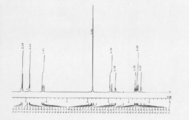
- FIG. 1 is a graph showing a 1 H-NMR spectrum of a compound (5-exo- (4-nitrophenyl) bicyclo [2.2.1] -2-heptene) obtained in Example 1.
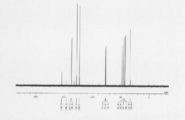
- 2 is a graph showing a 13 C-NMR spectrum of the compound (5-exo- (4-nitrophenyl) bicyclo [2.2.1] -2-heptene) obtained in Example 1.
- FIG. 3 is a graph showing a 1 H-NMR spectrum of a compound (5-exo- (4-methoxyphenyl) bicyclo [2.2.1] -2-heptene) obtained in Example 3.
- FIG. 1 is a graph showing a 1 H-NMR spectrum of a compound (5-exo- (4-methoxyphenyl) bicyclo [2.2.1] -2-heptene) obtained in Example 3.
- FIG. 2 is a graph showing a 13 C-NMR spectrum of a compound (5-exo- (4-methoxyphenyl) bicyclo [2.2.1] -2-heptene) obtained in Example 3.
- FIG. 2 is a graph showing a 1 H-NMR spectrum of a compound (5-exo-phenylbicyclo [2.2.1] -2-heptene) obtained in Example 5.
- FIG. 6 is a graph showing a 13 C-NMR spectrum of the compound (5-exo-phenylbicyclo [2.2.1] -2-heptene) obtained in Example 5.
- the method for producing a norbornene derivative of the present invention comprises a palladium catalyst in which a phosphine-based ligand represented by the general formula (1) is coordinated to divalent palladium, N, N-dimethylformamide and N, N-dimethyl.
- the steric configuration of the substituent represented by the general formula (4) and represented by Z in the general formula (4) is an exo coordination.
- the palladium catalyst used in the present invention is represented by the following general formula (1):
- R ⁇ 1 > shows a cyclic
- the halogen compound (X) in the halogen compound represented by the general formula (3) is a chlorine atom
- the halogen compound When the reactivity of is relatively low, it tends to be difficult to proceed the reaction sufficiently, and depending on the type of halogen atom, a norbornene derivative in which the steric configuration of the substituent is exo coordination is sufficiently high in yield. It becomes difficult to manufacture.
- R 1 in the general formula (1) is independently a cyclic aliphatic hydrocarbon group.
- a cyclic aliphatic hydrocarbon group may be a saturated hydrocarbon group or an unsaturated hydrocarbon group as long as it is aliphatic and cyclic.
- Such a cyclic aliphatic hydrocarbon group may have a monocyclic structure or a condensed ring structure, and may further have a crosslinked structure. Further, from the viewpoint of ease of production of the catalyst and the like, it is more preferable that each R 1 is the same group.
- such a cyclic aliphatic hydrocarbon group is not particularly limited, for example, cyclopentyl group, cyclohexyl group, cycloheptyl group, norbornyl group, cyclooctyl group, cyclononyl group, cyclodecyl group, cycloundecyl group, Examples include decahydronaphthyl group, cyclopentenyl group, cyclopentadienyl group, cyclohexenyl group, 1,5-cyclooctadienyl group, tetrahydroindenyl group, adamantyl group and the like.
- such a cyclic aliphatic hydrocarbon group is not particularly limited, but preferably has 5 to 10 carbon atoms (more preferably 5 to 7).
- the selectivity of the exo isomer tends to decrease.
- the upper limit is exceeded, the reactivity decreases and the yield of the exo isomer tends to decrease.
- such a cyclic aliphatic hydrocarbon group has 5 to 10 carbon atoms (more preferably, from the viewpoint that an exo form of a norbornene derivative can be produced in a sufficiently high yield.
- the cyclic aliphatic saturated hydrocarbon group of 5 to 7) is preferable, and among them, a cyclohexyl group is particularly preferable because a higher effect can be obtained.
- Examples of the palladium catalyst in which the phosphine-based ligand represented by the general formula (1) is coordinated to divalent palladium include the following general formula (I): [PdQ o L p ] (I) (In the formula (I), Pd represents palladium, Q represents at least one of halogen atoms (more preferably bromine and chlorine), and L represents a phosphine-based coordination represented by the above general formula (1). Represents a child, o represents an integer of 0 to 2, and p represents an integer of 1 to 2) The palladium catalyst represented by these can be used.
- Q in the general formula (I) is not particularly limited, but a halogen atom is preferable from the viewpoint that it is easier to obtain and the catalyst becomes a more stable compound.
- Q is a halogen atom
- the value of o is 2
- the value of p is 2 from the viewpoint that the palladium in the catalyst is divalent.
- the palladium catalyst represented by the general formula (I) the following general formula (I-1): [PdQ 2 L 2 ] (I-1) (In formula (I-1), Pd represents palladium, Q represents a halogen atom, and L represents a phosphine-based ligand represented by the above general formula (1).)
- the catalyst represented by is preferable.
- Examples of the palladium catalyst represented by the general formula (I) include [PdCl 2 (P (C 5 H 9 ) 3 ) 2 ], [PdCl 2 (P (C 6 H 11 ) 3 ) 2 ]. , [PdCl 2 (P (C 7 H 13 ) 3 ) 2 ], [PdCl 2 (P (C 9 H 19 ) 3 ) 2 ], [PdCl 2 (P (C 10 H 21 ) 3 ) 2 ], [ PdBr 2 (P (C 5 H 9 ) 3 ) 2 ], [PdBr 2 (P (C 6 H 11 ) 3 ) 2 ], [PdBr 2 (P (C 7 H 13 ) 3 ) 2 ], [PdBr 2 (P (C 9 H 19 ) 3 ) 2 ], [PdBr 2 (P (C 10 H 21 ) 3 ) 2 ] and the like.
- 2 (P (C 6 H 11 ) 3 ) 2 ], [PdCl 2 (P (C 7 H 13 ) 3 ) 2 ] are more preferred, and [PdCl 2 (P (C 6 H 11 ) 3 ) 2 ] is particularly preferred. preferable.
- the method for producing such a palladium catalyst is not particularly limited.
- PdCl 2 is dissolved in MeCN and modified to [PdCl 2 (MeCN) 2 ].
- the obtained [PdCl 2 (MeCN) 2 ] was dissolved in CH 2 Cl 2 at room temperature, 1,5-C 8 H 12 was added and stirred at room temperature, and [PdCl 2 (1,5-C 8 H 12 was added. )].
- the obtained [PdCl 2 (1,5-C 8 H 12 )] was dissolved in CH 2 Cl 2 , PCy 3 was added, and the mixture was stirred at room temperature to obtain [PdCl 2 (P (C 6 H 11 )].
- a method of modifying to 2 ] is mentioned. In addition, you may use a commercially available thing as such a palladium catalyst.
- N, N-dimethylformamide (DMF) and / or N, N-dimethylacetamide (DMA) is used as a solvent.
- DMF and DMA as such a solvent may be used alone or in combination.
- a raw material compound used when a substituent such as a phenyl group is introduced into norbornadiene by using such a solvent comprising DMF and / or DMA in combination with the aforementioned palladium catalyst.
- Such a reducing agent is not particularly limited as long as it can be used as a reducing agent in a so-called reductive Heck reaction (hydroarylation reaction).
- a reducing agent for example, zinc; sodium borohydride; formic acid Alkaline metal salts of formic acid such as lithium formate, sodium formate, potassium formate, rubidium formate, cesium formate; alkaline earth metal salts of formic acid such as magnesium formate, calcium formate, strontium formate, barium formate; formic acid such as ammonium formate And ammonium salts; metal salts of formic acid such as zinc formate and iron formate; and the like.
- a specific norbornene derivative (exo form) in which the steric configuration of the substituent is an exo configuration can be more efficiently produced, and thus an alkali metal salt of formic acid is used. It is more preferable.
- the alkali metal in the alkali metal salt of formic acid include lithium, sodium, potassium, rubidium, and cesium. From the viewpoint of economy and yield, sodium or potassium is preferable, and sodium is particularly preferable. .
- Such a norbornadiene derivative has the following general formula (2):
- R 2 , R 3 , R 4 , R 5 and R 6 in the general formula (2) are each independently a hydrogen atom, a fluorine atom, a chlorine atom, or a linear fatty acid having 1 to 10 carbon atoms. Any one selected from an aromatic hydrocarbon group and a branched aliphatic hydrocarbon group having 3 to 10 carbon atoms.
- Examples of the linear aliphatic hydrocarbon group having 1 to 10 carbon atoms that can be selected as R 2 , R 3 , R 4 , R 5 , and R 6 include those having 1 to 6 carbon atoms. preferable. When the number of carbon atoms exceeds the upper limit, the yield of the exo-norbornene derivative tends to decrease.
- Such a linear hydrocarbon group is preferably a linear aliphatic saturated hydrocarbon group.
- the branched aliphatic hydrocarbon group having 3 to 10 carbon atoms that can be selected as R 2 , R 3 , R 4 , R 5 , or R 6 is preferably one having 3 to 6 carbon atoms. . When the number of carbon atoms exceeds the upper limit, the yield of the exo-norbornene derivative tends to decrease.
- such a branched aliphatic hydrocarbon group is preferably a branched aliphatic saturated hydrocarbon group.
- R 2 , R 3 , R 4 , R 5 , and R 6 are more preferably a hydrogen atom, a fluorine atom, or a chlorine atom from the viewpoint of the yield of the desired exo-norbornene derivative. And more preferably a hydrogen atom.
- l represents an integer of 0 or 1
- m represents an integer of 0 or 1
- n represents an integer of 0 or 1.
- Z represents any one selected from a phenylene group, a naphthylene group, and a biphenylene group.
- a phenylene group is particularly preferable from the viewpoint of the yield of the exo-norbornene derivative.
- X in the general formula (3) is any one halogen atom selected from the group consisting of an iodine atom, a bromine atom and a chlorine atom.
- a halogen atom selected from the group consisting of an iodine atom, a bromine atom and a chlorine atom.
- a chlorine atom is particularly preferable from the viewpoint of the availability of the compound represented by the general formula (3) and the cost.
- R 7 in the general formula (3) is a hydrogen atom, a nitro group, a linear aliphatic hydrocarbon group having 1 to 10 carbon atoms, or a branched aliphatic group having 3 to 10 carbon atoms. Any one selected from a hydrocarbon group, an alkoxy group having 1 to 10 carbon atoms, and a fluorine atom.
- Such a linear aliphatic hydrocarbon group having 1 to 10 carbon atoms that can be selected as R 7 is preferably one having 1 to 6 carbon atoms. When the number of carbon atoms exceeds the upper limit, the yield of the exo-norbornene derivative tends to decrease.
- such a linear aliphatic hydrocarbon group is preferably a linear aliphatic saturated hydrocarbon group.
- the branched aliphatic hydrocarbon group having 3 to 10 carbon atoms that can be selected as R 7 has preferably 3 to 7 carbon atoms, and more preferably 3 to 6 carbon atoms. When the number of carbon atoms exceeds the upper limit, the yield of the exo-norbornene derivative tends to decrease. Further, such a branched aliphatic hydrocarbon group is preferably a branched saturated hydrocarbon group.
- the alkoxy group having 1 to 10 carbon atoms that can be selected as R 7 is preferably one having 1 to 8 carbon atoms, more preferably 1 to 6 carbon atoms. When the number of carbon atoms exceeds the upper limit, the yield of the exo-norbornene derivative tends to decrease.
- R 7 includes a nitro group, a branched aliphatic hydrocarbon group having 3 to 5 carbon atoms, and an alkoxy group having 1 to 6 carbon atoms from the viewpoint of the yield of the exo-norbornene derivative. Is more preferable.
- Such a step is a step of reacting the norbornadiene derivative and the halogen compound in the presence of the palladium catalyst, at least one solvent of DMF and DMA, and a reducing agent.
- a reaction process is a reaction process using a so-called reductive Heck reaction (hydroarylation reaction).
- a specific palladium catalyst containing divalent palladium and the phosphine-based ligand, and at least one solvent of DMF and DMA are used in combination.
- the desired norbornene derivative (exo form) is produced in a sufficiently high yield.
- the content of the norbornadiene derivative represented by the general formula (2) contained in the reaction system is 0.1 to 50 mol% with respect to all the compounds in the reaction system. It is preferably 1 to 20 mol%, and more preferably.
- the reaction rate tends to decrease.
- the content exceeds the upper limit side reactions tend to increase.
- the content of the halogen compound represented by the general formula (3) contained in the reaction system is preferably 0.1 to 25 mol% with respect to the total compounds in the reaction system, More preferably, the content is 0.5 to 10 mol%.
- the content of such a halogen compound is less than the lower limit, the reaction rate tends to decrease.
- the content exceeds the upper limit side reactions tend to increase.
- the norbornadiene derivative represented by the general formula (2) and the halogen compound represented by the general formula (3) the norbornadiene derivative represented by the general formula (2) and the general formula ( The molar ratio of the halogen compound represented by 3) ([the norbornadiene derivative]: [the halogen compound]) is preferably in the range of 1: 1 to 10: 1. It is more preferable to be within the range.
- the molar ratio of the halogen compound represented by 3) is preferably in the range of 1: 1 to 10: 1. It is more preferable to be within the range.
- the content of the palladium catalyst contained in the reaction system is preferably 0.001 to 0.1 mol%, preferably 0.002 to 0.06 mol, based on all compounds in the reaction system. % Is more preferable.
- the content of such a palladium catalyst is less than the lower limit, the reaction rate tends to decrease.
- the content exceeds the upper limit side reactions tend to increase.
- a ratio ([palladium]: [norbornadiene derivative]) of the molar amount of the palladium catalyst contained in the reaction system in terms of metal and the molar amount of the norbornadiene derivative represented by the general formula (2) It is preferably in the range of 1:10 to 1: 20000, and more preferably in the range of 1:60 to 1: 10000.
- the amount of palladium used is less than the lower limit, the reaction rate tends to decrease.
- the amount exceeds the upper limit side reactions tend to increase.
- the range is preferably 1: 5 to 1: 2000, and more preferably 1:30 to 1: 1000.
- the amount of palladium used is less than the lower limit, the reaction rate tends to decrease.
- the amount exceeds the upper limit side reactions tend to increase.
- the amount of the solvent contained in such a reaction system is preferably such that the concentration of all compounds in the reaction system is 1 to 10 mol / L, and is preferably 1 to 6 mol / L. Is more preferable.
- the concentration of all the compounds is less than the lower limit, the reaction rate tends to decrease and the conversion rate tends to decrease.
- the concentration of all the compounds exceeds the upper limit, the norbornadiene derivative There is a tendency for some reactions to occur and to produce by-products.
- the content of the reducing agent contained in the reaction system is such that the molar ratio to the content of the halogen compound ([reducing agent]: [halogen compound]) is in the range of 1: 1 to 10: 1.
- the amount is preferably in the range of 1: 1 to 5: 1. If the content of such a reducing agent is less than the lower limit, the conversion rate tends to decrease. On the other hand, if the content exceeds the upper limit, a by-product (norbornane) in which norbornene as a target product is hydrogenated is generated. Tend to.
- a base may be further used as a neutralizing agent.
- a base may be an organic base or an inorganic base, and is not particularly limited.
- Alkylamines such as propylamine, tributylamine, dibutylamine and butylamine
- pyridines such as pyridine and dimethylaminopyridine
- inorganic hydroxides such as sodium hydroxide, potassium hydroxide and calcium hydroxide
- sodium carbonate and sodium bicarbonate Alkaline carbonates such as potassium carbonate, potassium hydrogen carbonate, cesium carbonate, cesium hydrogen carbonate and calcium carbonate
- metal alkoxides such as sodium methoxide, sodium ethoxide and potassium t-butoxy
- sodium hydroxide, potassium hydroxide, sodium carbonate, sodium hydrogen carbonate, potassium carbonate, potassium hydrogen carbonate are preferred.
- the base content is preferably such that the molar ratio ([base]: [halogen compound]) to the halogen compound content is in the range of 1: 1 to 10: 1.
- the amount is more preferably in the range of 1 to 5: 1.
- an alkali metal salt of formic acid is used as the reducing agent, the same effect as that obtained when a base is used can be obtained without using such a base. It is particularly preferable to use an alkali metal salt of formic acid as the reducing agent used.
- the temperature condition in such a reaction step is preferably in the range of 20 to 180 ° C, more preferably in the range of 60 to 150 ° C, and still more preferably in the range of 80 to 140 ° C. Usually, it is particularly preferably in the range of 80 to 120 ° C.
- the reaction temperature is lower than the lower limit, the reaction rate tends to decrease and the conversion rate tends to decrease.
- the upper limit is exceeded, a reaction between the norbornadiene derivatives occurs and a by-product is generated. There is a tendency.
- reaction time of such a reaction is preferably 0.1 to 100 hours, more preferably 1 to 24 hours, and even more preferably 1 to 10 hours. If the reaction time is less than the lower limit, the conversion tends to be reduced and the product cannot be obtained in good yield. On the other hand, if the reaction time exceeds the upper limit, palladium in the palladium catalyst is aggregated. By deactivating, there is a tendency that the conversion rate reaches a peak.
- R 8 , R 9 , R 10 , R 11 , R 12 , 1, m, and n are R 2 , R 3 , R 4 , R in the general formula (2). 5 , R 6 , l, m and n are the same. Z in the general formula (4) is the same as Z in the general formula (3). Further, R 13 in the general formula (4) is the same as R 7 in the general formula (3).
- the exo-norbornene derivative represented by the general formula (4) can be synthesized relatively easily, and the polymer film obtained by ring-opening polymerization of the exo-norbornene derivative has sufficient heat resistance. From the viewpoint of having it, it is more preferable that m in the general formula (4) is 0 and n is 0.
- the exo-norbornene derivative represented by the general formula (4) can be synthesized relatively easily, and a polymer film obtained by ring-opening polymerization of the exo-norbornene derivative has sufficient heat resistance.
- Z is preferably a phenylene group.
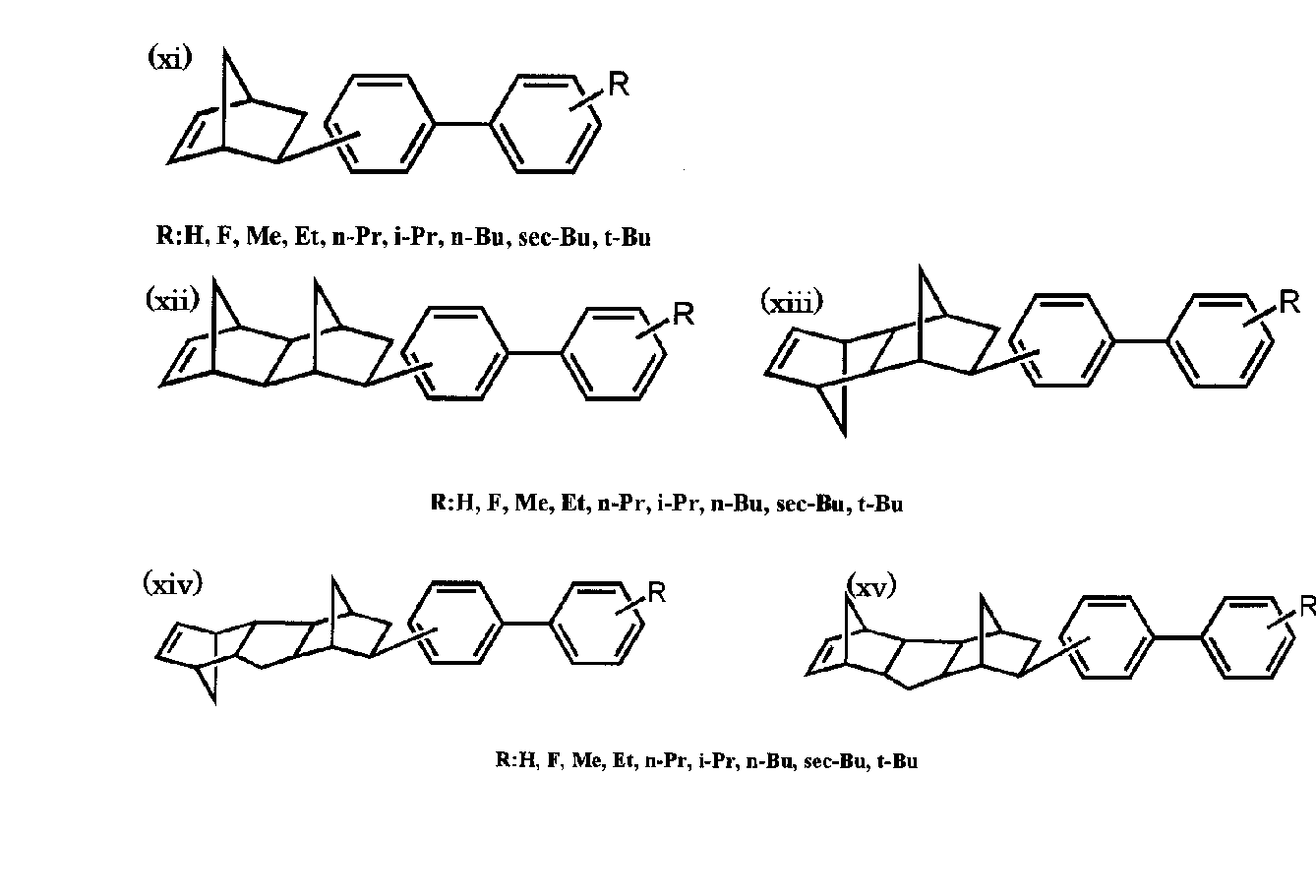
- exo-norbornene derivative represented by the general formula (4) is not particularly limited, and examples thereof include exo-norbornene derivatives represented by the following general formulas (i) to (xv).
- the configuration of the substituted phenyl group or the substituted naphthyl group is an exo coordination.
- a norbornene derivative obtained by employing the method for producing a norbornene derivative of the present invention is obtained by ring-opening polymerization, ring-opening polymerization and subsequent hydrogenation reaction, addition polymerization, radical polymerization, cationic polymerization, anionic polymerization, etc. It can be. It is also possible to obtain a copolymer by copolymerizing such a norbornene derivative with any copolymerizable compound as required. And a polymer synthesized from such a norbornene derivative exhibits excellent transparency, heat resistance, low water absorption, and can arbitrarily control the birefringence value and its wavelength dispersion depending on the application.
- Optical disk, magneto-optical disk, optical lens F ⁇ lens, pickup lens, laser printer lens, camera lens, etc.
- eyeglass lens optical film / sheet (display film, retardation film, polarizing film, polarizing plate protective film, Diffusion film, antireflection film, liquid crystal substrate, EL substrate, electronic paper substrate, touch panel substrate, PDP front plate, etc.), transparent conductive film substrate, optical fiber, light guide plate, optical card, optical mirror, IC, LSI, LED It can be suitably applied as a molding material such as a sealing material.
- a norbornene derivative is composed of an exo body, by using it as a material for a retardation film, a retardation having optical characteristics as a specific negative A among negative birefringences. It is possible to form a film, a retardation film having a birefringent wavelength dispersion characteristic of inverse dispersion, or the like.
- Example 1 First, bis (tricyclohexylphosphine) palladium (II) dichloride (22.4 mg, product of STREM) as a palladium catalyst and potassium formate (420 mg) as a reducing agent were placed in a 30 mL two-necked flask. Next, the inside of the two-neck flask was replaced with nitrogen. Next, dimethylformamide (DMF: 5 ml), 4-bromonitrobenzene (202 mg) and 2,5-norbornadiene (276 mg) as a solvent were added to the two-necked flask, and the temperature was 120 ° C. for 4 hours. Stirring was performed to obtain a reaction solution.
- DMF dimethylformamide
- 4-bromonitrobenzene 202 mg
- 2,5-norbornadiene 276 mg
- the content of the palladium catalyst with respect to all the compounds is 0.04 mol%
- the molar equivalent of the palladium catalyst with respect to 4-bromonitrobenzene is 0.03 equivalent
- 4-bromonitrobenzene with respect to 4-bromonitrobenzene.
- the molar equivalent of 2,5-norbornadiene was 3.0 equivalents
- the molar equivalent of potassium formate relative to 4-bromonitrobenzene was 5.0 equivalents.
- reaction solution was cooled to room temperature, poured into 30 ml of ice water, and extracted with diethyl ether (50 ml ⁇ 3 times) using a separatory funnel to obtain a diethyl ether solution.
- diethyl ether solution was washed with water and saturated brine. The washed diethyl ether solution was dried over anhydrous magnesium sulfate, filtered and concentrated to obtain a crude product.
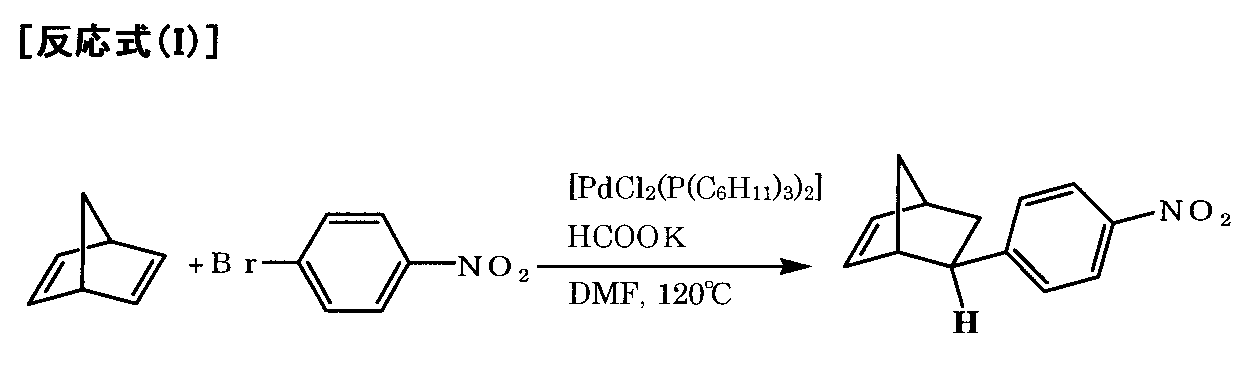
- reaction at the time of manufacture of such a crude product is shown in the following reaction formula (I).
- the gas chromatographic analysis was performed on the crude product thus obtained.
- GC-4000 manufactured by GL sciences was used as a gas chromatograph apparatus, and HP-5 manufactured by AGILENT TECHNOLOGIES, INC as a column (length 30 m, inner diameter 0.32 mm, film thickness 0. 25 ⁇ m) was used.
- the target product and the by-product are separated from the composition organism by a silica gel column chromatograph (silica gel 60N (spherical, neutral) manufactured by Kanto Chemical Co., Ltd., using a particle size of 40 to 50 ⁇ m as silica gel), The product (isolated target product) was obtained. And the structural analysis was performed by NMR measurement with respect to the product (isolated target product) thus separated. The results of NMR measurement of the product obtained in Example 1 are shown in FIGS.
- Example 2 A crude product and a product (isolated target product) were obtained in the same manner as in Example 1 except that sodium formate was used instead of potassium formate and 4-chloronitrobenzene was used instead of 4-bromonitrobenzene. .
- the product (target product) was exo-5- (p-tert-butylphenyl). It was confirmed to be bicyclo [2.2.1] -2-heptene.
- Example 3 A crude product and a product (isolated target product) were obtained in the same manner as in Example 2 except that 4-chloroanisole was used instead of 4-bromonitrobenzene.
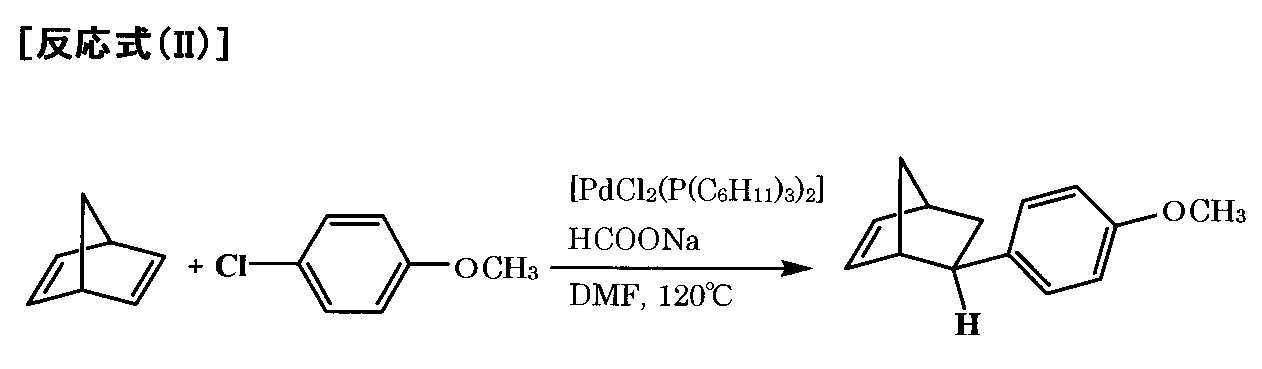
- reaction at the time of manufacture of such a product is shown in the following reaction formula (II).
- Example 4 A crude product and a product (isolated target product) were obtained in the same manner as in Example 3 except that potassium formate was used in place of sodium formate and 4-bromoanisole was used in place of 4-chloroanisole.
- Example 5 A crude product and a product (isolated target product) were obtained in the same manner as in Example 2 except that 4-chlorobenzene was used instead of 4-bromonitrobenzene.
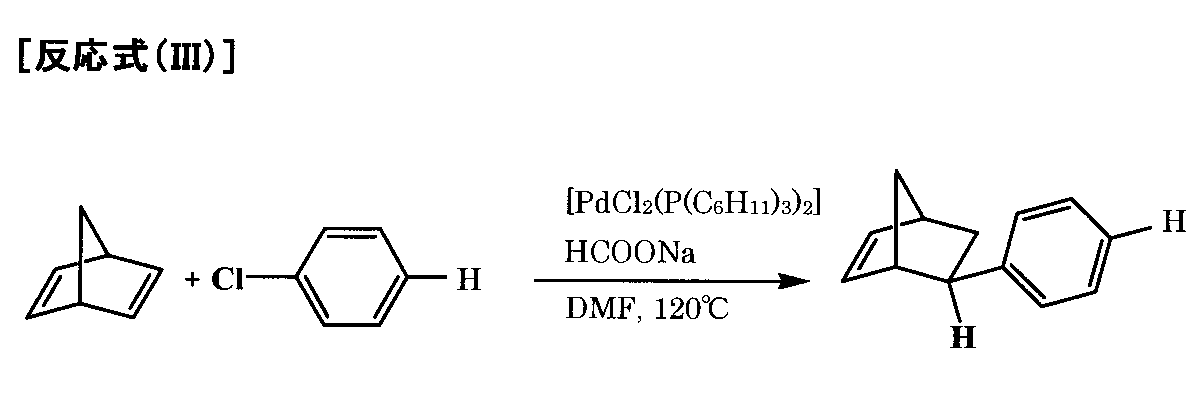
- reaction at the time of manufacture of such a product is shown in the following reaction formula (III).
- Example 5 As is clear from the results of Example 5 as described above, according to the present invention, it was confirmed that the target product (exo form) can be produced in a sufficiently high yield. Further, considering Examples 1 to 5 together, the target product (exo form) can be obtained with a sufficiently high yield regardless of the type of substituent (R 7 ) in the halogen compound represented by the general formula (3). It was confirmed that it can be manufactured at a rate.
- Example 6 First, in a 30 mL two-necked flask, bis (tricyclohexylphosphine) palladium (II) dichloride ([PdCl 2 (P (C 6 H 11 ) 3 ) 2 ]: 0.9 mg, manufactured by STREM) as a palladium catalyst, Sodium formate (338.4 mg) as a reducing agent was added. Next, the inside of the two-neck flask was replaced with nitrogen.
- bis (tricyclohexylphosphine) palladium (II) dichloride [PdCl 2 (P (C 6 H 11 ) 3 ) 2 ]: 0.9 mg, manufactured by STREM) as a palladium catalyst
- Sodium formate (338.4 mg) as a reducing agent was added.
- the inside of the two-neck flask was replaced with nitrogen.
- dimethylformamide (DMF: 5 ml), 4-tert-butylphenyl chloride (220 mg), and 2,5-norbornadiene (601 mg) as a solvent were added to the two-necked flask at a temperature of 120 ° C. Was stirred for 4 hours to obtain a reaction solution.
- the content of the palladium catalyst with respect to all the compounds is 0.002 mol%, and the molar equivalent of the palladium catalyst with respect to 4-tert-butyl-phenyl chloride is 0.001 equivalent.
- reaction solution was cooled to room temperature, poured into 300 ml of ice water, and extracted with n-hexane (50 ml ⁇ 3 times) using a separatory funnel to obtain an n-hexane solution.
- n-hexane solution was washed with water and saturated brine. The washed n-hexane solution was dried over anhydrous magnesium sulfate, filtered and concentrated to obtain a crude product.
- reaction formula (IV) reaction at the time of manufacture of such a crude product is shown in the following reaction formula (IV).
- Example 2 the same method as in Example 1 was adopted to separate the product (target product) and the by-product.
- the structure of the product thus obtained (isolated target product) was analyzed by NMR measurement, the product was found to be exo-5- (p-tert-butylphenyl) bicyclo [2.2. 1] It was confirmed to be 2-heptene.
- Example 7 The content of the palladium catalyst ([PdCl 2 (P (C 6 H 11 ) 3 ) 2 ]) was set to the amount described in Table 1 below. Further, in Example 10, it was 2 for 4-tert-butyl-phenyl chloride. The crude product and the product (isolated target product) were obtained in the same manner as in Example 6 except that the molar equivalent of 1,5-norbornadiene was changed to 3.0 equivalent.
- Example 11 A crude product and a product (isolated target product) were obtained in the same manner as in Example 6 except that the reaction solution prepared as follows was used.
- dimethylformamide (DMF: 5 ml), tert-butylphenyl chloride (220 mg), and 2,5-norbornadiene (601 mg) as a solvent were added to the two-necked flask, and the mixture was stirred at a temperature of 120 ° C. Stirring was performed for a time to obtain a reaction solution.
- the content of the palladium catalyst with respect to all the compounds is 0.05 mol%
- the molar equivalent of the palladium catalyst with respect to 4-tert-butyl-phenyl chloride is 0.03 equivalent.
- the molar equivalent of norbornadiene to -tert-butyl-phenyl chloride is 5.0 equivalents
- the molar equivalent of formic acid to 4-tert-butyl-phenyl chloride is 5.0 equivalents
- to 4-tert-butyl-phenyl chloride is 3.1 equivalent.
- Example 11 The gas chromatographic analysis was performed on the crude product obtained in Example 11 in the same manner as in Example 1. As a result, exo-5- (p-tert) was found in the crude product. -Butylphenyl) bicyclo [2.2.1] -2-heptene (target product) was confirmed. Also. By such gas chromatographic analysis, the conversion rate and the selectivity of the target product were measured. The results are shown in Table 2. Note that structural analysis of the product (isolated target product) by NMR measurement revealed that the product (target product) was exo-5- (p-tert-butylphenyl) bicyclo [2.2.1. ] -2-heptene was confirmed.
- Example 12 A crude product and a product (isolated target product) were obtained in the same manner as in Example 11 except that the solvent used for preparing the reaction solution was changed from dimethylformamide (DMF) to dimethylacetamide (DMA). .
- DMF dimethylformamide
- DMA dimethylacetamide
- Example 13 and Comparative Examples 2 to 8 The molar equivalent of norbornadiene to 4-tert-butyl-phenyl chloride was changed to 2.0 equivalents, and the molar equivalent of sodium formate to 4-tert-butyl-phenyl chloride was changed to 2.0 equivalents. Further, a crude product and a product (isolated target product) were obtained in the same manner as in Example 6 except that the catalysts shown in Table 3 below were used as the palladium catalyst.
- Example 13 When each crude product thus obtained was subjected to gas chromatographic analysis, the crude product obtained in Example 13 contained exo-5- (p-tert-butylphenyl) bicyclo [2]. 2.1] -2-heptene was confirmed. Table 3 shows the results of the conversion rates confirmed by such gas chromatographic analysis.
- the structure of the product (isolated target product) obtained in Example 13 was analyzed by NMR measurement. As a result, the product (target product) was exo-5- (p-tert-butylphenyl). It was confirmed to be bicyclo [2.2.1] -2-heptene.
- Example 14 The crude product and the product (isolation) were obtained in the same manner as in Example 11 except that Et 3 N (400 mg) was used instead of cesium carbonate (Cs 2 CO 3 : 1300 mg) and the stirring time was changed to 4 hours. Target product).
- Example 4 The product thus obtained was subjected to gas chromatographic analysis in the same manner as in Example 1. As a result, exo-5- (p-tert-butylphenyl) bicyclo [2.2.1] -2 -Heptene (target) was confirmed. Further, by the gas chromatographic analysis, the conversion rate of the reaction and the selectivity of exo-5- (p-tert-butylphenyl) bicyclo [2.2.1] -2-heptene (target product) were measured. The results are shown in Table 4. Table 4 lists the results of Example 11 for reference. Note that structural analysis of the product (isolated target product) obtained in Example 14 by NMR measurement revealed that the product was exo-5- (p-tert-butylphenyl) bicyclo [2. 2.1] -2-heptene.
- exo-5- (p-tert-butylphenyl) bicyclo [2] is obtained by utilizing a base together with a reducing agent (formic acid is used in Examples 11 and 14).
- a reducing agent formic acid is used in Examples 11 and 14.
- Example 15 to 21 The molar equivalent of palladium catalyst with respect to 4-tert-butyl-phenyl chloride was changed to 0.05 equivalent, the molar equivalent of norbornadiene with respect to 4-tert-butyl-phenyl chloride was changed to 3.0 equivalent, and the stirring time was as shown in the table below.
- a crude product and a product (isolated target product) were obtained in the same manner as in Example 6 except that the changes were made as shown in 5.
- exo-5- (p-tert-butylphenyl) bicyclo [2.2.1] -2-heptene can be produced in a sufficiently high yield in the present invention.
- exo-5- (p-tert-butyl) is more efficiently obtained by setting the heating and stirring time (reaction time) to 1 hour or more (more preferably 3 hours to 5 hours). It was confirmed that (phenyl) bicyclo [2.2.1] -2-heptene can be produced.
- Example 22 The molar equivalent of palladium catalyst with respect to 4-tert-butyl-phenyl chloride was changed to 0.03 equivalent, and the molar equivalent of 2,5-norbornadiene with respect to 4-tert-butyl-phenyl chloride was changed as shown in Table 6 below. Except for the above, a crude product and a product (isolated target product) were obtained in the same manner as in Example 6.
- Example 24 Example 6 except that the molar equivalent of norbornadiene to 4-tert-butyl-phenyl chloride was changed to 2.0 equivalents, and the molar equivalent of sodium formate to 4-tert-butyl-phenyl chloride was changed to 2.0 equivalents. In the same manner as above, a crude product and a product (isolated target product) were obtained.
- Example 25 A crude product and a product (isolated target product) were obtained in the same manner as in Example 24 except that potassium formate was used instead of sodium formate.
- Example 26 The crude product and product (isolated target product) were obtained in the same manner as in Example 24 except that the molar equivalent of the palladium catalyst relative to 4-tert-butyl-phenyl chloride was changed from 0.001 equivalent to 0.0005 equivalent. Got.
- Example 27 Example 24 except that 4-tert-butyl-phenyl bromide was used instead of 4-tert-butyl-phenyl chloride, and the molar equivalent of norbornadiene to 4-tert-butyl-phenyl bromide was changed to 5.0 equivalents. In the same manner, a crude product and a product (isolated target product) were obtained.
- the halogen compound represented by the general formula (3) is a bromide (4-tert-butyl-phenylbromide) in which X is a bromine atom.
- Example 27 and chloro (4-tert-butyl-phenyl chloride) in which X is a chlorine atom (Example 24), exo-5- (p-tert
- the yield of -butylphenyl) bicyclo [2.2.1] -2-heptene (exo form) was confirmed to be approximately the same, and the halogen atom in the halogen compound represented by the general formula (3) ( It was found that the exo body can be produced in a sufficiently high yield regardless of the type of X).
- reaction solution was cooled to 25 ° C., poured into 300 ml of ice water, and extracted with n-hexane (50 ml ⁇ 3 times) using a separatory funnel to obtain an n-hexane solution. .
- n-hexane solution was washed with water and saturated brine. The washed n-hexane solution was dried over anhydrous magnesium sulfate, filtered and concentrated to obtain a crude product.
- the product (target product) and the by-product were separated from the crude product thus obtained by the same method as in Example 1.
- the product (isolated target product) thus obtained was subjected to structural analysis by NMR measurement.
- exo-5- (p-tert-butylphenyl) bicyclo [2.2.1] -2- Confirmed to be heptene.
- the configuration of the substituent is not limited. It is possible to provide a method for producing a norbornene derivative capable of producing a specific norbornene derivative (exo form) having an exo configuration with high selectivity and a sufficiently high yield. Therefore, the method for producing a norbornene derivative of the present invention is a method for producing a norbornene derivative that has a unique structure and can be suitably used for producing optical disks, magneto-optical disks, optical lenses, spectacle lenses, optical films, and the like. Useful as.
Landscapes
- Chemical & Material Sciences (AREA)
- Organic Chemistry (AREA)
- Chemical Kinetics & Catalysis (AREA)
- Organic Low-Molecular-Weight Compounds And Preparation Thereof (AREA)
- Low-Molecular Organic Synthesis Reactions Using Catalysts (AREA)
Abstract
下記一般式(1):[式(1)中、R1は、それぞれ独立に環状の脂肪族炭化水素基を示す。] で表されるホスフィン系配位子が2価のパラジウムに配位したパラジウム触媒と、N,N-ジメチルホルムアミド等の溶媒と、還元剤との存在下において、下記一般式(2): [式(2)中、R2、R3、R4、R5、R6は、それぞれ独立に、水素原子等を示し、lは0又は1の整数を示し、mは0又は1の整数を示し、nは0又は1の整数を示す。] で表されるノルボルナジエン誘導体と、下記一般式(3): [式(3)中、Zはフェニレン基等を示し、Xは塩素原子等を示し、R7は水素原子等を示す。] で表されるハロゲン化合物とを反応せしめ、下記一般式(4): [式(4)中、R8、R9、R10、R11、R12、l、m、nは、それぞれ上記一般式(2)中のR2、R3、R4、R5、R6、l、m、nと同義であり、R13は上記一般式(3)中のR7と同義であり、Zは上記一般式(3)中のZと同義である。] で表され且つ前記一般式(4)中のZで表される置換基の立体配置がexo配位であるノルボルネン誘導体を得ることを特徴とするノルボルネン誘導体の製造方法。
Description
本発明は、ノルボルネン誘導体の製造方法に関する。
環状オレフィン類をモノマーとして用いて製造される環状オレフィン系重合体は、主鎖骨格に脂環構造を有することから非晶性となりやすく、優れた透明性、耐熱性を示し、光弾性係数が小さく、かつ、低吸水性、耐酸性、耐アルカリ性、高い電気絶縁性等の性状を有する。そのため、環状オレフィン系重合体を、ディスプレイ用途(位相差フィルム、拡散フィルム、液晶基板、タッチパネル用フィルム、導光板、偏光板保護フィルム等)、光学レンズ用途、光ディスク用途(CD、MD、CD-R、DVD等)、光ファイバー用途、光学フィルム/シート用途、光半導体封止用途等に利用することが検討されてきた。そして、このような環状オレフィン系重合体の中でも、特に、ノルボルネン誘導体の開環メタセシス重合で得られた環状オレフィン系重合体の水素化物は、優れた透明性、耐熱性を示し、光弾性係数が小さいという特性を有することが知られており、ポリカーボネートとともに液晶ディスプレイ(LCD)等の位相差フィルムとして利用されてきた。そのため、近年では、ノルボルネン誘導体を用いて得られる環状オレフィン系重合体の開発が行われてきている。そして、このような状況の下、様々なノルボルネン誘導体の製造方法が研究されており、置換基がexoの立体配置で置換したノルボルネン誘導体を製造する方法が開示されている。
例えば、2000年に発行されたAngew.Chem.Int.Ed(vol.39、no.11)の1946~1949頁(非特許文献1)においては、パラジウムと下記一般式(A):
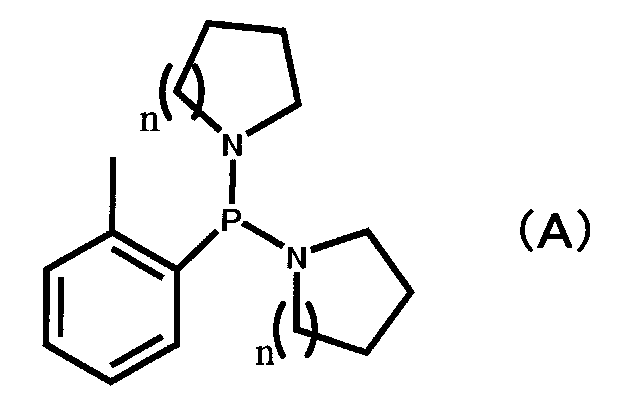
(式(A)中、nは1又は2を示す。)
で表されるリン系化合物とからなる触媒の存在下、ノルボルナジエン系化合物と式:X-R(式中Xはハロゲンを示し、Rはフェニル基を示す)で表される化合物とを反応させて、5-フェニル-2-ノルボルネン誘導体を得る方法が開示されている。しかしながら、このような非特許文献1に記載のようなノルボルネン誘導体の製造方法は、5位の置換基にt-ブチル基やニトロ基等の置換基を有する置換フェニル基等を導入しようとした場合には、置換フェニル基の立体配置がexo配置となるノルボルネン誘導体を収率よく製造することができなかった。
で表されるリン系化合物とからなる触媒の存在下、ノルボルナジエン系化合物と式:X-R(式中Xはハロゲンを示し、Rはフェニル基を示す)で表される化合物とを反応させて、5-フェニル-2-ノルボルネン誘導体を得る方法が開示されている。しかしながら、このような非特許文献1に記載のようなノルボルネン誘導体の製造方法は、5位の置換基にt-ブチル基やニトロ基等の置換基を有する置換フェニル基等を導入しようとした場合には、置換フェニル基の立体配置がexo配置となるノルボルネン誘導体を収率よく製造することができなかった。
また、特開2009-51819号公報(特許文献1)においては、ジメチルホルムアミド、ジメチルアセトアミド、ジメチルスルホキシド等の溶媒を用い、塩化パラジウムや酢酸パラジウム等のパラジウム塩と(t-Bu)3P等のリン系化合物との存在下において、ノルボルナジエン系化合物と、式:Br-W-Y(式中、Wはフェニル基等を示し、Yは水素やt-Bu等を示す。)で表されるブロム化合物とを反応させて、5位の位置に式:-W-Yで表される置換基が導入され且つその置換基の立体配置がexo配置となるノルボルネン誘導体を製造する方法が開示されている。しかしながら、このような特許文献1に記載のようなノルボルネン誘導体の製造方法においては、置換基を導入させるために用いる原料化合物として、前記ブロム化合物中の臭素(Br)原子の位置に他のハロゲン原子(特に塩素原子)が導入されている化合物を用いた場合には、置換基の立体配置がexo配置となるノルボルネン誘導体を必ずしも十分に収率よく製造することができなかった。
Jean Michel Brunel et al.,Angew.Chem.Int.Ed.,2000年発行,vol.39,no.11,1946~1949頁
本発明は、上記従来技術の有する課題に鑑みてなされたものであり、フェニル基等の置換基を導入する際に用いる原料化合物中のハロゲン原子の種類が臭素原子や塩素原子等であっても、置換基の立体配置がexo配置となる特定のノルボルネン誘導体(exo体)を選択性よく且つ十分に高い収率で製造することが可能なノルボルネン誘導体の製造方法を提供することを目的とする。
本発明者らは、上記目的を達成すべく鋭意研究を重ねた結果、下記一般式(2)で表されるノルボルナジエン誘導体と、下記一般式(3)で表されるハロゲン化合物とを反応せしめる際に、還元剤の存在下、下記一般式(1)で表されるホスフィン系配位子が2価のパラジウムに配位したパラジウム触媒と、N,N-ジメチルホルムアミド及びN,N-ジメチルアセトアミドからなる群から選択される少なくとも1種の溶媒とを組み合わせて用いることにより、驚くべきことに、下記一般式(3)中のハロゲン原子が塩素原子である場合のように比較的反応性の低いハロゲン化合物を用いた場合においても、置換基の立体配置がexo配位である下記一般式(4)で表されるノルボルネン誘導体を効率よく且つ十分に製造することが可能となり、ノルボルネン誘導体にフェニル基等の置換基を導入する際に用いる原料化合物中のハロゲン原子の種類が臭素原子や塩素原子等であっても、置換基の立体配置がexo配置となる特定のノルボルネン誘導体(exo体)を選択性よく且つ十分に高い収率で製造することが可能となることを見出し、本発明を完成するに至った。
すなわち、本発明のノルボルネン誘導体の製造方法は、下記一般式(1):

[式(1)中、R1は、それぞれ独立に環状の脂肪族炭化水素基を示す。]
で表されるホスフィン系配位子が2価のパラジウムに配位したパラジウム触媒と、N,N-ジメチルホルムアミド及びN,N-ジメチルアセトアミドからなる群から選択される少なくとも1種の溶媒と、還元剤との存在下において、
下記一般式(2):
で表されるホスフィン系配位子が2価のパラジウムに配位したパラジウム触媒と、N,N-ジメチルホルムアミド及びN,N-ジメチルアセトアミドからなる群から選択される少なくとも1種の溶媒と、還元剤との存在下において、
下記一般式(2):

[式(2)中、R2、R3、R4、R5、R6は、それぞれ独立に、水素原子、フッ素原子、塩素原子、炭素原子数1~10の直鎖状の脂肪族炭化水素基、及び、炭素原子数3~10の分岐鎖状の脂肪族炭化水素基からなる群から選択されるいずれか1種を示し、lは0又は1の整数を示し、mは0又は1の整数を示し、nは0又は1の整数を示す。]
で表されるノルボルナジエン誘導体と、下記一般式(3):
で表されるノルボルナジエン誘導体と、下記一般式(3):

[式(3)中、Zは、フェニレン基、ナフチレン基及びビフェニレン基の中から選択されるいずれか1種を示し、Xはヨウ素原子、臭素原子及び塩素原子からなる群から選択されるいずれか1種のハロゲン原子を示し、R7は水素原子、ニトロ基、炭素原子数1~10の直鎖状の脂肪族炭化水素基、炭素原子数3~10の分岐鎖状の脂肪族炭化水素基、炭素原子数1~10のアルコキシ基及びフッ素原子からなる群から選択されるいずれか1種を示す。]
で表されるハロゲン化合物とを反応せしめ、下記一般式(4):
で表されるハロゲン化合物とを反応せしめ、下記一般式(4):

[式(4)中、R8、R9、R10、R11、R12、l、m、nは、それぞれ上記一般式(2)中のR2、R3、R4、R5、R6、l、m、nと同義であり、R13は上記一般式(3)中のR7と同義であり、Zは上記一般式(3)中のZと同義である。]
で表され且つ前記一般式(4)中のZで表される置換基の立体配置がexo配位であるノルボルネン誘導体を得る方法である。
で表され且つ前記一般式(4)中のZで表される置換基の立体配置がexo配位であるノルボルネン誘導体を得る方法である。
上記本発明のノルボルネン誘導体の製造方法においては、前記一般式(1)中のR1が炭素原子数5~10の環状の脂肪族炭化水素基であることが好ましく、炭素原子数5~7の環状の脂肪族飽和炭化水素基であることがより好ましい。更に、このような脂肪族飽和炭化水素基としてはシクロヘキシル基が特に好ましい。
また、上記本発明のノルボルネン誘導体の製造方法においては、前記パラジウム触媒が、下記一般式(I-1):
[PdQ2L2] (I-1)
(式(I-1)中、Pdはパラジウムを示し、Qはハロゲン原子を示し、Lは上記一般式(1)で表されるホスフィン系配位子を示す。)
で表される触媒であることが好ましい。
[PdQ2L2] (I-1)
(式(I-1)中、Pdはパラジウムを示し、Qはハロゲン原子を示し、Lは上記一般式(1)で表されるホスフィン系配位子を示す。)
で表される触媒であることが好ましい。
また、上記本発明のノルボルネン誘導体の製造方法においては、前記還元剤がギ酸のアルカリ金属塩であることが好ましい。
さらに、上記本発明のノルボルネン誘導体の製造方法においては、前記一般式(3)中のXが塩素原子であることが好ましい。また、上記本発明のノルボルネン誘導体の製造方法においては、前記一般式(2)及び(4)中のmが0であり且つnが0であることが好ましい。更に、上記本発明のノルボルネン誘導体の製造方法においては、前記一般式(3)中のZがフェニレン基であり且つ前記一般式(4)中のZがフェニレン基であることが好ましい。
また、上記本発明のノルボルネン誘導体の製造方法においては、前記還元剤の含有割合が、前記ハロゲン化合物の含有量に対するモル比([還元剤]:[ハロゲン化合物])で1:1~5:1であることが好ましい。
なお、本発明のノルボルネン誘導体の製造方法によってフェニル基等の置換基を導入する際に用いる原料化合物中のハロゲン原子の種類によらず、置換基の立体配置がexo配置となる特定のノルボルネン誘導体(exo体)を選択性よく且つ十分に高い収率で製造することが可能となる理由は必ずしも定かではないが、本発明者らは以下のように推察する。すなわち、本発明においては、前記一般式(2)で表されるノルボルナジエン誘導体と、前記一般式(3)で表されるハロゲン化合物とを反応させる際に用いるパラジウム触媒は、その触媒中のパラジウムの価数が2価であるとともに、その触媒中の配位子が上記一般式(1)で表されるような特定のホスフィン系配位子である。このように、本発明においては、特定の配位子と2価のパラジウムとを含むパラジウム触媒を用いているため、前記一般式(2)で表されるノルボルナジエン誘導体と、前記一般式(3)で表されるハロゲン化合物とを反応させる際に、遷移状態としてexo配座を形成し易くなり、置換基の立体配置がexo配置となる特定のノルボルネン誘導体(exo体)を選択性よく且つ十分に高い収率で製造することが可能となるものと推察される。また、本発明においては、溶媒としてN,N-ジメチルホルムアミド(DMF)及び/又はN,N-ジメチルアセトアミド(DMA)を利用する。このような溶媒を前記触媒とともに用いることにより、アミド窒素のパラジウム(Pd)への配位により反応速度を向上させることが可能となり、置換基の立体配置がexo配置となる特定のノルボルネン誘導体(exo体)が高度な収率で製造される。このように、本発明においては、パラジウムの価数が2価であり且つそのパラジウムが上述のような特定のホスフィン系配位子により配位されているパラジウム触媒と、前記DMF及び/又はDMAからなる溶媒とを組み合わせて用いているため、置換基の立体配置がexo配置となる特定のノルボルネン誘導体(exo体)を選択性よく且つ十分に高い収率で製造することができるものと本発明者らは推察する。
本発明によれば、フェニル基等の置換基を導入する際に用いる原料化合物中のハロゲン原子の種類が臭素原子や塩素原子等であっても、置換基の立体配置がexo配置となる特定のノルボルネン誘導体(exo体)を選択性よく且つ十分に高い収率で製造することが可能なノルボルネン誘導体の製造方法を提供することが可能となる。
以下、本発明をその好適な実施形態に即して詳細に説明する。
本発明のノルボルネン誘導体の製造方法は、前記一般式(1)で表されるホスフィン系配位子が2価のパラジウムに配位したパラジウム触媒と、N,N-ジメチルホルムアミド及びN,N-ジメチルアセトアミドからなる群から選択される少なくとも1種の溶媒と、還元剤との存在下において、前記一般式(2)で表されるノルボルナジエン誘導体と、前記一般式(3)で表されるハロゲン化合物とを反応せしめ、前記一般式(4)で表され且つ前記一般式(4)中のZで表される置換基の立体配置がexo配位であるノルボルネン誘導体を得る方法である。
先ず、本発明において用いられる各化合物について説明する。
本発明において用いられるパラジウム触媒は、下記一般式(1):
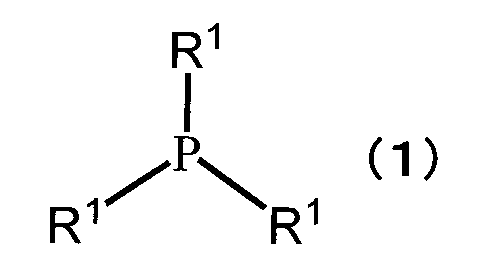
[式(1)中、R1は、それぞれ独立に環状の脂肪族炭化水素基を示す。]
で表されるホスフィン系配位子が2価のパラジウムに配位した錯体からなる触媒である。このような触媒中のパラジウムの価数は2価である。かかるパラジウムの価数が2価以外(例えば0価)の場合には、前記一般式(3)で表されるハロゲン化合物中のハロゲン原子(X)が塩素原子である場合のように、ハロゲン化合物の反応性が比較的低い場合に、十分に反応を進行させることが困難となる傾向にあり、ハロゲン原子の種類によっては置換基の立体配置がexo配位であるノルボルネン誘導体を十分に収率よく製造することが困難となる。
で表されるホスフィン系配位子が2価のパラジウムに配位した錯体からなる触媒である。このような触媒中のパラジウムの価数は2価である。かかるパラジウムの価数が2価以外(例えば0価)の場合には、前記一般式(3)で表されるハロゲン化合物中のハロゲン原子(X)が塩素原子である場合のように、ハロゲン化合物の反応性が比較的低い場合に、十分に反応を進行させることが困難となる傾向にあり、ハロゲン原子の種類によっては置換基の立体配置がexo配位であるノルボルネン誘導体を十分に収率よく製造することが困難となる。
また、このような一般式(1)中のR1は、それぞれ独立に環状の脂肪族炭化水素基である。このような環状の脂肪族炭化水素基としては、脂肪族系で且つ環状のものであれば飽和炭化水素基であっても不飽和炭化水素基であってもよい。また、このような環状の脂肪族炭化水素基としては単環構造のものであっても縮合環構造のものであってもよく、更には架橋構造を有するものであってもよい。また、触媒の製造容易性等の観点から、各R1は同じ基であることがより好ましい。
さらに、このような環状の脂肪族炭化水素基としては、特に制限されず、例えば、シクロペンチル基、シクロヘキシル基、シクロヘプチル基、ノルボニル基、シクロオクチル基、シクロノニル基、シクロデシル基、シクロウンデシル基、デカヒドロナフチル基、シクロペンテニル基、シクロペンタジエニル基、シクロヘキセニル基、1,5-シクロオクタジエニル基、テトラヒドロインデニル基、アダマンチル基等が挙げられる。
また、このような環状の脂肪族炭化水素基は特に制限されないが、炭素原子数が5~10(より好ましくは5~7)であることが好ましい。このような炭素原子数が前記下限未満ではexo体の選択率が低下する傾向にあり、他方、前記上限を超えると反応性が低下し、exo体の収率が低下する傾向にある。
また、このような環状の脂肪族炭化水素基としては、より十分に高度な収率でノルボルネン誘導体のexo体を製造することが可能となるという観点から、炭素原子数5~10(より好ましくは5~7)の環状の脂肪族飽和炭化水素基であることが好ましく、中でも、より高度な効果が得られることから、シクロヘキシル基が特に好ましい。
また、このような一般式(1)で表されるホスフィン系配位子が2価のパラジウムに配位したパラジウム触媒としては、下記一般式(I):
[PdQoLp] (I)
(式(I)中、Pdはパラジウムを示し、Qはハロゲン原子(より好ましくは臭素、塩素)のうちの少なくとも1種を示し、Lは上記一般式(1)で表されるホスフィン系配位子を示し、oは0~2の整数を示し、pは1~2の整数を示す。)
で表されるパラジウム触媒を用いることができる。
[PdQoLp] (I)
(式(I)中、Pdはパラジウムを示し、Qはハロゲン原子(より好ましくは臭素、塩素)のうちの少なくとも1種を示し、Lは上記一般式(1)で表されるホスフィン系配位子を示し、oは0~2の整数を示し、pは1~2の整数を示す。)
で表されるパラジウム触媒を用いることができる。
このような一般式(I)中のQとしては特に制限されないが、より入手が容易であり且つ触媒がより安定した化合物となるという観点からは、ハロゲン原子が好ましい。なお、Qがハロゲン原子である場合、触媒中のパラジウムを2価とするという観点からは、前記oの値は2となり且つpの値は2となる。すなわち、このような一般式(I)で表されるパラジウム触媒としては、下記一般式(I-1):
[PdQ2L2] (I-1)
(式(I-1)中、Pdはパラジウムを示し、Qはハロゲン原子を示し、Lは上記一般式(1)で表されるホスフィン系配位子を示す。)
で表される触媒が好ましい。
[PdQ2L2] (I-1)
(式(I-1)中、Pdはパラジウムを示し、Qはハロゲン原子を示し、Lは上記一般式(1)で表されるホスフィン系配位子を示す。)
で表される触媒が好ましい。
このような一般式(I)で表されるパラジウム触媒としては、例えば、[PdCl2(P(C5H9)3)2]、[PdCl2(P(C6H11)3)2]、[PdCl2(P(C7H13)3)2]、[PdCl2(P(C9H19)3)2]、[PdCl2(P(C10H21)3)2]、[PdBr2(P(C5H9)3)2]、[PdBr2(P(C6H11)3)2]、[PdBr2(P(C7H13)3)2]、[PdBr2(P(C9H19)3)2]、[PdBr2(P(C10H21)3)2]等が挙げられる。また、このようなパラジウム触媒の中でも、入手が容易で且つより高い効果が得られるという観点並びに触媒の安定性の観点から、[PdCl2(P(C5H9)3)2]、[PdCl2(P(C6H11)3)2]、[PdCl2(P(C7H13)3)2]が更に好ましく、[PdCl2(P(C6H11)3)2]が特に好ましい。
また、このようなパラジウム触媒の製造方法としては、特に制限されないが、例えば、PdCl2をMeCNに溶解し、[PdCl2(MeCN)2]に変性する。得られた[PdCl2(MeCN)2]を室温でCH2Cl2に溶解し、1,5-C8H12を加えて室温で攪拌し、[PdCl2(1,5-C8H12)]に変性する。更に、得られた[PdCl2(1,5-C8H12)]をCH2Cl2に溶解し、PCy3を加え、室温で攪拌させることにより[PdCl2(P(C6H11)3)2]に変性する方法が挙げられる。なお、このようなパラジウム触媒としては市販のものを用いてもよい。
次に、本発明において用いられる溶媒について説明する。本発明においては、溶媒としてN,N-ジメチルホルムアミド(DMF)及び/又はN,N-ジメチルアセトアミド(DMA)を用いる。このような溶媒としてのDMFやDMAは、1種を単独で用いてもよく、あるいは、これらを組み合わせて用いてもよい。なお、本発明においては、このようなDMF及び/又はDMAからなる溶媒を、前述のパラジウム触媒と組み合わせて用いることにより、ノルボルナジエンに対してフェニル基等の置換基を導入する際に、用いる原料化合物中のハロゲン原子の種類によらず、置換基の立体配置がexo配置となる特定のノルボルネン誘導体(exo体)を選択性よく且つ十分に高い収率で製造することを可能とする。また、このような溶媒の中でも、より高度な効果が得られることから、DMFが特に好ましい。
次に、本発明において用いられる還元剤について説明する。このような還元剤としては、いわゆる還元的Heck反応(ハイドロアリレーション反応)において還元剤として利用することが可能なものであればよく、特に制限されず、例えば、亜鉛;水素化ホウ素ナトリウム;ギ酸;ギ酸リチウム、ギ酸ナトリウム、ギ酸カリウム、ギ酸ルビジウム、ギ酸セシウム等のギ酸のアルカリ金属塩;ギ酸マグネシウム、ギ酸カルシウム、ギ酸ストロンチウム、ギ酸バリウム等のギ酸のアルカリ土類金属塩;ギ酸アンモニウム等のギ酸のアンモニウム塩;ギ酸亜鉛、ギ酸鉄等のギ酸の金属塩;等が挙げられる。なお、このような還元剤により、より効率よく反応を進行させることが可能となるととに、副生成物の生成を効率よく抑制することが可能となる。
また、このような還元剤としては、置換基の立体配置がexo配置となる特定のノルボルネン誘導体(exo体)を、より効率よく製造することが可能となることから、ギ酸のアルカリ金属塩を用いることがより好ましい。また、このようなギ酸のアルカリ金属塩中のアルカリ金属としては、リチウム、ナトリウム、カリウム、ルビジウム、セシウム等があるが、経済性、収率の観点から、ナトリウム又はカリウムが好ましく、ナトリウムが特に好ましい。なお、このような還元剤は1種を単独で或いは2種以上を組み合わせて用いてもよい。
次いで、本発明において用いられるノルボルナジエン誘導体について説明する。このようなノルボルナジエン誘導体は、下記一般式(2):

で表されるものである。
このよう一般式(2)中のR2、R3、R4、R5、R6は、それぞれ独立に、水素原子、フッ素原子、塩素原子、炭素原子数1~10の直鎖状の脂肪族炭化水素基、及び、炭素原子数3~10の分岐鎖状の脂肪族炭化水素基の中から選択されるいずれか1種である。
このようなR2、R3、R4、R5、R6として選択され得る炭素原子数1~10の直鎖状の脂肪族炭化水素基としては、炭素原子数が1~6のものが好ましい。このような炭素原子数が前記上限を超えると、exo-ノルボルネン誘導体の収率が低下する傾向にある。また、このような直鎖状の炭化水素基としては、直鎖状の脂肪族飽和炭化水素基であることが好ましい。
また、R2、R3、R4、R5、R6として選択され得る炭素原子数3~10の分岐鎖状の脂肪族炭化水素基としては、炭素原子数が3~6のものが好ましい。このような炭素原子数が前記上限を超えると、exo-ノルボルネン誘導体の収率が低下する傾向にある。また、このような分岐鎖状の脂肪族炭化水素基としては、分岐鎖状の脂肪族飽和炭化水素基であることが好ましい。
また、このようなR2、R3、R4、R5、R6としては、目的とするexo-ノルボルネン誘導体の収率の観点から、水素原子、フッ素原子、塩素原子であることがより好ましく、水素原子であることがより好ましい。
また、上記一般式(2)中において、lは0又は1の整数を示し、mは0又は1の整数を示し、nは0又は1の整数を示す。このようなm、nの値が前記上限を超えると、ノルボルネン誘導体を製造する際に高純度化が難しくなり、収率が低下して製造が困難となる場合や、得られるノルボルネン誘導体のガラス転移温度(Tg)が高くなり過ぎて延伸加工等の熱加工性が低下する場合が生じる。また、目的とするノルボルネン誘導体をより高収率で得ることが可能となるという観点から、mの値が0で且つnの値が0であることが好ましい。また、lの値としては、これにより目的物を比較的容易に合成できるという観点から、0であることが好ましい。
次に、本発明において用いられる下記一般式(3):

で表されるハロゲン化合物について説明する。
上記一般式(3)中のZは、フェニレン基、ナフチレン基及びビフェニレン基の中から選択されるいずれか1種を示す。このようなZとしては、exo-ノルボルネン誘導体の収率の観点からフェニレン基が特に好ましい。
また、上記一般式(3)中のXはヨウ素原子、臭素原子及び塩素原子からなる郡から選択されるいずれか1種のハロゲン原子である。このようなハロゲン原子としては、上記一般式(3)で表される化合物の入手の容易性やコスト等の観点からは、塩素原子が特に好ましい。
また、上記一般式(3)中のR7は、水素原子、ニトロ基、炭素原子数1~10の直鎖状の脂肪族炭化水素基、炭素原子数3~10の分岐鎖状の脂肪族炭化水素基、炭素原子数1~10のアルコキシ基、及びフッ素原子の中から選択されるいずれか1種である。
このようなR7として選択され得る炭素原子数1~10の直鎖状の脂肪族炭化水素基としては、炭素原子数が1~6のものが好ましい。このような炭素原子数が前記上限を超えると、exo-ノルボルネン誘導体の収率が低下する傾向にある。また、このような直鎖状の脂肪族炭化水素基としては、直鎖状の脂肪族飽和炭化水素基であることが好ましい。
また、R7として選択され得る炭素原子数3~10の分岐鎖状の脂肪族炭化水素基としては、炭素原子数が3~7のものが好ましく、3~6のものがより好ましい。このような炭素原子数が前記上限を超えると、exo-ノルボルネン誘導体の収率が低下する傾向にある。また、このような分岐鎖状の脂肪族炭化水素基としては、分岐鎖状の飽和炭化水素基であることが好ましい。
さらに、R7として選択され得る炭素原子数1~10のアルコキシ基としては、炭素原子数が1~8のものが好ましく、1~6のものがより好ましい。このような炭素原子数が前記上限を超えるとexo-ノルボルネン誘導体の収率が低下する傾向にある。
また、このようなR7としては、exo-ノルボルネン誘導体の収率の観点から、ニトロ基、炭素原子数3~5の分岐鎖状の脂肪族炭化水素基、炭素原子数1~6のアルコキシ基がより好ましい。
次に、上記ノルボルナジエン誘導体と上記ハロゲン化合物とを反応せしめる工程について説明する。このような工程は、前記パラジウム触媒と、DMF及びDMAのうちの少なくとも1種の溶媒と、還元剤との存在下、上記ノルボルナジエン誘導体と上記ハロゲン化合物とを反応せしめる工程である。このような反応工程は、いわゆる還元的Heck反応(ハイドロアリレーション反応)を利用した反応工程である。本発明においては、前述のように、2価のパラジウムと前記ホスフィン系配位子とを含む特定のパラジウム触媒、並びに、DMF及びDMAのうちの少なくとも1種の溶媒を組み合わせて用いているため、目的とするノルボルネン誘導体(exo体)が十分に高度な収率で製造される。
このような反応工程において、反応系中に含有される上記一般式(2)で表されるノルボルナジエン誘導体の含有量としては、反応系中の全化合物に対して0.1~50モル%とすることが好ましく、1~20モル%とすることがより好ましい。このようなノルボルナジエン誘導体の含有量が前記下限未満では、反応速度が低下する傾向にあり、他方、前記上限を超えると、副反応が増加する傾向にある。
また、反応系中に含有される上記一般式(3)で表されるハロゲン化合物の含有量としては、反応系中の全化合物に対して、0.1~25モル%とすることが好ましく、0.5~10モル%とすることがより好ましい。このようなハロゲン化合物の含有量が前記下限未満では、反応速度が低下する傾向にあり、他方、前記上限を超えると、副反応が増加する傾向にある。
さらに、上記一般式(2)で表されるノルボルナジエン誘導体及び上記一般式(3)で表されるハロゲン化合物の含有比率としては、上記一般式(2)で表されるノルボルナジエン誘導体と上記一般式(3)で表されるハロゲン化合物とのモル比([前記ノルボルナジエン誘導体]:[前記ハロゲン化合物])が1:1~10:1となる範囲とすることが好ましく、1:1~5:1となる範囲とすることがより好ましい。このようなノルボルナジエン誘導体の含有比率が前記下限未満では、副反応が増加する傾向にあり、他方、前記上限を超えると、反応速度が低下する傾向にある。
また、反応系中に含有されるパラジウム触媒の含有量としては、反応系中の全化合物に対して、0.001~0.1モル%とすることが好ましく、0.002~0.06モル%とすることがより好ましい。このようなパラジウム触媒の含有量が前記下限未満では、反応速度が低下する傾向にあり、他方、前記上限を超えると、副反応が増加する傾向にある。
また、反応系中に含有されるパラジウム触媒の金属換算によるモル量と、上記一般式(2)で表されるノルボルナジエン誘導体のモル量との比([パラジウム]:[ノルボルナジエン誘導体])としては、1:10~1:20000の範囲であることが好ましく、1:60~1:10000の範囲であることがより好ましい。このようなパラジウムの使用量が前記下限未満では反応速度が低下する傾向にあり、他方、前記上限を超えると、副反応が増加する傾向にある。
さらに、反応系中に含有されるパラジウム触媒の金属換算によるモル量と、上記一般式(3)で表されるハロゲン化合物のモル量との比([パラジウム]:[ハロゲン化合物])としては、1:5~1:2000の範囲であることが好ましく、1:30~1:1000の範囲であることがより好ましい。このようなパラジウムの使用量が前記下限未満では反応速度が低下する傾向にあり、他方、前記上限を超えると、副反応が増加する傾向にある。
このような反応系中に含有される溶媒の量としては、反応系中の全化合物の濃度が1~10mol/Lとなる量であることが好ましく、1~6mol/Lとなる量であることがより好ましい。このような溶媒の使用量に関して、前記全化合物の濃度が前記下限未満では反応速度が低下し、転化率が低下する傾向にあり、他方、前記全化合物の濃度が前記上限を超えると、ノルボルナジエン誘導体どうしの反応が起きて副生成物が生成される傾向にある。
また、反応系中に含有される還元剤の含有量としては、前記ハロゲン化合物の含有量に対するモル比([還元剤]:[ハロゲン化合物])が1:1~10:1の範囲となる量であることが好ましく、1:1~5:1の範囲となる量であることがより好ましい。このような還元剤の含有量が前記下限未満では、転化率が低下する傾向にあり、他方、前記上限を超えると、目的物であるノルボルネンが水素化された副生物(ノルボルナン)等が生成される傾向にある。
さらに、このような反応工程においては、上記一般式(2)で表されるノルボルナジエン誘導体と、上記一般式(3)で表されるハロゲン化合物とを反応せしめることにより発生するハロゲン化水素を中和するために、中和剤として塩基を更に用いてもよい。このような塩基としては、有機塩基や無機塩基などを使用することが可能であり、特に制限されず、例えば、トリメチルアミン、ジメチルアミン、メチルアミン、トリエチルアミン、ジエチルアミン、エチルアミン、トリプロピルアミン、ジプロピルアミン、プロピルアミン、トリブチルアミン、ジブチルアミン、ブチルアミン等のアルキルアミン;ピリジン、ジメチルアミノピリジン等のピリジン類;水酸化ナトリウム、水酸化カリウム、水酸化カルシウム等の無機水酸化物;炭酸ナトリウム、炭酸水素ナトリウム、炭酸カリウム、炭酸水素カリウム、炭酸セシウム、炭酸水素セシウム、炭酸カルシウム等のアルカリ炭酸塩;ナトリウムメトキシド、ナトリウムエトキシド、t-ブトキシカリウム等の金属アルコキシド;などが挙げられ、転化率の向上の観点からは、水酸化ナトリウム、水酸化カリウム、炭酸ナトリウム、炭酸水素ナトリウム、炭酸カリウム、炭酸水素カリウムが好ましい。
このような塩基の含有量としては、前記ハロゲン化合物の含有量に対するモル比([塩基]:[ハロゲン化合物])が、1:1~10:1の範囲となる量であることが好ましく、1:1~5:1の範囲となる量であることがより好ましい。このような塩基の含有量が前記下限未満では転化率が低下し、副生物が増える傾向にあり、他方、前記上限を超えると、反応速度が低下し、収率が低くなる傾向にある。
なお、前記還元剤としてギ酸のアルカリ金属塩を用いる場合には、このような塩基を使用することなく、塩基を用いた場合と同様の効果が得られるため、かかる観点からも、前記反応系に用いる還元剤としてギ酸のアルカリ金属塩を用いることが特に好ましい。
また、このような反応工程における温度条件としては、20~180℃の範囲であることが好ましく、60~150℃の範囲であることがより好ましく、80~140℃の範囲であることが更に好ましく、通常80~120℃の範囲であることが特に好ましい。このような反応温度が前記下限未満では、反応速度が低下し転化率が低下する傾向にあり、他方、前記上限を超えると、前記ノルボルナジエン誘導体同士の反応が起きて副生成物が生成されてしまう傾向にある。
また、このような反応の反応時間としては0.1~100時間であることが好ましく、1~24時間の範囲であることがより好ましく、1~10時間の範囲であることがより好ましい。このような反応時間が前記下限未満では、転化率が低下して収率良く生成物を得ることができなくなる傾向にあり、他方、反応時間が前記上限を超えると、パラジウム触媒中のパラジウムが凝集し失活することにより、転化率が頭打ちとなる現象が見られる傾向にある。
このようにして、前記パラジウム触媒と、前記溶媒と、前記還元剤との存在下、上記一般式(2)で表されるノルボルナジエン誘導体と、上記一般式(3)で表されるハロゲン化合物とを反応せしめることにより、下記一般式(4):

で表され且つ上記一般式(4)中の置換基Zの立体配置がexo配位であるノルボルネン誘導体(exo-ノルボルネン誘導体)を選択的に製造することができる。
このような一般式(4)中のR8、R9、R10、R11、R12、l、m、nは、上記一般式(2)中のR2、R3、R4、R5、R6、l、m、nと同様のものである。また、上記一般式(4)中のZは、上記一般式(3)中のZと同様のものである。更に、上記一般式(4)中のR13は、上記一般式(3)中のR7と同様のものである。
また、上記一般式(4)で表されるexo-ノルボルネン誘導体としては、比較的容易に合成でき、しかも、exo-ノルボルネン誘導体を開環重合して得られる重合体のフィルムが十分な耐熱性を有するものとなるという観点から、上記一般式(4)中のmが0であり且つnが0であることがより好ましい。
さらに、上記一般式(4)で表されるexo-ノルボルネン誘導体としては、比較的容易に合成でき、しかも、exo-ノルボルネン誘導体を開環重合して得られる重合体のフィルムが十分な耐熱性を有するものとなるという観点から、Zがフェニレン基であることが好ましい。
このような一般式(4)で表されるexo-ノルボルネン誘導体としては特に制限されないが、例えば、下記一般式(i)~(xv)で表されるexo-ノルボルネン誘導体を挙げることができる。なお、下記一般式(i)~(xv)中、置換フェニル基又は置換ナフチル基の立体配置は、それぞれexo配位である。

本発明のノルボルネン誘導体の製造方法を採用して得られるノルボルネン誘導体は、開環重合、開環重合とそれに続く水素添加反応、付加重合、ラジカル重合、カチオン重合、アニオン重合等によって、所望の重合体とすることができる。また、このようなノルボルネン誘導体を、必要に応じて任意の共重合可能な化合物と共重合反応させて共重合体を得ることも可能である。そして、このようなノルボルネン誘導体から合成した重合体は、優れた透明性、耐熱性、低吸水性を示し、かつ用途に応じて任意に複屈折値の大きさやその波長分散性を制御できることから、光ディスク、光磁気ディスク、光学レンズ(Fθレンズ、ピックアップレンズ、レーザープリンター用レンズ、カメラ用レンズ等)、眼鏡レンズ、光学フィルム/シート(ディスプレイ用フィルム、位相差フィルム、偏光フィルム、偏光板保護フィルム、拡散フィルム、反射防止フィルム、液晶基板、EL基板、電子ペーパー用基板、タッチパネル基板、PDP前面板等)、透明導電性フィルム用基板、光ファイバー、導光板、光カード、光ミラー、IC,LSI,LED封止材などの成形材料として好適に応用することができる。また、このようなノルボルネン誘導体は、exo体からなるものであるため、これを位相差フィルムの材料として用いることで、負の複屈折性の中でも特異的なネガティブAとしての光学特性を有する位相差フィルムや、複屈折の波長分散特性が逆分散となる位相差フィルム等を形成することが可能となる。
以下、実施例及び比較例に基づいて本発明をより具体的に説明するが、本発明は以下の実施例に限定されるものではない。なお、以下において、各実施例及び各比較例で得られた生成物の分子構造の同定は、超伝導核磁気共鳴吸収装置(Oxford-Instruments社製のOxford 500MHz又は日本電子株式会社(JEOL)社製 JMT400MHz)を用いて、重水素化クロロホルム溶液中に各実施例及び各比較例で得られた生成物を希釈して1H、13C-NMRを測定することにより行った。
(実施例1)
先ず、30mLの二口フラスコに、パラジウム触媒としてのビス(トリシクロヘキシルホスフィン)パラジウム(II)ジクロリド(22.4mg、STREM社製品)と、還元剤としてのギ酸カリウム(420mg)を入れた。次に、前記二口フラスコ内を窒素置換した。次いで、前記二口フラスコ内に、溶媒としてのジメチルホルムアミド(DMF:5ml)と、4-ブロモニトロベンゼン(202mg)と、2,5-ノルボルナジエン(276mg)とを加え、120℃の温度条件で4時間攪拌を行い、反応溶液を得た。なお、このような反応溶液中において、全化合物に対するパラジウム触媒の含有量は0.04モル%であり、4-ブロモニトロベンゼンに対するパラジウム触媒のモル当量は0.03当量であり、4-ブロモニトロベンゼンに対する2,5-ノルボルナジエンのモル当量は3.0当量であり、4-ブロモニトロベンゼンに対するギ酸カリウムのモル当量は5.0当量であった。
先ず、30mLの二口フラスコに、パラジウム触媒としてのビス(トリシクロヘキシルホスフィン)パラジウム(II)ジクロリド(22.4mg、STREM社製品)と、還元剤としてのギ酸カリウム(420mg)を入れた。次に、前記二口フラスコ内を窒素置換した。次いで、前記二口フラスコ内に、溶媒としてのジメチルホルムアミド(DMF:5ml)と、4-ブロモニトロベンゼン(202mg)と、2,5-ノルボルナジエン(276mg)とを加え、120℃の温度条件で4時間攪拌を行い、反応溶液を得た。なお、このような反応溶液中において、全化合物に対するパラジウム触媒の含有量は0.04モル%であり、4-ブロモニトロベンゼンに対するパラジウム触媒のモル当量は0.03当量であり、4-ブロモニトロベンゼンに対する2,5-ノルボルナジエンのモル当量は3.0当量であり、4-ブロモニトロベンゼンに対するギ酸カリウムのモル当量は5.0当量であった。
次いで、反応溶液を室温まで冷却した後、30mlの氷水中に注ぎ、分液ロートを用いてジエチルエーテル(50ml×3回)で抽出を行い、ジエチルエーテル溶液を得た。次いで、前記ジエチルエーテル溶液を、水及び飽和食塩水で洗浄した。そして、洗浄後のジエチルエーテル溶液を無水硫酸マグネシウムで乾燥させた後、ろ過、濃縮して粗生成物を得た。なお、このような粗生成物の製造時の反応を下記反応式(I)に示す。
このようにして得られた粗生成物に対してガスクロマト分析を行った。このようなガスクロマト分析に際しては、ガスクロマトグラフの装置としてGL sciences社製のGC-4000を用い、カラムとしてAGILENT TECHNOLOGIES,INC製のHP-5(長さ30m、内径0.32mm、膜厚0.25μm)を用いた。
このようなガスクロマト分析の結果、粗生成物中にexo-5-(4-ニトロフェニル)ビシクロ[2.2.1]-2-ヘプテン(目的物)が確認された。また、このようなガスクロマト分析により転化率及びexo-5-(4-ニトロフェニル)ビシクロ[2.2.1]-2-ヘプテン(目的物)の選択率を測定したところ、転化率は100%であり且つ選択率が71.5%であることが確認された。なお、転化率は、下記式:
[転化率]={[反応系中に添加したハロゲン化合物(実施例1では4-ブロモニトロベンゼン)の量]-[反応後に残存しているハロゲン化合物の量]}/[反応系中に添加したハロゲン化合物の量]
を計算することにより求められる値を採用した。
[転化率]={[反応系中に添加したハロゲン化合物(実施例1では4-ブロモニトロベンゼン)の量]-[反応後に残存しているハロゲン化合物の量]}/[反応系中に添加したハロゲン化合物の量]
を計算することにより求められる値を採用した。
また、前記組成生物から前記目的物と副生成物とを、シリカゲルカラムクロマトグラフ(シリカゲルとして、関東化学社製のシリカゲル60N(球状、中性)、粒子径40~50μmを使用)により分離し、生成物(単離した目的物)を得た。そして、このようにして分離された生成物(単離した目的物)に対して、NMR測定により構造解析を行った。実施例1で得られた生成物のNMR測定の結果を図1及び図2に示す。
図1~2に示すNMRのデータからも明らかなように、このようにして得られた生成物(目的物)は、5-exo-(4-ニトロフェニル)ビシクロ[2.2.1]-2-ヘプテンであることが確認された。
(実施例2)
ギ酸カリウムの代わりにギ酸ナトリウムを用い、4-ブロモニトロベンゼンの代わりに4-クロロニトロベンゼンを用いた以外は、実施例1と同様にして粗生成物並びに生成物(単離した目的物)を得た。
ギ酸カリウムの代わりにギ酸ナトリウムを用い、4-ブロモニトロベンゼンの代わりに4-クロロニトロベンゼンを用いた以外は、実施例1と同様にして粗生成物並びに生成物(単離した目的物)を得た。
このようにして得られた粗生成物に対して実施例1と同様にしてガスクロマト分析を行ったところ、粗生成物中にexo-5-(4-ニトロフェニル)ビシクロ[2.2.1]-2-ヘプテン(目的物)が確認された。また、かかるガスクロマト分析により、転化率は100%であり且つ目的物の選択率は86.1%であることが確認された。
また、このようにして得られた生成物(単離した目的物)に対してNMR測定により構造解析を行ったところ、生成物(目的物)はexo-5-(p-tert-ブチルフェニル)ビシクロ[2.2.1]-2-ヘプテンであることが確認された。
このような実施例1~2の結果からも明らかように、前記一般式(3)で表されるハロゲン化合物として式中のXが臭素原子であるブロム体(4-ニトロフェニルブロマイド)を用いた場合(実施例1)と、Xが塩素原子であるクロロ体(4-ニトロフェニルクロライド)を用いた場合(実施例2)の双方とも、目的物の収率が十分に高度なものであることが確認された。このような結果から、本発明によれば、前記一般式(3)で表されるハロゲン化合物中のハロゲン原子(X)の種類によらず、目的物(exo体)を十分に高度な収率で製造できることが確認された。
(実施例3)
4-ブロモニトロベンゼンの代わりに4-クロロアニソールを用いた以外は、実施例2と同様にして粗生成物並びに生成物(単離した目的物)を得た。なお、このような生成物の製造時の反応を下記反応式(II)に示す。
4-ブロモニトロベンゼンの代わりに4-クロロアニソールを用いた以外は、実施例2と同様にして粗生成物並びに生成物(単離した目的物)を得た。なお、このような生成物の製造時の反応を下記反応式(II)に示す。
このようにして得られた粗生成物に対して実施例1と同様にしてガスクロマト分析を行ったところ、粗生成物中にexo-5-(4-メトキシフェニル)ビシクロ[2.2.1]-2-ヘプテン(目的物)が確認された。また、かかるガスクロマト分析により、転化率は83.4%であり且つ選択率は83.0%であることが確認された。また、このようにして得られた生成物(単離した目的物)に対してNMR測定により構造解析を行った。このようなNMR測定の結果を図3及び図4に示す。
図3~4に示すNMRのデータからも明らかなように、このようにして得られた生成物は、exo-5-(4-メトキシフェニル)ビシクロ[2.2.1]-2-ヘプテンであることが確認された。
(実施例4)
ギ酸ナトリウムの代わりにギ酸カリウムを用い、4-クロロアニソールの代わりに4ブロモアニソールを用いた以外は、実施例3と同様にして粗生成物並びに生成物(単離した目的物)を得た。
ギ酸ナトリウムの代わりにギ酸カリウムを用い、4-クロロアニソールの代わりに4ブロモアニソールを用いた以外は、実施例3と同様にして粗生成物並びに生成物(単離した目的物)を得た。
このようにして得られた粗生成物に対してガスクロマト分析を行ったところ、粗生成物中にexo-5-(4-メトキシフェニル)ビシクロ[2.2.1]-2-ヘプテン(目的物)が確認された。また、かかるガスクロマト分析により、転化率が100%であり且つ選択率が89.2%であることが確認された。
また、このようにして得られた生成物(単離した目的物)に対してNMR測定により構造解析を行ったところ、生成物はexo-5-(4-メトキシフェニル)ビシクロ[2.2.1]-2-ヘプテンであることが確認された。
このような実施例3~4の結果からも明らかように、前記一般式(3)で表されるハロゲン化合物として式中のXが臭素原子であるブロム体(4ブロモアニソール)を用いた場合(実施例4)と、Xが塩素原子であるクロロ体(4-クロロアニソール)を用いた場合(実施例3)の双方とも、目的物の収率が十分に高くなっていることが確認された。このような結果から、本発明によれば、前記一般式(3)で表されるハロゲン化合物中のハロゲン原子(X)の種類によらず、目的物(exo体)を十分に高度な収率で製造できることが確認された。
(実施例5)
4-ブロモニトロベンゼンの代わりに4-クロロベンゼンを用いた以外は、実施例2と同様にして粗生成物並びに生成物(単離した目的物)を得た。なお、このような生成物の製造時の反応を下記反応式(III)に示す。
4-ブロモニトロベンゼンの代わりに4-クロロベンゼンを用いた以外は、実施例2と同様にして粗生成物並びに生成物(単離した目的物)を得た。なお、このような生成物の製造時の反応を下記反応式(III)に示す。
このようにして得られた粗生成物に対して実施例1と同様にしてガスクロマト分析を行ったところ、粗生成物中にexo-5-フェニルビシクロ[2.2.1]-2-ヘプテン(目的物)が確認された。また、かかるガスクロマト分析により、転化率が57.4%であり且つ選択率が89.7%であることが確認された。また、このようにして得られた生成物(単離した目的物)に対してNMR測定により構造解析を行った。このようなNMR測定の結果を図5及び図6に示す。
図5~6に示すNMRのデータからも明らかなように、このようにして得られた生成物は、exo-5-フェニルビシクロ[2.2.1]-2-ヘプテンであることが確認された。
このような実施例5の結果からも明らかなように、本発明によれば、十分に高度な収率で目的物(exo体)を製造できることが確認された。また、実施例1~5を併せ鑑みれば、前記一般式(3)で表されるハロゲン化合物中の置換基(R7)の種類によらず、目的物(exo体)を十分に高度な収率で製造できることが確認された。
(実施例6)
先ず、30mLの二口フラスコに、パラジウム触媒としてのビス(トリシクロヘキシルホスフィン)パラジウム(II)ジクロリド([PdCl2(P(C6H11)3)2]:0.9mg、STREM社製品)と、還元剤としてのギ酸ナトリウム(338.4mg)を入れた。次に、前記二口フラスコ内を窒素置換した。次いで、前記二口フラスコ内に、溶媒としてのジメチルホルムアミド(DMF:5ml)と、4-tert-ブチルフェニルクロライド(220mg)と、2,5-ノルボルナジエン(601mg)とを加え、120℃の温度条件で4時間攪拌を行い、反応溶液を得た。なお、このような反応溶液中において、全化合物に対するパラジウム触媒の含有量は0.002モル%であり、4-tert-ブチル-フェニルクロライドに対するパラジウム触媒のモル当量は0.001当量であり、4-tert-ブチル-フェニルクロライドに対する2,5-ノルボルナジエンのモル当量は5.0当量であり、4-tert-ブチル-フェニルクロライドに対するギ酸ナトリウムのモル当量は5.0当量であった。
先ず、30mLの二口フラスコに、パラジウム触媒としてのビス(トリシクロヘキシルホスフィン)パラジウム(II)ジクロリド([PdCl2(P(C6H11)3)2]:0.9mg、STREM社製品)と、還元剤としてのギ酸ナトリウム(338.4mg)を入れた。次に、前記二口フラスコ内を窒素置換した。次いで、前記二口フラスコ内に、溶媒としてのジメチルホルムアミド(DMF:5ml)と、4-tert-ブチルフェニルクロライド(220mg)と、2,5-ノルボルナジエン(601mg)とを加え、120℃の温度条件で4時間攪拌を行い、反応溶液を得た。なお、このような反応溶液中において、全化合物に対するパラジウム触媒の含有量は0.002モル%であり、4-tert-ブチル-フェニルクロライドに対するパラジウム触媒のモル当量は0.001当量であり、4-tert-ブチル-フェニルクロライドに対する2,5-ノルボルナジエンのモル当量は5.0当量であり、4-tert-ブチル-フェニルクロライドに対するギ酸ナトリウムのモル当量は5.0当量であった。
次いで、反応溶液を室温まで冷却した後、300mlの氷水中に注ぎ、分液ロートを用いてn-へキサン(50ml×3回)で抽出を行い、n-へキサン溶液を得た。次いで、前記n-へキサン溶液を、水及び飽和食塩水で洗浄した。そして、洗浄後のn-へキサン溶液を無水硫酸マグネシウムで乾燥させた後、ろ過、濃縮して粗生成物を得た。なお、このような粗生成物の製造時の反応を下記反応式(IV)に示す。

このようにして得られた粗生成物に対して、実施例1と同様にしてガスクロマト分析を行った結果、粗生成物中にexo-5-(p-tert-ブチルフェニル)ビシクロ[2.2.1]-2-ヘプテン(目的物)が確認された。また、かかるガスクロマト分析により、転化率が42.4%であり且つ選択率が94.7%であることが確認された。結果を表1に示す。
また、このようにして得られた粗生成物から、実施例1と同様の方法を採用して、生成物(目的物)と副生成物とを分離した。このようにして得られた生成物(単離した目的物)に対してNMR測定により構造解析を行ったところ、生成物はexo-5-(p-tert-ブチルフェニル)ビシクロ[2.2.1]-2-ヘプテンであることが確認された。
(実施例7~10)
パラジウム触媒([PdCl2(P(C6H11)3)2])の含有量を下記表1に記載された量とし、更に、実施例10においては4-tert-ブチル-フェニルクロライドに対する2,5-ノルボルナジエンのモル当量を3.0当量に変更した以外は、実施例6と同様にして粗生成物並びに生成物(単離した目的物)をそれぞれ得た。
パラジウム触媒([PdCl2(P(C6H11)3)2])の含有量を下記表1に記載された量とし、更に、実施例10においては4-tert-ブチル-フェニルクロライドに対する2,5-ノルボルナジエンのモル当量を3.0当量に変更した以外は、実施例6と同様にして粗生成物並びに生成物(単離した目的物)をそれぞれ得た。
このようにして得られた各粗生成物に対して、それぞれ実施例1と同様にしてガスクロマト分析を行ったところ、すべての粗生成物中においてexo-5-(p-tert-ブチルフェニル)ビシクロ[2.2.1]-2-ヘプテン(目的物)が確認された。また、かかるガスクロマト分析により、各実施例における転化率及びexo-5-(p-tert-ブチルフェニル)ビシクロ[2.2.1]-2-ヘプテン(目的物)の選択率をそれぞれ測定した。結果を表1に示す。更に、各生成物(単離した各目的物)に対して、それぞれNMR測定により構造解析を行ったところ、各生成物はそれぞれexo-5-(p-tert-ブチルフェニル)ビシクロ[2.2.1]-2-ヘプテンであることが確認された。

表1に示す結果からも明らかなように、本発明のノルボルネン誘導体の製造方法(実施例6~10)においては、ハロゲン化合物中のハロゲン原子が塩素原子である場合(クロロ体を用いた場合)においても十分に高度な収率でexo-5-(p-tert-ブチルフェニル)ビシクロ[2.2.1]-2-ヘプテンが製造できることが確認された。また、本発明の製造方法においては、パラジウム触媒の含有量が0.002モル%の場合(実施例6)においても、十分な転化率と高度な選択率でexo-5-(p-tert-ブチルフェニル)ビシクロ[2.2.1]-2-ヘプテンが得られており、生産コスト等の観点からも十分に優れた方法であることが確認された。更に、実施例1~10を併せ鑑みれば、本発明においては、前記一般式(3)で表されるハロゲン化合物中の置換基(R7)の種類によらず、目的物(exo体)を十分に高度な収率で製造できることが確認された。
(実施例11)
以下のようにして調製された反応溶液を利用した以外は、実施例6と同様にして粗生成物並びに生成物(単離した目的物)を得た。
以下のようにして調製された反応溶液を利用した以外は、実施例6と同様にして粗生成物並びに生成物(単離した目的物)を得た。
<実施例11の反応溶液の調製方法>
先ず、30mLの二口フラスコに、パラジウム触媒としてのビス(トリシクロヘキシルホスフィン)パラジウム(II)ジクロリド(29mg、STREM社製品)と、還元剤としてのギ酸(296mg)と、塩基としての炭酸セシウム(Cs2CO3:1300mg)とを入れた。次に、前記二口フラスコ内を窒素置換した。次いで、前記二口フラスコ内に、溶媒としてのジメチルホルムアミド(DMF:5ml)と、tert-ブチルフェニルクロライド(220mg)と、2,5-ノルボルナジエン(601mg)とを加え、120℃の温度条件で7時間攪拌を行い、反応溶液を得た。なお、このような反応溶液中において、全化合物に対するパラジウム触媒の含有量は0.05モル%であり、4-tert-ブチル-フェニルクロライドに対するパラジウム触媒のモル当量は0.03当量であり、4-tert-ブチル-フェニルクロライドに対するノルボルナジエンのモル当量は5.0当量であり、4-tert-ブチル-フェニルクロライドに対するギ酸のモル当量は5.0当量であり、4-tert-ブチル-フェニルクロライドに対する炭酸セシウムのモル当量は3.1当量であった。
先ず、30mLの二口フラスコに、パラジウム触媒としてのビス(トリシクロヘキシルホスフィン)パラジウム(II)ジクロリド(29mg、STREM社製品)と、還元剤としてのギ酸(296mg)と、塩基としての炭酸セシウム(Cs2CO3:1300mg)とを入れた。次に、前記二口フラスコ内を窒素置換した。次いで、前記二口フラスコ内に、溶媒としてのジメチルホルムアミド(DMF:5ml)と、tert-ブチルフェニルクロライド(220mg)と、2,5-ノルボルナジエン(601mg)とを加え、120℃の温度条件で7時間攪拌を行い、反応溶液を得た。なお、このような反応溶液中において、全化合物に対するパラジウム触媒の含有量は0.05モル%であり、4-tert-ブチル-フェニルクロライドに対するパラジウム触媒のモル当量は0.03当量であり、4-tert-ブチル-フェニルクロライドに対するノルボルナジエンのモル当量は5.0当量であり、4-tert-ブチル-フェニルクロライドに対するギ酸のモル当量は5.0当量であり、4-tert-ブチル-フェニルクロライドに対する炭酸セシウムのモル当量は3.1当量であった。
このようにして実施例11で得られた粗生成物に対して、実施例1と同様の方法を採用してガスクロマト分析を行ったところ、粗生成物中にexo-5-(p-tert-ブチルフェニル)ビシクロ[2.2.1]-2-ヘプテン(目的物)が確認された。また。かかるガスクロマト分析により、転化率及び目的物の選択率を測定した。結果を表2に示す。なお、生成物(単離した目的物)に対してNMR測定により構造解析を行ったところ、生成物(目的物)はexo-5-(p-tert-ブチルフェニル)ビシクロ[2.2.1]-2-ヘプテンであることが確認された。
(実施例12)
反応溶液の調製の際に用いる溶媒をジメチルホルムアミド(DMF)からジメチルアセトアミド(DMA)に変更した以外は、実施例11と同様にして粗生成物並びに生成物(単離した目的物)を得た。
反応溶液の調製の際に用いる溶媒をジメチルホルムアミド(DMF)からジメチルアセトアミド(DMA)に変更した以外は、実施例11と同様にして粗生成物並びに生成物(単離した目的物)を得た。
このようにして得られた粗生成物に対して、実施例1と同様にしてガスクロマト分析を行ったところ、粗生成物中にexo-5-(p-tert-ブチルフェニル)ビシクロ[2.2.1]-2-ヘプテン(目的物)が確認された。また、かかるガスクロマト分析により、転化率及び目的物の選択率を測定した。結果を表2に示す。なお、生成物(単離した目的物)に対してNMR測定により構造解析を行ったところ、生成物(目的物)はexo-5-(p-tert-ブチルフェニル)ビシクロ[2.2.1]-2-ヘプテンであることが確認された。
(比較例1)
反応溶液の調製の際に用いる溶媒をジメチルホルムアミド(DMF)からジメチルスルホキシド(DMSO)に変更した以外は、実施例11と同様にして粗生成物並びに生成物(単離した目的物)を得た。
反応溶液の調製の際に用いる溶媒をジメチルホルムアミド(DMF)からジメチルスルホキシド(DMSO)に変更した以外は、実施例11と同様にして粗生成物並びに生成物(単離した目的物)を得た。
このようにして得られた粗生成物に対して、実施例1と同様にしてガスクロマト分析を行ったところ、粗生成物中にexo-5-(p-tert-ブチルフェニル)ビシクロ[2.2.1]-2-ヘプテン(目的物)が確認された。また、かかるガスクロマト分析により、転化率及び目的物の選択率を測定した。結果を表2に示す。なお、生成物(単離した目的物)に対してNMR測定により構造解析を行ったところ、生成物(目的物)はexo-5-(p-tert-ブチルフェニル)ビシクロ[2.2.1]-2-ヘプテンであることが確認された。

表2に示す結果からも明らかなように、溶媒としてDMA又はDMFを利用する本発明のノルボルネン誘導体の製造方法(実施例11~12)においては、十分に高度な収率でexo-5-(p-tert-ブチルフェニル)ビシクロ[2.2.1]-2-ヘプテンが製造できることが確認された。また、このような結果から、溶媒として特にDMFを利用した場合に、収率がより向上することが分かった。一方、溶媒としてDMSOを利用した場合(比較例1)においては、選択率が十分なものとはならず、十分な収率で目的とするexo体の製造ができなかった。このような結果から、溶媒としてDMA又はDMF(特に好ましくはDMF)を用いた場合に、転化率と目的とする生成物(exo体)の選択率とが十分に高度なものとなることが分かった。
(実施例13及び比較例2~8)
4-tert-ブチル-フェニルクロライドに対するノルボルナジエンのモル当量が2.0当量となるように変更し、4-tert-ブチル-フェニルクロライドに対するギ酸ナトリウムのモル当量が2.0当量となるように変更し、更にパラジウム触媒として下記表3に記載の触媒をそれぞれ用いた以外は、実施例6と同様にして粗生成物並びに生成物(単離した目的物)をそれぞれ得た。
4-tert-ブチル-フェニルクロライドに対するノルボルナジエンのモル当量が2.0当量となるように変更し、4-tert-ブチル-フェニルクロライドに対するギ酸ナトリウムのモル当量が2.0当量となるように変更し、更にパラジウム触媒として下記表3に記載の触媒をそれぞれ用いた以外は、実施例6と同様にして粗生成物並びに生成物(単離した目的物)をそれぞれ得た。
このようにして得られた各粗成生物に対してガスクロマト分析を行ったところ、実施例13で得られた粗生成物中にはexo-5-(p-tert-ブチルフェニル)ビシクロ[2.2.1]-2-ヘプテンが確認された。このようなガスクロマト分析により確認された転化率の結果を表3に示す。なお、実施例13で得られた生成物(単離した目的物)に対してNMR測定により構造解析を行ったところ、生成物(目的物)はexo-5-(p-tert-ブチルフェニル)ビシクロ[2.2.1]-2-ヘプテンであることが確認された。

表3に示す結果からも明らかなように、上記一般式(1)で表されるホスフィン系配位子が2価のパラジウムに配位したパラジウム触媒を用いた場合(実施例13)においては、反応の転化率が十分に高度なものとなることが確認された。一方、比較例2~8で用いた他のパラジウム触媒の場合においては、ほとんど反応が進行しないことが確認された。このような結果から、塩素原子が結合している比較的反応性の低いハロゲン化合物(tert-ブチルフェニルクロライド)とノルボルナジエン誘導体とを反応させる際に、触媒として2価のパラジウムに上記一般式(1)で表される配位子が配位したパラジウム触媒を用いることにより、反応の転化率が十分に高度なものとなることが確認された。
(実施例14)
塩基として炭酸セシウム(Cs2CO3:1300mg)の代わりにEt3N(400mg)を用い、攪拌時間を4時間に変更した以外は実施例11と同様にして粗生成物並びに生成物(単離した目的物)を得た。
塩基として炭酸セシウム(Cs2CO3:1300mg)の代わりにEt3N(400mg)を用い、攪拌時間を4時間に変更した以外は実施例11と同様にして粗生成物並びに生成物(単離した目的物)を得た。
このようにして得られた生成物に対して、実施例1と同様にしてガスクロマト分析を行ったところ、exo-5-(p-tert-ブチルフェニル)ビシクロ[2.2.1]-2-ヘプテン(目的物)が確認された。また、かかるガスクロマト分析により、反応の転化率及びexo-5-(p-tert-ブチルフェニル)ビシクロ[2.2.1]-2-ヘプテン(目的物)の選択率を測定した。結果を表4に示す。なお、表4には参考のために実施例11の結果を記載する。なお、実施例14で得られた生成物(単離した目的物)に対してNMR測定により構造解析を行ったところ、生成物はexo-5-(p-tert-ブチルフェニル)ビシクロ[2.2.1]-2-ヘプテンであることが確認された。
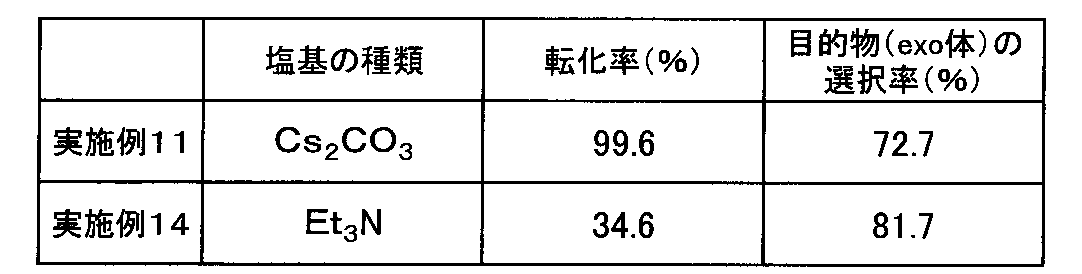
表4に示す結果からも明らかなように、還元剤(実施例11及び実施例14ではギ酸を使用)とともに塩基を利用することにより、exo-5-(p-tert-ブチルフェニル)ビシクロ[2.2.1]-2-ヘプテンが効率よく製造できることが確認された。
(実施例15~21)
4-tert-ブチル-フェニルクロライドに対するパラジウム触媒のモル当量を0.05当量に変更し、4-tert-ブチル-フェニルクロライドに対するノルボルナジエンのモル当量を3.0当量に変更し、撹拌時間を下記表5に示すように変更した以外は、実施例6と同様にして粗生成物並びに生成物(単離した目的物)をそれぞれ得た。
4-tert-ブチル-フェニルクロライドに対するパラジウム触媒のモル当量を0.05当量に変更し、4-tert-ブチル-フェニルクロライドに対するノルボルナジエンのモル当量を3.0当量に変更し、撹拌時間を下記表5に示すように変更した以外は、実施例6と同様にして粗生成物並びに生成物(単離した目的物)をそれぞれ得た。
このようにして得られた粗生成物に対してガスクロマト分析を行ったところ、粗生成物中にexo-5-(p-tert-ブチルフェニル)ビシクロ[2.2.1]-2-ヘプテン(目的物)が確認された。また、ガスクロマト分析により、転化率及び目的物の選択率を測定した。結果を表5に示す。なお、このようにして得られた各生成物(単離した各目的物)に対してNMR測定により構造解析したところ、各生成物はそれぞれexo-5-(p-tert-ブチルフェニル)ビシクロ[2.2.1]-2-ヘプテンであることが確認された。
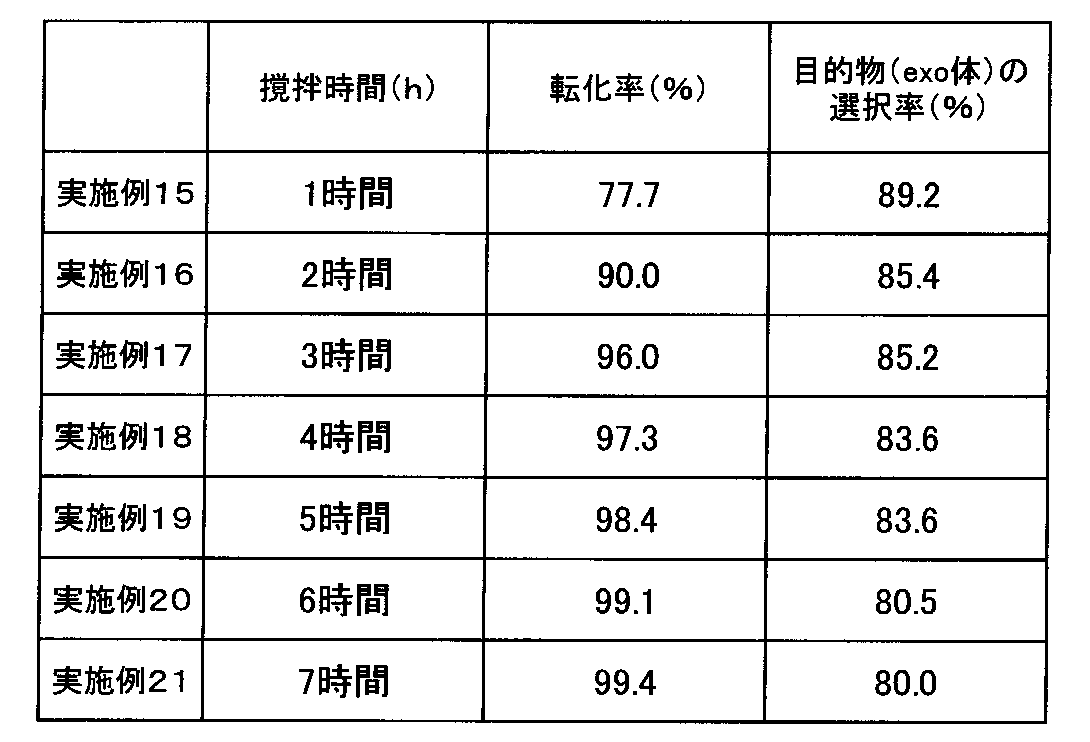
表5に示す結果からも明らかなように、本発明においては十分に高度な収率でexo-5-(p-tert-ブチルフェニル)ビシクロ[2.2.1]-2-ヘプテンが製造できることが確認された。また、表5に示す結果からは、加熱撹拌時間(反応時間)を1時間以上(より好ましくは3時間以上5時間以下)とすることにより、より効率よくexo-5-(p-tert-ブチルフェニル)ビシクロ[2.2.1]-2-ヘプテンが製造できることが確認された。
(実施例22~23)
4-tert-ブチル-フェニルクロライドに対するパラジウム触媒のモル当量を0.03当量に変更し、4-tert-ブチル-フェニルクロライドに対する2,5-ノルボルナジエンのモル当量を下記表6に示すように変更した以外は、実施例6と同様にして粗生成物並びに生成物(単離した目的物)を得た。
4-tert-ブチル-フェニルクロライドに対するパラジウム触媒のモル当量を0.03当量に変更し、4-tert-ブチル-フェニルクロライドに対する2,5-ノルボルナジエンのモル当量を下記表6に示すように変更した以外は、実施例6と同様にして粗生成物並びに生成物(単離した目的物)を得た。
このようにして得られた粗生成物に対してガスクロマト分析を行ったところ、粗生成物中にexo-5-(p-tert-ブチルフェニル)ビシクロ[2.2.1]-2-ヘプテン(目的物)が確認された。また、かかるガスクロマト分析により転化率及び目的物の選択率を測定した。結果を表6に示す。なお、このようにして得られた生成物(単離した目的物)に対してNMR測定により構造解析を行ったところ、生成物はexo-5-(p-tert-ブチルフェニル)ビシクロ[2.2.1]-2-ヘプテンであることが確認された。

(実施例24)
4-tert-ブチル-フェニルクロライドに対するノルボルナジエンのモル当量を2.0当量に変更し、4-tert-ブチル-フェニルクロライドに対するギ酸ナトリウムのモル当量を2.0当量に変更した以外は、実施例6と同様にして粗生成物並びに生成物(単離した目的物)を得た。
4-tert-ブチル-フェニルクロライドに対するノルボルナジエンのモル当量を2.0当量に変更し、4-tert-ブチル-フェニルクロライドに対するギ酸ナトリウムのモル当量を2.0当量に変更した以外は、実施例6と同様にして粗生成物並びに生成物(単離した目的物)を得た。
このようにして得られた粗生成物に対してガスクロマト分析を行ったところ、粗生成物中にexo-5-(p-tert-ブチルフェニル)ビシクロ[2.2.1]-2-ヘプテン(目的物)が確認された。また、かかるガスクロマト分析により、転化率及び目的物の選択率を測定した。結果を表7に示す。なお、このようにして得られた生成物(単離した目的物)に対してNMR測定により構造解析を行ったところ、生成物はexo-5-(p-tert-ブチルフェニル)ビシクロ[2.2.1]-2-ヘプテンであることが確認された。
(実施例25)
ギ酸ナトリウムの代わりにギ酸カリウムを用いた以外は、実施例24と同様にして粗生成物並びに生成物(単離した目的物)を得た。
ギ酸ナトリウムの代わりにギ酸カリウムを用いた以外は、実施例24と同様にして粗生成物並びに生成物(単離した目的物)を得た。
このようにして得られた粗生成物に対してガスクロマト分析を行ったところ、粗生成物中にexo-5-(p-tert-ブチルフェニル)ビシクロ[2.2.1]-2-ヘプテン(目的物)が確認された。また、かかるガスクロマト分析により、転化率及び目的物の選択率を測定した。結果を表7に示す。なお、このようにして得られた生成物(単離した目的物)に対してNMR測定により構造解析を行ったところ、生成物はexo-5-(p-tert-ブチルフェニル)ビシクロ[2.2.1]-2-ヘプテンであることが確認された。
(実施例26)
4-tert-ブチル-フェニルクロライドに対するパラジウム触媒のモル当量を0.001当量から0.0005当量に変更した以外は、実施例24と同様にして粗生成物並びに生成物(単離した目的物)を得た。
4-tert-ブチル-フェニルクロライドに対するパラジウム触媒のモル当量を0.001当量から0.0005当量に変更した以外は、実施例24と同様にして粗生成物並びに生成物(単離した目的物)を得た。
このようにして得られた粗生成物に対してガスクロマト分析を行ったところ、粗生成物中にexo-5-(p-tert-ブチルフェニル)ビシクロ[2.2.1]-2-ヘプテン(目的物)が確認された。また、かかるガスクロマト分析により、転化率及び目的物の選択率を測定した。結果を表7に示す。なお、このようにして得られた生成物(単離した目的物)は、NMR測定により構造解析したところ、exo-5-(p-tert-ブチルフェニル)ビシクロ[2.2.1]-2-ヘプテンであることが確認された。

(実施例27)
4-tert-ブチル-フェニルクロライドの代わりに4-tert-ブチル-フェニルブロマイドを用い、4-tert-ブチル-フェニルブロマイドに対するノルボルナジエンのモル当量は5.0当量に変更した以外は、実施例24と同様にして粗生成物並びに生成物(単離した目的物)を得た。
4-tert-ブチル-フェニルクロライドの代わりに4-tert-ブチル-フェニルブロマイドを用い、4-tert-ブチル-フェニルブロマイドに対するノルボルナジエンのモル当量は5.0当量に変更した以外は、実施例24と同様にして粗生成物並びに生成物(単離した目的物)を得た。
このようにして得られた粗生成物に対してガスクロマト分析を行ったところ、粗生成物中にexo-5-(p-tert-ブチルフェニル)ビシクロ[2.2.1]-2-ヘプテン(目的物)が確認された。また、かかるガスクロマト分析により、転化率及び目的物の選択率を測定した。結果を表8に示す。なお、表8には参考のために実施例24の結果も記載する。なお、このようにして得られた生成物(単離した目的物)に対してNMR測定により構造解析を行ったところ、生成物はexo-5-(p-tert-ブチルフェニル)ビシクロ[2.2.1]-2-ヘプテンであることが確認された。
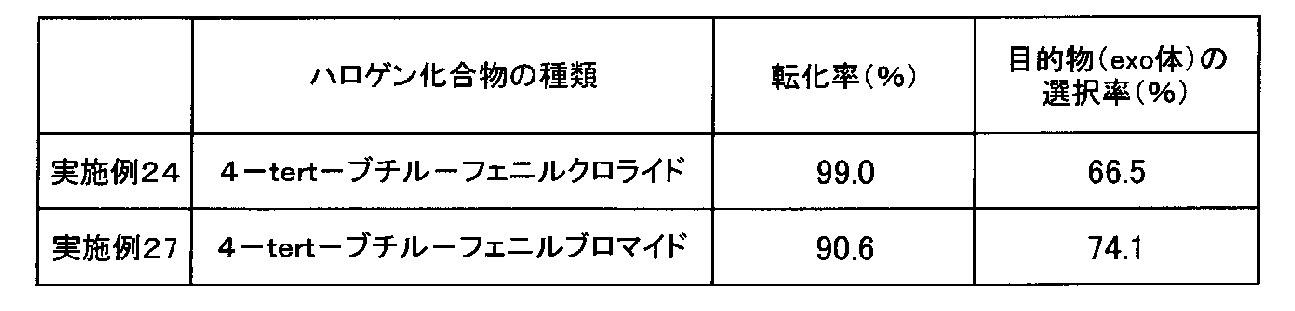
表8に示す結果からも明らかなように、本発明においては、前記一般式(3)で表されるハロゲン化合物として式中のXが臭素原子であるブロム体(4-tert-ブチル-フェニルブロマイド)を用いた場合(実施例27)と、Xが塩素原子であるクロロ体(4-tert-ブチル-フェニルクロライド)を用いた場合(実施例24)とで、exo-5-(p-tert-ブチルフェニル)ビシクロ[2.2.1]-2-ヘプテン(exo体)の収率がほぼ同等であることが確認され、前記一般式(3)で表されるハロゲン化合物中のハロゲン原子(X)の種類によらず、十分に高い収率でexo体を製造することが可能であることが分かった。
(比較例9)
先ず、100mLの三口フラスコに、窒素雰囲気下、トリ-tert-ブチルホスフィン(10μl:(t-Bu)3P)と、酢酸パラジウム(1.9mg)、ジメチルアセトアミド(DMA:25ml)、2,5-ノルボルナジエン(1.9ml:18.8mmol)、4-tert-ブチル-ベンゼンクロライド(1.03g:6.1mmol)、ギ酸(0.6ml)、酢酸ナトリウム(1.56g)を投入した後、120℃の温度条件で4時間加熱攪拌を行って反応溶液を得た。
先ず、100mLの三口フラスコに、窒素雰囲気下、トリ-tert-ブチルホスフィン(10μl:(t-Bu)3P)と、酢酸パラジウム(1.9mg)、ジメチルアセトアミド(DMA:25ml)、2,5-ノルボルナジエン(1.9ml:18.8mmol)、4-tert-ブチル-ベンゼンクロライド(1.03g:6.1mmol)、ギ酸(0.6ml)、酢酸ナトリウム(1.56g)を投入した後、120℃の温度条件で4時間加熱攪拌を行って反応溶液を得た。
次に、前記反応溶液を25℃に冷却した後、300mlの氷水中に注ぎ、分液ロートを用いてn-へキサン(50ml×3回)で抽出を行い、n-へキサン溶液を得た。次いで、前記n-へキサン溶液を、水及び飽和食塩水で洗浄した。そして、洗浄後のn-へキサン溶液を無水硫酸マグネシウムで乾燥させた後、ろ過、濃縮して粗生成物を得た。
このようにして得られた粗生成物に対してガスクロマト分析を行ったところ、粗生成物中にexo-5-(p-tert-ブチルフェニル)ビシクロ[2.2.1]-2-ヘプテン(目的物)が確認された。また、かかるガスクロマト分析により、転化率及びexo-5-(p-tert-ブチルフェニル)ビシクロ[2.2.1]-2-ヘプテン(目的物)の選択率を確認したところ、転化率は23.0%であり且つ選択率は52.3%であることが確認された。
このようにして得られた粗生成物から、実施例1と同様の方法を採用して生成物(目的物)と副生成物を分離した。このようにして得られた生成物(単離した目的物)に対してNMR測定により構造解析したところ、exo-5-(p-tert-ブチルフェニル)ビシクロ[2.2.1]-2-ヘプテンであることが確認された。
このような結果からも明らかなように、前記一般式(3)で表されるハロゲン化合物中のハロゲン原子(X)が塩素原子である場合、比較例9のような触媒と溶媒との組み合わせでは、目的物(exo体)の収率が必ずしも十分なものとはならないことが分かった。
以上説明したように、本発明によれば、フェニル基等の置換基を導入する際に用いる原料化合物中のハロゲン原子の種類が臭素原子や塩素原子等であっても、置換基の立体配置がexo配置となる特定のノルボルネン誘導体(exo体)を選択性よく且つ十分に高い収率で製造することが可能なノルボルネン誘導体の製造方法を提供することが可能となる。したがって、本発明のノルボルネン誘導体の製造方法は、特異な構造を有し且つ光ディスク、光磁気ディスク、光学レンズ、眼鏡レンズ、光学フィルム等を製造するのに好適に利用可能なノルボルネン誘導体を製造する方法として有用である。
Claims (9)
- 下記一般式(1):

で表されるホスフィン系配位子が2価のパラジウムに配位したパラジウム触媒と、N,N-ジメチルホルムアミド及びN,N-ジメチルアセトアミドからなる群から選択される少なくとも1種の溶媒と、還元剤との存在下において、
下記一般式(2):
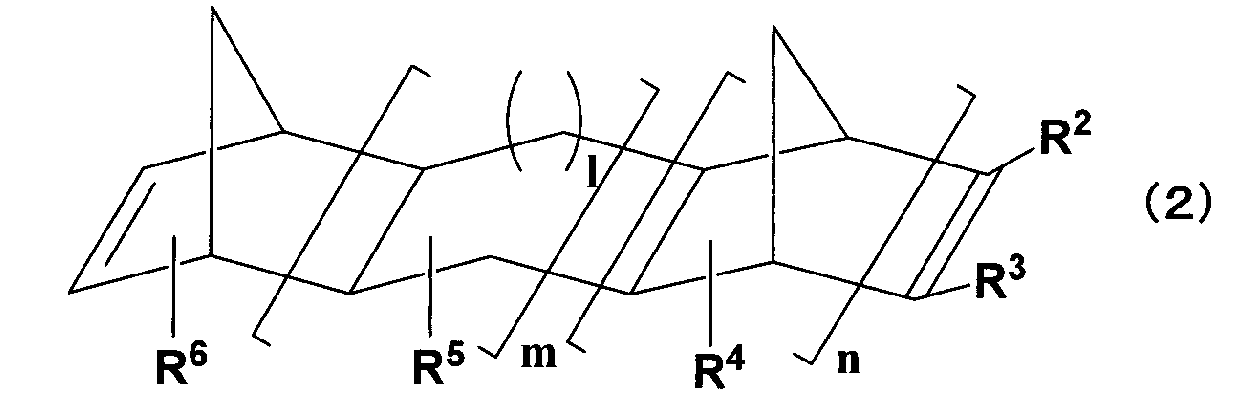
で表されるノルボルナジエン誘導体と、下記一般式(3):

で表されるハロゲン化合物とを反応せしめ、下記一般式(4):
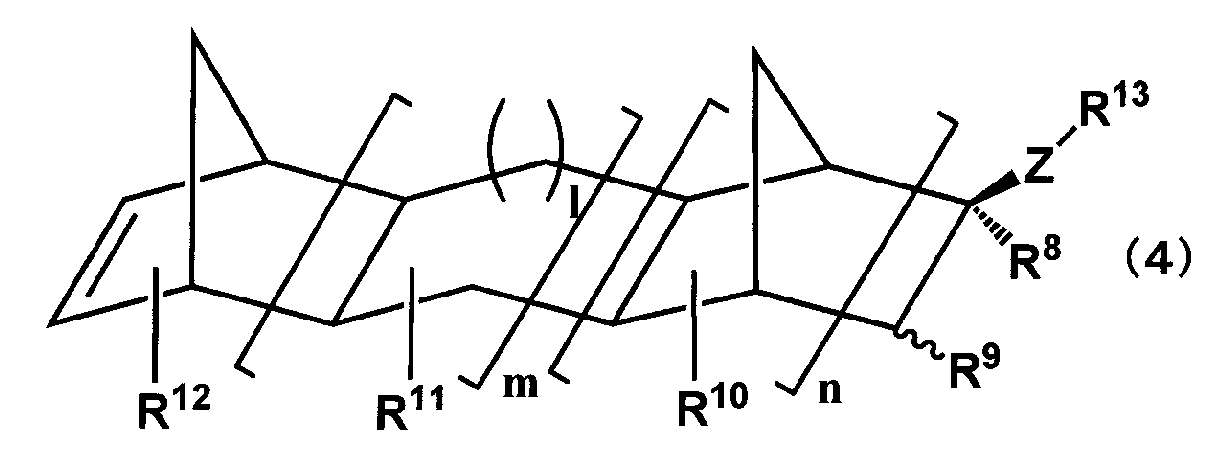
で表され且つ前記一般式(4)中のZで表される置換基の立体配置がexo配位であるノルボルネン誘導体を得る、ノルボルネン誘導体の製造方法。 - 前記一般式(1)中のR1が炭素原子数5~10の環状の脂肪族炭化水素基である、請求項1に記載のノルボルネン誘導体の製造方法。
- 前記一般式(1)中のR1が炭素原子数5~7の環状の脂肪族飽和炭化水素基である、請求項1又は2に記載のノルボルネン誘導体の製造方法。
- 前記パラジウム触媒が、下記一般式(I-1):
[PdQ2L2] (I-1)
(式(I-1)中、Pdはパラジウムを示し、Qはハロゲン原子を示し、Lは上記一般式(1)で表されるホスフィン系配位子を示す。)
で表される触媒である、請求項1~3のうちのいずれか一項に記載のノルボルネン誘導体の製造方法。 - 前記還元剤がギ酸のアルカリ金属塩である、請求項1~4のうちのいずれか一項に記載のノルボルネン誘導体の製造方法。
- 前記一般式(3)中のXが塩素原子である、請求項1~5のうちのいずれか一項に記載のノルボルネン誘導体の製造方法。
- 前記一般式(2)及び(4)中のmが0であり且つnが0である、請求項1~6のうちのいずれか一項に記載のノルボルネン誘導体の製造方法。
- 前記一般式(3)中のZがフェニレン基であり且つ前記一般式(4)中のZがフェニレン基である、請求項1~7のうちのいずれか一項に記載のノルボルネン誘導体の製造方法。
- 前記還元剤の含有割合が、前記ハロゲン化合物の含有量に対するモル比([還元剤]:[ハロゲン化合物])で1:1~5:1である、請求項1~8のうちのいずれか一項に記載のノルボルネン誘導体の製造方法。
Applications Claiming Priority (2)
| Application Number | Priority Date | Filing Date | Title |
|---|---|---|---|
| JP2009-133535 | 2009-06-02 | ||
| JP2009133535A JP2010280584A (ja) | 2009-06-02 | 2009-06-02 | ノルボルネン誘導体の製造方法 |
Publications (1)
| Publication Number | Publication Date |
|---|---|
| WO2010140486A1 true WO2010140486A1 (ja) | 2010-12-09 |
Family
ID=43297622
Family Applications (1)
| Application Number | Title | Priority Date | Filing Date |
|---|---|---|---|
| PCT/JP2010/058568 Ceased WO2010140486A1 (ja) | 2009-06-02 | 2010-05-20 | ノルボルネン誘導体の製造方法 |
Country Status (2)
| Country | Link |
|---|---|
| JP (1) | JP2010280584A (ja) |
| WO (1) | WO2010140486A1 (ja) |
Citations (1)
| Publication number | Priority date | Publication date | Assignee | Title |
|---|---|---|---|---|
| WO2009017100A1 (ja) * | 2007-07-30 | 2009-02-05 | Nippon Oil Corporation | ノルボルネン誘導体の製造方法 |
-
2009
- 2009-06-02 JP JP2009133535A patent/JP2010280584A/ja active Pending
-
2010
- 2010-05-20 WO PCT/JP2010/058568 patent/WO2010140486A1/ja not_active Ceased
Patent Citations (1)
| Publication number | Priority date | Publication date | Assignee | Title |
|---|---|---|---|---|
| WO2009017100A1 (ja) * | 2007-07-30 | 2009-02-05 | Nippon Oil Corporation | ノルボルネン誘導体の製造方法 |
Non-Patent Citations (2)
| Title |
|---|
| A.ARCADI ET AL.: "Palladiumu-catalyzed preparation of exo-aryl derivatives of the norbornane skeleton", JOURNAL OF ORGANOMETALLIC CHEMISTRY, vol. 368, 1989, pages 249 - 256 * |
| H.BRUNNER ET AL.: "Asymmetric Catalysis. 72. Enantioselective Hydroarylation of Norbornene and Norbornadiene with Palladium(II) Acetate/Phosphine Catalysts", SYNTHESIS, no. 12, 1991, pages 1121 - 1124 * |
Also Published As
| Publication number | Publication date |
|---|---|
| JP2010280584A (ja) | 2010-12-16 |
Similar Documents
| Publication | Publication Date | Title |
|---|---|---|
| WO2007125829A1 (ja) | 含フッ素アダマンタン誘導体、重合性基含有含フッ素アダマンタン誘導体、それを含有する樹脂組成物及び反射防止膜 | |
| WO2020000968A1 (zh) | 一种刚性脂环含氟结构的二酐化合物及其制备方法与应用 | |
| JP4275186B2 (ja) | ノルボルネン誘導体の製造方法 | |
| JP5812222B2 (ja) | ビフェニル骨格含有エポキシ樹脂の製造方法 | |
| WO2021131942A1 (ja) | フルオレン誘導体ならびにその製造方法およびその用途 | |
| JP5531245B2 (ja) | ベンゾシクロブテン環を有するノルボルネン誘導体の製造方法 | |
| JP4900636B2 (ja) | ノルボルネン誘導体 | |
| EP3495342B1 (en) | Polymerizable triptycene derivative compound | |
| TW201237060A (en) | Method for producing polyester, and fluorine-containing dicarboxylic acid ester compound | |
| WO2010140486A1 (ja) | ノルボルネン誘導体の製造方法 | |
| KR20170072866A (ko) | 1,3-비스(3-메틸-4-하이드록시페닐)-5,7-디메틸아다만탄 및 그 제조방법, 그리고 방향족 폴리카보네이트 수지 및 그 제조방법 | |
| JP2009242251A (ja) | スピロ環含有ノルボルネン誘導体の製造方法 | |
| JP4843956B2 (ja) | ノルボルネン誘導体の製造法 | |
| JP2006265176A (ja) | スピロ化合物の製造法 | |
| WO2007010784A1 (ja) | 含フッ素アダマンタン誘導体、それを含有する樹脂組成物及びその樹脂組成物を用いた光学電子部材 | |
| JP6906983B2 (ja) | アセチレン含有ベンゾオキサジン化合物、該アセチレン含有ベンゾオキサジン化合物のエチニル基を重合させたポリアセチレン化合物およびその熱硬化物 | |
| JP4984623B2 (ja) | 環状炭化水素化合物の製造方法 | |
| RU2846765C1 (ru) | Сложноэфирное соединение | |
| TWI841317B (zh) | 聚碳酸酯樹脂、聚碳酸酯樹脂組成物、光學零件、及聚碳酸酯樹脂之製造方法 | |
| JP5362208B2 (ja) | ビニルエーテル基を有するアダマンタン誘導体 | |
| TW202424045A (zh) | 高分子量脂環族聚碳酸酯之製備方法 | |
| JP2026049678A (ja) | フェノール化合物またはその誘導体ならびにその製造方法および用途 | |
| JP4815884B2 (ja) | ビアダマンタンテトラフェノール誘導体 | |
| TW202532377A (zh) | 化合物的製造方法及催化劑組成物 | |
| JP2022135908A (ja) | 含フッ素重合体及びその製造方法 |
Legal Events
| Date | Code | Title | Description |
|---|---|---|---|
| 121 | Ep: the epo has been informed by wipo that ep was designated in this application |
Ref document number: 10783270 Country of ref document: EP Kind code of ref document: A1 |
|
| NENP | Non-entry into the national phase |
Ref country code: DE |
|
| 32PN | Ep: public notification in the ep bulletin as address of the adressee cannot be established |
Free format text: NOTING OF LOSS OF RIGHTS PURSUANT TO RULE 112(1) EPC (EPO FORM 1205A DATED 09-03-2012). |
|
| 122 | Ep: pct application non-entry in european phase |
Ref document number: 10783270 Country of ref document: EP Kind code of ref document: A1 |