WO2010125658A1 - 再生装置及び方法、記録装置及び方法、並びにコンピュータプログラム - Google Patents
再生装置及び方法、記録装置及び方法、並びにコンピュータプログラム Download PDFInfo
- Publication number
- WO2010125658A1 WO2010125658A1 PCT/JP2009/058413 JP2009058413W WO2010125658A1 WO 2010125658 A1 WO2010125658 A1 WO 2010125658A1 JP 2009058413 W JP2009058413 W JP 2009058413W WO 2010125658 A1 WO2010125658 A1 WO 2010125658A1
- Authority
- WO
- WIPO (PCT)
- Prior art keywords
- defect
- recording
- recording medium
- content data
- recorded
- Prior art date
- Legal status (The legal status is an assumption and is not a legal conclusion. Google has not performed a legal analysis and makes no representation as to the accuracy of the status listed.)
- Ceased
Links
Images





Classifications
-
- G—PHYSICS
- G11—INFORMATION STORAGE
- G11B—INFORMATION STORAGE BASED ON RELATIVE MOVEMENT BETWEEN RECORD CARRIER AND TRANSDUCER
- G11B20/00—Signal processing not specific to the method of recording or reproducing; Circuits therefor
- G11B20/10—Digital recording or reproducing
- G11B20/18—Error detection or correction; Testing, e.g. of drop-outs
- G11B20/1883—Methods for assignment of alternate areas for defective areas
-
- G—PHYSICS
- G11—INFORMATION STORAGE
- G11B—INFORMATION STORAGE BASED ON RELATIVE MOVEMENT BETWEEN RECORD CARRIER AND TRANSDUCER
- G11B20/00—Signal processing not specific to the method of recording or reproducing; Circuits therefor
- G11B20/10—Digital recording or reproducing
- G11B20/18—Error detection or correction; Testing, e.g. of drop-outs
- G11B20/1816—Testing
- G11B2020/1826—Testing wherein a defect list or error map is generated
-
- G—PHYSICS
- G11—INFORMATION STORAGE
- G11B—INFORMATION STORAGE BASED ON RELATIVE MOVEMENT BETWEEN RECORD CARRIER AND TRANSDUCER
- G11B20/00—Signal processing not specific to the method of recording or reproducing; Circuits therefor
- G11B20/10—Digital recording or reproducing
- G11B20/18—Error detection or correction; Testing, e.g. of drop-outs
- G11B20/1883—Methods for assignment of alternate areas for defective areas
- G11B2020/1893—Methods for assignment of alternate areas for defective areas using linear replacement to relocate data from a defective block to a non-contiguous spare area, e.g. with a secondary defect list [SDL]
-
- G—PHYSICS
- G11—INFORMATION STORAGE
- G11B—INFORMATION STORAGE BASED ON RELATIVE MOVEMENT BETWEEN RECORD CARRIER AND TRANSDUCER
- G11B2220/00—Record carriers by type
- G11B2220/20—Disc-shaped record carriers
-
- G—PHYSICS
- G11—INFORMATION STORAGE
- G11B—INFORMATION STORAGE BASED ON RELATIVE MOVEMENT BETWEEN RECORD CARRIER AND TRANSDUCER
- G11B2220/00—Record carriers by type
- G11B2220/20—Disc-shaped record carriers
- G11B2220/25—Disc-shaped record carriers characterised in that the disc is based on a specific recording technology
- G11B2220/2537—Optical discs
- G11B2220/2541—Blu-ray discs; Blue laser DVR discs
-
- G—PHYSICS
- G11—INFORMATION STORAGE
- G11B—INFORMATION STORAGE BASED ON RELATIVE MOVEMENT BETWEEN RECORD CARRIER AND TRANSDUCER
- G11B2220/00—Record carriers by type
- G11B2220/60—Solid state media
- G11B2220/63—Solid state media wherein solid state memory is used as a supplementary storage medium to store auxiliary data for detecting or correcting errors on a main storage medium
Definitions
- the present invention relates to a playback apparatus and method for reproducing content data recorded on a recording medium such as a DVD or Blu-ray Disc, a recording apparatus and method for recording content data on the recording medium, and a computer in this way.
- the present invention relates to a technical field of a computer program that functions as a simple playback device or recording device.
- Defect management is a technique for improving the reliability of content data recording and reading on high-density recording media such as optical disks, magnetic disks, and magneto-optical disks. That is, when the read quality of a recording signal deteriorates due to the presence of scratches or dust on the recording medium, or the deterioration of the recording medium, the content data to be recorded or the recorded content data is recorded. Recording is performed in another area on the medium (hereinafter, such an area is referred to as a “spare area”). As described above, a state in which the read quality of the recording signal of the content data recorded on the recording medium is deteriorated is hereinafter referred to as “defect”.
- content data (hereinafter referred to as “complementary data”) that may cause a recording failure or reading failure in the future due to a defect is saved in the spare area, thereby enabling recording and reading of the content data. Reliability can be improved.
- a defect list is created for defect management.
- the defect address information indicating the position of the defect existing on the recording medium and the content data that should have been recorded at the location where the defect exists or the supplemental data that is the recorded content data are saved.
- the save address information indicating the location of the spare area (for example, the recording position in the spare area) is recorded.
- the defect list is created at the time of initial logical formatting for initializing the recording medium or recording file system data.
- the defect list is also created when content data is recorded on the recording medium.
- a defect list is created or updated each time a defect is detected or each time content data is saved in the spare area (that is, complementary data is recorded).
- the defect list may be created when content data is reproduced from the recording medium. For example, when a predetermined number or more of data is subjected to error correction processing with respect to content data in a predetermined unit (for example, sector unit or cluster unit) at the time of reproduction of the content data, the content data in the predetermined unit is a defect that cannot be corrected in the future. It is judged that it becomes and becomes the object of evacuation. As described above, the defect list is created or updated every time content data is saved in the spare area.
- the defect list When recording data to a recording medium, refer to the defect list. As a result, the content data can be recorded on the recording medium while avoiding the place where the defect exists.
- the defect list is also referred to when reproducing the content data recorded on the recording medium. Thereby, the content data recorded in the normal recording area and the content data recorded in the spare area due to the presence of the defect can be reliably read based on the defect list.
- the defect list is generally recorded in a specific area (for example, a defect management area) of the recording medium for which the defect list is created or updated.
- a specific area for example, a recording medium for which a defect list is created or updated
- Recorded in the spare area for example, Recorded in the spare area
- the defect list is recorded on the recording medium itself for which the defect list is created or updated, there is an upper limit on the capacity of the defect list that can be recorded on the recording medium. For this reason, if it becomes impossible to record the defect list on the recording medium (that is, if there is no free space in the specific area for recording the defect list), it becomes impossible to perform defect management thereafter. . For this reason, even if the user data area for recording the content data has a free space, there is a technical problem that the subsequent recording operation cannot be continued. Further, since complementary data is recorded on the recording medium itself for which the defect list is created or updated, there is an upper limit on the capacity of complementary data that can be recorded on the recording medium.
- defect management is generally an operation performed for rewritable recording media such as DVD-RAM and BD-RE and write-once recording media such as BD-R. Therefore, a read-only recording medium such as a DVD-ROM or a BD-ROM has a technical problem that defect management cannot be performed in the first place. Furthermore, even if it is a rewritable or write-once type recording medium, if data write protection is set by Write Protection flag (Write Protect notch), Write Protect notch, etc., or finalization processing of write-once disc Since this is handled in the same way as a normal read-only recording medium, it has the same technical problem.
- Write Protection flag Write Protect notch
- Write Protect notch Write Protect notch
- the present invention has been made in view of the above-described conventional problems, for example, a reproducing apparatus and method capable of performing a reproducing operation while performing defect management more preferably, and a recording operation while performing defect management more preferably. It is an object to provide a recording apparatus and method capable of performing the above and a computer program that causes a computer to function as such a reproducing apparatus or recording apparatus.
- a playback apparatus is a playback apparatus for playing back content data recorded on a first recording medium, the detection means for detecting a defect on the first recording medium, When a defect is detected, the supplementary data that is the content data portion recorded or to be recorded in the position where the defect is detected in the content data is transmitted via a predetermined interface or a predetermined network.
- the content data is complemented by using an acquisition unit that is connected to a playback apparatus and acquires the supplementary data from an external second recording medium that is recorded in advance, and the supplementary data that is acquired from the second recording medium.
- a reproducing means for reproducing.
- a playback method of the present invention is a playback method for playing back content data recorded on a first recording medium, the detection step for detecting a defect on the first recording medium, When a defect is detected, the supplementary data that is the content data portion recorded or to be recorded in the position where the defect is detected in the content data is transmitted via a predetermined interface or a predetermined network.
- the content data is supplemented by using an acquisition step of acquiring from an external second recording medium connected to a playback device and preliminarily recording the complementary data, and using the complementary data acquired from the second recording medium And a reproduction process for reproducing the image.
- a recording apparatus of the present invention is a recording apparatus that records content data on a first recording medium, a recording unit that records the content data on the first recording medium, and the content data Detecting means for detecting a defect on the recording medium during recording, and when the defect is detected, defect address information indicating a position where the defect is detected is transmitted via a predetermined interface or a predetermined network. Transmission means for transmitting the defect address information to the second recording medium so as to be recorded on an external second recording medium connected to the recording apparatus.
- a recording method of the present invention is a recording method for recording content data on a first recording medium, the recording step for recording the content data on the first recording medium, and the content data
- a server of the present invention includes a playback device that plays back content data recorded on a first recording medium, a recording device that records the content data on the first recording medium, and a predetermined interface or A server connected via a predetermined network, and when a defect on the first recording medium is detected, the defect is detected in the content data transmitted from the playback device or the recording device.
- An acquisition unit that acquires at least one of complementary data that is a content data portion that has been recorded or should be recorded at a recorded position and defect address information that indicates a position at which the defect is detected; and acquired by the acquisition unit At least the complementary data and the defect address information Write a in association with the user who uses the playback apparatus or the recording apparatus or the reproducing apparatus or the recording apparatus, and recording means for recording on the second recording medium provided in the server.
- a first computer program of the present invention is a computer program for controlling a computer provided in a playback apparatus of the present invention, and the computer is detected by the detection unit, the acquisition unit, and the computer. It functions as a reproducing means.
- a second computer program of the present invention is a computer program for controlling a computer provided in a recording apparatus of the present invention, and the computer includes the recording unit, the detecting unit, and the computer. It functions as a transmission means.
- a third computer program of the present invention is a computer program for controlling a computer provided in a server of the present invention, and causes the computer to function as the acquisition unit and the recording unit. .
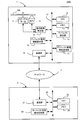
- FIG. 1 is a block diagram conceptually showing the basic structure of a recording / reproducing system in a first example.
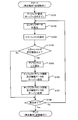
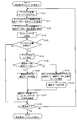
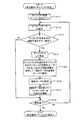
- FIG. It is a flowchart which shows notionally the flow of the transmission operation
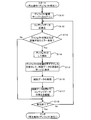
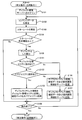
- 6 is a flowchart conceptually showing a flow of a reproducing operation using defect management information as a part of a first operation example of the recording / reproducing system in the first example.
- An embodiment according to the playback apparatus of the present invention is a playback apparatus for playing back content data recorded on a first recording medium, wherein the detection means detects a defect on the first recording medium, and the defect is detected.
- supplemental data which is the content data portion recorded in the position where the defect is detected in the content data or to be recorded, is connected to the playback device via a predetermined interface or a predetermined network.
- the content data is reproduced while being supplemented by using the acquisition means for acquiring from the external second recording medium in which the complementary data is recorded in advance and the complementary data acquired from the second recording medium. And reproducing means.
- content data for example, video data, image data, audio data, character data, document data, computer program data recorded on the first recording medium by the operation of the reproducing means. And other various data
- content data can be reproduced (in other words, read).
- the “first recording medium” in the present embodiment is intended to indicate a recording medium that is a main target of the reproducing operation by the reproducing apparatus of the present embodiment, and is typically loaded into the reproducing apparatus, for example. Or the recording medium with which the reproducing
- a configuration for example, a configuration in which the recording medium is an optical disc such as a DVD or Blu-ray Disc, and the playback device is a player that plays back the optical disc can be cited as an example.
- the recording medium is a built-in type recording medium such as a hard disk and the playback device is a drive or a host computer that performs a playback operation (or reading operation) on the hard disk
- the playback device is a drive or a host computer that performs a playback operation (or reading operation) on the hard disk
- the detection means during the reproduction of the content data recorded on the first recording medium, it is possible to correct by a defect on the first recording medium (for example, an error correction code added to the content data) by the operation of the detection means. Or a defect that cannot be corrected by the error correction code). That is, the presence / absence of a defect on the first recording medium is determined by the operation of the detection means.
- a defect on the first recording medium for example, an error correction code added to the content data
- Complement data which is the content data portion that has been or should be recorded, is acquired.
- complementary data is acquired only when the detected defect is a defect that cannot be corrected by the error correction code (fatal defect), and the detected defect can be corrected by the error correction code ( In the case of a normal defect), the supplementary data may not be acquired. Or not only when the detected defect is a defect that cannot be corrected by the error correction code (fatal defect) but also when the detected defect is a defect that can be corrected by the error correction code (normal defect) Alternatively, the supplementary data may be acquired.
- the supplementary data is recorded in advance on the second recording medium by the user of the playback apparatus or by another user or content holder.
- the second recording medium in which such complementary data is recorded in advance is a recording medium that is not a main target of the reproducing operation by the reproducing apparatus of the present embodiment, and indicates a recording medium provided outside the reproducing apparatus.
- a playback device is not provided in advance and a predetermined network (for example, a wired or wireless network such as the Internet, a wired LAN, a wireless LAN, a dedicated line, ISDN, or the like) or a predetermined interface ( For example, a recording medium on which data is exchanged with a playback device via USB, IEEE 1394, or other various interfaces) is shown.
- Examples of such a second recording medium include a recording medium provided in a server provided outside the reproducing apparatus, and a portable recording medium that can be arbitrarily attached to and detached from the reproducing apparatus.
- the reproducing means can supplement the content data portion recorded or to be recorded at the position of the defect on the first recording medium, using the supplement data acquired from the second recording medium.
- the content data portion recorded at the position of the defect or to be recorded that is, the content data portion recorded on the first recording medium
- the content data portion By supplementing with supplementary data, the content data can be reliably reproduced.
- the reproducing apparatus it is possible to acquire complementary data using a second recording medium different from the first recording medium which is a main target of the reproducing operation. That is, according to the playback apparatus of the present embodiment, defect management can be performed using a second recording medium that is different from the first recording medium that is the main target of the playback operation. For this reason, it is not necessary to record complementary data on the first recording medium in order to perform defect management. As a result, the disadvantage that the defect management cannot be performed due to the limitation of the recording capacity of the first recording medium (particularly, the limitation of the recording capacity of the area for recording complementary data (that is, the spare area)) is preferably eliminated. can do.
- the defect management is performed by the limitation of the recording capacity of the first recording medium (particularly, the limitation of the recording capacity of the area for recording the defect address information (that is, the defect management area (DMA)). It is possible to suitably eliminate the inconvenience that it becomes impossible to perform.
- DMA defect management area
- defect management can be performed even if the first recording medium does not have an area for recording complementary data and an area for recording defect address information.
- a recording medium or a rewritable recording medium that is, a recording medium that includes the above-described defect management area and spare area but cannot perform recording in the defect management area or the spare area
- Kill particularly, Defect detection and defect information registration
- the recording capacity of the first recording medium can be set to the content data. It can be used to the maximum for recording.
- defect management can be performed regardless of the environment in which the playback device is placed.
- complementary data recorded on the second recording medium can be shared between different playback devices. For example, if only one complementary data is recorded on the second recording medium, the complementary data can be shared among a plurality of reproducing devices that reproduce the same content data. As a result, it is not necessary to record the same complementary data on the second recording medium in duplicate, so that the second recording medium can be used efficiently.
- the conventional playback apparatus that performs defect management by recording complementary data and defect address information on the first recording medium that is the main target of the playback operation, In comparison, it is very useful in that the reproduction operation can be performed while the defect management is more suitably performed.
- the detection means detects a defect on the first recording medium during or prior to playback of the content data.
- the reproducing apparatus that detects the defect on the first recording medium during or before the reproduction of the content data, when the defect is detected, the complementary data and the position where the defect is detected are indicated. It may further comprise transmission means for transmitting at least one of the complementary data and the defect address information to the second recording medium so that at least one of the defect address information is recorded on the second recording medium. Good.
- the embodiment of the recording apparatus of the present invention can also adopt various aspects.
- the detection unit detects a position where the playback error rate of the content data is equal to or higher than a predetermined threshold as the defect, and the transmission unit has the playback error rate of the content data.
- a position that is equal to or greater than a predetermined threshold is detected as the defect, at least one of the complementary data and the defect address information may be transmitted to the second recording medium.
- a predetermined threshold value used for determining whether or not the transmission means transmits at least one of complementary data and defect address information to the second recording medium (that is, in order to detect a defect that needs to be transmitted).
- the predetermined threshold used is a predetermined threshold used for determining whether or not the acquisition unit described later acquires complementary data (and defect address information) from the second recording medium (that is, it is necessary to perform an acquisition operation). May be the same as a predetermined threshold used to detect a certain defect).
- the predetermined threshold value used for determining whether or not the transmission unit transmits at least one of the complementary data and the defect address information to the second recording medium is set by the acquisition unit, which will be described later, as the complementary data (and the defect address information). ) May be smaller or larger than a predetermined threshold value used for determining whether or not to obtain from the second recording medium.
- the detection unit detects a position where the playback error rate of the content data is equal to or higher than a predetermined threshold as the defect, and the acquisition unit includes the playback error rate.
- the position where is equal to or greater than the predetermined threshold is detected as the defect, the complementary data is acquired from the second recording medium.
- the reproduction error rate of the content data is larger than a predetermined threshold, it is highly possible that the content data is already unreadable. Alternatively, the content data can be read now, but cannot be read in the future (or it takes time for error correction using an error correction code). For this reason, in such a case, by acquiring complementary data from an external second recording medium, even if it is impossible to read content data on the first recording medium, the reproduction operation is preferably continued. Can do. Further, even if there is a possibility that reading of the content data on the first recording medium may become impossible in the future, it is possible to preferably continue the reproducing operation by acquiring the complementary data from the external second recording medium. it can. Alternatively, even if content data on the first recording medium can be read, but error correction using an error correction code takes time, it is preferable to acquire complementary data from the external second recording medium. In addition, the reproducing operation can be continued efficiently (that is, without error correction).
- the acquisition unit acquires in advance all or part of the complementary data prior to playback of the content data
- the playback device includes the acquisition unit.
- Storage means for storing all or part of the complementary data acquired by the above-mentioned method, wherein the reproduction means reproduces the content data while complementing the content data using the complementary data stored in the storage means.
- the reproduction operation is performed using the complementary data acquired in advance, it is not necessary to acquire the complementary data from the second recording medium every time a defect is detected. Therefore, it is possible to quickly reproduce the content data.
- real-time data such as video data and audio data is very useful because it can reduce the time required to acquire complementary data from the second recording medium.
- the acquisition unit may be configured to further acquire the complementary data corresponding to the position where the defect is detected from the second recording medium.
- the complementary data that is likely to be used in the future is predicted to some extent, and the complementary data is preferentially acquired from the first recording medium. You may do it.
- the second recording medium includes (1) medium identification information for identifying the first recording medium, and (2) a user who uses the reproducing apparatus. At least one of the user identification information to be identified or the reproduction device identification information for identifying the reproduction device is recorded in a format associated with the complementary data, and the acquisition of the complementary data from the second recording medium is as follows: Only for a user who has the regular first recording medium identified by the medium identification information, and only for a regular user identified by the user identification information, the regular identification identified by the playback device identification information Permitted only to a user having a playback device or only to a user who is authenticated by a combination of the identification information, the acquisition means Presenting at least one of broadcast and the user identification information to obtain the complementary data from said second recording medium.
- the complementary data recorded on the second recording medium is acquired by a user other than the regular user of the complementary data.
- the complementary data recorded on the second recording medium is played back from a recording medium different from the first recording medium being played back by the playback device (that is, a recording medium on which content data unrelated to the complementary data is recorded). The inconvenience of being mistakenly acquired can be suitably eliminated.
- defect address information indicating a position where the defect is detected is recorded in advance on the second recording medium, and the acquisition unit includes the defect address.
- Information is acquired from the second recording medium, and the detection means detects a position indicated by the defect address information acquired by the acquisition means as the defect.
- the defect address information is recorded in advance on the second recording medium.
- the detection means detects that a defect exists at the position on the first recording medium indicated by the defect address information without actually performing the verify operation (for example, the error rate measurement described above) on the first recording medium. can do. For this reason, the operation load of the detection means can be relatively reduced.
- the detection means detects the defect on the first recording medium prior to the reproduction operation by referring to the defect address information. be able to. For this reason, a defect can be detected quickly and reliably.
- the acquisition unit acquires the complementary data recorded or to be recorded at the position where the defect is detected. To do.
- complementary data can be acquired efficiently.
- the content data is subjected to copyright protection processing, and the entire content data is recorded as the complementary data on the second recording medium.
- the acquisition of the supplementary data from the second recording medium is permitted only to a user who has obtained a proper use permission regarding the copyright of the content data, and the acquisition means includes the playback device.
- User license information indicating that the user has a proper license for the copyright of the content data is presented, and the complementary data is obtained from the second recording medium.
- ⁇ 12> In another aspect of the embodiment of the reproducing apparatus of the present invention, a part of the content data recorded in a position other than the position where the defect is detected in the first recording medium and the second recording medium
- the apparatus further comprises recording means for recording the acquired complementary data as the content data on a third recording medium different from the first recording medium.
- the transmission unit when the defect that is not registered in the second recording medium is detected by the detection unit, the transmission unit stores the second supplement data corresponding to the defect address information. If not yet recorded on the recording medium, the complementary data corresponding to the defect address information is transmitted to the second recording medium.
- defect information that is, defect address information and complementary data
- a recording apparatus or the like that controls and manages the first recording medium in the playback apparatus.
- An embodiment according to the reproduction method of the present invention is a reproduction method for reproducing content data recorded on a first recording medium, wherein a detection step for detecting a defect on the first recording medium, and the defect is detected.
- supplemental data which is the content data portion recorded in the position where the defect is detected in the content data or to be recorded, is connected to the playback device via a predetermined interface or a predetermined network.
- reproduction is performed while complementing the content data A regeneration step.
- the same effects as the various effects that can be enjoyed by the embodiment of the reproducing apparatus of the present invention described above can be enjoyed.
- the embodiment of the playback method of the present invention can also take various aspects.
- An embodiment according to the recording apparatus of the present invention is a recording apparatus for recording content data on a first recording medium, the recording means for recording the content data on the first recording medium, and during the recording of the content data Detecting means for detecting a defect on the recording medium, and when the defect is detected, defect address information indicating a position where the defect is detected is connected to the recording apparatus via a predetermined interface or a predetermined network. Transmitting means for transmitting the defect address information to the second recording medium so as to be recorded on an external second recording medium.
- the content data recorded on the first recording medium can be reproduced by the operation of the recording means.
- the defect on the first recording medium is detected by the operation of the detecting means. That is, the presence / absence of a defect on the first recording medium is determined by the operation of the detection means.
- defect address information indicating the position where the defect is detected by the operation of the transmission means in order to manage the defect appropriately. Is recorded on the second recording medium, so that the defect address information is transmitted to the second recording medium. As a result, the defect address information is recorded on the second recording medium outside the recording device.
- the defect position can be surely recognized by referring to the defect address information recorded on the second recording medium.
- complementary data is recorded in advance on the second recording medium by the user of the recording apparatus or by another user or content holder, the position of the defect on the first recording medium can be obtained by acquiring the complementary data.
- the content data portion recorded or to be recorded can be supplemented.
- complementary data is recorded on the first recording medium, the content data portion recorded or to be recorded at the position of the defect on the first recording medium is complemented by acquiring the complementary data. be able to. As a result, even if the content data portion recorded at the defect position or to be recorded cannot be reproduced, the content data can be reliably reproduced.
- the defect management information can be recorded on the second recording medium different from the first recording medium which is the main target of the recording operation. That is, according to the recording apparatus of the present embodiment, defect management can be performed using a second recording medium that is different from the first recording medium that is the main target of the reproduction operation. This eliminates the need to record defect address information on the first recording medium in order to perform defect management.
- the defect management is performed by the limitation of the recording capacity of the first recording medium (particularly, the limitation of the recording capacity of the area for recording the defect address information (that is, the defect management area (DMA)). It is possible to suitably eliminate the inconvenience that it becomes impossible to perform.
- defect management can be performed even if the first recording medium does not have an area for recording defect address information, a read-only recording medium or a write-once recording medium subjected to finalization processing, Alternatively, defect management can also be performed on a write-once or rewritable recording medium that has been temporarily write-protected.
- the recording capacity of the first recording medium can be utilized to the maximum for recording content data. Can do. For this reason, a recording medium can be used efficiently.
- defect management for example, registration of defect degree address information
- defect management should be performed regardless of the environment in which the playback apparatus is placed. Can do.
- the conventional reproducing apparatus that performs defect management by recording complementary data and defect address information on the first recording medium that is a main target of the recording operation, In comparison, it is very beneficial in that the recording operation can be performed while the defect management is more suitably performed.
- the transmission information includes (1) medium identification information for identifying the first recording medium in addition to the defect address information, and (2) the recording apparatus.
- the medium identification information and the user identification information or the recording device so that at least one of user identification information for identifying a user who uses the recording device or recording device identification information for identifying the recording device is recorded on the second recording medium At least one of the identification information is transmitted to the second recording medium.
- the acquisition of the defect address information (and also the complementary data) from the second recording medium is identified by the medium identification information using at least one of the medium identification information and the user identification information or the recording apparatus identification information. Only for a user having a regular first recording medium, only for a regular user identified by the user identification information, and only for a user having a regular recording device identified by the recording device identification information Or a user who is authenticated by a combination of identification information. For this reason, it is possible to suitably eliminate the inconvenience that the defect address information (and also the complementary data) recorded on the second recording medium is acquired by a user other than the normal user of the complementary data.
- the defect address information (and further complementary data) recorded on the second recording medium is different from the first recording medium being reproduced by the reproducing apparatus (that is, the defect address information (and further complementary data). It is possible to suitably eliminate the inconvenience that the recording medium on which the content data irrelevant to () is mistakenly acquired during reproduction.
- the first recording medium includes a defect management area for recording the defect address information
- the transmission means performs recording in the defect management area. After becoming impossible, the defect address information is transmitted to the second recording medium.
- the defect management using the defect management area can be performed while the defect management using the defect management area cannot be performed.
- Defect management using a recording medium can be performed. For this reason, it is preferable that the defect management cannot be performed due to the limitation of the recording capacity of the first recording medium (particularly, the limitation of the recording capacity of the area for recording defect address information (that is, the defect management area)). Can be eliminated.
- the defect management using the second recording medium may be performed without performing the defect management using the defect management area provided on the first recording medium.
- the first recording medium includes the content in addition to the defect management area.
- the defect management using the defect management area and the spare area is performed while the defect management using the defect management area and the spare area is performed. After that, the defect management using the second recording medium can be performed. For this reason, it is possible to suitably eliminate the inconvenience that the defect management cannot be performed due to the limitation of the recording capacity of the first recording medium (particularly, the limitation of the recording capacity of the defect management area and the spare area).
- the recording apparatus can have the same function as the playback apparatus according to the present embodiment described above.
- the embodiment of the recording apparatus of the present invention can also adopt various aspects. It is.
- the transmitting means is or should be recorded at the position where the defect is detected in the content data in addition to the defect address information.
- the complementary data is transmitted to the second recording medium so that the complementary data, which is a content data portion, is recorded on the second recording medium in a format associated with the defect address information.
- the supplementary data is recorded on the second recording medium by the operation of the transmission unit in order to manage the defect appropriately.
- the complementary data is transmitted to the second recording medium.
- the complementary data is recorded on the second recording medium outside the recording device. Accordingly, the content data portion recorded or to be recorded at the position of the defect on the first recording medium can be supplemented using the supplemental data acquired from the second recording medium. Therefore, it is not necessary to record complementary data or the like on the first recording medium in order to perform defect management.
- the disadvantage that the defect management cannot be performed due to the limitation of the recording capacity of the first recording medium (particularly, the limitation of the recording capacity of the area for recording complementary data (that is, the spare area)) is preferably eliminated. can do.
- defect management can be performed even if the first recording medium does not have an area for recording complementary data
- a read-only recording medium or a write-once recording medium subjected to finalization processing, or Defect management can also be performed on a write-once or rewritable recording medium that has been temporarily write-protected.
- the recording capacity of the first recording medium can be used to the maximum for recording content data. it can. For this reason, the capacity of the recording medium can be used efficiently.
- the complementary data may be encrypted and recorded on the second recording medium.
- the defect address information (moreover complement data) recorded on the 2nd recording medium is other users (or the normal user of the above-mentioned defect address information (further complement data) (or Inconveniences that are acquired by a user who does not have a proper usage permission can be suitably eliminated.
- the recording unit includes a part of the content data recorded in a position other than the position where the defect is detected in the first recording medium and the second data. You may comprise so that the said complementary data acquired from a recording medium may be recorded on the 3rd recording medium different from a said 1st recording medium as said content data.
- An embodiment according to the recording apparatus of the present invention is a recording method for recording content data on a first recording medium, the recording step for recording the content data on the first recording medium, and during the recording of the content data
- a detection step of detecting a defect on the recording medium, and, when the defect is detected, defect management information for managing a position where the defect is detected is transmitted to the recording apparatus via a predetermined interface or a predetermined network.
- the same effects as the various effects that can be enjoyed by the embodiment of the recording apparatus of the present invention described above can be enjoyed.
- the embodiment of the recording method of the present invention can also adopt various aspects.
- An embodiment according to the server of the present invention is a reproduction device that reproduces content data recorded on a first recording medium (that is, the embodiment according to the reproduction device of the present invention described above (however, including its various aspects)) or A recording device that records the content data on the first recording medium (that is, the above-described embodiment of the recording device of the present invention (including various aspects thereof), and a predetermined interface or a predetermined network
- the server is connected and is recorded at the position where the defect is detected in the content data transmitted from the playback device or the recording device.
- Complement data that is the content data portion that should have been recorded or to be recorded, and a diff that indicates the position where the defect is detected
- Acquisition means for acquiring at least one of address information, and at least one of the complementary data and defect address information acquired by the acquisition means, using the playback device or the recording device, or the playback device or the recording device.
- recording means for recording on a second recording medium provided in the server in association with the user.
- the reproduction apparatus when a defect on the first recording medium is detected as a result of the detection operation by the detection unit included in the reproduction apparatus or the recording apparatus, the reproduction apparatus is operated by the operation of the acquisition unit. And complementary data and defect address information transmitted from the recording device. As a result, by the operation of the recording means, the complementary data and the defect address information are recorded in the second recording medium in a manner suitably associated with the reproducing apparatus (or recording apparatus) or the user using the reproducing apparatus (or recording apparatus). Is done.
- the defect management information can be recorded on the second recording medium different from the first recording medium which is the main target of the reproducing operation by the reproducing device (or the recording operation by the recording device). That is, according to the server according to the present embodiment, the defect management is performed using the second recording medium that is different from the first recording medium that is the main target of the reproducing operation by the reproducing device (or the recording operation by the recording device). It can be performed. This eliminates the need to record defect address information on the first recording medium in order to perform defect management.
- the defect management is performed by the limitation of the recording capacity of the first recording medium (particularly, the limitation of the recording capacity of the area for recording the defect address information (that is, the defect management area (DMA)). It is possible to suitably eliminate the inconvenience that it becomes impossible to perform.
- DMA defect management area
- defect management can be performed even if the first recording medium does not have an area for recording defect address information, a read-only recording medium or a write-once recording medium subjected to finalization processing, Alternatively, defect management can also be performed on a write-once or rewritable recording medium that has been temporarily write-protected.
- a playback-only playback device that cannot perform recording on the first recording medium can record at least one of complementary data and defect address information on the second recording medium. Management can be performed.
- defect management is performed by recording complementary data and defect address information on the first recording medium which is a main target of the reproduction operation (or recording operation).
- a recording operation can be performed while performing defect management more appropriately.
- the embodiment of the server of the present invention can also adopt various aspects.
- the reproduction apparatus or the recording apparatus when the reproduction apparatus or the recording apparatus requests transmission of at least one of the complementary data and the defect address information, the reproduction apparatus or the recording apparatus Or a transmission means for acquiring at least one of the complementary data and the defect address information recorded in association with the user from the second recording medium and transmitting the acquired data to the reproducing apparatus or the recording apparatus. .
- the reproducing device and the recording device can suitably acquire the defect address information and the supplemental data from the server. Therefore, the various effects described above can be suitably enjoyed.
- a first embodiment of the computer program of the present invention is a computer program for controlling a computer provided in the above-described embodiment of the playback apparatus of the present invention (including various aspects thereof), , Function as the detection means, the acquisition means and the reproduction means.
- the computer program of the present invention if the computer program is read from a recording medium such as a ROM, a CD-ROM, a DVD-ROM, and a hard disk that stores the computer program, the computer program is executed.
- a recording medium such as a ROM, a CD-ROM, a DVD-ROM, and a hard disk that stores the computer program
- the computer program is executed.
- the computer program is executed after being downloaded to a computer via communication means, the above-described embodiment of the playback apparatus of the present invention can be realized relatively easily.
- the first embodiment of the computer program of the present invention can also adopt various aspects.
- a second embodiment of the computer program of the present invention is a computer program for controlling a computer provided in the above-described embodiment of the recording apparatus of the present invention (including various aspects thereof), , Function as the recording means, the detecting means and the transmitting means.
- the computer program of the present invention if the computer program is read from a recording medium such as a ROM, a CD-ROM, a DVD-ROM, and a hard disk storing the computer program and then executed by the computer.
- a recording medium such as a ROM, a CD-ROM, a DVD-ROM, and a hard disk storing the computer program and then executed by the computer.
- the computer program is executed after being downloaded to a computer via communication means, the above-described embodiment of the recording apparatus of the present invention can be realized relatively easily.
- the second embodiment of the computer program of the present invention can also adopt various aspects.
- a third embodiment according to the computer program of the present invention is a computer program for controlling a computer provided in the above-described embodiment of the server according to the present invention (including various aspects thereof). It functions as the acquisition means and the recording means.
- the computer program of the present invention if the computer program is read from a recording medium such as a ROM, a CD-ROM, a DVD-ROM, and a hard disk storing the computer program and then executed by the computer.
- a recording medium such as a ROM, a CD-ROM, a DVD-ROM, and a hard disk storing the computer program and then executed by the computer.
- the computer program is executed after being downloaded to a computer via communication means, the above-described embodiment of the server of the present invention can be realized relatively easily.
- the third embodiment of the computer program of the present invention can also adopt various aspects.
- the first embodiment relating to the computer program product of the present invention clearly embodies program instructions that can be executed by a computer provided in the above-described embodiments (including various aspects thereof) relating to the playback apparatus of the present invention.
- the computer is caused to function as the detection unit, the acquisition unit, and the reproduction unit.
- the computer program product of the present invention if the computer program product is read into a computer from a recording medium such as a ROM, CD-ROM, DVD-ROM, or hard disk that stores the computer program product, Alternatively, for example, if the computer program product, which is a transmission wave, is downloaded to a computer via communication means, the above-described embodiment of the playback apparatus of the present invention can be implemented relatively easily. More specifically, the computer program product may be configured by computer-readable code (or computer-readable instructions) that functions as the above-described embodiment of the playback apparatus of the present invention.
- the first embodiment of the computer program product of the present invention can also adopt various aspects.
- the second embodiment of the computer program product of the present invention clearly embodies program instructions executable by a computer provided in the above-described embodiment of the recording apparatus of the present invention (including various aspects thereof).
- the computer is caused to function as the recording unit, the detecting unit, and the transmitting unit.
- the computer program product if the computer program product is read into a computer from a recording medium such as a ROM, CD-ROM, DVD-ROM, or hard disk storing the computer program product, Alternatively, for example, if the computer program product, which is a transmission wave, is downloaded to a computer via communication means, the above-described embodiment of the recording apparatus of the present invention can be implemented relatively easily. More specifically, the computer program product may be configured by computer-readable code (or computer-readable instructions) that functions as the above-described embodiment of the recording apparatus of the present invention.
- the second embodiment of the computer program product of the present invention can also adopt various aspects.
- the third embodiment of the computer program product of the present invention clearly embodies program instructions executable by a computer provided in the above-described embodiments of the server of the present invention (including various aspects thereof), The computer is caused to function as the acquisition unit and the recording unit.
- the computer program product if the computer program product is read into a computer from a recording medium such as a ROM, CD-ROM, DVD-ROM, or hard disk storing the computer program product, Alternatively, for example, if the computer program product, which is a transmission wave, is downloaded to a computer via communication means, the above-described embodiment of the server of the present invention can be implemented relatively easily. More specifically, the computer program product may be configured by computer-readable code (or computer-readable instructions) that functions as the embodiment of the server of the present invention described above.
- the third embodiment of the computer program product of the present invention can also adopt various aspects.
- the detecting device, the obtaining device, and the reproducing device are provided.
- the method includes a detection step, an acquisition step, and a reproduction step.
- the recording apparatus, the detecting means, and the transmitting means are provided.
- the recording method, the detecting step, and the transmitting step are provided.
- the acquisition unit and the recording unit are provided.
- the computer is caused to function as the embodiment of the playback apparatus of the present invention.
- the computer is caused to function as the embodiment of the recording apparatus of the present invention.
- the computer is caused to function as the embodiment of the server of the present invention. Therefore, the reproducing operation or the recording operation can be performed while performing defect management more preferably.
- a recording / reproducing apparatus as an example of the “reproducing apparatus” and “recording apparatus” of the present invention, and a defect management server including a defect management information storage unit, which is an example of the second recording medium of the present invention
- a description will be given of a recording / reproducing system connected via a predetermined network.
- FIG. 1 is a block diagram conceptually showing the basic structure of the recording / reproducing system 1000 in the first example.
- a recording / reproducing system 1000 includes a recording / reproducing apparatus 1 constituting a specific example of each of the “reproducing apparatus” and “recording apparatus” of the present invention, and the first embodiment of the present invention.
- 2 includes a defect management server 2 including a defect management information storage unit 22 that constitutes a specific example of the recording medium, and a network 3.
- the recording / reproducing apparatus 1 has a function of recording content data on the optical disc 100 that constitutes a specific example of the “first recording medium” of the present invention, and a function of reproducing the content data recorded on the optical disc 100. More specifically, the recording / reproducing apparatus 1 includes an optical disc 100, a spindle motor 11, an optical pickup 12, a signal recording / reproducing unit 13, a CPU 14, a memory 15, a defect detecting unit 16, a defect management information transmitting unit 17, and a defect management information request. A unit 18, a communication unit 19, and a bus 10 are provided.
- the spindle motor 11 rotates and stops the optical disk 100 loaded on the recording / reproducing apparatus 1, and operates when accessing the optical disk 100. More specifically, the spindle motor 11 is configured to rotate and stop the optical disc 100 at a predetermined speed while receiving spindle servo from a servo unit or the like (not shown).
- the optical pickup 12 includes, for example, a semiconductor laser device and a lens in order to perform recording / reproduction on the optical disc 100. More specifically, the optical pickup 12 irradiates the optical disk 100 with a light beam such as a laser beam at a first power as a read light during reproduction and modulates with a second power as a write light at the time of recording. Irradiate.
- the signal recording / reproducing unit 13 constitutes one specific example of the “recording unit” and “reproducing unit” in the present invention together with the CPU 14, and controls the spindle motor 11 and the optical pickup 12 to record / reproduce the optical disc 100. I do. More specifically, the signal recording / reproducing unit 13 includes, for example, a laser diode driver (LD driver) and a head amplifier.
- the laser diode driver drives a semiconductor laser (not shown) provided in the optical pickup 12 under the control of the CPU 14.
- the head amplifier amplifies the output signal of the optical pickup 12, that is, the reflected light of the light beam, and outputs the amplified signal.
- the CPU 14 is connected to the signal recording / reproducing unit 13, the memory 15, the defect detection unit 16, the defect management information transmission unit 17, the defect management information request unit 18 and the communication unit 19 via the bus 10, and instructs various control means. By doing so, the entire recording / reproducing apparatus 1 is controlled. Usually, software or firmware for operating the CPU 14 is stored in the memory 15.
- the memory 15 includes a buffer area for content data to be recorded or played back, and an area used as an intermediate buffer when converting the content data into data that can be used by the signal recording / playback unit 13. 1 in general data processing. Further, the memory 15 stores a ROM area in which a program (that is, a firmware program) for performing the operation as the recording / playback apparatus 1 is stored, content data to be recorded or played back is temporarily stored, a firmware program, or the like It consists of a RAM area in which variables necessary for the operation are stored.
- a program that is, a firmware program
- the defect detection unit 16 constitutes a specific example of “detection means” in the present invention, and detects a defect existing on the optical disc 100.
- the defect management information transmission unit 17 constitutes a specific example of “transmission means” in the present invention.
- the defect management information transmission unit 17 manages the defect via the communication unit 19.
- Management information 200 is transmitted to the defect management server 2.
- the defect management information 200 includes, for example, the address of the position where the defect exists (for example, the address of the head position of the defect, the number of blocks of the defect, or the file name And defect address information 230 indicating a relative byte position from the head of the file) and complementary data 240 that is a content data portion to be recorded or recorded at a position where the defect exists.
- the defect management information 200 includes user account information 210 (for example, a user ID) for identifying the user of the recording / reproducing apparatus 1 and a disc identifier for identifying the optical disc 100 loaded in the recording / reproducing apparatus 1. 220 (for example, a media ID recorded in the BCA of the optical disc 100, a media type indicating the type of the media, or a unique ID of the recording / reproducing apparatus) may be included.
- the defect management information 200 including these pieces of information is stored in the defect management information storage unit 22 provided in the defect management server 2.
- the defect management information request unit 18 constitutes one specific example of the “acquisition means” in the present invention.
- the defect management server 2 has the defect management server 2 via the communication unit 19.
- the defect management server 2 is requested to transmit all or part of the defect management information 200 stored in the information storage unit 22.
- the defect management server 2 transmits all or part of the defect management information 200 to the recording / reproducing apparatus 1 by the CPU 23 that controls the operation of the defect management server 2.
- the defect management information 200 transmitted from is acquired.
- the memory 24 provided in the defect management server 2 is a program such as an OS for the defect management server 2 to operate as a server, a work area for use by various applications, or data in the defect management information storage unit 22. It serves as a buffer that temporarily stores
- the communication unit 19 controls communication (for example, communication using HTTP or the like) between the recording / reproducing apparatus 1 and the defect management server 2 via the network 3.
- the defect management server 2 includes a communication unit 21, a defect management information storage unit 22, a CPU 23, and a memory 24.
- the communication unit 21 controls communication between the recording / reproducing apparatus 1 and the defect management server 2 via the network 3.
- the defect management information storage unit 22 constitutes a specific example of the “second recording medium” in the present invention, and stores the defect management information 200 transmitted from the recording / reproducing apparatus 1.
- the defect management information storage unit 22 uses, for example, a content holder or the like for the complementary data 240 in the defect management information 200 in addition to or instead of storing the complementary data 240 transmitted from the recording / reproducing apparatus 1.
- Supplementary data 240 prepared in advance may be stored.
- the recording / reproducing apparatus 1 does not necessarily need to transmit the complementary data 240 to the defect management server 2. Further, the defect management server 2 records or reproduces all or part of the defect management information 200 stored in the defect management information storage unit 22 via the communication unit 21 in response to a request from the recording / reproduction device 1. 1 is transmitted.
- the defect management information storage unit 22 is typically a recording medium such as a hard disk, an optical disk, or a semiconductor memory.
- the network 3 may take any form of wired or wireless, a part thereof may be wired, and the other part may be wireless. Further, it may be a dedicated line, a general public line or a telephone line, a packet network, or a circuit switching network.
- the Internet may be adopted as the network 3.
- FIG. 1 shows an example of the recording / reproducing apparatus 1.
- the recording / reproducing apparatus 1 physically or functionally loads the optical disc 100 and records the content data or reproduces the content data, and records the content data on the disc drive.
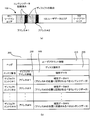
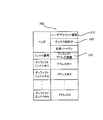
- FIG. 2 is a flowchart conceptually showing a flow of the defect management information 200 transmission operation as a part of the first operation example of the recording / reproducing system 1000 according to the first embodiment, and FIG. It is a data structure figure which shows notionally the data structure of the defect management information 200 used in the 1st operation example of the recording / reproducing system 1000 based on 1 Example.
- a login process from the recording / reproducing apparatus 1 to the defect management server 2 is performed (step S101).
- a connection between the recording / reproducing apparatus 1 and the defect management server 2 is established using the user account information 210 or the like registered in advance by the user of the recording / reproducing apparatus 1.
- the login process is performed by presenting the user ID and password registered in advance in the recording / reproducing apparatus 1 by the user.
- the login process may be performed based on information such as the unique ID of the recording / reproducing apparatus 1.
- step S102 the content data recorded on the optical disc 100 is reproduced by the operation of the recording / reproducing unit 13 under the control of the CPU 14 (step S102).
- video, audio, and the like constituting the content data are output via, for example, a display or a speaker (not shown) connected to the recording / playback apparatus 1.
- the error rate of the reproduced content data is measured by the operation of the defect detection unit 16 (step S103). More specifically, for example, the number of times error correction is performed when error correction is possible using ECC (Error Correction Code) added to the content data may be measured as the error rate.
- ECC Error Correction Code
- Such an error rate measurement is performed, for example, in content data recording units (specifically, for example, ECC block units, sector units, frame units, or the like).
- step S104 whether or not the error rate measured in step S103 is equal to or higher than a predetermined threshold is determined by the operation of the defect detection unit 16 (step S104).
- a predetermined threshold value is an error rate value or a value approximating those values that are assumed to cause normal reproduction (in other words, reading) of content data in the near future. It is done.
- step S104 if it is determined that the error rate is not equal to or greater than the predetermined threshold (step S104: No), no defect has occurred in the area currently being played back (in other words, no defect exists). ). Thereafter, the process proceeds to step S108, and it is determined whether or not the reproduction operation is ended under the control of the CPU 14 (step S108).
- step S104 determines whether the error rate is greater than or equal to the predetermined threshold. If it is determined in step S104 that the error rate is greater than or equal to the predetermined threshold (step S104: Yes), the defect detection unit 16 operates to cause a defect in the currently reproduced area. Is determined (in other words, there is a defect) (step S105). Therefore, defect management for managing the defect is performed thereafter.
- the defect management information 200 for managing the defect detected in step S105 is generated by the operation of the defect management information transmitting unit 17. Thereafter, the generated defect management information 200 is transmitted to the defect management server 2 by the operation of the defect management information transmitting unit 17 (step S106). Thereafter, the defect management server 2 records the transmitted defect management information 200 in the defect management information storage unit 22 (step S107).
- step S108 it is determined whether or not to end the reproduction operation under the control of the CPU 14 (step S108).
- step S108 if it is determined that the reproduction operation is to be terminated (step S108: Yes), the reproduction operation is terminated.
- step S108: No when it is determined not to end the reproduction operation (step S108: No), the process returns to step S102 and the reproduction operation is continued. Therefore, each time a defect is detected, the generated defect management information 200 is recorded in the defect management server 2 (specifically, the defect management information storage unit 22).
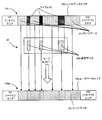
- the optical disc 100 includes a lead-in area 101, a user data area 102, and a lead-out area 103. Among these areas, content data is recorded in the user data area 102.
- 1 starts from a position specified by “address # 1 (for example, physical address (PSN: Physical Address #Number) or logical address (LSN: Logical Address #Number) # 1)” in the user data area 102.
- address # 1 for example, physical address (PSN: Physical Address #Number) or logical address (LSN: Logical Address #Number) # 1
- the defect management information transmitting unit 17 transmits the defect address information 230 indicating “address # 1” to the defect management server 2 as a part of the defect management information 200 as shown in FIG. To do.
- a defect may be detected across a plurality of continuous ECC blocks.
- the leading address of each of a plurality of continuous ECC blocks may be used as the defect address information 230.
- the defect address information 230 may be the head address of the first ECC block and the number of continuous ECC blocks among the plurality of continuous ECC blocks. In the latter case, the effect that the size of the defect address information 230 can be reduced as the number of ECC blocks in which defects are detected increases.
- the defect address information 230 is For example, it may be composed of the path name of the file and the relative number of bytes from the beginning of the file.
- the defect management information transmission unit 17 is recorded or recorded in the ECC block in which the defect is detected (that is, the ECC block specified by the address # 1).
- Complement data 240 (complement data # 1) that is a content data portion to be transmitted is transmitted to the defect management server 2 as a part of the defect management information 200.
- the complementary data 240 may be transmitted in an encrypted state using, for example, the login information as a key in order to prevent unauthorized use by other users.
- the complementary data 240 may be stored in the defect management information storage unit 22 in an encrypted state using the login information or the like as a key, for example.
- the defect management information transmission unit 17 uses the user account information 210 for identifying the user of the recording / reproducing apparatus 1 as part of the defect management information 200 as shown in FIG. Send to 2.
- the defect management information transmission unit 17 uses a disc identifier 220 for identifying the optical disc 100 loaded in the recording / reproducing apparatus 1 as a part of the defect management information 200. And sent to the defect management server 2.
- a disc identifier 220 for example, a media ID recorded in a BCA (Burst Cutting Area) included in a BD-R / RE that is an example of the optical disc 100, a BD-ROM that is an example of the optical disc 100, or the like is provided.
- AV content data is recorded in PMSN (Pre-recorded Media Serial Number) recorded in BCA (Burst Cutting Area), Volume ID recorded in an area called ROM-MARK, and BD which is an example of optical disc 100 If the AV content data protected by AACS (Advanced Access Content System) is recorded on the BD that is an example of the optical disc 100, the AV content data is added to the AV content data.
- Content authentication ID (Content Certificat e ID) is an example.
- a defect entry (defect entry # 1) composed of a header composed of user account information 210 and a disk identifier 220, defect address information 230 and complementary data 240. ) Are stored in a correlated format.
- a new defect entry that is, , Defect address information 230 indicating “address # 2”, and supplementary data 240 (complementary data # 2) which is a content data portion recorded or to be recorded in the ECC block specified by address # 2 Is stored in association with the header.
- the defect management information 200 is stored in a format in which defect entries can be added as appropriate, as shown in FIG.
- the user and the optical disk 100 change. Not expected. That is, it is assumed that the user account information 210 and the disc identifier 220 transmitted from the recording / reproducing apparatus 1 to the defect management server 2 do not change during the operation shown in FIG. For this reason, the user account information 210 and the disc identifier 220 are not necessarily transmitted every time a defect is detected.
- the user account information 210 and the disc identifier 220 are once transmitted to the defect management server 2 at a specific timing (for example, when the login process to the defect management server 2 is performed prior to the reproduction of the content data). For example, thereafter, as long as the user or the optical disc 100 is not changed, the user account information 210 and the disc identifier 220 may not be transmitted again.
- the defect address information 230 and the complementary data 240 are recorded as a single data structure.
- the defect address information 230 and the complementary data 240 may be configured to be recorded in different areas. With this configuration, it is possible to use a part of the conventional configuration for performing defect management in which the defect address information 230 and the complementary data 240 are handled as separate information. However, also in this case, it is preferable that some kind of linking processing is performed between the defect address information 230 and the complementary data 240.
- an arbitrary method may be adopted as a communication method between the recording / reproducing apparatus 1 and the defect management server 2.
- a Web API Web Application Programming Interface
- Web Service such as WSDL (Web Service Description Language)
- the defect management information 200 can be transmitted to the defect management server 2 using any other information.
- defect management server 2 notifies the recording / playback apparatus 1 that the defect management information 200 has been stored in the defect management information storage unit 22, a web message (however, "request DFL Registration Response (status, other_info)") , “Status” is information indicating whether or not the storage has been completed) can be returned to the recording / reproducing apparatus 1.
- FIG. 4 is a flowchart conceptually showing a flow of the reproducing operation using the defect management information 200 as a part of the first operation example of the recording / reproducing system 1000 according to the first embodiment.
- step S111 a login process from the recording / reproducing apparatus 1 to the defect management server 2 is performed (step S111). This operation is the same as the operation in step S101 in FIG. Thereafter, the content data recorded on the optical disc 100 is reproduced by the operation of the recording / reproducing unit 13 under the control of the CPU 14 (step S112). As a result, video, audio, and the like constituting the content data are output via, for example, a display or a speaker (not shown) connected to the recording / playback apparatus 1.
- step S113 it is determined by the operation of the defect detection unit 16 whether or not an error that cannot be recovered by error correction has occurred. More specifically, when content data is reproduced, error correction using ECC is performed, but it is determined whether or not content data cannot be reproduced even by error correction using the ECC. However, in step S113, it may be determined whether an error that can be recovered by error correction has occurred. More specifically, error correction using ECC is performed at the time of reproduction of content data, but it is determined whether or not an error that can reproduce the content data has occurred by error correction using the ECC. Is done.
- step S113 if it is determined that an error that cannot be recovered by error correction has not occurred (step S113: No), a fatal defect occurs in the currently reproduced area portion. It is treated as not (in other words, there is no fatal defect).
- the “fatal defect” is different from the recoverable “defect” determined by whether or not the error rate in FIG. 2 is a predetermined threshold (step S104), and data cannot be acquired. It is a defect.
- Such a “fatal defect” is not a target to be transmitted to the defect management server 2 as the complementary data 240 because the recording / playback apparatus 1 itself cannot acquire data.
- step S118 it is determined whether or not to end the reproduction operation under the control of the CPU 14 (step S118).
- step S113 when it is determined that not only an error that cannot be recovered by error correction but also an error that can be recovered by error correction has not occurred (step S113: No).
- step S113 not only a fatal defect but also a normal defect does not occur in the currently reproduced area (in other words, a normal defect does not exist).
- the “normal defect” is a recoverable “defect” determined by whether or not the error rate in FIG. 2 is a predetermined threshold value (step S104).
- step S113 when it is determined that an error that cannot be recovered by error correction has occurred (step S113: Yes), the defect detection unit 16 performs the current reproduction. It is determined that a fatal defect has occurred in a certain area (in other words, a fatal defect exists) (step S114). In this case, when the complementary data 240 corresponding to the critical defect exists in the defect management information 200, the reproduction operation is performed by acquiring the complementary data 240.
- step S113 if it is determined that an error that can be recovered by error correction has occurred (step S113: Yes), the defect detection unit 16 performs the current reproduction. Although a fatal defect has not occurred in the area portion, it is determined that a normal defect has occurred (in other words, a normal defect exists) (step S114).
- a normal defect allows the recording / reproducing apparatus 1 itself to acquire data, it may take time to correct an error for the acquisition. For this reason, it may take time (for example, several seconds to several tens of seconds) to reproduce the content data.
- the reproduction operation is performed by acquiring the complementary data 240.
- the reproduction operation may be performed by performing error correction instead of acquiring the complementary data 240 from the defect management server 2.
- the defect management information request unit 18 first, by the operation of the defect management information request unit 18, the address of the ECC block in which the defect is detected in step S114 is presented, and the complementary data 240 corresponding to the address is recorded and reproduced from the defect management server 2.
- a request is sent from the recording / reproducing apparatus 1 to the defect management server 2 so as to be transmitted to the apparatus 1 (step S115).
- the defect management information request unit 18 further presents the user account information 210 and the disc identifier 220 to indicate to the defect management server 2 that the recording / reproducing apparatus 1 is being used by a legitimate user.
- the transmission of the complementary data 240 may be requested.
- the user account information 210 and the disc identifier 220 may be presented together during the login process in step S111. In this case, the user account information 210 and the disc identifier 220 are presented each time a defect is detected. It is not always necessary.
- the defect management server 2 that has received the request for transmission of the complementary data 240 may be configured to authenticate whether or not the request is made from a legitimate user with reference to the user account information 210 or the like. Good. Further, the defect management server 2 that has received the request for transmission of the complementary data 240 refers to the disc identifier 220 or the like to determine whether or not the request is made from the recording / reproducing apparatus 1 loading the regular optical disc 100. Authentication may be performed. When these authentications are normally performed, the defect management server 2 corresponds to the optical disc 100 indicated by the disc identifier 220 transmitted from the recording / reproducing apparatus 1 and the user account information 210 transmitted from the recording / reproducing apparatus 1.
- the defect management server 2 transmits the complementary data 240 read from the defect management information storage unit 22 to the recording / reproducing apparatus 1.
- the defect management information request unit 18 included in the recording / reproducing apparatus 1 acquires the complementary data 240 corresponding to the ECC block in which the fatal defect is detected (step S116).
- step S117 the reproduction of the content data is continued using the complementary data 240. Therefore, even if the content data cannot be read from the ECC block in which the fatal defect is detected, the reproduction of the content data can be continued using the complementary data 240. Alternatively, even if it takes time to read the content data from the ECC block in which a normal defect is detected, it is possible to continue the quick reproduction of the content data using the complementary data 240.
- step S118 it is determined whether or not to end the reproduction operation under the control of the CPU 14 (step S118).
- step S118: Yes If the result of determination in step S118 is that the playback operation is to be terminated (step S118: Yes), the playback operation is terminated. On the other hand, as a result of the determination in step S118, when it is determined not to end the reproduction operation (step S118: No), the process returns to step S112 and the reproduction operation is continued. Accordingly, each time a fatal defect is detected, the content data is reproduced while the archive data 240 is acquired from the defect management server 2 (specifically, the defect management information storage unit 22).
- an arbitrary method may be adopted as a communication method between the recording / reproducing apparatus 1 and the defect management server 2.
- a Web API Web Application Programming Interface
- Web Service such as WSDL (Web Service Description Language)
- a Web message “request Data (logical_sector_number)” (however, ““ logical_sector_number ”is the ECC block in which the defect is detected). Can be used to request the supplementary data 240 from the defect management server 2.
- a response Web message “request Data Response (replaced_data)” (where “replaced_data” is the supplementary data 240) is used.
- the complementary data 240 can be returned to the recording / reproducing apparatus 1.
- the defect management server 2 which is a device different from the recording / reproducing apparatus 1 is used (in other words, the main operation of the reproducing operation by the recording / reproducing apparatus 1).
- Defect management can be performed using the defect management information storage unit 22, which is a recording medium different from the target optical disc 100. Therefore, it is not necessary to record the defect address information 230 and the complementary data 240 on the optical disc 100 in order to perform defect management. Therefore, a read-only optical disc (for example, a DVD-ROM or a BD) that does not have a defect management area (DMA) for recording the defect address information 230 and a spare area for recording the complementary data 240.
- DMA defect management area
- -Defect management can also be performed in a ROM or the like.
- a DVD-R which is an example of a write-once optical disc, can perform defect management, although it does not have a defect management area or a spare area, like a read-only optical disc.
- a BD-R which is an example of a write-once optical disc, includes a defect management area and a spare area, but cannot perform recording in the defect management area or the spare area after the finalizing process is performed.
- defect management can be performed after the finalizing process is performed.
- DVD-RAM and BD-RE which are examples of rewritable optical discs, have a defect management area and a spare area, but protect the rewriting of user data with a write prohibition flag, a write prohibition notch, etc. There is. However, even with such a disk, according to the present embodiment, defect management can be performed without rewriting user data.
- the reproduction-only reproducing apparatus does not have a recording function to the optical disc, so that the newly detected defect is managed. New recording of the defect address information 230 and the complementary data 240 could not be performed.
- the defect management server 2 stores the defect address information 230 and the complementary data 240 for managing the newly detected defect. Can do. Therefore, even such a playback-only playback device can suitably perform defect management in the same manner as the recording device.
- the defect management is performed by the limitation of the recording capacity of the optical disc 100 (particularly, the limitation of the recording capacity of the defect management area and the spare area). It is possible to suitably eliminate the inconvenience that it becomes impossible to perform.
- the recording capacity of the defect management information storage unit 22 provided in the defect management server 2 the degree of freedom and ease of expansion is higher than that of the optical disc 100, and the user can set the recording capacity. This is useful in that it is not necessary to be conscious or to increase the recording capacity.
- the recording capacity of the user data area 102 provided in the optical disc 100 is relatively compared with the optical disc provided with the defect management area and the spare area. Can be expanded. For this reason, the recording capacity of the optical disc 100 can be used to the maximum.
- the defect management can be performed regardless of the environment in which the recording / reproducing apparatus 1 is placed. In this respect, it is very useful to record the defect management information in the defect management server 2 connected via the network 3.
- the conventional recording in which the defect management is performed by recording the defect address information 230 and the complementary data 240 on the optical disc 100 which is the main target of the reproducing operation.
- it is very useful in that a playback operation or a recording operation can be performed while performing defect management more appropriately.
- the complementary data 240 is associated with each of the user account information 210 and the disk identifier 220, so that the complementary data 240 is defined as data specific to each user and as data specific to each optical disc 100.
- An example of storing in the management information storage unit 22 is described. However, for example, when there are a plurality of legitimate users, the complementary data 240 may be configured to be shared among a plurality of users. In this case, with respect to the complementary data 240 already stored in the defect management information storage unit 22 by another user, it is preferable not to store the same complementary data 240 thereafter. In this case, it is preferable that the defect management information 200 of one user is associated with the complementary data 240 stored by another user. Thereby, the recording capacity of the defect management information storage unit 22 can be used efficiently.
- the complementary data 240 can be shared among a plurality of users, it is necessary to store the complementary data 240 when one user cannot store the complementary data 240 for some reason. It may be transmitted to the defect management server 2 as the defect management information 200. In this case, when the same complementary data 240 is stored by another user, the defect management server 2 may perform a process of associating the complementary data 240 with the defect management information 200 of one user. preferable.
- a terminal connected to the recording / reproducing apparatus 1 by P2P (Peer to Peer) or the like and having a defect management information storage unit 22 is used. You may comprise so that defect management may be performed. Alternatively, the defect management may be performed using a portable memory (for example, a USB memory or an SD card) that can function as the defect management information storage unit 22 (that is, capable of recording the defect management information 200). . Even if comprised in this way, the various effects mentioned above can be enjoyed suitably.
- FIG. 5 is a flowchart conceptually showing a flow of the second operation example (particularly, the second operation example of the reproduction operation using the defect management information 200) of the recording / reproduction system 1000 according to the first example.
- the same step number is attached
- the defect is appropriately detected by actually determining whether or not the error correction of the content data is possible.
- the position of the defect existing on the optical disc 100 is indicated by the defect address information 230 and this defect address information 230 is stored in the defect management server 2
- the defect address information 230 is acquired from the defect management server 2 and the defect is detected based on the acquired defect address information 230.
- step S111 a login process from the recording / reproducing apparatus 1 to the defect management server 2 is performed (step S111). Thereafter, the operation of the defect management information request unit 18 requests the defect management server 2 from the recording / reproducing apparatus 1 so that the defect address information 230 is transmitted from the defect management server 2 to the recording / reproducing apparatus 1 (step). S121).
- a web message (request_Number of DFL Entires (disc_unique_id)) requesting the number of defect entries (however, , “Disc_unique_id” is the disc identifier 220) and “request Address (start_lsn, end_lsn)” requesting the defect address information 230 is a Web message (where “start_lsn” is the lower limit value of the address to be acquired, By transmitting “end_lsn” to the defect management server 2, desired data can be requested.
- Web Service such as WSDL (Web Service Description Language)
- the defect management server 2 that has received the request for transmission of the defect address information 230 performs authentication (that is, authentication using the user account information 210 and the disk identifier 220), and then transmits the disk transmitted from the recording / reproducing apparatus 1.
- the defect address information 230 corresponding to the user corresponding to the optical disc 100 indicated by the identifier 220 and corresponding to the user indicated by the user account information 210 transmitted from the recording / reproducing apparatus 1 is read from the defect management information storage unit 22.
- the defect management server 2 transmits the defect address information 230 read from the defect management information storage unit 22 to the recording / reproducing apparatus 1.
- This transmission is, for example, a Web message “request Number of DFL Entires Response (num_of_entries)” that transmits the number of defect entries as a response message to the above-described Web API (where “num_of_entries” is the number of defect entries).
- a Web message “request Address Response (address_lists)” (where “address_lists” is a list of addresses included in the defect address information 230) that transmits the defect address to the recording / playback apparatus 1 can be used.
- the defect management information request unit 18 included in the recording / reproducing apparatus 1 acquires the defect address information 230 (step S122).
- the acquired defect address information 230 is held in the memory 15 provided in the recording / reproducing apparatus 1 (step S122).
- step S112 the content data recorded on the optical disc 100 is reproduced by the operation of the recording / reproducing unit 13 under the control of the CPU 14 (step S112).
- the operation of the defect detection unit 16 determines whether or not the area portion where the defect has occurred is reproduced while referring to the defect address information 230 acquired and held in step S122. (Step S123). More specifically, when the area portion indicated by the address included in the defect address information 230 is reproduced, it is determined that the area portion where the defect has occurred is reproduced, and on the other hand, the defect address information 230 is When the area portion other than the area portion indicated by the included address is reproduced, it is determined that the area portion where the defect has occurred is not reproduced (that is, the area portion where the defect has not occurred is reproduced). Is done.
- step S123 when it is determined that the area portion where the defect has occurred is not reproduced (step S123: No), no defect has occurred in the currently reproduced area portion (step S123: No). In other words, it is treated as having no defect). Thereafter, the process proceeds to step S118, and it is determined whether or not to end the reproduction operation under the control of the CPU 14 (step S118).
- step S123 when it is determined that the area portion in which the defect has occurred is being reproduced (step S123: Yes), the defect detection unit 16 is currently reproducing by the operation. It is determined that a defect has occurred in the area portion (in other words, a defect exists) (step S114). For this reason, the reproduction operation using the defect management information 200 shown in steps S115 to S117 is performed thereafter.
- the various effects enjoyed by the first operation example can be suitably enjoyed.
- the defect detection unit 16 does not actually measure the error rate of the content data or determine whether or not an error that cannot be corrected exists. Can be detected. For this reason, the operation load of the defect detection unit 16 can be relatively reduced.
- the defect detection unit 16 can detect defects existing on the optical disc 100 prior to the content data reproduction operation by referring to the defect address information 230. For this reason, a defect can be detected quickly and reliably.
- the defect management server 2 is requested to transmit complementary data 240.
- the position of the defect can be detected in advance, if it is expected that the area portion where the defect exists will be reproduced, prior to the reproduction of the area portion where the defect exists (specifically, Specifically, at least the time required to request the defect management server 2 to transmit the complementary data 240 and to acquire the complementary data 240 transmitted from the defect management server 2 first) It is preferable to request transmission of the complementary data 240.
- Such an inconvenience can also be eliminated by an operation of “acquiring complementary data 240 in advance of reproduction of content data” shown in a third operation example and a fourth operation example described later.
- FIG. 6 is a flowchart conceptually showing a flow of the third operation example (particularly, the third operation example of the reproduction operation using the defect management information 200) of the recording / reproduction system 1000 according to the first example.
- the same step number is attached
- the defect management server 2 is requested to transmit all of the complementary data 240 stored in the defect management information storage unit 22.
- step S111 a login process from the recording / reproducing apparatus 1 to the defect management server 2 is performed (step S111). Thereafter, the defect management information request unit 18 operates the defect management server 1 so that all of the defect address information 230 stored in the defect management information storage unit 22 and all of the complementary data 240 are transmitted. 2 is made (step S131).
- the defect management server 2 that has received a request for transmission of all of the defect address information 230 and all of the supplementary data 240 performs authentication (that is, authentication using the user account information 210 and the disk identifier 220), and then performs recording. All of the defect address information 230 corresponding to the optical disc 100 indicated by the disc identifier 220 transmitted from the reproducing apparatus 1 and corresponding to the user indicated by the user account information 210 transmitted from the recording / reproducing apparatus 1 and all of the complementary data 240 are obtained. Read from the defect management information storage unit 22. Thereafter, the defect management server 2 transmits all of the defect address information 230 and all of the complementary data 240 read from the defect management information storage unit 22 to the recording / reproducing apparatus 1.
- the defect management information request unit 18 included in the recording / reproducing apparatus 1 acquires all of the defect address information 230 and all of the complementary data 240 (step S132). All of the acquired defect address information 230 and all of the complementary data 240 are held in the memory 15 provided in the recording / reproducing apparatus 1 (step S132).
- step S112 the content data recorded on the optical disc 100 is reproduced by the operation of the recording / reproducing unit 13 under the control of the CPU 14 (step S112).
- the operation of the defect detection unit 16 determines whether or not the area portion where the defect has occurred is reproduced while referring to the defect address information 230 acquired and held in step S132. (Step S123).
- step S123 when it is determined that the area portion where the defect has occurred is not reproduced (step S123: No), the process proceeds to step S118, and the reproduction operation is performed under the control of the CPU 14. It is determined whether or not to end (step S118).
- step S123 when it is determined that the area portion in which the defect has occurred is being reproduced (step S123: Yes), the defect detection unit 16 is currently reproducing by the operation. It is determined that a defect has occurred in the area portion (in other words, a defect exists) (step S114). In this case, the defect information requesting unit 18 acquires the complementary data 240 corresponding to the ECC block in which the defect is detected from the memory 15 (step S133). Thereafter, the reproduction of the content data is continued using the complementary data 240 (step S117).
- the various effects enjoyed by the first operation example can be suitably enjoyed.
- the content data is reproduced using the complementary data 240 acquired in advance prior to the reproduction of the content data. For this reason, it is not necessary to request the defect management server 2 to transmit the complementary data 240 and acquire the complementary data 240 transmitted from the defect management server 2 each time a defect is detected. Therefore, it is possible to prevent a delay in the reproduction of content data due to a delay that may occur with the acquisition of the complementary data 240. For this reason, the content data can be quickly reproduced.
- content data that requires real-time reproduction such as video data and audio data, it is possible to eliminate the delay that may occur with the acquisition of the complementary data 240, and thus reproduction without delay is possible. Is very useful in that
- FIG. 7 is a flowchart conceptually showing a flow of the fourth operation example (particularly, the fourth operation example of the reproduction operation using the defect management information 200) of the recording / reproduction system 1000 according to the first example.
- the same step number is attached
- the defect management server 2 before the defect is actually detected, the defect management server 2 is requested to transmit all of the complementary data 240 stored in the defect management information storage unit 22. However, in the fourth operation example, before the defect is actually detected, the defect management server 2 is requested to transmit a part of the complementary data 240 stored in the defect management information storage unit 22. .
- step S111 a login process from the recording / reproducing apparatus 1 to the defect management server 2 is performed (step S111). Thereafter, the defect management information requesting unit 18 operates so that all of the defect address information 230 stored in the defect management information storage unit 22 and a part of the complementary data 240 are transmitted from the recording / playback apparatus 1.
- a request for the server 2 is made (step S141).
- the defect management server 2 that has received a request for transmission of all of the defect address information 230 and a part of the complementary data 240 performs authentication (that is, authentication using the user account information 210 and the disk identifier 220), All of the defect address information 230 corresponding to the optical disc 100 indicated by the disc identifier 220 transmitted from the recording / reproducing device 1 and corresponding to the user indicated by the user account information 210 transmitted from the recording / reproducing device 1, and a part of the supplementary data 240. Are read from the defect management information storage unit 22. Thereafter, the defect management server 2 transmits all of the defect address information 230 read from the defect management information storage unit 22 and a part of the complementary data 240 to the recording / reproducing apparatus 1.
- the defect management information request unit 18 included in the recording / reproducing apparatus 1 acquires all of the defect address information 230 and a part of the complementary data 240 (step S142). All of the acquired defect address information 230 and a part of the complementary data 240 are held in the memory 15 provided in the recording / reproducing apparatus 1 (step S142).
- step S112 the content data recorded on the optical disc 100 is reproduced by the operation of the recording / reproducing unit 13 under the control of the CPU 14 (step S112).
- the operation of the defect detection unit 16 determines whether or not the area portion where the defect has occurred is reproduced while referring to the defect address information 230 acquired and held in step S132. (Step S123).
- step S123 when it is determined that the area portion where the defect has occurred is not reproduced (step S123: No), the process proceeds to step S118, and the reproduction operation is performed under the control of the CPU 14. It is determined whether or not to end (step S118).
- step S123 when it is determined that the area portion in which the defect has occurred is being reproduced (step S123: Yes), the defect detection unit 16 is currently reproducing by the operation. It is determined that a defect has occurred in the area portion (in other words, a defect exists) (step S114). In this case, the operation of the defect information requesting unit 18 determines whether or not the complementary data 240 corresponding to the defect detected in step S114 is held in the memory 15 (step S143).
- step S143 if it is determined that the complementary data 240 corresponding to the defect detected in step S114 is held in the memory 15 (step S143: Yes), the operation of the defect information request unit 18 Thus, the complementary data 240 corresponding to the ECC block in which the defect is detected is acquired from the memory 15 (step S133). Thereafter, the reproduction of the content data is continued using the complementary data 240 acquired in step S133 (step S117).
- step S143 if it is determined that the complementary data 240 corresponding to the defect detected in step S114 is held in the memory 15 (step S143: Yes), the defect management information requesting unit By the operation of 18, the address of the ECC block in which the defect is detected in step S114 is presented, and the recording / reproduction is performed so that the complementary data 240 corresponding to the address is transmitted from the defect management server 2 to the recording / reproduction device 1.
- a request for the defect management server 2 is made from the apparatus 1 (step S115). Thereafter, the complement data 240 read from the defect management information storage unit 22 is transmitted to the recording / reproducing apparatus 1 by the operation of the defect management server 2.
- the complementary data 240 corresponding to the ECC block in which the defect is detected is acquired by the operation of the defect management information request unit 18 included in the recording / reproducing apparatus 1 (step S116). Thereafter, the reproduction of the content data is continued using the complementary data 240 acquired in step S116 (step S117).
- the various effects enjoyed by the first operation example can be suitably enjoyed.
- the content data is reproduced using the complementary data 240 acquired in advance prior to the reproduction of the content data. For this reason, it is not necessary to request the defect management server 2 to transmit the complementary data 240 and acquire the complementary data 240 transmitted from the defect management server 2 each time a defect is detected. Therefore, it is possible to prevent a delay in the reproduction of content data due to a delay that may occur with the acquisition of the complementary data 240. For this reason, the content data can be quickly reproduced.
- content data that requires real-time reproduction such as video data and audio data, it is possible to eliminate the delay that may occur with the acquisition of the complementary data 240, and thus reproduction without delay is possible. Is very useful in that
- the recording / reproducing apparatus 1 having only the memory 15 having a relatively small recording capacity is advantageous in that the above-described effects can be suitably enjoyed.
- FIG. 8 is a data structure diagram conceptually showing the data structure of the optical disc 100a that is the target of the fifth operation example of the recording / reproducing system 1000 according to the first embodiment.
- FIG. 9 is a data structure diagram showing the first embodiment.
- 10 is a flowchart conceptually showing a flow of a fifth operation example (particularly, a fifth operation example of the transmission operation of the defect management information 200) of the recording / reproducing system 1000 according to FIG.
- movement as the 4th Example from the 1st operation example mentioned above the same step number is attached
- the optical disc 100a that is the target of the fifth operation example of the recording / reproducing system 1000 according to the first embodiment,
- the defect management area 104 for recording the defect address information 230 and the spare area 105 for recording the complementary data 240 are provided. If such an optical disc 100 a is used, conventional defect management using the defect management area 104 and the spare area 105 can be performed in addition to or instead of the defect management using the defect management server 2. For this reason, in the fifth operation example, while the conventional defect management using the defect management area 104 and the spare area 105 is performed, the defect management using the defect management server 2 after the conventional defect management cannot be performed. Perform management.
- step S101 a login process from the recording / reproducing apparatus 1 to the defect management server 2 is performed (step S101). Thereafter, the content data recorded on the optical disc 100 is reproduced by the operation of the recording / reproducing unit 13 under the control of the CPU 14 (step S102).
- the error rate of the reproduced content data is measured by the operation of the defect detection unit 16 (step S103). Thereafter, whether or not the error rate measured in step S103 is equal to or higher than a predetermined threshold is determined by the operation of the defect detection unit 16 (step S104).
- step S104 if it is determined that the error rate is not equal to or greater than the predetermined threshold (step S104: No), no defect has occurred in the area currently being played back (in other words, no defect exists). ). Thereafter, the process proceeds to step S108, and it is determined whether or not the reproduction operation is ended under the control of the CPU 14 (step S108).
- step S104 determines whether the error rate is greater than or equal to the predetermined threshold. If it is determined in step S104 that the error rate is greater than or equal to the predetermined threshold (step S104: Yes), the defect detection unit 16 operates to cause a defect in the currently reproduced area. Is determined (in other words, there is a defect) (step S105). Therefore, defect management for managing the defect is performed thereafter.
- step S151 whether or not there is an empty area in the defect management area 104 is determined by the operation of the CPU 14 is determined by the operation of the CPU 14 (step S151). Similarly, whether or not there is an empty area in the spare area 105 is determined by the operation of the CPU 14 (step S152).
- step S151 when it is determined that there is an empty area in both the defect management area 104 and the spare area 105 (step S151: Yes and step S152: Yes), the defect management area 104 and the spare Defect management using the area 105 is performed (step S153). That is, the defect address information 230 is recorded in the defect management area 104, and the complement data 240 is recorded in the spare area 105.
- step S151: No or step S152: No defect management. It is not possible to record the defect address information 230 in the area 104 or the complementary data 240 in the spare area 105. That is, the defect management using the defect management area 104 and the spare area 105 cannot be performed. Therefore, defect management using the defect management server 2 is performed. That is, the defect management information 200 for managing the defect detected in step S105 is transmitted to the defect management server 2 by the operation of the defect management information transmitting unit 17 (step S106). Thereafter, the transmitted defect management information 200 is recorded in the defect management information storage unit 22 by the operation of the defect management server 2 (step S107).
- step S108 it is determined whether or not to end the reproduction operation under the control of the CPU 14 (step S108).
- the defect management area 104 and the spare area are managed while performing the defect management using the defect management area 104 and the spare area 105.
- the defect management using the defect management server 2 can be performed. For this reason, it is possible to preferably eliminate the inconvenience that the defect management cannot be performed due to the restriction of the recording capacity of the optical disc 100a (particularly, the restriction of the recording capacity of the defect management area 104 and the spare area 105).
- the defect management using the defect management server 2 may be performed without performing the defect management using the defect management area 104 and the spare area 105.
- the defect management using the defect management area 104 and the spare area 105 and the defect management using the defect management server 2 may be performed in parallel. .
- FIG. 10 is a schematic diagram conceptually showing the recording operation in the sixth operation example of the recording / reproducing system 1000 in the first example.
- the content data read from the optical disc 100 in which the defect exists and the complementary data 240 acquired from the defect management server 2 are merged, and regular content data is obtained.
- Is recorded on another optical disc 100b for example, a copy conforming to “Managed Copy” of AACS). That is, the content data portion recorded on the optical disc 100 in an error-correctable state is recorded on the optical disc 100b as it is or after being transcoded to another codec and recorded on the optical disc 100a in an error-correctable state.
- the content data portion that has been recorded is recorded on the optical disc 100b with the complementary data 240 as it is instead of the content data portion, or transcoded to another codec.
- the optical disc 100b on which content data without error is recorded without taking over the uncorrectable error state that has occurred on the optical disc 100. Therefore, if the content data is reproduced using the optical disc 100b, the entire content data can be suitably reproduced without obtaining the complementary data 240 from the defect management server 2.
- first to sixth operation examples described above are not operations that are applied separately and independently, but may be an operation that appropriately combines at least two of them.
- FIG. 11 is a block diagram conceptually showing the basic structure of the recording / reproducing system 1001 in the second example. Note that the same components as those of the recording / reproducing system 1000 according to the first embodiment described above are denoted by the same reference numerals, and detailed description thereof is omitted.
- the recording / reproducing system 1001 according to the second embodiment includes the recording / reproducing apparatus 1 having the same configuration as the recording / reproducing apparatus 1 included in the recording / reproducing system 1000 according to the first embodiment, and the first embodiment.
- a defect management server 4 having a configuration similar to that of the defect management server 2 included in the recording / reproducing system 1000 according to the example, and a network 3 are provided.
- the defect management server 4 includes a content data distribution unit 41 in addition to the communication unit 21, the defect management information storage unit 22, the CPU 23, and the memory 24 included in the defect management server 2 according to the first example.
- a content data storage unit 42 and an authentication unit 43 are provided.
- the content data distribution unit 41 distributes the content data stored in the content data storage unit 42 to the recording / playback apparatus 1.
- the defect management server 4 also has a function of a distribution server that distributes content data such as a copyright-protected movie.
- the content data storage unit 42 stores content data distributed to the recording / reproducing apparatus 1.
- the content data storage unit 42 is typically a recording medium such as a hard disk, an optical disk, or a semiconductor memory.
- the authentication unit 43 authenticates whether or not the recording / reproducing apparatus 1 is an authorized user of content data. This operation is performed not only when the content data is distributed to the recording / reproducing apparatus 1 but also when the reproducing operation using the defect management information 200 is performed.
- a random number for example, Binding Nonce
- billing processing for content data distribution may be performed.
- the content data distribution unit 42 included in the defect management server 4 is stored in the content data storage unit 41. Content data is distributed to the recording / reproducing apparatus 1. At this time, in addition to the content data, the content data distribution unit 42 distributes a token with a digital signature generated by associating the disc identifier 220 transmitted from the recording / reproducing apparatus 1 with a unique random number.
- the recording / reproducing apparatus 1 receiving the distribution of the content data and the token records the content data and the token on the optical disc 100. Thereby, the recording operation ends.
- FIG. 12 is a flowchart conceptually showing a flow of the defect management information 200 transmission operation as a part of the operation example of the recording / reproducing system 1001 according to the second embodiment
- FIG. 13 is a flowchart showing the second embodiment. It is a data structure figure which shows notionally the data structure of the defect management information 200 used in the 2nd operation example of the recording / reproducing system 1001 which concerns on an example.
- step S101 a login process from the recording / reproducing apparatus 1 to the defect management server 4 is performed (step S101).
- the content data recorded on the optical disc 100 is reproduced by the operation of the recording / reproducing unit 13 under the control of the CPU 14 (step S102).
- the error rate of the reproduced content data is measured by the operation of the defect detection unit 16 (step S103). Thereafter, whether or not the error rate measured in step S103 is equal to or higher than a predetermined threshold is determined by the operation of the defect detection unit 16 (step S104).
- step S104 if it is determined that the error rate is not equal to or greater than the predetermined threshold (step S104: No), no defect has occurred in the area currently being played back (in other words, no defect exists). ). Thereafter, the process proceeds to step S108, and it is determined whether or not the reproduction operation is ended under the control of the CPU 14 (step S108).
- step S104 determines whether the error rate is greater than or equal to the predetermined threshold. If it is determined in step S104 that the error rate is greater than or equal to the predetermined threshold (step S104: Yes), the defect detection unit 16 operates to cause a defect in the currently reproduced area. Is determined (in other words, there is a defect) (step S105). Therefore, defect management for managing the defect is performed thereafter.
- the defect management information 200 for managing the defect detected in step S105 is transmitted to the defect management server 4 by the operation of the defect management information transmitting unit 17 (step S161). Thereafter, the defect management server 4 records the transmitted defect management information 200 in the defect management information storage unit 22 (step S161).
- the defect management information 200 may not include the complementary data 240.
- defect management is performed for copyright-protected content data.
- the defect management information 200 includes user account information 210, disk identifier 220, defect address information 230, a unique random number, Are stored in the defect management information storage unit 22 in a format including tokens.
- step S108 it is determined whether or not to end the reproduction operation under the control of the CPU 14 (step S108).
- step S108: Yes If the result of determination in step S108 is that the playback operation is to be terminated (step S108: Yes), the playback operation is terminated. On the other hand, as a result of the determination in step S108, when it is determined not to end the reproduction operation (step S108: No), the process returns to step S102 and the reproduction operation is continued. Therefore, each time a defect is detected, the generated defect management information 200 is recorded in the defect management server 4 (specifically, the defect management information storage unit 22).
- FIG. 4 is a flowchart conceptually showing a flow of the reproducing operation using the defect management information 200 as another part of the operation example of the recording / reproducing system 1001 according to the second embodiment.
- step S111 a login process from the recording / reproducing apparatus 1 to the defect management server 4 is performed (step S111). Thereafter, the content data recorded on the optical disc 100 is reproduced by the operation of the recording / reproducing unit 13 under the control of the CPU 14 (step S112).
- the defect detector 16 determines whether or not a defect exists. At this time, in addition to the normal defect, it is also determined whether or not an error (that is, a fatal defect) that cannot be recovered by error correction has occurred (step S113).
- the defect data is stored because the complementary data 240 exists in the content data storage unit 42. Management is possible.
- step S113 when it is determined that an error that cannot be recovered by normal defect or error correction (that is, a fatal defect) has not occurred (step S113: No), the current reproduction A normal defect or a fatal defect is not generated in the area area (in other words, a normal defect or a fatal defect does not exist). Thereafter, the process proceeds to step S118, and it is determined whether or not to end the reproduction operation under the control of the CPU 14 (step S118).
- step S113 if it is determined that an error that cannot be recovered by normal defect or error correction has occurred (step S113: Yes), the operation of the defect detection unit 16 causes It is determined that a normal defect or a fatal defect has occurred in the area currently being reproduced (in other words, a normal defect or a fatal defect exists) (step S114). For this reason, after that, a reproduction operation using the defect management information 200 corresponding to the normal defect or the fatal defect is performed.
- the defect management information request unit 18 by the operation of the defect management information request unit 18, the address of the ECC block in which the defect is detected in step S114, the disk identifier 220, the unique random number, and the token are presented, and the complement corresponding to the address is performed. Transmission of the data 240 from the defect management server 4 to the recording / reproducing apparatus 1 is requested from the recording / reproducing apparatus 1 to the defect management server 4 (step S163).
- the defect management server 4 that has received the request for transmission of the complementary data 240 authenticates whether or not the request is made by a legitimate user with reference to the user account information 210 or the like. Further, the defect management server 4 that has received the request for transmission of the complementary data 240 refers to the disc identifier 220 or the like to determine whether or not the request is made from the recording / reproducing apparatus 1 loading the regular optical disc 100. Authenticate. In addition, the authentication unit 43 included in the defect management server 4 that has received the request for transmission of the complementary data 240 determines whether the request is made from a legitimate user of content data (that is, a user who does not infringe copyright).
- the defect management server 4 corresponds to the optical disc 100 indicated by the disc identifier 220 transmitted from the recording / reproducing apparatus 1 and the user account information 210 transmitted from the recording / reproducing apparatus 1.
- the content data portion corresponding to the address indicated by the user and corresponding to the address transmitted from the recording / reproducing apparatus 1 (that is, the complementary data 240) is read from the content data storage unit.
- the defect management server 4 transmits the complementary data 240 read from the content data storage unit 42 to the recording / reproducing apparatus 1.
- the defect management information request unit 18 included in the recording / reproducing apparatus 1 acquires the complementary data 240 corresponding to the ECC block in which the defect is detected (step S116).
- step S117 the reproduction of the content data is continued using the complementary data 240. Therefore, even if the content data cannot be read from the ECC block in which the fatal defect is detected, the reproduction of the content data can be continued using the complementary data 240.
- step S118 it is determined whether or not to end the reproduction operation under the control of the CPU 14 (step S118).
- the transmission of the complementary data 240 from the recording / reproducing apparatus 1 to the defect management server 4 can be omitted by using the fact that all of the copyright-protected content data is stored on the defect management server 4. . That is, every time a defect is detected, it is not necessary to transmit the complementary data 240 from the recording / reproducing apparatus 1 to the defect management server 4 and to store the transmitted complementary data 240 in the defect management information storage unit 22. For this reason, the operation as the recording / reproducing system 1001 can be relatively simplified. Such an effect is very useful for the user in that the reproduction of the content data purchased with payment is always secured regardless of the presence or absence of defects on the optical disc 100.
- arbitrary content data not limited to copyright-protected content data.
- all of arbitrary content data may be stored in the defect management information storage unit 22 in advance. Even if comprised in this way, the effect similar to 2nd Example can be enjoyed suitably.
- the first to sixth operation examples in the recording / reproducing system 1000 according to the first embodiment described above may be applied to the recording / reproducing system 1001 according to the second embodiment. Even if comprised in this way, the various effects mentioned above can be enjoyed suitably.
- the present invention is not limited to the above-described embodiments, and can be appropriately changed without departing from the spirit or idea of the invention that can be read from the claims and the entire specification, and a reproducing apparatus and method with such changes.
- the recording apparatus and method, and the computer program are also included in the technical scope of the present invention.
Landscapes
- Engineering & Computer Science (AREA)
- Signal Processing (AREA)
- Signal Processing For Digital Recording And Reproducing (AREA)
Abstract
再生装置(1)は、第1記録媒体(100)に記録されたコンテンツデータを再生する再生装置であって、第1記録媒体上のディフェクトを検出する検出手段(16)と、ディフェクトが検出された場合に、コンテンツデータのうちディフェクトが検出された位置に記録されていた又は記録されるべきコンテンツデータ部分である補完データを、所定のインタフェース又は所定のネットワーク(3)を介して再生装置に接続されると共に補完データが予め記録されている外部の第2記録媒体(2、22)から取得する取得手段(18)と、第2記録媒体から取得される補完データを用いて、コンテンツデータを補完しながら再生する再生手段(13、14)とを備える。
Description
本発明は、例えばDVDやBlu-ray Disc等の記録媒体に記録されたコンテンツデータを再生する再生装置及び方法、当該記録媒体に対してコンテンツデータを記録する記録装置及び方法、並びにコンピュータをこのような再生装置又は記録装置として機能させるコンピュータプログラムの技術分野に関する。
光ディスク、磁気ディスク、光磁気ディスク等の高密度記録媒体におけるコンテンツデータの記録及び読取の信頼性を向上させるための技術として、ディフェクト管理がある。即ち、記録媒体上に存在する傷もしくは塵埃、又は記録媒体の劣化等が存在することにより記録信号の読取品質が劣化したときには、当該箇所に記録すべきコンテンツデータ又は記録されたコンテンツデータを、記録媒体上の他の領域(以降、このようなエリアを、“スペアエリア”と称する)に記録する。上記のように、記録媒体に記録されているコンテンツデータの記録信号の読取品質が劣化している状態を以降「ディフェクト」と称する。このように、ディフェクトにより将来記録不全又は読取不全となるおそれがあるコンテンツデータ(以降、このようなデータを“補完データ”と称する)をスペアエリアに退避させることにより、コンテンツデータの記録及び読取の信頼性を向上させることができる。
一般に、ディフェクト管理を行うために、ディフェクトリストを作成する。ディフェクトリストには、記録媒体上に存在するディフェクトの位置を示すディフェクトアドレス情報と、ディフェクトが存在する場所に記録すべきであったコンテンツデータ又は記録されていたコンテンツデータである補完データを退避させたスペアエリアの場所(例えばスペアエリア内の記録位置)を示す退避アドレス情報とが記録される。
一般に、ディフェクトリストの作成は、記録媒体をイニシャライズやファイルシステムデータを記録するための初期論理フォーマット時などに行われる。また、ディフェクトリストの作成は、コンテンツデータを当該記録媒体に記録するときにも行われる。コンテンツデータの記録・書換が行われるときには、ディフェクトが検出される度に、或いはスペアエリアへのコンテンツデータの退避(つまり、補完データの記録)が行われる度にディフェクトリストの作成又は更新が行われる。また、ディフェクトリストの作成は、コンテンツデータを当該記録媒体から再生するときに行ってもよい。例えば、コンテンツデータの再生時に、所定単位(例えばセクタ単位やクラスタ単位)のコンテンツデータに対して所定数以上のデータがエラー訂正処理された場合、かかる所定単位のコンテンツデータは将来エラー訂正不能なディフェクトになると判断され、退避の対象になる。上述の如く、スペアエリアへのコンテンツデータの退避が行われる度にディフェクトリストの作成又は更新が行われる。
記録データを記録媒体に記録するときには、ディフェクトリストを参照する。これにより、ディフェクトの存在する場所を避けながらコンテンツデータを記録媒体に記録することができる。一方、記録媒体に記録されたコンテンツデータを再生するときにも、ディフェクトリストを参照する。これにより、通常の記録領域に記録されたコンテンツデータと、ディフェクトの存在によりスペアエリアに記録されているコンテンツデータとをディフェクトリストに基づいて確実に読み取ることができる。
ディフェクトリストは、記録装置自身がディフェクトリストを管理する場合、一般に、そのディフェクトリストの作成又は更新の対象となった記録媒体の特定の領域(例えば、ディフェクト管理エリア)に記録される。
また、ディフェクトが存在する場所に記録すべきであったコンテンツデータ又は記録されていたコンテンツデータである補完データについても、ディフェクトリストの作成又は更新の対象となった記録媒体の特定の領域(例えば、スペアエリア)に記録される。
しかしながら、ディフェクトリストの作成又は更新の対象となった記録媒体そのものにディフェクトリストを記録するがゆえに、当該記録媒体に記録可能なディフェクトリストの容量には上限がある。このため、仮に記録媒体にディフェクトリストを記録することができなくなれば(つまり、ディフェクトリストを記録するための特定の領域に空きがなくなれば)、それ以降のディフェクト管理を行うことができなくなってしまう。このため、コンテンツデータを記録するためのユーザデータエリアに空きがある場合であっても、以降の記録動作を継続することができなくなってしまうという技術的な問題点を有している。また、ディフェクトリストの作成又は更新の対象となった記録媒体そのものに補完データを記録するがゆえに、当該記録媒体に記録可能な補完データの容量には上限がある。このため、仮に記録媒体に補完データを記録することができなくなれば(つまり、補完データを記録するための特定の領域に空きがなくなれば)、それ以降のディフェクト管理を行うことができなくなってしまう。このため、コンテンツデータを記録するためのユーザデータエリアに空きがある場合であっても、以降の記録動作を継続することができなくなってしまうという技術的な問題点を有している。
更に、ディフェクト管理は、一般的にはDVD-RAMやBD-RE等の書換型の記録媒体やBD-R等の追記型の記録媒体を対象として行われる動作である。従って、DVD-ROMやBD-ROM等の再生専用型の記録媒体では、そもそもディフェクト管理を行うことができないという技術的な問題点を有している。更には、書換型の又は追記型の記録媒体であっても、Write Protection flag(書込み保護フラグ)や、Write Protectノッチ等によってデータの書込み保護設定がなされている場合や、追記型ディスクのファイナライズ処理が行われた後は通常の再生専用型の記録媒体と同様に扱われるため、同様の技術的な問題点を有している。
本発明は、例えば上述した従来の問題点に鑑みなされたものであり、例えばディフェクト管理をより好適に行いながら再生動作を行うことができる再生装置及び方法、ディフェクト管理をより好適に行いながら記録動作を行うことができる記録装置及び方法、コンピュータをこのような再生装置又は記録装置として機能させるコンピュータプログラムを提供することを課題とする。
上記課題を解決するために、本発明の再生装置は、第1記録媒体に記録されたコンテンツデータを再生する再生装置であって、前記第1記録媒体上のディフェクトを検出する検出手段と、前記ディフェクトが検出された場合に、前記コンテンツデータのうち前記ディフェクトが検出された位置に記録されていた又は記録されるべきコンテンツデータ部分である補完データを、所定のインタフェース又は所定のネットワークを介して前記再生装置に接続されると共に前記補完データが予め記録されている外部の第2記録媒体から取得する取得手段と、前記第2記録媒体から取得される前記補完データを用いて、前記コンテンツデータを補完しながら再生する再生手段とを備える。
上記課題を解決するために、本発明の再生方法は、第1記録媒体に記録されたコンテンツデータを再生する再生方法であって、前記第1記録媒体上のディフェクトを検出する検出工程と、前記ディフェクトが検出された場合に、前記コンテンツデータのうち前記ディフェクトが検出された位置に記録されていた又は記録されるべきコンテンツデータ部分である補完データを、所定のインタフェース又は所定のネットワークを介して前記再生装置に接続されると共に前記補完データが予め記録されている外部の第2記録媒体から取得する取得工程と、前記第2記録媒体から取得される前記補完データを用いて、前記コンテンツデータを補完しながら再生する再生工程とを備える。
上記課題を解決するために、本発明の記録装置は、コンテンツデータを第1記録媒体に記録する記録装置であって、前記コンテンツデータを前記第1記録媒体に記録する記録手段と、前記コンテンツデータの記録中に、前記記録媒体上のディフェクトを検出する検出手段と、前記ディフェクトが検出された場合、前記ディフェクトが検出された位置を示すディフェクトアドレス情報が所定のインタフェース又は所定のネットワークを介して前記記録装置に接続される外部の第2記録媒体に記録されるように、前記ディフェクトアドレス情報を前記第2記録媒体に送信する送信手段とを備える。
上記課題を解決するために、本発明の記録方法は、コンテンツデータを第1記録媒体に記録する記録方法であって、前記コンテンツデータを前記第1記録媒体に記録する記録工程と、前記コンテンツデータの記録中に、前記記録媒体上のディフェクトを検出する検出工程と、前記ディフェクトが検出された場合、前記ディフェクトが検出された位置を管理するディフェクト管理情報が所定のインタフェース又は所定のネットワークを介して前記記録装置に接続される外部の第2記録媒体に記録されるように、前記ディフェクト管理情報を前記第2記録媒体に送信する送信工程とを備える。
上記課題を解決するために、本発明のサーバは、第1記録媒体に記録されたコンテンツデータを再生する再生装置又は前記第1記録媒体に前記コンテンツデータを記録する記録装置と、所定のインタフェース又は所定のネットワークを介して接続されるサーバであって、前記第1記録媒体上のディフェクトが検出された場合に、前記再生装置若しくは前記記録装置から送信される、前記コンテンツデータのうち前記ディフェクトが検出された位置に記録されていた若しくは記録されるべきコンテンツデータ部分である補完データ及び前記ディフェクトが検出された位置を示すディフェクトアドレス情報の少なくとも一方を取得する取得手段と、前記取得手段により取得された前記補完データ及び前記ディフェクトアドレス情報の少なくとも一方を、前記再生装置若しくは前記記録装置又は前記再生装置若しくは前記記録装置を使用するユーザと関連付けて、当該サーバ中に設けられる第2記録媒体に記録する記録手段とを備える。
上記課題を解決するために、本発明の第1のコンピュータプログラムは、本発明の再生装置に備えられたコンピュータを制御するコンピュータプログラムであって、該コンピュータを、前記検出手段、前記取得手段及び前記再生手段として機能させる。
上記課題を解決するために、本発明の第2のコンピュータプログラムは、本発明の記録装置に備えられたコンピュータを制御するコンピュータプログラムであって、該コンピュータを、前記記録手段、前記検出手段及び前記送信手段として機能させる。
上記課題を解決するために、本発明の第3のコンピュータプログラムは、本発明のサーバに備えられたコンピュータを制御するコンピュータプログラムであって、該コンピュータを、前記取得手段及び前記記録手段として機能させる。
本発明の作用及び他の利得は次に説明する実施の形態から明らかにされよう。
以下、発明を実施するための形態として、本発明の再生装置及び方法、記録装置及び方法、並びにコンピュータプログラムに係る実施形態の説明を進める。
<1>
(再生装置の実施形態)
本発明の再生装置に係る実施形態は、第1記録媒体に記録されたコンテンツデータを再生する再生装置であって、前記第1記録媒体上のディフェクトを検出する検出手段と、前記ディフェクトが検出された場合に、前記コンテンツデータのうち前記ディフェクトが検出された位置に記録されていた又は記録されるべきコンテンツデータ部分である補完データを、所定のインタフェース又は所定のネットワークを介して前記再生装置に接続されると共に前記補完データが予め記録されている外部の第2記録媒体から取得する取得手段と、前記第2記録媒体から取得される前記補完データを用いて、前記コンテンツデータを補完しながら再生する再生手段とを備える。
(再生装置の実施形態)
本発明の再生装置に係る実施形態は、第1記録媒体に記録されたコンテンツデータを再生する再生装置であって、前記第1記録媒体上のディフェクトを検出する検出手段と、前記ディフェクトが検出された場合に、前記コンテンツデータのうち前記ディフェクトが検出された位置に記録されていた又は記録されるべきコンテンツデータ部分である補完データを、所定のインタフェース又は所定のネットワークを介して前記再生装置に接続されると共に前記補完データが予め記録されている外部の第2記録媒体から取得する取得手段と、前記第2記録媒体から取得される前記補完データを用いて、前記コンテンツデータを補完しながら再生する再生手段とを備える。
本発明の再生装置に係る実施形態によれば、再生手段の動作により、第1記録媒体に記録されたコンテンツデータ(例えば、映像データや画像データや音声データや文字データや文書データやコンピュータプログラムデータやその他の各種データ等)を再生する(言い換えれば、読み取る)ことができる。
ここで、本実施形態における「第1記録媒体」とは、本実施形態の再生装置による再生動作の主たる対象となる記録媒体を示す趣旨であって、典型的には例えば再生装置にローディングされる又は再生装置に予め備え付けられている記録媒体を示す。このような構成としては、例えば、記録媒体がDVDやBlu-ray Disc等の光ディスクであり且つ再生装置が光ディスクを再生するプレーヤである構成が一例として挙げられる。或いは、例えば、記録媒体がハードディスク等の備え付け型の記録媒体であり且つ再生装置がハードディスクに対する再生動作(或いは、読取動作)を行うドライブないしはホストコンピュータである構成が一例として挙げられる。
本実施形態では特に、第1記録媒体に記録されたコンテンツデータの再生中には、検出手段の動作により、第1記録媒体上のディフェクト(例えば、コンテンツデータに付加されるエラー訂正コードによって訂正可能なディフェクトや、或いはエラー訂正コードによって訂正不可能なディフェクト等)が検出される。つまり、検出手段の動作により、第1記録媒体上のディフェクトの存在の有無が判定される。
検出手段による検出動作の結果、第1記録媒体上のディフェクトが検出された場合(つまり、第1記録媒体上にディフェクトが存在すると判定された場合)には、当該ディフェクトが検出された位置に記録されているコンテンツデータの再生を好適に行うことができないと想定される。或いは、近い将来、ディフェクトが検出された位置に記録されているコンテンツデータの再生を行うことができなくなり得ると考えられる。
このため、本実施形態では、第1記録媒体上のディフェクトが検出された場合には、取得手段の動作により、第1記録媒体とは異なる第2記録媒体から、ディフェクトが検出された位置に記録されていた又は記録されるべきコンテンツデータ部分である補完データが取得される。尚、ここでは、検出されたディフェクトがエラー訂正コードによって訂正不可能なディフェクト(致命的なディフェクト)である場合にのみ補完データが取得され、検出されたディフェクトがエラー訂正コードによって訂正可能なディフェクト(通常のディフェクト)である場合には補完データが取得されないように構成してもよい。或いは、検出されたディフェクトがエラー訂正コードによって訂正不可能なディフェクト(致命的なディフェクト)である場合のみならず、検出されたディフェクトがエラー訂正コードによって訂正可能なディフェクト(通常のディフェクト)である場合にも補完データが取得されるように構成してもよい。
ここで、第2記録媒体には、再生装置のユーザ自身により又は他のユーザ若しくはコンテンツホルダーにより、補完データが予め記録されている。このような補完データが予め記録されている第2記録媒体は、本実施形態の再生装置による再生動作の主たる対象とはならない記録媒体であって且つ再生装置の外部に設けられる記録媒体を示す趣旨であって、典型的には例えば再生装置に予め備え付けられておらず且つ所定のネットワーク(例えば、インターネットや有線LANや無線LANや専用線やISDN等の有線又は無線のネットワーク)又は所定のインタフェース(例えば、USBや、IEEE1394や、その他の各種インタフェース)を介して再生装置との間でデータのやり取りが行われる記録媒体を示す。このような第2記録媒体として、例えば再生装置の外部に設けられるサーバが備える記録媒体や、再生装置に対して任意に着脱可能なポータブルタイプの記録媒体が一例としてあげられる。
その結果、再生手段は、第2記録媒体から取得される補完データを用いて、第1記録媒体上のディフェクトの位置に記録されている又は記録されるべきコンテンツデータ部分を補完することができる。その結果、ディフェクトの位置に記録されている又は記録されるべきコンテンツデータ部分(つまり、第1記録媒体に記録されているコンテンツデータ部分)を再生することができなかったとしても、当該コンテンツデータ部分を補完データで補うことでコンテンツデータを確実に再生することができる。
このように本実施形態に係る再生装置によれば、再生動作の主対象となっている第1記録媒体とは異なる第2記録媒体を用いて、補完データの取得を行うことができる。つまり、本実施形態に係る再生装置によれば、再生動作の主対象となっている第1記録媒体とは異なる第2記録媒体を用いて、ディフェクト管理を行うことができる。このため、ディフェクト管理を行うために第1記録媒体に補完データを記録しておく必要がなくなる。これにより、第1記録媒体の記録容量の制約(特に、補完データを記録するためのエリア(つまり、スペアエリア)の記録容量の制約)によってディフェクト管理を行うことができなくなるという不都合を好適に排除することができる。更には、ディフェクト管理を行うために第1記録媒体にディフェクトの位置を示すディフェクトアドレス情報等を記録しておく必要がなくなる。これにより、第1記録媒体の記録容量の制約(特に、ディフェクトアドレス情報を記録するためのエリア(つまり、ディフェクト管理エリア(DMA:Defect Management Area))の記録容量の制約)によってディフェクト管理を行うことができなくなるという不都合を好適に排除することができる。
加えて、補完データを記録するためのエリアやディフェクトアドレス情報を記録するためのエリアを第1記録媒体が備えていなくともディフェクト管理を行うことができるため、再生専用型の記録媒体(つまり、上述したディフェクト管理エリアやスペアエリアを備えていない記録媒体)やファイナライズ処理が行われた追記型の又は、書込み禁止フラグや、書込み禁止ノッチ等で一時的に書き込みが禁止されているような追記型の記録媒体、又は書き換え型の記録媒体(つまり、上述したディフェクト管理エリアやスペアエリアを備えているものの、ディフェクト管理エリアやスペアエリアへの記録を行うことができない記録媒体)においてもディフェクト管理(特に、ディフェクトの検出とディフェクト情報の登録動作)を行うことができる。
更には、補完データを記録するためのエリアやディフェクトアドレス情報を記録するためのエリアを第1記録媒体が備えていなくともディフェクト管理を行うことができるため、第1記録媒体の記録容量をコンテンツデータの記録に最大限に利用することができる。
また、第2記録媒体から補完データを取得することができる限りは、どのような環境下に再生装置が置かれていたとしてもディフェクト管理を行うことができる。
加えて、第2記録媒体が複数の再生装置に接続されていれば、第2記録媒体に記録された補完データは、異なる再生装置間で共有することができる。例えば、第2記録媒体にただ一つの補完データを記録しておけば、同じコンテンツデータを再生する複数の再生装置間で当該補完データを共有することができる。これにより、同一の補完データを重複して第2記録媒体に記録する必要がなくなるため、第2記録媒体の効率的な使用をも可能となる。
このように、本実施形態に係る再生装置によれば、再生動作の主対象となっている第1記録媒体上に補完データやディフェクトアドレス情報を記録することでディフェクト管理を行う従来の再生装置と比較して、ディフェクト管理をより好適に行いながら再生動作を行うことができるという点で非常に有益である。
<2>
本発明の再生装置に係る実施形態の一の態様では、前記検出手段は、前記コンテンツデータの再生中、又は再生に先立って前記第1記録媒体上のディフェクトを検出する。
本発明の再生装置に係る実施形態の一の態様では、前記検出手段は、前記コンテンツデータの再生中、又は再生に先立って前記第1記録媒体上のディフェクトを検出する。
この態様によれば、コンテンツデータの再生中に又は再生に先立って、第1記録媒体上のディフェクトを好適に検出することができる。このため、コンテンツデータの再生中におけるディフェクト管理を好適に行うことができる。
<3>
上述の如くコンテンツデータの再生中又は再生に先立って第1記録媒体上のディフェクトを検出する再生装置の態様では、前記ディフェクトが検出された場合、前記補完データ及び前記ディフェクトが検出された位置を示すディフェクトアドレス情報の少なくとも一方が前記第2記録媒体に記録されるように、前記補完データ及び前記ディフェクトアドレス情報の少なくとも一方を前記第2記録媒体に送信する送信手段を更に備えるように構成してもよい。
上述の如くコンテンツデータの再生中又は再生に先立って第1記録媒体上のディフェクトを検出する再生装置の態様では、前記ディフェクトが検出された場合、前記補完データ及び前記ディフェクトが検出された位置を示すディフェクトアドレス情報の少なくとも一方が前記第2記録媒体に記録されるように、前記補完データ及び前記ディフェクトアドレス情報の少なくとも一方を前記第2記録媒体に送信する送信手段を更に備えるように構成してもよい。
このように構成すれば、再生動作中に新たなディフェクトが検出された場合であっても(つまり、第2記録媒体に補完データが記録されていないディフェクトが新たに検出された場合であっても)、当該新たに検出されたディフェクトを管理するための情報(つまり、ディフェクトアドレス情報や補完データ)を第2記録媒体に記録することができる。従って、ディフェクト管理をより好適に行いながら再生動作を行うことができる。更には、第1記録媒体への記録を行うことができない再生専用の再生装置であっても、補完データ及びディフェクトアドレス情報の少なくとも一方を第2記録媒体に記録することができるため、好適なディフェクト管理を行うことができる。
尚、「送信手段」のより詳細な動作については、以下の「記録装置の実施形態」において述べるため、ここでは説明を省略する。また、後述する本発明の記録装置に係る実施形態における各種態様に対応して、本発明の記録装置に係る実施形態(特に、送信手段を備える態様)も各種態様を採ることが可能である。
<4>
上述の如く送信手段を備える再生装置の態様では、前記検出手段は、前記コンテンツデータの再生エラーレートが所定閾値以上となる位置を前記ディフェクトとして検出し、前記送信手段は、前記再生エラーレートが前記所定閾値以上となる位置が前記ディフェクトとして検出された場合に、前記補完データ及び前記ディフェクトアドレス情報の少なくとも一方を前記第2記録媒体に送信するように構成してもよい。
上述の如く送信手段を備える再生装置の態様では、前記検出手段は、前記コンテンツデータの再生エラーレートが所定閾値以上となる位置を前記ディフェクトとして検出し、前記送信手段は、前記再生エラーレートが前記所定閾値以上となる位置が前記ディフェクトとして検出された場合に、前記補完データ及び前記ディフェクトアドレス情報の少なくとも一方を前記第2記録媒体に送信するように構成してもよい。
このように構成すれば、例えば、今現在は読み取りが可能であるものの将来読み取り不可能となる可能性がある位置を、ディフェクトとして検出することができる。このため、将来読み取り不可能となる可能性がある位置に記録されるべき又は記録されていたコンテンツデータ部分を補完データとして第2記録媒体に送信することができるため、将来読み取り不可能となる可能性がある位置が実際に読み取り不可能となった場合であっても、その再生動作を好適に行うことができる。
尚、送信手段が補完データ及びディフェクトアドレス情報の少なくとも一方を第2記録媒体に送信するか否かを判定するために用いられる所定閾値(つまり、送信動作を行う必要があるディフェクトを検出するために用いられる所定閾値)は、後述する取得手段が補完データ(更には、ディフェクトアドレス情報)を第2記録媒体から取得するか否かを判定するために用いられる所定閾値(つまり、取得動作を行う必要があるディフェクトを検出するために用いられる所定閾値)と同一であってもよい。或いは、送信手段が補完データ及びディフェクトアドレス情報の少なくとも一方を第2記録媒体に送信するか否かを判定するために用いられる所定閾値は、後述する取得手段が補完データ(更には、ディフェクトアドレス情報)を第2記録媒体から取得するか否かを判定するために用いられる所定閾値よりも小さくともよいし又は大きくともよい。
<5>
本発明の再生装置に係る実施形態の一の態様では、前記検出手段は、前記コンテンツデータの再生エラーレートが所定閾値以上となる位置を前記ディフェクトとして検出し、前記取得手段は、前記再生エラーレートが前記所定閾値以上となる位置が前記ディフェクトとして検出された場合に、前記補完データを前記第2記録媒体から取得する。
本発明の再生装置に係る実施形態の一の態様では、前記検出手段は、前記コンテンツデータの再生エラーレートが所定閾値以上となる位置を前記ディフェクトとして検出し、前記取得手段は、前記再生エラーレートが前記所定閾値以上となる位置が前記ディフェクトとして検出された場合に、前記補完データを前記第2記録媒体から取得する。
このように構成すれば、コンテンツデータの再生エラーレートが所定閾値よりも大きければ、当該コンテンツデータはすでに読み取り不可能である可能性が高い。或いは、当該コンテンツデータは、今現在は読み取りが可能であるものの将来読み取り不可能となる(或いは、エラー訂正コードを用いたエラー訂正に時間を要する)可能性がある。このためこのような場合には、外部の第2記録媒体から補完データを取得することで、第1記録媒体上のコンテンツデータの読み取りが不可能であっても、好適に再生動作を継続することができる。また、第1記録媒体上のコンテンツデータの読み取りが将来読み取り不可能となる可能性があっても、外部の第2記録媒体から補完データを取得することで、好適に再生動作を継続することができる。或いは、第1記録媒体上のコンテンツデータを読み取ることができるもののエラー訂正コードを用いたエラー訂正に時間を要する場合であっても、外部の第2記録媒体から補完データを取得することで、好適に且つ効率的に(つまり、エラー訂正を行うことなく)再生動作を継続することができる。
<6>
本発明の再生装置に係る実施形態の他の態様では、前記取得手段は、前記コンテンツデータの再生に先立って、前記補完データの全部又は一部を予め取得し、当該再生装置は、前記取得手段により取得された前記補完データの全部又は一部を格納する格納手段を更に備え、前記再生手段は、前記格納手段に格納された前記補完データを用いて、前記コンテンツデータを補完しながら再生する。
本発明の再生装置に係る実施形態の他の態様では、前記取得手段は、前記コンテンツデータの再生に先立って、前記補完データの全部又は一部を予め取得し、当該再生装置は、前記取得手段により取得された前記補完データの全部又は一部を格納する格納手段を更に備え、前記再生手段は、前記格納手段に格納された前記補完データを用いて、前記コンテンツデータを補完しながら再生する。
この態様によれば、予め取得した補完データを用いて再生動作が行われるため、ディフェクトが検出される都度、第2記録媒体から補完データを取得する必要がなくなる。従って、コンテンツデータの迅速な再生を行うことができる。特に、映像データや音声データ等のようなリアルタイムデータでは、第2記録媒体からの補完データの取得に要する時間を削減することができるため、非常に有益である。
また、補完データの全部を予め取得しておけば、実際の再生動作の際には補完データを第2記録媒体から取得する必要が殆ど又は全くなくなるため、途切れない再生をより一層実現しやすくなる。一方で、例えばキャッシュメモリ等の格納手段の記録容量が相対的に小さい場合であっても、再生動作に応じて補完データの一部を予め取得しておけば、途切れない再生を好適に実現することができる。
<7>
上述の如く格納手段に格納された補完データを用いてコンテンツデータを補完しながら再生する再生装置の態様では、前記ディフェクトが検出された位置に対応する前記補完データが前記格納手段に格納されていない場合には、前記取得手段は、当該ディフェクトが検出された位置に対応する前記補完データを前記第2記録媒体から更に取得するように構成してもよい。
上述の如く格納手段に格納された補完データを用いてコンテンツデータを補完しながら再生する再生装置の態様では、前記ディフェクトが検出された位置に対応する前記補完データが前記格納手段に格納されていない場合には、前記取得手段は、当該ディフェクトが検出された位置に対応する前記補完データを前記第2記録媒体から更に取得するように構成してもよい。
このように構成すれば、必要な補完データを予め取得することができなかった場合においても、必要に応じて第2記録媒体から補完データを取得することができる。従って、上述した各種効果を好適に享受することができる。
ここで、現在のコンテンツの第1記録媒体上の再生位置を見ることにより、今後使用される可能性が高い補完データをある程度予測して、その補完データを優先して第1記録媒体から取得するようにしてもよい。
<8>
本発明の再生装置に係る実施形態の他の態様では、前記第2記録媒体には、(1)前記第1記録媒体を識別する媒体識別情報、及び(2)当該再生装置を使用するユーザを識別するユーザ識別情報若しくは当該再生装置を識別する再生装置識別情報の少なくとも一方が、前記補完データに対応付けられた形式で記録されており、前記第2記録媒体からの前記補完データの取得は、前記媒体識別情報により識別される正規の前記第1記録媒体を有するユーザに対してのみ、前記ユーザ識別情報により識別される正規のユーザに対してのみ、前記再生装置識別情報により識別される正規の再生装置を有するユーザに対してのみ、又は前記識別情報の組み合わせにより認証されたユーザに対してのみ許可されており、前記取得手段は、前記媒体識別情報及び前記ユーザ識別情報の少なくとも一方を提示して、前記第2記録媒体から前記補完データを取得する。
本発明の再生装置に係る実施形態の他の態様では、前記第2記録媒体には、(1)前記第1記録媒体を識別する媒体識別情報、及び(2)当該再生装置を使用するユーザを識別するユーザ識別情報若しくは当該再生装置を識別する再生装置識別情報の少なくとも一方が、前記補完データに対応付けられた形式で記録されており、前記第2記録媒体からの前記補完データの取得は、前記媒体識別情報により識別される正規の前記第1記録媒体を有するユーザに対してのみ、前記ユーザ識別情報により識別される正規のユーザに対してのみ、前記再生装置識別情報により識別される正規の再生装置を有するユーザに対してのみ、又は前記識別情報の組み合わせにより認証されたユーザに対してのみ許可されており、前記取得手段は、前記媒体識別情報及び前記ユーザ識別情報の少なくとも一方を提示して、前記第2記録媒体から前記補完データを取得する。
この態様によれば、第2記録媒体に記録された補完データが、上記補完データの正規のユーザ以外の他のユーザによって取得されてしまう不都合を好適に排除することができる。或いは、第2記録媒体に記録された補完データが、再生装置が再生している第1記録媒体とは異なる記録媒体(つまり、補完データとは無関係なコンテンツデータが記録された記録媒体)を再生中に誤って取得されてしまう不都合を好適に排除することができる。
<9>
本発明の再生装置に係る実施形態の他の態様では、前記第2記録媒体には、前記ディフェクトが検出された位置を示すディフェクトアドレス情報が予め記録されており、前記取得手段は、前記ディフェクトアドレス情報を前記第2記録媒体から取得し、前記検出手段は、前記取得手段により取得される前記ディフェクトアドレス情報が示す位置を前記ディフェクトとして検出する。
本発明の再生装置に係る実施形態の他の態様では、前記第2記録媒体には、前記ディフェクトが検出された位置を示すディフェクトアドレス情報が予め記録されており、前記取得手段は、前記ディフェクトアドレス情報を前記第2記録媒体から取得し、前記検出手段は、前記取得手段により取得される前記ディフェクトアドレス情報が示す位置を前記ディフェクトとして検出する。
この態様によれば、第2記録媒体にはディフェクトアドレス情報が予め記録されている。このため、検出手段は、実際に第1記録媒体に対するベリファイ動作(例えば、上述したエラーレートの測定等)を行うことなく、ディフェクトアドレス情報が示す第1記録媒体上の位置にディフェクトが存在すると検出することができる。このため、検出手段の動作負荷を相対的には低減させることができる
加えて、検出手段は、ディフェクトアドレス情報を参照することで、再生動作に先立って、第1記録媒体上のディフェクトを検出することができる。このため、迅速に且つ確実にディフェクトを検出することができる。
加えて、検出手段は、ディフェクトアドレス情報を参照することで、再生動作に先立って、第1記録媒体上のディフェクトを検出することができる。このため、迅速に且つ確実にディフェクトを検出することができる。
<10>
本発明の再生装置に係る実施形態の他の態様では、前記取得手段は、前記ディフェクトが検出される都度、当該ディフェクトが検出された位置に記録されていた又は記録されるべき前記補完データを取得する。
本発明の再生装置に係る実施形態の他の態様では、前記取得手段は、前記ディフェクトが検出される都度、当該ディフェクトが検出された位置に記録されていた又は記録されるべき前記補完データを取得する。
この態様によれば、補完データを効率的に取得することができる。また、後述する補完データの全部又は一部を予め取得する態様と比較して、実際の再生には使用されない補完データをも取得してしまうことがなくなるため、再生動作のより一層の効率化を図ることができる。
<11>
本発明の再生装置に係る実施形態の他の態様では、前記コンテンツデータは、著作権保護処理が施されており、前記第2記録媒体には、前記コンテンツデータの全部が前記補完データとして記録されており、前記第2記録媒体からの前記補完データの取得は、前記コンテンツデータの著作権に関する正規の利用許諾を得たユーザに対してのみ許可されており、前記取得手段は、当該再生装置のユーザが前記コンテンツデータの著作権に関する、正規の利用許諾を得ていることを示す利用許諾情報を提示して、前記第2記録媒体から前記補完データを取得する。
本発明の再生装置に係る実施形態の他の態様では、前記コンテンツデータは、著作権保護処理が施されており、前記第2記録媒体には、前記コンテンツデータの全部が前記補完データとして記録されており、前記第2記録媒体からの前記補完データの取得は、前記コンテンツデータの著作権に関する正規の利用許諾を得たユーザに対してのみ許可されており、前記取得手段は、当該再生装置のユーザが前記コンテンツデータの著作権に関する、正規の利用許諾を得ていることを示す利用許諾情報を提示して、前記第2記録媒体から前記補完データを取得する。
この態様によれば、正規の利用許諾を得ていないユーザによって補完データが取得されてしまう不都合を好適に排除することができる。従って、第1記録媒体に記録されたコンテンツデータの一部である補完データが第1記録媒体とは異なる第2記録媒体に記録されている場合であっても、補完データの不正利用を好適に防止することができる。その結果、補完データ(つまり、コンテンツデータ)の著作権を好適に保護することができる。
<12>
本発明の再生装置に係る実施形態の他の態様では、前記第1記録媒体のうち前記ディフェクトが検出された位置以外の位置に記録されている前記コンテンツデータの一部及び前記第2記録媒体から取得される前記補完データを、前記コンテンツデータとして前記第1記録媒体とは異なる第3記録媒体に記録する記録手段を更に備える。
本発明の再生装置に係る実施形態の他の態様では、前記第1記録媒体のうち前記ディフェクトが検出された位置以外の位置に記録されている前記コンテンツデータの一部及び前記第2記録媒体から取得される前記補完データを、前記コンテンツデータとして前記第1記録媒体とは異なる第3記録媒体に記録する記録手段を更に備える。
この態様によれば、ディフェクトが皆無な状態のコンテンツデータ(つまり、データの欠損がないコンテンツデータ)を第3記録媒体に記録することができる。これにより、第1記録媒体に代えて第3記録媒体を用いた再生動作を行えば、第2記録媒体から補完データの取得を行いながらコンテンツデータを再生する必要がなくなるため、再生動作の効率化を図ることができる。
上述の如く送信手段を備える再生装置の態様では、前記送信手段は、第2記録媒体に登録されていないディフェクトが前記検出手段により検出されると、そのディフェクトアドレス情報と対応する補完データが第2記録媒体にまだ記録されていない場合には、前記第2記録媒体に前記ディフェクトアドレス情報と対応する前記補完データを送信する。
この態様によれば、従来第1記録媒体を制御・管理する記録装置等でしか行えなかったディフェクト情報(つまり、ディフェクトアドレス情報及び補完データ)の登録処理を再生装置でも行うことが可能になるという点において有益である。
<13>
(再生方法の実施形態)
本発明の再生方法に係る実施形態は、第1記録媒体に記録されたコンテンツデータを再生する再生方法であって、前記第1記録媒体上のディフェクトを検出する検出工程と、前記ディフェクトが検出された場合に、前記コンテンツデータのうち前記ディフェクトが検出された位置に記録されていた又は記録されるべきコンテンツデータ部分である補完データを、所定のインタフェース又は所定のネットワークを介して前記再生装置に接続されると共に前記補完データが予め記録されている外部の第2記録媒体から取得する取得工程と、前記第2記録媒体から取得される前記補完データを用いて、前記コンテンツデータを補完しながら再生する再生工程とを備える。
(再生方法の実施形態)
本発明の再生方法に係る実施形態は、第1記録媒体に記録されたコンテンツデータを再生する再生方法であって、前記第1記録媒体上のディフェクトを検出する検出工程と、前記ディフェクトが検出された場合に、前記コンテンツデータのうち前記ディフェクトが検出された位置に記録されていた又は記録されるべきコンテンツデータ部分である補完データを、所定のインタフェース又は所定のネットワークを介して前記再生装置に接続されると共に前記補完データが予め記録されている外部の第2記録媒体から取得する取得工程と、前記第2記録媒体から取得される前記補完データを用いて、前記コンテンツデータを補完しながら再生する再生工程とを備える。
本発明の再生方法に係る実施形態によれば、上述した本発明の再生装置に係る実施形態が享受することができる各種効果と同様の効果を享受することができる。
尚、上述した本発明の再生装置に係る実施形態における各種態様に対応して、本発明の再生方法に係る実施形態も各種態様を採ることが可能である。
<14>
(記録装置の実施形態)
本発明の記録装置に係る実施形態は、コンテンツデータを第1記録媒体に記録する記録装置であって、前記コンテンツデータを前記第1記録媒体に記録する記録手段と、前記コンテンツデータの記録中に、前記記録媒体上のディフェクトを検出する検出手段と、前記ディフェクトが検出された場合、前記ディフェクトが検出された位置を示すディフェクトアドレス情報が所定のインタフェース又は所定のネットワークを介して前記記録装置に接続される外部の第2記録媒体に記録されるように、前記ディフェクトアドレス情報を前記第2記録媒体に送信する送信手段とを備える。
(記録装置の実施形態)
本発明の記録装置に係る実施形態は、コンテンツデータを第1記録媒体に記録する記録装置であって、前記コンテンツデータを前記第1記録媒体に記録する記録手段と、前記コンテンツデータの記録中に、前記記録媒体上のディフェクトを検出する検出手段と、前記ディフェクトが検出された場合、前記ディフェクトが検出された位置を示すディフェクトアドレス情報が所定のインタフェース又は所定のネットワークを介して前記記録装置に接続される外部の第2記録媒体に記録されるように、前記ディフェクトアドレス情報を前記第2記録媒体に送信する送信手段とを備える。
本発明の記録装置に係る実施形態によれば、記録手段の動作により、第1記録媒体に記録されたコンテンツデータを再生することができる。本実施形態では特に、第1記録媒体へのコンテンツデータの記録中には、検出手段の動作により、第1記録媒体上のディフェクトが検出される。つまり、検出手段の動作により、第1記録媒体上のディフェクトの存在の有無が判定される。
検出手段による検出動作の結果、第1記録媒体上のディフェクトが検出された場合には、当該ディフェクトが検出された位置に記録されているコンテンツデータの再生を好適に行うことができないと想定される。或いは、近い将来、ディフェクトが検出された位置に記録されているコンテンツデータの再生を行うことができなくなり得ると考えられる。このため、本実施形態では、第1記録媒体上のディフェクトが検出された場合には、当該ディフェクトを好適に管理するために、送信手段の動作により、ディフェクトが検出された位置を示すディフェクトアドレス情報が第2記録媒体に記録されるように、ディフェクトアドレス情報が第2記録媒体へ送信される。その結果、ディフェクトアドレス情報は、記録装置の外部の第2記録媒体に記録される。
これにより、コンテンツデータが記録された第1記録媒体を再生する際には、第2記録媒体に記録されたディフェクトアドレス情報を参照することで、ディフェクトの位置を確実に認識することができる。また、記録装置のユーザ自身により又は他のユーザ若しくはコンテンツホルダーにより、補完データが第2記録媒体に予め記録されていれば、当該補完データを取得することで、第1記録媒体上のディフェクトの位置に記録されている又は記録されるべきコンテンツデータ部分を補完することができる。或いは、補完データが第1記録媒体に記録されていれば、当該補完データを取得することで、第1記録媒体上のディフェクトの位置に記録されている又は記録されるべきコンテンツデータ部分を補完することができる。その結果、ディフェクトの位置に記録されている又は記録されるべきコンテンツデータ部分を再生することができなかったとしても、コンテンツデータを確実に再生することができる。
このように本実施形態に係る記録装置によれば、記録動作の主対象となっている第1記録媒体とは異なる第2記録媒体に、ディフェクト管理情報を記録することができる。つまり、本実施形態に係る記録装置によれば、再生動作の主対象となっている第1記録媒体とは異なる第2記録媒体を用いて、ディフェクト管理を行うことができる。このため、ディフェクト管理を行うために第1記録媒体にディフェクトアドレス情報を記録しておく必要がなくなる。これにより、第1記録媒体の記録容量の制約(特に、ディフェクトアドレス情報を記録するためのエリア(つまり、ディフェクト管理エリア(DMA:Defect Management Area))の記録容量の制約)によってディフェクト管理を行うことができなくなるという不都合を好適に排除することができる。
加えて、ディフェクトアドレス情報を記録するためのエリアを第1記録媒体が備えていなくともディフェクト管理を行うことができるため、再生専用型の記録媒体やファイナライズ処理が行われた追記型の記録媒体、又は一時的に書き込み禁止処理された追記型、又は書き換え型の記録媒体においてもディフェクト管理を行うことができる。
更には、ディフェクトアドレス情報を記録するためのエリアを第1記録媒体が備えていなくともディフェクト管理を行うことができるため、第1記録媒体の記録容量をコンテンツデータの記録に最大限に利用することができる。このため、記録媒体を効率的に使用することができる。
また、第2記録媒体にディフェクトアドレス情報を送信することができる限りは、どのような環境下に再生装置が置かれていたとしてもディフェクト管理(例えば、ディフェク度アドレス情報の登録動作)を行うことができる。
このように、本実施形態に係る記録装置によれば、記録動作の主対象となっている第1記録媒体上に補完データやディフェクトアドレス情報を記録することでディフェクト管理を行う従来の再生装置と比較して、ディフェクト管理をより好適に行いながら記録動作を行うことができるという点で非常に有益である。
<15>
本発明の記録装置に係る実施形態の他の態様では、前記送信情報は、前記ディフェクトアドレス情報に加えて、(1)前記第1記録媒体を識別する媒体識別情報と、(2)当該記録装置を使用するユーザを識別するユーザ識別情報若しくは当該記録装置を識別する記録装置識別情報の少なくとも一方が前記第2記録媒体に記録されるように、前記媒体識別情報及び前記ユーザ識別情報若しくは前記記録装置識別情報の少なくとも一方を前記第2記録媒体に送信する。
本発明の記録装置に係る実施形態の他の態様では、前記送信情報は、前記ディフェクトアドレス情報に加えて、(1)前記第1記録媒体を識別する媒体識別情報と、(2)当該記録装置を使用するユーザを識別するユーザ識別情報若しくは当該記録装置を識別する記録装置識別情報の少なくとも一方が前記第2記録媒体に記録されるように、前記媒体識別情報及び前記ユーザ識別情報若しくは前記記録装置識別情報の少なくとも一方を前記第2記録媒体に送信する。
この態様によれば、媒体識別情報及びユーザ識別情報若しくは記録装置識別情報の少なくとも一方を用いて、第2記録媒体からのディフェクトアドレス情報(更には、補完データ)の取得を、媒体識別情報により識別される正規の第1記録媒体を有するユーザに対してのみ、ユーザ識別情報により識別される正規のユーザに対してのみ、記録装置識別情報により識別される正規の記録装置を有するユーザに対してのみ、又は識別情報の組み合わせにより認証されたユーザに対してのみ許可することができる。このため、第2記録媒体に記録されたディフェクトアドレス情報(更には、補完データ)が、上記補完データの正規のユーザ以外の他のユーザによって取得されてしまう不都合を好適に排除することができる。或いは、第2記録媒体に記録されたディフェクトアドレス情報(更には、補完データ)が、再生装置が再生している第1記録媒体とは異なる記録媒体(つまり、ディフェクトアドレス情報(更には、補完データ)とは無関係なコンテンツデータが記録された記録媒体)を再生中に誤って取得されてしまう不都合を好適に排除することができる。
<16>
本発明の記録装置に係る実施形態の他の態様では、前記第1記録媒体は、前記ディフェクトアドレス情報を記録するためのディフェクト管理エリアを備え、前記送信手段は、前記ディフェクト管理エリアへの記録が不可能となった後に、前記ディフェクトアドレス情報を前記第2記録媒体に送信する。
本発明の記録装置に係る実施形態の他の態様では、前記第1記録媒体は、前記ディフェクトアドレス情報を記録するためのディフェクト管理エリアを備え、前記送信手段は、前記ディフェクト管理エリアへの記録が不可能となった後に、前記ディフェクトアドレス情報を前記第2記録媒体に送信する。
この態様によれば、ディフェクト管理エリアを備える第1記録媒体において、ディフェクト管理エリアを使用したディフェクト管理を行いつつも、ディフェクト管理エリアを使用したディフェクト管理を行うことができなくなった後には、第2記録媒体を使用したディフェクト管理を行うことができる。このため、第1記録媒体の記録容量の制約(特に、ディフェクトアドレス情報を記録するためのエリア(つまり、ディフェクト管理エリア)の記録容量の制約によってディフェクト管理を行うことができなくなるという不都合を好適に排除することができる。
尚、ディフェクト管理エリアを備える第1記録媒体においても、第1記録媒体上に設けられたディフェクト管理エリアを使用したディフェクト管理を行うことなく、第2記録媒体を使用したディフェクト管理を行ってもよい。
<17>
上述の如くディフェクト管理エリアへの記録が不可能となった後にディフェクトアドレス情報を第2記録媒体に送信する記録装置の態様では、前記第1記録媒体は、前記ディフェクト管理エリアに加えて、前記コンテンツデータのうち前記ディフェクトが検出された位置に記録されていた又は記録されるべきコンテンツデータ部分である補完データが記録されるスペアエリアを備え、前記送信手段は、前記ディフェクト管理エリア及び前記スペアエリアの少なくとも一方への記録が不可能となった後に、前記ディフェクトアドレス情報及び前記補完データの少なくとも一方を前記第2記録媒体に送信するように構成してもよい。
上述の如くディフェクト管理エリアへの記録が不可能となった後にディフェクトアドレス情報を第2記録媒体に送信する記録装置の態様では、前記第1記録媒体は、前記ディフェクト管理エリアに加えて、前記コンテンツデータのうち前記ディフェクトが検出された位置に記録されていた又は記録されるべきコンテンツデータ部分である補完データが記録されるスペアエリアを備え、前記送信手段は、前記ディフェクト管理エリア及び前記スペアエリアの少なくとも一方への記録が不可能となった後に、前記ディフェクトアドレス情報及び前記補完データの少なくとも一方を前記第2記録媒体に送信するように構成してもよい。
この態様によれば、ディフェクト管理エリア及びスペアエリアを備える第1記録媒体において、ディフェクト管理エリア及びスペアエリアを使用したディフェクト管理を行いつつも、ディフェクト管理エリア及びスペアエリアを使用したディフェクト管理を行うことができなくなった後には、第2記録媒体を使用したディフェクト管理を行うことができる。このため、第1記録媒体の記録容量の制約(特に、ディフェクト管理エリア及びスペアエリアの記録容量の制約)によってディフェクト管理を行うことができなくなるという不都合を好適に排除することができる。
尚、ディフェクト管理エリア及びスペアエリアを備える第1記録媒体においても、第1記録媒体上に設けられたディフェクト管理エリア及びスペアエリアを使用したディフェクト管理を行うことなく、第2記録媒体を使用したディフェクト管理を行ってもよい。
<18>
本発明の記録装置に係る実施形態の他の態様では、前記ディフェクトが検出された場合に、前記補完データを前記第2記録媒体から取得する取得手段と、前記第2記録媒体から取得される前記補完データを用いて、前記コンテンツデータを補完しながら再生する再生手段とを更に備える。
本発明の記録装置に係る実施形態の他の態様では、前記ディフェクトが検出された場合に、前記補完データを前記第2記録媒体から取得する取得手段と、前記第2記録媒体から取得される前記補完データを用いて、前記コンテンツデータを補完しながら再生する再生手段とを更に備える。
この態様によれば、記録動作中に第1記録媒体に記録されたコンテンツデータを再生する(言い換えれば、読み取る)必要がある場合において、第2記録媒体から取得される補完データを用いて、第1記録媒体上のディフェクトの位置に記録されている又は記録されるべきコンテンツデータ部分を補完することができる。その結果、ディフェクトの位置に記録されている又は記録されるべきコンテンツデータ部分を再生することができなかったとしても、コンテンツデータを確実に再生することができる。つまりは、記録装置においても、上述した本実施形態に係る再生装置と同様の機能を有することができる。
尚、上述した本発明の再生装置に係る実施形態における各種態様に対応して、本発明の記録装置に係る実施形態(特に、取得手段と再生手段を備える態様)も各種態様を採ることが可能である。
<19>
本発明の記録装置に係る実施形態の他の態様では、前記送信手段は、前記ディフェクトアドレス情報に加えて、前記コンテンツデータのうち前記ディフェクトが検出された位置に記録されていた又は記録されるべきコンテンツデータ部分である補完データが前記ディフェクトアドレス情報と対応付けられた形式で前記第2記録媒体に記録されるように、前記補完データを前記第2記録媒体に送信する。
本発明の記録装置に係る実施形態の他の態様では、前記送信手段は、前記ディフェクトアドレス情報に加えて、前記コンテンツデータのうち前記ディフェクトが検出された位置に記録されていた又は記録されるべきコンテンツデータ部分である補完データが前記ディフェクトアドレス情報と対応付けられた形式で前記第2記録媒体に記録されるように、前記補完データを前記第2記録媒体に送信する。
この態様によれば、第1記録媒体上のディフェクトが検出された場合には、当該ディフェクトを好適に管理するために、送信手段の動作により、補完データが第2記録媒体に記録されるように、補完データが第2記録媒体へ送信される。その結果、補完データは、記録装置の外部の第2記録媒体に記録される。これにより、第2記録媒体から取得される補完データを用いて、第1記録媒体上のディフェクトの位置に記録されている又は記録されるべきコンテンツデータ部分を補完することができる。従って、ディフェクト管理を行うために第1記録媒体に補完データ等を記録しておく必要がなくなる。これにより、第1記録媒体の記録容量の制約(特に、補完データを記録するためのエリア(つまり、スペアエリア)の記録容量の制約)によってディフェクト管理を行うことができなくなるという不都合を好適に排除することができる。
加えて、補完データを記録するためのエリアを第1記録媒体が備えていなくともディフェクト管理を行うことができるため、再生専用型の記録媒体やファイナライズ処理が行われた追記型の記録媒体、又は一時的に書き込み禁止処理された追記型、又は書き換え型の記録媒体においてもディフェクト管理を行うことができる。
更には、補完データを記録するためのエリアを第1記録媒体が備えていなくともディフェクト管理を行うことができるため、第1記録媒体の記録容量をコンテンツデータの記録に最大限に利用することができる。このため、記録媒体の容量を効率的に使用することができる。
<20>
上述の如く補完データを第2記録媒体に送信する記録装置の態様では、前記補完データは、暗号化されて前記第2記録媒体に記録されるように構成してもよい。
上述の如く補完データを第2記録媒体に送信する記録装置の態様では、前記補完データは、暗号化されて前記第2記録媒体に記録されるように構成してもよい。
このように構成すれば、第2記録媒体に記録されたディフェクトアドレス情報(更には、補完データ)が、上記ディフェクトアドレス情報(更には、補完データ)の正規のユーザ以外の他のユーザ(或いは、正規の利用許諾を有さないユーザ)によって取得されてしまう不都合を好適に排除することができる。
<21>
上述の如く取得手段を備える記録装置の態様では、前記記録手段は、前記第1記録媒体のうち前記ディフェクトが検出された位置以外の位置に記録されている前記コンテンツデータの一部及び前記第2記録媒体から取得される前記補完データを、前記コンテンツデータとして前記第1記録媒体とは異なる第3記録媒体に記録するように構成してもよい。
上述の如く取得手段を備える記録装置の態様では、前記記録手段は、前記第1記録媒体のうち前記ディフェクトが検出された位置以外の位置に記録されている前記コンテンツデータの一部及び前記第2記録媒体から取得される前記補完データを、前記コンテンツデータとして前記第1記録媒体とは異なる第3記録媒体に記録するように構成してもよい。
このように構成すれば、ディフェクトが皆無な状態のコンテンツデータ(つまり、データの欠損がないコンテンツデータ)を第3記録媒体に記録することができる。これにより、第1記録媒体に代えて第3記録媒体を用いた再生動作を行えば、第2記録媒体から補完データの取得を行いながらコンテンツデータを再生する必要がなくなるため、再生動作の効率化を図ることができる。
<22>
(記録方法の実施形態)
本発明の記録装置に係る実施形態は、コンテンツデータを第1記録媒体に記録する記録方法であって、前記コンテンツデータを前記第1記録媒体に記録する記録工程と、前記コンテンツデータの記録中に、前記記録媒体上のディフェクトを検出する検出工程と、前記ディフェクトが検出された場合、前記ディフェクトが検出された位置を管理するディフェクト管理情報が所定のインタフェース又は所定のネットワークを介して前記記録装置に接続される外部の第2記録媒体に記録されるように、前記ディフェクト管理情報を前記第2記録媒体に送信する送信工程とを備える。
(記録方法の実施形態)
本発明の記録装置に係る実施形態は、コンテンツデータを第1記録媒体に記録する記録方法であって、前記コンテンツデータを前記第1記録媒体に記録する記録工程と、前記コンテンツデータの記録中に、前記記録媒体上のディフェクトを検出する検出工程と、前記ディフェクトが検出された場合、前記ディフェクトが検出された位置を管理するディフェクト管理情報が所定のインタフェース又は所定のネットワークを介して前記記録装置に接続される外部の第2記録媒体に記録されるように、前記ディフェクト管理情報を前記第2記録媒体に送信する送信工程とを備える。
本発明の記録方法に係る実施形態によれば、上述した本発明の記録装置に係る実施形態が享受することができる各種効果と同様の効果を享受することができる。
尚、上述した本発明の記録装置に係る実施形態における各種態様に対応して、本発明の記録方法に係る実施形態も各種態様を採ることが可能である。
<23>
(サーバの実施形態)
本発明のサーバに係る実施形態は、第1記録媒体に記録されたコンテンツデータを再生する再生装置(つまり、上述した本発明の再生装置に係る実施形態(但し、その各種態様を含む))又は前記第1記録媒体に前記コンテンツデータを記録する記録装置(つまり、上述した本発明の記録装置に係る実施形態(但し、その各種態様を含む))と、所定のインタフェース又は所定のネットワークを介して接続されるサーバであって、前記第1記録媒体上のディフェクトが検出された場合に、前記再生装置若しくは前記記録装置から送信される、前記コンテンツデータのうち前記ディフェクトが検出された位置に記録されていた若しくは記録されるべきコンテンツデータ部分である補完データ及び前記ディフェクトが検出された位置を示すディフェクトアドレス情報の少なくとも一方を取得する取得手段と、前記取得手段により取得された前記補完データ及び前記ディフェクトアドレス情報の少なくとも一方を、前記再生装置若しくは前記記録装置又は前記再生装置若しくは前記記録装置を使用するユーザと関連付けて、当該サーバ中に設けられる第2記録媒体に記録する記録手段とを備える。
(サーバの実施形態)
本発明のサーバに係る実施形態は、第1記録媒体に記録されたコンテンツデータを再生する再生装置(つまり、上述した本発明の再生装置に係る実施形態(但し、その各種態様を含む))又は前記第1記録媒体に前記コンテンツデータを記録する記録装置(つまり、上述した本発明の記録装置に係る実施形態(但し、その各種態様を含む))と、所定のインタフェース又は所定のネットワークを介して接続されるサーバであって、前記第1記録媒体上のディフェクトが検出された場合に、前記再生装置若しくは前記記録装置から送信される、前記コンテンツデータのうち前記ディフェクトが検出された位置に記録されていた若しくは記録されるべきコンテンツデータ部分である補完データ及び前記ディフェクトが検出された位置を示すディフェクトアドレス情報の少なくとも一方を取得する取得手段と、前記取得手段により取得された前記補完データ及び前記ディフェクトアドレス情報の少なくとも一方を、前記再生装置若しくは前記記録装置又は前記再生装置若しくは前記記録装置を使用するユーザと関連付けて、当該サーバ中に設けられる第2記録媒体に記録する記録手段とを備える。
本発明のサーバに係る実施形態によれば、再生装置や記録装置が備える検出手段による検出動作の結果、第1記録媒体上のディフェクトが検出された場合には、取得手段の動作により、再生装置や記録装置から送信される補完データやディフェクトアドレス情報が取得される。その結果、記録手段の動作により、補完データやディフェクトアドレス情報は、再生装置(若しくは、記録装置)又は再生装置(若しくは、記録装置)を使用するユーザに好適に関連付けられて第2記録媒体に記録される。
これにより、再生装置による再生動作(若しくは、記録装置による記録動作)の主対象となっている第1記録媒体とは異なる第2記録媒体に、ディフェクト管理情報を記録することができる。つまり、本実施形態に係るサーバによれば、再生装置による再生動作(若しくは、記録装置による記録動作)の主対象となっている第1記録媒体とは異なる第2記録媒体を用いて、ディフェクト管理を行うことができる。このため、ディフェクト管理を行うために第1記録媒体にディフェクトアドレス情報を記録しておく必要がなくなる。これにより、第1記録媒体の記録容量の制約(特に、ディフェクトアドレス情報を記録するためのエリア(つまり、ディフェクト管理エリア(DMA:Defect Management Area))の記録容量の制約)によってディフェクト管理を行うことができなくなるという不都合を好適に排除することができる。
加えて、ディフェクトアドレス情報を記録するためのエリアを第1記録媒体が備えていなくともディフェクト管理を行うことができるため、再生専用型の記録媒体やファイナライズ処理が行われた追記型の記録媒体、又は一時的に書き込み禁止処理された追記型、又は書き換え型の記録媒体においてもディフェクト管理を行うことができる。
更には、第1記録媒体への記録を行うことができない再生専用の再生装置であっても、補完データ及びディフェクトアドレス情報の少なくとも一方を第2記録媒体に記録することができるため、好適なディフェクト管理を行うことができる。
このように、本実施形態に係るサーバによれば、再生動作(若しくは、記録動作)の主対象となっている第1記録媒体上に補完データやディフェクトアドレス情報を記録することでディフェクト管理を行う従来の再生装置(若しくは、記録装置)と比較して、ディフェクト管理をより好適に行いながら記録動作を行うことができるという点で非常に有益である。 尚、上述した本発明の再生装置に係る実施形態又は本発明の記録装置に係る実施形態における各種態様に対応して、本発明のサーバに係る実施形態も各種態様を採ることが可能である。
<24>
本発明のサーバに係る実施形態の一の態様では、前記再生装置若しくは前記記録装置から、前記補完データ及び前記ディフェクトアドレス情報の少なくとも一方の送信を要求された場合に、前記再生装置若しくは前記記録装置又は前記ユーザに関連付けられて記録されている前記補完データ及び前記ディフェクトアドレス情報の少なくとも一方を前記第2記録媒体から取得して、前記再生装置若しくは前記記録装置に対して送信する送信手段を更に備える。
本発明のサーバに係る実施形態の一の態様では、前記再生装置若しくは前記記録装置から、前記補完データ及び前記ディフェクトアドレス情報の少なくとも一方の送信を要求された場合に、前記再生装置若しくは前記記録装置又は前記ユーザに関連付けられて記録されている前記補完データ及び前記ディフェクトアドレス情報の少なくとも一方を前記第2記録媒体から取得して、前記再生装置若しくは前記記録装置に対して送信する送信手段を更に備える。
この態様によれば、再生装置や記録装置は、サーバから、ディフェクトアドレス情報や補完データを好適に取得することができる。従って、上述した各種効果を好適に享受することができる。
<25>
(コンピュータプログラムの実施形態)
本発明のコンピュータプログラムに係る第1実施形態は、上述した本発明の再生装置に係る実施形態(但し、その各種態様を含む)に備えられたコンピュータを制御するコンピュータプログラムであって、該コンピュータを、前記検出手段、前記取得手段及び前記再生手段として機能させる。
(コンピュータプログラムの実施形態)
本発明のコンピュータプログラムに係る第1実施形態は、上述した本発明の再生装置に係る実施形態(但し、その各種態様を含む)に備えられたコンピュータを制御するコンピュータプログラムであって、該コンピュータを、前記検出手段、前記取得手段及び前記再生手段として機能させる。
本発明のコンピュータプログラムに係る第1実施形態によれば、当該コンピュータプログラムを格納するROM、CD-ROM、DVD-ROM、ハードディスク等の記録媒体から、当該コンピュータプログラムをコンピュータに読み込んで実行させれば、或いは、当該コンピュータプログラムを、通信手段を介してコンピュータにダウンロードさせた後に実行させれば、上述した本発明の再生装置に係る実施形態を比較的簡単に実現できる。
尚、上述した本発明の再生装置に係る実施形態における各種態様に対応して、本発明のコンピュータプログラムに係る第1実施形態も各種態様を採ることが可能である。
<26>
本発明のコンピュータプログラムに係る第2実施形態は、上述した本発明の記録装置に係る実施形態(但し、その各種態様を含む)に備えられたコンピュータを制御するコンピュータプログラムであって、該コンピュータを、前記記録手段、前記検出手段及び前記送信手段として機能させる。
本発明のコンピュータプログラムに係る第2実施形態は、上述した本発明の記録装置に係る実施形態(但し、その各種態様を含む)に備えられたコンピュータを制御するコンピュータプログラムであって、該コンピュータを、前記記録手段、前記検出手段及び前記送信手段として機能させる。
本発明のコンピュータプログラムに係る第2実施形態によれば、当該コンピュータプログラムを格納するROM、CD-ROM、DVD-ROM、ハードディスク等の記録媒体から、当該コンピュータプログラムをコンピュータに読み込んで実行させれば、或いは、当該コンピュータプログラムを、通信手段を介してコンピュータにダウンロードさせた後に実行させれば、上述した本発明の記録装置に係る実施形態を比較的簡単に実現できる。
尚、上述した本発明の記録装置に係る実施形態における各種態様に対応して、本発明のコンピュータプログラムに係る第2実施形態も各種態様を採ることが可能である。
<27>
本発明のコンピュータプログラムに係る第3実施形態は、上述した本発明のサーバに係る実施形態(但し、その各種態様を含む)に備えられたコンピュータを制御するコンピュータプログラムであって、該コンピュータを、前記取得手段及び前記記録手段として機能させる。
本発明のコンピュータプログラムに係る第3実施形態は、上述した本発明のサーバに係る実施形態(但し、その各種態様を含む)に備えられたコンピュータを制御するコンピュータプログラムであって、該コンピュータを、前記取得手段及び前記記録手段として機能させる。
本発明のコンピュータプログラムに係る第3実施形態によれば、当該コンピュータプログラムを格納するROM、CD-ROM、DVD-ROM、ハードディスク等の記録媒体から、当該コンピュータプログラムをコンピュータに読み込んで実行させれば、或いは、当該コンピュータプログラムを、通信手段を介してコンピュータにダウンロードさせた後に実行させれば、上述した本発明のサーバに係る実施形態を比較的簡単に実現できる。
尚、上述した本発明のサーバに係る実施形態における各種態様に対応して、本発明のコンピュータプログラムに係る第3実施形態も各種態様を採ることが可能である。
(コンピュータプログラム製品の実施形態)
本発明のコンピュータプログラム製品に係る第1実施形態は、上述した本発明の再生装置に係る実施形態(但し、その各種態様を含む)に備えられたコンピュータにより実行可能なプログラム命令を明白に具現化し、該コンピュータを、前記検出手段、前記取得手段及び前記再生手段として機能させる。
本発明のコンピュータプログラム製品に係る第1実施形態は、上述した本発明の再生装置に係る実施形態(但し、その各種態様を含む)に備えられたコンピュータにより実行可能なプログラム命令を明白に具現化し、該コンピュータを、前記検出手段、前記取得手段及び前記再生手段として機能させる。
本発明のコンピュータプログラム製品に係る第1実施形態によれば、当該コンピュータプログラム製品を格納するROM、CD-ROM、DVD-ROM、ハードディスク等の記録媒体から、当該コンピュータプログラム製品をコンピュータに読み込めば、或いは、例えば伝送波である当該コンピュータプログラム製品を、通信手段を介してコンピュータにダウンロードすれば、上述した本発明の再生装置に係る実施形態を比較的容易に実施可能となる。更に具体的には、当該コンピュータプログラム製品は、上述した本発明の再生装置に係る実施形態として機能させるコンピュータ読取可能なコード(或いはコンピュータ読取可能な命令)から構成されてよい。
尚、上述した本発明の再生装置に係る実施形態における各種態様に対応して、本発明のコンピュータプログラム製品に係る第1実施形態も各種態様を採ることが可能である。
本発明のコンピュータプログラム製品に係る第2実施形態は、上述した本発明の記録装置に係る実施形態(但し、その各種態様を含む)に備えられたコンピュータにより実行可能なプログラム命令を明白に具現化し、該コンピュータを、前記記録手段、前記検出手段及び前記送信手段として機能させる。
本発明のコンピュータプログラム製品に係る第2実施形態によれば、当該コンピュータプログラム製品を格納するROM、CD-ROM、DVD-ROM、ハードディスク等の記録媒体から、当該コンピュータプログラム製品をコンピュータに読み込めば、或いは、例えば伝送波である当該コンピュータプログラム製品を、通信手段を介してコンピュータにダウンロードすれば、上述した本発明の記録装置に係る実施形態を比較的容易に実施可能となる。更に具体的には、当該コンピュータプログラム製品は、上述した本発明の記録装置に係る実施形態として機能させるコンピュータ読取可能なコード(或いはコンピュータ読取可能な命令)から構成されてよい。
尚、上述した本発明の記録装置に係る実施形態における各種態様に対応して、本発明のコンピュータプログラム製品に係る第2実施形態も各種態様を採ることが可能である。
本実施形態のこのような作用及び他の利得は次に説明する実施例から更に明らかにされよう。
本発明のコンピュータプログラム製品に係る第3実施形態は、上述した本発明のサーバに係る実施形態(但し、その各種態様を含む)に備えられたコンピュータにより実行可能なプログラム命令を明白に具現化し、該コンピュータを、前記取得手段及び前記記録手段として機能させる。
本発明のコンピュータプログラム製品に係る第3実施形態によれば、当該コンピュータプログラム製品を格納するROM、CD-ROM、DVD-ROM、ハードディスク等の記録媒体から、当該コンピュータプログラム製品をコンピュータに読み込めば、或いは、例えば伝送波である当該コンピュータプログラム製品を、通信手段を介してコンピュータにダウンロードすれば、上述した本発明のサーバに係る実施形態を比較的容易に実施可能となる。更に具体的には、当該コンピュータプログラム製品は、上述した本発明のサーバに係る実施形態として機能させるコンピュータ読取可能なコード(或いはコンピュータ読取可能な命令)から構成されてよい。
尚、上述した本発明のサーバに係る実施形態における各種態様に対応して、本発明のコンピュータプログラム製品に係る第3実施形態も各種態様を採ることが可能である。
以上説明したように、本発明の再生装置に係る実施形態によれば、検出手段と、取得手段と、再生手段とを備える。本発明の再生方法に係る実施形態によれば、検出工程と、取得工程と、再生工程とを備える。本発明の記録装置に係る実施形態によれば、記録手段と、検出手段と、送信手段とを備える。本発明の記録方法に係る実施形態によれば、記録工程と、検出工程と、送信工程とを備える。本発明のサーバに係る実施形態によれば、取得手段と、記録手段とを備える。本発明のコンピュータプログラムに係る第1実施形態によれば、コンピュータを本発明の再生装置に係る実施形態として機能させる。本発明のコンピュータプログラムに係る第2実施形態によれば、コンピュータを本発明の記録装置に係る実施形態として機能させる。本発明のコンピュータプログラムに係る第3実施形態によれば、コンピュータを本発明のサーバに係る実施形態として機能させる。従って、ディフェクト管理をより好適に行いながら再生動作又は記録動作を行うことができる。
以下、本発明の実施例を図面に基づいて説明する。尚、以下の説明では、本発明の「再生装置」及び「記録装置」の一例としての記録再生装置と、本発明の第2記録媒体の一例であるディフェクト管理情報格納部を備えるディフェクト管理サーバとが、所定のネットワークを介して接続されている記録再生システムについて説明を進める。
(1)第1実施例
初めに、図1から図10を参照して、第1実施例に係る記録再生システム1000について説明を進める。
初めに、図1から図10を参照して、第1実施例に係る記録再生システム1000について説明を進める。
(1-1)記録再生システムの基本構成
初めに、図1を参照して、第1実施例に係る記録再生システム1000の基本構成について説明する。ここに、図1は、第1実施例に係る記録再生システム1000の基本構成を概念的に示すブロック図である。
初めに、図1を参照して、第1実施例に係る記録再生システム1000の基本構成について説明する。ここに、図1は、第1実施例に係る記録再生システム1000の基本構成を概念的に示すブロック図である。
図1に示すように、第1実施例に係る記録再生システム1000は、本発明の「再生装置」及び「記録装置」の夫々の一具体例を構成する記録再生装置1と、本発明の第2記録媒体の一具体例を構成するディフェクト管理情報格納部22を備えるディフェクト管理サーバ2と、ネットワーク3とを備えている。
記録再生装置1は、本発明の「第1記録媒体」の一具体例を構成する光ディスク100にコンテンツデータを記録する機能と、光ディスク100に記録されたコンテンツデータを再生する機能とを備える。より具体的には、記録再生装置1は、光ディスク100、スピンドルモータ11、光ピックアップ12、信号記録再生部13、CPU14、メモリ15、ディフェクト検出部16、ディフェクト管理情報送信部17、ディフェクト管理情報要求部18、通信部19及びバス10を備えて構成されている。
スピンドルモータ11は、記録再生装置1にローディングされる光ディスク100を回転及び停止させるもので、光ディスク100へのアクセス時に動作する。より詳細には、スピンドルモータ11は、図示しないサーボユニット等によりスピンドルサーボを受けつつ所定速度で光ディスク100を回転及び停止させるように構成されている。
光ピックアップ12は、光ディスク100への記録再生を行うために、例えば半導体レーザ装置とレンズ等から構成される。より詳細には、光ピックアップ12は、光ディスク100に対してレーザービーム等の光ビームを、再生時には読み取り光として第1のパワーで照射し、記録時には書き込み光として第2のパワーで且つ変調させながら照射する。
信号記録再生部13は、CPU14と共に本発明における「記録手段」及び「再生手段」の一具体例を構成しており、スピンドルモータ11と光ピックアップ12を制御することで光ディスク100に対して記録再生を行う。より具体的には、信号記録再生部13は、例えば、レーザダイオードドライバ(LDドライバ)及びヘッドアンプ等によって構成されている。レーザダイオードドライバは、CPU14の制御の下に、光ピックアップ12内に設けられた図示しない半導体レーザを駆動する。ヘッドアンプは、光ピックアップ12の出力信号、即ち、光ビームの反射光を増幅し、該増幅した信号を出力する。
CPU14は、信号記録再生部13、メモリ15、ディフェクト検出部16、ディフェクト管理情報送信部17、ディフェクト管理情報要求部18及び通信部19と、バス10を介して接続され、各種制御手段に指示を行うことで、記録再生装置1全体の制御を行う。通常、CPU14が動作するためのソフトウェア又はファームウェアは、メモリ15に格納されている。
メモリ15は、記録される又は再生されるコンテンツデータのバッファ領域や、コンテンツデータを信号記録再生部13で使用出来るデータに変換する時の中間バッファとして使用される領域を含んでおり、記録再生装置1におけるデータ処理全般において使用される。また、メモリ15は記録再生装置1としての動作を行うためのプログラム(即ち、ファームウェアプログラム)が格納されるROM領域と、記録される又は再生されるコンテンツデータが一時に格納される又はファームウェアプログラム等の動作に必要な変数が格納されるRAM領域などから構成される。
ディフェクト検出部16は、本発明における「検出手段」の一具体例を構成しており、光ディスク100上に存在するディフェクトを検出する。
ディフェクト管理情報送信部17は、本発明における「送信手段」の一具体例を構成しており、光ディスク100にディフェクトが存在する場合に、通信部19を介して、当該ディフェクトを管理するためのディフェクト管理情報200をディフェクト管理サーバ2に対して送信する。尚、ディフェクト管理情報200は、後に図3を参照して詳述するように、例えば、ディフェクトが存在する位置のアドレス(例えば、ディフェクトの先頭位置のアドレスや、ディフェクトのブロック数、あるいはファイル名とそのファイルの先頭からの相対バイト位置等)を示すディフェクトアドレス情報230や、ディフェクトが存在する位置に記録されるべき又は記録されていたコンテンツデータ部分である補完データ240を含んでいる。更に、ディフェクト管理情報200は、記録再生装置1のユーザを識別するためのユーザアカウント情報210(例えば、ユーザID等)や、記録再生装置1にローディングされている光ディスク100を識別するためのディスク識別子220(例えば、光ディスク100のBCAに記録されているメディアIDやメディアの種別を示すメディアタイプ、あるいは記録再生装置の固有ID等)を含んでいてもよい。尚、これらの情報を含むディフェクト管理情報200は、ディフェクト管理サーバ2が備えるディフェクト管理情報格納部22に格納される。
ディフェクト管理情報要求部18は、本発明における「取得手段」の一具体例を構成しており、光ディスク100にディフェクトが存在する場合に、通信部19を介して、ディフェクト管理サーバ2が備えるディフェクト管理情報格納部22に格納されるディフェクト管理情報200の全部又は一部の送信をディフェクト管理サーバ2に対して要求する。その結果、ディフェクト管理サーバ2は、ディフェクト管理サーバ2の動作を制御するCPU23によって、ディフェクト管理情報200の全部又は一部を記録再生装置1に送信し、且つ記録再生装置1は、ディフェクト管理サーバ2から送信されるディフェクト管理情報200を取得する。ディフェクト管理サーバ2に備えられているメモリ24は、ディフェクト管理サーバ2がサーバとして動作するためのOS等のプログラムや、各種アプリケーションが利用するためのワークエリアとして、あるいはディフェクト管理情報格納部22のデータを一時的に蓄えるバッファ等の役割を果たす。
通信部19は、ネットワーク3を介した記録再生装置1とディフェクト管理サーバ2との間の通信(例えば、HTTP等による通信)を制御する。
ディフェクト管理サーバ2は、通信部21と、ディフェクト管理情報格納部22と、CPU23と、メモリ24とを備えている。
通信部21は、ネットワーク3を介した記録再生装置1とディフェクト管理サーバ2との間の通信を制御する。
ディフェクト管理情報格納部22は、本発明における「第2記録媒体」の一具体例を構成しており、記録再生装置1から送信されてくるディフェクト管理情報200を格納する。或いは、ディフェクト管理情報格納部22は、ディフェクト管理情報200のうちの補完データ240については、記録再生装置1から送信されてくる補完データ240を格納することに加えて又は代えて、コンテンツホルダー等によって予め用意される補完データ240を格納してもよい。
この場合、記録再生装置1は、必ずしも補完データ240をディフェクト管理サーバ2に送信する必要はない。また、ディフェクト管理サーバ2は、記録再生装置1からの要求に応じて、通信部21を介して、ディフェクト管理情報格納部22に格納されているディフェクト管理情報200の全部又は一部を記録再生装置1に対して送信する。尚、ディフェクト管理情報格納部22は、典型的には、ハードディスクや光ディスクや半導体メモリ等の記録媒体である。
ネットワーク3は、有線或いは無線のいずれの形態を採ってもよいし、その一部を有線とし、他の一部を無線としてもよい。更に、専用回線であってもよいし、一般公衆回線或いは電話回線等であってもよいし、パケット網であってもよいし、回線交換網であってもよい。また、インターネットをネットワーク3として採用してもよい。
尚、図1は、記録再生装置1の一例を示している。このため、記録再生装置1は、物理的に又は機能的に、実際に光ディスク100がローディングされ且つコンテンツデータの記録やコンテンツデータの再生が行なわれるディスクドライブと、該ディスクドライブに対するコンテンツデータの記録及び再生を制御するパーソナルコンピュータ等のホストコンピュータとに分割されていてもよい。
(1-2)第1動作例
続いて、図2から図4を参照して、第1実施例に係る記録再生システム1000の第1動作例について説明する。尚、以下の動作では、光ディスク100に記録されたコンテンツデータを記録再生装置1が再生する場合の動作について説明を進めるが、記録再生装置1が光ディスク100に対してコンテンツデータを記録する場合においても同様の動作を行ってもよいことは言うまでもない。また、以下の説明では、説明を分かり易くするために、記録再生システム1000の動作を、(i)ディフェクト管理情報200の送信動作(つまり、ディフェクト管理サーバ2へ新たにディフェクト管理情報200を格納する動作)と、(ii)ディフェクト管理情報200を用いた実際の再生動作(つまり、ディフェクト管理サーバ2に格納されたディフェクト管理情報200を取得して行われる再生動作)とに分けて説明を進める。
続いて、図2から図4を参照して、第1実施例に係る記録再生システム1000の第1動作例について説明する。尚、以下の動作では、光ディスク100に記録されたコンテンツデータを記録再生装置1が再生する場合の動作について説明を進めるが、記録再生装置1が光ディスク100に対してコンテンツデータを記録する場合においても同様の動作を行ってもよいことは言うまでもない。また、以下の説明では、説明を分かり易くするために、記録再生システム1000の動作を、(i)ディフェクト管理情報200の送信動作(つまり、ディフェクト管理サーバ2へ新たにディフェクト管理情報200を格納する動作)と、(ii)ディフェクト管理情報200を用いた実際の再生動作(つまり、ディフェクト管理サーバ2に格納されたディフェクト管理情報200を取得して行われる再生動作)とに分けて説明を進める。
(1-2-1)ディフェクト管理情報の送信動作
初めに、図2及び図3を参照して、ディフェクト管理情報200の送信動作について説明を進める。この動作は、典型的には、光ディスク200に記録されているコンテンツデータの再生中に、新たなディフェクト(つまり、ディフェクト管理サーバ2に格納されているディフェクト管理情報200が認識していない新たなディフェクト)が検出された場合に行われる。また、この動作は、光ディスク100へのコンテンツデータの記録中に、新たなディフェクトが検出された場合に行われる。ここに、図2は、第1実施例に係る記録再生システム1000の第1動作例の一部としてのディフェクト管理情報200の送信動作の流れを概念的に示すフローチャートであり、図3は、第1実施例に係る記録再生システム1000の第1動作例において用いられるディフェクト管理情報200のデータ構造を概念的に示すデータ構造図である。
初めに、図2及び図3を参照して、ディフェクト管理情報200の送信動作について説明を進める。この動作は、典型的には、光ディスク200に記録されているコンテンツデータの再生中に、新たなディフェクト(つまり、ディフェクト管理サーバ2に格納されているディフェクト管理情報200が認識していない新たなディフェクト)が検出された場合に行われる。また、この動作は、光ディスク100へのコンテンツデータの記録中に、新たなディフェクトが検出された場合に行われる。ここに、図2は、第1実施例に係る記録再生システム1000の第1動作例の一部としてのディフェクト管理情報200の送信動作の流れを概念的に示すフローチャートであり、図3は、第1実施例に係る記録再生システム1000の第1動作例において用いられるディフェクト管理情報200のデータ構造を概念的に示すデータ構造図である。
図2に示すように、まず、記録再生装置1からディフェクト管理サーバ2へのログイン処理が行われる(ステップS101)。言い換えれば、記録再生装置1とディフェクト管理サーバ2との間の接続が、記録再生装置1のユーザによって予め登録されたユーザアカウント情報210等を用いて確立される。ここでは、例えば、ユーザが記録再生装置1にあらかじめ登録しておいたユーザIDとパスワードとを提示することでログイン処理が行われる。あるいは、記録再生装置1の固有ID等の情報によってログイン処理が行われてもよい。
その後、CPU14の制御を受ける記録再生部13の動作によって、光ディスク100に記録されたコンテンツデータの再生が行われる(ステップS102)。その結果、コンテンツデータを構成する映像や音声等が、例えば記録再生装置1に接続される不図示のディスプレイやスピーカ等を介して出力される。
ここで、コンテンツデータの再生中には、ディフェクト検出部16の動作により、再生されたコンテンツデータのエラーレートが測定される(ステップS103)。より具体的には、例えば、コンテンツデータに付加されているECC(Error Correction Code)によりエラー訂正が可能である場合のエラー訂正が行われた回数が、エラーレートとして測定されてもよい。このようなエラーレートの測定は、例えばコンテンツデータの記録単位(具体的には、例えば、ECCブロック単位やセクタ単位やフレーム単位等)で行われる。
その後、ディフェクト検出部16の動作により、ステップS103において測定されたエラーレートが所定閾値以上であるか否かが判定される(ステップS104)。ここでの所定閾値としては、近い将来コンテンツデータの再生(言い換えれば、読み取り)を正常に行うことができなくなると想定されるようなエラーレートの値又はそれらの値に近似する値が一例としてあげられる。
ステップS104における判定の結果、エラーレートが所定閾値以上でないと判定された場合には(ステップS104:No)、現在再生しているエリア部分にディフェクトは発生していない(言い換えれば、ディフェクトが存在しない)ものとして扱われる。その後、ステップS108へ進み、CPU14の制御の下に、再生動作を終了するか否かが判定される(ステップS108)。
他方、ステップS104における判定の結果、エラーレートが所定閾値以上であると判定された場合には(ステップS104:Yes)、ディフェクト検出部16の動作により、現在再生しているエリア部分にディフェクトが発生している(言い換えれば、ディフェクトが存在する)と判定される(ステップS105)。このため、以降、当該ディフェクトを管理するためのディフェクト管理が行われる。
具体的には、まず、ディフェクト管理情報送信部17の動作により、ステップS105において検出されたディフェクトを管理するためのディフェクト管理情報200が生成される。その後、ディフェクト管理情報送信部17の動作により、生成されたディフェクト管理情報200がディフェクト管理サーバ2へと送信される(ステップS106)。その後、ディフェクト管理サーバ2は、送信されたディフェクト管理情報200をディフェクト管理情報格納部22へと記録する(ステップS107)。
その後、CPU14の制御の下に、再生動作を終了するか否かが判定される(ステップS108)。
ステップS108における判定の結果、再生動作を終了すると判定された場合には(ステップS108:Yes)、再生動作が終了される。他方、ステップS108における判定の結果、再生動作を終了しないと判定された場合には(ステップS108:No)、ステップS102へと戻り、再生動作が継続される。従って、以降、ディフェクトが検出される都度、生成されたディフェクト管理情報200がディフェクト管理サーバ2(具体的には、ディフェクト管理情報格納部22)に記録される。
ここで、図3を参照して、ディフェクト管理情報200について詳しく説明する。図3(a)に示すように、光ディスク100は、リードインエリア101と、ユーザデータエリア102と、リードアウトエリア103とを備えている。これらのエリアのうち、ユーザデータエリア102にコンテンツデータが記録される。
ここで、ユーザデータエリア102中の「アドレス#1(例えば、物理アドレス(PSN:Physical Address Number)#1又は論理アドレス(LSN:Logical Address Number)#1)」にて特定される位置から始まる1つのECCブロックにおいてディフェクトが検出されたとする。この場合、ディフェクト管理情報送信部17は、図3(b)に示すように、「アドレス#1」を示すディフェクトアドレス情報230を、ディフェクト管理情報200の一部として、ディフェクト管理サーバ2へと送信する。
尚、連続する複数のECCブロックに跨ってディフェクトが検出されることもあり得る。この場合は、連続する複数のECCブロックの夫々の先頭のアドレスをディフェクトアドレス情報230としてもよい。或いは、連続する複数のECCブロックのうちの先頭のECCブロックの先頭アドレスと連続する複数のECCブロックの数とをディフェクトアドレス情報230としてもよい。後者の場合には、ディフェクトが検出されるECCブロックの数が多くなればなるほど、ディフェクトアドレス情報230のサイズを低減させることができるという効果を享受することができる。
尚、ディフェクト管理サーバ2にあらかじめ補完データ240の全部が記録されているような場合で、且つ補完データ240がディスクイメージではなくファイル単位で格納されているような場合においては、ディフェクトアドレス情報230は、例えばファイルのパス名とそのファイルの先頭からの相対バイト数とから構成されていてもよい。
加えて、ディフェクト管理情報送信部17は、図3(b)に示すように、ディフェクトが検出されたECCブロック(つまり、アドレス#1にて特定されるECCブロック)に記録されていた又は記録されているべきコンテンツデータ部分である補完データ240(補完データ#1)を、ディフェクト管理情報200の一部として、ディフェクト管理サーバ2へと送信する。尚、この補完データ240は、他のユーザによる不正利用を防止するために、例えば、前記ログイン情報等を鍵として暗号化された状態で送信されてもよい。また、同様の理由から、補完データ240は、例えば、前記ログイン情報等を鍵として暗号化された状態でディフェクト管理情報格納部22に格納されてもよい。
加えて、ディフェクト管理情報送信部17は、図3(b)に示すように、記録再生装置1のユーザを識別するためのユーザアカウント情報210を、ディフェクト管理情報200の一部として、ディフェクト管理サーバ2へと送信する。
加えて、ディフェクト管理情報送信部17は、図3(b)に示すように、記録再生装置1にローディングされている光ディスク100を識別するためのディスク識別子220を、ディフェクト管理情報200の一部として、ディフェクト管理サーバ2へと送信する。尚、ディスク識別子220として、例えば、光ディスク100の一例であるBD-R/RE等が備えるBCA(Burst Cutting Area)に記録されているメディアIDや、光ディスク100の一例であるBD-ROM等が備えるBCA(Burst Cutting Area)に記録されているPMSN(Pre-recorded Media Serial Number)や、ROM-MARKと呼ばれるエリアに記録されているVolume IDや、光ディスク100の一例であるBDにAVコンテンツデータが記録されている場合に当該AVコンテンツデータに付加されるコンテンツIDや、光ディスク100の一例であるBDにAACS(Advanced Access Content System)で保護されたAVコンテンツデータが記録されている場合に当該AVコンテンツデータに付加されるコンテンツ認証ID(Content Certificate ID)が一例としてあげられる。
ディフェクト管理サーバ2が備えるディフェクト管理情報格納部22には、ユーザアカウント情報210と及びディスク識別子220から構成されるヘッダと、ディフェクトアドレス情報230及び補完データ240から構成されるディフェクトエントリ(ディフェクトエントリ#1)とが対応付けられた形式で格納される。
また、新たなディフェクトが検出された場合(例えば、「アドレス#2」にて特定される位置から始まる1つのECCブロックにおいて、新たなディフェクトが検出された場合)には、新たなディフェクトエントリ(つまり、「アドレス#2」を示すディフェクトアドレス情報230と、アドレス#2にて特定されるECCブロックに記録されていた又は記録されているべきコンテンツデータ部分である補完データ240(補完データ#2)とから構成されるディフェクトエントリ#2)がヘッダに対応付けられて格納される。従って、ディフェクト管理情報200は、図3(b)に示すように、ディフェクトエントリが適宜追加可能な形式で格納される。
尚、記録再生装置1にローディングされている光ディスク100がイジェクトされない限りは(言い換えれば、記録再生装置1にローディングされている光ディスク100の再生が継続される限りは)、ユーザ及び光ディスク100が変わることはないと想定される。つまり、図2に示す動作を行っている間に、記録再生装置1からディフェクト管理サーバ2へと送信されるユーザアカウント情報210やディスク識別子220が変わることはないと想定される。このため、ユーザアカウント情報210やディスク識別子220については、ディフェクトを検出する都度送信される必要は必ずしもない。従って、例えば、特定のタイミング(例えば、コンテンツデータの再生に先立ってディフェクト管理サーバ2へのログイン処理が行われるタイミング等)で一度ユーザアカウント情報210やディスク識別子220がディフェクト管理サーバ2へ送信されれば、その後は、ユーザや光ディスク100の変更がない限りは、ユーザアカウント情報210やディスク識別子220は再度送信されなくともよい。
また、図3(b)に示すディフェクト管理情報200の例では、ディフェクトアドレス情報230と補完データ240とが一つのまとまったデータ構造として記録されている。しかしながら、ディフェクトアドレス情報230と補完データ240とが、別々の領域に記録されるように構成してもよい。このように構成すれば、ディフェクトアドレス情報230と補完データ240とを別々の情報として取り扱う従来のディフェクト管理を行う構成の一部を流用することができる。但し、この場合にも、ディフェクトアドレス情報230と補完データ240とは何らかの紐付け処理が行われていることが好ましい。
尚、このような記録再生装置1とディフェクト管理サーバ2との間の通信方式は、任意の方式を採用してもよい。一例として、WSDL (Web Service Description Language)等による、Web Serviceで提供される、Web API(Web Application Programming Interface)を利用するように構成してもよい。この場合、記録再生装置1からディフェクト管理サーバ2へとディフェクト管理情報200を送信する(言い換えれば、ディフェクト管理情報200のディフェクト管理サーバ2への格納を要求する)ときには、「request DFL Registration (disc_unique_id, logical_sector_number, data_to_be_replaced, other_info)」というWebメッセージ(但し、「disc_unique_id」は、ディスク識別子220であり、「logical_sector_number」は、ディフェクトアドレス情報230であり、 「data_to_be_replaced」は、補完データ240であり、「other_info」は、その他の何らかの情報である)を使用してディフェクト管理情報200をディフェクト管理サーバ2へ送信することができる。また、ディフェクト管理情報200がディフェクト管理情報格納部22に格納されたことを、ディフェクト管理サーバ2から記録再生装置1へ通知するときには、「request DFL Registration Response (status, other_info)」というWebメッセージ(但し、「status」は、格納が完了したか否かを示す情報である)を記録再生装置1に返送することができる。
(1-2-2)ディフェクト管理情報を用いた再生動作
続いて、図4を参照して、ディフェクト管理情報200を用いた再生動作について説明を進める。この動作は、典型的には、光ディスク200に記録されているコンテンツデータの再生中に、既存のディフェクト(つまり、ディフェクト管理サーバ2に格納されているディフェクト管理情報200が認識している既存のディフェクト)が検出された場合に行われる。また、この動作は、光ディスク200へのコンテンツデータの記録中に、既存のディフェクト(つまり、ディフェクト管理サーバ2に格納されているディフェクト管理情報200が認識している既存のディフェクト)が検出されたエリア部分に記録されているコンテンツデータ部分を読み取る必要が生じた場合に行われる。ここに、図4は、第1実施例に係る記録再生システム1000の第1動作例の一部としてのディフェクト管理情報200を用いた再生動作の流れを概念的に示すフローチャートである。
続いて、図4を参照して、ディフェクト管理情報200を用いた再生動作について説明を進める。この動作は、典型的には、光ディスク200に記録されているコンテンツデータの再生中に、既存のディフェクト(つまり、ディフェクト管理サーバ2に格納されているディフェクト管理情報200が認識している既存のディフェクト)が検出された場合に行われる。また、この動作は、光ディスク200へのコンテンツデータの記録中に、既存のディフェクト(つまり、ディフェクト管理サーバ2に格納されているディフェクト管理情報200が認識している既存のディフェクト)が検出されたエリア部分に記録されているコンテンツデータ部分を読み取る必要が生じた場合に行われる。ここに、図4は、第1実施例に係る記録再生システム1000の第1動作例の一部としてのディフェクト管理情報200を用いた再生動作の流れを概念的に示すフローチャートである。
図4に示すように、まず、記録再生装置1からディフェクト管理サーバ2へのログイン処理が行われる(ステップS111)。この動作は、図2のステップS101の動作と同様である。その後、CPU14の制御を受ける記録再生部13の動作によって、光ディスク100に記録されたコンテンツデータの再生が行われる(ステップS112)。その結果、コンテンツデータを構成する映像や音声等が、例えば記録再生装置1に接続される不図示のディスプレイやスピーカ等を介して出力される。
ここで、コンテンツデータの再生中には、ディフェクト検出部16の動作により、エラー訂正によっても回復することができないエラーが発生しているか否かが判定される(ステップS113)。より具体的には、コンテンツデータの再生時には、ECCを用いたエラー訂正が行われるが、当該ECCを用いたエラー訂正によってもコンテンツデータの再生を行うことができないか否かが判定される。但し、ステップS113では、エラー訂正によって回復することができるエラーが発生しているか否かが判定されてもよい。より具体的には、コンテンツデータの再生時には、ECCを用いたエラー訂正が行われるが、当該ECCを用いたエラー訂正によってコンテンツデータの再生を行うことができるエラーが発生しているか否かが判定される。
ステップS113における判定の結果、エラー訂正によっても回復することができないエラーが発生していないと判定された場合には(ステップS113:No)、現在再生しているエリア部分に致命的なディフェクトは発生していない(言い換えれば、致命的なディフェクトが存在しない)ものとして扱われる。ここで、「致命的なディフェクト」とは、図2におけるエラーレートが所定閾値であるか否か(ステップS104)で判定される回復可能な「ディフェクト」とは異なり、データの取得が不可能なディフェクトのことである。このような「致命的なディフェクト」は、記録再生装置1自身もデータを取得することができないため、ディフェクト管理サーバ2へ補完データ240として送信する対象にはならない。一方、ディフェクト管理サーバ2のディフェクト管理情報格納部22の中にすでに、致命的なディフェクト部分に対応する補完データ240が存在する場合には、記録再生装置1は、その補完データ240を取得することが可能であることは言うまでもない。その後、ステップS118へ進み、CPU14の制御の下に、再生動作を終了するか否かが判定される(ステップS118)。
或いは、ステップS113における判定の結果、エラー訂正によっても回復することができないエラーのみならずエラー訂正によって回復することができるエラーすらも発生していないと判定された場合には(ステップS113:No)、現在再生しているエリア部分に致命的なディフェクトのみならず通常のディフェクトすらも発生していない(言い換えれば、通常のディフェクトが存在しない)ものとして扱われる。ここで、「通常のディフェクト」とは、図2におけるエラーレートが所定閾値であるか否か(ステップS104)で判定される回復可能な「ディフェクト」のことである。
他方、ステップS113における判定の結果、エラー訂正によっても回復することができないエラーが発生していると判定された場合には(ステップS113:Yes)、ディフェクト検出部16の動作により、現在再生しているエリア部分に致命的なディフェクトが発生している(言い換えれば、致命的なディフェクトが存在する)と判定される(ステップS114)。この場合、当該致命的なディフェクトに対応する補完データ240がディフェクト管理情報200内に存在する場合には、その補完データ240を取得することによって再生動作が行われる。
或いは、ステップS113における判定の結果、エラー訂正によって回復することができるエラーが発生していると判定された場合には(ステップS113:Yes)、ディフェクト検出部16の動作により、現在再生しているエリア部分には致命的なディフェクトが発生していないものの通常のディフェクトが発生している(言い換えれば、通常のディフェクトが存在する)と判定される(ステップS114)。ここで、「通常のディフェクト」は、記録再生装置1自身がデータを取得することができるものの、その取得のためのエラー訂正に時間を要する場合がある。このため、コンテンツデータの再生に時間(例えば数秒ないしは数十秒)を要することもある。従って、通常のディフェクトが発生している場合であっても、効率的な再生を行うという観点から、当該通常のディフェクトに対応する補完データ240がディフェクト管理情報200内に存在する場合には、その補完データ240を取得することによって再生動作が行われることが好ましい。但し、通常のディフェクトが検出された場合には、補完データ240をディフェクト管理サーバ2から取得することに代えて、エラー訂正を行うことで再生動作が行われてもよい。
具体的には、まず、ディフェクト管理情報要求部18の動作により、ステップS114においてディフェクトが検出されたECCブロックのアドレスを提示して、当該アドレスに対応する補完データ240がディフェクト管理サーバ2から記録再生装置1へと送信されるように、記録再生装置1からディフェクト管理サーバ2に対する要求が行われる(ステップS115)。このとき、ディフェクト管理情報要求部18は、記録再生装置1が正規のユーザによって使用されていることをディフェクト管理サーバ2に対して示すために、ユーザアカウント情報210やディスク識別子220を更に提示して、補完データ240の送信を要求してもよい。但し、ユーザアカウント情報210やディスク識別子220の提示は、ステップS111におけるログイン処理の際にまとめて行ってもよく、この場合には、ディフェクトを検出する都度ユーザアカウント情報210やディスク識別子220が提示される必要は必ずしもない。
その後、補完データ240の送信の要求を受けたディフェクト管理サーバ2は、当該要求が正規のユーザから行われているか否かを、ユーザアカウント情報210等を参照して認証するように構成してもよい。更に、補完データ240の送信の要求を受けたディフェクト管理サーバ2は、当該要求が正規の光ディスク100をローディングしている記録再生装置1から行われているか否かを、ディスク識別子220等を参照して認証するように構成してもよい。これらの認証が正常に行われた場合には、ディフェクト管理サーバ2は、記録再生装置1から送信されたディスク識別子220が示す光ディスク100に対応し、記録再生装置1から送信されたユーザアカウント情報210が示すユーザに対応し、且つ記録再生装置1から送信されたアドレスに対応する補完データ240を、ディフェクト管理情報格納部22から読み出す。その後、ディフェクト管理サーバ2は、ディフェクト管理情報格納部22から読み出した補完データ240を、記録再生装置1に対して送信する。その結果、記録再生装置1が備えるディフェクト管理情報要求部18は、致命的なディフェクトが検出されたECCブロックに対応する補完データ240を取得する(ステップS116)。
その後、補完データ240を用いて、コンテンツデータの再生が継続される(ステップS117)。従って、致命的なディフェクトが検出されたECCブロックからコンテンツデータを読み出すことができない場合であっても、補完データ240を用いてコンテンツデータの再生を継続することができる。或いは、通常のディフェクトが検出されたECCブロックからコンテンツデータを読み出すために時間を要する場合であっても、補完データ240を用いて、コンテンツデータの迅速な再生を継続することができる。
その後、CPU14の制御の下に、再生動作を終了するか否かが判定される(ステップS118)。
ステップS118における判定の結果、再生動作を終了すると判定された場合には(ステップS118:Yes)、再生動作を終了する。他方、ステップS118における判定の結果、再生動作を終了しないと判定された場合には(ステップS118:No)、ステップS112へと戻り、再生動作が継続される。従って、以降、致命的なディフェクトが検出される都度、ディフェクト管理サーバ2(具体的には、ディフェクト管理情報格納部22)から保管データ240が取得されながら、コンテンツデータの再生が行われる。
尚、このような記録再生装置1とディフェクト管理サーバ2との間の通信方式は、任意の方式を採用してもよい。一例として、WSDL (Web Service Description Language)等による、Web Serviceで提供される、Web API(Web Application Programming Interface)を利用するように構成してもよい。この場合、記録再生装置1からディフェクト管理サーバ2への補完データ240の送信を要求するときには、「request Data (logical_sector_number)」というWebメッセージ(但し、「「logical_sector_number」は、ディフェクトが検出されたECCブロックのアドレスである)を使用して、補完データ240をディフェクト管理サーバ2に要求することができる。また、ディフェクト管理サーバ2から記録再生装置1へと補完データ240を送信するときには、「request Data Response (replaced_data)」という応答Webメッセージ(但し、「replaced_data」は、補完データ240である)を使用して、補完データ240を記録再生装置1に返送することができる。
以上説明したように、第1実施例に係る記録再生システム1000によれば、記録再生装置1とは異なる装置であるディフェクト管理サーバ2を用いて(言い換えれば、記録再生装置1による再生動作の主対象となっている光ディスク100とは異なる記録媒体であるディフェクト管理情報格納部22を用いて)、ディフェクト管理を行うことができる。このため、ディフェクト管理を行うために光ディスク100にディフェクトアドレス情報230や補完データ240を記録しておく必要がなくなる。このため、ディフェクトアドレス情報230を記録するためのディフェクト管理エリア(DMA:Defect Management Area)や補完データ240を記録するためのスペアエリアを備えていない再生専用型の光ディスク(例えば、DVD-ROMやBD-ROM等)においても、ディフェクト管理を行うことができる。同様に、追記型の光ディスクの一例であるDVD-Rにおいても、再生専用型の光ディスクと同様にディフェクト管理エリアやスペアエリアを備えていないものの、ディフェクト管理を行うことができる。
或いは、追記型の光ディスクの一例であるBD-Rは、ディフェクト管理エリアやスペアエリアを備えているものの、ファイナライズ処理が行われた後にはディフェクト管理エリアやスペアエリアへの記録を行うことができない。しかしながら、本実施例によれば、追記型の光ディスクの一例であるBD-Rにおいても、特にファイナライズ処理を行った後に、ディフェクト管理を行うことができる。
或いは、書換え型の光ディスクの一例であるDVD-RAMやBD-REは、ディフェクト管理エリアやスペアエリアを備えているものの、書込み禁止フラグや、書込み禁止ノッチ等により、ユーザデータの書換えを保護する場合がある。しかしながら、このようなディスクに対しても、本実施例によれば、ユーザデータの書換えを行うことなく、ディフェクト管理を行うことができる。
加えて、従来のディフェクト管理では、再生専用の再生装置は、再生中にディフェクトが検出されたとしても、光ディスクへの記録機能を有していないがゆえに、新たに検出したディフェクトを管理するためのディフェクトアドレス情報230や補完データ240の新たな記録を行うことができなかった。しかしながら、第1実施例によれば、このような再生専用の再生装置であっても、新たに検出したディフェクトを管理するためのディフェクトアドレス情報230や補完データ240をディフェクト管理サーバ2へ格納することができる。従って、このような再生専用の再生装置であっても、記録装置と同様の態様でディフェクト管理を好適に行うことができる。
加えて、光ディスク100にディフェクトアドレス情報230や補完データ240を記録する必要がなくなるため、光ディスク100の記録容量の制約(特に、ディフェクト管理エリアやスペアエリアの記録容量の制約)によってディフェクト管理を行うことができなくなるという不都合を好適に排除することができる。但し、ディフェクト管理サーバ2が備えるディフェクト管理情報格納部22の記録容量にも限界はあるものの、光ディスク100と比較してその拡張の自由度や容易度は高いという点、及びユーザがその記録容量を意識する必要や記録容量の増設を行う必要がないという点において有益である。
更には、光ディスク100にディフェクトアドレス情報230や補完データ240を記録する必要がなくなるため、ディフェクト管理エリアやスペアエリアを備える光ディスクと比較して、光ディスク100が備えるユーザデータエリア102の記録容量を相対的に拡大させることができる。このため、光ディスク100の記録容量を最大限に使用することができる。
また、ネットワーク3を介してディフェクト管理サーバ2から補完データ240を取得することができる限りは、記録再生装置1がどのような環境下に置かれていたとしてもディフェクト管理を行うことができる。この点において、ネットワーク3を介して接続されるディフェクト管理サーバ2にディフェクト管理情報を記録することは、非常に有益である。
このように、第1実施例に係る記録再生システム1000によれば、再生動作の主対象となっている光ディスク100にディフェクトアドレス情報230や補完データ240を記録することでディフェクト管理を行う従来の記録再生装置と比較して、ディフェクト管理をより好適に行いながら再生動作又は記録動作を行うことができるという点で非常に有益である。
尚、上述の説明では、補完データ240とユーザアカウント情報210及びディスク識別子220の夫々とを対応付けることで、補完データ240を、各ユーザに固有のデータとして且つ各光ディスク100に固有のデータとして、ディフェクト管理情報格納部22に格納する例について説明している。しかしながら、例えば正規のユーザが複数いる場合等には、補完データ240を複数のユーザ間で共有するように構成してもよい。この場合、他のユーザにより既にディフェクト管理情報格納部22に格納されている補完データ240については、その後同一の補完データ240の格納を行わないことが好ましい。この場合、一のユーザのディフェクト管理情報200は、他のユーザが格納した補完データ240への紐付け処理が行われることが好ましい。これにより、ディフェクト管理情報格納部22の記録容量を効率的に使用することができる。
また、補完データ240を複数のユーザ間で共有することができる場合には、一のユーザが何らかの要因によって補完データ240の格納を行うことができなかった場合には、補完データ240の格納が必要である旨をディフェクト管理情報200としてディフェクト管理サーバ2に送信してもよい。この場合、ディフェクト管理サーバ2は、他のユーザによって同一の補完データ240が格納された場合には、当該補完データ240に対して、一のユーザのディフェクト管理情報200と紐付け処理を行うことが好ましい。
尚、上述の説明では、ディフェクト管理サーバ2を用いてディフェクト管理を行う例について説明している。しかしながら、ディフェクト管理サーバ2を用いることに加えて又は代えて、記録再生装置1とP2P(Peer to Peer)等で接続される端末であって且つディフェクト管理情報格納部22を備える端末を用いて、ディフェクト管理を行うように構成してもよい。或いは、ディフェクト管理情報格納部22として機能し得る(つまり、ディフェクト管理情報200を記録可能な)ポータブルメモリ(例えば、USBメモリやSDカード等)を用いてディフェクト管理を行うように構成してもよい。このように構成しても、上述した各種効果を好適に享受することができる。
(1-3)第2動作例
続いて、図5を参照して、第1実施例に係る記録再生システム1000の第2動作例(特に、ディフェクト管理情報200を用いた再生動作の第2動作例)について説明する。ここに、図5は、第1実施例に係る記録再生システム1000の第2動作例(特に、ディフェクト管理情報200を用いた再生動作の第2動作例)の流れを概念的に示すフローチャートである。尚、上述した第1動作例と同一の動作については、同一のステップ番号を付してその詳細な説明については省略する。
続いて、図5を参照して、第1実施例に係る記録再生システム1000の第2動作例(特に、ディフェクト管理情報200を用いた再生動作の第2動作例)について説明する。ここに、図5は、第1実施例に係る記録再生システム1000の第2動作例(特に、ディフェクト管理情報200を用いた再生動作の第2動作例)の流れを概念的に示すフローチャートである。尚、上述した第1動作例と同一の動作については、同一のステップ番号を付してその詳細な説明については省略する。
上述した第1動作例では、コンテンツデータの再生中に、コンテンツデータのエラー訂正が可能か否かを実際に判定することでディフェクトを適宜検出していた。しかしながら、光ディスク100上に存在するディフェクトの位置がディフェクトアドレス情報230によって示されており且つこのディフェクトアドレス情報230がディフェクト管理サーバ2に格納されていることを考慮して、第2動作例では、コンテンツデータの再生に先立ってディフェクトアドレス情報230をディフェクト管理サーバ2から取得し且つ取得したディフェクトアドレス情報230に基づいてディフェクトを検出する。
具体的には、図5に示すように、まず、記録再生装置1からディフェクト管理サーバ2へのログイン処理が行われる(ステップS111)。その後、ディフェクト管理情報要求部18の動作により、ディフェクトアドレス情報230がディフェクト管理サーバ2から記録再生装置1へと送信されるように、記録再生装置1からディフェクト管理サーバ2に対する要求が行われる(ステップS121)。この要求は、例えばWSDL (Web Service Description Language)等による、Web Serviceで提供されるWebAPIを用いるのであれば、ディフェクトエントリの数を要求する「request Number of DFL Entires (disc_unique_id)」というWebメッセージ(但し、「disc_unique_id」は、ディスク識別子220である)や、ディフェクトアドレス情報230を要求する「request Address (start_lsn, end_lsn)」というWebメッセージ(但し、「start_lsn」は、取得するアドレスの下限値であり、「end_lsn」は、取得するアドレスの上限値)をディフェクト管理サーバ2に送信することによって、所望のデータを要求することができる。
その後、ディフェクトアドレス情報230の送信の要求を受けたディフェクト管理サーバ2は、認証(つまり、ユーザアカウント情報210やディスク識別子220を用いた認証)を行った後、記録再生装置1から送信されたディスク識別子220が示す光ディスク100に対応し且つ記録再生装置1から送信されたユーザアカウント情報210が示すユーザに対応するディフェクトアドレス情報230を、ディフェクト管理情報格納部22から読み出す。その後、ディフェクト管理サーバ2は、ディフェクト管理情報格納部22から読み出したディフェクトアドレス情報230を、記録再生装置1に対して送信する。この送信は、例えば上述したWebAPIへの応答メッセージとして、ディフェクトエントリの数を送信する「request Number of DFL Entires Response(num_of_entries)」というWebメッセージ(但し、「num_of_entries」は、ディフェクトエントリの数である)や、ディフェクトアドレスを記録再生装置1に送信する「request Address Response (address_lists)」というWebメッセージ(但し、「address_lists」は、ディフェクトアドレス情報230に含まれるアドレスのリスト)を用いることができる。
その結果、記録再生装置1が備えるディフェクト管理情報要求部18は、ディフェクトアドレス情報230を取得する(ステップS122)。取得されたディフェクトアドレス情報230は、記録再生装置1が備えるメモリ15に保持される(ステップS122)。
その後、CPU14の制御を受ける記録再生部13の動作によって、光ディスク100に記録されたコンテンツデータの再生が行われる(ステップS112)。
コンテンツデータの再生中には、ディフェクト検出部16の動作により、ステップS122において取得且つ保持されたディフェクトアドレス情報230を参照しながら、ディフェクトが生じているエリア部分の再生が行われるか否かが判定される(ステップS123)。より具体的には、ディフェクトアドレス情報230が含むアドレスが示すエリア部分の再生が行われる場合には、ディフェクトが生じているエリア部分の再生が行われると判定され、他方で、ディフェクトアドレス情報230が含むアドレスが示すエリア部分以外のエリア部分の再生が行われる場合には、ディフェクトが生じているエリア部分の再生が行われない(つまり、ディフェクトが生じていないエリア部分の再生が行われる)と判定される。
ステップS123における判定の結果、ディフェクトが生じているエリア部分の再生が行われていないと判定された場合には(ステップS123:No)、現在再生しているエリア部分にディフェクトは発生していない(言い換えれば、ディフェクトが存在しない)ものとして扱われる。その後、ステップS118へ進み、CPU14の制御の下に、再生動作を終了するか否かが判定される(ステップS118)。
他方、ステップS123における判定の結果、ディフェクトが生じているエリア部分の再生が行われていると判定された場合には(ステップS123:Yes)、ディフェクト検出部16の動作により、現在再生しているエリア部分にディフェクトが発生している(言い換えれば、ディフェクトが存在する)と判定される(ステップS114)。このため、以降、ステップS115からステップS117によって示されるディフェクト管理情報200を用いた再生動作が行われる。
このように、第2動作例によれば、第1動作例が享受する各種効果を好適に享受することができる。加えて、第2動作例によれば、ディフェクト検出部16は、実際にコンテンツデータのエラーレートを測定したり或いはエラー訂正不可能なエラーが存在するか否かを判定したりすることなく、ディフェクトを検出することができる。このため、ディフェクト検出部16の動作負荷を相対的には低減させることができる。
加えて、第2動作例によれば、ディフェクト検出部16は、ディフェクトアドレス情報230を参照することで、コンテンツデータの再生動作に先立って、光ディスク100上に存在するディフェクトを検出することができる。このため、迅速に且つ確実にディフェクトを検出することができる。
尚、上述の第2動作例では、ディフェクトが検出される都度、ディフェクト管理サーバ2に対して補完データ240の送信を要求している。他方で、ディフェクト管理サーバ2に対して補完データ240の送信を要求し且つディフェクト管理サーバ2から送信される補完データ240を記録再生装置1が取得するまでに、多少の時間(例えば、数ミリ秒から1秒ないしは数秒程度の時間)を要する。このため、映像データや音声データ等のリアルタイムデータの再生に遅延が生ずる可能性がある。従って、予めディフェクトの位置を検出することができるということを考慮して、ディフェクトが存在するエリア部分を再生することが予想される場合には、ディフェクトが存在するエリア部分の再生に先立って(具体的には、少なくとも、ディフェクト管理サーバ2に対して補完データ240の送信を要求し且つディフェクト管理サーバ2から送信される補完データ240を記録再生装置1が取得するまでに要する時間だけ先に)、補完データ240の送信を要求することが好ましい。これにより、映像データや音声データ等のリアルタイムデータの再生に遅延が生ずる不都合を好適に排除することができる。尚、このような不都合は、後述の第3動作例や第4動作例に示す「コンテンツデータの再生に先立って、補完データ240を予め取得する」動作によっても排除することができる。
(1-4)第3動作例
続いて、図6を参照して、第1実施例に係る記録再生システム1000の第3動作例(特に、ディフェクト管理情報200を用いた再生動作の第3動作例)について説明する。ここに、図6は、第1実施例に係る記録再生システム1000の第3動作例(特に、ディフェクト管理情報200を用いた再生動作の第3動作例)の流れを概念的に示すフローチャートである。尚、上述した第1動作例及び第2動作例と同一の動作については、同一のステップ番号を付してその詳細な説明については省略する。
続いて、図6を参照して、第1実施例に係る記録再生システム1000の第3動作例(特に、ディフェクト管理情報200を用いた再生動作の第3動作例)について説明する。ここに、図6は、第1実施例に係る記録再生システム1000の第3動作例(特に、ディフェクト管理情報200を用いた再生動作の第3動作例)の流れを概念的に示すフローチャートである。尚、上述した第1動作例及び第2動作例と同一の動作については、同一のステップ番号を付してその詳細な説明については省略する。
上述した第2動作例では、ディフェクトが検出される都度ディフェクト管理サーバ2に対して補完データ240の送信を要求している。しかしながら、第3動作例では、ディフェクトが実際に検出される前に、ディフェクト管理サーバ2に対して、ディフェクト管理情報格納部22に格納されている補完データ240の全ての送信を要求している。
具体的には、図6に示すように、まず、記録再生装置1からディフェクト管理サーバ2へのログイン処理が行われる(ステップS111)。その後、ディフェクト管理情報要求部18の動作により、ディフェクト管理情報格納部22に格納されているディフェクトアドレス情報230の全て及び補完データ240の全てが送信されるように、記録再生装置1からディフェクト管理サーバ2に対する要求が行われる(ステップS131)。
その後、ディフェクトアドレス情報230の全て及び補完データ240の全ての送信の要求を受けたディフェクト管理サーバ2は、認証(つまり、ユーザアカウント情報210やディスク識別子220を用いた認証)を行った後、記録再生装置1から送信されたディスク識別子220が示す光ディスク100に対応し且つ記録再生装置1から送信されたユーザアカウント情報210が示すユーザに対応するディフェクトアドレス情報230の全て及び補完データ240の全てを、ディフェクト管理情報格納部22から読み出す。その後、ディフェクト管理サーバ2は、ディフェクト管理情報格納部22から読み出したディフェクトアドレス情報230の全て及び補完データ240の全てを、記録再生装置1に対して送信する。その結果、記録再生装置1が備えるディフェクト管理情報要求部18は、ディフェクトアドレス情報230の全て及び補完データ240の全てを取得する(ステップS132)。取得されたディフェクトアドレス情報230の全て及び補完データ240の全ては、記録再生装置1が備えるメモリ15に保持される(ステップS132)。
その後、CPU14の制御を受ける記録再生部13の動作によって、光ディスク100に記録されたコンテンツデータの再生が行われる(ステップS112)。
コンテンツデータの再生中には、ディフェクト検出部16の動作により、ステップS132において取得且つ保持されたディフェクトアドレス情報230を参照しながら、ディフェクトが生じているエリア部分の再生が行われるか否かが判定される(ステップS123)。
ステップS123における判定の結果、ディフェクトが生じているエリア部分の再生が行われていないと判定された場合には(ステップS123:No)、ステップS118へ進み、CPU14の制御の下に、再生動作を終了するか否かが判定される(ステップS118)。
他方、ステップS123における判定の結果、ディフェクトが生じているエリア部分の再生が行われていると判定された場合には(ステップS123:Yes)、ディフェクト検出部16の動作により、現在再生しているエリア部分にディフェクトが発生している(言い換えれば、ディフェクトが存在する)と判定される(ステップS114)。この場合、ディフェクト情報要求部18は、ディフェクトが検出されたECCブロックに対応する補完データ240を、メモリ15から取得する(ステップS133)。その後、補完データ240を用いて、コンテンツデータの再生が継続される(ステップS117)。
このように、第3動作例によれば、第1動作例が享受する各種効果を好適に享受することができる。加えて、第3動作例によれば、コンテンツデータの再生に先立って予め取得された補完データ240を用いて、コンテンツデータの再生が行われる。このため、ディフェクトが検出される都度、ディフェクト管理サーバ2に対して補完データ240の送信を要求し且つディフェクト管理サーバ2から送信される補完データ240を取得する必要がなくなる。従って、補完データ240の取得に伴って発生し得る遅延に起因したコンテンツデータの再生の遅れを防止することができる。このため、コンテンツデータの迅速な再生を行うことができる。特に、映像データや音声データ等のようなリアルタイムでの再生が要求されるコンテンツデータでは、補完データ240の取得に伴って発生し得る遅延を排除することができるため、遅れの生じない再生が可能になるという点において非常に有益である。
(1-5)第4動作例
続いて、図7を参照して、第1実施例に係る記録再生システム1000の第4動作例(特に、ディフェクト管理情報200を用いた再生動作の第4動作例)について説明する。ここに、図7は、第1実施例に係る記録再生システム1000の第4動作例(特に、ディフェクト管理情報200を用いた再生動作の第4動作例)の流れを概念的に示すフローチャートである。尚、上述した第1動作例から第3動作例と同一の動作については、同一のステップ番号を付してその詳細な説明については省略する。
続いて、図7を参照して、第1実施例に係る記録再生システム1000の第4動作例(特に、ディフェクト管理情報200を用いた再生動作の第4動作例)について説明する。ここに、図7は、第1実施例に係る記録再生システム1000の第4動作例(特に、ディフェクト管理情報200を用いた再生動作の第4動作例)の流れを概念的に示すフローチャートである。尚、上述した第1動作例から第3動作例と同一の動作については、同一のステップ番号を付してその詳細な説明については省略する。
上述した第3動作例では、ディフェクトが実際に検出される前に、ディフェクト管理サーバ2に対して、ディフェクト管理情報格納部22に格納されている補完データ240の全ての送信を要求している。しかしながら、第4動作例では、ディフェクトが実際に検出される前に、ディフェクト管理サーバ2に対して、ディフェクト管理情報格納部22に格納されている補完データ240の一部の送信を要求している。
具体的には、図7に示すように、まず、記録再生装置1からディフェクト管理サーバ2へのログイン処理が行われる(ステップS111)。その後、ディフェクト管理情報要求部18の動作により、ディフェクト管理情報格納部22に格納されているディフェクトアドレス情報230の全て及び補完データ240の一部が送信されるように、記録再生装置1からディフェクト管理サーバ2に対する要求が行われる(ステップS141)。ここでは、今から再生することが予想されるエリア部分及びその近傍のエリア部分に存在するディフェクトに対応する補完データ240の送信を要求することが好ましい。
その後、ディフェクトアドレス情報230の全て及び補完データ240の一部の送信の要求を受けたディフェクト管理サーバ2は、認証(つまり、ユーザアカウント情報210やディスク識別子220を用いた認証)を行った後、記録再生装置1から送信されたディスク識別子220が示す光ディスク100に対応し且つ記録再生装置1から送信されたユーザアカウント情報210が示すユーザに対応するディフェクトアドレス情報230の全て及び補完データ240の一部を、ディフェクト管理情報格納部22から読み出す。その後、ディフェクト管理サーバ2は、ディフェクト管理情報格納部22から読み出したディフェクトアドレス情報230の全て及び補完データ240の一部を、記録再生装置1に対して送信する。その結果、記録再生装置1が備えるディフェクト管理情報要求部18は、ディフェクトアドレス情報230の全て及び補完データ240の一部を取得する(ステップS142)。取得されたディフェクトアドレス情報230の全て及び補完データ240の一部は、記録再生装置1が備えるメモリ15に保持される(ステップS142)。
その後、CPU14の制御を受ける記録再生部13の動作によって、光ディスク100に記録されたコンテンツデータの再生が行われる(ステップS112)。
コンテンツデータの再生中には、ディフェクト検出部16の動作により、ステップS132において取得且つ保持されたディフェクトアドレス情報230を参照しながら、ディフェクトが生じているエリア部分の再生が行われるか否かが判定される(ステップS123)。
ステップS123における判定の結果、ディフェクトが生じているエリア部分の再生が行われていないと判定された場合には(ステップS123:No)、ステップS118へ進み、CPU14の制御の下に、再生動作を終了するか否かが判定される(ステップS118)。
他方、ステップS123における判定の結果、ディフェクトが生じているエリア部分の再生が行われていると判定された場合には(ステップS123:Yes)、ディフェクト検出部16の動作により、現在再生しているエリア部分にディフェクトが発生している(言い換えれば、ディフェクトが存在する)と判定される(ステップS114)。この場合、ディフェクト情報要求部18の動作により、ステップS114において検出されたディフェクトに対応する補完データ240がメモリ15中に保持されているか否かが判定される(ステップS143)。
ステップS143における判定の結果、ステップS114において検出されたディフェクトに対応する補完データ240がメモリ15中に保持されていると判定された場合には(ステップS143:Yes)、ディフェクト情報要求部18の動作により、ディフェクトが検出されたECCブロックに対応する補完データ240が、メモリ15から取得される(ステップS133)。その後、ステップS133において取得された補完データ240を用いて、コンテンツデータの再生が継続される(ステップS117)。
他方、ステップS143における判定の結果、ステップS114において検出されたディフェクトに対応する補完データ240がメモリ15中に保持されていると判定された場合には(ステップS143:Yes)、ディフェクト管理情報要求部18の動作により、ステップS114においてディフェクトが検出されたECCブロックのアドレスを提示して、当該アドレスに対応する補完データ240がディフェクト管理サーバ2から記録再生装置1へと送信されるように、記録再生装置1からディフェクト管理サーバ2に対する要求が行われる(ステップS115)。その後、ディフェクト管理サーバ2の動作により、ディフェクト管理情報格納部22から読み出した補完データ240が、記録再生装置1に対して送信される。その結果、記録再生装置1が備えるディフェクト管理情報要求部18の動作により、ディフェクトが検出されたECCブロックに対応する補完データ240が取得される(ステップS116)。その後、ステップS116において取得された補完データ240を用いて、コンテンツデータの再生が継続される(ステップS117)。
このように、第4動作例によれば、第1動作例が享受する各種効果を好適に享受することができる。加えて、第4動作例によれば、コンテンツデータの再生に先立って予め取得された補完データ240を用いて、コンテンツデータの再生が行われる。このため、ディフェクトが検出される都度、ディフェクト管理サーバ2に対して補完データ240の送信を要求し且つディフェクト管理サーバ2から送信される補完データ240を取得する必要がなくなる。従って、補完データ240の取得に伴って発生し得る遅延に起因したコンテンツデータの再生の遅れを防止することができる。このため、コンテンツデータの迅速な再生を行うことができる。特に、映像データや音声データ等のようなリアルタイムでの再生が要求されるコンテンツデータでは、補完データ240の取得に伴って発生し得る遅延を排除することができるため、遅れの生じない再生が可能になるという点において非常に有益である。
加えて、第4動作例では、補完データ240の全てを予め取得し且つメモリ15に保持する必要がなくなるため、メモリ15の記録容量を大きくする必要がないという点において有益である。つまり、相対的に小さな記録容量を有するメモリ15しか備えていない記録再生装置1においても、上述した効果を好適に享受することができるという点において有益である。
(1-6)第5動作例
続いて、図8及び図9を参照して、第1実施例に係る記録再生システム1000の第5動作例(特に、ディフェクト管理情報200の送信動作の第5動作例)について説明する。ここに、図8は、第1実施例に係る記録再生システム1000の第5動作例の対象となる光ディスク100aのデータ構造を概念的に示すデータ構造図であり、図9は、第1実施例に係る記録再生システム1000の第5動作例(特に、ディフェクト管理情報200の送信動作の第5動作例)の流れを概念的に示すフローチャートである。尚、上述した第1動作例から第4実施例と同一の動作については、同一のステップ番号を付してその詳細な説明については省略する。
続いて、図8及び図9を参照して、第1実施例に係る記録再生システム1000の第5動作例(特に、ディフェクト管理情報200の送信動作の第5動作例)について説明する。ここに、図8は、第1実施例に係る記録再生システム1000の第5動作例の対象となる光ディスク100aのデータ構造を概念的に示すデータ構造図であり、図9は、第1実施例に係る記録再生システム1000の第5動作例(特に、ディフェクト管理情報200の送信動作の第5動作例)の流れを概念的に示すフローチャートである。尚、上述した第1動作例から第4実施例と同一の動作については、同一のステップ番号を付してその詳細な説明については省略する。
図8に示すように、第1実施例に係る記録再生システム1000の第5動作例の対象となる光ディスク100aは、上述したリードインエリア101、ユーザデータエリア102及びリードアウトエリア103に加えて、ディフェクトアドレス情報230を記録するためのディフェクト管理エリア104と、補完データ240を記録するためのスペアエリア105とを備えている。このような光ディスク100aを用いるのであれば、ディフェクト管理サーバ2を用いたディフェクト管理に加えて又は代えて、ディフェクト管理エリア104及びスペアエリア105を用いた従来のディフェクト管理をも行うことができる。このため、第5動作例では、ディフェクト管理エリア104及びスペアエリア105を用いた従来のディフェクト管理を行いつつも、従来のディフェクト管理を行うことができなくなった後に、ディフェクト管理サーバ2を用いたディフェクト管理を行う。
具体的には、図9に示すように、まず、記録再生装置1からディフェクト管理サーバ2へのログイン処理が行われる(ステップS101)。その後、CPU14の制御を受ける記録再生部13の動作によって、光ディスク100に記録されたコンテンツデータの再生が行われる(ステップS102)。
ここで、コンテンツデータの再生中には、ディフェクト検出部16の動作により、再生されたコンテンツデータのエラーレートが測定される(ステップS103)。その後、ディフェクト検出部16の動作により、ステップS103において測定されたエラーレートが所定閾値以上であるか否かが判定される(ステップS104)。
ステップS104における判定の結果、エラーレートが所定閾値以上でないと判定された場合には(ステップS104:No)、現在再生しているエリア部分にディフェクトは発生していない(言い換えれば、ディフェクトが存在しない)ものとして扱われる。その後、ステップS108へ進み、CPU14の制御の下に、再生動作を終了するか否かが判定される(ステップS108)。
他方、ステップS104における判定の結果、エラーレートが所定閾値以上であると判定された場合には(ステップS104:Yes)、ディフェクト検出部16の動作により、現在再生しているエリア部分にディフェクトが発生している(言い換えれば、ディフェクトが存在する)と判定される(ステップS105)。このため、以降、当該ディフェクトを管理するためのディフェクト管理が行われる。
この場合、第5動作例では特に、CPU14の動作により、ディフェクト管理エリア104に空きエリアがあるか否かが判定される(ステップS151)。同様に、CPU14の動作により、スペアエリア105に空きエリアがあるか否かが判定される(ステップS152)。
ステップS151及びステップS151の判定の結果、ディフェクト管理エリア104及びスペアエリア105の双方に空きエリアが存在すると判定された場合には(ステップS151:Yes且つステップS152:Yes)、ディフェクト管理エリア104及びスペアエリア105を用いたディフェクト管理が行われる(ステップS153)。つまり、ディフェクトアドレス情報230がディフェクト管理エリア104に記録され、補完データ240がスペアエリア105に記録される。
他方、ステップS151及びステップS151の判定の結果、ディフェクト管理エリア104及びスペアエリア105の少なくとも一方に空きエリアが存在しないと判定された場合には(ステップS151:No又はステップS152:No)、ディフェクト管理エリア104へのディフェクトアドレス情報230の記録又はスペアエリア105への補完データ240の記録を行うことができない。つまり、ディフェクト管理エリア104及びスペアエリア105を用いたディフェクト管理を行うことができない。従って、ディフェクト管理サーバ2を用いたディフェクト管理が行われる。つまり、ディフェクト管理情報送信部17の動作により、ステップS105において検出されたディフェクトを管理するためのディフェクト管理情報200がディフェクト管理サーバ2へと送信される(ステップS106)。その後、ディフェクト管理サーバ2の動作により、送信されたディフェクト管理情報200がディフェクト管理情報格納部22へと記録される(ステップS107)。
その後、CPU14の制御の下に、再生動作を終了するか否かが判定される(ステップS108)。
このように、第5動作例によれば、第1動作例が享受する各種効果を好適に享受することができる。加えて、第5動作例によれば、ディフェクト管理エリア104及びスペアエリア105を備える光ディスク100aにおいて、ディフェクト管理エリア104及びスペアエリア105を用いたディフェクト管理を行いつつも、ディフェクト管理エリア104及びスペアエリア105を使用したディフェクト管理を行うことができなくなった後には、ディフェクト管理サーバ2を用いたディフェクト管理を行うことができる。このため、光ディスク100aの記録容量の制約(特に、ディフェクト管理エリア104及びスペアエリア105の記録容量の制約)によってディフェクト管理を行うことができなくなるという不都合を好適に排除することができる。
尚、ディフェクト管理エリア104及びスペアエリア105を備える光ディスク100aにおいても、ディフェクト管理エリア104及びスペアエリア105を用いたディフェクト管理を行うことなく、ディフェクト管理サーバ2を用いたディフェクト管理を行ってもよい。或いは、ディフェクト管理エリア104及びスペアエリア105を備える光ディスク100aにおいても、ディフェクト管理エリア104及びスペアエリア105を用いたディフェクト管理と、ディフェクト管理サーバ2を用いたディフェクト管理とを並行して行ってもよい。
(1-7)第6動作例
続いて、図10を参照して、第1実施例に係る記録再生システム1000の第6動作例について説明する。ここに、図10は、第1実施例に係る記録再生システム1000の第6動作例による記録動作を概念的に示す模式図である。
続いて、図10を参照して、第1実施例に係る記録再生システム1000の第6動作例について説明する。ここに、図10は、第1実施例に係る記録再生システム1000の第6動作例による記録動作を概念的に示す模式図である。
図10に示すように、第6動作例では、ディフェクトが存在している光ディスク100から読み取られたコンテンツデータと、ディフェクト管理サーバ2から取得された補完データ240とがマージされ、且つ正規のコンテンツデータとして他の光ディスク100bに記録(例えば、AACSの「Managed Copy」に準拠したコピー)される。つまり、エラー訂正可能な状態で光ディスク100に記録されていたコンテンツデータ部分はそのまま、あるいは別のCodecにトランスコードされて光ディスク100bに記録されると共に、エラー訂正不可能な状態で光ディスク100aに記録されていたコンテンツデータ部分は、当該コンテンツデータ部分に代えて補完データ240がそのまま、あるいは別のCodecにトランスコードされて光ディスク100bに記録される。
このため、光ディスク100上に生じていた訂正不可能なエラー状態が引き継がれることなく、エラーのないコンテンツデータが記録された光ディスク100bを生成することができる。このため、光ディスク100bを用いてコンテンツデータを再生すれば、ディフェクト管理サーバ2から補完データ240を取得することなく、コンテンツデータ全体を好適に再生することができる。
尚、上述した第1動作例から第6動作例は、夫々別個独立に適用される動作ではなく、それらのうちの少なくとも2つ以上を適宜組み合わせた動作を行ってもよい。
(2)第2実施例
続いて、図11から図14を参照して、第2実施例に係る記録再生システム1001について説明を進める。
続いて、図11から図14を参照して、第2実施例に係る記録再生システム1001について説明を進める。
(2-1)記録再生システムの基本構成
初めに、図11を参照して、第2実施例に係る記録再生システム1001の基本構成について説明する。ここに、図11は、第2実施例に係る記録再生システム1001の基本構成を概念的に示すブロック図である。尚、上述した第1実施例に係る記録再生システム1000と同一の構成については、同一の参照符号を付してその詳細な説明については省略する。
初めに、図11を参照して、第2実施例に係る記録再生システム1001の基本構成について説明する。ここに、図11は、第2実施例に係る記録再生システム1001の基本構成を概念的に示すブロック図である。尚、上述した第1実施例に係る記録再生システム1000と同一の構成については、同一の参照符号を付してその詳細な説明については省略する。
図11に示すように、第2実施例に係る記録再生システム1001は、第1実施例に係る記録再生システム1000が備える記録再生装置1と同一の構成を有する記録再生装置1と、第1実施例に係る記録再生システム1000が備えるディフェクト管理サーバ2と類似の構成を有するディフェクト管理サーバ4と、ネットワーク3とを備えている。
第2実施例に係るディフェクト管理サーバ4は、第1実施例に係るディフェクト管理サーバ2が備える通信部21、ディフェクト管理情報格納部22、CPU23及びメモリ24に加えて、コンテンツデータ配信部41と、コンテンツデータ格納部42と、認証部43とを備えている。
コンテンツデータ配信部41は、記録再生装置1に対して、コンテンツデータ格納部42に格納されているコンテンツデータを配信する。つまり、第2実施例では、ディフェクト管理サーバ4は、例えば著作権保護された映画等のコンテンツデータを配信する配信サーバの機能をも有している。
コンテンツデータ格納部42は、記録再生装置1に対して配信されるコンテンツデータを格納する。尚、コンテンツデータ格納部42は、典型的には、ハードディスクや光ディスクや半導体メモリ等の記録媒体である。
認証部43は、記録再生装置1が、コンテンツデータの正規のユーザであるか否かを認証する。この動作は、コンテンツデータを記録再生装置1に対して配信するときのみならず、ディフェクト管理情報200を用いた再生動作の際にも行われる。
(2-2)動作例
続いて、図12から図14を参照して、第2実施例に係る記録再生システム1001の動作例について説明する。尚、上述した第1実施例に係る記録再生システム1000と同一の動作については、同一のステップ番号を付してその詳細な説明については省略する。
続いて、図12から図14を参照して、第2実施例に係る記録再生システム1001の動作例について説明する。尚、上述した第1実施例に係る記録再生システム1000と同一の動作については、同一のステップ番号を付してその詳細な説明については省略する。
(2-2-1)コンテンツデータの記録動作
初めに、第2実施例に係る記録再生システム1001における光ディスク100の記録動作(つまり、ディフェクト管理サーバ4から配信されるコンテンツデータの、光ディスク100への記録動作)について説明を進める。
初めに、第2実施例に係る記録再生システム1001における光ディスク100の記録動作(つまり、ディフェクト管理サーバ4から配信されるコンテンツデータの、光ディスク100への記録動作)について説明を進める。
まず、記録再生装置1からディフェクト管理サーバ4へのログイン処理が行われる。特に、コンテンツデータの配信を受けるために、上述したユーザアカウント情報210のみならず、ディスク識別子220や光ディスク100に固有の乱数(例えば、Binding Nonce)等をディフェクト管理サーバ4に対して送信する。このとき、同時に、コンテンツデータの配信に対する課金処理が行われてもよい。
その後、記録再生装置1のユーザがコンテンツデータの正規のユーザであると認証部43により認証された場合には、ディフェクト管理サーバ4が備えるコンテンツデータ配信部42は、コンテンツデータ格納部41に格納されているコンテンツデータを、記録再生装置1に対して配信する。このとき、コンテンツデータ配信部42は、コンテンツデータに加えて、記録再生装置1から送信されるディスク識別子220と固有の乱数とを関連付けて生成したデジタル署名を付加したトークンを配信する。
コンテンツデータ及びトークンの配信を受けた記録再生装置1は、コンテンツデータ及びトークンを光ディスク100に記録する。これにより、記録動作が終了する。
(2-2-2)ディフェクト管理情報の送信動作
続いて、図12及び13を参照して、第2実施例に係る記録再生システム1001における光ディスク100の再生動作(特に、ディフェクト管理情報200の送信動作)について説明を進める。ここに、図12は、第2実施例に係る記録再生システム1001の動作例の一部としてのディフェクト管理情報200の送信動作の流れを概念的に示すフローチャートであり、図13は、第2実施例に係る記録再生システム1001の第2動作例において用いられるディフェクト管理情報200のデータ構造を概念的に示すデータ構造図である。
続いて、図12及び13を参照して、第2実施例に係る記録再生システム1001における光ディスク100の再生動作(特に、ディフェクト管理情報200の送信動作)について説明を進める。ここに、図12は、第2実施例に係る記録再生システム1001の動作例の一部としてのディフェクト管理情報200の送信動作の流れを概念的に示すフローチャートであり、図13は、第2実施例に係る記録再生システム1001の第2動作例において用いられるディフェクト管理情報200のデータ構造を概念的に示すデータ構造図である。
図12に示すように、まず、記録再生装置1からディフェクト管理サーバ4へのログイン処理が行われる(ステップS101)。CPU14の制御を受ける記録再生部13の動作によって、光ディスク100に記録されたコンテンツデータの再生が行われる(ステップS102)。
ここで、コンテンツデータの再生中には、ディフェクト検出部16の動作により、再生されたコンテンツデータのエラーレートが測定される(ステップS103)。その後、ディフェクト検出部16の動作により、ステップS103において測定されたエラーレートが所定閾値以上であるか否かが判定される(ステップS104)。
ステップS104における判定の結果、エラーレートが所定閾値以上でないと判定された場合には(ステップS104:No)、現在再生しているエリア部分にディフェクトは発生していない(言い換えれば、ディフェクトが存在しない)ものとして扱われる。その後、ステップS108へ進み、CPU14の制御の下に、再生動作を終了するか否かが判定される(ステップS108)。
他方、ステップS104における判定の結果、エラーレートが所定閾値以上であると判定された場合には(ステップS104:Yes)、ディフェクト検出部16の動作により、現在再生しているエリア部分にディフェクトが発生している(言い換えれば、ディフェクトが存在する)と判定される(ステップS105)。このため、以降、当該ディフェクトを管理するためのディフェクト管理が行われる。
具体的には、まず、ディフェクト管理情報送信部17の動作により、ステップS105において検出されたディフェクトを管理するためのディフェクト管理情報200がディフェクト管理サーバ4へと送信される(ステップS161)。その後、ディフェクト管理サーバ4は、送信されたディフェクト管理情報200をディフェクト管理情報格納部22へと記録する(ステップS161)。
尚、第2実施例では、ディフェクト管理サーバ4が備えるコンテンツデータ格納部41にコンテンツデータの全てが記録されているため、補完データ240を必ずしもディフェクト管理情報格納部22に記録する必要はない。従って、第2実施例では、第1実施例とは異なり、ディフェクト管理情報200は、補完データ240を含んでいなくともよい。加えて、第2実施例では、著作権保護されたコンテンツデータを対象としたディフェクト管理を行う。このため、第2実施例では、第1実施例とは異なり、著作権保護を確実に実行するために、ディスク識別子220に加えて、上述した固有の乱数やトークンがディフェクト管理情報200に含められることが好ましい。従って、第2実施例では、第1実施例とは異なり、図13に示すように、ディフェクト管理情報200は、ユーザアカウント情報210と、ディスク識別子220と、ディフェクトアドレス情報230と、固有の乱数と、トークンとを含んだ形式でディフェクト管理情報格納部22に格納される。
その後、CPU14の制御の下に、再生動作を終了するか否かが判定される(ステップS108)。
ステップS108における判定の結果、再生動作を終了すると判定された場合には(ステップS108:Yes)、再生動作を終了する。他方、ステップS108における判定の結果、再生動作を終了しないと判定された場合には(ステップS108:No)、ステップS102へと戻り、再生動作が継続される。従って、以降、ディフェクトが検出される都度、生成されたディフェクト管理情報200がディフェクト管理サーバ4(具体的には、ディフェクト管理情報格納部22)に記録される。
(2-2-3)ディフェクト管理情報を用いた再生動作
続いて、図14を参照して、第2実施例に係る記録再生システム1001における光ディスク100の再生動作(特に、ディフェクト管理情報200を用いた再生動作)について説明を進める。ここに、図4は、第2実施例に係る記録再生システム1001の動作例の他の一部としてのディフェクト管理情報200を用いた再生動作の流れを概念的に示すフローチャートである。
続いて、図14を参照して、第2実施例に係る記録再生システム1001における光ディスク100の再生動作(特に、ディフェクト管理情報200を用いた再生動作)について説明を進める。ここに、図4は、第2実施例に係る記録再生システム1001の動作例の他の一部としてのディフェクト管理情報200を用いた再生動作の流れを概念的に示すフローチャートである。
図14に示すように、まず、記録再生装置1からディフェクト管理サーバ4へのログイン処理が行われる(ステップS111)。その後、CPU14の制御を受ける記録再生部13の動作によって、光ディスク100に記録されたコンテンツデータの再生が行われる(ステップS112)。
ここで、コンテンツデータの再生中には、ディフェクト検出部16の動作により、ディフェクトが存在するか否かが判定される。このとき、通常のディフェクトに加えて、エラー訂正によっても回復することができないエラー(つまり、致命的なディフェクト)が発生しているか否かも判定される(ステップS113)。ここで、致命的なディフェクトが検出され、且つ、そのアドレス情報が上述した登録動作でディフェクト管理サーバ4に存在しない場合であっても、コンテンツデータ格納部42に補完データ240が存在するためにディフェクト管理を行うことが可能である。
ステップS113における判定の結果、通常のディフェクト若しくはエラー訂正によっても回復することができないエラー(つまり、致命的なディフェクト)が発生していないと判定された場合には(ステップS113:No)、現在再生しているエリア部分に通常のディフェクト又は致命的なディフェクトは発生していない(言い換えれば、通常のディフェクト又は致命的なディフェクトが存在しない)ものとして扱われる。その後、ステップS118へ進み、CPU14の制御の下に、再生動作を終了するか否かが判定される(ステップS118)。
他方、ステップS113における判定の結果、通常のディフェクト又はエラー訂正によっても回復することができないエラーが発生していると判定された場合には(ステップS113:Yes)、ディフェクト検出部16の動作により、現在再生しているエリア部分に通常のディフェクト、又は致命的なディフェクトが発生している(言い換えれば、通常のディフェクト又は致命的なディフェクトが存在する)と判定される(ステップS114)。このため、以降、当該通常のディフェクト又は致命的なディフェクトに対応するディフェクト管理情報200を用いた再生動作が行われる。
具体的には、まず、ディフェクト管理情報要求部18の動作により、ステップS114においてディフェクトが検出されたECCブロックのアドレス並びにディスク識別子220、固有の乱数及びトークンを提示して、当該アドレスに対応する補完データ240のディフェクト管理サーバ4から記録再生装置1への送信が、記録再生装置1からディフェクト管理サーバ4に対して要求される(ステップS163)。
その後、補完データ240の送信の要求を受けたディフェクト管理サーバ4は、当該要求が正規のユーザから行われているか否かを、ユーザアカウント情報210等を参照して認証する。更に、補完データ240の送信の要求を受けたディフェクト管理サーバ4は、当該要求が正規の光ディスク100をローディングしている記録再生装置1から行われているか否かを、ディスク識別子220等を参照して認証する。加えて、補完データ240の送信の要求を受けたディフェクト管理サーバ4が備える認証部43は、当該要求がコンテンツデータの正規のユーザ(つまり、著作権を侵害していないユーザ)から行われているか否かを、ディスク識別子220、固有の乱数及びトークンを参照して認証する。これらの認証が正常に行われた場合には、ディフェクト管理サーバ4は、記録再生装置1から送信されたディスク識別子220が示す光ディスク100に対応し、記録再生装置1から送信されたユーザアカウント情報210が示すユーザに対応し、且つ記録再生装置1から送信されたアドレスに対応するコンテンツデータ部分(つまり、補完データ240)を、コンテンツデータ格納部42から読み出す。その後、ディフェクト管理サーバ4は、コンテンツデータ格納部42から読み出した補完データ240を、記録再生装置1に対して送信する。その結果、記録再生装置1が備えるディフェクト管理情報要求部18は、ディフェクトが検出されたECCブロックに対応する補完データ240を取得する(ステップS116)。
その後、補完データ240を用いて、コンテンツデータの再生が継続される(ステップS117)。従って、致命的なディフェクトが検出されたECCブロックからコンテンツデータを読み出すことができない場合であっても、補完データ240を用いてコンテンツデータの再生を継続することができる。
その後、CPU14の制御の下に、再生動作を終了するか否かが判定される(ステップS118)。
以上説明したように、第2実施例に係る記録再生システム1001によれば、第1実施例に係る記録再生システム1000が享受する各種効果を好適に享受することができる。特に、著作権保護されたコンテンツデータの全てがディフェクト管理サーバ4上に格納されていることを利用して、記録再生装置1からディフェクト管理サーバ4への補完データ240の送信を省略することができる。つまり、ディフェクトが検出される都度、補完データ240を記録再生装置1からディフェクト管理サーバ4へと送信すると共に送信された補完データ240をディフェクト管理情報格納部22に格納する必要はなくなる。このため、記録再生システム1001としての動作を相対的には簡略化することができる。このような効果は、対価を支払って購入したコンテンツデータの再生が、光ディスク100のディフェクトの有無に関わらず常に担保されると言う点において、ユーザにとって非常に有益である。
尚、著作権保護されたコンテンツデータに限らず、任意のコンテンツデータに対して、第2実施例と同様の動作を適用してもよい。具体的には、任意のコンテンツデータの全てを予めディフェクト管理情報格納部22に格納しておいてもよい。このように構成しても、第2実施例と同様の効果を好適に享受することができる。
尚、上述した第1実施例に係る記録再生システム1000における第1動作例から第6動作例を、第2実施例に係る記録再生システム1001に対して適用してもよい。このように構成しても、上述した各種効果を好適に享受することができる。
本発明は、上述した実施例に限られるものではなく、請求の範囲及び明細書全体から読み取れる発明の要旨或いは思想に反しない範囲で適宜変更可能であり、そのような変更を伴う再生装置及び方法、記録装置及び方法、並びにコンピュータプログラムもまた本発明の技術的範囲に含まれるものである。
1 記録再生装置
13 信号記録再生部
14 CPU
15 メモリ
16 ディフェクト検出部
17 ディフェクト管理情報送信部
18 ディフェクト管理情報要求部
19 通信部
2、4 ディフェクト管理サーバ
21 通信部
22 ディフェクト管理情報格納部
41 コンテンツデータ配信部
42 コンテンツデータ格納部
43 認証部
3 ネットワーク
200 ディフェクト管理情報
210 ユーザアカウント情報
220 ディスク識別子
230 ディフェクトアドレス情報
240 補完データ
13 信号記録再生部
14 CPU
15 メモリ
16 ディフェクト検出部
17 ディフェクト管理情報送信部
18 ディフェクト管理情報要求部
19 通信部
2、4 ディフェクト管理サーバ
21 通信部
22 ディフェクト管理情報格納部
41 コンテンツデータ配信部
42 コンテンツデータ格納部
43 認証部
3 ネットワーク
200 ディフェクト管理情報
210 ユーザアカウント情報
220 ディスク識別子
230 ディフェクトアドレス情報
240 補完データ
Claims (27)
- 第1記録媒体に記録されたコンテンツデータを再生する再生装置であって、
前記第1記録媒体上のディフェクトを検出する検出手段と、
前記ディフェクトが検出された場合に、前記コンテンツデータのうち前記ディフェクトが検出された位置に記録されていた又は記録されるべきコンテンツデータ部分である補完データを、所定のインタフェース又は所定のネットワークを介して前記再生装置に接続されると共に前記補完データが予め記録されている外部の第2記録媒体から取得する取得手段と、
前記第2記録媒体から取得される前記補完データを用いて、前記コンテンツデータを補完しながら再生する再生手段と
を備えることを特徴とする再生装置。 - 前記検出手段は、前記コンテンツデータの再生中、又は再生に先立って前記第1記録媒体上のディフェクトを検出することを特徴とする請求項1に記載の再生装置。
- 前記ディフェクトが検出された場合、前記補完データ及び前記ディフェクトが検出された位置を示すディフェクトアドレス情報の少なくとも一方が前記第2記録媒体に記録されるように、前記補完データ及び前記ディフェクトアドレス情報の少なくとも一方を前記第2記録媒体に送信する送信手段を更に備えることを特徴とする請求項2に記載の再生装置。
- 前記検出手段は、前記コンテンツデータの再生エラーレートが所定閾値以上となる位置を前記ディフェクトとして検出し、
前記送信手段は、前記再生エラーレートが前記所定閾値以上となる位置が前記ディフェクトとして検出された場合に、前記補完データ及び前記ディフェクトアドレス情報の少なくとも一方を前記第2記録媒体に送信することを特徴とする請求項3に記載の再生装置。 - 前記検出手段は、前記コンテンツデータの再生エラーレートが所定閾値以上となる位置を前記ディフェクトとして検出し、
前記取得手段は、前記再生エラーレートが前記所定閾値以上となる位置が前記ディフェクトとして検出された場合に、前記補完データを前記第2記録媒体から取得することを特徴とする請求項1に記載の再生装置。 - 前記取得手段は、前記コンテンツデータの再生に先立って、前記補完データの全部又は一部を予め取得し、
当該再生装置は、前記取得手段により取得された前記補完データの全部又は一部を格納する格納手段を更に備え、
前記再生手段は、前記格納手段に格納された前記補完データを用いて、前記コンテンツデータを補完しながら再生することを特徴とする請求項1に記載の再生装置。 - 前記ディフェクトが検出された位置に対応する前記補完データが前記格納手段に格納されていない場合には、前記取得手段は、当該ディフェクトが検出された位置に対応する前記補完データを前記第2記録媒体から更に取得することを特徴とする請求項6に記載の再生装置。
- 前記第2記録媒体には、(1)前記第1記録媒体を識別する媒体識別情報、及び(2)当該再生装置を使用するユーザを識別するユーザ識別情報若しくは当該再生装置を識別する再生装置識別情報の少なくとも一方が、前記補完データに対応付けられた形式で記録されており、
前記第2記録媒体からの前記補完データの取得は、前記媒体識別情報により識別される正規の前記第1記録媒体を有するユーザに対してのみ、前記ユーザ識別情報により識別される正規のユーザに対してのみ、前記再生装置識別情報により識別される正規の再生装置を有するユーザに対してのみ、又は前記識別情報の組み合わせにより認証されたユーザに対してのみ許可されており、
前記取得手段は、前記媒体識別情報及び前記ユーザ識別情報の少なくとも一方を提示して、前記第2記録媒体から前記補完データを取得することを特徴とする請求項1に記載の再生装置。 - 前記第2記録媒体には、前記ディフェクトが検出された位置を示すディフェクトアドレス情報が予め記録されており、
前記取得手段は、前記ディフェクトアドレス情報を前記第2記録媒体から取得し、
前記検出手段は、前記取得手段により取得される前記ディフェクトアドレス情報が示す位置を前記ディフェクトとして検出することを特徴とする請求項1に記載の再生装置。 - 前記取得手段は、前記ディフェクトが検出される都度、当該ディフェクトが検出された位置に記録されていた又は記録されるべき前記補完データを取得することを特徴とする請求項1に記載の再生装置。
- 前記コンテンツデータは、著作権保護処理が施されており、
前記第2記録媒体には、前記コンテンツデータの全部が前記補完データとして記録されており、
前記第2記録媒体からの前記補完データの取得は、前記コンテンツデータの著作権に関する正規の利用許諾を得たユーザに対してのみ許可されており、
前記取得手段は、当該再生装置のユーザが前記コンテンツデータの著作権に関する、正規の利用許諾を得ていることを示す利用許諾情報を提示して、前記第2記録媒体から前記補完データを取得することを特徴とする請求項1に記載の再生装置。 - 前記第1記録媒体のうち前記ディフェクトが検出された位置以外の位置に記録されている前記コンテンツデータの一部及び前記第2記録媒体から取得される前記補完データを、前記コンテンツデータとして前記第1記録媒体とは異なる第3記録媒体に記録する記録手段を更に備えることを特徴とする請求項1に記載の再生装置。
- 第1記録媒体に記録されたコンテンツデータを再生する再生方法であって、
前記第1記録媒体上のディフェクトを検出する検出工程と、
前記ディフェクトが検出された場合に、前記コンテンツデータのうち前記ディフェクトが検出された位置に記録されていた又は記録されるべきコンテンツデータ部分である補完データを、所定のインタフェース又は所定のネットワークを介して前記再生装置に接続されると共に前記補完データが予め記録されている外部の第2記録媒体から取得する取得工程と、
前記第2記録媒体から取得される前記補完データを用いて、前記コンテンツデータを補完しながら再生する再生工程と
を備えることを特徴とする再生方法。 - コンテンツデータを第1記録媒体に記録する記録装置であって、
前記コンテンツデータを前記第1記録媒体に記録する記録手段と、
前記コンテンツデータの記録中に、前記記録媒体上のディフェクトを検出する検出手段と、
前記ディフェクトが検出された場合、前記ディフェクトが検出された位置を示すディフェクトアドレス情報が所定のインタフェース又は所定のネットワークを介して前記記録装置に接続される外部の第2記録媒体に記録されるように、前記ディフェクトアドレス情報を前記第2記録媒体に送信する送信手段と
を備えることを特徴とする記録装置。 - 前記送信情報は、前記ディフェクトアドレス情報に加えて、(1)前記第1記録媒体を識別する媒体識別情報、及び(2)当該記録装置を使用するユーザを識別するユーザ識別情報若しくは当該記録装置を識別する記録装置識別情報の少なくとも一方が前記第2記録媒体に記録されるように、前記媒体識別情報及び前記ユーザ識別情報若しくは前記記録装置識別情報の少なくとも一方を前記第2記録媒体に送信することを特徴とする請求項12に記載の記録装置。
- 前記第1記録媒体は、前記ディフェクトアドレス情報を記録するためのディフェクト管理エリアを備え、
前記送信手段は、前記ディフェクト管理エリアへの記録が不可能となった後に、前記ディフェクトアドレス情報を前記第2記録媒体に送信することを特徴とする請求項12に記載の記録装置。 - 前記第1記録媒体は、前記ディフェクト管理エリアに加えて、前記コンテンツデータのうち前記ディフェクトが検出された位置に記録されていた又は記録されるべきコンテンツデータ部分である補完データが記録されるスペアエリアを備え、
前記送信手段は、前記ディフェクト管理エリア及び前記スペアエリアの少なくとも一方への記録が不可能となった後に、前記ディフェクトアドレス情報及び前記補完データの少なくとも一方を前記第2記録媒体に送信することを特徴とする請求項16に記載の記録装置。 - 前記ディフェクトが検出された場合に、前記補完データを前記第2記録媒体から取得する取得手段と、
前記第2記録媒体から取得される前記補完データを用いて、前記コンテンツデータを補完しながら再生する再生手段と
を更に備えることを特徴とする請求項12に記載の記録装置。 - 前記送信手段は、前記ディフェクトアドレス情報に加えて、前記コンテンツデータのうち前記ディフェクトが検出された位置に記録されていた又は記録されるべきコンテンツデータ部分である補完データが前記ディフェクトアドレス情報と対応付けられた形式で前記第2記録媒体に記録されるように、前記補完データを前記第2記録媒体に送信することを特徴とする請求項12に記載の記録装置。
- 前記補完データは、暗号化されて前記第2記録媒体に記録されることを特徴とする請求項19に記載の記録装置。
- 前記記録手段は、前記第1記録媒体のうち前記ディフェクトが検出された位置以外の位置に記録されている前記コンテンツデータの一部及び前記第2記録媒体から取得される前記補完データを、前記コンテンツデータとして前記第1記録媒体とは異なる第3記録媒体に記録することを特徴とする請求項18に記載の記録装置。
- コンテンツデータを第1記録媒体に記録する記録方法であって、
前記コンテンツデータを前記第1記録媒体に記録する記録工程と、
前記コンテンツデータの記録中に、前記記録媒体上のディフェクトを検出する検出工程と、
前記ディフェクトが検出された場合、前記ディフェクトが検出された位置を管理するディフェクト管理情報が所定のインタフェース又は所定のネットワークを介して前記記録装置に接続される外部の第2記録媒体に記録されるように、前記ディフェクト管理情報を前記第2記録媒体に送信する送信工程と
を備えることを特徴とする記録方法。 - 第1記録媒体に記録されたコンテンツデータを再生する再生装置又は前記第1記録媒体に前記コンテンツデータを記録する記録装置と、所定のインタフェース又は所定のネットワークを介して接続されるサーバであって、
前記第1記録媒体上のディフェクトが検出された場合に、前記再生装置若しくは前記記録装置から送信される、前記コンテンツデータのうち前記ディフェクトが検出された位置に記録されていた若しくは記録されるべきコンテンツデータ部分である補完データ及び前記ディフェクトが検出された位置を示すディフェクトアドレス情報の少なくとも一方を取得する取得手段と、
前記取得手段により取得された前記補完データ及び前記ディフェクトアドレス情報の少なくとも一方を、前記再生装置若しくは前記記録装置又は前記再生装置若しくは前記記録装置を使用するユーザと関連付けて、当該サーバ中に設けられる第2記録媒体に記録する記録手段と
を備えることを特徴とするサーバ。 - 前記再生装置若しくは前記記録装置から、前記補完データ及び前記ディフェクトアドレス情報の少なくとも一方の送信を要求された場合に、前記再生装置若しくは前記記録装置又は前記ユーザに関連付けられて記録されている前記補完データ及び前記ディフェクトアドレス情報の少なくとも一方を前記第2記録媒体から取得して、前記再生装置若しくは前記記録装置に対して送信する送信手段を更に備えることを特徴とする請求項23に記載のサーバ。
- 請求項1に記載された再生装置に備えられたコンピュータを制御するコンピュータプログラムであって、
該コンピュータを、前記検出手段、前記取得手段及び前記再生手段として機能させることを特徴とするコンピュータプログラム。 - 請求項14に記載された記録装置に備えられたコンピュータを制御するコンピュータプログラムであって、
該コンピュータを、前記記録手段、前記検出手段及び前記送信手段として機能させることを特徴とするコンピュータプログラム。 - 請求項23に記載されたサーバに備えられたコンピュータを制御するコンピュータプログラムであって、
該コンピュータを、前記取得手段及び前記記録手段として機能させることを特徴とするコンピュータプログラム。
Priority Applications (1)
| Application Number | Priority Date | Filing Date | Title |
|---|---|---|---|
| PCT/JP2009/058413 WO2010125658A1 (ja) | 2009-04-28 | 2009-04-28 | 再生装置及び方法、記録装置及び方法、並びにコンピュータプログラム |
Applications Claiming Priority (1)
| Application Number | Priority Date | Filing Date | Title |
|---|---|---|---|
| PCT/JP2009/058413 WO2010125658A1 (ja) | 2009-04-28 | 2009-04-28 | 再生装置及び方法、記録装置及び方法、並びにコンピュータプログラム |
Publications (1)
| Publication Number | Publication Date |
|---|---|
| WO2010125658A1 true WO2010125658A1 (ja) | 2010-11-04 |
Family
ID=43031825
Family Applications (1)
| Application Number | Title | Priority Date | Filing Date |
|---|---|---|---|
| PCT/JP2009/058413 Ceased WO2010125658A1 (ja) | 2009-04-28 | 2009-04-28 | 再生装置及び方法、記録装置及び方法、並びにコンピュータプログラム |
Country Status (1)
| Country | Link |
|---|---|
| WO (1) | WO2010125658A1 (ja) |
Cited By (1)
| Publication number | Priority date | Publication date | Assignee | Title |
|---|---|---|---|---|
| TWI489472B (zh) * | 2010-11-18 | 2015-06-21 | Grandis Inc | 記憶體寫入錯誤修正電路 |
Citations (4)
| Publication number | Priority date | Publication date | Assignee | Title |
|---|---|---|---|---|
| JPH0773607A (ja) * | 1993-08-31 | 1995-03-17 | Sony Corp | 光デイスク装置 |
| JPH0895718A (ja) * | 1994-09-22 | 1996-04-12 | Ricoh Co Ltd | 光磁気ディスク装置システム |
| JP2000339869A (ja) * | 1999-05-28 | 2000-12-08 | Kenwood Corp | 光デイスク装置 |
| JP2008276909A (ja) * | 2007-03-30 | 2008-11-13 | Panasonic Corp | 再生装置、再生方法、配信サーバ、配信方法、記録媒体、及び集積回路 |
-
2009
- 2009-04-28 WO PCT/JP2009/058413 patent/WO2010125658A1/ja not_active Ceased
Patent Citations (4)
| Publication number | Priority date | Publication date | Assignee | Title |
|---|---|---|---|---|
| JPH0773607A (ja) * | 1993-08-31 | 1995-03-17 | Sony Corp | 光デイスク装置 |
| JPH0895718A (ja) * | 1994-09-22 | 1996-04-12 | Ricoh Co Ltd | 光磁気ディスク装置システム |
| JP2000339869A (ja) * | 1999-05-28 | 2000-12-08 | Kenwood Corp | 光デイスク装置 |
| JP2008276909A (ja) * | 2007-03-30 | 2008-11-13 | Panasonic Corp | 再生装置、再生方法、配信サーバ、配信方法、記録媒体、及び集積回路 |
Cited By (1)
| Publication number | Priority date | Publication date | Assignee | Title |
|---|---|---|---|---|
| TWI489472B (zh) * | 2010-11-18 | 2015-06-21 | Grandis Inc | 記憶體寫入錯誤修正電路 |
Similar Documents
| Publication | Publication Date | Title |
|---|---|---|
| US8145030B2 (en) | Apparatus, method, and computer program product for recording content | |
| JP2004145954A (ja) | 情報記録装置と情報記録方法とプログラムと記録媒体 | |
| JP2009193623A (ja) | 記録装置、再生装置、記録プログラム及び再生プログラム | |
| US7327934B2 (en) | Data reproduction apparatus, data recording apparatus, circuit element, data reproduction method and data recording method | |
| JP4255324B2 (ja) | 情報記録再生装置及び情報記録消去方法 | |
| JP5628905B2 (ja) | 情報記録媒体、記録再生方法及び記録再生装置 | |
| CN101089974B (zh) | 数字数据记录方法和记录再现装置 | |
| WO2010125658A1 (ja) | 再生装置及び方法、記録装置及び方法、並びにコンピュータプログラム | |
| JP2005243203A (ja) | 欠陥管理情報設定方法、記録方法、プログラム及び記録媒体、並びに情報記録装置 | |
| JP4713320B2 (ja) | デジタルデータ記録方法及び記録再生装置 | |
| JP4531820B2 (ja) | 複製防止構造を生成する情報記録装置および情報記録方法 | |
| US20110052148A1 (en) | Additional content management device and management method | |
| US8027240B2 (en) | Information recording medium, information recording device and method, and computer program | |
| JP2005267825A (ja) | 欠陥管理情報設定方法、記録方法、欠陥管理方法、プログラム及び記録媒体、並びに情報記録装置 | |
| JP4768573B2 (ja) | 記録防止機能を効果的に行うことができる情報記録媒体、記録/再生装置及び記録/再生方法 | |
| WO2005109208A1 (ja) | 記録媒体、コンテンツ再生装置、コンテンツ再生方法、コンピュータプログラム | |
| KR100719863B1 (ko) | 백업 디스크 작성 장치, 및 그 백업 디스크 작성 방법, 및백업 디스크 작성 프로그램이 기록된 기록 매체 | |
| JP2006031780A (ja) | 情報記録媒体、記録方法、アクセス方法、情報記録装置、処理装置、プログラム及び記録媒体 | |
| JP2005322392A (ja) | 光記録情報保存媒体、記録/再生方法、記録/再生装置及びホスト装置 | |
| US7957237B2 (en) | Recording medium and method and apparatus for recording data | |
| JP2012038386A (ja) | 記録媒体、記録装置及び方法、記録再生装置及び方法、並びにコンピュータプログラム | |
| JP2007179601A (ja) | 情報記録方法、及び情報再生方法 | |
| KR100636171B1 (ko) | 호스트 장치에서의 기록/재생 제어 방법, 그 호스트 장치,기록/재생 방법 및 기록/재생 장치 | |
| JP2013251028A (ja) | 記録再生装置および記録再生装置の制御方法 | |
| JP2013251030A (ja) | 記録再生装置および記録再生装置の制御方法 |
Legal Events
| Date | Code | Title | Description |
|---|---|---|---|
| 121 | Ep: the epo has been informed by wipo that ep was designated in this application |
Ref document number: 09844002 Country of ref document: EP Kind code of ref document: A1 |
|
| NENP | Non-entry into the national phase |
Ref country code: DE |
|
| 122 | Ep: pct application non-entry in european phase |
Ref document number: 09844002 Country of ref document: EP Kind code of ref document: A1 |
|
| NENP | Non-entry into the national phase |
Ref country code: JP |