WO2010107090A1 - パーキンソン病モデルマウス及びその作製方法並びに該マウスを用いたパーキンソン病治療薬のスクリーニング方法及び評価方法 - Google Patents
パーキンソン病モデルマウス及びその作製方法並びに該マウスを用いたパーキンソン病治療薬のスクリーニング方法及び評価方法 Download PDFInfo
- Publication number
- WO2010107090A1 WO2010107090A1 PCT/JP2010/054691 JP2010054691W WO2010107090A1 WO 2010107090 A1 WO2010107090 A1 WO 2010107090A1 JP 2010054691 W JP2010054691 W JP 2010054691W WO 2010107090 A1 WO2010107090 A1 WO 2010107090A1
- Authority
- WO
- WIPO (PCT)
- Prior art keywords
- mouse
- parkinson
- disease
- parkin
- irp2
- Prior art date
- Legal status (The legal status is an assumption and is not a legal conclusion. Google has not performed a legal analysis and makes no representation as to the accuracy of the status listed.)
- Ceased
Links
Images


Classifications
-
- G—PHYSICS
- G01—MEASURING; TESTING
- G01N—INVESTIGATING OR ANALYSING MATERIALS BY DETERMINING THEIR CHEMICAL OR PHYSICAL PROPERTIES
- G01N33/00—Investigating or analysing materials by specific methods not covered by groups G01N1/00 - G01N31/00
- G01N33/48—Biological material, e.g. blood, urine; Haemocytometers
- G01N33/50—Chemical analysis of biological material, e.g. blood, urine; Testing involving biospecific ligand binding methods; Immunological testing
- G01N33/68—Chemical analysis of biological material, e.g. blood, urine; Testing involving biospecific ligand binding methods; Immunological testing involving proteins, peptides or amino acids
- G01N33/6893—Chemical analysis of biological material, e.g. blood, urine; Testing involving biospecific ligand binding methods; Immunological testing involving proteins, peptides or amino acids related to diseases not provided for elsewhere
- G01N33/6896—Neurological disorders, e.g. Alzheimer's disease
-
- A—HUMAN NECESSITIES
- A01—AGRICULTURE; FORESTRY; ANIMAL HUSBANDRY; HUNTING; TRAPPING; FISHING
- A01K—ANIMAL HUSBANDRY; AVICULTURE; APICULTURE; PISCICULTURE; FISHING; REARING OR BREEDING ANIMALS, NOT OTHERWISE PROVIDED FOR; NEW BREEDS OF ANIMALS
- A01K67/00—Rearing or breeding animals, not otherwise provided for; New or modified breeds of animals
- A01K67/027—New or modified breeds of vertebrates
- A01K67/0275—Genetically modified vertebrates, e.g. transgenic
-
- A—HUMAN NECESSITIES
- A01—AGRICULTURE; FORESTRY; ANIMAL HUSBANDRY; HUNTING; TRAPPING; FISHING
- A01K—ANIMAL HUSBANDRY; AVICULTURE; APICULTURE; PISCICULTURE; FISHING; REARING OR BREEDING ANIMALS, NOT OTHERWISE PROVIDED FOR; NEW BREEDS OF ANIMALS
- A01K2217/00—Genetically modified animals
- A01K2217/07—Animals genetically altered by homologous recombination
-
- A—HUMAN NECESSITIES
- A01—AGRICULTURE; FORESTRY; ANIMAL HUSBANDRY; HUNTING; TRAPPING; FISHING
- A01K—ANIMAL HUSBANDRY; AVICULTURE; APICULTURE; PISCICULTURE; FISHING; REARING OR BREEDING ANIMALS, NOT OTHERWISE PROVIDED FOR; NEW BREEDS OF ANIMALS
- A01K2227/00—Animals characterised by species
- A01K2227/10—Mammal
- A01K2227/105—Murine
-
- A—HUMAN NECESSITIES
- A01—AGRICULTURE; FORESTRY; ANIMAL HUSBANDRY; HUNTING; TRAPPING; FISHING
- A01K—ANIMAL HUSBANDRY; AVICULTURE; APICULTURE; PISCICULTURE; FISHING; REARING OR BREEDING ANIMALS, NOT OTHERWISE PROVIDED FOR; NEW BREEDS OF ANIMALS
- A01K2267/00—Animals characterised by purpose
- A01K2267/03—Animal model, e.g. for test or diseases
- A01K2267/0306—Animal model for genetic diseases
- A01K2267/0318—Animal model for neurodegenerative disease, e.g. non- Alzheimer's
-
- G—PHYSICS
- G01—MEASURING; TESTING
- G01N—INVESTIGATING OR ANALYSING MATERIALS BY DETERMINING THEIR CHEMICAL OR PHYSICAL PROPERTIES
- G01N2800/00—Detection or diagnosis of diseases
- G01N2800/28—Neurological disorders
- G01N2800/2835—Movement disorders, e.g. Parkinson, Huntington, Tourette
Definitions
- the present invention relates to a Parkinson's disease model mouse in which behavioral abnormalities that are symptoms of Parkinson's disease and dopaminergic neuron loss in the frontal substantia nigra are observed early (in the middle period), a method for producing the same, and Parkinson's using the mouse
- the present invention relates to a screening method and an evaluation method for a drug for treating a disease.
- Parkinson's disease is a frequent neurodegenerative disease with a prevalence of 50 to 100 people per 100,000 people in Japan. Clinical symptoms include tremor, slow motion, peristalsis, gear-like stiffness, posture instability, etc. The cause is thought to be due to selective degeneration of midbrain substantia nigra dopaminergic neurons. The majority of Parkinson's disease is sporadic (non-hereditary), but there is a familial (hereditary) Parkinson's disease in a small part, and gene analysis of familial Parkinson's disease has caused multiple Parkinson's disease genes Has been identified.
- parkin gene A gene encoding parkin protein (hereinafter referred to as parkin) (hereinafter referred to as parkin gene) is also one of the genes responsible for Parkinson's disease discovered by genetic analysis of autosomal recessive juvenile Parkinson's disease patients with familial Parkinson's disease It is.
- Parkin is a ubiquitin ligase having a ring finger structure on the C-terminal side.
- Patent Document 1 When Parkin gene is damaged, Parkinson's disease such as Parkinson's disease such as abnormalities occur in Parkin's ubiquitin ligase activity, it becomes impossible to ubiquitinate the substrate protein, the substrate protein to be decomposed accumulates in nerve cells, nerve cell death occurs, The theory that this symptom is caused is promising.
- IRP2 transgenic mice expressing IRP (Iron regulatory protein) 2 specifically in neurons were prepared.
- IRP2 is an RNA-binding protein that binds specifically to the expression control site of mRNA under iron deficiency, thereby suppressing ferritin synthesis and reducing the amount of iron stored, as well as transferrin receptor 1 Increase the uptake of iron into the cell.
- transgenic mice in which IRP2 is expressed specifically in neurons show degeneration and abnormal behavior of neurons expressing exogenous IRP2, including those in the midbrain substantia nigra that are impaired by Parkinson's disease. It was. However, even in the IRP2 transgenic mice, symptoms such as nerve cell degeneration and behavioral abnormalities are older than 18 months of age, and no symptoms appear at an early stage.
- the present invention has been made from the above viewpoints, and provides a Parkinson's disease model mouse that exhibits the symptoms of Parkinson's disease reliably and early, a method for producing the same, and a method for screening and evaluating a therapeutic agent for Parkinson's disease using the mouse. Is an issue.
- the invention according to claim 1 relates to a Parkinson's disease model mouse characterized in that a gene encoding parkin is inactivated and IRP2 is specifically expressed in nerve cells.
- the invention according to claim 2 relates to the Parkinson's disease model mouse according to claim 1, wherein the IRP2 is encoded and expressed by a human-derived gene represented by SEQ ID NO: 1.
- the invention according to claim 3 is characterized in that the gene encoding the parkin is inactivated by at least part of the base sequence of the gene encoding the parkin being deleted or replaced with another gene.
- the invention according to claim 4 relates to the Parkinson's disease model mouse according to claim 3, wherein a part of the base sequence of exon 2 of the gene encoding parkin is substituted with another base sequence.
- the invention according to claim 5 is a method for producing a Parkinson's disease model mouse characterized by mating a parkin knockout mouse in which a gene encoding parkin is inactivated and an IRP2 transgenic mouse into which a gene encoding IRP2 is introduced. About.
- the invention according to claim 6 relates to a method for producing a Parkinson's disease model mouse according to claim 5, wherein the gene encoding IRP2 has a base sequence represented by SEQ ID NO: 1.
- the invention according to claim 7 is characterized in that the parkin knockout mouse is one in which at least a part of the base sequence of the gene encoding parkin is deleted or replaced with another gene.
- the present invention relates to a method for producing a model mouse of Parkinson's disease.
- the invention according to claim 8 relates to a screening method for a therapeutic agent for Parkinson's disease using the mouse according to any one of claims 1 to 4.
- the invention according to claim 9 relates to a method for evaluating a therapeutic agent for Parkinson's disease using the mouse according to any one of claims 1 to 4.
- the invention according to claim 10 relates to the evaluation method according to claim 9, wherein the therapeutic agent for Parkinson's disease is L-DOPA.
- Parkinson's disease can be manifested reliably and early because the gene encoding parkin is inactivated and IRP2 is specifically expressed in nerve cells. .
- the IRP2 by using the human-derived gene sequence represented by SEQ ID NO: 1, the IRP2 can be reliably expressed in nerve cells.
- the gene encoding parkin can be reliably inactivated by replacing at least part of the base sequence of the gene encoding parkin with a defective or other gene.
- the gene which codes parkin is reliably inactivated, when a part of base sequence of the exon 2 of the gene which codes the said parkin is substituted by the other base sequence. Can do.
- a mouse that specifically expresses human-derived IRP2 in nerve cells can be prepared by having the gene encoding IRP2 has the base sequence represented by SEQ ID NO: 1. .
- the parkin knockout mouse has a gene encoding parkin, wherein at least a part of the base sequence of the gene encoding parkin is deleted or replaced with another gene. A reliably inactivated mouse can be produced.
- the effect of a therapeutic drug for Parkinson's disease can be accurately screened using a mouse that exhibits symptoms of Parkinson's disease at an early stage.
- L-DOPA can be accurately evaluated using a mouse that exhibits Parkinson's disease symptoms at an early stage.
- FIG. 1 It is a schematic diagram of the targeting vector used when producing a parkin knockout mouse.
- the numbers and arrows in the figure indicate the sequence number and the location where the sequence of the sequence number exists.
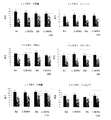
- FIG. 6 is a graph in which L-DOPA and deferoxamine were given to the mouse according to the example and the mouse according to the comparative example, and the amount of behavior and the number of rises were measured.
- the left of the bar graph is a parkin knockout mouse as a comparative example, and the right is a mouse of this example.
- parkin gene a gene encoding parkin
- IRP2 transgenic gene into which a gene encoding IRP (Iron regulatory protein) 2 is introduced.
- mice exhibiting Parkinson's disease symptoms can be obtained at an early stage (from the middle age) by mating the mice, and that the mice are optimal as Parkinson's disease model mice. It came.
- the Parkinson's disease model mouse according to the present invention is a mouse in which the parkin gene is inactivated and IRP2 is specifically expressed in nerve cells.
- the mouse exhibits symptoms characteristic of Parkinson's disease at an early stage (from the middle age) (such as Parkinson's disease-like behavioral abnormalities (decrease in the amount of behavior, etc.) and dopaminergic neuron loss before the midbrain). Therefore, this mouse is useful for elucidating the cause of Parkinson's disease and playing a valuable role in the development of drugs for Parkinson's disease.
- dopaminergic neurons are removed from the midbrain substantia nigra by reacting the mouse midbrain substantia nigra frontal section with an anti-tyrosine hydroxylase antibody and counting the number of neurons that reacted with the antibody under a microscope, etc. Can be confirmed.
- Tyrosine hydroxylase is a rate-limiting enzyme of dopamine biosynthesis that works in the first step of the catecholamine biosynthesis system, and biosynthesizes L-DOPA from L-tyrosine.
- L-DOPA undergoes decarboxylation and becomes L-dopamine, so dopaminergic neurons always synthesize tyrosine hydroxylase, and all neurons that produce tyrosine hydroxylase in the midbrain substantia nigra are dopaminergic neurons. Since it is a cell, dopaminergic neurons can be detected by an anti-tyrosine hydroxylase antibody.
- IRP2 gene examples include a human-derived gene represented by SEQ ID NO: 1.
- Inactivated parkin genes include those in which at least a part of the base sequence of the parkin gene is deleted or replaced with another gene. For example, as shown in FIG. 1, by replacing a part of the base sequence of exon 2 (SEQ ID NO: 2) of the parkin gene encoding most of the ubiquitin-like region of parkin with another base sequence, It can be reliably inactivated.
- the Parkinson's disease model mouse according to the present invention can also be used for screening a therapeutic drug for Parkinson's disease.
- a therapeutic drug for Parkinson's disease since it exhibits the symptoms of Parkinson's disease with certainty, it is useful not only for therapeutic drugs after the onset of Parkinson's disease symptoms but also for the development of preventive drugs.
- it is also useful for evaluating therapeutic agents that have already been proven to have therapeutic effects. For example, in the study of the optimal concentration of a therapeutic agent such as L-DOPA that has a therapeutic effect at a certain range of concentration, but has no effect below that range, and is toxic at or above that range. Is also useful.
- Parkinson's disease model mice are divided into a test mouse group and a control mouse group, and a therapeutic drug to be tested is administered only to the test mouse group, and then behavioral experiments, the number of dopaminergic neurons in the midbrain substantia nigra, etc. By comparing each group, the effect of the therapeutic agent can be evaluated. Furthermore, by giving therapeutic drugs having different concentrations to the group of test mice, it is possible to examine the optimal therapeutic drug concentration having a therapeutic effect.
- the Parkinson's disease model mouse of the present invention is prepared by crossing the following A and B.
- IRP2 transgenic mouse An IRP2 transgenic mouse is a mouse that specifically expresses IRP2 in nerve cells by introduction of the IRP2 gene. There are two types of IRP (IRP1, IRP2), but when knockout mice lacking their respective functions were created, IRP1 knockout mice were normal, whereas IRP2 knockout mice developed neurological abnormalities. IRP2 has been found to play an important role in neuronal iron metabolism.
- a recombinant DNA fragment in which human IRP2-cDNA is arranged under the control of a promoter that specifically expresses IRP2 in nerve cells is introduced by microinjection method, etc. It can be obtained by transplanting to the oviduct of a pseudopregnant mouse and selecting a pup mouse having the recombinant DNA from a born pup mouse. For example, pups that have the desired recombinant DNA should be confirmed by Southern hybridization using a genomic DNA extracted from the tail of the mouse as a template and a probe having a part of the base sequence of the human IRP2 gene. Can do.
- a promoter whose expression level is very small.
- An example of a preferred promoter is a neuron-specific enolase (NSE) promoter that is specifically expressed in mouse neurons and has a very small expression level.
- NSE neuron-specific enolase
- the parkin knockout mouse is a mouse in which the parkin gene is inactivated by deleting or replacing at least part of the base sequence of the parkin gene with another gene.
- Parkin gene is a causative gene of Parkinson's disease, and it is confirmed with high probability that Parkin gene is inactivated in Parkinson's disease patients (particularly autosomal recessive juvenile Parkinson's disease).
- the parkin knockout mouse can be prepared by a known gene recombination method (gene targeting method).
- a targeting vector in which the parkin gene is inactivated by inserting a drug resistance gene such as a neomycin resistance gene into the exon 2 region of the parkin gene that encodes most of the N-terminal ubiquitin-like region of parkin is prepared. This is introduced into ES cells, and the target parkin gene in the ES cells is replaced with the inactivated parkin gene in the targeting vector by homologous recombination. Homologous recombination can occur with a certain probability by utilizing homology with the sequence of the unmodified portion in the targeting vector.
- the obtained recombinant ES cells are screened with a drug resistance factor introduced such as neomycin. Furthermore, in order to ensure screening, screening is performed by Southern hybridization or PCR. ES cells having the mutated gene thus obtained are introduced into blastocysts of wild-type mice or embryos at the 8-cell stage. Then, this ES cell embryo is transplanted into the uterus of a pseudopregnant mouse to produce a chimeric mouse. It is possible to confirm that the ES cells have been introduced into the germ line of the chimeric mouse by mating the chimeric mouse with a pure-line mouse and the hair color derived from the ES cell appearing in the next generation individual. In addition, DNA can be collected from the tail and confirmed by Southern hybridization or PCR. A knockout mouse in which the parkin gene is inactivated can be produced by mating chimeric mice in which these recombinant ES cells have been introduced into the germ line.
- the Parkinson's disease model mouse according to the present invention in which the parkin gene is inactivated and IRP2 is specifically expressed in nerve cells can be obtained.
- the mouse according to the present invention exhibits Parkinson's disease symptom reliably and early (from the middle age). Therefore, the mechanism of the onset of Parkinson's disease and the screening and evaluation of Parkinson's disease drugs are useful. Useful.
- a part of the base sequence of the parkin gene is deleted or replaced with another gene by Southern hybridization or PCR. And that the IRP2 gene has been introduced.
- IRP2 transgenic mice After the vector was introduced by microinjection into the pronucleus of fertilized eggs obtained by natural mating of C57BL / 6J mice and DBA2 / J mice, E0.5 (the day when vaginal plug (formed after mating) was confirmed) It was prepared by transplanting into the oviduct of a pseudopregnant mouse and giving birth spontaneously. The obtained mice were backcrossed 10 times with C57BL / 6J mice. The introduction of IRP2 gene was confirmed by Southern hybridization. The basic operation for producing the transgenic mouse was performed according to the “Animal Experiment Guide” of Osaka City University.
- FIG. 2 is a diagram showing the results of Southern hybridization. As shown in FIG. 2, it was confirmed that the IRP2 transgenic mouse had the IRP2 gene.
- targeting vector For the purpose of targeting exon 2, which encodes most of the N-terminal ubiquitin-like region of parkin.
- a targeting vector comprising a homologous region 5′3′arm, a neomycin resistance gene for positive selection, a Tau-GFP gene, a diphtheria toxin gene (DTA) for negative selection, and the like was prepared (see FIG. 1).
- a linearized targeting vector was introduced into TT2 ES cells, and after screening for ES cell line colonies in which homologous recombination occurred due to drug resistance by G418, the DNA sequence on the 5 'side of the targeting vector and the neomycin resistance gene Screening by Southern hybridization was carried out using a probe specific for the DNA sequence.
- ES cells having the desired recombinant gene were introduced into mouse blastocysts.
- a blastocyst introduced with ES cells was transplanted into the uterus of a pseudopregnant C57BL / 6J mouse to produce a chimeric mouse.
- Chimeric mice were bred with pure C57BL / 6J mice.
- Homozygous and wild-type mice were confirmed by the introduction of recombinant ES cells into the germ line by Southern hybridization using a 5'-end probe and mating these heterozygous chimeric mice together.
- Got. PCR was performed using primers specific to the base sequences of the wild-type parkin gene and the inactivated parkin gene of the targeting vector, and the genotype was identified.
- mice that have an inactivated parkin gene heterozygous (Parkin +/- ) and a mouse that has an inactivated parkin gene heterozygous and a human IRP2-cDNA gene heterozygous (Parkin +/- IRP2 +/- )
- mice having the inactivated parkin gene in homozygote and having the introduced IRP2 gene (Parkin ⁇ / ⁇ IRP2 +/ ⁇ ) were selected.
- Primer GTGGCTGTTGTAGTTGTACTCCAG prepared based on the GFP gene in the targeting vector using primer TCTTGTCTAGTGTTTGTCAGGTTCAAC (SEQ ID NO: 3) prepared based on the sequence outside the 5'-terminal homologous region of the targeting vector, or parkin Using the primer ACTTGTTCCTCCAGTCCTTCCTGCATACTG (SEQ ID NO: 5) prepared based on the 3 ′ terminal sequence of exon 2 of No. 5 as a reverse primer, heat denaturation at 95 ° C. for 5 minutes, 98 ° C.
- FIG. 3 shows the results of PCR. As shown in FIG. 3, only the 1.6 kbp band that is amplified when the inactivated parkin gene is introduced is confirmed, and the 0.4 kbp band that is amplified when the parkin gene is present is confirmed. The mice that were not tested were confirmed to have the inactivated parkin gene as a homozygote for the IRP2 gene.
- IRP2 was confirmed by the Southern hybridization method described above, and a mouse (Parkin ⁇ / ⁇ IRP2 +/ ⁇ ) in which the IRP2 gene was confirmed was used as a mouse of this example.
- the frozen midbrain substantia nigra is made into a 20 ⁇ m thick floating section, and the section is subjected to 1: 100 anti-tyrosine hydroxylase antibody (Calbiochem), histofine mouse simple stain kit (Nichirei), Metal enhanced DAB substrate (PIRCE) Was used for staining. Thereafter, the number of stained cells in the five sections was measured from the front side of the substantia nigra to the back side based on the micrograph. Table 1 shows the results of visual measurement of the number of dopaminergic neurons in each section. The number 1 in the table represents the frontal substantia nigra section, and the section on the back side of the substantia nigra is sequentially represented as the number increases thereafter.
- FIG. 4 shows stained neurons, ie dopaminergic neurons, in the anterior side 1 and posterior side 4 of the midbrain substantia nigra.
- WT represents a wild type mouse (C57BL / 6J)
- IRP2Tg represents an IRP2 transgenic mouse
- PkKO represents a parkin knockout mouse
- TgKO represents a mouse of this example.
- Table 1 and FIG. 4 it was suggested that the dopaminergic neurons in the mouse of this example were detached in the midbrain substantia nigra.
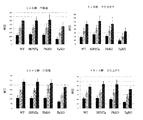
- FIG. 5 is a graph in which the amount of action and the number of rises of the mouse according to the example and the mouse according to the comparative example are measured every 5 minutes.
- the bar graph shows the amount of action and the number of rises from the left, 5 minutes, 10 minutes, and 15 minutes from the left.
- TgKO represents the mice of this example.
- the mice of this example had a significant decrease in the amount of behavior and the number of rises compared with the mice of the comparative example at 5 months of age (p ⁇ 0.05), and behavioral disorders It was confirmed that it occurred.
- mice of this example show Parkinson's disease symptoms early (during the middle period).
- L-DOPA which is a therapeutic agent for Parkinson's disease
- deferoxamine which is an iron chelator
- the group according to the present example and the parkin knockout mouse according to the comparative example were divided into a group given with physiological saline, a group given with L-DOPA (50 mg / kg) and Benserazide (12.5 mg / kg), and deferoxamine (300 mg / kg).
- the group is divided into groups that receive L-DOPA (50 mg / kg), Benserazide (12.5 mg / kg), and deferoxamine (300 mg / kg).
- FIG. 6 is a graph obtained by measuring the amount of action for 5 minutes and the number of rises of the mouse according to this example and the parkin knockout mouse of the comparative example.
- the left of the bar graph is a parkin knockout mouse as a comparative example, and the right is a mouse of this example.
- Sal represents physiological saline
- Dfo represents deferoxamine.
- the amount of behavior and the number of rises of the group of mice according to the present example to which the drug was administered increased compared to the group given physiological saline.
- administration of L-DOPA which is a therapeutic agent for Parkinson's disease, improved the reduction in the amount of behavior and the number of rises. Therefore, it can be said that the mouse of this Example is suitable as a Parkinson's disease model mouse.
Landscapes
- Life Sciences & Earth Sciences (AREA)
- Health & Medical Sciences (AREA)
- Engineering & Computer Science (AREA)
- Biomedical Technology (AREA)
- Hematology (AREA)
- Biotechnology (AREA)
- General Health & Medical Sciences (AREA)
- Chemical & Material Sciences (AREA)
- Urology & Nephrology (AREA)
- Molecular Biology (AREA)
- Immunology (AREA)
- Environmental Sciences (AREA)
- Zoology (AREA)
- Veterinary Medicine (AREA)
- Proteomics, Peptides & Aminoacids (AREA)
- Cell Biology (AREA)
- Neurology (AREA)
- Biodiversity & Conservation Biology (AREA)
- Microbiology (AREA)
- Animal Husbandry (AREA)
- Animal Behavior & Ethology (AREA)
- Neurosurgery (AREA)
- Food Science & Technology (AREA)
- Medicinal Chemistry (AREA)
- Physics & Mathematics (AREA)
- Analytical Chemistry (AREA)
- Biochemistry (AREA)
- General Physics & Mathematics (AREA)
- Pathology (AREA)
- Micro-Organisms Or Cultivation Processes Thereof (AREA)
- Investigating Or Analysing Biological Materials (AREA)
Abstract
(課題) パーキンソン病の症状を確実且つ早期に示すパーキンソン病モデルマウス及びその作製方法並びに該マウスを用いたパーキンソン病治療薬のスクリーニング方法及び評価方法を提供することを課題とする。 (解決手段) パーキンをコードする遺伝子が不活化し、且つIRP2が神経細胞で特異的に発現していることを特徴とするパーキンソン病モデルマウスを提供する。
Description
本発明は、パーキンソン病の症状である行動異常や中脳黒質前側でのドパミン作動神経細胞脱落が早期に(壮年期に)認められるパーキンソン病モデルマウス及びその作製方法並びに該マウスを用いたパーキンソン病治療薬のスクリーニング方法及び評価方法に関する。
パーキンソン病は、我が国において10万人当たり50~100人の有病率を持つ頻度の高い神経変性疾患であり、臨床症状としては振戦、動作緩慢、寡動、歯車様固縮、姿勢不安定等がみられ、その原因は中脳黒質のドパミン作動神経細胞の選択的な変性によると考えられている。
パーキンソン病の大多数は孤発性(非遺伝性)であるが、ごく一部に家族性(遺伝性)のパーキンソン病が存在し、家族性パーキンソン病の遺伝子解析により複数のパーキンソン病の原因遺伝子が同定されている。
パーキンタンパク質(以下パーキンと称する)をコードする遺伝子(以下パーキン遺伝子と称する)も家族性のパーキンソン病である常染色体劣性遺伝若年性パーキンソン病患者の遺伝子解析により発見されたパーキンソン病原因遺伝子の一つである。
パーキンは、C末端側にリングフィンガー構造を有するユビキチンリガーゼである。(特許文献1)
パーキン遺伝子が損傷すると、パーキンのユビキチンリガーゼ活性に異常が生じ、基質タンパク質をユビキチン化できなくなり、分解されるべき基質タンパク質が神経細胞内に蓄積し、神経細胞死が起こり、行動異常等のパーキンソン病の症状が引き起こされるという説が有力である。
パーキンソン病の大多数は孤発性(非遺伝性)であるが、ごく一部に家族性(遺伝性)のパーキンソン病が存在し、家族性パーキンソン病の遺伝子解析により複数のパーキンソン病の原因遺伝子が同定されている。
パーキンタンパク質(以下パーキンと称する)をコードする遺伝子(以下パーキン遺伝子と称する)も家族性のパーキンソン病である常染色体劣性遺伝若年性パーキンソン病患者の遺伝子解析により発見されたパーキンソン病原因遺伝子の一つである。
パーキンは、C末端側にリングフィンガー構造を有するユビキチンリガーゼである。(特許文献1)
パーキン遺伝子が損傷すると、パーキンのユビキチンリガーゼ活性に異常が生じ、基質タンパク質をユビキチン化できなくなり、分解されるべき基質タンパク質が神経細胞内に蓄積し、神経細胞死が起こり、行動異常等のパーキンソン病の症状が引き起こされるという説が有力である。
上記したように、常染色体若年性パーキンソン病ではパーキン遺伝子の欠損が高い確率で認められるため、パーキンソン病モデルマウスとして、これまでに幾つかの系統のパーキンノックアウトマウスが作製されている(例えば、下記非特許文献1参照)。しかし、これらのパーキンノックアウトマウスのほとんどはヒト疾患と比べ非常に弱い症状しか示さないため、これらのマウスを、パーキンソン病の症状発症のメカニズム(特に中脳黒質の神経細胞の選択的な変性)やパーキンソン病治療薬のスクリーニング及び評価に用いるには不十分である。
また、本発明者らは、パーキンソン病において鉄代謝異常に伴う酸化ストレスの病態形成への関与が示唆されていること、パーキンソン病患者において神経変性が認められる中脳黒質と線条体に、鉄の蓄積が確認されていることから、IRP(Iron regulatory protein)2を神経細胞特異的に発現するIRP2トランスジェニックマウスを作製した。
IRP2はRNA結合タンパク質であり、鉄欠乏下において、m-RNAの発現制御部位に特異的に結合することにより、フェリチンの合成を抑制して鉄の貯蔵量を減少させると同時に、トランスフェリン受容体1の合成を促進させ、細胞への鉄の取り込みを増加させる。そのため、IRP2が神経細胞特異的に発現するトランスジェニックマウスでは、パーキンソン病で障害される中脳黒質の神経細胞を含む、外来性のIRP2 を発現している神経細胞の変性や行動異常が認められた。しかし、IRP2トランスジェニックマウスにおいても、神経細胞の変性や行動異常などの症状を示したのは18ヶ月齢以上の老齢であり、早期には症状を示さない。
IRP2はRNA結合タンパク質であり、鉄欠乏下において、m-RNAの発現制御部位に特異的に結合することにより、フェリチンの合成を抑制して鉄の貯蔵量を減少させると同時に、トランスフェリン受容体1の合成を促進させ、細胞への鉄の取り込みを増加させる。そのため、IRP2が神経細胞特異的に発現するトランスジェニックマウスでは、パーキンソン病で障害される中脳黒質の神経細胞を含む、外来性のIRP2 を発現している神経細胞の変性や行動異常が認められた。しかし、IRP2トランスジェニックマウスにおいても、神経細胞の変性や行動異常などの症状を示したのは18ヶ月齢以上の老齢であり、早期には症状を示さない。
上記のように、家族性パーキンソン病の原因遺伝子を欠損させたパーキンソン病モデルマウスは種々提案されているが、これらのモデルマウスは、パーキンソン病の症状を示さないという問題を有している。そのため、症状を確実且つ早期に示す、モデルマウス及びその作製方法並びにパーキンソン病モデルマウスを用いたパーキンソン病治療薬のスクリーニング方法及び評価方法の樹立が望まれている。
Shigeto Sato et al."Decline of Striatal Dopamine Release in Parkin-Deficient Mice Shown by Ex Vivo Autoradiography" Journal of Neuroscience Research 2006 84:1350-1357
本発明は上記観点からなされたものであり、パーキンソン病の症状を確実且つ早期に示すパーキンソン病モデルマウス及びその作製方法並びに該マウスを用いたパーキンソン病治療薬のスクリーニング方法及び評価方法を提供することを課題とする。
請求項1に係る発明は、パーキンをコードする遺伝子が不活化し、且つIRP2が神経細胞で特異的に発現していることを特徴とするパーキンソン病モデルマウスに関する。
請求項2に係る発明は、前記IRP2が配列番号1で示されるヒト由来の遺伝子によりコードされて発現していることを特徴とする請求項1記載のパーキンソン病モデルマウスに関する。
請求項3に係る発明は、前記パーキンをコードする遺伝子の塩基配列の少なくとも一部が欠損又は他の遺伝子と置換することにより、前記パーキンをコードする遺伝子が不活化していることを特徴とする請求項1又は2記載のパーキンソン病モデルマウスに関する。
請求項4に係る発明は、前記パーキンをコードする遺伝子のエクソン2の塩基配列の一部が他の塩基配列で置換されていることを特徴とする請求項3記載のパーキンソン病モデルマウスに関する。
請求項5に係る発明は、パーキンをコードする遺伝子が不活化したパーキンノックアウトマウスと、IRP2をコードする遺伝子が導入されたIRP2トランスジェニックマウスを交配することを特徴とするパーキンソン病モデルマウスの作製方法に関する。
請求項6に係る発明は、前記IRP2をコードする遺伝子が配列番号1で示される塩基配列を有することを特徴とする請求項5記載のパーキンソン病モデルマウスの作製方法に関する。
請求項7に係る発明は、前記パーキンノックアウトマウスが、パーキンをコードする遺伝子の塩基配列の少なくとも一部を欠損又は他の遺伝子と置換させたものであることを特徴とする請求項5又は6記載のパーキンソン病モデルマウスの作製方法に関する。
請求項8に係る発明は、請求項1乃至4いずれかに記載のマウスを用いる、パーキンソン病治療薬のスクリーニング方法に関する。
請求項9に係る発明は、請求項1乃至4いずれかに記載のマウスを用いるパーキンソン病治療薬の評価方法に関する。
請求項10に係る発明は前記パーキンソン病治療薬がL-DOPAであることを特徴とする請求項9に記載の評価方法に関する。
請求項1に係る発明によれば、パーキンをコードする遺伝子が不活化し、且つIRP2が神経細胞で特異的に発現していることにより、パーキンソン病の症状を確実且つ早期に発症させることができる。
請求項2に係る発明によれば、前記IRP2が配列番号1で示されるヒト由来の遺伝子の配列を用いることにより、神経細胞おいてIRP2を確実に発現させることができる。
請求項3に係る発明によれば、前記パーキンをコードする遺伝子の塩基配列の少なくとも一部が欠損又は他の遺伝子と置換することにより、パーキンをコードする遺伝子を確実に不活化することができる。
請求項4に係る発明によれば、前記パーキンをコードする遺伝子のエクソン2の塩基配列の一部が他の塩基配列で置換されていることにより、パーキンをコードする遺伝子を確実に不活化することができる。
請求項5に係る発明によれば、パーキンをコードする遺伝子が不活化したパーキンノックアウトマウスと、IRP2をコードする遺伝子が導入されたIRP2トランスジェニックマウスを交配することにより、パーキンソン病の症状を確実且つ早期に示すマウスを作製することができる。
請求項6に係る発明によれば、前記IRP2をコードする遺伝子が配列番号1で示される塩基配列を有することにより、ヒト由来のIRP2を神経細胞で特異的に発現するマウスを作製することができる。
請求項7に係る発明によれば、前記パーキンノックアウトマウスが、パーキンをコードする遺伝子の塩基配列の少なくとも一部を欠損又は他の遺伝子と置換させたものであることにより、パーキンをコードする遺伝子を確実に不活化したマウスを作製することができる。
請求項8に係る発明によれば、早期にパーキンソン病の症状を示すマウスを用いてパーキンソン病治療薬の効果を正確にスクリーニングすることができる。
請求項9に係る発明によれば、早期にパーキンソン病の症状を示すマウスを用いて正確にパーキンソン病の治療薬の評価を行うことができる。
請求項10に係る発明によれば、早期にパーキンソン病の症状を示すマウスを用いてL-DOPAの評価を正確に行うことができる。
本発明者らは、鋭意研究の結果、パーキンをコードする遺伝子(以下、パーキン遺伝子と称する)が不活化したパーキンノックアウトマウスと、IRP (Iron regulatory protein)2をコードする遺伝子を導入したIRP2トランスジェニックマウスを交配させることにより、早期に(壮年期から)パーキンソン病の症状を示すマウスが得られることを発見し、当該マウスがパーキンソン病モデルマウスとして最適であることを見出し、本発明を完成するに至った。
以下、本発明に係るパーキンソン病モデルマウスについて詳細に説明する。
本発明に係るパーキンソン病モデルマウスはパーキン遺伝子が不活化し且つIRP2が神経細胞において特異的に発現するマウスである。
当該マウスは、早期に(壮年期から)パーキンソン病特有の症状(パーキンソン病様の行動異常(行動量の低下等)や中脳黒質前側でのドパミン作動神経細胞脱落等)を示す。
そのため、このマウスはパーキンソン病の原因解明に役立つとともに、パーキンソン病治療薬の開発に貴重な役割を果たす。
尚、中脳黒質におけるドパミン作動神経細胞の脱落はマウスの中脳黒質前側の切片を抗チロシン水酸化酵素抗体で反応させ、抗体と反応した神経細胞の数を顕微鏡下で数える方法等により確認することができる。
チロシン水酸化酵素はカテコールアミン生合成系の第一段階において働くドパミン生合成の律速酵素であり、L-チロシンからL-DOPAを生合成する。L-DOPAは脱炭酸反応を受けL-ドパミンとなるためドパミン作動神経細胞は必ずチロシン水酸化酵素を合成し、且つ中脳黒質においてはチロシン水酸化酵素を産生する神経細胞は全てドパミン作動神経細胞であるため、抗チロシン水酸化酵素抗体によりドパミン作動神経細胞を検出することができる。
本発明に係るパーキンソン病モデルマウスはパーキン遺伝子が不活化し且つIRP2が神経細胞において特異的に発現するマウスである。
当該マウスは、早期に(壮年期から)パーキンソン病特有の症状(パーキンソン病様の行動異常(行動量の低下等)や中脳黒質前側でのドパミン作動神経細胞脱落等)を示す。
そのため、このマウスはパーキンソン病の原因解明に役立つとともに、パーキンソン病治療薬の開発に貴重な役割を果たす。
尚、中脳黒質におけるドパミン作動神経細胞の脱落はマウスの中脳黒質前側の切片を抗チロシン水酸化酵素抗体で反応させ、抗体と反応した神経細胞の数を顕微鏡下で数える方法等により確認することができる。
チロシン水酸化酵素はカテコールアミン生合成系の第一段階において働くドパミン生合成の律速酵素であり、L-チロシンからL-DOPAを生合成する。L-DOPAは脱炭酸反応を受けL-ドパミンとなるためドパミン作動神経細胞は必ずチロシン水酸化酵素を合成し、且つ中脳黒質においてはチロシン水酸化酵素を産生する神経細胞は全てドパミン作動神経細胞であるため、抗チロシン水酸化酵素抗体によりドパミン作動神経細胞を検出することができる。
IRP2をコードする遺伝子(以下、IRP2遺伝子と称する)としては、配列番号1で示されるヒト由来の遺伝子を挙げることができる。
不活化したパーキン遺伝子としては、パーキン遺伝子の塩基配列の少なくとも一部が欠損又は他の遺伝子と置換したものが挙げられる。
例えば、図1で示すように、パーキンのユビキチン様領域の大部分をコードするパーキン遺伝子のエクソン2(配列番号2)の塩基配列の一部を他の塩基配列で置換することにより、パーキン遺伝子を確実に不活化することができる。
例えば、図1で示すように、パーキンのユビキチン様領域の大部分をコードするパーキン遺伝子のエクソン2(配列番号2)の塩基配列の一部を他の塩基配列で置換することにより、パーキン遺伝子を確実に不活化することができる。
また、本発明に係るパーキンソン病モデルマウスは、パーキンソン病治療薬をスクリーニングする際にも用いることができる。特に、確実にパーキンソン病の症状を示すため、パーキンソン病の症状発症後の治療薬だけではなく、予防薬の開発にも有用である。
さらに、既に治療効果が実証されている治療薬の評価にも有用である。例えば、一定の範囲の濃度では治療効果を有するが、当該範囲の濃度以下では効果を有さず、当該範囲の濃度以上では毒性を示すL-DOPAの様な治療薬の最適な濃度の検討にも有用である。
具体的にはパーキンソン病モデルマウスを被験マウス群、及び対照マウス群に分け、被験マウス群にのみ試験する治療薬を投与し、その後行動実験や、中脳黒質におけるドパミン作動神経細胞の数等により各群を比較し、治療薬の効果を評価することができる。
さらに、被検マウス群に濃度の異なる治療薬を与えることにより、治療効果のある最適な治療薬の濃度の検討を行うこともできる。
さらに、既に治療効果が実証されている治療薬の評価にも有用である。例えば、一定の範囲の濃度では治療効果を有するが、当該範囲の濃度以下では効果を有さず、当該範囲の濃度以上では毒性を示すL-DOPAの様な治療薬の最適な濃度の検討にも有用である。
具体的にはパーキンソン病モデルマウスを被験マウス群、及び対照マウス群に分け、被験マウス群にのみ試験する治療薬を投与し、その後行動実験や、中脳黒質におけるドパミン作動神経細胞の数等により各群を比較し、治療薬の効果を評価することができる。
さらに、被検マウス群に濃度の異なる治療薬を与えることにより、治療効果のある最適な治療薬の濃度の検討を行うこともできる。
<パーキンソン病モデルマウスの作製方法>
以下、本発明に係るパーキンソン病モデルマウスの作製方法について説明する。
本発明のパーキンソン病モデルマウスは次のAとBを交配させることにより作製される。
A IRP2トランスジェニックマウス
B パーキンノックアウトマウス
以下、本発明に係るパーキンソン病モデルマウスの作製方法について説明する。
本発明のパーキンソン病モデルマウスは次のAとBを交配させることにより作製される。
A IRP2トランスジェニックマウス
B パーキンノックアウトマウス
以下、A,Bについて夫々具体的に説明する。
(A: IRP2トランスジェニックマウス)
IRP2トランスジェニックマウスとはIRP2遺伝子が導入されることにより、神経細胞において特異的にIRP2を発現するマウスである。
IRPは2種類(IRP1,IRP2)存在するが、夫々の機能を欠損したノックアウトマウスを作製したところ、IRP1ノックアウトマウスは正常であったのに対して、IRP2ノックアウトマウスは神経異常を発症するため、IRP2が神経細胞の鉄代謝において重要な役割を果たすことが分かっている。
(A: IRP2トランスジェニックマウス)
IRP2トランスジェニックマウスとはIRP2遺伝子が導入されることにより、神経細胞において特異的にIRP2を発現するマウスである。
IRPは2種類(IRP1,IRP2)存在するが、夫々の機能を欠損したノックアウトマウスを作製したところ、IRP1ノックアウトマウスは正常であったのに対して、IRP2ノックアウトマウスは神経異常を発症するため、IRP2が神経細胞の鉄代謝において重要な役割を果たすことが分かっている。
IRP2トランスジェニックマウスの作製方法としては、神経細胞に特異的にIRP2を発現するプロモーターの制御下にヒトIRP2-cDNAを配置した組換えDNA断片をマイクロインジェクション法等により導入し、生き残った受精卵を偽妊娠マウスの卵管に移植し、生まれた仔マウスから前記組換えDNAを有する仔マウスを選択することによって得ることができる。
目的とする組換えDNAを有する仔マウスは、例えば、マウスの尾より抽出したゲノムDNAを鋳型とし、ヒトIRP2遺伝子の塩基配列の一部を有するプローブを用いたサザンハイブリダイゼーションにて、確認することができる。
目的とする組換えDNAを有する仔マウスは、例えば、マウスの尾より抽出したゲノムDNAを鋳型とし、ヒトIRP2遺伝子の塩基配列の一部を有するプローブを用いたサザンハイブリダイゼーションにて、確認することができる。
尚、IRP2は過剰に発現すると鉄代謝が攪乱され、細胞がアポトーシスを起こすため、発現量が微量なプロモーターを用いることが好ましい。好ましいプロモーターの例としては、マウスの神経細胞に特異的に発現し、発現量が微量であるneuron-specific enolase(NSE)プロモーターが挙げられる。
(B:パーキンノックアウトマウス)
パーキンノックアウトマウスとはパーキン遺伝子の塩基配列の少なくとも一部を欠損又は他の遺伝子と置換させることによってパーキン遺伝子が不活化したマウスである。
パーキン遺伝子とはパーキンソン病の原因遺伝子であり、パーキンソン病患者(特に常染色体劣性若年性パーキンソン病)ではパーキン遺伝子が不活化していることが高い確率で確認されている。
パーキンノックアウトマウスとはパーキン遺伝子の塩基配列の少なくとも一部を欠損又は他の遺伝子と置換させることによってパーキン遺伝子が不活化したマウスである。
パーキン遺伝子とはパーキンソン病の原因遺伝子であり、パーキンソン病患者(特に常染色体劣性若年性パーキンソン病)ではパーキン遺伝子が不活化していることが高い確率で確認されている。
パーキンノックアウトマウスの作製方法としては公知の遺伝子組換え法(ジーンターゲッティング法)により作製することができる。例えば、パーキンのN末端側のユビキチン様領域の大部分をコードする、パーキン遺伝子のエクソン2領域に、ネオマイシン耐性遺伝子等の薬剤耐性遺伝子を挿入し、パーキン遺伝子を不活化したターゲティングベクターを作製する。これをES細胞に導入し、ES細胞中の目的とするパーキン遺伝子をターゲティングベクター中の不活化したパーキン遺伝子に、相同組換えによって置換する。相同組換えはターゲティングベクター中の非改変部分の配列との相同性を利用して特定の確率をもって生じさせることができる。得られた組換えES細胞につきネオマイシン等の導入した薬剤耐性因子によりスクリーニングを行う。更にスクリーニングを確実にするためにサザンハイブリダイゼーション法やPCR法によりスクリーニングを行う。こうして得た変異遺伝子を持つES細胞を野生型マウスの胚盤胞または8細胞期の胚内に導入する。そしてこのES細胞胚を偽妊娠マウスの子宮に移植し、キメラマウスを作製する。キメラマウスを純系のマウスと交配し、次世代個体にES細胞由来の被毛色が現れることによりES細胞がキメラマウスの生殖系列へ導入したことを確認することができる。また、尾部からDNAを採取し、サザンハイブリダイゼーション法やPCR法によって確認することができる。これらの組換えES細胞が生殖系列へ導入されたキメラマウス同士を交配させることによりパーキン遺伝子が不活化したノックアウトマウスを作製することができる。
上記AとBを交配させることにより、パーキン遺伝子が不活化し且つIRP2が神経細胞において特異的に発現する本発明に係るパーキンソン病モデルマウスを得ることができる。
本発明に係るマウスはAとBのマウスに比べ、パーキンソン病の症状を確実且つ早期に(壮年期から)示すため、パーキンソン病の症状発症のメカニズムの解明やパーキンソン病治療薬のスクリーニング及び評価に有用である。
但し、生まれた仔マウスの全てが本発明に係るパーキンソン病モデルマウスであるとは限らないため、サザンハイブリダイゼーション法やPCR法によって、パーキン遺伝子の塩基配列の一部が欠損又は他の遺伝子で置換されていること及び、IRP2遺伝子が導入されていることを確認する必要がある。
本発明に係るマウスはAとBのマウスに比べ、パーキンソン病の症状を確実且つ早期に(壮年期から)示すため、パーキンソン病の症状発症のメカニズムの解明やパーキンソン病治療薬のスクリーニング及び評価に有用である。
但し、生まれた仔マウスの全てが本発明に係るパーキンソン病モデルマウスであるとは限らないため、サザンハイブリダイゼーション法やPCR法によって、パーキン遺伝子の塩基配列の一部が欠損又は他の遺伝子で置換されていること及び、IRP2遺伝子が導入されていることを確認する必要がある。
以下、実施例により本発明をさらに具体的に説明するが、本発明は下記実施例に何ら限定されるものではない。
まず、IRP2トランスジェニックマウスの作製方法について説明する。
(ヒトIRP2遺伝子導入ベクターの作製)
ヒトIRP2遺伝子を導入するDNAとして、図2に示すマウス神経細胞に特異的に発現するNSEプロモーターを有するゲノムDNA(8.6kb)を用いた(Forss-Petter et.al.Neuron, Volume 5, Issue 2, 187-197)。NSEプロモーター制御下にウサギ由来のグロブリンイントロン、ヒト由来のIRP2-cDNA及び、IRP2のC末側にMycタグを結合した6kbpのDNA断片を配置した組換えDNAを作製した。
尚、Mycタグは内在性のIRP2と導入遺伝子によるIRP2を抗Myc抗体によって区別できるように付けたものである。
(ヒトIRP2遺伝子導入ベクターの作製)
ヒトIRP2遺伝子を導入するDNAとして、図2に示すマウス神経細胞に特異的に発現するNSEプロモーターを有するゲノムDNA(8.6kb)を用いた(Forss-Petter et.al.Neuron, Volume 5, Issue 2, 187-197)。NSEプロモーター制御下にウサギ由来のグロブリンイントロン、ヒト由来のIRP2-cDNA及び、IRP2のC末側にMycタグを結合した6kbpのDNA断片を配置した組換えDNAを作製した。
尚、Mycタグは内在性のIRP2と導入遺伝子によるIRP2を抗Myc抗体によって区別できるように付けたものである。
(IRP2トランスジェニックマウスの作製)
前記ベクターをC57BL/6JマウスとDBA2/Jマウスの自然交配により得た、E0.5(膣栓(交尾後形成される)が確認された日)の受精卵の前核にマイクロインジェクションによって導入後、偽妊娠マウスの卵管内に移植し、自然出産させることで作製した。得られたマウスについてC57BL/6Jマウスと戻し交配を10回行った。IRP2遺伝子の導入はサザンハイブリダイゼーション法によって確認した。
尚、トランスジェニックマウスの作製の基本操作は大阪市立大学の「動物実験ガイド」に準じて行った。
前記ベクターをC57BL/6JマウスとDBA2/Jマウスの自然交配により得た、E0.5(膣栓(交尾後形成される)が確認された日)の受精卵の前核にマイクロインジェクションによって導入後、偽妊娠マウスの卵管内に移植し、自然出産させることで作製した。得られたマウスについてC57BL/6Jマウスと戻し交配を10回行った。IRP2遺伝子の導入はサザンハイブリダイゼーション法によって確認した。
尚、トランスジェニックマウスの作製の基本操作は大阪市立大学の「動物実験ガイド」に準じて行った。
(サザンハイブリダイゼーションによるIRP2の検出)
IRP2トランスジェニックマウスの尾から抽出したDNA10μgを制限酵素のBglIIとBamHIで切断し、0.8%アガロースゲルで電気泳動を行った後、ナイロンメンブレン(HybondN+: GEヘルスケア)に転写し、UVクロスリンカーでクロスリンク後、Hybrisol (Oncor)中で42℃2時間プレハイブリダイゼーションし、さらにRediprime labeling Kit (GEヘルスケア)を用いて32Pで標識したヒトIRP2-cDNAをプローブとして加えて42℃一晩、ハイブリダイゼーションした。その後、メンブレンを2×SSC 0.5%SDS溶液を用いて室温で5分間、3回洗浄した後、さらに2×SSC 0.5% SDS溶液を用いて15分間65℃で2回洗浄し、シグナルをBAS5000(Fuji Film)にて検出した。
図2は、サザンハイブリダイゼーションの結果を示す図である。図2で示すように、IRP2トランスジェニックマウスがIRP2遺伝子を有していることが確認できた。
IRP2トランスジェニックマウスの尾から抽出したDNA10μgを制限酵素のBglIIとBamHIで切断し、0.8%アガロースゲルで電気泳動を行った後、ナイロンメンブレン(HybondN+: GEヘルスケア)に転写し、UVクロスリンカーでクロスリンク後、Hybrisol (Oncor)中で42℃2時間プレハイブリダイゼーションし、さらにRediprime labeling Kit (GEヘルスケア)を用いて32Pで標識したヒトIRP2-cDNAをプローブとして加えて42℃一晩、ハイブリダイゼーションした。その後、メンブレンを2×SSC 0.5%SDS溶液を用いて室温で5分間、3回洗浄した後、さらに2×SSC 0.5% SDS溶液を用いて15分間65℃で2回洗浄し、シグナルをBAS5000(Fuji Film)にて検出した。
図2は、サザンハイブリダイゼーションの結果を示す図である。図2で示すように、IRP2トランスジェニックマウスがIRP2遺伝子を有していることが確認できた。
次にパーキンノックアウトマウスの作製方法について説明する。
(ターゲティングベクターの作製)
パーキンのN末端側のユビキチン様領域の大部分をコードするエクソン2をターゲティングする目的でベクターの構築を試みた。相同領域5´3´arm、ポジティブ選択のためのネオマイシン耐性遺伝子、Tau-GFP遺伝子、ネガティブ選択のためのジフテリア毒素遺伝子(DTA)等のパーツからなるターゲティングベクターを作製した(図1参照)。
(ターゲティングベクターの作製)
パーキンのN末端側のユビキチン様領域の大部分をコードするエクソン2をターゲティングする目的でベクターの構築を試みた。相同領域5´3´arm、ポジティブ選択のためのネオマイシン耐性遺伝子、Tau-GFP遺伝子、ネガティブ選択のためのジフテリア毒素遺伝子(DTA)等のパーツからなるターゲティングベクターを作製した(図1参照)。
(ES細胞へのターゲティングベクターの導入)
直鎖状にしたターゲティングベクターをTT2 ES細胞に導入し、G418による薬剤耐性により相同組換えの起こったES細胞株コロニーのスクリーニングを行った後、ターゲティングベクターの5´側のDNA配列とネオマイシン耐性遺伝子のDNA配列に特異的なプローブを用いてサザンハイブリダイゼーションによるスクリーニングを行った。
直鎖状にしたターゲティングベクターをTT2 ES細胞に導入し、G418による薬剤耐性により相同組換えの起こったES細胞株コロニーのスクリーニングを行った後、ターゲティングベクターの5´側のDNA配列とネオマイシン耐性遺伝子のDNA配列に特異的なプローブを用いてサザンハイブリダイゼーションによるスクリーニングを行った。
(キメラマウスの作製)
マイクロインジェクションの技術を用いて、目的の組換え遺伝子を持つES細胞をマウス胚盤胞に導入した。ES細胞を導入した胚盤胞を偽妊娠させたC57BL/6Jマウスの子宮に移植し、キメラマウスを作製した。キメラマウスは純系のC57BL/6Jマウスと交配した。組換えES細胞が生殖系列へ導入したことを5´末端のプローブを用いたサザンハイブリダイゼーション法によって確認し、これらのヘテロ接合体のキメラマウス同士を交配させることによりホモ接合体と野生型のマウスを得た。野生型のパーキン遺伝子とターゲティングベクターの不活化したパーキン遺伝子の塩基配列に特異的なプライマーを用いてPCRを行い、遺伝子型を同定した。
マイクロインジェクションの技術を用いて、目的の組換え遺伝子を持つES細胞をマウス胚盤胞に導入した。ES細胞を導入した胚盤胞を偽妊娠させたC57BL/6Jマウスの子宮に移植し、キメラマウスを作製した。キメラマウスは純系のC57BL/6Jマウスと交配した。組換えES細胞が生殖系列へ導入したことを5´末端のプローブを用いたサザンハイブリダイゼーション法によって確認し、これらのヘテロ接合体のキメラマウス同士を交配させることによりホモ接合体と野生型のマウスを得た。野生型のパーキン遺伝子とターゲティングベクターの不活化したパーキン遺伝子の塩基配列に特異的なプライマーを用いてPCRを行い、遺伝子型を同定した。
次に本発明に係るマウスの作製方法について説明する。
不活化したパーキン遺伝子をヘテロで持つマウス(Parkin+/-)と不活化したパーキン遺伝子をヘテロで持ち且つヒトIRP2-cDNA遺伝子をヘテロでもつマウス(Parkin+/- IRP2+/-)を交配し、得られた仔マウスについて、不活化したパーキン遺伝子をホモ接合体で持ち且つ導入されたIRP2遺伝子を有するマウス(Parkin-/- IRP2+/-)を選抜した。
不活化したパーキン遺伝子をヘテロで持つマウス(Parkin+/-)と不活化したパーキン遺伝子をヘテロで持ち且つヒトIRP2-cDNA遺伝子をヘテロでもつマウス(Parkin+/- IRP2+/-)を交配し、得られた仔マウスについて、不活化したパーキン遺伝子をホモ接合体で持ち且つ導入されたIRP2遺伝子を有するマウス(Parkin-/- IRP2+/-)を選抜した。
不活化したパーキン遺伝子をホモ接合体で持つマウスはPCR法にて確認した。
ターゲティングベクターの5´末端側相同領域外側の配列に基づいて作製したプライマーTCTTGTCTAGTGTTTGTCAGGTTCAAC(配列番号3)をフォワードプライマーとし、ターゲティングベクター中のGFP遺伝子に基づいて作製したプライマーGTGGCTGTTGTAGTTGTACTCCAG(配列番号4)、またはパーキンのエクソン2の、3′末端側の配列に基づいて作製したプライマーACTTGTTCCTCCAGTCCTTCCTGCATACTG(配列番号5)をリバースプライマーとして用いて95℃、5分の熱変性後、98℃ 20秒;68℃ 7分 を30 サイクルの反応条件で行った後、72℃ 5分処理した。尚、配列番号3,4,5の配列が存在する場所は夫々図1において(3)、(4)、(5)の矢印で示した。
図3はPCRの結果を示す図である。図3で示すように、不活化したパーキン遺伝子が導入されている場合に増幅される1.6kbpのバンドのみが確認され、且つパーキン遺伝子が存在する場合に増幅される0.4kbpのバンドが確認されなかったマウスについて、不活化したパーキン遺伝子をホモ接合体で有しているとしてIRP2遺伝子の確認を行った。
ターゲティングベクターの5´末端側相同領域外側の配列に基づいて作製したプライマーTCTTGTCTAGTGTTTGTCAGGTTCAAC(配列番号3)をフォワードプライマーとし、ターゲティングベクター中のGFP遺伝子に基づいて作製したプライマーGTGGCTGTTGTAGTTGTACTCCAG(配列番号4)、またはパーキンのエクソン2の、3′末端側の配列に基づいて作製したプライマーACTTGTTCCTCCAGTCCTTCCTGCATACTG(配列番号5)をリバースプライマーとして用いて95℃、5分の熱変性後、98℃ 20秒;68℃ 7分 を30 サイクルの反応条件で行った後、72℃ 5分処理した。尚、配列番号3,4,5の配列が存在する場所は夫々図1において(3)、(4)、(5)の矢印で示した。
図3はPCRの結果を示す図である。図3で示すように、不活化したパーキン遺伝子が導入されている場合に増幅される1.6kbpのバンドのみが確認され、且つパーキン遺伝子が存在する場合に増幅される0.4kbpのバンドが確認されなかったマウスについて、不活化したパーキン遺伝子をホモ接合体で有しているとしてIRP2遺伝子の確認を行った。
IRP2の確認は前記のサザンハイブリダイゼーション法により行い、IRP2遺伝子が確認されたマウス(Parkin-/- IRP2+/-)を本実施例のマウスとした。
本実施例のマウスと比較例のマウス(野生型(C57BL/6Jマウス)、IRP2トランスジェニックマウス、パーキンノックアウトマウス)の中脳黒質前側及び中脳黒質後側のドパミン作動神経細胞数の計測を行った。
5月齢の実施例と比較例のマウスの中脳黒質をリン酸緩衝4%パラホルムアルデヒドで灌流固定及び、24時間の後固定を施した後凍結した。凍結した中脳黒質を20μm厚の浮遊切片とし、当該切片を1:100の抗チロシン水酸化酵素抗体(Calbiochem)及び、ヒストファインマウスシンプルステインキット(ニチレイ)、Metal enhanced DAB substrate (PIRCE)を用いて染色を行った。その後、黒質前側から後側に向けて5枚の切片における染色された細胞数を顕微鏡写真をもとに計測した。表1は夫々の切片のドパミン作動神経細胞の数を目視で計測した結果を示したものである。表中の番号1は黒質前側切片を表わしており以降番号が増えるごとに、順に黒質後側の切片を表わしている。
5月齢の実施例と比較例のマウスの中脳黒質をリン酸緩衝4%パラホルムアルデヒドで灌流固定及び、24時間の後固定を施した後凍結した。凍結した中脳黒質を20μm厚の浮遊切片とし、当該切片を1:100の抗チロシン水酸化酵素抗体(Calbiochem)及び、ヒストファインマウスシンプルステインキット(ニチレイ)、Metal enhanced DAB substrate (PIRCE)を用いて染色を行った。その後、黒質前側から後側に向けて5枚の切片における染色された細胞数を顕微鏡写真をもとに計測した。表1は夫々の切片のドパミン作動神経細胞の数を目視で計測した結果を示したものである。表中の番号1は黒質前側切片を表わしており以降番号が増えるごとに、順に黒質後側の切片を表わしている。

また、図4は中脳黒質の前側1と後側4における染色された神経細胞即ちドパミン作動神経細胞を示している。図中のWTは野生型マウス(C57BL/6J)、IRP2TgはIRP2トランスジェニックマウス、PkKOはパーキンノックアウトマウス、TgKOは本実施例のマウスを夫々表わしている。 表1及び図4で示すように、中脳黒質前側で本実施例のマウスのドパミン作動神経細胞の脱落が示唆された。
本実施例のマウスと比較例のマウスの行動実験を行った。
具体的には5ヶ月齢の実施例のマウス(n=12)と10ヶ月齢の実施例のマウス(n=10)と、同じ月齢数の比較例のマウス(野生型マウス(C57BL/6J)、IRP2トランスジェニックマウス、パーキンノックアウトマウス)につき、オープンフィールドテストによる行動実験を行った。
40cm×40cmの角型オープンフィールド中に10cm×10cmのグリッドを記入した紙を敷き、5分間、10分間、15分間の行動量と立ち上がりの回数を測定した。水平方向の行動量についてはマウスが4本の足全てがあるグリッドから別のグリッドへ移動したときを1回として計測し、斜め方向に移動した場合は2回と計測することによって行った。立ち上がりについてはマウスが両前足を床から完全に離して後ろ足のみで立ったときを1回と計測することによって行った。
図5は実施例に係るマウスと比較例に係るマウスの行動量と立ち上がりの回数を5分刻みで計測したグラフである。棒グラフの左から5分、10分、15分の行動量及び立ち上がり回数を現わしており、図中のWTは野生型マウス(C57BL/6J)、IRP2TgはIRP2トランスジェニックマウス、PkKOはパーキンノックアウトマウス、TgKOは本実施例のマウスを夫々現わしている。
図5に示すように、本実施例のマウスは、5ヶ月齢で既に比較例のマウスに比べてと有意な行動量及び立ち上がり回数の低下がみられ(p<0.05)、行動障害を発生することが確認された。また、10ヶ月齢においても5ヶ月齢の場合と同様に、本実施例のマウスの有意な行動量及び立ち上がりの回数の低下が確認された(p<0.05)。これにより本実施例のマウスが、早期に(壮年期に)パーキンソン病の症状を示すことがわかる。
具体的には5ヶ月齢の実施例のマウス(n=12)と10ヶ月齢の実施例のマウス(n=10)と、同じ月齢数の比較例のマウス(野生型マウス(C57BL/6J)、IRP2トランスジェニックマウス、パーキンノックアウトマウス)につき、オープンフィールドテストによる行動実験を行った。
40cm×40cmの角型オープンフィールド中に10cm×10cmのグリッドを記入した紙を敷き、5分間、10分間、15分間の行動量と立ち上がりの回数を測定した。水平方向の行動量についてはマウスが4本の足全てがあるグリッドから別のグリッドへ移動したときを1回として計測し、斜め方向に移動した場合は2回と計測することによって行った。立ち上がりについてはマウスが両前足を床から完全に離して後ろ足のみで立ったときを1回と計測することによって行った。
図5は実施例に係るマウスと比較例に係るマウスの行動量と立ち上がりの回数を5分刻みで計測したグラフである。棒グラフの左から5分、10分、15分の行動量及び立ち上がり回数を現わしており、図中のWTは野生型マウス(C57BL/6J)、IRP2TgはIRP2トランスジェニックマウス、PkKOはパーキンノックアウトマウス、TgKOは本実施例のマウスを夫々現わしている。
図5に示すように、本実施例のマウスは、5ヶ月齢で既に比較例のマウスに比べてと有意な行動量及び立ち上がり回数の低下がみられ(p<0.05)、行動障害を発生することが確認された。また、10ヶ月齢においても5ヶ月齢の場合と同様に、本実施例のマウスの有意な行動量及び立ち上がりの回数の低下が確認された(p<0.05)。これにより本実施例のマウスが、早期に(壮年期に)パーキンソン病の症状を示すことがわかる。
実施例のマウスと比較例のマウス(パーキンノックアウトマウス)にパーキンソン病の治療薬であるL-DOPAと鉄のキレート剤であるデフェロキサミンを腹腔内投与した。
本実施例に係るマウスと比較例に係るパーキンノックアウトマウスを、生理食塩水を与える群、L-DOPA (50mg/kg) 、Benserazide(12.5mg/kg)を与える群、デフェロキサミン(300mg/kg)与える群、L-DOPA(50mg/kg) 、Benserazide(12.5mg/kg)とデフェロキサミン(300mg/kg)を与える群に分け、夫々の薬剤を4ヶ月齢から1ヶ月間隔日投与した後、3ヶ月齢から2ヶ月間隔日投与した後及び、2ヶ月齢から3カ月隔日投与した後にオープンフィールドによる行動実験を行い、実験開始から5分間の行動量と立ち上がりの回数を測定した。尚、BenserazideはL-DOPAの代謝阻害剤であり、代謝によるL-DOPAの血中濃度の低下を抑制するために与えた。
図6は本実施例に係るマウスと比較例のパーキンノックアウトマウスの5分間の行動量と立ち上がりの回数を計測したグラフである。棒グラフの左が比較例であるパーキンノックアウトマウス、右が本実施例のマウスである。また、図中のSalは生理食塩水、Dfoはデフェロキサミンを夫々現わしている。
いずれの場合においても薬剤を投与した本実施例に係るマウス群の行動量及び立ち上がり回数は生理食塩水を与えた群に対して増加した。
このように、パーキンソン病の治療薬であるL-DOPAを投与することによって行動量と立ち上がり回数の低下の改善が確認されたため、本実施例のマウスはパーキンソン病モデルマウスとして適しているといえる。
本実施例に係るマウスと比較例に係るパーキンノックアウトマウスを、生理食塩水を与える群、L-DOPA (50mg/kg) 、Benserazide(12.5mg/kg)を与える群、デフェロキサミン(300mg/kg)与える群、L-DOPA(50mg/kg) 、Benserazide(12.5mg/kg)とデフェロキサミン(300mg/kg)を与える群に分け、夫々の薬剤を4ヶ月齢から1ヶ月間隔日投与した後、3ヶ月齢から2ヶ月間隔日投与した後及び、2ヶ月齢から3カ月隔日投与した後にオープンフィールドによる行動実験を行い、実験開始から5分間の行動量と立ち上がりの回数を測定した。尚、BenserazideはL-DOPAの代謝阻害剤であり、代謝によるL-DOPAの血中濃度の低下を抑制するために与えた。
図6は本実施例に係るマウスと比較例のパーキンノックアウトマウスの5分間の行動量と立ち上がりの回数を計測したグラフである。棒グラフの左が比較例であるパーキンノックアウトマウス、右が本実施例のマウスである。また、図中のSalは生理食塩水、Dfoはデフェロキサミンを夫々現わしている。
いずれの場合においても薬剤を投与した本実施例に係るマウス群の行動量及び立ち上がり回数は生理食塩水を与えた群に対して増加した。
このように、パーキンソン病の治療薬であるL-DOPAを投与することによって行動量と立ち上がり回数の低下の改善が確認されたため、本実施例のマウスはパーキンソン病モデルマウスとして適しているといえる。
Claims (10)
- パーキンをコードする遺伝子が不活化し、且つIRP2が神経細胞で特異的に発現していることを特徴とするパーキンソン病モデルマウス。
- 前記IRP2が配列番号1で示されるヒト由来の遺伝子によりコードされて発現していることを特徴とする請求項1記載のパーキンソン病モデルマウス。
- 前記パーキンをコードする遺伝子の塩基配列の少なくとも一部が欠損又は他の遺伝子と置換することにより、前記パーキンをコードする遺伝子が不活化していることを特徴とする請求項1又は2記載のパーキンソン病モデルマウス。
- 前記パーキンをコードする遺伝子のエクソン2の塩基配列の一部が他の塩基配列で置換されていることを特徴とする請求項3記載のパーキンソン病モデルマウス。
- パーキンをコードする遺伝子が不活化したパーキンノックアウトマウスと、IRP2をコードする遺伝子が導入されたIRP2トランスジェニックマウスを交配することを特徴とするパーキンソン病モデルマウスの作製方法。
- 前記IRP2をコードする遺伝子が配列番号1で示される塩基配列を有することを特徴とする請求項5記載のパーキンソン病モデルマウスの作製方法。
- 前記パーキンノックアウトマウスが、パーキンをコードする遺伝子の塩基配列の少なくとも一部を欠損又は他の遺伝子と置換させたものであることを特徴とする請求項5又は6記載のパーキンソン病モデルマウスの作製方法。
- 請求項1乃至4いずれかに記載のマウスを用いる、パーキンソン病治療薬のスクリーニング方法。
- 請求項1乃至4いずれかに記載のマウスを用いるパーキンソン病治療薬の評価方法
- 前記パーキンソン病治療薬がL-DOPAであることを特徴とする請求項9に記載の評価方法。
Applications Claiming Priority (2)
| Application Number | Priority Date | Filing Date | Title |
|---|---|---|---|
| JP2009-069122 | 2009-03-19 | ||
| JP2009069122A JP2010220503A (ja) | 2009-03-19 | 2009-03-19 | パーキンソン病モデルマウス及びその作製方法並びに該マウスを用いたパーキンソン病治療薬のスクリーニング方法及び評価方法 |
Publications (1)
| Publication Number | Publication Date |
|---|---|
| WO2010107090A1 true WO2010107090A1 (ja) | 2010-09-23 |
Family
ID=42739749
Family Applications (1)
| Application Number | Title | Priority Date | Filing Date |
|---|---|---|---|
| PCT/JP2010/054691 Ceased WO2010107090A1 (ja) | 2009-03-19 | 2010-03-18 | パーキンソン病モデルマウス及びその作製方法並びに該マウスを用いたパーキンソン病治療薬のスクリーニング方法及び評価方法 |
Country Status (2)
| Country | Link |
|---|---|
| JP (1) | JP2010220503A (ja) |
| WO (1) | WO2010107090A1 (ja) |
Cited By (2)
| Publication number | Priority date | Publication date | Assignee | Title |
|---|---|---|---|---|
| CN118844389A (zh) * | 2024-07-10 | 2024-10-29 | 南通大学附属医院 | 一种转基因小鼠的构建方法及其应用 |
| CN119193701A (zh) * | 2024-09-13 | 2024-12-27 | 暨南大学 | 帕金森动物模型的构建方法与特异性靶向Parkin基因的gRNA及其应用 |
-
2009
- 2009-03-19 JP JP2009069122A patent/JP2010220503A/ja active Pending
-
2010
- 2010-03-18 WO PCT/JP2010/054691 patent/WO2010107090A1/ja not_active Ceased
Non-Patent Citations (9)
Cited By (2)
| Publication number | Priority date | Publication date | Assignee | Title |
|---|---|---|---|---|
| CN118844389A (zh) * | 2024-07-10 | 2024-10-29 | 南通大学附属医院 | 一种转基因小鼠的构建方法及其应用 |
| CN119193701A (zh) * | 2024-09-13 | 2024-12-27 | 暨南大学 | 帕金森动物模型的构建方法与特异性靶向Parkin基因的gRNA及其应用 |
Also Published As
| Publication number | Publication date |
|---|---|
| JP2010220503A (ja) | 2010-10-07 |
Similar Documents
| Publication | Publication Date | Title |
|---|---|---|
| Wallace et al. | The pathophysiology of mitochondrial disease as modeled in the mouse | |
| Motley et al. | Charcot-Marie-Tooth–linked mutant GARS is toxic to peripheral neurons independent of wild-type GARS levels | |
| Cannon et al. | Expression of human E46K-mutated α-synuclein in BAC-transgenic rats replicates early-stage Parkinson's disease features and enhances vulnerability to mitochondrial impairment | |
| CA2182311A1 (en) | Transgenic non-human mammals with progressive neurologic disease | |
| JP2010029219A (ja) | 動物モデルの開発のための方法 | |
| JP2010220503A (ja) | パーキンソン病モデルマウス及びその作製方法並びに該マウスを用いたパーキンソン病治療薬のスクリーニング方法及び評価方法 | |
| CN117363660B (zh) | 一种构建sma小鼠模型的方法 | |
| Lecomte et al. | Selective disruption of acetylcholine synthesis in subsets of motor neurons: A new model of late-onset motor neuron disease | |
| JPWO2005041649A1 (ja) | トランスジェニック非ヒト哺乳動物 | |
| JP5939487B2 (ja) | Epo欠損GFP貧血マウス | |
| JP4174212B2 (ja) | パーキンソン病モデルトランスジェニックマウス | |
| CN116941578A (zh) | 一种原发性牙齿萌出障碍的pth1r基因点突变小鼠模型的构建方法及应用 | |
| JP2010104326A (ja) | 加齢黄斑変性モデル動物、及び、その作成方法 | |
| FR2828212A1 (fr) | Methodes de diagnostic et de pronostic de la maladie de parkinson | |
| Yamanaka | Animal models for neurodegenerative disorders | |
| Tsuiji et al. | Animal models for neurodegenerative disorders | |
| CN119111471B (zh) | 一种路易小体痴呆动物模型的构建方法和用途 | |
| JP5938731B2 (ja) | 正常眼圧緑内障モデル非ヒト哺乳動物 | |
| JP4219617B2 (ja) | グリーン蛍光タンパク質遺伝子により形質転換されたトランスジェニック動物 | |
| KR100734815B1 (ko) | Htau24 유전자를 발현하는 형질전환 치매 마우스 및 그제조방법 | |
| JP3817638B2 (ja) | トランスジェニック非ヒト哺乳動物 | |
| KR100635878B1 (ko) | hNCTm 유전자를 발현하는 형질전환 치매 마우스 | |
| JPWO2004092371A1 (ja) | グルタミン酸トランスポーターglast機能欠損マウス | |
| US20060265772A1 (en) | Histamine hyperproductive animal | |
| Germani | CHOP/ERO1A pathway of Unfolded Protein Response in RYR1 and SEPN1-Related myopathies |
Legal Events
| Date | Code | Title | Description |
|---|---|---|---|
| 121 | Ep: the epo has been informed by wipo that ep was designated in this application |
Ref document number: 10753581 Country of ref document: EP Kind code of ref document: A1 |
|
| DPE1 | Request for preliminary examination filed after expiration of 19th month from priority date (pct application filed from 20040101) | ||
| NENP | Non-entry into the national phase |
Ref country code: DE |
|
| 122 | Ep: pct application non-entry in european phase |
Ref document number: 10753581 Country of ref document: EP Kind code of ref document: A1 |