WO2010032455A1 - イソシアナート化合物の製造方法 - Google Patents
イソシアナート化合物の製造方法 Download PDFInfo
- Publication number
- WO2010032455A1 WO2010032455A1 PCT/JP2009/004652 JP2009004652W WO2010032455A1 WO 2010032455 A1 WO2010032455 A1 WO 2010032455A1 JP 2009004652 W JP2009004652 W JP 2009004652W WO 2010032455 A1 WO2010032455 A1 WO 2010032455A1
- Authority
- WO
- WIPO (PCT)
- Prior art keywords
- reaction
- isocyanate
- compound
- reactor
- isocyanate compound
- Prior art date
- Legal status (The legal status is an assumption and is not a legal conclusion. Google has not performed a legal analysis and makes no representation as to the accuracy of the status listed.)
- Ceased
Links
Images

Classifications
-
- C—CHEMISTRY; METALLURGY
- C07—ORGANIC CHEMISTRY
- C07C—ACYCLIC OR CARBOCYCLIC COMPOUNDS
- C07C263/00—Preparation of derivatives of isocyanic acid
- C07C263/14—Preparation of derivatives of isocyanic acid by catalytic reaction of nitro compounds with carbon monoxide
Definitions
- the present invention relates to a method for directly synthesizing an isocyanate compound by reacting a nitro compound with carbon monoxide, and more specifically, in the presence of a solvent inert to carbon dioxide and an isocyanate group in a supercritical state. Relates to a process for synthesizing isocyanate compounds.
- the isocyanate compound is a very useful substance for practical use as a raw material of a polyurethane resin.
- the current industrial production method of an isocyanate compound is a method in which a nitro compound is reduced to primary amines and then reacted with phosgene separately synthesized from carbon monoxide and chlorine to obtain an isocyanate compound.
- the phosgene used here is extremely toxic, and the waste hydrochloric acid treatment of hydrogen chloride by-produced in large quantities as a result of industrial safety problems and the addition of phosgene can be ignored from the viewpoint of environmental burden and treatment cost. Can not.
- the nitro group of the starting nitro compound reacts directly with carbon monoxide, and it does not go through primary amines, handles highly toxic phosgene, and does not involve the process of generating hydrochloric acid. It is desirable to produce isocyanate compounds with
- an attempt has been made to directly synthesize an isocyanate compound from a nitro compound and carbon monoxide using a platinum group metal catalyst For example, in Patent Document 1, an isocyanate compound is directly synthesized from a nitro compound and carbon monoxide by using a platinum group metal catalyst as a main catalyst and a composite metal oxide containing zinc and molybdenum as a promoter. A manufacturing method is disclosed.
- Patent Document 1 it is necessary to dissolve carbon monoxide at a high concentration in an organic solvent as a reaction solvent in order to improve the reactivity. Reaction under carbon oxide pressure (26 MPa) and high temperature (200 ° C.) is inevitable. As a result, there were many problems such as a reduction in yield due to side reactions such as a polymerization reaction of the product, as well as equipment for handling carbon monoxide at high temperature and high pressure, operational burden, and cost increase.
- diisocyanate compounds which are the raw materials for polyurethane resins that have excellent properties for use as electronic materials and structural materials, are synthesized from dinitro compounds that contain two nitro groups and are expected to have explosive properties. There is always the possibility of a runaway reaction, and a reaction in a mild environment is desirable.
- Patent Document 2 discloses a carbonylation method for synthesizing phthalide from 2-iodobenzyl alcohol using carbon monoxide as a carbon source in carbon dioxide in a supercritical state or further in the presence of an amine compound.
- An object of the present invention is to provide a method for producing a corresponding isocyanate compound from a nitro compound and carbon monoxide under a mild carbon monoxide pressure / temperature condition and with high efficiency, and a production apparatus used therefor. is there.
- the inventors of the present invention have repeatedly studied to achieve the above object.
- a nitro compound as a starting material, supercritical carbon dioxide, the generated isocyanate compound, and an inert solvent coexist in an appropriate amount to advance the reaction, while controlling the solubility of the catalyst.
- the direct synthesis reaction of the isocyanate compound proceeds under mild pressure and temperature conditions compared to the conventional technology, and the present invention was completed. It was.
- the present invention relates to a nitro group of a nitro compound using a complex or mixture of a platinum group metal compound and a heteroaromatic nitrogen compound as a catalyst in a reaction system using carbon dioxide as a reaction medium in the presence of a solvent.
- a method for producing an isocyanate compound characterized by synthesizing an isocyanate compound having an isocyanate group by reacting with carbon oxide.
- At least one component of carbon dioxide, carbon monoxide, and a solvent in the reaction system is in a supercritical state.
- the reaction system is preferably in a supercritical state of 50 ° C. or higher and 1 MPa or higher.
- the solvent is preferably an aprotic polar solvent.
- the aprotic polar solvent is preferably one or more selected from the group consisting of a nitrile compound containing acetonitrile and a sulfur compound containing dimethyl sulfoxide.
- an isocyanate compound of the present invention it is preferable to react a nitro group with an isocyanate group through a plurality of reaction conditions in which one or both of the reaction temperature and the reaction pressure are different.
- the raw material is continuously supplied from one end of the continuous reaction section and is allowed to flow toward the other end, while the nitro group and carbon monoxide of the nitro compound are flown toward the other end side. It is also possible to use a continuous process in which an isocyanate compound having an isocyanate group is synthesized by reacting and removing the isocyanate compound from the other end of the continuous reaction part.
- the isocyanate compound in the method for producing an isocyanate compound of the present invention, can also be synthesized by linking a plurality of continuous processes having different reaction conditions in one or both of the reaction temperature and the reaction pressure.
- the present invention also includes a reactor containing raw material nitro compounds, a catalyst, a solvent, a temperature raising device that raises and maintains the inside of the reactor, and a raw material that supplies carbon monoxide and carbon dioxide into the reactor.
- a supply device, a gas recovery device that discharges and recovers unreacted gases in the reactor from the reaction system, and an isocyanate recovery device that extracts the isocyanate compound generated in the reactor are provided.
- An apparatus for producing an isocyanate compound is provided.
- the present invention includes a flow reactor in which a flow path for continuously reacting raw materials, a temperature raising device for heating and maintaining the flow reactor, and a flow from one end of the flow reactor.
- Production of an isocyanate compound comprising: a raw material supply device for continuously supplying raw materials into the channel; and a recovery device for continuously removing the isocyanate compound from the other end of the flow reactor.
- a corresponding isocyanate compound is produced from a nitro compound and carbon monoxide in a one-step reaction under mild carbon monoxide pressure and temperature conditions and with high efficiency without passing through primary amines. Can do.
- nitro compounds and platinum group catalysts are dissolved in the organic solvent to be used, and carbon monoxide is dissolved in supercritical carbon dioxide, thereby continuously supplying the raw materials to the reactor, and continuous production from the reactor. Material recovery becomes easy.
- the nitro compound used as a raw material is a mono- or polynitro compound having 32 or less carbon atoms, and its main skeleton may be aromatic or aliphatic, and is produced by a reaction. Any substituent may be included as long as it does not react with the isocyanate group.
- aromatic nitro compound examples include nitrobenzene, alkyl nitrobenzene, alkoxy nitrobenzene, aryl nitrobenzene, aryloxy nitrobenzene, dinitrobenzene, alkyl dinitrobenzene, alkoxy dinitrobenzene, aryl dinitrobenzene, aryloxy dinitrobenzene, such as 2, Examples include 4-dinitrotoluene, 2,6-dinitrotoluene, 4,4′-dinitrodiphenylmethane, and polynitrobenzene.
- Suitable aromatic nitro compounds include nitrobenzene, m-dinitrobenzene, 2-nitrotoluene, 3-nitrotoluene, 4-nitrotoluene, 2,4-dinitrotoluene, 2,6-dinitrotoluene, and 4,4′-dinitrodiphenylmethane. Can be mentioned.
- Examples of the aliphatic nitro compound include nitromethane, nitro-tert-butane, 1-nitrobutane, 3-nitro-2-butanol, nitrocyclohexane, 1-nitrocyclohexene, nitrocyclopentane, nitroethane, 2-nitroethanol, 1-nitroethanol, Examples thereof include nitrohexane, 1-nitropropane, 2-nitropropane, 2-nitro-1-propanol, 2-nitro-1-propylamine and 2-nitro-1-ethylamine.
- Suitable aliphatic nitro compounds include nitromethane, nitro-tert-butane, 1-nitrobutane, nitrocyclohexane, 1-nitropropane and 2-nitropropane.
- nitrobenzene 2,4-dinitrotoluene, 2,6-dinitrotoluene, 1,2-dichloro-4-nitrobenzene, 1,5-dinitronaphthalene, bis (p-nitrophenyl) methane, etc. are practical. Desirably used.
- the solvent coexisting in the reaction system is effective as long as it is a liquid inert to the raw materials and products.
- nitriles such as acetonitrile and amides such as N, N-dimethylformamide are effective.
- Sulfur compounds such as dimethyl sulfoxide, ethers such as diethyl ether and tetrohydrofuran, ketones such as acetone and methyl ethyl ketone, esters such as ethyl acetate, aliphatic hydrocarbons such as hexane and cyclohexane, aromatics such as toluene Examples include hydrocarbons and halogenated hydrocarbons such as chlorobenzene and chloroform.
- Organic ionic liquids such as imidazolium salts, pyridinium salts, ammonium salts, and phosphonium salts may also be used.
- the amount of the solvent used is desirably an amount that can dissolve the main catalyst. Therefore, a highly polar solvent having a dielectric constant of two digits such as acetonitrile having a dielectric constant of 37, 38 N, N-dimethylformamide, and 47 dimethyl sulfoxide is also suitable from the viewpoint of the solubility of the catalyst and raw materials. Yes.
- a protic solvent such as water, alcohols, amines and the like is not desirable.
- the proton is inactive due to the influence of a functional group having no other active hydrogen, it is not limited even if it is a protic polar solvent.
- a distillation step is indispensable for purifying the obtained reaction product.
- 2,4-tolylene diisocyanate with a relatively high boiling point 115-120 ° C (10 mmHg)
- an explosion occurs in the reactor. Therefore, it is desirable to select a solvent having a boiling point higher than that of the raw material nitro compound. From these viewpoints, an aprotic polar solvent having a high boiling point such as dimethylformamide having a boiling point of 153 ° C. or dimethyl sulfoxide having a boiling point of 189 ° C. is preferable.
- Desirable methods for this dehydration purification include dehydration using molecular sieves and dehydration using sodium metal, but all of them require careful attention to rapid decomposition reactions and peroxide formation during operation. There is.
- platinum group metal compounds used as the main catalyst include ruthenium, rhodium, palladium, osmium, iridium or platinum halides, oxides, sulfides, nitrates, sulfates, carbonates, carboxylic acids.
- examples thereof include inorganic compounds such as salts and organic complexes containing ligands such as alkyl, olefin, ⁇ -allyl, carbonyl, ketone, nitrile, phosphine, porphyrin, phthalocyanine.
- halogen-containing compounds such as palladium chloride, palladium bromide, palladium iodide, potassium chloropalladate, sodium chloropalladate, ammonium chloropalladate, tetraamminepalladium chloride, dichlorodiamminepalladium, bisethylenepalladium.
- halogen-containing compounds such as palladium chloride, palladium bromide, palladium iodide, potassium chloropalladate, sodium chloropalladate, ammonium chloropalladate, tetraamminepalladium chloride, dichlorodiamminepalladium, bisethylenepalladium.
- examples thereof include chloride, bis- ⁇ -allyl palladium chloride, rhodium chloride, rhodium bromide, rhodium iodide, sodium rhodium chloride, ammonium rhodate.
- palladium chloride is particularly suitable for practical use.
- the heteroaromatic nitrogen compound acting as a ligand to the platinum group metal of the main catalyst is a compound composed of an aromatic ring containing a nitrogen atom, such as pyrrole, pyrazole, imidazole, triazole, pyridine, quinoline, Isoquinoline, 5,6,7,8-tetrahydroquinoline, 5,6,7,8-tetrahydroisoquinoline, acridine, benzoquinoline, benzoisoquinoline, phenanthridine, pyridazine, pyrimidine, pyrazine, cinnoline, quinazoline, quinoxaline, phthalazine, 1,6-naphthyridine, 1,7-naphthyridine, 2,6-naphthyridine, 2,7-naphthyridine, 1,5-naphthyridine, 1,8-naphthyridine, phenazine, 1,10-phen
- pyridine, quinoline, isoquinoline and the like are particularly suitable for practical use.
- examples of palladium include bis (pyridine) dichloropalladium (II), bis (quinoline) dichloropalladium (II), and bis (isoquinoline). Examples include dichloropalladium (II), (pyridine) (carbonyl) dichloropalladium (II), and the like.
- Co-catalysts include transition metal halides, oxides, and composite metal oxides such as titanium, vanadium, chromium, manganese, iron, cobalt, nickel, copper, zinc, gallium, germanium, niobium, molybdenum, tin, silver, and tungsten.
- a transition metal complex metal oxide is preferable, and for example, molybdenum and manganese, molybdenum and iron, molybdenum and nickel, molybdenum and copper, molybdenum and zinc, and iron and vanadium complex oxides are preferable in practice.
- catalysts supported on a carrier using physical adsorption or chemical bonding.
- a typical carrier is not particularly specified as long as it does not react with the produced isocyanate compound and does not dissolve in the solvent or supercritical carbon dioxide used in the reaction.
- Conventionally known carriers can be used.
- the loading method is such that the catalyst component is dissolved or mixed in a solvent or supercritical fluid, and the support is sufficiently wetted, and then the solvent or supercritical fluid is heated, decompressed, or a combination of both means.
- a method is generally used in which some physical-chemical interaction is made between the support and the promoter component and supported.
- a dry process such as vacuum deposition may be used.
- the carrier is porous in order to increase the adhesion area with the reaction substrate and the like, and has a characteristic that the surface area per unit weight is large. Therefore, it has a feature that it is difficult to desorb when water molecules are mixed in, and it is essential to block moisture during the carrying operation.
- the amount of carbon monoxide consumed as a reaction raw material is stoichiometrically 3 mol per mol of nitro group, and at the same time, 2 mol of carbon dioxide is by-produced.
- the amount of carbon monoxide actually charged in the reactor varies depending on the concentration of the nitro compound, the amount of catalyst used, the type of reactor, reaction temperature, reaction pressure, etc., but preferably 1 to 10 MPa. As a minimum, at least three times the mole of the nitro group of the nitro compound in the reactor is necessary. The use of 5 to 20 moles is preferred, and 20 or more moles are not practical from the viewpoint of treatment and recovery of unreacted carbon monoxide at the end of the reaction.
- carbon monoxide gas filled in a cylinder.
- a method capable of generating carbon monoxide such as dehydration with concentrated sulfuric acid, may be used. In this case as well, it is necessary to block moisture as in the case of immobilization of catalysts on a carrier.
- the pressure in the reaction system obtained by dry carbon dioxide is usually 1 to 50 MPa, preferably 5 to 30 MPa, more preferably 5 to 20 MPa.
- the pressurization source in addition to carbon dioxide and carbon monoxide, another inert dry gas such as argon or nitrogen may be coexisted and pressurized to a supercritical state.
- the amount of the main catalyst used is usually in the range of 0.01 to 20 mol%, preferably 0.1 to 20 mol%, more preferably 0.5 to 1 mol%, based on the amount of the nitro compound as the raw material.
- the amount of the cocatalyst used is usually in the range of 0.01 to 100 atomic ratio, preferably 0.1 to 10 atomic ratio, based on the amount of platinum group metal.
- the reaction temperature needs to be 40 ° C. or higher so that carbon dioxide constituting the reaction system can maintain a supercritical state, and the isocyanate compound as a product does not cause side reactions or denaturation, and should be 250 ° C. or lower. preferable. Usually, a range of 50 to 200 ° C., preferably 130 to 180 ° C. is used.
- the reaction time is preferably in the range of 1 minute to 10 hours, more preferably in the range of 10 minutes to 2 hours.
- the manufacturing method of the present invention can be implemented in various forms.
- the method of pressurization when the pressure decreases with the consumption of carbon monoxide in the second half of the reaction, there is no problem even if only carbon monoxide is supplied again.
- pressurization and heating may be further performed.
- the reaction may be continuously performed by connecting a plurality of reactors in which these temperatures and pressures are individually set.
- a nitro compound, a platinum group catalyst, a solvent, carbon monoxide, and carbon dioxide are supplied and reacted in a pressure vessel, and the supply order thereof, as well as the combination and mixing order at the time of supply.
- a method in which a solution in which a nitro compound and a platinum group catalyst are dissolved in a solvent and a mixed gas of carbon monoxide and carbon dioxide are supplied and mixed is preferably used, but is not particularly limited thereto.
- FIG. 1 is a configuration diagram showing a first example of a manufacturing apparatus used in the manufacturing method of the present invention.
- the production apparatus 1 of this example includes a batch reactor 2 that is an autoclave, a temperature raising device 3 that raises and maintains the inside of the reactor 2 to a predetermined reaction temperature, and supplies raw materials into the reactor 2.
- this production apparatus 1 a raw material nitro compound, a catalyst, and a solvent are sealed in a reactor 2, and then carbon monoxide and carbon dioxide are supplied from the raw material supply apparatus 4 into the reactor 2.
- the temperature raising device 3 is driven to raise and maintain the reactor 2 at a predetermined reaction temperature to form a supercritical carbon dioxide state, in which the reaction described in the above formula (1) is generated to produce an isocyanate.
- a compound is produced.
- the raw material supply apparatus 4 and the gas recovery apparatus 5 are attached to the upper part of the reactor 2, and the isocyanate recovery apparatus 6 is connected to the bottom side.
- the heating method for heating the autoclave is not particularly limited, but since there are many nitro compounds in the reaction system at the beginning of the reaction, rapid heating and local heating should be avoided as much as possible. It is desirable to use a jacket type heating that circulates or a method of dipping in an oil bath. As for the stirring in the reactor, similarly, the higher the efficiency, the easier the reaction proceeds. However, taking into account the danger of carbon monoxide leakage, stirring by a magnetic stirring system or a magnetic stirrer is desirable.
- the material of the autoclave may be a metal material such as general stainless steel. It is more preferable to perform lining with glass or fluororesin as required. It is desirable to seal a portion where carbon monoxide stays, such as an autoclave, using hard o-ring made of soft copper or brass against hard stainless steel in order to securely maintain airtightness. There is no problem even if an organic o-ring such as fluorine rubber or silicone rubber is used, but it is desirable to select it in consideration of durability including gas components and solvent.
- this production apparatus 1 it is desirable to thoroughly wash the reaction system before starting the reaction, and to dry the entire system including the discharge part with dry air or nitrogen, and at that time, at a predetermined pressure and temperature. More preferably, a long-time airtight inspection is performed. Also, after charging the reactor with a liquid or solid nitro compound, solvent, and catalysts, check the airtightness again, and then supply the mixed gas of carbon monoxide and carbon dioxide into the reactor to raise the temperature. Is more suitable from the viewpoint of industrial safety.
- the catalyst precipitates due to a decrease in solubility of the liquid phase due to adiabatic expansion accompanying cooling or pressure release after the reaction is completed. Solvents and the like can be easily separated.
- the isocyanate compound as the target product can be separated and purified by distillation.
- the purity requirement of the isocyanate compound is low, it is possible to select a solvent having a boiling point lower than the boiling point of the product for the reaction and distill and concentrate to obtain the isocyanate compound.
- the catalyst and unreacted nitro compound can be separated by distilling and concentrating and filtering again at a low temperature.
- the distillation is desirably performed at the temperature or lower where the side reaction or modification of the isocyanate compound is unlikely to occur.
- vacuum distillation is optimal, and it is also desirable to increase efficiency by flowing a carrier gas or the like.
- nitro groups when a plurality of nitro groups are used as isocyanate groups, these operations may be performed in multiple stages. In that case, the procedure from the first reaction to the second and subsequent reactions and purification procedures may be used, or the first reaction and purification, and the procedure after the second and subsequent reactions may be followed by purification.
- these multi-stage methods it is no longer necessary to proceed under severe pressure and temperature conditions from the beginning when using compounds with multiple nitro groups that are predicted to be explosive as raw materials. Therefore, it is possible to construct a highly efficient reaction system from the viewpoint of raw materials to be used.
- the amount of explosive nitro compounds and carbon monoxide used as raw materials can be limited within the process, which is very advantageous from the standpoint of industrial safety.
- the reaction efficiency can be improved and the industrial safety advantage can be further enhanced.
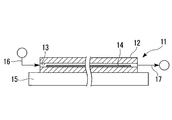
- FIG. 2 is a configuration diagram illustrating an isocyanate continuous production apparatus as a second example of the production apparatus used in the production method of the present invention.
- This continuous production apparatus 11 includes a flow reactor 12 provided with a flow path 13 in which raw materials that are kept at a predetermined temperature and continuously pass through are provided, a catalyst 14 disposed in the flow path 13, and a flow reactor.
- a temperature raising device 15 for raising and maintaining the temperature up to a predetermined temperature
- a raw material supply device 16 for continuously feeding the raw material into the flow path 13 from one end of the flow type reactor 12, and a flow type reactor 12
- a recovery device 17 for continuously taking out the isocyanate compound from the other end side.
- a raw material and gas supply device is attached to one end of the flow path, and a device for taking out the isocyanate obtained on the opposite side is attached, but a check valve or the like is used in the reaction system. If all of the gas can be introduced into the gas supply device, a gas supply device may be attached to the device for taking out the isocyanate. In the latter half of the reaction, the isocyanate group increases and the nitro group decreases on the contrary, so that in order to complete the reaction in one step, it is preferable to flow gases in the opposite direction.
- the material of the flow reactor may be a metal material such as general stainless steel. It is more preferable to perform lining with glass or fluororesin as required. In the case of this continuous reaction system, since it is operated for a longer time than the above-mentioned autoclave type reactor, it is necessary to keep confidentiality more securely, and the o-ring and the like should be selected strictly. In addition, it is also preferable to perform tightening while maintaining the operating temperature and pressure before using the apparatus, taking into account thermal expansion and the like.
- Example 1-1 In a fluororesin container (23 mL) placed in an autoclave (37 mL, SUS316) as shown in FIG. 1, 209 mg of nitrobenzene, 57 mg of dichlorobis (pyridine) palladium as a main catalyst, 38 mg of zinc molybdate as a cocatalyst, and 3 mL of acetonitrile as a solvent. Prepared. After heating the autoclave to 50 ° C., carbon monoxide was introduced to 4.1 MPa, and carbon dioxide was further introduced to 9.5 MPa. When the contents were stirred at 1000 rpm and the temperature was raised to 170 ° C.
- Example 1-2 The amount of acetonitrile to be added was 1.5 mL, and the other reactions were carried out in the same manner as in Example 1-1. At this time, the conversion of nitrobenzene was 99.3%, the yield of phenyl isocyanate was 40.4%, and the yield of aniline was 4.3%.
- Example 1-3 The amount of acetonitrile added was 4.5 mL, and the reaction was carried out in the same manner as in Example 1-1 except that. At this time, the conversion of nitrobenzene was 93.3%, the yield of phenyl isocyanate was 52.2%, and the yield of aniline was 4.7%.
- Example 1-4 The amount of acetonitrile added was 6.0 mL, and the reaction was carried out in the same manner as in Example 1-1 except that. At this time, the conversion of nitrobenzene was 37.5%, the yield of phenyl isocyanate was 16.4%, and the yield of aniline was 3.0%.
- Example 1-1 when Example 1-1 according to the present invention was compared with Comparative Example 1 which was different from the present invention in that no solvent was added, in Example 1-1, nitrobenzene was compared with Comparative Example 1. Both the conversion rate and the yield of phenyl isocyanate were significantly improved. In other words, it was clarified that the isocyanate synthesis reaction hardly progressed in supercritical carbon dioxide, and it was necessary to add acetonitrile to supercritical carbon dioxide in order to make the reaction proceed efficiently. Further, the results of Examples 1-1 to 1-4 revealed that the conversion of nitrobenzene and the yield of isocyanate decreased when the amount of acetonitrile was too large. This is presumably because when the amount of acetonitrile is too large, a liquid phase is generated and phase separation occurs, so that contact between the nitro compound and the metal catalyst and carbon monoxide is deteriorated.
- Example 1-1 From the results shown in Table 2, in the reaction system for synthesizing phenyl isocyanate from nitrobenzene, the reaction temperature (170 ° C.) and reaction time (60 minutes) in Example 1-1 showed the highest isocyanate yield.
- the isocyanate yield decreased on both the higher temperature side (Reference Example 2) and the lower temperature side (Reference Example 1) than the reaction temperature.
- the isocyanate yield was low in Reference Example 3 where the reaction time was short, but even if the reaction time was extended as compared with Example 1-1, the isocyanate yield decreased.
- Example 2-1 The reaction was carried out under the same conditions as in Example 1-1, except that the solvent was dimethyl sulfoxide. In this example, the conversion of nitrobenzene was 86.3%, and the yield of phenyl isocyanate was 42.2%.
- Example 2-2 The reaction was carried out under the same conditions as in Example 1-1 except that N, N-dimethylformamide was used as the solvent. In this example, the conversion of nitrobenzene was 80.6%, and the yield of phenyl isocyanate was 40.6%.
- Example 2-3 The reaction was carried out under the same conditions as in Example 1-1 except that the solvent was tetrahydrofuran. In this example, the conversion of nitrobenzene was 72.7%, and the yield of phenyl isocyanate was 32.1%.
- Example 1-1 From the results of Table 3, compared to Comparative Example 1 in which no solvent was added, each Example with the addition of a solvent gave a high isocyanate yield. In the reaction system for synthesizing phenyl isocyanate from nitrobenzene, the acetonitrile used in Example 1-1 showed the highest yield.
Landscapes
- Chemical & Material Sciences (AREA)
- Organic Chemistry (AREA)
- Chemical Kinetics & Catalysis (AREA)
- Organic Low-Molecular-Weight Compounds And Preparation Thereof (AREA)
- Low-Molecular Organic Synthesis Reactions Using Catalysts (AREA)
- Catalysts (AREA)
Abstract
本発明は、溶媒存在下、二酸化炭素を反応媒体とする反応系において、触媒として白金族金属化合物とヘテロ芳香環式窒素化合物との錯体又は混合物を用いて、ニトロ化合物のニトロ基と一酸化炭素とを反応させてイソシアナート基を有するイソシアナート化合物を合成することを特徴とするイソシアナート化合物の製造方法、及びそれに用いる製造装置を提供する。本発明によれば、ニトロ化合物と一酸化炭素とから対応するイソシアナート化合物を、穏和な一酸化炭素圧力・温度条件下でかつ高効率に製造することができる。
Description
本発明は、ニトロ化合物と一酸化炭素とを反応させてイソシアナート化合物を直接合成する方法に関し、さらに詳しくは、超臨界状態にある二酸化炭素とイソシアナート基に対して不活性な溶媒の存在下においてイソシアナート化合物を合成する方法に関する。
本願は、2008年9月16日に、日本に出願された特願2008-236695号に基づき優先権を主張し、その内容をここに援用する。
本願は、2008年9月16日に、日本に出願された特願2008-236695号に基づき優先権を主張し、その内容をここに援用する。
イソシアナート化合物は、主にポリウレタン樹脂の原料として、実用上きわめて有用な物質である。イソシアナート化合物の現行の工業的製造法は、ニトロ化合物を還元して第一アミン類とし、次いで一酸化炭素と塩素から別途合成したホスゲンに反応させてイソシアナート化合物を得る方法である。
ここで用いられるホスゲンは、極めて毒性が高く、産業安全上の問題やホスゲンを付加した結果として多量に副生する塩化水素の廃塩酸処理は、環境負荷や処理コストの観点からも無視することができない。
ここで用いられるホスゲンは、極めて毒性が高く、産業安全上の問題やホスゲンを付加した結果として多量に副生する塩化水素の廃塩酸処理は、環境負荷や処理コストの観点からも無視することができない。
また現行の高分子材料用では、その優れた力学物性や電気的(絶縁)特性を生かし、エポキシ樹脂とポリウレタン樹脂が電子材料用途では広範囲に使用が検討されている。さらにポリウレタン樹脂は優れた耐候性や力学物性を有しており、熱可塑性高分子材料としてリサイクル可能な屋外用途向け構造材料としての用途開発も期待されている。
これらの材料分野において優れた特性を生かした用途において、最も問題になるのは、塩素などのハロゲン系分子の残留である。
これらの材料分野において優れた特性を生かした用途において、最も問題になるのは、塩素などのハロゲン系分子の残留である。
副生した塩化水素がイソシアナート化合物中に残留した場合、次にグリコール類、ジアミン類と反応させ硬化させた後にその塩素を除去することは不可能である。
これは、電子材料の封止材料用途に使用する場合には致命的な欠点となる。更に熱可塑性高分子材料として硬化させたポリウレタン樹脂をリサイクルの途中で再加熱しても、遊離塩素が存在する場合には、ダイオキシン類やオゾン層破壊物質の生成など各種問題の原因となる。
これは、電子材料の封止材料用途に使用する場合には致命的な欠点となる。更に熱可塑性高分子材料として硬化させたポリウレタン樹脂をリサイクルの途中で再加熱しても、遊離塩素が存在する場合には、ダイオキシン類やオゾン層破壊物質の生成など各種問題の原因となる。
このため、原料のニトロ化合物のニトロ基を一酸化炭素と直接反応させ、第一アミン類を経由することなく、毒性が極めて高いホスゲンを取り扱いかつ塩酸を発生させる工程を伴うことなく、一段階反応でイソシアナート化合物を製造することが望ましい。
上述した問題を解決するべく、白金族金属触媒を用いて、ニトロ化合物と一酸化炭素とからイソシアナート化合物を直接合成する試みがなされている。
例えば、特許文献1には、白金族金属触媒を主触媒として用い、亜鉛とモリブデンを含有する複合金属酸化物を助触媒として用いることにより、ニトロ化合物と一酸化炭素とからイソシアナート化合物を直接合成する製造方法が開示されている。
例えば、特許文献1には、白金族金属触媒を主触媒として用い、亜鉛とモリブデンを含有する複合金属酸化物を助触媒として用いることにより、ニトロ化合物と一酸化炭素とからイソシアナート化合物を直接合成する製造方法が開示されている。
しかしながら、上記特許文献1に記載の方法では、反応性を向上させるために、一酸化炭素を反応溶媒である有機溶媒に対して高濃度に溶解させることが必要であるため、必然的に高い一酸化炭素圧力下(26MPa)と高い温度(200℃)での反応が不可避である。この結果、生成物の重合反応など副反応による収率の低下はもとより、高温・高圧で一酸化炭素を扱う為の装置や操作上の負担、コストの増大などの問題が多かった。
特に、電子材料、構造材料用途としての優れた特性が記載されるポリウレタン樹脂の原料となるジイソシアナート化合物は、ニトロ基を二つ含み爆発性が予見されるジニトロ化合物より合成されるため、高温での反応は常に暴走の可能性が有り、可能な限り穏和な環境での反応が望ましい。
一方、液体と気体の中間的性質を示す新たな反応場として、超臨界流体が注目されている。一般的に、気体分子は超臨界流体に対して高い溶解性及び拡散性を示すことから、各種の反応の高速化が期待される。
特許文献2には、超臨界状態にある二酸化炭素中、あるいはさらにアミン化合物の存在下で、一酸化炭素を炭素源として2-ヨードベンジルアルコールからフタリドを合成するカルボニル化方法が開示されている。
特許文献2には、超臨界状態にある二酸化炭素中、あるいはさらにアミン化合物の存在下で、一酸化炭素を炭素源として2-ヨードベンジルアルコールからフタリドを合成するカルボニル化方法が開示されている。
しかしながら、特許文献2に記載された方法を用いても、イソシアナート化合物を直接合成する際には、用いられる金属触媒の超臨界二酸化炭素に対する溶解度が非常に低いため、反応はほとんど進行しない。またアミン化合物の存在下では、生成した極めて活性なカルボニル化合物であるイソシアナート化合物が触媒であるアミン化合物と定量的に副反応して収率が低下してしまうという問題があった。
本発明の目的は、ニトロ化合物と一酸化炭素とから対応するイソシアナート化合物を、穏和な一酸化炭素圧力・温度条件下でかつ高効率に製造する方法、及びそれに用いる製造装置を提供することである。
本発明者らは、上記目的を達成すべく研究を重ねてきた。
その結果、ニトロ化合物を出発材料とし、超臨界二酸化炭素と生成したイソシアナート化合物と不活性な溶媒とを適量共存させた中で反応を進めることにより、触媒の溶解度を制御しつつ、もう一方の原料である一酸化炭素との混合相を形成させることで、従来技術と比較して穏和な圧力・温度条件でイソシアナート化合物の直接合成反応が進行することを見出し、本発明を完成するに至った。
その結果、ニトロ化合物を出発材料とし、超臨界二酸化炭素と生成したイソシアナート化合物と不活性な溶媒とを適量共存させた中で反応を進めることにより、触媒の溶解度を制御しつつ、もう一方の原料である一酸化炭素との混合相を形成させることで、従来技術と比較して穏和な圧力・温度条件でイソシアナート化合物の直接合成反応が進行することを見出し、本発明を完成するに至った。
すなわち、本発明は、溶媒存在下、二酸化炭素を反応媒体とする反応系において、触媒として白金族金属化合物とヘテロ芳香環式窒素化合物との錯体又は混合物を用いて、ニトロ化合物のニトロ基と一酸化炭素とを反応させてイソシアナート基を有するイソシアナート化合物を合成することを特徴とするイソシアナート化合物の製造方法を提供する。
本発明のイソシアナート化合物の製造方法において、前記反応系の二酸化炭素、一酸化炭素、溶媒の少なくともいずれか一つの成分が超臨界状態にあることが好ましい。
本発明のイソシアナート化合物の製造方法において、前記反応系が50℃以上、1MPa以上の超臨界状態であることが好ましい。
本発明のイソシアナート化合物の製造方法において、前記溶媒が非プロトン性極性溶媒であることが好ましい。
本発明のイソシアナート化合物の製造方法において、前記非プロトン性極性溶媒がアセトニトリルを含むニトリル化合物及びジメチルスルホキシドを含む硫黄化合物からなる群から選択される1種又は2種以上であることが好ましい。
本発明のイソシアナート化合物の製造方法において、反応温度と反応圧力の一方又は両方が異なる複数の反応条件を経て、ニトロ基をイソシアナート基に反応させることが好ましい。
本発明のイソシアナート化合物の製造方法において、連続反応部の一端から原材料を連続的に供給し、他端側に向けて流動させながら、前記連続反応部内でニトロ化合物のニトロ基と一酸化炭素とを反応させてイソシアナート基を有するイソシアナート化合物を合成し、前記イソシアナート化合物を連続反応部の他端側から取り出す連続的なプロセスを用いることもできる。
本発明のイソシアナート化合物の製造方法において、反応温度と反応圧力の一方又は両方が異なる反応条件を有する複数の連続的なプロセスを連結してイソシアナート化合物を合成することもできる。
また、本発明は、原材料のニトロ化合物、触媒、溶媒を入れる反応器と、反応器の内部を昇温及び維持する昇温装置と、反応器内に一酸化炭素と二酸化炭素とを供給する原材料供給装置と、反応器内の未反応のガス類を反応系から排出及び回収するガス回収装置と、反応器内で生成したイソシアナート化合物を取り出すイソシアナート回収装置と、を備えてなることを特徴とするイソシアナート化合物の製造装置を提供する。
さらに、本発明は、原材料が連続的に反応する流路が設けられた流通型反応器と、流通型反応器を昇温及び維持するための昇温装置と、流通型反応器の一端から流路内に原材料を連続的に供給する原材料供給装置と、流通型反応器の他端側からイソシアナート化合物を連続的に取り出す回収装置と、を備えてなることを特徴とするイソシアナート化合物の製造装置を提供する。
本発明によれば、ニトロ化合物と一酸化炭素とから対応するイソシアナート化合物を、穏和な一酸化炭素圧力・温度条件でかつ高効率に第一アミン類を経由せず一段階反応で製造することができる。
また、使用する有機溶媒中にニトロ化合物及び白金族触媒を、超臨界二酸化炭素中に一酸化炭素を溶解させることにより反応器への連続的な原料供給、ならびに、反応器からの連続的な生成物回収が容易となる。
また、使用する有機溶媒中にニトロ化合物及び白金族触媒を、超臨界二酸化炭素中に一酸化炭素を溶解させることにより反応器への連続的な原料供給、ならびに、反応器からの連続的な生成物回収が容易となる。
本発明によるイソシアナート化合物の製造方法は、下記式(1)に示す通り、原料のニトロ化合物(R-NO2)と一酸化炭素(CO)とを直接反応させて、イソシアナート化合物(R-N=C=O)を合成する。

本発明の製造方法において、原料として用いられるニトロ化合物は、炭素数32以下のモノ及びポリニトロ化合物であり、その主骨格は芳香族であっても脂肪族であってもよく、また反応で生成するイソシアナート基と反応しないならば、任意な置換基を含んでいてもよい。
その代表例として、芳香族ニトロ化合物としては、ニトロベンゼン、アルキルニトロベンゼン、アルコキシニトロベンゼン、アリールニトロベンゼン、アリールオキシニトロベンゼン、ジニトロベンゼン、アルキルジニトロベンゼン、アルコキシジニトロベンゼン、アリールジニトロベンゼン、アリールオキシジニトロベンゼン、例えば2,4-ジニトロトルエン、2,6-ジニトロトルエン、4,4’-ジニトロジフェニルメタン、ポリニトロベンゼンが挙げられる。好適な芳香族ニトロ化合物としては、ニトロベンゼン、m-ジニトロベンゼン、2-ニトロトルエン、3-ニトロトルエン、4-ニトロトルエン、2,4-ジニトロトルエン、2,6-ジニトロトルエン、4,4’-ジニトロジフェニルメタンが挙げられる。
その代表例として、芳香族ニトロ化合物としては、ニトロベンゼン、アルキルニトロベンゼン、アルコキシニトロベンゼン、アリールニトロベンゼン、アリールオキシニトロベンゼン、ジニトロベンゼン、アルキルジニトロベンゼン、アルコキシジニトロベンゼン、アリールジニトロベンゼン、アリールオキシジニトロベンゼン、例えば2,4-ジニトロトルエン、2,6-ジニトロトルエン、4,4’-ジニトロジフェニルメタン、ポリニトロベンゼンが挙げられる。好適な芳香族ニトロ化合物としては、ニトロベンゼン、m-ジニトロベンゼン、2-ニトロトルエン、3-ニトロトルエン、4-ニトロトルエン、2,4-ジニトロトルエン、2,6-ジニトロトルエン、4,4’-ジニトロジフェニルメタンが挙げられる。
脂肪族ニトロ化合物としては、例えば、ニトロメタン、ニトロ-第三ブタン、1-ニトロブタン、3-ニトロ-2-ブタノール、ニトロシクロヘキサン、1-ニトロシクロヘキセン、ニトロシクロペンタン、ニトロエタン、2-ニトロエタノール、1-ニトロヘキサン、1-ニトロプロパン、2-ニトロプロパン、2-ニトロ-1-プロパノール、2-ニトロ-1-プロピルアミン、2-ニトロ-1-エチルアミンが挙げられる。好適な脂肪族ニトロ化合物としては、ニトロメタン、ニトロ-第三ブタン、1-ニトロブタン、ニトロシクロヘキサン、1-ニトロプロパン、2-ニトロプロパンが挙げられる。
2種又はそれ以上のニトロ化合物の混合物、例えば、2種のジニトロトルエンの混合物を使用することもできる。これらの中でも特に、ニトロベンゼン、2,4-ジニトロトルエン、2,6-ジニトロトルエン、1,2-ジクロロ-4-ニトロベンゼン、1,5-ジニトロナフタレン、ビス(p-ニトロフェニル)メタン等は実用的に望ましく用いられる。
本発明の製造方法において、反応系に共存させる溶媒としては、原料や生成物に不活性な液体であれば有効であり、例えば、アセトニトリル等のニトリル類、N,N-ジメチルホルムアミド等のアミド類、ジメチルスルホキシド等の硫黄化合物、ジエチルエーテルやテトロヒドロフラン等のエーテル類、アセトンやメチルエチルケトン等のケトン類、酢酸エチル等のエステル類、ヘキサンやシクロヘキサン等の脂肪族炭化水素類、トルエン等の芳香族炭化水素類、クロロベンゼンやクロロホルム等のハロゲン化炭化水素類などが挙げられる。またイミダゾリウム塩類、ピリジニウム塩類、アンモニウム塩類、ホスホニウム塩類などの有機イオン液体であっても良い。
これらの溶媒としては、超臨界二酸化炭素への溶解性が高いものが更に好適である。溶媒の使用量は、主触媒を溶解できる量以上が望ましい。従って、誘電率が37であるアセトニトリルや38のN,N-ジメチルホルムアミドや47のジメチルスルホキシドのように誘電率が二桁である極性度が高い溶媒が触媒や原材料の溶解度の観点からも適している。
但し、生成物であるイソシアナート化合物は、遊離のプロトンと反応するため、水やアルコール類、アミン類等のプロトン性溶媒は望ましくない。しかしプロトンが他の活性水素を持っていない官能基などの影響により不活性であれば、プロトン性極性溶媒であってもこの限りでない。
但し、生成物であるイソシアナート化合物は、遊離のプロトンと反応するため、水やアルコール類、アミン類等のプロトン性溶媒は望ましくない。しかしプロトンが他の活性水素を持っていない官能基などの影響により不活性であれば、プロトン性極性溶媒であってもこの限りでない。
また、得られた反応生成物を精製するためには、蒸留工程が不可欠である。例えば比較的高沸点(115~120℃(10mmHg))である2,4-トリレンジイソシアナートを精製する際に、溶媒を留去濃縮してから蒸留をしてしまうと、反応器中で爆発性のあるニトロ化合物が乾固する可能性があり、原材料であるニトロ化合物より沸点が高い溶媒を選定することが望ましい。
これらの観点から、沸点153℃のジメチルホルムアミドや沸点189℃のジメチルスルホキシドなどの代表される沸点の高い非プロトン性の極性溶媒が好適である。
これらの観点から、沸点153℃のジメチルホルムアミドや沸点189℃のジメチルスルホキシドなどの代表される沸点の高い非プロトン性の極性溶媒が好適である。
但し、極性の高い溶媒を使用する際には、生成物であるイソシアナートの前述したような特性から、何れも使用前に十分に脱水をしておく必要がある。
この脱水精製の際に望ましい方法としては、モレキュラーシーブによる脱水や金属ナトリウムを用いた脱水などがあるが、何れも操作中の急激な分解反応や過酸化物の生成などには十分に注意する必要がある。
この脱水精製の際に望ましい方法としては、モレキュラーシーブによる脱水や金属ナトリウムを用いた脱水などがあるが、何れも操作中の急激な分解反応や過酸化物の生成などには十分に注意する必要がある。
本発明の製造方法において、主触媒として用いられる白金族金属化合物としては、ルテニウム、ロジウム、パラジウム、オスミウム、イリジウム又は白金のハロゲン化物、酸化物、硫化物、硝酸塩、硫酸塩、炭酸塩、カルボン酸塩等の無機化合物やアルキル、オレフィン、π-アリル、カルボニル、ケトン、ニトリル、ホスフィン、ポルフィリン、フタロシアニン等の配位子を含む有機錯体が挙げられる。好ましくは、ハロゲンを含有する化合物であり、例えば、塩化パラジウム、臭化パラジウム、沃化パラジウム、塩化パラジウム酸カリウム、塩化パラジウム酸ナトリウム、塩化パラジウム酸アンモニウム、塩化テトラアンミンパラジウム、ジクロロジアンミンパラジウム、ビスエチレンパラジウムクロリド、ビス-π-アリルパラジウムクロリド、塩化ロジウム、臭化ロジウム、沃化ロジウム、塩化ロジウム酸ナトリウム、塩化ロジウム酸アンモニウム、などが挙げられる。これらの中でも特に、塩化パラジウムが実用上好適である。
主触媒の白金族金属への配位子として作用するヘテロ芳香環式窒素化合物とは、窒素原子を含む芳香族環からなる化合物であり、例えば、ピロール、ピラゾール、イミダゾール、トリアゾール、ピリジン、キノリン、イソキノリン、5,6,7,8-テトラヒドロキノリン、5,6,7,8-テトラヒドロイソキノリン、アクリジン、ベンゾキノリン、ベンゾイソキノリン、フェナントリジン、ピリダジン、ピリミジン、ピラジン、シンノリン、キナゾリン、キノキサリン、フタラジン、1,6-ナフチリジン、1,7-ナフチリジン、2,6-ナフチリジン、2,7-ナフチリジン、1,5-ナフチリジン、1,8-ナフチリジン、フェナジン、1,10-フェナントロリン、2,2’-ビピリジン、及びこれらの誘導体などが挙げられる。これらの中でも特に、ピリジン、キノリン、イソキノリンなどが実用上好適である。
白金族金属のハロゲン化物のヘテロ芳香環式窒素化合物との錯体の代表例として、パラジウムについて例示すると、ビス(ピリジン)ジクロロパラジウム(II)、ビス(キノリン)ジクロロパラジウム(II)、ビス(イソキノリン)ジクロロパラジウム(II)、(ピリジン)(カルボニル)ジクロロパラジウム(II)等が挙げられる。
白金族金属のハロゲン化物のヘテロ芳香環式窒素化合物との錯体の代表例として、パラジウムについて例示すると、ビス(ピリジン)ジクロロパラジウム(II)、ビス(キノリン)ジクロロパラジウム(II)、ビス(イソキノリン)ジクロロパラジウム(II)、(ピリジン)(カルボニル)ジクロロパラジウム(II)等が挙げられる。
ニトロ化合物のカルボニル化によるイソシアナート化合物の生成は、上記の主触媒のみの存在下においても進行するが、主触媒の金属状態への還元分解を抑制して活性を維持し触媒回収を容易にするために、助触媒を用いることもできる。助触媒としては、チタン、バナジウム、クロム、マンガン、鉄、コバルト、ニッケル、銅、亜鉛、ガリウム、ゲルマニウム、ニオブ、モリブデン、錫、銀、タングステンなどの遷移金属のハロゲン化物、酸化物、複合金属酸化物、硫酸塩、硝酸塩、カルボン酸塩、ホウ酸塩、リン酸塩、ヘテロポリ酸、カルボニル化合物等が挙げられる。好ましくは遷移金属の複合金属酸化物であり、例えば、モリブデンとマンガン、モリブデンと鉄、モリブデンとニッケル、モリブデンと銅、モリブデンと亜鉛、鉄とバナジウムの複合酸化物などが、実用上好適である。
これらの触媒類を物理的吸着や化学結合を利用し、担体に担持させて使用することも可能である。代表的な担体としては、生成したイソシアナート化合物と反応せず、反応において使用される溶媒や超臨界二酸化炭素に溶解しないならば、特に特定されず、例えば、シリカ、シリカアルミナ、ゼオライト、カーボン等の従来公知の担体を用いることができる。また担持した触媒類を反応器内に設置し、それ以外のものを流通させることにより連続的に反応を行ってもよい。
担持の方法は、触媒成分を溶媒や超臨界流体などに溶解又は混合させ、これで担体を十分に湿潤させた後に、溶媒や超臨界流体を加熱や減圧又はその両者の手段を併用するなどにより留去する途中で、担体と助触媒成分間に何らかの物理的化学的相互作用を作り担持させる方法が一般的である。しかしこれらの方法に限定せずに、真空蒸着のようなドライプロセスを使っても良い。
担体は、反応基質などとの接着面積を広くするため多孔質などであり、単位重量当たりの表面積が大きい特性を有している。従って、水分子等が混入すると脱離しにくい特徴を持っており、担持作業中には水分を遮断することが必須である。
担持の方法は、触媒成分を溶媒や超臨界流体などに溶解又は混合させ、これで担体を十分に湿潤させた後に、溶媒や超臨界流体を加熱や減圧又はその両者の手段を併用するなどにより留去する途中で、担体と助触媒成分間に何らかの物理的化学的相互作用を作り担持させる方法が一般的である。しかしこれらの方法に限定せずに、真空蒸着のようなドライプロセスを使っても良い。
担体は、反応基質などとの接着面積を広くするため多孔質などであり、単位重量当たりの表面積が大きい特性を有している。従って、水分子等が混入すると脱離しにくい特徴を持っており、担持作業中には水分を遮断することが必須である。
反応原料として消費される一酸化炭素の量は、化学量論的にはニトロ基1モルあたり3モルであり、同時に2モルの二酸化炭素が副生される。実際に反応器内に仕込まれる一酸化炭素の使用量は、ニトロ化合物の濃度、触媒の使用量、反応器の形式、反応温度、反応圧力等によってその適当量が異なるが、望ましくは1~10MPa程度であり、最低限度として反応器内のニトロ化合物のニトロ基量の3倍モル以上は必要である。5倍モルから20倍モルの使用が好ましく、20倍モル以上は反応終了時の未反応一酸化炭素の処理や回収の観点から実用的でない。
本発明におけるニトロ化合物のカルボニル化の炭素源としては、最も一般的にはボンベに充填された一酸化炭素ガスを用いるのが好ましいが、反応系中又はその近傍において、コークスの不完全燃焼やギ酸を濃硫酸で脱水するなど一酸化炭素を発生させることのできる方法を用いても良い。この場合にも、触媒類の担体への固定化などと同様に、水分を遮断することが必要である。
乾燥二酸化炭素により得られる反応系内の圧力は、通常1~50MPa、好ましくは5~30MPa、更に好ましくは5~20MPaの範囲が用いられる。その加圧源として、二酸化炭素と一酸化炭素に加えて、さらにアルゴンや窒素などの他の不活性な乾燥ガスを共存させ、超臨界状態まで加圧してもよい。
主触媒の使用量は、原料であるニトロ化合物の量に対し、通常0.01~20モル%、好ましくは0.1~20モル%、さらに好ましくは0.5~1モル%の範囲である。また、助触媒の使用量は、白金族金属の量に対し、通常0.01~100原子比、好ましくは0.1~10原子比の範囲が好ましい。
反応温度は、反応系を構成する二酸化炭素が超臨界状態を維持できる40℃以上が必要であり、生成物であるイソシアナート化合物が副反応や変性を起こさないために250℃以下であることが好ましい。通常は50~200℃、望ましくは130~180℃の範囲が用いられる。
反応時間は、1分から10時間の範囲が好ましく、さらに好ましくは10分から2時間の範囲が用いられる。
本発明の製造方法は、様々な形態で実施することが可能である。例えば、加圧の方法は、反応後半で一酸化炭素の消費に伴い圧力が低下した場合には、再度一酸化炭素だけを供給しても問題はないし、反応後半において数少なくなった未反応のニトロ基を完全にイソシアナート基に反応させるため、更に加圧・加温しても良い。更に、これらの温度や圧力などを個別に設定した複数の反応器を連結させて反応を連続的に行っても良い。
本発明の製造方法においては、圧力容器内にニトロ化合物、白金族触媒、溶媒、一酸化炭素、二酸化炭素を供給し反応させるが、これらの供給順序、ならびに、供給時の混合の組み合わせ及び混合順序に特に制限はない。例えば、溶媒にニトロ化合物と白金族触媒を溶解した溶液と、一酸化炭素と二酸化炭素の混合ガスを供給し、混合する手法が好適に用いられるが、特にこれに限定されない。
また本発明の製造方法において用いられる製造装置についても、製造条件等に応じて適宜選択可能であり、例えば、バッチ式反応器、連続式反応器、あるいは多段式反応器を備えた製造装置等を用いることができる。
図1は、本発明の製造方法において用いられる製造装置の第1の例を示す構成図である。本例の製造装置1は、オートクレーブであるバッチ式の反応器2と、該反応器2の内部を所定の反応温度に昇温・維持する昇温装置3と、反応器2内に原材料を供給する原材料供給装置4と、反応器2内の未反応のガス類等を反応系から排出・回収するガス回収装置5と、反応器2内で生成したイソシアナート化合物を取り出すイソシアナート回収装置6とを備えて構成されている。この製造装置1は、反応器2内に原材料のニトロ化合物と、触媒と、溶媒とを入れて密封し、次いで原材料供給装置4から反応器2内に一酸化炭素と二酸化炭素とを供給し、昇温装置3を駆動させて反応器2を所定の反応温度に昇温・維持して超臨界二酸化炭素状態を形成し、その中で前記式(1)に記した反応を生じさせてイソシアナート化合物を製造する。
通常は、反応器2の上部に原料供給装置4とガス回収装置5が取り付けられ、底部側にイソシアナート回収装置6が接続される。
図1は、本発明の製造方法において用いられる製造装置の第1の例を示す構成図である。本例の製造装置1は、オートクレーブであるバッチ式の反応器2と、該反応器2の内部を所定の反応温度に昇温・維持する昇温装置3と、反応器2内に原材料を供給する原材料供給装置4と、反応器2内の未反応のガス類等を反応系から排出・回収するガス回収装置5と、反応器2内で生成したイソシアナート化合物を取り出すイソシアナート回収装置6とを備えて構成されている。この製造装置1は、反応器2内に原材料のニトロ化合物と、触媒と、溶媒とを入れて密封し、次いで原材料供給装置4から反応器2内に一酸化炭素と二酸化炭素とを供給し、昇温装置3を駆動させて反応器2を所定の反応温度に昇温・維持して超臨界二酸化炭素状態を形成し、その中で前記式(1)に記した反応を生じさせてイソシアナート化合物を製造する。
通常は、反応器2の上部に原料供給装置4とガス回収装置5が取り付けられ、底部側にイソシアナート回収装置6が接続される。
オートクレーブの加温を行う際の昇温方法は特に限定されないが、反応初期には反応系内にニトロ化合物が多く含まれるため、急激な加熱や局所加熱は可能な限り避けるべきであり、熱媒を循環させるジャケット式加熱やオイルバスに浸漬する方法が望ましい。反応器内の撹拌も、同様に効率の良い程反応が均一に進みやすいが、一酸化炭素が漏洩した際の危険性を加味すると、磁気撹拌方式やマグネチックスターラーによる撹拌が望ましい。
オートクレーブなどの材質は一般的なステンレス鋼など金属素材であれば良い。必要に応じてガラスやフッ素樹脂でライニングを施すと更に好ましい。
オートクレーブなど一酸化炭素が滞留する部分は、気密性を確実に保持するため、硬いステンレス鋼に対して柔らかい銅製や真鍮製のo-リングを用いてシールすることが望ましい。フッ素ゴムやシリコーンゴム等の有機系o-リングを用いても問題はないが、ガス成分と溶媒も含めた耐久性を考慮して選択することが望ましい。
オートクレーブなど一酸化炭素が滞留する部分は、気密性を確実に保持するため、硬いステンレス鋼に対して柔らかい銅製や真鍮製のo-リングを用いてシールすることが望ましい。フッ素ゴムやシリコーンゴム等の有機系o-リングを用いても問題はないが、ガス成分と溶媒も含めた耐久性を考慮して選択することが望ましい。
反応終了後や反応途中で温度や圧力に異常が認められた場合には、過剰や未反応の一酸化炭素を系外に放出させることが必須である。この放出のための流路は常時オートクレーブ上部に接続し、バルブ操作だけで解放可能となる構造が望ましい。更にオートクレーブ周辺に一酸化炭素濃度計を取り付け、漏洩などにより周囲の一酸化炭素濃度が一定以上になった際には、自動的にこの解放操作が実行されるように構成することが更に好ましい。
この製造装置1は、反応開始前に反応系を十分に洗浄し、乾燥空気や窒素などにより排出部分も含めて系全体を乾燥しておくことが望ましく、その際に併せて所定圧力及び温度における長時間の気密検査をすることが更に好ましい。また液体又は固体であるニトロ化合物と溶媒及び触媒類を反応器に仕込んだ後に、再度気密を確認してから一酸化炭素と二酸化炭素の混合ガスを反応器内に供給して昇温を行うことは、産業安全の見地からも更に好適である。
オートクレーブ式反応器の場合には、反応終了後に放冷又は圧力解放に伴う断熱膨張により、液相の溶解度が低下することで触媒類が沈殿するので、その後、濾過等の処理により液相中から溶媒等を容易に分離することができる。最後に蒸留することで、目的生成物であるイソシアナート化合物を分離精製することが可能である。
また、イソシアナート化合物の純度要求が低い場合は、生成物の沸点よりも低い沸点の溶媒を反応に選択し、留去濃縮してイソシアナート化合物を得ることも可能であるが、その際には、留去濃縮後に低温にして再度濾過をすることで、触媒類や未反応のニトロ化合物を分離可能である。
蒸留は、上記の反応と同様に、イソシアナート化合物の副反応や変性が起こりにくい上記温度以下で行うことが望ましい。そのためには減圧蒸留が最適であるし、キャリアーガスなどを流すことで効率を上げることも望ましい。
また、イソシアナート化合物の純度要求が低い場合は、生成物の沸点よりも低い沸点の溶媒を反応に選択し、留去濃縮してイソシアナート化合物を得ることも可能であるが、その際には、留去濃縮後に低温にして再度濾過をすることで、触媒類や未反応のニトロ化合物を分離可能である。
蒸留は、上記の反応と同様に、イソシアナート化合物の副反応や変性が起こりにくい上記温度以下で行うことが望ましい。そのためには減圧蒸留が最適であるし、キャリアーガスなどを流すことで効率を上げることも望ましい。
また複数のニトロ基をイソシアナート基にする場合などには、これらの操作を多段に分割して行っても良い。その際には、一回目反応から二回目以降の反応そして精製の手順でも良いし、一回目反応そして精製、そして二回目以降の反応を行った後に再度精製する手順などでも良い。これら多段に分割した方法を行うことで、爆発性が予見される複数のニトロ基を有する化合物を原料とする際に、最初から厳しい圧力や温度条件で反応を進める必要がなくなり、産業安全の観点からも有利であるし、使用する原料の観点からも高効率の反応系が構築可能である。
これらの反応工程を連続化することで、原料とする爆発性の予見されるニトロ化合物や一酸化炭素の工程内での使用量を限定できるため、産業安全の見地からも大変有利である。またこの反応を混合効率に優れ、急速な昇降温が可能な流通型反応器で行うことにより、反応効率が向上すると同時に上記産業安全上の優位点を更に高めることができる。
図2は、本発明の製造方法において用いられる製造装置の第2の例として、イソシアナートの連続製造装置を例示する構成図である。
この連続製造装置11は、所定温度に保持され通過する原材料が連続的に反応する流路13が設けられた流通型反応器12と、流路13内に配置された触媒14と流通型反応器12を所定の温度まで昇温・維持するための昇温装置15と、流通型反応器12の一端から流路13内に原材料を連続的に供給する原材料供給装置16と、流通型反応器12の他端側からイソシアナート化合物を連続的に取り出す回収装置17とを備えて構成されている。
この連続製造装置11は、所定温度に保持され通過する原材料が連続的に反応する流路13が設けられた流通型反応器12と、流路13内に配置された触媒14と流通型反応器12を所定の温度まで昇温・維持するための昇温装置15と、流通型反応器12の一端から流路13内に原材料を連続的に供給する原材料供給装置16と、流通型反応器12の他端側からイソシアナート化合物を連続的に取り出す回収装置17とを備えて構成されている。
通常は、図示したように、流路の一端に原材料とガス類の供給装置が取り付けられ、反対側に得られたイソシアナートを取り出す装置が取り付けられるが、逆止弁等を用いて反応系内に全てガスを導入できるならば、イソシアナートを取り出す装置側にガスの供給装置を取り付けても良い。
反応後半ではイソシアナート基が増加し、反対にニトロ基が減っているため、一段階で反応を完結させるには、対向でガス類を流すことはむしろ好適である。
反応後半ではイソシアナート基が増加し、反対にニトロ基が減っているため、一段階で反応を完結させるには、対向でガス類を流すことはむしろ好適である。
流通型反応器などの材質は、一般的なステンレス鋼などの金属素材であれば良い。必要に応じてガラスやフッ素樹脂でライニングを行うと更に好ましい。この連続反応方式の場合には、上述のオートクレーブ式の反応器よりも長時間運転されるため、より機密性を確実に保持する必要があり、更にo-リングなどの選定は厳密に行うべきであるし、熱膨張なども加味して、装置の使用前に使用温度圧力に保持して増し締めなどを行うことも好ましい。
この連続製造装置の場合には、反応終了後に流路より排出され圧力調整器を経て減圧し、気液分離器の中で未反応の一酸化炭素などのガス成分と溶媒、及び生成物であるイソシアナート化合物に分離される。
連続式で反応の際も同様であるが、精製でも薄膜蒸留など連続式を用いると、加熱源との接触時間が短くなり、副反応や変性防止の点で大変有利である。
但し、蒸留器中で析出したニトロ化合物の乾固やそのワイパーとの接触による暴走反応などの問題が生じる可能性があり、より溶媒の選定が重要になってくる。
但し、蒸留器中で析出したニトロ化合物の乾固やそのワイパーとの接触による暴走反応などの問題が生じる可能性があり、より溶媒の選定が重要になってくる。
以下、実施例により本発明をさらに詳しく説明するが、本発明はこれらに限定されるものではない。
以下の実施例において、反応後に残存した原料および反応後の生成物は、ガスクロマトグラフィーHP-6890(ヒューレットパッカード社製)に付属している質量分析装置により同定し、水素炎イオン化検出器(Flame Ionization Detector;FID)により定量分析を行った。
また、ニトロベンゼンの転化率、ならびに、各生成物の収率は、以下の式を用いて計算した。
(ニトロベンゼンの転化率)={1-(反応後の反応器内のニトロベンゼンのモル数)/(反応前の反応器内のニトロベンゼンのモル数)}×100(%)。
(生成物の収率)=(反応後の反応器内の生成物のモル数)/(反応前の反応器内のニトロベンゼンのモル数)×100(%)。
以下の実施例において、反応後に残存した原料および反応後の生成物は、ガスクロマトグラフィーHP-6890(ヒューレットパッカード社製)に付属している質量分析装置により同定し、水素炎イオン化検出器(Flame Ionization Detector;FID)により定量分析を行った。
また、ニトロベンゼンの転化率、ならびに、各生成物の収率は、以下の式を用いて計算した。
(ニトロベンゼンの転化率)={1-(反応後の反応器内のニトロベンゼンのモル数)/(反応前の反応器内のニトロベンゼンのモル数)}×100(%)。
(生成物の収率)=(反応後の反応器内の生成物のモル数)/(反応前の反応器内のニトロベンゼンのモル数)×100(%)。
[試験1:溶媒の有無及び添加量とイソシアナート収率との関係]
(実施例1-1)
図1に示すようなオートクレーブ(37mL、SUS316)に入れたフッ素樹脂容器(23mL)内に、ニトロベンゼン209mg、主触媒としてジクロロビス(ピリジン)パラジウム57mg、助触媒としてモリブデン酸亜鉛38mg、溶媒としてアセトニトリル3mLを仕込んだ。
オートクレーブを50℃まで加熱した後、一酸化炭素を4.1MPaまで導入し、さらに二酸化炭素を9.5MPaまで導入した。
内容物を1000rpmで撹拌しながら、30分間で170℃に昇温すると、内圧は16.0MPaに達し、同温度に60分間保つと、内圧は15.6MPaに下がった。オートクレーブを水につけて急冷し、ガス成分を除去した後、残渣をアセトニトリルで洗浄して回収した。上記の方法により定量したところ、ニトロベンゼンの転化率は98.8%、フェニルイソシアナートの収率は54.4%、アニリンの収率は4.5%であった。
(実施例1-1)
図1に示すようなオートクレーブ(37mL、SUS316)に入れたフッ素樹脂容器(23mL)内に、ニトロベンゼン209mg、主触媒としてジクロロビス(ピリジン)パラジウム57mg、助触媒としてモリブデン酸亜鉛38mg、溶媒としてアセトニトリル3mLを仕込んだ。
オートクレーブを50℃まで加熱した後、一酸化炭素を4.1MPaまで導入し、さらに二酸化炭素を9.5MPaまで導入した。
内容物を1000rpmで撹拌しながら、30分間で170℃に昇温すると、内圧は16.0MPaに達し、同温度に60分間保つと、内圧は15.6MPaに下がった。オートクレーブを水につけて急冷し、ガス成分を除去した後、残渣をアセトニトリルで洗浄して回収した。上記の方法により定量したところ、ニトロベンゼンの転化率は98.8%、フェニルイソシアナートの収率は54.4%、アニリンの収率は4.5%であった。
(実施例1-2)
加えるアセトニトリルの量を1.5mLとし、それ以外は実施例1-1と同様にして反応させた。このとき、ニトロベンゼンの転化率は99.3%、フェニルイソシアナートの収率は40.4%、アニリンの収率は4.3%であった。
加えるアセトニトリルの量を1.5mLとし、それ以外は実施例1-1と同様にして反応させた。このとき、ニトロベンゼンの転化率は99.3%、フェニルイソシアナートの収率は40.4%、アニリンの収率は4.3%であった。
(実施例1-3)
加えるアセトニトリルの量を4.5mLとし、それ以外は実施例1-1と同様にして反応させた。このとき、ニトロベンゼンの転化率は93.3%、フェニルイソシアナートの収率は52.2%、アニリンの収率は4.7%であった。
加えるアセトニトリルの量を4.5mLとし、それ以外は実施例1-1と同様にして反応させた。このとき、ニトロベンゼンの転化率は93.3%、フェニルイソシアナートの収率は52.2%、アニリンの収率は4.7%であった。
(実施例1-4)
加えるアセトニトリルの量を6.0mLとし、それ以外は実施例1-1と同様にして反応させた。このとき、ニトロベンゼンの転化率は37.5%、フェニルイソシアナートの収率は16.4%、アニリンの収率は3.0%であった。
加えるアセトニトリルの量を6.0mLとし、それ以外は実施例1-1と同様にして反応させた。このとき、ニトロベンゼンの転化率は37.5%、フェニルイソシアナートの収率は16.4%、アニリンの収率は3.0%であった。
(比較例1)
アセトニトリルを加えず、それ以外は実施例1と同じ条件で反応を行った。このとき、ニトロベンゼンの転化率は46.0%、フェニルイソシアナートの収率は2.1%、アニリンの収率は0.0%であった。
アセトニトリルを加えず、それ以外は実施例1と同じ条件で反応を行った。このとき、ニトロベンゼンの転化率は46.0%、フェニルイソシアナートの収率は2.1%、アニリンの収率は0.0%であった。
上記実施例1-1~実施例1-4及び比較例1の結果を表1にまとめて記す。

表1に記した通り、本発明に係る実施例1-1と、溶媒を加えない点で本発明と異なる比較例1とを比べると、比較例1に比べて実施例1-1ではニトロベンゼンの転化率、フェニルイソシアナートの収率ともに格段に向上した。つまり、超臨界二酸化炭素中ではイソシアナート合成反応がほとんど進行せず、効率的に反応を進行させるためには、超臨界二酸化炭素にアセトニトリルを加える必要があることが明らかとなった。
また、実施例1-1~実施例1-4の結果から、アセトニトリルの量が多すぎると、ニトロベンゼンの転化率及びイソシアナートの収率が低下することが明らかとなった。これは、アセトニトリルの量が多すぎると液相が生じて相分離するため、ニトロ化合物および金属触媒と、一酸化炭素との接触が悪くなったためと考えられる。
また、実施例1-1~実施例1-4の結果から、アセトニトリルの量が多すぎると、ニトロベンゼンの転化率及びイソシアナートの収率が低下することが明らかとなった。これは、アセトニトリルの量が多すぎると液相が生じて相分離するため、ニトロ化合物および金属触媒と、一酸化炭素との接触が悪くなったためと考えられる。
[試験2:反応温度・反応時間とイソシアナート収率との関係]
(参考例1)
反応温度を120℃とし、それ以外は実施例1-1と同じ条件で反応させた。
ニトロベンゼンの転化率は43.3%、フェニルイソシアナートの収率は10.2%であった。
(参考例1)
反応温度を120℃とし、それ以外は実施例1-1と同じ条件で反応させた。
ニトロベンゼンの転化率は43.3%、フェニルイソシアナートの収率は10.2%であった。
(参考例2)
反応温度を220℃とし、それ以外は実施例1-1と同じ条件で反応させた。
本例でのニトロベンゼンの転化率は99.2%、フェニルイソシアナートの収率は13.3%であった。
反応温度を220℃とし、それ以外は実施例1-1と同じ条件で反応させた。
本例でのニトロベンゼンの転化率は99.2%、フェニルイソシアナートの収率は13.3%であった。
(参考例3)
反応時間を5分とし、それ以外は実施例1-1と同じ条件で反応させた。
本例でのニトロベンゼンの転化率は3.1%、フェニルイソシアナートの収率は2.6%であった。
反応時間を5分とし、それ以外は実施例1-1と同じ条件で反応させた。
本例でのニトロベンゼンの転化率は3.1%、フェニルイソシアナートの収率は2.6%であった。
(参考例4)
反応時間を5時間とし、それ以外は実施例1-1と同じ条件で反応させた。
本例でのニトロベンゼンの転化率は99.7%、フェニルイソシアナートの収率は3.5%であった。
反応時間を5時間とし、それ以外は実施例1-1と同じ条件で反応させた。
本例でのニトロベンゼンの転化率は99.7%、フェニルイソシアナートの収率は3.5%であった。
上記参考例1~参考例4の結果を、実施例1-1の結果と併せて表2にまとめて記す。
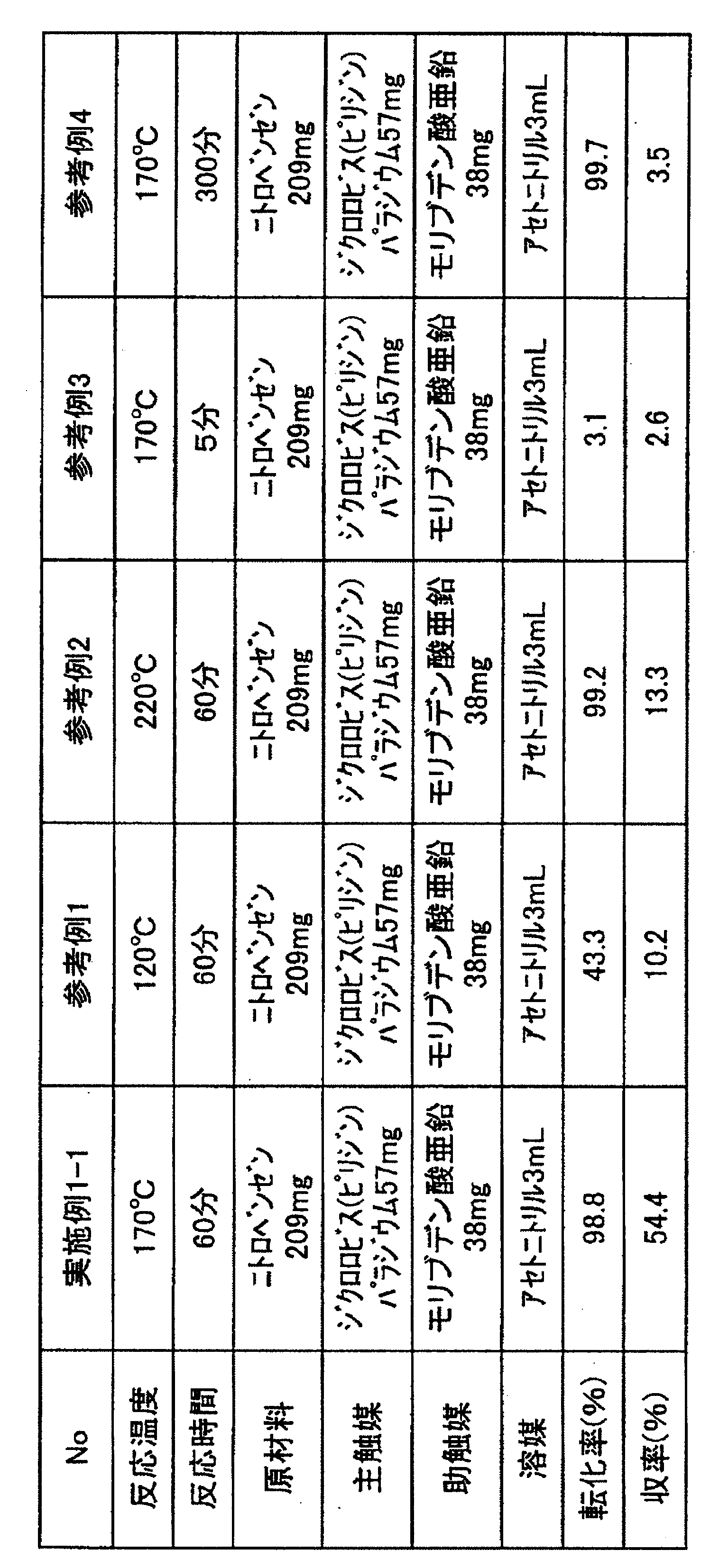
表2の結果より、ニトロベンゼンからフェニルイソシアナートを合成する反応系にあっては、実施例1-1での反応温度(170℃)及び反応時間(60分)が最もイソシアナート収率が高くなり、この反応温度よりも高温側(参考例2)でも低温側(参考例1)でもイソシアナート収率は低下した。また反応時間が短い参考例3ではイソシアナート収率が低くなったが、反応時間を実施例1-1の場合よりも延長しても、イソシアナート収率は却って低下した。
[試験3:溶媒の種類とイソシアナート収率との関係]
(実施例2-1)
溶媒をジメチルスルホキシドとしたこと以外は、実施例1-1と同じ条件で反応させた。
本例でのニトロベンゼンの転化率は86.3%、フェニルイソシアナートの収率は42.2%であった。
(実施例2-1)
溶媒をジメチルスルホキシドとしたこと以外は、実施例1-1と同じ条件で反応させた。
本例でのニトロベンゼンの転化率は86.3%、フェニルイソシアナートの収率は42.2%であった。
(実施例2-2)
溶媒をN,N-ジメチルホルムアミドとしたこと以外は、実施例1-1と同じ条件で反応させた。
本例でのニトロベンゼンの転化率は80.6%、フェニルイソシアナートの収率は40.6%であった。
溶媒をN,N-ジメチルホルムアミドとしたこと以外は、実施例1-1と同じ条件で反応させた。
本例でのニトロベンゼンの転化率は80.6%、フェニルイソシアナートの収率は40.6%であった。
(実施例2-3)
溶媒をテトラヒドロフランとしたこと以外は、実施例1-1と同じ条件で反応させた。
本例でのニトロベンゼンの転化率は72.7%、フェニルイソシアナートの収率は32.1%であった。
溶媒をテトラヒドロフランとしたこと以外は、実施例1-1と同じ条件で反応させた。
本例でのニトロベンゼンの転化率は72.7%、フェニルイソシアナートの収率は32.1%であった。
上記実施例2-1~実施例2-3の結果を、実施例1-1及び比較例1の結果と併せて表3にまとめて記す。
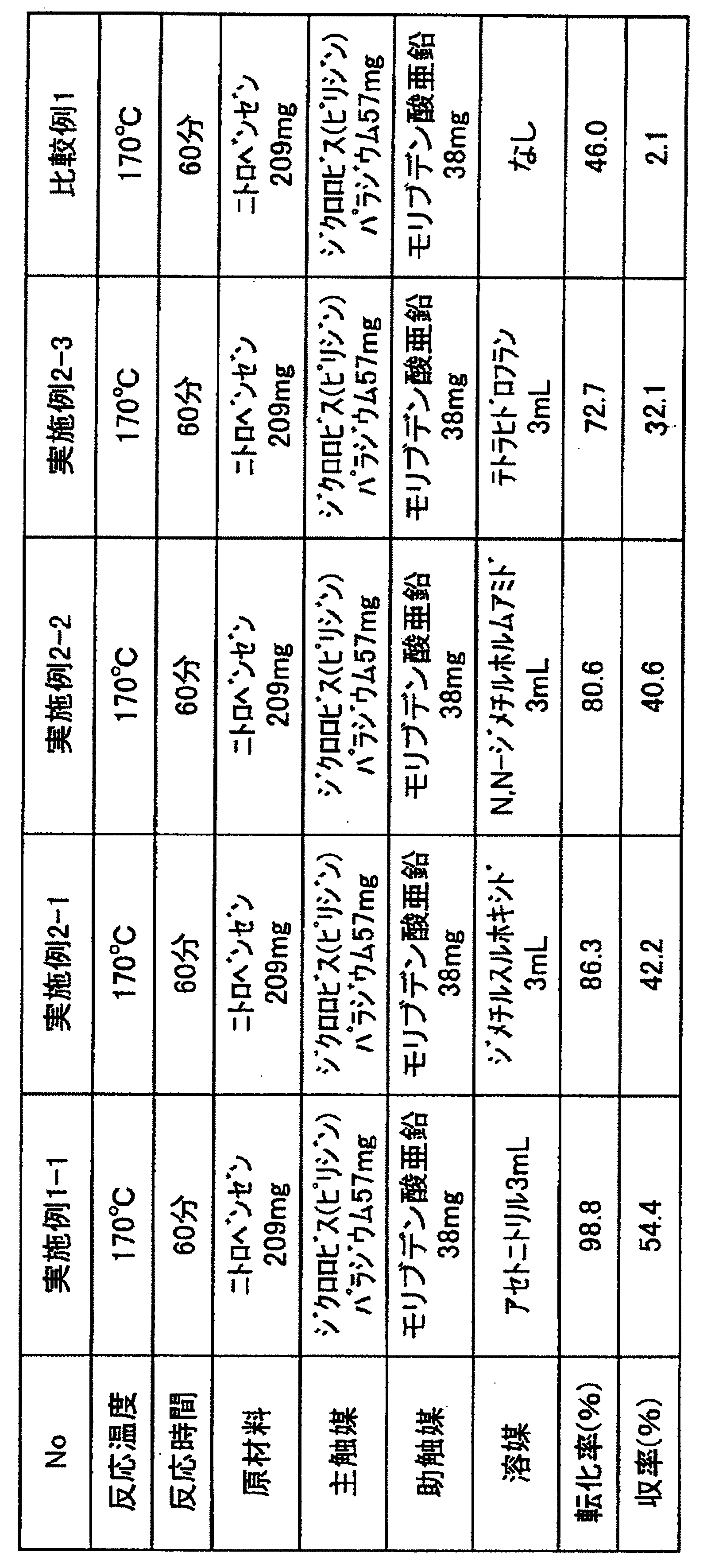
表3の結果より、溶媒を加えない比較例1に比べ、溶媒を加えた各実施例は高いイソシアナート収率が得られた。
また、ニトロベンゼンからフェニルイソシアナートを合成する反応系にあっては、実施例1-1で用いたアセトニトリルが最も高い収率を示した。
また、ニトロベンゼンからフェニルイソシアナートを合成する反応系にあっては、実施例1-1で用いたアセトニトリルが最も高い収率を示した。
1…製造装置、2…反応器(オートクレーブ)、3…昇温装置、4…原材料供給装置、5…ガス回収装置、6…イソシアナート回収装置、11…連続製造装置、12…流通型反応器、13…流路、14…触媒、15…昇温装置、16…原材料供給装置、17…回収装置。
Claims (10)
- 溶媒存在下、二酸化炭素を反応媒体とする反応系において、触媒として白金族金属化合物とヘテロ芳香環式窒素化合物との錯体又は混合物を用いて、ニトロ化合物のニトロ基と一酸化炭素とを反応させてイソシアナート基を有するイソシアナート化合物を合成することを特徴とするイソシアナート化合物の製造方法。
- 前記反応系の二酸化炭素、一酸化炭素、溶媒の少なくともいずれか一つの成分が超臨界状態にある請求項1に記載のイソシアナート化合物の製造方法。
- 前記反応系が50℃以上、1MPa以上の超臨界状態である請求項1に記載のイソシアナート化合物の製造方法。
- 前記溶媒が非プロトン性極性溶媒である請求項1に記載のイソシアナート化合物の製造方法。
- 前記非プロトン性極性溶媒がアセトニトリルを含むニトリル化合物及びジメチルスルホキシドを含む硫黄化合物からなる群から選択される1種又は2種以上である請求項4に記載のイソシアナート化合物の製造方法。
- 反応温度と反応圧力の一方又は両方が異なる複数の反応条件を経て、ニトロ基をイソシアナート基に反応させる請求項1に記載のイソシアナート化合物の製造方法。
- 連続反応部の一端から原材料を連続的に供給し、他端側に向けて流動させながら、前記連続反応部内でニトロ化合物のニトロ基と一酸化炭素とを反応させてイソシアナート基を有するイソシアナート化合物を合成し、前記イソシアナート化合物を連続反応部の他端側から取り出す連続的なプロセスを用いる請求項1に記載のイソシアナート化合物の製造方法。
- 反応温度と反応圧力の一方又は両方が異なる反応条件を有する複数の連続的なプロセスを連結してイソシアナート化合物を合成する請求項7に記載のイソシアナート化合物の製造方法。
- 原材料のニトロ化合物、触媒、溶媒を入れる反応器と、
反応器の内部を昇温及び維持する昇温装置と、
反応器内に一酸化炭素と二酸化炭素とを供給する原材料供給装置と、
反応器内の未反応のガス類を反応系から排出及び回収するガス回収装置と、
反応器内で生成したイソシアナート化合物を取り出すイソシアナート回収装置と、を備えてなることを特徴とするイソシアナート化合物の製造装置。 - 原材料が連続的に反応する流路が設けられた流通型反応器と、
流通型反応器を昇温及び維持するための昇温装置と、
流通型反応器の一端から流路内に原材料を連続的に供給する原材料供給装置と、
流通型反応器の他端側からイソシアナート化合物を連続的に取り出す回収装置と、を備えてなることを特徴とするイソシアナート化合物の製造装置。
Priority Applications (1)
| Application Number | Priority Date | Filing Date | Title |
|---|---|---|---|
| JP2010529637A JPWO2010032455A1 (ja) | 2008-09-16 | 2009-09-16 | イソシアナート化合物の製造方法 |
Applications Claiming Priority (2)
| Application Number | Priority Date | Filing Date | Title |
|---|---|---|---|
| JP2008-236695 | 2008-09-16 | ||
| JP2008236695 | 2008-09-16 |
Publications (1)
| Publication Number | Publication Date |
|---|---|
| WO2010032455A1 true WO2010032455A1 (ja) | 2010-03-25 |
Family
ID=42039303
Family Applications (1)
| Application Number | Title | Priority Date | Filing Date |
|---|---|---|---|
| PCT/JP2009/004652 Ceased WO2010032455A1 (ja) | 2008-09-16 | 2009-09-16 | イソシアナート化合物の製造方法 |
Country Status (2)
| Country | Link |
|---|---|
| JP (2) | JPWO2010032455A1 (ja) |
| WO (1) | WO2010032455A1 (ja) |
Cited By (1)
| Publication number | Priority date | Publication date | Assignee | Title |
|---|---|---|---|---|
| CN114907537A (zh) * | 2022-05-23 | 2022-08-16 | 万华化学(福建)有限公司 | 一种tdi重组分焦油羰基化改性制备聚合异氰酸酯的方法及在混凝土改性中的应用 |
Citations (4)
| Publication number | Priority date | Publication date | Assignee | Title |
|---|---|---|---|---|
| JPS4711055B1 (ja) * | 1968-06-21 | 1972-04-04 | ||
| JPS4864048A (ja) * | 1971-12-08 | 1973-09-05 | ||
| JPS5668653A (en) * | 1979-11-09 | 1981-06-09 | Mitsui Toatsu Chem Inc | Preparation of aromatic isocyanate |
| JPS6360960A (ja) * | 1986-09-01 | 1988-03-17 | Mitsubishi Gas Chem Co Inc | 芳香族ジイソシアネ−トの製造法 |
Family Cites Families (3)
| Publication number | Priority date | Publication date | Assignee | Title |
|---|---|---|---|---|
| JPH0611742B2 (ja) * | 1985-02-20 | 1994-02-16 | 三井東圧化学株式会社 | 芳香族イソシアナ−トの製法 |
| JP2006312619A (ja) * | 2005-04-04 | 2006-11-16 | Mitsui Chemicals Polyurethanes Inc | ポリイソシアネート製造設備およびポリイソシアネート製造方法 |
| JPWO2008035633A1 (ja) * | 2006-09-19 | 2010-01-28 | 萬有製薬株式会社 | 反応装置及び反応方法 |
-
2009
- 2009-09-16 WO PCT/JP2009/004652 patent/WO2010032455A1/ja not_active Ceased
- 2009-09-16 JP JP2010529637A patent/JPWO2010032455A1/ja active Pending
-
2014
- 2014-05-08 JP JP2014097159A patent/JP2014177472A/ja active Pending
Patent Citations (4)
| Publication number | Priority date | Publication date | Assignee | Title |
|---|---|---|---|---|
| JPS4711055B1 (ja) * | 1968-06-21 | 1972-04-04 | ||
| JPS4864048A (ja) * | 1971-12-08 | 1973-09-05 | ||
| JPS5668653A (en) * | 1979-11-09 | 1981-06-09 | Mitsui Toatsu Chem Inc | Preparation of aromatic isocyanate |
| JPS6360960A (ja) * | 1986-09-01 | 1988-03-17 | Mitsubishi Gas Chem Co Inc | 芳香族ジイソシアネ−トの製造法 |
Cited By (2)
| Publication number | Priority date | Publication date | Assignee | Title |
|---|---|---|---|---|
| CN114907537A (zh) * | 2022-05-23 | 2022-08-16 | 万华化学(福建)有限公司 | 一种tdi重组分焦油羰基化改性制备聚合异氰酸酯的方法及在混凝土改性中的应用 |
| CN114907537B (zh) * | 2022-05-23 | 2023-12-29 | 万华化学(福建)有限公司 | 一种tdi重组分焦油羰基化改性制备聚合异氰酸酯的方法及在混凝土改性中的应用 |
Also Published As
| Publication number | Publication date |
|---|---|
| JP2014177472A (ja) | 2014-09-25 |
| JPWO2010032455A1 (ja) | 2012-02-09 |
Similar Documents
| Publication | Publication Date | Title |
|---|---|---|
| Jayarathne et al. | Selective iron-catalyzed N-formylation of amines using dihydrogen and carbon dioxide | |
| Liu et al. | Dehydrogenation of alcohols to carboxylic acid catalyzed by in situ-generated facial ruthenium-CPP complex | |
| Ferretti et al. | New nonsymmetric phenanthrolines as very effective ligands in the palladium-catalyzed carbonylation of nitrobenzene | |
| US7663008B2 (en) | Method of catalytic reaction using micro-reactor | |
| US6011152A (en) | Synthesis of macrocyclic tetraamido-N ligands | |
| JP2009184928A (ja) | 重水素化された芳香環又は複素環を有する化合物の製造方法 | |
| KR100612923B1 (ko) | 4-아미노 디페닐아민의 제조방법 | |
| US3523964A (en) | Preparation of aromatic isocyanates | |
| Duan et al. | Ionic liquid-mediated solvothermal synthesis of 4, 4′-methylenediphenyl diisocyanate (MDI): an efficient and environment-friendly process | |
| JPS6344740B2 (ja) | ||
| Ugo et al. | Catalysis by palladium salts: XIII. The reductive carbonylation of nitroaromatic compounds to isocyanates with PdII and Pd0 complexes as homogeneous catalysts | |
| WO2010032455A1 (ja) | イソシアナート化合物の製造方法 | |
| CN104693146B (zh) | 颗粒渗透性容器 | |
| US20180282278A1 (en) | Method for synthesizing bipyridine compound and method for manufacturing pyridine compound | |
| CN104193670B (zh) | 一种催化氧化乙苯及其衍生物制备芳酮的方法 | |
| CN1198790C (zh) | 制备4-氨基二苯胺的方法 | |
| Yadav et al. | [Bmim] PF 6/RuCl 3· x H 2 O: a novel and recyclable catalytic system for the oxidative coupling of β-naphthols | |
| US4478757A (en) | Process for the manufacture of aromatic isocyanates | |
| JP4811764B2 (ja) | ニトロ化合物の製造方法及びその製造装置 | |
| US20060100463A1 (en) | Selective hydrogenation of nitrogen containing aromatics | |
| US4323515A (en) | Process for the preparation of organic isocyanates from nitro derivatives | |
| CN104250231B (zh) | 用于合成甲苯二氨基甲酸烷基酯的苯并三唑离子液体 | |
| CN103965122A (zh) | 一种喹喔啉取代烷烃的硝化方法 | |
| US3812169A (en) | Preparation of aromatic isocyanates in a tubular reactor | |
| JPH04217636A (ja) | 1,4−ブタンジオールの製造法 |
Legal Events
| Date | Code | Title | Description |
|---|---|---|---|
| 121 | Ep: the epo has been informed by wipo that ep was designated in this application |
Ref document number: 09814300 Country of ref document: EP Kind code of ref document: A1 |
|
| WWE | Wipo information: entry into national phase |
Ref document number: 2010529637 Country of ref document: JP |
|
| NENP | Non-entry into the national phase |
Ref country code: DE |
|
| 122 | Ep: pct application non-entry in european phase |
Ref document number: 09814300 Country of ref document: EP Kind code of ref document: A1 |