WO2009145296A1 - 無線通信システム、無線通信装置および無線通信方法 - Google Patents
無線通信システム、無線通信装置および無線通信方法 Download PDFInfo
- Publication number
- WO2009145296A1 WO2009145296A1 PCT/JP2009/059857 JP2009059857W WO2009145296A1 WO 2009145296 A1 WO2009145296 A1 WO 2009145296A1 JP 2009059857 W JP2009059857 W JP 2009059857W WO 2009145296 A1 WO2009145296 A1 WO 2009145296A1
- Authority
- WO
- WIPO (PCT)
- Prior art keywords
- retransmission
- transmission
- data
- destination
- priority
- Prior art date
- Legal status (The legal status is an assumption and is not a legal conclusion. Google has not performed a legal analysis and makes no representation as to the accuracy of the status listed.)
- Ceased
Links
Images




Classifications
-
- H—ELECTRICITY
- H04—ELECTRIC COMMUNICATION TECHNIQUE
- H04L—TRANSMISSION OF DIGITAL INFORMATION, e.g. TELEGRAPHIC COMMUNICATION
- H04L1/00—Arrangements for detecting or preventing errors in the information received
- H04L1/0001—Systems modifying transmission characteristics according to link quality, e.g. power backoff
- H04L1/0006—Systems modifying transmission characteristics according to link quality, e.g. power backoff by adapting the transmission format
- H04L1/0007—Systems modifying transmission characteristics according to link quality, e.g. power backoff by adapting the transmission format by modifying the frame length
-
- H—ELECTRICITY
- H04—ELECTRIC COMMUNICATION TECHNIQUE
- H04L—TRANSMISSION OF DIGITAL INFORMATION, e.g. TELEGRAPHIC COMMUNICATION
- H04L1/00—Arrangements for detecting or preventing errors in the information received
- H04L1/0001—Systems modifying transmission characteristics according to link quality, e.g. power backoff
- H04L1/0023—Systems modifying transmission characteristics according to link quality, e.g. power backoff characterised by the signalling
- H04L1/0026—Transmission of channel quality indication
-
- H—ELECTRICITY
- H04—ELECTRIC COMMUNICATION TECHNIQUE
- H04L—TRANSMISSION OF DIGITAL INFORMATION, e.g. TELEGRAPHIC COMMUNICATION
- H04L1/00—Arrangements for detecting or preventing errors in the information received
- H04L1/12—Arrangements for detecting or preventing errors in the information received by using return channel
- H04L1/16—Arrangements for detecting or preventing errors in the information received by using return channel in which the return channel carries supervisory signals, e.g. repetition request signals
- H04L1/18—Automatic repetition systems, e.g. Van Duuren systems
- H04L1/1867—Arrangements specially adapted for the transmitter end
- H04L1/1887—Scheduling and prioritising arrangements
-
- H—ELECTRICITY
- H04—ELECTRIC COMMUNICATION TECHNIQUE
- H04L—TRANSMISSION OF DIGITAL INFORMATION, e.g. TELEGRAPHIC COMMUNICATION
- H04L1/00—Arrangements for detecting or preventing errors in the information received
- H04L1/0001—Systems modifying transmission characteristics according to link quality, e.g. power backoff
- H04L1/0002—Systems modifying transmission characteristics according to link quality, e.g. power backoff by adapting the transmission rate
- H04L1/0003—Systems modifying transmission characteristics according to link quality, e.g. power backoff by adapting the transmission rate by switching between different modulation schemes
-
- H—ELECTRICITY
- H04—ELECTRIC COMMUNICATION TECHNIQUE
- H04L—TRANSMISSION OF DIGITAL INFORMATION, e.g. TELEGRAPHIC COMMUNICATION
- H04L1/00—Arrangements for detecting or preventing errors in the information received
- H04L1/0001—Systems modifying transmission characteristics according to link quality, e.g. power backoff
- H04L1/0009—Systems modifying transmission characteristics according to link quality, e.g. power backoff by adapting the channel coding
- H04L1/0013—Rate matching, e.g. puncturing or repetition of code symbols
-
- H—ELECTRICITY
- H04—ELECTRIC COMMUNICATION TECHNIQUE
- H04L—TRANSMISSION OF DIGITAL INFORMATION, e.g. TELEGRAPHIC COMMUNICATION
- H04L1/00—Arrangements for detecting or preventing errors in the information received
- H04L1/004—Arrangements for detecting or preventing errors in the information received by using forward error control
- H04L1/0056—Systems characterized by the type of code used
- H04L1/0057—Block codes
-
- H—ELECTRICITY
- H04—ELECTRIC COMMUNICATION TECHNIQUE
- H04L—TRANSMISSION OF DIGITAL INFORMATION, e.g. TELEGRAPHIC COMMUNICATION
- H04L1/00—Arrangements for detecting or preventing errors in the information received
- H04L1/12—Arrangements for detecting or preventing errors in the information received by using return channel
- H04L1/16—Arrangements for detecting or preventing errors in the information received by using return channel in which the return channel carries supervisory signals, e.g. repetition request signals
- H04L1/18—Automatic repetition systems, e.g. Van Duuren systems
- H04L1/1812—Hybrid protocols; Hybrid automatic repeat request [HARQ]
-
- H—ELECTRICITY
- H04—ELECTRIC COMMUNICATION TECHNIQUE
- H04W—WIRELESS COMMUNICATION NETWORKS
- H04W72/00—Local resource management
- H04W72/04—Wireless resource allocation
-
- H—ELECTRICITY
- H04—ELECTRIC COMMUNICATION TECHNIQUE
- H04W—WIRELESS COMMUNICATION NETWORKS
- H04W72/00—Local resource management
- H04W72/50—Allocation or scheduling criteria for wireless resources
- H04W72/56—Allocation or scheduling criteria for wireless resources based on priority criteria
- H04W72/566—Allocation or scheduling criteria for wireless resources based on priority criteria of the information or information source or recipient
- H04W72/569—Allocation or scheduling criteria for wireless resources based on priority criteria of the information or information source or recipient of the traffic information
Definitions
- the present invention relates to a radio communication system, a radio communication apparatus, and a radio communication method to which hybrid automatic retransmission control is applied.
- HARQ hybrid automatic retransmission control
- ARQ automatic retransmission control
- FEC forward error correction
- a reception-side wireless communication device transmits a retransmission request to a transmission device when decoding of data received from a transmission-side wireless communication device (hereinafter referred to as a transmission device) fails.
- the transmission device transmits the transmitted transmission data (initial transmission data) as retransmission data to the reception device.
- the receiving device stores transmission data that has failed to be decoded.
- the receiving device When receiving retransmission data from the transmitting device, the receiving device combines the stored transmission data and the received retransmission data to perform decoding. Thereby, the error correction capability can be improved.
- the transmission device and the reception device hold the transmission data until the retransmission processing by HARQ is completed.
- a transmission device such as a radio base station communicates with a plurality of reception devices such as a radio terminal
- the transmission device responds to a plurality of reception devices according to reception quality (for example, reception SNR) in each reception device.
- reception quality for example, reception SNR
- a scheduler for controlling allocation of radio resources such as time or frequency.
- the scheduler enables data transmission using radio resources with high reception quality preferentially by setting a high allocation priority (hereinafter referred to as priority) for a receiving apparatus with high reception quality. Is effectively utilized and throughput is improved.
- the transmission apparatus can retransmit data regardless of the priority set by the scheduler. Is generally transmitted with the highest priority (see, for example, Patent Document 1).
- the conventional method for transmitting retransmission data with the highest priority has the following problems. Specifically, as a result of the retransmission data being transmitted with the highest priority, transmission of transmission data to the receiving apparatus set with a high priority by the scheduler is postponed.
- the scheduler sets a high priority for a receiving apparatus with high reception quality, but the reception quality is unstable in wireless communication, and at the time of transmission of transmission data that has been postponed, the reception is performed. Quality may be degraded. In other words, if retransmission data is always transmitted with the highest priority, there is a problem that the scheduler does not function effectively.
- a radio communication system that employs HARQ is configured to actively perform retransmission in anticipation of an improvement in error correction capability, and such a problem becomes significant because retransmission is frequently performed.
- the present invention has been made to solve the above-described problem.
- retransmission by HARQ occurs, the reception quality is improved while preferentially transmitting retransmission data to a receiving apparatus that requests retransmission. It is an object of the present invention to provide a radio communication system, a radio communication apparatus, and a radio communication method that enable a scheduler to function effectively by preventing transmission of transmission data to a high receiving apparatus from being delayed.
- a first aspect of the present invention provides a wireless communication device (wireless base station 1) that performs wireless communication with a plurality of receiving devices (for example, a retransmission destination wireless terminal 2 and a transmission destination wireless terminal 3), and the receiving device.
- a wireless communication device wireless base station 1 that performs wireless communication with a plurality of receiving devices (for example, a retransmission destination wireless terminal 2 and a transmission destination wireless terminal 3), and the receiving device.
- a wireless communication system (wireless communication system 10) including a retransmission destination receiving device (retransmission destination wireless terminal 2) that is a transmission destination of the wireless communication device, wherein the wireless communication device receives reception quality of a wireless signal transmitted by the wireless communication device
- An information receiving unit (transmission / reception unit 111) that receives reception quality information indicating each of the receiving devices, and assigns radio resources used for data transmission to any of the receiving devices, and uses the assigned radio resources
- the transmission processing unit (control unit 112) that transmits the transmission data or the retransmission data, and the priority that the transmission processing unit allocates the radio resources according to the reception quality information received by the information reception unit,
- a priority setting unit (scheduler 114) that sets for each reception device, the priority setting unit sets the priority higher as the reception device has a higher reception quality
- the transmission processing unit when the first priority set in the transmission destination reception device by the priority setting unit is higher than the second priority set in the retransmission destination reception device, Since radio resources are allocated to both the transmission destination receiver and the retransmission destination receiver and both the transmission data and the retransmission data are transmitted using the allocated radio resources, priority is given to the retransmission data to the receiver that requests retransmission.
- the scheduler (priority setting unit) can function effectively by avoiding the transmission of transmission data to a receiving apparatus having a high reception quality.
- a second aspect of the present invention provides a plurality of receptions including a transmission destination receiver that is a transmission destination of transmission data for which retransmission is not requested, and a retransmission destination reception apparatus that is a transmission destination of retransmission data for which retransmission is requested.
- An information reception unit radio base station 1 that performs wireless communication with a device, and receives reception quality information indicating reception quality of a radio signal transmitted by the wireless communication device from each of the receiving devices ( A transmission / reception unit 111) and a transmission processing unit (control unit 112) for allocating radio resources used for data transmission to any of the reception devices and transmitting the transmission data or the retransmission data using the allocated radio resources.
- a priority setting in which the transmission processing unit sets a priority for allocating the radio resource for each receiving device according to the reception quality information received by the information receiving unit. (Scheduler 114), and the priority setting unit sets the priority higher as the reception device has a higher reception quality, and the transmission processing unit receives the destination reception by the priority setting unit.
- the first priority (priority ⁇ ) set in the device is higher than the second priority (priority ⁇ ) set in the retransmission destination receiving device, the radio resource is transferred to the destination receiving device and the retransmission
- the gist of the present invention is that the transmission data and the retransmission data are both transmitted using the allocated radio resources while being allocated to both of the receiving apparatuses.
- a third aspect of the present invention relates to the second aspect of the present invention, wherein the first priority set in the destination receiver is higher than the second priority set in the retransmission destination receiver. If it is higher, a size determination unit (data size control) that determines the sizes of the transmission data and the retransmission data transmitted by the transmission processing unit according to a ratio between the first priority and the second priority. It is a summary to further include a unit 115).
- a fourth aspect of the present invention relates to the third aspect of the present invention, wherein the size determination unit determines the retransmission data from the size of the initial transmission data corresponding to the retransmission data transmitted to the retransmission destination receiving device. And determining the difference between the size of the initial transmission data corresponding to the retransmission data and the size of the retransmission data as the size of the transmission data to be transmitted to the destination receiver. To do.
- a fifth aspect of the present invention relates to the fourth aspect of the present invention, wherein the size determination unit sets the first priority set to the transmission destination reception device to A and the retransmission destination reception device.
- a sixth aspect of the present invention relates to the second aspect of the present invention, and relates to a first modulation method used for data transmission to the destination receiver according to the reception quality information received by the information receiving unit.
- a modulation scheme determining unit (control unit 112) that determines a second modulation scheme used for data transmission to the retransmission destination receiving apparatus, the first modulation scheme determined by the modulation scheme determining unit, and the first modulation scheme
- the gist of the invention is that it further includes a size determination unit (data size control unit 115) that determines the sizes of the transmission data and the retransmission data according to two modulation schemes.
- a seventh aspect of the present invention relates to the third aspect of the present invention, and relates to a first modulation scheme used for data transmission to the destination receiver according to the reception quality information received by the information receiving unit.
- a modulation scheme determining unit (control unit 112) that determines a second modulation scheme used for data transmission to the retransmission destination receiving apparatus, the first modulation scheme determined by the modulation scheme determining unit, and the first modulation scheme
- the gist of the present invention is to further include a size adjustment unit (data size control unit 115) that adjusts the sizes of the transmission data and the retransmission data determined by the size determination unit according to two modulation schemes.
- An eighth aspect of the present invention relates to the seventh aspect of the present invention, wherein the size adjustment unit is configured such that an information amount per symbol defined in the second modulation scheme is defined in the first modulation scheme.
- the size of the retransmission data determined by the size determination unit is increased, and the size of the transmission data determined by the size determination unit is increased,
- the gist is to reduce the size of the transmission data determined by the size determination unit.
- a ninth aspect of the present invention relates to the second aspect of the present invention, wherein the transmission processing unit is configured such that the first priority set in the destination receiver is set in the retransmission destination receiver.
- the radio resource is allocated only to the transmission destination receiving apparatus and the allocated radio The gist is to transmit only the transmission data using a resource.
- a tenth aspect of the present invention relates to the second aspect of the present invention, wherein the transmission processing unit is configured such that the first priority set in the transmission destination reception device is set in the retransmission destination reception device.
- the transmission processing unit is configured such that the first priority set in the transmission destination reception device is set in the retransmission destination reception device.
- the radio resources are allocated only to the retransmission destination receiving apparatus, and only the retransmission data is transmitted using the allocated radio resources.
- An eleventh aspect of the present invention provides a plurality of receptions including a transmission destination receiver that is a transmission destination of transmission data for which retransmission is not requested and a retransmission destination reception apparatus that is a transmission destination of retransmission data for which retransmission is requested.
- the priority for allocating the radio resource in the allocating step is determined. Setting for each receiving device, and in the setting step, the higher the receiving quality is, the higher the priority is set, and the assigning step is the transmission destination in the setting step.
- the radio resource is allocated to both the transmission destination receiving device and the retransmission destination receiving device.
- both the transmission data and the retransmission data are transmitted using the allocated radio resource.
- FIG. 1 is an overall schematic configuration diagram of a radio communication system according to an embodiment of the present invention.
- FIG. 2 is a functional block configuration diagram of the radio base station according to the embodiment of the present invention.
- FIG. 3 is a diagram for explaining an example of priority setting processing according to the embodiment of the present invention.
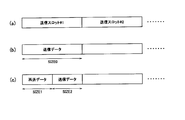
- FIG. 4 is a conceptual diagram for explaining data size determination processing and data size adjustment processing according to the embodiment of the present invention.
- FIG. 5 is a diagram illustrating an example of association between CQI and reception SNR.
- FIG. 6 is a diagram for explaining a modulation scheme used in adaptive modulation.
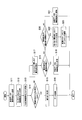
- FIG. 7 is a flowchart showing an operation of the radio base station according to the embodiment of the present invention.
- FIG. 1 is an overall schematic configuration diagram of a radio communication system 10 according to the present embodiment.
- the wireless communication system 10 includes a wireless base station 1, a wireless terminal 2, and a wireless terminal 3.
- the wireless terminal 2 and the wireless terminal 3 are located in the service area of the wireless base station 1 and communicate with the wireless base station 1 via a wireless section.
- a wireless section In the example of FIG. 1, only a total of two wireless terminals, the wireless terminal 2 and the wireless terminal 3, are illustrated, but many wireless terminals may communicate with the wireless base station 1.
- the wireless terminal 2 and the wireless terminal 3 constitute a plurality of receiving apparatuses that receive data from the wireless base station 1.
- the wireless base station 1 constitutes a wireless communication device that performs wireless communication with the plurality of receiving devices.
- the radio terminal 2 and the radio terminal 3 periodically measure the reception quality of a radio signal transmitted by the radio base station 1, specifically, a pilot signal that is a broadcast signal, and receive the reception quality information indicating the reception quality Transmitting to station 1 regularly.
- the reception quality measured by the wireless terminal 2 and the wireless terminal 3 is a reception SNR (Signal to Interference plus Noise power Ratio).
- the reception quality information transmitted by the wireless terminal 2 and the wireless terminal 3 is referred to as CQI (Channel Quality Indicator).
- the wireless terminal 2 fails to decode the initial transmission data received from the wireless base station 1, and transmits a Nack, which is a negative response message requesting retransmission of the initial transmission data, to the wireless base station 1. Yes. That is, the wireless terminal 2 is a transmission destination of retransmission data for which retransmission is requested. On the other hand, the wireless terminal 3 is a transmission destination of transmission data (initial transmission data) for which retransmission is not requested.
- the receiving side transmits an acknowledgment message (Ack) indicating successful decoding when the data (data packet) transmitted by the transmitting side is successfully decoded, and when decoding is unsuccessful.
- a negative acknowledgment message (Nack) indicating a decoding failure is transmitted to the transmission side.
- the wireless terminal 2 that is the transmission destination of the retransmission data requested to be retransmitted will be appropriately referred to as “retransmission destination wireless terminal 2”.
- the wireless terminal 3 that is the transmission destination of transmission data for which retransmission is not requested is appropriately referred to as “destination wireless terminal 3”.
- the wireless base station 1 Based on the CQI received from each of the retransmission destination wireless terminal 2 and the transmission destination wireless terminal 3, the wireless base station 1 assigns a wireless resource to each of the retransmission destination wireless terminal 2 or the transmission destination wireless terminal 3, and assigns the assigned wireless resource to The data is transmitted to the retransmission destination wireless terminal 2 or the transmission destination wireless terminal 3 by using it.
- the radio resource used for data transmission means a transmission time frame (hereinafter referred to as a transmission slot) or a frequency channel.
- a transmission slot will be described as an example of radio resources allocated by the radio base station 1.
- the wireless communication system 10 employs an adaptive modulation method. Based on the CQI received from each of the retransmission destination wireless terminal 2 and the transmission destination wireless terminal 3, the wireless base station 1 dynamically switches the modulation scheme (hereinafter referred to as “modulation class” as appropriate). Specifically, the radio base station 1 selects an appropriate modulation scheme from a plurality of modulation schemes such as BPSK (Binary Phase Shift Keying) and 24QAM (Quadrature Amplitude Modulation).
- modulation class the modulation scheme
- the radio base station 1 selects an appropriate modulation scheme from a plurality of modulation schemes such as BPSK (Binary Phase Shift Keying) and 24QAM (Quadrature Amplitude Modulation).
- BPSK Binary Phase Shift Keying
- 24QAM Quadrature Amplitude Modulation
- retransmission gain can be obtained by combining transmission data (initial transmission data) and retransmission data.
- transmission data initial transmission data
- retransmission data retransmission data
- selecting a high modulation class in anticipation of retransmission gain leads to higher overall system performance than selecting a low modulation class to be completed in one transmission. Therefore, retransmission is frequently performed in such a system.
- FIG. 2 is a functional block configuration diagram of the radio base station 1.
- the radio base station 1 includes an antenna 110, a transmission / reception unit 111, a control unit 112, a data storage unit 113, a scheduler 114, and a data size control unit 115.
- the transmission / reception unit 111 transmits and receives a radio signal including data via the antenna 110.
- the transmission / reception unit 111 constitutes an information reception unit that receives CQI indicating the reception SNR of the radio signal transmitted by the radio base station 1 from each of the radio terminals 2 and 3.
- the data storage unit 113 temporarily stores the transmission data to be transmitted to the wireless terminals 2 and 3 and stores the transmitted data that has been transmitted until an acknowledgment message (Ack) indicating successful reception is received.
- Ack acknowledgment message
- the control unit 112 controls the operation of the entire radio base station 1. Specifically, the control unit 112 controls data transmission and data reception with respect to the wireless terminals 2 and 3. In the present embodiment, the control unit 112 allocates a radio resource used for data transmission to one of the radio terminals 2 and 3, and uses the allocated radio resource to transmit a transmission processing unit that transmits transmission data or retransmission data. Constitute.
- control unit 112 uses the first modulation method used for data transmission to the transmission destination wireless terminal 3 and the second transmission data used for data transmission to the retransmission destination wireless terminal 2 according to the CQI received by the transmission / reception unit 111.
- a modulation scheme determining unit that determines the modulation scheme is configured.
- the scheduler 114 sets the priority to which the control unit 112 allocates radio resources for each radio terminal according to the above-described CQI.
- the priority (second priority) set by the scheduler 114 for the retransmission destination wireless terminal 2 is referred to as “priority ⁇ ”
- the priority (first priority) set by the scheduler 114 for the transmission destination wireless terminal 3. ) Is called “priority ⁇ ”. Details of the scheduler 114 will be described later.
- the control unit 112 assigns radio resources to the transmission destination wireless terminal 3 and the retransmission destination. While assigning to both the radio
- control unit 112 determines that the priority ⁇ set for the transmission destination wireless terminal 3 is higher than the priority ⁇ set for the retransmission destination wireless terminal 2 and the priority ⁇ set for the retransmission destination wireless terminal 2. Is less than a predetermined threshold, radio resources are allocated only to the destination radio terminal 3, and only transmission data is transmitted using the allocated radio resources.
- the control unit 112 assigns the radio resource only to the retransmission destination wireless terminal 2 and Only retransmit data is transmitted using radio resources.
- the data size control unit 115 depends on the ratio of the priority ⁇ and the priority ⁇ . The sizes of the transmission data and retransmission data to be transmitted are determined.
- the data size control unit 115 adjusts the sizes of the determined transmission data and retransmission data according to the first modulation scheme and the second modulation scheme determined by the control unit 112.
- the data size control unit 115 constitutes a size determination unit that determines the sizes of the transmission data and the retransmission data, and a size adjustment unit that adjusts the sizes of the determined transmission data and the retransmission data.
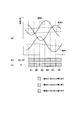
- FIG. 3 is a diagram for explaining an example of the priority setting process.
- FIG. 3 illustrates an example in which the scheduler 114 sets radio resource allocation priority (Priority) to each of the three radio terminals A to C.
- the scheduler 114 is used in order for the wireless base station 1 to manage a large number of wireless terminals and to effectively use wireless resources.
- the scheduler 114 sets the priority according to the CQI indicating the instantaneous reception SNR.
- a method of the scheduler 114 there are a Max CIR method and a PF (Proportional fair) method.
- the Max CIR method is a method for setting a high priority for a wireless terminal having a high instantaneous reception SNR (hereinafter, instantaneous reception SNR).
- instantaneous reception SNR instantaneous reception SNR
- the wireless terminal A has the highest instantaneous reception SNR in the transmission slots # 1, # 2, and # 6
- the wireless terminal B has the highest instantaneous reception SNR in the transmission slots # 3 to # 5.
- the solid line in FIG. 3A indicates the instantaneous reception SNR
- the broken line in FIG. 3A indicates an average value of the instantaneous reception SNR (hereinafter, average reception SNR).
- the scheduler 114 adopts the Max CIR method, as shown in FIG. 3B, the priority of the radio terminal A in the transmission slots # 1, # 2, and # 6 is maximized, and the transmission slots # 3 to 5, the priority of the wireless terminal B is maximized.
- a high priority is set for a wireless terminal having a relatively high instantaneous reception SNR with respect to the average reception SNR.
- DRC is an instantaneous data rate calculated from CQI
- R is a value obtained by averaging the data rate by an exponential function weighted average using a certain time constant. Therefore, the ratio of the instantaneous data rate (instantaneous reception SNR) to the average rate (average reception SNR) is calculated as the priority.
- the priority of the wireless terminal A is the highest in the transmission slots # 1 and # 6
- the priority of the wireless terminal C is the transmission slots # 2 and # 3.
- the wireless terminal B has the highest priority in the transmission slots # 4 and # 5.
- the PF scheme can impart transmission opportunities to a plurality of wireless terminals fairly compared to the Max CIR scheme.
- the scheduler 114 adopts the PF method will be described.
- the control unit 112 of the radio base station 1 determines that the priority ⁇ set for the transmission destination radio terminal 3 is at least the priority set for the retransmission destination radio terminal 2
- a radio resource in this embodiment, a transmission slot
- both the transmission data and the retransmission data are allocated using the allocated radio resource.
- the data size control unit 115 determines the sizes of transmission data and retransmission data to be transmitted according to the ratio of the priority ⁇ and the priority ⁇ .
- the data size control unit 115 makes the retransmission data size SIZE1 smaller than the size SIZE0 of the initial transmission data corresponding to the retransmission data transmitted to the retransmission destination wireless terminal 2. To do.
- the data size control unit 115 determines the difference (SIZE0) between the size SIZE0 of the initial transmission data corresponding to the retransmission data transmitted to the retransmission destination wireless terminal 2 and the size SIZE1 of the retransmission data.
- -SIZE1 is determined as the size SIZE2 of the transmission data to be transmitted to the destination wireless terminal 3. That is, the following relationship is established between the size SIZE0 of the initial transmission data corresponding to the retransmission data transmitted to the retransmission destination wireless terminal 2, the size SIZE1 of the retransmission data, and the size SIZE2 of the transmission data transmitted to the transmission destination wireless terminal 3.
- the data size control unit 115 includes the priority ⁇ set for the transmission destination wireless terminal 3, the priority ⁇ set for the retransmission destination wireless terminal 2, the size SIZE0 of the initial transmission data corresponding to the retransmission data, The following relationship holds for the size SIZE1 of retransmission data.
- SIZE1 SIZE0 ⁇ ( ⁇ / ( ⁇ + ⁇ )) (2)
- the priority of the transmission destination wireless terminal 3 that has the highest priority among the plurality of transmission destination wireless terminals 3 is set as the priority ⁇ .
- the data size control unit 115 determines whether the control unit 112 determines the first modulation scheme determined for the transmission destination wireless terminal 3 and the second modulation scheme determined for the retransmission destination wireless terminal 2.
- the sizes (SIZE1, SIZE2) calculated by (2) are adjusted.
- the CQI is associated with the received SNR.
- the modulation class is associated with the threshold value of the reception SNR.
- a total of nine modulation classes of modulation classes 0 to 8 are prepared.
- Modulation class 8 is the fastest modulation class, and modulation class 0 is the slowest modulation class.
- 24QAM is used in modulation class 8
- ⁇ / 2-BPSK is used in modulation class 0. That is, the information amount per symbol differs in each modulation class.
- Threshold value for reception SNR is defined for each modulation class. For example, modulation class 8 is applied when the received SNR exceeds the threshold SNR8. Modulation class 7 is applied when the received SNR is below threshold SNR8 and above threshold SNR7. Similarly, modulation class 6 is applied when the received SNR is below threshold SNR7 and above threshold SNR6.
- control unit 112 determines the modulation class.
- the data size control unit 115 determines that the equations (1) and (2) The size SIZE1 of the retransmission data calculated in step (1) is reduced and the size SIZE2 of the transmission data is increased.
- the data size control unit 115 uses the information amount per symbol defined in the second modulation scheme used for data transmission to the retransmission destination wireless terminal 2 for data transmission to the transmission destination wireless terminal 3.
- the size SIZE1 of retransmission data calculated by the equations (1) and (2) is increased and the size SIZE2 of transmission data is decreased.
- the data size control unit 115 sets the modulation class (second modulation scheme) for the retransmission destination wireless terminal 2 to Xbit / symbol and the modulation class for the transmission destination wireless terminal 3 to Ybit / symbol.
- the size of the retransmission data for the retransmission destination wireless terminal 2 is ((100 ⁇ ⁇ / ( ⁇ + ⁇ )) ⁇ (X / (X + Y)) + (100-100 ⁇ ⁇ / () of the initial transmission packet size SIZE0. ⁇ + ⁇ )) ⁇ (Y / (X + Y)))%.
- FIG. 7 is a flowchart showing the operation of the radio base station 1.
- step S11 the scheduler 114 and the control unit 112 allocate radio resources (in this embodiment, transmission slots) to the retransmission destination radio terminal 2 based on the CQI of the retransmission destination radio terminal 2 and the CQI of the transmission destination radio terminal 3.
- the transmission data is transmitted to the retransmission destination wireless terminal 2.
- the retransmission destination wireless terminal 2 receives the transmission data from the wireless base station 1 and decodes it. If the CRC is checked and decoded correctly, the retransmission destination wireless terminal 2 transmits Ack as a response message to the wireless base station 1 and cannot correctly decode it. Nack is transmitted as a response message.
- step S12 the transmission / reception unit 111 receives a response message (Ack or Nack) from the retransmission destination wireless terminal 2. Further, the transmission / reception unit 111 receives the CQI from each of the wireless terminals 2 and 3 (step S13).
- a response message Ack or Nack
- step S14 the control unit 112 determines whether the response message received by the transmission / reception unit 111 is Ack or Nack. If the response message is Ack, the process proceeds to step S15. If the response message is Nack, the process proceeds to step S17.
- step S15 and step S16 the scheduler 114 and the control unit 112 perform allocation processing and transmission processing for the next data as usual.
- step S17 in the case where the response message is Nack the scheduler 114 sets the priority to which the control unit 112 allocates radio resources for each radio terminal using the PF method described above.
- step S18 the control unit 112 determines whether or not the priority ⁇ set for the retransmission destination wireless terminal 2 by the scheduler 114 is the highest priority. In other words, the control unit 112 determines whether or not the priority ⁇ set for the retransmission destination wireless terminal 2 is higher than the priority ⁇ set for the transmission destination wireless terminal 3.
- step S19 If the priority ⁇ set in the retransmission destination wireless terminal 2 is the highest priority, the process proceeds to step S19, and if the priority ⁇ is not the highest priority, the process proceeds to step S20.
- step S19 the control unit 112 allocates radio resources only to the retransmission destination radio terminal 2 and transmits only retransmission data using the allocated radio resources. Specifically, the control unit 112 acquires retransmission data from the data storage unit 113 to the retransmission destination wireless terminal 2, and transmits the acquired retransmission data via the transmission / reception unit 111.
- step S20 the control unit 112 determines whether or not the priority ⁇ set in the retransmission destination wireless terminal 2 is greater than or equal to a threshold value.
- this threshold is set to 0.5, which has an instantaneous reception SNR (instantaneous data rate) only about half of the average reception SNR (average data rate).
- step S22 If the priority ⁇ set in the retransmission destination wireless terminal 2 is greater than or equal to the threshold, the process proceeds to step S22. If the priority ⁇ is less than the threshold, the process proceeds to step S21.
- step S21 the control unit 112 allocates radio resources only to the transmission destination radio terminal 3, and transmits only transmission data using the allocated radio resources. Specifically, the control unit 112 acquires transmission data to the transmission destination wireless terminal 3 from the data storage unit 113 and transmits the acquired transmission data via the transmission / reception unit 111.
- step S22 and step S23 the data size control unit 115 performs the data size determination process corresponding to the priority ⁇ and the priority ⁇ according to the procedure described in “(4) Example of data size determination / adjustment process”. After that, data size adjustment processing according to the modulation class is executed.
- the control unit 112 of the radio base station 1 determines that the priority ⁇ set for the transmission destination radio terminal 3 by the scheduler 114 is the priority set for the retransmission destination radio terminal 2.
- radio resources are allocated to both the transmission destination radio terminal 3 and the retransmission destination radio terminal 2, and both transmission data and retransmission data are transmitted using the allocated radio resources.
- the scheduler avoids the transmission of the transmission data to the transmission destination wireless terminal 3 having a high reception SNR being delayed while transmitting the retransmission data to the retransmission destination wireless terminal 2 that requests retransmission with priority. 114 can function effectively.
- the data size control unit 115 makes the size SIZE1 of the retransmission data smaller than the size SIZE0 of the initial transmission data corresponding to the retransmission data transmitted to the retransmission destination wireless terminal 2. Then, the data size control unit 115 determines the difference (SIZE0 ⁇ SIZE1) between the size SIZE0 of the initial transmission data corresponding to the retransmission data to be transmitted to the retransmission destination wireless terminal 2 and the size SIZE1 of the retransmission data (SIZE0 ⁇ SIZE1). Is determined as the size SIZE2 of the transmission data to be transmitted to.
- both the transmission data and the retransmission data can be transmitted by utilizing the radio resource to the maximum extent.
- the data size control unit 115 determines the size of retransmission data according to the equation (2), and therefore can determine the size of retransmission data reflecting the priority set by the scheduler 114.
- the data size control unit 115 adjusts the sizes of the determined transmission data and retransmission data according to the modulation scheme. For this reason, when a high-speed modulation scheme is used, by transmitting as much data as possible, radio resources can be effectively used, and throughput can be improved.
- the control unit 112 has the priority ⁇ set for the transmission destination wireless terminal 3 higher than the priority ⁇ set for the retransmission destination wireless terminal 2 and is set to the retransmission destination wireless terminal 2.
- the priority ⁇ is lower than a predetermined threshold, radio resources are allocated only to the destination radio terminal 3 and only transmission data is transmitted using the allocated radio resources.
- control unit 112 transmits the radio resource to the retransmission destination wireless terminal 2 when the priority ⁇ set in the transmission destination wireless terminal 3 is lower than the priority ⁇ set in the retransmission destination wireless terminal 2. Only the retransmission data is transmitted using the allocated radio resources.
- the priority set by the scheduler 114 is emphasized, and the scheduler 114 can function effectively.
- the data size control unit 115 adjusts the sizes of the transmission data and the retransmission data calculated based on Expression (2) according to the modulation method.
- the data size control unit 115 may omit the calculation of the size using Expression (2) and determine the sizes of the transmission data and the retransmission data according to only the modulation scheme.
- the reception SNR is used as the reception quality.
- the reception SNR is not limited to this, and RSSI (Received Signal Strength Indicator) or reception BER (Bit Error Rate) may be used.
- FIG. 1 shows a portable wireless terminal, it may be a fixed wireless terminal or a card wireless terminal. Alternatively, a device that does not have a data transmission function may be used instead of the wireless terminal.
- the wireless communication system, the wireless communication apparatus, and the wireless communication method according to the present invention receive and transmit retransmission data to a receiving apparatus that requests retransmission while giving priority to retransmission when HARQ retransmission occurs. Since it is possible to provide a wireless communication system, a wireless communication apparatus, and a wireless communication method that enable the scheduler to function effectively by avoiding the transmission of transmission data to a high-quality receiving apparatus being delayed, wireless communication such as mobile communication Useful in.
Landscapes
- Engineering & Computer Science (AREA)
- Computer Networks & Wireless Communication (AREA)
- Signal Processing (AREA)
- Quality & Reliability (AREA)
- Mobile Radio Communication Systems (AREA)
Abstract
Description
図1は、本実施形態に係る無線通信システム10の全体概略構成図である。図1に示すように、無線通信システム10は、無線基地局1、無線端末2、および無線端末3を含む。
次に、無線基地局1の構成について説明する。図2は、無線基地局1の機能ブロック構成図である。
次に、スケジューラ114によって実行される優先度設定処理の一例について説明する。図3は、優先度設定処理の一例を説明するための図である。
上述したように、無線基地局1の制御部112は、送信先無線端末3に設定された優先度βが少なくとも再送先無線端末2に設定された優先度αよりも高い場合、無線資源(本実施形態では、送信スロット)を送信先無線端末3および再送先無線端末2の両方に割り当てるとともに、割り当てた無線資源を用いて送信データおよび再送データの両方を送信する。その際、データサイズ制御部115は、優先度βと優先度αとの比に応じて、送信される送信データおよび再送データのそれぞれのサイズを決定する。
本実施形態では、データサイズ制御部115は、送信先無線端末3に設定された優先度β、再送先無線端末2に設定された優先度α、再送データに対応する初回送信データのサイズSIZE0、再送データのサイズSIZE1には、次の関係が成り立つ。
ここで、送信先無線端末3が複数存在する場合には、当該複数の送信先無線端末3の中で最高優先度となる送信先無線端末3の優先度を優先度βとしている。
次に、無線基地局1の動作について説明する。図7は、無線基地局1の動作を示すフローチャートである。
以上説明したように、無線基地局1の制御部112は、スケジューラ114によって送信先無線端末3に設定された優先度βが、再送先無線端末2に設定された優先度αよりも高い場合、無線資源を送信先無線端末3および再送先無線端末2の両方に割り当てるとともに、割り当てた無線資源を用いて送信データおよび再送データの両方を送信する。
上記のように、本発明は実施形態によって記載したが、この開示の一部をなす論述及び図面はこの発明を限定するものであると理解すべきではない。この開示から当業者には様々な代替実施形態、実施例及び運用技術が明らかとなる。
Claims (11)
- 複数の受信装置と無線通信を実行する無線通信装置と、
前記受信装置の1つを構成し、再送が要求されていない送信データの送信先である送信先受信装置と、
前記受信装置の1つを構成し、再送が要求された再送データの送信先である再送先受信装置と
を含む無線通信システムであって、
前記無線通信装置は、
前記無線通信装置が送信する無線信号の受信品質を示す受信品質情報を前記受信装置のそれぞれから受信する情報受信部と、
データ送信に用いられる無線資源を前記受信装置のいずれかに割り当てるとともに、割り当てた前記無線資源を用いて、少なくとも前記送信データまたは前記再送データを送信する送信処理部と、
前記情報受信部が受信した前記受信品質情報に応じて、前記送信処理部が前記無線資源を割り当てる優先度を前記受信装置毎に設定する優先度設定部と
を備え、
前記優先度設定部は、前記受信品質が高い受信装置であるほど、前記優先度を高く設定し、
前記送信処理部は、前記優先度設定部によって前記送信先受信装置に設定された第1優先度が前記再送先受信装置に設定された第2優先度よりも高い場合、前記無線資源を前記送信先受信装置および前記再送先受信装置の両方に割り当てるとともに、割り当てた前記無線資源を用いて前記送信データおよび前記再送データの両方を送信する無線通信システム。 - 再送が要求されていない送信データの送信先である送信先受信装置と、再送が要求された再送データの送信先である再送先受信装置とを含む複数の受信装置と無線通信を実行する無線通信装置であって、
前記無線通信装置が送信する無線信号の受信品質を示す受信品質情報を前記受信装置のそれぞれから受信する情報受信部と、
データ送信に用いられる無線資源を前記受信装置のいずれかに割り当てるとともに、割り当てた前記無線資源を用いて、少なくとも前記送信データまたは前記再送データを送信する送信処理部と、
前記情報受信部が受信した前記受信品質情報に応じて、前記送信処理部が前記無線資源を割り当てる優先度を前記受信装置毎に設定する優先度設定部と
を備え、
前記優先度設定部は、前記受信品質が高い受信装置であるほど、前記優先度を高く設定し、
前記送信処理部は、前記優先度設定部によって前記送信先受信装置に設定された第1優先度が前記再送先受信装置に設定された第2優先度よりも高い場合、前記無線資源を前記送信先受信装置および前記再送先受信装置の両方に割り当てるとともに、割り当てた前記無線資源を用いて前記送信データおよび前記再送データの両方を送信する無線通信装置。 - 前記送信先受信装置に設定された前記第1優先度が前記再送先受信装置に設定された前記第2優先度よりも高い場合、前記第1優先度と前記第2優先度との比に応じて、前記送信処理部によって送信される前記送信データおよび前記再送データのそれぞれのサイズを決定するサイズ決定部をさらに備える請求項2に記載の無線通信装置。
- 前記サイズ決定部は、
前記再送先受信装置に送信する前記再送データに対応する初回送信データのサイズよりも、前記再送データのサイズを小さくし、
前記再送データに対応する前記初回送信データのサイズと、前記再送データのサイズとの差分を、前記送信先受信装置に送信する前記送信データのサイズとして決定する請求項3に記載の無線通信装置。 - 前記サイズ決定部は、前記送信先受信装置に設定された前記第1優先度をA、前記再送先受信装置に設定された前記第2優先度をB、前記再送データに対応する前記初回送信データのサイズをCとした場合に、前記再送データのサイズDを、
D=C×(B/(A+B))
により決定する請求項4に記載の無線通信装置。 - 前記情報受信部が受信した前記受信品質情報に応じて、前記送信先受信装置へのデータ送信に用いられる第1変調方式と、前記再送先受信装置へのデータ送信に用いられる第2変調方式とを決定する変調方式決定部と、
前記変調方式決定部によって決定された前記第1変調方式および前記第2変調方式に応じて、前記送信データおよび前記再送データのそれぞれのサイズを決定するサイズ決定部と
をさらに備える請求項2に記載の無線通信装置。 - 前記情報受信部が受信した前記受信品質情報に応じて、前記送信先受信装置へのデータ送信に用いられる第1変調方式と、前記再送先受信装置へのデータ送信に用いられる第2変調方式とを決定する変調方式決定部と、
前記変調方式決定部によって決定された前記第1変調方式および前記第2変調方式に応じて、前記サイズ決定部によって決定された前記送信データおよび前記再送データのそれぞれのサイズを調整するサイズ調整部と
をさらに備える請求項3に記載の無線通信装置。 - 前記サイズ調整部は、
前記第2変調方式において規定される1シンボル当たりの情報量が、前記第1変調方式において規定される1シンボル当たりの情報量よりも少ない場合、前記サイズ決定部によって決定された前記再送データのサイズを小さくするとともに、前記サイズ決定部によって決定された前記送信データのサイズを大きくし、
前記第2変調方式において規定される1シンボル当たりの情報量が、前記第1変調方式において規定される1シンボル当たりの情報量よりも多い場合、前記サイズ決定部によって決定された前記再送データのサイズを大きくするとともに、前記サイズ決定部によって決定された前記送信データのサイズを小さくする請求項7に記載の無線通信装置。 - 前記送信処理部は、前記送信先受信装置に設定された前記第1優先度が前記再送先受信装置に設定された前記第2優先度よりも高く、かつ、前記再送先受信装置に設定された前記第2優先度が所定の閾値を下回る場合、前記無線資源を前記送信先受信装置のみに割り当てるとともに、割り当てた前記無線資源を用いて前記送信データのみを送信する請求項2に記載の無線通信装置。
- 前記送信処理部は、前記送信先受信装置に設定された前記第1優先度が前記再送先受信装置に設定された前記第2優先度よりも低い場合、前記無線資源を前記再送先受信装置のみに割り当てるとともに、割り当てた前記無線資源を用いて前記再送データのみを送信する請求項2に記載の無線通信装置。
- 再送が要求されていない送信データの送信先である送信先受信装置と、再送が要求された再送データの送信先である再送先受信装置とを含む複数の受信装置と無線通信を実行する無線通信装置に適用される無線通信方法であって、
前記無線通信装置が送信する無線信号の受信品質を示す受信品質情報を前記受信装置のそれぞれから受信するステップと、
データ送信に用いられる無線資源を前記受信装置のいずれかに割り当てるステップと、
前記割り当てるステップにおいて割り当てられた前記無線資源を用いて、少なくとも前記送信データまたは前記再送データを送信するステップと、
前記受信するステップにおいて受信した前記受信品質情報に応じて、前記割り当てるステップにおいて前記無線資源を割り当てる優先度を前記受信装置毎に設定するステップとを備え、
前記設定するステップでは、前記受信品質が高い受信装置であるほど、前記優先度を高く設定し、
前記割り当てるステップでは、前記設定するステップにおいて前記送信先受信装置に設定された第1優先度が前記再送先受信装置に設定された第2優先度よりも高い場合、前記無線資源を前記送信先受信装置および前記再送先受信装置の両方に割り当て、
前記送信するステップでは、前記無線資源が前記送信先受信装置および前記再送先受信装置の両方に割り当てられた場合、割り当てた前記無線資源を用いて前記送信データおよび前記再送データの両方を送信する無線通信方法。
Priority Applications (1)
| Application Number | Priority Date | Filing Date | Title |
|---|---|---|---|
| US12/995,108 US8781513B2 (en) | 2008-05-29 | 2009-05-29 | Radio communication system, radio communication device, and radio communication method |
Applications Claiming Priority (2)
| Application Number | Priority Date | Filing Date | Title |
|---|---|---|---|
| JP2008141756A JP4949323B2 (ja) | 2008-05-29 | 2008-05-29 | 無線通信システム、無線通信局装置および無線通信方法 |
| JP2008-141756 | 2008-05-29 |
Publications (1)
| Publication Number | Publication Date |
|---|---|
| WO2009145296A1 true WO2009145296A1 (ja) | 2009-12-03 |
Family
ID=41377165
Family Applications (1)
| Application Number | Title | Priority Date | Filing Date |
|---|---|---|---|
| PCT/JP2009/059857 Ceased WO2009145296A1 (ja) | 2008-05-29 | 2009-05-29 | 無線通信システム、無線通信装置および無線通信方法 |
Country Status (4)
| Country | Link |
|---|---|
| US (1) | US8781513B2 (ja) |
| JP (1) | JP4949323B2 (ja) |
| KR (1) | KR20110003573A (ja) |
| WO (1) | WO2009145296A1 (ja) |
Families Citing this family (6)
| Publication number | Priority date | Publication date | Assignee | Title |
|---|---|---|---|---|
| JP5365560B2 (ja) * | 2010-03-17 | 2013-12-11 | 富士通株式会社 | 通信システム、通信局、通信端末及び通信方法 |
| US9585156B2 (en) | 2011-11-14 | 2017-02-28 | Qualcomm Incorporated | Supporting different LTE-TDD configurations in neighboring regions and/or adjacent carriers |
| US9930678B2 (en) * | 2012-07-19 | 2018-03-27 | Qualcomm Incorporated | Multiplexing UEs with different TDD configurations and some techniques to mitigate UE-to-UE and base station-to-base station interference |
| EP2941070B1 (en) * | 2013-01-30 | 2017-03-15 | Huawei Technologies Co., Ltd. | Data scheduling method and apparatus |
| WO2017100438A1 (en) * | 2015-12-09 | 2017-06-15 | Shelton Cameron | Device and method for making shear-aligned, solvent-cast films |
| CN106922030B (zh) * | 2015-12-24 | 2020-03-03 | 中兴通讯股份有限公司 | 调度的处理方法及装置 |
Citations (4)
| Publication number | Priority date | Publication date | Assignee | Title |
|---|---|---|---|---|
| JP2002077093A (ja) * | 2000-08-29 | 2002-03-15 | Matsushita Electric Ind Co Ltd | 基地局装置および無線通信方法 |
| JP2004007087A (ja) * | 2002-05-30 | 2004-01-08 | Matsushita Electric Ind Co Ltd | スケジューリング装置及び通信方法 |
| JP2007517431A (ja) * | 2003-12-19 | 2007-06-28 | 松下電器産業株式会社 | データパケット送信方法、移動局および無線通信システム |
| JP2007325115A (ja) * | 2006-06-02 | 2007-12-13 | Nec Corp | 無線基地局装置およびスケジューリング方法 |
Family Cites Families (3)
| Publication number | Priority date | Publication date | Assignee | Title |
|---|---|---|---|---|
| JP3828431B2 (ja) * | 2002-01-31 | 2006-10-04 | 株式会社エヌ・ティ・ティ・ドコモ | 基地局、制御装置、通信システム及び通信方法 |
| JP2005039726A (ja) | 2003-07-18 | 2005-02-10 | Matsushita Electric Ind Co Ltd | 基地局装置及び送信方法 |
| JP4105073B2 (ja) * | 2003-10-21 | 2008-06-18 | 株式会社エヌ・ティ・ティ・ドコモ | パケット送信制御装置及びパケット送信制御方法 |
-
2008
- 2008-05-29 JP JP2008141756A patent/JP4949323B2/ja not_active Expired - Fee Related
-
2009
- 2009-05-29 KR KR1020107027188A patent/KR20110003573A/ko not_active Ceased
- 2009-05-29 WO PCT/JP2009/059857 patent/WO2009145296A1/ja not_active Ceased
- 2009-05-29 US US12/995,108 patent/US8781513B2/en not_active Expired - Fee Related
Patent Citations (4)
| Publication number | Priority date | Publication date | Assignee | Title |
|---|---|---|---|---|
| JP2002077093A (ja) * | 2000-08-29 | 2002-03-15 | Matsushita Electric Ind Co Ltd | 基地局装置および無線通信方法 |
| JP2004007087A (ja) * | 2002-05-30 | 2004-01-08 | Matsushita Electric Ind Co Ltd | スケジューリング装置及び通信方法 |
| JP2007517431A (ja) * | 2003-12-19 | 2007-06-28 | 松下電器産業株式会社 | データパケット送信方法、移動局および無線通信システム |
| JP2007325115A (ja) * | 2006-06-02 | 2007-12-13 | Nec Corp | 無線基地局装置およびスケジューリング方法 |
Also Published As
| Publication number | Publication date |
|---|---|
| JP2009290619A (ja) | 2009-12-10 |
| KR20110003573A (ko) | 2011-01-12 |
| JP4949323B2 (ja) | 2012-06-06 |
| US8781513B2 (en) | 2014-07-15 |
| US20110117949A1 (en) | 2011-05-19 |
Similar Documents
| Publication | Publication Date | Title |
|---|---|---|
| JP5894959B2 (ja) | ユーザ機器 | |
| US9510298B2 (en) | Method, device, and system for transmitting data based on HARQ | |
| US8312337B2 (en) | System and method for dynamic hybrid automatic repeat request (HARQ) enable/disable | |
| JP5710800B2 (ja) | 無線通信システムにおけるack/nackチャンネルリソースの割り当て及びシグナリング方法及び装置 | |
| US20100182951A1 (en) | Apparatus and method for rate control in broadband wireless communication system | |
| JP4949323B2 (ja) | 無線通信システム、無線通信局装置および無線通信方法 | |
| JP2010530194A (ja) | 移動無線通信網内でリソースを割り振る方法、対応する送信器および受信器 | |
| KR20100076843A (ko) | 무선 통신 시스템에서 제어 장치 및 방법 | |
| US8208433B2 (en) | Method and apparatus for allocating resources in wireless communication system | |
| US9215042B2 (en) | Apparatus and method for transmitting and receiving packet data in a wireless communication system using hybrid automatic repeat request | |
| JP5047394B2 (ja) | 無線通信システム、基地局装置および無線通信方法 | |
| WO2009145295A1 (ja) | 無線通信装置および無線通信方法 | |
| KR101279694B1 (ko) | 통신 시스템에서 하이브리드 자동 재전송 요구 방법 및 그 시스템 | |
| JP5457486B2 (ja) | 無線通信システムにおけるack/nackチャンネルリソースの割り当て及びシグナリング方法及び装置 | |
| Shariatmadari et al. | 5G control channel design for ultra-reliable low-latency communications | |
| KR20080021795A (ko) | 무선 인터페이스 송신의 전력 제어 방법 및 장치 | |
| KR20090051467A (ko) | 이동통신시스템에서 패킷을 송수신하는 방법 및 장치 |
Legal Events
| Date | Code | Title | Description |
|---|---|---|---|
| 121 | Ep: the epo has been informed by wipo that ep was designated in this application |
Ref document number: 09754804 Country of ref document: EP Kind code of ref document: A1 |
|
| NENP | Non-entry into the national phase |
Ref country code: DE |
|
| ENP | Entry into the national phase |
Ref document number: 20107027188 Country of ref document: KR Kind code of ref document: A |
|
| WWE | Wipo information: entry into national phase |
Ref document number: 12995108 Country of ref document: US |
|
| 122 | Ep: pct application non-entry in european phase |
Ref document number: 09754804 Country of ref document: EP Kind code of ref document: A1 |