WO2009101808A1 - 楽曲記録装置 - Google Patents
楽曲記録装置 Download PDFInfo
- Publication number
- WO2009101808A1 WO2009101808A1 PCT/JP2009/000556 JP2009000556W WO2009101808A1 WO 2009101808 A1 WO2009101808 A1 WO 2009101808A1 JP 2009000556 W JP2009000556 W JP 2009000556W WO 2009101808 A1 WO2009101808 A1 WO 2009101808A1
- Authority
- WO
- WIPO (PCT)
- Prior art keywords
- change point
- music
- section
- detected
- amplitude difference
- Prior art date
- Legal status (The legal status is an assumption and is not a legal conclusion. Google has not performed a legal analysis and makes no representation as to the accuracy of the status listed.)
- Ceased
Links
Images

Classifications
-
- G—PHYSICS
- G10—MUSICAL INSTRUMENTS; ACOUSTICS
- G10L—SPEECH ANALYSIS TECHNIQUES OR SPEECH SYNTHESIS; SPEECH RECOGNITION; SPEECH OR VOICE PROCESSING TECHNIQUES; SPEECH OR AUDIO CODING OR DECODING
- G10L25/00—Speech or voice analysis techniques not restricted to a single one of groups G10L15/00 - G10L21/00
- G10L25/78—Detection of presence or absence of voice signals
-
- H—ELECTRICITY
- H04—ELECTRIC COMMUNICATION TECHNIQUE
- H04H—BROADCAST COMMUNICATION
- H04H60/00—Arrangements for broadcast applications with a direct linking to broadcast information or broadcast space-time; Broadcast-related systems
- H04H60/35—Arrangements for identifying or recognising characteristics with a direct linkage to broadcast information or to broadcast space-time, e.g. for identifying broadcast stations or for identifying users
- H04H60/47—Arrangements for identifying or recognising characteristics with a direct linkage to broadcast information or to broadcast space-time, e.g. for identifying broadcast stations or for identifying users for recognising genres
-
- H—ELECTRICITY
- H04—ELECTRIC COMMUNICATION TECHNIQUE
- H04H—BROADCAST COMMUNICATION
- H04H60/00—Arrangements for broadcast applications with a direct linking to broadcast information or broadcast space-time; Broadcast-related systems
- H04H60/56—Arrangements characterised by components specially adapted for monitoring, identification or recognition covered by groups H04H60/29-H04H60/54
- H04H60/58—Arrangements characterised by components specially adapted for monitoring, identification or recognition covered by groups H04H60/29-H04H60/54 of audio
-
- H—ELECTRICITY
- H04—ELECTRIC COMMUNICATION TECHNIQUE
- H04H—BROADCAST COMMUNICATION
- H04H60/00—Arrangements for broadcast applications with a direct linking to broadcast information or broadcast space-time; Broadcast-related systems
- H04H60/27—Arrangements for recording or accumulating broadcast information or broadcast-related information
Definitions
- the present invention relates to a music recording apparatus having a function of receiving broadcast waves such as radio broadcasts and television broadcasts and extracting and recording music contents from the received broadcast waves.
- Music programs provided by radio broadcasting, television broadcasting, etc. are composed of music (music) and talks such as MC (master of ceremony) and DJ. In such a music program, there is a talk between songs. In many cases, the sound of a DJ overlaps with the music at the beginning or end of the music. 2. Description of the Related Art Music recording / playback apparatuses that have a function of receiving radio broadcast or television broadcast, extracting and recording music content from received broadcast waves, and playing back recorded music data are known.
- the start position and end position of a music section are detected based only on the stereo feeling. That is, the start position of the music section is detected based on the difference value between the audio signal of the left channel and the audio signal of the right channel being larger than a predetermined first threshold, and the difference value of the audio signals of both channels is determined to be a predetermined value. The end position of the music section is detected based on being smaller than the second threshold value.
- An object of the present invention is to provide a music recording apparatus that can improve the detection accuracy of the start position and the end position of a music section.
- the first music recording apparatus is a music recording apparatus having a function of receiving a broadcast wave and extracting and recording a music portion from a plurality of channels of audio signals obtained from the received broadcast wave.
- Change amount detection means for detecting the change amount of the audio power from the signal
- calculation means for calculating the amplitude difference or power difference of the audio signal of each channel from the received audio signal
- the change amount detected by the change amount detection means And a specifying means for specifying a start position or an end position of the music section based on the amplitude difference or the power difference calculated by the calculating means.
- a second music recording apparatus is a music recording apparatus having a function of receiving a broadcast wave, extracting a music part from left and right channel audio signals obtained from the received broadcast wave, and recording the extracted music part on a recording medium.
- a change point detecting means for detecting a point where the amount of change in the sound power is large from the received sound signal as a change point; an amplitude difference value calculating means for calculating the amplitude difference value of the left and right channel audio signals from the received sound signal;
- specifying means for specifying the start position and end position of the music section based on the amplitude difference value near the change point detected by the change point detection means.
- the change point position is determined when it is determined that the average value of the amplitude difference values near the change point detected by the change point detection means is less than a predetermined threshold value.
- the section length is determined by the third means and the third means for determining whether or not the section length from the change point position stored as the start position to the currently detected change point position is greater than or equal to a predetermined length.
- the section length is determined to be greater than or equal to the predetermined length by the fourth means and the third means for updating the start position of the music section to the change point position detected this time.
- a device provided with fifth means for storing the change point position detected this time as the end position of the music section can be used.
- the change is performed when it is determined that the average value of the amplitude difference values near the change point detected by the change point detection means is less than a predetermined threshold.
- the second means for determining whether or not the average value of the nearby amplitude difference values is less than a predetermined threshold
- the third means for determining whether or not the section length from the change point position stored as the start position of the music section to the change point position detected this time is equal to or longer than a predetermined length, and the third means Is determined to be less than the predetermined length, the fourth means for updating the start position of the music section to the change point position detected this time and the third means determine that the section length is greater than or equal to the predetermined length.
- the fifth means for storing the change point position detected this time as the end position of the music section, and the end position of the music section stored by the fifth means are stored as the start position of the next music section.
- a device provided with sixth means for executing processing by the second means can be used.
- the second music recording apparatus may further include a frequency domain feature quantity calculating unit that calculates a frequency domain feature quantity from the received audio signal.
- a frequency domain feature quantity calculating unit that calculates a frequency domain feature quantity from the received audio signal.
- the amplitude difference value in the vicinity of the change point detected by the change point detection unit is the amplitude difference between the left and right channel audio signals within a predetermined time range around the change point position detected by the change point detection unit. It may be an average value.
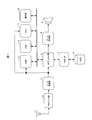
- FIG. 1 shows the configuration of a music recording / playback device.
- the music recording / playback apparatus includes an antenna 1, an FM tuner unit 2, an A / D conversion unit 3, an MP3 codec unit 4, a D / A conversion unit 5, a speaker unit 6, an HDD-IF 7, an HDD 8, a DSP 9, a CPU 10, a memory 11, An operation unit 12 and the like are provided.
- the FM tuner unit 2 selects a broadcast wave of a predetermined frequency selected by the user from the FM broadcast wave input via the antenna 1, demodulates the selected broadcast wave, and outputs an analog audio signal (sound on the left channel). Signal and right channel audio signal).
- the A / D conversion unit 3 converts the analog audio signal obtained by the FM tuner unit 2 into a digital audio signal.
- the MP3 codec unit 4 encodes a digital audio signal corresponding to the music into MP3 compressed data, and decodes the MP3 compressed data read from the HDD 8 into a digital audio signal.
- the HDD-IF 7 implements an interface with the HDD 8.
- the HDD 8 is a mass storage device.
- the DSP 9 detects a change point from the input audio data or calculates a stereo feeling.
- the change point is a portion of the audio data where the change amount of the audio power is larger than a predetermined threshold. Further, the stereo feeling is represented by a difference value between the audio data of the left channel and the audio data of the right channel.
- the DSP 9 calculates the amount of change in audio power from the input audio data in order to detect the change point.
- the CPU10 controls each part of a music recording / reproducing apparatus.
- the memory 11 operates as a work memory for the CPU 10.
- data such as a program of the CPU 10 is stored in a ROM (not shown).
- MP3 compressed data obtained by the encoding function of the MP3 codec unit 4 is recorded on the HDD 8.
- the D / A converter 5 converts the digital audio signal obtained by the decoding function of the MP3 codec unit 4 into an analog audio signal.
- the speaker unit 6 outputs an analog audio signal obtained by the D / A conversion unit 5.
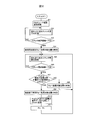
- FIG. 2 shows a music recording process procedure.
- the audio data input from the A / D converter 3 is input to the DSP 9 and also sent to the memory 11.
- the predetermined first area in the memory 11 holds audio data for a predetermined past time from a new one.
- This predetermined time (hereinafter referred to as the first predetermined time) is set to a time (for example, 15 minutes) in which audio data for several songs can be stored.
- the predetermined second area in the memory 11 holds audio data for a past predetermined time from a new one.
- This predetermined time (hereinafter referred to as a second predetermined time) is set to a time during which audio data for several seconds (for example, 10 seconds) can be stored.
- the DSP 9 always calculates the amplitude difference value of the audio data of both the left and right channels (hereinafter referred to as the left and right amplitude difference values) and stores them in a predetermined third area in the memory 11. In this third region, amplitude difference values for a predetermined past time from a new one are held.
- the predetermined time (hereinafter referred to as a third predetermined time) is set to the same time (for example, 10 seconds) as the second predetermined time.
- the CPU10 starts a music recording process according to a user's recording start instruction.
- the CPU 10 activates the FM tuner unit 2 to select the broadcasting station designated by the FM tuner unit 2 and causes the DSP 9 to calculate the left and right amplitude difference values to thereby store the memory 11.
- the process to be stored in the third area is started (step S1).
- the output of the FM tuner unit 2 is sent to the A / D conversion unit 3 and converted into digital audio data.
- This audio data is sent to the DSP 9 and to the memory 11. Thereby, the storage of the audio data in the first area and the second area in the memory 11 is started.
- the audio data for the first predetermined time (in this example, 15 minutes) is stored in the first area in the memory 11. After that, the oldest audio data in the first area is deleted and the latest audio data is recorded in the first area in the memory 11.
- the audio data for the second predetermined time (in this example, 10 seconds) is stored in the second area in the memory 11. If so, thereafter, the oldest audio data in the second area is deleted, and the latest audio data is recorded in the second area in the memory 11.
- the DSP 9 calculates an amplitude difference value (left and right amplitude difference value) between the left channel audio data and the right channel audio data input to the DSP 9 and stores the calculated amplitude difference value in the third area in the memory 11.
- the DSP 9 and the CPU 10 detect a change point and perform a process for calculating a stereo effect near the change point position (hereinafter referred to as a stereo effect calculation process near the change point) (step S2).
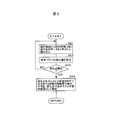
- FIG. 3 shows a procedure of a stereo feeling calculation process near the change point.
- the DSP 9 converts the audio data for 5 seconds before the current time to the audio data at the processing target position (processing Target data) (step S21). Then, the DSP 9 calculates the amount of change in the read audio power and gives it to the CPU 10 (step S22).
- the audio power for example, a value obtained by squaring the amplitude of the audio signal is used.
- the CPU 10 determines whether or not the processing target position (the position where the audio data is input 5 seconds before the current time) is a change point based on the change amount of the audio power given from the DSP 9 (step S23). ). That is, when the change amount of the audio power given from the DSP 9 is larger than the predetermined threshold Th1, it is determined that the processing target position is a change point. If it is determined that the processing target position is not a change point, the process returns to step S21, and the processes of steps S21 to S23 are performed again.
- step S23 If it is determined in step S23 that the processing target position is a change point, the left and right of 10 seconds in total, about 5 seconds before and after the change point, stored in the third area of the memory 11 are stored. And the average value is calculated as the stereo evaluation value near the change point (step S24). Then, the stereo sense calculation process near the current change point is terminated.
- step S3 when the stereo effect calculation process near the changing point in step S2 is completed, it is determined whether or not the stereo evaluation value calculated in step S2 is less than a predetermined threshold Th2 (step S3). If it is determined that the stereo evaluation value calculated in step S2 is equal to or greater than the predetermined threshold Th2, it is determined that the processing target position is a music part, and the process returns to step S2.
- step S3 If it is determined in step S3 that the stereo evaluation value calculated in step S2 is less than the predetermined threshold Th2, it is determined that the processing target position is not a music part but a talk part such as MC or DJ. To do. In this case, since there is a possibility that the music is started thereafter, the time information of the processing target position (time information 5 seconds before the current time) is stored as the music start time Ps (step S4). Then, the process proceeds to step S5. In step S5, as in step S2, a stereo effect calculation process near the changing point is performed.
- step S6 it is determined whether or not the stereo sense evaluation value calculated in step S5 is less than a predetermined threshold Th2 (step S6). If it is determined that the stereo evaluation value calculated in step S5 is equal to or greater than the predetermined threshold Th2, it is determined that the processing target position is a music part, and the process returns to step S5.
- step S6 If it is determined in step S6 that the stereo evaluation value calculated in step S5 is less than the predetermined threshold Th2, the processing target position is not a music part but a talk part such as MC or DJ. It is determined whether or not the section length from the time stored as the music start time Ps to the time of the current processing target position (the time 5 seconds before the current time) is equal to or longer than a predetermined time ⁇ T (step) S7). That is, it is determined whether or not the length of the section between the change point determined to be the talk part this time and the change point previously determined to be the talk part is greater than or equal to ⁇ T.
- step S8 When it is determined that the section length from the time stored as the music start time Ps to the time of the current processing target position is less than the predetermined time ⁇ T, it is determined that the section does not constitute one music section. Then, the music start time Ps is updated to the time information of the current processing target position (time information 5 seconds before the current time) (step S8). Then, the process returns to step S5.
- step S7 when it is determined that the section length from the time stored as the music start time Ps to the time of the current processing target position is equal to or longer than the predetermined time ⁇ T, the time information of the current processing target position ( The time information 5 seconds before the current time) is stored as the music end time Pe (step S9).
- audio data corresponding to the section from the music start time Ps to the music end time Pe is extracted as music data and compressed by the MP3 codec unit 4. After that, it is recorded on the HDD 8 (step S10). Thereafter, the music start time Ps is updated to the time stored as the music end time Pe (step S11), and the process returns to step S5.
- the music recording process ends.
- the music section 102 is started after the first DJ section 101 is ended, and the second DJ section 103 is started after the music section 102 is ended.
- a recording start instruction is input from the middle of the music section 100 before the first DJ section 101
- the audio data of the music section 100 before the first DJ section 101 is processed in the second area of the memory 11.
- the signal is read from the inside to the DSP 9
- the change point is not detected in step S 2, or even if a change point is detected, the stereo feeling evaluation value is equal to or greater than the threshold Th 2, and therefore NO in step S 3.
- the process of S2 is continued or the processes of steps S2 and S3 are repeated.
- step S2 While the processing for the music section 100 before the first DJ section 101 is completed and the audio data of the first DJ section 101 is being read as processing target data from the second area of the memory 11 into the DSP 9, A change point is detected in step S2. Further, since the stereo evaluation value corresponding to the detected change point is less than the threshold Th2, YES is determined in step S3, and the time corresponding to the change point is recorded as the music start time Ps in step S4. Moreover, it progresses to step S5 after step S4.
- step S5 If a change point is detected in step S5, the stereo feeling evaluation value is likely to be less than the threshold Th2, and thus the process proceeds to step S7. From the time stored as the music start time Ps to the current processing target position. Is less than the predetermined time ⁇ T, NO is determined in step S7, and the music start time Ps is updated in step S8. Therefore, the processes of S5 to S8 are repeated.
- step S5 Whether the change point is detected in step S5 while the processing for the first DJ section 101 is completed and the audio data of the music section 102 is being read as processing target data from the second area of the memory 11 into the DSP 9 Even if a change point is detected, the stereo evaluation value is equal to or greater than the threshold Th2, and therefore NO in step S6, the process in step S5 is continued, or the processes in steps S5 and S6 are repeated.
- step S5 When the process for the music section 102 is completed and the audio data of the second DJ section 103 is read as processing target data from the second area of the memory 11 to the DSP 9, a change point is detected in step S5. Moreover, since the stereo evaluation value corresponding to the detected change point is less than the threshold Th2, YES is determined in step S6, and the process proceeds to step S7. Since the section length from the time stored as the music start time Ps to the current processing target position is equal to or longer than the predetermined time ⁇ T, YES is determined in step S7, the process proceeds to step S9, and the time corresponding to the current processing target position is It is stored as the music end time Pe. The audio data corresponding to the section from the music start time Ps to the music end time Pe among the audio data held in the first area in the memory 11 is extracted as music data and compressed, and then stored in the HDD 8. To be recorded.
- the processing target data is a music part or a talk part, and using this determination result, although the start position and end position are specified, it may be determined whether the data to be processed is a musical piece portion or a talk portion in consideration of the feature quantity in the frequency region near the change point.
- mel cepstrum (MFCC: MelMFrequency Cepstrum ⁇ ⁇ Coefficient)
- MFCC MelMFrequency Cepstrum ⁇ ⁇ Coefficient
Landscapes
- Engineering & Computer Science (AREA)
- Signal Processing (AREA)
- Physics & Mathematics (AREA)
- Acoustics & Sound (AREA)
- Multimedia (AREA)
- Computational Linguistics (AREA)
- Health & Medical Sciences (AREA)
- Audiology, Speech & Language Pathology (AREA)
- Human Computer Interaction (AREA)
- Signal Processing For Digital Recording And Reproducing (AREA)
Abstract
放送波を受信し、受信した放送波から得られる左右2チャネルの音声信号から楽曲部分を抽出して記録媒体に記録する機能を備えた楽曲記録装置において、受信した音声信号から音声パワーの変化量が大きい箇所を変化点として検出する変化点検出手段、受信した音声信号から、左右2チャンネルの音声信号の振幅差分値を算出する振幅差分値算出手段、ならびに変化点検出手段によって検出された変化点付近の振幅差分値に基づいて、楽曲区間の開始位置および終了位置を特定する特定手段を備えている。
Description
この発明は、ラジオ放送、テレビ放送等の放送波を受信し、受信した放送波から楽曲コンテンツを抽出して記録する機能を備えた楽曲記録装置に関する。
ラジオ放送、テレビ放送等によって提供される音楽番組では、音楽(楽曲)と、MC(master of ceremony) やDJなどのトークから番組が構成されている。このような音楽番組では、楽曲の間にトークが入る。また、楽曲の冒頭部分や終了部分では、楽曲にDJの音声が重なる場合が多い。
ラジオ放送またはテレビ放送を受信し、受信した放送波から楽曲コンテンツを抽出して記録する機能および記録した楽曲データを再生する機能を備えた楽曲記録再生装置が知られている。
ラジオ放送またはテレビ放送を受信し、受信した放送波から楽曲コンテンツを抽出して記録する機能および記録した楽曲データを再生する機能を備えた楽曲記録再生装置が知られている。
従来の楽曲記録再生装置では、受信した放送波から楽曲コンテンツを抽出する際に、ステレオ感のみによって楽曲区間の開始位置および終了位置を検出している。つまり左チャンネルの音声信号と右チャンネルの音声信号との差分値が所定の第1閾値より大きくなったことに基づいて楽曲区間の開始位置を検出し、両チャンネルの音声信号の差分値が所定の第2閾値より小さくなったことに基づいて楽曲区間の終了位置を検出している。
特表2005-518560号公報
従来の楽曲抽出方法では、ステレオ感の小さい箇所が楽曲区間の途中に存在する場合には、その箇所を楽曲区間の終了位置と誤検出することがあった。
この発明は、楽曲区間の開始位置および終了位置の検出精度の向上化が図れる楽曲記録装置を提供することを目的とする。
この発明は、楽曲区間の開始位置および終了位置の検出精度の向上化が図れる楽曲記録装置を提供することを目的とする。
本発明による第1の楽曲記録装置は、放送波を受信し、受信した放送波から得られる複数チャンネルの音声信号から楽曲部分を抽出して記録する機能を備えた楽曲記録装置において、受信した音声信号から音声パワーの変化量を検出する変化量検出手段、受信した音声信号から、各チャンネルの音声信号の振幅差またはパワー差を算出する算出手段、ならびに前記変化量検出手段によって検出された変化量と、前記算出手段によって算出された振幅差またはパワー差に基づいて、楽曲区間の開始位置又は終了位置を特定する特定手段、を備えていることを特徴とする。
本発明による第2の楽曲記録装置は、放送波を受信し、受信した放送波から得られる左右2チャンネルの音声信号から楽曲部分を抽出して記録媒体に記録する機能を備えた楽曲記録装置において、受信した音声信号から音声パワーの変化量が大きい箇所を変化点として検出する変化点検出手段、受信した音声信号から、左右2チャンネルの音声信号の振幅差分値を算出する振幅差分値算出手段、ならびに前記変化点検出手段によって検出された変化点付近の振幅差分値に基づいて、楽曲区間の開始位置および終了位置を特定する特定手段、を備えていることを特徴とする。
前記第2の楽曲記録装置における前記特定手段としては、前記変化点検出手段によって検出された変化点付近の振幅差分値の平均値が所定の閾値未満であると判別したときに、当該変化点位置を楽曲区間の開始位置として記憶する第1手段、前記第1手段によって楽曲区間の開始位置が記憶された後において、前記変化点検出手段によって変化点が検出される毎に、当該変化点付近の振幅差分値の平均値が所定の閾値未満であるか否かを判別する第2手段、前記第2手段によって、振幅差分値の平均値が所定の閾値未満であると判別されたときには、楽曲区間の開始位置として記憶されている変化点位置から、今回検出された変化点位置までの区間長が所定長以上であるか否かを判別する第3手段、前記第3手段によって、前記区間長が所定長未満であると判別されたときには、楽曲区間の開始位置を、今回検出された変化点位置に更新させる第4手段、および前記第3手段によって、前記区間長が所定長以上であると判別されたときには、今回検出された変化点位置を楽曲区間の終了位置として記憶する第5手段、を備えたものを用いることができる。
また、前記第2の楽曲記録装置における前記特定手段としては、前記変化点検出手段によって検出された変化点付近の振幅差分値の平均値が所定の閾値未満であると判別したときに、当該変化点位置を楽曲区間の開始位置として記憶する第1手段、前記第1手段によって楽曲区間の開始位置が記憶された後において、前記変化点検出手段によって変化点が検出される毎に、当該変化点付近の振幅差分値の平均値が所定の閾値未満であるか否かを判別する第2手段、前記第2手段によって、振幅差分値の平均値が所定の閾値未満であると判別されたときには、楽曲区間の開始位置として記憶されている変化点位置から、今回検出された変化点位置までの区間長が所定長以上であるか否かを判別する第3手段、前記第3手段によって、前記区間長が所定長未満であると判別されたときには、楽曲区間の開始位置を、今回検出された変化点位置に更新させる第4手段、前記第3手段によって、前記区間長が所定長以上であると判別されたときには、今回検出された変化点位置を楽曲区間の終了位置として記憶する第5手段、および前記第5手段によって記憶された楽曲区間の終了位置を、次の楽曲区間の開始位置として記憶した後において、前記第2手段による処理を実行させる第6手段、を備えたものを用いることができる。
前記第2の楽曲記録装置は、受信した音声信号から、周波数領域の特徴量を算出する周波数領域特徴量算出手段を更に備えていてもよい。この場合、前記特定手段としては、前記変化点検出手段によって検出された変化点付近の、振幅差分値および周波数領域の特徴量に基づいて、楽曲区間の開始位置および終了位置を特定するものを用いることができる。
前記変化点検出手段によって検出された変化点付近の振幅差分値は、前記変化点検出手段によって検出された変化点位置を中心とする前後所定時間範囲内の、左右2チャンネルの音声信号の振幅差分値の平均値であってもよい。
この発明によれば、楽曲区間の開始位置および終了位置の検出精度の向上化が図れるようになる。
1 アンテナ
2 FMチューナ部
3 A/D変換部
4 MP3 codec 部
5 D/A変換部
6 スピーカ部
7 HDD-IF
8 HDD
9 DSP
10 CPU
11 メモリ
12 操作部
2 FMチューナ部
3 A/D変換部
4 MP3 codec 部
5 D/A変換部
6 スピーカ部
7 HDD-IF
8 HDD
9 DSP
10 CPU
11 メモリ
12 操作部
以下、図面を参照して、この発明の実施形態について説明する。
〔1〕楽曲記録再生装置の構成
図1は、楽曲記録再生装置の構成を示している。
楽曲記録再生装置は、アンテナ1、FMチューナ部2、A/D変換部3、MP3 codec 部4、D/A変換部5、スピーカ部6、HDD-IF7、HDD8、DSP9、CPU10、メモリ11、操作部12等を備えている。
〔1〕楽曲記録再生装置の構成
図1は、楽曲記録再生装置の構成を示している。
楽曲記録再生装置は、アンテナ1、FMチューナ部2、A/D変換部3、MP3 codec 部4、D/A変換部5、スピーカ部6、HDD-IF7、HDD8、DSP9、CPU10、メモリ11、操作部12等を備えている。
FMチューナ部2は、アンテナ1を介して入力したFM放送波からユーザによって選択された所定の周波数の放送波を選局し、選局した放送波を復調してアナログ音声信号(左チャンネルの音声信号および右チャンネルの音声信号)を出力する。A/D変換部3は、FMチューナ部2で得られたアナログ音声信号をデジタル音声信号に変換する。
MP3 codec 部4は、楽曲に対応するデジタル音声信号をMP3圧縮データにエンコードしたり、HDD8から読み出されたMP3圧縮データをデジタル音声信号にデコードしたりする。HDD-IF7は、HDD8とのインターフェイスを実現する。HDD8は、大容量記憶装置である。
MP3 codec 部4は、楽曲に対応するデジタル音声信号をMP3圧縮データにエンコードしたり、HDD8から読み出されたMP3圧縮データをデジタル音声信号にデコードしたりする。HDD-IF7は、HDD8とのインターフェイスを実現する。HDD8は、大容量記憶装置である。
DSP9は、入力される音声データから変化点を検出したり、ステレオ感を算出したりする。変化点とは、音声データのうち、音声パワーの変化量が所定の閾値より大きい箇所をいう。また、ステレオ感は、左チャンネルの音声データと右チャンネルの音声データとの差分値で表される。DSP9は、変化点を検出するために、入力される音声データから音声パワーの変化量を算出する。
CPU10は、楽曲記録再生装置の各部を制御する。メモリ11は、CPU10のワークメモリとして動作する。なお、CPU10のプログラム等のデータは図示しないROMに格納されている。
HDD8には、MP3 codec 部4のエンコード機能によって得られたMP3圧縮データが記録される。D/A変換部5は、MP3 codec 部4のデコード機能によって得られたデジタル音声信号をアナログ音声信号に変換する。スピーカ部6は、D/A変換部5によって得られたアナログ音声信号を出力する。
〔2〕楽曲記録処理
図2は、楽曲記録処理手順を示している。
HDD8には、MP3 codec 部4のエンコード機能によって得られたMP3圧縮データが記録される。D/A変換部5は、MP3 codec 部4のデコード機能によって得られたデジタル音声信号をアナログ音声信号に変換する。スピーカ部6は、D/A変換部5によって得られたアナログ音声信号を出力する。
〔2〕楽曲記録処理
図2は、楽曲記録処理手順を示している。
楽曲記録処理時には、A/D変換部3から入力された音声データはDSP9に入力されるとともに、メモリ11にも送られる。メモリ11内の所定の第1領域には、新しいものから過去所定時間分の音声データが保持される。この所定時間(以下、第1の所定時間という)は、数曲分の音声データを記憶可能な時間(例えば、15分)に設定されている。 また、メモリ11内の所定の第2領域には、新しいものから過去所定時間分の音声データが保持される。この所定時間(以下、第2の所定時間という)は、数秒間(例えば、10秒間)の音声データを記憶可能な時間に設定されている。
また、楽曲記録処理時には、DSP9は、常時、左右両チャンネルの音声データの振幅差分値(以下、左右の振幅差分値という)を算出して、メモリ11内の所定の第3領域に記憶させる。この第3領域には、新しいものから過去所定時間分の振幅差分値が保持される。この所定時間(以下、第3の所定時間という)は、第2の所定時間と同じ時間(例えば、10秒間)に設定されている。
CPU10は、ユーザの録音開始指示により、楽曲記録処理を開始する。楽曲記録処理が開始されると、CPU10は、FMチューナ部2を起動して、FMチューナ部2に指定された放送局を選局させるとともに、DSP9に左右の振幅差分値を算出させてメモリ11の第3領域に記憶させる処理を開始させる(ステップS1)。
FMチューナ部2の出力は、A/D変換部3に送られてデジタルの音声データに変換される。この音声データは、DSP9に送られるとともにメモリ11に送られる。これにより、メモリ11内の第1領域および第2領域への音声データの記憶が開始せしめられる。
FMチューナ部2の出力は、A/D変換部3に送られてデジタルの音声データに変換される。この音声データは、DSP9に送られるとともにメモリ11に送られる。これにより、メモリ11内の第1領域および第2領域への音声データの記憶が開始せしめられる。
なお、音声データのメモリ11内の第1領域への記憶が開始された後において、第1の所定時間分(この例では、15分間)の音声データがメモリ11内の第1領域に記憶された場合には、それ以後は、第1領域内の最も古い音声データが削除されて、最新の音声データがメモリ11内の第1領域に記録される。同様に、音声データのメモリ11内の第2領域への記憶が開始された後において、第2の所定時間分(この例では、10秒間)の音声データがメモリ11内の第2領域に記憶された場合には、それ以後は、第2領域内の最も古い音声データが削除されて、最新の音声データがメモリ11内の第2領域に記録される。
また、DSP9は、DSP9に入力された左チャンネルの音声データと右チャンネルの音声データとの振幅差分値(左右の振幅差分値)を算出してメモリ11内の第3領域に記憶させるという処理を開始する。
この後、DSP9およびCPU10は、変化点を検出するとともに変化点位置付近のステレオ感を算出するための処理(以下、変化点付近のステレオ感算出処理という)を行なう(ステップS2)。
この後、DSP9およびCPU10は、変化点を検出するとともに変化点位置付近のステレオ感を算出するための処理(以下、変化点付近のステレオ感算出処理という)を行なう(ステップS2)。
図3は、変化点付近のステレオ感算出処理の手順を示している。
まず、DSP9は、メモリ11の第2領域に記憶されている現在時刻から10秒前までの10秒間の音声データのうち、現在時刻から5秒前の音声データを処理対象位置の音声データ(処理対象データ)として読み込む(ステップS21)。そして、DSP9は、読み込んだ音声パワーの変化量を算出してCPU10に与える(ステップS22)。音声パワーとしては、例えば、音声信号の振幅を二乗したものが用いられる。
まず、DSP9は、メモリ11の第2領域に記憶されている現在時刻から10秒前までの10秒間の音声データのうち、現在時刻から5秒前の音声データを処理対象位置の音声データ(処理対象データ)として読み込む(ステップS21)。そして、DSP9は、読み込んだ音声パワーの変化量を算出してCPU10に与える(ステップS22)。音声パワーとしては、例えば、音声信号の振幅を二乗したものが用いられる。
CPU10は、DSP9から与えられた音声パワーの変化量に基づいて、処理対象位置(現在時刻から5秒前に音声データが入力された位置)が変化点であるか否かを判別する(ステップS23)。つまり、DSP9から与えられた音声パワーの変化量が所定の閾値Th1より大きいときに、処理対象位置が変化点であると判別する。
処理対象位置が変化点ではないと判別した場合には、ステップS21に戻り、再度ステップS21~S23の処理を行なう。
処理対象位置が変化点ではないと判別した場合には、ステップS21に戻り、再度ステップS21~S23の処理を行なう。
前記ステップS23において、処理対象位置が変化点であると判別した場合には、メモリ11の第3領域に保存されている、当該変化点を中心とした前後約5秒ずつの合計10秒間の左右の振幅差分値を読み出し、その平均値を変化点付近のステレオ感評価値として算出する(ステップS24)。そして、今回の変化点付近のステレオ感算出処理を終了する。
図2に戻り、ステップS2の変化点付近のステレオ感算出処理が終了すると、ステップS2で算出されたステレオ感評価値が所定の閾値Th2未満であるか否かを判別する(ステップS3)。
ステップS2で算出されたステレオ感評価値が所定の閾値Th2以上であると判別した場合には、処理対象位置は楽曲部分であると判断し、ステップS2に戻る。
ステップS2で算出されたステレオ感評価値が所定の閾値Th2以上であると判別した場合には、処理対象位置は楽曲部分であると判断し、ステップS2に戻る。
前記ステップS3において、ステップS2で算出されたステレオ感評価値が所定の閾値Th2未満であると判別した場合には、処理対象位置は楽曲部分ではなく、MCやDJなどのトーク部分であると判断する。この場合には、これ以後に楽曲が開始される可能性があるので、楽曲開始時刻Psとして処理対象位置の時刻情報(現在時刻の5秒前の時刻情報)を記憶する(ステップS4)。そして、ステップS5に進む。ステップS5では、ステップS2と同様に、変化点付近のステレオ感算出処理を行なう。
ステップS5の変化点付近のステレオ感算出処理が終了すると、ステップS5で算出されたステレオ感評価値が所定の閾値Th2未満であるか否かを判別する(ステップS6)。
ステップS5で算出されたステレオ感評価値が所定の閾値Th2以上であると判別した場合には、処理対象位置は楽曲部分であると判断し、ステップS5に戻る。
ステップS5で算出されたステレオ感評価値が所定の閾値Th2以上であると判別した場合には、処理対象位置は楽曲部分であると判断し、ステップS5に戻る。
前記ステップS6において、ステップS5で算出されたステレオ感評価値が所定の閾値Th2未満であると判別した場合には、処理対象位置は、楽曲部分ではなく、MCやDJなどのトーク部分であると判断し、楽曲開始時刻Psとして記憶されている時刻から現在の処理対象位置の時刻(現在時刻の5秒前の時刻)までの区間長が所定時間ΔT以上であるか否かを判別する(ステップS7)。つまり、今回、トーク部分であると判別された変化点と、前回にトーク部分であると判別された変化点との間の区間の長さがΔT以上であるか否かを判別する。
楽曲開始時刻Psとして記憶されている時刻から現在の処理対象位置の時刻までの区間長が所定時間ΔT未満であると判別した場合には、当該区間は1つの楽曲区間を構成していないと判別し、楽曲開始時刻Psを現在の処理対象位置の時刻情報(現在時刻の5秒前の時刻情報)に更新する(ステップS8)。そして、ステップS5に戻る。
前記ステップS7において、楽曲開始時刻Psとして記憶されている時刻から現在の処理対象位置の時刻までの区間長が所定時間ΔT以上であると判別した場合には、現在の処理対象位置の時刻情報(現在時刻の5秒前の時刻情報)を楽曲終了時刻Peとして記憶する(ステップS9)。そして、メモリ11内の第1領域に保持されている音声データのうち、楽曲開始時刻Psから楽曲終了時刻Peまでの区間に相当する音声データを楽曲データとして抽出し、MP3 codec 部4により圧縮させた後、HDD8に記録させる(ステップS10)。この後、楽曲開始時刻Psを、楽曲終了時刻Peとして記憶されている時刻に更新した後(ステップS11)、ステップS5に戻る。
前記ステップS7において、楽曲開始時刻Psとして記憶されている時刻から現在の処理対象位置の時刻までの区間長が所定時間ΔT以上であると判別した場合には、現在の処理対象位置の時刻情報(現在時刻の5秒前の時刻情報)を楽曲終了時刻Peとして記憶する(ステップS9)。そして、メモリ11内の第1領域に保持されている音声データのうち、楽曲開始時刻Psから楽曲終了時刻Peまでの区間に相当する音声データを楽曲データとして抽出し、MP3 codec 部4により圧縮させた後、HDD8に記録させる(ステップS10)。この後、楽曲開始時刻Psを、楽曲終了時刻Peとして記憶されている時刻に更新した後(ステップS11)、ステップS5に戻る。
なお、ユーザ操作によって録音終了指示が入力されると、楽曲記録処理は終了する。
図4に示すように、第1のDJ区間101が終了した後に、楽曲区間102が開始され、楽曲区間102が終了した後に第2のDJ区間103が開始される場合を想定する。
第1のDJ区間101より前の楽曲区間100の途中から録音開始指示が入力されたとすると、第1のDJ区間101より前の楽曲区間100の音声データが処理対象データとしてメモリ11の第2領域内からDSP9に読み込まれている間においては、ステップS2において変化点が検出されないか、仮に変化点が検出されてもステレオ感評価値が閾値Th2以上であるためステップS3でNOとなるため、ステップS2の処理が継続されるか、ステップS2およびS3の処理が繰り返される。
第1のDJ区間101より前の楽曲区間100に対する処理が終了し、第1のDJ区間101の音声データが処理対象データとしてメモリ11の第2領域内からDSP9に読み込まれている間においては、ステップS2において変化点が検出される。また、検出された変化点に対応するステレオ感評価値が閾値Th2未満となるため、ステップS3でYESとなり、ステップS4で楽曲開始時刻Psとして当該変化点に対応する時刻が記録される。また、ステップS4の後、ステップS5に進む。
ステップS5で変化点が検出された場合、ステレオ感評価値が閾値Th2未満となる可能性が高いので、ステップS7に進むが、楽曲開始時刻Psとして記憶されている時刻から現在の処理対象位置までの区間長が所定時間ΔT未満となるので、ステップS7でNOとなり、ステップS8で楽曲開始時刻Psが更新される。したがって、S5~S8の処理が繰り返されることになる。
第1のDJ区間101に対する処理が終了し、楽曲区間102の音声データが処理対象データとしてメモリ11の第2領域内からDSP9に読み込まれている間においては、ステップS5において変化点が検出されないか、仮に変化点が検出されてもステレオ感評価値が閾値Th2以上であるため、ステップS6でNOとなるため、ステップS5の処理が継続されるか、ステップS5およびS6の処理が繰り返される。
楽曲区間102に対する処理が終了し、第2のDJ区間103の音声データが処理対象データとしてメモリ11の第2領域内からDSP9に読み込まれると、ステップS5において変化点が検出される。また、検出された変化点に対応するステレオ感評価値が閾値Th2未満となるため、ステップS6でYESとなり、ステップS7に進む。楽曲開始時刻Psとして記憶されている時刻から現在の処理対象位置までの区間長が所定時間ΔT以上となるので、ステップS7でYESとなり、ステップS9に進み、現在の処理対象位置に対応する時刻が楽曲終了時刻Peとして記憶される。そして、メモリ11内の第1領域に保持されている音声データのうち、楽曲開始時刻Psから楽曲終了時刻Peまでの区間に相当する音声データが楽曲データとして抽出され、圧縮された後、HDD8に記録される。
ところで、楽曲の開始位置、終了位置の検出精度を高めるためには、変化点検出のための閾値を低くすることにより、多くの変化点を検出するようにすることが好ましい。しかしながら、変化点検出のための閾値を低くすると、楽曲区間内において変化点として検出される箇所が多くなる。このため、従来例で説明したように、楽曲区間内においてステレオ感が小さい箇所が存在する場合には、終了位置を誤検出する可能性が高くなる。そこで、このような誤検出を回避するために、変化点付近の周波数領域の特徴量をも考慮して楽曲の開始位置、終了位置を検出するようにすることが好ましい。
つまり、前述の実施形態では、変化点付近の左右差分値の平均値に基づいて、処理対象データが楽曲部分であるかトーク部分であるかを判別し、この判別結果を利用して楽曲区間の開始位置および終了位置を特定しているが、さらに変化点付近の周波数領域の特徴量を考慮して、処理対象データが楽曲部分であるかトーク部分であるかを判別するようにしてもよい。
周波数領域における特徴量としては、例えば、メルケプストラム(MFCC:Mel Frequency Cepstrum Coefficient)を用いることができる。より具体的には、変化点付近において検出されたMFCCと予め作成されている楽曲に対する基準データ(MFCC)との間の尤度を算出し、尤度が所定の第3閾値以上でかつ上述したステレオ感評価値が第2閾値以上である場合に当該変化点近傍が楽曲であると判別する。
Claims (6)
- 放送波を受信し、受信した放送波から得られる複数チャンネルの音声信号から楽曲部分を抽出して記録する機能を備えた楽曲記録装置において、
受信した音声信号から音声パワーの変化量を検出する変化量検出手段、
受信した音声信号から、各チャンネルの音声信号の振幅差またはパワー差を算出する算出手段、ならびに
前記変化量検出手段によって検出された変化量と、前記算出手段によって算出された振幅差またはパワー差に基づいて、楽曲区間の開始位置又は終了位置を特定する特定手段、
を備えていることを特徴とする楽曲記録装置。 - 放送波を受信し、受信した放送波から得られる左右2チャンネルの音声信号から楽曲部分を抽出して記録媒体に記録する機能を備えた楽曲記録装置において、
受信した音声信号から音声パワーの変化量が大きい箇所を変化点として検出する変化点検出手段、
受信した音声信号から、左右2チャンネルの音声信号の振幅差分値を算出する振幅差分値算出手段、ならびに
前記変化点検出手段によって検出された変化点付近の振幅差分値に基づいて、楽曲区間の開始位置および終了位置を特定する特定手段、
を備えていることを特徴とする楽曲記録装置。 - 前記特定手段は、
前記変化点検出手段によって検出された変化点付近の振幅差分値の平均値が所定の閾値未満であると判別したときに、当該変化点位置を楽曲区間の開始位置として記憶する第1手段、
前記第1手段によって楽曲区間の開始位置が記憶された後において、前記変化点検出手段によって変化点が検出される毎に、当該変化点付近の振幅差分値の平均値が所定の閾値未満であるか否かを判別する第2手段、
前記第2手段によって、振幅差分値の平均値が所定の閾値未満であると判別されたときには、楽曲区間の開始位置として記憶されている変化点位置から、今回検出された変化点位置までの区間長が所定長以上であるか否かを判別する第3手段、
前記第3手段によって、前記区間長が所定長未満であると判別されたときには、楽曲区間の開始位置を、今回検出された変化点位置に更新させる第4手段、および
前記第3手段によって、前記区間長が所定長以上であると判別されたときには、今回検出された変化点位置を楽曲区間の終了位置として記憶する第5手段、
を備えていることを特徴とする請求項2に記載の楽曲記録装置。 - 前記特定手段は、
前記変化点検出手段によって検出された変化点付近の振幅差分値の平均値が所定の閾値未満であると判別したときに、当該変化点位置を楽曲区間の開始位置として記憶する第1手段、
前記第1手段によって楽曲区間の開始位置が記憶された後において、前記変化点検出手段によって変化点が検出される毎に、当該変化点付近の振幅差分値の平均値が所定の閾値未満であるか否かを判別する第2手段、
前記第2手段によって、振幅差分値の平均値が所定の閾値未満であると判別されたときには、楽曲区間の開始位置として記憶されている変化点位置から、今回検出された変化点位置までの区間長が所定長以上であるか否かを判別する第3手段、
前記第3手段によって、前記区間長が所定長未満であると判別されたときには、楽曲区間の開始位置を、今回検出された変化点位置に更新させる第4手段、
前記第3手段によって、前記区間長が所定長以上であると判別されたときには、今回検出された変化点位置を楽曲区間の終了位置として記憶する第5手段、および
前記第5手段によって記憶された楽曲区間の終了位置を、次の楽曲区間の開始位置として記憶した後において、前記第2手段による処理を実行させる第6手段、
を備えていることを特徴とする請求項2に記載の楽曲記録装置。 - 受信した音声信号から、周波数領域の特徴量を算出する周波数領域特徴量算出手段を更に備えており、
前記特定手段は、前記変化点検出手段によって検出された変化点付近の、振幅差分値および周波数領域の特徴量に基づいて、楽曲区間の開始位置および終了位置を特定するものであることを特徴とする請求項2に記載の楽曲記録装置。 - 前記変化点検出手段によって検出された変化点付近の振幅差分値は、前記変化点検出手段によって検出された変化点位置を中心とする前後所定時間範囲内の、左右2チャンネルの音声信号の振幅差分値の平均値であることを特徴とする請求項2乃至5に記載の楽曲記録装置。
Priority Applications (1)
| Application Number | Priority Date | Filing Date | Title |
|---|---|---|---|
| US12/855,995 US20100302917A1 (en) | 2008-02-13 | 2010-08-13 | Music Extracting Apparatus And Recording Apparatus |
Applications Claiming Priority (2)
| Application Number | Priority Date | Filing Date | Title |
|---|---|---|---|
| JP2008-032067 | 2008-02-13 | ||
| JP2008032067A JP2009192725A (ja) | 2008-02-13 | 2008-02-13 | 楽曲記録装置 |
Related Child Applications (1)
| Application Number | Title | Priority Date | Filing Date |
|---|---|---|---|
| US12/855,995 Continuation-In-Part US20100302917A1 (en) | 2008-02-13 | 2010-08-13 | Music Extracting Apparatus And Recording Apparatus |
Publications (1)
| Publication Number | Publication Date |
|---|---|
| WO2009101808A1 true WO2009101808A1 (ja) | 2009-08-20 |
Family
ID=40956839
Family Applications (1)
| Application Number | Title | Priority Date | Filing Date |
|---|---|---|---|
| PCT/JP2009/000556 Ceased WO2009101808A1 (ja) | 2008-02-13 | 2009-02-12 | 楽曲記録装置 |
Country Status (3)
| Country | Link |
|---|---|
| US (1) | US20100302917A1 (ja) |
| JP (1) | JP2009192725A (ja) |
| WO (1) | WO2009101808A1 (ja) |
Cited By (1)
| Publication number | Priority date | Publication date | Assignee | Title |
|---|---|---|---|---|
| JP2012032447A (ja) * | 2010-07-28 | 2012-02-16 | Toshiba Corp | 音質制御装置及び音質制御方法 |
Families Citing this family (1)
| Publication number | Priority date | Publication date | Assignee | Title |
|---|---|---|---|---|
| GB2539875B (en) * | 2015-06-22 | 2017-09-20 | Time Machine Capital Ltd | Music Context System, Audio Track Structure and method of Real-Time Synchronization of Musical Content |
Citations (5)
| Publication number | Priority date | Publication date | Assignee | Title |
|---|---|---|---|---|
| JPH04359298A (ja) * | 1991-06-06 | 1992-12-11 | Matsushita Electric Ind Co Ltd | 音楽音声判別装置 |
| JPH0588695A (ja) * | 1991-04-12 | 1993-04-09 | Samsung Electron Co Ltd | オーデイオ帯域信号の音声/音楽判別装置 |
| WO2003088534A1 (en) * | 2002-04-05 | 2003-10-23 | International Business Machines Corporation | Feature-based audio content identification |
| JP2006301134A (ja) * | 2005-04-19 | 2006-11-02 | Hitachi Ltd | 音楽検出装置、音楽検出方法及び録音再生装置 |
| JP2007183410A (ja) * | 2006-01-06 | 2007-07-19 | Nec Electronics Corp | 情報再生装置および方法 |
Family Cites Families (3)
| Publication number | Priority date | Publication date | Assignee | Title |
|---|---|---|---|---|
| US7058376B2 (en) * | 1999-01-27 | 2006-06-06 | Logan James D | Radio receiving, recording and playback system |
| JP4348970B2 (ja) * | 2003-03-06 | 2009-10-21 | ソニー株式会社 | 情報検出装置及び方法、並びにプログラム |
| US7179980B2 (en) * | 2003-12-12 | 2007-02-20 | Nokia Corporation | Automatic extraction of musical portions of an audio stream |
-
2008
- 2008-02-13 JP JP2008032067A patent/JP2009192725A/ja not_active Withdrawn
-
2009
- 2009-02-12 WO PCT/JP2009/000556 patent/WO2009101808A1/ja not_active Ceased
-
2010
- 2010-08-13 US US12/855,995 patent/US20100302917A1/en not_active Abandoned
Patent Citations (5)
| Publication number | Priority date | Publication date | Assignee | Title |
|---|---|---|---|---|
| JPH0588695A (ja) * | 1991-04-12 | 1993-04-09 | Samsung Electron Co Ltd | オーデイオ帯域信号の音声/音楽判別装置 |
| JPH04359298A (ja) * | 1991-06-06 | 1992-12-11 | Matsushita Electric Ind Co Ltd | 音楽音声判別装置 |
| WO2003088534A1 (en) * | 2002-04-05 | 2003-10-23 | International Business Machines Corporation | Feature-based audio content identification |
| JP2006301134A (ja) * | 2005-04-19 | 2006-11-02 | Hitachi Ltd | 音楽検出装置、音楽検出方法及び録音再生装置 |
| JP2007183410A (ja) * | 2006-01-06 | 2007-07-19 | Nec Electronics Corp | 情報再生装置および方法 |
Cited By (1)
| Publication number | Priority date | Publication date | Assignee | Title |
|---|---|---|---|---|
| JP2012032447A (ja) * | 2010-07-28 | 2012-02-16 | Toshiba Corp | 音質制御装置及び音質制御方法 |
Also Published As
| Publication number | Publication date |
|---|---|
| JP2009192725A (ja) | 2009-08-27 |
| US20100302917A1 (en) | 2010-12-02 |
Similar Documents
| Publication | Publication Date | Title |
|---|---|---|
| US20090012637A1 (en) | Chorus position detection device | |
| CN118210470B (zh) | 音频的播放方法、装置、电子设备和存储介质 | |
| US9910919B2 (en) | Content processing device and method for transmitting segment of variable size, and computer-readable recording medium | |
| KR20080027165A (ko) | 데이터 기록 장치, 데이터 기록 방법 및 데이터 기록프로그램 | |
| JP2008241850A (ja) | 録音または再生装置 | |
| JP4877811B2 (ja) | 特定区間抽出装置、音楽記録再生装置、音楽配信システム | |
| US20110235811A1 (en) | Music track extraction device and music track recording device | |
| JP2009192725A (ja) | 楽曲記録装置 | |
| JP4611952B2 (ja) | 番組録画装置及びコマーシャル検出方法 | |
| JP2005274992A (ja) | 楽曲識別用情報検索システム、楽曲購入システム、楽曲識別用情報取得方法、楽曲購入方法、オーディオ信号処理装置およびサーバ装置 | |
| JP2010078984A (ja) | 楽曲抽出装置および楽曲記録装置 | |
| JP2005274991A (ja) | 楽曲データ格納装置および重複楽曲削除方法 | |
| JP2010027115A (ja) | 音楽記録再生装置 | |
| US20080019541A1 (en) | Data recording apparatus, data recording method, and data recording program | |
| JP4278667B2 (ja) | 楽曲結合装置、楽曲結合方法、及び楽曲結合プログラム | |
| JP5028651B2 (ja) | 情報処理装置およびコンテンツ解析プログラム | |
| JP4633022B2 (ja) | 楽曲編集装置、及び楽曲編集プログラム。 | |
| JP4275054B2 (ja) | 音声信号判別装置、音質調整装置、放送受信機、プログラム、及び記録媒体 | |
| JP2009198821A (ja) | 楽曲情報配信システムおよび楽曲情報配信サーバ | |
| JP2011090082A (ja) | 楽曲抽出装置 | |
| JP4961300B2 (ja) | 楽曲一致判定装置、楽曲記録装置、楽曲一致判定方法、楽曲記録方法、楽曲一致判定プログラム、及び楽曲記録プログラム | |
| JP5087415B2 (ja) | 楽曲メタ情報配信システムにおけるクライアント側装置および音声データ出力装置 | |
| JP2009053297A (ja) | 楽曲記録装置 | |
| JP5028321B2 (ja) | 音楽記録再生装置およびナビゲーション機能を有する音楽記録再生装置 | |
| JP2010175908A (ja) | 楽曲抽出装置 |
Legal Events
| Date | Code | Title | Description |
|---|---|---|---|
| 121 | Ep: the epo has been informed by wipo that ep was designated in this application |
Ref document number: 09711472 Country of ref document: EP Kind code of ref document: A1 |
|
| NENP | Non-entry into the national phase |
Ref country code: DE |
|
| 122 | Ep: pct application non-entry in european phase |
Ref document number: 09711472 Country of ref document: EP Kind code of ref document: A1 |