WO2007145282A1 - アレルギー性皮膚炎の治療又は予防剤 - Google Patents
アレルギー性皮膚炎の治療又は予防剤 Download PDFInfo
- Publication number
- WO2007145282A1 WO2007145282A1 PCT/JP2007/062017 JP2007062017W WO2007145282A1 WO 2007145282 A1 WO2007145282 A1 WO 2007145282A1 JP 2007062017 W JP2007062017 W JP 2007062017W WO 2007145282 A1 WO2007145282 A1 WO 2007145282A1
- Authority
- WO
- WIPO (PCT)
- Prior art keywords
- phenol
- pyrimidine
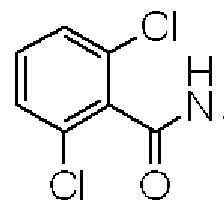
- dichlorobenzamide
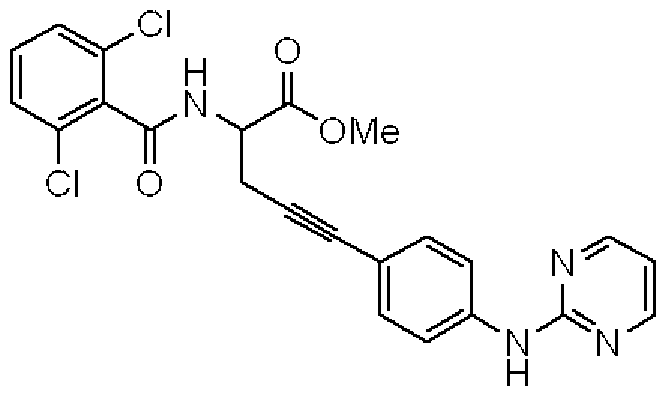
- methyl ester
- acid
- Prior art date
- Legal status (The legal status is an assumption and is not a legal conclusion. Google has not performed a legal analysis and makes no representation as to the accuracy of the status listed.)
- Ceased
Links
Classifications
-
- C—CHEMISTRY; METALLURGY
- C07—ORGANIC CHEMISTRY
- C07D—HETEROCYCLIC COMPOUNDS
- C07D239/00—Heterocyclic compounds containing 1,3-diazine or hydrogenated 1,3-diazine rings
- C07D239/02—Heterocyclic compounds containing 1,3-diazine or hydrogenated 1,3-diazine rings not condensed with other rings
- C07D239/24—Heterocyclic compounds containing 1,3-diazine or hydrogenated 1,3-diazine rings not condensed with other rings having three or more double bonds between ring members or between ring members and non-ring members
- C07D239/28—Heterocyclic compounds containing 1,3-diazine or hydrogenated 1,3-diazine rings not condensed with other rings having three or more double bonds between ring members or between ring members and non-ring members with hetero atoms or with carbon atoms having three bonds to hetero atoms with at the most one bond to halogen, directly attached to ring carbon atoms
- C07D239/32—One oxygen, sulfur or nitrogen atom
- C07D239/42—One nitrogen atom
-
- A—HUMAN NECESSITIES
- A61—MEDICAL OR VETERINARY SCIENCE; HYGIENE
- A61K—PREPARATIONS FOR MEDICAL, DENTAL OR TOILETRY PURPOSES
- A61K31/00—Medicinal preparations containing organic active ingredients
- A61K31/33—Heterocyclic compounds
- A61K31/335—Heterocyclic compounds having oxygen as the only ring hetero atom, e.g. fungichromin
-
- A—HUMAN NECESSITIES
- A61—MEDICAL OR VETERINARY SCIENCE; HYGIENE
- A61K—PREPARATIONS FOR MEDICAL, DENTAL OR TOILETRY PURPOSES
- A61K31/00—Medicinal preparations containing organic active ingredients
- A61K31/33—Heterocyclic compounds
- A61K31/335—Heterocyclic compounds having oxygen as the only ring hetero atom, e.g. fungichromin
- A61K31/35—Heterocyclic compounds having oxygen as the only ring hetero atom, e.g. fungichromin having six-membered rings with one oxygen as the only ring hetero atom
- A61K31/351—Heterocyclic compounds having oxygen as the only ring hetero atom, e.g. fungichromin having six-membered rings with one oxygen as the only ring hetero atom not condensed with another ring
-
- A—HUMAN NECESSITIES
- A61—MEDICAL OR VETERINARY SCIENCE; HYGIENE
- A61K—PREPARATIONS FOR MEDICAL, DENTAL OR TOILETRY PURPOSES
- A61K31/00—Medicinal preparations containing organic active ingredients
- A61K31/33—Heterocyclic compounds
- A61K31/395—Heterocyclic compounds having nitrogen as a ring hetero atom, e.g. guanethidine or rifamycins
- A61K31/495—Heterocyclic compounds having nitrogen as a ring hetero atom, e.g. guanethidine or rifamycins having six-membered rings with two or more nitrogen atoms as the only ring heteroatoms, e.g. piperazine or tetrazines
- A61K31/505—Pyrimidines; Hydrogenated pyrimidines, e.g. trimethoprim
-
- A—HUMAN NECESSITIES
- A61—MEDICAL OR VETERINARY SCIENCE; HYGIENE
- A61K—PREPARATIONS FOR MEDICAL, DENTAL OR TOILETRY PURPOSES
- A61K31/00—Medicinal preparations containing organic active ingredients
- A61K31/33—Heterocyclic compounds
- A61K31/395—Heterocyclic compounds having nitrogen as a ring hetero atom, e.g. guanethidine or rifamycins
- A61K31/495—Heterocyclic compounds having nitrogen as a ring hetero atom, e.g. guanethidine or rifamycins having six-membered rings with two or more nitrogen atoms as the only ring heteroatoms, e.g. piperazine or tetrazines
- A61K31/505—Pyrimidines; Hydrogenated pyrimidines, e.g. trimethoprim
- A61K31/506—Pyrimidines; Hydrogenated pyrimidines, e.g. trimethoprim not condensed and containing further heterocyclic rings
-
- A—HUMAN NECESSITIES
- A61—MEDICAL OR VETERINARY SCIENCE; HYGIENE
- A61P—SPECIFIC THERAPEUTIC ACTIVITY OF CHEMICAL COMPOUNDS OR MEDICINAL PREPARATIONS
- A61P1/00—Drugs for disorders of the alimentary tract or the digestive system
- A61P1/04—Drugs for disorders of the alimentary tract or the digestive system for ulcers, gastritis or reflux esophagitis, e.g. antacids, inhibitors of acid secretion, mucosal protectants
-
- A—HUMAN NECESSITIES
- A61—MEDICAL OR VETERINARY SCIENCE; HYGIENE
- A61P—SPECIFIC THERAPEUTIC ACTIVITY OF CHEMICAL COMPOUNDS OR MEDICINAL PREPARATIONS
- A61P17/00—Drugs for dermatological disorders
-
- A—HUMAN NECESSITIES
- A61—MEDICAL OR VETERINARY SCIENCE; HYGIENE
- A61P—SPECIFIC THERAPEUTIC ACTIVITY OF CHEMICAL COMPOUNDS OR MEDICINAL PREPARATIONS
- A61P17/00—Drugs for dermatological disorders
- A61P17/02—Drugs for dermatological disorders for treating wounds, ulcers, burns, scars, keloids, or the like
-
- A—HUMAN NECESSITIES
- A61—MEDICAL OR VETERINARY SCIENCE; HYGIENE
- A61P—SPECIFIC THERAPEUTIC ACTIVITY OF CHEMICAL COMPOUNDS OR MEDICINAL PREPARATIONS
- A61P17/00—Drugs for dermatological disorders
- A61P17/04—Antipruritics
-
- A—HUMAN NECESSITIES
- A61—MEDICAL OR VETERINARY SCIENCE; HYGIENE
- A61P—SPECIFIC THERAPEUTIC ACTIVITY OF CHEMICAL COMPOUNDS OR MEDICINAL PREPARATIONS
- A61P29/00—Non-central analgesic, antipyretic or antiinflammatory agents, e.g. antirheumatic agents; Non-steroidal antiinflammatory drugs [NSAID]
-
- A—HUMAN NECESSITIES
- A61—MEDICAL OR VETERINARY SCIENCE; HYGIENE
- A61P—SPECIFIC THERAPEUTIC ACTIVITY OF CHEMICAL COMPOUNDS OR MEDICINAL PREPARATIONS
- A61P37/00—Drugs for immunological or allergic disorders
- A61P37/08—Antiallergic agents
-
- C—CHEMISTRY; METALLURGY
- C07—ORGANIC CHEMISTRY
- C07D—HETEROCYCLIC COMPOUNDS
- C07D239/00—Heterocyclic compounds containing 1,3-diazine or hydrogenated 1,3-diazine rings
- C07D239/02—Heterocyclic compounds containing 1,3-diazine or hydrogenated 1,3-diazine rings not condensed with other rings
- C07D239/24—Heterocyclic compounds containing 1,3-diazine or hydrogenated 1,3-diazine rings not condensed with other rings having three or more double bonds between ring members or between ring members and non-ring members
- C07D239/28—Heterocyclic compounds containing 1,3-diazine or hydrogenated 1,3-diazine rings not condensed with other rings having three or more double bonds between ring members or between ring members and non-ring members with hetero atoms or with carbon atoms having three bonds to hetero atoms with at the most one bond to halogen, directly attached to ring carbon atoms
- C07D239/32—One oxygen, sulfur or nitrogen atom
- C07D239/34—One oxygen atom
-
- C—CHEMISTRY; METALLURGY
- C07—ORGANIC CHEMISTRY
- C07D—HETEROCYCLIC COMPOUNDS
- C07D239/00—Heterocyclic compounds containing 1,3-diazine or hydrogenated 1,3-diazine rings
- C07D239/02—Heterocyclic compounds containing 1,3-diazine or hydrogenated 1,3-diazine rings not condensed with other rings
- C07D239/24—Heterocyclic compounds containing 1,3-diazine or hydrogenated 1,3-diazine rings not condensed with other rings having three or more double bonds between ring members or between ring members and non-ring members
- C07D239/28—Heterocyclic compounds containing 1,3-diazine or hydrogenated 1,3-diazine rings not condensed with other rings having three or more double bonds between ring members or between ring members and non-ring members with hetero atoms or with carbon atoms having three bonds to hetero atoms with at the most one bond to halogen, directly attached to ring carbon atoms
- C07D239/46—Two or more oxygen, sulphur or nitrogen atoms
- C07D239/47—One nitrogen atom and one oxygen or sulfur atom, e.g. cytosine
-
- C—CHEMISTRY; METALLURGY
- C07—ORGANIC CHEMISTRY
- C07D—HETEROCYCLIC COMPOUNDS
- C07D239/00—Heterocyclic compounds containing 1,3-diazine or hydrogenated 1,3-diazine rings
- C07D239/02—Heterocyclic compounds containing 1,3-diazine or hydrogenated 1,3-diazine rings not condensed with other rings
- C07D239/24—Heterocyclic compounds containing 1,3-diazine or hydrogenated 1,3-diazine rings not condensed with other rings having three or more double bonds between ring members or between ring members and non-ring members
- C07D239/28—Heterocyclic compounds containing 1,3-diazine or hydrogenated 1,3-diazine rings not condensed with other rings having three or more double bonds between ring members or between ring members and non-ring members with hetero atoms or with carbon atoms having three bonds to hetero atoms with at the most one bond to halogen, directly attached to ring carbon atoms
- C07D239/46—Two or more oxygen, sulphur or nitrogen atoms
- C07D239/52—Two oxygen atoms
-
- C—CHEMISTRY; METALLURGY
- C07—ORGANIC CHEMISTRY
- C07D—HETEROCYCLIC COMPOUNDS
- C07D239/00—Heterocyclic compounds containing 1,3-diazine or hydrogenated 1,3-diazine rings
- C07D239/02—Heterocyclic compounds containing 1,3-diazine or hydrogenated 1,3-diazine rings not condensed with other rings
- C07D239/24—Heterocyclic compounds containing 1,3-diazine or hydrogenated 1,3-diazine rings not condensed with other rings having three or more double bonds between ring members or between ring members and non-ring members
- C07D239/28—Heterocyclic compounds containing 1,3-diazine or hydrogenated 1,3-diazine rings not condensed with other rings having three or more double bonds between ring members or between ring members and non-ring members with hetero atoms or with carbon atoms having three bonds to hetero atoms with at the most one bond to halogen, directly attached to ring carbon atoms
- C07D239/46—Two or more oxygen, sulphur or nitrogen atoms
- C07D239/60—Three or more oxygen or sulfur atoms
-
- C—CHEMISTRY; METALLURGY
- C07—ORGANIC CHEMISTRY
- C07D—HETEROCYCLIC COMPOUNDS
- C07D309/00—Heterocyclic compounds containing six-membered rings having one oxygen atom as the only ring hetero atom, not condensed with other rings
- C07D309/02—Heterocyclic compounds containing six-membered rings having one oxygen atom as the only ring hetero atom, not condensed with other rings having no double bonds between ring members or between ring members and non-ring members
- C07D309/04—Heterocyclic compounds containing six-membered rings having one oxygen atom as the only ring hetero atom, not condensed with other rings having no double bonds between ring members or between ring members and non-ring members with only hydrogen atoms, hydrocarbon or substituted hydrocarbon radicals, directly attached to ring carbon atoms
- C07D309/06—Radicals substituted by oxygen atoms
-
- C—CHEMISTRY; METALLURGY
- C07—ORGANIC CHEMISTRY
- C07D—HETEROCYCLIC COMPOUNDS
- C07D309/00—Heterocyclic compounds containing six-membered rings having one oxygen atom as the only ring hetero atom, not condensed with other rings
- C07D309/02—Heterocyclic compounds containing six-membered rings having one oxygen atom as the only ring hetero atom, not condensed with other rings having no double bonds between ring members or between ring members and non-ring members
- C07D309/08—Heterocyclic compounds containing six-membered rings having one oxygen atom as the only ring hetero atom, not condensed with other rings having no double bonds between ring members or between ring members and non-ring members with hetero atoms or with carbon atoms having three bonds to hetero atoms with at the most one bond to halogen, e.g. ester or nitrile radicals, directly attached to ring carbon atoms
- C07D309/10—Oxygen atoms
-
- C—CHEMISTRY; METALLURGY
- C07—ORGANIC CHEMISTRY
- C07D—HETEROCYCLIC COMPOUNDS
- C07D313/00—Heterocyclic compounds containing rings of more than six members having one oxygen atom as the only ring hetero atom
- C07D313/02—Seven-membered rings
- C07D313/04—Seven-membered rings not condensed with other rings
-
- C—CHEMISTRY; METALLURGY
- C07—ORGANIC CHEMISTRY
- C07D—HETEROCYCLIC COMPOUNDS
- C07D401/00—Heterocyclic compounds containing two or more hetero rings, having nitrogen atoms as the only ring hetero atoms, at least one ring being a six-membered ring with only one nitrogen atom
- C07D401/02—Heterocyclic compounds containing two or more hetero rings, having nitrogen atoms as the only ring hetero atoms, at least one ring being a six-membered ring with only one nitrogen atom containing two hetero rings
- C07D401/12—Heterocyclic compounds containing two or more hetero rings, having nitrogen atoms as the only ring hetero atoms, at least one ring being a six-membered ring with only one nitrogen atom containing two hetero rings linked by a chain containing hetero atoms as chain links
-
- C—CHEMISTRY; METALLURGY
- C07—ORGANIC CHEMISTRY
- C07D—HETEROCYCLIC COMPOUNDS
- C07D405/00—Heterocyclic compounds containing both one or more hetero rings having oxygen atoms as the only ring hetero atoms, and one or more rings having nitrogen as the only ring hetero atom
- C07D405/02—Heterocyclic compounds containing both one or more hetero rings having oxygen atoms as the only ring hetero atoms, and one or more rings having nitrogen as the only ring hetero atom containing two hetero rings
- C07D405/12—Heterocyclic compounds containing both one or more hetero rings having oxygen atoms as the only ring hetero atoms, and one or more rings having nitrogen as the only ring hetero atom containing two hetero rings linked by a chain containing hetero atoms as chain links
-
- C—CHEMISTRY; METALLURGY
- C07—ORGANIC CHEMISTRY
- C07D—HETEROCYCLIC COMPOUNDS
- C07D417/00—Heterocyclic compounds containing two or more hetero rings, at least one ring having nitrogen and sulfur atoms as the only ring hetero atoms, not provided for by group C07D415/00
- C07D417/02—Heterocyclic compounds containing two or more hetero rings, at least one ring having nitrogen and sulfur atoms as the only ring hetero atoms, not provided for by group C07D415/00 containing two hetero rings
- C07D417/12—Heterocyclic compounds containing two or more hetero rings, at least one ring having nitrogen and sulfur atoms as the only ring hetero atoms, not provided for by group C07D415/00 containing two hetero rings linked by a chain containing hetero atoms as chain links
Definitions
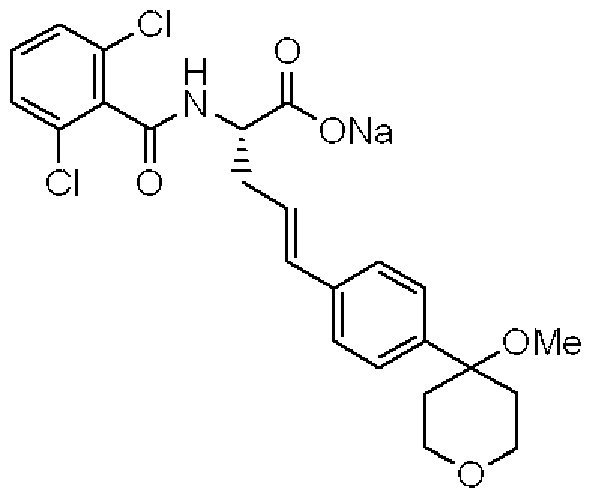
- the present invention relates to a therapeutic or prophylactic agent for allergic dermatitis comprising a glycine derivative or a pharmacologically acceptable salt thereof as an active ingredient.
- Allergic dermatitis is a recurrent eczema lesion accompanied by chronic itching. The rash appears on flexion sites such as the face, neck, elbows, and knees, and may spread to the entire body if it worsens immediately.
- the number of patients with allergic dermatitis is increasing year by year due to the increased environment of various allergens and changes in dietary habits, and the symptoms are becoming more serious.
- Treatment of allergic dermatitis is mainly pharmacotherapy, and corticosteroids, immunosuppressants, antihistamines and the like are used. These drugs relieve symptoms or reduce inflammation, but only temporarily. Corticosteroids and immunosuppressants are known to have infections and serious side effects.
- Patent Document 1 discloses the following general formula that can be regarded as structurally close to the compound contained as an active ingredient in the present application.
- Ar represents a substituted phenylene
- L represents one S (O) —, etc.
- X represents a bond.
- Z represents COOH, R 2 R 3 , R 4 represents hydrogen, etc.
- R 5 represents —C Al
- R 6 represents hydrogen or the like.
- Ru compound wherein Ar moiety aminoalkyl structure (R 1 LNO ⁇ CHR 4 - :! ⁇ 1 is Ariru such substituted) that is characterized by being substituted with
- it is structurally different from the compound of the present invention and does not disclose any treatment or prevention effect of the allergic dermatitis of the present invention.
- no specific data showing the effects of asthma, allergic rhinitis, multiple sclerosis, arteriosclerosis, and inflammatory bowel disease treatment are shown, and it may have a truly disclosed effect. It cannot be said that it is fully disclosed.
- Patent Documents 2 and 3 include, on the claims, formulas including the present compound.
- B represents
- Patent Document 4 discloses a compound contained as an active ingredient in the present application and its use for treating inflammatory bowel disease. There is no disclosure of any therapeutic or preventive effect on allergic dermatitis.
- Patent Document 1 Pamphlet of International Publication No. 99Z26923
- Patent Document 2 Pamphlet of International Publication No. 95Z32710
- Patent Document 3 International Publication No. 94Z12181 Pamphlet
- Patent Document 4 Pamphlet of International Publication No. 2006Z068213
- the present invention contains a low molecular weight compound useful as a pharmaceutical or a pharmacologically acceptable salt thereof as an active ingredient in view of the long-awaited pharmaceuticals useful for the treatment or prevention of allergic dermatitis. It aims to provide a therapeutic or preventive agent for allergic dermatitis.
- the present inventors have found that the glycine derivative represented by the general formula (I) or a pharmacologically acceptable salt thereof has excellent oral absorption and in vivo stability, and the allele Found to be effective in the treatment or prevention of dermatitis, and completed the invention
- R 1 represents hydrogen or alkyl having 1 to 5 carbon atoms
- Each X independently represents fluoro, black mouth, bromo, odo or alkyl having 1 to 3 carbon atoms;
- Y represents the general formula (II) or (III)
- R 2 represents alkyl having 1 to 5 carbons or alkoxy having 1 to 3 carbons
- R 3 represents hydrogen or alkyl having 1 to 5 carbon atoms
- n an integer from 0 to 3
- n 0 or 1
- p represents an integer from 0 to 2
- W represents O or N (R 4 )
- R 4 is hydrogen, alkyl having 1 to 5 carbons, alkyl, carbon having 3 to 6 carbons, phenol, benzyl, benzyl substituted by one or two R 5 , tetrahydrobiral,
- R 5 represents hydroxy or alkoxy having 1 to 3 carbon atoms
- the present invention also provides use of the compound represented by the general formula (I) of the present invention or a pharmacologically acceptable salt thereof for the manufacture of a therapeutic or prophylactic agent for allergic dermatitis. . Furthermore, the present invention relates to the treatment or prevention of allergic dermatitis, comprising administering to a patient an effective amount of the compound represented by the general formula (I) of the present invention or a pharmacologically acceptable salt thereof. Provide a method. The invention's effect
- the therapeutic or prophylactic agent for allergic dermatitis of the present invention has excellent oral absorbability and internal stability, and therefore has an excellent therapeutic or preventive effect.
- alkyl means a straight chain or a branched hydrocarbon chain.
- alkyl include methyl, ethyl, propyl, isopropyl, butyl, isobutyl and the like.
- Alkoxy means an oxygen atom having an alkyl substituent. Examples of alkoxy include methoxy, ethoxy, propoxy, isopropoxy, butoxy and the like.
- Alkenyl means a straight or branched hydrocarbon chain having one or more carbon-carbon double bonds. Examples of alcohols are vinyl, aryl, isopropenyl.
- Cycloalkyl means a monocyclic saturated hydrocarbon ring.
- Examples of cycloalkyl include cyclopropyl, cyclobutyl, cyclopentyl, cyclohexyl and the like.
- Cycloalkylmethyl means a methyl group having a cycloalkyl group.
- Examples of cycloalkylmethyl include cyclopropylmethyl, cyclobutylmethyl, cyclopentylmethyl, cyclohexylmethyl and the like.
- X is preferably black, or methyl, even though fluoro, black, or methyl is preferred.
- R 1 hydrogen is preferable among hydrogen, methyl and tert-butyl.
- W is preferably N (R 4 ) —.
- R 2 when present, is preferably methyl, among methyl, ethyl and methoxy.
- R 3 hydrogen and alkyl having 1 to 3 carbon atoms (for example, methyl, ethyl, propyl) are preferable, and methyl is preferable.
- methyl or isopropyl is preferable, among which alkyl having 1 to 3 carbon atoms (for example, methyl, ethyl, propyl, isopropyl), cyanoethyl, tetrahydrovinyl, and phenyl are preferable.
- n an integer of 0 to 2 is preferable, and 0 is preferable.
- n is preferably 0.
- R 1 is hydrogen
- W is —N (R 4 ) —, R 4 is alkyl having 1 to 3 carbons, cyanoethyl, tetrahydrobiranyl or phenyl,
- Y is represented by the general formula (III)
- a compound in which n is 0 and R 3 is alkyl having 1 to 3 carbon atoms or a pharmaceutically acceptable salt thereof is preferred.
- Each X is independently black or methyl
- W is —N (R 4 ) —, R 4 cation or isopropyl
- Y is represented by the general formula (III), a compound which is R 3 acetyl or a pharmacologically acceptable salt thereof is preferred.
- an alkaline salt such as an ammonium salt, sodium or potassium is used.
- salts with basic amino acids such as salts, arginine and lysine.
- inorganic acid salts such as hydrochloric acid, sulfuric acid, nitric acid, hydrobromic acid, phosphoric acid, acetic acid, lactic acid, citrate, maleic acid, Benzoic acid, oxalic acid, dartaric acid, malic acid, tartaric acid, fumaric acid, mandelic acid, co Examples thereof include organic carboxylates such as succinic acid, and organic sulfonates such as methanesulfonic acid, p-toluenesulfonic acid, and camphorsulfonic acid.
- organic carboxylates such as succinic acid
- organic sulfonates such as methanesulfonic acid, p-toluenesulfonic acid, and camphorsulfonic acid.
- the structure represented by the general formula (I) includes optical isomers represented by the general formulas (IV) and (V) based on the asymmetric carbon. It also contains the body and its mixtures.
- the present invention when Y has an asymmetric carbon, the present invention also includes its isomers and mixtures.
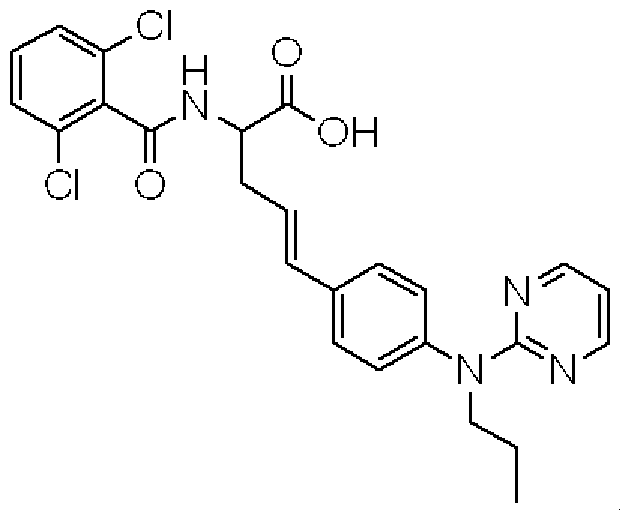
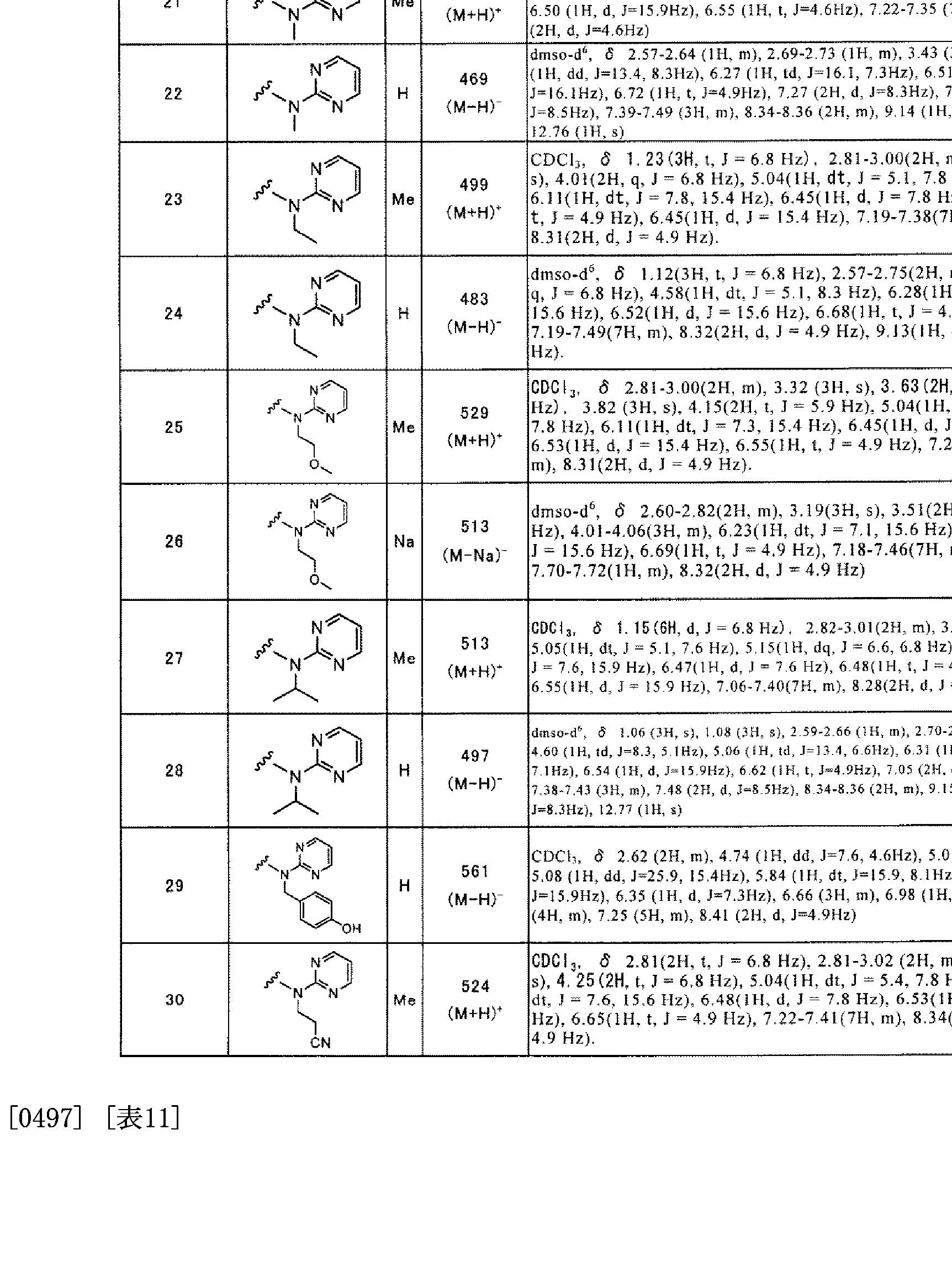
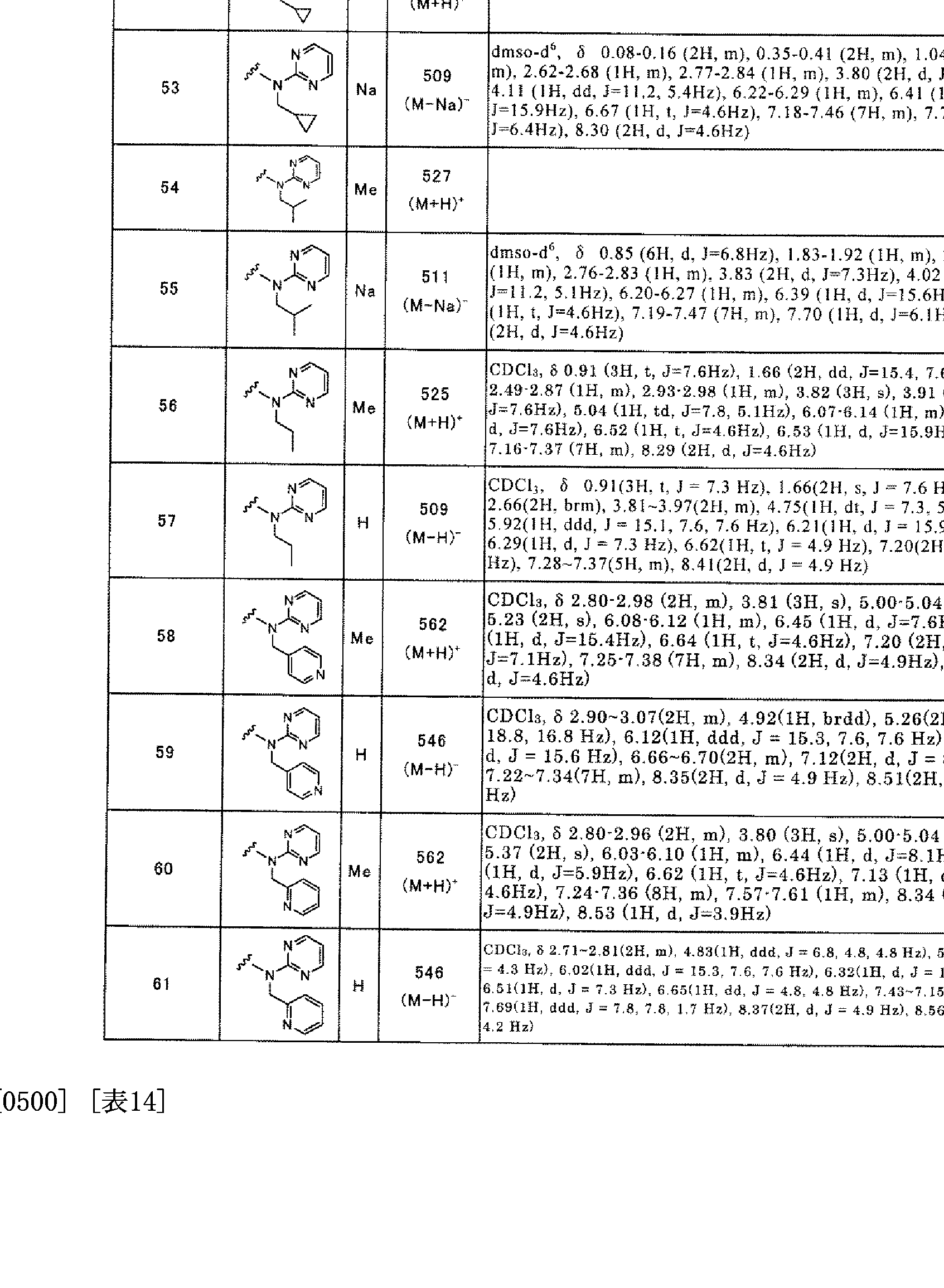
- the active ingredients of the therapeutic or prophylactic agent for allergic dermatitis include compounds contained in the general formula (la) or (lb). Specific examples of the compound represented by the general formula (la) or (lb) are shown in Tables 1 to 5.
- preferable compounds include compounds contained in the general formula (Ic) or (Id). Specific examples of the compound represented by the general formula (Ic) force (Id) are shown in Table 6 and Table 7.
- Table 7 represents a tert-butyl group, and "bond" described in Tables 6 and 7 represents a valence bond.
- the compounds described in Tables 6 and 7 also include pharmacologically acceptable salts.
- the compound represented by the general formula (I) or a pharmacologically acceptable salt thereof contained as an active ingredient in the therapeutic or preventive agent for allergic dermatitis according to the present invention can be synthesized by the following steps. .
- [0044] is converted into a pharmacologically acceptable salt of a base (an inorganic base such as sodium hydroxide, an organic base such as triethylamine, a basic amino acid such as lysine) or an acid (acetic acid, nitrate).
- a base an inorganic base such as sodium hydroxide, an organic base such as triethylamine, a basic amino acid such as lysine
- an acid acetic acid, nitrate
- an inorganic acid such as acid and sulfuric acid
- an organic acid such as acetic acid and maleic acid
- an organic sulfonic acid such as p-toluenesulfonic acid
- an acidic amino acid such as aspartic acid.
- Compound (VI) is represented by the following general formula (VII):
- R 16 is alkyl having 1 to 5 carbon atoms, and other symbols are the same as defined above], and the esterified carboxyl group CO R 16 is converted into a carboxyl group.
- a base such as an alkali metal hydroxide such as lithium hydroxide, sodium hydroxide or barium hydroxide
- an acid such as hydrochloric acid
- an acid such as trifluoroacetic acid
- the amount of the base used is usually 0.9 to 100 equivalents, preferably 0.9 to 10.0 equivalents, relative to the compound of formula (VII).
- the amount of the acid used is usually an excess amount of 1.0 equivalent force used as a solvent relative to the compound of formula (VII), preferably 1.0 to 100 equivalents.
- Examples of the solvent include aprotic dipolar solvents such as DMF and DMSO, ether solvents such as jetyl ether, THF, and DME, alcohol solvents such as methanol and ethanol, dichloromethane, chloroform, Among them, DMF, THF, methanol, ethanol, and water are preferably used among those capable of raising a halogen-based solvent such as carbon tetrachloride and 1,2-dichloroethane, water, or a mixed solvent thereof.
- the reaction temperature can range from –30 ° C to 200 ° C. In the case of hydrolysis using a base, ⁇ 20 ° C. to 60 ° C. is preferable, and ⁇ 10 ° C.
- reaction time is appropriately selected according to the reaction temperature and other conditions, but a satisfactory result is usually obtained at about 1 hour at 1 minute force.
- Compound (VII) can be synthesized by the following method (Method A or B) depending on the structure of V in the general formula (I) (V is as defined above).
- Z 1 represents a leaving group such as a halogen atom or a trifluoromethanesulfuroxy group, and other symbols are as defined above]
- Compound (Vila) is obtained by coupling a compound of formula (Villa) with a compound of formula (IX). It can be synthesized more.
- the coupling reaction is performed in a suitable solvent in the presence of a palladium catalyst and a base, and in the presence or absence of a phosphine ligand.
- the amount of formula (IX) is 10 equivalents, preferably 1.0 to 1.0 force relative to the compound of formula (Villa).
- Examples of the palladium catalyst include palladium acetate, tetrakis (triphenylphosphine) palladium, bis (triphenylphosphine) palladium dichloride, palladium (II) chloride, bis (dibenzylideneacetone) palladium, bis (diphenol- Ruphosphino) phenocene ⁇ radium dichloride and the like.
- palladium acetate, tetrakis (triphenylphosphine) palladium, bis (dibenzylideneacetone) palladium are preferably used.
- the amount of palladium catalyst used is from 0.001 to 1 equivalent, preferably from 0.01 force to 0.2 equivalent, relative to the compound of formula (Villa).
- Examples of the base include potassium carbonate, potassium phosphate, cesium carbonate, sodium hydroxide, potassium hydroxide, sodium tert-butoxide, triethylamine, diisopropylamine, diisopropylethylamine, n-butylamine and the like. Among them, carbonated lithium and potassium phosphate are preferably used.
- the amount of base used is 1 to 10 equivalents, preferably 1 to 4 equivalents, relative to the compound of formula (Villa).
- Examples of phosphine ligands include triphenylphosphine, tris (2-methylphenol) phosphine, tributylphosphine, triethylphosphine, tri-tertbutylbutylphosphine, 2,2, -bis (diphenylphosphino) -1, 1, -biphenyl, 2- (di-tert-butylphosphino) 1,1,1, binaphthyl, 2- (dicyclohexylphosphino) diphenyl, 9,9 dimethyl-4,5-bis (diphenylphosphino) xanthene Among them, tributylphosphine, tris (2-methylphenol) phosphine, and 9,9dimethyl-4,5-bis (diphenylphosphino) xanthene are preferably used.
- the amount of the phosphine ligand used is 0.001 force to 1 equivalent, preferably 0.01 force to pho
- Examples of the solvent include aprotic dipolar solvents such as DMF, DMSO, and NMP, ether solvents such as THF, DME, and dioxane, alcohol solvents such as methanol and ethanol, Examples include halogen solvents such as dichloromethane, chloroform, carbon tetrachloride, and 1,2-dichloroethane, aromatic solvents such as benzene, toluene, and xylene, and water. Among them, DMF, dioxane, and water are preferably used. It is done.
- the reaction temperature may range from 0 ° C to 200 ° C, with 40 ° C to 160 ° C being preferred and 60 ° C to 140 ° C being particularly preferred.
- the reaction time is appropriately selected according to the reaction temperature and other conditions, but satisfactory results are usually obtained in about 30 minutes to 30 hours.
- Method B When V represents -C ⁇ C,
- Compound (Vllb) can be synthesized by a coupling reaction of compound (Vlllb) and (IX).
- the coupling reaction is carried out in a suitable solvent in the presence of a palladium catalyst, a base and a copper catalyst, and in the presence or absence of a phosphine ligand.
- the amount of the formula (IX) is 1.0 to 10 equivalents, preferably 1.0 to the amount of the compound of the formula (Vlllb).
- Examples of the palladium catalyst include palladium acetate, tetrakis (triphenylphosphine) palladium, bis (triphenylphosphine) palladium dichloride, palladium (II) chloride, bis (dibenzylideneacetone) palladium, and bis (diphenyl- Ruphosphino) phenylcene palladium dichloride, and the like.
- tetrakis (triphenylphosphine) palladium and bis (triphenylphosphine) palladium dichloride are preferably used.
- the amount of the palladium catalyst to be used is 1 equivalent to 0.001 force, preferably 0.2 equivalent of 0.005 force, relative to the compound of the formula (Vlllb).
- Examples of the base include potassium carbonate, potassium phosphate, cesium carbonate, sodium hydroxide, potassium hydroxide, sodium-tert-butoxide, jetylamine, triethylamine, di- Examples thereof include isopropylamine, diisopropylethylamine, n-butylamine and the like, and among them, jetylamine, triethylamine, diisopropylamine, and diisopropylethylamine are preferably used.
- the amount of the base used is 1 equivalent to an excess amount used as a solvent, preferably 4 equivalent force excess amount, relative to the compound of the formula (Vlllb).
- Examples of the copper catalyst include copper powder, copper iodide, copper bromide and the like, and preferably copper iodide is used.
- the amount of copper catalyst used is 0.001 force, 0.5 equivalents, preferably 0.01 equivalents to 0.4 equivalents, relative to the compound of formula (vmb).
- phosphine ligands include triphenylphosphine, tris (2-methylphenol) phosphine, tetrakis (triphenyl) phosphine, tributylphosphine, triethylphosphine, tritert-butylphosphine, 2, 2, and 1 Bis (diphenylphosphino) 1,1,1,1-biphenyl, 2- (di-tert-butylphosphino) -1,1,1'-binaphthyl, 2- (dicyclohexylphosphino) diphenyl, 9, 9 Dimethyl 4,5 — Bis (diphenylphosphino) xanthene and the like.
- a phosphine ligand is not used, or tris (2-methylphenyl) phosphine or tetrakis (triphenyl) phosphine is used.
- the amount of the phosphine ligand is 0.001 to 0.5 equivalent, preferably 0.005 to 0.4 equivalent, based on the compound of the formula (Vlllb).
- Solvents include aprotic dipolar solvents such as DMF, DMSO, and NMP, ethereal solvents such as THF, DME, and dioxane, alcoholic solvents such as methanol and ethanol, dichloromethane, black mouth form, and carbon tetrachloride. , Halogen solvents such as 1,2-dichloroethane, aromatic solvents such as benzene, toluene and xylene, organic amine solvents such as jetylamine, triethylamine and diisopropylamine, or water, and mixtures thereof. A solvent can also be used.
- aprotic dipolar solvents such as DMF, DMSO, and NMP
- ethereal solvents such as THF, DME, and dioxane
- alcoholic solvents such as methanol and ethanol, dichloromethane, black mouth form, and carbon tetrachloride.
- Halogen solvents such as 1,2-dichloroe
- THF triethylamine
- jetylamine diisopropylamine
- triethylamine triethylamine
- the reaction temperature can be in the range of-40 ° C force and 200 ° C. Among them,-20 ° C to 100 ° C is preferred, especially-10 ° C to 60 ° C.
- the reaction time is appropriately selected according to the reaction temperature and other conditions, but satisfactory results are usually obtained in about 1 minute to 30 hours.
- Compounds (Villa) and (Vlllb) can be synthesized by the following method.
- Z 2 represents —CH ⁇ CH or —C ⁇ CH, and other symbols are the same as defined above.
- the compound (Villa) or (Vlllb) can be synthesized by the following method (Method C, Method D or Method E).
- the compound of formula (X), R 16 - OH (R 16 is as defined above) can be synthesized by condensing a.
- the condensation reaction can be carried out in a suitable solvent in the presence of a condensing agent and in the presence or absence of a base.
- the condensing agent include dicyclohexyl carpositimide, BOP reagent, and EDC.
- EDC and BOP reagents are used.
- examples include triethylamine, diisopropylethylamine, pyridine, 4-dimethylaminopyridine, N-methylmorpholine, and preferably triethylamine, 4-dimethylaminopyridine, diisopropylethyl. Ammine is used.
- the amount of R 16 —OH used is 1.0 to 100 equivalents, preferably 1.0 to 4.0 equivalents, relative to the compound of formula (X).
- the amount of the condensing agent to be used is 1.0 to 20 equivalents, preferably 1.0 equivalent to 5.0 equivalents, relative to the compound of formula (X).
- the amount of the base to be used is 1.0 equivalent to 100 equivalents, preferably about 1.0 equivalent to 40 equivalents relative to the compound of the formula (X).
- the solvent examples include aprotic dipolar solvents such as DMF, DMSO, and NMP, ether solvents such as THF, DME, and dioxane, and halogen solvents such as dichloromethane, chloroform, and 1,2-dichloroethane. Is mentioned.
- aprotic dipolar solvents such as DMF, DMSO, and NMP
- ether solvents such as THF, DME, and dioxane
- halogen solvents such as dichloromethane, chloroform, and 1,2-dichloroethane. Is mentioned.
- THF and dichloromethane are used.
- the reaction temperature may range from -40 ° C to 100 ° C, with 0 ° C to 60 ° C being preferred.
- the reaction time is appropriately selected according to the reaction temperature and other conditions, but satisfactory results are usually obtained in about 1 minute to 30 hours.
- a reactive derivative of a compound of formula (X) is prepared in the presence of a base R 16 —OH (R 16 is as defined above). And the like can be synthesized.
- Examples of reactive derivatives of compound (X) include acid halides (such as acid chloride).
- Examples of the base include organic amine bases such as triethylamine, pyridine and diisopropylethylamine, and inorganic bases such as sodium carbonate, potassium carbonate and sodium bicarbonate. Preferably, triethylamine, pyridine and diisopropylethylamine are used.
- the amount of R 16 —OH used is 1.0 to 100 equivalents, preferably 1.0 to 20 equivalents, relative to the compound of formula (X).
- the amount of the base used is 1.0 to 100 equivalents, preferably 1.0 to 40 equivalents, relative to the compound of the formula (X).
- Examples of the solvent include aprotic dipolar solvents such as DMF, DMSO, and NMP, ether solvents such as THF, DME, and dioxane, and halogen solvents such as dichloromethane, chloroform, and 1,2-dichloroethane. And aromatic solvents such as benzene and toluene.
- aprotic dipolar solvents such as DMF, DMSO, and NMP
- ether solvents such as THF, DME, and dioxane
- halogen solvents such as dichloromethane, chloroform, and 1,2-dichloroethane.
- aromatic solvents such as benzene and toluene.
- dichloromethane and THF are used.
- the reaction temperature may range from -10 ° C to 100 ° C, with 0 ° C force of 40 ° C being preferred.
- the reaction time is appropriately selected according to the reaction temperature and other conditions, but a satisfactory result is usually obtained at
- R 16 When R 16 is methyl or ethyl, it can be synthesized by adding the compound of the formula (X) to methanol or a mixed solution of ethanol and chlorothionyl.
- the equivalent amount of methanol or ethanol used is usually an excess amount used as a solvent of 1.0 equivalent force relative to the compound of formula (X), preferably an excess amount of 10 equivalent force used as a solvent.
- an excess amount used as a 1 equivalent force solvent is usually used with respect to the compound of the formula (X).
- the reaction temperature may range from 50 ° C to 60 ° C, with 20 ° C to 40 ° C being preferred.
- the reaction time is appropriately selected according to the reaction temperature and other conditions, but satisfactory results are usually obtained in about 1 minute to 60 hours.
- Compound (X) can be synthesized by the following method.
- the compound of formula (XI) and the compound of formula (XII) can be synthesized by condensing in a suitable solvent in the presence of a base.
- Compounds of formula (XI) and formula (XII) are commonly available raw materials.
- the amount of the compound of the formula (XII) used is 1.0 equivalent to 20 equivalents relative to the compound of the formula (XI), preferably 1.0 equivalent to 1.0 equivalent.
- Examples of the base include organic amine bases such as triethylamine, pyridine and diisopropylethylamine, and inorganic bases such as sodium hydroxide, potassium hydroxide, sodium carbonate, potassium carbonate and sodium hydrogen carbonate. It is done. Preferably, triethylamine, pyridine, disopropylethylamine, sodium hydroxide or potassium hydroxide is used.
- the amount of the base used is 1.0 to 100 equivalents, preferably 1.0 to 50 equivalents, relative to the compound of formula (XI).
- Examples of the solvent include aprotic dipolar solvents such as DMF, DMSO, and NMP, ether solvents such as THF, DME, and dioxane, and halogen solvents such as dichloromethane, chloroform, and 1,2-dichloroethane. Water, and a mixed solvent thereof is also used. Preferably, dichloromethane, THF, dioxane, water, or a mixed solvent selected from these is used.
- the reaction temperature may range from -10 ° C to 100 ° C, with 0 ° C to 40 ° C being preferred.
- the reaction time is appropriately selected according to the reaction temperature and other conditions, but satisfactory results are usually obtained at 1 minute force for about 60 hours.
- the compound of the general formula (IX) can be synthesized by the following methods (Methods F to V) depending on the structure of Y (Y is the same as defined above) in the general formula (IX).
- the compound of formula (XV) can be synthesized by condensing the compound of formula (XIII) and the compound of formula (XIV) in an appropriate solvent in the presence of an acid.
- the acid include acetic acid, trifluoroacetic acid, methanesulfonic acid, p-toluenesulfonic acid, camphorsulfonic acid and the like.
- acetic acid is used.
- the compound of the formula (XIII) is a generally available raw material, and the compound of the formula (XIV) can be synthesized by a publicly available raw material, a known method.
- the amount of the compound of formula (XIV) to be used is 1.0 to 10 equivalents, preferably 1.0 to 4.0 equivalents, relative to the compound of formula (XIII).
- 1.0 equivalent force An excess amount used as a solvent, preferably 1.0 to 20 equivalents is used.
- the solvent examples include ether solvents such as THF, DME, and dioxane, halogen solvents such as dichloromethane and tetrachloride-carbon, aromatic solvents such as benzene, toluene, and xylene, and non-solvents such as DMF and DMSO.
- ether solvents such as THF, DME, and dioxane
- halogen solvents such as dichloromethane and tetrachloride-carbon
- aromatic solvents such as benzene, toluene, and xylene
- non-solvents such as DMF and DMSO.
- Protic dipolar solvents can be mentioned, and DME and dioxane are preferably used.
- the reaction temperature may range from 0 ° C to 160 ° C, with a 40 ° C force of 100 ° C being preferred.
- the reaction time is appropriately selected according to the reaction temperature and other conditions, but satisfactory results are usually obtained in about 1 to
- the compound of the formula (IXa) can be synthesized by adding a base in a suitable solvent to the compound of the formula (XV) and further adding R 4 —Z 1 (the symbols are the same as defined above) and condensing. .
- the amount of R 4 —Z 1 used is 1.0 to 10 equivalents, preferably 4.0 equivalents of 1.0 force, relative to the compound of formula (XV).
- Examples of the base include metal hydrides such as sodium hydride and potassium hydride, inorganic bases such as potassium carbonate, sodium carbonate and cesium carbonate, organic metals such as butyllithium, DBU, diisopropylethylamine, Organic amines such as triethylamine are listed. Good Preferably, sodium hydride is used.
- the amount of the base used is 1.0 to 50 equivalents, preferably 1.0 to 20 equivalents, relative to the compound of formula (XV).
- Solvents include ether solvents such as THF, DME, and dioxane, halogen solvents such as dichloromethane and carbon tetrachloride, aromatic solvents such as benzene, toluene, and xylene, and aprotic bipolar such as DMF and DMSO. Examples of the solvent include DMF or THF.
- the reaction temperature may range from 78 ° C to 160 ° C, with a preferred 20 ° C force of 40 ° C! / ⁇ .
- the reaction time is appropriately selected according to the reaction temperature and other conditions, but satisfactory results are usually obtained in about 15 minutes to 30 hours.
- a compound of the general formula (IX) can be synthesized by the following method.
- the compound of formula (XVI) and the compound of formula (XIV) can be synthesized by condensing in a suitable solvent in the presence of a base.
- the compound of formula (XVI) is a commonly available raw material.
- the amount of the compound of formula (XIV) used is 1.0 to 10 equivalents, preferably 1.0 equivalent of 4.0 equivalents, relative to the compound of formula (XVI).
- Examples of the base include metal hydrides such as sodium hydride and potassium hydride, inorganic bases such as potassium carbonate, sodium carbonate and cesium carbonate, organic metals such as butyllithium,
- Organic amines such as DBU, diisopropylethylamine, and triethylamine are listed. Good Preferably, potassium carbonate or sodium carbonate is used.
- the amount of base used is 1.0 to 50 equivalents, preferably 1.0 to 20 equivalents, relative to the compound of formula (XVI)
- Solvents include ether solvents such as THF, DME and dioxane, halogen solvents such as dichloromethane and tetrasalt-carbon, aromatic solvents such as benzene, toluene and xylene, and non-solvents such as DMF and DMSO.
- ether solvents such as THF, DME and dioxane
- halogen solvents such as dichloromethane and tetrasalt-carbon
- aromatic solvents such as benzene, toluene and xylene
- non-solvents such as DMF and DMSO.
- a protic dipolar solvent may be mentioned, and DMF is preferably used.
- the reaction temperature may range from 0 ° C to 200 ° C, with 20 ° C to 140 ° C being preferred.
- the reaction time is appropriately selected according to the reaction temperature and other conditions, but satisfactory results are usually obtained in about 30 minutes to 30 hours.
- Y is the following general formula (Ilia)
- a compound of the general formula (IX) can be synthesized by the following method.
- the compound of formula (XVII) is a commonly available raw material.
- Lithioi examples of the agent include lithium, n-butyllithium, sec-butyllithium, tert-butyllithium and the like. Preferably, n-butyllithium is used.
- the amount of the lithiating agent to be used is 1.0 equivalent to 4.0 equivalents, preferably 1.0 equivalent to 2.2 equivalents relative to the compound of formula (XVII).
- the compound of formula (XIX) is a commonly available raw material.
- the amount of the compound (XIX) used is 1.0 equivalent to 10 equivalents, preferably 1.0 equivalent to 4.0 equivalents, relative to formula (XVII).
- the solvent examples include ether solvents such as ether, dioxane, THF, and preferably THF is used.
- the reaction temperature may be in the range of ⁇ 100 ° C. force and 0 ° C.
- the 78 ° C. force is preferably 0 ° C.
- Step 2 a range of 1100 ° C force and 40 ° C can be considered, and -78 ° C force is preferably 40 ° C.
- the reaction time is appropriately selected according to the reaction temperature and other conditions, but usually 5 minutes to 2 hours is appropriate for Step 1, and satisfactory results are obtained for Step 2 from 5 minutes to 24 hours.
- the compound of the formula (IXc) can be synthesized by adding a base in a suitable solvent to the compound of the formula (XX) and subsequently adding —Z 1 (the symbol is the same as defined above) and condensing.
- the compound of R 3 —Z 1 is a generally available raw material.
- R 3 is used - The amount of Z 1, relative to the compound of formula (XX), 1.0 Kakara 20 equivalents, preferably used 4.0 equivalents of 1.0.
- Examples of the base include metal hydrides such as sodium hydride and potassium hydride, inorganic bases such as potassium carbonate, sodium carbonate and cesium carbonate, organic metals such as butyllithium, DBU, diisopropylethylamine, Organic amines such as triethylamine are listed.
- metal hydrides such as sodium hydride and potassium hydride
- inorganic bases such as potassium carbonate, sodium carbonate and cesium carbonate
- organic metals such as butyllithium, DBU, diisopropylethylamine, Organic amines such as triethylamine are listed.
- sodium hydride is used.
- the amount of base used is 1.0 force or 50 equivalents, preferably 1.0 force or 20 equivalents, relative to the compound of formula (XX).
- Solvents include ether solvents such as THF, DME, and dioxane, halogen solvents such as dichloromethane and tetrachloride-carbon, aromatic solvents such as benzene, toluene, and xylene, and non-solvents such as DMF and DMSO.
- ether solvents such as THF, DME, and dioxane
- halogen solvents such as dichloromethane and tetrachloride-carbon
- aromatic solvents such as benzene, toluene, and xylene
- non-solvents such as DMF and DMSO.
- Protic dipolar solvents can be mentioned, and preferably DMF or THF is used.
- the reaction temperature may range from -78 ° C to 100 ° C, with -20 ° C to 40 ° C being preferred.
- the reaction time is appropriately selected according to the reaction temperature and other conditions, but satisfactory results are usually obtained in about 15 minutes to 30 hours.
- the post-treatment and purification of each step in the synthesis of the compound represented by the general formula (I) or a pharmacologically acceptable salt thereof can be carried out by a usual method. That is, methods such as liquid separation extraction and filtration can be used for post-treatment, and methods such as column chromatography, thin layer chromatography, recrystallization, reprecipitation, and distillation can be used for purification.
- the therapeutic or prophylactic agent for allergic dermatitis of the present invention comprises a glycine structure substituted with an aryl group or a propargyl group, a partial structure represented by the general formula (II) or (III), and a general formula (I ), which has a 2,6-disubstituted benzoyl structure and is excellent in oral absorption and stability in the body due to the excellent oral absorption and stability in the body disclosed in WO 99Z26923 described in the background art. Shows therapeutic or prophylactic effect.
- the oral absorbability and internal stability of the therapeutic or prophylactic agent of the present invention can be confirmed using the bioavailability (BA) and clearance of the compound administered to the animal as indicators. Not limited.
- the effect of the therapeutic or prophylactic agent of the present invention on allergic dermatitis is induced by an antigen using the method of literature "Inflamm. Res., 47, 506-511 (1998)”. It can be evaluated by the action of suppressing the swelling reaction of the skin. It is known that the dermatitis reaction observed in the model resembles the swelling reaction observed at the time of antigen application in human allergic dermatitis patients! This method is also used as an animal model of atopic dermatitis. However, the evaluation method is not limited to this.
- the therapeutic or prophylactic agent of the present invention suppresses allergic dermatitis induced by an antigen in an animal model, allergic dermatitis induced by an antigen, more specifically, diffuse nerve skin.
- Inflammation atopic eczema, atopic neurodermatitis, bee eruption, acute infant eczema, flexion eczema, extremity eczema, childhood atopic eczema, childhood dry eczema, childhood eczema, adult atopic dermatitis, intrinsic It can be used for the improvement of eczema, infant dermatitis, chronic infant eczema.
- Antigens mentioned here include mite allergens (such as white mites, thorny mites), food allergens (egg white, milk, wheat, soybeans, rice, corn, sesame, buckwheat), pollen allergens (ragweed, mugwort, quinokisaw, hargaya, power mogaya) ), Fungal allergens (such as Candida, Persium, Cladosporum, Aspergillus, Arterinaria), animal epithelial allergens (such as Cat, Inu) and hapten antigens (DNFB, DNP, TNP, etc.).
- mite allergens such as white mites, thorny mites
- food allergens egg white, milk, wheat, soybeans, rice, corn, sesame, buckwheat
- pollen allergens ragweed, mugwort, quinokisaw, hargaya, power mogaya
- Fungal allergens such as Candida, Per
- the therapeutic or preventive agent of the present invention is a symptom associated with allergic dermatitis, for example, erythema, papule, scales, skin formation, lichenification, dryness (dry skin), hemorrhoids, dry skin, cheilitis It can be used to improve pore keratinization, eyelid blackening, facial pallor, white rash, food intolerance, white dermatitis, delayed pallor reaction.
- the effect of the therapeutic or prophylactic agent of the present invention on allergic dermatitis is the suppression of leukocyte function (for example, cell adhesion and proliferation) and inflammation mediators from leukocytes (for example, site strength in and chemical mediators). This can be explained by the production inhibitory action.
- leukocytes neutrophils, monocytes, lymphocytes derived from peripheral blood, or established cell lines thereof are used. Evaluation of leukocyte function and inflammatory mediators is not limited to the power using the method described in Current Protocols in Immnology (Qohn Wiley & Sons, Inc.), for example.
- the therapeutic or prophylactic agent for allergic dermatitis of the present invention is used as a pharmaceutical product for mammals (eg, mouse, rat, wild, Musta, Usagi, Inu, monkey, ushi, Hidge, human, etc.). That's right.
- mammals eg, mouse, rat, wild, Musta, Usagi, Inu, monkey, ushi, Hidge, human, etc.
- the drug when used clinically, may be a free form or a salt thereof, or an excipient, stabilizer, preservative, buffer, solubilizer, emulsifier, diluent, isotonic agent. Such additives may be appropriately mixed.
- the drug can be produced by an ordinary method using these drug carriers as appropriate.
- the dosage form includes tablets, capsules, condyles, powders, syrups and other oral preparations, inhalants, injections, suppositories, liquids, etc., or ointments, creams, patches, etc. Local administration and the like can be mentioned. It is also understood to include known sustained-release preparations.
- the therapeutic or prophylactic agent for allergic dermatitis of the present invention contains 0.001 to 90% by weight, preferably 0.01 to 70% by weight of the above-mentioned active ingredient.
- the dosage is appropriately selected according to symptoms, age, body weight, sex, administration method, etc., but for adults, in the case of injections, the amount of active ingredient is 0.01 mg to 25 g per day, preferably 0.1 mg to : LOg, for oral preparations, 0.1 mg to 50 g, preferably 1 mg to 20 g, for topical preparations, the active ingredient concentration is 0.0001 to 10%, preferably 0.001 to 5%, once or several times. Dosing in divided doses Can do.
- the pharmacologically acceptable carriers or diluents include, for example, binders (syrup, gelatin, gum arabic, sorbitol, polybulur chloride, tragacanth, etc.), excipients (sugar, lactose, corn starch, calcium phosphate, etc. Sorbitol, glycine, etc.), lubricants (magnesium stearate, polyethylene glycol, talc, silica, etc.).
- the therapeutic or preventive agent for allergic dermatitis of the present invention is the compound used in the present invention alone, or for the treatment or prevention of a disease, for the reduction or suppression of symptoms, or the prevention or treatment. It may be used in combination with or in combination with other drugs to supplement or enhance the effect or reduce the dose.
- drugs that can be used in combination include steroids (prednisolone, methylprednisolone, hydrocortisone, betamethasone, etc.), immunosuppressants (cyclosporine, tacrolimus, etc.), petrolatum, urea ointment, zinc flower ointment, antihistamine (chlorf Lamin, etc.), antiallergic agents (sodium cromoglycate), Th2 site force-in inhibitors (such as suplatast), NF ⁇ B decoy DN A, adhesion molecule inhibitors, active oxygen scavengers, active oxygen production inhibitors, antibiotics (Metronidazole, etc.) and antibacterial agents.
- steroids prednisolone, methylprednisolone, hydrocortisone, betamethasone, etc.
- immunosuppressants cyclosporine, tacrolimus, etc.
- petrolatum urea ointment
- zinc flower ointment zinc flower
- NMP N-methinolepyrrolidone
- n-butyllithium (2.59 M hexane solution) (8.76 ml) was added to a solution of 1,4-jodobenzene (7.49 g) in anhydrous THF (50 ml) at -78 ° C. The mixture was added dropwise, and the mixture was stirred at 78 ° C for 30 minutes. Tetrahydro-4H pyran-4-one (2.09 ml) was added dropwise, and the mixture was stirred at 78 ° C. for 1.5 hours. After further stirring at room temperature for 3 hours, water was added and the mixture was extracted with ethyl acetate.
- N— (4 bromophenol) pyrimidine-2-amamine 75 mg was added to a suspension of sodium hydride (16 mg) in anhydrous DMF (3 ml), and the mixture was stirred at room temperature for 30 minutes.
- the reaction mixture was cooled to 0 ° C., 4-methoxybenzyl chloride (0.045 ml) was added, and the mixture was stirred at room temperature for 1 hr.
- Saturated brine was added to the reaction mixture, and the mixture was extracted 3 times with ethyl acetate. The organic layer was washed 3 times with water and once with saturated brine, and dried over anhydrous sodium sulfate.
- N- (4-bromophenol) pyrimidine 2-amine 160 mg was added to a suspension of sodium hydride (33 mg) in anhydrous DMF (3 ml), and the mixture was stirred at room temperature for 30 minutes.
- the reaction solution was cooled to 0 ° C., n-butyl iodide (0.080 ml) was added, and the mixture was stirred at room temperature for 1 hour.
- Saturated brine was added to the reaction mixture, and the mixture was extracted 3 times with ethyl acetate. The organic layer was washed 3 times with water and once with saturated brine, and dried over anhydrous sodium sulfate.
- N- (4 bromophenol) pyrimidine-2-amamine 200 mg was added to a suspension of sodium hydride (48 mg) in anhydrous DMF (8 ml), and the mixture was stirred at room temperature for 30 minutes.
- the reaction solution was cooled to 0 ° C., 3 chloromethylpyridine hydrochloride (600 mg) and triethylamine (1.OOml) were added, and the mixture was stirred at room temperature for 2 hours.
- Saturated brine was added to the reaction mixture, and the mixture was extracted 3 times with ethyl acetate. The organic layer was washed 3 times with water and once with saturated brine, and dried over anhydrous sodium sulfate.
- N- (4 bromophenol) pyrimidine-2-amamine 200 mg was added to a suspension of sodium hydride (48 mg) in anhydrous DMF (8 ml), and the mixture was stirred at room temperature for 30 minutes.
- the reaction mixture was cooled to 0 ° C., thiazoylmethyl chloride hydrochloride (816 mg) and triethylamine (1.OOml) were added, and the mixture was stirred at room temperature for 2 hours.
- Saturated brine was added to the reaction mixture, and the mixture was extracted 3 times with ethyl acetate. The organic layer was washed 3 times with water and once with saturated brine, and dried over anhydrous sodium sulfate.
- N— (4 bromophenol) pyrimidine 2-amamine (250 mg), copper iodide (1.9 mg), trans-1,2-cyclohexanediamine (0.0) in a pressure-resistant test tube in an argon atmosphere. 15 ml) and sodium tert-butoxide (144 mg) in dioxane (1 ml) were stirred at 110 ° C. for 22 hours. The reaction solution was filtered and the filtrate was concentrated. The residue was purified by thin-layer chromatography (silica gel developing solvent: black mouth form Z ethyl acetate 5 Zl) to obtain N- (4 bromophenol) N-phenol birimidine-12 ammine (56 mg).
- Trifluoromethanesulfonic acid 4-[pyrimidine-2-yl (tetrahydropyran-4-yl) amino] phenol ester
- N— (tetrahydro-1H pyran-4-yl) N— (4-methoxyphenol) pyrimidine-2 ammine (342 mg) and pyridine hydrochloride (2. OOg) were heated to 170 ° C. Stir for 1 hour.
- pyridine hydrochloride (1. OOg) was added and stirred at 170 ° C for 1 hour.
- [0230] [Chemical 52] [0231] (1) Dissolve allylglycine (10. l lg) in a mixed solvent of 2N sodium hydroxide aqueous solution (176 ml) and dioxane (175 ml) to give 2, 6 dichlorobenzoyl chloride (15. 10 ml) was added dropwise and stirred at room temperature for 10 hours. The reaction mixture was concentrated to remove dioxane, water (150 ml) was added, and the mixture was washed with ether. The aqueous layer was acidified by adding 3N hydrochloric acid in small portions and extracted three times with ethyl acetate.
- Pentho 4 Methyl
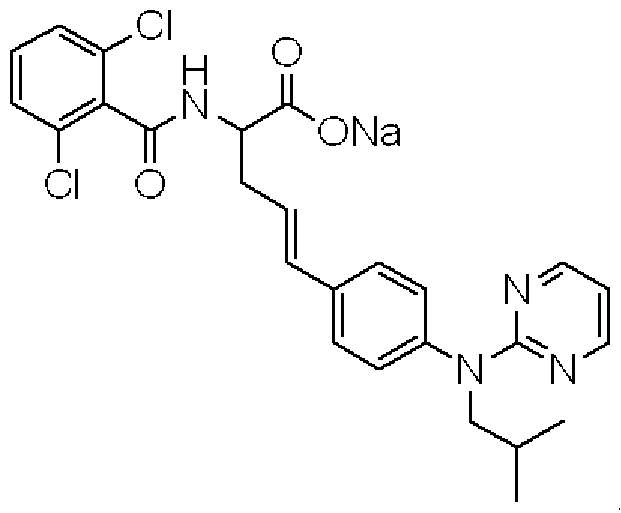
- Pento 4 sodium salt of sodium enoate (76.4 mg) was obtained.
- the compound was dissolved as an aqueous PBS solution or an aqueous PBS solution containing 10% PEG, and the concentration of the administration solution was 0.5 mgZmL.
- Male SD rats (7-9 weeks old) were administered orally and intravenously. Blood was collected from the tail vein over time up to 8 hours after administration, and the obtained blood was centrifuged to collect plasma. Pretreatment was performed by solid phase extraction, and the compound concentration was analyzed by LCZMSZM S (ESI negative mode).
- the therapeutic or preventive agent for allergic dermatitis according to the present application showed an excellent bioavailability and a low total clearance value for the comparative compound. Therefore, the effect is sustained by oral administration and excellent stability in vivo.
- Jurkat cells a cell line derived from human acute T cell lymphoma, were reacted with BCECF-AM at 37 ° C for 20 minutes for fluorescence labeling. Fluorescently labeled Jurkat cells were reacted with ligand-expressing cells or ligand-immobilized plates at 37 ° C for 30 minutes. After removing non-adherent cells by washing, 1% NP40 was added to thaw adherent cells, and fluorescence intensity was measured by Cytoflow 2300 (Millipore). The number of adherent cells was calculated from the obtained fluorescence intensity. The test compound was reacted with Jurkat cells before starting the adhesion reaction. Table 18 shows the IC values for each compound (i.e., adhesion
- the concentration that inhibits the cell number by 50%.
- the therapeutic or prophylactic agent of the present invention clearly inhibits the function of leukocytes involved in the development of the pathological condition of allergic cortical inflammation, and as a result, there is treatment for allergic dermatitis. Shows preventive action.
- the therapeutic or prophylactic agent of the present invention suppresses the production of inflammatory mediators of leukocyte power involved in the development of allergic dermatitis, resulting in allergic dermatitis. Shows therapeutic or preventive action.
- a mouse IgE anti-DNP antibody (2.5 mgZkg, Seikagaku Corporation) was intravenously administered to BALBZc mice (female, 7 weeks old, Nippon Chirusu Ribaichi), and mice were passively sensitized. 24 hours later, 20 L of 0.38% 2,4-dinitrofluorobenzene (DNFB, SIGMA) dissolved in acetone: olive oil (4: 1) was applied to the pinna of sensitized mice to induce inflammation. After induction, the thickness of the auricle was measured over time using a Digimatic Indicator (Mitutoyo) for up to 24 hours, and the swelling rate of the ear was calculated according to the following formula.
- DNFB 2,4-dinitrofluorobenzene
- A Thickness of the right pinna after induction
- B Thickness of right auricle before induction
- test compound was dissolved in phosphate buffered saline, and 50 mg Zkg was orally administered before induction.
- Example 4 Example 6, Example 22, Example 28, Example 77, Example 78, Example 80, Example 81, Example 83, and Example 84 were By oral administration, the swelling reaction of the auricle induced by antigen application was suppressed for 24 hours after administration (inhibition rate 79.8%, 91.2%, 84.7%, 98.5 %%, 85. 8%, 62.5%, 86.3%, 97.9%, 57.4%, 66.9%).
Landscapes
- Chemical & Material Sciences (AREA)
- Organic Chemistry (AREA)
- Health & Medical Sciences (AREA)
- Pharmacology & Pharmacy (AREA)
- Veterinary Medicine (AREA)
- Public Health (AREA)
- General Health & Medical Sciences (AREA)
- Animal Behavior & Ethology (AREA)
- Medicinal Chemistry (AREA)
- Life Sciences & Earth Sciences (AREA)
- Epidemiology (AREA)
- Chemical Kinetics & Catalysis (AREA)
- Nuclear Medicine, Radiotherapy & Molecular Imaging (AREA)
- General Chemical & Material Sciences (AREA)
- Bioinformatics & Cheminformatics (AREA)
- Engineering & Computer Science (AREA)
- Dermatology (AREA)
- Rheumatology (AREA)
- Pain & Pain Management (AREA)
- Immunology (AREA)
- Pulmonology (AREA)
- Pharmaceuticals Containing Other Organic And Inorganic Compounds (AREA)
- Plural Heterocyclic Compounds (AREA)
- Pyrane Compounds (AREA)
- Medicines Containing Material From Animals Or Micro-Organisms (AREA)
Abstract
Description


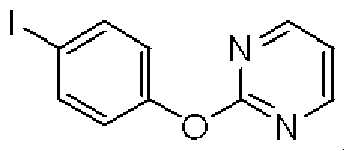


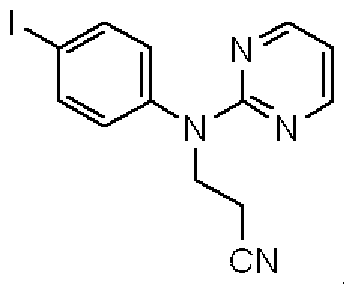


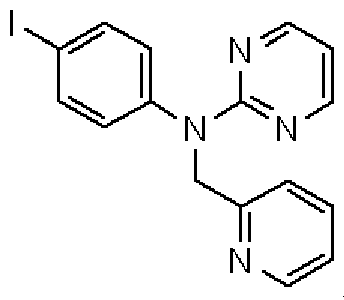
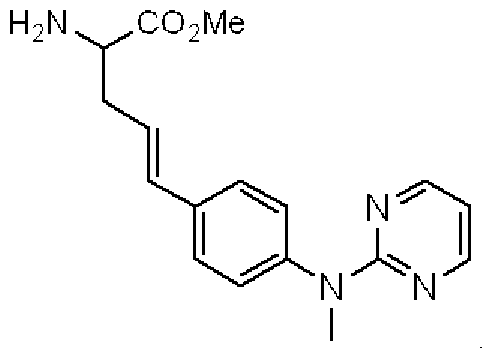


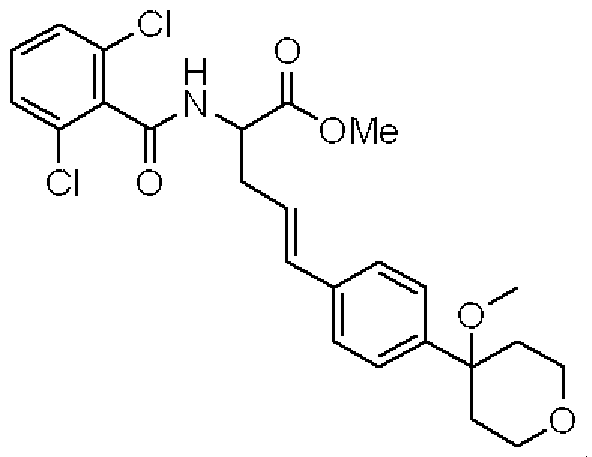


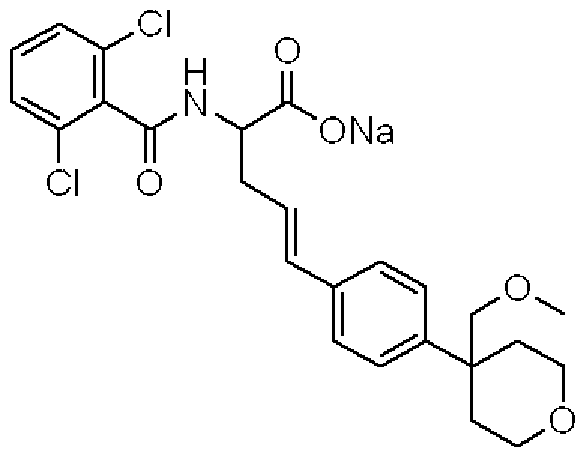
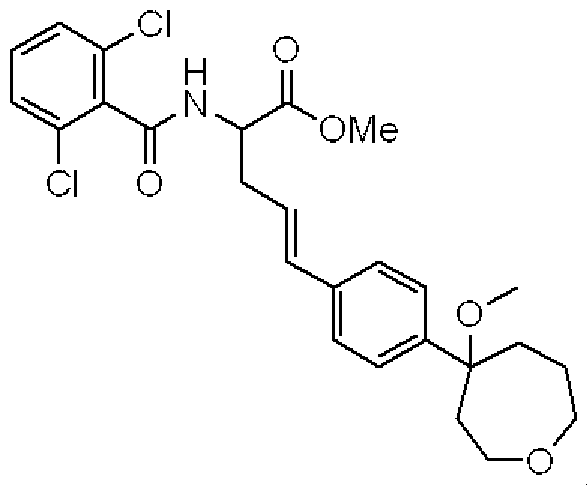


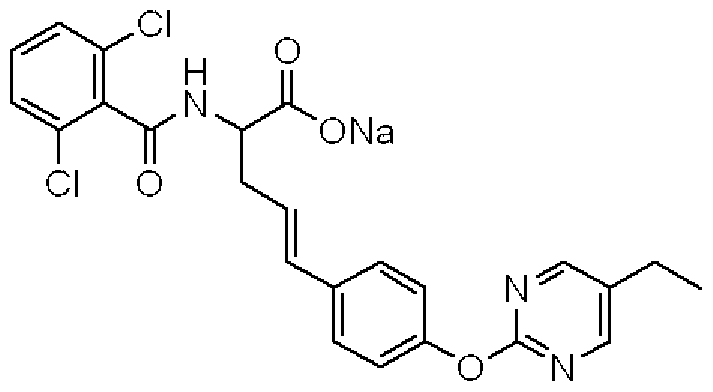














Claims


Priority Applications (9)
| Application Number | Priority Date | Filing Date | Title |
|---|---|---|---|
| CA2655286A CA2655286C (en) | 2006-06-14 | 2007-06-14 | Therapeutic or prophylactic agent for allergic dermatitis |
| CN2007800223239A CN101472580B (zh) | 2006-06-14 | 2007-06-14 | 过敏性皮炎的治疗或预防药 |
| AT07745274T ATE508741T1 (de) | 2006-06-14 | 2007-06-14 | Therapeutisches oder prophylaktisches mittel gegen allergische dermatitis |
| EP07745274A EP2042171B1 (en) | 2006-06-14 | 2007-06-14 | Therapeutic or prophylactic agent for allergic dermatitis |
| US12/304,964 US20090093508A1 (en) | 2006-06-14 | 2007-06-14 | Therapeutic or prophylactic agent for allergic dermatitis |
| KR1020097000646A KR101353707B1 (ko) | 2006-06-14 | 2007-06-14 | 알레르기성 피부염의 치료 또는 예방제 |
| JP2008521251A JP5115478B2 (ja) | 2006-06-14 | 2007-06-14 | アレルギー性皮膚炎の治療又は予防剤 |
| AU2007259715A AU2007259715B2 (en) | 2006-06-14 | 2007-06-14 | Therapeutic or prophylactic agent for allergic dermatitis |
| US13/711,783 US9162988B2 (en) | 2006-06-14 | 2012-12-12 | Therapeutic or prophylactic agent for allergic dermatitis |
Applications Claiming Priority (2)
| Application Number | Priority Date | Filing Date | Title |
|---|---|---|---|
| JP2006164520 | 2006-06-14 | ||
| JP2006-164520 | 2006-06-14 |
Related Child Applications (2)
| Application Number | Title | Priority Date | Filing Date |
|---|---|---|---|
| US12/304,964 A-371-Of-International US20090093508A1 (en) | 2006-06-14 | 2007-06-14 | Therapeutic or prophylactic agent for allergic dermatitis |
| US13/711,783 Continuation US9162988B2 (en) | 2006-06-14 | 2012-12-12 | Therapeutic or prophylactic agent for allergic dermatitis |
Publications (1)
| Publication Number | Publication Date |
|---|---|
| WO2007145282A1 true WO2007145282A1 (ja) | 2007-12-21 |
Family
ID=38831796
Family Applications (1)
| Application Number | Title | Priority Date | Filing Date |
|---|---|---|---|
| PCT/JP2007/062017 Ceased WO2007145282A1 (ja) | 2006-06-14 | 2007-06-14 | アレルギー性皮膚炎の治療又は予防剤 |
Country Status (10)
| Country | Link |
|---|---|
| US (2) | US20090093508A1 (ja) |
| EP (1) | EP2042171B1 (ja) |
| JP (1) | JP5115478B2 (ja) |
| KR (1) | KR101353707B1 (ja) |
| CN (1) | CN101472580B (ja) |
| AT (1) | ATE508741T1 (ja) |
| AU (1) | AU2007259715B2 (ja) |
| CA (1) | CA2655286C (ja) |
| ES (1) | ES2363174T3 (ja) |
| WO (1) | WO2007145282A1 (ja) |
Cited By (2)
| Publication number | Priority date | Publication date | Assignee | Title |
|---|---|---|---|---|
| WO2013002364A1 (ja) | 2011-06-30 | 2013-01-03 | 東レ株式会社 | グリシン誘導体の結晶及びその医薬用途 |
| WO2014051056A1 (ja) * | 2012-09-28 | 2014-04-03 | 東レ株式会社 | グリシン誘導体の結晶及びその医薬用途 |
Citations (8)
| Publication number | Priority date | Publication date | Assignee | Title |
|---|---|---|---|---|
| WO1994012181A1 (en) | 1992-12-01 | 1994-06-09 | Merck & Co., Inc. | Fibrinogen receptor antagonists |
| WO1995032710A1 (en) | 1994-05-27 | 1995-12-07 | Merck & Co., Inc. | Compounds for inhibiting osteoclast-mediated bone resorption |
| WO1999026923A1 (en) | 1997-11-20 | 1999-06-03 | Merck & Co., Inc. | Para-aminomethylaryl carboxamide derivatives |
| WO2001070670A1 (en) * | 2000-03-23 | 2001-09-27 | Ajinomoto Co., Inc. | Novel phenylalanine derivative |
| WO2003010135A1 (en) * | 2001-07-26 | 2003-02-06 | Ajinomoto Co., Inc. | Novel phenylpropionic acid derivatives |
| WO2003053926A1 (en) * | 2001-12-13 | 2003-07-03 | Ajinomoto Co.,Inc. | Novel phenylalanine derivative |
| JP2003321358A (ja) * | 2002-02-27 | 2003-11-11 | Tanabe Seiyaku Co Ltd | 医薬組成物 |
| WO2006068213A1 (ja) | 2004-12-24 | 2006-06-29 | Toray Industries, Inc. | グリシン誘導体及びその用途 |
Family Cites Families (3)
| Publication number | Priority date | Publication date | Assignee | Title |
|---|---|---|---|---|
| US6495579B1 (en) * | 1996-12-02 | 2002-12-17 | Angiotech Pharmaceuticals, Inc. | Method for treating multiple sclerosis |
| DE69817760T2 (de) * | 1997-06-09 | 2004-08-05 | KURARAY CO., LTD, Kurashiki | Polymerisierbare zusammensetzung für dentalanwendungen |
| WO2006060898A1 (en) * | 2004-12-06 | 2006-06-15 | Aegera Therapeutics Inc | Method for treating inflammatory disorders |
-
2007
- 2007-06-14 CN CN2007800223239A patent/CN101472580B/zh not_active Expired - Fee Related
- 2007-06-14 ES ES07745274T patent/ES2363174T3/es active Active
- 2007-06-14 AT AT07745274T patent/ATE508741T1/de not_active IP Right Cessation
- 2007-06-14 US US12/304,964 patent/US20090093508A1/en not_active Abandoned
- 2007-06-14 CA CA2655286A patent/CA2655286C/en not_active Expired - Fee Related
- 2007-06-14 AU AU2007259715A patent/AU2007259715B2/en not_active Ceased
- 2007-06-14 JP JP2008521251A patent/JP5115478B2/ja not_active Expired - Fee Related
- 2007-06-14 WO PCT/JP2007/062017 patent/WO2007145282A1/ja not_active Ceased
- 2007-06-14 KR KR1020097000646A patent/KR101353707B1/ko not_active Expired - Fee Related
- 2007-06-14 EP EP07745274A patent/EP2042171B1/en not_active Not-in-force
-
2012
- 2012-12-12 US US13/711,783 patent/US9162988B2/en not_active Expired - Fee Related
Patent Citations (8)
| Publication number | Priority date | Publication date | Assignee | Title |
|---|---|---|---|---|
| WO1994012181A1 (en) | 1992-12-01 | 1994-06-09 | Merck & Co., Inc. | Fibrinogen receptor antagonists |
| WO1995032710A1 (en) | 1994-05-27 | 1995-12-07 | Merck & Co., Inc. | Compounds for inhibiting osteoclast-mediated bone resorption |
| WO1999026923A1 (en) | 1997-11-20 | 1999-06-03 | Merck & Co., Inc. | Para-aminomethylaryl carboxamide derivatives |
| WO2001070670A1 (en) * | 2000-03-23 | 2001-09-27 | Ajinomoto Co., Inc. | Novel phenylalanine derivative |
| WO2003010135A1 (en) * | 2001-07-26 | 2003-02-06 | Ajinomoto Co., Inc. | Novel phenylpropionic acid derivatives |
| WO2003053926A1 (en) * | 2001-12-13 | 2003-07-03 | Ajinomoto Co.,Inc. | Novel phenylalanine derivative |
| JP2003321358A (ja) * | 2002-02-27 | 2003-11-11 | Tanabe Seiyaku Co Ltd | 医薬組成物 |
| WO2006068213A1 (ja) | 2004-12-24 | 2006-06-29 | Toray Industries, Inc. | グリシン誘導体及びその用途 |
Non-Patent Citations (1)
| Title |
|---|
| JOURNAL OF PHARMACY AND PHARMACOLOGY, 2003, pages 1107 - 1114 |
Cited By (4)
| Publication number | Priority date | Publication date | Assignee | Title |
|---|---|---|---|---|
| WO2013002364A1 (ja) | 2011-06-30 | 2013-01-03 | 東レ株式会社 | グリシン誘導体の結晶及びその医薬用途 |
| JPWO2013002364A1 (ja) * | 2011-06-30 | 2015-02-23 | 東レ株式会社 | グリシン誘導体の結晶及びその医薬用途 |
| US9006434B2 (en) | 2011-06-30 | 2015-04-14 | Toray Industries, Inc. | Crystals of glycine derivative and pharmaceutical use thereof |
| WO2014051056A1 (ja) * | 2012-09-28 | 2014-04-03 | 東レ株式会社 | グリシン誘導体の結晶及びその医薬用途 |
Also Published As
| Publication number | Publication date |
|---|---|
| CA2655286C (en) | 2014-02-25 |
| CN101472580B (zh) | 2011-08-24 |
| KR101353707B1 (ko) | 2014-01-20 |
| US9162988B2 (en) | 2015-10-20 |
| EP2042171B1 (en) | 2011-05-11 |
| JP5115478B2 (ja) | 2013-01-09 |
| CA2655286A1 (en) | 2007-12-21 |
| US20130150390A1 (en) | 2013-06-13 |
| EP2042171A1 (en) | 2009-04-01 |
| CN101472580A (zh) | 2009-07-01 |
| JPWO2007145282A1 (ja) | 2009-11-12 |
| US20090093508A1 (en) | 2009-04-09 |
| AU2007259715B2 (en) | 2011-12-08 |
| KR20090029801A (ko) | 2009-03-23 |
| EP2042171A4 (en) | 2010-01-06 |
| ES2363174T3 (es) | 2011-07-22 |
| AU2007259715A1 (en) | 2007-12-21 |
| ATE508741T1 (de) | 2011-05-15 |
Similar Documents
| Publication | Publication Date | Title |
|---|---|---|
| WO2007148648A1 (ja) | 多発性硬化症の治療又は予防剤 | |
| CN106518845B (zh) | 犬尿氨酸-3-单加氧酶抑制剂、药物组合物及其使用方法 | |
| IE903026A1 (en) | Heterocyclic derivatives | |
| MXPA05000718A (es) | Derivados de azuleno y sal del mismo. | |
| KR101250889B1 (ko) | 글리신 유도체 및 그 용도 | |
| WO2007148676A1 (ja) | 白血病の治療又は予防剤 | |
| WO2007145282A1 (ja) | アレルギー性皮膚炎の治療又は予防剤 | |
| CN111303087B (zh) | 呋喃酮类化合物及其制备方法与应用 | |
| JPH11292854A (ja) | 新規なピリミジン誘導体 | |
| PT821673E (pt) | Nova forma de acido (e)-3-¬6-¬¬2,6-diclorofenil)-tio|-3-(2-feniletoxi)-2-piridinil|-2-propenoico |
Legal Events
| Date | Code | Title | Description |
|---|---|---|---|
| WWE | Wipo information: entry into national phase |
Ref document number: 200780022323.9 Country of ref document: CN |
|
| 121 | Ep: the epo has been informed by wipo that ep was designated in this application |
Ref document number: 07745274 Country of ref document: EP Kind code of ref document: A1 |
|
| WWE | Wipo information: entry into national phase |
Ref document number: 2008521251 Country of ref document: JP |
|
| ENP | Entry into the national phase |
Ref document number: 2655286 Country of ref document: CA |
|
| WWE | Wipo information: entry into national phase |
Ref document number: 12304964 Country of ref document: US |
|
| NENP | Non-entry into the national phase |
Ref country code: DE |
|
| WWE | Wipo information: entry into national phase |
Ref document number: 2007259715 Country of ref document: AU |
|
| WWE | Wipo information: entry into national phase |
Ref document number: 5207/KOLNP/2008 Country of ref document: IN |
|
| WWE | Wipo information: entry into national phase |
Ref document number: 2007745274 Country of ref document: EP |
|
| WWE | Wipo information: entry into national phase |
Ref document number: 1020097000646 Country of ref document: KR |
|
| ENP | Entry into the national phase |
Ref document number: 2007259715 Country of ref document: AU Date of ref document: 20070614 Kind code of ref document: A |