US9960294B2 - Highly fluorescent and photo-stable chromophores for wavelength conversion - Google Patents
Highly fluorescent and photo-stable chromophores for wavelength conversion Download PDFInfo
- Publication number
- US9960294B2 US9960294B2 US14/758,949 US201414758949A US9960294B2 US 9960294 B2 US9960294 B2 US 9960294B2 US 201414758949 A US201414758949 A US 201414758949A US 9960294 B2 US9960294 B2 US 9960294B2
- Authority
- US
- United States
- Prior art keywords
- optionally substituted
- compound
- alkyl
- aryl
- group
- Prior art date
- Legal status (The legal status is an assumption and is not a legal conclusion. Google has not performed a legal analysis and makes no representation as to the accuracy of the status listed.)
- Active
Links
- 0 C.C.CC*CC Chemical compound C.C.CC*CC 0.000 description 13
- YVZYXHXJPSARDE-UHFFFAOYSA-N CC(C)C1=CC2=C3C(=C1)CCCN3CCC2.CC(C)C1=CC=C(C2=CC=C(N(C3=CC=CC=C3)C3=CC=CC=C3)C=C2)C=C1.CC(C)C1=CC=C(N(C2=CC=CC=C2)C2=CC=CC=C2)C=C1.CC(C)CN(C1=CC=CC=C1)C1=CC=C(C(C)C)C=C1.CCCCC(C)(C)C1=CC=C(N(C2=CC=C(C(C)C)C=C2)C2=CC=C(C(C)(C)CCCC)C=C2)C=C1.CCCCCN1CCCC2=C1C=CC(C(C)C)=C2 Chemical compound CC(C)C1=CC2=C3C(=C1)CCCN3CCC2.CC(C)C1=CC=C(C2=CC=C(N(C3=CC=CC=C3)C3=CC=CC=C3)C=C2)C=C1.CC(C)C1=CC=C(N(C2=CC=CC=C2)C2=CC=CC=C2)C=C1.CC(C)CN(C1=CC=CC=C1)C1=CC=C(C(C)C)C=C1.CCCCC(C)(C)C1=CC=C(N(C2=CC=C(C(C)C)C=C2)C2=CC=C(C(C)(C)CCCC)C=C2)C=C1.CCCCCN1CCCC2=C1C=CC(C(C)C)=C2 YVZYXHXJPSARDE-UHFFFAOYSA-N 0.000 description 5
- SMOMRPFIHIXNIS-UHFFFAOYSA-N CC(C)C1=CC=C(N(C2=CC=C(C(=O)C3=CC=C(C(C)(C)C)C=C3)C=C2)C2=CC=C(C(=O)C3=CC=C(C(C)(C)C)C=C3)C=C2)C=C1.CC(C)COC1=CC=C(C(C)C)C=C1.CC(C)COC1=CC=C(N(C2=CC=C(OCC(C)C)C=C2)C2=CC=C(C(C)C)C=C2)C=C1.CCCCCN1CCCC2=C1C=CC(C(C)C)=C2 Chemical compound CC(C)C1=CC=C(N(C2=CC=C(C(=O)C3=CC=C(C(C)(C)C)C=C3)C=C2)C2=CC=C(C(=O)C3=CC=C(C(C)(C)C)C=C3)C=C2)C=C1.CC(C)COC1=CC=C(C(C)C)C=C1.CC(C)COC1=CC=C(N(C2=CC=C(OCC(C)C)C=C2)C2=CC=C(C(C)C)C=C2)C=C1.CCCCCN1CCCC2=C1C=CC(C(C)C)=C2 SMOMRPFIHIXNIS-UHFFFAOYSA-N 0.000 description 5
- HTFXTMCCIRFAMN-UHFFFAOYSA-N CC(C)C1=CC=C(N(C2=CC=C(C(C)(C)C)C=C2)C2=CC=C(C(C)(C)C)C=C2)C=C1.CC(C)C1=CC=C(N(C2=CC=CC=C2)C2=CC=C(C(=O)C3=CC=C(C(C)(C)C)C=C3)C=C2)C=C1.CCCC(CC)OC1=CC=C(C(C)C)C=C1.CCCCC(=O)C1=CC=C(N(C2=CC=C(C(=O)CCCC)C=C2)C2=CC=C(C(C)C)C=C2)C=C1.CCCCC(=O)C1=CC=C(N(C2=CC=CC=C2)C2=CC=C(C(C)C)C=C2)C=C1 Chemical compound CC(C)C1=CC=C(N(C2=CC=C(C(C)(C)C)C=C2)C2=CC=C(C(C)(C)C)C=C2)C=C1.CC(C)C1=CC=C(N(C2=CC=CC=C2)C2=CC=C(C(=O)C3=CC=C(C(C)(C)C)C=C3)C=C2)C=C1.CCCC(CC)OC1=CC=C(C(C)C)C=C1.CCCCC(=O)C1=CC=C(N(C2=CC=C(C(=O)CCCC)C=C2)C2=CC=C(C(C)C)C=C2)C=C1.CCCCC(=O)C1=CC=C(N(C2=CC=CC=C2)C2=CC=C(C(C)C)C=C2)C=C1 HTFXTMCCIRFAMN-UHFFFAOYSA-N 0.000 description 5
- QQAKYRGFGMZECY-UHFFFAOYSA-N CCCCCN(CCCCC)C1=CC=C(C(C)C)C=C1 Chemical compound CCCCCN(CCCCC)C1=CC=C(C(C)C)C=C1 QQAKYRGFGMZECY-UHFFFAOYSA-N 0.000 description 5
- FVMKTYHJTRDJLT-UHFFFAOYSA-N CC(C)C1=CC2=C3C(=C1)CCCN3CCC2.CC(C)C1=CC=C(C2=CC=C(N(C3=CC=CC=C3)C3=CC=CC=C3)C=C2)C=C1.CC(C)CN(C1=CC=CC=C1)C1=CC=C(C(C)C)C=C1.CCCCC(C)(C)C1=CC=C(N(C2=CC=C(C(C)C)C=C2)C2=CC=C(C(C)(C)CCCC)C=C2)C=C1.CCCCCN1CCCC2=C1C=CC(C(C)C)=C2 Chemical compound CC(C)C1=CC2=C3C(=C1)CCCN3CCC2.CC(C)C1=CC=C(C2=CC=C(N(C3=CC=CC=C3)C3=CC=CC=C3)C=C2)C=C1.CC(C)CN(C1=CC=CC=C1)C1=CC=C(C(C)C)C=C1.CCCCC(C)(C)C1=CC=C(N(C2=CC=C(C(C)C)C=C2)C2=CC=C(C(C)(C)CCCC)C=C2)C=C1.CCCCCN1CCCC2=C1C=CC(C(C)C)=C2 FVMKTYHJTRDJLT-UHFFFAOYSA-N 0.000 description 4
- WUDFRGHSLDJRDS-UHFFFAOYSA-N CC(C)C1=CC=C(N(C2=CC=C(C(=O)C3=CC=C(C(C)(C)C)C=C3)C=C2)C2=CC=C(C(=O)C3=CC=C(C(C)(C)C)C=C3)C=C2)C=C1.CC(C)C1=CC=C(N(C2=CC=C(C(C)(C)C)C=C2)C2=CC=C(C(C)(C)C)C=C2)C=C1.CC(C)COC1=CC=C(C(C)C)C=C1.CC(C)COC1=CC=C(N(C2=CC=C(OCC(C)C)C=C2)C2=CC=C(C(C)C)C=C2)C=C1.CCCCCN1CCCC2=C1C=CC(C(C)C)=C2 Chemical compound CC(C)C1=CC=C(N(C2=CC=C(C(=O)C3=CC=C(C(C)(C)C)C=C3)C=C2)C2=CC=C(C(=O)C3=CC=C(C(C)(C)C)C=C3)C=C2)C=C1.CC(C)C1=CC=C(N(C2=CC=C(C(C)(C)C)C=C2)C2=CC=C(C(C)(C)C)C=C2)C=C1.CC(C)COC1=CC=C(C(C)C)C=C1.CC(C)COC1=CC=C(N(C2=CC=C(OCC(C)C)C=C2)C2=CC=C(C(C)C)C=C2)C=C1.CCCCCN1CCCC2=C1C=CC(C(C)C)=C2 WUDFRGHSLDJRDS-UHFFFAOYSA-N 0.000 description 4
- SURSKUPBORUZMK-UHFFFAOYSA-N CC(C)C1=CC=C(N(C2=CC=CC=C2)C2=CC=C(C(=O)C3=CC=C(C(C)(C)C)C=C3)C=C2)C=C1.CCCC(CC)OC1=CC=C(C(C)C)C=C1.CCCCC(=O)C1=CC=C(N(C2=CC=C(C(=O)CCCC)C=C2)C2=CC=C(C(C)C)C=C2)C=C1.CCCCC(=O)C1=CC=C(N(C2=CC=CC=C2)C2=CC=C(C(C)C)C=C2)C=C1.CCCCCN(CCCCC)C1=CC=C(C(C)C)C=C1 Chemical compound CC(C)C1=CC=C(N(C2=CC=CC=C2)C2=CC=C(C(=O)C3=CC=C(C(C)(C)C)C=C3)C=C2)C=C1.CCCC(CC)OC1=CC=C(C(C)C)C=C1.CCCCC(=O)C1=CC=C(N(C2=CC=C(C(=O)CCCC)C=C2)C2=CC=C(C(C)C)C=C2)C=C1.CCCCC(=O)C1=CC=C(N(C2=CC=CC=C2)C2=CC=C(C(C)C)C=C2)C=C1.CCCCCN(CCCCC)C1=CC=C(C(C)C)C=C1 SURSKUPBORUZMK-UHFFFAOYSA-N 0.000 description 4
- AJLBWUFUICFNNV-CWDLJSJHSA-N [2H]C1=C(C)C(C)=C([2H])C2=NN(CC)N=C21.[2H][2H].[2H][2H][2H] Chemical compound [2H]C1=C(C)C(C)=C([2H])C2=NN(CC)N=C21.[2H][2H].[2H][2H][2H] AJLBWUFUICFNNV-CWDLJSJHSA-N 0.000 description 4
- BODZHVJENVCVQA-UHFFFAOYSA-N C1=CC2=C(C=C1)C1=C(C=CC=C1)C=C2.C1=CC2=C3C4=C1/C=C\C4=C\C=C/3CC2.C1=CC2=CC3=CC=CC4=C3C(=C2C=C1)CC4.C1=CC2=CC=CC3=C2C(=C1)/C=C\3 Chemical compound C1=CC2=C(C=C1)C1=C(C=CC=C1)C=C2.C1=CC2=C3C4=C1/C=C\C4=C\C=C/3CC2.C1=CC2=CC3=CC=CC4=C3C(=C2C=C1)CC4.C1=CC2=CC=CC3=C2C(=C1)/C=C\3 BODZHVJENVCVQA-UHFFFAOYSA-N 0.000 description 3
- WCXOHSHWYZDLKR-UHFFFAOYSA-N CC(C)CN1N=C2C(=N1)C(C1=CC=C(N(C3=CC=CC=C3)C3=CC=CC=C3)C=C1)=C1[N-][S+]=NC1=C2C1=CC=C(N(C2=CC=CC=C2)C2=CC=CC=C2)C=C1 Chemical compound CC(C)CN1N=C2C(=N1)C(C1=CC=C(N(C3=CC=CC=C3)C3=CC=CC=C3)C=C1)=C1[N-][S+]=NC1=C2C1=CC=C(N(C2=CC=CC=C2)C2=CC=CC=C2)C=C1 WCXOHSHWYZDLKR-UHFFFAOYSA-N 0.000 description 3
- LOGYVHCRHRRPDU-UHFFFAOYSA-N C1=CC=C(C2=NC3=C(C4=CC=C(N(C5=CC=CC=C5)C5=CC=CC=C5)C=C4)C4=NSN=C4C(C4=CC=C(N(C5=CC=CC=C5)C5=CC=CC=C5)C=C4)=C3N=C2C2=CC=CC=C2)C=C1 Chemical compound C1=CC=C(C2=NC3=C(C4=CC=C(N(C5=CC=CC=C5)C5=CC=CC=C5)C=C4)C4=NSN=C4C(C4=CC=C(N(C5=CC=CC=C5)C5=CC=CC=C5)C=C4)=C3N=C2C2=CC=CC=C2)C=C1 LOGYVHCRHRRPDU-UHFFFAOYSA-N 0.000 description 2
- OFIZRLPHDNUPCK-UHFFFAOYSA-N CC(C)C1=C2N=CNC2=C(C(C)C)C2=NCN=C21 Chemical compound CC(C)C1=C2N=CNC2=C(C(C)C)C2=NCN=C21 OFIZRLPHDNUPCK-UHFFFAOYSA-N 0.000 description 2
- SQCPXOPEXLGYAH-UHFFFAOYSA-N CC(C)CN1N=C2C(=N1)C(C1=CC=C(C3=CC=C(N(C4=CC=CC=C4)C4=CC=CC=C4)C=C3)C=C1)=C1N=C3C(=NC1=C2C1=CC=C(C2=CC=C(N(C4=CC=CC=C4)C4=CC=CC=C4)C=C2)C=C1)C1=CC=CC2=CC=CC3=C21 Chemical compound CC(C)CN1N=C2C(=N1)C(C1=CC=C(C3=CC=C(N(C4=CC=CC=C4)C4=CC=CC=C4)C=C3)C=C1)=C1N=C3C(=NC1=C2C1=CC=C(C2=CC=C(N(C4=CC=CC=C4)C4=CC=CC=C4)C=C2)C=C1)C1=CC=CC2=CC=CC3=C21 SQCPXOPEXLGYAH-UHFFFAOYSA-N 0.000 description 2
- IANVOBRBZPQUGN-UHFFFAOYSA-N CC(C)CN1N=C2C(=N1)C(C1=CC=C(N(C3=CC=CC=C3)C3=CC=CC=C3)C=C1)=C(N)C(N)=C2C1=CC=C(N(C2=CC=CC=C2)C2=CC=CC=C2)C=C1.CC(C)CN1N=C2C(=N1)C(C1=CC=C(N(C3=CC=CC=C3)C3=CC=CC=C3)C=C1)=C([N+](=O)[O-])C([N+](=O)[O-])=C2C1=CC=C(N(C2=CC=CC=C2)C2=CC=CC=C2)C=C1 Chemical compound CC(C)CN1N=C2C(=N1)C(C1=CC=C(N(C3=CC=CC=C3)C3=CC=CC=C3)C=C1)=C(N)C(N)=C2C1=CC=C(N(C2=CC=CC=C2)C2=CC=CC=C2)C=C1.CC(C)CN1N=C2C(=N1)C(C1=CC=C(N(C3=CC=CC=C3)C3=CC=CC=C3)C=C1)=C([N+](=O)[O-])C([N+](=O)[O-])=C2C1=CC=C(N(C2=CC=CC=C2)C2=CC=CC=C2)C=C1 IANVOBRBZPQUGN-UHFFFAOYSA-N 0.000 description 2
- QZHTVZKCOQCEOQ-UHFFFAOYSA-N CC(C)N1C(=O)C2=C(C=CC=C2)C1=O.CC(C)N1C(=O)CC(C)(C)CC1=O Chemical compound CC(C)N1C(=O)C2=C(C=CC=C2)C1=O.CC(C)N1C(=O)CC(C)(C)CC1=O QZHTVZKCOQCEOQ-UHFFFAOYSA-N 0.000 description 2
- KRKKDMTZJMKTTD-UHFFFAOYSA-N CC1=C(C)N=C2C(=N1)C(C)=C1N=N(C(C)C)NC1=C2C.CC1=C2N=N(C(C)C)NC2=C(C)C2=NCN=C21.CC1=C2N=N(C(C)C)NC2=C(C)C2C1=NC(C)N2C.CC1=C2N=N(C(C)C)NC2=C(C)C2C1=NN(C)N2C.CC1=C2N=N(C(C)C)NC2=C(C)C2C1N=NN2C.CC1=C2N=NN(C)C2=C(C)C2=C1N=N(C(C)C)N2.CC1=C2N=NN(C)C2=C(C)C2=NN(C(C)C)N=C21.CC1=NC2=C(C)C3=C(NN(C(C)(C)C)=N3)C(C)=C2N1C.CC1=NC2=C(C)C3=NN(C(C)C)N=C3C(C)=C2N1C.CC1=NC2=C(C)C3=NN(C(C)C)N=C3C(C)=C2N=C1C Chemical compound CC1=C(C)N=C2C(=N1)C(C)=C1N=N(C(C)C)NC1=C2C.CC1=C2N=N(C(C)C)NC2=C(C)C2=NCN=C21.CC1=C2N=N(C(C)C)NC2=C(C)C2C1=NC(C)N2C.CC1=C2N=N(C(C)C)NC2=C(C)C2C1=NN(C)N2C.CC1=C2N=N(C(C)C)NC2=C(C)C2C1N=NN2C.CC1=C2N=NN(C)C2=C(C)C2=C1N=N(C(C)C)N2.CC1=C2N=NN(C)C2=C(C)C2=NN(C(C)C)N=C21.CC1=NC2=C(C)C3=C(NN(C(C)(C)C)=N3)C(C)=C2N1C.CC1=NC2=C(C)C3=NN(C(C)C)N=C3C(C)=C2N1C.CC1=NC2=C(C)C3=NN(C(C)C)N=C3C(C)=C2N=C1C KRKKDMTZJMKTTD-UHFFFAOYSA-N 0.000 description 2
- WPYNEXJDUMHZJJ-UHFFFAOYSA-N CC1=C2/N=C(/C(C)C)N(C)C2=C(C)C2=C1N=CN2.CC1=C2/N=C(/C(C)C)N(C)C2=C(C)C2=NCN=C21.CC1=C2/N=C(/C)N(C(C)C)C2=C(C)C2=C1N=CN2.CC1=C2/N=C(/C)N(C(C)C)C2=C(C)C2=NCN=C21.CC1=C2/N=C(C)\C(C(C)C)=N/C2=C(C)C2=NCN=C21.CC1=C2/N=N\N(C(C)C)C2=C(C)C2=C1N=CN2.CC1=C2/N=N\N(C(C)C)C2=C(C)C2=NCN=C21.CC1=C2N=CNC2=C(C)/C2=N/N(C(C)C)/N=C\12.CC1=C2N=CNC2=C(C)/C2=N\C(C(C)C)=C(C)/N=C\12.CC1=C2N=CNC2=C(C)C2C1/N=N\N2C(C)C Chemical compound CC1=C2/N=C(/C(C)C)N(C)C2=C(C)C2=C1N=CN2.CC1=C2/N=C(/C(C)C)N(C)C2=C(C)C2=NCN=C21.CC1=C2/N=C(/C)N(C(C)C)C2=C(C)C2=C1N=CN2.CC1=C2/N=C(/C)N(C(C)C)C2=C(C)C2=NCN=C21.CC1=C2/N=C(C)\C(C(C)C)=N/C2=C(C)C2=NCN=C21.CC1=C2/N=N\N(C(C)C)C2=C(C)C2=C1N=CN2.CC1=C2/N=N\N(C(C)C)C2=C(C)C2=NCN=C21.CC1=C2N=CNC2=C(C)/C2=N/N(C(C)C)/N=C\12.CC1=C2N=CNC2=C(C)/C2=N\C(C(C)C)=C(C)/N=C\12.CC1=C2N=CNC2=C(C)C2C1/N=N\N2C(C)C WPYNEXJDUMHZJJ-UHFFFAOYSA-N 0.000 description 2
- UMHVZQRQWWICOK-UHFFFAOYSA-N CC1=C2N=N(C(C)C)NC2=C(C)C2=C1N(C)N(C)N2C Chemical compound CC1=C2N=N(C(C)C)NC2=C(C)C2=C1N(C)N(C)N2C UMHVZQRQWWICOK-UHFFFAOYSA-N 0.000 description 2
- VJLREKCMQUYVBK-UHFFFAOYSA-N CCCCC(CC)N1N=NC2=C1C(C1=CC=C(N(C3=CC=CC=C3)C3=CC=C(C(C)(C)C)C=C3)C=C1)=C1N=[S+][N-]C1=C2C1=CC=C(N(C2=CC=CC=C2)C2=CC=C(C(C)(C)C)C=C2)C=C1 Chemical compound CCCCC(CC)N1N=NC2=C1C(C1=CC=C(N(C3=CC=CC=C3)C3=CC=C(C(C)(C)C)C=C3)C=C1)=C1N=[S+][N-]C1=C2C1=CC=C(N(C2=CC=CC=C2)C2=CC=C(C(C)(C)C)C=C2)C=C1 VJLREKCMQUYVBK-UHFFFAOYSA-N 0.000 description 2
- FGIJKXXXMQDFJZ-UHFFFAOYSA-N CCCCCN(CCCCC)C1=CC=C(C2=C(N)C(N)=C(C3=CC=C(N(CCCCC)CCCCC)C=C3)C3=NSN=C32)C=C1 Chemical compound CCCCCN(CCCCC)C1=CC=C(C2=C(N)C(N)=C(C3=CC=C(N(CCCCC)CCCCC)C=C3)C3=NSN=C32)C=C1 FGIJKXXXMQDFJZ-UHFFFAOYSA-N 0.000 description 2
- MZTSGJHLWLUKNI-UHFFFAOYSA-N CCCCCN(CCCCC)C1=CC=C(C2=C3N=[S+][N-]C3=C(C3=CC=C(N(CCCCC)CCCCC)C=C3)C3=C2N(CC(C)C)C(C2=CC=CC=C2)=N3)C=C1 Chemical compound CCCCCN(CCCCC)C1=CC=C(C2=C3N=[S+][N-]C3=C(C3=CC=C(N(CCCCC)CCCCC)C=C3)C3=C2N(CC(C)C)C(C2=CC=CC=C2)=N3)C=C1 MZTSGJHLWLUKNI-UHFFFAOYSA-N 0.000 description 2
- XEKOWRVHYACXOJ-UHFFFAOYSA-N CCOC(C)=O Chemical compound CCOC(C)=O XEKOWRVHYACXOJ-UHFFFAOYSA-N 0.000 description 2
- HPVOAVDAMWENPG-UHFFFAOYSA-M B=NS.C1=CC=C2C(=C1)CCCN2CN1/N=N\C2=CC=CC=C21.CCCCCN1CC(Br)CC2=CC=CC=C21.CCCCCN1CC([Sn](CCCC)(CCCC)CCCC)CC2=CC=CC=C21.CCCCCN1CCCC2=CC=CC=C21.CCCC[Mg]Br.CCOCC.ClC(Cl)Cl.[H]N1CCCC2=CC=CC=C21 Chemical compound B=NS.C1=CC=C2C(=C1)CCCN2CN1/N=N\C2=CC=CC=C21.CCCCCN1CC(Br)CC2=CC=CC=C21.CCCCCN1CC([Sn](CCCC)(CCCC)CCCC)CC2=CC=CC=C21.CCCCCN1CCCC2=CC=CC=C21.CCCC[Mg]Br.CCOCC.ClC(Cl)Cl.[H]N1CCCC2=CC=CC=C21 HPVOAVDAMWENPG-UHFFFAOYSA-M 0.000 description 1
- UDJCTHLBJPRRMV-UHFFFAOYSA-M B=NS.C1CCOC1.CC(C)COC1=CC=C(N(C2=CC=C(Br)C=C2)C2=CC=C(OCC(C)C)C=C2)C=C1.CC(C)COC1=CC=C(N(C2=CC=CC=C2)C2=CC=C(OCC(C)C)C=C2)C=C1.CC1=CC=C(OCC(C)C)C=C1.CCCC[Sn](CCCC)(CCCC)C1=CC=C(N(C2=CC=C(OCC(C)C)C=C2)C2=CC=C(OCC(C)C)C=C2)C=C1.NC1=CC=CC=C1.[Cu]I Chemical compound B=NS.C1CCOC1.CC(C)COC1=CC=C(N(C2=CC=C(Br)C=C2)C2=CC=C(OCC(C)C)C=C2)C=C1.CC(C)COC1=CC=C(N(C2=CC=CC=C2)C2=CC=C(OCC(C)C)C=C2)C=C1.CC1=CC=C(OCC(C)C)C=C1.CCCC[Sn](CCCC)(CCCC)C1=CC=C(N(C2=CC=C(OCC(C)C)C=C2)C2=CC=C(OCC(C)C)C=C2)C=C1.NC1=CC=CC=C1.[Cu]I UDJCTHLBJPRRMV-UHFFFAOYSA-M 0.000 description 1
- DDEJCGVJLZKINW-UHFFFAOYSA-N BrBr.BrC1=CC=C(Br)C2=NSN=C12.C1=CC2=NSN=C2C=C1.O=[N+]([O-])C1=C(Br)C2=NSN=C2C(Br)=C1[N+](=O)[O-].O=[N+]([O-])O Chemical compound BrBr.BrC1=CC=C(Br)C2=NSN=C12.C1=CC2=NSN=C2C=C1.O=[N+]([O-])C1=C(Br)C2=NSN=C2C(Br)=C1[N+](=O)[O-].O=[N+]([O-])O DDEJCGVJLZKINW-UHFFFAOYSA-N 0.000 description 1
- MVPCYLIOCMIQBI-UHFFFAOYSA-M BrBr.BrCCCCCBr.BrCCCCCN1N=C2C(Br)=CC=C(Br)C2=N1.BrCCCCCN1N=C2C=CC=CC2=N1.CC(C)COC1=CC=C(B(O)O)C=C1.CC(C)COC1=CC=C(C2=CC=C(C3=CC=C(OCC(C)C)C=C3)C3=NN(CCCCCBr)N=C23)C=C1.O=COO[K].[H]N1N=C2C=CC=CC2=N1.[KH] Chemical compound BrBr.BrCCCCCBr.BrCCCCCN1N=C2C(Br)=CC=C(Br)C2=N1.BrCCCCCN1N=C2C=CC=CC2=N1.CC(C)COC1=CC=C(B(O)O)C=C1.CC(C)COC1=CC=C(C2=CC=C(C3=CC=C(OCC(C)C)C=C3)C3=NN(CCCCCBr)N=C23)C=C1.O=COO[K].[H]N1N=C2C=CC=CC2=N1.[KH] MVPCYLIOCMIQBI-UHFFFAOYSA-M 0.000 description 1
- WXMALSFTRCQWJU-UHFFFAOYSA-N BrBr.CC(C)(C)CN1N=C2C(=N1)C(Br)=C([N+](=O)[O-])C([N+](=O)[O-])=C2Br.CC(C)(C)CN1N=C2C(Br)=CC=C(Br)C2=N1.CC(C)(C)CN1N=C2C=CC=CC2=N1.CC1=CC=C(S(=O)(=O)OCC(C)(C)C)C=C1.[H]N1N=C2C=CC=CC2=N1 Chemical compound BrBr.CC(C)(C)CN1N=C2C(=N1)C(Br)=C([N+](=O)[O-])C([N+](=O)[O-])=C2Br.CC(C)(C)CN1N=C2C(Br)=CC=C(Br)C2=N1.CC(C)(C)CN1N=C2C=CC=CC2=N1.CC1=CC=C(S(=O)(=O)OCC(C)(C)C)C=C1.[H]N1N=C2C=CC=CC2=N1 WXMALSFTRCQWJU-UHFFFAOYSA-N 0.000 description 1
- FIYBCSOJEQTTHO-UHFFFAOYSA-M BrBr.CC(C)CI.CC(C)CN1N=C2C(=N1)C(Br)=C([N+](=O)[O-])C([N+](=O)[O-])=C2Br.CC(C)CN1N=C2C(Br)=CC=C(Br)C2=N1.CC(C)CN1N=C2C=CC=CC2=N1.O=COO[K].[H]N1N=C2C=CC=CC2=N1.[KH] Chemical compound BrBr.CC(C)CI.CC(C)CN1N=C2C(=N1)C(Br)=C([N+](=O)[O-])C([N+](=O)[O-])=C2Br.CC(C)CN1N=C2C(Br)=CC=C(Br)C2=N1.CC(C)CN1N=C2C=CC=CC2=N1.O=COO[K].[H]N1N=C2C=CC=CC2=N1.[KH] FIYBCSOJEQTTHO-UHFFFAOYSA-M 0.000 description 1
- ARBAKRQGIXWLBV-UHFFFAOYSA-N BrC1=CC2=C(C=C1)C=CC1=C2C=C(Br)C=C1.C1=CC2=C(C=C1)C1=C(C=CC=C1)C=C2.C1=CC2=C3C4=C1/C=C\C4=C\C=C/3CC2.C1=CC2=CC3=CC=CC4=C3C(=C2C=C1)/C=C\4.C1=CC2=CC=CC3=C2C(=C1)/C=C\3.C1=CC=C(C2=CC3=C(C=C2)C=CC2=C3C=C(C3=CC=CC=C3)C=C2)C=C1.C1=CC=CC=C1.C1=CCC=C1.C1=CCCC1.C1=CCCCC1.CC(C)COC1=CC=C(C2=CC3=C(C=C2)C=CC2=C3C=C(C3=CC=C(OCC(C)C)C=C3)C=C2)C=C1.CCCCC(=O)NC1=CC=C2/C=C\C3=C2C1=CC=C3 Chemical compound BrC1=CC2=C(C=C1)C=CC1=C2C=C(Br)C=C1.C1=CC2=C(C=C1)C1=C(C=CC=C1)C=C2.C1=CC2=C3C4=C1/C=C\C4=C\C=C/3CC2.C1=CC2=CC3=CC=CC4=C3C(=C2C=C1)/C=C\4.C1=CC2=CC=CC3=C2C(=C1)/C=C\3.C1=CC=C(C2=CC3=C(C=C2)C=CC2=C3C=C(C3=CC=CC=C3)C=C2)C=C1.C1=CC=CC=C1.C1=CCC=C1.C1=CCCC1.C1=CCCCC1.CC(C)COC1=CC=C(C2=CC3=C(C=C2)C=CC2=C3C=C(C3=CC=C(OCC(C)C)C=C3)C=C2)C=C1.CCCCC(=O)NC1=CC=C2/C=C\C3=C2C1=CC=C3 ARBAKRQGIXWLBV-UHFFFAOYSA-N 0.000 description 1
- LFCAQBVOZWFYOV-UHFFFAOYSA-N BrC1=CC2=C3C(=C1)CCCN3CCC2.C1=CC2=C3C(=C1)CCCN3CCC2.CCCC[Sn](CCCC)(CCCC)C1=CC2=C3C(=C1)CCCN3CCC2.[Li]C Chemical compound BrC1=CC2=C3C(=C1)CCCN3CCC2.C1=CC2=C3C(=C1)CCCN3CCC2.CCCC[Sn](CCCC)(CCCC)C1=CC2=C3C(=C1)CCCN3CCC2.[Li]C LFCAQBVOZWFYOV-UHFFFAOYSA-N 0.000 description 1
- ZTIAVDDOVXDLKA-UHFFFAOYSA-M BrC1=CC=C(Br)C=C1.BrC1=CC=C(C2=CC=C(N(C3=CC=CC=C3)C3=CC=CC=C3)C=C2)C=C1.CCCC[Sn](CCCC)(CCCC)C1=CC=C(C2=CC=C(N(C3=CC=CC=C3)C3=CC=CC=C3)C=C2)C=C1.O=COO[Na].OB(O)C1=CC=C(N(C2=CC=CC=C2)C2=CC=CC=C2)C=C1.[NaH] Chemical compound BrC1=CC=C(Br)C=C1.BrC1=CC=C(C2=CC=C(N(C3=CC=CC=C3)C3=CC=CC=C3)C=C2)C=C1.CCCC[Sn](CCCC)(CCCC)C1=CC=C(C2=CC=C(N(C3=CC=CC=C3)C3=CC=CC=C3)C=C2)C=C1.O=COO[Na].OB(O)C1=CC=C(N(C2=CC=CC=C2)C2=CC=CC=C2)C=C1.[NaH] ZTIAVDDOVXDLKA-UHFFFAOYSA-M 0.000 description 1
- XTAGWFBDYKDANL-UHFFFAOYSA-N BrC1=CC=C(N(C2=CC=CC=C2)C2=CC=CC=C2)C=C1.CCCC[Sn](CCCC)(CCCC)C1=CC=C(N(C2=CC=CC=C2)C2=CC=CC=C2)C=C1 Chemical compound BrC1=CC=C(N(C2=CC=CC=C2)C2=CC=CC=C2)C=C1.CCCC[Sn](CCCC)(CCCC)C1=CC=C(N(C2=CC=CC=C2)C2=CC=CC=C2)C=C1 XTAGWFBDYKDANL-UHFFFAOYSA-N 0.000 description 1
- QZNQGHGQSFGLTN-UHFFFAOYSA-M BrC1=CC=C(N(CN2/N=N\C3=CC=CC=C32)CN2/N=N\C3=CC=CC=C32)C=C1.CCCCCN(CCCCC)C1=CC=C(Br)C=C1.CCCCCN(CCCCC)C1=CC=C([Sn](CCCC)(CCCC)CCCC)C=C1.CCCC[Mg]Br.NC1=CC=C(Br)C=C1.OCN1N=NC2=CC=CC=C21.[Li]C Chemical compound BrC1=CC=C(N(CN2/N=N\C3=CC=CC=C32)CN2/N=N\C3=CC=CC=C32)C=C1.CCCCCN(CCCCC)C1=CC=C(Br)C=C1.CCCCCN(CCCCC)C1=CC=C([Sn](CCCC)(CCCC)CCCC)C=C1.CCCC[Mg]Br.NC1=CC=C(Br)C=C1.OCN1N=NC2=CC=CC=C21.[Li]C QZNQGHGQSFGLTN-UHFFFAOYSA-M 0.000 description 1
- GJJBUPJHNWVNNJ-UHFFFAOYSA-M BrCCCCBr.CC(C)(C)CC1=N=C2C(=N1)C(C1=CC=C(N(C3=CC=CC=C3)C3=CC=CC=C3)C=C1)=C1C(=C2C2=CC=C(N(C3=CC=CC=C3)C3=CC=CC=C3)C=C2)/N=N\N1CCCC/[N+]1=N/C2=C(C3=CC=C(N(C4=CC=CC=C4)C4=CC=CC=C4)C=C3)C3=NN(CC(C)(C)C)N=C3C(C3=CC=C(N(C4=CC=CC=C4)C4=CC=CC=C4)C=C3)=C2[N-]1.O=COO[K].[H][N+]1=NC2=C(C3=CC=C(N(C4=CC=CC=C4)C4=CC=CC=C4)C=C3)C3=NN(CC(C)(C)C)N=C3C(C3=CC=C(N(C4=CC=CC=C4)C4=CC=CC=C4)C=C3)=C2[N-]1.[KH] Chemical compound BrCCCCBr.CC(C)(C)CC1=N=C2C(=N1)C(C1=CC=C(N(C3=CC=CC=C3)C3=CC=CC=C3)C=C1)=C1C(=C2C2=CC=C(N(C3=CC=CC=C3)C3=CC=CC=C3)C=C2)/N=N\N1CCCC/[N+]1=N/C2=C(C3=CC=C(N(C4=CC=CC=C4)C4=CC=CC=C4)C=C3)C3=NN(CC(C)(C)C)N=C3C(C3=CC=C(N(C4=CC=CC=C4)C4=CC=CC=C4)C=C3)=C2[N-]1.O=COO[K].[H][N+]1=NC2=C(C3=CC=C(N(C4=CC=CC=C4)C4=CC=CC=C4)C=C3)C3=NN(CC(C)(C)C)N=C3C(C3=CC=C(N(C4=CC=CC=C4)C4=CC=CC=C4)C=C3)=C2[N-]1.[KH] GJJBUPJHNWVNNJ-UHFFFAOYSA-M 0.000 description 1
- QTCCWULXBPNWKG-UHFFFAOYSA-M BrCCCCCCN1N=C2C(C3=CC=C(N(C4=CC=CC=C4)C4=CC=CC=C4)C=C3)=CC=C(C3=CC=C(N(C4=CC=CC=C4)C4=CC=CC=C4)C=C3)C2=N1.CC(C)COC1=CC=C(C2=C3N=N(CC(C)C)[N-]C3=C(C3=CC=C(OCC(C)C)C=C3)C3=NN(CCCCCCN4/N=C5/C(C6=CC=C(N(C7=CC=CC=C7)C7=CC=CC=C7)C=C6)=CC=C(C6=CC=C(N(C7=CC=CC=C7)C7=CC=CC=C7)C=C6)/C5=N/4)N=C32)C=C1.CC(C)COC1=CC=C(C2=C3N=NNC3=C(C3=CC=C(OCC(C)C)C=C3)C3=NN(CC(C)C)N=C32)C=C1.O=COO[K].[KH] Chemical compound BrCCCCCCN1N=C2C(C3=CC=C(N(C4=CC=CC=C4)C4=CC=CC=C4)C=C3)=CC=C(C3=CC=C(N(C4=CC=CC=C4)C4=CC=CC=C4)C=C3)C2=N1.CC(C)COC1=CC=C(C2=C3N=N(CC(C)C)[N-]C3=C(C3=CC=C(OCC(C)C)C=C3)C3=NN(CCCCCCN4/N=C5/C(C6=CC=C(N(C7=CC=CC=C7)C7=CC=CC=C7)C=C6)=CC=C(C6=CC=C(N(C7=CC=CC=C7)C7=CC=CC=C7)C=C6)/C5=N/4)N=C32)C=C1.CC(C)COC1=CC=C(C2=C3N=NNC3=C(C3=CC=C(OCC(C)C)C=C3)C3=NN(CC(C)C)N=C32)C=C1.O=COO[K].[KH] QTCCWULXBPNWKG-UHFFFAOYSA-M 0.000 description 1
- NNWHCZCUANHDME-UHFFFAOYSA-N C.C.C.C.C.C.C.C.C.C.C.CC(C)C1=C2N=CNC2=C(C(C)C)C2=NCN=C21.CC(C)C1=C2N=CNC2=C(C(C)C)C2C1=NC(C)N2C.CC(C)C1=C2N=CNC2=C(C(C)C)C2C1=NN(C)N2C.CC(C)C1=C2N=NN(C)C2=C(C(C)C)C2=C1N=CN2.CC(C)C1=C2N=NN(C)C2=C(C(C)C)C2=NCN=C21.CC1=C(C)N=C2C(=N1)C(C(C)C)=C1N=CNC1=C2C(C)C.CC1=C2N=CNC2=C(C(C)C)C2C1N=NN2C.CC1=NC2=C(C(C)C)C3=C(NC=N3)C(C(C)C)=C2N1C.CC1=NC2=C(C(C)C)C3=NCN=C3C(C(C)C)=C2N1C.CC1=NC2=C(C(C)C)C3=NCN=C3C(C(C)C)=C2N=C1C.CCC Chemical compound C.C.C.C.C.C.C.C.C.C.C.CC(C)C1=C2N=CNC2=C(C(C)C)C2=NCN=C21.CC(C)C1=C2N=CNC2=C(C(C)C)C2C1=NC(C)N2C.CC(C)C1=C2N=CNC2=C(C(C)C)C2C1=NN(C)N2C.CC(C)C1=C2N=NN(C)C2=C(C(C)C)C2=C1N=CN2.CC(C)C1=C2N=NN(C)C2=C(C(C)C)C2=NCN=C21.CC1=C(C)N=C2C(=N1)C(C(C)C)=C1N=CNC1=C2C(C)C.CC1=C2N=CNC2=C(C(C)C)C2C1N=NN2C.CC1=NC2=C(C(C)C)C3=C(NC=N3)C(C(C)C)=C2N1C.CC1=NC2=C(C(C)C)C3=NCN=C3C(C(C)C)=C2N1C.CC1=NC2=C(C(C)C)C3=NCN=C3C(C(C)C)=C2N=C1C.CCC NNWHCZCUANHDME-UHFFFAOYSA-N 0.000 description 1
- XQGDFFRLGOHAAP-UHFFFAOYSA-N C.C.C.C.FC1=CC=CC(F)=C1CN1N=C2C(=N1)C(C1=CC=C(N(C3=CC=CC=C3)C3=CC=CC=C3)C=C1)=C1[N-][S+]=NC1=C2C1=CC=C(N(C2=CC=CC=C2)C2=CC=CC=C2)C=C1.FC1=CC=CC(F)=C1CN1N=NC2=C1C(C1=CC=C(N(C3=CC=CC=C3)C3=CC=CC=C3)C=C1)=C1N=[S+][N-]C1=C2C1=CC=C(N(C2=CC=CC=C2)C2=CC=CC=C2)C=C1 Chemical compound C.C.C.C.FC1=CC=CC(F)=C1CN1N=C2C(=N1)C(C1=CC=C(N(C3=CC=CC=C3)C3=CC=CC=C3)C=C1)=C1[N-][S+]=NC1=C2C1=CC=C(N(C2=CC=CC=C2)C2=CC=CC=C2)C=C1.FC1=CC=CC(F)=C1CN1N=NC2=C1C(C1=CC=C(N(C3=CC=CC=C3)C3=CC=CC=C3)C=C1)=C1N=[S+][N-]C1=C2C1=CC=C(N(C2=CC=CC=C2)C2=CC=CC=C2)C=C1 XQGDFFRLGOHAAP-UHFFFAOYSA-N 0.000 description 1
- XUNZTBCNSOFOQP-UHFFFAOYSA-N C.C.C1=CC=C(C2=NC3=C(C4=CC=C(N(C5=CC=CC=C5)C5=CC=CC=C5)C=C4)C4=NSN=C4C(C4=CC=C(N(C5=CC=CC=C5)C5=CC=CC=C5)C=C4)=C3N2)C=C1 Chemical compound C.C.C1=CC=C(C2=NC3=C(C4=CC=C(N(C5=CC=CC=C5)C5=CC=CC=C5)C=C4)C4=NSN=C4C(C4=CC=C(N(C5=CC=CC=C5)C5=CC=CC=C5)C=C4)=C3N2)C=C1 XUNZTBCNSOFOQP-UHFFFAOYSA-N 0.000 description 1
- ACANELJTHBWDNX-UHFFFAOYSA-N C.C.CC(C)C1=CC(C#N)=C(C#N)C=C1.CC1=C(CC(C)C)C(F)=CC=C1.CC1=CC(F)=CC(OCCCCCCC(C)C)=C1.CCOC(=O)C1=CC=C(C(C)C)C=C1.COCCOCCOCCC(C)C Chemical compound C.C.CC(C)C1=CC(C#N)=C(C#N)C=C1.CC1=C(CC(C)C)C(F)=CC=C1.CC1=CC(F)=CC(OCCCCCCC(C)C)=C1.CCOC(=O)C1=CC=C(C(C)C)C=C1.COCCOCCOCCC(C)C ACANELJTHBWDNX-UHFFFAOYSA-N 0.000 description 1
- GTQKDGUNXDQIPF-UHFFFAOYSA-N C.C.CC(C)CN1N=C2C(=N1)C(C1=CC=C(N(C3=CC=CC=C3)C3=CC=CC=C3)C=C1)=C1[N-][N+](CC(C)C)=NC1=C2C1=CC=C(N(C2=CC=CC=C2)C2=CC=CC=C2)C=C1 Chemical compound C.C.CC(C)CN1N=C2C(=N1)C(C1=CC=C(N(C3=CC=CC=C3)C3=CC=CC=C3)C=C1)=C1[N-][N+](CC(C)C)=NC1=C2C1=CC=C(N(C2=CC=CC=C2)C2=CC=CC=C2)C=C1 GTQKDGUNXDQIPF-UHFFFAOYSA-N 0.000 description 1
- QIPASCUUBVASNE-UHFFFAOYSA-N C.C.CC(C)C[N+]1=NC2=C(C3=CC=C(N(C4=CC=CC=C4)C4=CC=CC=C4)C=C3)C3=NN(C4=CC(C#N)=C(C#N)C=C4)N=C3C(C3=CC=C(N(C4=CC=CC=C4)C4=CC=CC=C4)C=C3)=C2[N-]1 Chemical compound C.C.CC(C)C[N+]1=NC2=C(C3=CC=C(N(C4=CC=CC=C4)C4=CC=CC=C4)C=C3)C3=NN(C4=CC(C#N)=C(C#N)C=C4)N=C3C(C3=CC=C(N(C4=CC=CC=C4)C4=CC=CC=C4)C=C3)=C2[N-]1 QIPASCUUBVASNE-UHFFFAOYSA-N 0.000 description 1
- BOJLRXJIVSHVRP-UHFFFAOYSA-N C.C.CCCCC(C)(C)C1=CC=C(N(C2=CC=C(C3=C4N=[S+][N-]C4=C(C4=CC=C(N(C5=CC=C(C(C)(C)CCCC)C=C5)C5=CC=C(C(C)(C)CCCC)C=C5)C=C4)C4=NN(CC(C)C)N=C43)C=C2)C2=CC=C(C(C)(C)CCCC)C=C2)C=C1 Chemical compound C.C.CCCCC(C)(C)C1=CC=C(N(C2=CC=C(C3=C4N=[S+][N-]C4=C(C4=CC=C(N(C5=CC=C(C(C)(C)CCCC)C=C5)C5=CC=C(C(C)(C)CCCC)C=C5)C=C4)C4=NN(CC(C)C)N=C43)C=C2)C2=CC=C(C(C)(C)CCCC)C=C2)C=C1 BOJLRXJIVSHVRP-UHFFFAOYSA-N 0.000 description 1
- BOKHWGLXUQPOAU-UHFFFAOYSA-N C.C.CCCCC1=NC2=C(C3=CC=C(N(C4=CC=CC=C4)C4=CC=CC=C4)C=C3)C3=NSN=C3C(C3=CC=C(N(C4=CC=CC=C4)C4=CC=CC=C4)C=C3)=C2N1 Chemical compound C.C.CCCCC1=NC2=C(C3=CC=C(N(C4=CC=CC=C4)C4=CC=CC=C4)C=C3)C3=NSN=C3C(C3=CC=C(N(C4=CC=CC=C4)C4=CC=CC=C4)C=C3)=C2N1 BOKHWGLXUQPOAU-UHFFFAOYSA-N 0.000 description 1
- SCNQAAQNWXUCNR-UHFFFAOYSA-N C.C.CCCCC1=NC2=C(C3=CC=C(N(C4=CC=CC=C4)C4=CC=CC=C4)C=C3)C3=NSN=C3C(C3=CC=C(N(C4=CC=CC=C4)C4=CC=CC=C4)C=C3)=C2N1CC(C)C Chemical compound C.C.CCCCC1=NC2=C(C3=CC=C(N(C4=CC=CC=C4)C4=CC=CC=C4)C=C3)C3=NSN=C3C(C3=CC=C(N(C4=CC=CC=C4)C4=CC=CC=C4)C=C3)=C2N1CC(C)C SCNQAAQNWXUCNR-UHFFFAOYSA-N 0.000 description 1
- HJBDQJUBSBCPBX-UHFFFAOYSA-N C.C.CCCCOCCN1N=C2C(=N1)C(C1=CC=C(N(C3=CC=CC=C3)C3=CC=CC=C3)C=C1)=C1[N-][S+]=NC1=C2C1=CC=C(N(C2=CC=CC=C2)C2=CC=CC=C2)C=C1 Chemical compound C.C.CCCCOCCN1N=C2C(=N1)C(C1=CC=C(N(C3=CC=CC=C3)C3=CC=CC=C3)C=C1)=C1[N-][S+]=NC1=C2C1=CC=C(N(C2=CC=CC=C2)C2=CC=CC=C2)C=C1 HJBDQJUBSBCPBX-UHFFFAOYSA-N 0.000 description 1
- QTUFXFNJKYNXDJ-UHFFFAOYSA-N C.CC(C)C1=C2N=CNC2=C(C(C)C)C2=C1N(C)N(C)N2C Chemical compound C.CC(C)C1=C2N=CNC2=C(C(C)C)C2=C1N(C)N(C)N2C QTUFXFNJKYNXDJ-UHFFFAOYSA-N 0.000 description 1
- ORMFNTNJHYPMHV-UHFFFAOYSA-N C.CC(C)CN1N=C2C(=N1)C(C1=CC=C(N(C3=CC=CC=C3)C3=CC=CC=C3)C=C1)=C1[N-][Se+]=NC1=C2C1=CC=C(N(C2=CC=CC=C2)C2=CC=CC=C2)C=C1 Chemical compound C.CC(C)CN1N=C2C(=N1)C(C1=CC=C(N(C3=CC=CC=C3)C3=CC=CC=C3)C=C1)=C1[N-][Se+]=NC1=C2C1=CC=C(N(C2=CC=CC=C2)C2=CC=CC=C2)C=C1 ORMFNTNJHYPMHV-UHFFFAOYSA-N 0.000 description 1
- URIBPLSXYWAHFS-UHFFFAOYSA-N C.CC1=C2N=CNC2=C(C)C2=C1N(C)N(C(C)C)N2C.CC1=C2N=CNC2=C(C)C2=C1N(C)N(C)N2C(C)C.CC1=C2N=CNC2=C(C)C2C1=NC(C(C)C)N2C.CC1=C2N=CNC2=C(C)C2C1=NC(C)N2C(C)C.CC1=C2N=CNC2=C(C)C2C1=NN(C(C)C)N2C.CC1=C2N=CNC2=C(C)C2C1=NN(C)N2C(C)C Chemical compound C.CC1=C2N=CNC2=C(C)C2=C1N(C)N(C(C)C)N2C.CC1=C2N=CNC2=C(C)C2=C1N(C)N(C)N2C(C)C.CC1=C2N=CNC2=C(C)C2C1=NC(C(C)C)N2C.CC1=C2N=CNC2=C(C)C2C1=NC(C)N2C(C)C.CC1=C2N=CNC2=C(C)C2C1=NN(C(C)C)N2C.CC1=C2N=CNC2=C(C)C2C1=NN(C)N2C(C)C URIBPLSXYWAHFS-UHFFFAOYSA-N 0.000 description 1
- HTLWAEQXENFCPI-UHFFFAOYSA-N C.CCC1=NC2=C(C3=CC=C(N(C4=CC=CC=C4)C4=CC=CC=C4)C=C3)C3=NSN=C3C(C3=CC=C(N(C4=CC=CC=C4)C4=CC=CC=C4)C=C3)=C2N=C1CC Chemical compound C.CCC1=NC2=C(C3=CC=C(N(C4=CC=CC=C4)C4=CC=CC=C4)C=C3)C3=NSN=C3C(C3=CC=C(N(C4=CC=CC=C4)C4=CC=CC=C4)C=C3)=C2N=C1CC HTLWAEQXENFCPI-UHFFFAOYSA-N 0.000 description 1
- HYXDULZRFHVIDQ-UHFFFAOYSA-N C.CCOC(C)=O Chemical compound C.CCOC(C)=O HYXDULZRFHVIDQ-UHFFFAOYSA-N 0.000 description 1
- MQDPGZNRPSDHDE-UHFFFAOYSA-N C1=C(C2=C3[N-][SH]=NC3=C(C3=C/C4=C5\C(=C/3)CCCN5CCC4)C3=NSN=C32)C=C2CCCN3CCCC1=C23.O=S=NC1=CC=CC=C1 Chemical compound C1=C(C2=C3[N-][SH]=NC3=C(C3=C/C4=C5\C(=C/3)CCCN5CCC4)C3=NSN=C32)C=C2CCCN3CCCC1=C23.O=S=NC1=CC=CC=C1 MQDPGZNRPSDHDE-UHFFFAOYSA-N 0.000 description 1
- CUOLICPPITXKCE-UHFFFAOYSA-N C1=CC=C(CN2N=NC3=C2C(C2=CC=C(N(C4=CC=CC=C4)C4=CC=CC=C4)C=C2)=C2N=[S+][N-]C2=C3C2=CC=C(N(C3=CC=CC=C3)C3=CC=CC=C3)C=C2)C=C1 Chemical compound C1=CC=C(CN2N=NC3=C2C(C2=CC=C(N(C4=CC=CC=C4)C4=CC=CC=C4)C=C2)=C2N=[S+][N-]C2=C3C2=CC=C(N(C3=CC=CC=C3)C3=CC=CC=C3)C=C2)C=C1 CUOLICPPITXKCE-UHFFFAOYSA-N 0.000 description 1
- VVFZGVGDLCKFPZ-UHFFFAOYSA-N C1=CC=C(N(C2=CC=CC=C2)C2=CC=C(C3=C4N=[S+][N-]C4=C(C4=CC=C(N(C5=CC=CC=C5)C5=CC=CC=C5)C=C4)C4=NC5=C(N=C43)C3=C(C=CC=C3)C3=C5C=CC=C3)C=C2)C=C1.O=C1C(=O)C2=C(C=CC=C2)C2=C1C=CC=C2 Chemical compound C1=CC=C(N(C2=CC=CC=C2)C2=CC=C(C3=C4N=[S+][N-]C4=C(C4=CC=C(N(C5=CC=CC=C5)C5=CC=CC=C5)C=C4)C4=NC5=C(N=C43)C3=C(C=CC=C3)C3=C5C=CC=C3)C=C2)C=C1.O=C1C(=O)C2=C(C=CC=C2)C2=C1C=CC=C2 VVFZGVGDLCKFPZ-UHFFFAOYSA-N 0.000 description 1
- OOJRYZTTXRXBMA-UHFFFAOYSA-N C1=CC=C(N(C2=CC=CC=C2)C2=CC=C(C3=C4N=[S+][N-]C4=C(C4=CC=C(N(C5=CC=CC=C5)C5=CC=CC=C5)C=C4)C4=NC5=C(N=C43)C3=C4C(=CC=C3)C=CC=C54)C=C2)C=C1 Chemical compound C1=CC=C(N(C2=CC=CC=C2)C2=CC=C(C3=C4N=[S+][N-]C4=C(C4=CC=C(N(C5=CC=CC=C5)C5=CC=CC=C5)C=C4)C4=NC5=C(N=C43)C3=C4C(=CC=C3)C=CC=C54)C=C2)C=C1 OOJRYZTTXRXBMA-UHFFFAOYSA-N 0.000 description 1
- SCDTVNXHXBLHBW-UHFFFAOYSA-N C1=CC=C(N(C2=CC=CC=C2)C2=CC=C(C3=C4N=[S+][N-]C4=C(C4=CC=C(N(C5=CC=CC=C5)C5=CC=CC=C5)C=C4)C4=NC5=C(N=C43)C3=CC=C4CCC6=C4C3=C5C=C6)C=C2)C=C1.O=C1C(=O)/C2=C/C=C3/CCC4=C3C2=C1C=C4 Chemical compound C1=CC=C(N(C2=CC=CC=C2)C2=CC=C(C3=C4N=[S+][N-]C4=C(C4=CC=C(N(C5=CC=CC=C5)C5=CC=CC=C5)C=C4)C4=NC5=C(N=C43)C3=CC=C4CCC6=C4C3=C5C=C6)C=C2)C=C1.O=C1C(=O)/C2=C/C=C3/CCC4=C3C2=C1C=C4 SCDTVNXHXBLHBW-UHFFFAOYSA-N 0.000 description 1
- KUQOXYXQLDFSCN-UHFFFAOYSA-N C1=CC=C(N(C2=CC=CC=C2)C2=CC=C(C3=C4N=[S+][N-]C4=C(C4=CC=C(N(C5=CC=CC=C5)C5=CC=CC=C5)C=C4)C4=NN(C5=CC=NC=C5)N=C43)C=C2)C=C1 Chemical compound C1=CC=C(N(C2=CC=CC=C2)C2=CC=C(C3=C4N=[S+][N-]C4=C(C4=CC=C(N(C5=CC=CC=C5)C5=CC=CC=C5)C=C4)C4=NN(C5=CC=NC=C5)N=C43)C=C2)C=C1 KUQOXYXQLDFSCN-UHFFFAOYSA-N 0.000 description 1
- ZESLZJOJDSZEDG-UHFFFAOYSA-N C1=CC=C(N(C2=CC=CC=C2)C2=CC=C(C3=C4N=[S+][N-]C4=C(C4=CC=C(N(C5=CC=CC=C5)C5=CC=CC=C5)C=C4)C4=NN(CC5CCCCC5)N=C43)C=C2)C=C1 Chemical compound C1=CC=C(N(C2=CC=CC=C2)C2=CC=C(C3=C4N=[S+][N-]C4=C(C4=CC=C(N(C5=CC=CC=C5)C5=CC=CC=C5)C=C4)C4=NN(CC5CCCCC5)N=C43)C=C2)C=C1 ZESLZJOJDSZEDG-UHFFFAOYSA-N 0.000 description 1
- XWNPJYMXWAGEON-UHFFFAOYSA-N C1=CC=C(N(C2=CC=CC=C2)C2=CC=C(C3=C4N=[S+][N-]C4=C(C4=CC=C(N(C5=CC=CC=C5)C5=CC=CC=C5)C=C4)C4=NN(CCC5CCCCC5)N=C43)C=C2)C=C1 Chemical compound C1=CC=C(N(C2=CC=CC=C2)C2=CC=C(C3=C4N=[S+][N-]C4=C(C4=CC=C(N(C5=CC=CC=C5)C5=CC=CC=C5)C=C4)C4=NN(CCC5CCCCC5)N=C43)C=C2)C=C1 XWNPJYMXWAGEON-UHFFFAOYSA-N 0.000 description 1
- KLQZEQXLABPAEN-UHFFFAOYSA-N C1=CC=NC=C1.CC(C)CN1N=C2C(=N1)C(C1=CC=C(N(CC(C)C)C3=CC=CC=C3)C=C1)=C1[N-][S+]=NC1=C2C1=CC=C(N(CC(C)C)C2=CC=CC=C2)C=C1 Chemical compound C1=CC=NC=C1.CC(C)CN1N=C2C(=N1)C(C1=CC=C(N(CC(C)C)C3=CC=CC=C3)C=C1)=C1[N-][S+]=NC1=C2C1=CC=C(N(CC(C)C)C2=CC=CC=C2)C=C1 KLQZEQXLABPAEN-UHFFFAOYSA-N 0.000 description 1
- OZSTYFINYTWCGE-UHFFFAOYSA-M C1CCOC1.CC(C)CN(C1=CC=CC=C1)C1=CC=C(Br)C=C1.CC1=CC=C(S(=O)(=O)OCC(C)C)C=C1.CCCC[Sn](CCCC)(CCCC)C1=CC=C(N(CC(C)C)C2=CC=CC=C2)C=C1.O=COO[K].[H]N(C1=CC=CC=C1)C1=CC=CC=C1.[KH] Chemical compound C1CCOC1.CC(C)CN(C1=CC=CC=C1)C1=CC=C(Br)C=C1.CC1=CC=C(S(=O)(=O)OCC(C)C)C=C1.CCCC[Sn](CCCC)(CCCC)C1=CC=C(N(CC(C)C)C2=CC=CC=C2)C=C1.O=COO[K].[H]N(C1=CC=CC=C1)C1=CC=CC=C1.[KH] OZSTYFINYTWCGE-UHFFFAOYSA-M 0.000 description 1
- QMXUTERAVANOGF-UHFFFAOYSA-N C1CCOC1.CC(C)COC1=CC=C(I)C=C1.CC1=CC=C(S(=O)(=O)OCC(C)C)C=C1.CCCC[Sn](CCCC)(CCCC)C1=CC=C(OCC(C)C)C=C1.OC1=CC=C(I)C=C1 Chemical compound C1CCOC1.CC(C)COC1=CC=C(I)C=C1.CC1=CC=C(S(=O)(=O)OCC(C)C)C=C1.CCCC[Sn](CCCC)(CCCC)C1=CC=C(OCC(C)C)C=C1.OC1=CC=C(I)C=C1 QMXUTERAVANOGF-UHFFFAOYSA-N 0.000 description 1
- QOZQTUBKXHTZGE-UHFFFAOYSA-N C1CCOC1.[H]N1N=NC2=C(C3=CC=C(N(C4=CC=CC=C4)C4=CC=CC=C4)C=C3)C3=NN(CC(C)C)N=C3C(C3=CC=C(N(C4=CC=CC=C4)C4=CC=CC=C4)C=C3)=C21 Chemical compound C1CCOC1.[H]N1N=NC2=C(C3=CC=C(N(C4=CC=CC=C4)C4=CC=CC=C4)C=C3)C3=NN(CC(C)C)N=C3C(C3=CC=C(N(C4=CC=CC=C4)C4=CC=CC=C4)C=C3)=C21 QOZQTUBKXHTZGE-UHFFFAOYSA-N 0.000 description 1
- MELDWCUVGMUHID-UHFFFAOYSA-N C=C1C2=C(C=CC=C2)C(=O)N1CCCCCCC(C)C.C=C1C2=C3C(=CC=C2)C=CC=C3C(=O)N1CCCCCC(C)C.C=C1C2=C3C(=CC=C2)C=CC=C3C(=O)N1CCCCCCC(C)C.C=C1CC(C)(C)CC(=O)N1C1=CC=C(C(C)C)C=C1.CC(=O)C1=CC=C(OCCCCCC(C)C)C=C1.CC(C)CC12CC3CC(CC(C3)C1)C2.CC(C)CCCCCOC1=CC=C(C#N)C=C1 Chemical compound C=C1C2=C(C=CC=C2)C(=O)N1CCCCCCC(C)C.C=C1C2=C3C(=CC=C2)C=CC=C3C(=O)N1CCCCCC(C)C.C=C1C2=C3C(=CC=C2)C=CC=C3C(=O)N1CCCCCCC(C)C.C=C1CC(C)(C)CC(=O)N1C1=CC=C(C(C)C)C=C1.CC(=O)C1=CC=C(OCCCCCC(C)C)C=C1.CC(C)CC12CC3CC(CC(C3)C1)C2.CC(C)CCCCCOC1=CC=C(C#N)C=C1 MELDWCUVGMUHID-UHFFFAOYSA-N 0.000 description 1
- QLMITBXQLCXORB-UHFFFAOYSA-N C=C1C2=C(C=CC=C2)C(=O)N1CCCCCCC(C)C.CC(=O)C1=CC=C(OCCCCCC(C)C)C=C1.CC(C)C1=CC(C#N)=C(C#N)C=C1.CC(C)C1=CC=CC=C1.CC(C)C1=CC=NC=C1.CC(C)C1=NC=CC=N1.CC(C)CC1=C(F)C=CC=C1F.CC(C)CC1=CC=C(F)C=C1.CC(C)CC1=CC=CC=C1.CC(C)CC1CCCCC1.CC(C)CCC1CCCCC1.CC(C)CCCCCC1=CC=C(C#N)C=C1.CC(C)CCCCCOC1=CC=C(C#N)C=C1.CC1=NC2=C(C=CC=C2)C(C(C)C)=C1.CCCCC(CC)CC(C)C.CCCCOCCC(C)C Chemical compound C=C1C2=C(C=CC=C2)C(=O)N1CCCCCCC(C)C.CC(=O)C1=CC=C(OCCCCCC(C)C)C=C1.CC(C)C1=CC(C#N)=C(C#N)C=C1.CC(C)C1=CC=CC=C1.CC(C)C1=CC=NC=C1.CC(C)C1=NC=CC=N1.CC(C)CC1=C(F)C=CC=C1F.CC(C)CC1=CC=C(F)C=C1.CC(C)CC1=CC=CC=C1.CC(C)CC1CCCCC1.CC(C)CCC1CCCCC1.CC(C)CCCCCC1=CC=C(C#N)C=C1.CC(C)CCCCCOC1=CC=C(C#N)C=C1.CC1=NC2=C(C=CC=C2)C(C(C)C)=C1.CCCCC(CC)CC(C)C.CCCCOCCC(C)C QLMITBXQLCXORB-UHFFFAOYSA-N 0.000 description 1
- JKINGHYEQSOEQN-UHFFFAOYSA-N C=C1C2=C3C(=CC=C/C3=C/C=C\2)C(=O)N1CCCCCC(C)C.C=C1C2=C3C(=CC=C/C3=C/C=C\2)C(=O)N1CCCCCCC(C)C.C=C1CC(C)(C)CC(=O)N1C1=CC=C(C(C)C)C=C1.CC(C)C1=CC(C#N)=C(C#N)C=C1.CC(C)CC12CC3CC(CC(C3)C1)C2.CC1=C(CC(C)C)C(F)=CC=C1.CC1=CC(F)=CC(OCCCCCCC(C)C)=C1.CCOC(=O)C1=CC=C(C(C)C)C=C1.COCCOCCOCCC(C)C Chemical compound C=C1C2=C3C(=CC=C/C3=C/C=C\2)C(=O)N1CCCCCC(C)C.C=C1C2=C3C(=CC=C/C3=C/C=C\2)C(=O)N1CCCCCCC(C)C.C=C1CC(C)(C)CC(=O)N1C1=CC=C(C(C)C)C=C1.CC(C)C1=CC(C#N)=C(C#N)C=C1.CC(C)CC12CC3CC(CC(C3)C1)C2.CC1=C(CC(C)C)C(F)=CC=C1.CC1=CC(F)=CC(OCCCCCCC(C)C)=C1.CCOC(=O)C1=CC=C(C(C)C)C=C1.COCCOCCOCCC(C)C JKINGHYEQSOEQN-UHFFFAOYSA-N 0.000 description 1
- IATCANWHSZHEDU-UHFFFAOYSA-N CC(=O)C1=CC=C(OCCCCCC(C)C)C=C1.CC(C)CC12CC3CC(CC(C3)C1)C2.CC(C)CCCCCOC1=CC=C(C#N)C=C1.CC1=CC(F)=CC(OCCCCCCC(C)C)=C1.CC1=CC=C(OCCCCC(C)C)C=C1 Chemical compound CC(=O)C1=CC=C(OCCCCCC(C)C)C=C1.CC(C)CC12CC3CC(CC(C3)C1)C2.CC(C)CCCCCOC1=CC=C(C#N)C=C1.CC1=CC(F)=CC(OCCCCCCC(C)C)=C1.CC1=CC=C(OCCCCC(C)C)C=C1 IATCANWHSZHEDU-UHFFFAOYSA-N 0.000 description 1
- HGLYVYGEKAWLIT-UHFFFAOYSA-N CC(=O)C1=CC=C(OCCCCCN2N=C3C(=N2)C(C2=CC=C(N(C4=CC=CC=C4)C4=CC=CC=C4)C=C2)=C2[N-][N+](CC(C)(C)C)=NC2=C3C2=CC=C(N(C3=CC=CC=C3)C3=CC=CC=C3)C=C2)C=C1 Chemical compound CC(=O)C1=CC=C(OCCCCCN2N=C3C(=N2)C(C2=CC=C(N(C4=CC=CC=C4)C4=CC=CC=C4)C=C2)=C2[N-][N+](CC(C)(C)C)=NC2=C3C2=CC=C(N(C3=CC=CC=C3)C3=CC=CC=C3)C=C2)C=C1 HGLYVYGEKAWLIT-UHFFFAOYSA-N 0.000 description 1
- QDHPBZNUDKUWNN-UHFFFAOYSA-N CC(=O)OC(C)=O.CC(C)C[N+]1=NC2=C(C3=CC=C(N(C4=CC=CC=C4)C4=CC=CC=C4)C=C3)C3=NN(C4=CC=C(N)C=C4)N=C3C(C3=CC=C(N(C4=CC=CC=C4)C4=CC=CC=C4)C=C3)=C2[N-]1.CC(C)C[N+]1=NC2=C(C3=CC=C(N(C4=CC=CC=C4)C4=CC=CC=C4)C=C3)C3=NN(C4=CC=C([N+](=O)[O-])C=C4)N=C3C(C3=CC=C(N(C4=CC=CC=C4)C4=CC=CC=C4)C=C3)=C2[N-]1.CC1(C)CC(=O)OC(=O)C1.O=[N+]([O-])C1=CC=C(F)C=C1.[H]N1N=C2C(=N1)C(C1=CC=C(N(C3=CC=CC=C3)C3=CC=CC=C3)C=C1)=C1[N-][N+](CC(C)C)=NC1=C2C1=CC=C(N(C2=CC=CC=C2)C2=CC=CC=C2)C=C1 Chemical compound CC(=O)OC(C)=O.CC(C)C[N+]1=NC2=C(C3=CC=C(N(C4=CC=CC=C4)C4=CC=CC=C4)C=C3)C3=NN(C4=CC=C(N)C=C4)N=C3C(C3=CC=C(N(C4=CC=CC=C4)C4=CC=CC=C4)C=C3)=C2[N-]1.CC(C)C[N+]1=NC2=C(C3=CC=C(N(C4=CC=CC=C4)C4=CC=CC=C4)C=C3)C3=NN(C4=CC=C([N+](=O)[O-])C=C4)N=C3C(C3=CC=C(N(C4=CC=CC=C4)C4=CC=CC=C4)C=C3)=C2[N-]1.CC1(C)CC(=O)OC(=O)C1.O=[N+]([O-])C1=CC=C(F)C=C1.[H]N1N=C2C(=N1)C(C1=CC=C(N(C3=CC=CC=C3)C3=CC=CC=C3)C=C1)=C1[N-][N+](CC(C)C)=NC1=C2C1=CC=C(N(C2=CC=CC=C2)C2=CC=CC=C2)C=C1 QDHPBZNUDKUWNN-UHFFFAOYSA-N 0.000 description 1
- PWBIGRFLSCWPHJ-UHFFFAOYSA-L CC(=O)O[Cu]OC(C)=O.CC(C)CN1N=C2C(=N1)C(C1=CC=C(N(C3=CC=CC=C3)C3=CC=CC=C3)C=C1)=C(N=NC1=CC=CC=C1)C(N)=C2C1=CC=C(N(C2=CC=CC=C2)C2=CC=CC=C2)C=C1.CC(C)CN1N=C2C(=N1)C(C1=CC=C(N(C3=CC=CC=C3)C3=CC=CC=C3)C=C1)=C1[N-][N+](C3=CC=CC=C3)=NC1=C2C1=CC=C(N(C2=CC=CC=C2)C2=CC=CC=C2)C=C1.O=NC1=CC=CC=C1 Chemical compound CC(=O)O[Cu]OC(C)=O.CC(C)CN1N=C2C(=N1)C(C1=CC=C(N(C3=CC=CC=C3)C3=CC=CC=C3)C=C1)=C(N=NC1=CC=CC=C1)C(N)=C2C1=CC=C(N(C2=CC=CC=C2)C2=CC=CC=C2)C=C1.CC(C)CN1N=C2C(=N1)C(C1=CC=C(N(C3=CC=CC=C3)C3=CC=CC=C3)C=C1)=C1[N-][N+](C3=CC=CC=C3)=NC1=C2C1=CC=C(N(C2=CC=CC=C2)C2=CC=CC=C2)C=C1.O=NC1=CC=CC=C1 PWBIGRFLSCWPHJ-UHFFFAOYSA-L 0.000 description 1
- IRHUVIKGKMOLTO-UHFFFAOYSA-N CC(C)(C)C1=CC=C(C2=CC=C(C3=CC=C(C(C)(C)C)C=C3)C3=NN(CCCCCBr)N=C23)C=C1.CC(C)(C)C[N+]1=NC2=C(C3=CC=C(N(C4=CC=CC=C4)C4=CC=CC=C4)C=C3)C3=NN(CCCCCN4/N=C5/C(C6=CC=C(C(C)(C)C)C=C6)=CC=C(C6=CC=C(C(C)(C)C)C=C6)/C5=N/4)N=C3C(C3=CC=C(N(C4=CC=CC=C4)C4=CC=CC=C4)C=C3)=C2[N-]1 Chemical compound CC(C)(C)C1=CC=C(C2=CC=C(C3=CC=C(C(C)(C)C)C=C3)C3=NN(CCCCCBr)N=C23)C=C1.CC(C)(C)C[N+]1=NC2=C(C3=CC=C(N(C4=CC=CC=C4)C4=CC=CC=C4)C=C3)C3=NN(CCCCCN4/N=C5/C(C6=CC=C(C(C)(C)C)C=C6)=CC=C(C6=CC=C(C(C)(C)C)C=C6)/C5=N/4)N=C3C(C3=CC=C(N(C4=CC=CC=C4)C4=CC=CC=C4)C=C3)=C2[N-]1 IRHUVIKGKMOLTO-UHFFFAOYSA-N 0.000 description 1
- VNTPTYYAXFLOGC-UHFFFAOYSA-N CC(C)(C)C1=CC=C(N(C2=CC=C(C3=C4N=[S+][N-]C4=C(C4=CC=C(N(C5=CC=C(C(C)(C)C)C=C5)C5=CC=C(C(C)(C)C)C=C5)C=C4)C4=C3N(CC3=CC=CC=C3)N=N4)C=C2)C2=CC=C(C(C)(C)C)C=C2)C=C1 Chemical compound CC(C)(C)C1=CC=C(N(C2=CC=C(C3=C4N=[S+][N-]C4=C(C4=CC=C(N(C5=CC=C(C(C)(C)C)C=C5)C5=CC=C(C(C)(C)C)C=C5)C=C4)C4=C3N(CC3=CC=CC=C3)N=N4)C=C2)C2=CC=C(C(C)(C)C)C=C2)C=C1 VNTPTYYAXFLOGC-UHFFFAOYSA-N 0.000 description 1
- FVFXNQURWCIDQX-UHFFFAOYSA-N CC(C)(C)CN1N=C2C(=N1)C(C1=CC=C(N(C3=CC=CC=C3)C3=CC=CC=C3)C=C1)=C(N)C(N)=C2C1=CC=C(N(C2=CC=CC=C2)C2=CC=CC=C2)C=C1.CC(C)(C)CN1N=C2C(=N1)C(C1=CC=C(N(C3=CC=CC=C3)C3=CC=CC=C3)C=C1)=C([N+](=O)[O-])C([N+](=O)[O-])=C2C1=CC=C(N(C2=CC=CC=C2)C2=CC=CC=C2)C=C1 Chemical compound CC(C)(C)CN1N=C2C(=N1)C(C1=CC=C(N(C3=CC=CC=C3)C3=CC=CC=C3)C=C1)=C(N)C(N)=C2C1=CC=C(N(C2=CC=CC=C2)C2=CC=CC=C2)C=C1.CC(C)(C)CN1N=C2C(=N1)C(C1=CC=C(N(C3=CC=CC=C3)C3=CC=CC=C3)C=C1)=C([N+](=O)[O-])C([N+](=O)[O-])=C2C1=CC=C(N(C2=CC=CC=C2)C2=CC=CC=C2)C=C1 FVFXNQURWCIDQX-UHFFFAOYSA-N 0.000 description 1
- ZTWRUQCFAOMJOK-UHFFFAOYSA-L CC(C)(C)CN1N=C2C(=N1)C(C1=CC=C(N(C3=CC=CC=C3)C3=CC=CC=C3)C=C1)=C1[N-]/[N+](CCCCN3/N=N\C4=C(C5=CC=C(N(C6=CC=CC=C6)C6=CC=CC=C6)C=C5)C5=NN(CC(C)(C)C)N=C5C(C5=CC=C(N(C6=CC=CC=C6)C6=CC=CC=C6)C=C5)=C43)=N\C1=C2C1=CC=C(N(C2=CC=CC=C2)C2=CC=CC=C2)C=C1.CCCCC(CC)C(=O)C1=CC=C(N(C2=CC=CC=C2)C2=CC=C(C3=C4N=[N+](CC(C)(C)C)[N-]C4=C(C4=CC=C(N(C5=CC=CC=C5)C5=CC=C(C(=O)C(CC)CCCC)C=C5)C=C4)C4NN(CCCCN5/N=C6/C(C7=CC=C(N(C8=CC=CC=C8)C8=CC=C(C(=O)C(CC)CCCC)C=C8)C=C7)=C7N=[N+](CC(C)(C)C)[N-]C7=C(C7=CC=C(N(C8=CC=CC=C8)C8=CC=C(C(=O)C(CC)CCCC)C=C8)C=C7)/C6=N/5)N=C34)C=C2)C=C1.CCCCC(CC)C(=O)Cl.Cl[Zn]Cl Chemical compound CC(C)(C)CN1N=C2C(=N1)C(C1=CC=C(N(C3=CC=CC=C3)C3=CC=CC=C3)C=C1)=C1[N-]/[N+](CCCCN3/N=N\C4=C(C5=CC=C(N(C6=CC=CC=C6)C6=CC=CC=C6)C=C5)C5=NN(CC(C)(C)C)N=C5C(C5=CC=C(N(C6=CC=CC=C6)C6=CC=CC=C6)C=C5)=C43)=N\C1=C2C1=CC=C(N(C2=CC=CC=C2)C2=CC=CC=C2)C=C1.CCCCC(CC)C(=O)C1=CC=C(N(C2=CC=CC=C2)C2=CC=C(C3=C4N=[N+](CC(C)(C)C)[N-]C4=C(C4=CC=C(N(C5=CC=CC=C5)C5=CC=C(C(=O)C(CC)CCCC)C=C5)C=C4)C4NN(CCCCN5/N=C6/C(C7=CC=C(N(C8=CC=CC=C8)C8=CC=C(C(=O)C(CC)CCCC)C=C8)C=C7)=C7N=[N+](CC(C)(C)C)[N-]C7=C(C7=CC=C(N(C8=CC=CC=C8)C8=CC=C(C(=O)C(CC)CCCC)C=C8)C=C7)/C6=N/5)N=C34)C=C2)C=C1.CCCCC(CC)C(=O)Cl.Cl[Zn]Cl ZTWRUQCFAOMJOK-UHFFFAOYSA-L 0.000 description 1
- PTNBNXVDAZXYRW-UHFFFAOYSA-N CC(C)(C)CN1N=C2C(=N1)C(C1=CC=C(N(C3=CC=CC=C3)C3=CC=CC=C3)C=C1)=C1[N-]/[N+](CCCCN3N=NC4=C(C5=CC=C(N(C6=CC=CC=C6)C6=CC=CC=C6)C=C5)C5=NN(CC(C)(C)C)N=C5C(C5=CC=C(N(C6=CC=CC=C6)C6=CC=CC=C6)C=C5)=C43)=N\C1=C2C1=CC=C(N(C2=CC=CC=C2)C2=CC=CC=C2)C=C1.CCCCC(C)(C)C1=CC=C(N(C2=CC=C(C3=C4N=[N+](CC(C)(C)C)[N-]C4=C(C4=CC=C(N(C5=CC=C(C(C)(C)CCCC)C=C5)C5=CC=C(C(C)(C)CCCC)C=C5)C=C4)C4=NN(CCCCN5/N=C6/C(C7=CC=C(N(C8=CC=C(C(C)(C)CCCC)C=C8)C8=CC=C(C(C)(C)CCCC)C=C8)C=C7)=C7N=[N+](CC(C)(C)C)[N-]C7=C(C7=CC=C(N(C8=CC=C(C(C)(C)CCCC)C=C8)C8=CC=C(C(C)(C)CCCC)C=C8)C=C7)/C6=N/5)N=C43)C=C2)C2=CC=C(C(C)(C)CCCC)C=C2)C=C1.CCCCC(C)(C)O.O=C(O)C(F)(F)F Chemical compound CC(C)(C)CN1N=C2C(=N1)C(C1=CC=C(N(C3=CC=CC=C3)C3=CC=CC=C3)C=C1)=C1[N-]/[N+](CCCCN3N=NC4=C(C5=CC=C(N(C6=CC=CC=C6)C6=CC=CC=C6)C=C5)C5=NN(CC(C)(C)C)N=C5C(C5=CC=C(N(C6=CC=CC=C6)C6=CC=CC=C6)C=C5)=C43)=N\C1=C2C1=CC=C(N(C2=CC=CC=C2)C2=CC=CC=C2)C=C1.CCCCC(C)(C)C1=CC=C(N(C2=CC=C(C3=C4N=[N+](CC(C)(C)C)[N-]C4=C(C4=CC=C(N(C5=CC=C(C(C)(C)CCCC)C=C5)C5=CC=C(C(C)(C)CCCC)C=C5)C=C4)C4=NN(CCCCN5/N=C6/C(C7=CC=C(N(C8=CC=C(C(C)(C)CCCC)C=C8)C8=CC=C(C(C)(C)CCCC)C=C8)C=C7)=C7N=[N+](CC(C)(C)C)[N-]C7=C(C7=CC=C(N(C8=CC=C(C(C)(C)CCCC)C=C8)C8=CC=C(C(C)(C)CCCC)C=C8)C=C7)/C6=N/5)N=C43)C=C2)C2=CC=C(C(C)(C)CCCC)C=C2)C=C1.CCCCC(C)(C)O.O=C(O)C(F)(F)F PTNBNXVDAZXYRW-UHFFFAOYSA-N 0.000 description 1
- HOCSKSLGCBMELM-UHFFFAOYSA-N CC(C)(C)CN1N=C2C(=N1)C(C1=CC=C(N(C3=CC=CC=C3)C3=CC=CC=C3)C=C1)=C1[N-][N+](CC(C)(C)C)=NC1=C2C1=CC=C(N(C2=CC=CC=C2)C2=CC=CC=C2)C=C1 Chemical compound CC(C)(C)CN1N=C2C(=N1)C(C1=CC=C(N(C3=CC=CC=C3)C3=CC=CC=C3)C=C1)=C1[N-][N+](CC(C)(C)C)=NC1=C2C1=CC=C(N(C2=CC=CC=C2)C2=CC=CC=C2)C=C1 HOCSKSLGCBMELM-UHFFFAOYSA-N 0.000 description 1
- DKVGAQJXJGVDSN-MGRKWRMTSA-N CC(C)(C)C[N+]1=NC2=C(C3=CC=C(N(C4=CC=CC=C4)C4=CC=CC=C4)C=C3)C3=NN(CC45CC6CC(CC(C6)C4)C5)N=C3C(C3=CC=C(N(C4=CC=CC=C4)C4=CC=CC=C4)C=C3)=C2[N-]1 Chemical compound CC(C)(C)C[N+]1=NC2=C(C3=CC=C(N(C4=CC=CC=C4)C4=CC=CC=C4)C=C3)C3=NN(CC45CC6CC(CC(C6)C4)C5)N=C3C(C3=CC=C(N(C4=CC=CC=C4)C4=CC=CC=C4)C=C3)=C2[N-]1 DKVGAQJXJGVDSN-MGRKWRMTSA-N 0.000 description 1
- RVXPUEOYBNBZRG-UHFFFAOYSA-N CC(C)C1=C2N=CNC2=C(C(C)C)C2=C1N(C)N(C)N2C Chemical compound CC(C)C1=C2N=CNC2=C(C(C)C)C2=C1N(C)N(C)N2C RVXPUEOYBNBZRG-UHFFFAOYSA-N 0.000 description 1
- AXVUSCHTXTXGPT-UHFFFAOYSA-N CC(C)C1=C2N=CNC2=C(C(C)C)C2=NCN=C21.CC(C)C1=C2N=CNC2=C(C(C)C)C2C1=NC(C)N2C.CC(C)C1=C2N=CNC2=C(C(C)C)C2C1=NN(C)N2C.CC(C)C1=C2N=CNC2=C(C(C)C)C2C1N=NN2C.CC(C)C1=C2N=NN(C)C2=C(C(C)C)C2=C1N=CN2.CC(C)C1=C2N=NN(C)C2=C(C(C)C)C2=NCN=C21.CC1=C(C)N=C2C(=N1)C(C(C)C)=C1N=CNC1=C2C(C)C.CC1=NC2=C(C(C)C)C3=C(NC=N3)C(C(C)C)=C2N1C.CC1=NC2=C(C(C)C)C3=NCN=C3C(C(C)C)=C2N1C.CC1=NC2=C(C(C)C)C3=NCN=C3C(C(C)C)=C2N=C1C Chemical compound CC(C)C1=C2N=CNC2=C(C(C)C)C2=NCN=C21.CC(C)C1=C2N=CNC2=C(C(C)C)C2C1=NC(C)N2C.CC(C)C1=C2N=CNC2=C(C(C)C)C2C1=NN(C)N2C.CC(C)C1=C2N=CNC2=C(C(C)C)C2C1N=NN2C.CC(C)C1=C2N=NN(C)C2=C(C(C)C)C2=C1N=CN2.CC(C)C1=C2N=NN(C)C2=C(C(C)C)C2=NCN=C21.CC1=C(C)N=C2C(=N1)C(C(C)C)=C1N=CNC1=C2C(C)C.CC1=NC2=C(C(C)C)C3=C(NC=N3)C(C(C)C)=C2N1C.CC1=NC2=C(C(C)C)C3=NCN=C3C(C(C)C)=C2N1C.CC1=NC2=C(C(C)C)C3=NCN=C3C(C(C)C)=C2N=C1C AXVUSCHTXTXGPT-UHFFFAOYSA-N 0.000 description 1
- TTYWFQVUFAMQAS-UHFFFAOYSA-N CC(C)C1=C2N=NN(C)C2=C(C(C)C)C2=C1N=CN2 Chemical compound CC(C)C1=C2N=NN(C)C2=C(C(C)C)C2=C1N=CN2 TTYWFQVUFAMQAS-UHFFFAOYSA-N 0.000 description 1
- GJUALTCAPFOAKH-UHFFFAOYSA-N CC(C)C1=C2N=[C+][N-]C2=C(C(C)C)C2=NCN=C21 Chemical compound CC(C)C1=C2N=[C+][N-]C2=C(C(C)C)C2=NCN=C21 GJUALTCAPFOAKH-UHFFFAOYSA-N 0.000 description 1
- DIAAEIIZEHCLDC-UHFFFAOYSA-N CC(C)C1=CC2=C3C(=C1)CCCN3CCC2.CC(C)CN(C1=CC=CC=C1)C1=CC=C(C(C)C)C=C1.CC(C)COC1=CC=C(C(C)C)C=C1.CCCC(CC)OC1=CC=C(C(C)C)C=C1.CCCCCN(CCCCC)C1=CC=C(C(C)C)C=C1.CCCCCN1CCCC2=C1C=CC(C(C)C)=C2.CCCCCN1CCCC2=C1C=CC(C(C)C)=C2 Chemical compound CC(C)C1=CC2=C3C(=C1)CCCN3CCC2.CC(C)CN(C1=CC=CC=C1)C1=CC=C(C(C)C)C=C1.CC(C)COC1=CC=C(C(C)C)C=C1.CCCC(CC)OC1=CC=C(C(C)C)C=C1.CCCCCN(CCCCC)C1=CC=C(C(C)C)C=C1.CCCCCN1CCCC2=C1C=CC(C(C)C)=C2.CCCCCN1CCCC2=C1C=CC(C(C)C)=C2 DIAAEIIZEHCLDC-UHFFFAOYSA-N 0.000 description 1
- NHFHGPSTPRJHMH-UHFFFAOYSA-N CC(C)C1=CC=CC=C1.CC(C)C1=CC=NC=C1.CC(C)C1=NC=CC=N1.CC(C)CC1=C(F)C=CC=C1F.CC(C)CC1=CC=C(F)C=C1.CC(C)CC1=CC=CC=C1.CC(C)CC1CCCCC1.CC(C)CCC1CCCCC1.CC(C)CCCCOC1=CC=C(C#N)C=C1.CC1=C(C#N)C=CC(C(C)C)=C1.CC1=NC2=C(C=CC=C2)C(C(C)C)=C1.CCCCC(CC)CC(C)C.CCCCOCCC(C)C Chemical compound CC(C)C1=CC=CC=C1.CC(C)C1=CC=NC=C1.CC(C)C1=NC=CC=N1.CC(C)CC1=C(F)C=CC=C1F.CC(C)CC1=CC=C(F)C=C1.CC(C)CC1=CC=CC=C1.CC(C)CC1CCCCC1.CC(C)CCC1CCCCC1.CC(C)CCCCOC1=CC=C(C#N)C=C1.CC1=C(C#N)C=CC(C(C)C)=C1.CC1=NC2=C(C=CC=C2)C(C(C)C)=C1.CCCCC(CC)CC(C)C.CCCCOCCC(C)C NHFHGPSTPRJHMH-UHFFFAOYSA-N 0.000 description 1
- PFYPDUUXDADWKC-UHFFFAOYSA-N CC(C)C1=NC=CC=C1 Chemical compound CC(C)C1=NC=CC=C1 PFYPDUUXDADWKC-UHFFFAOYSA-N 0.000 description 1
- ZGFDDSYJFOTDIJ-UHFFFAOYSA-N CC(C)C1=NC=CC=C1.CC(C)CC12CC3CC(CC(C3)C1)C2.CC(C)CCCCCCOC1=CC(F)=CC(F)=C1.CCCCOCCC(C)C Chemical compound CC(C)C1=NC=CC=C1.CC(C)CC12CC3CC(CC(C3)C1)C2.CC(C)CCCCCCOC1=CC(F)=CC(F)=C1.CCCCOCCC(C)C ZGFDDSYJFOTDIJ-UHFFFAOYSA-N 0.000 description 1
- BNCSOUFJHLSNGV-UHFFFAOYSA-N CC(C)C1=NC=CC=N1.CC(C)CC12CC3CC(CC(C3)C1)C2.CC(C)CCCCCCOC1=CC(F)=CC(F)=C1.CCCCOCCC(C)C Chemical compound CC(C)C1=NC=CC=N1.CC(C)CC12CC3CC(CC(C3)C1)C2.CC(C)CCCCCCOC1=CC(F)=CC(F)=C1.CCCCOCCC(C)C BNCSOUFJHLSNGV-UHFFFAOYSA-N 0.000 description 1
- CBPRNKJHICZPEH-UHFFFAOYSA-N CC(C)C1C(=O)C2=C(C=CC=C2)C1=O.CC(C)N1C(=O)CC(C)(C)CC1=O Chemical compound CC(C)C1C(=O)C2=C(C=CC=C2)C1=O.CC(C)N1C(=O)CC(C)(C)CC1=O CBPRNKJHICZPEH-UHFFFAOYSA-N 0.000 description 1
- LESPFGGQHZCJLL-UHFFFAOYSA-N CC(C)CC12CC3CC(CC(C3)C1)C2.CC(C)CCCCCCOC1=CC(F)=CC(F)=C1 Chemical compound CC(C)CC12CC3CC(CC(C3)C1)C2.CC(C)CCCCCCOC1=CC(F)=CC(F)=C1 LESPFGGQHZCJLL-UHFFFAOYSA-N 0.000 description 1
- VJOWMCUAMCWFRB-UHFFFAOYSA-N CC(C)CN(C1=CC=CC=C1)C1=CC=C(C2=C3N=[N+](CC(C)C)[N-]C3=C(C3=CC=C(N(CC(C)C)C4=CC=CC=C4)C=C3)C3=NC4=C(N=C32)C2=C(C=CC=C2)C2=C4C=CC=C2)C=C1 Chemical compound CC(C)CN(C1=CC=CC=C1)C1=CC=C(C2=C3N=[N+](CC(C)C)[N-]C3=C(C3=CC=C(N(CC(C)C)C4=CC=CC=C4)C=C3)C3=NC4=C(N=C32)C2=C(C=CC=C2)C2=C4C=CC=C2)C=C1 VJOWMCUAMCWFRB-UHFFFAOYSA-N 0.000 description 1
- NBTPNFBVNWNCJB-UHFFFAOYSA-N CC(C)CN1N=C2C(=N1)C(Br)=C([N+](=O)[O-])C([N+](=O)[O-])=C2Br.CC(C)CN1N=C2C(=N1)C(C1=CC=C(C3=CC=C(N(C4=CC=CC=C4)C4=CC=CC=C4)C=C3)C=C1)=C([N+](=O)[O-])C([N+](=O)[O-])=C2C1=CC=C(C2=CC=C(N(C3=CC=CC=C3)C3=CC=CC=C3)C=C2)C=C1 Chemical compound CC(C)CN1N=C2C(=N1)C(Br)=C([N+](=O)[O-])C([N+](=O)[O-])=C2Br.CC(C)CN1N=C2C(=N1)C(C1=CC=C(C3=CC=C(N(C4=CC=CC=C4)C4=CC=CC=C4)C=C3)C=C1)=C([N+](=O)[O-])C([N+](=O)[O-])=C2C1=CC=C(C2=CC=C(N(C3=CC=CC=C3)C3=CC=CC=C3)C=C2)C=C1 NBTPNFBVNWNCJB-UHFFFAOYSA-N 0.000 description 1
- AFKPWOMWWFOVBM-UHFFFAOYSA-N CC(C)CN1N=C2C(=N1)C(C1=CC=C(C3=CC=C(N(C4=CC=CC=C4)C4=CC=CC=C4)C=C3)C=C1)=C(N)C(N)=C2C1=CC=C(C2=CC=C(N(C3=CC=CC=C3)C3=CC=CC=C3)C=C2)C=C1 Chemical compound CC(C)CN1N=C2C(=N1)C(C1=CC=C(C3=CC=C(N(C4=CC=CC=C4)C4=CC=CC=C4)C=C3)C=C1)=C(N)C(N)=C2C1=CC=C(C2=CC=C(N(C3=CC=CC=C3)C3=CC=CC=C3)C=C2)C=C1 AFKPWOMWWFOVBM-UHFFFAOYSA-N 0.000 description 1
- MMJDXFZCYOHUOM-UHFFFAOYSA-N CC(C)CN1N=C2C(=N1)C(C1=CC=C(C3=CC=C(N(C4=CC=CC=C4)C4=CC=CC=C4)C=C3)C=C1)=C1N=C3C(=NC1=C2C1=CC=C(C2=CC=C(N(C4=CC=CC=C4)C4=CC=CC=C4)C=C2)C=C1)C1=C2C(=CC=C1)C=C1C=CC=CC1=C32 Chemical compound CC(C)CN1N=C2C(=N1)C(C1=CC=C(C3=CC=C(N(C4=CC=CC=C4)C4=CC=CC=C4)C=C3)C=C1)=C1N=C3C(=NC1=C2C1=CC=C(C2=CC=C(N(C4=CC=CC=C4)C4=CC=CC=C4)C=C2)C=C1)C1=C2C(=CC=C1)C=C1C=CC=CC1=C32 MMJDXFZCYOHUOM-UHFFFAOYSA-N 0.000 description 1
- RYJFPDRJBQBUFS-UHFFFAOYSA-N CC(C)CN1N=C2C(=N1)C(C1=CC=C(N(C3=CC=CC=C3)C3=CC=C(C(=O)C4=CC=C(C(C)(C)C)C=C4)C=C3)C=C1)=C1[N-][S+]=NC1=C2C1=CC=C(N(C2=CC=CC=C2)C2=CC=C(C(=O)C3=CC=C(C(C)(C)C)C=C3)C=C2)C=C1 Chemical compound CC(C)CN1N=C2C(=N1)C(C1=CC=C(N(C3=CC=CC=C3)C3=CC=C(C(=O)C4=CC=C(C(C)(C)C)C=C4)C=C3)C=C1)=C1[N-][S+]=NC1=C2C1=CC=C(N(C2=CC=CC=C2)C2=CC=C(C(=O)C3=CC=C(C(C)(C)C)C=C3)C=C2)C=C1 RYJFPDRJBQBUFS-UHFFFAOYSA-N 0.000 description 1
- XKQNZFIMCVZRRE-UHFFFAOYSA-N CC(C)CN1N=C2C(=N1)C(C1=CC=C(N(C3=CC=CC=C3)C3=CC=CC=C3)C=C1)=C1NN=NC1=C2C1=CC=C(N(C2=CC=CC=C2)C2=CC=CC=C2)C=C1.CC(C)COC1=CC=C(C2=CC=C(C3=CC=C(OCC(C)C)C=C3)C3=NN(CCCCC[N+]4=NC5=C(C6=CC=C(N(C7=CC=CC=C7)C7=CC=CC=C7)C=C6)C6=NN(CC(C)C)N=C6C(C6=CC=C(N(C7=CC=CC=C7)C7=CC=CC=C7)C=C6)=C5N4)N=C23)C=C1 Chemical compound CC(C)CN1N=C2C(=N1)C(C1=CC=C(N(C3=CC=CC=C3)C3=CC=CC=C3)C=C1)=C1NN=NC1=C2C1=CC=C(N(C2=CC=CC=C2)C2=CC=CC=C2)C=C1.CC(C)COC1=CC=C(C2=CC=C(C3=CC=C(OCC(C)C)C=C3)C3=NN(CCCCC[N+]4=NC5=C(C6=CC=C(N(C7=CC=CC=C7)C7=CC=CC=C7)C=C6)C6=NN(CC(C)C)N=C6C(C6=CC=C(N(C7=CC=CC=C7)C7=CC=CC=C7)C=C6)=C5N4)N=C23)C=C1 XKQNZFIMCVZRRE-UHFFFAOYSA-N 0.000 description 1
- ICKIORIVRPKVLE-UHFFFAOYSA-N CC(C)CN1N=C2C(=N1)C(C1=CC=C(N(CC(C)C)C3=CC=CC=C3)C=C1)=C(N)C(N)=C2C1=CC=C(N(CC(C)C)C2=CC=CC=C2)C=C1.CC(C)CN1N=C2C(=N1)C(C1=CC=C(N(CC(C)C)C3=CC=CC=C3)C=C1)=C([N+](=O)[O-])C([N+](=O)[O-])=C2C1=CC=C(N(CC(C)C)C2=CC=CC=C2)C=C1 Chemical compound CC(C)CN1N=C2C(=N1)C(C1=CC=C(N(CC(C)C)C3=CC=CC=C3)C=C1)=C(N)C(N)=C2C1=CC=C(N(CC(C)C)C2=CC=CC=C2)C=C1.CC(C)CN1N=C2C(=N1)C(C1=CC=C(N(CC(C)C)C3=CC=CC=C3)C=C1)=C([N+](=O)[O-])C([N+](=O)[O-])=C2C1=CC=C(N(CC(C)C)C2=CC=CC=C2)C=C1 ICKIORIVRPKVLE-UHFFFAOYSA-N 0.000 description 1
- ALCSXGOGHMFPPG-UHFFFAOYSA-L CC(C)CN1N=C2C(=N1)C(C1=CC=C(N(CC(C)C)C3=CC=CC=C3)C=C1)=C1[N-]N(CC(C)C)=NC1=C2C1=CC=C(N(CC(C)C)C2=CC=CC=C2)C=C1.CC1=CC=C(S(=O)(=O)OCC(C)C)C=C1.O=COO[K].O=NO[Na].[H]N1N=C2C(=N1)C(C1=CC=C(N(CC(C)C)C3=CC=CC=C3)C=C1)=C1[N-]N(CC(C)C)=NC1=C2C1=CC=C(N(CC(C)C)C2=CC=CC=C2)C=C1.[KH] Chemical compound CC(C)CN1N=C2C(=N1)C(C1=CC=C(N(CC(C)C)C3=CC=CC=C3)C=C1)=C1[N-]N(CC(C)C)=NC1=C2C1=CC=C(N(CC(C)C)C2=CC=CC=C2)C=C1.CC1=CC=C(S(=O)(=O)OCC(C)C)C=C1.O=COO[K].O=NO[Na].[H]N1N=C2C(=N1)C(C1=CC=C(N(CC(C)C)C3=CC=CC=C3)C=C1)=C1[N-]N(CC(C)C)=NC1=C2C1=CC=C(N(CC(C)C)C2=CC=CC=C2)C=C1.[KH] ALCSXGOGHMFPPG-UHFFFAOYSA-L 0.000 description 1
- IXGSHIHCVLSJEB-UHFFFAOYSA-N CC(C)CN1N=NC2=C1C(C1=CC=C(N(C3=CC=CC=C3)C3=CC=CC=C3)C=C1)=C1N=[S+][N-]C1=C2C1=CC=C(N(C2=CC=CC=C2)C2=CC=CC=C2)C=C1.CCCCN1N=C2C(=N1)C(C1=CC=C(N(C3=CC=CC=C3)C3=CC=CC=C3)C=C1)=C1[N-][S+]=NC1=C2C1=CC=C(N(C2=CC=CC=C2)C2=CC=CC=C2)C=C1.CCCCN1N=NC2=C1C(C1=CC=C(N(C3=CC=CC=C3)C3=CC=CC=C3)C=C1)=C1N=[S+][N-]C1=C2C1=CC=C(N(C2=CC=CC=C2)C2=CC=CC=C2)C=C1.CCCN1N=C2C(=N1)C(C1=CC=C(N(C3=CC=CC=C3)C3=CC=CC=C3)C=C1)=C1[N-][S+]=NC1=C2C1=CC=C(N(C2=CC=CC=C2)C2=CC=CC=C2)C=C1.CCCN1N=NC2=C1C(C1=CC=C(N(C3=CC=CC=C3)C3=CC=CC=C3)C=C1)=C1N=[S+][N-]C1=C2C1=CC=C(N(C2=CC=CC=C2)C2=CC=CC=C2)C=C1 Chemical compound CC(C)CN1N=NC2=C1C(C1=CC=C(N(C3=CC=CC=C3)C3=CC=CC=C3)C=C1)=C1N=[S+][N-]C1=C2C1=CC=C(N(C2=CC=CC=C2)C2=CC=CC=C2)C=C1.CCCCN1N=C2C(=N1)C(C1=CC=C(N(C3=CC=CC=C3)C3=CC=CC=C3)C=C1)=C1[N-][S+]=NC1=C2C1=CC=C(N(C2=CC=CC=C2)C2=CC=CC=C2)C=C1.CCCCN1N=NC2=C1C(C1=CC=C(N(C3=CC=CC=C3)C3=CC=CC=C3)C=C1)=C1N=[S+][N-]C1=C2C1=CC=C(N(C2=CC=CC=C2)C2=CC=CC=C2)C=C1.CCCN1N=C2C(=N1)C(C1=CC=C(N(C3=CC=CC=C3)C3=CC=CC=C3)C=C1)=C1[N-][S+]=NC1=C2C1=CC=C(N(C2=CC=CC=C2)C2=CC=CC=C2)C=C1.CCCN1N=NC2=C1C(C1=CC=C(N(C3=CC=CC=C3)C3=CC=CC=C3)C=C1)=C1N=[S+][N-]C1=C2C1=CC=C(N(C2=CC=CC=C2)C2=CC=CC=C2)C=C1 IXGSHIHCVLSJEB-UHFFFAOYSA-N 0.000 description 1
- RSQZHUPGTKDTKD-UHFFFAOYSA-N CC(C)COC1=CC=C(C2=C(N)C(N)=C(C3=CC=C(OCC(C)C)C=C3)C3=NN(CC(C)C)N=C32)C=C1 Chemical compound CC(C)COC1=CC=C(C2=C(N)C(N)=C(C3=CC=C(OCC(C)C)C=C3)C3=NN(CC(C)C)N=C32)C=C1 RSQZHUPGTKDTKD-UHFFFAOYSA-N 0.000 description 1
- MEGTZBIWICXOHH-UHFFFAOYSA-N CC(C)COC1=CC=C(C2=C(N)C(N)=C(C3=CC=C(OCC(C)C)C=C3)C3=NSN=C32)C=C1 Chemical compound CC(C)COC1=CC=C(C2=C(N)C(N)=C(C3=CC=C(OCC(C)C)C=C3)C3=NSN=C32)C=C1 MEGTZBIWICXOHH-UHFFFAOYSA-N 0.000 description 1
- UFPSWRDUMZMTNF-UHFFFAOYSA-N CC(C)COC1=CC=C(C2=C3N=C(C4=CC=CC=C4)C(C4=CC=CC=C4)=NC3=C(C3=CC=C(OCC(C)C)C=C3)C3=NN(CC(C)C)N=C32)C=C1.O=C(C(=O)C1=CC=CC=C1)C1=CC=CC=C1 Chemical compound CC(C)COC1=CC=C(C2=C3N=C(C4=CC=CC=C4)C(C4=CC=CC=C4)=NC3=C(C3=CC=C(OCC(C)C)C=C3)C3=NN(CC(C)C)N=C32)C=C1.O=C(C(=O)C1=CC=CC=C1)C1=CC=CC=C1 UFPSWRDUMZMTNF-UHFFFAOYSA-N 0.000 description 1
- QGAXCMAAYZRQDD-UHFFFAOYSA-N CC(C)COC1=CC=C(C2=C3N=NNC3=C(C3=CC=C(OCC(C)C)C=C3)C3=NN(CC(C)C)N=C32)C=C1 Chemical compound CC(C)COC1=CC=C(C2=C3N=NNC3=C(C3=CC=C(OCC(C)C)C=C3)C3=NN(CC(C)C)N=C32)C=C1 QGAXCMAAYZRQDD-UHFFFAOYSA-N 0.000 description 1
- FXFAJIWMDNNAOW-UHFFFAOYSA-N CC(C)COC1=CC=C(C2=C3N=NNC3=C(C3=CC=C(OCC(C)C)C=C3)C3=NN(CC(C)C)N=C32)C=C1.CC(C)COC1=CC=C(C2=CC=C(C3=CC=C(OCC(C)C)C=C3)/C3=N/N(CCCCCN4N=C5C(=N4)C(C4=CC=C(OCC(C)C)C=C4)=C4[N-]N(CC(C)C)=NC4=C5C4=CC=C(OCC(C)C)C=C4)/N=C\23)C=C1.CC(C)COC1=CC=C(C2=CC=C(C3=CC=C(OCC(C)C)C=C3)C3=NN(CCCCCBr)N=C23)C=C1 Chemical compound CC(C)COC1=CC=C(C2=C3N=NNC3=C(C3=CC=C(OCC(C)C)C=C3)C3=NN(CC(C)C)N=C32)C=C1.CC(C)COC1=CC=C(C2=CC=C(C3=CC=C(OCC(C)C)C=C3)/C3=N/N(CCCCCN4N=C5C(=N4)C(C4=CC=C(OCC(C)C)C=C4)=C4[N-]N(CC(C)C)=NC4=C5C4=CC=C(OCC(C)C)C=C4)/N=C\23)C=C1.CC(C)COC1=CC=C(C2=CC=C(C3=CC=C(OCC(C)C)C=C3)C3=NN(CCCCCBr)N=C23)C=C1 FXFAJIWMDNNAOW-UHFFFAOYSA-N 0.000 description 1
- DETUMWUVCDMDSS-UHFFFAOYSA-L CC(C)COC1=CC=C(C2=C3N=[N+](CC(C)C)[N-]C3=C(C3=CC=C(OCC(C)C)C=C3)C3=NN(CC(C)C)N=C32)C=C1.CC1=CC=C(S(=O)(=O)OCC(C)C)C=C1.O=COO[K].O=NO[Na].[H][N+]1=NC2=C(C3=CC=C(OCC(C)C)C=C3)C3=NN(CC(C)C)N=C3C(C3=CC=C(OCC(C)C)C=C3)=C2[N-]1.[KH] Chemical compound CC(C)COC1=CC=C(C2=C3N=[N+](CC(C)C)[N-]C3=C(C3=CC=C(OCC(C)C)C=C3)C3=NN(CC(C)C)N=C32)C=C1.CC1=CC=C(S(=O)(=O)OCC(C)C)C=C1.O=COO[K].O=NO[Na].[H][N+]1=NC2=C(C3=CC=C(OCC(C)C)C=C3)C3=NN(CC(C)C)N=C3C(C3=CC=C(OCC(C)C)C=C3)=C2[N-]1.[KH] DETUMWUVCDMDSS-UHFFFAOYSA-L 0.000 description 1
- PPDPFUBPYXUZAJ-UHFFFAOYSA-N CC(C)COC1=CC=C(C2=C3N=[S+][N-]C3=C(C3=CC=C(OCC(C)C)C=C3)C3=NSN=C32)C=C1 Chemical compound CC(C)COC1=CC=C(C2=C3N=[S+][N-]C3=C(C3=CC=C(OCC(C)C)C=C3)C3=NSN=C32)C=C1 PPDPFUBPYXUZAJ-UHFFFAOYSA-N 0.000 description 1
- BMTGAULGFMASBT-UHFFFAOYSA-O CC(C)COC1=CC=C(C2=C3[N-][SeH]=[NH+]C3=C(C3=CC=C(OCC(C)C)C=C3)C3=NSN=C32)C=C1 Chemical compound CC(C)COC1=CC=C(C2=C3[N-][SeH]=[NH+]C3=C(C3=CC=C(OCC(C)C)C=C3)C3=NSN=C32)C=C1 BMTGAULGFMASBT-UHFFFAOYSA-O 0.000 description 1
- FHFJHMWYCWSMIL-UHFFFAOYSA-N CC(C)COC1=CC=C(C2=CC=C(C3=CC=C(OCC(C)C)C=C3)/C3=N/N(CCCCCCN4N=C5C(=N4)C(C4=CC=C(N(C6=CC=CC=C6)C6=CC=CC=C6)C=C4)=C4[N-][N+](CC(C)C)=NC4=C5C4=CC=C(N(C5=CC=CC=C5)C5=CC=CC=C5)C=C4)/N=C\23)C=C1.CC(C)COC1=CC=C(C2=CC=C(C3=CC=C(OCC(C)C)C=C3)C3=NN(CCCCCCBr)N=C23)C=C1 Chemical compound CC(C)COC1=CC=C(C2=CC=C(C3=CC=C(OCC(C)C)C=C3)/C3=N/N(CCCCCCN4N=C5C(=N4)C(C4=CC=C(N(C6=CC=CC=C6)C6=CC=CC=C6)C=C4)=C4[N-][N+](CC(C)C)=NC4=C5C4=CC=C(N(C5=CC=CC=C5)C5=CC=CC=C5)C=C4)/N=C\23)C=C1.CC(C)COC1=CC=C(C2=CC=C(C3=CC=C(OCC(C)C)C=C3)C3=NN(CCCCCCBr)N=C23)C=C1 FHFJHMWYCWSMIL-UHFFFAOYSA-N 0.000 description 1
- JIMPKDXTFORXJE-UHFFFAOYSA-N CC(C)COC1=CC=C(N(C2=CC=C(OCC(C)C)C=C2)C2=CC=C(C3=C(N)C(N)=C(C4=CC=C(N(C5=CC=C(OCC(C)C)C=C5)C5=CC=C(OCC(C)C)C=C5)C=C4)C4=NN(CC(C)C)N=C43)C=C2)C=C1.CC(C)COC1=CC=C(N(C2=CC=C(OCC(C)C)C=C2)C2=CC=C(C3=C([N+](=O)[O-])C([N+](=O)[O-])=C(C4=CC=C(N(C5=CC=C(OCC(C)C)C=C5)C5=CC=C(OCC(C)C)C=C5)C=C4)C4=NN(CC(C)C)N=C43)C=C2)C=C1 Chemical compound CC(C)COC1=CC=C(N(C2=CC=C(OCC(C)C)C=C2)C2=CC=C(C3=C(N)C(N)=C(C4=CC=C(N(C5=CC=C(OCC(C)C)C=C5)C5=CC=C(OCC(C)C)C=C5)C=C4)C4=NN(CC(C)C)N=C43)C=C2)C=C1.CC(C)COC1=CC=C(N(C2=CC=C(OCC(C)C)C=C2)C2=CC=C(C3=C([N+](=O)[O-])C([N+](=O)[O-])=C(C4=CC=C(N(C5=CC=C(OCC(C)C)C=C5)C5=CC=C(OCC(C)C)C=C5)C=C4)C4=NN(CC(C)C)N=C43)C=C2)C=C1 JIMPKDXTFORXJE-UHFFFAOYSA-N 0.000 description 1
- BPSZPGSJAWYJNS-UHFFFAOYSA-N CC(C)COC1=CC=C(N(C2=CC=C(OCC(C)C)C=C2)C2=CC=C(C3=C4N=C(C5=CC=CC=C5)C(C5=CC=CC=C5)=NC4=C(C4=CC=C(N(C5=CC=C(OCC(C)C)C=C5)C5=CC=C(OCC(C)C)C=C5)C=C4)C4=NN(CC(C)C)N=C43)C=C2)C=C1.O=C(C(=O)C1=CC=CC=C1)C1=CC=CC=C1 Chemical compound CC(C)COC1=CC=C(N(C2=CC=C(OCC(C)C)C=C2)C2=CC=C(C3=C4N=C(C5=CC=CC=C5)C(C5=CC=CC=C5)=NC4=C(C4=CC=C(N(C5=CC=C(OCC(C)C)C=C5)C5=CC=C(OCC(C)C)C=C5)C=C4)C4=NN(CC(C)C)N=C43)C=C2)C=C1.O=C(C(=O)C1=CC=CC=C1)C1=CC=CC=C1 BPSZPGSJAWYJNS-UHFFFAOYSA-N 0.000 description 1
- ZCSMUYGLKQDHFS-UHFFFAOYSA-N CC(C)C[N+]1=NC2=C(C3=CC=C(N(C4=CC=CC=C4)C4=CC=C(C(=O)C5=CC=C(C(C)(C)C)C=C5)C=C4)C=C3)C3=NC4=C(N=C3C(C3=CC=C(N(C5=CC=CC=C5)C5=CC=C(C(=O)C6=CC=C(C(C)(C)C)C=C6)C=C5)C=C3)=C2[N-]1)C1=C(C=CC=C1)C1=C4C=CC=C1.CC(C)C[N+]1=NC2=C(C3=CC=C(N(C4=CC=CC=C4)C4=CC=CC=C4)C=C3)C3=NC4=C(N=C3C(C3=CC=C(N(C5=CC=CC=C5)C5=CC=C(C(=O)C6=CC=C(C(C)(C)C)C=C6)C=C5)C=C3)=C2[N-]1)C1=C(C=CC=C1)C1=C4C=CC=C1.CC(C)C[N+]1=NC2=C(C3=CC=C(N(C4=CC=CC=C4)C4=CC=CC=C4)C=C3)C3=NC4=C(N=C3C(C3=CC=C(N(C5=CC=CC=C5)C5=CC=CC=C5)C=C3)=C2[N-]1)C1=C(C=CC=C1)C1=C4C=CC=C1 Chemical compound CC(C)C[N+]1=NC2=C(C3=CC=C(N(C4=CC=CC=C4)C4=CC=C(C(=O)C5=CC=C(C(C)(C)C)C=C5)C=C4)C=C3)C3=NC4=C(N=C3C(C3=CC=C(N(C5=CC=CC=C5)C5=CC=C(C(=O)C6=CC=C(C(C)(C)C)C=C6)C=C5)C=C3)=C2[N-]1)C1=C(C=CC=C1)C1=C4C=CC=C1.CC(C)C[N+]1=NC2=C(C3=CC=C(N(C4=CC=CC=C4)C4=CC=CC=C4)C=C3)C3=NC4=C(N=C3C(C3=CC=C(N(C5=CC=CC=C5)C5=CC=C(C(=O)C6=CC=C(C(C)(C)C)C=C6)C=C5)C=C3)=C2[N-]1)C1=C(C=CC=C1)C1=C4C=CC=C1.CC(C)C[N+]1=NC2=C(C3=CC=C(N(C4=CC=CC=C4)C4=CC=CC=C4)C=C3)C3=NC4=C(N=C3C(C3=CC=C(N(C5=CC=CC=C5)C5=CC=CC=C5)C=C3)=C2[N-]1)C1=C(C=CC=C1)C1=C4C=CC=C1 ZCSMUYGLKQDHFS-UHFFFAOYSA-N 0.000 description 1
- WCSJWAXIEFKMJY-UHFFFAOYSA-N CC(C)C[N+]1=NC2=C(C3=CC=C(N(C4=CC=CC=C4)C4=CC=CC=C4)C=C3)C3=NC4=C(N=C3C(C3=CC=C(N(C5=CC=CC=C5)C5=CC=CC=C5)C=C3)=C2[N-]1)C1=C(C=CC=C1)C1=C4C=CC=C1.O=C1C(=O)C2=C(C=CC=C2)C2=C1C=CC=C2 Chemical compound CC(C)C[N+]1=NC2=C(C3=CC=C(N(C4=CC=CC=C4)C4=CC=CC=C4)C=C3)C3=NC4=C(N=C3C(C3=CC=C(N(C5=CC=CC=C5)C5=CC=CC=C5)C=C3)=C2[N-]1)C1=C(C=CC=C1)C1=C4C=CC=C1.O=C1C(=O)C2=C(C=CC=C2)C2=C1C=CC=C2 WCSJWAXIEFKMJY-UHFFFAOYSA-N 0.000 description 1
- RVXPSVGNDILAAT-UHFFFAOYSA-N CC(C)C[N+]1=NC2=C(C3=CC=C(N(C4=CC=CC=C4)C4=CC=CC=C4)C=C3)C3=NC4=C(N=C3C(C3=CC=C(N(C5=CC=CC=C5)C5=CC=CC=C5)C=C3)=C2[N-]1)C1=C2C4=CC=C3CCC(=C32)C=C1.O=C1C(=O)/C2=C/C=C3/CCC4=C3C2=C1C=C4 Chemical compound CC(C)C[N+]1=NC2=C(C3=CC=C(N(C4=CC=CC=C4)C4=CC=CC=C4)C=C3)C3=NC4=C(N=C3C(C3=CC=C(N(C5=CC=CC=C5)C5=CC=CC=C5)C=C3)=C2[N-]1)C1=C2C4=CC=C3CCC(=C32)C=C1.O=C1C(=O)/C2=C/C=C3/CCC4=C3C2=C1C=C4 RVXPSVGNDILAAT-UHFFFAOYSA-N 0.000 description 1
- JIXDUMGWTCEJHD-UHFFFAOYSA-N CC(C)C[N+]1=NC2=C(C3=CC=C(N(C4=CC=CC=C4)C4=CC=CC=C4)C=C3)C3=NC4=C(N=C3C(C3=CC=C(N(C5=CC=CC=C5)C5=CC=CC=C5)C=C3)=C2[N-]1)C1=C2C=CC=CC2=CC2=CC=CC4=C21 Chemical compound CC(C)C[N+]1=NC2=C(C3=CC=C(N(C4=CC=CC=C4)C4=CC=CC=C4)C=C3)C3=NC4=C(N=C3C(C3=CC=C(N(C5=CC=CC=C5)C5=CC=CC=C5)C=C3)=C2[N-]1)C1=C2C=CC=CC2=CC2=CC=CC4=C21 JIXDUMGWTCEJHD-UHFFFAOYSA-N 0.000 description 1
- FYAUPWYNSJVXDI-UHFFFAOYSA-N CC(C)C[N+]1=NC2=C(C3=CC=C(N(C4=CC=CC=C4)C4=CC=CC=C4)C=C3)C3=NC4=C(N=C3C(C3=CC=C(N(C5=CC=CC=C5)C5=CC=CC=C5)C=C3)=C2[N-]1)C1=CC=CC2=CC=CC4=C21 Chemical compound CC(C)C[N+]1=NC2=C(C3=CC=C(N(C4=CC=CC=C4)C4=CC=CC=C4)C=C3)C3=NC4=C(N=C3C(C3=CC=C(N(C5=CC=CC=C5)C5=CC=CC=C5)C=C3)=C2[N-]1)C1=CC=CC2=CC=CC4=C21 FYAUPWYNSJVXDI-UHFFFAOYSA-N 0.000 description 1
- FHCZZBVUNGDJBG-UHFFFAOYSA-N CC(C)C[N+]1=NC2=C(C3=CC=C(N(C4=CC=CC=C4)C4=CC=CC=C4)C=C3)C3=NN(C4=CC=C(N5C(=O)CC(C)(C)CC5=O)C=C4)N=C3C(C3=CC=C(N(C4=CC=CC=C4)C4=CC=CC=C4)C=C3)=C2[N-]1 Chemical compound CC(C)C[N+]1=NC2=C(C3=CC=C(N(C4=CC=CC=C4)C4=CC=CC=C4)C=C3)C3=NN(C4=CC=C(N5C(=O)CC(C)(C)CC5=O)C=C4)N=C3C(C3=CC=C(N(C4=CC=CC=C4)C4=CC=CC=C4)C=C3)=C2[N-]1 FHCZZBVUNGDJBG-UHFFFAOYSA-N 0.000 description 1
- MYSXSJRYHJXTQQ-UHFFFAOYSA-L CC(C)C[N+]1=NC2=C(C3=CC=C(N(C4=CC=CC=C4)C4=CC=CC=C4)C=C3)C3=NN(CC45CC6CC(CC(C6)C4)C5)N=C3C(C3=CC=C(N(C4=CC=CC=C4)C4=CC=CC=C4)C=C3)=C2[N-]1.CC1=CC=C(S(=O)(=O)OCC23CC4CC(CC(C4)C2)C3)C=C1.O=COO[K].O=NO[Na].[H]N1N=NC2=C(C3=CC=C(N(C4=CC=CC=C4)C4=CC=CC=C4)C=C3)C3=NN(CC(C)C)N=C3C(C3=CC=C(N(C4=CC=CC=C4)C4=CC=CC=C4)C=C3)=C21.[KH] Chemical compound CC(C)C[N+]1=NC2=C(C3=CC=C(N(C4=CC=CC=C4)C4=CC=CC=C4)C=C3)C3=NN(CC45CC6CC(CC(C6)C4)C5)N=C3C(C3=CC=C(N(C4=CC=CC=C4)C4=CC=CC=C4)C=C3)=C2[N-]1.CC1=CC=C(S(=O)(=O)OCC23CC4CC(CC(C4)C2)C3)C=C1.O=COO[K].O=NO[Na].[H]N1N=NC2=C(C3=CC=C(N(C4=CC=CC=C4)C4=CC=CC=C4)C=C3)C3=NN(CC(C)C)N=C3C(C3=CC=C(N(C4=CC=CC=C4)C4=CC=CC=C4)C=C3)=C21.[KH] MYSXSJRYHJXTQQ-UHFFFAOYSA-L 0.000 description 1
- MKMJURZUHNXJOP-UHFFFAOYSA-N CC(C)C[N+]1=NC2=C(C3=CC=C(N(C4=CC=CC=C4)C4=CC=CC=C4)C=C3)C3=NN(CCCCCCN4C(=O)C5=C(C=CC=C5)C4=O)N=C3C(C3=CC=C(N(C4=CC=CC=C4)C4=CC=CC=C4)C=C3)=C2[N-]1.O=C1C2=C(C=CC=C2)C(=O)N1CCCCCCBr Chemical compound CC(C)C[N+]1=NC2=C(C3=CC=C(N(C4=CC=CC=C4)C4=CC=CC=C4)C=C3)C3=NN(CCCCCCN4C(=O)C5=C(C=CC=C5)C4=O)N=C3C(C3=CC=C(N(C4=CC=CC=C4)C4=CC=CC=C4)C=C3)=C2[N-]1.O=C1C2=C(C=CC=C2)C(=O)N1CCCCCCBr MKMJURZUHNXJOP-UHFFFAOYSA-N 0.000 description 1
- XSGVBUHFBGXSBX-UHFFFAOYSA-N CC1=C(C)N=C2C(=N1)C(C(C)C)=C1N=CNC1=C2C(C)C Chemical compound CC1=C(C)N=C2C(=N1)C(C(C)C)=C1N=CNC1=C2C(C)C XSGVBUHFBGXSBX-UHFFFAOYSA-N 0.000 description 1
- FXQMOOMRJGIQLF-UHFFFAOYSA-N CC1=C(C)N=C2C(=N1)C(C)=C1N=N(C(C)C)NC1=C2C Chemical compound CC1=C(C)N=C2C(=N1)C(C)=C1N=N(C(C)C)NC1=C2C FXQMOOMRJGIQLF-UHFFFAOYSA-N 0.000 description 1
- XRDOJHFIUWWFLD-UHFFFAOYSA-N CC1=C2C=CC=CC2=C(C)C2=NCN=C21.CC1=C2N=C=NC2=C(C)C2=NCN=C21.CC1=C2N=C=NC2=C(C)C2=NSN=C21.CC1=C2N=CC=NC2=C(C)C2=NCN=C21.CC1=C2N=C[N-]C2=C(C)C2=NC=CN=C21 Chemical compound CC1=C2C=CC=CC2=C(C)C2=NCN=C21.CC1=C2N=C=NC2=C(C)C2=NCN=C21.CC1=C2N=C=NC2=C(C)C2=NSN=C21.CC1=C2N=CC=NC2=C(C)C2=NCN=C21.CC1=C2N=C[N-]C2=C(C)C2=NC=CN=C21 XRDOJHFIUWWFLD-UHFFFAOYSA-N 0.000 description 1
- SKOVDHSJQNFIDG-UHFFFAOYSA-N CC1=C2N=CNC2=C(C)C2/C1=N\C(C(C)C)N2C.CC1=C2N=CNC2=C(C)C2/C1=N\C(C)N2C(C)C.CC1=C2N=CNC2=C(C)C2/C1=N\N(C)N2C(C)C.CC1=C2N=CNC2=C(C)C2=C1N(C)N(C(C)C)N2C.CC1=C2N=CNC2=C(C)C2=C1N(C)N(C)N2C(C)C.CC1=C2N=C[N-]C2=C(C)C2/C1=N\N(C(C)C)N2C Chemical compound CC1=C2N=CNC2=C(C)C2/C1=N\C(C(C)C)N2C.CC1=C2N=CNC2=C(C)C2/C1=N\C(C)N2C(C)C.CC1=C2N=CNC2=C(C)C2/C1=N\N(C)N2C(C)C.CC1=C2N=CNC2=C(C)C2=C1N(C)N(C(C)C)N2C.CC1=C2N=CNC2=C(C)C2=C1N(C)N(C)N2C(C)C.CC1=C2N=C[N-]C2=C(C)C2/C1=N\N(C(C)C)N2C SKOVDHSJQNFIDG-UHFFFAOYSA-N 0.000 description 1
- DKMYPKOCBFVSHD-UHFFFAOYSA-N CC1=C2N=CNC2=C(C)C2=NN(C(C)C)N=C21 Chemical compound CC1=C2N=CNC2=C(C)C2=NN(C(C)C)N=C21 DKMYPKOCBFVSHD-UHFFFAOYSA-N 0.000 description 1
- UPEGDJWYOUMNJV-UHFFFAOYSA-N CC1=C2N=N(C(C)C)NC2=C(C)C2=NCN=C21 Chemical compound CC1=C2N=N(C(C)C)NC2=C(C)C2=NCN=C21 UPEGDJWYOUMNJV-UHFFFAOYSA-N 0.000 description 1
- HEJVDNJPTDRENQ-UHFFFAOYSA-N CC1=C2N=NN(C(C)C)C2=C(C)C2=C1N=CN2 Chemical compound CC1=C2N=NN(C(C)C)C2=C(C)C2=C1N=CN2 HEJVDNJPTDRENQ-UHFFFAOYSA-N 0.000 description 1
- SIXHRSAFBNFXML-UHFFFAOYSA-N CC1=C2N=NN(C)C2=C(C)C2=C1N=N(C(C)C)N2 Chemical compound CC1=C2N=NN(C)C2=C(C)C2=C1N=N(C(C)C)N2 SIXHRSAFBNFXML-UHFFFAOYSA-N 0.000 description 1
- NQOSKZJWDZJCRH-UHFFFAOYSA-N CC1=NC2=C(C(C)C)C3=NCN=C3C(C(C)C)=C2N=C1C Chemical compound CC1=NC2=C(C(C)C)C3=NCN=C3C(C(C)C)=C2N=C1C NQOSKZJWDZJCRH-UHFFFAOYSA-N 0.000 description 1
- HAQJRHKODYRRCN-UHFFFAOYSA-N CC1=NC2=C(C)C3=NCN=C3C(C)=C2N=C1C(C)C Chemical compound CC1=NC2=C(C)C3=NCN=C3C(C)=C2N=C1C(C)C HAQJRHKODYRRCN-UHFFFAOYSA-N 0.000 description 1
- NOUDBGZKDLBXDD-UHFFFAOYSA-N CC1=NC2=C(C)C3=NN(C(C)C)N=C3C(C)=C2N=C1C Chemical compound CC1=NC2=C(C)C3=NN(C(C)C)N=C3C(C)=C2N=C1C NOUDBGZKDLBXDD-UHFFFAOYSA-N 0.000 description 1
- SOEXGPYXNJJUQY-UHFFFAOYSA-N CCC(=O)C(=O)CC.CCC1=NC2=C(C3=CC4=C5C(=C3)CCCN5CCC4)C3=NSN=C3C(C3=C/C4=C5\C(=C/3)CCCN5CCC4)=C2N=C1CC Chemical compound CCC(=O)C(=O)CC.CCC1=NC2=C(C3=CC4=C5C(=C3)CCCN5CCC4)C3=NSN=C3C(C3=C/C4=C5\C(=C/3)CCCN5CCC4)=C2N=C1CC SOEXGPYXNJJUQY-UHFFFAOYSA-N 0.000 description 1
- BFSSMMIEKDZVKI-UHFFFAOYSA-N CCC(=O)C(=O)CC.CCC1=NC2=C(C3=CC=C(C4=CC=C(N(C5=CC=CC=C5)C5=CC=CC=C5)C=C4)C=C3)C3=NN(CC(C)C)N=C3C(C3=CC=C(C4=CC=C(N(C5=CC=CC=C5)C5=CC=CC=C5)C=C4)C=C3)=C2N=C1CC Chemical compound CCC(=O)C(=O)CC.CCC1=NC2=C(C3=CC=C(C4=CC=C(N(C5=CC=CC=C5)C5=CC=CC=C5)C=C4)C=C3)C3=NN(CC(C)C)N=C3C(C3=CC=C(C4=CC=C(N(C5=CC=CC=C5)C5=CC=CC=C5)C=C4)C=C3)=C2N=C1CC BFSSMMIEKDZVKI-UHFFFAOYSA-N 0.000 description 1
- NRPYWNNSSCTZHM-UHFFFAOYSA-N CCC(=O)C(=O)CC.CCC1=NC2=C(C3=CC=C(N(C4=CC=CC=C4)C4=CC=CC=C4)C=C3)C3=NN(CC(C)C)N=C3C(C3=CC=C(N(C4=CC=CC=C4)C4=CC=CC=C4)C=C3)=C2N=C1CC Chemical compound CCC(=O)C(=O)CC.CCC1=NC2=C(C3=CC=C(N(C4=CC=CC=C4)C4=CC=CC=C4)C=C3)C3=NN(CC(C)C)N=C3C(C3=CC=C(N(C4=CC=CC=C4)C4=CC=CC=C4)C=C3)=C2N=C1CC NRPYWNNSSCTZHM-UHFFFAOYSA-N 0.000 description 1
- NYDOPLVPDPJQRR-UHFFFAOYSA-N CCC1=NC2=C(C3=CC=C(N(C4=CC=CC=C4)C4=CC=C(C(=O)C5=CC=C(C(C)(C)C)C=C5)C=C4)C=C3)C3=NN(CC(C)C)N=C3C(C3=CC=C(N(C4=CC=CC=C4)C4=CC=C(C(=O)C5=CC=C(C(C)(C)C)C=C5)C=C4)C=C3)=C2N=C1CC.CCC1=NC2=C(C3=CC=C(N(C4=CC=CC=C4)C4=CC=CC=C4)C=C3)C3=NN(CC(C)C)N=C3C(C3=CC=C(N(C4=CC=CC=C4)C4=CC=C(C(=O)C5=CC=C(C(C)(C)C)C=C5)C=C4)C=C3)=C2N=C1CC.CCC1=NC2=C(C3=CC=C(N(C4=CC=CC=C4)C4=CC=CC=C4)C=C3)C3=NN(CC(C)C)N=C3C(C3=CC=C(N(C4=CC=CC=C4)C4=CC=CC=C4)C=C3)=C2N=C1CC Chemical compound CCC1=NC2=C(C3=CC=C(N(C4=CC=CC=C4)C4=CC=C(C(=O)C5=CC=C(C(C)(C)C)C=C5)C=C4)C=C3)C3=NN(CC(C)C)N=C3C(C3=CC=C(N(C4=CC=CC=C4)C4=CC=C(C(=O)C5=CC=C(C(C)(C)C)C=C5)C=C4)C=C3)=C2N=C1CC.CCC1=NC2=C(C3=CC=C(N(C4=CC=CC=C4)C4=CC=CC=C4)C=C3)C3=NN(CC(C)C)N=C3C(C3=CC=C(N(C4=CC=CC=C4)C4=CC=C(C(=O)C5=CC=C(C(C)(C)C)C=C5)C=C4)C=C3)=C2N=C1CC.CCC1=NC2=C(C3=CC=C(N(C4=CC=CC=C4)C4=CC=CC=C4)C=C3)C3=NN(CC(C)C)N=C3C(C3=CC=C(N(C4=CC=CC=C4)C4=CC=CC=C4)C=C3)=C2N=C1CC NYDOPLVPDPJQRR-UHFFFAOYSA-N 0.000 description 1
- VTAHKNHDJIVVEY-UHFFFAOYSA-N CCC1=NC2=C(C3=CC=C(N(CC(C)C)C4=CC=CC=C4)C=C3)C3=NN(CC(C)C)N=C3C(C3=CC=C(N(CC(C)C)C4=CC=CC=C4)C=C3)=C2N=C1CC Chemical compound CCC1=NC2=C(C3=CC=C(N(CC(C)C)C4=CC=CC=C4)C=C3)C3=NN(CC(C)C)N=C3C(C3=CC=C(N(CC(C)C)C4=CC=CC=C4)C=C3)=C2N=C1CC VTAHKNHDJIVVEY-UHFFFAOYSA-N 0.000 description 1
- ZGDDDQSTAWXDCO-UHFFFAOYSA-N CCCCC(=O)C1=CC=C(N(C2=CC=C(C(=O)CCCC)C=C2)C2=CC=C(C3=C4N=[S+][N-]C4=C(C4=CC=C(N(C5=CC=C(C(=O)CCCC)C=C5)C5=CC=C(C(=O)CCCC)C=C5)C=C4)C4=NN(C5=CC=NC=C5)N=C43)C=C2)C=C1 Chemical compound CCCCC(=O)C1=CC=C(N(C2=CC=C(C(=O)CCCC)C=C2)C2=CC=C(C3=C4N=[S+][N-]C4=C(C4=CC=C(N(C5=CC=C(C(=O)CCCC)C=C5)C5=CC=C(C(=O)CCCC)C=C5)C=C4)C4=NN(C5=CC=NC=C5)N=C43)C=C2)C=C1 ZGDDDQSTAWXDCO-UHFFFAOYSA-N 0.000 description 1
- AIHHJIFGVNAOHI-UHFFFAOYSA-N CCCCC(=O)C1=CC=C(N(C2=CC=C(C(=O)CCCC)C=C2)C2=CC=C(C3=C4N=[S+][N-]C4=C(C4=CC=C(N(C5=CC=CC=C5)C5=CC=C(C(=O)CCCC)C=C5)C=C4)C4=NN(CC(CC)CCCC)N=C43)C=C2)C=C1.CCCCC(=O)C1=CC=C(N(C2=CC=CC=C2)C2=CC=C(C3=C4N=[S+][N-]C4=C(C4=CC=C(N(C5=CC=CC=C5)C5=CC=C(C(=O)CCCC)C=C5)C=C4)C4=NN(CC(CC)CCCC)N=C43)C=C2)C=C1 Chemical compound CCCCC(=O)C1=CC=C(N(C2=CC=C(C(=O)CCCC)C=C2)C2=CC=C(C3=C4N=[S+][N-]C4=C(C4=CC=C(N(C5=CC=CC=C5)C5=CC=C(C(=O)CCCC)C=C5)C=C4)C4=NN(CC(CC)CCCC)N=C43)C=C2)C=C1.CCCCC(=O)C1=CC=C(N(C2=CC=CC=C2)C2=CC=C(C3=C4N=[S+][N-]C4=C(C4=CC=C(N(C5=CC=CC=C5)C5=CC=C(C(=O)CCCC)C=C5)C=C4)C4=NN(CC(CC)CCCC)N=C43)C=C2)C=C1 AIHHJIFGVNAOHI-UHFFFAOYSA-N 0.000 description 1
- YVMYFEBOYVNSCP-UHFFFAOYSA-N CCCCC(=O)C1=CC=C(N(C2=CC=CC=C2)C2=CC=C(C3=C4N=[S+][N-]C4=C(C4=CC=C(N(C5=CC=CC=C5)C5=CC=C(C(=O)CCCC)C=C5)C=C4)C4=NSN=C43)C=C2)C=C1 Chemical compound CCCCC(=O)C1=CC=C(N(C2=CC=CC=C2)C2=CC=C(C3=C4N=[S+][N-]C4=C(C4=CC=C(N(C5=CC=CC=C5)C5=CC=C(C(=O)CCCC)C=C5)C=C4)C4=NSN=C43)C=C2)C=C1 YVMYFEBOYVNSCP-UHFFFAOYSA-N 0.000 description 1
- VLENXXDYZPYXQU-UHFFFAOYSA-N CCCCC(C)(C)C1=CC=C(N(C2=CC=C(C3=C4N=[S+][N-]C4=C(C4=CC=C(N(C5=CC=C(C(C)(C)CCCC)C=C5)C5=CC=C(C(C)(C)CCCC)C=C5)C=C4)C4=NC5=C(N=C43)C3=C(C=CC=C3)C3=C5C=CC=C3)C=C2)C2=CC=C(C(C)(C)CCCC)C=C2)C=C1 Chemical compound CCCCC(C)(C)C1=CC=C(N(C2=CC=C(C3=C4N=[S+][N-]C4=C(C4=CC=C(N(C5=CC=C(C(C)(C)CCCC)C=C5)C5=CC=C(C(C)(C)CCCC)C=C5)C=C4)C4=NC5=C(N=C43)C3=C(C=CC=C3)C3=C5C=CC=C3)C=C2)C2=CC=C(C(C)(C)CCCC)C=C2)C=C1 VLENXXDYZPYXQU-UHFFFAOYSA-N 0.000 description 1
- PDBKYJNZKNKRLM-UHFFFAOYSA-N CCCCC(C)(C)C1=CC=C(N(C2=CC=C(C3=C4N=[S+][N-]C4=C(C4=CC=C(N(C5=CC=C(C(C)(C)CCCC)C=C5)C5=CC=C(C(C)(C)CCCC)C=C5)C=C4)C4=NN(C5=CC=NC=C5)N=C43)C=C2)C2=CC=C(C(C)(C)CCCC)C=C2)C=C1.CCCCC(C)(C)C1=CC=C(N(C2=CC=CC=C2)C2=CC=C(C3=C4[N-][S+]=NC4=C(C4=CC=C(N(C5=CC=C(C(C)(C)CCCC)C=C5)C5=CC=C(C(C)(C)CCCC)C=C5)C=C4)C4=NN(C5=CC=NC=C5)N=C43)C=C2)C=C1 Chemical compound CCCCC(C)(C)C1=CC=C(N(C2=CC=C(C3=C4N=[S+][N-]C4=C(C4=CC=C(N(C5=CC=C(C(C)(C)CCCC)C=C5)C5=CC=C(C(C)(C)CCCC)C=C5)C=C4)C4=NN(C5=CC=NC=C5)N=C43)C=C2)C2=CC=C(C(C)(C)CCCC)C=C2)C=C1.CCCCC(C)(C)C1=CC=C(N(C2=CC=CC=C2)C2=CC=C(C3=C4[N-][S+]=NC4=C(C4=CC=C(N(C5=CC=C(C(C)(C)CCCC)C=C5)C5=CC=C(C(C)(C)CCCC)C=C5)C=C4)C4=NN(C5=CC=NC=C5)N=C43)C=C2)C=C1 PDBKYJNZKNKRLM-UHFFFAOYSA-N 0.000 description 1
- HZTJWGIXWQXDKM-UHFFFAOYSA-N CCCCC(CC)CN1N=C2C(=N1)C(C1=CC=C(N(C3=CC=C(C(C)(C)C)C=C3)C3=CC=C(C(C)(C)C)C=C3)C=C1)=C1[N-][S+]=NC1=C2C1=CC=C(N(C2=CC=C(C(C)(C)C)C=C2)C2=CC=C(C(C)(C)C)C=C2)C=C1 Chemical compound CCCCC(CC)CN1N=C2C(=N1)C(C1=CC=C(N(C3=CC=C(C(C)(C)C)C=C3)C3=CC=C(C(C)(C)C)C=C3)C=C1)=C1[N-][S+]=NC1=C2C1=CC=C(N(C2=CC=C(C(C)(C)C)C=C2)C2=CC=C(C(C)(C)C)C=C2)C=C1 HZTJWGIXWQXDKM-UHFFFAOYSA-N 0.000 description 1
- QQTAWXONQCZKSA-UHFFFAOYSA-M CCCCC(CC)CN1N=C2C(=N1)C(C1=CC=C(N(C3=CC=CC=C3)C3=CC=CC=C3)C=C1)=C1[N-][S+]=NC1=C2C1=CC=C(N(C2=CC=CC=C2)C2=CC=CC=C2)C=C1.CCCCC(CC)COS(=O)(=O)C1=CC=C(C)C=C1.O=COO[K].[KH] Chemical compound CCCCC(CC)CN1N=C2C(=N1)C(C1=CC=C(N(C3=CC=CC=C3)C3=CC=CC=C3)C=C1)=C1[N-][S+]=NC1=C2C1=CC=C(N(C2=CC=CC=C2)C2=CC=CC=C2)C=C1.CCCCC(CC)COS(=O)(=O)C1=CC=C(C)C=C1.O=COO[K].[KH] QQTAWXONQCZKSA-UHFFFAOYSA-M 0.000 description 1
- BLFUDFONGRPJBI-UHFFFAOYSA-N CCCCCC(CC)C[N+]1=NC2=C([N-]1)C(C1=CC=C3C(=C1)CCCN3CCCCC)=C1N=[S+][N-]C1=C2C1=CC=C2C(=C1)CCCN2CCCCC.[H]N1N=NC2=C1C(C1=CC=C3C(=C1)CCCN3CCCCC)=C1N=[S+][N-]C1=C2C1=CC=C2C(=C1)CCCN2CCCCC Chemical compound CCCCCC(CC)C[N+]1=NC2=C([N-]1)C(C1=CC=C3C(=C1)CCCN3CCCCC)=C1N=[S+][N-]C1=C2C1=CC=C2C(=C1)CCCN2CCCCC.[H]N1N=NC2=C1C(C1=CC=C3C(=C1)CCCN3CCCCC)=C1N=[S+][N-]C1=C2C1=CC=C2C(=C1)CCCN2CCCCC BLFUDFONGRPJBI-UHFFFAOYSA-N 0.000 description 1
- DBSLDXJJGCPIBP-UHFFFAOYSA-N CCCCCN(CCCCC)C1=CC=C(C2=C3N=[N+](C)[N-]C3=C(C3=CC=C(N(CCCCC)CCCCC)C=C3)C3=NSN=C32)C=C1 Chemical compound CCCCCN(CCCCC)C1=CC=C(C2=C3N=[N+](C)[N-]C3=C(C3=CC=C(N(CCCCC)CCCCC)C=C3)C3=NSN=C32)C=C1 DBSLDXJJGCPIBP-UHFFFAOYSA-N 0.000 description 1
- KCBZJOZXCGBFSE-UHFFFAOYSA-N CCCCCN(CCCCC)C1=CC=C(C2=C3N=[N+](CC(CC)CCCC)[N-]C3=C(C3=CC=C(N(CCCCC)CCCCC)C=C3)C3=NSN=C32)C=C1 Chemical compound CCCCCN(CCCCC)C1=CC=C(C2=C3N=[N+](CC(CC)CCCC)[N-]C3=C(C3=CC=C(N(CCCCC)CCCCC)C=C3)C3=NSN=C32)C=C1 KCBZJOZXCGBFSE-UHFFFAOYSA-N 0.000 description 1
- CODSBOFVBKESSI-UHFFFAOYSA-N CCCCCN(CCCCC)C1=CC=C(C2=C3N=[S+][N-]C3=C(C3=CC=C(N(CCCCC)CCCCC)C=C3)C3=C2NC(C2=CC=CC=C2)=N3)C=C1 Chemical compound CCCCCN(CCCCC)C1=CC=C(C2=C3N=[S+][N-]C3=C(C3=CC=C(N(CCCCC)CCCCC)C=C3)C3=C2NC(C2=CC=CC=C2)=N3)C=C1 CODSBOFVBKESSI-UHFFFAOYSA-N 0.000 description 1
- DVTLZGICDZNQGF-UHFFFAOYSA-N CCCCCN1CCC2=C(C=C(C3=C4[N-][S+]=NC4=C(C4=CC=C5C(=C4)CCCN5CCCCC)C4=NC5=C(N=C43)C3=C(C=CC=C3)C3=C5C=CC=C3)C=C2)C1.O=C1C(=O)C2=C(C=CC=C2)C2=C1C=CC=C2 Chemical compound CCCCCN1CCC2=C(C=C(C3=C4[N-][S+]=NC4=C(C4=CC=C5C(=C4)CCCN5CCCCC)C4=NC5=C(N=C43)C3=C(C=CC=C3)C3=C5C=CC=C3)C=C2)C1.O=C1C(=O)C2=C(C=CC=C2)C2=C1C=CC=C2 DVTLZGICDZNQGF-UHFFFAOYSA-N 0.000 description 1
- CIFYIVCRKYHOJI-UHFFFAOYSA-N CCCCCN1CCCC2=CC(C3=C4N=C(C5=CC=CC=C5)C(C5=CC=CC=C5)=NC4=C(C4=CC=C5C(=C4)CCCN5CCCC)C4=NSN=C43)=CC=C21.O=C(C(=O)C1=CC=CC=C1)C1=CC=CC=C1 Chemical compound CCCCCN1CCCC2=CC(C3=C4N=C(C5=CC=CC=C5)C(C5=CC=CC=C5)=NC4=C(C4=CC=C5C(=C4)CCCN5CCCC)C4=NSN=C43)=CC=C21.O=C(C(=O)C1=CC=CC=C1)C1=CC=CC=C1 CIFYIVCRKYHOJI-UHFFFAOYSA-N 0.000 description 1
- PGBAZFLVJBURTF-UHFFFAOYSA-N CCCCCN1CCCC2=CC(C3=C4N=[S+][N-]C4=C(C4=CC=C5C(=C4)CCCN5CCCCC)C(N)=C3N)=CC=C21.CCCCCN1CCCC2=CC(C3=C4N=[S+][N-]C4=C(C4=CC=C5C(=C4)CCCN5CCCCC)C([N+](=O)[O-])=C3[N+](=O)[O-])=CC=C21 Chemical compound CCCCCN1CCCC2=CC(C3=C4N=[S+][N-]C4=C(C4=CC=C5C(=C4)CCCN5CCCCC)C(N)=C3N)=CC=C21.CCCCCN1CCCC2=CC(C3=C4N=[S+][N-]C4=C(C4=CC=C5C(=C4)CCCN5CCCCC)C([N+](=O)[O-])=C3[N+](=O)[O-])=CC=C21 PGBAZFLVJBURTF-UHFFFAOYSA-N 0.000 description 1
- LQZNYKORZJHKSE-UHFFFAOYSA-N CCCCCN1CCCC2=CC(C3=C4N=[S+][N-]C4=C(C4=CC=C5C(=C4)CCCN5CCCCC)C4=C3N(C)N=N4)=CC=C21.[H]N1N=NC2=C1C(C1=CC=C3C(=C1)CCCN3CCCCC)=C1N=[S+][N-]C1=C2C1=CC=C2C(=C1)CCCN2CCCCC Chemical compound CCCCCN1CCCC2=CC(C3=C4N=[S+][N-]C4=C(C4=CC=C5C(=C4)CCCN5CCCCC)C4=C3N(C)N=N4)=CC=C21.[H]N1N=NC2=C1C(C1=CC=C3C(=C1)CCCN3CCCCC)=C1N=[S+][N-]C1=C2C1=CC=C2C(=C1)CCCN2CCCCC LQZNYKORZJHKSE-UHFFFAOYSA-N 0.000 description 1
- HOQUFOAYXYEBPX-UHFFFAOYSA-N CCCCCN1CCCC2=CC(C3=C4N=[S+][N-]C4=C(C4=CC=C5C(=C4)CCCN5CCCCC)C4=C3N(CC(C)C)C(C3=CC=CC=C3)=N4)=CC=C21.CCCCCN1CCCC2=CC(C3=C4[N-][S+]=NC4=C(C4=CC=C5C(=C4)CCCN5CCCCC)C4NC(C5=CC=CC=C5)N=C34)=CC=C21 Chemical compound CCCCCN1CCCC2=CC(C3=C4N=[S+][N-]C4=C(C4=CC=C5C(=C4)CCCN5CCCCC)C4=C3N(CC(C)C)C(C3=CC=CC=C3)=N4)=CC=C21.CCCCCN1CCCC2=CC(C3=C4[N-][S+]=NC4=C(C4=CC=C5C(=C4)CCCN5CCCCC)C4NC(C5=CC=CC=C5)N=C34)=CC=C21 HOQUFOAYXYEBPX-UHFFFAOYSA-N 0.000 description 1
- ZXDXPAIFLLJRBY-UHFFFAOYSA-N CCCCCN1CCCC2=CC(C3=C4[N-][S+]=NC4=C(C4=CC=C5C(=C4)CCCN5CCCCC)C4NC(C5=CC=CC=C5)N=C34)=CC=C21 Chemical compound CCCCCN1CCCC2=CC(C3=C4[N-][S+]=NC4=C(C4=CC=C5C(=C4)CCCN5CCCCC)C4NC(C5=CC=CC=C5)N=C34)=CC=C21 ZXDXPAIFLLJRBY-UHFFFAOYSA-N 0.000 description 1
- NMLLTHLOSVNFMY-UHFFFAOYSA-N CCCCOCCC(C)C Chemical compound CCCCOCCC(C)C NMLLTHLOSVNFMY-UHFFFAOYSA-N 0.000 description 1
- VJYZMGWUTVMXDI-UHFFFAOYSA-M CCCCOCCC.CCCCOCCN1N=C2C(=N1)C(C1=CC=C(N(C3=CC=CC=C3)C3=CC=CC=C3)C=C1)=C1[N-][N+](CC(C)C)=NC1=C2C1=CC=C(N(C2=CC=CC=C2)C2=CC=CC=C2)C=C1.O=COO[K].[KH] Chemical compound CCCCOCCC.CCCCOCCN1N=C2C(=N1)C(C1=CC=C(N(C3=CC=CC=C3)C3=CC=CC=C3)C=C1)=C1[N-][N+](CC(C)C)=NC1=C2C1=CC=C(N(C2=CC=CC=C2)C2=CC=CC=C2)C=C1.O=COO[K].[KH] VJYZMGWUTVMXDI-UHFFFAOYSA-M 0.000 description 1
- HLGPKVZSXBICBI-UHFFFAOYSA-N CCCCOCCN1N=C2C(=N1)C(C1=CC=C(N(C3=CC=CC=C3)C3=CC=CC=C3)C=C1)=C1[N-][N+](CC(C)(C)C)=NC1=C2C1=CC=C(N(C2=CC=CC=C2)C2=CC=CC=C2)C=C1 Chemical compound CCCCOCCN1N=C2C(=N1)C(C1=CC=C(N(C3=CC=CC=C3)C3=CC=CC=C3)C=C1)=C1[N-][N+](CC(C)(C)C)=NC1=C2C1=CC=C(N(C2=CC=CC=C2)C2=CC=CC=C2)C=C1 HLGPKVZSXBICBI-UHFFFAOYSA-N 0.000 description 1
- MQESJDVEWKFVEH-UHFFFAOYSA-N CCCCOCCN1N=NC2=C1C(C1=CC=C(N(C3=CC=CC=C3)C3=CC=CC=C3)C=C1)=C1N=[S+][N-]C1=C2C1=CC=C(N(C2=CC=CC=C2)C2=CC=CC=C2)C=C1 Chemical compound CCCCOCCN1N=NC2=C1C(C1=CC=C(N(C3=CC=CC=C3)C3=CC=CC=C3)C=C1)=C1N=[S+][N-]C1=C2C1=CC=C(N(C2=CC=CC=C2)C2=CC=CC=C2)C=C1 MQESJDVEWKFVEH-UHFFFAOYSA-N 0.000 description 1
- LQUVMZYSDYWQNR-UHFFFAOYSA-N CCCCOCC[n](nc12)nc1c(-c(cc1)ccc1N(c1ccccc1)c1ccccc1)c1n[s+][n-]c1c2-c(cc1)ccc1N(c1ccccc1)c1ccccc1 Chemical compound CCCCOCC[n](nc12)nc1c(-c(cc1)ccc1N(c1ccccc1)c1ccccc1)c1n[s+][n-]c1c2-c(cc1)ccc1N(c1ccccc1)c1ccccc1 LQUVMZYSDYWQNR-UHFFFAOYSA-N 0.000 description 1
- FGXHWTWTATZECW-UHFFFAOYSA-N CCOC(=O)C1=CC=C(N2N=C3C(=N2)C(C2=CC=C(N(C4=CC=CC=C4)C4=CC=CC=C4)C=C2)=C2[N-][S+]=NC2=C3C2=CC=C(N(C3=CC=CC=C3)C3=CC=CC=C3)C=C2)C=C1 Chemical compound CCOC(=O)C1=CC=C(N2N=C3C(=N2)C(C2=CC=C(N(C4=CC=CC=C4)C4=CC=CC=C4)C=C2)=C2[N-][S+]=NC2=C3C2=CC=C(N(C3=CC=CC=C3)C3=CC=CC=C3)C=C2)C=C1 FGXHWTWTATZECW-UHFFFAOYSA-N 0.000 description 1
- GXHRSSREMGPOJQ-UHFFFAOYSA-N COCCOCCOCCN1N=C2C(=N1)C(C1=CC=C(N(C3=CC=CC=C3)C3=CC=CC=C3)C=C1)=C1[N-][S+]=NC1=C2C1=CC=C(N(C2=CC=CC=C2)C2=CC=CC=C2)C=C1 Chemical compound COCCOCCOCCN1N=C2C(=N1)C(C1=CC=C(N(C3=CC=CC=C3)C3=CC=CC=C3)C=C1)=C1[N-][S+]=NC1=C2C1=CC=C(N(C2=CC=CC=C2)C2=CC=CC=C2)C=C1 GXHRSSREMGPOJQ-UHFFFAOYSA-N 0.000 description 1
- VEXSZSJDBIBRSQ-UHFFFAOYSA-N FC1=CC=C(CN2N=NC3=C2C(C2=CC=C(N(C4=CC=CC=C4)C4=CC=CC=C4)C=C2)=C2N=[S+][N-]C2=C3C2=CC=C(N(C3=CC=CC=C3)C3=CC=CC=C3)C=C2)C=C1 Chemical compound FC1=CC=C(CN2N=NC3=C2C(C2=CC=C(N(C4=CC=CC=C4)C4=CC=CC=C4)C=C2)=C2N=[S+][N-]C2=C3C2=CC=C(N(C3=CC=CC=C3)C3=CC=CC=C3)C=C2)C=C1 VEXSZSJDBIBRSQ-UHFFFAOYSA-N 0.000 description 1
- KMUUMFGHRIKDOI-UHFFFAOYSA-N NC1=C(C2=CC3=C4C(=C2)CCCN4CCC3)C2=NSN=C2C(C2=CC3=C4C(=C2)CCCN4CCC3)=C1N Chemical compound NC1=C(C2=CC3=C4C(=C2)CCCN4CCC3)C2=NSN=C2C(C2=CC3=C4C(=C2)CCCN4CCC3)=C1N KMUUMFGHRIKDOI-UHFFFAOYSA-N 0.000 description 1
- VKIQFUYRHNFGDA-UHFFFAOYSA-N NC1=C(C2=CC=C(N(C3=CC=CC=C3)C3=CC=CC=C3)C=C2)C2=NSN=C2C(C2=CC=C(N(C3=CC=CC=C3)C3=CC=CC=C3)C=C2)=C1N.O=[N+]([O-])C1=C(C2=CC=C(N(C3=CC=CC=C3)C3=CC=CC=C3)C=C2)C2=NSN=C2C(C2=CC=C(N(C3=CC=CC=C3)C3=CC=CC=C3)C=C2)=C1[N+](=O)[O-] Chemical compound NC1=C(C2=CC=C(N(C3=CC=CC=C3)C3=CC=CC=C3)C=C2)C2=NSN=C2C(C2=CC=C(N(C3=CC=CC=C3)C3=CC=CC=C3)C=C2)=C1N.O=[N+]([O-])C1=C(C2=CC=C(N(C3=CC=CC=C3)C3=CC=CC=C3)C=C2)C2=NSN=C2C(C2=CC=C(N(C3=CC=CC=C3)C3=CC=CC=C3)C=C2)=C1[N+](=O)[O-] VKIQFUYRHNFGDA-UHFFFAOYSA-N 0.000 description 1
- NCUXGROTPASWQP-UHFFFAOYSA-M O=NO[Na].[H]N1N=C2C(=N1)C(C1=C/C3=C4\C(=C/1)CCCN4CCC3)=C1N=[SH][N-]C1=C2C1=CC2=C3C(=C1)CCCN3CCC2 Chemical compound O=NO[Na].[H]N1N=C2C(=N1)C(C1=C/C3=C4\C(=C/1)CCCN4CCC3)=C1N=[SH][N-]C1=C2C1=CC2=C3C(=C1)CCCN3CCC2 NCUXGROTPASWQP-UHFFFAOYSA-M 0.000 description 1
- WXMLSFWOEKWBDR-UHFFFAOYSA-M O=NO[Na].[H]N1N=C2C(=N1)C(C1=CC=C(N(C3=CC=CC=C3)C3=CC=CC=C3)C=C1)=C1[N-][S+]=NC1=C2C1=CC=C(N(C2=CC=CC=C2)C2=CC=CC=C2)C=C1 Chemical compound O=NO[Na].[H]N1N=C2C(=N1)C(C1=CC=C(N(C3=CC=CC=C3)C3=CC=CC=C3)C=C1)=C1[N-][S+]=NC1=C2C1=CC=C(N(C2=CC=CC=C2)C2=CC=CC=C2)C=C1 WXMLSFWOEKWBDR-UHFFFAOYSA-M 0.000 description 1
- ZMERKHDRZSHAPK-UHFFFAOYSA-M O=NO[Na].[H]N1N=NC2=C(C3=CC=C(N(C4=CC=CC=C4)C4=CC=CC=C4)C=C3)C3=NN(CC(C)(C)C)N=C3C(C3=CC=C(N(C4=CC=CC=C4)C4=CC=CC=C4)C=C3)=C21 Chemical compound O=NO[Na].[H]N1N=NC2=C(C3=CC=C(N(C4=CC=CC=C4)C4=CC=CC=C4)C=C3)C3=NN(CC(C)(C)C)N=C3C(C3=CC=C(N(C4=CC=CC=C4)C4=CC=CC=C4)C=C3)=C21 ZMERKHDRZSHAPK-UHFFFAOYSA-M 0.000 description 1
- LYGFQMNZZITFJU-UHFFFAOYSA-M O=NO[Na].[H]N1N=NC2=C(C3=CC=C(N(CCCCC)CCCCC)C=C3)C3=NSN=C3C(C3=CC=C(N(CCCCC)CCCCC)C=C3)=C21 Chemical compound O=NO[Na].[H]N1N=NC2=C(C3=CC=C(N(CCCCC)CCCCC)C=C3)C3=NSN=C3C(C3=CC=C(N(CCCCC)CCCCC)C=C3)=C21 LYGFQMNZZITFJU-UHFFFAOYSA-M 0.000 description 1
- VZALGCVZQUQEJM-UHFFFAOYSA-M O=NO[Na].[H]N1N=NC2=C(C3=CC=C(OCC(C)C)C=C3)C3=NSN=C3C(C3=CC=C(OCC(C)C)C=C3)=C21 Chemical compound O=NO[Na].[H]N1N=NC2=C(C3=CC=C(OCC(C)C)C=C3)C3=NSN=C3C(C3=CC=C(OCC(C)C)C=C3)=C21 VZALGCVZQUQEJM-UHFFFAOYSA-M 0.000 description 1
- YPCKJHAYNRVLNS-UHFFFAOYSA-M O=NO[Na].[H]N1N=NC2=C1C(C1=CC=C3C(=C1)CCCN3CCCCC)=C1N=[S+][N-]C1=C2C1=CC=C2C(=C1)CCCN2CCCCC Chemical compound O=NO[Na].[H]N1N=NC2=C1C(C1=CC=C3C(=C1)CCCN3CCCCC)=C1N=[S+][N-]C1=C2C1=CC=C2C(=C1)CCCN2CCCCC YPCKJHAYNRVLNS-UHFFFAOYSA-M 0.000 description 1
- XQNASTMPWKXZGX-UHFFFAOYSA-N [C-]#[N+]C1=CC=C(OCCCCCN2N=C3C(=N2)C(C2=CC=C(N(C4=CC=CC=C4)C4=CC=CC=C4)C=C2)=C2[N-][N+](CC(C)(C)C)=NC2=C3C2=CC=C(N(C3=CC=CC=C3)C3=CC=CC=C3)C=C2)C=C1 Chemical compound [C-]#[N+]C1=CC=C(OCCCCCN2N=C3C(=N2)C(C2=CC=C(N(C4=CC=CC=C4)C4=CC=CC=C4)C=C2)=C2[N-][N+](CC(C)(C)C)=NC2=C3C2=CC=C(N(C3=CC=CC=C3)C3=CC=CC=C3)C=C2)C=C1 XQNASTMPWKXZGX-UHFFFAOYSA-N 0.000 description 1
- PIHTXSWQGWLTPR-UHFFFAOYSA-N [C-]#[N+]C1=CC=C(OCCCCN2N=C3C(=N2)C(C2=CC=C(N(C4=CC=CC=C4)C4=CC=CC=C4)C=C2)=C2[N-][N+](CC(C)(C)C)=NC2=C3C2=CC=C(N(C3=CC=CC=C3)C3=CC=CC=C3)C=C2)C=C1 Chemical compound [C-]#[N+]C1=CC=C(OCCCCN2N=C3C(=N2)C(C2=CC=C(N(C4=CC=CC=C4)C4=CC=CC=C4)C=C2)=C2[N-][N+](CC(C)(C)C)=NC2=C3C2=CC=C(N(C3=CC=CC=C3)C3=CC=CC=C3)C=C2)C=C1 PIHTXSWQGWLTPR-UHFFFAOYSA-N 0.000 description 1
- JXCACQFPNRGAMQ-UHFFFAOYSA-N c(cc1)ccc1N(c1ccccc1)c(cc1)ccc1-c(c1n[nH]nc11)c2[n-][s+]nc2c1-c(cc1)ccc1N(c1ccccc1)c1ccccc1 Chemical compound c(cc1)ccc1N(c1ccccc1)c(cc1)ccc1-c(c1n[nH]nc11)c2[n-][s+]nc2c1-c(cc1)ccc1N(c1ccccc1)c1ccccc1 JXCACQFPNRGAMQ-UHFFFAOYSA-N 0.000 description 1
Classifications
-
- H01L31/02322—
-
- H—ELECTRICITY
- H10—SEMICONDUCTOR DEVICES; ELECTRIC SOLID-STATE DEVICES NOT OTHERWISE PROVIDED FOR
- H10F—INORGANIC SEMICONDUCTOR DEVICES SENSITIVE TO INFRARED RADIATION, LIGHT, ELECTROMAGNETIC RADIATION OF SHORTER WAVELENGTH OR CORPUSCULAR RADIATION
- H10F77/00—Constructional details of devices covered by this subclass
- H10F77/40—Optical elements or arrangements
- H10F77/496—Luminescent members, e.g. fluorescent sheets
-
- C—CHEMISTRY; METALLURGY
- C09—DYES; PAINTS; POLISHES; NATURAL RESINS; ADHESIVES; COMPOSITIONS NOT OTHERWISE PROVIDED FOR; APPLICATIONS OF MATERIALS NOT OTHERWISE PROVIDED FOR
- C09K—MATERIALS FOR MISCELLANEOUS APPLICATIONS, NOT PROVIDED FOR ELSEWHERE
- C09K11/00—Luminescent, e.g. electroluminescent, chemiluminescent materials
- C09K11/06—Luminescent, e.g. electroluminescent, chemiluminescent materials containing organic luminescent materials
-
- H01L31/055—
-
- H01L51/0071—
-
- H—ELECTRICITY
- H10—SEMICONDUCTOR DEVICES; ELECTRIC SOLID-STATE DEVICES NOT OTHERWISE PROVIDED FOR
- H10F—INORGANIC SEMICONDUCTOR DEVICES SENSITIVE TO INFRARED RADIATION, LIGHT, ELECTROMAGNETIC RADIATION OF SHORTER WAVELENGTH OR CORPUSCULAR RADIATION
- H10F77/00—Constructional details of devices covered by this subclass
- H10F77/40—Optical elements or arrangements
- H10F77/42—Optical elements or arrangements directly associated or integrated with photovoltaic cells, e.g. light-reflecting means or light-concentrating means
- H10F77/45—Wavelength conversion means, e.g. by using luminescent material, fluorescent concentrators or up-conversion arrangements
-
- H—ELECTRICITY
- H10—SEMICONDUCTOR DEVICES; ELECTRIC SOLID-STATE DEVICES NOT OTHERWISE PROVIDED FOR
- H10K—ORGANIC ELECTRIC SOLID-STATE DEVICES
- H10K85/00—Organic materials used in the body or electrodes of devices covered by this subclass
- H10K85/60—Organic compounds having low molecular weight
- H10K85/649—Aromatic compounds comprising a hetero atom
- H10K85/657—Polycyclic condensed heteroaromatic hydrocarbons
-
- C—CHEMISTRY; METALLURGY
- C09—DYES; PAINTS; POLISHES; NATURAL RESINS; ADHESIVES; COMPOSITIONS NOT OTHERWISE PROVIDED FOR; APPLICATIONS OF MATERIALS NOT OTHERWISE PROVIDED FOR
- C09K—MATERIALS FOR MISCELLANEOUS APPLICATIONS, NOT PROVIDED FOR ELSEWHERE
- C09K2211/00—Chemical nature of organic luminescent or tenebrescent compounds
- C09K2211/10—Non-macromolecular compounds
- C09K2211/1003—Carbocyclic compounds
- C09K2211/1011—Condensed systems
-
- C—CHEMISTRY; METALLURGY
- C09—DYES; PAINTS; POLISHES; NATURAL RESINS; ADHESIVES; COMPOSITIONS NOT OTHERWISE PROVIDED FOR; APPLICATIONS OF MATERIALS NOT OTHERWISE PROVIDED FOR
- C09K—MATERIALS FOR MISCELLANEOUS APPLICATIONS, NOT PROVIDED FOR ELSEWHERE
- C09K2211/00—Chemical nature of organic luminescent or tenebrescent compounds
- C09K2211/10—Non-macromolecular compounds
- C09K2211/1003—Carbocyclic compounds
- C09K2211/1014—Carbocyclic compounds bridged by heteroatoms, e.g. N, P, Si or B
-
- C—CHEMISTRY; METALLURGY
- C09—DYES; PAINTS; POLISHES; NATURAL RESINS; ADHESIVES; COMPOSITIONS NOT OTHERWISE PROVIDED FOR; APPLICATIONS OF MATERIALS NOT OTHERWISE PROVIDED FOR
- C09K—MATERIALS FOR MISCELLANEOUS APPLICATIONS, NOT PROVIDED FOR ELSEWHERE
- C09K2211/00—Chemical nature of organic luminescent or tenebrescent compounds
- C09K2211/10—Non-macromolecular compounds
- C09K2211/1018—Heterocyclic compounds
- C09K2211/1022—Heterocyclic compounds bridged by heteroatoms, e.g. N, P, Si or B
-
- C—CHEMISTRY; METALLURGY
- C09—DYES; PAINTS; POLISHES; NATURAL RESINS; ADHESIVES; COMPOSITIONS NOT OTHERWISE PROVIDED FOR; APPLICATIONS OF MATERIALS NOT OTHERWISE PROVIDED FOR
- C09K—MATERIALS FOR MISCELLANEOUS APPLICATIONS, NOT PROVIDED FOR ELSEWHERE
- C09K2211/00—Chemical nature of organic luminescent or tenebrescent compounds
- C09K2211/10—Non-macromolecular compounds
- C09K2211/1018—Heterocyclic compounds
- C09K2211/1025—Heterocyclic compounds characterised by ligands
- C09K2211/1029—Heterocyclic compounds characterised by ligands containing one nitrogen atom as the heteroatom
-
- C—CHEMISTRY; METALLURGY
- C09—DYES; PAINTS; POLISHES; NATURAL RESINS; ADHESIVES; COMPOSITIONS NOT OTHERWISE PROVIDED FOR; APPLICATIONS OF MATERIALS NOT OTHERWISE PROVIDED FOR
- C09K—MATERIALS FOR MISCELLANEOUS APPLICATIONS, NOT PROVIDED FOR ELSEWHERE
- C09K2211/00—Chemical nature of organic luminescent or tenebrescent compounds
- C09K2211/10—Non-macromolecular compounds
- C09K2211/1018—Heterocyclic compounds
- C09K2211/1025—Heterocyclic compounds characterised by ligands
- C09K2211/1044—Heterocyclic compounds characterised by ligands containing two nitrogen atoms as heteroatoms
-
- C—CHEMISTRY; METALLURGY
- C09—DYES; PAINTS; POLISHES; NATURAL RESINS; ADHESIVES; COMPOSITIONS NOT OTHERWISE PROVIDED FOR; APPLICATIONS OF MATERIALS NOT OTHERWISE PROVIDED FOR
- C09K—MATERIALS FOR MISCELLANEOUS APPLICATIONS, NOT PROVIDED FOR ELSEWHERE
- C09K2211/00—Chemical nature of organic luminescent or tenebrescent compounds
- C09K2211/10—Non-macromolecular compounds
- C09K2211/1018—Heterocyclic compounds
- C09K2211/1025—Heterocyclic compounds characterised by ligands
- C09K2211/1044—Heterocyclic compounds characterised by ligands containing two nitrogen atoms as heteroatoms
- C09K2211/1051—Heterocyclic compounds characterised by ligands containing two nitrogen atoms as heteroatoms with sulfur
-
- C—CHEMISTRY; METALLURGY
- C09—DYES; PAINTS; POLISHES; NATURAL RESINS; ADHESIVES; COMPOSITIONS NOT OTHERWISE PROVIDED FOR; APPLICATIONS OF MATERIALS NOT OTHERWISE PROVIDED FOR
- C09K—MATERIALS FOR MISCELLANEOUS APPLICATIONS, NOT PROVIDED FOR ELSEWHERE
- C09K2211/00—Chemical nature of organic luminescent or tenebrescent compounds
- C09K2211/10—Non-macromolecular compounds
- C09K2211/1018—Heterocyclic compounds
- C09K2211/1025—Heterocyclic compounds characterised by ligands
- C09K2211/1059—Heterocyclic compounds characterised by ligands containing three nitrogen atoms as heteroatoms
-
- Y—GENERAL TAGGING OF NEW TECHNOLOGICAL DEVELOPMENTS; GENERAL TAGGING OF CROSS-SECTIONAL TECHNOLOGIES SPANNING OVER SEVERAL SECTIONS OF THE IPC; TECHNICAL SUBJECTS COVERED BY FORMER USPC CROSS-REFERENCE ART COLLECTIONS [XRACs] AND DIGESTS
- Y02—TECHNOLOGIES OR APPLICATIONS FOR MITIGATION OR ADAPTATION AGAINST CLIMATE CHANGE
- Y02E—REDUCTION OF GREENHOUSE GAS [GHG] EMISSIONS, RELATED TO ENERGY GENERATION, TRANSMISSION OR DISTRIBUTION
- Y02E10/00—Energy generation through renewable energy sources
- Y02E10/50—Photovoltaic [PV] energy
- Y02E10/52—PV systems with concentrators
-
- Y—GENERAL TAGGING OF NEW TECHNOLOGICAL DEVELOPMENTS; GENERAL TAGGING OF CROSS-SECTIONAL TECHNOLOGIES SPANNING OVER SEVERAL SECTIONS OF THE IPC; TECHNICAL SUBJECTS COVERED BY FORMER USPC CROSS-REFERENCE ART COLLECTIONS [XRACs] AND DIGESTS
- Y02—TECHNOLOGIES OR APPLICATIONS FOR MITIGATION OR ADAPTATION AGAINST CLIMATE CHANGE
- Y02E—REDUCTION OF GREENHOUSE GAS [GHG] EMISSIONS, RELATED TO ENERGY GENERATION, TRANSMISSION OR DISTRIBUTION
- Y02E10/00—Energy generation through renewable energy sources
- Y02E10/50—Photovoltaic [PV] energy
- Y02E10/549—Organic PV cells
Definitions
- the present invention generally relates to photo-stable highly luminescent chromophores which are useful in various applications, including in wavelength conversion films.
- Wavelength conversion films have the potential to significantly enhance the solar harvesting efficiency of photovoltaic or solar cell devices.
- the chromophores described herein are useful for wavelength conversion of visible and near infrared radiation.
- 2H-benzo[d][1,2,3]triazole derivatives have recently become of high interest due to their usefulness in designing electrochromic and optoelectronic devices.
- Typical derivatives of 2H-benzo[d][1,2,3]triazole from the literature are composed of electron-donating substituents at the N-2, C-4 and C-7 positions, as shown below in Structure A, where typical electron-donors described in the literature comprise alkyl 1-hydroxyphenyl and 1-alkoxyphenyl groups, and typical electron donor groups at N-2 described in the literature comprise alkyl, 2-hydroxyphenyl, and 2-alkoxyphenyl. These derivatives exhibit strong absorption and fluorescence bands in UV and/or short visible wavelength region.
- Chromophores based on 2-alkylbenzotriazole scaffold have also become of significant interest in recent years.
- the majority of these types of compounds comprise 2-alkyl-4,7-dithienylbenzotriazole units, similar to Structure B, shown below, with various substituents, usually in the form of polymers and copolymers.
- Chromophores based on benzothiadiazole shown by Structure C, are the most common, especially with thienyl groups as electron donors, which are convenient building blocks for fluorescent polymers.
- fluorescence (or photo-luminescent) dyes have the ability to absorb light photons of a particular wavelength, and re-emit the photons at a different wavelength. This phenomenon also makes them useful in the photovoltaic industry.
- the utilization of solar energy offers a promising alternative energy source to the traditional fossil fuels, and therefore, the development of devices that can convert solar energy into electricity, such as photovoltaic devices (also known as solar cells), has drawn significant attention in recent years.
- One technique developed to improve the efficiency of photovoltaic devices is to utilize a wavelength conversion film. Many of the photovoltaic devices are unable to effectively utilize the entire spectrum of light as the materials on the device absorb certain wavelengths of light (typically the shorter UV wavelengths) instead of allowing the light to pass through to the photoconductive material layer where it is converted into electricity. Application of a wavelength conversion film absorbs the shorter wavelength photons and re-emits them at more favorable longer wavelengths, which can then be absorbed by the photoconductive layer in the device, and converted into electricity.
- wavelength conversion film absorbs the shorter wavelength photons and re-emits them at more favorable longer wavelengths, which can then be absorbed by the photoconductive layer in the device, and converted into electricity.
- organic medium as opposed to an inorganic medium, is attractive in that organic materials are typically cheaper and easier to use, making them a better economical choice.
- organic luminescent dyes are typically not photo-stable for long periods of time, and therefore unusable in photovoltaic applications which require consistent performance for 20+ years.
- Novel compounds of heterocyclic system are disclosed. These compounds are useful as chromophores that provide desirable optical properties and good photo-stability.
- Het is selected from the group consisting of:
- i is 0 or an integer in the range of 1 to 100
- X is selected from the group consisting of —N(A 0 ), —O—, —S—, —Se—, and —Te—
- Z is selected from the group consisting of —N(R a )—, —O—, —S—, —Se—, and —Te—.
- Each A 0 of formula I is selected from the group consisting of hydrogen, optionally substituted alkyl, optionally substituted alkenyl, optionally substituted heteroalkyl, optionally substituted aryl, optionally substituted heteroaryl, optionally substituted amino, optionally substituted amido, optionally substituted cyclic amido, optionally substituted cyclic imido, optionally substituted alkoxy, optionally substituted acyl, optionally substituted carboxy, and optionally substituted carbonyl.
- Each R a , R b , and R c , of formula I are independently selected from the group consisting of hydrogen, optionally substituted alkyl, optionally substituted alkoxyalkyl, optionally substituted alkenyl, optionally substituted heteroalkyl, optionally substituted heteroalkenyl, optionally substituted aryl, optionally substituted arylalkyl, optionally substituted heteroaryl, optionally substituted cycloalkyl, optionally substituted cycloalkenyl, optionally substituted cycloheteroalkyl, optionally substituted cycloheteroalkenyl, optionally substituted amino, optionally substituted amido, optionally substituted cyclic amido, optionally substituted cyclic imido, optionally substituted alkoxy, optionally substituted carboxy, and optionally substituted carbonyl; or R a and R b , or R b and R c , or R a and R c , together form an optionally substituted ring
- Each D 1 and D 2 of formula I are independently selected from the group consisting of hydrogen, optionally substituted alkoxy, optionally substituted aryloxy, optionally substituted acyloxy, optionally substituted alkyl, optionally substituted aryl, optionally substituted heteroaryl, optionally substituted amino, amido, cyclic amido, cyclic imido, -aryl-NR′R′′, -ary-aryl-NR′R′′, and -heteroaryl-heteroaryl-R′; wherein R′ and R′′ are independently selected from the group consisting of optionally substituted alkyl, optionally substituted alkenyl, and optionally substituted aryl; or one or both of R′ and R′′ forms a fused heterocyclic ring with aryl to which the N is attached to; provided that D 1 and D 2 are not both hydrogen, and D 1 and D 2 are not optionally substituted thiophene or optionally substituted furan.
- L of formula I is independently selected from the group consisting of optionally substituted alkyl, optionally substituted aryl, optionally substituted heteroaryl, amino, amido, imido, optionally substituted alkoxy, acyl, carboxy, provided that L is not optionally substituted thiophene or optionally substituted furan.
- Some embodiments of the invention provide a chromophore represented by formula IIa or formula IIb: Het 2 -A 0 -Het 2 (IIa),
- Het 2 is selected from the group consisting of:
- Z is selected from the group consisting of —N(R a )—, —O—, —S—, —Se—, and —Te—.
- R a , R b , and R c in formula IIa and formula IIb is independently selected from the group consisting of hydrogen, optionally substituted alkyl, optionally substituted alkoxyalkyl, optionally substituted alkenyl, optionally substituted heteroalkyl, optionally substituted heteroalkenyl, optionally substituted aryl, optionally substituted arylalkyl, optionally substituted heteroaryl, optionally substituted cycloalkyl, optionally substituted cycloalkenyl, optionally substituted cycloheteroalkyl, optionally substituted cycloheteroalkenyl, optionally substituted amino, optionally substituted amido, optionally substituted cyclic amido, optionally substituted cyclic imido, optionally substituted alkoxy, optionally substituted carboxy, and optionally substituted carbonyl; or R a and R b , or R b and R c , or R a and R c , together form an
- R d and R e in formula IIa and formula IIb is independently selected from the group consisting of hydrogen, optionally substituted alkyl, optionally substituted alkoxyalkyl, optionally substituted alkenyl, optionally substituted heteroalkyl, optionally substituted heteroalkenyl, optionally substituted aryl, optionally substituted arylalkyl, optionally substituted heteroaryl, optionally substituted cycloalkyl, optionally substituted cycloalkenyl, optionally substituted cycloheteroalkyl, optionally substituted cycloheteroalkenyl, optionally substituted amino, optionally substituted amido, optionally substituted cyclic amido, optionally substituted cyclic imido, optionally substituted alkoxy, optionally substituted carboxy, and optionally substituted carbonyl; or R d and R e together form an optionally substituted ring or an optionally substituted polycyclic ring system, wherein each ring is independently cycloalkyl,
- Each of D 1 , D 2 , D 3 , and D 4 in formula IIa and formula IIb is each independently selected from the group consisting of hydrogen, optionally substituted alkoxy, optionally substituted aryloxy, optionally substituted acyloxy, optionally substituted alkyl, optionally substituted aryl, optionally substituted heteroaryl, optionally substituted amino, amido, cyclic amido, cyclic imido, -aryl-NR′R′′, -ary-aryl-NR′R′′, and -heteroaryl-heteroaryl-R′; wherein R′ and R′′ are independently selected from the group consisting of optionally substituted alkyl, optionally substituted alkenyl, and optionally substituted aryl; or one or both of R′ and R′′ forms a fused heterocyclic ring with aryl to which the N is attached to; provided that D 1 and D 2 are not both hydrogen, and D 1 and D 2 are not optionally substituted thiophene or optional
- Some embodiments provide a chromophore represented by formula IIIa and formula IIIb: Het 3 -R a -Het 3 (IIIa),
- Het 3 is selected from the group consisting of:
- X is selected from the group consisting of —N(A 0 )-, —O—, —S—, —Se—, and —Te—.
- Each A 0 of formula IIIa and formula IIIb is selected from the group consisting of hydrogen, optionally substituted alkyl, optionally substituted alkenyl, optionally substituted heteroalkyl, optionally substituted aryl, optionally substituted heteroaryl, optionally substituted amino, optionally substituted amido, optionally substituted cyclic amido, optionally substituted cyclic imido, optionally substituted alkoxy, optionally substituted acyl, optionally substituted carboxy, and optionally substituted carbonyl.
- Each R a , R b , and R c , of formula IIIa and formula IIIb is independently selected from the group consisting of hydrogen, optionally substituted alkyl, optionally substituted alkoxyalkyl, optionally substituted alkenyl, optionally substituted heteroalkyl, optionally substituted heteroalkenyl, optionally substituted aryl, optionally substituted arylalkyl, optionally substituted heteroaryl, optionally substituted cycloalkyl, optionally substituted cycloalkenyl, optionally substituted cycloheteroalkyl, optionally substituted cycloheteroalkenyl, optionally substituted amino, optionally substituted amido, optionally substituted cyclic amido, optionally substituted cyclic imido, optionally substituted alkoxy, optionally substituted carboxy, and optionally substituted carbonyl; or R a and R b , or R b and R c , or R a and R c , together form an optional
- Each R d and R e of formula IIIa and formula IIIb is independently selected from the group consisting of hydrogen, optionally substituted alkyl, optionally substituted alkoxyalkyl, optionally substituted alkenyl, optionally substituted heteroalkyl, optionally substituted heteroalkenyl, optionally substituted aryl, optionally substituted arylalkyl, optionally substituted heteroaryl, optionally substituted cycloalkyl, optionally substituted cycloalkenyl, optionally substituted cycloheteroalkyl, optionally substituted cycloheteroalkenyl, optionally substituted amino, optionally substituted amido, optionally substituted cyclic amido, optionally substituted cyclic imido, optionally substituted alkoxy, optionally substituted carboxy, and optionally substituted carbonyl; or R d and R e together form an optionally substituted ring or an optionally substituted polycyclic ring system, wherein each ring is independently cycloalkyl
- Each D 1 , D 2 , D 3 , and D 4 of formula IIIa and formula IIIb is independently selected from the group consisting of hydrogen, optionally substituted alkoxy, optionally substituted aryloxy, optionally substituted acyloxy, optionally substituted alkyl, optionally substituted aryl, optionally substituted heteroaryl, optionally substituted amino, amido, cyclic amido, cyclic imido, -aryl-NR′R′′, -ary-aryl-NR′R′′, and -heteroaryl-heteroaryl-R′; wherein R′ and R′′ are independently selected from the group consisting of optionally substituted alkyl, optionally substituted alkenyl, and optionally substituted aryl; or one or both of R′ and R′′ forms a fused heterocyclic ring with aryl to which the N is attached to; provided that D 1 and D 2 are not both hydrogen, and D 1 and D 2 are not optionally substituted thiophene or optionally substitute
- Some embodiments also provide a wavelength conversion luminescent medium comprising an optically transparent polymer matrix and at least one luminescent dye comprising a chromophore as disclosed herein.
- Some embodiments also provide a photovoltaic module comprising at least one photovoltaic device or solar cell, and a wavelength conversion luminescent medium as disclosed herein, wherein the wavelength conversion luminescent medium is positioned such that the incident light passes through the wavelength conversion luminescent medium prior to reaching the photovoltaic device or solar cell.
- Some embodiments provide a method for improving the performance of a photovoltaic device or solar cell, comprising applying a wavelength conversion luminescent medium as disclosed herein directly onto the light incident side of the photovoltaic device or solar cell, or encapsulate the wavelength conversion luminescent medium in the photovoltaic device or solar cell.
- fluorescence (or photo-luminescent) dyes have the ability to absorb light photons of a particular wavelength, and re-emit the photons at a different wavelength. This phenomenon also makes them useful in the photovoltaic industry.
- the chromophores represented by general formula I, formula IIa, formula IIb, formula IIIa, and formula IIIb, are useful as fluorescent dyes in various applications, including in wavelength conversion films.
- the dye comprises a benzo heterocyclic system. Additional detail and examples, without limiting the scope of the invention, on the types of compounds that can be used are described below.
- alkyl refers to a branched or straight fully saturated acyclic aliphatic hydrocarbon group (i.e. composed of carbon and hydrogen containing no double or triple bonds). Alkyls include, but are not limited to, methyl, ethyl, propyl, isopropyl, butyl, isobutyl, tertiary butyl, pentyl, hexyl, and the like.
- heteroalkyl refers to an alkyl group comprising one or more heteroatoms. When two or more heteroatoms are present, they may be the same or different.
- cycloalkyl used herein refers to saturated aliphatic ring system radical having three to twenty carbon atoms including, but not limited to, cyclopropyl, cyclopentyl, cyclohexyl, cycloheptyl, and the like.
- alkenyl used herein refers to a monovalent straight or branched chain radical of from two to twenty carbon atoms containing at least one carbon double bond including, but not limited to, 1-propenyl, 2-propenyl, 2-methyl-1-propenyl, 1-butenyl, 2-butenyl, and the like.
- alkynyl used herein refers to a monovalent straight or branched chain radical of from two to twenty carbon atoms containing a carbon triple bond including, but not limited to, 1-propynyl, 1-butynyl, 2-butynyl, and the like.
- aryl refers to homocyclic aromatic radical whether one ring or multiple fused rings.
- aryl groups include, but are not limited to, phenyl, naphthyl, phenanthrenyl, naphthacenyl, fluorenyl, pyrenyl, and the like. Further examples include:
- alkaryl or “alkylaryl” used herein refers to an alkyl-substituted aryl radical.
- alkaryl include, but are not limited to, ethylphenyl, 9,9-dihexyl-9H-fluorene, and the like.
- aralkyl or “arylalkyl” used herein refers to an aryl-substituted alkyl radical. Examples of aralkyl include, but are not limited to, phenylpropyl, phenylethyl, and the like.
- heteroaryl refers to an aromatic group comprising one or more heteroatoms, whether one ring or multiple fused rings. When two or more heteroatoms are present, they may be the same or different. In fused ring systems, the one or more heteroatoms may be present in only one of the rings.
- heteroaryl groups include, but are not limited to, benzothiazyl, benzoxazyl, quinazolinyl, quinolinyl, isoquinolinyl, quinoxalinyl, pyridinyl, pyrrolyl, oxazolyl, indolyl, thiazyl and the like. Further examples of substituted and unsubstituted heteroaryl rings include:
- alkoxy refers to straight or branched chain alkyl radical covalently bonded to the parent molecule through an —O— linkage.
- alkoxy groups include, but are not limited to, methoxy, ethoxy, propoxy, isopropoxy, butoxy, n-butoxy, sec-butoxy, t-butoxy and the like.
- heteroatom refers to any atom that is not C (carbon) or H (hydrogen). Examples of heteroatoms include S (sulfur), N (nitrogen), and O (oxygen).
- cyclic amino refers to either secondary or tertiary amines in a cyclic moiety.
- examples of cyclic amino groups include, but are not limited to, aziridinyl, piperidinyl, N-methylpiperidinyl, and the like.
- cyclic imido refers to an imide in the radical of which the two carbonyl carbons are connected by a carbon chain.
- cyclic imide groups include, but are not limited to, 1,8-naphthalimide, pyrrolidine-2,5-dione, 1H-pyrrole-2,5-dione, and the likes.
- acyl used herein refers to a radical —C( ⁇ O)R.
- aryloxy used herein refers to an aryl radical covalently bonded to the parent molecule through an —O— linkage.
- acyloxy used herein refers to a radical —O—C( ⁇ O)R.
- carbamoyl used herein refers to a radical —C( ⁇ O)NH 2 .
- carbonyl used herein refers to a functional group C ⁇ O.
- esters used herein refers to a functional group RC( ⁇ O)OR′.
- amido used herein refers to a radical —C( ⁇ O)NR′R′′.
- amino used herein refers to a radical —NR′R′′.
- heteroamino refers to a radical —NR′R′′ wherein R′ and/or R′′ comprises a heteroatom.
- heterocyclic amino refers to either secondary or tertiary amines in a cyclic moiety wherein the group further comprises a heteroatom.
- cycloamido used herein refers to an amido radical of —C( ⁇ O)NR′R′′ wherein R′ and R′′ are connected by a carbon chain.
- a substituted group is derived from the unsubstituted parent structure in which there has been an exchange of one or more hydrogen atoms for another atom or group.
- the substituent group(s) is (are) one or more group(s) individually and independently selected from C 1 -C 6 alkyl, C 1 -C 6 alkenyl, C 1 -C 6 alkynyl, C 3 -C 7 cycloalkyl (optionally substituted with a moiety selected from the group consisting of halo, alkyl, alkoxy, carboxyl, haloalkyl, CN, —SO 2 -alkyl, —CF 3 , and —OCF 3 ), cycloalkyl geminally attached, C 1 -C 6 heteroalkyl, C 3 -C 10 heterocycloalkyl (e.g., tetrahydrofuryl) (optionally substituted with a moiety selected from the group consisting of halo, al
- Het is selected from the group consisting of:
- i is 0 or an integer in the range of 1 to 100
- X is selected from the group consisting of —N(A 0 )-, —O—, —S—, —Se—, and —Te—
- Z is selected from the group consisting of —N(R a )—, —O—, —S—, —Se—, and —Te—.
- Each A 0 in formula I is selected from the group consisting of hydrogen, optionally substituted alkyl, optionally substituted alkenyl, optionally substituted heteroalkyl, optionally substituted aryl, optionally substituted heteroaryl, optionally substituted amino, optionally substituted amido, optionally substituted cyclic amido, optionally substituted cyclic imido, optionally substituted alkoxy, optionally substituted acyl, optionally substituted carboxy, and optionally substituted carbonyl.
- each A 0 of formula I is selected from the group consisting of hydrogen, optionally substituted C 1-8 alkyl, optionally substituted C 2-8 alkenyl, and optionally substituted C 6-10 aryl.
- Each R a , R b , and R c , of formula I independently selected from the group consisting of hydrogen, optionally substituted alkyl, optionally substituted alkoxyalkyl, optionally substituted alkenyl, optionally substituted heteroalkyl, optionally substituted heteroalkenyl, optionally substituted aryl, optionally substituted arylalkyl, optionally substituted heteroaryl, optionally substituted cycloalkyl, optionally substituted cycloalkenyl, optionally substituted cycloheteroalkyl, optionally substituted cycloheteroalkenyl, optionally substituted amino, optionally substituted amido, optionally substituted cyclic amido, optionally substituted cyclic imido, optionally substituted alkoxy, optionally substituted carboxy, and optionally substituted carbonyl; or R a and R b , or R b and R c , or R a and R c , together form an optionally substituted ring or
- each R a , R b , and R c , of formula I are independently selected from the group consisting of hydrogen, optionally substituted C 1-8 alkyl, optionally substituted C 6-10 aryl, and optionally substituted C 6-10 heteroaryl.
- each R a , R b , and R c , of formula I are independently selected from the group consisting of hydrogen, C 1-8 alkyl, C 6-10 aryl, and C 6-10 heteroaryl, wherein C 1-8 alkyl, C 6-10 aryl, and C 6-10 heteroaryl may each be optionally substituted by optionally substituted C 3-10 cycloalkyl, optionally substituted C 1-8 alkoxy, halo, cyano, carboxyl, optionally substituted C 6-10 aryl, optionally substituted C 6-10 aryloxy,
- R a and R b , or R b and R c , or R a and R c together form an optionally substituted ring system selected from the group consisting of:
- Each D 1 and D 2 of formula I are each independently selected from the group consisting of hydrogen, optionally substituted alkoxy, optionally substituted aryloxy, optionally substituted acyloxy, optionally substituted alkyl, optionally substituted aryl, optionally substituted heteroaryl, optionally substituted amino, amido, cyclic amido, and cyclic imido, -aryl-NR′R′′, -aryl-aryl-NR′R′′, and -heteroaryl-heteroaryl-R′; wherein R′ and R′′ are independently selected from the group consisting of optionally substituted alkyl, optionally substituted alkenyl, and optionally substituted aryl; or one or both of R′ and R′′ forms a fused heterocyclic ring with aryl to which the N is attached to; provided that D 1 and D 2 are not both hydrogen, and D 1 and D 2 are not optionally substituted thiophene or optionally substituted furan.
- the chromophore is represented by formula I, wherein D 1 and D 2 are each independently selected from the group consisting of alkoxyaryl, -aryl-NR′R′′, and -aryl-aryl-NR′R′′; wherein R′ and R′′ are independently selected from the group consisting of alkyl and aryl optionally substituted by alkyl, alkoxy, or —C( ⁇ O)R; wherein R is optionally substituted aryl or optionally substituted alkyl; or one or both of R′ and R′′ forms a fused heterocyclic ring with aryl to which the N is attached to.
- each D 1 and D 2 of formula I are independently C 6-10 aryl or optionally substituted C 6-10 aryl.
- the substituent(s) on the C 6-10 aryl may be selected from the group consisting of —NR′R′′, —C 6-10 aryl-NR′R′′, C 1-8 alkyl and C 1-8 alkoxy; wherein R′ and R′′ are independently selected from the group consisting of C 1-8 alkyl, C 1-8 alkoxy, C 6-10 aryl, C 6-10 aryl-C 1-8 alkyl, C 6-10 aryl-C 1-8 alkoxy, and C 6-10 aryl-C( ⁇ O)R, wherein R is optionally substituted C 1-8 alkyl, optionally substituted C 1-8 alkoxy or optionally substituted C 6-10 aryl; or one or both of R′ and R′′ forms a fused heterocyclic ring with aryl to which the N is attached to.
- L of formula I is independently selected from the group consisting of optionally substituted alkyl, optionally substituted aryl, optionally substituted heteroaryl, amino, amido, imido, optionally substituted alkoxy, acyl, carboxy, provided that L is not optionally substituted thiophene or optionally substituted furan.
- the chromophore is represented by formula I, wherein L is independently selected from the group consisting of haloalkyl, alkylaryl, alkyl substituted heteroaryl, arylalkyl, heteroamino, heterocyclic amino, cycloamido, cycloimido, aryloxy, acyloxy, alkylacyl, arylacyl, alkylcarboxy, arylcarboxy, optionally substituted phenyl, and optionally substituted naphthyl.
- L is independently selected from the group consisting of haloalkyl, alkylaryl, alkyl substituted heteroaryl, arylalkyl, heteroamino, heterocyclic amino, cycloamido, cycloimido, aryloxy, acyloxy, alkylacyl, arylacyl, alkylcarboxy, arylcarboxy, optionally substituted phenyl, and optionally substituted naphthyl.
- the chromophore is represented by formula I, provided that when Het is:
- R a and Rb are not both hydrogen, and D 1 and D 2 are independently selected from the group consisting of:
- the chromophore is represented by formula I, provided that when Het is
- R a and R b are not both hydrogen.
- the chromophore is represented by formula I, wherein Het is
- X is selected from the group consisting of —N(A 0 )- and —Se—
- Z is selected from the group consisting of —N(R a )— and —S—
- D 1 and D 2 are independently selected from the group consisting of:
- the chromophore is represented by formula I, wherein Het is:
- X is selected from the group consisting of —S— and —Se—
- Z is —S—
- D 1 and D 2 are independently selected from the group consisting of:
- the chromophore is represented by formula I, wherein Het is
- D 1 and D 2 do not comprise bromine.
- i is 0 or an integer in the range of 1 to 100. In some embodiments, i is 0 or an integer in the range of 1 to 50, 1 to 30, 1 to 10, 1 to 5, or 1 to 3. In some embodiments, i is 0, 1, 2, 3, 4, 5, 6, 7, 8, 9, or 10.
- Some embodiments of the invention provide a chromophore represented by formula IIa or formula IIb: Het 2 -A 0 -Het 2 (IIa),
- Het 2 is selected from the group consisting of:
- Z is selected from the group consisting of —N(R a )—, —O—, —S—, —Se—, and —Te—.
- R a , R b , and R c in formula IIa and formula IIb is independently selected from the group consisting of hydrogen, optionally substituted alkyl, optionally substituted alkoxyalkyl, optionally substituted alkenyl, optionally substituted heteroalkyl, optionally substituted heteroalkenyl, optionally substituted aryl, optionally substituted arylalkyl, optionally substituted heteroaryl, optionally substituted cycloalkyl, optionally substituted cycloalkenyl, optionally substituted cycloheteroalkyl, optionally substituted cycloheteroalkenyl, optionally substituted amino, optionally substituted amido, optionally substituted cyclic amido, optionally substituted cyclic imido, optionally substituted alkoxy, optionally substituted carboxy, and optionally substituted carbonyl; or R a and R b , or R b and R c , or R a and R c , together form an
- R d and R e in formula IIa and formula IIb is independently selected from the group consisting of hydrogen, optionally substituted alkyl, optionally substituted alkoxyalkyl, optionally substituted alkenyl, optionally substituted heteroalkyl, optionally substituted heteroalkenyl, optionally substituted aryl, optionally substituted arylalkyl, optionally substituted heteroaryl, optionally substituted cycloalkyl, optionally substituted cycloalkenyl, optionally substituted cycloheteroalkyl, optionally substituted cycloheteroalkenyl, optionally substituted amino, optionally substituted amido, optionally substituted cyclic amido, optionally substituted cyclic imido, optionally substituted alkoxy, optionally substituted carboxy, and optionally substituted carbonyl; or R d and R e together form an optionally substituted ring or an optionally substituted polycyclic ring system, wherein each ring is independently cycloalkyl,
- each R a , R b , and R c is independently selected from the group consisting of hydrogen, optionally substituted C 1-8 alkyl, optionally substituted C 6-10 aryl, and optionally substituted C 6-10 heteroaryl.
- each R a , R b , and R c , of formula I are independently selected from the group consisting of hydrogen, C 1-8 alkyl, C 6-10 aryl, and C 6-10 heteroaryl, wherein C 1-8 alkyl, C 6-10 aryl, and C 6-10 heteroaryl may each be optionally substituted by optionally substituted C 3-10 cycloalkyl, optionally substituted C 1-8 alkoxy, halo, cyano, carboxyl, optionally substituted C 6-10 aryl, optionally substituted C 6-10 aryloxy,
- R a and R b , or R b and R c , or R a and R c together form an optionally substituted ring system selected from the group consisting of:
- Each of D 1 , D 2 , D 3 , and D 4 in formula IIa and formula IIb is independently selected from the group consisting of hydrogen, optionally substituted alkoxy, optionally substituted aryloxy, optionally substituted acyloxy, optionally substituted alkyl, optionally substituted aryl, optionally substituted heteroaryl, optionally substituted amino, amido, cyclic amido, and cyclic imido, -aryl-NR′R′′, -aryl-aryl-NR′R′′, and -heteroaryl-heteroaryl-R′; wherein R′ and R′′ are independently selected from the group consisting of optionally substituted alkyl, optionally substituted alkenyl, and optionally substituted aryl; or one or both of R′ and R′′ forms a fused heterocyclic ring with aryl to which the N is attached to; provided that D 1 and D 2 are not both hydrogen, and D 1 and D 2 are not optionally substituted thiophene or
- the chromophore is represented by formula IIa or IIb, wherein D 1 and D 2 are each independently selected from the group consisting of alkoxyaryl, -aryl-NR′R′′, and -aryl-aryl-NR′R′′; wherein R′ and R′′ are independently selected from the group consisting of alkyl and aryl optionally substituted by alkyl, alkoxy, or —C( ⁇ O)R; wherein R is optionally substituted aryl or optionally substituted alkyl; or one or both of R′ and R′′ forms a fused heterocyclic ring with aryl to which the N is attached to.
- each of D 1 , D 2 , D 3 , and D 4 in formula IIa and formula IIb are each independently C 6-10 aryl or optionally substituted C 6-10 aryl.
- the substituent(s) on the C 6-10 aryl may be selected from the group consisting of —NR′R′′, —C 6-10 aryl-NR′R′′, C 1-8 alkyl and C 1-8 alkoxy, wherein R′ and R′′ are independently selected from the group consisting of C 1-8 alkyl, C 1-8 alkoxy, C 6-10 aryl, C 6-10 aryl-C 1-8 alkyl, C 6-10 aryl-C 1-8 alkoxy, and C 6-10 aryl-C( ⁇ O)R, wherein R is optionally substituted C 1-8 alkyl, optionally substituted C 1-8 alkoxy or optionally substituted C 6-10 aryl; or one or both of R′ and R′′ forms a fused heterocyclic ring with aryl to which the N is
- the chromophore is represented by formula IIa or formula IIb, wherein Het 2 is
- R a and R b are not both hydrogen, and D 1 and D 2 are independently selected from the group consisting of:
- the chromophore is represented by formula IIa or formula IIb, wherein Het 2 is
- R a and R b are not both hydrogen.
- the chromophore is represented by formula IIa or formula IIb, wherein Het 2 is
- D 1 and D 2 are independently selected from the group consisting of:
- the chromophore is represented by formula IIa or IIb, wherein Het 2 is
- D 1 and D 2 are not hydroxy or
- Some embodiments provide a chromophore represented by formula IIIa and formula IIIb: Het 3 -R a -Het 3 (IIIa),
- Het 3 is selected from the group consisting of:
- X is selected from the group consisting of —N(A 0 )-, —O—, —S—, —Se—, and —Te—.
- Each A 0 of formula IIIa and formula IIIb is selected from the group consisting of hydrogen, optionally substituted alkyl, optionally substituted alkenyl, optionally substituted heteroalkyl, optionally substituted aryl, optionally substituted heteroaryl, optionally substituted amino, optionally substituted amido, optionally substituted cyclic amido, optionally substituted cyclic imido, optionally substituted alkoxy, optionally substituted acyl, optionally substituted carboxy, and optionally substituted carbonyl.
- a 0 is C 1-8 alkyl.
- Each R a , R b , and R c , of formula IIIa and formula IIIb is independently selected from the group consisting of hydrogen, optionally substituted alkyl, optionally substituted alkoxyalkyl, optionally substituted alkenyl, optionally substituted heteroalkyl, optionally substituted heteroalkenyl, optionally substituted aryl, optionally substituted arylalkyl, optionally substituted heteroaryl, optionally substituted cycloalkyl, optionally substituted cycloalkenyl, optionally substituted cycloheteroalkyl, optionally substituted cycloheteroalkenyl, optionally substituted amino, optionally substituted amido, optionally substituted cyclic amido, optionally substituted cyclic imido, optionally substituted alkoxy, optionally substituted carboxy, and optionally substituted carbonyl; or R a and R b , or R b and R c , or R a and R c , together form an optional
- each R a , R b , and R c is independently selected from the group consisting of hydrogen, optionally substituted C 1-8 alkyl, optionally substituted C 6-10 aryl, and optionally substituted C 6-10 heteroaryl.
- each R a , R b , and R c , of formula I are independently selected from the group consisting of hydrogen, C 1-8 alkyl, C 6-10 aryl, and C 6-10 heteroaryl, wherein C 1-8 alkyl, C 6-10 aryl, and C 6-10 heteroaryl may each be optionally substituted by optionally substituted C 3-10 cycloalkyl, optionally substituted C 1-8 alkoxy, halo, cyano, carboxyl, optionally substituted C 6-10 aryl, optionally substituted C 6-10 aryloxy,
- R a and R b , or R b and R c , or R a and R c together form an optionally substituted ring system selected from the group consisting of:
- Each R d and R e of formula IIIa and formula IIIb is independently selected from the group consisting of hydrogen, optionally substituted alkyl, optionally substituted alkoxyalkyl, optionally substituted alkenyl, optionally substituted heteroalkyl, optionally substituted heteroalkenyl, optionally substituted aryl, optionally substituted arylalkyl, optionally substituted heteroaryl, optionally substituted cycloalkyl, optionally substituted cycloalkenyl, optionally substituted cycloheteroalkyl, optionally substituted cycloheteroalkenyl, optionally substituted amino, optionally substituted amido, optionally substituted cyclic amido, optionally substituted cyclic imido, optionally substituted alkoxy, optionally substituted carboxy, and optionally substituted carbonyl; or R d and R e together form an optionally substituted ring or an optionally substituted polycyclic ring system, wherein each ring is independently cycloalkyl
- Each D 1 , D 2 , D 3 , and D 4 of formula IIIa and formula IIIb is independently selected from the group consisting of hydrogen, optionally substituted alkoxy, optionally substituted aryloxy, optionally substituted acyloxy, optionally substituted alkyl, optionally substituted aryl, optionally substituted heteroaryl, optionally substituted amino, amido, cyclic amido, and cyclic imido, -aryl-NR′R′′, -ary-aryl-NR′R′′, and -heteroaryl-heteroaryl-R′; wherein R′ and R′′ are independently selected from the group consisting of optionally substituted alkyl, optionally substituted alkenyl, and optionally substituted aryl; or one or both of R′ and R′′ forms a fused heterocyclic ring with aryl to which the N is attached to; provided that D 1 and D 2 are not both hydrogen, and D 1 and D 2 are not optionally substituted thiophene or optionally
- the chromophore is represented by formula IIIa or formula IIIb, wherein D 1 and D 2 are each independently selected from the group consisting of alkoxyaryl, -aryl-NR′R′′, and -aryl-aryl-NR′R′′; wherein R′ and R′′ are independently selected from the group consisting of alkyl and aryl optionally substituted by alkyl, alkoxy, or —C( ⁇ O)R; wherein R is optionally substituted aryl or optionally substituted alkyl; or one or both of R′ and R′′ forms a fused heterocyclic ring with aryl to which the N is attached to.
- each of D 1 , D 2 , D 3 , and D 4 in formula IIIa and formula IIIb are each independently C 6-10 aryl or optionally substituted C 6-10 aryl.
- the substituent(s) on the C 6-10 aryl may be selected from the group consisting of —NR′R′′, —C 6-10 aryl-NR′R′′, C 1-8 alkyl and C 1-8 alkoxy, wherein R′ and R′′ are independently selected from the group consisting of C 1-8 alkyl, C 1-8 alkoxy, C 6-10 aryl, C 6-10 aryl-C 1-8 alkyl, C 6-10 aryl-C 1-8 alkoxy, and C 6-10 aryl-C( ⁇ O)R, wherein R is optionally substituted C 1-8 alkyl, optionally substituted C 1-8 alkoxy or optionally substituted C 6-10 aryl; or one or both of R′ and R′′ forms a fused heterocyclic ring with aryl to which the N is
- the chromophore is represented by formula IIIa or formula IIIb, wherein Het 3 is
- D 1 and D 2 are independently selected from the group consisting of:
- the chromophore is represented by formula IIIa or formula IIIb, wherein Het 3 is
- D 1 and D 2 are independently selected from the group consisting of:
- the chromophore is represented by formula IIIa or formula IIIb, wherein Het 3 is
- D 1 and D 2 are not hydroxy or
- D 1 and D 2 do not comprise bromine.
- X in formula I, formula IIIa, and formula IIIb is selected from the group consisting of —N(A 0 )-, —S—, and —Se—.
- Z in formula I, formula IIa, and formula IIb is selected from the group consisting of —N(R a )—, —S—, and —Se—.
- a 0 in formula I, formula IIa, formula IIb, formula IIIa, and formula IIIB is selected from the group consisting of hydrogen, optionally substituted C 1-10 alkyl, optionally substituted aryl, optionally substituted heteroaryl, and optionally substituted alkoxyalkyl. In some embodiments, A 0 is selected from the group consisting of: hydrogen, methyl, ethyl, propyl, isopropyl, butyl, isobutyl, tert-butyl, pentyl, hexyl,
- a 0 is hydrogen or C 1-8 alkyl. In some embodiments A 0 is isobutyl. In some embodiments A is tert-butyl. In some embodiments, A 0 is
- a 0 is
- R a , R b , or R c in formula I, formula IIa, formula IIb, formula IIIa, and formula IIIB, are independently selected from the group consisting of hydrogen, optionally substituted C 1-10 alkyl, optionally substituted aryl, optionally substituted heteroaryl, and optionally substituted alkoxyalkyl.
- R a and R b , or R b and R c , or R a and R c together form an optionally substituted polycyclic ring system.
- R a , R b , or R c , in formula I, formula IIa, formula IIb, formula IIIa, and formula IIIB are independently selected from the group consisting of hydrogen, methyl, ethyl, propyl, isopropyl, butyl, isobutyl, tert-butyl, pentyl, hexyl,
- R a and R b , or R b and R c together form one of the following ring structures:
- D 1 and D 2 are each independently selected from the group consisting of the following structures:
- At least one of the L in formula I is selected from the group consisting of: 1,2-ethylene, acetylene, 1,4-phenylene, 1,1′-biphenyl-4,4′-diyl, naphthalene-2,6-diyl, naphthalene-1,4-diyl, 9H-fluorene-2,7-diyl, perylene-3,9-diyl, perylene-3,10-diyl, or pyrene-1,6-diyl, 1H-pyrrole-2,5-diyl, furan-2,5-diyl, thiophen-2,5-diyl, thieno[3,2-b]thiophene-2,5-diyl, benzo[c]thiophene-1,3-diyl, dibenzo[b,d]thiophene-2,8-diyl, 9H-carbozole-3,6-d
- the electron linker represents a conjugated electron system, which may be neutral or serve as an electron donor itself. In some embodiments, some examples are provided below, which may or may not contain additional attached substituents.
- the chromophores disclosed herein are useful and may be suitable for providing a fluorescence film for use in improving long wavelength conversion efficiency and provide high fluorescence quantum efficiency.
- the chromophores can provide a wavelength conversion luminescent medium that provides excellent light conversion effects.
- the wavelength conversion luminescent medium receives as input at least one photon having a first wavelength, and provides as output at least one photon having a second wavelength which is longer (higher) than the first wavelength.
- the wavelength conversion luminescent medium comprises an optically transparent polymer matrix and at least one organic luminescent dye comprising a chromophore disclosed herein.
- the polymer matrix is formed from a substance selected from the group consisting of polyethylene terephthalate, polymethyl methacrylate, polyvinyl butyral, ethylene vinyl acetate, ethylene tetrafluoroethylene, polyimide, amorphous polycarbonate, polystyrene, siloxane sol-gel, polyurethane, polyacrylate, and combinations thereof.
- the luminescent dye is present in the polymer matrix in an amount in the range of about 0.01 wt % to about 3 wt %, about 0.03 wt % to about 2 wt %, about 0.05 wt % to about 1 wt %, about 0.1 wt % to about 0.9 wt %, or about 0.2 wt % to about 0.7 wt %. In an embodiment of the medium, the luminescent dye is present in the polymer matrix in an amount of about 0.5 wt %.
- the refractive index of the polymer matrix material is in the range of about 1.4 to about 1.7, about 1.45 to about 1.65, or about 1.45 to about 1.55. In some embodiments, the refractive index of the polymer matrix material is about 1.5.
- a wavelength conversion luminescent medium is fabricated into a thin film structure by (i) preparing a polymer solution with dissolved polymer powder in a solvent such as tetrachloroethylene (TCE), cyclopentanone, dioxane, etc., at a predetermined ratio; (ii) preparing a luminescent dye containing a polymer mixture by mixing the polymer solution with the luminescent dye at a predetermined weight ratio to obtain a dye-containing polymer solution, (iii) forming a dye/polymer thin film by directly casting the dye-containing polymer solution onto a glass substrate, then heat treating the substrate from room temperature up to 100° C.
- a solvent such as tetrachloroethylene (TCE), cyclopentanone, dioxane, etc.
- the film thickness can be controlled by varying the dye/polymer solution concentration and evaporation speed.
- the luminescent thin film thickness may vary over a wide range. In some embodiments, the luminescent thin film thickness is between about 0.1 ⁇ m to about 1 mm, about 0.5 ⁇ m to about 1 mm, or about 1 ⁇ m to about 0.8 mm. In some embodiments, the luminescent thin film thickness is between about 5 ⁇ m to about 0.5 mm.
- Wavelength conversion mediums are useful in various applications, such as optical light collection systems, fluorescence-based solar collectors, fluorescence-activated displays, and single-molecule spectroscopy, to name a few.
- a photovoltaic module for the conversion of solar light energy into electricity
- the photovoltaic module comprises at least one photovoltaic device or solar cell, and a wavelength conversion luminescent medium as described herein.
- the at least one photovoltaic device or solar cell is adapted to convert incident solar light energy into electricity.
- the wavelength conversion luminescent medium is positioned such that the incident light passes through the wavelength conversion luminescent medium prior to reaching the photovoltaic device or solar cell.
- the photovoltaic module utilizes the wavelength conversion luminescent medium to enhance the photoelectric conversion efficiency of a photovoltaic device.
- photovoltaic devices or solar cells utilize materials on the light incident side of the device which absorb certain wavelengths of the solar spectrum, typically the shorter ultra violet (UV) wavelengths, instead of allowing the light to pass through to the photoconductive material of the device.
- UV absorption effectively reduces the efficiency of the device.
- the use of a down-shifting medium in these photovoltaic devices and solar cells, when applied to the light incident side of the device, causes the shorter wavelength light to become excited and re-emitted from the medium at a longer (higher) more favorable wavelength, which can then be utilized by the photovoltaic device or solar cell, effectively enhancing the photoelectric conversion efficiency by allowing a wider spectrum of solar energy to be converted into electricity.
- Another aspect of the disclosure is a method for improving the performance of a photovoltaic device or solar cell comprising applying a wavelength conversion luminescent medium directly onto the light incident side of the solar cell or photovoltaic device.
- Yet another aspect of the disclosure provides a method for improving the performance of a photovoltaic device or solar cell, comprising incorporating a wavelength conversion luminescent medium directly into the photovoltaic device or solar cell during its fabrication, such that the luminescent medium is encapsulated between the photovoltaic device or solar cell and a cover substrate on the light incident side.
- the luminescent film is directly attached onto the light incident surface of a solar cell.
- a refractive index matching liquid or optical adhesive is applied between the luminescent film and the light incident surface of the solar cell to ensure better light out-coupling efficiency.
- a refractive index matching liquid or optical adhesive is applied between the luminescent film and the front substrate of the solar cell to ensure better light out-coupling efficiency.
- the luminescent film is directly applied as the encapsulation layer during solar cell fabrication.
- the luminescent film is encapsulated between the solar cell module and its front cover substrate.
- the solar cell is a CdS/CdTe solar cell. In another embodiment the solar cell is a CIGS solar cell. In an embodiment the solar cell is selected from the group consisting of an amorphous Silicon solar cell, a microcrystalline Silicon solar cell, or a crystalline Silicon solar cell.
- the solar cell efficiency is measured with and without the thin film organic down-shifting luminescent medium under one sun irradiation (AM1.5G) by using a Newport solar simulator system.
- a crystalline Silicon solar cell is modified with a wavelength conversion luminescent medium according to the method disclosed herein, and the efficiency enhancement is determined to be greater than about 0.2%. In an embodiment, the efficiency enhancement is determined to be greater than about 0.4%. In an embodiment, the efficiency enhancement is determined to be greater than about 0.5%. In an embodiment, the efficiency enhancement is determined to be greater than about 0.8%. In an embodiment, the efficiency enhancement is determined to be greater than about 1.0%.
- a CdS/CdTe solar cell with an efficiency ⁇ cell of 11.3% which is similar to the efficiency level achieved in most commercially available CdS/CdTe cells, is modified with a wavelength conversion luminescent medium according to the method disclosed herein, and the efficiency enhancement is determined to be greater than about 2%.
- a CIGS solar cell with an efficiency ⁇ cell of 14.0% which is slightly higher than the efficiency level achieved in most commercially available CIGS cells, is modified with a wavelength conversion luminescent medium according to the method disclosed herein, and the efficiency enhancement is determined to be greater than about 6%.
- a photovoltaic device or solar cell comprises at least one device selected from the group consisting of a Cadmium Sulfide/Cadmium Telluride solar cell, a Copper Indium Gallium Diselenide solar cell, an amorphous Silicon solar cell, a microcrystalline Silicon solar cell, or a crystalline Silicon solar cell.
- the maximum absorption and fluorescence emission wavelength were measured in a solution and/or in a polymer film.
- a dichloromethane solution of the obtained chromophore Compound 1 (4,4′-(6,7-diethyl-2-isobutyl-2H-[1,2,3]triazolo[4,5-g]quinoxaline-4,9-diyl)bis(N,N-diphenylaniline)
- the maximum absorption of the chromophore was 484 nm and the maximum fluorescence absorption was 616 nm upon 484 nm light illumination.
- a PMMA (polymethyl methacrylate) film (having 0.3 wt % chromophore) comprising chromophore Compound 1
- the maximum absorption of the film was 481 nm and the maximum fluorescence emission was 593 nm upon 481 nm light illumination.
- the wavelength differences between maximum absorption and maximum fluorescence is an improved property that is useful for new optical light collection systems and fluorescence-based solar collectors.
- Benzothiadiazole (25 g, 184 mmol) was reacted overnight with 20.8 mL bromine (2.2 eq) in 400 mL of 48% HBr (in water) at 125-130° C. After cooling the reaction mixture (heavy suspension of reddish-brown solid) was poured into 1 liter of crushed ice and left to stir for 30 minutes. Filtration, washing with water, followed by washing with sodium sulfite solution and water gave 4,7-dibromobenzothiadiazole as brick colored needles, (50.1 g, 92%, after drying in vacuum oven).
- TFMSA trifluoromethanesulfonic acid
- Step 1 A mixture of Intermediate A (3.84 g, 10 mmol), Intermediate B (10.7 g, 20 mmol), and Bis(triphenylphosphine)palladium(II) chloride (1.40 g, 2.0 mmol) in tetrahydrofurane was stirred and heated under argon at 70° C. for 5 hours. The solvent was removed and MeOH was added (100 mL) to the residue. The purple solid was separated by filtration, washed with MeOH, and dried to give 4,4′-(5,6-dinitrobenzo[c][1,2,5]thiadiazole-4,7-diyl)bis(N,N-diphenylaniline) (7.0 g) as purple solid.
- Step 2 A mixture of the above crude 4,4′-(5,6-dinitrobenzo[c][1,2,5]thiadiazole-4,7-diyl)bis(N,N-diphenylaniline) (calculated for 10 mmol) and iron dust (5.6 g, 100 mmol) was heated in glacial acetic acid (100 mL) with 5% of water (to prevent formation of side product, imidazole) at 110° C. for 2 hours. The solution was poured into ice-water (200 mL) and the resulting solid was separated by filtration, washed with water and dried.
- Step 1 A mixture of benzotriazole (11.91 g, 100 mmol), 1-iodo-2-methylpropane (13.8 mL, 120 mmol), potassium carbonate (41.46 g, 300 mmol), and dimethylformamide (200 mL) was stirred and heated under argon at 40° C. for 2 days.
- the reaction mixture was poured into ice/water (1 L) and extracted with toluene/hexanes (2:1, 2 ⁇ 500 mL).
- the extract was washed with 1 N HCl (2 ⁇ 200 mL) followed by brine (100 mL).
- the extract was then dried over anhydrous MgSO 4 , and the solvent was removed under reduced pressure.
- Step 2 A mixture of 2-isobutyl-2H-benzo[d][1,2,3]triazole (8.80 g, 50 mmol), bromine (7.7 mL, 150 mmol) and 48% HBr (50 mL) was heated at 130° C. for 24 hours under a reflux condenser connected with an HBr trap. The reaction mixture was poured into ice/water (200 mL), treated with 5 N NaOH (100 mL) and extracted with dichloromethane (2 ⁇ 200 mL). The extract was dried over anhydrous magnesium sulfate, and the solvent was removed under reduced pressure.
- Step 3 4,7-dibromo-2-isobutyl-2H-benzo[d][1,2,3]triazole (17.8 g, 53 mmol) was added at 0-5° C. to a premixed fuming HNO 3 (7.0 mL) and TFMSA (110 g) portionwise and after approximately 10 minutes the reaction mixture was placed in an oil bath and heated at 55° C. for 8 hours. The solution was then cooled by pouring into 500 mL of ice/water.
- Step 1 In a three necked reaction flask equipped with argon inlet and magnetic stirring bar, was placed THF (100 mL), Intermediate B (31.1 g, 30 mmol), and argon was bubbled through for approximately 10 minutes before bis(triphenylphosphine)palladium(II) chloride (10% molar per Intermediate B, 1.80 g, 2.5 mmol) was added. The reaction was stirred under argon for 10 minutes before Intermediate D (10.6 g, 25 mmol) was added in one portion. The reaction mixture was refluxed for 22 hours. The reaction was monitored by LCMS and TLC. The reaction was cooled and MeOH (200 mL) was added while stirring.
- Step 2 A mixture of 4,4′-(2-isobutyl-5,6-dinitro-2H-benzo[d][1,2,3]triazole-4,7-diyl)bis(N,N-diphenylaniline) (6.0 g, 8.0 mmol) and iron powder (4.5 g, 80 mmol) was heated and stirred in glacial acetic acid (100 mL) at 130° C. for 2 hours. The reaction was monitored by LCMS and TLC.
- Intermediate D-2 was prepared similar to the procedure for Intermediate D, except that neopentyl tosylate was used instead of 1-iodo-2-methylpropane and potassium carbonate.
- Compound 8 was prepared from 870 mg of Compound 4 and benzylbromide (1.0 mL, 8.4 mmol). The reaction mixture was heated in DMF (20 mL) in the presence of potassium carbonate (1.4 g, 10 mmol) for two hours at 130° C. The reaction was monitored by TLC, and a substance with a purple color of lower polarity than the blue starting material was formed. After cooling the reaction mixture was poured into ice-cold water and left to stir. A solid was obtained, which was separated, and then washed with water, followed by methanol, and dried. Column chromatography (silica gel, DCM/Hexane-2:1) produced Compound 7 as a purple solid (Bt-1 isomer, 510 mg, yield 56%).
- Compound 16 was prepared from the Bt-1 isomer of Compound 5 using a reaction procedure similar to that of Compound 9. The reaction was monitored by TLC (initially blue starting material, later purple product of lower polarity). Purified by column chromatography (in hexane/ethyl acetate-4:1), to yield Compound 16.
- Compound 17 was prepared from Intermediate E-3 by reaction with benzil (1.2 eq) in DCM in the presence of acetic acid at room temperature for one hour. Column Chromotography (DCM/hexane-2:1) yielded Compound 17 as a red solid.
- Intermediate B-4 was prepared similarly to the procedure used for Intermediate B. To a solution of tetrahydroquinoline and benzotriazole in ethanol, formaldehyde, 37% in water, was added portionwise while stirring. After one hour heavy precipitate of Intermediate F was formed, which was separated, washed with ethanol, and dried.
- Compound 19 was obtained from Compound 18 by alkylation with methyl methanesulfonate in the presence of potassium carbonate in DMF at 65° C. for 3 hours. Work-up with water, extraction with ethyl acetate, drying, and evaporation of the solvent gave crude product which was purified by column chromatography (silica gel-hexane/ethyl acetate-4:1) to give dark blue oily product, Compound 19.
- Compound 20 was obtained from Compound 18 by alkylation with 2-ethylhexyl-4-methylbenzenesulfonate in DMF, at 80° C. in DMF in the presence of potassium carbonate. Work-up followed the same procedure as that of Compound 5, to yield Compound 20.
- Compound 21 was prepared from Intermediate C-4 by reaction with benzyl (1.2 eq) in DCM in the presence of acetic acid at room temperature for one hour. Column chromatography (DCM/hexane-2:1) afforded pure Compound 21 as a greenish-blue solid.
- Compound 24 was obtained from Intermediate C-4 by reaction with phenanthrenequinone (1.2 eq) in DCM in the presence of acetic acid (20% by volume). The reaction mixture was left at room temperature overnight. DCM was removed by evaporation and the residue triturated with water. The solid obtained was separated, washed with methanol, dried, and purified by column chromatography (DCM/hexane, 1:1) to give a dark blue product, Compound 24.
- Compound 29 was prepared from Intermediate E and acenaphthenequinone in a mixture of acetic acid and DCM (1:1) which was stirred at room temperature for one hour. Column chromatography in hexane/ethyl acetate (4:1) provided Compound 29.
- Compound 31 was prepared from Intermediate E-5 and acenaphthenequinone in a mixture of acetic acid and DCM (1:1) which was stirred at room temperature for one hour. Column chromatography in hexane/ethyl acetate (4:1) provided Compound 31.
- Compound 35 and Compound 36 were prepared from Compound 26 by reaction with 4-tert-butylbenzoylchloride (8 eq) by refluxing overnight in DCM in the presence of anhydrous zinc chloride (8 eq).
- Compound 37 and Compound 38 were prepared from Compound 1 by reaction with 4-tert-butylbenzoylchloride (8 eq) by refluxing overnight in DCM in the presence of anhydrous zinc chloride (8 eq). Two isomers were isolated.
- Compound 40 was prepared from Compound 2 in three steps. First, Compound 2 was reacted with 4-1-fluoro4-nitrobenzene to give the nitro compound as blue solid.
- the amino compound was then heated at 110° C. for 20 hours with glutaric anhydride, the temperature was lowered to 80° C. and after addition of acetyl chloride, the solution was heated for one hour. Work-up with water, extraction with ethyl acetate, evaporation of the solvent, and column chromatography (DCM/hexane-3:2) yielded pure Compound 40 as a purple solid.
- Step 1 In a three necked reaction flask equipped with argon inlet and magnetic stirring bar, was placed dioxane (200 mL), Intermediate B (25.4 g, 45 mmol), and argon was bubbled trough for approximately 10 minutes before Bis(triphenylphosphine)palladium(II) chloride (5% molar per Intermediate B, 1.60 g, 2.25 mmol) was added. The mixture was stirred under argon for 10 minutes before Intermediate D (8.6 g, 20 mmol) was added in one portion. The reaction mixture was then refluxed for 4-6 hours. The reaction was monitored by LCMS and TLC. Cooled and poured into MeOH (500 mL) while stirred.
- Step 2 4,4′-(2-isobutyl-5,6-dinitro-2H-benzo[d][1,2,3]triazole-4,7-diyl)bis(N,N-diphenylaniline) from above, crude as it was (calculated for 15.9 mmol) and iron powder (8.7 g, 160 mmol) was heated and stirred in a mixture of glacial acetic acid (50 mL), dioxane (100 mL—for solubility), and 5 ml of water (to prevent formation of side product, imidazole) at 130° C. for 2 hours. The reaction was monitored by LCMS and TLC.
- the adamantane 4-methylbenzenesulfonate was synthesized by reacting adamantyl alcohol (20.5 g, 123 mmol) with p-toluenesulfonic chloride (23.6 g, 123 mmol) in 75 mL of regular DCM, in the presence of 25 mL of triethylamine for 48 hours at room temperature. More DCM was added (100 mL) and the organic layer was washed with water (3 ⁇ 100 mL).
- Compound 42 was prepared from Compound 6 by alkylation with 2-buthoxyethyl-tosylate for one hour at 100° C. The mixture was poured into water and the solid obtained was separated, washed with water, followed by MeOH, dried, and purified by column chromatography (DCM/hexane) to give product as red solid, Compound 42.
- Compound 46 was prepared similar to the procedure described for Compound 45, except alkylation was performed with 1,5-dibromopentane.
- Compound 47 was prepared from Compound 46, and further reacted with 4-hydroxyacetophenone at 130° C. for five hours (monitored by LCMS and TLC). Column chromatography (DCM/hexane-3:2) provided pure product Compound 47.
- Compound 48 was prepared according to the scheme above, with two chromophores connected. One of the chromophores, the smaller one, serves as internal UV protector, to improve the stability of the original chromophore. Two isomers have been isolated (Bt(2)-Bt(2) of lower polarity and Bt(1)-Bt(2) of higher polarity. One, predominant is reported.
- Compound 49 was prepared according to the scheme above, with two chromophores connected. One of the chromophores, the smaller one, serves as internal UV protector, to improve the stability of the original chromophore. Two isomers have been isolated (Bt(2)-Bt(2) of lower polarity and Bt(1)-Bt(2) of higher polarity. One, predominant is reported.
- Compound 50 was prepared according to the scheme above, with two chromophores connected. One of the chromophores, the smaller one, serves as internal UV protector, to improve the stability of the original chromophore. Two isomers have been isolated (Bt(2)-Bt(2) of lower polarity and Bt(1)-Bt(2) of higher polarity. One, predominant is reported.
- Compound 51 was prepared according to the scheme above, using standard alkylation procedure.
- Compound 53 was obtained by alkylation of Compound 51 (1194-26B).
- Intermediate C-6 was prepared following a similar procedure to that described for Intermediate C, except that Intermediate B-6 was used instead of Intermediate B.
- Compound 55 was prepared from Compound 54 by alkylation with methylmethanesulfonate in the presence of potassium carbonate in DMF at 65° C. for 3 hours.
- Compound 56 was prepared from Compound 54 by alkylation with tosylate of 2-ethylhexanol (prepared according to general procedure) in the presence of potassium carbonate (4 eq) in DMF at 65° C. for 3 hours.
- UV-vis spectrum: ⁇ max 659 nm (dichloromethane), Fluorometry: 812 nm (dichloromethane). Small sample, characterized only by LCMS.
- Compound 61 was prepared from Compound 59 by acylation with valeryl chloride in the presence of zinc chloride in anhydrous DCM at reflux for four hours. The reaction mixture was cooled, poured into ice-cold sodium bicarbonate and stirred for 30 minutes. The organic layer was washed with sodium bicarbonate, followed by water, dried, and the solvent was evaporated. Column chromatography (DCM-ethyl acetate 2.5%-20%) afforded pure product.
- Compound 70 was prepared from Compound 69 by alkylation with 2-methyl-2-hexanol (12 eq) in refluxing TFA for six hours. The reaction was monitored by TLC, where the blue spot disappeared and dark green of lower polarity indicated product. Evaporation and column chromatography (DCM/hexane-2:3) gave pure tetraalkylated product.
- Compounds 71 and 72 were prepared by reaction of Compound 4 with 2,6-difluorobenzylbromide (1.5 eq) in the presence of potassium carbonate (5 eq), in DMF, for one hour at 130° C. Two isomers were formed. For the first time benzotriazole-2 was formed as predominant, probably due to bulkiness of the bromide used. The best way to assign which isomers are formed is by position of the methylene group attached to benzotriazole. Benzotriazole-2 is downfield in comparison to benzotriazole-1. They are easily separated due to different polarity and color.
- Compound 74 was obtained from Compound 4 by alkylation with tosylate of 2-butoxyethanol (2 eq) in the presence of potassium carbonate (5 eq) in DMF at 80° C. for 30 minutes. Under this condition only benzotriazole-2 isomer is formed. Pouring into water afforded solid which was separated by filtration, washed with water, followed by methanol, dried, and subjected to column chromatography (DCM/hexane-3:2) to give pure product as dark blue solid.
- DCM/hexane-3:2 column chromatography
- Compound 76 was prepared from Compound 2 by alkylation with tosylate prepared from isobutyl alcohol following the same procedure used for Compound 3.
- Compound 80 was obtained from Compound 78 (following standard procedure for alkylation with tosylate of isobutyl alcohol for four hours at 120° C.
- Intermediate B-7 was prepared similarly to the procedure used for Intermediate B.
- 4-iodophenol was alkylated with tosylate of isobutyl alcohol with close to quantitative yield.
- the crude product was used directly for the preparation of stannyl derivative according to the general procedure.
- Intermediate C-7 was prepared similarly to the procedure used for Intermediate C.
- the crude product from Intermediate B-7 (yellowish oil) was used for the Stille coupling with Intermediate A (5 hours reflux in THF). Work-up with water and DCM, evaporation of the solvent and trituration with MeOH gave the nitro-derivative as a yellow solid. It was reduced with iron powder (10 eq) at 130° C. in acetic acid with 5% of water at 130 C for two hours. Pouring into water afforded yellowish-green solid which was dried and washed through a layer of silica gel to remove particles of iron (DCM/hexane, 1:1). All steps were monitored by TLC and LCMS (purity above 80%). The crude product was cyclized to benzotriazole under standard conditions. Purification by column chromatography gave a redish-orange solid.
- Compound 95 is the same as Compound 69.
- Compound 95 was prepared from Intermediate C by reaction with thionyl aniline in the presence of trimethylsilyl chloride in dry pyridine at 80° C. for two hours.
- the same compound was also prepared by alkylation of Compound 4 with isobutyl tosylate as described for Compound 5.
- Compound 96 was prepared from Compound 95 by reacting 4-tert-butylbenzoyl chloride in the presence of zinc chloride in refluxing DCM for 24 hours. Work-up with sodium bicarbonate, washing the organic layer with water, drying, evaporation of the solvent and column chromatography (DCM-2.5% ethyl acetate) produced pure product as a dark blue solid.
- Compound 100 was prepared using Intermediate B-7 by reaction with Intermediate D following the same procedure that was used for Compound 2.
- Compound 102 was prepared similarly to Compound 100 and Compound 101.
- Intermediate J was prepared by analogy to Intermediate I but using 1,6-dibromohexane for alkylation of benzotriazole and later Stille coupling with Intermediate B (instead of Suzuki coupling).
Landscapes
- Chemical & Material Sciences (AREA)
- Engineering & Computer Science (AREA)
- Materials Engineering (AREA)
- Organic Chemistry (AREA)
- Physics & Mathematics (AREA)
- Spectroscopy & Molecular Physics (AREA)
- Plural Heterocyclic Compounds (AREA)
- Photovoltaic Devices (AREA)
- Condensed Matter Physics & Semiconductors (AREA)
- Electromagnetism (AREA)
- General Physics & Mathematics (AREA)
Abstract

Description


wherein Het is selected from the group consisting of:


wherein i is 0 or an integer in the range of 1 to 100, X is selected from the group consisting of —N(A0), —O—, —S—, —Se—, and —Te—; and Z is selected from the group consisting of —N(Ra)—, —O—, —S—, —Se—, and —Te—.
Het2-A0-Het2 (IIa),

wherein Het2 is selected from the group consisting of:


wherein Z is selected from the group consisting of —N(Ra)—, —O—, —S—, —Se—, and —Te—.
Het3-Ra-Het3 (IIIa),

wherein Het3 is selected from the group consisting of:


wherein X is selected from the group consisting of —N(A0)-, —O—, —S—, —Se—, and —Te—.
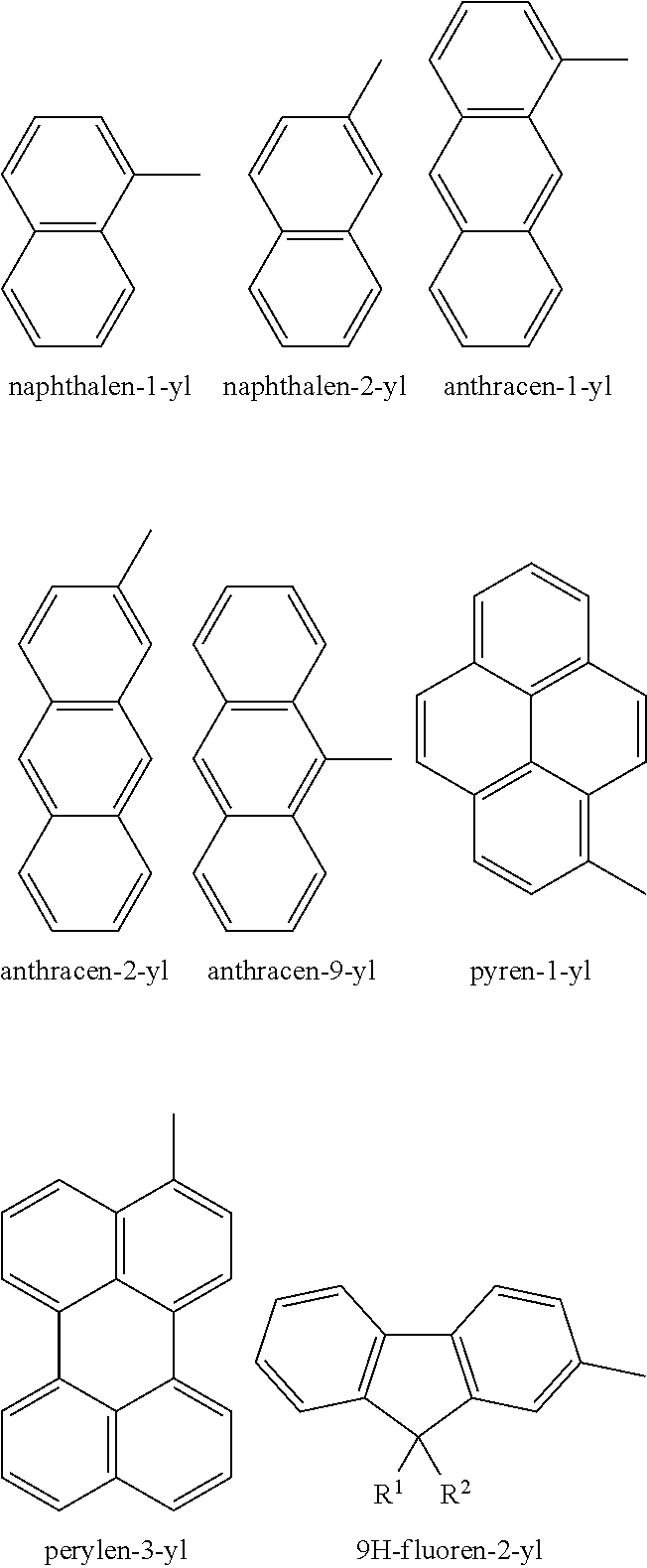


wherein Het is selected from the group consisting of:


wherein i is 0 or an integer in the range of 1 to 100, X is selected from the group consisting of —N(A0)-, —O—, —S—, —Se—, and —Te—, and Z is selected from the group consisting of —N(Ra)—, —O—, —S—, —Se—, and —Te—.

In some embodiments, Ra and Rb, or Rb and Rc, or Ra and Rc, together form an optionally substituted ring system selected from the group consisting of:


Ra and Rb are not both hydrogen, and D1 and D2 are independently selected from the group consisting of:


Ra and Rb are not both hydrogen.

X is selected from the group consisting of —N(A0)- and —Se—, Z is selected from the group consisting of —N(Ra)— and —S—, and D1 and D2 are independently selected from the group consisting of:


and X is selected from the group consisting of —S— and —Se—, Z is —S—, and D1 and D2 are independently selected from the group consisting of:


and wherein D1 and D2 are not hydroxy, or

and D1 and D2 do not comprise bromine.
Het2-A0-Het2 (IIa),

wherein Het2 is selected from the group consisting of:


wherein Z is selected from the group consisting of —N(Ra)—, —O—, —S—, —Se—, and —Te—.

In some embodiments, Ra and Rb, or Rb and Rc, or Ra and Rc, together form an optionally substituted ring system selected from the group consisting of:


provided that Ra and Rb are not both hydrogen, and D1 and D2 are independently selected from the group consisting of:


provided that Ra and Rb are not both hydrogen.

and provided that D1 and D2 are independently selected from the group consisting of:


provided that D1 and D2 are not hydroxy or

and D1 and D2 do not comprise bromine.
Formula III
Het3-Ra-Het3 (IIIa),

wherein Het3 is selected from the group consisting of:


wherein X is selected from the group consisting of —N(A0)-, —O—, —S—, —Se—, and —Te—.

In some embodiments, Ra and Rb, or Rb and Rc, or Ra and Rc, together form an optionally substituted ring system selected from the group consisting of:


provided that D1 and D2 are independently selected from the group consisting of:


provided that D1 and D2 are independently selected from the group consisting of:


provided that D1 and D2 are not hydroxy or

and D1 and D2 do not comprise bromine.

In some embodiments, A0 is hydrogen or C1-8 alkyl. In some embodiments A0 is isobutyl. In some embodiments A is tert-butyl. In some embodiments, A0 is

In some embodiments, A0 is


Wavelength Conversion Luminescent Medium
Efficiency Enhancement=(ηcell+luminescent film−ηcell)/ηcell*100%


Claims (17)


Priority Applications (1)
| Application Number | Priority Date | Filing Date | Title |
|---|---|---|---|
| US14/758,949 US9960294B2 (en) | 2013-01-04 | 2014-01-03 | Highly fluorescent and photo-stable chromophores for wavelength conversion |
Applications Claiming Priority (3)
| Application Number | Priority Date | Filing Date | Title |
|---|---|---|---|
| US201361749225P | 2013-01-04 | 2013-01-04 | |
| PCT/US2014/010226 WO2014107606A2 (en) | 2013-01-04 | 2014-01-03 | Highly-fluorescent and photo-stable chromophores for wavelength conversion |
| US14/758,949 US9960294B2 (en) | 2013-01-04 | 2014-01-03 | Highly fluorescent and photo-stable chromophores for wavelength conversion |
Related Parent Applications (1)
| Application Number | Title | Priority Date | Filing Date |
|---|---|---|---|
| PCT/US2014/010226 A-371-Of-International WO2014107606A2 (en) | 2013-01-04 | 2014-01-03 | Highly-fluorescent and photo-stable chromophores for wavelength conversion |
Related Child Applications (1)
| Application Number | Title | Priority Date | Filing Date |
|---|---|---|---|
| US15/965,329 Continuation US10461201B2 (en) | 2013-01-04 | 2018-04-27 | Highly-fluorescent and photo-stable chromophores for wavelength conversion |
Publications (2)
| Publication Number | Publication Date |
|---|---|
| US20150340519A1 US20150340519A1 (en) | 2015-11-26 |
| US9960294B2 true US9960294B2 (en) | 2018-05-01 |
Family
ID=50031547
Family Applications (3)
| Application Number | Title | Priority Date | Filing Date |
|---|---|---|---|
| US14/758,949 Active US9960294B2 (en) | 2013-01-04 | 2014-01-03 | Highly fluorescent and photo-stable chromophores for wavelength conversion |
| US15/965,329 Expired - Fee Related US10461201B2 (en) | 2013-01-04 | 2018-04-27 | Highly-fluorescent and photo-stable chromophores for wavelength conversion |
| US16/562,007 Expired - Fee Related US10840397B2 (en) | 2013-01-04 | 2019-09-05 | Highly-fluorescent and photo-stable chromophores for wavelength conversion |
Family Applications After (2)
| Application Number | Title | Priority Date | Filing Date |
|---|---|---|---|
| US15/965,329 Expired - Fee Related US10461201B2 (en) | 2013-01-04 | 2018-04-27 | Highly-fluorescent and photo-stable chromophores for wavelength conversion |
| US16/562,007 Expired - Fee Related US10840397B2 (en) | 2013-01-04 | 2019-09-05 | Highly-fluorescent and photo-stable chromophores for wavelength conversion |
Country Status (7)
| Country | Link |
|---|---|
| US (3) | US9960294B2 (en) |
| EP (1) | EP2941474B1 (en) |
| JP (2) | JP2016509621A (en) |
| KR (1) | KR102266439B1 (en) |
| CN (1) | CN105026518B (en) |
| ES (1) | ES2665594T3 (en) |
| WO (1) | WO2014107606A2 (en) |
Cited By (1)
| Publication number | Priority date | Publication date | Assignee | Title |
|---|---|---|---|---|
| US10461201B2 (en) | 2013-01-04 | 2019-10-29 | Nitto Denko Corporation | Highly-fluorescent and photo-stable chromophores for wavelength conversion |
Families Citing this family (27)
| Publication number | Priority date | Publication date | Assignee | Title |
|---|---|---|---|---|
| EP2951620B1 (en) * | 2013-01-31 | 2017-03-01 | Nitto Denko Corporation | Optical element for correcting color blindness |
| WO2016112220A1 (en) * | 2015-01-07 | 2016-07-14 | Nitto Denko Corporation | Highly photo-stable bis-triazole fluorophores |
| JP2016157837A (en) * | 2015-02-25 | 2016-09-01 | 関東天然瓦斯開発株式会社 | Sensitizing dye for photoelectric conversion, method for producing the same, and photoelectric conversion element using the dye |
| WO2017190345A1 (en) * | 2016-05-06 | 2017-11-09 | South University Of Science And Technology Of China | Molecular fluorophores and preparation method thereof and use for short wavelength infrared imaging |
| CN109384801B (en) | 2017-08-10 | 2022-08-09 | 松下知识产权经营株式会社 | Photoelectric conversion material and photoelectric conversion element |
| CN108129495A (en) * | 2018-01-17 | 2018-06-08 | 南京工业大学 | Selenium-containing near-infrared organic semiconductor and preparation method and application thereof |
| CN109369684B (en) * | 2018-11-01 | 2021-07-27 | 华东师范大学 | A kind of electron donor-acceptor-donor fluorescent molecule and preparation method and application |
| CN109369569B (en) * | 2018-11-01 | 2022-09-30 | 华东师范大学 | Fluorescent probe for detecting methylglyoxal and preparation method and application thereof |
| CN109705495B (en) * | 2019-01-10 | 2020-11-24 | 广东中塑高新技术股份有限公司 | A kind of PVC composition and preparation method thereof |
| DE102020117591A1 (en) * | 2019-07-12 | 2021-01-14 | Semiconductor Energy Laboratory Co., Ltd. | Organic compound, light-emitting device, light-emitting device, electronic device and lighting device |
| CN110483426A (en) * | 2019-07-18 | 2019-11-22 | 江苏大学 | It is a kind of using benzotriazole as the synthetic method of the hole mobile material of nuclear structure and application |
| CN110790720B (en) * | 2019-09-09 | 2023-06-27 | 内蒙古京东药业有限公司 | Novel preparation method of febuxostat intermediate |
| KR102818945B1 (en) * | 2020-03-20 | 2025-06-11 | 닛토덴코 가부시키가이샤 | Boron-containing cyclic luminescent compound and color conversion film containing the same |
| CN111574538A (en) * | 2020-06-16 | 2020-08-25 | 南京邮电大学 | D-A type near-infrared organic luminescent material and preparation method and application thereof |
| CN111777575B (en) * | 2020-07-13 | 2022-03-01 | 江苏师范大学 | A high-sensitivity fluorescent probe for detecting oxalyl chloride and its preparation method and application |
| CN114163455B (en) * | 2020-09-10 | 2025-11-25 | Dic株式会社 | Compounds, compositions, liquid crystal compositions, and liquid crystal display elements or dimming elements |
| CN114790215B (en) * | 2021-01-25 | 2023-10-31 | 中国科学院上海药物研究所 | Quinoxaline-based D-A-D near-infrared second-region fluorescent molecules and their preparation methods and applications |
| CN113307803B (en) * | 2021-03-11 | 2023-02-17 | 南方科技大学 | A NIR-II AIE molecule with excellent properties and its application |
| US11925101B2 (en) * | 2021-09-15 | 2024-03-05 | Raynergy Tek Incorporation | Organic semiconducting compound and the organic photoelectric components using the same |
| CN113999254B (en) * | 2021-11-29 | 2023-02-10 | 青岛科技大学 | A kind of benzothiadiazoloimidazole fluorescent dye and its synthesis method |
| CN114853758B (en) * | 2022-04-14 | 2023-03-28 | 江汉大学 | Iridium complex for photo-thermal/photodynamic co-therapy, preparation method and application |
| CN114751917A (en) * | 2022-04-21 | 2022-07-15 | 南京邮电大学 | A kind of near-infrared luminescent fluorescent molecule and its preparation method and application |
| WO2024082959A1 (en) * | 2022-10-19 | 2024-04-25 | The Hong Kong University Of Science And Technology | Fluorescent [1,2,3]triazolo[4,5-f]-2,1,3-benzothiadiazole derivatives for accelerated cancer theranostic |
| CN115745988B (en) * | 2022-11-14 | 2024-05-24 | 广州天赐高新材料股份有限公司 | D-A-A type deep red fluorescent compound and its synthesis method and application |
| CN115974815B (en) * | 2022-12-07 | 2024-07-16 | 河北化工医药职业技术学院 | D-A-D type triphenylamine compound and preparation method and application thereof |
| CN116769466B (en) * | 2023-05-08 | 2025-10-10 | 上饶海优威应用薄膜有限公司 | A coated light-converting powder and a photovoltaic adhesive film using the same |
| CN118878555A (en) * | 2024-06-28 | 2024-11-01 | 深圳大学 | A class of functionalized near-infrared zone II probe molecules and their new construction methods and applications |
Citations (24)
| Publication number | Priority date | Publication date | Assignee | Title |
|---|---|---|---|---|
| JPS57169757A (en) | 1981-04-13 | 1982-10-19 | Copyer Co Ltd | Electrophotographic receptor |
| JPS589151A (en) | 1981-07-09 | 1983-01-19 | Canon Inc | Electrophotographic receptor |
| EP0579835A1 (en) | 1991-11-12 | 1994-01-26 | Nippon Soda Co., Ltd. | Wavelength conversion material for agriculture |
| JPH07170865A (en) | 1993-12-17 | 1995-07-11 | Nippon Soda Co Ltd | Wavelength conversion material |
| CN1186835A (en) | 1996-12-30 | 1998-07-08 | 中国科学院长春应用化学研究所 | Preparation of Rare Earth Phosphor Converter for Agricultural Film |
| CN1269393A (en) | 1999-04-02 | 2000-10-11 | 中国石油兰州化学工业公司 | Fluorescent additive |
| US6135665A (en) | 1997-11-10 | 2000-10-24 | Union Switch & Signal, Inc. | Clamp for railroad coupler head |
| CN1380351A (en) | 2002-04-23 | 2002-11-20 | 上海交通大学 | Polypropylene composite material capable of sending blue green light under the condition of UV tigght irradiation |
| CN1385490A (en) | 2002-04-25 | 2002-12-18 | 山东师范大学 | Blue light fluorescent powder converting agent for agricultural film and making method thereof |
| JP4141025B2 (en) | 1998-10-27 | 2008-08-27 | 三洋電機株式会社 | Operation method of absorption chiller / heater |
| CN101343352A (en) | 2002-06-20 | 2009-01-14 | 华南理工大学 | Polymers of selenium-containing heterocyclic compounds and their applications in the preparation of luminescent materials |
| US20110016779A1 (en) | 2008-03-19 | 2011-01-27 | Grow Foil B.V. | Greenhouse for enhanced plant growth |
| CN102532932A (en) | 2012-01-12 | 2012-07-04 | 复旦大学 | Pyrazine-ring-containing organic dyes and preparation method and use thereof |
| CN102731533A (en) | 2011-04-12 | 2012-10-17 | 精工爱普生株式会社 | Thiadiazole-based compound, compound for light-emitting device, light-emitting device, light-emitting device, authentication device, and electronic device |
| US20120262057A1 (en) | 2011-04-18 | 2012-10-18 | Seiko Epson Corporation | Thiadiazole-based compound, light emitting element compound, light emitting element, light emitting device, authentication device, and electronic apparatus |
| JP2012222248A (en) | 2011-04-12 | 2012-11-12 | Seiko Epson Corp | Light-emitting element, light-emitting device, authentication device, and electronic appliance |
| WO2013049062A2 (en) | 2011-09-26 | 2013-04-04 | Nitto Denko Corporation | Highly-fluorescent and photo-stable chromophores for enhanced solar harvesting efficiency |
| US20130111810A1 (en) | 2010-02-19 | 2013-05-09 | Cascade | Photovoltaic modules for an agricultural greenhouse and method for manufacturing such modules |
| JP5227894B2 (en) | 2009-05-25 | 2013-07-03 | パナソニック株式会社 | Battery electrode unit and battery |
| JP2013140839A (en) | 2011-12-28 | 2013-07-18 | Seiko Epson Corp | Light emitting element, light emitting device and electronic apparatus |
| JP2013177327A (en) | 2012-02-28 | 2013-09-09 | Seiko Epson Corp | Thiadiazole compound, compound for light-emitting element, light-emitting element, light-emitting device, authentication device and electronic equipment |
| US20130284265A1 (en) | 2011-01-05 | 2013-10-31 | Nitto Denko Corporation | Wavelength conversion perylene diester chromophores and luminescent films |
| JP2014080400A (en) | 2012-10-18 | 2014-05-08 | Seiko Epson Corp | Thiadiazole compound, compound for light-emitting element, light-emitting element, light-emitting device, authentication device, and electronic device |
| WO2014107606A2 (en) | 2013-01-04 | 2014-07-10 | Nitto Denko Corporation | Highly-fluorescent and photo-stable chromophores for wavelength conversion |
Family Cites Families (18)
| Publication number | Priority date | Publication date | Assignee | Title |
|---|---|---|---|---|
| JPS5227894B2 (en) | 1973-09-14 | 1977-07-22 | ||
| JPS5227894A (en) | 1975-08-26 | 1977-03-02 | Toyo Boseki | Marking method of fabric |
| JPS564380A (en) | 1979-06-22 | 1981-01-17 | Hitachi Ltd | Tig-mig welding method |
| JPS56107409A (en) | 1980-01-30 | 1981-08-26 | Furukawa Electric Co Ltd | Steel core aluminum twisted wire |
| JP2006206503A (en) * | 2005-01-28 | 2006-08-10 | Tokyo Institute Of Technology | PI electron compound and n-type organic field effect transistor using the same |
| KR100682928B1 (en) | 2005-02-03 | 2007-02-15 | 삼성전자주식회사 | Energy conversion film and quantum dot thin film containing a quantum dot compound |
| WO2006113205A2 (en) * | 2005-04-15 | 2006-10-26 | E. I. Du Pont De Nemours And Company | Aryl-ethylene substituted aromatic compounds and their use as organic semiconductors |
| US20070028961A1 (en) * | 2005-08-04 | 2007-02-08 | General Electric Company | Organic dye compositions and use thereof in photovoltaic cells |
| JP2008166339A (en) * | 2006-12-27 | 2008-07-17 | Toray Ind Inc | Material for photovoltaic element and photovoltaic element |
| WO2009011791A2 (en) | 2007-07-17 | 2009-01-22 | Miasole | Photovoltaic device with a luminescent down-shifting material |
| TWI390008B (en) | 2007-12-12 | 2013-03-21 | Solar cells and their light-emitting conversion layer | |
| TW201005972A (en) | 2008-07-17 | 2010-02-01 | Nexpower Technology Corp | Thin film solar cell having photo-luminescent medium coated therein and manufacturing method thereof |
| JP2011102841A (en) * | 2009-11-10 | 2011-05-26 | Adeka Corp | Material, layer and filter for converting wavelength, wavelength conversion light emitting device including wavelength conversion filter, and photoelectric conversion device |
| JP2011151094A (en) * | 2010-01-20 | 2011-08-04 | Toyo Ink Sc Holdings Co Ltd | Solar cell module |
| CN103154188B (en) * | 2010-10-06 | 2015-05-20 | 夏普株式会社 | Luminescent material |
| JP5790279B2 (en) * | 2011-08-09 | 2015-10-07 | セイコーエプソン株式会社 | LIGHT EMITTING ELEMENT, LIGHT EMITTING DEVICE, AND ELECTRONIC DEVICE |
| JP5906611B2 (en) * | 2011-08-25 | 2016-04-20 | セイコーエプソン株式会社 | Light receiving element, light emitting / receiving element, light receiving / emitting device, and electronic apparatus |
| JP6149377B2 (en) * | 2012-10-18 | 2017-06-21 | セイコーエプソン株式会社 | Light emitting element, light emitting device, authentication device, and electronic device |
-
2014
- 2014-01-03 EP EP14702328.7A patent/EP2941474B1/en not_active Not-in-force
- 2014-01-03 CN CN201480010704.5A patent/CN105026518B/en not_active Expired - Fee Related
- 2014-01-03 KR KR1020157020847A patent/KR102266439B1/en not_active Expired - Fee Related
- 2014-01-03 US US14/758,949 patent/US9960294B2/en active Active
- 2014-01-03 WO PCT/US2014/010226 patent/WO2014107606A2/en not_active Ceased
- 2014-01-03 JP JP2015551786A patent/JP2016509621A/en active Pending
- 2014-01-03 ES ES14702328.7T patent/ES2665594T3/en active Active
-
2018
- 2018-04-27 US US15/965,329 patent/US10461201B2/en not_active Expired - Fee Related
- 2018-12-18 JP JP2018236185A patent/JP6871898B2/en not_active Expired - Fee Related
-
2019
- 2019-09-05 US US16/562,007 patent/US10840397B2/en not_active Expired - Fee Related
Patent Citations (26)
| Publication number | Priority date | Publication date | Assignee | Title |
|---|---|---|---|---|
| JPS57169757A (en) | 1981-04-13 | 1982-10-19 | Copyer Co Ltd | Electrophotographic receptor |
| JPS589151A (en) | 1981-07-09 | 1983-01-19 | Canon Inc | Electrophotographic receptor |
| EP0579835A1 (en) | 1991-11-12 | 1994-01-26 | Nippon Soda Co., Ltd. | Wavelength conversion material for agriculture |
| JPH07170865A (en) | 1993-12-17 | 1995-07-11 | Nippon Soda Co Ltd | Wavelength conversion material |
| CN1186835A (en) | 1996-12-30 | 1998-07-08 | 中国科学院长春应用化学研究所 | Preparation of Rare Earth Phosphor Converter for Agricultural Film |
| US6135665A (en) | 1997-11-10 | 2000-10-24 | Union Switch & Signal, Inc. | Clamp for railroad coupler head |
| JP4141025B2 (en) | 1998-10-27 | 2008-08-27 | 三洋電機株式会社 | Operation method of absorption chiller / heater |
| CN1269393A (en) | 1999-04-02 | 2000-10-11 | 中国石油兰州化学工业公司 | Fluorescent additive |
| CN1380351A (en) | 2002-04-23 | 2002-11-20 | 上海交通大学 | Polypropylene composite material capable of sending blue green light under the condition of UV tigght irradiation |
| CN1385490A (en) | 2002-04-25 | 2002-12-18 | 山东师范大学 | Blue light fluorescent powder converting agent for agricultural film and making method thereof |
| CN101343352A (en) | 2002-06-20 | 2009-01-14 | 华南理工大学 | Polymers of selenium-containing heterocyclic compounds and their applications in the preparation of luminescent materials |
| US20110016779A1 (en) | 2008-03-19 | 2011-01-27 | Grow Foil B.V. | Greenhouse for enhanced plant growth |
| JP5227894B2 (en) | 2009-05-25 | 2013-07-03 | パナソニック株式会社 | Battery electrode unit and battery |
| US20130111810A1 (en) | 2010-02-19 | 2013-05-09 | Cascade | Photovoltaic modules for an agricultural greenhouse and method for manufacturing such modules |
| US20130284265A1 (en) | 2011-01-05 | 2013-10-31 | Nitto Denko Corporation | Wavelength conversion perylene diester chromophores and luminescent films |
| CN102731533A (en) | 2011-04-12 | 2012-10-17 | 精工爱普生株式会社 | Thiadiazole-based compound, compound for light-emitting device, light-emitting device, light-emitting device, authentication device, and electronic device |
| US20120267615A1 (en) | 2011-04-12 | 2012-10-25 | Seiko Epson Corporation | Thiadiazole-based compound, light emitting element compound, light emitting element, light emitting device, authentication device, and electronic device |
| JP2012222248A (en) | 2011-04-12 | 2012-11-12 | Seiko Epson Corp | Light-emitting element, light-emitting device, authentication device, and electronic appliance |
| US20120262057A1 (en) | 2011-04-18 | 2012-10-18 | Seiko Epson Corporation | Thiadiazole-based compound, light emitting element compound, light emitting element, light emitting device, authentication device, and electronic apparatus |
| JP2012224567A (en) | 2011-04-18 | 2012-11-15 | Seiko Epson Corp | Thiadiazole-based compound, compound for light-emitting element, light-emitting element, light-emitting device, authentication device and electronic device |
| WO2013049062A2 (en) | 2011-09-26 | 2013-04-04 | Nitto Denko Corporation | Highly-fluorescent and photo-stable chromophores for enhanced solar harvesting efficiency |
| JP2013140839A (en) | 2011-12-28 | 2013-07-18 | Seiko Epson Corp | Light emitting element, light emitting device and electronic apparatus |
| CN102532932A (en) | 2012-01-12 | 2012-07-04 | 复旦大学 | Pyrazine-ring-containing organic dyes and preparation method and use thereof |
| JP2013177327A (en) | 2012-02-28 | 2013-09-09 | Seiko Epson Corp | Thiadiazole compound, compound for light-emitting element, light-emitting element, light-emitting device, authentication device and electronic equipment |
| JP2014080400A (en) | 2012-10-18 | 2014-05-08 | Seiko Epson Corp | Thiadiazole compound, compound for light-emitting element, light-emitting element, light-emitting device, authentication device, and electronic device |
| WO2014107606A2 (en) | 2013-01-04 | 2014-07-10 | Nitto Denko Corporation | Highly-fluorescent and photo-stable chromophores for wavelength conversion |
Non-Patent Citations (34)
Cited By (2)
| Publication number | Priority date | Publication date | Assignee | Title |
|---|---|---|---|---|
| US10461201B2 (en) | 2013-01-04 | 2019-10-29 | Nitto Denko Corporation | Highly-fluorescent and photo-stable chromophores for wavelength conversion |
| US10840397B2 (en) | 2013-01-04 | 2020-11-17 | Nitto Denko Corporation | Highly-fluorescent and photo-stable chromophores for wavelength conversion |
Also Published As
| Publication number | Publication date |
|---|---|
| US20150340519A1 (en) | 2015-11-26 |
| KR102266439B1 (en) | 2021-06-17 |
| WO2014107606A3 (en) | 2014-09-04 |
| EP2941474B1 (en) | 2018-02-28 |
| US10840397B2 (en) | 2020-11-17 |
| ES2665594T3 (en) | 2018-04-26 |
| KR20150103378A (en) | 2015-09-10 |
| JP6871898B2 (en) | 2021-05-19 |
| CN105026518B (en) | 2017-11-28 |
| US20180248053A1 (en) | 2018-08-30 |
| US10461201B2 (en) | 2019-10-29 |
| WO2014107606A2 (en) | 2014-07-10 |
| CN105026518A (en) | 2015-11-04 |
| JP2019090025A (en) | 2019-06-13 |
| US20190393367A1 (en) | 2019-12-26 |
| EP2941474A2 (en) | 2015-11-11 |
| JP2016509621A (en) | 2016-03-31 |
Similar Documents
| Publication | Publication Date | Title |
|---|---|---|
| US10840397B2 (en) | Highly-fluorescent and photo-stable chromophores for wavelength conversion | |
| US9382424B2 (en) | Highly-fluorescent and photo-stable chromophores for enhanced solar harvesting efficiency | |
| US20190284471A1 (en) | Wavelength conversion films with multiple photostable organic chromophores | |
| US9399730B2 (en) | Wavelength conversion material as encapsulate for solar module systems to enhance solar harvesting efficiency | |
| US20140311566A1 (en) | Microstructured wavelength conversion films for enhanced solar harvesting efficiency | |
| US9394479B2 (en) | Wavelength conversion film having pressure sensitive adhesive layer to enhance solar harvesting efficiency | |
| WO2015023574A1 (en) | Luminescent solar concentrator utilizing organic photostable chromophore compounds | |
| US11930705B2 (en) | Diaryloxybenzoheterodiazole compounds di-substituted with thienothiophenic groups | |
| US10005787B2 (en) | Highly photo-stable bis-triazole fluorophores |
Legal Events
| Date | Code | Title | Description |
|---|---|---|---|
| AS | Assignment |
Owner name: NITTO DENKO CORPORATION, JAPAN Free format text: ASSIGNMENT OF ASSIGNORS INTEREST;ASSIGNOR:YAMAMOTO, MICHIHARU;REEL/FRAME:044948/0500 Effective date: 20161121 Owner name: NITTO DENKO CORPORATION, JAPAN Free format text: ASSIGNMENT OF ASSIGNORS INTEREST;ASSIGNOR:RACHWAL, MILA;REEL/FRAME:044948/0486 Effective date: 20130708 |
|
| STCF | Information on status: patent grant |
Free format text: PATENTED CASE |
|
| CC | Certificate of correction | ||
| MAFP | Maintenance fee payment |
Free format text: PAYMENT OF MAINTENANCE FEE, 4TH YEAR, LARGE ENTITY (ORIGINAL EVENT CODE: M1551); ENTITY STATUS OF PATENT OWNER: LARGE ENTITY Year of fee payment: 4 |
|
| FEPP | Fee payment procedure |
Free format text: MAINTENANCE FEE REMINDER MAILED (ORIGINAL EVENT CODE: REM.); ENTITY STATUS OF PATENT OWNER: LARGE ENTITY |