US9422302B2 - Mixed μ agonist/ δ antagonist opioid analgesics with reduced tolerance liabilities and uses thereof - Google Patents
Mixed μ agonist/ δ antagonist opioid analgesics with reduced tolerance liabilities and uses thereof Download PDFInfo
- Publication number
- US9422302B2 US9422302B2 US14/772,592 US201414772592A US9422302B2 US 9422302 B2 US9422302 B2 US 9422302B2 US 201414772592 A US201414772592 A US 201414772592A US 9422302 B2 US9422302 B2 US 9422302B2
- Authority
- US
- United States
- Prior art keywords
- umb
- morphine
- compound
- opioid
- receptors
- Prior art date
- Legal status (The legal status is an assumption and is not a legal conclusion. Google has not performed a legal analysis and makes no representation as to the accuracy of the status listed.)
- Expired - Fee Related
Links
- 0 [1*]C[C@]12OC3=C4C(=CC=C3*O)C[C@@H]3C(C=C[C@@H]1O)[C@@]42CCN3C Chemical compound [1*]C[C@]12OC3=C4C(=CC=C3*O)C[C@@H]3C(C=C[C@@H]1O)[C@@]42CCN3C 0.000 description 4
- FXHSCZDXIHAPDO-BYXNGTQDSA-N C=C1CCC2(O)[C@H]3CC4=CC=C(O)C5=C4[C@@]2(CCN3C)C1(CO)O5 Chemical compound C=C1CCC2(O)[C@H]3CC4=CC=C(O)C5=C4[C@@]2(CCN3C)C1(CO)O5 FXHSCZDXIHAPDO-BYXNGTQDSA-N 0.000 description 1
Images



Classifications
-
- C—CHEMISTRY; METALLURGY
- C07—ORGANIC CHEMISTRY
- C07D—HETEROCYCLIC COMPOUNDS
- C07D489/00—Heterocyclic compounds containing 4aH-8, 9 c- Iminoethano-phenanthro [4, 5-b, c, d] furan ring systems, e.g. derivatives of [4, 5-epoxy]-morphinan of the formula:
- C07D489/06—Heterocyclic compounds containing 4aH-8, 9 c- Iminoethano-phenanthro [4, 5-b, c, d] furan ring systems, e.g. derivatives of [4, 5-epoxy]-morphinan of the formula: with a hetero atom directly attached in position 14
- C07D489/08—Oxygen atom
-
- C—CHEMISTRY; METALLURGY
- C07—ORGANIC CHEMISTRY
- C07D—HETEROCYCLIC COMPOUNDS
- C07D489/00—Heterocyclic compounds containing 4aH-8, 9 c- Iminoethano-phenanthro [4, 5-b, c, d] furan ring systems, e.g. derivatives of [4, 5-epoxy]-morphinan of the formula:
- C07D489/02—Heterocyclic compounds containing 4aH-8, 9 c- Iminoethano-phenanthro [4, 5-b, c, d] furan ring systems, e.g. derivatives of [4, 5-epoxy]-morphinan of the formula: with oxygen atoms attached in positions 3 and 6, e.g. morphine, morphinone
Definitions
- the present invention is based on the knowledge that delta opioid antagonists co-administered with mu agonists lessen the development of tolerance to the mu agonists (like morphine).
- the method comprises a new opioid analgesic (NCE) to which tolerance to analgesia develops less rapidly than morphine.
- NCE has an alcohol incorporated into the 5-position of oxymorphone to give a novel compound that has the profile of a single compound with a profile of a delta antagonist and a mu agonist, and demonstrated lower tolerance than morphine in mice.
- This NCE along with analogs of morphine, dihydromorphine, hydromorphone, codeine, dihydrocodeine, hydrocodone and ethylmorphine described herein, may become utilized as new analgesics with far fewer side effects than current employed opioids (morphine, oxycodone).
- the present invention relates to opioid narcotics used for the treatment of moderate-to-severe pain that primarily exert their analgesic effects through ⁇ receptors.
- opioid narcotics comprise 4a,9-dihydroxy-7a-(hydroxymethyl)-3-methyl-2,3,4,4a,5,6-hexahydro-1H-4,12-methanobenzofuro[3,2-e]isoquinolin-7(7aH)-one (UMB 425) a 5,14-bridged morphinan-based orvinol precursor synthesized from thebaine.
- UMB 425 lacks ⁇ -specific motifs, conformationally sampled pharmacophore models for ⁇ and ⁇ receptors predict it to have efficacy similar to morphine at ⁇ receptors and similar to naltrexone at ⁇ receptors, due to the compound sampling conformations in which the hydroxyl moiety interacts with the receptors similar to orvinols.
- UMB 425 exhibits a mixed ⁇ agonist/ ⁇ antagonist profile as determined in receptor binding and [ 35 S]GTP ⁇ S functional assays in CHO cells. In vivo studies in mice show that UMB 425 displays potent antinociception in the hot plate and tail-flick assays.
- UMB 425 has mixed ⁇ agonist/ ⁇ antagonist properties in vitro that translate to reduced tolerance liabilities in vivo even in the absence of ⁇ -specific motifs fused to the C-ring. Further described herein is the identification, design and characterization of novel opioid narcotics (UMB 425, analogs of morphine, dihydromorphine, hydromorphone, codeine, dihydrocodeine, hydrocodone and ethylmorphine). See, for example, FIG. 7 .
- Opioid analgesics including morphine, are the traditional standards for individuals suffering from cancer pain, post-operative pain or pain from other severe trauma (1).
- the prescription of opioids has risen significantly since the early 1980's (2).
- opioids may be the standard for treating moderate-to-severe pain
- the side effects including respiratory depression, tolerance, physical/psychological dependence, constipation, sedation, nausea/vomiting and dizziness can be problematic (3).
- These severe side effects often lead to the under treatment of chronic pain and increase the possibility of death (4). Therefore, there is a pressing need to identify pharmacological agents that maintain potent analgesic properties, while eliminating the problematic side effects.
- Opioid receptors are G-protein coupled receptors (5) located in the central nervous system, peripheral nervous system and gastrointestinal tract (6). To date, three opioid receptor subtypes have been identified: mu ( ⁇ ) (7), delta ( ⁇ ) (8) and kappa ( ⁇ ) (9).
- Traditional opioid analgesics exert their pain-relieving properties through ⁇ receptors located within the central nervous system (10). Opioid interactions at the ⁇ receptor have shown synergistic analgesic effects in combination with activation of the ⁇ receptor (11). However, research suggests that the activation of the ⁇ receptor may play a role in the side effect liabilities associated with chronic opioid use, including tolerance (12).
- Selective ⁇ antagonists can reduce tolerance when given in conjunction with the traditional ⁇ agonists, including morphine (12, 13) and opioid peptides that display mixed ⁇ agonist/ ⁇ antagonist activity have reduced tolerance liabilities compared to traditional opioid analgesics (14).
- bivalent opioid ligands are a viable therapeutic tool.
- certain pharmacological characteristics can be problematic for bivalent ligands, including high molecular weights and poor pharmacokinetic profiles (18).
- Bifunctional ligands are based on a single pharmacophore intended to target two binding sites with functional activity distinct for each of the respective sites (19), ideally circumventing the problematic characteristics associated with bivalent ligands.
- Such ligands include structural motifs that are seen in traditional ⁇ agonists as well as ⁇ antagonists.
- Bifunctional ligands depicting mixed ⁇ agonism/ ⁇ antagonism have displayed potent analgesic activity with reduced side effect liabilities, including tolerance (20).
- those developed are traditionally characterized in vivo by intracebroventricular administration, a method unsuitable for wide spread therapeutic use.
- the present invention includes the synthesis, modeling and pharmacological characterization of the novel opioid ligand, 4a,9-dihydroxy-7a-(hydroxymethyl)-3-methyl-2,3,4,4a,5,6-hexahydro-1H-4,12-methanobenzofuro[3,2-e]isoquinolin-7(7aH)-one (UMB 425).
- UMB 425 was originally designed by the inventors as a precursor to a series of bifunctional 5,14-bridged morphinan-based orvinols.
- the compound has a novel and unique structure, such that it exhibits no ⁇ -specific motifs fused to the C-ring, and the 5′-hydroxymethyl substituent is the only functional group that distinguishes UMB 425 from the chemical structure of oxymorphone.
- CSP conformationally sampled pharmacophore
- UMB 425 may also interact with the receptors in a similar way as the orvinols, despite UMB 425's lack of the classical ⁇ antagonist motif on the C-ring. Indeed, in vitro and in vivo pharmacological characterization of UMB 425 show it to have high affinity and the desired ⁇ agonism and ⁇ antagonism profile in CHO cells, and to have antinociceptive effects with decreased development of tolerance in mice.
- FIG. 1 ( a ) Images of UMB 425 and etorphine with the hydroxyl oxygen highlighted in red.
- FIG. 1 ( b ) Probability distributions of the basic N to oxygen.
- FIG. 1 ( c ) The basic N—C9-oxygen angle from the simulations used in CSP model development for etorphine (solid line), buprenorphine (dashed line), diprenorphine (dashed line) and UMB 425 (dashed line).
- FIG. 2 ( a ) Dose- and time-response curves for s.c. morphine in the hot plate assay.
- FIG. 2 ( b ) Dose- and time-response curves for s.c. morphine in the tail-flick assay.
- FIG. 2 ( c ) Dose- and time-response curves for s.c. UMB 425 in the hot plate assay.
- FIG. 2 ( d ) Dose- and time-response curves for s.c. UMB 425 in the tail-flick assay.
- FIG. 3 Antagonism of UMB 425 antinociception using various opioid antagonists.
- Latencies were determined 30 min after UMB 425 administration.
- FIG. 3 ( a ) Antagonism of UMB 425 antinociception in the hot plate assay by naloxone, but not nor-BNI. * p ⁇ 0.05.
- FIG. 3 ( b ) Antagonism of UMB 425 antinociception in the tail-flick assay by naloxone, but not nor-BNI. *** p ⁇ 0.001.
- FIG. 4 Antinociceptive tolerance development for morphine and UMB 425 for the hot plate and tail-flick assays.
- Male, Swiss-Webster mice were given an ED 90 dose of morphine (15 mg/kg, s.c.) or UMB 425 (15 mg/kg, s.c.) twice daily for a five day period. Latencies were determined 30 min after drug administration.
- FIG. 4 ( a ) Antinociceptive tolerance development in the hot plate assay. ** p ⁇ 0.01 vs. Morphine Day 1/UMB 425 Day 1; # p ⁇ 0.05 vs. Morphine Day 4; ### p ⁇ 0.001 vs. Morphine Day 5.
- FIG. 4 ( b ) Antinociceptive tolerance development in the tail-flick assay. * p ⁇ 0.05, ** p ⁇ 0.01 vs. Morphine Day 1; # p ⁇ 0.05 vs. Morphine Day 5.
- FIG. 5 Chemical synthesis of UMB 425 from thebaine.
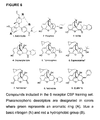
- FIG. 6 Compounds included in the ⁇ receptor CSP training set.
- FIG. 7 Novel opioid narcotics: UMB 425, oxycodone analog, analogs of morphine, dihydromorphine, hydromorphone, codeine, dihydrocodeine, hydrocodone and ethylmorphine.
- novel opioid ligands with mixed ⁇ agonist and ⁇ antagonist activity has therapeutic potential for the treatment of pain with a lower side effect liability than commonly marketed opioid analgesics.
- Towards this goal a number of peptidic as well as bivalent and bifunctional non-peptidic ligands have been developed that achieve this desired pharmacological profile, but have inherent problems that limit their potential as therapeutic agents.
- the present invention includes UMB 425, a novel opioid that lacks a typical ⁇ -selective motif, yet exhibits mixed ⁇ agonist/ ⁇ antagonist activity, robust antinociceptive effects, and a reduced tolerance liability compared to morphine.
- CSP updated ⁇ model generation involved development of multiple individual models based on different pharmacophoric descriptors ( Figure S1, supporting information); the top five models of the updated ⁇ CSP are listed in Table 1, each with an R 2 greater than 0.90.
- the final CSP model is based on averaging the predicted efficacies from these top five models. From the model, overlap of the aromatic ring (A) to hydrophobic group (B) distance distributions was identified as the most important descriptor.
- N-substituent N-methyl for oxymorphindone and N-cyclopropylmethyl for naltrindole
- the present model did not include the N-substituent as a pharmacophoric descriptor because the length of the N-substituent is not as critical for the ⁇ receptor as it is for the ⁇ receptor.
- the weak partial agonism of oxymorphindole seems to be due to the short methyl N-substituent.
- the CSP models for the ⁇ and ⁇ receptor ligands were applied to UMB 425, as well as all ligands being developed as part of our ongoing research program.
- Predicted efficacy (% E max ) values for UMB 425 were 101 and 1.4 for the ⁇ and ⁇ receptors, respectively.
- the high efficacy at ⁇ receptors is consistent with the structural similarity of UMB 425 with morphine or oxymorphone, while the low efficacy at ⁇ receptors is consistent with the C-ring substituents of naltrexone.
- FIG. 1 shows N—O distance and N—C9-O angle probability distributions of three orvinols and UMB 425.
- FIG. 1 a two large distributions are present that are separated by around 1.5 ⁇ , although a small peak is noted in the UMB 425 distribution at 6.5 ⁇ that overlaps with that of the orvinols.
- the N—C9-O angle indicates the relative position of the hydroxyl group with respect to the plane of the aromatic A-ring.
- the hydroxyl group of UMB 425 is slightly above the A-ring plane while that of the orvinols is below; however, a small overlap between UMB 425 and the orvinols is observed ( FIG. 1 b ). While preliminary, these results indicate that UMB 425 can assume conformations in which its hydroxyl moiety participates in interactions with the receptors that are similar to those occurring with the orvinols.
- the recent availability of X-ray crystal structures of the ⁇ and ⁇ receptors will allow for future evaluation of the present model in the context of 3D interactions between UMB 425, as well as other ligands, and the receptors (30, 31).
- UMB 425 demonstrates greater selectivity for the ⁇ receptor than either the ⁇ receptor or the ⁇ receptor.
- Agonist and antagonist activities for morphine and UMB 425 at each of the human opioid receptor subtypes overexpressed in CHO cells are summarized in Table 3.
- UMB 425 displayed no significant agonist activity through the ⁇ or ⁇ receptors, yet it did demonstrate antagonistic activity through the ⁇ receptor indicated by a corresponding pA 2 value of 6.12 ( ⁇ 0.91).
- FIG. 4 The results of administration of ED 90 doses of morphine and UMB 425 to mice twice daily for a period of five days, with test latencies determined 30 min after drug administration are summarized in FIG. 4 .
- Dunnett's post-hoc analysis revealed that morphine administration significantly decreased antinociceptive activity on Day 4 and 5 of the tolerance paradigm for both the hot plate ( FIG.
- UMB 425 demonstrated a significant reduction in tolerance liabilities compared to morphine itself, specifically a 2.6- and 4.9-fold reduction in respective ED 50 shifts for the hot plate and tail-flick assays.
- UMB 425 The pharmacological effects of UMB 425 seen in vivo are good. Further testing may assess other potential side effects including respiratory depression, decreased gastrointestinal motility, physical as well as psychological dependence. It is noteworthy that ⁇ antagonists and ⁇ opioid receptor knockout mice have been shown in earlier studies to attenuate the rewarding effects of morphine (35, 36), reduce respiratory depression liabilities associated with fentanyl analogs (37) and promote colonic propulsion (38). In addition, mixed ⁇ agonist/ ⁇ antagonist analgesics have been shown to reduce physical dependence (33).
- UMB 425 is a novel opioid mixed ⁇ agonist/ ⁇ antagonist that possesses antinociceptive effects comparable to morphine with reduced tolerance liabilities. It has nanomolar affinity and efficacy for ⁇ receptors similar to morphine and moderate affinity for ⁇ receptors at which it exhibits antagonistic effects. UMB 425 is structurally similar to traditional ⁇ agonists, and CSP models suggest that its hydroxyl moiety assumes conformations that allow interactions similar to orvinols with mixed ⁇ agonist/ ⁇ antagonist effects. Together, the data suggest that traditional ⁇ selective motifs need not be added to a traditional ⁇ agonist pharmacophore to achieve ⁇ antagonism and reduce opioid-induced tolerance.
- Lithium aluminum hydride (LAH) (0.00496 g, 0.13 mmol) was added to a stirred solution of 5-carbethoxythebaine 2 (0.050 g, 0.13 mmol) in dry THF (2 mL) at 0° C. and allowed to warm to room temperature. After 2 h, the reaction mixture was quenched with saturated sodium sulfate solution and stirred for 30 min. The reaction mixture was filtered through celite; the organic layer was separated, concentrated and purified by silica gel column chromatography (15:85 methanol-dichloromethane) to yield the pure product 5-(hydroxymethyl) thebaine 3 as a pale yellow solid (0.036 g, 81% yield) with mp 169-171° C.
- LAH Lithium aluminum hydride
- CSP conformationally sampled pharmacophore
- the training set was limited to small non-peptidic opioids: BW373U86, etorphine, SIOM (7-spiroindanyloxymorphone), oxymorphindole, diprenorphine, buprenorphine, naltrexone, naltrindole and (E)-BNTX [(E)-benzylidenenaltrexone].
- Figure S1 of the supporting information shows the chemical structures of compounds used as the training set and their experimental efficacies measured in earlier reported [ 35 S]GTP ⁇ S assays (29).
- the selected ligands were modeled using the CHARMM22/CMAP (42-44) and CHARMM General Force Field (CGenFF) (45) with Replica Exchange Molecular Dynamics (REX-MD) (46, 47) for conformational sampling, as previously described (21, 48).
- Pharmacophoric descriptors were designated for calculations of distances and angles between varying functional groups and are identified as an aromatic ring (A), a basic nitrogen (N) and a hydrophobic group (B) ( Figure S1, supporting information).
- BW373U86 was used as the reference compound for model development.
- mice Male, Swiss-Webster mice (21-30 g, Harlan, Indianapolis, Ind.; Frederick, Md.) were housed in groups of five in polysulfone cages (Techniplast, Philadelphia, Pa.) with a 12:12-h light/dark cycle with food and water ad libitum. Animals were acclimated one week prior to experimental use and randomly assigned to treatment groups. All procedures were performed in accordance to the Institutional Animal Care and Use Committee at the West Virginia University Health Sciences Center.
- Dulbecco's modified Eagle's medium DMEM
- Dulbecco's modified Eagle's medium Nutrient Mixture F12 with Hepes 1:1 (DMEM:F12) were purchased from Fisher Scientific (Hanover Park, Ill.).
- Penicillin-streptomycin solution 10,000 units/ml
- trypsin-EDTA 0.05% trypsin
- G418 Geneticin 50 mg/ml were purchased from Invitrogen (Carlsbad, Calif.).
- GTP ⁇ S lithium salt was obtained from Tocris Bioscience (Ellisville, Mo.).
- [ 3 H]DAMGO, [ 3 H]DPDPE, [ 3 H]U69,593 and [ 35 S]GTP ⁇ S were purchased from Perkin Elmer (Shelton, Conn.).
- CHO cells stably transfected with and overexpressing the human ⁇ opioid receptor (hMOR-CHO), the human ⁇ opioid receptor (hDOR-CHO) or the human ⁇ opioid receptor (hKOR-CHO) were grown in 150-mm dishes (Fisher Scientific, Hanover Park, Ill.) in DMEM supplemented with 10% FBS, penicillin-streptomycin and G418 at 37° C. in a 5% CO 2 atmosphere.
- DMEM:F12 (1:1) with HEPES, L-Gln solution was used when preparing hMOR-CHO and DMEM 4.5 g/l glucose was used when preparing hDOR-CHO and hKOR-CHO.
- Membranes were incubated with 10-12 concentrations of drug (0.001-100,000 nM) and radiolabeled ligand in 50 mM Tris buffer, pH 7.7, at a final volume of 1 mL.
- ⁇ receptors were labeled using 1.3 nM [ 3 H] DAMGO.
- ⁇ receptors were labeled using 1.2 nM [ 3 H] DPDPE.
- ⁇ receptors were labeled using 1.7 nM [ 3 H] U69,593.
- Non-specific binding was determined using non-labeled equivalents at each receptor subtype: 10 ⁇ M DAMGO, 1 ⁇ M DPDPE and 10 ⁇ M U69,593.
- Membrane preparation for [ 35 S]GTP ⁇ S binding was similar to the aforementioned opioid binding studies, with the exception that CHO cells expressing hMOR, hDOR and hKOR were resuspended in a final solution (“Buffer A”) consisting of 100 mM NaCl, 10 mM MgCl 2 , 20 mM Hepes, pH 7.4. Membranes were incubated with 10-12 concentrations of drug and 1 nM [ 35 S]GTP ⁇ S in “Buffer A” at a final volume of 1 mL. Exogenous guanosine diphosphate (GDP, 100 ⁇ L) was added to “Buffer A” per 96-well plate using a 10 mM stock that was made fresh daily.
- Buffer A a final solution
- Basal activity was determined in the presence of exogenous GDP and in the absence of an agonist, while non-specific binding was determined in the presence of 10 ⁇ M unlabelled GTP ⁇ S. Following a 60 min incubation period, reactions were terminated via rapid vacuum filtration over Perkin Elmer Unifilter®-96, GF/B filters that were presoaked in a 1% BSA solution for 30 min. After filtration, filters were washed three times with 1.5 mL of cold 50 mM Tris buffer, pH 7.7 and counted in 40 ⁇ L/well of Perkin Elmer Microscint 20.
- pA 2 values are indicative of antagonistic potency at a particular receptor subtype and were determined using a Schild plot, whereby the plot's x-intercept equals pA 2 .
- Corresponding slope values at or near ⁇ 1 indicate competitive antagonism for the compound at that particular receptor subtype.
- potential antagonistic properties were determined. Mean ⁇ S.E.M. were determined by performing experiments in triplicates of duplicates.
- mice were placed within a plastic cylinder (10.8 cm ID) atop a black anodized, aluminum plate (27.9 cm ⁇ 26.7 cm ⁇ 1.9 cm) uniformly regulated at 53° C. (IITC Life Science Inc., Woodland Hills, Calif.). The latency to the first sign of excessive shaking, lifting and/or licking of the hind paws was determined and recorded as the behavioral endpoint. Two baseline latencies (BL) were recorded prior to drug administration, with an average BL within 8-10 sec needed for further testing. Mice were then given subcutaneous injections of either morphine (0.1-20 mg/kg) or UMB 425 (0.1-20 mg/kg) and testing latencies (TL) for nociceptive responses were recorded at various time points thereafter.
- morphine 0.1-20 mg/kg
- UMB 425 0.1-20 mg/kg
- mice were placed in restraints (2.5 cm ID ⁇ 10.2 cm length) and their tails were placed underneath an overhead halogen light source (IITC Life Science Inc., Woodland Hills, Calif.) whereby the latency to the first sign of a rapid tail flick was determined and recorded as the behavioral endpoint.
- Two BL values were recorded prior to drug administration, with an average BL within 2-4 sec needed for further testing. Animals were then administered test compound at dosages reported for hot plate antinociceptive testing and TL values recorded at various time points thereafter. A 10 sec CL was predetermined so as to not cause tissue damage. % MPE values were determined as described above.
- Antinociceptive testing was performed 30 min after subcutaneous administration of an ED 90 dose of morphine or UMB 425.
- the selected antagonist dosages and pretreatment time points have been shown to correspond with the intended opioid receptor subtype and peak antagonist effect (50, 51).
- the tolerance regimen was performed using previously published methods, with some modifications (33, 49). Mice were administered twice daily (8 AM and 8 PM) subcutaneous injections of a test compound at respective ED 90 doses for a five day period. On Day 6, animals were given varying doses of morphine (0.1-20 mg/kg) or UMB 425 (0.1-20 mg/kg) and antinociceptive activity was determined using both the hot plate and tail-flick assays to determine tolerance development. Respective ED 50 values determined during the tolerance assay were then compared to values obtained in the acute treatment paradigm.
- Graphpad Prism software (San Diego, Calif.) was used for all statistical analysis. Opioid binding and [ 35 S]GTP ⁇ S binding data analysis was performed using a non-linear regression binding model. K i , EC 50 , % E max and pA 2 values were determined as described above. For in vivo antinociceptive assays, agonist ED 50 values were calculated using a non-linear regression model. For antagonist studies, a one-way analysis of variance (ANOVA) followed by Tukey's post-hoc tests were used to determine significance between groups. For the tolerance assay, repeated measures one-way ANOVA followed by Dunnett's post-hoc tests were used to determine significance between treatment days for test compound treatment. Repeated measures two-way ANOVA and Bonferroni's post-hoc tests were used to determine significance between groups. For all comparisons, p ⁇ 0.05 was considered statistically significant.
- ANOVA analysis of variance
- BCA bicinchoninic acid
- BL baseline latencies
- BSA bovine serum albumin
- BW373U86 ( ⁇ )-4-(( ⁇ -R*)- ⁇ -((2S*,5R*)-4-Allyl-2,5-dimethyl-1-piperazinyl)-3-hydroxybenzyl)-N,N-diethyl-benzamide
- CHO Chinese hamster ovary
- CL cutoff latency
- CPM counts per minutes
- CSP conformationally sampled pharmacophore
- DAMGO [D-Ala 2 , N-MePhe 4 , Gly-ol]-enkephalin
- DMEM Dulbecco's modified Eagle's medium
- DPDPE [D-Pen 2,5 ]-enkephalin
- E)-BNTX [(E)-benzylidenenaltrexone]
- FBS fetal bovine serum
- GDP guanos
- N represents the basic nitrogen
- A is the aromatic ring
- B is the hydrophobic group, as shown in Figure S1 of the supporting information.
- X 1 and X 2 are overlap integrals with respect to the reference compound, while a and b are coefficients for variables X 1 and X 2 and c is the y-intercept in the regression equations.
- R 2 is the goodness of fit, p-value the significance of models and correlation coefficients between X 1 and X 2 overlap coefficients.
- ED 50 values for morphine and UMB 425 in the acute treatment paradigm ED 50 (mg/kg) Morphine UMB 425 Hot Plate 2.73 4.30 Tail-Flick 6.85 8.83 Summary of antinociceptive activity of acute morphine (0.1-20 mg/kg, s.c.) and UMB 425 (0.1-20 mg/kg, s.c.) treatment in Swiss, Webster mice for the hot plate and tail-flick assays. Respective ED 50 values (in mg/kg, s.c.) were obtained at the 30 min time point after drug administration.
- ED 50 values for the tolerance paradigm were obtained during a dose-response challenge on Day 6 of treatment, whereby latencies were determined 30 min after drug administration (tolerance columns).
- the shifts represent fold-shifts in the ED 50 determined in the acute vs. tolerance treatment paradigms.
Landscapes
- Chemical & Material Sciences (AREA)
- Organic Chemistry (AREA)
- Pharmaceuticals Containing Other Organic And Inorganic Compounds (AREA)
Priority Applications (1)
| Application Number | Priority Date | Filing Date | Title |
|---|---|---|---|
| US14/772,592 US9422302B2 (en) | 2013-03-07 | 2014-03-06 | Mixed μ agonist/ δ antagonist opioid analgesics with reduced tolerance liabilities and uses thereof |
Applications Claiming Priority (3)
| Application Number | Priority Date | Filing Date | Title |
|---|---|---|---|
| US201361774128P | 2013-03-07 | 2013-03-07 | |
| PCT/US2014/021155 WO2014138378A1 (en) | 2013-03-07 | 2014-03-06 | NOVEL MIXED μ AGONIST/ δ ANTAGONIST OPIOID ANALGESICS WITH REDUCED TOLERANCE LIABILITIES AND USES THEREOF |
| US14/772,592 US9422302B2 (en) | 2013-03-07 | 2014-03-06 | Mixed μ agonist/ δ antagonist opioid analgesics with reduced tolerance liabilities and uses thereof |
Publications (2)
| Publication Number | Publication Date |
|---|---|
| US20160016965A1 US20160016965A1 (en) | 2016-01-21 |
| US9422302B2 true US9422302B2 (en) | 2016-08-23 |
Family
ID=51491946
Family Applications (1)
| Application Number | Title | Priority Date | Filing Date |
|---|---|---|---|
| US14/772,592 Expired - Fee Related US9422302B2 (en) | 2013-03-07 | 2014-03-06 | Mixed μ agonist/ δ antagonist opioid analgesics with reduced tolerance liabilities and uses thereof |
Country Status (5)
| Country | Link |
|---|---|
| US (1) | US9422302B2 (de) |
| EP (1) | EP2964228B1 (de) |
| AU (1) | AU2014225685A1 (de) |
| CA (1) | CA2911681A1 (de) |
| WO (1) | WO2014138378A1 (de) |
Family Cites Families (3)
| Publication number | Priority date | Publication date | Assignee | Title |
|---|---|---|---|---|
| US2178010A (en) * | 1937-02-03 | 1939-10-31 | Small Lyndon Frederick | Nuclear substituted derivatives of the morphine series and methods for their preparation |
| RS49982B (sr) * | 1997-09-17 | 2008-09-29 | Euro-Celtique S.A., | Sinergistička analgetička kombinacija analgetičkog opijata i inhibitora ciklooksigenaze-2 |
| DE10229842A1 (de) * | 2002-07-03 | 2004-02-05 | Helmut Prof. Dr. Schmidhammer | Morphinanderivate und deren quartäre Ammoniumsalze substituiert in Position 14, Herstellungsverfahren und Verwendung |
-
2014
- 2014-03-06 EP EP14759505.2A patent/EP2964228B1/de active Active
- 2014-03-06 AU AU2014225685A patent/AU2014225685A1/en not_active Abandoned
- 2014-03-06 WO PCT/US2014/021155 patent/WO2014138378A1/en not_active Ceased
- 2014-03-06 CA CA2911681A patent/CA2911681A1/en not_active Abandoned
- 2014-03-06 US US14/772,592 patent/US9422302B2/en not_active Expired - Fee Related
Non-Patent Citations (1)
| Title |
|---|
| Gyulai, Z. et al.: Synthesis and opioid activity of novel 6-ketolevorphanol derivatives. Medicinal Chem., vol. 9, pp. 1-10, Feb. 2013. * |
Also Published As
| Publication number | Publication date |
|---|---|
| AU2014225685A1 (en) | 2015-09-17 |
| WO2014138378A1 (en) | 2014-09-12 |
| CA2911681A1 (en) | 2014-09-12 |
| EP2964228A1 (de) | 2016-01-13 |
| US20160016965A1 (en) | 2016-01-21 |
| EP2964228B1 (de) | 2019-05-08 |
| EP2964228A4 (de) | 2016-09-07 |
Similar Documents
| Publication | Publication Date | Title |
|---|---|---|
| Chakraborty et al. | Oxidative metabolism as a modulator of kratom’s biological actions | |
| US11760758B2 (en) | Mitragynine analogs for the treatment of pain, mood disorders and substance use disorders | |
| CN105246897B (zh) | 阿片样缩酮化合物和其用途 | |
| JP2014208640A (ja) | ブプレノルフィン類似体 | |
| Vekariya et al. | Synthesis and structure–activity relationships of 5′-aryl-14-alkoxypyridomorphinans: Identification of a μ opioid receptor agonist/δ opioid receptor antagonist ligand with systemic antinociceptive activity and diminished opioid side effects | |
| Harland et al. | Further optimization and evaluation of bioavailable, mixed-efficacy μ-opioid receptor (MOR) agonists/δ-opioid receptor (DOR) antagonists: balancing MOR and DOR affinities | |
| US20240415832A1 (en) | Novel methods | |
| IL305059A (en) | Oxa-Ibogaine-Inspired Analogues for the Treatment of Neurological and Psychiatric Diseases | |
| AU2015353414A1 (en) | Methods and compositions for potentiating the action of opioid analgesics using iboga alkaloids | |
| Harland et al. | Effects of n-substitutions on the tetrahydroquinoline (thq) core of mixed-efficacy μ-opioid receptor (mor)/δ-opioid receptor (dor) ligands | |
| US20110263630A1 (en) | Synthesis of metabolically stable agents for alcohol and drug abuse | |
| Bender et al. | Asymmetric synthesis and in vitro and in vivo activity of tetrahydroquinolines featuring a diverse set of polar substitutions at the 6 position as mixed-efficacy μ opioid receptor/δ opioid receptor ligands | |
| Dumitrascuta et al. | Synthesis, pharmacology, and molecular docking studies on 6-desoxo-N-methylmorphinans as potent μ-opioid receptor agonists | |
| Li et al. | The pharmacological heterogeneity of Nepenthone analogs in conferring highly selective and potent κ-opioid agonistic activities | |
| WO2009070733A1 (en) | Peripheral phenolic opioid antagonist | |
| Spetea et al. | In vitro opioid activity profiles of 6-amino acid substituted derivatives of 14-O-methyloxymorphone | |
| Lattanzi et al. | Synthesis and biological evaluation of 14-alkoxymorphinans. 22. Influence of the 14-alkoxy group and the substitution in position 5 in 14-alkoxymorphinan-6-ones on in vitro and in vivo activities | |
| US9422302B2 (en) | Mixed μ agonist/ δ antagonist opioid analgesics with reduced tolerance liabilities and uses thereof | |
| Huang et al. | Design, Synthesis, and Structure–Activity Relationship Exploration of Alkyl/Phenylalkyl Piperidine Analogues as Novel Highly Potent and Selective μ Opioid Receptor Agonists | |
| US20250195504A1 (en) | Naltrexamine derivatives bearing 5-member heterocyclic ring systems and opioid receptor modulators | |
| Varghese et al. | A short history of the discovery and development of naltrexone and other morphine derivatives | |
| Harland et al. | Placement of hydroxy moiety on pendant of peptidomimetic scaffold modulates mu and kappa opioid receptor efficacy | |
| AU2018200102A1 (en) | Heterocycle-fused morphinans, use thereof and preparation thereof | |
| Zheng et al. | Identification and synthesis of norhydromorphone, and determination of antinociceptive activities in the rat formalin test | |
| US20250051332A1 (en) | Opioid receptor agonist and methods of use thereof |
Legal Events
| Date | Code | Title | Description |
|---|---|---|---|
| AS | Assignment |
Owner name: NATIONAL INSTITUTES OF HEALTH (NIH), U.S. DEPT. OF Free format text: CONFIRMATORY LICENSE;ASSIGNOR:UNIVERSITY OF MARYLAND BALTIMORE;REEL/FRAME:036928/0222 Effective date: 20151029 |
|
| AS | Assignment |
Owner name: UNIVERSITY OF MARYLAND, BALTIMORE, MARYLAND Free format text: ASSIGNMENT OF ASSIGNORS INTEREST;ASSIGNORS:COOP, ANDREW;MACKERELL, ALEXANDER D.;REEL/FRAME:037087/0034 Effective date: 20151103 Owner name: WEST VIRGINIA UNIVERSITY, WEST VIRGINIA Free format text: ASSIGNMENT OF ASSIGNORS INTEREST;ASSIGNOR:MATSUMOTO, RAE;REEL/FRAME:037087/0049 Effective date: 20151103 |
|
| FEPP | Fee payment procedure |
Free format text: PAYOR NUMBER ASSIGNED (ORIGINAL EVENT CODE: ASPN); ENTITY STATUS OF PATENT OWNER: SMALL ENTITY |
|
| STCF | Information on status: patent grant |
Free format text: PATENTED CASE |
|
| CC | Certificate of correction | ||
| MAFP | Maintenance fee payment |
Free format text: PAYMENT OF MAINTENANCE FEE, 4TH YR, SMALL ENTITY (ORIGINAL EVENT CODE: M2551); ENTITY STATUS OF PATENT OWNER: SMALL ENTITY Year of fee payment: 4 |
|
| FEPP | Fee payment procedure |
Free format text: MAINTENANCE FEE REMINDER MAILED (ORIGINAL EVENT CODE: REM.); ENTITY STATUS OF PATENT OWNER: SMALL ENTITY |
|
| LAPS | Lapse for failure to pay maintenance fees |
Free format text: PATENT EXPIRED FOR FAILURE TO PAY MAINTENANCE FEES (ORIGINAL EVENT CODE: EXP.); ENTITY STATUS OF PATENT OWNER: SMALL ENTITY |
|
| STCH | Information on status: patent discontinuation |
Free format text: PATENT EXPIRED DUE TO NONPAYMENT OF MAINTENANCE FEES UNDER 37 CFR 1.362 |
|
| FP | Lapsed due to failure to pay maintenance fee |
Effective date: 20240823 |