US9100923B2 - Radio base station and communication control method - Google Patents
Radio base station and communication control method Download PDFInfo
- Publication number
- US9100923B2 US9100923B2 US13/578,980 US201113578980A US9100923B2 US 9100923 B2 US9100923 B2 US 9100923B2 US 201113578980 A US201113578980 A US 201113578980A US 9100923 B2 US9100923 B2 US 9100923B2
- Authority
- US
- United States
- Prior art keywords
- interference information
- base station
- radio base
- interference
- radio
- Prior art date
- Legal status (The legal status is an assumption and is not a legal conclusion. Google has not performed a legal analysis and makes no representation as to the accuracy of the status listed.)
- Active, expires
Links
- 238000004891 communication Methods 0.000 title claims description 123
- 238000000034 method Methods 0.000 title claims description 16
- 230000005540 biological transmission Effects 0.000 claims abstract description 221
- 238000005259 measurement Methods 0.000 claims abstract description 33
- 230000008569 process Effects 0.000 claims description 7
- 238000012545 processing Methods 0.000 description 25
- 230000009467 reduction Effects 0.000 description 23
- 238000010586 diagram Methods 0.000 description 7
- 230000001413 cellular effect Effects 0.000 description 2
- 230000000694 effects Effects 0.000 description 2
- 230000006870 function Effects 0.000 description 2
- 230000007704 transition Effects 0.000 description 2
- 238000013461 design Methods 0.000 description 1
- 239000000284 extract Substances 0.000 description 1
- 230000007774 longterm Effects 0.000 description 1
- 230000004044 response Effects 0.000 description 1
- 238000006467 substitution reaction Methods 0.000 description 1
Images



Classifications
-
- H—ELECTRICITY
- H04—ELECTRIC COMMUNICATION TECHNIQUE
- H04W—WIRELESS COMMUNICATION NETWORKS
- H04W88/00—Devices specially adapted for wireless communication networks, e.g. terminals, base stations or access point devices
- H04W88/08—Access point devices
-
- H—ELECTRICITY
- H04—ELECTRIC COMMUNICATION TECHNIQUE
- H04W—WIRELESS COMMUNICATION NETWORKS
- H04W52/00—Power management, e.g. Transmission Power Control [TPC] or power classes
- H04W52/04—Transmission power control [TPC]
- H04W52/18—TPC being performed according to specific parameters
- H04W52/24—TPC being performed according to specific parameters using SIR [Signal to Interference Ratio] or other wireless path parameters
- H04W52/243—TPC being performed according to specific parameters using SIR [Signal to Interference Ratio] or other wireless path parameters taking into account interferences
-
- H—ELECTRICITY
- H04—ELECTRIC COMMUNICATION TECHNIQUE
- H04W—WIRELESS COMMUNICATION NETWORKS
- H04W28/00—Network traffic management; Network resource management
- H04W28/02—Traffic management, e.g. flow control or congestion control
- H04W28/04—Error control
-
- H04W28/048—
-
- H—ELECTRICITY
- H04—ELECTRIC COMMUNICATION TECHNIQUE
- H04W—WIRELESS COMMUNICATION NETWORKS
- H04W52/00—Power management, e.g. Transmission Power Control [TPC] or power classes
- H04W52/04—Transmission power control [TPC]
- H04W52/18—TPC being performed according to specific parameters
-
- H—ELECTRICITY
- H04—ELECTRIC COMMUNICATION TECHNIQUE
- H04W—WIRELESS COMMUNICATION NETWORKS
- H04W24/00—Supervisory, monitoring or testing arrangements
- H04W24/10—Scheduling measurement reports ; Arrangements for measurement reports
-
- H—ELECTRICITY
- H04—ELECTRIC COMMUNICATION TECHNIQUE
- H04W—WIRELESS COMMUNICATION NETWORKS
- H04W52/00—Power management, e.g. Transmission Power Control [TPC] or power classes
- H04W52/04—Transmission power control [TPC]
- H04W52/06—TPC algorithms
- H04W52/14—Separate analysis of uplink or downlink
- H04W52/143—Downlink power control
-
- H04W72/0426—
-
- H—ELECTRICITY
- H04—ELECTRIC COMMUNICATION TECHNIQUE
- H04W—WIRELESS COMMUNICATION NETWORKS
- H04W72/00—Local resource management
- H04W72/20—Control channels or signalling for resource management
- H04W72/27—Control channels or signalling for resource management between access points
Definitions
- the present invention relates to a radio base station that performs a process of allowing other radio base station to control interference from a radio terminal connected to the other radio base station, and a communication control method in the radio base station.
- LTE Long Term Evolution
- OI Overload Indicator
- one radio base station measures uplink interference power from the neighboring cells in units of radio resources called resource blocks (RBs), and transmits information of three values, which indicate “small interference”, “large interference”, and “very large interference”, according to the interference power, to the neighboring radio base stations.
- the neighboring radio base stations having received the information of three values can control transmission power (uplink transmission power) of connected radio terminals by using the information of three values. For example, when information indicating that the interference power is “very large” is received, the neighboring radio base stations control the radio terminals to reduce the uplink transmission power, thereby reducing uplink interference power in one radio base station.
- Patent Document 1 Japanese Unexamined Patent Application Publication No. H05-30022
- the object of the present invention is to provide a radio base station and a communication control method, which prevent a reduction of the overall communication capacity of a radio communication system.
- a first feature of the present invention is summarized as a radio base station (first radio base station 1 A), which performs a process of allowing other radio base station (second radio base station 1 B) to control interference from a radio terminal connected to the other radio base station, comprising: an interference information transmission control unit (transmission control unit 156 ) configured to control transmission of interference information to the other radio base station based on a load of radio communication in the radio base station, the interference information being associated with interference power from the radio terminal.
- transmission control unit 156 configured to control transmission of interference information to the other radio base station based on a load of radio communication in the radio base station, the interference information being associated with interference power from the radio terminal.
- Such a radio base station controls the transmission of the interference information associated with the power of the interference from the radio terminal based on the load of the radio communication in the radio base station.
- the communication load in the radio base station is reflected in whether the radio base station transmits the interference information, so that it is possible for other radio base station to control the transmission power of the radio terminal connected to the other radio base station, based on the interference information having reflected the load of the radio communication in the radio base station serving as a transmission source of the interference information. Consequently, it is possible to prevent a reduction of the overall communication capacity of the radio communication system due to a reduction of the transmission power more than necessary.
- a second feature of the present invention is summarized as that the interference information transmission control unit performs control of transmitting the interference information when a value indicating the load of radio communication is equal to or more than a threshold value, and performs control of stopping transmission of the interference information when the value indicating the load of radio communication is smaller than the threshold value.
- a third feature of the present invention is summarized as the radio base station further comprising: an interference information generation unit (interference information generation unit 154 ) configured to generate the interference information, wherein the interference information generation unit generates the interference information when the control of transmitting the interference information is performed by the interference information transmission control unit, and stops generation of the interference information when the control of stopping the transmission of the interference information is performed by the interference information transmission control unit.
- an interference information generation unit interference information generation unit 154
- the interference information generation unit generates the interference information when the control of transmitting the interference information is performed by the interference information transmission control unit, and stops generation of the interference information when the control of stopping the transmission of the interference information is performed by the interference information transmission control unit.
- a fourth feature of the present invention is summarized as the radio base station further comprising: an interference power measurement unit (interference power measurement unit 150 ) configured to measure the interference power, wherein the interference power measurement unit measures the interference power when the control of transmitting the interference information is performed by the interference information transmission control unit, and stops measurement of the interference power when the control of stopping the transmission of the interference information is performed by the interference information transmission control unit.
- an interference power measurement unit interference power measurement unit 150
- a fifth feature of the present invention is summarized as that the interference information transmission control unit performs the control of transmitting the interference information when a value indicating the load of the radio communication is equal to or more than a threshold value and the interference information corresponds to a first index value indicating that the corresponding interference power is equal to or more than a predetermined value, and performs the control of stopping the transmission of the interference information when performs the control of stopping the transmission of the interference information when any one of conditions is satisfied, the conditions being that the value indicating the load of the radio communication is less than the threshold value and that the interference information is a second index value indicating that the corresponding interference power is less than the predetermined value.
- a sixth feature of the present invention is summarized as the radio base station further comprising: an interference information generation unit configured to generate first interference information and second interference information, wherein the interference information transmission control unit performs control of transmitting the second interference information when the first interference information corresponds to a first index value indicating that the corresponding interference power is equal to or more than a predetermined value and the second interference information corresponds to a second index value indicating that the corresponding interference power is smaller than the predetermined value, performs the control of transmitting the second index value as the second interference information when the first interference information corresponds to the first index value, the second interference information corresponds to the first index value, and the value indicating the load of the radio communication is smaller than the threshold value, performs control of stopping transmission of the second interference information when the first interference information corresponds to the first index value, the second interference information corresponds to the first index value, and the value indicating the load of the radio communication is equal to or more than the threshold value, performs the control of stopping the transmission of the second interference information when the first interference information corresponds to the second index
- a seventh feature of the present invention is summarized as a communication control method in a radio base station, which performs a process of allowing other radio base station to control interference from a radio terminal connected to the other radio base station, comprising: a step of measuring, at the radio base station, a load of radio communication in the radio base station; a step of measuring, at the radio base station, interference power from the radio terminal; a step of generating, at the radio base station, interference information associated with the measured interference power; and a step of controlling, at the radio base station, transmission of the generated interference information to the other radio base station based on the measured load of the radio communication.
- FIG. 1 is a diagram showing the entire schematic configuration of a radio communication system according to an embodiment of the present invention.
- FIG. 2 is a configuration diagram of a first radio base station according to the embodiment of the present invention.
- FIG. 3 is a diagram showing a correspondence relation among interference information, traffic volume ratio, and interference information transmission control according to the embodiment of the present invention.
- FIG. 4 is a configuration diagram of a second radio base station according to the embodiment of the present invention.
- FIG. 5 is a flowchart showing a first operation of the first radio base station according to the embodiment of the present invention.
- FIG. 6 is a flowchart showing a second operation of the first radio base station according to the embodiment of the present invention.
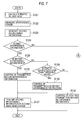
- FIG. 7 is a first flowchart showing a third operation of the first radio base station according to the embodiment of the present invention.
- FIG. 8 is a second flowchart showing the third operation of the first radio base station according to the embodiment of the present invention.
- FIG. 9 is a flowchart showing an operation of the second radio base station according to the embodiment of the present invention.
- FIG. 1 is a diagram showing the entire schematic configuration of a radio communication system 10 according to an embodiment of the present invention.
- the radio communication system 10 for example, has a configuration based on the LTE Release 9 which is a 3.9th generation (3.9G) cellular phone system, or the LTE-Advanced positioned as a 4th generation (4G) cellular phone system.
- LTE Release 9 which is a 3.9th generation (3.9G) cellular phone system
- 4G 4th generation
- the radio communication system 10 includes a first radio base station 1 A configured to form a cell 3 A and a second radio base station 1 B configured to form a cell 3 B.
- the radiuses of the cell 3 A and the cell 3 B are about several hundreds [m].
- a radio terminal 2 A existing in the cell 3 A is connected to the first radio base station 1 A, and a radio terminal 2 B existing in the cell 3 B is connected to the second radio base station 1 B.
- the first radio base station 1 A and the second radio base station 1 B are installed at places based on a cell site design in which a communication provider has considered inter-cell interference.
- the first radio base station 1 A and the second radio base station 1 B are connected to each other through a dedicated line and the like (including a radio connection) not shown, and an X2 interface serving as a logical transmission path of a transport layer has been established therebetween.
- the first radio base station 1 A is configured to assign one or a plurality of uplink or downlink resource blocks (RBs), which are radio sources of a minimum assignment unit, to the radio terminal 2 A, thereby performing radio communication with the radio terminal 2 A.
- the second radio base station 1 B is configured to assign one or a plurality of uplink or downlink resource blocks to the radio terminal 2 B, thereby performing radio communication with the radio terminal 2 B.
- RBs uplink or downlink resource blocks
- a frequency band of a resource block corresponding to an uplink (a link from the radio terminal 2 A to the first radio base station 1 A, hereinafter, referred to as a “first uplink”), which is used in the radio communication in a case in which the first radio base station 1 A and the radio terminal 2 A are connected to perform the radio communication with each other, is equal to a frequency band of a resource block corresponding to an uplink (a link from the radio terminal 2 B to the second radio base station 1 B, hereinafter, referred to as a “second uplink”) which is used in the radio communication in a case in which the second radio base station 1 B and the radio terminal 2 B are connected to perform the radio communication with each other, the first radio base station 1 A performing the radio communication with the radio terminal 2 A is interfered by a radio signal transmitted from the radio terminal 2 B to the second radio base station 1 B through the second uplink.
- the first radio base station 1 A is interfered by the radio terminal 2 B as described above, the first radio base station 1 A requests the second radio base station 1 B to control the transmission power of the radio terminal 2 B, and the second radio base station 1 B controls the transmission power of the radio terminal 2 B in response to the request to reduce the interference.
- FIG. 2 is a block diagram showing the configuration of the first radio base station 1 A.
- the first radio base station 1 A includes a control unit 102 , a storage unit 103 , a wired communication unit 104 , a radio communication unit 105 , and an antenna unit 107 .
- the control unit 102 for example, is configured by CPU, and controls various functions of the first radio base station 1 A.
- the storage unit 103 is configured by a memory, and stores various types of information used for the control and the like of the first radio base station 1 A.
- the wired communication unit 104 is configured to transmit and receive data to and from the second radio base station 1 B.
- the radio communication unit 105 for example, is configured using a radio frequency (RF) circuit, a baseband (BB) circuit and the like, and transmits and receives a radio signal to and from the radio terminal 2 A through the antenna unit 107 .
- the radio communication unit 105 is configured to encode and modulate a transmission signal, and demodulate and decode a reception signal.
- the radio communication unit 105 is configured to output reception data, which is obtained by demodulating and decoding the reception signal, to the control unit 102 .
- the radio communication unit 105 includes an interference power measurement unit 150 .
- the control unit 102 includes a communication load measurement unit 152 , an interference information generation unit 154 , a transmission control unit 156 , and a transmission processing unit 158 .
- the interference power measurement unit 150 of the radio communication unit 105 is configured to measure power of interference caused by radio signals transmitted from the ratio terminal 2 B to the second radio base station 1 B through the second uplink, while the first radio base station 1 A is receiving radio signals transmitted from the ratio terminal 2 A through the first uplink.
- the interference power measurement unit 150 is configured to measure power of components of the radio signals, which are transmitted from the ratio terminal 2 B to the second radio base station 1 B through the second uplink among the received radio signals, in each of the one or plurality of resource blocks assigned to the radio terminal 2 A.
- the communication load measurement unit 152 of the control unit 102 is configured to calculate a ratio (a traffic volume ratio) of actual traffic volume with respect to maximum traffic volume, which is processible by the first radio base station 1 A, as a load of radio communication in the first radio base station 1 A.
- the communication load measurement unit 152 is configured to measure the amount of transmission data output from the control unit 102 to the radio communication unit 105 . Moreover, the communication load measurement unit 152 is configured to calculate the traffic volume ratio by dividing the measured amount of transmission data by prescribed processible downlink traffic volume at maximum.
- the communication load measurement unit 152 is configured to measure the amount of reception data output from the radio communication unit 105 to the control unit 102 . Moreover, the communication load measurement unit 152 is configured to calculate the traffic volume ratio by dividing the measured amount of reception data by prescribed processible uplink traffic volume at maximum.
- the processible downlink traffic volume at maximum or the processible uplink traffic volume at maximum is stored in the storage unit 103 .
- the communication load measurement unit 152 may correct the calculated traffic volume ratio to be large as throughput requested in the radio communication between the first radio base station 1 A and the radio terminal 2 A, or a requested data amount is large.
- the interference information generation unit 154 of the control unit 102 is configured to generate interference information of two values, which indicate “0” and “1” as OI (Overload Indicator), based on an interference power value of each resource block measured by the interference power measurement unit 150 . Specifically, when the interference power value of each resource block is equal to or more than a predetermined value, the interference information generation unit 154 generates “1” indicating large interference as the interference information. When the interference power value of each resource block is smaller than the predetermined value, the interference information generation unit 154 generates “0” indicating small interference as the interference information.
- the predetermined value is stored in the storage unit 103 in advance.
- the transmission control unit 156 of the control unit 102 is configured to control the transmission of the interference information to the second radio base station 1 B by the transmission processing unit 158 . Specifically, the transmission control unit 156 is configured to perform the following first to third transmission control.
- the transmission control unit 156 determines whether the traffic volume ratio is equal to or more than a threshold value.
- the threshold value is stored in the storage unit 103 in advance.
- the transmission control unit 156 performs the control of transmitting the interference information to the second radio base station 1 B.
- the transmission control unit 156 performs the control of stopping the transmission of the interference information to the second radio base station 1 B.
- the transmission control unit 156 When the control of transmitting the interference information to the second radio base station 1 B is performed by the transmission control unit 156 , the following processes are performed. That is, the interference power measurement unit 150 performs the aforementioned measurement of the interference power. Furthermore, the interference information generation unit 154 performs the aforementioned generation of the interference information.
- the transmission processing unit 158 transmits the interference information generated by the interference information generation unit 154 to the second radio base station 1 B, under the control of the transmission control unit 156 .
- the transmission processing unit 158 extracts identification information of the radio terminal 2 B serving as a transmission source of a radio signal and identification information of the second radio base station 1 B serving as a transmission destination of the radio signal, which are included in reception data corresponding to the radio signal transmitted from the radio terminal 2 B to the second radio base station 1 B through the second uplink.
- the transmission processing unit 158 adds identification information of a resource block, which corresponds to the interference information of each resource block generated by the interference information generation unit 154 , and the extracted identification information of the radio terminal 2 B to the interference information.
- the transmission processing unit 158 sets a transmission destination of the interference information of each resource block as the extracted identification information of the second radio base station 1 B, and transmits interference information including the identification information of the resource block and the identification information of the radio terminal 2 B to the second radio base station 1 B through the wired communication unit 104 .
- the interference power measurement unit 150 stops the aforementioned measurement of the interference power. Furthermore, the interference information generation unit 154 stops the aforementioned generation of the interference information. Moreover, the transmission processing unit 158 stops the transmission of the interference information to the second radio base station 1 B, under the control of the transmission control unit 156 .
- the second transmission control is transmission control when it is regarded that no interference occurs in the first radio base station 1 A because the second radio base station 1 B periodically receives no interference information.
- the transmission control unit 156 determines whether the traffic volume ratio is equal to or more than the threshold value and the interference information indicates “1”. When the traffic volume ratio is equal to or more than the threshold value and the interference information indicates “1”, the number of resource blocks assignable by the first radio base station 1 A is small and interference is large. In this case, even though, for example, the first radio base station 1 A changes resource blocks to be assigned to the radio terminal 2 A, it is difficult to avoid interference or maintain a required communication speed. Thus, it is necessary to reduce the interference by performing control in which the second radio base station 1 B reduces the transmission power of the radio terminal 2 B. Therefore, the transmission control unit 156 performs the control of transmitting the interference information “1” to the second radio base station 1 B to request a reduction of the transmission power of the radio terminal 2 B.
- the transmission control unit 156 performs the control of stopping the transmission of the interference information to the second radio base station 1 B.
- the transmission processing unit 158 transmits the interference information generated by the interference information generation unit 154 to the second radio base station 1 B, under the control of the transmission control unit 156 . Meanwhile, when the control of stopping the transmission of the interference information to the second radio base station 1 B is performed by the transmission control unit 156 , the transmission processing unit 158 stops the transmission of the interference information generated by the interference information generation unit 154 to the second radio base station 1 B, under the control of the transmission control unit 156 .
- the third transmission control is transmission control when it is regarded that an interference state in the first radio base station 1 A is the same as a previous state because the second radio base station 1 B periodically receives no interference information, and is transmission control of second interference information when the interference information generation unit 154 generates two pieces of continuous interference information, that is, the interference information generation unit 154 generates first interference information and continuously generates the second interference information.
- the transmission control of the second interference information is performed according to the first interference information, the second interference information, and the traffic volume ratio.
- the transmission control unit 156 determines whether the first interference information indicates “1”. When the first interference information indicates “1”, the transmission control unit 156 further determines whether the second interference information indicates “0”. When the first interference information indicates “1” and the second interference information indicates “0”, it represents transition from a large interference state to a small interference state in the first radio base station 1 A.
- the second radio base station 1 B performs the control of reducing the transmission power of the radio terminal 2 B based on the fact that the first interference information or interference information, which is prior to the first interference information and is continuous to the first interference information, indicates “1”. However, since there occurred the transition from the large interference state to the small interference state in the first radio base station 1 A, it is not necessary to reduce the transmission power of the radio terminal 2 B in order to avoid the interference. In such a case, the transmission control unit 156 performs the control of transmitting the second interference information “0” to the second radio base station 1 B, regardless of the traffic volume ratio.
- the transmission control unit 156 determines whether the traffic volume ratio is smaller than the threshold value.
- the second radio base station 1 B performs the control of reducing the transmission power of the radio terminal 2 B based on the fact that the first interference information or the interference information, which is prior to the first interference information and is continuous to the first interference information, indicates “1”.
- the first radio base station 1 A changes the resource blocks to be assigned to the radio terminal 2 A, so that it is possible to avoid the interference or maintain the required communication speed.
- the transmission control unit 156 performs the control of changing the second interference information from “1” to “0”, and transmitting “0” to the second radio base station 1 B as the second interference information.
- the second radio base station 1 B performs the control of reducing the transmission power of the radio terminal 2 B based on the fact that the first interference information or the interference information, which is prior to the first interference information and is continuous to the first interference information, indicates “1”. However, it is sufficient if the control is continuous. Therefore, the transmission control unit 156 performs the control of stopping the transmission of the second interference information to the second radio base station 1 B.
- the transmission control unit 156 further determines whether the second interference information indicates “0”.
- the second radio base station 1 B does not perform the control of reducing the transmission power of the radio terminal 2 B based on the fact that the first interference information or the interference information, which is prior to the first interference information and is continuous to the first interference information, indicates “0”. However, it is sufficient if such a state is continuous. Therefore, the transmission control unit 156 performs the control of stopping the transmission of the second interference information to the second radio base station 1 B.
- the transmission control unit 156 further determines whether the traffic volume ratio is smaller than the threshold value.
- the second radio base station 1 B does not perform the control of reducing the transmission power of the radio terminal 2 B based on the fact that the first interference information or the interference information, which is prior to the first interference information and is continuous to the first interference information, indicates “0”.
- the transmission control unit 156 performs the control of stopping the transmission of the second interference information to the second radio base station 1 B.
- the second radio base station 1 B does not perform the control of reducing the transmission power of the radio terminal 2 B based on the fact that the first interference information or the interference information, which is prior to the first interference information and is continuous to the first interference information, indicates “0”. Meanwhile, since the first radio base station 1 A is interfered, even though, for example, the first radio base station 1 A changes the resource blocks to be assigned to the radio terminal 2 A, it is difficult to avoid the interference or maintain the required communication speed. In such a case, the transmission control unit 156 performs the control of transmitting the second interference information “1” to the second radio base station 1 B.
- the transmission processing unit 158 transmits the second interference information to the second radio base station 1 B, under the control of the transmission control unit 156 . Meanwhile, when the control of stopping the transmission of the second interference information to the second radio base station 1 B is performed by the transmission control unit 156 , the transmission processing unit 158 stops the transmission of the second interference information to the second radio base station 1 B, under the control of the transmission control unit 156 .
- FIG. 4 is a block diagram showing the configuration of the second radio base station 1 B.
- the second radio base station 1 B includes a control unit 112 , a storage unit 113 , a wired communication unit 114 , a radio communication unit 115 , and an antenna unit 117 .
- the control unit 112 is configured by CPU, and controls various functions of the second radio base station 1 B.
- the storage unit 113 is configured by a memory, and stores various types of information used for the control and the like of the second radio base station 1 B.
- the wired communication unit 114 is configured to transmit and receive data to and from the first radio base station 1 A.
- the radio communication unit 115 for example, is configured using a radio frequency (RF) circuit, a baseband (BB) circuit and the like, and transmits and receives a radio signal to and from the radio terminal 2 B through the antenna unit 117 .
- the radio communication unit 115 is configured to encode and modulate a transmission signal, and demodulate and decode a reception signal.
- the radio communication unit 115 is configured to output reception data, which is obtained by demodulating and decoding the reception signal, to the control unit 112 .
- the control unit 112 includes a reception processing unit 160 and a radio terminal transmission power control unit 162 .
- the reception processing unit 160 of the control unit 112 is configured to receive the interference information of each resource block from the first radio base station 1 A through the wired communication unit 114 .
- the radio terminal transmission power control unit 162 of the control unit 112 is configured to control the transmission power of the radio terminal 2 B based on the interference information of each resource block received in the reception processing unit 160 .
- the radio terminal transmission power control unit 162 is configured to specify the radio terminal 2 B, which is subject to transmission power control, based on the identification information of the radio terminal 2 B added to the interference information of each resource block received in the reception processing unit 160 .
- the radio terminal transmission power control unit 162 when the interference information indicates “1”, the radio terminal transmission power control unit 162 generates a reduction request of transmission power including the identification information of the resource block having the interference information added thereto.
- the radio terminal transmission power control unit 162 is configured to transmit the generated reduction request of transmission power to the radio terminal 2 B through the radio communication unit 115 and the antenna unit 117 .
- the radio terminal 2 B reduces transmission power with respect to a resource block corresponding to the identification information of the resource block added to the reduction request of transmission power.
- the radio terminal transmission power control unit 162 when the interference information indicates “0”, if the transmission power of the radio terminal 2 B has been reduced at the current time point, the radio terminal transmission power control unit 162 generates a cancel request of transmission power reduction including the identification information of the resource block having the interference information added thereto.
- the radio terminal transmission power control unit 162 is configured to transmit the generated cancel request of transmission power reduction to the radio terminal 2 B through the radio communication unit 115 and the antenna unit 117 .
- the radio terminal 2 B cancels the reduction of transmission power with respect to a resource block corresponding to the identification information of the resource block added to the cancel request of transmission power reduction.
- the radio terminal transmission power control unit 162 stops the control regarding the transmission power of the radio terminal 2 B.
- FIG. 5 is a flowchart showing the operation of the first radio base station 1 A when the first transmission control is performed.
- the communication load measurement unit 152 of the control unit 102 calculates the ratio (the traffic volume ratio) of the actual traffic volume with respect to the maximum traffic volume which is processible by the first radio base station 1 A.
- step S 102 the transmission control unit 156 of the control unit 102 determines whether the traffic volume ratio is equal to or more than the threshold value.
- the transmission control unit 156 performs the control of transmitting the interference information to the second radio base station 1 B in step S 103 .
- the interference power measurement unit 150 of the radio communication unit 105 measures the power of the interference, which is caused by the radio signals transmitted from the ratio terminal 2 B to the second radio base station 1 B through the second uplink, in each resource block assigned to the radio terminal 2 A, while the first radio base station 1 A is receiving the radio signals transmitted from the ratio terminal 2 A through the first uplink.
- step S 105 the interference information generation unit 154 of the control unit 102 generates the interference information of two values, which indicate “0” and “1”, based on the interference power value of each resource block.
- step S 106 the transmission processing unit 158 of the control unit 102 transmits the generated interference information to the second radio base station 1 B.
- the transmission control unit 156 performs the control of stopping the transmission of the interference information to the second radio base station 1 B in step S 107 .
- FIG. 6 is a flowchart showing the operation of the first radio base station 1 A when the second communication control is performed.
- step S 111 while the first radio base station 1 A is receiving radio signals transmitted from the radio terminal 2 A through the first uplink, the communication load measurement unit 152 of the control unit 102 calculates the ratio (the traffic volume ratio) of the actual traffic volume with respect to the maximum traffic volume which is processible by the first radio base station 1 A.
- step S 112 the interference power measurement unit 150 in the radio communication unit 105 , measures the power of the interference, which is caused by the radio signals transmitted from the ratio terminal 2 B to the second radio base station 1 B through the second uplink, in each resource block assigned to the radio terminal 2 A, while the first radio base station 1 A is receiving the radio signals transmitted from the ratio terminal 2 A through the first uplink.
- step S 113 the interference information generation unit 154 of the control unit 102 generates the interference information of two values, which indicate “0” and “1”, based on the interference power value of each resource block.
- step S 114 the transmission control unit 156 of the control unit 102 determines whether the traffic volume ratio calculated in step S 111 is equal to or more than the threshold value and the interference information generated in step S 113 indicates “1”.
- the transmission control unit 156 performs the control of transmitting the interference information to the second radio base station 1 B in step S 115 .
- step S 116 the transmission processing unit 158 of the control unit 102 transmits the interference information generated in step S 113 to the second radio base station 1 B.
- step S 114 it is determined that any one of conditions is satisfied in step S 114 , the conditions are that the traffic volume ratio is less than the threshold value and that the interference information indicates “0”, the transmission control unit 156 performs the control of stopping the transmission of the interference information to the second radio base station 1 B in step S 117 .
- FIG. 7 and FIG. 8 are flowcharts showing the operation of the first radio base station 1 A when the third transmission control is performed.
- step S 121 while the first radio base station 1 A is receiving radio signals transmitted from the radio terminal 2 A through the first uplink, the communication load measurement unit 152 of the control unit 102 calculates the ratio (the traffic volume ratio) of the actual traffic volume with respect to the maximum traffic volume which is processible by the first radio base station 1 A.
- step S 122 the interference power measurement unit 150 in the radio communication unit 105 , measures the power of the interference, which is caused by the radio signals transmitted from the ratio terminal 2 B to the second radio base station 1 B through the second uplink, in each resource block assigned to the radio terminal 2 A, while the first radio base station 1 A is receiving the radio signals transmitted from the ratio terminal 2 A through the first uplink.
- step S 123 the interference information generation unit 154 of the control unit 102 generates the second interference information of two values, which indicate “0” and “1”, based on the interference power value of each resource block.
- step S 124 the transmission control unit 156 of the control unit 102 determines whether the first interference information generated just before the second interference information indicates “1”. When the first interference information indicates “1”, the transmission control unit 156 determines whether the second interference information indicates “0” in step S 125 .
- the transmission control unit 156 performs the control of transmitting the interference information to the second radio base station 1 B in step S 126 .
- the transmission processing unit 158 of the control unit 102 transmits the second interference information generated in step S 123 to the second radio base station 1 B.
- the transmission control unit 156 determines whether the traffic volume ratio calculated in step S 121 is smaller than the threshold value in step S 128 .
- the transmission control unit 156 When the traffic volume ratio is smaller than the threshold value, the transmission control unit 156 performs the control of transmitting “0” to the second radio base station 1 B as the second interference information in step S 129 . In step S 127 , the transmission processing unit 158 of the control unit 102 transmits “0” corresponding to the second interference information to the second radio base station 1 B.
- the transmission control unit 156 performs the control of stopping the transmission of the interference information to the second radio base station 1 B in step S 130 .
- step S 124 when it is determined that the first interference information indicates “0” in step S 124 , the procedure proceeds to an operation of FIG. 8 , and the transmission control unit 156 determines whether the second interference information indicates “0” in step S 131 .
- the transmission control unit 156 performs the control of stopping the transmission of the interference information to the second radio base station 1 B in step S 132 .
- the transmission control unit 156 determines whether the traffic volume ratio calculated in step S 121 is smaller than the threshold value.
- the transmission control unit 156 performs the control of stopping the transmission of the interference information to the second radio base station 1 B in step S 132 .
- the transmission control unit 156 performs the control of transmitting the second interference information to the second radio base station 1 B in step S 134 .
- the transmission processing unit 158 transmits the second interference information to the second radio base station 1 B.
- FIG. 9 is a flowchart showing the operation of the second radio base station 1 B.
- the reception processing unit 160 of the control unit 112 receives the interference information of each resource block from the first radio base station 1 A.
- step S 202 the radio terminal transmission power control unit 162 of the control unit 112 determines whether the received interference information indicates “1”.
- the radio terminal transmission power control unit 162 performs the control of reducing the transmission power of the radio terminal 2 B in step S 203 .
- the radio terminal transmission power control unit 162 determines whether the transmission power of the radio terminal 2 B has been reduced at the present time point in step S 204 .
- the radio terminal transmission power control unit 162 performs the control of cancelling the reduction of the transmission power of the radio terminal 2 B in step S 205 .
- the first radio base station 1 A calculates the traffic volume ratio in the first radio base station 1 A.
- the first radio base station 1 A when the traffic volume ratio is equal to or more than the threshold value, the first radio base station 1 A performs the control of transmitting the interference information. Under the control, the first radio base station 1 A performs the measurement of the interference power, the generation of the interference information, and the transmission of the interference information to the second radio base station 1 B. Meanwhile, when the traffic volume ratio is less than the threshold value, the first radio base station 1 A performs the control of stopping the transmission of the interference information. Under the control, the first radio base station 1 A performs neither the measurement of the interference power, the generation of the interference information, nor the transmission of the interference information to the second radio base station 1 B.
- the first radio base station 1 A transmits the interference information to the second radio base station 1 B, thereby preventing a reduction of the overall communication capacity of the radio communication system 10 due to a reduction of the transmission power of the radio terminal 2 B more than necessary.
- the first radio base station 1 A when the traffic volume ratio is equal to or more than the threshold value and the interference information indicates “1”, the first radio base station 1 A performs the control of transmitting the interference information.
- the conditions are that the traffic volume ratio is less than the threshold value and the interference information indicates “0”, the first radio base station 1 A performs the control of stopping the transmission of the interference information.
- the second transmission control corresponding to the transmission control when it is regarded that no interference occurs in the first radio base station 1 A because the second radio base station 1 B periodically receives no interference information
- the conditions are that the traffic volume ratio is less than the threshold value and that the interference information indicates “0”, it is not necessary to suppress interference by reducing the transmission power of the radio terminal 2 B, and the second radio base station 1 B may regard that no interference occurs in the first radio base station 1 A.
- the first radio base station 1 A transmits the interference information, so that unnecessary transmission of the interference information is reduced and a processing load and a communication load are reduced, thereby preventing a reduction of the overall communication capacity of the radio communication system 10 due to a reduction of the transmission power of the radio terminal 2 B more than necessary.
- the first radio base station 1 A performs the transmission control of the second interference information according to the correspondence relation among the first interference information, the second interference information, and the traffic volume ratio as shown in FIG. 3 .
- the transmission control of the second interference information is performed according to the correspondence relation among the first interference information, the second interference information, and the traffic volume ratio as shown in FIG. 3 , so that the unnecessary transmission of the interference information is reduced and unnecessary processing load and unnecessary communication load are reduced, thereby preventing a reduction of the overall communication capacity of the radio communication system 10 due to a reduction of the transmission power of the radio terminal 2 B more than necessary.
- the first radio base station 1 A measures interference power of each resource block, and further generates and transmits interference information.
- the first radio base station 1 A may calculate an average value of interference power of all resource blocks assigned to the radio terminal 2 A, and generate and transmit one piece of interference information corresponding to the average value of the interference power.
- the second radio base station 1 B controls the transmission power of the radio terminal 2 B based on the one piece of interference information, in other words, interference information corresponding to all resource blocks assigned to the radio terminal 2 A.
- the load of the radio communication is not limited to the traffic volume ratio in the first radio base station 1 A.
- the load may include a use rate of resource blocks in the first radio base station 1 A, the traffic volume itself in the first radio base station 1 A, a load of processing performed in the radio communication in the first radio base station 1 A, and the like.
- the radio communication system 10 has a configuration based on the LTE Release 9 or the LTE-Advanced.
- the radio communication system 10 may have configurations based on other communication standards.
- the radio base station and the communication control method of the present invention can prevent a reduction of the overall communication capacity of a radio communication system, and is useful as a radio base station and a communication control method.
Landscapes
- Engineering & Computer Science (AREA)
- Computer Networks & Wireless Communication (AREA)
- Signal Processing (AREA)
- Mobile Radio Communication Systems (AREA)
Applications Claiming Priority (3)
| Application Number | Priority Date | Filing Date | Title |
|---|---|---|---|
| JP2010-030415 | 2010-02-15 | ||
| JP2010030415A JP5466034B2 (ja) | 2010-02-15 | 2010-02-15 | 無線基地局及び通信制御方法 |
| PCT/JP2011/053145 WO2011099622A1 (ja) | 2010-02-15 | 2011-02-15 | 無線基地局及び通信制御方法 |
Publications (2)
| Publication Number | Publication Date |
|---|---|
| US20120329497A1 US20120329497A1 (en) | 2012-12-27 |
| US9100923B2 true US9100923B2 (en) | 2015-08-04 |
Family
ID=44367885
Family Applications (1)
| Application Number | Title | Priority Date | Filing Date |
|---|---|---|---|
| US13/578,980 Active 2031-10-06 US9100923B2 (en) | 2010-02-15 | 2011-02-15 | Radio base station and communication control method |
Country Status (6)
| Country | Link |
|---|---|
| US (1) | US9100923B2 (enExample) |
| EP (1) | EP2538731A4 (enExample) |
| JP (1) | JP5466034B2 (enExample) |
| KR (1) | KR20120108051A (enExample) |
| CN (1) | CN102763466A (enExample) |
| WO (1) | WO2011099622A1 (enExample) |
Cited By (2)
| Publication number | Priority date | Publication date | Assignee | Title |
|---|---|---|---|---|
| US9307502B1 (en) * | 2013-09-30 | 2016-04-05 | Sprint Spectrum L.P. | Managing inter-cell interference |
| US10104673B2 (en) | 2013-09-27 | 2018-10-16 | Nec Corporation | Communication apparatus, communication system, control method, and storage medium on which communication program has been stored |
Families Citing this family (10)
| Publication number | Priority date | Publication date | Assignee | Title |
|---|---|---|---|---|
| JP5651080B2 (ja) * | 2011-07-25 | 2015-01-07 | 京セラ株式会社 | 基地局及び通信制御方法 |
| CN102355292A (zh) * | 2011-08-05 | 2012-02-15 | 中兴通讯股份有限公司 | 参数传输方法及装置、参数生成方法及装置 |
| JP2013251858A (ja) * | 2012-06-04 | 2013-12-12 | Ntt Docomo Inc | 無線通信方法、無線通信システム、無線基地局及びユーザ端末 |
| US9042829B2 (en) * | 2013-01-04 | 2015-05-26 | Nokia Corporation | Method, apparatus, and computer program product for wireless short-range communication |
| JP5947240B2 (ja) * | 2013-03-28 | 2016-07-06 | パナソニック インテレクチュアル プロパティ コーポレーション オブ アメリカPanasonic Intellectual Property Corporation of America | 送信装置及び送信方法 |
| WO2014187490A1 (en) * | 2013-05-23 | 2014-11-27 | Nokia Solutions And Networks Oy | Method and apparatus for optimization of video transmissions |
| CN107040983A (zh) * | 2016-02-04 | 2017-08-11 | 中兴通讯股份有限公司 | 一种上行功率的选取方法及装置 |
| US10708907B2 (en) * | 2016-04-19 | 2020-07-07 | Qualcomm Incorporated | Interference management with adaptive resource block allocation |
| WO2018018377A1 (zh) * | 2016-07-25 | 2018-02-01 | 华为技术有限公司 | 一种调度方法、功率控制方法及基站 |
| EP3804388A1 (en) | 2018-05-30 | 2021-04-14 | ARRIS Enterprises LLC | Load balancing among bands and access points in a wireless network |
Citations (25)
| Publication number | Priority date | Publication date | Assignee | Title |
|---|---|---|---|---|
| JPH0530022A (ja) | 1991-07-22 | 1993-02-05 | Nippon Telegr & Teleph Corp <Ntt> | Tdma無線通信装置 |
| US20020042276A1 (en) * | 1999-03-05 | 2002-04-11 | Petteri Hakalin | Method for dividing traffic in a cellular radio network |
| US20030214915A1 (en) * | 2002-05-20 | 2003-11-20 | Ntt Docomo, Inc. . | Traffic measurement device and traffic measurement method |
| US20040048587A1 (en) * | 2000-10-19 | 2004-03-11 | Xinxi Diao | Apparatus and method for implementing multi-traffic load monitoring and prediction |
| US20060229089A1 (en) * | 2005-04-07 | 2006-10-12 | Yeliz Tokgoz | Method and apparatus for interference control in wireless communication systems |
| US20080146154A1 (en) * | 2006-12-15 | 2008-06-19 | Holger Claussen | Controlling uplink power for picocell communications within a macrocell |
| US20090088176A1 (en) * | 2007-09-27 | 2009-04-02 | Koon Hoo Teo | Method for Reducing Inter-Cell Interference in Wireless OFDMA Networks |
| US20090143070A1 (en) * | 2005-01-20 | 2009-06-04 | Kodo Shu | Supporting an Allocation of Radio Resources |
| US20090196245A1 (en) * | 2008-02-01 | 2009-08-06 | Qualcomm Incorporated | Virtual scheduling in heterogeneous networks |
| US20090245331A1 (en) * | 2008-03-28 | 2009-10-01 | Qualcomm Incorporated | Signaling message transmission in a wireless communication network |
| US20090247181A1 (en) * | 2008-03-28 | 2009-10-01 | Qualcomm Incorporate | Long-term interference mitigation in an asynchronous wireless network |
| US20100034146A1 (en) * | 2008-08-07 | 2010-02-11 | Qualcomm Incorporated | Method and apparatus for supporting multi-user and single-user mimo in a wireless communication system |
| US20100087149A1 (en) * | 2008-09-30 | 2010-04-08 | Murari Srinivasan | Measuring communicating and using interference information |
| US20100091893A1 (en) * | 2008-10-10 | 2010-04-15 | Qualcomm Incorporated | Method and apparatus for channel feedback in a wireless communication system |
| US20100151876A1 (en) * | 2008-12-12 | 2010-06-17 | Electronics And Telecommunications Research Institute | Apparatus and method for controlling inter-cell interference |
| US20100220682A1 (en) * | 2009-03-02 | 2010-09-02 | Zhifeng Tao | Method for Optimizing Performance in Multi-Cell OFDMA Networks |
| US20100248736A1 (en) * | 2007-11-30 | 2010-09-30 | Nokia Corporation | Inter-System Interference Control |
| US20110014909A1 (en) * | 2008-03-03 | 2011-01-20 | Jong Young Han | Method of transmitting interference information signal in wireless communication system |
| US20110149894A1 (en) * | 2009-12-18 | 2011-06-23 | Qualcomm Incorporated | Protection of broadcast signals in heterogeneous networks |
| US20110170496A1 (en) * | 2010-01-11 | 2011-07-14 | Research In Motion Limited | Control Channel Interference Management and Extended PDCCH for Heterogeneous Network |
| US20110199986A1 (en) * | 2010-02-12 | 2011-08-18 | Mo-Han Fong | Reference signal for a coordinated multi-point network implementation |
| US20110217985A1 (en) * | 2009-09-28 | 2011-09-08 | Qualcomm Incorporated | Predictive short-term channel quality reporting utilizing reference signals |
| US20110235515A1 (en) * | 2008-10-24 | 2011-09-29 | Dreyfus David H | Use of t-loop in trans-splicing polynucleotides |
| US20120021753A1 (en) * | 2010-01-18 | 2012-01-26 | Qualcomm Incorporated | Methods and apparatus for facilitating inter-cell interference coordination via over the air load indicator and relative narrowband transmit power |
| US20140226630A1 (en) * | 2011-09-30 | 2014-08-14 | Kyocera Corporatuion | Systems and methods for small cell uplink interference mitigation |
Family Cites Families (8)
| Publication number | Priority date | Publication date | Assignee | Title |
|---|---|---|---|---|
| KR100609128B1 (ko) * | 1999-07-12 | 2006-08-04 | 에스케이 텔레콤주식회사 | 이동 통신 시스템의 통화 품질 측정 장치 및 방법 |
| CN1164054C (zh) * | 2000-11-18 | 2004-08-25 | 中兴通讯股份有限公司 | 一种宽带码分多址系统上行负荷线性估计方法 |
| GB2458258A (en) * | 2008-02-04 | 2009-09-16 | Nec Corp | Method of controlling base station loading in a mobile communication system |
| CN101541012A (zh) * | 2008-03-21 | 2009-09-23 | 夏普株式会社 | 干扰过载指示生成方法、干扰过载指示触发方法、干扰过载指示方法和基站 |
| CN101835199A (zh) * | 2009-03-10 | 2010-09-15 | 中兴通讯股份有限公司 | 一种过载指示器报告的触发方法和系统 |
| WO2011055841A1 (ja) * | 2009-11-09 | 2011-05-12 | 京セラ株式会社 | 無線基地局及び通信制御方法 |
| JP2011124857A (ja) * | 2009-12-11 | 2011-06-23 | Kyocera Corp | 無線通信システム、無線基地局、無線端末、及び通信制御方法 |
| JP5415976B2 (ja) * | 2010-01-27 | 2014-02-12 | 京セラ株式会社 | 無線通信システム、無線基地局、ネットワーク制御装置及び通信制御方法 |
-
2010
- 2010-02-15 JP JP2010030415A patent/JP5466034B2/ja not_active Expired - Fee Related
-
2011
- 2011-02-15 EP EP11742361.6A patent/EP2538731A4/en not_active Withdrawn
- 2011-02-15 CN CN2011800094944A patent/CN102763466A/zh active Pending
- 2011-02-15 WO PCT/JP2011/053145 patent/WO2011099622A1/ja not_active Ceased
- 2011-02-15 US US13/578,980 patent/US9100923B2/en active Active
- 2011-02-15 KR KR1020127021859A patent/KR20120108051A/ko not_active Ceased
Patent Citations (26)
| Publication number | Priority date | Publication date | Assignee | Title |
|---|---|---|---|---|
| JPH0530022A (ja) | 1991-07-22 | 1993-02-05 | Nippon Telegr & Teleph Corp <Ntt> | Tdma無線通信装置 |
| US20020042276A1 (en) * | 1999-03-05 | 2002-04-11 | Petteri Hakalin | Method for dividing traffic in a cellular radio network |
| US20040048587A1 (en) * | 2000-10-19 | 2004-03-11 | Xinxi Diao | Apparatus and method for implementing multi-traffic load monitoring and prediction |
| US20030214915A1 (en) * | 2002-05-20 | 2003-11-20 | Ntt Docomo, Inc. . | Traffic measurement device and traffic measurement method |
| US20090143070A1 (en) * | 2005-01-20 | 2009-06-04 | Kodo Shu | Supporting an Allocation of Radio Resources |
| US20060229089A1 (en) * | 2005-04-07 | 2006-10-12 | Yeliz Tokgoz | Method and apparatus for interference control in wireless communication systems |
| US20080146154A1 (en) * | 2006-12-15 | 2008-06-19 | Holger Claussen | Controlling uplink power for picocell communications within a macrocell |
| US20090088176A1 (en) * | 2007-09-27 | 2009-04-02 | Koon Hoo Teo | Method for Reducing Inter-Cell Interference in Wireless OFDMA Networks |
| US20100248736A1 (en) * | 2007-11-30 | 2010-09-30 | Nokia Corporation | Inter-System Interference Control |
| US20090196245A1 (en) * | 2008-02-01 | 2009-08-06 | Qualcomm Incorporated | Virtual scheduling in heterogeneous networks |
| US20110014909A1 (en) * | 2008-03-03 | 2011-01-20 | Jong Young Han | Method of transmitting interference information signal in wireless communication system |
| US20090247181A1 (en) * | 2008-03-28 | 2009-10-01 | Qualcomm Incorporate | Long-term interference mitigation in an asynchronous wireless network |
| US20090245331A1 (en) * | 2008-03-28 | 2009-10-01 | Qualcomm Incorporated | Signaling message transmission in a wireless communication network |
| US20100034146A1 (en) * | 2008-08-07 | 2010-02-11 | Qualcomm Incorporated | Method and apparatus for supporting multi-user and single-user mimo in a wireless communication system |
| US20100087149A1 (en) * | 2008-09-30 | 2010-04-08 | Murari Srinivasan | Measuring communicating and using interference information |
| US20100087221A1 (en) * | 2008-09-30 | 2010-04-08 | Murari Srinivasan | Methods and apparatus for generating, reporting and using interference cancellation information |
| US20100091893A1 (en) * | 2008-10-10 | 2010-04-15 | Qualcomm Incorporated | Method and apparatus for channel feedback in a wireless communication system |
| US20110235515A1 (en) * | 2008-10-24 | 2011-09-29 | Dreyfus David H | Use of t-loop in trans-splicing polynucleotides |
| US20100151876A1 (en) * | 2008-12-12 | 2010-06-17 | Electronics And Telecommunications Research Institute | Apparatus and method for controlling inter-cell interference |
| US20100220682A1 (en) * | 2009-03-02 | 2010-09-02 | Zhifeng Tao | Method for Optimizing Performance in Multi-Cell OFDMA Networks |
| US20110217985A1 (en) * | 2009-09-28 | 2011-09-08 | Qualcomm Incorporated | Predictive short-term channel quality reporting utilizing reference signals |
| US20110149894A1 (en) * | 2009-12-18 | 2011-06-23 | Qualcomm Incorporated | Protection of broadcast signals in heterogeneous networks |
| US20110170496A1 (en) * | 2010-01-11 | 2011-07-14 | Research In Motion Limited | Control Channel Interference Management and Extended PDCCH for Heterogeneous Network |
| US20120021753A1 (en) * | 2010-01-18 | 2012-01-26 | Qualcomm Incorporated | Methods and apparatus for facilitating inter-cell interference coordination via over the air load indicator and relative narrowband transmit power |
| US20110199986A1 (en) * | 2010-02-12 | 2011-08-18 | Mo-Han Fong | Reference signal for a coordinated multi-point network implementation |
| US20140226630A1 (en) * | 2011-09-30 | 2014-08-14 | Kyocera Corporatuion | Systems and methods for small cell uplink interference mitigation |
Non-Patent Citations (2)
| Title |
|---|
| International Search Report; PCT/JP2011/053145; May 24, 2011. |
| Telecom Italia et al.; Way forwad on UL ICIC/Overload Indicator for LTE; 3GPP TSG RAN WG1 #51 R1-075050; Nov. 5-9, 2007. |
Cited By (2)
| Publication number | Priority date | Publication date | Assignee | Title |
|---|---|---|---|---|
| US10104673B2 (en) | 2013-09-27 | 2018-10-16 | Nec Corporation | Communication apparatus, communication system, control method, and storage medium on which communication program has been stored |
| US9307502B1 (en) * | 2013-09-30 | 2016-04-05 | Sprint Spectrum L.P. | Managing inter-cell interference |
Also Published As
| Publication number | Publication date |
|---|---|
| JP5466034B2 (ja) | 2014-04-09 |
| CN102763466A (zh) | 2012-10-31 |
| JP2011166685A (ja) | 2011-08-25 |
| EP2538731A1 (en) | 2012-12-26 |
| EP2538731A4 (en) | 2016-06-08 |
| US20120329497A1 (en) | 2012-12-27 |
| KR20120108051A (ko) | 2012-10-04 |
| WO2011099622A1 (ja) | 2011-08-18 |
Similar Documents
| Publication | Publication Date | Title |
|---|---|---|
| US20120329497A1 (en) | Radio base station and communication control method | |
| US20130136074A1 (en) | Radio communication system, radio base station, and communication control method | |
| CN112312574B (zh) | 一种通信传输的方法 | |
| US8971952B2 (en) | Radio base station and communication control method | |
| EP2547161A1 (en) | Wireless communication system, high-power base station, low-power base station, and wireless communication method | |
| US20120108180A1 (en) | Radio base station and communication control method | |
| US10530556B2 (en) | Full-duplex power reporting | |
| JP5432293B2 (ja) | 低電力基地局及び通信制御方法 | |
| US20120252469A1 (en) | Radio communication system, high-power base station, low-power base station, and communication control method | |
| CN103402206A (zh) | 干扰处理方法和基站 | |
| US9026166B2 (en) | Radio base station and communication control method | |
| US9705650B2 (en) | Method and network node for determining an initial configuration of generation of uplink reference signals | |
| US20140018093A1 (en) | Mobile communication system, mobile station, base station, and communication method | |
| US8989797B2 (en) | Radio communication system, radio base station, and power consumption control method | |
| US9191901B2 (en) | Radio base station and power control method | |
| JP2011101344A (ja) | 無線基地局及び通信制御方法 | |
| WO2012147494A1 (ja) | 無線基地局及び通信制御方法 | |
| WO2012137928A1 (ja) | 無線通信システム、低電力基地局及び通信制御方法 |
Legal Events
| Date | Code | Title | Description |
|---|---|---|---|
| AS | Assignment |
Owner name: KYOCERA CORPORATION, JAPAN Free format text: ASSIGNMENT OF ASSIGNORS INTEREST;ASSIGNOR:YAMAZAKI, CHIHARU;REEL/FRAME:028785/0882 Effective date: 20120801 |
|
| STCF | Information on status: patent grant |
Free format text: PATENTED CASE |
|
| MAFP | Maintenance fee payment |
Free format text: PAYMENT OF MAINTENANCE FEE, 4TH YEAR, LARGE ENTITY (ORIGINAL EVENT CODE: M1551); ENTITY STATUS OF PATENT OWNER: LARGE ENTITY Year of fee payment: 4 |
|
| MAFP | Maintenance fee payment |
Free format text: PAYMENT OF MAINTENANCE FEE, 8TH YEAR, LARGE ENTITY (ORIGINAL EVENT CODE: M1552); ENTITY STATUS OF PATENT OWNER: LARGE ENTITY Year of fee payment: 8 |