US8993470B2 - Catalysts for the alkyne metathesis - Google Patents
Catalysts for the alkyne metathesis Download PDFInfo
- Publication number
- US8993470B2 US8993470B2 US13/639,067 US201113639067A US8993470B2 US 8993470 B2 US8993470 B2 US 8993470B2 US 201113639067 A US201113639067 A US 201113639067A US 8993470 B2 US8993470 B2 US 8993470B2
- Authority
- US
- United States
- Prior art keywords
- cycloalkyl
- alkyl
- membered
- substituents
- membered heteroaryl
- Prior art date
- Legal status (The legal status is an assumption and is not a legal conclusion. Google has not performed a legal analysis and makes no representation as to the accuracy of the status listed.)
- Active, expires
Links
- 0 [9*][Si]([10*])([11*])OC1(#C)(O[Si]([9*])([10*])[11*])(O[Si]([9*])([10*])[11*])N2=C(C)C(C)=C(C)C(C)=C2C2=N1C(C)=C(C)C(C)=C2C Chemical compound [9*][Si]([10*])([11*])OC1(#C)(O[Si]([9*])([10*])[11*])(O[Si]([9*])([10*])[11*])N2=C(C)C(C)=C(C)C(C)=C2C2=N1C(C)=C(C)C(C)=C2C 0.000 description 44
- UJMQRJKUSNOJSV-UHFFFAOYSA-N C(#CC1=CC=CC=C1)C1=CC=CC=C1.CC#CC.CC#CC1=CC=CC=C1 Chemical compound C(#CC1=CC=CC=C1)C1=CC=CC=C1.CC#CC.CC#CC1=CC=CC=C1 UJMQRJKUSNOJSV-UHFFFAOYSA-N 0.000 description 2
- UVIHBGIRBHGVTK-UHFFFAOYSA-N C(#CC1=CC=CS1)C1=CC=CS1 Chemical compound C(#CC1=CC=CS1)C1=CC=CS1 UVIHBGIRBHGVTK-UHFFFAOYSA-N 0.000 description 2
- YNJQEBCSNJSSET-UHFFFAOYSA-N C(#CC1=CN=CC=C1)C1=CC=CN=C1 Chemical compound C(#CC1=CN=CC=C1)C1=CC=CN=C1 YNJQEBCSNJSSET-UHFFFAOYSA-N 0.000 description 2
- DPGVKJJUADFSPP-UHFFFAOYSA-N CC#CC.CC#CCCOC(=O)CCC(=O)OCCC#CC.CCC(=O)OCCC#C(C)CCOC(=O)CC Chemical compound CC#CC.CC#CCCOC(=O)CCC(=O)OCCC#CC.CCC(=O)OCCC#C(C)CCOC(=O)CC DPGVKJJUADFSPP-UHFFFAOYSA-N 0.000 description 2
- GNPRXXGKEWSOHB-UHFFFAOYSA-N CC#CC1=CC=CN=C1 Chemical compound CC#CC1=CC=CN=C1 GNPRXXGKEWSOHB-UHFFFAOYSA-N 0.000 description 2
- YIKTWWQERWYNMK-UHFFFAOYSA-N CC1=CC=CC(C)=C1C#[Mo]1(C)(C)(O[Si](C2=CC=CC=C2)(C2=CC=CC=C2)C2=CC=CC=C2)N2=CC=CC3=C2C2=N1C=CC=C2C=C3 Chemical compound CC1=CC=CC(C)=C1C#[Mo]1(C)(C)(O[Si](C2=CC=CC=C2)(C2=CC=CC=C2)C2=CC=CC=C2)N2=CC=CC3=C2C2=N1C=CC=C2C=C3 YIKTWWQERWYNMK-UHFFFAOYSA-N 0.000 description 2
- VROOATIJMYZVCW-UHFFFAOYSA-N CC1=NC(C2=NC(C)=C(C)C(C)=C2C)=C(C)C(C)=C1C Chemical compound CC1=NC(C2=NC(C)=C(C)C(C)=C2C)=C(C)C(C)=C1C VROOATIJMYZVCW-UHFFFAOYSA-N 0.000 description 2
- IPTBWYJVCRCWGQ-UHFFFAOYSA-N CCCC#CCCOS(=O)(=O)C1=CC=C(C)C=C1 Chemical compound CCCC#CCCOS(=O)(=O)C1=CC=C(C)C=C1 IPTBWYJVCRCWGQ-UHFFFAOYSA-N 0.000 description 2
- FFPKJHSMYNNWJB-UHFFFAOYSA-N O=[N+]([O-])C1=CC=C(C#CC2=CC=C([N+](=O)[O-])C=C2)C=C1 Chemical compound O=[N+]([O-])C1=CC=C(C#CC2=CC=C([N+](=O)[O-])C=C2)C=C1 FFPKJHSMYNNWJB-UHFFFAOYSA-N 0.000 description 2
- UHHFMNUILKBMHX-UHFFFAOYSA-N [C-]#[N+]C1=CC=C(C#CC2=CC=C(C#N)C=C2)C=C1 Chemical compound [C-]#[N+]C1=CC=C(C#CC2=CC=C(C#N)C=C2)C=C1 UHHFMNUILKBMHX-UHFFFAOYSA-N 0.000 description 2
- MZZDIHFCKYVUIW-SGUICHMBSA-N C#CC(C)(C)C.CC(C)(C)C#[W](N=C1N(C(C)(C)C)C=CN1C(C)(C)C)(OC(C)(C)C)OC(C)(C)C(F)(F)F.CC1=CC(C)=CC(N([Mo]2N(C3=CC(C)=CC(C)=C3)[C@](C3=CC(C)=CC(C)=C3)(C(C)(C)C)N2C(C)(C)C)C(C)(C)C)=C1.CCC#[Mo]1(N(C2=CC(C)=CC(C)=C2)C(C)(C)C)N(C2=CC(C)=CC(C)=C2)[C@](C2=CC(C)=CC(C)=C2)(C(C)(C)C)N1C(C)(C)C Chemical compound C#CC(C)(C)C.CC(C)(C)C#[W](N=C1N(C(C)(C)C)C=CN1C(C)(C)C)(OC(C)(C)C)OC(C)(C)C(F)(F)F.CC1=CC(C)=CC(N([Mo]2N(C3=CC(C)=CC(C)=C3)[C@](C3=CC(C)=CC(C)=C3)(C(C)(C)C)N2C(C)(C)C)C(C)(C)C)=C1.CCC#[Mo]1(N(C2=CC(C)=CC(C)=C2)C(C)(C)C)N(C2=CC(C)=CC(C)=C2)[C@](C2=CC(C)=CC(C)=C2)(C(C)(C)C)N1C(C)(C)C MZZDIHFCKYVUIW-SGUICHMBSA-N 0.000 description 1
- NMWGVUQFKVODPW-UHFFFAOYSA-N C#CC1=CC=CC=C1OC.COC1=CC=CC=C1C#CC1=C(C)C=CC=C1 Chemical compound C#CC1=CC=CC=C1OC.COC1=CC=CC=C1C#CC1=C(C)C=CC=C1 NMWGVUQFKVODPW-UHFFFAOYSA-N 0.000 description 1
- QJIWBRXOJVKEFM-UHFFFAOYSA-N C(#CC1=CC=CC=C1)C1=CC=CC=C1.CC#CC.CC#CC(CCC1=CC=CC=C1)O[Si](C1=CC=CC=C1)(C1=CC=CC=C1)C(C)(C)C.CC#CC(CCC1=CC=CC=C1)O[Si](C1=CC=CC=C1)(C1=CC=CC=C1)C(C)(C)C.CC#CC1=CC=CC=C1 Chemical compound C(#CC1=CC=CC=C1)C1=CC=CC=C1.CC#CC.CC#CC(CCC1=CC=CC=C1)O[Si](C1=CC=CC=C1)(C1=CC=CC=C1)C(C)(C)C.CC#CC(CCC1=CC=CC=C1)O[Si](C1=CC=CC=C1)(C1=CC=CC=C1)C(C)(C)C.CC#CC1=CC=CC=C1 QJIWBRXOJVKEFM-UHFFFAOYSA-N 0.000 description 1
- FWZFOFRCTNTDAR-UHFFFAOYSA-N C(#CC1=CC=CC=C1)C1=CC=CC=C1.CC#CC.CC#CC1=CC=CC=C1.CC#CC1=CC=CC=C1 Chemical compound C(#CC1=CC=CC=C1)C1=CC=CC=C1.CC#CC.CC#CC1=CC=CC=C1.CC#CC1=CC=CC=C1 FWZFOFRCTNTDAR-UHFFFAOYSA-N 0.000 description 1
- PIHGPXGRQDQQNP-UHFFFAOYSA-N C.C.CC#CC.CC#CC.CC#CC.CC#CC Chemical compound C.C.CC#CC.CC#CC.CC#CC.CC#CC PIHGPXGRQDQQNP-UHFFFAOYSA-N 0.000 description 1
- BSTNMXHMRIDRTI-UHFFFAOYSA-N C.CC#CCOC1=CC(C#N)=CC=C1.N#CC1=CC=CC(OCC#CCOC2=CC(C#N)=CC=C2)=C1 Chemical compound C.CC#CCOC1=CC(C#N)=CC=C1.N#CC1=CC=CC(OCC#CCOC2=CC(C#N)=CC=C2)=C1 BSTNMXHMRIDRTI-UHFFFAOYSA-N 0.000 description 1
- ZLKYQQJNERRIDE-UHFFFAOYSA-N CC#C(C)(C)O[Si](C1=CC=CC=C1)(C1=CC=CC=C1)C1=CC=CC=C1.CC(C)(#CC1=CC=CC=C1)O[Si](C1=CC=CC=C1)(C1=CC=CC=C1)C1=CC=CC=C1.CC(C)(#CCC1=CC=CC=C1)O[Si](C1=CC=CC=C1)(C1=CC=CC=C1)C1=CC=CC=C1.CC(C)(C)C#C(C)(C)O[Si](C1=CC=CC=C1)(C1=CC=CC=C1)C1=CC=CC=C1.CC1=CC=CC(C)=C1C#C(C)(C)O[Si](C1=CC=CC=C1)(C1=CC=CC=C1)C1=CC=CC=C1.CCC#C(C)(C)O[Si](C1=CC=CC=C1)(C1=CC=CC=C1)C1=CC=CC=C1.CCCC#C(C)(C)O[Si](C1=CC=CC=C1)(C1=CC=CC=C1)C1=CC=CC=C1 Chemical compound CC#C(C)(C)O[Si](C1=CC=CC=C1)(C1=CC=CC=C1)C1=CC=CC=C1.CC(C)(#CC1=CC=CC=C1)O[Si](C1=CC=CC=C1)(C1=CC=CC=C1)C1=CC=CC=C1.CC(C)(#CCC1=CC=CC=C1)O[Si](C1=CC=CC=C1)(C1=CC=CC=C1)C1=CC=CC=C1.CC(C)(C)C#C(C)(C)O[Si](C1=CC=CC=C1)(C1=CC=CC=C1)C1=CC=CC=C1.CC1=CC=CC(C)=C1C#C(C)(C)O[Si](C1=CC=CC=C1)(C1=CC=CC=C1)C1=CC=CC=C1.CCC#C(C)(C)O[Si](C1=CC=CC=C1)(C1=CC=CC=C1)C1=CC=CC=C1.CCCC#C(C)(C)O[Si](C1=CC=CC=C1)(C1=CC=CC=C1)C1=CC=CC=C1 ZLKYQQJNERRIDE-UHFFFAOYSA-N 0.000 description 1
- AJFBKUJGUQGGHO-AATRIKPKSA-N CC#C/C=C/C(C)=O Chemical compound CC#C/C=C/C(C)=O AJFBKUJGUQGGHO-AATRIKPKSA-N 0.000 description 1
- DZOOXMGZVWHNAS-UHFFFAOYSA-N CC#CC(C)=O Chemical compound CC#CC(C)=O DZOOXMGZVWHNAS-UHFFFAOYSA-N 0.000 description 1
- ZZKYDYVBUKPAEH-UHFFFAOYSA-N CC#CC(CCC1=CC=CC=C1)O[Si](C1=CC=CC=C1)(C1=CC=CC=C1)C(C)(C)C Chemical compound CC#CC(CCC1=CC=CC=C1)O[Si](C1=CC=CC=C1)(C1=CC=CC=C1)C(C)(C)C ZZKYDYVBUKPAEH-UHFFFAOYSA-N 0.000 description 1
- FXSCAQLNUDUIGI-UHFFFAOYSA-N CC#CC.CC#CC1=C(OC)C=CC=C1.COC1=CC=CC=C1C#CC1=C(C)C=CC=C1 Chemical compound CC#CC.CC#CC1=C(OC)C=CC=C1.COC1=CC=CC=C1C#CC1=C(C)C=CC=C1 FXSCAQLNUDUIGI-UHFFFAOYSA-N 0.000 description 1
- LZAZBJPKGAHQPG-UHFFFAOYSA-N CC#CC.CC#CCCCCCOC(=O)C1=CC=CC=C1C(=O)OCCCCCC#CC.O=C1OCCCCCC#CCCCCCOC(=O)C2=CC=CC=C12 Chemical compound CC#CC.CC#CCCCCCOC(=O)C1=CC=CC=C1C(=O)OCCCCCC#CC.O=C1OCCCCCC#CCCCCCOC(=O)C2=CC=CC=C12 LZAZBJPKGAHQPG-UHFFFAOYSA-N 0.000 description 1
- NAYOGGQFBZAZIV-UHFFFAOYSA-N CC#CC1=CC=C(C)C=C1 Chemical compound CC#CC1=CC=C(C)C=C1 NAYOGGQFBZAZIV-UHFFFAOYSA-N 0.000 description 1
- WZXVLUCWGSZORJ-UHFFFAOYSA-N CC#CC1=CC=C([N+](=O)[O-])C=C1 Chemical compound CC#CC1=CC=C([N+](=O)[O-])C=C1 WZXVLUCWGSZORJ-UHFFFAOYSA-N 0.000 description 1
- GHWHTINSGIPFNI-UHFFFAOYSA-N CC#CC1=CC=C2C(=C1)C1=C(/C=C\C(C#CC)=C/1)N2CCCCCCCCCCCCCC Chemical compound CC#CC1=CC=C2C(=C1)C1=C(/C=C\C(C#CC)=C/1)N2CCCCCCCCCCCCCC GHWHTINSGIPFNI-UHFFFAOYSA-N 0.000 description 1
- BRSIESJEJYKGCF-UHFFFAOYSA-N CC#CC1=CC=C2C(=C1)C1=C(/C=C\C(C#CC)=C/1)N2CCCCCCCCCCCCCC.CCCCCCCCCCCCCCN1C2=CC=C3C#CC4=CC=C5C(=C4)C4=C(/C=C\C(=C/4)C#CC4=CC6=C(C=C4)N(CCCCCCCCCCCCCC)C4=CC=C(C#CC7=CC=C8C(=C7)C7=C(/C=C\C(=C/7)C#CC7=CC(=C1C=C7)C2=C3)N8CCCCCCCCCCCCCC)C=C46)N5CCCCCCCCCCCCCC Chemical compound CC#CC1=CC=C2C(=C1)C1=C(/C=C\C(C#CC)=C/1)N2CCCCCCCCCCCCCC.CCCCCCCCCCCCCCN1C2=CC=C3C#CC4=CC=C5C(=C4)C4=C(/C=C\C(=C/4)C#CC4=CC6=C(C=C4)N(CCCCCCCCCCCCCC)C4=CC=C(C#CC7=CC=C8C(=C7)C7=C(/C=C\C(=C/7)C#CC7=CC(=C1C=C7)C2=C3)N8CCCCCCCCCCCCCC)C=C46)N5CCCCCCCCCCCCCC BRSIESJEJYKGCF-UHFFFAOYSA-N 0.000 description 1
- UNRGAMKIZHYMGZ-UHFFFAOYSA-N CC#CC1=CC=CN=C1.CCCCC#CC1=CC=CN=C1 Chemical compound CC#CC1=CC=CN=C1.CCCCC#CC1=CC=CN=C1 UNRGAMKIZHYMGZ-UHFFFAOYSA-N 0.000 description 1
- YBOMTHBYVCIWDE-UHFFFAOYSA-N CC#CC1=CC=CS1 Chemical compound CC#CC1=CC=CS1 YBOMTHBYVCIWDE-UHFFFAOYSA-N 0.000 description 1
- MELUCTCJOARQQG-UHFFFAOYSA-N CC#CCCC Chemical compound CC#CCCC MELUCTCJOARQQG-UHFFFAOYSA-N 0.000 description 1
- ABVAMELUJYVJQJ-UHFFFAOYSA-N CC#CCCC.O=C=O Chemical compound CC#CCCC.O=C=O ABVAMELUJYVJQJ-UHFFFAOYSA-N 0.000 description 1
- SMKNLXFTOSJFCU-UHFFFAOYSA-N CC#CCCCCCCN(C(=O)OCC1C2=C(C=CC=C2)C2=C1C=CC=C2)C(CCC)COC(=O)CCCC#CC Chemical compound CC#CCCCCCCN(C(=O)OCC1C2=C(C=CC=C2)C2=C1C=CC=C2)C(CCC)COC(=O)CCCC#CC SMKNLXFTOSJFCU-UHFFFAOYSA-N 0.000 description 1
- IBKGKSLKYHFDJA-UHFFFAOYSA-N CC#CCCCCCOC(=O)C1=CC=C([N+](=O)[O-])C=C1C(=O)OCCCCCC#CC Chemical compound CC#CCCCCCOC(=O)C1=CC=C([N+](=O)[O-])C=C1C(=O)OCCCCCC#CC IBKGKSLKYHFDJA-UHFFFAOYSA-N 0.000 description 1
- SOUVHFHQVYHGGW-UHFFFAOYSA-N CC#CCCCCCOC(=O)C1=CC=CC=C1C(=O)OCCCCCC#CC Chemical compound CC#CCCCCCOC(=O)C1=CC=CC=C1C(=O)OCCCCCC#CC SOUVHFHQVYHGGW-UHFFFAOYSA-N 0.000 description 1
- JJGWCPAVWFEUMY-UHFFFAOYSA-N CC#CCCOC(=O)CCC(=O)OCCC#CC Chemical compound CC#CCCOC(=O)CCC(=O)OCCC#CC JJGWCPAVWFEUMY-UHFFFAOYSA-N 0.000 description 1
- MMWSKSKDRRWPBT-UHFFFAOYSA-N CC#CCCOC(=O)CCCCC(=O)OCCC#CC Chemical compound CC#CCCOC(=O)CCCCC(=O)OCCC#CC MMWSKSKDRRWPBT-UHFFFAOYSA-N 0.000 description 1
- NLUGPMMNAMUOMF-UHFFFAOYSA-N CC#CCCOC(=O)CCCCC(=O)OCCC#CC.CC1#CCCOC(=O)CCCCC(=O)OCC1 Chemical compound CC#CCCOC(=O)CCCCC(=O)OCCC#CC.CC1#CCCOC(=O)CCCCC(=O)OCC1 NLUGPMMNAMUOMF-UHFFFAOYSA-N 0.000 description 1
- OSBJYTFELNSLMG-UHFFFAOYSA-N CC#CCOC1=CC(C#N)=CC=C1 Chemical compound CC#CCOC1=CC(C#N)=CC=C1 OSBJYTFELNSLMG-UHFFFAOYSA-N 0.000 description 1
- FXQHABBOOVQYIA-UHFFFAOYSA-N CC#N.CC#N[Mo](C)(C)(#CC(C)(C)C)O[Si](C1=CC=CC=C1)(C1=CC=CC=C1)C1=CC=CC=C1.CCO(CC)[Mo](C)(C)(#CC1=CC=C(C(F)(F)F)C=C1)O[Si](C1=CC=CC=C1)(C1=CC=CC=C1)C1=CC=CC=C1.CCO(CC)[Mo](C)(C)(#CC1=CC=CC=C1)O[Si](C1=CC=CC=C1)(C1=CC=CC=C1)C1=CC=CC=C1.CCOCC.CCOCC Chemical compound CC#N.CC#N[Mo](C)(C)(#CC(C)(C)C)O[Si](C1=CC=CC=C1)(C1=CC=CC=C1)C1=CC=CC=C1.CCO(CC)[Mo](C)(C)(#CC1=CC=C(C(F)(F)F)C=C1)O[Si](C1=CC=CC=C1)(C1=CC=CC=C1)C1=CC=CC=C1.CCO(CC)[Mo](C)(C)(#CC1=CC=CC=C1)O[Si](C1=CC=CC=C1)(C1=CC=CC=C1)C1=CC=CC=C1.CCOCC.CCOCC FXQHABBOOVQYIA-UHFFFAOYSA-N 0.000 description 1
- HYGDIUQQIRWISW-UHFFFAOYSA-N CC#[Mo]1(C)(C)(O[Si](C2=CC=CC=C2)(C2=CC=CC=C2)C2=CC=CC=C2)N2=CC=CC3=C2C2=N1C=CC=C2C=C3.CC#[Mo]1(C)(C)(O[Si](C2=CC=CC=C2)(C2=CC=CC=C2)C2=CC=CC=C2)N2=CC=CC=C2C2=N1C=CC=C2.CC(C)(C)C#[Mo]1(C)(C)(O[Si](C2=CC=CC=C2)(C2=CC=CC=C2)C2=CC=CC=C2)N2=CC=CC3=C2C2=N1C=CC=C2C=C3.CC(C)(C)C#[Mo]1(C)(C)(O[Si](C2=CC=CC=C2)(C2=CC=CC=C2)C2=CC=CC=C2)N2=CC=CC=C2C2=N1C=CC=C2.CCC#[Mo]1(C)(C)(O[Si](C2=CC=CC=C2)(C2=CC=CC=C2)C2=CC=CC=C2)N2=CC=CC3=C2C2=N1C=CC=C2C=C3.CCC#[Mo]1(C)(C)(O[Si](C2=CC=CC=C2)(C2=CC=CC=C2)C2=CC=CC=C2)N2=CC=CC=C2C2=N1C=CC=C2 Chemical compound CC#[Mo]1(C)(C)(O[Si](C2=CC=CC=C2)(C2=CC=CC=C2)C2=CC=CC=C2)N2=CC=CC3=C2C2=N1C=CC=C2C=C3.CC#[Mo]1(C)(C)(O[Si](C2=CC=CC=C2)(C2=CC=CC=C2)C2=CC=CC=C2)N2=CC=CC=C2C2=N1C=CC=C2.CC(C)(C)C#[Mo]1(C)(C)(O[Si](C2=CC=CC=C2)(C2=CC=CC=C2)C2=CC=CC=C2)N2=CC=CC3=C2C2=N1C=CC=C2C=C3.CC(C)(C)C#[Mo]1(C)(C)(O[Si](C2=CC=CC=C2)(C2=CC=CC=C2)C2=CC=CC=C2)N2=CC=CC=C2C2=N1C=CC=C2.CCC#[Mo]1(C)(C)(O[Si](C2=CC=CC=C2)(C2=CC=CC=C2)C2=CC=CC=C2)N2=CC=CC3=C2C2=N1C=CC=C2C=C3.CCC#[Mo]1(C)(C)(O[Si](C2=CC=CC=C2)(C2=CC=CC=C2)C2=CC=CC=C2)N2=CC=CC=C2C2=N1C=CC=C2 HYGDIUQQIRWISW-UHFFFAOYSA-N 0.000 description 1
- QVQKWKJOUDABQC-UHFFFAOYSA-N CC#[Mo]1(C)(C)(O[Si](C2=CC=CC=C2)(C2=CC=CC=C2)C2=CC=CC=C2)N2=CC=CC3=C2C2=N1C=CC=C2C=C3.CC#[Mo]1(C)(C)(O[Si](C2=CC=CC=C2)(C2=CC=CC=C2)C2=CC=CC=C2)N2=CC=CC=C2C2=N1C=CC=C2.CC(C)(C)C#[Mo]1(C)(C)(O[Si](C2=CC=CC=C2)(C2=CC=CC=C2)C2=CC=CC=C2)N2=CC=CC3=C2C2=N1C=CC=C2C=C3.CCC#[Mo]1(C)(C)(O[Si](C2=CC=CC=C2)(C2=CC=CC=C2)C2=CC=CC=C2)N2=CC=CC3=C2C2=N1C=CC=C2C=C3.C[Mo]1(C)(#N)(O[Si](C2=CC=CC=C2)(C2=CC=CC=C2)C2=CC=CC=C2)N2=CC=CC3=C2C2=N1C=CC=C2C=C3.C[Mo]1(C)(#N)(O[Si](C2=CC=CC=C2)(C2=CC=CC=C2)C2=CC=CC=C2)N2=CC=CC=C2C2=N1C=CC=C2 Chemical compound CC#[Mo]1(C)(C)(O[Si](C2=CC=CC=C2)(C2=CC=CC=C2)C2=CC=CC=C2)N2=CC=CC3=C2C2=N1C=CC=C2C=C3.CC#[Mo]1(C)(C)(O[Si](C2=CC=CC=C2)(C2=CC=CC=C2)C2=CC=CC=C2)N2=CC=CC=C2C2=N1C=CC=C2.CC(C)(C)C#[Mo]1(C)(C)(O[Si](C2=CC=CC=C2)(C2=CC=CC=C2)C2=CC=CC=C2)N2=CC=CC3=C2C2=N1C=CC=C2C=C3.CCC#[Mo]1(C)(C)(O[Si](C2=CC=CC=C2)(C2=CC=CC=C2)C2=CC=CC=C2)N2=CC=CC3=C2C2=N1C=CC=C2C=C3.C[Mo]1(C)(#N)(O[Si](C2=CC=CC=C2)(C2=CC=CC=C2)C2=CC=CC=C2)N2=CC=CC3=C2C2=N1C=CC=C2C=C3.C[Mo]1(C)(#N)(O[Si](C2=CC=CC=C2)(C2=CC=CC=C2)C2=CC=CC=C2)N2=CC=CC=C2C2=N1C=CC=C2 QVQKWKJOUDABQC-UHFFFAOYSA-N 0.000 description 1
- FDGMOOZVRWSPIX-FNORWQNLSA-N CC(=O)/C=C/C#CC1=CC=CC=C1 Chemical compound CC(=O)/C=C/C#CC1=CC=CC=C1 FDGMOOZVRWSPIX-FNORWQNLSA-N 0.000 description 1
- MQMGHFCFMCGGBZ-UHFFFAOYSA-N CC(C)(C)C#[Mo]1(C)(C)(O[Si](C2=CC=CC=C2)(C2=CC=CC=C2)C2=CC=CC=C2)N2=CC=CC=C2C2=N1C=CC=C2.CC(C)(C)C1=CC=N2C(=C1)C1=N(C=CC(C(C)(C)C)=C1)[Mo]2(C)(C)(#N)O[Si](C1=CC=CC=C1)(C1=CC=CC=C1)C1=CC=CC=C1.CCC#[Mo]1(C)(C)(O[Si](C2=CC=CC=C2)(C2=CC=CC=C2)C2=CC=CC=C2)N2=CC=CC=C2C2=N1C=CC=C2 Chemical compound CC(C)(C)C#[Mo]1(C)(C)(O[Si](C2=CC=CC=C2)(C2=CC=CC=C2)C2=CC=CC=C2)N2=CC=CC=C2C2=N1C=CC=C2.CC(C)(C)C1=CC=N2C(=C1)C1=N(C=CC(C(C)(C)C)=C1)[Mo]2(C)(C)(#N)O[Si](C1=CC=CC=C1)(C1=CC=CC=C1)C1=CC=CC=C1.CCC#[Mo]1(C)(C)(O[Si](C2=CC=CC=C2)(C2=CC=CC=C2)C2=CC=CC=C2)N2=CC=CC=C2C2=N1C=CC=C2 MQMGHFCFMCGGBZ-UHFFFAOYSA-N 0.000 description 1
- DFYSMPJGMRGZQD-UHFFFAOYSA-N CC(C)(C)C1=CC=N2C(=C1)C1=N(C=CC(C(C)(C)C)=C1)OC2(C)(C)(#N)O[Si](C1=CC=CC=C1)(C1=CC=CC=C1)C1=CC=CC=C1.C[Si](C)(C)N([Si](C)(C)C)[Mo](C)(C)#N Chemical compound CC(C)(C)C1=CC=N2C(=C1)C1=N(C=CC(C(C)(C)C)=C1)OC2(C)(C)(#N)O[Si](C1=CC=CC=C1)(C1=CC=CC=C1)C1=CC=CC=C1.C[Si](C)(C)N([Si](C)(C)C)[Mo](C)(C)#N DFYSMPJGMRGZQD-UHFFFAOYSA-N 0.000 description 1
- NCKROEUWXIJWPG-UHFFFAOYSA-N CC(C)(C)C1=CC=N2C(=C1)C1=N(C=CC(C(C)(C)C)=C1)[Mo]2(C)(C)(#N)O[Si](C1=CC=CC=C1)(C1=CC=CC=C1)C1=CC=CC=C1.C[Mo]1(C)(#N)(O[Si](C2=CC=CC=C2)(C2=CC=CC=C2)C2=CC=CC=C2)N2=CC=CC3=C2C2=N1C=CC=C2C=C3.C[Mo]1(C)(#N)(O[Si](C2=CC=CC=C2)(C2=CC=CC=C2)C2=CC=CC=C2)N2=CC=CC=C2C2=N1C=CC=C2.C[W]1(C)(#N)(O[Si](C2=CC=CC=C2)(C2=CC=CC=C2)C2=CC=CC=C2)N2=CC=CC3=C2C2=N1C=CC=C2C=C3.C[W]1(C)(#N)(O[Si](C2=CC=CC=C2)(C2=CC=CC=C2)C2=CC=CC=C2)N2=CC=CC=C2C2=N1C=CC=C2 Chemical compound CC(C)(C)C1=CC=N2C(=C1)C1=N(C=CC(C(C)(C)C)=C1)[Mo]2(C)(C)(#N)O[Si](C1=CC=CC=C1)(C1=CC=CC=C1)C1=CC=CC=C1.C[Mo]1(C)(#N)(O[Si](C2=CC=CC=C2)(C2=CC=CC=C2)C2=CC=CC=C2)N2=CC=CC3=C2C2=N1C=CC=C2C=C3.C[Mo]1(C)(#N)(O[Si](C2=CC=CC=C2)(C2=CC=CC=C2)C2=CC=CC=C2)N2=CC=CC=C2C2=N1C=CC=C2.C[W]1(C)(#N)(O[Si](C2=CC=CC=C2)(C2=CC=CC=C2)C2=CC=CC=C2)N2=CC=CC3=C2C2=N1C=CC=C2C=C3.C[W]1(C)(#N)(O[Si](C2=CC=CC=C2)(C2=CC=CC=C2)C2=CC=CC=C2)N2=CC=CC=C2C2=N1C=CC=C2 NCKROEUWXIJWPG-UHFFFAOYSA-N 0.000 description 1
- ZOLCGMCKALJKHT-UHFFFAOYSA-N CC(C)(C)[Si](OC(C#CC1=CC=CC=C1)CCC1=CC=CC=C1)(C1=CC=CC=C1)C1=CC=CC=C1 Chemical compound CC(C)(C)[Si](OC(C#CC1=CC=CC=C1)CCC1=CC=CC=C1)(C1=CC=CC=C1)C1=CC=CC=C1 ZOLCGMCKALJKHT-UHFFFAOYSA-N 0.000 description 1
- DXSAMYUWXKVSKV-UHFFFAOYSA-N CC1(C)(#CC2=CC=CC=C2)(O[SiH3])ON2=C(C=CC=C2)C2=CC=CC=N21.[Ar].[Ar].[Ar] Chemical compound CC1(C)(#CC2=CC=CC=C2)(O[SiH3])ON2=C(C=CC=C2)C2=CC=CC=N21.[Ar].[Ar].[Ar] DXSAMYUWXKVSKV-UHFFFAOYSA-N 0.000 description 1
- KVJRXQFRUYRKCH-UHFFFAOYSA-N CC1(C)(#N)(O[Si](C2=CC=CC=C2)(C2=CC=CC=C2)C2=CC=CC=C2)N2=CC=CC3=C2C2=N1C=CC=C2C=C3.CC1(C)(#N)(O[Si](C2=CC=CC=C2)(C2=CC=CC=C2)C2=CC=CC=C2)N2=CC=CC=C2C2=N1C=CC=C2.C[Si](C)(C)N([Si](C)(C)C)[Mo](C)(C)#N.N#C([Y])([Y])[Y].O=[SiH2] Chemical compound CC1(C)(#N)(O[Si](C2=CC=CC=C2)(C2=CC=CC=C2)C2=CC=CC=C2)N2=CC=CC3=C2C2=N1C=CC=C2C=C3.CC1(C)(#N)(O[Si](C2=CC=CC=C2)(C2=CC=CC=C2)C2=CC=CC=C2)N2=CC=CC=C2C2=N1C=CC=C2.C[Si](C)(C)N([Si](C)(C)C)[Mo](C)(C)#N.N#C([Y])([Y])[Y].O=[SiH2] KVJRXQFRUYRKCH-UHFFFAOYSA-N 0.000 description 1
- QVUBRNYCHWDKJO-UHFFFAOYSA-N CC1(C)(#N)(O[Si](C2=CC=CC=C2)(C2=CC=CC=C2)C2=CC=CC=C2)ON2=C(C=CC=C2)C2=CC=CC=N21.C[Si](C)(C)N([Si](C)(C)C)[Mo](C)(C)#N Chemical compound CC1(C)(#N)(O[Si](C2=CC=CC=C2)(C2=CC=CC=C2)C2=CC=CC=C2)ON2=C(C=CC=C2)C2=CC=CC=N21.C[Si](C)(C)N([Si](C)(C)C)[Mo](C)(C)#N QVUBRNYCHWDKJO-UHFFFAOYSA-N 0.000 description 1
- PDBZUNMROGWMLE-UHFFFAOYSA-N CC1=CC=C(C#CC2=CC=C(C(F)(F)F)C=C2)C=C1 Chemical compound CC1=CC=C(C#CC2=CC=C(C(F)(F)F)C=C2)C=C1 PDBZUNMROGWMLE-UHFFFAOYSA-N 0.000 description 1
- SOSWVFBLWVKHBG-UHFFFAOYSA-N CC1=CC=CC(C)=C1C#[Mo](C)(C)O[Si](C1=CC=CC=C1)(C1=CC=CC=C1)C1=CC=CC=C1 Chemical compound CC1=CC=CC(C)=C1C#[Mo](C)(C)O[Si](C1=CC=CC=C1)(C1=CC=CC=C1)C1=CC=CC=C1 SOSWVFBLWVKHBG-UHFFFAOYSA-N 0.000 description 1
- VWHYZQJXWXLFKS-UHFFFAOYSA-N CC1=CC=CC(C)=C1C#[Mo]1(C)(C)(O[Si](C2=CC=CC=C2)(C2=CC=CC=C2)C2=CC=CC=C2)N2=CC=CC3=C2C2=N1C=CC=C2C=C3.CC1=CC=N2C(=C1)C1=N(C=CC(C)=C1)[Mo]2(C)(C)(#CC1=CC=CC=C1)O[Si](C1=CC=CC=C1)(C1=CC=CC=C1)C1=CC=CC=C1.COC1=CC=N2C(=C1)C1=N(C=CC(OC)=C1)[Mo]2(C)(C)(#CC1=CC=CC=C1)O[Si](C1=CC=CC=C1)(C1=CC=CC=C1)C1=CC=CC=C1.C[Mo]1(C)(#CC2=CC=CC=C2)(O[SiH3])N2=CC=CC=C2C2=N1C=CC=C2.C[Mo]1(C)(#CC2=CC=CC=C2)(O[Si](C2=CC=CC=C2)(C2=CC=CC=C2)C2=CC=CC=C2)N2=CC=CC3=C2C2=N1C=CC=C2C=C3.C[Mo]1(C)(#CC2=CC=CC=C2)(O[Si](C2=CC=CC=C2)(C2=CC=CC=C2)C2=CC=CC=C2)N2=CC=CC=C2C2=N1C=CC=C2.[Ar].[Ar].[Ar] Chemical compound CC1=CC=CC(C)=C1C#[Mo]1(C)(C)(O[Si](C2=CC=CC=C2)(C2=CC=CC=C2)C2=CC=CC=C2)N2=CC=CC3=C2C2=N1C=CC=C2C=C3.CC1=CC=N2C(=C1)C1=N(C=CC(C)=C1)[Mo]2(C)(C)(#CC1=CC=CC=C1)O[Si](C1=CC=CC=C1)(C1=CC=CC=C1)C1=CC=CC=C1.COC1=CC=N2C(=C1)C1=N(C=CC(OC)=C1)[Mo]2(C)(C)(#CC1=CC=CC=C1)O[Si](C1=CC=CC=C1)(C1=CC=CC=C1)C1=CC=CC=C1.C[Mo]1(C)(#CC2=CC=CC=C2)(O[SiH3])N2=CC=CC=C2C2=N1C=CC=C2.C[Mo]1(C)(#CC2=CC=CC=C2)(O[Si](C2=CC=CC=C2)(C2=CC=CC=C2)C2=CC=CC=C2)N2=CC=CC3=C2C2=N1C=CC=C2C=C3.C[Mo]1(C)(#CC2=CC=CC=C2)(O[Si](C2=CC=CC=C2)(C2=CC=CC=C2)C2=CC=CC=C2)N2=CC=CC=C2C2=N1C=CC=C2.[Ar].[Ar].[Ar] VWHYZQJXWXLFKS-UHFFFAOYSA-N 0.000 description 1
- VLCVSZBFWADTCK-UHFFFAOYSA-N CC1=CC=N2C(=C1)C1=N(C=CC(C)=C1)[Mo]2(C)(C)(#CC1=CC=CC=C1)O[Si](C1=CC=CC=C1)(C1=CC=CC=C1)C1=CC=CC=C1.COC1=CC=N2C(=C1)C1=N(C=CC(OC)=C1)[Mo]2(C)(C)(#CC1=CC=CC=C1)O[Si](C1=CC=CC=C1)(C1=CC=CC=C1)C1=CC=CC=C1.C[Mo]1(C)(#CC2=CC=CC=C2)(O[SiH3])N2=CC=CC=C2C2=N1C=CC=C2.C[Mo]1(C)(#CC2=CC=CC=C2)(O[Si](C2=CC=CC=C2)(C2=CC=CC=C2)C2=CC=CC=C2)N2=CC=CC3=C2C2=N1C=CC=C2C=C3.C[Mo]1(C)(#CC2=CC=CC=C2)(O[Si](C2=CC=CC=C2)(C2=CC=CC=C2)C2=CC=CC=C2)N2=CC=CC=C2C2=N1C=CC=C2.[Ar].[Ar].[Ar] Chemical compound CC1=CC=N2C(=C1)C1=N(C=CC(C)=C1)[Mo]2(C)(C)(#CC1=CC=CC=C1)O[Si](C1=CC=CC=C1)(C1=CC=CC=C1)C1=CC=CC=C1.COC1=CC=N2C(=C1)C1=N(C=CC(OC)=C1)[Mo]2(C)(C)(#CC1=CC=CC=C1)O[Si](C1=CC=CC=C1)(C1=CC=CC=C1)C1=CC=CC=C1.C[Mo]1(C)(#CC2=CC=CC=C2)(O[SiH3])N2=CC=CC=C2C2=N1C=CC=C2.C[Mo]1(C)(#CC2=CC=CC=C2)(O[Si](C2=CC=CC=C2)(C2=CC=CC=C2)C2=CC=CC=C2)N2=CC=CC3=C2C2=N1C=CC=C2C=C3.C[Mo]1(C)(#CC2=CC=CC=C2)(O[Si](C2=CC=CC=C2)(C2=CC=CC=C2)C2=CC=CC=C2)N2=CC=CC=C2C2=N1C=CC=C2.[Ar].[Ar].[Ar] VLCVSZBFWADTCK-UHFFFAOYSA-N 0.000 description 1
- DFJOPGPAUKAFEC-UHFFFAOYSA-N CCCC#CCCC(=O)OC.O=C=O Chemical compound CCCC#CCCC(=O)OC.O=C=O DFJOPGPAUKAFEC-UHFFFAOYSA-N 0.000 description 1
- PJVNERQRQLPCSF-UHFFFAOYSA-N CCCC1COC(=O)CCCC#CCCCCCCN1C(=O)OCC1C2=C(C=CC=C2)C2=C1C=CC=C2 Chemical compound CCCC1COC(=O)CCCC#CCCCCCCN1C(=O)OCC1C2=C(C=CC=C2)C2=C1C=CC=C2 PJVNERQRQLPCSF-UHFFFAOYSA-N 0.000 description 1
- VJKHTMGYHCBXHV-UHFFFAOYSA-N CCCCC#CC(C)=O Chemical compound CCCCC#CC(C)=O VJKHTMGYHCBXHV-UHFFFAOYSA-N 0.000 description 1
- UYYFVVKGFWYLGM-UHFFFAOYSA-N CCCCC#CC1=CC=CN=C1 Chemical compound CCCCC#CC1=CC=CN=C1 UYYFVVKGFWYLGM-UHFFFAOYSA-N 0.000 description 1
- OJGFDGIKAZIOJG-UHFFFAOYSA-N CCCCCCCCCCCCCCN1C2=CC=C3C#CC4=CC=C5C(=C4)C4=C(C=CC(=C4)C#CC4=CC6=C(C=C4)N(CCCCCCCCCCCCCC)C4=CC=C(C#CC7=CC=C8C(=C7)C7=C(C=CC(=C7)C#CC7=CC(=C1C=C7)C2=C3)N8C)C=C46)N5CCCCCCCCCCCCCC Chemical compound CCCCCCCCCCCCCCN1C2=CC=C3C#CC4=CC=C5C(=C4)C4=C(C=CC(=C4)C#CC4=CC6=C(C=C4)N(CCCCCCCCCCCCCC)C4=CC=C(C#CC7=CC=C8C(=C7)C7=C(C=CC(=C7)C#CC7=CC(=C1C=C7)C2=C3)N8C)C=C46)N5CCCCCCCCCCCCCC OJGFDGIKAZIOJG-UHFFFAOYSA-N 0.000 description 1
- PJVNERQRQLPCSF-RUZDIDTESA-N CCC[C@@H]1COC(=O)CCCC#CCCCCCCN1C(=O)OCC1C2=C(C=CC=C2)C2=C1C=CC=C2 Chemical compound CCC[C@@H]1COC(=O)CCCC#CCCCCCCN1C(=O)OCC1C2=C(C=CC=C2)C2=C1C=CC=C2 PJVNERQRQLPCSF-RUZDIDTESA-N 0.000 description 1
- NZZGMQIOHPWYSU-UHFFFAOYSA-N COC(=O)C1=CC=CC=C1C#CC1=C(C(C)=O)C=CC=C1 Chemical compound COC(=O)C1=CC=CC=C1C#CC1=C(C(C)=O)C=CC=C1 NZZGMQIOHPWYSU-UHFFFAOYSA-N 0.000 description 1
- UJWMCPUYJHGMFE-UHFFFAOYSA-N CSC1=CC=CC=C1C#CC1=C(C)C=CC=C1 Chemical compound CSC1=CC=CC=C1C#CC1=C(C)C=CC=C1 UJWMCPUYJHGMFE-UHFFFAOYSA-N 0.000 description 1
- RUZVINMERMEXAS-UHFFFAOYSA-L C[Mo](C)(#N)O[Si](C1=CC=CC=C1)(C1=CC=CC=C1)C1=CC=CC=C1.C[Mo]1(C)(#N)(O[Si](C2=CC=CC=C2)(C2=CC=CC=C2)C2=CC=CC=C2)N2=CC=CC3=C2C2=N1C=CC=C2C=C3.Cl[Mn]Cl Chemical compound C[Mo](C)(#N)O[Si](C1=CC=CC=C1)(C1=CC=CC=C1)C1=CC=CC=C1.C[Mo]1(C)(#N)(O[Si](C2=CC=CC=C2)(C2=CC=CC=C2)C2=CC=CC=C2)N2=CC=CC3=C2C2=N1C=CC=C2C=C3.Cl[Mn]Cl RUZVINMERMEXAS-UHFFFAOYSA-L 0.000 description 1
- NAAAEHVNZCCENW-UHFFFAOYSA-N C[Mo]1(C)(#N)(O[Si](C2=CC=CC=C2)(C2=CC=CC=C2)C2=CC=CC=C2)N2=CC=CC3=C2C2=N1C=CC=C2C=C3.C[Si](C)(C)N([Si](C)(C)C)[Mo](C)(C)#N.O=[SiH2] Chemical compound C[Mo]1(C)(#N)(O[Si](C2=CC=CC=C2)(C2=CC=CC=C2)C2=CC=CC=C2)N2=CC=CC3=C2C2=N1C=CC=C2C=C3.C[Si](C)(C)N([Si](C)(C)C)[Mo](C)(C)#N.O=[SiH2] NAAAEHVNZCCENW-UHFFFAOYSA-N 0.000 description 1
- CQYSYDKLMGXZGD-UHFFFAOYSA-N N#CC1=CC=CC(OCC#CCOC2=CC(C#N)=CC=C2)=C1 Chemical compound N#CC1=CC=CC(OCC#CCOC2=CC(C#N)=CC=C2)=C1 CQYSYDKLMGXZGD-UHFFFAOYSA-N 0.000 description 1
- UGRLFORRTNLCTA-UHFFFAOYSA-N O=C1CCC(=O)OCCC#CCCO1 Chemical compound O=C1CCC(=O)OCCC#CCCO1 UGRLFORRTNLCTA-UHFFFAOYSA-N 0.000 description 1
- PYMGOZLGCMVUPF-UHFFFAOYSA-N O=C1CCCCC(=O)OCCC#CCCO1 Chemical compound O=C1CCCCC(=O)OCCC#CCCO1 PYMGOZLGCMVUPF-UHFFFAOYSA-N 0.000 description 1
- PJLPDLVRPULIAD-XQRVVYSFSA-N O=C1OCCCCC/C=C\CCCCCCCCCCOC(=O)C2=CC([N+](=O)[O-])=CC=C12 Chemical compound O=C1OCCCCC/C=C\CCCCCCCCCCOC(=O)C2=CC([N+](=O)[O-])=CC=C12 PJLPDLVRPULIAD-XQRVVYSFSA-N 0.000 description 1
- WDNSXTQGMTZRAV-UPHRSURJSA-N O=C1OCCCCC/C=C\CCCCCOC(=O)C2=CC=CC=C12 Chemical compound O=C1OCCCCC/C=C\CCCCCOC(=O)C2=CC=CC=C12 WDNSXTQGMTZRAV-UPHRSURJSA-N 0.000 description 1
- ZDLDVWHAJFPXDT-UHFFFAOYSA-N O=C1OCCCCCC#CCCCCCOC(=O)C2=CC([N+](=O)[O-])=CC=C12 Chemical compound O=C1OCCCCCC#CCCCCCOC(=O)C2=CC([N+](=O)[O-])=CC=C12 ZDLDVWHAJFPXDT-UHFFFAOYSA-N 0.000 description 1
- SAZGZLXXBGYGEF-UHFFFAOYSA-N O=C1OCCCCCC#CCCCCCOC(=O)C2=CC=CC=C12 Chemical compound O=C1OCCCCCC#CCCCCCOC(=O)C2=CC=CC=C12 SAZGZLXXBGYGEF-UHFFFAOYSA-N 0.000 description 1
- KHSXBGUOYRGDSI-UHFFFAOYSA-N [C-]#[N+]C1=CC=C(C#CC)C=C1 Chemical compound [C-]#[N+]C1=CC=C(C#CC)C=C1 KHSXBGUOYRGDSI-UHFFFAOYSA-N 0.000 description 1
- CRRBWVJNMGKCJC-GRYCIOLGSA-N [H][C@]12CCCC[C@]1([H])[C@@H](CC#CC)C(=O)C2 Chemical compound [H][C@]12CCCC[C@]1([H])[C@@H](CC#CC)C(=O)C2 CRRBWVJNMGKCJC-GRYCIOLGSA-N 0.000 description 1
- UIIWEFFALCEWEG-XRNRSJMDSA-N [H][C@]12CCCC[C@]1([H])[C@@H](CC#CC[C@H]1C(=O)C[C@@]3([H])CCCC[C@]13[H])C(=O)C2 Chemical compound [H][C@]12CCCC[C@]1([H])[C@@H](CC#CC[C@H]1C(=O)C[C@@]3([H])CCCC[C@]13[H])C(=O)C2 UIIWEFFALCEWEG-XRNRSJMDSA-N 0.000 description 1
Images


Classifications
-
- B—PERFORMING OPERATIONS; TRANSPORTING
- B01—PHYSICAL OR CHEMICAL PROCESSES OR APPARATUS IN GENERAL
- B01J—CHEMICAL OR PHYSICAL PROCESSES, e.g. CATALYSIS OR COLLOID CHEMISTRY; THEIR RELEVANT APPARATUS
- B01J31/00—Catalysts comprising hydrides, coordination complexes or organic compounds
- B01J31/16—Catalysts comprising hydrides, coordination complexes or organic compounds containing coordination complexes
- B01J31/22—Organic complexes
- B01J31/2282—Unsaturated compounds used as ligands
- B01J31/2295—Cyclic compounds, e.g. cyclopentadienyls
-
- C—CHEMISTRY; METALLURGY
- C07—ORGANIC CHEMISTRY
- C07F—ACYCLIC, CARBOCYCLIC OR HETEROCYCLIC COMPOUNDS CONTAINING ELEMENTS OTHER THAN CARBON, HYDROGEN, HALOGEN, OXYGEN, NITROGEN, SULFUR, SELENIUM OR TELLURIUM
- C07F11/00—Compounds containing elements of Groups 6 or 16 of the Periodic Table
- C07F11/005—Compounds containing elements of Groups 6 or 16 of the Periodic Table compounds without a metal-carbon linkage
-
- B—PERFORMING OPERATIONS; TRANSPORTING
- B01—PHYSICAL OR CHEMICAL PROCESSES OR APPARATUS IN GENERAL
- B01J—CHEMICAL OR PHYSICAL PROCESSES, e.g. CATALYSIS OR COLLOID CHEMISTRY; THEIR RELEVANT APPARATUS
- B01J31/00—Catalysts comprising hydrides, coordination complexes or organic compounds
- B01J31/16—Catalysts comprising hydrides, coordination complexes or organic compounds containing coordination complexes
- B01J31/1608—Catalysts comprising hydrides, coordination complexes or organic compounds containing coordination complexes the ligands containing silicon
-
- B—PERFORMING OPERATIONS; TRANSPORTING
- B01—PHYSICAL OR CHEMICAL PROCESSES OR APPARATUS IN GENERAL
- B01J—CHEMICAL OR PHYSICAL PROCESSES, e.g. CATALYSIS OR COLLOID CHEMISTRY; THEIR RELEVANT APPARATUS
- B01J31/00—Catalysts comprising hydrides, coordination complexes or organic compounds
- B01J31/16—Catalysts comprising hydrides, coordination complexes or organic compounds containing coordination complexes
- B01J31/18—Catalysts comprising hydrides, coordination complexes or organic compounds containing coordination complexes containing nitrogen, phosphorus, arsenic or antimony as complexing atoms, e.g. in pyridine ligands, or in resonance therewith, e.g. in isocyanide ligands C=N-R or as complexed central atoms
- B01J31/1805—Catalysts comprising hydrides, coordination complexes or organic compounds containing coordination complexes containing nitrogen, phosphorus, arsenic or antimony as complexing atoms, e.g. in pyridine ligands, or in resonance therewith, e.g. in isocyanide ligands C=N-R or as complexed central atoms the ligands containing nitrogen
- B01J31/181—Cyclic ligands, including e.g. non-condensed polycyclic ligands, comprising at least one complexing nitrogen atom as ring member, e.g. pyridine
- B01J31/1815—Cyclic ligands, including e.g. non-condensed polycyclic ligands, comprising at least one complexing nitrogen atom as ring member, e.g. pyridine with more than one complexing nitrogen atom, e.g. bipyridyl, 2-aminopyridine
-
- B—PERFORMING OPERATIONS; TRANSPORTING
- B01—PHYSICAL OR CHEMICAL PROCESSES OR APPARATUS IN GENERAL
- B01J—CHEMICAL OR PHYSICAL PROCESSES, e.g. CATALYSIS OR COLLOID CHEMISTRY; THEIR RELEVANT APPARATUS
- B01J31/00—Catalysts comprising hydrides, coordination complexes or organic compounds
- B01J31/16—Catalysts comprising hydrides, coordination complexes or organic compounds containing coordination complexes
- B01J31/22—Organic complexes
- B01J31/2282—Unsaturated compounds used as ligands
- B01J31/2286—Alkynes, e.g. acetylides
-
- C—CHEMISTRY; METALLURGY
- C07—ORGANIC CHEMISTRY
- C07C—ACYCLIC OR CARBOCYCLIC COMPOUNDS
- C07C6/00—Preparation of hydrocarbons from hydrocarbons containing a different number of carbon atoms by redistribution reactions
- C07C6/02—Metathesis reactions at an unsaturated carbon-to-carbon bond
-
- C—CHEMISTRY; METALLURGY
- C07—ORGANIC CHEMISTRY
- C07F—ACYCLIC, CARBOCYCLIC OR HETEROCYCLIC COMPOUNDS CONTAINING ELEMENTS OTHER THAN CARBON, HYDROGEN, HALOGEN, OXYGEN, NITROGEN, SULFUR, SELENIUM OR TELLURIUM
- C07F11/00—Compounds containing elements of Groups 6 or 16 of the Periodic Table
-
- C—CHEMISTRY; METALLURGY
- C08—ORGANIC MACROMOLECULAR COMPOUNDS; THEIR PREPARATION OR CHEMICAL WORKING-UP; COMPOSITIONS BASED THEREON
- C08F—MACROMOLECULAR COMPOUNDS OBTAINED BY REACTIONS ONLY INVOLVING CARBON-TO-CARBON UNSATURATED BONDS
- C08F4/00—Polymerisation catalysts
- C08F4/42—Metals; Metal hydrides; Metallo-organic compounds; Use thereof as catalyst precursors
- C08F4/72—Metals; Metal hydrides; Metallo-organic compounds; Use thereof as catalyst precursors selected from metals not provided for in group C08F4/44
-
- B—PERFORMING OPERATIONS; TRANSPORTING
- B01—PHYSICAL OR CHEMICAL PROCESSES OR APPARATUS IN GENERAL
- B01J—CHEMICAL OR PHYSICAL PROCESSES, e.g. CATALYSIS OR COLLOID CHEMISTRY; THEIR RELEVANT APPARATUS
- B01J2231/00—Catalytic reactions performed with catalysts classified in B01J31/00
- B01J2231/50—Redistribution or isomerisation reactions of C-C, C=C or C-C triple bonds
- B01J2231/54—Metathesis reactions, e.g. olefin metathesis
- B01J2231/546—Metathesis reactions, e.g. olefin metathesis alkyne metathesis
-
- B—PERFORMING OPERATIONS; TRANSPORTING
- B01—PHYSICAL OR CHEMICAL PROCESSES OR APPARATUS IN GENERAL
- B01J—CHEMICAL OR PHYSICAL PROCESSES, e.g. CATALYSIS OR COLLOID CHEMISTRY; THEIR RELEVANT APPARATUS
- B01J2531/00—Additional information regarding catalytic systems classified in B01J31/00
- B01J2531/60—Complexes comprising metals of Group VI (VIA or VIB) as the central metal
- B01J2531/64—Molybdenum
-
- B—PERFORMING OPERATIONS; TRANSPORTING
- B01—PHYSICAL OR CHEMICAL PROCESSES OR APPARATUS IN GENERAL
- B01J—CHEMICAL OR PHYSICAL PROCESSES, e.g. CATALYSIS OR COLLOID CHEMISTRY; THEIR RELEVANT APPARATUS
- B01J2531/00—Additional information regarding catalytic systems classified in B01J31/00
- B01J2531/60—Complexes comprising metals of Group VI (VIA or VIB) as the central metal
- B01J2531/66—Tungsten
Definitions
- the present invention relates to metal-organic W- and Mo-complexes, a method for the preparation thereof and the use as pre-catalysts and catalysts for the alkyne metathesis.
- alkyne metathesis there is understood the mutual transalkylidynation of alkynes according to Scheme 1.
- Alkyne metathesis can be performed intermolecularly as well as intramolecularly (Fürstner, A.; Davies, P. W. Chem. Commun. 2005, 2307; Zhang, W.; Moore, J. S. Adv. Synth. Catal. 2007, 349, 93; Schrock, R. R.; Czekelius, C. Adv. Synth. Catal. 2007, 349, 55).
- Alkyne metathesis reactions are catalyzed by metal compounds, which may be present in the reaction mixture in homogeneous or in heterogeneous form.
- metal compounds which may be present in the reaction mixture in homogeneous or in heterogeneous form.
- the most frequently used compounds are metal compounds of tungsten, molybdenum and rhenium.
- the really catalytically active species are the so-called Schrock-Alkylidyne complexes (Schrock, R. R. Chem. Ref. 2002, 102, 145; Schrock, R. R. Angew. Chem., Ind. Ed. 2006, 45, 3748) which may be prepared in situ or ex situ.
- Fischer-Carbynes see: Fischer, E. O., Adv. Organomet. Chem. 1976, 14, 1
- which have at the metal center one or more carbon monoxide ligands (CO) may be stabilized by oxygen-, nitrogen-, or phosphor-containing ligands.
- the such obtained Fischer-Carbynes are even partially stable when exposed to air (Mayr, A. et al. Organometallics 1985, 4, 608; Hazra, D. et al., J. Organomet. Chem. 2003, 671, 52), however, do not show catalytic activity in the alkyne metathesis.
- Pre-catalyst 4 does not only react with air and water, however, amongst others, activates also molecular nitrogen (N 2 ) such that even the usual working techniques using nitrogen as inert gas may not be applied, but argon has to be applied as inert gas.
- N 2 molecular nitrogen
- catalytically active Schrock-Alkylidyne complexes may be prepared in situ by reaction of metal nitrido complexes as pre-catalysts with alkynes (Scheme 3).
- this requires specific alkoxyde ligands in the coordination sphere of the pre-catalyst, wherein highly fluorinated or per-fluorinated, mostly branched alkoxides (e.g. perfluoro-tert-butanolate, hexafluoro-tert-butanolate) have proved to be particularly suitable (Geyer A. M. et al., J. Am. Chem. Soc. 2008, 130, 8984; Gdula, R. L. et al. J. Am. Chem. Soc. 2006, 128, 9614).
- the nitrido complexes of molybdenum and tungsten which bear in place of a simple pyridine ligand a bridged ligand such as 2,2′-bipyridine, 1,10-phenanthroline or derivatives thereof, contrary to compound 9, may be stored at air over months without decomposition without that measures for the exclusion of moisture have to be taken.
- these educts also have no or only low activity as catalysts for the alkyne metathesis.
- suitable metal salts as additives active catalysts may be released for the alkyne metathesis.
- an object of the present invention are metal-organic compounds of the general Formula I,
- R a , R b , R c , R d , R e , R f , R g , R h may be equal or may be different from one another and may be independently selected from one another from: H, C 1 -C 12 -alkyl, C 3 -C 12 -cycloalkyl, 6-18 membered aryl, 5-10 membered heteroaryl, C 1 -C 12 -alkyloxy, C 3 -C 12 -cycloalkyloxy, C 6 -C 20 -aryloxy, di-C 1 -C 4 -alkylamino, halogen, nitro, cyano, trifluoromethyl, —COOR 12 , wherein R 12 ⁇ C 1 -C 12 alkyl, C 3 -C 12 cycloalkyl, 6-18 membered aryl, 5-10 membered heteroaryl,
- R a and R b or R b and R c or R c and R d as well as R h and R g or R g and R f or R f and R e also may be linked to one another while forming a saturated, unsaturated or aromatic ring,
- residues R d and R e may be linked to one another by forming a 5-8 membered saturated, unsaturated, or aromatic ring,
- the substituents R 9 , R 10 , R 11 may be equal or may be different from one another and may be independently selected from one another from the following groups: C 1 -C 12 -alkyl, C 3 -C 12 -cycloalkyl, 6-18 membered aryl, 5-10 membered heteroaryl, C 3 -C 12 -cycloalkyl, 6-18 membered aryl, 5-10 membered heteroaryl, with the proviso that at least one of said substituents is a 6-18 membered aryl or 5-10 membered heteroaryl residue, wherein said aryl or heteroaryl residue may in turn have at the silicon up to five identical or different substituents, from the list: H, C 1 -C 12 -alkyl, C 1 -C 12 -alkoxy, di-C 1 -C 4 -alkylamino, C 3 -C 12 -cycloalkyl, C 3 -C 12 -cycloalkyloxy, 6-8
- R d and R e may also be linked to one another such that they form a 5-8 membered saturated, unsaturated or aromatic ring and thus form a bridge, which may be CR 41 R 42 , CR 43 ⁇ CR 44 , CR 45 R 46 —CR 47 R 48 , CR 49 R 50 —R 51 R 52 —CR 53 R 54 , CR 55 R 56 ⁇ C 57 R 58 —CR 59 R 60 , CR 61 R 62 —CR 63 R 65 —CR 65 R 66 —CR 67 CR , CR 69 ⁇ CR 70 —CR 71 R 72 —CR 73 CR 74 or CR 75 R 76 —CR 77 ⁇ CR 78 —CR 79 CR 80 , in which R 41 , R 42 , R 43 , R 44 , R 45 , R 46 , R 47 , R 48 , R 49 , R 50 , R 51 , R 52 , R 53 , R
- the ligand is a 2,2′-bipyridine derivative (2,2′-dipyridyl derivative).
- R 1 , R 2 , R 3 , R 4 , R 5 , R 6 , R 7 , R 8 may be equal or may be different from one another and may be independently selected from one another from: H, C 1 -C 12 -alkyl, C 3 -C 12 -cycloalkyl, 6-18 membered aryl, 5-10 membered heteroaryl, C 1 -C 12 -alkyloxy, C 3 -C 12 -cycloalkyloxy, C 6 -C 20 -aryloxy, di-C 1 -C 4 -alkylamino, halogen, nitro,
- M, X, R 9 , R 10 and R 11 are defined as defined above.
- R 1a , R 2a , R 3a , R 4a , R 5a , R 6a , R 7a , R 8a have the same meaning as is defined for R 1 , R 2 , R 3 , R 4 , R 5 , R 6 , R 7 , R 8 in Formula 11, and
- M, X, R 9 , R 10 and R 11 are defined as defined above.
- Di-C 1 -C 4 -alkylamino an amino group having two identical or different linear or branched alkyl substituents, which have from 1 to 4 carbon atoms, respectively;
- 6-18 membered aryl a mono-, bi- or tricyclic carbocyclic aromatic compound, which in turn may bear from 0 to 5 substituents from the list: C 1 -C 12 -alkyl, C 1 -C 12 -alkoxy, di-C 1 -C 4 -alkylamino, C 3 -C 12 -cycloalklyl, C 3 -C 12 -cycloalkyloxy, 6-18 membered aryl, 5-10 membered heteroaryl, halogen, cyano, nitro;
- heteroaryl a mono- or, as the case may be, bicyclic aromatic heterocycle (heteroaromatic compound) with all in all from 5 to 10 ring atoms, which contains up to three ring heteroatoms from the row N, O and/or S, and is linked via a ring carbon atom or, as the case may be, via a ring nitrogen atom.
- aromatic heterocycle heteromatic compound
- Halogen means in the context of the invention fluorine, chlorine, bromine and iodine.
- Preferred alkyl residues in the context of this invention are linear or branched alkyl residues having 1 to 6 carbon atoms. Exemplarily and preferably mentioned are: Methyl, ethyl, n-propyl, isopropyl, n-butyl, iso-butyl, sec.-butyl, tert.-butyl, 1-ethylpropyl, n-pentyl and n-hexyl.
- Preferred alkoxy residues in the context of this invention are linear or branched alkoxy residues having 1 to 6 carbon atoms. Exemplarily and preferably mentioned are: Methoxy, ethoxy, n-propoxy, isopropoxy, n-butoxy, tert.-butoxy, n-pentoxy and n-hexoxy.
- cycloalkyl residues in the context of this invention are the cycloalkyl residues having 3 to 7 carbon atoms. Exemplarily and preferably mentioned are: Cyclopropyl, cyclobutyl, cyclopentyl, cyclohexyl and cycloheptyl.
- cycloalkyloxy residues in the context of this invention are cycloalkyloxy residues having 3 to 7 carbon atoms. Exemplarily and preferably mentioned are: cyclopropyloxy, cyclobutyloxy, cyclopentyloxy, cyclohexyloxy and cycloheptyloxy.
- Preferred di-C 1 -C 4 -alkylamino residues in the context of this invention are the following di-C 1 -C 4 -alkylamino residues: N,N-dimethylamino, N,N-diethylamino, N-ethly-N-methylamino, N-methyl-N-n-propylamino, N-isopropyl-N-methylamino, N-isopropyl-N-ethylamino, N-isopropyl-N-n-propylamino, N,N-diisopropylamino, N-n-butly-N-methylamino and N-tert.-butyl-N-methylamino.
- Preferred aryl residues in the context of this invention are: Phenyl, naphthyl, anthryl, methylphenyl, dimethylphenyl, trimethylphenyl, methoxyphenyl, dimethoxyphenyl, trimethoxyphenyl, fluorophenyl, chlorophenyl, bromophenyl, iodophenyl, pentafluorophenyl, trifluoromethylphenyl, dimethylaminophenyl, C 1 -C 12 -alkoxycarbonylphenyl.
- Preferred heteroaromatic residues in the context of this invention are mono- or, as the case may be, bicylcic 5-10 membered heteroaryl residues having up to two heteroatoms from the row N, O and/or S. Particularly preferred are monocyclic 5- or 6-membered heteroaryl residues having up to two heteroatoms from the row N, O and/or S such as furyl, thienyl, thiazolyl, oxazolyl, isothiazolyl, isoxazolyl, pyrazolyl, imidazolyl, pyridyl, pyrimidinyl, pyridazinyl, pyrazinyl.
- Preferred compounds in the context of the present invention are complexes of the general Formula 12:
- R 1 , R 2 , R 3 , R 4 , R 5 , R 6 , R 7 , R 8 may be freely and independently selected from one another from: H, C 1 -C 4 alkyl, C 3 -C 6 cycloalkyl, phenyl, naphthyl, methylphenyl, dimethylphenyl, trimethylphenyl, methoxyphenyl, dimethoxyphenyl, fluorophenyl, pentafluorophenyl, trifluoromethylphenyl, dimethylaminophenyl, furyl, halogen, nitro, cyano, trifluoromethyl, —COOR 12 , wherein
- Examples for preferred 1,10-phenanthrolines are: The unsubstituted 1,10-phenanthroline, 4-methyl-1,10-phenanthroline, 5-methyl-1,10-phenanthroline, 2,9-dimethyl[1,10]phenanthroline, 5,6-dimethyl-1,10-phenanthroline, 5-chloro[1,10]phenanthroline, 4,7-dichloro-1,10-phenanthroline, 4,7-dichloro-1,10-phenanthroline, 3,4,7,8-tetramethyl-1,10-phenanthroline, 4,7-diphenyl[1,10]phenanthroline, 2,9-dimethyl-4,7-diphenyl[1,10]phenanthroline, 5-nitro-1,10-phenantroline, 4,7-dimethoxy-1,10-phenanthroline.
- R 1 , R 2 , R 3 , R 4 , R 5 , R 6 , R 7 , R 8 may be freely and independently selected from one another from: H, C 1 -C 4 alkyl, C 3 -C 6 cycloalkyl, phenyl, naphthyl, methylphenyl, dimethylphenyl, trimethylphenyl, methoxyphenyl, dimethoxyphenyl, fluorophenyl, pentafluorophenyl, trifluoromethylphenyl, dimethylaminophenyl, furyl, halogen, nitro, —COOR 12 , wherein
- Examples for preferred 2,2′-bipyridines (2,2′-dipyridyls) are: 2,2′-bipyridine, 5,5′-dimethyl-2,2′-dipyridyl, 4,4′-dimethyl-2,2′-dipyridyl, 6,6′-dimethyl-2,2′-dipyridyl, 4,4′-dimethoxy-2,2′-bipyridine, 2,2′-biquinoline, 4,4′-di-tert.-butyl-2,2′-dipyridyl, 2,2′-bipyridinyl-4,4′-dicarboxylic acid dimethyl ester, 4,4′-diphenyl-2,2′-dipyridyl, 6,6′-dibromo-2,2′-dipyridyl, 4,4′-dinonyl-2,2′-dipyridyl, 2,2′-biquinolinyl-4,4′-dicarboxylic acid dibutyl ester
- Particularly preferred compounds in the context of the present invention are complexes of Formulas 13a, 13b, 14a, 14b, 15a, 15b, 16a, 16b, 13e:
- R 14 is a phenyl ring, which bears from 1 to 5 equal or different substituents selected from the list of: H, methyl, ethyl, propyl, butyl, tert.-butyl, isopropyl, phenyl, fluorine, chlorine, trifluoromethyl, methoxy, ethoxy, dimethylamino, diethylamino, trimethylsilyl.
- Examples for particularly preferred compounds are the compounds 24a, 24b, 24c, 24d, 24e, 34a, which are described in more detail in section “Examples”:
- Another object of the present invention is a method for the preparation of compounds of the general Formula I
- R a , R b , R c , R d , R e , R f , R g , R 9 , R 10 , R 11 and X are defined as defined above.
- R a , R b , R c , R d , R e , R f , R g and R h are defined as defined above.
- reaction of the compounds of Formula 18 with compounds of Formula 19 is carried out under inert gas (for example: nitrogen, argon) in an inert solvent at temperatures between ⁇ 40° C. and +100° C., preferably at temperatures between 0° C. and 50° C.
- inert gas for example: nitrogen, argon
- Preferred inert solvents are aromatic and aliphatic hydrocarbons, halogenated hydrocarbons or ethers; particularly preferred are pentanes, hexanes, heptanes, octanes, petroleum ether, benzene, toluene, xylenes, cumene, decalin, chlorobenzene, bromobenzene, fluorobenzene, trifluoromethylbenzene, dichlorobenzenes, trichlorobenzenes, dichloromethane, chloroform, tetrachloromethane, 1,2-dichloroethane, tetrahydrofuran, 1,4-dioxane, dimethoxyethane, diethyl ether, tert.-butylmethyl ether. Also mixtures of these solvents may be used.
- the particularly preferred nitrido complexes 13a, 13b, 13c, 13d can be obtained from the well accessible complex 20 (Chiu, H.-T. et al. Adv. Mater, 1998, 10, 1475) or from the corresponding halogeno complexes 21 (Close, M. R. et al., Inorg. Chem. 1994, 33, 4198; Geyer, A. M. et al. J. Am. Chem. Soc.
- the extremely air- and moisture-sensitive complex 23a may be converted by addition of ligands of the Formula 19 into the corresponding adducts.
- Exemplarily presented in Scheme 6 is the reaction with 1,10-phenanthroline and 2,2′-bipyridine by forming the particularly preferred complexes 24a and 24b, which are stable in solid form at air over several weeks.
- Complex 23a is novel and, amongst others, may be generated from known complexes of the type X 3 Mo ⁇ CPh (X ⁇ Cl, Br) (Mayr, A. et al. J. Am. Chem. Soc. 1986, 108, 548; McCullough, L. G. et al., J. Am. Chem. Soc. 1985, 107, 5987; Stevenson, M. A.
- a donor ligand such as acetonitrile, benzonitrile, pivalonitrile, tert.-butylmethyl ether, diethyl ether, diisopropyl ether, diphenyl ether, methoxybenzene, tetrahydrofuran, dioxane, dimethoxyethane.
- complex 23a as well as its adducts with the mentioned donor ligands such as acetonitrile, benzonitrile, pivalonitrile, tert.-butylmethly ether, diethyl ether, diisopropyl ether, diphenyl ether, methoxybenzene, tetrahydrofuran, dioxane, dimethoxyethane provide for a high catalytic activity in the alkyne metathesis even at room temperature.
- the respective complexes 24a and 24b exhibit only a low catalytic activity under said conditions.
- complexes 24a and 24b represent novel pre-catalysts for the alkyne metathesis.
- Another object of the present invention are alkylidyne complexes of the general Formula 25 as well as the use thereof as catalysts for the alkyne metathesis,
- R 9 , R 10 , R 11 may be equal or may be different from one another and have the above-mentioned meaning
- R 15 ⁇ C 1 -C 12 alkyl, C 3 -C 12 cycloalkyl, 6-18 membered aryl, 5-10 membered heteroaryl.
- a further object of the present invention are the adducts of the alkylidyne complexes of the general Formula 25 with donor solvents, which may be selected from the list: Acetonitrile, benzonitrile, pivalonitrile, diethyl ether, diisopropyl ether, tert.-butylmethyl ether, diphenyl ether, methoxybenzene, tetrahydrofuran, dioxane, dimethoxyethane, as well as the use as catalysts for the alkyne metathesis.
- donor solvents which may be selected from the list: Acetonitrile, benzonitrile, pivalonitrile, diethyl ether, diisopropyl ether, tert.-butylmethyl ether, diphenyl ether, methoxybenzene, tetrahydrofuran, dioxane, dimethoxyethane, as well as the use as catalysts for the alkyne
- Preferred compounds of the general Formula 25 are such compounds in which R 15 is selected from the list: Methyl, ethyl, propyl, butyl, iso-propyl, tert.-butyl, trimethylsilylmethyl, benzyl, (dimethyl)(phenyl)methyl, phenyl, methylphenyl, dimethylphenyl, trimethylphenyl, methoxyphenyl, dimethoxyphenyl, fluorophenyl, pentafluorophenly, trifluoromethylphenyl, furyl.
- Schrock-Alkylidyne complexes of the general Formulas 23, 26, 27, 28, 29, 30, 34 as well as their adducts with acetonitrile, benzonitrile, pivalonitrile, tert.-butylmethyl ether, diethyl ether, diisopropyl ether, diphenyl ether, methoxybenzene, tetrahydrofuran, dioxane, dimethoxyethane,
- R 14 is defined as defined above for complexes of the general Formula 17a and 17b.
- Exemplarily for particularly preferred compounds are the complexes 23a (Et 2 O), 30a (MeCN), 33 (Et 2 O), which are described in more detail in the Examples:
- an object of the present invention is a method for carrying out alkyne metathesis reactions using a complex of the general Formulas I, 11, 11a, 12, 12,a, 17a, 17b or the complexes 13a, 13b, 13c, 13d, 13e, 14a, 14b, 15a, 15b, 16a, 16b, 24a, 24b, 24c, 24d, 24e or 34a as pre-catalysts.
- the method is characterized in that a solution or a suspension of the mentioned pre-catalysts is reacted in a suitable solvent with anhydrous metal salts or metal compounds as additives, which in turn may form stable complexes with the compounds of the general Formula 19, which are used as stabilizing ligands.
- Preferred additives are: MnY 2 , FeY 2 , FeY 3 , CoY 2 , CuY 2 , ZnY 2 , MgY 2 , NiY 2 , PdY 2 , PtY 2 , RuY 2 , RuY 3 , EuY 3 , wherein Y ⁇ F, Cl, Br, I, acetylacetonate, sulfate, sulfonate, nitrate, acetate, trifluoroacetate.
- Particularly preferred additives are: MnCl 2 , FeCl 2 , FeCl 3 , CoCl 2 , CuCl 2 , ZnCl 2 .
- the activation can be carried out at different temperatures, preferably at temperatures between ⁇ 20° C. and +130° C., particularly preferred at temperatures between 20° C. and 100° C.
- All solvents may be used as solvents, which do not react with metal nitrides or metal alkylidynes; preferred solvents are hydrocarbons, halogenated hydrocarbons, and ethers; particularly preferred are pentanes, hexanes, heptanes, octanes, petroleum ether, benzene, toluene, xylenes, cumene, decalin, chlorobenzene, bromobenzene, fluorobenzene, trifluoromethylbenzene, dichlorobenzene, trichlorobenzene, dichloromethane, chloroform, tetrachloromethane, 1,2-dichloroethane, tetrahydrofuran, 1,4-dioxane, dimethoxye
- a further object of the present invention is a method for carrying out alkyne metathesis reactions in the course of which 2-butine is formed as one of the metathesis products, characterized in that the reaction is carried out in presence of molecular sieves as additives, which physically or chemically bind 2-butine.
- the addition of a preferably dried molecular sieve effects an acceleration of the reaction and a considerable improvement of the yield.
- the molecular sieve can be added in the form of pellets, rods, beads or as powder; preferred is the use of powders.
- Preferred is the use of molecular sieve 5 Angström (MS 5 ⁇ ) as well as molecular sieve 4 Angström (MS 4 ⁇ ).
- the advantageous effect of the molecular sieve can be attributed to the absorption or adsorption of the 2-butine, wherein additionally effects cannot be ruled out.
- the amount of molecular sieve depends on the amount of the released 2-butine and can be varied in a broad range. Preferred is the use of 1-4 mg of molecular sieve per micromole of released 2-butine. The use of larger excesses of molecular sieve is possible.
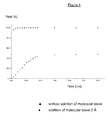
- FIG. 1 shows the comparison of the alkyne metathesis conversion of 1-propinylbenzene to tolane, wherein Mo( ⁇ CPh)(OSiPh 3 ) 3 .OEt 2 (23a.EtO 2 ) (1 mol %) at room temperature in toluene.
- the yields were determined by means of GC (versus biphenyl as internal standard).
- the curve under “addition of molecular sieve 5 ⁇ ” relates to the use of powdered MS 5 ⁇ (2 mg per pmol of released 2-butine).
- FIG. 1 for the example of an alkyne metathesis reaction, which is catalyzed by complex 23a, high conversions can be reached in this manner even at room temperature, which cannot be reached in absence of molecular sieve while employing the same conditions.
- the present invention basically differs from methods for carrying out alkyne metathesis reactions, in which MS 4 ⁇ is used in order to bind moisture in the reaction mixture (Huc, V. et al. New J. Chem. 2003, 27, 1412).
- MS 4 ⁇ is used in order to bind moisture in the reaction mixture (Huc, V. et al. New J. Chem. 2003, 27, 1412).
- the use of MS 4 ⁇ merely leads to results, which are also achieved when using dried and distilled solvents in absence of MS 4 ⁇ (Maraval, V. et al. Tetrahedron Lett. 2006, 47, 2155).
- molecular sieves in particular of MS 4 ⁇ or MS 5 ⁇ , in combination with one of the pre-catalysts, which are mentioned in the present invention, or catalysts for carrying out alkyne metathesis reactions.
- molecular sieves in particular of MS 4 ⁇ or MS 5 ⁇ , in combination with one of the following pre-catalysts or catalysts for carrying out alkyne metathesis reactions: 1 (Listemann, M. L. et al. Organometallics 1985, 4, 74), 2 (Beer, S. et al. Organometallics 2009, 29, 1534), 3 (Zhang, W. Org. Synth. 2007, 84, 163), 4 (Fürstner, A. et al. J. Am. Chem. Soc. 1999, 121, 9453), 5 (Geyer, A. M. et al. J. Am. Chem. Soc.
- the molecular sieves used for carrying out the alkyne metathesis reactions were activated by heating to at least 200° C. in vacuo and were stored under argon.
- the solvent was removed after 30 min and the obtained residue was dried for one hour at room temperature in high vacuum (10 ⁇ 3 mbar) and for one hour at 60° C. in high vacuum (approximately 10 ⁇ 3 mbar).
- the thus obtained yellow solid was re-crystallized triply from hot toluene.
- the solid was at first dissolved in 500 mL of hot toluene (105° C.), a remaining insoluble residue was removed by filtration of the hot solution. The solution was slowly cooled down to room temperature and was left for two days. Subsequently, the green solution was decanted and the crystals were dried in vacuo.
- IR (film): v 3087, 2918, 2851, 2230, 1957, 1739, 1606, 1576, 1523, 1473, 1444, 1428, 1405, 1319, 1291, 1256, 1185, 1163, 1144, 1118, 1048, 1026, 999, 988, 904, 870, 834, 799, 782, 761, 738, 718, 698, 681 cm ⁇ 1 .
- bipyridine derivatives which were used for the preparation of the complexes, were dissolved in toluene and the solution was dried over molecular sieve 5 ⁇ (MS 5 ⁇ ). Subsequently, the toluene was distilled off in vacuo and the remaining bipyridine derivative was stored under argon.
- the solvent was removed after 30 min and the obtained residue was dried for 1 h at room temperature in high vacuum (10 ⁇ 3 mbar) and for 1 h at 60° C. in high vacuum (10 ⁇ 3 mbar).
- the thus obtained yellow solid was recrystallized twice from hot toluene. For this, at first it was dissolved in about 50 mL of hot toluene (105° C.), wherein a remaining insoluble residue was removed by filtration of the hot solution. Then, the solution was slowly cooled down to room temperature and was left for two days. Subsequently, the green solution was decanted from the yellow crystals (0.743 g) and the crystals were dried in vacuo.
- the mother liquor was concentrated at room temperature up to dryness and the before-described procedure was repeated with about 25 mL of hot toluene. Further 1.355 g product were obtained. In total, 2.098 g [Mo( ⁇ N)(OSiPh 3 (bipy)] were obtained in the form of yellow crystals. Depending on the dryness degree, the solid may contain varying amounts of toluene. This complex can be stored at air over months without recognizable decomposition.
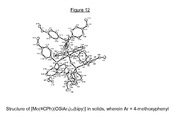
- the structure of the complex was confirmed by means of crystal structure analysis ( FIG. 10 ).
- the analytical and spectroscopic data correspond to those of the literature (Akiyama, S; Nagima, K; Nakatsuji, S.; Nakashima, K.; Abiru, K.; Watanabe, M. Bull. Chem. Soc. Jpn. 1995, 68, 2043).
- the formed suspension was added to a suspension of tert-butyldiphenyl-(1-phenylhex-4-ine-3-oxy)silane (412 mg, 1.00 mmol), tolane (446 Mg, 2.50 mmol) and molecular sieve (1 g, 5 ⁇ , powder) in toluene (4 mL), and the formed mixture was stirred for 24 h at room temperature.
- it is filtered through a short silica gel column, the filtrate is concentrated and the residue is purified by means of column chromatography (hexane).
Landscapes
- Chemical & Material Sciences (AREA)
- Organic Chemistry (AREA)
- Chemical Kinetics & Catalysis (AREA)
- Engineering & Computer Science (AREA)
- Materials Engineering (AREA)
- Inorganic Chemistry (AREA)
- Health & Medical Sciences (AREA)
- Medicinal Chemistry (AREA)
- Polymers & Plastics (AREA)
- Catalysts (AREA)
Applications Claiming Priority (7)
| Application Number | Priority Date | Filing Date | Title |
|---|---|---|---|
| DE102010013813 | 2010-04-03 | ||
| DE102010013813.4 | 2010-04-03 | ||
| DE102010013813A DE102010013813A1 (de) | 2010-04-03 | 2010-04-03 | Neue und benutzerfreundliche Katalysatoren für die Alkinmetathese |
| DE102010023326A DE102010023326A1 (de) | 2010-06-10 | 2010-06-10 | Bipyridinkomplexe als Katalysatoren für die Alkinmetathese |
| DE102010023326 | 2010-06-10 | ||
| DE102010023326.9 | 2010-06-10 | ||
| PCT/DE2011/000348 WO2011120508A1 (de) | 2010-04-03 | 2011-03-31 | Katalysatoren für die alkinmetathese |
Publications (2)
| Publication Number | Publication Date |
|---|---|
| US20130144102A1 US20130144102A1 (en) | 2013-06-06 |
| US8993470B2 true US8993470B2 (en) | 2015-03-31 |
Family
ID=44209971
Family Applications (1)
| Application Number | Title | Priority Date | Filing Date |
|---|---|---|---|
| US13/639,067 Active 2032-05-18 US8993470B2 (en) | 2010-04-03 | 2011-03-31 | Catalysts for the alkyne metathesis |
Country Status (3)
| Country | Link |
|---|---|
| US (1) | US8993470B2 (de) |
| EP (1) | EP2556078B1 (de) |
| WO (1) | WO2011120508A1 (de) |
Cited By (4)
| Publication number | Priority date | Publication date | Assignee | Title |
|---|---|---|---|---|
| US9919299B2 (en) | 2013-03-14 | 2018-03-20 | Ximo Ag | Metathesis catalysts and reactions using the catalysts |
| US10071950B2 (en) | 2013-07-12 | 2018-09-11 | Ximo Ag | Use of immobilized molybdenum- and tungsten-containing catalysts in olefin cross metathesis |
| US10427146B2 (en) | 2013-10-01 | 2019-10-01 | Ximo Ag | Immobilized metathesis tungsten oxo alkylidene catalysts and use thereof in olefin metathesis |
| US10744494B2 (en) | 2015-12-23 | 2020-08-18 | Ximo Ag | Immobilized metal alkylidene catalysts and use thereof in olefin metathesis |
Families Citing this family (6)
| Publication number | Priority date | Publication date | Assignee | Title |
|---|---|---|---|---|
| DE102011012629A1 (de) | 2011-02-28 | 2012-08-30 | Studiengesellschaft Kohle Mbh | Metallkomplexe des Molybdäns und Wolframs und ihre Verwendung als Präkatalysatoren für die Olefinmetathese |
| CN106279185B (zh) * | 2015-06-08 | 2019-04-02 | 沈阳药科大学 | 新型环状寡聚咔唑衍生物及其制备方法与应用 |
| WO2019009664A1 (en) | 2017-07-07 | 2019-01-10 | Koh Young Technology Inc | APPARATUS FOR OPTIMIZING THE INSPECTION OF THE OUTSIDE OF A TARGET OBJECT AND ASSOCIATED METHOD |
| CN110028504B (zh) * | 2018-01-12 | 2023-01-13 | 南开大学 | 2,9-二芳基取代的邻菲啰啉与其钴络合物的制备方法及其应用 |
| RU2756762C1 (ru) * | 2020-11-19 | 2021-10-05 | Федеральное государственное бюджетное образовательное учреждение высшего образования "Уфимский государственный нефтяной технический университет" | Способ получения этил (2E)-5-фенилпент-2-ен-4-иноата |
| CN118515534B (zh) * | 2024-07-11 | 2024-11-05 | 华南理工大学 | 一种多齿配体、多齿配体金属催化剂及其制备方法与应用 |
Citations (5)
| Publication number | Priority date | Publication date | Assignee | Title |
|---|---|---|---|---|
| US6121473A (en) | 1998-02-19 | 2000-09-19 | Massachusetts Institute Of Technology | Asymmetric ring-closing metathesis reactions |
| US20080119678A1 (en) | 2006-11-22 | 2008-05-22 | Massachusetts Institute Of Technology | Olefin metathesis catalysts and related methods |
| US20110015430A1 (en) | 2009-07-15 | 2011-01-20 | Massachusetts Institute Of Technology | Catalysts and processes for the formation of terminal olefins by ethenolysis |
| WO2011007742A1 (ja) | 2009-07-13 | 2011-01-20 | ユニ・チャーム株式会社 | 吸収体及び吸収性物品 |
| US20110077421A1 (en) | 2009-09-30 | 2011-03-31 | Massachusetts Institute Of Technology | Highly z-selective olefins metathesis |
-
2011
- 2011-03-31 WO PCT/DE2011/000348 patent/WO2011120508A1/de not_active Ceased
- 2011-03-31 US US13/639,067 patent/US8993470B2/en active Active
- 2011-03-31 EP EP11722991.4A patent/EP2556078B1/de active Active
Patent Citations (5)
| Publication number | Priority date | Publication date | Assignee | Title |
|---|---|---|---|---|
| US6121473A (en) | 1998-02-19 | 2000-09-19 | Massachusetts Institute Of Technology | Asymmetric ring-closing metathesis reactions |
| US20080119678A1 (en) | 2006-11-22 | 2008-05-22 | Massachusetts Institute Of Technology | Olefin metathesis catalysts and related methods |
| WO2011007742A1 (ja) | 2009-07-13 | 2011-01-20 | ユニ・チャーム株式会社 | 吸収体及び吸収性物品 |
| US20110015430A1 (en) | 2009-07-15 | 2011-01-20 | Massachusetts Institute Of Technology | Catalysts and processes for the formation of terminal olefins by ethenolysis |
| US20110077421A1 (en) | 2009-09-30 | 2011-03-31 | Massachusetts Institute Of Technology | Highly z-selective olefins metathesis |
Non-Patent Citations (23)
| Title |
|---|
| Bailey et al., ‘Evaluation of Molybdenum and Tungsten Metathesis Catalysts for Homogeneous Tandem Alkane Metathesis’, Organometallics, vol. 28, No. 1, Dec. 12, 2008, pp. 355-360. |
| Bailey et al., 'Evaluation of Molybdenum and Tungsten Metathesis Catalysts for Homogeneous Tandem Alkane Metathesis', Organometallics, vol. 28, No. 1, Dec. 12, 2008, pp. 355-360. |
| Extended European Search Report dated Nov. 6, 2013 for 13001297.4. |
| Heppekausen et al. ‘Practical New Sulyloxy-Based Alkyne Metathesis Catalysts with Optimized Activity and Selectivity Profiles’, J Am Chem Soc, 2010, vol. 132, No. 32, 11045-11057. |
| Heppekausen et al. 'Practical New Sulyloxy-Based Alkyne Metathesis Catalysts with Optimized Activity and Selectivity Profiles', J Am Chem Soc, 2010, vol. 132, No. 32, 11045-11057. |
| Jiang et al., ‘Highly Z-Selective Metathesis Homocoupling of Terminal Olefins’, Journal of the American Chemical Society ACS Publications, US, vol. 131, No. 46, Nov. 25, 2009, pp. 16630-16631. |
| Jiang et al., 'Highly Z-Selective Metathesis Homocoupling of Terminal Olefins', Journal of the American Chemical Society ACS Publications, US, vol. 131, No. 46, Nov. 25, 2009, pp. 16630-16631. |
| Lee et al., ‘Endo-Selective Enyne Ring-Closing Metathesis Promoted by Steriogenic-at-Mo Monoalkoxide and Monoaryloxide Complexes. Efficient Synthesis of Cyclic Dienes Not Accessible Through Reactions with Ru Carbenes’, Journal of the American Chemical Society, vol. 131, No. 30, Jul. 6, 2009, pp. 10652-10661. |
| Lee et al., 'Endo-Selective Enyne Ring-Closing Metathesis Promoted by Steriogenic-at-Mo Monoalkoxide and Monoaryloxide Complexes. Efficient Synthesis of Cyclic Dienes Not Accessible Through Reactions with Ru Carbenes', Journal of the American Chemical Society, vol. 131, No. 30, Jul. 6, 2009, pp. 10652-10661. |
| 'Marinescu et al., ‘Ethenolysis Reactions Catalyzed by Imido alkylinene Monoaryloxide Monopyrrolide (MAP) Complexes of Molybdenum’, Journal of the American Chemical Society, ACS Publications, US, vol. 131, No. 31, Aug. 12, 2009, pp. 10840-10841. |
| Marinescu et al., ‘Simple Molybdenum (IV) Olefin Complexes of the Type Mo (NR) (X) (Y) (olefin)’, Organometiallics, vol. 29, No. 24, Dec. 2, 2010, pp. 6816-6828. |
| 'Marinescu et al., 'Ethenolysis Reactions Catalyzed by Imido alkylinene Monoaryloxide Monopyrrolide (MAP) Complexes of Molybdenum', Journal of the American Chemical Society, ACS Publications, US, vol. 131, No. 31, Aug. 12, 2009, pp. 10840-10841. |
| Marinescu et al., 'Simple Molybdenum (IV) Olefin Complexes of the Type Mo (NR) (X) (Y) (olefin)', Organometiallics, vol. 29, No. 24, Dec. 2, 2010, pp. 6816-6828. |
| Schrock, ‘Recent Advances in High Oxidation State Mo and W Imido Alkylidene Chemistry’, Chemical Reviews, vol. 109 No. 8, Mar. 13, 2009. |
| Schrock, 'Recent Advances in High Oxidation State Mo and W Imido Alkylidene Chemistry', Chemical Reviews, vol. 109 No. 8, Mar. 13, 2009. |
| Tsai et al., ‘Facile Synthesis of Trialkoxymolybdenum (VI) Alkylidyne Complexes for Alkyne Metathesis’, Organmetallics 2000, vol. 19, No. 25, 5260-5262. |
| Tsai et al., 'Facile Synthesis of Trialkoxymolybdenum (VI) Alkylidyne Complexes for Alkyne Metathesis', Organmetallics 2000, vol. 19, No. 25, 5260-5262. |
| U.S. Appl. No. 14/001,811, filed Jun. 6, 2013, Fuerstner et al. |
| U.S. Appl. No. 14/209,313, filed Mar. 13, 2014, Ondi et al. |
| Yu et al., ‘Enol Ethers as Substrates for Efficient Z—and Enantioselective Ring-Opening/Cross-Metathesis Reactions Promoted by Steriogenic-at-Mo Complexes: Utility in Chemical Synthesis and Mechanistic Attributes’, Journal of the American Chemical Society, vol. 134, No. 5, Jan. 24, 2012, pp. 2788-2799. |
| Yu et al., ‘Synthesis of Macrocyclic Natural Products by Catalyst-Controlled Stereoselective Ring-Closing Metathesis’, Nature, vol. 479, No. 7371, Nov. 2, 2011, pp. 89-93. |
| Yu et al., 'Enol Ethers as Substrates for Efficient Z-and Enantioselective Ring-Opening/Cross-Metathesis Reactions Promoted by Steriogenic-at-Mo Complexes: Utility in Chemical Synthesis and Mechanistic Attributes', Journal of the American Chemical Society, vol. 134, No. 5, Jan. 24, 2012, pp. 2788-2799. |
| Yu et al., 'Synthesis of Macrocyclic Natural Products by Catalyst-Controlled Stereoselective Ring-Closing Metathesis', Nature, vol. 479, No. 7371, Nov. 2, 2011, pp. 89-93. |
Cited By (5)
| Publication number | Priority date | Publication date | Assignee | Title |
|---|---|---|---|---|
| US9919299B2 (en) | 2013-03-14 | 2018-03-20 | Ximo Ag | Metathesis catalysts and reactions using the catalysts |
| US11285466B2 (en) | 2013-03-14 | 2022-03-29 | Verbio Vereinigte Bioenergie Ag | Metathesis catalysts and reactions using the catalysts |
| US10071950B2 (en) | 2013-07-12 | 2018-09-11 | Ximo Ag | Use of immobilized molybdenum- and tungsten-containing catalysts in olefin cross metathesis |
| US10427146B2 (en) | 2013-10-01 | 2019-10-01 | Ximo Ag | Immobilized metathesis tungsten oxo alkylidene catalysts and use thereof in olefin metathesis |
| US10744494B2 (en) | 2015-12-23 | 2020-08-18 | Ximo Ag | Immobilized metal alkylidene catalysts and use thereof in olefin metathesis |
Also Published As
| Publication number | Publication date |
|---|---|
| EP2556078A1 (de) | 2013-02-13 |
| EP2556078B1 (de) | 2014-09-24 |
| WO2011120508A1 (de) | 2011-10-06 |
| US20130144102A1 (en) | 2013-06-06 |
Similar Documents
| Publication | Publication Date | Title |
|---|---|---|
| US20130144102A1 (en) | Catalysts for the alkyne metathesis | |
| US9233362B2 (en) | Molybdenum and tungsten metal complexes and use thereof as precatalysts for olefin metathesis | |
| US7312331B2 (en) | Stable cyclic (alkyl)(amino) carbenes as ligands for transition metal catalysts | |
| US10953393B2 (en) | Stabilization of active metal catalysts at metal-organic framework nodes for highly efficient organic transformations | |
| US20070073055A1 (en) | Transition metal complexes of N-heterocyclic carbenes, method of preparation and use in transition metal catalyzed organic transformations | |
| US8288558B2 (en) | Metathesis catalysts | |
| US10968244B2 (en) | Syntheses of allyl phosphine complexes of palladium | |
| CN104024201B (zh) | 使用钒络合物的金合欢醛的制造方法 | |
| US20190210012A1 (en) | Ruthenium complexes useful for catalyzing metathesis reactions | |
| CN113527186B (zh) | 一种手性α-氮杂芳烃三级碳中心类化合物的光不对称催化合成方法 | |
| CN109180607B (zh) | 一种有机催化剂催化羰基硫转化合成噻嗪二酮杂环化合物的方法 | |
| US20200369697A1 (en) | Molybdenum oxo alkylidene compounds, methods of making the same and use thereof in metathesis reactions | |
| Yanai et al. | Organic acid induced olefination reaction of lactones | |
| US20250091039A1 (en) | New stereoretentive ruthenium complexes, method of their preparation, intermediates used in this method and use of new stereoretentive ruthenium complexes in olefin metathesis reactions | |
| Clot et al. | Synthesis and reactivity of ruthenium (II) complexes containing hemilabile phosphine–thiophene ligands | |
| US8168835B2 (en) | Method for preparing propargylic alcohol catalyzed by 2-morpholinoisobornane-10-thiol | |
| EP1255715A1 (de) | Verfahren zur herstellung von polyaromatischen verbindungen | |
| US10486148B2 (en) | Ni(0) catalysts | |
| CN113200899A (zh) | 一种芳基硒醚类化合物及其合成方法 | |
| US6620940B1 (en) | Palladium-catalyzed cross-coupling chemistry on 3-chloro-4-halo-1,2,5-thiadiazole | |
| GB2537416A (en) | Process | |
| DE102010013813A1 (de) | Neue und benutzerfreundliche Katalysatoren für die Alkinmetathese | |
| Kauffmann et al. | Versatile Principle for the Synthesis of Functionalized Hydrocarbons via Organoarsenic Compounds | |
| JP4765071B2 (ja) | アニリンおよびフェノール化合物の製造法 | |
| JP4346198B2 (ja) | フルベン誘導体の製造方法 |
Legal Events
| Date | Code | Title | Description |
|---|---|---|---|
| AS | Assignment |
Owner name: STUDIENGESELLSCHAFT KOHLE MBH, GERMANY Free format text: ASSIGNMENT OF ASSIGNORS INTEREST;ASSIGNORS:FUERSTNER, ALOIS;HEPPEKAUSEN, JOHANNES;HICKMANN, VOLKER;AND OTHERS;SIGNING DATES FROM 20121102 TO 20121113;REEL/FRAME:029346/0451 |
|
| STCF | Information on status: patent grant |
Free format text: PATENTED CASE |
|
| CC | Certificate of correction | ||
| MAFP | Maintenance fee payment |
Free format text: PAYMENT OF MAINTENANCE FEE, 4TH YEAR, LARGE ENTITY (ORIGINAL EVENT CODE: M1551); ENTITY STATUS OF PATENT OWNER: LARGE ENTITY Year of fee payment: 4 |
|
| AS | Assignment |
Owner name: VERBIO VEREINIGTE BIOENERGIE AG, GERMANY Free format text: ASSIGNMENT OF ASSIGNORS INTEREST;ASSIGNOR:XIMO AG;REEL/FRAME:050392/0719 Effective date: 20190905 |
|
| FEPP | Fee payment procedure |
Free format text: ENTITY STATUS SET TO SMALL (ORIGINAL EVENT CODE: SMAL); ENTITY STATUS OF PATENT OWNER: SMALL ENTITY |
|
| MAFP | Maintenance fee payment |
Free format text: PAYMENT OF MAINTENANCE FEE, 8TH YR, SMALL ENTITY (ORIGINAL EVENT CODE: M2552); ENTITY STATUS OF PATENT OWNER: SMALL ENTITY Year of fee payment: 8 |
|
| AS | Assignment |
Owner name: STUDIENGESELLSCHAFT KOHLE GGMBH, GERMANY Free format text: CHANGE OF NAME;ASSIGNOR:STUDIENGESELLSCHAFT KOHLE MBH;REEL/FRAME:062876/0181 Effective date: 20230101 |