US8650626B2 - Information processing apparatus, information providing server, program, communication system, and login information providing server - Google Patents
Information processing apparatus, information providing server, program, communication system, and login information providing server Download PDFInfo
- Publication number
- US8650626B2 US8650626B2 US12/839,761 US83976110A US8650626B2 US 8650626 B2 US8650626 B2 US 8650626B2 US 83976110 A US83976110 A US 83976110A US 8650626 B2 US8650626 B2 US 8650626B2
- Authority
- US
- United States
- Prior art keywords
- server
- information
- processing apparatus
- account information
- processor
- Prior art date
- Legal status (The legal status is an assumption and is not a legal conclusion. Google has not performed a legal analysis and makes no representation as to the accuracy of the status listed.)
- Active, expires
Links
Images




Classifications
-
- H—ELECTRICITY
- H04—ELECTRIC COMMUNICATION TECHNIQUE
- H04L—TRANSMISSION OF DIGITAL INFORMATION, e.g. TELEGRAPHIC COMMUNICATION
- H04L63/00—Network architectures or network communication protocols for network security
- H04L63/08—Network architectures or network communication protocols for network security for authentication of entities
- H04L63/083—Network architectures or network communication protocols for network security for authentication of entities using passwords
-
- H—ELECTRICITY
- H04—ELECTRIC COMMUNICATION TECHNIQUE
- H04L—TRANSMISSION OF DIGITAL INFORMATION, e.g. TELEGRAPHIC COMMUNICATION
- H04L63/00—Network architectures or network communication protocols for network security
- H04L63/04—Network architectures or network communication protocols for network security for providing a confidential data exchange among entities communicating through data packet networks
- H04L63/0428—Network architectures or network communication protocols for network security for providing a confidential data exchange among entities communicating through data packet networks wherein the data content is protected, e.g. by encrypting or encapsulating the payload
- H04L63/0492—Network architectures or network communication protocols for network security for providing a confidential data exchange among entities communicating through data packet networks wherein the data content is protected, e.g. by encrypting or encapsulating the payload by using a location-limited connection, e.g. near-field communication or limited proximity of entities
-
- H—ELECTRICITY
- H04—ELECTRIC COMMUNICATION TECHNIQUE
- H04L—TRANSMISSION OF DIGITAL INFORMATION, e.g. TELEGRAPHIC COMMUNICATION
- H04L63/00—Network architectures or network communication protocols for network security
- H04L63/08—Network architectures or network communication protocols for network security for authentication of entities
- H04L63/0853—Network architectures or network communication protocols for network security for authentication of entities using an additional device, e.g. smartcard, SIM or a different communication terminal
-
- H—ELECTRICITY
- H04—ELECTRIC COMMUNICATION TECHNIQUE
- H04L—TRANSMISSION OF DIGITAL INFORMATION, e.g. TELEGRAPHIC COMMUNICATION
- H04L63/00—Network architectures or network communication protocols for network security
- H04L63/18—Network architectures or network communication protocols for network security using different networks or channels, e.g. using out of band channels
-
- H—ELECTRICITY
- H04—ELECTRIC COMMUNICATION TECHNIQUE
- H04L—TRANSMISSION OF DIGITAL INFORMATION, e.g. TELEGRAPHIC COMMUNICATION
- H04L63/00—Network architectures or network communication protocols for network security
- H04L63/16—Implementing security features at a particular protocol layer
- H04L63/168—Implementing security features at a particular protocol layer above the transport layer
Definitions
- JP-A-2002-366868 discloses an existing system for purchasing goods by connecting to an e-commerce server of a virtual store on a communication network.
- This patent document discloses a system provided with an e-commerce support server that requests for unique number data in an IC card with a credit card function and that transmits to an e-commerce server creditworthiness data that is generated by converting the received unique number.
- JP-A-2002-366859 discloses an intermediate system that transfers information such as a credit card number from an affiliate store to a card issuer and that submits a credit request.
- loan and identity verification are both performed by an agency server, and a process of returning the results to an e-commerce server and an affiliate store terminal which are the actual business entities is performed.
- This method has a demerit that the configuration of the agency server becomes complicated and the system grows in scale, thereby making tremendous costs necessary for the construction of the system.
- an information processing apparatus an information providing server, a program, a communication system, and a login information providing server which are novel and improved, and which are capable of performing identity verification by a secure configuration.
- the information processing apparatus includes: a processor; a communication unit operatively coupled to the processor; and a memory device operatively coupled to the processor, the memory device storing instructions that cause the processor, in cooperation with the communication unit and the memory device, to, in response to a contactless communication: (a) acquire address information from a second memory device having: (i) a free area including the address information; and (ii) a secure area including account information; (b) connect to a resource of a server using the acquired address information; and (c) cause a security server to: (i) establish a secure communication path; (ii) acquire the account information from the second memory device; and (ii) transmit the acquired account information to the server such that the server enables a user to access the resource of the server using the account information.
- the contactless communication occurs in response to a communication card being brought into contact or into proximity with a card reader/writer.
- the instructions cause the processor to request, from the server, a session number used for confirming access to the resource of the server.
- the information processing apparatus includes a reader/writer operatively coupled to the processor.
- the instructions cause the processor to operate with the reader/writer to acquire the address information.
- the second memory device is included in the information processing apparatus. In an example embodiment, the second memory device is included in a contactless communication card that is separate from the information processing apparatus.
- the address information includes a URL.
- the account information includes login information.
- the server includes a web server.
- the information processing apparatus includes a display device operatively coupled to the processor.
- the method includes causing the processor to execute the instructions to operate with the display device to display a login screen.
- a method of operating an information processing apparatus including instructions includes: in response to a contactless communication: (a) causing a processor to execute the instructions to acquire address information from a second memory device having: (i) a free area including the address information; and (ii) a secure area including account information; (b) causing the processor to execute the instructions to connect to a resource of a server using the acquired address information; and (c) causing the processor to execute the instructions to cause a security server to: (i) establish a secure communication path; (ii) acquire the account information from the second memory device; and (iii) transmit the acquired account information to the server such that the server enables a user to access the resource of the server using the account information.
- the contactless communication occurs in response to a communication card being brought into contact or into proximity with a card reader/writer.
- the method includes causing the processor to execute the instructions to request, from the server, a session number used for confirming access to the resource of the server.
- the information processing apparatus includes a reader/writer.
- the method includes causing the processor to execute the instructions to operate with the reader/writer to acquire the address information.
- the information processing apparatus includes the second memory device.
- the second memory device is included in a contactless communication card that is separate from the information processing apparatus.
- the address information includes a URL.
- the account information includes login information.
- the server includes a web server.
- the information processing apparatus includes a display device.
- the method includes causing the processor to operate with the display device to display a login screen.
- the server includes: a processor; a communication unit operatively coupled to the processor; and a memory device operatively coupled to the processor, the memory device storing instructions that cause the processor, in cooperation with the communication unit and the memory device, to, in response to a contactless communication: (a) connect to an information processing apparatus, the information processing apparatus being configured to connect to the server by using address information acquired from a second memory device having: (i) a free area including the address information; and (ii) a secure area including account information; (b) acquire the account information from a security server, the security server being configured to acquire the account information from the secure area of the second memory device; and (c) enable a user to access a resource of the server using the acquired account information from the security server.
- the contactless communication occurs in response to a communication card being brought into contact or into proximity with a card reader/writer.
- the instructions cause the processor to issue a session number to the information processing apparatus, the session number being used for confirming access to the resource of the server.
- the address information includes a URL.
- the account information includes login information.
- the server is a web server.
- the information processing apparatus includes the second memory device.
- the contactless communication occurs in response to a communication card being brought into contact or into proximity with a card reader/writer.
- the method of operating a server including instructions includes: in response to a contactless communication: (a) causing a processor to execute the instructions to operate with a communication unit to connect to an information processing apparatus, the information processing apparatus being configured to connect to the server by using address information acquired from a second memory device having: (i) a free area including the address information; and (ii) a secure area including account information; (b) causing the processor to execute the instructions to acquire the account information from a security server, the security server being configured to acquire the account information from the secure area of the second memory device; and (c) causing the processor to execute the instructions to enable a user to access a resource of the server using the acquired account information from the security server.
- the contactless communication occurs in response to a communication card being brought into contact or into proximity with a card reader/writer.
- the method includes causing the processor to execute the instructions to issue a session number to the information processing apparatus, the session number being used for confirming access to the resource of the server.
- the address information includes a URL.
- the account information includes login information.
- the server is a web server.
- the information processing apparatus includes the second memory device.
- an information processing apparatus includes: a processor; a communication unit operatively coupled to the processor; and a first memory device operatively coupled to the processor, the memory device storing instructions that cause the processor, in cooperation with the communication unit and the memory device, to, in response to contactless communication: (a) cause a display device to start a browser of a security server; (b) acquire address information from a second memory device having: (i) a free area including the address information; and (ii) a secure area including account information; (c) via the browser of the security server, access a server using the acquired address information; and (d) cause the security server to: (i) establish a secure communication path; (ii) enable a user to select a first access destination or a second access destination; (iii) in response to the first access destination being selected, access the information processing apparatus; and (iv) in response to the second access destination being selected, access the secure area of the second memory device.
- the contactless communication occurs in response to a communication card being brought into contact or into proximity with a card reader/writer.
- the information processing apparatus includes a reader/writer operatively coupled to the processor.
- the instructions cause the processor to operate with the reader/writer to acquire the address information.
- the second memory device is included in the information processing apparatus. In an example embodiment, the second memory device is included in a contactless communication card that is separate from the information processing apparatus.
- the address information includes a URL.
- the account information includes login information.
- the server includes a web server.
- a method of operating an information processing apparatus including instructions includes: in response to contactless communication: (a) causing a processor to execute the instructions to cause a display device to start a browser of a security server; (b) causing the processor to execute the instructions to acquire address information from a second memory device having: (i) a free area including the address information; and (ii) a secure area including account information; (c) causing the processor to execute the instructions to, via the browser of the security server, access a server using the acquired address information; and (d) causing the security server to: (i) establish a secure communication path; (ii) enable a user to select a first access destination or a second access destination; (iii) in response to the first access destination being selected, access the information processing apparatus; and (iv) in response to the second access destination being selected, access the secure area of the second memory device.
- the contactless communication occurs in response to a communication card being brought into contact or into proximity with a card reader/writer.
- the information processing apparatus includes a reader/writer.
- the method includes causing the processor to execute the instructions to operate with the reader/writer to acquire the address information.
- the information processing apparatus includes the second memory device.
- the second memory device is included in a contactless communication card that is separate from the information processing apparatus.
- the address information includes a URL.
- the account information includes login information.
- the server includes a web server.
- an information processing apparatus an information providing server, a program, a communication system, and a login information providing server which are capable to performing identity verification by a secure configuration.
- FIG. 1 is a conceptual diagram schematically showing a system configuration according to a first embodiment, and information exchange;
- FIG. 2 is a schematic diagram showing the configuration of a system according to the first embodiment of the present disclosure
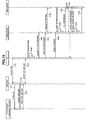
- FIG. 3 is a sequence diagram for describing a process performed by the system of the first embodiment
- FIG. 4 is a sequence diagram showing the details of a login information acquisition procedure of step S 28 in FIG. 3 between a SAM server and a contactless communication card;
- FIG. 5 is a functional block diagram showing the configuration of a personal computer according to the first embodiment
- FIG. 6 is a functional block diagram showing the configuration of a Web server according to the first embodiment
- FIG. 7 is a conceptual diagram schematically showing a system configuration according to a second embodiment, and information exchange
- FIG. 8 is a sequence diagram showing a process performed by the system of the second embodiment
- FIG. 9 is a sequence diagram showing the process of step S 88 ;
- FIG. 10 is a functional block diagram showing the configuration of a personal computer according to the second embodiment.
- FIG. 11 is a conceptual diagram schematically showing a system configuration according to a third embodiment, and information exchange;
- FIG. 12 is a conceptual diagram schematically showing a system configuration according to the third embodiment, and information exchange;
- FIG. 13 is a sequence diagram showing a process of the third embodiment
- FIG. 14 is a sequence diagram showing the details of a local access process of step S 158 in FIG. 13 ;
- FIG. 15 is a flow chart for describing a local access process (step S 228 and later steps) by a SAM server;
- FIG. 16 is a functional block diagram showing the configuration of a personal computer according to the third embodiment.
- FIG. 17 is a functional block diagram showing the configuration of a SAM server according to the third embodiment.
- Second Embodiment Example of Assigning Session Number for Login Identification.
- FIG. 1 is a conceptual diagram schematically showing a system configuration according to a first embodiment, and information exchange.
- a system according to the present embodiment includes a contactless communication card 100 , a card reader/writer 200 , a personal computer 300 , a Web server 400 , and a SAM (Secure Application Module) server 500 .
- SAM Secure Application Module
- the contactless communication card 100 includes within its memory a free area and a secure area. Information such as a URL is stored in the free area, and login information such as a username and a password is stored in the secure area.
- Information such as a URL is stored in the free area
- login information such as a username and a password is stored in the secure area.
- the login information such as a username and a password is requested.
- the Web server 400 requests the SAM server 500 for these pieces of login information.
- the SAM server 500 requests the contactless communication card 100 , via the Web server 400 , the personal computer (PC) 300 and the card reader/writer 200 , for the readout from the secure area of the contactless communication card 100 , and acquires the login information. Then, the SAM server 500 transmits the acquired login information to the Web server 400 .
- the Web server 400 logs in to the URL using the received login information. This enables a user to access the URL of the Web server 400 by simply bringing the contactless communication card 100 into contact or into proximity with the card reader/writer 200 .
- FIG. 2 is a schematic diagram showing the configuration of the system according to the first embodiment of the present disclosure.
- the system of the present embodiment includes the contactless communication card 100 , the card reader/writer (R/W) 200 , the personal computer (PC) 300 , the Web server 400 , and the SAM (Secure Application Module) server 500 .
- the personal computer 300 , the Web server 400 , and the SAM server 500 are connected in such a way that communication with each other is possible via the Internet 800 .
- the contactless communication card 100 includes an RF unit 102 , a CPU 104 , and a memory 106 .
- the RF unit 102 extracts a baseband signal that has been superimposed by a Manchester scheme from a carrier (RF signal) in 13.56 MHz band generated by the card reader/writer 200 , and receives data. Also, the RF unit 102 transmits data to the card reader/writer 200 by superimposing on the carrier the baseband signal of the contactless communication card 100 .
- the CPU 104 performs these communication controls, an access control to the memory 106 in the card, and encryption/decryption process of data.
- the memory 106 has its area divided for each service, and each area is set with an attribute of writable/readable.
- mainly two attributes are determined for the area of the memory 106 : an area to which access through authentication and encryption is necessary (hereunder, referred to as a secure area), and an area with no access restriction (hereunder, referred to as a free area.
- the card reader/writer 200 includes an RF unit 202 , and a CPU 204 .
- the RF unit 202 generates a carrier in 13.56 MHz band, and communicates with the contactless communication card 100 by superimposition of a baseband signal on a transmitted wave and extraction of a baseband signal from a received wave.
- the CPU 204 converts a communication control command that is received from the personal computer 300 to a baseband signal, and transmits the same to the RF unit 202 . Also, the CPU 204 transforms a baseband signal that is received from the RF unit 202 into a communication control command format for a PC, and transmits the same to the personal computer 300 .
- the personal computer 300 includes a card control unit 302 , a communication unit 304 , a user interface (UI) unit 306 , and a CPU 308 .
- the card control unit 302 issues a card control command, and performs transmission/reception with the card reader/writer 200 .
- the communication unit 304 communicates with a server on the Internet 800 , such as the SAM server 500 , the Web server 400 , and the like.
- the user interface unit 306 has a function of means for a user to input instruction by a keyboard, a mouse, or the like, or of output means for the user, such as a display, a sound output unit, or the like.
- the CPU 308 displays and controls a Web browser based on html information obtained from a server. Furthermore, the CPU 308 encrypts an Internet communication path based on encryption setting information shared with a server, and converts a control signal from the SAM server 500 to the card reader/writer 200 .
- the personal computer 300 transmits a read control signal to the card reader/writer 200 to read information in the free area of the contactless communication card 100 (step S 10 ).
- the card reader/writer 200 performs polling (step S 12 ).
- the card reader/writer 200 detects a card by sending a carrier.
- the contactless communication card 100 receives the carrier and the CPU 104 is activated by the power, the contactless communication card 100 returns a unique identifier (IDm) and the type of the card (system code).
- IDm unique identifier
- the card reader/writer 200 that succeeded in detecting the card accesses the access free area in the contactless communication card 100 .
- the card reader/writer 200 reads the destination URL (start URL) to be used at the time of the Web browser of the personal computer 300 connecting to the Internet and the URL of the SAM server 500 provided with a SAM (Secure Application Module) (step S 14 ).
- the personal computer 300 starts a Web browser for displaying an html file received from the Web server 400 (step S 20 ).
- a Web browser for displaying an html file received from the Web server 400 (step S 20 ).
- Internet Explorer, Firefox or the like can be used as the Web browser, for example.
- the Web browser of the personal computer 300 transmits a http_get command (including the start URL and the URL of the SAM server 500 ) (step S 22 ), and connects to the URL of the Web server 400 via the Internet 800 by the http_get command.
- the Web browser of the personal computer 300 passes the URL of the SAM server 500 to the Web server 400 .
- the Web browser of the personal computer 300 analyses the received data in a http format acquired by the http_get command, and displays a login screen.
- the address (URL) of the SAM server 500 is added to the http_get command as an argument.
- the Web server 400 When the http_get command is received from the personal computer 300 , the Web server 400 operates a CGI, and encrypts the communication path to the SAM server 500 by SSL or the like (step S 24 ). Then, the Web server 400 accesses the SAM server 500 by using the URL of the SAM server 500 acquired from the personal computer 300 .
- the Web server 400 requests the SAM server 500 for login information (step S 26 ).
- the SAM server 500 acquires the login information (username and password) from the secure area of the contactless communication card 100 (step S 28 ), and logs in to the Web server 500 .
- the process of step S 28 will be described in detail below.
- FIG. 4 is a sequence diagram showing the details of a login information acquisition procedure of step S 28 in FIG. 3 between the SAM server 500 and the contactless communication card 100 .
- the SAM server 500 transmits, to the Web server 400 , a security client request command for the personal computer 300 (step S 40 ).
- the SAM server 500 issues a secure client start request to the Web server 400 by transmitting the http_get command or the like (step S 40 ).
- the secure client is a program held in the personal computer 300 .
- the Web server 400 transfers the request command for the secure client to the personal computer 300 connected by using the http_get command (step S 42 ).
- the CPU 308 within the personal computer 300 that received the security client start command starts the security client (step S 44 ).
- This client program encrypts the communication path between the SAM server 500 and the personal computer 300 .
- this client program converts the card control command received from the SAM server 500 to a control command of the card reader/writer 200 , and performs card control for the contactless communication card 100 .
- This causes the path from the personal computer 300 to the SAM server 500 via the Web server 400 to be encrypted, and causes a packet to be transmitted/received between the SAM server 500 , the Web server 400 , and the personal computer 300 to be encrypted. Accordingly, what kind of command is transmitted to the contactless communication card 100 can be hidden.
- the SAM server 500 that established the encrypted communication path transmits an authentication request command to the personal computer 300 to request the contactless communication card 100 for the authentication of the encryption (step S 46 ).
- Public information (public key) 1 generated by a random number N 1 and a private key A is included in this command.
- the authentication request is performed in an encrypted transmission path between the SAM server 500 , the Web server 400 , and the personal computer 300 . Additionally, it is assumed that the contactless communication card 100 is in proximity or in contact with the card reader/writer 200 at this time point, and that it is able to communicate with the card reader/writer 200 .
- the Web server 400 that received the authentication request command from the SAM server 500 transfers the command to the personal computer 300 as it is (step S 48 ).
- the personal computer 300 After converting the authentication request command to that for the card reader/writer 200 , the personal computer 300 transmits the same to the card reader/writer 200 (step S 50 ).
- the card reader/writer 200 After converting the authentication request command to an RF signal, the card reader/writer 200 transmits the same to the contactless communication card 100 (step S 52 ).
- the private key A is stored in the contactless communication card 100 , and thus the contactless communication card 100 generates public information (public key) 2 by this key A and a random number N 2 .
- the public information 2 is returned to the SAM server 500 via the card reader/writer 200 , the personal computer 300 , and the Web server 400 .
- the contactless communication card 100 and the SAM server 500 each generate a shared key (private key), which is the same key for both the contactless communication card 100 and the SAM server 500 (steps S 54 , S 56 ), and the shared key is shared.
- a shared key is generated, a read value of a necessary area in the secure area of the contactless communication card 100 is transmitted, being encrypted by this shared key.
- the generation of the shared key from step S 46 to step S 56 can be performed by a method generally called “Diffie-Hellman key exchange”.
- the encrypted communication path from the SAM server 500 to the contactless communication card 100 is formed in this manner, and the SAM server 500 and the contactless communication card 100 will be in a state where secure communication is possible.
- the SAM server 500 transmits to the personal computer 300 , via the Web server 400 , a Read request for the secure area of the contactless communication card 100 , using the encrypted communication path (step S 58 ).
- Information on an area to be accessed (service area) on the memory 106 of the contactless communication card 100 is included in the Read request for the secure area.
- the Web server 400 that received the Read request for the secure area from the SAM server 500 transmits the command to the personal computer 300 as it is (step S 60 ).
- the security client on the personal computer 300 converts the Read request for the secure area into a command format for the card reader/writer 200 , and transmits the same to the card reader/writer 200 (step S 62 ).
- the card reader/writer 200 that received the Read request for the secure area accesses the secure area of the contactless communication card 100 (step S 64 ).
- the contactless communication card 100 encrypts the login information (username and password) stored in the secure area by the shared key, and returns it to the SAM server 500 via the encrypted transmission path (step S 66 ).
- the SAM server 500 decrypts the encrypted login information by using the shared key (step S 68 ).
- the SAM server 500 can acquire the login information from the contactless communication card 100 in step S 28 in FIG. 3 by the sequence in FIG. 4 described above.
- the SAM server 500 sends the decrypted login information to the Web server 400 (step S 30 in FIG. 3 ).
- the Web server 400 performs login by the received decrypted login information.
- the login to the Web server 400 is thus completed (step S 30 ), and a screen after login is displayed on the screen of the personal computer 300 . Accordingly, a user can check on the Web browser screen of the personal computer 300 that he/she has logged in.
- the login information of the secure area of the contactless communication card 100 is transmitted from the SAM server 500 to the Web server 400 , the user can automatically log in to the Web server 400 without inputting the username, the password, or the like, to the login screen.
- FIG. 5 is a functional block diagram showing the configuration of the personal computer 300 according to the first embodiment.
- the personal computer 300 includes an access destination information transmitting unit 310 , a login information transmitting unit 312 , and a reception processing unit 314 .
- Each functional block can be configured from hardware, the CPU 308 , and software (program) for causing the CPU 308 to function that are provided in the personal computer 300 .
- the program can be stored in a hard disk provided in the personal computer 300 , or in a recording medium such as a memory that is externally connected to the personal computer 300 .
- FIG. 6 is a functional block diagram showing the configuration of the Web server 400 according to the first embodiment.
- the Web server 400 includes an access destination information acquisition unit 410 , a login information acquisition unit 412 , a login execution unit 414 , and a transmission processing unit 416 .
- Each functional block can be configured from hardware, a CPU 402 , and software (program) for causing the CPU 402 to function that are provided in the Web server 400 .
- the program can be stored in a hard disk provided in the Web server 400 , or in a recording medium such as a memory that is externally connected to the Web server 400 .
- the SAM server 500 sends the login information that has been sent to the SAM server 500 from the encrypted transmission path to the Web server 400 , and logs in to the Web server 400 .
- This allows a user to perform easy login by simply holding the contactless communication card 100 over the card reader/writer 200 .
- the second embodiment relates to a login through the SAM server 500 using a session number.
- FIG. 7 is a conceptual diagram schematically showing a system configuration according to the second embodiment, and information exchange.
- the system of the present embodiment also includes the contactless communication card 100 , the card reader/writer 200 , the personal computer 300 , the Web server 400 , and the SAM (Secure Application Module) server 500 .
- the contactless communication card 100 the card reader/writer 200
- the personal computer 300 the card reader/writer 200
- the personal computer 300 the Web server 400
- SAM Secure Application Module
- the contactless communication card 100 includes within its memory a free area and a secure area. Information such as a URL is stored in the free area, and login information such as a username and a password is stored in the secure area.
- Information such as a URL is stored in the free area
- login information such as a username and a password is stored in the secure area.
- the login information such as a username and a password is requested.
- the personal computer 300 requests the SAM server 500 for these pieces of login information.
- the SAM server 500 requests the contactless communication card 100 , via the personal computer (PC) 300 and the card reader/writer 200 , for the readout from the secure area of the contactless communication card 100 , and acquires the login information. Then, the SAM server 500 transmits the acquired login information to the Web server 400 .
- the Web server 400 logs in to the URL by the received login information. This enables a user to access the URL of the Web server 400 by simply bringing the contactless communication card 100 into contact or into proximity with the card reader/writer 200 .
- FIGS. 8 and 9 The system configuration according to the second embodiment and the configurations of the contactless communication card 100 , the card reader/writer 200 , the personal computer 300 , the Web server 400 , and the SAM server 500 are the same as those in FIG. 2 .
- FIG. 8 is a sequence diagram showing a process performed by the system of the second embodiment.
- the personal computer 300 reads the contactless communication card (steps S 70 to S 78 ).
- the personal computer 300 starts a Web browser (step S 80 ).
- the processes of steps S 70 to S 80 are the same as the processes of steps S 10 to S 20 in FIG. 3 .
- the Web browser of the personal computer 300 transmits a http_get command (including the start URL) (step S 82 ). Then, the Web browser connects to the URL of the Web server 400 via the Internet 800 by the http_get command, analyses received data in a http format acquired by the http_get command, and displays a login screen.
- the personal computer 300 After encrypting the communication path to the Web server 400 by SSL, the personal computer 300 accesses the Web server 400 , and requests the server for the issuance of a session number (step S 84 ).
- the session number to be issued by the Web server 400 is to be distinguishable from a login session number of another user by the use of a random number or the like, or it is to be invalidated when a certain expiration date is reached.
- the session number is a number that is used for confirming the login by a user, and it is to be a unique number.
- the personal computer 300 transmits “https://www.web_server.co.jp/login.html+get_session_number.cgi” by the https_get command.
- the Web server 400 describes a session number generated by an execution code (CGI script or the like) in an html format, and returns it to the https_get (step S 85 ).
- the personal computer 300 accesses the SAM server 500 after encrypting the communication path to the SAM server 500 by SSL, and transmits to the SAM server 500 a login request command to the Web server 400 (step S 86 ).
- the URL of the Web server 400 which is the login destination, the URL of the SAM server 500 , and the session number information acquired from the Web server 400 in step S 85 are added to the request command as arguments.
- the URL of the login destination and the URL of the SAM server 500 are read out from the memory of the contactless communication card 100 .
- CGI script or the like
- the SAM server 500 acquires login information from the secure area of the contactless communication card 100 (step S 88 ).
- the acquisition method here is the same as the process described with FIG. 4 of the first embodiment, but the Web server 400 does not mediate between the SAM server 500 and the personal computer 300 .
- the second embodiment is different from the first embodiment in that the SAM server 500 and the personal computer 300 directly communicate with each other.
- FIG. 9 is a sequence diagram showing the process of step S 88 .
- the SAM server 500 issues a secure client start request to the personal computer 300 by transmitting the http_get command or the like (step S 100 ).
- the secure client is a program held in the personal computer 300 .
- This client program is a program that encrypts the communication path between the SAM server 500 and the personal computer 300 , and that also converts the card control command received from the SAM server 500 to a control command of the card reader/writer 200 and performs card control for the contactless communication card 100 .
- This causes the path from the personal computer 300 to the SAM server 500 to be encrypted, and causes a packet to be transmitted/received between the SAM server 500 , the Web server 400 , and the personal computer 300 to be encrypted. Accordingly, what kind of command is transmitted to the contactless communication card 100 can be hidden
- the SAM server 500 that established the encrypted communication path transmits an authentication request command to the personal computer 300 to request the contactless communication card 100 for the authentication of the encryption (step S 104 ).
- Public information (public key) 1 generated by a random number N 1 and a private key A is included in this command.
- the authentication request is performed in an encrypted transmission path between the SAM server 500 , the Web server 400 , and the personal computer 300 . Additionally, it is assumed that the contactless communication card 100 is in proximity or in contact with the card reader/writer 200 at this time point, and that it is able to communicate with the card reader/writer 200 .
- the personal computer 300 After converting the authentication request command to that for the card reader/writer 200 , the personal computer 300 transmits the same to the card reader/writer 200 (step S 106 ).
- the card reader/writer 200 After converting the authentication request command to an RF signal, the card reader/writer 200 transmits the same to the contactless communication card 100 (step S 108 ).
- the private key A is stored in the contactless communication card 100 , and thus the contactless communication card 100 generates public information (public key) 2 by this key A and a random number N 2 .
- the public information 2 is returned to the SAM server 500 via the card reader/writer 200 and the personal computer 300 (step S 109 ).
- the contactless communication card 100 and the SAM server 500 each generate a shared key (private key), which is the same key for both the contactless communication card 100 and the SAM server 500 (steps S 110 , S 112 ), and the shared key is shared.
- a read value of a necessary area in the secure area of the contactless communication card 100 is transmitted, being encrypted by this shared key.
- the generation of the shared key from step S 104 to step S 112 can be performed by a general method called “Diffie-Hellman key exchange”.
- the encrypted communication path from the SAM server 500 to the contactless communication card 100 is formed in this manner, and the SAM server 500 and the contactless communication card 100 will be in a state where secure communication is possible.
- the SAM server 500 acquires the login information (username, password, and the like) written in the secure area of the contactless communication card 100 . To do this, the SAM server 500 transmits to the personal computer 300 a Read request for the secure area of the contactless communication card 100 , using the encrypted communication path (step S 114 ). Information on an area to be accessed (service area) on the memory 106 of the contactless communication card 100 is included in the Read request for the secure area.
- the security client on the personal computer 300 converts the Read request for the secure area into a command format for the card reader/writer 200 . Then, the security client transmits the Read request in converted command format to the card reader/writer 200 (step S 116 ).
- the card reader/writer 200 that received the Read request for the secure area accesses the secure area of the contactless communication card 100 (step S 118 ).
- the contactless communication card 100 encrypts the login information (username and password) stored in the secure area by the shared key, and returns the same to the SAM server 500 via the encrypted transmission path (step S 120 ).
- the SAM server 500 decrypts the encrypted login information by using the shared key (step S 122 ).
- the SAM server 500 can acquire the login information from the contactless communication card 100 in step S 88 in FIG. 8 by the sequence in FIG. 9 described above.
- the SAM server 500 that acquired the login information connects to the Web server 400 that is specified by the login URL acquired in step S 86 in FIG. 8 , and encrypts the communication path by a process of SSL or the like (step S 90 in FIG. 8 ).
- the SAM server 500 transmits to the Web server 400 a command including the login information (the username, the password, the session number, and the like) (step S 92 ).
- the Web server 400 can identify for which session the login from the SAM server 500 is meant by receiving the session number.
- the Web server 400 checks the TRUE/FALSE of the login information, and then, in case of TRUE, performs login and transmits a login complete notification to the SAM server 500 (step S 94 ).
- the SAM server 500 that received the login complete notification similarly returns a login complete notification to the personal computer 300 (step S 95 ).
- FIG. 10 is a functional block diagram showing the configuration of the personal computer 300 according to the second embodiment.
- the personal computer 300 includes an access destination information transmitting unit 320 , an identification information acquisition unit 322 , a login information transmitting unit 324 , and a reception processing unit 326 .
- Each functional block can be configured from hardware, the CPU 308 , and software (program) for causing the CPU 308 to function that are provided in the personal computer 300 .
- the program can be stored in a hard disk provided in the personal computer 300 , or in a recording medium such as a memory that is externally connected to the personal computer 300 .
- the Web server 400 and the SAM server 500 can be operated in parallel. Therefore, the information of the access destination to which login is performed based on the session number can be displayed on the personal computer 300 in a state where the Web server 400 and the SAM server 500 are operating parallel to each other.
- the third embodiment relates to a virtual browser that is a localized secure area.
- FIGS. 11 and 12 are conceptual diagrams schematically showing system configurations according to the third embodiment, and information exchange.
- the system of the present embodiment also includes the contactless communication card 100 , the card reader/writer 200 , the personal computer 300 , the Web server 400 , and the SAM (Secure Application Module) server 500 .
- SAM Secure Application Module
- the contactless communication card 100 includes within its memory a free area and a secure area. Information such as a URL is stored in the free area, and login information such as a username and a password is stored in the secure area.
- the browser of the SAM server 500 is started. Furthermore, by the SAM server 500 communicating with the Web server 400 , the browser (virtual browser) of the SAM server 500 is displayed, with the URL of the Web server 400 displayed thereon, on the personal computer 300 .
- the SAM server 500 acquires the login information from the contactless communication card 100 through an encrypted communication path, as shown in FIG. 12 .
- the SAM server 500 accesses local information.
- the SAM server 500 accesses a storage medium such as a hard disk drive provided in the personal computer 300 or the secure area of the contactless communication card 100 depending on the selection of a user, and writes in or reads out cache information or the like, as shown in FIG. 12 .
- This enables the user to access the URL of the Web server 400 via the virtual browser on the SAM server 500 by simply bringing the contactless communication card 100 into contact or into proximity with the card reader/writer 200 .
- FIG. 13 is a sequence diagram showing a process of the third embodiment.
- the personal computer 300 reads the contactless communication card (steps S 130 to S 138 ). Then, the personal computer 300 starts a Web browser (step S 140 ).
- the processes of steps S 130 to S 138 are the same as the processes of steps S 10 to S 20 in FIG. 3
- the Web browser of the personal computer 300 connects to the destination URL of the SAM server 500 via the Internet 800 , and transmits a start request for a virtual browser to the SAM server 500 by a http_get command (step S 142 ). This causes the Web browser (virtual browser) to be launched at the SAM server 500 . Thereafter, html data that the virtual browser receives from the Web server 400 is normally transferred to the personal computer 300 , and the Web browser of the personal computer 300 will analyze the received data and display the same on a screen. Accordingly, as shown in FIG. 11 , on the display screen of the personal computer 300 , the virtual browser of the SAM server 500 is displayed on the Web browser of the personal computer 300 and information specified by the URL of the Web server 400 is displayed on the virtual browser.
- the personal computer 300 transmits to the SAM server 500 a request command for Web access after adding the URL information of the destination acquired from the card in step S 138 (S 144 ).
- the SAM server 500 transmits a http_get command including the received URL to the Web server 400 (step S 146 ), and transfers received http data to the personal computer 300 . This causes the URL of the Web server 400 to be displayed on the display screen of the personal computer 300 .
- the personal computer 300 transmits a login request command to the SAM server 500 (step S 148 ).
- the SAM server 500 When the login request command is received, the SAM server 500 performs a process of acquiring login information (step S 150 ).
- the login information is acquired from the secure area of the contactless communication card 100 by a procedure similar to that of the second embodiment described with FIG. 9 .
- the SAM server 500 performs a login request to the Web server 400 at the URL read from the contactless communication card 100 in steps S 130 to S 138 , by using the login information acquired in step S 150 (step S 152 ).
- a Web server 400 at the time of login, matching between a history of login to the Web server 400 and a login history stored in a local storage medium of a user's personal computer 300 (the login history is stored in a Cookie) may be performed in addition to matching for the login information, to perform user (login) authentication.
- the Web server 400 issues a local (personal computer 300 ) access request (step S 156 ).
- a user can select a URL to be displayed from “Favorites” stored in the local hard disk drive (HDD) of the personal computer 300 .
- These pieces of information are notified from the Web server 400 to the personal computer 300 via the virtual browser of the SAM server 500 .
- the local access destination is not limited to the Cookie and the Favorites mentioned above, and it may be any of all the information that the browser stores in the local HDD of the personal computer 300 , such as History.
- the SAM server 500 When the local access request is received, the SAM server 500 performs a local access process (step S 158 ).
- the read-source/write-destination of the local information can be selected from the storage medium, such as a hard disk, included in the personal computer 300 itself and the external contactless communication card 100 that has the security area.
- FIG. 14 is a sequence diagram showing the details of the local access process of step S 158 .
- the SAM server 500 issues the local access request to the personal computer 300 (step S 170 ).
- the personal computer 300 that received the local access request from the Web server 400 creates a list of storage media (including the contactless communication card 100 ) to which access is possible. Also, the personal computer 300 that received the local access request displays to a user a confirmation screen showing “Allow or Deny Local Access”. When “Allow” is selected, a screen is displayed for making the user select one of “the local HDD of the personal computer 300 and the contactless communication card 100 (secure area)” as a candidate for the access destination (step S 172 ). Then, the selection result of the access destination by the user is transmitted to the SAM server 500 .
- a confirmation screen showing “Allow or Deny Local Access”.
- the HDD when the HDD is selected in step S 172 , the HDD is set as the access destination for the local information that is requested by the Web server 400 , and reading/writing thereafter will be performed on the HDD.
- the local access destination of the personal computer 300 is not limited to the HDD, and it may be any storage medium that is included in the personal computer 300 , such as a flash memory (NVM), or that is connected to the personal computer 300 .
- NVM flash memory
- step S 172 when the contactless communication card 100 is selected in step S 172 , the SAM server 500 transmits a request command for secure client start to the personal computer 300 (step S 176 ).
- the CPU 308 in the personal computer 300 that acquired the start command for the security client starts the security client (step S 178 ).
- This client program encrypts the communication path between the SAM server 500 and the personal computer 300 . Also, the client program converts a card control command received from the Sam server 500 to a control command of the card reader/writer 200 , and performs card control for the contactless communication card 100 .
- the SAM server 500 that established an encrypted communication path transmits an authentication request command to the personal computer 300 (step S 182 ).
- This command includes public information 1 that is generated by a random number N 1 and a private key A.
- the personal computer 300 After converting the authentication request command to that for the card reader/writer 200 , the personal computer 300 transmits the same to the card reader/writer 200 (step S 184 ).
- the card reader/writer 200 After converting the authentication request command to an RF signal, the card reader/writer 200 transmits the same to the contactless communication card 100 .
- the private key A is stored in the contactless communication card 100 , and thus the contactless communication card 100 generates public information 2 by this key A and a random number N2, and returns the public information 2 to the SAM server 500 via the personal computer 300 (step S 188 ).
- the contactless communication card 100 and the SAM server 500 generate a shared key, which is the same key for both the contactless communication card 100 and the SAM server 500 (steps S 190 , S 192 ) from the transmitted/received public information 1 and 2 . Thereafter, a read value of an area necessary for the security setting area of the contactless communication card 100 is transmitted, being encrypted by this shared key.
- the generation of the shared key can be performed by a method generally called “Diffie-Hellman key exchange”.
- the SAM server 500 encrypts write data by the shared key (step S 194 ).
- the SAM server 500 transmits to the personal computer 300 a Read request or a Write request for the security area (step S 196 ).
- Information on the area to be accessed (service area) is included in the Read request or the Write request for the security area.
- the security client on the personal computer 300 converts the Read request or the Write request for the secure area into a command format for the card reader/writer 200 .
- the security client transmits the Read request or the Write request in converted format to the card reader/writer 200 (step S 198 ).
- the card reader/writer 200 accesses the secure area of the contactless communication card 100 (step S 200 ).
- the type of access to the secure area is classified into Read or Write. After being decrypted by the shared key, the Write information is written on an appropriate service area. Also, the Read information read out from a specified service area is encrypted by the shared key and is returned to the SAM server 500 (step S 202 ).
- the Sam server 500 decrypts the Read data received in step S 202 with the shared key
- FIG. 15 is a flow chart for describing a local access process (step S 228 and later steps) by the SAM server 500 in the process described with FIGS. 13 and 14 .
- the contactless communication card 100 and the card reader/writer 200 starts communication in step S 220 .
- the Web browser of the personal computer 300 is started in step S 222
- the virtual browser is started in the Web browser in the next step S 224 .
- the local access request is issued from the Web browser in the next step S 226 .
- step S 228 and later steps the SAM server 500 performs a local access process.
- step S 228 whether the access to local information is allowed by a user or not is determined, and in case the access is allowed, the process proceeds to step S 230 .
- step S 230 the access destination is selected by the user. On the other hand, in case the access is denied in step S 228 , access failure is returned.
- step S 232 When the access destination is the contactless communication card 100 , the process proceeds to step S 232 , and the secure area of the contactless communication card 100 is made to be a virtual local HDD.
- step S 234 information such as a Cookie and the like is written in the contactless communication card 100 .
- the process here corresponds to steps S 194 to S 204 in FIG. 14 .
- the personal information can be written in the secure area of the card 100 .
- an encrypted transmission path is constructed between the contactless communication card 100 and the SAM server 500 , information can be safely written in the card 100 .
- step S 230 when the HDD is selected in step S 230 , information such as a Cookie is written in the HDD of the personal computer 300 .
- the process here corresponds to step S 174 in FIG. 14 .
- step S 238 After the steps S 234 and S 236 , the process proceeds to step S 238 , and access information is returned.
- FIG. 16 is a functional block diagram showing the configuration of the personal computer 300 according to the third embodiment.
- the personal computer 300 includes an access destination information transmitting unit 330 , a login information transmitting unit 332 , and a reception processing unit 334 .
- Each functional block can be configured from hardware, the CPU 308 , and software (program) for causing the CPU 308 to function that are provided in the personal computer 300 .
- the program can be stored in a hard disk provided in the personal computer 300 , or in a recording medium such as a memory that is externally connected to the personal computer 300 .
- FIG. 17 is a functional block diagram showing the configuration of the SAM server 500 according to the third embodiment.
- the SAM server 500 includes an access destination information acquisition unit 520 , a login information receiving unit 522 , a login execution unit 524 , an access destination information transmitting unit 526 , and a local access unit 528 .
- Each functional block can be configured from hardware, a CPU 502 , and software (program) for causing the CPU 502 to function that are provided in the SAM server 500 .
- the program can be stored in a hard disk provided in the SAM server 500 , or in a recording medium such as a memory that is externally connected to the SAM server 500 .
- the personal computer 300 basically has the function of displaying a virtual browser of the SAM server 500 , and the function of notifying the SAM server 500 of a user's selection. That is, the personal computer 300 plays the role of an intermediary at the time of a user viewing the virtual browser of the SAM server 500 . Also, when reading of the user's personal information or saving of Cookie information or the like becomes necessary during the viewing of the virtual browser, it is possible to access the storage medium of the personal computer 300 or the secure area of the contactless communication card 100 depending on the selection of the user.
Landscapes
- Engineering & Computer Science (AREA)
- Computer Security & Cryptography (AREA)
- Computer Hardware Design (AREA)
- Computing Systems (AREA)
- General Engineering & Computer Science (AREA)
- Computer Networks & Wireless Communication (AREA)
- Signal Processing (AREA)
- Information Transfer Between Computers (AREA)
- Storage Device Security (AREA)
Priority Applications (1)
| Application Number | Priority Date | Filing Date | Title |
|---|---|---|---|
| US14/098,297 US9756038B2 (en) | 2009-07-29 | 2013-12-05 | Information processing apparatus, information providing server, program, communication system, and login information providing server |
Applications Claiming Priority (3)
| Application Number | Priority Date | Filing Date | Title |
|---|---|---|---|
| JPJP2009-176573 | 2009-07-29 | ||
| JP2009-176573 | 2009-07-29 | ||
| JP2009176573A JP5531485B2 (ja) | 2009-07-29 | 2009-07-29 | 情報処理装置、情報提供サーバ、プログラム、通信システム及びログイン情報提供サーバ |
Related Child Applications (1)
| Application Number | Title | Priority Date | Filing Date |
|---|---|---|---|
| US14/098,297 Continuation US9756038B2 (en) | 2009-07-29 | 2013-12-05 | Information processing apparatus, information providing server, program, communication system, and login information providing server |
Publications (2)
| Publication Number | Publication Date |
|---|---|
| US20110113477A1 US20110113477A1 (en) | 2011-05-12 |
| US8650626B2 true US8650626B2 (en) | 2014-02-11 |
Family
ID=43465459
Family Applications (2)
| Application Number | Title | Priority Date | Filing Date |
|---|---|---|---|
| US12/839,761 Active 2031-03-26 US8650626B2 (en) | 2009-07-29 | 2010-07-20 | Information processing apparatus, information providing server, program, communication system, and login information providing server |
| US14/098,297 Active 2031-05-09 US9756038B2 (en) | 2009-07-29 | 2013-12-05 | Information processing apparatus, information providing server, program, communication system, and login information providing server |
Family Applications After (1)
| Application Number | Title | Priority Date | Filing Date |
|---|---|---|---|
| US14/098,297 Active 2031-05-09 US9756038B2 (en) | 2009-07-29 | 2013-12-05 | Information processing apparatus, information providing server, program, communication system, and login information providing server |
Country Status (4)
| Country | Link |
|---|---|
| US (2) | US8650626B2 (enExample) |
| EP (2) | EP2709335B1 (enExample) |
| JP (1) | JP5531485B2 (enExample) |
| CN (2) | CN101989998B (enExample) |
Cited By (2)
| Publication number | Priority date | Publication date | Assignee | Title |
|---|---|---|---|---|
| US20140215048A1 (en) * | 2009-08-11 | 2014-07-31 | Canon Kabushiki Kaisha | Communication system having management apparatus and user apparatus, management apparatus, user apparatus, and method of controlling the same |
| US10202996B2 (en) | 2011-05-06 | 2019-02-12 | Valinge Innovation Ab | Mechanical locking system for building panels |
Families Citing this family (14)
| Publication number | Priority date | Publication date | Assignee | Title |
|---|---|---|---|---|
| DE102007041270A1 (de) * | 2007-08-31 | 2009-03-05 | Printed Systems Gmbh | Multimediasystem |
| CN102843359A (zh) * | 2012-08-06 | 2012-12-26 | 鸿富锦精密工业(深圳)有限公司 | 自动登录系统的电子装置及自动登录方法 |
| KR101416541B1 (ko) * | 2012-12-27 | 2014-07-09 | 주식회사 로웸 | 안전 로그인 시스템과 방법 및 이를 위한 장치 |
| JP6330279B2 (ja) * | 2013-09-18 | 2018-05-30 | ソニー株式会社 | 情報処理装置、情報処理システム、情報処理方法、及びプログラム |
| US11250421B2 (en) * | 2015-02-08 | 2022-02-15 | Apple Inc. | Storing secure credential information in different regions |
| DE102015007857A1 (de) | 2015-06-18 | 2016-12-22 | Unify Gmbh & Co. Kg | Verfahren zum Aufbau einer Telekommunikationsverbindung in einem Telekommunikationssystem und Telekommunikationssystem |
| CN105516161A (zh) * | 2015-12-18 | 2016-04-20 | 福建天晴数码有限公司 | 安全获取http请求的方法及系统 |
| KR101764985B1 (ko) * | 2015-12-30 | 2017-08-23 | 송영상 | 사용자 단말기 잠금 기능 제공을 위한 방법, 태그 및 애플리케이션 |
| WO2019013647A1 (en) * | 2017-07-14 | 2019-01-17 | Offpad As | AUTHENTICATION METHOD, AUTHENTICATION DEVICE, AND SYSTEM COMPRISING THE AUTHENTICATION DEVICE |
| CN108197480A (zh) * | 2017-12-12 | 2018-06-22 | 泰康保险集团股份有限公司 | 访问控制方法、装置及计算机可读存储介质 |
| CA3097092C (en) * | 2018-04-20 | 2024-02-13 | Vishal Gupta | Decentralized document and entity verification engine |
| US10771254B2 (en) * | 2018-10-02 | 2020-09-08 | Capital One Services, Llc | Systems and methods for email-based card activation |
| US10541995B1 (en) * | 2019-07-23 | 2020-01-21 | Capital One Services, Llc | First factor contactless card authentication system and method |
| US12021861B2 (en) * | 2021-01-04 | 2024-06-25 | Bank Of America Corporation | Identity verification through multisystem cooperation |
Citations (16)
| Publication number | Priority date | Publication date | Assignee | Title |
|---|---|---|---|---|
| JP2000322383A (ja) | 1999-05-07 | 2000-11-24 | Ntt Data Corp | ネットワーク情報アクセス装置及び同装置のための情報記憶装置 |
| JP2002245011A (ja) | 2001-02-15 | 2002-08-30 | Tamura Electric Works Ltd | 情報表示制御装置 |
| JP2002366868A (ja) | 2001-06-11 | 2002-12-20 | Sony Corp | 電子商取引支援方法及びそれを実現する電子商取引支援サーバ |
| JP2002366869A (ja) | 2001-06-11 | 2002-12-20 | Sony Corp | 電子商取引支援方法及びそれを用いた電子商取引方法 |
| GB2394326A (en) | 2002-10-17 | 2004-04-21 | Vodafone Plc | Authenticating a transaction using predetermined information held on a storage device |
| EP1536306A1 (en) | 2003-09-30 | 2005-06-01 | Broadcom Corporation | Proximity authentication system |
| US20060015739A1 (en) * | 2003-11-21 | 2006-01-19 | Katsunari Suzuki | Information processing apparatus and information processing method |
| JP2006163582A (ja) | 2004-12-03 | 2006-06-22 | Canon Inc | ログイン処理方法、ログイン処理プログラム及びログイン処理装置 |
| WO2007107868A2 (en) | 2006-03-22 | 2007-09-27 | Axalto Sa | A method of securely login to remote servers |
| US20080072061A1 (en) | 2006-08-28 | 2008-03-20 | Susan Cannon | Method for interacting with a memory device in cryptographic operations |
| US20080092217A1 (en) * | 2006-09-29 | 2008-04-17 | Akihisa Nagami | Environment migration system, terminal apparatus, information processing apparatus, management server, and portable storage medium |
| JP2008225573A (ja) | 2007-03-08 | 2008-09-25 | Terumo Corp | 代理サーバ、代理サーバのためのプログラム及び代理アクセス方法 |
| JP2008250923A (ja) | 2007-03-30 | 2008-10-16 | Ntt Docomo Inc | 認証処理システム、移動通信端末、及び認証処理方法 |
| WO2009001197A2 (en) | 2007-06-22 | 2008-12-31 | Gemalto S.A. | A method of preventing web browser extensions from hijacking user information |
| JP2009116800A (ja) | 2007-11-09 | 2009-05-28 | Sharp Corp | 情報処理装置 |
| US20100114773A1 (en) * | 2008-10-31 | 2010-05-06 | First Data Corporation | Systems, Methods, And Apparatus For Using A Contactless Transaction Device Reader With A Computing System |
Family Cites Families (6)
| Publication number | Priority date | Publication date | Assignee | Title |
|---|---|---|---|---|
| US20020026507A1 (en) * | 2000-08-30 | 2002-02-28 | Sears Brent C. | Browser proxy client application service provider (ASP) interface |
| JP2002366859A (ja) | 2001-06-11 | 2002-12-20 | Sony Corp | 与信仲介システム、与信仲介装置および方法、記録媒体、並びにプログラム |
| US9031880B2 (en) * | 2001-07-10 | 2015-05-12 | Iii Holdings 1, Llc | Systems and methods for non-traditional payment using biometric data |
| EP2315170B1 (en) * | 2005-03-07 | 2014-05-14 | Nokia Corporation | Method and mobile terminal device including smartcard module and near field communications means |
| WO2007008540A2 (en) * | 2005-07-08 | 2007-01-18 | Sandisk Corporation | Mass storage device with automated credentials loading |
| JP2009176573A (ja) | 2008-01-24 | 2009-08-06 | Fuji Electric Holdings Co Ltd | 燃料電池の膜・電極接合体の製造方法 |
-
2009
- 2009-07-29 JP JP2009176573A patent/JP5531485B2/ja active Active
-
2010
- 2010-07-20 US US12/839,761 patent/US8650626B2/en active Active
- 2010-07-22 CN CN2010102374260A patent/CN101989998B/zh active Active
- 2010-07-22 EP EP13196473.6A patent/EP2709335B1/en active Active
- 2010-07-22 CN CN201310428591.8A patent/CN103546456B/zh not_active Expired - Fee Related
- 2010-07-22 EP EP10170420.3A patent/EP2290626B1/en active Active
-
2013
- 2013-12-05 US US14/098,297 patent/US9756038B2/en active Active
Patent Citations (18)
| Publication number | Priority date | Publication date | Assignee | Title |
|---|---|---|---|---|
| JP2000322383A (ja) | 1999-05-07 | 2000-11-24 | Ntt Data Corp | ネットワーク情報アクセス装置及び同装置のための情報記憶装置 |
| JP2002245011A (ja) | 2001-02-15 | 2002-08-30 | Tamura Electric Works Ltd | 情報表示制御装置 |
| JP2002366868A (ja) | 2001-06-11 | 2002-12-20 | Sony Corp | 電子商取引支援方法及びそれを実現する電子商取引支援サーバ |
| JP2002366869A (ja) | 2001-06-11 | 2002-12-20 | Sony Corp | 電子商取引支援方法及びそれを用いた電子商取引方法 |
| GB2394326A (en) | 2002-10-17 | 2004-04-21 | Vodafone Plc | Authenticating a transaction using predetermined information held on a storage device |
| EP1536306A1 (en) | 2003-09-30 | 2005-06-01 | Broadcom Corporation | Proximity authentication system |
| US20060015739A1 (en) * | 2003-11-21 | 2006-01-19 | Katsunari Suzuki | Information processing apparatus and information processing method |
| JP2006163582A (ja) | 2004-12-03 | 2006-06-22 | Canon Inc | ログイン処理方法、ログイン処理プログラム及びログイン処理装置 |
| WO2007107868A2 (en) | 2006-03-22 | 2007-09-27 | Axalto Sa | A method of securely login to remote servers |
| US20100169962A1 (en) * | 2006-03-22 | 2010-07-01 | Axalto Sa | Method of Securely Logging Into Remote Servers |
| US20080072061A1 (en) | 2006-08-28 | 2008-03-20 | Susan Cannon | Method for interacting with a memory device in cryptographic operations |
| US20080092217A1 (en) * | 2006-09-29 | 2008-04-17 | Akihisa Nagami | Environment migration system, terminal apparatus, information processing apparatus, management server, and portable storage medium |
| JP2008225573A (ja) | 2007-03-08 | 2008-09-25 | Terumo Corp | 代理サーバ、代理サーバのためのプログラム及び代理アクセス方法 |
| JP2008250923A (ja) | 2007-03-30 | 2008-10-16 | Ntt Docomo Inc | 認証処理システム、移動通信端末、及び認証処理方法 |
| WO2009001197A2 (en) | 2007-06-22 | 2008-12-31 | Gemalto S.A. | A method of preventing web browser extensions from hijacking user information |
| US20100235637A1 (en) * | 2007-06-22 | 2010-09-16 | Gemalto, Sa | Method of Preventing Web Browser Extensions from Hijacking User Information |
| JP2009116800A (ja) | 2007-11-09 | 2009-05-28 | Sharp Corp | 情報処理装置 |
| US20100114773A1 (en) * | 2008-10-31 | 2010-05-06 | First Data Corporation | Systems, Methods, And Apparatus For Using A Contactless Transaction Device Reader With A Computing System |
Non-Patent Citations (2)
| Title |
|---|
| European Patent Office, European Search Report issued in connection with European Patent Application Serial No. 10170420.3, dated Dec. 16, 2011. (4 pages). |
| Japanese Patent Office, Office action issued in connection with Japanese Patent Application No. 2009-176573, dated Aug. 13, 2013. (4 pages). |
Cited By (5)
| Publication number | Priority date | Publication date | Assignee | Title |
|---|---|---|---|---|
| US20140215048A1 (en) * | 2009-08-11 | 2014-07-31 | Canon Kabushiki Kaisha | Communication system having management apparatus and user apparatus, management apparatus, user apparatus, and method of controlling the same |
| US9667504B2 (en) * | 2009-08-11 | 2017-05-30 | Canon Kabushiki Kaisha | Communication system having management apparatus and user apparatus, management apparatus, user apparatus, and method of controlling the same |
| US10202996B2 (en) | 2011-05-06 | 2019-02-12 | Valinge Innovation Ab | Mechanical locking system for building panels |
| US11781577B2 (en) | 2011-05-06 | 2023-10-10 | Valinge Innovation Ab | Mechanical locking system for building panels |
| US12276293B2 (en) | 2011-05-06 | 2025-04-15 | Välinge Innovation AB | Mechanical locking system for building panels |
Also Published As
| Publication number | Publication date |
|---|---|
| JP2011028687A (ja) | 2011-02-10 |
| EP2290626A3 (en) | 2012-01-18 |
| EP2709335B1 (en) | 2019-09-04 |
| CN103546456A (zh) | 2014-01-29 |
| CN101989998A (zh) | 2011-03-23 |
| JP5531485B2 (ja) | 2014-06-25 |
| EP2709335A1 (en) | 2014-03-19 |
| CN101989998B (zh) | 2013-10-30 |
| EP2290626A2 (en) | 2011-03-02 |
| US20140096218A1 (en) | 2014-04-03 |
| EP2290626B1 (en) | 2016-09-28 |
| US9756038B2 (en) | 2017-09-05 |
| US20110113477A1 (en) | 2011-05-12 |
| CN103546456B (zh) | 2017-11-07 |
Similar Documents
| Publication | Publication Date | Title |
|---|---|---|
| US8650626B2 (en) | Information processing apparatus, information providing server, program, communication system, and login information providing server | |
| AU2023253048B2 (en) | Using on-demand applications to generate virtual numbers for a contactless card to securely autofill forms | |
| EP2235697B1 (en) | Methods and devices for performing secure electronic transactions | |
| KR102828825B1 (ko) | 비접촉식 카드의 암호화 인증을 위한 시스템 및 방법 | |
| US9799029B2 (en) | Securely receiving data input at a computing device without storing the data locally | |
| JP2024505584A (ja) | 支払いカードのためのurlベースの認証 | |
| JP2022508010A (ja) | 非接触カードの暗号化認証のためのシステムおよび方法 | |
| CN112288429A (zh) | 交易方法、终端设备、支付系统、商户系统及存储介质 | |
| JP2022501871A (ja) | 非接触カードの暗号化認証のためのシステムおよび方法 | |
| KR20210065091A (ko) | 비접촉식 카드의 암호화 인증을 위한 시스템 및 방법 | |
| JP2022501858A (ja) | 非接触カードの暗号化認証のためのシステムおよび方法 | |
| US20230079267A1 (en) | Identity provider selection for identity attribute sharing process | |
| US20150310432A1 (en) | Secure element architectural services | |
| US20100243736A1 (en) | Storage device management systems and methods | |
| JP2007058487A (ja) | ログイン情報管理装置及び方法 | |
| US12417492B2 (en) | Identity provider selection for identity attribute sharing process | |
| CA3220470A1 (en) | Instant digital issuance | |
| US12469076B2 (en) | Authorization code for access | |
| JP6801448B2 (ja) | 電子情報記憶媒体、認証システム、認証方法、及び認証アプリケーションプログラム | |
| US20230075915A1 (en) | Identity provider selection for identity attribute sharing process | |
| KR20070058225A (ko) | 모바일 전파식별을 위한 보안 방법, 이를 위한 모바일전파식별 리더, 서버 및 그 시스템 | |
| CN119271595A (zh) | 一种接口转换装置和系统 | |
| JP5888049B2 (ja) | コンテンツデータ転送システム、コンテンツデータ転送方法、情報処理装置、及びプログラム | |
| JP2010079388A (ja) | Icチップ、外部機器、システム、およびプログラム |
Legal Events
| Date | Code | Title | Description |
|---|---|---|---|
| AS | Assignment |
Owner name: SONY CORPORATION, JAPAN Free format text: ASSIGNMENT OF ASSIGNORS INTEREST;ASSIGNORS:MIYABAYASHI, NAOKI;SOMA, ISAO;ABENO, TAKASHI;AND OTHERS;SIGNING DATES FROM 20100622 TO 20100628;REEL/FRAME:025694/0608 |
|
| FEPP | Fee payment procedure |
Free format text: PAYOR NUMBER ASSIGNED (ORIGINAL EVENT CODE: ASPN); ENTITY STATUS OF PATENT OWNER: LARGE ENTITY |
|
| STCF | Information on status: patent grant |
Free format text: PATENTED CASE |
|
| FPAY | Fee payment |
Year of fee payment: 4 |
|
| MAFP | Maintenance fee payment |
Free format text: PAYMENT OF MAINTENANCE FEE, 8TH YEAR, LARGE ENTITY (ORIGINAL EVENT CODE: M1552); ENTITY STATUS OF PATENT OWNER: LARGE ENTITY Year of fee payment: 8 |
|
| FEPP | Fee payment procedure |
Free format text: MAINTENANCE FEE REMINDER MAILED (ORIGINAL EVENT CODE: REM.); ENTITY STATUS OF PATENT OWNER: LARGE ENTITY |