US8623227B2 - Transmission electron microscope grid and method for making same - Google Patents

Transmission electron microscope grid and method for making same Download PDF

Info

Publication number
US8623227B2
US8623227B2 US13/052,064 US201113052064A US8623227B2 US 8623227 B2 US8623227 B2 US 8623227B2 US 201113052064 A US201113052064 A US 201113052064A US 8623227 B2 US8623227 B2 US 8623227B2
Authority
US
United States
Prior art keywords
carbon nanotube
nanotube film
graphene layer
substrate
grid
Prior art date
Legal status (The legal status is an assumption and is not a legal conclusion. Google has not performed a legal analysis and makes no representation as to the accuracy of the status listed.)
Active, expires
Application number
US13/052,064
Other versions
US20120006784A1 (en
Inventor
Xiao-Yang Lin
Chen Feng
Li-Na Zhang
Kai-Li Jiang
Current Assignee (The listed assignees may be inaccurate. Google has not performed a legal analysis and makes no representation or warranty as to the accuracy of the list.)
Tsinghua University
Hon Hai Precision Industry Co Ltd
Original Assignee
Tsinghua University
Hon Hai Precision Industry Co Ltd
Priority date (The priority date is an assumption and is not a legal conclusion. Google has not performed a legal analysis and makes no representation as to the accuracy of the date listed.)
Filing date
Publication date
Application filed by Tsinghua University, Hon Hai Precision Industry Co Ltd filed Critical Tsinghua University
Assigned to HON HAI PRECISION INDUSTRY CO., LTD., TSINGHUA UNIVERSITY reassignment HON HAI PRECISION INDUSTRY CO., LTD. ASSIGNMENT OF ASSIGNORS INTEREST (SEE DOCUMENT FOR DETAILS). Assignors: FENG, CHEN, JIANG, KAI-LI, LIN, Xiao-yang, ZHANG, Li-na
Publication of US20120006784A1 publication Critical patent/US20120006784A1/en
Application granted granted Critical
Publication of US8623227B2 publication Critical patent/US8623227B2/en
Active legal-status Critical Current
Adjusted expiration legal-status Critical

Links

Images

Classifications

    • HELECTRICITY
    • H01ELECTRIC ELEMENTS
    • H01JELECTRIC DISCHARGE TUBES OR DISCHARGE LAMPS
    • H01J9/00Apparatus or processes specially adapted for the manufacture, installation, removal, maintenance of electric discharge tubes, discharge lamps, or parts thereof; Recovery of material from discharge tubes or lamps
    • H01J9/02Manufacture of electrodes or electrode systems
    • H01J9/14Manufacture of electrodes or electrode systems of non-emitting electrodes
    • HELECTRICITY
    • H01ELECTRIC ELEMENTS
    • H01JELECTRIC DISCHARGE TUBES OR DISCHARGE LAMPS
    • H01J1/00Details of electrodes, of magnetic control means, of screens, or of the mounting or spacing thereof, common to two or more basic types of discharge tubes or lamps
    • H01J1/46Control electrodes, e.g. grid; Auxiliary electrodes
    • H01J1/48Control electrodes, e.g. grid; Auxiliary electrodes characterised by the material
    • HELECTRICITY
    • H01ELECTRIC ELEMENTS
    • H01JELECTRIC DISCHARGE TUBES OR DISCHARGE LAMPS
    • H01J37/00Discharge tubes with provision for introducing objects or material to be exposed to the discharge, e.g. for the purpose of examination or processing thereof
    • H01J37/02Details
    • H01J37/20Means for supporting or positioning the object or the material; Means for adjusting diaphragms or lenses associated with the support
    • HELECTRICITY
    • H01ELECTRIC ELEMENTS
    • H01JELECTRIC DISCHARGE TUBES OR DISCHARGE LAMPS
    • H01J2203/00Electron or ion optical arrangements common to discharge tubes or lamps
    • H01J2203/02Electron guns
    • H01J2203/0204Electron guns using cold cathodes, e.g. field emission cathodes
    • H01J2203/0208Control electrodes
    • H01J2203/0212Gate electrodes
    • H01J2203/0232Gate electrodes characterised by the material
    • YGENERAL TAGGING OF NEW TECHNOLOGICAL DEVELOPMENTS; GENERAL TAGGING OF CROSS-SECTIONAL TECHNOLOGIES SPANNING OVER SEVERAL SECTIONS OF THE IPC; TECHNICAL SUBJECTS COVERED BY FORMER USPC CROSS-REFERENCE ART COLLECTIONS [XRACs] AND DIGESTS
    • Y10TECHNICAL SUBJECTS COVERED BY FORMER USPC
    • Y10TTECHNICAL SUBJECTS COVERED BY FORMER US CLASSIFICATION
    • Y10T428/00Stock material or miscellaneous articles
    • Y10T428/30Self-sustaining carbon mass or layer with impregnant or other layer

Definitions

  • the present disclosure relates to a transmission electron microscope grid, and a method for making the transmission electron microscope grid.
  • Transmission electron microscopy is one of the most important techniques for the detailed examination and analysis of materials having small size. Transmission electron microscopy provides high-resolution imaging and material analysis of thin specimens.
  • a transmission electron microscope (TEM) grid is used to support the specimens.
  • the conventional TEM grid includes a metal grid such as a copper or nickel grid, a porous organic membrane covering on the metal grid, and an amorphous carbon film deposited on the porous organic membrane.
  • the amorphous carbon film induces high noise in the transmission electron microscopy imaging.
  • FIG. 1 shows a flow chart of one embodiment of a method for making a TEM grid.
  • FIG. 2 shows a Scanning Electron Microscope (SEM) image of a carbon nanotube film.
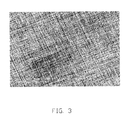
  • FIG. 3 shows an SEM image of a carbon nanotube film structure including a plurality of stacked carbon nanotube films.
  • FIG. 4 shows a schematic view of one embodiment of a TEM grid.
  • FIG. 5 shows a schematic view of one embodiment of a graphene layer-carbon nanotube film composite structure.
  • FIG. 6 shows a TEM image of one embodiment of graphene layer-carbon nanotube film composite structure.
  • FIG. 7 shows a high resolution TEM image of a nano-scaled gold particle on an embodiment of the TEM grid.
  • FIG. 8 shows a high resolution TEM image of a plurality of nano-scaled gold particles on another embodiment of the TEM grid.
  • FIG. 9 shows a schematic view of one embodiment of a TEM grid.
  • FIG. 10 shows a schematic view of one embodiment of a graphene layer-carbon nanotube film composite structure.
  • a method for making a TEM grid of one embodiment can include the following steps:
  • the substrate acts as a carrier for forming the graphene layer thereon.
  • the substrate can be a metal foil, a copper foil, an alloy foil, or a metallic oxide foil.
  • the substrate is a copper foil.
  • the graphene layer can be formed on a surface of the substrate by a low pressure chemical vapor deposition technology.
  • the graphene layer can include a single layer of graphene or a plurality of layers of graphene. If the graphene layer includes a plurality of layers of graphene, the plurality of layers of graphene are stacked with each other.
  • the graphene layer can be a continuous integrated structure.
  • the term “continuous integrated structure” can be defined as a structure that is combined by a plurality of chemical bonds (e.g., sp 2 bonds, sp 1 bonds, or sp 3 bonds) to form an overall structure.
  • the shape of the graphene layer can be round, square, rectangular, oval, or other shapes. In one embodiment, the graphene layer includes one to three layers of graphene stacked with each other, and the shape of the graphene layer is round with a diameter from about 3 millimeters to about 2 centimeters.
  • the carbon nanotube film structure includes at least two stacked carbon nanotube films.
  • the carbon nanotube film includes a plurality of carbon nanotubes aligned substantially along the same direction.
  • An alignment direction of the carbon nanotube film is substantially paralleled to the alignment direction of the plurality of carbon nanotubes.
  • the adjacent carbon nanotube films in the carbon nanotube film structure can align along different directions with an angle ⁇ therebetween.
  • the carbon nanotubes in the carbon nanotube film are aligned substantially along the same direction.
  • the length directions of the carbon nanotubes in different carbon nanotube films can intersect with each other.
  • the carbon nanotube film can be drawn from a carbon nanotube array.
  • a method for making the carbon nanotube film includes: (c 11 ) providing the carbon nanotube array capable of having a film drawn therefrom; and (c 12 ) pulling/drawing out the carbon nanotube film from the carbon nanotube array.
  • the pulling/drawing can be done by using a tool (e.g., adhesive tape, pliers, tweezers, or another tool allowing multiple carbon nanotubes to be gripped and pulled simultaneously).
  • the carbon nanotube array can be formed by a chemical vapor deposition (CVD) method.
  • the carbon nanotube array includes a plurality of carbon nanotubes parallel to each other and approximately perpendicular to the substrate.
  • the carbon nanotubes in the carbon nanotube array are closely packed together by van der Waals force.
  • the carbon nanotubes in the carbon nanotube array can be single-walled carbon nanotubes, double-walled carbon nanotubes, multi-walled carbon nanotubes, or combinations thereof.
  • the diameter of the carbon nanotubes can be in the range from about 0.5 nanometers to about 50 nanometers.
  • the height of the carbon nanotubes can be in the range from about 50 nanometers to 5 millimeters. In one embodiment, the height of the carbon nanotubes can be in a range from about 100 microns to 900 microns.
  • the carbon nanotube film includes a plurality of carbon nanotubes, and there are interspaces between adjacent two carbon nanotubes.
  • Carbon nanotubes in the carbon nanotube film can be substantially parallel to a surface of the carbon nanotube film.
  • a distance between adjacent two carbon nanotubes can be larger than a diameter of the carbon nanotubes.
  • the carbon nanotube film can be pulled/drawn by the following substeps: (c 121 ) selecting a carbon nanotube segment having a predetermined width from the carbon nanotube array; and (c 122 ) pulling the carbon nanotube segment at an even/uniform speed to achieve a uniform drawn carbon nanotube film.
  • the carbon nanotube segment having a predetermined width can be selected by using an adhesive tape such as the tool to contact the carbon nanotube array.
  • the carbon nanotube segment includes a plurality of carbon nanotubes parallel to each other.
  • the pulling direction is substantially perpendicular to a growing direction of the carbon nanotube array.
  • the carbon nanotube film includes a plurality of carbon nanotubes joined end-to-end.
  • the carbon nanotubes in the carbon nanotube film are parallel to the pulling/drawing direction of the drawn carbon nanotube film, and the carbon nanotube film produced in such manner can be selectively formed to have a predetermined width.
  • the carbon nanotubes in the carbon nanotube film are joined end-to-end by van der Waals force therebetween to form a free-standing film.
  • the carbon nanotube structure does not have to be supported by a substrate and can sustain its own weight when it is hoisted by a portion thereof without tearing.
  • the adjacent two carbon nanotubes side by side may be in contact with each other or spaced apart from each other. Pores are defined in the carbon nanotube film by adjacent carbon nanotubes.
  • step (c) at least two carbon nanotube films are stacked with each other along different directions with an angle ⁇ therebetween.
  • a frame can be provided, and a first carbon nanotube film can be secured to the frame.
  • One or more edges of the carbon nanotube film are attached to the frame, and other parts of the carbon nanotube film are suspended within the frame.
  • a second carbon nanotube film can be placed on the first carbon nanotube film along another direction.
  • the carbon nanotube films can be respectively aligned along different directions, and can also be aligned along just two directions.
  • the carbon nanotube film structure is a free-standing structure.
  • Adjacent carbon nanotube films can be combined only by the van der Waals force therebetween, and a more stable carbon nanotube film structure is formed.
  • the carbon nanotube film has an extremely large specific surface area, and is very sticky.
  • the layer number of the carbon nanotube films in the carbon nanotube film structure is not limited.
  • the carbon nanotube film structure is two layers of carbon nanotube films.
  • the angle ⁇ between the orientations of carbon nanotubes in the two carbon nanotube films aligned along different directions can be in a range from about 0 degree to about 90 degrees. In one embodiment, the angle ⁇ is about 90 degrees.
  • step (c) further includes a step (c 2 ) of covering the graphene layer on the substrate with the carbon nanotube film structure. Due to a stickiness of the carbon nanotube film structure, when the graphene layer is covered with the carbon nanotube film structure, the carbon nanotube film structure can adhere to the graphene layer firmly.
  • step (c) can further include an optional step (f) of treating the carbon nanotube film structure on the graphene layer of the substrate with an organic solvent.
  • the organic solvent can be evaporated from the carbon nanotube film structure, to enlarge the pores defined between adjacent carbon nanotubes in the carbon nanotube film structure and make the carbon nanotube film structure and the graphene layer adhere to each other more firmly.
  • the organic solvent can be volatile at room temperature and can be ethanol, methanol, acetone, dichloroethane, chloroform, or any combination thereof. In one embodiment, the organic solvent is ethanol.
  • the organic solvent should have a desirable wettability relative to the carbon nanotubes.
  • the step (f) of applying the organic solvent to the carbon nanotube film structure on the graphene layer of the substrate may include a step of dropping the organic solvent on a surface of the carbon nanotube film structure, with a dropper. Alternatively, immersing the entire carbon nanotube film structure on the graphene layer of the substrate into a container with the organic solvent therein may be employed. After the organic solvent is evaporated, the adjacent parallel carbon nanotubes in the carbon nanotube film will bundle together and the carbon nanotube film will adhere to the graphene layer more firmly, due to the surface tension of the organic solvent when the organic solvent volatilizes. The bundling will create substantially parallel and spaced carbon nanotube strings.
  • the bundling will occur in a microscopic view, and the carbon nanotube film structure will sustain the film shape in a macroscopic view.
  • the carbon nanotube strings also include a plurality of carbon nanotubes joined end-to-end by Van der Waals force therebetween. Due to the carbon nanotube films being aligned along different directions, the carbon nanotubes of different films shrink to form from carbon nanotube strings in different directions.
  • the carbon nanotube strings intersect with each other and form larger pores.
  • the size of the pores can range from about 1 nanometer to about 10 microns. In one embodiment, the size of the pores ranges from about 100 nanometers to about 1 micron.
  • the more layers of carbon nanotube films the smaller the size of the pores in the carbon nanotube film structure. Thus, by adjusting the number of the carbon nanotube films in the carbon nanotube structure, the desired size of the pores can be achieved.
  • the step of treating the carbon nanotube film structure with the organic solvent is optional.
  • the graphene layer-carbon nanotube film composite structure can be obtained by immersing the substrate with the carbon nanotube film structure on the graphene layer into a treatment fluid filled in a container.
  • the treatment fluid is not limited, provided the treatment fluid can react with the substrate, and will not erode the graphene layer-carbon nanotube film composite structure.
  • the substrate with the carbon nanotube film structure on the graphene layer is immersed in the treatment fluid for a determined time, the substrate can be removed.
  • the carbon nanotube film structure being a free-standing structure, the carbon nanotube film structure can act as a carrier for supporting the graphene layer, and prevent the continuous integrated structure of the graphene layer from being destroyed.
  • the treatment fluid can be acid solution, alkali solution, or salt solution.
  • a plurality of solid impurities can be formed on the graphene layer-carbon nanotube film composite structure.
  • the treatment fluid is ferric chloride solution.
  • the ferric chloride solution can react with the copper foil substrate to remove the copper foil.
  • the step of removing the copper foil includes a step of immersing the substrate with the carbon nanotube film structure on the graphene layer into a ferric chloride solution having a concentration of 0.5 g/ml for about 24 hours.
  • the reaction time can be determined by the thickness of the substrate and the concentration of the treatment fluid.
  • step (d) can further include an optional step (g) of cleaning the graphene layer-carbon nanotube film composite structure with a cleaning liquid.
  • the cleaning liquid can be an acid solution.
  • the acid solution can be dilute sulfuric acid, dilute nitric acid, dilute hydrochloric acid, or any combination thereof.
  • the cleaning liquid is dilute hydrochloric acid.
  • the step of applying the cleaning liquid on the graphene layer-carbon nanotube film composite structure can include a step of immersing the entire graphene layer-carbon nanotube film composite structure into the cleaning liquid filled in a container for about 1 minute to about 15 minutes.
  • the cleaning liquid can wash away the plurality of solid impurities deposited on the graphene layer-carbon nanotube film composite structure. Furthermore, the step (g) can further include an optional step of (h) applying a de-ionized water to wash away the cleaning liquid in the graphene layer-carbon nanotube film composite structure. Steps (g) and (h) are optional.
  • step (d) the graphene layer and the carbon nanotube film structure are joined by van der Waals force.
  • step (d) can further includes an optional step (i) of irradiating the graphene layer-carbon nanotube film composite structure with a laser or an ultraviolet beam, or bombarding the graphene layer-carbon nanotube film composite structure with high-energy particles.
  • step (i) the graphene layer and the carbon nanotube film structure can be joined by a plurality of sp 3 bonds, thus, the graphene layer can be fixed on the surface of the carbon nanotube film structure firmly.
  • Step (d) can include an optional step (j) of covering another carbon nanotube film structure on the surface of the graphene layer away from the carbon nanotube film structure.
  • the graphene layer can be sandwiched between the two carbon nanotube film structures to form a sandwich structure.
  • another carbon nanotube film structure can include one or more carbon nanotube films having a different or the same structure with the original carbon nanotube film structure. If the sandwich structure is obtained, step (j) can further include an optional step (k) of treating the sandwich structure with an organic solvent.
  • a surface of the carbon nanotube film structure away from the graphene layer is in contact with the grid, thus, the carbon nanotube film structure can be sandwiched between the graphene layer and the grid.
  • the grid can include at least one through hole. The at least one through hole is covered by the graphene layer-carbon nanotube film composite structure. The graphene layer-carbon nanotube film composite structure is suspended above the entire through hole.
  • Each of the through holes has a diameter from about 10 microns to about 2 millimeters. The diameter of each through hole can be larger than the size of the pores in the carbon nanotube film structure.
  • the grid can be made of metal, alloy, or ceramics. In one embodiment, the grid is a copper grid.
  • step (e) can be replaced with step (e′).
  • Step (e′) includes the following steps: arranging a plurality of grids spaced from each other on a platform; covering the plurality of grids with one graphene layer-carbon nanotube film composite structure; and cutting the graphene layer-carbon nanotube film composite structure corresponding to the plurality of grids, resulting in a plurality of TEM grids can be obtained at one time.
  • a laser beam can be provided to focus the graphene layer-carbon nanotube film composite structure between two adjacent grids.
  • the graphene layer-carbon nanotube film composite structure between two adjacent grids irradiated by the laser beam can be burned away.
  • the laser beam can have a power of about 5 watts to 30 watts (e.g., about 18 watts).
  • Step (e) can further include an optional step (l) of treating the graphene layer-carbon nanotube film composite structure on the grid with an organic solvent to adhere the graphene layer-carbon nanotube film composite structure with the grid more tightly.
  • the contact surface between the carbon nanotube film structure and the grid can be increased if the organic solvent treats the graphene layer-carbon nanotube film composite structure on the grid.
  • the carbon nanotube film structure can be adhered to the surface of the grid more firmly.
  • the organic solvent can be volatile at room temperature, and can be ethanol, methanol, acetone, dichloroethane, chloroform, or any combination thereof. In one embodiment, the organic solvent is ethanol.
  • the organic solvent should have a desirable wettability to the carbon nanotubes.
  • step (l) can include a step of applying the organic solvent on the surface of the graphene layer-carbon nanotube film composite structure by dropping the organic solvent from a dropper; or immersing the entire graphene layer-carbon nanotube film composite structure into an organic solvent filled in a container.
  • the excess portion of the graphene layer-carbon nanotube film composite structure not in contact with the grid can be removed by using a laser beam.
  • the laser beam can focus on the excess portion of the graphene layer-carbon nanotube film composite structure not in contact with the grid to remove the excess portion of the graphene layer-carbon nanotube film composite structure.
  • the method for making the TEM grid can have at least the following advantages.
  • the carbon nanotube film and the carbon nanotube film structure formed from the carbon nanotube film are free-standing and sticky.
  • the carbon nanotube film and the carbon nanotube film structure can act as a carrier for supporting the graphene layer without destroying the entire structure of the graphene layer. Therefore, a large size (centimeter-sized) graphene layer on one surface of carbon nanotube film structure can be obtained.
  • the graphene layer-carbon nanotube film composite structure can be formed in a solution, and the impurity can be easily cleaned up by adding a cleaning liquid.
  • the graphene layer and the carbon nanotube film structure can be combined firmly through chemical bonds.
  • the carbon nanotube film structure has a large specific surface area, and is sticky. Therefore, the carbon nanotube film structure can be directly adhered on the surface of the grid. Further, an organic solvent can treat the graphene layer-carbon nanotube film composite structure on the grid. Thus, the carbon nanotube film structure can be firmly secured to the grid.
  • a plurality of grids can be covered by a graphene layer-carbon nanotube film composite structure, to form a plurality of TEM grids at one time.
  • a TEM grid 100 which can be made by the above described method, includes a grid 110 and a graphene layer-carbon nanotube film composite structure 120 covered on the grid 110 .
  • the grid 110 is a layer with one or more through holes 112 therein.
  • the grid 110 can be used in a conventional TEM grid.
  • the material of the grid 110 can be Cu, Ni, or other suitable metal materials. In one embodiment, the material of the grid 110 is copper.
  • the graphene layer-carbon nanotube film composite structure 120 is located on the grid 110 , thus, the portions of graphene layer-carbon nanotube film composite structure 120 can be suspended across the through holes 112 .
  • an area of the graphene layer-carbon nanotube film composite structure 120 is equal to an area of the grid 110 .
  • the entire surface of the grid 110 can be covered by the graphene layer-carbon nanotube film composite structure 120 .
  • a diameter of the through holes 112 is in the range from about 10 microns to about 2 millimeters.
  • the through holes 112 of the grid 110 can be made by a chemical erosion technology.
  • the graphene layer-carbon nanotube film composite structure 120 includes at least one carbon nanotube film structure 122 and a graphene layer 124 disposed on a surface of the carbon nanotube film structure 122 .
  • the carbon nanotube film structure 122 includes a plurality of pores 126 , and the pores 126 are covered by the graphene layer 124 .
  • the pores 126 in the carbon nanotube film structure 122 have a size smaller than the diameter of the through holes 112 in the grid 110 .
  • the carbon nanotube film structure 122 includes at least two carbon nanotube films stacked on each other.
  • the carbon nanotube film can be drawn from the carbon nanotube array.
  • the carbon nanotube array includes a plurality of carbon nanotubes aligned substantially along the same direction and parallel to a surface of the carbon nanotube film.
  • the carbon nanotubes in the carbon nanotube film are joined end-to-end by van der Waals force therebetween.
  • some of the carbon nanotube films are aligned along different directions.
  • An angle ⁇ exists between the orientation of carbon nanotubes in the two carbon nanotube films.
  • the angle ⁇ is in the range of 0° ⁇ 90°. In one embodiment, ⁇ is equal to about 90 degrees.
  • the carbon nanotube film includes a plurality of carbon nanotube strings 128 intersecting with each other.
  • the carbon nanotube string 128 includes a plurality of carbon nanotubes substantially parallel to each other.
  • the carbon nanotube string 128 includes a plurality of carbon nanotubes joined end-to-end by van der Waals force therebetween.
  • a plurality of pores 126 are defined by the intersecting carbon nanotube strings 128 .
  • the size of the pores 126 is related to the number of layers of the carbon nanotube films in the carbon nanotube film structure 122 .
  • the number of layers of carbon nanotube films is not limited.
  • the carbon nanotube film structure 122 includes 2 to 4 layers of carbon nanotube films.
  • the size of the pores can be in the range from about 1 nanometer to 1 micron.
  • the graphene layer 124 is a continuous integrated structure.
  • the graphene layer 124 can cover the entire carbon nanotube film structure 122 . If the entire carbon nanotube film structure 122 is covered by the graphene layer 124 , all the pores 126 in the carbon nanotube film structure 122 can be covered by the graphene layer 124 .
  • the graphene layer 124 can include a single layer of graphene or a plurality of layers of graphene. In one embodiment, the graphene layer 124 includes 1 layer to 3 layers of graphene.
  • a plurality of sp 3 bonds can join the graphene layer 124 and the carbon nanotube film structure 122 together.
  • a specimen can be disposed on a surface of the TEM grid 100 . More specifically, a plurality of specimens can be disposed on the surface of the graphene layer 124 covering the pore 126 of the carbon nanotube film structure 122 .
  • the specimens can be nano-scaled particles, such as nanowires, nanotubes, or nanoballs.
  • the size of a single specimen can be smaller than 1 micron. In one embodiment, the size of the single specimen can be smaller than 10 nanometers.
  • the specimen is an amount of nano-scaled gold powder.
  • the nano-scaled gold powder can be dispersed in a solvent, and then, can be dropped on the surface of the TEM grid 100 . The solvent is dried, and TEM photos with different resolutions can be achieved. The black spots in FIGS. 7 and 8 are the gold powder.
  • the TEM grid 100 has at least the following advantages.
  • the graphene layer 124 carries the specimen.
  • a large amount of specimens can be uniformly distributed on the surface of the graphene layer 124 .
  • the TEM photo can be used to analyze the size distribution of the specimens, and observe the self-assembling of the large amount of specimens on the surface of the graphene layer 124 .
  • the graphene layer 124 covers the pore 126 , the graphene layer 124 carries the specimens, and thus, the specimens are uniformly distributed above the pore 126 , thereby increasing the carrying probability of the specimens.
  • the size of the single specimen can be only a little smaller than the size of the pore 126 .
  • the graphene layer 124 can cover all the pores 126 of the carbon nanotubes film structure, thereby, to achieve a maximum carrying probability of the specimens.
  • the graphene layer is very thin.
  • the graphene has a thickness of about 0.335 nanometers. Therefore, the background noise during the TEM observation can be lowered, and the TEM photos having higher resolution can be achieved.
  • the TEM grid 100 does not require elimination of impurities by using additional treating step.
  • the carbon nanotube film structure 122 and the graphene layer 124 are both composed of carbon atoms, and have a similar structure (graphene) and properties. Therefore, the carbon nanotube film structure 122 can be joined together with the graphene layer 124 by sp 3 bonds.
  • the TEM grid 100 including the sp 3 bonds can be more durable.
  • a TEM grid 200 which can be made by the above-described method, includes a grid 210 and a graphene layer-carbon nanotube film composite structure 220 covered on the grid 210 .
  • the TEM grid 200 is similar to the TEM grid 100 .
  • the difference is that the graphene layer-carbon nanotube film composite structure 220 includes two carbon nanotube film structures 222 and a graphene layer 224 stacked with each other.
  • the graphene layer 224 is sandwiched between the two adjacent carbon nanotube film structures 222 .
  • the graphene layer 224 can be held by two carbon nanotube film structures 222 firmly.
  • the graphene layer-carbon nanotube film composite structure 220 can be located on the grid 210 .
  • the portions of graphene layer-carbon nanotube film composite structure 220 can be suspended across the through holes 212 in the grid 210 .
  • the graphene layer 224 can cover a plurality of pores 226 in the carbon nanotube film structure 222 .
  • the plurality of pores 226 are defined by the intercrossed carbon nanotube strings 228 in the carbon nanotube film structure 222 .
  • the carbon nanotube strings 228 in the two adjacent carbon nanotube film structures 222 can firmly secure the graphene layer 224 .
  • the graphene layer-carbon nanotube film composite structure 220 includes two carbon nanotube film structures 222 and a graphene layer 224 sandwiched between the two carbon nanotube film structures 222 .
  • the TEM grid 200 can have a stable structure and can be more durable.

Landscapes

  • Engineering & Computer Science (AREA)
  • Manufacturing & Machinery (AREA)
  • Chemical & Material Sciences (AREA)
  • Analytical Chemistry (AREA)
  • Carbon And Carbon Compounds (AREA)

Abstract

The present disclosure relates to a method for making a transmission electron microscope grid. The method includes: (a) providing a substrate with a graphene layer on a surface of the substrate; (b) applying a carbon nanotube film structure to cover the graphene layer; (c) removing the substrate, to obtain a graphene layer-carbon nanotube film composite structure; and (d) placing the graphene layer-carbon nanotube film composite structure on a grid.

Description

CROSS-REFERENCE TO RELATED APPLICATIONS
This application claims all benefits accruing under 35 U.S.C. §119 from China Patent Application No. 201010219817.X, filed on Jul. 7, 2010 in the China Intellectual Property Office, the disclosure of which is incorporated herein by reference.
BACKGROUND
1. Technical Field
The present disclosure relates to a transmission electron microscope grid, and a method for making the transmission electron microscope grid.
2. Description of Related Art
Transmission electron microscopy is one of the most important techniques for the detailed examination and analysis of materials having small size. Transmission electron microscopy provides high-resolution imaging and material analysis of thin specimens. In transmission electron microscopy analysis, a transmission electron microscope (TEM) grid is used to support the specimens. The conventional TEM grid includes a metal grid such as a copper or nickel grid, a porous organic membrane covering on the metal grid, and an amorphous carbon film deposited on the porous organic membrane. However, in practical application, when a size of the specimen is less than a thickness of the supporting film, the amorphous carbon film induces high noise in the transmission electron microscopy imaging.
What is needed, therefore, is to provide a TEM grid and a method for making the TEM grid, to overcome the above-described shortcomings.
BRIEF DESCRIPTION OF THE DRAWINGS
Many aspects of the embodiments can be better understood with references to the following drawings. The components in the drawings are not necessarily drawn to scale, the emphasis instead being placed upon clearly illustrating the principles of the embodiments. Moreover, in the drawings, like reference numerals designate corresponding parts throughout the several views.
FIG. 1 shows a flow chart of one embodiment of a method for making a TEM grid.
FIG. 2 shows a Scanning Electron Microscope (SEM) image of a carbon nanotube film.
FIG. 3 shows an SEM image of a carbon nanotube film structure including a plurality of stacked carbon nanotube films.
FIG. 4 shows a schematic view of one embodiment of a TEM grid.
FIG. 5 shows a schematic view of one embodiment of a graphene layer-carbon nanotube film composite structure.
FIG. 6 shows a TEM image of one embodiment of graphene layer-carbon nanotube film composite structure.
FIG. 7 shows a high resolution TEM image of a nano-scaled gold particle on an embodiment of the TEM grid.
FIG. 8 shows a high resolution TEM image of a plurality of nano-scaled gold particles on another embodiment of the TEM grid.
FIG. 9 shows a schematic view of one embodiment of a TEM grid.
FIG. 10 shows a schematic view of one embodiment of a graphene layer-carbon nanotube film composite structure.
DETAILED DESCRIPTION
The disclosure is illustrated by way of example and not by way of limitation in the figures of the accompanying drawings in which like references indicate similar elements. It should be noted that references to “an” or “one” embodiment in this disclosure are not necessarily to the same embodiment, and such references mean at least one.
Referring to FIG. 1, a method for making a TEM grid of one embodiment can include the following steps:
    • (a) providing a substrate;
    • (b) forming a graphene layer on a surface of the substrate;
    • (c) applying a carbon nanotube film structure on the graphene layer;
    • (d) removing the substrate to obtain a graphene layer-carbon nanotube film composite structure; and
    • (e) placing the graphene layer-carbon nanotube film composite structure on a surface of a grid.
In step (a), the substrate acts as a carrier for forming the graphene layer thereon. The substrate can be a metal foil, a copper foil, an alloy foil, or a metallic oxide foil. In one embodiment, the substrate is a copper foil.
In step (b), the graphene layer can be formed on a surface of the substrate by a low pressure chemical vapor deposition technology. The graphene layer can include a single layer of graphene or a plurality of layers of graphene. If the graphene layer includes a plurality of layers of graphene, the plurality of layers of graphene are stacked with each other. The graphene layer can be a continuous integrated structure. The term “continuous integrated structure” can be defined as a structure that is combined by a plurality of chemical bonds (e.g., sp2 bonds, sp1 bonds, or sp3 bonds) to form an overall structure. The shape of the graphene layer can be round, square, rectangular, oval, or other shapes. In one embodiment, the graphene layer includes one to three layers of graphene stacked with each other, and the shape of the graphene layer is round with a diameter from about 3 millimeters to about 2 centimeters.
In step (c), the carbon nanotube film structure includes at least two stacked carbon nanotube films. The carbon nanotube film includes a plurality of carbon nanotubes aligned substantially along the same direction. An alignment direction of the carbon nanotube film is substantially paralleled to the alignment direction of the plurality of carbon nanotubes. The adjacent carbon nanotube films in the carbon nanotube film structure can align along different directions with an angle α therebetween. The carbon nanotubes in the carbon nanotube film are aligned substantially along the same direction. In the carbon nanotube film structure, the length directions of the carbon nanotubes in different carbon nanotube films can intersect with each other. The carbon nanotube film can be drawn from a carbon nanotube array.
A method for making the carbon nanotube film includes: (c11) providing the carbon nanotube array capable of having a film drawn therefrom; and (c12) pulling/drawing out the carbon nanotube film from the carbon nanotube array. The pulling/drawing can be done by using a tool (e.g., adhesive tape, pliers, tweezers, or another tool allowing multiple carbon nanotubes to be gripped and pulled simultaneously).
In step (c11), the carbon nanotube array can be formed by a chemical vapor deposition (CVD) method. The carbon nanotube array includes a plurality of carbon nanotubes parallel to each other and approximately perpendicular to the substrate. The carbon nanotubes in the carbon nanotube array are closely packed together by van der Waals force. The carbon nanotubes in the carbon nanotube array can be single-walled carbon nanotubes, double-walled carbon nanotubes, multi-walled carbon nanotubes, or combinations thereof. The diameter of the carbon nanotubes can be in the range from about 0.5 nanometers to about 50 nanometers. The height of the carbon nanotubes can be in the range from about 50 nanometers to 5 millimeters. In one embodiment, the height of the carbon nanotubes can be in a range from about 100 microns to 900 microns.
In step (c12), the carbon nanotube film includes a plurality of carbon nanotubes, and there are interspaces between adjacent two carbon nanotubes. Carbon nanotubes in the carbon nanotube film can be substantially parallel to a surface of the carbon nanotube film. A distance between adjacent two carbon nanotubes can be larger than a diameter of the carbon nanotubes. The carbon nanotube film can be pulled/drawn by the following substeps: (c121) selecting a carbon nanotube segment having a predetermined width from the carbon nanotube array; and (c122) pulling the carbon nanotube segment at an even/uniform speed to achieve a uniform drawn carbon nanotube film.
In step (c121), the carbon nanotube segment having a predetermined width can be selected by using an adhesive tape such as the tool to contact the carbon nanotube array. The carbon nanotube segment includes a plurality of carbon nanotubes parallel to each other. In step (c122), the pulling direction is substantially perpendicular to a growing direction of the carbon nanotube array.
More specifically, during the pulling process, as the initial carbon nanotube segment is drawn out, other carbon nanotube segments are also drawn out end-to-end due to the van der Waals force between the ends of the adjacent segments. This process of drawing ensures that a continuous, uniform carbon nanotube film having a predetermined width can be formed. Referring to FIG. 2, the carbon nanotube film includes a plurality of carbon nanotubes joined end-to-end. The carbon nanotubes in the carbon nanotube film are parallel to the pulling/drawing direction of the drawn carbon nanotube film, and the carbon nanotube film produced in such manner can be selectively formed to have a predetermined width. The carbon nanotubes in the carbon nanotube film are joined end-to-end by van der Waals force therebetween to form a free-standing film. By ‘free-standing’, it is meant that the carbon nanotube structure does not have to be supported by a substrate and can sustain its own weight when it is hoisted by a portion thereof without tearing. In the carbon nanotube film, the adjacent two carbon nanotubes side by side may be in contact with each other or spaced apart from each other. Pores are defined in the carbon nanotube film by adjacent carbon nanotubes.
Referring to FIG. 3, in step (c), at least two carbon nanotube films are stacked with each other along different directions with an angle α therebetween. A frame can be provided, and a first carbon nanotube film can be secured to the frame. One or more edges of the carbon nanotube film are attached to the frame, and other parts of the carbon nanotube film are suspended within the frame. A second carbon nanotube film can be placed on the first carbon nanotube film along another direction. By using the same manner, more than two carbon nanotube films can be stacked with each other on the frame. The carbon nanotube films can be respectively aligned along different directions, and can also be aligned along just two directions. The carbon nanotube film structure is a free-standing structure.
Adjacent carbon nanotube films can be combined only by the van der Waals force therebetween, and a more stable carbon nanotube film structure is formed. The carbon nanotube film has an extremely large specific surface area, and is very sticky. The layer number of the carbon nanotube films in the carbon nanotube film structure is not limited. In one embodiment, the carbon nanotube film structure is two layers of carbon nanotube films. The angle α between the orientations of carbon nanotubes in the two carbon nanotube films aligned along different directions can be in a range from about 0 degree to about 90 degrees. In one embodiment, the angle α is about 90 degrees.
If the carbon nanotube film structure is formed, step (c) further includes a step (c2) of covering the graphene layer on the substrate with the carbon nanotube film structure. Due to a stickiness of the carbon nanotube film structure, when the graphene layer is covered with the carbon nanotube film structure, the carbon nanotube film structure can adhere to the graphene layer firmly.
After covering the carbon nanotube film structure on the graphene layer of the substrate, step (c) can further include an optional step (f) of treating the carbon nanotube film structure on the graphene layer of the substrate with an organic solvent. After the organic solvent is applied to the carbon nanotube film structure on the graphene layer of the substrate. The organic solvent can be evaporated from the carbon nanotube film structure, to enlarge the pores defined between adjacent carbon nanotubes in the carbon nanotube film structure and make the carbon nanotube film structure and the graphene layer adhere to each other more firmly. The organic solvent can be volatile at room temperature and can be ethanol, methanol, acetone, dichloroethane, chloroform, or any combination thereof. In one embodiment, the organic solvent is ethanol. The organic solvent should have a desirable wettability relative to the carbon nanotubes. The step (f) of applying the organic solvent to the carbon nanotube film structure on the graphene layer of the substrate, may include a step of dropping the organic solvent on a surface of the carbon nanotube film structure, with a dropper. Alternatively, immersing the entire carbon nanotube film structure on the graphene layer of the substrate into a container with the organic solvent therein may be employed. After the organic solvent is evaporated, the adjacent parallel carbon nanotubes in the carbon nanotube film will bundle together and the carbon nanotube film will adhere to the graphene layer more firmly, due to the surface tension of the organic solvent when the organic solvent volatilizes. The bundling will create substantially parallel and spaced carbon nanotube strings. The bundling will occur in a microscopic view, and the carbon nanotube film structure will sustain the film shape in a macroscopic view. The carbon nanotube strings also include a plurality of carbon nanotubes joined end-to-end by Van der Waals force therebetween. Due to the carbon nanotube films being aligned along different directions, the carbon nanotubes of different films shrink to form from carbon nanotube strings in different directions. The carbon nanotube strings intersect with each other and form larger pores. The size of the pores can range from about 1 nanometer to about 10 microns. In one embodiment, the size of the pores ranges from about 100 nanometers to about 1 micron. The more layers of carbon nanotube films, the smaller the size of the pores in the carbon nanotube film structure. Thus, by adjusting the number of the carbon nanotube films in the carbon nanotube structure, the desired size of the pores can be achieved. The step of treating the carbon nanotube film structure with the organic solvent is optional.
In step (d), the graphene layer-carbon nanotube film composite structure can be obtained by immersing the substrate with the carbon nanotube film structure on the graphene layer into a treatment fluid filled in a container. The treatment fluid is not limited, provided the treatment fluid can react with the substrate, and will not erode the graphene layer-carbon nanotube film composite structure. Thus, if the substrate with the carbon nanotube film structure on the graphene layer is immersed in the treatment fluid for a determined time, the substrate can be removed. Alternatively, due to the carbon nanotube film structure being a free-standing structure, the carbon nanotube film structure can act as a carrier for supporting the graphene layer, and prevent the continuous integrated structure of the graphene layer from being destroyed. Generally, the treatment fluid can be acid solution, alkali solution, or salt solution. Furthermore, during the reaction between the treatment fluid and the substrate, a plurality of solid impurities can be formed on the graphene layer-carbon nanotube film composite structure.
In one embodiment, the treatment fluid is ferric chloride solution. If the substrate is the copper foil, the ferric chloride solution can react with the copper foil substrate to remove the copper foil. The step of removing the copper foil includes a step of immersing the substrate with the carbon nanotube film structure on the graphene layer into a ferric chloride solution having a concentration of 0.5 g/ml for about 24 hours. Alternatively, the reaction time can be determined by the thickness of the substrate and the concentration of the treatment fluid.
If some solid impurities are deposited on the graphene layer-carbon nanotube film composite structure, step (d) can further include an optional step (g) of cleaning the graphene layer-carbon nanotube film composite structure with a cleaning liquid. The cleaning liquid can be an acid solution. The acid solution can be dilute sulfuric acid, dilute nitric acid, dilute hydrochloric acid, or any combination thereof. In one embodiment, the cleaning liquid is dilute hydrochloric acid. The step of applying the cleaning liquid on the graphene layer-carbon nanotube film composite structure can include a step of immersing the entire graphene layer-carbon nanotube film composite structure into the cleaning liquid filled in a container for about 1 minute to about 15 minutes. The cleaning liquid can wash away the plurality of solid impurities deposited on the graphene layer-carbon nanotube film composite structure. Furthermore, the step (g) can further include an optional step of (h) applying a de-ionized water to wash away the cleaning liquid in the graphene layer-carbon nanotube film composite structure. Steps (g) and (h) are optional.
In step (d), the graphene layer and the carbon nanotube film structure are joined by van der Waals force. To join the graphene layer with the carbon nanotube by chemical bonds, step (d) can further includes an optional step (i) of irradiating the graphene layer-carbon nanotube film composite structure with a laser or an ultraviolet beam, or bombarding the graphene layer-carbon nanotube film composite structure with high-energy particles. In step (i), the graphene layer and the carbon nanotube film structure can be joined by a plurality of sp3 bonds, thus, the graphene layer can be fixed on the surface of the carbon nanotube film structure firmly.
Step (d) can include an optional step (j) of covering another carbon nanotube film structure on the surface of the graphene layer away from the carbon nanotube film structure. Thus, the graphene layer can be sandwiched between the two carbon nanotube film structures to form a sandwich structure. In other embodiments, another carbon nanotube film structure can include one or more carbon nanotube films having a different or the same structure with the original carbon nanotube film structure. If the sandwich structure is obtained, step (j) can further include an optional step (k) of treating the sandwich structure with an organic solvent.
In step (e), a surface of the carbon nanotube film structure away from the graphene layer is in contact with the grid, thus, the carbon nanotube film structure can be sandwiched between the graphene layer and the grid. The grid can include at least one through hole. The at least one through hole is covered by the graphene layer-carbon nanotube film composite structure. The graphene layer-carbon nanotube film composite structure is suspended above the entire through hole. Each of the through holes has a diameter from about 10 microns to about 2 millimeters. The diameter of each through hole can be larger than the size of the pores in the carbon nanotube film structure. The grid can be made of metal, alloy, or ceramics. In one embodiment, the grid is a copper grid.
If the area of the graphene layer-carbon nanotube film composite structure is larger than the area of the grid, step (e) can be replaced with step (e′). Step (e′) includes the following steps: arranging a plurality of grids spaced from each other on a platform; covering the plurality of grids with one graphene layer-carbon nanotube film composite structure; and cutting the graphene layer-carbon nanotube film composite structure corresponding to the plurality of grids, resulting in a plurality of TEM grids can be obtained at one time. To cut the graphene layer-carbon nanotube film composite structure corresponding to the grids, a laser beam can be provided to focus the graphene layer-carbon nanotube film composite structure between two adjacent grids. The graphene layer-carbon nanotube film composite structure between two adjacent grids irradiated by the laser beam can be burned away. The laser beam can have a power of about 5 watts to 30 watts (e.g., about 18 watts).
Step (e) can further include an optional step (l) of treating the graphene layer-carbon nanotube film composite structure on the grid with an organic solvent to adhere the graphene layer-carbon nanotube film composite structure with the grid more tightly. The contact surface between the carbon nanotube film structure and the grid can be increased if the organic solvent treats the graphene layer-carbon nanotube film composite structure on the grid. Thus, the carbon nanotube film structure can be adhered to the surface of the grid more firmly. The organic solvent can be volatile at room temperature, and can be ethanol, methanol, acetone, dichloroethane, chloroform, or any combination thereof. In one embodiment, the organic solvent is ethanol. The organic solvent should have a desirable wettability to the carbon nanotubes. In this embodiment, step (l) can include a step of applying the organic solvent on the surface of the graphene layer-carbon nanotube film composite structure by dropping the organic solvent from a dropper; or immersing the entire graphene layer-carbon nanotube film composite structure into an organic solvent filled in a container.
The excess portion of the graphene layer-carbon nanotube film composite structure not in contact with the grid can be removed by using a laser beam. The laser beam can focus on the excess portion of the graphene layer-carbon nanotube film composite structure not in contact with the grid to remove the excess portion of the graphene layer-carbon nanotube film composite structure.
The method for making the TEM grid can have at least the following advantages. First, the carbon nanotube film and the carbon nanotube film structure formed from the carbon nanotube film are free-standing and sticky. The carbon nanotube film and the carbon nanotube film structure can act as a carrier for supporting the graphene layer without destroying the entire structure of the graphene layer. Therefore, a large size (centimeter-sized) graphene layer on one surface of carbon nanotube film structure can be obtained. Further, the graphene layer-carbon nanotube film composite structure can be formed in a solution, and the impurity can be easily cleaned up by adding a cleaning liquid. Second, by using the laser, ultraviolet, or high-energy particles to treat the graphene layer-carbon nanotube film composite structure, the graphene layer and the carbon nanotube film structure can be combined firmly through chemical bonds. Third, the carbon nanotube film structure has a large specific surface area, and is sticky. Therefore, the carbon nanotube film structure can be directly adhered on the surface of the grid. Further, an organic solvent can treat the graphene layer-carbon nanotube film composite structure on the grid. Thus, the carbon nanotube film structure can be firmly secured to the grid. Fourth, a plurality of grids can be covered by a graphene layer-carbon nanotube film composite structure, to form a plurality of TEM grids at one time.
Referring to FIGS. 4, 5, 6, and 7, a TEM grid 100, which can be made by the above described method, includes a grid 110 and a graphene layer-carbon nanotube film composite structure 120 covered on the grid 110.
Referring to FIG. 4, the grid 110 is a layer with one or more through holes 112 therein. The grid 110 can be used in a conventional TEM grid. The material of the grid 110 can be Cu, Ni, or other suitable metal materials. In one embodiment, the material of the grid 110 is copper. The graphene layer-carbon nanotube film composite structure 120 is located on the grid 110, thus, the portions of graphene layer-carbon nanotube film composite structure 120 can be suspended across the through holes 112. In one embodiment, an area of the graphene layer-carbon nanotube film composite structure 120 is equal to an area of the grid 110. The entire surface of the grid 110 can be covered by the graphene layer-carbon nanotube film composite structure 120. A diameter of the through holes 112 is in the range from about 10 microns to about 2 millimeters. The through holes 112 of the grid 110 can be made by a chemical erosion technology.
Referring to FIG. 5, the graphene layer-carbon nanotube film composite structure 120 includes at least one carbon nanotube film structure 122 and a graphene layer 124 disposed on a surface of the carbon nanotube film structure 122. The carbon nanotube film structure 122 includes a plurality of pores 126, and the pores 126 are covered by the graphene layer 124. The pores 126 in the carbon nanotube film structure 122 have a size smaller than the diameter of the through holes 112 in the grid 110.
More specifically, referring to FIGS. 2 and 3, the carbon nanotube film structure 122 includes at least two carbon nanotube films stacked on each other. The carbon nanotube film can be drawn from the carbon nanotube array. The carbon nanotube array includes a plurality of carbon nanotubes aligned substantially along the same direction and parallel to a surface of the carbon nanotube film. The carbon nanotubes in the carbon nanotube film are joined end-to-end by van der Waals force therebetween. In the carbon nanotube film structure, some of the carbon nanotube films are aligned along different directions. An angle α exists between the orientation of carbon nanotubes in the two carbon nanotube films. The angle α is in the range of 0°<α≦90°. In one embodiment, α is equal to about 90 degrees.
Referring to FIGS. 5 and 6, the carbon nanotube film includes a plurality of carbon nanotube strings 128 intersecting with each other. The carbon nanotube string 128 includes a plurality of carbon nanotubes substantially parallel to each other. The carbon nanotube string 128 includes a plurality of carbon nanotubes joined end-to-end by van der Waals force therebetween. A plurality of pores 126 are defined by the intersecting carbon nanotube strings 128. The size of the pores 126 is related to the number of layers of the carbon nanotube films in the carbon nanotube film structure 122. The number of layers of carbon nanotube films is not limited. In one embodiment, the carbon nanotube film structure 122 includes 2 to 4 layers of carbon nanotube films. The size of the pores can be in the range from about 1 nanometer to 1 micron.
The graphene layer 124 is a continuous integrated structure. The graphene layer 124 can cover the entire carbon nanotube film structure 122. If the entire carbon nanotube film structure 122 is covered by the graphene layer 124, all the pores 126 in the carbon nanotube film structure 122 can be covered by the graphene layer 124. The graphene layer 124 can include a single layer of graphene or a plurality of layers of graphene. In one embodiment, the graphene layer 124 includes 1 layer to 3 layers of graphene.
Furthermore, a plurality of sp3 bonds can join the graphene layer 124 and the carbon nanotube film structure 122 together.
In use of the TEM grid 100, a specimen can be disposed on a surface of the TEM grid 100. More specifically, a plurality of specimens can be disposed on the surface of the graphene layer 124 covering the pore 126 of the carbon nanotube film structure 122. The specimens can be nano-scaled particles, such as nanowires, nanotubes, or nanoballs. The size of a single specimen can be smaller than 1 micron. In one embodiment, the size of the single specimen can be smaller than 10 nanometers. Referring to FIGS. 7 and 8, the specimen is an amount of nano-scaled gold powder. The nano-scaled gold powder can be dispersed in a solvent, and then, can be dropped on the surface of the TEM grid 100. The solvent is dried, and TEM photos with different resolutions can be achieved. The black spots in FIGS. 7 and 8 are the gold powder.
The TEM grid 100 has at least the following advantages.
First, the graphene layer 124 carries the specimen. A large amount of specimens can be uniformly distributed on the surface of the graphene layer 124. The TEM photo can be used to analyze the size distribution of the specimens, and observe the self-assembling of the large amount of specimens on the surface of the graphene layer 124. The graphene layer 124 covers the pore 126, the graphene layer 124 carries the specimens, and thus, the specimens are uniformly distributed above the pore 126, thereby increasing the carrying probability of the specimens. Alternatively, the size of the single specimen can be only a little smaller than the size of the pore 126.
Second, the graphene layer 124 can cover all the pores 126 of the carbon nanotubes film structure, thereby, to achieve a maximum carrying probability of the specimens.
Third, the graphene layer is very thin. The graphene has a thickness of about 0.335 nanometers. Therefore, the background noise during the TEM observation can be lowered, and the TEM photos having higher resolution can be achieved.
Fourth, due to a high purity of the carbon nanotube film drawn from the carbon nanotube array, the TEM grid 100, including the carbon nanotube films, does not require elimination of impurities by using additional treating step.
Furthermore, the carbon nanotube film structure 122 and the graphene layer 124 are both composed of carbon atoms, and have a similar structure (graphene) and properties. Therefore, the carbon nanotube film structure 122 can be joined together with the graphene layer 124 by sp3 bonds. The TEM grid 100 including the sp3 bonds can be more durable.
Referring to FIGS. 9 and 10, a TEM grid 200, which can be made by the above-described method, includes a grid 210 and a graphene layer-carbon nanotube film composite structure 220 covered on the grid 210.
The TEM grid 200 is similar to the TEM grid 100. The difference is that the graphene layer-carbon nanotube film composite structure 220 includes two carbon nanotube film structures 222 and a graphene layer 224 stacked with each other. The graphene layer 224 is sandwiched between the two adjacent carbon nanotube film structures 222. The graphene layer 224 can be held by two carbon nanotube film structures 222 firmly.
The graphene layer-carbon nanotube film composite structure 220 can be located on the grid 210. The portions of graphene layer-carbon nanotube film composite structure 220 can be suspended across the through holes 212 in the grid 210. The graphene layer 224 can cover a plurality of pores 226 in the carbon nanotube film structure 222. The plurality of pores 226 are defined by the intercrossed carbon nanotube strings 228 in the carbon nanotube film structure 222. The carbon nanotube strings 228 in the two adjacent carbon nanotube film structures 222 can firmly secure the graphene layer 224.
The graphene layer-carbon nanotube film composite structure 220 includes two carbon nanotube film structures 222 and a graphene layer 224 sandwiched between the two carbon nanotube film structures 222. Thus, the TEM grid 200 can have a stable structure and can be more durable.
The above-described embodiments are intended to illustrate rather than limit the disclosure. Variations may be made to the embodiments without departing from the spirit of the disclosure as claimed. The above-described embodiments illustrate the scope of the disclosure but do not restrict the scope of the disclosure.
Depending on the embodiment, certain of the steps of methods described may be removed, others may be added, and the sequence of steps may be altered. It is also to be understood that the description and the claims drawn to a method may include some indication in reference to certain steps. However, the indication used is only to be viewed for identification purposes and not as a suggestion as to an order for the steps.

Claims (18)

What is claimed is:
1. A method for making a transmission electron microscope grid, the method comprising:
(a) providing a substrate with a graphene layer on a surface of the substrate;
(b) applying a carbon nanotube film structure to cover the graphene layer;
(c) removing the substrate, to obtain a graphene layer-carbon nanotube film composite structure, and placing a second carbon nanotube film structure on the graphene layer-carbon nanotube film composite structure to form a three layers structure, wherein the graphene layer is sandwiched between the two carbon nanotube film structures in the three layers structure; and
(d) placing the three layers structure on a grid.
2. The method of claim 1, wherein each carbon nanotube film structure comprises at least two stacked carbon nanotube films, and adjacent carbon nanotube films are aligned along different directions.
3. The method of claim 2, wherein each carbon nanotube film comprises a plurality of carbon nanotubes, the plurality of carbon nanotubes in the carbon nanotube film are joined end-to-end by van der Waals force therebetween.
4. The method of claim 3, wherein the plurality of carbon nanotubes define at least one pore, and the at least one pore is covered by the graphene layer.
5. The method of claim 1, wherein the graphene layer and carbon nanotube film structure of the three layers structure are joined by sp3 bonds therebetween.
6. The method of claim 1, wherein the substrate is selected from the group consisting of metal foil, alloy foil, and metallic oxide foil.
7. The method of claim 1, wherein step (b) comprises a substep of treating the carbon nanotube film structure on the graphene layer of the substrate with an organic solvent.
8. The method of claim 1, wherein step (c) comprises a substep of immersing the substrate with the carbon nanotube film structure on the graphene layer into a treatment fluid to remove the substrate.
9. The method of claim 8, wherein the treatment fluid is selected from the group consisting of acid solution, alkali solution, and salt solution.
10. The method of claim 1 wherein step (c) comprises a substep of irradiating the three layers structure with a laser or an ultraviolet beam to form a plurality of sp3 bonds between the graphene layer and the two carbon nanotube film structures.
11. The method of claim 1 wherein step (c) comprises a substep of bombarding the three layers structure with high-energy particles to form a plurality of sp3 bonds between the graphene layer and the two carbon nanotube film structures.
12. The method of claim 1 wherein step (d) comprises a substep of treating the three layers structure located on the grid with an organic solvent to tightly adhere the three layers structure with the grid.
13. A method for making more than one transmission electron microscope grid, comprising:
(a) providing a substrate with a graphene layer on a surface of the substrate;
(b) applying a carbon nanotube film structure to cover the graphene layer;
(c) removing the substrate, to obtain a graphene layer-carbon nanotube film composite structure, and placing a second carbon nanotube film structure on the graphene layer-carbon nanotube film composite structure to form a three layers structure, wherein the graphene layer is sandwiched between the two carbon nanotube film structures in the three layers structure;
(d) arranging a plurality of grids spaced from each other on a platform;
(e) covering the plurality of grids with the three layers structure; and
(f) cutting the three layers structure corresponding to the plurality of grids.
14. The method of claim 13, further comprising a step of removing excess portions of the three layers structure outside the plurality of grids.
15. The method of claim 14, wherein the step of removing the excess portions of the three layers structure comprises a step of focusing a laser beam on the excess portions of the three layers structure.
16. The method of claim 1, further comprising a step of treating the graphene layer-carbon nanotube film composite structure with a cleaning liquid, and the cleaning liquid is selected from the group consisting of dilute sulfuric acid, dilute nitric acid and dilute hydrochloric acid.
17. The method of claim 16, wherein the step of treating the graphene layer-carbon nanotube film composite structure with a cleaning liquid comprises a step of immersing the entire graphene layer-carbon nanotube film composite structure into the cleaning liquid for about 1 minute to about 15 minutes.
18. The method of claim 16, further comprising a step of applying a de-ionized water to wash away the cleaning liquid remained in the graphene layer-carbon nanotube film composite structure.
US13/052,064 2010-07-07 2011-03-19 Transmission electron microscope grid and method for making same Active 2032-01-19 US8623227B2 (en)

Applications Claiming Priority (3)

Application Number Priority Date Filing Date Title
CN201010219817.X 2010-07-07
CN201010219817XA CN102315058B (en) 2010-07-07 2010-07-07 Transmission electron microscope microgrid and preparation method thereof
CN201010219817 2010-07-07

Publications (2)

Publication Number Publication Date
US20120006784A1 US20120006784A1 (en) 2012-01-12
US8623227B2 true US8623227B2 (en) 2014-01-07

Family

ID=45428113

Family Applications (1)

Application Number Title Priority Date Filing Date
US13/052,064 Active 2032-01-19 US8623227B2 (en) 2010-07-07 2011-03-19 Transmission electron microscope grid and method for making same

Country Status (3)

Country Link
US (1) US8623227B2 (en)
JP (1) JP5559748B2 (en)
CN (1) CN102315058B (en)

Cited By (2)

* Cited by examiner, † Cited by third party
Publication number Priority date Publication date Assignee Title
US9449785B2 (en) 2013-11-11 2016-09-20 Howard Hughes Medical Institute Workpiece transport and positioning apparatus
US12486405B2 (en) 2019-04-25 2025-12-02 Garrett Foster Benisch Pigment and pigment production method

Families Citing this family (25)

* Cited by examiner, † Cited by third party
Publication number Priority date Publication date Assignee Title
CN102795613B (en) * 2011-05-27 2014-09-10 清华大学 Preparation method of graphene-carbon nano tube composite structure
US20130146221A1 (en) * 2011-12-13 2013-06-13 Southern Illinois University Carbondale Graphene-based membranes as electron transparent windows for ambient pressure x-ray photoelectron spectroscopy
US9646798B2 (en) 2011-12-29 2017-05-09 Elwha Llc Electronic device graphene grid
US9627168B2 (en) * 2011-12-30 2017-04-18 Elwha Llc Field emission device with nanotube or nanowire grid
CN102698713B (en) * 2012-05-24 2014-05-21 山东中烟工业有限责任公司 A kind of porous carbon sheet, its preparation method and its application in cigarette filter
US9659735B2 (en) 2012-09-12 2017-05-23 Elwha Llc Applications of graphene grids in vacuum electronics
US9659734B2 (en) * 2012-09-12 2017-05-23 Elwha Llc Electronic device multi-layer graphene grid
US8884247B2 (en) * 2012-09-25 2014-11-11 Fei Company System and method for ex situ analysis of a substrate
CN104812701B (en) * 2012-11-22 2016-09-07 捷恩智株式会社 The manufacture method of carbon nano pipe array, weaving source component, tectosome and composite construction
US9633817B2 (en) 2013-08-23 2017-04-25 Hitachi High-Technologies Corporation Diaphragm mounting member and charged particle beam device
KR101540721B1 (en) * 2014-01-08 2015-07-31 구정회 Scanning Electron Microscope
CN105185674B (en) * 2014-06-17 2017-05-17 清华大学 Preparation method for TEM (transmission electron microscope) micro-grid
CN104616953B (en) * 2015-02-02 2017-03-08 武汉新芯集成电路制造有限公司 A kind of bogey and preparation method thereof
US20190164720A1 (en) * 2017-11-30 2019-05-30 National Cheng Kung University Liquid sample carrier
CN110092350A (en) 2018-01-27 2019-08-06 清华大学 Utilize the method for carbon nano-tube compound film transfer two-dimension nano materials
CN110092351B (en) * 2018-01-27 2022-08-16 清华大学 Method for transferring two-dimensional nano material by using carbon nano tube film
CN110092349B (en) * 2018-01-27 2022-08-16 清华大学 Preparation method of suspended two-dimensional nano material
CN110098099B (en) 2018-01-27 2020-09-29 清华大学 Transmission electron microscope microgrid and preparation method of transmission electron microscope microgrid
US11322334B2 (en) 2018-07-12 2022-05-03 XTEM Biolab Co., Ltd. Grid sample production apparatus for electron microscope
JP7189529B2 (en) * 2018-10-15 2022-12-14 国立大学法人 筑波大学 Environmental cell and its manufacturing method
CN109133046B (en) * 2018-10-17 2021-08-10 东南大学 Method for transferring graphene by utilizing fullerene
CN109950117B (en) * 2019-03-17 2020-12-08 杭州高烯科技有限公司 A kind of graphene oxide carbon support film transmission electron microscope carrier network
CN110253873B (en) * 2019-04-24 2024-06-04 常州三提新材料有限公司 Apparatus, method for forming micro-nano porous structure on film and film produced thereby
CN112642053B (en) * 2019-10-11 2024-09-20 北京富纳特创新科技有限公司 Use method of facial mask type beauty instrument
CN116297594A (en) * 2023-02-08 2023-06-23 水木未来(北京)科技有限公司 Carbon nanotube carrier network, its preparation method and use

Citations (6)

* Cited by examiner, † Cited by third party
Publication number Priority date Publication date Assignee Title
CN1433044A (en) 2003-02-26 2003-07-30 李巧玲 Micro grating for transmissive electron microscope and its making process
CN101276724A (en) 2007-03-30 2008-10-01 清华大学 Transmission electron microscope microgrid and its preparation method
US20090291270A1 (en) * 2008-03-24 2009-11-26 The Regents Of The University Of California Graphene-based structure, method of suspending graphene membrane, and method of depositing material onto graphene membrane
US20090317926A1 (en) * 2008-06-20 2009-12-24 Tsinghua University Method for making transmission electron microscope grid
JP2010165907A (en) 2009-01-16 2010-07-29 Panasonic Corp Method of manufacturing semiconductor device
CN102194623A (en) 2010-03-17 2011-09-21 清华大学 Preparation method of transmission electron microscope microgrid

Family Cites Families (7)

* Cited by examiner, † Cited by third party
Publication number Priority date Publication date Assignee Title
FR2795906B1 (en) * 1999-07-01 2001-08-17 Commissariat Energie Atomique PROCESS AND DEVICE FOR PLASMA DEPOSIT AT THE ELECTRONIC CYCLOTRON RESONANCE OF LAYERS OF CARBON NONOFIBRES TISSUES AND LAYERS OF TISSUES THUS OBTAINED
JP2003034512A (en) * 2001-07-19 2003-02-07 Mitsubishi Gas Chem Co Inc Single-layer and laminated isolation membranes with carbon single-layer structure as skeleton
WO2007015710A2 (en) * 2004-11-09 2007-02-08 Board Of Regents, The University Of Texas System The fabrication and application of nanofiber ribbons and sheets and twisted and non-twisted nanofiber yarns
WO2008109406A1 (en) * 2007-03-02 2008-09-12 Protochips, Inc. Membrane supports with reinforcement features
KR101573557B1 (en) * 2008-01-07 2015-12-01 위시스 테크놀로지 파운데이션, 인크. Method and apparatus for identifying and characterizing meterial solvents and composite matrices and methods of using same
GB0805473D0 (en) * 2008-03-26 2008-04-30 Graphene Ind Ltd Method and article
JP5747421B2 (en) * 2010-12-02 2015-07-15 国立研究開発法人物質・材料研究機構 Graphene sheet film connected with carbon nanotube, method for producing the same, and graphene sheet capacitor using the same

Patent Citations (8)

* Cited by examiner, † Cited by third party
Publication number Priority date Publication date Assignee Title
CN1433044A (en) 2003-02-26 2003-07-30 李巧玲 Micro grating for transmissive electron microscope and its making process
CN101276724A (en) 2007-03-30 2008-10-01 清华大学 Transmission electron microscope microgrid and its preparation method
US20080237464A1 (en) 2007-03-30 2008-10-02 Tsinghua University Transmission electron microscope micro-grid and method for making the same
US20090291270A1 (en) * 2008-03-24 2009-11-26 The Regents Of The University Of California Graphene-based structure, method of suspending graphene membrane, and method of depositing material onto graphene membrane
US20090317926A1 (en) * 2008-06-20 2009-12-24 Tsinghua University Method for making transmission electron microscope grid
JP2010165907A (en) 2009-01-16 2010-07-29 Panasonic Corp Method of manufacturing semiconductor device
CN102194623A (en) 2010-03-17 2011-09-21 清华大学 Preparation method of transmission electron microscope microgrid
US20110226413A1 (en) 2010-03-17 2011-09-22 Tsinghua University Carbon nanotube film composite structure, transmission electron microscope grid using the same, and method for making the same

Non-Patent Citations (5)

* Cited by examiner, † Cited by third party
Title
Jannik C. Meyer, C. Kisielowski, R. Erni, Marta D. Rossell, M. F. Crommie, A. Zettl, Direct Imaging of Lattice Atoms and Topological Defects in Graphene Membranes, NANO Letters, Jun. 19, 2008, pp. 3582-3586, vol. 8, No. 11.
Jannik C. Meyer, C. O. Girit, M. F. Crommie, A. Zettl, Imaging and dynamics of light atoms and molecules on graphene, Nature, Jul. 17, 2008, pp. 319-322, vol. 454.
Li et al., Large-Area Synthesis of High-Quality and Uniform Graphene Fils on Copper Foils, Jun. 9009, Science, vol. 324, pp. 1312-1314. *
Tung et al. Low-Temperature Solution processing of Graphene-Carbon Nanotube Hybrid Materials for High-Performance Transparent Conductors, Nano Letters, vol. 9, No. 5, 2009, pp. 1949-1955. *
Yang Guang et al. Preparation of Carbon Film and Its Application in Nanometer Powders Observation. Analysis and Testing Technology and Instruments. Mar. 1998, pp. 26-28, vol. 4, No. 1,CN.

Cited By (5)

* Cited by examiner, † Cited by third party
Publication number Priority date Publication date Assignee Title
US9449785B2 (en) 2013-11-11 2016-09-20 Howard Hughes Medical Institute Workpiece transport and positioning apparatus
US9601305B2 (en) 2013-11-11 2017-03-21 Howard Hughes Medical Institute Specimen sample holder for workpiece transport apparatus
US10186397B2 (en) 2013-11-11 2019-01-22 Howard Hughes Medical Institute Workpiece holder for workpiece transport apparatus
US10361060B2 (en) 2013-11-11 2019-07-23 Howard Hughes Medical Institute Workpiece transport and positioning apparatus
US12486405B2 (en) 2019-04-25 2025-12-02 Garrett Foster Benisch Pigment and pigment production method

Also Published As

Publication number Publication date
JP5559748B2 (en) 2014-07-23
JP2012018926A (en) 2012-01-26
CN102315058B (en) 2013-12-11
US20120006784A1 (en) 2012-01-12
CN102315058A (en) 2012-01-11

Similar Documents

Publication Publication Date Title
US8623227B2 (en) Transmission electron microscope grid and method for making same
US20110017921A1 (en) Carbon nanotube film composite structure, transmission electron microscope grid using the same, and method for making the same
US20110027486A1 (en) Method for preparing transmission electron microscope sample
US8455842B2 (en) Carbon nanotube film composite structure, transmission electron microscope grid using the same, and method for making the same
US8404070B2 (en) Carbon nanotube film composite structure, transmission electron microscope grid using the same, and method for making the same
CN101964292B (en) Graphene sheet-carbon nanotube film composite structure and preparation method thereof
TWI362678B (en) Method for making transmission electron microscope grid
CN101609771B (en) Fabrication method of transmission electron microscope microgrid
CN101276724B (en) Transmission electron microscope micro grid and preparing method thereof
US8668952B2 (en) Carbon wire and nanostructure formed of carbon film and method of producing the same
Shen et al. Pyramid-shaped single-crystalline nanostructure of molybdenum with excellent mechanical, electrical, and optical properties
JP4374456B2 (en) Carbon nanotube free-standing film and method for producing the same, and structure having carbon nanotube film and method for producing the same
TWI411572B (en) Transmission electron microscope grid and method for making same
Niu et al. Revealing dynamic processes of materials in liquids using liquid cell transmission electron microscopy
TWI329095B (en) Transmission electron microscope grid and method for making same
CN110729162B (en) A high-mesh microgrid carrier mesh for transmission electron microscope characterization and its preparation method
JP4628475B2 (en) Carbon nanotube free-standing film and method for producing the same, and structure having carbon nanotube film and method for producing the same
TWI413150B (en) Transmission electron microscope grid and method for making same
CN103498133A (en) Method for preparing SiCx nanometer material in transmission electron microscope through electron beam induced liquid phase deposition
US11453590B2 (en) Methods to pattern carbon nanotube sheets
CN115165933A (en) A graphene-porous membrane-graphene sandwich liquid pool structure and preparation method and application thereof
TWI387743B (en) Transmission electron microscope sample preparation method
TWI417934B (en) Method for making transmission electron microscope grid
Khudhayer Fabrication of GLAD metallic nanorods on patterned substrates
Lim et al. Directed crystallization of CuSO4· 5H2O onto carbon nanotube microarchitectures

Legal Events

Date Code Title Description
AS Assignment

Owner name: TSINGHUA UNIVERSITY, CHINA

Free format text: ASSIGNMENT OF ASSIGNORS INTEREST;ASSIGNORS:LIN, XIAO-YANG;FENG, CHEN;ZHANG, LI-NA;AND OTHERS;REEL/FRAME:025985/0350

Effective date: 20110317

Owner name: HON HAI PRECISION INDUSTRY CO., LTD., TAIWAN

Free format text: ASSIGNMENT OF ASSIGNORS INTEREST;ASSIGNORS:LIN, XIAO-YANG;FENG, CHEN;ZHANG, LI-NA;AND OTHERS;REEL/FRAME:025985/0350

Effective date: 20110317

STCF Information on status: patent grant

Free format text: PATENTED CASE

FPAY Fee payment

Year of fee payment: 4

MAFP Maintenance fee payment

Free format text: PAYMENT OF MAINTENANCE FEE, 8TH YEAR, LARGE ENTITY (ORIGINAL EVENT CODE: M1552); ENTITY STATUS OF PATENT OWNER: LARGE ENTITY

Year of fee payment: 8

MAFP Maintenance fee payment

Free format text: PAYMENT OF MAINTENANCE FEE, 12TH YEAR, LARGE ENTITY (ORIGINAL EVENT CODE: M1553); ENTITY STATUS OF PATENT OWNER: LARGE ENTITY

Year of fee payment: 12