US7951845B2 - Composition and method of treating hearing loss - Google Patents
Composition and method of treating hearing loss Download PDFInfo
- Publication number
- US7951845B2 US7951845B2 US11/623,888 US62388807A US7951845B2 US 7951845 B2 US7951845 B2 US 7951845B2 US 62388807 A US62388807 A US 62388807A US 7951845 B2 US7951845 B2 US 7951845B2
- Authority
- US
- United States
- Prior art keywords
- composition
- vitamin
- set forth
- hearing loss
- mammal
- Prior art date
- Legal status (The legal status is an assumption and is not a legal conclusion. Google has not performed a legal analysis and makes no representation as to the accuracy of the status listed.)
- Active, expires
Links
Images


Classifications
-
- A—HUMAN NECESSITIES
- A61—MEDICAL OR VETERINARY SCIENCE; HYGIENE
- A61K—PREPARATIONS FOR MEDICAL, DENTAL OR TOILETRY PURPOSES
- A61K9/00—Medicinal preparations characterised by special physical form
- A61K9/0012—Galenical forms characterised by the site of application
- A61K9/0046—Ear
-
- A—HUMAN NECESSITIES
- A61—MEDICAL OR VETERINARY SCIENCE; HYGIENE
- A61K—PREPARATIONS FOR MEDICAL, DENTAL OR TOILETRY PURPOSES
- A61K31/00—Medicinal preparations containing organic active ingredients
- A61K31/01—Hydrocarbons
- A61K31/015—Hydrocarbons carbocyclic
-
- A—HUMAN NECESSITIES
- A61—MEDICAL OR VETERINARY SCIENCE; HYGIENE
- A61K—PREPARATIONS FOR MEDICAL, DENTAL OR TOILETRY PURPOSES
- A61K31/00—Medicinal preparations containing organic active ingredients
- A61K31/045—Hydroxy compounds, e.g. alcohols; Salts thereof, e.g. alcoholates
- A61K31/07—Retinol compounds, e.g. vitamin A
-
- A—HUMAN NECESSITIES
- A61—MEDICAL OR VETERINARY SCIENCE; HYGIENE
- A61K—PREPARATIONS FOR MEDICAL, DENTAL OR TOILETRY PURPOSES
- A61K31/00—Medicinal preparations containing organic active ingredients
- A61K31/33—Heterocyclic compounds
- A61K31/335—Heterocyclic compounds having oxygen as the only ring hetero atom, e.g. fungichromin
- A61K31/34—Heterocyclic compounds having oxygen as the only ring hetero atom, e.g. fungichromin having five-membered rings with one oxygen as the only ring hetero atom, e.g. isosorbide
-
- A—HUMAN NECESSITIES
- A61—MEDICAL OR VETERINARY SCIENCE; HYGIENE
- A61K—PREPARATIONS FOR MEDICAL, DENTAL OR TOILETRY PURPOSES
- A61K31/00—Medicinal preparations containing organic active ingredients
- A61K31/33—Heterocyclic compounds
- A61K31/335—Heterocyclic compounds having oxygen as the only ring hetero atom, e.g. fungichromin
- A61K31/35—Heterocyclic compounds having oxygen as the only ring hetero atom, e.g. fungichromin having six-membered rings with one oxygen as the only ring hetero atom
- A61K31/352—Heterocyclic compounds having oxygen as the only ring hetero atom, e.g. fungichromin having six-membered rings with one oxygen as the only ring hetero atom condensed with carbocyclic rings, e.g. methantheline
- A61K31/353—3,4-Dihydrobenzopyrans, e.g. chroman, catechin
- A61K31/355—Tocopherols, e.g. vitamin E
-
- A—HUMAN NECESSITIES
- A61—MEDICAL OR VETERINARY SCIENCE; HYGIENE
- A61K—PREPARATIONS FOR MEDICAL, DENTAL OR TOILETRY PURPOSES
- A61K31/00—Medicinal preparations containing organic active ingredients
- A61K31/33—Heterocyclic compounds
- A61K31/335—Heterocyclic compounds having oxygen as the only ring hetero atom, e.g. fungichromin
- A61K31/365—Lactones
- A61K31/375—Ascorbic acid, i.e. vitamin C; Salts thereof
-
- A—HUMAN NECESSITIES
- A61—MEDICAL OR VETERINARY SCIENCE; HYGIENE
- A61K—PREPARATIONS FOR MEDICAL, DENTAL OR TOILETRY PURPOSES
- A61K33/00—Medicinal preparations containing inorganic active ingredients
- A61K33/06—Aluminium, calcium or magnesium; Compounds thereof, e.g. clay
-
- A—HUMAN NECESSITIES
- A61—MEDICAL OR VETERINARY SCIENCE; HYGIENE
- A61K—PREPARATIONS FOR MEDICAL, DENTAL OR TOILETRY PURPOSES
- A61K45/00—Medicinal preparations containing active ingredients not provided for in groups A61K31/00 - A61K41/00
- A61K45/06—Mixtures of active ingredients without chemical characterisation, e.g. antiphlogistics and cardiaca
-
- A—HUMAN NECESSITIES
- A61—MEDICAL OR VETERINARY SCIENCE; HYGIENE
- A61K—PREPARATIONS FOR MEDICAL, DENTAL OR TOILETRY PURPOSES
- A61K9/00—Medicinal preparations characterised by special physical form
- A61K9/0012—Galenical forms characterised by the site of application
- A61K9/0019—Injectable compositions; Intramuscular, intravenous, arterial, subcutaneous administration; Compositions to be administered through the skin in an invasive manner
-
- A—HUMAN NECESSITIES
- A61—MEDICAL OR VETERINARY SCIENCE; HYGIENE
- A61P—SPECIFIC THERAPEUTIC ACTIVITY OF CHEMICAL COMPOUNDS OR MEDICINAL PREPARATIONS
- A61P27/00—Drugs for disorders of the senses
-
- A—HUMAN NECESSITIES
- A61—MEDICAL OR VETERINARY SCIENCE; HYGIENE
- A61P—SPECIFIC THERAPEUTIC ACTIVITY OF CHEMICAL COMPOUNDS OR MEDICINAL PREPARATIONS
- A61P27/00—Drugs for disorders of the senses
- A61P27/16—Otologicals
-
- A—HUMAN NECESSITIES
- A61—MEDICAL OR VETERINARY SCIENCE; HYGIENE
- A61P—SPECIFIC THERAPEUTIC ACTIVITY OF CHEMICAL COMPOUNDS OR MEDICINAL PREPARATIONS
- A61P39/00—General protective or antinoxious agents
- A61P39/06—Free radical scavengers or antioxidants
-
- A—HUMAN NECESSITIES
- A61—MEDICAL OR VETERINARY SCIENCE; HYGIENE
- A61P—SPECIFIC THERAPEUTIC ACTIVITY OF CHEMICAL COMPOUNDS OR MEDICINAL PREPARATIONS
- A61P43/00—Drugs for specific purposes, not provided for in groups A61P1/00-A61P41/00
Definitions
- the present invention generally relates to a composition for treating hearing loss. More specifically, the present invention relates to a composition for treating hearing loss that includes components that function through different biological mechanisms and provide an additive effect that is equal to or greater than a sum of the effects of the individual components, and a method of treating hearing loss including the step of administering the composition to a mammal prior to or within 3 days following trauma to the inner ear.
- antioxidants among numerous other components, have been found to play a role in the prevention of noise-induced hearing loss.
- Specific antioxidants shown to be partially effective in reducing noise-induced hearing loss in animal models include glutathione (GSH)/glutathione monoethyl ester, N-acetylcysteine (NAC), resveratrol, allopurinol, R-phenylisopropyladenosine, and vitamins A, C, and E. Otoprotective effects of the above individual dietary antioxidants are well known in the art.
- Vasodilators are one class of components that have proven moderately useful for preventing hearing loss. It is known in the art that high levels of noise result in a decrease in blood flow to the inner ear, although the mechanism underlying this noise induced decrease has not been clear until very recently. On the basis of the observed decrease, it has long been speculated that this decrease in blood flow may lead to cell death in sensitive hair cells within a cochlea of the ear and accordingly an increase in blood flow may protect the inner ear cells from noise-induced death. Some vasodilators promote increased blood flow to the inner ear and, thus, help to protect the inner ear from trauma as a result of high levels of noise. Specific examples of vasodilators proven to partially prevent hearing loss include magnesium, betahistine, and hydroxyethyl starch (HES).
- HES hydroxyethyl starch
- Additive effects refer to effects that are equal to or greater than a sum of the effects of the individual components. For the most part, no greater effect is observed by combining many of the different components that are effective in treating hearing loss than the effect of the most effective individual component in the composition, i.e., combinations of agents are only as effective as the most effective single agent delivered alone.
- FIG. 1 shows the results of experimentation relative to additive effects of Trolox®, which is a water-soluble analogue of alpha-tocopheral (vitamin E), and betahistine. The experimental conditions are described in further detail in the Examples section below. As is evident from FIG.
- U.S. Pat. No. 6,093,417 is directed to a composition to treat ear disorders. The composition is topically applied into an ear canal to treat the hearing disorder.
- U.S. Pat. No. 6,093,417 is directed to a composition that may include many components that are known to be somewhat effective in reducing hearing loss alone, including vitamins A, C, and E along with vasodilators and magnesium salts, there is no recognition of an additive effect between any of the components. As is evident from the above description relative to FIG.
- multivitamins do not include biologically effective amounts of the components sufficient to treat or prevent hearing loss.
- multivitamins are generally used as part of a regular dietary regimen and there is no data that suggests the use of multivitamins that include a specific combination and concentration of components to prevent hearing loss induced by noise or other stress.
- compositions and methods of treating hearing loss including the step of administering the composition that includes a specific combination of components having an additive effect that is equal to or greater than the sum of the effect of the individual components in treating hearing loss when used in biologically effective amounts.
- the subject invention provides a composition for treating hearing loss including components that function through different biological mechanisms to provide an additive effect that is equal to or greater than a sum of the effect of the individual components.
- the composition includes a biologically effective amount of at least one scavenger of singlet oxygen, a donor antioxidant, a third antioxidant, and a vasodilator.
- the at least one scavenger of singlet oxygen is present for reducing free radicals that contribute to hearing loss.
- the donor antioxidant is present for reducing peroxyl radicals and inhibiting propagation of lipid peroxidation that also contributes to hearing loss.
- the vasodilator is present for preventing decreases in both cochlear blood flow and oxygenation that also contribute to hearing loss.
- the subject invention also provides a method of treating hearing loss.
- the method includes the step of internally administering the composition of the subject invention including a biologically effective amount of the at least one scavenger of singlet oxygen, the donor antioxidant, the third antioxidant, and the vasodilator to a mammal within three days of trauma to a middle or inner ear of the mammal.
- the combination of at least one scavenger of singlet oxygen, the donor antioxidant, the third antioxidant, and the vasodilator, in the biologically effective amounts provides an additive effect in treating hearing loss that is equal to or greater than a sum of the effect of the individual components.
- the composition of the subject invention should prove to be effective in treating hearing loss if administered as late as three days after trauma to the middle or inner ear of the mammal.
- the composition and method of treating hearing loss of the subject invention provide great promise in helping to minimize hearing loss resulting from trauma to middle or inner ears of mammals. Given the high incidence of noise-induced hearing loss in the general population worldwide, there is a great need for the composition and method of treating hearing loss of the subject invention in order to minimize socioeconomic effects that persist due to noise-induced hearing loss.
- FIG. 1 is a graph showing the effect of a Comparative Example of a composition used to treat hearing loss including Trolox® (vitamin E) and betahistine on reduction of a threshold shift in guinea pigs from baseline threshold sensitivity at 4, 8, and 16 kHz after exposure to 120 decibel SPL Octave Band Noise centered at 4 kHz for five hours;
- FIG. 2 is a graph showing the effect of a composition of the subject invention including vitamins A, C, and E and magnesium, and comparative examples of compositions that include only some of those components, on average reduction of a threshold shift in guinea pigs from baseline threshold sensitivity at 4, 8, and 16 kHz after exposure to 120 decibel SPL Octave Band Noise centered at 4 kHz for five hours;
- FIG. 3 is a graph showing the effect of the composition of the subject invention and Comparative Examples of compositions of FIG. 2 on an amount of missing hair cells in the region of the cochlea that is most damaged after the noise exposure specified above for FIG. 2 ;
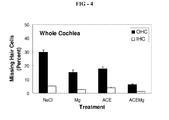
- FIG. 4 is a graph showing the effect of the composition of the subject invention and Comparative Examples of compositions of FIG. 2 on an amount of missing hair cells in the whole cochlea after the noise exposure specified above for FIG. 2 .
- a composition for treating hearing loss includes components that function through different biological mechanisms to provide an additive effect that is equal to or greater than a sum of the effect of the individual components.
- the composition is typically used for treating hearing loss resulting from trauma to a middle or inner ear of a mammal.
- the trauma may be further defined as mechanically-induced metabolic trauma, mechanical/metabolic trauma, stress trauma, stress-induced damage, or environmental stress.
- the composition may also be used to treat or prevent other types of hearing loss, including, for example, age-related hearing loss, antibiotic-induced hearing loss, and chemotherapeutic-induced hearing loss.
- the composition may further be used to prevent hearing loss during restoration surgery performed on the middle or inner ear.
- the composition of the subject invention includes at least one scavenger of singlet oxygen, a donor antioxidant, a third antioxidant, and a vasodilator.
- at least one scavenger of singlet oxygen a donor antioxidant, a third antioxidant, and a vasodilator.
- the composition including the at least one scavenger of singlet oxygen, the donor antioxidant, the third antioxidant, and the vasodilator produce the additive effect that is not only greater than the effect of any one of those components alone, but at least equal to or greater than a sum of the effects of each of the components.
- Antioxidants act through a variety of mechanisms.
- the at least one scavenger of singlet oxygen and the donor antioxidant are two different classes of antioxidants that act through different mechanisms.
- the third antioxidant while typically a scavenger of singlet oxygen, may be a different antioxidant that acts through a different mechanism.
- Scavengers of singlet oxygen reduce free radicals that contribute to hearing loss. More specifically, by reducing free radicals, the scavengers of singlet oxygen prevent, among other damaging effects, the singlet oxygen from reacting with lipids to form lipid hydroperoxides. Lipid hydroperoxides play a role in causing hearing loss.
- vitamin A is a generic term that captures a number of molecules with a biological activity of retinol or carotenoids.
- Primary dietary forms of vitamin A/retinol include retinol esters and beta-carotene.
- the beta-carotene is made up of a polyene chain of 11 conjugated double bonds with methyl branches spaced along the polyene chain, capped at both ends by cyclohexenyl rings with 1,1,5-trimethyl substitution.
- vitamin A examples include xanxthophylls, astaxanthin, canthxanxin, lutein, and zeaxanthin, which include a backbone of beta-carotene with hydroxyl and/or carbonyl substitution on one or more of the cyclohexenyl rings.
- the vitamin A is typically present as beta-carotene.
- Beta-carotene is a powerful scavenger of singlet oxygen, as well as nitric oxide and peroxynitrite, and may also scavenge lipid peroxyl radicals within a lipophilic compartment of a mitochondrial membrane. Beta-carotene is an excellent scavenger of free radicals under normal physiological conditions present in most tissues.
- scavengers of singlet oxygen may also be present in the composition of the subject invention.
- another scavenger of singlet oxygen that may be present is resveratrol.
- Resveratrol is more efficient at scavenging hydroxyl radicals than vitamin C, and the addition of resveratrol to the vitamins A may have additive effects.
- the use of resveratrol in combination with other antioxidants is known in the art to reduce age-related hearing loss.
- the at least one scavenger of singlet oxygen is present in the composition in a biologically effective amount.
- the biologically effective amount is further defined as an amount that is sufficient to produce an additive effect in a reduction in threshold shift when used in combination with other antioxidants and the magnesium.
- Additive effect refers to an effect that is equal to or greater than a sum of the effects of the individual components.
- the at least one scavenger of singlet oxygen is typically present in the composition in a total amount of at least 830 international units (IU), more preferably from 830 to 120,000 IU, most preferably from about 2,100 to 70,000 IU for an adult dosage.
- the amount of the vitamin A present in the composition is dependent upon the form of vitamin A that is used.
- vitamin A is present as retinol in an amount of at least 830 IU, more preferably from 830 to 10,000 IU, most preferably from 2,100 to 5,900 IU.
- a conversion of IU to weight for vitamin A is 3.33 IU/ ⁇ g.
- at least 830 international units (IU) is equivalent to at least 0.25 mg of vitamin A
- from 830 to 10,000 IU of vitamin A is equivalent to from 0.25 to 3 mg of vitamin A
- 2,100 to 5,900 IU of vitamin A is equivalent to from 0.62 to 1.8 mg vitamin A.
- the vitamin A may be present in the composition as beta-carotene, as opposed to retinol.
- the retinol activity equivalents (RAE) for retinol conversion to beta-carotene, which is a pro-vitamin A carotenoid, is 1 mg to 12 mg.
- IU international units
- Specific amounts of the vitamin A present in the composition may be dependent on the body weight of the mammal.
- the amount of vitamin A present as retinol in the composition is about 0.0178 mg/kg body weight.
- the amount of vitamin A present as retinol in the composition may be about 1.25 mg, or if the vitamin A is in the form of beta-carotene, the beta carotene may be present in an amount of about 15 mg.
- the total amount of scavengers of singlet oxygen may be greater than the ranges set forth above for the at least one scavenger of singlet oxygen, so long as at least one scavenger of singlet oxygen is present in the amounts set forth above.
- other scavengers of singlet oxygen may be used in place of vitamin A, so long as the amount of the at least one scavenger of singlet oxygen is present within the amounts set forth above.
- the resveratrol is typically included in the composition in an amount of at least 1 mg, more typically in an amount of from 10 mg to 1500 mg, most typically in an amount of from 15 mg to 1000 mg.
- the donor antioxidant reduces peroxyl radicals and inhibits propagation of lipid peroxidation that contributes to hearing loss. More specifically, the donor antioxidant reacts with and reduces peroxyl radicals and thus serves a chain-breaking function to inhibit propagation of lipid peroxidation. As is evident from the chain-breaking function of the donor antioxidant in lipid peroxidation, the donor antioxidant functions within cell membranes.
- a specific donor antioxidant that is contemplated for use in the composition of the subject invention is vitamin E. Vitamin E is a generic term for all tocols and tocotrienol derivatives with a biological activity of alpha-tocopherol.
- vitamin E Primary dietary forms of vitamin E include vitamin E itself and alpha-tocopherol.
- Trolox® a water-soluble analogue of alpha-tocopheral commercially available from Hoffman-Laroche, Ltd. of Basel, Switzerland, is a research agent that is typically used as a source of vitamin E.
- the donor antioxidant is typically present in the composition in an amount of at least 75 IU, more preferably from 75 IU to 1500 IU, most preferably from 150 IU to 800 IU.
- a conversion of IU to weight for vitamin E is 0.66 mg/IU.
- the donor antioxidant is vitamin E
- at least 75 IU of vitamin E is equivalent to at least 50 mg of vitamin E
- from 75 to 1500 IU of vitamin E is equivalent to from 50 to 1000 mg of vitamin E
- from 150 to 800 IU of vitamin E is equivalent to from 150 to 600 mg of vitamin E.
- specific amounts of the vitamin E present in the composition may be dependent on the body weight of the mammal. In one specific example, the amount of vitamin E present in the composition is about 2.6 mg/kg body weight. Thus, for an average human weighing about 70 kg, the amount of vitamin E present in the composition may be about 182 mg.
- the composition further includes the third antioxidant.
- the third antioxidant may be a scavenger of singlet oxygen
- the third antioxidant may also be an antioxidant that functions through a different mechanism.
- the third antioxidant is a scavenger of singlet oxygen
- the at least one scavenger of singlet oxygen is still present in the composition as a separate component from the third antioxidant, and is still present in the composition in the amounts set forth above for the at least one scavenger of singlet oxygen.
- the third antioxidant being another scavenger of singlet oxygen, the resulting composition would have at least two scavengers of singlet oxygen.
- the third antioxidant is typically vitamin C, which is a scavenger of singlet oxygen and reactive nitrogen species. It is to be appreciated that, although the third antioxidant is typically vitamin C, other antioxidants may be used in place of the vitamin C, and the other antioxidants may function through different mechanisms than vitamin C.
- the term vitamin C applies to substances that possess antiscorbutic activity and includes two compounds and their salts: L-ascorbic acid (commonly called ascorbic acid) and L-dehydroascorbic acid.
- vitamin C is also known as 2,3-didehydro-L-threo-hexano-1,4-lactone, 3-oxo-L-gulofuranolactone, L-threo-hex-2-enonic acid gamma-lactone, L-3-keto-threo-hexuronic acid lactone, L-xylo-ascorbic acid and antiscorbutic vitamin.
- Vitamin C is known to scavenge both reactive oxygen species and reactive nitrogen species.
- Vitamin C thus inhibits lipid peroxidation, oxidative DNA damage, and oxidative protein damage.
- vitamin C In contrast to vitamin A, which functions best under conditions present in most tissues, water-soluble vitamin C is an excellent free radical scavenger in an aqueous phase to thus reduce free radicals at a site different from that of vitamin A. More specifically, ascorbic acid functions to reduce free radicals in fluid, such as in cytoplasmic fluid and/or blood, before the free radicals reach cell membranes.
- the third antioxidant is typically present in an amount of at least 4,000 IU, more preferably from 6,000 to 40,000, most preferably from 8,000 to 20,000 IU.
- a conversion of IU to weight for vitamin C is 0.05 mg/IU.
- at least 4,000 IU of vitamin C is equivalent to at least 200 mg of vitamin C
- from 6,000 to 40,000 IU of vitamin C is equivalent to from 300 to 2,000 mg vitamin C
- from 8,000 to 20,000 IU vitamin C is equivalent to from 400 to 1,000 mg vitamin C.
- specific amounts of the vitamin C or other third antioxidant present in the composition may be dependent on the body weight of the mammal.
- the amount of vitamin C present in the composition is about 7.14 mg/kg body weight.
- the amount of vitamin C present in the composition may be about 500 mg.
- the composition further includes a vasodilator.
- the vasodilator includes magnesium; however, the vasodilator, for purposes of the subject invention, may include other vasodilators in place of or in addition to the magnesium, or may include only magnesium.
- Vasodilators are known in the art for use in preventing hearing loss. Vasodilators including magnesium prevent decreases in cochlear blood flow and oxygenation via biochemical mechanisms involving changes in calcium concentration and prostaglandins. Deficient cochlear blood flow and lack of oxygenation are factors that contribute to hearing loss by causing cell death in sensitive hair cells within a cochlea of the ear.
- Vasodilators including magnesium have also been found to improve the efficacy of immunosuppressant therapy or carbogen inhalation therapy in recovery from sudden hearing loss. Furthermore, it has been found that magnesium deficiency leads to increased calcium channel permeability and greater influx of calcium into cochlear hair cells, increased glutamate release, and auditory nerve excitotoxicity, each of which play a role in health of the middle and inner ear.
- vasodilators are known in the art for treating hearing loss
- the vasodilators, especially magnesium exhibit an unexpected additive effect when combined with the biologically effective amounts of the at least one scavenger of singlet oxygen, the donor antioxidant, and the third antioxidant, especially when the at least one scavenger of singlet oxygen is vitamin A, the donor antioxidant is vitamin E, and the third antioxidant is vitamin C.
- the additive effect is greater than not only the most efficacious of the components for treating hearing loss, but typically greater than the sum of the effects of each of the components for treating hearing loss.
- vasodilators other than magnesium are envisioned for purposes of the present invention, additive effects are not observed with all vasodilators.
- betahistine which is another known vasodilator, does not exhibit an additive effect as is evident from FIG. 1 . Specific effects of the composition of the subject invention on treating hearing loss are described in further detail below.
- the vasodilator including magnesium typically includes a magnesium salt or magnesium salt complex and, more specifically, magnesium sulfate or magnesium citrate.
- Other vasodilators including magnesium that may be suitable for purposes of the subject invention include; magnesium acetate, magnesium aspartate, magnesium carbonate, magnesium chloride, magnesium fumarate, magnesium gluconate, magnesium glycinate, magnesium hydroxide, magnesium lactate, magnesium oxide, magnesium salicylate, magnesium stearate, and magnesium sulfate.
- salts include but are not limited to; hydrobromide, hydrochloride, bisulfate, nitrate, arginate, ascorbate, oxalate, valerate, oleate, palmitate, laurate, borate, benzoate, phosphate, tosylate, maleate, fumarate, succinate, taurate, tartrate, naphthylate mesylate, glucoheptonate, lactobionate and laurylsulphonate salts.
- the vasodilator is present in the composition in an amount of at least 50 mg.
- the vasodilator is magnesium
- the magnesium is typically present in an amount of from 50 to 450 mg, most preferably from 100 to 350 mg.
- specific amounts of the vasodilator present in the composition may be dependent on the body weight of the mammal.
- the amount of the vasodilator including magnesium present in the composition is about 2.14 mg/kg body weight.
- the amount of the vasodilator including magnesium present in the composition may be about 150 mg.
- the amounts specified for the antioxidants and the vasodilator correlate, in terms of biological effectiveness, to amounts used in animal studies on guinea pigs. Furthermore, it is to be appreciated that the biologically effective amounts of the antioxidants and vasodilator may be lower within the above ranges for children than for the average human, based on lower US recommended daily allowances and maximum intake levels for children. This is evident based on the typical dosages in Table 1 based on mg/kg.
- the composition further includes a withanolide.
- Withanolides have been suggested for use in anti-inflammatory, anti-tumor, cytotoxic, and immunological applications.
- One example of a specific withanolide that may be included in the composition of the subject invention is the withanolide extracted from day lily plants. The extract is a powerful natural antioxidant which may be effective in preventing cell death in the inner ear by interrupting the cell-death pathway initiated by deafferentation of the auditory nerve.
- the withanolide may be present in an amount of at least 10 ppm, more preferably from 10 to 1000 ppm.
- a method of treating hearing loss includes the step of internally administering the composition of the subject invention to a mammal.
- the composition may be orally administered to the mammal, such as in the form of a tablet, liquid, gel, etc.
- the composition may be intravenously administered to the mammal through an IV or an injection of the composition.
- the composition may also be locally administered via the round window membrane of the cochlea.
- the vitamins A, C, and E, the vasodilator including magnesium, and the optional components may be first combined to form the composition, with the composition then administered to the mammal.
- the vitamins A, C, and E, the vasodilator including magnesium, and the other optional components may be separately administered, in which case the composition forms within the mammal.
- hearing loss is objectively measured in terms of differences in threshold shift.
- hearing loss and the efficacy of the composition of the subject invention for treating hearing loss is measured as an average difference in threshold shift from baseline threshold sensitivity at 4, 8, and 16 kHz, as compared to an untreated control, after exposure to 120 decibel SPL Scripte Band Noise centered at 4 kHz for five hours. Larger differences in threshold shift correlate to less hearing loss and greater efficacy of the composition for treating hearing loss.
- hair cell loss correlates to threshold shift.
- morphological damage is limited to tips of stereocilia in a third row of outer hair cells (OHCs) whereas ears from animals with permanent threshold shift have damage to all three rows of OHCs and, in some cases, the inner hair cells (IHCs), with damage throughout the length of the stereocilia as well as the to the body of the hair cell.
- the composition of the present invention is administered to the mammal within three days of trauma to a middle or inner ear of the mammal in order to alleviate permanent threshold shift. It is to be appreciated that by administrating the composition within three days of trauma, treatment prior to trauma is also contemplated through the method of the present invention. Data from animal studies indicate that temporary threshold shift measured 24 hours post-trauma is well-correlated with permanent threshold shift. Given the relationship between temporary threshold shift and permanent threshold shift, it is clinically beneficial to reduce temporary threshold shift. As such, the composition is preferably administered within one day of trauma to the middle or inner ear of the mammal. Even so, it is expected that treatment within three days with the composition of the present invention is substantially as effective in minimizing permanent threshold shift as treatment within one day.
- Treatment within three days is most appropriate when the mammal has sustained trauma to the middle or inner ear through unexpected loud noise or other trauma.
- the composition is administered to the mammal prior to trauma to the middle or inner ear.
- Treatment prior to trauma is most feasible when the mammal is preparing for sustaining trauma to the middle or inner ear.
- the composition may be administered prior to restoration surgery performed on the middle or inner ear.
- a person will be firing a weapon or attending an event such as a rock concert, the person may begin treatment prior to sustaining the trauma to the middle or inner ear to attain the best results.
- the composition is typically administered to the mammal each day for at least five days following the trauma to the middle or inner ear of the mammal. Although excellent results have been achieved through such treatment, it is to be appreciated that other treatment regimens may also prove efficacious for purposes of the present invention.
- an average difference in threshold shift in mammals from baseline threshold sensitivity at 4, 8, and 16 kHz, as compared to an untreated control is at least 25 decibels after exposure to 120 decibel SPL Octave Band Noise centered at 4 kHz for five hours.
- the threshold shift in mammals treated with the composition of the present invention is expected to be at least 25 decibels lower than the threshold shift in mammals that are treated with a control saline solution.
- the composition is orally administered one hour prior to exposure to the noise and administered again each day for five days subsequent to the exposure to the noise.
- the threshold shift is measured 10 days after exposure to the noise using auditory brainstem response (ABR) testing. Similar results would be anticipated using other alternative measures of auditory or sensory cell function, such as psychophysical tests or otoacoustic emission measures.
- outer hair cell loss and inner hair cell loss is measured both in the whole cochlea and in a trauma region of the cochlea.
- outer hair cell loss in the whole cochlea is less than 10%
- inner hair cell loss in the whole cochlea is less than 5%.
- Outer cell hair loss in the trauma region is less than 20%, while inner hair cell loss in the trauma region is less than 10%.
- the method of treating hearing loss with the composition of the present invention is performed on guinea pigs (NIH outbred strain, 250-350 grams) due to their extensive use in auditory research, including studies on noise-induced hearing loss, and because they provide a model similar to humans in terms of development.
- Six guinea pigs are subject to treatment with the composition of the present invention.
- baseline threshold sensitivity of the guinea pigs is measured binaurally using auditory brainstem response testing at 4, 8, and 16 kHz.
- the guinea pigs are then treated with vitamins A, C, E, and magnesium (referred to in FIG. 2 as “ACEMg”) in the amounts shown in Table 2.
- the amounts shown in Table 2 are approximately 10 times expected human doses based on more rapid metabolism of guinea pigs relative to humans.
- Vitamin A beta-carotene
- Vitamin C Ascorbic acid
- Vitamin E Terolox ®
- Magnesium MgSO4
- the guinea pigs are exposed to 120-dB SPL Octave Band Noise centered at 4 kHz for 5 hours to cause trauma to middle or inner ears of the guinea pigs.
- the noise is sufficient to cause permanent threshold shift, i.e., permanent hearing loss.
- the composition of the present invention is administered immediately post-exposure to the noise, and again each day for 5 days after the trauma.
- auditory sensitivity is measured using ABR.
- the guinea pigs are anesthetized with 40 mg/kg ketamine and 10 mg/kg xylazine and placed on a warm heating pad in a sound attenuated chamber.
- ABR thresholds are determined at 4, 8 and 16 kHz frequencies.
- tone bursts 10 ms in duration (0.5 ms rise/fall) are presented at a rate of 17/sec. Up to 1024 responses are collected and averaged for each signal frequency to provide a measure of threshold shift at each frequency. Estimates of permanent hearing loss, shown in FIG. 2 in terms of threshold shift in decibels, are calculated as average threshold shift across ears and across frequencies.
- the guinea pigs are deeply anesthetized and decapitated. Temporal bones are quickly removed, dissected open and fixed with 4% paraformaldehyde. The following day, an otic capsule, lateral wall, and tectorial membrane are removed, and a bony modiolus is carefully detached. Organ of Corti tissue, attached to the modiolus, is permeabilized with 0.3% Triton-X and incubated with rhodamine phalloidin diluted 1:100 in phosphate buffered saline (30 min). After washing the tissues, individual turns from the organ of Corti are dissected, mounted on microscope slides, and examined and photographed using a Leica DMRB epiflourescence microscope. Hair cell counts are conducted, and cytocochleograms are prepared as known in the art. Referring to FIGS. 3 and 4 , percentages of missing inner hair cells (IHC) and outer hair cells (OHC) are determined based on the hair cell counts.
- IHC inner hair cells
- Guinea pigs are treated with other compositions in order to compare the efficacy of the composition of the present invention with the other compositions.
- guinea pigs are separately treated in the same way as specified above in the Example with the following compositions: a saline (NaCl) composition as a control, a composition including only magnesium sulfate (2.85 mmol/kg) as the active ingredient, or a composition including only vitamins A (2.1 mg/kg beta-carotene), C (71.4 mg/kg ascorbic acid), and E (26 mg/kg Trolox®) (“ACE”) as the active ingredients.
- a saline (NaCl) composition as a control
- a composition including only magnesium sulfate (2.85 mmol/kg) as the active ingredient
- E (26 mg/kg Trolox®) (“ACE”) as the active ingredients.
- the guinea pigs are subjected to the same ABR testing, and the components of the ear are dissected, as described above in the Example to provide information on threshold shift and hair cell loss. Threshold shift and hair cell loss resulting from treatment with the other compositions are shown in FIGS. 2-4 .
- Guinea pigs are treated with a composition of vitamin E alone, betahistine alone, or a combination of betahistine and vitamin E to determine if results similar to those achieved with the composition of the present invention including magnesium can be achieved by substituting betahistine for the magnesium.
- the results of treatment with vitamin E, betahistine, or combination of vitamin E and betahistine are shown in FIG. 1 .
- guinea pigs are treated once daily with 100 mg/kg vitamin E (Trolox®), 30 mg/kg Betahistine, or a combination of 100 mg/kg Trolox® and 30 mg/kg Betahistine. Five guinea pigs are treated with each of the different compositions.
- the guinea pigs are subjected to ABR testing, and the components of the ear are dissected, both as described above in the Example, to provide information on threshold shift and hair cell loss.
- the effect in treating hearing loss with composition of the present invention including vitamins A, C, E, and magnesium is clearly greater than that associated with the effectiveness of a composition including only magnesium or only vitamins A, C, and E. More specifically, treatment with the composition of the present invention results in a threshold shift of less than 20 decibels, as averaged across all frequencies, while treatment with a control saline solution results in a threshold shift of about 45. As such, a difference in threshold shift between treatment with the composition of the present invention and treatment with the control of saline solution is over 25 decibels.
- the difference in threshold shift between the composition of the present invention and the control saline solution is greater than the sum of differences in threshold shifts for magnesium or vitamins A, C, and E alone and the control saline solution.
- the sum of the differences in threshold shifts for magnesium and vitamins A, C, and E alone is about 12 decibels.
- hair cell counts revealed significantly reduced sensory cell death with Mg or A, C, and E, with the greatest protection observed after treatment with vitamins A, C, E, and magnesium. More specifically, less than 10% of outer hair cells and less than 5% of inner hair cells in the whole cochlea are missing after treatment with the composition of the present invention including Mg and vitamins A, C, and E.
- the reduction in percentage of missing hair cells after treatment with the composition of the present invention is more than the sum of the reductions in missing hair cells observed when magnesium or vitamins A, C, and E are used alone as compared to the percentage of hair cell loss when saline is used.
- the Comparative Examples in which vitamin E, betahistine, or a combination of vitamin E and betahistine are used clearly do not exhibit the same additive effect that is observed when magnesium is used as the vasodilator in combination with the vitamins. More specifically, saline treated control animals (white bars) show the greatest hearing loss 10 days post noise. Animals treated with Vitamin E (Trolox: 100 mg/kg once daily or 50 mg/kg twice daily, diagonal lined bars) have less permanent hearing loss than control animals. Animals treated with the vasodilator betahistine (30 mg/kg, once daily, vertical striped bars; or one 18 mg/kg dose pre-noise, horizontal striped bars) show approximately the same amount of protection as those treated with vitamin E.
Landscapes
- Health & Medical Sciences (AREA)
- Chemical & Material Sciences (AREA)
- Life Sciences & Earth Sciences (AREA)
- Pharmacology & Pharmacy (AREA)
- Veterinary Medicine (AREA)
- Public Health (AREA)
- Medicinal Chemistry (AREA)
- General Health & Medical Sciences (AREA)
- Animal Behavior & Ethology (AREA)
- Epidemiology (AREA)
- General Chemical & Material Sciences (AREA)
- Nuclear Medicine, Radiotherapy & Molecular Imaging (AREA)
- Chemical Kinetics & Catalysis (AREA)
- Organic Chemistry (AREA)
- Engineering & Computer Science (AREA)
- Bioinformatics & Cheminformatics (AREA)
- Inorganic Chemistry (AREA)
- Dermatology (AREA)
- Biochemistry (AREA)
- Toxicology (AREA)
- Acyclic And Carbocyclic Compounds In Medicinal Compositions (AREA)
- Pharmaceuticals Containing Other Organic And Inorganic Compounds (AREA)
- Medicines Containing Material From Animals Or Micro-Organisms (AREA)
- Medicines That Contain Protein Lipid Enzymes And Other Medicines (AREA)
Priority Applications (19)
| Application Number | Priority Date | Filing Date | Title |
|---|---|---|---|
| US11/623,888 US7951845B2 (en) | 2006-01-19 | 2007-01-17 | Composition and method of treating hearing loss |
| EP07835673A EP1982559A4 (en) | 2006-01-19 | 2007-01-18 | COMPOSITION AND METHOD FOR TREATING HEARING LOSS |
| CA002637394A CA2637394A1 (en) | 2006-01-19 | 2007-01-18 | Composition and method of treating hearing loss |
| KR1020087018227A KR20080098007A (ko) | 2006-01-19 | 2007-01-18 | 난청 치료 조성물 및 방법 |
| JP2008551412A JP2009523811A (ja) | 2006-01-19 | 2007-01-18 | 難聴を治療する組成物及び方法 |
| PCT/US2007/001422 WO2008010852A2 (en) | 2006-01-19 | 2007-01-18 | Composition and method of treating hearing loss |
| MX2008009255A MX2008009255A (es) | 2006-01-19 | 2007-01-18 | Composicion y metodo para tratamiento de perdida de audicion. |
| BRPI0706926-0A BRPI0706926A2 (pt) | 2006-01-19 | 2007-01-18 | método para tratar perda auditiva e composição para tratar perda auditiva. |
| IL192899A IL192899A0 (en) | 2006-01-19 | 2008-07-17 | Composition and method of treating hearing loss |
| US12/313,527 US20090155390A1 (en) | 2006-01-19 | 2008-11-21 | Composition and method of treating temporary and permanent hearing loss |
| US12/761,121 US8338397B2 (en) | 2006-01-19 | 2010-04-15 | Composition and method of treating side effects from antibiotic treatment |
| US13/091,931 US8338398B2 (en) | 2006-01-19 | 2011-04-21 | Composition and method of treating hearing loss |
| US13/679,224 US8927528B2 (en) | 2006-01-19 | 2012-11-16 | Composition for treating hearing loss |
| US13/839,760 US9144565B2 (en) | 2006-01-19 | 2013-03-15 | Method for treating hearing loss |
| US14/847,178 US9770433B2 (en) | 2006-01-19 | 2015-09-08 | Composition and method for treating tinnitus |
| US15/089,849 USRE46372E1 (en) | 2006-01-19 | 2016-04-04 | Method for treating hearing loss |
| US15/272,981 US9919008B2 (en) | 2006-01-19 | 2016-09-22 | Method for treating age-related hearing loss (ARHL) |
| US15/272,973 US9889156B2 (en) | 2006-01-19 | 2016-09-22 | Method for treating noise-induced hearing loss (NIHL) |
| US15/714,445 US10238599B2 (en) | 2006-01-19 | 2017-09-25 | Composition and method for treating congenital cytomegalovirus induced hearing loss |
Applications Claiming Priority (2)
| Application Number | Priority Date | Filing Date | Title |
|---|---|---|---|
| US76005506P | 2006-01-19 | 2006-01-19 | |
| US11/623,888 US7951845B2 (en) | 2006-01-19 | 2007-01-17 | Composition and method of treating hearing loss |
Related Parent Applications (2)
| Application Number | Title | Priority Date | Filing Date |
|---|---|---|---|
| US13/091,931 Continuation-In-Part US8338398B2 (en) | 2006-01-19 | 2011-04-21 | Composition and method of treating hearing loss |
| US13/091,931 Continuation US8338398B2 (en) | 2006-01-19 | 2011-04-21 | Composition and method of treating hearing loss |
Related Child Applications (4)
| Application Number | Title | Priority Date | Filing Date |
|---|---|---|---|
| US12/313,527 Continuation-In-Part US20090155390A1 (en) | 2006-01-19 | 2008-11-21 | Composition and method of treating temporary and permanent hearing loss |
| US12/761,121 Continuation-In-Part US8338397B2 (en) | 2006-01-19 | 2010-04-15 | Composition and method of treating side effects from antibiotic treatment |
| US12/761,121 Continuation US8338397B2 (en) | 2006-01-19 | 2010-04-15 | Composition and method of treating side effects from antibiotic treatment |
| US13/091,931 Continuation US8338398B2 (en) | 2006-01-19 | 2011-04-21 | Composition and method of treating hearing loss |
Publications (2)
| Publication Number | Publication Date |
|---|---|
| US20070165870A1 US20070165870A1 (en) | 2007-07-19 |
| US7951845B2 true US7951845B2 (en) | 2011-05-31 |
Family
ID=38263203
Family Applications (2)
| Application Number | Title | Priority Date | Filing Date |
|---|---|---|---|
| US11/623,888 Active 2027-12-31 US7951845B2 (en) | 2006-01-19 | 2007-01-17 | Composition and method of treating hearing loss |
| US13/091,931 Active US8338398B2 (en) | 2006-01-19 | 2011-04-21 | Composition and method of treating hearing loss |
Family Applications After (1)
| Application Number | Title | Priority Date | Filing Date |
|---|---|---|---|
| US13/091,931 Active US8338398B2 (en) | 2006-01-19 | 2011-04-21 | Composition and method of treating hearing loss |
Country Status (9)
| Country | Link |
|---|---|
| US (2) | US7951845B2 (ko) |
| EP (1) | EP1982559A4 (ko) |
| JP (1) | JP2009523811A (ko) |
| KR (1) | KR20080098007A (ko) |
| BR (1) | BRPI0706926A2 (ko) |
| CA (1) | CA2637394A1 (ko) |
| IL (1) | IL192899A0 (ko) |
| MX (1) | MX2008009255A (ko) |
| WO (1) | WO2008010852A2 (ko) |
Cited By (9)
| Publication number | Priority date | Publication date | Assignee | Title |
|---|---|---|---|---|
| US20030171321A1 (en) * | 2000-06-08 | 2003-09-11 | Walter Schmidt | Immunostimulatory oligodeoxynucleotides |
| US8927528B2 (en) | 2006-01-19 | 2015-01-06 | The Regents Of The University Of Michigan | Composition for treating hearing loss |
| US9144565B2 (en) | 2006-01-19 | 2015-09-29 | The Regents Of The University Of Michigan | Method for treating hearing loss |
| USRE46372E1 (en) | 2006-01-19 | 2017-04-25 | The Regents Of The Univerity Of Michigan | Method for treating hearing loss |
| US9770433B2 (en) | 2006-01-19 | 2017-09-26 | The Regents Of The University Of Michigan | Composition and method for treating tinnitus |
| US9889156B2 (en) | 2006-01-19 | 2018-02-13 | The Regents Of The University Of Michigan | Method for treating noise-induced hearing loss (NIHL) |
| US9919008B2 (en) | 2006-01-19 | 2018-03-20 | The Regents Of The University Of Michigan | Method for treating age-related hearing loss (ARHL) |
| US10238599B2 (en) | 2006-01-19 | 2019-03-26 | The Regents Of The University Of Michigan | Composition and method for treating congenital cytomegalovirus induced hearing loss |
| WO2025038498A3 (en) * | 2023-08-15 | 2025-05-08 | Soundbites Public Benefit Corporation | Composition and method for treating hearing loss |
Families Citing this family (20)
| Publication number | Priority date | Publication date | Assignee | Title |
|---|---|---|---|---|
| US20090258091A1 (en) * | 2008-04-09 | 2009-10-15 | Marine Bio Co., Ltd. | Compositions and methods for treating neurodegenerative diseases |
| PT2293794E (pt) * | 2008-05-27 | 2013-07-10 | Univ Melbourne | Métodos de tratamento de mamíferos com disfunções da trompa de eustáquio |
| JP2012001437A (ja) * | 2008-10-06 | 2012-01-05 | M's Science Corp | 難聴及び難聴に伴う副症状の、予防又は治療のための医薬 |
| EP2204194B1 (en) * | 2008-12-25 | 2017-08-02 | Canon Kabushiki Kaisha | Probe for a hair cell, and labelling method for a hair cell using the probe for a hair cell |
| JP2010202617A (ja) * | 2009-03-05 | 2010-09-16 | Kose Corp | 一重項酸素消去剤およびこれを含有する皮膚外用剤ならびに化粧料 |
| JP2013159572A (ja) * | 2012-02-03 | 2013-08-19 | Atsuyoshi Murakami | 聴覚喪失予防用の組成物 |
| WO2013120107A1 (en) * | 2012-02-09 | 2013-08-15 | University Of Rochester | Methods and compositions for treating a subject to inhibit hearing loss |
| WO2014159356A1 (en) | 2013-03-14 | 2014-10-02 | The Brigham And Women's Hospital, Inc. | Compositions and methods for epithelial stem cell expansion and culture |
| EP2777698A1 (en) * | 2013-03-15 | 2014-09-17 | The Regents Of The University Of Michigan | Compositions for Treating Hearing Loss |
| IL299964A (en) | 2014-09-03 | 2023-03-01 | Massachusetts Inst Technology | Preparations, systems and methods for producing hair cells in the inner ear to treat hearing loss |
| JP2019506153A (ja) | 2016-01-08 | 2019-03-07 | マサチューセッツ インスティテュート オブ テクノロジー | 分化した腸内分泌細胞およびインスリン産生細胞の作製 |
| US10201540B2 (en) | 2016-03-02 | 2019-02-12 | Frequency Therapeutics, Inc. | Solubilized compositions for controlled proliferation of stem cells / generating inner ear hair cells using GSK3 inhibitors: I |
| US11260130B2 (en) | 2016-03-02 | 2022-03-01 | Frequency Therapeutics, Inc. | Solubilized compositions for controlled proliferation of stem cells / generating inner ear hair cells using a GSK3 inhibitor: IV |
| US10213511B2 (en) | 2016-03-02 | 2019-02-26 | Frequency Therapeutics, Inc. | Thermoreversible compositions for administration of therapeutic agents |
| CN110392686A (zh) | 2016-12-30 | 2019-10-29 | 频率治疗公司 | 1h-吡咯-2,5-二酮化合物以及使用它们来诱导干/祖支持细胞自我更新的方法 |
| WO2020037326A1 (en) | 2018-08-17 | 2020-02-20 | Frequency Therapeutics, Inc. | Compositions and methods for generating hair cells by downregulating foxo |
| CA3109647A1 (en) | 2018-08-17 | 2020-02-20 | Frequency Therapeutics, Inc. | Compositions and methods for generating hair cells by upregulating jag-1 |
| CN109712662B (zh) * | 2018-12-06 | 2020-10-13 | 天津津航计算技术研究所 | 嵌有阶段性动态阈值损耗均衡模块的NAND Flash主控芯片 |
| KR102754196B1 (ko) * | 2023-06-15 | 2025-01-14 | 한국식품연구원 | 결명자 추출물을 포함하는 청각장애 개선용 조성물 |
| KR102754197B1 (ko) * | 2023-06-15 | 2025-01-14 | 한국식품연구원 | 메밀 추출물을 포함하는 청각장애 개선용 조성물 |
Citations (24)
| Publication number | Priority date | Publication date | Assignee | Title |
|---|---|---|---|---|
| US5597585A (en) | 1995-12-26 | 1997-01-28 | Williams; Andrew H. | Vitamin/mineral composition |
| WO1998056761A2 (en) | 1997-06-10 | 1998-12-17 | Glaxo Group Limited | Benzimidazole derivatives |
| US6093417A (en) | 1999-01-11 | 2000-07-25 | Advanced Medical Instruments | Composition to treat ear disorders |
| US6177434B1 (en) | 1997-12-16 | 2001-01-23 | The United States Of America As Represented By The Secretary Of The Navy | Prevention or reversal of sensorineural hearing loss (SNHL) through biologic mechanisms |
| US6265386B1 (en) | 1997-10-02 | 2001-07-24 | Southern Illinois University School Of Medicine | Therapeutic use of D-methionine to reduce the toxicity of ototoxic drugs, noise, and radiation |
| US6288106B1 (en) | 1999-05-25 | 2001-09-11 | Chronorx, Llc | Processes for the synthesis and use of various α-lipoic acid complexes |
| WO2001084961A2 (en) | 2000-05-08 | 2001-11-15 | N.V. Nutricia | Preparation for the prevention and/or treatment of vascular disorders |
| US20020061870A1 (en) | 2000-01-27 | 2002-05-23 | Pearson Don C. | Dosage forms useful for modifying conditions and functions associated with hearing loss and/or tinnitus |
| US6423321B2 (en) * | 1999-02-24 | 2002-07-23 | Edward L. Tobinick | Cytokine antagonists for the treatment of sensorineural hearing loss |
| EP1258243A1 (en) | 2001-05-16 | 2002-11-20 | N.V. Nutricia | Lipoic acid for suppressing undesired haematological effects of chemotherapy and/or radiotherapy |
| WO2003030818A2 (en) | 2001-10-05 | 2003-04-17 | Pichit Suvanprakorn | Active agents using liposome beads |
| US6562378B1 (en) | 2002-08-16 | 2003-05-13 | Tsar Health Private Ltd. | Nutritional supplement for adolescents |
| US6649621B2 (en) | 1997-12-16 | 2003-11-18 | The United States Of America As Represented By The Secretary Of The Navy | Prevention or reversal of sensorineural hearing loss (SNHL) through biologic mechanisms |
| US6660297B2 (en) | 2001-03-23 | 2003-12-09 | Bausch & Lomb Incorporated | Nutritional supplement to treat macular degeneration |
| WO2004000297A1 (en) | 2002-06-19 | 2003-12-31 | N.V. Nutricia | Nutritional or pharmaceutical compositions for increasing the creatine response of organisms |
| US20040033273A1 (en) * | 2001-02-14 | 2004-02-19 | Ayurcore, Inc. | Withasol and methods of use |
| WO2004037205A2 (en) | 2002-10-24 | 2004-05-06 | Abbott Biotechnology Ltd. | LOW DOSE METHODS FOR TREATING DISORDERS IN WHICH TNFα ACTIVITY IS DETRIMENTAL |
| US20040096524A1 (en) | 2002-11-14 | 2004-05-20 | Michigan State University | Cyclooxygenase-2 inhibitory withanolide compositions and method |
| US20040101560A1 (en) | 2002-11-27 | 2004-05-27 | Sawchuk Ronald J. | Methods and compositions for applying pharmacologic agents to the ear |
| US6815434B2 (en) | 2002-01-04 | 2004-11-09 | Sound Pharmaceuticals Incorporated | Methods for treating hearing loss |
| US20040224012A1 (en) | 2001-10-05 | 2004-11-11 | Pichit Suvanprakorn | Topical application and methods for administration of active agents using liposome macro-beads |
| US20050013854A1 (en) | 2003-04-09 | 2005-01-20 | Mannino Raphael J. | Novel encochleation methods, cochleates and methods of use |
| US20050070607A1 (en) | 2003-08-19 | 2005-03-31 | James Andrus | N-acetylcysteine compositions and methods for the treatment and prevention of cysteine/glutathione deficiency in diseases and conditions |
| US20050107338A1 (en) * | 2003-11-17 | 2005-05-19 | Seidman Michael D. | Nutritional supplement enhancing mitochondrial function |
Family Cites Families (4)
| Publication number | Priority date | Publication date | Assignee | Title |
|---|---|---|---|---|
| US6374860B2 (en) * | 1998-10-16 | 2002-04-23 | Daniel Industries, Inc. | Integrated valve design for gas chromatograph |
| US6686340B2 (en) * | 2001-06-19 | 2004-02-03 | Matthias Rath | Composition and method for prevention and treatment of health conditions caused by constriction of smooth muscle cells |
| US7700111B2 (en) * | 2002-01-17 | 2010-04-20 | The Regents Of The University Of Michigan | Auditory nerve protection and re-growth |
| US7282593B2 (en) * | 2003-09-11 | 2007-10-16 | Board Of Trustees Of Michigan State University | Withanamide and withanolide compositions and method of use thereof |
-
2007
- 2007-01-17 US US11/623,888 patent/US7951845B2/en active Active
- 2007-01-18 BR BRPI0706926-0A patent/BRPI0706926A2/pt not_active IP Right Cessation
- 2007-01-18 MX MX2008009255A patent/MX2008009255A/es unknown
- 2007-01-18 WO PCT/US2007/001422 patent/WO2008010852A2/en not_active Ceased
- 2007-01-18 JP JP2008551412A patent/JP2009523811A/ja not_active Abandoned
- 2007-01-18 KR KR1020087018227A patent/KR20080098007A/ko not_active Withdrawn
- 2007-01-18 CA CA002637394A patent/CA2637394A1/en not_active Abandoned
- 2007-01-18 EP EP07835673A patent/EP1982559A4/en not_active Withdrawn
-
2008
- 2008-07-17 IL IL192899A patent/IL192899A0/en unknown
-
2011
- 2011-04-21 US US13/091,931 patent/US8338398B2/en active Active
Patent Citations (28)
| Publication number | Priority date | Publication date | Assignee | Title |
|---|---|---|---|---|
| US5597585A (en) | 1995-12-26 | 1997-01-28 | Williams; Andrew H. | Vitamin/mineral composition |
| WO1998056761A2 (en) | 1997-06-10 | 1998-12-17 | Glaxo Group Limited | Benzimidazole derivatives |
| US6265386B1 (en) | 1997-10-02 | 2001-07-24 | Southern Illinois University School Of Medicine | Therapeutic use of D-methionine to reduce the toxicity of ototoxic drugs, noise, and radiation |
| US6649621B2 (en) | 1997-12-16 | 2003-11-18 | The United States Of America As Represented By The Secretary Of The Navy | Prevention or reversal of sensorineural hearing loss (SNHL) through biologic mechanisms |
| US6177434B1 (en) | 1997-12-16 | 2001-01-23 | The United States Of America As Represented By The Secretary Of The Navy | Prevention or reversal of sensorineural hearing loss (SNHL) through biologic mechanisms |
| US6093417A (en) | 1999-01-11 | 2000-07-25 | Advanced Medical Instruments | Composition to treat ear disorders |
| US6423321B2 (en) * | 1999-02-24 | 2002-07-23 | Edward L. Tobinick | Cytokine antagonists for the treatment of sensorineural hearing loss |
| US6288106B1 (en) | 1999-05-25 | 2001-09-11 | Chronorx, Llc | Processes for the synthesis and use of various α-lipoic acid complexes |
| US20020061870A1 (en) | 2000-01-27 | 2002-05-23 | Pearson Don C. | Dosage forms useful for modifying conditions and functions associated with hearing loss and/or tinnitus |
| US6524619B2 (en) | 2000-01-27 | 2003-02-25 | Chronorx, Inc. | Dosage forms useful for modifying conditions and functions associated with hearing loss and/or tinnitus |
| WO2001084961A2 (en) | 2000-05-08 | 2001-11-15 | N.V. Nutricia | Preparation for the prevention and/or treatment of vascular disorders |
| US20040033273A1 (en) * | 2001-02-14 | 2004-02-19 | Ayurcore, Inc. | Withasol and methods of use |
| US6660297B2 (en) | 2001-03-23 | 2003-12-09 | Bausch & Lomb Incorporated | Nutritional supplement to treat macular degeneration |
| EP1258243A1 (en) | 2001-05-16 | 2002-11-20 | N.V. Nutricia | Lipoic acid for suppressing undesired haematological effects of chemotherapy and/or radiotherapy |
| WO2003030818A2 (en) | 2001-10-05 | 2003-04-17 | Pichit Suvanprakorn | Active agents using liposome beads |
| US20040224012A1 (en) | 2001-10-05 | 2004-11-11 | Pichit Suvanprakorn | Topical application and methods for administration of active agents using liposome macro-beads |
| US6815434B2 (en) | 2002-01-04 | 2004-11-09 | Sound Pharmaceuticals Incorporated | Methods for treating hearing loss |
| WO2004000297A1 (en) | 2002-06-19 | 2003-12-31 | N.V. Nutricia | Nutritional or pharmaceutical compositions for increasing the creatine response of organisms |
| WO2004016100A2 (en) | 2002-08-16 | 2004-02-26 | Tsar Health Private, Ltd. | Nutritional supplement for adolescents |
| US6562378B1 (en) | 2002-08-16 | 2003-05-13 | Tsar Health Private Ltd. | Nutritional supplement for adolescents |
| WO2004037205A2 (en) | 2002-10-24 | 2004-05-06 | Abbott Biotechnology Ltd. | LOW DOSE METHODS FOR TREATING DISORDERS IN WHICH TNFα ACTIVITY IS DETRIMENTAL |
| US20040096524A1 (en) | 2002-11-14 | 2004-05-20 | Michigan State University | Cyclooxygenase-2 inhibitory withanolide compositions and method |
| US20040258781A1 (en) | 2002-11-14 | 2004-12-23 | Board Of Trustees Of Michigan State University | Cyclooxygenase-2 inhibitory withanolide compositions and method |
| US20040101560A1 (en) | 2002-11-27 | 2004-05-27 | Sawchuk Ronald J. | Methods and compositions for applying pharmacologic agents to the ear |
| WO2004050021A2 (en) | 2002-11-27 | 2004-06-17 | Regents Of The University Of Minnesota | Methods and compositions for applying pharmacologic agents to the ear |
| US20050013854A1 (en) | 2003-04-09 | 2005-01-20 | Mannino Raphael J. | Novel encochleation methods, cochleates and methods of use |
| US20050070607A1 (en) | 2003-08-19 | 2005-03-31 | James Andrus | N-acetylcysteine compositions and methods for the treatment and prevention of cysteine/glutathione deficiency in diseases and conditions |
| US20050107338A1 (en) * | 2003-11-17 | 2005-05-19 | Seidman Michael D. | Nutritional supplement enhancing mitochondrial function |
Non-Patent Citations (95)
| Title |
|---|
| Abaamrane et al., "Long-term Administration of Magnesium After Acoustic Trauma Caused by Gunshot Noise in Guinea Pigs", Hearing Research 247, 2009, pp. 137-145. |
| Ahn J.H., Kang, H.H., Kim, Y.J., Chung, J.W., Anti-Apoptotic Role of Retinoic Acid in the Inner Ear of Noise-Exposed Mice, Biochemical and Biophysical Research Communications 335 (2005) 485-490. |
| Attias et al., "Reduction in Noise-Induced Temporary Threshold Shift in Humans Following Oral Magnesium Intake", Clinical Otolaryngology 29, Blackwell Publishing Ltd, 2004, pp. 635-641. |
| Attias, J., Bresloff, I., Haupt, H., Scheibe, F., Ising, H. (2003). "Preventing noise induced otoacoustic emission loss by increasing magnesium (Mg2+) intake in guinea-pigs." J. Basic Clin. Physiol. Pharmacol. 14, 119-136. |
| Attias, J., Weisz, G., Almog, S., Shahar, A., Wiener, M., Joachims, Z., Netzer, A., Ising, H., Rebentisch, E., Guenther, T. (1994). Oral magnesium intake reduces permanent hearing loss induced by noise exposure. Am. J. Otolaryngol. 15, 26-32. |
| Balavoine GG, Geletii YV (1999) Peroxynitrite scavenging by different antioxidants. Part I: Convenient Assay. Nitric Oxide 3:40-54. |
| Bertolaso, L., Martini, A., Bindini, D., Lanzoni, I., Parmeggiani, A., Vitali, C., Kalinec, G., Kalinec, F., Capitani, S., Previati, M. (2001). Apoptosis in the OC-k3 immortalized cell line treated with different agents. Audiology 40, 327-35. |
| Biesalski, H. K., Wellner, U., Weiser, H. (1990). Vitamin A deficiency increases noise susceptibility in guinea pigs. J. Nutr. 120, 726-37. |
| Boland A, Gerardy J, Mossay D, Seutin V (2003) Pre- and post-treatment with pirlindole and dehydropirlindole protects cultured brain cells against nitric oxide-induced death. Eur J Pharmacol 466:21-30. |
| Branis et al., "Effect of Ascorbic Acid on the Numerical Hair Cell Loss in Noise Exposed Guinea Pigs", Hearing Research 33, Elsevier Science Publishers B.V., 1988, pp. 137-140. |
| Cevette, M. J., Vormann, J., Franz, K. (2003). Magnesium and hearing. J. Am. Acad. Audiol. 14, 202-12. |
| Chae HJ, Chae SW, Reed JC, Kim HR (2004) Salicylate regulates COX-2 expression through ERK and subsequent NF-kappaB activation in osteoblasts. Immunopharmacol Immunotoxicol 26:75-91. |
| Diamond, B. J., Shiflett, S. C., Feiwel, N., Matheis, R. J., Noskin, O., Richards, J. A., Schoenberger, N. E. (2000). Ginkgo biloba extract: mechanisms and clinical indications. Arch. Phys. Med. Rehabil. 81, 668-78. |
| Didier, A., Droy-Lefaix, M. T., Aurousseau, C., Cazals, Y. (1996). Effects of Ginkgo biloba extract (EGb 761) on cochlear vasculature in the guinea pig: morphometric measurements and laser Doppler flowmetry. Eur. Arch. Otorhinolaryngol. 253, 25-30. |
| Duan, M., Qiu, J., Laurell, G., Olofsson, A., Counter, S. A., Borg, E. (2004). Dose and time-dependent protection of the antioxidant N-L-acetylcysteine against impulse noise trauma. Hear. Res. 192, 1-9. |
| English language abstract for Fischer et al., "Protection Of the Cochlea by Ascorbic Acid in Noise Trauma", HNO 57 (4) , Apr. 2009, pp. 339-344. |
| Evans, P., Halliwell, B. (1999). Free radicals and hearing. Cause, consequence, and criteria. Ann. N. Y. Acad. Sci. 884, 19-40. |
| Fetoni AR, Sergi B, Ferraresi A, Paludetti G, Troiani D (2004) alpha-Tocopherol protective effects on gentamicin ototoxicity: an experimental study. Int J Audiol 43:166-171. |
| Fischer et al., "Protection Of the Cochlea by Ascorbic Acid in Noise Trauma", HNO 57(4) , Apr. 2009, pp. 339-344. |
| Floyd RA (1999) Antioxidants, oxidative stress, and degenerative neurological disorders. Proc Soc Exp Biol Med 222:236-245. |
| Gordin, A., Goldenberg, D., Golz, A., Netzer, A., Joachims, H. Z. (2002). Magnesium: a new therapy for idiopathic sudden sensorineural hearing loss. Otol. Neurotol. 23, 447-51. |
| Gunther, T., Ising, H., Joachims, Z. (1989). Biochemical mechanisms affecting susceptibility to noise-induced hearing loss. Am. J. Otol. 10, 36-41. |
| Gutteridge, J. M. C., Halliwell, B. 1999. Antioxidant protection and oxygen radical signaling. In: Gilbert, D.L., Colton, C.A., (Eds.), Reactive oxygen species in biological systems: an interdisciplinary approach. Kluwer Academic/Plenum Publishers, New York. pp. 189-218. |
| Halliwell, B, Gutteridge, J.M.C., Free Radicals in Biology and Medicine, 3rd Ed., Oxford Univ. Press (1999), Chapter 3-Antioxidant defences, pp. 105-245. |
| Haupt, H., Scheibe, F. (2002). Preventive magnesium supplement protects the inner ear against noise-induced impairment of blood flow and oxygenation in the guinea pig. Magnes. Res. 15, 17-25. |
| Haupt, H., Scheibe, F., Mazurek, B. (2003). Therapeutic efficacy of magnesium in acoustic trauma in the guinea pig. ORL. J. Otorhinolaryngol. Relat. Spec. 65, 134-9. |
| Heinrich et al, "Ascorbic Acid Reduces Noise-Induced Nitric Oxide Production in the Guinea Pig Ear", Laryngoscope 118, The American Laryngological, Rhinological and Otological Society, Inc., May 2008, pp. 837-842. |
| Henderson, D., McFadden, S. L., Liu, C. C., Hight, N., Zheng, X. Y. (1999). The role of antioxidants in protection from impulse noise. Ann. N. Y. Acad. Sci. 884, 368-80. |
| Hight, N. G., McFadden, S. L., Henderson, D., Burkard, R. F., Nicotera, T. (2003). Noise-induced hearing loss in chinchillas pre-treated with glutathione monoethylester and R-PIA. Hear. Res. 179, 21-32. |
| Hou, F., Wang, S., Zhai, S., Hu, Y., Yang, W., He, L. (2003). Effects of alpha- tocopherol on noise-induced hearing loss in guinea pigs. Hear. Res. 179, 1-8. |
| http://www.menieres.org/forums/NonCGI/Forum1/HTML/003686.html Constricted Blood Vessels, 1 page. |
| Hu, B. H., Zheng, X. Y., McFadden, S. L., Kopke, R. D., Henderson, D. (1997). R-phenylisopropyladenosine attenuates noise-induced hearing loss in the chinchilla. Hear. Res. 113, 198-206. |
| International Search Report, International Application No. PCT/US 07/01422, Mar. 4, 2008, 2 pages. |
| Ising, H., Handrock, M., Gunther, T., Fischer, R., Dombrowski, M. (1982). Increased noise trauma in guinea pigs through magnesium deficiency. Arch. Otorhinolaryngol. 236, 139-46. |
| Jackson, R. L., Coleman, J. K., Ge, X., Liu, J., Hoffer, M. E., Balough, B. (2005). Antioxidant strategies for post-noise hearing loss recovery, International Symposium-Pharmacologic Strategies for Prevention and Treatment of Hearing Loss and Tinnitus, Niagra Falls, Ottawa, Canada, one page. |
| Jacono A.A., Hu B, Kopke RD, Henderson D, Van De Water TR, Steinman HM (1998) Changes in cochlear antioxidant enzyme activity after sound conditioning and noise exposure in the chinchilla. Hear Res 117:31-38. |
| Joachims, H. Z., Segal, J., Golz, A., Netzer, A., Goldenberg, D. (2003). Antioxidants in treatment of idiopathic sudden hearing loss. Otol. Neurotol. 24, 572-5. |
| Joachims, Z., Babisch, W., Ising, H., Gunther, T., Handrock, M. (1983). Dependence of noise-induced hearing loss upon perilymph magnesium concentration. J. Acoust. Soc. Am. 74, 104-8. |
| Joachims, Z., Netzer, A., Ising, H., Rebentisch, E., Attias, J., Weisz, G., Gunther, T. (1993). Oral magnesium supplementation as prophylaxis for noise-induced hearing loss: results of a double blind field study. Schriftenr. Ver. Wasser. Boden. Lufthyg. 88, 511-516. |
| Jung, H. W., Chang, S. O., Kim, C. S., Rhee, C. S., Lim, D. H. (1998). Effects of Ginkgo biloba extract on the cochlear damage induced by local gentamicin installation in guinea pigs. J. Korean Med. Sci. 13, 525-8. |
| Kalkanis, J. G., Whitworth, C., Rybak, L. P. (2004). Vitamin E reduces cisplatin ototoxicity. Laryngoscope 114, 538-42. |
| Knight, W. 2002. Popping pill may prevent hearing loss [Online] http://www.newscientist.com/article.ns?id=dn2666 (posted Aug. 13, 2002; verified Feb. 25, 2005) on 2 pages. |
| Kopke R, Allen KA, Henderson D, Hoffer M, Frenz D, Van de Water T (1999) A radical demise. Toxins and trauma share common pathways in hair cell death. Ann N Y Acad Sci 884:171-191. |
| Kopke, R. D. (2005). NAC for Noise: From the bench top to the clinic, International Symposium-Pharmacologic Strategies for Prevention and Treatment of Hearing Loss and Tinnitus, Niagra Falls, Ottawa, Canada, one page. |
| Kopke, R. D., Coleman, J. K., Liu, J., Campbell, K. C., Riffenburgh, R. H. (2002). Candidate's thesis: Enhancing intrinsic cochlear stress defenses to reduce noise-induced hearing loss. Laryngoscope 112,1515-32. |
| Kopke, R. D., Weisskopf, P. A., Boone, J. L., Jackson, R. L., Wester, D. C., Hoffer, M. E., Lambert, D. C., Charon, C. C., Ding, D. L., McBride, D. (2000). Reduction of noise-induced hearing loss using L-NAC and salicylate in the chinchilla. Hear. Res. 149,138-46. |
| Kujawa S.G., Liberman M.C., Acceleration of Age-Related Hearing Loss by Early Noise Exposure: Evidence of a Misspent Youth, Journal of Neuro., (Feb. 15, 2006-26(7): 2115-2123. |
| Kujawa, S. (2005). Adding insult to injury: Noise-induced and age-related hearing loss interactions, International Symposium-Pharmacologic Strategies for Prevention and Treatment of Hearing Loss and Tinnitus, Niagra Falls, Ottawa, Canada, one page. |
| Kwon KS, Chae HJ (2003) Sodium salicylate inhibits expression of COX-2 through suppression of ERK and subsequent NF-kappaB activation in rat ventricular cardiomyocytes. Arch Pharm Res 26:545-553. |
| Laurikainen et al., "Betahistine Effects on Cochlear Blood Flow: From The Laboratory to The Clinic", Acta Otolaryngol, Supp. 544, 2000, pp. 5-7. |
| Laurikainen et al., "Non-Specific Effect of Beettahistine on Cochlear Electrophysiology In Guinea Pig", Acta Otolayngol (Stockh), Supp. 529, 1997, pp. 77-79. |
| Le Prell CG, Dolan DF, Schacht J, Miller JM, Lomax MI, Altschuler RA (2003) Pathways for protection from noise induced hearing loss. Noise Health 5:1-17. |
| Le Prell et al., "Free Radical Scavengers Vitamins A, C and E Plus Magnesium Reduce Noise Trauma", Free Radical Biology & Medicine 42, 2007, pp. 1454-1463. |
| Le Prell et al., "Mechanisms of Noise-Induced Hearing Loss Indicate Multiple Methods of Prevention", Hearing Research 226, Elsevier B.V., 2007, pp. 22-43. |
| Li G, Sha SH, Zotova E, Arezzo J, Van de Water T, Schacht J (2002) Salicylate protects hearing and kidney function from cisplatin toxicity without compromising its oncolytic action. Lab Invest 82:585-596. |
| Lohle, E. (1980). The influence of a chronic vitamin A deficiency on the acoustic sensory cells and the ganglion spirale cochleae of the rat. An electron microscope study. Arch. Otorhinolaryngol. 229, 45-53. |
| Lohle, E. (1985). Ultrastructural changes in the organ of Corti and in the ganglion spiral cochleae after vitamin A deficiency. Pathol. Res. Pract. 179, 560-7. |
| Lopez-Gonzalez, M. A., Guerrero, J. M., Rojas, F., Delgado, F. (2000). Ototoxicity caused by cisplatin is ameliorated by melatonin and other antioxidants. J. Pineal Res. 28, 73-80. |
| McFadden et al., "Dietary Vitamin C Supplementation Reduces Noise-Induced Hearing Loss in Guinea Pigs", Hearing Research 202, 2005, pp. 200-208. |
| McFadden, S.L., Wo, J.M., Michalak, N. Ding D., Dietary Vitamin C Supplementation Reduces Noise-Induced Hearing Loss in Guinea Pigs, Hearing Research 202 (2005) 200-208. |
| Miller et al., "Interactive Effects of Aging with Noise Induced Hearing Loss", Scand. Audiol, 27, 1998, pp. 53-61. |
| Miller et al., "Mechanisms and Prevention of Noise-Induce Hearling Loss", Otol Jpn, 16(2): 2006, pp. 139-141. |
| Miller, J. M., Brown, J. N., Schacht, J. (2003). 8-iso-prostaglandin F(2alpha), a product of noise exposure, reduces inner ear blood flow. Audiol. Neurootol. 8, 207-21. |
| Minami et al., "Creatine and Tempol Attenuate Noise-Induced Hearing Loss", Brain Res. May 7, 2007, pp. 1-13. |
| Nageris, B. I., Ulanovski, D., Attias, J. (2004). Magnesium treatment for sudden hearing loss. Ann. Otol. Rhinol. Laryngol. 113, 672-5. |
| Ohinata, Y., Miller, J. M., Altschuler, R. A., Schacht, J. (2000a). Intense noise induces formation of vasoactive lipid peroxidation products in the cochlea. Brain Res. 878, 163-73. |
| Ohinata, Y., Miller, J. M., Schacht, J. (2003). Protection from noise-induced lipid peroxidation and hair cell loss in the cochlea. Brain Res. 966, 265-73. |
| Ohinata, Y., Yamasoba, T., Schacht, J., Miller, J. M. (2000b). Glutathione limits noise-induced hearing loss. Hear. Res. 146, 28-34. |
| Omenn, G. S., Goodman, G. E., Thornquist, M. D., Balmes, J., Cullen, M. R., Glass, A., Keogh, J. P., Meyskens, F. L., Valanis, B., Williams, J. H., Barnhart, S., Harnmar, S. (1996). Effects of a combination of beta carotene and vitamin A on lung cancer and cardiovascular disease. N. Engl. J. Med. 334, 1150-5. |
| Perlman, H. B., Kimura, R. (1962). Cochlear blood flow and acoustic trauma. Acta Otolaryngol. (Stockh). 54, 99-119. |
| Rabinowitz, P. M., Pierce Wise, J., Sr., Hur Mobo, B., Antonucci, P. G., Powell, C., Slade, M. (2002). Antioxidant status and hearing function in noise-exposed workers. Hear. Res. 173, 164-71. |
| Romeo, G. (1985) The Therapeutic Effect of Vitamins A and E in Neurosensory Hearing Loss, [Italian] Journal Article-Acta Vitamininol. Enzymol. 7 Suppl:85-92, One Page English Abstract from OVID Search Results. |
| Schacht, J. (1999). Antioxidant therapy attenuates aminoglycoside-induced hearing loss. Ann. N. Y. Acad. Sci. 884, 125-30. |
| Scheibe, F., Haupt, H., Ising, H. (1999). Total magnesium concentrations of perilymph, cerebrospinal fluid and blood in guinea pigs fed different magnesium-containing diets. Eur. Arch. Otorhinolaryngol. 256, 215-9. |
| Scheibe, F., Haupt, H., Ising, H. (2000). Preventive effect of magnesium supplement on noise-induced hearing loss in the guinea pig. Eur. Arch. Otorhinolaryngol. 257, 10-16. |
| Scheibe, F., Haupt, H., Ising, H., Cherny, L. (2002). Therapeutic effect of parenteral magnesium on noise-induced hearing loss in the guinea pig. Magnes. Res. 15, 27-36. |
| Schneider, D., Schneider, L., Shulman, A., Claussen, C. F., Just, E., Koltchev, C., Kersebaum, M., Dehler, R., Goldstein, B., Claussen, E. (2000). Gingko biloba (Rokan) therapy in tinnitus patients and measurable interactions between tinnitus and vestibular disturbances. Int. Tinnitus J. 6, 56-62. |
| Seidman, M. D. (2000). Effects of dietary restriction and antioxidants on presbyacusis. Laryngoscope 110, 727-38. |
| Seidman, M., Babu, S., Tang, W., Naem, E., Quirk, W. S. (2003). Effects of resveratrol on acoustic trauma. Otolaryngol. Head Neck Surg. 129, 463-70. |
| Sergi, B., Fetoni, A. R., Ferraresi, A., Troiani, D., Azzena, G. B., Paludetti, G., Maurizi, M. (2004). The role of antioxidants in protection from ototoxic drugs. Acta Otolaryngol. Suppl. (Stockh). 42-5. |
| Sha SH, Schacht J (1999) Salicylate attenuates gentamicin-induced ototoxicity. Lab Invest 79:807-813. |
| Shoji et al., "Differential Protective Effects of Neurotrophins in the Attenuation of Noise-Induced Hair Cell Loss", Hearing Research 146, 2000, pp. 134-142. |
| Song, B.-B., Sha, S. H., Schacht, J. (1998). Iron chelators protect from aminoglycosideinduced cochleo- and vestibulotoxicity in guinea pig. Free Radic. Biol. Med. 25, 189-195. |
| Takemura et al., "Direct Inner Ear Infusion of Dexamethasone Attenuates Noise-Induced Trauma in Guinea Pig", Hearing Research 196, 2004, pp. 58-68. |
| Takumida, M., Anniko, M., Ohtani, M. (2003). Radical scavengers for Meniere's disease after failure of conventional therapy: a pilot study. Acta Otolaryngol. (Stockh). 123, 697-703. |
| Tanswell AK, Freeman BA (1995) Antioxidant therapy in critical care medicine. New Horizons 3:330-341. One page abstract from OVID:Search Results on Apr. 22, 2006. |
| Teranishi, M., Nakashima, T., Wakabayashi, T. (2001). Effects of alpha-tocopherol on cisplatin-induced ototoxicity in guinea pigs. Hear. Res. 151, 61-70. |
| The Alpha-Tocopherol, Beta Carotene Cancer Prevention Study Group. (1994). The effect of vitamin E and beta carotene on the incidence of lung cancer and other cancers in male smokers. N. Engl. J. Med. 330, 1029-1035. |
| Usami, S., Hjelle, O. P., Ottersen, O. P. (1996). Differential cellular distribution of glutathione--an endogenous antioxidant--in the guinea pig inner ear. Brain Res. 743, 337-40. |
| Watanabe, K., Inai, S., Hess, A., Michel, O., Yagi, T. (2004). Acoustic stimulation promotes the expression of inducible nitric oxide synthase in the vestibule of guinea pigs. Acta Otolaryngol. Suppl. 553: (Stockh). 54-57. |
| Weijl, N. I., Elsendoorn, T. J., Lentjes, E. G., Hopman, G. D., Wipkink-Bakker, A., Zwinderman, A. H., Cleton, F. J., Osanto, S. (2004). Supplementation with antioxidant micronutrients and chemotherapy-induced toxicity in cancer patients treated with cisplatin-based chemotherapy: a randomised, double-blind, placebo-controlled study. Eur. J. Cancer 40, 1713-1723. |
| Yamashita D, Jiang HY, Schacht J, Miller JM (2004) Delayed production of free radicals following noise exposure. Brain Res 1019: 201-209. |
| Yamashita, D., Jiang, H.-Y., Le Prell, C. G., Schacht, J., Miller, J. M. (2005). Post-exposure treatment attenuates noise-induced hearing loss. Neuroscience, 134, 633-642. |
| Yamasoba et al., "Attenuation of Cochlear Damage From Noise Trauma by an Iron Chelator, a Free Radical Scavenger and Gilal Cell Line-Derived Neurotrophic Factor in Vivo", Brain Research 815, 1999, pp. 317-325. |
| Yamasoba, T., Nuttall, A. L., Harris, C., Raphael, Y:, Miller, J. M. (1998). Role of glutathione in protection against noise-induced hearing loss. Brain Res. 784, 82-90. |
Cited By (14)
| Publication number | Priority date | Publication date | Assignee | Title |
|---|---|---|---|---|
| US9492537B2 (en) | 2000-06-08 | 2016-11-15 | Valneva Austria Gmbh | Methods and compositions involving immunostimulatory oligodeoxynucleotides |
| US8568742B2 (en) * | 2000-06-08 | 2013-10-29 | Valneva Austria Gmbh | Methods and compositions involving immunostimulatory oligodeoxynucleotides |
| US20030171321A1 (en) * | 2000-06-08 | 2003-09-11 | Walter Schmidt | Immunostimulatory oligodeoxynucleotides |
| US8945591B2 (en) | 2000-06-08 | 2015-02-03 | Valneva Austria Gmbh | Methods and compositions involving immunostimulatory oligodeoxynucleotides |
| USRE46372E1 (en) | 2006-01-19 | 2017-04-25 | The Regents Of The Univerity Of Michigan | Method for treating hearing loss |
| US9144565B2 (en) | 2006-01-19 | 2015-09-29 | The Regents Of The University Of Michigan | Method for treating hearing loss |
| US8927528B2 (en) | 2006-01-19 | 2015-01-06 | The Regents Of The University Of Michigan | Composition for treating hearing loss |
| US9770433B2 (en) | 2006-01-19 | 2017-09-26 | The Regents Of The University Of Michigan | Composition and method for treating tinnitus |
| US9889156B2 (en) | 2006-01-19 | 2018-02-13 | The Regents Of The University Of Michigan | Method for treating noise-induced hearing loss (NIHL) |
| US9919008B2 (en) | 2006-01-19 | 2018-03-20 | The Regents Of The University Of Michigan | Method for treating age-related hearing loss (ARHL) |
| US10238599B2 (en) | 2006-01-19 | 2019-03-26 | The Regents Of The University Of Michigan | Composition and method for treating congenital cytomegalovirus induced hearing loss |
| WO2025038498A3 (en) * | 2023-08-15 | 2025-05-08 | Soundbites Public Benefit Corporation | Composition and method for treating hearing loss |
| US12329775B2 (en) | 2023-08-15 | 2025-06-17 | Soundbites Public Benefit Corporation | Composition and method for treating hearing loss |
| US12472203B2 (en) | 2023-08-15 | 2025-11-18 | Soundbites Public Benefit Corporation | Composition and method for treating hearing loss |
Also Published As
| Publication number | Publication date |
|---|---|
| JP2009523811A (ja) | 2009-06-25 |
| MX2008009255A (es) | 2011-08-04 |
| CA2637394A1 (en) | 2008-01-24 |
| WO2008010852A9 (en) | 2008-03-06 |
| US20110280964A1 (en) | 2011-11-17 |
| BRPI0706926A2 (pt) | 2012-05-29 |
| WO2008010852A2 (en) | 2008-01-24 |
| EP1982559A2 (en) | 2008-10-22 |
| EP1982559A4 (en) | 2011-06-29 |
| US20070165870A1 (en) | 2007-07-19 |
| US8338398B2 (en) | 2012-12-25 |
| IL192899A0 (en) | 2009-02-11 |
| WO2008010852A3 (en) | 2008-05-08 |
| KR20080098007A (ko) | 2008-11-06 |
Similar Documents
| Publication | Publication Date | Title |
|---|---|---|
| US7951845B2 (en) | Composition and method of treating hearing loss | |
| US8338397B2 (en) | Composition and method of treating side effects from antibiotic treatment | |
| US8053424B2 (en) | Composition and method of treating hearing loss | |
| USRE46372E1 (en) | Method for treating hearing loss | |
| ES2732744T3 (es) | Composición para la salud ocular | |
| US9770433B2 (en) | Composition and method for treating tinnitus | |
| US20040258769A1 (en) | Use of ocular vitamins in conjunction with other treatment methods for AMD | |
| RU2315612C1 (ru) | Средство для лечения заболеваний глаз | |
| JP2017534607A (ja) | 抗酸化点眼薬 | |
| US8927528B2 (en) | Composition for treating hearing loss | |
| US20070166299A1 (en) | Treatment for embolic stroke | |
| US12472203B2 (en) | Composition and method for treating hearing loss | |
| Maruyama et al. | Effects of antioxidants on auditory nerve function and survival in deafened guinea pigs | |
| US9889156B2 (en) | Method for treating noise-induced hearing loss (NIHL) | |
| CN104664407B (zh) | 一种具有抗噪声性听力损失的营养剂 | |
| US9919008B2 (en) | Method for treating age-related hearing loss (ARHL) | |
| US10238599B2 (en) | Composition and method for treating congenital cytomegalovirus induced hearing loss | |
| US20070167419A1 (en) | Treatment for embolic stroke | |
| EP2777698A1 (en) | Compositions for Treating Hearing Loss | |
| US20090155390A1 (en) | Composition and method of treating temporary and permanent hearing loss |
Legal Events
| Date | Code | Title | Description |
|---|---|---|---|
| AS | Assignment |
Owner name: THE REGENTS OF THE UNIVERSITY OF MICHIGAN, MICHIGA Free format text: ASSIGNMENT OF ASSIGNORS INTEREST;ASSIGNORS:MILLER, JOSEF;LEPRELL, COLLEEN;SCHACHT, JOCHEN;AND OTHERS;SIGNING DATES FROM 20070112 TO 20070123;REEL/FRAME:019136/0156 Owner name: THE REGENTS OF THE UNIVERSITY OF MICHIGAN, MICHIGA Free format text: ASSIGNMENT OF ASSIGNORS INTEREST;ASSIGNORS:MILLER, JOSEF;LEPRELL, COLLEEN;SCHACHT, JOCHEN;AND OTHERS;REEL/FRAME:019136/0156;SIGNING DATES FROM 20070112 TO 20070123 |
|
| AS | Assignment |
Owner name: NATIONAL INSTITUTES OF HEALTH (NIH), U.S. DEPT. OF Free format text: EXECUTIVE ORDER 9424, CONFIRMATORY LICENSE;ASSIGNOR:UNIVERSITY OF MICHIGAN;REEL/FRAME:021569/0553 Effective date: 20070625 |
|
| STCF | Information on status: patent grant |
Free format text: PATENTED CASE |
|
| FPAY | Fee payment |
Year of fee payment: 4 |
|
| MAFP | Maintenance fee payment |
Free format text: PAYMENT OF MAINTENANCE FEE, 8TH YR, SMALL ENTITY (ORIGINAL EVENT CODE: M2552); ENTITY STATUS OF PATENT OWNER: SMALL ENTITY Year of fee payment: 8 |
|
| MAFP | Maintenance fee payment |
Free format text: PAYMENT OF MAINTENANCE FEE, 12TH YR, SMALL ENTITY (ORIGINAL EVENT CODE: M2553); ENTITY STATUS OF PATENT OWNER: SMALL ENTITY Year of fee payment: 12 |