US7888409B2 - Aromatic polycarbonate resin composition - Google Patents

Aromatic polycarbonate resin composition Download PDF

Info

Publication number
US7888409B2
US7888409B2 US12/300,962 US30096207A US7888409B2 US 7888409 B2 US7888409 B2 US 7888409B2 US 30096207 A US30096207 A US 30096207A US 7888409 B2 US7888409 B2 US 7888409B2
Authority
US
United States
Prior art keywords
resin composition
mass
aromatic
aromatic polycarbonate
acid
Prior art date
Legal status (The legal status is an assumption and is not a legal conclusion. Google has not performed a legal analysis and makes no representation as to the accuracy of the status listed.)
Expired - Fee Related, expires
Application number
US12/300,962
Other versions
US20090192257A1 (en
Inventor
Yusuke Hayata
Akio Nodera
Current Assignee (The listed assignees may be inaccurate. Google has not performed a legal analysis and makes no representation or warranty as to the accuracy of the list.)
Idemitsu Kosan Co Ltd
Original Assignee
Idemitsu Kosan Co Ltd
Priority date (The priority date is an assumption and is not a legal conclusion. Google has not performed a legal analysis and makes no representation as to the accuracy of the date listed.)
Filing date
Publication date
Application filed by Idemitsu Kosan Co Ltd filed Critical Idemitsu Kosan Co Ltd
Assigned to IDEMITSU KOSAN CO., LTD. reassignment IDEMITSU KOSAN CO., LTD. ASSIGNMENT OF ASSIGNORS INTEREST (SEE DOCUMENT FOR DETAILS). Assignors: HAYATA, YUSUKE, NODERA, AKIO
Publication of US20090192257A1 publication Critical patent/US20090192257A1/en
Application granted granted Critical
Publication of US7888409B2 publication Critical patent/US7888409B2/en
Expired - Fee Related legal-status Critical Current
Adjusted expiration legal-status Critical

Links

Classifications

    • CCHEMISTRY; METALLURGY
    • C08ORGANIC MACROMOLECULAR COMPOUNDS; THEIR PREPARATION OR CHEMICAL WORKING-UP; COMPOSITIONS BASED THEREON
    • C08KUse of inorganic or non-macromolecular organic substances as compounding ingredients
    • C08K7/00Use of ingredients characterised by shape
    • C08K7/22Expanded, porous or hollow particles
    • C08K7/24Expanded, porous or hollow particles inorganic

Definitions

  • the present invention relates to an aromatic polycarbonate resin composition which is excellent in flame retardancy and heat resistance.
  • the aromatic polycarbonate resin composition can be used in an office automation field, an information and telecommunications field, a home electric appliance field, an automobile field, an architectural field, and the like.
  • an aromatic polycarbonate (hereinafter, may be abbreviated as aromatic PC) resin formed by using recycled resources has been drawing attention.
  • aromatic PC aromatic polycarbonate
  • a cenosphere is lightweight and excellent in heat resistance; thus, the cenosphere is drawing attention as a raw material of a plastic filler, a light-weight aggregate of a refractory and the like, a sound absorbing material, and a heat insulating material, and has been conventionally used as a filler of a ceramic material.
  • Patent Document 1 discloses a technology of imparting sufficient rigidity to a brittle ceramic layer without sacrificing the weight thereof by using a low density filler containing the cenosphere.
  • Patent Document 2 discloses an environmentally-friendly resin composition in which moldability and heat resistance of a polyester film are improved by adding coal ash to a polyester resin.
  • Patent Document 3 discloses a plastic film formed of a resin composition in which a thermoplastic resin is blended with fly ash as coal ash.
  • Patent Document 4 discloses a flame-retardant resin composition containing a polycarbonate resin and fly ash, but there is no description on the flame retardancy when a polyester resin is included in the resin composition, and a particle diameter of fly ash is limited to 10 ⁇ m or less.
  • Patent Document 1 JP 2005-515932 A
  • Patent Document 2 JP 2001-288370 A
  • Patent Document 3 JP 2000-017085 A
  • Patent Document 4 JP 2005-272808 A
  • the present invention has been made in view of the above circumstances, and an object of the present invention is to provide a polycarbonate resin composition which is excellent in flame retardancy and heat resistance, while being improved in fluidity and reduced in molding shrinkage rate.
  • the inventors of the present invention have intensively studied and found that a cenosphere having a hollow spherical form which is included in fly ash and the like of industrial wastes discharged from thermal power plants and the like is added, as a filler, to the aromatic PC resin, and hence an aromatic PC resin composition can be obtained, in which an increase in a specific gravity that generally occurs by filling of a filler is suppressed and flame retardancy and heat resistance are improved. Further, the inventors have also found that chemical resistance and fluidity of the aromatic PC resin composition are improved by adding a styrene resin and/or a polyester resin thereto. The present invention has been accomplished based on those findings.
  • the present invention provides the following aromatic polycarbonate resin composition.
  • An aromatic polycarbonate resin composition comprising 100 parts by mass of an aromatic polycarbonate resin (A) and 0.1 to 50 parts by mass of a cenosphere.
  • aromatic polycarbonate resin composition according to any one of the items 1 to 5, further comprising 100 parts by mass or less of an inorganic filler (E) other than a component (B).
  • a PC resin composition in which an increase in a specific gravity is suppressed, flame retardancy and heat resistance are improved, and molding shrinkage rate is reduced can be obtained. Further, by compounding the styrene resin and/or the polyester resin, a PC resin composition in which chemical resistance and fluidity of the resin composition are improved can be obtained.
  • an aromatic PC resin serving as a component (A) used in an aromatic PC resin composition of the present invention an aromatic PC resin having an end group represented by the following general formula (1), for example, is given:
  • R 1 which may be linear or branched, represents an alkyl group having 1 to 35 carbon atoms and the position of R 1 on the benzene ring may be p-, m-, or o-position of which the p-position is preferred; and a represents an integer of 0 to 5.
  • a viscosity average molecular weight of the aromatic PC resin is generally 10,000 to 40,000, and from the viewpoint of imparting heat resistance, flame retardancy, and impact resistance thereto, the viscosity average molecular weight is preferably 13,000 to 30,000 and more preferably 15,000 to 24,000.
  • the aromatic polycarbonate having the end group represented by the general formula (1) can be easily produced by reacting a dihydric phenol with phosgene or a carbonate compound. That is, the aromatic polycarbonate can be produced, for example, in a solvent such as methylene chloride and under the presence of a catalyst such as triethylamine and a specific end terminator, by: a reaction between a dihydric phenol and a carbonate precursor such as phosgene; a transesterification between a dihydric phenol and a carbonate precursor such as diphenyl carbonate; or the like.
  • R 2 and R 3 which may be identical to or different from each other, each represent an alkyl group having 1 to 6 carbon atoms or a phenyl group;
  • Z represents a single bond, an alkylene group having 1 to 20 carbon atoms, an alkylidene group having 2 to 20 carbon atoms, a cycloalkylene group having 5 to 20 carbon atoms, a cycloalkylidene group having 5 to 20 carbon atoms, —SO 2 —, —SO—, —S—, —O—, or —CO—, with an isopropylidene group being preferred; and b and c each represent an integer of 0 to 4 and preferably 0.
  • dihydric phenol compound represented by the general formula (2) examples include 4,4′-dihydroxydiphenyl; bis(4-hydroxyphenyl)alkanes such as 1,1-bis(4-hydroxyphenyl)methane, 1,1-bis(4-hydroxyphenyl)ethane, and 2,2-bis(4-hydroxyphenyl)propane; bis(4-hydroxyphenyl)cycloalkanes; bis(4-hydroxyphenyl)oxides; bis(4-hydroxyphenyl)sulfides; bis(4-hydroxyphenyl)sulfones; bis(4-hydroxyphenyl) sulfoxides; and bis(4-hydroxyphenyl) ketones.
  • 2,2-bis(4-hydroxyphenyl)propane bisphenol A
  • Those dihydric phenols may be used alone or in combination of two or more kinds.
  • the dihydric phenol may be a homopolymer of one kind of the afore-mentioned dihydric phenols or a copolymer of two or more kinds of the dihydric phenols.
  • the dihydric phenol may also be a thermoplastic random branched polycarbonate which is produced from any of the afore-mentioned dihydric phenols and a polyfunctional aromatic compound.
  • Examples of the carbonate compound include diaryl carbonates such as diphenyl carbonate and dialkyl carbonates such as dimethyl carbonate and diethyl carbonate.
  • a phenol compound in which the end group represented by the general formula (1), that is, a phenol compound represented by the following general formula (3) may be used:
  • R 1 represents an alkyl group having 1 to 35 carbon atoms; and a represents an integer of 0 to 5.
  • phenol compound examples include phenol, p-cresol, p-tert-butylphenol, p-tert-octylphenol, p-cumylphenol, p-nonylphenol, docosylphenol, tetracosylphenol, hexacosylphenol, octacosylphenol, triacontylphenol, dotriacontylphenol, tetratriacontylphenol, and p-tert-pentylphenol.
  • Those phenols may be used alone or in mixture of two or more kinds. In addition to those phenol compounds, another phenol compound or the like may also be used if required.
  • the aromatic polycarbonate produced through the afore-mentioned method virtually has, at one end or both ends of the molecule, an end group represented by the above general formula (1).
  • the aromatic polycarbonate resin serving as the component (A) is preferably an aromatic polycarbonate-polyorganosiloxane copolymer (hereinafter may be abbreviated as aromatic PC-POS copolymer) from the viewpoints of improving heat resistance, flame retardancy, and impact resistance.
  • aromatic PC-POS copolymer an aromatic polycarbonate-polyorganosiloxane copolymer
  • POS represents polydimethylsiloxane and polydimethylsiloxane has a chain length (n) of 30 to 120 is preferred as the aromatic PC-POS copolymer.
  • the aromatic PC-POS copolymer has an end group represented by the following general formula (4):
  • R 4 represents an alkyl group having 1 to 35 carbon atoms
  • d represents an integer of 0 to 5.
  • Examples of the copolymer include those disclosed in Japanese Patent Application Laid-open Nos. Shouwa 50-29695, Heisei 3-292359, Hei 4-202465, Heisei 8-81620, Heisei 8-302178, and Heisei 10-7897.
  • the alkyl group having 1 to 35 carbon atoms represented by R 4 may be linear or branched, and the position of R 4 on the benzene ring may be p-, m-, or o-position of which the p-position is preferred.
  • a copolymer having, in the molecule, a polycarbonate moiety formed of a structural unit represented by the general formula (5) and a polyorganosiloxane moiety (segment) formed of a structural unit represented by the general formula (6) can be preferably exemplified:
  • R 5 and R 6 which may be identical to or different from each other, each represent an alkyl group having 1 to 6 carbon atoms or a phenyl group
  • R 7 to R 10 which may be identical to or different from each other, each represent an alkyl group having 1 to 6 carbon atoms or a phenyl group, with a methyl group being preferred
  • R 11 represents an aliphatic or an aromatic divalent organic residue, with an o-arylphenol residue, a p-hydroxystyrene residue, and an eugenol residue being preferred;
  • Z 1 represents a single bond, an alkylene group having 1 to 20 carbon atoms, an alkylidene group having 2 to 20 carbon atoms, a cycloalkylene group having 5 to 20 carbon atoms, a cycloalkylidene group having 5 to 20 carbon atoms, —SO 2 —, —SO—, —S—, —O—, or —CO—, with an isopropylidene group being preferred; e and f represents an integer of 0 to 4, and preferably 0; and n represents an integer of 1 to 500, preferably 5 to 200, more preferably 15 to 300, and still more preferably 30 to 120.
  • the aromatic PC-POS copolymer can be produced through, for example, the following procedure. Specifically, a polycarbonate oligomer (hereinafter abbreviated as PC oligomer) which has been produced in advance and which forms a polycarbonate moiety and a polyorganosiloxane (reactive PORS) which has at its end a reactive group such as an o-arylphenol group, a p-hydroxystyrene group, or an eugenol residue and which forms a polyorganosiloxane moiety (segment) are dissolved in a solvent such as methylene chloride, chlorobenzene, or chloroform.
  • a solvent such as methylene chloride, chlorobenzene, or chloroform.
  • an aqueous caustic alkali solution of a dihydric phenol and, as a catalyst, a tertiary amine (e.g., triethylamine) or a quaternary ammonium salt (e.g., trimethylbenzylammonium chloride) are added.
  • Interfacial polycondensation is performed in the presence of a typical end terminator composed of a phenol compound represented by the general formula (7):
  • R 4 represents an alkyl group having 1 to 35 carbon atoms
  • d represents an integer of 0 to 5.
  • examples of the phenol compound include the same compounds as exemplified in the general formula (3).
  • the polyorganosiloxane moiety (segment) is preferably 0.2 to 10 mass % with respect to the aromatic PC-POS copolymer, and the content of the polyorganosiloxane moiety (segment) is preferably 0.1 to 5 mass % in the PC resin composition of the present invention.
  • the PC oligomer which is used for producing an aromatic PC-POS copolymer can be easily produced, for example, in a solvent such as methylene chloride by reacting a dihydric phenol with phosgene or a carbonate precursor such as a carbonate compound.
  • a solvent such as methylene chloride
  • examples of the dihydric phenol to be used include the same compounds as exemplified in the general formula (2), and of those, 2,2-bis(4-hydroxyphenyl)propane (bisphenol A) is preferred.
  • the PC oligomer can be produced, for example, in a solvent such as methylene chloride by: a reaction between a dihydric phenol and a carbonate precursor such as phosgene; a transesterification between a dihydric phenol and a carbonate precursor such as diphenyl carbonate; or the like.
  • examples of the carbonate compound include diaryl carbonates such as diphenyl carbonate and dialkyl carbonates such as dimethyl carbonate and diethyl carbonate.
  • the PC oligomer which is used for producing an aromatic PC-POS copolymer may be a homopolymer of one kind of the afore-mentioned dihydric phenols or a copolymer of two or more kinds of the dihydric phenols.
  • the PC oligomer may also be a thermoplastic random branched polycarbonate which is produced from any of the afore-mentioned dihydric phenols and a polyfunctional aromatic compound.
  • a branching agent such as 1,1,1-tris(4-hydroxyphenyl)ethane, ⁇ , ⁇ ′, ⁇ ′′-tris(4-hydroxyphenyl)-1,3,5-triisopropylbenzene, 1-[ ⁇ -methyl- ⁇ -(4′-hydroxyphenyl)ethyl]-4-[ ⁇ ′, ⁇ ′-bis(4′′-hydrox ylphenyl)ethyl]benzene, phloroglucine, trimellitic acid, or isatinbis(o-cresol) can be employed.
  • polyfunctional aromatic compound such as 1,1,1-tris(4-hydroxyphenyl)ethane, ⁇ , ⁇ ′, ⁇ ′′-tris(4-hydroxyphenyl)-1,3,5-triisopropylbenzene, 1-[ ⁇ -methyl- ⁇ -(4′-hydroxyphenyl)ethyl]-4-[ ⁇ ′, ⁇ ′-bis(4′′-hydrox ylphenyl)ethyl]benz
  • the aromatic PC-POS copolymer can be produced in the afore-mentioned manner. However, an aromatic PC is generally by-produced. Thus, an aromatic polycarbonate containing the aromatic PC-POS copolymer is produced.
  • the aromatic PC-POS copolymer produced through the afore-mentioned method virtually has, at one end or both ends of the molecule, an aromatic end group represented by the general formula (4).
  • the cenosphere serving as a component (B) to be used in the PC resin composition of the present invention is spherical glass fine particles which are hollow and lightweight and each have a particle diameter of several hundred ⁇ m or less.
  • the cenosphere is generated by being expanded through a catalytic action of iron dioxide, which is a component contained in coal ash, at the same time as the coal ash is exposed to high temperature in a boiler, whereby the resultant becomes a spherical form in an inner side of which CO 2 gas and N 2 gas are present.
  • iron (III) oxide Fe 2 O 3
  • iron (III) oxide occupies 5 to 8 mass % of the component of the cenosphere.
  • an apparent specific gravity of the cenosphere is smaller than that of water, so there can be seen that the cenosphere floats on a discarding place of ash in a coal thermal power plant.
  • a generation amount of the cenosphere differs depending on operating conditions of each boiler at the power plant, but in general, the generation amount of the cenosphere occupies 0.01 to 4.8 mass % of fly ash.
  • the cenosphere has features in that a content of silica (SiO 2 ) therein is larger than that in the fly ash, and a content of calcium therein is smaller than that in the fly ash.
  • the most remarkable physical properties of the cenosphere are that the cenosphere has low density and low heat conductivity.
  • the cenosphere serving as the component (B) has an average particle diameter of generally about 20 to 300 ⁇ m, and preferably 40 to 200 ⁇ m.
  • the cenosphere serving as the component (B) is required to have a content of 0.1 to 50 parts by mass and preferably 2 to 40 parts by mass with respect to 100 parts by mass of the aromatic PC resin serving as the component (A).
  • the content of the component (B) is 0.1 part by mass or more, a PC resin composition having sufficient flame retardancy and heat resistance can be obtained, and when the content of the component (B) is 50 parts by mass or less, flame retardancy, heat resistance, and mechanical strength of the PC resin composition of the present invention become sufficient.
  • the PC resin composition of the present invention preferably include a styrene resin and/or a polyester resin serving as a component (C) in addition to the component (A) and the component (B), from the viewpoint of improving chemical resistance and flowability of the PC resin composition of the present invention.
  • styrene resin examples include polymers which are produced through polymerization of a monomer or a monomer mixture containing a monovinyl aromatic monomer such as styrene or ⁇ -methylstyrene (20 to 100 mass %), a cyanovinyl monomer such as acrylonitrile or methacrylonitrile (0 to 60 mass %), and another vinyl monomer such as methyl (meth)acrylate or maleimide which is polymerizable with the above monomers (0 to 50 mass %).
  • GPPS polystyrene
  • AS resin acrylonitrile-styrene copolymer
  • rubber-modified styrene resin is preferably used as the styrene resin.
  • a preferred rubber-modified styrene resin is a high-impact styrene resin formed through graft polymerization of at least a styrene monomer with a rubber.
  • the rubber-modified styrene resins include a high-impact polystyrene (HIPS) formed through polymerization of a rubber such as polybutadiene with styrene; ABS resin formed through polymerization of polybutadiene with acrylonitrile and styrene; and MBS resin formed through polymerization of polybutadiene with methyl methacrylate and styrene.
  • HIPS high-impact polystyrene
  • ABS resin formed through polymerization of polybutadiene with acrylonitrile and styrene
  • MBS resin formed through polymerization of polybutadiene with methyl methacryl
  • a content of the rubber in the rubber-modified styrene resin is generally about 2 to 50 mass %, preferably 5 to 30 mass %, and more preferably 5 to 15 mass %.
  • the ratio of the rubber is 2 mass % or more, impact resistance thereof becomes sufficient, and when the ratio is 50 mass % or less, thermal stability does not decrease, whereby decrease in melt flowability, generation of gel, and coloring are suppressed.
  • the afore-mentioned rubber include polympediene, rubber polymers containing acrylate and/or methacrylate, styrene-butadiene-styrene rubber (SBS), styrene-butadiene rubber (SBR), butadiene-acryl rubber, isoprene rubber, isoprene-styrene rubber, isoprene-acryl rubber, and ethylene-propylene rubber.
  • SBS styrene-butadiene-styrene rubber
  • SBR styrene-butadiene rubber
  • butadiene-acryl rubber isoprene rubber, isoprene-styrene rubber, isoprene-acryl rubber, and ethylene-propylene rubber.
  • polybutadiene is particularly preferred.
  • the polybutadiene employed in the present invention may be a low-cis polybutadiene (containing 1,2-vinyl bonding of 1 to 30 mol % and 1,4-cis bonding of 30 to 42 mol %, for example) or a high-cis polybutadiene (containing 1,2-vinyl bonding of 20 mol % or less and 1,4-cis bonding of 78 mol % or more, for example).
  • a mixture of those butadienes may also be employed.
  • polyester resin serving as a component (C) any of an aliphatic polyester and an aromatic polyester can be employed.
  • a polylactic acid and/or a copolymer of a lactic acid and another hydroxycarboxylic acid can be preferably employed from the viewpoint of decreasing the environmental load.
  • the polylactic acid is synthesized by ring-opening polymerization from cyclic dimer of lactic acid, which is normally called lactide, and the production methods thereof are disclosed in U.S. Pat. Nos. 1,995,970, 2,362,511, 2,683,136, and the like.
  • copolymer of a lactic acid and another hydroxycarboxylic acid are normally synthesized by ring-opening polymerization from a cyclic ester intermediate of lactide and hydroxycarboxylic acid and the production methods thereof are disclosed in U.S. Pat. Nos. 3,635,956, 3,797,499, and the like.
  • a lactic acid resin with a suitable degree of polymerization for the present invention can be obtained by the polymerization through methods of: performing azeotropic dehydration condensation of a lactic acid and, if required, another hydroxycarboxylic acid, in the presence of, preferably an organic solvent, particularly a phenyl ether solvent; and particularly preferably removing water from the solvent after azeotropic distillation and by returning the solvent, which contains substantially no water, to the reaction system.
  • any of L- and D-lactic acids, a mixture thereof, or lactide which is a dimer of lactic acid can be employed.
  • examples of the another hydroxycarboxylic acid which can be used in combination with the lactic acid include glycolic acid, 3-hydroxybutyric acid, 4-hydroxybutyric acid, 4-hydroxyvaleric acid, 5-hydroxyvaleric acid, and 6-hydroxycaproic acid, and, further include a cyclic ester intermediate of hydroxycarboxylic acid such as glycolide, which is a dimer of glycolic acid, or ⁇ -caprolacton, which is a cyclic ester of 6-hydroxycaproic acid.
  • a suitable molecular weight controlling agent, chain branching agent, and another modifying agent may be compounded.
  • the lactic acids and the hydroxycarboxylic acids as copolymer components may be used alone or two or more kinds thereof and, further, the obtained lactic acid resins may be used in combination of two or more kinds thereof.
  • the aliphatic polyester of the component (C) to be used in the present invention preferably has large molecular weight from the viewpoints of thermal and mechanical physical properties, and, an aliphatic polyester having an average molecular weight of 30,000 or more is preferred.
  • a polylactic acid is preferred from the viewpoints of durability, rigidity, and biological decomposability.
  • the aromatic polyester resin of the component (C) to be used in the present invention is a polymer or a copolymer obtained by condensation reaction of, as main components, an aromatic dicarboxylic acid or a reactive derivative thereof and a diol or an ester derivative thereof.
  • an aromatic dicarboxylic acid such as terephthalic acid, isophthalic acid, orthophthalic acid, 1,5-naphthalenedicarboxylic acid, 2,6-naphthalenedicarboxylic acid, 4,4′-biphenyl dicarboxylic acid, 4,4′-biphenyletherdicarboxylic acid, 4,4′-biphenylmethanedicarboxylic acid, 4,4′-biphenylsulfonedicarboxylic acid, 4,4′-biphenylisopropylidenedicarboxylic acid, 1,2-bis(phenoxy)ethane-4,4′-dicarboxylic acid, 2,5-anthracenedicarboxylic acid, 2,6-anthracenedicarboxylic acid, 4,4′-p-terphenylenedicarboxylic acid, or 2,5-pyridinedicarboxylic acid can be preferably employed.
  • terephthalic acid and 2 1,2-bis(phenoxy)ethane
  • the aromatic dicarboxylic acids may be used in a mixture of two or more kinds thereof. Further, if in small amount, one or more kinds of aliphatic dicarboxylic acids such as adipic acid, azelaic acid, sebacic acid, and dodecane diacid, and alicyclic dicarboxylic acids such as cyclohexanedicarboxylic acid may be used in a mixture with the aromatic dicarboxylic acid.
  • examples of the diol which is a component of the aromatic polyester of the present invention include: aliphatic diols such as ethylene glycol, propylene glycol, butylene glycol, hexylene glycol, neopentyl glycol, pentamethylene glycol, hexamethylene glycol, decamethylene glycol, 2-methyl-1,3-propanediol, diethylene glycol, and triethylene glycol; alicyclic diols such as 1,4-cyclohexanedimethanol; diols containing aromatic rings such as 2,2-bis( ⁇ -hydroxyethoxyphenyl)propane; and mixtures thereof.
  • aliphatic diols such as ethylene glycol, propylene glycol, butylene glycol, hexylene glycol, neopentyl glycol, pentamethylene glycol, hexamethylene glycol, decamethylene glycol, 2-methyl-1,3-propanediol, diethylene glycol
  • one or more kinds of long chain diols having molecular weight of 400 to 6,000 that is, polyethylene glycol, poly-1,3-propylene glycol, and polytetramethylene glycol, may be copolymerized.
  • the aromatic polyester to be used in the present invention can be branched by introducing a small amount of branching agent.
  • a kind of the branching agent is not particularly limited, but examples thereof include trimesic acid, trimellitic acid, trimethylolethane, trimethylolpropane, and pentaerythritol.
  • polyethylene terephthalate PET
  • polypropylene terephthalate PBT
  • polyhexylene terephthalate PET
  • polyethylene naphthalate PEN
  • polybutylene naphthalate PBN
  • polyethylene-1,2-bis(phenoxy)ethane-4,4′-dicarboxylate copolymer polyesters such as a polyethylene isophthalate/terephthalate copolymer and a polybutylene terephthalate/isophthalate copolymer.
  • polyethylene terephthalate, polybutylene terephthalate, polyethylene naphthalate, polybutylene naphthalate, and a mixture thereof, which are well-balanced in mechanical properties and the like, can be preferably used.
  • the use of a mixture of polyethylene terephthalate and polybutylene terephthalate is preferred in the point that the balance between impact strength, fatigue strength, and chemical resistance can be obtained remarkably satisfactorily.
  • a usage ratio (mass ratio) of polyethylene terephthalate to polybutylene terephthalate is preferably in a range of 40/60 to 95/5 and particularly preferably in a range of 50/50 to 90/10.
  • end group structures of the obtained aromatic polyester resin are not particularly limited, and the structures may have a case where one of the hydroxyl group and the carboxylic group has a larger ratio than the other, in addition to the case where the ratio of the hydroxyl group and the carboxylic group is substantially equal. Further, those end groups may be sealed by being reacted with a compound having reactivity with respect to the end groups.
  • the method is performed, in accordance with the conventional method, by: polymerizing dicarboxylic acid components and the afore-mentioned diol components while heating under the presence of a polycondensation catalyst containing titanium, germanium, antimony, and the like; and discharging by-produced water or lower alcohol out of the system.
  • a polycondensation catalyst containing titanium, germanium, antimony, and the like
  • discharging by-produced water or lower alcohol out of the system for example, as the germanium polymerization catalyst, oxides of germanium, hydroxides, halides, alcoholates, phenolates, or the like can be exemplified, and more specifically, germanium oxide, germanium hydroxide, germanium tetrachloride, tetramethoxygermanium, or the like can be exemplified.
  • compounds such as manganese, zinc, calcium, and magnesium which are used in the conventionally known transesterification which is a step before the polycondensation, can also be used in combination. It is also possible that, after the transesterification is completed, the catalyst is deactivated by compounds and the like formed of phosphoric acid or phosphorous acid, to thereby perform polycondensation.
  • a molecular weight of the aromatic polyester resin is not particularly limited, and an intrinsic viscosity thereof when measured at 25° C. by using o-chlorophenol as a solvent is 0.4 to 1.2 dl/g and preferably 0.65 to 1.15 dl/g.
  • one kind or two or more kinds selected from the afore-mentioned aliphatic polyesters and aromatic polyesters can be used as the polyester resin.
  • an aliphatic polyester is preferred, and a polylactic acid and/or a copolymer of a lactic acid and another hydroxycarboxylic acid is particularly preferred.
  • a content of the component (C) is, with respect to 100 parts by mass of the component (A), generally 100 parts by mass or less, and from the viewpoint of improving chemical resistance and flowability of the PC resin composition, the content is preferably 5 to 100 parts by mass and more preferably 10 to 85 parts by mass.
  • a hydrolysis inhibitor as a component (D) be included in addition to the component (A) and the component (B) from the viewpoint of moderately improving hydrolysis resistance of the PC resin composition.
  • the hydrolysis resistance can be particularly improved by using the polyester resin serving as the component (C) and the hydrolysis inhibitor serving as the component (D) in combination.
  • a compounding amount of the component (D) is generally 10 parts by mass or less, preferably 0.01 to 10 parts by mass, more preferably 0.05 to 5 parts by mass, and still more preferably 0.05 to 3 parts by mass with respect to 100 parts by mass of the component (A).
  • the compounding amount of the component (D) is 0.01 part by mass or more, the hydrolysis resistance of the resin composition improves. Further, when the compounding amount is 10 parts by mass or less, dispersibility in the resin composition is satisfactory while the hydrolysis resistance is moderately improving, resulting in that there is no case where granular structures are generated or impact resistance is lowered.
  • an inorganic filler as a component (E) other than the cenosphere serving as the component (B) be included in addition to the component (A) and the component (B) from the viewpoint of improving bending elastic modulus (rigidity) of a cured product of the PC resin composition.
  • the inorganic filler at least one or more kinds selected from the following can be used: talc, mica, wallastonite, sepiolite, palite, attapulgite, perlite, silica fume, fly ash balloon, sericite, bentonite, alumina-silica ceramics fiber, rock wool, zirconium oxide, kaoline, montmorillonite, glass fiber, glass flake, and carbon fiber.
  • An average diameter of the talc is generally about 2 to 40 ⁇ m and preferably 2 to 20 ⁇ m.
  • the glass fiber a fiber produced by using, as a raw material, alkali glass, low alkali glass, or non-alkali glass is preferred.
  • a form of the fiber may be any of roving, milled fiber, chopped strand, and the like.
  • a diameter of the glass fiber is preferably 3 to 30 ⁇ m, and the fiber having a length of 1 to 6 mm is preferably used.
  • the diameter of the glass fiber is 3 ⁇ m or more, the PC resin composition becomes high in rigidity, and when the diameter thereof is 30 ⁇ m or less, an external appearance of a molded product becomes satisfactory.
  • the glass fiber supplied into a kneader fractures at the time of kneading with the resin component, so it is better to fill the glass fiber into a pellet of the resin composition in such a manner that the fiber length of the glass fiber in the pellet is 0.01 to 2 mm and preferably 0.05 to 1 mm.
  • the glass fiber be treated by a surface treatment agent, the resultant thereafter subjected to convergence treatment by using a convergence agent be compounded to the component (A), and the mixture be melt-kneaded.
  • a surface treatment agent of the glass fiber include: silane coupling agents such as aminosilane, epoxysilane, vinylsilane, and acrylsilane coupling agents; and coupling agents such as titanate, aluminum, chromium, zirconium, and boron coupling agents. Of those, silane coupling agents and titanate coupling agents are particularly preferably used.
  • the surface treatment method may be a general aqueous solution method, organic solvent method, spray method, or the like.
  • convergence agents such as urethane, acrylic, acrylonitrile-styrene copolymer, and epoxy coupling agents can be exemplified.
  • the convergence treatment of the glass fiber by using those convergence agents may be performed by a known method such as immersion coating, roller coating, spray coating, flow coating, and spraying.
  • the glass flake can be produced with the same raw material as the glass fiber and can perform the surface treatment similarly.
  • a size of the glass flake is not particularly limited, but a thickness thereof is preferably 3 to 30 ⁇ m, which is the same as the diameter of the glass fiber.
  • the glass flake be used, and the glass flake be used in combination with the glass fiber and a carbon fiber.
  • a cellulose fiber, an acrylic fiber, a lignin, a petroleum pitch, or a burned product using a coal pitch as a raw material are preferably used.
  • the carbon fiber there are types, in accordance with burning conditions, such as flame-resistant, carbonaceous, and graphite carbon fibers, and any of those types may be used.
  • a form of the carbon fiber may be any of roving, milled fiber, and chopped strand.
  • a diameter of the fiber is preferably 5 to 15 ⁇ m
  • a length of the fiber, that is, a length of the fiber when filled in the pellet of the aromatic PC resin composition is preferably in a range of 0.01 to 1 mm.
  • the carbon fiber is preferably subjected to surface treatment by an epoxy resin or a urethane resin beforehand, because such a fiber is excellent in compatibility with the resin component.
  • a compounding amount of the inorganic filler serving as the component (E) is, with respect to 100 parts by mass of the aromatic PC resin serving as the component (A), generally 100 parts by mass or less, and from the viewpoint of improving rigidity and flame retardancy of the PC resin composition, the compounding amount is preferably 4 to 50 parts by mass and more preferably 10 to 40 parts by mass.
  • the compounding amount is 4 parts by mass or more, rigidity and flame retardancy of the PC resin composition improve, and when the compounding amount is 50 parts by mass or less, flowability of the PC resin composition is satisfactory and a molded product having satisfactory external appearance and strength can be obtained.
  • a flame retardant a silicone compound, a fluorine resin, and the like can be added, as long as physical properties of the PC resin composition are not adversely affected.
  • the PC resin composition of the present invention can be obtained by compounding the afore-mentioned respective components by an ordinary method and then melt-kneading the components.
  • the kneading is performed by a method using, for example, a ribbon blender, a Henschel mixer, a Banbury mixer, a drum tumbler, a single-screw extruder, a twin-screw extruder, a cokneader, or a multi-screw extruder.
  • Heating temperature in melt-kneading is generally about 240 to 280° C.
  • the PC resin composition of the present invention can be formed into a molded product having excellent flame retardancy by employing a known molding method, for example, hollow molding, injection molding, extrusion molding, vacuum molding, pressure molding, heat bending molding, compression molding, calendar molding, or rotational molding. Molding temperature of the PC resin composition of the present invention also is generally about 240 to 280° C.
  • the obtained pellets were dried at 100° C. for 10 hours and were subjected to injection molding by using a injection molding machine under the condition that temperature of a cylinder was 240° C. and temperature of a die was 80° C., whereby desired test pieces were obtained.
  • the performance of the PC resin composition were evaluated in accordance with the following various evaluation tests by using the obtained test pieces. The results are shown in Table I.
  • a vertical flame test was performed in accordance with UL 94 standard by using the produced test pieces each having a thickness of 1.6 mm ( 1/16 inch). The test pieces were evaluated into one of the classes of UL 94V-0, V-1, V-2, and V-2 out (low flame retardancy) based on the results of the test.
  • the density of the molded product was determined in accordance with ISO 1183 by using test pieces each having a thickness of 3.2 mm (1 ⁇ 8 inch) produced by an injection molding machine.
  • the bending modulus of elasticity was calculated in accordance with ASTM D-790 standard by using test pieces each having a thickness of 4 mm and a length of 130 mm produced by an injection molding machine, by performing three-point bending test with distance between supports of 90 mm and loading rate of 20 mm/min and by determining the gradient of loading-warped curve thereof.
  • Spiral flow length was determined under the conditions of molding temperature of 260° C., die temperature of 80° C., section thickness of 2 mm, width of 10 mm, and injection pressure of 8 MPa.
  • the shrinkage rates in machine direction (MD) and in transverse direction (TD) were determined by using corner plates each having a size of 100 mm ⁇ 100 mm ⁇ 2 mm produced by injection molding machine.
  • the PC resin compositions each had low specific gravity and low molding shrinkage rate, and each were excellent in flame retardancy, impact resistance, and flowability.
  • the PC resin compositions each had low flowability and high molding shrinkage rate, because the composition is not compounded with the cenosphere serving as the component (B).
  • the PC resin composition each had low flame retardancy and high molding shrinkage rate, because the compounding amount of the cenosphere serving as the component (B) with respect to 100 parts by mass of the component (A) is out of the range of 0.1 to 50 parts by mass.
  • the aromatic PC resin composition which is excellent in flame retardancy and heat resistance.
  • the aromatic PC resin composition can be used in an office automation field, an information and telecommunications field, a home electric appliance field, an automobile field, and an architectural field.

Landscapes

  • Chemical & Material Sciences (AREA)
  • Health & Medical Sciences (AREA)
  • Chemical Kinetics & Catalysis (AREA)
  • Medicinal Chemistry (AREA)
  • Polymers & Plastics (AREA)
  • Organic Chemistry (AREA)
  • Compositions Of Macromolecular Compounds (AREA)
  • Biological Depolymerization Polymers (AREA)

Abstract

Provided is a polycarbonate resin composition which is excellent in flame retardancy and heat resistance, while being improved in fluidity and reduced in molding shrinkage rate. Specifically, provided is an aromatic polycarbonate resin composition containing 100 parts by mass of an aromatic polycarbonate resin (A) and 0.1 to 50 parts by mass of a cenosphere (B).

Description

TECHNICAL FIELD
The present invention relates to an aromatic polycarbonate resin composition which is excellent in flame retardancy and heat resistance. The aromatic polycarbonate resin composition can be used in an office automation field, an information and telecommunications field, a home electric appliance field, an automobile field, an architectural field, and the like.
BACKGROUND ART
In recent years, from the viewpoint of a concern for the environment, an aromatic polycarbonate (hereinafter, may be abbreviated as aromatic PC) resin formed by using recycled resources has been drawing attention. On the other hand, a cenosphere is lightweight and excellent in heat resistance; thus, the cenosphere is drawing attention as a raw material of a plastic filler, a light-weight aggregate of a refractory and the like, a sound absorbing material, and a heat insulating material, and has been conventionally used as a filler of a ceramic material. Patent Document 1 discloses a technology of imparting sufficient rigidity to a brittle ceramic layer without sacrificing the weight thereof by using a low density filler containing the cenosphere. Further, Patent Document 2 discloses an environmentally-friendly resin composition in which moldability and heat resistance of a polyester film are improved by adding coal ash to a polyester resin. Still more, Patent Document 3 discloses a plastic film formed of a resin composition in which a thermoplastic resin is blended with fly ash as coal ash.
However, there is no specific disclosure relating to the flame retardancy of the resin in any of Patent Documents 1 to 3. Regarding the flame retardancy, Patent Document 4 discloses a flame-retardant resin composition containing a polycarbonate resin and fly ash, but there is no description on the flame retardancy when a polyester resin is included in the resin composition, and a particle diameter of fly ash is limited to 10 μm or less.
Patent Document 1: JP 2005-515932 A
Patent Document 2: JP 2001-288370 A
Patent Document 3: JP 2000-017085 A
Patent Document 4: JP 2005-272808 A
DISCLOSURE OF THE INVENTION Problems to be Solved by the Invention
The present invention has been made in view of the above circumstances, and an object of the present invention is to provide a polycarbonate resin composition which is excellent in flame retardancy and heat resistance, while being improved in fluidity and reduced in molding shrinkage rate.
Means for Solving the Problems
The inventors of the present invention have intensively studied and found that a cenosphere having a hollow spherical form which is included in fly ash and the like of industrial wastes discharged from thermal power plants and the like is added, as a filler, to the aromatic PC resin, and hence an aromatic PC resin composition can be obtained, in which an increase in a specific gravity that generally occurs by filling of a filler is suppressed and flame retardancy and heat resistance are improved. Further, the inventors have also found that chemical resistance and fluidity of the aromatic PC resin composition are improved by adding a styrene resin and/or a polyester resin thereto. The present invention has been accomplished based on those findings.
That is, the present invention provides the following aromatic polycarbonate resin composition.
1. An aromatic polycarbonate resin composition comprising 100 parts by mass of an aromatic polycarbonate resin (A) and 0.1 to 50 parts by mass of a cenosphere.
2. The aromatic polycarbonate resin composition according to the item 1, further comprising 100 parts by mass or less of a styrene resin and/or a polyester resin (C).
3. The aromatic polycarbonate resin composition according to the item 2, wherein the polyester resin serving as a component (C) is an aliphatic polyester.
4. The aromatic polycarbonate resin composition according to the item 3, wherein the aliphatic polyester is a polylactic acid and/or a copolymer of a lactic acid and another hydroxycarboxylic acid.
5. The aromatic polycarbonate resin composition according to any one of the items 1 to 4, further comprising 10 parts by mass or less of a hydrolysis inhibitor (D).
6. The aromatic polycarbonate resin composition according to any one of the items 1 to 5, further comprising 100 parts by mass or less of an inorganic filler (E) other than a component (B).
7. The aromatic polycarbonate resin composition according to any one of the items 1 to 6, which is used for an office automation apparatus, an information and telecommunications device, an automobile part, an architectural member, or a home electric appliance.
Effects of the Invention
By compounding the cenosphere with the aromatic PC resin, a PC resin composition in which an increase in a specific gravity is suppressed, flame retardancy and heat resistance are improved, and molding shrinkage rate is reduced can be obtained. Further, by compounding the styrene resin and/or the polyester resin, a PC resin composition in which chemical resistance and fluidity of the resin composition are improved can be obtained.
BEST MODE FOR CARRYING OUT THE INVENTION
As an aromatic PC resin serving as a component (A) used in an aromatic PC resin composition of the present invention, an aromatic PC resin having an end group represented by the following general formula (1), for example, is given:
Figure US07888409-20110215-C00001
where: R1, which may be linear or branched, represents an alkyl group having 1 to 35 carbon atoms and the position of R1 on the benzene ring may be p-, m-, or o-position of which the p-position is preferred; and a represents an integer of 0 to 5. A viscosity average molecular weight of the aromatic PC resin is generally 10,000 to 40,000, and from the viewpoint of imparting heat resistance, flame retardancy, and impact resistance thereto, the viscosity average molecular weight is preferably 13,000 to 30,000 and more preferably 15,000 to 24,000.
Note that the viscosity average molecular weight (Mv) is the value obtained by determining the viscosity of a methylene chloride solution at 20° C. by using an Ubbelohde viscometer to obtain an intrinsic viscosity [η] therefrom, and by calculating the following equation: [η]=1.23×10⁻⁵ Mv0.83.
The aromatic polycarbonate having the end group represented by the general formula (1) can be easily produced by reacting a dihydric phenol with phosgene or a carbonate compound. That is, the aromatic polycarbonate can be produced, for example, in a solvent such as methylene chloride and under the presence of a catalyst such as triethylamine and a specific end terminator, by: a reaction between a dihydric phenol and a carbonate precursor such as phosgene; a transesterification between a dihydric phenol and a carbonate precursor such as diphenyl carbonate; or the like.
Here, a compound represented by the following general formula (2) is exemplified as the dihydric phenol:
Figure US07888409-20110215-C00002
where: R2 and R3, which may be identical to or different from each other, each represent an alkyl group having 1 to 6 carbon atoms or a phenyl group; Z represents a single bond, an alkylene group having 1 to 20 carbon atoms, an alkylidene group having 2 to 20 carbon atoms, a cycloalkylene group having 5 to 20 carbon atoms, a cycloalkylidene group having 5 to 20 carbon atoms, —SO2—, —SO—, —S—, —O—, or —CO—, with an isopropylidene group being preferred; and b and c each represent an integer of 0 to 4 and preferably 0.
Examples of the dihydric phenol compound represented by the general formula (2) include 4,4′-dihydroxydiphenyl; bis(4-hydroxyphenyl)alkanes such as 1,1-bis(4-hydroxyphenyl)methane, 1,1-bis(4-hydroxyphenyl)ethane, and 2,2-bis(4-hydroxyphenyl)propane; bis(4-hydroxyphenyl)cycloalkanes; bis(4-hydroxyphenyl)oxides; bis(4-hydroxyphenyl)sulfides; bis(4-hydroxyphenyl)sulfones; bis(4-hydroxyphenyl) sulfoxides; and bis(4-hydroxyphenyl) ketones. Of those, 2,2-bis(4-hydroxyphenyl)propane (bisphenol A) is preferred. Those dihydric phenols may be used alone or in combination of two or more kinds.
The dihydric phenol may be a homopolymer of one kind of the afore-mentioned dihydric phenols or a copolymer of two or more kinds of the dihydric phenols. The dihydric phenol may also be a thermoplastic random branched polycarbonate which is produced from any of the afore-mentioned dihydric phenols and a polyfunctional aromatic compound.
Examples of the carbonate compound include diaryl carbonates such as diphenyl carbonate and dialkyl carbonates such as dimethyl carbonate and diethyl carbonate.
As the end terminator, a phenol compound in which the end group represented by the general formula (1), that is, a phenol compound represented by the following general formula (3) may be used:
Figure US07888409-20110215-C00003
where: R1 represents an alkyl group having 1 to 35 carbon atoms; and a represents an integer of 0 to 5.
Examples of the phenol compound include phenol, p-cresol, p-tert-butylphenol, p-tert-octylphenol, p-cumylphenol, p-nonylphenol, docosylphenol, tetracosylphenol, hexacosylphenol, octacosylphenol, triacontylphenol, dotriacontylphenol, tetratriacontylphenol, and p-tert-pentylphenol. Those phenols may be used alone or in mixture of two or more kinds. In addition to those phenol compounds, another phenol compound or the like may also be used if required.
The aromatic polycarbonate produced through the afore-mentioned method virtually has, at one end or both ends of the molecule, an end group represented by the above general formula (1).
In the present invention, the aromatic polycarbonate resin serving as the component (A) is preferably an aromatic polycarbonate-polyorganosiloxane copolymer (hereinafter may be abbreviated as aromatic PC-POS copolymer) from the viewpoints of improving heat resistance, flame retardancy, and impact resistance. From those viewpoints, a polycarbonate-polydimethylsiloxane copolymer in which POS represents polydimethylsiloxane and polydimethylsiloxane has a chain length (n) of 30 to 120 is preferred as the aromatic PC-POS copolymer.
The aromatic PC-POS copolymer has an end group represented by the following general formula (4):
Figure US07888409-20110215-C00004
where: R4 represents an alkyl group having 1 to 35 carbon atoms; and d represents an integer of 0 to 5.
Examples of the copolymer include those disclosed in Japanese Patent Application Laid-open Nos. Shouwa 50-29695, Heisei 3-292359, Hei 4-202465, Heisei 8-81620, Heisei 8-302178, and Heisei 10-7897. The alkyl group having 1 to 35 carbon atoms represented by R4 may be linear or branched, and the position of R4 on the benzene ring may be p-, m-, or o-position of which the p-position is preferred.
As the aromatic PC-POS copolymer, a copolymer having, in the molecule, a polycarbonate moiety formed of a structural unit represented by the general formula (5) and a polyorganosiloxane moiety (segment) formed of a structural unit represented by the general formula (6) can be preferably exemplified:
Figure US07888409-20110215-C00005
where: R5 and R6, which may be identical to or different from each other, each represent an alkyl group having 1 to 6 carbon atoms or a phenyl group; R7 to R10, which may be identical to or different from each other, each represent an alkyl group having 1 to 6 carbon atoms or a phenyl group, with a methyl group being preferred; R11 represents an aliphatic or an aromatic divalent organic residue, with an o-arylphenol residue, a p-hydroxystyrene residue, and an eugenol residue being preferred;
Z1 represents a single bond, an alkylene group having 1 to 20 carbon atoms, an alkylidene group having 2 to 20 carbon atoms, a cycloalkylene group having 5 to 20 carbon atoms, a cycloalkylidene group having 5 to 20 carbon atoms, —SO2—, —SO—, —S—, —O—, or —CO—, with an isopropylidene group being preferred; e and f represents an integer of 0 to 4, and preferably 0; and n represents an integer of 1 to 500, preferably 5 to 200, more preferably 15 to 300, and still more preferably 30 to 120.
The aromatic PC-POS copolymer can be produced through, for example, the following procedure. Specifically, a polycarbonate oligomer (hereinafter abbreviated as PC oligomer) which has been produced in advance and which forms a polycarbonate moiety and a polyorganosiloxane (reactive PORS) which has at its end a reactive group such as an o-arylphenol group, a p-hydroxystyrene group, or an eugenol residue and which forms a polyorganosiloxane moiety (segment) are dissolved in a solvent such as methylene chloride, chlorobenzene, or chloroform. To the solution, an aqueous caustic alkali solution of a dihydric phenol and, as a catalyst, a tertiary amine (e.g., triethylamine) or a quaternary ammonium salt (e.g., trimethylbenzylammonium chloride) are added. Interfacial polycondensation is performed in the presence of a typical end terminator composed of a phenol compound represented by the general formula (7):
Figure US07888409-20110215-C00006
where: R4 represents an alkyl group having 1 to 35 carbon atoms; and d represents an integer of 0 to 5. Examples of the phenol compound include the same compounds as exemplified in the general formula (3). The polyorganosiloxane moiety (segment) is preferably 0.2 to 10 mass % with respect to the aromatic PC-POS copolymer, and the content of the polyorganosiloxane moiety (segment) is preferably 0.1 to 5 mass % in the PC resin composition of the present invention.
The PC oligomer which is used for producing an aromatic PC-POS copolymer can be easily produced, for example, in a solvent such as methylene chloride by reacting a dihydric phenol with phosgene or a carbonate precursor such as a carbonate compound. Here, examples of the dihydric phenol to be used include the same compounds as exemplified in the general formula (2), and of those, 2,2-bis(4-hydroxyphenyl)propane (bisphenol A) is preferred.
The PC oligomer can be produced, for example, in a solvent such as methylene chloride by: a reaction between a dihydric phenol and a carbonate precursor such as phosgene; a transesterification between a dihydric phenol and a carbonate precursor such as diphenyl carbonate; or the like.
Further, examples of the carbonate compound include diaryl carbonates such as diphenyl carbonate and dialkyl carbonates such as dimethyl carbonate and diethyl carbonate.
The PC oligomer which is used for producing an aromatic PC-POS copolymer may be a homopolymer of one kind of the afore-mentioned dihydric phenols or a copolymer of two or more kinds of the dihydric phenols. The PC oligomer may also be a thermoplastic random branched polycarbonate which is produced from any of the afore-mentioned dihydric phenols and a polyfunctional aromatic compound.
In the above case, a branching agent (polyfunctional aromatic compound) such as 1,1,1-tris(4-hydroxyphenyl)ethane, α,α′,α″-tris(4-hydroxyphenyl)-1,3,5-triisopropylbenzene, 1-[α-methyl-α-(4′-hydroxyphenyl)ethyl]-4-[α′,α′-bis(4″-hydrox ylphenyl)ethyl]benzene, phloroglucine, trimellitic acid, or isatinbis(o-cresol) can be employed.
The aromatic PC-POS copolymer can be produced in the afore-mentioned manner. However, an aromatic PC is generally by-produced. Thus, an aromatic polycarbonate containing the aromatic PC-POS copolymer is produced. The aromatic PC-POS copolymer produced through the afore-mentioned method virtually has, at one end or both ends of the molecule, an aromatic end group represented by the general formula (4).
The cenosphere serving as a component (B) to be used in the PC resin composition of the present invention is spherical glass fine particles which are hollow and lightweight and each have a particle diameter of several hundred μm or less. The cenosphere is generated by being expanded through a catalytic action of iron dioxide, which is a component contained in coal ash, at the same time as the coal ash is exposed to high temperature in a boiler, whereby the resultant becomes a spherical form in an inner side of which CO2 gas and N2 gas are present. Further, the presence of iron (III) oxide (Fe2O3) is essential in generating the cenosphere, and iron (III) oxide occupies 5 to 8 mass % of the component of the cenosphere.
In some cases, an apparent specific gravity of the cenosphere is smaller than that of water, so there can be seen that the cenosphere floats on a discarding place of ash in a coal thermal power plant. A generation amount of the cenosphere differs depending on operating conditions of each boiler at the power plant, but in general, the generation amount of the cenosphere occupies 0.01 to 4.8 mass % of fly ash.
The cenosphere has features in that a content of silica (SiO2) therein is larger than that in the fly ash, and a content of calcium therein is smaller than that in the fly ash. The most remarkable physical properties of the cenosphere are that the cenosphere has low density and low heat conductivity. In the aromatic resin composition of the present invention, the cenosphere serving as the component (B) has an average particle diameter of generally about 20 to 300 μm, and preferably 40 to 200 μm.
In the PC resin composition of the present invention, the cenosphere serving as the component (B) is required to have a content of 0.1 to 50 parts by mass and preferably 2 to 40 parts by mass with respect to 100 parts by mass of the aromatic PC resin serving as the component (A). When the content of the component (B) is 0.1 part by mass or more, a PC resin composition having sufficient flame retardancy and heat resistance can be obtained, and when the content of the component (B) is 50 parts by mass or less, flame retardancy, heat resistance, and mechanical strength of the PC resin composition of the present invention become sufficient.
The PC resin composition of the present invention preferably include a styrene resin and/or a polyester resin serving as a component (C) in addition to the component (A) and the component (B), from the viewpoint of improving chemical resistance and flowability of the PC resin composition of the present invention.
Examples of the styrene resin include polymers which are produced through polymerization of a monomer or a monomer mixture containing a monovinyl aromatic monomer such as styrene or α-methylstyrene (20 to 100 mass %), a cyanovinyl monomer such as acrylonitrile or methacrylonitrile (0 to 60 mass %), and another vinyl monomer such as methyl (meth)acrylate or maleimide which is polymerizable with the above monomers (0 to 50 mass %). Specific examples of those polymers include polystyrene (GPPS) and acrylonitrile-styrene copolymer (AS resin).
Alternatively, rubber-modified styrene resin is preferably used as the styrene resin. A preferred rubber-modified styrene resin is a high-impact styrene resin formed through graft polymerization of at least a styrene monomer with a rubber. Examples of the rubber-modified styrene resins include a high-impact polystyrene (HIPS) formed through polymerization of a rubber such as polybutadiene with styrene; ABS resin formed through polymerization of polybutadiene with acrylonitrile and styrene; and MBS resin formed through polymerization of polybutadiene with methyl methacrylate and styrene. Those rubber-modified styrene resins may be used in combination of two or more kinds, and also used as a mixture with the afore-mentioned rubber-non-modified styrene resin.
A content of the rubber in the rubber-modified styrene resin is generally about 2 to 50 mass %, preferably 5 to 30 mass %, and more preferably 5 to 15 mass %. When the ratio of the rubber is 2 mass % or more, impact resistance thereof becomes sufficient, and when the ratio is 50 mass % or less, thermal stability does not decrease, whereby decrease in melt flowability, generation of gel, and coloring are suppressed. Specific examples of the afore-mentioned rubber include polybutediene, rubber polymers containing acrylate and/or methacrylate, styrene-butadiene-styrene rubber (SBS), styrene-butadiene rubber (SBR), butadiene-acryl rubber, isoprene rubber, isoprene-styrene rubber, isoprene-acryl rubber, and ethylene-propylene rubber. Of those, polybutadiene is particularly preferred. The polybutadiene employed in the present invention may be a low-cis polybutadiene (containing 1,2-vinyl bonding of 1 to 30 mol % and 1,4-cis bonding of 30 to 42 mol %, for example) or a high-cis polybutadiene (containing 1,2-vinyl bonding of 20 mol % or less and 1,4-cis bonding of 78 mol % or more, for example). A mixture of those butadienes may also be employed.
As the polyester resin serving as a component (C), any of an aliphatic polyester and an aromatic polyester can be employed. As the aliphatic polyester, a polylactic acid and/or a copolymer of a lactic acid and another hydroxycarboxylic acid can be preferably employed from the viewpoint of decreasing the environmental load.
The polylactic acid is synthesized by ring-opening polymerization from cyclic dimer of lactic acid, which is normally called lactide, and the production methods thereof are disclosed in U.S. Pat. Nos. 1,995,970, 2,362,511, 2,683,136, and the like.
Further, the copolymer of a lactic acid and another hydroxycarboxylic acid are normally synthesized by ring-opening polymerization from a cyclic ester intermediate of lactide and hydroxycarboxylic acid and the production methods thereof are disclosed in U.S. Pat. Nos. 3,635,956, 3,797,499, and the like.
When a lactic acid resin is produced by direct dehydration polycondensation rather than by ring-opening polymerization, a lactic acid resin with a suitable degree of polymerization for the present invention can be obtained by the polymerization through methods of: performing azeotropic dehydration condensation of a lactic acid and, if required, another hydroxycarboxylic acid, in the presence of, preferably an organic solvent, particularly a phenyl ether solvent; and particularly preferably removing water from the solvent after azeotropic distillation and by returning the solvent, which contains substantially no water, to the reaction system.
For the lactic acid as raw material, any of L- and D-lactic acids, a mixture thereof, or lactide which is a dimer of lactic acid can be employed.
Further, examples of the another hydroxycarboxylic acid which can be used in combination with the lactic acid include glycolic acid, 3-hydroxybutyric acid, 4-hydroxybutyric acid, 4-hydroxyvaleric acid, 5-hydroxyvaleric acid, and 6-hydroxycaproic acid, and, further include a cyclic ester intermediate of hydroxycarboxylic acid such as glycolide, which is a dimer of glycolic acid, or ε-caprolacton, which is a cyclic ester of 6-hydroxycaproic acid.
When producing a lactic acid resin, a suitable molecular weight controlling agent, chain branching agent, and another modifying agent may be compounded.
The lactic acids and the hydroxycarboxylic acids as copolymer components may be used alone or two or more kinds thereof and, further, the obtained lactic acid resins may be used in combination of two or more kinds thereof.
The aliphatic polyester of the component (C) to be used in the present invention preferably has large molecular weight from the viewpoints of thermal and mechanical physical properties, and, an aliphatic polyester having an average molecular weight of 30,000 or more is preferred.
Further, as the aliphatic polyester, a polylactic acid is preferred from the viewpoints of durability, rigidity, and biological decomposability.
The aromatic polyester resin of the component (C) to be used in the present invention is a polymer or a copolymer obtained by condensation reaction of, as main components, an aromatic dicarboxylic acid or a reactive derivative thereof and a diol or an ester derivative thereof.
As the aromatic dicarboxylic acid, an aromatic dicarboxylic acid such as terephthalic acid, isophthalic acid, orthophthalic acid, 1,5-naphthalenedicarboxylic acid, 2,6-naphthalenedicarboxylic acid, 4,4′-biphenyl dicarboxylic acid, 4,4′-biphenyletherdicarboxylic acid, 4,4′-biphenylmethanedicarboxylic acid, 4,4′-biphenylsulfonedicarboxylic acid, 4,4′-biphenylisopropylidenedicarboxylic acid, 1,2-bis(phenoxy)ethane-4,4′-dicarboxylic acid, 2,5-anthracenedicarboxylic acid, 2,6-anthracenedicarboxylic acid, 4,4′-p-terphenylenedicarboxylic acid, or 2,5-pyridinedicarboxylic acid can be preferably employed. Of those, terephthalic acid and 2,6-naphthalenedicarboxylic acid are particularly preferred.
The aromatic dicarboxylic acids may be used in a mixture of two or more kinds thereof. Further, if in small amount, one or more kinds of aliphatic dicarboxylic acids such as adipic acid, azelaic acid, sebacic acid, and dodecane diacid, and alicyclic dicarboxylic acids such as cyclohexanedicarboxylic acid may be used in a mixture with the aromatic dicarboxylic acid.
Further, examples of the diol which is a component of the aromatic polyester of the present invention include: aliphatic diols such as ethylene glycol, propylene glycol, butylene glycol, hexylene glycol, neopentyl glycol, pentamethylene glycol, hexamethylene glycol, decamethylene glycol, 2-methyl-1,3-propanediol, diethylene glycol, and triethylene glycol; alicyclic diols such as 1,4-cyclohexanedimethanol; diols containing aromatic rings such as 2,2-bis(β-hydroxyethoxyphenyl)propane; and mixtures thereof. In addition, if in small amount, one or more kinds of long chain diols having molecular weight of 400 to 6,000, that is, polyethylene glycol, poly-1,3-propylene glycol, and polytetramethylene glycol, may be copolymerized.
Further, the aromatic polyester to be used in the present invention can be branched by introducing a small amount of branching agent. A kind of the branching agent is not particularly limited, but examples thereof include trimesic acid, trimellitic acid, trimethylolethane, trimethylolpropane, and pentaerythritol.
As specific aromatic polyester resins, there can be exemplified polyethylene terephthalate (PET), polypropylene terephthalate, polybutylene terephthalate (PBT), polyhexylene terephthalate, polyethylene naphthalate (PEN), polybutylene naphthalate (PBN), and polyethylene-1,2-bis(phenoxy)ethane-4,4′-dicarboxylate, and in addition, copolymer polyesters such as a polyethylene isophthalate/terephthalate copolymer and a polybutylene terephthalate/isophthalate copolymer.
Of those, polyethylene terephthalate, polybutylene terephthalate, polyethylene naphthalate, polybutylene naphthalate, and a mixture thereof, which are well-balanced in mechanical properties and the like, can be preferably used. In particular, the use of a mixture of polyethylene terephthalate and polybutylene terephthalate is preferred in the point that the balance between impact strength, fatigue strength, and chemical resistance can be obtained remarkably satisfactorily. A usage ratio (mass ratio) of polyethylene terephthalate to polybutylene terephthalate is preferably in a range of 40/60 to 95/5 and particularly preferably in a range of 50/50 to 90/10.
Further, end group structures of the obtained aromatic polyester resin are not particularly limited, and the structures may have a case where one of the hydroxyl group and the carboxylic group has a larger ratio than the other, in addition to the case where the ratio of the hydroxyl group and the carboxylic group is substantially equal. Further, those end groups may be sealed by being reacted with a compound having reactivity with respect to the end groups.
Regarding a production method for the aromatic polyester resin, the method is performed, in accordance with the conventional method, by: polymerizing dicarboxylic acid components and the afore-mentioned diol components while heating under the presence of a polycondensation catalyst containing titanium, germanium, antimony, and the like; and discharging by-produced water or lower alcohol out of the system. For example, as the germanium polymerization catalyst, oxides of germanium, hydroxides, halides, alcoholates, phenolates, or the like can be exemplified, and more specifically, germanium oxide, germanium hydroxide, germanium tetrachloride, tetramethoxygermanium, or the like can be exemplified.
Further, in the production method, compounds such as manganese, zinc, calcium, and magnesium, which are used in the conventionally known transesterification which is a step before the polycondensation, can also be used in combination. It is also possible that, after the transesterification is completed, the catalyst is deactivated by compounds and the like formed of phosphoric acid or phosphorous acid, to thereby perform polycondensation.
A molecular weight of the aromatic polyester resin is not particularly limited, and an intrinsic viscosity thereof when measured at 25° C. by using o-chlorophenol as a solvent is 0.4 to 1.2 dl/g and preferably 0.65 to 1.15 dl/g.
In the present invention, one kind or two or more kinds selected from the afore-mentioned aliphatic polyesters and aromatic polyesters can be used as the polyester resin. Of those, an aliphatic polyester is preferred, and a polylactic acid and/or a copolymer of a lactic acid and another hydroxycarboxylic acid is particularly preferred.
In the PC resin composition of the present invention, a content of the component (C) is, with respect to 100 parts by mass of the component (A), generally 100 parts by mass or less, and from the viewpoint of improving chemical resistance and flowability of the PC resin composition, the content is preferably 5 to 100 parts by mass and more preferably 10 to 85 parts by mass.
In the PC resin composition of the present invention, it is preferred that a hydrolysis inhibitor as a component (D) be included in addition to the component (A) and the component (B) from the viewpoint of moderately improving hydrolysis resistance of the PC resin composition. The hydrolysis resistance can be particularly improved by using the polyester resin serving as the component (C) and the hydrolysis inhibitor serving as the component (D) in combination.
Examples of the hydrolysis inhibitor include carbodiimide compounds, epoxy compounds, isocyanate compounds, oxazoline compounds, and oxazole compounds. Of those, carbodiimide compounds and epoxy compounds are preferred. A compounding amount of the component (D) is generally 10 parts by mass or less, preferably 0.01 to 10 parts by mass, more preferably 0.05 to 5 parts by mass, and still more preferably 0.05 to 3 parts by mass with respect to 100 parts by mass of the component (A). When the compounding amount of the component (D) is 0.01 part by mass or more, the hydrolysis resistance of the resin composition improves. Further, when the compounding amount is 10 parts by mass or less, dispersibility in the resin composition is satisfactory while the hydrolysis resistance is moderately improving, resulting in that there is no case where granular structures are generated or impact resistance is lowered.
In the PC resin composition of the present invention, it is preferred that an inorganic filler as a component (E) other than the cenosphere serving as the component (B) be included in addition to the component (A) and the component (B) from the viewpoint of improving bending elastic modulus (rigidity) of a cured product of the PC resin composition.
As the inorganic filler, at least one or more kinds selected from the following can be used: talc, mica, wallastonite, sepiolite, palite, attapulgite, perlite, silica fume, fly ash balloon, sericite, bentonite, alumina-silica ceramics fiber, rock wool, zirconium oxide, kaoline, montmorillonite, glass fiber, glass flake, and carbon fiber. An average diameter of the talc is generally about 2 to 40 μm and preferably 2 to 20 μm.
As the glass fiber, a fiber produced by using, as a raw material, alkali glass, low alkali glass, or non-alkali glass is preferred. A form of the fiber may be any of roving, milled fiber, chopped strand, and the like. Further, a diameter of the glass fiber is preferably 3 to 30 μm, and the fiber having a length of 1 to 6 mm is preferably used. When the diameter of the glass fiber is 3 μm or more, the PC resin composition becomes high in rigidity, and when the diameter thereof is 30 μm or less, an external appearance of a molded product becomes satisfactory. Regarding the length of the glass fiber, the glass fiber supplied into a kneader fractures at the time of kneading with the resin component, so it is better to fill the glass fiber into a pellet of the resin composition in such a manner that the fiber length of the glass fiber in the pellet is 0.01 to 2 mm and preferably 0.05 to 1 mm.
In order to improve adhesion of the glass fiber with the resin component, it is preferred that the glass fiber be treated by a surface treatment agent, the resultant thereafter subjected to convergence treatment by using a convergence agent be compounded to the component (A), and the mixture be melt-kneaded. Examples of the surface treatment agent of the glass fiber include: silane coupling agents such as aminosilane, epoxysilane, vinylsilane, and acrylsilane coupling agents; and coupling agents such as titanate, aluminum, chromium, zirconium, and boron coupling agents. Of those, silane coupling agents and titanate coupling agents are particularly preferably used. The surface treatment method may be a general aqueous solution method, organic solvent method, spray method, or the like. In addition, as the convergence agent to be used in the convergence treatment after the surface treatment, convergence agents such as urethane, acrylic, acrylonitrile-styrene copolymer, and epoxy coupling agents can be exemplified. The convergence treatment of the glass fiber by using those convergence agents may be performed by a known method such as immersion coating, roller coating, spray coating, flow coating, and spraying.
The glass flake can be produced with the same raw material as the glass fiber and can perform the surface treatment similarly. A size of the glass flake is not particularly limited, but a thickness thereof is preferably 3 to 30 μm, which is the same as the diameter of the glass fiber. When the molded product is required for dimensional accuracy thereof, it is preferred that the glass flake be used, and the glass flake be used in combination with the glass fiber and a carbon fiber.
As the carbon fiber, a cellulose fiber, an acrylic fiber, a lignin, a petroleum pitch, or a burned product using a coal pitch as a raw material are preferably used. In the carbon fiber, there are types, in accordance with burning conditions, such as flame-resistant, carbonaceous, and graphite carbon fibers, and any of those types may be used. Further, a form of the carbon fiber may be any of roving, milled fiber, and chopped strand. In addition, a diameter of the fiber is preferably 5 to 15 μm, and a length of the fiber, that is, a length of the fiber when filled in the pellet of the aromatic PC resin composition, is preferably in a range of 0.01 to 1 mm. Further, the carbon fiber is preferably subjected to surface treatment by an epoxy resin or a urethane resin beforehand, because such a fiber is excellent in compatibility with the resin component.
A compounding amount of the inorganic filler serving as the component (E) is, with respect to 100 parts by mass of the aromatic PC resin serving as the component (A), generally 100 parts by mass or less, and from the viewpoint of improving rigidity and flame retardancy of the PC resin composition, the compounding amount is preferably 4 to 50 parts by mass and more preferably 10 to 40 parts by mass. When the compounding amount is 4 parts by mass or more, rigidity and flame retardancy of the PC resin composition improve, and when the compounding amount is 50 parts by mass or less, flowability of the PC resin composition is satisfactory and a molded product having satisfactory external appearance and strength can be obtained.
To the PC resin composition of the present invention, a flame retardant, a silicone compound, a fluorine resin, and the like can be added, as long as physical properties of the PC resin composition are not adversely affected.
The PC resin composition of the present invention can be obtained by compounding the afore-mentioned respective components by an ordinary method and then melt-kneading the components. In this case, the kneading is performed by a method using, for example, a ribbon blender, a Henschel mixer, a Banbury mixer, a drum tumbler, a single-screw extruder, a twin-screw extruder, a cokneader, or a multi-screw extruder. Heating temperature in melt-kneading is generally about 240 to 280° C.
The PC resin composition of the present invention can be formed into a molded product having excellent flame retardancy by employing a known molding method, for example, hollow molding, injection molding, extrusion molding, vacuum molding, pressure molding, heat bending molding, compression molding, calendar molding, or rotational molding. Molding temperature of the PC resin composition of the present invention also is generally about 240 to 280° C.
EXAMPLES
Hereinafter the present invention is described in more detail by way of examples, but the present invention is not limited thereto.
Examples 1 to 12 and Comparative Examples 1 to 10
After respective components shown in Tables I and Tables II were dried, the respective components were each compounded in a compounding amount (part(s) by mass) written in the tables and homogeneously blended by using a tumbler. The mixture was then supplied into a vented twin-screw extruder having a diameter of 35 mm (manufactured by Toshiba Machine Co., Ltd., model name: TEM35), was kneaded at temperature of 240° C., and was pelletized.
The obtained pellets were dried at 100° C. for 10 hours and were subjected to injection molding by using a injection molding machine under the condition that temperature of a cylinder was 240° C. and temperature of a die was 80° C., whereby desired test pieces were obtained. The performance of the PC resin composition were evaluated in accordance with the following various evaluation tests by using the obtained test pieces. The results are shown in Table I.
Compounding components which were used in the tests and performance evaluation methods are shown below.
[Compounding Components]
  • (A)-1: bisphenol A polycarbonate (A1500, manufactured by Idemitsu Kosan Co., Ltd., viscosity average molecular weight: 14,500)
  • (A)-2: silicone copolymerized polycarbonate (viscosity average molecular weight: 17,000, polydimethylsiloxane (PDMS) content: 4.0 mass %) prepared in accordance with Production Example 4 of Japanese Patent Application Laid-open No. 2002-12755
  • (B)-1: cenosphere 1 (E-SPHERES SL300, manufactured by Taiheiyo Cement Corporation, particle size range: 150 to 300 μm, average particle diameter: 175 μm)
  • (B)-2: cenosphere 2 (E-SPHERES SL75, manufactured by Taiheiyo Cement Corporation, particle size range: 20 to 75 μm, average particle diameter: 45 μm)
  • (C)-1: styrene resin: ABS resin (AT-05, manufactured by NIPPON A&L INC.)
  • (C)-2: polyester resin 1: polylactic acid resin (Lacea H-100, manufactured by Mitsui Chemicals, Inc.)
  • (C)-3: polyester resin 2: polybutyleneterephthalate (Toraycon 1100S, manufactured by Toray Industries, Inc.)
  • (D)-1: hydrolysis inhibitor 1: dicyclohexylcarbodiimide (Carbodilite LA-1, manufactured by Nisshinbo Industries, Inc.)
  • (D)-2: hydrolysis inhibitor 2: bisphenol A-type epoxy resin (EPICLON AM-040-P, manufactured by DIC Corporation)
  • (E)-1: inorganic filler 1: talc (TP-A25, manufactured by Fuji Talc Industrial Co., Ltd., average diameter: 5 μm)
  • (E)-2: inorganic filler 2: GF (MA409C, manufactured by Asahi Fiber Glass Co., Ltd., fiber diameter: 13 μm, fiber length: 3 mm)
[Performance Evaluation Method]
(1) Flame Retardancy
A vertical flame test was performed in accordance with UL 94 standard by using the produced test pieces each having a thickness of 1.6 mm ( 1/16 inch). The test pieces were evaluated into one of the classes of UL 94V-0, V-1, V-2, and V-2 out (low flame retardancy) based on the results of the test.
(2) Density of Molded Product
The density of the molded product was determined in accordance with ISO 1183 by using test pieces each having a thickness of 3.2 mm (⅛ inch) produced by an injection molding machine.
(3) Bending Modulus of Elasticity
The bending modulus of elasticity was calculated in accordance with ASTM D-790 standard by using test pieces each having a thickness of 4 mm and a length of 130 mm produced by an injection molding machine, by performing three-point bending test with distance between supports of 90 mm and loading rate of 20 mm/min and by determining the gradient of loading-warped curve thereof.
(4) Flowability
Spiral flow length (SFL) was determined under the conditions of molding temperature of 260° C., die temperature of 80° C., section thickness of 2 mm, width of 10 mm, and injection pressure of 8 MPa.
(5) Molding Shrinkage Rate
The shrinkage rates in machine direction (MD) and in transverse direction (TD) were determined by using corner plates each having a size of 100 mm×100 mm×2 mm produced by injection molding machine.
TABLE I
Examples
1 2 3 4 5 6
Compounding (A) (A)-1 100 100 100 100 100 100
ratios (A)-2
(B) (B)-1 5 3 40
(B)-2 0.5 5 10
(C) (C)-1 10 40 20 40
(C)-2 10
(C)-3 20
(D) (D)-1 1
(D)-2 5
(E) (E)-1 15
(E)-2
Evaluations Flame retardancy (1.6 mm) V-2 V-2 V-2 V-2 V-2 V-2
Density of molded product 1.20 1.19 1.19 1.12 1.12 1.25
[g/cm3]
Bending modulus of 2,400 2,400 2,600 2,400 2,600 2,800
elasticity [MPa]
Flowability (SFL) [cm] 20 24 26 30 35 35
Molding shrinkage MD 0.5 0.5 0.6 0.5 0.5 0.5
rate [%] TD 0.6 0.6 0.7 0.5 0.5 0.5
Examples
7 8 9 10 11 12
Compounding (A) (A)-1 100 100 70 80 50 60
ratios (A)-2 30 20 50 40
(B) (B)-1 5 10 10 20
(B)-2 40 10
(C) (C)-1 25 25
(C)-2 85 15 30
(C)-3 30 30
(D) (D)-1 5 0.5 1
(D)-2 3 3
(E) (E)-1 30 5
(E)-2 10
Evaluations Flame retardancy (1.6 mm) V-2 V-2 V-0 V-0 V-0 V-0
Density of molded product 1.35 1.22 1.15 1.21 1.23 1.25
[g/cm3]
Bending modulus of 7,700 2,600 2,600 3,500 3,700 5,000
elasticity [MPa]
Flowability (SFL) [cm] 55 40 35 40 35 35
Molding shrinkage MD 0.4 0.6 0.4 0.6 0.6 0.4
rate [%] TD 0.5 0.6 0.5 0.6 0.6 0.5
TABLE II
Comparative Examples
1 2 3 4 5
Compounding (A) (A)-1 100 100 100 100 60
ratios (A)-2 40
(B) (B)-1
(B)-2
(C) (C)-1 10
(C)-2
(C)-3 10 10 30
(D) (D)-1
(D)-2 1 1 3
(E) (E)-1 5
(E)-2 10
Evaluations Flame retardancy (1.6 mm) V-2 V-2 out V-2 out V-2 V-l
Density of molded product 1.20 1.19 1.19 1.19 1.25
[g/cm3]
Bending modulus of 2,300 2,200 2,400 2,700 4,000
elasticity [MPa]
Flowability (SFL) [cm] 15 20 22 20 35
Molding shrinkage MD 0.7 0.7 0.8 0.7 0.5
rate [%] TD 0.7 0.8 0.9 0.7 0.6
Comparative Examples
6 7 8 9 10
Compounding (A) (A)-1 100 100 100 80 70
ratios (A)-2 20 30
(B) (B)-1 0.05 65 70 0.05
(B)-2 60
(C) (C)-1 40 25
(C)-2 30
(C)-3
(D) (D)-1 1
(D)-2
(E) (E)-1 15
(E)-2
Evaluations Flame retardancy (1.6 mm) V-2 out V-2 out V-2 out V-2 out V-2
Density of molded product 1.20 1.3 1.26 1.19 1.15
[g/cm3]
Bending modulus of 2,300 2,600 2,800 3,500 2,500
elasticity [MPa]
Flowability (SFL) [cm] 16 25 30 45 30
Molding shrinkage MD 0.7 0.7 0.6 0.7 0.7
rate [%] TD 0.7 0.7 0.6 0.7 0.8
From Tables I and Tables II, the followings became clear.
(1) Examples 1 to 12
The PC resin compositions each had low specific gravity and low molding shrinkage rate, and each were excellent in flame retardancy, impact resistance, and flowability.
(2) Comparative Examples 1 to 5
The PC resin compositions each had low flowability and high molding shrinkage rate, because the composition is not compounded with the cenosphere serving as the component (B).
(3) Comparative Examples 6 to 10
The PC resin composition each had low flame retardancy and high molding shrinkage rate, because the compounding amount of the cenosphere serving as the component (B) with respect to 100 parts by mass of the component (A) is out of the range of 0.1 to 50 parts by mass.
INDUSTRIAL APPLICABILITY
According to the present invention, the aromatic PC resin composition which is excellent in flame retardancy and heat resistance. The aromatic PC resin composition can be used in an office automation field, an information and telecommunications field, a home electric appliance field, an automobile field, and an architectural field.
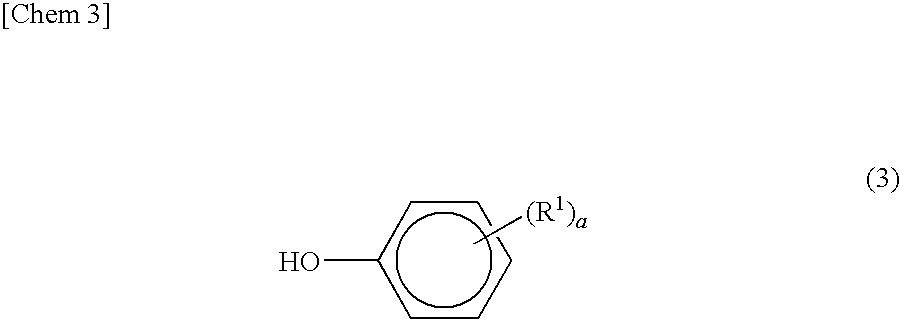
Claims (7)

1. An aromatic polycarbonate resin composition comprising 100 parts by mass of an aromatic polycarbonate resin (A) and 0.1 to 50 parts by mass of a cenosphere (B).
2. The aromatic polycarbonate resin composition according to claim 1, further comprising 100 parts by mass or less of a styrene resin and/or a polyester resin (C).
3. The aromatic polycarbonate resin composition according to claim 2, wherein the polyester resin serving as the component (C) is an aliphatic polyester.
4. The aromatic polycarbonate resin composition according to claim 3, wherein the aliphatic polyester is a polylactic acid and/or a copolymer of a lactic acid and another hydroxycarboxylic acid.
5. The aromatic polycarbonate resin composition according to claim 1, further comprising 10 parts by mass or less of a hydrolysis inhibitor (D).
6. The aromatic polycarbonate resin composition according to claim 1, further comprising 100 parts by mass or less of an inorganic filler (E) other than the component (B).
7. The aromatic polycarbonate resin composition according to claim 1, which is used for an office automation apparatus, an information and telecommunications device, an automobile part, an architectural member, or a home electric appliance.
US12/300,962 2006-05-15 2007-03-28 Aromatic polycarbonate resin composition Expired - Fee Related US7888409B2 (en)

Applications Claiming Priority (3)

Application Number Priority Date Filing Date Title
JP2006-135408 2006-05-15
JP2006135408 2006-05-15
PCT/JP2007/056617 WO2007132596A1 (en) 2006-05-15 2007-03-28 Aromatic polycarbonate resin composition

Publications (2)

Publication Number Publication Date
US20090192257A1 US20090192257A1 (en) 2009-07-30
US7888409B2 true US7888409B2 (en) 2011-02-15

Family

ID=38693698

Family Applications (1)

Application Number Title Priority Date Filing Date
US12/300,962 Expired - Fee Related US7888409B2 (en) 2006-05-15 2007-03-28 Aromatic polycarbonate resin composition

Country Status (6)

Country Link
US (1) US7888409B2 (en)
JP (1) JP5351514B2 (en)
CN (1) CN101443411B (en)
DE (1) DE112007001175T5 (en)
TW (1) TW200804508A (en)
WO (1) WO2007132596A1 (en)

Cited By (8)

* Cited by examiner, † Cited by third party
Publication number Priority date Publication date Assignee Title
US20110272819A1 (en) * 2010-05-07 2011-11-10 Samsung Electronics Co., Ltd. Wafer level package and methods of fabricating the same
US20130158161A1 (en) * 2011-12-19 2013-06-20 Cheil Industries Inc. Polycarbonate Resin Composition with Mar Resistance and Scratch Resistance
WO2014072802A2 (en) 2012-11-09 2014-05-15 Council Of Scientific & Industrial Research Synthesis of dimethyl carbonate and related compounds
WO2015097112A1 (en) * 2013-12-27 2015-07-02 Synthos Dwory 7 Spolka Z Ograniczona Odpowiedzialnoscia S.K.A. Use of cenospheres for improving the self-extinguishing properties of polymer foam prepared from vinyl aromatic monomer and containing athermanous additive
US9359500B2 (en) 2012-12-28 2016-06-07 Cheil Industries Inc. Resin compositions and articles including the same
US9540508B2 (en) 2013-12-27 2017-01-10 Samsung Sdi Co., Ltd. Thermoplastic resin composition
US9790703B1 (en) 2016-08-16 2017-10-17 Go Team CCR LLC Methods of utilizing coal combustion residuals and structures constructed using such coal combustion residuals
US9988317B2 (en) 2016-08-16 2018-06-05 Go Team CCR LLC Structures constructed using coal combustion materials

Families Citing this family (11)

* Cited by examiner, † Cited by third party
Publication number Priority date Publication date Assignee Title
JP5326232B2 (en) * 2007-06-29 2013-10-30 東レ株式会社 Resin composition and molded article comprising the same
WO2009014050A1 (en) * 2007-07-24 2009-01-29 Teijin Chemicals Ltd. Flame-retardant resin composition
JP5654744B2 (en) * 2009-11-20 2015-01-14 出光興産株式会社 Polycarbonate resin composition
JP5695866B2 (en) * 2010-09-08 2015-04-08 ダイセルポリマー株式会社 Flame retardant resin composition
JP5684548B2 (en) * 2010-11-30 2015-03-11 帝人株式会社 Glass fiber reinforced resin composition
TWI549986B (en) 2011-05-19 2016-09-21 三菱瓦斯化學股份有限公司 A high-flow polycarbonate copolymer, a method for producing a high molecular weight aromatic polycarbonate resin, and an aromatic polycarbonate compound
ES2648892T3 (en) * 2011-11-30 2018-01-08 Covestro Deutschland Ag Molding body with high surface quality
JP6252181B2 (en) * 2014-01-09 2017-12-27 三菱エンジニアリングプラスチックス株式会社 Aromatic polycarbonate resin composition and molded article thereof
KR20160129059A (en) * 2014-03-04 2016-11-08 에프알엑스 폴리머스, 인코포레이티드 Epoxy compositions
ES2773535T3 (en) 2015-10-05 2020-07-13 Albany Int Corp Compositions and methods to improve the abrasion resistance of polymeric components
KR102631534B1 (en) 2017-06-28 2024-01-30 이데미쓰 고산 가부시키가이샤 Polycarbonate-based resin composition and molded article thereof

Citations (11)

* Cited by examiner, † Cited by third party
Publication number Priority date Publication date Assignee Title
JP2000017085A (en) 1998-07-02 2000-01-18 Okura Ind Co Ltd Plastic film using fly ash
JP2001288370A (en) 2000-04-07 2001-10-16 Toray Ind Inc Resin composition and film made from the same
US20040211942A1 (en) 2003-04-28 2004-10-28 Clark Darren Cameron Electrically conductive compositions and method of manufacture thereof
JP2005048067A (en) 2003-07-29 2005-02-24 Teijin Chem Ltd Aromatic polycarbonate resin composition
JP2005048066A (en) 2003-07-29 2005-02-24 Teijin Chem Ltd Aromatic polycarbonate resin composition
US20050070657A1 (en) 2003-09-29 2005-03-31 Mark Elkovitch Conductive thermoplastic compositions, methods of manufacture and articles derived from such compositions
JP2005515932A (en) 2002-01-29 2005-06-02 コラス ユーケイ リミテッド Laminated body and method for producing the same
JP2005272808A (en) 2004-02-27 2005-10-06 Nec Corp Flame retardant resin composition
WO2005108489A1 (en) 2004-05-11 2005-11-17 Idemitsu Kosan Co., Ltd. Polycarbonate resin composition and molded article
US20060036035A1 (en) 2004-08-16 2006-02-16 Luc Govaerts Polycarbonate compositions, articles, and method of manufacture
JP2006111858A (en) 2004-09-17 2006-04-27 Toray Ind Inc Resin composition and molded article comprising the same

Family Cites Families (13)

* Cited by examiner, † Cited by third party
Publication number Priority date Publication date Assignee Title
US1995970A (en) 1931-04-04 1935-03-26 Du Pont Polymeric lactide resin
US2362511A (en) 1939-11-21 1944-11-14 Du Pont Modified glycolide resins
US2683136A (en) 1950-10-25 1954-07-06 Du Pont Copolymers of hydroxyacetic acid with other alcohol acids
US3635956A (en) 1968-03-01 1972-01-18 Squibb & Sons Inc Benzothiazines related compounds derivatives and salts thereof
US3797499A (en) 1970-05-13 1974-03-19 Ethicon Inc Polylactide fabric graphs for surgical implantation
US3832419A (en) 1973-03-23 1974-08-27 Gen Electric Organopolysiloxane-polycarbonate block copolymers
JP2890648B2 (en) 1990-04-11 1999-05-17 三菱瓦斯化学株式会社 Flame retardant polycarbonate resin composition
JP2981572B2 (en) 1990-11-30 1999-11-22 三菱瓦斯化学株式会社 Polycarbonate resin composition
JP3037588B2 (en) 1994-07-15 2000-04-24 出光石油化学株式会社 Polycarbonate resin composition
JPH08302178A (en) 1995-04-28 1996-11-19 Mitsubishi Eng Plast Kk Polycarbonate resin composition
JP3457805B2 (en) 1996-06-28 2003-10-20 三菱エンジニアリングプラスチックス株式会社 Polycarbonate resin composition
JP5086499B2 (en) 2000-06-28 2012-11-28 出光興産株式会社 Polycarbonate resin composition and molded product
CN1493754A (en) * 2002-10-30 2004-05-05 毅 赵 Expansion fireproof coated (rolled) material

Patent Citations (14)

* Cited by examiner, † Cited by third party
Publication number Priority date Publication date Assignee Title
JP2000017085A (en) 1998-07-02 2000-01-18 Okura Ind Co Ltd Plastic film using fly ash
JP2001288370A (en) 2000-04-07 2001-10-16 Toray Ind Inc Resin composition and film made from the same
JP2005515932A (en) 2002-01-29 2005-06-02 コラス ユーケイ リミテッド Laminated body and method for producing the same
US20040211942A1 (en) 2003-04-28 2004-10-28 Clark Darren Cameron Electrically conductive compositions and method of manufacture thereof
WO2004097852A1 (en) 2003-04-28 2004-11-11 General Electric Company Electrically conductive compositions and method of manufacture thereof
JP2005048067A (en) 2003-07-29 2005-02-24 Teijin Chem Ltd Aromatic polycarbonate resin composition
JP2005048066A (en) 2003-07-29 2005-02-24 Teijin Chem Ltd Aromatic polycarbonate resin composition
US20050070657A1 (en) 2003-09-29 2005-03-31 Mark Elkovitch Conductive thermoplastic compositions, methods of manufacture and articles derived from such compositions
WO2005034144A1 (en) 2003-09-29 2005-04-14 General Electric Company Conductive thermoplastic compositions, methods of manufacture and articles derived from such compositions
JP2005272808A (en) 2004-02-27 2005-10-06 Nec Corp Flame retardant resin composition
WO2005108489A1 (en) 2004-05-11 2005-11-17 Idemitsu Kosan Co., Ltd. Polycarbonate resin composition and molded article
US20060036035A1 (en) 2004-08-16 2006-02-16 Luc Govaerts Polycarbonate compositions, articles, and method of manufacture
JP2006077240A (en) 2004-08-16 2006-03-23 General Electric Co <Ge> Polycarbonate composition, article and method for producing the article
JP2006111858A (en) 2004-09-17 2006-04-27 Toray Ind Inc Resin composition and molded article comprising the same

Cited By (10)

* Cited by examiner, † Cited by third party
Publication number Priority date Publication date Assignee Title
US20110272819A1 (en) * 2010-05-07 2011-11-10 Samsung Electronics Co., Ltd. Wafer level package and methods of fabricating the same
US8779576B2 (en) * 2010-05-07 2014-07-15 Samsung Electronics Co., Ltd. Wafer level package and methods of fabricating the same
US20130158161A1 (en) * 2011-12-19 2013-06-20 Cheil Industries Inc. Polycarbonate Resin Composition with Mar Resistance and Scratch Resistance
WO2014072802A2 (en) 2012-11-09 2014-05-15 Council Of Scientific & Industrial Research Synthesis of dimethyl carbonate and related compounds
US9359500B2 (en) 2012-12-28 2016-06-07 Cheil Industries Inc. Resin compositions and articles including the same
WO2015097112A1 (en) * 2013-12-27 2015-07-02 Synthos Dwory 7 Spolka Z Ograniczona Odpowiedzialnoscia S.K.A. Use of cenospheres for improving the self-extinguishing properties of polymer foam prepared from vinyl aromatic monomer and containing athermanous additive
US9540508B2 (en) 2013-12-27 2017-01-10 Samsung Sdi Co., Ltd. Thermoplastic resin composition
US9790703B1 (en) 2016-08-16 2017-10-17 Go Team CCR LLC Methods of utilizing coal combustion residuals and structures constructed using such coal combustion residuals
US9988317B2 (en) 2016-08-16 2018-06-05 Go Team CCR LLC Structures constructed using coal combustion materials
US10301223B2 (en) 2016-08-16 2019-05-28 Go Team CCR LLC Beneficial use structures

Also Published As

Publication number Publication date
CN101443411A (en) 2009-05-27
CN101443411B (en) 2011-11-30
US20090192257A1 (en) 2009-07-30
JPWO2007132596A1 (en) 2009-09-24
WO2007132596A1 (en) 2007-11-22
JP5351514B2 (en) 2013-11-27
TW200804508A (en) 2008-01-16
DE112007001175T5 (en) 2009-04-16

Similar Documents

Publication Publication Date Title
US7888409B2 (en) Aromatic polycarbonate resin composition
KR101245408B1 (en) Polycarbonate resin composition and molded body
CN101175804A (en) High flow polyester compositions
CN105264017A (en) Blended thermoplastic compositions with improved impact strength and flow
WO2001029135A1 (en) Polycarbonate resin composition
JPWO2009037974A1 (en) Thermoplastic resin composition and molded article comprising the same
JP2006335909A (en) Components for electronic equipment
US20090186207A1 (en) Polycarbonate resin composition, molded article thereof, film, and sheet
CN102015895B (en) Thermoplastic resin composition and molded article
CN102015894A (en) Thermoplastic resin composition and molded article
JP2005112994A (en) Thermoplastic resin composition
JP4674811B2 (en) Thermoplastic resin composition
US8466225B2 (en) Aromatic polycarbonate resin composition and molded body thereof
JP3989630B2 (en) Carbon fiber reinforced aromatic polycarbonate resin composition and electronic device casing comprising the same
JP5111456B2 (en) Method for using aromatic polycarbonate resin composition for exterior material of OA equipment or home appliance
JP2008095046A (en) Aromatic polycarbonate resin composition and electronic device casing
KR20210067097A (en) Flame retarding polycarbonate alloy resin composition
JP3106616B2 (en) High impact polyester composition
JP3524271B2 (en) Resin composition and molded article comprising the same
JP2006249348A (en) Thermoplastic resin composition
JPH08120183A (en) Permanent antistatic resin composition
JP2004352823A (en) Thermoplastic resin composition
JP2024070401A (en) Thermoplastic resin composition and molded article made thereof
KR100895493B1 (en) Natural fiber reinforced polylactic acid resin composition
JPH0598134A (en) Liquid crystal polyester composition

Legal Events

Date Code Title Description
AS Assignment

Owner name: IDEMITSU KOSAN CO., LTD., JAPAN

Free format text: ASSIGNMENT OF ASSIGNORS INTEREST;ASSIGNORS:HAYATA, YUSUKE;NODERA, AKIO;REEL/FRAME:021894/0620

Effective date: 20081022

FEPP Fee payment procedure

Free format text: PAYOR NUMBER ASSIGNED (ORIGINAL EVENT CODE: ASPN); ENTITY STATUS OF PATENT OWNER: LARGE ENTITY

FEPP Fee payment procedure

Free format text: PAYER NUMBER DE-ASSIGNED (ORIGINAL EVENT CODE: RMPN); ENTITY STATUS OF PATENT OWNER: LARGE ENTITY

Free format text: PAYOR NUMBER ASSIGNED (ORIGINAL EVENT CODE: ASPN); ENTITY STATUS OF PATENT OWNER: LARGE ENTITY

REMI Maintenance fee reminder mailed
LAPS Lapse for failure to pay maintenance fees
STCH Information on status: patent discontinuation

Free format text: PATENT EXPIRED DUE TO NONPAYMENT OF MAINTENANCE FEES UNDER 37 CFR 1.362

STCH Information on status: patent discontinuation

Free format text: PATENT EXPIRED DUE TO NONPAYMENT OF MAINTENANCE FEES UNDER 37 CFR 1.362

FP Lapsed due to failure to pay maintenance fee

Effective date: 20150215