US7809742B2 - Content management method, apparatus, and system - Google Patents
Content management method, apparatus, and system Download PDFInfo
- Publication number
- US7809742B2 US7809742B2 US11/733,288 US73328807A US7809742B2 US 7809742 B2 US7809742 B2 US 7809742B2 US 73328807 A US73328807 A US 73328807A US 7809742 B2 US7809742 B2 US 7809742B2
- Authority
- US
- United States
- Prior art keywords
- content
- identification information
- area
- recorded
- information
- Prior art date
- Legal status (The legal status is an assumption and is not a legal conclusion. Google has not performed a legal analysis and makes no representation as to the accuracy of the status listed.)
- Expired - Fee Related, expires
Links
Images




Classifications
-
- G—PHYSICS
- G06—COMPUTING OR CALCULATING; COUNTING
- G06F—ELECTRIC DIGITAL DATA PROCESSING
- G06F16/00—Information retrieval; Database structures therefor; File system structures therefor
- G06F16/20—Information retrieval; Database structures therefor; File system structures therefor of structured data, e.g. relational data
- G06F16/23—Updating
- G06F16/2308—Concurrency control
Definitions
- the present invention relates to content management technology for collectively managing a plurality of contents in a device configuration that is connected by a network.
- a standard communications protocol called “universal plug and play (UPnP)” is becoming widely used in such cases to realize operations and notification of abilities between the plurality of devices. Further, standard communications protocols such as digital living network alliance (DLNA) that is an extension of universal plug and play (UPnP) are also in widespread use. For these kinds of communications protocols, a system called “content directory service (CDS)” exists that manages the stored content and sends the information thereof to the outside.
- DLNA digital living network alliance
- CDS content directory service
- an apparatus that has a storage function operates as a content server that provides content stored inside the apparatus.
- the content stored in the content server can be utilized from an arbitrary operation terminal without depending on the apparatus or OS. That is, the content server manages a list of the stored content (content list), and discloses this list to the operation terminal to make it possible to refer to the content managed in the server from the outside. Further, the operation terminal can perform an operation to, for example, display, playback, edit, duplicate, move, or search the content stored inside each content server.
- each content server issues an identifier (hereunder, ID) in accordance with the above described communications protocol for the stored content, and assigns this ID to the aforementioned metadata to carry out management of the metadata. It is also possible to refer to this metadata from the content list that each content server makes publicly available.
- GUID Global Unique ID
- Japanese Patent Laid-Open No. 2004-234158 proposes a system that collectively manages content by each content server adding and embedding a GUID in a unique region of metadata, and then maintaining that GUID even when the content is moved.
- Japanese Patent Laid-Open No. 2005-063144 proposes a system in which an attribute assigning apparatus assigns a GUID when a user requests the attribute assigning apparatus to register content using a dedicated operation terminal.
- 9-223130 proposes a data management system in which, with regard to assignment of a GUID, when a dedicated operation apparatus notifies a dedicated management apparatus of the details of an operation with respect to content, the dedicated management apparatus assigns a GUID in accordance with the notified operation.
- the present invention was made in view of the above described problems, and provides a content management apparatus, method, and system that can maintain the consistency of content identification information even when a content operation such as copying or movement occurs in a content management system having a plurality of content servers.
- a managing apparatus adapted to manage a content that is possessed by a device in a system including one or more devices, wherein,
- attendant information having a first area in which a device that possesses the content in question records a first identification information for uniquely identifying the content and a second area in which the managing apparatus records a second identification information for uniquely identifying the content in the system and the first identification information that is recorded in the first area;
- the managing apparatus comprising:
- a first search unit adapted to, upon receipt of a notification from a device to the effect that a content configuration is changed, search for a content for which the first identification information that is recorded in the first area and the second area, respectively, of the attendant information are different from among contents that are possessed by the device in question;
- a determination unit adapted to determine whether or not the second identification information that is recorded in the second area of the attendant information of a content that is searched for and retrieved by the first search unit is unique among content in the system
- an update unit adapted to, when the determination unit determines that the second identification information of the attendant information of the content that is retrieved is not unique, update the first identification information that is recorded in the second area of the attendant information with the first identification information that is recorded in the first area of the attendant information, and update the second identification information to identification information that is unique in the system.
- a managing system in which one or more devices and a managing apparatus are communicably connected and a content possessed by a device is managed by the managing apparatus, wherein,
- attendant information having a first area in which a device that possesses the content in question records a first identification information for uniquely identifying the content and a second area in which the managing apparatus records a second identification information for uniquely identifying the content in the system and the first identification information that is recorded in the first area;
- the managing apparatus comprising:
- a first search unit adapted to, upon receipt of a notification from a device to the effect that a content configuration is changed, search for a content for which the first identification information that is recorded in the first area and the second area, respectively, of the attendant information are different from among contents that are possessed by the device in question;
- a determination unit adapted to determine whether or not the second identification information that is recorded in the second area of the attendant information of a content that is searched for and retrieved by the first search unit is unique among contents in the system
- an update unit adapted to, when the determination unit determines that the second identification information of the attendant information of the content that is retrieved is not unique, update the first identification information that is recorded in the second area of the attendant information with the first identification information that is recorded in the first area of the attendant information, and update the second identification information to identification information that is unique in the system.
- attendant information having a first area in which a device that possesses the content in question records a first identification information for uniquely identifying the content, and a second area in which the managing apparatus records a second identification information for uniquely identifying the content in the system and the first identification information that is recorded in the first area;
- a first search step of, when a notification to the effect that a content configuration is changed is received from a device, searching for a content for which the first identification information that is recorded in the first area and the second area, respectively, of the attendant information are different from among contents that are possessed by the device in question;
- FIG. 1 is a view showing a configuration example of a content management system according to an embodiment described herein;
- FIG. 2 is a block diagram showing a hardware configuration example of a management apparatus in the content management system according to the embodiment
- FIG. 3 is a block diagram showing a hardware configuration example of an operation apparatus in the content management system according to the embodiment
- FIG. 4 is a block diagram showing a hardware configuration example of a content server in the content management system according to the embodiment
- FIG. 5A is a view showing a configuration example of metadata of content according to the embodiment.
- FIG. 5B is a view showing a specific description example of metadata of content according to the embodiment.
- FIG. 6 is a view showing a description example of a content list according to the embodiment.
- FIG. 7 is a correlation diagram with respect to content and metadata according to the embodiment.
- FIG. 8 is a view showing the sequence of operations when a content server is discovered in the content management system of the embodiment.
- FIG. 9 is a view showing the sequence of operations at the time of a new registration in the content management system of the embodiment.
- FIG. 10 is a view showing the sequence of operations when copying content in the content management system of the embodiment.
- FIG. 11 is a view showing the sequence of operations when moving content in the content management system according to the embodiment.
- FIG. 12A is a flowchart that shows the operations of an operation apparatus according to the embodiment.
- FIG. 12B is a flowchart that shows the operations of an operation apparatus according to the embodiment.
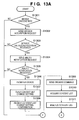
- FIG. 13A is a flowchart that shows the operations of a management apparatus according to the embodiment when a content server is discovered;
- FIG. 13B is a flowchart that shows the operations of a management apparatus according to the embodiment when a content server is discovered;
- FIG. 14A is a flowchart that shows the operations of a management apparatus according to the embodiment when performing a content operation (registration of new content, moving or copying content);
- FIG. 14B is a flowchart that shows the operations of a management apparatus according to the embodiment when performing a content operation (registration of new content, moving or copying content).
- FIG. 15 is a view showing function commands and operation details for DLNA.
- a content server is an apparatus that stores and manages content, and examples thereof include a camera device, a video imaging apparatus, a PC apparatus, and a broadcast content recording/playback apparatus.
- the management apparatus is an independent apparatus from the operation apparatus and the content server.
- FIG. 1 is a view showing the configuration of a content management system according to the present embodiment.
- a management apparatus 101 connects with content servers through a wireless LAN to monitor the content inside each content server and issue identification information (hereunder, referred to as “GUID”) for uniquely managing each content inside the system.
- Operation apparatuses 102 a and 102 b are connected with a wireless LAN.
- the operation apparatuses 102 a and 102 b perform operations such as browsing, searching, editing, moving, and copying content data that is recorded in each content server (denoted by reference numerals 103 a to 103 d in FIG. 1 ).
- the operation apparatuses 102 a and 102 b are referred to generically as “operation apparatus 102 ”.
- the broadcast content recording/playback apparatus 103 a can receive, record, and playback broadcast content, and can also function as a content server that can provide recorded broadcast content and the like to an external device. More specifically, the broadcast content recording/playback apparatus 103 a is connected to the wireless LAN, and in accordance with an instruction from the operation apparatus 102 , provides content to an external device within the system, transfers content to another content server, or receives content from another content server.
- the camera device 103 b can capture still images or low resolution moving images and create thumbnails, and also functions as a content server that can provide that image content and the like to an external device. More specifically, the camera device 103 b is connected to the wireless LAN, and in accordance with an instruction from the operation apparatus 102 , can provide image data to an external device inside the system, transfer content to a content server, or receive content from another content server.
- the video imaging apparatus 103 c can capture high resolution moving images, and also functions as a content server that can provide the captured moving image content and the like to an external device. More specifically, the video imaging apparatus 103 c is connected to the wireless LAN, and in accordance with an instruction from the operation apparatus 102 , transfers content to another content server inside the system or receives content from another content server.
- the personal computer (PC) 103 d is connected with the wireless LAN, and creates, edits, stores and delivers content.
- the PC 103 d also functions as a content server.
- the PC 103 d can transfer content to another content server inside the system or receive content from another content server.
- the broadcast content recording/playback apparatus 103 a the camera device 103 b , the video imaging apparatus 103 c , and the PC 103 d are referred to generically as “content servers 103 ”.
- FIG. 2 is a block diagram showing an example of the hardware configuration of the management apparatus 101 according to the present embodiment.
- the management apparatus 101 has a central processing unit (CPU) 201 , a ROM 202 and a RAM 203 .
- the CPU 201 implements various kinds of control including processing that is described later by executing control programs stored in the ROM 202 or the RAM 203 .
- a protocol control unit 204 performs control for operations such as communication connection between each device, reading/writing of metadata, and content searches.
- a device managing unit 205 manages the devices of the content server that is discovered by connection.
- An ability detection unit 206 detects the ability and resources of each device that is connected in the system.
- a metadata analysis unit 207 analyzes the metadata of received content (described in detail by FIGS. 5A and 5B ), and reads out the GUID and other data.
- a metadata creation/writing unit 208 creates metadata such as is shown in FIGS. 5A and 5B , and writes that metadata in each of the content servers 103 .
- a GUID issuing unit 209 issues a GUID that uniquely manages content within the content management system in question by creating a unique ID using a random number that is generated based on the identification ID of the management apparatus or the time or the like.
- a content managing unit 210 manages content that is stored in the content servers 103 .
- a content list change detection unit 211 detects a change in a content list of the content servers 103 .
- the content list change detection unit 211 sets the content servers 103 such that they generate an event when a content list is changed, and the content list change detection unit 211 can thus detect a change in a content list by detecting that event.
- a search control unit 212 creates a conditional expression utilizing metadata to search the content stored in the respective content servers 103 .
- a communication control unit 213 performs communication control of the wireless LAN.
- An internal bus 214 connects each of the above described units so that they can communicate with each other.
- At least one part thereof may also be realized by the CPU 201 executing a predetermined control program that is stored in the ROM 202 or the RAM 203 .
- FIG. 3 is a block diagram showing an example of the hardware configuration of the operation apparatus 102 .
- the operation apparatus 102 has a central processing unit (CPU) 301 , a ROM 302 and a RAM 303 .
- the CPU 301 implements various kinds of control including processing that is described later by executing control programs stored in the ROM 302 or the RAM 303 .
- a protocol control unit 304 performs control for operations such as communication connection between each device, reading and writing of metadata, and content searches.
- a device managing unit 305 manages the devices of the content server that is discovered by connection.
- An ability detection unit 306 detects the ability and resources of connected devices in the system.
- a metadata analysis unit 307 analyzes the metadata of received content (for example, metadata shown in FIGS. 5A and 5B ), and reads out the GUID or other data.
- An operation command input unit 308 inputs an operation command from a user.
- a metadata creation/alteration unit 309 performs creation, insertion and alteration of data with respect to metadata such as is shown in FIGS. 5A and 5B .
- a content reading unit 310 reads out content that is stored in the respective content servers 103 for browsing and editing and the like.
- a content creation unit 311 creates and registers new content.
- a content writing unit 312 writes newly created content or edited content in the content servers 103 .
- a content editing unit 313 edits content that is read out with the content reading unit 310 .
- a display unit 314 displays data such as content, a content list, and a thumbnail.
- a communication control unit 315 performs communication control of the wireless LAN.
- An internal bus 316 connects each of the above described units so that they can communicate with each other.
- At least one part thereof may also be realized by the CPU 301 executing a predetermined control program that is stored in the ROM 302 or the RAM 303 .
- FIG. 4 is a block diagram showing a hardware configuration example of a common portion of the content servers 103 shown in FIG. 1 .
- the content servers 103 possess devices that realize a built-in imaging function or broadcast data receiving function or the like in the respective content servers 103 .
- the devices By connecting those devices with a main control unit as shown in FIG. 4 through a device I/F unit 412 , the devices function as the broadcast content recording/playback apparatus 103 a , the camera device 103 b or the video imaging apparatus 103 c .
- the main control unit performs storage and management of content.
- the content servers 103 have a central processing unit (CPU) 401 , a ROM 402 and a RAM 403 .
- the CPU 401 implements various kinds of control including processing that is described later by executing control programs that are stored in the ROM 402 or the RAM 403 .
- a protocol control unit 404 performs control for operations such as communication connection between each device, reading/writing of metadata, and content searches.
- a device managing unit 405 manages the devices of the content server that is discovered by connection.
- An ability detection unit 406 detects the ability and resources of the devices that are connected in the system.
- a content storage unit 407 for example, includes a hard disk and stores content and the metadata thereof.
- a content managing unit 408 manages content that is stored in the content server 103 , and attaches system data such as an object ID to metadata.
- a content list managing unit 409 performs management such as adding or changing content for a content list that lists the content inside a content server as shown in FIG. 6 .
- a content list change notifying unit 410 is a unit that, when a change occurs in a content list inside a content server, notifies the designated apparatus to that effect, or sets a change flag in internal data.
- a metadata creation/alteration unit 411 creates and adds metadata such as is shown in FIG. 5B to content inside a content server.
- the device I/F unit 412 is an interface for connecting a device that provides a particular function to each apparatus such as a camera or a broadcast data tuner.
- a communication control unit 413 performs communication control of the wireless LAN.
- An internal bus 414 connects each of the above described units so that they can communicate with each other.
- At least one part thereof may also be realized by the CPU 401 executing a predetermined control program that is stored in the ROM 402 or the RAM 403 .
- FIG. 5A is a view showing attendant information (metadata) corresponding to content according to the present embodiment.
- a metadata 522 that is linked to a content 521 has a server management area 523 and a system management area 502 .
- Identification information for enabling the content server 103 that has the content 521 to uniquely identify that content is recorded by the content server 103 in the server management area 523 .
- the content 521 and the metadata 522 that is the attendant information thereof are associated by identification information (in the present embodiment, an object ID 501 described later) that is recorded in the server management area 523 .
- identification information in the system management area 502 , identification information (GUID) for uniquely identifying the content inside the relevant system is recorded by the management apparatus 101 .
- identification information that is recorded in the server management area 523 is also recorded in the system management area 502 by the management apparatus 101 . Further, the identification information that is recorded in the server management area 523 is identification information (an object ID) that is unique within the relevant content server 103 .
- FIG. 5B is a view showing a more specific data configuration example of the metadata 522 that is attached to the content according to the present embodiment.
- the description “item” is a description that is supplied to the server management area 523 , and is identification information of the relevant content inside the CDS, and includes data such as “id”, that is, object ID 501 , and a parent ID that shows the directory in which the content in question exists.
- These “item” contents i.e. the server management area 523
- a “desc” provides the system management area 502 that can be freely set by the management apparatus 101 for each content, and is identified by a unique nameSpace.
- a management nameSpace is set in this area, and an area that stores a UUID 503 that identifies a device (content server), an area that stores an object ID 504 , and an area that stores a GUID 505 are created.
- a “res” 506 is data that shows the location of the actual content (content 521 ), in which each metadata and a Resource URI 507 as the location of the content are described.
- the “res” 506 is managed by each content server.
- standard metadata 508 such as a Dublin Core (dc) and UPnP also exists.
- FIG. 6 is a view showing an example of the data configuration of a content list according to the present embodiment.
- the data configuration of a content list according to the DIDL-Lite format used in DLNA is shown.
- An “item” 601 indicates content, and a “container” 602 designates a directory.
- the “item” 601 and the “container” 602 are respectively managed by the content server 103 .
- the configuration shown in FIG. 5B and FIG. 6 is the fundamental configuration that carries out the CDS.
- FIG. 7 is a view showing the correlation between metadata and the behavior of content when content is subjected to an operation inside the system.
- the management apparatus 101 the camera device 103 b (CDS UUID is 1) as the content server of the CDS, and the PC 103 d (CDS UUID is 2) exist, and a content operation is performed.
- the CDS and the UPnP device correspond 1:1, one UUID is allocated for one CDS.
- a logical device such as a UPnP device and a physical device correspond 1:1.
- a plurality of UPnP devices it is also possible for a plurality of UPnP devices to exist inside one apparatus, and for the content inside a plurality of apparatuses to be managed with a single UPnP device. Accordingly, in FIG. 7 , although a situation is shown in which the CDS corresponds 1:1 with physical devices in the form of the camera device 103 b and the PC 103 d , a case in which the CDS includes a plurality of physical devices or in which one physical device has a plurality of CDSs is also possible. More specifically, the correspondence between a UUID and a physical device is not limited to a 1:1 correspondence.
- Content A 701 is content that is newly created with the operation apparatus 102 , and the UUID is set to 1 and the object ID 501 is set to 6 at the CDS.
- the state shown in the figure is the state immediately after the content A 701 is registered in the camera device 103 b (content server), and setting by the management apparatus 101 with respect to the UUID 503 , the object ID 504 and the GUID 505 of the system management area 502 has not yet been performed.
- a content B 702 is content that was edited by the operation apparatus 102 , and the UUID is set to 1 and the object ID 501 is set to 2 at the CDS. Further, for the system management area 502 the UUID 503 is set as 1, the object ID 504 is set as 2 and the GUID 505 is set as 12, and these do not change after editing.
- a content C 703 is content that was moved within the content server (CDS) by the operation apparatus 102 .
- the UUID of the content C 703 at the CDS is set to 1 and the object ID 501 is set to 3. Further, for the system management area 502 the UUID 503 is set as 1, the object ID 504 is set as 3 and the QUID 505 is set as 13, and these do not change after moving.
- a content D 704 is content that was moved between content servers (from the camera device 103 b to the PC 103 d ) by the operation apparatus 102 .
- the UUID is set to 1 and the object ID 501 is set to 4 at the CDS.
- the UUID is set to 2 and the object ID 501 is set to 1 at the CDS by the PC 103 d .
- the UUID 503 , the object ID 504 , and the GUID 505 remain set as 1, 4 and 14, respectively, in the system management area 502 . These IDs will be changed by the management apparatus 101 .
- a content E 705 is content that was copied between content servers (from the camera device 103 b to the PC 103 d ) by the operation apparatus 102 .
- the UUID is set to 1 and the object ID 501 is set to 5 at the CDS.
- the UUID is set to 2 and the object ID 501 is set to 2 at the CDS by the PC 103 d .
- the UUID 503 , the object ID 504 , and the GUID 505 are set as 1, 5, and 15, respectively, in the system management area 502 , and these IDs will be changed by the management apparatus 101 .
- a content F 706 is content that was copied within a content server (PC 103 d ) by the operation apparatus 102 .
- the UUID is set to 2 and the object ID 501 is set to 3 at the CDS.
- the UUID is set to 2 and the object ID 501 is set to 4 at the CDS (a new object ID 501 is assigned by the content server (CDS) when the copy operation is performed).
- the UUID 503 , the object ID 504 , and the GUID 505 of the system management area 502 in the metadata of the content F 706 a are set as 2, 3, and 23, respectively, these will be updated by the management apparatus 101 (update processing by the management apparatus 101 is described later).
- FIG. 8 is a view showing the sequence of operations when a content server is discovered by the content management system of the present embodiment.
- Reference numerals 801 to 807 denote steps in the device discovery sequence performed by normal UPnP operations between the operation apparatus 102 and the camera device 103 b as a content server.
- Reference numerals 808 to 821 denote steps in a sequence of operations performed between the management apparatus 101 and the PC 103 d as a content server when the management apparatus 101 discovers the PC 103 d as a new terminal. This sequence is described later referring to FIGS. 13A and 13B .
- this device discovery processing is the same as the device discovery processing between the operation apparatus 102 and the camera device 103 b .
- device discovery processing with respect to the camera device 103 b by the management apparatus 101 is omitted from the figure, this device discovery processing is the same as the device discovery processing between the management apparatus 101 and the PC device 103 d.
- FIG. 9 is a view showing the sequence of operations at the time of a new content registration according to the content management system of the present embodiment.
- FIG. 9 shows the sequence of operations when a new content A 701 is registered in the camera device 103 b by the operation apparatus 102 .
- FIG. 10 is a view showing the sequence of operations when copying content between content servers according to the content management system of the present embodiment.
- FIG. 10 shows the sequence of operations when content E 705 is copied from the camera device 103 b to the PC 103 d by the operation apparatus 102 .
- FIG. 11 is a view showing the sequence of operations when moving content between content servers according to the content management system of the present embodiment.
- FIGS. 9 to 11 shows the sequence of operations when content D 704 is moved from the camera device 103 b to the PC 103 d by the operation apparatus 102 .
- the operations of the system of the present embodiment that are illustrated using FIGS. 9 to 11 will be described later with reference to the flowcharts shown in FIGS. 12 A and 12 B, 13 A and 13 B, and 14 A and 14 B.
- FIG. 15 shows the details of some of the commands that are defined by the DLNA communications protocol.
- the commands shown in FIG. 15 are mainly commands that are used in the present embodiment.
- processing of the content management system according to the present embodiment will be described in detail.
- FIGS. 12A and 12B are flowcharts that describe the processing procedures in the operation apparatus 102 .
- An example will now be described in which, as shown in FIG. 8 , the camera device 103 b having a content server function enters into the system and is discovered and registered by the operation apparatus 102 .
- the protocol control unit 304 of the operation apparatus 102 When the protocol control unit 304 of the operation apparatus 102 discovers a device by receiving a device discovery command ( 801 ) from an external apparatus, the protocol control unit 304 sends a service acquisition request ( 802 ) that requests the details of the service of the device (steps S 1201 and S 1202 ).
- FIG. 8 illustrates a case in which a device discovery command is received from the camera device 103 b .
- the camera device 103 b sends a service details notification ( 803 ) in response to the service acquisition request ( 802 ).
- the ability detection unit 306 of the operation apparatus 102 sends an ability notification request ( 804 ) for recognizing the ability of the camera device 103 b (steps S 1203 and S 1204 ).
- the camera device 103 b sends an ability notification ( 805 ) in response to the ability notification request ( 804 ).
- the ability detection unit 306 of the operation apparatus 102 registers the information and UUID of that device in the device managing unit 305 (steps S 1205 and S 1206 ).
- step S 1203 and step S 1205 if a service details notification is not received or if an ability notification cannot be received, or if it is found as the result of the ability notification that the device does not have a function as a content server, the processing ends.
- the protocol control unit 304 sends a Browse command ( 806 ) to the camera device 103 b (steps S 1207 and S 1208 ).
- the camera device 103 b sends a content list ( 807 ) as shown in FIG. 6 .
- the operation apparatus 102 displays the content list on the display unit 314 (step S 1209 ).
- the content as the object of new registration is created by the content creation unit 311 .
- the metadata creation/alteration unit 411 of the camera device 103 b creates metadata according to the CreateObject command ( 903 ), and sends a creation result notification ( 904 ). Through this processing, the fundamental new metadata is created inside the camera device 103 b .
- the content managing unit 408 of the camera device 103 b issues an object ID in relation to the created metadata, and records this as the object ID 501 of the metadata in question in the server management area 523 .
- the metadata creation/alteration unit 309 of the operation apparatus 102 receives the creation result notification ( 904 ) from the camera device 103 b (step S 1212 ). Subsequently, the metadata creation/alteration unit 309 creates metadata that shows the actual location of the content that is the new registration object, and sends an ImportResource command ( 905 ) from the protocol control unit 304 (step S 1213 ). At the camera device 103 b that receives the ImportResource command ( 905 ), the content is transferred ( 906 ) from the location that is designated according to the ImportResource command, and stored in the content storage unit 407 . A transfer result notification ( 907 ) is then returned to the operation apparatus 102 .
- the operation apparatus 102 Upon receiving this transfer result notification, the operation apparatus 102 completes the operation for newly registering content (step S 1215 ).
- the operation apparatus 102 when the operation apparatus 102 receives a content transfer request from the camera device 103 b , the operation apparatus 102 sends the content to the camera device 103 b.
- a CreateObject command is a command that gives the instruction for the creation of metadata.
- the CreateObject command is created based on metadata of the content that is the movement object that is registered in the content list acquired at step S 1209 .
- the metadata creation/alteration unit 411 of the PC 103 d creates metadata according to the instructions of the CreateObject command ( 1103 ), and sends a creation result notification ( 1104 ) to the operation apparatus 102 .
- the operation apparatus 102 recognizes that the metadata that is the same as the metadata of the content as the movement source was created inside the PC 103 d (step S 1218 ).
- the content managing unit 408 issues an object ID with respect to this newly created metadata and records this object ID as the object ID 501 in the server management area 523 of the newly created metadata.
- the metadata creation/alteration unit 309 of the operation apparatus 102 sets metadata showing the location of the content D 704 that is a movement object inside the camera device 103 b that is registered in the content list that was acquired at step S 1209 in an ImportResource command. It then sends the metadata as an ImportResource command ( 1105 ) from the protocol control unit 304 (step S 1219 ). At the PC 103 d that receives the ImportResource command ( 1105 ), content is transferred from the designated location in accordance with the command, received ( 1106 ), and stored in the content storage unit 407 . A transfer result notification ( 1107 ) is then sent to the operation apparatus 102 .
- the operation apparatus 102 When the operation apparatus 102 receives this transfer result notification (step S 1221 ), it deletes the content D 704 for which moving is completed from the camera device 103 b . More specifically, the operation apparatus 102 sends a DestroyObject command ( 1108 ) from the protocol control unit 304 to the camera device 103 b to delete the metadata of the movement source (step S 1222 ). Further, the operation apparatus 102 sends a DeleteResource command ( 1109 ) to the camera device 103 b through the protocol control unit 304 to delete the content of the movement source (step S 1223 ).
- a DestroyObject command 1108
- the operation apparatus 102 sends a DeleteResource command ( 1109 ) to the camera device 103 b through the protocol control unit 304 to delete the content of the movement source (step S 1223 ).
- the operation apparatus 102 sends a CreateObject command ( 1003 ) from the protocol control unit 304 to the copy destination apparatus (PC 103 d ) (steps S 1224 and S 1225 ).
- the operation apparatus 102 instructs the PC 103 d to create metadata.
- This CreateObject command ( 1003 ) is created based on metadata of the content as the copy source that is registered in the content list acquired at step S 1209 by the metadata creation/alteration unit 309 .
- the metadata creation/alteration unit 411 of the PC 103 d creates metadata in accordance with the instructions of the CreateObject command ( 1003 ), it sends a creation result notification ( 1004 ) to the operation apparatus 102 .
- the operation apparatus 102 receives this creation result notification (step S 1226 ).
- metadata that is the same as the metadata of the source content is created inside the PC 103 d .
- the content managing unit 408 of the PC 103 d issues an object ID with respect to the created metadata, and records the object ID as the object ID 501 in the server management area 523 of the created metadata.
- the metadata creation/alteration unit 309 of the operation apparatus 102 sets metadata showing the location of the content as the copy object inside the camera device 103 b that is registered in the content list that was acquired at step S 1209 in an ImportResource command. It then sends the metadata as an ImportResource command ( 1005 ) from the protocol control unit 304 (step S 1227 ).
- the metadata creation/alteration unit 411 alters the metadata in accordance with the instructions of the ImportResource command, receives content from the designated location, and stores the content in the content storage unit 407 ( 1006 ).
- the PC 103 d receives the designated content from the camera device 103 b and stores the content in the content storage unit 407 .
- the PC 103 d then sends a transfer result notification ( 1007 ) to the operation apparatus 102 .
- the operation apparatus 102 ends the copy operation processing (step S 1229 ).
- step S 1230 If a command to end operations (end operations related to content) is input from the operation command input unit 308 of the operation apparatus 102 , the present processing ends, and if a command to end operations is not input, the processing returns to step S 1201 (step S 1230 ).
- the above described processing creates new metadata when registering new content, and when copying or moving existing content, the metadata of the source content is adhered to. It is thus possible to append metadata for each content operation.
- FIGS. 13A and 13B processing performed by the management apparatus 101 when a new content server is discovered is described with reference to the flowcharts shown in FIGS. 13A and 13B .
- description is made by taking an example ( FIG. 8 ) in which the PC 103 d that has a function as a content server newly participates in the system, and is discovered and registered by the management apparatus 101 .
- the protocol control unit 204 of the management apparatus 101 discovers a device by receiving a device discovery command ( 808 ) from the PC 103 d , the protocol control unit 204 sends a service acquisition request ( 809 ) to the PC 103 d (steps S 1301 and S 1302 ).
- the PC 103 d sends a service details notification ( 810 ) in response to this service acquisition request ( 809 ).
- the ability detection unit 206 sends an ability notification request ( 811 ) for recognizing the ability of the PC 103 d (step S 1304 ).
- the PC 103 d sends an ability notification ( 812 ) in response to the ability notification request ( 811 ).
- the ability detection unit 206 determines whether or not the PC 103 d has a function of a content server.
- the device managing unit 205 registers the UUID and information of that device (step S 1306 ).
- the content list change detection unit 211 sends a content list change event setting ( 813 ) to the PC 103 d so as to send a notification at the time of a content list change (step S 1307 ).
- the PC 103 d sets itself in accordance with the content list change event setting ( 813 ) so that, when a change occurs in its own content list, the PC 103 d issues an event that notifies the content list change detection unit 211 to that effect.
- the PC 103 d then sends a content list change event confirmation ( 814 ) to the management apparatus 101 .
- the management apparatus 101 receives the content list change event confirmation ( 814 ) from the PC 103 d (step S 1308 ).
- step S 1301 , step S 1303 , and step S 1305 when a device is not discovered, service details are not notified, or an ability notification cannot be received, the present processing is ended.
- the management apparatus 101 updates the identification information in the system management area 502 for the content stored in the PC 103 d that newly participates in the system.
- the management apparatus 101 sends a Browse command ( 815 ) from the protocol control unit 304 (step S 1309 ).
- a content list ( 816 ) as shown in FIG. 6 is acquired as a result of the Browse command ( 815 ) (step S 1310 )
- the metadata analysis unit 207 analyzes the content list (step S 1311 ).
- the metadata of the content described in the content list is acquired to check whether or not data of the GUID 505 exists in the system management area 502 inside the acquired metadata.
- the GUID issuing unit 209 issues a GUID (step S 1312 and S 1313 ).
- the metadata creation/writing unit 208 then records the GUID issued as described above as the GUID 505 data in the management area 502 inside the metadata in question.
- the device managing unit 205 sets the UUID registered in relation to the PC 103 d and the object ID 601 in the content list that was read out as the UUID 503 and the object ID 504 in the system management area 502 .
- metadata that updates the system management area 502 is created (step S 1314 ).
- the protocol control unit 204 then issues an UpdateObject command 821 to the PC 103 d , and changes the corresponding metadata inside the PC 103 d as described above (step S 1315 ).
- the system IDs are compared (step S 1316 ). More specifically, the UUID of the PC 103 d that possesses the content in question that is registered in the device managing unit 205 and the UUID 503 of the system management area 502 are compared. Further, the object ID 501 of the content in question that is in the content list that was read in steps S 1310 and S 1311 and the object ID 504 that is in the system management area 502 are compared. When either the UUID or the object ID differs, the search control unit 212 sends Search commands to content servers inside the system through the protocol control unit 204 (step S 1317 ). In the example shown in FIG.
- Search commands ( 817 and 818 ) are issued to the camera device 103 b and the PC 103 d .
- the search condition of the Search commands is one that causes each content server to search whether there is content that has the same ID as the ID in the GUID 505 .
- the search control unit 212 receives search results ( 819 , 820 ) from each content server (step S 1318 ), and analyzes the search result (step S 1319 ). Thus, the search control unit 212 searches whether there is content that has the same ID as the ID in the GUID 505 inside the system.
- the GUID issuing unit 209 issues a new GUID for that content (steps S 1320 , S 1321 ).
- the metadata creation/writing unit 208 then updates the GUID 505 of the system management area 502 inside the metadata. Further, it sets the UUID that is registered as the PC 103 d in the device managing unit 205 and the object ID 501 of the read content list in the UUID 503 and the object ID 504 of the system management area 502 .
- metadata of content in a new content server is created (step S 1322 ).
- the management apparatus 101 sends an UpdateObject command ( 821 ) from the protocol control unit 204 to instruct the PC 103 d to change the metadata based on the data that was created as described above (step S 1323 ).
- the above processing is repeated in order, and when unprocessed content no longer exists the processing ends (step S 1324 ).
- a system-compatible GUID can also be attached to the content in the new content server, and the content can be uniquely managed inside the system. Also, since a content server can be set so as to send a notification event when a content list changes, as described below with reference to FIGS. 14A and 14B , the management apparatus 101 can detect that the content was subjected to an operation (new registration, movement, copying or the like) inside a content server or between content servers.
- FIGS. 14A and 14B are flowcharts that describe the processing of the management apparatus 101 when occurrence of an operation with respect to content is detected by notification of a content list change event. According to the present embodiment, processing in the case of the occurrence of new registration, movement, or copying of content is described.
- the processing of the management apparatus 101 in a case where new content A 701 is registered in the camera device 103 b by the operation apparatus 102 ( FIG. 9 ) is described.
- the content list change detection unit 211 of the management apparatus 101 detects that the content list was changed.
- the search control unit 212 searches for content for which the GUID 505 in the system management area 502 is not set.
- the management apparatus 101 determines that that content is newly registered content.
- the search control unit 212 creates a search condition for searching for content for which an ID is not set in the GUID 505 (step S 1402 ).
- the search control unit 212 then sends a Search command to the content server that notified the content list change event, for example the camera device 103 b , through the protocol control unit 204 to execute a search according to the above described search condition (step S 1403 ).
- the search control unit 212 of the management apparatus 101 receives a search result from the content server (camera device 103 b ) in response to the Search command, and analyzes that search result (step S 1404 ).
- a search result 910
- a Search command 909
- the GUID issuing unit 209 issues a GUID for that content (step S 1406 ).
- the metadata creation/writing unit 208 then records the issued GUID in the system management area 502 inside the metadata.
- the metadata creation/writing unit 208 sets the UUID of the camera device 103 b that is registered in the device managing unit 205 and the object ID 501 in the content list of the search result 910 in the UUID 503 and the object ID 504 of the system management area 502 .
- metadata is created (step S 1407 ).
- the management apparatus 101 then issues an UpdateObject command ( 911 ) to the camera device 103 b through the protocol control unit 204 to instruct the camera device 103 b to change the metadata (step S 1408 ).
- the metadata that is updated in step S 1407 is that which was acquired as metadata for which there was no GUID as the result of the search according to the Search command.
- a GUID, a UUID, and an object ID can be set in the system management area 502 for newly registered content, thus enabling unique management of the content.
- the content list change detection unit 211 detects that a content list was changed upon receiving a content list change event ( 1110 ) from the PC 103 d .
- the search control unit 212 searches for content with no GUID from the device (PC 103 d ) that is the source of the change event notification. Since the case shown in FIG. 11 is not a case of addition of new content, content with no GUID is not searched from the PC 103 d .
- the search control unit 212 also searches for content for which the UUID 503 in the system management area 502 and the UUID of the PC 103 d are different and/or for which the object ID 501 in the server management area 523 and the object ID 504 in the system management area 502 are different. More specifically, the search control unit 212 creates a search condition that searches for content for which the UUID 503 in the system management area 502 and the UUID of the PC 103 d are different and/or for which the object ID 501 and the object ID 504 are different (step S 1502 ). The search control unit 212 then issues a Search command ( 1111 ) to the PC 103 d to cause the PC 103 d to execute a search using the above described search condition (step S 1503 ).
- the search control unit 212 Upon receiving the search result ( 1112 ) from the PC 103 d (step S 1504 ), the search control unit 212 analyzes that search result (step S 1505 ). When content corresponding to the aforementioned search condition exists, the management apparatus 101 determines that the content is content for which a movement or copy operation was performed.
- the search control unit 212 searches whether content that has the same ID as the ID in the GUID 505 exists in the management system. More specifically, the search control unit 212 creates a search condition for the aforementioned search (steps S 1506 and S 1507 ), and sends Search commands ( 1113 and 1114 ) to all content servers in the system using the protocol control unit 204 (step S 1508 ). Upon receiving the search results ( 1115 and 1116 ) from each content server (step S 1509 ), the search control unit 212 analyzes those search results (step S 1510 ). When there is no other content in the system with the identical GUID 505 , such as in the case of the content D 704 a , the search control unit 212 determines that content was moved.
- the metadata creation/writing unit 208 updates the UUID 503 and the object ID 504 in the system management area 502 of the metadata of the content in question to create metadata (steps S 1511 and S 1513 ). More specifically, the UUID of the PC 103 d registered in the device managing unit 205 and the object ID 501 of the searched content are set as the UUID 503 and the object ID 504 . In step S 1513 , the metadata is created using the metadata obtained as the result of the search by the Search command.
- the management apparatus 101 sends an UpdateObject command 1117 to the PC 103 d from the protocol control unit 204 to instruct the PC 103 d to change the metadata (step S 1514 ). If any other content that corresponds to the search condition created at step S 1502 exists in the search results, the processing from step S 1507 is repeated in order, and when no further corresponding content exists the processing ends (step S 1515 ).
- a content list change event is also notified from the camera device 103 b .
- content is not found in any of the searches in steps S 1402 to S 1404 and steps S 1502 to S 1505 . Consequently, the content list change event is determined to be an event caused by deletion of content, and processing relating to metadata is not performed.
- the UUID of the PC 103 d that is registered in the device managing unit 205 and the object ID 501 of the content acquired by the search are set in the UUID 503 and the object ID 504 .
- the management apparatus 101 issues an UpdateObject command to the PC 103 d through the protocol control unit 204 ( 1015 , to instruct the PC 103 d to change the metadata (step S 1514 ).
- the data for the GUID 505 , the UUID 503 and the object ID 504 is held inside the system management area 502 , and the identity of the content can be managed. Further, even when content was copied, such as in the case of the content E 705 , by changing the data for the GUID 505 , the UUID 503 and the object ID 504 inside the system management area 502 , the content can be uniquely managed.
- the management apparatus 101 has been taken to be an independent apparatus, a configuration may be adopted in which a certain content server has the function of the management apparatus 101 and manages the content inside all content servers in the system. In this case, notification setting with respect to changes in the content list inside the content server with the function of the management apparatus 101 need not be performed.
- the operation apparatuses 102 execute only operations of the content servers 103
- a configuration may also be adopted in which a certain operation apparatus 102 has a function of the management apparatus 101 and manages the content in all the content servers in the system.
- content that was changed is identified by reading metadata
- a configuration may also be adopted in which the management apparatus 101 is given management data of all the content.
- the management apparatus 101 may be distributed among a plurality of devices.
- a “master” management apparatus exists, and if the power of that management apparatus is disconnected or if the management apparatus suffers a failure, the function of a management apparatus that is a “slave” device starts.
- information of changed content can be grasped by reading the metadata of the respective management apparatuses, it is not necessary to exchange content management data between the “master” and “slave” management apparatuses.
- the management apparatus sets the content servers so as to notify an event when a content list with respect to the content server was changed
- a system may also be adopted in which the management apparatus does not make this setting, and instead constantly monitors the content servers.
- the GUID can be uniquely managed. That is, since an external management apparatus recognizes the changed content, grasps the details of the change, and appropriately updates the GUID in accordance with the respective operation such as moving or copying, the content can be uniquely managed.
- the content server 103 and the new content can be recognized from the management apparatus 101 , and the content can be uniquely managed.
- the content server 103 and the new content can be recognized from the external management apparatus, and the content can be uniquely managed.
- the management apparatus 101 searches for the content that is an operation object with respect to the device that sends a notification of a change in a content list. Therefore, there is no necessity for the management apparatus 101 to hold the metadata of all the content, and there is also no necessity to make all the content in the system a search object in order to find the content that was subjected to an operation. More specifically, even if the management apparatus 101 does not hold the metadata of all the content on the memory, the management apparatus 101 can ascertain which content was changed and the details of the change operation. Further, by performing a search for one part of content, the management apparatus 101 can ascertain which content was changed and the details of the change operation.
- the present invention includes a case in which the functions of the foregoing embodiment are accomplished by supplying a software program directly or indirectly to a system or apparatus, reading the supplied program code with a computer of the system or apparatus, and then executing the program code.
- the supplied program is a program corresponding to a flowchart shown in a figure according to the embodiment.
- the program code itself installed in the computer also implements the present invention.
- the claims of the present invention also cover a computer program for the purpose of implementing the functional processes of the present invention.
- the program may be executed in any form, for example, as object code, a program executed by an interpreter, or script data supplied to an operating system.
- Examples of storage media that can be used for supplying the program are a floppy (registered trademark) disk, a hard disk, an optical disk, a magneto-optical disk, an MO, a CD-ROM, a CD-R, a CD-RW, a magnetic tape, a non-volatile type memory card, a ROM, and a DVD (a DVD-ROM and a DVD-R).
- a client computer can be connected to a website on the Internet using a browser of the client computer, and the computer program of the present invention can be downloaded from the website to a recording medium such as a hard disk.
- a program to be downloaded may be an automatically-installable compressed file of the program.
- the program of the present invention can be supplied by dividing the program code constituting the program into a plurality of files and downloading the files from different websites.
- a WWW World Wide Web
- a storage medium such as a CD-ROM
- distribute the storage medium to users, allow users who meet certain requirements to download decryption key information from a website via the Internet, and allow these users to decrypt the encrypted program by using the key information, whereby the program is installed in the user computer.
- an operating system or the like running on the computer may perform all or a part of the actual processing, based on instructions of the program, so that the functions of the foregoing embodiment can be implemented by this processing.
- a part or all of the functions of the foregoing embodiment may be implemented after the program read from the storage medium is written to a function expansion board inserted into the computer or to a memory provided in a function expansion unit connected to the computer.
- a CPU or the like mounted on the function expansion board or function expansion unit performs all or a part of the actual processing in accordance with the instructions of the program.
- the consistency of content identification information can be maintained even when a content operation such as copying or moving content occurs. Further, when managing identification information from an apparatus that does not perform a content operation, the consistency of content identification information can be maintained regardless of the occurrence of a content operation.
Landscapes
- Engineering & Computer Science (AREA)
- Theoretical Computer Science (AREA)
- Data Mining & Analysis (AREA)
- Databases & Information Systems (AREA)
- Physics & Mathematics (AREA)
- General Engineering & Computer Science (AREA)
- General Physics & Mathematics (AREA)
- Information Transfer Between Computers (AREA)
- Computer And Data Communications (AREA)
- Information Retrieval, Db Structures And Fs Structures Therefor (AREA)
- Two-Way Televisions, Distribution Of Moving Picture Or The Like (AREA)
Applications Claiming Priority (2)
| Application Number | Priority Date | Filing Date | Title |
|---|---|---|---|
| JP2006127883A JP4890931B2 (ja) | 2006-05-01 | 2006-05-01 | コンテンツ管理方法、装置、及びシステム |
| JP2006-127883 | 2006-05-01 |
Publications (2)
| Publication Number | Publication Date |
|---|---|
| US20070255710A1 US20070255710A1 (en) | 2007-11-01 |
| US7809742B2 true US7809742B2 (en) | 2010-10-05 |
Family
ID=38649526
Family Applications (1)
| Application Number | Title | Priority Date | Filing Date |
|---|---|---|---|
| US11/733,288 Expired - Fee Related US7809742B2 (en) | 2006-05-01 | 2007-04-10 | Content management method, apparatus, and system |
Country Status (2)
| Country | Link |
|---|---|
| US (1) | US7809742B2 (enExample) |
| JP (1) | JP4890931B2 (enExample) |
Cited By (5)
| Publication number | Priority date | Publication date | Assignee | Title |
|---|---|---|---|---|
| US20090216854A1 (en) * | 2008-02-21 | 2009-08-27 | Sanyo Electric Co., Ltd. | Controlled device, control system, and management device |
| US20090327241A1 (en) * | 2008-06-27 | 2009-12-31 | Ludovic Douillet | Aggregating contents located on digital living network alliance (DLNA) servers on a home network |
| US20090327507A1 (en) * | 2008-06-27 | 2009-12-31 | Ludovic Douillet | Bridge between digital living network alliance (DLNA) protocol and web protocol |
| US20090327892A1 (en) * | 2008-06-27 | 2009-12-31 | Ludovic Douillet | User interface to display aggregated digital living network alliance (DLNA) content on multiple servers |
| US20100235498A1 (en) * | 2009-03-16 | 2010-09-16 | Canon Kabushiki Kaisha | Information processing apparatus and method for controlling the same |
Families Citing this family (6)
| Publication number | Priority date | Publication date | Assignee | Title |
|---|---|---|---|---|
| JP5203655B2 (ja) * | 2007-09-07 | 2013-06-05 | キヤノン株式会社 | コンテンツ表示装置及びその表示方法 |
| US7792801B2 (en) * | 2007-10-12 | 2010-09-07 | International Business Machines Corporation | Controlling and using virtual universe wish lists |
| US8255373B2 (en) * | 2008-10-24 | 2012-08-28 | Microsoft Corporation | Atomic multiple modification of data in a distributed storage system |
| JP5550288B2 (ja) * | 2009-09-01 | 2014-07-16 | キヤノン株式会社 | コンテンツ提供装置、コンテンツ処理方法 |
| US20150256584A1 (en) * | 2012-08-23 | 2015-09-10 | Mitsubishi Electric Corporation | Synchronous transmission server |
| US9479677B2 (en) * | 2012-09-05 | 2016-10-25 | Intel Corproation | Protocol for communications between platforms and image devices |
Citations (5)
| Publication number | Priority date | Publication date | Assignee | Title |
|---|---|---|---|---|
| JPH09223130A (ja) | 1996-02-16 | 1997-08-26 | Fuji Xerox Co Ltd | 文書管理システム |
| US6449645B1 (en) * | 1999-01-19 | 2002-09-10 | Kenneth L. Nash | System for monitoring the association of digitized information having identification indicia with more than one of uniquely identified computers in a network for illegal use detection |
| JP2004234158A (ja) | 2003-01-29 | 2004-08-19 | Sony Corp | 情報処理装置、およびコンテンツ管理方法、コンテンツ情報管理方法、並びにコンピュータ・プログラム |
| JP2005063144A (ja) | 2003-08-12 | 2005-03-10 | Sony Corp | コンテンツ検索システム及び方法、コンテンツサーバ、端末装置 |
| US20060122986A1 (en) * | 2004-12-07 | 2006-06-08 | Canon Kabushiki Kaisha | Search system, information processing apparatus, control method therefor, and program |
Family Cites Families (1)
| Publication number | Priority date | Publication date | Assignee | Title |
|---|---|---|---|---|
| JP4416563B2 (ja) * | 2004-04-19 | 2010-02-17 | キヤノン株式会社 | ネットワークデバイス管理装置及びその制御方法、並びに、コンピュータプログラム及びコンピュータ可読記憶媒体 |
-
2006
- 2006-05-01 JP JP2006127883A patent/JP4890931B2/ja not_active Expired - Fee Related
-
2007
- 2007-04-10 US US11/733,288 patent/US7809742B2/en not_active Expired - Fee Related
Patent Citations (5)
| Publication number | Priority date | Publication date | Assignee | Title |
|---|---|---|---|---|
| JPH09223130A (ja) | 1996-02-16 | 1997-08-26 | Fuji Xerox Co Ltd | 文書管理システム |
| US6449645B1 (en) * | 1999-01-19 | 2002-09-10 | Kenneth L. Nash | System for monitoring the association of digitized information having identification indicia with more than one of uniquely identified computers in a network for illegal use detection |
| JP2004234158A (ja) | 2003-01-29 | 2004-08-19 | Sony Corp | 情報処理装置、およびコンテンツ管理方法、コンテンツ情報管理方法、並びにコンピュータ・プログラム |
| JP2005063144A (ja) | 2003-08-12 | 2005-03-10 | Sony Corp | コンテンツ検索システム及び方法、コンテンツサーバ、端末装置 |
| US20060122986A1 (en) * | 2004-12-07 | 2006-06-08 | Canon Kabushiki Kaisha | Search system, information processing apparatus, control method therefor, and program |
Cited By (9)
| Publication number | Priority date | Publication date | Assignee | Title |
|---|---|---|---|---|
| US20090216854A1 (en) * | 2008-02-21 | 2009-08-27 | Sanyo Electric Co., Ltd. | Controlled device, control system, and management device |
| US20090327241A1 (en) * | 2008-06-27 | 2009-12-31 | Ludovic Douillet | Aggregating contents located on digital living network alliance (DLNA) servers on a home network |
| US20090327507A1 (en) * | 2008-06-27 | 2009-12-31 | Ludovic Douillet | Bridge between digital living network alliance (DLNA) protocol and web protocol |
| US20090327892A1 (en) * | 2008-06-27 | 2009-12-31 | Ludovic Douillet | User interface to display aggregated digital living network alliance (DLNA) content on multiple servers |
| US8631137B2 (en) | 2008-06-27 | 2014-01-14 | Sony Corporation | Bridge between digital living network alliance (DLNA) protocol and web protocol |
| US20100235498A1 (en) * | 2009-03-16 | 2010-09-16 | Canon Kabushiki Kaisha | Information processing apparatus and method for controlling the same |
| US8327010B2 (en) * | 2009-03-16 | 2012-12-04 | Canon Kabushiki Kaisha | Information processing apparatus and method for controlling the same |
| US20130073680A1 (en) * | 2009-03-16 | 2013-03-21 | Canon Kabushiki Kaisha | Information processing apparatus and method for controlling the same |
| US8694583B2 (en) * | 2009-03-16 | 2014-04-08 | Canon Kabushiki Kaisha | Information processing apparatus and method for controlling the same |
Also Published As
| Publication number | Publication date |
|---|---|
| US20070255710A1 (en) | 2007-11-01 |
| JP4890931B2 (ja) | 2012-03-07 |
| JP2007299288A (ja) | 2007-11-15 |
Similar Documents
| Publication | Publication Date | Title |
|---|---|---|
| US20070255710A1 (en) | Content management method, apparatus, and system | |
| CN100588236C (zh) | 数据再现设备和内容管理方法 | |
| US8825598B2 (en) | Media file synchronization | |
| US8069243B2 (en) | Document management server, method, storage medium and computer data signal, and system for managing document use | |
| US11138150B2 (en) | Network repository for metadata | |
| CN101093497B (zh) | 文档管理服务器、文档管理方法及管理文档使用的系统 | |
| JP6562289B2 (ja) | 映像編集装置 | |
| JP5005726B2 (ja) | 複数の供給源からのメディアファイルの管理 | |
| US20070192797A1 (en) | Method of and apparatus for managing distributed contents | |
| JP2012516503A (ja) | 分散された資産とメタデータを管理するシステム | |
| CN101490680A (zh) | 全局资产管理 | |
| CN101364919A (zh) | 元数据收集系统、装置、方法和程序及内容管理服务器 | |
| KR20080107308A (ko) | 컨텐트 디렉토리 서비스와 제어 포인트간의 컨텐트를동기화하는 방법 | |
| US20120109952A1 (en) | System, method, and computer program for remote management of digital content | |
| JP5647679B2 (ja) | ネットワーク・メディア・デバイス上の求められているコンテンツ項目にマーク付けするためのシステム、方法及びコンピュータ・プログラム | |
| US7373393B2 (en) | File system | |
| US20060004576A1 (en) | Server device | |
| US20110029587A1 (en) | Updating Retrieval Codes In Response To File Transfers | |
| US8850604B2 (en) | Content receiver, license server, content utilization system, and content viewing time limit management method | |
| JP5753999B2 (ja) | 端末装置、データ処理プログラム、及びデータ管理システム | |
| KR100717059B1 (ko) | 홈 네트워크에서 하나의 컨텐츠를 복수의 디바이스에분할하여 저장하기 위한 방법 및 장치 | |
| JP5085883B2 (ja) | コンテンツ管理装置及びコンテンツ管理方法 | |
| WO2014064907A1 (ja) | コンテンツ管理装置、コンテンツ管理方法、及び集積回路 | |
| WO2006106606A1 (ja) | メディア管理装置及びメディア管理方法 | |
| US20150163305A1 (en) | Information processing apparatus, information processing method, and program |
Legal Events
| Date | Code | Title | Description |
|---|---|---|---|
| AS | Assignment |
Owner name: CANON KABUSHIKI KAISHA, JAPAN Free format text: ASSIGNMENT OF ASSIGNORS INTEREST;ASSIGNOR:KAGAYA, NAOTO;REEL/FRAME:019141/0835 Effective date: 20070406 |
|
| FEPP | Fee payment procedure |
Free format text: PAYOR NUMBER ASSIGNED (ORIGINAL EVENT CODE: ASPN); ENTITY STATUS OF PATENT OWNER: LARGE ENTITY |
|
| FPAY | Fee payment |
Year of fee payment: 4 |
|
| FEPP | Fee payment procedure |
Free format text: MAINTENANCE FEE REMINDER MAILED (ORIGINAL EVENT CODE: REM.) |
|
| LAPS | Lapse for failure to pay maintenance fees |
Free format text: PATENT EXPIRED FOR FAILURE TO PAY MAINTENANCE FEES (ORIGINAL EVENT CODE: EXP.); ENTITY STATUS OF PATENT OWNER: LARGE ENTITY |
|
| STCH | Information on status: patent discontinuation |
Free format text: PATENT EXPIRED DUE TO NONPAYMENT OF MAINTENANCE FEES UNDER 37 CFR 1.362 |
|
| FP | Lapsed due to failure to pay maintenance fee |
Effective date: 20181005 |