US7262341B1 - Hybrid seashore paspalum available from seed called ‘Sea Spray’ - Google Patents

Hybrid seashore paspalum available from seed called ‘Sea Spray’ Download PDF

Info

Publication number
US7262341B1
US7262341B1 US10/941,151 US94115104A US7262341B1 US 7262341 B1 US7262341 B1 US 7262341B1 US 94115104 A US94115104 A US 94115104A US 7262341 B1 US7262341 B1 US 7262341B1
Authority
US
United States
Prior art keywords
seed
grass
seashore paspalum
sea spray
sod
Prior art date
Legal status (The legal status is an assumption and is not a legal conclusion. Google has not performed a legal analysis and makes no representation as to the accuracy of the status listed.)
Expired - Fee Related, expires
Application number
US10/941,151
Inventor
Crystal Fricker
Joseph K. Wipff
Ronny R. Duncan
Current Assignee (The listed assignees may be inaccurate. Google has not performed a legal analysis and makes no representation or warranty as to the accuracy of the list.)
University of Georgia Research Foundation Inc
Original Assignee
University of Georgia Research Foundation Inc
Pure Seed Testing Inc
Priority date (The priority date is an assumption and is not a legal conclusion. Google has not performed a legal analysis and makes no representation as to the accuracy of the date listed.)
Filing date
Publication date
Application filed by University of Georgia Research Foundation Inc, Pure Seed Testing Inc filed Critical University of Georgia Research Foundation Inc
Priority to US10/941,151 priority Critical patent/US7262341B1/en
Assigned to PURE SEED TESTING, INC. reassignment PURE SEED TESTING, INC. ASSIGNMENT OF ASSIGNORS INTEREST (SEE DOCUMENT FOR DETAILS). Assignors: DUNCAN, RONNY R., WIPFF, JOSEPH K., FRICKER, CRYSTAL
Assigned to UNIVERSITY OF GEORGIA RESEARCH FOUNDATION, INC. reassignment UNIVERSITY OF GEORGIA RESEARCH FOUNDATION, INC. ASSIGNMENT OF ASSIGNORS INTEREST (SEE DOCUMENT FOR DETAILS). Assignors: DUNCAN, RONNY R.
Assigned to DUNCAN, RONNY R. reassignment DUNCAN, RONNY R. RENOUNCEMENT OF ASSIGNMENT Assignors: PURE SEED TESTING, INC.
Application granted granted Critical
Publication of US7262341B1 publication Critical patent/US7262341B1/en
Adjusted expiration legal-status Critical
Expired - Fee Related legal-status Critical Current

Links

Images

Classifications

    • AHUMAN NECESSITIES
    • A01AGRICULTURE; FORESTRY; ANIMAL HUSBANDRY; HUNTING; TRAPPING; FISHING
    • A01HNEW PLANTS OR NON-TRANSGENIC PROCESSES FOR OBTAINING THEM; PLANT REPRODUCTION BY TISSUE CULTURE TECHNIQUES
    • A01H5/00Angiosperms, i.e. flowering plants, characterised by their plant parts; Angiosperms characterised otherwise than by their botanic taxonomy
    • A01H5/12Leaves

Definitions

  • This disclosure relates to a seashore paspalum ( Paspalum vaginatum O. Swartz) that is available from seed.
  • Paspalum vaginatum O. Swartz Paspalum vaginatum O. Swartz
  • This grass is known as ‘Sea Spray’.
  • Seashore paspalum Paspalum vaginatum O. Swartz
  • Paspalum vaginatum O. Swartz is a perennial, rhizomatous and stoloniferous grass that resembles bermudagrass ( Cynodon dactlyon (L.) Person).
  • the grass ranges from very coarse ornamental types, to coarse types resembling St. Augustine grass ( Stenotaphrum secundatum (Walters) Kuntze), to intermediate types resembling common bermudagrass, to very fine types like hybrid Bermudagrass.
  • Seashore paspalum grass takes on a chameleon-like nature as the mowing height is lowered, transforming from longer internodes and wider leaves during the grow-in phase to very short internodes and smaller, finer leaves when the mowing height reaches 3 mm (1 ⁇ 8 inch).
  • Seashore paspalum has a darker green color than most bermudagrass when mowed at the same height as bermudagrass.
  • the leaves have a heavy wax load on them that gives the appearance of a glistening, shiny green luster.
  • the appearance resembles Kentucky bluegrass ( Poa pratensis L.) and the grass has a similar pattern of mower striping. This is a warm-season grass that is native to tropical and sub-tropical regions worldwide.
  • Seashore paspalum grows naturally in coastal environments, often found in brackish marsh water or in close proximity to ocean waters. It also grows in areas that receive extended periods of heavy rains and low light intensity.
  • seashore paspalum Although seashore paspalum has been in existence for thousands of years, its use for landscapes, athletic fields, and golf courses has occurred only in the last few years. Recent environmental concerns and regulatory compliance coupled with water quality/quantity issues are resulting in a shift to using alternative water resources to care for turf. Paspalum will likely be the primary turfgrass to emerge in a new era of environmental stewardship, especially when using non-potable, alternative water resources. This is because seashore paspalum can exist under less than optimal conditions for extended periods of time.
  • seashore paspalum has excellent tolerance to saline (up to ocean salt water levels with some cultivars) or recycled water (such as alternative, gray, effluent, non potable, wastewater, and brackish water), good drought tolerance under proper management, can produce a high quality turfgrass with reduced nitrogen requirements, excellent wear tolerance, tolerates extended periods of low light intensity, such as prolonged cloudy or rainy periods, and tolerance to flooding or extended wet periods.
  • seashore paspalum does not readily produce viable seed. Therefore, the only currently available method to establish seashore paspalum is vegetative propagation, for example by stolons, plugs, sod or sprigs. Such methods are expensive and time-consuming. Therefore, it is desirable to identify a seashore paspalum that is available from seed. Such a cultivar would reduce or eliminate the need to vegetatively establish seashore paspalum.
  • seashore paspalum that is available from seed.
  • seashore paspalum is termed ‘Sea Spray’.
  • a seashore paspalum that is available from seed is a seashore paspalum grass plant that can be established by seed, thereby reducing or eliminating the need to vegetatively establish the seashore paspalum.
  • ‘Sea Spray’ seeds cover at least 20% of an area after 2 weeks when planted at 1 lb/1000 ft 2 . In another example, ‘Sea Spray’ seeds cover at least 33-85% of an area after 4 weeks when planted at 1 lb/1000 ft 2 .
  • ‘Sea Spray’ grass as turf permits application of a wide range of water resources, including potable water and brackish as well as variable quality recycled water.
  • the grass requires only minimal pesticides and judicious applications of fertilizers. It is efficient in the uptake and utilization of critical fertilizer nutrients.
  • ‘Sea Spray’ has multiple uses in the turf industry. For example, it has the leaf texture, quality, and traffic tolerance for use on golf course greens, tees, fairways, and roughs; on sports fields including soccer, baseball, and football; in home lawn and business landscape areas; in municipal parks, and; on roadsides, such as in low drainage ways. ‘Sea Spray’ can be used to clean up polluted or contaminated waters or soils (phyto-remediation) and to transition into wetland sites or other environmentally sensitive areas to minimize the potential for point and non-point source pollution or contamination from industrial sites or other storm water collection problem areas.
  • At least 2500 seeds of hybrid ‘Sea Spray’ have been deposited with the American Type Culture Collection (ATCC, Manassas, Va., ATCC Deposit No. PTA-6827). Therefore, these seeds are known and readily available to the public.
  • the disclosure provides seashore paspalum plants that include the morphological and physiological characteristics of ‘Sea Spray’, as well as seeds of such plants. In some examples, the disclosure provides seashore paspalum plants having the genotype of ‘Sea Spray’.
  • Methods of producing grass seed are also provided.
  • the method includes growing ‘Sea Spray’ parents and producing progeny seed, and then harvesting the progeny seed.
  • the method also includes planting seed from ‘Sea Spray’, under conditions that result in the germination of the seed and for the production of sod.
  • the ‘Sea Spray’ seashore paspalum ( Paspalum vaginatum O. Swartz) hybrid cultivar was developed by Pure Seed Testing, Inc. as part of a breeding program to develop a seashore paspalum cultivar that produces seed.
  • the seashore paspalum ecotypes Q36313 and Hyb-7 were inter-planted as stolons in the same field in alternating rows for the first 1 ⁇ 4 acre increase in Hubbard, Oreg. during the Fall 2001.
  • the resulting hybrid seed produced from the (Q36313 and Hyb-7) cross is the F 1 generation of ‘Sea Spray.’ Production fields are now planted by alternating each parent plant within the row.
  • Q36313 is a selection from Israel; Hyb-7 is a selection of unknown parentage.
  • Seeds were mixed with 15 handfuls of compost in a plastic bag, scattered by hand, watered for 10 minutes, and capped with hydromulch (200 lbs. paper mulch+3 lbs. C-Tack+50 lbs. compost+400 gal water) on Mar. 31, 2004.
  • the fields were irrigated daily for 10 minutes at 4:30 am, 8 am, 10 am, 12 pm, 3 pm and 7 pm. However, irrigation coverage was not uniform due to strong trade winds.
  • the field was fertilized with 10-30-10 at 4 lbs./1,000 ft 2 ; on Apr. 23, 2004 the field was fertilized with 21-7-14 at 1 lb/1,000 ft 2 ; and on May 30, 2004 the field was fertilized with 21-7-14 at 1 lb/1,000 ft 2 .
  • the percent of turf density achieved after 2, 3, 4, and 5 weeks of planting was determined. As shown in Table 2, the rate of turf canopy coverage with ‘Sea Spray’ seeds was similar to most currently available turf grass seeds, and in many cases faster than other turf grass seeds.
  • seeding rates of 1 and 1.5 lb/ft 2 ‘Sea Spray’ provide acceptable germination and turf establishment rates. Full density was achieved in 8 weeks at all seeding rates.
  • ‘Sea Spray’ is produced by planting stolons of parents Q36313 and HYB-7 under conditions that permit crossing of the parents. For example, the parents can be planted in alternate rows or by alternating each plant in the row. It is believed the pollen is quite heavy, will not move great distances. Ideally, the plants are grown in close proximity to each other to achieve adequate seed setting. Insects and honey bees are attracted to the spikes and apparently assist in seed fertilization by collecting ‘Sea Spray’ pollen.
  • the F1 hybrid ‘Sea Spray’ seeds deposited with ATCC are Certified seeds and can be planted to produce the F 2 generation (which is genetically different from ‘Sea Spray’).
  • ‘Sea Spray’ can also be planted as seed in sod production fields and vegetative propagules, such as sprigs, plugs, and sod, sold as ‘the cultivar’ by licensed or approved growers.
  • the seashore paspalum cultivar ‘Sea Spray’ can be used in the same way as other turf grass cultivars, such as other seashore paspalum cultivars for turf.
  • the ability of ‘Sea Spray’ to be produced from seed affords the hybrid ‘Sea Spray’ particular advantages over other seashore paspalum cultivars.
  • propagation of the cultivar requires vegetative propagation, for example by stolons, plugs, sod or sprigs. This is a costly and labor-intensive process.
  • the propagation of hybrid ‘Sea Spray’ can be achieved by seed, thereby reducing costs and labor.
  • ‘Sea Spray’ the tolerance of ‘Sea Spray’ to non-traditional water sources, such as potable water, seawater, or recycled water, affords ‘Sea Spray’ particular advantages over other warm season turfgrass cultivars. For example, most turf grasses are sensitive to alternative water sources, such as those that include higher concentrations of salt. However, some communities are now mandating the use of alternative water sources in turf irrigation. Because ‘Sea Spray’ can tolerate such alternative water sources, it is a good choice for use in turf situations.

Landscapes

  • Life Sciences & Earth Sciences (AREA)
  • Health & Medical Sciences (AREA)
  • Physiology (AREA)
  • Botany (AREA)
  • Developmental Biology & Embryology (AREA)
  • Environmental Sciences (AREA)
  • Agricultural Chemicals And Associated Chemicals (AREA)
  • Cultivation Of Plants (AREA)

Abstract

A seashore paspalum (Paspalum vaginatum O. Swartz) cultivar that can be propagated from seed is disclosed. In one example, the cultivar is known as ‘Sea Spray’. Also disclosed is seed used to produce the grass, and methods of using the grass plant. In some examples, this grass is suitable for use in turf where alternative water resources are used to care for the turf.

Description

FIELD
This disclosure relates to a seashore paspalum (Paspalum vaginatum O. Swartz) that is available from seed. One particular example of this grass is known as ‘Sea Spray’.
BACKGROUND
Seashore paspalum (Paspalum vaginatum O. Swartz) is a perennial, rhizomatous and stoloniferous grass that resembles bermudagrass (Cynodon dactlyon (L.) Person). The grass ranges from very coarse ornamental types, to coarse types resembling St. Augustine grass (Stenotaphrum secundatum (Walters) Kuntze), to intermediate types resembling common bermudagrass, to very fine types like hybrid Bermudagrass. Seashore paspalum grass takes on a chameleon-like nature as the mowing height is lowered, transforming from longer internodes and wider leaves during the grow-in phase to very short internodes and smaller, finer leaves when the mowing height reaches 3 mm (⅛ inch). Seashore paspalum has a darker green color than most bermudagrass when mowed at the same height as bermudagrass. The leaves have a heavy wax load on them that gives the appearance of a glistening, shiny green luster. The appearance resembles Kentucky bluegrass (Poa pratensis L.) and the grass has a similar pattern of mower striping. This is a warm-season grass that is native to tropical and sub-tropical regions worldwide. Seashore paspalum grows naturally in coastal environments, often found in brackish marsh water or in close proximity to ocean waters. It also grows in areas that receive extended periods of heavy rains and low light intensity.
Although seashore paspalum has been in existence for thousands of years, its use for landscapes, athletic fields, and golf courses has occurred only in the last few years. Recent environmental concerns and regulatory compliance coupled with water quality/quantity issues are resulting in a shift to using alternative water resources to care for turf. Paspalum will likely be the primary turfgrass to emerge in a new era of environmental stewardship, especially when using non-potable, alternative water resources. This is because seashore paspalum can exist under less than optimal conditions for extended periods of time. For example, seashore paspalum has excellent tolerance to saline (up to ocean salt water levels with some cultivars) or recycled water (such as alternative, gray, effluent, non potable, wastewater, and brackish water), good drought tolerance under proper management, can produce a high quality turfgrass with reduced nitrogen requirements, excellent wear tolerance, tolerates extended periods of low light intensity, such as prolonged cloudy or rainy periods, and tolerance to flooding or extended wet periods.
Unfortunately, seashore paspalum does not readily produce viable seed. Therefore, the only currently available method to establish seashore paspalum is vegetative propagation, for example by stolons, plugs, sod or sprigs. Such methods are expensive and time-consuming. Therefore, it is desirable to identify a seashore paspalum that is available from seed. Such a cultivar would reduce or eliminate the need to vegetatively establish seashore paspalum.
SUMMARY OF THE DISCLOSURE
Herein disclosed is a hybrid seashore paspalum that is available from seed. One example of such a seashore paspalum is termed ‘Sea Spray’. As used herein, a seashore paspalum that is available from seed is a seashore paspalum grass plant that can be established by seed, thereby reducing or eliminating the need to vegetatively establish the seashore paspalum.
In one example, ‘Sea Spray’ seeds cover at least 20% of an area after 2 weeks when planted at 1 lb/1000 ft2. In another example, ‘Sea Spray’ seeds cover at least 33-85% of an area after 4 weeks when planted at 1 lb/1000 ft2.
Use of ‘Sea Spray’ grass as turf permits application of a wide range of water resources, including potable water and brackish as well as variable quality recycled water. The grass requires only minimal pesticides and judicious applications of fertilizers. It is efficient in the uptake and utilization of critical fertilizer nutrients.
‘Sea Spray’ has multiple uses in the turf industry. For example, it has the leaf texture, quality, and traffic tolerance for use on golf course greens, tees, fairways, and roughs; on sports fields including soccer, baseball, and football; in home lawn and business landscape areas; in municipal parks, and; on roadsides, such as in low drainage ways. ‘Sea Spray’ can be used to clean up polluted or contaminated waters or soils (phyto-remediation) and to transition into wetland sites or other environmentally sensitive areas to minimize the potential for point and non-point source pollution or contamination from industrial sites or other storm water collection problem areas.
At least 2500 seeds of hybrid ‘Sea Spray’ have been deposited with the American Type Culture Collection (ATCC, Manassas, Va., ATCC Deposit No. PTA-6827). Therefore, these seeds are known and readily available to the public.
In one example, the disclosure provides seashore paspalum plants that include the morphological and physiological characteristics of ‘Sea Spray’, as well as seeds of such plants. In some examples, the disclosure provides seashore paspalum plants having the genotype of ‘Sea Spray’.
Methods of producing grass seed are also provided. The method includes growing ‘Sea Spray’ parents and producing progeny seed, and then harvesting the progeny seed. In some examples the method also includes planting seed from ‘Sea Spray’, under conditions that result in the germination of the seed and for the production of sod.
These and other aspects of the present disclosure will become more apparent from the following description.
DETAILED DESCRIPTION OF SEVERAL EMBODIMENTS
The following examples are provided to better describe the present disclosure and to guide those of ordinary skill in the art of the present disclosure. As used herein and in the appended claims, the singular forms “a” or “an” or “the” include plural references unless the context clearly dictates otherwise. For example, reference to “the seed” includes reference to one or more seeds and equivalents thereof known to those skilled in the art, and so forth. Similarly, the word “or” is intended to include “and” unless the context clearly indicates otherwise. Hence “comprising A or B” means including A, or B, or A and B.
Unless explained otherwise, all technical and scientific terms used herein have the same meaning as commonly understood to one of ordinary skill in the art to which this disclosure belongs.
EXAMPLE 1 Origin and Breeding History of Seashore Paspalum Hybrid ‘Sea Spray’
The ‘Sea Spray’ seashore paspalum (Paspalum vaginatum O. Swartz) hybrid cultivar was developed by Pure Seed Testing, Inc. as part of a breeding program to develop a seashore paspalum cultivar that produces seed. The seashore paspalum ecotypes Q36313 and Hyb-7 were inter-planted as stolons in the same field in alternating rows for the first ¼ acre increase in Hubbard, Oreg. during the Fall 2001. The resulting hybrid seed produced from the (Q36313 and Hyb-7) cross is the F1 generation of ‘Sea Spray.’ Production fields are now planted by alternating each parent plant within the row. Q36313 is a selection from Israel; Hyb-7 is a selection of unknown parentage. Certified seed is the result of F1 seed resulting only from Q36313 crossed with Hyb-7. Production of ‘Sea Spray’ is limited to a single Certified generation of increase from Breeder sprigs or stolons. Pure Seed Testing, Inc. maintains breeder stolon beds for each parent in Oregon.
EXAMPLE 2 Seed Deposits
Seeds of the seashore paspalum hybrid ‘Sea Spray’ (Hyb. 7×Q36313) were deposited with the ATCC (Manassas, Va.) on Jul. 1, 2005 under accession number PTA-6827, under the terms of the Budapest Treaty. The cultivar is also maintained at, and available from, Pure Seed Testing, Inc., P.O, Box 449, Hubbard, Oreg. 97032.
EXAMPLE 3 Description of Plants
The following growth and morphological characteristics were observed for ‘Sea Spray’ plants that were approximately one year old, grown in the field near Hubbard, Oreg. Sprigs were planted in the fall 2001 of Q36313 and HYB-7. Seed of ‘Sea Spray’ was planted in the fall 2002. Morphological measurements were taken in 2002 for Q36313 and HYB-7 and in 2003 for ‘Sea Spray’. Variations on the measurements shown in Table 1 may be observed for plants of differing ages, grown in other locations or under different weather conditions.
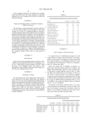
TABLE 1
Mean morphological measurements for ‘Sea Spray’ and parents.
Feature ‘Sea Spray’ Q36313 HYB-7
Plant Height (cm) 30.8 22.6 22.0
Leaf Blade Length (mm) 38.4 40.6 43.9
Leaf Blade Width (mm) 1.7 1.9 1.9
Ligule Length (mm) 1.0 0.9 1.0
Leaf Sheath Length (mm) 45.8 39.7 42.7
Spikelet Length (mm) 2.7 2.7 2.8
Spikelets/1-cm Section (#) 10.8 14.4 10.2
Ligule Hair Length (mm) 2.6 2.6 3.4
Stolon Internode (mm) 19.9 20.4 20.3
Panicle Branches (#) 2.3 2.4 2.5
Longest Panicle Branch Length (mm) 36.9 29.9 33.8
Internode Length (mm) 42.7 42.3 43.3
Upper Internode Length (cm) 56.8 36.9 51.0
EXAMPLE 4 Soil Coverage of Turf Grass Seeds
To compare the rate of establishment and grow-in to full canopy density coverage using the disclosed ‘Sea Spray’ seeds d to the amount of turf density coverage using seeds from other turf grasses, an establishment and grow in trial was performed at the University of Hawaii in Launiupoko, Maui, Hi., during April 2004.
Seeds were mixed with 15 handfuls of compost in a plastic bag, scattered by hand, watered for 10 minutes, and capped with hydromulch (200 lbs. paper mulch+3 lbs. C-Tack+50 lbs. compost+400 gal water) on Mar. 31, 2004. The fields were irrigated daily for 10 minutes at 4:30 am, 8 am, 10 am, 12 pm, 3 pm and 7 pm. However, irrigation coverage was not uniform due to strong trade winds. On Apr. 2, 2004, the field was fertilized with 10-30-10 at 4 lbs./1,000 ft2; on Apr. 23, 2004 the field was fertilized with 21-7-14 at 1 lb/1,000 ft2; and on May 30, 2004 the field was fertilized with 21-7-14 at 1 lb/1,000 ft2.
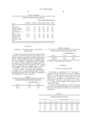
The percent of turf density achieved after 2, 3, 4, and 5 weeks of planting was determined. As shown in Table 2, the rate of turf canopy coverage with ‘Sea Spray’ seeds was similar to most currently available turf grass seeds, and in many cases faster than other turf grass seeds.
TABLE 2
Percent soil coverage of various turf grass seeds.
% Soil Coverage (weeks after planting)
Label Rate Trial Rate April 14 April 21 April 28 May 4
Variety per 1,000 ft2 per 1,000 ft2 2 weeks 3 weeks 4 weeks 5 weeks
Bermudagrass ‘Cheyenne’ 0.5 lb 1 lb 40% 60% 93% 88%*
Bermudagrass ‘Mohawk’ 2-3 lbs. 1 lb 40% 60% 90% 85%*
Bermudagrass ‘Princess’ 1-2 lbs 1 lb 40% 50% 95% 90%*
Buffalograss ‘Cody’ 3 lbs. 3 lbs 30% 40% 40% 80% 
Buffalograss ‘Cody’ + 3 lbs 3 lbs 25% 30% 40% 75% 
‘Bison’
Centipedegrass 2-4 lbs 1 lb 30% 40% 70% 85% 
Australian Carpetgrass 2-4 lbs 1 lb 25% 30% 40% 80% 
Fescuegrass ‘Plantation’ 8-10 lbs 4 lbs 30% 40% 50% 78%*
Kikuyugrass AZ1 2-3 lbs 1 lb 40% 70% 80% 70%*
Seashore paspalum ‘Sea n/a 1 lb 20% 50% 85% 95% 
Spray’
Weeping Lovegrass 3-10 lbs 1 lb 40% 50% 60% 75%*
Zoysiagrass ‘Zenith’ 1-1.5 lbs 1 lb 10% 20% 25% 40% 
Annual Rye ‘Gulf’ 4-6 lbs 4 lbs 50% 50% 60% 70%*
Annual Rye ‘Gulf’ + ? 1 lb 70% 90% 95% 85%*
Bermudagrass ‘NuMex 1 lb
Sahara’
*Half of the plot was mowed to remove the top growth to determine the actual % soil coverage.
EXAMPLE 5 Comparison of ‘Sea Spray’ Seeds to other Seashore Paspalum Plugs
To compare the amount of turf canopy coverage using the ‘Sea Spray’ seeds disclosed herein to the amount of turf canopy coverage using seashore paspalum plugs (Salam, SeaIsle 1 and SeaIsle 2000 cultivars), an establishment and grow in coverage trial was performed in Launiupoki, Maui, Hi. Current methods of propagating seashore paspalum involve the use of plugs. Plugs (3″×3″ plugs spaced 1 foot apart with 36 plugs per plot) were planted on Feb. 25, 2004 and ‘Sea Spray’ seeds were planted on Mar. 12, 2004 at 1.0-lb/1,000 ft2. Each trial was replicated three times.
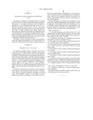
As shown in Table 3, ‘Sea Spray’ seeds established at a rate similar to that of seashore paspalum plugs. Therefore, the disclosed seeds provide a new method for propagation and establishment of seashore paspalum.
TABLE 3
Percent soil coverage of seashore paspalum plugs and seed.
Days After Planting
Cultivar 47 days 62 days
Salam 61.7% 96.0%
SeaIsle-1 65.0% 90.0%
SeaIsle-2000 50.0% 91.6%
‘Sea Spray’* 63.3% 98.6%
*= ‘Sea Spray’ is seeded and the others are vegetative.
EXAMPLE 6 ‘Sea Spray’ Seeding Rate Trial
To determine the germination rate of ‘Sea Spray,’ a seeding rate trial was performed at sea level in Kahului, Maui, Hi. on sandy, calcareous soil, pH 8.0. Seeds were planted on Apr. 15, 2004 at: a) 0.5-lb/1,000 ft2; b) 1.0-lb/1,000 ft2; c) 1.5-lb/1,000 ft2; d) 2.0-lb/1,000 ft2; and e) 3.0-lb/1,000 ft2. The field was watered daily at 7 am, 12 pm, 1, 2, 3 and 4 pm for 3 minutes. Each seeding rate was replicated three times.
As shown in Table 4, seeding rates of 1 and 1.5 lb/ft2 ‘Sea Spray’ provide acceptable germination and turf establishment rates. Full density was achieved in 8 weeks at all seeding rates.
TABLE 4
Germination and percent soil coverage
Rate Seedling/ft2 % Soil Coverage
lb/ft2 (21 Days) (28 Days) (35 Days) (43 Days) (49 Days) (56 Days) (63 Days)
0.5 49.7 16.7% 46.7% 66.7% 71.7% 86.6% 100%
1.0 80.3 33.3% 65.0% 76.7% 85.0% 94.3% 100%
1.5 144.7 41.7% 68.3% 80.0% 87.6% 95.0% 100%
2.0 142.3 53.0% 76.7% 88.0% 94.7% 99.3% 100%
3.0 235.3 65.0% 81.7% 94.3% 99.0% 100% 100%
EXAMPLE 7 Production of Seashore Paspalum Available from Seed
‘Sea Spray’ is produced by planting stolons of parents Q36313 and HYB-7 under conditions that permit crossing of the parents. For example, the parents can be planted in alternate rows or by alternating each plant in the row. It is believed the pollen is quite heavy, will not move great distances. Ideally, the plants are grown in close proximity to each other to achieve adequate seed setting. Insects and honey bees are attracted to the spikes and apparently assist in seed fertilization by collecting ‘Sea Spray’ pollen. The F1 hybrid ‘Sea Spray’ seeds deposited with ATCC are Certified seeds and can be planted to produce the F2 generation (which is genetically different from ‘Sea Spray’).
‘Sea Spray’ can also be planted as seed in sod production fields and vegetative propagules, such as sprigs, plugs, and sod, sold as ‘the cultivar’ by licensed or approved growers.
EXAMPLE 8 Exemplary Uses of ‘Sea Spray’
The seashore paspalum cultivar ‘Sea Spray’ can be used in the same way as other turf grass cultivars, such as other seashore paspalum cultivars for turf. However, the ability of ‘Sea Spray’ to be produced from seed affords the hybrid ‘Sea Spray’ particular advantages over other seashore paspalum cultivars. For example, with current commercially available cultivars of seashore paspalum grasses, propagation of the cultivar requires vegetative propagation, for example by stolons, plugs, sod or sprigs. This is a costly and labor-intensive process. In contrast, the propagation of hybrid ‘Sea Spray’ can be achieved by seed, thereby reducing costs and labor.
In addition, the tolerance of ‘Sea Spray’ to non-traditional water sources, such as potable water, seawater, or recycled water, affords ‘Sea Spray’ particular advantages over other warm season turfgrass cultivars. For example, most turf grasses are sensitive to alternative water sources, such as those that include higher concentrations of salt. However, some communities are now mandating the use of alternative water sources in turf irrigation. Because ‘Sea Spray’ can tolerate such alternative water sources, it is a good choice for use in turf situations.
Having illustrated and described the principles of the disclosure in multiple embodiments and examples, it should be apparent to those skilled in the art that the disclosure can be modified without departing from such principles. The invention therefore encompasses all modifications coming within the spirit and scope of the following claims.

Claims (11)

1. A seashore paspalum grass plant having all of the morphological and physiological properties of a grass plant grown from the seed deposited under American Type Culture Collection (ATCC) No: PTA-6827.
2. A method of producing sod, comprising growing the grass plant of claim 1 to produce the sod.
3. The method of claim 2, further comprising planting the sod in a golf course or sports stadium.
4. The method of claim 2, further comprising planting the sod in a golf course tee, a golf course fairway or a golf course rough.
5. The method of claim 2, further comprising planting the sod in a lawn.
6. The method of claim 2, further comprising planting the sod in an athletic field.
7. The method of claim 2, further comprising planting the sod in a park.
8. A method of producing a progeny of the grass plant according to claim 1, comprising crossing the grass plant of claim 1 with another grass plant, thereby producing progeny.
9. A vegetative sprig or clone of the grass plant of claim 1.
10. A grass seed deposited as ATCC No: PTA-6827.
11. A method of producing a seashore paspalum grass seed, comprising:
planting the seed of claim 10 to produce a grass plant; and
harvesting seed from the grass plant.
US10/941,151 2004-09-14 2004-09-14 Hybrid seashore paspalum available from seed called ‘Sea Spray’ Expired - Fee Related US7262341B1 (en)

Priority Applications (1)

Application Number Priority Date Filing Date Title
US10/941,151 US7262341B1 (en) 2004-09-14 2004-09-14 Hybrid seashore paspalum available from seed called ‘Sea Spray’

Applications Claiming Priority (1)

Application Number Priority Date Filing Date Title
US10/941,151 US7262341B1 (en) 2004-09-14 2004-09-14 Hybrid seashore paspalum available from seed called ‘Sea Spray’

Publications (1)

Publication Number Publication Date
US7262341B1 true US7262341B1 (en) 2007-08-28

Family

ID=38433125

Family Applications (1)

Application Number Title Priority Date Filing Date
US10/941,151 Expired - Fee Related US7262341B1 (en) 2004-09-14 2004-09-14 Hybrid seashore paspalum available from seed called ‘Sea Spray’

Country Status (1)

Country Link
US (1) US7262341B1 (en)

Cited By (3)

* Cited by examiner, † Cited by third party
Publication number Priority date Publication date Assignee Title
US20080134400P1 (en) * 2006-10-18 2008-06-05 Turf Ecosystems, Llc Seashore paspalum plant named 'TE-13'
CN113016253A (en) * 2021-03-29 2021-06-25 广东海洋大学 Method for improving seashore salinized land by seashore paspalum
CN113604600A (en) * 2021-08-24 2021-11-05 海南大学 SNP molecular marker for cadmium-resistant character of paspalum vaginatum and application thereof

Citations (1)

* Cited by examiner, † Cited by third party
Publication number Priority date Publication date Assignee Title
USPP12625P2 (en) * 2000-04-19 2002-05-14 University Of Georgia Research Foundation Seashore paspalum plant ‘SEA ISLE 2000’

Patent Citations (1)

* Cited by examiner, † Cited by third party
Publication number Priority date Publication date Assignee Title
USPP12625P2 (en) * 2000-04-19 2002-05-14 University Of Georgia Research Foundation Seashore paspalum plant ‘SEA ISLE 2000’

Non-Patent Citations (1)

* Cited by examiner, † Cited by third party
Title
Turf-Seed, Inc., Pure Seed Testing, Inc., Field Day 22, Jun. 17, 2004, Front cover and pp. 148-150.

Cited By (4)

* Cited by examiner, † Cited by third party
Publication number Priority date Publication date Assignee Title
US20080134400P1 (en) * 2006-10-18 2008-06-05 Turf Ecosystems, Llc Seashore paspalum plant named 'TE-13'
USPP19224P3 (en) 2006-10-18 2008-09-16 Turf Ecosystems, Llc Seashore paspalum plant named ‘TE-13’
CN113016253A (en) * 2021-03-29 2021-06-25 广东海洋大学 Method for improving seashore salinized land by seashore paspalum
CN113604600A (en) * 2021-08-24 2021-11-05 海南大学 SNP molecular marker for cadmium-resistant character of paspalum vaginatum and application thereof

Similar Documents

Publication Publication Date Title
Singh et al. Screening and selection of groundnut genotypes for tolerance of soil salinity.
Juska et al. Evaluation of bermudagrass varieties for general-purpose turf
USPP7539P (en) Prairie buffalograss
CN102792885B (en) Method for breeding waterlogging tolerant dormant Spanish-type peanut varieties
Mehmood et al. Status of agriculture production and productivity in Jammu and Kashmir
Makepeace Some establishment characteristics of mouse-ear and king devil hawkweeds
US7262341B1 (en) Hybrid seashore paspalum available from seed called ‘Sea Spray’
Howeler Agronomy research in the Asian cassava network–An overview 1987-1990
Gray et al. BIOLOGICAL FLORA OF THE BRITISH ISLES.
Rahayu et al. Effect of shading and mowing on the growth of Indonesia’s native zoysia grass in silty clay soil
Somrith Cultivar improvement for rainfed lowland rice in Thailand
Trenholm et al. Selecting a Turfgrass for Florida Lawns: ENH04/LH005, rev. 11/2007
Hjalmarsson et al. Effect of genotype and environment on vegetative and reproductive characteristics of lingonberry (Vaccinium vitis‐idaea L.)
US5969216A (en) Creeping bentgrass Agrostis palustris (stolonifera) variety named `PENN G-1`
Unruh et al. Zoysiagrass for Florida lawns
USPP33504P2 (en) Indian grass plant named ‘Whit LXXI’
Lorenz et al. Conservation plants for the Northeast
US6407319B1 (en) Kentucky bluegrass variety known as ‘North Star’
Lindsey et al. Selecting a Turfgrass for Florida Lawns: ENH04/LH005, rev. 8/2025
Majerus Collection and production of indigenous plant material for national park restoration
Raharjo Cultivation and Genetic Resources of Food Crops in Kepulauan Tanimbar Regency, Maluku Province
KR100686258B1 (en) New turfgrass cultivar of Kumsan Poa pratensis L.
Lorenz Conservation plants for the northeast
Pound et al. Lawn establishment
Unruh et al. Zoysiagrass for Florida Lawns: ENH11/LH011, rev. 5/2022

Legal Events

Date Code Title Description
AS Assignment

Owner name: PURE SEED TESTING, INC., OREGON

Free format text: ASSIGNMENT OF ASSIGNORS INTEREST;ASSIGNORS:FRICKER, CRYSTAL;WIPFF, JOSEPH K.;DUNCAN, RONNY R.;REEL/FRAME:015333/0362;SIGNING DATES FROM 20041007 TO 20041029

AS Assignment

Owner name: DUNCAN, RONNY R., TEXAS

Free format text: RENOUNCEMENT OF ASSIGNMENT;ASSIGNOR:PURE SEED TESTING, INC.;REEL/FRAME:016010/0171

Effective date: 20050321

Owner name: UNIVERSITY OF GEORGIA RESEARCH FOUNDATION, INC., G

Free format text: ASSIGNMENT OF ASSIGNORS INTEREST;ASSIGNOR:DUNCAN, RONNY R.;REEL/FRAME:016010/0346

Effective date: 20050324

FEPP Fee payment procedure

Free format text: PAYOR NUMBER ASSIGNED (ORIGINAL EVENT CODE: ASPN); ENTITY STATUS OF PATENT OWNER: SMALL ENTITY

STCF Information on status: patent grant

Free format text: PATENTED CASE

FPAY Fee payment

Year of fee payment: 4

FPAY Fee payment

Year of fee payment: 8

FEPP Fee payment procedure

Free format text: MAINTENANCE FEE REMINDER MAILED (ORIGINAL EVENT CODE: REM.); ENTITY STATUS OF PATENT OWNER: SMALL ENTITY

LAPS Lapse for failure to pay maintenance fees

Free format text: PATENT EXPIRED FOR FAILURE TO PAY MAINTENANCE FEES (ORIGINAL EVENT CODE: EXP.); ENTITY STATUS OF PATENT OWNER: SMALL ENTITY

STCH Information on status: patent discontinuation

Free format text: PATENT EXPIRED DUE TO NONPAYMENT OF MAINTENANCE FEES UNDER 37 CFR 1.362

FP Lapsed due to failure to pay maintenance fee

Effective date: 20190828