US6699692B2 - Vector for expression of heterologous protein and methods for extracting recombinant protein and for purifying isolated recombinant insulin - Google Patents
Vector for expression of heterologous protein and methods for extracting recombinant protein and for purifying isolated recombinant insulin Download PDFInfo
- Publication number
- US6699692B2 US6699692B2 US09/515,534 US51553400A US6699692B2 US 6699692 B2 US6699692 B2 US 6699692B2 US 51553400 A US51553400 A US 51553400A US 6699692 B2 US6699692 B2 US 6699692B2
- Authority
- US
- United States
- Prior art keywords
- insulin
- protein
- vector
- pro
- expression
- Prior art date
- Legal status (The legal status is an assumption and is not a legal conclusion. Google has not performed a legal analysis and makes no representation as to the accuracy of the status listed.)
- Expired - Lifetime
Links
- 108090000623 proteins and genes Proteins 0.000 title claims abstract description 226
- 102000004169 proteins and genes Human genes 0.000 title claims abstract description 166
- 239000013598 vector Substances 0.000 title claims abstract description 70
- 230000014509 gene expression Effects 0.000 title claims abstract description 63
- 238000000034 method Methods 0.000 title claims abstract description 63
- NOESYZHRGYRDHS-UHFFFAOYSA-N insulin Chemical compound N1C(=O)C(NC(=O)C(CCC(N)=O)NC(=O)C(CCC(O)=O)NC(=O)C(C(C)C)NC(=O)C(NC(=O)CN)C(C)CC)CSSCC(C(NC(CO)C(=O)NC(CC(C)C)C(=O)NC(CC=2C=CC(O)=CC=2)C(=O)NC(CCC(N)=O)C(=O)NC(CC(C)C)C(=O)NC(CCC(O)=O)C(=O)NC(CC(N)=O)C(=O)NC(CC=2C=CC(O)=CC=2)C(=O)NC(CSSCC(NC(=O)C(C(C)C)NC(=O)C(CC(C)C)NC(=O)C(CC=2C=CC(O)=CC=2)NC(=O)C(CC(C)C)NC(=O)C(C)NC(=O)C(CCC(O)=O)NC(=O)C(C(C)C)NC(=O)C(CC(C)C)NC(=O)C(CC=2NC=NC=2)NC(=O)C(CO)NC(=O)CNC2=O)C(=O)NCC(=O)NC(CCC(O)=O)C(=O)NC(CCCNC(N)=N)C(=O)NCC(=O)NC(CC=3C=CC=CC=3)C(=O)NC(CC=3C=CC=CC=3)C(=O)NC(CC=3C=CC(O)=CC=3)C(=O)NC(C(C)O)C(=O)N3C(CCC3)C(=O)NC(CCCCN)C(=O)NC(C)C(O)=O)C(=O)NC(CC(N)=O)C(O)=O)=O)NC(=O)C(C(C)CC)NC(=O)C(CO)NC(=O)C(C(C)O)NC(=O)C1CSSCC2NC(=O)C(CC(C)C)NC(=O)C(NC(=O)C(CCC(N)=O)NC(=O)C(CC(N)=O)NC(=O)C(NC(=O)C(N)CC=1C=CC=CC=1)C(C)C)CC1=CN=CN1 NOESYZHRGYRDHS-UHFFFAOYSA-N 0.000 title claims description 25
- 108090001061 Insulin Proteins 0.000 title claims description 12
- 102000004877 Insulin Human genes 0.000 title claims description 12
- 229940125396 insulin Drugs 0.000 title claims description 12
- 102000007056 Recombinant Fusion Proteins Human genes 0.000 title abstract description 31
- 108010008281 Recombinant Fusion Proteins Proteins 0.000 title abstract description 31
- 108010076181 Proinsulin Proteins 0.000 claims abstract description 57
- 241000894006 Bacteria Species 0.000 claims abstract description 30
- 230000010076 replication Effects 0.000 claims abstract description 19
- 238000013518 transcription Methods 0.000 claims abstract description 19
- 230000035897 transcription Effects 0.000 claims abstract description 19
- 239000003550 marker Substances 0.000 claims abstract description 17
- 238000003780 insertion Methods 0.000 claims abstract description 13
- 230000037431 insertion Effects 0.000 claims abstract description 13
- 230000000977 initiatory effect Effects 0.000 claims abstract description 9
- 230000014621 translational initiation Effects 0.000 claims abstract description 8
- 239000013612 plasmid Substances 0.000 claims description 93
- 108020004414 DNA Proteins 0.000 claims description 45
- 241000588724 Escherichia coli Species 0.000 claims description 37
- 238000004519 manufacturing process Methods 0.000 claims description 14
- 239000013604 expression vector Substances 0.000 claims description 11
- 241000701867 Enterobacteria phage T7 Species 0.000 claims description 9
- 241000701959 Escherichia virus Lambda Species 0.000 claims description 8
- 239000004098 Tetracycline Substances 0.000 claims description 7
- 229960002180 tetracycline Drugs 0.000 claims description 7
- 229930101283 tetracycline Natural products 0.000 claims description 7
- 235000019364 tetracycline Nutrition 0.000 claims description 7
- 150000003522 tetracyclines Chemical class 0.000 claims description 7
- 108091028043 Nucleic acid sequence Proteins 0.000 claims description 6
- 102000004190 Enzymes Human genes 0.000 claims description 2
- 108090000790 Enzymes Proteins 0.000 claims description 2
- VOUAQYXWVJDEQY-QENPJCQMSA-N 33017-11-7 Chemical compound OC(=O)CC[C@H](N)C(=O)N[C@@H](C)C(=O)N[C@@H](CCC(O)=O)C(=O)N[C@@H](CC(O)=O)C(=O)N[C@@H](CC(C)C)C(=O)N[C@@H](CCC(N)=O)C(=O)N[C@@H](C(C)C)C(=O)NCC(=O)N[C@@H](CCC(N)=O)C(=O)N[C@@H](C(C)C)C(=O)N[C@@H](CCC(O)=O)C(=O)N[C@@H](CC(C)C)C(=O)NCC(=O)NCC(=O)NCC(=O)N1CCC[C@H]1C(=O)NCC(=O)N[C@@H](C)C(=O)NCC(=O)N[C@@H](CO)C(=O)N[C@@H](CC(C)C)C(=O)N[C@@H](CCC(N)=O)C(=O)N1[C@H](C(=O)N[C@@H](CC(C)C)C(=O)N[C@@H](C)C(=O)N[C@@H](CC(C)C)C(=O)N[C@@H](CCC(O)=O)C(=O)NCC(=O)N[C@@H](CO)C(=O)N[C@@H](CC(C)C)C(=O)N[C@@H](CCC(N)=O)C(O)=O)CCC1 VOUAQYXWVJDEQY-QENPJCQMSA-N 0.000 claims 4
- 108010075254 C-Peptide Proteins 0.000 claims 4
- 230000001131 transforming effect Effects 0.000 claims 3
- 108020004707 nucleic acids Proteins 0.000 abstract description 23
- 150000007523 nucleic acids Chemical class 0.000 abstract description 23
- 102000039446 nucleic acids Human genes 0.000 abstract description 23
- 241000282414 Homo sapiens Species 0.000 abstract description 14
- -1 DNA Chemical class 0.000 abstract description 12
- 101000976075 Homo sapiens Insulin Proteins 0.000 abstract description 11
- 210000000170 cell membrane Anatomy 0.000 abstract description 11
- PBGKTOXHQIOBKM-FHFVDXKLSA-N insulin (human) Chemical compound C([C@@H](C(=O)N[C@@H](CC(C)C)C(=O)N[C@H]1CSSC[C@H]2C(=O)N[C@H](C(=O)N[C@@H](CO)C(=O)N[C@H](C(=O)N[C@H](C(N[C@@H](CO)C(=O)N[C@@H](CC(C)C)C(=O)N[C@@H](CC=3C=CC(O)=CC=3)C(=O)N[C@@H](CCC(N)=O)C(=O)N[C@@H](CC(C)C)C(=O)N[C@@H](CCC(O)=O)C(=O)N[C@@H](CC(N)=O)C(=O)N[C@@H](CC=3C=CC(O)=CC=3)C(=O)N[C@@H](CSSC[C@H](NC(=O)[C@H](C(C)C)NC(=O)[C@H](CC(C)C)NC(=O)[C@H](CC=3C=CC(O)=CC=3)NC(=O)[C@H](CC(C)C)NC(=O)[C@H](C)NC(=O)[C@H](CCC(O)=O)NC(=O)[C@H](C(C)C)NC(=O)[C@H](CC(C)C)NC(=O)[C@H](CC=3NC=NC=3)NC(=O)[C@H](CO)NC(=O)CNC1=O)C(=O)NCC(=O)N[C@@H](CCC(O)=O)C(=O)N[C@@H](CCCNC(N)=N)C(=O)NCC(=O)N[C@@H](CC=1C=CC=CC=1)C(=O)N[C@@H](CC=1C=CC=CC=1)C(=O)N[C@@H](CC=1C=CC(O)=CC=1)C(=O)N[C@@H]([C@@H](C)O)C(=O)N1[C@@H](CCC1)C(=O)N[C@@H](CCCCN)C(=O)N[C@@H]([C@@H](C)O)C(O)=O)C(=O)N[C@@H](CC(N)=O)C(O)=O)=O)CSSC[C@@H](C(N2)=O)NC(=O)[C@H](CCC(N)=O)NC(=O)[C@H](CCC(O)=O)NC(=O)[C@H](C(C)C)NC(=O)[C@@H](NC(=O)CN)[C@@H](C)CC)[C@@H](C)CC)[C@@H](C)O)NC(=O)[C@H](CCC(N)=O)NC(=O)[C@H](CC(N)=O)NC(=O)[C@@H](NC(=O)[C@@H](N)CC=1C=CC=CC=1)C(C)C)C1=CN=CN1 PBGKTOXHQIOBKM-FHFVDXKLSA-N 0.000 abstract description 11
- 230000027455 binding Effects 0.000 abstract description 7
- 230000002934 lysing effect Effects 0.000 abstract description 5
- 238000004587 chromatography analysis Methods 0.000 abstract description 4
- 230000017854 proteolysis Effects 0.000 abstract description 4
- 238000004153 renaturation Methods 0.000 abstract description 4
- 238000000926 separation method Methods 0.000 abstract description 3
- 235000018102 proteins Nutrition 0.000 description 147
- 210000004027 cell Anatomy 0.000 description 62
- 239000000427 antigen Substances 0.000 description 41
- 108091007433 antigens Proteins 0.000 description 41
- 102000036639 antigens Human genes 0.000 description 41
- 210000003000 inclusion body Anatomy 0.000 description 39
- XSQUKJJJFZCRTK-UHFFFAOYSA-N Urea Chemical compound NC(N)=O XSQUKJJJFZCRTK-UHFFFAOYSA-N 0.000 description 28
- 230000006698 induction Effects 0.000 description 27
- 238000010367 cloning Methods 0.000 description 20
- 238000000746 purification Methods 0.000 description 20
- 230000001413 cellular effect Effects 0.000 description 19
- YXFVVABEGXRONW-UHFFFAOYSA-N Toluene Chemical compound CC1=CC=CC=C1 YXFVVABEGXRONW-UHFFFAOYSA-N 0.000 description 18
- 238000010276 construction Methods 0.000 description 15
- 108020001507 fusion proteins Proteins 0.000 description 15
- 239000004202 carbamide Substances 0.000 description 14
- 238000005119 centrifugation Methods 0.000 description 14
- 102000037865 fusion proteins Human genes 0.000 description 14
- 239000000872 buffer Substances 0.000 description 11
- 239000012634 fragment Substances 0.000 description 11
- 239000000047 product Substances 0.000 description 11
- 238000005063 solubilization Methods 0.000 description 11
- 230000007928 solubilization Effects 0.000 description 11
- 238000011282 treatment Methods 0.000 description 11
- 108091034117 Oligonucleotide Proteins 0.000 description 10
- 230000015572 biosynthetic process Effects 0.000 description 10
- 238000000855 fermentation Methods 0.000 description 10
- 230000004151 fermentation Effects 0.000 description 10
- QTBSBXVTEAMEQO-UHFFFAOYSA-M Acetate Chemical compound CC([O-])=O QTBSBXVTEAMEQO-UHFFFAOYSA-M 0.000 description 9
- 239000007983 Tris buffer Substances 0.000 description 9
- 108090000765 processed proteins & peptides Proteins 0.000 description 9
- LENZDBCJOHFCAS-UHFFFAOYSA-N tris Chemical compound OCC(N)(CO)CO LENZDBCJOHFCAS-UHFFFAOYSA-N 0.000 description 9
- 238000009825 accumulation Methods 0.000 description 8
- 230000008569 process Effects 0.000 description 8
- 230000014616 translation Effects 0.000 description 8
- KCXVZYZYPLLWCC-UHFFFAOYSA-N EDTA Chemical compound OC(=O)CN(CC(O)=O)CCN(CC(O)=O)CC(O)=O KCXVZYZYPLLWCC-UHFFFAOYSA-N 0.000 description 7
- 102000035195 Peptidases Human genes 0.000 description 7
- 108091005804 Peptidases Proteins 0.000 description 7
- 108700005078 Synthetic Genes Proteins 0.000 description 7
- 230000004927 fusion Effects 0.000 description 7
- 239000003102 growth factor Substances 0.000 description 7
- 238000002955 isolation Methods 0.000 description 7
- 239000008188 pellet Substances 0.000 description 7
- 239000000243 solution Substances 0.000 description 7
- 230000001225 therapeutic effect Effects 0.000 description 7
- 108091026890 Coding region Proteins 0.000 description 6
- 108020004511 Recombinant DNA Proteins 0.000 description 6
- 229920004890 Triton X-100 Polymers 0.000 description 6
- 239000013504 Triton X-100 Substances 0.000 description 6
- JLCPHMBAVCMARE-UHFFFAOYSA-N [3-[[3-[[3-[[3-[[3-[[3-[[3-[[3-[[3-[[3-[[3-[[5-(2-amino-6-oxo-1H-purin-9-yl)-3-[[3-[[3-[[3-[[3-[[3-[[5-(2-amino-6-oxo-1H-purin-9-yl)-3-[[5-(2-amino-6-oxo-1H-purin-9-yl)-3-hydroxyoxolan-2-yl]methoxy-hydroxyphosphoryl]oxyoxolan-2-yl]methoxy-hydroxyphosphoryl]oxy-5-(5-methyl-2,4-dioxopyrimidin-1-yl)oxolan-2-yl]methoxy-hydroxyphosphoryl]oxy-5-(6-aminopurin-9-yl)oxolan-2-yl]methoxy-hydroxyphosphoryl]oxy-5-(6-aminopurin-9-yl)oxolan-2-yl]methoxy-hydroxyphosphoryl]oxy-5-(6-aminopurin-9-yl)oxolan-2-yl]methoxy-hydroxyphosphoryl]oxy-5-(6-aminopurin-9-yl)oxolan-2-yl]methoxy-hydroxyphosphoryl]oxyoxolan-2-yl]methoxy-hydroxyphosphoryl]oxy-5-(5-methyl-2,4-dioxopyrimidin-1-yl)oxolan-2-yl]methoxy-hydroxyphosphoryl]oxy-5-(4-amino-2-oxopyrimidin-1-yl)oxolan-2-yl]methoxy-hydroxyphosphoryl]oxy-5-(5-methyl-2,4-dioxopyrimidin-1-yl)oxolan-2-yl]methoxy-hydroxyphosphoryl]oxy-5-(5-methyl-2,4-dioxopyrimidin-1-yl)oxolan-2-yl]methoxy-hydroxyphosphoryl]oxy-5-(6-aminopurin-9-yl)oxolan-2-yl]methoxy-hydroxyphosphoryl]oxy-5-(6-aminopurin-9-yl)oxolan-2-yl]methoxy-hydroxyphosphoryl]oxy-5-(4-amino-2-oxopyrimidin-1-yl)oxolan-2-yl]methoxy-hydroxyphosphoryl]oxy-5-(4-amino-2-oxopyrimidin-1-yl)oxolan-2-yl]methoxy-hydroxyphosphoryl]oxy-5-(4-amino-2-oxopyrimidin-1-yl)oxolan-2-yl]methoxy-hydroxyphosphoryl]oxy-5-(6-aminopurin-9-yl)oxolan-2-yl]methoxy-hydroxyphosphoryl]oxy-5-(4-amino-2-oxopyrimidin-1-yl)oxolan-2-yl]methyl [5-(6-aminopurin-9-yl)-2-(hydroxymethyl)oxolan-3-yl] hydrogen phosphate Polymers Cc1cn(C2CC(OP(O)(=O)OCC3OC(CC3OP(O)(=O)OCC3OC(CC3O)n3cnc4c3nc(N)[nH]c4=O)n3cnc4c3nc(N)[nH]c4=O)C(COP(O)(=O)OC3CC(OC3COP(O)(=O)OC3CC(OC3COP(O)(=O)OC3CC(OC3COP(O)(=O)OC3CC(OC3COP(O)(=O)OC3CC(OC3COP(O)(=O)OC3CC(OC3COP(O)(=O)OC3CC(OC3COP(O)(=O)OC3CC(OC3COP(O)(=O)OC3CC(OC3COP(O)(=O)OC3CC(OC3COP(O)(=O)OC3CC(OC3COP(O)(=O)OC3CC(OC3COP(O)(=O)OC3CC(OC3COP(O)(=O)OC3CC(OC3COP(O)(=O)OC3CC(OC3COP(O)(=O)OC3CC(OC3COP(O)(=O)OC3CC(OC3CO)n3cnc4c(N)ncnc34)n3ccc(N)nc3=O)n3cnc4c(N)ncnc34)n3ccc(N)nc3=O)n3ccc(N)nc3=O)n3ccc(N)nc3=O)n3cnc4c(N)ncnc34)n3cnc4c(N)ncnc34)n3cc(C)c(=O)[nH]c3=O)n3cc(C)c(=O)[nH]c3=O)n3ccc(N)nc3=O)n3cc(C)c(=O)[nH]c3=O)n3cnc4c3nc(N)[nH]c4=O)n3cnc4c(N)ncnc34)n3cnc4c(N)ncnc34)n3cnc4c(N)ncnc34)n3cnc4c(N)ncnc34)O2)c(=O)[nH]c1=O JLCPHMBAVCMARE-UHFFFAOYSA-N 0.000 description 6
- 238000007792 addition Methods 0.000 description 6
- 235000001014 amino acid Nutrition 0.000 description 6
- 150000001413 amino acids Chemical class 0.000 description 6
- 239000003398 denaturant Substances 0.000 description 6
- 239000003599 detergent Substances 0.000 description 6
- 230000029087 digestion Effects 0.000 description 6
- RAXXELZNTBOGNW-UHFFFAOYSA-N imidazole Natural products C1=CNC=N1 RAXXELZNTBOGNW-UHFFFAOYSA-N 0.000 description 6
- 239000000463 material Substances 0.000 description 6
- 239000002609 medium Substances 0.000 description 6
- 230000008823 permeabilization Effects 0.000 description 6
- 102000004196 processed proteins & peptides Human genes 0.000 description 6
- 230000001105 regulatory effect Effects 0.000 description 6
- 239000006228 supernatant Substances 0.000 description 6
- 238000013519 translation Methods 0.000 description 6
- QKNYBSVHEMOAJP-UHFFFAOYSA-N 2-amino-2-(hydroxymethyl)propane-1,3-diol;hydron;chloride Chemical compound Cl.OCC(N)(CO)CO QKNYBSVHEMOAJP-UHFFFAOYSA-N 0.000 description 5
- 239000002028 Biomass Substances 0.000 description 5
- ROHFNLRQFUQHCH-YFKPBYRVSA-N L-leucine Chemical compound CC(C)C[C@H](N)C(O)=O ROHFNLRQFUQHCH-YFKPBYRVSA-N 0.000 description 5
- ROHFNLRQFUQHCH-UHFFFAOYSA-N Leucine Natural products CC(C)CC(N)C(O)=O ROHFNLRQFUQHCH-UHFFFAOYSA-N 0.000 description 5
- 238000006243 chemical reaction Methods 0.000 description 5
- 238000005516 engineering process Methods 0.000 description 5
- 230000001965 increasing effect Effects 0.000 description 5
- 238000001556 precipitation Methods 0.000 description 5
- 238000011084 recovery Methods 0.000 description 5
- 239000003053 toxin Substances 0.000 description 5
- 231100000765 toxin Toxicity 0.000 description 5
- XLYOFNOQVPJJNP-UHFFFAOYSA-N water Chemical compound O XLYOFNOQVPJJNP-UHFFFAOYSA-N 0.000 description 5
- 239000004475 Arginine Substances 0.000 description 4
- 108020004705 Codon Proteins 0.000 description 4
- WQZGKKKJIJFFOK-GASJEMHNSA-N Glucose Natural products OC[C@H]1OC(O)[C@H](O)[C@@H](O)[C@@H]1O WQZGKKKJIJFFOK-GASJEMHNSA-N 0.000 description 4
- 208000016604 Lyme disease Diseases 0.000 description 4
- FAPWRFPIFSIZLT-UHFFFAOYSA-M Sodium chloride Chemical compound [Na+].[Cl-] FAPWRFPIFSIZLT-UHFFFAOYSA-M 0.000 description 4
- 102000004142 Trypsin Human genes 0.000 description 4
- 108090000631 Trypsin Proteins 0.000 description 4
- 238000004458 analytical method Methods 0.000 description 4
- 230000008901 benefit Effects 0.000 description 4
- 230000008512 biological response Effects 0.000 description 4
- 238000004113 cell culture Methods 0.000 description 4
- 230000010261 cell growth Effects 0.000 description 4
- 230000006037 cell lysis Effects 0.000 description 4
- 238000013375 chromatographic separation Methods 0.000 description 4
- 239000008367 deionised water Substances 0.000 description 4
- 229910021641 deionized water Inorganic materials 0.000 description 4
- 238000004925 denaturation Methods 0.000 description 4
- 230000036425 denaturation Effects 0.000 description 4
- 230000000694 effects Effects 0.000 description 4
- 239000008103 glucose Substances 0.000 description 4
- 230000002779 inactivation Effects 0.000 description 4
- 206010022000 influenza Diseases 0.000 description 4
- 238000010369 molecular cloning Methods 0.000 description 4
- 244000052769 pathogen Species 0.000 description 4
- 230000001717 pathogenic effect Effects 0.000 description 4
- 238000012360 testing method Methods 0.000 description 4
- 239000012588 trypsin Substances 0.000 description 4
- QTBSBXVTEAMEQO-UHFFFAOYSA-N Acetic acid Chemical compound CC(O)=O QTBSBXVTEAMEQO-UHFFFAOYSA-N 0.000 description 3
- 241000589968 Borrelia Species 0.000 description 3
- 101100245267 Caenorhabditis elegans pas-1 gene Proteins 0.000 description 3
- 102000003670 Carboxypeptidase B Human genes 0.000 description 3
- 108090000087 Carboxypeptidase B Proteins 0.000 description 3
- 102000003886 Glycoproteins Human genes 0.000 description 3
- 108090000288 Glycoproteins Proteins 0.000 description 3
- 102000006992 Interferon-alpha Human genes 0.000 description 3
- 108010047761 Interferon-alpha Proteins 0.000 description 3
- COLNVLDHVKWLRT-QMMMGPOBSA-N L-phenylalanine Chemical compound OC(=O)[C@@H](N)CC1=CC=CC=C1 COLNVLDHVKWLRT-QMMMGPOBSA-N 0.000 description 3
- 206010028980 Neoplasm Diseases 0.000 description 3
- 238000013019 agitation Methods 0.000 description 3
- ODKSFYDXXFIFQN-UHFFFAOYSA-N arginine Natural products OC(=O)C(N)CCCNC(N)=N ODKSFYDXXFIFQN-UHFFFAOYSA-N 0.000 description 3
- 210000004369 blood Anatomy 0.000 description 3
- 239000008280 blood Substances 0.000 description 3
- 230000001086 cytosolic effect Effects 0.000 description 3
- 230000002939 deleterious effect Effects 0.000 description 3
- 238000011161 development Methods 0.000 description 3
- 230000002068 genetic effect Effects 0.000 description 3
- HNDVDQJCIGZPNO-UHFFFAOYSA-N histidine Natural products OC(=O)C(N)CC1=CN=CN1 HNDVDQJCIGZPNO-UHFFFAOYSA-N 0.000 description 3
- 244000052637 human pathogen Species 0.000 description 3
- 239000002773 nucleotide Substances 0.000 description 3
- 125000003729 nucleotide group Chemical group 0.000 description 3
- COLNVLDHVKWLRT-UHFFFAOYSA-N phenylalanine Natural products OC(=O)C(N)CC1=CC=CC=C1 COLNVLDHVKWLRT-UHFFFAOYSA-N 0.000 description 3
- 229920001184 polypeptide Polymers 0.000 description 3
- 239000002244 precipitate Substances 0.000 description 3
- 229940024999 proteolytic enzymes for treatment of wounds and ulcers Drugs 0.000 description 3
- 238000002415 sodium dodecyl sulfate polyacrylamide gel electrophoresis Methods 0.000 description 3
- GPRLSGONYQIRFK-MNYXATJNSA-N triton Chemical compound [3H+] GPRLSGONYQIRFK-MNYXATJNSA-N 0.000 description 3
- 230000004580 weight loss Effects 0.000 description 3
- 108091006112 ATPases Proteins 0.000 description 2
- 102000057290 Adenosine Triphosphatases Human genes 0.000 description 2
- USFZMSVCRYTOJT-UHFFFAOYSA-N Ammonium acetate Chemical compound N.CC(O)=O USFZMSVCRYTOJT-UHFFFAOYSA-N 0.000 description 2
- 239000005695 Ammonium acetate Substances 0.000 description 2
- 241000711404 Avian avulavirus 1 Species 0.000 description 2
- 241000283690 Bos taurus Species 0.000 description 2
- 102000004127 Cytokines Human genes 0.000 description 2
- 108090000695 Cytokines Proteins 0.000 description 2
- BWGNESOTFCXPMA-UHFFFAOYSA-N Dihydrogen disulfide Chemical compound SS BWGNESOTFCXPMA-UHFFFAOYSA-N 0.000 description 2
- 241000206602 Eukaryota Species 0.000 description 2
- 241000713800 Feline immunodeficiency virus Species 0.000 description 2
- 108700039691 Genetic Promoter Regions Proteins 0.000 description 2
- 108700007698 Genetic Terminator Regions Proteins 0.000 description 2
- DHMQDGOQFOQNFH-UHFFFAOYSA-N Glycine Chemical compound NCC(O)=O DHMQDGOQFOQNFH-UHFFFAOYSA-N 0.000 description 2
- ZRALSGWEFCBTJO-UHFFFAOYSA-N Guanidine Chemical compound NC(N)=N ZRALSGWEFCBTJO-UHFFFAOYSA-N 0.000 description 2
- 241000725303 Human immunodeficiency virus Species 0.000 description 2
- 102000014150 Interferons Human genes 0.000 description 2
- 108010050904 Interferons Proteins 0.000 description 2
- 241000710842 Japanese encephalitis virus Species 0.000 description 2
- ODKSFYDXXFIFQN-BYPYZUCNSA-P L-argininium(2+) Chemical compound NC(=[NH2+])NCCC[C@H]([NH3+])C(O)=O ODKSFYDXXFIFQN-BYPYZUCNSA-P 0.000 description 2
- KDXKERNSBIXSRK-UHFFFAOYSA-N Lysine Natural products NCCCCC(N)C(O)=O KDXKERNSBIXSRK-UHFFFAOYSA-N 0.000 description 2
- 239000004472 Lysine Substances 0.000 description 2
- 241000829100 Macaca mulatta polyomavirus 1 Species 0.000 description 2
- 102000016943 Muramidase Human genes 0.000 description 2
- 108010014251 Muramidase Proteins 0.000 description 2
- 108010062010 N-Acetylmuramoyl-L-alanine Amidase Proteins 0.000 description 2
- 108700020796 Oncogene Proteins 0.000 description 2
- 239000004365 Protease Substances 0.000 description 2
- 108010076504 Protein Sorting Signals Proteins 0.000 description 2
- 206010037742 Rabies Diseases 0.000 description 2
- 241000713311 Simian immunodeficiency virus Species 0.000 description 2
- DBMJMQXJHONAFJ-UHFFFAOYSA-M Sodium laurylsulphate Chemical compound [Na+].CCCCCCCCCCCCOS([O-])(=O)=O DBMJMQXJHONAFJ-UHFFFAOYSA-M 0.000 description 2
- 241000700605 Viruses Species 0.000 description 2
- UCTWMZQNUQWSLP-UHFFFAOYSA-N adrenaline Chemical compound CNCC(O)C1=CC=C(O)C(O)=C1 UCTWMZQNUQWSLP-UHFFFAOYSA-N 0.000 description 2
- 238000001042 affinity chromatography Methods 0.000 description 2
- 238000001261 affinity purification Methods 0.000 description 2
- 235000019257 ammonium acetate Nutrition 0.000 description 2
- 229940043376 ammonium acetate Drugs 0.000 description 2
- 229960000723 ampicillin Drugs 0.000 description 2
- AVKUERGKIZMTKX-NJBDSQKTSA-N ampicillin Chemical compound C1([C@@H](N)C(=O)N[C@H]2[C@H]3SC([C@@H](N3C2=O)C(O)=O)(C)C)=CC=CC=C1 AVKUERGKIZMTKX-NJBDSQKTSA-N 0.000 description 2
- 229940041514 candida albicans extract Drugs 0.000 description 2
- 230000015556 catabolic process Effects 0.000 description 2
- 239000006285 cell suspension Substances 0.000 description 2
- 230000021615 conjugation Effects 0.000 description 2
- 239000000356 contaminant Substances 0.000 description 2
- 238000006731 degradation reaction Methods 0.000 description 2
- 230000000368 destabilizing effect Effects 0.000 description 2
- 206010012601 diabetes mellitus Diseases 0.000 description 2
- 239000002158 endotoxin Substances 0.000 description 2
- 239000006167 equilibration buffer Substances 0.000 description 2
- 239000001963 growth medium Substances 0.000 description 2
- 238000004128 high performance liquid chromatography Methods 0.000 description 2
- 229940079322 interferon Drugs 0.000 description 2
- 229930027917 kanamycin Natural products 0.000 description 2
- 229960000318 kanamycin Drugs 0.000 description 2
- SBUJHOSQTJFQJX-NOAMYHISSA-N kanamycin Chemical compound O[C@@H]1[C@@H](O)[C@H](O)[C@@H](CN)O[C@@H]1O[C@H]1[C@H](O)[C@@H](O[C@@H]2[C@@H]([C@@H](N)[C@H](O)[C@@H](CO)O2)O)[C@H](N)C[C@@H]1N SBUJHOSQTJFQJX-NOAMYHISSA-N 0.000 description 2
- 229930182823 kanamycin A Natural products 0.000 description 2
- 239000012263 liquid product Substances 0.000 description 2
- 229960000274 lysozyme Drugs 0.000 description 2
- 239000004325 lysozyme Substances 0.000 description 2
- 235000010335 lysozyme Nutrition 0.000 description 2
- 108010026228 mRNA guanylyltransferase Proteins 0.000 description 2
- 229910052751 metal Inorganic materials 0.000 description 2
- 239000002184 metal Substances 0.000 description 2
- 230000000813 microbial effect Effects 0.000 description 2
- 238000012986 modification Methods 0.000 description 2
- 230000004048 modification Effects 0.000 description 2
- 230000035772 mutation Effects 0.000 description 2
- 210000000496 pancreas Anatomy 0.000 description 2
- 239000013600 plasmid vector Substances 0.000 description 2
- 239000011541 reaction mixture Substances 0.000 description 2
- 238000010188 recombinant method Methods 0.000 description 2
- 230000004044 response Effects 0.000 description 2
- 108091008146 restriction endonucleases Proteins 0.000 description 2
- 238000012216 screening Methods 0.000 description 2
- 239000006152 selective media Substances 0.000 description 2
- 230000035939 shock Effects 0.000 description 2
- 239000011780 sodium chloride Substances 0.000 description 2
- 229940083575 sodium dodecyl sulfate Drugs 0.000 description 2
- 235000019333 sodium laurylsulphate Nutrition 0.000 description 2
- GEHJYWRUCIMESM-UHFFFAOYSA-L sodium sulfite Chemical compound [Na+].[Na+].[O-]S([O-])=O GEHJYWRUCIMESM-UHFFFAOYSA-L 0.000 description 2
- 238000006467 substitution reaction Methods 0.000 description 2
- 238000003786 synthesis reaction Methods 0.000 description 2
- 241001529453 unidentified herpesvirus Species 0.000 description 2
- 108700026220 vif Genes Proteins 0.000 description 2
- 238000005406 washing Methods 0.000 description 2
- 239000012138 yeast extract Substances 0.000 description 2
- IGXNPQWXIRIGBF-KEOOTSPTSA-N (2s)-2-[[(2s)-2-[[(2s)-2-[[(2s)-2-[[(2s)-2-amino-3-(1h-imidazol-5-yl)propanoyl]amino]-3-(1h-imidazol-5-yl)propanoyl]amino]-3-(1h-imidazol-5-yl)propanoyl]amino]-3-(1h-imidazol-5-yl)propanoyl]amino]-3-(1h-imidazol-5-yl)propanoic acid Chemical compound C([C@H](N)C(=O)N[C@@H](CC=1NC=NC=1)C(=O)N[C@@H](CC=1NC=NC=1)C(=O)N[C@@H](CC=1NC=NC=1)C(=O)N[C@@H](CC=1NC=NC=1)C(O)=O)C1=CN=CN1 IGXNPQWXIRIGBF-KEOOTSPTSA-N 0.000 description 1
- 108700020469 14-3-3 Proteins 0.000 description 1
- 102000004899 14-3-3 Proteins Human genes 0.000 description 1
- 102000007566 ATP-Dependent Proteases Human genes 0.000 description 1
- 108010071550 ATP-Dependent Proteases Proteins 0.000 description 1
- 108010076441 Ala-His-His Proteins 0.000 description 1
- 244000063299 Bacillus subtilis Species 0.000 description 1
- 235000014469 Bacillus subtilis Nutrition 0.000 description 1
- 108700003860 Bacterial Genes Proteins 0.000 description 1
- 108010077805 Bacterial Proteins Proteins 0.000 description 1
- LSNNMFCWUKXFEE-UHFFFAOYSA-M Bisulfite Chemical compound OS([O-])=O LSNNMFCWUKXFEE-UHFFFAOYSA-M 0.000 description 1
- 241000589969 Borreliella burgdorferi Species 0.000 description 1
- 241001148605 Borreliella garinii Species 0.000 description 1
- 241000714266 Bovine leukemia virus Species 0.000 description 1
- 241000178270 Canarypox virus Species 0.000 description 1
- 241000680578 Canid alphaherpesvirus 1 Species 0.000 description 1
- 241000712083 Canine morbillivirus Species 0.000 description 1
- 241000701931 Canine parvovirus Species 0.000 description 1
- 102100025064 Cellular tumor antigen p53 Human genes 0.000 description 1
- 101710150820 Cellular tumor antigen p53 Proteins 0.000 description 1
- 201000006082 Chickenpox Diseases 0.000 description 1
- VYZAMTAEIAYCRO-UHFFFAOYSA-N Chromium Chemical compound [Cr] VYZAMTAEIAYCRO-UHFFFAOYSA-N 0.000 description 1
- 241000193449 Clostridium tetani Species 0.000 description 1
- 241000701022 Cytomegalovirus Species 0.000 description 1
- LEVWYRKDKASIDU-QWWZWVQMSA-N D-cystine Chemical compound OC(=O)[C@H](N)CSSC[C@@H](N)C(O)=O LEVWYRKDKASIDU-QWWZWVQMSA-N 0.000 description 1
- 102000012410 DNA Ligases Human genes 0.000 description 1
- 108010061982 DNA Ligases Proteins 0.000 description 1
- 102000004594 DNA Polymerase I Human genes 0.000 description 1
- 108010017826 DNA Polymerase I Proteins 0.000 description 1
- 241000725619 Dengue virus Species 0.000 description 1
- 208000006586 Ectromelia Diseases 0.000 description 1
- 102100038132 Endogenous retrovirus group K member 6 Pro protein Human genes 0.000 description 1
- 241000702374 Enterobacteria phage fd Species 0.000 description 1
- 241000709744 Enterobacterio phage MS2 Species 0.000 description 1
- 101710091045 Envelope protein Proteins 0.000 description 1
- 102400001368 Epidermal growth factor Human genes 0.000 description 1
- 101800003838 Epidermal growth factor Proteins 0.000 description 1
- 241000230501 Equine herpesvirus sp. Species 0.000 description 1
- 241000283073 Equus caballus Species 0.000 description 1
- 102000003951 Erythropoietin Human genes 0.000 description 1
- 108090000394 Erythropoietin Proteins 0.000 description 1
- 241000702189 Escherichia virus Mu Species 0.000 description 1
- 241000701533 Escherichia virus T4 Species 0.000 description 1
- 108091029865 Exogenous DNA Proteins 0.000 description 1
- 241000701087 Felid alphaherpesvirus 1 Species 0.000 description 1
- 241000714165 Feline leukemia virus Species 0.000 description 1
- 241000710831 Flavivirus Species 0.000 description 1
- 241000700662 Fowlpox virus Species 0.000 description 1
- 241000701047 Gallid alphaherpesvirus 2 Species 0.000 description 1
- 241000287828 Gallus gallus Species 0.000 description 1
- 102400000321 Glucagon Human genes 0.000 description 1
- 108060003199 Glucagon Proteins 0.000 description 1
- 239000004471 Glycine Substances 0.000 description 1
- 229920002527 Glycogen Polymers 0.000 description 1
- 108010017080 Granulocyte Colony-Stimulating Factor Proteins 0.000 description 1
- 102000004269 Granulocyte Colony-Stimulating Factor Human genes 0.000 description 1
- 108010017213 Granulocyte-Macrophage Colony-Stimulating Factor Proteins 0.000 description 1
- 102100039620 Granulocyte-macrophage colony-stimulating factor Human genes 0.000 description 1
- 101100484521 Haloferax volcanii (strain ATCC 29605 / DSM 3757 / JCM 8879 / NBRC 14742 / NCIMB 2012 / VKM B-1768 / DS2) atpF gene Proteins 0.000 description 1
- 241000150562 Hantaan orthohantavirus Species 0.000 description 1
- 102100027685 Hemoglobin subunit alpha Human genes 0.000 description 1
- 108091005902 Hemoglobin subunit alpha Proteins 0.000 description 1
- 102100021519 Hemoglobin subunit beta Human genes 0.000 description 1
- 108091005904 Hemoglobin subunit beta Proteins 0.000 description 1
- 108091005886 Hemoglobin subunit gamma Proteins 0.000 description 1
- 102100038617 Hemoglobin subunit gamma-2 Human genes 0.000 description 1
- 208000007514 Herpes zoster Diseases 0.000 description 1
- 108010093488 His-His-His-His-His-His Proteins 0.000 description 1
- 241000701044 Human gammaherpesvirus 4 Species 0.000 description 1
- VEXZGXHMUGYJMC-UHFFFAOYSA-N Hydrochloric acid Chemical compound Cl VEXZGXHMUGYJMC-UHFFFAOYSA-N 0.000 description 1
- 108010042653 IgA receptor Proteins 0.000 description 1
- DGAQECJNVWCQMB-PUAWFVPOSA-M Ilexoside XXIX Chemical compound C[C@@H]1CC[C@@]2(CC[C@@]3(C(=CC[C@H]4[C@]3(CC[C@@H]5[C@@]4(CC[C@@H](C5(C)C)OS(=O)(=O)[O-])C)C)[C@@H]2[C@]1(C)O)C)C(=O)O[C@H]6[C@@H]([C@H]([C@@H]([C@H](O6)CO)O)O)O.[Na+] DGAQECJNVWCQMB-PUAWFVPOSA-M 0.000 description 1
- 206010061598 Immunodeficiency Diseases 0.000 description 1
- 208000029462 Immunodeficiency disease Diseases 0.000 description 1
- 241000711450 Infectious bronchitis virus Species 0.000 description 1
- 241000702626 Infectious bursal disease virus Species 0.000 description 1
- 208000002979 Influenza in Birds Diseases 0.000 description 1
- 108010002386 Interleukin-3 Proteins 0.000 description 1
- 102100039064 Interleukin-3 Human genes 0.000 description 1
- 108010063738 Interleukins Proteins 0.000 description 1
- 102000015696 Interleukins Human genes 0.000 description 1
- XUJNEKJLAYXESH-REOHCLBHSA-N L-Cysteine Chemical compound SC[C@H](N)C(O)=O XUJNEKJLAYXESH-REOHCLBHSA-N 0.000 description 1
- KDXKERNSBIXSRK-YFKPBYRVSA-N L-lysine Chemical compound NCCCC[C@H](N)C(O)=O KDXKERNSBIXSRK-YFKPBYRVSA-N 0.000 description 1
- QIVBCDIJIAJPQS-VIFPVBQESA-N L-tryptophane Chemical compound C1=CC=C2C(C[C@H](N)C(O)=O)=CNC2=C1 QIVBCDIJIAJPQS-VIFPVBQESA-N 0.000 description 1
- OUYCCCASQSFEME-QMMMGPOBSA-N L-tyrosine Chemical compound OC(=O)[C@@H](N)CC1=CC=C(O)C=C1 OUYCCCASQSFEME-QMMMGPOBSA-N 0.000 description 1
- KZSNJWFQEVHDMF-BYPYZUCNSA-N L-valine Chemical compound CC(C)[C@H](N)C(O)=O KZSNJWFQEVHDMF-BYPYZUCNSA-N 0.000 description 1
- 206010024503 Limb reduction defect Diseases 0.000 description 1
- 108010046938 Macrophage Colony-Stimulating Factor Proteins 0.000 description 1
- 102000007651 Macrophage Colony-Stimulating Factor Human genes 0.000 description 1
- 201000005505 Measles Diseases 0.000 description 1
- 108050008953 Melanoma-associated antigen Proteins 0.000 description 1
- MUYQDMBLDFEVRJ-LSJOCFKGSA-N Met-Ala-His Chemical compound CSCC[C@H](N)C(=O)N[C@@H](C)C(=O)N[C@H](C(O)=O)CC1=CNC=N1 MUYQDMBLDFEVRJ-LSJOCFKGSA-N 0.000 description 1
- FYRUJIJAUPHUNB-IUCAKERBSA-N Met-Gly-Arg Chemical compound CSCC[C@H](N)C(=O)NCC(=O)N[C@H](C(O)=O)CCCNC(N)=N FYRUJIJAUPHUNB-IUCAKERBSA-N 0.000 description 1
- 241000712045 Morbillivirus Species 0.000 description 1
- 208000005647 Mumps Diseases 0.000 description 1
- NWIBSHFKIJFRCO-WUDYKRTCSA-N Mytomycin Chemical compound C1N2C(C(C(C)=C(N)C3=O)=O)=C3[C@@H](COC(N)=O)[C@@]2(OC)[C@@H]2[C@H]1N2 NWIBSHFKIJFRCO-WUDYKRTCSA-N 0.000 description 1
- CHJJGSNFBQVOTG-UHFFFAOYSA-N N-methyl-guanidine Natural products CNC(N)=N CHJJGSNFBQVOTG-UHFFFAOYSA-N 0.000 description 1
- 125000000729 N-terminal amino-acid group Chemical group 0.000 description 1
- 101710163270 Nuclease Proteins 0.000 description 1
- 101710141454 Nucleoprotein Proteins 0.000 description 1
- 102000043276 Oncogene Human genes 0.000 description 1
- 108700006640 OspA Proteins 0.000 description 1
- 108700023315 OspC Proteins 0.000 description 1
- 102000015731 Peptide Hormones Human genes 0.000 description 1
- 108010038988 Peptide Hormones Proteins 0.000 description 1
- 108010030544 Peptidyl-Lys metalloendopeptidase Proteins 0.000 description 1
- 239000001888 Peptone Substances 0.000 description 1
- 108010080698 Peptones Proteins 0.000 description 1
- 241000224016 Plasmodium Species 0.000 description 1
- 108010005991 Pork Regular Insulin Proteins 0.000 description 1
- 102100034014 Prolyl 3-hydroxylase 3 Human genes 0.000 description 1
- 101710188315 Protein X Proteins 0.000 description 1
- 241000125945 Protoparvovirus Species 0.000 description 1
- 201000000582 Retinoblastoma Diseases 0.000 description 1
- 208000006257 Rinderpest Diseases 0.000 description 1
- 241000220317 Rosa Species 0.000 description 1
- 108091006002 S-sulfonated proteins Proteins 0.000 description 1
- 240000004808 Saccharomyces cerevisiae Species 0.000 description 1
- 241000293869 Salmonella enterica subsp. enterica serovar Typhimurium Species 0.000 description 1
- 229920005654 Sephadex Polymers 0.000 description 1
- 239000012507 Sephadex™ Substances 0.000 description 1
- 229920002684 Sepharose Polymers 0.000 description 1
- 108091081024 Start codon Proteins 0.000 description 1
- 108010039445 Stem Cell Factor Proteins 0.000 description 1
- 101100110710 Streptococcus mutans serotype c (strain ATCC 700610 / UA159) atpH gene Proteins 0.000 description 1
- 241000701093 Suid alphaherpesvirus 1 Species 0.000 description 1
- 101800001271 Surface protein Proteins 0.000 description 1
- 108010046722 Thrombospondin 1 Proteins 0.000 description 1
- 102100036034 Thrombospondin-1 Human genes 0.000 description 1
- 102000004357 Transferases Human genes 0.000 description 1
- 108090000992 Transferases Proteins 0.000 description 1
- QIVBCDIJIAJPQS-UHFFFAOYSA-N Tryptophan Natural products C1=CC=C2C(CC(N)C(O)=O)=CNC2=C1 QIVBCDIJIAJPQS-UHFFFAOYSA-N 0.000 description 1
- 108060008682 Tumor Necrosis Factor Proteins 0.000 description 1
- 102000001742 Tumor Suppressor Proteins Human genes 0.000 description 1
- 108010040002 Tumor Suppressor Proteins Proteins 0.000 description 1
- KZSNJWFQEVHDMF-UHFFFAOYSA-N Valine Natural products CC(C)C(N)C(O)=O KZSNJWFQEVHDMF-UHFFFAOYSA-N 0.000 description 1
- 206010046980 Varicella Diseases 0.000 description 1
- 208000003152 Yellow Fever Diseases 0.000 description 1
- 102100026497 Zinc finger protein 654 Human genes 0.000 description 1
- 230000001594 aberrant effect Effects 0.000 description 1
- 238000011481 absorbance measurement Methods 0.000 description 1
- 239000002253 acid Substances 0.000 description 1
- 150000007513 acids Chemical class 0.000 description 1
- 230000009471 action Effects 0.000 description 1
- 239000012190 activator Substances 0.000 description 1
- 230000001919 adrenal effect Effects 0.000 description 1
- 125000000539 amino acid group Chemical group 0.000 description 1
- 125000003277 amino group Chemical group 0.000 description 1
- 230000003042 antagnostic effect Effects 0.000 description 1
- 239000002518 antifoaming agent Substances 0.000 description 1
- 239000012062 aqueous buffer Substances 0.000 description 1
- 101150088806 atpA gene Proteins 0.000 description 1
- 101150026213 atpB gene Proteins 0.000 description 1
- 101150090348 atpC gene Proteins 0.000 description 1
- 101150099875 atpE gene Proteins 0.000 description 1
- 206010064097 avian influenza Diseases 0.000 description 1
- 210000003578 bacterial chromosome Anatomy 0.000 description 1
- 230000001580 bacterial effect Effects 0.000 description 1
- 210000000227 basophil cell of anterior lobe of hypophysis Anatomy 0.000 description 1
- 230000004071 biological effect Effects 0.000 description 1
- 210000004556 brain Anatomy 0.000 description 1
- 201000011510 cancer Diseases 0.000 description 1
- 125000002091 cationic group Chemical group 0.000 description 1
- 230000008859 change Effects 0.000 description 1
- 239000013522 chelant Substances 0.000 description 1
- 239000012501 chromatography medium Substances 0.000 description 1
- 210000000349 chromosome Anatomy 0.000 description 1
- 101150093586 clpA gene Proteins 0.000 description 1
- 238000005345 coagulation Methods 0.000 description 1
- 230000015271 coagulation Effects 0.000 description 1
- 150000001875 compounds Chemical class 0.000 description 1
- 238000011109 contamination Methods 0.000 description 1
- 238000009295 crossflow filtration Methods 0.000 description 1
- 235000018417 cysteine Nutrition 0.000 description 1
- XUJNEKJLAYXESH-UHFFFAOYSA-N cysteine Natural products SCC(N)C(O)=O XUJNEKJLAYXESH-UHFFFAOYSA-N 0.000 description 1
- 229960003067 cystine Drugs 0.000 description 1
- LEVWYRKDKASIDU-IMJSIDKUSA-N cystine group Chemical group C([C@@H](C(=O)O)N)SSC[C@@H](C(=O)O)N LEVWYRKDKASIDU-IMJSIDKUSA-N 0.000 description 1
- 230000009089 cytolysis Effects 0.000 description 1
- 230000007812 deficiency Effects 0.000 description 1
- 238000012217 deletion Methods 0.000 description 1
- 230000037430 deletion Effects 0.000 description 1
- 230000001419 dependent effect Effects 0.000 description 1
- 238000009795 derivation Methods 0.000 description 1
- 238000001212 derivatisation Methods 0.000 description 1
- 230000001627 detrimental effect Effects 0.000 description 1
- 238000011026 diafiltration Methods 0.000 description 1
- 229940079919 digestives enzyme preparation Drugs 0.000 description 1
- SWSQBOPZIKWTGO-UHFFFAOYSA-N dimethylaminoamidine Natural products CN(C)C(N)=N SWSQBOPZIKWTGO-UHFFFAOYSA-N 0.000 description 1
- 201000010099 disease Diseases 0.000 description 1
- 208000037265 diseases, disorders, signs and symptoms Diseases 0.000 description 1
- 239000003480 eluent Substances 0.000 description 1
- 229940088598 enzyme Drugs 0.000 description 1
- 229940105423 erythropoietin Drugs 0.000 description 1
- 238000002474 experimental method Methods 0.000 description 1
- 238000000605 extraction Methods 0.000 description 1
- FKLFBQCQQYDUAM-UHFFFAOYSA-N fenpiclonil Chemical compound ClC1=CC=CC(C=2C(=CNC=2)C#N)=C1Cl FKLFBQCQQYDUAM-UHFFFAOYSA-N 0.000 description 1
- 238000005194 fractionation Methods 0.000 description 1
- 239000012737 fresh medium Substances 0.000 description 1
- 238000001641 gel filtration chromatography Methods 0.000 description 1
- 238000001415 gene therapy Methods 0.000 description 1
- 238000010353 genetic engineering Methods 0.000 description 1
- MASNOZXLGMXCHN-ZLPAWPGGSA-N glucagon Chemical compound C([C@@H](C(=O)N[C@H](C(=O)N[C@@H](CCC(N)=O)C(=O)N[C@@H](CC=1C2=CC=CC=C2NC=1)C(=O)N[C@@H](CC(C)C)C(=O)N[C@@H](CCSC)C(=O)N[C@@H](CC(N)=O)C(=O)N[C@@H]([C@@H](C)O)C(O)=O)C(C)C)NC(=O)[C@H](CC(O)=O)NC(=O)[C@H](CCC(N)=O)NC(=O)[C@H](C)NC(=O)[C@H](CCCNC(N)=N)NC(=O)[C@H](CCCNC(N)=N)NC(=O)[C@H](CO)NC(=O)[C@H](CC(O)=O)NC(=O)[C@H](CC(C)C)NC(=O)[C@H](CC=1C=CC(O)=CC=1)NC(=O)[C@H](CCCCN)NC(=O)[C@H](CO)NC(=O)[C@H](CC=1C=CC(O)=CC=1)NC(=O)[C@H](CC(O)=O)NC(=O)[C@H](CO)NC(=O)[C@@H](NC(=O)[C@H](CC=1C=CC=CC=1)NC(=O)[C@@H](NC(=O)CNC(=O)[C@H](CCC(N)=O)NC(=O)[C@H](CO)NC(=O)[C@@H](N)CC=1NC=NC=1)[C@@H](C)O)[C@@H](C)O)C1=CC=CC=C1 MASNOZXLGMXCHN-ZLPAWPGGSA-N 0.000 description 1
- 229960004666 glucagon Drugs 0.000 description 1
- 239000003862 glucocorticoid Substances 0.000 description 1
- 230000004190 glucose uptake Effects 0.000 description 1
- 229940096919 glycogen Drugs 0.000 description 1
- 230000013595 glycosylation Effects 0.000 description 1
- 238000006206 glycosylation reaction Methods 0.000 description 1
- 238000000227 grinding Methods 0.000 description 1
- 229960004198 guanidine Drugs 0.000 description 1
- 229960000789 guanidine hydrochloride Drugs 0.000 description 1
- PJJJBBJSCAKJQF-UHFFFAOYSA-N guanidinium chloride Chemical compound [Cl-].NC(N)=[NH2+] PJJJBBJSCAKJQF-UHFFFAOYSA-N 0.000 description 1
- 208000006454 hepatitis Diseases 0.000 description 1
- 231100000283 hepatitis Toxicity 0.000 description 1
- 125000000487 histidyl group Chemical group [H]N([H])C(C(=O)O*)C([H])([H])C1=C([H])N([H])C([H])=N1 0.000 description 1
- 230000002209 hydrophobic effect Effects 0.000 description 1
- 230000007813 immunodeficiency Effects 0.000 description 1
- 230000002163 immunogen Effects 0.000 description 1
- 238000001114 immunoprecipitation Methods 0.000 description 1
- 238000000338 in vitro Methods 0.000 description 1
- 238000001727 in vivo Methods 0.000 description 1
- 238000011221 initial treatment Methods 0.000 description 1
- 238000002347 injection Methods 0.000 description 1
- 239000007924 injection Substances 0.000 description 1
- 229910052500 inorganic mineral Inorganic materials 0.000 description 1
- 230000003993 interaction Effects 0.000 description 1
- 230000003834 intracellular effect Effects 0.000 description 1
- 238000005342 ion exchange Methods 0.000 description 1
- 238000004255 ion exchange chromatography Methods 0.000 description 1
- 210000004153 islets of langerhan Anatomy 0.000 description 1
- 238000005304 joining Methods 0.000 description 1
- 230000003902 lesion Effects 0.000 description 1
- 208000032839 leukemia Diseases 0.000 description 1
- 229920006008 lipopolysaccharide Polymers 0.000 description 1
- 210000004185 liver Anatomy 0.000 description 1
- 238000012423 maintenance Methods 0.000 description 1
- 201000004792 malaria Diseases 0.000 description 1
- 239000011159 matrix material Substances 0.000 description 1
- 108020004999 messenger RNA Proteins 0.000 description 1
- 244000005700 microbiome Species 0.000 description 1
- 239000011707 mineral Substances 0.000 description 1
- 238000002156 mixing Methods 0.000 description 1
- 230000008450 motivation Effects 0.000 description 1
- 208000010805 mumps infectious disease Diseases 0.000 description 1
- 238000002703 mutagenesis Methods 0.000 description 1
- 231100000350 mutagenesis Toxicity 0.000 description 1
- MHWLWQUZZRMNGJ-UHFFFAOYSA-N nalidixic acid Chemical compound C1=C(C)N=C2N(CC)C=C(C(O)=O)C(=O)C2=C1 MHWLWQUZZRMNGJ-UHFFFAOYSA-N 0.000 description 1
- 229960000210 nalidixic acid Drugs 0.000 description 1
- 230000003472 neutralizing effect Effects 0.000 description 1
- 230000003287 optical effect Effects 0.000 description 1
- 150000007524 organic acids Chemical class 0.000 description 1
- 235000005985 organic acids Nutrition 0.000 description 1
- 239000007800 oxidant agent Substances 0.000 description 1
- 230000001590 oxidative effect Effects 0.000 description 1
- 239000000813 peptide hormone Substances 0.000 description 1
- 238000010647 peptide synthesis reaction Methods 0.000 description 1
- 235000019319 peptone Nutrition 0.000 description 1
- 238000002135 phase contrast microscopy Methods 0.000 description 1
- 230000004481 post-translational protein modification Effects 0.000 description 1
- OXCMYAYHXIHQOA-UHFFFAOYSA-N potassium;[2-butyl-5-chloro-3-[[4-[2-(1,2,4-triaza-3-azanidacyclopenta-1,4-dien-5-yl)phenyl]phenyl]methyl]imidazol-4-yl]methanol Chemical compound [K+].CCCCC1=NC(Cl)=C(CO)N1CC1=CC=C(C=2C(=CC=CC=2)C2=N[N-]N=N2)C=C1 OXCMYAYHXIHQOA-UHFFFAOYSA-N 0.000 description 1
- 239000002243 precursor Substances 0.000 description 1
- 238000002360 preparation method Methods 0.000 description 1
- 238000002203 pretreatment Methods 0.000 description 1
- 125000002924 primary amino group Chemical group [H]N([H])* 0.000 description 1
- 230000002035 prolonged effect Effects 0.000 description 1
- 230000001737 promoting effect Effects 0.000 description 1
- 230000006920 protein precipitation Effects 0.000 description 1
- 238000001742 protein purification Methods 0.000 description 1
- 230000030788 protein refolding Effects 0.000 description 1
- 239000012460 protein solution Substances 0.000 description 1
- 238000001243 protein synthesis Methods 0.000 description 1
- 230000002797 proteolythic effect Effects 0.000 description 1
- 235000008001 rakum palm Nutrition 0.000 description 1
- 239000002994 raw material Substances 0.000 description 1
- 238000011160 research Methods 0.000 description 1
- 238000004007 reversed phase HPLC Methods 0.000 description 1
- 238000010187 selection method Methods 0.000 description 1
- 229910052708 sodium Inorganic materials 0.000 description 1
- 239000011734 sodium Substances 0.000 description 1
- 239000001488 sodium phosphate Substances 0.000 description 1
- 229910000162 sodium phosphate Inorganic materials 0.000 description 1
- 235000010265 sodium sulphite Nutrition 0.000 description 1
- 239000007787 solid Substances 0.000 description 1
- 230000003381 solubilizing effect Effects 0.000 description 1
- 239000002904 solvent Substances 0.000 description 1
- 230000009870 specific binding Effects 0.000 description 1
- 230000001954 sterilising effect Effects 0.000 description 1
- 238000004659 sterilization and disinfection Methods 0.000 description 1
- 239000000758 substrate Substances 0.000 description 1
- 101150031436 sucD gene Proteins 0.000 description 1
- KDYFGRWQOYBRFD-UHFFFAOYSA-N succinic acid Chemical compound OC(=O)CCC(O)=O KDYFGRWQOYBRFD-UHFFFAOYSA-N 0.000 description 1
- QAOWNCQODCNURD-UHFFFAOYSA-N sulfuric acid group Chemical class S(O)(O)(=O)=O QAOWNCQODCNURD-UHFFFAOYSA-N 0.000 description 1
- 239000000725 suspension Substances 0.000 description 1
- 229940037128 systemic glucocorticoids Drugs 0.000 description 1
- HPQYKCJIWQFJMS-UHFFFAOYSA-L tetrathionate(2-) Chemical compound [O-]S(=O)(=O)SSS([O-])(=O)=O HPQYKCJIWQFJMS-UHFFFAOYSA-L 0.000 description 1
- 125000003396 thiol group Chemical group [H]S* 0.000 description 1
- 231100000331 toxic Toxicity 0.000 description 1
- 230000002588 toxic effect Effects 0.000 description 1
- 230000005030 transcription termination Effects 0.000 description 1
- 230000002103 transcriptional effect Effects 0.000 description 1
- RYFMWSXOAZQYPI-UHFFFAOYSA-K trisodium phosphate Chemical compound [Na+].[Na+].[Na+].[O-]P([O-])([O-])=O RYFMWSXOAZQYPI-UHFFFAOYSA-K 0.000 description 1
- 101150019416 trpA gene Proteins 0.000 description 1
- 102000003390 tumor necrosis factor Human genes 0.000 description 1
- OUYCCCASQSFEME-UHFFFAOYSA-N tyrosine Natural products OC(=O)C(N)CC1=CC=C(O)C=C1 OUYCCCASQSFEME-UHFFFAOYSA-N 0.000 description 1
- 238000000108 ultra-filtration Methods 0.000 description 1
- 241000701161 unidentified adenovirus Species 0.000 description 1
- 241000712461 unidentified influenza virus Species 0.000 description 1
- 241001515965 unidentified phage Species 0.000 description 1
- 238000011144 upstream manufacturing Methods 0.000 description 1
- 229940045136 urea Drugs 0.000 description 1
- VBEQCZHXXJYVRD-GACYYNSASA-N uroanthelone Chemical compound C([C@@H](C(=O)N[C@H](C(=O)N[C@@H](CS)C(=O)N[C@@H](CC(N)=O)C(=O)N[C@@H](CS)C(=O)N[C@H](C(=O)N[C@@H]([C@@H](C)CC)C(=O)NCC(=O)N[C@@H](CC=1C=CC(O)=CC=1)C(=O)N[C@@H](CO)C(=O)NCC(=O)N[C@@H](CC(O)=O)C(=O)N[C@@H](CCCNC(N)=N)C(=O)N[C@@H](CS)C(=O)N[C@@H](CCC(N)=O)C(=O)N[C@@H]([C@@H](C)O)C(=O)N[C@@H](CCCNC(N)=N)C(=O)N[C@@H](CC(O)=O)C(=O)N[C@@H](CC(C)C)C(=O)N[C@@H](CCCNC(N)=N)C(=O)N[C@@H](CC=1C2=CC=CC=C2NC=1)C(=O)N[C@@H](CC=1C2=CC=CC=C2NC=1)C(=O)N[C@@H](CCC(O)=O)C(=O)N[C@@H](CC(C)C)C(=O)N[C@@H](CCCNC(N)=N)C(O)=O)C(C)C)[C@@H](C)O)NC(=O)[C@H](CO)NC(=O)[C@H](CC(O)=O)NC(=O)[C@H](CC(C)C)NC(=O)[C@H](CO)NC(=O)[C@H](CCC(O)=O)NC(=O)[C@@H](NC(=O)[C@H](CC=1NC=NC=1)NC(=O)[C@H](CCSC)NC(=O)[C@H](CS)NC(=O)[C@@H](NC(=O)CNC(=O)CNC(=O)[C@H](CC(N)=O)NC(=O)[C@H](CC(C)C)NC(=O)[C@H](CS)NC(=O)[C@H](CC=1C=CC(O)=CC=1)NC(=O)CNC(=O)[C@H](CC(O)=O)NC(=O)[C@H](CC=1C=CC(O)=CC=1)NC(=O)[C@H](CO)NC(=O)[C@H](CO)NC(=O)[C@H]1N(CCC1)C(=O)[C@H](CS)NC(=O)CNC(=O)[C@H]1N(CCC1)C(=O)[C@H](CC=1C=CC(O)=CC=1)NC(=O)[C@H](CO)NC(=O)[C@@H](N)CC(N)=O)C(C)C)[C@@H](C)CC)C1=CC=C(O)C=C1 VBEQCZHXXJYVRD-GACYYNSASA-N 0.000 description 1
- 239000004474 valine Substances 0.000 description 1
- DGVVWUTYPXICAM-UHFFFAOYSA-N β‐Mercaptoethanol Chemical compound OCCS DGVVWUTYPXICAM-UHFFFAOYSA-N 0.000 description 1
Images




Classifications
-
- C—CHEMISTRY; METALLURGY
- C12—BIOCHEMISTRY; BEER; SPIRITS; WINE; VINEGAR; MICROBIOLOGY; ENZYMOLOGY; MUTATION OR GENETIC ENGINEERING
- C12N—MICROORGANISMS OR ENZYMES; COMPOSITIONS THEREOF; PROPAGATING, PRESERVING, OR MAINTAINING MICROORGANISMS; MUTATION OR GENETIC ENGINEERING; CULTURE MEDIA
- C12N15/00—Mutation or genetic engineering; DNA or RNA concerning genetic engineering, vectors, e.g. plasmids, or their isolation, preparation or purification; Use of hosts therefor
- C12N15/09—Recombinant DNA-technology
- C12N15/63—Introduction of foreign genetic material using vectors; Vectors; Use of hosts therefor; Regulation of expression
- C12N15/70—Vectors or expression systems specially adapted for E. coli
- C12N15/73—Expression systems using phage (lambda) regulatory sequences
-
- C—CHEMISTRY; METALLURGY
- C07—ORGANIC CHEMISTRY
- C07K—PEPTIDES
- C07K14/00—Peptides having more than 20 amino acids; Gastrins; Somatostatins; Melanotropins; Derivatives thereof
- C07K14/435—Peptides having more than 20 amino acids; Gastrins; Somatostatins; Melanotropins; Derivatives thereof from animals; from humans
- C07K14/575—Hormones
- C07K14/62—Insulins
-
- C—CHEMISTRY; METALLURGY
- C12—BIOCHEMISTRY; BEER; SPIRITS; WINE; VINEGAR; MICROBIOLOGY; ENZYMOLOGY; MUTATION OR GENETIC ENGINEERING
- C12N—MICROORGANISMS OR ENZYMES; COMPOSITIONS THEREOF; PROPAGATING, PRESERVING, OR MAINTAINING MICROORGANISMS; MUTATION OR GENETIC ENGINEERING; CULTURE MEDIA
- C12N15/00—Mutation or genetic engineering; DNA or RNA concerning genetic engineering, vectors, e.g. plasmids, or their isolation, preparation or purification; Use of hosts therefor
- C12N15/09—Recombinant DNA-technology
- C12N15/10—Processes for the isolation, preparation or purification of DNA or RNA
-
- C—CHEMISTRY; METALLURGY
- C12—BIOCHEMISTRY; BEER; SPIRITS; WINE; VINEGAR; MICROBIOLOGY; ENZYMOLOGY; MUTATION OR GENETIC ENGINEERING
- C12N—MICROORGANISMS OR ENZYMES; COMPOSITIONS THEREOF; PROPAGATING, PRESERVING, OR MAINTAINING MICROORGANISMS; MUTATION OR GENETIC ENGINEERING; CULTURE MEDIA
- C12N15/00—Mutation or genetic engineering; DNA or RNA concerning genetic engineering, vectors, e.g. plasmids, or their isolation, preparation or purification; Use of hosts therefor
- C12N15/09—Recombinant DNA-technology
- C12N15/63—Introduction of foreign genetic material using vectors; Vectors; Use of hosts therefor; Regulation of expression
- C12N15/64—General methods for preparing the vector, for introducing it into the cell or for selecting the vector-containing host
-
- C—CHEMISTRY; METALLURGY
- C12—BIOCHEMISTRY; BEER; SPIRITS; WINE; VINEGAR; MICROBIOLOGY; ENZYMOLOGY; MUTATION OR GENETIC ENGINEERING
- C12P—FERMENTATION OR ENZYME-USING PROCESSES TO SYNTHESISE A DESIRED CHEMICAL COMPOUND OR COMPOSITION OR TO SEPARATE OPTICAL ISOMERS FROM A RACEMIC MIXTURE
- C12P21/00—Preparation of peptides or proteins
- C12P21/02—Preparation of peptides or proteins having a known sequence of two or more amino acids, e.g. glutathione
Definitions
- the present invention relates to a multi-purpose vector.
- the vector can be for expressing at least one heterologous protein in a suitable cell such as E. coli or other Gram negative bacteria. More specifically, the present invention relates to: a vector for expression of heterologous proteins comprising nucleic acid molecules for: an origin of replication region, optionally but preferably a selection marker (which can be a coding nucleic acid molecule inserted in a restriction site), a promoter, an initiation region e.g.
- the vector can facilitate the thermo-regulated production of a heterologous protein or proteins, e.g., pro-insulin.
- Recombinant DNA technology has enabled the expression of foreign (heterologous) proteins in microbial and other host cells.
- a vector containing genetic material directing the host cell to produce a protein encoded by a portion of the heterologous DNA sequence is introduced into the host, and the transformant host cells can be fermented and subjected to conditions which facilitate the expression of the heterologous DNA, leading to the formation of large quantities of the desired protein.
- the advantages of using a recombinantly produced protein in lieu of isolation from a natural source include: the ready availability of raw material; high expression levels, which is especially useful for proteins of low natural abundance; the ease with which a normally intracellular protein can be excreted into the expression medium, facilitating the purification process; and the relative ease with which modified (fusion) proteins can be created to further simplify the purification of the resultant protein.
- the aforementioned benefits of recombinant DNA technology are also accompanied by several disadvantages, namely: the required elements of the active protein which result from post-translational modification (i.e., glycosylation) may not be carried out in the expression medium; proteolytic degradation of newly formed protein may result upon expression in host cells; and the formation of high molecular weight aggregates, often referred to as “inclusion bodies” or “refractile bodies”, which result from the inability of the expressed proteins to fold correctly in an unnatural cellular environment.
- inclusion bodies or “refractile bodies”
- Inclusion bodies contain protein in a stable non-native conformation; or, the protein aggregates may be amorphous, comprised of partially and completely denatured proteins, in addition to aberrant proteins synthesized as a result of inaccurate translation. Such inclusion bodies constitute a large portion of the total cell protein.
- Inclusion bodies present significant problems during the purification of recombinant proteins, as they are relatively insoluble in aqueous buffers. Denaturants and detergents, i.e., guanidine hydrochloride, urea, sodium dodecylsulfate (SDS) and Triton X-100, may be necessary to isolate the proteins from the inclusion bodies, often at the expense of the biological activity of the protein itself, resulting from incorrect folding and modification of the amino acid residues in the sequence.
- Denaturants and detergents i.e., guanidine hydrochloride, urea, sodium dodecylsulfate (SDS) and Triton X-100
- a result of the expression of recombinant DNA in E. coli is the accumulation of high concentrations of acetate in the media, mainly during the induction phase.
- the deleterious effect of acetate accumulation (greater than 5 g/L) on cell growth and recombinant protein expression has been well documented in the literature.
- the recovery of the desired protein from inclusion bodies is often complicated by the need to separate the desired protein from other host cellular materials, in addition to separating the desired protein from inclusion body heterologous protein contaminants.
- the latter problem results from the strong attraction that inclusion body proteins have for one another, due to strong ionic and hydrophobic interactions.
- the promoters of the Lambda phage are strong promoters that are negatively controlled by the repressor coded by the gene cl.
- the mutation cl 857 rendered the repressor inactivate at temperatures above 37° C.
- the expression of a sequence controlled by these promoters and by the repressor cl 857 can be activated by a simple change in temperature.
- These promoters are often used in E. coli expression vectors, because they are strong and efficiently repressed (Denhardt & Colasanti, 1987).
- Remaut et al. (1981) constructed a set of plasmids containing the promoter P L .
- the promoter and the trp region of the gene were taken from a family of phages (trp44) and inserted in the plasmid pBR322, creating the first plasmid of a series, plasmid pPLa2. After several manipulations, other plasmids were obtained.
- the plasmids pPLa2 and pPLa8 contained the promoter P L fragment, the origin of replication, the ampicillin resistance gene from the plasmid pBR322, and a kanamycin resistance gene from the plasmid pMK20.
- the promoter region contained the promoter/operator and the nutL site (antitermination), but it was lacking the beginning of the gene N.
- the kanamycin resistance gene is absent in these three vectors.
- the difference between pPLc236 and pPLc8 is the presence or absence of a region (present in the former and absent in the latter), which affects the region of unique cloning sites.
- pPLc24 was derived from pPLc28 by insertion of a region containing the ribosome binding site of the gene for replicase from the phage MS2, enabling the expression of eukaryotic genes.
- plasmids were tested with the expression of different genes, e.g., the gene trpA from Salmonella typhimurium , cloned in the plasmid pPLc23 (predecessor of pPLc236), which showed 40% induction of product in relation to the total cellular protein.
- pLc236 programmed in E. coli resulted in a expression of the gene ROP as 20% of the total protein (Muesing et al., 1984).
- the proteins p4 and p3 of the phage 29 of Bacillus subtilis were also produced from pPLci and reached 30% and 6%, respectively, of the total cellular protein induced in E. coli , after thermal induction (Mellado & Salas, 1982).
- Remault et al. (1983a) built a plasmid pPLc245, derived from pPLc24, in which the initial coding region of replicase was deleted and a region with several unique cloning-sites was added, permitting direct expression.
- the gene for human ⁇ -interferon was cloned into this plasmid, resulting in induction of protein of approximately 2% to 4% of the total cellular protein.
- the levels of expression varied from 3% to 25% of the cellular protein, depending on the plasmids used, e.g., pPLc245, pPLc28 and pCP40, and on the presence of a transcription-terminator from phage T4 (Simons et al., 1984).
- the plasmid pCP40 derived from pPL, was built by Remaut et al. (1983b).
- the promoter-region was transferred to a plasmid derived from pKN402 with temperature dependent ‘runaway’ replication. When the cultures are heated to 42° C, the repressor cl 857 is deactivated and the promoter P L is liberated, resulting in an increase in the number of copies of the plasmid pCP40, by approximately ten fold.
- Crowl et al. (1985) relates to four plasmids containing the promoter P L .
- the plasmid pRC23 was built containing the promoter P L and a synthetic Shine-Dalgarno region, without the codon ATG, cloned in the plasmid pRC2 (derived from pBR322).
- pEV-vrf1, pEV-vrf2 and pEV-vrf3 a region with unique cloning sites was inserted, adding the initial ATG codon, such that in each one the reading frames are on phase.
- the plasmid pRC23 was used for the expression of interleucine-2 and ⁇ -interferon, with a level of 10% to 20% of the total cellular protein.
- Lautenberg et al. (1983) built the plasmid pJL6, containing the promoter P L , which codes for initiation of translation of the gene cII of the phage, with unique ClaI and HindIII cloning sites, located at 50 bp from the initial ATG site. Genes, adequately cloned in these sites are induced, producing fusion proteins with the protein CII. Seth et al. (1986) modified this vector so that the induction of proteins could occur without fusion.
- plasmids were constructed, containing a KpnI site in pANK-12, an HpaI site in pANH-1, and an NdeI site in pPL2 of the initial codon ATG of the gene CII of pJL6.
- the amino acid ‘valine’ occurred more frequently in the amino-end of the induced protein. Production of oncogenes was obtained from these vectors.
- Chang and Peterson (1992) also modified the plasmid pJL6 and built a line of plasmids, pXC, in which the region for initiation of translation of the gene CII was substituted by a synthetic one. Additionally, a region was inserted having several unique cloning sites.
- the region CII affects the efficiency of the translation if the expression is required without fusion. With the synthetic region, the efficiency rose between 10 and 20 times, depending on the spacing region between SD and ATG. The expression reached 48% of the total cellular protein for the protein 14-3-3 of cow brain, of which the DNA had been amplified by PCR.
- These plasmids were named pJLA501 to ⁇ 05 and differ in the regions of the multiple cloning sites.
- Rosenberg et al. (1983) built the plasmid pKC30 and its derivatives.
- the vector pKC30 is used for the expression of bacterial genes containing their proper translation-regulation regions.
- This vector contains a unique cloning HpaI site, located 321 bp downstream from the promoter P L , within the coding region of the gene N.
- the expression of the activator CII and eight mutants in just one amino acid was achieved in the vector pKC30. Because CII is quickly recycled in E. coli and deleterious for cell growth, with insertion and expression of its gene in pKC30, levels of 3% to 5% of the total cellular protein were reached.
- the production of the protein CII rose when the protein N (anti-terminator) was provided by the host-cell, because of the presence of the ‘upstream’ sequences of the gene CII of the sites nutL, nutR (for anti-termination) and t r1 (for termination).
- Other proteins were expressed from pKC30, such as the protein B of the phage Mu (Chaconas et al., 1985) and the protein UvrA of E. coli expressed at levels of 15% and 7% of the total cellular protein respectively.
- the plasmid pAS1, derived from pKC30 was built with the cloned gene CII.
- the complete coding region of CII was deleted and a BamHI site was added immediately ‘downstream’ of the ATG initiation codon.
- the regulating regions for translation were maintained in the vector and a eukaryotic or synthetic gene can be expressed if cloned correctly to the BamHI site.
- Expression of the gene for the antigen t of the virus SV40 resulted in this vector in levels of 10% of the total cellular proteins, after one hour of thermal induction (Rosenberg et al., 1983). Lowman et al.
- Mott et al. (1985) used pKC30 and pAS1 to express the bacterial gene rho and verified that the thermal induction did not result in high levels of expression of the protein Rho. Induction with nalidixic acid and mitomicina C was tested in the host cI, which provoked the induction of the syntheses of Rec a, resulting in an inactivation of the repressor cI. In this manner, levels of expression varying from 5% to 40% of the cellular protein were reached.
- the manipulation of plasmids for expression of a protein or peptide of interest is a developing area and a method for the induction of complex proteins such as pro-insulin via manipulation of a plasmid and a plasmid therefrom, have not heretofore been developed or suggested.
- U.S. Pat. No. 4,734,362 to Hung et al. is directed to a method of isolating polypeptides produced recombinantly in inclusion bodies.
- the disclosed method includes the cell lysis, and recovery of inclusion bodies comprising the desired recombinant protein, solubilization with denaturant, protection of the sulfhydryl groups of the recombinant protein, derivatization of cationic amino groups of the protein, and recovery of the derivatized recombinant protein.
- U.S. Pat. No. 4,518,526 relates to a method of releasing active proteins from inclusion bodies by cell lysis, centrifugation, denaturation and renaturation.
- the patent teaches the necessity of the disruption of the cell to separate the soluble and insoluble protein, followed by treatment of the insoluble fraction with a strong denaturant, and recovery of the renatured heterologous protein.
- Rausch, U.S. Pat. No. 4,766,224 is directed to a method of purification and solubilization of proteins produced in transformed microorganisms as inclusion bodies.
- the purification is effected by solubilization of the inclusion bodies in detergent, treatment with a strong denaturant, followed by chromatographic separation to obtain renatured active protein.
- Builder et al., U.S. Pat. No. 4,620,948 is concerned with a process for isolating and purifying inclusion bodies by lysing the cell culture, precipitation of protein, denaturation of the insoluble fraction, and renaturation to isolate the refractile protein.
- U.S. Pat. Nos. 4,734,368, 4,659,568, 4,902,783, 5,215,896, and EP 337,243 and WO 87/02673 are each directed to methods of purifying proteins entrapped in inclusion bodies. These methods use of the following techniques (alone or in combination): cell lysis, denaturation, chromatographic separation, centrifugation, manipulation of the denaturation/renaturation of the protein, and the attachment of leader peptides which facilitate the separation of the proteins from the inclusion bodies.
- EP 208,539 and WO 87/02985 are directed to methods of facilitating protein refolding in vitro.
- EP 264,250, GB 2,067574, EP 055,945, MMW (1983) 125 (52), 14, J. Biol. Chem. (1971) 246 (22), 6786-91, J. Chrom. (1989) 461: 45-61 are each directed to insulin, its production from pro-insulin, and the purification of insulin and pro-insulin.
- U.S. Pat. No. 4,578,355, to Rosenberg, is directed to the derivation and use of the P L transcription unit.
- EP 363,896 is directed to the use of ultrafiltration in protein purification.
- Human insulin a proteolytic digestion product of pro-insulin, is a polypeptide hormone produced by beta cells of the islets of Langerhans in the pancreas. Its purpose is to decrease the amount of glucose in the blood by promoting glucose uptake by cells, and increasing the capacity of the liver to synthesize glycogen.
- the action of insulin is antagonistic to glucagon, adrenal glucocorticoids and adrenaline, and its deficiency or reduced activity produces diabetes with a raised blood sugar level.
- Human insulin has been prepared from several sources, including: isolation from human pancreas, peptide synthesis, the semisynthetic conversion from porcine insulin and fermentation of E. coli bacteria or Saccharomyces cerevisiae yeast, suitably encoded by DNA recombinant methods. These methods suffer from poor yield and cost efficiency, and the development of a high yielding, cost effective method of producing human insulin for the treatment of diabetes has been the subject of much research efforts in recent years.
- Objects of the present invention may include providing at least one of: a vector comprising at least one nucleic acid such as DNA for cloning of a nucleic acid or for expression of at least one heterologous protein by a cell such as Gram negative bacteria
- the vector can comprise a nucleic acid molecule, e.g., DNA, encoding: an origin of replication region, optionally and preferably a selection marker (which can be a coding nucleic acid in a restriction site), a promoter, an initiation region e.g.
- a translation initiation region and/or a ribosome binding site at least one restriction site for insertion of heterologous nucleic acid, e.g., DNA, encoding the heterologous protein, and a transcription terminator
- a method for extracting a recombinant protein from within a cell such as a recombinant Gram negative bacteria having a cell membrane
- a method for purifying an isolated recombinant human insulin is
- the present invention provides a vector comprising at least one nucleic acid molecule such as DNA for cloning of a nucleic acid molecule, or more preferably, for expression of at least one heterologous protein by cell such as a Gram negative bacteria.
- the vector can comprise DNA encoding the following: an origin of replication region, optionally and preferably a selection marker (which can be coding DNA in a restriction site), a promoter, an initiation region e.g. a translation initiation region and/or a ribosome binding site, at least one restriction site for insertion of heterologous DNA encoding the heterologous protein, and a transcription terminator.
- the Gram negative bacteria can be E. coli .
- the origin of replication region can be from plasmid pUC8.
- the initiation region can be a translation initiation region and can be synthetic, e.g., synthetic Shine-Dalgarno regions from gene 10 of phage T7.
- the selection marker can be a tetracycline resistance marker.
- selection of transformed cells containing the vector can be on the basis of a product expressed by the heterologous DNA encoding the heterologous protein.
- the promoter can be a P L promoter.
- the transcription terminator can be a Rho-independent one.
- the invention can provide a vector comprising DNA for expression of a heterologous protein by a Gram negative bacteria.
- the vector can comprise at least one nucleic acid molecule, e.g., DNA, encoding the following: an origin of replication region, a selection marker, a promoter, a translation initiation region or a ribosome binding site, at least one restriction site for insertion of heterologous DNA encoding the heterologous protein, and a transcription terminator.
- the DNA encoding the at least one restriction site preferably encodes multiple restriction sites; and, the multiple restriction sites are preferably Ncol, EcoRI, StuI, PstI, BamHI, and BspEI.
- the present invention further provides a vector for expression of a pro-insulin by a Gram negative bacteria. That is, in the inventive vector, at the at least one restriction site for insertion of heterologous DNA (or a heterologous nucleic acid sequence) there can be inserted a nucleic acid molecule such as DNA encoding pro-insulin, e.g., human pro-insulin.
- a nucleic acid molecule such as DNA encoding pro-insulin, e.g., human pro-insulin.
- the protein expressed by the inserted nucleic acid molecule e.g., pro-insulin such as human pro-insulin, can contain tag or a marker, for instance, a His tag (which is useful for separating, isolating and/or purifying the protein).
- inventive vectors can include at least one exogenous coding nucleic acid molecule at the at least one restriction site for insertion of a heterologous nucleic acid molecule, e.g., exogenous coding DNA can be at the at least one restriction site for insertion of heterologous DNA.
- exogenous coding DNA can encode, in addition to the heterologous protein, a marker or tag, for instance a His tag.
- the invention provides a method for extracting a recombinant protein such as pro-insulin, e.g., human pro-insulin, from within a cell such as a recombinant Gram negative bacteria having a cell membrane, without lysing the bacteria.
- a recombinant protein such as pro-insulin, e.g., human pro-insulin
- the method can comprises the steps of:
- the invention also provides a method for purifying an isolated recombinant protein such as pro-insulin, e.g., human insulin, comprising:
- FIG. 1 shows a construction of the plasmid pUTc6 containing the gene of tetracycline resistance of plasmid pRP4 and the origin of replication pUC8 with only one EcoRI cloning site;
- FIG. 2 shows a construction of plasmid pULTDK 7.1 containing the P L promoter of phage lambda and the Shine-Dalgarno region of gene 10 of phage T7;
- FIG. 3 shows a polylinker addition in pUTC6 and subsequent cloning of the fragment containing the P1 promoter and Shine-Dalgarno region of plasmid pULTDK 7.1 and a construction of pLMC 8.1;
- FIG. 4 shows a final construction of hyperexpression vector pLMT8.5 by addition of the synthetic transcription terminator in pLMC8.1;
- FIGS. 5 and 5A shows a map of vector pLMT8.5
- FIG. 6 shows the results of direct inclusion body solubilization of pre-treated cells with 8M urea versus time (lanes 1-2 represent 6 hours of solubilization; lanes 3-4 represent 8 hours of solubilization; and lanes 5-6 represent 24 hours of solubilization, wherein M denotes molecular weight marker, S denotes supernatant and P denotes residual pellet);
- FIG. 7 shows the purification of pro-insulin fusion protein by pH precipitation, wherein aliquots of solubilized (8M urea) and dialyzed fusion protein were precipitated at different pH values (at pH 4.5, all the recombinant protein could be recovered in the precipitate (lane 5); lanes 1 to 7 represent pH values of 5.5, 5.5, 5.0, 5.0, 4.5, 4.5, 4.0 and molecular weight marker, respectively, with P referring to pellet and S referring to supernatant);
- FIG. 8 shows a schematic representation of the inventive process for isolating recombinant human insulin
- FIG. 9 shows an analysis in a 15% denaturing gel of total cellular protein from cultures transformed with pLMT8.5, pPTA1 or pPLT4.1, at different induction times at 40° C. (the arrow indicates the induced recombinant pro-insulin protein);
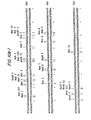
- FIGS. 10A-M show the nucleotide sequence of pLMT8.5 (SEQ ID NOS: 1 and 9) and the positions of restriction endonuclease sites;
- FIGS. 11A-F show a tabulation of the restriction sites in the sequence of pLMT8.5 and the length of the restriction fragment produced
- FIGS. 12 and 13 show the strategy for obtaining a fragment from pLA7 containing the pro-insulin sequence and a histidine tag and inserting them into the restriction site of the multiple cloning sites of vector plasmid pLMT8.5 to yield vector plasmid pHIS, and
- FIGS. 14 and 15 show construction of pPLT4 and sequence containing lead of T7 (SEQ. I.D. NO: 2).
- the present invention provides various embodiments, including at least one of: a vector comprising at least one nucleic acid such as DNA for cloning of a nucleic acid or for expression of at least one heterologous protein by a cell such as gram negative bacteria
- the vector can comprise a nucleic acid molecule, e.g., DNA, encoding: an origin of replication region, optionally and preferably a selection marker (which can be a coding nucleic acid in a restriction site), a promoter, an initiation region e.g.
- a translation initiation region and/or a ribosome binding site at least one restriction site for insertion of heterologous nucleic acid, e.g., DNA, encoding the heterologous protein, and a transcription terminator
- a method for extracting a recombinant protein from within a cell such as a recombinant Gram negative bacteria having a cell membrane
- a method for purifying an isolated recombinant human insulin without limiting the general nature of the foregoing, the following provides a discussion of various embodiments, in detail.
- the present invention relates to a method for permeabilization of a cell membrane of a cell such as a recombinant Gram negative bacteria, to extract a protein such as a recombinant protein, from within the cell membrane.
- Heterologous proteins are proteins which are normally either not produced by a host cell, or those which are normally produced only in limited amounts.
- heterologous proteins are frequently produced by genetic expression in quantities that involve precipitation under conditions which maintain the solubility of host cellular proteins.
- the present invention is directed to procedures for producing heterologous proteins and to methods of isolating and purifying heterologous proteins having minimal contamination by endotoxins.
- the present invention further relates to a method of producing proteins by recombinant DNA technology.
- the invention relates to: a multi-purpose vector for expressing at least one heterologous protein in cells such as E. coli or other gram negative bacteria; methods for producing such vectors; a method for extracting protein from a cell, such as a recombinant protein from bacteria, without lysing the cell or bacteria; and a method for purifying isolated recombinant protein.
- Recombinant DNA technology has enabled the expression of foreign (heterologous) proteins in microbial and other host cells.
- a vector containing genetic material directing a host cell to produce a protein encoded by a portion of a heterologous DNA sequence is introduced into the host, and the transformed host cells can be fermented and subjected to conditions which facilitate the expression of the heterologous DNA, leading to the formation of large quantities of the desired protein.
- Plasmids are extensively used as vectors to clone DNA molecules. Most plasmid vectors are made by taking DNA from a variety of replicons (plasmids, bacteriophage chromosomes and bacterial chromosomes) and joining the DNA together (using restriction enzymes and DNA ligase) to form a plasmid which has an origin of replication, a selection marker (usually an antibiotic-resistance gene) and a promoter for expressing genes of interest in the required host cell.
- replicons plasmids, bacteriophage chromosomes and bacterial chromosomes
- DNA ligase DNA ligase
- DNA encoding a protein such as a precursor protein is inserted into a vector.
- the coding sequence to be expressed is inserted in the correct relationship to a host-specific promoter and other transcriptional regulatory sequences and in the correct reading frame, so that the heterologous protein is produced.
- the vector also contains sequences for efficient translation (e.g., the Shine-Dalgarno Region for expression in bacterial cells).
- Expression vectors usually contain a transcription termination site 3′ to the inserted gene to ensure the mRNA produced to avoid run on through the plasmid.
- the expression vector of the present invention contains the following:
- Origin of replication preferably of pUC8 (which insures a high copy number of the plasmid in the E. coli recipient cells);
- a marker preferably a tetracycline resistance marker from plasmid pRP4;
- a promoter preferably a P L promoter isolated from bacteriophage lambda
- Shine-Dalgarno regions preferably synthetic Shine-Dalgarno regions, and preferably such synthetic regions from T7 phage gene 10;
- a transcription terminator such as synthetic efficient transcription terminator which is Rho-independent;
- At least one restriction site and preferably a region of multiple restriction sites to facilitate the cloning of the genes to be expressed.
- FIGS. 1-5 The construction of the plasmid pLMT8.5 is illustrated in FIGS. 1-5, and FIGS. 10A-M and 11 A-F show the nucleotide sequence and restriction sites in pLMT8.5.
- At least one restriction site can be cloned at least one nucleotide sequence which can be exogenous, e.g., encoding an epitope of interest, a biological response modulator, a growth factor, a recognition sequence, a therapeutic gene, a fusion protein or other protein of interest (e.g., proinsulin) or combinations thereof.
- a nucleotide sequence which can be exogenous, e.g., encoding an epitope of interest, a biological response modulator, a growth factor, a recognition sequence, a therapeutic gene, a fusion protein or other protein of interest (e.g., proinsulin) or combinations thereof.
- An epitope of interest is an immunologically relevant region of an antigen or immunogen or immunologically active fragment thereof, e.g., from a pathogen or toxin of veterinary or human interest.
- An epitope of interest can be prepared from an antigen of a pathogen or toxin, e.g., an antigen of a human pathogen or toxin, or from another antigen or toxin which elicits a response with respect to the pathogen, or from another antigen or toxin which elicits a response with respect to the pathogen, such as, for instance: a Morbillivirus antigen, e.g., a canine distemper virus or measles or rinderpest antigen such as HA or F; a rabies glycoprotein, e.g., rabies glycoprotein G; influenza antigen, e.g., influenza virus HA or N or an avian influenza antigen, e.g., turkey influenza HA, Chicken/Pennsylvania/1/83 influenza antigen such as a nudeoprotein (NP); a bovine leukemia virus antigen, e.g., gp51, 30 envelope; a Newcastle Disease
- tetani antigen a mumps antigen; a pneumococcal antigen, e.g., PspA; a Borrelia antigen, e.g., OspA, OspB, OspC of Borrelia associated with Lyme disease such as Borrelia burgdorferi, Borrelia afzelli and Borrelia garinii ; or a chicken pox (varicella zoster) antigen.
- PspA pneumococcal antigen
- a Borrelia antigen e.g., OspA, OspB, OspC of Borrelia associated with Lyme disease such as Borrelia burgdorferi, Borrelia afzelli and Borrelia garinii
- a chicken pox (varicella zoster) antigen a chicken pox (varicella zoster) antigen.
- epitope of interest can be derived from any antigen of any veterinary or human pathogen; and, to obtain an epitope of interest, one can express an antigen of any veterinary or human pathogen.
- Nucleic acid molecules encoding epitopes of interest such as those listed can be found in the patent and scientific literature such that no undue experimentation is required to practice the claimed invention with respect to any exogenous DNA encoding at least one epitope of interest.
- heterologous DNA can be for a growth factor or therapeutic gene
- U.S. Pat. No. 5,252,479 which is incorporated herein by reference, together with the documents cited in it and on its face, and to WO 94/16716, each of which is also incorporated herein by reference, together with the documents cited therein (see Kendrew, supra, especially at page 455 et seq.).
- the growth factor or therapeutic gene can encode a disease-fighting protein, a molecule for treating cancer, a tumor suppressor, a cytokine, a tumor associated antigen, or interferon; and, the growth factor or therapeutic gene can, for example, be selected from the group consisting of a gene encoding alpha-globin, beta-globin, gamma-globin, granulocyte macrophage-colony stimulating factor, tumor necrosis factor, an interleukin, macrophage colony stimulating factor, granulocyte colony stimulating factor, erythropoietin, mast cell growth factor, tumor suppressor p53, retinoblastoma, interferon, melanoma associated antigen or B7.
- U.S. Pat. No. 5,252,479 provides a list of proteins which can be expressed in an adenovirus system for gene therapy, and the skilled artisan is directed to that disclosure.
- WO 94/16716 provide genes for cytokines and tumor associated antigens and the skilled artisan is directed to that disclosure.
- epitopes of interest one skilled in the art can determine an epitope or immunodominant region of a peptide or polypeptide and ergo the coding DNA therefor from the knowledge of the amino acid and corresponding DNA sequences of the peptide or polypeptide, as well as from the nature of particular amino acids (e.g., size, charge, etc.) and the codon dictionary, without undue experimentation. See also Ivan Roitt, Essential Immunology, 1988; Kendrew, supra; Janis Kuby, Immunology (1992), pp. 79-80; Bocchia, M.
- inventive vector which expresses an epitope of interest, a biological response modulator, a growth factor, a recognition sequence, a therapeutic gene, or a fusion protein or any protein of interest such as pro-insulin; or for the skilled artisan to use an expression product from an inventive vector.
- plasmid vectors containing a nucleic acid molecule (inserted into a restriction site) encoding pro-insulin and pro-insulin with a His tag e.g., plasmids pPTAl and pHIS (which are akin to pLMT8.5, but contain DNA encoding pro-insulin and pro-insulin with a His tag in a restriction site; see FIGS. 12 and 13 ).
- the pro-insulin with a His tag is useful for isolation of the pro-insulin (see Example 7).
- the stability of the protein can be a limiting factor in the expression of its gene in E. coli , which is affected by many factors, including the presence or absence of proteolytic enzymes in the medium, as well as the sequence of the protein itself.
- inclusion bodies of the produced recombinant protein can facilitate protection against proteolysis.
- the inclusion bodies are produced depending on the protein, and can have certain advantages if one wants to induce proteins which are insoluble or which are toxic for E. coli (Schein, 1989; Kane & Hartley, 1988; Hellebust et al., 1989). Generally, they are formed as cytoplasmatic aggregates which can be purified after lesion of the cell followed by centrifugation and mixing the proteins with a strong denaturant, e.g. urea or guanidine.
- a strong denaturant e.g. urea or guanidine.
- the half-life of a protein should also be considered in relation to its amino-terminal residue, also known as N-end rule.
- N-end rule also known as N-end rule.
- residues arginine, lysine, leucine, phenylalanine, tyrosine and tryptophan at the amino terminus tend to decrease the half-life of the protein, i.e., the half life can be on the order of two minutes, whereas other residues provide proteins having a half-life of more than ten hours for the same protein.
- the amino acids arginine and leucine act as secondary destabilizing residues because their activity depends on conjugation with the primary destabilizing residues, leucine and phenylalanine, through the transference protein-tRNA-phenylalanine/leucine (transferase L/F).
- This enzyme which is present in Gram-negative bacteria and absent in eukaryotes, catalyzes the conjugation of leucine and phenylalanine in N-arginine ends and lysine sterically accessible in proteins or peptides.
- the protease Clp(Ti) one of the two known ATP dependent proteases in E. coli (the other one is La), is needed for degradation in vivo of N-end rule substrates.
- Clp (750 kd) is a protein containing two subunits, ClpA (21 Kda) and ClpP (21 Kda), being comparable to the 20 S proteasomes of the eukaryotes. Even though the mutations clpA of E. coli lose the standard of the N-end rule, they grow at the rate of the wild E. coli , showing normal phenotypes and not stablizing various short-life proteins of E. coli (Varshavsky, 1992).
- Another way to form a more stable, heterologous protein in E. coli is by producing it as a protein that fuses with a part of native/natural protein of the bacteria. Some of the heterologous proteins are rapidly degenerated by the protease of the host and genetic fusion stabilizes the produced protein within the cell, also providing a strategy for later purification (Sherwood, 1991).
- This method is the addition of a region, rich in arginine at the carboxyl-end of urogastrone, that aids in the protection against proteolysis and in the purification of the protein in an ion-exchange column (Smith et al., 1984).
- the present invention provides an alternative method for the development of stable, isolatable, heterologous proteins, which method overcomes the above-identified problems associated with the stability of the induced protein.
- the present invention provides a method to improve the expression of the heterologous proteins, by employing a vector for expression, the plasmid pLMT8.5 and derivatives thereof, e.g., pPTA1 and pHIS, which are strong enough to result in a rate of protein production higher than the degradation rate.
- a vector for expression the plasmid pLMT8.5 and derivatives thereof, e.g., pPTA1 and pHIS
- the present invention provides a process for constructing a vector for expression of heterologous proteins, preferably low molecular weight proteins, e.g., less than 10 Kda, in E. coli.
- the present invention provides a highly efficient process for thermo-regulated production of heterologous proteins in E. coli and in other Gram-negative bacteria, preferably for the production of human pro-insulin.
- the method of the present invention for thermo-regulated highly efficient production of heterologous proteins in E. coli and other Gram-negative bacteria includes thermal induction of a culture of bacteria containing the plasmid pLMT8.5 and the gene for cloning, in which the plasmid pLMT8.5 is prepared according to the process described herein and the cloning is achieved without genetic fusion.
- the heterologous protein is human pro-insulin from the synthetic gene for pro-insulin.
- Recombinant E. coli cells almost always express the heterologous protein in the form of insoluble cytoplasmic inclusion bodies. In other words, the recombinant protein is not excreted into the culture media.
- An additional characteristic of recombinant E. coli is the accumulation of high amounts of acetate in the media, mainly during the induction phase. The deleterious effect of acetate accumulation (>5 g/L) on cell growth and recombinant protein expression is well documented in the literature.
- the present invention facilitates the development of fermentation conditions, wherein both high biomass accumulation (>70 g/dry weight/L) and maintenance of low acetate concentration ( ⁇ 2.0 g/L) are achieved, while the production of a increased concentration of expressed recombinant protein is obtained.
- proteolytic enzymes While trypsin and carboxypeptidase B are preferred, one may substitute any appropriate proteolytic enzyme, e.g., the substitution of Endoproteinase Lys-C for trypsin, in order to convert pro-insulin to insulin, and such a substitution is well within the gambit of knowledge of the skilled artisan acquainted with available proteolytic enzyme preparations and their respective specificities.
- inventive process for the construction of a vector for use in thermo-regulated production of heterologous proteins in E coli was comprised of the following stages:
- pULTDK7.1 The construction of pULTDK7.1 was initiated by the isolation of the fragment containing the promoter P L of the phage lambda. This fragment extends from the HindIII site to the HpaI site of the phage and was cloned into the HindIII and SmaI sites of the polylinker of pUC19, fonning the recombinant plasmid pUCPL2.7. Oligonucleotides 011929 and 011930, which contain the Shine-Dalgarno region of the gene 10 of the phage T7, were annealed and ligated to the EcoRI site of pUCPL2.7, forming plasmid pULT7.2.4.
- Plasmid pULT7.2.4 was cleaved at the BspEI and XbaI sites, treated with DNA polymerase I fragment Kilenow and relegated, resulting in a deletion of the coding region of the gene N of the phage lambda and formation of plasmid pULTDK7.1.
- pUTC6 The construction of pUTC6 began by the isolation of the gene for resistance to tetracycline (Tc), by means of digestion of the plasmid pRP4 with BglII and StuI, which liberated a fragment of 1.4 kb, which was cloned in the BamHI and SmaI sites of plasmid pUC8, forming plasmid pUT1.
- a 0.9 kb pUC8 fragment was liberated by digestion with DraI and PvuII and ligated to pUT1 after digestion with PstI, treatment with S1 nuclease, digested with EcoRI and treated with Klenow, to obtain the plasmid pUTC6, which maintains the site EcoRI and contains the origin of replication and the gene for resistance to Tc.
- Annealed oligonucleotides 1 and 2 were ligated to the EcoRI site of pUTC6 to form the plasmid pMC8, containing a region of restriction sites for molecular cloning.
- pULTDK7.1 was liberated by digestion with the HindIII and EcoRI and ligated to pMC8, also digested with HindIII and EcoRI, to yield the recombinant plasmid pLMC8.1, containing the gene for resistance to Tc, the origin of replication, the promoter P L the Shine-Dalgarno region and a polylinker for molecular cloning.
- An efficient transcription-terminator was inserted from oligonucleotides 12 and 13 which were annealed and ligated to the BamHII site of the plasmid pLMC8.1, preserving the site at the 5′ end of the oligonucleotides and creating a HindIII site at the 3′ end, yielding the expression vector pLMT8.5 for E. coli and other gram-negative bacteria.
- oligo 01 HindIII EcoRI StuI BamHI 5′ AATTAAGCTTTTCGCGAATTCTGAGGCCTGCAGGATCC 3′ (SEQ ID NOS: 4, 5, 6 and 7) 3′ TTCGAAAAGCGCTTAAGACTCCGGACGTCCTAGGTTAA 5′ NruI PstI oligo 02 oligo 12 BamHI HindIII 5′ GATCCGGAAGCCCGCCTAATGAGCGGGCTTTTTTTTAAGCTT 3′ 3′ GCCTTCGGGCGGATTACTCGCCCGAAAAAAAATTCGAACTAG 5′ BspEI oligo 13
- pLMT8.5 prepared according to the method described hereinabove, contains: (1) origin of replication of pUC8; (2) the gene for resistance to tetracycline of pRP4; (3) the promoter P1 of the Lambda phage; (4) the SD-region of the gene 10 of the phage T7; (5) multiple cloning sites for cloning without fusion; and (6) Rho-independent terminator of transcription (See FIGS. 1-5, 10 A-M, 11 A-F).
- vector expressing pro-insulin coding DNA therefor was inserted into a restriction site of the multiple cloning sites of vector plasmid pLMT8.5.
- the synthetic gene for proinsulin was cloned on a polylinker yielding vector plasmid pPTA1 (pLMT8.5+proinsulin).
- the vector was then inserted into E. coli and cultures thereof were grown for expression of pro-insulin (e.g., N4830-1 (cl 857 ) strain; see Examples below).
- a fragment from pLA7 containing the pro-insulin sequence and a histidine tag was inserted into the restriction site of the multiple cloning sites of vector plasmid pLMT8.5 yielding vector plasmid pHIS.
- the cloning strategy is depicted in FIGS. 12 and 13.
- the vector was then inserted into E. coli and cultures thereof were grown for expression of pro-insulin (e.g., N4830-1 (cl 857 ) strain; see Examples below).
- pHIS contains the pro-insulin gene with the oligo encoding a (HIS)6 insertion (Met-Ala-His-His-His-His-His-His-His-Met-Gly-Arg) (SEQ ID NO. 8).
- inclusion bodies are recovered from the host organism by two procedures: (a) Mechanical or physical rupture of the cell envelope by passing the cell paste through a Manton-Gaulin press or by grinding the cell suspension in a colloidal mill such as a Dyno-Mill; and (b) Digestion of the cell envelope by treatment with lysozyme.
- a) Mechanical or physical rupture of the cell envelope by passing the cell paste through a Manton-Gaulin press or by grinding the cell suspension in a colloidal mill such as a Dyno-Mill such as a Dyno-Mill
- Digestion of the cell envelope by treatment with lysozyme.
- the method of the present invention employs alternative methods for the purification and direct solubilization of inclusion bodies.
- E. coli cells (K-12 strain N 4830-1 containing the pro-insulin gene under the control of the P L promoter; plasmids pPTA1 and pHIS, see Example 1) were grown in 10 liters of medium containing yeast extract (20 g/L), peptone (6.0 g/L), NaCl (5.0 g/L), glucose (10.0 g/L), Antifoam A (2.0 g/L), and ampicillin (100 ug/ml), pH 6.8 (after sterilization). The medium was inoculated at 10% volume with a pre-culture prepared from an isolated colony grown overnight in the same medium. At an optical density of approximately 6.0 at 540 nm, synthesis of pro-insulin was induced by raising the temperature from 30 to 38° C. Induction could also be initiated at temperatures of 40 to 42° C. Cells were harvested after 2 to 5 hours of induction. Inclusion body formation was monitored by phase contrast microscopy.
- the cells were harvested by centrifugation, resuspended twice in deionized water, and recovered by centrifugation.
- Known amounts of wet cell cake were resuspended in 0.1M Tris-Hcl, pH 8.5, and appropriate amounts of permeabilization compounds, alone, or in combination, were added to a concentration of up to ten times the volume of the weight of the wet cell cake, as shown in Table 1.
- the cells were recovered by centrifugation, wet weight of the cell cakes and the wet pellet were homogenized in 10 times their weight of 0.1M Tris-Hcl, pH 8.5 containing 8M urea, and agitation was continued at room temperature for up to 24 hours.
- the pre-treated cells were cleaned of the cytoplasmic proteins and other contaminating material extracted from the cells (grown as in Example 3), by centrifugation, followed by resuspension of the pre-treated and washed cells in buffer containing 8M urea.
- Example 4 Cell cultures grown as in Example 4 were harvested by centrifugation, resuspended twice in deionized water and recovered by centrifugation. Known amounts of the wet cell cake were resuspended in 0.1M Tris-Hcl, pH 8.5, containing 20% Triton X-100, and the solutions were agitated overnight at room temperature. Fusion protein concentrations were determined by SDS-PAGE analysis, and it was found that under these conditions, a substantial amount of cytoplasmic material diffuses out of the cell, leaving an empty shell containing essentially the inclusion body with few contaminating cellular proteins.
- the isolated inclusion bodies or whole pre-treated cells from cells containing and expressing plasmid PHIS were washed twice with 50 Mm ammonium acetate buffer, pH 9.0 and centrifuged. The precipitate was dissolved in 50 Mm ammonium acetate buffer, pH 9.0, containing 8M urea, and sodium sulphite (1.25 g/g of sample) and sodium tetrathioate (0.55 g/g of sample) were added. The sample was stirred, at room temperature. The sulfitolysis reaction was monitored by analysis of aliquots on a Mono-Q column. After 24 to 48 hours, the sample was diluted 3 times with deionized water, centrifuged, and the supernatant was filtered to give a clear solution.
- the filtered supernatant was applied to a Ni-chelating sepharose FF column (Pharmacia Biotech, Upsala Sweden), equilibrated with 0.1M sodium phosphate, 50 mM NaCl, pH 7.3.
- the sample was eluted in a stepwise gradient, with the equilibration buffer containing 8M urea and 0.08M imidazole, followed by washing with the equilibration buffer containing 8M urea and 0.3M imidazole.
- the chromatographic separation was monitored by absorbance measurement at 280 nm.
- the buffer of the solution containing pure S-sulfonated protein isolated by metal affinity chromatography was changed to 10 Mm glycine, pH 10.0, by gel filtration chromatography on Sephadex G-25.
- the pure sulfonated protein was renatured (0.5 mg protein/ml) by the addition of 0.5mM cystine and 0.5mM beta-mercaptoethanol, with agitation for 18 to 24 hours at 4 to 8° C., and the reaction was monitored by injection of aliquots of the reaction mixture on HPLC equipped with an Aquapore RP-300 column. The renatured samples were concentrated and the buffer was changed by diafiltration.
- a synthetic gene for proinsulin, constructed by inventors, using oligonucleotides was cloned into the NcoI and BamHI sites in the polylinker region of pLMT8.5 vector to make the pPTA1 and pHIS proinsulin expression vectors (see Example 1). In tests it was found that, after thermal induction of a culture of E.
- coli N4830-1 (cl 857 ) strain containing the plasmid pPTA1 (pLMT8.5 +proinsulin), there was induction of the recombinant protein of approximately 10 Kda, in a fraction of 20% of the total proteins of the bacteria over a period of 90 minutes, and that it loses the capacity to multiply during the thermal shock, leaving it only to the production of the recombinant protein, as shown in FIG. 4 .
- the plasmid pPLT4 was also used in this test.
- This plasmid is a derivative of the plasmid pPLc28 (Remaut et al., 1981), modified by inventors, in which the same synthetic Shine Dalgarno site and the proinsulin gene of the plasmids pLMT8.5 and pPTA1 were cloned.
- pLMT8.5 was 100% more efficient (See FIG. 9 ).
- Plasmids pLMT8.5, pPLT4, pHIS, and pPTA1 were deposited on Jun. 24, 1997 with the American Type Culture Collection (ATCC), 12301 Parklawn Drive, Rockville, Md., 20852, U.S.A., under ATCC accession numbers 98474, 98475, 98476 and 98473.
- ATCC American Type Culture Collection
- pLMT8.5 hyper-expression-vector for E. coli
- the selection marker can be omitted from pLMT8.5 or derivatives thereof, e.g., pHIS, and pPTA1, and selection can be based on expression of a gene product, e.g., of insulin or of insulin with a His tag.
- Methods for selection based on expression of an exogenous coding sequence are known in the art and can include immunoprecipitation or other antibody-based screening methods which employ antibodies which bind to the expression product, or selective media with respect to the expression product (see, e.g., U.S. Pat. Nos. 4,769,330, 4,603,112, 5,110,587 regarding selection using selective media with respect to an expression product; U.S. Pat. No. 5,494,807 regarding selection using antibody-based screening methods).
- Productivity of the fermenter could be increased substantially ( ⁇ 40%) by withdrawing approximately 70% of the broth volume, after an induction period at 42° C. for 5 hours, adding fresh media, returning the temperature to 30° C. for an additional 5 hours, followed by an additional 5 hours of induction at 42° C. In this way, without increasing the overall fermentation time (20-22 hrs.), an increased volume of biomass and recombinant protein is obtained.
- Heat inactivation was found to negatively influence the inclusion body purification steps due to considerable coagulation of cytoplasmic proteins, at the heat inactivation temperature (80° C.).
- Cell inactivation and permeabilization was performed concomitantly by overnight treatment of the harvested cells with 1% Toluene and 50 Mm EDTA. Further purification was achieved by resuspending the recovered biomass in Tris 0.1M, pH 8.5 buffer, containing 1.0% Triton X-100, and agitating for five hours or overnight. Cells pre-treated in this manner, after centrifugation, can be used directly in the ensuing purification steps.
- a suspension of isolated inclusion bodies can be obtained which can be separated from the cell debris by centrifugation, in a highly purified state.
Landscapes
- Health & Medical Sciences (AREA)
- Life Sciences & Earth Sciences (AREA)
- Genetics & Genomics (AREA)
- Chemical & Material Sciences (AREA)
- Engineering & Computer Science (AREA)
- Organic Chemistry (AREA)
- Zoology (AREA)
- Wood Science & Technology (AREA)
- General Engineering & Computer Science (AREA)
- Biotechnology (AREA)
- Bioinformatics & Cheminformatics (AREA)
- Biomedical Technology (AREA)
- General Health & Medical Sciences (AREA)
- Biochemistry (AREA)
- Molecular Biology (AREA)
- Microbiology (AREA)
- Biophysics (AREA)
- Physics & Mathematics (AREA)
- Plant Pathology (AREA)
- Proteomics, Peptides & Aminoacids (AREA)
- Endocrinology (AREA)
- Gastroenterology & Hepatology (AREA)
- Medicinal Chemistry (AREA)
- Toxicology (AREA)
- Cell Biology (AREA)
- Diabetes (AREA)
- Virology (AREA)
- Chemical Kinetics & Catalysis (AREA)
- General Chemical & Material Sciences (AREA)
- Crystallography & Structural Chemistry (AREA)
- Preparation Of Compounds By Using Micro-Organisms (AREA)
- Peptides Or Proteins (AREA)
- Micro-Organisms Or Cultivation Processes Thereof (AREA)
Abstract
The present invention relates to a vector for expression of a heterologous protein by a Gram negative bacteria, wherein the vector includes a nucleic acid such as DNA encoding the following: an origin of replication region; optionally and preferably a selection marker; a promoter; an initiation region such as translation initiation region and/or a ribosome binding site, at least one restriction site for insertion of heterologous nucleic acid, e.g. DNA, encoding the heterologous protein, and a transcription terminator. The inventive vector may contain DNA encoding the heterologous protein, e.g., pro-insulin such as pro-insulin with a His tag. Additionally, the invention provides a method for extracting a recombinant protein from within a recombinant Gram negative bacteria having a cell membrane, without lysing the bacteria, as well as a method for purifying an isolated recombinant human insulin, wherein the isolated recombinant human pro-insulin is subjected to sulfitolysis, Ni-chelation chromatography, renaturation, limited proteolysis and chromatography separation to provide purified, isolated, recombinant human insulin.
Description
This application is a divisional of allowed U.S. application Ser. No. 09/306,949, filed May 7, 1999, now U.S. Pat. No. 6,281,329, which is a divisional of allowed U.S. application Ser. No. 08/886,967, filed Jul. 2, 1997, now U.S. Pat. No. 6,068,993. All of the above-mentioned applications, as well as all documents cited herein and documents referenced or cited in documents cited herein, are hereby incorporated herein by reference.
The present invention relates to a multi-purpose vector. The vector can be for expressing at least one heterologous protein in a suitable cell such as E. coli or other Gram negative bacteria. More specifically, the present invention relates to: a vector for expression of heterologous proteins comprising nucleic acid molecules for: an origin of replication region, optionally but preferably a selection marker (which can be a coding nucleic acid molecule inserted in a restriction site), a promoter, an initiation region e.g. a translation initiation region and/or a ribosome binding site, at least one restriction site and preferably multiple restriction sites, and a transcription terminator; a method for extracting recombinant protein without lysing the cell, e.g., bacteria; and a method for purifying isolated recombinant protein. The vector can facilitate the thermo-regulated production of a heterologous protein or proteins, e.g., pro-insulin.
Several publications are referenced in this application. Full citation to these publications is found at the end of the specification, immediately preceding the claims, or where the publication is mentioned; and each of these publications is hereby incorporated by reference. These publications relate to the state of the art to which the invention pertains; however, there is no admission that any of these publications is indeed prior art.
Recombinant DNA technology has enabled the expression of foreign (heterologous) proteins in microbial and other host cells. A vector containing genetic material directing the host cell to produce a protein encoded by a portion of the heterologous DNA sequence is introduced into the host, and the transformant host cells can be fermented and subjected to conditions which facilitate the expression of the heterologous DNA, leading to the formation of large quantities of the desired protein.
The advantages of using a recombinantly produced protein in lieu of isolation from a natural source include: the ready availability of raw material; high expression levels, which is especially useful for proteins of low natural abundance; the ease with which a normally intracellular protein can be excreted into the expression medium, facilitating the purification process; and the relative ease with which modified (fusion) proteins can be created to further simplify the purification of the resultant protein.
However, the aforementioned benefits of recombinant DNA technology are also accompanied by several disadvantages, namely: the required elements of the active protein which result from post-translational modification (i.e., glycosylation) may not be carried out in the expression medium; proteolytic degradation of newly formed protein may result upon expression in host cells; and the formation of high molecular weight aggregates, often referred to as “inclusion bodies” or “refractile bodies”, which result from the inability of the expressed proteins to fold correctly in an unnatural cellular environment. The recombinant protein cannot be excreted into the culture media upon formation of inclusion bodies.
Inclusion bodies contain protein in a stable non-native conformation; or, the protein aggregates may be amorphous, comprised of partially and completely denatured proteins, in addition to aberrant proteins synthesized as a result of inaccurate translation. Such inclusion bodies constitute a large portion of the total cell protein.
Inclusion bodies present significant problems during the purification of recombinant proteins, as they are relatively insoluble in aqueous buffers. Denaturants and detergents, i.e., guanidine hydrochloride, urea, sodium dodecylsulfate (SDS) and Triton X-100, may be necessary to isolate the proteins from the inclusion bodies, often at the expense of the biological activity of the protein itself, resulting from incorrect folding and modification of the amino acid residues in the sequence.
Additionally, a result of the expression of recombinant DNA in E. coli is the accumulation of high concentrations of acetate in the media, mainly during the induction phase. The deleterious effect of acetate accumulation (greater than 5 g/L) on cell growth and recombinant protein expression has been well documented in the literature.
Further, the recovery of the desired protein from inclusion bodies is often complicated by the need to separate the desired protein from other host cellular materials, in addition to separating the desired protein from inclusion body heterologous protein contaminants. The latter problem results from the strong attraction that inclusion body proteins have for one another, due to strong ionic and hydrophobic interactions.
Consequently, most established protocols for the isolation of recombinant proteins from inclusion bodies result in large quantities of biologically inactive material, and very low yields of active protein, uncontaminated by extraneous heterologous protein.
Researchers have focused on the manipulation of phage in order to stimulate protein synthesis by a variety of methods.
The promoters of the Lambda phage (PL and PR) are strong promoters that are negatively controlled by the repressor coded by the gene cl. The mutation cl857 rendered the repressor inactivate at temperatures above 37° C. Thus, the expression of a sequence controlled by these promoters and by the repressor cl857 can be activated by a simple change in temperature. These promoters are often used in E. coli expression vectors, because they are strong and efficiently repressed (Denhardt & Colasanti, 1987).
Remaut et al. (1981) constructed a set of plasmids containing the promoter PL. The promoter and the trp region of the gene were taken from a family of phages (trp44) and inserted in the plasmid pBR322, creating the first plasmid of a series, plasmid pPLa2. After several manipulations, other plasmids were obtained. The plasmids pPLa2 and pPLa8 contained the promoter PL fragment, the origin of replication, the ampicillin resistance gene from the plasmid pBR322, and a kanamycin resistance gene from the plasmid pMK20. The promoter region contained the promoter/operator and the nutL site (antitermination), but it was lacking the beginning of the gene N.
The plasmids pPLc236, pPLc28 and pPLc24 are different from the previously identified plasmids, with respect to the direction of transcription from the promoter PL in relation to the orientation of the origin of replication, as found in pBR322 (a=anticlockwise, c=clockwise). The kanamycin resistance gene is absent in these three vectors. The difference between pPLc236 and pPLc8 is the presence or absence of a region (present in the former and absent in the latter), which affects the region of unique cloning sites. pPLc24 was derived from pPLc28 by insertion of a region containing the ribosome binding site of the gene for replicase from the phage MS2, enabling the expression of eukaryotic genes.
These plasmids were tested with the expression of different genes, e.g., the gene trpA from Salmonella typhimurium, cloned in the plasmid pPLc23 (predecessor of pPLc236), which showed 40% induction of product in relation to the total cellular protein. pLc236 programmed in E. coli resulted in a expression of the gene ROP as 20% of the total protein (Muesing et al., 1984). The proteins p4 and p3 of the phage 29 of Bacillus subtilis, were also produced from pPLci and reached 30% and 6%, respectively, of the total cellular protein induced in E. coli, after thermal induction (Mellado & Salas, 1982).
In 1983, Remault et al. (1983a) built a plasmid pPLc245, derived from pPLc24, in which the initial coding region of replicase was deleted and a region with several unique cloning-sites was added, permitting direct expression. The gene for human α-interferon was cloned into this plasmid, resulting in induction of protein of approximately 2% to 4% of the total cellular protein. For α-interferon, the levels of expression varied from 3% to 25% of the cellular protein, depending on the plasmids used, e.g., pPLc245, pPLc28 and pCP40, and on the presence of a transcription-terminator from phage T4 (Simons et al., 1984). The plasmid pCP40, derived from pPL, was built by Remaut et al. (1983b). The promoter-region was transferred to a plasmid derived from pKN402 with temperature dependent ‘runaway’ replication. When the cultures are heated to 42° C, the repressor cl857 is deactivated and the promoter PL is liberated, resulting in an increase in the number of copies of the plasmid pCP40, by approximately ten fold.
Crowl et al. (1985) relates to four plasmids containing the promoter PL. The plasmid pRC23 was built containing the promoter PL and a synthetic Shine-Dalgarno region, without the codon ATG, cloned in the plasmid pRC2 (derived from pBR322). To build the other three plasmids, pEV-vrf1, pEV-vrf2 and pEV-vrf3, a region with unique cloning sites was inserted, adding the initial ATG codon, such that in each one the reading frames are on phase. The plasmid pRC23 was used for the expression of interleucine-2 and α-interferon, with a level of 10% to 20% of the total cellular protein.
Lautenberg et al. (1983) built the plasmid pJL6, containing the promoter PL, which codes for initiation of translation of the gene cII of the phage, with unique ClaI and HindIII cloning sites, located at 50 bp from the initial ATG site. Genes, adequately cloned in these sites are induced, producing fusion proteins with the protein CII. Seth et al. (1986) modified this vector so that the induction of proteins could occur without fusion. Three plasmids were constructed, containing a KpnI site in pANK-12, an HpaI site in pANH-1, and an NdeI site in pPL2 of the initial codon ATG of the gene CII of pJL6. In pANH-1, the amino acid ‘valine’ occurred more frequently in the amino-end of the induced protein. Production of oncogenes was obtained from these vectors. Chang and Peterson (1992) also modified the plasmid pJL6 and built a line of plasmids, pXC, in which the region for initiation of translation of the gene CII was substituted by a synthetic one. Additionally, a region was inserted having several unique cloning sites. The region CII affects the efficiency of the translation if the expression is required without fusion. With the synthetic region, the efficiency rose between 10 and 20 times, depending on the spacing region between SD and ATG. The expression reached 48% of the total cellular protein for the protein 14-3-3 of cow brain, of which the DNA had been amplified by PCR.
Schauder et al. (1987) built a line of plasmids derived from pJL6, containing the promoters PR and PL in tandem, the region SD of the gene atpE (for subunit of ATPase), with the transcription terminator of the bacteriophage fd and with the gene of the repressor cl857. These plasmids were named pJLA501 to −05 and differ in the regions of the multiple cloning sites. On testing the expression of the gene atpA (for a subunit of ATPase), an induction of 50% of the total cellular protein was found. The genes sucC and sucD, respectively, showed 30% and 15% induced protein in relation to the total cellular protein.
Rosenberg et al. (1983) built the plasmid pKC30 and its derivatives. The vector pKC30 is used for the expression of bacterial genes containing their proper translation-regulation regions. This vector contains a unique cloning HpaI site, located 321 bp downstream from the promoter PL, within the coding region of the gene N. The expression of the activator CII and eight mutants in just one amino acid was achieved in the vector pKC30. Because CII is quickly recycled in E. coli and deleterious for cell growth, with insertion and expression of its gene in pKC30, levels of 3% to 5% of the total cellular protein were reached. The production of the protein CII rose when the protein N (anti-terminator) was provided by the host-cell, because of the presence of the ‘upstream’ sequences of the gene CII of the sites nutL, nutR (for anti-termination) and tr1 (for termination). Other proteins were expressed from pKC30, such as the protein B of the phage Mu (Chaconas et al., 1985) and the protein UvrA of E. coli expressed at levels of 15% and 7% of the total cellular protein respectively.
For the expression of eukaryotic genes the plasmid pAS1, derived from pKC30, was built with the cloned gene CII. The complete coding region of CII was deleted and a BamHI site was added immediately ‘downstream’ of the ATG initiation codon. In this manner, the regulating regions for translation were maintained in the vector and a eukaryotic or synthetic gene can be expressed if cloned correctly to the BamHI site. Expression of the gene for the antigen t of the virus SV40 resulted in this vector in levels of 10% of the total cellular proteins, after one hour of thermal induction (Rosenberg et al., 1983). Lowman et al. (1988) modified the plasmid pAS1, introducing a NcoI site in the initial ATG, creating the plasmid named pAS1-N. Expression of the gene CAT and fusion with proteins of the virus SV40 were obtained. Later, Lowman & Bina (1990) used these products to study the effect of temperature in thermal induction.
Mott et al. (1985) used pKC30 and pAS1 to express the bacterial gene rho and verified that the thermal induction did not result in high levels of expression of the protein Rho. Induction with nalidixic acid and mitomicina C was tested in the host cI, which provoked the induction of the syntheses of Rec a, resulting in an inactivation of the repressor cI. In this manner, levels of expression varying from 5% to 40% of the cellular protein were reached.
Hence, the manipulation of plasmids for expression of a protein or peptide of interest is a developing area and a method for the induction of complex proteins such as pro-insulin via manipulation of a plasmid and a plasmid therefrom, have not heretofore been developed or suggested.
U.S. Pat. No. 4,734,362, to Hung et al., is directed to a method of isolating polypeptides produced recombinantly in inclusion bodies. The disclosed method includes the cell lysis, and recovery of inclusion bodies comprising the desired recombinant protein, solubilization with denaturant, protection of the sulfhydryl groups of the recombinant protein, derivatization of cationic amino groups of the protein, and recovery of the derivatized recombinant protein.
Olson, U.S. Pat. No. 4,518,526 relates to a method of releasing active proteins from inclusion bodies by cell lysis, centrifugation, denaturation and renaturation. The patent teaches the necessity of the disruption of the cell to separate the soluble and insoluble protein, followed by treatment of the insoluble fraction with a strong denaturant, and recovery of the renatured heterologous protein.
Rausch, U.S. Pat. No. 4,766,224 is directed to a method of purification and solubilization of proteins produced in transformed microorganisms as inclusion bodies. The purification is effected by solubilization of the inclusion bodies in detergent, treatment with a strong denaturant, followed by chromatographic separation to obtain renatured active protein.
Builder et al., U.S. Pat. No. 4,620,948 is concerned with a process for isolating and purifying inclusion bodies by lysing the cell culture, precipitation of protein, denaturation of the insoluble fraction, and renaturation to isolate the refractile protein.
Similarly, U.S. Pat. Nos. 4,734,368, 4,659,568, 4,902,783, 5,215,896, and EP 337,243 and WO 87/02673 are each directed to methods of purifying proteins entrapped in inclusion bodies. These methods use of the following techniques (alone or in combination): cell lysis, denaturation, chromatographic separation, centrifugation, manipulation of the denaturation/renaturation of the protein, and the attachment of leader peptides which facilitate the separation of the proteins from the inclusion bodies.
Each of the aforementioned prior art processes utilize methods which disrupt the cell to release the inclusion bodies from the cellular material. There is no teaching or suggestion of a means for isolating inclusion bodies from cellular material without the disruption of the cell, nor is there a motivation to derive such a method from the teachings of the prior art. However, the lysis or disruption of cells is disadvantageous as it allows contaminants to be present with the desired protein, such as lipopolysaccharides, which are very difficult to separate from the desired protein.
U.S. Pat. Nos. 4,877,830, 5,115,102, 5,310,663, and EP 656,419, WO 91/11454, WO 91/16912, WO 94/07912, Proc. Natl. Acad. Sci. (1991) 88 (20), and Mol. Biol. Rep. (1993) 18: 223-230 are each directed to affinity purification of proteins. These documents relate to the use of (alone or in combination): metal chelate affinity chromatography for chromatographic separation of proteins having neighboring histidine residues, immunoaffinity chromatography, and the use of amino acid mimetics as eluents in affinity purification of proteins.
U.S. Pat. Nos. 4,766,205, 4,599,197, 4,923,967, and EP 312,358, EP 302,469, Biochemistry (1968), 7 (12), 4247, and J. Biological Chemistry (1959), 234 (7), 1733 are each directed to methods of sulfitolysis, i.e., the treatment of a protein, solubilized in a strongly denaturing solution, with a mild oxidant in the presence of sulfite ion, which converts cysteine and cystine residues to protein-S-sulfonates. The strongly denaturing solution is weakened to permit refolding, and disulfide linkages are reformed using a sulfhydryl compound, in the presence of the corresponding disulfide (oxidized) form. Similarly, EP 208,539 and WO 87/02985 are directed to methods of facilitating protein refolding in vitro.
EP 264,250, GB 2,067574, EP 055,945, MMW (1983) 125 (52), 14, J. Biol. Chem. (1971) 246 (22), 6786-91, J. Chrom. (1989) 461: 45-61 are each directed to insulin, its production from pro-insulin, and the purification of insulin and pro-insulin.
U.S. Pat. No. 4,578,355, to Rosenberg, is directed to the derivation and use of the PL transcription unit. EP 363,896 is directed to the use of ultrafiltration in protein purification.
Human insulin, a proteolytic digestion product of pro-insulin, is a polypeptide hormone produced by beta cells of the islets of Langerhans in the pancreas. Its purpose is to decrease the amount of glucose in the blood by promoting glucose uptake by cells, and increasing the capacity of the liver to synthesize glycogen. The action of insulin is antagonistic to glucagon, adrenal glucocorticoids and adrenaline, and its deficiency or reduced activity produces diabetes with a raised blood sugar level.
Human insulin has been prepared from several sources, including: isolation from human pancreas, peptide synthesis, the semisynthetic conversion from porcine insulin and fermentation of E. coli bacteria or Saccharomyces cerevisiae yeast, suitably encoded by DNA recombinant methods. These methods suffer from poor yield and cost efficiency, and the development of a high yielding, cost effective method of producing human insulin for the treatment of diabetes has been the subject of much research efforts in recent years.
Hence, a method for the induction of human pro-insulin via recombinant techniques has not heretofore been realized, wherein the protein may be isolated in substantial quantities from inclusion bodies, especially such a method wherein cell lysis or cell disruption is avoided.
Objects of the present invention may include providing at least one of: a vector comprising at least one nucleic acid such as DNA for cloning of a nucleic acid or for expression of at least one heterologous protein by a cell such as Gram negative bacteria (the vector can comprise a nucleic acid molecule, e.g., DNA, encoding: an origin of replication region, optionally and preferably a selection marker (which can be a coding nucleic acid in a restriction site), a promoter, an initiation region e.g. a translation initiation region and/or a ribosome binding site, at least one restriction site for insertion of heterologous nucleic acid, e.g., DNA, encoding the heterologous protein, and a transcription terminator); a method for extracting a recombinant protein from within a cell such as a recombinant Gram negative bacteria having a cell membrane; and, a method for purifying an isolated recombinant human insulin.
Accordingly, the present invention provides a vector comprising at least one nucleic acid molecule such as DNA for cloning of a nucleic acid molecule, or more preferably, for expression of at least one heterologous protein by cell such as a Gram negative bacteria. The vector can comprise DNA encoding the following: an origin of replication region, optionally and preferably a selection marker (which can be coding DNA in a restriction site), a promoter, an initiation region e.g. a translation initiation region and/or a ribosome binding site, at least one restriction site for insertion of heterologous DNA encoding the heterologous protein, and a transcription terminator.
The Gram negative bacteria can be E. coli. The origin of replication region can be from plasmid pUC8. The initiation region can be a translation initiation region and can be synthetic, e.g., synthetic Shine-Dalgarno regions from gene 10 of phage T7. The selection marker can be a tetracycline resistance marker. Alternatively or additionally, selection of transformed cells containing the vector can be on the basis of a product expressed by the heterologous DNA encoding the heterologous protein. The promoter can be a PL promoter. And, the transcription terminator can be a Rho-independent one.
Thus, the invention can provide a vector comprising DNA for expression of a heterologous protein by a Gram negative bacteria. The vector can comprise at least one nucleic acid molecule, e.g., DNA, encoding the following: an origin of replication region, a selection marker, a promoter, a translation initiation region or a ribosome binding site, at least one restriction site for insertion of heterologous DNA encoding the heterologous protein, and a transcription terminator.
The DNA encoding the at least one restriction site preferably encodes multiple restriction sites; and, the multiple restriction sites are preferably Ncol, EcoRI, StuI, PstI, BamHI, and BspEI.
The present invention further provides a vector for expression of a pro-insulin by a Gram negative bacteria. That is, in the inventive vector, at the at least one restriction site for insertion of heterologous DNA (or a heterologous nucleic acid sequence) there can be inserted a nucleic acid molecule such as DNA encoding pro-insulin, e.g., human pro-insulin. The protein expressed by the inserted nucleic acid molecule, e.g., pro-insulin such as human pro-insulin, can contain tag or a marker, for instance, a His tag (which is useful for separating, isolating and/or purifying the protein).
And therefore, more generally, inventive vectors can include at least one exogenous coding nucleic acid molecule at the at least one restriction site for insertion of a heterologous nucleic acid molecule, e.g., exogenous coding DNA can be at the at least one restriction site for insertion of heterologous DNA. Further, the exogenous coding DNA can encode, in addition to the heterologous protein, a marker or tag, for instance a His tag.
Still further, the invention provides a method for extracting a recombinant protein such as pro-insulin, e.g., human pro-insulin, from within a cell such as a recombinant Gram negative bacteria having a cell membrane, without lysing the bacteria. The method can comprises the steps of:
(a) permeabilizing the cell membrane by contacting the bacteria with a detergent under conditions which facilitate the extraction of native cell proteins from the cell membrane without extracting the recombinant protein from the cell membrane;
(b) solubilizing the recombinant protein and cell membrane; and
(c) separating the recombinant protein from the cell membrane.
The invention also provides a method for purifying an isolated recombinant protein such as pro-insulin, e.g., human insulin, comprising:
(a) subjecting the isolated recombinant human insulin to sulfitolysis and separating a liquid product therefrom,
(b) subjecting the liquid product from (a) to a Ni-chelating column and obtaining an eluate,
(c) renaturing the eluate from (b),
(d) converting the product from (c) e.g., with trypsin and carboxypeptidase B, and
(e) subjecting the product from (d) to purification, e.g., chromatography, to obtain purified isolated recombinant human insulin.
These and other embodiments are disclosed or are obvious from and encompassed by, the following Detailed Description.
In the following Detailed Description reference will be made to the accompanying drawings, incorporated herein by reference, wherein:
FIG. 1 shows a construction of the plasmid pUTc6 containing the gene of tetracycline resistance of plasmid pRP4 and the origin of replication pUC8 with only one EcoRI cloning site;
FIG. 2 shows a construction of plasmid pULTDK 7.1 containing the PL promoter of phage lambda and the Shine-Dalgarno region of gene 10 of phage T7;
FIG. 3 shows a polylinker addition in pUTC6 and subsequent cloning of the fragment containing the P1 promoter and Shine-Dalgarno region of plasmid pULTDK 7.1 and a construction of pLMC 8.1;
FIG. 4 shows a final construction of hyperexpression vector pLMT8.5 by addition of the synthetic transcription terminator in pLMC8.1;
FIGS. 5 and 5A shows a map of vector pLMT8.5;
FIG. 6 shows the results of direct inclusion body solubilization of pre-treated cells with 8M urea versus time (lanes 1-2 represent 6 hours of solubilization; lanes 3-4 represent 8 hours of solubilization; and lanes 5-6 represent 24 hours of solubilization, wherein M denotes molecular weight marker, S denotes supernatant and P denotes residual pellet);
FIG. 7 shows the purification of pro-insulin fusion protein by pH precipitation, wherein aliquots of solubilized (8M urea) and dialyzed fusion protein were precipitated at different pH values (at pH 4.5, all the recombinant protein could be recovered in the precipitate (lane 5); lanes 1 to 7 represent pH values of 5.5, 5.5, 5.0, 5.0, 4.5, 4.5, 4.0 and molecular weight marker, respectively, with P referring to pellet and S referring to supernatant);
FIG. 8 shows a schematic representation of the inventive process for isolating recombinant human insulin;
FIG. 9 shows an analysis in a 15% denaturing gel of total cellular protein from cultures transformed with pLMT8.5, pPTA1 or pPLT4.1, at different induction times at 40° C. (the arrow indicates the induced recombinant pro-insulin protein);
FIGS. 10A-M show the nucleotide sequence of pLMT8.5 (SEQ ID NOS: 1 and 9) and the positions of restriction endonuclease sites;
FIGS. 11A-F show a tabulation of the restriction sites in the sequence of pLMT8.5 and the length of the restriction fragment produced;
FIGS. 12 and 13 show the strategy for obtaining a fragment from pLA7 containing the pro-insulin sequence and a histidine tag and inserting them into the restriction site of the multiple cloning sites of vector plasmid pLMT8.5 to yield vector plasmid pHIS, and
FIGS. 14 and 15 show construction of pPLT4 and sequence containing lead of T7 (SEQ. I.D. NO: 2).
The present invention provides various embodiments, including at least one of: a vector comprising at least one nucleic acid such as DNA for cloning of a nucleic acid or for expression of at least one heterologous protein by a cell such as gram negative bacteria (the vector can comprise a nucleic acid molecule, e.g., DNA, encoding: an origin of replication region, optionally and preferably a selection marker (which can be a coding nucleic acid in a restriction site), a promoter, an initiation region e.g. a translation initiation region and/or a ribosome binding site, at least one restriction site for insertion of heterologous nucleic acid, e.g., DNA, encoding the heterologous protein, and a transcription terminator); a method for extracting a recombinant protein from within a cell such as a recombinant Gram negative bacteria having a cell membrane; and, a method for purifying an isolated recombinant human insulin. Without limiting the general nature of the foregoing, the following provides a discussion of various embodiments, in detail.
In an embodiment, the present invention relates to a method for permeabilization of a cell membrane of a cell such as a recombinant Gram negative bacteria, to extract a protein such as a recombinant protein, from within the cell membrane.
Heterologous proteins are proteins which are normally either not produced by a host cell, or those which are normally produced only in limited amounts. The advent of recombinant DNA technology and other standard genetic manipulations, such as point mutagenesis, has enabled the production of heterologous proteins in copious amounts from transfected host cell cultures.
In practice, these heterologous proteins are frequently produced by genetic expression in quantities that involve precipitation under conditions which maintain the solubility of host cellular proteins.
The present invention is directed to procedures for producing heterologous proteins and to methods of isolating and purifying heterologous proteins having minimal contamination by endotoxins.
The present invention further relates to a method of producing proteins by recombinant DNA technology. The invention relates to: a multi-purpose vector for expressing at least one heterologous protein in cells such as E. coli or other gram negative bacteria; methods for producing such vectors; a method for extracting protein from a cell, such as a recombinant protein from bacteria, without lysing the cell or bacteria; and a method for purifying isolated recombinant protein.
Recombinant DNA technology has enabled the expression of foreign (heterologous) proteins in microbial and other host cells. In this process, a vector containing genetic material directing a host cell to produce a protein encoded by a portion of a heterologous DNA sequence is introduced into the host, and the transformed host cells can be fermented and subjected to conditions which facilitate the expression of the heterologous DNA, leading to the formation of large quantities of the desired protein.
Plasmids are extensively used as vectors to clone DNA molecules. Most plasmid vectors are made by taking DNA from a variety of replicons (plasmids, bacteriophage chromosomes and bacterial chromosomes) and joining the DNA together (using restriction enzymes and DNA ligase) to form a plasmid which has an origin of replication, a selection marker (usually an antibiotic-resistance gene) and a promoter for expressing genes of interest in the required host cell.
In the present invention, DNA encoding a protein such as a precursor protein is inserted into a vector. The coding sequence to be expressed is inserted in the correct relationship to a host-specific promoter and other transcriptional regulatory sequences and in the correct reading frame, so that the heterologous protein is produced. The vector also contains sequences for efficient translation (e.g., the Shine-Dalgarno Region for expression in bacterial cells). Expression vectors usually contain a transcription termination site 3′ to the inserted gene to ensure the mRNA produced to avoid run on through the plasmid.
In a preferred embodiment, the expression vector of the present invention, denoted pLMT8.5, contains the following:
i. Origin of replication, preferably of pUC8 (which insures a high copy number of the plasmid in the E. coli recipient cells);
ii. A marker, preferably a tetracycline resistance marker from plasmid pRP4;
iii. A promoter, preferably a PL promoter isolated from bacteriophage lambda;
iv. Shine-Dalgarno regions, preferably synthetic Shine-Dalgarno regions, and preferably such synthetic regions from T7 phage gene 10;
v. A transcription terminator such as synthetic efficient transcription terminator which is Rho-independent; and
vi. At least one restriction site, and preferably a region of multiple restriction sites to facilitate the cloning of the genes to be expressed.
The construction of the plasmid pLMT8.5 is illustrated in FIGS. 1-5, and FIGS. 10A-M and 11A-F show the nucleotide sequence and restriction sites in pLMT8.5.
Into the at least one restriction site can be cloned at least one nucleotide sequence which can be exogenous, e.g., encoding an epitope of interest, a biological response modulator, a growth factor, a recognition sequence, a therapeutic gene, a fusion protein or other protein of interest (e.g., proinsulin) or combinations thereof. With respect to these terms, reference is made to the following discussion, and generally to Kendrew, THE ENCYCLOPEDIA OF MOLECULAR BIOLOGY (Blackwell Science Ltd., 1995) and Sambrook, Fritsch and Maniatis, Molecular Cloning, A Laboratory Manual, 2nd Ed., Cold Spring Harbor Laboratory Press, 1982.
An epitope of interest is an immunologically relevant region of an antigen or immunogen or immunologically active fragment thereof, e.g., from a pathogen or toxin of veterinary or human interest.
An epitope of interest can be prepared from an antigen of a pathogen or toxin, e.g., an antigen of a human pathogen or toxin, or from another antigen or toxin which elicits a response with respect to the pathogen, or from another antigen or toxin which elicits a response with respect to the pathogen, such as, for instance: a Morbillivirus antigen, e.g., a canine distemper virus or measles or rinderpest antigen such as HA or F; a rabies glycoprotein, e.g., rabies glycoprotein G; influenza antigen, e.g., influenza virus HA or N or an avian influenza antigen, e.g., turkey influenza HA, Chicken/Pennsylvania/1/83 influenza antigen such as a nudeoprotein (NP); a bovine leukemia virus antigen, e.g., gp51, 30 envelope; a Newcastle Disease Virus (NDV) antigen, e.g., HN or F; a feline leukemia virus antigen (FeLV), e.g., FeLV envelope protein; RAV-1 env; matrix and/or preplomer of infectious bronchitis virus; a Herpesvirus glycoprotein, e.g., a glycoprotein from feline herpesvirus, equine herpesvirus, bovine herpesvirus, pseudorabies virus, canine herpesvirus, HSV, Marek's Disease Virus, Epstein-Barr or cytomegalovirus; a flavivirus antigen, e.g., a Japanese encephalitis virus (JEV) antigen, a Yellow Fever antigen, or a Dengue virus antigen; a malaria (Plasmodium) antigen, an immunodeficiency virus antigen, e.g., a feline immunodeficiency virus (FIV) antigen or a simian immunodeficiency virus (SIV) antigen or a human immunodeficiency virus antigen (HIV); a parvovirus antigen, e.g., canine parvovirus; an equine influenza antigen; an poxvirus antigen, e.g., an ectromelia antigen, a canarypox virus antigen or a fowlpox virus antigen; an infectious bursal disease virus antigen, e.g., VP2, VP3, VP4; a Hepatitis virus antigen, e.g., HBsAg; a Hantaan virus antigen; a C. tetani antigen; a mumps antigen; a pneumococcal antigen, e.g., PspA; a Borrelia antigen, e.g., OspA, OspB, OspC of Borrelia associated with Lyme disease such as Borrelia burgdorferi, Borrelia afzelli and Borrelia garinii; or a chicken pox (varicella zoster) antigen.
Of course, the foregoing list is intended as exemplary, as the epitope of interest can be derived from any antigen of any veterinary or human pathogen; and, to obtain an epitope of interest, one can express an antigen of any veterinary or human pathogen. Nucleic acid molecules encoding epitopes of interest such as those listed can be found in the patent and scientific literature such that no undue experimentation is required to practice the claimed invention with respect to any exogenous DNA encoding at least one epitope of interest.
Since the heterologous DNA can be for a growth factor or therapeutic gene, reference is made to U.S. Pat. No. 5,252,479, which is incorporated herein by reference, together with the documents cited in it and on its face, and to WO 94/16716, each of which is also incorporated herein by reference, together with the documents cited therein (see Kendrew, supra, especially at page 455 et seq.). The growth factor or therapeutic gene, for example, can encode a disease-fighting protein, a molecule for treating cancer, a tumor suppressor, a cytokine, a tumor associated antigen, or interferon; and, the growth factor or therapeutic gene can, for example, be selected from the group consisting of a gene encoding alpha-globin, beta-globin, gamma-globin, granulocyte macrophage-colony stimulating factor, tumor necrosis factor, an interleukin, macrophage colony stimulating factor, granulocyte colony stimulating factor, erythropoietin, mast cell growth factor, tumor suppressor p53, retinoblastoma, interferon, melanoma associated antigen or B7. U.S. Pat. No. 5,252,479 provides a list of proteins which can be expressed in an adenovirus system for gene therapy, and the skilled artisan is directed to that disclosure. WO 94/16716 provide genes for cytokines and tumor associated antigens and the skilled artisan is directed to that disclosure.
As to epitopes of interest, one skilled in the art can determine an epitope or immunodominant region of a peptide or polypeptide and ergo the coding DNA therefor from the knowledge of the amino acid and corresponding DNA sequences of the peptide or polypeptide, as well as from the nature of particular amino acids (e.g., size, charge, etc.) and the codon dictionary, without undue experimentation. See also Ivan Roitt, Essential Immunology, 1988; Kendrew, supra; Janis Kuby, Immunology (1992), pp. 79-80; Bocchia, M. et al, Specific Binding of Leukemia Oncogene Fusion Protein Peptides to HLA Class I Molecules, Blood 85:2680-2684; Englehard, VH, Structure of peptides associated with class I and class II MHC molecules Ann. Rev. Immunol. 12:181 (1994)); Gefter et al., U.S. Pat. No. 5,019,384, issued May 28, 1991, and the documents it cites, incorporated herein by reference (Note especially the “Relevant Literature” section of this patent, and column 13 of this patent which discloses that: “A large number of epitopes have been defined for a wide variety of organisms of interest. Of particular interest are those epitopes to which neutralizing antibodies are directed. Disclosures of such epitopes are in many of the references cited in the Relevant Literature section.”)
With respect to expression of a biological response modulator, reference is made to Wohlstadter, “Selection Methods,” WO 93/19170, published Sep. 30, 1993, and the documents cited therein, incorporated herein by reference.
With respect to expression of fusion proteins by inventive vectors, reference is made to Sambrook, Fritsch, Maniatis, Molecular Cloning, A LABORATORY MANUAL (2d Edition, Cold Spring Harbor Laboratory Press, 1989) (especially Volume 3), and Kendrew, supra, incorporated herein by reference. The teachings of Sambrook et al., can be suitably modified, without undue experimentation, from this disclosure, for the skilled artisan to generate recombinants or vectors expressing fusion proteins.
Thus, one skilled in the art can create recombinants or vectors expressing a growth factor or therapeutic gene and use the recombinants or vectors, from this disclosure and the knowledge in the art, without undue experimentation.
Moreover, from the foregoing and the knowledge in the art, no undue experimentation is required for the skilled artisan to construct an inventive vector which expresses an epitope of interest, a biological response modulator, a growth factor, a recognition sequence, a therapeutic gene, or a fusion protein or any protein of interest such as pro-insulin; or for the skilled artisan to use an expression product from an inventive vector.
Further preferred embodiments of the invention include plasmid vectors containing a nucleic acid molecule (inserted into a restriction site) encoding pro-insulin and pro-insulin with a His tag, e.g., plasmids pPTAl and pHIS (which are akin to pLMT8.5, but contain DNA encoding pro-insulin and pro-insulin with a His tag in a restriction site; see FIGS. 12 and 13). The pro-insulin with a His tag is useful for isolation of the pro-insulin (see Example 7).
The stability of the protein can be a limiting factor in the expression of its gene in E. coli, which is affected by many factors, including the presence or absence of proteolytic enzymes in the medium, as well as the sequence of the protein itself.
The formation of inclusion bodies of the produced recombinant protein can facilitate protection against proteolysis. The inclusion bodies are produced depending on the protein, and can have certain advantages if one wants to induce proteins which are insoluble or which are toxic for E. coli (Schein, 1989; Kane & Hartley, 1988; Hellebust et al., 1989). Generally, they are formed as cytoplasmatic aggregates which can be purified after lesion of the cell followed by centrifugation and mixing the proteins with a strong denaturant, e.g. urea or guanidine.
With regard to the stability of the induced protein as it is affected by the protein sequence, the half-life of a protein should also be considered in relation to its amino-terminal residue, also known as N-end rule. Tobias et al. (1991) confirm the existence of this rule in E. coli. The residues arginine, lysine, leucine, phenylalanine, tyrosine and tryptophan at the amino terminus, tend to decrease the half-life of the protein, i.e., the half life can be on the order of two minutes, whereas other residues provide proteins having a half-life of more than ten hours for the same protein. The amino acids arginine and leucine act as secondary destabilizing residues because their activity depends on conjugation with the primary destabilizing residues, leucine and phenylalanine, through the transference protein-tRNA-phenylalanine/leucine (transferase L/F). This enzyme, which is present in Gram-negative bacteria and absent in eukaryotes, catalyzes the conjugation of leucine and phenylalanine in N-arginine ends and lysine sterically accessible in proteins or peptides. The protease Clp(Ti), one of the two known ATP dependent proteases in E. coli (the other one is La), is needed for degradation in vivo of N-end rule substrates. Clp (750 kd) is a protein containing two subunits, ClpA (21 Kda) and ClpP (21 Kda), being comparable to the 20 S proteasomes of the eukaryotes. Even though the mutations clpA of E. coli lose the standard of the N-end rule, they grow at the rate of the wild E. coli, showing normal phenotypes and not stablizing various short-life proteins of E. coli (Varshavsky, 1992).
Another way to form a more stable, heterologous protein in E. coli is by producing it as a protein that fuses with a part of native/natural protein of the bacteria. Some of the heterologous proteins are rapidly degenerated by the protease of the host and genetic fusion stabilizes the produced protein within the cell, also providing a strategy for later purification (Sherwood, 1991). One example of this method is the addition of a region, rich in arginine at the carboxyl-end of urogastrone, that aids in the protection against proteolysis and in the purification of the protein in an ion-exchange column (Smith et al., 1984).
The present invention provides an alternative method for the development of stable, isolatable, heterologous proteins, which method overcomes the above-identified problems associated with the stability of the induced protein.
The present invention provides a method to improve the expression of the heterologous proteins, by employing a vector for expression, the plasmid pLMT8.5 and derivatives thereof, e.g., pPTA1 and pHIS, which are strong enough to result in a rate of protein production higher than the degradation rate.
The present invention provides a process for constructing a vector for expression of heterologous proteins, preferably low molecular weight proteins, e.g., less than 10 Kda, in E. coli.
The present invention provides a highly efficient process for thermo-regulated production of heterologous proteins in E. coli and in other Gram-negative bacteria, preferably for the production of human pro-insulin.
The method of the present invention for thermo-regulated highly efficient production of heterologous proteins in E. coli and other Gram-negative bacteria, includes thermal induction of a culture of bacteria containing the plasmid pLMT8.5 and the gene for cloning, in which the plasmid pLMT8.5 is prepared according to the process described herein and the cloning is achieved without genetic fusion. In a preferred embodiment, the heterologous protein is human pro-insulin from the synthetic gene for pro-insulin.
Recombinant E. coli cells almost always express the heterologous protein in the form of insoluble cytoplasmic inclusion bodies. In other words, the recombinant protein is not excreted into the culture media. An additional characteristic of recombinant E. coli is the accumulation of high amounts of acetate in the media, mainly during the induction phase. The deleterious effect of acetate accumulation (>5 g/L) on cell growth and recombinant protein expression is well documented in the literature.
Additionally, with regard to the accumulation of high concentrations of acetate in the media, which is a general consequence of working with E. coli, the present invention facilitates the development of fermentation conditions, wherein both high biomass accumulation (>70 g/dry weight/L) and maintenance of low acetate concentration (<2.0 g/L) are achieved, while the production of a increased concentration of expressed recombinant protein is obtained.
With regard to the method outlined herein for the purification of protein isolated from inclusion bodies, it will be understood that minor modifications in the purification protocol may be made without departing from the spirit or scope of the invention, i.e., specifically in regard to the choice of solvents, buffers, detergents, denaturants, proteolytic enzymes, separation methods and chromatographic media. It will be understood from the disclosure that while the preferred detergent for use in the method of the present invention is Triton X-100, one of ordinary skill in the art may employ any such nonionic detergent in practicing the instant invention. Similarly, with regard to the choice of proteolytic enzymes, while trypsin and carboxypeptidase B are preferred, one may substitute any appropriate proteolytic enzyme, e.g., the substitution of Endoproteinase Lys-C for trypsin, in order to convert pro-insulin to insulin, and such a substitution is well within the gambit of knowledge of the skilled artisan acquainted with available proteolytic enzyme preparations and their respective specificities.
A better understanding of the present invention and of its many advantages will be had from the following non-limiting Examples, given by way of illustration.
The inventive process for the construction of a vector for use in thermo-regulated production of heterologous proteins in E coli, and the construction of an inventive vector of the invention was comprised of the following stages:
i. Construction of plasmid pULTDK7.1 (FIG. 1)
The construction of pULTDK7.1 was initiated by the isolation of the fragment containing the promoter PL of the phage lambda. This fragment extends from the HindIII site to the HpaI site of the phage and was cloned into the HindIII and SmaI sites of the polylinker of pUC19, fonning the recombinant plasmid pUCPL2.7. Oligonucleotides 011929 and 011930, which contain the Shine-Dalgarno region of the gene 10 of the phage T7, were annealed and ligated to the EcoRI site of pUCPL2.7, forming plasmid pULT7.2.4. Plasmid pULT7.2.4 was cleaved at the BspEI and XbaI sites, treated with DNA polymerase I fragment Kilenow and relegated, resulting in a deletion of the coding region of the gene N of the phage lambda and formation of plasmid pULTDK7.1.
| |
||
| |
||
| 5′ |
(SEQ ID NOS: 2 and 3) | |
| 3′ |
||
| |
ii. Construction of Plasmid pUTC6 (FIG. 2)
The construction of pUTC6 began by the isolation of the gene for resistance to tetracycline (Tc), by means of digestion of the plasmid pRP4 with BglII and StuI, which liberated a fragment of 1.4 kb, which was cloned in the BamHI and SmaI sites of plasmid pUC8, forming plasmid pUT1. A 0.9 kb pUC8 fragment was liberated by digestion with DraI and PvuII and ligated to pUT1 after digestion with PstI, treatment with S1 nuclease, digested with EcoRI and treated with Klenow, to obtain the plasmid pUTC6, which maintains the site EcoRI and contains the origin of replication and the gene for resistance to Tc.
iii. Construction of Plasmid pLMC8.1 (FIG. 3)
iv. Construction of Plasmid pLMT8.5 (FIG. 4)
An efficient transcription-terminator was inserted from oligonucleotides 12 and 13 which were annealed and ligated to the BamHII site of the plasmid pLMC8.1, preserving the site at the 5′ end of the oligonucleotides and creating a HindIII site at the 3′ end, yielding the expression vector pLMT8.5 for E. coli and other gram-negative bacteria.
| oligo 01 | ||
| HindIII | ||
| BamHI | ||
| 5′ |
(SEQ ID NOS: 4, | |
| 5, 6 and 7) | ||
| 3′ |
||
| NruI | ||
| PstI | ||
| oligo 02 | ||
| |
||
| | ||
| HindIII | ||
| 5′ |
||
| 3′ |
||
| | ||
| oligo | ||
| 13 |
Hence, pLMT8.5, prepared according to the method described hereinabove, contains: (1) origin of replication of pUC8; (2) the gene for resistance to tetracycline of pRP4; (3) the promoter P1 of the Lambda phage; (4) the SD-region of the gene 10 of the phage T7; (5) multiple cloning sites for cloning without fusion; and (6) Rho-independent terminator of transcription (See FIGS. 1-5, 10A-M, 11A-F).
To obtain a vector expressing pro-insulin, coding DNA therefor was inserted into a restriction site of the multiple cloning sites of vector plasmid pLMT8.5. In particular, the synthetic gene for proinsulin was cloned on a polylinker yielding vector plasmid pPTA1 (pLMT8.5+proinsulin). The vector was then inserted into E. coli and cultures thereof were grown for expression of pro-insulin (e.g., N4830-1 (cl857) strain; see Examples below).
v. Construction of plasmids pLA7 and PHIS
A fragment from pLA7 containing the pro-insulin sequence and a histidine tag was inserted into the restriction site of the multiple cloning sites of vector plasmid pLMT8.5 yielding vector plasmid pHIS. The cloning strategy is depicted in FIGS. 12 and 13. The vector was then inserted into E. coli and cultures thereof were grown for expression of pro-insulin (e.g., N4830-1 (cl857) strain; see Examples below). pHIS contains the pro-insulin gene with the oligo encoding a (HIS)6 insertion (Met-Ala-His-His-His-His-His-His-Met-Gly-Arg) (SEQ ID NO. 8).
(The synthetic gene for proinsulin, constructed by inventors, using oligonucleotides was, cloned into the NcoI and BamHI sites in the polylinker region of pLMT8.5 vector to make the pPTA1 and PHIS proinsulin expression vector, see Example 8.)
Experimental results showed that programmed additions of yeast extract were necessary for high biomass formation. To maintain the acetate concentration at low levels, the pH of the fermentation was controlled automatically via a glucose loop. Under these conditions not only could the pH be controlled at any desirable value (e.g. 6.8 or lower), but also the glucose level in the fermentation broth could be maintained at very low levels (<0.10 g/L) throughout the fermentation, precluding the accumulation of acetate.
Under these conditions dry cell weights of up to 95 g/L and expression of 194 mg of fusion protein per gram of dry cell weight were obtained.
As a rule, inclusion bodies are recovered from the host organism by two procedures: (a) Mechanical or physical rupture of the cell envelope by passing the cell paste through a Manton-Gaulin press or by grinding the cell suspension in a colloidal mill such as a Dyno-Mill; and (b) Digestion of the cell envelope by treatment with lysozyme. However, both of the above-identified techniques are costly, and potentially detrimental to the overall yield of the desired protein.
Hence, the method of the present invention employs alternative methods for the purification and direct solubilization of inclusion bodies.
E. coli cells (K-12 strain N 4830-1 containing the pro-insulin gene under the control of the PL promoter; plasmids pPTA1 and pHIS, see Example 1) were grown in 10 liters of medium containing yeast extract (20 g/L), peptone (6.0 g/L), NaCl (5.0 g/L), glucose (10.0 g/L), Antifoam A (2.0 g/L), and ampicillin (100 ug/ml), pH 6.8 (after sterilization). The medium was inoculated at 10% volume with a pre-culture prepared from an isolated colony grown overnight in the same medium. At an optical density of approximately 6.0 at 540 nm, synthesis of pro-insulin was induced by raising the temperature from 30 to 38° C. Induction could also be initiated at temperatures of 40 to 42° C. Cells were harvested after 2 to 5 hours of induction. Inclusion body formation was monitored by phase contrast microscopy.
The cells were harvested by centrifugation, resuspended twice in deionized water, and recovered by centrifugation. Known amounts of wet cell cake were resuspended in 0.1M Tris-Hcl, pH 8.5, and appropriate amounts of permeabilization compounds, alone, or in combination, were added to a concentration of up to ten times the volume of the weight of the wet cell cake, as shown in Table 1. After overnight agitation at room temperature, the cells were recovered by centrifugation, wet weight of the cell cakes and the wet pellet were homogenized in 10 times their weight of 0.1M Tris-Hcl, pH 8.5 containing 8M urea, and agitation was continued at room temperature for up to 24 hours. Supernatants were recovered by centrifugation, and cell pellets were washed by centrifugation. Fusion protein concentrations were determined by SDS-PAGE analysis using both the supernatant and pellets after the washing step. Weight determinations made on the wet pellets prior to the pretreatment step, after pretreatment, and after 8M urea treatment showed that a substantial weight loss took place, as shown in Table 1.
| TABLE 1 |
| Effect of some pre-treatments on the weight loss of the cell pellets |
| Wet | ||
| Wet Cell Weight | % Weight Loss |
| After | After | After Pre- | ||||
| Samples | Pre- | Pre- | treat. + | |||
| n° | Buffers | Initial | treatment | | 8M urea | |
| 1 | Tris 0.1M pH 8.5 | 6.43 | 4.94 | 23.2 | 42.3 | |
| 2 | Tris 0.1M pH 8.5/ | 6.49 | 4.57 | 29.6 | 52.2 | |
| |
||||||
| 3 | Tris 0.1M pH 8.5/ | 6.38 | 4.28 | 33.0 | 71.0 | |
| |
||||||
| 4 | Tris 0.1M pH 8.5/ | 6.41 | 3.47 | 45.8 | 58.7 | |
| |
||||||
| 5 | Tris 0.1M pH 8.5/ | 6.26 | 3.73 | 40.4 | 58.5 | |
| Toluene/ |
||||||
| 6 | Tris 0.1M pH 8.5/ | 6.38 | 3.81 | 40.3 | 84.6 | |
| Toluene/ |
||||||
| 7 | Tris 0.1M pH | 6.47 | 2.21 | 65.8 | 86.3 | |
| 8.5/EDTA/ |
||||||
| 8 | Tris 0.1M pH | 6.38 | 3.58 | 43.9 | 81.7 | |
| 8.5/Toluene/ | ||||||
| EDTA/Triton | ||||||
In preliminary experiments, the pre-treated cells were cleaned of the cytoplasmic proteins and other contaminating material extracted from the cells (grown as in Example 3), by centrifugation, followed by resuspension of the pre-treated and washed cells in buffer containing 8M urea.
One liter aliquots of a fermentation broth, prepared as in Example 3, were concentrated to 100 ml by cross flow filtration. Aliquots of the concentrated cell suspension were diafiltered with 10 volumes of 0.1M Tris-Hcl, pH 8.5 buffer containing either 5 Mm EDTA, 1% toluene, or deionized water. Solid urea was added to a final concentration of 8M, and the volume was brought to 200 ml with buffer. Samples taken at different time intervals, up to 24 hours, were analyzed by SDS-PAGE. A highly effective purification and solubilization of the inclusion bodies was obtained in as little as 6 hours of urea treatment, as shown in FIG. 6.
Cell cultures grown as in Example 4 were harvested by centrifugation, resuspended twice in deionized water and recovered by centrifugation. Known amounts of the wet cell cake were resuspended in 0.1M Tris-Hcl, pH 8.5, containing 20% Triton X-100, and the solutions were agitated overnight at room temperature. Fusion protein concentrations were determined by SDS-PAGE analysis, and it was found that under these conditions, a substantial amount of cytoplasmic material diffuses out of the cell, leaving an empty shell containing essentially the inclusion body with few contaminating cellular proteins.
Cell cultures are grown and pre-treated, and the inclusion bodies solubilized as in Examples 3 or 4. The solution of solubilized inclusion bodies was dialyzed, or ultrafiltered, to eliminate urea. A fractional pH precipitation step resulted in the enhanced purity of the solubilized protein. The pH of the protein solution was lowered, either by the addition of mineral acids, i.e., hydrochloride or sulfuric acids, or by organic acids, i.e., acetic acid. The pH was lowered to 6.0 by this method, and the precipitate was removed by centrifugation. The fusion protein was precipitated from the solution by lowering the pH to 5.0 by the same method. A complete recovery of the fusion protein was achieved. The precipitated fusion protein was dissolved in alkaline buffer at pH 8.5. The purification of protein by fractional pH precipitation is shown in FIG. 7.
The isolated inclusion bodies or whole pre-treated cells from cells containing and expressing plasmid PHIS were washed twice with 50 Mm ammonium acetate buffer, pH 9.0 and centrifuged. The precipitate was dissolved in 50 Mm ammonium acetate buffer, pH 9.0, containing 8M urea, and sodium sulphite (1.25 g/g of sample) and sodium tetrathioate (0.55 g/g of sample) were added. The sample was stirred, at room temperature. The sulfitolysis reaction was monitored by analysis of aliquots on a Mono-Q column. After 24 to 48 hours, the sample was diluted 3 times with deionized water, centrifuged, and the supernatant was filtered to give a clear solution.
The filtered supernatant was applied to a Ni-chelating sepharose FF column (Pharmacia Biotech, Upsala Sweden), equilibrated with 0.1M sodium phosphate, 50 mM NaCl, pH 7.3. The sample was eluted in a stepwise gradient, with the equilibration buffer containing 8M urea and 0.08M imidazole, followed by washing with the equilibration buffer containing 8M urea and 0.3M imidazole. The chromatographic separation was monitored by absorbance measurement at 280 nm. The buffer of the solution containing pure S-sulfonated protein isolated by metal affinity chromatography was changed to 10 Mm glycine, pH 10.0, by gel filtration chromatography on Sephadex G-25.
The pure sulfonated protein was renatured (0.5 mg protein/ml) by the addition of 0.5mM cystine and 0.5mM beta-mercaptoethanol, with agitation for 18 to 24 hours at 4 to 8° C., and the reaction was monitored by injection of aliquots of the reaction mixture on HPLC equipped with an Aquapore RP-300 column. The renatured samples were concentrated and the buffer was changed by diafiltration.
To 1.0 ml of renatured sample (8 mg/ml) in 0.1M Tris-Hcl, pH 7.5, containing 0.1M EDTA, was added 35 ug of trypsin and 0.6 ug of carboxypeptidase B. The reaction was monitored by HPLC analysis on an Aquapore RP-300 column, and the reaction was complete after 1 hour at 37° C. The reaction mixture was diluted 3 times with water, and purified by ion-exchange chromatography and reversed-phase HPLC.
A synthetic gene for proinsulin, constructed by inventors, using oligonucleotides was cloned into the NcoI and BamHI sites in the polylinker region of pLMT8.5 vector to make the pPTA1 and pHIS proinsulin expression vectors (see Example 1). In tests it was found that, after thermal induction of a culture of E. coli N4830-1 (cl857) strain, containing the plasmid pPTA1 (pLMT8.5 +proinsulin), there was induction of the recombinant protein of approximately 10 Kda, in a fraction of 20% of the total proteins of the bacteria over a period of 90 minutes, and that it loses the capacity to multiply during the thermal shock, leaving it only to the production of the recombinant protein, as shown in FIG. 4. The plasmid pPLT4 was also used in this test. This plasmid is a derivative of the plasmid pPLc28 (Remaut et al., 1981), modified by inventors, in which the same synthetic Shine Dalgarno site and the proinsulin gene of the plasmids pLMT8.5 and pPTA1 were cloned. By comparison with this plasmid, showing an induction of the protein of 11% and cell-growth during the thermal shock, it was found that, over a period of 90 minutes, pLMT8.5 was 100% more efficient (See FIG. 9).
In this manner a hyper-expression-vector for E. coli, denoted pLMT8.5, was obtained. When tested on the production of human proinsulin from the synthetic gene, high levels of protein expression were found to be induced from this gene.
Plasmids pLMT8.5, pPLT4, pHIS, and pPTA1 were deposited on Jun. 24, 1997 with the American Type Culture Collection (ATCC), 12301 Parklawn Drive, Rockville, Md., 20852, U.S.A., under ATCC accession numbers 98474, 98475, 98476 and 98473.
A gene for any of: an epitope of interest, a biological response modulator, a growth factor, a recognition sequence, a therapeutic gene, a fusion protein or another protein of interest or combinations thereof (as discussed in the Detailed Description) cloned on a polylinker and inserted into plasmid of Example 1, e.g., pLMT8.5, pHIS, and pPTA1; and, plasmids resulting therefrom are inserted into E. coli, e.g., N4830-1 (cl857) strain (containing the plasmid pLMT8.5+gene). After thermal induction there is induction of the recombinant protein akin to that observed in Example 8 showing that pLMT8.5 is extremely efficient.
In this manner a hyper-expression-vector for E. coli, denoted pLMT8.5, is obtained. When tested on the production of human proinsulin from the synthetic gene, high levels of protein expression were found to be induced from this gene; and, high levels of expression are obtainable from using vector plasmid pLMT8.5 and other exogenous genes. As discussed herein, the selection marker can be omitted from pLMT8.5 or derivatives thereof, e.g., pHIS, and pPTA1, and selection can be based on expression of a gene product, e.g., of insulin or of insulin with a His tag. Methods for selection based on expression of an exogenous coding sequence are known in the art and can include immunoprecipitation or other antibody-based screening methods which employ antibodies which bind to the expression product, or selective media with respect to the expression product (see, e.g., U.S. Pat. Nos. 4,769,330, 4,603,112, 5,110,587 regarding selection using selective media with respect to an expression product; U.S. Pat. No. 5,494,807 regarding selection using antibody-based screening methods).
Productivity of the fermenter could be increased substantially (<40%) by withdrawing approximately 70% of the broth volume, after an induction period at 42° C. for 5 hours, adding fresh media, returning the temperature to 30° C. for an additional 5 hours, followed by an additional 5 hours of induction at 42° C. In this way, without increasing the overall fermentation time (20-22 hrs.), an increased volume of biomass and recombinant protein is obtained.
Thus, alternating 5 hours of fermentation at 30° C. with 5 hours of induction at 42° C., resulted in a higher percentage of recombinant protein expression than when starting the induction after prolonged fermentation (approximately 17 hours) at 30° C.
Heat inactivation was found to negatively influence the inclusion body purification steps due to considerable coagulation of cytoplasmic proteins, at the heat inactivation temperature (80° C.).
Cell inactivation and permeabilization was performed concomitantly by overnight treatment of the harvested cells with 1% Toluene and 50 Mm EDTA. Further purification was achieved by resuspending the recovered biomass in Tris 0.1M, pH 8.5 buffer, containing 1.0% Triton X-100, and agitating for five hours or overnight. Cells pre-treated in this manner, after centrifugation, can be used directly in the ensuing purification steps.
Additionally, by further lysozyme treatment, a suspension of isolated inclusion bodies can be obtained which can be separated from the cell debris by centrifugation, in a highly purified state.
Having thus described in detail preferred embodiments of the present invention, it is to be understood that the invention defined by the appended claims is not to be limited to particular details set forth in the above description as many apparent variations thereof are possible without departing from the spirit or scope of the present invention.
1. Denhardt, D. T. & Colasanti, J. 1987. A survey of vectors for regulating expression of cloned DNA in E.coli. In Vectors—a survey of molecular cloning vectors and their uses. R. L. Rodrigues and D. T. Denhardt, eds. Butterworth Publishers, Soneham, Mass., U.S.A.
2. Remaut, E.; Stanssens, P. & Fiers, W. 1981. Plasmid vectors for high efficiency expression controlled by the Pl promoter coliphage lambda. Gene, 15:81-93.
3. Mellado R. P. & Salas, M. 1982. High level synthesis in Escherichia coli of the Bacillus subtilis phage Ø029 proteins p3 and p4 under the control of phage lambda PL promoter. Nucl.Acids Res., 10:5773-84.
4. Remault E.; Stanssens, P. & Fiers, W. 1983a. Inducible high level synthesis of mature human fibroblast interferon in Escherichia coli. Nucl. Acids Res., 11:4677-88.
5. Simons, G.; Remaut, E.; Allet, B. Devos, R. & Fiers, W. 1984. High-level expression of human interferon gamma in Escherichia coli under control of the Pl promoter of bacteriophage lambda. Gene, 28:55-64.
6. Remaut, E.; Tsao, H. & Fiers, W. 1983b. Improved plasmid vectors with a thermoinducible expression and temperature-regulated runaway replication. Gene, 22:103-13.
7. Crowl, R.; Seamans, C.; Lomedico, P. & McAndrew, S. 1985. Versatible expression vectors for high-level synthesis of cloned gene products in Escherichia coli. Gene, 38:31-8.
8. Lautenberg, J. A.; Court, D. & Papas, T. S. 1983. High level expression in Escherichia coli of the carboxy-terminal sequences of the avian myelocytomatosis virus (MC29) v-myc protein. Gene, 23:75-84.
9. Seth A.; Lapis, P.; Vande Woude, G. F. & Papas, T. 1986. High level expression vectors to synthesize unfused proteins in Escherichia coli. Gene, 42:49-57.
10. Cheng X. & Patterson, T. A. 1992. Construction and use of I PL promoter vector for direct cloning and high level expression of PCR amplified DNA coding sequences. Nucl. Acids Res., 20:4591-8.
11. Schauder, B.; Blocker, H.; Frank, R. & McCarthy, J. E. G. 1987. Inducible expression vectors incorporating the Escherichia coli atp E translational initiation region. Gene, 52:279-83.
12. Rosenberg, M.; HO, Y. S & Shatzman, A. 1983. The use of pKC30 and its derivatives for controlled expression of genes. Meth. in Enzymol., 101:123-38.
13. Chaconas, G.; Gloor,G. & Miller, J. L., 1985. Amplification and purification of the bacteriophage Mu encoded B transposition protein. J.Biol.Chem., 260:2662-9.
14. Lowman, H. B.; Behm, M.; Brown, S. & Bina, M. 1988. High-level expression of the simian virus 40 genes LP1, VP1 and VP2 as fusion protein in Escherichia coli. Gene, 68:23-33.
15. Mott, J. E.; Grant, R. A.;HO, Y. S. & Platt, T. 1985. Maximizing gene expression from plasmid vectors containing the λ PL promoter : strategies for overproducing transcription termination factor p. Proc. Natl. Acad. Sci. USA. 82:88-92.
16. Schein, C. H. 1989. Production of soluble recombinant proteins in bacteria. Bio/technology, 7:1141-9.
17. Kane, J. F. & Hartley, D. L. 1988 . Formation of recombinant protein inclusion bodies in Escherichia coli. Tibtech, 6:95-101.
18. Hellebust, H.; Abrahmsen, L.; Uhlen, M. & Enfors, S. O. 1989. Different approaches to stabilize a recombinant fusion protein. Bio/technology, 7:165-8.
19. Tobias, J. W.; Shrader, T. E.; Rocap, G. & Varshavsky, A. 1991. The N-end rule in bacteria. Science, 254:1374-7.
20. Varshavsky, A. 1992. The N-end rule. Cell, 69:725-35.
21. Smith, J. C.; Derbyshire, R. B.; Cook, E.; Dunthorne, L.; Viney, J.; Brewer,S. J.; Sassenfeld, H. M. & Bell, L. D., 1984. Chemical synthesis and cloning of a poly (arginine)-coding gene fragment designed to aid polypeptide purification. Gene, 32:321-7.
Claims (9)
1. A ptasmid of expression vector for transforming gram negative bacteria for expression of at least one protein that is heterologous to E. coli, said plasmid expression vector containing:
a sequence for an origin of replication region of pUC8;
a sequence for tetracycline resistance;
a sequence for a PL promoter of Lambda phage;
a Shine-Dalgarno region of gene 10 of phage T7;
a sequence for at least one restriction site, for insertion of heterologous DNA encoding the at least one heterologoos protein, optionally including at least one DNA sequence encoding the at least one heterologous protein; and
a sequence for a Rho-independent transcription terminator, where the following components are linked in 5′ to 3′ order: the sequence for a PL promoter of Lambda phage, the Shine-Dalgarno region of gene 10 of phage T7, the sequence for at least one restriction site, for insertion of heterologoos DNA encoding the at least one heterologous protein, optionally including at least one DNA sequence encoding the at least one heterologous protein, and the sequence for a Rho-independent transcription terminator.
2. The vector of claim 1 wherein the gram-negative bacteria comprises a cl857 repressor gene.
3. The vector of claim 1 or 2 wherein the heterologous protein is insulin or pro-insulin c-peptide or pro-insulin, optionally including a tag, or the DNA encoding the heterologous protein encodes insulin or pro-insulin c-peptide or pro-insulin and optionally a tag.
4. A method for producing insulin or pro-insulin c-peptide or pro-insulin comprising transforming E. coli with a vector as claimed in claim 3 .
5. The vector of claim 1 or 2 wherein the DNA encoding for the heterologous protein(s) is flanked by sequences encoding for at least one restriction site so that said DNA is cloned into the polylinker sequence of said vector, which contains at least the said restriction site(s), using the said restriction site(s).
6. The vector as claimed in claim 1 wherein the Gram negative bacteria is E. coli, the origin of replication region is from plasmid pUC8, the initiation region is a translation initiation region comprising a synthetic Shine-Dalgarno region from gene 10 of phage T7, there is a sequence encoding a selection marker between a sequence encoding an origin of replication region and a sequence encoding a promoter comprising a sequence encoding tetracycline resistance, the promoter is a PL promoter, and the transcription terminator is Rho-independent.
7. The vector as in claim 1 wherein the heterologous protein is pro-insulin.
8. A vector comprising pLMT8.5 (ATCC 98474 ) or a plasmid having all the identifying characteristics of pLMT8.5.
9. A method of producing insulin or pro-insulin c-peptide or pro-insulin comprising transforming E. coli with a vector comprising pPTAI (ATCC 98476) or pHIS (ATCC 98473) or a plasmid having at least one identifying characteristic of pPTAI or pHIS, and obtaining expression therefrom, and using an enzyme to cleave the pro-insulin.
Priority Applications (1)
| Application Number | Priority Date | Filing Date | Title |
|---|---|---|---|
| US09/515,534 US6699692B2 (en) | 1997-07-02 | 2000-02-29 | Vector for expression of heterologous protein and methods for extracting recombinant protein and for purifying isolated recombinant insulin |
Applications Claiming Priority (3)
| Application Number | Priority Date | Filing Date | Title |
|---|---|---|---|
| US08/886,967 US6068993A (en) | 1997-07-02 | 1997-07-02 | Vector for expression of heterologous protein and methods for extracting recombinant protein and for purifying isolated recombinant insulin |
| US09/306,949 US6281329B1 (en) | 1997-07-02 | 1999-05-07 | Vector for expression of heterologous protein and methods for extracting recombinant protein and for purifying isolated recombinant insulin |
| US09/515,534 US6699692B2 (en) | 1997-07-02 | 2000-02-29 | Vector for expression of heterologous protein and methods for extracting recombinant protein and for purifying isolated recombinant insulin |
Related Parent Applications (2)
| Application Number | Title | Priority Date | Filing Date |
|---|---|---|---|
| US08/886,967 Division US6068993A (en) | 1997-07-02 | 1997-07-02 | Vector for expression of heterologous protein and methods for extracting recombinant protein and for purifying isolated recombinant insulin |
| US09/306,949 Division US6281329B1 (en) | 1997-07-02 | 1999-05-07 | Vector for expression of heterologous protein and methods for extracting recombinant protein and for purifying isolated recombinant insulin |
Publications (2)
| Publication Number | Publication Date |
|---|---|
| US20030082742A1 US20030082742A1 (en) | 2003-05-01 |
| US6699692B2 true US6699692B2 (en) | 2004-03-02 |
Family
ID=25390172
Family Applications (4)
| Application Number | Title | Priority Date | Filing Date |
|---|---|---|---|
| US08/886,967 Expired - Lifetime US6068993A (en) | 1997-07-02 | 1997-07-02 | Vector for expression of heterologous protein and methods for extracting recombinant protein and for purifying isolated recombinant insulin |
| US09/306,949 Expired - Lifetime US6281329B1 (en) | 1997-07-02 | 1999-05-07 | Vector for expression of heterologous protein and methods for extracting recombinant protein and for purifying isolated recombinant insulin |
| US09/307,217 Expired - Lifetime US6509452B1 (en) | 1997-07-02 | 1999-05-07 | Vector for expression of heterologous protein and methods for extracting recombinant protein and for purifying isolated recombinant insulin |
| US09/515,534 Expired - Lifetime US6699692B2 (en) | 1997-07-02 | 2000-02-29 | Vector for expression of heterologous protein and methods for extracting recombinant protein and for purifying isolated recombinant insulin |
Family Applications Before (3)
| Application Number | Title | Priority Date | Filing Date |
|---|---|---|---|
| US08/886,967 Expired - Lifetime US6068993A (en) | 1997-07-02 | 1997-07-02 | Vector for expression of heterologous protein and methods for extracting recombinant protein and for purifying isolated recombinant insulin |
| US09/306,949 Expired - Lifetime US6281329B1 (en) | 1997-07-02 | 1999-05-07 | Vector for expression of heterologous protein and methods for extracting recombinant protein and for purifying isolated recombinant insulin |
| US09/307,217 Expired - Lifetime US6509452B1 (en) | 1997-07-02 | 1999-05-07 | Vector for expression of heterologous protein and methods for extracting recombinant protein and for purifying isolated recombinant insulin |
Country Status (11)
| Country | Link |
|---|---|
| US (4) | US6068993A (en) |
| EP (1) | EP0996713B1 (en) |
| AT (1) | ATE278776T1 (en) |
| BR (1) | BR9810650B1 (en) |
| CA (2) | CA2294760C (en) |
| DE (1) | DE69826864T2 (en) |
| IL (2) | IL133832A0 (en) |
| IN (1) | IN187721B (en) |
| PL (1) | PL194141B1 (en) |
| RU (1) | RU2222598C2 (en) |
| WO (1) | WO1999001548A2 (en) |
Cited By (3)
| Publication number | Priority date | Publication date | Assignee | Title |
|---|---|---|---|---|
| US20050273869A1 (en) * | 2004-05-21 | 2005-12-08 | The Gov. Of The Usa Of America As Represented By The Sec. Of The Dept. Of Health & Human Services | Plasmids and phages for homologous recombination and methods of use |
| US20080311618A1 (en) * | 2004-10-04 | 2008-12-18 | National Research Council Of Canada | Expression System, Components Thereof and Methods of Use |
| US20090176275A1 (en) * | 2004-10-04 | 2009-07-09 | National Research Council Of Canada | Expression system, components thereof and methods of use |
Families Citing this family (12)
| Publication number | Priority date | Publication date | Assignee | Title |
|---|---|---|---|---|
| US7049286B2 (en) * | 2001-08-30 | 2006-05-23 | Diatos, S.A. | Insulin conjugates and methods of use thereof |
| WO2004042003A2 (en) * | 2002-11-01 | 2004-05-21 | Promega Corporation | Cell lysis compositions, methods of use, apparatus, and kit |
| MXPA06003357A (en) | 2003-09-26 | 2006-06-08 | Japan Tobacco Inc | Method of inhibiting remnant lipoprotein production. |
| RU2263147C1 (en) * | 2004-02-16 | 2005-10-27 | Открытое акционерное общество "Национальные биотехнологии" | RECOMBINANT PLASMID DNA pHINSO5 ENCODING HYBRID POLYPEPTIDE COMPRISING HUMAN PROINSULIN, ESHERICHIA COLI CELL TRANSFORMED WITH RECOMBINANT PLASMID DNA pHINS05 AND STRAIN OF BACTERIUM ESCHERICHIA COLI JM109/pHINS05 AS PRODUCER OF HYBRID POLYPEPTIDE COMPRISING HUMAN PROINSULIN |
| RU2527893C2 (en) | 2004-07-19 | 2014-09-10 | Биокон Лимитед | Insulin-oligomer conjugates, preparations and applications thereof |
| WO2009032664A2 (en) * | 2007-08-31 | 2009-03-12 | The Regents Of The University Of Michigan | Methods and compositions for increasing biological molecule stability |
| RU2453332C2 (en) | 2007-10-16 | 2012-06-20 | Байокон Лимитид | Solid pharmaceutical composition (versions) and method for controlling glucose concentration therewith, method for preparing solid pharmaceutical compositions (versions), tablet (versions) and method for making amorphous particles |
| CA2790186C (en) * | 2010-03-31 | 2016-11-01 | Amsilk Gmbh | Separation of insoluble target proteins |
| RU2497118C1 (en) * | 2012-03-06 | 2013-10-27 | Федеральное государственное бюджетное учреждение науки Институт биохимии и физиологии микроорганизмов им. Г.К. Скрябина Российской академии наук (ИБФМ РАН) | FAST METHOD FOR TREATING INTESTINAL SMOOTH MUSCLE CELLS WITH Bacillus cereus HEMOLYSIN II |
| CN102617703A (en) * | 2012-04-14 | 2012-08-01 | 拜明(苏州)生物技术有限公司 | Method for extracting exogenous expressive protein in fermentation bacteria efficiently without cracking |
| WO2015176067A2 (en) | 2014-05-16 | 2015-11-19 | The Regents Of The University Of California | A long non-coding rna expressed in aggressive cancer |
| EP3344651B1 (en) | 2015-09-02 | 2022-03-02 | Merck Sharp & Dohme Corp. | A process for obtaining insulin with correctly formed disulfide bonds |
Citations (5)
| Publication number | Priority date | Publication date | Assignee | Title |
|---|---|---|---|---|
| CH676997A5 (en) | 1987-02-09 | 1991-03-28 | Vnii Genetiki Selek | |
| US5460954A (en) | 1992-04-01 | 1995-10-24 | Cheil Foods & Chemicals, Inc. | Production of human proinsulin using a novel vector system |
| US5648244A (en) * | 1993-09-27 | 1997-07-15 | President And Fellows Of Harvard College | Production, purification, cleavage and use of fusion peptides |
| US6001959A (en) * | 1995-06-07 | 1999-12-14 | Cornell Research Foundation, Inc. | Hypersensitive response elicitor from Erwinia chrysanthemi |
| US6001604A (en) * | 1993-12-29 | 1999-12-14 | Bio-Technology General Corp. | Refolding of proinsulins without addition of reducing agents |
Family Cites Families (38)
| Publication number | Priority date | Publication date | Assignee | Title |
|---|---|---|---|---|
| US4704362A (en) * | 1977-11-08 | 1987-11-03 | Genentech, Inc. | Recombinant cloning vehicle microbial polypeptide expression |
| NZ199391A (en) * | 1981-01-02 | 1985-12-13 | Genentech Inc | Chimeric polypeptides comprising a proinsulin sequence,and preparation by recombinant dna technique;production of human insulin |
| US4624926A (en) * | 1981-01-02 | 1986-11-25 | The Research Foundation Of State University Of New York | Novel cloning vehicles for polypeptide expression in microbial hosts |
| US4503155A (en) * | 1982-02-01 | 1985-03-05 | Eli Lilly And Company | Multifunctional, cloning vectors for use in Streptomyces, Bacillus, and E. coli |
| US4732859A (en) * | 1982-09-03 | 1988-03-22 | Eli Lilly And Company | Method for conferring bacteriophage resistance to bacteria |
| US4599197A (en) * | 1982-12-22 | 1986-07-08 | Genentech, Inc. | Purification and activity assurance of precipitated heterologous proteins |
| US4578355A (en) * | 1983-01-12 | 1986-03-25 | The United States Of America As Represented By The Department Of Health And Human Services | Plasmid cloning vector pAS1 |
| US5256546A (en) * | 1983-07-15 | 1993-10-26 | Bio-Technology General Corp. | Bacterial expression of porcine growth hormone |
| US4734368A (en) * | 1984-03-23 | 1988-03-29 | Huels Aktiengesellschaft | Process for the bioconversion of fumarate to L-malate |
| US4870013A (en) * | 1984-04-19 | 1989-09-26 | Cetus Corporation | SV40 early and RSV promoters useful in saccharomyces expression |
| US4581170A (en) * | 1984-08-03 | 1986-04-08 | E. R. Squibb & Sons, Inc. | N-hydroxyl protecting groups and process and intermediates for the preparation of 3-acylamino-1-hydroxy-2-azetidinones |
| US5032510A (en) * | 1984-09-26 | 1991-07-16 | Eli Lilly And Company | Method for expression and secretion in bacillus |
| US4766066A (en) * | 1984-09-27 | 1988-08-23 | Eli Lilly And Company | Method of using bacteriophage lambda p1 promoter to produce a functional polypeptide in streptomyces |
| US4766224A (en) * | 1985-08-19 | 1988-08-23 | International Minerals & Chemical Corp. | Purification and activation of proteins from insoluble inclusion bodies |
| US4766205A (en) * | 1985-11-13 | 1988-08-23 | Beatrice Companies, Inc. | Method for isolation of recombinant polypeptides in biologically active forms |
| US4734362A (en) * | 1986-02-03 | 1988-03-29 | Cambridge Bioscience Corporation | Process for purifying recombinant proteins, and products thereof |
| CA1304886C (en) * | 1986-07-10 | 1992-07-07 | Heinz Dobeli | Metal chelate resins |
| ZA877505B (en) * | 1986-10-14 | 1989-05-30 | Lilly Co Eli | Process for transforming a human insulin precursor to human insulin |
| CA1340522C (en) * | 1987-03-10 | 1999-05-04 | Heinz Dobeli | Fusion proteins containing neighbouring histidines for improved purification |
| US5017478A (en) * | 1987-07-16 | 1991-05-21 | Berlex Laboratories, Inc. | Transfected cells containing plasmids having genes oriented in opposing directions and methods of using |
| US5063158A (en) * | 1987-11-09 | 1991-11-05 | Eli Lilly And Company | Recombinant DNA expression vector comprising both transcriptional and translational activating sequences |
| CA1340772C (en) * | 1987-12-30 | 1999-09-28 | Patricia Tekamp-Olson | Expression and secretion of heterologous protiens in yeast employing truncated alpha-factor leader sequences |
| US5026639A (en) * | 1988-01-14 | 1991-06-25 | Nippon Mining Company, Limited | Method to improve mRNA translation and use thereof for production of platelet factor-4 |
| US5258287A (en) * | 1988-03-22 | 1993-11-02 | Genentech, Inc. | DNA encoding and methods of production of insulin-like growth factor binding protein BP53 |
| EP0337243A1 (en) * | 1988-04-14 | 1989-10-18 | F. Hoffmann-La Roche Ag | Process for purifying recombinant human interleukin-2 |
| US5262322A (en) * | 1988-06-24 | 1993-11-16 | Genentech, Inc. | Host transformed with yeast gene and ubiquitin/polypeptide fusions |
| US5102789A (en) * | 1989-03-15 | 1992-04-07 | The Salk Institute Biotechnology/Industrial Associates, Inc. | Production of epideramal growth factor in pichia pastoris yeast cells |
| US4897465A (en) * | 1988-10-12 | 1990-01-30 | Abbott Laboratories | Enrichment and concentration of proteins by ultrafiltration |
| US5115102A (en) * | 1989-07-21 | 1992-05-19 | Monsanto Company | Variant proteins and polypeptides possessing enhanced affinity for immobilized-metal affinity matrices |
| DK0511978T3 (en) * | 1990-01-24 | 1994-08-01 | Upjohn Co | Process for Purification of Recombinant Polypeptides |
| FR2657622B1 (en) * | 1990-01-31 | 1994-11-25 | Rhone Poulenc Sante | POLYPEPTIDES INVOLVED IN THE BIOSYNTHESIS OF COBALAMINES AND / OR COBAMIDES, DNA SEQUENCES ENCODING SUCH POLYPEPTIDES, METHOD OF PREPARATION AND THEIR USE. |
| US5223408A (en) * | 1991-07-11 | 1993-06-29 | Genentech, Inc. | Method for making variant secreted proteins with altered properties |
| RU2045575C1 (en) * | 1992-01-29 | 1995-10-10 | Государственный научно-исследовательский институт генетики и селекции промышленных микроорганизмов | RECOMBINANT PLASMIDE DNA PPR-TGATG-HIL-Iβ-TSR WHICH PROVIDES SYNTHESIS OF RECOMBINANT INTERLEIKIN-1 AND STRAIN BSCHERICHIA COLI BEING PRODUCER OF RECOMBINANT HUMAN INTERLEIKIN-1 b |
| US5648235A (en) * | 1992-07-03 | 1997-07-15 | Q.B.I. Enterprises Ltd. | Method and means for the production of gene products, novel recombinant DNA vectors therefor and kits employing them |
| GB9224584D0 (en) * | 1992-11-23 | 1993-01-13 | Connaught Lab | Use of outer membrane protein d15 and its peptides as vaccine against haempohilus influenzae diseases |
| RU2081171C1 (en) * | 1993-12-30 | 1997-06-10 | Научно-исследовательский институт вирусологии им.Д.И.Ивановского | Recombinant plasmid dna pgdn, method of preparing recombinant plasmid dna pgdn and strain of bacterium escherichia coli containing recombinant plasmid dna pgdn used for preparing the hybrid protein consisting of 579 amino acids and showing antigenic properties of human virus t-cellular leukosis the first type |
| US5534428A (en) * | 1994-09-06 | 1996-07-09 | Life Technologies, Inc. | Cloned Ssti/SacI restriction-modification system |
| ZA979496B (en) * | 1996-10-31 | 1999-04-23 | Genentech Inc | Assay using marked microbial host cell strains |
-
1997
- 1997-07-02 US US08/886,967 patent/US6068993A/en not_active Expired - Lifetime
-
1998
- 1998-07-02 RU RU2000102364/13A patent/RU2222598C2/en active
- 1998-07-02 BR BRPI9810650-3A patent/BR9810650B1/en not_active IP Right Cessation
- 1998-07-02 WO PCT/IB1998/001023 patent/WO1999001548A2/en not_active Ceased
- 1998-07-02 IL IL13383298A patent/IL133832A0/en active IP Right Grant
- 1998-07-02 CA CA2294760A patent/CA2294760C/en not_active Expired - Lifetime
- 1998-07-02 PL PL98348669A patent/PL194141B1/en unknown
- 1998-07-02 AT AT98928476T patent/ATE278776T1/en active
- 1998-07-02 EP EP98928476A patent/EP0996713B1/en not_active Expired - Lifetime
- 1998-07-02 IN IN1479MA1998 patent/IN187721B/en unknown
- 1998-07-02 DE DE69826864T patent/DE69826864T2/en not_active Expired - Lifetime
- 1998-07-02 CA CA2687542A patent/CA2687542C/en not_active Expired - Lifetime
-
1999
- 1999-05-07 US US09/306,949 patent/US6281329B1/en not_active Expired - Lifetime
- 1999-05-07 US US09/307,217 patent/US6509452B1/en not_active Expired - Lifetime
- 1999-12-30 IL IL133832A patent/IL133832A/en not_active IP Right Cessation
-
2000
- 2000-02-29 US US09/515,534 patent/US6699692B2/en not_active Expired - Lifetime
Patent Citations (5)
| Publication number | Priority date | Publication date | Assignee | Title |
|---|---|---|---|---|
| CH676997A5 (en) | 1987-02-09 | 1991-03-28 | Vnii Genetiki Selek | |
| US5460954A (en) | 1992-04-01 | 1995-10-24 | Cheil Foods & Chemicals, Inc. | Production of human proinsulin using a novel vector system |
| US5648244A (en) * | 1993-09-27 | 1997-07-15 | President And Fellows Of Harvard College | Production, purification, cleavage and use of fusion peptides |
| US6001604A (en) * | 1993-12-29 | 1999-12-14 | Bio-Technology General Corp. | Refolding of proinsulins without addition of reducing agents |
| US6001959A (en) * | 1995-06-07 | 1999-12-14 | Cornell Research Foundation, Inc. | Hypersensitive response elicitor from Erwinia chrysanthemi |
Non-Patent Citations (5)
| Title |
|---|
| EMBL Database: Accession No. K01225, Bacteriophage fd DNA (restriction fragment C) template sites which terminate synthesis catalyzed by DNA polymerase III (Jun. 13, 1985). |
| Makrides, "Strategies for Achieving High-Level Expression of Genes in Escherichia coli," Microbiological Reviews, vol. 60, No. 3, Sep. 1996, pp. 515-538. |
| New England BioLabs, 96/97 Catalog p. 96.* * |
| Nilsson et al., "Integrated Production of Human Insulin and its C-Peptide," Journal of Biotechnology, vol. 48, No. 3, Jul. 1996, pp. 241-250. |
| Wang et al., "An Efficient Temperature-Inducible Vector Incorporating the T7 Gene 10 Translation Initiation Leader Region," Nucleic Acids Research, vol. 18, No. 4, 1990, p. 1070. |
Cited By (10)
| Publication number | Priority date | Publication date | Assignee | Title |
|---|---|---|---|---|
| US20050273869A1 (en) * | 2004-05-21 | 2005-12-08 | The Gov. Of The Usa Of America As Represented By The Sec. Of The Dept. Of Health & Human Services | Plasmids and phages for homologous recombination and methods of use |
| US7674621B2 (en) | 2004-05-21 | 2010-03-09 | The United States Of America As Represented By The Department Of Health And Human Services | Plasmids and phages for homologous recombination and methods of use |
| US20100136692A1 (en) * | 2004-05-21 | 2010-06-03 | The Govt. Of The U.S.A. As Represented By The Secretary Of The Dept. Of Health & Human Services | Plasmids and phages for homologous recombination and methods of use |
| US8541229B2 (en) | 2004-05-21 | 2013-09-24 | The United States Of America As Represented By The Secretary Of The Department Of Health And Human Services | Plasmids and phages for homologous recombination and methods of use |
| US8859277B2 (en) | 2004-05-21 | 2014-10-14 | The United States Of America As Represented By The Secretary Of The Department Of Health And Human Services | Plasmids and phages for homologous recombination and methods of use |
| US9371532B2 (en) | 2004-05-21 | 2016-06-21 | The United States Of America As Represented By The Secretary, Department Of Health And Human Services | Plasmids and phages for homologous recombination and methods of use |
| US20080311618A1 (en) * | 2004-10-04 | 2008-12-18 | National Research Council Of Canada | Expression System, Components Thereof and Methods of Use |
| US20090176275A1 (en) * | 2004-10-04 | 2009-07-09 | National Research Council Of Canada | Expression system, components thereof and methods of use |
| US7935788B2 (en) | 2004-10-04 | 2011-05-03 | National Research Council Of Canada | Reverse cumate repressor mutant |
| US8728759B2 (en) | 2004-10-04 | 2014-05-20 | National Research Council Of Canada | Reverse cumate repressor mutant |
Also Published As
| Publication number | Publication date |
|---|---|
| US6281329B1 (en) | 2001-08-28 |
| CA2687542A1 (en) | 1999-01-14 |
| EP0996713A1 (en) | 2000-05-03 |
| BR9810650B1 (en) | 2010-12-14 |
| ATE278776T1 (en) | 2004-10-15 |
| RU2222598C2 (en) | 2004-01-27 |
| CA2294760C (en) | 2010-02-23 |
| IN187721B (en) | 2002-06-15 |
| DE69826864T2 (en) | 2005-11-03 |
| WO1999001548A2 (en) | 1999-01-14 |
| DE69826864D1 (en) | 2004-11-11 |
| US6509452B1 (en) | 2003-01-21 |
| US6068993A (en) | 2000-05-30 |
| WO1999001548A3 (en) | 1999-09-10 |
| PL194141B1 (en) | 2007-04-30 |
| BR9810650A (en) | 2002-07-23 |
| IL133832A (en) | 2007-07-04 |
| EP0996713B1 (en) | 2004-10-06 |
| CA2687542C (en) | 2013-04-30 |
| IL133832A0 (en) | 2001-04-30 |
| US20030082742A1 (en) | 2003-05-01 |
| PL348669A1 (en) | 2002-06-03 |
| CA2294760A1 (en) | 1999-01-14 |
Similar Documents
| Publication | Publication Date | Title |
|---|---|---|
| US6699692B2 (en) | Vector for expression of heterologous protein and methods for extracting recombinant protein and for purifying isolated recombinant insulin | |
| EP0154133B1 (en) | Plasmidic expression vehicles, and method of producing a polypeptide therewith | |
| CA2320957A1 (en) | Alteration of amino acid compositions in seeds | |
| KR19990044525A (en) | Stabilization of the Plasmids | |
| JPH0376580A (en) | Escherichia coli manifestation vector and production of antiviral protein using the same | |
| TW517086B (en) | Process for producing recombinant proteins, plasmids and modified cells. | |
| CZ357997A3 (en) | Promoters for gene expression | |
| CN114381471B (en) | Application of auxiliary protein in recombinant protein production and fusion expression system | |
| MXPA97001614A (en) | Procedure for the production of recombinant proteins, plasmids and cells modifies | |
| CN112280797B (en) | Can improve coenzyme Q in tomato 10 Content combined vector and construction method and application thereof | |
| WO2011086447A2 (en) | Fermentation process for the preparation of recombinant heterologous proteins | |
| US7868148B2 (en) | Plasmids, their derivatives and fragments, their methods of manufacture and application | |
| RU2265657C2 (en) | Expression system used for preparing homologous or heterologous protein comprising stable mutant strain of vibrio cholerae | |
| EP0076037B1 (en) | Amplified expression of dna sequences | |
| EP0498827B1 (en) | Improved plasmid vectors for cellular slime moulds of the genus dictyostelium | |
| CN110511950A (en) | Application of the PAB albumen in the fusion protein expression vector that building has the albumen effect of class companion sample | |
| JP4427902B2 (en) | In vivo production method of chemically diverse proteins by introducing non-conventional amino acids | |
| JP4886654B2 (en) | Efficient production method of human growth hormone | |
| JP2002511273A (en) | Novel constructs for regulated expression of recombinant proteins in prokaryotic cells | |
| EP4689127A1 (en) | Rf1 ko e. coli strains | |
| MXPA00010057A (en) | Novel constructs for controlled expression of recombinant proteins in prokaryotic cells |
Legal Events
| Date | Code | Title | Description |
|---|---|---|---|
| AS | Assignment |
Owner name: BIOMM S.A., BRAZIL Free format text: ASSIGNMENT OF ASSIGNORS INTEREST;ASSIGNOR:BIOBRAS S.A.;REEL/FRAME:012322/0586 Effective date: 20020107 |
|
| STCF | Information on status: patent grant |
Free format text: PATENTED CASE |
|
| FPAY | Fee payment |
Year of fee payment: 4 |
|
| REMI | Maintenance fee reminder mailed | ||
| FPAY | Fee payment |
Year of fee payment: 8 |
|
| FPAY | Fee payment |
Year of fee payment: 12 |