US6489307B1 - Antisense compositions targeted to β1-adrenoceptor-specific mRNA and methods of use - Google Patents
Antisense compositions targeted to β1-adrenoceptor-specific mRNA and methods of use Download PDFInfo
- Publication number
- US6489307B1 US6489307B1 US09/614,034 US61403400A US6489307B1 US 6489307 B1 US6489307 B1 US 6489307B1 US 61403400 A US61403400 A US 61403400A US 6489307 B1 US6489307 B1 US 6489307B1
- Authority
- US
- United States
- Prior art keywords
- seq
- oligonucleotide
- mrna
- sequence
- odn
- Prior art date
- Legal status (The legal status is an assumption and is not a legal conclusion. Google has not performed a legal analysis and makes no representation as to the accuracy of the status listed.)
- Expired - Fee Related, expires
Links
Images




Classifications
-
- C—CHEMISTRY; METALLURGY
- C12—BIOCHEMISTRY; BEER; SPIRITS; WINE; VINEGAR; MICROBIOLOGY; ENZYMOLOGY; MUTATION OR GENETIC ENGINEERING
- C12N—MICROORGANISMS OR ENZYMES; COMPOSITIONS THEREOF; PROPAGATING, PRESERVING, OR MAINTAINING MICROORGANISMS; MUTATION OR GENETIC ENGINEERING; CULTURE MEDIA
- C12N15/00—Mutation or genetic engineering; DNA or RNA concerning genetic engineering, vectors, e.g. plasmids, or their isolation, preparation or purification; Use of hosts therefor
- C12N15/09—Recombinant DNA-technology
- C12N15/11—DNA or RNA fragments; Modified forms thereof; Non-coding nucleic acids having a biological activity
- C12N15/113—Non-coding nucleic acids modulating the expression of genes, e.g. antisense oligonucleotides; Antisense DNA or RNA; Triplex- forming oligonucleotides; Catalytic nucleic acids, e.g. ribozymes; Nucleic acids used in co-suppression or gene silencing
- C12N15/1138—Non-coding nucleic acids modulating the expression of genes, e.g. antisense oligonucleotides; Antisense DNA or RNA; Triplex- forming oligonucleotides; Catalytic nucleic acids, e.g. ribozymes; Nucleic acids used in co-suppression or gene silencing against receptors or cell surface proteins
-
- A—HUMAN NECESSITIES
- A61—MEDICAL OR VETERINARY SCIENCE; HYGIENE
- A61P—SPECIFIC THERAPEUTIC ACTIVITY OF CHEMICAL COMPOUNDS OR MEDICINAL PREPARATIONS
- A61P43/00—Drugs for specific purposes, not provided for in groups A61P1/00-A61P41/00
-
- A—HUMAN NECESSITIES
- A61—MEDICAL OR VETERINARY SCIENCE; HYGIENE
- A61P—SPECIFIC THERAPEUTIC ACTIVITY OF CHEMICAL COMPOUNDS OR MEDICINAL PREPARATIONS
- A61P9/00—Drugs for disorders of the cardiovascular system
-
- A—HUMAN NECESSITIES
- A61—MEDICAL OR VETERINARY SCIENCE; HYGIENE
- A61P—SPECIFIC THERAPEUTIC ACTIVITY OF CHEMICAL COMPOUNDS OR MEDICINAL PREPARATIONS
- A61P9/00—Drugs for disorders of the cardiovascular system
- A61P9/10—Drugs for disorders of the cardiovascular system for treating ischaemic or atherosclerotic diseases, e.g. antianginal drugs, coronary vasodilators, drugs for myocardial infarction, retinopathy, cerebrovascula insufficiency, renal arteriosclerosis
-
- A—HUMAN NECESSITIES
- A61—MEDICAL OR VETERINARY SCIENCE; HYGIENE
- A61P—SPECIFIC THERAPEUTIC ACTIVITY OF CHEMICAL COMPOUNDS OR MEDICINAL PREPARATIONS
- A61P9/00—Drugs for disorders of the cardiovascular system
- A61P9/12—Antihypertensives
-
- A—HUMAN NECESSITIES
- A61—MEDICAL OR VETERINARY SCIENCE; HYGIENE
- A61K—PREPARATIONS FOR MEDICAL, DENTAL OR TOILETRY PURPOSES
- A61K38/00—Medicinal preparations containing peptides
-
- C—CHEMISTRY; METALLURGY
- C12—BIOCHEMISTRY; BEER; SPIRITS; WINE; VINEGAR; MICROBIOLOGY; ENZYMOLOGY; MUTATION OR GENETIC ENGINEERING
- C12N—MICROORGANISMS OR ENZYMES; COMPOSITIONS THEREOF; PROPAGATING, PRESERVING, OR MAINTAINING MICROORGANISMS; MUTATION OR GENETIC ENGINEERING; CULTURE MEDIA
- C12N2310/00—Structure or type of the nucleic acid
- C12N2310/10—Type of nucleic acid
- C12N2310/11—Antisense
- C12N2310/111—Antisense spanning the whole gene, or a large part of it
-
- C—CHEMISTRY; METALLURGY
- C12—BIOCHEMISTRY; BEER; SPIRITS; WINE; VINEGAR; MICROBIOLOGY; ENZYMOLOGY; MUTATION OR GENETIC ENGINEERING
- C12N—MICROORGANISMS OR ENZYMES; COMPOSITIONS THEREOF; PROPAGATING, PRESERVING, OR MAINTAINING MICROORGANISMS; MUTATION OR GENETIC ENGINEERING; CULTURE MEDIA
- C12N2310/00—Structure or type of the nucleic acid
- C12N2310/30—Chemical structure
- C12N2310/31—Chemical structure of the backbone
- C12N2310/315—Phosphorothioates
-
- C—CHEMISTRY; METALLURGY
- C12—BIOCHEMISTRY; BEER; SPIRITS; WINE; VINEGAR; MICROBIOLOGY; ENZYMOLOGY; MUTATION OR GENETIC ENGINEERING
- C12N—MICROORGANISMS OR ENZYMES; COMPOSITIONS THEREOF; PROPAGATING, PRESERVING, OR MAINTAINING MICROORGANISMS; MUTATION OR GENETIC ENGINEERING; CULTURE MEDIA
- C12N2310/00—Structure or type of the nucleic acid
- C12N2310/30—Chemical structure
- C12N2310/31—Chemical structure of the backbone
- C12N2310/318—Chemical structure of the backbone where the PO2 is completely replaced, e.g. MMI or formacetal
- C12N2310/3181—Peptide nucleic acid, PNA
Definitions
- the present invention relates generally to the fields of cardiovascular disease and hypertension. More particularly, it concerns antisense oligonucleotide compositions and methods that are useful for reducing hypertension, cardiac hypertrophy, and myocardial ischemia in animals, particularly in mammals such as humans.
- the invention provides antisense oligonucleotide and polynucleotide compositions capable of binding to ⁇ 1 -adrenoceptor ( ⁇ 1 -adrenergic receptor, ⁇ 1 -AR)-specific mRNA and inhibiting translation of the ⁇ 1 -adrenoceptor mRNA, thereby decreasing the number of ⁇ 1 -AR polypeptides in cells capable of expressing this mRNA.
- antisense oligonucleotide and peptide nucleic acid compositions Disclosed are antisense oligonucleotide and peptide nucleic acid compositions, pharmaceutical formulations thereof, and vectors encoding antisense oligonucleotides that specifically bind ⁇ 1 -AR mRNA and alter expression of the mRNA in a host cell.
- Hypertension is the result of increased arterial resistance to blood flow and left untreated can lead to various pathological consequences. Hypertension affects approximately 40 million people in the United States.
- Heart attack (Nicholls et al., 1998), kidney damage (Agodoa, 1998), stroke (Chamorro et al., 1998) and loss of vision (Satllworth and Waldron, 1997) are typical conditions that result from high blood pressure.
- Arteriosclerosis further causes a decreased blood flow to the kidneys, which respond by releasing the protease renin.
- An overactive renin-angiotensin system is often implicated in the development of hypertension and cardiovascular disease (Nicholls et al., 1998).
- Hypertension is often called the “silent killer,” since half of the population afflicted with high blood pressure are unaware of the condition. Thus, an initial step in combating hypertension is early detection. Following diagnosis, actions must be taken to control the disorder.
- ⁇ -blockers typically prescribed in combination with diuretics, lower blood pressure and heart rate
- ACE angiotensin converting enzyme
- BP blood pressure
- Adrenergic-blocking agents especially ⁇ -blockers, are commonly used in the treatment of hypertension, ischemic heart disease, and arrhythmia (reviewed in Sproat and Lopez, 1991).
- ⁇ -blockers cause several side effects, which are usually associated with their central nervous system (CNS) reaction (e.g., sleep disturbance, depression, impotence, dizziness and fatigue) and ⁇ 2 -adrenergic antagonistic activity (e.g., increase in peripheral vascular resistance, worsening of asthma symptoms).
- CNS central nervous system
- ⁇ 2 -adrenergic antagonistic activity e.g., increase in peripheral vascular resistance, worsening of asthma symptoms.
- ⁇ -blockers must be taken daily to be effective. Because a cardiovascular disease such as hypertension is a life-lone disorder, longer-lasting treatment without side effects would be desirable.
- ⁇ -blockers Although the precise mechanism underlying the antihypertensive effects of ⁇ -blockers remains unclear, it is generally accepted that they antagonize the ⁇ 1 -AR activity in heart and kidney, decreasing cardiac output and plasma renin activity (Sproat and Lopez, 1991). A new approach to ⁇ 1 -blockade has been designed that reduces the number of receptors. Antisense oligonucleotides (AS-ODN) or antisense DNA designed specifically against B 1 -ARs might represent a new class of ⁇ -blockers. Antisense techniques, through a number of mechanisms (Phillips et al., 1997), can effectively downregulate the expression of target proteins.
- AS-ODN Antisense oligonucleotides
- Antisense techniques through a number of mechanisms (Phillips et al., 1997), can effectively downregulate the expression of target proteins.
- AS-ODNs Clinical trials using antisense in targeting AIDS (Akhtar and Rossi, 1996), cancer (Dachs et al., 1997), and other genetic and acquired diseases (Yla, 1997) indicate their potential clinical usefulness.
- the antisense approach has several potential advantages over ⁇ -blockers.
- antisense elements tested in different systems produce long-term effects after single treatment (Gyurko et al., 1997). This prolonged effect can be attributed to 2 features of AS-ODN.
- ODN chemically modified ODN
- the half-life 15-20-mer phosphorothioated ODN is 20 to 50 hrs in rats and mice after intravenous injection (Iversen, 1991; Zhang et al., 1995).
- the other is associated with the nature of antisense inhibition, which provides a delayed yet prolonged blockade of target proteins distinct from the direct competitive antagonists currently available.
- ⁇ 1 -ARs which are distributed in the heart, kidney and blood vessels, play a role in the physiological control of blood pressure.
- ⁇ -blocker drugs have been used for the treatment of hypertension through a regimen of daily dosing.
- the mechanism of control of blood pressure is not precisely known but the value of beta-blockers in hypertension control has been underscored by the reports of the Joint National Committee on High Blood Pressure recommending ⁇ -blockers as the first line of defense in the treatment of hypertension.
- ⁇ -blocker drugs have certain disadvantages, including: (1) they have to be taken daily, or twice a day and compliance is a problem; (2) they have central effects, leading to psychological changes that contribute to the problem of patient compliance; and (3) many of the ⁇ -blockers now available are not specific for ⁇ 1 -ARs and, therefore, can have untoward side effects.
- ⁇ 1 -AR blocker that is highly specific, nontoxic, produces few side effects and does not cross the blood brain barrier to produce psychological changes. Also, a ⁇ -blocker that would last several days or weeks would allow patients more flexibility in the regimen of drug dosage by taking drugs infrequently.
- cardiac deficiencies including hypertension, hypertrophy, ischemias, and the like
- methods for delivery of antisense oligonucleotides and polynucleotides to a host cell, and in particular, non-invasive administration of specific antisense constructs to a mammal such as a human subject is particularly desirable.
- the present invention overcomes these and other limitations in the prior art by providing antisense nucleic acid compounds and compositions comprising them that specifically inhibit or reduce the expression of an mRNA encoding a ⁇ 1 -adrenoceptor ( ⁇ 1 -AR) polypeptide in a host cell expressing the mRNA. More specifically, the subject invention provides antisense oligonucleotides (AS-ONs) and antisense oligo-peptide nucleic acids (AS-PNAs) that can specifically bind to a mammalian ⁇ 1 -AR mRNA, resulting in the reduction or inhibition of translation of the messenger ribonucleic acid (mRNA) into ⁇ 1 -AR polypeptide.
- AS-ONs antisense oligonucleotides
- AS-PNAs antisense oligo-peptide nucleic acids
- Such oligonucleotides and PNA may be readily formulated in pharmaceutically-acceptable vehicles and provided directly to host cells, or administered systemically to mammals that express ⁇ 1 -AR mRNA to reduce the level of ⁇ 1 -AR produced in such cells and affected mammals.
- the invention also provides genetic constructs comprising substantially full-length, antisense polynucleotide (AS-PN) sequences operably linked to a suitable promoter that may be used to transform selected cells to endogenously express “antisense” mRNA sequences that are complementary to the native ⁇ 1 -AR mRNA sequence.
- AS-PN antisense polynucleotide
- these essentially full length anti-mRNAs specifically bind to the native ⁇ 1 -AR mRNA produced in the same host cell, and effectively reduce the availability of native ⁇ 1 -AR mRNA that can serve as a template for the translation machinery of the host cell to produce ⁇ 1 -AR polypeptide.
- the antisense compounds and the genetic constructs of the present invention may be prepared in a variety of compositions, and may also be formulated in appropriate pharmaceutical vehicles for administration to human or animal subjects to inhibit or significantly reduce the expression of ⁇ 1 -AR-specific mRNA, and/or to inhibit or significantly reduce the translation of ⁇ 1 -AR-specific mRNA into functional ⁇ 1 -AR polypeptide.
- the antisense compounds of the present invention provide new and useful therapeutics for the treatment, control, and amelioration of symptoms of a variety of cardiovascular disorders including hypertension, ischemia, cardiac hypertrophy, myocardial infarction, cardiac dysfunction, and diseases of the heart, that result from, or are exacerbated by, expression of ⁇ 1 -AR-specific mRNA in the host cells of the affected mammal.
- pharmaceutical compositions comprising one or more of the nucleic acid compounds disclosed herein, provide significant advantages over existing conventional therapies—namely, (1) their reduced side effects, (2) their increased efficacy for prolonged periods of time, (3) their ability to increase patient compliance due to their ability to provide therapeutic effects following as little as a single dose of the composition to affected individuals.
- Preferred antisense compounds for use in the practice of the present invention are those nucleic acid and peptide nucleic acid sequences that specifically bind to a gene or an mRNA encoding ⁇ 1 -AR polypeptide and that inhibit the expression or reduce the level of ⁇ 1 -AR polypeptide in a mammalian host cell that expresses the gene and/or the mRNA.
- the compounds of the invention, and the pharmaceutical formulations thereof, permit the development of methods for treating hypertension, ischemia, cardiac hypertrophy, cardiac dysfunction, or other cardiovascular diseases through the administration of at least one antisense compound that specifically binds to a mammalian ⁇ 1 -AR-specific gene or mRNA, wherein the binding of the antisense compound to the gene or the mRNA alters, decreases, inhibits, and/or prevents transcription of the ⁇ 1 -AR-specific mRNA, or, alternatively alters, decreases, inhibits, and/or prevents translation of the ⁇ 1 -AR-specific mRNA into functional ⁇ 1 -AR polypeptide in a host cell.
- the present methods offer significant advantages over traditional pharmacological modalities involving drugs that block or interfere with activity of the ⁇ 1 -AR polypeptide (and not the amount of ⁇ 1 -AR polypeptide).
- the present methods also avoid many of the untoward side effects of conventional therapies, avoid invasive surgical procedures, and are effective in lower, less frequent dosing regimens.
- the ability to dose less frequently represents a key aspect of improving patient compliance in dosing and reduces administration costs associated with more frequent dosage regimens.
- the invention provides antisense oligonucleotides that specifically bind to a mammalian ⁇ 1 -AR-specific gene or a mammalian ⁇ 1 -AR-specific mRNA in a host cell, and alter the expression of, or quantity of, ⁇ 1 -AR polypeptide produced in the cell.
- the invention provides antisense peptide nucleic acids that specifically bind to a mammalian ⁇ 1 -AR-specific gene or a mammalian ⁇ 1 -AR-specific mRNA in a host cell, and alter the expression of, or quantity of, ⁇ 1 -AR polypeptide produced in the cell.
- the invention provides antisense polynucleotides that specifically bind to a mammalian ⁇ 1 -AR-specific gene or to a mammalian ⁇ 1 -AR-specific mRNA in a host cell, and alter the expression of, or quantity of, ⁇ 1 -AR polypeptide produced in the cell.
- the antisense polynucleotides represent full-length, or substantially full-length sequences that are complementary to a mammalian ⁇ 1 -AR-specific mRNA, and that when present in a cell that expresses a mammalian ⁇ 1 -AR-specific mRNA, will specifically bind to the ⁇ 1 -AR-specific mRNA, thereby reducing the availability of functional mRNA in the cell from which the cellular protein machinery can translate functional ⁇ 1 -AR polypeptide.
- these full-length, or substantially full-length polynucleotides are provided to a cell via a genetic construct that comprises a promoter capable of expressing the complementary mRNA in a selected host cell.
- Such genetic constructs may be provided to suitable host cells using any one of the conventional gene therapy modalities known to those of skill in the art, such as, for example by one or more of the viral, retroviral, adenoviral, or adenoassociated viral constructs commonly exploited for the delivery and expression of heterologous polynucleotides.
- compositions that comprise one or more of the disclosed antisense oligonucleotides, polynucleotides, and peptide nucleic acid compounds and a suitable diluent, carrier, or pharmaceutical vehicle.
- the invention provides pharmaceutical formulations that comprise one or more of the disclosed antisense oligonucleotides, polynucleotides, and peptide nucleic acid compounds and at least one antihypertensive pharmaceutical compound.
- the invention provides pharmaceutical compositions that comprise at least two or more of the disclosed antisense oligonucleotides, polynucleotides, and peptide nucleic acid compounds.
- the invention provides pharmaceutical compositions that comprise at least two or more of the disclosed antisense oligonucleotides, polynucleotides, and peptide nucleic acid compounds in combination with at least one antihypertensive pharmaceutical compound.
- the invention provides therapeutic kits and medicaments that comprise at least one or more of the disclosed antisense oligonucleotides, polynucleotides, and peptide nucleic acid compositions in combination with instructions for using the compositions in the treatment of mammalian cardiac dysfunction or disease.
- the invention provides kits that comprise at least one or more of the disclosed antisense oligonucleotides, polynucleotides, and peptide nucleic acid compositions in combination with instructions for using the compositions in the preparation of genetic constructs for the development of suitable gene therapy vectors.
- kits that comprise at least one or more of the disclosed antisense oligonucleotides, polynucleotides, and peptide nucleic acid compositions in combination with instructions for using the compositions in the formulation of multi-drug “cocktails” for the treatment of one or more pathological conditions.
- the invention also provides methods for the treatment of one or more cardiac diseases or dysfunctions employing one or more of the antisense compounds or compositions as described herein.
- the oligonucleotide, polynucleotide, or peptide nucleic acid compound comprises a sequence region least 9 to about 35 bases in length, wherein the oligonucleotide specifically binds to a portion of mRNA expressed from a gene encoding a mammalian ⁇ 1 -AR polypeptide, and further wherein binding of the oligonucleotide to the mRNA is effective in decreasing the activity of ⁇ 1 -AR in a host cell expressing the mRNA.
- the oligonucleotide or PNA preferably consists of a sequence of from about nine to about 35 nucleotides in length, and preferably comprises a sequence of at least nine, at least ten, at least eleven, at least twelve, at least thirteen at least fourteen, or at least fifteen contiguous bases from any one of the sequences disclosed in SEQ ID NO:4, SEQ ID NO:5, SEQ ID NO:6, SEQ ID NO:7, SEQ ID NO:8, SEQ ID NO:9, SEQ ID NO:10, SEQ ID NO:11, SEQ ID NO:12, SEQ ID NO:13, SEQ ID NO:14, SEQ ID NO:15, SEQ ID NO:16, SEQ ID NO:17, SEQ ID NO:18, SEQ ID NO:19, SEQ ID NO:20, SEQ ID NO:21, SEQ ID NO:22, SEQ ID NO:23, SEQ ID NO:24, SEQ ID NO:
- the oligonucleotide or PNA preferably consists of a sequence of from about nine to about 35 nucleotides in length, and preferably comprises a sequence of at least sixteen, at least seventeen, at least eighteen, at least nineteen, at least twenty, at least twenty-one, at least twenty-two, at least twenty-three, at least twenty-four, or at least twenty-five contiguous nucleotides from any one of the sequences disclosed in SEQ ID NO:4, SEQ ID NO:5, SEQ ID NO:6, SEQ ID NO:7, SEQ ID NO:8, SEQ ID NO:9, SEQ ID NO:10, SEQ ID NO:11, SEQ ID NO:12, SEQ ID NO:13, SEQ ID NO:14, SEQ ID NO:15, SEQ ID NO:16, SEQ ID NO:17, SEQ ID NO:18, SEQ ID NO:19, SEQ ID NO:20, SEQ ID NO:21, SEQ ID NO:22, SEQ ID NO:23, SEQ ID NO:
- the oligonucleotide or PNA preferably consists of a sequence of from about nine to about 35 nucleotides in length, and preferably comprises a sequence of at least twenty-six, at least twenty-seven, at least twenty-eight, at least twenty-nine, at least thirty, at least thirty-one, at least thirty-two, at least thirty-three, or at least thirty-four contiguous nucleotides from any one of the sequences disclosed in SEQ ID NO:4, SEQ ID NO:5, SEQ ID NO:6, SEQ ID NO:7, SEQ ID NO:8, SEQ ID NO:9, SEQ ID NO:10, SEQ ID NO:11, SEQ ID NO:12, SEQ ID NO:13, SEQ ID NO:14, SEQ ID NO:15, SEQ ID NO:16, SEQ ID NO:17, SEQ ID NO:18, SEQ ID NO:19, SEQ ID NO:20, SEQ ID NO:21, SEQ ID NO:22, SEQ ID NO:23,
- the oligonucleotide or PNA may consist of a sequence of from about nine to about 35 nucleotides in length, and may comprise the entire sequence of SEQ ID NO:4, SEQ ID NO:5, SEQ ID NO:6, SEQ ID NO:7, SEQ ID NO:8, SEQ ID NO:9, SEQ ID NO:10, SEQ ID NO:11, SEQ ID NO:12, SEQ ID NO:13, SEQ ID NO:14, SEQ ID NO:15, SEQ ID NO:16, SEQ ID NO:17, SEQ ID NO:18, SEQ ID NO:19, SEQ ID NO:20, SEQ ID NO:21, SEQ ID NO:22, SEQ ID NO:23, SEQ ID NO:24, SEQ ID NO:25, SEQ ID NO:26, SEQ ID NO:27, SEQ ID NO:28, SEQ ID NO:29, SEQ ID NO:30, SEQ ID NO:31, SEQ ID NO:32, SEQ ID NO:33, SEQ ID NO:34
- the oligonucleotide or PNA compound may consist essentially of the sequence of SEQ ID NO:4, SEQ ID NO:5, SEQ ID NO:6, SEQ ID NO:7, SEQ ID NO:8, SEQ ID NO:9, SEQ ID NO:10, SEQ ID NO:11, SEQ ID NO:12, SEQ ID NO:13, SEQ ID NO:14, SEQ ID NO:15, SEQ ID NO:16, SEQ ID NO:17, SEQ ID NO:18, SEQ ID NO:19, SEQ ID NO:20, SEQ ID NO:21, SEQ ID NO:22, SEQ ID NO:23, SEQ ID NO:24, SEQ ID NO:25, SEQ ID NO:26, SEQ ID NO:27, SEQ ID NO:28, SEQ ID NO:29, SEQ ID NO:30, SEQ ID NO:31, SEQ ID NO:32, SEQ ID NO:33, SEQ ID NO:34, SEQ ID NO:35, SEQ ID NO:36, SEQ ID NO:37
- the oligonucleotide or PNA compound may also consist of the sequence of SEQ ID NO:4, SEQ ID NO:5, SEQ ID NO:6, SEQ ID NO:7, SEQ ID NO:8, SEQ ID NO:9, SEQ ID NO:10, SEQ ID NO:11, SEQ ID NO:12, SEQ ID NO:13, SEQ ID NO:14, SEQ ID NO:15, SEQ ID NO:16, SEQ ID NO:17, SEQ ID NO:18, SEQ ID NO:19, SEQ ID NO:20, SEQ ID NO:21, SEQ ID NO:22, SEQ ID NO:23, SEQ ID NO:24, SEQ ID NO:25, SEQ ID NO:26, SEQ ID NO:27, SEQ ID NO:28, SEQ ID NO:29, SEQ ID NO:30, SEQ ID NO:31, SEQ ID NO:32, SEQ ID NO:33, SEQ ID NO:34, SEQ ID NO:35, SEQ ID NO:36, SEQ ID NO:37,
- the length of the preferred oligonucleotide or PNA compounds preferably will be on the order of from about nine to about 35 or so nucleotides. As such, in addition to those compounds that are nine nucleotides in length, and those compounds that are 35 nucleotides in length, all intermediate size compounds are also contemplated to be useful in the practice of the present invention.
- oligonucleotide or PNA compounds that are ten nucleotides in length, eleven nucleotides in length, twelve nucleotides in length, thirteen nucleotides in length, fourteen nucleotides in length, fifteen nucleotides in length, sixteen nucleotides in length, seventeen nucleotides in length, eighteen nucleotides in length, nineteen nucleotides in length, twenty nucleotides in length, twenty-one nucleotides in length, twenty-two nucleotides in length, twenty-three nucleotides in length, twenty-four nucleotides in length, twenty-five nucleotides in length, twenty-six nucleotides in length, twenty-seven nucleotides in length, twenty eight nucleotides in length, twenty-nine nucleotides in length, thirty nucleotides in length, thirty-one nucleotides in length, thirty-two nucleotides in length, thirty-three nucle
- the preferred oligonucleotide or PNA compounds may also be slightly shorter than the preferred range, that is, they may be about six or about seven or about eight nucleotides in length, or they may even be slightly longer than the preferred range (i.e., they may be about thirty-six or about thirty-seven or even about thirty-eight or so nucleotides in length), and may still function to reduce the level of ⁇ 1 -AR polypeptide in a cell, and thus, effective in the treatment of cardiac disorders resulting from an elevated level of ⁇ 1 -AR polypeptide.
- the antisense compounds be exactly 100% complementary to a given target sequence on the mammalian ⁇ 1 -AR mRNA.
- SEQ ID NO:4 SEQ ID NO:5, SEQ ID NO:6, SEQ ID NO:7, SEQ ID NO:8, SEQ ID NO:9, SEQ ID NO:10, SEQ ID NO:11, SEQ ID NO:12, SEQ ID NO:13, SEQ ID NO:14, SEQ ID NO:15, SEQ ID NO:16, SEQ ID NO:17, SEQ ID NO:18, SEQ ID NO:19, SEQ ID NO:20, SEQ ID NO:21, SEQ ID NO:22, SEQ ID NO:23, SEQ ID NO:24, SEQ ID NO:25, SEQ ID NO:26, SEQ ID NO:27, SEQ ID NO:28, SEQ ID NO:29, SEQ ID NO:30, SEQ ID NO:
- the oligonucleotide or PNA compound have sufficient homology to the gene or the mRNA encoding ⁇ 1 -AR polypeptide so that upon specifically binding to the complementary region, a reduction in either the transcription of the ⁇ 1 -AR gene and/or a reduction in the translation of ⁇ 1 -AR polypeptide from the mRNA is observed. Therefore, the compounds may have 4 or fewer, 3 or fewer, 2 or fewer, or even 1 mismatch from the target sequence to which it specifically binds, and may still be sufficiently active to cause a reduction in ⁇ 1 -AR polypeptide within the host cell.
- SEQ ID NO:5 SEQ ID NO:6, SEQ ID NO:7, SEQ ID NO:8, SEQ ID NO:9, SEQ ID NO:10, SEQ ID NO:11, SEQ ID NO:12, SEQ ID NO:13, SEQ ID NO:14, SEQ ID NO:15, SEQ ID NO:16, SEQ ID NO:17, SEQ ID NO:18, SEQ ID NO:19, SEQ ID NO:20, SEQ ID NO:21, SEQ ID NO:22, SEQ ID NO:23, SEQ ID NO:24, SEQ ID NO:25, SEQ ID NO:26, SEQ ID NO:27, SEQ ID NO:28, SEQ ID NO:29, SEQ ID NO:30, SEQ ID NO:31, SEQ ID NO:32, SEQ ID NO:33, SEQ ID NO:34, SEQ ID NO:35, SEQ ID NO:36, SEQ ID NO:
- the polynucleotide comprises at least 9 contiguous bases from SEQ ID NO:4, SEQ ID NO:5, SEQ ID NO:6, SEQ ID NO:7, SEQ ID NO:8, SEQ ID NO:9, SEQ ID NO:10, SEQ ID NO:11, SEQ ID NO:12, SEQ ID NO:13, SEQ ID NO:14, SEQ ID NO:15, SEQ ID NO:16, SEQ ID NO:17, SEQ ID NO:18, SEQ ID NO:19, SEQ ID NO:20, SEQ ID NO:21, SEQ ID NO:22, SEQ ID NO:23, SEQ ID NO:24, SEQ ID NO:25, SEQ ID NO:26, SEQ ID NO:27, SEQ ID NO:28, SEQ ID NO:29, SEQ ID NO:30, SEQ ID NO:31, SEQ ID NO:32, SEQ ID NO:33, SEQ ID NO:34, SEQ ID NO:35, SEQ ID NO:36, SEQ ID NO:37
- the antisense polynucleotide compound comprises a sequence that is substantially the full-length complement of the ⁇ 1 -AR mRNA, wherein binding of the substantially full-length complementary sequence to the ⁇ 1 -AR mRNA is effective in reducing the translation of the mRNA into the ⁇ 1 -AR polypeptide.
- the substantially full-length complementary sequence is comprised within a suitable vector that may be delivered to appropriate host cells.
- the vector preferably comprises a nucleic acid segment that is operably linked to a promoter sequence that expresses the complementary antisense sequence in the host cell.
- substantially full-length is meant to include those sequences that comprise a sequence that is complementary to a region that is at least about 80% or more of the native ⁇ 1 -AR-specific mRNA.
- a suitable complementary substantially full-length complement is a sequence that is complementary to a region of at least 800 nucleotides of the particular ⁇ 1 -AR mRNA.
- compositions Comprising a ⁇ 1 -AR Antisense Compound and a Second Cardiac Therapeutic Agent
- the clinician may combine two or more of the oligonucleotide, polynucleotide, or PNA compounds disclosed above to provide an antisense “cocktail” to effect a more substantial reduction in the levels of ⁇ 1 -AR polypeptide.
- the patient or animal to be treated may benefit from a combination therapy involving one or more of the oligonucleotide, polynucleotide, or PNA compounds disclosed herein and at least one anti-hypertensive or other cardiac therapy medicament.
- the composition may compris at least a first anti-hypertensive agent.
- the anti-hypertensive agent is selected from the group consisting of captopril (Captopril®), enalapril (Vasotec®), ramipril (Altace®), fosinopril (Monopril®), lisinopril (Prinivil®, Zestril®), quinapril (Accupril®), benazepril (Lotensin®), trandolapril (Mavik®), and moexipril (Univasc®).
- the anti-hypertensive agent is selected from the group of angiotensin receptor blockers consisting of candesartan (Atacand®), losartan (Cozaar® and Hizaar®), valsartan (Diovan®), and irbesartan (Avapro®).
- the anti-hypertensive agent is selected from the group of diuretic consisting of dichlorphenamide (Daranide®), spironolactone (Aldactazide®), hydrochlorothiazide (Microzide® and Dyazide®), triamterene (Maxzide®), amiloride (Midamor® and Moduretic®), torsemide (Demadex®), ethacrynice acid (Edecrin®), furosemide (Lasix®), hydroflumethiazide (Diucardin®), chlorothiazide (Diuril®), methylclothiazide (Enduron®), polythiazide (Renese®), chlorthalidone (Thalitone®) and metolazone (Zaroxolyn®).
- the anti-hypertensive agent is selected from the group of calcium channel blockers consisting of nifedepine (Adalat® and Procardia®), verapamil (Isoptin®, Verelan®, Calan® and Covera®), nicardipine (Cardene®), diltiazem (Tiazac®, Cardizem® and Dilacor®), isradipine (DynaCirc®), nimodipine (Nimotop®), amlodipine (Norvase®), felodipine (Plendil®), misoldipine (Sular®), and bepridil (Vasocor®).
- the composition may further comprise one or more pharmaceutically acceptable vehicles, exemplified by, but not limited to, liposomes, lipid particles, lipid vesicles, nanoparticles, microparticles, nanocapsules, nanospheres, and sphingosomes to facilitate administration of the antisense composition(s) to the affected patient or animal.
- pharmaceutically acceptable vehicles exemplified by, but not limited to, liposomes, lipid particles, lipid vesicles, nanoparticles, microparticles, nanocapsules, nanospheres, and sphingosomes to facilitate administration of the antisense composition(s) to the affected patient or animal.
- the antisense composition of the present invention is specific for an mRNA encoding the human ⁇ 1 -AR polypeptide.
- the host cell is a mammalian host cell.
- the host cell is a human cell.
- the host cell is comprised within a human.
- compositions Comprising a ⁇ 1 -AR Antisense Compound and a Second Antisense Targeted to Another RAS Pathway Component
- compositions that comprise at least a first antisense oligonucleotide, PNA, or polynucleotide specific for a mammalian ⁇ 1 -AR-specific mRNA as described above, and at least a second antisense compound specific for a mammalian renin, angiotensin, angiotensinogen, angiotensin type 1 (AT-1) receptor mRNA, or an ACE polypeptide.
- the second antisense compound is specific for a mammalian angiotensinogen mRNA, or an mRNA that encodes one or more RAS pathway-specific enzymes, such as a mammalian ACE polypeptide. In other aspects, the second antisense compound is specific for an mRNA that encodes a transcriptional factor.
- cocktail therapies may comprise at least two antisense compounds specific for a mammalian ⁇ 1 -AR-encoding gene or mRNA, and at least a third antisense compound specific for the same mRNA, or alternatively, an mRNA encoding another polypeptide in the RAS pathway as described above.
- the third antisense compound may be specific for renin, AT-1 receptor, ACE, or angiotensinogen, or another gene or mRNA involved in biochemical pathways involved in producing or regulating blood pressure and/or causing or contributing to hypertension, ischemia, cardiac hypertrophy, or other cardiac dysfunction in an affected animal.
- constructs may even be specific for one or more particular transcription factor(s) that regulate one or more genes involved in producing hypertension, ischemia, cardiac hypertrophy, or other cardiac dysfunction in a mammal.
- transcription factor(s) that regulate one or more genes involved in producing hypertension, ischemia, cardiac hypertrophy, or other cardiac dysfunction in a mammal.
- Such combined therapy approached using two or more antisense oligonucleotides are particularly desirable where enhanced or synergistic activity towards treating hypertension ischemia, cardiac hypertrophy, or other cardiac dysfunction is achieved.
- the invention further provides a method for reducing expression of a gene encoding manmmalian ⁇ 1 -AR polypeptide in a host cell, the method comprising providing to the host cell an amount of an antisense oligonucleotide, polynucleotide, or peptide nucleic acid that specifically binds to an mRNA encoding the ⁇ 1 -AR polypeptide, effective to reduce the amount of ⁇ 1 -AR polypeptide in the cell.
- the invention provides a method for reducing the number of mammalian ⁇ 1 -AR polypeptides in a cell, the method comprising introducing into the cell at least a first antisense oligonucleotide, polynucleotide, or peptide nucleic acid that specifically binds to all, substantially-all, or a portion of the mRNA expressed from a gene encoding a mammalian ⁇ 1 -adrenoceptor polypeptide, and further wherein binding of the first antisense oligonucleotide, polynucleotide, or peptide nucleic acid to the mRNA is effective in reducing the number of mammalian ⁇ 1 -AR polypeptides in the host cell expressing the mRNA.
- the invention also provides a method for decreasing or treating hypertension in an animal, the method comprising administering to the animal an effective amount of at least a first antisense oligonucleotide, polynucleotide, or peptide nucleic acid, wherein the compound specifically binds to all, substantially all, or a portion of the mRNA expressed from a gene encoding a mammalian ⁇ 1 -AR polypeptide, and further wherein binding of the compound to the mRNA is effective in decreasing the number of such polypeptides in a host cell expressing the mRNA.
- the invention additionally provides a method for treating a disease associated with elevated ⁇ 1 -AR activity in a mammal, the method comprising administering to the animal an effective amount of at least a first antisense oligonucleotide, polynucleotide, or peptide nucleic acid compound wherein the compound specifically binds to all, substantially all, or a portion of the mRNA expressed from a gene encoding a mammalian ⁇ 1 -AR polypeptide, and further wherein binding of the compound to the mRNA is effective in decreasing the receptor activity or receptor number in a host cell expressing the mRNA, such that a decrease in ⁇ 1 -adrenoceptor activity is effected, thereby resulting in amelioration of the disease that results from, or is exacerbated by, an elevated level of ⁇ 1 -AR activity in the affected animal.
- the invention also provides a method for treating a cardiac hypertrophic or ischemic disease that is associated with, that results from, or is exacerbated by, the presence of, or an elevation in, ⁇ 1 -adrenoceptor polypeptides in the affected animal.
- This method generally involves the administration to the animal of one or more compositions that comprise at least a first antisense oligonucleotide, polynucleotide, or peptide nucleic acid compound, wherein the compound specifically binds to all, substantially all, or a portion of the mRNA expressed from a gene encoding a mammalian ⁇ 1 -AR polypeptide in an amount, and for a time sufficient to decrease the number, amount, or activity of the ⁇ 1 -adrenoceptor polypeptide in a host cell expressing the mRNA.
- kits for treating hypertension in a human comprising: (a) a pharmaceutically-acceptable formulation comprising at least a first oligonucleotide of at least 9 to about 35 bases in length, wherein the oligonucleotide specifically binds to a portion of mRNA expressed from a gene encoding a mammalian ⁇ 1 -AR polypeptide, and further wherein binding of the oligonucleotide to the mRNA is effective in decreasing the activity, amount, or number of receptor polypeptides in a host cell expressing the mRNA; a pharmaceutical excipient; and (b) instructions for using the kit.
- the present invention also concerns gene therapy methods for introducing into a host cell a DNA construct that is transcribed by the cell machinery to give rise to an antisense RNA molecule that specifically binds to a portion of an mRNA encoding a mammalian ⁇ 1 -AR polypeptide.
- such therapies may be accomplished through the use of viral vectors, such as retro-, adeno- or adeno-associated viruses as described hereinbelow.
- Regulation of expression of a gene encoding a mammalian ⁇ 1 -AR polypeptide in a mammalian cell genomes may also be achieved by integration of a gene under the transcription control of a promoter which is functional in the host and in which the transcribed strand of DNA is complementary to the strand of DNA that is transcribed from the endogenous ⁇ 1 -AR-specific polynucleotide sequence(s) one wishes to regulate.
- the integrated gene referred to as an antisense gene, provides an RNA sequence capable of binding to naturally existing RNAs, exemplified by mammalian ⁇ 1 -AR polypeptide-specific mRNA, and inhibiting its expression, where the anti-sense sequence may bind to the coding, non-coding, or both, portions of the RNA.
- the antisense construction may be introduced into the animal cell in a variety of ways and be integrated into the animal genome for inducible or constitutive transcription of the antisense sequence.
- Another aspect of the invention provides a pharmaceutical composition useful for inhibiting expression of mammalian ⁇ 1 -AR-specific mRNA comprising a pharmaceutical carrier and one or more antisense oligonucleotides of the present invention that specifically bind to and reduce expression of the specific mRNA.
- Another aspect of the invention provides a method for treating hypertension in a human comprising administering to a subject an effective amount of at least one oligonucleotide composition as described herein, in an amount effective to reduce hypertension in the human, or to ameliorate the degree or extent of hypertension in the patient.
- ⁇ 1 -AR refers to polypeptides having amino acid sequences which are substantially similar to the native mammalian ⁇ 1 -AR polypeptide amino acid sequences and which are biologically active and/or which cross-react with ⁇ 1 -AR polypeptide-specific antibodies raised against a mammalian ⁇ 1 -AR polypeptide or peptide fragment thereof.
- ⁇ 1 -AR also includes analogs of mammalian ⁇ 1 -AR polypeptides that exhibit at least some biological activity in common with native mammalian ⁇ 1 -AR polypeptides.
- ⁇ 1 -AR polypeptide analogs or ⁇ 1 -AR fusion proteins may be used to construct mammalian ⁇ 1 -AR polypeptide analogs or ⁇ 1 -AR fusion proteins or identify ⁇ 1 -AR-related mRNAs and/or genes using well-known molecular biology techniques, including those described herein.
- Oligonucleotides complementary to mammalian ⁇ 1 -AR polypeptide-encoding mRNAs form the heart of the present invention, especially human ⁇ 1 -AR polypeptide-encoding mRNAs.
- oligonucleotides are preferably deoxyoligonucleotides (ie. DNAs), or derivatives thereof; ribo-oligonucleotides (i.e. RNAs) or derivatives thereof; or peptide nucleic acids (PNAs) or derivatives thereof.
- deoxyoligonucleotides ie. DNAs
- ribo-oligonucleotides i.e. RNAs
- PNAs peptide nucleic acids
- substantially complementary when used to define either amino acid or nucleic acid sequences, means that a particular subject sequence, for example, an oligonucleotide sequence, is substantially complementary to all or a portion of the selected sequence, and thus will specifically bind to a portion of an Mrna encoding a mammalian ⁇ 1 -AR polypeptide.
- sequences will be highly complementary to the Mrna “target” sequence, and will have no more than 1, 2, 3, 4, 5, 6, 7, 8, 9, or 10 base mismatches throughout the complementary portion of the sequence. In many instances, it may be desirable for the sequences to be exact matches, i.e.
- Substantially complementary oligonucleotide sequences will be greater than about 80 percent complementary (or ‘% exact-match’) to the corresponding Nrna target sequence to which the oligonucleotide specifically binds, and will, more preferably be greater than about 85 percent complementary to the corresponding Mrna target sequence to which the oligonucleotide specifically binds.
- the oligonucleotide sequences will be greater than about 90 percent complementary to the corresponding Mrna target sequence to which the oligonucleotide specifically binds, and may in certain embodiments be greater than about 95 percent complementary to the corresponding Mrna target sequence to which the oligonucleotide specifically binds, and even up to and including 96%, 97%, 98%, 99%, and even 100% exact match complementary to all or a portion of the target Mrna to which the designed oligonucleotide specifically binds.
- Percent similarity or percent complementary of any of the disclosed sequences may be determined, for example, by comparing sequence information using the GAP computer program, version 6.0, available from the University of Wisconsin Genetics Computer Group (UWGCG).
- the GAP program utilizes the alignment method of Needleman and Wunsch (1970). Briefly, the GAP program defines similarity as the number of aligned symbols (i.e., nucleotides or amino acids) that are similar, divided by the total number of symbols in the shorter of the two sequences.
- the preferred default parameters for the GAP program include: (1) a unary comparison matrix (containing a value of 1 for identities and 0 for non-identities) for nucleotides, and the weighted comparison matrix of Gribskov and Burgess (1986), (2) a penalty of 3.0 for each gap and an additional 0.10 penalty for each symbol in each gap; and (3) no penalty for end gaps.
- Table 1 lists representative oligonucleotide sequences contemplated for use in the practice of the present invention.
- N means any nucleotide, e.g., C, A, U (T), or G.
- Sequences in bold correspond to portions of the ⁇ 1 -AR open reading frame.
- n-mers of SEQ ID NO:10 would include the following internal contiguous 9-mer to 34-mer sequences:
- CTCGTCCTGG (SEQ ID NO:79)
- n-mers of SEQ ID NO:1 would include the following internal contiguous sequences:
- GCGCCCATGCCGA (SEQ ID NO:83);
- GCCCATGCCGA (SEQ ID NO:87);
- sequences in this size range are identified below:
- FIG. 1A shows ⁇ 1 -AS-ODN decreased density of ⁇ 1 -ARs but not ⁇ 2 -ARs in cardiac ventricles of SHRs.
- FIG. 2 A and FIG. 2B show ⁇ 1 -AS-ODN reduced ISO-stimulated positive inotropic more than chronotropic response in isolated perfused SHR hearts. 48 hr after intravenous injection of 1 mg/kg inverted ODN ( ⁇ ) or ⁇ 1 -AS-ODN ( ⁇ ), hearts were perfused with Krebs buffer containing increasing concentrations of ISO.
- FIG. 2B shows the effect of ⁇ 1 -AS-ODN on ISO-induced elevation in HR.
- FIG. 3A shows cardiac dP/dt max of SHRs as monitored by the telemetry system. Data represent mean ⁇ SEM. *P ⁇ 0.01 vs. control.
- FIG. 3B shows HR of SHRs as monitored by telemetry system. Data represent mean ⁇ SEM. *P ⁇ 0.01 vs. control.
- FIG. 3C shows SBP of SHRs as monitored by telemetry system. Data represent mean ⁇ SEM. *P ⁇ 0.01 vs. control.
- FIG. 4 shows the effect of ⁇ 1 -AS-ODN on SBP of SHRs measured with tail cuff.
- a single dose of 1 mg/kg ⁇ 1 -AS-ODN was injected into tongue vein with cationic liposome at molar ratio of 1:05 ( ⁇ ) or 1:2.5 ( ⁇ ).
- Inverted ODN (1 mg/kg) delivered with liposomes at molar ratio of 1:2.5 ( ⁇ ) served as control.
- FIG. 5A shows the effect of ⁇ 1 -AS-ODN on mean BP of SHRs monitored by telemetry.
- Dose of 1 mg/kg inverted ODN ( ⁇ ) or ⁇ 1 -AS-ODN ( ⁇ ) was injected with liposomes at molar ratio of 1:05.
- BP and HR were recorded every 10 min. and averaged every 24 hr.
- FIG. 5B show the effect of ⁇ 1 -AS-ODN on mean HR of SHRs monitored by telemetry.
- Dose of 1 mg/kg inverted ODN ( ⁇ ) or ⁇ 1 -AS-ODN ( ⁇ ) was injected with liposomes at molar ratio of 1:05.
- BP and HR were recorded every 10 min. and averaged every 24 hr.
- FIG. 6A shows the effect of atenolol on mean BP of SHRs monitored by telemetry.
- Saline ( ⁇ ) or 1 mg/kg atenolol ( ⁇ ) was injected intravenously.
- BP and HR were taken every 10 min. and averaged every 1 hr.
- FIG. 6B shows the effect of atenolol on mean HR of SHRs monitored by telemetry.
- Saline ( ⁇ ) or 1 mg/kg atenolol ( ⁇ ) was injected intravenously.
- BP and HR were taken every 10 min. and averaged every 1 hr.
- FIG. 7 shows improving the antihypertensive effect of ⁇ 1 -AS-ODN by optimization of liposome:ODN charge ratios.
- SHR received a single intravenous injection of ⁇ 1 -AS-ODN or inverted ODN.
- ⁇ 1 -AS-ODN 0.5 mg/kg was delivered by DOTAP/DOPE at charge ratios from 0 to 3.5.
- Inverted ODN 0.5 mg/kg delivered by DOTAP/DOPE at charge ratio 2.0 served as control.
- FIG. 8A, FIG. 8 B and FIG. 8C show the effects of ⁇ 1 -AS-ODN on blood pressure and ⁇ -AR levels in renal cortex.
- SHR were injected with 0.5 mg/kg ⁇ 1 -AS-ODN or inverted ODN with liposomes at charge ratio 2.
- FIG. 8A shows the effect on blood pressure.
- FIG. 8B shows the time course of the changes in B max of ⁇ 1 -AR ( ⁇ ) and ⁇ 2 -AR ( ⁇ ).
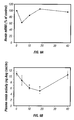
- FIG. 9A, FIG. 9 B and FIG. 9C show ⁇ 1 -AS-ODN at a single injection exerts a delayed suppression on RAS.
- FIG. 9A shows the effect on preprorenin mRNA levels in renal cortex.
- FIG. 9B shows the effect on PRA.
- FIG. 10 illustrates sustained antihypertensive effects of repeated administrations of ⁇ 1 -AS-ODN in SHR.
- Systolic BP was measured by tail cuff method. Blood samples were collected at different time points as indicated by downward arrows for safety profile analysis. Data represent mean ⁇ SEM. P ⁇ 0.05 vs. saline or INV-ODN.
- FIG. 11 illustrates repeated administration of ⁇ 1 -AS-ODN causes reduced left ventricular hypertrophy in SHR.
- Preferred polynucleotide and oligonucleotide compounds of the present invention specifically bind to an mRNA encoding a mammalian ⁇ 1 -AR polypeptide thereby inhibiting the translation of the mRNA, and concomitant expression of the encoded polypeptide.
- Highly preferred antisense compounds and compositions are those that specifically bind to the mRNA encoding human ⁇ 1 -AR polypeptide.
- the mRNA sequence encoding the human ⁇ 1 -AR polypeptide is disclosed in GenBankTM accession number NM000684, and described herein as SEQ ID NO:187.
- the mRNA sequence encoding canine ⁇ 1 -AR polypeptide is disclosed in GenBankTM accession number U73207, and described herein as SEQ ID NO:188.
- the mRNA sequence encoding the sheep ⁇ 1 -AR polypeptide is disclosed in GenBankTM accession numbers S78499 and AF072433, and described herein as SEQ ID NO:189.
- porcine ⁇ 1 -AR-encoding mRNA is disclosed in GenBankTM accession number AF042454, and described herein as SEQ ID NO:190.
- Rodent (Rattus) ⁇ 1 -AR-encoding mRNA is disclosed in GenBankTM accession number D00634 and described herein as SEQ ID NO:191.
- Rhesus monkey ⁇ 1 -AR-encoding mRNA is disclosed in GenBankTM accession number X75540, and described herein as SEQ ID NO:192.
- Murine (Mus) mouse ⁇ 1 -AR-encoding mRNA is disclosed in GenBankTM accession number L10084, and described herein as SEQ ID NO:193.
- ⁇ 1 -AR-encoding DNAs have also been identified in non-mammalian species, such as frog (SEQ ID NO:194) disclosed in GenBankTM as accession number Y09213, further evidence to the fact that antisense oligonucleotides prepared complementary to a ⁇ 1 -AR-encoding DNA from one species may be useful in reducing the expression of ⁇ 1 -AR-specific mRNA in another species.
- antisense oligonucleotides prepared complementary to highly conserved regions of the proximal portion of the ⁇ 1 -AR mRNA may specifically bind to, and reduce translation of, the mRNA in a variety of host cells and animals that produce ⁇ 1 -adrenoceptor polypeptides.
- the letters, A, G, C, T, and U respectively indicate nucleotides in which the nucleoside is Adenosine (Ade), Guanosine (Gua), Cytidine (Cyt), Thymidine (Thy), and Uridine (Ura).
- compounds that are antisense to the ⁇ 1 -adrenoceptor-specific PNA, DNA or mRNA sense strand are compounds that have a nucleoside sequence complementary to the sense strand.
- Table 2 shows the four possible sense strand nucleosides and their complements present in an antisense compound.
- the present invention broadly includes oligonucleotide compounds that are capable of binding to the DNA or mRNA sense strand coding for B 1 R. It will also be understood that mRNA includes not only the ribonucleotide sequences encoding a protein, but also regions including the 5′-untranslated region, the 3′-untranslated region, the 5′-cap region and the intron/exon junction regions.
- the invention includes compounds which are not strictly antisense; the compounds of the invention also include those oligonucleotides that may have some bases that are not complementary to bases in the sense strand provided such compounds have sufficient binding affinity for ⁇ 1 -adrenoceptor DNA or mRNA to inhibit expression.
- base modifications or the use of universal bases such as inosine in the oligonucleotides of the invention are contemplated within the scope of the subject invention.
- C 1-4 alkyl means a branched or unbranched hydrocarbon having 1 to 4 carbon-atoms.
- the disclosed antisense compounds also may be substituted at the 3′ and/or 5′ ends by a substituted acridine derivative.
- substituted acridine means any acridine derivative capable of intercalating nucleotide strands such as DNA.
- Preferred substituted acridines are 2-methoxy-6-chloro-9-pentylarninoacridine, N-(6-chloro-2-methoxyacridinyl)-O-methoxydiisopropylaminophosphinyl-3-aminopropanol, and N-(6-chloro-2-methoxyacridinyl)-O-methoxydiisopropylaminophosphinyl-5-aminopentanol.
- Other suitable acridine derivatives are readily apparent to persons skilled in the art.
- P(0)(0)-substituted acridine means a phosphate covalently linked to a substitute acridine.
- nucleotides includes nucleotides in which the phosphate moiety is replaced by phosphorothioate or alkylphosphonate and the nucleotides may be substituted by substituted acridines.
- the antisense compounds of the invention differ from native DNA by the modification of the phosphodiester backbone to extend the life of the antisense ON.
- the phosphates can be replaced by phosphorothioates.
- the ends of the molecule may also be optimally substituted by an acridine derivative that intercalates nucleotide strands of DNA.
- the reaction scheme involves 1 H-tetrazole-catalyzed coupling of phosphoramidites to give phosphate intermediates that are subsequently reacted with sulfur in 2,6-lutidine to generate phosphate compounds.
- Oligonucleotide compounds are prepared by treating the phosphate compounds with thiophenoxide (1:2:2 thiophenol/triethylamine/tetrahydrofuran, room temperature, 1 hr). The reaction sequence is repeated until an oligonucleotide compound of the desired length has been prepared.
- the compounds are cleaved from the support by treating with ammonium hydroxide at room temperature for 1 hr and then are further deprotected by heating at about 50° C. overnight to yield preferred antisense compounds.
- the pharmaceutical preparations are made following conventional techniques of a pharmaceutical chemist involving mixing, granulating and compressing, when necessary, for tablet forms or mixing, filling, and dissolving the ingredients, as appropriate, to give the desired oral or parenteral products.
- Doses of the present compounds in a pharmaceutical dosage unit as described above will be an efficacious, nontoxic quantity selected from the range of 1 ng/kg to 500 mg/kg of active compound, preferably less than 10 mg/kg.
- the selected dose is administered to a human patient in need of inhibition of ⁇ 1 -AR-specific mRNA expression from 1-6 or more times daily, orally, rectally, by injection, or continuously by infusion.
- Oral formulations would generally require somewhat larger dosages to overcome the effects of gastric decomposition.
- Intravenous or intra-arterial administration would generally require lower doses since the drug is placed directly into the systemic circulation.
- Dosages for nasal sprays typically range from about 10 mg to about 50 mg (total) or about 0.1 mg/kg to about 10 mg/kg. Therefore, the dose will depend on the actual route of administration.
- antisense compositions specific for a given gene sequence is based upon analysis of the chosen target sequence (i.e. in these illustrative examples the rat and human sequences) and determination of secondary structure, T m , binding energy, relative stability, and antisense compositions were selected based upon their relative inability to form dimers, hairpins, or other secondary structures that would reduce or prohibit specific binding to the target mRNA in a host cell.
- T m secondary structure
- binding energy i.e. in these illustrative examples the rat and human sequences
- antisense compositions were selected based upon their relative inability to form dimers, hairpins, or other secondary structures that would reduce or prohibit specific binding to the target mRNA in a host cell.
- Table 1 The results of these analyses are shown in Table 1, for illustrative oligonucleotides and selected target sequences identified in a variety of mammalian and non-mammalian sources.
- Highly preferred target regions of the mRNA are those that are at or near the AUG translation initiation codon, and those sequences that were substantially complementary to 5′ regions of the mRNA.
- sequences of the oligonucleotides given above are highly preferred sequences for inhibiting mammalian ⁇ 1 -AR polypeptide activity in a host cell. Additional nucleotides at either end derived by the same process (using OLIGO and BLAST) are also envisioned by this invention.
- the effective lengths of the preferred oligonucleotides are preferably from at least 9 to about 35 or so nucleotides.
- the antisense compounds of the invention differ from native DNA by the modification of the phosphodiester backbone to extend the life of the antisense ODN, in which the phosphate substituents are replaced by phosphorothioates.
- one or both ends of the oligonucleotide may be substituted by one or more acridine derivatives that intercalate between adjacent basepairs within a strand of nucleic acid.
- mammalian ⁇ 1 -AR polypeptide plays a key role in hypertension in an animal, it is often desirable to measure and quantitate levels of ⁇ 1 -AR polypeptide in an animal under a variety of conditions, even during the course of a treatment regimen designed to ameliorate the hypertensive condition in such an animal. Likewise, in many instances, it is desirable to employ methods for screening polymorphisms of the gene encoding mammalian ⁇ 1 -AR, to identify patients “at risk” for hypertension, and to identify alleles of the gene both in vitro and in vivo.
- nucleotide compositions described herein as a probe for identifying a gene encoding mammalian ⁇ 1 -AR, and methods for correlating the presence of such nucleotide segments with the risk of hypertension is particularly desirable.
- one or more of the antisense compositions may be desirable to co-administer one or more of the antisense compositions with one or more pharmaceuticals.
- one or more of the commercially available anti-hypertensive agents may be co-administered in a particular therapeutic regimen.
- Such pharmaceuticals include, but are not limited to, amiloride, amlodipine, benazepril, bepridil, candesartan, captopril, chlorothiazide, chlorthalidone, dichlorphenamide, diltiazem, enalapril, ethacrynicacid, felodipine, fosinopril, furosemide, hydrochlorothiazide, hydroflumethiazide, irbesartan, isradipine, lisinopril, losartan, methylclothiazide, metolazone, misoldipine, moexipril, nicardipine, nifedepine, nimodipine, polythiazide, quinapril, ramipril, spironolactone, torsemide, trandolapril, triamterene, valsartan, and verapamil.
- ACE inhibitory compounds and oligopeptides such as those described in U.S. Pat. No. 5,552,397; U.S. Pat. No. 5,449,661; U.S. Pat. No. 5,348,978; U.S. Pat. No. 5,238,921; U.S. Pat. No. 5,098,887 and U.S. Pat. No. 4,216,209 (each specifically incorporated herein by reference in its entirety).
- such small molecules or other anti-hypertensive agents may also be co-administered to an animal along with one or more of the disclosed antisense constructs.
- the present invention also concerns formulation of one or more of the antisense polynucleotide compositions disclosed herein in pharmaceutically acceptable solutions for administration to a cell or an animal, either alone, or in combination with one or more other modalities of antihypertensive therapy.
- the nucleic acid segment, RNA, DNA or PNA antisense compositions disclosed herein may be administered in combination with other agents as well, such as, e.g., proteins or polypeptides or various pharmaceutically-active agents.
- the composition comprises at least one ⁇ 1 -AR-specific mRNA inhibitory antisense oligonucleotide, there is virtually no limit to other components that may also be included, given that the additional agents do not cause a significant adverse effect upon contact with the target cells or host tissues.
- the RNA, DNA, or PNA-derived antisense compositions may thus be delivered along with various other agents as required in the particular instance.
- RNA, DNA, or PNA antisense compositions may be purified from host cells or other biological sources, or alternatively may be chemically synthesized as described herein.
- compositions may comprise substituted or derivatized RNA, DNA, or PNA compositions.
- Such compositions may include modified peptide or nucleic acid substituent derivatives, as long as the base sequence of the RNA, DNA, or PNA molecule corresponds to one or more of the contiguous base sequences described herein that specifically bind to ⁇ 1 -AR-specific mRNA, and that reduce or inhibit the extent of translation of this mRNA into biologically-active ⁇ 1 -AR polypeptides.
- compositions described herein are well-known to those of skill in the art, as is the development of suitable dosing and treatment regimens for using the particular compositions described herein in a variety of treatment regimens, including e.g., oral, parenteral, intravenous, intranasal, and intramuscular administration and formulation.
- compositions disclosed herein may be administered parenterally, intravenously, intramuscularly, or even intraperitoneally as described in U.S. Pat. No. 5,543,158, U.S. Pat. No. 5,641,515 and U.S. Pat. No. 5,399,363 (each specifically incorporated herein by reference in its entirety).
- Solutions of the active compounds as free-base or pharmacologically acceptable salts may be prepared in water suitably mixed with a surfactant, such as hydroxypropylcellulose.
- Dispersions may also be prepared in glycerol, liquid polyethylene glycols, and mixtures thereof and in oils. Under ordinary conditions of storage and use, these preparations contain a preservative to prevent the growth of microorganisms.
- the pharmaceutical forms suitable for injectable use include sterile aqueous solutions or dispersions and sterile powders for the extemporaneous preparation of sterile injectable solutions or dispersions (U.S. Pat. No. 5,466,468, specifically incorporated herein by reference in its entirety).
- the form must be sterile and must be fluid to the extent that easy syringability exists. It must be stable under the conditions of manufacture and storage and must be preserved against the contaminating action of microorganisms, such as bacteria and fungi.
- the carrier can be a solvent or dispersion medium containing, for example, water, ethanol, polyol (e.g., glycerol, propylene glycol, and liquid polyethylene glycol, and the like), suitable mixtures thereof, and/or vegetable oils.
- polyol e.g., glycerol, propylene glycol, and liquid polyethylene glycol, and the like
- suitable mixtures thereof e.g., vegetable oils
- vegetable oils e.g., glycerol, propylene glycol, and liquid polyethylene glycol, and the like
- suitable mixtures thereof e.g., glycerol, propylene glycol, and liquid polyethylene glycol, and the like
- vegetable oils e.g., glycerol, propylene glycol, and liquid polyethylene glycol, and the like
- Proper fluidity may be maintained, for example, by the use of a coating, such as lecithin, by the maintenance of the required particle size in the case of dispersion
- isotonic agents for example, sugars or sodium chloride.
- Prolonged absorption of the injectable compositions can be brought about by the use in the compositions of agents delaying absorption, for example, aluminum monostearate and gelatin.
- aqueous solutions For parenteral administration in an aqueous solution, for example, the solution should be suitably buffered if necessary and the liquid diluent first rendered isotonic with sufficient saline or glucose.
- aqueous solutions are especially suitable for intravenous, intramuscular, subcutaneous and intraperitoneal administration.
- sterile aqueous media that can be employed will be known to those of skill in the art in light of the present disclosure.
- one dosage may be dissolved in 1 ml of isotonic NaCl solution and either added to 1000 ml of hypodermoclysis fluid or injected at the proposed site of infusion, (see for example, “Remington's Pharmaceutical Sciences” 15th Edition, pages 1035-1038 and 1570-1580).
- Sterile injectable solutions are prepared by incorporating the active compounds in the required amount in the appropriate solvent with several of the other ingredients enumerated above, as required, followed by filtered sterilization.
- dispersions are prepared by incorporating the various sterilized active ingredients into a sterile vehicle which contains the basic dispersion medium and the required other ingredients from those enumerated above.
- the preferred methods of preparation are vacuum-drying and freeze-drying techniques which yield a powder of the active ingredient plus any additional desired ingredient from a previously sterile-filtered solution thereof.
- compositions disclosed herein may be formulated in a neutral or salt form.
- Pharmaceutically-acceptable salts include the acid addition salts (formed with the free amino groups of the protein) and which are formed with inorganic acids such as, for example, hydrochloric or phosphoric acids, or such organic acids as acetic, oxalic, tartaric, mandelic, and the like. Salts formed with the free carboxyl groups can also be derived from inorganic bases such as, for example, sodium, potassium, ammonium, calcium, or ferric hydroxides, and such organic bases as isopropylamine, trimethylamine, histidine, procaine and the like.
- solutions Upon formulation, solutions will be administered in a manner compatible with the dosage formulation and in such amount as is therapeutically effective.
- the formulations are easily administered in a variety of dosage forms such as injectable solutions, drug release capsules and the like.
- carrier includes any and all solvents, dispersion media, vehicles, coatings, diluents, antibacterial and antifungal agents, isotonic and absorption delaying. agents, buffers, carrier solutions, suspensions, colloids, and the like.
- agents for pharmaceutical active substances is well known in the art. Except insofar as any conventional media or agent is incompatible with the active ingredient, its use in the therapeutic compositions is contemplated. Supplementary active ingredients can also be incorporated into the compositions.
- compositions that do not produce an allergic or similar untoward reaction when administered to a human.
- pharmaceutically-acceptable refers to molecular entities and compositions that do not produce an allergic or similar untoward reaction when administered to a human.
- aqueous composition that contains a protein as an active ingredient is well understood in the art.
- injectables either as liquid solutions or suspensions; solid forms suitable for solution in, or suspension in, liquid prior to injection can also be prepared.
- the preparation can also be emulsified.
- the inventors contemplate the use of liposomes, nanocapsules, microparticles, microspheres, lipid particles, vesicles, and the like, for the introduction of the antisense compositions of the present invention into suitable host cells.
- the antisense oligonucleotide compositions of the present invention may be formulated for delivery either encapsulated in a lipid particle, a liposome, a vesicle, a nanosphere, or a nanoparticle or the like.
- Such formulations may be preferred for the introduction of pharmaceutically acceptable formulations of the nucleic acids disclosed herein.
- liposomes are generally known to those of skill in the art (see for example, Couvreur et al., 1977; Couvreur, 1988; Lasic, 1998; which describes the use of liposomes and nanocapsules in the targeted antibiotic therapy for intracellular bacterial infections and diseases).
- liposomes were developed with improved serum stability and circulation half-lives (Gabizon and Papahadjopoulos, 1988; Allen and Choun, 1987; U.S. Pat. No. 5,741,516, specifically incorporated herein by reference in its entirety).
- Liposomes have been used successfully with a number of cell types that are normally resistant to transfection by other procedures including T cell suspensions, primary hepatocyte cultures and PC12 cells (Renneisen et al., 1990; Muller et al., 1990). In addition, liposomes are free of the DNA length constraints that are typical of viral-based delivery systems.
- Liposomes have been used effectively to introduce genes, drugs (Heath and Martin, 1986; Heath et al., 1986; Balazsovits et al., 1989; Fresta and Puglisi, 1996), radiotherapeutic agents (Pikul et al., 1987), enzymes (Imaizumi et al., 1990a; Imaizumi et al., 1990b), viruses (Faller and Baltimore, 1984), transcription factors and allosteric effectors (Nicolau and Gersonde, 1979) into a variety of cultured cell lines and animals.
- Liposomes are formed from phospholipids that are dispersed in an aqueous medium and spontaneously form multilamellar concentric bilayer vesicles (also termed multilamellar vesicles (MLVs).
- MLVs generally have diameters of from 25 nm to 4 ⁇ m. Sonication of MLVs results in the formation of small unilamellar vesicles (SUVs) with diameters in the range of 200 to 500 ⁇ , containing an aqueous solution in the core.
- SUVs small unilamellar vesicles
- Liposomes bear resemblance to cellular membranes and are contemplated for use in connection with the present invention as carriers for the peptide compositions. They are widely suitable as both water- and lipid-soluble substances can be entrapped, i.e. in the aqueous spaces and within the bilayer itself, respectively. It is possible that the drug-bearing liposomes may even be employed for site-specific delivery of active agents by selectively modifying the liposomal formulation.
- Phospholipids can form a variety of structures other than liposomes when dispersed in water, depending on the molar ratio of lipid to water. At low ratios the liposome is the preferred structure.
- the physical characteristics of liposomes depend on pH, ionic strength and the presence of divalent cations. Liposomes can show low permeability to ionic and polar substances, but at elevated temperatures undergo a phase transition which markedly alters their permeability.
- phase transition involves a change from a closely packed, ordered structure, known as the gel state, to a loosely packed, less-ordered structure, known as the fluid state. This occurs at a characteristic phase-transition temperature, and results in an increase in permeability to ions, sugars, and drugs.
- soluble proteins such as cytochrome c bind deform and penetrate the bilayer, thereby causing changes in permeability. Cholesterol inhibits this penetration of proteins, apparently by packing the phospholipids more tightly. It is contemplated that the most useful liposome formations for antibiotic and inhibitor delivery will contain cholesterol.
- SUVs have the ability to trap solutes varies between different types of liposomes.
- MLVs are moderately efficient at trapping solutes, but SUVs are extremely inefficient.
- SUVs offer the advantage of homogeneity and reproducibility in size distribution, however, and a compromise between size and trapping efficiency is offered by large unilamellar vesicles (LUVs). These are prepared by ether evaporation and are three to four times more efficient at solute entrapment than MLVs.
- LUVs large unilamellar vesicles
- the invention provides for pharmaceutically acceptable nanocapsule formulations of the polynucleotide compositions of the present invention.
- Nanocapsules can generally entrap compounds in a stable and reproducible way (Henry-Michelland et al., 1987; Quintanar-Guerrero et al., 1998; Douglas et al., 1987).
- ultrafine particles sized around 0.1 ⁇ m
- Biodegradable polyalkyl-cyanoacrylate nanoparticles that meet these requirements are contemplated for use in the present invention, and such particles may be are easily made, as described (Couvreur et al., 1980; 1988; zur Muhlen et al., 1998; Zambaux et al. 1998; Pinto-Alphandry et al., 1995 and U.S. Pat. No. 5,145,684, specifically incorporated herein by reference in its entirety).
- the invention also encompasses one or more of the antisense compounds together with one or more pharmaceutically-acceptable excipients, carriers, diluents, adjuvants, and/or other components, such as additional antihypertensive agents, oligonucleotides, peptides, antigens, or other therapeutic compounds as may be employed in the formulation of particular oligonucleotide or polynucleotide delivery formulations, and in the preparation of antihypertensive agents or cardiac therapy for administration to an animal.
- pharmaceutically-acceptable excipients such as additional antihypertensive agents, oligonucleotides, peptides, antigens, or other therapeutic compounds as may be employed in the formulation of particular oligonucleotide or polynucleotide delivery formulations, and in the preparation of antihypertensive agents or cardiac therapy for administration to an animal.
- preferred animals for administration of the pharmaceutical compositions disclosed herein include mammals, and particularly humans.
- Other preferred animals include primates, sheep, goats, bovines, equines, porcines, lupines, canines, and felines, as well as any other mammalian species commonly considered pets, livestock, or commercially relevant species.
- the composition may include partially or significantly purified antisense compositions, either alone, or in combination with one or more additional active ingredients, which may be obtained from natural or recombinant sources, or which may be obtainable naturally or either chemically synthesized, or alternatively produced in vitro from recombinant host cells expressing nucleic acid segments encoding such additional active ingredients.
- kits may also be prepared that comprise at least one of the ⁇ 1 -AR mRNA-specific antisense oligonucleotides and polynucleotides disclosed herein and instructions for using the composition as a therapeutic agent.
- the container means for such kits may typically comprise at least one vial, test tube, flask, bottle, syringe or other container means, into which the antisense composition(s) may be placed, and preferably suitably aliquoted. Where a second antihypertensive agent is also provided, the kit may also contain a second distinct container means into which this second composition may be placed.
- the plurality of antihypertensive compositions may be prepared in a single pharmaceutical composition, and may be packaged in a single container means, such as a vial, flask, syringe, bottle, or other suitable single container means.
- the kits of the present invention will also typically include a means for containing the vial(s) in close confinement for commercial sale, such as, e.g., injection or blow-molded plastic containers into which the desired vial(s) are retained.
- kits for the preparation of diagnostic kits, and for methods relating to the use of these compounds in the identification of ⁇ 1 -AR polypeptide-encoding nucleic acids in a biological sample, such kits may be prepared that comprise at least one of the ⁇ 1 -adrenoceptor mRNA-specific antisense oligonucleotides disclosed herein and instructions for using the composition as a probe for ⁇ 1 -AR -specific nucleic acids in a hybridization assay.
- the container means for such kits may typically comprise at least one vial, test tube, microcentrifuge tube, or other container means, into which the antisense composition(s) may be placed and suitably aliquoted.
- the labeling agent may be provided either in the same container as the oligonucleotide composition, or may alternatively be placed in a second distinct container means into which this second composition may be placed and suitably aliquoted.
- the oligonucleotide composition and the label may be prepared in a single container means, and in most cases, the kit will also typically include a means for containing the vial(s) in close confinement for commercial sale and/or convenient packaging and delivery.
- PNA peptide nucleic acids
- PNA is a DNA mimic in which the nucleobases are attached to a pseudopeptide backbone (Good and Nielsen, 1997).
- PNAs may be utilized in a number of methods that traditionally have used RNA or DNA. Often PNA sequences perform better in techniques than the corresponding RNA or DNA sequences and have utilities that are not inherent to RNA or DNA.
- An excellent review of PNA including methods of making, characteristics of, and methods of using, is provided by Corey (1997) and is incorporated herein by reference.
- PNAs have 2-aminoethyl-glycine linkages replacing the normal phosphodiester backbone of DNA (Nielsen et al., 1993; Hanvey et al., 1992; Hyrup and Nielsen, 1996; Nielsen, 1995).
- PNAs are neutral molecules
- PNAs are achiral, which avoids the need to develop a stereoselective synthesis
- PNA synthesis uses standard Boc (Dueholm et al., 1992) or Fmoc (Bonham et al., 1995) protocols for solid-phase peptide synthesis, although other methods, including a modified Merrifield method, have been used (Christensen et al., 1995).
- PNA monomers or ready-made oligomers are commercially available from PerSeptive Biosystems (Framingham, Mass., USA). PNA syntheses by either Boc or Fmoc protocols are straightforward using manual or automated protocols (Norton et al., 1995).
- RNA, DNA, PNAs and/or substituted polynucleotide compositions disclosed herein will be used to transfect an appropriate host cell.
- Technology for introduction of PNAs, RNAs, and DNAs into cells is well known to those of skill in the art.
- viral vectors including retroviruses, baculoviruses, adenoviruses, adenoassociated viruses, vaccinia viruses, Herpes viruses, and the like are well-known in the art, and are described in detail herein.
- the present invention contemplates an expression vector comprising at least one ⁇ 1 -AR -specific polynucleotide of the present invention.
- an expression vector is constructed with a specific DNA molecule orientated in the antisense direction.
- a promoter is operatively linked to a sequence region that encodes a functional RNA such as a tRNA, a ribozyme or an antisense RNA.
- operatively linked means that a promoter is connected to a functional RNA in such a way that the transcription of that functional RNA is controlled and regulated by that promoter.
- Means for operatively linking a promoter to a functional RNA are well known in the art.
- a vector useful in practicing the present invention is capable of directing the expression of the functional RNA to which it is operatively linked.
- RNA polymerase transcribes a coding DNA sequence through a site where polyadenylation occurs. Typically, DNA sequences located a few hundred base pairs downstream of the polyadenylation site serve to terminate transcription. Those DNA sequences are referred to herein as transcription-termination regions. Those regions are required for efficient polyadenylation of transcribed messenger RNA (mRNA).
- mRNA messenger RNA
- a variety of methods have been developed to operatively link DNA to vectors via complementary cohesive termini or blunt ends. For instance, complementary homopolymer tracts can be added to the DNA segment to be inserted and to the vector DNA. The vector and DNA segment are then joined by hydrogen bonding between the complementary homopolymeric tails to form recombinant DNA molecules.
- antisense constructs to cells in vivo, one of any number of conventional ways may be employed. These methods include viral-mediated delivery using retroviral, adenoviral, or adeno-associated viral vectors, and are well known to those of skill in the antisense therapeutic arts.
- Adenovirus vectors have been used in eukaryotic gene expression (Levrero et al., 1991; Gomez-Foix et al., 1992) and vaccine development (Grunhaus and Horwitz, 1992; Graham and Prevec, 1992). Recently, animal studies suggested that recombinant adenovirus could be used for gene therapy (Stratford-Perricaudet and Perricaudet, 1991; Stratford-Perricaudet et al., 1990; Rich et al., 1993).
- the retroviruses are a group of single-stranded RNA viruses characterized by an ability to convert their RNA to double-stranded DNA in infected cells by a process of reverse-transcription (Coffin, 1990).
- the resulting DNA then stably integrates into cellular chromosomes as a provirus and directs synthesis of viral proteins.
- the integration results in the retention of the viral gene sequences in the recipient cell and its descendants.
- the retroviral genome contains three genes, gag, pol, and env that code for capsid proteins, polymerase enzyme, and envelope components, respectively.
- a sequence found upstream from the gag gene contains a signal for packaging of the genome into virions.
- Two long terminal repeat (LTR) sequences are present at the 5′ and 3′ ends of the viral genome. These contain strong promoter and enhancer sequences and are also required for integration in the host cell genome (Coffin, 1990).
- AAV (Ridgeway, 1988; Hermonat and Muzycska, 1984) is a parovirus, discovered as a contamination of adenoviral stocks. It is a ubiquitous virus (antibodies are present in 85% of the U.S. human population) that has not been linked to any disease. It is also classified as a dependovirus, because its replication is dependent on the presence of a helper virus, such as adenovirus. Five serotypes have been isolated, of which AAV-2 is the best characterized.
- AAV has a single-stranded linear DNA that is encapsidated into capsid proteins VP1, VP2 and VP3 to form an icosahedral virion of 20 to 24 nm in diameter (Muzyczka and McLaughlin, 1988).
- the AAV DNA is approximately 4.7 kilobases long. It contains two open reading frames and is flanked by two ITRs (FIGS. 2A, 2 B and 2 C).
- rep and cap There are two major genes in the AAV genome: rep and cap.
- the rep gene encodes proteins responsible for viral replications, whereas the cap gene encodes the capsid protein VP1-3.
- Each ITR forms a T-shaped hairpin structure.
- These terminal repeats are the only essential cis components of the AAV for chromosomal integration. Therefore, the AAV can be used as a vector with all viral coding sequences removed and replaced by the cassette of genes for delivery.
- Three viral promoters have been identified and named p5, p19, and p40, according to their map position. Transcription from p5 and p19 results in production of rep proteins, and transcription from p40 produces the capsid proteins (Hermonat and Muzyczka, 1984).
- viral vectors may also be employed as expression constructs in the present invention for the delivery of ⁇ 1 -AR mRNA-complementary oligonucleotide sequences to a host cell.
- Vectors derived from viruses such as vaccinia virus (Ridgeway, 1988; Coupar et al., 1988), lentiviruses, polioviruses and herpesviruses may be employed. They offer s several attractive features for various mammalian cells (Friedmann, 1989; Ridgeway, 1988; Coupar et al., 1988; Horwich et al., 1990).
- the expression construct In order to effect expression of the ⁇ 1 -adrenoceptor mRNA-complementary antisense sequences of the present invention, the expression construct must be delivered into a cell. This delivery may be accomplished in vitro, as in laboratory procedures for transforming cells lines, or in vivo or ex vivo, as in the treatment of certain disease states, and in particular, in the treatment of hypertension and ⁇ 1 -AR-related disorders. As described above, the preferred mechanism for delivery is via viral infection where the expression construct is encapsidated in an infectious viral particle.
- the nucleic acid encoding the ⁇ 1 -adrenoceptor mRNA-complementary oligonucleotide antisense sequences may be positioned and expressed at different sites.
- the nucleic acid encoding the antisense construct may be stably integrated into the genome of the cell. This integration may be in the specific location and orientation via homologous recombination (gene replacement) or it may be integrated in a random, non-specific location (gene augmentation).
- the nucleic acid may be stably maintained in the cell as a separate, episomal segment of DNA.
- nucleic acid segments or “episomes” encode sequences sufficient to permit maintenance and replication independent of or in synchronization with the host cell cycle. How the expression construct is delivered to a cell and where in the cell the nucleic acid remains is dependent on the type of expression construct employed.
- the expression construct comprising one or more ⁇ 1 -AR mRNA-complementary oligonucleotide or polynucleotide antisense sequences may simply consist of naked recombinant DNA or plasmids. Transfer of the construct may be performed by any of the methods mentioned above which physically or chemically permeabilize the cell membrane. This is particularly applicable for transfer in vitro but it may be applied to in vivo use as well. Dubensky et al. (1984) successfully injected polyomavirus DNA in the form of calcium phosphate precipitates into liver and spleen of adult and newborn mice demonstrating active viral replication and acute infection.
- Benvenisty and Reshef (1986) also demonstrated that direct intraperitoneal injection of calcium phosphate-precipitated plasmids results in expression of the transfected genes. It is envisioned that DNA encoding a gene of interest may also be transferred in a similar manner in vivo and express the gene product.
- Another embodiment of the invention for transferring a naked DNA expression construct into cells may involve particle bombardment. This method depends on the ability to accelerate DNA-coated microprojectiles to a high velocity allowing them to pierce cell membranes and enter cells without killing them (Klein et al., 1987). Several devices for accelerating small particles have been developed. One such device relies on a high voltage discharge to generate an electrical current, which in turn provides the motive force (Yang et al., 1990). The microprojectiles used have consisted of biologically inert substances such as tungsten or gold beads.
- Selected organs including the liver, skin, and muscle tissue of rats and mice have been bombarded in vivo (Yang et al., 1990; Zelenin et al., 1991). This may require surgical exposure of the tissue or cells, to eliminate any intervening tissue between the gun and the target organ, i.e. ex vivo treatment. Again, DNA encoding a particular gene may be delivered via this method and still be incorporated by the present invention.
- the expression construct comprising an ⁇ 1 -AR mRNA-complementary oligonucleotide antisense sequence may be entrapped in one or more nanocapsules, liposomes, or other lipid based DNA delivery agent.
- Liposomes are vesicular structures characterized by a phospholipid bilayer membrane and an inner aqueous medium. Multilamellar liposomes have multiple lipid layers separated by aqueous medium. They form spontaneously when phospholipids are suspended in an excess of aqueous solution. The lipid components undergo self-rearrangement before the formation of closed structures, and entrap water and dissolved solutes between the lipid bilayers (Ghosh and Bachhawat, 1991). Also contemplated are lipofectamine-DNA complexes.
- Liposome-mediated nucleic acid delivery and expression of foreign DNA in vitro has been very successful.
- Wong et al. (1980) demonstrated the feasibility of liposome-mediated delivery and expression of foreign DNA in cultured chick embryo, HeLa and hepatoma cells.
- Nicolau et al. (1987) accomplished successful liposome-mediated gene transfer in rats after intravenous injection.
- the liposome may be complexed with a hemagglutinating virus (HVJ). This has been shown to facilitate fusion with the cell membrane and promote cell entry of liposome-encapsulated DNA (Kaneda et al., 1989).
- the liposome may be complexed or employed in conjunction with nuclear non-histone chromosomal proteins (HMG-1) (Kato et al., 1991).
- HMG-1 nuclear non-histone chromosomal proteins
- the liposome may be complexed or employed in conjunction with both HVJ and HMG-1.
- expression constructs have been successfully employed in transfer and expression of nucleic acid in vitro and in vivo, then they are applicable for the present invention.
- a bacterial promoter is employed in the DNA construct, it also will be desirable to include within the liposome an appropriate bacterial polymerase.
- receptor-mediated delivery vehicles that may be employed to deliver an antisense polynucleotide into a target cell. These take advantage of the selective uptake of macromolecules by receptor-mediated endocytosis in almost all eukaryotic cells. Because of the cell type-specific distribution of various receptors, the delivery can be highly specific (Wu and Wu, 1993).
- Receptor-mediated gene targeting vehicles generally consist of two components: a cell receptor-specific ligand and a DNA-binding agent.
- ligands have been used for receptor-mediated gene transfer. The most extensively characterized ligands are asialoorosomucoid (ASOR) (Wu and Wu, 1987) and transferrin (Wagner et al., 1993).
- ASOR asialoorosomucoid
- transferrin Wang a synthetic neoglycoprotein, which recognizes the same receptor as ASOR, has been used as a gene delivery vehicle (Ferkol et al., 1993; Perales et al., 1994) and epidermal growth factor (EGF) has also been used to deliver genes to squamous carcinoma cells (Eur. Pat. Appl. Publ. No. EP0273085, specifically incorporated herein by reference in its entirety).
- the delivery vehicle may comprise a ligand and a liposome.
- a ligand and a liposome For example, Nicolau et al. (1987) employed lactosyl-ceramide, a galactose-terminal asialganglioside, incorporated into liposomes and observed an increase in the uptake of the insulin gene by hepatocytes.
- a nucleic acid encoding a particular gene also may be specifically delivered into a cell type such as lung, epithelial or tumor cells, by any number of receptor-ligand systems with or without liposomes.
- epidermal growth factor may be used as the receptor for mediated delivery of a nucleic acid encoding a gene in many tumor cells that exhibit upregulation of EGF receptor.
- Mannose can be used to target the mannose receptor on liver cells.
- antibodies to CD5 (CLL), CD22 (lymphoma), CD25 (T-cell leukemia) and MAA (melanoma) can similarly be used as targeting moieties.
- gene transfer may more easily be performed under ex vivo conditions.
- Ex vivo gene therapy refers to the isolation of cells from an animal, the delivery of a nucleic acid into the cells in vitro, and then the return of the modified cells back into an animal. This may involve the surgical removal of tissue/organs from an animal or the primary culture of cells and tissues. Anderson et al., U.S. Pat. No. 5,399,346, and incorporated herein in its entirety, disclose ex vivo therapeutic methods.
- ⁇ 1 -antisense through specific inhibitions of ⁇ 1 -AR expression, decreases the functional sensitivity of ⁇ 1 -AR-mediated responses in the face of sympathetic activation and thereby achieves an antihypertensive effect.
- an AS-ODN was designed complementary to rat ⁇ 1 -AR mRNA and its ability was demonstrated to inhibit ⁇ 1 -AR density and function in the heart and to reduce BP in spontaneously hypertensive rats.
- AS-ODN and inverted ODN control were 15-mer and targeted to the AUG start codon of rat ⁇ 1 -AR mRNA (Machida et al., 1990).
- the sequence of AS-ODN is 5′-CCGCGCCCATGCCGA-3′ (SEQ ID NO:195), and the inverted ODN is 5′-AGCCGTACCCGCGCC-3′ (SEQ ID NO:196).
- This AS-ODN was chosen from 6 AS candidates targeted to different regions of ⁇ 1 -AR mRNA on the basis of the intensity of cardiac ⁇ 1 -AR inhibition and reduction of BP in SHRs. These oligonucleotides were modified by backbone phosphorothioation. ODNs delivered with cationic liposomes were injected into the tongue vein.
- the cationic lipid 1,2-bis(oleoyloxy)-3-(trimethylammonio)propane was mixed with helper lipid 1- ⁇ -dioleoyl phosphatidylethanolamine (DOPE, Avanti Polar Lipids, Alabaster, Ala.) at a 1:1 molar ratio, briefly sonicated, and stored at 4° C. until use.
- DOPE helper lipid 1- ⁇ -dioleoyl phosphatidylethanolamine
- the average diameter of liposomes is 200 to 300 nm (Tang and Hughes, 1998).
- ODN/liposome complex was prepared on the day of use by mixing the desired amounts of ODNs with DOTAP/DOPE to the final DNA concentration of 300 ⁇ g/mL in 5% wt./vol. dextrose in water and incubating at room temperature for 60 min.
- each radiotransmitter (TA11PA-C40, Data Sciences, St. Paul, Minn.) was verified to be ⁇ 4 mm Hg.
- SHRs were anesthetized with 100 mg/kg ketamine and 15 mg/kg xylazine, and a midline abdominal incision was made.
- a fluid-filled sensor catheter was then inserted into the right femoral artery, and the tip of the catheter was in the abdominal aorta caudal to the renal arteries.
- the rats with implants were allowed to recover for 1 week.
- rats were anesthetized, and a curved catheter made of PE 50 and vinyl tubing was inserted into a curved catheter made of PE 50 and vinyl tubing was inserted into the jugular vein.
- the tubing was led under the skin of the neck and exposed on the back to allow for drug infusion. Rats were allowed to recovery for 24 hr before experimentation. The catheters were flushed with 100 U heparin every day to prevent clogging.
- Tissue sections were preincubated in Krebs buffer (mmol/L: NaCl 118.4, KCl 4.7, MgSO 4 1.2, CaCl 2 1.27 and NaH 2 PO 4 10.0, pH 7.1) containing 0.1 mmol/L GTP, 0.1 mmol/L ascorbic acid, and 10 ⁇ mol/L PMSF for 30 minutes at 25° C. Sections were then incubated in Krebs buffer containing 0.1 mmol/L ascorbic acid and 10 ⁇ mol/L PMSF with 100 pmol/L ICYP at 25° C.
- Krebs buffer mmol/L: NaCl 118.4, KCl 4.7, MgSO 4 1.2, CaCl 2 1.27 and NaH 2 PO 4 10.0, pH 7.1
- isoproterenol (ISO, nonspecific ⁇ -agonist) was given at 0.01, 0.025, 0.05, and 0.12 ⁇ mol/L at 10 min. intervals so as to avoid the effect of tachyphylaxis.
- ⁇ 1 -stimulation SHRs were infused with dobutamine ( ⁇ 1 -selective agonist) through a jugular vein catheter at 5, 10, 20, and 40 ⁇ g ⁇ kg ⁇ 1 ⁇ min. ⁇ 1 .
- dobutamine ⁇ 1 -selective agonist
- BP and HR were sampled every 1 min.
- dP/dt max was calculated from the slope of the rising pulse-pressure curve and determined every 1 min. The difference between values at each dose and baseline was denoted as ⁇ .
- Each rat cage was placed on a receiver (RLA 1020, Data Sciences, St. Paul, Minn.) for measurement of cardiovascular parameters. Data were collected with a computer-based data acquisition program (Dataquest Lab-PRO3.0; Data Sciences). BP and HR were measured every 10 min. and averaged every 1 to 24 hrs. Before treatment, SHRs were monitored for a week to get a stable baseline.
- RLA 1020 Data Sciences, St. Paul, Minn.
- Rats were warmed for 20 to min. in cages on heating pads. The temperature was controlled at 35° C. to 37° C. Then the rats were placed in a plastic restrainer kept at 37° C. A pneumatic pulse sensor was attached to the tail. After cuff inflation, SBP was determined as the first pulsatile oscillation on the descending side of the pressure curve. HR was determined by manual counting of pulse numbers per unit time. BP and HR were recorded by a Narco physiograph. Data values of each rat were taken as an average of at least 4 stable readings. Baseline was determined by averaging 3 days of measurements before antisense administration.
- FIG. 1A shows that a single intravenous injection of 1 mg/kg ⁇ 1 -AS-ODN delivered with cationic liposomes at a 1:2.5 molar ratio significantly reduced the ⁇ 1 -AR density in the SHR hearts for 18 days (P ⁇ 0.01). The drop was at its maximum of 470/0 on day 4, 33% on day 10 and maintained at 29% on day 18. In contrast, there was no significant change in the B max of ⁇ 2 -ARs. The K D of both subtypes remained unaltered (Table 1). Consequently, the ⁇ 1 / ⁇ 2 subtype ratio in the ventricles was diminished from ⁇ 70/30 to ⁇ 50/50 by ⁇ 1 -AS-ODN. Inverted ODN had no effect on either subtype (FIG. 1 B).
- FIG. 4 shows the effects of a single injection of 1 mg/kg ⁇ 1 -AS-ODN on the BP of SHRs measured by the tail-cuff method.
- AS-ODN was delivered with cationic liposomes at different molar ratios of DNA/lipid, i.e. 1:0.5 and 1:2.5.
- ⁇ 1 -AS-ODN delivered with liposomes at a 1:0.5 ratio diminished SBP for 8 days.
- the maximum drop was 38 ⁇ 5 mm Hg.
- the molar ratio was increased to 1:2.5, this hypotensive effect was drastically prolonged to 20 days. No effect was seen with inverted ODN.
- ⁇ 1 -AS-ODN Quantitative autoradiography of 6 to 18 tissue slices in brain, heart, and kidney was analyzed 4 days after intravenous ⁇ 1 -AS-ODN administration. No changes in the distribution of ⁇ -ARs in the forebrain and brain stem regions were detected. This indicated the absence of antisense effect on the ⁇ -AR expression in CNS. However, ⁇ 1 -AS-ODN significantly (P ⁇ 0.05) reduced ⁇ 1 -AR density in cardiac ventricles (from 30.2 ⁇ 2.1 to 20.6 ⁇ 2.5 fmol/mg) and renal cortex (from 26.4 ⁇ 3.1 to 17.4 ⁇ 3.3 fmol/mg). This was consistent with the binding results. ⁇ 2 -ARs were not affected in any tissues.
- This example compares the effects of a novel ⁇ 1 -AS-ODN on high BP in a model of hypertension with a currently used ⁇ -blocker.
- ⁇ 1 -AS-ODN knocked down ⁇ 1 -adrenergic activity, resulting in long-term attenuation of BP.
- ⁇ 1 -AS-ODN effectively decreased the cardiac ⁇ 1 -AR density, which was accompanied by diminished ventricular contractility and cardiac output in response to ⁇ -stimulation.
- the antihypertensive effect in SHRs was up to a 38 mm Hg reduction lasting as long as 20 days.
- Tail-cuff and telemetry measures of BP showed a significant drop after antisense treatment.
- SHRs responded to ⁇ 1 -AS-ODN to a greater degree of hypotension when subjected to tail cuff vs. telemetry.
- the baseline measured with the tail cuff was consistently higher than that with telemetry by 20 to 30 mm Hg in the same rats.
- Bazil et al., 1993 reported a similar phenomenon. They compared the cardiovascular parameters recorded by telemetry, tail cuff, and arterial catheter and observed a more sensitive hypotensive effect of captopril with tail cuff.
- Tail-cuff measurement of BP involves warming and restraint of rats. It is conceivable that ⁇ 1 -AS, through the suppression of sympathetic activity, can decrease the BP of animals under stress more effectively.
- Cationic liposomes are effective vehicles for gene delivery. It has been shown that liposomes entrapment not only improves the cellular uptake of DNA but also protects DNA from degradation and extends its circulation time (Allen, 1997; Liu et al., 1997). Numerous factors influence the efficiency of cationic liposome-mediated intravenous gene delivery, such as DNA/lipid ratio, selection of lipids, and preparation procedure.
- a widely used lipid formula, DOTAP/DOPE was used to deliver ⁇ 1 -AS-ODN at 4 molar ratios. The optimal ratio of 1:2.5 was determined on the basis of the duration and magnitude of the antihypertensive effects.
- the blood-brain barrier formed by capillary endothelia is permeable only to small lipophilic molecules with a molecular weight of ⁇ 600 Da (reviewed by Pardridge, 1998). Owing to their high hydrophilicity, ODNs undergo negligible transport through blood-brain barrier and have very limited access to CNS.
- the cellular and organ distributions of DNA/liposome complexes with fluorescent labeling were previously studied in mice after intravenous injection, and the results indicated that the complexes were taken up primarily by capillary endothelial cells in most of the peripheral organs, including lung, heart, kidney, and spleen, but were absent in the brain (McLean et al., 1997).
- ⁇ 1 -AS-ODN did not affect ⁇ 2 -ARs, which played an important role in the regulation of HR (Kaumann, 1986; Rodefeld et al., 1996), although it was not involved in the cardiac contraction.
- antisense inhibition of ⁇ 1 -AR expression is gradual and less extensive than with ⁇ -blockers. It is also possible that ⁇ 1 -ARs may have a larger reserve for controlling HR than contractility.
- ⁇ -blockers have become major first-line drugs for hypertension.
- ⁇ -blockers Through the inhibition of ⁇ -adrenergic receptors in heart and kidney, ⁇ -blockers lower high blood pressure via the reduced response to the sympathetic nervous system.
- all current ⁇ -blockers have to be taken daily.
- the mechanism of ⁇ -blockade in hypertension is not well understood (Man in't Veld et al., 1988).
- Antisense oligonucleotides have been successfully constructed to components of the renin-angiotensin system (RAS) to decrease blood pressure (Phillips et al., 1994).
- RAS renin-angiotensin system
- novel antisense oligonucleotides targeted to ⁇ 1 -adrenergic receptors ( ⁇ 2 -ARs), or the brain. Therefore, it is likely to have fewer side effects and longer-lasting action.
- antisense oligodeoxynucleotide significantly inhibits ⁇ 1 -AR expression in the cardiac ventricles, which results in suppressed inotropic response to adrenergic activation and thereby contributes to hypotension.
- ⁇ 1 -ARs are also responsible for mediating the sympathetic stimulation of renin expression and secretion from juxtaglomerular cells of the renal cortex.
- Infusion of isoproterenol has been shown to increase renin expression and secretion and plasma renin activity (PRA) in rats (Holmer et al., 1997).
- ⁇ -Blockers reduce PRA in patients, (Blumenfeld et al., 1999). However, despite the evidence that ⁇ -blockers are more effective in patients with high renin profiles (Buhler, 1988), the importance of ⁇ -blocker-induced decreases in renin release has been debated (Man in't Veld et al., 1983). The present study investigates whether ⁇ 1 -AS-ODN reduces renin expression and secretion and whether the RAS is involved in the antihypertensive impact of ⁇ 1 -AS-ODN could be improved by delivery with cationic liposomes and to determine the optimal charge ratio of liposome:ODN.
- AS-ODN and inverted ODN control were 15-mer and targeted to the AUG start codon of rat ⁇ 1 -AS-ODN is 5′-CCGCGCCCATGCCGA-3′ (SEQ ID NO:197), and the inverted ODN is 5′-AGCCGTACCCGCGCC-3′ (SEQ ID NO:198). These ODNs were modified by backbone phosphorothioation.
- the cationic lipid 1,2-bis(oleoyloxy)-3-(trimethylammonio)propane (DOTAP) mixed with the helper lipid L- ⁇ -dioleoyl phosphatidylethanolamine (DOPE, Avanti Polar Lipids) at 1:1 molar ratio was used to deliver ODNs in a single intravenous injection into the tongue vein.
- ODN-liposome complex was prepared on the day of use by mixing desired amounts of ODNs with DOTAP/DOPE to a final DNA concentration of 300 ⁇ g/mL in 5% (wt./vol.) dextrose in water and incubating at room temperature for 60 min.
- SBP stolic blood pressure
- RNA samples from 4 to 5 rats from each time point were pooled.
- RNA (5 ⁇ g) was digested by DNase I and reverse-transcribed by Superscript reverse transcriptase (GIBCO BRL) at 42° C. for 50 min. and 1/20 of the reverse transcription (RT) product was used to run a polymerase chain reaction (PCR) for 20 cycles.
- PCR primers for ⁇ 1 -AR were 5′-CTCCGAAGCTCGGCATGG-3′ (SEQ ID NO:199) (forward) and 5′-GCACGTCTACCGAAGTCCAGA-3′ (SEQ ID NO:200) (reverse) and yielded products of 432 bp, which spanned the AUG start codon.
- Primers for preprorenin were 5′-AGGCAGTGACCCTCAACATTACCAG-3′ (SEQ ID NO:201) (forward) and 5′-CCAGTATGCACAGGTCATCGTTCCT-3′ (SEQ ID NO:202) (reverse) and yielded products of 362 bp.
- Primers for GAPDH were 5′-ATCAAATGGGGTGATGCTGGTGCTG-3′ (SEQ ID NO:203) (forward) and 5′-CAGGTTTCTCCAGGCGGCATGTCAG-3′ (SEQ ID NO:204) (reverse) and yielded products of 505 bp (Jo et al., 1996).
- RT-PCR products were subjected to Southern blotting, hybridized with psoralen-biotin-labeled cDNA probes, and detected with nonisotopic kits (Ambion). After the membranes had been exposed to x-ray films, the intensity of ⁇ 1 -AR and preprorenin mRNAs was quantified by densitometry and normalized with GAPDH mRNA levels. The studies were repeated at least twice.
- PRA was determined with an angiotensin I ( 125 I) radioimmunoassay kit (DuPont). Plasma Ang II levels were measured by radioimmunoassay as previously described (Phillips and Kimura, 1988).
- Kidney slices from the same rats were subject to quantitative autoradiography to display the structural distribution of ⁇ -ARS.
- ⁇ 1 -Subtype composed ⁇ 60% of the ⁇ -AR levels, which was localized predominantly in the renal cortex and the outer band of the medulla.
- ⁇ 2 -Subtype was more diffusely distributed in the kidney at a lower level. This result was consistent with previous reports (Summers et al., 1985).
- the overall density of ⁇ 1 -subtype in kidney was significantly reduced from 23.5 ⁇ 2.1 to 15.4 ⁇ 3.3 fmol/mg (P ⁇ 0.05).
- the diminution in renal cortex was particularly conspicuous because of the higher basal level.
- the distribution and concentration of ⁇ 2 -subtype remained unchanged in accord with binding results. This further confirms the specificity of the inhibitory effect of ⁇ 1 -AS-ODN on ⁇ 1 -subtype.
- ⁇ 1 -AS-ODN decreases the mRNA level of ⁇ 1 -AR by inducing RNase H digestion
- a pair of primers flanking the AUG start codon where ⁇ 1 -AS-ODN was targeted was used to run a semiquantatitative RT-PCRTM for 20 cycles, followed by Southern blotting.
- ⁇ 1 -AS-ODN did not reduce the level of steady-state ⁇ 1 -AR mRNA in renal cortex, indicating that the inhibition of ⁇ 1 -AR expression was not at the transcriptional level.
- RT-PCRTM revealed that the preprorenin mRNA level in renal cortex was transiently decreased to 62% of control 4 days after ⁇ 1 -AS-ODN injection. It was completely reversed by day 18 (FIG. 9 A). Conversely, PRA and plasma Ang II levels showed different patterns of reduction, which were significantly decreased on day 10 and day 18 (P ⁇ 0.01) but not on day 4. Thus, PRA and Ang II seemed to have as delayed action relative to the reduction in renin mRNA (FIG. 9 B).
- ⁇ 1 -adrenergic receptors are also involved in renin expression and secretion from the kidney
- the present study was designed to evaluate the effect of ⁇ 1 -AS-ODN on peripheral RAS and its contribution to the reduction in blood pressure.
- a significant improvement of hypotensive action up to 33 days was achieved by optimizing the delivery of ⁇ 1 -AS-ODN with cationic liposomes.
- ⁇ -blockers have been used to treat hypertension for 3 decades. The reasons for their antihypertensive effects remain largely unclear, but the inhibition of renin release is regarded as a primary mechanism. Many ⁇ -blockers can reduce PRA in patients and experimental animals (Blumenfeld et al., 1999 and Holmer et al., 1994). They are found to be more effective in patients with higher renin profiles (Buhler, 1988). In this study, it was found that ⁇ 1 -AS-ODN effectively decreased PRA and Ang II in the long term. But the decrease in PRA and Ang II did not occur until ⁇ 10 days after ⁇ 1 -AS-ODN injection, in contrast to the rapid drop in cardiac output 2 days after injection.
- Receptor binding assay showed that ⁇ 1 -AS-ODN reduced the ⁇ 1 -AR levels in renal cortex by ⁇ 30% for 18 days. This is consistent with the decrease of ⁇ 1 -AR in heart ventricles in magnitude and time course. This suggests that ⁇ 1 -AS-ODN delivered by cationic liposomes is rapidly transported to peripheral organs after intravenous injection and effectively taken up into heart and kidney cells to a comparable extent.
- Several mechanisms have been proposed for the AS-ODN inhibition of the expression of target proteins. One involves the decrease in mRNA levels resulting from RNase H digestion of the RNA strand of the RNA-DNA duplex (Phillips et al., 1996 and Phillips et al., 1997).
- ⁇ 1 -AS-ODN By decreasing ⁇ 1 -AR levels in kidney, ⁇ 1 -AS-ODN significantly reduced PRA and the subsequent plasma Ang II levels. This is unlikely to be through the inhibition of renin expression, however, because there is no long-term diminution of renin mRNA levels. Instead, ⁇ 1 -AS-ODN may exert its inhibitory impact on renin secretion or the conversion of inactive renin to active renin. This hypothesis is consistent with the observation that ⁇ -adrenergic stimulation of renin expression had a time course different from that of renin secretion (Holmer et al., 1997 and Chen et al., 1993). Furthermore, ⁇ -blockers have been shown to reduce prorenin processing to active renin without changing total renin (prorenin+PRA) levels in plasma (Blumenfeld et al., 1999).
- cationic liposomes are the most widely used. They are safe, nonimmunogenic, and east to produce on a large scale. However relatively low transfection efficiency has been obtained after intravenous administration, mainly because of the inactivation of cationic liposome by serum. It was recently shown that increasing the charge ratio ( ⁇ ) of liposome to DNA and inducing the maturation of liposome-DNA complex by prolonging incubation time can overcome this problem (Yang et al., 1997; 1998). The optimal charge ratio of DOTAP:DNA was demonstrated to be ⁇ 2 (Yang et al., 1997 and Templeton et al., 1997).
- ⁇ 1 -AS-ODN delivered with cationic liposomes at a single intravenous injection achieves a marked and sustained hypotensive effect (30 to 35 mm Hg for 33 days) in SHR.
- the ⁇ 1 -AS-ODN is clearly longer lasting than any current drug, does not inhibit ⁇ 2 -adrenergic receptors or cross the blood-brain barrier, and has negligible effect on heart rate. Therefore, the antisense is likely to have fewer side effects than currently used ⁇ -blockers. Inhibition of cardiac contractility initially followed by reduced renin release is an important mechanism contributing to its antihypertensive effects.
- AS-ODN and inverted-ODN control were 15 mer and targeted to the AUG start codon of rat ⁇ 1 -adrenoceptor mRNA (Machida et al., 1990).
- the sequence of AS-ODN was 5′-CCGCGCCCATGCCGA-3′ (SEQ ID NO:1), and the sequence of the inverted-ODN was 5′-AGCCGTACCCGCGCC-3′ (SEQ ID NO:138).
- This AS-ODN was chosen from six AS candidates targeted to different regions of ⁇ 1 -adrenoceptor mRNA, based on the intensity of cardiac ⁇ 1 -AR inhibition and reduction of blood pressure in SHR. These oligonucleotides were modified by backbone phosphorothioation. ODNs delivered with cationic liposomes were injected into tongue vein.
- the cationic lipid 1,2-bis(oleoyloxy)-3-(trimethylammonio)propane (DOTAP) was mixed with a helper lipid L- ⁇ dioleoyl phosphatidylethanolamine (DOPE, Avanti Polar Lipids) at 1:1 mole ratio, briefly sonicated and stored at 4° C. until use.
- DOPE helper lipid L- ⁇ dioleoyl phosphatidylethanolamine
- ODN/liposome complex was prepared on the day of use by mixing desired amounts of ODNs with DOTAP/DOPE to the final DNA concentration of 300 ⁇ g/ml in 5% (wt./vol.) dextrose in water and incubating at room temperature for 60 min. Two DNA/lipid mole ratios, i.e., 1:0.5 and 1:2.5, were used in each study.
- each radiotransmitter (TA11PA-C40, Data Sciences) was verified to be ⁇ 4 mm Hg.
- SHR were anesthetized with 100 mg/kg ketamine and 15 mg/kg xylazine and a midline abdominal incision was made.
- a fluid-filled catheter was then inserted into the right femoral artery and the tip of the catheter was in the abdominal aorta caudal to the renal arteries.
- the implanted rats were allowed to recover for one week.
- rats were anesthetized and a curved catheter made of PE 50 and vinyl tubing was inserted into the external branch of the jugular vein. The tubing was led under the skin of the neck and exposed on the back to allow for drug infusion. Rats were allowed to recover for 24 hr before experimentation. The catheters were flushed with 100 U heparin every day to prevent clogging.
- the nonspecific and ⁇ 2 -adrenoceptor binding levels were determined in the presence of 1 ⁇ M ( ⁇ )-alprenolol and 150 nM CGP20712A (RBI), respectively. Then the reaction mixture was passed through Whatman GF/B glass fiber filter using Brandel harvester and the bound radioactivity was counted for one min.
- Tissue sections were preincubated in Krebs buffer (NaCl 118.4 mM, KCl 4.7 mM, MgSO 4 1.2 mM, CaCl 2 1.27 mM, NaH 2 PO 4 10.0 mM, pH 7.1) containing 0.1 mM guanosine triphosphate (GTP), 0.1 mM ascorbic acid and 10 ⁇ M phenylmethylsulfonylfluoride (PMSF) for 30 min at 25° C. Sections were then incubated in Krebs buffer containing 0.1 mM ascorbic acid and 10 ⁇ M PMSF with 100 pM I-CYP at 25° C.
- Krebs buffer NaCl 118.4 mM, KCl 4.7 mM, MgSO 4 1.2 mM, CaCl 2 1.27 mM, NaH 2 PO 4 10.0 mM, pH 7.1
- GTP guanosine triphosphate
- PMSF phenylmethylsulfonyl
- isoproterenol (ISO, non-specific ⁇ -agonist) was given at 0.01, 0.025, 0.05, 0.12 ⁇ M at 10-min intervals so as to avoid the effect of tachyphylaxis.
- ⁇ 1 -stimulation SHR were infused with dobutamine ( ⁇ 1 -selective agonist) through jugular vein catheter at 5, 10, 20, 40 ⁇ g/kg/min. Each dose was given for 5 min continuously and at 1-hr intervals until all cardiovascular parameters returned to baseline so as to avoid the effect of tachyphylaxis. BP and HR were sampled every min. dP/dt max was calculated from the slope of the rising pulse pressure curve and determined every min. The difference between values at each dose and baseline was denoted as ⁇ .
- Each rat cage was placed on a receiver (RLA1020, Data Sciences) for measurement of cardiovascular parameters. Data were collected with a computer-based data acquisition program (Dataquest LabPRO3.0; Data Sciences). BP and HR were measured every 10 min and averaged every 1 to 24 hr. Before treatment, SHR were monitored for a week to get a stable baseline.
- Rats were warmed for 20-30 min in cages on heating pads. The temperature was controlled at 35-37° C. Then rats were placed in a plastic restrainer kept at 37° C. A pneumatic pulse sensor was attached to the tail. After cuff inflation, SBP was determined as the first pulsatile oscillation on the descending side of pressure curve. HR was determined by manual counting of pulse numbers per unit time. BP and HR were recorded by a Narco physiograph. Data values of each rat were taken as an average of at least four stable readings. Baseline was determined by averaging three days of measurements before antisense administration.
- Atenolol Relative to ⁇ 1 -AS-ODN, 1 mg/kg atenolol produced a more profound decline in ⁇ dP/dt max and ⁇ HR during a 5-hr period of time after injection. Moreover, it reduced the resting dP/dt max (2450 ⁇ 295 mmHg/sec versus control 2937 ⁇ 277 mmHg/sec) and caused bradycardia (295 ⁇ 12 bpm versus control 365 ⁇ 8 bpm) (P ⁇ 0.05), while ⁇ 1 -AS did not change resting contractility (2922 ⁇ 249 mmHg/sec) or heart rate (365 ⁇ 12 bpm). But the effects of atenolol on ⁇ dP/dt max and ⁇ HR were transient. Within 24 hr after atenolol administration, the inotropic and chronotropic effects of dobutamine had returned to control level.
- ⁇ 1 -AS-ODN significantly (P ⁇ 0.05) reduced ⁇ 1 -adrenoceptor densities in cardiac ventricles (from 30.2 ⁇ 2.1 to 20.6 ⁇ 2.5 fmol/mg) and renal cortex (26.4 ⁇ 3.1 to 17.4 ⁇ 3.3 fmol/mg). This was consistent with the binding results.
- ⁇ 2 -adrenoceptors were not affected in any tissues.
- This example demonstrates the effects of ⁇ 1 -AS-ODN compositions on high blood pressure in a model of hypertension as compared to using a traditional ⁇ -blocker modality.
- ⁇ 1 -AS-ODNs knocked down ⁇ 1 -adrenergic activity, resulting in long-term attenuation of blood pressure.
- Tailcuff and telemetry measures of blood pressure showed a significant drop after antisense treatment.
- SHR responded to ⁇ 1 -AS-ODN to a greater degree of hypotension when subjected to tailcuff versus telemetry.
- the baseline measured with tailcuff was consistently higher than that with telemetry by 20-30 mmHg in the same rats.
- Bazil et al. (1993) reported a similar phenomenon. They compared the cardiovascular parameters recorded by telemetry, tailcuff and arterial catheter and observed a more sensitive hypotensive effect of captopril with tailcuff.
- Tailcuff measurement of blood pressure involves warming and restraint of rats. It is conceivable that ⁇ 1 -AS, through the suppression of sympathetic activity, can decrease blood pressure of animals under stress more effectively.
- Cationic liposomes are effective vehicles for gene delivery. It has been shown that liposome entrapment not only improves the cellular uptake of DNA, but also protects DNA from degradation and extends its circulation time (Allen, 1997; Liu et al., 1997). Numerous factors influence the efficiency of cationic liposome-mediated intravenous gene delivery, such as DNA/lipid ratio, selection of lipids and preparation procedure (Liu et al., 1997; Yang and Huang, 1998). A widely used lipid formula DOTAP/DOPE was used to deliver ⁇ 1 -AS-ODN at four mole ratios (1:0.5, 1:1.5, 1:2.5, and 1:3.5).
- the optimal ratio 1:2.5 was determined based on the duration and magnitude of the antihypertensive effects. A profound and prolonged fall in blood pressure of 38 mmHg up to 20 days was achieved at this ratio, which followed the reduction in ⁇ 1 -adrenoceptor binding to a maximum of 47% at day 4, 33% at day 10, and 29% at day 18. This implies that ⁇ 1 -AS-ODN effectively inhibits the functionally active receptors involved in the blood pressure.
- the blood-brain barrier formed by capillary endothelia is only permeable to small lipophilic molecules with molecular weight ⁇ 600 Da (Padridge, 1998). Owing to their high hydrophilicity, ODNs undergo negligible transport through blood-brain barrier and have very limited access to CNS (Agrawal et al., 1991).
- the cellular and organ distributions of DNA/liposome complexes with fluorescent labeling were previously studied in mice after intravenous injection and the results indicated that the complexes were primarily taken up by capillary endothelial cells in most of the peripheral organs including lung, heart, kidney and spleen, but absent in the brain (McLean et al., 1997).
- ⁇ 1 -AS-ODN did not affect ⁇ 2 -adrenoceptors, which played an important role in the regulation of heart rate (Kaumann, 1986; Rodefeld et al., 1996), while not involved in the cardiac contraction.
- Second, antisense inhibition of ⁇ 1 -AR expression is gradual and to a lesser extent than ⁇ -blockers. It is also possible that ⁇ 1 -ARs may have a larger reserve for controlling heart rate than contractility.
- cardiomyocytes preferentially take up AS-ODN while pacemaker cells are less efficient.
- ⁇ 1 -AS-ODN The cardiovascular effects of ⁇ 1 -AS-ODN were compared with a hydrophilic ⁇ 1 -selective antagonist, atenolol.
- ⁇ 1 -AS-ODN showed advantages over atenolol in reducing blood pressure and maintaining normal heart rate. Although the onset of ⁇ 1 -AS-ODN action was slower than atenolol, it lasted much longer, 20 days compared to less than 1 day with atenolol. Furthermore, ⁇ 1 -AS-ODN did not affect heart. rate, while atenolol caused appreciable bradycardia. Bradycardia is a common complaint by patients taking this drug. Atenolol also reduced resting ventricular contractility and heart rate and thereby reduced resting cardiac output.
- ⁇ 1 -AS-ODN is unlikely to alter resting cardiac performance.
- the results presented here suggest that ⁇ 1 -AS-ODN offer a significant improvement over currently used ⁇ -blockers, in both prolonged blood pressure reduction and absence of effects on ⁇ 2 -adrenoceptors and CNS.
- Acute myocardial ischemia causes significant increase in plasma catecholamine levels, which leads to exacerbation of the ischemic myocardial injury (Waldenstrom et al., 1978; Rona, 1985). The worsening myocardial ischemia is an important factor in cardiac dysfunction.
- Acute myocardial ischemia is also characterized by increased sensitivity of ⁇ 1 -ARs in the myocardium during acute ischemia (Strassere et al., 1990). ⁇ -ARs form the interface between the sympathetic nervous system and the cardiovascular system (Strassere et al., 1990; Mukherjee et al., 1979; Maisel et al., 1985.
- ⁇ 1 -AR subtype 1 ( ⁇ 1 -AR) is by far the predominant ⁇ -AR in myocardium (Minneman et al., 1995) and its activity and sensitivity are believed to regulate cardiac function via adenylyl cyclase activity (Mukherjee et al., 1979; Thandroyen et al., 1986; Böhm, 1995).
- Several studies have shown that density of ⁇ 1 -AR increases and the expression of ⁇ 1 -AR mRNA is augmented in the myocardium after acute ischemia (Maisel et al., 1985; Karliner et al., 1989; Ihl-Vahl et al., 1995).
- ⁇ -AR blockade especially selective blockade of ⁇ 1 -AR, can protect myocardium against ischemic injury and cardiac dysfunction (Schulz et al., 1995; Ablad et al., 1987; Lu et al, 1990), decrease infarct size (Schulz et al., 1995), and reduce the incidence of sudden cardiac death in patients with myocardial infarction (Yusuf et al., 1985).
- AS-ODNs directed at angiotensin II type 1 receptors decrease the synthesis of AT 1 receptor protein and protects the ischemic rat heart from the adverse effects of ischemia (Yang et al., 1998).
- a single intravenous injection of an antisense compositions directed against ⁇ 1 -AR mRNA can reduce blood pressure in SHR for periods of at least 20 days (Zhang et al., 1999).
- AS-ODNs and inverted-oligodeoxynucleotides (IN-ODNs) control were 15-mers and targeted to ⁇ 5 to +10 of rat ⁇ 1 -AR mRNA encompassing the AUG start colon.
- the sequence of AS-ODNs was 5′-CCGCGCCCATGCCGA-3′ (SEQ ID NO:1), and the corresponding IN-ODNs was 5′-AGCCGTACCCGCGCC-3′ (SEQ ID NO:138) (Zhang et al., 1999).
- These ODNs were modified by backbone phosphorothioation and synthesized in the DNA Synthesis Core Laboratory of the University of Florida.
- DOTAP/DOPE molecular DNA polymer
- the average diameter of liposomes was 200-300 nm.
- ODNs/liposomes complex was prepared on the day of use by mixing desired amount of ODNs with DOTAP/DOPE to final DNA concentration of 300 ⁇ g/ml in 5% (wt./wt.) dextrose in water and incubating at room temperature for 60 min (Yang et al., 1998; Zhang et al., 1999).
- mice Four days after administration of AS-ODNs or IN-ODNs or 6 hr after administration of atenolol or saline, rats were anesthetized with sodium pentobarbital (40 mg/kg) intraperioneally.
- the hearts were excised rapidly and placed in ice-cold Kreb-Henseleit buffer (mmol/L: NaCl 118, KCl 4.7, KH 2 PO 4 1.2, MgSO 4 1.2, CaCl 2 1.25, NaHCO 3 25, and glucose 11, pH 7.4). Within one min, the hearts were transferred to an isolated perfusion apparatus and perfused via the aorta with oxygen-saturated (95% O 2 +5% CO 2 ) Kreb-Henseleit buffer kept at 37° C.
- a MasterFlex pump model 7015-21, Cole-Palmer Instrument Co.
- Langendroff procedure Yang et al., 1998; Neely and Rovetto, 1975.
- the heart was placed in a semi-closed circulating water-warmed (37° C.) air chamber, paced atrially with a Medtronic 5320 pacemaker at a rate of 300 bpm, and perfused at a constant flow (5.5-6.0 ml/per min).
- Coronary perfusion pressure was measured via a catheter placed just proximal to the aorta and connected to a Gould Statham P23ID pressure transducer.
- LVEDP during equilibration was set at 5 to 7 mmHg. All measurements were continuously recorded on a 4-channel record (Astro-Med).
- Membrane protein was prepared from left ventricles as previously described (Baker and Pitha, 1982). For saturation studies, 100 ⁇ g membrane protein was incubated in triplicate with 125 I-( ⁇ )iodocyanopindolol (I-CYP, NEN Life Science, 6.25-100 pM) in a total volume of 250 ⁇ l containing 50 mM Tris-HCl (pH 7.4), 5 mM MgCl 2 at 36° C. for 60 min. The nonspecific and ⁇ 2 -adrenoceptor binding were determined in the presence of 1 ⁇ M ( ⁇ )-alprenolol and 150 mM CGP207ASA (RBI), respectively. Then the reaction mixture was passed through Whatman GF/B glass filter using Brandel harvester and the radioactivity was counted for one min.
- I-CYP I-( ⁇ )iodocyanopindolol
- Myocardial tissues were homogenized and lysed in boiling lysis buffer (1% SDS, 0.1% Triton X-100®, and 10 mmol/L Tris-HCl, pH 7.4) and centrifuged at 10,000 RPM for 30 minutes at 4° C.
- the lysate protein from myocardial tissues (20 ⁇ g/lane) was separated by 8% SDS-PAGE using a Bio-Rad Mini-Protean cell, transferred to nitrocellulose membrane (Amersham). After incubation in blocking solution (4% non-fat milk, Sigma), membranes were incubated with 1:1000 dilation primary antibody (polycolonal antibody to ⁇ 1 -AR, Santa Cruz Biotechnology) for overnight at 4° C.
- Membranes were washed and incubated with 1:2000 dilution second antibody (Amersham) for one hr. The membranes were detected with the ECL system, as described previously (Yang et al, 1998; Li et al., 1999).
- RNA was isolated from rat myocardium with the single step acid-guanidinum thiocyanate-phenol-chloroform method and quantified (Chomcznski and Sacchi, 1987).
- One ⁇ g of total RNA was reverse transcribed with oligo-dT (Promega) and M-MLV reverse transcriptase (Promega) at 37° C. for one hr.
- 1.5 ⁇ l of RT material was amplified with Taq DNA polymerase (Promega) using a primer pair specific to ⁇ 1 -AR:
- Reverse primer 5′-GCACGTCTACCGAAGTCCAGA-3′ (SEQ ID NO:140).
- PCRTM product was 432 base pairs. For PCR, 35 cycles were used at 95° C. for one minute, 60° C. for one minute, and 72° C. for one min. The RT-PCRTM amplified samples were visualized on 1.8% agarose gels using ethidium bromide. A primer pair of rat GAPDH was used as control:
- Reverse primer 5′-CAGGTTTCTCCAGGCGGCATGTCA-3′ (SEQ ID NO:142).
- PCRTM 35 cycles were used at 95° C. for one min, 60° C. for one min, 72° C. for one min.
- PCRTM product was 504 base pairs. Relative intensity of bands of interest were analyzed by NSF-300G Scanner (Microtek) (Yang et al., 1998; Li et al., 1999).
- Malondialdehyde (MDA) levels in myocardium were measured in duplicate by a modification of the method of Ohkawa et al., (1979). Briefly, the ventricular tissues were homogenized. The assay mixture consisted of 0.1 ml of the tissue homogenate, 0.4 ml of 0.9% NaCl, 0.5 ml of 3% sodium dodecylsulfate, 3 ml of TBA (thiobarbituric acid reagent, containing equal parts of 0.8% aqueous thiobarbituric acid and acetic acid) and was heated for 75 min at 95° C.
- TBA thiobarbituric acid reagent, containing equal parts of 0.8% aqueous thiobarbituric acid and acetic acid
- IN-ODNs did not affect MDA levels in myocardium.
- Treatment of rats with AS-ODNs resulted in a decrease in ⁇ 1 -AR density in the ischemic-reperfused myocardium (B max 15.9 ⁇ 1.3 vs.
- Ischemia-reperfusion also resulted in an increase of mRNA for ⁇ 1 -AR signal (adjusted for GAPDH signal) by myocardium of saline-treated rats, as determined by RT-PCR.
- Pretreatment of rats with AS-ODNs attenuated the increase of mRNA for ⁇ 1 -AR in myocardium, but mRNA level for ⁇ 1 -AR in the myocardium was not significantly affected by treatment of rats with IN-ODNs or atenolol.
- the present example demonstrates the protective role of AS-ODNs directed at ⁇ 1 -AR mRNA against cardiac dysfunction after a brief period of ischemia-reperfusion.
- the study compared the effects of pretreatment of rats with AS-ODNs directed at ⁇ 1 -AR mRNA or a selective ⁇ 1 -AR blocker atenolol in this process. This study showed that ischemia for 30 min followed by reperfusion for 30 min resulted in a significant cardiac dysfunction and lipid peroxidation in saline-treated rat hearts. Further, ischemia-reperfusion was associated with a marked upregulation of ⁇ 1 -AR density and protein and mRNA expression.
- Pretreatment of rats with atenolol preserved cardiac function, but did not affect the density of ⁇ 1 -AR and the expression of ⁇ 1 -AR protein and mRNA in the ischemic-reperfused myocardium.
- Pretreatment of rats with AS-ODNs directed at ⁇ 1 -AR mRNA provided almost total preservation of cardiac function and lipid peroxidation following ischemia-reperfusion.
- AS-ODN treatment also prevented the upregulation of ⁇ 1 -AR density, protein and mRNA expression in the ischemic-reperfused myocardium.
- the effects of AS-ODNs directed at ⁇ 1 -AR mRNA on cardiac function were clearly superior to those of the commonly used ⁇ 1 -AR blocker atenolol.
- the effects of AS-ODN on ⁇ 1 -AR protein and mRNA expression indicate that its beneficial effects are mediated by inhibition of both transcription and translation of ⁇ 1 -AR mRNA.
- catecholamine levels increase in both plasma and myocardium following myocardial ischemia (Rona, 1985; Richardt et al., 1994; Abrahamsson et al., 1983), but the increased catecholamine concentrations have the potential to contribute to increased excitability of myocardiun resulting in arrhythmia (Strassere et al., 1990; Mukherjee et al., 1979; Maisel et al., 1985; Ohyanahi et al., 1988; Maisel et al., 1987). There is also increase in sensitivity of ⁇ 1 -AR during acute myocardial ischemia (Strassere et al., 1990). This coupled with increased circulating and myocardial catecholamine concentrations can exacerbate cardiac injury and dysfunction.
- ⁇ -AR activation of ⁇ -AR is the first element in the signal transduction chain mediating sympathetic stimulation of the heart.
- ⁇ 1 -ARs the dominant ⁇ -AR subtype in the heart (Minneman et al., 1995; Guderman et al., 1995), regulate cardiac function by activating adenylyl cyclase activity (Strassere et al., 1990; Thandroyen et al., 1986; Bohm, 1995).
- Several experimental studies have indicated an upregulation in ⁇ 1 -ARs, but not ⁇ 2 -ARs, during acute ischemia-reperfusion (Maisel et al., 1985; Karliner et al., 1989; Persad et al., 1998).
- ⁇ 1 -AR blockers do not block the expression of ⁇ 1 -AR protein or mRNA (Aarons and Molinoff, 1982; Heilbrunn et al., 1986; Aarons et al., 1980).
- AS-ODNs directed at ⁇ 1 -AR mRNA block the up-regulation of ⁇ 1 -AR number, and protein and mRNA levels.
- the blockade of ⁇ 1 -AR at the transcriptional level may be the basis for the superior effect of the AS-ODN approach in the preservation of cardiac function after acute ischemia-reperfusion.
- Therapy with a single dose of AS-ODNs four days prior to removal of hearts prevented the increase in ⁇ 1 -AR protein, which implies sustained inhibitory effects of AS-ODNs at translational levels as well.
- a previous study in the SHR indeed demonstrated that AS-ODNs against ⁇ 1 -AR mRNA decreases ⁇ 1 -AR mRNA translation into protein in the hearts for at least up to 18 days (Zhang et al., 1999).
- chemical ⁇ -AR blockers are effective in the therapy of ischemic heart disease and are widely used in the short- and long-term management of patients with myocardial ischemia, these agents have several undesirable side-effects related to their effects on central nervous system, peripheral vascular resistance, and tracheo-bronchial tree. Even the selective ⁇ 1 -AR blockers, such as atenolol, lose their cardio-selectivity at moderate doses. In addition, these agents need to be taken frequently, at least one daily, due to their short half-life. Furthermore, chemical ⁇ -AR blockers do not influence ⁇ -ARs at genomic level. Gene therapy, such as AS-ODNs directed at ⁇ 1 -AR mRNA, provides unique benefits.
- the sequence specific AS-ODNs directed at ⁇ 1 -AR mRNA can significantly decrease ventricular ⁇ 1 -AR density by 30-50% even after 18 days in the rat after a single intravenous injection (Zhang et al., 1999).
- the AS-ODNs has no effect on ⁇ 2 -AR density.
- AS-ODN administration is associated with reduction in blood pressure with a 38-mmHg maximum drop without causing bradycardia.
- ischemia-reperfusion-induced cardiac dysfunction was evaluated by the measurement of CPP, LVEDP, LVSP and dLVP. These indices of myocardial dysfunction have been used in several studies in the isolated heart model of global ischemia-reperfusion (Yang et al., 1998; Yang et al., 1993; Yang et al., 1997; Kokita et al., 1998; Ozden et al., 1998). Isolated rat, rabbit or guinea pig heart model provides an inexpensive and reproducible method to evaluate cardiac function and myocardial metabolic alterations during ischemia-reperfusion.
- ⁇ 1-AS-ODNs The protective effects of ⁇ 1-AS-ODNs were tested in a rat model of myocardial ischemia-reperfusion.
- Ischemia-reperfusion resulted in significant cardiac dysfunction, indicated by a significant increase in coronary perfusion pressure (CPP) and left ventricular end-diastolic pressure (LVEDP), and a decrease in developed left ventricular pressure (dLVP) (P ⁇ 0.01 vs. pre-ischemia values).
- CPP coronary perfusion pressure
- LVEDP left ventricular end-diastolic pressure
- dLVP developed left ventricular pressure
- ALT and AST are routinely used as a clinical index for liver function. Their levels increase substantially upon liver damage.
- SHR were treated with three repeated injections of ⁇ 1 -AS-ODN. Plasma concentrations of ALT and AST were measured after each injection, which revealed no significant difference between AS-ODN and control groups (FIG. 13 ).
- Antibody-antigen reaction was studied by gel immunodiffusion analysis, which revealed no detectable antibody against ⁇ 1 -AS-ODN.
- C-reactive protein (CRP) a clinical index for immune reaction, was found negative in all animals.
- Particularly preferred antisense sequences for the practice of the present invention include those sequences that specifically bind at or near the region of the AUG translation initiation codon of the mRNA encoding a mammalian ⁇ 1 -AR polypeptide.
- those complementary sequences that are centralized around the region of the mRNA corresponding immediately 5′ of the AUG translation initiation codon are particularly preferred.
- Such sequences may be identified using a secondary structure analysis (e.g., the OLIGO computer program) to ensure that the oligonucleotides do not fold or self-anneal.
- the BLAST computer algorithm program may also be used to check the specificity of the chosen sequence.
- oligonucleotides that comprises at least 9 to about 35 contiguous nucleotides that are complementary to a portion of the mRNA encoding the open reading frames designated in each of the genes disclosed in SEQ ID NO:187, SEQ ID NO:188, SEQ ID NO:189, SEQ ID NO:190, SEQ ID NO:191, SEQ ID NO:192, SEQ ID NO:193, or SEQ ID NO:194.
- ⁇ 1 -AR-specific mRNA sequence produced from one or more of the following ⁇ 1 -AR genes.
- the open reading frame of the human ⁇ 1 -AR gene extends from nucleotide 87 to nucleotide 1520 of SEQ ID NO:187. Therefore, a full-length antisense polynucleotide would consist of an approximately 1.43-knt (kilonucleotide) sequence that is complementary to the region of SEQ ID NO:187 from about position 87 to about position 1520.
- the polynucleotide need not be exactly the same size, or exactly the same sequence of the native mRNA.
- substantially full-length sequences or slightly larger-than full-length are contemplated by the inventors to be as useful in the inhibition of ⁇ 1 -AR-specific mRNA translation in a host cell as full-length antisense polynucleotides.
- the size of the complementary polynucleotide may vary (e.g., from about 95% to about 105% of the size of the ORF region of the particular ⁇ 1 -AR-specific sequence.
- a sequence of from about 1.36-knt to about 1.43-knt would be considered “substantially full-length” while a sequence of from about 1.44-knt up to and including about 1.50-knt would be considered “slightly larger than full-length,” and complementary polynucleotides may be prepared in either of these size ranges that are sufficiently able to specifically bind to native ⁇ 1 -AR-specific mRNA sequences in a host cell and inhibit the ability of the host cell's protein synthesis machinery to translate the native ⁇ 1 -AR-specific mRNA sequence into functional ⁇ 1 -AR polypeptide.
- Such sequences therefore, would be ideally suited for the preparation of the genetic constructs of the present invention, particularly in their exploitation as gene. therapy vectors for the treatment of the cardiac diseases and disorders of the circulatory system described herein.
- gene therapy vectors for the treatment of the cardiac diseases and disorders of the circulatory system described herein.
- Expression of the encoded antisense polynucleotide therefore, would result in the synthesis of a full-length, substantially full-length, or slightly larger-than full-length polynucleotide that is complementary to the native ⁇ 1 -AR-specific mRNA produced by the cell.
- This complementary sequence could then specifically bind to the target mRNA and thereby reduce the availability of native ⁇ 1 -AR-specific mRNA for translation into mature polypeptide by the cellular protein synthesis machinery.
- exemplary antisense polynucleotide sequences include those that are of from about 1.36-knt to about 1.50-knt in length and that comprise a substantially complementary contiguous sequence selected from about nucleotide 60 to about nucleotide 1600 of SEQ ID NO:187.
- substantially complementary, substantially full-length antisense polynucleotides capable of inhibiting the translation of native human ⁇ 1 -AR mRNA into polypeptide is within the purview of the skilled artisan having the benefit of the present teaching and the selection methods, computer-based complementarity-defining search algorithms, and the assays for ⁇ 1 -AR mRNA and ⁇ 1 -AR polypeptides described herein.
- the AUG initiation codon is indicated as the first triplet in bold of the corresponding open reading frame.
- the polynucleotide sequence encoding human ⁇ 1 -AR polypeptide is disclosed in Frielle et al. (1987).
- GenBankTM Accession No. for the Homo sapiens ⁇ 1 -AR gene is NM000684.
- the Open Reading Frame extends from nucleotide 87 to nucleotide 1520 (shown in bold) (SEQ ID NO:187)
- GenBankTM Accession No. for the Canis familiaris ⁇ 1 -AR gene is U73207.
- the Open Reading Frame extends from nucleotide 330 to nucleotide 1751 (shown in bold) (SEQ ID NO:188)
- GenBankTM Accession No. for the Ovis aries ⁇ 1 -AR gene is AF072433/S78499.
- the mRNA extends from nucleotide 1629 to nucleotide 4749 (underlined).
- the Open Reading Frame extends from nucleotide 2289 to 3692 (shown in bold) (SEQ ID NO:189)
- GenBankTM Accession No. for the Sus scroffa ⁇ 1 -AR gene is AF042454.
- the Open Reading Frame extends from nucleotide 456 to nucleotide 1862 (shown in bold) (SEQ ID NO:190)
- the rat ⁇ 1 -AR polypeptide and polynucleotide sequences are disclosed in Machida et al. (1990).
- GenBankTM Accession No. for the Rattus norvegicus ⁇ 1 -AR gene is D00634.
- the Open Reading Frame extends from nucleotide 1257 to nucleotide 2657 (shown in bold) (SEQ ID NO:191)
- GenBankTM Accession No. for the Macaca mulatta ⁇ 1 -AR gene is X75540.
- the Open Reading Frame extends from nucleotide 1425 to nucleotide 2867 (shown in bold) (SEQ ID NO:192)
- GenBankTM Accession No. for the Mus musculus ⁇ 1 -AR gene is L10084.
- the Open Reading Frame extends from nucleotide 100 to nucleotide 1500 (shown in bold) (SEQ ID NO:193)
- GenBankTM Accession No. for the Xenopus laevis ⁇ 1 -AR Gene is Y09213.
- the Open Reading Frame extends from nucleotide 301 to nucleotide 1458 (shown in bold) (SEQ ID NO:194)
- Cyclic AMP selectively increases renin mRNA stability in cultured juxtaglomerular granular cells,” J. Biol. Chem ., 268:24138-24144, 1993.
- Hermonat and Muzyczka “Use of adenoassociated virus as a mammalian DNA cloning vector: Transduction of neomycin resistance into mammalian tissue culture cells,” Proc. Natl. Acad Sci. USA , 81:6466-6470, 1984.
- PNA protein nucleic acids
- Kaneda, Iwai, Uchida “Introduction and expression of the human insulin gene in adult rat liver,” J. Biol. Chem ., 264(21):12126-12129, 1989.
- Tur-Kaspa et al. “Use of electroporation to introduce biologically active foreign genes into primary rat hepatocytes,” Mol. Cell Biol ., 6:716-718, 1986.
- compositions and methods disclosed and claimed herein can be made and executed without undue experimentation in light of the present disclosure. While the compositions and methods of this invention have been described in terms of preferred embodiments, it will be apparent to those of skill in the art that variations may be applied to the composition, methods and in the steps or in the sequence of steps of the method described herein without departing from the concept, spirit and scope of the invention. ore specifically, it will be apparent that certain agents which are both chemically and physiologically related may be substituted for the agents described herein while the same or similar results would be achieved. All such similar substitutes and modifications apparent to those skilled in the art are deemed to be within the spirit, scope and concept of the invention as defined by the appended claims. Accordingly, the exclusive rights sought to be patented are as described in the claims below.
Landscapes
- Health & Medical Sciences (AREA)
- Engineering & Computer Science (AREA)
- Life Sciences & Earth Sciences (AREA)
- Bioinformatics & Cheminformatics (AREA)
- Organic Chemistry (AREA)
- Genetics & Genomics (AREA)
- Chemical & Material Sciences (AREA)
- Biomedical Technology (AREA)
- General Health & Medical Sciences (AREA)
- Veterinary Medicine (AREA)
- Biotechnology (AREA)
- Nuclear Medicine, Radiotherapy & Molecular Imaging (AREA)
- General Chemical & Material Sciences (AREA)
- Pharmacology & Pharmacy (AREA)
- Chemical Kinetics & Catalysis (AREA)
- Animal Behavior & Ethology (AREA)
- Medicinal Chemistry (AREA)
- Public Health (AREA)
- Zoology (AREA)
- Wood Science & Technology (AREA)
- General Engineering & Computer Science (AREA)
- Molecular Biology (AREA)
- Heart & Thoracic Surgery (AREA)
- Cardiology (AREA)
- Plant Pathology (AREA)
- Biophysics (AREA)
- Microbiology (AREA)
- Physics & Mathematics (AREA)
- Biochemistry (AREA)
- Urology & Nephrology (AREA)
- Vascular Medicine (AREA)
- Medicines That Contain Protein Lipid Enzymes And Other Medicines (AREA)
- Pharmaceuticals Containing Other Organic And Inorganic Compounds (AREA)
- Medicines Containing Material From Animals Or Micro-Organisms (AREA)
- Micro-Organisms Or Cultivation Processes Thereof (AREA)
- Medicinal Preparation (AREA)
Priority Applications (7)
| Application Number | Priority Date | Filing Date | Title |
|---|---|---|---|
| US09/614,034 US6489307B1 (en) | 1998-09-14 | 2000-07-11 | Antisense compositions targeted to β1-adrenoceptor-specific mRNA and methods of use |
| EP01955810A EP1301593A2 (de) | 2000-07-11 | 2001-07-11 | Antisense-zusammensetzungen die gegen beta1-adrenozeptor spezifische mrna gerichtet sind und verfahren zur verwendung |
| CA002415483A CA2415483A1 (en) | 2000-07-11 | 2001-07-11 | Antisense compositions targeted to .beta.1 adrenoceptor-specific mrna and methods of use |
| JP2002509477A JP2004502459A (ja) | 2000-07-11 | 2001-07-11 | β1アドレノセプター特異的mRNAに標的化されたアンチセンス組成物および使用方法 |
| PCT/US2001/021759 WO2002004623A2 (en) | 2000-07-11 | 2001-07-11 | ANTISENSE COMPOSITIONS TARGETED TO β1 ADRENOCEPTOR-SPECIFIC MRNA AND METHODS OF USE |
| AU2001277866A AU2001277866A1 (en) | 2000-07-11 | 2001-07-11 | Antisense compositions targeted to beta1 adrenoceptor-specific MRNA and methods of use |
| US10/308,503 US20030191080A1 (en) | 1998-09-14 | 2002-12-03 | Antisense compositions targeted to beta1-adrenoceptor-specific mRNA and methods of use |
Applications Claiming Priority (3)
| Application Number | Priority Date | Filing Date | Title |
|---|---|---|---|
| US09/152,717 US6087343A (en) | 1998-09-14 | 1998-09-14 | Antisense oligonucleotides targeted to β-1 adrenoceptor and methods of use |
| PCT/US1999/021007 WO2000015783A2 (en) | 1998-09-14 | 1999-09-14 | ANTISENSE OLIGONUCLEOTIDE COMPOSITIONS TARGETED TO β1-ADRENOCEPTOR-SPECIFIC mRNA AND METHODS OF USE |
| US09/614,034 US6489307B1 (en) | 1998-09-14 | 2000-07-11 | Antisense compositions targeted to β1-adrenoceptor-specific mRNA and methods of use |
Related Parent Applications (1)
| Application Number | Title | Priority Date | Filing Date |
|---|---|---|---|
| PCT/US1999/021007 Continuation-In-Part WO2000015783A2 (en) | 1998-09-14 | 1999-09-14 | ANTISENSE OLIGONUCLEOTIDE COMPOSITIONS TARGETED TO β1-ADRENOCEPTOR-SPECIFIC mRNA AND METHODS OF USE |
Related Child Applications (1)
| Application Number | Title | Priority Date | Filing Date |
|---|---|---|---|
| US10/308,503 Continuation US20030191080A1 (en) | 1998-09-14 | 2002-12-03 | Antisense compositions targeted to beta1-adrenoceptor-specific mRNA and methods of use |
Publications (1)
| Publication Number | Publication Date |
|---|---|
| US6489307B1 true US6489307B1 (en) | 2002-12-03 |
Family
ID=24459620
Family Applications (2)
| Application Number | Title | Priority Date | Filing Date |
|---|---|---|---|
| US09/614,034 Expired - Fee Related US6489307B1 (en) | 1998-09-14 | 2000-07-11 | Antisense compositions targeted to β1-adrenoceptor-specific mRNA and methods of use |
| US10/308,503 Abandoned US20030191080A1 (en) | 1998-09-14 | 2002-12-03 | Antisense compositions targeted to beta1-adrenoceptor-specific mRNA and methods of use |
Family Applications After (1)
| Application Number | Title | Priority Date | Filing Date |
|---|---|---|---|
| US10/308,503 Abandoned US20030191080A1 (en) | 1998-09-14 | 2002-12-03 | Antisense compositions targeted to beta1-adrenoceptor-specific mRNA and methods of use |
Country Status (6)
| Country | Link |
|---|---|
| US (2) | US6489307B1 (de) |
| EP (1) | EP1301593A2 (de) |
| JP (1) | JP2004502459A (de) |
| AU (1) | AU2001277866A1 (de) |
| CA (1) | CA2415483A1 (de) |
| WO (1) | WO2002004623A2 (de) |
Cited By (88)
| Publication number | Priority date | Publication date | Assignee | Title |
|---|---|---|---|---|
| US20090099113A1 (en) * | 2004-08-23 | 2009-04-16 | Sylentis S.A.U | Methods and Compositions for the Treatment of Eye Disorders with Increased Intraocular Pressure |
| US20100286230A1 (en) * | 2005-10-20 | 2010-11-11 | Sylentis S.A.U. | Modulation of trpv expression levels |
| US20100331815A1 (en) * | 2009-04-24 | 2010-12-30 | Alt Eckhard U | Transluminal delivery of oncoltyic viruses for cancer therapy |
| US20110160277A1 (en) * | 2005-10-25 | 2011-06-30 | Sylentis S.A.U. | Modulation of 11 beta-hydroxysteriod dehydrogenase 1 expression for the treatment of ocular diseases |
| US8226977B2 (en) | 2004-06-04 | 2012-07-24 | Teva Pharmaceutical Industries Ltd. | Pharmaceutical composition containing irbesartan |
| US8524680B2 (en) | 2002-02-01 | 2013-09-03 | Applied Biosystems, Llc | High potency siRNAS for reducing the expression of target genes |
| US8815821B2 (en) | 2002-02-01 | 2014-08-26 | Life Technologies Corporation | Double-stranded oligonucleotides |
| US8880185B2 (en) | 2010-06-11 | 2014-11-04 | Boston Scientific Scimed, Inc. | Renal denervation and stimulation employing wireless vascular energy transfer arrangement |
| US8939970B2 (en) | 2004-09-10 | 2015-01-27 | Vessix Vascular, Inc. | Tuned RF energy and electrical tissue characterization for selective treatment of target tissues |
| US8951251B2 (en) | 2011-11-08 | 2015-02-10 | Boston Scientific Scimed, Inc. | Ostial renal nerve ablation |
| US8974451B2 (en) | 2010-10-25 | 2015-03-10 | Boston Scientific Scimed, Inc. | Renal nerve ablation using conductive fluid jet and RF energy |
| US9023034B2 (en) | 2010-11-22 | 2015-05-05 | Boston Scientific Scimed, Inc. | Renal ablation electrode with force-activatable conduction apparatus |
| US9028485B2 (en) | 2010-11-15 | 2015-05-12 | Boston Scientific Scimed, Inc. | Self-expanding cooling electrode for renal nerve ablation |
| US9028472B2 (en) | 2011-12-23 | 2015-05-12 | Vessix Vascular, Inc. | Methods and apparatuses for remodeling tissue of or adjacent to a body passage |
| US9050106B2 (en) | 2011-12-29 | 2015-06-09 | Boston Scientific Scimed, Inc. | Off-wall electrode device and methods for nerve modulation |
| US9060761B2 (en) | 2010-11-18 | 2015-06-23 | Boston Scientific Scime, Inc. | Catheter-focused magnetic field induced renal nerve ablation |
| US9079000B2 (en) | 2011-10-18 | 2015-07-14 | Boston Scientific Scimed, Inc. | Integrated crossing balloon catheter |
| US9084609B2 (en) | 2010-07-30 | 2015-07-21 | Boston Scientific Scime, Inc. | Spiral balloon catheter for renal nerve ablation |
| US9089350B2 (en) | 2010-11-16 | 2015-07-28 | Boston Scientific Scimed, Inc. | Renal denervation catheter with RF electrode and integral contrast dye injection arrangement |
| US9119632B2 (en) | 2011-11-21 | 2015-09-01 | Boston Scientific Scimed, Inc. | Deflectable renal nerve ablation catheter |
| US9119600B2 (en) | 2011-11-15 | 2015-09-01 | Boston Scientific Scimed, Inc. | Device and methods for renal nerve modulation monitoring |
| US9125667B2 (en) | 2004-09-10 | 2015-09-08 | Vessix Vascular, Inc. | System for inducing desirable temperature effects on body tissue |
| US9125666B2 (en) | 2003-09-12 | 2015-09-08 | Vessix Vascular, Inc. | Selectable eccentric remodeling and/or ablation of atherosclerotic material |
| US9155589B2 (en) | 2010-07-30 | 2015-10-13 | Boston Scientific Scimed, Inc. | Sequential activation RF electrode set for renal nerve ablation |
| US9162046B2 (en) | 2011-10-18 | 2015-10-20 | Boston Scientific Scimed, Inc. | Deflectable medical devices |
| US9173696B2 (en) | 2012-09-17 | 2015-11-03 | Boston Scientific Scimed, Inc. | Self-positioning electrode system and method for renal nerve modulation |
| US9186210B2 (en) | 2011-10-10 | 2015-11-17 | Boston Scientific Scimed, Inc. | Medical devices including ablation electrodes |
| US9186209B2 (en) | 2011-07-22 | 2015-11-17 | Boston Scientific Scimed, Inc. | Nerve modulation system having helical guide |
| US9192790B2 (en) | 2010-04-14 | 2015-11-24 | Boston Scientific Scimed, Inc. | Focused ultrasonic renal denervation |
| US9192435B2 (en) | 2010-11-22 | 2015-11-24 | Boston Scientific Scimed, Inc. | Renal denervation catheter with cooled RF electrode |
| US9220561B2 (en) | 2011-01-19 | 2015-12-29 | Boston Scientific Scimed, Inc. | Guide-compatible large-electrode catheter for renal nerve ablation with reduced arterial injury |
| US9220558B2 (en) | 2010-10-27 | 2015-12-29 | Boston Scientific Scimed, Inc. | RF renal denervation catheter with multiple independent electrodes |
| US9265969B2 (en) | 2011-12-21 | 2016-02-23 | Cardiac Pacemakers, Inc. | Methods for modulating cell function |
| US9277955B2 (en) | 2010-04-09 | 2016-03-08 | Vessix Vascular, Inc. | Power generating and control apparatus for the treatment of tissue |
| US9297845B2 (en) | 2013-03-15 | 2016-03-29 | Boston Scientific Scimed, Inc. | Medical devices and methods for treatment of hypertension that utilize impedance compensation |
| US9327100B2 (en) | 2008-11-14 | 2016-05-03 | Vessix Vascular, Inc. | Selective drug delivery in a lumen |
| US9326751B2 (en) | 2010-11-17 | 2016-05-03 | Boston Scientific Scimed, Inc. | Catheter guidance of external energy for renal denervation |
| US9358365B2 (en) | 2010-07-30 | 2016-06-07 | Boston Scientific Scimed, Inc. | Precision electrode movement control for renal nerve ablation |
| US9364284B2 (en) | 2011-10-12 | 2016-06-14 | Boston Scientific Scimed, Inc. | Method of making an off-wall spacer cage |
| US9408661B2 (en) | 2010-07-30 | 2016-08-09 | Patrick A. Haverkost | RF electrodes on multiple flexible wires for renal nerve ablation |
| US9420955B2 (en) | 2011-10-11 | 2016-08-23 | Boston Scientific Scimed, Inc. | Intravascular temperature monitoring system and method |
| US9433760B2 (en) | 2011-12-28 | 2016-09-06 | Boston Scientific Scimed, Inc. | Device and methods for nerve modulation using a novel ablation catheter with polymeric ablative elements |
| US9463062B2 (en) | 2010-07-30 | 2016-10-11 | Boston Scientific Scimed, Inc. | Cooled conductive balloon RF catheter for renal nerve ablation |
| US9486355B2 (en) | 2005-05-03 | 2016-11-08 | Vessix Vascular, Inc. | Selective accumulation of energy with or without knowledge of tissue topography |
| US9579030B2 (en) | 2011-07-20 | 2017-02-28 | Boston Scientific Scimed, Inc. | Percutaneous devices and methods to visualize, target and ablate nerves |
| US9649156B2 (en) | 2010-12-15 | 2017-05-16 | Boston Scientific Scimed, Inc. | Bipolar off-wall electrode device for renal nerve ablation |
| US9668811B2 (en) | 2010-11-16 | 2017-06-06 | Boston Scientific Scimed, Inc. | Minimally invasive access for renal nerve ablation |
| US9687166B2 (en) | 2013-10-14 | 2017-06-27 | Boston Scientific Scimed, Inc. | High resolution cardiac mapping electrode array catheter |
| US9693821B2 (en) | 2013-03-11 | 2017-07-04 | Boston Scientific Scimed, Inc. | Medical devices for modulating nerves |
| US9707036B2 (en) | 2013-06-25 | 2017-07-18 | Boston Scientific Scimed, Inc. | Devices and methods for nerve modulation using localized indifferent electrodes |
| US9713730B2 (en) | 2004-09-10 | 2017-07-25 | Boston Scientific Scimed, Inc. | Apparatus and method for treatment of in-stent restenosis |
| US9770606B2 (en) | 2013-10-15 | 2017-09-26 | Boston Scientific Scimed, Inc. | Ultrasound ablation catheter with cooling infusion and centering basket |
| US9777275B2 (en) | 2002-02-01 | 2017-10-03 | Life Technologies Corporation | Oligonucleotide compositions with enhanced efficiency |
| US9808300B2 (en) | 2006-05-02 | 2017-11-07 | Boston Scientific Scimed, Inc. | Control of arterial smooth muscle tone |
| US9808311B2 (en) | 2013-03-13 | 2017-11-07 | Boston Scientific Scimed, Inc. | Deflectable medical devices |
| US9808479B2 (en) | 2012-09-05 | 2017-11-07 | Sylentis Sau | SiRNA and their use in methods and compositions for the treatment and / or prevention of eye conditions |
| US9827039B2 (en) | 2013-03-15 | 2017-11-28 | Boston Scientific Scimed, Inc. | Methods and apparatuses for remodeling tissue of or adjacent to a body passage |
| US9833283B2 (en) | 2013-07-01 | 2017-12-05 | Boston Scientific Scimed, Inc. | Medical devices for renal nerve ablation |
| WO2018002673A1 (en) | 2016-07-01 | 2018-01-04 | N4 Pharma Uk Limited | Novel formulations of angiotensin ii receptor antagonists |
| US9895194B2 (en) | 2013-09-04 | 2018-02-20 | Boston Scientific Scimed, Inc. | Radio frequency (RF) balloon catheter having flushing and cooling capability |
| US9907609B2 (en) | 2014-02-04 | 2018-03-06 | Boston Scientific Scimed, Inc. | Alternative placement of thermal sensors on bipolar electrode |
| US9925001B2 (en) | 2013-07-19 | 2018-03-27 | Boston Scientific Scimed, Inc. | Spiral bipolar electrode renal denervation balloon |
| US9943365B2 (en) | 2013-06-21 | 2018-04-17 | Boston Scientific Scimed, Inc. | Renal denervation balloon catheter with ride along electrode support |
| US9956033B2 (en) | 2013-03-11 | 2018-05-01 | Boston Scientific Scimed, Inc. | Medical devices for modulating nerves |
| US9962223B2 (en) | 2013-10-15 | 2018-05-08 | Boston Scientific Scimed, Inc. | Medical device balloon |
| US9974607B2 (en) | 2006-10-18 | 2018-05-22 | Vessix Vascular, Inc. | Inducing desirable temperature effects on body tissue |
| US10011832B2 (en) | 2012-09-05 | 2018-07-03 | Sylentis Sau | SiRNA and their use in methods and compositions for the treatment and/or prevention of eye conditions |
| US10011837B2 (en) | 2014-03-04 | 2018-07-03 | Sylentis Sau | SiRNAs and their use in methods and compositions for the treatment and/or prevention of eye conditions |
| US10022182B2 (en) | 2013-06-21 | 2018-07-17 | Boston Scientific Scimed, Inc. | Medical devices for renal nerve ablation having rotatable shafts |
| US10085799B2 (en) | 2011-10-11 | 2018-10-02 | Boston Scientific Scimed, Inc. | Off-wall electrode device and methods for nerve modulation |
| US10265122B2 (en) | 2013-03-15 | 2019-04-23 | Boston Scientific Scimed, Inc. | Nerve ablation devices and related methods of use |
| US10271898B2 (en) | 2013-10-25 | 2019-04-30 | Boston Scientific Scimed, Inc. | Embedded thermocouple in denervation flex circuit |
| US10321946B2 (en) | 2012-08-24 | 2019-06-18 | Boston Scientific Scimed, Inc. | Renal nerve modulation devices with weeping RF ablation balloons |
| US10342609B2 (en) | 2013-07-22 | 2019-07-09 | Boston Scientific Scimed, Inc. | Medical devices for renal nerve ablation |
| US10398464B2 (en) | 2012-09-21 | 2019-09-03 | Boston Scientific Scimed, Inc. | System for nerve modulation and innocuous thermal gradient nerve block |
| US10413357B2 (en) | 2013-07-11 | 2019-09-17 | Boston Scientific Scimed, Inc. | Medical device with stretchable electrode assemblies |
| US10549127B2 (en) | 2012-09-21 | 2020-02-04 | Boston Scientific Scimed, Inc. | Self-cooling ultrasound ablation catheter |
| US10660703B2 (en) | 2012-05-08 | 2020-05-26 | Boston Scientific Scimed, Inc. | Renal nerve modulation devices |
| US10660698B2 (en) | 2013-07-11 | 2020-05-26 | Boston Scientific Scimed, Inc. | Devices and methods for nerve modulation |
| US10695124B2 (en) | 2013-07-22 | 2020-06-30 | Boston Scientific Scimed, Inc. | Renal nerve ablation catheter having twist balloon |
| US10722300B2 (en) | 2013-08-22 | 2020-07-28 | Boston Scientific Scimed, Inc. | Flexible circuit having improved adhesion to a renal nerve modulation balloon |
| US10835305B2 (en) | 2012-10-10 | 2020-11-17 | Boston Scientific Scimed, Inc. | Renal nerve modulation devices and methods |
| US10945786B2 (en) | 2013-10-18 | 2021-03-16 | Boston Scientific Scimed, Inc. | Balloon catheters with flexible conducting wires and related methods of use and manufacture |
| US10952790B2 (en) | 2013-09-13 | 2021-03-23 | Boston Scientific Scimed, Inc. | Ablation balloon with vapor deposited cover layer |
| US11000679B2 (en) | 2014-02-04 | 2021-05-11 | Boston Scientific Scimed, Inc. | Balloon protection and rewrapping devices and related methods of use |
| US11020444B2 (en) | 2010-04-23 | 2021-06-01 | Scicotec Gmbh | Transluminal delivery of viruses for treatment of diseased tissue |
| US11202671B2 (en) | 2014-01-06 | 2021-12-21 | Boston Scientific Scimed, Inc. | Tear resistant flex circuit assembly |
| US11246654B2 (en) | 2013-10-14 | 2022-02-15 | Boston Scientific Scimed, Inc. | Flexible renal nerve ablation devices and related methods of use and manufacture |
Families Citing this family (1)
| Publication number | Priority date | Publication date | Assignee | Title |
|---|---|---|---|---|
| EP3428184A1 (de) * | 2017-07-09 | 2019-01-16 | Universitätsklinikum Hamburg-Eppendorf | Mittel zur behandlung von herz-kreislauf-erkrankung |
Family Cites Families (1)
| Publication number | Priority date | Publication date | Assignee | Title |
|---|---|---|---|---|
| US6087343A (en) * | 1998-09-14 | 2000-07-11 | University Of Florida | Antisense oligonucleotides targeted to β-1 adrenoceptor and methods of use |
-
2000
- 2000-07-11 US US09/614,034 patent/US6489307B1/en not_active Expired - Fee Related
-
2001
- 2001-07-11 JP JP2002509477A patent/JP2004502459A/ja not_active Withdrawn
- 2001-07-11 CA CA002415483A patent/CA2415483A1/en not_active Abandoned
- 2001-07-11 WO PCT/US2001/021759 patent/WO2002004623A2/en not_active Ceased
- 2001-07-11 EP EP01955810A patent/EP1301593A2/de not_active Withdrawn
- 2001-07-11 AU AU2001277866A patent/AU2001277866A1/en not_active Abandoned
-
2002
- 2002-12-03 US US10/308,503 patent/US20030191080A1/en not_active Abandoned
Non-Patent Citations (1)
| Title |
|---|
| Frielle et al., PNAS vol. 84: 7920-7924, Nov. 1987. * |
Cited By (129)
| Publication number | Priority date | Publication date | Assignee | Title |
|---|---|---|---|---|
| US8815821B2 (en) | 2002-02-01 | 2014-08-26 | Life Technologies Corporation | Double-stranded oligonucleotides |
| US10106793B2 (en) | 2002-02-01 | 2018-10-23 | Life Technologies Corporation | Double-stranded oligonucleotides |
| US10196640B1 (en) | 2002-02-01 | 2019-02-05 | Life Technologies Corporation | Oligonucleotide compositions with enhanced efficiency |
| US8524680B2 (en) | 2002-02-01 | 2013-09-03 | Applied Biosystems, Llc | High potency siRNAS for reducing the expression of target genes |
| US10036025B2 (en) | 2002-02-01 | 2018-07-31 | Life Technologies Corporation | Oligonucleotide compositions with enhanced efficiency |
| US10626398B2 (en) | 2002-02-01 | 2020-04-21 | Life Technologies Corporation | Oligonucleotide compositions with enhanced efficiency |
| US9796978B1 (en) | 2002-02-01 | 2017-10-24 | Life Technologies Corporation | Oligonucleotide compositions with enhanced efficiency |
| US9777275B2 (en) | 2002-02-01 | 2017-10-03 | Life Technologies Corporation | Oligonucleotide compositions with enhanced efficiency |
| US9592250B2 (en) | 2002-02-01 | 2017-03-14 | Life Technologies Corporation | Double-stranded oligonucleotides |
| US9125666B2 (en) | 2003-09-12 | 2015-09-08 | Vessix Vascular, Inc. | Selectable eccentric remodeling and/or ablation of atherosclerotic material |
| US9510901B2 (en) | 2003-09-12 | 2016-12-06 | Vessix Vascular, Inc. | Selectable eccentric remodeling and/or ablation |
| US10188457B2 (en) | 2003-09-12 | 2019-01-29 | Vessix Vascular, Inc. | Selectable eccentric remodeling and/or ablation |
| US8226977B2 (en) | 2004-06-04 | 2012-07-24 | Teva Pharmaceutical Industries Ltd. | Pharmaceutical composition containing irbesartan |
| US8414920B2 (en) | 2004-06-04 | 2013-04-09 | Teva Pharmaceutical Industries Ltd. | Pharmaceutical composition containing irbesartan |
| US8258110B2 (en) | 2004-08-23 | 2012-09-04 | Sylentis S.A.U. | Methods and compositions for the treatment of eye disorders with increased intraocular pressure |
| US8030284B2 (en) | 2004-08-23 | 2011-10-04 | Sylentis S.A.U. | Treatment of eye disorders characterized by an elevated intraocular pressure by siRNAs |
| US8247387B2 (en) | 2004-08-23 | 2012-08-21 | Sylentis S.A.U. | Methods and compositions for the treatment of eye disorders with increased intraocular pressure |
| US8247386B2 (en) | 2004-08-23 | 2012-08-21 | Sylentis Sau | Methods and compositions for the treatment of eye disorders with increased intraocular pressure |
| US8252758B2 (en) | 2004-08-23 | 2012-08-28 | Sylentis S.A.U. | Methods and compositions for the treatment of eye disorders with increased intraocular pressure |
| US8252759B2 (en) | 2004-08-23 | 2012-08-28 | Sylentis S.A.U. | Methods and compositions for the treatment of eye disorders with increased intraocular pressure |
| US20090099112A1 (en) * | 2004-08-23 | 2009-04-16 | Sylentis S.A.U. | Methods and Compositions for the Treatment of Eye Disorders with Increased Intraocular Pressure |
| US20090099111A1 (en) * | 2004-08-23 | 2009-04-16 | Sylentis S.A.U. | Methods and Compositions for the Treatment of Eye Disorders with Increased Intraocular Pressure |
| US8389490B2 (en) | 2004-08-23 | 2013-03-05 | Sylentis S.A.U. | Methods and compositions for the treatment of eye disorders with increased intraocular pressure |
| US20100022623A1 (en) * | 2004-08-23 | 2010-01-28 | Sylentis S.A.U. | Methods and Compositions for the Treatment of Eye Disorders with Increased Intraocular Pressure |
| US20090099114A1 (en) * | 2004-08-23 | 2009-04-16 | Sylentis S.A.U. | Methods and Compositions for the Treatment of Eye Disorders with Increased Intraocular Pressure |
| US7902169B2 (en) | 2004-08-23 | 2011-03-08 | Sylentis S.A.U. | Methods and compositions for the treatment of eye disorders with increased intraocular pressure |
| US20100331394A1 (en) * | 2004-08-23 | 2010-12-30 | Sylentis S.A.U. | Methods and Compositions for the Treatment of Eye Disorders with Increased Intraocular Pressure |
| US8198250B2 (en) * | 2004-08-23 | 2012-06-12 | Sylentis S.A.U. | Methods and compositions for the treatment of eye disorders with increased intraocular pressure |
| US20090105176A1 (en) * | 2004-08-23 | 2009-04-23 | Sylentis S.A.U. | Methods and Compositions for the Treatment of Eye Disorders with Increased Intraocular Pressure |
| US8951982B2 (en) | 2004-08-23 | 2015-02-10 | Sylentis S.A.U. | Methods and compositions for the treatment of eye disorders with increased intraocular pressure |
| US20090099113A1 (en) * | 2004-08-23 | 2009-04-16 | Sylentis S.A.U | Methods and Compositions for the Treatment of Eye Disorders with Increased Intraocular Pressure |
| US20090105175A1 (en) * | 2004-08-23 | 2009-04-23 | Sylentis S.A.U. | Methods and Compositions for the Treatment of Eye Disorders with Increased Intraocular Pressure |
| US8939970B2 (en) | 2004-09-10 | 2015-01-27 | Vessix Vascular, Inc. | Tuned RF energy and electrical tissue characterization for selective treatment of target tissues |
| US9713730B2 (en) | 2004-09-10 | 2017-07-25 | Boston Scientific Scimed, Inc. | Apparatus and method for treatment of in-stent restenosis |
| US9125667B2 (en) | 2004-09-10 | 2015-09-08 | Vessix Vascular, Inc. | System for inducing desirable temperature effects on body tissue |
| US9486355B2 (en) | 2005-05-03 | 2016-11-08 | Vessix Vascular, Inc. | Selective accumulation of energy with or without knowledge of tissue topography |
| US20100286230A1 (en) * | 2005-10-20 | 2010-11-11 | Sylentis S.A.U. | Modulation of trpv expression levels |
| US8354385B2 (en) | 2005-10-20 | 2013-01-15 | Sylentis S.A.U. | Modulation of TRPV expression levels |
| US20110160277A1 (en) * | 2005-10-25 | 2011-06-30 | Sylentis S.A.U. | Modulation of 11 beta-hydroxysteriod dehydrogenase 1 expression for the treatment of ocular diseases |
| US8188057B2 (en) | 2005-10-25 | 2012-05-29 | Sylentis S.A.U. | Modulation of 11beta-hydroxysteriod dehydrogenase 1 expression for the treatment of ocular diseases |
| US9808300B2 (en) | 2006-05-02 | 2017-11-07 | Boston Scientific Scimed, Inc. | Control of arterial smooth muscle tone |
| US10213252B2 (en) | 2006-10-18 | 2019-02-26 | Vessix, Inc. | Inducing desirable temperature effects on body tissue |
| US10413356B2 (en) | 2006-10-18 | 2019-09-17 | Boston Scientific Scimed, Inc. | System for inducing desirable temperature effects on body tissue |
| US12161392B2 (en) | 2006-10-18 | 2024-12-10 | Boston Scientific Scimed, Inc. | System for inducing desirable temperature effects on body tissue |
| US9974607B2 (en) | 2006-10-18 | 2018-05-22 | Vessix Vascular, Inc. | Inducing desirable temperature effects on body tissue |
| US9327100B2 (en) | 2008-11-14 | 2016-05-03 | Vessix Vascular, Inc. | Selective drug delivery in a lumen |
| US20100331815A1 (en) * | 2009-04-24 | 2010-12-30 | Alt Eckhard U | Transluminal delivery of oncoltyic viruses for cancer therapy |
| US9675673B2 (en) * | 2009-04-24 | 2017-06-13 | Ingeneron Incorporated | Transluminal delivery of oncoltyic viruses for cancer therapy |
| US9277955B2 (en) | 2010-04-09 | 2016-03-08 | Vessix Vascular, Inc. | Power generating and control apparatus for the treatment of tissue |
| US9192790B2 (en) | 2010-04-14 | 2015-11-24 | Boston Scientific Scimed, Inc. | Focused ultrasonic renal denervation |
| US11020444B2 (en) | 2010-04-23 | 2021-06-01 | Scicotec Gmbh | Transluminal delivery of viruses for treatment of diseased tissue |
| US8880185B2 (en) | 2010-06-11 | 2014-11-04 | Boston Scientific Scimed, Inc. | Renal denervation and stimulation employing wireless vascular energy transfer arrangement |
| US9358365B2 (en) | 2010-07-30 | 2016-06-07 | Boston Scientific Scimed, Inc. | Precision electrode movement control for renal nerve ablation |
| US9084609B2 (en) | 2010-07-30 | 2015-07-21 | Boston Scientific Scime, Inc. | Spiral balloon catheter for renal nerve ablation |
| US9463062B2 (en) | 2010-07-30 | 2016-10-11 | Boston Scientific Scimed, Inc. | Cooled conductive balloon RF catheter for renal nerve ablation |
| US9408661B2 (en) | 2010-07-30 | 2016-08-09 | Patrick A. Haverkost | RF electrodes on multiple flexible wires for renal nerve ablation |
| US9155589B2 (en) | 2010-07-30 | 2015-10-13 | Boston Scientific Scimed, Inc. | Sequential activation RF electrode set for renal nerve ablation |
| US8974451B2 (en) | 2010-10-25 | 2015-03-10 | Boston Scientific Scimed, Inc. | Renal nerve ablation using conductive fluid jet and RF energy |
| US9220558B2 (en) | 2010-10-27 | 2015-12-29 | Boston Scientific Scimed, Inc. | RF renal denervation catheter with multiple independent electrodes |
| US9848946B2 (en) | 2010-11-15 | 2017-12-26 | Boston Scientific Scimed, Inc. | Self-expanding cooling electrode for renal nerve ablation |
| US9028485B2 (en) | 2010-11-15 | 2015-05-12 | Boston Scientific Scimed, Inc. | Self-expanding cooling electrode for renal nerve ablation |
| US9089350B2 (en) | 2010-11-16 | 2015-07-28 | Boston Scientific Scimed, Inc. | Renal denervation catheter with RF electrode and integral contrast dye injection arrangement |
| US9668811B2 (en) | 2010-11-16 | 2017-06-06 | Boston Scientific Scimed, Inc. | Minimally invasive access for renal nerve ablation |
| US9326751B2 (en) | 2010-11-17 | 2016-05-03 | Boston Scientific Scimed, Inc. | Catheter guidance of external energy for renal denervation |
| US9060761B2 (en) | 2010-11-18 | 2015-06-23 | Boston Scientific Scime, Inc. | Catheter-focused magnetic field induced renal nerve ablation |
| US9023034B2 (en) | 2010-11-22 | 2015-05-05 | Boston Scientific Scimed, Inc. | Renal ablation electrode with force-activatable conduction apparatus |
| US9192435B2 (en) | 2010-11-22 | 2015-11-24 | Boston Scientific Scimed, Inc. | Renal denervation catheter with cooled RF electrode |
| US9649156B2 (en) | 2010-12-15 | 2017-05-16 | Boston Scientific Scimed, Inc. | Bipolar off-wall electrode device for renal nerve ablation |
| US9220561B2 (en) | 2011-01-19 | 2015-12-29 | Boston Scientific Scimed, Inc. | Guide-compatible large-electrode catheter for renal nerve ablation with reduced arterial injury |
| US9579030B2 (en) | 2011-07-20 | 2017-02-28 | Boston Scientific Scimed, Inc. | Percutaneous devices and methods to visualize, target and ablate nerves |
| US9186209B2 (en) | 2011-07-22 | 2015-11-17 | Boston Scientific Scimed, Inc. | Nerve modulation system having helical guide |
| US9186210B2 (en) | 2011-10-10 | 2015-11-17 | Boston Scientific Scimed, Inc. | Medical devices including ablation electrodes |
| US9420955B2 (en) | 2011-10-11 | 2016-08-23 | Boston Scientific Scimed, Inc. | Intravascular temperature monitoring system and method |
| US10085799B2 (en) | 2011-10-11 | 2018-10-02 | Boston Scientific Scimed, Inc. | Off-wall electrode device and methods for nerve modulation |
| US9364284B2 (en) | 2011-10-12 | 2016-06-14 | Boston Scientific Scimed, Inc. | Method of making an off-wall spacer cage |
| US9162046B2 (en) | 2011-10-18 | 2015-10-20 | Boston Scientific Scimed, Inc. | Deflectable medical devices |
| US9079000B2 (en) | 2011-10-18 | 2015-07-14 | Boston Scientific Scimed, Inc. | Integrated crossing balloon catheter |
| US8951251B2 (en) | 2011-11-08 | 2015-02-10 | Boston Scientific Scimed, Inc. | Ostial renal nerve ablation |
| US9119600B2 (en) | 2011-11-15 | 2015-09-01 | Boston Scientific Scimed, Inc. | Device and methods for renal nerve modulation monitoring |
| US9119632B2 (en) | 2011-11-21 | 2015-09-01 | Boston Scientific Scimed, Inc. | Deflectable renal nerve ablation catheter |
| US9265969B2 (en) | 2011-12-21 | 2016-02-23 | Cardiac Pacemakers, Inc. | Methods for modulating cell function |
| US9028472B2 (en) | 2011-12-23 | 2015-05-12 | Vessix Vascular, Inc. | Methods and apparatuses for remodeling tissue of or adjacent to a body passage |
| US9186211B2 (en) | 2011-12-23 | 2015-11-17 | Boston Scientific Scimed, Inc. | Methods and apparatuses for remodeling tissue of or adjacent to a body passage |
| US9072902B2 (en) | 2011-12-23 | 2015-07-07 | Vessix Vascular, Inc. | Methods and apparatuses for remodeling tissue of or adjacent to a body passage |
| US9037259B2 (en) | 2011-12-23 | 2015-05-19 | Vessix Vascular, Inc. | Methods and apparatuses for remodeling tissue of or adjacent to a body passage |
| US9592386B2 (en) | 2011-12-23 | 2017-03-14 | Vessix Vascular, Inc. | Methods and apparatuses for remodeling tissue of or adjacent to a body passage |
| US9174050B2 (en) | 2011-12-23 | 2015-11-03 | Vessix Vascular, Inc. | Methods and apparatuses for remodeling tissue of or adjacent to a body passage |
| US9402684B2 (en) | 2011-12-23 | 2016-08-02 | Boston Scientific Scimed, Inc. | Methods and apparatuses for remodeling tissue of or adjacent to a body passage |
| US9433760B2 (en) | 2011-12-28 | 2016-09-06 | Boston Scientific Scimed, Inc. | Device and methods for nerve modulation using a novel ablation catheter with polymeric ablative elements |
| US9050106B2 (en) | 2011-12-29 | 2015-06-09 | Boston Scientific Scimed, Inc. | Off-wall electrode device and methods for nerve modulation |
| US10660703B2 (en) | 2012-05-08 | 2020-05-26 | Boston Scientific Scimed, Inc. | Renal nerve modulation devices |
| US10321946B2 (en) | 2012-08-24 | 2019-06-18 | Boston Scientific Scimed, Inc. | Renal nerve modulation devices with weeping RF ablation balloons |
| US9808479B2 (en) | 2012-09-05 | 2017-11-07 | Sylentis Sau | SiRNA and their use in methods and compositions for the treatment and / or prevention of eye conditions |
| US10011832B2 (en) | 2012-09-05 | 2018-07-03 | Sylentis Sau | SiRNA and their use in methods and compositions for the treatment and/or prevention of eye conditions |
| US9173696B2 (en) | 2012-09-17 | 2015-11-03 | Boston Scientific Scimed, Inc. | Self-positioning electrode system and method for renal nerve modulation |
| US10549127B2 (en) | 2012-09-21 | 2020-02-04 | Boston Scientific Scimed, Inc. | Self-cooling ultrasound ablation catheter |
| US10398464B2 (en) | 2012-09-21 | 2019-09-03 | Boston Scientific Scimed, Inc. | System for nerve modulation and innocuous thermal gradient nerve block |
| US12558576B2 (en) | 2012-09-21 | 2026-02-24 | Boston Scientific Scimed, Inc. | System for nerve modulation and innocuous thermal gradient nerve block |
| US10835305B2 (en) | 2012-10-10 | 2020-11-17 | Boston Scientific Scimed, Inc. | Renal nerve modulation devices and methods |
| US9693821B2 (en) | 2013-03-11 | 2017-07-04 | Boston Scientific Scimed, Inc. | Medical devices for modulating nerves |
| US9956033B2 (en) | 2013-03-11 | 2018-05-01 | Boston Scientific Scimed, Inc. | Medical devices for modulating nerves |
| US9808311B2 (en) | 2013-03-13 | 2017-11-07 | Boston Scientific Scimed, Inc. | Deflectable medical devices |
| US10265122B2 (en) | 2013-03-15 | 2019-04-23 | Boston Scientific Scimed, Inc. | Nerve ablation devices and related methods of use |
| US9827039B2 (en) | 2013-03-15 | 2017-11-28 | Boston Scientific Scimed, Inc. | Methods and apparatuses for remodeling tissue of or adjacent to a body passage |
| US9297845B2 (en) | 2013-03-15 | 2016-03-29 | Boston Scientific Scimed, Inc. | Medical devices and methods for treatment of hypertension that utilize impedance compensation |
| US10022182B2 (en) | 2013-06-21 | 2018-07-17 | Boston Scientific Scimed, Inc. | Medical devices for renal nerve ablation having rotatable shafts |
| US9943365B2 (en) | 2013-06-21 | 2018-04-17 | Boston Scientific Scimed, Inc. | Renal denervation balloon catheter with ride along electrode support |
| US9707036B2 (en) | 2013-06-25 | 2017-07-18 | Boston Scientific Scimed, Inc. | Devices and methods for nerve modulation using localized indifferent electrodes |
| US9833283B2 (en) | 2013-07-01 | 2017-12-05 | Boston Scientific Scimed, Inc. | Medical devices for renal nerve ablation |
| US10660698B2 (en) | 2013-07-11 | 2020-05-26 | Boston Scientific Scimed, Inc. | Devices and methods for nerve modulation |
| US10413357B2 (en) | 2013-07-11 | 2019-09-17 | Boston Scientific Scimed, Inc. | Medical device with stretchable electrode assemblies |
| US9925001B2 (en) | 2013-07-19 | 2018-03-27 | Boston Scientific Scimed, Inc. | Spiral bipolar electrode renal denervation balloon |
| US10695124B2 (en) | 2013-07-22 | 2020-06-30 | Boston Scientific Scimed, Inc. | Renal nerve ablation catheter having twist balloon |
| US10342609B2 (en) | 2013-07-22 | 2019-07-09 | Boston Scientific Scimed, Inc. | Medical devices for renal nerve ablation |
| US10722300B2 (en) | 2013-08-22 | 2020-07-28 | Boston Scientific Scimed, Inc. | Flexible circuit having improved adhesion to a renal nerve modulation balloon |
| US12167889B2 (en) | 2013-08-22 | 2024-12-17 | Boston Scientific Scimed, Inc. | Flexible circuit having improved adhesion to a renal nerve modulation balloon |
| US9895194B2 (en) | 2013-09-04 | 2018-02-20 | Boston Scientific Scimed, Inc. | Radio frequency (RF) balloon catheter having flushing and cooling capability |
| US10952790B2 (en) | 2013-09-13 | 2021-03-23 | Boston Scientific Scimed, Inc. | Ablation balloon with vapor deposited cover layer |
| US9687166B2 (en) | 2013-10-14 | 2017-06-27 | Boston Scientific Scimed, Inc. | High resolution cardiac mapping electrode array catheter |
| US11246654B2 (en) | 2013-10-14 | 2022-02-15 | Boston Scientific Scimed, Inc. | Flexible renal nerve ablation devices and related methods of use and manufacture |
| US9770606B2 (en) | 2013-10-15 | 2017-09-26 | Boston Scientific Scimed, Inc. | Ultrasound ablation catheter with cooling infusion and centering basket |
| US9962223B2 (en) | 2013-10-15 | 2018-05-08 | Boston Scientific Scimed, Inc. | Medical device balloon |
| US10945786B2 (en) | 2013-10-18 | 2021-03-16 | Boston Scientific Scimed, Inc. | Balloon catheters with flexible conducting wires and related methods of use and manufacture |
| US10271898B2 (en) | 2013-10-25 | 2019-04-30 | Boston Scientific Scimed, Inc. | Embedded thermocouple in denervation flex circuit |
| US11202671B2 (en) | 2014-01-06 | 2021-12-21 | Boston Scientific Scimed, Inc. | Tear resistant flex circuit assembly |
| US11000679B2 (en) | 2014-02-04 | 2021-05-11 | Boston Scientific Scimed, Inc. | Balloon protection and rewrapping devices and related methods of use |
| US9907609B2 (en) | 2014-02-04 | 2018-03-06 | Boston Scientific Scimed, Inc. | Alternative placement of thermal sensors on bipolar electrode |
| US10011837B2 (en) | 2014-03-04 | 2018-07-03 | Sylentis Sau | SiRNAs and their use in methods and compositions for the treatment and/or prevention of eye conditions |
| WO2018002673A1 (en) | 2016-07-01 | 2018-01-04 | N4 Pharma Uk Limited | Novel formulations of angiotensin ii receptor antagonists |
Also Published As
| Publication number | Publication date |
|---|---|
| US20030191080A1 (en) | 2003-10-09 |
| CA2415483A1 (en) | 2002-01-17 |
| JP2004502459A (ja) | 2004-01-29 |
| WO2002004623A2 (en) | 2002-01-17 |
| AU2001277866A1 (en) | 2002-01-21 |
| WO2002004623A3 (en) | 2002-12-27 |
| EP1301593A2 (de) | 2003-04-16 |
Similar Documents
| Publication | Publication Date | Title |
|---|---|---|
| US6489307B1 (en) | Antisense compositions targeted to β1-adrenoceptor-specific mRNA and methods of use | |
| JP3553068B2 (ja) | プロテインキナーゼcのオリゴヌクレオチド変調 | |
| EP2516647B1 (de) | Molekül zur Behandlung einer entzündlichen Erkrankung | |
| US6248724B1 (en) | Antisense oligonucleotide compositions targeted to angiotensin converting enzyme MRNA and methods of use | |
| EP1135482B1 (de) | Krebszellen-impfstoff | |
| EA036791B1 (ru) | Олигонуклеотидная терапия врожденного амавроза лебера | |
| US20020156261A1 (en) | Oligonucleotides containing an antisense sequence stabilized by a secondary structure, pharmaceutical compositions containing them and method of blocking gene expression using them | |
| KR102740482B1 (ko) | 종양 치료용 약물 조성물, 키트 및 방법 | |
| KR20010042848A (ko) | 인슐린유사 성장인자 ⅱ의 안티센스 올리고뉴클레오타이드서열 및 이를 이용한 세포성장 조절방법 | |
| WO1997011170A1 (en) | Antisense oligonucleotide chemotherapy for benign hyperplasia or cancer of the prostate | |
| EP1102862A1 (de) | Antisense olignukleotide gegen il-15 | |
| WO2000015783A9 (en) | ANTISENSE OLIGONUCLEOTIDE COMPOSITIONS TARGETED TO β1-ADRENOCEPTOR-SPECIFIC mRNA AND METHODS OF USE | |
| WO1996015242A2 (en) | Methods for inhibiting cell proliferation by inhibiting the mitogenic activity of macrophage migration inhibitory factor | |
| EP4522748A1 (de) | Zusammensetzungen und verfahren zur hemmung der snca-expression | |
| US5674995A (en) | Oligonucleotides specific for cytokine signal transducer gp130 mRNA | |
| WO1998013072A1 (en) | Compositions for and methods of treating multiple drug resistance | |
| EP0856052A1 (de) | Chemotherapie mit antisense-oligonukleotiden zur behandlung von gutartiger hyperplasie oder prostatakrebs | |
| AU710972B2 (en) | Oligonucleotide modulation of protein kinase C | |
| AU2015203577A1 (en) | Molecule for treating an inflammatory disorder | |
| CN116997653A (zh) | 用糖皮质激素和血管生成素样7(angptl7)抑制剂治疗炎症 |
Legal Events
| Date | Code | Title | Description |
|---|---|---|---|
| AS | Assignment |
Owner name: UNIVERSITY OF FLORIDA, FLORIDA Free format text: ASSIGNMENT OF ASSIGNORS INTEREST;ASSIGNORS:PHILLIPS, M. IAN;ZHANG, YUAN;REEL/FRAME:011304/0616 Effective date: 20001004 |
|
| AS | Assignment |
Owner name: UNIVERSITY OF FLORIDA RESEARCH FOUNDATION, INCORPO Free format text: ASSIGNMENT OF ASSIGNORS INTEREST;ASSIGNOR:FLORIDA, UNIVERSITY OF;REEL/FRAME:014051/0450 Effective date: 20030228 |
|
| REMI | Maintenance fee reminder mailed | ||
| LAPS | Lapse for failure to pay maintenance fees | ||
| STCH | Information on status: patent discontinuation |
Free format text: PATENT EXPIRED DUE TO NONPAYMENT OF MAINTENANCE FEES UNDER 37 CFR 1.362 |
|
| FP | Lapsed due to failure to pay maintenance fee |
Effective date: 20061203 |