US6444279B1 - Liquid crystal propene or propenyl nitrile derivatives - Google Patents
Liquid crystal propene or propenyl nitrile derivatives Download PDFInfo
- Publication number
- US6444279B1 US6444279B1 US09/463,314 US46331400A US6444279B1 US 6444279 B1 US6444279 B1 US 6444279B1 US 46331400 A US46331400 A US 46331400A US 6444279 B1 US6444279 B1 US 6444279B1
- Authority
- US
- United States
- Prior art keywords
- radical
- diyl
- another
- chch
- independently
- Prior art date
- Legal status (The legal status is an assumption and is not a legal conclusion. Google has not performed a legal analysis and makes no representation as to the accuracy of the status listed.)
- Expired - Fee Related
Links
- 0 *CCCCc1cc(C)c(Cc2cc(C)c([Y]C#N)c(C)c2)c(F)c1 Chemical compound *CCCCc1cc(C)c(Cc2cc(C)c([Y]C#N)c(C)c2)c(F)c1 0.000 description 65
- URLKBWYHVLBVBO-UHFFFAOYSA-N Cc1ccc(C)cc1 Chemical compound Cc1ccc(C)cc1 URLKBWYHVLBVBO-UHFFFAOYSA-N 0.000 description 38
- RPMUDXVQHUECRE-UHFFFAOYSA-N CC1COC(C)OC1 Chemical compound CC1COC(C)OC1 RPMUDXVQHUECRE-UHFFFAOYSA-N 0.000 description 36
- QRMPKOFEUHIBNM-UHFFFAOYSA-N [H]C1(C)CCC(C)CC1 Chemical compound [H]C1(C)CCC(C)CC1 QRMPKOFEUHIBNM-UHFFFAOYSA-N 0.000 description 35
- XWKFPIODWVPXLX-UHFFFAOYSA-N Cc1ccc(C)nc1 Chemical compound Cc1ccc(C)nc1 XWKFPIODWVPXLX-UHFFFAOYSA-N 0.000 description 34
- RZTDESRVPFKCBH-UHFFFAOYSA-N Cc1ccc(-c2ccc(C)cc2)cc1 Chemical compound Cc1ccc(-c2ccc(C)cc2)cc1 RZTDESRVPFKCBH-UHFFFAOYSA-N 0.000 description 32
- JNCMONYYFWCDJL-UHFFFAOYSA-N [HH].[H]C1(c2ccc(C)c(F)c2)CCC(C)CC1 Chemical compound [HH].[H]C1(c2ccc(C)c(F)c2)CCC(C)CC1 JNCMONYYFWCDJL-UHFFFAOYSA-N 0.000 description 32
- CPFPBKOFZHRGRY-UHFFFAOYSA-N [HH].[H]C1(c2ccc(C)cc2)CCC(C)CC1 Chemical compound [HH].[H]C1(c2ccc(C)cc2)CCC(C)CC1 CPFPBKOFZHRGRY-UHFFFAOYSA-N 0.000 description 32
- UVACDWPJSMVUTL-UHFFFAOYSA-N [HH].[H]C1(c2cc(F)c(C)c(F)c2)CCC(C)CC1 Chemical compound [HH].[H]C1(c2cc(F)c(C)c(F)c2)CCC(C)CC1 UVACDWPJSMVUTL-UHFFFAOYSA-N 0.000 description 30
- RHOOLJLEYYXKTK-UHFFFAOYSA-N Cc1cnc(C)nc1 Chemical compound Cc1cnc(C)nc1 RHOOLJLEYYXKTK-UHFFFAOYSA-N 0.000 description 24
- CROKKJCBPVRHHF-UHFFFAOYSA-N CC1=C(F)CC(C)CC1 Chemical compound CC1=C(F)CC(C)CC1 CROKKJCBPVRHHF-UHFFFAOYSA-N 0.000 description 14
- SPPDBZYEDVAMAC-UHFFFAOYSA-N Cc1ccc(-c2cnc(C)nc2)cc1 Chemical compound Cc1ccc(-c2cnc(C)nc2)cc1 SPPDBZYEDVAMAC-UHFFFAOYSA-N 0.000 description 12
- QWUROWFAQGWMLL-UHFFFAOYSA-N Cc1ccc(-c2ncc(C)cn2)cc1 Chemical compound Cc1ccc(-c2ncc(C)cn2)cc1 QWUROWFAQGWMLL-UHFFFAOYSA-N 0.000 description 12
- ARVDJBNNQYVKTP-UHFFFAOYSA-N [HH].[H]C1(C2COC(C)OC2)CCC(C)CC1 Chemical compound [HH].[H]C1(C2COC(C)OC2)CCC(C)CC1 ARVDJBNNQYVKTP-UHFFFAOYSA-N 0.000 description 12
- CGJFYDPGFFFGHA-UHFFFAOYSA-N [H]C1(C)CCC(C2([H])CCC(C)CC2)CC1 Chemical compound [H]C1(C)CCC(C2([H])CCC(C)CC2)CC1 CGJFYDPGFFFGHA-UHFFFAOYSA-N 0.000 description 7
- WKHRDGKOKYBNDZ-UHFFFAOYSA-N CC1CC(C)C1 Chemical compound CC1CC(C)C1 WKHRDGKOKYBNDZ-UHFFFAOYSA-N 0.000 description 6
- UEZGFCDNTINKED-UHFFFAOYSA-N COC(=O)c1c(F)cc(C)cc1F Chemical compound COC(=O)c1c(F)cc(C)cc1F UEZGFCDNTINKED-UHFFFAOYSA-N 0.000 description 4
- QSSJZLPUHJDYKF-UHFFFAOYSA-N COC(=O)c1ccc(C)cc1 Chemical compound COC(=O)c1ccc(C)cc1 QSSJZLPUHJDYKF-UHFFFAOYSA-N 0.000 description 4
- LLOLLEPUQXDZSG-UHFFFAOYSA-N COC(=O)c1ccc(C)cc1F Chemical compound COC(=O)c1ccc(C)cc1F LLOLLEPUQXDZSG-UHFFFAOYSA-N 0.000 description 2
- IIHDIPXWONAELE-KNCCHHKNSA-N *.B.O.O.[H]C1(C2CC(F)C(C#C)C(F)C2)CCC(/C=C/C)CC1.[H]C1(C2CC(F)C(C#CC#N)C(F)C2)CCC(/C=C/C)CC1 Chemical compound *.B.O.O.[H]C1(C2CC(F)C(C#C)C(F)C2)CCC(/C=C/C)CC1.[H]C1(C2CC(F)C(C#CC#N)C(F)C2)CCC(/C=C/C)CC1 IIHDIPXWONAELE-KNCCHHKNSA-N 0.000 description 1
- INRQQBFNCAKZKE-UHFFFAOYSA-N *.B.O.O.[H]C1(C2CC(F)C(C#C)C(F)C2)CCC(CCC)CC1.[H]C1(C2CC(F)C(C#CC#N)C(F)C2)CCC(CCC)CC1 Chemical compound *.B.O.O.[H]C1(C2CC(F)C(C#C)C(F)C2)CCC(CCC)CC1.[H]C1(C2CC(F)C(C#CC#N)C(F)C2)CCC(CCC)CC1 INRQQBFNCAKZKE-UHFFFAOYSA-N 0.000 description 1
- PYLXCQLPSFHZSU-UHFFFAOYSA-N C.C#C[Si](C)(C)C.CC1=CC=C(S(=O)(=O)C#N)C=C1.[H]C1(c2cc(F)c(C#C)c(F)c2)CCC(C=C)CC1.[H]C1(c2cc(F)c(C#CC#N)c(F)c2)CCC(C=C)CC1.[H]C1(c2cc(F)c(I)c(F)c2)CCC(C=C)CC1 Chemical compound C.C#C[Si](C)(C)C.CC1=CC=C(S(=O)(=O)C#N)C=C1.[H]C1(c2cc(F)c(C#C)c(F)c2)CCC(C=C)CC1.[H]C1(c2cc(F)c(C#CC#N)c(F)c2)CCC(C=C)CC1.[H]C1(c2cc(F)c(I)c(F)c2)CCC(C=C)CC1 PYLXCQLPSFHZSU-UHFFFAOYSA-N 0.000 description 1
- PWCUOJVHFXLHNX-UHFFFAOYSA-N C=CC1COC(c2cc(F)c(C#CC#N)c(F)c2)OC1 Chemical compound C=CC1COC(c2cc(F)c(C#CC#N)c(F)c2)OC1 PWCUOJVHFXLHNX-UHFFFAOYSA-N 0.000 description 1
- SAPUWVWZXAAJPM-UHFFFAOYSA-N C=Cc1cnc(-c2ccc(C#CC#N)c(F)c2)nc1 Chemical compound C=Cc1cnc(-c2ccc(C#CC#N)c(F)c2)nc1 SAPUWVWZXAAJPM-UHFFFAOYSA-N 0.000 description 1
- QNWPAKDUXXSOOW-UHFFFAOYSA-N CC(CC1)CCC1C1COC(C)OC1 Chemical compound CC(CC1)CCC1C1COC(C)OC1 QNWPAKDUXXSOOW-UHFFFAOYSA-N 0.000 description 1
- GZGGZPOFJACTKG-RUDMXATFSA-N CC/C=C(/CC(F)=C1C#CC#N)\C=C1F Chemical compound CC/C=C(/CC(F)=C1C#CC#N)\C=C1F GZGGZPOFJACTKG-RUDMXATFSA-N 0.000 description 1
- IEJVQKUXLFVTCE-JYZFEMAVSA-N CC1=C(F)CC(C)CC1.CC1COC(C)OC1.Cc1cc(F)c(C)c(F)c1.Cc1ccc(C)c(F)c1.Cc1ccc(C)cc1.Cc1ccc(C)nc1.Cc1cnc(C)nc1.[HH].[H]C1(C)CCC(C)CC1.[H][C@@]1(C)CCC(C)CC1(F)F.[H][C@@]1(C)CCC(C)CC1C.[H][C@@]1(C)CCC(C)CC1F Chemical compound CC1=C(F)CC(C)CC1.CC1COC(C)OC1.Cc1cc(F)c(C)c(F)c1.Cc1ccc(C)c(F)c1.Cc1ccc(C)cc1.Cc1ccc(C)nc1.Cc1cnc(C)nc1.[HH].[H]C1(C)CCC(C)CC1.[H][C@@]1(C)CCC(C)CC1(F)F.[H][C@@]1(C)CCC(C)CC1C.[H][C@@]1(C)CCC(C)CC1F IEJVQKUXLFVTCE-JYZFEMAVSA-N 0.000 description 1
- AUKABURRTKFSAP-UHFFFAOYSA-N CC1=CCC(C)CC1.CC1=CCC(C)CC1 Chemical compound CC1=CCC(C)CC1.CC1=CCC(C)CC1 AUKABURRTKFSAP-UHFFFAOYSA-N 0.000 description 1
- SVXRQVVJYYSTIE-UHFFFAOYSA-N CC1CCC(c2ccc(-c3ccc(C4CCC(C)CC4)cc3F)cc2)CC1.[HH].[HH] Chemical compound CC1CCC(c2ccc(-c3ccc(C4CCC(C)CC4)cc3F)cc2)CC1.[HH].[HH] SVXRQVVJYYSTIE-UHFFFAOYSA-N 0.000 description 1
- FOJGTDNYFZQQNB-UHFFFAOYSA-N CC1COC(c2cc(F)c(C#CC#N)c(F)c2)OC1 Chemical compound CC1COC(c2cc(F)c(C#CC#N)c(F)c2)OC1 FOJGTDNYFZQQNB-UHFFFAOYSA-N 0.000 description 1
- MFHSVNJKDFOYMB-DEOVAHTCSA-N CCCCCc1ccc(-c2ccc(-c3ccc(C#N)cc3)cc2)cc1.[3HH].[3H][3H].[3H][3H].[3H][3H].[3H][3H].[3H][3H].[3H][3H].[3H][3H] Chemical compound CCCCCc1ccc(-c2ccc(-c3ccc(C#N)cc3)cc2)cc1.[3HH].[3H][3H].[3H][3H].[3H][3H].[3H][3H].[3H][3H].[3H][3H].[3H][3H] MFHSVNJKDFOYMB-DEOVAHTCSA-N 0.000 description 1
- RINYLKSNGRLNCU-UHFFFAOYSA-N COc1ccc(-c2ccc(C#N)cc2)cc1 Chemical compound COc1ccc(-c2ccc(C#N)cc2)cc1 RINYLKSNGRLNCU-UHFFFAOYSA-N 0.000 description 1
- BFIMMTCNYPIMRN-UHFFFAOYSA-N Cc1cc(C)c(C)c(C)c1 Chemical compound Cc1cc(C)c(C)c(C)c1 BFIMMTCNYPIMRN-UHFFFAOYSA-N 0.000 description 1
- JEWRVXUTAZWZAD-UHFFFAOYSA-N Cc1cc(C)c(C)c(F)c1 Chemical compound Cc1cc(C)c(C)c(F)c1 JEWRVXUTAZWZAD-UHFFFAOYSA-N 0.000 description 1
- QIBWMVSMTSYUSK-UHFFFAOYSA-N Cc1ccc(-c2ccc(C#N)cc2)cc1 Chemical compound Cc1ccc(-c2ccc(C#N)cc2)cc1 QIBWMVSMTSYUSK-UHFFFAOYSA-N 0.000 description 1
- XAKJWYCFYVXSDZ-UHFFFAOYSA-N Cc1cnc(-c2ccc(C#CC#N)c(F)c2)nc1 Chemical compound Cc1cnc(-c2ccc(C#CC#N)c(F)c2)nc1 XAKJWYCFYVXSDZ-UHFFFAOYSA-N 0.000 description 1
- DZXRWGKBZXKGMS-UHFFFAOYSA-N O.[H]C1(C#CC#N)C(F)CC(CCC)CC1F Chemical compound O.[H]C1(C#CC#N)C(F)CC(CCC)CC1F DZXRWGKBZXKGMS-UHFFFAOYSA-N 0.000 description 1
- ACKIFCGAZCSWMH-DUXPYHPUSA-N O.[H]C1(C2CC(F)C(C#CC#N)C(F)C2)CCC(/C=C/C)CC1 Chemical compound O.[H]C1(C2CC(F)C(C#CC#N)C(F)C2)CCC(/C=C/C)CC1 ACKIFCGAZCSWMH-DUXPYHPUSA-N 0.000 description 1
- XFDRZMTWDHRSIK-UHFFFAOYSA-N [HH].[HH].[HH].[H]C1(C)CCC(OC(=O)C2([H])CCC(C3([H])CCC(C)CC3)CC2)CC1 Chemical compound [HH].[HH].[HH].[H]C1(C)CCC(OC(=O)C2([H])CCC(C3([H])CCC(C)CC3)CC2)CC1 XFDRZMTWDHRSIK-UHFFFAOYSA-N 0.000 description 1
- PPJWFCAWDWLUSB-UHFFFAOYSA-N [HH].[HH].[HH].[H]C1(C)CCC(c2ccc(OC(=O)C3([H])CCC(C4([H])CCC(C)CC4)CC3)cc2)CC1 Chemical compound [HH].[HH].[HH].[H]C1(C)CCC(c2ccc(OC(=O)C3([H])CCC(C4([H])CCC(C)CC4)CC3)cc2)CC1 PPJWFCAWDWLUSB-UHFFFAOYSA-N 0.000 description 1
- NRAYWJCXOWYHQS-UHFFFAOYSA-N [HH].[HH].[H]C1(C)CCC(OC(=O)C2([H])CCC(C)CC2)CC1 Chemical compound [HH].[HH].[H]C1(C)CCC(OC(=O)C2([H])CCC(C)CC2)CC1 NRAYWJCXOWYHQS-UHFFFAOYSA-N 0.000 description 1
- ULKSMWNZUPORNE-UHFFFAOYSA-N [HH].[HH].[H]C1(c2cc(F)c(F)c(F)c2)CCC(C2([H])CCC(C)CC2)CC1 Chemical compound [HH].[HH].[H]C1(c2cc(F)c(F)c(F)c2)CCC(C2([H])CCC(C)CC2)CC1 ULKSMWNZUPORNE-UHFFFAOYSA-N 0.000 description 1
- LSAKETNMXCXWPR-UHFFFAOYSA-N [HH].[H]C1(c2cc(F)c(C#CC#N)c(F)c2)CCC(C)CC1 Chemical compound [HH].[H]C1(c2cc(F)c(C#CC#N)c(F)c2)CCC(C)CC1 LSAKETNMXCXWPR-UHFFFAOYSA-N 0.000 description 1
- HEYKYIXTRHEKCM-UHFFFAOYSA-N [HH].[H]C1(c2cc(F)c(C#CC#N)c(F)c2)CCC(C=C)CC1 Chemical compound [HH].[H]C1(c2cc(F)c(C#CC#N)c(F)c2)CCC(C=C)CC1 HEYKYIXTRHEKCM-UHFFFAOYSA-N 0.000 description 1
- NCTITNRCWNOOJL-UHFFFAOYSA-N [HH].[H]C1(c2cc(F)c(C#CC#N)c(F)c2)CCC(CCC=C)CC1 Chemical compound [HH].[H]C1(c2cc(F)c(C#CC#N)c(F)c2)CCC(CCC=C)CC1 NCTITNRCWNOOJL-UHFFFAOYSA-N 0.000 description 1
- QPAOMNURJKYDIL-VEELZWTKSA-N [HH].[H]C1(c2ccc(C#CC#N)c(F)c2)CCC(/C=C/C)CC1 Chemical compound [HH].[H]C1(c2ccc(C#CC#N)c(F)c2)CCC(/C=C/C)CC1 QPAOMNURJKYDIL-VEELZWTKSA-N 0.000 description 1
- WTRALXCHYGTXMU-UHFFFAOYSA-N [HH].[H]C1(c2ccc(C#CC#N)c(F)c2)CCC(C)CC1 Chemical compound [HH].[H]C1(c2ccc(C#CC#N)c(F)c2)CCC(C)CC1 WTRALXCHYGTXMU-UHFFFAOYSA-N 0.000 description 1
- FGSYRPWAITYZQF-VEELZWTKSA-N [HH].[H]C1(c2ccc(C#CC#N)cc2)CCC(/C=C/C)CC1 Chemical compound [HH].[H]C1(c2ccc(C#CC#N)cc2)CCC(/C=C/C)CC1 FGSYRPWAITYZQF-VEELZWTKSA-N 0.000 description 1
- HUXGSBBOJXRBNP-UHFFFAOYSA-N [HH].[H]C1(c2ccc(C#CC#N)cc2)CCC(C=C)CC1 Chemical compound [HH].[H]C1(c2ccc(C#CC#N)cc2)CCC(C=C)CC1 HUXGSBBOJXRBNP-UHFFFAOYSA-N 0.000 description 1
- TUSAFBWKDQIKFZ-UHFFFAOYSA-N [H]C1(c2ccc(C#CC#N)cc2)CCC(CCC=C)CC1 Chemical compound [H]C1(c2ccc(C#CC#N)cc2)CCC(CCC=C)CC1 TUSAFBWKDQIKFZ-UHFFFAOYSA-N 0.000 description 1
Classifications
-
- C—CHEMISTRY; METALLURGY
- C07—ORGANIC CHEMISTRY
- C07C—ACYCLIC OR CARBOCYCLIC COMPOUNDS
- C07C255/00—Carboxylic acid nitriles
- C07C255/01—Carboxylic acid nitriles having cyano groups bound to acyclic carbon atoms
- C07C255/32—Carboxylic acid nitriles having cyano groups bound to acyclic carbon atoms having cyano groups bound to acyclic carbon atoms of a carbon skeleton containing at least one six-membered aromatic ring
- C07C255/34—Carboxylic acid nitriles having cyano groups bound to acyclic carbon atoms having cyano groups bound to acyclic carbon atoms of a carbon skeleton containing at least one six-membered aromatic ring with cyano groups linked to the six-membered aromatic ring, or to the condensed ring system containing that ring, by unsaturated carbon chains
-
- C—CHEMISTRY; METALLURGY
- C07—ORGANIC CHEMISTRY
- C07D—HETEROCYCLIC COMPOUNDS
- C07D239/00—Heterocyclic compounds containing 1,3-diazine or hydrogenated 1,3-diazine rings
- C07D239/02—Heterocyclic compounds containing 1,3-diazine or hydrogenated 1,3-diazine rings not condensed with other rings
- C07D239/24—Heterocyclic compounds containing 1,3-diazine or hydrogenated 1,3-diazine rings not condensed with other rings having three or more double bonds between ring members or between ring members and non-ring members
- C07D239/26—Heterocyclic compounds containing 1,3-diazine or hydrogenated 1,3-diazine rings not condensed with other rings having three or more double bonds between ring members or between ring members and non-ring members with only hydrogen atoms, hydrocarbon or substituted hydrocarbon radicals, directly attached to ring carbon atoms
-
- C—CHEMISTRY; METALLURGY
- C07—ORGANIC CHEMISTRY
- C07D—HETEROCYCLIC COMPOUNDS
- C07D213/00—Heterocyclic compounds containing six-membered rings, not condensed with other rings, with one nitrogen atom as the only ring hetero atom and three or more double bonds between ring members or between ring members and non-ring members
- C07D213/02—Heterocyclic compounds containing six-membered rings, not condensed with other rings, with one nitrogen atom as the only ring hetero atom and three or more double bonds between ring members or between ring members and non-ring members having three double bonds between ring members or between ring members and non-ring members
- C07D213/04—Heterocyclic compounds containing six-membered rings, not condensed with other rings, with one nitrogen atom as the only ring hetero atom and three or more double bonds between ring members or between ring members and non-ring members having three double bonds between ring members or between ring members and non-ring members having no bond between the ring nitrogen atom and a non-ring member or having only hydrogen or carbon atoms directly attached to the ring nitrogen atom
- C07D213/24—Heterocyclic compounds containing six-membered rings, not condensed with other rings, with one nitrogen atom as the only ring hetero atom and three or more double bonds between ring members or between ring members and non-ring members having three double bonds between ring members or between ring members and non-ring members having no bond between the ring nitrogen atom and a non-ring member or having only hydrogen or carbon atoms directly attached to the ring nitrogen atom with substituted hydrocarbon radicals attached to ring carbon atoms
- C07D213/54—Radicals substituted by carbon atoms having three bonds to hetero atoms with at the most one bond to halogen, e.g. ester or nitrile radicals
- C07D213/57—Nitriles
-
- C—CHEMISTRY; METALLURGY
- C07—ORGANIC CHEMISTRY
- C07D—HETEROCYCLIC COMPOUNDS
- C07D319/00—Heterocyclic compounds containing six-membered rings having two oxygen atoms as the only ring hetero atoms
- C07D319/04—1,3-Dioxanes; Hydrogenated 1,3-dioxanes
- C07D319/06—1,3-Dioxanes; Hydrogenated 1,3-dioxanes not condensed with other rings
-
- C—CHEMISTRY; METALLURGY
- C09—DYES; PAINTS; POLISHES; NATURAL RESINS; ADHESIVES; COMPOSITIONS NOT OTHERWISE PROVIDED FOR; APPLICATIONS OF MATERIALS NOT OTHERWISE PROVIDED FOR
- C09K—MATERIALS FOR MISCELLANEOUS APPLICATIONS, NOT PROVIDED FOR ELSEWHERE
- C09K19/00—Liquid crystal materials
- C09K19/04—Liquid crystal materials characterised by the chemical structure of the liquid crystal components, e.g. by a specific unit
- C09K19/06—Non-steroidal liquid crystal compounds
- C09K19/08—Non-steroidal liquid crystal compounds containing at least two non-condensed rings
- C09K19/10—Non-steroidal liquid crystal compounds containing at least two non-condensed rings containing at least two benzene rings
- C09K19/12—Non-steroidal liquid crystal compounds containing at least two non-condensed rings containing at least two benzene rings at least two benzene rings directly linked, e.g. biphenyls
-
- C—CHEMISTRY; METALLURGY
- C09—DYES; PAINTS; POLISHES; NATURAL RESINS; ADHESIVES; COMPOSITIONS NOT OTHERWISE PROVIDED FOR; APPLICATIONS OF MATERIALS NOT OTHERWISE PROVIDED FOR
- C09K—MATERIALS FOR MISCELLANEOUS APPLICATIONS, NOT PROVIDED FOR ELSEWHERE
- C09K19/00—Liquid crystal materials
- C09K19/04—Liquid crystal materials characterised by the chemical structure of the liquid crystal components, e.g. by a specific unit
- C09K19/06—Non-steroidal liquid crystal compounds
- C09K19/08—Non-steroidal liquid crystal compounds containing at least two non-condensed rings
- C09K19/10—Non-steroidal liquid crystal compounds containing at least two non-condensed rings containing at least two benzene rings
- C09K19/20—Non-steroidal liquid crystal compounds containing at least two non-condensed rings containing at least two benzene rings linked by a chain containing carbon and oxygen atoms as chain links, e.g. esters or ethers
- C09K19/2007—Non-steroidal liquid crystal compounds containing at least two non-condensed rings containing at least two benzene rings linked by a chain containing carbon and oxygen atoms as chain links, e.g. esters or ethers the chain containing -COO- or -OCO- groups
-
- C—CHEMISTRY; METALLURGY
- C09—DYES; PAINTS; POLISHES; NATURAL RESINS; ADHESIVES; COMPOSITIONS NOT OTHERWISE PROVIDED FOR; APPLICATIONS OF MATERIALS NOT OTHERWISE PROVIDED FOR
- C09K—MATERIALS FOR MISCELLANEOUS APPLICATIONS, NOT PROVIDED FOR ELSEWHERE
- C09K19/00—Liquid crystal materials
- C09K19/04—Liquid crystal materials characterised by the chemical structure of the liquid crystal components, e.g. by a specific unit
- C09K19/06—Non-steroidal liquid crystal compounds
- C09K19/08—Non-steroidal liquid crystal compounds containing at least two non-condensed rings
- C09K19/30—Non-steroidal liquid crystal compounds containing at least two non-condensed rings containing saturated or unsaturated non-aromatic rings, e.g. cyclohexane rings
- C09K19/3001—Cyclohexane rings
-
- C—CHEMISTRY; METALLURGY
- C09—DYES; PAINTS; POLISHES; NATURAL RESINS; ADHESIVES; COMPOSITIONS NOT OTHERWISE PROVIDED FOR; APPLICATIONS OF MATERIALS NOT OTHERWISE PROVIDED FOR
- C09K—MATERIALS FOR MISCELLANEOUS APPLICATIONS, NOT PROVIDED FOR ELSEWHERE
- C09K19/00—Liquid crystal materials
- C09K19/04—Liquid crystal materials characterised by the chemical structure of the liquid crystal components, e.g. by a specific unit
- C09K19/06—Non-steroidal liquid crystal compounds
- C09K19/08—Non-steroidal liquid crystal compounds containing at least two non-condensed rings
- C09K19/30—Non-steroidal liquid crystal compounds containing at least two non-condensed rings containing saturated or unsaturated non-aromatic rings, e.g. cyclohexane rings
- C09K19/3001—Cyclohexane rings
- C09K19/3003—Compounds containing at least two rings in which the different rings are directly linked (covalent bond)
-
- C—CHEMISTRY; METALLURGY
- C09—DYES; PAINTS; POLISHES; NATURAL RESINS; ADHESIVES; COMPOSITIONS NOT OTHERWISE PROVIDED FOR; APPLICATIONS OF MATERIALS NOT OTHERWISE PROVIDED FOR
- C09K—MATERIALS FOR MISCELLANEOUS APPLICATIONS, NOT PROVIDED FOR ELSEWHERE
- C09K19/00—Liquid crystal materials
- C09K19/04—Liquid crystal materials characterised by the chemical structure of the liquid crystal components, e.g. by a specific unit
- C09K19/06—Non-steroidal liquid crystal compounds
- C09K19/08—Non-steroidal liquid crystal compounds containing at least two non-condensed rings
- C09K19/30—Non-steroidal liquid crystal compounds containing at least two non-condensed rings containing saturated or unsaturated non-aromatic rings, e.g. cyclohexane rings
- C09K19/3098—Unsaturated non-aromatic rings, e.g. cyclohexene rings
-
- C—CHEMISTRY; METALLURGY
- C09—DYES; PAINTS; POLISHES; NATURAL RESINS; ADHESIVES; COMPOSITIONS NOT OTHERWISE PROVIDED FOR; APPLICATIONS OF MATERIALS NOT OTHERWISE PROVIDED FOR
- C09K—MATERIALS FOR MISCELLANEOUS APPLICATIONS, NOT PROVIDED FOR ELSEWHERE
- C09K19/00—Liquid crystal materials
- C09K19/04—Liquid crystal materials characterised by the chemical structure of the liquid crystal components, e.g. by a specific unit
- C09K19/06—Non-steroidal liquid crystal compounds
- C09K19/34—Non-steroidal liquid crystal compounds containing at least one heterocyclic ring
- C09K19/3402—Non-steroidal liquid crystal compounds containing at least one heterocyclic ring having oxygen as hetero atom
-
- C—CHEMISTRY; METALLURGY
- C09—DYES; PAINTS; POLISHES; NATURAL RESINS; ADHESIVES; COMPOSITIONS NOT OTHERWISE PROVIDED FOR; APPLICATIONS OF MATERIALS NOT OTHERWISE PROVIDED FOR
- C09K—MATERIALS FOR MISCELLANEOUS APPLICATIONS, NOT PROVIDED FOR ELSEWHERE
- C09K19/00—Liquid crystal materials
- C09K19/04—Liquid crystal materials characterised by the chemical structure of the liquid crystal components, e.g. by a specific unit
- C09K19/06—Non-steroidal liquid crystal compounds
- C09K19/34—Non-steroidal liquid crystal compounds containing at least one heterocyclic ring
- C09K19/3441—Non-steroidal liquid crystal compounds containing at least one heterocyclic ring having nitrogen as hetero atom
- C09K19/3444—Non-steroidal liquid crystal compounds containing at least one heterocyclic ring having nitrogen as hetero atom the heterocyclic ring being a six-membered aromatic ring containing one nitrogen atom, e.g. pyridine
-
- C—CHEMISTRY; METALLURGY
- C09—DYES; PAINTS; POLISHES; NATURAL RESINS; ADHESIVES; COMPOSITIONS NOT OTHERWISE PROVIDED FOR; APPLICATIONS OF MATERIALS NOT OTHERWISE PROVIDED FOR
- C09K—MATERIALS FOR MISCELLANEOUS APPLICATIONS, NOT PROVIDED FOR ELSEWHERE
- C09K19/00—Liquid crystal materials
- C09K19/04—Liquid crystal materials characterised by the chemical structure of the liquid crystal components, e.g. by a specific unit
- C09K19/06—Non-steroidal liquid crystal compounds
- C09K19/34—Non-steroidal liquid crystal compounds containing at least one heterocyclic ring
- C09K19/3441—Non-steroidal liquid crystal compounds containing at least one heterocyclic ring having nitrogen as hetero atom
- C09K19/345—Non-steroidal liquid crystal compounds containing at least one heterocyclic ring having nitrogen as hetero atom the heterocyclic ring being a six-membered aromatic ring containing two nitrogen atoms
- C09K19/3458—Uncondensed pyrimidines
- C09K19/3469—Pyrimidine with a specific end-group other than alkyl, alkoxy or -C*-
-
- C—CHEMISTRY; METALLURGY
- C09—DYES; PAINTS; POLISHES; NATURAL RESINS; ADHESIVES; COMPOSITIONS NOT OTHERWISE PROVIDED FOR; APPLICATIONS OF MATERIALS NOT OTHERWISE PROVIDED FOR
- C09K—MATERIALS FOR MISCELLANEOUS APPLICATIONS, NOT PROVIDED FOR ELSEWHERE
- C09K19/00—Liquid crystal materials
- C09K19/04—Liquid crystal materials characterised by the chemical structure of the liquid crystal components, e.g. by a specific unit
- C09K19/42—Mixtures of liquid crystal compounds covered by two or more of the preceding groups C09K19/06 - C09K19/40
-
- C—CHEMISTRY; METALLURGY
- C09—DYES; PAINTS; POLISHES; NATURAL RESINS; ADHESIVES; COMPOSITIONS NOT OTHERWISE PROVIDED FOR; APPLICATIONS OF MATERIALS NOT OTHERWISE PROVIDED FOR
- C09K—MATERIALS FOR MISCELLANEOUS APPLICATIONS, NOT PROVIDED FOR ELSEWHERE
- C09K19/00—Liquid crystal materials
- C09K19/04—Liquid crystal materials characterised by the chemical structure of the liquid crystal components, e.g. by a specific unit
- C09K19/42—Mixtures of liquid crystal compounds covered by two or more of the preceding groups C09K19/06 - C09K19/40
- C09K19/44—Mixtures of liquid crystal compounds covered by two or more of the preceding groups C09K19/06 - C09K19/40 containing compounds with benzene rings directly linked
-
- C—CHEMISTRY; METALLURGY
- C09—DYES; PAINTS; POLISHES; NATURAL RESINS; ADHESIVES; COMPOSITIONS NOT OTHERWISE PROVIDED FOR; APPLICATIONS OF MATERIALS NOT OTHERWISE PROVIDED FOR
- C09K—MATERIALS FOR MISCELLANEOUS APPLICATIONS, NOT PROVIDED FOR ELSEWHERE
- C09K19/00—Liquid crystal materials
- C09K19/04—Liquid crystal materials characterised by the chemical structure of the liquid crystal components, e.g. by a specific unit
- C09K2019/0444—Liquid crystal materials characterised by the chemical structure of the liquid crystal components, e.g. by a specific unit characterized by a linking chain between rings or ring systems, a bridging chain between extensive mesogenic moieties or an end chain group
- C09K2019/0448—Liquid crystal materials characterised by the chemical structure of the liquid crystal components, e.g. by a specific unit characterized by a linking chain between rings or ring systems, a bridging chain between extensive mesogenic moieties or an end chain group the end chain group being a polymerizable end group, e.g. -Sp-P or acrylate
-
- C—CHEMISTRY; METALLURGY
- C09—DYES; PAINTS; POLISHES; NATURAL RESINS; ADHESIVES; COMPOSITIONS NOT OTHERWISE PROVIDED FOR; APPLICATIONS OF MATERIALS NOT OTHERWISE PROVIDED FOR
- C09K—MATERIALS FOR MISCELLANEOUS APPLICATIONS, NOT PROVIDED FOR ELSEWHERE
- C09K19/00—Liquid crystal materials
- C09K19/04—Liquid crystal materials characterised by the chemical structure of the liquid crystal components, e.g. by a specific unit
- C09K19/06—Non-steroidal liquid crystal compounds
- C09K19/08—Non-steroidal liquid crystal compounds containing at least two non-condensed rings
- C09K19/30—Non-steroidal liquid crystal compounds containing at least two non-condensed rings containing saturated or unsaturated non-aromatic rings, e.g. cyclohexane rings
- C09K19/3001—Cyclohexane rings
- C09K19/3003—Compounds containing at least two rings in which the different rings are directly linked (covalent bond)
- C09K2019/3021—Cy-Ph-Ph-Cy
-
- C—CHEMISTRY; METALLURGY
- C09—DYES; PAINTS; POLISHES; NATURAL RESINS; ADHESIVES; COMPOSITIONS NOT OTHERWISE PROVIDED FOR; APPLICATIONS OF MATERIALS NOT OTHERWISE PROVIDED FOR
- C09K—MATERIALS FOR MISCELLANEOUS APPLICATIONS, NOT PROVIDED FOR ELSEWHERE
- C09K19/00—Liquid crystal materials
- C09K19/04—Liquid crystal materials characterised by the chemical structure of the liquid crystal components, e.g. by a specific unit
- C09K19/06—Non-steroidal liquid crystal compounds
- C09K19/34—Non-steroidal liquid crystal compounds containing at least one heterocyclic ring
- C09K19/3402—Non-steroidal liquid crystal compounds containing at least one heterocyclic ring having oxygen as hetero atom
- C09K2019/3422—Non-steroidal liquid crystal compounds containing at least one heterocyclic ring having oxygen as hetero atom the heterocyclic ring being a six-membered ring
-
- C—CHEMISTRY; METALLURGY
- C09—DYES; PAINTS; POLISHES; NATURAL RESINS; ADHESIVES; COMPOSITIONS NOT OTHERWISE PROVIDED FOR; APPLICATIONS OF MATERIALS NOT OTHERWISE PROVIDED FOR
- C09K—MATERIALS FOR MISCELLANEOUS APPLICATIONS, NOT PROVIDED FOR ELSEWHERE
- C09K2323/00—Functional layers of liquid crystal optical display excluding electroactive liquid crystal layer characterised by chemical composition
Definitions
- the present invention relates to acetylene derivatives of the formula I
- R is an alkyl or alkenyl radical having 1 to 15 carbon atoms which is unsubstituted, mono-substituted by CN or CF 3 so at least monosubstituted by halogen, where, in addition, one or more —CH 2 — groups in these radicals may be replaced, in each case independently of one another, by —O—, —S—,
- a 1 and A 2 are each, independently of one another,
- radicals (a) to (c) may be monosubstituted or disubstituted by fluorine or CH 3 ,
- Z 3 are each, independently of one another, —CO—O—, —O—CO—, —CH 2 O—, —OCH 2 —, —CH 2 CH 2 —, —CH ⁇ CH—, —C ⁇ C—, —(CH 2 ) 4 —, —OCF 2 —, —CF 2 O—, —CH ⁇ CH—CH 2 CH 2 — or a single bond,
- n 0, 1 or 2
- n 0 or 1
- L 3 are each, independently of one another, H or F, and
- Y is —C ⁇ C—, —CH ⁇ CH—, —CF ⁇ CH—, —CH ⁇ CF— or —CF ⁇ CF—,
- L 1 and/or L 2 is/are fluorine
- R is alkenyl or alkenyloxy having 2 to 12 carbon atoms
- a 2 is a pyridine radical, a pyrimidine radical or a trans-1,4-cyclohexylene radical which is monosubstituted or disubstituted by fluorine or CH 3
- one of the radicals Z 1 , Z 2 or Z 3 is —CO—O—.
- the invention furthermore relates to the use of these compounds as components of liquid-crystalline media, and to liquid-crystal and electro-optical display elements which contain the liquid-crystalline media according to the invention.
- the compounds of the formula I can be used as components of liquid-crystalline media, in particular for displays based on the principle of the twisted cell, the guest-host effect, the effect of deformation of aligned phases or the effect of dynamic scattering.
- the invention has the object of finding novel, stable, liquid-crystalline or mesogenic compounds which are suitable as components of liquid-crystalline media and in particular simultaneously have comparatively low viscosity and relatively high dielectric anisotropy.
- JP 55-149371 JP 55-009012, JP 55-011529, PL 137 995 and PL 138 286.
- JP 59-190 958 A2 JP 60-169 455 A2, JP 60-188 358 A2 and JP 60-019 756 A2.
- the compounds of the formula I have a broad range of applications. Depending on the choice of substituents, these compounds can be used as base materials of which liquid-crystalline media are predominantly composed; however, compounds of the formula I can also be added to liquid-crystalline base materials from other classes of compound in order, for example, to modify the dielectric and/or optical anisotropy of a dielectric of this type and/or to optimize its threshold voltage and/or its viscosity.
- the compounds of the formula I are colorless and generally form liquid-crystalline mesophases in a temperature range which is favourably located for electro-optical use.
- the compounds according to the invention are stable chemically and thermally.
- the invention thus relates to the compounds of the formula I and to the use of these compounds as components of liquid-crystalline media.
- the invention furthermore relates to liquid-crystalline media comprising at least one compound of the formula I, and. to liquid-crystal display elements, in particular electro-optical display elements, which contain media of this type.
- Cyc denotes a 1,4-cyclohexylene radical
- Che denotes a 1,4-cyclohexenylene radical
- Dio denotes a 1,3-dioxane-2,5-diyl radical
- Dit denotes a 1,3-dithiane-2,5-diyl radical
- Phe denotes a 1,4-phenylene radical
- Pyd denotes a pyridine-2,5-diyl radical
- Pyr denotes a pyrimidine-2,5-diyl radical
- Bi denotes a bicyclo[2.2.2]octylene radical
- Cyc and/or Phe may be unsubstituted or monosubstituted or disubstituted by F or CN.
- a 1 and A 2 are preferably selected from the group consisting of Cyc, Che, Phe, Pyr, Pyd and Dio.
- the compounds of the formula I include bicyclic compounds of the sub-formulae Ia and Ib:
- R-A 1 -A 2 -A 4 -Y-CN lc R-A 1 -Z 1 -A 2 -A 4 -Y-CN ld
- R-A 1 -A 2 -Z 2 -A 4 -Y-CN le R-A 1 -A 2 -A 4 -Y-CN lf
- R-A 1 -A 2 -A 3 -A 4 -Y-CN lh R-A 1 -Z 1 -A 2 -A 3 -A 4 -Y-CN li
- R-A 1 -A 2 -Z 2 -A 3 -A 4 -Y-CN lj R-A 1 -Z 1 -A 2 -Z 2 -A 3 -A 4 -Y-CN lk
- Y is preferably —C ⁇ C—, furthermore —CF ⁇ CF— or —CF ⁇ CH—.
- a 1 , A 2 , A 3 and/or A 4 are 1,4-phenylene which is monosubstituted or disubstituted by F.
- these are 2-fluoro-1,4-phenylene, 3-fluoro-1,4-phenylene and 3,5-difluoro-1,4-phenylene.
- a 1 and A 2 are preferably
- Z 1 , Z 2 and Z 3 are preferably a single bond, —CO—O—, —O—CO— or —CH 2 CH 2 —, secondarily preferably —CF 2 O—, —OCF 2 —, —CH 2 O— or —OCH 2 —. If one of the radicals Z 1 , Z 2 and Z 3 is —(CH 2 ) 4 — or —CH ⁇ CH—CH 2 CH 2 —, the other radical Z 1 or Z 2 or Z 3 (if present) is preferably a single bond.
- R is an alkyl radical and/or an alkoxy radical
- this can be straight-chain or branched. It is preferably straight-chain, has 2, 3, 4, 5, 6 or 7 carbon atoms and accordingly is preferably ethyl, propyl, butyl, pentyl, hexyl, heptyl, ethoxy, propoxy, butoxy, pentoxy, hexoxy or heptoxy, furthermore methyl, octyl, nonyl, decyl, undecyl, dodecyl, tridecyl, tetradecyl, pentadecyl, methoxy, octoxy, nonoxy, decoxy, undecoxy, dodecoxy, tridecoxy or tetradecoxy.
- R is an alkyl radical in which one —CH 2 — group has been replaced by —CH ⁇ CH—, this can be straight-chain or branched. It is preferably straight-chain and has 2 to 10 carbon atoms. Accordingly, it is in particular vinyl, prop-1- or -2-enyl, but-1-, -2- or -3-enyl, pent-1-, -2-, -3- or -4-enyl, hex-1-, -2-, -3-, -4- or -5-enyl, hept-1-, -2-, -3-, -4-, -5- or -6-enyl, oct-1-, -2-, -3-, -4-, -5-, -6- or -7-enyl, non-1-, -2-, -3-, -4-, -5-, -6-, -7- or -8-enyl, or dec-1-, -2-, -3-, -4-, -5
- R is an alkyl radical in which one —CH 2 — group has been replaced by —O— and one has been replaced by —CO—, these are preferably adjacent. These thus contain, an acyloxy group —CO—C— or an oxycarbonyl group —O—CO—. These are preferably straight-chain and have 2 to 6 carbon atoms.
- R is an alkyl radical in which one —CH 2 — group has been replaced by unsubstituted or substituted —CH ⁇ CH— and an adjacent —CH 2 — group has been replaced by —CO— or —CO—O— or —O—CO—, this can be straight-chain or branched. It is preferably straight-chain and has 4 to 13 carbon atoms.
- acryloyloxymethyl 2-acryloyloxyethyl, 3-acryloyloxypropyl, 4-acryloyloxybutyl, 5-acryloyloxypentyl, 6-acryloyloxyhexyl, 7-acryloyloxyheptyl, 8-acryloyloxyoctyl, 9-acryloyloxynonyl, 10-acryloyloxydecyl, methacryloyloxymethyl, 2-methacryloyloxyethyl, 3-methacryloyloxypropyl, 4-methacryloyloxybutyl, 5-methacryloyloxypentyl, 6-methacryloyloxyhexyl, 7-methacryloyloxyheptyl, 8-methacryloyloxyoctyl or 9-methacryloyloxynonyl.
- R is an alkyl or alkenyl radical which is monosubstituted by CN or CF 3 , this radical is preferably straight-chain, and the substitution by CN or CF 3 is in the ⁇ -position.
- R is an alkyl or alkenyl radical which is at least monosubstituted by halogen
- this radical is preferably straight-chain, and halogen is preferably F or Cl.
- halogen is preferably F.
- the resulting radicals also include perfluorinated radicals.
- the fluorine or chlorine substituent can be in any desired position, but is preferably in the ⁇ -position.
- Branched groups of this type generally contain not more than one chain branch.
- R is an alkyl radical in which two or more —CH 2 — groups have been replaced by —O— and/or —CO—O—, this can be straight-chain or branched. It is preferably branched and has 3 to 12 carbon atoms.
- the formula I covers the racemates of these compounds and the optical antipodes, and mixtures thereof.
- Preferred smaller groups of compounds are those of the sub-formulae I1 to I37:
- Particularly preferred compounds are those of the sub-formulae I1, I2, I3, I4, I5, I8, I11, I13, I16, I21, I30, I31, I33, I34, I35, I36 and I37.
- Y is preferably —C ⁇ C— or —CF ⁇ CF—, furthermore —CF ⁇ CH—.
- R is preferably straight-chain alkyl, alkoxy, 1-E- or 3-E-alkenyl having up to 6 carbon atoms, furthermore 2-Z-alkenyl, 4-alkenyl or alkenyloxy.
- 1-E-alkenyl covers radicals such as vinyl, 1-E-propenyl, 1-E-butenyl, 1-E-pentenyl, 1-E-hexenyl, 1-E-heptenyl, 1-E-octenyl, 1-E-nonenyl and 1-E-decenyl.
- 2-Z-alkenyl covers radicals such as allyl, 2-Z-butenyl, 2-Z-pentenyl, 2-Z-hexenyl, 2-Z-heptenyl, 2-Z-octenyl, 2-Z-nonenyl and 2-Z-decenyl.
- 3-E-alkenyl covers radicals such as 3-E-butenyl, 3-E-pentenyl, 3-E-hexenyl, 3-E-heptenyl, 3-E-octenyl, 3-E-nonenyl and 3-E-decenyl.
- 4-alkenyl covers radicals such as 4-pentenyl and the E- and/or Z- form of 3-hexenyl, 4-heptenyl, 4-octenyl, 4-nonenyl and 4-decenyl.
- alkenyloxy denotes alkenyloxy groups in which the oxygen is directly linked to a saturated carbon atom (i.e. groups having one or more carbon atoms between the double bond and the oxygen atom), such as (2-E-alkenyl)oxy, (3-alkenyl)oxy, (4-alkenyl)oxy, (5-alkenyl)oxy and the like.
- (2-E-alkenyl)oxy here covers radicals such as allyloxy, (2-E-butenyl)oxy, (2-E-pentenyl)oxy, (2-E-hexenyl) oxy, (2-E-heptenyl)oxy, (2-E-octenyl)oxy, (2-E-nonenyl)oxy and (2-E-decenyl)oxy.
- (3-alkenyl)oxy covers radicals such as (3-butenyl)oxy and the E- and/or Z-form of (3-pentenyl)oxy, (3-hexenyl)oxy, (3-hepentyl)oxy, (3-octenyl)oxy, (3-nonenyl)oxy and (3-decenyl)oxy.
- (4-alkenyl)oxy covers radicals such as (4-pentyl)oxy and the E- and/or Z- form of (4-hexenyl)oxy, (4-heptenyl)oxy, (4-octenyl)oxy, (4-nonenyl)oxy and (4-decenyl)oxy.
- (5-alkenyl)oxy covers radicals such as (5-hexenyl)oxy and the E- and/or Z-form of (5-heptenyl)oxy, (5-octenyl)oxy, (5-nonenyl)oxy and (5-decenyl)oxy.
- claim 1 likewise covers all compounds of the formula I in which the H, N, O, C and F atoms have been replaced by their isotopes.
- the 1,4-cyclohexenylene group preferably has the following structures:
- the compounds of the formula I are prepared by methods known per se, as described in the literature (for example in the standard works, such as Houben-Weyl, Methoden der Organischen Chemie [Methods of Organic Chemistry], Georg-Thieme-Verlag, Stuttgart), to be precise under reaction conditions which are known and are suitable for said reactions.
- Preferred compounds are prepared, for example, as follows:
- the liquid-crystalline media according to the invention preferably comprise from 2 to 40 components, in particular from 4 to 30 components as further constituents besides one or more compounds according to the invention. These media very particularly preferably comprise from 7 to 25 components besides one or more compounds according to the invention.
- These further constituents are preferably selected from nematic or nematogenic (monotropic or isotropic) substances, in particular substances from the classes of the azoxybenzenes, benzylideneanilines, biphenyls, terphenyls, phenyl or cyclohexyl benzoates, phenyl or cyclohexyl cyclohexanecarboxylates, phenyl or cyclohexyl cyclohexylbenzoates, phenyl or cyclohexyl cyclohexylcyclohexanecarboxylates, cyclohexylphenyl benzoates, cyclohexanecarboxylates
- L and E which may be identical or different, are in each case, independently of one another, a bivalent radical from the group formed by -Phe-, -Cyc-, -Phe-Phe-, -Phe-Cyc-, -Cyc-Cyc-, -Pyr-, -Dio-, -G-Phe- and -G-Cyc- and their mirror images, where Phe is unsubstituted or fluorine-substituted 1,4-phenylene, Cyc is trans-1,4-cyclohexylene or 1,4-cyclohexylene, 1,4-cyclobexenylene, preferably trans-1,4cyclobexylene.
- Pyr is pyrimidine-2,5-diyl or pyridine-2,5-diyl
- Dio is 1,3-dioxane-2,5-diyl
- G is 2-(trans-1,4-cyclohexyl)ethyl, pyrimidine-2,5-diyl, pyridine-2,5-diyl or 1,3-dioxane-2,5-diyl.
- One of the radicals L and E is preferably Cyc, Phe or Pyr. E is preferably Cyc, Phe or Phe-Cyc.
- the media according to the invention preferably comprise one or more components selected from the compounds of the formulae 1, 2, 3, 4 and 5 in which L and E are selected from the group consisting of Cyc, Phe and Pyr and simultaneously one or more components selected from the compounds of the formulae 1, 2, 3, 4 and 5 in which one of the radicals L and E is selected from the group consisting of Cyc, Phe and Pyr and the other radical is selected from the group consisting of -Phe-Phe-, -Phe-Cyc-, -Cyc-Cyc-, -G-Phe- and -G-Cyc-, and optionally one or more components selected from the compounds of the formulae 1, 2, 3, 4 and 5 in which the radicals L and E are selected from the group consisting of -Phe-Cyc-, -Cyc-Cyc-, -G-
- R′ and R′′ are in each case, independently of one another, alkyl, alkenyl, alkoxy, alkoxyalkyl, alkenyloxy or alkanoyloxy having up to 8 carbon atoms.
- This smaller sub-group is called group A below, and the compounds are labelled with the sub-formulae 1a, 2a, 3a, 4a and 5a.
- R′ and R′′ are different from one another, one of these radicals usually being alkyl, alkenyl, alkoxy or alkoxyalkyl.
- R′′ is —F, —Cl, —NCS or —(O) i CH 3 ⁇ (k+1) F k Cl 1 , where i is 0 or 1, and k+1 is 1, 2 or 3; the compounds in which R′′ has this meaning are labelled with the sub-formulae 1b, 2b, 3b, 4b and 5b. Particular preference is given to those compounds of the sub-formulae 1b, 2b, 3b, 4b and 5b in which R′′ is —F, —Cl, —NCS, —CF 3 , —OCHF 2 or —OCF 3 .
- R′ is as defined for the compounds of the sub-formulae 1a-5a and is preferably alkyl, alkenyl, alkoxy or alkoxyalkyl.
- R′′ is —CN; this sub-group is referred to below as group C, and the compounds of this sub-group are correspondingly described by sub-formulae 1c, 2c, 3c, 4c and 5c.
- R′ is as defined for the compounds of the sub-formulae 1a-5a and is preferably alkyl, alkoxy or alkenyl.
- the media according to the invention preferably comprise one or more compounds selected from group A and/or group B and/or group C.
- the proportions by weight of the compounds from these groups in the media according to the invent;on are preferably
- Group A from 0 to 90%, preferably from 20 to 90%, in particular from 30 to 90%
- Group B from 0 to 80%, preferably from 10 to 80%, in particular from 10 to 65%
- Group C from 0 to 80%, preferably from 5 to 80%, in particular from 5 to 50%,
- the sum of the proportions by weight of the group A and/or B and/or C compounds present in the particular media according to the invention preferably being from 5 to 90% and in particular from 10 to 90%.
- the media according to the invention preferably comprise from 1 to 40%, particularly preferably from 5 to 30%, of compounds according to the invention. Further preferred media are those which comprise more than 40%, in particular from 45 to 90%, of compounds according to the invention.
- the media preferably comprise three, four or five compounds according to the invention.
- the media according to the invention are prepared in a manner which is customary per se.
- the components are dissolved in one another, expediently at elevated temperature.
- the liquid-crystalline phases can be modified in accordance with the invention in such a manner that they can be used in all types of liquid-crystal display elements which have been disclosed hitherto.
- Additives of this type are known to those skilled in the art and are described in detail in the literature (H. Kelker/R. Hatz, Handbook of Liquid Crystals, Verlag Chemie, Weinheim, 1980).
- pleochroic dyes for the production of colored guest-host systems, or substances for the modification of the dielectric anisotropy, the viscosity and/or the orientation of the nematic phases.
- the invention likewise relates to liquid-crystalline mixtures comprising at least one component of the formula I and preferably at least one further component selected from Tables A and B.
- “Conventional work-up” means that water is added if necessary, the mixture is extracted with dichloromethane, diethyl ether, methyl tert-butyl ether or toluene, the organic phase is separated off, dried and evaporated, and the product is purified by distillation under reduced pressure or crystallization and/or chromatography.
- the following abbreviations are used:
- PCH-5F 9.0% Clearing point [° C.]: 87.8 PCH-6F 7.2% ⁇ n [589 nm, 20° C.]: 0.1074 PCH-7F 5.4% ⁇ [1 kHz, 20° C.]: 8.95 CCP-2OCF 3 7.2% ⁇ 20 [mm 2 ⁇ s ⁇ 1 ]: 15.0 CCP-3OCF 3 10.8% CCP-4OCF 3 6.3% CCP-5OCF 3 9.9% BCH-3F.F 10.8% BCH-5F.F 9.0% ECCP-3OCF 3 4.5% ECCP-5OCF 3 4.5% CBC-33F 1.8% CBC-53F 1.8% CBC-55F 1.8% CU-3-AN 10.0%
- PCH-5F 9.0% Clearing point [° C.]: 90.8 PCH-6F 7.2% ⁇ n [589 nm, 20° C.]: 0.1101 PCH-7F 5.4% ⁇ [1 kHz, 20° C.]: 8.32 CCP-2OCF 3 7.2% ⁇ 20 [mm 2 ⁇ s ⁇ 1 ]: 14.0 CCP-3OCF 3 10.8% CCP-4OCF 3 6.3% CCP-5OCF 3 9.9% BCH-3F.F 10.8% BCH-5F.F 9.0% ECCP-3OCF 3 4.5% ECCP-5OCF 3 4.5% CBC-33F 1.8% CBC-53F 1.8% CBC-55F 1.8% CG-3-AN 10.0%
- PCH-5F 9.0% Clearing point [° C.]: 89.1 PCH-6F 7.2% ⁇ n [589 nm, 20° C.]: +0.1070 PCH-7F 5.4% ⁇ [1 kHz, 20° C.]: 8.61 CCP-2OCF 3 7.2% ⁇ 20 [mm 2 ⁇ s ⁇ 1 ]: 15 CCP-3OCF 3 10.8% CCP-4OCF 3 6.3% CCP-5OCF 3 9.9% BCH-3F.F 10.8% BCH-5F.F 9.0% ECCP-3OCF 3 4.5% ECCP-5OCF 3 4.5% CBC-33F 1.8% CBC-53F 1.8% CBC-55F 1.8% CU-5-AN 10.0%
- PCH-5F 9.0% Clearing point [° C.]: 83.2 PCH-6F 7.2% ⁇ n [589 nm, 20° C.]: 0.1055 PCH-7F 5.4% ⁇ [1 kHz, 20° C.]: 8.80 CCP-2OCF 3 7.2% ⁇ 20 [mm 2 ⁇ s ⁇ 1 ]: 15 CCP-3OCF 3 10.8% CCP-4OCF 3 6.3% CCP-5OCF 3 9.9% BCH-3F.F 10.8% BCH-5F.F 9.0% ECCP-3OCF 3 4.5% ECCP-5OCF 3 4.5% CBC-33F 1.8% CBC-53F 1.8% CBC-55F 1.8% CU-2-AN 10.0%
- PCH-5F 9.0% Clearing point [° C.]: 86.8 PCH-6F 7.2% ⁇ n [589 nm, 20° C.]: 0.1206 PCH-7F 5.4% ⁇ [1 kHz, 20° C.]: 9.88 CCP-2OCF 3 7.2% ⁇ 20 [mm 2 ⁇ s ⁇ 1 ]: 14 CCP-3OCF 3 10.8% CCP-4OCF 3 6.3% CCP-5OCF 3 9.9% BCH-3F.F 10.8% BCH-5F.F 9.0% ECCP-3OCF 3 4.5% ECCP-5OCF 3 4.5% CBC-33F 1.8% CBC-53F 1.8% CBC-55F 1.8% PU-3-AN 10.0%
- PCH-5F 9.0% Clearing point [° C.]: 85.2 PCH-6F 7.2% ⁇ n [589 nm, 20° C.]: 0.1051 PCH-7F 5.4% ⁇ [1 kHz, 20° C.]: 10.71 CCP-2OCF 3 7.2% ⁇ 20 [mm 2 ⁇ s ⁇ 1 ]: 15 CCP-3OCF 3 10.8% CCP-4OCF 3 6.3% CCP-5OCF 3 9.9% BCH-3F.F 10.8% BCH-5F.F 9.0% ECCP-3OCF 3 4.5% ECCP-5OCF 3 4.5% CBC-33F 1.8% CBC-53F 1.8% CBC-55F 1.8% DU-3-AN 10.0%
- BCH-3F.F 10.80% Clearing point [° C.]: 98.5 BCH-5F.F 9.00% ⁇ n [589.3 nm, 20° C.]: +0.1162 ECCP-3OCF 3 4.50% ⁇ [1 kHz, 20° C.]: +8.2 ECCP-5OCF 3 4.50% ⁇ 20 [mm 2 ⁇ s ⁇ 1 ]: 14 CBC-33F 1.80% CBC-53F 1.80% CBC-55F 1.80% PCH-6E 7.20% PCH-7F 5.40% CCP-2OCF 3 7.20% CCP-3OCF 3 10.80% CCP-4OCF 3 6.30% CCP-5OCF 3 9.90% PCH-5F 9.00% CP-1V-AN 10.00%
Landscapes
- Chemical & Material Sciences (AREA)
- Organic Chemistry (AREA)
- Crystallography & Structural Chemistry (AREA)
- Engineering & Computer Science (AREA)
- Materials Engineering (AREA)
- Liquid Crystal Substances (AREA)
- Organic Low-Molecular-Weight Compounds And Preparation Thereof (AREA)
- Heterocyclic Compounds That Contain Two Or More Ring Oxygen Atoms (AREA)
- Pyridine Compounds (AREA)
Abstract
Acetylene derivatives of the formula I 
in which
R, A1, A2, Z1, Z2, Z3, L1, L2, L3, Y, m and n are as defined herein
are suitable as components of liquid-crystalline media.
Description
The present invention relates to acetylene derivatives of the formula I 
in which
R is an alkyl or alkenyl radical having 1 to 15 carbon atoms which is unsubstituted, mono-substituted by CN or CF3 so at least monosubstituted by halogen, where, in addition, one or more —CH2— groups in these radicals may be replaced, in each case independently of one another, by —O—, —S—, 
—CO—, —CO—O—, —O—CO— or —O—CO—O— in such a way that O atoms are not linked directly to one another,
A1 and A2 are each, independently of one another,
(a) a trans-1,4-cyclohexylene radical, in which, in addition, one or more non-adjacent —CH2— groups may be replaced by —O— and/or —S—,
(b) a 1,4-phenylene radical, in which, in addition, one so two CH groups may be replaced by N,
(c) trans-1,4-cyclohexenylene,
(d) a radical from the group consisting of 1,4-bicyclo[2.2.2]octylene, piperidine-1,4-diyl, naphthalene-2,6-diyl, decahydronaphthalene-2,6-diyl and 1,2,3,4-tetrahydronaphthalene-2,6-diyl,
where the radicals (a) to (c) may be monosubstituted or disubstituted by fluorine or CH3,
Z1, Z2
and Z3 are each, independently of one another, —CO—O—, —O—CO—, —CH2O—, —OCH2—, —CH2CH2—, —CH═CH—, —C≡C—, —(CH2)4—, —OCF2—, —CF2O—, —CH═CH—CH2CH2— or a single bond,
m is 0, 1 or 2,
n is 0 or 1,
L1, L2
and L3 are each, independently of one another, H or F, and
Y is —C≡C—, —CH═CH—, —CF═CH—, —CH═CF— or —CF═CF—,
with the proviso that, in the case where
Y=—C≡C— or —CH═CH—,
a) n=1 and Z3 is a single bond
or
b) L1 and/or L2 is/are fluorine
or
c) R is alkenyl or alkenyloxy having 2 to 12 carbon atoms
or
d) A2 is a pyridine radical, a pyrimidine radical or a trans-1,4-cyclohexylene radical which is monosubstituted or disubstituted by fluorine or CH3
or
e) one of the radicals Z1, Z2 or Z3 is —CO—O—.
The invention furthermore relates to the use of these compounds as components of liquid-crystalline media, and to liquid-crystal and electro-optical display elements which contain the liquid-crystalline media according to the invention.
The compounds of the formula I can be used as components of liquid-crystalline media, in particular for displays based on the principle of the twisted cell, the guest-host effect, the effect of deformation of aligned phases or the effect of dynamic scattering.
The invention has the object of finding novel, stable, liquid-crystalline or mesogenic compounds which are suitable as components of liquid-crystalline media and in particular simultaneously have comparatively low viscosity and relatively high dielectric anisotropy.
It has now been found that compounds of the formula I are eminently suitable as components of liquid-crystalline media. In particular, they have high Δ∈ values at the same time as high clearing points. They can be used to obtain stable liquid-crystalline media having a broad mesophase range and advantageous optical and dielectric anisotropy values. These media furthermore have very good low-temperature behaviour.
Compounds of the formula 
are disclosed, for example, in JP 55-149371, JP 55-009012, JP 55-011529, PL 137 995 and PL 138 286.
Cyanoethyne derivatives of the formula 
are disclosed in JP 59-190 958 A2, JP 60-169 455 A2, JP 60-188 358 A2 and JP 60-019 756 A2.
Biphenylacetylenes of the formula 
are described in DE 32 46 440 A1.
However, the fluorinated compounds according to the invention are not mentioned therein.
However, in view of the extremely wide variety of areas of application of such compounds of high Δ∈, it was desirable to have available further compounds of high nematogeneity which have properties which are precisely customized to the particular applications.
In addition, the provision of compounds of the formula I very generally considerably broadens the range of liquid-crystalline substances which are suitable, from various applicational points of view, for the preparation of liquid-crystalline mixtures.
The compounds of the formula I have a broad range of applications. Depending on the choice of substituents, these compounds can be used as base materials of which liquid-crystalline media are predominantly composed; however, compounds of the formula I can also be added to liquid-crystalline base materials from other classes of compound in order, for example, to modify the dielectric and/or optical anisotropy of a dielectric of this type and/or to optimize its threshold voltage and/or its viscosity.
In the pure state, the compounds of the formula I are colorless and generally form liquid-crystalline mesophases in a temperature range which is favourably located for electro-optical use. The compounds according to the invention are stable chemically and thermally.
The invention thus relates to the compounds of the formula I and to the use of these compounds as components of liquid-crystalline media. The invention furthermore relates to liquid-crystalline media comprising at least one compound of the formula I, and. to liquid-crystal display elements, in particular electro-optical display elements, which contain media of this type.
For reasons of simplicity, A4 and A3 below denote a radical of the formula 
and 
respectively, Cyc denotes a 1,4-cyclohexylene radical, Che denotes a 1,4-cyclohexenylene radical, Dio denotes a 1,3-dioxane-2,5-diyl radical, Dit denotes a 1,3-dithiane-2,5-diyl radical, Phe denotes a 1,4-phenylene radical, Pyd denotes a pyridine-2,5-diyl radical, Pyr denotes a pyrimidine-2,5-diyl radical and Bi denotes a bicyclo[2.2.2]octylene radical, where Cyc and/or Phe may be unsubstituted or monosubstituted or disubstituted by F or CN.
A1 and A2 are preferably selected from the group consisting of Cyc, Che, Phe, Pyr, Pyd and Dio.
Accordingly, the compounds of the formula I include bicyclic compounds of the sub-formulae Ia and Ib:
| R-A2-A4-Y-CN | la | ||
| R-A2-Z2A4-Y-CN | lb | ||
tricyclic compounds of the sub-formulae Ic to Ig
| R-A1-A2-A4-Y-CN | lc | ||
| R-A1-Z1-A2-A4-Y-CN | ld | ||
| R-A1-A2-Z2-A4-Y-CN | le | ||
| R-A1-A2-A4-Y-CN | lf | ||
| R-A1-Z1-A3-A4-Y-CN | lg | ||
and tetracyclic compounds of the sub-formulae Ih to Ik:
| R-A1-A2-A3-A4-Y-CN | lh | ||
| R-A1-Z1-A2-A3-A4-Y-CN | li | ||
| R-A1-A2-Z2-A3-A4-Y-CN | lj | ||
| R-A1-Z1-A2-Z2-A3-A4-Y-CN | lk | ||
Y is preferably —C≡C—, furthermore —CF═CF— or —CF═CH—. Preference is also given to compounds of the formula I and of all sub-formulae in which A1, A2, A3 and/or A4 are 1,4-phenylene which is monosubstituted or disubstituted by F. In particular, these are 2-fluoro-1,4-phenylene, 3-fluoro-1,4-phenylene and 3,5-difluoro-1,4-phenylene.
A1 and A2 are preferably 
Z1, Z2 and Z3 are preferably a single bond, —CO—O—, —O—CO— or —CH2CH2—, secondarily preferably —CF2O—, —OCF2—, —CH2O— or —OCH2—. If one of the radicals Z1, Z2 and Z3 is —(CH2)4— or —CH═CH—CH2CH2—, the other radical Z1 or Z2 or Z3 (if present) is preferably a single bond.
m and n are preferably 1 or 0, particular preference being given to compounds in which m=n=0, furthermore those in which m+n=1.
If R is an alkyl radical and/or an alkoxy radical, this can be straight-chain or branched. It is preferably straight-chain, has 2, 3, 4, 5, 6 or 7 carbon atoms and accordingly is preferably ethyl, propyl, butyl, pentyl, hexyl, heptyl, ethoxy, propoxy, butoxy, pentoxy, hexoxy or heptoxy, furthermore methyl, octyl, nonyl, decyl, undecyl, dodecyl, tridecyl, tetradecyl, pentadecyl, methoxy, octoxy, nonoxy, decoxy, undecoxy, dodecoxy, tridecoxy or tetradecoxy.
Oxaalkyl is preferably straight-chain 2-oxapropyl (=methoxymethyl), 2-(=ethoxymethyl) or 3-oxabutyl (=2-methoxyethyl), 2-, 3- or 4-oxapentyl, 2-, 3-, 4- or 5-oxahexyl, 2-, 3-, 4-, 5- or 6-oxaheptyl, 2-, 3-, 4-, 5-, 6- or 7-oxaoctyl, 2-, 3-, 4-, 5-, 6-, 7- or 8-oxanonyl, 2-, 3-, 4-, 5-, 6-, 7-, 8- or 9-oxadecyl.
If R is an alkyl radical in which one —CH2— group has been replaced by —CH═CH—, this can be straight-chain or branched. It is preferably straight-chain and has 2 to 10 carbon atoms. Accordingly, it is in particular vinyl, prop-1- or -2-enyl, but-1-, -2- or -3-enyl, pent-1-, -2-, -3- or -4-enyl, hex-1-, -2-, -3-, -4- or -5-enyl, hept-1-, -2-, -3-, -4-, -5- or -6-enyl, oct-1-, -2-, -3-, -4-, -5-, -6- or -7-enyl, non-1-, -2-, -3-, -4-, -5-, -6-, -7- or -8-enyl, or dec-1-, -2-, -3-, -4-, -5-, -6-, -7-, -8- or -9-enyl.
If R is an alkyl radical in which one —CH2— group has been replaced by —O— and one has been replaced by —CO—, these are preferably adjacent. These thus contain, an acyloxy group —CO—C— or an oxycarbonyl group —O—CO—. These are preferably straight-chain and have 2 to 6 carbon atoms.
Accordingly, they are in particular acetoxy, propionyloxy, butyryloxy, pentanoyloxy, hexanoyloxy, acetoxymethyl, propionyloxymethyl, butyryloxymethyl, pentanoyloxymethyl, 2-acetoxyethyl, 2-propionyloxyethyl, 2-butyryloxyethyl, 3-acetoxypropyl, 3-propionyloxypropyl, 4-acetoxybutyl, methoxycarbonyl, ethoxycarbonyl, propoxycarbonyl, butoxycarbonyl, pentoxycarbonyl, methoxycarbonylmethyl, ethoxycarbonylmethyl, propoxycarbonylmethyl, butoxycarbonylmethyl, 2-(methoxycarbonyl)ethyl, 2-(ethoxycarbonyl)ethyl, 2-(propoxycarbonyl)ethyl, 3-(methoxycarbonyl)propyl, 3-(ethoxycarbonyl)propyl or 4-(methoxycarbonyl)butyl.
If R is an alkyl radical in which one —CH2— group has been replaced by unsubstituted or substituted —CH═CH— and an adjacent —CH2— group has been replaced by —CO— or —CO—O— or —O—CO—, this can be straight-chain or branched. It is preferably straight-chain and has 4 to 13 carbon atoms. Accordingly, it is in particular acryloyloxymethyl, 2-acryloyloxyethyl, 3-acryloyloxypropyl, 4-acryloyloxybutyl, 5-acryloyloxypentyl, 6-acryloyloxyhexyl, 7-acryloyloxyheptyl, 8-acryloyloxyoctyl, 9-acryloyloxynonyl, 10-acryloyloxydecyl, methacryloyloxymethyl, 2-methacryloyloxyethyl, 3-methacryloyloxypropyl, 4-methacryloyloxybutyl, 5-methacryloyloxypentyl, 6-methacryloyloxyhexyl, 7-methacryloyloxyheptyl, 8-methacryloyloxyoctyl or 9-methacryloyloxynonyl.
If R is an alkyl or alkenyl radical which is monosubstituted by CN or CF3, this radical is preferably straight-chain, and the substitution by CN or CF3 is in the ω-position.
If R is an alkyl or alkenyl radical which is at least monosubstituted by halogen, this radical is preferably straight-chain, and halogen is preferably F or Cl. In the case of polysubstitution, halogen is preferably F. The resulting radicals also include perfluorinated radicals. In the case of monosubstitution, the fluorine or chlorine substituent can be in any desired position, but is preferably in the ω-position.
Compounds of the formula I which have wing groups R which are suitable for polymerization reactions are suitable for the preparation of liquid-crystalline polymers.
Compounds of the formula I containing branched wing groups R may occasionally be of importance owing to. better solubility in the customary liquid-crystalline base materials, but in particular as chiral dopants if they are optically active. Smectic compounds of this type are suitable as components of ferroelectric materials.
Compounds of the formula I having SA phases are suitable, for example, for thermally addressed displays.
Branched groups of this type generally contain not more than one chain branch. Preferred branched radicals R are isopropyl, 2-butyl (=1-methylpropyl), isobutyl (=2-methylpropyl), 2-methylbutyl, isopentyl (=3-methylbutyl), 2-methylpentyl, 3-methylpentyl, 2-ethylhexyl, 2-propylpentyl, isopropoxy, 2-methylpropoxy, 2-methylbutoxy, 3-methylbutoxy, 2-methylpentoxy, 3-methylpentoxy, 2-ethylhexoxy, 1-methylhexoxy and 1-methylheptoxy.
If R is an alkyl radical in which two or more —CH2— groups have been replaced by —O— and/or —CO—O—, this can be straight-chain or branched. It is preferably branched and has 3 to 12 carbon atoms. Accordingly,, it is in particular biscarboxymethyl, 2,2-biscarboxyethyl, 3,3-biscarboxypropyl, 4,4-biscarboxybutyl, 5,5-biscarboxypentyl, 6,6-biscarboxyhexyl, 7,7-biscarboxyheptyl, 8,8-biscarboxyoctyl, 9,9-biscarboxynonyl, 10,10-bis-carboxydecyl, bis(methoxycarbonyl)methyl, 2,2-bis-(methoxycarbonyl)ethyl, 3,3-bis(methoxycarbonyl)propyl, 4,4-bis(methoxycarbonyl)butyl, 5,5-bis(methoxycarbonyl)pentyl, 6,6-bis(methoxycarbonyl)hexyl, 7,7-bis(methoxycarbonyl)heptyl, 8,8-bis(methoxycarbonyl)-octyl, bis(ethoxycarbonyl)methyl, 2,2-bis(ethoxycarbonyl)-ethyl, 3,3-bis(ethoxycarbonyl)propyl, 4,4-bis (ethoxycarbonyl)-butyl or 5,5-bis(ethoxycarbonyl)hexyl.
Compounds of the formula I which have wing groups R which are suitable for polycondensation reactions are suitable for the preparation of liquid-crystalline. polycondensates.
The formula I covers the racemates of these compounds and the optical antipodes, and mixtures thereof.
Of the compounds of the formula I and of the sub-formulae, preference is given to those in which at least one of the radicals present therein has one of the preferred meanings indicated.
In the compounds of the formula I, preference is given to those stereoisomers in which the Cyc and piperidine rings are trans-1,4-disubstituted. Those of the abovementioned formulae which contain one or more Pyd, Pyr and/or Dio groups in each case include the two 2,5-positional isomers.
Preferred smaller groups of compounds are those of the sub-formulae I1 to I37: 


Particularly preferred compounds are those of the sub-formulae I1, I2, I3, I4, I5, I8, I11, I13, I16, I21, I30, I31, I33, I34, I35, I36 and I37.
In the sub-formulae I1-I37, Y is preferably —C≡C— or —CF═CF—, furthermore —CF═CH—. R is preferably straight-chain alkyl, alkoxy, 1-E- or 3-E-alkenyl having up to 6 carbon atoms, furthermore 2-Z-alkenyl, 4-alkenyl or alkenyloxy.
For the purposes of the present invention, the term “1-E-alkenyl” covers radicals such as vinyl, 1-E-propenyl, 1-E-butenyl, 1-E-pentenyl, 1-E-hexenyl, 1-E-heptenyl, 1-E-octenyl, 1-E-nonenyl and 1-E-decenyl. The term “2-Z-alkenyl” covers radicals such as allyl, 2-Z-butenyl, 2-Z-pentenyl, 2-Z-hexenyl, 2-Z-heptenyl, 2-Z-octenyl, 2-Z-nonenyl and 2-Z-decenyl. The term “3-E-alkenyl” covers radicals such as 3-E-butenyl, 3-E-pentenyl, 3-E-hexenyl, 3-E-heptenyl, 3-E-octenyl, 3-E-nonenyl and 3-E-decenyl. The term “4-alkenyl” covers radicals such as 4-pentenyl and the E- and/or Z- form of 3-hexenyl, 4-heptenyl, 4-octenyl, 4-nonenyl and 4-decenyl.
The term “alkenyloxy” denotes alkenyloxy groups in which the oxygen is directly linked to a saturated carbon atom (i.e. groups having one or more carbon atoms between the double bond and the oxygen atom), such as (2-E-alkenyl)oxy, (3-alkenyl)oxy, (4-alkenyl)oxy, (5-alkenyl)oxy and the like. The term “(2-E-alkenyl)oxy” here covers radicals such as allyloxy, (2-E-butenyl)oxy, (2-E-pentenyl)oxy, (2-E-hexenyl) oxy, (2-E-heptenyl)oxy, (2-E-octenyl)oxy, (2-E-nonenyl)oxy and (2-E-decenyl)oxy. The term “(3-alkenyl)oxy” covers radicals such as (3-butenyl)oxy and the E- and/or Z-form of (3-pentenyl)oxy, (3-hexenyl)oxy, (3-hepentyl)oxy, (3-octenyl)oxy, (3-nonenyl)oxy and (3-decenyl)oxy. The term “(4-alkenyl)oxy” covers radicals such as (4-pentyl)oxy and the E- and/or Z- form of (4-hexenyl)oxy, (4-heptenyl)oxy, (4-octenyl)oxy, (4-nonenyl)oxy and (4-decenyl)oxy. The term “(5-alkenyl)oxy” covers radicals such as (5-hexenyl)oxy and the E- and/or Z-form of (5-heptenyl)oxy, (5-octenyl)oxy, (5-nonenyl)oxy and (5-decenyl)oxy.
It is self-evident to the person skilled in the art that claim 1 likewise covers all compounds of the formula I in which the H, N, O, C and F atoms have been replaced by their isotopes.
The 1,4-cyclohexenylene group preferably has the following structures: 
The compounds of the formula I are prepared by methods known per se, as described in the literature (for example in the standard works, such as Houben-Weyl, Methoden der Organischen Chemie [Methods of Organic Chemistry], Georg-Thieme-Verlag, Stuttgart), to be precise under reaction conditions which are known and are suitable for said reactions.
Use can also be made here of variants which are known per se, but are not mentioned here in greater detail. 


Preferred compounds are prepared, for example, as follows: 


The liquid-crystalline media according to the invention preferably comprise from 2 to 40 components, in particular from 4 to 30 components as further constituents besides one or more compounds according to the invention. These media very particularly preferably comprise from 7 to 25 components besides one or more compounds according to the invention. These further constituents are preferably selected from nematic or nematogenic (monotropic or isotropic) substances, in particular substances from the classes of the azoxybenzenes, benzylideneanilines, biphenyls, terphenyls, phenyl or cyclohexyl benzoates, phenyl or cyclohexyl cyclohexanecarboxylates, phenyl or cyclohexyl cyclohexylbenzoates, phenyl or cyclohexyl cyclohexylcyclohexanecarboxylates, cyclohexylphenyl benzoates, cyclohexanecarboxylates and cyclohexylcyclohexanecarboxylates, phenylcyclohexanes, cyclohexylbiphenyls, phenylcyclohexylcyclohexanes, cyclohexylcyclohexanes, cyclohexylcyclohexylcyclohexenes, 1,4-biscyclohexylbenzenes, 4,4′-biscyclohexylbiphenyls, phenyl- or cyclohexylpyrimidines, phenyl- or cyclohexylpyridines, phenyl- or cyclohexyldioxanes, phenyl- or cyclohexyl-1,3-dithianes, 1,2-diphenylethanes, 1,2-dicyclohexylethanes, 1-phenyl-2-cyclohexylethanes, 1-cyclohexyl-2-(4-phenylcyclohexyl)ethanes, 1-cyclohexyl-2-biphenylylethanes, 1-phenyl-2-cyclohexylphenylethanes optionally halogenated stilbenes, benzyl phenyl ethers, tolans and substituted cinnamic acids. The 1,4-phenylene groups in these compounds may also be fluorinated.
The most important compounds suitable as further constituents of media according to the invention can be characterized by the formulae 1, 2, 3, 4 and 5:
| R′-L-E-R″ | 1 | ||
| R′-L-COO-E-R″ | 2 | ||
| R′-L-OOC-E-R″ | 3 | ||
| R′-L-CH2CH2-E-R″ | 4 | ||
| R′-L-C≡C-E-R″ | 5 | ||
In the formulae 1, 2, 3, 4 and 5, L and E, which may be identical or different, are in each case, independently of one another, a bivalent radical from the group formed by -Phe-, -Cyc-, -Phe-Phe-, -Phe-Cyc-, -Cyc-Cyc-, -Pyr-, -Dio-, -G-Phe- and -G-Cyc- and their mirror images, where Phe is unsubstituted or fluorine-substituted 1,4-phenylene, Cyc is trans-1,4-cyclohexylene or 1,4-cyclohexylene, 1,4-cyclobexenylene, preferably trans-1,4cyclobexylene. Pyr is pyrimidine-2,5-diyl or pyridine-2,5-diyl, Dio is 1,3-dioxane-2,5-diyl and G is 2-(trans-1,4-cyclohexyl)ethyl, pyrimidine-2,5-diyl, pyridine-2,5-diyl or 1,3-dioxane-2,5-diyl.
One of the radicals L and E is preferably Cyc, Phe or Pyr. E is preferably Cyc, Phe or Phe-Cyc. The media according to the invention preferably comprise one or more components selected from the compounds of the formulae 1, 2, 3, 4 and 5 in which L and E are selected from the group consisting of Cyc, Phe and Pyr and simultaneously one or more components selected from the compounds of the formulae 1, 2, 3, 4 and 5 in which one of the radicals L and E is selected from the group consisting of Cyc, Phe and Pyr and the other radical is selected from the group consisting of -Phe-Phe-, -Phe-Cyc-, -Cyc-Cyc-, -G-Phe- and -G-Cyc-, and optionally one or more components selected from the compounds of the formulae 1, 2, 3, 4 and 5 in which the radicals L and E are selected from the group consisting of -Phe-Cyc-, -Cyc-Cyc-, -G-Phe- and -G-Cyc-.
In a smaller sub-group of the compounds of the formulae 1, 2, 3, 4 and 5, R′ and R″ are in each case, independently of one another, alkyl, alkenyl, alkoxy, alkoxyalkyl, alkenyloxy or alkanoyloxy having up to 8 carbon atoms. This smaller sub-group is called group A below, and the compounds are labelled with the sub-formulae 1a, 2a, 3a, 4a and 5a. In most of these compounds, R′ and R″ are different from one another, one of these radicals usually being alkyl, alkenyl, alkoxy or alkoxyalkyl.
In another smaller sub-group of the compounds of the formulae 1, 2, 3, 4 and 5, which is known as group B, R″ is —F, —Cl, —NCS or —(O)iCH3−(k+1)FkCl1, where i is 0 or 1, and k+1 is 1, 2 or 3; the compounds in which R″ has this meaning are labelled with the sub-formulae 1b, 2b, 3b, 4b and 5b. Particular preference is given to those compounds of the sub-formulae 1b, 2b, 3b, 4b and 5b in which R″ is —F, —Cl, —NCS, —CF3, —OCHF2 or —OCF3.
In the compounds of the sub-formulae 1b, 2b, 3b, 4b and 5b, R′ is as defined for the compounds of the sub-formulae 1a-5a and is preferably alkyl, alkenyl, alkoxy or alkoxyalkyl.
In a further smaller sub-group of the compounds of the formulae 1, 2, 3, 4 and 5, R″ is —CN; this sub-group is referred to below as group C, and the compounds of this sub-group are correspondingly described by sub-formulae 1c, 2c, 3c, 4c and 5c. In the compounds of the sub-formulae 1c, 2c, 3c, 4c and 5c, R′ is as defined for the compounds of the sub-formulae 1a-5a and is preferably alkyl, alkoxy or alkenyl.
In addition to the preferred compounds of groups A, B and C, other compounds of the formulae 1, 2, 3, 4 and 5 having other variants of the proposed substituents are also customary. All these substances are obtainable by methods which are known from the literature or analogously thereto.
Besides compounds of the formula I according to the invention, the media according to the invention preferably comprise one or more compounds selected from group A and/or group B and/or group C. The proportions by weight of the compounds from these groups in the media according to the invent;on are preferably
Group A: from 0 to 90%, preferably from 20 to 90%, in particular from 30 to 90%
Group B: from 0 to 80%, preferably from 10 to 80%, in particular from 10 to 65%
Group C: from 0 to 80%, preferably from 5 to 80%, in particular from 5 to 50%,
the sum of the proportions by weight of the group A and/or B and/or C compounds present in the particular media according to the invention preferably being from 5 to 90% and in particular from 10 to 90%.
The media according to the invention preferably comprise from 1 to 40%, particularly preferably from 5 to 30%, of compounds according to the invention. Further preferred media are those which comprise more than 40%, in particular from 45 to 90%, of compounds according to the invention. The media preferably comprise three, four or five compounds according to the invention.
The media according to the invention are prepared in a manner which is customary per se. In general, the components are dissolved in one another, expediently at elevated temperature. By means of suitable additives, the liquid-crystalline phases can be modified in accordance with the invention in such a manner that they can be used in all types of liquid-crystal display elements which have been disclosed hitherto. Additives of this type are known to those skilled in the art and are described in detail in the literature (H. Kelker/R. Hatz, Handbook of Liquid Crystals, Verlag Chemie, Weinheim, 1980). For example, it is possible to add pleochroic dyes for the production of colored guest-host systems, or substances for the modification of the dielectric anisotropy, the viscosity and/or the orientation of the nematic phases.
In the present application and in the examples below, the structures of the liquid-crystal compounds are indicated by acronyms, the transformation into chemical formulae taking place as in Tables A and B below. All the radicals CnH2n+1 and CmH2m+1 are straight-chain alkyl radicals containing n and m carbon atoms respectively. The coding in Table B is self-evident. In Table A, only the acronym for the parent structure is given. In individual cases, the acronym for the parent structure is followed, separated by a hyphen, by a code for the substituents R1, R2, L1 and L2:
| Code for R1, | ||||
| R2, L1, L2 | R1 | R2 | L1 | L2 |
| nm | CnH2n+1 | CmH2m+1 | H | H |
| nOm | CnH2n+1 | OCmH2m+1 | H | H |
| nO.m | OCnH2n+1 | CmH2m+1 | H | H |
| n | CnH2n+1 | CN | H | H |
| nN.F | CnH2n+1 | CN | H | F |
| nF | CnH2n+1 | F | H | H |
| nOF | OCnH2n+1 | F | H | H |
| nCl | CnH2n+1 | Cl | H | H |
| nF.F | CnH2n+1 | F | H | F |
| nF.F.F | CnH2n+1 | F | F | F |
| nCF3 | CnH2n+1 | CF3 | H | H |
| nOCF3 | CnH2n+1 | OCF3 | H | H |
| nOCF2 | CnH2n+1 | OCHF2 | H | H |
| nS | CnH2n+1 | NCS | H | H |
| rVsN | CrH2r+1—CH═CH—C3H2s— | CN | H | H |
| rEsN | CrH2r+1—O—C3H2s— | CN | H | H |
| nAm | CnH2n+1 | COOCmH2m+1 | H | H |
The invention likewise relates to liquid-crystalline mixtures comprising at least one component of the formula I and preferably at least one further component selected from Tables A and B.
| TABLE A | |
 |
 |
 |
 |
 |
 |
 |
 |
 |
|
 |
 |
 |
 |
 |
 |
 |
 |
 |
 |
 |
 |
 |
|
 |
 |
| TABLE B | |
 |
 |
 |
 |
 |
|
 |
|
 |
|
 |
|
 |
|
 |
 |
 |
 |
 |
 |
 |
|
 |
 |
 |
 |
 |
 |
 |
 |
 |
|
The examples below are intended to illustrate the invention without representing a limitation. Above and below, percentage data are per cent by weight. All temperatures are given in degrees Celsius. m.p. denotes melting point, c.p.=clearing point. Furthermore, C=crystalline state, N=nematic phase, S=smectic phase and I=isotropic phase. The numbers between these symbols indicate the conversion temperatures. Δn denotes optical anisotropy (589 nm, 20° C.), Δ∈ denotes the dielectric anisotropy [20° C., 1 kHz], and the flow viscosity (mm2/sec) was determined at 20° C.
“Conventional work-up” means that water is added if necessary, the mixture is extracted with dichloromethane, diethyl ether, methyl tert-butyl ether or toluene, the organic phase is separated off, dried and evaporated, and the product is purified by distillation under reduced pressure or crystallization and/or chromatography. The following abbreviations are used:
| DAST | diethylaminosulphur trifluoride | ||
| DMEU | 1,3-dimethyl-2-imidazolidinone | ||
| POT | potassium tertiary-butoxide | ||
| THF | tetrahydrofuran | ||
| pTsOH | p-toluenesulfonic acid | ||


Under a nitrogen atmosphere, 0.019 mol of A are added with stirring to 30 ml of abs. THF. 0.021 mol of BuLi (15% solution in n-hexane) is added dropwise to the mixture at −65° C., and the mixture is then stirred for 0.5 h. After 0.021 mol of p-toluenesulfonyl cyanide in 10 ml of THF has been added at −60° C., the mixture is allowed to warm to 5° C. After hydrolysis, the solution is subjected to customary work-up. The crude product is recrystallized from ethanol and n-heptane. C 68 N (61.3) I; Δ∈=42.25; Δn=+0.208
The following compounds of the formula 
are prepared analogously.
| R | —(A1—Z1)m—A2—Z2— | L1 | L2 |
| C2H5 |
 |
F | H | C 39 N 46.4 I; Δn = +0.202; Δε = 36.01 |
| C2H5 |
 |
F | F | C 45 I; Δn = 0.179; Δε = 40.45 |
| n-C3H7 |
 |
F | H | C 49 N 90.8 I; Δn = +0.225; Δε = 35.92 |
| n-C4H9 |
 |
F | H | C 18 N 91.3 I; Δn = +0.214; Δε = 33.59 |
| n-C4H9 |
 |
F | F | C 34 N 59.9 I; Δn = +0.182; Δε = 39.57 |
| n-C5H11 |
 |
F | H | C 35 N 101 I; Δn = +0.221; Δε = 32.94 |
| n-C5H11 |
 |
F | F | C 53 N 72.5 I; Δn = +0.194; Δε = 38.6 |
| n-C6H13 |
 |
F | H | |
| n-C6H13 |
 |
F | F | |
| C2H5 |
 |
F | F | C 96 N 268 I; Δn = +0.237; Δε = 37.02 |
| n-C3H7 |
 |
F | F | |
| n-C5H11 |
 |
F | F | |
| C2H5 |
 |
F | H | |
| C2H5O |
 |
F | H | |
| C2H5 |
 |
F | F | |
| C2H5O |
 |
F | F | |
| n-C3H7 |
 |
F | H | |
| n-C3H7 |
 |
F | F | C 75 N (51.0) I; Δn = +0.330; Δε = 51.48 |
| n-C3H7O |
 |
F | F | |
| n-C4H9 |
 |
F | H | |
| n-C4H9 |
 |
F | F | |
| n-C5H11 |
 |
F | H | |
| n-C5H11 |
 |
F | F | C 61 N(48.8) I; Δn = +0.320; Δε = 45.87 |
| C2H5 |
 |
F | H | |
| C2H5 |
 |
F | F | |
| n-C3H7 |
 |
F | H | |
| n-C3H7 |
 |
F | F | |
| n-C5H11 |
 |
F | H | |
| n-C5H11 |
 |
F | F | |
| n-C6H13 |
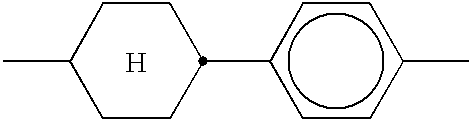 |
F | H | |
| n-C6H13 |
 |
F | F | |
| C2H5 |
 |
F | H | |
| C2H5 |
 |
F | F | |
| n-C3H7 |
 |
F | H | |
| n-C3H7 |
 |
F | F | |
| n-C5H11 |
 |
F | H | |
| n-C5H11 |
 |
F | F | |
| n-C6H13 |
 |
F | H | |
| n-C6H13 |
 |
F | F | |
| C2H5 |
 |
F | H | |
| C2H5 |
 |
F | F | |
| n-C3H7 |
 |
F | H | |
| n-C3H7 |
 |
F | F | |
| n-C5H11 |
 |
F | H | |
| n-C5H11 |
 |
F | F | |
| n-C3H7 |
 |
F | H | |
| n-C3H7O |
 |
F | H | |
| n-C3H7 |
 |
F | F | |
| n-C3H7O |
 |
F | F | |
| n-C5H11 |
 |
F | H | |
| n-C5H11O |
 |
F | H | |
| n-C3H7 |
 |
H | H | C 84 N 139 I; Δn = +0.266; Δε = 44.88 |
| n-C3H7 |
 |
H | F | |
| n-C5H11 |
 |
H | H | |
| n-C5H11 |
 |
H | F | |
| n-C5H11 |
 |
F | F | |
| n-C5H11O |
 |
F | F | |
| C2H5 |
 |
F | H | |
| C2H5 |
 |
F | F | |
| n-C3H7 |
 |
F | H | |
| n-C3H7 |
 |
F | F | C 71 I; Δn = +0.175; Δε = 59.78 |
| n-C5H11 |
 |
F | H | |
| n-C5H11 |
 |
F | F | |
| n-C3H7 |
 |
F | F | |
| n-C3H7 |
 |
F | H | |
| n-C3H7O |
 |
F | H | |
| n-C3H7 |
 |
F | F | C 136 I |
| n-C3H7O |
 |
F | F | |
| n-C5H11 |
 |
F | H | C 79 N 88.9 I; Δn = +0.315; Δε = 57.02 |
| n-C3H7 |
 |
H | H | C 143 N (141.6) I; |
| n-C5H11O |
 |
F | H | |
| n-C5H11 |
 |
F | F | |
| n-C5H11O |
 |
F | F | |
| C2H5 |
 |
F | H | |
| C2H5 |
 |
F | F | |
| n-C3H7 |
 |
H | H | C 69 N 92.4 I; Δn = +0.249; Δε = 46.7 |
| n-C5H11 |
 |
H | F | |


Under a nitrogen atmosphere, 0.019 mol of A are added with stirring to 30 ml of abs. THF. 0.021 mol of BuLi (15% solution in n-hexane) is added dropwise to the mixture at −65° C., and the mixture is then stirred for 0.5 h. After 0.021 mol of p-toluenesulfonyl cyanide in 10 ml of THF has been added at −60° C., the mixture is allowed to warm to 5° C. After hydrolysis, the solution is subjected to customary work-up. The crude product is recrystallized from ethanol and n-heptane.
The following compounds of the formula 
are prepared analogously:
| R | -(A1-Z1)m-A2-Z2- | L1 | L2 | |
| CH2═CH |
 |
H | H | c 65 N 120.4 I; Δn = +0.279; Δε = 28.77 |
| CH2═CH |
 |
H | F | |
| CH2═CH |
 |
F | F | c 69 N (49.5) I; Δn = +0.220; Δε = 39.1 |
| CH3CH═CH |
 |
H | H | c 99 N 172.5 I; Δn = +0.295; Δε = 35.1 |
| CH3CH═CH |
 |
H | F | |
| C2H5CH═CH |
 |
H | H | |
| C2H5CH═CH |
 |
H | F | |
| C2H5CH═CH |
 |
F | F | |
| C3H7CH═CH |
 |
H | H | |
| C3H7CH═CH |
 |
H | F | |
| C3H7CH═CH |
 |
F | F | |
| CH2═CHCH2CH2 |
 |
H | H | K 65 N 133.5 I; Δn = +0.265; Δε = 27.92 |
| CH2═CHCH2CH2 |
 |
H | F | |
| CH2═CHCH2CH2 |
 |
F | F | K 57 N 78.9 I; Δn = +0.209; Δε = 35.3 |
| CH3CH═CHCH2CH2 |
 |
H | H | |
| CH3CH═CHCH2CH2 |
 |
H | F | |
| CH3CH═CHCH2CH2 |
 |
F | F | |
| C2H5CH═CHCH2CH2 |
 |
H | H | |
| C2H5CH═CHCH2CH2 |
 |
H | F | |
| C2H5CH═CHCH2CH2 |
 |
F | F | |
| C3H7CH═CHCH2CH2 |
 |
H | H | |
| C3H7CH═CHCH2CH2 |
 |
H | F | |
| C3H7CH═CHCH2CH2 |
 |
F | F | |
| CH2═CH— |
 |
H | F | |
| CH3CH═CH— |
 |
H | F | |
| C2H5CH═CH— |
 |
H | F | |
| C3H7—CH═CH— |
 |
H | F | |
| CH2═CH |
 |
H | H | |
| CH2═CH—O— |
 |
H | H | |
| CH2═CH |
 |
H | F | |
| CH2═CH—O— |
 |
H | F | |
| CH2═CH |
 |
F | F | |
| CH2═CH—O— |
 |
F | F | |
| CH3CH═CH |
 |
H | H | |
| CH3CH═CH |
 |
H | F | |
| CH3CH═CH |
 |
F | F | |
| C2H5CH═CH |
 |
H | H | |
| C2H5CH═CH |
 |
H | F | |
| C2H5CH═CH |
 |
F | F | |
| C3H7CH═CH |
 |
H | H | |
| C3H7CH═CH |
 |
H | F | |
| C3H7CH═CH |
 |
F | F | |
| CH2═CHCH2CH2 |
 |
H | H | |
| CH2═CHCH2CH2 |
 |
H | F | |
| CH2═CHCH2CH2 |
 |
F | F | |
| CH3CH═CHCH2CH2 |
 |
H | H | |
| CH3CH═CHCH2CH2 |
 |
H | F | |
| CH3CH═CHCH2CH2 |
 |
F | F | |
| C2H5CH═CHCH2CH2 |
 |
H | H | |
| C2H5CH═CHCH2CH2 |
 |
H | F | |
| C2H5CH═CHCH2CH2 |
 |
F | F | |
| C3H7CH═CHCH2CH2 |
 |
H | H | |
| C3H7CH═CHCH2CH2 |
 |
H | F | |
| C3H7CH═CHCH2CH2 |
 |
F | F | |
| CH2═CH |
 |
H | H | |
| CH2═CH |
 |
H | H | |
| CH3—CH═CH |
 |
H | H | |
| CH3—CH═CH |
 |
H | H | |
| CH2═CH |
 |
H | H | |
| CH2═CH |
 |
H | F | |
| CH2═CH |
 |
F | F | |
| CH3CH═CH |
 |
H | H | |
| CH3CH═CH |
 |
H | F | |
| CH3CH═CH |
 |
F | F | |
| C2H5CH═CH |
 |
H | H | |
| C2H5CH═CH |
 |
H | F | |
| C2H5CH═CH |
 |
F | F | |
| C3H7CH═CH |
 |
H | H | |
| C3H7CH═CH |
 |
H | F | |
| C3H7CH═CH |
 |
F | F | |
| CH2═CHCH2CH2 |
 |
H | H | |
| CH2═CHCH2CH2 |
 |
H | F | |
| CH2═CHCH2CH2 |
 |
F | F | |
| CH3CH═CHCH2CH2 |
 |
H | H | |
| CH3CH═CHCH2CH2 |
 |
H | F | |
| CH3CH═CHCH2CH2 |
 |
F | F | |
| C2H5CH═CHCH2CH2 |
 |
H | H | |
| C2H5CH═CHCH2CH2 |
 |
H | F | |
| C2H5CH═CHCH2CH2 |
 |
F | F | |
| C3H7CH═CHCH2CH2 |
 |
H | H | |
| C3H7CH═CHCH2CH2 |
 |
H | F | |
| C3H7CH═CHCH2CH2 |
 |
F | F | |
| CH2═CH |
 |
H | H | |
| CH2═CH |
 |
H | F | |
| CH2═CH |
 |
F | F | |
| CH3CH═CH |
 |
H | H | |
| CH3CH═CH |
 |
H | F | |
| CH3CH═CH |
 |
F | F | |
| C2H5CH═CH |
 |
H | H | |
| C2H5CH═CH |
 |
H | F | |
| C2H5CH═CH |
 |
F | F | |
| C3H7CH═CH |
 |
H | H | |
| C3H7CH═CH |
 |
H | F | |
| C3H7CH═CH |
 |
F | F | |
| CH2═CHCH2CH2 |
 |
H | H | |
| CH2═CHCH2CH2 |
 |
H | F | |
| CH2═CHCH2CH2 |
 |
F | F | |
| CH3CH═CHCH2CH2 |
 |
H | H | |
| CH3CH═CHCH2CH2 |
 |
H | F | |
| CH3CH═CHCH2CH2 |
 |
F | F | |
| C2H5CH═CHCH2CH2 |
 |
H | H | |
| C2H5CH═CHCH2CH2 |
 |
H | F | |
| C2H5CH═CHCH2CH2 |
 |
F | F | |
| C3H7CH═CHCH2CH2 |
 |
H | H | |
| C3H7CH═CHCH2CH2 |
 |
H | F | |
| C3H7CH═CHCH2CH2 |
 |
F | F | |
| CH2═CH |
 |
H | H | |
| CH2═CH |
 |
H | F | |
| CH2═CH |
 |
F | F | |
| CH3CH═CH |
 |
H | H | |
| CH3CH═CH |
 |
H | F | |
| CH3CH═CH |
 |
F | F | |
| C2H5CH═CH |
 |
H | H | |
| C2H5CH═CH |
 |
H | F | |
| C2H5CH═CH |
 |
F | F | |
| C3H7CH═CH |
 |
H | H | |
| C3H7CH═CH |
 |
H | F | |
| C3H7CH═CH |
 |
F | F | |
| CH2═CHCH2CH2 |
 |
H | H | |
| CH2═CHCH2CH2 |
 |
H | F | |
| CH2═CHCH2CH2 |
 |
F | F | |
| CH3CH═CHCH2CH2 |
 |
H | H | |
| CH3CH═CHCH2CH2 |
 |
H | F | |
| CH3CH═CHCH2CH2 |
 |
F | F | |
| C2H5CH═CHCH2CH2 |
 |
H | H | |
| C2H5CH═CHCH2CH2 |
 |
H | F | |
| C2H5CH═CHCH2CH2 |
 |
F | F | |
| C3H7CH═CHCH2CH2 |
 |
H | H | |
| C3H7CH═CHCH2CH2 |
 |
H | F | |
| C3H7CH═CHCH2CH2 |
 |
F | F | |
| CH2═CH |
 |
H | H | |
| CH2═CH |
 |
H | F | |
| CH2═CH |
 |
F | F | |
| CH3CH═CH |
 |
H | H | |
| CH3CH═CH |
 |
H | F | |
| CH3CH═CH |
 |
F | F | |
| C2H5CH═CH |
 |
H | H | |
| C2H5CH═CH |
 |
H | F | |
| C2H5CH═CH |
 |
F | F | |
| C3H7CH═CH |
 |
H | H | |
| C3H7CH═CH |
 |
H | F | |
| C3H7CH═CH |
 |
F | F | |
| CH2═CHCH2CH2 |
 |
H | H | |
| CH2═CHCH2CH2 |
 |
H | F | |
| CH2═CHCH2CH2 |
 |
F | F | |
| CH3CH═CHCH2CH2 |
 |
H | H | |
| CH3CH═CHCH2CH2 |
 |
H | F | |
| CH3CH═CHCH2CH2 |
 |
F | F | |
| C2H5CH═CH2CH2 |
 |
H | H | |
| C2H5CH═CH2CH2 |
 |
H | F | |
| C2H5CH═CH2CH2 |
 |
F | F | |
| C3H7CH═CHCH2CH2 |
 |
H | H | |
| C3H7CH═CHCH2CH2 |
 |
H | F | |
| C3H7CH═CHCH2CH2 |
 |
F | F | |
| CH2═CH |
 |
H | H | |
| CH2═CH |
 |
H | F | |
| CH2═CH |
 |
F | F | |
| CH3CH═CH |
 |
H | H | |
| CH3CH═CH |
 |
H | F | |
| CH3CH═CH |
 |
F | F | |
| C2H5CH═CH |
 |
H | H | |
| C2H5CH═CH |
 |
H | F | |
| C2H5CH═CH |
 |
F | F | |
| C3H7CH═CH |
 |
H | H | |
| C3H7CH═CH |
 |
H | F | |
| C3H7CH═CH |
 |
F | F | |
| CH2═CHCH2CH2 |
 |
H | H | |
| CH2═CHCH2CH2 |
 |
H | F | |
| CH2═CHCH2CH2 |
 |
F | F | |
| CH3CH═CHCH2CH2 |
 |
H | H | |
| CH3CH═CHCH2CH2 |
 |
H | F | |
| CH3CH═CHCH2CH2 |
 |
F | F | |
| C2H5CH═CHCH2CH2 |
 |
H | H | |
| C2H5CH═CHCH2CH2 |
 |
H | F | |
| C2H5CH═CHCH2CH2 |
 |
F | F | |
| C3H7CH═CHCH2CH2 |
 |
H | H | |
| C3H7CH═CHCH2CH2 |
 |
H | F | |
| C3H7CH═CHCH2CH2 |
 |
F | F | |
| CH2═CH |
 |
H | H | |
| CH2═CH |
 |
H | F | |
| CH2═CH |
 |
F | F | |
| CH3CH═CH |
 |
H | H | |
| CH3CH═CH |
 |
H | F | |
| CH3CH═CH |
 |
F | F | |
| C2H5CH═CH |
 |
H | H | |
| C2H5CH═CH |
 |
H | F | |
| C2H5CH═CH |
 |
F | F | |
| C3H7CH═CH |
 |
H | H | |
| C3H7CH═CH |
 |
H | F | |
| C3H7CH═CH |
 |
F | F | |
| CH2═CHCH2CH2 |
 |
H | H | |
| C3H7CH═CHCH2CH2 |
 |
H | F | |
| C3H7CH═CHCH2CH2 |
 |
F | F | |
| CH2═CH |
 |
H | H | |
| CH2═CH |
 |
H | F | |
| CH2═CH |
 |
F | F | |
| CH3CH═CH |
 |
H | H | |
| CH3CH═CH |
 |
H | F | |
| CH3CH═CH |
 |
F | F | |
| C2H5CH═CH |
 |
H | H | |
| C2H5CH═CH |
 |
H | F | |
| C2H5CH═CH |
 |
F | F | |
| C3H7CH═CH |
 |
H | H | |
| C3H7CH═CH |
 |
H | F | |
| C3H7CH═CH |
 |
F | F | |
| CH2═CHCH2CH2 |
 |
H | H | |
| CH2═CHCH2CH2 |
 |
H | F | |
| CH2═CHCH2CH2 |
 |
H | F | |
| CH2═CHCH2CH2 |
 |
F | F | |
| CH3CH═CHCH2CH2 |
 |
H | H | |
| CH3CH═CHCH2CH2 |
 |
H | F | |
| CH3CH═CHCH2CH2 |
 |
F | F | |
| C2H5CH═CHCH2CH2 |
 |
H | H | |
| C2H5CH═CHCH2CH2 |
 |
H | F | |
| C2H5CH═CHCH2CH2 |
 |
F | F | |
| C3H7CH═CHCH2CH2 |
 |
H | H | |
| CH2═CHCH2CH2 |
 |
F | F | |
| CH3CH═CHCH2CH2 |
 |
H | H | |
| CH3CH═CHCH2CH2 |
 |
H | F | |
| CH3CH═CHCH2CH2 |
 |
F | F | |
| C2H5CH═CHCH2CH2 |
 |
H | H | |
| C2H5CH═CHCH2CH2 |
 |
H | F | |
| C2H5CH═CHCH2CH2 |
 |
F | F | |
| C3H7CH═CHCH2CH2 |
 |
H | H | |
| C3H7CH═CHCH2CH2 |
 |
H | F | |
| C3H7CH═CHCH2CH2 |
 |
F | F | |
| CH2═CH |
 |
H | H | |
| CH2═CH |
 |
H | F | |
| CH2═CH |
 |
F | F | |
| CH3CH═CH |
 |
H | H | |
| CH3CH═CH |
 |
H | F | |
| CH3CH═CH |
 |
F | F | |
| CH2═CHCH2CH2 |
 |
H | H | |
| CH2═CHCH2CH2 |
 |
H | F | |
| CH2═CHCH2CH2 |
 |
F | F | |
| CH3CH═CHCH2CH2 |
 |
H | H | |
| CH3CH═CHCH2CH2 |
 |
H | F | |
| CH3CH═CHCH2CH2 |
 |
F | F | |
| CH2═CH |
 |
H | H | |
| CH2═CH |
 |
H | F | |
| CH2═CH |
 |
F | F | |
| CH3CH═CH |
 |
H | H | |
| CH3CH═CH |
 |
H | F | |
| CH3CH═CH |
 |
F | F | |
| CH2═CHCH2CH2 |
 |
H | H | |
| CH2═CHCH2CH2 |
 |
H | F | |
| CH2═CHCH2CH2 |
 |
F | F | |
| CH3CH═CHCH2CH2 |
 |
H | H | |
| CH3CH═CHCH2CH2 |
 |
H | F | |
| CH3CH═CHCH2CH2 |
 |
F | F | |
| CH2═CH |
 |
H | H | |
| CH2═CH |
 |
H | F | |
| CH2═CH |
 |
F | F | |
| CH3CH═CH |
 |
H | H | |
| CH3CH═CH |
 |
H | F | |
| CH3CH═CH |
 |
F | F | |
| CH2═CHCH2CH2 |
 |
H | H | |
| CH2═CHCH2CH2 |
 |
H | F | |
| CH2═CHCH2CH2 |
 |
F | F | |
| CH3CH═CHCH2CH2 |
 |
H | H | |
| CH3CH═CHCH2CH2 |
 |
H | F | |
| CH3CH═CHCH2CH2 |
 |
F | F | |
| CH2═CH |
 |
H | H | |
| CH2═CH |
 |
H | F | |
| CH2═CH |
 |
F | F | |
| CH3CH═CH |
 |
H | H | |
| CH3CH═CH |
 |
H | F | |
| CH3CH═CH |
 |
F | F | |
| CH2═CHCH2CH2 |
 |
H | H | |
| CH2═CHCH2CH2 |
 |
H | F | |
| CH2═CHCH2CH2 |
 |
F | F | |
| CH3CH═CHCH2CH2 |
 |
H | H | |
| CH3CH═CHCH2CH2 |
 |
H | F | |
| CH3CH═CHCH2CH2 |
 |
F | F | |
| PCH-5F | 9.0% | Clearing point [° C.]: 87.8 | ||
| PCH-6F | 7.2% | Δn [589 nm, 20° C.]: 0.1074 | ||
| PCH-7F | 5.4% | Δε [1 kHz, 20° C.]: 8.95 | ||
| CCP-2OCF3 | 7.2% | ν20 [mm2 · s−1]: 15.0 | ||
| CCP-3OCF3 | 10.8% | |||
| CCP-4OCF3 | 6.3% | |||
| CCP-5OCF3 | 9.9% | |||
| BCH-3F.F | 10.8% | |||
| BCH-5F.F | 9.0% | |||
| ECCP-3OCF3 | 4.5% | |||
| ECCP-5OCF3 | 4.5% | |||
| CBC-33F | 1.8% | |||
| CBC-53F | 1.8% | |||
| CBC-55F | 1.8% | |||
| CU-3-AN | 10.0% | |||
| PCH-5F | 9.0% | Clearing point [° C.]: 90.8 | ||
| PCH-6F | 7.2% | Δn [589 nm, 20° C.]: 0.1101 | ||
| PCH-7F | 5.4% | Δε [1 kHz, 20° C.]: 8.32 | ||
| CCP-2OCF3 | 7.2% | ν20 [mm2 · s−1]: 14.0 | ||
| CCP-3OCF3 | 10.8% | |||
| CCP-4OCF3 | 6.3% | |||
| CCP-5OCF3 | 9.9% | |||
| BCH-3F.F | 10.8% | |||
| BCH-5F.F | 9.0% | |||
| ECCP-3OCF3 | 4.5% | |||
| ECCP-5OCF3 | 4.5% | |||
| CBC-33F | 1.8% | |||
| CBC-53F | 1.8% | |||
| CBC-55F | 1.8% | |||
| CG-3-AN | 10.0% | |||
| PCH-5F | 9.0% | Clearing point [° C.]: 89.1 | ||
| PCH-6F | 7.2% | Δn [589 nm, 20° C.]: +0.1070 | ||
| PCH-7F | 5.4% | Δε [1 kHz, 20° C.]: 8.61 | ||
| CCP-2OCF3 | 7.2% | ν20 [mm2 · s−1]: 15 | ||
| CCP-3OCF3 | 10.8% | |||
| CCP-4OCF3 | 6.3% | |||
| CCP-5OCF3 | 9.9% | |||
| BCH-3F.F | 10.8% | |||
| BCH-5F.F | 9.0% | |||
| ECCP-3OCF3 | 4.5% | |||
| ECCP-5OCF3 | 4.5% | |||
| CBC-33F | 1.8% | |||
| CBC-53F | 1.8% | |||
| CBC-55F | 1.8% | |||
| CU-5-AN | 10.0% | |||
| PCH-5F | 9.0% | Clearing point [° C.]: 83.2 | ||
| PCH-6F | 7.2% | Δn [589 nm, 20° C.]: 0.1055 | ||
| PCH-7F | 5.4% | Δε [1 kHz, 20° C.]: 8.80 | ||
| CCP-2OCF3 | 7.2% | ν20 [mm2 · s−1]: 15 | ||
| CCP-3OCF3 | 10.8% | |||
| CCP-4OCF3 | 6.3% | |||
| CCP-5OCF3 | 9.9% | |||
| BCH-3F.F | 10.8% | |||
| BCH-5F.F | 9.0% | |||
| ECCP-3OCF3 | 4.5% | |||
| ECCP-5OCF3 | 4.5% | |||
| CBC-33F | 1.8% | |||
| CBC-53F | 1.8% | |||
| CBC-55F | 1.8% | |||
| CU-2-AN | 10.0% | |||
| PCH-5F | 9.0% | Clearing point [° C.]: 86.8 | ||
| PCH-6F | 7.2% | Δn [589 nm, 20° C.]: 0.1206 | ||
| PCH-7F | 5.4% | Δε [1 kHz, 20° C.]: 9.88 | ||
| CCP-2OCF3 | 7.2% | ν20 [mm2 · s −1]: 14 | ||
| CCP-3OCF3 | 10.8% | |||
| CCP-4OCF3 | 6.3% | |||
| CCP-5OCF3 | 9.9% | |||
| BCH-3F.F | 10.8% | |||
| BCH-5F.F | 9.0% | |||
| ECCP-3OCF3 | 4.5% | |||
| ECCP-5OCF3 | 4.5% | |||
| CBC-33F | 1.8% | |||
| CBC-53F | 1.8% | |||
| CBC-55F | 1.8% | |||
| PU-3-AN | 10.0% | |||
| PCH-5F | 9.0% | Clearing point [° C.]: 85.2 | ||
| PCH-6F | 7.2% | Δn [589 nm, 20° C.]: 0.1051 | ||
| PCH-7F | 5.4% | Δε [1 kHz, 20° C.]: 10.71 | ||
| CCP-2OCF3 | 7.2% | ν20 [mm2 · s−1]: 15 | ||
| CCP-3OCF3 | 10.8% | |||
| CCP-4OCF3 | 6.3% | |||
| CCP-5OCF3 | 9.9% | |||
| BCH-3F.F | 10.8% | |||
| BCH-5F.F | 9.0% | |||
| ECCP-3OCF3 | 4.5% | |||
| ECCP-5OCF3 | 4.5% | |||
| CBC-33F | 1.8% | |||
| CBC-53F | 1.8% | |||
| CBC-55F | 1.8% | |||
| DU-3-AN | 10.0% | |||
| PCH-6F | 7.20% | Clearing point [° C.]: +93.8 | ||
| PCH-7F | 5.40% | Δn [589.3 nm, 20° C.]: +0.1146 | ||
| CCP-2OCF3 | 7.20% | Δε [1 kHz, 20° C.]: +7.6 | ||
| CCP-3OCF3 | 10.80% | ν20 [mm2 · s−1]: 14 | ||
| CCP-4OCF3 | 6.30% | |||
| PCH-5F | 9.00% | |||
| CCP-5OCF3 | 9.90% | |||
| BCH-3F.F | 10.80% | |||
| BCH-5F.F | 9.00% | |||
| ECCP-3OCF3 | 4.50% | |||
| ECCP-5OCF3 | 4.50% | |||
| CBC-33F | 1.80% | |||
| CBC-53F | 1.80% | |||
| CBC-55F | 1.80% | |||
| CP-V-AN | 10.00% | |||
| BCH-3F.F | 10.80% | Clearing point [° C.]: 98.5 | ||
| BCH-5F.F | 9.00% | Δn [589.3 nm, 20° C.]: +0.1162 | ||
| ECCP-3OCF3 | 4.50% | Δε [1 kHz, 20° C.]: +8.2 | ||
| ECCP-5OCF3 | 4.50% | ν20 [mm2 · s−1]: 14 | ||
| CBC-33F | 1.80% | |||
| CBC-53F | 1.80% | |||
| CBC-55F | 1.80% | |||
| PCH-6E | 7.20% | |||
| PCH-7F | 5.40% | |||
| CCP-2OCF3 | 7.20% | |||
| CCP-3OCF3 | 10.80% | |||
| CCP-4OCF3 | 6.30% | |||
| CCP-5OCF3 | 9.90% | |||
| PCH-5F | 9.00% | |||
| CP-1V-AN | 10.00% | |||
| PCH-6F | 7.20% | Clearing point [° C.]: +95.2 | ||
| PCH-7F | 5.40% | Δn [589.3 nm, 20° C.]: +0.1133 | ||
| CCP-2OCF3 | 7.20% | Δε [1 kHz, 20° C.]: +7.5 | ||
| CCP-3OCF3 | 10.80% | ν20 [mm2 · s−1]: 15 | ||
| CCP-4OCF3 | 6.30% | |||
| PCH-5F | 9.00% | |||
| CCP-5OCF3 | 9.90% | |||
| BCH-3F.F | 10.80% | |||
| BCH-5F.F | 9.00% | |||
| ECCP-3OCF3 | 4.50% | |||
| ECCP-5OCF3 | 4.50% | |||
| CBC-33F | 1.80% | |||
| CBC-53F | 1.80% | |||
| CBC-55F | 1.80% | |||
| CP-V2-AN | 10.00% | |||
| BCH-3F.F | 10.81% | Clearing point [° C.]: 86.5 | ||
| BCH-5F.F | 9.01% | Δn [589.3 nm, 20° C.]: +0.1087 | ||
| ECCP-3OCF3 | 4.50% | Δε [1 kHz, 20° C.]: +8.6 | ||
| ECCP-5OCF3 | 4.50% | |||
| CBC-33F | 1.80% | |||
| CBC-53F | 1.80% | |||
| CBC-55F | 1.80% | |||
| PCH-6F | 7.21% | |||
| PCH-7F | 5.40% | |||
| CCP-2OCF3 | 7.20% | |||
| CCP-3OCF3 | 10.81% | |||
| CCP-4OCF3 | 6.30% | |||
| CCP-5OCF3 | 9.91% | |||
| PCH-5F | 9.01% | |||
| CU-V-AN | 9.94% | |||
| PCH-6F | 7.20% | Clearing point [° C.]: +87.8 | ||
| PCH-7F | 5.40% | Δn [589.3 nm, 20° C.]: +0.1077 | ||
| CCP-2OCF3 | 7.20% | Δε [1 kHz, 20° C.]: +8.3 | ||
| CCP-3OCF3 | 10.80% | ν20 [mm2 · s−1]: 15 | ||
| CCP-4OCF3 | 6.30% | |||
| PCH-5F | 9.00% | |||
| CCP-5OCF3 | 9.90% | |||
| BCH-3F.F | 10.80% | |||
| BCH-5F.F | 9.00% | |||
| ECCP-3OCF3 | 4.50% | |||
| ECCP-5OCF3 | 4.50% | |||
| CBC-33F | 1.80% | |||
| CBC-53F | 1.80% | |||
| CBC-55F | 1.80% | |||
| CU-V2-AN | 10.00% | |||
Claims (16)
1. An acetylene derivative of the formula I 
in which
R is an alkyl or alkenyl radical having 1 to 15 carbon atoms which is unsubstituted, monosubstituted by CN or CF3 or at least monosubstituted by halogen, where, in addition, one or more —CH2— groups in these radicals may be replaced, in each case independently of one another, by —O—, —S—, 
—CO—, —CO—O—, —O—O— or —O—CO—O— in such a way that O atoms are not linked directly to one another,
A1 and A2 are each, independently of one another,
(a) a trans-1,4-cyclohexylene radical, in which, in addition, one or more nonadjacent —CH2— groups may be replaced by —O— and/or —S—,
(b) a 1,4-phenylene radical, in which, in addition, one or two CH groups may be replaced by N,
(c) trans-1,4-cyclohexenylene,
(d) a radical from the group consisting of 1,4-bicyclo[2.2.2]octylene, piperidine-1,4-diyl, naphthalene-2,6-diyl, decahydronaphthalene-2,6-diyl and 1,2,3,4-tetrahydronaphthalene, 2,6-diyl,
where the radicals (a) to (c) may be monosubstituted or disubstituted by fluorine or CH3,
Z1, Z2 and Z3 are each, independently of one another, —CO—O—, —O—CO—, —CH2O—, —OCH2—, —CH2CH2—, —CH═CH—, —C≡C—, —(CH2)4—, —OCF2—, —CF2O—, —CH═CH—CH2CH2— or a single bond,
m is 0, 1 or 2,
n is 0 or 1,
L1, L2, and L3 are each, independently of one another, H or F, and
Y is —C≡C—, —CH═CH—, —CF═CH—, —CH═CF— or —CF═CF—, with the provisos that, in the case where
(1) Y is —CH═CH—,
a) n=1 and Z3 is a single bond or
b) L1 and/or L2 is/are fluorine or
c) R is alkenyl or alkenyloxy having 2 to 12 carbon atoms or
d) A2 is a pyridine radical, a pyrimidine radical or a trans-1,4-cyclohexylene radical which is monosubstituted or disubstituted by fluorine or CH3or
e) one of the radicals Z1, Z2 or Z3 is —CO—O—; and
(2) in the case where Y is —C≡C—
a) A1 or A2 are each independently of one another
a) a trans-1,4-cyclohexylene radical, in which one CH2 group is replaced by —O—, or one or more non adjacent —CH2— groups are replaced b, —S— or
b) trans-1,4-cyclohexenylene or
c) a radical from the group consisting of 1,4-bicyclo [2.2.2] octylene, piperidine-1,4-diyl, naphthalene-2,6-diyl, decahydronaphthalene-2,6-diyl and 1,2,3,4-tetrahydronaphthalene-2,6-diyl where the radicals (a) and (b) may be monosubstituted or disubstituted by fluorine or CH3, or
b) at least one of Z1, Z2 and Z3 is —OCF2— or —CF2O—.
2. Compounds claim 1 characterized in that Y is —C≡C— or —CF═CF—.
3. Compounds claim 1 characterized in that R is alkenyl or alkenyloxy having 2 to 12 carbon atoms.
4. A liquid-crystalline medium having at least two liquid-crystalline components, characterized in that it comprises at least one compound according to claim 1 .
5. Liquid-crystal display element, characterized in that it contains a liquid-crystalline medium according to claim 4 .
6. In an electro-optical display element comprising, as dielectric, a liquid-crystalline medium, the improvement wherein said medium is in accordance with claim 4 .
7. In a method of generating an electro-optical display using a liquid-crystal display element containing a liquid-crystal medium, the improvement wherein said medium is in accordance with claim 4 .
8. An acetylene derivative of the formula I 
in which
R is an alkyl or alkenyl radical having 1 to 15 carbon atoms which is unsubstituted, monosubstituted by CN or CF3 or at least monosubstituted by halogen, where, in addition, one or more —CH2— groups in these radicals may be replaced, in each case independently of one another, by —O—, —S—, 
—CO—, —CO—O—, —O—O— or —O—CO—O— in such a way that O atoms are not linked directly to one another,
A1 and A2 are each, independently of one another,
(a) a trans-1,4-cyclohexylene radical, in which, in addition, one or more nonadjacent —CH2— groups may be replaced by —O— and/or —S—,
(b) a 1,4-phenylene radical, in which, in addition, one or two CH groups may be replaced by N,
(c) trans-1,4-cyclohexenylene,
(d) a radical from the group consisting of 1,4-bicyclo[2.2.2]octylene, piperidine-1,4-diyl, naphthalene-2,6-diyl, decahydronaphthalene-2,6-diyl and 1,2,3,4-tetrahydronaphthalene, 2,6-diyl,
where the radicals (a) to (c) may be monosubstituted or disubstituted by fluorine or CH3,
Z1, Z2 and Z3 are each, independently of one another, —CO—O—, —O—CO—, —CH2O—, —OCH2—, —CH2CH2—, —CH═CH—, —C≡C—, —(CH2)4—, —OCF2—, —CF2O—, —CH═CH—CH2CH2— or a single bond,
m is 0, 1 or 2,
n is 0 or 1,
L1, L2, and L3 are each, independently of one another, H or F, and
Y is —CF═CH—, —CH═CF— or —CF═CF—.
9. An acetylene derivative of the formula I 
in which
R R is an alkyl or alkenyl radical having 1 to 15 carbon atoms which is unsubstituted, monosubstituted by CN or CF3 or at least monosubstituted by halogen, where, in addition, one or more —CH2— groups in these radicals may be replaced, in each case independently of one another, by —O—, —S—, 
—CO—, —CO—O—, —O—O— or —O—CO—O— in such a way that O atoms are not linked directly to one another,
A1 and A2 are each, independently of one another,
(a) a trans-1,4-cyclohexylene radical, in which, in addition, one or more nonadjacent —CH2— groups may be replaced by —O— and/or —S—,
(b) a 1,4-phenylene radical, in which, in addition, one or two CH groups may be replaced by N,
(c) trans-1,4-cyclohexenylene,
(d) a radical from the group consisting of 1,4-bicyclo[2.2.2]octylene, piperidine-1,4-diyl, naphthalene-2,6-diyl, decahydronaphthalene-2,6-diyl and 1,2,3,4-tetrahydronaphthalene, 2,6-diyl,
where the radicals (a) to (c) may be monosubstituted or disubstituted by fluorine or CH3,
Z1, Z2 and Z3 are each, independently of one another, —CO—O—, —O—CO—, —CH2O—, —OCH2—, —CH2CH2—, —CH═CH—, —C≡C—, —(CH2)4—, —OCF2—, —CF2O—, —CH═CH—CH2CH2— or a single bond, wherein at least one of Z1, Z2 and Z3 is —OCF2— or —CF2O—,
m is 0, 1 or 2,
n is 0 or 1,
L1, L2, and L3 are each, independently of one another, H or F, and
Y is —C≡C—, —CH═CH—, —CF═CH—, —CH═CF— or —CF═CF—.
10. An acetylene derivative of the formula I 
in which
R is an alkyl or alkenyl radical having 1 to 15 carbon atoms which is unsubstituted, monosubstituted by CN or CF3 or at least monosubstituted by halogen, where, in addition, one or more —CH2— groups in these radicals may be replaced, in each case independently of one another, by —O—, —S—, 
—CO—, —CO—O—, —O—O— or —O—CO—O— in such a way that O atoms are not linked directly to one another,
A1 and A2 are each, independently of one another,
(a) a trans-1,4-cyclohexylene radical, in which, in addition, one or more nonadjacent —CH2— groups may be replaced by —O— and/or —S—,
(b) a 1,4-phenylene radical, in which, in addition, one or two CH groups may be replaced by N,
(c) trans-i1,4-cyclohexenylene,
(d) a radical from the group consisting of 1,4-bicyclo[2.2.2]octylene, piperidine-1,4-diyl, naphthalene-2,6-diyl, decahydronaphthalene-2,6-diyl and 1,2,3,4-tetrahydronaphthalene, 2,6-diyl,
where the radicals (a) to (c) may be monosubstituted or disubstituted by fluorine or CH3, and wherein at least one of A1 and A2 is a radical (c) or (d),
Z1, Z2 and Z3 are each, independently of one another, —CO—O—, —O—CO—, —CH2O—, —OCH2—, —CH2CH2—, —CH═CH—, —C≡C—, —(CH2)4—, —OCF2—, —CF2O—, —CH═CH—CH2CH2— or a single bond,
m is 0, 1 or 2,
n is 0 or 1,
L1, L2, and L3 are each, independently of one another, H or F, and
Y is —C≡C—, —CH═CH—, —CF═CH—, —CH═CF— or —CF═CF—,
with the proviso that, in the case where
Y=—C≡C— or is —CH═CH—,
a) n=1 and Z3 is a single bond or
b) L1 and/or L2 is/are fluorine or
c) R is alkenyl or alkenyloxy having 2 to 12 carbon atoms or
d) A2 is a pyridine radical, a pyrimidine radical or a trans-1,4-cyclohexylene radical which is monosubstituted or disubstituted by fluorine or CH3or
e) one of the radicals Z1, Z2 or Z3 is —CO—O—.
11. An acetylene derivative of the formula I 
in which
R is an alkyl or alkenyl radical having 1 to 15 carbon atoms which is unsubstituted, monosubstituted by CN or CF3 or at least monosubstituted by halogen, where, in addition, one or more —CH2— groups in these radicals may be replaced, in each case independently of one another, by —O—, —S—, 
—CO—, —CO—O—, —O—O— or —O—CO—O— in such a way that O atoms are not linked directly to one another,
A1 is, in each case, independently,
(a) a trans-1,4-cyclohexylene radical, in which, in addition, one or more nonadjacent —CH2— groups may be replaced by —O— and/or —S—,
(b) a 1,4-phenylene radical, in which, in addition, one or two CH groups may be replaced by N,
(c) trans-1,4-cyclohexenylene,
(d) a radical from the group consisting of 1,4-bicyclo[2.2.2]octylene, piperidine-1,4-diyl, naphthalene-2,6-diyl, decahydronaphthalene-2,6-diyl and 1,2,3,4-tetrahydronaphthalene, 2,6-diyl,
where the radicals (a) to (c) may be monosubstituted or disubstituted by fluorine or CH3,
A2 is trans-1,4-cyclohexenylene monosubstituted by F or is pyridine-2,5-diyl,
Z1, Z2 and Z3 are each, independently of one another, —CO—O—, —O—CO—, —CH2O—, —OCH2—, —CH2CH2—, —CH═CH—, —C≡C—, —(CH2)4—, —OCF2—, —CF2O—, —CH═CH—CH2CH2— or a single bond,
m is 0, 1 or 2,
n is 0 or 1,
L1, L2, and L3 are each, independently of one another, H or F, and
Y is —C≡C—, —CH═CH—, —CF═CH—, —CH═CF— or —CF═CF—.
12. A compound of the formula I1 
in which
R and L2 are as defined in claim 1 , and
Y is —CH═CH—, —CF═CH—, —CH═CF— or —CF═CF—.
13. A compound of the formula I2 
in which
R and L2 are as defined in claim 1 , and
Y is —CH═CH—, —CF═CH—, —CH═CF— or —CF═CF—.
14. A compound of the formula I3 
in which
R and L2 are as defined in claim 1 , and
Y is —CH═CH—, —CF═CH—, —CH═CF— or —CF═CF—.
15. A compound of the formula 
in which
L is H or F,
R and L1 are as defined in claim 1 , and
Y is —Ch═CH—, —CF═CH—, —CH═CF— or —CF═CF—.
16. A compound of the formula I16 
in which
R and L2 are as defined in claim 1 , and
Y is —CH═CH—, —CF═CH—, —CH═CF— or —CF═CF—.
Applications Claiming Priority (5)
| Application Number | Priority Date | Filing Date | Title |
|---|---|---|---|
| DE19731906 | 1997-07-24 | ||
| DE19731906 | 1997-07-24 | ||
| DE19742898 | 1997-09-29 | ||
| DE19742898 | 1997-09-29 | ||
| PCT/EP1998/004366 WO1999005097A1 (en) | 1997-07-24 | 1998-07-14 | Liquid crystal propene or propenyl nitrile derivatives |
Publications (1)
| Publication Number | Publication Date |
|---|---|
| US6444279B1 true US6444279B1 (en) | 2002-09-03 |
Family
ID=26038557
Family Applications (1)
| Application Number | Title | Priority Date | Filing Date |
|---|---|---|---|
| US09/463,314 Expired - Fee Related US6444279B1 (en) | 1997-07-24 | 1998-07-14 | Liquid crystal propene or propenyl nitrile derivatives |
Country Status (8)
| Country | Link |
|---|---|
| US (1) | US6444279B1 (en) |
| EP (1) | EP0998452B1 (en) |
| JP (1) | JP2001510822A (en) |
| KR (1) | KR20010022131A (en) |
| AU (1) | AU9065598A (en) |
| DE (2) | DE19831093A1 (en) |
| TW (1) | TW459036B (en) |
| WO (1) | WO1999005097A1 (en) |
Cited By (4)
| Publication number | Priority date | Publication date | Assignee | Title |
|---|---|---|---|---|
| US20030127629A1 (en) * | 2001-07-27 | 2003-07-10 | Merck Patent Gmbh | Liquid-crystalline mixtures |
| CN110392726A (en) * | 2017-03-16 | 2019-10-29 | 默克专利股份有限公司 | Liquid crystal media |
| US11492551B2 (en) * | 2020-09-15 | 2022-11-08 | Jnc Corporation | Liquid crystal composition used in element for phase control of electromagnetic wave signal |
| US20250154412A1 (en) * | 2023-11-08 | 2025-05-15 | Merck Patent Gmbh | Liquid crystal medium |
Families Citing this family (4)
| Publication number | Priority date | Publication date | Assignee | Title |
|---|---|---|---|---|
| DE102010004364A1 (en) * | 2009-01-20 | 2010-07-22 | Merck Patent Gmbh | Liquid crystal compounds and LC media |
| EP4669720A1 (en) | 2023-02-24 | 2025-12-31 | Merck Patent GmbH | DIHYDRONAPHTHAL INDIVATES |
| CN121532478A (en) | 2023-06-20 | 2026-02-13 | 默克专利股份有限公司 | Liquid crystal media |
| WO2025196107A1 (en) | 2024-03-22 | 2025-09-25 | Merck Patent Gmbh | Indene derivatives |
Citations (7)
| Publication number | Priority date | Publication date | Assignee | Title |
|---|---|---|---|---|
| JPS5511529A (en) | 1978-07-12 | 1980-01-26 | Hitachi Ltd | Liquid crystal compound |
| GB2111992A (en) | 1981-12-18 | 1983-07-13 | Hoffmann La Roche | Liquid crystal acetylenes |
| JPS59190958A (en) | 1983-04-11 | 1984-10-29 | Chisso Corp | Production of biphenylpropiolnitrile |
| JPS60169455A (en) | 1984-02-13 | 1985-09-02 | Mitsubishi Chem Ind Ltd | Propyne nitrile derivative |
| JPS60188358A (en) | 1984-03-08 | 1985-09-25 | Mitsubishi Chem Ind Ltd | Propyne nitrile derivative |
| EP0310676A1 (en) | 1987-04-07 | 1989-04-12 | PAVLJUCHENKO, Assya Iosifovna | Liquid-crystal derivatives of 2,5-disubstituted pyridine as components of liquid-crystal material, and a liquid-crystal material |
| EP0816332A1 (en) | 1996-06-28 | 1998-01-07 | Chisso Corporation | Propiolonitrile derivatives and liquid crystal compositions comprising the same |
Family Cites Families (8)
| Publication number | Priority date | Publication date | Assignee | Title |
|---|---|---|---|---|
| JPS559012A (en) * | 1978-07-05 | 1980-01-22 | Hitachi Ltd | Liquid crystal compound |
| JPS5735552A (en) * | 1980-08-08 | 1982-02-26 | Asahi Glass Co Ltd | Cinnamonitrile compound |
| JPS5770851A (en) * | 1980-10-21 | 1982-05-01 | Asahi Glass Co Ltd | Cinnamoyl nitrile |
| CH648338A5 (en) * | 1981-12-18 | 1985-03-15 | Hoffmann La Roche | Polycyclic acetylene derivatives and the use thereof as components of liquid-crystalline mixtures |
| JPS59139353A (en) * | 1983-01-28 | 1984-08-10 | Chisso Corp | Liquid crystal substance having large positive dielectric anisotropy |
| JPS6019756A (en) * | 1983-07-14 | 1985-01-31 | Chisso Corp | Propiol nitrile compound |
| JP3146978B2 (en) * | 1996-06-28 | 2001-03-19 | チッソ株式会社 | Liquid crystal composition and liquid crystal display device |
| JP2807670B2 (en) * | 1996-06-28 | 1998-10-08 | チッソ株式会社 | Propiolonitrile derivative, liquid crystal composition and liquid crystal display device |
-
1998
- 1998-07-10 DE DE19831093A patent/DE19831093A1/en not_active Withdrawn
- 1998-07-14 WO PCT/EP1998/004366 patent/WO1999005097A1/en not_active Ceased
- 1998-07-14 KR KR1020007000701A patent/KR20010022131A/en not_active Ceased
- 1998-07-14 DE DE59812809T patent/DE59812809D1/en not_active Expired - Lifetime
- 1998-07-14 AU AU90655/98A patent/AU9065598A/en not_active Abandoned
- 1998-07-14 JP JP2000504098A patent/JP2001510822A/en active Pending
- 1998-07-14 EP EP98942550A patent/EP0998452B1/en not_active Expired - Lifetime
- 1998-07-14 US US09/463,314 patent/US6444279B1/en not_active Expired - Fee Related
- 1998-07-20 TW TW087111814A patent/TW459036B/en not_active IP Right Cessation
Patent Citations (8)
| Publication number | Priority date | Publication date | Assignee | Title |
|---|---|---|---|---|
| JPS5511529A (en) | 1978-07-12 | 1980-01-26 | Hitachi Ltd | Liquid crystal compound |
| GB2111992A (en) | 1981-12-18 | 1983-07-13 | Hoffmann La Roche | Liquid crystal acetylenes |
| JPS59190958A (en) | 1983-04-11 | 1984-10-29 | Chisso Corp | Production of biphenylpropiolnitrile |
| JPS60169455A (en) | 1984-02-13 | 1985-09-02 | Mitsubishi Chem Ind Ltd | Propyne nitrile derivative |
| JPS60188358A (en) | 1984-03-08 | 1985-09-25 | Mitsubishi Chem Ind Ltd | Propyne nitrile derivative |
| EP0310676A1 (en) | 1987-04-07 | 1989-04-12 | PAVLJUCHENKO, Assya Iosifovna | Liquid-crystal derivatives of 2,5-disubstituted pyridine as components of liquid-crystal material, and a liquid-crystal material |
| EP0816332A1 (en) | 1996-06-28 | 1998-01-07 | Chisso Corporation | Propiolonitrile derivatives and liquid crystal compositions comprising the same |
| US6017467A (en) * | 1996-06-28 | 2000-01-25 | Chisso Corporation | Propiolonitrile derivatives and liquid crystal compositions comprising the same |
Non-Patent Citations (16)
| Title |
|---|
| Chemical Abstract, vol. 102, No. 19, May 13, 1985, Abstract No. 166483″4-Pentylbiphenyl-4′-propionitrile & JP 59 190958. |
| Chemical Abstract, vol. 102, No. 19, May 13, 1985, Abstract No. 166483''4-Pentylbiphenyl-4'-propionitrile & JP 59 190958. |
| Chemical Abstracts, vol. 093, No. 13, Sep. 29, 1980; Abstract No. 132157″Cyclohexylcinnimonitriles &JP 55 009012. |
| Chemical Abstracts, vol. 093, No. 13, Sep. 29, 1980; Abstract No. 132157''Cyclohexylcinnimonitriles &JP 55 009012. |
| Chemical Abstracts, vol. 093, No. 9, Sep. 1, 1980, Abstract No. 095021 & JP 55 011529. |
| Chemical Abstracts, vol. 097, No. 11, Sep. 13, 1982, Abstract No. 091973 "Cinnamonitriles" &JP 57 035552. |
| Chemical Abstracts, vol. 097, No. 9, Aug. 30, 1982; Abstract No. 072113″Cinnamonitriles &JP 57 070851. |
| Chemical Abstracts, vol. 097, No. 9, Aug. 30, 1982; Abstract No. 072113''Cinnamonitriles &JP 57 070851. |
| Chemical Abstracts, vol. 102 No. 1, Jan. 7, 1985; Abstract No. 005964″4-acyloxyphenylpropionitriles &JP 59 139353. |
| Chemical Abstracts, vol. 102 No. 1, Jan. 7, 1985; Abstract No. 005964''4-acyloxyphenylpropionitriles &JP 59 139353. |
| Chemical Abstracts, vol. 102 No. 25, Jun. 24, 1985; Abstract No. 220593″phenylpropiolnitrile derivatives &JP 60 019756. |
| Chemical Abstracts, vol. 102 No. 25, Jun. 24, 1985; Abstract No. 220593''phenylpropiolnitrile derivatives &JP 60 019756. |
| Chemical Abstracts, vol.104, No. 14, Apr. 7, 1986; Abstract No. 120516″Propynenitrile derivatives for liquid crystal compositions & JP 60 188358. |
| Chemical Abstracts, vol.104, No. 14, Apr. 7, 1986; Abstract No. 120516''Propynenitrile derivatives for liquid crystal compositions & JP 60 188358. |
| Chemical Abstracts,vol. 104, No. 18, May 5, 1986; Abstract No. 160058″propynenitrile derivatives & JP 60 169455. |
| Chemical Abstracts,vol. 104, No. 18, May 5, 1986; Abstract No. 160058''propynenitrile derivatives & JP 60 169455. |
Cited By (7)
| Publication number | Priority date | Publication date | Assignee | Title |
|---|---|---|---|---|
| US20030127629A1 (en) * | 2001-07-27 | 2003-07-10 | Merck Patent Gmbh | Liquid-crystalline mixtures |
| US6821582B2 (en) * | 2001-07-27 | 2004-11-23 | Merck Patent Gmbh | Liquid-crystalline mixtures |
| CN110392726A (en) * | 2017-03-16 | 2019-10-29 | 默克专利股份有限公司 | Liquid crystal media |
| CN110392726B (en) * | 2017-03-16 | 2023-11-03 | 默克专利股份有限公司 | Liquid-crystalline medium |
| US11492551B2 (en) * | 2020-09-15 | 2022-11-08 | Jnc Corporation | Liquid crystal composition used in element for phase control of electromagnetic wave signal |
| US20250154412A1 (en) * | 2023-11-08 | 2025-05-15 | Merck Patent Gmbh | Liquid crystal medium |
| US12528988B2 (en) * | 2023-11-08 | 2026-01-20 | Merck Patent Gmbh | Liquid crystal medium |
Also Published As
| Publication number | Publication date |
|---|---|
| TW459036B (en) | 2001-10-11 |
| EP0998452B1 (en) | 2005-05-18 |
| KR20010022131A (en) | 2001-03-15 |
| DE19831093A1 (en) | 1999-02-04 |
| WO1999005097A1 (en) | 1999-02-04 |
| EP0998452A1 (en) | 2000-05-10 |
| AU9065598A (en) | 1999-02-16 |
| JP2001510822A (en) | 2001-08-07 |
| DE59812809D1 (en) | 2005-06-23 |
Similar Documents
| Publication | Publication Date | Title |
|---|---|---|
| EP0425622B1 (en) | Mesogenic compounds | |
| US6630210B2 (en) | Pentafluorosulfuranylbenzene derivatives | |
| US5562858A (en) | Hexafluoropropyl ethers, and liquid-crystalline medium | |
| US5209868A (en) | Trifluoromethylcyclohexane derivatives | |
| JP3742430B2 (en) | 2-Fluorocyclohexene derivative | |
| US6057006A (en) | Fluorocyclohexane derivatives, and liquid-crystalline medium | |
| US6139773A (en) | Cyclohexane derivatives, and liquid-crystalline medium | |
| US5723682A (en) | Difluorovinyl ethers | |
| US5262085A (en) | Trifluoromethylene compounds | |
| US6444279B1 (en) | Liquid crystal propene or propenyl nitrile derivatives | |
| US6551666B2 (en) | Cyclohexane derivatives and liquid-crystalline medium | |
| US6326066B1 (en) | 1,4-disubstituted 2,6-difluorobenzene compounds, and a liquid-crystalline medium | |
| JP4006037B2 (en) | 1,3-Dioxane compound and liquid crystal medium | |
| DE19906254B4 (en) | α, β-Difluorzimtsäureester | |
| US5800735A (en) | 1, 3-dioxanes, and liquid-crystalline medium | |
| JP4144900B2 (en) | Partially fluorinated benzene derivatives and liquid crystal media | |
| US5968410A (en) | Fluorocyclohexane derivatives, and liquid-crystalline medium | |
| US6056895A (en) | Fluorocyclohexane derivatives, and liquid-crystalline medium | |
| US5356560A (en) | 2-fluoroperfluoroalkylcyclohexene derivatives | |
| US20050224756A1 (en) | 3,3,4,4-Tetrafluorocyclopentane compounds, used as components of liquid crystal media | |
| EP0449015A2 (en) | Difluoromethyl compounds and liquid criystal medium | |
| US5384072A (en) | Methylenecyclobutane derivatives | |
| JPH0820777A (en) | Benzene derivative and liquid crystal medium | |
| US5635107A (en) | Fluorine-containing five-membered ring compounds, and a liquid-crystaline medium containing them | |
| US5458806A (en) | Fluoromethyl ketones and liquid-crystalline media |
Legal Events
| Date | Code | Title | Description |
|---|---|---|---|
| AS | Assignment |
Owner name: MERCK PATENT GESELLSCHAFT MIT BESCHRANKTER HAFTUNG Free format text: ASSIGNMENT OF ASSIGNORS INTEREST;ASSIGNORS:REIFFENRATH, VOLKER;HIRSCHMANN, HARALD;REEL/FRAME:010765/0595 Effective date: 19991129 |
|
| REMI | Maintenance fee reminder mailed | ||
| FPAY | Fee payment |
Year of fee payment: 4 |
|
| SULP | Surcharge for late payment | ||
| FPAY | Fee payment |
Year of fee payment: 8 |
|
| REMI | Maintenance fee reminder mailed | ||
| LAPS | Lapse for failure to pay maintenance fees | ||
| STCH | Information on status: patent discontinuation |
Free format text: PATENT EXPIRED DUE TO NONPAYMENT OF MAINTENANCE FEES UNDER 37 CFR 1.362 |
|
| FP | Lapsed due to failure to pay maintenance fee |
Effective date: 20140903 |