US6300264B1 - Luminous glass - Google Patents
Luminous glass Download PDFInfo
- Publication number
- US6300264B1 US6300264B1 US09/245,709 US24570999A US6300264B1 US 6300264 B1 US6300264 B1 US 6300264B1 US 24570999 A US24570999 A US 24570999A US 6300264 B1 US6300264 B1 US 6300264B1
- Authority
- US
- United States
- Prior art keywords
- glass
- luminous
- total amount
- sio
- mgo
- Prior art date
- Legal status (The legal status is an assumption and is not a legal conclusion. Google has not performed a legal analysis and makes no representation as to the accuracy of the status listed.)
- Expired - Fee Related
Links
- 239000011521 glass Substances 0.000 title claims abstract description 164
- VYPSYNLAJGMNEJ-UHFFFAOYSA-N Silicium dioxide Chemical compound O=[Si]=O VYPSYNLAJGMNEJ-UHFFFAOYSA-N 0.000 claims abstract description 57
- DLYUQMMRRRQYAE-UHFFFAOYSA-N tetraphosphorus decaoxide Chemical compound O1P(O2)(=O)OP3(=O)OP1(=O)OP2(=O)O3 DLYUQMMRRRQYAE-UHFFFAOYSA-N 0.000 claims abstract description 42
- 230000035939 shock Effects 0.000 claims abstract description 34
- PNEYBMLMFCGWSK-UHFFFAOYSA-N aluminium oxide Inorganic materials [O-2].[O-2].[O-2].[Al+3].[Al+3] PNEYBMLMFCGWSK-UHFFFAOYSA-N 0.000 claims abstract description 30
- 229910052593 corundum Inorganic materials 0.000 claims abstract description 30
- 229910001845 yogo sapphire Inorganic materials 0.000 claims abstract description 30
- 229910052681 coesite Inorganic materials 0.000 claims abstract description 28
- 229910052906 cristobalite Inorganic materials 0.000 claims abstract description 28
- 239000000377 silicon dioxide Substances 0.000 claims abstract description 28
- 229910052682 stishovite Inorganic materials 0.000 claims abstract description 28
- 229910052905 tridymite Inorganic materials 0.000 claims abstract description 28
- FUJCRWPEOMXPAD-UHFFFAOYSA-N Li2O Inorganic materials [Li+].[Li+].[O-2] FUJCRWPEOMXPAD-UHFFFAOYSA-N 0.000 claims abstract description 23
- XUCJHNOBJLKZNU-UHFFFAOYSA-M dilithium;hydroxide Chemical compound [Li+].[Li+].[OH-] XUCJHNOBJLKZNU-UHFFFAOYSA-M 0.000 claims abstract description 23
- 229910052761 rare earth metal Inorganic materials 0.000 claims abstract description 19
- ADCOVFLJGNWWNZ-UHFFFAOYSA-N antimony trioxide Inorganic materials O=[Sb]O[Sb]=O ADCOVFLJGNWWNZ-UHFFFAOYSA-N 0.000 claims abstract description 13
- YEAUATLBSVJFOY-UHFFFAOYSA-N tetraantimony hexaoxide Chemical compound O1[Sb](O2)O[Sb]3O[Sb]1O[Sb]2O3 YEAUATLBSVJFOY-UHFFFAOYSA-N 0.000 claims abstract description 13
- KKCBUQHMOMHUOY-UHFFFAOYSA-N Na2O Inorganic materials [O-2].[Na+].[Na+] KKCBUQHMOMHUOY-UHFFFAOYSA-N 0.000 claims abstract description 7
- 239000000203 mixture Substances 0.000 claims description 20
- 239000002994 raw material Substances 0.000 claims description 14
- 238000002844 melting Methods 0.000 claims description 13
- 230000008018 melting Effects 0.000 claims description 13
- 238000004519 manufacturing process Methods 0.000 claims description 7
- 238000000034 method Methods 0.000 claims description 7
- XEEYBQQBJWHFJM-UHFFFAOYSA-N Iron Chemical compound [Fe] XEEYBQQBJWHFJM-UHFFFAOYSA-N 0.000 claims description 6
- 238000000137 annealing Methods 0.000 claims description 3
- 229910052742 iron Inorganic materials 0.000 claims description 3
- 238000002156 mixing Methods 0.000 claims description 3
- 238000005266 casting Methods 0.000 claims description 2
- 238000001816 cooling Methods 0.000 claims description 2
- QVQLCTNNEUAWMS-UHFFFAOYSA-N barium oxide Inorganic materials [Ba]=O QVQLCTNNEUAWMS-UHFFFAOYSA-N 0.000 claims 7
- GOLCXWYRSKYTSP-UHFFFAOYSA-N Arsenious Acid Chemical compound O1[As]2O[As]1O2 GOLCXWYRSKYTSP-UHFFFAOYSA-N 0.000 abstract description 15
- 239000000463 material Substances 0.000 description 31
- 230000005284 excitation Effects 0.000 description 14
- 230000010355 oscillation Effects 0.000 description 14
- 230000000694 effects Effects 0.000 description 10
- 238000005516 engineering process Methods 0.000 description 9
- 239000000126 substance Substances 0.000 description 9
- 239000013078 crystal Substances 0.000 description 7
- 238000004031 devitrification Methods 0.000 description 7
- 238000006243 chemical reaction Methods 0.000 description 6
- 230000003287 optical effect Effects 0.000 description 6
- 229910010293 ceramic material Inorganic materials 0.000 description 5
- 229910000421 cerium(III) oxide Inorganic materials 0.000 description 4
- 239000003086 colorant Substances 0.000 description 4
- MRELNEQAGSRDBK-UHFFFAOYSA-N lanthanum oxide Inorganic materials [O-2].[O-2].[O-2].[La+3].[La+3] MRELNEQAGSRDBK-UHFFFAOYSA-N 0.000 description 4
- 239000000087 laser glass Substances 0.000 description 4
- 230000005855 radiation Effects 0.000 description 4
- 230000000052 comparative effect Effects 0.000 description 3
- 230000007613 environmental effect Effects 0.000 description 3
- 239000000156 glass melt Substances 0.000 description 3
- 239000005304 optical glass Substances 0.000 description 3
- KTUFCUMIWABKDW-UHFFFAOYSA-N oxo(oxolanthaniooxy)lanthanum Chemical compound O=[La]O[La]=O KTUFCUMIWABKDW-UHFFFAOYSA-N 0.000 description 3
- 229910001404 rare earth metal oxide Inorganic materials 0.000 description 3
- 238000007670 refining Methods 0.000 description 3
- GWEVSGVZZGPLCZ-UHFFFAOYSA-N Titan oxide Chemical compound O=[Ti]=O GWEVSGVZZGPLCZ-UHFFFAOYSA-N 0.000 description 2
- MCMNRKCIXSYSNV-UHFFFAOYSA-N Zirconium dioxide Chemical compound O=[Zr]=O MCMNRKCIXSYSNV-UHFFFAOYSA-N 0.000 description 2
- 238000000149 argon plasma sintering Methods 0.000 description 2
- WMWLMWRWZQELOS-UHFFFAOYSA-N bismuth(iii) oxide Chemical compound O=[Bi]O[Bi]=O WMWLMWRWZQELOS-UHFFFAOYSA-N 0.000 description 2
- 239000006059 cover glass Substances 0.000 description 2
- QDOXWKRWXJOMAK-UHFFFAOYSA-N dichromium trioxide Chemical compound O=[Cr]O[Cr]=O QDOXWKRWXJOMAK-UHFFFAOYSA-N 0.000 description 2
- NLQFUUYNQFMIJW-UHFFFAOYSA-N dysprosium(III) oxide Inorganic materials O=[Dy]O[Dy]=O NLQFUUYNQFMIJW-UHFFFAOYSA-N 0.000 description 2
- RSEIMSPAXMNYFJ-UHFFFAOYSA-N europium(III) oxide Inorganic materials O=[Eu]O[Eu]=O RSEIMSPAXMNYFJ-UHFFFAOYSA-N 0.000 description 2
- 230000020169 heat generation Effects 0.000 description 2
- 239000004615 ingredient Substances 0.000 description 2
- 238000004020 luminiscence type Methods 0.000 description 2
- NUJOXMJBOLGQSY-UHFFFAOYSA-N manganese dioxide Chemical compound O=[Mn]=O NUJOXMJBOLGQSY-UHFFFAOYSA-N 0.000 description 2
- JKQOBWVOAYFWKG-UHFFFAOYSA-N molybdenum trioxide Chemical compound O=[Mo](=O)=O JKQOBWVOAYFWKG-UHFFFAOYSA-N 0.000 description 2
- ZKATWMILCYLAPD-UHFFFAOYSA-N niobium pentoxide Chemical compound O=[Nb](=O)O[Nb](=O)=O ZKATWMILCYLAPD-UHFFFAOYSA-N 0.000 description 2
- BASFCYQUMIYNBI-UHFFFAOYSA-N platinum Chemical compound [Pt] BASFCYQUMIYNBI-UHFFFAOYSA-N 0.000 description 2
- 239000011148 porous material Substances 0.000 description 2
- -1 rare earth ions Chemical class 0.000 description 2
- XOLBLPGZBRYERU-UHFFFAOYSA-N tin dioxide Chemical compound O=[Sn]=O XOLBLPGZBRYERU-UHFFFAOYSA-N 0.000 description 2
- QPLDLSVMHZLSFG-UHFFFAOYSA-N CuO Inorganic materials [Cu]=O QPLDLSVMHZLSFG-UHFFFAOYSA-N 0.000 description 1
- 229910019142 PO4 Inorganic materials 0.000 description 1
- 150000004649 carbonic acid derivatives Chemical class 0.000 description 1
- 239000000919 ceramic Substances 0.000 description 1
- 239000003795 chemical substances by application Substances 0.000 description 1
- IVMYJDGYRUAWML-UHFFFAOYSA-N cobalt(II) oxide Inorganic materials [Co]=O IVMYJDGYRUAWML-UHFFFAOYSA-N 0.000 description 1
- 238000012790 confirmation Methods 0.000 description 1
- 238000009826 distribution Methods 0.000 description 1
- VQCBHWLJZDBHOS-UHFFFAOYSA-N erbium(III) oxide Inorganic materials O=[Er]O[Er]=O VQCBHWLJZDBHOS-UHFFFAOYSA-N 0.000 description 1
- 239000000835 fiber Substances 0.000 description 1
- 238000000227 grinding Methods 0.000 description 1
- 230000003993 interaction Effects 0.000 description 1
- JEIPFZHSYJVQDO-UHFFFAOYSA-N iron(III) oxide Inorganic materials O=[Fe]O[Fe]=O JEIPFZHSYJVQDO-UHFFFAOYSA-N 0.000 description 1
- 238000010309 melting process Methods 0.000 description 1
- QSHDDOUJBYECFT-UHFFFAOYSA-N mercury Chemical compound [Hg] QSHDDOUJBYECFT-UHFFFAOYSA-N 0.000 description 1
- 229910052753 mercury Inorganic materials 0.000 description 1
- 238000012986 modification Methods 0.000 description 1
- 230000004048 modification Effects 0.000 description 1
- PLDDOISOJJCEMH-UHFFFAOYSA-N neodymium oxide Inorganic materials [O-2].[O-2].[O-2].[Nd+3].[Nd+3] PLDDOISOJJCEMH-UHFFFAOYSA-N 0.000 description 1
- GNRSAWUEBMWBQH-UHFFFAOYSA-N nickel(II) oxide Inorganic materials [Ni]=O GNRSAWUEBMWBQH-UHFFFAOYSA-N 0.000 description 1
- 150000002823 nitrates Chemical class 0.000 description 1
- 238000009828 non-uniform distribution Methods 0.000 description 1
- 239000013307 optical fiber Substances 0.000 description 1
- 238000003909 pattern recognition Methods 0.000 description 1
- NBIIXXVUZAFLBC-UHFFFAOYSA-K phosphate Chemical compound [O-]P([O-])([O-])=O NBIIXXVUZAFLBC-UHFFFAOYSA-K 0.000 description 1
- 239000010452 phosphate Substances 0.000 description 1
- 230000000704 physical effect Effects 0.000 description 1
- 229910052697 platinum Inorganic materials 0.000 description 1
- 239000000843 powder Substances 0.000 description 1
- 239000010453 quartz Substances 0.000 description 1
- 238000010791 quenching Methods 0.000 description 1
- 230000000171 quenching effect Effects 0.000 description 1
- 150000002910 rare earth metals Chemical class 0.000 description 1
- FKTOIHSPIPYAPE-UHFFFAOYSA-N samarium(III) oxide Inorganic materials [O-2].[O-2].[O-2].[Sm+3].[Sm+3] FKTOIHSPIPYAPE-UHFFFAOYSA-N 0.000 description 1
- IATRAKWUXMZMIY-UHFFFAOYSA-N strontium oxide Inorganic materials [O-2].[Sr+2] IATRAKWUXMZMIY-UHFFFAOYSA-N 0.000 description 1
- PBCFLUZVCVVTBY-UHFFFAOYSA-N tantalum pentoxide Inorganic materials O=[Ta](=O)O[Ta](=O)=O PBCFLUZVCVVTBY-UHFFFAOYSA-N 0.000 description 1
- ZNOKGRXACCSDPY-UHFFFAOYSA-N tungsten(VI) oxide Inorganic materials O=[W](=O)=O ZNOKGRXACCSDPY-UHFFFAOYSA-N 0.000 description 1
- FIXNOXLJNSSSLJ-UHFFFAOYSA-N ytterbium(III) oxide Inorganic materials O=[Yb]O[Yb]=O FIXNOXLJNSSSLJ-UHFFFAOYSA-N 0.000 description 1
Images

Classifications
-
- C—CHEMISTRY; METALLURGY
- C03—GLASS; MINERAL OR SLAG WOOL
- C03C—CHEMICAL COMPOSITION OF GLASSES, GLAZES OR VITREOUS ENAMELS; SURFACE TREATMENT OF GLASS; SURFACE TREATMENT OF FIBRES OR FILAMENTS MADE FROM GLASS, MINERALS OR SLAGS; JOINING GLASS TO GLASS OR OTHER MATERIALS
- C03C4/00—Compositions for glass with special properties
- C03C4/12—Compositions for glass with special properties for luminescent glass; for fluorescent glass
-
- C—CHEMISTRY; METALLURGY
- C03—GLASS; MINERAL OR SLAG WOOL
- C03C—CHEMICAL COMPOSITION OF GLASSES, GLAZES OR VITREOUS ENAMELS; SURFACE TREATMENT OF GLASS; SURFACE TREATMENT OF FIBRES OR FILAMENTS MADE FROM GLASS, MINERALS OR SLAGS; JOINING GLASS TO GLASS OR OTHER MATERIALS
- C03C3/00—Glass compositions
- C03C3/04—Glass compositions containing silica
- C03C3/076—Glass compositions containing silica with 40% to 90% silica, by weight
- C03C3/095—Glass compositions containing silica with 40% to 90% silica, by weight containing rare earths
Definitions
- the present invention relates to luminous glass containing rare earth ions, wherein the characters of thermal expansion and mechanical strength, of the luminous glass are improved.
- the invention relates to the luminous glass which can be suitably applied to an oscillation medium for laser oscillation, an excitation light filter or the like.
- various laser glasses such as quartz laser glass, phosphate system laser glass or the like, which contain rare earth ions and are applied to oscillation medium for laser oscillation have been known.
- the luminous glass material is not only applied to the laser glass.
- Japanese Patent Application No. 9-188543 laid open discloses blue emission glass which can be applied to; optical detector which applied to confirmation of radiation beam position such as ultraviolet beam, X-ray or the like, mode pattern recognition, spatial distribution state; an element for optical power meter; an image displaying sensor; and the like.
- the luminous glass material which is applied to the oscillation medium for laser oscillation or the wavelength conversion filter for excitation light of laser is required to prevent occurring large or rapid change of temperature, or to change the glass material to another one before the glass material thermally fatigues.
- the present invention has been developed in view of the problems.
- An object of the present invention is to provide a luminous glass which can solve the problems of luminous materials in earlier technology, that is, the problems of thermal properties, for example, the break under the locally thermal expansion thereof or a heat shock, or the like, caused by the high coefficient of thermal expansion.
- Another object of the invention is to provide a luminous glass which can solve the problems in the non-uniform distribution of the optically active element in the single crystal material in earlier technology and in the occurrence of the light scattering caused by the grain boundaries and the pores, of the ceramic material in the earlier technology.
- Further object of the invention is to provide a luminous glass which can be easily produced.
- Still further object of the invention is to provide a method for producing luminous glass having the superior thermal properties above-described.
- the inventors have made various efforts to solve the problems above-described. As a result, it is developed that the glass having a rare earth element has superior thermal character and optical homogeneity and can be easily produced. Then, the inventors have achieved the invention.
- ⁇ t [flexural strength] ⁇ (1 ⁇ [Poisson's ratio])/([coefficient of thermal expansion] ⁇ [Young's modulus]).
- PbO, B 2 O 3 , BeO, Na 2 O, and K 2 O can not be essentially contained.
- the thermal shock resistance ⁇ t° C. thereof is not less than 150° C., even though the glass is subjected to the irradiation by the high intense excitation light, it is possible to resist the locally thermal expansion thereof caused by heat generation, the heat shock, the thermal fatigue with the passage of time under the intermittent irradiation by excitation light, or the like. Therefore, it is possible to apply the luminous glass of the invention to various optical products without limitation of the condition and circumstances, for using the luminous glass, for example, the luminous glass can be suitably applied to oscillation medium for laser oscillation and the wavelength conversion filter for excitation light.
- the luminous glass can comprise the following components:
- a ratio of Al 2 O 3 to SiO 2 can be 0.32-0.56, a total amount of MgO, CaO, and ZnO can be 2-34 wt. %, a total amount of P 2 O 5 , Li 2 O, and BaO can be 0-21 wt. %, and one or more rare earth elements can be added to the glass on an oxide basis of 0.1-30 wt. % to an total amount of the components.
- the luminous glass can comprise the following components:
- a ratio of Al 2 O 3 to SiO 2 can be 0.32-0.56, a total amount of MgO, CaO, and ZnO can be 2-28 wt. %, a total amount of P 2 O 5 , Li 2 O, and BaO can be 1-20 wt. %, and one or more rare earth elements can be added to the glass on an oxide basis of 0.1-30 wt. % to an total amount of the components.
- the luminous glass can comprise the following components:
- a ratio of Al 2 O 3 to SiO 2 can be 0.32-0.56, a total amount of MgO, CaO, and ZnO is 2-23 wt. %, a total amount of P 2 O 5 , Li 2 O, and BaO can be 3-19 wt. %, and one or more rare earth elements can be added to the glass on an oxide basis of 0.1-30 wt. % to an total amount of the components.
- the luminous glass of the invention is close and have superior homogeneity, high mechanical strength, and chemical durability. Further, the luminous glass of the invention has lower coefficient of thermal expansion and larger flexural strength in comparison to the luminous glass in earlier technology. As a result, the luminous glass has high thermal shock resistance. In addition, because it is glass, the luminous glass of the invention has superior formability.
- the luminous glass of the invention to extremely various application as luminous material substituted for the glass material, the single crystal material, and the ceramics material.
- a method for producing a luminous glass having a thermal shock resistance ⁇ t° C. of not less than 150° C. comprises the steps of: mixing raw materials of components of the glass; charging the resulting mixture into a melting apparatus; melting the mixture at temperature of about 1530-1570° C. for about 8 hours and homogenizing by agitating; and casting the homogenized mixture in an iron board, annealing and cooling to room temperature.
- PbO, B 2 O 3 , BeO, Na 2 O, and K 2 O can not be essentially contained in the luminous glass.
- the luminous glass can comprise the following components:
- a ratio of Al 2 O 3 to SiO 2 is 0.32-0.56, a total amount of MgO, CaO, and ZnO is 2-34 wt. %, a total amount of P 2 O 5 , Li 2 O, and BaO is 0-21 wt. %, and one or more rare earth elements are added to the glass on an oxide basis of 0.1-30 wt. % to an total amount of the components.
- the luminous glass can be produced by the method for producing glass, the luminous glass has superior formability and easiness of production.
- the luminous glass according to the embodiment of the present invention will be explained as follows.
- Applicant carried out various tests and found that it is required for the glass that the value of ⁇ t thereof is not less than 150 to be applied to the oscillation medium for laser oscillation or the wavelength conversion filter for excitation light, which is subjected to irradiation by the high intense excitation light.
- the value of ⁇ t is not less than 200.
- the thermal shock resistance of almost luminous glasses in earlier technology are not more than 100, and the largest value thereof are not more than 130.
- the luminous glass of the invention has the thermal shock resistance of not less than 150 which is remarkably larger than the glass in earlier technology. Further, it is easy to obtain the glass having such high thermal shock resistance because the glass possesses ranges of compositions described as follows.
- the luminous glass of the invention because the luminous glass has extremely high thermal shock resistance ⁇ t, even though the luminous glass is subjected to irradiation by the high intense excitation light, the luminous glass can resist the locally thermal expansion thereof caused by the heat generation, the heat shock, or the thermal fatigue with the passage of time by the excitation light irradiated intermittently.
- the luminous glass of the invention because the luminous glass has the thermal shock resistance ⁇ t of not less than 150, it is possible to suitably apply the luminous glass to optical glass for oscillation medium for laser oscillation, the wavelength conversion filter for excitation light or the like.
- compositions of the luminous glass according to the embodiment of the invention will be explained as follows.
- the luminous glass does not have to contain PbO, B 2 O 3 , BeO, Na 2 O, and K 2 O practically, because PbO has unfavorable effects on humans and the environment, B 2 O 3 makes chemical durability and emission intensity, of the glass low, BeO has unfavorable effects on the environment, and because Na 2 O and K 2 O make chemical durability of the glass low.
- the SiO 2 component when the SiO 2 content is less than 46 wt. %, the thermal shock resistance ⁇ t of obtained glass is deteriorated. On the other hand, when the SiO 2 content is more than 66 wt. %, the raw materials of the glass are difficult to melt and the glass melt is difficult to refine so that the chemical homogeneously of the product is deteriorated.
- the Al 2 O 3 content is less than 18 wt. %, it is difficult to melt the raw materials of the glass and the resistance to devitrification thereof is deteriorated.
- the Al 2 O 3 content is more than 30 wt. %, it is also difficult to melt the raw materials of the glass and the resistance to devitrification thereof is deteriorated.
- the weight ratio of the Al 2 O 3 component to the SiO 2 component should be 0.32-0.56. Because when the ratio is less than 0.32, it is difficult to melt the raw materials of the glass and the resistance to devitrification thereof is deteriorated. Further, a coefficient of thermal expansion of the glass becomes large, so that the glass having desired thermal shock resistance can not be obtained.
- MgO, ZnO, and CaO have effects of improving the melting of raw materials of the glass and the refining of the glass melt. Further, when the weight ratio of the Al 2 O 3 component to the SiO 2 component is within in the range of 0.32-0.56, these components have effect of reducing the coefficient of thermal expansion and improving the thermal shock resistance.
- the MgO content is more than 12 wt. %, the CaO content is more than 16 wt. %, the ZnO content is more than 21 wt. %, respectively, the effects described above can not be obtained, the resistance to devitrification of the glass is deteriorated.
- Preferable range of the MgO content is 1-12wt. %, the CaO content is 0-12 wt. %, and the ZnO content is 0-18 wt. %. More preferable range of the MgO content is 1-10 wt. %, the CaO content is 1-8 wt. %, and the ZnO content is 0-16 wt. %.
- the effects described above can not be obtained.
- the total amount of three components is more than 34 wt. %, the effects described above can not be obtained, like the case of each component, and the resistance to devitrification of the glass is deteriorated.
- Preferable range of the total amount of the three components is 2-28 wt. %, more preferably, 2-23 wt. %.
- Each component of P 2 O 5 , Li 2 O, and BaO has effects of improving melting of the raw materials of the glass, refining of the glass melt, and emission intensity of the glass.
- the P 2 O 5 content is more than 10 wt. %
- the Li 2 O content is more than 8 wt. %
- the BaO content is more than 9 wt. %, respectively
- the effects described above can not be obtained, and the resistance to devitrification of the glass is deteriorated. Further, the coefficient of thermal expansion of the glass becomes large, so that the glass having desired thermal shock resistance can not be obtained.
- Preferable range of the Li 2 O content is 0-7 wt. % and the BaO content is 1-9 wt. %. More preferable range of the Li 2 O content is 2-6 wt. % and the BaO content is 1-6 wt. %.
- the total amount of three components is more than 21 wt.
- the effects described above can not be obtained, like the case of each component, and the resistance to devitrification of the glass is deteriorated. Further, the coefficient of thermal expansion of the glass becomes large, so that the glass having desired thermal shock resistance can not be obtained.
- Preferable range of the total amount of the three components is 1-20 wt. %, more preferably, 3-19 wt. %.
- As 2 O 3 and Sb 2 O 3 can be added as refining agents in the melting process of the raw materials of the glass to obtain the chemically homogenous products, however, the total amount of them are sufficient up to 2 wt. %.
- Oxide components of rare earth elements are important as optically active components. Added amount of one or more rare earth components on an oxide basis must be 0.1-30 wt. % in the ratio by weight to the total amount of other glass components described above.
- the preferable components which have particularly emission property are Dy 2 O 3 , Nd 2 O 3 , Eu 2 O 3 , Er 2 O 3 , Sm 3 O 3 , Tb 2 O 3 , Ce 2 O 3 , and Yb 2 O 3 . It is preferable for the glass to have the total amount of one or more these components on an oxide basis of 0.1-30 wt. % in the ratio by weight to the total amount of other glass components described above.
- the oxide components of rare earth elements which are added to the glass should be carefully selected the types and amount, thereof, which are not limited, when the glasses are for applying to the ultraviolet sensor, the laser medium, the scintillator for radiation, the cover glass for the solar battery, the fluorescent substance for illuminating or displaying, the electro luminescent materials, decorating glass or the like to prevent the quenching, that is, the decrease of emission efficiency when the optically active components are high concentration or by the interactions of the optically active components with each other.
- ingredients which are ZrO 2 , SrO, CoO, NiO, MnO 2 , and Cr 2 O 3 can be added in total amount of. one or more types thereof up to 15 wt. %
- the components for improving resistance to ultraviolet and radiation which are F 2 , La 2 O 3 , Nb 2 O 5 , TiO 2 , MoO 3 , Ta 2 O 5 , Bi 2 O 3 , WO 3 , Fe 2 O 3 , SnO 2 , CuO, or the like can be added in total amount of one or more than two types thereof up to 8 wt. %, respectively.
- the luminous glass according to the embodiment of the invention is produced by mixing the raw materials of the glass to have the composition above-described, melting the raw materials at predefined temperature for predefined times, thereafter, forming the melted mixture, and annealing the formed mixture. As a result, the luminous glass is obtained.
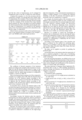
- Tables I, II and III show compositions by weight % and some properties, of the luminous glasses according to the examples 1 to 10 of the invention and a compared example.
- the properties given in Tables I , II and III are the melting temperature of the raw materials of the glasses, the emission color and the wavelength of main emission, when the excitation light is irradiated to the glasses, the coefficient a of thermal expansion, the Poisson's ratio, the Young's modulus, the flexural strength, and the thermal shock resistance ⁇ t, of the luminous glasses according to the examples 1 to 10 and the compared example.
- the glasses according to the examples 1 to 10 shown in Tables I, II and III are produced as follows.
- the raw materials which are such as oxides, carbonates, nitrates, or the like are mixed to have the compositions in Tables I, II and III respectively.
- the resulting mixture is charged in a general melting apparatus, such as a platinum crucible, melted at the temperature of about 1530-1570° C., for about 8 hours, and homogenized by agitating.
- the homogenized mixture is cast in an iron board, annealed and cooled to room temperature, thus formed luminous glasses are obtained.
- Each obtained glass has the transparency.
- Each glass emits light of the colors shown in Tables I, II and III when the glass is subjected to irradiation by the excitation light at wavelength of 365 nm. Accordingly, it is shown that these glasses according to the examples have optical activity.
- the colors of luminescence are differ according to the types of added oxides of rare earth elements. Therefore, it is exhibited that the colors of luminescence can be changed by changing the types or the like, of added rare earth elements.
- the examples 1 to 10 of the invention have lower coefficient of thermal expansion and larger flexural strength so that the examples of the invention have large thermal shock resistance ⁇ t. That is, the glass is not always satisfied the desired properties above-described, just having the similar range of compositions. It is required for the luminous glass to have the desired properties above-described in the specific range of composition.
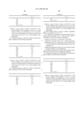
- Table IV shows measured results of the mechanical properties of the luminous glasses according to the examples 1 and 2 and OHARA-made optical glass products.
- the coefficient of thermal expansion of the luminous glasses according to the examples of the invention is exceedingly low and the flexural strength thereof is large, so that the thermal shock resistance ⁇ t thereof is exceedingly high, compared with the optical glass products as comparative examples, as shown in Table IV.
- the thermal shock resistance ⁇ t of the comparative examples are at highest about 100, while the thermal shock resistance ⁇ t of the luminous glasses according to the examples of the invention is not less than 150. Therefore, it is apparent that the luminous glasses according to the examples of the invention have superior thermal properties such as heat resistance and the like.
- the luminous glass of the invention has superior thermal shock resistance, it is hard to break even if the luminous glass is used under the environmental circumstances, temperature of which is largely or rapidly changed. As a result, it is possible to use the luminous glass of the invention under various conditions and circumstances.
- the luminous glass has superior homogeneity, low thermal expansivity, superior mechanical strength, and chemical durability and it is possible to drastically improve the melting property of the raw materials of the glass with having the good valance of these superior properties of the luminous glass, the luminous glass has superior formability and easiness of production.
- the luminous glass of the invention is preferable luminous materials to be applied to such a case that it is required to subjected to irradiation by the high-energy light, the temperature of the environmental circumstances is largely or rapidly changed, or it is required the chemical durability, or the like.
- the luminous glass is preferable when the transparency is required.
- the luminous glass of the invention can be applied to the oscillation medium for laser oscillation, the wavelength conversion filter for excitation light, the scintillator for radiation, standard sample for fluorescent substance, the fluorescent displaying board, decorative lighting, the cover glass for the solar battery, adjusting of optical axis for an extra-high pressure mercury lamp, excimer laser or the like, the fluorescent optical fiber, the ultraviolet ray-to-visible ray conversion image sensor.
- the wavelength of emission that is, luminescent color by selecting the types, amount and combination of types, of the rare earth elements, it is possible to apply the luminous glass to the fluorescent substance for illuminating or displaying and the electro luminescent materials.
- the glass is produced by the method for producing glass. Therefore, it is possible to form the glass in various forms such as plate shape, thin plate shape, fiber shape, thin layer tube shape, or the like.
- the glass can be applied as powder by grinding the produced glass.
- the luminous glass has superiority of such as physical properties to heat, ease of producing, transparentity, and the like compared with luminous glass in earlier technology.
Landscapes
- Chemical & Material Sciences (AREA)
- Life Sciences & Earth Sciences (AREA)
- Engineering & Computer Science (AREA)
- Chemical Kinetics & Catalysis (AREA)
- General Chemical & Material Sciences (AREA)
- Geochemistry & Mineralogy (AREA)
- Materials Engineering (AREA)
- Organic Chemistry (AREA)
- Glass Compositions (AREA)
Abstract
A luminous glass comprising, in percent by weight, the following components:
wherein a ratio of Al2O3 to SiO2 is 0.32-0.56, a total amount of MgO, CaO, and ZnO is 2-34 wt. %, a total amount of P2O5, Li2O, and BaO is 0-21 wt. %, and one or more rare earth elements are added to the glass on an oxide basis of 0.1-30 wt. % to an total amount of the components, PbO, B2O3, BeO, Na2O, and K2O are not essentially contained, and the glass has a thermal shock resistance |Δt|° C. of not less than 150, which is obtained by following equation, |Δt|=[flexural strength]×(1−[Poisson's ratio])/([coefficient of thermal expansion]×[Young's modulus]).
Description
1. Field of the Invention
The present invention relates to luminous glass containing rare earth ions, wherein the characters of thermal expansion and mechanical strength, of the luminous glass are improved. In particular, the invention relates to the luminous glass which can be suitably applied to an oscillation medium for laser oscillation, an excitation light filter or the like.
2. Description of Related Art
For materials which are applied as the luminous materials in earlier technology, a glass material, a single crystal material, and a ceramic material have been known.
For the glass material, for example, various laser glasses such as quartz laser glass, phosphate system laser glass or the like, which contain rare earth ions and are applied to oscillation medium for laser oscillation have been known.
The luminous glass material is not only applied to the laser glass. For example, Japanese Patent Application No. 9-188543 laid open discloses blue emission glass which can be applied to; optical detector which applied to confirmation of radiation beam position such as ultraviolet beam, X-ray or the like, mode pattern recognition, spatial distribution state; an element for optical power meter; an image displaying sensor; and the like.
However, there are problems of the thermal resistance in the glass material in earlier technology. That is, because the glass material has a high coefficient of thermal expansion, when the glass material is subjected to irradiation by an excitation light with high intensity, the glass material breaks under thermal expansion thereof. When the glass material is used under such environmental circumstances, temperature of which is largely or rapidly changed, the glass material breaks under thermal fatigue thereof. Accordingly, there is a problem that the condition and circumstances, for using the glass material are limited.
Therefore, for example, it is required for the luminous glass material which is applied to the oscillation medium for laser oscillation or the wavelength conversion filter for excitation light of laser to prevent occurring large or rapid change of temperature, or to change the glass material to another one before the glass material thermally fatigues.
On the other hand, there are problems for the luminous single crystal material that it is difficult to uniformly dope the optically active elements to the single crystal material and to produce a product of the single crystal material having practically large size. It is suitable for the glass material to produce a product having large size compared with the single crystal material.
There is a problem that the ceramic material is liable to occur a light scattering caused by grain boundaries and pores, of the ceramic material, which is character there of. Therefore, it is difficult to apply the ceramic material to such an application requiring transparent luminous material.
The present invention has been developed in view of the problems.
An object of the present invention is to provide a luminous glass which can solve the problems of luminous materials in earlier technology, that is, the problems of thermal properties, for example, the break under the locally thermal expansion thereof or a heat shock, or the like, caused by the high coefficient of thermal expansion.
Another object of the invention is to provide a luminous glass which can solve the problems in the non-uniform distribution of the optically active element in the single crystal material in earlier technology and in the occurrence of the light scattering caused by the grain boundaries and the pores, of the ceramic material in the earlier technology.
Further object of the invention is to provide a luminous glass which can be easily produced.
Still further object of the invention is to provide a method for producing luminous glass having the superior thermal properties above-described.
The inventors have made various efforts to solve the problems above-described. As a result, it is developed that the glass having a rare earth element has superior thermal character and optical homogeneity and can be easily produced. Then, the inventors have achieved the invention.
In order to accomplish the above objects, in accordance with one aspect of the invention, a luminous glass having a thermal shock resistance Δt° C. of not less than 150° C., wherein the thermal shock resistance Δt is obtained by following equation, Δt=[flexural strength]×(1−[Poisson's ratio])/([coefficient of thermal expansion]×[Young's modulus]). In the luminous glass, PbO, B2O3, BeO, Na2O, and K2O can not be essentially contained.
According to the luminous glass of the invention, because the thermal shock resistance Δt° C. thereof is not less than 150° C., even though the glass is subjected to the irradiation by the high intense excitation light, it is possible to resist the locally thermal expansion thereof caused by heat generation, the heat shock, the thermal fatigue with the passage of time under the intermittent irradiation by excitation light, or the like. Therefore, it is possible to apply the luminous glass of the invention to various optical products without limitation of the condition and circumstances, for using the luminous glass, for example, the luminous glass can be suitably applied to oscillation medium for laser oscillation and the wavelength conversion filter for excitation light.
The luminous glass can comprise the following components:
| Wt. % | ||
| SiO2 | 46-66 | ||
| Al2O3 | 18-30 | ||
| MgO | 0-12 | ||
| CaO | 0-16 | ||
| ZnO | 0-21 | ||
| P2O5 | 0-10 | ||
| Li2O | 0-8 | ||
| BaO | 0-9 | ||
| As2O3 + Sb2O3 | 0-2 | ||
wherein a ratio of Al2O3 to SiO2 can be 0.32-0.56, a total amount of MgO, CaO, and ZnO can be 2-34 wt. %, a total amount of P2O5, Li2O, and BaO can be 0-21 wt. %, and one or more rare earth elements can be added to the glass on an oxide basis of 0.1-30 wt. % to an total amount of the components.
The luminous glass can comprise the following components:
| Wt. % | ||
| SiO2 | 46-66 | ||
| Al2O3 | 18-30 | ||
| MgO | 1-12 | ||
| CaO | 0-12 | ||
| ZnO | 0-18 | ||
| P2O5 | 0-10 | ||
| Li2O | 0-7 | ||
| BaO | 1-9 | ||
| As2O3 + Sb2O3 | 0-2 | ||
wherein a ratio of Al2O3 to SiO2 can be 0.32-0.56, a total amount of MgO, CaO, and ZnO can be 2-28 wt. %, a total amount of P2O5, Li2O, and BaO can be 1-20 wt. %, and one or more rare earth elements can be added to the glass on an oxide basis of 0.1-30 wt. % to an total amount of the components.
The luminous glass can comprise the following components:
| Wt. % | ||
| SiO2 | 46-66 | ||
| Al2O3 | 18-30 | ||
| MgO | 1-10 | ||
| CaO | 0-8 | ||
| ZnO | 0-16 | ||
| P2O5 | 0-10 | ||
| Li2O | 2-6 | ||
| BaO | 1-6 | ||
| As2O3 + Sb2O3 | 0-2 | ||
wherein a ratio of Al2O3 to SiO2 can be 0.32-0.56, a total amount of MgO, CaO, and ZnO is 2-23 wt. %, a total amount of P2O5, Li2O, and BaO can be 3-19 wt. %, and one or more rare earth elements can be added to the glass on an oxide basis of 0.1-30 wt. % to an total amount of the components.
According to the luminous glass of the invention, the luminous glass is close and have superior homogeneity, high mechanical strength, and chemical durability. Further, the luminous glass of the invention has lower coefficient of thermal expansion and larger flexural strength in comparison to the luminous glass in earlier technology. As a result, the luminous glass has high thermal shock resistance. In addition, because it is glass, the luminous glass of the invention has superior formability.
Therefore, it is possible to apply the luminous glass of the invention to extremely various application as luminous material substituted for the glass material, the single crystal material, and the ceramics material.
In accordance with another aspect of the invention, a method for producing a luminous glass having a thermal shock resistance Δt° C. of not less than 150° C. the method comprises the steps of: mixing raw materials of components of the glass; charging the resulting mixture into a melting apparatus; melting the mixture at temperature of about 1530-1570° C. for about 8 hours and homogenizing by agitating; and casting the homogenized mixture in an iron board, annealing and cooling to room temperature. In the method, PbO, B2O3, BeO, Na2O, and K2O can not be essentially contained in the luminous glass.
In the method, the luminous glass can comprise the following components:
| Wt. % | ||
| SiO2 | 46-66 | ||
| Al2O3 | 18-30 | ||
| MgO | 0-12 | ||
| CaO | 0-16 | ||
| ZnO | 0-21 | ||
| P2O5 | 0-10 | ||
| Li2O | 0-8 | ||
| BaO | 0-9 | ||
| As2O3 + Sb2O3 | 0-2 | ||
wherein a ratio of Al2O3 to SiO2 is 0.32-0.56, a total amount of MgO, CaO, and ZnO is 2-34 wt. %, a total amount of P2O5, Li2O, and BaO is 0-21 wt. %, and one or more rare earth elements are added to the glass on an oxide basis of 0.1-30 wt. % to an total amount of the components.
According to the method of the invention, because the luminous glass can be produced by the method for producing glass, the luminous glass has superior formability and easiness of production.
The luminous glass according to the embodiment of the present invention will be explained as follows.
At first, the reasons for limiting the range of the thermal shock resistance Δt° C. and the composition, of the luminous glass to that above-described will be explained as follows.
The thermal shock resistance Δt is an index to a heat-resistance impact, which is represented by the following equation, Δt=[flexural strength]×(1−[Poisson's ratio])/([coefficient of thermal expansion]×[Young's modulus]) and which is stated in “New Glass Handbook” edited by editorial committee of New Glass Handbook, published by Maruzen, pages 405-406. It is judged that the larger the thermal shock resistance becomes, the larger the resistance to the difference in temperature, of the glass becomes.
Applicant carried out various tests and found that it is required for the glass that the value of Δt thereof is not less than 150 to be applied to the oscillation medium for laser oscillation or the wavelength conversion filter for excitation light, which is subjected to irradiation by the high intense excitation light. Preferably, it is required the value of Δt is not less than 200.
The thermal shock resistance of almost luminous glasses in earlier technology are not more than 100, and the largest value thereof are not more than 130.
On the contrary, the luminous glass of the invention has the thermal shock resistance of not less than 150 which is remarkably larger than the glass in earlier technology. Further, it is easy to obtain the glass having such high thermal shock resistance because the glass possesses ranges of compositions described as follows.
According to the luminous glass of the invention, because the luminous glass has extremely high thermal shock resistance Δt, even though the luminous glass is subjected to irradiation by the high intense excitation light, the luminous glass can resist the locally thermal expansion thereof caused by the heat generation, the heat shock, or the thermal fatigue with the passage of time by the excitation light irradiated intermittently.
As described above, according to the luminous glass of the invention, because the luminous glass has the thermal shock resistance Δt of not less than 150, it is possible to suitably apply the luminous glass to optical glass for oscillation medium for laser oscillation, the wavelength conversion filter for excitation light or the like.
The compositions of the luminous glass according to the embodiment of the invention will be explained as follows.
The luminous glass does not have to contain PbO, B2O3, BeO, Na2O, and K2O practically, because PbO has unfavorable effects on humans and the environment, B2O3 makes chemical durability and emission intensity, of the glass low, BeO has unfavorable effects on the environment, and because Na2O and K2O make chemical durability of the glass low.
Regarding the SiO2 component, when the SiO2 content is less than 46 wt. %, the thermal shock resistance Δt of obtained glass is deteriorated. On the other hand, when the SiO2 content is more than 66 wt. %, the raw materials of the glass are difficult to melt and the glass melt is difficult to refine so that the chemical homogeneously of the product is deteriorated.
When the Al2O3 content is less than 18 wt. %, it is difficult to melt the raw materials of the glass and the resistance to devitrification thereof is deteriorated. On the other hand, when the Al2O3 content is more than 30 wt. %, it is also difficult to melt the raw materials of the glass and the resistance to devitrification thereof is deteriorated.
The weight ratio of the Al2O3 component to the SiO2 component should be 0.32-0.56. Because when the ratio is less than 0.32, it is difficult to melt the raw materials of the glass and the resistance to devitrification thereof is deteriorated. Further, a coefficient of thermal expansion of the glass becomes large, so that the glass having desired thermal shock resistance can not be obtained.
Three components of MgO, ZnO, and CaO have effects of improving the melting of raw materials of the glass and the refining of the glass melt. Further, when the weight ratio of the Al2O3 component to the SiO2 component is within in the range of 0.32-0.56, these components have effect of reducing the coefficient of thermal expansion and improving the thermal shock resistance.
However, when the MgO content is more than 12 wt. %, the CaO content is more than 16 wt. %, the ZnO content is more than 21 wt. %, respectively, the effects described above can not be obtained, the resistance to devitrification of the glass is deteriorated. Preferable range of the MgO content is 1-12wt. %, the CaO content is 0-12 wt. %, and the ZnO content is 0-18 wt. %. More preferable range of the MgO content is 1-10 wt. %, the CaO content is 1-8 wt. %, and the ZnO content is 0-16 wt. %.
Further, when the total amount of three components is less than 2 wt. %, the effects described above can not be obtained. On the contrary, when the total amount of three components is more than 34 wt. %, the effects described above can not be obtained, like the case of each component, and the resistance to devitrification of the glass is deteriorated. Preferable range of the total amount of the three components is 2-28 wt. %, more preferably, 2-23 wt. %.
Each component of P2O5, Li2O, and BaO has effects of improving melting of the raw materials of the glass, refining of the glass melt, and emission intensity of the glass.
However, when the P2O5 content is more than 10 wt. %, the Li2O content is more than 8 wt. %, the BaO content is more than 9 wt. %, respectively, the effects described above can not be obtained, and the resistance to devitrification of the glass is deteriorated. Further, the coefficient of thermal expansion of the glass becomes large, so that the glass having desired thermal shock resistance can not be obtained. Preferable range of the Li2O content is 0-7 wt. % and the BaO content is 1-9 wt. %. More preferable range of the Li2O content is 2-6 wt. % and the BaO content is 1-6 wt. %. When the total amount of three components is more than 21 wt. %, the effects described above can not be obtained, like the case of each component, and the resistance to devitrification of the glass is deteriorated. Further, the coefficient of thermal expansion of the glass becomes large, so that the glass having desired thermal shock resistance can not be obtained. Preferable range of the total amount of the three components is 1-20 wt. %, more preferably, 3-19 wt. %.
As2O3 and Sb2O3 can be added as refining agents in the melting process of the raw materials of the glass to obtain the chemically homogenous products, however, the total amount of them are sufficient up to 2 wt. %.
Oxide components of rare earth elements are important as optically active components. Added amount of one or more rare earth components on an oxide basis must be 0.1-30 wt. % in the ratio by weight to the total amount of other glass components described above.
The preferable components which have particularly emission property are Dy2O3, Nd2O3, Eu2O3, Er2O3, Sm3O3, Tb2O3, Ce2O3, and Yb2O3. It is preferable for the glass to have the total amount of one or more these components on an oxide basis of 0.1-30 wt. % in the ratio by weight to the total amount of other glass components described above.
The oxide components of rare earth elements which are added to the glass should be carefully selected the types and amount, thereof, which are not limited, when the glasses are for applying to the ultraviolet sensor, the laser medium, the scintillator for radiation, the cover glass for the solar battery, the fluorescent substance for illuminating or displaying, the electro luminescent materials, decorating glass or the like to prevent the quenching, that is, the decrease of emission efficiency when the optically active components are high concentration or by the interactions of the optically active components with each other.
It is possible to control the emission colors by selecting the types, combination of types, and amount of added oxide components of rare earth elements.
It is also possible to add other ingredients in the range of maintaining the desired property of the glass of the invention. For example, the ingredients which are ZrO2, SrO, CoO, NiO, MnO2, and Cr2O3 can be added in total amount of. one or more types thereof up to 15 wt. %, and the components for improving resistance to ultraviolet and radiation, which are F2, La2O3, Nb2O5, TiO2, MoO3, Ta2O5, Bi2O3, WO3, Fe2O3, SnO2, CuO, or the like can be added in total amount of one or more than two types thereof up to 8 wt. %, respectively.
The luminous glass according to the embodiment of the invention is produced by mixing the raw materials of the glass to have the composition above-described, melting the raw materials at predefined temperature for predefined times, thereafter, forming the melted mixture, and annealing the formed mixture. As a result, the luminous glass is obtained.
The invention is further explained below with reference to examples. However, the invention is, of course, not limited to the examples.
Tables I, II and III show compositions by weight % and some properties, of the luminous glasses according to the examples 1 to 10 of the invention and a compared example. The properties given in Tables I , II and III are the melting temperature of the raw materials of the glasses, the emission color and the wavelength of main emission, when the excitation light is irradiated to the glasses, the coefficient a of thermal expansion, the Poisson's ratio, the Young's modulus, the flexural strength, and the thermal shock resistance Δt, of the luminous glasses according to the examples 1 to 10 and the compared example.
| TABLE I | |||
| EXAMPLES | |||
| 1 | 2 | 3 | 4 | ||
| SiO2 | 56.7 | 53.5 | 56.5 | 57.7 |
| P2O5 | — | — | 8.2 | 8.4 |
| Al2O3 | 24.1 | 22.7 | 24.6 | 25.2 |
| Li2O | — | — | 4.1 | 4.2 |
| MgO | — | 5.7 | 1.0 | 1.0 |
| CaO | — | — | 1.0 | 1.0 |
| BaO | — | — | 1.0 | 1.0 |
| ZnO | 19.2 | 18.1 | 0.5 | 0.5 |
| La2O3 | — | — | 2.1 | — |
| As2O3 | — | — | 1.0 | 0.5 |
| Sb2O3 | — | — | — | 0.5 |
| Subtotal (wt. %) | 100.0 | 100.0 | 100.0 | 100.0 |
| Ratio of added amount of | Tb2O3 | Tb2O3 | Ce2O3 | Ce2O3 |
| the rare earth oxide to | 1.0 | 1.0 | 4.1 | 4.2 |
| total amount of the others | ||||
| Total (wt. %) | 101.0 | 101.0 | 104.1 | 104.2 |
| Melting temperature (° C.) | 1570 | 1570 | 1530 | 1530 |
| Emission color | Green | Green | Blue | Blue |
| Wavelength of main | 485, | 485, | 420 | 420 |
| emission (nm) | 550 | 550 |
| Coefficient of thermal | 31 | 36 | 48 | 47 |
| expansion α × 10−7/° C. | ||||
| (100° C. to 300° C.) | ||||
| Poisson's ratio | 0.207 | 0.214 | 0.227 | 0.226 |
| Young's modulus | 914 | 901 | 861 | 858 |
| (×106 N/m2) | ||||
| Flexural strength | 121 | 118 | 107 | 106 |
| (×106 N/m2) | ||||
| Thermal shock resistance | 339 | 286 | 200 | 203 |
| Δt (° C.) | ||||
| TABLE II | |||
| EXAMPLES | |||
| 5 | 6 | 7 | 8 | ||
| SiO2 | 57.7 | 56.5 | 61.9 | 61.6 |
| P2O5 | 8.4 | 8.2 | — | — |
| Al2O3 | 25.2 | 24.6 | 25.8 | 25.6 |
| Li2O | 4.2 | 4.1 | 4.6 | 4.6 |
| MgO | 1.0 | 1.0 | 2.1 | 2.1 |
| CaO | 1.0 | 1.0 | — | 1.0 |
| BaO | 1.0 | 3.1 | 4.1 | 4.1 |
| ZnO | 0.5 | 0.5 | 0.5 | — |
| La2O3 | — | — | — | — |
| As2O3 | — | — | 1.0 | 2.0 |
| Sb2O3 | 2.0 | — | — | — |
| Subtotal (wt. %) | 100.0 | 100.0 | 100.0 | 100.0 |
| Ratio of added amount of | Tb2O3 | Tb2O3 | Ce2O3 | Sm2O3 |
| the rare earth oxide to | 4.2 | 4.1 | 4.1 | 4.1 |
| total amount of the others | ||||
| Total (wt. %) | 104.2 | 104.1 | 104.1 | 104.1 |
| Melting temperature (° C.) | 1530 | 1530 | 1550 | 1550 |
| Emission color | Green | Green | Blue | Orange |
| Wavelength of main | 485, | 485, | 420 | 560, |
| emission (nm) | 550 | 550 | 605, | |
| 650 |
| Coefficient of thermal | 47 | 49 | 49 | 48 |
| expansion α × 10−7/° C. | ||||
| (100° C. to 300° C.) | ||||
| Poisson's ratio | 0.225 | 0.219 | 0.228 | 0.230 |
| Young's modulus | 848 | 831 | 837 | 838 |
| (×108 N/m2) | ||||
| Flexural strength | 107 | 105 | 106 | 105 |
| (×106 N/m2) | ||||
| Thermal shock resistance | 208 | 201 | 200 | 201 |
| Δt (° C.) | ||||
| TABLE III | |||
| EXAMPLES | Compared | ||
| 9 | 10 | example | ||
| SiO2 | 60.9 | 60.4 | 46.0 |
| P2O5 | — | — | 7.0 |
| Al2O3 | 26.4 | 26.1 | 18.0 | |
| Li2O | 4.6 | 4.5 | 6.0 | |
| MgO | 2.0 | 2.0 | 6.0 | |
| CaO | 1.0 | 2.0 | 8.0 | |
| BaO | 4.1 | 4.0 | 6.0 |
| ZnO | — | — | 2.0 |
| La2O3 | — | — | — |
| As2O3 | 1.0 | 1.0 | 1.0 |
| Sb2O3 | — | — | — |
| Subtotal (wt. %) | 100.0 | 100.0 | 100.0 |
| Ratio of added amount of | Eu2O3 | Dy2O3 | Tb2O3 |
| the rare earth oxide to | 4.1 | 4.0 | 4.0 |
| total amount of the others | |||
| Total (wt. %) | 104.1 | 104.0 | 104.0 |
| Melting temperature (° C.) | 1550 | 1550 | — |
| Emission color | Pink | Yellow | — |
| Wavelength of main | 580, | 485, | — |
| emission (nm) | 615 | 575 |
| Coefficient of thermal | 48 | 49 | 66 |
| expansion α × 10−7/° C. | |||
| (100° C. to 300° C.) | |||
| Poisson's ratio | 0.229 | 0.231 | 0.233 |
| Young's modulus | 839 | 824 | 814 |
| (×108 N/m2) | |||
| Flexural strength | 105 | 106 | 94 |
| (×106 N/m2) | |||
| Thermal shock resistance | 201 | 202 | 134 |
| Δt (° C.) | |||
The glasses according to the examples 1 to 10 shown in Tables I, II and III are produced as follows.
The raw materials which are such as oxides, carbonates, nitrates, or the like are mixed to have the compositions in Tables I, II and III respectively. The resulting mixture is charged in a general melting apparatus, such as a platinum crucible, melted at the temperature of about 1530-1570° C., for about 8 hours, and homogenized by agitating. The homogenized mixture is cast in an iron board, annealed and cooled to room temperature, thus formed luminous glasses are obtained.
Each obtained glass has the transparency. Each glass emits light of the colors shown in Tables I, II and III when the glass is subjected to irradiation by the excitation light at wavelength of 365 nm. Accordingly, it is shown that these glasses according to the examples have optical activity. In the luminous glasses according to the examples 1 to 10, the colors of luminescence are differ according to the types of added oxides of rare earth elements. Therefore, it is exhibited that the colors of luminescence can be changed by changing the types or the like, of added rare earth elements.
Compared the examples 1 to 10 of the invention with the comparative example, even though these have similar range of compositions, the examples of the invention have lower coefficient of thermal expansion and larger flexural strength so that the examples of the invention have large thermal shock resistance Δt. That is, the glass is not always satisfied the desired properties above-described, just having the similar range of compositions. It is required for the luminous glass to have the desired properties above-described in the specific range of composition.
Table IV shows measured results of the mechanical properties of the luminous glasses according to the examples 1 and 2 and OHARA-made optical glass products.
| TABLE IV | ||||||
| OHARA- | OHARA- | OHARA- | ||||
| made | made | made | ||||
| Example | Example | glass | glass | glass | ||
| 1 | 2 | FPL53 | BSL-7 | TIH-53 | ||
| Coefficient | 31 | 36 | 163 | 86 | 102 |
| of thermal | |||||
| expansion | |||||
| α × 10−7/ | |||||
| ° C. | |||||
| (100° C. to | |||||
| 300° C.) | |||||
| Young's | 914 | 901 | 694 | 802 | 970 |
| modulus | |||||
| (×108 N/m2) | |||||
| Poisson's | 0.207 | 0.214 | 0.302 | 0.207 | 0.262 |
| ratio | |||||
| Flexural | 121 | 118 | 49 | 94 | 76 |
| strength | |||||
| (×106 N/m2) | |||||
| Δt (° C.) | 339 | 286 | 30 | 108 | 57 |
The coefficient of thermal expansion of the luminous glasses according to the examples of the invention is exceedingly low and the flexural strength thereof is large, so that the thermal shock resistance Δt thereof is exceedingly high, compared with the optical glass products as comparative examples, as shown in Table IV.
That is, the thermal shock resistance Δt of the comparative examples are at highest about 100, while the thermal shock resistance Δt of the luminous glasses according to the examples of the invention is not less than 150. Therefore, it is apparent that the luminous glasses according to the examples of the invention have superior thermal properties such as heat resistance and the like.
As described above, because the luminous glass of the invention has superior thermal shock resistance, it is hard to break even if the luminous glass is used under the environmental circumstances, temperature of which is largely or rapidly changed. As a result, it is possible to use the luminous glass of the invention under various conditions and circumstances.
Accordingly, because the luminous glass has superior homogeneity, low thermal expansivity, superior mechanical strength, and chemical durability and it is possible to drastically improve the melting property of the raw materials of the glass with having the good valance of these superior properties of the luminous glass, the luminous glass has superior formability and easiness of production.
Therefore, the luminous glass of the invention is preferable luminous materials to be applied to such a case that it is required to subjected to irradiation by the high-energy light, the temperature of the environmental circumstances is largely or rapidly changed, or it is required the chemical durability, or the like. In particular, the luminous glass is preferable when the transparency is required.
For example, the luminous glass of the invention can be applied to the oscillation medium for laser oscillation, the wavelength conversion filter for excitation light, the scintillator for radiation, standard sample for fluorescent substance, the fluorescent displaying board, decorative lighting, the cover glass for the solar battery, adjusting of optical axis for an extra-high pressure mercury lamp, excimer laser or the like, the fluorescent optical fiber, the ultraviolet ray-to-visible ray conversion image sensor.
Because it is possible to control the wavelength of emission, that is, luminescent color by selecting the types, amount and combination of types, of the rare earth elements, it is possible to apply the luminous glass to the fluorescent substance for illuminating or displaying and the electro luminescent materials.
According to the luminous glass of the invention, the glass is produced by the method for producing glass. Therefore, it is possible to form the glass in various forms such as plate shape, thin plate shape, fiber shape, thin layer tube shape, or the like.
The glass can be applied as powder by grinding the produced glass.
As described above, the luminous glass has superiority of such as physical properties to heat, ease of producing, transparentity, and the like compared with luminous glass in earlier technology.
From the foregoing description, one skilled in the art can easily ascertain the essential characteristics of this invention, and without departing from the spirit and scope thereof, can make various changes and modifications of the invention to adapt it to various usage and conditions.
The entire disclosure of Japanese Patent Application No. 10-254182 filed on Sep. 8, 1998 including specification, claims, drawings and summary are incorporated herein by reference in its entirety.
Claims (9)
1. A luminous glass comprising:
SiO2 in an amount of 53-62 weight percent calculated on an oxide basis;
a weight percent ratio of Al2O3 to SiO2 is from 0.32 to 0.56;
BaO in an amount of 1-9 weight percent, calculated on an oxide basis; and
wherein the luminous glass has a thermal shock resistance Δt° C. of not less than 150° C., wherein the thermal shock resistance Δt is obtained by the following equation, Δt=(flexural strength)×((1-Poisson's ratio))/((coefficient of thermal expansion)×(Young's modulus)).
2. A luminous glass as claimed in claim 1, wherein PbO, B2O3, BeO, Na2O, and K2O are not essentially contained.
3. A luminous glass as claimed in claim 2, wherein the glass comprises the following components:
wherein a ratio of Al2O3 to SiO2 is 0.32-0.56, a total amount of MgO, CaO and ZnO is 2-34 wt. %, a total amount of P2O5, Li2O, and BaO is 1-21 wt. %, and one or more rare earth elements are added to the glass on an oxide basis of 0.1-30 wt. % to a total amount of the components.
4. A luminous glass as claimed in claim 2, wherein the glass comprises the following components:
wherein a ratio of Al2O3 to SiO2 is 0.32-0.56, a total amount of MgO, CaO, and ZnO is 2-28 wt. %, and one or more rare earth elements are added to the glass on an oxide basis of 0.1-30 wt. % to a total amount of the components.
5. A luminous glass as claimed in claim 2, wherein the glass comprises the following components:
wherein a ratio of Al2O3 to SiO2 is 0.32-0.56, a total amount of MgO, CaO, and ZnO is 2-28 wt. %, and one or more rare earth elements are added to the glass on an oxide basis of 0.1-30 wt. % to a total amount of the components.
6. The luminous glass of claim 1, further comprising: MgO in an amount of 1-12 wt. %.
7. A method for producing a luminous glass having a thermal shock resistance Δt° C. of not less than 150° C. according to claim 1, the method comprising:
mixing raw materials of components of the glass;
charging the resulting mixture into a melting apparatus;
melting the mixture at a temperature of about 1530-1570° C. for about 8 hours and homogenizing the mixture by agitating; and
casting the homogenized mixture in an iron board, annealing and cooling to room temperature.
8. A method as claimed in claim 7, wherein PbO, B2O3, BeO, Na2O, and K2O are not essentially contained.
9. A method as claimed in claim 8, wherein the luminous glass comprises the following components:
wherein a ratio of Al2O3 to SiO2 is 0.32-0.56, a total amount of MgO, CaO and ZnO is 2-34 wt. %, a total amount of P2O5, Li2O and BaO is 1-21 wt. %, and one or more rare earth elements are added to the glass on an oxide basis of 0.1-30 wt. % to a total amount of the components.
Applications Claiming Priority (2)
| Application Number | Priority Date | Filing Date | Title |
|---|---|---|---|
| JP10-254182 | 1998-09-08 | ||
| JP10254182A JP2000086283A (en) | 1998-09-08 | 1998-09-08 | Luminescent glass |
Publications (1)
| Publication Number | Publication Date |
|---|---|
| US6300264B1 true US6300264B1 (en) | 2001-10-09 |
Family
ID=17261380
Family Applications (1)
| Application Number | Title | Priority Date | Filing Date |
|---|---|---|---|
| US09/245,709 Expired - Fee Related US6300264B1 (en) | 1998-09-08 | 1999-02-08 | Luminous glass |
Country Status (4)
| Country | Link |
|---|---|
| US (1) | US6300264B1 (en) |
| EP (1) | EP0985644B1 (en) |
| JP (1) | JP2000086283A (en) |
| DE (1) | DE69926452T2 (en) |
Cited By (21)
| Publication number | Priority date | Publication date | Assignee | Title |
|---|---|---|---|---|
| US20050014626A1 (en) * | 2003-07-16 | 2005-01-20 | Thorsten Doehring | Large transmissive optical component |
| US20050181926A1 (en) * | 2004-02-16 | 2005-08-18 | Joerg Fechner | Crystallization-stable alumino-silicate glass, its manufacture and its uses |
| US20050212435A1 (en) * | 2005-06-24 | 2005-09-29 | Osram Sylvania Inc. | Doped Dysprosia Discharge Vessel |
| US20050213197A1 (en) * | 2004-02-18 | 2005-09-29 | Nippon Sheet Glass Company, Limited | Glass composition that emits fluorescence in infrared wavelength region and method of amplifying signal light using the same |
| US20090010126A1 (en) * | 2006-01-27 | 2009-01-08 | Matsushita Electric Industrial Co., Ltd. | Optical disk apparatus, control method of optical disk apparatus, and integrated circuit |
| US20090286440A1 (en) * | 2004-12-16 | 2009-11-19 | Emmanuel Lecomte | Glass Yarns For Reinforcing Organic and/or Inorganic Materials |
| US20100160140A1 (en) * | 2008-12-24 | 2010-06-24 | Ocv Intellectual Capital, Llc. | Composition for high performance glass fibers and fibers formed therewith |
| US20100160139A1 (en) * | 2008-12-22 | 2010-06-24 | Mcginnis Peter Bernard | Composition for high performance glass fibers and fibers formed therewith |
| CN1693252B (en) * | 2004-05-07 | 2010-10-27 | 肖特股份有限公司 | Lithium aluminosilicate flat float glass with high thermal stability |
| CN101930088A (en) * | 2010-08-04 | 2010-12-29 | 中国建筑材料科学研究总院 | A surface vitrified beryllium metal plane mirror and a special glass |
| US20110003678A1 (en) * | 2005-11-04 | 2011-01-06 | Hofmann Douglas A | Composition For High Performance Glass High Performance Glass Fibers And Articles Therefrom |
| US20110053756A1 (en) * | 2009-08-27 | 2011-03-03 | Erhard Dick | Highly thermally stressable glass for light bulbs and its use |
| US20120091394A1 (en) * | 2009-06-25 | 2012-04-19 | Mingjie Zhou | Blue light emitting glass and preparation method thereof |
| US8341978B2 (en) | 2005-11-04 | 2013-01-01 | Ocv Intellectual Capital, Llc | Method of manufacturing high performance glass fibers in a refractory lined melter and fiber formed thereby |
| US20130122284A1 (en) * | 2011-11-16 | 2013-05-16 | Timothy Michael Gross | Ion exchangeable glass with high crack initiation threshold |
| US8586491B2 (en) | 2005-11-04 | 2013-11-19 | Ocv Intellectual Capital, Llc | Composition for high performance glass, high performance glass fibers and articles therefrom |
| US9187361B2 (en) | 2005-11-04 | 2015-11-17 | Ocv Intellectual Capital, Llc | Method of manufacturing S-glass fibers in a direct melt operation and products formed there from |
| US9206068B2 (en) | 2005-11-04 | 2015-12-08 | Ocv Intellectual Capital, Llc | Method of manufacturing S-glass fibers in a direct melt operation and products formed therefrom |
| RU2643840C1 (en) * | 2017-01-10 | 2018-02-06 | Юлия Алексеевна Щепочкина | Enamel |
| US11136258B2 (en) | 2017-10-31 | 2021-10-05 | Corning Incorporated | Peraluminous lithium aluminosilicates with high liquidus viscosity |
| US11292741B2 (en) | 2018-12-12 | 2022-04-05 | Corning Incorporated | Ion-exchangeable lithium-containing aluminosilicate glasses |
Families Citing this family (16)
| Publication number | Priority date | Publication date | Assignee | Title |
|---|---|---|---|---|
| JP2001278636A (en) * | 2000-03-29 | 2001-10-10 | Koa Glass Kk | Ultraviolet fluorescent glass, ultraviolet fluorescent glass product, and method of manufacturing ultraviolet fluorescent glass |
| JP2002293571A (en) * | 2001-03-30 | 2002-10-09 | Nippon Electric Glass Co Ltd | Glass for illumination |
| WO2004058656A1 (en) * | 2002-12-25 | 2004-07-15 | Nippon Sheet Glass Company, Limited | Glass composition fluorescent in infrared wavelength region |
| KR101048099B1 (en) | 2004-12-31 | 2011-07-11 | 주식회사 케이씨씨 | Glass long fiber composition having high strength and high modulus and composite prepared using the same |
| JP4592457B2 (en) * | 2005-03-17 | 2010-12-01 | シャープ株式会社 | Red phosphor and light emitting device using the same |
| JP2007308562A (en) * | 2006-05-17 | 2007-11-29 | Okamoto Glass Co Ltd | Luminescent glass, illuminating device using this, and display device |
| RU2325349C1 (en) * | 2006-11-30 | 2008-05-27 | Юлия Алексеевна Щепочкина | Luminescent glass |
| CN108046589A (en) * | 2014-10-08 | 2018-05-18 | 康宁股份有限公司 | Glass and glass ceramics comprising metal oxide concentration gradient |
| WO2018125625A1 (en) * | 2016-12-29 | 2018-07-05 | Corning Incorporated | Solarization resistant rare earth doped glasses |
| CN108395097B (en) * | 2018-04-03 | 2020-10-30 | 齐鲁工业大学 | Rare earth doped luminescent glass and preparation method thereof |
| CN108558204B (en) * | 2018-06-07 | 2021-04-09 | 齐鲁工业大学 | Spectrum-adjustable Eu and Dy-doped luminescent glass and preparation method thereof |
| CN108793733A (en) * | 2018-06-20 | 2018-11-13 | 昆明理工大学 | A kind of high-melting-point LED fluorescent glass and discharge plasma sintering preparation method |
| EP3696150A1 (en) * | 2019-02-14 | 2020-08-19 | Ivoclar Vivadent AG | Fluorescent glass ceramics and glasses containing europium |
| CN112479587B (en) * | 2020-12-08 | 2023-02-28 | 河南旭阳光电科技有限公司 | Alkali-aluminosilicate glass composition, strengthened glass, preparation method and application |
| EP4438571B1 (en) * | 2022-05-23 | 2026-03-11 | Nitto Boseki Co., Ltd. | Glass fiber composition, glass fibers, woven glass fiber fabric, and glass-fiber-reinforced resin composition |
| JP7626968B1 (en) * | 2023-07-28 | 2025-02-05 | 日東紡績株式会社 | Glass composition for glass fiber, glass fiber, glass fiber fabric, and glass fiber reinforced resin composition |
Citations (17)
| Publication number | Priority date | Publication date | Assignee | Title |
|---|---|---|---|---|
| US3457183A (en) | 1966-04-28 | 1969-07-22 | Owens Illinois Inc | Laser glasses having a relatively low thermal expansion |
| US3457182A (en) * | 1966-04-28 | 1969-07-22 | Owens Illinois Inc | Glass compositions for laser application |
| US3522190A (en) * | 1966-12-20 | 1970-07-28 | Owens Illinois Inc | Photoluminescent glasses |
| GB1318640A (en) | 1970-07-02 | 1973-05-31 | Owens Illinois Inc | Glas laser body |
| NL7302084A (en) * | 1972-02-18 | 1973-08-21 | ||
| GB1336321A (en) | 1969-11-03 | 1973-11-07 | Zeiss Stiftung | Luminescent materials |
| US3954656A (en) * | 1969-02-24 | 1976-05-04 | American Optical Corporation | Laser glasses with high damage threshold and method of making such glasses |
| US4102805A (en) * | 1977-03-01 | 1978-07-25 | Corning Glass Works | Cathodoluminescent and photoluminescent glasses |
| US4396720A (en) * | 1982-07-06 | 1983-08-02 | Corning Glass Works | Transparent glass-ceramics containing mullite |
| JPS61151034A (en) | 1984-12-26 | 1986-07-09 | Nippon Sekiei Glass Kk | Quartz laser glass for amplifying infrared light |
| US4798768A (en) * | 1986-10-08 | 1989-01-17 | U.S. Philips Corporation | Luminescent alumino-silicate and/or alumino-borate glass comprising lanthanum and/or gadolinium and luminescent screen provided with such a glass |
| DE4231794A1 (en) | 1992-09-23 | 1994-03-24 | Schott Glaswerke | Cadmium-free, colored starter lenses based on a Al¶2¶0¶3¶-Si0¶2¶ base glass |
| US5508235A (en) | 1994-07-06 | 1996-04-16 | Schott Glass Technologies, Inc. | Cladding glass ceramic for use in high powered lasers |
| US5591682A (en) | 1994-09-13 | 1997-01-07 | Kabushiki Kaisya Ohara | Low expansion transparent glass-ceramic |
| JPH09188543A (en) | 1995-12-30 | 1997-07-22 | Kagaku Gijutsu Shinko Jigyodan | Eu2 + -containing blue light-emitting glass |
| US5798306A (en) | 1996-04-17 | 1998-08-25 | Corning Incorporated | Rare earth doped oxyhalide laser glass |
| EP0924171A1 (en) | 1997-12-22 | 1999-06-23 | Kabushiki Kaisha Ohara | Luminous glass ceramics |
-
1998
- 1998-09-08 JP JP10254182A patent/JP2000086283A/en active Pending
-
1999
- 1999-02-08 US US09/245,709 patent/US6300264B1/en not_active Expired - Fee Related
- 1999-02-16 EP EP99301123A patent/EP0985644B1/en not_active Expired - Lifetime
- 1999-02-16 DE DE69926452T patent/DE69926452T2/en not_active Expired - Fee Related
Patent Citations (18)
| Publication number | Priority date | Publication date | Assignee | Title |
|---|---|---|---|---|
| US3457183A (en) | 1966-04-28 | 1969-07-22 | Owens Illinois Inc | Laser glasses having a relatively low thermal expansion |
| US3457182A (en) * | 1966-04-28 | 1969-07-22 | Owens Illinois Inc | Glass compositions for laser application |
| US3522190A (en) * | 1966-12-20 | 1970-07-28 | Owens Illinois Inc | Photoluminescent glasses |
| US3954656A (en) * | 1969-02-24 | 1976-05-04 | American Optical Corporation | Laser glasses with high damage threshold and method of making such glasses |
| GB1336321A (en) | 1969-11-03 | 1973-11-07 | Zeiss Stiftung | Luminescent materials |
| GB1318640A (en) | 1970-07-02 | 1973-05-31 | Owens Illinois Inc | Glas laser body |
| NL7302084A (en) * | 1972-02-18 | 1973-08-21 | ||
| US3843551A (en) * | 1972-02-18 | 1974-10-22 | Jenaer Glaswerk Schott & Gen | Glass ceramic as an active laser material |
| US4102805A (en) * | 1977-03-01 | 1978-07-25 | Corning Glass Works | Cathodoluminescent and photoluminescent glasses |
| US4396720A (en) * | 1982-07-06 | 1983-08-02 | Corning Glass Works | Transparent glass-ceramics containing mullite |
| JPS61151034A (en) | 1984-12-26 | 1986-07-09 | Nippon Sekiei Glass Kk | Quartz laser glass for amplifying infrared light |
| US4798768A (en) * | 1986-10-08 | 1989-01-17 | U.S. Philips Corporation | Luminescent alumino-silicate and/or alumino-borate glass comprising lanthanum and/or gadolinium and luminescent screen provided with such a glass |
| DE4231794A1 (en) | 1992-09-23 | 1994-03-24 | Schott Glaswerke | Cadmium-free, colored starter lenses based on a Al¶2¶0¶3¶-Si0¶2¶ base glass |
| US5508235A (en) | 1994-07-06 | 1996-04-16 | Schott Glass Technologies, Inc. | Cladding glass ceramic for use in high powered lasers |
| US5591682A (en) | 1994-09-13 | 1997-01-07 | Kabushiki Kaisya Ohara | Low expansion transparent glass-ceramic |
| JPH09188543A (en) | 1995-12-30 | 1997-07-22 | Kagaku Gijutsu Shinko Jigyodan | Eu2 + -containing blue light-emitting glass |
| US5798306A (en) | 1996-04-17 | 1998-08-25 | Corning Incorporated | Rare earth doped oxyhalide laser glass |
| EP0924171A1 (en) | 1997-12-22 | 1999-06-23 | Kabushiki Kaisha Ohara | Luminous glass ceramics |
Non-Patent Citations (1)
| Title |
|---|
| New Glass Handbook, Maurzen, Jun. 25, 1991, pp. 405-406. |
Cited By (43)
| Publication number | Priority date | Publication date | Assignee | Title |
|---|---|---|---|---|
| US7754630B2 (en) * | 2003-07-16 | 2010-07-13 | Schott Ag | Large transmissive optical component |
| US20080139376A1 (en) * | 2003-07-16 | 2008-06-12 | Thorsten Doehring | Large transmissive optical component |
| US20050014626A1 (en) * | 2003-07-16 | 2005-01-20 | Thorsten Doehring | Large transmissive optical component |
| US7524782B2 (en) * | 2003-07-16 | 2009-04-28 | Schott Ag | Large transmissive optical component |
| US20050181926A1 (en) * | 2004-02-16 | 2005-08-18 | Joerg Fechner | Crystallization-stable alumino-silicate glass, its manufacture and its uses |
| US7563737B2 (en) * | 2004-02-16 | 2009-07-21 | Schott Ag | Crystallization-stable alumino-silicate glass, its manufacture and its uses |
| US20050213197A1 (en) * | 2004-02-18 | 2005-09-29 | Nippon Sheet Glass Company, Limited | Glass composition that emits fluorescence in infrared wavelength region and method of amplifying signal light using the same |
| US7515332B2 (en) * | 2004-02-18 | 2009-04-07 | Nippon Sheet Glass Company, Limited | Glass composition that emits fluorescence in infrared wavelength region and method of amplifying signal light using the same |
| CN1693252B (en) * | 2004-05-07 | 2010-10-27 | 肖特股份有限公司 | Lithium aluminosilicate flat float glass with high thermal stability |
| US20090286440A1 (en) * | 2004-12-16 | 2009-11-19 | Emmanuel Lecomte | Glass Yarns For Reinforcing Organic and/or Inorganic Materials |
| US20050212435A1 (en) * | 2005-06-24 | 2005-09-29 | Osram Sylvania Inc. | Doped Dysprosia Discharge Vessel |
| US7420331B2 (en) * | 2005-06-24 | 2008-09-02 | Osram Sylvania Inc. | Doped dysprosia discharge vessel |
| US9206068B2 (en) | 2005-11-04 | 2015-12-08 | Ocv Intellectual Capital, Llc | Method of manufacturing S-glass fibers in a direct melt operation and products formed therefrom |
| US9656903B2 (en) | 2005-11-04 | 2017-05-23 | Ocv Intellectual Capital, Llc | Method of manufacturing high strength glass fibers in a direct melt operation and products formed there from |
| US8586491B2 (en) | 2005-11-04 | 2013-11-19 | Ocv Intellectual Capital, Llc | Composition for high performance glass, high performance glass fibers and articles therefrom |
| US10407342B2 (en) | 2005-11-04 | 2019-09-10 | Ocv Intellectual Capital, Llc | Method of manufacturing S-glass fibers in a direct melt operation and products formed therefrom |
| US20110003678A1 (en) * | 2005-11-04 | 2011-01-06 | Hofmann Douglas A | Composition For High Performance Glass High Performance Glass Fibers And Articles Therefrom |
| US9695083B2 (en) | 2005-11-04 | 2017-07-04 | Ocv Intellectual Capital, Llc | Method of manufacturing S-glass fibers in a direct melt operation and products formed therefrom |
| US8563450B2 (en) | 2005-11-04 | 2013-10-22 | Ocv Intellectual Capital, Llc | Composition for high performance glass high performance glass fibers and articles therefrom |
| US9187361B2 (en) | 2005-11-04 | 2015-11-17 | Ocv Intellectual Capital, Llc | Method of manufacturing S-glass fibers in a direct melt operation and products formed there from |
| US8341978B2 (en) | 2005-11-04 | 2013-01-01 | Ocv Intellectual Capital, Llc | Method of manufacturing high performance glass fibers in a refractory lined melter and fiber formed thereby |
| US20090010126A1 (en) * | 2006-01-27 | 2009-01-08 | Matsushita Electric Industrial Co., Ltd. | Optical disk apparatus, control method of optical disk apparatus, and integrated circuit |
| US8072858B2 (en) | 2006-01-27 | 2011-12-06 | Panasonic Corporation | Optical disk apparatus, control method of optical disk apparatus, and integrated circuit |
| US8338319B2 (en) * | 2008-12-22 | 2012-12-25 | Ocv Intellectual Capital, Llc | Composition for high performance glass fibers and fibers formed therewith |
| US20100160139A1 (en) * | 2008-12-22 | 2010-06-24 | Mcginnis Peter Bernard | Composition for high performance glass fibers and fibers formed therewith |
| US8252707B2 (en) * | 2008-12-24 | 2012-08-28 | Ocv Intellectual Capital, Llc | Composition for high performance glass fibers and fibers formed therewith |
| US20100160140A1 (en) * | 2008-12-24 | 2010-06-24 | Ocv Intellectual Capital, Llc. | Composition for high performance glass fibers and fibers formed therewith |
| US8741178B2 (en) * | 2009-06-25 | 2014-06-03 | Ocean's King Lighting & Technology Co., Ltd. | Blue light emitting glass and preparation method thereof |
| US20120091394A1 (en) * | 2009-06-25 | 2012-04-19 | Mingjie Zhou | Blue light emitting glass and preparation method thereof |
| US20110053756A1 (en) * | 2009-08-27 | 2011-03-03 | Erhard Dick | Highly thermally stressable glass for light bulbs and its use |
| US8367574B2 (en) * | 2009-08-27 | 2013-02-05 | Schott Ag | Highly thermally stressable glass for light bulbs and its use |
| CN101930088A (en) * | 2010-08-04 | 2010-12-29 | 中国建筑材料科学研究总院 | A surface vitrified beryllium metal plane mirror and a special glass |
| US9783453B2 (en) | 2011-11-16 | 2017-10-10 | Corning Incorporated | Ion exchangeable glass with high crack initiation threshold |
| US9682885B2 (en) | 2011-11-16 | 2017-06-20 | Corning Incorporated | Ion exchangeable glass with high crack initiation threshold |
| US9156724B2 (en) * | 2011-11-16 | 2015-10-13 | Corning Incorporated | Ion exchangeable glass with high crack initiation threshold |
| US20130122284A1 (en) * | 2011-11-16 | 2013-05-16 | Timothy Michael Gross | Ion exchangeable glass with high crack initiation threshold |
| US10562806B2 (en) | 2011-11-16 | 2020-02-18 | Corning Incorporated | Ion exchangeable glass with high crack initiation threshold |
| US11724958B2 (en) | 2011-11-16 | 2023-08-15 | Corning Incorporated | Ion exchangeable glass with high crack initiation threshold |
| US12378153B2 (en) | 2011-11-16 | 2025-08-05 | Corning Incorporated | Ion exchangeable glass with high crack initiation threshold |
| RU2643840C1 (en) * | 2017-01-10 | 2018-02-06 | Юлия Алексеевна Щепочкина | Enamel |
| US11136258B2 (en) | 2017-10-31 | 2021-10-05 | Corning Incorporated | Peraluminous lithium aluminosilicates with high liquidus viscosity |
| US11820706B2 (en) | 2017-10-31 | 2023-11-21 | Corning Incorporated | Peraluminous lithium aluminosilicates with high liquidus viscosity |
| US11292741B2 (en) | 2018-12-12 | 2022-04-05 | Corning Incorporated | Ion-exchangeable lithium-containing aluminosilicate glasses |
Also Published As
| Publication number | Publication date |
|---|---|
| DE69926452T2 (en) | 2006-03-30 |
| EP0985644A1 (en) | 2000-03-15 |
| JP2000086283A (en) | 2000-03-28 |
| DE69926452D1 (en) | 2005-09-08 |
| EP0985644B1 (en) | 2005-08-03 |
Similar Documents
| Publication | Publication Date | Title |
|---|---|---|
| US6300264B1 (en) | Luminous glass | |
| US6204211B1 (en) | Luminous glass ceramics | |
| US5854153A (en) | Glasses for display panels | |
| EP0847964B1 (en) | An oxide fluorescent glass capable of exhibiting visible fluorescence | |
| EP0640571B1 (en) | A wavelength up-conversion glass ceramic and a process for the production thereof | |
| JP5757238B2 (en) | Phosphor-dispersed glass and method for producing the same | |
| KR950005765B1 (en) | Glass for cathode ray tube surface plate | |
| CN1308591A (en) | Tantalum containing glasses and glass ceramics | |
| DE19637147A1 (en) | UV-resistant hard borosilicate glass | |
| CN107810167A (en) | Light comprising nepheline crystalline phase can form glass ceramics | |
| CA1232920A (en) | Transparent, mullite glass-ceramics containing zno and method | |
| US20040043886A1 (en) | Light blue flat glass | |
| JP7339667B2 (en) | Crystallized glass and its manufacturing method | |
| WO2011009238A1 (en) | Luminescent borate glass and preparation method thereof | |
| US7667791B2 (en) | Ultraviolet absorbing glass, glass tube for fluorescent lamp using same, and method for producing ultraviolet absorbing glass for fluorescent lamp | |
| JPH11233033A (en) | Substrate glass for plasma display | |
| KR20070114747A (en) | Glass composition for lamps, lamps, backlight unit and method for manufacturing glass composition for lamps | |
| US6956000B2 (en) | Panel glass for cathode ray tube | |
| EP4067317B1 (en) | Multicomponent oxide glass, optical element, optical fiber, and method of producing multicomponent oxide glass | |
| EP0987731A1 (en) | Plasma display substrate glass | |
| JPH11171587A (en) | Substrate glass for plasma display | |
| KR100243063B1 (en) | X-ray high absorption image display panel glass composition | |
| JP2007308348A (en) | Fluorescent light emitting glass and method for producing the same | |
| KR20060065783A (en) | Panel Glass for Color Cathode Ray Tubes | |
| KR20040072984A (en) | Panel glass for cathode ray tube |
Legal Events
| Date | Code | Title | Description |
|---|---|---|---|
| AS | Assignment |
Owner name: KABUSHIKI KAISHA OHARA, JAPAN Free format text: ASSIGNMENT OF ASSIGNORS INTEREST;ASSIGNOR:OHARA, KAZUO;REEL/FRAME:009766/0404 Effective date: 19981112 |
|
| FPAY | Fee payment |
Year of fee payment: 4 |
|
| REMI | Maintenance fee reminder mailed | ||
| LAPS | Lapse for failure to pay maintenance fees | ||
| STCH | Information on status: patent discontinuation |
Free format text: PATENT EXPIRED DUE TO NONPAYMENT OF MAINTENANCE FEES UNDER 37 CFR 1.362 |
|
| FP | Lapsed due to failure to pay maintenance fee |
Effective date: 20091009 |