US6149731A - Valve cleaning method - Google Patents

Valve cleaning method Download PDF

Info

Publication number
US6149731A
US6149731A US09/172,139 US17213998A US6149731A US 6149731 A US6149731 A US 6149731A US 17213998 A US17213998 A US 17213998A US 6149731 A US6149731 A US 6149731A
Authority
US
United States
Prior art keywords
valve
valves
deionized water
chemical
chemical mixture
Prior art date
Legal status (The legal status is an assumption and is not a legal conclusion. Google has not performed a legal analysis and makes no representation as to the accuracy of the status listed.)
Expired - Fee Related
Application number
US09/172,139
Inventor
Yong-Kyun Ko
Current Assignee (The listed assignees may be inaccurate. Google has not performed a legal analysis and makes no representation or warranty as to the accuracy of the list.)
Samsung Electronics Co Ltd
Original Assignee
Samsung Electronics Co Ltd
Priority date (The priority date is an assumption and is not a legal conclusion. Google has not performed a legal analysis and makes no representation as to the accuracy of the date listed.)
Filing date
Publication date
Application filed by Samsung Electronics Co Ltd filed Critical Samsung Electronics Co Ltd
Assigned to SAMSUNG ELECTRONICS CO., LTD. reassignment SAMSUNG ELECTRONICS CO., LTD. ASSIGNMENT OF ASSIGNORS INTEREST (SEE DOCUMENT FOR DETAILS). Assignors: KO, YONG-KYUN
Application granted granted Critical
Publication of US6149731A publication Critical patent/US6149731A/en
Anticipated expiration legal-status Critical
Expired - Fee Related legal-status Critical Current

Links

Images

Classifications

    • BPERFORMING OPERATIONS; TRANSPORTING
    • B08CLEANING
    • B08BCLEANING IN GENERAL; PREVENTION OF FOULING IN GENERAL
    • B08B9/00Cleaning hollow articles by methods or apparatus specially adapted thereto
    • BPERFORMING OPERATIONS; TRANSPORTING
    • B08CLEANING
    • B08BCLEANING IN GENERAL; PREVENTION OF FOULING IN GENERAL
    • B08B3/00Cleaning by methods involving the use or presence of liquid or steam
    • B08B3/04Cleaning involving contact with liquid
    • H10P72/0402
    • YGENERAL TAGGING OF NEW TECHNOLOGICAL DEVELOPMENTS; GENERAL TAGGING OF CROSS-SECTIONAL TECHNOLOGIES SPANNING OVER SEVERAL SECTIONS OF THE IPC; TECHNICAL SUBJECTS COVERED BY FORMER USPC CROSS-REFERENCE ART COLLECTIONS [XRACs] AND DIGESTS
    • Y10TECHNICAL SUBJECTS COVERED BY FORMER USPC
    • Y10TTECHNICAL SUBJECTS COVERED BY FORMER US CLASSIFICATION
    • Y10T137/00Fluid handling
    • Y10T137/4238With cleaner, lubrication added to fluid or liquid sealing at valve interface
    • Y10T137/4245Cleaning or steam sterilizing
    • Y10T137/4259With separate material addition
    • YGENERAL TAGGING OF NEW TECHNOLOGICAL DEVELOPMENTS; GENERAL TAGGING OF CROSS-SECTIONAL TECHNOLOGIES SPANNING OVER SEVERAL SECTIONS OF THE IPC; TECHNICAL SUBJECTS COVERED BY FORMER USPC CROSS-REFERENCE ART COLLECTIONS [XRACs] AND DIGESTS
    • Y10TECHNICAL SUBJECTS COVERED BY FORMER USPC
    • Y10TTECHNICAL SUBJECTS COVERED BY FORMER US CLASSIFICATION
    • Y10T436/00Chemistry: analytical and immunological testing
    • Y10T436/25Chemistry: analytical and immunological testing including sample preparation
    • Y10T436/25375Liberation or purification of sample or separation of material from a sample [e.g., filtering, centrifuging, etc.]

Definitions

  • the present invention relates to a valve cleaning apparatus and method in which impurities are removed from valves without contaminating downstream fabrication equipment.
  • the invention may be employed for easily cleaning valves having a heat resistant, scratch resistant coating such as TEFLON (trademark of Dupont).
  • Acid and corrosive chemicals are generally used for the wet etching and cleaning steps in semiconductor device fabrication. These steps cannot proceed properly in the presence of particles or impurities in the acid or chemicals.
  • the chemicals used for the wet etching and cleaning steps pass through a TEFLON valve such as a diaphragm valve mounted at one side of a liquid storage tank, before being supplied into the liquid storage tank.
  • a TEFLON diaphragm is provided within the valve, and the valve is opened or closed using nitrogen gas (N 2 ) supplied under pressure
  • N 2 nitrogen gas
  • TEFLON valve When a TEFLON valve is initially mounted onto the liquid storage tank, it is cleaned by means of the chemicals from the liquid storage tank which are discharged through the valve for a predetermined period of time.
  • metal impurities adhered to TEFLON parts such as the diaphragm are not completely removed by the chemicals, and may then be supplied to semiconductor device fabrication facilities, causing production problems such as inferior etching and incomplete cleaning.
  • the present invention is directed to a valve cleaning apparatus and method that substantially overcomes one or more of the limitations and disadvantages of the related art.
  • An object of the present invention is to provide a valve cleaning apparatus and method which easily remove impurities from the inside of a valve such as a TEFLON valve.
  • a valve cleaning apparatus includes: a valve mounting unit for mounting a valve to be cleaned; a deionized water supply means for supplying, under pressure, a specified amount of deionized water from a deionized water supply source to the valve mounting unit; a chemical supply means for supplying, under pressure, a specified amount of a chemical mixture from a chemical supply source to the valve mounting unit; a deionized water discharge line for discharging the deionized water passing through the valve to be cleaned; and a chemical return line for returning the chemical mixture passing through the valve to be cleaned to the chemical supply source.
  • the chemical supply source can supply two or more different chemical mixtures.
  • the deionized water supply means and chemical supply means utilize a single pumping device.
  • a selecting device is provided to alternatively select either the deionized water or the chemical mixture.
  • the plurality of same-size or different size valves to be cleaned are positioned in series or in parallel in the valve mounting unit. Valves of the same size are grouped in series, and each such group is positioned in parallel with other groups which differ in size.
  • the deionized water discharge line and chemical return line are constructed of a single line by means of a selecting device interposed therebetween.
  • the present invention provides a method of cleaning a valve comprising the steps of: mounting the valve to be cleaned in a valve mounting unit; selecting and supplying deionized water to the valve to be cleaned; discharging the deionized water through a discharge line; selecting and supplying a chemical mixture to the valve to be cleaned; and returning the chemical mixture to the chemical supply source through a return line, so as to circulate the chemical mixture.
  • a plurality of valves to be cleaned which differ in size, are positioned in parallel lines in the valve mounting unit, and the deionized water or chemical mixture is selectively supplied to the parallel lines.
  • the chemical supply source comprises at least two different chemical supply sources which can be alternatively selected for supply to and return from the valve to be cleaned.
  • a valve cleaning method comprising: (1) cleaning the valves to be cleaned with deionized water; (2) cleaning the valves to be cleaned with a first chemical mixture; (3) cleaning the valves to be cleaned a second time with deionized water; (4) cleaning the valves to be cleaned with a second chemical mixture; and (5) preparing a sample of the second chemical mixture which was used for cleaning the valves and analyzing the sample for metal impurities.
  • step (5) When the sample analyzed in step (5) contains an amount of a specific metal impurity below a specified standard value, the valves are further cleaned with deionized water.
  • step (5) When the sample analyzed in step (5) contains an amount of a specific metal impurity above a specified standard value, steps (3) through (5) are repeated.
  • the valves to be cleaned comprise TEFLON valves having TEFLON parts therein.
  • the first chemical mixture comprises 25 to 35 wt. % isopropyl alcohol, 7 to 13 wt. % acetone, and residual deionized water.
  • the second chemical mixture comprises 65 to 75 wt. % nitric acid and 28 to 34 wt. % hydrogen peroxide, which are mixed in the same ratio.
  • the standard value for the analysis in step (5) is preferably 0.5 to 1.5 ppb.
  • Such an analysis can be performed using atomic absorption spectroscopy or atomic emission spectroscopy.
  • the cleaning in each of steps (1), (2), (3) and (4) preferably progresses for more than twenty-four hours.
  • the metal impurities comprise iron (Fe), aluminum (Al), copper (Cu), calcium (Ca), zinc (Zn), chromium (Cr), nickel (Ni), and sodium (Na).
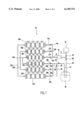
  • FIG. 1 shows the structure of a preferred embodiment of a valve cleaning apparatus according to the present invention.
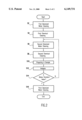
  • FIG. 2 is a flow chart showing a preferred embodiment of a valve cleaning method according to the present invention.
  • a valve cleaning apparatus comprises a deionized water supply source 10 filled with a specific amount of deionized water, and an air pump 16 which operates under a supply pressure of nitrogen gas (N 2 ) to pump liquid through the apparatus.
  • the deionized water supply source 10 is connected to one side of the air pump 16 by means of a deionized water supply line 11, on which a first interruption valve 18 is mounted.
  • a supply line 12 is connected to the other side of air pump 16, to connect air pump 16 to a valve mounting unit 19.
  • the supply line 12 branches to form a plurality of divergence lines 13a, b and c whose respective ends are connected with one side of a plurality of first valve assemblies 20a, b and c mounted in parallel in the valve mounting unit 19.
  • the first valve assembly 20a is constructed of a plurality of valves of the same size, connected in series with one another.
  • the valves of first valve assembly 20a may be different in size from the valves of first valve assemblies 20b and 20c, and each of the valves may be a TEFLON valve such as a diaphragm valve having TEFLON parts therein.
  • Each of the divergence lines 13a, b and c is provided with a second interruption valve 14a, b and c.
  • each first valve assembly 20a, b and c is connected to one of a plurality of connection lines 22a, b and c, which connect each first valve assembly 20a, b and c to one side of second valve assemblies 24a, b and c which are also mounted in parallel in valve mounting unit 19.
  • Each of second valve assemblies 24a, b and c is constructed of a plurality of equal size valves which are connected in series with one another.
  • the valves of second valve assembly 24a may differ in size from that of second valve assemblies 24b and 24c, and each of the valves may be a TEFLON valve such as a diaphragm valve with TEFLON parts.
  • second valve assemblies 24a, b and c are connected to a plurality of divergence lines 25a, b and c which are then joined to form a discharge line 26.
  • Each divergence line 25a, b and c is provided with a third interruption valve 28a, b and c, respectively.
  • the discharge line 26 comprises a chemical return line 37 and a deionized water discharge line 30.
  • Chemical return line 37 is connected to a chemical supply source 40.
  • a fourth interruption valve 34 is mounted on chemical return line 37.
  • a deionized water discharge valve 32 is mounted on deionized water discharge line 30. Deionized water discharge valve 32 and fourth interruption valve 34 form a selecting device interposed between deionized water discharge line 30 and chemical return line 37.
  • the chemical supply source 40 provides a specified amount of a first mixture which comprises 25 to 35 wt. %, preferably 30 wt. % isopropyl alcohol, 7 to 13 wt. %, preferably 10 wt. % acetone, and residual deionized water.
  • the chemical supply source 40 also supplies a second mixture (not shown) comprising 65 to 75 wt. %, preferably 70 wt. % nitric acid (HNO 3 ) and 28 to 34 wt. %, preferably 31 wt. % hydrogen peroxide (H 2 O 2 ), which are mixed in the same ratio.
  • the chemical supply source 40 is also connected to the deionized water supply line 11 by a chemical supply line 36, which is connected to deionized water supply line 11 between first interruption valve 18 and air pump 16.
  • a chemical valve 38 is mounted on the chemical supply line 36.
  • Deionized water supply line 11, first interruption valve 18, chemical supply line 36 and chemical valve 38 form a selecting device by which air pump 16 and all other downstream components of the apparatus are alternatively supplied with either deionized water or a chemical mixture.
  • valve cleaning apparatus Operation of the valve cleaning apparatus described above is as follows.
  • the specific amount of deionized water from the deionized water supply source 10 passes through the first interruption valve 18 before passing through the air pump 16.
  • the deionized water passes through the plurality of second interruption valves 14a, b and c which are mounted on the divergence lines 13a, b and c, and then through the plurality of first valve assemblies 20a, b and c.
  • the second interruption valves 14a, b and c are capable of being selectively opened.
  • the deionized water passes through the second interruption valves 14a, b and c that are selectively opened, before passing through the first valve assemblies 20a, b and c, in such a way that a specific amount of particles is removed from the inside of first valve assemblies 20a, b and c.
  • the deionized water After passing through the first valve assemblies 20a, b and c, the deionized water passes through the connection lines 22a, b and c, and then through second valve assemblies 24a, b and c, thereby removing a specific amount of particles from the inside of second valve assemblies 24a, b and c.
  • the deionized water passes through the third interruption valves 28a, b and c mounted on the divergence lines 25a, b and c, and is discharged to the outside via the deionized water discharge valve 32 located on the deionized water discharge line 30.
  • the first interruption valve 18 on the deionized water supply line 11, and deionized water discharge valve 32 on the deionized water discharge line 30 are closed, and the chemical valve 38 on the chemical supply line 36 and fourth interruption valve 34 on the chemical return line 37 are opened.
  • the air pump 16 performs its pumping operation, transmitting its pumping force into the first chemical mixture of supply source 40, the first chemical mixture passes through the chemical valve 38 mounted on the chemical supply line 36, before passing through the second interruption valves 14a, b and c of the divergence lines 13a, b and c, and then through the first valve assemblies 20a, b and c.
  • the second interruption valves 14a, b and c can be selectively opened.
  • the first chemical mixture passes through the second interruption valves 14a, b and c that are selectively opened, before passing through the first valve assemblies 20a, b and c. Therefore, organic matter and particles can be removed from the inside of first valve assemblies 20a, b and c.
  • the first chemical mixture After passing through the connection lines 22a, b and c, the first chemical mixture passes through the second valve assemblies 24a, b and c, thereby removing the organic matter and particles from the inside of second valve assemblies 24a, b and c.
  • the first chemical mixture passes through the third interruption valves 28a, b and c on the divergence lines 25a, b and c, before passing through discharge line 26 and the fourth interruption valve 34 on the chemical return line 37, and into the chemical supply source 40.
  • the first interruption valve 18 on the deionized water supply line 11 and discharge valve 32 on the deionized water discharge line 30 are opened, and the chemical valve 38 on the chemical supply line 36 and fourth interruption valve 34 on the chemical return line 37 are closed.
  • the deionized water which passed through the air pump 16 passes through the second interruption valves 14a, b and c mounted on the divergence lines 13a, b and c, before passing through the plurality of first valve assemblies 20a, b and c.
  • the second interruption valves 14a, b and c are capable of being selectively opened.
  • the deionized water passes through the second interruption valves 14a, b and c that are selectively opened, before passing through the first valve assemblies 20a, b and c. Therefore, the first chemical mixture is removed from the inside of first valve assemblies 20a, b and c.
  • the deionized water After passing through the first valve assemblies 20a, b and c, the deionized water passes through the connection lines 22a, b and c, and then second valve assemblies 24a, b and c, thereby removing the first chemical mixture from the inside of second valve assemblies 24a, b and c.
  • the deionized water passes through the third interruption valves 28a, b and c located on the divergence lines 25a, b and c, and is discharged to outside by way of the deionized water discharge valve 32 on the deionized water discharge line 30.
  • the first interruption valve 18 on the deionized water supply line 11, and deionized water discharge valve 32 on the deionized water discharge line 30 are closed, and the chemical valve 38 on the chemical supply line 36, and fourth interruption valve 34 on the chemical return line 37 are opened.
  • the air pump 16 performs its pumping operation, transmitting its pumping force into the second chemical mixture (not shown) of chemical supply source 40, the second chemical mixture passes through the chemical valve 38 on the chemical supply line 36, before passing through the second interruption valves 14a, b and c of divergence lines 13a, b and c, and then through the first valve assemblies 20a, b and c.
  • the second interruption valves 14a, b and c can be selectively opened.
  • the second chemical mixture passes through the second interruption valves 14a, b and c that are selectively opened, before passing through the first valve assemblies 20a, b and c, in such a way that metal impurities can be removed from the inside of first valve assemblies 20a, b and c.
  • the second chemical mixture After passing through the connection lines 22a, b and c, the second chemical mixture passes through the second valve assemblies 24a, b and c, thereby removing the metal impurities from the inside of second valve assemblies 24a, b and c.
  • the second chemical mixture passes through the third interruption valves 28a, b and c mounted on the divergence lines 25a, b and c, before passing through the fourth interruption valve 34 on the chemical return line 37, and into the chemical supply source 40.
  • FIG. 2 shows a preferred embodiment of a valve cleaning method according to the present invention.
  • the valve to be cleaned namely a TEFLON valve such as a diaphragm valve having TEFLON parts therein is first cleaned with deionized water.
  • This first deionized water cleaning step may progress for more than twenty-four hours.
  • the valve to be cleaned is cleaned with a first chemical mixture comprising 25 to 35 wt. %, preferably 30 wt. % isopropyl alcohol, 7 to 13 wt. %, preferably 10 wt. % acetone, and residual deionized water.
  • the first chemical cleaning removes any remaining particles and organic matter from the valve, and may also progress for more than twenty-four hours.
  • step S6 the valve to be cleaned is cleaned a second time with deionized water, to remove any remaining first chemical mixture therefrom.
  • This second deionized water cleaning step may progress for more than twenty-four hours.
  • the valve to be cleaned is cleaned with a second chemical mixture comprising 65 to 75 wt. %, preferably 70 wt. % nitric acid (HNO 3 ) and 28 to 34 wt. %, preferably 31 wt. % hydrogen peroxide (H 2 O 2 ), which are mixed in the same ratio.
  • HNO 3 nitric acid
  • H 2 O 2 hydrogen peroxide
  • step S10 is performed to prepare a sample of the second chemical mixture which has been used for cleaning the valves.
  • the sample is analyzed by means of atomic absorption spectroscopy or atomic emission spectroscopy, to determine the amount of metal impurities such as iron (Fe), aluminum (Al), copper (Cu), calcium (Ca), zinc (Zn), chromium (Cr), nickel (Ni), and sodium (Na), etc., which are present in the sample.
  • metal impurities such as iron (Fe), aluminum (Al), copper (Cu), calcium (Ca), zinc (Zn), chromium (Cr), nickel (Ni), and sodium (Na), etc.
  • step S14 it is determined whether the amount of metal impurities in the sample is 0.5 to 1.5 ppb, preferably 1.0 ppb or less. If the analysis finds that the metal impurity is 1.0 ppb or less, the valve to be cleaned is further cleaned with deionized water at step S16. This completes the valve cleaning steps.
  • the valve to be cleaned is returned to the second deionized water cleaning step (S6) and then the second chemical cleaning step (S8), and another sample is prepared for analysis at steps S10 and S12.
  • valves such as TEFLON valves, which are mounted in semiconductor device fabrication facilities. Therefore, impurities present in the valves prior to cleaning do not enter the semiconductor device fabrication facilities.

Landscapes

  • Engineering & Computer Science (AREA)
  • Mechanical Engineering (AREA)
  • Cleaning Or Drying Semiconductors (AREA)
  • Cleaning In General (AREA)

Abstract

A valve cleaning apparatus and method provide for cleaning of heat resistant, scratch resistant coated valves using deionized water and at least one chemical mixture. The cleaning method includes sampling and analysis of the chemical mixture for the presence of metal impurities to within 0.5 to 1.5 ppb. Valves cleaned using this method and apparatus can then be transferred for use in semiconductor device fabrication equipment without the danger of metal impurities from the valves entering and damaging the fabrication equipment and the semiconductor devices being fabricated. The apparatus uses a single pumping device and a single return line, which are provided with selection devices to alternatively supply to or return from the valves either the deionized water or the chemical mixture. A plurality of same-sized or different-sized valves can be cleaned simultaneously.

Description

BACKGROUND OF THE INVENTION
1. Field of the Invention
The present invention relates to a valve cleaning apparatus and method in which impurities are removed from valves without contaminating downstream fabrication equipment. The invention may be employed for easily cleaning valves having a heat resistant, scratch resistant coating such as TEFLON (trademark of Dupont).
2. Background of the Related Art
Acid and corrosive chemicals are generally used for the wet etching and cleaning steps in semiconductor device fabrication. These steps cannot proceed properly in the presence of particles or impurities in the acid or chemicals.
The chemicals used for the wet etching and cleaning steps pass through a TEFLON valve such as a diaphragm valve mounted at one side of a liquid storage tank, before being supplied into the liquid storage tank. A TEFLON diaphragm is provided within the valve, and the valve is opened or closed using nitrogen gas (N2) supplied under pressure The chemicals in the liquid storage tank are then discharged through a TEFLON valve mounted on the other side of the liquid storage tank, and are sent on to semiconductor device fabrication facilities where the wet etching and cleaning steps are performed.
When a TEFLON valve is initially mounted onto the liquid storage tank, it is cleaned by means of the chemicals from the liquid storage tank which are discharged through the valve for a predetermined period of time. However, metal impurities adhered to TEFLON parts such as the diaphragm are not completely removed by the chemicals, and may then be supplied to semiconductor device fabrication facilities, causing production problems such as inferior etching and incomplete cleaning.
SUMMARY OF THE INVENTION
Accordingly, the present invention is directed to a valve cleaning apparatus and method that substantially overcomes one or more of the limitations and disadvantages of the related art.
An object of the present invention is to provide a valve cleaning apparatus and method which easily remove impurities from the inside of a valve such as a TEFLON valve.
Additional features and advantages of the invention will be set forth in the description which follows, and in part will be apparent from the description, or may be learned by practice of the invention. The objectives and other advantages of the invention will be realized and attained by the structure as illustrated in the written description and claims, as well as the appended drawings.
To achieve these and other advantages, and in accordance with the purpose of the present invention as embodied and broadly described, a valve cleaning apparatus includes: a valve mounting unit for mounting a valve to be cleaned; a deionized water supply means for supplying, under pressure, a specified amount of deionized water from a deionized water supply source to the valve mounting unit; a chemical supply means for supplying, under pressure, a specified amount of a chemical mixture from a chemical supply source to the valve mounting unit; a deionized water discharge line for discharging the deionized water passing through the valve to be cleaned; and a chemical return line for returning the chemical mixture passing through the valve to be cleaned to the chemical supply source. The chemical supply source can supply two or more different chemical mixtures.
The deionized water supply means and chemical supply means utilize a single pumping device. Preferably, a selecting device is provided to alternatively select either the deionized water or the chemical mixture.
The plurality of same-size or different size valves to be cleaned are positioned in series or in parallel in the valve mounting unit. Valves of the same size are grouped in series, and each such group is positioned in parallel with other groups which differ in size.
The deionized water discharge line and chemical return line are constructed of a single line by means of a selecting device interposed therebetween.
In another aspect, the present invention provides a method of cleaning a valve comprising the steps of: mounting the valve to be cleaned in a valve mounting unit; selecting and supplying deionized water to the valve to be cleaned; discharging the deionized water through a discharge line; selecting and supplying a chemical mixture to the valve to be cleaned; and returning the chemical mixture to the chemical supply source through a return line, so as to circulate the chemical mixture.
A plurality of valves to be cleaned, which differ in size, are positioned in parallel lines in the valve mounting unit, and the deionized water or chemical mixture is selectively supplied to the parallel lines.
The chemical supply source comprises at least two different chemical supply sources which can be alternatively selected for supply to and return from the valve to be cleaned.
In accordance with another aspect of the present invention, there is provided a valve cleaning method comprising: (1) cleaning the valves to be cleaned with deionized water; (2) cleaning the valves to be cleaned with a first chemical mixture; (3) cleaning the valves to be cleaned a second time with deionized water; (4) cleaning the valves to be cleaned with a second chemical mixture; and (5) preparing a sample of the second chemical mixture which was used for cleaning the valves and analyzing the sample for metal impurities.
When the sample analyzed in step (5) contains an amount of a specific metal impurity below a specified standard value, the valves are further cleaned with deionized water.
When the sample analyzed in step (5) contains an amount of a specific metal impurity above a specified standard value, steps (3) through (5) are repeated.
The valves to be cleaned comprise TEFLON valves having TEFLON parts therein. The first chemical mixture comprises 25 to 35 wt. % isopropyl alcohol, 7 to 13 wt. % acetone, and residual deionized water. The second chemical mixture comprises 65 to 75 wt. % nitric acid and 28 to 34 wt. % hydrogen peroxide, which are mixed in the same ratio.
The standard value for the analysis in step (5) is preferably 0.5 to 1.5 ppb. Such an analysis can be performed using atomic absorption spectroscopy or atomic emission spectroscopy. The cleaning in each of steps (1), (2), (3) and (4) preferably progresses for more than twenty-four hours.
The metal impurities comprise iron (Fe), aluminum (Al), copper (Cu), calcium (Ca), zinc (Zn), chromium (Cr), nickel (Ni), and sodium (Na).
It is to be understood that both the foregoing general description and the following detailed description are exemplary and explanatory and are intended to provide further explanation of the invention as claimed.
BRIEF DESCRIPTION OF THE ATTACHED DRAWINGS
The accompanying drawings illustrate an embodiment of the invention, in which:
FIG. 1 shows the structure of a preferred embodiment of a valve cleaning apparatus according to the present invention; and
FIG. 2 is a flow chart showing a preferred embodiment of a valve cleaning method according to the present invention.
DETAILED DESCRIPTION OF PREFERRED EMBODIMENT
Reference will now be made in detail to a preferred embodiment of the present invention, an example of which is illustrated in the accompanying drawings.
As shown in FIG. 1, a valve cleaning apparatus comprises a deionized water supply source 10 filled with a specific amount of deionized water, and an air pump 16 which operates under a supply pressure of nitrogen gas (N2) to pump liquid through the apparatus. The deionized water supply source 10 is connected to one side of the air pump 16 by means of a deionized water supply line 11, on which a first interruption valve 18 is mounted.
A supply line 12 is connected to the other side of air pump 16, to connect air pump 16 to a valve mounting unit 19. The supply line 12 branches to form a plurality of divergence lines 13a, b and c whose respective ends are connected with one side of a plurality of first valve assemblies 20a, b and c mounted in parallel in the valve mounting unit 19. The first valve assembly 20a is constructed of a plurality of valves of the same size, connected in series with one another. The valves of first valve assembly 20a may be different in size from the valves of first valve assemblies 20b and 20c, and each of the valves may be a TEFLON valve such as a diaphragm valve having TEFLON parts therein. Each of the divergence lines 13a, b and c is provided with a second interruption valve 14a, b and c.
The other end of each first valve assembly 20a, b and c is connected to one of a plurality of connection lines 22a, b and c, which connect each first valve assembly 20a, b and c to one side of second valve assemblies 24a, b and c which are also mounted in parallel in valve mounting unit 19. Each of second valve assemblies 24a, b and c is constructed of a plurality of equal size valves which are connected in series with one another. The valves of second valve assembly 24a may differ in size from that of second valve assemblies 24b and 24c, and each of the valves may be a TEFLON valve such as a diaphragm valve with TEFLON parts.
The other side of second valve assemblies 24a, b and c are connected to a plurality of divergence lines 25a, b and c which are then joined to form a discharge line 26. Each divergence line 25a, b and c is provided with a third interruption valve 28a, b and c, respectively.
The discharge line 26 comprises a chemical return line 37 and a deionized water discharge line 30. Chemical return line 37 is connected to a chemical supply source 40. A fourth interruption valve 34 is mounted on chemical return line 37. A deionized water discharge valve 32 is mounted on deionized water discharge line 30. Deionized water discharge valve 32 and fourth interruption valve 34 form a selecting device interposed between deionized water discharge line 30 and chemical return line 37.
The chemical supply source 40 provides a specified amount of a first mixture which comprises 25 to 35 wt. %, preferably 30 wt. % isopropyl alcohol, 7 to 13 wt. %, preferably 10 wt. % acetone, and residual deionized water. The chemical supply source 40 also supplies a second mixture (not shown) comprising 65 to 75 wt. %, preferably 70 wt. % nitric acid (HNO3) and 28 to 34 wt. %, preferably 31 wt. % hydrogen peroxide (H2 O2), which are mixed in the same ratio.
Moreover, the chemical supply source 40 is also connected to the deionized water supply line 11 by a chemical supply line 36, which is connected to deionized water supply line 11 between first interruption valve 18 and air pump 16. A chemical valve 38 is mounted on the chemical supply line 36. Deionized water supply line 11, first interruption valve 18, chemical supply line 36 and chemical valve 38 form a selecting device by which air pump 16 and all other downstream components of the apparatus are alternatively supplied with either deionized water or a chemical mixture.
Operation of the valve cleaning apparatus described above is as follows. The specific amount of deionized water from the deionized water supply source 10 passes through the first interruption valve 18 before passing through the air pump 16. The deionized water passes through the plurality of second interruption valves 14a, b and c which are mounted on the divergence lines 13a, b and c, and then through the plurality of first valve assemblies 20a, b and c. The second interruption valves 14a, b and c are capable of being selectively opened. The deionized water passes through the second interruption valves 14a, b and c that are selectively opened, before passing through the first valve assemblies 20a, b and c, in such a way that a specific amount of particles is removed from the inside of first valve assemblies 20a, b and c.
After passing through the first valve assemblies 20a, b and c, the deionized water passes through the connection lines 22a, b and c, and then through second valve assemblies 24a, b and c, thereby removing a specific amount of particles from the inside of second valve assemblies 24a, b and c.
Subsequently, the deionized water passes through the third interruption valves 28a, b and c mounted on the divergence lines 25a, b and c, and is discharged to the outside via the deionized water discharge valve 32 located on the deionized water discharge line 30. After this, the first interruption valve 18 on the deionized water supply line 11, and deionized water discharge valve 32 on the deionized water discharge line 30 are closed, and the chemical valve 38 on the chemical supply line 36 and fourth interruption valve 34 on the chemical return line 37 are opened.
Next, as the air pump 16 performs its pumping operation, transmitting its pumping force into the first chemical mixture of supply source 40, the first chemical mixture passes through the chemical valve 38 mounted on the chemical supply line 36, before passing through the second interruption valves 14a, b and c of the divergence lines 13a, b and c, and then through the first valve assemblies 20a, b and c. Here, the second interruption valves 14a, b and c can be selectively opened. The first chemical mixture passes through the second interruption valves 14a, b and c that are selectively opened, before passing through the first valve assemblies 20a, b and c. Therefore, organic matter and particles can be removed from the inside of first valve assemblies 20a, b and c.
After passing through the connection lines 22a, b and c, the first chemical mixture passes through the second valve assemblies 24a, b and c, thereby removing the organic matter and particles from the inside of second valve assemblies 24a, b and c.
After that, the first chemical mixture passes through the third interruption valves 28a, b and c on the divergence lines 25a, b and c, before passing through discharge line 26 and the fourth interruption valve 34 on the chemical return line 37, and into the chemical supply source 40.
After this, the first interruption valve 18 on the deionized water supply line 11 and discharge valve 32 on the deionized water discharge line 30 are opened, and the chemical valve 38 on the chemical supply line 36 and fourth interruption valve 34 on the chemical return line 37 are closed.
As the pumping force of air pump 16 is transmitted to the deionized water supply source 10, a specific amount of deionized water in the deionized water supply source 10 passes through the first interruption valve 18 on the deionized water supply line 11, and then through the air pump 16.
The deionized water which passed through the air pump 16, passes through the second interruption valves 14a, b and c mounted on the divergence lines 13a, b and c, before passing through the plurality of first valve assemblies 20a, b and c. Here, the second interruption valves 14a, b and c are capable of being selectively opened. The deionized water passes through the second interruption valves 14a, b and c that are selectively opened, before passing through the first valve assemblies 20a, b and c. Therefore, the first chemical mixture is removed from the inside of first valve assemblies 20a, b and c.
After passing through the first valve assemblies 20a, b and c, the deionized water passes through the connection lines 22a, b and c, and then second valve assemblies 24a, b and c, thereby removing the first chemical mixture from the inside of second valve assemblies 24a, b and c.
Subsequently, the deionized water passes through the third interruption valves 28a, b and c located on the divergence lines 25a, b and c, and is discharged to outside by way of the deionized water discharge valve 32 on the deionized water discharge line 30.
After this, the first interruption valve 18 on the deionized water supply line 11, and deionized water discharge valve 32 on the deionized water discharge line 30 are closed, and the chemical valve 38 on the chemical supply line 36, and fourth interruption valve 34 on the chemical return line 37 are opened.
Next, as the air pump 16 performs its pumping operation, transmitting its pumping force into the second chemical mixture (not shown) of chemical supply source 40, the second chemical mixture passes through the chemical valve 38 on the chemical supply line 36, before passing through the second interruption valves 14a, b and c of divergence lines 13a, b and c, and then through the first valve assemblies 20a, b and c. Here, the second interruption valves 14a, b and c can be selectively opened. The second chemical mixture passes through the second interruption valves 14a, b and c that are selectively opened, before passing through the first valve assemblies 20a, b and c, in such a way that metal impurities can be removed from the inside of first valve assemblies 20a, b and c.
After passing through the connection lines 22a, b and c, the second chemical mixture passes through the second valve assemblies 24a, b and c, thereby removing the metal impurities from the inside of second valve assemblies 24a, b and c.
After that, the second chemical mixture passes through the third interruption valves 28a, b and c mounted on the divergence lines 25a, b and c, before passing through the fourth interruption valve 34 on the chemical return line 37, and into the chemical supply source 40.
FIG. 2 shows a preferred embodiment of a valve cleaning method according to the present invention. At step S2, the valve to be cleaned, namely a TEFLON valve such as a diaphragm valve having TEFLON parts therein is first cleaned with deionized water. This first deionized water cleaning step may progress for more than twenty-four hours.
At step S4, the valve to be cleaned is cleaned with a first chemical mixture comprising 25 to 35 wt. %, preferably 30 wt. % isopropyl alcohol, 7 to 13 wt. %, preferably 10 wt. % acetone, and residual deionized water. The first chemical cleaning removes any remaining particles and organic matter from the valve, and may also progress for more than twenty-four hours.
At step S6, the valve to be cleaned is cleaned a second time with deionized water, to remove any remaining first chemical mixture therefrom. This second deionized water cleaning step may progress for more than twenty-four hours.
At step S8, the valve to be cleaned is cleaned with a second chemical mixture comprising 65 to 75 wt. %, preferably 70 wt. % nitric acid (HNO3) and 28 to 34 wt. %, preferably 31 wt. % hydrogen peroxide (H2 O2), which are mixed in the same ratio. During this second chemical cleaning step, metal impurities are removed from the valve. This step may progress for more than twenty-four hours.
Subsequently, step S10 is performed to prepare a sample of the second chemical mixture which has been used for cleaning the valves. At step S12, the sample is analyzed by means of atomic absorption spectroscopy or atomic emission spectroscopy, to determine the amount of metal impurities such as iron (Fe), aluminum (Al), copper (Cu), calcium (Ca), zinc (Zn), chromium (Cr), nickel (Ni), and sodium (Na), etc., which are present in the sample.
At step S14, it is determined whether the amount of metal impurities in the sample is 0.5 to 1.5 ppb, preferably 1.0 ppb or less. If the analysis finds that the metal impurity is 1.0 ppb or less, the valve to be cleaned is further cleaned with deionized water at step S16. This completes the valve cleaning steps.
If the analysis finds that the metal impurity is more than 1.0 ppb, the valve to be cleaned is returned to the second deionized water cleaning step (S6) and then the second chemical cleaning step (S8), and another sample is prepared for analysis at steps S10 and S12.
As described above, the organic matter, particles, metal impurities, etc. can be easily removed from the inside of valves such as TEFLON valves, which are mounted in semiconductor device fabrication facilities. Therefore, impurities present in the valves prior to cleaning do not enter the semiconductor device fabrication facilities.
It will be apparent to those skilled in the art that various modifications and variations can be made in a valve cleaning apparatus and method of the present invention without deviating from the spirit or scope of the invention. Thus, it is intended that the present invention cover the modifications and variations of this invention provided they come within the scope of the appended claims and their equivalents.
Claims (15)

What is claimed is:
1. A method for cleaning a valve comprising the sequential steps of:
mounting a valve having an inner surface to be cleaned in a valve mounting unit;
selecting and supplying deionized water to the inner surface of the valve to remove particles from the inner surface of the valve;
discharging the deionized water from the valve through a discharge line;
selecting and supplying a chemical mixture from a chemical supply source to the inner surface of the valve to remove organic matter and remaining particles from the inner surface of the valve; and
returning the chemical mixture to the chemical supply source through a return line;
wherein the chemical mixture comprises isopropyl alcohol, acetone, and deionized water.
2. The method according to claim 1, wherein a plurality of valves to be cleaned, which differ in size, are positioned in parallel lines in the valve mounting unit, and the deionized water or the chemical mixture is selectively supplied to the parallel lines.
3. The method according to claim 1, wherein the chemical supply source comprises at least two different chemical supply sources, one of which is selected for supplying the chemical mixture to the inner surface of the valve.
4. A valve cleaning method comprising the sequential steps of:
(1) providing a plurality of valves each having an inner surface to be cleaned;
(2) cleaning the inner surfaces of the valves a first time with deionized water to remove particles from the inner surfaces of the valves;
(3) cleaning the inner surfaces of the valves with a first chemical mixture to remove organic matter and remaining particles from the inner surfaces of the valves, wherein the first chemical mixture comprises isopropyl alcohol, acetone, and deionized water;
(4) cleaning the inner surfaces of the valves a second time with deionized water;
(5) cleaning the inner surfaces of the valves with a second chemical mixture to remove metal impurities from the inner surfaces of the valves, wherein the second chemical mixture comprises nitric acid and hydrogen peroxide; and
(6) analyzing a sample of the second chemical mixture used for cleaning the inner surfaces of the valves to determine an amount of the metal impurities removed from the inner surfaces of the valves.
5. The method according to claim 4, wherein when the sample analyzed in step (6) contains an amount of a specific metal impurity equal to or below a specified standard value, the valves are further cleaned with deionized water.
6. The method according to claim 4, wherein when the sample analyzed in step (6) contains an amount of a specific metal impurity above a specified standard value, steps (4) through (6) are repeated.
7. The method according to claim 4, wherein the valves are heat resistant scratch resistant coated valves.
8. The method according to claim 4, wherein the first chemical mixture comprises 25 to 35 wt. % of the isopropyl alcohol and 7 to 13 wt. % of the acetone.
9. The method according to claim 4, wherein the second chemical mixture comprises 65 to 75 wt. % of the nitric acid and 28 to 34 wt. % of the hydrogen peroxide.
10. The method according to claim 4, wherein the sample is analyzed using atomic absorption spectroscopy.
11. The method according to claim 4, wherein the sample is analyzed using atomic emission spectroscopy.
12. The method according to claim 4, wherein steps (2), (3), (4) and (5) each progress for more than twenty-four hours.
13. The method according to claim 4, wherein the metal impurities removed from the inner surfaces of the valves comprise iron (Fe), aluminum (Al), copper (CU), calcium (Ca), zinc (Zn), chromium (CT), nickel (Ni), and sodium (Na).
14. The method according to claim 5, wherein the standard value is 0.5 to 1.5 ppb.
15. The method according to claim 6, wherein the standard value is 0.5 to 1.5 ppb.
US09/172,139 1997-12-29 1998-10-14 Valve cleaning method Expired - Fee Related US6149731A (en)

Applications Claiming Priority (2)

Application Number Priority Date Filing Date Title
KR97-76791 1997-12-29
KR1019970076791A KR100278476B1 (en) 1997-12-29 1997-12-29 Method for cleaning a valve

Publications (1)

Publication Number Publication Date
US6149731A true US6149731A (en) 2000-11-21

Family

ID=19529341

Family Applications (1)

Application Number Title Priority Date Filing Date
US09/172,139 Expired - Fee Related US6149731A (en) 1997-12-29 1998-10-14 Valve cleaning method

Country Status (3)

Country Link
US (1) US6149731A (en)
JP (1) JPH11207280A (en)
KR (1) KR100278476B1 (en)

Cited By (5)

* Cited by examiner, † Cited by third party
Publication number Priority date Publication date Assignee Title
US20040168712A1 (en) * 2003-02-27 2004-09-02 Nanmat Technology Co., Ltd. Method for cleaning semiconductor manufacturing system
US20070017603A1 (en) * 2003-12-11 2007-01-25 Heike Quellhorst Functionalized phenol-formaldehyde resin and method for treating metallic surfaces
CN101450816B (en) * 2007-12-06 2011-02-02 上海华虹Nec电子有限公司 Drainage equipment of phosphorus waste liquid from phosphorus oxytrichloride process and use method thereof
CN108698094A (en) * 2015-12-11 2018-10-23 艾迪宝克思公司 Flow Balance in Food Processor Cleaning Systems
CN116890009A (en) * 2023-09-11 2023-10-17 北京嘉洁能科技股份有限公司 Descaling structure for calorimeter

Families Citing this family (3)

* Cited by examiner, † Cited by third party
Publication number Priority date Publication date Assignee Title
KR100821489B1 (en) * 2007-11-22 2008-04-14 진복환 Gate Valve Cleaning Support
JP2014195792A (en) * 2013-03-29 2014-10-16 積水化学工業株式会社 Cleaning system of pipeline
KR102161794B1 (en) * 2018-12-21 2020-10-07 세메스 주식회사 Apparatus and Method for cleaning component

Citations (5)

* Cited by examiner, † Cited by third party
Publication number Priority date Publication date Assignee Title
US4552167A (en) * 1982-03-30 1985-11-12 Holstein & Kappert Gmbh Method of and device for cleaning hollow spaces in double seat valves
US5360488A (en) * 1993-03-23 1994-11-01 H.E.R.C. Products Incorporated Method of cleaning and maintaining water distribution pipe systems
US5904173A (en) * 1996-07-15 1999-05-18 Toyo Stainless Steel Industries, Co., Ltd. Double sealed valve
US5964230A (en) * 1997-10-06 1999-10-12 Air Products And Chemicals, Inc. Solvent purge mechanism
US6045698A (en) * 1995-11-22 2000-04-04 Omnium De Traitements Et De Valorization (Otv) Method for cleaning a filtration installation of the type with immersed membranes

Family Cites Families (1)

* Cited by examiner, † Cited by third party
Publication number Priority date Publication date Assignee Title
KR0125878Y1 (en) * 1995-05-25 1998-11-02 문정환 Filter cleaning apparatus

Patent Citations (5)

* Cited by examiner, † Cited by third party
Publication number Priority date Publication date Assignee Title
US4552167A (en) * 1982-03-30 1985-11-12 Holstein & Kappert Gmbh Method of and device for cleaning hollow spaces in double seat valves
US5360488A (en) * 1993-03-23 1994-11-01 H.E.R.C. Products Incorporated Method of cleaning and maintaining water distribution pipe systems
US6045698A (en) * 1995-11-22 2000-04-04 Omnium De Traitements Et De Valorization (Otv) Method for cleaning a filtration installation of the type with immersed membranes
US5904173A (en) * 1996-07-15 1999-05-18 Toyo Stainless Steel Industries, Co., Ltd. Double sealed valve
US5964230A (en) * 1997-10-06 1999-10-12 Air Products And Chemicals, Inc. Solvent purge mechanism

Cited By (9)

* Cited by examiner, † Cited by third party
Publication number Priority date Publication date Assignee Title
US20040168712A1 (en) * 2003-02-27 2004-09-02 Nanmat Technology Co., Ltd. Method for cleaning semiconductor manufacturing system
US20070017603A1 (en) * 2003-12-11 2007-01-25 Heike Quellhorst Functionalized phenol-formaldehyde resin and method for treating metallic surfaces
CN101450816B (en) * 2007-12-06 2011-02-02 上海华虹Nec电子有限公司 Drainage equipment of phosphorus waste liquid from phosphorus oxytrichloride process and use method thereof
CN108698094A (en) * 2015-12-11 2018-10-23 艾迪宝克思公司 Flow Balance in Food Processor Cleaning Systems
US11147291B2 (en) 2015-12-11 2021-10-19 Idea Boxx, Llc Flow balancing in food processor cleaning system
US20220046946A1 (en) * 2015-12-11 2022-02-17 Idea Boxx, Llc Flow balancing in food processor cleaning system
US11712047B2 (en) * 2015-12-11 2023-08-01 Taylor Commercial Foodservice, Llc Flow balancing in food processor cleaning system
CN116890009A (en) * 2023-09-11 2023-10-17 北京嘉洁能科技股份有限公司 Descaling structure for calorimeter
CN116890009B (en) * 2023-09-11 2023-11-17 北京嘉洁能科技股份有限公司 Descaling structure for calorimeter

Also Published As

Publication number Publication date
JPH11207280A (en) 1999-08-03
KR100278476B1 (en) 2001-01-15
KR19990056779A (en) 1999-07-15

Similar Documents

Publication Publication Date Title
US6149731A (en) Valve cleaning method
TW409170B (en) Large quantity supply apparatus for the gas in semiconductor process
US8455368B2 (en) Methods and apparatus for assembling and operating electronic device manufacturing systems
DE69616481T2 (en) Device for manufacturing a semiconductor device with a vacuum system
JPS63153825A (en) Method and apparatus for continuous recycling of extra-pure liquid for washing semiconductor wafer
US20160056028A1 (en) Ultraclean autosampler with syringe delivery for mass spectrometry
TW201542301A (en) Substrate processing system and piping cleaning method
JP2009072779A (en) Purifying device for compounds in liquid-phase state
JP2005507993A (en) Method and apparatus for automated analysis of fluid-based processing systems
US5996420A (en) Manifold systems and methods for delivering samples of microelectronic device processing gases to gas analyzers
CN110187067B (en) Water-oxygen particle automatic analysis system and analysis method thereof
KR20050030235A (en) Purgeable container for low pressure chemicals
KR102357430B1 (en) Sample pretreatment apparatus and sample pretreatment method
DE69329107T2 (en) DISC TRANSPORT SYSTEM
CN110187066B (en) Water-oxygen particle analysis and detection system and detection method thereof
CN210676247U (en) Device for removing solid particles in ultrahigh pure ethyl silicate steel cylinder
US6953044B2 (en) Drained water recovery system and method for operating the same
US20030122292A1 (en) Chemical processing system
KR100457036B1 (en) Gas analysis equipment for fabricating semiconductor device to prevent process defect caused by hydrogen fluoride
KR20220100126A (en) Apparatus for supplying treating liquid and method for rmoving solid
TW202413283A (en) Operation management method and operation management system for ultrapure water production device
JPH04332898A (en) Adsorption separation method of target component in solution
JP2936090B2 (en) Water-soluble oil recovery device
JP2001259544A (en) Cleaning method for high-purity alkaline chemical liquid handling equipment
EP0824681A1 (en) Dynamic contaminant extraction measurement for chemical distribution systems

Legal Events

Date Code Title Description
AS Assignment

Owner name: SAMSUNG ELECTRONICS CO., LTD., KOREA, REPUBLIC OF

Free format text: ASSIGNMENT OF ASSIGNORS INTEREST;ASSIGNOR:KO, YONG-KYUN;REEL/FRAME:009519/0699

Effective date: 19980928

FEPP Fee payment procedure

Free format text: PAYOR NUMBER ASSIGNED (ORIGINAL EVENT CODE: ASPN); ENTITY STATUS OF PATENT OWNER: LARGE ENTITY

FPAY Fee payment

Year of fee payment: 4

FPAY Fee payment

Year of fee payment: 8

REMI Maintenance fee reminder mailed
LAPS Lapse for failure to pay maintenance fees
STCH Information on status: patent discontinuation

Free format text: PATENT EXPIRED DUE TO NONPAYMENT OF MAINTENANCE FEES UNDER 37 CFR 1.362

FP Lapsed due to failure to pay maintenance fee

Effective date: 20121121