US6086833A - Process and equipment for sanitizing and packaging food using ozone - Google Patents
Process and equipment for sanitizing and packaging food using ozone Download PDFInfo
- Publication number
- US6086833A US6086833A US08/925,274 US92527497A US6086833A US 6086833 A US6086833 A US 6086833A US 92527497 A US92527497 A US 92527497A US 6086833 A US6086833 A US 6086833A
- Authority
- US
- United States
- Prior art keywords
- fluid
- ozone
- pressure
- injector
- sanitizing
- Prior art date
- Legal status (The legal status is an assumption and is not a legal conclusion. Google has not performed a legal analysis and makes no representation as to the accuracy of the status listed.)
- Expired - Fee Related
Links
Images




Classifications
-
- A—HUMAN NECESSITIES
- A61—MEDICAL OR VETERINARY SCIENCE; HYGIENE
- A61L—METHODS OR APPARATUS FOR STERILISING MATERIALS OR OBJECTS IN GENERAL; DISINFECTION, STERILISATION OR DEODORISATION OF AIR; CHEMICAL ASPECTS OF BANDAGES, DRESSINGS, ABSORBENT PADS OR SURGICAL ARTICLES; MATERIALS FOR BANDAGES, DRESSINGS, ABSORBENT PADS OR SURGICAL ARTICLES
- A61L2/00—Disinfection or sterilisation of materials or objects, in general; Accessories therefor
- A61L2/16—Disinfection or sterilisation of materials or objects, in general; Accessories therefor using chemical substances
- A61L2/20—Gaseous substances, e.g. vapours
- A61L2/202—Ozone
Definitions
- the present invention relates to apparatus and processes for sanitizing a product, and particularly to sanitizing a food product using ozone.
- Another prior process of processing meat involves exposing the meat to a vacuum before and after treatment with a sanitizing agent such as steam, ozone, hydrogen peroxide, or propylene oxide.
- a sanitizing agent such as steam, ozone, hydrogen peroxide, or propylene oxide.
- An apparatus and method for sterilizing and chilling animal carcasses has also been proposed whereby poultry is treated with ozonated water.
- Ozone is distributed from a source, such as a pressure vessel, at spaced locations.
- a gaseous mixture of ozone and air is introduced into a liquid bath in a manner which creates a multitude of ozone-air bubbles in the bath.
- the gaseous ozone-air mixture is first mixed with a quantity of liquid of the bath, followed by injection of the combined, aqueous mixture into the bath to form a multitude of ozone-air bubbles.
- Ozone is one of the most powerful oxidizers available. Due to its propensity to oxidize substances, it is very difficult to transport ozone from its site of generation to the application point. Furthermore, ozone cannot be stored for an appreciable length of time. For example, at atmospheric pressure at 86° F., ozone will decompose in about one week. And ozone decomposes more quickly as pressure is increased.
- the ozone is preferably generated and used at a pressure between about atmospheric pressure to about 15 psig (29.7 psia, 205 kPa absolute (abs)).
- the present invention provides a device for mixing ozone with a carrier fluid for use in sanitizing food, comprising a venturi nozzle including an outlet and two inlets, wherein a source of carrier fluid and a source of ozone are connected to the venturi nozzle via the inlets, such that delivery of the carrier material to the venturi nozzle creates a vacuum which is capable of drawing ozone at or near atmospheric pressure into the venturi nozzle.
- the present invention provides a device for sanitizing a product comprising a container including an interior space for containing the product, a first injector including a fluid lumen in fluid communication with the interior space, a first inlet for connection to a source of pressurized carrier fluid, and a second inlet, means for generating a sanitizing gas at low pressure in fluid communication with the second inlet, wherein the injector is capable of delivering the sanitizing gas through the fluid lumen to the interior space when a source of pressurized carrier fluid is in fluid communication with the first inlet, and whereby when a product is contained in the container, the injector is capable of delivering sanitizing gas to the interior space in an amount effective to sanitize the product.
- the present invention provides a process for sanitizing food, wherein a carrier material is introduced into a venturi nozzle at a velocity which creates suction, the suction drawing ozone from a source at or near atmospheric pressure into the venturi nozzle so that a mixture is formed of carrier material and ozone, the mixture being injected into a blender or grinder containing food, and mixing the carrier material/ozone and food such that sanitization occurs.
- the present invention provides an injector for entraining a low pressure sanitizing fluid into and mixing with a high pressure carrier fluid, and delivering a high velocity stream of mixed fluid, comprising a body including a chamber, a first fluid inlet, a second fluid inlet, and a fluid outlet, the first fluid inlet, the second fluid inlet, and the fluid outlet being in fluid communication with the chamber, directing means in the chamber for directing the high pressure carrier fluid past the second fluid inlet, a venturi in fluid communication with the chamber for converting high pressure carrier fluid from the fluid directing means to higher velocity, low pressure fluid, whereby when a source of high pressure carrier fluid is in fluid communication with the first fluid inlet and a source of low pressure sanitizing fluid is in fluid communication with the second fluid inlet, the low pressure sanitizing fluid is entrained into the carrier fluid in the chamber.
- the present invention provides a process for sanitizing a food product, comprising the steps of mixing a sanitizing fluid with a carrier fluid to form a sanitizing mixture, injecting the sanitizing mixture into a closed space containing the food product, and pressurizing the closed space with the sanitizing mixture for a time and at a sanitizing fluid concentration effective for the sanitizing mixture to substantially sanitize the food product.
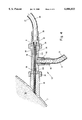
- FIG. 1 is a diagrammical illustration of a first embodiment of the present invention
- FIG. 2 is an elevational, cross-sectional view of a portion of the embodiment illustrated in FIG. 1;
- FIG. 3 is a diagrammical illustration of a second embodiment of the present invention.
- FIG. 4 is an elevational, cross-sectional view of a portion of a third embodiment of the present invention.
- FIG. 5 is a schematic illustration of a control system according to a fourth embodiment of the present invention.
- FIG. 6 is a diagrammical illustration of a portion of a fifth embodiment of the present invention.
- FIG. 7 is an elevational, cross-sectional view of a portion of yet another embodiment of the present invention.
- the process of the present invention will generally use ozone from about 0.00 gm/min/lb (of food processed) to about 1.0 gm/min/lb (of food processed), preferably about 5.0 mg/min/lb (of food processed) to at least sanitize, and preferably sterilize, a food product.
- a small, lab-scale type ozone generator is preferred since larger units, such as those used in the aforementioned pulp and paper operations, produce too much ozone.
- Lab scale generators generally produce ozone at or near atmospheric pressure to about 15 psig (29.7 psia, 205 kPa(abs)) or less. Use of a lab scale generator is also advantageous in that it reduces costs.
- the term "sanitize,” and variations and derivations thereof, means the reduction of the microbial content of a product, while the term “sterile,” and variations and derivations thereof, means free of all living microorganisms and their spores.
- the venturi nozzle uses a high velocity jet of a carrier material, preferably at high pressure, such as CO 2 , N 2 , H 2 O, steam, air, or mixtures thereof across a suction chamber.
- the high pressure carrier fluid is preferably at a relatively high pressure as compared with the pressure at which the ozone is generated and flows through the system before mixing with the carrier fluid.
- Carbon dioxide is preferred as the carrier material.
- the suction chamber is connected to the source of ozone.
- the vacuum created by the suction chamber is able to draw ozone into the venturi nozzle even if the ozone source delivers ozone at low pressure, such as at or near atmospheric pressure.
- the ozone and carrier material are homogeneously mixed in the venturi nozzle before being discharged into the food.
- the use of a venturi is advantageous because it reduces overall equipment costs by eliminating the need for a separate pressurizing system for the ozone.
- the present invention is advantageous in that the mixture of ozone and carrier material discharged by the venturi results in a highly homogenized mixture of carrier fluid and ozone, which is extremely beneficial for sanitization of the food. Moreover, the use of the venturi nozzle minimizes conditions of time and pressure which can render ozone ineffective.
- ozone would have to be pressurized through one of several potential inferior ways.
- a mechanical pump would increase equipment costs and would decompose the ozone into O 2 or allow it to oxidize the exposed surfaces of the pump, lubricants, seals, or other materials contained in the pump.
- the use of a mechanical pump to deliver ozone is additionally disadvantageous because the pump would present ozone to the product to be sanitized in an unmixed condition, so as to create a zone of high ozone concentration in the product.
- High concentrations of ozone are potentially very harmful to the product, and present significant health and safety concerns for operators who may be exposed to and breathe the ozone from the area of high concentration.
- FIG. 1 illustrates a first embodiment according to the present invention.
- a product 24 which is intended to be preserved, for example, a meat product, is contained within a container, for example, blender vessel 2.
- Blender vessel 2 is preferably constructed of a material which does not react, or reacts very little, with the sanitization fluid used, preferably stainless steel.
- Leading off from blender vessel 2 is a vent 1 for venting off gases from the interior of blender vessel 2.
- a mixing or turbulating paddle 23 for mixing up the contents of the blender vessel. Mixing or turbulating paddle 23 is connected to a rotating shaft (not shown) to rotate the mixing or turbulating paddle to mix the product within blender vessel 2.
- injector assemblies 25 Connected to the wall of blender vessel 2 is at least one, and preferably more than one, injector assemblies 25.
- injector assemblies 25 include a diffuser 6, a suction body 8, including a suction chamber therein, and optionally an orifice 9, as will be discussed in greater detail below.
- the injector bodies also include a pressure meter 7 which is in pressure sensing relationship with the interior of suction body 8.
- a fluid conveying line 3 is connected to each injector for conveying a pressurized fluid carrier to the injectors 25.
- fluid line 3 may convey pressurized liquid carbon dioxide from a storage tank (not shown) through a pressure and flow regulating system (not shown) to injector 25.
- pressurized liquid carbon dioxide is maintained in the storage tank at pressures up to 300 psig (314 psia, 2166 kPa(abs)) or higher, and at about 0° F. (-17.8° C.).
- pressures up to 300 psig (314 psia, 2166 kPa(abs)) or higher, and at about 0° F. (-17.8° C.).
- pressure, temperature, and flow rate of the carrier fluid used can, however, vary depending on the particular needs of the sanitization system, for example, the size of the container.
- valve 4 Disposed along fluid line 3 is a valve 4, which is preferably a pneumatic valve, for controlling the flow of fluid through fluid line 3.
- fluid line 10 Leading from valve 4 is a fluid line 10 which fluidly connects the injectors 25 to the valve 4, for conveying the liquid carrier from fluid line 3.
- Fluid line 5 also leads to the injectors. Fluid line 5 connects to suction body 8 as illustrated in FIGS. 1-3. Fluid line 5 is preferably constructed for conveying a gas to be mixed in suction body 8 with the fluid from line 10, as will be described in greater detail below. Preferably, fluid line 5 conducts ozone gas to suction body 8.
- fluid line 26 comprises a series of elements to measure, control, and regulate the flow of ozone gas through fluid line 5 from a source.
- the source is an ozone generator 19 which generates ozone from an oxygen source 22.
- Oxygen source 22 is preferably a compressed oxygen cylinder; however, other sources of oxygen, such as a bulk tank containing liquified oxygen, a pipeline delivering liquid or gaseous oxygen, or an air separation unit (ASU), may be used interchangeably as oxygen source 22 without departing from the scope of the invention.
- ASU air separation unit
- Interposed between oxygen source 22 and ozone generator 19 there is preferably a pressure gauge 21 for monitoring the pressure of the oxygen source.
- Ozone generator 19 is preferably a low pressure, lab scale ozone generator, as will be discussed in greater detail below.
- Ozone generator 19 is preferably an ozone generator which delivers ozone at a pressure close to atmospheric (14.7 psia, 0.0 psig, 101.4 kPa(abs)), up to approximately 100 psia (114.7 psig, 791 kPa(abs)), preferably up to approximately 29.7 psia (15 psig, 205 kPa(abs)), but at a pressure substantially less than the pressure of the carrier fluid.
- Ozone generator 19 generates ozone in oxygen, wherein ozone is present in concentrations between about 2% and about 12%, preferably between about 4% and about 6% (by weight).
- ozone generator 19 may be used as ozone generator 19, although other lab-scale ozone generators may be used as will be readily apparent to one of ordinary skill in the art.
- the fluid pressure along fluid line 26 and fluid line 5 will vary from its highest value nearest ozone generator 19 to a lowest value near injector 25.
- the series of elements along fluid line 26 which measure, control, and regulate the flow of ozone along fluid line 26 are selected to operate at the fluid pressure to which they are exposed. For example, if ozone generator 19 generates ozone at a pressure such that the fluid pressure at the downstream end of fluid line 26 is negative (due to the intrinsic fluid resistance of fluid line 26 and the elements therealong), an element such as regulator 14 must be selected to measure flow at a negative fluid pressure. Accordingly, the present invention encompasses both positive and negative fluid pressures in fluid line 26, which are referred to using the generic term "pressure.”
- Valve 17 which controls the flow of ozone from the ozone generator.
- Valve 17 is preferably a manual valve, and more preferably a globe or gate valve. When valve 17 is in an "on" position, ozone gas flows downstream to a valve 16, which also controls the flow of fluid from ozone generator 19.
- Valve 16 is preferably a solenoid valve.
- a metering valve 15 is provided for metering fluid flow.
- Metering valve 15 may be either a manual valve or, in an alternative embodiment, may be under automatic control.
- Metering valve 15 meters out a specified amount of fluid downstream along fluid line 26.
- metering valve 15 is adjusted so that the concentration of ozone from fluid line 26 in carrier fluid from fluid line 3 is from about 1 ppm to about 10,000 ppm (1.0%), preferably about 1000 ppm.
- a pressure regulator 14 regulates the pressure of the fluid in fluid line 26.
- a pressure gauge 7 is provided downstream of pressure regulator 14 for monitoring the pressure of the fluid being drawn from and exiting pressure regulator 14 in fluid line 26.
- a flow meter 13 Downstream of pressure regulator 14 and pressure gauge 7, a flow meter 13 is provided for indicating the flow rate of the fluid in fluid line 26 and flowing downstream to fluid line 5.
- Flow meter 13 is preferably constructed of stainless steel.
- a tee 12 Downstream of flow meter 13, a tee 12 separates the flow of fluid from flow meter 13 into several branches for connection to several fluid lines 5, when multiple injectors 25 are used. If only one injector 25 is used, pipe 11 and tee 12 may be eliminated.
- sample line 18 is also provided, as illustrated in FIG. 1.
- Sample line 18 is preferably constructed of a material which will not react with ozone, preferably stainless steel, and extends into the interior of blender vessel 2.
- Sample line 18 preferably extends to a point near where injector 25 is mounted on the blender vessel, to sample the contents of the blender vessel at this point, because the area nearest the injector is most likely to have the highest ozone concentration due to its close proximity to the injector.
- Sample line 18 leads from the interior of blender vessel 2 to an analyzer 20, preferably an analyzer for the sanitization gas, more preferably an ozone analyzer.
- Ozone analyzer 20 receives a gaseous sample of the gaseous contents of blender vessel 2 through sample line 18 and analyzes it to determine the concentration of ozone in the gas within blender vessel 2.
- Ozone analyzer 20 preferably determines and displays the amount of ozone in gaseous samples from blender vessel 2 in parts per million, although other units may be used without departing from the scope of the invention.
- ozone analyzer may include a pump (not shown) to pump sample fluid from vessel 2 through sample line 18 to analyzer 20.
- Injector 25 includes a diffuser 6 and a suction body 8.
- Terminal end 27 of fluid line 10 is connected to male fluid connector 56 such that the interior 60 of terminal end 27 is in fluid communication with the interior of male fluid connector 56.
- Male fluid connector 56 is in turn connected to female fluid connector 52.
- Fluid connectors 56 and 52 may be connected by threads as illustrated, or may be sealingly, fluidly connected by any other fluid connection, as would be readily apparent to one of ordinary skill in the art.
- female fluid connector 52 is optionally in fluid communication with orifice 9.
- Orifice 9 is movable within female fluid connector 52.
- orifice 9 may include threads which mate with the interior of female fluid connector 52 such that the orifice may be screwed into and out of the female fluid connector, to adjust the location of the orifice within the female fluid connector.
- Suction body 8 includes a generally cylindrical wall 32 which includes at least three and preferably four openings therein.
- a first opening, defined by section 44, is fluidly connected to female fluid connector 52 via mounting nut 54, the mounting nut clamping the female fluid connector to the end of the suction body 8 at section 44 to provide a sealed interface therebetween.
- Suction body 8 further includes a second opening defined by conduit 42.
- Conduit 42 is configured to sealingly mate with connector 48 of fluid line 5 such that lumen 50 of fluid line 5 is in sealed, fluid communication with the interior suction chamber of suction body 8.
- Suction body 8 includes a third opening therein, defined in the interior of connection flange 38.
- Connection flange 38 is provided to mate with a connection flange 36 of diffuser 6 to fluidly and sealingly couple suction body 8 to diffuser 6.
- Other structures can alternatively be provided to connect suction body 8 with diffuser 6, instead of connection flanges 36, 38, such as a threaded coupling (not shown) or the like, as will be readily apparent to one of ordinary skill in the art.
- a tube 46 which leads from adjustable orifice 9 toward the third opening in the suction body.
- Tube 46 is sealingly connected at its upstream end to adjustable orifice 9 such that forward and backward movement of adjustable orifice 9 carries and moves tube 46 an equal distance.
- Tube 46 directs stream 58 toward diffuser 6 to ensure that high pressure carrier fluid in lumen 60 does not enter sanitizing gas lumen 50, and to thereby ensure that sanitizing gas is instead entrained into stream 58.
- Generally cylindrical wall 32 also includes a fourth opening 40 for connecting pressure meter 7, as illustrated in FIG. 1.
- Diffuser 6 includes a generally cylindrically-shaped tube, as illustrated in FIG. 2.
- Lumen 62 has a diameter which varies along the length of diffuser 6.
- the diameter of lumen 62 defines a venturi in diffuser 6, for reasons that will be described in further detail below.
- An injector body 30 is mounted downstream of diffuser 6 by mounting nut 34. Injector body 30 is permanently or removably mounted to the wall of blender vessel 2 to conduct fluid exiting diffuser 6 into the blender vessel.
- Oxygen or air from oxygen supply 22 passes to ozone generator 19.
- Ozone generator 19 generates a mixture of ozone and oxygen gas, which then flows downstream through fluid flow conduit 26.
- the gas mixture passes through valve 17 and valve 16, and into metering valve 15.
- Metering valve 15 is set to meter a particular amount of gas mixture through fluid line 26.
- the mixture then flows through pressure regulator 14, the pressure of the mixture being regulated to a predetermined pressure.
- the pressure in fluid line 26 can then be monitored at pressure gauge 7.
- the mixture then flows to flow meter 13 which displays the flow rate of gas through fluid line 26.
- Gas mixture flowing through fluid line 26 is then divided at tee 12 to flow to fluid lines 5, if more than one injector 25 is used, or to a single fluid line 5 if only one injector 25 is used.
- a carrier fluid flows through fluid line 3.
- the carrier fluid flowing through fluid line 3 is liquid carbon dioxide (LCO 2 ), including supercritical LCO 2 , or liquid nitrogen (LN 2 ), although any number of other carrier fluids, such as vapor CO 2 , vapor N 2 , water (H 2 O), steam, air, or mixtures thereof may be used without departing from the scope of the invention.
- the carrier fluid may be supplied in sanitary or sterile form.
- Orifice 9 reduces the pressure of the fluid flowing through orifice 9 and increases its velocity, as will be readily appreciated by one of ordinary skill in the art.
- the reduction of pressure and increase of fluid velocity of the fluid flowing through orifice 9 also at least partially, and preferably entirely, vaporizes the fluid flowing therethrough, which can create a mixture of phases of the fluid.
- the mixture of phases of carbon dioxide exiting orifice 9 is in the form of "snow," that is, vapor and solid carbon dioxide, for example, about 45% solid and about 55% gaseous CO 2 .
- This phase mixture 58 of carrier fluid reduced in pressure and increased in velocity after orifice 9, flows through tube 46 downstream toward the venturi profile of lumen 62 of diffuser 6. Because of the high velocity of the carrier fluid flowing through and exiting tube 46, ozone gas flowing in lumen 50 of fluid line 5 and in fluid communication with the interior of suction body 8 is entrained in the fluid stream 58 exiting tube 46.
- ozone flowing through lumen 50 When ozone flowing through lumen 50 is mixed with carrier fluid flowing from tube 46, it is vigorously mixed in the high velocity carrier fluid, thereby forming a homogeneous mixture of ozone, oxygen, and carrier fluid flowing through diffuser 6.
- ozone gas is carried in the carrier fluid to diffuser 6 and further downstream in the injector 25.
- tube 46 can be used in the form illustrated in FIG. 2.
- tube 46 can take the form of a frustoconical nozzle, tapering from a larger internal diameter at an upstream location to a smaller internal diameter downstream thereof (not illustrated).
- Such a frustoconical nozzle 46 is preferably located in the same place as tube 46 illustrated in FIG. 2. Frustoconical nozzle 46, because of the tapered shape of its internal diameter, affects a decrease in pressure and an increase in velocity in the stream of carrier fluid flowing therethrough. The downstream end of frustoconical nozzle 46 is preferably located at the same location in suction body 8 as that of tube 46 illustrated in FIG. 2.
- a high momentum carrier fluid exiting tube 46 through the venturi shaped internal profile of diffuser 6 it is possible to use a low pressure ozone generator while still being able to deliver ozone in effective amounts to blender vessel 2 and product 24 contained therein.
- the ozone and carrier fluid are homogeneously mixed in the internal diameter venturi profile of diffuser 6, which reduces the pressure and increases the velocity of the fluid flowing through lumen 62. Fluid then flows through injector body 30 and is injected into the product 24 contained within blender vessel 2, forming an entranceway therein because of the high velocity of the fluid. Mixing or turbulating paddle 23 is then rotated while a relatively high velocity fluid stream exits injector body 30, introducing the ozone gas throughout the product 24, and not merely the surfaces thereof.
- the flow of ozone/carrier fluid to blender 2 can be stopped and paddle 23 rotated for a period of time after the ozone/carrier fluid flow has stopped.
- paddle 23 can be used to mix product 24 with ozone for any length of time as will be readily apparent to one of ordinary skill in the art, for example, 30 minutes or longer, to achieve desired temperature and level of microbial decontamination (sanitization or sterilization).
- smaller capacity ozone generators are capable of use in supplying sanitizing ozone gas produced at low pressures while still allowing for high velocity injection of the ozone into the product to be sanitized at controlled concentrations. Because of the entrainment of the ozone in the carrier fluid within the injectors of the present invention, the ozone delivered through fluid line 5 can be at a very low pressure and very low concentration and still be delivered to blender vessel 2 in an effective amount.
- An apparatus and method according to the present invention are particularly useful in avoiding "hot spots" of ozone in a product being sanitized, because the ozone gas is introduced via a low concentration mixture of ozone and carrier fluid, which in the blender is further mixed with the paddle 23 to homogenize the ozone, carrier fluid and product to prevent discoloration of and/or damage to the product due to high concentrations of ozone.
- the high velocity of the fluid entering blender vessel 2 is derived primarily from the carrier fluid flowing from fluid line 3 through injector 25.
- the present invention provides for both "just-in-time” or immediate generation and use of ozone for sanitizing a product, and provides for premixing of the ozone in a carrier fluid such that the ozone is not injected into the product in high concentrations.
- Vessel 2 further includes a pressure switch 80 mounted in the side wall of the pressure vessel, above the product 24 in the head space of the pressure vessel.
- Pressure switch 80 senses the pressure in the head space of vessel 2.
- Pressure switch 80 is in electrical communication with solenoid valves 82 and 84, provided along fluid lines 3, via communication lines 86, 88, respectively.
- solenoid valves 82 and 84 When more than two injectors 25 are used with vessel 2, pressure switch 80 is also in electrical communication with additional solenoid valves (not shown) similar to solenoid valves 82, 84, provided along additional fluid lines 3.
- Solenoid valves 82 and 84 operate to shut off the flow of carrier fluid delivered through fluid lines 3 when pressure switch 80 senses a pressure inside vessel 2 above a certain first pressure threshold and sends a control signal along communication lines 82, 84. Conversely, solenoid valves 82, 84 operate to allow the flow of carrier fluid delivered through fluid lines 3 when pressure switch senses a pressure inside vessel 2 below a second pressure threshold. Pressure switch 80 is also in electrical communication via communication line 90 with solenoid valve 16 along fluid line 26. Similar to the function of a solenoid valves 82, 84, solenoid valve 16 is closed in response to pressure switch 80 sensing a pressure above the first pressure threshold, and is opened in response to pressure switch 80 sensing a pressure below the second pressure threshold.
- the first pressure threshold is above the second pressure threshold by a predetermined value ⁇ p.
- the first threshold is preferably between about 5 psig (136 kPa(abs)) and about 3000 psig (20,792 kPa(abs)), more preferably between about 30 psig (308 kPa(abs)) and about 200 psig (1,481 kPa(abs)), and most preferably between about 30 psig (308 kPa(abs)) and about 100 psig (791 kPa(abs)).
- the second threshold is preferably between about 0.0 psig (101 kPa(abs)) and about 2950 psig (20,448 kPa(abs)), and more preferably between about 0.0 psig (101 kPa(abs)) and about 95 psig (757 kPa(abs)).
- Vent 1 is provided with a vent valve 92.
- Vent valve 92 is selectively operable to open and close off the flow of exhaust through vent 1.
- Vent valve 92 may be a manual valve, or it may be an automatically controlled valve.
- vessel 2 is sealed such that it may be pressurized by injection of fluid through injectors 25.
- vent valve 92 is open, vessel 2 is allowed to depressurize through vent 1.
- vent valve 92 may be closed, either manually or automatically, to allow vessel 2 to become pressurized.
- the elevated pressures inside vessel 2 provide for greatly enhanced contact of the contents 24 of vessel 2 with the ozone delivered by injector 25, which affects more thorough and faster sanitization of the contents.
- vent valve 92 With vent valve 92 closed, the pressure in vessel 2 rises past the second pressure threshold, and further rises to and past the first pressure threshold, because the mixture of carrier fluid, ozone, and oxygen continues to flow through injector 25 and into vessel 2.
- pressure switch 80 sends a signal to solenoid valves 82, 84 to shut off the flow of carrier fluid through fluid lines 3, and thus, to injectors 25 and vessel 2, as well as sending a signal to solenoid valve 16 to shut off the flow of the mixture of ozone and oxygen flowing along fluid line 26 from ozone generator 19.
- pressure switch 80 senses the lower pressure in the vessel and sends a control signal to solenoid valves 16, 82, and 84, to open, thus reinitiating the flow of carrier fluid, ozone, and oxygen to injectors 25 and into vessel 2.
- vent valve 92 kept closed, the reinitiation of fluid flow into vessel 2 increases the pressure in vessel 2, allowing for improved contact of the contents 24 of vessel 2 with ozone, as discussed above.
- Vent valve 92 is preferably closed, and vessel 2 pressurized, for between about 0.0 minutes and about 60 minutes, preferably between about 0.0 minutes and about 30 minutes, more preferably between about 0.0 minutes and about 15 minutes. Vent valve 92 may, however, be closed for any length of time, as will be readily apparent to one of ordinary skill in the art, in order to allow the ozone to contact the contents 24 of vessel 2 for a time effective to sanitize the contents.
- FIG. 3 illustrates a second embodiment according to the present invention, wherein like reference numerals are used to indicate structures similar to those illustrated in FIGS. 1 and 2.
- Injector 25 is substantially similar to the injectors 25 illustrated in FIGS. 1 and 2.
- a flow conduit 78 Leading downstream from flow meter 13 along fluid line 26 is a flow conduit 78 which fluidly connects flow meter 13 and fluid flow conduit 5.
- Ozone packaging inlet 74 and diffuser 6 are joined together in a manner similar to the manner in which diffuser 6 is joined with element 30 in the embodiment illustrated in FIGS. 1 and 2.
- Ozone packaging inlet 74 includes a transverse opening to which ozone sampling line 18 is in sealed fluid communication for sampling the contents of the fluid flowing through ozone packaging inlet 74.
- sample line 18 leads to ozone analyzer 20, as discussed in greater detail above.
- Ozone packaging inlet 74 leads to and is fluidly coupled with a velocity reducing member 76 which allows the fluid conveyed from the ozone packaging inlet to be substantially uniformly diffused out of member 76.
- a container preferably a package, more preferably a plastic package, containing a product, for example a meat patty, which is intended to be exposed to the fluid mixture exiting member 76, is placed in sealed fluid communication around member 76, such that when fluid flow commences through diffuser 6, ozone packaging inlet 74, and member 76, the fluid exits through member 76 and enters package 72, impinging on the product 70, and sanitizing the same.
- Package 72 may then be sealed and removed from around member 76, and is ready for further packaging and/or distribution.
- Member 76 is preferably a cintered porous diffuser, although other diffusers which uniformly disperse the fluid stream from ozone packaging inlet 74 may be used, as will be readily apparent to one of ordinary skill in the art.
- One suitable cintered porous difuser is available from Mott Metallurgical, Conn.
- Member 76 may be constructed of stainless steel or ceramic materials, and may be constructed with effective pore sizes over a wide range.
- the pore size of member 76 may be within the range of 1 to 100 microns, more preferably about 10 microns.
- Member 76 functions to preclude a jet of high velocity carrier fluid/ozone mixture from impinging directly on product 70, instead diffusing the mixture within package 72 such that the mixture flows around product 70.
- a mixture of ozone and oxygen gas flows from ozone generator 19 downstream to injector 25, while carrier fluid flows through fluid line 3 to injector 25.
- a flow- and pressure-regulated mixture of ozone and oxygen is entrained and drawn into the fluid stream of the carrier fluid in injector 25.
- a fluid stream of ozone gas/carrier fluid flows through diffuser 6 to ozone packaging inlet 74, where it is sampled via sample line 18.
- the gas sample is carried, through sample line 18, to ozone analyzer 20, similar to the first embodiment illustrated in FIGS. 1 and 2.
- the fluid stream then flows to member 76, which breaks up the high velocity fluid jet flowing from ozone packaging inlet 74 so that the fluid stream does not immediately and directly impinge on product 70.
- the ozone/carrier fluid mixture instead diffuses into the package 72 around product 70 and sanitizes the product.
- the package may then be sealed, removed, and another non-sanitary package mounted on member 76 for sanitization or sterilization.
- the amount of ozone gas mixed in the carrier fluid may be varied using the apparatus of the present invention.
- the apparatus of the present invention may be used to deliver ozone to the food container, for example, blender vessel 2 or package 72, such that the product contains ozone in a concentration within a predetermined range.
- the ozone content of a food product is maintained between 1 and 10,000 ppm, preferably 1000 ppm.
- metering valve 15 may be set to meter out a particular amount of ozone through fluid line 26, which may be monitored at flow meter 13.
- valve 4 flow meter 13, pressure regulator 14, metering valve 15, and valve 16 and 17 may all be placed under automatic feedback control, with the results from ozone analyzer 20 fed back to a programmable logic controller or programmable computer (not shown), to automatically control the pressures in and flow rates through fluid lines 10 and 26, to thereby closely control the concentration of ozone within the food product.
- FIG. 4 illustrates a portion of a third embodiment of the present invention.
- FIG. 4 illustrates an injector 122 which includes a diffuser 96.
- Terminal end 27 of fluid line 10 is connected to male fluid connector 56 such that the interior 60 of terminal end 27 is in fluid communication with the interior of male fluid connector 56.
- Male fluid connector 56 is in turn connected to female fluid connector 52.
- Fluid connectors 56 and 52 may be connected by threads as illustrated, or may be sealingly, fluidly connected by any other fluid connection, as would be readily apparent to one of ordinary skill in the art.
- female fluid connector 52 is optionally in fluid communication with orifice 9.
- Orifice 9 is movable within female fluid connector 52.
- orifice 9 may include threads which mate with the interior of female fluid connector 52 such that the orifice may be screwed into and out of the female fluid connector, to adjust the location of the orifice within the female fluid connector.
- Diffuser 96 includes a generally cylindrical wall which includes at least three, and preferably four openings therein.
- the first opening, defined by section 94, is fluidly connected to female fluid connector 52 via mounting nut 54, the mounting nut clamping the female fluid connector to the end of the diffuser 96 at section 94 to provide a sealed interface therebetween.
- Diffuser 96 further includes a second opening defined by conduit 100.
- Conduit 100 is configured to sealingly mate with connector 48 of fluid line 5 such that lumen 50 of fluid line 5 is in sealed, fluid communication with the interior of diffuser 96.
- Diffuser 96 includes a third opening therein, defined in the interior of connection flange 124.
- Connection flange 124 is provided to connect diffuser 96 to an injector body 30 by mounting nut 34.
- Other structures can alternatively be provided to connect diffuser 96 with injector body 30, such as a threaded coupling (not shown) or the like, as would be readily apparent to one of ordinary skill in the art.
- Tube 102 At least partially contained within diffuser 96 is a tube 102 which leads from adjustable orifice 9 toward the third opening in the diffuser.
- Tube 102 is similar to tube 46 illustrated in FIG. 2. Tube 102, however, differs from tube 46 illustrated in FIG. 2 by its positioning relative to conduit 100, which will be described in greater detail below.
- Tube 102 is sealingly connected at its upstream and to adjustable orifice 9 such that forward and backward movement of adjustable orifice 9 carried and moves tube 102 an equal distance.
- adjustable orifice 9 By adjusting the location of the downstream end of tube 102, the suction generated by the carrier fluid to entrain ozone gas therein can be maximized.
- Tube 102 directs stream 58 toward a venturi profile defined by the interior surface of diffuser 96, which defines a fluid lumen 98 therethrough.
- Diffuser 96 may also include a fourth opening (not shown) for connecting pressure meter 7, similar to fourth opening 40 illustrated in FIG. 2.
- Diffuser 96 includes a generally cylindrically shaped tube as illustrated in FIG. 4.
- Diffuser 96 includes a lumen 98 therein which extends from one end of the diffuser to the other.
- Lumen 98 has a diameter which varies along the length of diffuser 96.
- the diameter of lumen 98 defines a venturi in diffuser 96, in a manner similar to how the diffuser 6 defines a venturi in the interior thereof in the embodiment illustrated in FIG. 2.
- conduit 100 is positioned such that the center line of the conduit intersects with the smallest internal diameter of the venturi profile defined by diffuser 96.
- conduit 100 may be positioned further to the left as illustrated in FIG. 4 along diffuser 96, it is believed that the position illustrated in FIG. 4, with the center line of conduit 100 intersecting the smallest internal diameter of diffuser 96, represents the furthest position to the left for conduit 100 while still allowing the diffuser 96 to generate suction to effectively draw the ozone and oxygen mixture in fluid line 5 into the fluid stream 58.
- Conduit 100 may, alternatively, be positioned further to the right and closer to tube 102, and in a wider section of the venturi defined in diffuser 96.
- injector 122 illustrated in FIG. 4, will now be described.
- the mixture of ozone and oxygen is delivered to injector 122 in a manner substantially similar to the manner described with reference to the embodiment illustrated in FIGS. 1 and 2.
- the carrier fluid passes through orifice 9.
- Orifice 9 reduces the pressure of the fluid flowing through orifice 9 and increases its velocity, as will be readily appreciated by one of ordinary skill in the art.
- the reduction in pressure and increase in fluid velocity of the carrier fluid flowing through orifice 9 also at least partially, and preferably entirely, vaporizes liquid carrier fluid flowing therethrough, which can create a mixture of phases of the carrier fluid, as described above with reference to FIG. 2.
- the carrier fluid flows through tube 102 downstream toward the venturi profile of lumen 98 of diffuser 96. Because of the high velocity of the carrier fluid flowing through and exiting tube 102, ozone gas flowing in lumen 50 of fluid line 5, in fluid communication with the interior of diffuser 96, is entrained in the fluid stream 58 exiting tube 102. Ozone flowing through lumen 50 is entrained into and vigorously mixed in the high velocity carrier fluid flowing from tube 102, thereby forming a homogeneous mixture of ozone, oxygen, and carrier fluid flowing through diffuser 96. Thus, ozone gas is carried in the carrier fluid to diffuser 96 and further downstream in the injector 122. As discussed above with respect to the embodiment illustrated in FIGS. 1 and 2, tube 102 can take the form of a frustoconical nozzle (not shown).
- the highly homogenized fluid stream 58 exits fluid lumen 98, enters into injector body 30, exits injector body 30, and enters into vessel 2, in the manner similar to that described above with reference to the embodiment illustrated in FIGS. 1 and 2.
- the embodiment illustrated in FIG. 4 may also be used with the embodiment illustrated in FIG. 3, in a manner similar to how the embodiment illustrated in FIG. 2 may be used with the embodiment illustrated in FIG. 3.
- FIG. 5 illustrates a control system for providing closed loop feedback control of the embodiment of the present invention illustrated in FIGS. 1-3.
- sample line 18 leads to ozone analyzer 20, as described in greater detail above.
- Ozone analyzer 20 generates an electronic control signal 108 which is a function of the concentration of ozone in container 2 or 72, as sampled by sample line 18 and delivered to ozone analyzer 20.
- Control signal 108 is preferably a low current control signal, although other types of control signals can be used as would be readily apparent to one of ordinary skill in the art.
- control signal 108 can vary from between about 4 milli-amps (mA) and about 20 mA.
- Control signal 108 is delivered to current-to-pressure converter 104, which converts the current of signal 108 to a continuous pressure signal 110.
- Pressure control signal 110 is preferably transmitted through a fluid, for example air, although other fluids capable of transmitting a pressure signal are also within the scope of the invention.
- Pressure control signal 110 is transmitted from current-to-pressure converter 104 to proportional valve 106.
- Proportional valve 106 controls the flow of the mixture of oxygen and ozone delivered through line 26 according to pressure control signal 110.
- Proportional valve 106 is somewhat similar to, and is preferably located in the same position as valve 15 illustrated in FIG. 1. The amount that proportional valve 106 is open varies continuously, from completely open to completely closed, and varies as a function of pressure control signal 110.
- proportional valve 106 when pressure control signal 110 is relatively high, proportional valve 106 is relatively closed, thus allowing a relatively low rate of flow of fluid through fluid line 26. Conversely, when pressure signal 110 is relatively low, proportional valve 106 is relatively open, thus allowing a relatively high flow rate to flow through fluid line 26.
- ozone analyzer 20 can be in direct communication with proportional valve 106 via electronic control signal 112, instead of via electronic control signal 108, current-to-pressure converter 104, and pressure control signal 110.
- proportional valve 106 accepts electronic control signal 112 directly from ozone analyzer 20 and continuously opens and closes based upon the electronic control signal. For example, when electronic control signal 112 is relatively high, proportional valve 106 is relatively closed, lowering the flow rate of ozone and oxygen through fluid line 26. Conversely, when the electronic control signal 112 is relatively low, proportional valve 106 is relatively open, allowing a relatively high fluid flow rate through fluid line 26.
- electronic control signals 108, 112 are preferably relatively high when the concentration of ozone in vessel 2 is relatively high, and are preferably relatively low when the concentration of ozone in vessel 2 is relatively low.
- FIG. 5 The embodiment of the control system illustrated in FIG. 5 will now be described, with reference to FIG. 1 by way of example only.
- ozone is generated in ozone generator 19 and delivered through fluid line 26 to injector 25 and into vessel 2
- the gaseous contents of vessel 2 are sampled via sample line 18 and delivered to ozone analyzer 20.
- ozone analyzer 20 When the ozone concentration in vessel 2 is relatively low, ozone analyzer 20 generates a relatively low electronic control signal 108 or 112, which is delivered to current-to-pressure converter 104, or directly to proportional valve 106, as described above.
- Current-to-pressure converter 104 then generates a relatively low fluid pressure control signal 110 which is delivered to proportional valve 106.
- proportional valve 106 In response to a relatively low pressure, fluid pressure signal 110, or to a relatively low electronic control signal 112, proportional valve 106 becomes relatively more open, allowing a greater fluid flow rate through fluid line 26 of the ozone and oxygen mixture generated in ozone generator 19. This increased flow rate of ozone and oxygen is then delivered to vessel 2, which increases the ozone concentration therein.
- ozone analyzer 20 In the event that the ozone concentration in vessel 2 is relatively high, ozone analyzer 20 generates a relatively high electronic control signal 108 or 112, which is delivered to current-to-pressure converter 104, or directly to proportional valve 106, as described above. Current-to-pressure converter 104 then generates a relatively high pressure, fluid pressure signal 110 which is delivered to proportional valve 106. Proportional valve 106, in response to a relatively high fluid pressure signal 110, or to a relatively high electronic control signal 112, becomes relatively closed, lowering the fluid flow rate through fluid line 26 of the oxygen and ozone mixture generated in ozone generator 19, for delivery to vessel 2.
- the control system illustrated in FIG. 5, when used with the embodiment illustrated in FIG. 1, provides closed ⁇ feedback control schemes for controlling the concentration of ozone in vessel 2.
- FIG. 6 illustrates a first embodiment of a device according to the present invention for humidifying the ozone and oxygen mixture delivered through fluid line 26.
- Ozone is advantageously mixed with water to humidify the ozone for use in certain applications where it is preferable to allow the water to make the ozone more effective in sanitizing and to increase the surface contact of the ozone with the food product.
- the oxygen and ozone mixture passes through an ozone/oxygen inlet 114 and enters into a vessel 116, preferably a bubbler, containing water 118.
- the fluid level of the water 118 in vessel 116 is selected such that the lower end of ozone/oxygen inlet 114 is below the surface of the water 118, thus causing the ozone/oxygen mixture to bubble up through the water 118.
- the ozone/oxygen mixture from ozone/oxygen inlet 114 is thereby humidified to as high as 100 percent relative humidity.
- the humidified ozone and oxygen mixture then flows up through humidified ozone/oxygen outlet 120 and to tee 12, if present, and fluid line 5.
- FIG. 7 illustrates a second embodiment of a device according to the present invention for humidifying the ozone and oxygen mixture delivered through fluid line 26.
- the embodiment illustrated in FIG. 7 is somewhat similar to the embodiments illustrated in FIGS. 2 and 4; the same reference numerals have been used in FIG. 7 for the same structures illustrated in FIGS. 2 and 4, and therefore the detailed discussion of these elements is the same for the embodiment illustrated in FIG. 7 as that for the embodiments illustrated in FIGS. 2 and 4.
- FIG. 7 illustrates an injector 130 somewhat similar to injectors 25 and 122 illustrated in FIGS. 2 and 4, respectively, which functions in substantially the same manner to deliver a mixture of ozone and carrier fluid downstream to the container 2 or 72.
- Injector 130 includes a suction body 132 which, in addition to the structures described above with respect to the embodiments illustrated in FIGS. 2 and 4, includes a conduit 134 in fluid communication with the suction chamber in the interior of the suction body.
- Conduit 134 is preferably of a shape and longitudinal position substantially similar to those of conduit 42.
- Conduit 134 may, alternatively, be larger or smaller than conduit 42 in inner diameter, and may open into suction body 132 either further downstream or upstream than conduit 42, as will be readily apparent to one of ordinary skill in the art, in order to vary the suction which acts on the conduit 134.
- Injector 130 includes a connector 136 including a fluid lumen 138 which releasably connects a source of water vapor (not illustrated) upstream of connector 136.
- the source of water vapor can be any source of water vapor as will be readily apparent to one of ordinary skill in the art, and is preferably a water boiler.
- Injector 130 also includes a port (not illustrated) for connecting a pressure gauge 7 to suction body 132, similar to port 40 illustrated in FIG. 2.
- suction generated in injector 130 draws a mixture of ozone and oxygen into suction body 132.
- the suction generated in suction body 132 also draws water vapor from lumen 138 into the suction chamber in the suction body, such that it is vigorously mixed with the carrier fluid and ozone and oxygen mixture to form a highly homogenized mixture.
- This highly homogenized mixture then passes downstream to container 2 or 72, as described above.
Landscapes
- Health & Medical Sciences (AREA)
- Chemical & Material Sciences (AREA)
- Chemical Kinetics & Catalysis (AREA)
- General Chemical & Material Sciences (AREA)
- Epidemiology (AREA)
- Life Sciences & Earth Sciences (AREA)
- Animal Behavior & Ethology (AREA)
- General Health & Medical Sciences (AREA)
- Public Health (AREA)
- Veterinary Medicine (AREA)
- Apparatus For Disinfection Or Sterilisation (AREA)
- Food Preservation Except Freezing, Refrigeration, And Drying (AREA)
Abstract
Description
Claims (21)
Priority Applications (2)
| Application Number | Priority Date | Filing Date | Title |
|---|---|---|---|
| US08/925,274 US6086833A (en) | 1997-09-08 | 1997-09-08 | Process and equipment for sanitizing and packaging food using ozone |
| CA002244436A CA2244436A1 (en) | 1997-09-08 | 1998-07-30 | Process and equipment for sanitizing and packaging food using ozone |
Applications Claiming Priority (1)
| Application Number | Priority Date | Filing Date | Title |
|---|---|---|---|
| US08/925,274 US6086833A (en) | 1997-09-08 | 1997-09-08 | Process and equipment for sanitizing and packaging food using ozone |
Publications (1)
| Publication Number | Publication Date |
|---|---|
| US6086833A true US6086833A (en) | 2000-07-11 |
Family
ID=25451491
Family Applications (1)
| Application Number | Title | Priority Date | Filing Date |
|---|---|---|---|
| US08/925,274 Expired - Fee Related US6086833A (en) | 1997-09-08 | 1997-09-08 | Process and equipment for sanitizing and packaging food using ozone |
Country Status (2)
| Country | Link |
|---|---|
| US (1) | US6086833A (en) |
| CA (1) | CA2244436A1 (en) |
Cited By (73)
| Publication number | Priority date | Publication date | Assignee | Title |
|---|---|---|---|---|
| US6294211B1 (en) * | 1998-09-23 | 2001-09-25 | American Air Liquide Inc. | Method of disinfecting a foodstuff using gaseous ozone |
| US6357727B1 (en) * | 2000-06-22 | 2002-03-19 | Dong Woo Tech Co., Ltd. | Ozonized water generating apparatus |
| WO2001067877A3 (en) * | 2000-03-10 | 2002-03-28 | Air Liquide | Food desinfection using ozone |
| WO2002037965A3 (en) * | 2000-11-08 | 2003-02-06 | Air Liquide | Ozonated foam medium and production system and method for sanitizing a food processing environment |
| US6530895B1 (en) * | 2000-01-25 | 2003-03-11 | Life International Products, Inc. | Oxygenating apparatus, method for oxygenating a liquid therewith, and applications thereof |
| US20030059506A1 (en) * | 2001-09-21 | 2003-03-27 | Lynn Johnson | Pathogen control on agricultural commodities |
| US20030124221A1 (en) * | 1997-03-13 | 2003-07-03 | Garwood Anthony J.M. | Method and apparatus for grinding, blending, and proportioning meat, and apparatus calibration |
| US6589480B1 (en) | 2000-04-27 | 2003-07-08 | L'air Liquide - Societe Anonyme A'directoire Et Conseil De Surveillance Pour L'etude Et L'exploitation Des Procedes Georges Claude | Method for sanitizing a food processing environment |
| US20030152481A1 (en) * | 2002-02-14 | 2003-08-14 | Walter Birnecker | Process for decontaminating an enclosed space |
| US20030152675A1 (en) * | 1997-03-13 | 2003-08-14 | Garwood Anthony J.M. | Tray with side recesses and channels for gas transfer |
| US20030152679A1 (en) * | 1997-03-13 | 2003-08-14 | Garwood Anthony J.M. | Continuous production and packaging of perishable goods in low oxygen environments |
| US20030165602A1 (en) * | 1997-03-13 | 2003-09-04 | Garwood Anthony J.M. | Labeling, marking and pricing of meat products |
| US20030170357A1 (en) * | 1997-03-13 | 2003-09-11 | Garwood Anthony J.M. | Processing meat products responsive to customer orders |
| US20030170359A1 (en) * | 1997-03-13 | 2003-09-11 | Garwood Anthony J. M. | Method for controlling water content with decontamination in meats |
| US20030170358A1 (en) * | 1997-03-13 | 2003-09-11 | Garwood Anthony J.M. | Tray with microperforations for gas transfer |
| US20030170356A1 (en) * | 2002-02-19 | 2003-09-11 | Yuan James T.C. | High pressure processing of a substance utilizing a controlled atmospheric environment |
| US20030170745A1 (en) * | 2002-03-08 | 2003-09-11 | Pereira Heloise Anne | Early detection marker for chronic inflammatory associated diseases |
| US20030182903A1 (en) * | 1997-03-13 | 2003-10-02 | Garwood Anthony J.M. | Continuous packaging in enclosed conduits |
| US20030185937A1 (en) * | 1997-03-13 | 2003-10-02 | Garwood Anthony J.M. | Tracking meat goods to country of origin |
| US20030185947A1 (en) * | 1997-03-13 | 2003-10-02 | Garwood Anthony J.M. | Apparatus for biaxially stretching a web of overwrapping material |
| US20030185948A1 (en) * | 1997-03-13 | 2003-10-02 | Garwood Anthony J.M. | Packages and methods for processing food products |
| US20030215551A1 (en) * | 1997-03-13 | 2003-11-20 | Garwood Anthony J.M. | Products, methods and apparatus for fresh meat processing and packaging |
| US20030224669A1 (en) * | 2002-05-30 | 2003-12-04 | Yuan James T.C. | Method of improving cooking efficiency |
| US6682697B2 (en) | 2002-01-15 | 2004-01-27 | Pure World Botanicals, Inc. | Process for sterilization and disinfecting of agriculture and botanic products |
| US20040031397A1 (en) * | 2000-11-13 | 2004-02-19 | Mark Terry | Food processing apparatus |
| US20040037932A1 (en) * | 1997-03-13 | 2004-02-26 | Garwood Anthony J.M. | Method and apparatus for sanitizing and processing perishable goods in enclosed conduits |
| US20040067286A1 (en) * | 2002-10-02 | 2004-04-08 | Groves Billy M. | Method of reducing bacteria and fat content of food products |
| US20040081729A1 (en) * | 1997-03-13 | 2004-04-29 | Garwood Anthony J.M. | Continuous production and packaging of perishable goods in low oxygen environments |
| US20040146602A1 (en) * | 2000-11-28 | 2004-07-29 | Garwood Anthony J.M. | Continuous production and packaging of perishable goods in low oxygen environments |
| WO2005013729A1 (en) * | 2003-07-19 | 2005-02-17 | Biofresh Ltd | Apparatus and method for the ozone preservation of crops |
| US6866832B2 (en) | 1997-03-13 | 2005-03-15 | Safefresh Technologies, Llc | Method and apparatus for sanitizing perishable goods in enclosed conduits |
| US20050066666A1 (en) * | 2003-09-26 | 2005-03-31 | Hall Ivan Keith | Cryogenic vessel with an ullage space venturi assembly |
| US20050112209A1 (en) * | 2001-09-21 | 2005-05-26 | Walker Roland N. | Method and apparatus for ozination of grain |
| US20050249632A1 (en) * | 2004-04-06 | 2005-11-10 | Garrett Edward S | Clean room food processing systems, methods and structures |
| US20050276723A1 (en) * | 2004-06-15 | 2005-12-15 | Meenakshi Sundaram | Aseptic sterilant using ozone in liquid carbon dioxide |
| US20060040029A1 (en) * | 2004-08-02 | 2006-02-23 | Fmc Technologies, Inc. | Dry food pasteurization apparatus and method |
| US20060062818A1 (en) * | 2004-09-17 | 2006-03-23 | Walker Roland N | Method for removal of insects and the prevention of insect infestation in transit |
| US20060147588A1 (en) * | 1997-03-13 | 2006-07-06 | Case Ready Solutions Llc | Products, methods and apparatus for fresh meat processing and packaging |
| US20060263281A1 (en) * | 2005-05-20 | 2006-11-23 | Dial Discoveries Llc | Systems and methods for treatment of various environments by application of ozone and steam |
| US20070079629A1 (en) * | 2003-10-30 | 2007-04-12 | Laboratories Serono S.A. | Process and apparatus for cooling and atomizing liquid or pasty-like substances |
| US20070134380A1 (en) * | 2005-12-13 | 2007-06-14 | Vetter William L | Method and system for sanitization of grain products |
| GB2434535A (en) * | 2006-01-26 | 2007-08-01 | Peter Herbert Holmes | A sanitising chamber |
| US20070178811A1 (en) * | 2006-02-01 | 2007-08-02 | Meenakshi Sundaram | Dry ice blasting with chemical additives |
| US20070237671A1 (en) * | 2005-08-29 | 2007-10-11 | Yuan James T | Novel method of sanitizing target items using a moist sanitizing gas |
| US20080063766A1 (en) * | 2006-09-13 | 2008-03-13 | Grovac Southern Select, L.C. | Process to improve the taste and extend the shelf-life of soybeans and products derived therefrom |
| US20080159910A1 (en) * | 2006-12-29 | 2008-07-03 | Dick Paul H | Shipping container ozonation system |
| US20080216870A1 (en) * | 2007-01-19 | 2008-09-11 | Air Liquid Industrial U.S. Lp | Dry Ice Blasting With Ozone-Containing Carrier Gas |
| US20090074922A1 (en) * | 2002-04-16 | 2009-03-19 | Safefresh Technologies, Llc | Method and apparatus for sanitizing and processing perishable goods in enclosed conduits |
| US20090071174A1 (en) * | 2007-09-18 | 2009-03-19 | T. Baden Hardstaff Ltd. | Storage tank assembly |
| US20090087528A1 (en) * | 2002-08-20 | 2009-04-02 | Schreiber John E | Method of Improving the Biocidal Efficacy of Dry Ice |
| EP2044844A1 (en) * | 2007-09-18 | 2009-04-08 | Klaus Prof.Dipl.-Ing. Nonnenmacher | Method and device for increasing the shelf life of vegetables and fruit |
| US20090104327A1 (en) * | 2007-10-23 | 2009-04-23 | Pulsfus Seth T | Anti-Microbial Injection for Web Packaging Pasteurization System |
| US20090192231A1 (en) * | 2008-01-30 | 2009-07-30 | Taylor Fresh Foods, Inc. | Antimicrobial Compositions And Methods Of Use Thereof |
| US20100028510A1 (en) * | 2008-08-01 | 2010-02-04 | Invenx | Disinfection of dried foodstuffs |
| DE202008017939U1 (en) | 2008-10-02 | 2011-08-22 | Taylor Fresh Foods, Inc. | Antimicrobial composition |
| US20110252983A1 (en) * | 2008-11-25 | 2011-10-20 | Otalicio Pacheco Da Cunha | System for the application of ozone in grains |
| WO2012156715A1 (en) | 2011-05-17 | 2012-11-22 | Bioquell Uk Limited | Apparatus for disinfecting wounds by ozone having leakage test procedure |
| US8867187B2 (en) | 2011-06-01 | 2014-10-21 | Pfi Acquisition, Inc. | Apparatus for powering an accessory device in a refrigerated container |
| FR3005845A1 (en) * | 2013-05-22 | 2014-11-28 | Air Liquide Europ Homecare Operations Services | METHOD AND INSTALLATION FOR CLEANING AND DISINFECTING MEDICAL DEVICES |
| US9089143B2 (en) | 2010-02-25 | 2015-07-28 | Cooling & Applied Technology, Inc. | Reciprocating poultry chiller auger |
| EP2915438A1 (en) * | 2014-03-05 | 2015-09-09 | L'air Liquide, Societe Anonyme Pour L'etude Et L'exploitation Des Procedes Georges Claude | Method for packaging under a protective atmosphere using a bioprotector gas |
| US9271509B2 (en) | 2013-03-15 | 2016-03-01 | Cooling & Applied Technology, Inc. | Poultry chiller with multi-blade long-pitch auger |
| US20160167815A1 (en) * | 2009-09-18 | 2016-06-16 | National Beef Packing Company, Llc | Antimicrobial packaging system |
| US9919939B2 (en) | 2011-12-06 | 2018-03-20 | Delta Faucet Company | Ozone distribution in a faucet |
| US20180193507A1 (en) * | 2017-01-11 | 2018-07-12 | ClearWater Tech, LLC | Apparatus for Ozone Gas Disinfection of Closed Conduits |
| US10575675B2 (en) * | 2006-10-27 | 2020-03-03 | Koninklijke Philips N.V. | Emulsifying device and method to produce frothed milk and the like |
| US10640878B2 (en) | 2015-11-12 | 2020-05-05 | Delta Faucet Company | Ozone generator for a faucet |
| US10767270B2 (en) | 2015-07-13 | 2020-09-08 | Delta Faucet Company | Electrode for an ozone generator |
| CN113233424A (en) * | 2021-07-01 | 2021-08-10 | 上海特途实业有限公司 | Ozone device for aseptic packaging machine |
| US11147291B2 (en) * | 2015-12-11 | 2021-10-19 | Idea Boxx, Llc | Flow balancing in food processor cleaning system |
| WO2021237216A1 (en) * | 2020-05-22 | 2021-11-25 | Preservation Tech LLC | Systems and methods for disinfecting packaging |
| US11458214B2 (en) | 2015-12-21 | 2022-10-04 | Delta Faucet Company | Fluid delivery system including a disinfectant device |
| CN116532403A (en) * | 2023-03-28 | 2023-08-04 | 南京瑞润新材料科技有限公司 | Intelligent disinfection device for rubber glove production and application method thereof |
Citations (35)
| Publication number | Priority date | Publication date | Assignee | Title |
|---|---|---|---|---|
| US3842521A (en) * | 1973-03-07 | 1974-10-22 | G Faldi | Submersible dredging pump and shovel arrangement with suspension and towing means therefor |
| US3897210A (en) * | 1971-05-07 | 1975-07-29 | Bacfree Ind Inc | Method and apparatus for sterilizing particulate material |
| US4133638A (en) * | 1975-11-14 | 1979-01-09 | The Boots Company Limited | Method of sterilizing powders in a fluidized bed |
| US4233323A (en) * | 1978-11-08 | 1980-11-11 | Boris Sway | Method for tenderizing and/or pasteurizing meat |
| US4256574A (en) * | 1979-09-12 | 1981-03-17 | Sterling Drug Inc. | Ozone disinfection system |
| US4517159A (en) * | 1983-07-05 | 1985-05-14 | Karlson Eskil L | Sterilizer |
| US4549477A (en) * | 1984-09-10 | 1985-10-29 | Mccabe Jr Barkman C | Ozone treatment system for food |
| US4654217A (en) * | 1985-04-24 | 1987-03-31 | Tadaaki Sakai | Process for quick-freezing of meat |
| US4657758A (en) * | 1984-01-27 | 1987-04-14 | Oral Research Laboratories, Inc. | Dental rinse |
| US4689963A (en) * | 1986-07-02 | 1987-09-01 | Tadaaki Sakai | Method of freezing foods |
| CA1239710A (en) * | 1984-11-23 | 1988-07-26 | Alvar H. Simpson | Portable ozonator |
| US4818548A (en) * | 1985-07-11 | 1989-04-04 | Wilson Foods Corporation | Method of treating fresh meat cuts |
| US4827965A (en) * | 1986-08-22 | 1989-05-09 | Norgren Martonair Limited | Nitrogen/carbon dioxide mixing valves |
| US4827727A (en) * | 1988-02-08 | 1989-05-09 | Caracciolo Louis D | Carcass chiller and sterilizer |
| US4968520A (en) * | 1988-03-28 | 1990-11-06 | Swift-Eckrich, Inc. | Freezing of food products |
| US5011699A (en) * | 1989-09-07 | 1991-04-30 | Japan Food Industry Association Inc. | Process for sterilizing food stuffs |
| JPH03216173A (en) * | 1990-01-17 | 1991-09-24 | Iwatani Internatl Corp | Pre-packing sterilizing preservation of food |
| US5059152A (en) * | 1991-01-31 | 1991-10-22 | The Boc Group, Inc. | Animal carcass injection system |
| US5087466A (en) * | 1987-03-19 | 1992-02-11 | Compagnie Des Eaux Et De L'ozone | Process and device for treating animal flesh, particularly fish, for the purpose of removing color and odor |
| US5184471A (en) * | 1991-07-08 | 1993-02-09 | Ocs Industries, Inc. | Food products chiller and method of using the same |
| US5227184A (en) * | 1987-10-30 | 1993-07-13 | American Water Purification, Inc. | Method for sanitizing food products |
| US5281428A (en) * | 1993-03-31 | 1994-01-25 | Morgan Arthur I | Method and apparatus for treating and packaging raw meat |
| JPH06153880A (en) * | 1992-11-20 | 1994-06-03 | Ajinomoto Co Inc | New sterilizing method |
| US5344622A (en) * | 1993-04-03 | 1994-09-06 | Cyclo3 pss Medical Systems, Inc. | Ozone sterilization system vapor humidification component with disposable water source |
| US5352467A (en) * | 1987-09-08 | 1994-10-04 | Pakor, Inc. | In situ method for processing a perishable product |
| JPH06327448A (en) * | 1993-05-25 | 1994-11-29 | Japan Steel Works Ltd:The | How to sterilize food materials |
| US5389337A (en) * | 1991-10-18 | 1995-02-14 | Novesol, S.L. | Method for producing a preservative for food products |
| JPH0780052A (en) * | 1993-09-20 | 1995-03-28 | Dai Ichi Seiyaku Co Ltd | Ozone sterilizer and ozone sterilization method |
| US5514345A (en) * | 1994-03-11 | 1996-05-07 | Ozact, Inc. | Method and apparatus for disinfecting an enclosed space |
| US5597599A (en) * | 1987-09-08 | 1997-01-28 | Pakor, Inc. | Method for processing a perishable product |
| US5700505A (en) * | 1995-12-28 | 1997-12-23 | Mei Research, Inc. | Method of improving head rice yield |
| US5703009A (en) * | 1993-10-04 | 1997-12-30 | Laboratories Goemar S.A. | Method and system for the treatment of seeds and bulbs with ozone |
| US5756046A (en) * | 1993-06-15 | 1998-05-26 | Commonwealth Scientific And Industrial Research Organisation | Fumigation of particulate commodities |
| JPH10174570A (en) * | 1996-12-17 | 1998-06-30 | Shokuhin Sangyo Kankyo Hozen Gijutsu Kenkyu Kumiai | Food processing system |
| US5783242A (en) * | 1995-01-27 | 1998-07-21 | Mba Consultant, Inc. | Method for treating foodstuffs |
-
1997
- 1997-09-08 US US08/925,274 patent/US6086833A/en not_active Expired - Fee Related
-
1998
- 1998-07-30 CA CA002244436A patent/CA2244436A1/en not_active Abandoned
Patent Citations (35)
| Publication number | Priority date | Publication date | Assignee | Title |
|---|---|---|---|---|
| US3897210A (en) * | 1971-05-07 | 1975-07-29 | Bacfree Ind Inc | Method and apparatus for sterilizing particulate material |
| US3842521A (en) * | 1973-03-07 | 1974-10-22 | G Faldi | Submersible dredging pump and shovel arrangement with suspension and towing means therefor |
| US4133638A (en) * | 1975-11-14 | 1979-01-09 | The Boots Company Limited | Method of sterilizing powders in a fluidized bed |
| US4233323A (en) * | 1978-11-08 | 1980-11-11 | Boris Sway | Method for tenderizing and/or pasteurizing meat |
| US4256574A (en) * | 1979-09-12 | 1981-03-17 | Sterling Drug Inc. | Ozone disinfection system |
| US4517159A (en) * | 1983-07-05 | 1985-05-14 | Karlson Eskil L | Sterilizer |
| US4657758A (en) * | 1984-01-27 | 1987-04-14 | Oral Research Laboratories, Inc. | Dental rinse |
| US4549477A (en) * | 1984-09-10 | 1985-10-29 | Mccabe Jr Barkman C | Ozone treatment system for food |
| CA1239710A (en) * | 1984-11-23 | 1988-07-26 | Alvar H. Simpson | Portable ozonator |
| US4654217A (en) * | 1985-04-24 | 1987-03-31 | Tadaaki Sakai | Process for quick-freezing of meat |
| US4818548A (en) * | 1985-07-11 | 1989-04-04 | Wilson Foods Corporation | Method of treating fresh meat cuts |
| US4689963A (en) * | 1986-07-02 | 1987-09-01 | Tadaaki Sakai | Method of freezing foods |
| US4827965A (en) * | 1986-08-22 | 1989-05-09 | Norgren Martonair Limited | Nitrogen/carbon dioxide mixing valves |
| US5087466A (en) * | 1987-03-19 | 1992-02-11 | Compagnie Des Eaux Et De L'ozone | Process and device for treating animal flesh, particularly fish, for the purpose of removing color and odor |
| US5352467A (en) * | 1987-09-08 | 1994-10-04 | Pakor, Inc. | In situ method for processing a perishable product |
| US5597599A (en) * | 1987-09-08 | 1997-01-28 | Pakor, Inc. | Method for processing a perishable product |
| US5227184A (en) * | 1987-10-30 | 1993-07-13 | American Water Purification, Inc. | Method for sanitizing food products |
| US4827727A (en) * | 1988-02-08 | 1989-05-09 | Caracciolo Louis D | Carcass chiller and sterilizer |
| US4968520A (en) * | 1988-03-28 | 1990-11-06 | Swift-Eckrich, Inc. | Freezing of food products |
| US5011699A (en) * | 1989-09-07 | 1991-04-30 | Japan Food Industry Association Inc. | Process for sterilizing food stuffs |
| JPH03216173A (en) * | 1990-01-17 | 1991-09-24 | Iwatani Internatl Corp | Pre-packing sterilizing preservation of food |
| US5059152A (en) * | 1991-01-31 | 1991-10-22 | The Boc Group, Inc. | Animal carcass injection system |
| US5184471A (en) * | 1991-07-08 | 1993-02-09 | Ocs Industries, Inc. | Food products chiller and method of using the same |
| US5389337A (en) * | 1991-10-18 | 1995-02-14 | Novesol, S.L. | Method for producing a preservative for food products |
| JPH06153880A (en) * | 1992-11-20 | 1994-06-03 | Ajinomoto Co Inc | New sterilizing method |
| US5281428A (en) * | 1993-03-31 | 1994-01-25 | Morgan Arthur I | Method and apparatus for treating and packaging raw meat |
| US5344622A (en) * | 1993-04-03 | 1994-09-06 | Cyclo3 pss Medical Systems, Inc. | Ozone sterilization system vapor humidification component with disposable water source |
| JPH06327448A (en) * | 1993-05-25 | 1994-11-29 | Japan Steel Works Ltd:The | How to sterilize food materials |
| US5756046A (en) * | 1993-06-15 | 1998-05-26 | Commonwealth Scientific And Industrial Research Organisation | Fumigation of particulate commodities |
| JPH0780052A (en) * | 1993-09-20 | 1995-03-28 | Dai Ichi Seiyaku Co Ltd | Ozone sterilizer and ozone sterilization method |
| US5703009A (en) * | 1993-10-04 | 1997-12-30 | Laboratories Goemar S.A. | Method and system for the treatment of seeds and bulbs with ozone |
| US5514345A (en) * | 1994-03-11 | 1996-05-07 | Ozact, Inc. | Method and apparatus for disinfecting an enclosed space |
| US5783242A (en) * | 1995-01-27 | 1998-07-21 | Mba Consultant, Inc. | Method for treating foodstuffs |
| US5700505A (en) * | 1995-12-28 | 1997-12-23 | Mei Research, Inc. | Method of improving head rice yield |
| JPH10174570A (en) * | 1996-12-17 | 1998-06-30 | Shokuhin Sangyo Kankyo Hozen Gijutsu Kenkyu Kumiai | Food processing system |
Cited By (119)
| Publication number | Priority date | Publication date | Assignee | Title |
|---|---|---|---|---|
| US6866832B2 (en) | 1997-03-13 | 2005-03-15 | Safefresh Technologies, Llc | Method and apparatus for sanitizing perishable goods in enclosed conduits |
| US20030185937A1 (en) * | 1997-03-13 | 2003-10-02 | Garwood Anthony J.M. | Tracking meat goods to country of origin |
| US20060147588A1 (en) * | 1997-03-13 | 2006-07-06 | Case Ready Solutions Llc | Products, methods and apparatus for fresh meat processing and packaging |
| US7093734B2 (en) | 1997-03-13 | 2006-08-22 | Safefresh Technologies, Llc | Tray with side recesses and channels for gas transfer |
| US20040185155A1 (en) * | 1997-03-13 | 2004-09-23 | Safefresh Technologies, Llc | Continuous production and packaging of perishable goods in low oxygen environments |
| US20040185152A1 (en) * | 1997-03-13 | 2004-09-23 | Safefresh Technologies, Llc | Continuous production and packaging of perishable goods in low oxygen environments |
| US20040185156A1 (en) * | 1997-03-13 | 2004-09-23 | Garwood Anthony J.M. | Continuous production and packaging of perishable goods in low oxygen environments |
| US20030124221A1 (en) * | 1997-03-13 | 2003-07-03 | Garwood Anthony J.M. | Method and apparatus for grinding, blending, and proportioning meat, and apparatus calibration |
| US20040081729A1 (en) * | 1997-03-13 | 2004-04-29 | Garwood Anthony J.M. | Continuous production and packaging of perishable goods in low oxygen environments |
| US7575770B2 (en) | 1997-03-13 | 2009-08-18 | Safefresh Technologies, Llc | Continuous production and packaging of perishable goods in low oxygen environments |
| US20030152675A1 (en) * | 1997-03-13 | 2003-08-14 | Garwood Anthony J.M. | Tray with side recesses and channels for gas transfer |
| US20030152679A1 (en) * | 1997-03-13 | 2003-08-14 | Garwood Anthony J.M. | Continuous production and packaging of perishable goods in low oxygen environments |
| US20030165602A1 (en) * | 1997-03-13 | 2003-09-04 | Garwood Anthony J.M. | Labeling, marking and pricing of meat products |
| US20030170357A1 (en) * | 1997-03-13 | 2003-09-11 | Garwood Anthony J.M. | Processing meat products responsive to customer orders |
| US20030170359A1 (en) * | 1997-03-13 | 2003-09-11 | Garwood Anthony J. M. | Method for controlling water content with decontamination in meats |
| US20030170358A1 (en) * | 1997-03-13 | 2003-09-11 | Garwood Anthony J.M. | Tray with microperforations for gas transfer |
| US8012521B2 (en) | 1997-03-13 | 2011-09-06 | Safefresh Technologies, Llc | Method for controlling water content with decontamination in meats |
| US7415428B2 (en) | 1997-03-13 | 2008-08-19 | Safefresh Technologies, Llc | Processing meat products responsive to customer orders |
| US20030182903A1 (en) * | 1997-03-13 | 2003-10-02 | Garwood Anthony J.M. | Continuous packaging in enclosed conduits |
| US7205016B2 (en) | 1997-03-13 | 2007-04-17 | Safefresh Technologies, Llc | Packages and methods for processing food products |
| US20030185947A1 (en) * | 1997-03-13 | 2003-10-02 | Garwood Anthony J.M. | Apparatus for biaxially stretching a web of overwrapping material |
| US20030185948A1 (en) * | 1997-03-13 | 2003-10-02 | Garwood Anthony J.M. | Packages and methods for processing food products |
| US20040037932A1 (en) * | 1997-03-13 | 2004-02-26 | Garwood Anthony J.M. | Method and apparatus for sanitizing and processing perishable goods in enclosed conduits |
| US20030215551A1 (en) * | 1997-03-13 | 2003-11-20 | Garwood Anthony J.M. | Products, methods and apparatus for fresh meat processing and packaging |
| US6294211B1 (en) * | 1998-09-23 | 2001-09-25 | American Air Liquide Inc. | Method of disinfecting a foodstuff using gaseous ozone |
| US6530895B1 (en) * | 2000-01-25 | 2003-03-11 | Life International Products, Inc. | Oxygenating apparatus, method for oxygenating a liquid therewith, and applications thereof |
| WO2001067877A3 (en) * | 2000-03-10 | 2002-03-28 | Air Liquide | Food desinfection using ozone |
| US6485769B2 (en) | 2000-03-10 | 2002-11-26 | Air Liquide Canada, Inc. | Food disinfection using ozone |
| US20030207780A1 (en) * | 2000-04-27 | 2003-11-06 | Yuan James T. C. | Method for sanitizing a food processing environment |
| US6589480B1 (en) | 2000-04-27 | 2003-07-08 | L'air Liquide - Societe Anonyme A'directoire Et Conseil De Surveillance Pour L'etude Et L'exploitation Des Procedes Georges Claude | Method for sanitizing a food processing environment |
| US6357727B1 (en) * | 2000-06-22 | 2002-03-19 | Dong Woo Tech Co., Ltd. | Ozonized water generating apparatus |
| WO2002037965A3 (en) * | 2000-11-08 | 2003-02-06 | Air Liquide | Ozonated foam medium and production system and method for sanitizing a food processing environment |
| US6669902B1 (en) | 2000-11-08 | 2003-12-30 | L'air Liquide - Societe Anonyme A'directoire Et Conseil De Surveillance Pour L'etude Et L'exploitation Des Procedes Georges Claude | Ozonated foam medium and production system and method for sanitizing a food processing environment |
| US20040031397A1 (en) * | 2000-11-13 | 2004-02-19 | Mark Terry | Food processing apparatus |
| US20040146602A1 (en) * | 2000-11-28 | 2004-07-29 | Garwood Anthony J.M. | Continuous production and packaging of perishable goods in low oxygen environments |
| US7138145B2 (en) | 2001-09-21 | 2006-11-21 | O3 Zone Co., Inc. | Method and apparatus for ozination of grain |
| US20030059506A1 (en) * | 2001-09-21 | 2003-03-27 | Lynn Johnson | Pathogen control on agricultural commodities |
| US20050112209A1 (en) * | 2001-09-21 | 2005-05-26 | Walker Roland N. | Method and apparatus for ozination of grain |
| US6682697B2 (en) | 2002-01-15 | 2004-01-27 | Pure World Botanicals, Inc. | Process for sterilization and disinfecting of agriculture and botanic products |
| US20030152481A1 (en) * | 2002-02-14 | 2003-08-14 | Walter Birnecker | Process for decontaminating an enclosed space |
| US20030170356A1 (en) * | 2002-02-19 | 2003-09-11 | Yuan James T.C. | High pressure processing of a substance utilizing a controlled atmospheric environment |
| US20030170745A1 (en) * | 2002-03-08 | 2003-09-11 | Pereira Heloise Anne | Early detection marker for chronic inflammatory associated diseases |
| US20090074922A1 (en) * | 2002-04-16 | 2009-03-19 | Safefresh Technologies, Llc | Method and apparatus for sanitizing and processing perishable goods in enclosed conduits |
| US20030224669A1 (en) * | 2002-05-30 | 2003-12-04 | Yuan James T.C. | Method of improving cooking efficiency |
| US20090087528A1 (en) * | 2002-08-20 | 2009-04-02 | Schreiber John E | Method of Improving the Biocidal Efficacy of Dry Ice |
| US6896921B2 (en) | 2002-10-02 | 2005-05-24 | Grovac Southern Select, L.C. | Method of reducing bacteria and fat content of food products |
| US20040067286A1 (en) * | 2002-10-02 | 2004-04-08 | Groves Billy M. | Method of reducing bacteria and fat content of food products |
| WO2004030462A1 (en) * | 2002-10-02 | 2004-04-15 | Grovac Southern Select, L.C. | Method of reducing bacteria and fat content of food products |
| WO2005013729A1 (en) * | 2003-07-19 | 2005-02-17 | Biofresh Ltd | Apparatus and method for the ozone preservation of crops |
| US6904758B2 (en) * | 2003-09-26 | 2005-06-14 | Harsco Technologies Corporation | Cryogenic vessel with an ullage space venturi assembly |
| US7131277B2 (en) | 2003-09-26 | 2006-11-07 | Harsco Technologies Corporation | Cryogenic vessel with an ullage space venturi assembly |
| US20050066666A1 (en) * | 2003-09-26 | 2005-03-31 | Hall Ivan Keith | Cryogenic vessel with an ullage space venturi assembly |
| US20060037328A1 (en) * | 2003-09-26 | 2006-02-23 | Harsco Technologies Corporation | Cryogenic vessel with an ullage space venturi assembly |
| US20090211265A1 (en) * | 2003-10-30 | 2009-08-27 | Laboratoires Serono S.A. | Process and apparatus for cooling and atomizing liquid or pasty-like substances |
| US20070079629A1 (en) * | 2003-10-30 | 2007-04-12 | Laboratories Serono S.A. | Process and apparatus for cooling and atomizing liquid or pasty-like substances |
| US20100209567A1 (en) * | 2004-04-06 | 2010-08-19 | West Liberty Foods, L.L.C. | Clean room food processing systems, methods and structures |
| US20100206181A1 (en) * | 2004-04-06 | 2010-08-19 | West Liberty Foods, L.L.C. | Clean room food processing systems, methods and structures |
| US20050249632A1 (en) * | 2004-04-06 | 2005-11-10 | Garrett Edward S | Clean room food processing systems, methods and structures |
| US10570635B2 (en) | 2004-04-06 | 2020-02-25 | West Liberty Foods, L.L.C. | Clean room food processing systems, methods and structures |
| US10472837B2 (en) | 2004-04-06 | 2019-11-12 | West Liberty Foods, L.L.C. | Clean room food processing systems and structures |
| US7707931B2 (en) | 2004-04-06 | 2010-05-04 | West Liberty Foods, L.L.C. | Clean room food processing systems, methods and structures |
| US8216510B2 (en) | 2004-04-06 | 2012-07-10 | West Liberty Foods, L.L.C. | Clean room food processing methods |
| US20050276723A1 (en) * | 2004-06-15 | 2005-12-15 | Meenakshi Sundaram | Aseptic sterilant using ozone in liquid carbon dioxide |
| EP1609487A1 (en) * | 2004-06-15 | 2005-12-28 | L'air Liquide, Societe Anonyme Pour L'etude Et L'exploitation Des Procedes Georges Claude | Aseptic composition for sterilisation using ozone in liquid carbon dioxide |
| US8707861B2 (en) * | 2004-08-02 | 2014-04-29 | John Bean Technologies Corporation | Dry food pasteurization apparatus and method |
| US20060040029A1 (en) * | 2004-08-02 | 2006-02-23 | Fmc Technologies, Inc. | Dry food pasteurization apparatus and method |
| US20060062818A1 (en) * | 2004-09-17 | 2006-03-23 | Walker Roland N | Method for removal of insects and the prevention of insect infestation in transit |
| WO2006127563A3 (en) * | 2005-05-20 | 2009-05-07 | Dial Discoveries Inc | Systems and methods for treatment of various environments by application of ozone and steam |
| US20060263281A1 (en) * | 2005-05-20 | 2006-11-23 | Dial Discoveries Llc | Systems and methods for treatment of various environments by application of ozone and steam |
| US20070237671A1 (en) * | 2005-08-29 | 2007-10-11 | Yuan James T | Novel method of sanitizing target items using a moist sanitizing gas |
| US20070134380A1 (en) * | 2005-12-13 | 2007-06-14 | Vetter William L | Method and system for sanitization of grain products |
| GB2434535B (en) * | 2006-01-26 | 2011-11-23 | Peter Herbert Holmes | A chamber employing ozone to surface-sanitise packaging, packaged under a controlled transit from a low care to a high care manufacturing environment |
| GB2434535A (en) * | 2006-01-26 | 2007-08-01 | Peter Herbert Holmes | A sanitising chamber |
| US20070178811A1 (en) * | 2006-02-01 | 2007-08-02 | Meenakshi Sundaram | Dry ice blasting with chemical additives |
| US20110008503A1 (en) * | 2006-09-13 | 2011-01-13 | Grovac Systems International, Lc | Method and apparatus for enhancing biological product safety, flavor, appearance and shelf-life |
| US20080063766A1 (en) * | 2006-09-13 | 2008-03-13 | Grovac Southern Select, L.C. | Process to improve the taste and extend the shelf-life of soybeans and products derived therefrom |
| US10575675B2 (en) * | 2006-10-27 | 2020-03-03 | Koninklijke Philips N.V. | Emulsifying device and method to produce frothed milk and the like |
| US20080159910A1 (en) * | 2006-12-29 | 2008-07-03 | Dick Paul H | Shipping container ozonation system |
| WO2008082452A1 (en) * | 2006-12-29 | 2008-07-10 | Purfresh, Inc. | Shipping container ozonation system |
| US20080216870A1 (en) * | 2007-01-19 | 2008-09-11 | Air Liquid Industrial U.S. Lp | Dry Ice Blasting With Ozone-Containing Carrier Gas |
| US20090071174A1 (en) * | 2007-09-18 | 2009-03-19 | T. Baden Hardstaff Ltd. | Storage tank assembly |
| EP2044844A1 (en) * | 2007-09-18 | 2009-04-08 | Klaus Prof.Dipl.-Ing. Nonnenmacher | Method and device for increasing the shelf life of vegetables and fruit |
| US8910487B2 (en) * | 2007-09-18 | 2014-12-16 | T. Baden Hardstaff Ltd. | Storage tank assembly for cryogenic liquids |
| US7976885B2 (en) * | 2007-10-23 | 2011-07-12 | Alkar-Rapidpak-Mp Equipment, Inc. | Anti-microbial injection for web packaging pasteurization system |
| US20090104327A1 (en) * | 2007-10-23 | 2009-04-23 | Pulsfus Seth T | Anti-Microbial Injection for Web Packaging Pasteurization System |
| DE112008003663T5 (en) | 2008-01-30 | 2010-12-30 | Taylor Fresh Foods, Inc., Salinas | Antimicrobial compositions and methods for their use |
| US9259006B2 (en) | 2008-01-30 | 2016-02-16 | Smartwash Solutions, Llc | Antimicrobial compositions and methods of use thereof |
| US20090192231A1 (en) * | 2008-01-30 | 2009-07-30 | Taylor Fresh Foods, Inc. | Antimicrobial Compositions And Methods Of Use Thereof |
| US20100028510A1 (en) * | 2008-08-01 | 2010-02-04 | Invenx | Disinfection of dried foodstuffs |
| DE202008017939U1 (en) | 2008-10-02 | 2011-08-22 | Taylor Fresh Foods, Inc. | Antimicrobial composition |
| US9032868B2 (en) * | 2008-11-25 | 2015-05-19 | Otalicio Pacheco Da Cunha | System for the application of ozone in grains |
| US20110252983A1 (en) * | 2008-11-25 | 2011-10-20 | Otalicio Pacheco Da Cunha | System for the application of ozone in grains |
| US11827396B2 (en) * | 2009-09-18 | 2023-11-28 | National Beef Packing Company, Llc | Antimicrobial packaging system |
| US20160167815A1 (en) * | 2009-09-18 | 2016-06-16 | National Beef Packing Company, Llc | Antimicrobial packaging system |
| US9089143B2 (en) | 2010-02-25 | 2015-07-28 | Cooling & Applied Technology, Inc. | Reciprocating poultry chiller auger |
| WO2012156715A1 (en) | 2011-05-17 | 2012-11-22 | Bioquell Uk Limited | Apparatus for disinfecting wounds by ozone having leakage test procedure |
| US8867187B2 (en) | 2011-06-01 | 2014-10-21 | Pfi Acquisition, Inc. | Apparatus for powering an accessory device in a refrigerated container |
| US10947138B2 (en) | 2011-12-06 | 2021-03-16 | Delta Faucet Company | Ozone distribution in a faucet |
| US12162785B2 (en) | 2011-12-06 | 2024-12-10 | Delta Faucet Company | Ozone distribution in a faucet |
| US9919939B2 (en) | 2011-12-06 | 2018-03-20 | Delta Faucet Company | Ozone distribution in a faucet |
| US9271509B2 (en) | 2013-03-15 | 2016-03-01 | Cooling & Applied Technology, Inc. | Poultry chiller with multi-blade long-pitch auger |
| EP2805684A3 (en) * | 2013-05-22 | 2014-12-10 | Air Liquide European Homecare Operations Services | Method and installation for cleaning and disinfecting medical devices |
| FR3005845A1 (en) * | 2013-05-22 | 2014-11-28 | Air Liquide Europ Homecare Operations Services | METHOD AND INSTALLATION FOR CLEANING AND DISINFECTING MEDICAL DEVICES |
| FR3018162A1 (en) * | 2014-03-05 | 2015-09-11 | Air Liquide | METHOD OF CONDITIONING UNDER PROTEOSURING ATMOSPHERE USING BIOPROTECTIVE GAS |
| EP2915438A1 (en) * | 2014-03-05 | 2015-09-09 | L'air Liquide, Societe Anonyme Pour L'etude Et L'exploitation Des Procedes Georges Claude | Method for packaging under a protective atmosphere using a bioprotector gas |
| US10767270B2 (en) | 2015-07-13 | 2020-09-08 | Delta Faucet Company | Electrode for an ozone generator |
| US11220754B2 (en) | 2015-11-12 | 2022-01-11 | Delta Faucet Company | Ozone generator for a faucet |
| US11634828B2 (en) | 2015-11-12 | 2023-04-25 | Delta Faucet Company | Ozone generator for a faucet |
| US10640878B2 (en) | 2015-11-12 | 2020-05-05 | Delta Faucet Company | Ozone generator for a faucet |
| US11147291B2 (en) * | 2015-12-11 | 2021-10-19 | Idea Boxx, Llc | Flow balancing in food processor cleaning system |
| US20220046946A1 (en) * | 2015-12-11 | 2022-02-17 | Idea Boxx, Llc | Flow balancing in food processor cleaning system |
| US11712047B2 (en) * | 2015-12-11 | 2023-08-01 | Taylor Commercial Foodservice, Llc | Flow balancing in food processor cleaning system |
| US11458214B2 (en) | 2015-12-21 | 2022-10-04 | Delta Faucet Company | Fluid delivery system including a disinfectant device |
| US20180193507A1 (en) * | 2017-01-11 | 2018-07-12 | ClearWater Tech, LLC | Apparatus for Ozone Gas Disinfection of Closed Conduits |
| WO2021237216A1 (en) * | 2020-05-22 | 2021-11-25 | Preservation Tech LLC | Systems and methods for disinfecting packaging |
| CN113233424B (en) * | 2021-07-01 | 2023-09-05 | 上海特途实业有限公司 | Ozone device for aseptic packaging machine |
| CN113233424A (en) * | 2021-07-01 | 2021-08-10 | 上海特途实业有限公司 | Ozone device for aseptic packaging machine |
| CN116532403A (en) * | 2023-03-28 | 2023-08-04 | 南京瑞润新材料科技有限公司 | Intelligent disinfection device for rubber glove production and application method thereof |
| CN116532403B (en) * | 2023-03-28 | 2023-12-08 | 南京瑞润新材料科技有限公司 | Intelligent disinfection device for rubber glove production and application method thereof |
Also Published As
| Publication number | Publication date |
|---|---|
| CA2244436A1 (en) | 1999-03-08 |
Similar Documents
| Publication | Publication Date | Title |
|---|---|---|
| CA2244436A1 (en) | Process and equipment for sanitizing and packaging food using ozone | |
| US6279882B1 (en) | Oxygenating apparatus, method for oxygenating a liquid therewith, and applications thereof | |
| KR100692290B1 (en) | Sterilizing Water Manufacturing Equipment | |
| JP4150533B2 (en) | Disinfection water production equipment | |
| JP4558274B2 (en) | Vapor phase decontamination of containers | |
| EP3530347A1 (en) | Method for manufacturing and system for manufacturing beverage or other liquid containing bubbles | |
| US20120024784A1 (en) | Fluid Gasification/Degasification Apparatuses, Systems, and Processes | |
| WO1995009042A1 (en) | Semiconductor processor liquid spray system with additive blending | |
| JP5878525B2 (en) | System for producing and dispensing ozonated fluids | |
| JP2001520935A (en) | Method and system for increasing the amount of gas dissolved in a liquid and maintaining this increased amount until use | |
| US9050432B2 (en) | Medical apparatus for atomizing water, gas, and liquid medication | |
| JP2004330050A (en) | Ozone water supply device and fluid mixing device | |
| US7628924B2 (en) | Mass transfer apparatus and method | |
| KR20200028613A (en) | Nano Bubble Water Generator with Self-aligned Air Gap Structure | |
| WO2002037965A2 (en) | Ozonated foam medium and production system and method for sanitizing a food processing environment | |
| WO2007117024A1 (en) | Method of gas treatment | |
| JP2700777B2 (en) | Ozone water production apparatus and ozone water production method | |
| JP5116955B2 (en) | Disinfectant gasifier | |
| EP1309515B1 (en) | A process for producing ozone-containing sterilizing water and an apparatus used therefor | |
| EP2650023A1 (en) | Disinfectant solution gasification device | |
| CA2967307C (en) | Apparatus and method for contacting blood with ozone | |
| KR19990084428A (en) | Ozone Sterilization Water Production Equipment | |
| US20110051546A1 (en) | Fluid blending apparatus and process | |
| JP4584595B2 (en) | Sterilizer | |
| JPH11262781A (en) | Ozone water production equipment |
Legal Events
| Date | Code | Title | Description |
|---|---|---|---|
| AS | Assignment |
Owner name: L'AIR LIQUIDE, SOCIETE ANONYME POUR L'ETUDE ET L'E Free format text: ASSIGNMENT OF ASSIGNORS INTEREST;ASSIGNOR:YUAN, TSZ-CHING J.;REEL/FRAME:009057/0740 Effective date: 19980303 Owner name: AMERICAN AIR LIQUIDE INC., CALIFORNIA Free format text: ASSIGNMENT OF ASSIGNORS INTEREST;ASSIGNOR:YUAN, TSZ-CHING J.;REEL/FRAME:009057/0745 Effective date: 19980303 Owner name: AIR LIQUIDE AMERICA CORPORATION, TEXAS Free format text: ASSIGNMENT OF ASSIGNORS INTEREST;ASSIGNORS:CONNORS, ROBERT W.;SAUER, RICHARD;HUBERT, JOHN-LUC;AND OTHERS;REEL/FRAME:009057/0742;SIGNING DATES FROM 19980303 TO 19980306 |
|
| FEPP | Fee payment procedure |
Free format text: PAYOR NUMBER ASSIGNED (ORIGINAL EVENT CODE: ASPN); ENTITY STATUS OF PATENT OWNER: LARGE ENTITY |
|
| FPAY | Fee payment |
Year of fee payment: 4 |
|
| REMI | Maintenance fee reminder mailed | ||
| LAPS | Lapse for failure to pay maintenance fees | ||
| STCH | Information on status: patent discontinuation |
Free format text: PATENT EXPIRED DUE TO NONPAYMENT OF MAINTENANCE FEES UNDER 37 CFR 1.362 |
|
| FP | Lapsed due to failure to pay maintenance fee |
Effective date: 20080711 |