US5997826A - Reactor for catalytic dehydrogenation of hydrocarbons with selective oxidation of hydrogen - Google Patents
Reactor for catalytic dehydrogenation of hydrocarbons with selective oxidation of hydrogen Download PDFInfo
- Publication number
- US5997826A US5997826A US08/860,069 US86006997A US5997826A US 5997826 A US5997826 A US 5997826A US 86006997 A US86006997 A US 86006997A US 5997826 A US5997826 A US 5997826A
- Authority
- US
- United States
- Prior art keywords
- oxygen
- zone
- catalyst
- admixing
- hydrocarbon
- Prior art date
- Legal status (The legal status is an assumption and is not a legal conclusion. Google has not performed a legal analysis and makes no representation as to the accuracy of the status listed.)
- Expired - Fee Related
Links
- 238000006356 dehydrogenation reaction Methods 0.000 title claims abstract description 84
- 229930195733 hydrocarbon Natural products 0.000 title claims abstract description 79
- 150000002430 hydrocarbons Chemical class 0.000 title claims abstract description 79
- 239000001257 hydrogen Substances 0.000 title claims abstract description 74
- 229910052739 hydrogen Inorganic materials 0.000 title claims abstract description 74
- 230000003647 oxidation Effects 0.000 title claims abstract description 65
- 238000007254 oxidation reaction Methods 0.000 title claims abstract description 65
- 230000003197 catalytic effect Effects 0.000 title claims abstract description 9
- UFHFLCQGNIYNRP-UHFFFAOYSA-N Hydrogen Chemical compound [H][H] UFHFLCQGNIYNRP-UHFFFAOYSA-N 0.000 title abstract description 40
- 239000003054 catalyst Substances 0.000 claims abstract description 185
- QVGXLLKOCUKJST-UHFFFAOYSA-N atomic oxygen Chemical compound [O] QVGXLLKOCUKJST-UHFFFAOYSA-N 0.000 claims abstract description 106
- 239000001301 oxygen Substances 0.000 claims abstract description 106
- 229910052760 oxygen Inorganic materials 0.000 claims abstract description 106
- 239000007789 gas Substances 0.000 claims abstract description 70
- 239000004215 Carbon black (E152) Substances 0.000 claims abstract description 52
- 238000000034 method Methods 0.000 claims description 23
- 238000002156 mixing Methods 0.000 claims description 16
- 239000002245 particle Substances 0.000 claims description 12
- 125000004435 hydrogen atom Chemical class [H]* 0.000 claims 14
- 239000007787 solid Substances 0.000 claims 4
- 239000012530 fluid Substances 0.000 claims 1
- 238000006243 chemical reaction Methods 0.000 description 30
- ATUOYWHBWRKTHZ-UHFFFAOYSA-N Propane Chemical compound CCC ATUOYWHBWRKTHZ-UHFFFAOYSA-N 0.000 description 28
- 230000008569 process Effects 0.000 description 22
- 150000002431 hydrogen Chemical class 0.000 description 20
- QQONPFPTGQHPMA-UHFFFAOYSA-N Propene Chemical compound CC=C QQONPFPTGQHPMA-UHFFFAOYSA-N 0.000 description 18
- 239000000203 mixture Substances 0.000 description 15
- 239000001294 propane Substances 0.000 description 14
- 238000002485 combustion reaction Methods 0.000 description 13
- XLYOFNOQVPJJNP-UHFFFAOYSA-N water Substances O XLYOFNOQVPJJNP-UHFFFAOYSA-N 0.000 description 11
- 239000000047 product Substances 0.000 description 6
- 238000013461 design Methods 0.000 description 5
- 238000002474 experimental method Methods 0.000 description 4
- UGFAIRIUMAVXCW-UHFFFAOYSA-N Carbon monoxide Chemical class [O+]#[C-] UGFAIRIUMAVXCW-UHFFFAOYSA-N 0.000 description 3
- OTMSDBZUPAUEDD-UHFFFAOYSA-N Ethane Chemical compound CC OTMSDBZUPAUEDD-UHFFFAOYSA-N 0.000 description 3
- 239000000919 ceramic Substances 0.000 description 3
- 239000007792 gaseous phase Substances 0.000 description 3
- 238000012360 testing method Methods 0.000 description 3
- 229930195735 unsaturated hydrocarbon Natural products 0.000 description 3
- IJGRMHOSHXDMSA-UHFFFAOYSA-N Atomic nitrogen Chemical compound N#N IJGRMHOSHXDMSA-UHFFFAOYSA-N 0.000 description 2
- 229910003111 Mg(Al)O Inorganic materials 0.000 description 2
- 230000015572 biosynthetic process Effects 0.000 description 2
- 229910002091 carbon monoxide Inorganic materials 0.000 description 2
- 230000001419 dependent effect Effects 0.000 description 2
- 238000009792 diffusion process Methods 0.000 description 2
- 238000012423 maintenance Methods 0.000 description 2
- 239000011148 porous material Substances 0.000 description 2
- 229910018404 Al2 O3 Inorganic materials 0.000 description 1
- VGGSQFUCUMXWEO-UHFFFAOYSA-N Ethene Chemical compound C=C VGGSQFUCUMXWEO-UHFFFAOYSA-N 0.000 description 1
- 239000005977 Ethylene Substances 0.000 description 1
- ATJFFYVFTNAWJD-UHFFFAOYSA-N Tin Chemical compound [Sn] ATJFFYVFTNAWJD-UHFFFAOYSA-N 0.000 description 1
- 239000006227 byproduct Substances 0.000 description 1
- 229910002090 carbon oxide Inorganic materials 0.000 description 1
- 239000000571 coke Substances 0.000 description 1
- 238000010276 construction Methods 0.000 description 1
- 239000004035 construction material Substances 0.000 description 1
- 238000001816 cooling Methods 0.000 description 1
- 230000003247 decreasing effect Effects 0.000 description 1
- 230000002939 deleterious effect Effects 0.000 description 1
- 230000008021 deposition Effects 0.000 description 1
- 238000011161 development Methods 0.000 description 1
- 230000018109 developmental process Effects 0.000 description 1
- 230000000694 effects Effects 0.000 description 1
- 238000004880 explosion Methods 0.000 description 1
- 230000002349 favourable effect Effects 0.000 description 1
- 238000012986 modification Methods 0.000 description 1
- 230000004048 modification Effects 0.000 description 1
- 229910052757 nitrogen Inorganic materials 0.000 description 1
- 239000000843 powder Substances 0.000 description 1
- 230000002035 prolonged effect Effects 0.000 description 1
- 230000001737 promoting effect Effects 0.000 description 1
- 239000010453 quartz Substances 0.000 description 1
- 239000011541 reaction mixture Substances 0.000 description 1
- 230000009467 reduction Effects 0.000 description 1
- 230000008929 regeneration Effects 0.000 description 1
- 238000011069 regeneration method Methods 0.000 description 1
- VYPSYNLAJGMNEJ-UHFFFAOYSA-N silicon dioxide Inorganic materials O=[Si]=O VYPSYNLAJGMNEJ-UHFFFAOYSA-N 0.000 description 1
- 238000005245 sintering Methods 0.000 description 1
- -1 steam Chemical compound 0.000 description 1
- 230000007704 transition Effects 0.000 description 1
Images


Classifications
-
- B—PERFORMING OPERATIONS; TRANSPORTING
- B01—PHYSICAL OR CHEMICAL PROCESSES OR APPARATUS IN GENERAL
- B01J—CHEMICAL OR PHYSICAL PROCESSES, e.g. CATALYSIS OR COLLOID CHEMISTRY; THEIR RELEVANT APPARATUS
- B01J8/00—Chemical or physical processes in general, conducted in the presence of fluids and solid particles; Apparatus for such processes
- B01J8/02—Chemical or physical processes in general, conducted in the presence of fluids and solid particles; Apparatus for such processes with stationary particles, e.g. in fixed beds
- B01J8/04—Chemical or physical processes in general, conducted in the presence of fluids and solid particles; Apparatus for such processes with stationary particles, e.g. in fixed beds the fluid passing successively through two or more beds
- B01J8/0492—Feeding reactive fluids
-
- B—PERFORMING OPERATIONS; TRANSPORTING
- B01—PHYSICAL OR CHEMICAL PROCESSES OR APPARATUS IN GENERAL
- B01J—CHEMICAL OR PHYSICAL PROCESSES, e.g. CATALYSIS OR COLLOID CHEMISTRY; THEIR RELEVANT APPARATUS
- B01J8/00—Chemical or physical processes in general, conducted in the presence of fluids and solid particles; Apparatus for such processes
- B01J8/02—Chemical or physical processes in general, conducted in the presence of fluids and solid particles; Apparatus for such processes with stationary particles, e.g. in fixed beds
- B01J8/04—Chemical or physical processes in general, conducted in the presence of fluids and solid particles; Apparatus for such processes with stationary particles, e.g. in fixed beds the fluid passing successively through two or more beds
-
- B—PERFORMING OPERATIONS; TRANSPORTING
- B01—PHYSICAL OR CHEMICAL PROCESSES OR APPARATUS IN GENERAL
- B01J—CHEMICAL OR PHYSICAL PROCESSES, e.g. CATALYSIS OR COLLOID CHEMISTRY; THEIR RELEVANT APPARATUS
- B01J8/00—Chemical or physical processes in general, conducted in the presence of fluids and solid particles; Apparatus for such processes
- B01J8/02—Chemical or physical processes in general, conducted in the presence of fluids and solid particles; Apparatus for such processes with stationary particles, e.g. in fixed beds
- B01J8/04—Chemical or physical processes in general, conducted in the presence of fluids and solid particles; Apparatus for such processes with stationary particles, e.g. in fixed beds the fluid passing successively through two or more beds
- B01J8/0446—Chemical or physical processes in general, conducted in the presence of fluids and solid particles; Apparatus for such processes with stationary particles, e.g. in fixed beds the fluid passing successively through two or more beds the flow within the beds being predominantly vertical
- B01J8/0449—Chemical or physical processes in general, conducted in the presence of fluids and solid particles; Apparatus for such processes with stationary particles, e.g. in fixed beds the fluid passing successively through two or more beds the flow within the beds being predominantly vertical in two or more cylindrical beds
- B01J8/0457—Chemical or physical processes in general, conducted in the presence of fluids and solid particles; Apparatus for such processes with stationary particles, e.g. in fixed beds the fluid passing successively through two or more beds the flow within the beds being predominantly vertical in two or more cylindrical beds the beds being placed in separate reactors
-
- C—CHEMISTRY; METALLURGY
- C07—ORGANIC CHEMISTRY
- C07C—ACYCLIC OR CARBOCYCLIC COMPOUNDS
- C07C5/00—Preparation of hydrocarbons from hydrocarbons containing the same number of carbon atoms
- C07C5/32—Preparation of hydrocarbons from hydrocarbons containing the same number of carbon atoms by dehydrogenation with formation of free hydrogen
- C07C5/327—Formation of non-aromatic carbon-to-carbon double bonds only
- C07C5/333—Catalytic processes
-
- C—CHEMISTRY; METALLURGY
- C07—ORGANIC CHEMISTRY
- C07C—ACYCLIC OR CARBOCYCLIC COMPOUNDS
- C07C5/00—Preparation of hydrocarbons from hydrocarbons containing the same number of carbon atoms
- C07C5/42—Preparation of hydrocarbons from hydrocarbons containing the same number of carbon atoms by dehydrogenation with a hydrogen acceptor
- C07C5/48—Preparation of hydrocarbons from hydrocarbons containing the same number of carbon atoms by dehydrogenation with a hydrogen acceptor with oxygen as an acceptor
Definitions
- the present invention relates to a reactor for catalytic dehydrogenation of dehydrogenatable hydrocarbons, in particular C 3 and/or C 4 hydrocarbons, to more unsaturated hydrocarbons, with selective oxidation of hydrogen.
- Catalytic dehydrogenation of hydrocarbons is a well known and commercially important process.
- the reaction is strongly endothermic. At adiabatic conditions this will result in a lowering of the temperature in the reaction mixture and a consequent lowering of the reaction velocity. Therefore, existing catalytic dehydrogenation processes are dependent on external heat supply to uphold the reaction temperature. Besides, dehydrogenation reactions are subject to equilibrium limitations at typical process conditions.
- U.S. Pat. No. 4,914,249 describes a process for autothermal dehydrogenation of a dehydrogenatable hydrocarbon, comprising two dehydrogenation stages and an intermediate oxidation stage for a selective oxidition of hydrogen to water.
- the effluent stream from the first dehydrogenation stage comprising a mixture of dehydrogenated hydrocarbon, unconverted hydrocarbon, hydrogen and steam, is subjected to a selective oxidation of hydrogen on a separate oxidation catalyst in a separate oxidation zone, to which zone the oxygen-containing gas required for the combustion is fed, preferably at a position adjacent to the bed of oxidation catalyst.
- U.S. Pat. No. 4,739,124 discloses another autothermal dehydrogenation process.
- a hydrocarbon represented by ethane is dehydrogenated catalytically in a reactor comprising at least two separate beds of a dehydrogenation catalyst.
- a feed stream comprising ethane is passed into the first bed of dehydrogenation catalyst maintained at dehydrogenation conditions comprising temperatures in the range of 538° C. to 750° C.
- the effluent stream from this bed comprising ethane, ethylene formed as a product and hydrogen formed as a by-product, is cooled and then mixed with an oxygen-containing gas, whereupon the obtained mixture is fed to a separate bed of a selective hydrogen oxidation catalyst maintained at oxidation promoting conditions.
- the effluent stream from said oxidation bed which has been heated as a result of the hydrogen combustion, is passed to a second bed of dehydrogenation catalyst similar to the first bed of dehydrogenation catalyst.
- the purpose of cooling the effluent stream from the first bed of dehydrogenation catalyst in the process of U.S. Pat. No. 4,739,124, by direct or indirect heat exchange, is to increase the need for combustion of hydrogen in the bed of hydrogen oxidation catalyst. Because a larger part of the hydrogen in the gas mixture has to now be consumed to reach the desired dehydrogenation temperature, the equilibrium concentration of dehydrogenated hydrocarbon i the gas mixture is increased, and the higher equilibrium concentration becomes a driving force for achieving an increased conversion in the dehydrogenation reaction.
- the distribution and admixing of the oxygen-containing gas in the process of U.S. Pat. No. 4,739,124 takes place in a catalyst-free zone between the first bed of dehydrogenation catalyst and the bed of hydrogen oxidation catalyst.
- the oxygen-containing gas may be introduced co-currently through nozzles (shown in the drawing of the patent) or, as also suggested in the patent, through a complex grid of piping having a circular or branching structure (column 8, lines 54 to 58).
- various elements may be placed in the catalyst-free zone to improve the mixing efficiency, but the utilization of such elements is not recommended as it would tend to increase the reactor costs and may increase the pressure drop through the process.
- the catalyst-free zone should have a restricted flow cross-section area relatively to that of the two beds of dehydrogenation catalyst, for the purpose of increasing the flow velocity in the catalyst-free oxygen-admixing zone.
- the present invention provides a reactor for catalytic dehydrogenation of dehydrogenatable hydrocarbons, in particular C 3 and/or C 4 hydrocarbons, in a hydrocarbon-containing stream, with selective oxidation of hydrogen, comprising serially connected in the flow direction of the hydrocarbon-containing stream:
- a first catalyst zone (2) arranged to accommodate a dehydrogenation catalyst which optionally also functions as a hydrogen oxidation catalyst, or a dehydrogenation catalyst and optionally a hydrogen oxidation catalyst in addition thereto, in which latter case said catalyst zone (2) is arranged to accommodate said hydrogen oxidation catalyst in the inlet part of the zone,
- an oxygen admixing zone (3) provided with a means (5) for separate feeding of an oxygen-containing gas into the hydrocarbon-containing stream, said oxygen-admixing zone (3) being free of catalyst at least in the region adjacent to the oxygen feeding means (5), and
- a second catalyst zone (4) arranged to accommodate a dehydrogenation catalyst which optionally also functions as a hydrogen oxidation catalyst, or both a dehydrogenation catalyst and a hydrogen oxidation catalyst, in which latter case said catalyst zone (4) is arranged to accommodate said hydrogen oxidation catalyst in the inlet part of the zone.
- the oxygen admixing zone (3) has a cross-section area in the flow direction of the hydrocarbon-containing stream which is from 0.5% to 75% of the cross-section area of each of the two catalysts zones (2, 4), so as to obtain a higher flow velocity in the oxygen-admixing zone (3) than in the catalyst zones, and
- the means (5) for feeding oxygen-containing gas is designed to feed said gas with a flow velocity which is at least 1 m/s and is up to 200 times higher than the flow velocity of the hydrocarbon-containing stream in the oxygen-admixing zone.
- the fast, selective and high level hydrogen conversion achieved in the reactor of the invention contributes in an efficient manner to shift the equilibrium of the dehydrogenation reactions in the direction of an increased conversion to the desired unsaturated hydrocarbons.
- a higher yield of dehydrogenated product can be obtained.
- a conventional conversion level can be maintained combined with a substantial lowering of the temperature in the dehydrogenation bed.
- the lowered temperature will result in a decreased sintering of the dehydrogenation catalyst and a reduced coke deposition thereon and provide a more stable dehydrogenation activity for an extended period of time.
- the need for regeneration of the catalyst is thereby strongly reduced.
- the selectivity of the process for the formation of the desired unsaturated hydrocarbons will be substantially higher at said lower temperatures than in similar conventional high temperature processes.
- a lower process temperature is also desirable with a view to the selection of the construction material for the reactor.
- the oxygen-admixing zone has a cross-section area in the flow direction of the hydrocarbon-containing stream which is from 3% to 50% of the cross-section area of each of the two catalyst zones.
- the oxygen-admixing zone 3 has a cross-section area in the flow direction of the hydrocarbon-containing stream which is from 5% to 25% of the cross-section area of each of the two catalyst zones 2, 4.
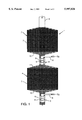
- FIG. 1 is a schematic sectional view of an embodiment of the two first catalyst zones and the two first oxygen-admixing zones of a reactor according to the invention having three or more catalyst zones;
- FIG. 2 is a schematic sectional view of a nozzle tube utilized in each of the oxygen-admixing zones of the reactor shown in FIG. 1;
- FIGS. 3 to 5 show reactor embodiments similar to the one shown in FIG. 1, with different designs of the oxygen-admixing zones.
- FIG. 1 shows a dehydrogenation reactor 1 having an inlet 9 for a feed consisting of a mixture of a dehydrogenatable hydrocarbon, e.g. propane, steam, hydrogen and oxygen, said oxygen being optionally introduced in the form of air or other oxygen-containing gas.
- the reactor 1 comprises a first catalyst zone 2 and a second catalyst zone 4, both containing a catalyst 7 which serves both as a dehydrogenation catalyst and as a hydrogen oxidation catalyst.
- An oxygen-admixing zone 3 is arranged between the outlet of the first catalyst zone 2 and the inlet of the second catalyst zone 4, which oxygen-admixing zone is free of catalyst and has a diameter which is substantially smaller than the diameter of the catalyst zones 2 and 4.
- the oxygen-admixing zone 3 is provided with a means 5 for feeding an oxygen-containing gas, designed as a tube having orifices 6, which orifices may be constituted by nozzles arranged in the walls of the tube.
- the number of orifices or nozzles may be from one to several thousands, dependent on the importance of an even distribution of the oxygen in the hydrocarbon-containing stream, which latter will also be referred to as the "main stream".
- the tube 5 or parts thereof may optionally have porous walls.
- the oxygen-feeding means 5 has an inlet 8 for oxygen-containing gas, which inlet extends laterally through the wall of the oxygen-admixing zone 3.
- feeding means 5 having its inlet for the oxygen-containing gas mounted laterally into the oxygen-admixing zone 3, a good temperature control can be achieved for the admixing of oxygen into the main stream.
- a similar oxygen-admixing zone 3 is arranged downstream of catalyst zone 4.
- the shown reactor embodiment Adjacent to the outlet region of each of the two catalyst zones 2 and 4, the shown reactor embodiment has a bed 10 of inert particles, e.g. quartz particles, for the purpose of preventing oxygen which is introduced into the oxygen-admixing zone 3 downstream of the catalyst zone from back-flowing into said catalyst zone against the flow direction of the main stream.
- a similar bed 11 of inert particles is provided in the inlet region of the second catalyst zone 4 for the purpose of ensuring a good mixing of the propane-containing main stream with the oxygen-containing gas before the mixture reaches the downstream catalyst.
- said layers 10 and 11 of inert particles bring about advantages, they are not strictly required in the reactor.
- the inlet and outlet regions of the catalyst zones are preferably tapered to ensure favourable flow conditions in the transition regions between reactor sections having different flow cross-section areas.
- FIG. 1 shows a second oxygen-admixing zone 3, implying that the reactor shown in FIG. 1 includes at least one additional catalyst zone.
- the catalyst zones 2 and 4 contain a catalyst serving both as a dehydrogenation catalyst and a hydrogen oxidation catalyst.
- a catalyst serving both as a dehydrogenation catalyst and a hydrogen oxidation catalyst.
- separate dehydrogenation and hydrogen oxidation catalysts could be used.
- a separate hydrogen oxidation catalyst would be placed in the first catalyst zone 2, in the second catalyst zone 4, and in subsequent catalyst zones, in a relatively narrow bed between the bed of inert particles 11 and the bed of catalyst 7.
- Catalyst 7 would in this case be a plain dehydrogenation catalyst.
- the separate hydrogen oxidation catalyst bed may consist of catalyst particles or an oxidation mesh.
- the selective combustion of hydrogen to water will take place in this hydrogen oxidation catalyst bed. Particles having a low surface area and large pores are ideal for preventing problems due to restrained pore diffusion, and a resulting prolonged dwelling time in the catalyst bed for parts of the gas mixture, since such particles will favour the more rapid reaction, which is the combustion of hydrogen. Thus, competing slow reactions between oxygen and the hydrocarbons in the main stream are suppressed.
- FIG. 2 shows an embodiment of the nozzle tube 5 mounted in the oxygen-admixing zone 3 of the reactor shown in FIG. 1.
- Orifices 6 are provided in the nozzle tube, which orifices can be shaped as nozzles, e.g. venturi nozzles. Venturi nozzles provide a higher flow velocity of the oxygen-containing gas than simplle orifices in the walls of the nozzletube at equal pressure drop and may therefore be preferable to simple orifices.
- FIG. 3 shows a reactor embodiment similar to the one shown in FIG. 1, except that the means 5 for feeding oxygen-containing gas has several nozzle tubes 5A instead of a single tube.
- the means 5 for feeding oxygen-containing gas has several nozzle tubes 5A instead of a single tube.
- Several nozzle tubes in the oxygen-admixing zone will secure a more even distribution of the oxygen in the main stream and thus reduce the risk of high local oxygen concentrations and the consequent risk of explosion.
- the construction becomes more complex than with a single nozzle tube and maintenance may then be more difficult.
- FIG. 4 shows a reactor embodiment similar to the one shown in FIG. 1, except that the means 5 for feeding oxygen-containing gas comprises a nozzle tube extending centrally through the length of the reactor. Said nozzle tube is provided with orifices or nozzles 6 in each of the two oxygen-admixing zones 3.
- the oxygen-feeding tube 5 may easily be removed from the reactor for maintenance and it has only one inlet for the oxygen-containing gas.
- FIG. 5 shows a reactor embodiment corresponding to the one shown in FIG. 1, except that the means 5 for feeding oxygen-containing gas is arranged outside of the oxygen-admixing zone 3, for feeding the oxygen-containing gas through orifices or nozzles 6 in the outer walls of the oxygen-admixing zone 3.
- This design of the oxygen-feeding means 5 is simple and allows a good control of the temperature of the introduced oxygen-containing gas all the way to the nozzle inlets.
- a massive body 12 may be mounted in a centered position within the oxygen-admixing zone 3 so as to reduce the flow cross-section area of the main stream and thus increase the flow velocity of the main stream.
- the massive body 12 may be replaced by e.g. a porous ceramic body coated with a hydrogen oxidation catalyst, so that the combustion of hydrogen will start before the mixture has reached the catalyst zone 4 downstream of the oxygen-admixing zone 3. It is desirable that such combustion takes place on a thin catalyst layer which is not hampered by diffusion restraints, because such thin catalyst layer would strongly promote selective combustion of hydrogen to water.
- the thin catalyst layer on the ceramic body may consist e.g. of a powder of the catalyst impregnated on the ceramic body.
- the reactor of the invention may suitable have 2 to 10 stages, corresponding to the same number of catalyst zones, in a series of alternating catalyst zones and oxygen-admixing zones, wherein the first zone of the reactor is constituted by a catalyst zone 2 and the last zone thereof is constituted by a catalyst zone 4.
- the number of stages or catalyst zones will be determined by the desired conversion of the hydrocarbon to be dehydrogenated.
- the hydrocarbon feed charged to the reactor of the invention at 9, in addition to one or more hydrocarbons, will comprise steam, hydrogen and oxygen, as is usual in essentially auto-thermal processes for the dehydrogenation of hydrocarbons.
- the oxygen-containing gas introduced in the oxygen-admixing zone 3 of the reactor may suitably have an oxygen concentration of 20% to 100%.
- the remaining part of the gas may comprise e.g. nitrogen and/or steam.
- air may be used as the oxygen-containing gas.
- the oxygen content of the gas may be as high as 100% without the selectivity for oxidation of hydrogen to water being substantially reduced as compared to oxygen con-concentrations in the oxygen feed down towards 20%.
- the added oxygen needs a certain time to be sufficiently admixed with the main stream, before the mixture is contacted with the catalyst which catalyzes the combustion of hydrogen.
- the mixing time is defined as the time it takes for the main stream to pass from the nozzle outlet to the catalyst. It is determined by the distance from the nozzle to the catalyst and by the flow velocity of the main stream.
- the inventors have also found that a high flow velocity of the main stream in the oxygen-admixing zone 3 is essential to achieve a complete admixing of the added oxygen with the main stream.
- simulated dehydrogenations of propane carried out by the inventors have shown that an increase of the flow velocity of the main stream within actual flow velocity ranges results in a substantial increase of the O 2 selectivity for H 2 O.
- an increase of the flow velocity of the main stream from 0.9 m/s to 4.5 m/s resulted in an increase of the O 2 selectivity for H 2 O of from less than 80% to 95.5%, the mixing time being approximately constant.
- Such high O 2 selectivity for H 2 O is assumed to be due to the higher flow velocity of the main stream, resulting in a more complete admixing of the oxygen with the main stream.
- the O 2 selectivity for H 2 O could be increased somewhat by increasing the mixing time from 11 to 24 ms, viz. from 69% to 87%, but a further increase of the mixing time to 46 ms, with the flow velocity of the main stream being the same, resulted in a reduction of the O 2 selectivity for H 2 to 80%.
- the right solution was not to increase the mixing time but to increase the flow velocity of the main stream, maintaining a short mixing time (11 ms).
- the flow velocity of the O 2 mixture through the nozzle was maintained at a constant value (of about 33 m/s) during the above-mentioned experiments, and the mixing time was adjusted by varying the distance between the outlet of the oxygen-feeding nozzle and the catalyst bed.
- the desired high flow velocity of the main stream through the oxygen-admixing zone is achieved by narrowing the flow cross-section area of the oxygen-admixing zone essentially relatively to the flow cross-section area of the catalyst zones.
- Suitable main stream flow velocities in the oxygen-admixing zone of the reactor of the invention may be in the range of 1 to 50 m/s.
- the flow velocity of the main stream through the dehydrogenation catalyst beds will be substantially lower, however, than the flow velocity in the oxygen-admixing zone, in order to achieve a high conversion in dehydrogenation of the hydrocarbon.
- the velocity at which the oxygen-containing gas is introduced into the oxygen-admixing zone 3 through the orifices or nozzles 6 appears to be less critical to the achievement of a complete admixing of the oxygen than the flow velocity of the main stream in the oxygen-admixing zone, provided that the oxygen-containing gas is fed at a flow velocity at a certain level, e.g. of the order of magnitude of 35 m/s or higher, e.g. up to 200 m/s. Any further increase of the flow velocity of the oxygen-containing gas does not appear to result in any substantially improved selectivity for the oxidation of hydrogen to water.
- Dehydrogenation temperature 400-700° C.
- Oxidation temperature 25-700° C.
- Velocity of oxygen-containing gas at nozzle outlet 1 m/s - crit. velocity
- any such previously known catalysts may be used.
- catalysts which contained Pt (0.7-1.02% by weight), Sn (0.5-1.15% by weight) and Cs (1.72-3.86% by weight) on ⁇ -Al 2 O 3 , as well as a catalyst containing 0.3% by weight of Pt and 1.2% by weight of tin on a mixed oxide Mg(Al)O. Said catalysts act both as a dehydrogenation catalyst and as a hydrogen oxidation catalyst.
- the overall reaction in the dehydrogenation of the dehydrogenatable hydrocarbons may be autothermal, exothermic or endothermic.
- the overall reaction is autothermal when the oxygen oxidizes about half of the hydrogen formed in the dehydrogenation reaction.
- the dehydrogenation is then typically carried out at 580-650° C.
- the overall reaction is exothermic when the oxygen oxidizes more than half of the hydrogen formed in the dehydrogenation reaction.
- the dehydrogenation is carried out at low temperature (400-580° C.), and the driving force for achieving a high conversion of the propane is generated by combustion of hydrogen.
- a low hydrogen concentration shifts the reaction equilibrium in the direction of a higher conversion of the propane to propene.
- the overall reaction is endothermic when the oxygen oxidizes less than half of the hydrogen formed in the dehydrogenation reaction.
- the propene product e.g. in the last stages of a multistage reactor, there will be a higher risk of undesired gaseous phase reactions between oxygen and propene than in the preceding stages. It may therefore be advisable to limit the amount of added oxygen in said last stages so as to achieve an endothermic overall reaction.
- the test was carried out in a reactor of the design shown schematically in FIG. 4, comprising a first catalyst zone 2, a second catalyst zone 4 and an intermediate oxygen-admixing zone 3.
- Both catalyst zones contained a catalyst consisting of 0.3% by weight of Pt and 1.2% by weight of Sn on a carrier consisting of Mg(Al)O, prepared as disclosed in international patent application No. PCT/NO94/00102.
- the flow cross-section area of the oxygen-admixing zone was about 5% of the flow cross-section area of each of the two catalyst zones.
- the amounts of catalyst in the catalyst zones, the composition of the propane-containing feed stream (the main stream) and the composition of the oxygen-containing stream were as follows:
- the propane-containing feed stream (the main stream) was introduced with a gas space velocity per hour GHSV of 2100 N ml g -1 h -1 .
- the flow velocities in the reactor were:
- Catalyst zone 2 0.51 m/s
- Oxygen-admixing zone 3 8.4 m/s
- Catalyst zone 4 0.51 m/s
- the above test conditions resulted in a mixing time in the oxygen-admixing zone of 6 milliseconds (ms).
- the oxidation temperature in the inlet region of the catalyst zone 4 was about 400° C.
- results achieved with the reactor design employed in this example are markedly improved relatively to results achieved with previously known reactor designs which do not provide any substantial difference between the flow velocity of the main stream in the catalyst zones and its flow velocity in the oxygen-admixing zone(s).
- the flow velocity of the main stream is substantially higher in the oxygen-admixing zone than in the catalyst zones, as in this example, the hydrogen is oxidized more selectively to water, and the dehydrogenation reaction is maintained at a high conversion level with a good selectivity for propene.
Landscapes
- Chemical & Material Sciences (AREA)
- Organic Chemistry (AREA)
- Chemical Kinetics & Catalysis (AREA)
- Organic Low-Molecular-Weight Compounds And Preparation Thereof (AREA)
- Catalysts (AREA)
- Low-Molecular Organic Synthesis Reactions Using Catalysts (AREA)
- Hydrogen, Water And Hydrids (AREA)
- Devices And Processes Conducted In The Presence Of Fluids And Solid Particles (AREA)
Abstract
Description
______________________________________
Amount of catalyst:
Catalyst zone 2 (g)
                  19.1
Catalyst zone 4 (g)
                  58.5
Main stream:
C.sub.3 H.sub.8 (N ml/min)
                  1000
H.sub.2 (N ml/min)
                  400
N.sub.2 (N ml/min)
                  45
O.sub.2 (N ml/min)
                  130
H.sub.2 O (N ml/min)
                  1040
O.sub.2 -containing stream:
O.sub.2 (N ml/min)
                  130
N.sub.2 (N ml/min)
                  45
______________________________________
Claims (19)
Applications Claiming Priority (3)
| Application Number | Priority Date | Filing Date | Title |
|---|---|---|---|
| NO944982A NO300117B1 (en) | 1994-12-22 | 1994-12-22 | Reactor for dehydrogenation of hydrocarbons with selective oxidation of hydrogen |
| NO944982 | 1994-12-22 | ||
| PCT/NO1995/000236 WO1996019424A1 (en) | 1994-12-22 | 1995-12-18 | A reactor for catalytic dehydrogenation of hydrocarbons with selective oxidation of hydrogen |
Publications (1)
| Publication Number | Publication Date |
|---|---|
| US5997826A true US5997826A (en) | 1999-12-07 |
Family
ID=19897780
Family Applications (1)
| Application Number | Title | Priority Date | Filing Date |
|---|---|---|---|
| US08/860,069 Expired - Fee Related US5997826A (en) | 1994-12-22 | 1995-12-18 | Reactor for catalytic dehydrogenation of hydrocarbons with selective oxidation of hydrogen |
Country Status (12)
| Country | Link |
|---|---|
| US (1) | US5997826A (en) |
| EP (1) | EP0799169B1 (en) |
| KR (1) | KR100258656B1 (en) |
| CN (1) | CN1070832C (en) |
| AT (1) | ATE190302T1 (en) |
| AU (1) | AU691715B2 (en) |
| BR (1) | BR9510515A (en) |
| CA (1) | CA2207038C (en) |
| DE (1) | DE69515511D1 (en) |
| NO (1) | NO300117B1 (en) |
| RU (1) | RU2140895C1 (en) |
| WO (1) | WO1996019424A1 (en) |
Cited By (39)
| Publication number | Priority date | Publication date | Assignee | Title |
|---|---|---|---|---|
| EP1166864A1 (en) * | 2000-06-30 | 2002-01-02 | Casale Chemicals SA | Method for the production of formaldehyde |
| EP1180394A1 (en) * | 2000-08-17 | 2002-02-20 | Institut Francais Du Petrole | Apparatus for injecting a fluid between two successive beds for effecting and distributing simultaneously a multi-phase mixture |
| US20020021991A1 (en) * | 2000-08-17 | 2002-02-21 | Institut Francais Du Petrole | Distribution device for producing a polyphase mixture, and associated reactor |
| US20030180216A1 (en) * | 2002-03-11 | 2003-09-25 | Tegrotenhuis Ward E. | Microchannel reactors with temperature control |
| US20030219903A1 (en) * | 2002-05-21 | 2003-11-27 | Yong Wang | Reactors having varying cross-section, methods of making same, and methods of conducting reactions with varying local contact time |
| US20040018134A1 (en) * | 2002-07-26 | 2004-01-29 | Ke Liu | Preferential oxidation reactor and process |
| US20040034266A1 (en) * | 2002-06-13 | 2004-02-19 | Brophy John H. | Catalytic oxidative dehydrogenation, and microchannel reactors for catalytic oxidative dehydrogenation |
| US20040099712A1 (en) * | 2002-11-27 | 2004-05-27 | Tonkovich Anna Lee | Microchannel apparatus, methods of making microchannel apparatus, and processes of conducting unit operations |
| US20040199039A1 (en) * | 2003-04-07 | 2004-10-07 | Brophy John H. | Dehydrogenation reactions in narrow reaction chambers and integrated reactors |
| US20040220434A1 (en) * | 2003-05-02 | 2004-11-04 | Brophy John H. | Process for converting a hydrocarbon to an oxygenate or a nitrile |
| US20050256358A1 (en) * | 2004-05-14 | 2005-11-17 | Yong Wang | Staged alkylation in microchannels |
| US20050272965A1 (en) * | 2004-03-23 | 2005-12-08 | Watson Junko M | Catalysts having catalytic material applied directly to thermally-grown alumina and catalytic methods using same, improved methods of oxidative dehydrogenation |
| US20060116528A1 (en) * | 2004-11-03 | 2006-06-01 | Terry Mazanec | Process and apparatus for improved methods for making vinyl acetate monomer (VAM) |
| US20060122436A1 (en) * | 2002-11-04 | 2006-06-08 | Basf Aktiengesellschaft Patents, Trademarks And Licenses | Method for producing aldehydes from alkanes |
| US20060122448A1 (en) * | 2002-10-30 | 2006-06-08 | Natarajan Thiagarajan | Method for catalytically dehydrating hydrocarbons |
| US20070004810A1 (en) * | 2005-06-30 | 2007-01-04 | Yong Wang | Novel catalyst and fischer-tropsch synthesis process using same |
| US20080302013A1 (en) * | 2007-06-05 | 2008-12-11 | Air Products And Chemicals, Inc. | Staged Membrane Oxidation Reactor System |
| US7470408B2 (en) | 2003-12-18 | 2008-12-30 | Velocys | In situ mixing in microchannels |
| US7507274B2 (en) | 2005-03-02 | 2009-03-24 | Velocys, Inc. | Separation process using microchannel technology |
| JP2009531377A (en) * | 2006-03-30 | 2009-09-03 | ビーエーエスエフ ソシエタス・ヨーロピア | Process for partial dehydrogenation of heterogeneous catalyst of at least one hydrocarbon to be dehydrogenated |
| US20090253941A1 (en) * | 2008-04-07 | 2009-10-08 | Soumitra Deshmukh | Microchannel Apparatus Comprising Structured Walls, Chemical Processes, Methods of Making Formaldehyde |
| US7622509B2 (en) | 2004-10-01 | 2009-11-24 | Velocys, Inc. | Multiphase mixing process using microchannel process technology |
| US7678956B2 (en) | 2004-11-11 | 2010-03-16 | Uhde Gmbh | Method for catalytically dehydrating propane to form propylene |
| US20100081852A1 (en) * | 2004-11-09 | 2010-04-01 | Institut Francais Du Petrole | Multi-zone fixed-bed or moving-bed reactor with an integrated heat exchanger |
| WO2010101571A1 (en) * | 2009-03-05 | 2010-09-10 | Uop Llc | Hydrocarbon dehydrogenation process |
| US20100286461A1 (en) * | 2005-12-21 | 2010-11-11 | Base Se | Process for continuous heterogeneously catalyzed partial dehydrogenation of at least one hydrocarbon to be dehydrogenated |
| US20110038763A1 (en) * | 2006-06-27 | 2011-02-17 | Basf Se | Process for continuous heterogeneously catalyzed partial dehydrogenation of at least one hydrocarbon to be dehydrogenated |
| US7935734B2 (en) | 2005-07-08 | 2011-05-03 | Anna Lee Tonkovich | Catalytic reaction process using microchannel technology |
| US7999144B2 (en) | 2006-09-01 | 2011-08-16 | Velocys | Microchannel apparatus and methods of conducting catalyzed oxidative dehydrogenation |
| US8383872B2 (en) | 2004-11-16 | 2013-02-26 | Velocys, Inc. | Multiphase reaction process using microchannel technology |
| US8383054B2 (en) | 2002-08-15 | 2013-02-26 | Velocys, Inc. | Integrated combustion reactors and methods of conducting simultaneous endothermic and exothermic reactions |
| USRE44822E1 (en) * | 2006-03-30 | 2014-04-01 | Basf Se | Process for heterogeneously catalyzed partial dehydrogenation of at least one hydrocarbon to be dehydrogenated |
| US8703984B2 (en) | 2004-08-12 | 2014-04-22 | Velocys, Inc. | Process for converting ethylene to ethylene oxide using microchannel process technology |
| WO2014204732A1 (en) * | 2013-06-18 | 2014-12-24 | Uop Llc | Single stage reactor system with oxidative preheat for dehydrogenation of hydrocarbons |
| US9101890B2 (en) | 2005-05-25 | 2015-08-11 | Velocys, Inc. | Support for use in microchannel processing |
| US9150494B2 (en) | 2004-11-12 | 2015-10-06 | Velocys, Inc. | Process using microchannel technology for conducting alkylation or acylation reaction |
| US9192929B2 (en) | 2002-08-15 | 2015-11-24 | Velocys, Inc. | Integrated combustion reactor and methods of conducting simultaneous endothermic and exothermic reactions |
| WO2018037315A1 (en) * | 2016-08-22 | 2018-03-01 | Sabic Global Technologies B.V. | Integrated method and system for hydrogen and ethylene production |
| US12540109B2 (en) | 2020-06-30 | 2026-02-03 | Shell Usa, Inc. | Ethane oxidative dehydrogenation process |
Families Citing this family (17)
| Publication number | Priority date | Publication date | Assignee | Title |
|---|---|---|---|---|
| ES2359884T3 (en) * | 1998-07-08 | 2011-05-27 | Toyota Jidosha Kabushiki Kaisha | APPLIANCE FOR FUEL REFORM. |
| DE19840018A1 (en) * | 1998-09-02 | 2000-03-09 | Fraunhofer Ges Forschung | Process and device for producing nitrous oxide |
| NO310807B1 (en) * | 1999-05-28 | 2001-09-03 | Norske Stats Oljeselskap | Catalyst pretreatment |
| US6969506B2 (en) * | 1999-08-17 | 2005-11-29 | Battelle Memorial Institute | Methods of conducting simultaneous exothermic and endothermic reactions |
| NO316512B1 (en) * | 2000-01-25 | 2004-02-02 | Statoil Asa | Process and reactor for autothermal dehydrogenation of hydrocarbons |
| TW200422289A (en) | 2003-02-18 | 2004-11-01 | Bp Chem Int Ltd | Auto thermal cracking reactor |
| KR101004487B1 (en) | 2005-09-08 | 2010-12-31 | 가시오게산키 가부시키가이샤 | Reformer for Power Supply of Mobile Electronic Devices |
| DE102005052923A1 (en) * | 2005-11-03 | 2007-05-10 | Basf Ag | Stable continuous process for preparing acrolein and/or acrylic acid comprises dehydrogenating a propane to obtain a product gas mixture and introducing the mixture into a first separation zone to obtain another product gas mixture |
| DE502006003491D1 (en) | 2005-11-03 | 2009-05-28 | Basf Se | METHOD FOR THE STABLE OPERATION OF A CONTINUOUS EXTRACTION PROCESS FOR THE PRODUCTION OF ACROLEINE, OR ACRYLIC ACID OR THEIR PROPANE MIXTURE |
| RU2448080C2 (en) * | 2006-03-30 | 2012-04-20 | Басф Се | Method for heterogeneous catalytic partial dehydrogenation of hydrocarbon to undergo dehydrogenation |
| DE102007006647A1 (en) | 2007-02-06 | 2008-08-07 | Basf Se | Process for the regeneration of a catalyst bed deactivated in the context of a heterogeneously catalyzed partial dehydrogenation of a hydrocarbon |
| CN103805234B (en) * | 2012-11-07 | 2015-09-02 | 中国石油化工股份有限公司 | A kind of radial-flow type residual hydrocracking reactor |
| CA2833822C (en) * | 2013-11-21 | 2020-08-04 | Nova Chemicals Corporation | Inherently safe odh operation |
| KR102563776B1 (en) * | 2017-07-28 | 2023-08-04 | 다우 글로벌 테크놀로지스 엘엘씨 | Method for preparing methyl methacrylate by oxidative esterification using a heterogeneous catalyst |
| EP3476471A1 (en) * | 2017-10-25 | 2019-05-01 | Linde Aktiengesellschaft | Method and reactor for the forming and catalytic conversion of an educt mixture |
| EP3848113A1 (en) | 2020-01-07 | 2021-07-14 | SABIC Global Technologies B.V. | Systems, devices, and methods of a reactor feed distribution system |
| CN113380431A (en) * | 2021-06-03 | 2021-09-10 | 哈尔滨工程大学 | Hydrogen recombiner catalytic unit |
Citations (7)
| Publication number | Priority date | Publication date | Assignee | Title |
|---|---|---|---|---|
| US3502737A (en) * | 1968-06-07 | 1970-03-24 | Badger Co | Ethylbenzene dehydrogenation |
| US3855330A (en) * | 1971-09-23 | 1974-12-17 | Aquitaine Petrole | Production of styrene |
| US4778941A (en) * | 1988-01-19 | 1988-10-18 | Uop Inc. | Eduction of intermediate effluent in dehydrogenation process having oxidative reheat |
| US4806624A (en) * | 1987-06-17 | 1989-02-21 | Uop Inc. | Dehydrogenation of dehydrogenatable hydrocarbons |
| EP0336622A2 (en) * | 1988-03-31 | 1989-10-11 | BP Chemicals Limited | Hydrocarbon dehydrogenation reactions |
| US4891464A (en) * | 1985-12-26 | 1990-01-02 | Uop | Control method for oxygen addition to oxidative reheat zone of hydrocarbon conversion process |
| US5043500A (en) * | 1989-12-20 | 1991-08-27 | Uop | Use of steam eductor to supply oxygen for oxidative reheating in dehydrogenation of C3 + hydrocarbons |
Family Cites Families (5)
| Publication number | Priority date | Publication date | Assignee | Title |
|---|---|---|---|---|
| SU1257069A1 (en) * | 1984-01-02 | 1986-09-15 | Предприятие П/Я В-8296 | Method of control of hydrocarbon dehydrogenation process |
| US4739124A (en) * | 1985-09-16 | 1988-04-19 | Uop Inc. | Method for oxygen addition to oxidative reheat zone of ethane dehydrogenation process |
| US4731924A (en) * | 1986-08-04 | 1988-03-22 | American Telephone And Telegraph Company | Method and apparatus for inserting multi-leaded articles into a substrate |
| US4827066A (en) * | 1988-05-23 | 1989-05-02 | Uop Inc. | Dehydrogenation of dehydrogenatable hydrocarbons |
| US4914249A (en) * | 1988-12-29 | 1990-04-03 | Uop | Dehydrogenation of dehydrogenatable hydrocarbons |
-
1994
- 1994-12-22 NO NO944982A patent/NO300117B1/en unknown
-
1995
- 1995-12-18 EP EP95942322A patent/EP0799169B1/en not_active Expired - Lifetime
- 1995-12-18 AT AT95942322T patent/ATE190302T1/en not_active IP Right Cessation
- 1995-12-18 DE DE69515511T patent/DE69515511D1/en not_active Expired - Lifetime
- 1995-12-18 CA CA002207038A patent/CA2207038C/en not_active Expired - Fee Related
- 1995-12-18 US US08/860,069 patent/US5997826A/en not_active Expired - Fee Related
- 1995-12-18 RU RU97112487A patent/RU2140895C1/en not_active IP Right Cessation
- 1995-12-18 AU AU43575/96A patent/AU691715B2/en not_active Ceased
- 1995-12-18 WO PCT/NO1995/000236 patent/WO1996019424A1/en not_active Ceased
- 1995-12-18 KR KR1019970704244A patent/KR100258656B1/en not_active Expired - Fee Related
- 1995-12-18 BR BR9510515A patent/BR9510515A/en not_active IP Right Cessation
- 1995-12-18 CN CN95196944A patent/CN1070832C/en not_active Expired - Fee Related
Patent Citations (7)
| Publication number | Priority date | Publication date | Assignee | Title |
|---|---|---|---|---|
| US3502737A (en) * | 1968-06-07 | 1970-03-24 | Badger Co | Ethylbenzene dehydrogenation |
| US3855330A (en) * | 1971-09-23 | 1974-12-17 | Aquitaine Petrole | Production of styrene |
| US4891464A (en) * | 1985-12-26 | 1990-01-02 | Uop | Control method for oxygen addition to oxidative reheat zone of hydrocarbon conversion process |
| US4806624A (en) * | 1987-06-17 | 1989-02-21 | Uop Inc. | Dehydrogenation of dehydrogenatable hydrocarbons |
| US4778941A (en) * | 1988-01-19 | 1988-10-18 | Uop Inc. | Eduction of intermediate effluent in dehydrogenation process having oxidative reheat |
| EP0336622A2 (en) * | 1988-03-31 | 1989-10-11 | BP Chemicals Limited | Hydrocarbon dehydrogenation reactions |
| US5043500A (en) * | 1989-12-20 | 1991-08-27 | Uop | Use of steam eductor to supply oxygen for oxidative reheating in dehydrogenation of C3 + hydrocarbons |
Cited By (93)
| Publication number | Priority date | Publication date | Assignee | Title |
|---|---|---|---|---|
| US20060286008A1 (en) * | 2000-06-30 | 2006-12-21 | Casale Chemicals S.A. | Method for the production of formaldehyde |
| WO2002002219A1 (en) * | 2000-06-30 | 2002-01-10 | Casale Chemicals S.A. | Method for the production of formaldehyde |
| EP1166864A1 (en) * | 2000-06-30 | 2002-01-02 | Casale Chemicals SA | Method for the production of formaldehyde |
| US7943102B2 (en) | 2000-06-30 | 2011-05-17 | Casale Chemicals S.A. | Method for the production of formaldehyde |
| US7109382B2 (en) | 2000-06-30 | 2006-09-19 | Casale Chemicals S.A. | Method for the production of formaldehyde |
| US7238329B2 (en) | 2000-08-17 | 2007-07-03 | Institut Francais Du Petrole | Device for injecting a fluid located between two successive beds to simultaneously produce and distribute a polyphase mixture |
| FR2813024A1 (en) * | 2000-08-17 | 2002-02-22 | Inst Francais Du Petrole | DEVICE FOR INJECTING A FLUID PLACED BETWEEN TWO SUCCESSIVE BEDS FOR SIMULTANEOUSLY MAKING AND DISPENSING A POLYPHASIC MIXTURE |
| EP1180393A3 (en) * | 2000-08-17 | 2002-03-06 | Institut Francais Du Petrole | Apparatus for injecting a fluid between two successive beds for effecting and distributing simultaneously a multi-phase mixture |
| FR2813023A1 (en) * | 2000-08-17 | 2002-02-22 | Inst Francais Du Petrole | DISPENSING DEVICE FOR MAKING A POLYPHASIC MIXTURE AND RELATED REACTOR |
| US20020021991A1 (en) * | 2000-08-17 | 2002-02-21 | Institut Francais Du Petrole | Distribution device for producing a polyphase mixture, and associated reactor |
| US20020020359A1 (en) * | 2000-08-17 | 2002-02-21 | Institut Francais Du Petrole | Device for injecting a fluid located between two successive beds to simultaneously produce and distribute a polyphase mixture |
| EP1180394A1 (en) * | 2000-08-17 | 2002-02-20 | Institut Francais Du Petrole | Apparatus for injecting a fluid between two successive beds for effecting and distributing simultaneously a multi-phase mixture |
| US6824675B2 (en) | 2000-08-17 | 2004-11-30 | Institut Francais Du Petrole | Distribution device for producing a polyphase mixture, and associated reactor |
| US20030180216A1 (en) * | 2002-03-11 | 2003-09-25 | Tegrotenhuis Ward E. | Microchannel reactors with temperature control |
| US7297324B2 (en) | 2002-03-11 | 2007-11-20 | Battelle Memorial Institute | Microchannel reactors with temperature control |
| US20030219903A1 (en) * | 2002-05-21 | 2003-11-27 | Yong Wang | Reactors having varying cross-section, methods of making same, and methods of conducting reactions with varying local contact time |
| US8206666B2 (en) | 2002-05-21 | 2012-06-26 | Battelle Memorial Institute | Reactors having varying cross-section, methods of making same, and methods of conducting reactions with varying local contact time |
| US7744829B2 (en) | 2002-06-13 | 2010-06-29 | Velocys | Microchannel reactors for catalytic oxidative dehydrogenation |
| US20110152597A1 (en) * | 2002-06-13 | 2011-06-23 | Velocys Inc. | Catalytic oxidative dehydrogenation, and microchannel reactors for catalytic oxidative dehydrogenation |
| US7402719B2 (en) | 2002-06-13 | 2008-07-22 | Velocys | Catalytic oxidative dehydrogenation, and microchannel reactors for catalytic oxidative dehydrogenation |
| US8106249B2 (en) | 2002-06-13 | 2012-01-31 | Velocys | Catalytic oxidative dehydrogenation, and microchannel reactors for catalytic oxidative dehydrogenation |
| US20090004076A1 (en) * | 2002-06-13 | 2009-01-01 | Velocys Inc. | Catalytic Oxidative Dehydrogenation and Microchannel Reactors for Catalytic Oxidative Dehydrogenation |
| US20040034266A1 (en) * | 2002-06-13 | 2004-02-19 | Brophy John H. | Catalytic oxidative dehydrogenation, and microchannel reactors for catalytic oxidative dehydrogenation |
| EP2277844A2 (en) | 2002-06-13 | 2011-01-26 | Velocys, Inc. | Catalytic oxidative dehydrogenation, and microchannel reactors for catalytic oxidative dehydrogenation |
| JP2005534156A (en) * | 2002-07-26 | 2005-11-10 | ユーティーシー フューエル セルズ,エルエルシー | Preferred oxidation reactor and process |
| US7195742B2 (en) | 2002-07-26 | 2007-03-27 | Utc Fuel Cells, Llc | Preferential oxidation reactor and process |
| WO2004011133A1 (en) * | 2002-07-26 | 2004-02-05 | Utc Fuel Cells, Llc | Preferential oxidation reactor and process |
| US20040018134A1 (en) * | 2002-07-26 | 2004-01-29 | Ke Liu | Preferential oxidation reactor and process |
| US8383054B2 (en) | 2002-08-15 | 2013-02-26 | Velocys, Inc. | Integrated combustion reactors and methods of conducting simultaneous endothermic and exothermic reactions |
| US9192929B2 (en) | 2002-08-15 | 2015-11-24 | Velocys, Inc. | Integrated combustion reactor and methods of conducting simultaneous endothermic and exothermic reactions |
| US20060122448A1 (en) * | 2002-10-30 | 2006-06-08 | Natarajan Thiagarajan | Method for catalytically dehydrating hydrocarbons |
| US7816576B2 (en) | 2002-10-31 | 2010-10-19 | Uhde Gmbh | Method for catalytically dehydrating hydrocarbons |
| US20060122436A1 (en) * | 2002-11-04 | 2006-06-08 | Basf Aktiengesellschaft Patents, Trademarks And Licenses | Method for producing aldehydes from alkanes |
| US20060108397A1 (en) * | 2002-11-27 | 2006-05-25 | Tonkovich Anna L | Microchannel apparatus, methods of making microchannel apparatus, and processes of conducting unit operations |
| US6989134B2 (en) | 2002-11-27 | 2006-01-24 | Velocys Inc. | Microchannel apparatus, methods of making microchannel apparatus, and processes of conducting unit operations |
| US9452407B2 (en) | 2002-11-27 | 2016-09-27 | Velocys, Inc. | Microchannel apparatus, methods of making microchannel apparatus, and processes of conducting unit operations |
| US20040099712A1 (en) * | 2002-11-27 | 2004-05-27 | Tonkovich Anna Lee | Microchannel apparatus, methods of making microchannel apparatus, and processes of conducting unit operations |
| US20090012341A1 (en) * | 2003-04-07 | 2009-01-08 | Velocys Inc. | Dehydrogenation Reactions in Narrow Reaction Chambers and Integrated Reactors |
| US7405338B2 (en) | 2003-04-07 | 2008-07-29 | Velocys | Dehydrogenation reactions in narrow reaction chambers and integrated reactors |
| US7754935B2 (en) | 2003-04-07 | 2010-07-13 | Velocys | Dehydrogenation reactions in narrow reaction chambers and integrated reactors |
| US20040199039A1 (en) * | 2003-04-07 | 2004-10-07 | Brophy John H. | Dehydrogenation reactions in narrow reaction chambers and integrated reactors |
| US20080031788A1 (en) * | 2003-05-02 | 2008-02-07 | Brophy John H | Process for converting a hydrocarbon to an oxygenate or a nitrile |
| US20040220434A1 (en) * | 2003-05-02 | 2004-11-04 | Brophy John H. | Process for converting a hydrocarbon to an oxygenate or a nitrile |
| US9108904B2 (en) | 2003-05-02 | 2015-08-18 | Velocys, Inc. | Process for converting a hydrocarbon to an oxygenate or a nitrile |
| US7294734B2 (en) | 2003-05-02 | 2007-11-13 | Velocys, Inc. | Process for converting a hydrocarbon to an oxygenate or a nitrile |
| US7470408B2 (en) | 2003-12-18 | 2008-12-30 | Velocys | In situ mixing in microchannels |
| US20090196805A1 (en) * | 2003-12-18 | 2009-08-06 | Velocys Inc. | In Situ Mixing in Microchannels |
| US9962697B2 (en) | 2003-12-18 | 2018-05-08 | Velocys, Inc. | In situ mixing in microchannels |
| US8646472B2 (en) | 2003-12-18 | 2014-02-11 | Velocys, Inc. | In situ mixing in microchannels |
| US9011781B2 (en) | 2004-03-23 | 2015-04-21 | Velocys, Inc. | Catalysts having catalytic material applied directly to thermally-grown alumina and catalytic methods using same; improved methods of oxidative dehydrogenation |
| US20050272965A1 (en) * | 2004-03-23 | 2005-12-08 | Watson Junko M | Catalysts having catalytic material applied directly to thermally-grown alumina and catalytic methods using same, improved methods of oxidative dehydrogenation |
| US8378163B2 (en) | 2004-03-23 | 2013-02-19 | Velocys Corp. | Catalysts having catalytic material applied directly to thermally-grown alumina and catalytic methods using same, improved methods of oxidative dehydrogenation |
| US7708955B2 (en) | 2004-05-14 | 2010-05-04 | Battelle Memorial Institute | Staged alkylation in microchannels |
| US20050256358A1 (en) * | 2004-05-14 | 2005-11-17 | Yong Wang | Staged alkylation in microchannels |
| US7304198B2 (en) | 2004-05-14 | 2007-12-04 | Battelle Memorial Institute | Staged alkylation in microchannels |
| US8703984B2 (en) | 2004-08-12 | 2014-04-22 | Velocys, Inc. | Process for converting ethylene to ethylene oxide using microchannel process technology |
| US7816411B2 (en) | 2004-10-01 | 2010-10-19 | Velocys, Inc. | Multiphase mixing process using microchannel process technology |
| US7622509B2 (en) | 2004-10-01 | 2009-11-24 | Velocys, Inc. | Multiphase mixing process using microchannel process technology |
| US20060116528A1 (en) * | 2004-11-03 | 2006-06-01 | Terry Mazanec | Process and apparatus for improved methods for making vinyl acetate monomer (VAM) |
| US7468455B2 (en) | 2004-11-03 | 2008-12-23 | Velocys, Inc. | Process and apparatus for improved methods for making vinyl acetate monomer (VAM) |
| US20090214404A1 (en) * | 2004-11-03 | 2009-08-27 | Mazanec Terry J | Process and Apparatus for Improved Methods for Making Vinyl Acetate Monomer (VAM) |
| US8029748B2 (en) | 2004-11-03 | 2011-10-04 | Velocys, Inc | Process and apparatus for improved methods for making vinyl acetate monomer (VAM) |
| US8609913B2 (en) * | 2004-11-09 | 2013-12-17 | IFP Energies Nouvelles | Multi-zone fixed-bed or moving-bed reactor with an integrated heat exchanger |
| US20100081852A1 (en) * | 2004-11-09 | 2010-04-01 | Institut Francais Du Petrole | Multi-zone fixed-bed or moving-bed reactor with an integrated heat exchanger |
| US7678956B2 (en) | 2004-11-11 | 2010-03-16 | Uhde Gmbh | Method for catalytically dehydrating propane to form propylene |
| US9150494B2 (en) | 2004-11-12 | 2015-10-06 | Velocys, Inc. | Process using microchannel technology for conducting alkylation or acylation reaction |
| US8383872B2 (en) | 2004-11-16 | 2013-02-26 | Velocys, Inc. | Multiphase reaction process using microchannel technology |
| US7507274B2 (en) | 2005-03-02 | 2009-03-24 | Velocys, Inc. | Separation process using microchannel technology |
| US9101890B2 (en) | 2005-05-25 | 2015-08-11 | Velocys, Inc. | Support for use in microchannel processing |
| US20070004810A1 (en) * | 2005-06-30 | 2007-01-04 | Yong Wang | Novel catalyst and fischer-tropsch synthesis process using same |
| US7935734B2 (en) | 2005-07-08 | 2011-05-03 | Anna Lee Tonkovich | Catalytic reaction process using microchannel technology |
| US20100286461A1 (en) * | 2005-12-21 | 2010-11-11 | Base Se | Process for continuous heterogeneously catalyzed partial dehydrogenation of at least one hydrocarbon to be dehydrogenated |
| US8721996B2 (en) * | 2005-12-21 | 2014-05-13 | Basf Se | Reactor for continuous heterogeneously catalyzed partial dehydrogenation of at least one hydrocarbon to be dehydrogenated |
| USRE44822E1 (en) * | 2006-03-30 | 2014-04-01 | Basf Se | Process for heterogeneously catalyzed partial dehydrogenation of at least one hydrocarbon to be dehydrogenated |
| JP2009531377A (en) * | 2006-03-30 | 2009-09-03 | ビーエーエスエフ ソシエタス・ヨーロピア | Process for partial dehydrogenation of heterogeneous catalyst of at least one hydrocarbon to be dehydrogenated |
| US8721997B2 (en) * | 2006-06-27 | 2014-05-13 | Basf Se | Reactor for continuous heterogeneously catalyzed partial dehydrogenation of at least one hydrocarbon to be dehydrogenated |
| US20110038763A1 (en) * | 2006-06-27 | 2011-02-17 | Basf Se | Process for continuous heterogeneously catalyzed partial dehydrogenation of at least one hydrocarbon to be dehydrogenated |
| US7999144B2 (en) | 2006-09-01 | 2011-08-16 | Velocys | Microchannel apparatus and methods of conducting catalyzed oxidative dehydrogenation |
| US8419827B2 (en) | 2007-06-05 | 2013-04-16 | Air Products And Chemicals, Inc. | Staged membrane oxidation reactor system |
| US8262755B2 (en) | 2007-06-05 | 2012-09-11 | Air Products And Chemicals, Inc. | Staged membrane oxidation reactor system |
| US20080302013A1 (en) * | 2007-06-05 | 2008-12-11 | Air Products And Chemicals, Inc. | Staged Membrane Oxidation Reactor System |
| JP2009000679A (en) * | 2007-06-05 | 2009-01-08 | Air Products & Chemicals Inc | Staged membrane oxidation reactor system |
| US8728202B2 (en) | 2007-06-05 | 2014-05-20 | Air Products And Chemicals, Inc. | Staged membrane oxidation reactor system |
| US9278330B2 (en) * | 2008-04-07 | 2016-03-08 | Velocys, Inc. | Microchannel apparatus comprising structured walls, chemical processes, methods of making formaldehyde |
| US20100267993A1 (en) * | 2008-04-07 | 2010-10-21 | Velocys Inc. | Microchannel apparatus comprising structured walls, chemical processes, methods of making formaldehyde |
| US20090253941A1 (en) * | 2008-04-07 | 2009-10-08 | Soumitra Deshmukh | Microchannel Apparatus Comprising Structured Walls, Chemical Processes, Methods of Making Formaldehyde |
| US7745667B2 (en) | 2008-04-07 | 2010-06-29 | Velocys | Microchannel apparatus comprising structured walls, chemical processes, methods of making formaldehyde |
| RU2505516C2 (en) * | 2009-03-05 | 2014-01-27 | Юоп Ллк | Method of dehydration of hydrocarbons |
| WO2010101571A1 (en) * | 2009-03-05 | 2010-09-10 | Uop Llc | Hydrocarbon dehydrogenation process |
| CN102341484B (en) * | 2009-03-05 | 2014-04-30 | 环球油品公司 | Hydrocarbon dehydrogenation process |
| WO2014204732A1 (en) * | 2013-06-18 | 2014-12-24 | Uop Llc | Single stage reactor system with oxidative preheat for dehydrogenation of hydrocarbons |
| WO2018037315A1 (en) * | 2016-08-22 | 2018-03-01 | Sabic Global Technologies B.V. | Integrated method and system for hydrogen and ethylene production |
| US12540109B2 (en) | 2020-06-30 | 2026-02-03 | Shell Usa, Inc. | Ethane oxidative dehydrogenation process |
Also Published As
| Publication number | Publication date |
|---|---|
| EP0799169B1 (en) | 2000-03-08 |
| NO944982D0 (en) | 1994-12-22 |
| RU2140895C1 (en) | 1999-11-10 |
| DE69515511D1 (en) | 2000-04-13 |
| CA2207038C (en) | 2002-02-12 |
| AU691715B2 (en) | 1998-05-21 |
| ATE190302T1 (en) | 2000-03-15 |
| CN1070832C (en) | 2001-09-12 |
| BR9510515A (en) | 1998-07-07 |
| NO300117B1 (en) | 1997-04-14 |
| AU4357596A (en) | 1996-07-10 |
| WO1996019424A1 (en) | 1996-06-27 |
| KR980700943A (en) | 1998-04-30 |
| EP0799169A1 (en) | 1997-10-08 |
| KR100258656B1 (en) | 2000-06-15 |
| CA2207038A1 (en) | 1996-06-27 |
| NO944982L (en) | 1996-06-24 |
| CN1170397A (en) | 1998-01-14 |
Similar Documents
| Publication | Publication Date | Title |
|---|---|---|
| EP0799169B1 (en) | A reactor for catalytic dehydrogenation of hydrocarbons with selective oxidation of hydrogen | |
| US4863707A (en) | Method of ammonia production | |
| US6887456B2 (en) | Catalyst system for enhanced flow syngas production | |
| TWI359131B (en) | Integrated catalytic process for converting alkane | |
| CA2442491C (en) | Process for the production of synthesis gas | |
| US6911193B2 (en) | Integration of mixed catalysts to maximize syngas production | |
| US20100030004A1 (en) | Hybrid autothermal catalytic process for converting alkanes to alkenes and catalysts useful for same | |
| US6790431B2 (en) | Reactor for temperature moderation | |
| KR20040057953A (en) | Monolith based catalytic partial oxidation process for syngas production | |
| CN100447116C (en) | Process for preparing at least one product of partial oxidation and/or ammoxidation of a hydrocarbon | |
| EP1261570B1 (en) | Method and reactor for autothermal dehydrogenation of hydrocarbons | |
| US7105107B2 (en) | Use of nonmicroporous support for syngas catalyst | |
| KR100996220B1 (en) | Isothermal Methods for Dehydrogenating Alkanes | |
| US4778941A (en) | Eduction of intermediate effluent in dehydrogenation process having oxidative reheat | |
| EA008074B1 (en) | Method for catalytically dehydrating hydrocarbons | |
| CA2558547A1 (en) | Catalyst used for the oxidation of hydrogen, and method for the dehydrogenation of hydrocarbons | |
| US20020065442A1 (en) | Radial reactor loading | |
| KR101135416B1 (en) | Process for production of styrene | |
| CN115720577A (en) | Ethane oxidative dehydrogenation method | |
| JP2002154991A (en) | Method for producing styrene | |
| RU2356881C2 (en) | Method of producing at least one product of partial oxidation and/or ammoxidation of hydrocarbon, chosen from group, containing acrolein, methacrolein, acrylic acid, methacrylic acid, acrylonitrile and methacrylonitrile | |
| RU2166494C2 (en) | Method of preparing styrene | |
| JP2007016027A (en) | Method for producing styrene |
Legal Events
| Date | Code | Title | Description |
|---|---|---|---|
| AS | Assignment |
Owner name: DEN NORSKE STATS OLJESELSKAP A.S., NORWAY Free format text: ASSIGNMENT OF ASSIGNORS INTEREST;ASSIGNORS:LODENG, RUNE;SORAKER, PAL;REEL/FRAME:009206/0782 Effective date: 19970619 |
|
| FEPP | Fee payment procedure |
Free format text: PAYOR NUMBER ASSIGNED (ORIGINAL EVENT CODE: ASPN); ENTITY STATUS OF PATENT OWNER: LARGE ENTITY |
|
| FPAY | Fee payment |
Year of fee payment: 4 |
|
| FPAY | Fee payment |
Year of fee payment: 8 |
|
| REMI | Maintenance fee reminder mailed | ||
| LAPS | Lapse for failure to pay maintenance fees | ||
| STCH | Information on status: patent discontinuation |
Free format text: PATENT EXPIRED DUE TO NONPAYMENT OF MAINTENANCE FEES UNDER 37 CFR 1.362 |
|
| FP | Lapsed due to failure to pay maintenance fee |
Effective date: 20111207 |