US4900787A - Composition containing rubber-modified graft copolymer and carboxylic acid-modified olefin - Google Patents
Composition containing rubber-modified graft copolymer and carboxylic acid-modified olefin Download PDFInfo
- Publication number
- US4900787A US4900787A US07/241,150 US24115088A US4900787A US 4900787 A US4900787 A US 4900787A US 24115088 A US24115088 A US 24115088A US 4900787 A US4900787 A US 4900787A
- Authority
- US
- United States
- Prior art keywords
- copolymer
- rubber
- modified
- carboxylic acid
- units
- Prior art date
- Legal status (The legal status is an assumption and is not a legal conclusion. Google has not performed a legal analysis and makes no representation as to the accuracy of the status listed.)
- Expired - Lifetime
Links
Images
Classifications
-
- C—CHEMISTRY; METALLURGY
- C08—ORGANIC MACROMOLECULAR COMPOUNDS; THEIR PREPARATION OR CHEMICAL WORKING-UP; COMPOSITIONS BASED THEREON
- C08L—COMPOSITIONS OF MACROMOLECULAR COMPOUNDS
- C08L51/00—Compositions of graft polymers in which the grafted component is obtained by reactions only involving carbon-to-carbon unsaturated bonds; Compositions of derivatives of such polymers
- C08L51/04—Compositions of graft polymers in which the grafted component is obtained by reactions only involving carbon-to-carbon unsaturated bonds; Compositions of derivatives of such polymers grafted on to rubbers
-
- B—PERFORMING OPERATIONS; TRANSPORTING
- B23—MACHINE TOOLS; METAL-WORKING NOT OTHERWISE PROVIDED FOR
- B23H—WORKING OF METAL BY THE ACTION OF A HIGH CONCENTRATION OF ELECTRIC CURRENT ON A WORKPIECE USING AN ELECTRODE WHICH TAKES THE PLACE OF A TOOL; SUCH WORKING COMBINED WITH OTHER FORMS OF WORKING OF METAL
- B23H7/00—Processes or apparatus applicable to both electrical discharge machining and electrochemical machining
- B23H7/02—Wire-cutting
- B23H7/08—Wire electrodes
-
- C—CHEMISTRY; METALLURGY
- C08—ORGANIC MACROMOLECULAR COMPOUNDS; THEIR PREPARATION OR CHEMICAL WORKING-UP; COMPOSITIONS BASED THEREON
- C08L—COMPOSITIONS OF MACROMOLECULAR COMPOUNDS
- C08L51/00—Compositions of graft polymers in which the grafted component is obtained by reactions only involving carbon-to-carbon unsaturated bonds; Compositions of derivatives of such polymers
- C08L51/06—Compositions of graft polymers in which the grafted component is obtained by reactions only involving carbon-to-carbon unsaturated bonds; Compositions of derivatives of such polymers grafted on to homopolymers or copolymers of aliphatic hydrocarbons containing only one carbon-to-carbon double bond
-
- C—CHEMISTRY; METALLURGY
- C08—ORGANIC MACROMOLECULAR COMPOUNDS; THEIR PREPARATION OR CHEMICAL WORKING-UP; COMPOSITIONS BASED THEREON
- C08L—COMPOSITIONS OF MACROMOLECULAR COMPOUNDS
- C08L55/00—Compositions of homopolymers or copolymers, obtained by polymerisation reactions only involving carbon-to-carbon unsaturated bonds, not provided for in groups C08L23/00 - C08L53/00
- C08L55/02—ABS [Acrylonitrile-Butadiene-Styrene] polymers
Definitions
- the present invention relates to a thermoplastic resin composition. More particularly, it relates to a thermoplastic resin composition comprising a rubber-modified copolymer which can provide a delustered (low gloss) shaped article.
- Rubber-modified copolymers such as graft polymers of aromatic vinyl compounds, vinyl cyanides and/or alkyl unsaturated carboxylates onto rubbery polymers (e.g. acrylonitrile-butadiene rubber-styrene copolymer (ABS resin), methyl methacrylate-butadiene rubber-styrene copolymer (MBS resin), acrylonitrile-butadiene rubber-styrene-methyl methacrylate copolymer (ABSM resin), acrylonitrile-ethylene/propylene rubber-styrene copolymer (AES resin)) are widely used in various fields due to their excellent and well-balanced physical properties. Particularly, they are used for manufacture of interior and exterior articles in automobiles.
- ABS resin acrylonitrile-butadiene rubber-styrene copolymer
- MVS resin methyl methacrylate-butadiene rubber-styrene copolymer
- ABSM resin
- thermoplastic resin composition comprising (A) a rubber-modified copolymer with (B) an epoxy group-containing olefin polymer or (B') an unsaturated carboxylic acid-modified olefin polymer, which can provide a shaped article being delustered.
- the rubber-modified copolymer which is the component (A) is obtainable by polymerizing at least two kinds of monomers chosen from aromatic vinyl compounds, vinyl cyanides and alkyl unsaturated carboxylates i the presence of a rubber(s).
- the resulting product comprises (a-1) a copolymer comprising units of the rubber and units of the monomers graft polymerized thereon (hereinafter referred to as "graft copolymer”) usually with (a-2) a copolymer comprising units of the monomers (hereinafter referred to as "copolymer").
- the graft copolymer (a-1) and the copolymer (a-2) may be separately produced and combined together to make a uniform composition usable as the component (A).
- the rubber-modified copolymer (A) comprises the graft copolymer (a-1) and the copolymer (a-2) respectively in amounts of 10 to 100% by weight and of 90 to 0% by weight on the basis of the weight of the rubbermodified copolymer (A). when the content of the graft copolymer (a-1) is less than 10% by weight, the ultimate composition will be insufficient in impact strength.
- the weight proportion of the rubber and the monomers in the graft copolymer (a-1) is normally from 5:95 to 70:30.
- the composition of the monomers is not limitative and may comprise, for instance, an aromatic vinyl compound(s) in a content of 50 to 80% by weight and a vinyl cyanide(s) and/or an alkyl unsaturated carboxylate(s) in a content of 50 to 20% by weight.
- No particular restriction is present on the particle size of the graft copolymer (a-1), and it may be usually from 0.05 to 5 micron, favorabley from 0.1 to 0.5 micron.
- composition of the monomers in the copolymer (a-2) is also not limitative and may comprise, for instance, an aromatic vinyl compound(s) in a content of 50 to 90% by weight and a vinyl cyanide(s) and/or an alkyl unsaturated carboxylate(s) in a content of 50 to 10% by weight.
- an aromatic vinyl compound(s) in a content of 50 to 90% by weight
- a vinyl cyanide(s) and/or an alkyl unsaturated carboxylate(s) in a content of 50 to 10% by weight.
- No special limitation is present on the intrinsic viscosity of the copolymer (a-2), and it may be ordinarily from 0.60 to 1.50 (when determined in dimethylformamide at 30° C.).
- Examples of the rubber for the graft copolymer (a-1) are polybutadiene, styrene/butadiene copolymer, acrylonitrile/butadiene copolymer, ethylene/propylene copolymer, ethylene/propylene/non-conjugated diene (e.g. dicyclopentadiene, ethylidenenorbornene, 1,4-cyclohexadiene, 1,4-cycloheptadiene, 1,5-cyclooctadiene) copolymer, ethylene/vinyl acetate copolymer, chlorinated polyethylene, polyalkyl acrylate, etc.
- diene e.g. dicyclopentadiene, ethylidenenorbornene, 1,4-cyclohexadiene, 1,4-cycloheptadiene, 1,5-cyclooctadiene
- the molar ratio of ethylene and propylene may be from 5:1 to 1:3.
- the non-conjugated diene content in the ethylene/propylene/non-conjugated diene copolymer is preferred to be from 2 to 50 in terms of iodine value.
- the aromatic vinyl compound(s) are styrene, ⁇ -methylstyrene, methyl- ⁇ -methylstyrene, vinyltoluene, monochlorostyrene, etc.
- Examples of the vinyl cyanide(s) are acrylonitrile, methacrylonitrile, etc.
- alkyl unsaturated carboxylate(s) are alkyl acrylates (e.g. methyl acrylate, ethyl acrylate, butyl acrylate), alkyl methacrylates (e.g. methyl methacrylate, ethyl methacrylate, butyl methacrylate), hydroxyalkyl acrylates (e.g. hydroxyethyl acrylate, hydroxypropyl acrylate), hydroxyalkyl methacrylate (e.g. hydroxyethyl methacrylate, hydroxypropyl methacrylate), etc.
- any conventional polymerization procedure such as emulsion polymerization, suspension polymerization, bulk polymerization, solution polymerization, emulsion-suspension polymerization and bulk-suspension polymerization.
- the epoxy group-containing olefin polymer (B) is a copolymer of at least one of unsaturated epoxy compounds and at least one of olefins with or without at least one of ethylenically unsaturated compounds. While no special limitation is present on the composition of these monomers, the content of the unsaturated epoxy compound(s) is preferred to be from 0.05 to 95% by weight.
- the unsaturated epoxy compound(s) there may be used the ones having an unsaturated group copolymerizable with an olefin and an ethylenically unsaturated compound as well as an epoxy group in the molecule.
- unsaturated glycidyl esters, unsaturated glycidyl ethers, epoxyalkenes, p-glycidylstyrenes, etc. are usable.
- R is a C 2 -C 18 hydrocarbon group having an ehtylenic unsaturated
- R' is a hydrogen atom or a methyl group
- X is ##STR2## More specifically, the following compounds are exemplfied: glycidyl acrylate, glycidyl methacrylate, glycidyl itaconate, butenecarboxylates, allyl glycidyl ether, 2-methaylallyl glycidyl ether, styrene-p-glycidyl ether, 3,4-epoxybutene, 3,4-epoxy-3-methyl-1-butene, 3,4-epoxy-1-pentene, 3,4-epoxy-3-methylpentene, 5,6-epoxy-1-hexene, vinylcyclohexene monoxide, p-glycidylstyrene,
- olefin(s) examples include ethylene, propylene, butene-1, 4-methylpentene-1, etc.
- ethylenically unsaturated compound(s) there are exemplified olefins, vinyl esters having a C 2 -C 6 saturated carboxylic acid moiety, acrylic and methacrylic esters having a C 1 -C 8 saturated alcohol moiety, maleic esters having a C 1 -C 8 saturated alcohol moiety, vinyl halides, vinyl ethers, N-vinyllactams, carbonamides, etc.
- ethylenically unsaturated compounds may be copolymerized with the unsaturated epoxy compounds and the olefins in an amount of not more than 50% by weight, especially from 0.1 to 45% by weight based on the total weight of the monomers to be copolymerized.
- the epoxy group-containing olefin polymer (B) may be prepared by various procedures, of which one typical example comprises contacting the unsaturated epoxy compound(s) and the olefin(s) with or without the ethylenically unsaturated compound(s) onto a radical generating agent at a temperature of 40° to 300° C. under a pressure of 50 to 4000 atm. Another typical example comprises irradiating gamma-rays to a mixture of polypropylene with the unsaturated epoxy compound(s) under a high degree of reduced pressure.
- the unsaturated carboxylic acid-modified olefin polymer (B') is a copolymer of at least one of unsaturated carboxylic acids and their anhydrides and at least one of olefins with or without at least one of ethylenically unsaturated compounds. While any particlar limitation is not present on the composition of these monomers, a preferred weight proportion of the unsaturated carboxylic acids and their anhydrides, the olefins and the ethylenically unsaturated compounds is 0.01-20:99.9-5:0-50. In other words, the content of the unsaturated carboxylic acid(s) and/or their anhydride(s) is preferred to be from 0.01 to 20% by weight on the basis of the total weight of the monomers.
- Examples of the unsaturated carboxylic acids and their anhydrides are monocarboxylic acids such as acrylic acid and methacrylic acid, dicarboxylic acids such as maleic acid, fumaric acid and itaconic acid, dicarboxylic acid anhydrides such as maleic anhydride and itaconic anhydride, etc. Especially preferred are dicarboxylic acids and their anhydrides.
- olefins there may be exemplified ethylene, propylene, butene-1, methylpentene-1, etc. Ethylene and propylene are particularly favored.
- olefins vinyl esters of C 2 -C 6 saturated carboxylic acids, C 1 -C 8 alkyl esters of acrylic or methacrylic acid, C 1 -C 8 alkyl esters of maleic acid, vinyl halides, vinyl ethers, N-vinyllactams, carbonamides, etc.
- the unsaturated carboxylic acid-modified olefin polymer (B') may be prepared by various procedures, of which one typical example comprises adding the unsaturated carboxylic acid and/or its anhydride to a polymer of the olefin with or without the ethylenically unsaturated compound and heating the resultant mixture.
- the amount of the epoxy group-containing olefin polymer (B) or the unsaturated carboxylic acid-modified olefin polymer (B') to be incorporated may be usually from 0.1 to 40 parts by weight to 100 parts by weight of the weight of the rubber-modified copolymer (A).
- the amount is less than the lower limit, a satisfactory dispersibility is not assured.
- the upper limit layer separation is apt to be formed in the shaped product.
- the amount of the epoxy group-containing olefin polymer (B) or the unsaturated carboxylic acid-modified olefin polymer (B') is particularly preferred to be from 0.5 to 10 parts by weight.
- the said essential components may be mixed together in any optional order. For instance, all of them may be mixed together. Further, for instance, two of them may be first mixed together, followed by introduction of the remaining one into the resultant mixture. Mixing may be achieved by the use of any conventional mixing apparatus such as Bambury mixer, a monoaxial extruder or a biaxial extruder. If desired, any other resin such as a polyolefin resin (e.g.
- polyethylene, polypropylene, ethylene/propylene copolymer) and/or any additive(s) such a dyestuffs, pigments, stabilizers, plasticizers, antistatic agents, ultraviolet ray absorbers, flame retardant agents, lubricants and fillers may be incorporated into the thermoplastic resin composition.
- the rubber-modified copolymer (A) and the epoxy group-containing olefin polymer (B) or a conventional delustering agent (gloss reducing agent) were mixed together by the aid of a Bambury mixer.
- the resultant mixture was pelletized, and the pellets were molded to make a test piece.
- the test piece was subjected to measurement of the physical properties including the surface gloss. The results are shown in Table 1.
- the rubber-modified copolymer (A) as used was a heat resistant ABS resin "KRALASTIC K-2938A” manufactured by Sumitomo Naugatuck Co., Ltd.
- the epoxy group-containing olefin polymer (B) was the one manufactured as set forth below:
- the rubber-modified copolymer (A) and the epoxy group-containing olefin polymer (B) or a conventional delustering agent (gloss reducing agent) were mixed together by the aid of Bambury mixer.
- the resultant mixture was pelletized, and the pellets were molded to make a test piece.
- the test piece was subjected to measurement of the physical properties including the surface gloss. The results are shown in Table 2.
- the rubber-modified copolymer (A) as used was the one manufactured as set forth below:
- Ethylene-propylene-ethylidene norbornene copolymer (iodine value, 8.5; Mooney viscosity, 61; propylene content, 43%) (20 parts), styrene (55 parts) and acrylonitrile (25 parts) were subjected to polymerization by a conventional solution polymerization procedure to obtain an AES resin (I).
- Ethylene-propylene-ethylidene norbornene copolymer (iodine value, 8.5; Mooney viscosity, 61; propylene content, 43%) (30 parts), styrene (50 parts) and acrylontrile (20 parts) were subjected to polymerization by a conventional suspension polymerization procedure to produce a resin.
- the epoxy group-containing olefin polymer (B) was the one as used in Examples 1 to 3.
- the rubber-modified copolymer (A) and the unsaturated carboxylic acid-modified olefin polymer (B') were mixed together by the aid of Bambury mixer.
- the resultant mixture was pelletized, and the pellets were molded to make a test piece.
- the test piece was subjected to measurement of the physical properties including the surface gloss. The results are shown in Table 3.
- the rubber-modified copolymer (A) as used was the heat resistant ABS resin "KRALASTIC K-2938A" as used in Example 1 or the AES resin (I) as used in Example 4.
- the unsaturated carboxylic acid-modified olefin polymer (B') was the one manufactured as set forth below:
Landscapes
- Chemical & Material Sciences (AREA)
- Chemical Kinetics & Catalysis (AREA)
- Health & Medical Sciences (AREA)
- Medicinal Chemistry (AREA)
- Polymers & Plastics (AREA)
- Organic Chemistry (AREA)
- Electrochemistry (AREA)
- Engineering & Computer Science (AREA)
- Mechanical Engineering (AREA)
- Compositions Of Macromolecular Compounds (AREA)
- Epoxy Resins (AREA)
Abstract
A thermoplastic resin composition affording a delustered shaped article which comprises (A) a rubber-modified copolymer with (B) an epoxy group-containing olefin polymer or an unsaturated carboxylic acid-modified olefin polymer (B').
Description
This is a continuation of application Ser. No. 948,427 filed on Dec. 31, 1986, now U.S. Pat. No. 4,835,215, which is a continuation of Ser. No. 06/746,689, filed June 20, 1985, now abandoned, which is a divisional of Ser. No. 06/549,381, filed Nov. 7, 1983, now U.S. Pat. No. 4,554,316.
The present invention relates to a thermoplastic resin composition. More particularly, it relates to a thermoplastic resin composition comprising a rubber-modified copolymer which can provide a delustered (low gloss) shaped article.
Rubber-modified copolymers such as graft polymers of aromatic vinyl compounds, vinyl cyanides and/or alkyl unsaturated carboxylates onto rubbery polymers (e.g. acrylonitrile-butadiene rubber-styrene copolymer (ABS resin), methyl methacrylate-butadiene rubber-styrene copolymer (MBS resin), acrylonitrile-butadiene rubber-styrene-methyl methacrylate copolymer (ABSM resin), acrylonitrile-ethylene/propylene rubber-styrene copolymer (AES resin)) are widely used in various fields due to their excellent and well-balanced physical properties. Particularly, they are used for manufacture of interior and exterior articles in automobiles.
In recent years, the interior articles of automobiles are frequently desired to be delustered (reduced the gloss) from the viewpoint of safety and harmony with other parts. For manufacture of delustered articles, there are usually adopted two procedures, of which one is the procedure using a mold having a special surface and the other is the procedure using a special material. In the former procedure, a resin composition to be molded is so closely contacted with a mold having an embosssed surface that the abrasion of the mold is remarkable. Therefore, embossing is required to be carried out repeatedly. Further, the state of luster (gloss) is varied with the conditions for molding. In the latter procedure, a filler or a rubbery polymer is incorporated into a resin composition to be molded, but the filler incorporation is not desirable in deterioration of the physical properties as well as the appearance, while the rubbery polymer incorporation is not favorable in producing flow marks or weld marks to deteriorate the quality.
As a result of the extensive study, it has now been found that the incorporation of a certain polymeric material into a rubber-modified copolymer makes a shaped article of such rubber-modified copolymer delustered (low gloss) without any substantial deterioration of the excellent physical properties inherent thereto. This invention is based on the above finding.
According to the present invention, there is provided a thermoplastic resin composition comprising (A) a rubber-modified copolymer with (B) an epoxy group-containing olefin polymer or (B') an unsaturated carboxylic acid-modified olefin polymer, which can provide a shaped article being delustered.
The rubber-modified copolymer which is the component (A) is obtainable by polymerizing at least two kinds of monomers chosen from aromatic vinyl compounds, vinyl cyanides and alkyl unsaturated carboxylates i the presence of a rubber(s). The resulting product comprises (a-1) a copolymer comprising units of the rubber and units of the monomers graft polymerized thereon (hereinafter referred to as "graft copolymer") usually with (a-2) a copolymer comprising units of the monomers (hereinafter referred to as "copolymer"). Alternatively, the graft copolymer (a-1) and the copolymer (a-2) may be separately produced and combined together to make a uniform composition usable as the component (A). In general, the rubber-modified copolymer (A) comprises the graft copolymer (a-1) and the copolymer (a-2) respectively in amounts of 10 to 100% by weight and of 90 to 0% by weight on the basis of the weight of the rubbermodified copolymer (A). when the content of the graft copolymer (a-1) is less than 10% by weight, the ultimate composition will be insufficient in impact strength.
The weight proportion of the rubber and the monomers in the graft copolymer (a-1) is normally from 5:95 to 70:30. The composition of the monomers is not limitative and may comprise, for instance, an aromatic vinyl compound(s) in a content of 50 to 80% by weight and a vinyl cyanide(s) and/or an alkyl unsaturated carboxylate(s) in a content of 50 to 20% by weight. No particular restriction is present on the particle size of the graft copolymer (a-1), and it may be usually from 0.05 to 5 micron, favorabley from 0.1 to 0.5 micron.
The composition of the monomers in the copolymer (a-2) is also not limitative and may comprise, for instance, an aromatic vinyl compound(s) in a content of 50 to 90% by weight and a vinyl cyanide(s) and/or an alkyl unsaturated carboxylate(s) in a content of 50 to 10% by weight. No special limitation is present on the intrinsic viscosity of the copolymer (a-2), and it may be ordinarily from 0.60 to 1.50 (when determined in dimethylformamide at 30° C.).
Examples of the rubber for the graft copolymer (a-1) are polybutadiene, styrene/butadiene copolymer, acrylonitrile/butadiene copolymer, ethylene/propylene copolymer, ethylene/propylene/non-conjugated diene (e.g. dicyclopentadiene, ethylidenenorbornene, 1,4-cyclohexadiene, 1,4-cycloheptadiene, 1,5-cyclooctadiene) copolymer, ethylene/vinyl acetate copolymer, chlorinated polyethylene, polyalkyl acrylate, etc. In case of the ethylene/propylene copolymer or the ethylene/propylene/non-conjugated diene copolymer, the molar ratio of ethylene and propylene may be from 5:1 to 1:3. The non-conjugated diene content in the ethylene/propylene/non-conjugated diene copolymer is preferred to be from 2 to 50 in terms of iodine value. Examples of the aromatic vinyl compound(s) are styrene, α-methylstyrene, methyl-α-methylstyrene, vinyltoluene, monochlorostyrene, etc. Examples of the vinyl cyanide(s) are acrylonitrile, methacrylonitrile, etc. Examples of the alkyl unsaturated carboxylate(s) are alkyl acrylates (e.g. methyl acrylate, ethyl acrylate, butyl acrylate), alkyl methacrylates (e.g. methyl methacrylate, ethyl methacrylate, butyl methacrylate), hydroxyalkyl acrylates (e.g. hydroxyethyl acrylate, hydroxypropyl acrylate), hydroxyalkyl methacrylate (e.g. hydroxyethyl methacrylate, hydroxypropyl methacrylate), etc.
For preparation of the rubber-modified copolymer (a), there may be adopted any conventional polymerization procedure such as emulsion polymerization, suspension polymerization, bulk polymerization, solution polymerization, emulsion-suspension polymerization and bulk-suspension polymerization.
The epoxy group-containing olefin polymer (B) is a copolymer of at least one of unsaturated epoxy compounds and at least one of olefins with or without at least one of ethylenically unsaturated compounds. While no special limitation is present on the composition of these monomers, the content of the unsaturated epoxy compound(s) is preferred to be from 0.05 to 95% by weight.
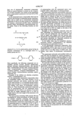
As the unsaturated epoxy compound(s), there may be used the ones having an unsaturated group copolymerizable with an olefin and an ethylenically unsaturated compound as well as an epoxy group in the molecule. For instance, unsaturated glycidyl esters, unsaturated glycidyl ethers, epoxyalkenes, p-glycidylstyrenes, etc. are usable. Those of the following formulas are also usable: ##STR1## wherein R is a C2 -C18 hydrocarbon group having an ehtylenic unsaturated, R' is a hydrogen atom or a methyl group and X is ##STR2## More specifically, the following compounds are exemplfied: glycidyl acrylate, glycidyl methacrylate, glycidyl itaconate, butenecarboxylates, allyl glycidyl ether, 2-methaylallyl glycidyl ether, styrene-p-glycidyl ether, 3,4-epoxybutene, 3,4-epoxy-3-methyl-1-butene, 3,4-epoxy-1-pentene, 3,4-epoxy-3-methylpentene, 5,6-epoxy-1-hexene, vinylcyclohexene monoxide, p-glycidylstyrene, etc.
Examples of the olefin(s) are ethylene, propylene, butene-1, 4-methylpentene-1, etc.
As the ethylenically unsaturated compound(s), there are exemplified olefins, vinyl esters having a C2 -C6 saturated carboxylic acid moiety, acrylic and methacrylic esters having a C1 -C8 saturated alcohol moiety, maleic esters having a C1 -C8 saturated alcohol moiety, vinyl halides, vinyl ethers, N-vinyllactams, carbonamides, etc. These ethylenically unsaturated compounds may be copolymerized with the unsaturated epoxy compounds and the olefins in an amount of not more than 50% by weight, especially from 0.1 to 45% by weight based on the total weight of the monomers to be copolymerized.
The epoxy group-containing olefin polymer (B) may be prepared by various procedures, of which one typical example comprises contacting the unsaturated epoxy compound(s) and the olefin(s) with or without the ethylenically unsaturated compound(s) onto a radical generating agent at a temperature of 40° to 300° C. under a pressure of 50 to 4000 atm. Another typical example comprises irradiating gamma-rays to a mixture of polypropylene with the unsaturated epoxy compound(s) under a high degree of reduced pressure.
The unsaturated carboxylic acid-modified olefin polymer (B') is a copolymer of at least one of unsaturated carboxylic acids and their anhydrides and at least one of olefins with or without at least one of ethylenically unsaturated compounds. While any particlar limitation is not present on the composition of these monomers, a preferred weight proportion of the unsaturated carboxylic acids and their anhydrides, the olefins and the ethylenically unsaturated compounds is 0.01-20:99.9-5:0-50. In other words, the content of the unsaturated carboxylic acid(s) and/or their anhydride(s) is preferred to be from 0.01 to 20% by weight on the basis of the total weight of the monomers.
Examples of the unsaturated carboxylic acids and their anhydrides are monocarboxylic acids such as acrylic acid and methacrylic acid, dicarboxylic acids such as maleic acid, fumaric acid and itaconic acid, dicarboxylic acid anhydrides such as maleic anhydride and itaconic anhydride, etc. Especially preferred are dicarboxylic acids and their anhydrides.
As the olefins, there may be exemplified ethylene, propylene, butene-1, methylpentene-1, etc. Ethylene and propylene are particularly favored.
As the ethylenically unsaturated compounds, there are exemplified olefins, vinyl esters of C2 -C6 saturated carboxylic acids, C1 -C8 alkyl esters of acrylic or methacrylic acid, C1 -C8 alkyl esters of maleic acid, vinyl halides, vinyl ethers, N-vinyllactams, carbonamides, etc.
The unsaturated carboxylic acid-modified olefin polymer (B') may be prepared by various procedures, of which one typical example comprises adding the unsaturated carboxylic acid and/or its anhydride to a polymer of the olefin with or without the ethylenically unsaturated compound and heating the resultant mixture.
No particular restriction is present on the amount of the epoxy group-containing olefin polymer (B) or the unsaturated carboxylic acid-modified olefin polymer (B') to be incorporated, and it may be usually from 0.1 to 40 parts by weight to 100 parts by weight of the weight of the rubber-modified copolymer (A). When the amount is less than the lower limit, a satisfactory dispersibility is not assured. When more than the upper limit, layer separation is apt to be formed in the shaped product. In view of the impact strength, weld strength and processability of the thermoplastic resin composition, the amount of the epoxy group-containing olefin polymer (B) or the unsaturated carboxylic acid-modified olefin polymer (B') is particularly preferred to be from 0.5 to 10 parts by weight.
For preparation of the thermoplastic resin composition of the invention, the said essential components may be mixed together in any optional order. For instance, all of them may be mixed together. Further, for instance, two of them may be first mixed together, followed by introduction of the remaining one into the resultant mixture. Mixing may be achieved by the use of any conventional mixing apparatus such as Bambury mixer, a monoaxial extruder or a biaxial extruder. If desired, any other resin such as a polyolefin resin (e.g. polyethylene, polypropylene, ethylene/propylene copolymer) and/or any additive(s) such a dyestuffs, pigments, stabilizers, plasticizers, antistatic agents, ultraviolet ray absorbers, flame retardant agents, lubricants and fillers may be incorporated into the thermoplastic resin composition.
Practical and presently preferred embodiments of the invention are illustratively shown in the following Examples wherein % and part(s) are by weight unless otherwise indicated.
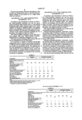
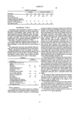
According to the prescription as shown in Table 1, the rubber-modified copolymer (A) and the epoxy group-containing olefin polymer (B) or a conventional delustering agent (gloss reducing agent) were mixed together by the aid of a Bambury mixer. The resultant mixture was pelletized, and the pellets were molded to make a test piece. The test piece was subjected to measurement of the physical properties including the surface gloss. The results are shown in Table 1.
The rubber-modified copolymer (A) as used was a heat resistant ABS resin "KRALASTIC K-2938A" manufactured by Sumitomo Naugatuck Co., Ltd.
The epoxy group-containing olefin polymer (B) was the one manufactured as set forth below:
In an autoclave, a mixture of ethylene and glycidyl methacrylate with or without vinyl acetate pressurized to 2000 kg/cm2 was charged, and di-t-butyl peroxide as the catalyst was introduced therein. The resultant mixture was maintained at a temperature of 150° to 300° C. while stirring for several minutes, during which bulk polymerization proceeded. From the reaction mixture, the produced copolymer was separated and recovered by the aid of a separator.
                                  TABLE 1
__________________________________________________________________________
                 Example     Comparative Example
Composition      1   2   3   1   2   3   4
__________________________________________________________________________
Rubber-modified copolymer (A)
(part(s))
ABS resin        100 100 100 100 100 100 100
Epoxy group-containing olefin
polymer (B) (parts(s))
(i) E-GMA-VA*.sup.1
                 3   --  1   --  --  --  --
(ii) E-GMA*.sup.2
                 --  5   --  --  --  --  --
Talc*.sup.3 (part(s))
                 --  --  --  --  5   --  --
Styrene-butadiene block polymer *.sup.4
                 --  --  --  --  --  3   5
Notched Izod impact strength
                 18.5
                     17.5
                         18.8
                             18.0
                                 10.0
                                     19.0
                                         19.5
(1/4", 23° C.) (kg.cm/cm.sup.2)
Heat distortion temperature
                 98.0
                     97.5
                         98.3
                             105 92.0
                                     90.5
(264 psi, no annealing) (°C.)
Flow mark        No  No  No  No  Yes Yes Yes
Gloss (deluster) 25  20  30  90  40  55  45
(60° specular gloss) (%)
__________________________________________________________________________
 Notes:
 *.sup.1 Ethyleneglycidyl methacrylatevinyl acetate copolymer (molar ratio
 = 90:7:3)
 *.sup.2 Ethyleneglycidyl methacrylate copolymer (molar ratio = 90:10)
 *.sup.3 "Micron white No. 5000" manufactured by Hayashi Kasei
 *.sup.4 "Toughprene" manufactured by Asahi Kasei
According to the prescription as shown in Table 2, the rubber-modified copolymer (A) and the epoxy group-containing olefin polymer (B) or a conventional delustering agent (gloss reducing agent) were mixed together by the aid of Bambury mixer. The resultant mixture was pelletized, and the pellets were molded to make a test piece. The test piece was subjected to measurement of the physical properties including the surface gloss. The results are shown in Table 2.
The rubber-modified copolymer (A) as used was the one manufactured as set forth below:
Ethylene-propylene-ethylidene norbornene copolymer (iodine value, 8.5; Mooney viscosity, 61; propylene content, 43%) (20 parts), styrene (55 parts) and acrylonitrile (25 parts) were subjected to polymerization by a conventional solution polymerization procedure to obtain an AES resin (I).
Ethylene-propylene-ethylidene norbornene copolymer (iodine value, 8.5; Mooney viscosity, 61; propylene content, 43%) (30 parts), styrene (50 parts) and acrylontrile (20 parts) were subjected to polymerization by a conventional suspension polymerization procedure to produce a resin. The resin was admixed with styrene-acrylonitrile copolymer (weight ratio=70:30) prepared by suspension polymerization in a weight proportion of 1:1 in the state of beads to obtain an AES resin (II).
The epoxy group-containing olefin polymer (B) was the one as used in Examples 1 to 3.
                                  TABLE 2
__________________________________________________________________________
                  Example    Comparative Example
Composition       4   5   6   5   6   7   8
__________________________________________________________________________
Rubber modified copolymer (A)
(part(s))
AES resin (I)     100 100 --  100 100 100 --
AES resin (II)    --  --  100 --  --  --  100
Epoxy group-containing olefin
copolymer (B) (part(s))
(i) E-GMA-VA*.sup.1
                  3   --  1   --  --  --  --
(ii) E-GMA*.sup.2 --  5   --  --  --  --  --
Styrene-butadiene block polymer*.sup.4
                  --  --  --  --  --  3   5
Notched Izod impact strength
                  48.5
                      51.5
                          35.0
                              43.3
                                  12.5
                                      48.3
                                          51.5
(1/4", 23° C.) (kg.cm/cm.sup.2)
Heat distortion temperature
                  90.5
                      90.5
                          91.0
                              90.0
                                  94.0
                                      85.0
                                          84.3
(264 psi, no annealing) (°C.)
Flow mark         No  No  No  No  Yes Yes Yes
Gloss (deluster)  15  10  35  95  20-55
                                      75  65
(60° specular gloss) (%)
Weather resistance (after exposure
by Weather-O-Meter for 1000 hours)
Izod impact strength without
                  175 190 145 155 75  83  72
notch (1/8", -30° C.) (kg.cm/cm.sup.2)
Color difference (ΔE)
                  1.5 2.0 2.0 1.8 2.1 8.5 10.8
__________________________________________________________________________
According to the prescription as shown in Table 3, the rubber-modified copolymer (A) and the unsaturated carboxylic acid-modified olefin polymer (B') were mixed together by the aid of Bambury mixer. The resultant mixture was pelletized, and the pellets were molded to make a test piece. The test piece was subjected to measurement of the physical properties including the surface gloss. The results are shown in Table 3.
The rubber-modified copolymer (A) as used was the heat resistant ABS resin "KRALASTIC K-2938A" as used in Example 1 or the AES resin (I) as used in Example 4.
The unsaturated carboxylic acid-modified olefin polymer (B') was the one manufactured as set forth below:
Maleic anhydride (0.5 part) was added to powdery polyethylene (100 parts), and the resultant mixture was kneaded well by two rolls at 200° C. for about 3 minutes and shaped to obtain a sheet. After cooling, the sheet was pulverized by the aid of a die of 3 mm square.
              TABLE 3
______________________________________
                     Example
Composition            7       8
______________________________________
Rubber-modified copolymer (A)
(part(s))
ABS resin              100     --
AES resin (I)          --      100
Unsaturated carboxylic acid
                       3       3
modified olefin polymer
(B') (part(s))
Notched Izod impact strength
                       18.0    45.0
(1/4", 23° C.) (kg · cm/cm.sup.2)
Heat distortion temperature
                       98.0    90.5
(264 psi, no annealing) (°C.)
Flow mark              No      No
Gloss (deluster)       28      20
(60° specular gloss) (%)
Weather resistance (after exposure
by Weather-O-Meter for 1000 hours)
Izod impact strength without
                       --      165
notch (1/8", -30° C.) (kg · cm/cm.sup.2)
Color difference (ΔE)
                       --      1.8
______________________________________
Claims (5)
1. A delustered shaped article prepared by molding a thermoplastic resin composition which comprises (A) a rubber-modified copolymer obtained by polymerizing at least two kinds of monomers selected from different members of the group consisting of aromatic vinyl compounds, vinyl cyanides and alkyl unsaturated carboxylates in the presence of at least one of rubbers and (B') an unsaturated carboxylic acid-modified olefin polymer, the weight proportion of the rubber-modified copolymer (A) and the unsaturated carboxylic acid-modified olefin polymer (B') in said composition being 100:0.5-40; said rubber-modified copolymer (A) comprising (a-1) a graft copolymer comprising units of at least one rubber and units of at least two kinds of monomers chosen from aromatic vinyl compounds, vinyl cyanides and alkyl unsaturated carboxylates graft polymerized thereon and (a-2) a copolymer comprising units of at least two kinds of monomers chosen from aromatic vinyl compounds, vinyl cyanides and alkyl unsaturated carboxylates, the contents of the graft copolymer (a-1) and the copolymer (a-2) being respectively from 10 to 100% and from 90 to 0% by weight based on the weight of the rubber-modified copolymer (A).
2. The article of claim 1 wherein in the resin composition, graft copolymer (a-1) comprises (i) a rubber comprising units from a diene and (ii) units of at least two monomers selected from the group consisting of styrene, acrylonitrile and methyl methacrylate graft polymerized thereon and copolymer (a-2) comprises at least two kinds of monomers chosen from styrene or alpha-methyl styrene, acrylonitrile and methyl methacrylate and said unsaturated carboxylic acid-modified olefin polymer (B') is a copolymer of reactants comprising unsaturated carboxylic acid or anhydride thereof and olefin.
3. The article of claim 2 wherein in the resin composition, the contents of the graft copolymer (a-1) and the copolymer (a-2) are respectively from 70% to 100% and 30 to 0% by weight based on the weight of the rubber-modified copolymer (A).
4. The article of claim 2 wherein in the resin composition, graft copolymer (a-1) comprises (i) a rubber comprising units from a diene and (ii) styrene and acrylonitrile units graft polymerized thereon and copolymer (a-2) comprises units of styrene and acrylonitrile.
5. The article of claim 1 wherein both (a-1) and (a-2) are present in the resin composition.
Applications Claiming Priority (2)
| Application Number | Priority Date | Filing Date | Title |
|---|---|---|---|
| JP57-199583 | 1982-11-12 | ||
| JP57199583A JPS5989346A (en) | 1982-11-12 | 1982-11-12 | Thermoplastic resin composition |
Related Parent Applications (1)
| Application Number | Title | Priority Date | Filing Date |
|---|---|---|---|
| US06/948,427 Continuation US4835215A (en) | 1982-11-12 | 1986-12-31 | Thermoplastic resin composition |
Publications (1)
| Publication Number | Publication Date |
|---|---|
| US4900787A true US4900787A (en) | 1990-02-13 |
Family
ID=16410256
Family Applications (3)
| Application Number | Title | Priority Date | Filing Date |
|---|---|---|---|
| US06/549,381 Expired - Lifetime US4554316A (en) | 1982-11-12 | 1983-11-07 | Thermoplastic resin composition |
| US06/948,427 Expired - Lifetime US4835215A (en) | 1982-11-12 | 1986-12-31 | Thermoplastic resin composition |
| US07/241,150 Expired - Lifetime US4900787A (en) | 1982-11-12 | 1988-09-07 | Composition containing rubber-modified graft copolymer and carboxylic acid-modified olefin |
Family Applications Before (2)
| Application Number | Title | Priority Date | Filing Date |
|---|---|---|---|
| US06/549,381 Expired - Lifetime US4554316A (en) | 1982-11-12 | 1983-11-07 | Thermoplastic resin composition |
| US06/948,427 Expired - Lifetime US4835215A (en) | 1982-11-12 | 1986-12-31 | Thermoplastic resin composition |
Country Status (8)
| Country | Link |
|---|---|
| US (3) | US4554316A (en) |
| JP (1) | JPS5989346A (en) |
| KR (1) | KR870001948B1 (en) |
| AU (1) | AU562488B2 (en) |
| CA (1) | CA1235834A (en) |
| DE (1) | DE3340591C2 (en) |
| FR (1) | FR2536080B1 (en) |
| GB (1) | GB2131440B (en) |
Cited By (2)
| Publication number | Priority date | Publication date | Assignee | Title |
|---|---|---|---|---|
| US5047475A (en) * | 1988-08-03 | 1991-09-10 | Toray Industries, Inc. | Delustered thermoplastic resin composition with good impact resistance |
| US5430101A (en) * | 1987-10-14 | 1995-07-04 | Sumitomo Dow Limited | Delustered rubber modified styrenic blends |
Families Citing this family (30)
| Publication number | Priority date | Publication date | Assignee | Title |
|---|---|---|---|---|
| JPS6018536A (en) * | 1983-07-08 | 1985-01-30 | Sumitomo Naugatuck Co Ltd | Weather-resistant thermoplastic resin composition |
| JPS6160746A (en) * | 1984-08-31 | 1986-03-28 | Sumitomo Chem Co Ltd | Thermoplastic resin composition |
| DE3564125D1 (en) * | 1984-10-16 | 1988-09-08 | Sumitomo Naugatuck | Thermoplastic resin composition |
| JPS61218651A (en) * | 1985-03-25 | 1986-09-29 | Kanegafuchi Chem Ind Co Ltd | Matted thermoplastic resin composition |
| FR2581388B1 (en) * | 1985-05-02 | 1988-01-22 | Charbonnages Ste Chimique | THERMOPLASTIC COMPOSITION COMPRISING A STYRENIC RESIN MATRIX AND A TERPOLYMER |
| JPS6253367A (en) * | 1985-09-02 | 1987-03-09 | Kanegafuchi Chem Ind Co Ltd | Thermoplastic resin composition having excellent processability |
| JPS62143957A (en) * | 1985-12-18 | 1987-06-27 | Sumitomo Chem Co Ltd | Styrenic resin composition |
| US4687810A (en) * | 1986-01-02 | 1987-08-18 | Monsanto Company | Making rubber blends of diene rubber & EPR or EPDM |
| JPH0611837B2 (en) * | 1986-09-03 | 1994-02-16 | 住友ダウ株式会社 | Thermoplastic resin composition |
| JPH0611838B2 (en) * | 1986-09-10 | 1994-02-16 | 住友ダウ株式会社 | Heat resistant resin composition |
| JPH0730228B2 (en) * | 1987-08-18 | 1995-04-05 | 住友ダウ株式会社 | Matte thermoplastic resin composition |
| NL8702049A (en) * | 1987-09-01 | 1989-04-03 | Stamicarbon | THERMOPLASTIC POLYMERIC MIXTURE WITH A LOW SURFACE GLOSS AND METHOD FOR PREPARING IT. |
| US4870131A (en) * | 1988-02-22 | 1989-09-26 | Monsanto Company | Low gloss molding composition |
| JPH0291157A (en) * | 1988-09-28 | 1990-03-30 | Nippon Petrochem Co Ltd | Thermoplastic resin composition and production thereof |
| JPH0794590B2 (en) * | 1988-11-04 | 1995-10-11 | 住友ダウ株式会社 | Flame-retardant rubber-reinforced styrene-based resin composition that prevents melt dripping |
| JP2521807B2 (en) * | 1989-01-31 | 1996-08-07 | 三井・デュポンポリケミカル株式会社 | Ionomer composition |
| JPH02125341U (en) * | 1989-03-23 | 1990-10-16 | ||
| EP0406906A3 (en) * | 1989-07-07 | 1991-11-27 | Toagosei Chemical Industry Co., Ltd. | Ethylene graft copolymer and molding resin composition containing the same |
| US5216074A (en) * | 1989-07-17 | 1993-06-01 | Japan Synthetic Rubber Co., Ltd. | Thermoplastic elastomer composition |
| US5026777A (en) * | 1989-11-17 | 1991-06-25 | General Electric Company | Low gloss thermoplastic molding compositions |
| US5264487A (en) * | 1991-06-17 | 1993-11-23 | General Electric Company | Compositions derived from recycled polymers |
| TW222660B (en) * | 1992-02-25 | 1994-04-21 | Gen Electric | |
| US5336701A (en) * | 1992-09-28 | 1994-08-09 | General Electric Company | Process improvement for improved color reduced gloss thermoplastic compositions |
| KR0159585B1 (en) * | 1993-06-28 | 1999-01-15 | 사공수영 | Impact resistant low gloss ABS resin and its manufacturing method |
| US5536780A (en) * | 1993-08-20 | 1996-07-16 | General Electric Company | Process for the manufacture of low gloss resins |
| DE4331805A1 (en) * | 1993-09-18 | 1995-03-23 | Basf Ag | Matt, transparent thermoplastic resins |
| EP0700971A3 (en) | 1994-09-12 | 1996-07-17 | Gen Electric | Polycarbonate composition for moulding low glass articles |
| US7557158B2 (en) * | 2004-09-15 | 2009-07-07 | Rohm And Haas Company | Gloss reducing polymer composition |
| US20070232757A1 (en) * | 2006-04-03 | 2007-10-04 | Kevin Cai | Mar resistant, glossy thermoplastic polyolefin blends and articles |
| KR20120075724A (en) * | 2010-12-29 | 2012-07-09 | 제일모직주식회사 | Flame retardant abs resin composition with low-gloss and improved impact resistance |
Citations (6)
| Publication number | Priority date | Publication date | Assignee | Title |
|---|---|---|---|---|
| US3660525A (en) * | 1969-09-26 | 1972-05-02 | Japanese Geon Co Ltd | Graft copolymer of epoxy monomer onto a rubber polymer latex and a vinyl chloride resin |
| US3676526A (en) * | 1967-06-02 | 1972-07-11 | Eugene G Sommerfeld | Polymeric dispersion of a diene-acrylonitrite graft copolymer with a different graft copolymer |
| US3868433A (en) * | 1972-04-03 | 1975-02-25 | Exxon Research Engineering Co | Thermoplastic adhesive compositions |
| DE2914270A1 (en) * | 1978-04-07 | 1979-10-11 | Mitsui Petrochemical Ind | POWDER COATING COMPOSITION, COMPOSED OF AN ETHYLENE-RESIN MIXTURE AND HYDROCARBON WAX |
| US4174335A (en) * | 1975-07-22 | 1979-11-13 | Mitsui Petrochemical Industries, Ltd. | Aqueous dispersions of olefinic resin compositions and process for preparation thereof |
| US4444950A (en) * | 1982-03-15 | 1984-04-24 | Sumitomo Naugatuck Co., Ltd. | Thermoplastic resin composition |
Family Cites Families (11)
| Publication number | Priority date | Publication date | Assignee | Title |
|---|---|---|---|---|
| GB1257512A (en) * | 1968-06-10 | 1971-12-22 | ||
| US3830888A (en) * | 1972-04-03 | 1974-08-20 | Exxon Research Engineering Co | Compositions comprising a blend of a vinyl resin and grafted olefin polymer |
| JPS5633435B2 (en) * | 1973-02-21 | 1981-08-04 | ||
| US3883614A (en) * | 1973-07-25 | 1975-05-13 | Dart Ind Inc | ABS/vinyl acetate polymer blends |
| JPS5112859A (en) * | 1974-07-23 | 1976-01-31 | Sumitomo Chemical Co | NETSUKASOSEIJUSHISOSEIBUTSU |
| JPS5280334A (en) * | 1975-12-27 | 1977-07-06 | Mitsui Petrochem Ind Ltd | Method of adhering polyolefin and polar substrate |
| GB1531188A (en) * | 1976-03-04 | 1978-11-01 | Idemitsu Kosan Co | Polypropylene resin compositions containing polypropylene and methods of producing same |
| US4199491A (en) * | 1977-12-23 | 1980-04-22 | Idemitsu Kosan Company Limited | Polyolefin resin composition |
| GB2074587B (en) * | 1980-04-28 | 1983-12-21 | Sumitomo Naugatuck | Elastomeric compositions containing graft polymers |
| DE3120803A1 (en) * | 1981-05-25 | 1982-12-16 | Basf Ag, 6700 Ludwigshafen | IMPACT TEETH THERMOPLASTIC MOLDS |
| JP3617999B2 (en) * | 1993-08-06 | 2005-02-09 | 日機装株式会社 | Artificial cardiopulmonary apparatus and method for arranging centrifugal pump device in cardiopulmonary apparatus |
-
1982
- 1982-11-12 JP JP57199583A patent/JPS5989346A/en active Granted
-
1983
- 1983-11-07 US US06/549,381 patent/US4554316A/en not_active Expired - Lifetime
- 1983-11-08 GB GB08329747A patent/GB2131440B/en not_active Expired
- 1983-11-09 AU AU21102/83A patent/AU562488B2/en not_active Expired
- 1983-11-10 DE DE3340591A patent/DE3340591C2/en not_active Expired - Lifetime
- 1983-11-10 CA CA000440962A patent/CA1235834A/en not_active Expired
- 1983-11-11 KR KR1019830005357A patent/KR870001948B1/en not_active Expired
- 1983-11-14 FR FR8318052A patent/FR2536080B1/en not_active Expired
-
1986
- 1986-12-31 US US06/948,427 patent/US4835215A/en not_active Expired - Lifetime
-
1988
- 1988-09-07 US US07/241,150 patent/US4900787A/en not_active Expired - Lifetime
Patent Citations (7)
| Publication number | Priority date | Publication date | Assignee | Title |
|---|---|---|---|---|
| US3676526A (en) * | 1967-06-02 | 1972-07-11 | Eugene G Sommerfeld | Polymeric dispersion of a diene-acrylonitrite graft copolymer with a different graft copolymer |
| US3660525A (en) * | 1969-09-26 | 1972-05-02 | Japanese Geon Co Ltd | Graft copolymer of epoxy monomer onto a rubber polymer latex and a vinyl chloride resin |
| US3868433A (en) * | 1972-04-03 | 1975-02-25 | Exxon Research Engineering Co | Thermoplastic adhesive compositions |
| US4174335A (en) * | 1975-07-22 | 1979-11-13 | Mitsui Petrochemical Industries, Ltd. | Aqueous dispersions of olefinic resin compositions and process for preparation thereof |
| DE2914270A1 (en) * | 1978-04-07 | 1979-10-11 | Mitsui Petrochemical Ind | POWDER COATING COMPOSITION, COMPOSED OF AN ETHYLENE-RESIN MIXTURE AND HYDROCARBON WAX |
| US4237037A (en) * | 1978-04-07 | 1980-12-02 | Mitsui Petrochemical Industries Ltd. | Powder coating composition composed of ethylene resin mixture and hydrocarbon wax |
| US4444950A (en) * | 1982-03-15 | 1984-04-24 | Sumitomo Naugatuck Co., Ltd. | Thermoplastic resin composition |
Cited By (2)
| Publication number | Priority date | Publication date | Assignee | Title |
|---|---|---|---|---|
| US5430101A (en) * | 1987-10-14 | 1995-07-04 | Sumitomo Dow Limited | Delustered rubber modified styrenic blends |
| US5047475A (en) * | 1988-08-03 | 1991-09-10 | Toray Industries, Inc. | Delustered thermoplastic resin composition with good impact resistance |
Also Published As
| Publication number | Publication date |
|---|---|
| US4554316A (en) | 1985-11-19 |
| DE3340591A1 (en) | 1984-05-17 |
| GB8329747D0 (en) | 1983-12-14 |
| AU2110283A (en) | 1984-05-17 |
| US4835215A (en) | 1989-05-30 |
| JPS5989346A (en) | 1984-05-23 |
| GB2131440B (en) | 1986-10-01 |
| JPS6355541B2 (en) | 1988-11-02 |
| FR2536080A1 (en) | 1984-05-18 |
| FR2536080B1 (en) | 1986-08-08 |
| DE3340591C2 (en) | 1995-01-26 |
| GB2131440A (en) | 1984-06-20 |
| KR870001948B1 (en) | 1987-10-23 |
| KR840007098A (en) | 1984-12-05 |
| AU562488B2 (en) | 1987-06-11 |
| CA1235834A (en) | 1988-04-26 |
Similar Documents
| Publication | Publication Date | Title |
|---|---|---|
| US4554316A (en) | Thermoplastic resin composition | |
| US4444950A (en) | Thermoplastic resin composition | |
| US5811491A (en) | Glass fiber-reinforced thermoplastic resin composition | |
| EP0489912B1 (en) | Thermoplastic resin composition | |
| JP2507925B2 (en) | Thermoplastic resin composition | |
| JP2704304B2 (en) | Thermoplastic resin composition | |
| JP3207562B2 (en) | Glass fiber blended resin composition | |
| JPH0657049A (en) | Compatibilizer and thermoplastic resin composition containing the same | |
| JP3131243B2 (en) | Thermoplastic resin composition | |
| JPS6365222B2 (en) | ||
| JP3382661B2 (en) | Glass fiber blended resin composition | |
| JP3185232B2 (en) | Thermoplastic resin composition | |
| JP3207563B2 (en) | Glass fiber blended resin composition | |
| JP3252499B2 (en) | Thermoplastic resin composition | |
| JP2963956B2 (en) | Chemical resistant resin composition | |
| JPH0336059B2 (en) | ||
| JP3174976B2 (en) | Glass fiber blended weatherable resin composition | |
| JP3189379B2 (en) | Thermoplastic resin composition | |
| JPH0971702A (en) | Heat-resistant thermoplastic resin composition | |
| JPH0665444A (en) | Modifier composition and thermoplastic resin composition using the same | |
| JPH0657047A (en) | Thermoplastic resin composition and compatibilizer | |
| US20040230013A1 (en) | Blends of poly (alpha-methylene-gamma-methyl-gamma-butyrolactone-co-glycidyl methacrylate) and polyphenylene sulfide polymer, articles therefrom and preparation thereof | |
| JPH05271505A (en) | Flame-retardant resin composition | |
| JPH01311159A (en) | Matte resin composition | |
| JPH07118315A (en) | Method for producing thermoplastic resin composition and thermoplastic resin composition |
Legal Events
| Date | Code | Title | Description |
|---|---|---|---|
| STCF | Information on status: patent grant |
Free format text: PATENTED CASE |
|
| FEPP | Fee payment procedure |
Free format text: PAYOR NUMBER ASSIGNED (ORIGINAL EVENT CODE: ASPN); ENTITY STATUS OF PATENT OWNER: LARGE ENTITY |
|
| AS | Assignment |
Owner name: SUMITOMO DOW LIMITED, JAPAN Free format text: ASSIGNMENT OF ASSIGNORS INTEREST.;ASSIGNOR:SUMITOMO NAUGATUCK CO., LTD.;REEL/FRAME:006442/0957 Effective date: 19920401 |
|
| FPAY | Fee payment |
Year of fee payment: 4 |
|
| FPAY | Fee payment |
Year of fee payment: 8 |
|
| FPAY | Fee payment |
Year of fee payment: 12 |