US4239914A - Process for preparing 2-(6'-methoxy-2'-naphthyl)-propionic acid - Google Patents
Process for preparing 2-(6'-methoxy-2'-naphthyl)-propionic acid Download PDFInfo
- Publication number
- US4239914A US4239914A US06/040,955 US4095579A US4239914A US 4239914 A US4239914 A US 4239914A US 4095579 A US4095579 A US 4095579A US 4239914 A US4239914 A US 4239914A
- Authority
- US
- United States
- Prior art keywords
- methoxy
- naphthyl
- process according
- bis
- iii
- Prior art date
- Legal status (The legal status is an assumption and is not a legal conclusion. Google has not performed a legal analysis and makes no representation as to the accuracy of the status listed.)
- Expired - Lifetime
Links
Images
Classifications
-
- C—CHEMISTRY; METALLURGY
- C07—ORGANIC CHEMISTRY
- C07C—ACYCLIC OR CARBOCYCLIC COMPOUNDS
- C07C59/00—Compounds having carboxyl groups bound to acyclic carbon atoms and containing any of the groups OH, O—metal, —CHO, keto, ether, groups, groups, or groups
- C07C59/40—Unsaturated compounds
- C07C59/58—Unsaturated compounds containing ether groups, groups, groups, or groups
- C07C59/64—Unsaturated compounds containing ether groups, groups, groups, or groups containing six-membered aromatic rings
-
- C—CHEMISTRY; METALLURGY
- C07—ORGANIC CHEMISTRY
- C07C—ACYCLIC OR CARBOCYCLIC COMPOUNDS
- C07C51/00—Preparation of carboxylic acids or their salts, halides or anhydrides
- C07C51/347—Preparation of carboxylic acids or their salts, halides or anhydrides by reactions not involving formation of carboxyl groups
- C07C51/36—Preparation of carboxylic acids or their salts, halides or anhydrides by reactions not involving formation of carboxyl groups by hydrogenation of carbon-to-carbon unsaturated bonds
Definitions
- Processes for preparing naphthyl-propionic acids in general are known, as are pharmaceutical preparations in the form of solutions, suspensions, pills, capsules, etc., useful as anti-inflammation agents, analgesics, antipyretic and antipruitic agents, etc., and comprising said acids.
- 2-(6'-methoxy-2'-naphthyl)-propionic acid involves starting with 2-acetyl-6-methoxynaphthalene, epoxydizing it and then obtaining the corresponding aldehyde.
- the 2-(6'-methoxy-2'-naphthyl)-propionic acid in its turn is obtained from the resulting aldehyde by oxidation thereof or from the aldehyde by hydrolysis of the cyanhydrin, hydrogenation, etc.
- the 2-(6'-methoxy-2'-naphthyl)-propionic acid is obtained in racemic form, from which the optic antipode (+) can be separated by means of conventional separating media, such as treatment of the racemate with activated bases, etc.
- An object of this invention is to provide an improved process for preparing 2-(6'-methoxy-2'-naphthyl)-propionic acid which is simpler and therefore more economical than the known processes and in which the active antipode (+) form of the acid is produced selectively.
- the asymmetric hydrogenation of 2-(6'-methoxy-2'-naphthyl)-acrylic acid (III) is conducted in the homogeneous phase in the presence of particular catalysts based on complexed rhodium which will be particularly defined hereinafter.
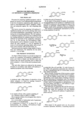
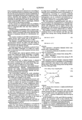
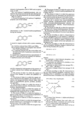
- reaction is schematically represented by the following equations (1) and (2): ##STR4## in which M is Na or K and NR 4 + X, with X being Cl, Br or OH, is the quaternary ammonium salt, which may be, also, a phosphonium salt or a crown-ether, as more fully defined hereinafter.
- the process of this invention consists in reacting compound (II), 2-acetyl-6-methoxynaphthalene, with the diphase system made up, as explained hereinbefore, of an organic phase containing compound (II) and chloroform or bromoform, and of an aqueous phase containing KOH or NaOH in the presence of salts of alkyl- and/or aryl-ammonium or phosphonium or of the crown-ethers, acid (III) i.e., 2-(6'-methoxy-2'-naphthyl)-acrylic acid being obtained.
- (saturated) hydroxy-arylacetic acids covered by formula (X) can be prepared by reaction of aldehydes or ketones with alkaline hydrates and bromoform or chloroform, wherefore this teaching in itself would have dissuaded the technician skilled in the art from further researches on said reaction in order to obtain the unsaturated compound (III), which is, surprisingly, obtained in the process of the present invention.
- reaction (1) conducted under our conditions, leads, selectively, to a substantial and prevailing obtainment of compound (III) with only lesser amounts of compound (X).
- 2-acetyl-6-methoxynaphthalene (II) is a known compound obtainedable, for example, from 6-methoxynaphthalene, which is acetylated with acetyl chloride in the presence of aluminum chloride in a nitrobenzenic medium.
- reaction resulting in acid (III) is conducted in an organic solvent, with a molar ratio of the solvent to acetyl-derivative (II) ranging from 10:1 to 100:1.
- the aliphatic, aromatic hydrocarbons and the halogen-derivatives thereof, the ethers, the alkyl ethers of (poly)ethylene glycols, pyridines, picolines, quinolines have proved to be efficient solvents.
- the haloform is selected from CHCl 3 and CHBr 3 .
- it is CHCl 3 in a molar ratio to acetyl-derivative (II) comprised between about 1:1 and about 1:3.
- the inorganic base, used in aqueous solution is selected from NaOH and KOH.
- KOH having a concentration ranging from 15% to 50% by weight, according to a molar ratio to acetyl-derivative (II) higher than 4:1.
- the quaternary salt as defined herein, is selected from those of ammonium and/or phosphonium of hydrocarbyls containing up to 20 carbon atoms.
- the quaternary salt may be replaced by crown-ethers.
- Suitable quaternary ammonium salts include benzyl-trimethylammonium chloride, tetrabutylammonium chloride and iodide, di-hexadecyl-diethylammonium chloride, benzyl-triethylammonium chloride and benzyl-trimethylammonium hydroxide.
- crown-ethers employed are cyclic polyethers known in the literature as complexing agents for alkaline metals (J. of Am. Chem. Soc. 89:26, Dec. 20, 1967, 7017-7036) and available on the market.
- Crown-ethers include dicyclohexyl-18-crown-6- and dibenzo-18-crown-6.
- "onium" sulphonium, phosphonium
- the nature of functional equivalence for the purposes of the reaction with the quaternary ammonium salts.
- the temperature preferably ranges from 0° C. to 50° C.; reaction times of about 24 to 60 hours are sufficient to allow the completion of the reaction, depending on the parameters of temperature, concentration, etc.
- the quaternary ammonium salt or the crown-ether is added in a catalytic amount, according to the usual technique followed for phase transfer reactions.
- the 2-(6'-methoxy-2'-naphthyl)-acrylic acid (III) so obtained is then hydrogenated to the 2-(6'-methoxy-2'-naphthyl)propionic acid (I).
- Hydrogenation may be conducted in a conventional manner, e.g., with catalysts of palladium on carbon, or rhodium on carbon, etc.
- acid (I) is obtained in racemic form, from which form (+) can be separated by using known techniques, for example, by means of optically active alkaloid bases such as cinchonidine, etc.
- hydrogenation can be conducted stereoselectively to the desired optical form (+) by using asymmetric hydrogenation catalysts in a homogeneous phase.
- the 2-(6'-methoxy-2'-naphthyl)-acrylic acid (III) is thus stereoselectively hydrogenated in a homogeneous system consisting of: (a) Rhodium-based catalysts complexed with phosphines, (b) an organic solvent and, optionally (c) in the presence of a nitrogeneous base of formula N(R) 3 more closely defined later on, with H 2 .
- the rhodium complexes used are neutral or cationic complexes known in the literature and they are thus chosen from among those having formulae (IV) and (V):
- Chel represents a phosphinic bidented chiral compound with a chelating action
- L--L represents a molecule of a diolefin or two molecules of a monoolefin
- X - represents an anion chosen from among PF 6 - , BF 4 - , ClO 4 - , B(C 6 H 5 ) 4 - ;
- Y represents a halogen, chosen from among Cl, Br and I.
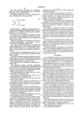
- the phosphinic bidented chiralic compound (Chel) with a chelating action is a phosphine or an aminophosphine, asymmetric with respect to the carbon or phosphorus atom, chosen from among those having formulae (VI), (VII) and (VIII): ##STR6## wherein:
- R* is chosen from between (+)alpha-methylbenzyl and (+)menthyl;
- R"' and R"" represent indifferently alkyls having up to 3 carbon atoms.
- chiralic compounds are: [2,3,0-isopropylidene-2,3-dihydroxy-1,4-bis(diphenylphosphine)butane], (-DIOP); N, N'-bis-((+)alphamethylbenzyl), N, N'-bis-(diphenylphosphine) ethylenediammine, (phenethyl-PNNP), and 1,2-ethanediylbis(o-methoxyphenyl)-phenylphosphine.
- phosphines and aminophosphines are known compounds that may be prepared according to conventional methods.
- Said phosphine, (-)DIOP, [2,3,0-isopropylidene-2,3-dihydroxy-1,4-bis(diphenylphosphine)butane] may be prepared from a chiralic compound easily available, that is the 1(+)-tartaric acid.
- the olefin (L--L), as hereinabove defined, is chosen from among both the conjugated as well as the unconjugated, linear or cyclic diolefins, and from amongst linear and cyclic olefins.
- the organic solvent that keeps the hydrogenation system homogeneous is chosen from among the lower alkyl alcohols, having up to 4 carbon atoms with a linear or branched chain, and preferably is methanol or ethanol.
- the hydrogenation reaction is conducted optionally in the presence of nitrogenous bases, NH 3 or amines.
- said compound is chosen from between ammonia and mono-, di- and tri-substituted aliphatic amines of formula N(R) 3 wherein R is chosen from between H and/or alkyls having up to 10 carbon atoms.
- the operating conditions otherwise substantially conventional, foresee temperatures comprised between about 0° and 70° C.; pressures of gaseous H 2 comprised between 1 and about 50 ata. and hydrogenation times comprised between about 1 and 100 hours.
- the catalyst/substrate (I) molar ratio may vary between about 1:20 and about 1:300.
- the substrate (I)/nitrogenous base molar ratio is comprised between 1:1 and about 30:1.
- optical activity is measured in chloroform, at a concentration of about 1 gram per 100 cc of solution and compared with the [ ⁇ ] D 25 given in the literature as +65.5 (C ⁇ in CHCl 3 ).
- Hydrogenation can be carried out either directly on the optionally dehydrated reaction mixture containing the unsaturated acid (III), or after separation of the acid (III) by means of conventional techniques, for example by fraction crystallization, etc.
- the process of the invention is carried out as follows:
- the mixture is poured into water at 10% H 2 SO 4 , whereupon it is extracted with ether.
- the ether solution is treated with aqueous 10% Na 2 CO 3 , acidified, extracted, etc., according to conventional techniques.
- the acid (III) thus obtained is then hydrogenated according to the known conventional techniques with catalysts such as for instance Pd on carbon etc., or by using the stereoselective method in accordance with this invention.
- the solution is prepared separately in the chosen solvent preliminarily degassed, containing the substrate (III) to be hydrogenated, the catalyst and, possibly the amine. This solution is then transferred, in the absence of oxygen, into an autoclave provided with a vigorous stirrer, and in which it is maintained under a hydrogen atmosphere at the desired temperature, pressure and time.
- the unsaturated acid thus obtained is introduced into a 100 cc reactor fitted with a stirrer, and into which are then introduced under a nitrogen atmosphere:
- This solution is then transferred, by means of a vacuum system, into a 50 cc autoclave made of stainless steel and fitted with a magnetic stirrer, and into which is then fed hydrogen until bringing the pressure up to 3.5 ata.
- the temperature is maintained at 25° C. for 17 hours.
- the reaction product is brought to dryness and then diluted with methylene chloride.
- the product is then extracted with diluted (2 N) ammonia.
- the ethereal extract is then dried on anhydrous Na 2 SO 4 , thereupon treated with active carbon, filtered and evaporated until obtaining 0.49 g of hydrogenated acid (I).
- the hydrogenation yield equalled 95%. Optical purity was 33%.
- Example 2 The mixture was then treated according to the modalities of Example 1, so as to obtain 0.7 g of raw acid which contained 0.25 g of 2-(6'-methoxy-2'-naphthyl)-acrylic acid and 0.25 g of the corresponding oxyacid.
- the resulting acid mixture was dehydrated in dimethyl ether of triethyleneglycol (triglime) with concentrated sulphuric acid according to the modalities of Example 1.
- the unsaturated acid so otained was hydrogenated dissolved in 20 cc of ethanol in the presence of 50 mg of carbon-supported palladium. On conclusion of the absorption (about 4 hours), the reaction was stopped, the reaction mass was filtered and evaporated. By crystallization of the residue from acetone-hexane, 0.3 g of 2-(6'-methoxy-2'-naphthyl)-propionic acid in the racemic form were obtained.
- Example 3 Operating as in Example 3, but using chloroform instead of bromoform for a reaction time of 48 hours, it was possible to obtain 1 g of raw acid in a ratio by weight of 2-(6'-methoxy-2-naphthyl)-acrylic acid to oxyacid equal to 3:1, and which was treated as in Example 3.
- Example 3 7.5 g of NaOH, 7.5 g of H 2 O and 0.23 g of benzyltriethyl-ammonium chloride were introduced into a 50 cc flask, cooled to 0° C., and 1 g of 6-methoxy-2-acetylnaphthalene and 1.2 cc of chloroform in 10 cc of chlorobenzene were introduced. The whole was maintained at 5°-10° C. for 24 hours. The mixture was then treated according to the same modalities of Example 1, to obtain 0.42 g of rough acid consisting of 2-(6'-methoxy-2'-naphthyl)-acrylic acid and the corresponding oxyacid in a ratio of 3:1. The mixture was then treated as in Example 3.
- Example 8 Operating as in Example 8, at a temperature of 50° C. and for a reaction time of 3 hours, there were obtained a hydrogenation yield of 100% and an optical purity of 51%.
- the system was then connected with a burette containing H 2 and maintained under stirring in this H 2 atmosphere, at a temperature of about 20° C. for 18 hours.
- the 2-(6'-methoxy-2'-naphthyl)-propionic acid obtained by the present process has the same pharmaceutical uses as the acid produced by the known methods.
Landscapes
- Chemical & Material Sciences (AREA)
- Organic Chemistry (AREA)
- Chemical Kinetics & Catalysis (AREA)
- Engineering & Computer Science (AREA)
- Oil, Petroleum & Natural Gas (AREA)
- Organic Low-Molecular-Weight Compounds And Preparation Thereof (AREA)
Applications Claiming Priority (2)
| Application Number | Priority Date | Filing Date | Title |
|---|---|---|---|
| IT23652A/78 | 1978-05-22 | ||
| IT23652/78A IT1110479B (it) | 1978-05-22 | 1978-05-22 | Processo per la preparazione dell acido 2-(6-metossi-2-naftil)-propionico |
Publications (1)
| Publication Number | Publication Date |
|---|---|
| US4239914A true US4239914A (en) | 1980-12-16 |
Family
ID=11208896
Family Applications (1)
| Application Number | Title | Priority Date | Filing Date |
|---|---|---|---|
| US06/040,955 Expired - Lifetime US4239914A (en) | 1978-05-22 | 1979-05-21 | Process for preparing 2-(6'-methoxy-2'-naphthyl)-propionic acid |
Country Status (10)
| Country | Link |
|---|---|
| US (1) | US4239914A (it) |
| JP (1) | JPS54163561A (it) |
| BE (1) | BE876453A (it) |
| CA (1) | CA1137108A (it) |
| CH (1) | CH641671A5 (it) |
| DE (1) | DE2919919A1 (it) |
| FR (1) | FR2426671A1 (it) |
| GB (1) | GB2021583B (it) |
| IT (1) | IT1110479B (it) |
| NL (1) | NL7903977A (it) |
Cited By (11)
| Publication number | Priority date | Publication date | Assignee | Title |
|---|---|---|---|---|
| US4723033A (en) * | 1982-11-24 | 1988-02-02 | Syntex Pharmaceuticals International Ltd. | Manufacture of optically active α-arylalkanoic acids and precursors thereof |
| US5198561A (en) * | 1989-06-22 | 1993-03-30 | Monsanto Company | Ruthenium-BINAP asymmetric hydrogenation catalyst |
| US5202474A (en) * | 1989-06-22 | 1993-04-13 | Monsanto Company | Asymmetric catalytic hydrogenation of α-arylpropenoic acids |
| US5233084A (en) * | 1989-06-22 | 1993-08-03 | Monsanto Company | Method for preparing α-arylpropionic acids |
| US5360938A (en) * | 1991-08-21 | 1994-11-01 | Union Carbide Chemicals & Plastics Technology Corporation | Asymmetric syntheses |
| US5792886A (en) * | 1997-01-08 | 1998-08-11 | Albemarle Corporation | Production of racemic 2-(6-methoxy-2-naphthyl) propionic acid of precursors thereof |
| US5859292A (en) * | 1997-12-11 | 1999-01-12 | Albemarle Corporation | Preparation of high purity sodium (S)-2(6-methoxy-2-naphthyl)propionate |
| US5874614A (en) * | 1997-12-11 | 1999-02-23 | Albemarle Corporation | Sodium (S)-2-(6-methoxy-2-naphthyl)propionate monohydrate |
| US6080888A (en) * | 1997-01-08 | 2000-06-27 | Albemarle Corporation | Preparation of olefinic compounds and carboxylic derivatives thereof |
| US6096920A (en) * | 1997-01-08 | 2000-08-01 | Albemarle Corporation | Preparation of carboxylic compounds and their derivatives |
| US20070149804A1 (en) * | 2005-12-22 | 2007-06-28 | Michael Woltering | Process for preparing enantiomerically enriched 2-alkoxy-3-phenylpropionic acids |
Families Citing this family (2)
| Publication number | Priority date | Publication date | Assignee | Title |
|---|---|---|---|---|
| IT1164319B (it) * | 1983-07-27 | 1987-04-08 | Blaschim Spa | Procedimento per la risoluzione dell'acido (+-)2-(6'-metossi-2'-naftil)-propionico |
| FR2651494B1 (fr) * | 1989-09-05 | 1993-01-08 | Rhone Poulenc Sante | Procede de preparation d'acides aryl-2 propioniques optiquement actifs. |
Citations (1)
| Publication number | Priority date | Publication date | Assignee | Title |
|---|---|---|---|---|
| US3637767A (en) * | 1968-07-30 | 1972-01-25 | Syntex Corp | 2-(6'-methoxynaphth-2'-yl)propylene oxide and 5'-halo derivatives |
-
1978
- 1978-05-22 IT IT23652/78A patent/IT1110479B/it active
-
1979
- 1979-05-17 DE DE19792919919 patent/DE2919919A1/de not_active Withdrawn
- 1979-05-18 FR FR7912756A patent/FR2426671A1/fr active Granted
- 1979-05-18 CA CA000327886A patent/CA1137108A/en not_active Expired
- 1979-05-21 NL NL7903977A patent/NL7903977A/xx not_active Application Discontinuation
- 1979-05-21 GB GB7917549A patent/GB2021583B/en not_active Expired
- 1979-05-21 US US06/040,955 patent/US4239914A/en not_active Expired - Lifetime
- 1979-05-21 CH CH475979A patent/CH641671A5/it not_active IP Right Cessation
- 1979-05-21 JP JP6163079A patent/JPS54163561A/ja active Pending
- 1979-05-22 BE BE0/195317A patent/BE876453A/xx not_active IP Right Cessation
Patent Citations (2)
| Publication number | Priority date | Publication date | Assignee | Title |
|---|---|---|---|---|
| US3637767A (en) * | 1968-07-30 | 1972-01-25 | Syntex Corp | 2-(6'-methoxynaphth-2'-yl)propylene oxide and 5'-halo derivatives |
| GB1274271A (en) | 1968-07-30 | 1972-05-17 | Syntex Corp | Improvements in or relating to propionic acid derivatives |
Non-Patent Citations (5)
| Title |
|---|
| Chem. Abst. 86, 1977, 29502b. |
| Compere, G. L. Jr., JOC 33 (6) Jun. 1969, pp. 2565-2566. |
| Fiorini, M. et al., Journal of Molecular Catalysis, 4(1978), 125134. |
| Merz, A. et al., Chem. Ber. 110, 96-106 (1977). |
| Merz, A. Synthesis, Oct. 1974, p. 729. |
Cited By (14)
| Publication number | Priority date | Publication date | Assignee | Title |
|---|---|---|---|---|
| US4723033A (en) * | 1982-11-24 | 1988-02-02 | Syntex Pharmaceuticals International Ltd. | Manufacture of optically active α-arylalkanoic acids and precursors thereof |
| US5198561A (en) * | 1989-06-22 | 1993-03-30 | Monsanto Company | Ruthenium-BINAP asymmetric hydrogenation catalyst |
| US5202473A (en) * | 1989-06-22 | 1993-04-13 | Monsanto Company | Ruthenium-binap asymmetric hydrogenation catalyst |
| US5202474A (en) * | 1989-06-22 | 1993-04-13 | Monsanto Company | Asymmetric catalytic hydrogenation of α-arylpropenoic acids |
| US5233084A (en) * | 1989-06-22 | 1993-08-03 | Monsanto Company | Method for preparing α-arylpropionic acids |
| US5491266A (en) * | 1991-08-21 | 1996-02-13 | Union Carbide Chemicals & Plastics Technology Corporation | Asymmetric syntheses |
| US5360938A (en) * | 1991-08-21 | 1994-11-01 | Union Carbide Chemicals & Plastics Technology Corporation | Asymmetric syntheses |
| US5792886A (en) * | 1997-01-08 | 1998-08-11 | Albemarle Corporation | Production of racemic 2-(6-methoxy-2-naphthyl) propionic acid of precursors thereof |
| US6080888A (en) * | 1997-01-08 | 2000-06-27 | Albemarle Corporation | Preparation of olefinic compounds and carboxylic derivatives thereof |
| US6096920A (en) * | 1997-01-08 | 2000-08-01 | Albemarle Corporation | Preparation of carboxylic compounds and their derivatives |
| US5859292A (en) * | 1997-12-11 | 1999-01-12 | Albemarle Corporation | Preparation of high purity sodium (S)-2(6-methoxy-2-naphthyl)propionate |
| US5874614A (en) * | 1997-12-11 | 1999-02-23 | Albemarle Corporation | Sodium (S)-2-(6-methoxy-2-naphthyl)propionate monohydrate |
| US20070149804A1 (en) * | 2005-12-22 | 2007-06-28 | Michael Woltering | Process for preparing enantiomerically enriched 2-alkoxy-3-phenylpropionic acids |
| US7429676B2 (en) * | 2005-12-22 | 2008-09-30 | Saltigo Gmbh | Process for preparing enantiomerically enriched 2-alkoxy-3-phenylpropionic acids |
Also Published As
| Publication number | Publication date |
|---|---|
| DE2919919A1 (de) | 1979-11-29 |
| CH641671A5 (it) | 1984-03-15 |
| CA1137108A (en) | 1982-12-07 |
| FR2426671B1 (it) | 1982-03-05 |
| GB2021583A (en) | 1979-12-05 |
| IT1110479B (it) | 1985-12-23 |
| IT7823652A0 (it) | 1978-05-22 |
| NL7903977A (nl) | 1979-11-26 |
| GB2021583B (en) | 1982-09-29 |
| JPS54163561A (en) | 1979-12-26 |
| BE876453A (fr) | 1979-11-22 |
| FR2426671A1 (fr) | 1979-12-21 |
Similar Documents
| Publication | Publication Date | Title |
|---|---|---|
| US4239914A (en) | Process for preparing 2-(6'-methoxy-2'-naphthyl)-propionic acid | |
| US4152344A (en) | Phosphino-ferrocene ligands | |
| US5616785A (en) | Synthesis of and hydroformylation with fluoro-substituted bidentate phosphine ligands | |
| US4034004A (en) | Process for the preparation of carboxylic acids from organic halides | |
| US4072709A (en) | Production of lactic acid | |
| US4739085A (en) | Ruthenium-phosphine complex | |
| US4221744A (en) | Hydroformylation process employing rhodium-based catalysts comprising ligands having electronegative substituents | |
| US4264515A (en) | Process for manufacturing a N-acyl α-amino acid | |
| DE69019691T2 (de) | Asymmetrische hydrierung von alpha-arylpropensäuren. | |
| US5233084A (en) | Method for preparing α-arylpropionic acids | |
| US4536595A (en) | Process for the preparation of alpha-aryl-propionic acids and alkaline salts thereof | |
| EP0271310A2 (en) | Ruthenium-phosphine complexes | |
| JPH0739362B2 (ja) | 主として枝分かれのない、高級第一アルコールの製造方法 | |
| US5274183A (en) | Water-soluble sulfonated diphosphines | |
| EP0015537B1 (en) | Process for the preparation of dienoic acids | |
| US5324850A (en) | Preparation of chiral catalysts based on ruthenium and phosphorus complexes | |
| IL44084A (en) | Homogeneous catalytic reduction of 6-methylenetetracyclines | |
| EP0032548B1 (en) | Process for preparing aryl and heteroaryl hexadienoic acids | |
| US4306082A (en) | Optically active tertiary phosphine oxides and tertiary phosphines and processes for their preparation | |
| US4564708A (en) | Optical resolution of the racemic modification of 2,2'-bis(diphenylphosphino)-1,1'-binaphthyldioxide | |
| CA1229346A (en) | Process for producing organic acids | |
| CN117700310A (zh) | 一种芳香醛类化合物或氘代芳香醛类化合物的合成方法 | |
| HU210648B (en) | Process for preparing cycloproane-carboxylic acid esters | |
| CN112209967A (zh) | 一种手性螺环单膦-噁唑啉配体及其制备方法 | |
| DE3311026A1 (de) | Verfahren zur herstellung von alpha-ketoamidoiminen |