US3780568A - Quantitative test method for measuring solder-flux surface tension interaction - Google Patents
Quantitative test method for measuring solder-flux surface tension interaction Download PDFInfo
- Publication number
- US3780568A US3780568A US00166535A US3780568DA US3780568A US 3780568 A US3780568 A US 3780568A US 00166535 A US00166535 A US 00166535A US 3780568D A US3780568D A US 3780568DA US 3780568 A US3780568 A US 3780568A
- Authority
- US
- United States
- Prior art keywords
- surface tension
- bubble
- gaseous
- measuring
- solder
- Prior art date
- Legal status (The legal status is an assumption and is not a legal conclusion. Google has not performed a legal analysis and makes no representation as to the accuracy of the status listed.)
- Expired - Lifetime
Links
- 238000000034 method Methods 0.000 title claims abstract description 38
- 238000012113 quantitative test Methods 0.000 title description 6
- 230000003993 interaction Effects 0.000 title description 3
- 229910000679 solder Inorganic materials 0.000 claims abstract description 47
- 230000004907 flux Effects 0.000 claims abstract description 28
- 239000007788 liquid Substances 0.000 claims abstract description 27
- 239000000463 material Substances 0.000 claims description 88
- 239000000203 mixture Substances 0.000 claims description 15
- 239000011261 inert gas Substances 0.000 claims description 10
- 239000007789 gas Substances 0.000 claims description 9
- 238000005259 measurement Methods 0.000 claims description 5
- 239000011248 coating agent Substances 0.000 claims description 4
- 238000000576 coating method Methods 0.000 claims description 4
- 230000015572 biosynthetic process Effects 0.000 claims description 2
- 238000010438 heat treatment Methods 0.000 claims 1
- 239000002184 metal Substances 0.000 description 10
- 229910052751 metal Inorganic materials 0.000 description 10
- 239000000758 substrate Substances 0.000 description 9
- 239000004065 semiconductor Substances 0.000 description 4
- 239000007787 solid Substances 0.000 description 4
- 239000011343 solid material Substances 0.000 description 4
- QGZKDVFQNNGYKY-UHFFFAOYSA-N Ammonia Chemical compound N QGZKDVFQNNGYKY-UHFFFAOYSA-N 0.000 description 2
- XKRFYHLGVUSROY-UHFFFAOYSA-N Argon Chemical compound [Ar] XKRFYHLGVUSROY-UHFFFAOYSA-N 0.000 description 2
- UFHFLCQGNIYNRP-UHFFFAOYSA-N Hydrogen Chemical compound [H][H] UFHFLCQGNIYNRP-UHFFFAOYSA-N 0.000 description 1
- 230000001133 acceleration Effects 0.000 description 1
- 229910021529 ammonia Inorganic materials 0.000 description 1
- 229910052786 argon Inorganic materials 0.000 description 1
- 239000006227 byproduct Substances 0.000 description 1
- 239000000470 constituent Substances 0.000 description 1
- 238000010586 diagram Methods 0.000 description 1
- 230000000694 effects Effects 0.000 description 1
- 230000005484 gravity Effects 0.000 description 1
- 239000001257 hydrogen Substances 0.000 description 1
- 229910052739 hydrogen Inorganic materials 0.000 description 1
- 150000002739 metals Chemical class 0.000 description 1
Images
Classifications
-
- G—PHYSICS
- G01—MEASURING; TESTING
- G01N—INVESTIGATING OR ANALYSING MATERIALS BY DETERMINING THEIR CHEMICAL OR PHYSICAL PROPERTIES
- G01N13/00—Investigating surface or boundary effects, e.g. wetting power; Investigating diffusion effects; Analysing materials by determining surface, boundary, or diffusion effects
- G01N13/02—Investigating surface tension of liquids
-
- G—PHYSICS
- G01—MEASURING; TESTING
- G01N—INVESTIGATING OR ANALYSING MATERIALS BY DETERMINING THEIR CHEMICAL OR PHYSICAL PROPERTIES
- G01N13/00—Investigating surface or boundary effects, e.g. wetting power; Investigating diffusion effects; Analysing materials by determining surface, boundary, or diffusion effects
- G01N13/02—Investigating surface tension of liquids
- G01N2013/0225—Investigating surface tension of liquids of liquid metals or solder
-
- G—PHYSICS
- G01—MEASURING; TESTING
- G01N—INVESTIGATING OR ANALYSING MATERIALS BY DETERMINING THEIR CHEMICAL OR PHYSICAL PROPERTIES
- G01N13/00—Investigating surface or boundary effects, e.g. wetting power; Investigating diffusion effects; Analysing materials by determining surface, boundary, or diffusion effects
- G01N13/02—Investigating surface tension of liquids
- G01N2013/0241—Investigating surface tension of liquids bubble, pendant drop, sessile drop methods
- G01N2013/0266—Bubble methods
Definitions
- ABSTRACT A process for quantitatively measuring one of the surface tension components for a solder-flux combination by introducing a gaseous ambient bubble internally coated with a liquid flux into a molten solder, and measuring a pressure differential.
- the maximum bubble pressure technique is commonly used to evaluate surface tension of molten metals.
- the pressure necessary to inject or blow a bubble of a known gas into a reservoir of molten metal provides a quantitative measurement of the surface tension between the molten metal and the gaseous ambient used to form the bubble. If the tube emplayed to inject the bubble into the molten metal is submerged to a given depth d, the surface tension in dynes per centimeter is approximately:
- p surface tension [(p p g d) r/(2)] where p is the pressure necessary to inject the bubble into the metal; p is the mass density of the molten metal; g is the acceleration of gravity; and r is the inside diameter of the tube used to inject the bubble into the molten metal if the metal wets the tube, or the outside diameter of the tube if the metal does not wet the tube.
- the controlled chip collapse process is one commonly-used technique.
- the substrate surrounding the contact area is coated with a material which renders it non-wettable to a particular solder.
- Flux coated mounds of solder is the contact area are employed to support a semiconductor chip above the upper surface of the sustrate.
- the solder is heated to a reflow state in order toaffect a metallurgical bond. Due to the phenomena of surface tension associated with the solder, the mound of molten solder prevents the chip from coming into contact with the substrate surface.
- the total components of surface tension exist firstly, between the liquid solid material and the solid substrate surface; secondly, between the liquid solid material and the gaseous ambient; and thirdly, between the solid substrate surface and the gaseous ambient.
- the effects of the components of surface tension between the liquid solid material and the solid substrate surface, and between the solid substrate surface and the gaseous ambient are minimized.
- no quantitative techniques were known for measuring the remaining surface tension component between the liquid solid material (solder-flux layers in the preferred embodiment) and the gaseous ambient.
- This remaining surface tension component is extremely critical when joining small semiconductor chips to substrates, because the addition of flux to the bonding process affects the surface tension of solder. Critical control of this surface tension component aids in insuring that the semiconductor chip is maintained at minimum levl above the substrate surface to prevent contact thereto, and avoids the attendant shorting problems which would occur.
- wettability of a solder actually takes into consideration all three previously mentioned components of surface tension.
- the present invention quantitatively determines one of these components, and thus, the test is also a partial measure of the wettability of solder composition in a gneeral sense.
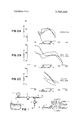
- FIG. 1 is a schematic representation of apparatus for implementing applicants process.
- FIGS. 2A, 2B and 2C show resulting surface tension or wettability characteristics in dynes per centimeter for various commercially available fluxes quantitatively measured according to the present invention for three different solder compositions.
- FIG. 1 it illustrates apparatus capable of carrying out the improved quantitative process analysis.
- Solder material 10 is introduced into a vessel 12 and then heated to a desired temperature. Thereafter, a gaseous ambient is introduced into line 14 with valve 16 open and valve 18 closed.
- a pressure transducer 20 is then employed to measure the amount of pressure drop required to inject a spherical gaseous inclusion or bubble into the molten solder 10.
- the gaseous ambient is introduced into line 14 with valve 18 open and simultaneously there with, a flux material is introduced into the system as indicated.
- the flux material is heated by the temperature of the molten solder 10 and coats the internal surface of the bubble.
- the pressure transducer20 is then employed to measure the drop in pressure necessary to inject or separate the bubble having an internally flux coated inner surface into the molten solder 10.
- An inert gas for example, forming gas, ammonia, hydrogen or argon is suitable for the process, since it does not react with the molten metal to form byproducts which interfere with the test by introducing a fourth constituent.
- FIGS. 2A, 2B and 2C illustrate various quantitative surface tension or wettability measurements for three different solder compositions. Each solder composition is tested against a plurality of different commercially available fluxes. The differently designated curves indicate a different flux for each of th diagrams under varying temperature conditions of the molten solder.
- precess can be quantita tively used to measure the characteristics of different solders by varying the solder composition and maintaining the same flux for each different solder material.
- the preferred embodiment uses a bimaterial system comprising flux and solder
- the invention is also applicable to other greater than one material systems where a measure of surface tension is desired.
- a method for quantitatively measuring a surface tension component of more than a one material interfacial combination against a gaseous ambient comprising the steps of:
- a method for quantitatively measuring a surface tension component of more than a one material interfacial combination against a gaseous ambient as in claim 1 wherein:
- the step of introducing a spherical gaseous inclusion includes providing a molten reservoir of the second material and simultaneously injecting a gas and said first material into the molten reservoir.
- a method for quantitatively measuring a surface 6 tension component of more than a one material interfacial combination against a gaseous ambient comprising the steps of:
- a method for quantitatively measuring a surface tension component of more than a one material interfacial combination against a substantially inert gas comprising the steps of:
- a method for quantitatively measuring a surface tension component of more than a one material interfacial combination against a substantially inert gas comprising the steps of:
- a method for quantitatively measuring a surface tension component of more than a one material interfacial combination against a gaseous ambient comprising the steps of:
- a method for quantitatively measuring a surface tension component of more than a one material interfacial combination against a gaseous ambient as in claim 7 wherein:
- the step of introducing a spherical gaseous inclusion includes providing a molten reservoir of the second material and simultaneously injecting a gas and said first material into the molten reservoir.
Landscapes
- Physics & Mathematics (AREA)
- Health & Medical Sciences (AREA)
- Life Sciences & Earth Sciences (AREA)
- Chemical & Material Sciences (AREA)
- Analytical Chemistry (AREA)
- Biochemistry (AREA)
- General Health & Medical Sciences (AREA)
- General Physics & Mathematics (AREA)
- Immunology (AREA)
- Pathology (AREA)
- Electric Connection Of Electric Components To Printed Circuits (AREA)
- Investigating And Analyzing Materials By Characteristic Methods (AREA)
Applications Claiming Priority (1)
| Application Number | Priority Date | Filing Date | Title |
|---|---|---|---|
| US16653571A | 1971-07-27 | 1971-07-27 |
Publications (1)
| Publication Number | Publication Date |
|---|---|
| US3780568A true US3780568A (en) | 1973-12-25 |
Family
ID=22603723
Family Applications (1)
| Application Number | Title | Priority Date | Filing Date |
|---|---|---|---|
| US00166535A Expired - Lifetime US3780568A (en) | 1971-07-27 | 1971-07-27 | Quantitative test method for measuring solder-flux surface tension interaction |
Country Status (5)
| Country | Link |
|---|---|
| US (1) | US3780568A (enExample) |
| JP (1) | JPS55697B1 (enExample) |
| DE (1) | DE2231598A1 (enExample) |
| FR (1) | FR2147582A5 (enExample) |
| GB (1) | GB1359788A (enExample) |
Cited By (5)
| Publication number | Priority date | Publication date | Assignee | Title |
|---|---|---|---|---|
| US3881344A (en) * | 1973-04-16 | 1975-05-06 | Shell Oil Co | Monitor for continuously measuring surface tension of liquids |
| US5226950A (en) * | 1992-06-16 | 1993-07-13 | Aluminum Company Of America | Liquid-in-liquid sensor and method |
| EP0694779A1 (de) * | 1994-07-08 | 1996-01-31 | Heraeus Electro-Nite International N.V. | Vorrichtung zur Messung der Oberflächenspannung |
| US5661234A (en) * | 1994-07-08 | 1997-08-26 | Heraeus Electro-Nite International N.V. | Apparatus for measuring surface tension |
| EP0760472A3 (de) * | 1995-08-12 | 1998-02-25 | FORON Hausgeräte GmbH | Verfahren und Einrichtung zur füllstandsunabhängigen Messung der Oberflächenspannung flüssiger Substanzen |
Families Citing this family (1)
| Publication number | Priority date | Publication date | Assignee | Title |
|---|---|---|---|---|
| RU2328722C1 (ru) * | 2006-10-23 | 2008-07-10 | ГОУ ВПО "Тамбовский государственный технический университет" (ГОУ ВПО "ТГТУ") | Способ определения поверхностного натяжения и плотности жидкости |
Citations (5)
| Publication number | Priority date | Publication date | Assignee | Title |
|---|---|---|---|---|
| US2448768A (en) * | 1945-03-29 | 1948-09-07 | Hans M Cassel | Method and apparatus for measuring surface tension |
| US2473553A (en) * | 1946-01-07 | 1949-06-21 | Arthur J Stokes | Method of and apparatus for measuring the film strength of liquids |
| DE1167066B (de) * | 1964-04-02 | Gustav Schwen Dr Ing | Verfahren und Vorrichtung zur Ermittlung von Rechenwerten fuer die Bestimmung der Oberflaechenspannung von Fluessigkeiten, fluessigen Mischungen und Loesungen durch die Messung eines hydrostatischen Druckes | |
| US3426584A (en) * | 1967-03-24 | 1969-02-11 | North American Rockwell | Surface tension measuring instrument |
| US3613456A (en) * | 1969-07-25 | 1971-10-19 | Dresser Ind | Bubbler method and apparatus |
-
1971
- 1971-07-27 US US00166535A patent/US3780568A/en not_active Expired - Lifetime
-
1972
- 1972-06-23 JP JP6253772A patent/JPS55697B1/ja active Pending
- 1972-06-23 GB GB2941472A patent/GB1359788A/en not_active Expired
- 1972-06-28 DE DE2231598A patent/DE2231598A1/de active Pending
- 1972-06-30 FR FR7224827*A patent/FR2147582A5/fr not_active Expired
Patent Citations (5)
| Publication number | Priority date | Publication date | Assignee | Title |
|---|---|---|---|---|
| DE1167066B (de) * | 1964-04-02 | Gustav Schwen Dr Ing | Verfahren und Vorrichtung zur Ermittlung von Rechenwerten fuer die Bestimmung der Oberflaechenspannung von Fluessigkeiten, fluessigen Mischungen und Loesungen durch die Messung eines hydrostatischen Druckes | |
| US2448768A (en) * | 1945-03-29 | 1948-09-07 | Hans M Cassel | Method and apparatus for measuring surface tension |
| US2473553A (en) * | 1946-01-07 | 1949-06-21 | Arthur J Stokes | Method of and apparatus for measuring the film strength of liquids |
| US3426584A (en) * | 1967-03-24 | 1969-02-11 | North American Rockwell | Surface tension measuring instrument |
| US3613456A (en) * | 1969-07-25 | 1971-10-19 | Dresser Ind | Bubbler method and apparatus |
Cited By (5)
| Publication number | Priority date | Publication date | Assignee | Title |
|---|---|---|---|---|
| US3881344A (en) * | 1973-04-16 | 1975-05-06 | Shell Oil Co | Monitor for continuously measuring surface tension of liquids |
| US5226950A (en) * | 1992-06-16 | 1993-07-13 | Aluminum Company Of America | Liquid-in-liquid sensor and method |
| EP0694779A1 (de) * | 1994-07-08 | 1996-01-31 | Heraeus Electro-Nite International N.V. | Vorrichtung zur Messung der Oberflächenspannung |
| US5661234A (en) * | 1994-07-08 | 1997-08-26 | Heraeus Electro-Nite International N.V. | Apparatus for measuring surface tension |
| EP0760472A3 (de) * | 1995-08-12 | 1998-02-25 | FORON Hausgeräte GmbH | Verfahren und Einrichtung zur füllstandsunabhängigen Messung der Oberflächenspannung flüssiger Substanzen |
Also Published As
| Publication number | Publication date |
|---|---|
| FR2147582A5 (enExample) | 1973-03-09 |
| DE2231598A1 (de) | 1973-02-08 |
| JPS55697B1 (enExample) | 1980-01-09 |
| GB1359788A (en) | 1974-07-10 |
Similar Documents
| Publication | Publication Date | Title |
|---|---|---|
| JP3156606B2 (ja) | 電極接合強度の検査方法及び検査装置 | |
| Westwood et al. | Rebinder effects in MgO | |
| US3780568A (en) | Quantitative test method for measuring solder-flux surface tension interaction | |
| Dobosz et al. | Reference data for the density, viscosity, and surface tension of liquid Al–Zn, Ag–Sn, Bi–Sn, Cu–Sn, and Sn–Zn eutectic alloys | |
| Vianco et al. | Intermetallic compound layer development during the solid state thermal aging of 63Sn-37Pb solder/Au-Pt-Pd thick film couples | |
| Abdulhamid et al. | Influence of thermomigration on lead-free solder joint mechanical properties | |
| JP7385627B2 (ja) | 溶融金属の温度を測定するための装置及び方法 | |
| US5827951A (en) | Solderability test system | |
| US3824837A (en) | Method of rapidly determining the solidus line of molten steel | |
| Kanda et al. | The absolute viscosity of some lead-tin alloys | |
| Moser et al. | Investigation of the effect of indium addition on wettability of Sn‐Ag‐Cu solders | |
| JP6182873B2 (ja) | アンダーフィル樹脂の接触角の測定方法 | |
| US4491412A (en) | Method for characterizing solder compositions | |
| Soares et al. | Effect of the soldering atmosphere on the wettability between Sn4. 0Ag0. 5Cu (in wt.%) lead-free solder paste and various substrates | |
| Harding | Solderability testing | |
| Kawakatsu et al. | Wettability of liquid tin on solid copper | |
| Schwaneke et al. | Surface tension and density of liquid lead | |
| JP2630712B2 (ja) | ペースト特性測定方法とそのペースト特性測定機 | |
| Whalley et al. | Simulation and interpretation of wetting balance tests using the surface evolver | |
| JP2002290024A (ja) | フラックス塗布方法及びフラックス塗布装置 | |
| Lanin et al. | Chapter 3. Solderability of Materials and Electronic Components | |
| US3645720A (en) | Method of deoxidizing steel | |
| JPH0996601A (ja) | 溶融ガラスに対する固体金属、セラミックスのぬれ性評価方法 | |
| Bi et al. | Wettability Improvement of Solder in Fluxless Soldering under Formic Acid Atmosphere | |
| Simokawa et al. | New estimation method of wetting and surface tension by measuring area of spreading solder in flux atmosphere based on ellipse approximation of Sessile drop configurations |