US3338030A - Depressuring technique for deltap adsorption process - Google Patents
Depressuring technique for deltap adsorption process Download PDFInfo
- Publication number
- US3338030A US3338030A US380988A US38098864A US3338030A US 3338030 A US3338030 A US 3338030A US 380988 A US380988 A US 380988A US 38098864 A US38098864 A US 38098864A US 3338030 A US3338030 A US 3338030A
- Authority
- US
- United States
- Prior art keywords
- adsorption
- pressure
- bed
- adsorption zone
- product
- Prior art date
- Legal status (The legal status is an assumption and is not a legal conclusion. Google has not performed a legal analysis and makes no representation as to the accuracy of the status listed.)
- Expired - Lifetime
Links
Images
Classifications
-
- C—CHEMISTRY; METALLURGY
- C01—INORGANIC CHEMISTRY
- C01B—NON-METALLIC ELEMENTS; COMPOUNDS THEREOF; METALLOIDS OR COMPOUNDS THEREOF NOT COVERED BY SUBCLASS C01C
- C01B3/00—Hydrogen; Gaseous mixtures containing hydrogen; Separation of hydrogen from mixtures containing it; Purification of hydrogen; Reversible storage of hydrogen
- C01B3/50—Separation of hydrogen or hydrogen-containing gases from gaseous mixtures, e.g. purification
- C01B3/56—Separation of hydrogen or hydrogen-containing gases from gaseous mixtures, e.g. purification by contacting with solids; Regeneration of used solids
-
- B—PERFORMING OPERATIONS; TRANSPORTING
- B01—PHYSICAL OR CHEMICAL PROCESSES OR APPARATUS IN GENERAL
- B01D—SEPARATION
- B01D53/00—Separation of gases or vapours; Recovering vapours of volatile solvents from gases; Chemical or biological purification of waste gases, e.g. engine exhaust gases, smoke, fumes, flue gases, aerosols
- B01D53/02—Separation of gases or vapours; Recovering vapours of volatile solvents from gases; Chemical or biological purification of waste gases, e.g. engine exhaust gases, smoke, fumes, flue gases, aerosols by adsorption, e.g. preparative gas chromatography
- B01D53/04—Separation of gases or vapours; Recovering vapours of volatile solvents from gases; Chemical or biological purification of waste gases, e.g. engine exhaust gases, smoke, fumes, flue gases, aerosols by adsorption, e.g. preparative gas chromatography with stationary adsorbents
- B01D53/047—Pressure swing adsorption
-
- C—CHEMISTRY; METALLURGY
- C07—ORGANIC CHEMISTRY
- C07C—ACYCLIC OR CARBOCYCLIC COMPOUNDS
- C07C7/00—Purification; Separation; Use of additives
- C07C7/12—Purification; Separation; Use of additives by adsorption, i.e. purification or separation of hydrocarbons with the aid of solids, e.g. with ion-exchangers
- C07C7/13—Purification; Separation; Use of additives by adsorption, i.e. purification or separation of hydrocarbons with the aid of solids, e.g. with ion-exchangers by molecular-sieve technique
-
- C—CHEMISTRY; METALLURGY
- C10—PETROLEUM, GAS OR COKE INDUSTRIES; TECHNICAL GASES CONTAINING CARBON MONOXIDE; FUELS; LUBRICANTS; PEAT
- C10G—CRACKING HYDROCARBON OILS; PRODUCTION OF LIQUID HYDROCARBON MIXTURES, e.g. BY DESTRUCTIVE HYDROGENATION, OLIGOMERISATION, POLYMERISATION; RECOVERY OF HYDROCARBON OILS FROM OIL-SHALE, OIL-SAND, OR GASES; REFINING MIXTURES MAINLY CONSISTING OF HYDROCARBONS; REFORMING OF NAPHTHA; MINERAL WAXES
- C10G25/00—Refining of hydrocarbon oils in the absence of hydrogen, with solid sorbents
- C10G25/02—Refining of hydrocarbon oils in the absence of hydrogen, with solid sorbents with ion-exchange material
- C10G25/03—Refining of hydrocarbon oils in the absence of hydrogen, with solid sorbents with ion-exchange material with crystalline alumino-silicates, e.g. molecular sieves
-
- B—PERFORMING OPERATIONS; TRANSPORTING
- B01—PHYSICAL OR CHEMICAL PROCESSES OR APPARATUS IN GENERAL
- B01D—SEPARATION
- B01D2253/00—Adsorbents used in seperation treatment of gases and vapours
- B01D2253/10—Inorganic adsorbents
- B01D2253/102—Carbon
-
- B—PERFORMING OPERATIONS; TRANSPORTING
- B01—PHYSICAL OR CHEMICAL PROCESSES OR APPARATUS IN GENERAL
- B01D—SEPARATION
- B01D2253/00—Adsorbents used in seperation treatment of gases and vapours
- B01D2253/10—Inorganic adsorbents
- B01D2253/104—Alumina
-
- B—PERFORMING OPERATIONS; TRANSPORTING
- B01—PHYSICAL OR CHEMICAL PROCESSES OR APPARATUS IN GENERAL
- B01D—SEPARATION
- B01D2253/00—Adsorbents used in seperation treatment of gases and vapours
- B01D2253/10—Inorganic adsorbents
- B01D2253/106—Silica or silicates
- B01D2253/108—Zeolites
-
- B—PERFORMING OPERATIONS; TRANSPORTING
- B01—PHYSICAL OR CHEMICAL PROCESSES OR APPARATUS IN GENERAL
- B01D—SEPARATION
- B01D2256/00—Main component in the product gas stream after treatment
- B01D2256/16—Hydrogen
-
- B—PERFORMING OPERATIONS; TRANSPORTING
- B01—PHYSICAL OR CHEMICAL PROCESSES OR APPARATUS IN GENERAL
- B01D—SEPARATION
- B01D2259/00—Type of treatment
- B01D2259/40—Further details for adsorption processes and devices
- B01D2259/40011—Methods relating to the process cycle in pressure or temperature swing adsorption
- B01D2259/40028—Depressurization
-
- B—PERFORMING OPERATIONS; TRANSPORTING
- B01—PHYSICAL OR CHEMICAL PROCESSES OR APPARATUS IN GENERAL
- B01D—SEPARATION
- B01D2259/00—Type of treatment
- B01D2259/40—Further details for adsorption processes and devices
- B01D2259/40011—Methods relating to the process cycle in pressure or temperature swing adsorption
- B01D2259/40035—Equalization
- B01D2259/40037—Equalization with two sub-steps
-
- B—PERFORMING OPERATIONS; TRANSPORTING
- B01—PHYSICAL OR CHEMICAL PROCESSES OR APPARATUS IN GENERAL
- B01D—SEPARATION
- B01D2259/00—Type of treatment
- B01D2259/40—Further details for adsorption processes and devices
- B01D2259/40011—Methods relating to the process cycle in pressure or temperature swing adsorption
- B01D2259/40043—Purging
- B01D2259/4005—Nature of purge gas
- B01D2259/40052—Recycled product or process gas
-
- B—PERFORMING OPERATIONS; TRANSPORTING
- B01—PHYSICAL OR CHEMICAL PROCESSES OR APPARATUS IN GENERAL
- B01D—SEPARATION
- B01D2259/00—Type of treatment
- B01D2259/40—Further details for adsorption processes and devices
- B01D2259/40011—Methods relating to the process cycle in pressure or temperature swing adsorption
- B01D2259/40077—Direction of flow
- B01D2259/40081—Counter-current
-
- B—PERFORMING OPERATIONS; TRANSPORTING
- B01—PHYSICAL OR CHEMICAL PROCESSES OR APPARATUS IN GENERAL
- B01D—SEPARATION
- B01D2259/00—Type of treatment
- B01D2259/40—Further details for adsorption processes and devices
- B01D2259/403—Further details for adsorption processes and devices using three beds
-
- C—CHEMISTRY; METALLURGY
- C01—INORGANIC CHEMISTRY
- C01B—NON-METALLIC ELEMENTS; COMPOUNDS THEREOF; METALLOIDS OR COMPOUNDS THEREOF NOT COVERED BY SUBCLASS C01C
- C01B2203/00—Integrated processes for the production of hydrogen or synthesis gas
- C01B2203/04—Integrated processes for the production of hydrogen or synthesis gas containing a purification step for the hydrogen or the synthesis gas
- C01B2203/042—Purification by adsorption on solids
- C01B2203/043—Regenerative adsorption process in two or more beds, one for adsorption, the other for regeneration
-
- C—CHEMISTRY; METALLURGY
- C01—INORGANIC CHEMISTRY
- C01B—NON-METALLIC ELEMENTS; COMPOUNDS THEREOF; METALLOIDS OR COMPOUNDS THEREOF NOT COVERED BY SUBCLASS C01C
- C01B2203/00—Integrated processes for the production of hydrogen or synthesis gas
- C01B2203/04—Integrated processes for the production of hydrogen or synthesis gas containing a purification step for the hydrogen or the synthesis gas
- C01B2203/0465—Composition of the impurity
- C01B2203/048—Composition of the impurity the impurity being an organic compound
-
- C—CHEMISTRY; METALLURGY
- C01—INORGANIC CHEMISTRY
- C01B—NON-METALLIC ELEMENTS; COMPOUNDS THEREOF; METALLOIDS OR COMPOUNDS THEREOF NOT COVERED BY SUBCLASS C01C
- C01B2203/00—Integrated processes for the production of hydrogen or synthesis gas
- C01B2203/04—Integrated processes for the production of hydrogen or synthesis gas containing a purification step for the hydrogen or the synthesis gas
- C01B2203/0465—Composition of the impurity
- C01B2203/0485—Composition of the impurity the impurity being a sulfur compound
Definitions
- the instant invention relates to a new and improved adsorption process. More specifically, this invention relates to an improvement in cyclic adsorption processes utilizing a plurality of beds wherein the adsorbent in each bed is repeatedly saturated and desorbed of one or more components of a mixture. Even more specifically, the invention is directed to adsorption processes where desorption is effected by the reduction of pressure on one adsorbent bed by venting to a second bed at a lower pressure followed by depressuring the first bed to a lower pressure to complete the desorption.
- the first and second beds are joined through their product ends or even more preferably through their product-and feed ends respectively to effectuate maximum overall process eificiency.
- the pressure reduction at the beginning of the desorption step has been carried out in a variety of ways.
- the saturated absorbent may be merely vented to the atmosphere. If it is desired to retain the adsorbed material, again in a superatmospheric operation, the venting may be into a closed vessel, thereby permitting the recovery of the adsorbed material.
- adsorption processes whether adsorption is conducted at superatmospheric, subatmospheric or atmospheric pressure, more thorough desorption may be accomplished by use of a vacuum.
- the adsorbent bed at high pressure and ready to be desorbed is connected to the bed which has just been desorbed at low pressure. Gas flows from the high pressure bed to the other until substantially equal pressures are reached in the two beds. This pressure will be somewhat below the average of the adsorption and desorption pressures. This results from the fact that adsorption takes place in the vessel being pressured. The quantity adsorbed exceeds the quantity desorbed from the bed being depressured. There is, therefore, less mols in the vapor phase after pressure equilization than the sum total in the two beds prior to the operation.
- the other bed is then repressured for adsorption in a desired manner, for example, by introducing a sutficient amount of high pressure feed or nonadsorbed product.
- the desirable linkages include joining the product ends of the two beds or else joining the product end of the first bed with the feed end of the second bed during the pressure equalization step.
- adsorption eflluent (containing very little of the more strongly adsorbed species) is transferred from the bed to be placed on desorption to the bed to be placed on adsorption. In this way, the concentration of the more strongly adsorbed species in the subsequent desorption effluent and the yield of adsorption eflluent are increased.
- product to feed is to be preferred over product to product. This is because the product transferred in the bed pressure equalization step is somewhat lower in purity than the composite adsorption eflluent since breakthrough has progressed to some extent. If this is transferred to the product to the product end of a second bed, the purity of product obtained should be somewhat lower than if it is transferred to the feed end.
- no such advantage was found for the product to feed embodiment over the product to product embodiment. This may be due to the limited extent of breakthrough at the time of bed pressure equalization and the relative amounts of bed pressure equalization product and product separated in the adsorption step.
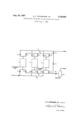
- the figure shows a system of fixed adsorbent beds for the vapor phase separation of a mixture of A and B where A is the less readily adsorbed component or components.
- the beds are arranged to allow essentially continuous separation in a cyclical operation in which the roles of the beds are periodically changed. At any given time, one bed will be adsorbing at elevated pressure. A second bed, after adsorption, will be being depressured to or at the desorption pressure. A third bed, after desorption, will be being repressured to or will be at the elevated pressure for adsorption.
- bed 1 is on adsorption.
- the feed mixture flows from line 18 through valve 4 into the bed where B is predominantly adsorbed. Unadsorbed vapor is taken off through valve 6 and line 21 as product rich in A. Valves 5 and 7 are closed during this operation.
- the flow of feed through the bed will usually be continued until the concentration of B in the effluent begins to increase. However, in some cases it may be desirable to stop short of this point when the temperature of the effluent becomes higher than that of the feed. Heat of adsorption may be conserved in this manner as disclosed in US. 2,944,627.
- Bed 2 is a bed which is to be desorbed and which contains vapor rich in A at the pressure used in adsorption. This bed is partially depressured by connecting it to bed 7 3 which has been desorbed and is initially at low pressure.
- vapor is allowed to flow from bed 2 through valve 11, line 20, valve 17, line 19 and valve 13 into bed 3'. Valves 8, 9, 10, 12, 14, 15, 16 and 22 are closed during this step.
- the flow of vapor is usually allowed to continue until the same pressure is reached in both beds. This pressure will usually be less than the average of the initial pressures of the two beds because more material tends to be adsorbed in bed 3 during this operation than is desorbed in bed 2. In some situations, it may be desirable to stop the flow of vapor from bed 2 to bed 3 before equalization of pressure occurs.
- another preferred embodiment utilizes a product to product end linkage.
- vapor is allowed to flow from bed 2 through valve 11, line 20, valve 15 into bed 3.
- Valves 8, 9, 10, 1-2, 13, 14, 16 and 22 are closed during this step.
- Bed 2 is further depressured by allowing vapor to flow through valve 9, line 19, and valve 22 into receiver 23 maintained at the desired final desorption pressure and in which a product rich in B is collected. Valves 8, 10, 11 and 17 are closed during this depressuring. In some cases, it may be advantageous to effect further desorption after depressuring by purging the bed.
- An effective technique is to backwash with some of the nonadsorbed product. This may be taken from line 21 and introduced into bed 2 through valve 16, line 20, and valve 11. An extraneous gas free of component B may also be used.
- Bed 3 is brought to adsorption pressure by the introduction of either feed or nonadsorbed product.
- Feed is taken from line 18 and fed through valve 12 with valves 13, 14 and 15 closed.
- Product A is taken from line 21 and fed through valve 14 with valves 12, 13 and 15 closed.
- the bed which had been adsorbing is depressured and desorbed, the bed which had been desorbed is repressured and the bed which had been repressured is placed on adsorption.
- adsorbents Any of numerous adsorbents may be utilized, depending on the particular separation desirable.
- the following table. illustrates examples of separations and adsorbents which may be employed:
- Adsorbent H from refinery gases Char, sieve, alumina or combinations.
- the operating conditions employed vary with the type of separation, the type of adsorbent employed, and the product purity required.
- the following table illustrates typical operating conditions for particular separations.
- the feed material is maintained in the gaseous phase.
- the pressure be reduced in two steps.
- the pressure should be reduced from about 25 to 75% in the first step, preferably about 50%, and, of course, the remaining depressurization in the final step.
- continuous operation may be, obtained by using four adsorption zones.
- the technique may also be applied in a moving bed and fluidized bed system.
- Example process for separating hydrogen and methane using a 5A molecular sieve In both cases adsorption pressure is 500 p.s.i.a. and desorption pressure is 20 p.s.i.a. The amount of hydrogen lost in the two-step operation is 6% of the hydrogen in the feed or less than 4 that which is lost in the conventional one-step case.
- the adsorption beds may be desirable to subject the adsorption beds to a periodic high temperature regeneration.
- the heavy components of the gases C have a fouling eifect and cause the activity of the adsorbent to fall off.
- the original activity may be restored by subjecting the adsorbent to temperatures from about 500 to 1000 F., preferably 700 F., for periods of about 15 minutes to 2 hours.
- the heating may readily be accomplished by recycling a hot inert gas, such as nitrogen, over the bed.
- a hot inert gas such as nitrogen
- An improved adsorption process which comprises: introducing a feed containing more readily adsorbable components and less readily adsorbable components into a first end of a first adsorption zone at a relatively high adsorption pressure; selectively adsorbing said more readily adsorbable components; Withdrawing a stream from a second end of said first adsorption zone, said stream containing essentially the less readily adsorbable components; depressurizing, after withdrawing said stream, and thereby partially desorbing said first adsorption zone by first connecting the said second end of said first adsorption zone to a second adsorption zone which second adsorption zone is at a relatively reduced pressure; disconnecting said adsorption zones when they are at substantially equal pressure, said last named pressure being intermediate to said relatively high and relatively low pressures; completing desorption of first adsorption zone by further reducing the total pressure to said relatively low pressure.
- An improved adsorption process which comprises: 1) introducing a feed containing a more readily adsorbable component and a less readily adsorbable component into a first end of a first adsorption zone at a relatively high pressure; (2) selectively adsorbing said more readily adsorbable component; (3) withdrawing a stream enriched in said less readily adsorbable component from a second end of said first adsorption zone; (4) discontinuing the introduction of feed to said first adsorption zone; (5) introducing said feed into a second adsorption zone; (6) after discontinuing the introduction of feed in said first zone, openly connecting said second end of said first adsorption zone to a third adsorption zone at a relatively low pressure, thereby initially desorbing at least a portion of said adsorbed material in said first adsorption zone; (7) permitting said first and third adsorption zones to come to substantially equal pressure, said last named pressure being intermediate to said relatively high and said relatively low pressures; (8) disconnecting said
- said adsorption zone contains at least one of the materials selected from the group consisting of char, alumina, and molecular sieves.
Landscapes
- Chemical & Material Sciences (AREA)
- Organic Chemistry (AREA)
- Engineering & Computer Science (AREA)
- Oil, Petroleum & Natural Gas (AREA)
- Chemical Kinetics & Catalysis (AREA)
- General Chemical & Material Sciences (AREA)
- Analytical Chemistry (AREA)
- Combustion & Propulsion (AREA)
- Inorganic Chemistry (AREA)
- Crystallography & Structural Chemistry (AREA)
- Water Supply & Treatment (AREA)
- Separation Of Gases By Adsorption (AREA)
Priority Applications (2)
| Application Number | Priority Date | Filing Date | Title |
|---|---|---|---|
| CH320863A CH417534A (de) | 1964-07-01 | 1963-03-13 | Adsorptionsverfahren |
| US380988A US3338030A (en) | 1964-07-01 | 1964-07-01 | Depressuring technique for deltap adsorption process |
Applications Claiming Priority (1)
| Application Number | Priority Date | Filing Date | Title |
|---|---|---|---|
| US380988A US3338030A (en) | 1964-07-01 | 1964-07-01 | Depressuring technique for deltap adsorption process |
Publications (1)
| Publication Number | Publication Date |
|---|---|
| US3338030A true US3338030A (en) | 1967-08-29 |
Family
ID=23503236
Family Applications (1)
| Application Number | Title | Priority Date | Filing Date |
|---|---|---|---|
| US380988A Expired - Lifetime US3338030A (en) | 1964-07-01 | 1964-07-01 | Depressuring technique for deltap adsorption process |
Country Status (2)
| Country | Link |
|---|---|
| US (1) | US3338030A (de) |
| CH (1) | CH417534A (de) |
Cited By (48)
| Publication number | Priority date | Publication date | Assignee | Title |
|---|---|---|---|---|
| US3430418A (en) * | 1967-08-09 | 1969-03-04 | Union Carbide Corp | Selective adsorption process |
| US3636679A (en) * | 1971-01-04 | 1972-01-25 | Union Carbide Corp | Selective adsorption gas separation process |
| US3638398A (en) * | 1968-08-08 | 1972-02-01 | Air Liquide | Method of separation by substantially isothermal selective adsorption of a gaseous mixture |
| US3703068A (en) * | 1971-03-26 | 1972-11-21 | Union Carbide Corp | Control system for selective adsorption process |
| US3703797A (en) * | 1968-09-13 | 1972-11-28 | Bayer Ag | Adsorption process for the complete and non-dissipative separation of a gas mixture into adsorbable and non-adsorbable, in particular radioactive components |
| US3717974A (en) * | 1968-12-30 | 1973-02-27 | Union Carbide Corp | Selective adsorption process for air separation |
| US3797201A (en) * | 1971-03-27 | 1974-03-19 | T Tamura | Absorption process for gas separation |
| US4011065A (en) * | 1974-01-09 | 1977-03-08 | Bergwerksverband Gmbh | Process for the enrichment of gases |
| US4015956A (en) * | 1971-04-23 | 1977-04-05 | Bergwerksverband Gmbh | Process and arrangement for the enrichment of gases |
| US4042349A (en) * | 1972-10-18 | 1977-08-16 | L'air Liquide, Societe Anonyme Pour L'etude Et L'exploitation Des Procedes Georges Claude | Method of fractionation of a gaseous mixture by adsorption |
| FR2350131A1 (fr) * | 1976-05-07 | 1977-12-02 | Boc Ltd | Procede et appareil pour augmenter la proportion d'un gaz dans un melange gazeux |
| US4194890A (en) * | 1976-11-26 | 1980-03-25 | Greene & Kellogg, Inc. | Pressure swing adsorption process and system for gas separation |
| US4259091A (en) * | 1978-09-16 | 1981-03-31 | Linde Aktiengesellschaft | Adiabatic adsorption method for gas purification or separation |
| US4263018A (en) * | 1978-02-01 | 1981-04-21 | Greene & Kellogg | Pressure swing adsorption process and system for gas separation |
| EP0038410A3 (en) * | 1980-04-18 | 1981-11-04 | Leybold-Heraeus Gmbh | Device for the separation or fractionated purification of gas mixtures |
| US4348213A (en) * | 1980-03-31 | 1982-09-07 | Boc Limited | Process for the separation of a gaseous mixture |
| US4349357A (en) * | 1980-06-23 | 1982-09-14 | Stanley Aviation Corporation | Apparatus and method for fractionating air and other gaseous mixtures |
| US4350500A (en) * | 1979-07-17 | 1982-09-21 | Ingeniersbureau "Essex" B.V. | Process and apparatus for separating gaseous component from a mixture |
| EP0066868A1 (de) * | 1981-06-06 | 1982-12-15 | Bergwerksverband GmbH | Verfahren zur Trennung von Gasgemischen mittels Druckwechsel-Adsorptionstechnik |
| US4376639A (en) * | 1981-12-10 | 1983-03-15 | Calgon Corporation | Novel repressurization of pressure swing adsorption system |
| EP0082948A1 (de) * | 1981-11-21 | 1983-07-06 | Leybold-Heraeus GmbH | Verfahren zum Betrieb einer Druckwechselanlage und nach diesem Verfahren arbeitende Druckwechselanlage |
| FR2531097A1 (fr) * | 1982-07-27 | 1984-02-03 | Osaka Oxygen Ind | Procede d'enlevement d'azote gazeux d'un melange comprenant n2 et co ou n2, co2 et co |
| US4440548A (en) * | 1982-04-19 | 1984-04-03 | Calgon Carbon Corporation | Pressure swing absorption system |
| US4449990A (en) * | 1982-09-10 | 1984-05-22 | Invacare Respiratory Corp. | Method and apparatus for fractioning oxygen |
| US4461630A (en) * | 1982-09-30 | 1984-07-24 | Union Carbide Corporation | Product recovery in pressure swing adsorption process and system |
| US4472177A (en) * | 1982-09-09 | 1984-09-18 | Air Products And Chemicals, Inc. | Control system and method for air fractionation by vacuum swing adsorption |
| US4475929A (en) * | 1978-12-05 | 1984-10-09 | Union Carbide Corporation | Selective adsorption process |
| US4498910A (en) * | 1981-12-18 | 1985-02-12 | Linde Aktiengesellschaft | Safe adsorption process for the separation of hydrocarbons from oxygen containing gas |
| US4518400A (en) * | 1984-01-06 | 1985-05-21 | Newby Gerald R | Steam-sieve method and apparatus |
| US4519813A (en) * | 1977-02-10 | 1985-05-28 | Osaka Oxygen Industries Ltd. | Process for extraction of highly purified oxygen |
| US4529412A (en) * | 1982-11-19 | 1985-07-16 | Seitetsu Kagaku Co., Ltd. | Process for obtaining high concentration argon by pressure-swing-adsorption |
| US4545790A (en) * | 1983-08-11 | 1985-10-08 | Bio-Care, Incorporated | Oxygen concentrator |
| US4552571A (en) * | 1984-04-05 | 1985-11-12 | Vbm Corporation | Oxygen generator with two compressor stages |
| US4576616A (en) * | 1982-07-27 | 1986-03-18 | Proto-Med. Inc. | Method and apparatus for concentrating oxygen |
| JPS61266302A (ja) * | 1985-05-17 | 1986-11-26 | Seitetsu Kagaku Co Ltd | 濃縮酸素回収方法 |
| US4813977A (en) * | 1987-12-29 | 1989-03-21 | Air Products And Chemicals, Inc. | Adsorptive nitrogen generation utilizing multiple adsorption beds |
| US4822383A (en) * | 1987-04-30 | 1989-04-18 | United Technologies Corporation | Method and apparatus for removing carbon dioxide from air |
| US4840647A (en) * | 1985-07-08 | 1989-06-20 | L'air Liquide, Societe Anonyme Pour L'etude Et L'exploitation Des Procedes Georges Claude | Process for treating a gaseous mixture by adsorption |
| US4869733A (en) * | 1986-05-22 | 1989-09-26 | Vbm Corporation | Super-enriched oxygen generator |
| US4892565A (en) * | 1987-12-29 | 1990-01-09 | Air Products And Chemicals, Inc. | Adsorptive separation utilizing multiple adsorption beds |
| US5002591A (en) * | 1988-10-14 | 1991-03-26 | Vbm Corporation | High efficiency PSA gas concentrator |
| US5015271A (en) * | 1988-09-01 | 1991-05-14 | Bayer Aktiengesellschaft | Separation of gas mixtures by vacuum swing adsorption (VSA) in a two-adsorber system |
| US5061455A (en) * | 1987-04-30 | 1991-10-29 | United Technologies Corporation | Apparatus for removing carbon dioxide from air |
| US5176722A (en) * | 1990-06-19 | 1993-01-05 | The Boc Group, Inc. | Pressure swing adsorption method for separating gaseous mixtures |
| US5520720A (en) * | 1994-11-30 | 1996-05-28 | The Boc Group, Inc. | Pressure swing adsorption process |
| US5632807A (en) * | 1993-06-03 | 1997-05-27 | L'air Liquide, Societe Anonyme Pour L'etude Et L'exploitation Des Procedes Georges Claude | Device for the separation of elements of a gas mixture by adsorption |
| GB2398522A (en) * | 2003-02-18 | 2004-08-25 | Air Prod & Chem | Apparatus for the purification of gasses. |
| US10807033B2 (en) | 2015-10-16 | 2020-10-20 | L'Air Liquide, Société Anonyme pour l'Etude et l'Exploitation des Procédés Georges Claude | Vertical purification device |
Citations (3)
| Publication number | Priority date | Publication date | Assignee | Title |
|---|---|---|---|---|
| US3085379A (en) * | 1960-03-09 | 1963-04-16 | Union Carbide Corp | Purification of light gases with molecular sieves |
| US3086339A (en) * | 1960-06-09 | 1963-04-23 | Exxon Research Engineering Co | Technique with the fractionation or separation of components in a gaseous feed stream |
| US3104162A (en) * | 1960-05-18 | 1963-09-17 | Exxon Research Engineering Co | Timing cycle for improved heatless fractionation of gaseous materials |
-
1963
- 1963-03-13 CH CH320863A patent/CH417534A/de unknown
-
1964
- 1964-07-01 US US380988A patent/US3338030A/en not_active Expired - Lifetime
Patent Citations (3)
| Publication number | Priority date | Publication date | Assignee | Title |
|---|---|---|---|---|
| US3085379A (en) * | 1960-03-09 | 1963-04-16 | Union Carbide Corp | Purification of light gases with molecular sieves |
| US3104162A (en) * | 1960-05-18 | 1963-09-17 | Exxon Research Engineering Co | Timing cycle for improved heatless fractionation of gaseous materials |
| US3086339A (en) * | 1960-06-09 | 1963-04-23 | Exxon Research Engineering Co | Technique with the fractionation or separation of components in a gaseous feed stream |
Cited By (49)
| Publication number | Priority date | Publication date | Assignee | Title |
|---|---|---|---|---|
| US3430418A (en) * | 1967-08-09 | 1969-03-04 | Union Carbide Corp | Selective adsorption process |
| US3638398A (en) * | 1968-08-08 | 1972-02-01 | Air Liquide | Method of separation by substantially isothermal selective adsorption of a gaseous mixture |
| US3703797A (en) * | 1968-09-13 | 1972-11-28 | Bayer Ag | Adsorption process for the complete and non-dissipative separation of a gas mixture into adsorbable and non-adsorbable, in particular radioactive components |
| US3717974A (en) * | 1968-12-30 | 1973-02-27 | Union Carbide Corp | Selective adsorption process for air separation |
| US3636679A (en) * | 1971-01-04 | 1972-01-25 | Union Carbide Corp | Selective adsorption gas separation process |
| US3703068A (en) * | 1971-03-26 | 1972-11-21 | Union Carbide Corp | Control system for selective adsorption process |
| US3797201A (en) * | 1971-03-27 | 1974-03-19 | T Tamura | Absorption process for gas separation |
| US4015956A (en) * | 1971-04-23 | 1977-04-05 | Bergwerksverband Gmbh | Process and arrangement for the enrichment of gases |
| US4042349A (en) * | 1972-10-18 | 1977-08-16 | L'air Liquide, Societe Anonyme Pour L'etude Et L'exploitation Des Procedes Georges Claude | Method of fractionation of a gaseous mixture by adsorption |
| US4011065A (en) * | 1974-01-09 | 1977-03-08 | Bergwerksverband Gmbh | Process for the enrichment of gases |
| FR2350131A1 (fr) * | 1976-05-07 | 1977-12-02 | Boc Ltd | Procede et appareil pour augmenter la proportion d'un gaz dans un melange gazeux |
| US4194890A (en) * | 1976-11-26 | 1980-03-25 | Greene & Kellogg, Inc. | Pressure swing adsorption process and system for gas separation |
| US4519813A (en) * | 1977-02-10 | 1985-05-28 | Osaka Oxygen Industries Ltd. | Process for extraction of highly purified oxygen |
| US4263018A (en) * | 1978-02-01 | 1981-04-21 | Greene & Kellogg | Pressure swing adsorption process and system for gas separation |
| US4259091A (en) * | 1978-09-16 | 1981-03-31 | Linde Aktiengesellschaft | Adiabatic adsorption method for gas purification or separation |
| US4475929A (en) * | 1978-12-05 | 1984-10-09 | Union Carbide Corporation | Selective adsorption process |
| US4350500A (en) * | 1979-07-17 | 1982-09-21 | Ingeniersbureau "Essex" B.V. | Process and apparatus for separating gaseous component from a mixture |
| US4348213A (en) * | 1980-03-31 | 1982-09-07 | Boc Limited | Process for the separation of a gaseous mixture |
| EP0038410A3 (en) * | 1980-04-18 | 1981-11-04 | Leybold-Heraeus Gmbh | Device for the separation or fractionated purification of gas mixtures |
| US4349357A (en) * | 1980-06-23 | 1982-09-14 | Stanley Aviation Corporation | Apparatus and method for fractionating air and other gaseous mixtures |
| EP0066868A1 (de) * | 1981-06-06 | 1982-12-15 | Bergwerksverband GmbH | Verfahren zur Trennung von Gasgemischen mittels Druckwechsel-Adsorptionstechnik |
| EP0082948A1 (de) * | 1981-11-21 | 1983-07-06 | Leybold-Heraeus GmbH | Verfahren zum Betrieb einer Druckwechselanlage und nach diesem Verfahren arbeitende Druckwechselanlage |
| US4376639A (en) * | 1981-12-10 | 1983-03-15 | Calgon Corporation | Novel repressurization of pressure swing adsorption system |
| US4498910A (en) * | 1981-12-18 | 1985-02-12 | Linde Aktiengesellschaft | Safe adsorption process for the separation of hydrocarbons from oxygen containing gas |
| US4440548A (en) * | 1982-04-19 | 1984-04-03 | Calgon Carbon Corporation | Pressure swing absorption system |
| FR2531097A1 (fr) * | 1982-07-27 | 1984-02-03 | Osaka Oxygen Ind | Procede d'enlevement d'azote gazeux d'un melange comprenant n2 et co ou n2, co2 et co |
| US4468238A (en) * | 1982-07-27 | 1984-08-28 | Osaka Oxygen Industries Ltd. | Process for removing a nitrogen gas from mixture comprising N2 and CO or N2 ' CO2 and CO |
| US4576616A (en) * | 1982-07-27 | 1986-03-18 | Proto-Med. Inc. | Method and apparatus for concentrating oxygen |
| US4472177A (en) * | 1982-09-09 | 1984-09-18 | Air Products And Chemicals, Inc. | Control system and method for air fractionation by vacuum swing adsorption |
| US4449990A (en) * | 1982-09-10 | 1984-05-22 | Invacare Respiratory Corp. | Method and apparatus for fractioning oxygen |
| US4461630A (en) * | 1982-09-30 | 1984-07-24 | Union Carbide Corporation | Product recovery in pressure swing adsorption process and system |
| US4529412A (en) * | 1982-11-19 | 1985-07-16 | Seitetsu Kagaku Co., Ltd. | Process for obtaining high concentration argon by pressure-swing-adsorption |
| US4545790A (en) * | 1983-08-11 | 1985-10-08 | Bio-Care, Incorporated | Oxygen concentrator |
| US4518400A (en) * | 1984-01-06 | 1985-05-21 | Newby Gerald R | Steam-sieve method and apparatus |
| US4552571A (en) * | 1984-04-05 | 1985-11-12 | Vbm Corporation | Oxygen generator with two compressor stages |
| JPS61266302A (ja) * | 1985-05-17 | 1986-11-26 | Seitetsu Kagaku Co Ltd | 濃縮酸素回収方法 |
| US4840647A (en) * | 1985-07-08 | 1989-06-20 | L'air Liquide, Societe Anonyme Pour L'etude Et L'exploitation Des Procedes Georges Claude | Process for treating a gaseous mixture by adsorption |
| US4869733A (en) * | 1986-05-22 | 1989-09-26 | Vbm Corporation | Super-enriched oxygen generator |
| US4822383A (en) * | 1987-04-30 | 1989-04-18 | United Technologies Corporation | Method and apparatus for removing carbon dioxide from air |
| US5061455A (en) * | 1987-04-30 | 1991-10-29 | United Technologies Corporation | Apparatus for removing carbon dioxide from air |
| US4813977A (en) * | 1987-12-29 | 1989-03-21 | Air Products And Chemicals, Inc. | Adsorptive nitrogen generation utilizing multiple adsorption beds |
| US4892565A (en) * | 1987-12-29 | 1990-01-09 | Air Products And Chemicals, Inc. | Adsorptive separation utilizing multiple adsorption beds |
| US5015271A (en) * | 1988-09-01 | 1991-05-14 | Bayer Aktiengesellschaft | Separation of gas mixtures by vacuum swing adsorption (VSA) in a two-adsorber system |
| US5002591A (en) * | 1988-10-14 | 1991-03-26 | Vbm Corporation | High efficiency PSA gas concentrator |
| US5176722A (en) * | 1990-06-19 | 1993-01-05 | The Boc Group, Inc. | Pressure swing adsorption method for separating gaseous mixtures |
| US5632807A (en) * | 1993-06-03 | 1997-05-27 | L'air Liquide, Societe Anonyme Pour L'etude Et L'exploitation Des Procedes Georges Claude | Device for the separation of elements of a gas mixture by adsorption |
| US5520720A (en) * | 1994-11-30 | 1996-05-28 | The Boc Group, Inc. | Pressure swing adsorption process |
| GB2398522A (en) * | 2003-02-18 | 2004-08-25 | Air Prod & Chem | Apparatus for the purification of gasses. |
| US10807033B2 (en) | 2015-10-16 | 2020-10-20 | L'Air Liquide, Société Anonyme pour l'Etude et l'Exploitation des Procédés Georges Claude | Vertical purification device |
Also Published As
| Publication number | Publication date |
|---|---|
| CH417534A (de) | 1966-07-31 |
Similar Documents
| Publication | Publication Date | Title |
|---|---|---|
| US3252268A (en) | Gas separation by adsorption process | |
| US3594983A (en) | Gas-treating process and system | |
| US3142547A (en) | Pressure equalization depressuring in heatless adsorption | |
| US4784672A (en) | Regeneration of adsorbents | |
| US6402813B2 (en) | Process for purifying a gas by adsorption of the impurities on several active carbons | |
| US4468237A (en) | Pressure swing adsorption with direct and indirect pressure equalizations | |
| US3102013A (en) | Heatless fractionation utilizing zones in series and parallel | |
| KR100254295B1 (ko) | 단일 흡착 베드를 이용한 압력 스윙 흡착 방법 | |
| US3957463A (en) | Oxygen enrichment process | |
| CA2332704C (en) | Very large-scale pressure swing adsorption processes | |
| US3176445A (en) | Method of separating gas mixtures by adsorption | |
| US4685939A (en) | Production of oxygen enriched air | |
| US3141748A (en) | Hydrogen purification process | |
| US4359328A (en) | Inverted pressure swing adsorption process | |
| US2918140A (en) | Treatment of gas mixtures | |
| US4650501A (en) | Pressure swing adsorption process | |
| US3149934A (en) | Cyclic adsorption process | |
| GB2127710A (en) | Separating nitrogen and carbon monoxide | |
| KR880002565A (ko) | 개스 혼합물의 흡착분리 공정 | |
| AU578807B2 (en) | Enhanced pressure swing adsorption process and system | |
| US3306841A (en) | Gas separation process | |
| KR900001537B1 (ko) | 고순도 일산화탄소의 분리방법 | |
| GB1345055A (de) | ||
| US4812147A (en) | Multicomponent adsorption process | |
| US4690696A (en) | Oxidation of carbonaceous material |