US3337366A - Recovering sugars from aqueous pulping liquor containing lignosulfonates using acetone - Google Patents
Recovering sugars from aqueous pulping liquor containing lignosulfonates using acetone Download PDFInfo
- Publication number
- US3337366A US3337366A US346878A US34687864A US3337366A US 3337366 A US3337366 A US 3337366A US 346878 A US346878 A US 346878A US 34687864 A US34687864 A US 34687864A US 3337366 A US3337366 A US 3337366A
- Authority
- US
- United States
- Prior art keywords
- solvent
- acetone
- liquor
- lignosulfonates
- methanol
- Prior art date
- Legal status (The legal status is an assumption and is not a legal conclusion. Google has not performed a legal analysis and makes no representation as to the accuracy of the status listed.)
- Expired - Lifetime
Links
- CSCPPACGZOOCGX-UHFFFAOYSA-N Acetone Chemical compound CC(C)=O CSCPPACGZOOCGX-UHFFFAOYSA-N 0.000 title claims description 90
- 229920001732 Lignosulfonate Polymers 0.000 title claims description 37
- 239000003265 pulping liquor Substances 0.000 title claims description 15
- 235000000346 sugar Nutrition 0.000 title description 25
- 150000008163 sugars Chemical class 0.000 title description 22
- OKKJLVBELUTLKV-UHFFFAOYSA-N Methanol Chemical compound OC OKKJLVBELUTLKV-UHFFFAOYSA-N 0.000 claims description 102
- 239000002904 solvent Substances 0.000 claims description 69
- 239000012071 phase Substances 0.000 claims description 34
- XLYOFNOQVPJJNP-UHFFFAOYSA-N water Substances O XLYOFNOQVPJJNP-UHFFFAOYSA-N 0.000 claims description 27
- 238000000034 method Methods 0.000 claims description 22
- 239000000203 mixture Substances 0.000 claims description 20
- 239000007788 liquid Substances 0.000 claims description 18
- 230000008569 process Effects 0.000 claims description 18
- 238000002156 mixing Methods 0.000 claims description 8
- 239000006227 byproduct Substances 0.000 claims description 6
- 239000008346 aqueous phase Substances 0.000 claims description 4
- 239000012074 organic phase Substances 0.000 claims description 4
- LFQSCWFLJHTTHZ-UHFFFAOYSA-N Ethanol Chemical compound CCO LFQSCWFLJHTTHZ-UHFFFAOYSA-N 0.000 description 29
- KFZMGEQAYNKOFK-UHFFFAOYSA-N Isopropanol Chemical compound CC(C)O KFZMGEQAYNKOFK-UHFFFAOYSA-N 0.000 description 24
- LSNNMFCWUKXFEE-UHFFFAOYSA-N Sulfurous acid Chemical compound OS(O)=O LSNNMFCWUKXFEE-UHFFFAOYSA-N 0.000 description 24
- DKGAVHZHDRPRBM-UHFFFAOYSA-N Tert-Butanol Chemical compound CC(C)(C)O DKGAVHZHDRPRBM-UHFFFAOYSA-N 0.000 description 12
- 239000000047 product Substances 0.000 description 10
- 239000007787 solid Substances 0.000 description 10
- 238000000605 extraction Methods 0.000 description 6
- 238000004537 pulping Methods 0.000 description 6
- 239000011877 solvent mixture Substances 0.000 description 6
- 238000009835 boiling Methods 0.000 description 5
- 238000000926 separation method Methods 0.000 description 5
- -1 aliphatic alcohols Chemical class 0.000 description 4
- 238000011084 recovery Methods 0.000 description 4
- 239000000126 substance Substances 0.000 description 4
- 238000010586 diagram Methods 0.000 description 3
- 238000004519 manufacturing process Methods 0.000 description 3
- 238000003860 storage Methods 0.000 description 3
- 235000008733 Citrus aurantifolia Nutrition 0.000 description 2
- QAOWNCQODCNURD-UHFFFAOYSA-N Sulfuric acid Chemical compound OS(O)(=O)=O QAOWNCQODCNURD-UHFFFAOYSA-N 0.000 description 2
- 235000011941 Tilia x europaea Nutrition 0.000 description 2
- 239000002253 acid Substances 0.000 description 2
- 239000011230 binding agent Substances 0.000 description 2
- 238000010924 continuous production Methods 0.000 description 2
- 238000000354 decomposition reaction Methods 0.000 description 2
- 238000001035 drying Methods 0.000 description 2
- 239000004571 lime Substances 0.000 description 2
- 239000007791 liquid phase Substances 0.000 description 2
- 239000000463 material Substances 0.000 description 2
- 230000007246 mechanism Effects 0.000 description 2
- NIQQIJXGUZVEBB-UHFFFAOYSA-N methanol;propan-2-one Chemical compound OC.CC(C)=O NIQQIJXGUZVEBB-UHFFFAOYSA-N 0.000 description 2
- 235000013379 molasses Nutrition 0.000 description 2
- 239000000843 powder Substances 0.000 description 2
- 239000002994 raw material Substances 0.000 description 2
- 239000000243 solution Substances 0.000 description 2
- 240000004808 Saccharomyces cerevisiae Species 0.000 description 1
- 239000000853 adhesive Substances 0.000 description 1
- 230000001070 adhesive effect Effects 0.000 description 1
- 101150059062 apln gene Proteins 0.000 description 1
- 239000007864 aqueous solution Substances 0.000 description 1
- 238000010923 batch production Methods 0.000 description 1
- 239000003518 caustics Substances 0.000 description 1
- 230000002301 combined effect Effects 0.000 description 1
- 239000012141 concentrate Substances 0.000 description 1
- 238000010411 cooking Methods 0.000 description 1
- 230000003247 decreasing effect Effects 0.000 description 1
- 239000003995 emulsifying agent Substances 0.000 description 1
- 238000001704 evaporation Methods 0.000 description 1
- 230000008020 evaporation Effects 0.000 description 1
- 238000011049 filling Methods 0.000 description 1
- 239000007789 gas Substances 0.000 description 1
- 230000007062 hydrolysis Effects 0.000 description 1
- 238000006460 hydrolysis reaction Methods 0.000 description 1
- 230000006872 improvement Effects 0.000 description 1
- 229910052500 inorganic mineral Inorganic materials 0.000 description 1
- 229920005610 lignin Polymers 0.000 description 1
- 244000005700 microbiome Species 0.000 description 1
- 239000011707 mineral Substances 0.000 description 1
- 238000012986 modification Methods 0.000 description 1
- 230000004048 modification Effects 0.000 description 1
- 239000003607 modifier Substances 0.000 description 1
- 235000005985 organic acids Nutrition 0.000 description 1
- 150000007524 organic acids Chemical class 0.000 description 1
- 239000002304 perfume Substances 0.000 description 1
- 230000001376 precipitating effect Effects 0.000 description 1
- 238000001556 precipitation Methods 0.000 description 1
- 239000002689 soil Substances 0.000 description 1
- 239000008247 solid mixture Substances 0.000 description 1
- 239000006104 solid solution Substances 0.000 description 1
- 238000003756 stirring Methods 0.000 description 1
- 238000006277 sulfonation reaction Methods 0.000 description 1
- 239000004094 surface-active agent Substances 0.000 description 1
- 239000000725 suspension Substances 0.000 description 1
- 235000012141 vanillin Nutrition 0.000 description 1
- MWOOGOJBHIARFG-UHFFFAOYSA-N vanillin Chemical compound COC1=CC(C=O)=CC=C1O MWOOGOJBHIARFG-UHFFFAOYSA-N 0.000 description 1
- FGQOOHJZONJGDT-UHFFFAOYSA-N vanillin Natural products COC1=CC(O)=CC(C=O)=C1 FGQOOHJZONJGDT-UHFFFAOYSA-N 0.000 description 1
- 239000002023 wood Substances 0.000 description 1
Images
Classifications
-
- C—CHEMISTRY; METALLURGY
- C13—SUGAR INDUSTRY
- C13B—PRODUCTION OF SUCROSE; APPARATUS SPECIALLY ADAPTED THEREFOR
- C13B10/00—Production of sugar juices
- C13B10/14—Production of sugar juices using extracting agents other than water, e.g. alcohol or salt solutions
-
- D—TEXTILES; PAPER
- D21—PAPER-MAKING; PRODUCTION OF CELLULOSE
- D21C—PRODUCTION OF CELLULOSE BY REMOVING NON-CELLULOSE SUBSTANCES FROM CELLULOSE-CONTAINING MATERIALS; REGENERATION OF PULPING LIQUORS; APPARATUS THEREFOR
- D21C11/00—Regeneration of pulp liquors or effluent waste waters
- D21C11/0007—Recovery of by-products, i.e. compounds other than those necessary for pulping, for multiple uses or not otherwise provided for
Definitions
- This invention relates to a process for recovering products from spent pulping liquor. More specifically, this invention relates to a process for recovering desugared lignosulfonate and a fraction containing sugar from spent pulping liquor.
- Sulfite spent liquor is obtained as a by-product of sulfite pulp production. This is an aqueous solution containing processed chemicals along with components of the wood which were dissolved during the pulping operation.
- the sulfite spent liquor is predominantly water but contains nonvolatile solids in concentrations usually up to about 814%. These solids will be about 60% lignosulfonates from sulfonation of lignin and about 20% sugars from holocellulose hydrolysis during the pulping operation.
- the remaining material consists mostly of spent cooking chemicals, organic acids and decomposition products.
- sulfite spent liquor components An approach to the utilization of sulfite spent liquor components is the development of methods to recover the components, or their derivatives, in a form which can be sold at a profit.
- sulfite liquor itself is being used to a limited extent as a road binder.
- the sugars in spent liquors are being converted by microorganisms to produce industrial alcohol or fodder yeast.
- spent liquor concentrates or solids are being sold for use as binders and adhesives, emulsifiers, soil modifiers, surface-active agents, and tanning materials.
- By treating the lignosulfonate in the liquor with caustic or lime it can be converted into vanillin, a well-known flavoring and perfume component.
- Another approach to recovering lignosulfonates involves the precipitation of the lignosulfonates with lime. However, this process results in the decomposition of the sugars in the spent sulfite liquors. These sugars are useful and can be recovered. Also, by precipitating the lignosulfonates a liquid solid solution or mixture is produced which involves complicated machinery to handle.
- Another approach to the recovery of lignosulfonates involves the drying of the spent liquors solids so a powder containing about 10% or less moisture is produced.
- the extraction of the powder takes a relatively long time and eventually requires the addition of a mineral acid, preferably sulfuric acid.
- the extraction and recovery of the acid solids cannot be carried out efiiciently if the mixtures of solids and liquids have to be handled instead of liquids only. Accordingly, this process has proved to be unsatisfactory since it is uneconomical and high cost mechanisms are needed to recover the lignosulfonates.
- the object of this invention is to provide a process for recovering by-products from spent sulfite liquors.
- Another object of this invention is to provide an economical process for recovering lignosulfonates and sugars from the spent sulfite liquors used in pulping operations.
- Another object of this invention is to provide superior raw materials for the production of modified lignosulfonates and sugars.
- Another object of this invention is to provide a method of producing or recovering desugared lignosulfonates employing a liquid-liquid separation process.
- Another object of this invention is to provide a method to produce first desugared lignosulfonates and then separate these desugared lignosulfonates into fractions of higher and lower molecular weight lignosulfonates.
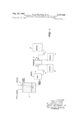
- FIGURE 1 is a flow diagram for the batch production of desugared lignosulfonates from the sulfite spent liquor.
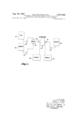
- FIGURE 2 is a flow diagram for the continuous production of desugared lignosulfonates from the sulfite spent liquor.
- the continuous process of the present invention is practiced by first placing the sulfite spent liquor in a tank 21 for extraction.
- the spent sulfite liquor will contain lignosulfonate and sugars as noted above.
- the spent sulfite liquor may be subjected to an evaporation process to bring the total solids in suspension in the liquor to from 8 to 65%, preferably about 55%.
- the temperature of the spent sulfite liquor is maintained from 50 F. to 240 F.
- a solvent from tank 26 and the spent sulfite liquor from the feed tank 21 are pumped by pumps 30 and 22 respectively through the in-line mixing unit 23.
- the tempera ture of the solvent and the temperature of the solventspent liquor mixture are generally maintained below 180 F.
- the ratio of solvent to liquor may be from /2 to 10 parts of solvent to one part of the spent sulfite liquor.
- the solvent that is usable in the practice of this inven' tion is a mixture of acetone and lower boiling aliphatic alcohols, such as, methanol, ethanol, isopropanol, and tertiary butyl alcohol.
- the ratio for example, may be from 20 to 100% acetone, 0 to methanol, and 0 to 50% water.
- the preferred solvent is 65% acetone and 35% methanol.
- the ethanol, isopropanol, and tertiary butyl alcohol may be used in combination with acetone or may be used without acetone or in mixtures thereof. But, if methanol is used, it must be combined with acetone, ethanol, isopropanol, or tertiary butyl alcohol.
- the mixture of spent .sulfite liquor and solvent tends to separate into a heavy phase and a light phase.
- the separation takes place in the extractor.
- the heavy phase of the liquor-solvent mixture will contain a high concentration of lignosulfonates and a portion of the solvent.
- FIGURE 2 shows a countercurrent centrifugal type of extractor, for example a Podbielniak extractor. However, it should be pointed out that a countercurrent column extractor can also be satisfactorily used.
- the spent sulfite liquor can be treated with two different solvent mixtures While passing through the system.
- the solvent from tank 26 may consist primarily of acetone and methanol with little or no water, while the solvent from tank 29 may contain a significant amount of water in addition to acetone nad methanol.
- the solvent used in the extraction phase may be a mixture of acetone and lower boiling aliphatic alcohols, such as, methanol, ethanol, isopropanol, and tertiary butyl alcohol.
- the ratio for example, may be from 20 to acetone, 0 to 80% methanol, and 0 to 50% water.
- the description of the process given applies to spent sulfite liquor.
- the system can be used to separate, for example, a desugared lignosulfonate product into higher and lower molecular weight fractions.
- the product is rerun through the same extractor.
- the solvent from tank 26 will now contain more water and methanol than during the desugaring operation of the spent sulfite liquor.
- a second extractor in series may be used.
- the extract may be also subjected to a second treatment for further improvement. However, in many cases, concentrating of the extract prior to the second treatment is advisable.
- the sugars remaining in the light phase after the solvent has been removed may be used for making molasses.
- a solvent is injected into mixing tank 1 at a temperature of from 60 F. to 200 F.
- the ratio of solvent to liquor may be from /2 to 10 parts of solvent to 1 part of the spent sulfite liquor.
- the liquor and solvent may be mixed by a stirring mechanism 2 and allowed to settle from 10 min. to 5 hrs. depending upon the conditions that exist.
- the upper light phase of the liquor solvent mixture will contain a high concentration of dissolved sugars in addition to the solvent used.
- the lower heavy phase of the liquor solvent mixture will contain a high concentration of lignosulfonates and a portion of the solvent.
- the heavy phase of the liquor solvent mixture is then drained off and placed into a feed tank 3 to be fed into a countercurrent extractor 5.
- Water may be added to the heavy phase in the feed tank 3 so as to bring the percentage of water at around 50% to reduce the viscosity to improve the operation of the countercurrent extractor. It should be noted that the feed tank 3 may be bypassed if a continuous operation is practiced.
- the solvent used in the extractor phase may be a mixture of acetone and lower boiling aliphatic alcohols, such as, methanol, ethanol, isopropanol, and tertiary butyl alcohol.
- the ratio for example, may be from 20 to 100% acetone, 0 to methanol, and O to 50% water.
- the ethanol, isopropanol, and tertiary butyl alcohol may be used in combination with acetone or may be used without acetone or in mixtures thereof. But, if methanol is used it must be combined with acetone, ethanol, isopropanol, or tertiary butyl alcohol.
- the extractor 5 will produce extract 10 which will contain the additional sugars and a portion of the solvent.
- the other portion 11 will be substantially sugar free lignosulfonate along with some of the solvent.
- the lignosulfonates may then be separated from the solvent in a stripping column to produce the product.
- the upper light phase having the sugars dissolved therein is passed through a stripping column for solvent removal.
- Spent sulfite liquor was first concentrated to contain about 50% solids in solution.
- the concentrated s-pent liquor was pumped into a mixer settler tank along with an acetone-methanol solvent on a volume basis of 2 parts solvent to 1 part spent liquor.
- the acetone-methanol solvent was 65% acetone, 35% methanol.
- a total time of two hours was allowed for filling, mixing, settling and emptying in this initial stage.
- the bottom (heavy) layer and the top (light) layer were separated upon settling and each was pumped to their respective tanks.
- the temperature in the initial mixing tank was F.
- the contents of the light phase extract tank containing the light phase was fed to a stripping tower where the solvent was stripped from the sugar.
- the solvent vapors were concentrated and sent back for reuse.
- the bottoms from this stripping tower served as the raw material for the production of molasses.
- acetone or a mixture of acetone and methanol with or without additional water has several adtanges within the present invention. These advantages include the fact that acetone and methanol are produced during the pulping operation and can be recovered as by-products from the digester relief and blow gases. Accordingly, a cheap source of acetone and methanol is inherently present in the pulping operation. Also, acetone and methanol have relatively low boiling points and they do not form azeotropic mixtures with water that are difficult to separate. Consequently, the recovery of these solvents for reuse in the extraction process presents a minimum of difliculties. Moreover, the use of acetone and methanol in the extraction process have excellent solubility properties for the sugars in the spent sulfite liquor in addition to producing a relatively high yield of desugared lignosulfonates.
- a process for recovering by-products from a spent, aqueous pulping liquor containing sugars and lignosulfonates comprising the steps of: mixing a first solvent capable of forming a two-phase liquid-liquid system with said aqueous pulping liquor; said first solvent consisting of from 40 to 100% by volume acetone, from 0 to 60% by volume methanol, and from 0 to 25% by volume water; the sugars in said pulping liquor being dissolved in the light organic phase of said two-phase liquid-liquid system and the lignosulfonates being dissolved in the heavy aqueous phase of said two-phase liquid-liquid system; feeding the first solvent-liquor mixture into a liquidliquid extractor; feeding -a second solvent into said extractor simultaneously with and countercurrently to said mixture; said second solvent consisting essentially of from 40 to 100% by volume acetone, from 0 to 60% by volume methanol, and from 0 to 25% by volume water, recovering sugar within said light organic phase and lignosulfonates with said heavy
- a process for recovering by-products from a spent, aqueous pulping liquor containing sugars and lignosulfonates comprising the steps of: mixing a first solvent capable of forming a two-phase liquid-liquid system with said aqueous pulping liquor; said first solvent consisting of from 40 to 100% by volume acetone, from 0 to by volume methanol, and from 0 to 25% by volume water; allowing the pulping liquor and the first solvent to settle a suflicient length of time to form an upper light phase and lower heavy phase liquid-liquid system; said sugars in said pulping liquor being dissolved in the upper light organic phase of said two-phase liquid-liquid system and the lignosulfonates being dissolved in the heavy aqueous phase of said two-phase liquid-liquid system; separating the upper light phase from the lower heavy phase; recovering sugars from the upper light phase; feeding the lower heavy phase into a countercurrent liquid-liquid extractor along with a second solvent consisting essentially of from 0 to 100% by volume acetone, from
Landscapes
- Chemical & Material Sciences (AREA)
- Life Sciences & Earth Sciences (AREA)
- Biochemistry (AREA)
- Organic Chemistry (AREA)
- Extraction Or Liquid Replacement (AREA)
- Paper (AREA)
Priority Applications (5)
| Application Number | Priority Date | Filing Date | Title |
|---|---|---|---|
| US346878A US3337366A (en) | 1964-02-24 | 1964-02-24 | Recovering sugars from aqueous pulping liquor containing lignosulfonates using acetone |
| DE19651517231 DE1517231A1 (de) | 1964-02-24 | 1965-02-05 | Verfahren zur Gewinnung von Nebenprodukten aus der Ablauge des Aufschlusses von Cellulosematerial |
| AT141565A AT270373B (de) | 1964-02-24 | 1965-02-17 | Verfahren zur Gewinnung von Nebenprodukten aus Sulfitzellstoffablauge |
| FR6297A FR1430458A (fr) | 1964-02-24 | 1965-02-19 | Procédé de récupération de sous-produits des opérations de réduction en pâte à papier |
| GB7959/65A GB1024136A (en) | 1964-02-24 | 1965-02-24 | Method of recovering by-products from pulping operations |
Applications Claiming Priority (1)
| Application Number | Priority Date | Filing Date | Title |
|---|---|---|---|
| US346878A US3337366A (en) | 1964-02-24 | 1964-02-24 | Recovering sugars from aqueous pulping liquor containing lignosulfonates using acetone |
Publications (1)
| Publication Number | Publication Date |
|---|---|
| US3337366A true US3337366A (en) | 1967-08-22 |
Family
ID=23361403
Family Applications (1)
| Application Number | Title | Priority Date | Filing Date |
|---|---|---|---|
| US346878A Expired - Lifetime US3337366A (en) | 1964-02-24 | 1964-02-24 | Recovering sugars from aqueous pulping liquor containing lignosulfonates using acetone |
Country Status (4)
| Country | Link |
|---|---|
| US (1) | US3337366A (de) |
| AT (1) | AT270373B (de) |
| DE (1) | DE1517231A1 (de) |
| GB (1) | GB1024136A (de) |
Cited By (3)
| Publication number | Priority date | Publication date | Assignee | Title |
|---|---|---|---|---|
| US3639171A (en) * | 1968-12-05 | 1972-02-01 | Sydkemi Ab | METHOD OF ISOLATING d-XYLOSE FROM HARDWOOD SULPHITE LIQUOR |
| US4116712A (en) * | 1977-09-06 | 1978-09-26 | Othmer Donald F | Solvent refining of sugar |
| CN114044916A (zh) * | 2021-10-29 | 2022-02-15 | 牡丹江恒丰纸业股份有限公司 | 一种制备染料分散剂的方法 |
Families Citing this family (1)
| Publication number | Priority date | Publication date | Assignee | Title |
|---|---|---|---|---|
| AT379581B (de) * | 1982-12-17 | 1986-01-27 | Rolf Dipl Ing Dr Techn Marr | Verfahren zur gewinnung von furfural und monocarbonsaeuren aus waesserigen loesungen |
Citations (8)
| Publication number | Priority date | Publication date | Assignee | Title |
|---|---|---|---|---|
| US1964646A (en) * | 1930-08-16 | 1934-06-26 | Celanese Corp | Treatment of cellulosic materials |
| US2423020A (en) * | 1944-04-07 | 1947-06-24 | Electric Steel Foundry | Process for treatment of lumber and other forest products |
| US2431163A (en) * | 1944-03-31 | 1947-11-18 | Masonite Corp | Preparation of clarified sugar solutions |
| US2526607A (en) * | 1948-04-05 | 1950-10-17 | Oregon State | Waxes and their production from wood waste |
| US2944922A (en) * | 1956-04-23 | 1960-07-12 | Sulphite Products Corp | Treatment of spent sulphite liquor |
| US2951775A (en) * | 1956-12-12 | 1960-09-06 | Udic Sa | Selective saccharification of cellulosic materials |
| US2959500A (en) * | 1956-02-14 | 1960-11-08 | Schweizerische Eidgenossenschaft | Process for the saccharification of cellulose and cellulosic materials |
| US3212933A (en) * | 1963-04-12 | 1965-10-19 | Georgia Pacific Corp | Hydrolysis of lignocellulose materials with solvent extraction of the hydrolysate |
-
1964
- 1964-02-24 US US346878A patent/US3337366A/en not_active Expired - Lifetime
-
1965
- 1965-02-05 DE DE19651517231 patent/DE1517231A1/de active Pending
- 1965-02-17 AT AT141565A patent/AT270373B/de active
- 1965-02-24 GB GB7959/65A patent/GB1024136A/en not_active Expired
Patent Citations (8)
| Publication number | Priority date | Publication date | Assignee | Title |
|---|---|---|---|---|
| US1964646A (en) * | 1930-08-16 | 1934-06-26 | Celanese Corp | Treatment of cellulosic materials |
| US2431163A (en) * | 1944-03-31 | 1947-11-18 | Masonite Corp | Preparation of clarified sugar solutions |
| US2423020A (en) * | 1944-04-07 | 1947-06-24 | Electric Steel Foundry | Process for treatment of lumber and other forest products |
| US2526607A (en) * | 1948-04-05 | 1950-10-17 | Oregon State | Waxes and their production from wood waste |
| US2959500A (en) * | 1956-02-14 | 1960-11-08 | Schweizerische Eidgenossenschaft | Process for the saccharification of cellulose and cellulosic materials |
| US2944922A (en) * | 1956-04-23 | 1960-07-12 | Sulphite Products Corp | Treatment of spent sulphite liquor |
| US2951775A (en) * | 1956-12-12 | 1960-09-06 | Udic Sa | Selective saccharification of cellulosic materials |
| US3212933A (en) * | 1963-04-12 | 1965-10-19 | Georgia Pacific Corp | Hydrolysis of lignocellulose materials with solvent extraction of the hydrolysate |
Cited By (3)
| Publication number | Priority date | Publication date | Assignee | Title |
|---|---|---|---|---|
| US3639171A (en) * | 1968-12-05 | 1972-02-01 | Sydkemi Ab | METHOD OF ISOLATING d-XYLOSE FROM HARDWOOD SULPHITE LIQUOR |
| US4116712A (en) * | 1977-09-06 | 1978-09-26 | Othmer Donald F | Solvent refining of sugar |
| CN114044916A (zh) * | 2021-10-29 | 2022-02-15 | 牡丹江恒丰纸业股份有限公司 | 一种制备染料分散剂的方法 |
Also Published As
| Publication number | Publication date |
|---|---|
| GB1024136A (en) | 1966-03-30 |
| DE1517231A1 (de) | 1969-02-27 |
| AT270373B (de) | 1969-04-25 |
Similar Documents
| Publication | Publication Date | Title |
|---|---|---|
| US3585104A (en) | Organosolv pulping and recovery process | |
| US3212933A (en) | Hydrolysis of lignocellulose materials with solvent extraction of the hydrolysate | |
| US4401514A (en) | Method for the recovery of furfural, acetic acid and formic acid | |
| EP0432310B1 (de) | Verfahren zur Extraktion der chemischen Bestandteile aus zersetztem lignocellulosischem Material | |
| US2801939A (en) | Hydrolysis of hemicellulose and alphacellulose to produce sugar | |
| EP0569526A1 (de) | Verfahren zum aufschliessen von lignocellulose-haltigem material und wiedergewinnung resultierender nebenprodukte | |
| JPS6336760B2 (de) | ||
| DE2541119A1 (de) | Verfahren zum spalten eines polysaccharidhaltigen rohstoffes durch saeurehydrolyse | |
| WO1999067409A1 (en) | Method of treating biomass material | |
| US2859154A (en) | Process for concentrating acetic acid and other lower fatty acids using entrainers for the acids | |
| US3065263A (en) | Process for the manufacture of levulinic acid | |
| EP3802947B1 (de) | Effiziente verfahren und zusammensetzungen zur rückgewinnung von produkten aus einer organischen säurebehandlung von pflanzenmaterialien | |
| CA1322366C (en) | Continuous leaching of lignin or hemicellulose and lignin from steam pretreated lignocellosic particulate material | |
| IL45887A (en) | Process for the obtention of fermentable powdered syrup and alphacellulose from xerophyte plants | |
| NO168874B (no) | Fremgangsmaate og anordning for forarbeidelse av roerkoblinger | |
| US2714118A (en) | Recovery of chemicals from black liquor | |
| EP0259583B1 (de) | Kontinuierliches Verfahren zur Extraktion von Carbonsäuren, Aldehyden, Ketonen, Alkoholen und Phenolen aus verdünnten wässerigen Lösungen | |
| CN107311878A (zh) | 一种回收甘氨酸废液的装置及回收甘氨酸废液的方法 | |
| CA2477848A1 (en) | Process for producing furfural, formic acid and acetic acid from spent pulp-cooking liquor | |
| US3251820A (en) | Process for the fractional extraction and concentration of lignosulfonic acids | |
| US2878283A (en) | Process for recovering acetic acid | |
| CN110256200A (zh) | 一种从制药类甲醇混合废溶剂中分离回收溶剂的方法 | |
| Berg et al. | Energetic viability of wheat straw fractionation by acetosolv process | |
| US2436804A (en) | Process of recovering organic compounds | |
| US2801264A (en) | Method of completely resolving lignified cellulose |