US20140157504A1 - Marine Sanitising and Deodorising Device - Google Patents
Marine Sanitising and Deodorising Device Download PDFInfo
- Publication number
- US20140157504A1 US20140157504A1 US13/820,797 US201113820797A US2014157504A1 US 20140157504 A1 US20140157504 A1 US 20140157504A1 US 201113820797 A US201113820797 A US 201113820797A US 2014157504 A1 US2014157504 A1 US 2014157504A1
- Authority
- US
- United States
- Prior art keywords
- sanitising
- marine
- deodorising
- water inlet
- toilet
- Prior art date
- Legal status (The legal status is an assumption and is not a legal conclusion. Google has not performed a legal analysis and makes no representation as to the accuracy of the status listed.)
- Granted
Links
Images


Classifications
-
- E—FIXED CONSTRUCTIONS
- E03—WATER SUPPLY; SEWERAGE
- E03D—WATER-CLOSETS OR URINALS WITH FLUSHING DEVICES; FLUSHING VALVES THEREFOR
- E03D9/00—Sanitary or other accessories for lavatories ; Devices for cleaning or disinfecting the toilet room or the toilet bowl; Devices for eliminating smells
- E03D9/02—Devices adding a disinfecting, deodorising, or cleaning agent to the water while flushing
-
- E—FIXED CONSTRUCTIONS
- E03—WATER SUPPLY; SEWERAGE
- E03D—WATER-CLOSETS OR URINALS WITH FLUSHING DEVICES; FLUSHING VALVES THEREFOR
- E03D9/00—Sanitary or other accessories for lavatories ; Devices for cleaning or disinfecting the toilet room or the toilet bowl; Devices for eliminating smells
- E03D9/005—Devices adding disinfecting or deodorising agents to the bowl
-
- A—HUMAN NECESSITIES
- A61—MEDICAL OR VETERINARY SCIENCE; HYGIENE
- A61L—METHODS OR APPARATUS FOR STERILISING MATERIALS OR OBJECTS IN GENERAL; DISINFECTION, STERILISATION OR DEODORISATION OF AIR; CHEMICAL ASPECTS OF BANDAGES, DRESSINGS, ABSORBENT PADS OR SURGICAL ARTICLES; MATERIALS FOR BANDAGES, DRESSINGS, ABSORBENT PADS OR SURGICAL ARTICLES
- A61L2/00—Disinfection or sterilisation of materials or objects, in general; Accessories therefor
- A61L2/16—Disinfection or sterilisation of materials or objects, in general; Accessories therefor using chemical substances
- A61L2/18—Liquid substances
-
- B—PERFORMING OPERATIONS; TRANSPORTING
- B63—SHIPS OR OTHER WATERBORNE VESSELS; RELATED EQUIPMENT
- B63B—SHIPS OR OTHER WATERBORNE VESSELS; EQUIPMENT FOR SHIPPING
- B63B29/00—Accommodation for crew or passengers not otherwise provided for
- B63B29/02—Cabins or other living spaces; Construction or arrangement thereof
- B63B29/14—Closet or like flushing arrangements; Washing or bathing facilities peculiar to ships
-
- E—FIXED CONSTRUCTIONS
- E03—WATER SUPPLY; SEWERAGE
- E03D—WATER-CLOSETS OR URINALS WITH FLUSHING DEVICES; FLUSHING VALVES THEREFOR
- E03D9/00—Sanitary or other accessories for lavatories ; Devices for cleaning or disinfecting the toilet room or the toilet bowl; Devices for eliminating smells
- E03D9/02—Devices adding a disinfecting, deodorising, or cleaning agent to the water while flushing
- E03D9/03—Devices adding a disinfecting, deodorising, or cleaning agent to the water while flushing consisting of a separate container with an outlet through which the agent is introduced into the flushing water, e.g. by suction ; Devices for agents in direct contact with flushing water
- E03D9/031—Devices connected to or dispensing into the flushing pipe
-
- E—FIXED CONSTRUCTIONS
- E03—WATER SUPPLY; SEWERAGE
- E03D—WATER-CLOSETS OR URINALS WITH FLUSHING DEVICES; FLUSHING VALVES THEREFOR
- E03D9/00—Sanitary or other accessories for lavatories ; Devices for cleaning or disinfecting the toilet room or the toilet bowl; Devices for eliminating smells
- E03D9/02—Devices adding a disinfecting, deodorising, or cleaning agent to the water while flushing
- E03D9/03—Devices adding a disinfecting, deodorising, or cleaning agent to the water while flushing consisting of a separate container with an outlet through which the agent is introduced into the flushing water, e.g. by suction ; Devices for agents in direct contact with flushing water
- E03D9/033—Devices placed inside or dispensing into the cistern
- E03D9/037—Active dispensers, i.e. comprising a moving dosing element
-
- G—PHYSICS
- G01—MEASURING; TESTING
- G01F—MEASURING VOLUME, VOLUME FLOW, MASS FLOW OR LIQUID LEVEL; METERING BY VOLUME
- G01F11/00—Apparatus requiring external operation adapted at each repeated and identical operation to measure and separate a predetermined volume of fluid or fluent solid material from a supply or container, without regard to weight, and to deliver it
-
- G—PHYSICS
- G01—MEASURING; TESTING
- G01F—MEASURING VOLUME, VOLUME FLOW, MASS FLOW OR LIQUID LEVEL; METERING BY VOLUME
- G01F13/00—Apparatus for measuring by volume and delivering fluids or fluent solid materials, not provided for in the preceding groups
- G01F13/006—Apparatus for measuring by volume and delivering fluids or fluent solid materials, not provided for in the preceding groups measuring volume in function of time
-
- A—HUMAN NECESSITIES
- A61—MEDICAL OR VETERINARY SCIENCE; HYGIENE
- A61L—METHODS OR APPARATUS FOR STERILISING MATERIALS OR OBJECTS IN GENERAL; DISINFECTION, STERILISATION OR DEODORISATION OF AIR; CHEMICAL ASPECTS OF BANDAGES, DRESSINGS, ABSORBENT PADS OR SURGICAL ARTICLES; MATERIALS FOR BANDAGES, DRESSINGS, ABSORBENT PADS OR SURGICAL ARTICLES
- A61L2202/00—Aspects relating to methods or apparatus for disinfecting or sterilising materials or objects
- A61L2202/10—Apparatus features
- A61L2202/15—Biocide distribution means, e.g. nozzles, pumps, manifolds, fans, baffles, sprayers
-
- E—FIXED CONSTRUCTIONS
- E03—WATER SUPPLY; SEWERAGE
- E03D—WATER-CLOSETS OR URINALS WITH FLUSHING DEVICES; FLUSHING VALVES THEREFOR
- E03D9/00—Sanitary or other accessories for lavatories ; Devices for cleaning or disinfecting the toilet room or the toilet bowl; Devices for eliminating smells
- E03D9/02—Devices adding a disinfecting, deodorising, or cleaning agent to the water while flushing
- E03D2009/028—Devices adding a disinfecting, deodorising, or cleaning agent to the water while flushing using a liquid substance
Definitions
- This invention relates to a device for sanitising and deodorising marine toilet systems and their associated pipework, in leisure craft and small commercial craft. More specifically it overcomes the malodorous and foul smelling problems associated with such toilets by controlled injection of biodegradable disinfectant throughout the toilet system, using intelligent control.
- the invention overcomes the ecologically and environmentally unfriendly habit of boat owners pouring large quantities of disinfectant into their marine toilets, in their attempts to control the malodorous and foul smells. These disinfectants are often not easily biodegradable.
- Marine toilets typically use seawater, river water or lake water to flush their toilets. This water is drawn from a hull's fitting below the waterline of the boat by means of a manual or electric pump and used to flush the toilet(s). A second manual or electric pump discharges the contents of the toilet bowl into a holding tank or back into the sea, depending upon the proximity of the craft to the shore. Typically, these manual pumping systems are combined into one unit.
- a marine sanitising and deodorising device comprising a reservoir for containing sanitising fluid, a dose controllable pump for discharging a predetermined dose of sanitising fluid from the reservoir into a water inlet conduit of a marine toilet system, a flow detector for detecting the flow of water within the water inlet conduit, and a controller for controlling the dose controllable pump upon flow detection by the in use flow detector.
- the dose controllable pump may be a micro-dosing pump.
- the controller may include a microprocessor for varying the dosage of the micro-dosing pump.
- the flow detector may be arranged to be at least partially disposed within the water inlet conduit.
- the flow detector may preferably include a moveable gate and a reed switch.
- the moveable gate may optionally include a hinge, said in use moveable gate pivoting about said hinge when liquid flows through the water inlet conduit
- the moveable gate has a magnet at a free end for activating a magnetic portion of the reed switch.
- the controller may include a status device for detecting and indicating an amount of sanitising fluid within the reservoir.
- the status device may be adapted to emit an alert when the reservoir is or is substantially empty.
- the dose controllable pump may include a microbore conduit locatable in the said water inlet conduit and for delivering sanitising fluid to the water inlet conduit.
- a marine sanitising and deodorising toilet system comprising a toilet bowl, at least one pump for controlling the flow of water into and/or out of the toilet bowl, a water inlet conduit for delivering water to the toilet bowl, a waste outlet conduit for moving waste from the toilet bowl, and a marine sanitising and deodorising device, the dose controllable pump being in fluid communication with the water inlet conduit for discharging the sanitising fluid therein when activated by the controller upon flow detection.
- a microbore conduit of the dose controllable pump extends into the water inlet conduit.
- the microbore conduit may extend a long at least a major portion of the longitudinal extent of the water inlet conduit.
- an outlet of the microbore conduit may be at or proximate an inlet of the water inlet conduit.
- the marine sanitising and deodorising toilet system may further comprise a veritable holding tank which is in liquid communication with the water inlet conduit for transport of the water thereto.
- a marine craft having a hull, at least one deck, at least one superstructure, and a marine sanitising and deodorising toilet system as in accordance with the second aspect of the invention provided on or below the deck and supported directly or indirectly by the superstructure, an outlet of the waste outlet conduit being provided in the hull and below a waterline of the hull.
- the marine craft may further comprise an electrical power system, the marine sanitising and deodorising device of the toilet system being energisable by the power system.
- the controller may monitor the power system and indicates a power level.
- a method of sanitising and deodorising a marine toilet system using a marine sanitising and deodorising device comprising the steps of: monitoring flow within a water inlet conduit of a marine toilet system; dispensing a predetermined volume of sanitising fluid into the water inlet conduit; providing the water and sanitising fluid to a toilet bowl; and discharging waste from the toilet bowl into a waste outlet conduit.
- the method may further comprise the step of monitoring a frequency of usage of the marine toilet system over a period of time.
- the method may include, upon detection of a pre-determined low frequency of usage, automatically periodically dispensing a predetermined volume of sanitising fluid into the water inlet conduit at or adjacent to an inlet thereof.
- the method may include, upon detection of a pre-determined high frequency of usage, automatically dispensing a reduced volume of sanitising fluid into the water inlet conduit at or adjacent to an inlet thereof.
- the method may preferably include the automatic dispensing takes place during use of the marine toilet system.
- the present invention uses modern technology to ensure that precise and accurate doses of disinfectant are injected into the inlet flushing water of the marine toilet, so that all of the sanitation hose is disinfected.
- the disinfectant is injected close to the start of the inlet pipe of the flushing water, by the seacock. This is achieved without any cutting or drilling of the hose or any connections below the waterline.
- the disinfectant is injected just before the marine toilet.
- the device is easily refillable and uses microprocessor technology to adapt the disinfectant quantities dispensed to the usage of the toilet in an ecologically and environmentally friendly way.
- the device includes a small housing installed next to the toilet, containing a container of disinfectant, a disinfectant pump, a microprocessor logic board and a battery, or alternatively a connection to the boat's power supply.
- the housing is preferably plastic.
- the device is connected via a fine conduit to a combined flow detection device and manifold, mounted on the toilet, just before the flush pump.
- the disinfectant pump injects disinfectant through a microbore tube which passes through the conduit, through the manifold and thereby into the toilet's inlet flushing sanitation hose.
- the flow detection device When the toilet is flushed the flow detection device sends a signal to the microprocessor that the flush cycle has commenced.
- the microprocessor then progresses through a series of algorithms; typically a delay of some seconds, then initiating the disinfectant pump to run for a number of seconds, then a lockout period during which further actuations of the flow switch will not have any effect.
- the microprocessor has other important features. If the craft is left unused for a period of time, it would be possible for the disinfectant in the inlet sanitation hose to slowly dilute, via the open seacock.
- the microprocessor therefore has a “maintenance cycle” whereby, should the toilet remain unflushed for a period of time, it runs the disinfectant pump for a fixed number of seconds to inject more disinfectant into the inlet sanitation hose, thereby keeping the water sanitized and odour free.
- the disinfectant disperses and dissolves throughout the inlet sanitation hose.
- the craft may be subject to long continuous usage, such as a long voyage with a full crew on board.
- the toilet(s) could be subject to heavy usage of 50 or more flushes per day, which would exhaust the disinfectant container quite quickly.
- the microprocessor registers the high usage and reduces the amount of disinfectant dispensed each flush by reducing the operation of the disinfectant pump.
- This ecologically friendly feature reduces disinfectant usage and allows the disinfectant to last an acceptable period of time before refilling, during heavy usage.
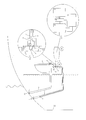
- FIG. 1 depicts a cross sectional view through the hull of a craft, showing in particular the marine sanitising and deodorising device installed adjacent to a marine toilet bowl, which in use is flushed by sea or river or lake or canal water.
- FIG. 2 depicts a cross sectional view through the hull of a craft, showing in particular the marine sanitising and deodorising device installed adjacent to a marine toilet bowl, which in use is flushed by water from the craft's onboard water tanks.
- FIG. 1 shows a boat hull 20 with an inlet seacock 1 connected to a toilet flushing sanitation hose 2 conveying sea or river or lake or canal water to a marine toilet 5 via a flow detection manifold A. The flushing water is then pumped via the manual or electric toilet flushing pump 4 , into the toilet bowl 5 .
- the foul or ‘black’ water from the marine toilet is then pumped via the dual action (or other) toilet flushing pump 4 from the marine toilet 5 to the sea via the sanitation hose 6 and the seacock 7 , or to a holding tank* (not shown), depending on the vessel and its location.
- the manifold A contains a flow detection device which in this embodiment has a rubber flap 8 , containing a permanent magnet 9 and a reed switch 10 mounted outside the watertight area 12 .
- a flow detection device which in this embodiment has a rubber flap 8 , containing a permanent magnet 9 and a reed switch 10 mounted outside the watertight area 12 .
- the device contains a reservoir of disinfectant 14 , a reservoir empty detection device 15 , a micro dosing pump 16 and a microprocessor 17 .
- the reservoir is made from plastic and has a resistance to chemicals, particularly disinfectants.
- the reservoir 14 , detection device 15 and micro dosing pump 16 are connected together by microbore plastic tubing 3 which continues out of the device through the conduit 13 and in this embodiment, through the manifold A, into the inlet water sanitation hose 2 .
- the microbore tube 3 continues to pass inside the sanitation hose 2 , all the way through its passage to the seacock 1 but stops approximately 12 inches or 30 cms before the seacock 1 .
- microbore tube 3 could pass externally from the main body of the marine sanitising and deodorising device B, or the conduit 13 , and connect directly into the sanitation hose 2 , 12 inches or 30 cms before the seacock 1 .
- the microprocessor 17 is connected to the reed switch 10 , the reservoir empty detection device 15 , the micro dosing pump 16 and a suitable power source (not shown) such as a 9 Volt PP3 battery or the boat's power supply.
- the reed switch 10 When the toilet is flushed with the flushing pump 4 , the reed switch 10 is operated by the swinging magnet 9 and the microprocessor 17 receives a signal to say that the flush cycle has commenced. This causes the microprocessor 17 to cycle through a series of algorithms, firstly a period of delay, then a sequence of running the micro dosing pump 16 , causing disinfectant to be drawn from the disinfectant reservoir 14 , through the detection device 15 , the micro dosing pump 16 and into the microbore tubing 3 , running to the inlet seacock 1 .
- the small bore of the microbore tubing 3 remains full of disinfectant all of the time, because of meniscus action. This means that that when a small quantity of disinfectant is drawn into the system, an equal quantity is instantly pushed out of the open end of the microbore tubing 3 , close to the seacock 1 , regardless of the length of microbore tube 3 .
- the disinfectant is dosed into the toilet sanitation hose right at its start, close to the inlet sea cock 1 , all of the flushing water throughout the whole length of the inlet sanitation hose 1 , the toilet 5 , its flushing pump system(s) 4 and the discharge hose 6 , contains disinfectant and is maintained in a sanitized and odour controlled condition.
- the craft may be subject to long continuous usage, such as a long voyage with a full crew on board.
- the toilet(s) could be subject to heavy usage of 50 or more flushes per day, which would exhaust the disinfectant container quite quickly.
- the microprocessor 17 registers the high usage and reduces the amount of disinfectant dispensed each flush by reducing the timed period of operation of the micro dosing pump 16 .
- This ecologically friendly feature reduces disinfectant usage and allows the disinfectant to last an acceptable period of time before refilling, during heavy usage.
- the microprocessor 17 detects that the system has not been used and therefore runs the micro dosing pump 16 for a short period of time to re-introduce disinfectant into the inlet sanitation hose 2 , where it disperses throughout the length of the inlet sanitation hose 2 .
- the device maintains the sanitized and odour controlled condition in the inlet sanitation hose 2 , even when the craft is left unused, so that when next flushed there is no foul smell introduced into the craft from the dead and decaying organisms and organic matter in the inlet sanitation hose, or from the rest of the toilet system.
- the microprocessor 17 also monitors the empty refill detection device 15 , so that when the marine sanitising and deodorising device requires the disinfectant refill to be replaced, it flashes a “Refill” LED on the front of the control unit B, when the toilet is being flushed.
- the microprocessor also monitors the power supply battery (not shown), so that when the voltage is low and the battery needs to be replaced, the microprocessor flashes a “battery” indicating LED on the front of the control unit B, when the toilet is being flushed.
- FIG. 2 shows a boat hull 20 with an on board water storage tank 18 connected to a toilet flushing sanitation hose 2 , via a non return valve 19 , conveying the water in the craft's water storage tank to a marine toilet 5 via the flow detection manifold A. The flushing water is then pumped via the manual or electric pump 4 , into the toilet bowl 5 .
- the foul or ‘black’ water from the marine toilet is then pumped via the dual action, electric, or other pump 4 from the marine toilet 5 to the sea via the sanitation hose 6 and the sea cock 7 , or to a holding tank* (not shown), depending on the vessel and its location.
- the manifold A contains a flow detection device which in this embodiment comprises a rubber flap 8 , containing a permanent magnet 9 and a reed switch 10 mounted outside the watertight area 12 .
- a flow detection device which in this embodiment comprises a rubber flap 8 , containing a permanent magnet 9 and a reed switch 10 mounted outside the watertight area 12 .
- the device contains a reservoir of disinfectant 14 , a reservoir empty detection device 15 , a micro dosing pump 16 and a microprocessor 17 .
- the reservoir 14 , detection device 15 and pump 16 are connected together by microbore plastic tubing 3 which continues out of the control unit B through the conduit 13 and the manifold A, into the inlet water sanitation hose 2 , where it terminates.
- the microprocessor 17 is connected to the Reed switch 10 , the reservoir empty detection device 15 , the micro dosing pump 16 and a suitable power source (not shown) such as a 9 volt PP3 battery or the boats power supply.
- the reed switch 10 When the toilet is flushed, with the flushing pump 4 , the reed switch 10 is operated by the swinging magnet 9 and the microprocessor 17 receives a signal to say that the flush cycle has commenced. This causes the microprocessor 17 to cycle through a series of algorithms, firstly a period of delay, then a sequence of running the micro dosing pump 16 , causing disinfectant to be drawn from the disinfectant reservoir 14 , through the detection device 15 , the micro dosing pump 17 and into the microbore tubing 3 , and on to the manifold A, where it terminates.
- the small bore of the microbore tubing 3 remains full of disinfectant all of the time, because of the surface tension of the liquid. This means that that when a small quantity of disinfectant is drawn into the system, an equal quantity is instantly pushed out of the open end of the microbore tubing 3 , into the inlet sanitation hose 2 .
- the craft may be subject to long continuous usage, such as a long voyage with a full crew on board.
- the toilet(s) could be subject to heavy usage of 50 or more flushes per day, which would exhaust the disinfectant container quite quickly.
- the microprocessor 17 registers the high usage and reduces the amount of disinfectant dispensed each flush by reducing the timed period of operation of the micro dosing pump 16 .
- This ecologically friendly feature reduces disinfectant usage and allows the disinfectant to last an acceptable period of time before refilling, during heavy usage.
- the microprocessor 17 also monitors the empty refill detection device 15 , so that when the device requires the disinfectant refill to be replaced, it flashes a “Refill” LED on the front of the control unit B, when the toilet is being flushed.
- the microprocessor also monitors the power supply battery (not shown), so that when the voltage is low and the battery needs to be replaced, the device flashes a “battery” indicating LED on the front of the control unit B, when the toilet is being flushed.
- the marine sanitising and deodorising device is not intended to disinfect the content of the holding tank.
- Holding tanks need to be properly vented so that their contents can naturally break down and the small eco-friendly quantities of biodegradable disinfectant dosed by the device will quickly biodegrade when held in contact with faecal matter and urine in a holding tank.
- the marine sanitising and deodorising device does not, therefore, effect or interfere with the normal operation or discharge of holding tanks.
- the embodiments described above provide for the various elements of the marine sanitising and deodorising device to be substantially contained in a housing installed near the toilet and a manifold attached to the water inlet of the toilet.
- the different elements could be installed or contained individually or in different groupings in any suitable position or place to achieve the same result.
- the apparatus avoids the ecologically and environmentally unfriendly actions of boat owners flushing large quantities of powerful disinfectants (which are not easily biodegradable), through their toilets into the sea or other water courses.
- the device is quick, simple and easy to install and can sanitise all of the marine toilet system and associated pipe work without the disadvantage and danger of cutting, drilling or disconnecting hoses below the craft's waterline, as required by “dissolving block” type systems.
- This is advantageously achieved by use of the special microbore disinfectant tube, which preferably passes inside the toilet sanitation hose itself to or adjacent to the water inlet opening.
- the present invention also beneficially utilises intelligent microprocessor technology to continually dispense small exact doses of biodegradable disinfectant every time the toilet is flushed, and may also intelligently monitor toilet use to dispense small doses of disinfectant into the toilet system when the craft is not in use, thereby stopping malodorous and foul smells from decomposing organisms in the water of the toilet system and its associated sanitation hose.
- the apparatus may also provide intelligent monitoring of toilet use to adjust and reduce the amount of disinfectant dispensed when the craft's toilet is being heavily used, during long passages with a full crew. It is also possible to provide an apparatus which avoids the over or under disinfection caused by known “dissolving block” type sanitising systems.
- the device of the present invention is advantageous in that it is quick, simple and easy to refill, preferably with LED indication when refill is required. It also avoids the dangers and leakage problems when replacing “dissolving block” type systems below the craft's waterline.
- the invention also stops or greatly reduces the expensive replacement of marine toilet sanitation hose due to water born bacteria and other organisms migrating into and through the structure of the sanitation hose, causing malodorous and foul smells in the bilges of the craft.
- the craft's holding tanks, where used, are not affected and continue to work normally because of the precise and accurate micro dosing of the disinfectant or other sanitising fluid.
Landscapes
- Health & Medical Sciences (AREA)
- Public Health (AREA)
- Engineering & Computer Science (AREA)
- Life Sciences & Earth Sciences (AREA)
- Epidemiology (AREA)
- Hydrology & Water Resources (AREA)
- Water Supply & Treatment (AREA)
- Chemical & Material Sciences (AREA)
- Physics & Mathematics (AREA)
- Fluid Mechanics (AREA)
- General Physics & Mathematics (AREA)
- Combustion & Propulsion (AREA)
- Mechanical Engineering (AREA)
- Ocean & Marine Engineering (AREA)
- Veterinary Medicine (AREA)
- Chemical Kinetics & Catalysis (AREA)
- General Chemical & Material Sciences (AREA)
- General Health & Medical Sciences (AREA)
- Animal Behavior & Ethology (AREA)
- Sanitary Device For Flush Toilet (AREA)
- Water Treatment By Sorption (AREA)
Abstract
Description
- This invention relates to a device for sanitising and deodorising marine toilet systems and their associated pipework, in leisure craft and small commercial craft. More specifically it overcomes the malodorous and foul smelling problems associated with such toilets by controlled injection of biodegradable disinfectant throughout the toilet system, using intelligent control.
- In addition, the invention overcomes the ecologically and environmentally unfriendly habit of boat owners pouring large quantities of disinfectant into their marine toilets, in their attempts to control the malodorous and foul smells. These disinfectants are often not easily biodegradable.
- Marine toilets typically use seawater, river water or lake water to flush their toilets. This water is drawn from a hull's fitting below the waterline of the boat by means of a manual or electric pump and used to flush the toilet(s). A second manual or electric pump discharges the contents of the toilet bowl into a holding tank or back into the sea, depending upon the proximity of the craft to the shore. Typically, these manual pumping systems are combined into one unit.
- These toilet systems are notoriously malodorous and are the bane of many boat owners, particularly when the boat has not been used for a while as they can fill the craft with foul odours.
- There are two main reasons for this.
- 1) The sea or river water drawn into the system contains living organisms which rapidly die and decompose due to lack of oxygen and lack of light in the pipework (or sanitation hose). Anaerobic bacteria take over and create foul smelling sulphurous gases and other compounds, which are then drawn into the toilet bowl during the flushing process and thereby released into the atmosphere inside the craft.
- 2) The flexible pipework (or sanitation hose) used to plumb marine heads is typically of an expanded flexible PVC material. Bacteria from both the seawater and the urine and faecal matter deposited in the toilet can, over time, penetrate and live inside the structure of the PVC. The outside of the sanitation hose running through the bilges of the craft can therefore also become continuously malodorous.
- Although it is possible to partially improve the problem by putting disinfectant into the toilet bowl, this is immediately flushed away with the next flush of the toilet and the bacteria can take over again. More importantly, it is not possible to disinfect the flushing water being drawn into the toilet bowl from the sea or river, by putting disinfectant down the toilet. This is the area where some of the worst problems arise.
- Some owners incur great expense by having all of the sanitation hoses on their toilets and holding tanks replaced but within a short period of time the bacteria are back, along with the odour.
- Attempts have been made in the past to resolve the problem. U.S. Pat. No. 4,873,727 (17 Oct. 1989); U.S. Pat. No. 5,142,707 (1 Sep. 1992) and U.S. Pat. No. 6,295,657 (2 Oct. 2001) all try to sanitize the incumbent water, by inserting a device into the incoming sanitation hose. This device contains a block of disinfectant/detergent which gradually dissolves and disinfects the water. None of these devices appear to have proved commercially successful for the following reasons.
- 1) In order to have any effect, the device must be installed close to the inlet seacock and therefore under the waterline of the craft. This involves cutting or drilling holes in the sanitation hose underneath the waterline. Most sensible boat owners would be very wary of doing this as any faulty installation or failure of the device or its fittings could result in the craft sinking.
- 2) Replacement of the disinfectant block is extremely difficult due to its location in the boat's bilges and potentially dangerous for the reasons stated above. It therefore doesn't get replaced. U.S. Pat. No. 6,295,657 attempts to address this problem but does so by moving the device away from the seacock and thereby leaving long lengths of sanitation hose untreated.
- 3) If the block is replaced, the seacock has to be closed off and the device opened, thereby allowing the (by now) foul water in the sanitation hose to run out into the bilges of the craft. If the seacock is not properly closed, there is a danger of flooding the boat.
- 4) The rate of dissolution of the block is not controllable and leads to very concentrated disinfectant being dispensed when the toilet is little used and insufficient, when the toilet is in frequent use. This is also ecologically unfriendly.
- According to a first aspect of the invention there is provided a marine sanitising and deodorising device comprising a reservoir for containing sanitising fluid, a dose controllable pump for discharging a predetermined dose of sanitising fluid from the reservoir into a water inlet conduit of a marine toilet system, a flow detector for detecting the flow of water within the water inlet conduit, and a controller for controlling the dose controllable pump upon flow detection by the in use flow detector.
- Preferably, the dose controllable pump may be a micro-dosing pump.
- Additionally or alternatively, the controller may include a microprocessor for varying the dosage of the micro-dosing pump.
- Furthermore, the flow detector may be arranged to be at least partially disposed within the water inlet conduit. In this case, the flow detector may preferably include a moveable gate and a reed switch. Additionally, the moveable gate may optionally include a hinge, said in use moveable gate pivoting about said hinge when liquid flows through the water inlet conduit Finally, it may be preferable that the moveable gate has a magnet at a free end for activating a magnetic portion of the reed switch.
- Preferably, the controller may include a status device for detecting and indicating an amount of sanitising fluid within the reservoir. In this case, the status device may be adapted to emit an alert when the reservoir is or is substantially empty.
- Advantageously, the dose controllable pump may include a microbore conduit locatable in the said water inlet conduit and for delivering sanitising fluid to the water inlet conduit.
- According to a second aspect of the invention there is provided a marine sanitising and deodorising toilet system comprising a toilet bowl, at least one pump for controlling the flow of water into and/or out of the toilet bowl, a water inlet conduit for delivering water to the toilet bowl, a waste outlet conduit for moving waste from the toilet bowl, and a marine sanitising and deodorising device, the dose controllable pump being in fluid communication with the water inlet conduit for discharging the sanitising fluid therein when activated by the controller upon flow detection.
- Preferably, a microbore conduit of the dose controllable pump extends into the water inlet conduit. In this case, the microbore conduit may extend a long at least a major portion of the longitudinal extent of the water inlet conduit.
- Optionally, an outlet of the microbore conduit may be at or proximate an inlet of the water inlet conduit.
- The marine sanitising and deodorising toilet system may further comprise a veritable holding tank which is in liquid communication with the water inlet conduit for transport of the water thereto.
- According to a third aspect of the invention there is provided a marine craft having a hull, at least one deck, at least one superstructure, and a marine sanitising and deodorising toilet system as in accordance with the second aspect of the invention provided on or below the deck and supported directly or indirectly by the superstructure, an outlet of the waste outlet conduit being provided in the hull and below a waterline of the hull.
- Beneficially, the marine craft may further comprise an electrical power system, the marine sanitising and deodorising device of the toilet system being energisable by the power system. Optionally, the controller may monitor the power system and indicates a power level.
- According to a fourth aspect of the invention there is provided a method of sanitising and deodorising a marine toilet system using a marine sanitising and deodorising device, the method comprising the steps of: monitoring flow within a water inlet conduit of a marine toilet system; dispensing a predetermined volume of sanitising fluid into the water inlet conduit; providing the water and sanitising fluid to a toilet bowl; and discharging waste from the toilet bowl into a waste outlet conduit.
- Preferably, the method may further comprise the step of monitoring a frequency of usage of the marine toilet system over a period of time. Beneficially, the method may include, upon detection of a pre-determined low frequency of usage, automatically periodically dispensing a predetermined volume of sanitising fluid into the water inlet conduit at or adjacent to an inlet thereof.
- Additionally or alternatively, the method may include, upon detection of a pre-determined high frequency of usage, automatically dispensing a reduced volume of sanitising fluid into the water inlet conduit at or adjacent to an inlet thereof. In this case, the method may preferably include the automatic dispensing takes place during use of the marine toilet system.
- The present invention uses modern technology to ensure that precise and accurate doses of disinfectant are injected into the inlet flushing water of the marine toilet, so that all of the sanitation hose is disinfected.
- For toilets flushed with sea or river or lake or canal water, the disinfectant is injected close to the start of the inlet pipe of the flushing water, by the seacock. This is achieved without any cutting or drilling of the hose or any connections below the waterline.
- For marine toilets flushed with fresh (drinking) water from the craft's water tanks, the disinfectant is injected just before the marine toilet.
- The device is easily refillable and uses microprocessor technology to adapt the disinfectant quantities dispensed to the usage of the toilet in an ecologically and environmentally friendly way.
- The device includes a small housing installed next to the toilet, containing a container of disinfectant, a disinfectant pump, a microprocessor logic board and a battery, or alternatively a connection to the boat's power supply. The housing is preferably plastic. The device is connected via a fine conduit to a combined flow detection device and manifold, mounted on the toilet, just before the flush pump.
- The disinfectant pump injects disinfectant through a microbore tube which passes through the conduit, through the manifold and thereby into the toilet's inlet flushing sanitation hose.
- When the toilet is flushed the flow detection device sends a signal to the microprocessor that the flush cycle has commenced. The microprocessor then progresses through a series of algorithms; typically a delay of some seconds, then initiating the disinfectant pump to run for a number of seconds, then a lockout period during which further actuations of the flow switch will not have any effect.
- In this way, a measured dose of ecologically friendly, biodegradable disinfectant is injected throughout the sanitation hose during the flush and is carried by the flush water through to the flush pump, the toilet, the discharge pump and all of the rest of the system every time it is flushed.
- The microprocessor has other important features. If the craft is left unused for a period of time, it would be possible for the disinfectant in the inlet sanitation hose to slowly dilute, via the open seacock.
- The microprocessor therefore has a “maintenance cycle” whereby, should the toilet remain unflushed for a period of time, it runs the disinfectant pump for a fixed number of seconds to inject more disinfectant into the inlet sanitation hose, thereby keeping the water sanitized and odour free. The disinfectant disperses and dissolves throughout the inlet sanitation hose.
- This mode does not apply to embodiments of the invention supplied for craft which flush their toilets with water from the craft's on board water tanks.
- On certain occasions the craft may be subject to long continuous usage, such as a long voyage with a full crew on board. On these occasions the toilet(s) could be subject to heavy usage of 50 or more flushes per day, which would exhaust the disinfectant container quite quickly.
- In these circumstances less disinfection to the system is required so the microprocessor registers the high usage and reduces the amount of disinfectant dispensed each flush by reducing the operation of the disinfectant pump. This ecologically friendly feature reduces disinfectant usage and allows the disinfectant to last an acceptable period of time before refilling, during heavy usage.
- The invention will now be more particularly described, by way of example only, with reference to the accompanying drawings, in which:
-
FIG. 1 depicts a cross sectional view through the hull of a craft, showing in particular the marine sanitising and deodorising device installed adjacent to a marine toilet bowl, which in use is flushed by sea or river or lake or canal water. -
FIG. 2 depicts a cross sectional view through the hull of a craft, showing in particular the marine sanitising and deodorising device installed adjacent to a marine toilet bowl, which in use is flushed by water from the craft's onboard water tanks. -
FIG. 1 shows aboat hull 20 with an inlet seacock 1 connected to a toilet flushingsanitation hose 2 conveying sea or river or lake or canal water to amarine toilet 5 via a flow detection manifold A. The flushing water is then pumped via the manual or electric toilet flushing pump 4, into thetoilet bowl 5. - The foul or ‘black’ water from the marine toilet is then pumped via the dual action (or other) toilet flushing pump 4 from the
marine toilet 5 to the sea via thesanitation hose 6 and theseacock 7, or to a holding tank* (not shown), depending on the vessel and its location. - The manifold A contains a flow detection device which in this embodiment has a
rubber flap 8, containing apermanent magnet 9 and areed switch 10 mounted outside thewatertight area 12. When the toilet flushing pump 4 is actuated, water is drawn through thesanitation hose 2 and the manifold A, causing therubber flap 8 to swing up so that themagnet 9 moves into close proximity to thereed switch 10, thereby operating thereed switch 10. Thereed switch 10 is connected withelectric wires 11 to themicroprocessor 17 in the main body of the marine sanitising and deodorising device B, via aconduit 13. - In this embodiment the device contains a reservoir of
disinfectant 14, a reservoirempty detection device 15, amicro dosing pump 16 and amicroprocessor 17. Preferably the reservoir is made from plastic and has a resistance to chemicals, particularly disinfectants. Thereservoir 14,detection device 15 andmicro dosing pump 16 are connected together by microboreplastic tubing 3 which continues out of the device through theconduit 13 and in this embodiment, through the manifold A, into the inletwater sanitation hose 2. In this embodiment themicrobore tube 3 continues to pass inside thesanitation hose 2, all the way through its passage to the seacock 1 but stops approximately 12 inches or 30 cms before the seacock 1. - In other embodiments the
microbore tube 3 could pass externally from the main body of the marine sanitising and deodorising device B, or theconduit 13, and connect directly into thesanitation hose - The
microprocessor 17 is connected to thereed switch 10, the reservoirempty detection device 15, themicro dosing pump 16 and a suitable power source (not shown) such as a 9 Volt PP3 battery or the boat's power supply. - When the toilet is flushed with the flushing pump 4, the
reed switch 10 is operated by the swingingmagnet 9 and themicroprocessor 17 receives a signal to say that the flush cycle has commenced. This causes themicroprocessor 17 to cycle through a series of algorithms, firstly a period of delay, then a sequence of running themicro dosing pump 16, causing disinfectant to be drawn from thedisinfectant reservoir 14, through thedetection device 15, themicro dosing pump 16 and into themicrobore tubing 3, running to the inlet seacock 1. - Once primed with disinfectant, the small bore of the
microbore tubing 3 remains full of disinfectant all of the time, because of meniscus action. This means that that when a small quantity of disinfectant is drawn into the system, an equal quantity is instantly pushed out of the open end of themicrobore tubing 3, close to the seacock 1, regardless of the length ofmicrobore tube 3. - Because the disinfectant is dosed into the toilet sanitation hose right at its start, close to the inlet sea cock 1, all of the flushing water throughout the whole length of the inlet sanitation hose 1, the
toilet 5, its flushing pump system(s) 4 and thedischarge hose 6, contains disinfectant and is maintained in a sanitized and odour controlled condition. - On certain occasions the craft may be subject to long continuous usage, such as a long voyage with a full crew on board. On these occasions the toilet(s) could be subject to heavy usage of 50 or more flushes per day, which would exhaust the disinfectant container quite quickly.
- In these circumstances less disinfection to the system is required so the
microprocessor 17 registers the high usage and reduces the amount of disinfectant dispensed each flush by reducing the timed period of operation of themicro dosing pump 16. This ecologically friendly feature reduces disinfectant usage and allows the disinfectant to last an acceptable period of time before refilling, during heavy usage. - Most craft are left unused for periods of time, during which the disinfectant in the
inlet sanitation hose 2 can become diluted with the water outside the craft via the open sea cock 1. In this embodiment of the invention, when the toilet has not been used for a set period of days, themicroprocessor 17 detects that the system has not been used and therefore runs themicro dosing pump 16 for a short period of time to re-introduce disinfectant into theinlet sanitation hose 2, where it disperses throughout the length of theinlet sanitation hose 2. - In this way the device maintains the sanitized and odour controlled condition in the
inlet sanitation hose 2, even when the craft is left unused, so that when next flushed there is no foul smell introduced into the craft from the dead and decaying organisms and organic matter in the inlet sanitation hose, or from the rest of the toilet system. - The
microprocessor 17 also monitors the emptyrefill detection device 15, so that when the marine sanitising and deodorising device requires the disinfectant refill to be replaced, it flashes a “Refill” LED on the front of the control unit B, when the toilet is being flushed. - In addition, the microprocessor also monitors the power supply battery (not shown), so that when the voltage is low and the battery needs to be replaced, the microprocessor flashes a “battery” indicating LED on the front of the control unit B, when the toilet is being flushed.
-
FIG. 2 shows aboat hull 20 with an on boardwater storage tank 18 connected to a toilet flushingsanitation hose 2, via anon return valve 19, conveying the water in the craft's water storage tank to amarine toilet 5 via the flow detection manifold A. The flushing water is then pumped via the manual or electric pump 4, into thetoilet bowl 5. - The foul or ‘black’ water from the marine toilet is then pumped via the dual action, electric, or other pump 4 from the
marine toilet 5 to the sea via thesanitation hose 6 and thesea cock 7, or to a holding tank* (not shown), depending on the vessel and its location. - The manifold A contains a flow detection device which in this embodiment comprises a
rubber flap 8, containing apermanent magnet 9 and areed switch 10 mounted outside thewatertight area 12. When the pump 4 is actuated, water is drawn through thesanitation hose 2 and the manifold A, causing therubber flap 8 to swing up so that themagnet 9 moves into close proximity to thereed switch 10, thereby operating the switch. Thereed switch 10 is connected withelectric wires 11 to themicroprocessor 17 in the main body of the control unit B, via aconduit 13. - In this embodiment the device contains a reservoir of
disinfectant 14, a reservoirempty detection device 15, amicro dosing pump 16 and amicroprocessor 17. Thereservoir 14,detection device 15 and pump 16 are connected together by microboreplastic tubing 3 which continues out of the control unit B through theconduit 13 and the manifold A, into the inletwater sanitation hose 2, where it terminates. Themicroprocessor 17 is connected to theReed switch 10, the reservoirempty detection device 15, themicro dosing pump 16 and a suitable power source (not shown) such as a 9 volt PP3 battery or the boats power supply. - When the toilet is flushed, with the flushing pump 4, the
reed switch 10 is operated by the swingingmagnet 9 and themicroprocessor 17 receives a signal to say that the flush cycle has commenced. This causes themicroprocessor 17 to cycle through a series of algorithms, firstly a period of delay, then a sequence of running themicro dosing pump 16, causing disinfectant to be drawn from thedisinfectant reservoir 14, through thedetection device 15, themicro dosing pump 17 and into themicrobore tubing 3, and on to the manifold A, where it terminates. - Once primed with disinfectant, the small bore of the
microbore tubing 3 remains full of disinfectant all of the time, because of the surface tension of the liquid. This means that that when a small quantity of disinfectant is drawn into the system, an equal quantity is instantly pushed out of the open end of themicrobore tubing 3, into theinlet sanitation hose 2. - Because the disinfectant is dosed into the
toilet sanitation hose 2 before the manifold A, all of the flushing water in theinlet sanitation hose 2, thetoilet 5, its flushing pump system(s) 4 and thedischarge sanitation hose 6, contains disinfectant and is maintained in a sanitized and odour controlled condition. - On certain occasions the craft may be subject to long continuous usage, such as a long voyage with a full crew on board. On these occasions the toilet(s) could be subject to heavy usage of 50 or more flushes per day, which would exhaust the disinfectant container quite quickly.
- In these circumstances less disinfection to the system is required so the
microprocessor 17 registers the high usage and reduces the amount of disinfectant dispensed each flush by reducing the timed period of operation of themicro dosing pump 16. This ecologically friendly feature reduces disinfectant usage and allows the disinfectant to last an acceptable period of time before refilling, during heavy usage. - The
microprocessor 17 also monitors the emptyrefill detection device 15, so that when the device requires the disinfectant refill to be replaced, it flashes a “Refill” LED on the front of the control unit B, when the toilet is being flushed. - In addition, the microprocessor also monitors the power supply battery (not shown), so that when the voltage is low and the battery needs to be replaced, the device flashes a “battery” indicating LED on the front of the control unit B, when the toilet is being flushed.
- It should be noted that where the discharge from a marine toilet is directed into a holding tank (not shown in these diagrams), the marine sanitising and deodorising device is not intended to disinfect the content of the holding tank. Holding tanks need to be properly vented so that their contents can naturally break down and the small eco-friendly quantities of biodegradable disinfectant dosed by the device will quickly biodegrade when held in contact with faecal matter and urine in a holding tank. The marine sanitising and deodorising device does not, therefore, effect or interfere with the normal operation or discharge of holding tanks.
- The embodiments described above provide for the various elements of the marine sanitising and deodorising device to be substantially contained in a housing installed near the toilet and a manifold attached to the water inlet of the toilet. However, the different elements could be installed or contained individually or in different groupings in any suitable position or place to achieve the same result.
- It is thus possible to provide a marine sanitising and deodorising device for a marine toilet system which overcomes malodorous and foul smelling problems associated with such toilets. The apparatus avoids the ecologically and environmentally unfriendly actions of boat owners flushing large quantities of powerful disinfectants (which are not easily biodegradable), through their toilets into the sea or other water courses. The device is quick, simple and easy to install and can sanitise all of the marine toilet system and associated pipe work without the disadvantage and danger of cutting, drilling or disconnecting hoses below the craft's waterline, as required by “dissolving block” type systems. This is advantageously achieved by use of the special microbore disinfectant tube, which preferably passes inside the toilet sanitation hose itself to or adjacent to the water inlet opening. The present invention also beneficially utilises intelligent microprocessor technology to continually dispense small exact doses of biodegradable disinfectant every time the toilet is flushed, and may also intelligently monitor toilet use to dispense small doses of disinfectant into the toilet system when the craft is not in use, thereby stopping malodorous and foul smells from decomposing organisms in the water of the toilet system and its associated sanitation hose. Alternatively or additionally, the apparatus may also provide intelligent monitoring of toilet use to adjust and reduce the amount of disinfectant dispensed when the craft's toilet is being heavily used, during long passages with a full crew. It is also possible to provide an apparatus which avoids the over or under disinfection caused by known “dissolving block” type sanitising systems. The device of the present invention is advantageous in that it is quick, simple and easy to refill, preferably with LED indication when refill is required. It also avoids the dangers and leakage problems when replacing “dissolving block” type systems below the craft's waterline. The invention also stops or greatly reduces the expensive replacement of marine toilet sanitation hose due to water born bacteria and other organisms migrating into and through the structure of the sanitation hose, causing malodorous and foul smells in the bilges of the craft. The craft's holding tanks, where used, are not affected and continue to work normally because of the precise and accurate micro dosing of the disinfectant or other sanitising fluid.
- The embodiments described above are provided by way of examples only, and various other modifications will be apparent to persons skilled in the art without departing from the scope of the appended claims.
Claims (21)
Applications Claiming Priority (3)
| Application Number | Priority Date | Filing Date | Title |
|---|---|---|---|
| GB1014999.5A GB2483483B (en) | 2010-09-09 | 2010-09-09 | Marine sanitising and deodorising device |
| GB1014999.5 | 2010-09-09 | ||
| PCT/GB2011/051661 WO2012032339A1 (en) | 2010-09-09 | 2011-09-06 | Marine sanitising and deodorising device |
Publications (2)
| Publication Number | Publication Date |
|---|---|
| US20140157504A1 true US20140157504A1 (en) | 2014-06-12 |
| US9663931B2 US9663931B2 (en) | 2017-05-30 |
Family
ID=43037559
Family Applications (1)
| Application Number | Title | Priority Date | Filing Date |
|---|---|---|---|
| US13/820,797 Expired - Fee Related US9663931B2 (en) | 2010-09-09 | 2011-09-06 | Marine sanitising and deodorising device |
Country Status (6)
| Country | Link |
|---|---|
| US (1) | US9663931B2 (en) |
| EP (1) | EP2614188B1 (en) |
| AU (1) | AU2011300526B2 (en) |
| CA (1) | CA2810612C (en) |
| GB (1) | GB2483483B (en) |
| WO (1) | WO2012032339A1 (en) |
Cited By (3)
| Publication number | Priority date | Publication date | Assignee | Title |
|---|---|---|---|---|
| DE102014117099A1 (en) * | 2014-11-21 | 2016-05-25 | Airbus Operations Gmbh | System and method for the metered delivery of a fragrance in a closed space, in particular in a washroom of a vehicle |
| US11319700B2 (en) * | 2019-03-02 | 2022-05-03 | Ryan M. Fritzsche | Lubrication system for marine or RV toilet |
| CN114837272A (en) * | 2021-02-02 | 2022-08-02 | 科勒公司 | Centralized clean water system |
Families Citing this family (6)
| Publication number | Priority date | Publication date | Assignee | Title |
|---|---|---|---|---|
| US11351935B2 (en) * | 2017-05-04 | 2022-06-07 | Thetford Bv | Wastewater management system for vehicles and related methods |
| AU2018236793B2 (en) * | 2018-09-27 | 2022-05-26 | Thetford Bv | Wastewater management system for vehicles and related method |
| CN110273451A (en) * | 2019-07-15 | 2019-09-24 | 王聃 | A kind of self-cleaning closestool and its device |
| CN113085929B (en) * | 2021-03-29 | 2022-12-23 | 青岛海尔空调器有限总公司 | Sterilization control method of train toilet air conditioner and train toilet air conditioner |
| US12595165B2 (en) | 2023-01-19 | 2026-04-07 | Micropump, Inc. | Reed switch pump |
| EP4567210A1 (en) * | 2023-12-08 | 2025-06-11 | Paul Johannus Theodorus Kogelman | A toilet assembly |
Citations (2)
| Publication number | Priority date | Publication date | Assignee | Title |
|---|---|---|---|---|
| US20060144800A1 (en) * | 2002-11-27 | 2006-07-06 | Barreras Francisco J Sr | Sewage treatment system for use in marine toilet and other remote toilets |
| US20090204263A1 (en) * | 2008-02-08 | 2009-08-13 | Chris Love | Pool temperature controller |
Family Cites Families (18)
| Publication number | Priority date | Publication date | Assignee | Title |
|---|---|---|---|---|
| GB191221166A (en) * | 1912-09-17 | 1913-07-31 | Henry Selby Hele-Shaw | An Improved Apparatus for Disinfecting and Flushing Water Closets. |
| DE960890C (en) * | 1954-11-17 | 1957-03-28 | Mann & Schroeder K G | Self-acting cleaning and disinfection device for flush toilets or other sanitary facilities |
| US4873727A (en) | 1987-05-15 | 1989-10-17 | Homan Donald A | Marine toilet deodorant dispenser |
| JP2535943B2 (en) | 1987-08-31 | 1996-09-18 | 大同特殊鋼株式会社 | Exhaust gas dust remover for automobile tunnel |
| JPH01158315A (en) * | 1987-12-15 | 1989-06-21 | Tlv Co Ltd | Flow rate detector |
| US5142707A (en) * | 1988-11-01 | 1992-09-01 | Frederick Prue | Additive injection unit for a marine toilet system |
| JPH035653A (en) | 1989-05-31 | 1991-01-11 | Toshiba Corp | Control device for split type air conditioner |
| IT1255578B (en) | 1992-07-14 | 1995-11-09 | ELECTRONIC GROUP FOR THE CONTROLLED DISPENSING OF DISINFECTANT AND SIMILAR LIQUIDS IN TOILETS IN GENERAL. | |
| AU8169594A (en) * | 1993-12-24 | 1995-06-29 | Sgs Australia Pty Ltd | Dispensing device |
| JPH09105653A (en) * | 1995-10-12 | 1997-04-22 | Nippon Arefu:Kk | Flow rate detector |
| US6000067A (en) * | 1998-04-07 | 1999-12-14 | Cascia; Frank J. | Automatic liquid chemical additive dispenser for recreational vehicle toilets |
| US6295657B1 (en) | 1998-11-30 | 2001-10-02 | Frederick C. Prue | Adjustable additive injection unit for a marine toilet system |
| US6317898B1 (en) * | 2000-02-25 | 2001-11-20 | Raritan Engineering Company, Inc. | Apparatus for selecting marine toilet flush water |
| HK1074735A2 (en) * | 2005-07-22 | 2005-11-18 | 香港生产力促进局 | Handy toilet waste disinfection system |
| ATE480675T1 (en) | 2005-10-27 | 2010-09-15 | Viega Gmbh & Co Kg | SANITARY FLUSHING DEVICE WITH A DEVICE FOR SUPPLYING CLEANING AGENTS AND/OR FRAGRANCES |
| DE202005017056U1 (en) * | 2005-10-28 | 2007-03-08 | Viega Gmbh & Co. Kg | Sanitary flushing device with a device for supplying cleaning agents and / or fragrances |
| DE202007018951U1 (en) * | 2007-08-24 | 2009-11-26 | Henkel Ag & Co. Kgaa | Toilet freshener with rinse water-independent active ingredient delivery |
| DE102007040325B4 (en) * | 2007-08-24 | 2015-11-26 | Henkel Ag & Co. Kgaa | Toilet washer with electro-mechanically induced drug release |
-
2010
- 2010-09-09 GB GB1014999.5A patent/GB2483483B/en not_active Expired - Fee Related
-
2011
- 2011-09-06 WO PCT/GB2011/051661 patent/WO2012032339A1/en not_active Ceased
- 2011-09-06 AU AU2011300526A patent/AU2011300526B2/en not_active Ceased
- 2011-09-06 CA CA2810612A patent/CA2810612C/en active Active
- 2011-09-06 US US13/820,797 patent/US9663931B2/en not_active Expired - Fee Related
- 2011-09-06 EP EP11764600.0A patent/EP2614188B1/en not_active Not-in-force
Patent Citations (2)
| Publication number | Priority date | Publication date | Assignee | Title |
|---|---|---|---|---|
| US20060144800A1 (en) * | 2002-11-27 | 2006-07-06 | Barreras Francisco J Sr | Sewage treatment system for use in marine toilet and other remote toilets |
| US20090204263A1 (en) * | 2008-02-08 | 2009-08-13 | Chris Love | Pool temperature controller |
Non-Patent Citations (2)
| Title |
|---|
| JP 09-105653 A English abstract * |
| JP 09-105653 A English machine translation * |
Cited By (4)
| Publication number | Priority date | Publication date | Assignee | Title |
|---|---|---|---|---|
| DE102014117099A1 (en) * | 2014-11-21 | 2016-05-25 | Airbus Operations Gmbh | System and method for the metered delivery of a fragrance in a closed space, in particular in a washroom of a vehicle |
| US9598848B2 (en) | 2014-11-21 | 2017-03-21 | Airbus Operations Gmbh | System and method for the metered dispensing of a fragrance in a closed room, in particular in a lavatory of a vehicle |
| US11319700B2 (en) * | 2019-03-02 | 2022-05-03 | Ryan M. Fritzsche | Lubrication system for marine or RV toilet |
| CN114837272A (en) * | 2021-02-02 | 2022-08-02 | 科勒公司 | Centralized clean water system |
Also Published As
| Publication number | Publication date |
|---|---|
| GB2483483A (en) | 2012-03-14 |
| GB2483483B (en) | 2014-12-17 |
| AU2011300526A1 (en) | 2013-03-21 |
| EP2614188A1 (en) | 2013-07-17 |
| GB201014999D0 (en) | 2010-10-20 |
| CA2810612A1 (en) | 2012-03-15 |
| EP2614188B1 (en) | 2016-12-07 |
| CA2810612C (en) | 2019-04-16 |
| US9663931B2 (en) | 2017-05-30 |
| WO2012032339A1 (en) | 2012-03-15 |
| AU2011300526B2 (en) | 2016-12-15 |
Similar Documents
| Publication | Publication Date | Title |
|---|---|---|
| US9663931B2 (en) | Marine sanitising and deodorising device | |
| US6588026B2 (en) | Method of, and apparatus for, introducing a cleaning agent and/or disinfectant into sanitary facilities | |
| CA2254424C (en) | Toilet cleaner controller device | |
| JP5758408B2 (en) | Flush water tank system for flush water for mobile toilet | |
| FR2965282B1 (en) | AUTOMATIC DISPENSER ADJUSTABLE VOLUME PUMP FOR CLEANING DISINFECTING AND DEODORIZING TOILET BOWLS | |
| US20190360187A1 (en) | Toilet Bowl Chemical Agent Dispenser | |
| US20050103725A1 (en) | System and method for sanitizing and refilling a potable water system onboard a transport vehicle | |
| US5142707A (en) | Additive injection unit for a marine toilet system | |
| KR20230137544A (en) | Negative Pressure toilet | |
| AU2010234174B2 (en) | Foaming ceramic sanitary | |
| KR101908846B1 (en) | cleaning liquid supply device and toilet bowl cistern including the same | |
| US20220243443A1 (en) | Centralized clean water system | |
| US5387249A (en) | Self-contained adjustable chemical injection device | |
| JP2006320899A (en) | Method and apparatus for producing sterilizing water containing carbon dioxide gas capable of controlling carbon dioxide gas content | |
| WO2020261865A1 (en) | Cleaning device, cleaning system comprising same, and cleaning method using said cleaning device | |
| EP1556556A1 (en) | Apparatus for the dispensing of a liquid, adapted to be placed in a volume of liquid with fluctuating liquid level, particularly adapted for metered disposal of chemicals to a cistern | |
| KR100468061B1 (en) | A automatic injection device of medicinal fluid in a small scale waterworks and its controlling method | |
| JP7138327B2 (en) | Urinal chemical supply device, urinal cleaning system, and urinal chemical supply method | |
| US4984307A (en) | Toilet sanitizer attachment | |
| US7861327B2 (en) | Water conservation apparatus | |
| JP3380204B2 (en) | Urinal calculus prevention device for toilet bowl | |
| NL2025076B1 (en) | Liquid replenishing system and method of replenishing | |
| CN217105390U (en) | toilet | |
| JPH1037269A (en) | Sterilization water supply device | |
| US20090078285A1 (en) | Method and Device for Cleaning Pipe Runs |
Legal Events
| Date | Code | Title | Description |
|---|---|---|---|
| STCF | Information on status: patent grant |
Free format text: PATENTED CASE |
|
| MAFP | Maintenance fee payment |
Free format text: PAYMENT OF MAINTENANCE FEE, 4TH YR, SMALL ENTITY (ORIGINAL EVENT CODE: M2551); ENTITY STATUS OF PATENT OWNER: SMALL ENTITY Year of fee payment: 4 |
|
| FEPP | Fee payment procedure |
Free format text: MAINTENANCE FEE REMINDER MAILED (ORIGINAL EVENT CODE: REM.); ENTITY STATUS OF PATENT OWNER: SMALL ENTITY |
|
| LAPS | Lapse for failure to pay maintenance fees |
Free format text: PATENT EXPIRED FOR FAILURE TO PAY MAINTENANCE FEES (ORIGINAL EVENT CODE: EXP.); ENTITY STATUS OF PATENT OWNER: SMALL ENTITY |
|
| STCH | Information on status: patent discontinuation |
Free format text: PATENT EXPIRED DUE TO NONPAYMENT OF MAINTENANCE FEES UNDER 37 CFR 1.362 |
|
| FP | Lapsed due to failure to pay maintenance fee |
Effective date: 20250530 |