US20120141663A1 - Quinhydrone-containing Sensor - Google Patents
Quinhydrone-containing Sensor Download PDFInfo
- Publication number
- US20120141663A1 US20120141663A1 US13/384,656 US201013384656A US2012141663A1 US 20120141663 A1 US20120141663 A1 US 20120141663A1 US 201013384656 A US201013384656 A US 201013384656A US 2012141663 A1 US2012141663 A1 US 2012141663A1
- Authority
- US
- United States
- Prior art keywords
- quinhydrone
- additive
- sensor
- water soluble
- combining
- Prior art date
- Legal status (The legal status is an assumption and is not a legal conclusion. Google has not performed a legal analysis and makes no representation as to the accuracy of the status listed.)
- Abandoned
Links
- BDJXVNRFAQSMAA-UHFFFAOYSA-N quinhydrone Chemical compound OC1=CC=C(O)C=C1.O=C1C=CC(=O)C=C1 BDJXVNRFAQSMAA-UHFFFAOYSA-N 0.000 title claims abstract description 138
- 229940052881 quinhydrone Drugs 0.000 title claims abstract description 137
- 238000000034 method Methods 0.000 claims abstract description 80
- XLYOFNOQVPJJNP-UHFFFAOYSA-N water Substances O XLYOFNOQVPJJNP-UHFFFAOYSA-N 0.000 claims abstract description 65
- QIGBRXMKCJKVMJ-UHFFFAOYSA-N Hydroquinone Chemical compound OC1=CC=C(O)C=C1 QIGBRXMKCJKVMJ-UHFFFAOYSA-N 0.000 claims abstract description 58
- 239000007864 aqueous solution Substances 0.000 claims abstract description 35
- 150000004676 glycans Chemical class 0.000 claims abstract description 34
- 229920001282 polysaccharide Polymers 0.000 claims abstract description 34
- 239000005017 polysaccharide Substances 0.000 claims abstract description 34
- 229920003088 hydroxypropyl methyl cellulose Polymers 0.000 claims abstract description 29
- AZQWKYJCGOJGHM-UHFFFAOYSA-N 1,4-benzoquinone Chemical compound O=C1C=CC(=O)C=C1 AZQWKYJCGOJGHM-UHFFFAOYSA-N 0.000 claims abstract description 27
- 235000010979 hydroxypropyl methyl cellulose Nutrition 0.000 claims abstract description 23
- 239000001866 hydroxypropyl methyl cellulose Substances 0.000 claims abstract description 22
- UFVKGYZPFZQRLF-UHFFFAOYSA-N hydroxypropyl methyl cellulose Chemical compound OC1C(O)C(OC)OC(CO)C1OC1C(O)C(O)C(OC2C(C(O)C(OC3C(C(O)C(O)C(CO)O3)O)C(CO)O2)O)C(CO)O1 UFVKGYZPFZQRLF-UHFFFAOYSA-N 0.000 claims abstract description 22
- 238000004519 manufacturing process Methods 0.000 claims abstract description 18
- 239000000203 mixture Substances 0.000 claims description 75
- 239000000758 substrate Substances 0.000 claims description 46
- 239000000654 additive Substances 0.000 claims description 33
- 230000000996 additive effect Effects 0.000 claims description 33
- RTZKZFJDLAIYFH-UHFFFAOYSA-N Diethyl ether Chemical compound CCOCC RTZKZFJDLAIYFH-UHFFFAOYSA-N 0.000 claims description 28
- 239000007788 liquid Substances 0.000 claims description 18
- 239000000047 product Substances 0.000 claims description 18
- 239000003607 modifier Substances 0.000 claims description 15
- 239000013049 sediment Substances 0.000 claims description 14
- 229920002678 cellulose Polymers 0.000 claims description 13
- 239000001913 cellulose Substances 0.000 claims description 13
- 229920000609 methyl cellulose Polymers 0.000 claims description 11
- 239000001923 methylcellulose Substances 0.000 claims description 11
- RPZANUYHRMRTTE-UHFFFAOYSA-N 2,3,4-trimethoxy-6-(methoxymethyl)-5-[3,4,5-trimethoxy-6-(methoxymethyl)oxan-2-yl]oxyoxane;1-[[3,4,5-tris(2-hydroxybutoxy)-6-[4,5,6-tris(2-hydroxybutoxy)-2-(2-hydroxybutoxymethyl)oxan-3-yl]oxyoxan-2-yl]methoxy]butan-2-ol Chemical compound COC1C(OC)C(OC)C(COC)OC1OC1C(OC)C(OC)C(OC)OC1COC.CCC(O)COC1C(OCC(O)CC)C(OCC(O)CC)C(COCC(O)CC)OC1OC1C(OCC(O)CC)C(OCC(O)CC)C(OCC(O)CC)OC1COCC(O)CC RPZANUYHRMRTTE-UHFFFAOYSA-N 0.000 claims description 10
- 239000001856 Ethyl cellulose Substances 0.000 claims description 10
- ZZSNKZQZMQGXPY-UHFFFAOYSA-N Ethyl cellulose Chemical compound CCOCC1OC(OC)C(OCC)C(OCC)C1OC1C(O)C(O)C(OC)C(CO)O1 ZZSNKZQZMQGXPY-UHFFFAOYSA-N 0.000 claims description 10
- 229920000663 Hydroxyethyl cellulose Polymers 0.000 claims description 10
- 239000004354 Hydroxyethyl cellulose Substances 0.000 claims description 10
- 229920001479 Hydroxyethyl methyl cellulose Polymers 0.000 claims description 10
- 229920002153 Hydroxypropyl cellulose Polymers 0.000 claims description 10
- 239000001768 carboxy methyl cellulose Substances 0.000 claims description 10
- 229920003090 carboxymethyl hydroxyethyl cellulose Polymers 0.000 claims description 10
- 238000000151 deposition Methods 0.000 claims description 10
- 229920001249 ethyl cellulose Polymers 0.000 claims description 10
- 235000019325 ethyl cellulose Nutrition 0.000 claims description 10
- 235000019447 hydroxyethyl cellulose Nutrition 0.000 claims description 10
- 239000001863 hydroxypropyl cellulose Substances 0.000 claims description 10
- 235000010977 hydroxypropyl cellulose Nutrition 0.000 claims description 10
- 238000001035 drying Methods 0.000 claims description 9
- 150000002148 esters Chemical class 0.000 claims description 9
- 239000006228 supernatant Substances 0.000 claims description 6
- 229920002134 Carboxymethyl cellulose Polymers 0.000 claims description 5
- 229920000896 Ethulose Polymers 0.000 claims description 5
- 239000001859 Ethyl hydroxyethyl cellulose Substances 0.000 claims description 5
- DPXJVFZANSGRMM-UHFFFAOYSA-N acetic acid;2,3,4,5,6-pentahydroxyhexanal;sodium Chemical compound [Na].CC(O)=O.OCC(O)C(O)C(O)C(O)C=O DPXJVFZANSGRMM-UHFFFAOYSA-N 0.000 claims description 5
- 235000010948 carboxy methyl cellulose Nutrition 0.000 claims description 5
- 239000008112 carboxymethyl-cellulose Substances 0.000 claims description 5
- 235000019326 ethyl hydroxyethyl cellulose Nutrition 0.000 claims description 5
- 229920006395 saturated elastomer Polymers 0.000 claims description 5
- 235000019812 sodium carboxymethyl cellulose Nutrition 0.000 claims description 5
- 229920001027 sodium carboxymethylcellulose Polymers 0.000 claims description 5
- 150000002170 ethers Chemical class 0.000 claims description 4
- 239000011877 solvent mixture Substances 0.000 claims description 2
- 206010052428 Wound Diseases 0.000 abstract description 21
- 208000027418 Wounds and injury Diseases 0.000 abstract description 21
- 238000005259 measurement Methods 0.000 abstract description 20
- 238000012623 in vivo measurement Methods 0.000 abstract description 7
- 238000001139 pH measurement Methods 0.000 abstract description 7
- 239000013078 crystal Substances 0.000 abstract description 3
- 239000002245 particle Substances 0.000 description 74
- 239000000976 ink Substances 0.000 description 49
- 239000010410 layer Substances 0.000 description 39
- 239000000243 solution Substances 0.000 description 37
- 239000000463 material Substances 0.000 description 21
- 230000002349 favourable effect Effects 0.000 description 17
- 238000007639 printing Methods 0.000 description 17
- OKTJSMMVPCPJKN-UHFFFAOYSA-N Carbon Chemical compound [C] OKTJSMMVPCPJKN-UHFFFAOYSA-N 0.000 description 16
- 238000009472 formulation Methods 0.000 description 16
- 229910052799 carbon Inorganic materials 0.000 description 15
- 230000004044 response Effects 0.000 description 14
- 239000006185 dispersion Substances 0.000 description 10
- 229910052709 silver Inorganic materials 0.000 description 10
- BQCADISMDOOEFD-UHFFFAOYSA-N Silver Chemical compound [Ag] BQCADISMDOOEFD-UHFFFAOYSA-N 0.000 description 9
- 238000001514 detection method Methods 0.000 description 9
- 239000004332 silver Substances 0.000 description 9
- 229920003091 Methocel™ Polymers 0.000 description 8
- 239000012530 fluid Substances 0.000 description 8
- 229920000642 polymer Polymers 0.000 description 8
- 238000002360 preparation method Methods 0.000 description 8
- 238000007650 screen-printing Methods 0.000 description 8
- 238000004458 analytical method Methods 0.000 description 7
- 239000010408 film Substances 0.000 description 7
- -1 polydienes Polymers 0.000 description 7
- 239000000126 substance Substances 0.000 description 7
- 229910021607 Silver chloride Inorganic materials 0.000 description 6
- 239000003989 dielectric material Substances 0.000 description 6
- HKZLPVFGJNLROG-UHFFFAOYSA-M silver monochloride Chemical compound [Cl-].[Ag+] HKZLPVFGJNLROG-UHFFFAOYSA-M 0.000 description 6
- 238000003756 stirring Methods 0.000 description 6
- 238000007646 gravure printing Methods 0.000 description 5
- 238000007641 inkjet printing Methods 0.000 description 5
- 238000007645 offset printing Methods 0.000 description 5
- BASFCYQUMIYNBI-UHFFFAOYSA-N platinum Chemical compound [Pt] BASFCYQUMIYNBI-UHFFFAOYSA-N 0.000 description 5
- IJGRMHOSHXDMSA-UHFFFAOYSA-N Atomic nitrogen Chemical compound N#N IJGRMHOSHXDMSA-UHFFFAOYSA-N 0.000 description 4
- 229920000877 Melamine resin Polymers 0.000 description 4
- PXHVJJICTQNCMI-UHFFFAOYSA-N Nickel Chemical compound [Ni] PXHVJJICTQNCMI-UHFFFAOYSA-N 0.000 description 4
- WCUXLLCKKVVCTQ-UHFFFAOYSA-M Potassium chloride Chemical compound [Cl-].[K+] WCUXLLCKKVVCTQ-UHFFFAOYSA-M 0.000 description 4
- 230000009286 beneficial effect Effects 0.000 description 4
- 230000008901 benefit Effects 0.000 description 4
- 238000000576 coating method Methods 0.000 description 4
- 239000004020 conductor Substances 0.000 description 4
- 239000012153 distilled water Substances 0.000 description 4
- 210000000416 exudates and transudate Anatomy 0.000 description 4
- 238000000399 optical microscopy Methods 0.000 description 4
- 229920006267 polyester film Polymers 0.000 description 4
- 229920002451 polyvinyl alcohol Polymers 0.000 description 4
- 230000008569 process Effects 0.000 description 4
- 238000004062 sedimentation Methods 0.000 description 4
- QTBSBXVTEAMEQO-UHFFFAOYSA-N Acetic acid Chemical compound CC(O)=O QTBSBXVTEAMEQO-UHFFFAOYSA-N 0.000 description 3
- LFQSCWFLJHTTHZ-UHFFFAOYSA-N Ethanol Chemical compound CCO LFQSCWFLJHTTHZ-UHFFFAOYSA-N 0.000 description 3
- 239000004640 Melamine resin Substances 0.000 description 3
- MWUXSHHQAYIFBG-UHFFFAOYSA-N Nitric oxide Chemical compound O=[N] MWUXSHHQAYIFBG-UHFFFAOYSA-N 0.000 description 3
- 108091005804 Peptidases Proteins 0.000 description 3
- 239000004372 Polyvinyl alcohol Substances 0.000 description 3
- 239000004365 Protease Substances 0.000 description 3
- 230000032683 aging Effects 0.000 description 3
- 238000003491 array Methods 0.000 description 3
- 239000011248 coating agent Substances 0.000 description 3
- 238000005516 engineering process Methods 0.000 description 3
- 229910002804 graphite Inorganic materials 0.000 description 3
- 239000010439 graphite Substances 0.000 description 3
- 229920001600 hydrophobic polymer Polymers 0.000 description 3
- 238000003384 imaging method Methods 0.000 description 3
- 238000001727 in vivo Methods 0.000 description 3
- 125000000956 methoxy group Chemical group [H]C([H])([H])O* 0.000 description 3
- 229920006289 polycarbonate film Polymers 0.000 description 3
- 235000019422 polyvinyl alcohol Nutrition 0.000 description 3
- 102000004169 proteins and genes Human genes 0.000 description 3
- 108090000623 proteins and genes Proteins 0.000 description 3
- 239000012047 saturated solution Substances 0.000 description 3
- RYGMFSIKBFXOCR-UHFFFAOYSA-N Copper Chemical compound [Cu] RYGMFSIKBFXOCR-UHFFFAOYSA-N 0.000 description 2
- XEEYBQQBJWHFJM-UHFFFAOYSA-N Iron Chemical compound [Fe] XEEYBQQBJWHFJM-UHFFFAOYSA-N 0.000 description 2
- 206010050979 Lymphorrhoea Diseases 0.000 description 2
- 102000002274 Matrix Metalloproteinases Human genes 0.000 description 2
- 108010000684 Matrix Metalloproteinases Proteins 0.000 description 2
- 108010015302 Matrix metalloproteinase-9 Proteins 0.000 description 2
- 102100030412 Matrix metalloproteinase-9 Human genes 0.000 description 2
- 102100037486 Reverse transcriptase/ribonuclease H Human genes 0.000 description 2
- 229920002472 Starch Polymers 0.000 description 2
- 238000007630 basic procedure Methods 0.000 description 2
- 239000008280 blood Substances 0.000 description 2
- 210000004369 blood Anatomy 0.000 description 2
- 238000006243 chemical reaction Methods 0.000 description 2
- 239000003086 colorant Substances 0.000 description 2
- 229910052802 copper Inorganic materials 0.000 description 2
- 239000010949 copper Substances 0.000 description 2
- 238000002425 crystallisation Methods 0.000 description 2
- 230000008025 crystallization Effects 0.000 description 2
- 238000001723 curing Methods 0.000 description 2
- 238000009826 distribution Methods 0.000 description 2
- 238000001548 drop coating Methods 0.000 description 2
- 239000000945 filler Substances 0.000 description 2
- 239000012634 fragment Substances 0.000 description 2
- 230000000762 glandular Effects 0.000 description 2
- 239000011521 glass Substances 0.000 description 2
- PCHJSUWPFVWCPO-UHFFFAOYSA-N gold Chemical compound [Au] PCHJSUWPFVWCPO-UHFFFAOYSA-N 0.000 description 2
- 229910052737 gold Inorganic materials 0.000 description 2
- 239000010931 gold Substances 0.000 description 2
- 238000000338 in vitro Methods 0.000 description 2
- 230000003993 interaction Effects 0.000 description 2
- 238000011031 large-scale manufacturing process Methods 0.000 description 2
- 244000005700 microbiome Species 0.000 description 2
- 210000003097 mucus Anatomy 0.000 description 2
- 229910052759 nickel Inorganic materials 0.000 description 2
- 229910052757 nitrogen Inorganic materials 0.000 description 2
- 238000012856 packing Methods 0.000 description 2
- 229910052697 platinum Inorganic materials 0.000 description 2
- 229920002635 polyurethane Polymers 0.000 description 2
- 239000004814 polyurethane Substances 0.000 description 2
- 239000001103 potassium chloride Substances 0.000 description 2
- 235000011164 potassium chloride Nutrition 0.000 description 2
- 210000003296 saliva Anatomy 0.000 description 2
- 150000003839 salts Chemical class 0.000 description 2
- 230000028327 secretion Effects 0.000 description 2
- 238000005204 segregation Methods 0.000 description 2
- 239000002356 single layer Substances 0.000 description 2
- 230000001954 sterilising effect Effects 0.000 description 2
- 238000004659 sterilization and disinfection Methods 0.000 description 2
- 238000004381 surface treatment Methods 0.000 description 2
- 239000004094 surface-active agent Substances 0.000 description 2
- 210000004243 sweat Anatomy 0.000 description 2
- 238000010998 test method Methods 0.000 description 2
- 238000012360 testing method Methods 0.000 description 2
- 239000010409 thin film Substances 0.000 description 2
- 210000002700 urine Anatomy 0.000 description 2
- DTBDAFLSBDGPEA-UHFFFAOYSA-N 3-Methylquinoline Natural products C1=CC=CC2=CC(C)=CN=C21 DTBDAFLSBDGPEA-UHFFFAOYSA-N 0.000 description 1
- NIXOWILDQLNWCW-UHFFFAOYSA-M Acrylate Chemical compound [O-]C(=O)C=C NIXOWILDQLNWCW-UHFFFAOYSA-M 0.000 description 1
- 235000019890 Amylum Nutrition 0.000 description 1
- FGUUSXIOTUKUDN-IBGZPJMESA-N C1(=CC=CC=C1)N1C2=C(NC([C@H](C1)NC=1OC(=NN=1)C1=CC=CC=C1)=O)C=CC=C2 Chemical compound C1(=CC=CC=C1)N1C2=C(NC([C@H](C1)NC=1OC(=NN=1)C1=CC=CC=C1)=O)C=CC=C2 FGUUSXIOTUKUDN-IBGZPJMESA-N 0.000 description 1
- DQEFEBPAPFSJLV-UHFFFAOYSA-N Cellulose propionate Chemical compound CCC(=O)OCC1OC(OC(=O)CC)C(OC(=O)CC)C(OC(=O)CC)C1OC1C(OC(=O)CC)C(OC(=O)CC)C(OC(=O)CC)C(COC(=O)CC)O1 DQEFEBPAPFSJLV-UHFFFAOYSA-N 0.000 description 1
- 229920003270 Cymel® Polymers 0.000 description 1
- 102000004127 Cytokines Human genes 0.000 description 1
- 108090000695 Cytokines Proteins 0.000 description 1
- IMROMDMJAWUWLK-UHFFFAOYSA-N Ethenol Chemical compound OC=C IMROMDMJAWUWLK-UHFFFAOYSA-N 0.000 description 1
- 239000004716 Ethylene/acrylic acid copolymer Substances 0.000 description 1
- WQZGKKKJIJFFOK-GASJEMHNSA-N Glucose Natural products OC[C@H]1OC(O)[C@H](O)[C@@H](O)[C@@H]1O WQZGKKKJIJFFOK-GASJEMHNSA-N 0.000 description 1
- 229920003100 Methocel™ E15 LV Polymers 0.000 description 1
- 239000004677 Nylon Substances 0.000 description 1
- 102000035195 Peptidases Human genes 0.000 description 1
- 239000005062 Polybutadiene Substances 0.000 description 1
- 239000004698 Polyethylene Substances 0.000 description 1
- 239000002202 Polyethylene glycol Substances 0.000 description 1
- 239000004642 Polyimide Substances 0.000 description 1
- 239000004743 Polypropylene Substances 0.000 description 1
- 239000004793 Polystyrene Substances 0.000 description 1
- 235000017276 Salvia Nutrition 0.000 description 1
- 240000007164 Salvia officinalis Species 0.000 description 1
- 238000003848 UV Light-Curing Methods 0.000 description 1
- 230000003187 abdominal effect Effects 0.000 description 1
- NIXOWILDQLNWCW-UHFFFAOYSA-N acrylic acid group Chemical group C(C=C)(=O)O NIXOWILDQLNWCW-UHFFFAOYSA-N 0.000 description 1
- 239000002318 adhesion promoter Substances 0.000 description 1
- 239000000853 adhesive Substances 0.000 description 1
- 230000001070 adhesive effect Effects 0.000 description 1
- GZCGUPFRVQAUEE-SLPGGIOYSA-N aldehydo-D-glucose Chemical compound OC[C@@H](O)[C@@H](O)[C@H](O)[C@@H](O)C=O GZCGUPFRVQAUEE-SLPGGIOYSA-N 0.000 description 1
- 239000012491 analyte Substances 0.000 description 1
- 230000009118 appropriate response Effects 0.000 description 1
- 239000013011 aqueous formulation Substances 0.000 description 1
- QVGXLLKOCUKJST-UHFFFAOYSA-N atomic oxygen Chemical compound [O] QVGXLLKOCUKJST-UHFFFAOYSA-N 0.000 description 1
- 235000013405 beer Nutrition 0.000 description 1
- 238000005452 bending Methods 0.000 description 1
- 235000013361 beverage Nutrition 0.000 description 1
- 230000005540 biological transmission Effects 0.000 description 1
- 239000007853 buffer solution Substances 0.000 description 1
- 239000006227 byproduct Substances 0.000 description 1
- 239000011111 cardboard Substances 0.000 description 1
- 229920003086 cellulose ether Polymers 0.000 description 1
- 229920006218 cellulose propionate Polymers 0.000 description 1
- 239000000919 ceramic Substances 0.000 description 1
- 230000008859 change Effects 0.000 description 1
- 239000003795 chemical substances by application Substances 0.000 description 1
- 238000005229 chemical vapour deposition Methods 0.000 description 1
- 229910017052 cobalt Inorganic materials 0.000 description 1
- 239000010941 cobalt Substances 0.000 description 1
- GUTLYIVDDKVIGB-UHFFFAOYSA-N cobalt atom Chemical compound [Co] GUTLYIVDDKVIGB-UHFFFAOYSA-N 0.000 description 1
- 150000001875 compounds Chemical class 0.000 description 1
- 229920001940 conductive polymer Polymers 0.000 description 1
- 238000010276 construction Methods 0.000 description 1
- 229920001577 copolymer Polymers 0.000 description 1
- 239000006059 cover glass Substances 0.000 description 1
- 238000004132 cross linking Methods 0.000 description 1
- 208000002925 dental caries Diseases 0.000 description 1
- 230000001419 dependent effect Effects 0.000 description 1
- 239000008121 dextrose Substances 0.000 description 1
- 238000004090 dissolution Methods 0.000 description 1
- 230000002183 duodenal effect Effects 0.000 description 1
- 239000000428 dust Substances 0.000 description 1
- 239000000975 dye Substances 0.000 description 1
- 230000000694 effects Effects 0.000 description 1
- 230000002708 enhancing effect Effects 0.000 description 1
- 150000002191 fatty alcohols Chemical class 0.000 description 1
- 210000003608 fece Anatomy 0.000 description 1
- 235000013305 food Nutrition 0.000 description 1
- 210000003731 gingival crevicular fluid Anatomy 0.000 description 1
- 229960001031 glucose Drugs 0.000 description 1
- 238000000227 grinding Methods 0.000 description 1
- 239000003102 growth factor Substances 0.000 description 1
- 235000012907 honey Nutrition 0.000 description 1
- 230000007062 hydrolysis Effects 0.000 description 1
- 238000006460 hydrolysis reaction Methods 0.000 description 1
- 238000011065 in-situ storage Methods 0.000 description 1
- 230000000968 intestinal effect Effects 0.000 description 1
- 229910052742 iron Inorganic materials 0.000 description 1
- RBTARNINKXHZNM-UHFFFAOYSA-K iron trichloride Chemical compound Cl[Fe](Cl)Cl RBTARNINKXHZNM-UHFFFAOYSA-K 0.000 description 1
- 238000009533 lab test Methods 0.000 description 1
- 238000012423 maintenance Methods 0.000 description 1
- 235000013622 meat product Nutrition 0.000 description 1
- JDSHMPZPIAZGSV-UHFFFAOYSA-N melamine Chemical compound NC1=NC(N)=NC(N)=N1 JDSHMPZPIAZGSV-UHFFFAOYSA-N 0.000 description 1
- 229910052751 metal Inorganic materials 0.000 description 1
- 239000002184 metal Substances 0.000 description 1
- 125000002496 methyl group Chemical group [H]C([H])([H])* 0.000 description 1
- 229920003087 methylethyl cellulose Polymers 0.000 description 1
- 238000000386 microscopy Methods 0.000 description 1
- 238000002156 mixing Methods 0.000 description 1
- 210000004400 mucous membrane Anatomy 0.000 description 1
- 150000002823 nitrates Chemical class 0.000 description 1
- 150000002826 nitrites Chemical class 0.000 description 1
- 239000000615 nonconductor Substances 0.000 description 1
- 229920001778 nylon Polymers 0.000 description 1
- 239000003960 organic solvent Substances 0.000 description 1
- 230000003647 oxidation Effects 0.000 description 1
- 238000007254 oxidation reaction Methods 0.000 description 1
- 229910052760 oxygen Inorganic materials 0.000 description 1
- 239000001301 oxygen Substances 0.000 description 1
- 239000006174 pH buffer Substances 0.000 description 1
- 239000000123 paper Substances 0.000 description 1
- 239000011860 particles by size Substances 0.000 description 1
- 239000008363 phosphate buffer Substances 0.000 description 1
- 239000000049 pigment Substances 0.000 description 1
- 238000009832 plasma treatment Methods 0.000 description 1
- 238000000623 plasma-assisted chemical vapour deposition Methods 0.000 description 1
- 229920002857 polybutadiene Polymers 0.000 description 1
- 229920000515 polycarbonate Polymers 0.000 description 1
- 239000004417 polycarbonate Substances 0.000 description 1
- 229920000728 polyester Polymers 0.000 description 1
- 229920000573 polyethylene Polymers 0.000 description 1
- 229920001223 polyethylene glycol Polymers 0.000 description 1
- 229920000151 polyglycol Polymers 0.000 description 1
- 239000010695 polyglycol Substances 0.000 description 1
- 229920001721 polyimide Polymers 0.000 description 1
- 102000040430 polynucleotide Human genes 0.000 description 1
- 108091033319 polynucleotide Proteins 0.000 description 1
- 239000002157 polynucleotide Substances 0.000 description 1
- 229920000098 polyolefin Polymers 0.000 description 1
- 229920001155 polypropylene Polymers 0.000 description 1
- 229920001296 polysiloxane Polymers 0.000 description 1
- 229920002223 polystyrene Polymers 0.000 description 1
- 229920000915 polyvinyl chloride Polymers 0.000 description 1
- 239000004800 polyvinyl chloride Substances 0.000 description 1
- 229920002620 polyvinyl fluoride Polymers 0.000 description 1
- 229920001592 potato starch Polymers 0.000 description 1
- 239000002244 precipitate Substances 0.000 description 1
- 230000001737 promoting effect Effects 0.000 description 1
- 230000005855 radiation Effects 0.000 description 1
- 238000006479 redox reaction Methods 0.000 description 1
- 230000009467 reduction Effects 0.000 description 1
- 238000005070 sampling Methods 0.000 description 1
- 210000000582 semen Anatomy 0.000 description 1
- 230000035945 sensitivity Effects 0.000 description 1
- 210000002966 serum Anatomy 0.000 description 1
- 150000003378 silver Chemical class 0.000 description 1
- 239000002904 solvent Substances 0.000 description 1
- 238000001179 sorption measurement Methods 0.000 description 1
- 229910001220 stainless steel Inorganic materials 0.000 description 1
- 239000010935 stainless steel Substances 0.000 description 1
- 239000008107 starch Substances 0.000 description 1
- 235000019698 starch Nutrition 0.000 description 1
- 230000003746 surface roughness Effects 0.000 description 1
- 210000001138 tear Anatomy 0.000 description 1
- 210000001519 tissue Anatomy 0.000 description 1
- 238000011282 treatment Methods 0.000 description 1
Images




Classifications
-
- G—PHYSICS
- G01—MEASURING; TESTING
- G01N—INVESTIGATING OR ANALYSING MATERIALS BY DETERMINING THEIR CHEMICAL OR PHYSICAL PROPERTIES
- G01N27/00—Investigating or analysing materials by the use of electric, electrochemical, or magnetic means
- G01N27/26—Investigating or analysing materials by the use of electric, electrochemical, or magnetic means by investigating electrochemical variables; by using electrolysis or electrophoresis
- G01N27/28—Electrolytic cell components
- G01N27/30—Electrodes, e.g. test electrodes; Half-cells
- G01N27/302—Electrodes, e.g. test electrodes; Half-cells pH sensitive, e.g. quinhydron, antimony or hydrogen electrodes
-
- C—CHEMISTRY; METALLURGY
- C07—ORGANIC CHEMISTRY
- C07C—ACYCLIC OR CARBOCYCLIC COMPOUNDS
- C07C50/00—Quinones
- C07C50/02—Quinones with monocyclic quinoid structure
- C07C50/04—Benzoquinones, i.e. C6H4O2
Definitions
- the invention relates to quinhydrone containing sensors for e.g. potentiometric measurements, in particular in vivo measurements, such as potentiometric pH measurement in wounds. Additionally this invention relates to advantageous processes for preparing quinhydrone materials for use in or as a quinhydrone ink in the manufacture of such sensors, methods of manufacture such sensors, as well as crystalline quinhydrone materials having desirable properties.
- Quinhydrone is a 1:1 charge-transfer-complex of para-benzoquinone and hydroquinone. Ullmans Encyclopedia of Technical Chemistry reports that quinhydrone is obtained from the two components in acetic acid solution. In laboratory experiments, quinhydrone may be produced by the combination of the two components in organic solvents and/or water or, alternatively through reaction of hydroquinone with Fe(III)chloride. Quinhydrone is isolated as long, thin needles.
- Quinhydrone is long known to find application in the so-called quinhydrone electrode, i.e. a redox electrode consisting of an inert metal, such as a platinum wire, in a saturated solution of quinhydrone for e.g. pH potentiometric measurements.
- This conventional quinhydrone electrode although described in just about all textbooks on electroanalysis, is nowadays essentially only of historic interest. It has been reported for example in Electroanalysis 1995, 7, no. 9, 889-894 (Düssel et al.) that among its limitations the main reason for the common dislike of this electrode is its disadvantageous handling.
- a disposable pH sensor including a dry working electrode formed at least in part of a sensing composition comprising quinhydrone and at least one water soluble derivative of a polysaccharide.
- the predominant advantage of such a working electrode is that upon contact of the dry/dried sensing composition with an aqueous-based sample, such as wound fluid, blood, urine, or saliva, essentially all of the quinhydrone within the electrode becomes available for measurement.
- the electrode is essentially a “depth” electrode rather a “surface” electrode.
- Other advantages of such a depth electrode include reduced sensitivity to radiation in sterilization (typically necessary for in-vivo measurement applications), generally no need to condition or pre-condition (such as grinding the surface) the electrode (thus allowing for cost-effective, large scale manufacture of thin electrode layers), generally no need (nor is it generally desirable) to mix a conductive component into sensing composition, and, finally allowance of fast response times.
- the use of at least one water soluble derivative of a polysaccharide is also advantageous in the preparation of crystalline quinhydrone, in particular firstly in the preparation of crystalline quinhydrone dispersions having favorable viscosities and low tendencies towards sedimentation, both useful properties for quinhydrone-inks and advantageous for easy and reproducible fabrication of electrodes and sensors, and secondly in the preparation of crystalline quinhydrone materials having desirable particle properties.
- a method of preparing a quinhydrone ink for use in the manufacturing of a sensor comprising the steps of providing crystalline quinhydrone according to aforesaid method; allowing the crystalline quinhydrone to sediment; removing part or all of the supernatant; and adding a liquid to the sediment and dispersing the sediment in said liquid.
- the liquid comprises at least one modifier, more favorably at least one water soluble derivative of a polysaccharide.
- the at least one water soluble derivative of a polysaccharide used as modifier may or may not be the same as the at least one water soluble derivative of a polysaccharide used as additive in method of preparing crystalline quinhydrone.
- an additional aspect of the present invention is the provision of crystalline quinhydrone characterized in that 90% or more of the particles have an aspect ratio equal to or less than 2.5.
- Such crystalline quinhydrone is advantageous for use in electrodes due to desirable stability (e.g. over aging) as a result of high number of particles of the crystalline quinhydrone having a low surface to volume ratio.
- such crystalline quinhydrone generally facilitates the inclusion of more quinhydrone particles, and thus more quinhydrone per se, into an electrode of a certain volume.
- a sensor including a dry working electrode formed at least in part of a sensing composition comprising crystalline quinhydrone, wherein said crystalline quinhydrone is characterized in that 90% or more of the particles have an aspect ratio equal to or less than 2.5.
- the crystalline quinhydrone is characterized in that a majority of the particles have an aspect ratio equal to or less than 1.5.
- 90% or more of the particles may favorably have a maximum diameter equal to or less than 80 ⁇ m and/or a majority of the particles may favorably have a minimum diameter greater than 5 ⁇ m, in particular greater than 10 ⁇ m.
- a majority of the particles may favorably have an area greater than 100 ⁇ m 2 and/or a majority of the particles may favorably have an area equal to or less than 400 ⁇ m 2 .
- an addition aspect of the present invention is a method of determining the state of a wound, said method comprising measuring the pH of a wound, said measuring comprising contacting wound fluid and/or the wound site with a sensor as described herein and determining the pH of said wound fluid and/or wound site.
- FIG. 1 represents a schematic illustration of an exemplary sensor, illustrated in a top view as well as three cross-sectional views A, B and C.
- FIG. 3 provides illustrations of a further exemplary sensor; FIG. 3 a providing a perspective view of the tip of the sensor; and FIG. 3 b providing a top view of the sensor approximately in scale of its real dimensions.
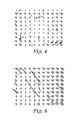
- FIG. 4 is a photograph of crystalline quinhydrone from Example 1.
- FIG. 5 is a photograph of crystalline quinhydrone from Example 4.
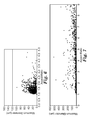
- FIGS. 6 and 7 are scatter plots of Aspect Ratio versus Maximum Diameter of crystalline quinhydrone from Example 1 and Example 4, respectively.
- FIGS. 10 and 11 are plots of responses of a quinhydrone working electrode of a sensor of the type of Example 2 versus standardized pH and versus time for a standardized pH of 6.96, respectively.
- FIG. 1 provides a top view of an exemplary sensor ( 10 ) as well as cross sectional views at A-A, B-B and C-C.
- a sensor generally comprises a substrate ( 11 ), in particular an electrically non-conductive substrate, connection pads ( 12 ) and conductive tracks ( 13 ).
- the sensor ( 10 ) comprises a working electrode ( 15 ). It generally comprises a reference electrode ( 16 ). As illustrated in the exemplary sensor, the working electrode ( 15 ) may favorably include a conductive electrode base ( 27 ) and an over-layer ( 25 ) formed of a sensing composition as described herein. Similarly the reference electrode may include a conductive electrode base ( 28 ) and an over-layer ( 26 ) formed of a reference electrode composition.
- the exemplary sensor favorably includes at least one thermocouple, more favorably at least two thermocouples. Specifically the illustrated exemplary sensor ( 10 ) includes 2 thermocouples ( 17 , 18 ).
- the sensor further comprises a dielectric layer ( 20 ).
- Substrates serving as electrically non-conductive support members, may typically be any cohesive, electrical non-conductor such as any electrical non-conductive body, film or sheet formed of polymeric material, ceramic, glass, paper, cardboard or any other material coated with an electrically non-conductive layer.
- a cohesive, electrical non-conductor such as any electrical non-conductive body, film or sheet formed of polymeric material, ceramic, glass, paper, cardboard or any other material coated with an electrically non-conductive layer.
- Suitable thicknesses of non-conductive support materials in the form of a film or a sheet are from about 50 microns to about 2000 microns.
- Polymeric material, particularly non-conductive polymerics in the form of films or thin sheets are generally beneficial as they may be readily cut to strips of suitable size. In practice a strip-like substrate is generally a polymeric film or sheet.
- favorably substrates have low shrinkage/expansion properties, e.g. showing only a change in size in machine direction in the range of plus and minus 0.25% (inclusive) and/or in transverse direction in the range of plus and minus 0.025% (inclusive) after a treatment at 150° C. for 30 minutes.
- An example of a suitable commercially available silver-containing ink include the ink formulation marketed under trade designation Electrodag 479 SS by Acheson Inc., Michigan and now by Henkel KGaA, Düsseldorf, Germany. Other examples are Electrodag PF-410 marketed by Acheson Inc., Michigan and now by Henkel KGaA, Düsseldorf, Germany or Du Pont 5000 marketed by Du Pont Ltd., Bristol, United Kingdom.
- An example of suitable commercially available carbon-containing ink include the ink formulation marketed under trade designation Electrodag 423 SS by Acheson Inc., Michigan and now by Henkel KGaA, Düsseldorf, Germany.
- Electrodag PF-407A or Electrodag 965 SS marketed by Acheson Inc., Michigan and now by Henkel KGaA, Düsseldorf, Germany or Du Pont 5067 or Du Pont 7102 marketed by Du Pont Ltd., Bristol, United Kingdom.
- conductive tracks are screen printed on a substrate (such as a polyester or polycarbonate film) and cured, e.g. for about 30 minutes at about 80° C. or for about 5 minutes at about 120° C. Conductive tracks may differ in composition within a single sensor.
- Conductive tracks are generally formed first on an substrate, for example so that the respective conductive tracks may be at least partially covered by the sensor-electrodes (either the electrode per se or its conductive electrode base) in order to make good electrical contact.
- the sensor-electrodes either the electrode per se or its conductive electrode base
- the connection pads typically the end portions of the conductive tracks located generally opposite of the electrodes form the connection pads.
- conductive tracks are from about 3 microns to about 15 microns.
- Conductive electrode bases of electrodes may comprise electrically conductive carbon or graphite, copper, silver, gold, platinum, nickel, stainless steel, iron and other conductive materials and mixtures thereof. Conductive electrode bases may differ in composition within the same sensor. Formulations of electrically conductive carbon or graphite containing polymeric materials such as the electrically conductive inks available from Acheson Inc., now from Henkel KGaA, are typically favored as they are readily available and can be uniformly spread on a substrate to form a thin layer. Similar to conductive tracks, conductive electrode bases can be applied to the substrate by methods known in the art such as screen printing, flexo printing, offset printing, gravure printing or digital printing (e.g. ink jet printing).
- Dielectric layers i.e. electrically insulating layers
- protection e.g. protection against mechanical damage, protection against oxidation (of e.g. silver tracks), protection against moisture, fingerprints, etc.
- a dielectric layer may typically cover the complete operating area of a sensor with the exception of the connection pads and the electrodes.
- the boundaries of a dielectric layer may overlap in part onto connection pads and/or electrodes while leaving said connection pads and/or electrodes free of a covering so that their operative function remains essentially unhindered (e.g. allowing for proper connection of the sensor to an electronic device and for proper access of sample to the electrodes).
- the dielectric layer may be formed of any suitable dielectric material and applied in any suitable matter. It is beneficial to apply the dielectric layer using a similar or the same method used for applying conductive bases and conductive electrode bases, such as screen printing, flexo printing, offset printing, gravure printing or digital printing (e.g. ink jet printing).
- suitable commercially available dielectric formulations for applying an dielectric layer includes a formulation marketed under trade designation PD039A by Acheson Inc., Michigan, USA and now by Henkel KGaA, Düsseldorf, Germany or a formulation marketed under trade designation 5015 by Du Pont Ltd., Bristol, United Kingdom.
- Such formulations may be applied by printing, e.g. laying down a layer followed by curing, e.g. UV curing, to provide a biologically inert, acrylate complex.
- Favorable thicknesses of dielectric layers are from about 3 microns to about 30 microns.
- Reference electrodes may be formed by providing a conductive electrode base on the substrate and then applying (e.g. coating, screen-printing) onto the surface of the conductive electrode base a reference electrode composition, for example comprising silver and silver chloride.
- Reference electrode formulations such as inks based on Ag/AgCl compositions are generally suitable and commercially available.
- Reference electrodes may be advantageously over-coated with a composition comprising a salt to facilitate the provision of a stable salt concentration in the vicinity of the reference electrode. It has been found particularly useful to over-coat reference electrodes with a cured composition comprising potassium chloride, polyvinylalcohol and melamine resin.
- a cured composition comprising potassium chloride, polyvinylalcohol and melamine resin.
- an aqueous formulation comprising potassium chloride, polyvinylalcohol (such as those marketed under the trade designation Mowiol by The Dow Chemical Company, Wilmington, Del., USA) and a melamine-resin (e.g.
- a reactive, cross-linkable, modified melamine-resin such as the melamine resins marketed under trade designation Cymel by Cytec Surface Specialties SA/NV, Brussels, Belgium
- melamine resins marketed under trade designation Cymel by Cytec Surface Specialties SA/NV, Brussels, Belgium
- Working electrodes may be formed by either providing a sensing composition—in accordance to certain aspects of the present invention and described in detail below—including in addition a conductive component (e.g. active carbon) on the substrate or, more desirably, by providing a sensing composition without such a conductive component onto a conductive electrode base already provided on the substrate.
- a sensing composition in accordance to certain aspects and embodiments described herein are advantageous in that the use of a conductive component is typically not necessary (nor desired) to allow for good and desirable response. Furthermore the latter aforesaid process is favored as this process is more efficient in manufacturing and allows for the production of more uniform products.
- Sensing composition described herein allow the provision of thin layers.
- Favorable thicknesses of layers made of a sensing composition are from about 10 microns to about 75 microns.
- a sensing composition comprises quinhydrone and at least one water soluble derivative of a polysaccharide.
- such sensing compositions are particularly advantageous for the provision of disposable pH sensors, and accordingly such sensors include a dry working electrode formed at least in part of such a sensing composition.
- favorable working electrodes are formed of at least two layers: a conductive electrode base and a sensing composition provided on (e.g. dried onto) the conductive electrode base.
- poly in polysaccharides refers to polymers having a number average molecular weight equal to or greater than 1800.
- the number average molecular weight is equal to or less than about 220,000.
- water soluble refers to polymers that form a solution in water containing 1 (one) percent by weight of a polymer at 20° C. and a pH of 5-9 that is free of insoluble polymer particles.
- a useful determination that a solution is free of insoluble polymer particles can be made by the measurement of its turbidity, which can be defined as the reduction of transparency of a liquid caused by the presence of un-dissolved matter.
- the turbidity of an aqueous solution containing 1 (one) percent by weight of a polymer, at a pH of 5-9 and a temperature of 20° C. can be measured using a turbidimeter or nephelometer.
- a polymer is defined as “water soluble” if the turbidity of such a solution is equal to or less than 50 FNU (formazine nephelometric units) (in particular equal to or less than 35 FNU, more particularly equal to or less than 20 FNU) when measured according to ISO 7027.
- FNU formazine nephelometric units
- the at least one water soluble derivative of a polysaccharide in the sensing composition is preferably not cross-linked.
- the sensing composition may comprise a single water soluble derivative of a polysaccharide or a plurality of water soluble derivatives of a polysaccharide.
- the at least one water soluble derivative of a polysaccharide is preferably at least one water soluble ester or ether derivative of a polysaccharide, more preferably at least one water soluble ester or ether cellulose, even more preferably at least one water soluble ether cellulose, and most preferably at least one water soluble ether cellulose selected from the group consisting of sodium carboxymethylcellulose (CMC), hydroxyethylcellulose (HEC), carboxymethylhydroxyethylcellulose (CMHEC), hydroxypropylcellulose (HPC), methylcellulose (MC), hydroxypropylmethylcellulose (HPMC), hydroxybutylmethylcellulose (HBMC), hydroxyethylmethylcellulose (HEMC), ethylcellulose (EC), ethylhydroxyethylcellulose (EHEC, HEEC), dihydroxypropyl
- a sensing composition comprises crystalline quinhydrone in accordance with another aspect of the present invention (described in more detail below).
- Such crystalline quinhydrone is characterized in that 90% or more of the particles have an aspect ratio equal to or less than 2.5.
- the application of such sensing compositions is beneficial for all types of sensors (in particular pH sensors), and accordingly such sensors include a dry working electrode formed at least in part of such a sensing composition.
- sensing compositions of electrodes described herein may comprise other components, such as e.g. coloring agents (e.g. pigments, dyes), fillers or surfactants.
- coloring agents e.g. pigments, dyes
- surfactants e.g. surfactants
- Sensing compositions of electrodes described herein are favorably essentially free (i.e. no more than 5 wt. % of the total dried sensing composition) or free of a hydrophobic polymer, among other things in order to facilitate function as a depth electrode and/or maintenance of desired function as a depth electrode.
- Sensors may include a sensing composition that has been dried onto a conductive electrode base provided on a sensor substrate.
- sensors may include a sensing composition dried onto a sensor substrate and in electrical contact with a conductive path provided on said substrate. The former is generally favored.
- a sensor e.g. a disposable sensor, where the sensor comprises a substrate provided with at least one conductive path, comprises a step of forming a working electrode, wherein either
- methods may favorably include additional steps such as providing a substrate, providing at least one conductive path onto the substrate, while methods in accordance to the former method may favorably further comprises a step of providing a conductive electrode base onto the substrate, such that the base is in electrical contact the at least one conductive path.
- a method of fabrication of a three (e.g. parallel) line sensor may favorably comprise the following steps:
- a substrate (not visible in FIG. 2 ; e.g. a polyester or polycarbonate film);
- a first formulation comprising a first conductive material (e.g. comprising silver) so as to form conductive paths of the first and second lines, connection pads at the first ends of the first and second lines and in the region near the second end of the second line a conductive electrode base (see FIG. 2A reference number 30 );
- a first conductive material e.g. comprising silver
- thermocouple application (e.g. by printing) of a second formulation comprising a second conductive material (e.g. comprising carbon) so as to form a conductive path of the third line, a connection pad at the first end of the third line, an overlap of the second end of third line in the region near the second end of the second line but spaced apart from said conductive electrode base thereby forming a thermocouple and so as to overcoat the first line and form in contact to the second end of the first line a second conductive electrode base (in particular whereby the first and second conductive electrode bases are side-by-side but spaced apart) as well as to overcoat the first end of the second line thereby forming a second thermocouple (see FIG. 2B );
- a second conductive material e.g. comprising carbon
- a third formulation comprising a reference electrode composition (e.g. comprising Ag/AgCl) so as to form an over-layer of the reference electrode composition onto the first conductive electrode base thereby forming the reference electrode (see FIG. 2C );
- a reference electrode composition e.g. comprising Ag/AgCl
- a fourth formulation e.g. a quinhydrone ink as described herein
- a sensing composition e.g. comprising quinhydrone and at least one water soluble derivative of a polysaccharide as described herein and/or comprising a crystalline quinhydrone as described herein
- a fourth formulation e.g. a quinhydrone ink as described herein
- a sensing composition e.g. comprising quinhydrone and at least one water soluble derivative of a polysaccharide as described herein and/or comprising a crystalline quinhydrone as described herein
- the aforesaid method is advantageous in that it efficient allowing for cost-effective, large scale manufacture of sensors using a low number of process steps. For example in merely two steps all the conductive paths, conductive pads, thermocouples and conductive electrodes bases are provided (in particular printed) for such an exemplary three-line sensor.
- FIG. 3 Another exemplary sensor is illustrated in FIG. 3 , where FIG. 3 a provides a perspective view of the tip of the sensor.
- this sensor generally comprises a substrate ( 11 ), conductive paths ( 13 ), a reference electrode ( 16 ) and favorably with at least one thermocouple ( 17 ) positioned near the reference electrode.
- the reference electrode ( 16 ) is desirably formed of a conductive electrode base ( 28 ) and a reference electrode composition over-layer ( 26 ).
- the working electrode ( 15 ) is favorably formed of a conductive electrode base ( 27 ) and sensing composition over-layer ( 25 ).
- this sensor desirably includes a dielectric layer ( 20 ).
- the working and reference electrodes ( 15 , 16 ) are advantageously arranged side-by-side, but spaced apart, and the two electrodes are surrounded by a ring wall—that may be closed as illustrated or partly open and is best described as an atoll ( 40 ).
- the atoll ( 40 ) protects the two electrodes prior to and during use, and also during use the atoll facilitates collection of sample into its lagoon and thus to the electrodes located in the lagoon.
- the atoll is favorably made of a dielectric material, such as those listed above.
- an atoll has a wall height at its maximum point of about 30 ⁇ m or more, more favorably about 40 ⁇ m or more, most favorably about 50 ⁇ m. Within the aforesaid ranges, favorably such an atoll has a wall height at its maximum of about 150 ⁇ m or less, more favorably of about 100 ⁇ m or less, and most favorably about 75 ⁇ m or less.
- the exemplary sensor may be favorably produced as described above, with the inclusion of an additional step of making the atoll.
- the method may include application (e.g. by printing) of a dielectric material so as to form an atoll surrounding the reference electrode and the second conductive electrode base.
- FIG. 3 b provides a top view of the second exemplary sensor approximately in scale of its real dimensions (i.e. having an overall length of about 8 cm and a width of 1 cm at widest point).
- Sensors described herein may be suitably and advantageously used for measurement (in particular pH measurements) of aqueous-based samples, for example in laboratories (possibly replacing the glass electrode); in chemical or biotechnical industry; for measurement of water quality for example of rivers, ponds, pools, or aquariums; in food industry e.g. for measurement of diary products, honey products, meat-products and beverages (e.g. beer).
- sensors described herein are particularly advantageous for use in in vivo measurements. This holds particularly true because of a desirable resistance to sterilization, desirable short response times and overall small size of the working electrodes and thus the sensing portion of the sensors.
- Desirably sensors are configured and arranged to allow for in vivo potentiometric measurement (in particular in vivo potentiometric pH measurements) for example in wounds (e.g. measurement of wound fluids, such as exudate and/or transudate), on skin (e.g. measurement of lymphorrhoea, sweat, glandular secretions), on mucous membranes (e.g. measurement of mucus), in dental pockets or on gum tissue (e.g.
- Sensors in particular pH sensors, described herein may be used in conjunction with protease (e.g. matrix metalloproteinase, such as MMP-9) detection devices or systems or alternatively sensors or working electrodes described herein may be provided as an integral component of a protease detection device or system.
- protease e.g. matrix metalloproteinase, such as MMP-9
- Such methods may also favorably include detection of one or more other analytes that are generally indicative of the state of the wound, such as total protein, proteins, protein fragments, cytokines, polynucleotides, growth factors, microorganisms or fragments thereof, microorganism by-products.
- detection may favorably include detection of the presence and/or the specific identity and/or the amount of said analyte. As desired and/or needed, such detection may be carried our prior to measuring the pH or simultaneously with measuring the pH or subsequent to measuring the pH.
- Sensors may be provided in various forms, e.g. any flat shape or any shape which can be derived from a flat material by folding, corrugation, bending or stacking. Sensors may be in the form of single-layer substrate strips, patches, dimpled arrays (e.g. arrays (for example in the form of test strip or blocks) with reservoirs or cavities) or other types of arrays allowing for multiparameter measurement. Alternatively sensors may be in the form of a “stacked” strip, e.g. formed of 2 or more insulating substrate-layers stacked, where electrode layer(s) are provided between the substrate layers, and where the access to the electrode(s) may be provided externally, e.g. at the outer end of the stack, or internally, e.g.
- sensors may be provided in the form of a tampon or a stick (e.g. an insertion-stick) with electrodes provided either at the top-end and/or one of the sides.
- sensors can be configured and arranged to operate in a microfluidic array or as a flow-through type of sensor in which e.g. sample is continuously or discontinuously forced to flow across the sensor surfaces by pumps or any other means.
- a preferred form is a single layer substrate strip.
- Such sensors strips are favorably stiff enough to allow for connect into electronic devices, but flexible enough to allow proper contact to the sample, in particular in in vivo situations.
- Sensor strips are favorably from about 0.5 cm to about 30 cm in length.
- Sensor strips are favorably from about 0.25 cm to about 4 cm wide.
- Sensor strips are favorably from about 50 to about 2000 microns thick.
- individual layers making up electrodes desirably have a thickness of about 75 microns at most, more desirably equal to or less than about 60 microns, even more desirably equal to or less than about 45 microns, and most desirably equal to or less than about 30 microns.
- the electrodes in particular working electrode
- Access-area is to be understood the area to which the sample has access to the dry electrode.
- Certain aspects of the present invention include a method of preparing crystalline quinhydrone for the use in or as a quinhydrone ink in the manufacturing of a sensor, said method comprising a step of combining aqueous solutions of benzoquinone and hydroquinone in the presence of at least one additive, wherein the concentrations of the aqueous solutions of benzoquinone and hydroquinone are such that the concentration of quinhydrone formed upon said combining exceeds the solubility of quinhydrone at the temperature at which said combining is performed and wherein the at least one additive is at least one water soluble derivative of a polysaccharide.
- the initial concentration of the at least one additive may be favorably provided such that upon completion of the step of combining, the weight by weight concentration of said at least one additive is at least 0.05%, in particular at least 0.1%, more particularly at least 0.2%, and most particularly at least 0.4%.
- the initial concentration of the at least one additive may be desirably provided such that upon completion of the step of combining the weight by weight concentration of said at least one additive is at most 10%, in particular at most 5%, more particularly at most 2%, and most particularly at most 1%.
- the at least one additive is at least one water soluble derivative of a polysaccharide. Moreover a single water soluble derivative of a polysaccharide or a plurality of water soluble derivatives of a polysaccharide may be used.
- the at least one water soluble derivative of a polysaccharide is preferably at least one water soluble ester or ether derivative of a polysaccharide, more preferably at least one water soluble ester or ether cellulose, even more preferably at least one water soluble ether cellulose, and most preferably at least one water soluble ether cellulose selected from the group consisting of sodium carboxymethylcellulose (CMC), hydroxyethylcellulose (HEC), carboxymethylhydroxyethylcellulose (CMHEC), hydroxypropylcellulose (HPC), methylcellulose (MC), hydroxypropylmethylcellulose (HPMC), hydroxybutylmethylcellulose (HBMC), hydroxyethylmethylcellulose (HEMC), ethylcellulose (EC), ethy
- the aqueous solutions of benzonquinone and hydroquinone are (independently) saturated or nearly saturated.
- saturated refers to a point of maximum concentration, in which no more solute (such as benzoquinone or hydroquinone) may be dissolved in a solvent (such as water) at the relevant temperature (e.g. the temperature at which the step of combining is performed).
- nearly saturated solution as used herein, it to be considered an aqueous solution that is at least 70% of maximum concentration of benzoquinone and hydroquinone, respectively, more particular about at least 80% of the maximum concentration, most particularly at least 90% of said maximum concentration.
- the method may comprise either forming an aqueous solution of benzoquinone containing said at least one additive and forming an aqueous solution of hydroquinone, or alternatively forming an aqueous solution of hydroquinone containing said at least one additive and forming an aqueous solution of benzoquinone. It has been found advantageous in terms of efficiency and effectiveness to form an aqueous solution of benzoquinone containing said at least one additive and an aqueous solution of hydroquinone, and thereafter in the step of combining, to add the aqueous solution of hydroquinone to the aqueous solution of benzoquinone containing said at least one additive.
- Methods of preparing crystalline quinhydrone as described above favorably provides a dispersion of desirable crystalline quinhydrone (discussed in more detail below) in an aqueous solution comprising the at least one additive, Such dispersions can be used as obtained as quinhydrone inks in the manufacture of sensors and/or working electrodes.
- Such dispersions may be for example further concentrated before use as quinhydrone inks.
- another aspect of the present invention include preparing a quinhydrone ink for use in the manufacturing of a sensor, said method comprising the steps of: providing crystalline quinhydrone as described; allowing the crystalline quinhydrone to sediment; removing part or all of the supernatant; and adding a liquid to the sediment and dispersing the sediment in said liquid.
- the liquid comprises at least one modifier. More favorably the liquid is an aqueous solution comprising at least one modifier, wherein the at least one modifier is at least one a water soluble derivative of a polysaccharide. A single or a plurality of water soluble derivatives of a polysaccharide may be used as modifier.
- the at least one water soluble derivative of a polysaccharide is at least one water soluble ester or ether derivative of a polysaccharide, more preferably at least one water soluble ester or ether cellulose, even more preferably at least one water soluble ether cellulose, most particularly at least one water soluble ether cellulose selected from the group consisting of sodium carboxymethylcellulose (CMC), hydroxyethylcellulose (HEC), carboxymethylhydroxyethylcellulose (CMHEC), hydroxypropylcellulose (HPC), methylcellulose (MC), hydroxypropylmethylcellulose (HPMC), hydroxybutylmethylcellulose (HBMC), hydroxyethylmethylcellulose (HEMC), ethylcellulose (EC), ethylhydroxyethylcellulose (EHEC, HEEC), dihydroxypropylcellulose, hydroxyethylhydroxypropylcellulose, and mixtures thereof.
- CMC carboxymethylcellulose
- HEC hydroxyethylcellulose
- CHEC carboxymethylhydroxy
- the at least one modifier may be the same as the at least one additive, and thus the resulting product includes in total the same at least one additive/modifier (since some additive remains in the wet crystalline quinhydrone sediment even after removing all of the supernatant).
- the at least one modifier may be different (or in part different) as the at least one additive, so that the resulting product includes in total the at least one modifier and the at least one additive.
- a sensing composition of an electrode may comprise other components, such as coloring agents, fillers or surfactants, and/or a sensing composition may include a conductive component (such as conductive carbon).
- a conductive component such as conductive carbon
- any inclusion of any such component(s) is performed at least after the step of providing crystalline quinhydrone.
- Such component(s) may be appropriately added (e.g.
- component(s) may be included into the liquid comprising at least one modifier and thus added when the liquid is added to the sediment; or alternatively component(s) may be added while or after dispersing the sediment in said liquid.
- Products for use as quinhydrone inks prepared according methods described herein are favorably essentially free (i.e. no more than 5 wt % of the total dried sensing composition) or free of a hydrophobic polymer.
- Products for use as quinhydrone inks prepared according to methods described herein desirably have a viscosity at 23° C. (e.g. as determined using a Brookfield viscosimeter (Spindle No. 3, speed 10 rpm)) equal to and greater than 5 mPa ⁇ s, more desirably equal to and greater than 750 mPa ⁇ s, even more desirably equal to and greater than 1250 mPa ⁇ s, and most desirably equal to and greater than 2000 mPa ⁇ s.
- Products for use as quinhydrone inks prepared according to methods described herein desirably have a viscosity at 23° C. (e.g.
- Brookfield viscosimeter (Spindle No. 3, speed 10 rpm)) equal to and less than 2,000,000 mPa ⁇ s, more desirably equal to and less than 1,000,000 mPa ⁇ s, even more desirably equal to and less than 500,000 mPa ⁇ s yet even more desirably equal to and less than 100,000 mPa ⁇ s, and most desirably equal to and less than 10,000 mPa ⁇ s.
- products for use as quinhydrone inks as described herein may be advantageously used in the manufacture of a sensor (e.g. a disposable sensor) the sensor comprising a substrate provided with at least one conductive path, where the method includes a step forming a working electrode said step comprising depositing quinhydrone ink onto a conductive electrode base that is provided on the substrate and is in electrical contact with said conductive path and drying the ink.
- a conductive component such as carbon
- the method may comprise a step forming a working electrode, said step comprising depositing quinhydrone ink onto the substrate and drying the ink, such that the formed working electrode is in electrical contact with said conductive path provided on the substrate.
- the use of the at least one water soluble derivative of a polysaccharide additive (as described above) in methods of preparing of crystalline quinhydrone surprisingly provides crystalline quinhydrone having desirable particle properties, in particular squared or globular-like crystalline particles.
- Such crystalline quinhydrone is characterized in that 90% or more of the particles have an aspect ratio equal to or less than 2.5. This result is particularly surprising since it seems to be unrelated to viscosity but rather to some unexpected and at least presently inexplicable interaction with the at least one water soluble derivative of a polysaccharide additive.
- Such crystalline quinhydrone materials are advantageous for use in electrodes due to desirable stability as a result of high number of particles of the crystalline quinhydrone having a low surface to volume ratio, as well as allowing for high packing of quinhydrone particles, and thus quinhydrone, per a certain volume.
- a majority of the particles have an aspect ratio equal to or less than 1.5.
- Such crystalline quinhydrone materials may also have advantageous size properties, e.g. a small size further facilitating high packing and/or e.g. a size “not too small” further promoting desirable stability.
- 90% or more of the particles have a maximum diameter equal to or less than 80 ⁇ m, more particularly equal to or less than 70 ⁇ m, even more particularly equal to or less than 60 ⁇ m, yet even more particularly equal to or less than 50 ⁇ m, most particularly equal to or less than 40 ⁇ m.
- a majority of the particles have a minimum diameter greater than 5 ⁇ m, more desirably greater than 10 ⁇ m.
- a majority of the particles have an area greater than 100 ⁇ m 2 .
- a majority of the particles have an area equal to or less than 400 ⁇ m 2 .
- any method can be used to provide a dispersion so long that the particles of sample are well-dispersed by the method and that there is no segregation of particles by size (see 4.1.2 of ISO 13322-1).
- the prepared slide is then examined to determine whether
- a Reichert-Jung Polyvar MET Microscope (C. Reichert Optician Werke AG, Hernalser Hauptstr. 219, A-1171 Wien, Austria) is employed in conjunction with a digital camera ColorView II (available from Olympus Soft Imaging Solutions GmbH, Johann-Krane-Weg 39, 48149 Weg, Germany) with a maximum resolution of 2080 ⁇ 1544 pixels and a color depth of 24 bit.
- a series of non-overlapping images (at least a minimum of about 800 particles are photographed) is taken over a short period (circa three minutes) using transmission mode. Digital photographs were uploaded in a computer for analyses.
- the basic procedure used by the software is to measure diameters of a photographed particle by rotating two parallel lines around the complete particle (0° to 179° at a step width 1°) adjusting the space between the parallel lines so that each line just touches the outer edge of the particle, and measuring the length of space with the two lines.
- Minimum Diameter is defined as the minimum value of all the measured diameters of a particle
- Maximum Diameter is defined as the maximum value of all the measured diameters of a particle.
- the basic procedure used by the software is to rotating a rectangle around the complete particle (0° to 179° at a step width of 1°), adjusting the lengths of the sides so that each side just touches the outer edge the particle, then measuring the length of the two sides, a and b, and determining the maximum ratio of length a to length b of all measured a/b-pairs, said ratio being defined as the Aspect Ratio.
- Area the number of pixels within the boundaries of a particle is counted, and area is defined as the total number of pixel counted for a particle times the area of a pixel.
- the number of particles to be measured and analyzed is at least 800.
- hydroxypropylmethylcellulose (marketed under trade designation METHOCEL E 15 by the The Dow Chemical Company, Wilmington, Del., USA (methoxy content 28-30%, hydroxypropyl content 7-12%; viscosity of 2% solution in water 12-18 mPa ⁇ s) was added to 95 g of distilled water under stirring at 2000 rpm. After complete addition (within about 1 min) of the hydroxypropylmethylcellulose, the solution was then stirred for 5 hours at 400 rpm.
- METHOCEL E 15 hydroxypropylmethylcellulose
- METHOCEL 3111 3.0 g of hydroxypropylmethylcellulose
- the resulting product was used as a quinhydrone ink. It has a composition corresponding to 4.719 g quinhydrone, 13.123 g hydroxypropylmethylcellulose (marketed under trade designation METHOCEL E 15), 1.296 g hydroxypropylmethylcellulose (marketed under trade designation METHOCEL 311) and 280.941 g of water. Accordingly a 1 ⁇ l drop of said ink (approx. 1 mg) contains 16 ⁇ g quinhydrone; 500 nl of the quinhydrone ink contain 8 ⁇ g quinhydrone.
- the ink has a viscosity of 3540 mPa ⁇ s as determined using a Brookfield viscosimeter (Spindle No. 3, speed 10 rpm, temperature 23° C.).
- the particles produced are squared or globular-like crystals. They were analyzed using optical microscopy in accordance to the test method described above.
- FIG. 4 shows an image of the quinhydrone dispersion.
- FIG. 6 provides a plot of aspect ratio versus maximum diameter. 97% of the particles have an aspect ratio of 2.5 or less; and a majority of the particles have an aspect ratio of less than 1.5.99% of all particles have a maximum diameter equal to or less than 80 ⁇ m and 90% of all particles have a maximum diameter equal to or less than 40 ⁇ m.
- FIGS. 8 and 9 provide plots (shown as - ⁇ -) of minimum diameter and area distributions, respectively. 75% and 56% of all particles have a minimum diameter greater than 5 ⁇ m & 10 ⁇ m, respectively.
- a sensor strip (65 ⁇ 9 mm)—having a tip similar to that illustrated in FIG. 1 —was constructed.
- a polyester film 200 ⁇ m thick marketed under the trade name Melinex 329 by Du Pont Teijin Film U.S. Limited Partnership, Hopewell, USA) was used as the substrate.
- a screen-printing process similar to that illustrated in FIG. 2 —a silver-containing ink (marketed under trade designation Electrodag 479SS by Henkel KGaA, Düsseldorf, Germany) was printed on the substrate and cured at 120° C. for 10 min.
- a carbon-containing ink (marketed under trade designation Electrodag 423SS by Henkel KGaA, Düsseldorf, Germany) was printed and cured at 120° C.
- connection pads, conductive paths, conductive electrode bases (each base had of a size of about 1.5 by 1.5 mm and a median thickness of about 10 ⁇ m) as well as the thermocouples were thus formed.
- Ag/AgCl-containing ink (marketed under trade designation 5874 by Du Pont Ltd., Bristol, United Kingdom) was printed onto its appropriate silver-containing conductive electrode base and cured at 120° C. for 10 min, thus forming the reference electrode (having a size of about 1.5 ⁇ 1.5 mm square and a total median thickness of about 20 ⁇ m).
- a dielectric material marketed under trade designation Electrodag PD-039A by Henkel
- UV cured the layer had a median thickness of about 10 ⁇ m.
- a drop (approximately 0.1 ⁇ L) of quinhydrone ink product from Example 1 was deposited (i.e. dropped) and dried onto its appropriate carbon-containing conductive electrode base, thus forming the working electrode.
- the sensing composition over-layer of the working electrode generally had a diameter of about 0.6 mm and a median thickness of 45 ⁇ m (the
- Voltage response of the quinhydrone-containing working electrode of a series of sensors of the type of Example 2 was measured—independent of the printed reference electrode—using a high impedance voltmeter (input resistance: 10 11 -10 12 Ohm) that was placed between the working electrode and an external, standardized Ag/AgCl reference electrode (marketed under trade designation 6.0750.100 by Metrohm).
- the voltage response was measured using one sensor for each measurement and recorded over measurements of a series of standard pH buffers. The values obtained 30 sec. after the quinhydrone—containing working electrodes were exposed to the different buffer solutions are plotted in FIG. 10 .
- the voltage response to a pH 6.96 phosphate buffer was measured over a series of time intervals using one sensor for each measured time interval. Response time of quinhydrone electrode is plotted in FIG. 11 .
- Atoll was printed onto the protective-dielectric layer using a dielectric material (marketed under trade designation 5015 by DuPont Electronic Technologies) and such that the reference electrode and the carbon-containing conductive electrode base were surrounded.
- the maximum height of the atoll was 60 ⁇ m and the atoll was generally oval in form approximately 4.6 mm in length by 2.8 mm in width.
- Example 1 was repeated excepted that the aliquot of Solution 1 added to Solution 2 did not contain hydroxypropylmethylcellulose. In other words there was no hydroxypropylmethylcellulose present during the step of combining benzoquinone and hydroquinone. After quinhydrone had crystallized and was allowed to settle, and the supernatant was removed, Solution 4 containing the aforementioned hydroxypropylmethylcelluloses was added as described in Example 1.
- FIG. 5 shows an image of particles, where needle crystals can be readily identified.
- FIG. 7 provides a plot of aspect ratio versus maximum diameter, and aspect ratios up to 25 were measured together with maximum diameters up to 500 ⁇ m. Nearly 50% of the particles have an aspect ratio equal to or greater than 2.5 and less than 25% have an aspect ratio less than 1.5.
- FIGS. 8 and 9 provide plots (-*-; Example 4) of minimum diameter and area distributions of this example. 58% of the particles have a minimum diameter equal to or less than 5 ⁇ m. 55% of the particles have an area less than 30 ⁇ m 2 . Only 32% of all particles have an area greater than 100 ⁇ m 2 . 1284 particles were analyzed.
- Example 4 A series of sensors were prepared according to Example 2 using the needle-shaped quinhydrone-hydroxypropylmethylcellulose containing ink of this Example (i.e. Example 4).
- Example 2 A series of sensors were made according to Example 2, i.e. using the squared/globular-like crystalline quinhydrone-hydroxypropylmethylcellulose containing ink of Example 1.
- Example 2 had a slope of ⁇ 63 mV/pH and Example 4-58 mV/pH. Also the response times for both were similar.
- the results demonstrate the advantages of a depth electrode as described herein (i.e. a working electrode formed at least in part of a sensing comprising quinhydrone and at least one water soluble derivative of a polysaccharide).
- Example 2 TABLE 1 mV/pH-slope of Response Sensor-type 30 sec. potential value (mV) in pH 5.09
- Example 2 ⁇ 63 +/ ⁇ 0.8 mV/pH 189 +/ ⁇ 2 mV
- Example 4 ⁇ 58 ⁇ ⁇ 52 mV/pH* 175 ⁇ 156 mV* *Slope and potential of Example 4 continuously dropped and at different rates.
- Example 6 ⁇ 54 +/ ⁇ 16 52 +/ ⁇ 24 mV surface mV/pH scraped*** *The theoretical slope - mV per pH - of a quinhydrone-pH sensing working electrode is ⁇ 59 mV/pH.
- Example 1 was repeated except that the following methyl or hydroxylpropyl-methylcellulose was used in Solution 1 instead of the given hydroxylpropylmethylcellulose:
- Hydroxylpropylmethylcellulose marketed under the trade designation METHOCEL K100 Premium LV by the Dow Chemical Company, Wilmington, Del., USA (methoxy content 19-24%, hydroxypropyl content 7-12%; viscosity of 2% solution in water 80-120 mPa ⁇ s).
- the resulting product included crystalline quinhydrone particles like that of Example 1 with a squared and globular form and thus corresponding aspect ratios, diameters, and area.
- Example 1 using the following materials in Solution 1 instead of the given hydroxylpropylmethylcellulose yielded needles (the first four listed materials) or feathery-agglomerates (last listed material):
- dextrose available under the designation D-(+)-Glucose, dextrosum or glucosum anhydricum acc. to Pharmacopoea Europaea from Fluka
- Fatty alcohol polyglycol ether (marketed under the trade designation DISPONIL Ls 9,5 by Cognis GmbH, Monheim am Rhein, Germany) needles up to 350 microns long;
- Polyethylene glycol 35000 (available from Fluka, mp: 64-66° C., Rel. Molecular Mass: 35000) needles between 100 and 200 microns long;
- Polyvinylalcohol (marketed under the trade designation MOWIOL 26-88 by Kuraray Europe GmbH, Frankfurt am Main, Germany), viscosity of a 4% aqueous solution at 20° C.: 24.5-27.5 mPa ⁇ s, degree of hydrolysis: 86.7-88.7 Mol.-%, ester number: 130-159 mg KOH/g) feathery-agglomerates.
Landscapes
- Chemical & Material Sciences (AREA)
- Organic Chemistry (AREA)
- Health & Medical Sciences (AREA)
- Life Sciences & Earth Sciences (AREA)
- Molecular Biology (AREA)
- Chemical Kinetics & Catalysis (AREA)
- Electrochemistry (AREA)
- Physics & Mathematics (AREA)
- Analytical Chemistry (AREA)
- Biochemistry (AREA)
- General Health & Medical Sciences (AREA)
- General Physics & Mathematics (AREA)
- Immunology (AREA)
- Pathology (AREA)
- Investigating Or Analyzing Materials By The Use Of Fluid Adsorption Or Reactions (AREA)
- Investigating Or Analysing Biological Materials (AREA)
Priority Applications (1)
| Application Number | Priority Date | Filing Date | Title |
|---|---|---|---|
| US13/384,656 US20120141663A1 (en) | 2009-08-21 | 2010-08-12 | Quinhydrone-containing Sensor |
Applications Claiming Priority (3)
| Application Number | Priority Date | Filing Date | Title |
|---|---|---|---|
| US23596909P | 2009-08-21 | 2009-08-21 | |
| PCT/US2010/045281 WO2011022286A1 (en) | 2009-08-21 | 2010-08-12 | Quinhydrone-containing sensor |
| US13/384,656 US20120141663A1 (en) | 2009-08-21 | 2010-08-12 | Quinhydrone-containing Sensor |
Publications (1)
| Publication Number | Publication Date |
|---|---|
| US20120141663A1 true US20120141663A1 (en) | 2012-06-07 |
Family
ID=43244273
Family Applications (1)
| Application Number | Title | Priority Date | Filing Date |
|---|---|---|---|
| US13/384,656 Abandoned US20120141663A1 (en) | 2009-08-21 | 2010-08-12 | Quinhydrone-containing Sensor |
Country Status (3)
| Country | Link |
|---|---|
| US (1) | US20120141663A1 (de) |
| EP (1) | EP2467708A1 (de) |
| WO (1) | WO2011022286A1 (de) |
Cited By (1)
| Publication number | Priority date | Publication date | Assignee | Title |
|---|---|---|---|---|
| US20140332411A1 (en) * | 2011-12-23 | 2014-11-13 | Schlumberger Technology Corporation | Electrochemical sensor for ph measurement |
Families Citing this family (2)
| Publication number | Priority date | Publication date | Assignee | Title |
|---|---|---|---|---|
| WO2013036600A2 (en) * | 2011-09-06 | 2013-03-14 | Telecardia, Inc. | Measurement device with reader and disposable probe |
| CN113122609B (zh) * | 2021-04-27 | 2023-06-13 | 中国科学院长春应用化学研究所 | 一种简单、快速的水体总毒性比色检测方法 |
Citations (3)
| Publication number | Priority date | Publication date | Assignee | Title |
|---|---|---|---|---|
| US3730868A (en) * | 1970-12-21 | 1973-05-01 | Gen Electric | Carbon dioxide sensor |
| US20050089944A1 (en) * | 2003-10-27 | 2005-04-28 | Biomedix, Inc. | High sensitivity amperometric biosensor with side-to-side hybrid configuration |
| WO2010045281A2 (en) * | 2008-10-15 | 2010-04-22 | Erimos Pharmaceuticals Llc | Stable aqueous formulations of water insoluble or poorly soluble drugs |
Family Cites Families (6)
| Publication number | Priority date | Publication date | Assignee | Title |
|---|---|---|---|---|
| US1987148A (en) * | 1934-02-19 | 1935-01-08 | Carus Chemical Co Inc | Process of manufacturing quinhydrone |
| US4214968A (en) | 1978-04-05 | 1980-07-29 | Eastman Kodak Company | Ion-selective electrode |
| EP0274215B1 (de) | 1986-11-28 | 1993-07-21 | Unilever Plc | Elektrochemisches Messvorrichtung |
| JP3463069B2 (ja) | 1996-02-16 | 2003-11-05 | Nok株式会社 | 使い捨てpHセンサ |
| DE10108539B4 (de) | 2001-02-22 | 2007-01-04 | Dpst Behnert Gmbh | Direktpotentiometrischer pH-Sensor |
| TWI322007B (en) * | 2006-11-24 | 2010-03-21 | Health & Life Co Ltd | Biosensor, biostrip, and manufacture method of determination of uric acid by non-enzymatic reagent |
-
2010
- 2010-08-12 US US13/384,656 patent/US20120141663A1/en not_active Abandoned
- 2010-08-12 EP EP10747992A patent/EP2467708A1/de not_active Withdrawn
- 2010-08-12 WO PCT/US2010/045281 patent/WO2011022286A1/en not_active Ceased
Patent Citations (3)
| Publication number | Priority date | Publication date | Assignee | Title |
|---|---|---|---|---|
| US3730868A (en) * | 1970-12-21 | 1973-05-01 | Gen Electric | Carbon dioxide sensor |
| US20050089944A1 (en) * | 2003-10-27 | 2005-04-28 | Biomedix, Inc. | High sensitivity amperometric biosensor with side-to-side hybrid configuration |
| WO2010045281A2 (en) * | 2008-10-15 | 2010-04-22 | Erimos Pharmaceuticals Llc | Stable aqueous formulations of water insoluble or poorly soluble drugs |
Non-Patent Citations (1)
| Title |
|---|
| CAS reg. no. 106-34-3, Nov. 16, 1984. * |
Cited By (1)
| Publication number | Priority date | Publication date | Assignee | Title |
|---|---|---|---|---|
| US20140332411A1 (en) * | 2011-12-23 | 2014-11-13 | Schlumberger Technology Corporation | Electrochemical sensor for ph measurement |
Also Published As
| Publication number | Publication date |
|---|---|
| EP2467708A1 (de) | 2012-06-27 |
| WO2011022286A1 (en) | 2011-02-24 |
Similar Documents
| Publication | Publication Date | Title |
|---|---|---|
| US6491803B1 (en) | Test strip and biosensor incorporating with nanometer metal particles | |
| CN116735885B (zh) | 多分析物监测传感器 | |
| JP6081414B2 (ja) | バイオセンサのための低全塩試薬組成物およびシステム | |
| CN101871912A (zh) | 一种全固态钾离子传感器及其制备方法 | |
| US20150247817A1 (en) | Test Strips Having Ceria Nanoparticle Electrodes | |
| US20120141663A1 (en) | Quinhydrone-containing Sensor | |
| JP2014224828A5 (de) | ||
| KR101836815B1 (ko) | 미리 결정된 보정 코드를 갖는 검사 스트립에 사용하기 위한 효소 시약 잉크 | |
| US11365435B2 (en) | Multiple-use renewable electrochemical sensors based on direct drawing of enzymatic inks | |
| JP4467711B2 (ja) | 酵素センサおよびこれを用いた酵素センサ装置 | |
| US20200200697A1 (en) | Electrochemical biosensors | |
| JP2014215150A (ja) | バイオセンサ用電極、バイオセンサ、バイオセンサ用導電性樹脂組成物 | |
| CN112858422A (zh) | 一种去抗坏血酸干扰的电化学尿酸试条及其制作与应用 | |
| TWI329738B (de) | ||
| TW201000895A (en) | Hemoglobin-detecting electrode test strip and device comprising the same | |
| DE10018959B4 (de) | Biosensor mit mehrfachen Probenahmewegen | |
| EP1712635B1 (de) | Wassermischbare leitfähige Tinte zur Verwendung für enzymatische Sensoren auf elektrochemischer Basis | |
| CN117753489A (zh) | 纸基石墨烯酶生物传感器及其制备方法 | |
| CN1912626A (zh) | 一次性碳基葡萄糖芯片的制备及电化学检测方法 | |
| CN114609204B (zh) | CMK-8与GNs联合修饰的电极、电化学传感器及应用 | |
| JP2015508902A (ja) | バイオセンサーで使用するためのポリマー性ポリ(ビニル−ジアミノ−トリアジン)ナノ粒子 | |
| WO2024177091A1 (ja) | 電気化学測定電極用コーティング剤、並びにそれを用いた電気化学測定電極、電気化学センサ、及び電気化学バイオセンサ | |
| CN115531708A (zh) | 一种微针贴片及其制备方法 | |
| CN120577377A (zh) | 一种电化学传感器、制备方法及其在检测汗液甘油三酯含量中的应用 | |
| WO2007108388A1 (ja) | バイオセンサの製造方法、及びバイオセンサ |
Legal Events
| Date | Code | Title | Description |
|---|---|---|---|
| AS | Assignment |
Owner name: 3M INNOVATIVE PROPERTIES COMPANY, MINNESOTA Free format text: ASSIGNMENT OF ASSIGNORS INTEREST;ASSIGNORS:SCHOEPPEL, WOLFGANG G.;MECHERNICH, SILKE D.;BICHEL, JENS;SIGNING DATES FROM 20120106 TO 20120118;REEL/FRAME:027553/0120 |
|
| STCB | Information on status: application discontinuation |
Free format text: ABANDONED -- FAILURE TO RESPOND TO AN OFFICE ACTION |