US20080098649A1 - Decorative coatings for plants and plant materials - Google Patents
Decorative coatings for plants and plant materials Download PDFInfo
- Publication number
- US20080098649A1 US20080098649A1 US11/903,731 US90373107A US2008098649A1 US 20080098649 A1 US20080098649 A1 US 20080098649A1 US 90373107 A US90373107 A US 90373107A US 2008098649 A1 US2008098649 A1 US 2008098649A1
- Authority
- US
- United States
- Prior art keywords
- plant
- coating
- water
- decorated
- crosslinked
- Prior art date
- Legal status (The legal status is an assumption and is not a legal conclusion. Google has not performed a legal analysis and makes no representation as to the accuracy of the status listed.)
- Abandoned
Links
Images



Classifications
-
- A—HUMAN NECESSITIES
- A01—AGRICULTURE; FORESTRY; ANIMAL HUSBANDRY; HUNTING; TRAPPING; FISHING
- A01G—HORTICULTURE; CULTIVATION OF VEGETABLES, FLOWERS, RICE, FRUIT, VINES, HOPS OR SEAWEED; FORESTRY; WATERING
- A01G5/00—Floral handling
-
- A—HUMAN NECESSITIES
- A01—AGRICULTURE; FORESTRY; ANIMAL HUSBANDRY; HUNTING; TRAPPING; FISHING
- A01G—HORTICULTURE; CULTIVATION OF VEGETABLES, FLOWERS, RICE, FRUIT, VINES, HOPS OR SEAWEED; FORESTRY; WATERING
- A01G7/00—Botany in general
- A01G7/06—Treatment of growing trees or plants, e.g. for preventing decay of wood, for tingeing flowers or wood, for prolonging the life of plants
Definitions
- This disclosure relates to decorative coatings for plants and plant materials.
- Cut flowers and live plants can add color, drama and beauty to their surroundings. For these reasons, cut flowers and live plants are often used ceremonially, for example, at weddings, birthdays and anniversaries.
- the type of cut flower or live plant used to add color, drama or beauty can be synonymous with the season. For example, lilies are often used in the spring, pumpkins and gourds are often used in the fall, especially around Halloween, and live poinsettias are often used in the winter, especially during the holiday season.
- decorated plants or plant materials are disclosed that include decorative coatings.
- the disclosure features decorated plants or plant materials that include a flower and/or leaf and a crosslinked decorative coating extending from a portion of the flower and/or leaf.
- the decorative coating has color, texture and/or gloss unusual to the native plants or plant materials, and it is applied as a water-based material.
- the disclosure features decorated plants or plant materials that include a flower and/or leaf and a crosslinked decorative coating extending from a portion of the flower and/or leaf.
- the crosslinked coating is formed from a water-based material that includes a coating material with an ambient cure crosslinker and, optionally, a colorant.
- the ambient cure crosslinker has glass transition temperature of less than about 50° F. (10.0° C.), measured in the crosslinked and/or uncrosslinked state.
- the coating material can include one or more other polymeric materials different from the crosslinker that have a glass transition temperature of less than about 50° F. (10.0° C.).
- the coating material can include, e.g., a binder or anti-wicking material.
- the decorated plants or plant materials can further include one or more other materials, such as glitter and/or artificial snow, extending from the crosslinked coating.
- the disclosure features methods of decorating plants or plant materials.
- the methods include providing a plant or a plant material; and applying a water-based material that includes a coating material and, optionally, a colorant to the plant or plant material.
- the coating material can, e.g., include a crosslinker, e.g., that cures under ambient conditions.
- the ambient conditions can include temperatures from about 55° F. (12.8° C.) to about 105° F. (40.6° C.), or temperatures from about 60° F. (15.6° C.) to about 95° F. (35.0° C.).
- the ambient conditions can include relative humidity of between about 25 percent and about 98 percent.
- the coating material can also include, e.g., a polymeric material having a glass transition temperature of less than about 50° F. (10.0° C.), e.g., less than about 25° F. ( ⁇ 3.9° C.), or less than about 0° F. ( ⁇ 17.8° C.).
- the crosslinker e.g., that cures under ambient conditions, has a glass transition temperature of less than about 50° F. (10° C.), which is measured in the crosslinked and/or uncrosslinked state.
- the coating material can, e.g., include a binder.
- the coating material can, e.g., include an anti-wicking material.
- the water-based material can, e.g., include an emulsifier, e.g., a non-ionic emulsifier.
- the water-based material can, e.g., include a biocidal material.
- the water-based material can, e.g., include a rheology modifier, e.g., to provide a desired viscosity.
- the colorant can be, e.g., a dye, such as a fluorescent material and/or a pigment, such as a pearlescent and/or metallic or metal-simulating pigment.
- the methods can, e.g., further include applying another material, such as glitter and/or artificial snow, to the plant or plant material.
- another material such as glitter and/or artificial snow
- the provided plant can be a live plant, such as a potted plant, or a tree.
- the live plant can be aloe, azalea, amaryllis, American ivy, bird-of-paradise, buttercup, cactus, day lily, Easter lily, hyacinth, hydrangea, ivy, jasmine, morning glory, oleander, poinsettia or Virginia creeper.
- Implementations and/or aspects may include one or more of the following advantages.
- the coatings permit decoration of plants or plant materials with colors, gloss and/or texture that is unusual to the native plant or plant materials.
- the colors, gloss and/or textures can be exciting and can “wow” a viewer with enhanced “bling bling”.
- the colors are colorfast and generally do not run or wash off, for example, when the live plant is fed or watered.
- the coatings can be applied in a single step, often reducing time-consuming and costly multiple steps.
- the coatings can allow for unusual branding and marketing opportunities.
- plants can be decorated according to the season or holiday.
- plants can be painted orange and/or black during Halloween or can be painted with festive colors and/or textures that simulate snow and/or ice in the winter.
- the coatings can be applied to a variety of plants, including chrysanthemums, roses and poinsettias, without harming the plants.
- the coatings themselves and the solutions in which they are applied generally include little or no organic solvent, such as ethanol, isopropanol or ketones.
- the coatings and the solutions in which they are applied are relatively non-toxic.
- the solutions in which the coatings are applied are sprayed using standard paint spraying guns and compressed air.
- Ambient conditions refers to nominal, earth-bound conditions at temperatures in the range of about 45-120° F.
- a “water-based material” as used herein is one that does not have more than about 5 percent by weight volatile organic compounds (VOCs).
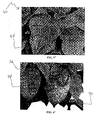
- FIG. 1 is a color photograph taken from above a live poinsettia having a gold-colored coating applied to its leaves.
- FIG. 1 ′ is a black and white rendering of the photograph of FIG. 1
- FIG. 1A is an enlarged photograph of the poinsettia of FIG. 1 .
- FIG. 1A ′ is a black and white rendering of the photograph of FIG. 1A .
- FIG. 2 is a color photograph taken from the side of a sprayer suitable for applying the coating shown in FIGS. 1 and 1 A.
- FIG. 2 ′ is a black and white rendering of the photograph of FIG. 2 .
- FIG. 2A is a color photograph of a compressor suitable for driving the sprayer of FIG. 2 .
- FIG. 2A ′ is a black and white rendering of the photograph of FIG. 2A .
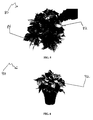
- FIG. 3 is an enlarged color photograph taken from above of a live poinsettia having a glossy coating applied to its leaves.
- FIG. 3 ′ is a black and white rendering of the photograph of FIG. 3 .
- FIG. 4 is an enlarged color photograph taken from above of a live poinsettia having gold glitter on its leaves.
- FIG. 4 ′ is a black and white rendering of the photograph of FIG. 4 .
- FIG. 5 is a color photograph a live poinsettia having a blue coating on its leaves.
- FIG. 5 ′ is a black and white rendering of the photograph of FIG. 5 .
- FIG. 6 is a color photograph a live poinsettia having artificial snow on its leaves.
- FIG. 6 ′ is a black and white rendering of the photograph of FIG. 6 .
- Water-based coating systems are disclosed that are useful for the coloration of plants, e.g., live potted plants having leaves and/or flowers, and plant materials, such as dried flowers or grasses.
- the water-based coatings can provide color, gloss and/or texture unusual to the native plant or plant material without harming the plant or reducing its life span.
- decorated plants e.g., live potted plants, or plant materials
- a decorative coating e.g., a crosslinked coating, extending from a portion of the flower and/or leaf.
- the coating is applied as a water-based material.
- the water-based material e.g., a water-based paint
- a coating material that includes, e.g., a crosslinker and, optionally, a colorant.
- the crosslinker can provide durability and/or colorfastness to the coating, preventing color leaching and/or migration of color, e.g., when the plant is watered, or when the plant is placed in a moist or humid environment.
- the crosslinker cure under ambient conditions so that the water-based material can be applied to a living plant.
- ambient cure is not a requirement.
- the water-based material can provide gloss and/or texture unusual to the native plant or plant material. In combination with the colorant, the water-based material can provide beautiful, often powerful, coloration, gloss and/or texture to the plant or plant materials.
- ambient conditions can include a temperature from about 55° F. (12.8° C.) to about 105° F. (40.6° C.), or from about 60° F. (15.6° C.) to about 95° F. (35.0° C.).
- ambient conditions can also include relative humidity between about 25 percent and about 98 percent, e.g., between about 40 percent and about 95 percent.
- crosslinkers examples include acrylic resins, styrene-acrylic resins, vinyl-acrylic resins, polyvinyl acetate-based resins, polyurethanes, polymers having unreacted isocyanate groups, alkoxysilanes, polycarbodiimides, nitrile latexes, SBR resins, activated vinyl polymers, such as vinyl ethers, vinyl carbonates and vinyl carbamates.
- Preferred crosslinkers are self-crosslinking, meaning that they do not require a catalyst, such as an acid, base or metal, to initiate the crosslinking process.
- An example of an ambient cure crosslinker is the vinyl-acrylic copolymer Paranol® VA 903, a self-crosslinking material, having a low glass transition temperature.
- Paranol® VA 903 is available from Para-Chem Southern, Inc. of Simpsonville, S.C.
- Other examples of ambient cure crosslinkers are polycarbodiimides, such as those described in Watson, U.S. Pat. No. 4,977,219.
- the coating material can include a polymeric material having a glass transition temperature of less than about 50° F. (10.0° C.), e.g., less than about 25° F. ( ⁇ 3.9° C.), less than about 0° F. ( ⁇ 17.8° C.), less than about ⁇ 20° F. ( ⁇ 28.9° C.), or even less than ⁇ 45° F. ( ⁇ 42.8° C.).
- Having a low glass transition temperature material in the formulation provides an adhesive coating on the plant or plant material that is, at least initially, tacky or sticky to the touch. Such a coating allows for application of secondary color and/or texture substances, such as glitter or artificial snow.
- the low glass transition temperature material can be the crosslinker itself and/or another material different from the crosslinker. When the crosslinker is the low glass transition temperature material or one of the low glass transition temperature materials, the glass transition temperature of the crosslinker is measured in the crosslinked and/or uncrosslinked state.
- low glass transition temperature materials include acrylic resins, styrene-acrylic resins, vinyl-acrylic resins, polyvinyl acetate-based resins, polyurethanes, nitrile latexes, SBR resins, poly(vinyl ethers), poly(vinyl carbonates), poly(vinyl carbamates), polyolefins, polyesters and polyamides.
- An example of a low glass transition temperature polymeric material is the styrene-acrylic latex material Paranol® JRB-AU-40, which is available from Para-Chem Southern, Inc. of Simpsonville, S.C. Paranol® VA 903 (discussed above) is an example of a low glass transition temperature crosslinking material.
- the coating material comprises a binder and/or an anti-wicking material, which can provide colorfastness to the coating prior to set up, resisting color leaching and/or migration of color.
- binders or anti-wicking materials include polyesters, such as carboxylated polyesters, polyamides, acrylics, such as poly(acrylic acid) or salts thereof, natural gums, such as guar and locust bean gum, starches and alginates.
- Specific examples of binders and/or anti-wicking materials include Polytech PT 630, a carboxylated polyester available from PolyTech, Inc. (PTI) of Greer, S.C. or Superclear 320N, a poly(acrylic acid)-based liquid binding aid available from Cognis Corporation, Cincinnati, Ohio.
- Formulations can include one or more emulsifiers and/or wetting agents, such as non-ionic, anionic, cationic or zwitterionic emulsifiers or wetting agents.
- emulsifiers or wetting agents help in dispersing pigments and dyes in the formulations, and can also aid in compatibilizing disparate materials, such as hydrophobic and hydrophilic materials.
- non-ionic emulsifiers and wetting agents examples include: PEG-20 glyceryl stearate, stearic acid, palmitic acid, PEG-7 hydrogenated castor oil, polyglyceryl-2, dipolyhydroxystearate, ceteareth-12, ceteareth-20, ceteareth-30, PEG-60 hydrogenated castor oil, oleth-30, polyethylene glycol monostearate, and cetearyl alcohol.
- Still other non-ionic emulsifiers and wetting agents include secondary alcohol ethoxylates, octylphenol ethoxylates, nonylphenol ethoxylates, and alkylamine ethoxylates. Suitable emulsifiers and wetting agents are available from Cognis Corporation and Dow Chemical, e.g., under the tradenames TRITONTM and TERGITOLTM.
- Ionic emulsifiers can be anionic, cationic or zwitterionic.
- anionic emulsifiers include sodium cetearyl sulfate, alkyl diphenyl oxide disulfonates, chelating anionic surfactants and sulfosuccinates.
- cationic emulsifiers include quaternary ammonium salts.
- Biocides include mixtures of benzylated chlorophenols (Nipacide 10), ortho-benzyl-para-chlorophenol (Nipacide BCP or Chlorophen), alkaline solutions of benzisothiazolinone (Nipacide BIT 10), 1,3,5-tris(2-hydroxyethyl)-hexahydro-s-triazine (Nipacide BK) and mixture of chlorinated xylenols (Nipacide CX 140). Suitable biocides are available from Clariant and Aspen Solutions.
- Any formulation described herein can include a rheology modifier and/or a thickener to provide a desired viscosity.
- rheology modifiers include poly(acrylic acid)-based modifiers, such as polyelectrolytes derived from poly(acrylic acid).
- a specific example is Duraconc CSP, available from Premier Color.
- the colorant can be dye and/or a pigment.
- the dye can be a fluorescent or a non-fluorescent material.
- the pigment can be or can include a fluorescent, a pearlescent and/or metallic or metal-simulating pigment.
- the provided plant is a live plant, such as a potted plant, or a tree.
- the live plant can be aloe, azalea, amaryllis, American ivy, bird-of-paradise, buttercup, cactus, day lily, Easter lily, hyacinth, hydrangea, ivy, jasmine, morning glory, oleander, poinsettia or Virginia creeper.
- a decorated poinsettia 10 has red leaves 12 and flowers 14 that have a vibrant, bronze-colored coating 16 extending therefrom.
- the particular coating shown was applied as a water-based material that included a coating material including an ambient cure crosslinker and the bronze colorant, making the crosslinked coating 16 colorfast and durable.
- the decorated plants or plant materials are made by providing the plant or the plant material, and then applying the water-based formulation that includes the coating material, and, optionally, the desired colorant, to the plant or plant material.
- the formulations can be sprayed onto the plant using a commercial compressed air sprayer.
- a crosslinker is employed in the formulation, it is desirable that the formulation have a working pot life long enough to allow for application of the formulation and clean up of the application device, e.g., sprayer.
- the decorated poinsettia 10 of FIGS. 1 and 1 A can be made by adding the bronze formulation to the liquids container 30 of a spray gun 32 having a nozzle 34 through which the formulation is ejected, a pressure gauge 36 for adjusting ejection pressure, and a coupler 38 to connect the spray gun to the compressor system 40 .
- the compressor system 40 includes an electric motor 42 for compressing the air and a compressed air chamber 44 for containing the compressed air. Because of its weight, it is desirable that the compressor system 40 also include a set of wheels 50 for moving the compressor system 40 to a desired spraying location.
- any commercial sprayer driven by a 15-30 gallon air compressor that can deliver at least 6.3 SCFM of air at 40 PSI is suitable for the spraying the formulations.
- a Pro Value Model #2308-PV sprayer which is available from Advance Auto parts, it is desirable to use a pressure setting of from about 18-22 PSI, since settings above 22 PSI can permanently distort the plant or plant material.
- Sonostat 28 B (also known as Standapol HS) is a nonionic emulsifier, available from Cognis Corporation, Cincinnati, Ohio.
- Polytech PT 630 is a carboxylated liquid polyester binding aid material having about 30 percent by weight solids in water.
- PT 630 is a hazy amber liquid, typically having pH from about 6.5 to about 6.8 and specific gravity of about 1.05.
- PT 630 is available from PolyTech, Inc. (PTI) of Greer, S.C.
- Superclear 320N a poly(acrylic acid)-based liquid binding aid having about 11 percent by weight solids in water.
- 320N has nominal pH of about 4.8, nominal specific gravity of about 1.04, and nominal viscosity of 2,250 cps.
- 320N is available from Cognis Corporation, Cincinnati, Ohio.
- Paranol® JRB-AU-40 is a low glass transition temperature styrene-acrylic latex material that is self-crosslinking under ambient conditions, and is provided as a solution/dispersion in water.
- the milky white liquid typically includes 46.5 percent by weight solids, has pH of about 8.7 and specific gravity of 1.04.
- JRB-AU-40 is available from Para-Chem Southern, Inc. of Simpsonville, S.C.
- Paranol® VA 903 is a low glass transition temperature, self-crosslinking vinyl acrylic copolymer that crosslinks readily under ambient conditions, provided as a solution/dispersion in water.
- the milky white liquid includes about 50 percent by weight solids, has viscosity of 100 cps (LVT #2 @ 60 ), pH of 4.5, bulk density of 8.7 pounds/gallon and surface tension of 40.5 dynes/cm.
- the material has a glass transition temperature of about ⁇ 20° C.
- VA-903 is available from Para-Chem Southern, Inc. of Simpsonville, S.C.
- Duraconc CSP is a poly(acrylic acid)-based rheology modifier available from Premier Color.
- Antiwick AWC is an anti-wicking agent available from Pioneer Chemical, Inc.
- Nipacide BK is a low toxicity biocide described chemically as a water-born concentrate of 1,3,5-tris(2-hydroxyethyl)-hexahydro-s-triazine. It is a broad-spectrum biocide that protects against fungi and bacteria. It is available from Aspen Solutions.
- Pioneer Pearl Base NA is a printing paste that includes emulsifiers and wetting agents. It includes about 10 percent solids and has pH of about 9-11. It is available from Pioneer Chemical, Inc. of Greenville, S.C.
- Pioneer Super Pearl D-A is a pearlescent printing paste for pearlescent colors that includes emulsifiers and wetting agents. It includes about 13 percent solids and has pH of about 9-11. It is available from Pioneer Chemical, Inc. of Greenville, S.C.
- Example 1-24 the water-based materials were prepared by mixing the components of each Example in the order listed (top to bottom) with the aid of a shear mixer, e.g., available from Eppenbach or Hill.
- a shear mixer e.g., available from Eppenbach or Hill.
- the water-based materials were prepared by first making the RTS Base A (see Example 31) with the aid of a shear mixer, and then combining the RTS Base A with the remaining components of each Example in the order listed (top to bottom).
- the RTS Base of each Example and the remaining components were mixed with the aid of a shear mixer.
- the making of the RTS Base A first allows one to weigh out one product, rather than six or more products, making the process faster and more accurate, especially when making small batches of color, e.g. 1-10 gallons of material.
- One of the desired RTS colors from above is selected and stirred or shaken prior to pouring into the liquids container of a spray gun.
- Any commercial sprayer that is driven by a 15-30 gallon air compressor, and that can deliver at least 6.3 SCFM of air at 40 PSI is suitable for applying the RTS colors.
- An commercial sprayer that is suitable is Pro Value Model #2308-PV, which is available from Advance Auto parts.
- the plant is sprayed to a desired coverage level. Glitter and/or artificial snow may then be applied within 2-5 minutes of spraying (if desired). If the glitter is not applied shortly after the color, a solution of glue, e.g., a 20 weight percent solution of Paranol® VA-903, can be applied, followed by the glitter and/or artificial snow.
- glue e.g., a 20 weight percent solution of Paranol® VA-903
- a decorated poinsettia 60 has red leaves, some of which have a clear, glossy coating 64 .
- Such a coating can provide an icy look that can invoke feelings associated with winter and cold weather.
- glitter 70 in the form of material pieces 72 and 74 of various sizes and degrees of agglomeration can be applied to the glossy coating 64 ( FIG. 3 ) while the glossy coating is still wet and/or tacky.
- a decorated poinsettia 80 having white or pale leaves 82 can be vibrantly blue-hued with a coating 84 applied in a formulation that includes a vibrant blue color.
- artificial snow material 92 in the form of material pieces of various sizes and degrees of agglomeration can be applied to the glossy coating 64 ( FIG. 3 ) while the glossy coating is still wet and/or tacky. This can provide a festive holiday feeling.
Landscapes
- Life Sciences & Earth Sciences (AREA)
- Environmental Sciences (AREA)
- Biodiversity & Conservation Biology (AREA)
- Ecology (AREA)
- Forests & Forestry (AREA)
- Engineering & Computer Science (AREA)
- Wood Science & Technology (AREA)
- Botany (AREA)
- Paints Or Removers (AREA)
Abstract
Decorated plants or plant materials are disclosed that include a flower and/or leaf with a crosslinked decorative coating extending from a portion of the flower and/or leaf. The coating is applied as a water-based material and imparts color, texture and/or gloss unusual to the native plant or plant material. Methods are also described.
Description
- This application claims priority from U.S. Provisional Patent Application Ser. No. 60/846,963, filed on Sep. 25, 2006, which is incorporated herein by reference in its entirety.
- This disclosure relates to decorative coatings for plants and plant materials.
- Cut flowers and live plants can add color, drama and beauty to their surroundings. For these reasons, cut flowers and live plants are often used ceremonially, for example, at weddings, birthdays and anniversaries. The type of cut flower or live plant used to add color, drama or beauty can be synonymous with the season. For example, lilies are often used in the spring, pumpkins and gourds are often used in the fall, especially around Halloween, and live poinsettias are often used in the winter, especially during the holiday season.
- Generally, decorated plants or plant materials are disclosed that include decorative coatings.
- In one aspect, the disclosure features decorated plants or plant materials that include a flower and/or leaf and a crosslinked decorative coating extending from a portion of the flower and/or leaf. The decorative coating has color, texture and/or gloss unusual to the native plants or plant materials, and it is applied as a water-based material.
- In another aspect, the disclosure features decorated plants or plant materials that include a flower and/or leaf and a crosslinked decorative coating extending from a portion of the flower and/or leaf. The crosslinked coating is formed from a water-based material that includes a coating material with an ambient cure crosslinker and, optionally, a colorant.
- In some implementations, the ambient cure crosslinker has glass transition temperature of less than about 50° F. (10.0° C.), measured in the crosslinked and/or uncrosslinked state. If desired, the coating material can include one or more other polymeric materials different from the crosslinker that have a glass transition temperature of less than about 50° F. (10.0° C.).
- The coating material can include, e.g., a binder or anti-wicking material.
- If desired, the decorated plants or plant materials can further include one or more other materials, such as glitter and/or artificial snow, extending from the crosslinked coating.
- In another aspect, the disclosure features methods of decorating plants or plant materials. The methods include providing a plant or a plant material; and applying a water-based material that includes a coating material and, optionally, a colorant to the plant or plant material.
- The coating material can, e.g., include a crosslinker, e.g., that cures under ambient conditions. For example, the ambient conditions can include temperatures from about 55° F. (12.8° C.) to about 105° F. (40.6° C.), or temperatures from about 60° F. (15.6° C.) to about 95° F. (35.0° C.). In the alternative, or in addition to, the ambient conditions can include relative humidity of between about 25 percent and about 98 percent.
- The coating material can also include, e.g., a polymeric material having a glass transition temperature of less than about 50° F. (10.0° C.), e.g., less than about 25° F. (−3.9° C.), or less than about 0° F. (−17.8° C.). In some implementations, the crosslinker, e.g., that cures under ambient conditions, has a glass transition temperature of less than about 50° F. (10° C.), which is measured in the crosslinked and/or uncrosslinked state.
- The coating material can, e.g., include a binder.
- The coating material can, e.g., include an anti-wicking material.
- The water-based material can, e.g., include an emulsifier, e.g., a non-ionic emulsifier.
- The water-based material can, e.g., include a biocidal material.
- If desired, the water-based material can, e.g., include a rheology modifier, e.g., to provide a desired viscosity.
- When the water-based material includes the colorant, the colorant can be, e.g., a dye, such as a fluorescent material and/or a pigment, such as a pearlescent and/or metallic or metal-simulating pigment.
- The methods can, e.g., further include applying another material, such as glitter and/or artificial snow, to the plant or plant material.
- The provided plant can be a live plant, such as a potted plant, or a tree. For example, the live plant can be aloe, azalea, amaryllis, American ivy, bird-of-paradise, buttercup, cactus, day lily, Easter lily, hyacinth, hydrangea, ivy, jasmine, morning glory, oleander, poinsettia or Virginia creeper.
- Implementations and/or aspects may include one or more of the following advantages. The coatings permit decoration of plants or plant materials with colors, gloss and/or texture that is unusual to the native plant or plant materials. The colors, gloss and/or textures can be exciting and can “wow” a viewer with enhanced “bling bling”. The colors are colorfast and generally do not run or wash off, for example, when the live plant is fed or watered. The coatings can be applied in a single step, often reducing time-consuming and costly multiple steps. The coatings can allow for unusual branding and marketing opportunities. For example, plants can be decorated according to the season or holiday. For example, plants can be painted orange and/or black during Halloween or can be painted with festive colors and/or textures that simulate snow and/or ice in the winter. The coatings can be applied to a variety of plants, including chrysanthemums, roses and poinsettias, without harming the plants. The coatings themselves and the solutions in which they are applied generally include little or no organic solvent, such as ethanol, isopropanol or ketones. The coatings and the solutions in which they are applied are relatively non-toxic. The solutions in which the coatings are applied are sprayed using standard paint spraying guns and compressed air.
- “Ambient conditions” as used herein refers to nominal, earth-bound conditions at temperatures in the range of about 45-120° F.
- A “water-based material” as used herein is one that does not have more than about 5 percent by weight volatile organic compounds (VOCs).
- Unless otherwise defined, all technical and scientific terms used herein have the same meaning as commonly understood by one of ordinary skill in the art to which this invention belongs. Although methods and materials similar or equivalent to those described herein can be used in the practice or testing of the present invention, suitable methods and materials are described below. All publications, patent applications, patents, and other references mentioned herein are incorporated by reference herein in their entirety. In case of conflict, the present specification, including definitions, will control. In addition, the materials, methods, and examples are illustrative only and not intended to be limiting. Other features and advantages of the invention will be apparent from the following detailed description, and from the claims.
- The patent or application file contains at least one drawing executed in color. Copies of this patent application publication with color drawing(s) will be provided by the Office upon request and payment of the necessary fee.
-
FIG. 1 is a color photograph taken from above a live poinsettia having a gold-colored coating applied to its leaves. -
FIG. 1 ′ is a black and white rendering of the photograph ofFIG. 1 -
FIG. 1A is an enlarged photograph of the poinsettia ofFIG. 1 . -
FIG. 1A ′ is a black and white rendering of the photograph ofFIG. 1A . -
FIG. 2 is a color photograph taken from the side of a sprayer suitable for applying the coating shown inFIGS. 1 and 1 A. -
FIG. 2 ′ is a black and white rendering of the photograph ofFIG. 2 . -
FIG. 2A is a color photograph of a compressor suitable for driving the sprayer ofFIG. 2 . -
FIG. 2A ′ is a black and white rendering of the photograph ofFIG. 2A . -
FIG. 3 is an enlarged color photograph taken from above of a live poinsettia having a glossy coating applied to its leaves. -
FIG. 3 ′ is a black and white rendering of the photograph ofFIG. 3 . -
FIG. 4 is an enlarged color photograph taken from above of a live poinsettia having gold glitter on its leaves. -
FIG. 4 ′ is a black and white rendering of the photograph ofFIG. 4 . -
FIG. 5 is a color photograph a live poinsettia having a blue coating on its leaves. -
FIG. 5 ′ is a black and white rendering of the photograph ofFIG. 5 . -
FIG. 6 is a color photograph a live poinsettia having artificial snow on its leaves. -
FIG. 6 ′ is a black and white rendering of the photograph ofFIG. 6 . - Water-based coating systems are disclosed that are useful for the coloration of plants, e.g., live potted plants having leaves and/or flowers, and plant materials, such as dried flowers or grasses. The water-based coatings can provide color, gloss and/or texture unusual to the native plant or plant material without harming the plant or reducing its life span.
- Generally, decorated plants, e.g., live potted plants, or plant materials are provided that include a flower and/or leaf and a decorative coating, e.g., a crosslinked coating, extending from a portion of the flower and/or leaf. The coating is applied as a water-based material.
- In some implementations, the water-based material, e.g., a water-based paint, includes a coating material that includes, e.g., a crosslinker and, optionally, a colorant. The crosslinker can provide durability and/or colorfastness to the coating, preventing color leaching and/or migration of color, e.g., when the plant is watered, or when the plant is placed in a moist or humid environment. Often it is desirable that the crosslinker cure under ambient conditions so that the water-based material can be applied to a living plant. However, if the water-based material is applied to non-living plant material, ambient cure is not a requirement. Without a colorant, the water-based material can provide gloss and/or texture unusual to the native plant or plant material. In combination with the colorant, the water-based material can provide beautiful, often powerful, coloration, gloss and/or texture to the plant or plant materials.
- In implementations in which the coating material includes a crosslinker that cures under ambient conditions, ambient conditions can include a temperature from about 55° F. (12.8° C.) to about 105° F. (40.6° C.), or from about 60° F. (15.6° C.) to about 95° F. (35.0° C.). In addition, ambient conditions can also include relative humidity between about 25 percent and about 98 percent, e.g., between about 40 percent and about 95 percent.
- Examples of crosslinkers include acrylic resins, styrene-acrylic resins, vinyl-acrylic resins, polyvinyl acetate-based resins, polyurethanes, polymers having unreacted isocyanate groups, alkoxysilanes, polycarbodiimides, nitrile latexes, SBR resins, activated vinyl polymers, such as vinyl ethers, vinyl carbonates and vinyl carbamates. Preferred crosslinkers are self-crosslinking, meaning that they do not require a catalyst, such as an acid, base or metal, to initiate the crosslinking process. An example of an ambient cure crosslinker is the vinyl-acrylic copolymer Paranol® VA 903, a self-crosslinking material, having a low glass transition temperature. Paranol® VA 903 is available from Para-Chem Southern, Inc. of Simpsonville, S.C. Other examples of ambient cure crosslinkers are polycarbodiimides, such as those described in Watson, U.S. Pat. No. 4,977,219.
- The coating material can include a polymeric material having a glass transition temperature of less than about 50° F. (10.0° C.), e.g., less than about 25° F. (−3.9° C.), less than about 0° F. (−17.8° C.), less than about −20° F. (−28.9° C.), or even less than −45° F. (−42.8° C.). Having a low glass transition temperature material in the formulation provides an adhesive coating on the plant or plant material that is, at least initially, tacky or sticky to the touch. Such a coating allows for application of secondary color and/or texture substances, such as glitter or artificial snow. The low glass transition temperature material can be the crosslinker itself and/or another material different from the crosslinker. When the crosslinker is the low glass transition temperature material or one of the low glass transition temperature materials, the glass transition temperature of the crosslinker is measured in the crosslinked and/or uncrosslinked state.
- Examples of low glass transition temperature materials include acrylic resins, styrene-acrylic resins, vinyl-acrylic resins, polyvinyl acetate-based resins, polyurethanes, nitrile latexes, SBR resins, poly(vinyl ethers), poly(vinyl carbonates), poly(vinyl carbamates), polyolefins, polyesters and polyamides. An example of a low glass transition temperature polymeric material is the styrene-acrylic latex material Paranol® JRB-AU-40, which is available from Para-Chem Southern, Inc. of Simpsonville, S.C. Paranol® VA 903 (discussed above) is an example of a low glass transition temperature crosslinking material.
- In some implementations, the coating material comprises a binder and/or an anti-wicking material, which can provide colorfastness to the coating prior to set up, resisting color leaching and/or migration of color. Examples of binders or anti-wicking materials include polyesters, such as carboxylated polyesters, polyamides, acrylics, such as poly(acrylic acid) or salts thereof, natural gums, such as guar and locust bean gum, starches and alginates. Specific examples of binders and/or anti-wicking materials include Polytech PT 630, a carboxylated polyester available from PolyTech, Inc. (PTI) of Greer, S.C. or Superclear 320N, a poly(acrylic acid)-based liquid binding aid available from Cognis Corporation, Cincinnati, Ohio.
- Formulations can include one or more emulsifiers and/or wetting agents, such as non-ionic, anionic, cationic or zwitterionic emulsifiers or wetting agents. Generally, emulsifiers or wetting agents help in dispersing pigments and dyes in the formulations, and can also aid in compatibilizing disparate materials, such as hydrophobic and hydrophilic materials.
- Examples of non-ionic emulsifiers and wetting agents include: PEG-20 glyceryl stearate, stearic acid, palmitic acid, PEG-7 hydrogenated castor oil, polyglyceryl-2, dipolyhydroxystearate, ceteareth-12, ceteareth-20, ceteareth-30, PEG-60 hydrogenated castor oil, oleth-30, polyethylene glycol monostearate, and cetearyl alcohol. Still other non-ionic emulsifiers and wetting agents include secondary alcohol ethoxylates, octylphenol ethoxylates, nonylphenol ethoxylates, and alkylamine ethoxylates. Suitable emulsifiers and wetting agents are available from Cognis Corporation and Dow Chemical, e.g., under the tradenames TRITON™ and TERGITOL™.
- Ionic emulsifiers can be anionic, cationic or zwitterionic. Examples of anionic emulsifiers include sodium cetearyl sulfate, alkyl diphenyl oxide disulfonates, chelating anionic surfactants and sulfosuccinates. Examples of cationic emulsifiers include quaternary ammonium salts.
- Specific emulsification packages are included in Pioneer Pearl Base NA and Pioneer Super Pearl D-A pearlescent printing pastes, available from Pioneer Chemical, Inc. of Greenville, S.C.
- Any formulation described herein can include one or more biocidal materials to prevent fungal and bacterial overgrowth in the formulations. Biocides include mixtures of benzylated chlorophenols (Nipacide 10), ortho-benzyl-para-chlorophenol (Nipacide BCP or Chlorophen), alkaline solutions of benzisothiazolinone (Nipacide BIT 10), 1,3,5-tris(2-hydroxyethyl)-hexahydro-s-triazine (Nipacide BK) and mixture of chlorinated xylenols (Nipacide CX 140). Suitable biocides are available from Clariant and Aspen Solutions.
- Any formulation described herein can include a rheology modifier and/or a thickener to provide a desired viscosity. Examples of rheology modifiers include poly(acrylic acid)-based modifiers, such as polyelectrolytes derived from poly(acrylic acid). A specific example is Duraconc CSP, available from Premier Color.
- When the formulation includes a colorant, the colorant can be dye and/or a pigment. For example, the dye can be a fluorescent or a non-fluorescent material. The pigment can be or can include a fluorescent, a pearlescent and/or metallic or metal-simulating pigment.
- In some implementations, the provided plant is a live plant, such as a potted plant, or a tree. For example, the live plant can be aloe, azalea, amaryllis, American ivy, bird-of-paradise, buttercup, cactus, day lily, Easter lily, hyacinth, hydrangea, ivy, jasmine, morning glory, oleander, poinsettia or Virginia creeper.
- As an example, and by reference to
FIGS. 1 and 1 A, a decoratedpoinsettia 10 hasred leaves 12 andflowers 14 that have a vibrant, bronze-colored coating 16 extending therefrom. The particular coating shown was applied as a water-based material that included a coating material including an ambient cure crosslinker and the bronze colorant, making thecrosslinked coating 16 colorfast and durable. - Generally, the decorated plants or plant materials are made by providing the plant or the plant material, and then applying the water-based formulation that includes the coating material, and, optionally, the desired colorant, to the plant or plant material. For example, the formulations can be sprayed onto the plant using a commercial compressed air sprayer. When a crosslinker is employed in the formulation, it is desirable that the formulation have a working pot life long enough to allow for application of the formulation and clean up of the application device, e.g., sprayer.
- As an example, and by reference to
FIGS. 2 and 2 A, the decoratedpoinsettia 10 ofFIGS. 1 and 1 A can be made by adding the bronze formulation to theliquids container 30 of a spray gun 32 having anozzle 34 through which the formulation is ejected, apressure gauge 36 for adjusting ejection pressure, and acoupler 38 to connect the spray gun to thecompressor system 40. Thecompressor system 40 includes anelectric motor 42 for compressing the air and acompressed air chamber 44 for containing the compressed air. Because of its weight, it is desirable that thecompressor system 40 also include a set ofwheels 50 for moving thecompressor system 40 to a desired spraying location. Generally, any commercial sprayer driven by a 15-30 gallon air compressor, that can deliver at least 6.3 SCFM of air at 40 PSI is suitable for the spraying the formulations. In embodiments in which a Pro Value Model #2308-PV sprayer is used, which is available from Advance Auto parts, it is desirable to use a pressure setting of from about 18-22 PSI, since settings above 22 PSI can permanently distort the plant or plant material. - The disclosure is further described in the following examples, which do not limit its scope.
- Sonostat 28 B (also known as Standapol HS) is a nonionic emulsifier, available from Cognis Corporation, Cincinnati, Ohio.
- Polytech PT 630 is a carboxylated liquid polyester binding aid material having about 30 percent by weight solids in water. PT 630 is a hazy amber liquid, typically having pH from about 6.5 to about 6.8 and specific gravity of about 1.05. PT 630 is available from PolyTech, Inc. (PTI) of Greer, S.C.
- Superclear 320N a poly(acrylic acid)-based liquid binding aid having about 11 percent by weight solids in water. 320N has nominal pH of about 4.8, nominal specific gravity of about 1.04, and nominal viscosity of 2,250 cps. 320N is available from Cognis Corporation, Cincinnati, Ohio.
- Paranol® JRB-AU-40 is a low glass transition temperature styrene-acrylic latex material that is self-crosslinking under ambient conditions, and is provided as a solution/dispersion in water. The milky white liquid typically includes 46.5 percent by weight solids, has pH of about 8.7 and specific gravity of 1.04. JRB-AU-40 is available from Para-Chem Southern, Inc. of Simpsonville, S.C.
- Paranol® VA 903 is a low glass transition temperature, self-crosslinking vinyl acrylic copolymer that crosslinks readily under ambient conditions, provided as a solution/dispersion in water. The milky white liquid includes about 50 percent by weight solids, has viscosity of 100 cps (LVT #2 @60), pH of 4.5, bulk density of 8.7 pounds/gallon and surface tension of 40.5 dynes/cm. The material has a glass transition temperature of about −20° C. VA-903 is available from Para-Chem Southern, Inc. of Simpsonville, S.C.
- Duraconc CSP is a poly(acrylic acid)-based rheology modifier available from Premier Color. Antiwick AWC is an anti-wicking agent available from Pioneer Chemical, Inc. Nipacide BK is a low toxicity biocide described chemically as a water-born concentrate of 1,3,5-tris(2-hydroxyethyl)-hexahydro-s-triazine. It is a broad-spectrum biocide that protects against fungi and bacteria. It is available from Aspen Solutions. Pioneer Pearl Base NA is a printing paste that includes emulsifiers and wetting agents. It includes about 10 percent solids and has pH of about 9-11. It is available from Pioneer Chemical, Inc. of Greenville, S.C. Pioneer Super Pearl D-A is a pearlescent printing paste for pearlescent colors that includes emulsifiers and wetting agents. It includes about 13 percent solids and has pH of about 9-11. It is available from Pioneer Chemical, Inc. of Greenville, S.C.
- Merlin brand name pigments and dyes are available from Engelhard; Ecobrite from Eastern; OBT from Organic; Heucotech from Heucotech; Ajack from Solution Dispersion; Premier from Premier Color; Quinacridone from Spectra; Imperon from Dystar; and Colanyl from Clariant.
- All materials in the Examples were used as received.
- In Examples 1-24, the water-based materials were prepared by mixing the components of each Example in the order listed (top to bottom) with the aid of a shear mixer, e.g., available from Eppenbach or Hill.
- In Examples 25-30, the water-based materials were prepared by first making the RTS Base A (see Example 31) with the aid of a shear mixer, and then combining the RTS Base A with the remaining components of each Example in the order listed (top to bottom). The RTS Base of each Example and the remaining components were mixed with the aid of a shear mixer. The making of the RTS Base A first allows one to weigh out one product, rather than six or more products, making the process faster and more accurate, especially when making small batches of color, e.g. 1-10 gallons of material.
-
Percent (By Weight) Water 3.30 Sonostat 28B 3.00 Polytech PT 630 20.00 Superclear 320 N 8.00 Paranol ® JRB-AU40 10.00 Paranol ® VA 903 20.00 Duraconc CSP 0.50 Antiwick AWC 1.00 Nipacide BK 0.20 Merlin Magnapearl 3100 20.00 Ecobrite Royal Blue R7658 12.00 OBT Pig. Violet 4BN 7026 2.00 Total 100.00 -
Percent (By Weight) Water 12.30 Sonostat 28B 3.00 Polytech PT 630 20.00 Superclear 320 N 8.00 Paranol ® JRB-AU40 10.00 Paranol ® VA 903 20.00 Duraconc CSP 0.50 Antiwick AWC 1.00 Nipacide BK 0.20 Merlin Magnapearl 3100 20.00 Heucotech Blue BS 9593 5.00 Total 100.00 -
Percent (By Weight) Water 22.30 Sonostat 28B 3.00 Polytech PT 630 20.00 Superclear 320 N 8.00 Paranol ® JRB-AU40 10.00 Paranol ® VA 903 20.00 Duraconc CSP 0.50 Antiwick AWC 1.00 Nipacide BK 0.20 Merlin Super Bronze 9250Z 15.00 Total 100.00 -
Percent (By Weight) Water 22.30 Sonostat 28B 3.00 Polytech PT 630 20.00 Superclear 320 N 8.00 Paranol ® JRB-AU40 10.00 Paranol ® VA 903 20.00 Duraconc CSP 0.50 Antiwick AWC 1.00 Nipacide BK 0.20 Merlin Card Silver BN 001 15.00 Total 100.00 -
Percent (By Weight) Water 22.30 Sonostat 28B 3.00 Polytech PT 630 20.00 Superclear 320 N 8.00 Paranol ® JRB-AU40 10.0 Paranol ® VA 903 20.00 Duraconc CSP 0.50 Antiwick AWC 1.00 Nipacide BK 0.20 Merlin Super Copper 9350Z 15.00 Total 100.00 -
Percent (By Weight) Water 22.30 Sonostat 28B 3.00 Polytech PT 630 20.00 Superclear 320 N 8.00 Paranol ® JRB-AU40 10.0 Paranol ® VA 903 20.00 Duraconc CSP 0.50 Antiwick AWC 1.00 Nipacide BK 0.20 Merlin Card Gold BN 002 14.00 Merlin Super Bronze 9250Z 1.00 Total 100.00 -
Percent (By Weight) Water 13.30 Sonostat 28B 3.00 Polytech PT 630 20.00 Superclear 320 N 8.00 Paranol ® JRB-AU40 10.00 Paranol ® VA 903 20.00 Duraconc CSP 0.50 Antiwick AWC 1.00 Nipacide BK 0.20 Merlin Magnapearl 3100 20.00 Premier Blue 2GS-MT 4.00 Total 100.00 -
Percent (By Weight) Water 2.30 Sonostat 28B 3.00 Polytech PT 630 20.00 Superclear 320 N 8.00 Paranol ® JRB-AU40 10.00 Paranol ® VA 903 20.00 Duraconc CSP 0.50 Antiwick AWC 1.00 Nipacide BK 0.20 Merlin Magnapearl 3100 20.00 OBT Magenta LDN 6151 15.00 Total 100.00 -
Percent (By Weight) Water 13.30 Sonostat 28B 3.00 Polytech PT 630 20.00 Superclear 320 N 8.00 Paranol ® JRB-AU40 10.00 Paranol ® VA 903 20.00 Duraconc CSP 0.50 Antiwick AWC 1.00 Nipacide BK 0.20 Merlin Magnapearl 3100 20.00 OBT Pig. Violet 4BN 7026 4.00 Total 100.00 -
Percent (By Weight) Water 17.30 Sonostat 28B 3.00 Polytech PT 630 20.00 Superclear 320 N 8.00 Paranol ® JRB-AU40 10.0 Paranol ® VA 903 20.00 Duraconc CSP 0.50 Antiwick AWC 1.00 Nipacide BK 0.20 Merlin Magnapearl 3100 20.00 Total 100.00 -
Percent (By Weight) Water 7.30 Sonostat 28B 3.00 Polytech PT 630 20.00 Superclear 320 N 8.00 Parnol ® JRB-AU40 10.0 Paranol ® VA 903 20.00 Duraconc CSP 0.50 Antiwick AWC 1.00 Nipacide BK 0.20 Premier White R 30.00 Total 100.00 -
Percent (By Weight) Water 25.30 Sonostat 28B 3.00 Polytech PT 630 20.00 Superclear 320 N 8.00 Paranol ® JRB-AU40 10.00 Paranol ® VA 903 20.00 Duraconc CSP 0.50 Antiwick AWC 1.00 Nipacide BK 0.20 OBT Pig. Scarlet YDC 6019 12.00 Total 100.00 -
Percent (By Weight) Water 25.30 Sonostat 28B 3.00 Polytech PT 630 20.00 Superclear 320 N 8.00 Paranol ® JRB-AU40 10.0 Paranol ® VA 903 20.00 Duraconc CSP 0.50 Antiwick AWC 1.00 Nipacide BK 0.20 OBT Pig. Violet 4BN 7026 12.00 Total 100.00 -
Percent (By Weight) Water 22.30 Sonostat 28B 3.00 Polytech PT 630 20.00 Superclear 320 N 8.00 Paranol ® JRB-AU40 10.0 Paranol ® VA 903 20.00 Duraconc CSP 0.50 Antiwick AWC 1.00 Nipacide BK 0.20 Ajack Black 451 NG 12.00 OBT Pig. Violet 4BN 7026 3.00 Total 100.00 -
Percent (By Weight) Water 24.80 Sonostat 28B 3.00 Polytech PT 630 20.00 Superclear 320 N 8.00 Paranol ® JRB-AU40 10.0 Paranol ® VA 903 20.00 Duraconc CSP 0.50 Antiwick AWC 1.00 Nipacide BK 0.20 Ecobrite Royal Blue R7658 10.00 Premier Blue 2GS-MT 2.50 Total 100.00 -
Percent (By Weight) Water 27.30 Sonostat 28B 3.00 Polytech PT 630 20.00 Superclear 320 N 8.00 Paranol ® JRB-AU40 10.00 Paranol ® VA 903 20.00 Duraconc CSP 0.50 Antiwick AWC 1.00 Nipacide BK 0.20 Heucotech Blue BS 9593 10.00 Total 100.00 -
Percent (By Weight) Water 27.30 Sonostat 28B 3.00 Polytech PT 630 20.00 Superclear 320 N 8.00 Paranol ® JRB-AU40 10.00 Paranol ® VA 903 20.00 Duraconc CSP 0.50 Antiwick AWC 1.00 Nipacide BK 0.20 Premier Blue 2GS-MT 10.00 Total 100.00 -
Percent (By Weight) Water 27.30 Sonostat 28B 3.00 Polytech PT 630 20.00 Superclear 320 N 8.00 Paranol ® JRB-AU40 10.00 Paranol ® VA 903 20.00 Duraconc CSP 0.50 Antiwick AWC 1.00 Nipacide BK 0.20 OBT Pig Orange 01/030 10.00 Total 100.00 -
Percent (By Weight) Water 25.30 Sonostat 28B 3.00 Polytech PT 630 20.00 Superclear 320 N 8.00 Paranol ® JRB-AU40 10.00 Paranol ® VA 903 20.00 Duraconc CSP 0.50 Antiwick AWC 1.00 Nipacide BK 0.20 Quinacridone Magenta BY-18 12.00 Total 100.00 -
Percent (By Weight) Water 25.30 Sonostat 28B 3.00 Polytech PT 630 20.00 Superclear 320 N 8.00 Paranol ® JRB-AU40 10.00 Paranol ® VA 903 20.00 Duraconc CSP 0.50 Antiwick AWC 1.00 Nipacide BK 0.20 Imperon Red FGC-85 12.00 Total 100.00 -
Percent (By Weight) Water 27.30 Sonostat 28B 3.00 Polytech PT 630 20.00 Superclear 320 N 8.00 Paranol ® JRB-AU40 10.00 Paranol ® VA 903 20.00 Duraconc CSP 0.50 Antiwick AWC 1.00 Nipacide BK 0.20 Spectra Violet 19 30% Disp. 10.00 Total 100.00 -
Percent (By Weight) Water 25.30 Sonostat 28B 3.00 Polytech PT 630 20.00 Superclear 320 N 8.00 Paranol ® JRB-AU40 10.00 Paranol ® VA 903 20.00 Duraconc CSP 0.50 Antiwick AWC 1.00 Nipacide BK 0.20 OBT Pig. Yellow RN 9013 12.00 Total 100.00 -
Percent (By Weight) Water 24.55 Sonostat 28B 3.00 Polytech PT 630 20.00 Superclear 320 N 8.00 Paranol ® JRB-AU40 10.00 Paranol ® VA 903 20.00 Duraconc CSP 0.50 Antiwick AWC 1.00 Nipacide BK 0.20 Colanyl Red F5RK-A 10.00 Premier Blue 2GS-MT 1.25 OBT Pig. Brown FEO-SP2 1.50 Total 100.00 -
Percent Water 25.30 Sonostat 28B 3.00 Polytech PT 630 20.00 Superclear 320 N 8.00 Paranol ® JRB-AU40 10.00 Paranol ® VA 903 20.00 Duraconc CSP 0.50 Antiwick AWC 1.00 Nipacide BK 0.20 Premier Yellow 1787 12.00 Total 100.00 -
Percent (By Weight) Water 5.00 RTS Base (see Example 31 for RTS Base) 45.00 Pioneer Pearl Base NA 40.00 OBT Pigment Orange 01/030 (Orange 16) 10.00 Total 100.00 -
Percent (By Weight) Water 28.80 RTS Base (see Example 31 for RTS Base) 61.20 OBT Pigment Orange 01/030 (Orange 16) 10.00 Total 100.00 -
Percent (By Weight) Water 4.00 RTS Base (see Example 31 for RTS Base) 45.00 Pioneer Pigment White 740 Liquid 45.00 Quinacridone Magenta BY-18 6.00 Total 100.00 -
Percent (By Weight) Water 3.80 RTS Base (see Example 31 for RTS Base) 61.20 Mearlin Megapearl 3100 Color 760 20.00 OBT Pigment Magenta LDN6141 15.00 Total 100.00 -
Percent (By Weight) Water 10.00 RTS Base (see Example 31 for RTS Base) 45.00 Pioneer Pearl Base NA 30.00 Mearlin Super Bronze 9250Z 15.00 Total 100.00 -
Percent (By Weight) Water 23.80 RTS Base (see Example 31 for RTS Base) 61.20 Mearlin Super Bronze 9250Z 15.00 Total 100.00 -
Percent (By Weight) Sonostat 28B 4.90 Polytech PT 630 32.68 Superclear 320 N 13.10 Paranol ® JRB-AU40 16.34 Paranol ® VA 903 32.68 Nipacide BK 0.30 Total 100.00 - One of the desired RTS colors from above is selected and stirred or shaken prior to pouring into the liquids container of a spray gun. Any commercial sprayer that is driven by a 15-30 gallon air compressor, and that can deliver at least 6.3 SCFM of air at 40 PSI is suitable for applying the RTS colors. An commercial sprayer that is suitable is Pro Value Model #2308-PV, which is available from Advance Auto parts.
- The plant is sprayed to a desired coverage level. Glitter and/or artificial snow may then be applied within 2-5 minutes of spraying (if desired). If the glitter is not applied shortly after the color, a solution of glue, e.g., a 20 weight percent solution of Paranol® VA-903, can be applied, followed by the glitter and/or artificial snow.
- A number of implementations have been described. Nevertheless, it will be understood that various modifications may be made without departing from the spirit and scope of the disclosure.
- For example, while some of the coatings impart colors to plants or plant materials, some coatings are clear, providing a glossy appearance. For example, and by reference to
FIG. 3 , a decorated poinsettia 60 has red leaves, some of which have a clear,glossy coating 64. Such a coating can provide an icy look that can invoke feelings associated with winter and cold weather. - If desired, as shown in
FIG. 4 ,glitter 70 in the form ofmaterial pieces FIG. 3 ) while the glossy coating is still wet and/or tacky. - Referring now to
FIG. 5 , a decoratedpoinsettia 80 having white orpale leaves 82 can be vibrantly blue-hued with acoating 84 applied in a formulation that includes a vibrant blue color. - If desired, as shown in
FIG. 6 ,artificial snow material 92 in the form of material pieces of various sizes and degrees of agglomeration can be applied to the glossy coating 64 (FIG. 3 ) while the glossy coating is still wet and/or tacky. This can provide a festive holiday feeling. - Other implementations are within the scope of the following claims.
Claims (29)
1. A method of decorating a plant or plant material, the method comprising:
providing a plant or a plant material; and
applying a water-based material comprising a coating material and, optionally, a colorant to the plant or plant material.
2. The method of claim 1 , wherein the coating material comprises a crosslinker that cures under ambient conditions.
3. The method of claim 2 , wherein ambient conditions include temperatures from about 55° F. (12.8° C.) to about 105° F. (40.6° C.).
4. The method of claim 3 , wherein ambient conditions include temperatures from 60° F. (15.6° C.) to about 95° F. (35.0° C.).
5. The method of any one of claim 2 , wherein ambient conditions include relative humidity of between about 25 percent and about 98 percent.
6. The method of claim 1 , wherein the coating material comprises a polymeric material having a glass transition temperature of less than about 50° F. (10.0° C.).
7. The method of claim 6 , wherein the coating material comprises a polymeric material having glass transition temperature of less than about 25° F. (−3.9° C.).
8. The method of claim 7 , wherein the coating material comprises a polymeric material having glass transition temperature of less than about 0° F. (−17.8° C.).
9. The method of claim 6 , wherein the crosslinker that cures under ambient conditions has the glass transition temperature of less than about 50° F. (10° C.) in the crosslinked and/or uncrosslinked state.
10. The method of claim 1 , wherein the coating material comprises a binder, such as a carboxylated liquid polyester.
11. The method of claim 1 , wherein the coating material comprises a anti-wicking material.
12. The method of claim 1 , wherein the water-based material comprises a emulsifier.
13. The method of claim 12 , wherein the emulsifier comprises a non-ionic emulsifier.
14. The method of claim 1 , wherein the water-based material comprises a biocidal material.
15. The method of claim 1 , wherein the water-based material comprises a rheology modifier.
16. The method of claim 1 , wherein the water-based material comprises the colorant, and wherein the colorant comprises a dye.
17. The method of claim 16 , wherein the dye comprises a fluorescent material.
18. The method of claim 1 , wherein the water-based material comprises the colorant, and wherein the colorant comprises a pigment.
19. The method of claim 18 , wherein the pigment comprises a pearlescent and/or metallic or metal-simulating pigment.
20. The method of claim 1 , further comprising applying glitter and/or artificial snow to the plant or plant material.
21. The method of claim 1 , wherein the provided plant is a live plant, such as a potted plant, or a tree.
22. The method of claim 21 , wherein the live plant is selected from the group consisting of aloe, azalea, amaryllis, American ivy, bird-of-paradise, buttercup, cactus, day lily, Easter lily, hyacinth, hydrangea, ivy, jasmine, morning glory, oleander, poinsettia, and Virginia creeper.
23. A decorated plant or plant material comprising:
a flower and/or leaf; and
a crosslinked decorative coating extending from a portion of the flower and/or leaf,
wherein the crosslinked coating is applied as a water-based material comprising a coating material comprising an ambient cure crosslinker and, optionally, a colorant.
24. The decorated plant or plant material of claim 23 , wherein the ambient cure crosslinker has glass transition temperature of less than about 50° F. (10.0° C.) in the crosslinked and/or uncrosslinked state.
25. The decorated plant or plant material of claim 24 , wherein the coating material comprises polymeric material different from the crosslinker that has a glass transition temperature of less than about 50° F. (10.0° C.).
26. The decorated plant or plant material of claim 23 , wherein the coating material comprises a binder.
27. The decorated plant or plant material of claims 23, wherein the coating material comprises a anti-wicking material.
28. The decorated plant or plant material of claims 23, further comprising glitter and/or artificial snow extending from the crosslinked coating.
29. A decorated plant or plant material comprising a flower and/or leaf, and a crosslinked decorative coating having color, texture and/or gloss unusual to the native plant or plant material extending from a portion of the flower and/or leaf, wherein the crosslinked coating is applied as a water-based material.
Priority Applications (1)
| Application Number | Priority Date | Filing Date | Title |
|---|---|---|---|
| US11/903,731 US20080098649A1 (en) | 2006-09-25 | 2007-09-24 | Decorative coatings for plants and plant materials |
Applications Claiming Priority (2)
| Application Number | Priority Date | Filing Date | Title |
|---|---|---|---|
| US84696306P | 2006-09-25 | 2006-09-25 | |
| US11/903,731 US20080098649A1 (en) | 2006-09-25 | 2007-09-24 | Decorative coatings for plants and plant materials |
Publications (1)
| Publication Number | Publication Date |
|---|---|
| US20080098649A1 true US20080098649A1 (en) | 2008-05-01 |
Family
ID=39328455
Family Applications (1)
| Application Number | Title | Priority Date | Filing Date |
|---|---|---|---|
| US11/903,731 Abandoned US20080098649A1 (en) | 2006-09-25 | 2007-09-24 | Decorative coatings for plants and plant materials |
Country Status (1)
| Country | Link |
|---|---|
| US (1) | US20080098649A1 (en) |
Cited By (5)
| Publication number | Priority date | Publication date | Assignee | Title |
|---|---|---|---|---|
| ES2344186A1 (en) * | 2010-02-22 | 2010-08-19 | Isabel Del Rio Rodriguez | Procedure for the decoration of cactus and product obtained. (Machine-translation by Google Translate, not legally binding) |
| CN104920016A (en) * | 2015-05-26 | 2015-09-23 | 江苏农林职业技术学院 | Hydrangea macrophylla color change method |
| CN105474939A (en) * | 2015-11-02 | 2016-04-13 | 云南金大康农业科技有限公司 | Plantation method of aloe |
| CN105557351A (en) * | 2015-12-20 | 2016-05-11 | 嘉善联合农业科技有限公司 | Azalea flowering period pre-regulating method |
| CN106332668A (en) * | 2016-08-29 | 2017-01-18 | 邱泽文 | Dyeing method of colorful echinopsis tubiflora |
Citations (6)
| Publication number | Priority date | Publication date | Assignee | Title |
|---|---|---|---|---|
| US3669691A (en) * | 1970-01-13 | 1972-06-13 | Nat Patent Dev Corp | Produce coating |
| US4783342A (en) * | 1987-07-31 | 1988-11-08 | Walter Polovina | Polymeric film coating method for protecting plants, vegetables and fruit from drought |
| US4977219A (en) * | 1983-02-24 | 1990-12-11 | Union Carbide Chemicals And Plastics Company, Inc. | Low temperature crosslinking of water-borne resins |
| US5439982A (en) * | 1993-06-23 | 1995-08-08 | Union Carbide Chemical & Plastic Technology Corporation | Reactive polymers having pendant flexible side chains prepared from ethylenically unsaturated carbodiimides |
| US20030145518A1 (en) * | 2000-06-09 | 2003-08-07 | The Procter & Gamble Company | Agricultural items and agricultural methods comprising biodegradable copolymers |
| US20040161542A1 (en) * | 2003-02-13 | 2004-08-19 | Ziemann Otto Carl | Aqueous composition and method of preparing nonyellowing coating therefrom |
-
2007
- 2007-09-24 US US11/903,731 patent/US20080098649A1/en not_active Abandoned
Patent Citations (6)
| Publication number | Priority date | Publication date | Assignee | Title |
|---|---|---|---|---|
| US3669691A (en) * | 1970-01-13 | 1972-06-13 | Nat Patent Dev Corp | Produce coating |
| US4977219A (en) * | 1983-02-24 | 1990-12-11 | Union Carbide Chemicals And Plastics Company, Inc. | Low temperature crosslinking of water-borne resins |
| US4783342A (en) * | 1987-07-31 | 1988-11-08 | Walter Polovina | Polymeric film coating method for protecting plants, vegetables and fruit from drought |
| US5439982A (en) * | 1993-06-23 | 1995-08-08 | Union Carbide Chemical & Plastic Technology Corporation | Reactive polymers having pendant flexible side chains prepared from ethylenically unsaturated carbodiimides |
| US20030145518A1 (en) * | 2000-06-09 | 2003-08-07 | The Procter & Gamble Company | Agricultural items and agricultural methods comprising biodegradable copolymers |
| US20040161542A1 (en) * | 2003-02-13 | 2004-08-19 | Ziemann Otto Carl | Aqueous composition and method of preparing nonyellowing coating therefrom |
Cited By (6)
| Publication number | Priority date | Publication date | Assignee | Title |
|---|---|---|---|---|
| ES2344186A1 (en) * | 2010-02-22 | 2010-08-19 | Isabel Del Rio Rodriguez | Procedure for the decoration of cactus and product obtained. (Machine-translation by Google Translate, not legally binding) |
| ES2344186B1 (en) * | 2010-02-22 | 2011-06-02 | Isabel Del Rio Rodriguez | PROCEDURE FOR DECORATION OF CACTUS AND PRODUCT OBTAINED. |
| CN104920016A (en) * | 2015-05-26 | 2015-09-23 | 江苏农林职业技术学院 | Hydrangea macrophylla color change method |
| CN105474939A (en) * | 2015-11-02 | 2016-04-13 | 云南金大康农业科技有限公司 | Plantation method of aloe |
| CN105557351A (en) * | 2015-12-20 | 2016-05-11 | 嘉善联合农业科技有限公司 | Azalea flowering period pre-regulating method |
| CN106332668A (en) * | 2016-08-29 | 2017-01-18 | 邱泽文 | Dyeing method of colorful echinopsis tubiflora |
Similar Documents
| Publication | Publication Date | Title |
|---|---|---|
| US4932156A (en) | Method of controlling the color of mulch | |
| RU2485761C2 (en) | Composition for painting flower petals, method of painting with such composition and plants with flower petals painted using it | |
| EP1273219A1 (en) | Sparkling envelopes | |
| US3692557A (en) | Process for producing an antique finish | |
| EP0999736B3 (en) | Removable protective coating | |
| US5480480A (en) | Aqueous multicolor paint | |
| CN101117484B (en) | Metal-pseudo fluorine-carbon paint for building exterior wall and method for making same | |
| AU6555294A (en) | Polyurethane-based aqueous multicolor paint | |
| US5437719A (en) | Polyurethane-based aqueous multicolor paint | |
| WO2008156261A2 (en) | Dye composition for petal of flower, dyeing method for petal of flower using the same and flower with petal dyed thereby | |
| US20170240749A1 (en) | Watercolour Paint Compositions and Their Use | |
| US20080155895A1 (en) | Decorative coatings for plants and plant materials | |
| CN111548727A (en) | Environment-friendly light-curable wood lacquer and preparation method thereof | |
| US5215793A (en) | Artificial foliage and method of forming same | |
| DE29919224U1 (en) | Mulch | |
| KR100982134B1 (en) | Coating liquid composition for spraying the petals of plants, method of coating the petals of plants using the same and petals of the plants coated by the same | |
| DE2804668A1 (en) | SURFACE COATING METHOD WITH A MATERIAL COATING USING HEAT | |
| CN107603392A (en) | A kind of aqueous, environmental protective discoloration art coatings for automatically adjusting temperature and preparation method thereof | |
| CN109203821A (en) | A kind of multi-functional and environmentally friendly imitation wood decorative panel and its production method | |
| GB2176493A (en) | Composition for restoring the colour of grass | |
| CN109181562A (en) | A kind of multi-functional and environmentally friendly imitation wood decorating film and its production method | |
| CN110122106A (en) | Colored greenbelt spraying operating vehicle | |
| KR101011909B1 (en) | How to manufacture a luminous flower with a long shelf life and whose color changes with temperature / light quantity | |
| CN109796874A (en) | Road surface coating and preparation method thereof | |
| DE19743454C2 (en) | Process for coloring living plants |
Legal Events
| Date | Code | Title | Description |
|---|---|---|---|
| AS | Assignment |
Owner name: ORGANIC DYESTUFFS CORPORATION, RHODE ISLAND Free format text: ASSIGNMENT OF ASSIGNORS INTEREST;ASSIGNOR:SYLVIA, MICHAEL;REEL/FRAME:021421/0292 Effective date: 20080818 |
|
| STCB | Information on status: application discontinuation |
Free format text: ABANDONED -- FAILURE TO RESPOND TO AN OFFICE ACTION |