US20030191269A1 - Process for preparing organic silicate polymer - Google Patents
Process for preparing organic silicate polymer Download PDFInfo
- Publication number
- US20030191269A1 US20030191269A1 US10/380,812 US38081203A US2003191269A1 US 20030191269 A1 US20030191269 A1 US 20030191269A1 US 38081203 A US38081203 A US 38081203A US 2003191269 A1 US2003191269 A1 US 2003191269A1
- Authority
- US
- United States
- Prior art keywords
- organic
- preparing
- silicate polymer
- organic silicate
- solvent
- Prior art date
- Legal status (The legal status is an assumption and is not a legal conclusion. Google has not performed a legal analysis and makes no representation as to the accuracy of the status listed.)
- Granted
Links
Images

Classifications
-
- C—CHEMISTRY; METALLURGY
- C08—ORGANIC MACROMOLECULAR COMPOUNDS; THEIR PREPARATION OR CHEMICAL WORKING-UP; COMPOSITIONS BASED THEREON
- C08G—MACROMOLECULAR COMPOUNDS OBTAINED OTHERWISE THAN BY REACTIONS ONLY INVOLVING UNSATURATED CARBON-TO-CARBON BONDS
- C08G77/00—Macromolecular compounds obtained by reactions forming a linkage containing silicon with or without sulfur, nitrogen, oxygen or carbon in the main chain of the macromolecule
- C08G77/02—Polysilicates
-
- C—CHEMISTRY; METALLURGY
- C08—ORGANIC MACROMOLECULAR COMPOUNDS; THEIR PREPARATION OR CHEMICAL WORKING-UP; COMPOSITIONS BASED THEREON
- C08G—MACROMOLECULAR COMPOUNDS OBTAINED OTHERWISE THAN BY REACTIONS ONLY INVOLVING UNSATURATED CARBON-TO-CARBON BONDS
- C08G77/00—Macromolecular compounds obtained by reactions forming a linkage containing silicon with or without sulfur, nitrogen, oxygen or carbon in the main chain of the macromolecule
- C08G77/48—Macromolecular compounds obtained by reactions forming a linkage containing silicon with or without sulfur, nitrogen, oxygen or carbon in the main chain of the macromolecule in which at least two but not all the silicon atoms are connected by linkages other than oxygen atoms
- C08G77/50—Macromolecular compounds obtained by reactions forming a linkage containing silicon with or without sulfur, nitrogen, oxygen or carbon in the main chain of the macromolecule in which at least two but not all the silicon atoms are connected by linkages other than oxygen atoms by carbon linkages
-
- C—CHEMISTRY; METALLURGY
- C08—ORGANIC MACROMOLECULAR COMPOUNDS; THEIR PREPARATION OR CHEMICAL WORKING-UP; COMPOSITIONS BASED THEREON
- C08G—MACROMOLECULAR COMPOUNDS OBTAINED OTHERWISE THAN BY REACTIONS ONLY INVOLVING UNSATURATED CARBON-TO-CARBON BONDS
- C08G77/00—Macromolecular compounds obtained by reactions forming a linkage containing silicon with or without sulfur, nitrogen, oxygen or carbon in the main chain of the macromolecule
- C08G77/04—Polysiloxanes
- C08G77/06—Preparatory processes
-
- C—CHEMISTRY; METALLURGY
- C09—DYES; PAINTS; POLISHES; NATURAL RESINS; ADHESIVES; COMPOSITIONS NOT OTHERWISE PROVIDED FOR; APPLICATIONS OF MATERIALS NOT OTHERWISE PROVIDED FOR
- C09D—COATING COMPOSITIONS, e.g. PAINTS, VARNISHES OR LACQUERS; FILLING PASTES; CHEMICAL PAINT OR INK REMOVERS; INKS; CORRECTING FLUIDS; WOODSTAINS; PASTES OR SOLIDS FOR COLOURING OR PRINTING; USE OF MATERIALS THEREFOR
- C09D183/00—Coating compositions based on macromolecular compounds obtained by reactions forming in the main chain of the macromolecule a linkage containing silicon, with or without sulfur, nitrogen, oxygen, or carbon only; Coating compositions based on derivatives of such polymers
- C09D183/04—Polysiloxanes
-
- Y—GENERAL TAGGING OF NEW TECHNOLOGICAL DEVELOPMENTS; GENERAL TAGGING OF CROSS-SECTIONAL TECHNOLOGIES SPANNING OVER SEVERAL SECTIONS OF THE IPC; TECHNICAL SUBJECTS COVERED BY FORMER USPC CROSS-REFERENCE ART COLLECTIONS [XRACs] AND DIGESTS
- Y10—TECHNICAL SUBJECTS COVERED BY FORMER USPC
- Y10T—TECHNICAL SUBJECTS COVERED BY FORMER US CLASSIFICATION
- Y10T428/00—Stock material or miscellaneous articles
- Y10T428/31504—Composite [nonstructural laminate]
- Y10T428/31652—Of asbestos
- Y10T428/31663—As siloxane, silicone or silane
Definitions
- the present invention relates to a low dielectric material essential for a next generation electric device such as a semiconductor device, with a high density and high performance. More specifically, the present invention relates to: a process for preparing an organic silicate polymer that is thermally stable and has good mechanical and crack resistance properties, and a coating composition for forming a low dielectric insulating film; and a process for preparing a low dielectric insulating film using the organic silicate polymer prepared according to the process, and an electric device comprising the low dielectric insulating film prepared according to the process.
- the interlayer dielectric material used in semiconductor integrated circuit devices is predominantly SiO 2 , which is generally formed using chemical vapor deposition (CVD) to withstand various processing operations associated with the conditions under which a dielectric is formed.
- the dielectric constant of silicon thermal oxidation films which have the lowest dielectric constant, is on the order of 4.0.
- the introduction of fluorine atoms in large amounts decreases the chemical and thermal stability, so the dielectric constant achieved in actual practice is on the order of 3.5.
- Fluorinated oxides can provide an immediate near-term solution and a shift to new types of insulating materials with sub-3 dielectric constant may be required.
- One class of candidates is organic polymers, some of which have a dielectric constant of less than 3.0. Incorporating fluorine into such organic polymers is known to further lower the dielectric constant.
- Most organic polymers do not, however, posses the physico-chemical properties required for on-chip semiconductor insulation, particularly thermal stability and mechanical properties (sufficient to withstand back-end line-fabrication temperatures within the range of 400 ⁇ 450° C.). Few organic polymers are stable at temperature greater than 450° C. They also have a low glass transition temperature and thus elasticity thereof remarkably decreases at high temperatures, and they have a very high linear expansion coefficient. Since the temperature rises to 450° C. during semiconductor IC integration and packaging processes, the resulting low thermal stability and elasticity and high linear expansion coefficient can deteriorate the reliability of the devices.
- organic SOG Spin On Glass
- organic SOG Spin On Glass
- organic silicate polymers such as polyalkylsilsesquioxane for use as a protective film, an interlayer insulating film, etc. for electronic parts or semiconductor elements.
- General methods for the synthesis of organic silicate polymers are to hydrolyze and condense a silane precursor in a single organic solvent or mixture of organic solvents.
- the structure of organic silicate polymers has been reported as a random structure, ladder structure, cage structure, and partial cage structure.
- the polysilsesquioxane which contains 1.5 oxygen atoms per silicon atom has a high level of cage or ladder structure and poor mechanical properties.
- polymethylsilsesquioxane typically has poor mechanical properties. It experiences crack formation during processing unless the film is very thin (often ⁇ 1 ⁇ m).
- the present invention is made to solve these problems of the prior art, and it is an object of the present invention to provide a process for preparing an organic silicate polymer that can form an insulating thin film having excellent crack resistance and mechanical strength.
- the present invention provides a process for preparing an organic silicate polymer comprising:
- the organic silicate polymer in accordance of the present invention has a high level of unexpected network structure.
- the process further can comprise:
- step b) an aging step of adding organic solvents to the polymerization product obtained in the step a) and heating the product to age it.
- the present invention also provides a coating composition for forming a low dielectric insulating film comprising:
- the coating composition further can comprise:
- the present invention further provides a process for preparing a low dielectric insulating film comprising steps of:
- the present invention further provides an electric device comprising the low dielectric insulating film prepared according to the above process.
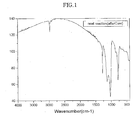
- FIG. 1 is a Fourier Transform Infrared (FTIR) spectrum of the film produced by Example 2.
- FIG. 2 is a Fourier Transform Infrared (FTIR) spectrum of the film produced by Comparative Example 2.
- a process for preparing an organic silicate polymer of the present invention comprises the step of direct hydrolysis and condensation reaction by mixing an organic silane compound and water in the absence of an organic solvent.
- the present invention provides a process for preparing an organic silicate polymer, and a low dielectric resin composition useful as (e.g.) a resin composition capable of forming a uniform dielectric film.
- a resin composition capable of forming a uniform dielectric film.
- the mechanical strength of as-cured films formed in accordance with present invention is enhanced as compared to as-cured films formed from previously known organic silicate polymers that have high levels of a cage and/or ladder structure.
- the process of the present invention for preparing the organic silicate polymer may comprise a direct hydrolysis and condensation reaction step (neat reaction), the step of mixing and reacting the organic silane compound with water to hydrolyze and condense the organic silane compound taking place in the absence of homogenizing organic solvents, and thereby growing the organic silicate polymer to a specific molecular weight.
- a homogenizing solvent may be added to the organic silicate polymer prepared by the neat reaction to stop the reaction, or to grow the polymer further to a desired molecular weight.
- the process of the present invention may comprise any methods comprising direct hydrolysis and condensation reactions in the absence of an organic solvent, i.e. a composition for an organic silicate polymer may be prepared by the following methods (i) to (iv).
- the process of the present invention can additionally comprise:
- the organic silane compound used in said process for preparing the organic silicate polymer includes, although it is not limited to, an organic silane monomer comprising silicon, carbon, oxygen and hydrogen, and organic silane oligomers that can be prepared therefrom.
- the silane monomer or oligomer can be used alone or in combination at a specific ratio thereof to prepare the organic silicate polymer.
- a compound selected from a group consisting of a compound represented by the following Chemical Formula 1 and a compound represented by the following Chemical Formula 2 can be used alone or in combination at a specific ratio thereof to prepare the organic silicate polymer.
- R 1 m R 2 n SiX 4-m-n (where each of R 1 and R 2 which may be the same or different and each is a non-hydrolysable group, X is a hydrolysable group, and m and n are integers of from 0 to 3 satisfying 0 ⁇ m+n ⁇ 3).
- R 3 p Y 3-p Si-M-SiR 4 q Z 3-q (where each of R 3 and R 4 which may be the same or different and each is a non-hydrolysable group, Y and Z which may be the same or different and each is an hydrolysable group, and p and q are integers of from 0 to 2).
- each of R 1 and R 2 is independently: hydrogen; alkyl such as methyl, ethyl, propyl, butyl, or others; fluorine-containing alkyl group such as trifluoromethyl, trifluoropropyl or others; alkenyl such as vinyl, allyl, or others; or aryl such as phenyl.
- the alkyl groups may be linear or branched.
- X is independently: hydrolysable group; halogen such as chlorine; alkoxy such as methoxy; ethoxy or propoxy; acyloxy such as acetoxy; or others.
- R 1 , R 2 and X are independently hydrogen, alkyl or phenyl, and X is an alkoxy group.
- Chemical Formula 1 include tetraalkoxysilane, monoalkyltrialkoxysilane, dialkyldiakoxysilane, trialkylmonoalkoxysilane, trialkoxysilane, dialkoxysilane, monoalkyldialkoxysilane, a mixture thereof, etc.
- each of R 3 and R 4 is independently: hydrogen; alkyl such as methyl, ethyl, propyl, butyl, or others; fluorine-containing alkyl group such as trifluoromethyl, trifluoropropyl or others; alkenyl such as vinyl or allyl; or aryl such as phenyl.
- Y and Z are independently: hydrolysable group; halogen such as chlorine; alkoxy such as methoxy, ethoxy or propoxy; acyloxy such as acetoxy; or others.
- Organic bridged unit M may be alkylene or phenylene, preferably methylene, ethylene, propylene or phenylene, or a mixture thereof.
- Solvents that may be used for a hydrolysis and condensation or for film coating include any agent or mixture of agents that will dissolve the composition to form a homogeneous liquid mixture of the Chemical Formula 1 and 2.
- the solvent used in the present invention includes aliphatic hydrocarbon solvents such as: n-pentane, isopentane, n-hexane, isohexane, cyclohexane and the like; aromatic hydrocarbon solvents such as benzene, toluene, xylene, alkyl benzene, naphthalene and the like; alcohol solvents such as methanol, ethanol, n-propanol, isopropanol, n-butanol, t-butanol, cyclohexanol, methylcyclohexanol and the like; ether solvents such as tetrahydrofuran, 2-dimethyl dioxane, ethylene glycol monomethyl ether, ethylene glycol mono
- Solvents that have been used in hydrolysis and condensation are completely removed after the reactions to obtain organic silicate polymer as an oil or a powder, which can be dissolved in a film-forming solvent and used, or the organic solvent that has been used in hydrolysis and condensation can be directly used for film-forming.
- an acid or a base may be used for the hydrolysis and condensation of silane compounds.
- an acid for the direct hydrolysis and condensation reaction (neat reaction) to control reaction rate
- both acid and base catalysts may be used for the hydrolysis and condensation of silane in the presence of solvent.
- Examples of the catalysts used in the present invention include: inorganic acids such as hydrochloric acid, hydrofluoric acid, nitric acid, sulfuric acid, phosphoric acid and the like; organic acids such as formic acid, acetic acid, propionic acid, butanoic acid, pentanoic acid, oxalic acid, maleic acid, malonic acid, butyric acid, sulfonic acid, phthalic acid, furamic acid, citric acid, tartaric acid and the like; inorganic bases such as ammonia, sodium hydroxide, potassium hydroxide, calcium hydroxide and the like; and organic bases such as pyridine, piperazine, piperidine, choline, dimethylamine, diethylamine, triethylamine, monoethanolamine, diethanolamine, triethanolamine, monomethyidiethanolamine, dimethylmonoethanolamine and the like.
- inorganic acids such as hydrochloric acid, hydrofluoric acid, nitric acid, sulfuric
- catalysts such as metal chelate compounds and salt catalysts may also be used in this invention.
- the amount of catalyst used in general is 0.001 to 1 mole, preferably 0.5 moles or less, per mole of the sum of the silane compounds of the Chemical Formulae 1 and 2.
- reaction temperature when the product is made to have a desired molecular weight.
- the temperature may preferably be not higher than the boiling point of the organic solvent used, and may preferably be 0° C. to 100° C. in order to control the molecular weight of the resultant hydrolyzed product.
- reaction time at the time of hydrolysis and condensation, and the reaction may be completed at the time the product reaches a stated molecular weight. It is usually preferred to set the molecular weight of the final product within a range of from 500 to 1,000,000 as a weight-average molecular weight.
- the molecular weight of a hydrolyzed condensate of the Chemical Formula 1 or a mixture of Chemical Formula 1 and 2 is less than 500, it may be difficult to form a uniform coating film, and if the molecular weight of a hydrolyzed condensate is greater than 1,000,000, the condensate polymer may become insoluble.
- the aging-step which is conducted by adding organic solvents to the organic silicate polymer and heating to age it, is preferably conducted at a temperature of 15 to 100° C.
- the present invention's coating composition for forming an insulating film is prepared by dissolving the organic silicate polymers made by the above processes with organic solvents.
- various additives such as an agent for improving the adhesion to a substrate, a stabilizer for long-term storage, and a surfactant for uniform film coating, may be added to the composition of the present invention before forming a coating film in such an amount as will not impair the effects of the present invention.
- a method for forming a coating film on a substrate it is preferred to employ a method wherein the composition of the present invention containing a solvent is coated on the substrate, followed by heating and drying to evaporate the solvent.
- the resin composition is applied to a substrate by methods known in the art such as spin coating, dip coating, spray coating, flow coating, screen printing or others.
- the coating method may suitably be selected depending on the shape of the substrate to be coated, the required film thickness, etc.
- a spin coating method is preferred, since the in-plane distribution of the film thickness will thereby be uniform.
- the solid content concentration in the solution, as the sum of the resin composition of Chemical Formula 1 and Chemical Formula 2 may suitably be selected from the viewpoint of the desired viscosity of the solution or the thickness of the coating film, within the range whereby the solid content dissolves.
- a curing step is required after coating to evaporate the solvent and to further crosslink the partially hydrolyzed co-condensate of mixture of the resin Formulae 1 and 2.
- the heating may be conducted as a single-step process or a step-wise process.
- a final curing at a temperature of preferably from 300 to 500° C., more preferably from 400 to 500° C., is required.
- Unreacted alkoxysilyl groups or silanol groups will be a factor for increasing the dielectric constant of the coating film by themselves, and they may further be a water absorbing site, which causes an increase of the dielectric constant by water. Accordingly, it is desirable not to let them remain in the coating film.
- the coating produced by the method herein are used on any substrate such as a metal or a ceramic but it is particularly useful on an electronic substrate intended for use in manufacture of an electronic device, examples of which include: an integrated circuit (IC) device such as a memory IC, logic IC or MMIC (monolithic microwave IC); a hybrid IC; an optical device such as a light emitting diode or a charge-coupled device; a display device such as a liquid crystal display device and the like.
- IC integrated circuit
- MMIC monolithic microwave IC
- hybrid IC such as a light emitting diode or a charge-coupled device
- a display device such as a liquid crystal display device and the like.
- the coating film formed by the present invention is applied as a buffer coating film, a passivation film, or an interlayer dielectric film for an electronic device, whereby it is possible to attain high performance in (e.g.) reducing the time of signal propagation delay of a device by virtue of excellent electrical properties such as a low dielectric constant and a high dielectric strength, and it is also possible to attain high reliability by virtue of excellent mechanical properties.
- the organic silicate polymer prepared by the present invention may be useful as a matrix resin composition for preparing porous dielectric films.
- a mixture of the organic silicate polymer prepared by the present invention and thermally labile polymers or organic small molecules may be spin-coated and thermally cured to initiate vitrification and decomposition of labile polymers or small molecules.
- the obtained powder was dried and cured by the same method as in Example 1 to prepare an insulating film.
- the obtained powder was dried and cured by the same method as in Example 1 to prepare an insulating film.
- the obtained powder was dried and cured by the same method as in Example 1 to prepare an insulating film.
- the obtained powder was dried and cured by the same method as in Example 1 to prepare an insulating film.
- the obtained powder was dried and cured by the same method as in Example 1 to prepare an insulating film.
- Molecular weights (weight average molecular weight: Mw) were obtained as relative molecular weight values using gel permeation chromatography (GPC) with polystyrene as a standard.
- the mechanical properties of thin films were measured by spin coating the polymers on 2 ⁇ 2 inch Si wafers and curing them at 420° C. for 1 hour under N 2 conditions. Hardness and modulus were measured using a Tribolndenter from Hysitron Inc. Crack resistance was measured by observing whether or not cracks were generated when thin films of 1 ⁇ m thickness were prepared under the same conditions as the above.
- FIG. 1 shows a FTIR of a film produced by Example 2 with a much stronger absorbance at about 1030 cm ⁇ 1 , confirming that the film prepared by Example 2 contains a higher level of long chain network Si—O—Si structures than the film produced by Comparative Example 2. Similar results have been observed in other examples.
- the insulating film prepared using the organic silicate polymer prepared according to the present invention therefore, has excellent mechanical strength and crack resistance.
Landscapes
- Chemical & Material Sciences (AREA)
- Chemical Kinetics & Catalysis (AREA)
- Organic Chemistry (AREA)
- Health & Medical Sciences (AREA)
- Medicinal Chemistry (AREA)
- Polymers & Plastics (AREA)
- Life Sciences & Earth Sciences (AREA)
- Engineering & Computer Science (AREA)
- Materials Engineering (AREA)
- Wood Science & Technology (AREA)
- Silicon Polymers (AREA)
- Formation Of Insulating Films (AREA)
- Polymers With Sulfur, Phosphorus Or Metals In The Main Chain (AREA)
- Organic Insulating Materials (AREA)
- Paints Or Removers (AREA)
Abstract
Description
- (a) Field of the Invention
- The present invention relates to a low dielectric material essential for a next generation electric device such as a semiconductor device, with a high density and high performance. More specifically, the present invention relates to: a process for preparing an organic silicate polymer that is thermally stable and has good mechanical and crack resistance properties, and a coating composition for forming a low dielectric insulating film; and a process for preparing a low dielectric insulating film using the organic silicate polymer prepared according to the process, and an electric device comprising the low dielectric insulating film prepared according to the process.
- (b) Description of the Related Art
- The semiconductor industry is moving toward increasing device complexity, requiring shrinking geometric dimensions and higher component integration with greater dimensional densities in integrated circuit devices, e.g. memory and logic chips. This has led to an increase in the number of wiring levels and a reduction in wiring pitch to increase the wiring density. Current leading-edge logic processors have 7-8 levels of high density interconnect, and interconnect line widths are scheduled to decrease to 0.1 μm around the year 2005.
- As device dimensions shrink to less than 0.25 μm, propagation delay, crosstalk noise, and power dissipation due to resistance-capacitance (RC) coupling become significant. The smaller line dimension increases the resistivity of metal wires, and the narrow intermetal spacing increases the capacitance between the metal wires. Thus, although the switching speed of devices will increase as the feature size decreases, the interconnect delay becomes the major fraction of the total delay and limits the overall chip performance. Accordingly, in order to prepare a chip having high speed, a conductor having a low resistance and a dielectric material having a low dielectric constant should be used. In addition, the use of low dielectric material can remarkably decrease the power dissipation and crosstalk noise.
- Recently, several semiconductor device manufacturers have put test products on the market that show improvements in their performance of 20% or more, using copper wiring with high electric conductivity instead of using the conventional aluminum wiring. A shift to use of new materials that exhibit low dielectric constant performance, for use in interconnects, has recently been undertaken. If the dielectric films between interconnect layers in integrated circuits can make use of these materials, the effect on operating speed will be the same as that which resulted with the switch from aluminum to copper technology. For instance, if the dielectric constant of the dielectric material is changed from 4.0 to about 2.5, IC operating speed will be improved by about 20%.
- The interlayer dielectric material used in semiconductor integrated circuit devices is predominantly SiO 2, which is generally formed using chemical vapor deposition (CVD) to withstand various processing operations associated with the conditions under which a dielectric is formed. The dielectric constant of silicon thermal oxidation films, which have the lowest dielectric constant, is on the order of 4.0. Attempts have been made to reduce the dielectric constant by introducing fluorine atoms into an inorganic film deposited by CVD. However, the introduction of fluorine atoms in large amounts decreases the chemical and thermal stability, so the dielectric constant achieved in actual practice is on the order of 3.5. Fluorinated oxides can provide an immediate near-term solution and a shift to new types of insulating materials with sub-3 dielectric constant may be required.
- One class of candidates is organic polymers, some of which have a dielectric constant of less than 3.0. Incorporating fluorine into such organic polymers is known to further lower the dielectric constant. Most organic polymers do not, however, posses the physico-chemical properties required for on-chip semiconductor insulation, particularly thermal stability and mechanical properties (sufficient to withstand back-end line-fabrication temperatures within the range of 400˜450° C.). Few organic polymers are stable at temperature greater than 450° C. They also have a low glass transition temperature and thus elasticity thereof remarkably decreases at high temperatures, and they have a very high linear expansion coefficient. Since the temperature rises to 450° C. during semiconductor IC integration and packaging processes, the resulting low thermal stability and elasticity and high linear expansion coefficient can deteriorate the reliability of the devices.
- Recently, in order to solve thermal stability problems of organic polymers, the development of organic silicate polymers using a sol-gel process has emerged. In particular, organic SOG (Spin On Glass), having a dielectric constant in the range of about 2.7˜3.3, has been proposed for use as interlayer dielectrics in which the side chain of an organic component (an alkyl group such as methyl) is bonded to the backbond chain of a siloxane bond.
- There have so far been known various methods for producing organic silicate polymers such as polyalkylsilsesquioxane for use as a protective film, an interlayer insulating film, etc. for electronic parts or semiconductor elements. General methods for the synthesis of organic silicate polymers are to hydrolyze and condense a silane precursor in a single organic solvent or mixture of organic solvents. The structure of organic silicate polymers-has been reported as a random structure, ladder structure, cage structure, and partial cage structure. In particular, the polysilsesquioxane which contains 1.5 oxygen atoms per silicon atom has a high level of cage or ladder structure and poor mechanical properties. For instance polymethylsilsesquioxane typically has poor mechanical properties. It experiences crack formation during processing unless the film is very thin (often <1 μm).
- Accordingly, the present invention is made to solve these problems of the prior art, and it is an object of the present invention to provide a process for preparing an organic silicate polymer that can form an insulating thin film having excellent crack resistance and mechanical strength.
- It is another object of the present invention to provide a coating composition for forming a low dielectric insulating film and a process for preparing a low dielectric insulating film using an organic silicate polymer having thermal stability, crack resistance and mechanical strength, prepared according to said process, and an electric device comprising the low dielectric insulating film for a metal wiring interlayer, prepared according to said process.
- In order to achieve these objects, the present invention provides a process for preparing an organic silicate polymer comprising:
- a) a polymerization step, in absence of homogenizing organic solvents, of mixing and reacting organic silane compounds with water in the presence of a catalyst to hydrolyze and condense the silane compounds. The organic silicate polymer in accordance of the present invention has a high level of unexpected network structure.
- The process further can comprise:
- b) an aging step of adding organic solvents to the polymerization product obtained in the step a) and heating the product to age it.
- The present invention also provides a coating composition for forming a low dielectric insulating film comprising:
- a) organic silicate polymers prepared by the above processes; and
- b) organic solvents The coating composition further can comprise:
- c) an additive of one or more selected from a group consisting of an agent for improving adhesion to a substrate, a stabilizer for long-term storage, and surfactants.
- The present invention further provides a process for preparing a low dielectric insulating film comprising steps of:
- a) dissolving organic silicate polymers prepared by the above processes in an organic solvent and coating the resultant solution on a substrate to prepare a thin film; and
- b) drying the thin film, and curing the same at 300 to 500° C.
- The present invention further provides an electric device comprising the low dielectric insulating film prepared according to the above process.
- FIG. 1 is a Fourier Transform Infrared (FTIR) spectrum of the film produced by Example 2.
- FIG. 2 is a Fourier Transform Infrared (FTIR) spectrum of the film produced by Comparative Example 2.
- The present invention will now be explained in more detail.
- A process for preparing an organic silicate polymer of the present invention comprises the step of direct hydrolysis and condensation reaction by mixing an organic silane compound and water in the absence of an organic solvent.
- The present invention provides a process for preparing an organic silicate polymer, and a low dielectric resin composition useful as (e.g.) a resin composition capable of forming a uniform dielectric film. The mechanical strength of as-cured films formed in accordance with present invention is enhanced as compared to as-cured films formed from previously known organic silicate polymers that have high levels of a cage and/or ladder structure.
- The process of the present invention for preparing the organic silicate polymer may comprise a direct hydrolysis and condensation reaction step (neat reaction), the step of mixing and reacting the organic silane compound with water to hydrolyze and condense the organic silane compound taking place in the absence of homogenizing organic solvents, and thereby growing the organic silicate polymer to a specific molecular weight. A homogenizing solvent may be added to the organic silicate polymer prepared by the neat reaction to stop the reaction, or to grow the polymer further to a desired molecular weight.
- Additionally, the process of the present invention may comprise any methods comprising direct hydrolysis and condensation reactions in the absence of an organic solvent, i.e. a composition for an organic silicate polymer may be prepared by the following methods (i) to (iv).
- The process of the present invention can additionally comprise:
- (i) adding an organic silicate polymer and catalyst in a determined amount to an organic silane compound continuously or intermittently to hydrolyze and condense the mixture, adding the resulting mixture to in an organic solvent after a determined time after the reaction, and lowering the reaction temperature to stop the reaction and obtain an organic silicate polymer;
- (ii) adding water and catalyst in a determined amount to an organic silane compound continuously or intermittently to hydrolyze and condense the mixture for a determined time, adding the resulting mixture to an organic solvent, further reacting the mixture, and lowering the reaction temperature to stop the reaction and obtain an organic silicate polymer;
- (iii) adding water and catalyst in a determined amount to a silane compound continuously or intermittently to hydrolyze and condense the mixture for a determined time, further adding at least one selected from water, a silane compound, and a catalyst in a determined amount to the resulting mixture and reacting it for a determined time, and lowering the reaction temperature to obtain the organic silicate polymer; and
- (iv) mixing and reacting an organic silane compound with water and catalyst in a determined amount in the presence of an organic solvent to thereby hydrolyze and condense the mixture and obtain an organic silicate polymer, and mixing the organic silicate polymer with the organic silicate polymer prepared from the methods of (i) to (iii) in a determined amount.
- The organic silane compound used in said process for preparing the organic silicate polymer includes, although it is not limited to, an organic silane monomer comprising silicon, carbon, oxygen and hydrogen, and organic silane oligomers that can be prepared therefrom. In addition, the silane monomer or oligomer can be used alone or in combination at a specific ratio thereof to prepare the organic silicate polymer. Preferably, a compound selected from a group consisting of a compound represented by the following
Chemical Formula 1 and a compound represented by the following Chemical Formula 2 can be used alone or in combination at a specific ratio thereof to prepare the organic silicate polymer. - [Chemical Formula 1]
- R 1 mR2 nSiX4-m-n (where each of R1 and R2 which may be the same or different and each is a non-hydrolysable group, X is a hydrolysable group, and m and n are integers of from 0 to 3 satisfying 0≦m+n≦3).
- [Formula 2]
- R 3 pY3-pSi-M-SiR4 qZ3-q (where each of R3 and R4 which may be the same or different and each is a non-hydrolysable group, Y and Z which may be the same or different and each is an hydrolysable group, and p and q are integers of from 0 to 2).
- In the
Chemical Formula 1, each of R1 and R2 is independently: hydrogen; alkyl such as methyl, ethyl, propyl, butyl, or others; fluorine-containing alkyl group such as trifluoromethyl, trifluoropropyl or others; alkenyl such as vinyl, allyl, or others; or aryl such as phenyl. The alkyl groups may be linear or branched. X is independently: hydrolysable group; halogen such as chlorine; alkoxy such as methoxy; ethoxy or propoxy; acyloxy such as acetoxy; or others. Although there is no particular limitation with respect to the functional group R1, R2 and X, it is more preferred that R1 and R2 are independently hydrogen, alkyl or phenyl, and X is an alkoxy group. Some examples ofChemical Formula 1 include tetraalkoxysilane, monoalkyltrialkoxysilane, dialkyldiakoxysilane, trialkylmonoalkoxysilane, trialkoxysilane, dialkoxysilane, monoalkyldialkoxysilane, a mixture thereof, etc. - In the Chemical Formula 2, each of R 3 and R4 is independently: hydrogen; alkyl such as methyl, ethyl, propyl, butyl, or others; fluorine-containing alkyl group such as trifluoromethyl, trifluoropropyl or others; alkenyl such as vinyl or allyl; or aryl such as phenyl. Y and Z are independently: hydrolysable group; halogen such as chlorine; alkoxy such as methoxy, ethoxy or propoxy; acyloxy such as acetoxy; or others. Although there is no particular limitation with respect to the functional group R3, R4, Y and Z, it is more preferred that R3 and R4 are independently hydrogen, alkyl or phenyl, and Y and Z are an alkoxy group. Organic bridged unit M may be alkylene or phenylene, preferably methylene, ethylene, propylene or phenylene, or a mixture thereof.
- Solvents that may be used for a hydrolysis and condensation or for film coating include any agent or mixture of agents that will dissolve the composition to form a homogeneous liquid mixture of the
Chemical Formula 1 and 2. The solvent used in the present invention includes aliphatic hydrocarbon solvents such as: n-pentane, isopentane, n-hexane, isohexane, cyclohexane and the like; aromatic hydrocarbon solvents such as benzene, toluene, xylene, alkyl benzene, naphthalene and the like; alcohol solvents such as methanol, ethanol, n-propanol, isopropanol, n-butanol, t-butanol, cyclohexanol, methylcyclohexanol and the like; ether solvents such as tetrahydrofuran, 2-dimethyl dioxane, ethylene glycol monomethyl ether, ethylene glycol monoethyl ether, ethylene glycol dimethyl ether, ethylene glycol diethyl ether, propylene glycol monomethyl ether, propylene glycol monomethyl ether, propylene glycol monoethyl ether and the like; ester solvents such as ethyl formate, methyl acetate, ethyl lactate, diethyl carbonate, ethylene carbonate, ethylene glycol monomethyl ether acetate, propylene glycol monoethyl ether acetate, ethylene glycol diacetate and the like; and amide solvents such as N-methyl pyrrolidone, formamide, N-methyl formamide, N,N-dimethyl formamide, N-ethyl formamide, N,N-diethyl formamide, N-methyl acetamide, N-ethyl acetamide and the like. - Solvents that have been used in hydrolysis and condensation are completely removed after the reactions to obtain organic silicate polymer as an oil or a powder, which can be dissolved in a film-forming solvent and used, or the organic solvent that has been used in hydrolysis and condensation can be directly used for film-forming.
- As the catalyst, an acid or a base may be used for the hydrolysis and condensation of silane compounds. However it is more preferable to use an acid for the direct hydrolysis and condensation reaction (neat reaction) to control reaction rate, while both acid and base catalysts may be used for the hydrolysis and condensation of silane in the presence of solvent. Examples of the catalysts used in the present invention include: inorganic acids such as hydrochloric acid, hydrofluoric acid, nitric acid, sulfuric acid, phosphoric acid and the like; organic acids such as formic acid, acetic acid, propionic acid, butanoic acid, pentanoic acid, oxalic acid, maleic acid, malonic acid, butyric acid, sulfonic acid, phthalic acid, furamic acid, citric acid, tartaric acid and the like; inorganic bases such as ammonia, sodium hydroxide, potassium hydroxide, calcium hydroxide and the like; and organic bases such as pyridine, piperazine, piperidine, choline, dimethylamine, diethylamine, triethylamine, monoethanolamine, diethanolamine, triethanolamine, monomethyidiethanolamine, dimethylmonoethanolamine and the like. Other catalysts such as metal chelate compounds and salt catalysts may also be used in this invention. The amount of catalyst used in general is 0.001 to 1 mole, preferably 0.5 moles or less, per mole of the sum of the silane compounds of the
Chemical Formulae 1 and 2. - There are no particular limitations on the reaction temperature when the product is made to have a desired molecular weight. The temperature may preferably be not higher than the boiling point of the organic solvent used, and may preferably be 0° C. to 100° C. in order to control the molecular weight of the resultant hydrolyzed product. There are no particular limitations on the reaction time at the time of hydrolysis and condensation, and the reaction may be completed at the time the product reaches a stated molecular weight. It is usually preferred to set the molecular weight of the final product within a range of from 500 to 1,000,000 as a weight-average molecular weight. If the molecular weight of a hydrolyzed condensate of the
Chemical Formula 1 or a mixture ofChemical Formula 1 and 2 is less than 500, it may be difficult to form a uniform coating film, and if the molecular weight of a hydrolyzed condensate is greater than 1,000,000, the condensate polymer may become insoluble. - Furthermore, the aging-step, which is conducted by adding organic solvents to the organic silicate polymer and heating to age it, is preferably conducted at a temperature of 15 to 100° C.
- The present invention's coating composition for forming an insulating film is prepared by dissolving the organic silicate polymers made by the above processes with organic solvents. If desired, various additives, such as an agent for improving the adhesion to a substrate, a stabilizer for long-term storage, and a surfactant for uniform film coating, may be added to the composition of the present invention before forming a coating film in such an amount as will not impair the effects of the present invention.
- As a method for forming a coating film on a substrate, it is preferred to employ a method wherein the composition of the present invention containing a solvent is coated on the substrate, followed by heating and drying to evaporate the solvent. Here the resin composition is applied to a substrate by methods known in the art such as spin coating, dip coating, spray coating, flow coating, screen printing or others. The coating method may suitably be selected depending on the shape of the substrate to be coated, the required film thickness, etc. When the composition of the present invention is to be applied to an interlayer dielectric film for a semiconductor device, a spin coating method is preferred, since the in-plane distribution of the film thickness will thereby be uniform. The solid content concentration in the solution, as the sum of the resin composition of
Chemical Formula 1 and Chemical Formula 2 may suitably be selected from the viewpoint of the desired viscosity of the solution or the thickness of the coating film, within the range whereby the solid content dissolves. - To form a coating film, a curing step is required after coating to evaporate the solvent and to further crosslink the partially hydrolyzed co-condensate of mixture of the
resin Formulae 1 and 2. The heating may be conducted as a single-step process or a step-wise process. For a sufficient cure the partially hydrolyzed co-condensate of the mixture ofresin Chemical Formulae 1 and 2 and to ensure that unreacted alkoxysilyl groups or silanol groups will not remain, a final curing at a temperature of preferably from 300 to 500° C., more preferably from 400 to 500° C., is required. Unreacted alkoxysilyl groups or silanol groups will be a factor for increasing the dielectric constant of the coating film by themselves, and they may further be a water absorbing site, which causes an increase of the dielectric constant by water. Accordingly, it is desirable not to let them remain in the coating film. - The coating produced by the method herein are used on any substrate such as a metal or a ceramic but it is particularly useful on an electronic substrate intended for use in manufacture of an electronic device, examples of which include: an integrated circuit (IC) device such as a memory IC, logic IC or MMIC (monolithic microwave IC); a hybrid IC; an optical device such as a light emitting diode or a charge-coupled device; a display device such as a liquid crystal display device and the like.
- The coating film formed by the present invention is applied as a buffer coating film, a passivation film, or an interlayer dielectric film for an electronic device, whereby it is possible to attain high performance in (e.g.) reducing the time of signal propagation delay of a device by virtue of excellent electrical properties such as a low dielectric constant and a high dielectric strength, and it is also possible to attain high reliability by virtue of excellent mechanical properties.
- The organic silicate polymer prepared by the present invention may be useful as a matrix resin composition for preparing porous dielectric films. For instance a mixture of the organic silicate polymer prepared by the present invention and thermally labile polymers or organic small molecules may be spin-coated and thermally cured to initiate vitrification and decomposition of labile polymers or small molecules.
- Now, the following examples are provided to illustrate the present invention. The detailed preparations fall within the scope of, and serve to exemplify, the more generally described methods set forth above. These examples are presented for illustrative purposes only, and should not used to limit the scope of this invention found in the claims.
- 0.67 ml of distilled water and 0.80 ml of 2 N hydrochloric acid were mixed, and then 7.6 ml of methyltrimethoxy silane were added to the mixture. The resultant was put into a reactor, maintained at a.temperature of 5° C., and reacted for 2 hours. The temperature was then elevated to room temperature and it was further reacted for 2 hours. The reactant solution was then diluted with toluene solvent and washed with water three or four times until it became neutral. Magnesium sulfate was introduced into the obtained organic layer to completely remove remaining water therein, and the solvent was completely removed from the obtained organic layer in a vacuum oven to obtain a solid phase product.
- (Preparation of Insulating Film)
- 300 mg of the obtained powder was dissolved in methylisobutyl ketone such that the total solution amounted to 1.5 g. The obtained solution was filtered to remove impurities therefrom, and then it was spin coated to obtain thin film, and it was dried and cured under a nitrogen atmosphere to prepare an insulating film.
- 3.5 ml of distilled water and 0.60 ml of 5 N hydrochloric acid were mixed, and then 12.82 ml of methyltrimethoxy silane and 1.37 ml of dimethoxydimethyl silane were slowly added to the mixture under a nitrogen atmosphere. The resultant was put into a reactor, maintained at approximately 5° C., and reacted for 2 hours, and then the temperature was elevated to room temperature and the reaction was further continued for 2 hours. 15 ml of tetrahydrofuran (THF) solvent was added to the mixture, and then the temperature was slowly elevated and reaction was further continued for 4 hours while heat-refluxing. The reactant was diluted with ether solvent and washed with water three or four times until it became neutral. Magnesium sulfate was introduced into the obtained organic layer to completely remove remaining water therein, and the solvent was completely removed from the obtained organic layer in a vacuum to obtain a solid phase product.
- (Preparation of Insulating Film)
- The obtained powder was dried and cured by the same method as in Example 1 to prepare an insulating film.
- 1.2 ml of distilled water and 0.7 ml of 2 N hydrochloric acid were mixed, and then 6 ml of methyltrimethoxy silane and 1.06 ml of bistrimethoxysilylethane were slowly added to the mixture under a nitrogen atmosphere. The resultant was put into a reactor, maintained at approximately 5° C., and reacted for 2 hours, and then the temperature was elevated to room temperature and the reaction was further continued for 2 hours. 15 ml of tetrahydrofuran (THF) solvent was added to the mixture, and then the temperature was slowly elevated and reaction was further continued for 4 hours while heat-refluxing. The reactant was diluted with ether solvent and washed with water three or four times until it became neutral. Magnesium sulfate was introduced into the obtained organic layer to completely remove remaining water therein, and the solvent was completely removed from the obtained organic layer in a vacuum to obtain a solid phase product.
- (Preparation of Insulating Film)
- The obtained powder was dried and cured by the same method as in Example 1 to prepare an insulating film.
- 4.05 ml of distilled water and 0.80 ml of 2 N hydrochloric acid were mixed, and then 7.6 ml of methyltrimethoxy silane were slowly added to the mixture under a nitrogen atmosphere. The resultant was put into a reactor, maintained at 5° C., and reacted for 2 hours. 10 ml of tetrahydrofuran (THF) was added to the mixture, and then the temperature was slowly elevated and reaction was further continued for 4 hours while heat-refluxing. The reactant was then diluted with toluene solvent and washed with water three or four times until it became neutral. Magnesium sulfate was introduced into the obtained organic layer to remove remaining water therein, and the solvent was completely removed from the obtained organic layer in a vacuum oven to obtain a solid phase product.
- (Preparation of Insulating Film)
- The obtained powder was dried and cured by the same method as in Example 1 to prepare an insulating film.
- 7.6 ml of methyltrimethoxy silane and 0.67 ml of distilled water and 10 ml of tetrahydrofuran (THF) solvent were mixed, and then 0.80 ml of 2 N hydrochloric acid was slowly added to the mixture under a nitrogen atmosphere. They were reacted at room temperature for 30 minutes, and then the temperature was slowly elevated and reaction was further continued overnight while heat-refluxing. After reaction, the temperature of the solution was again lowered to room temperature, and then the solution was diluted with toluene solvent and washed with water three or four times until it became neutral. Magnesium sulfate was introduced into the obtained organic layer to completely remove remaining water therein, and the solvent was completely removed from the obtained organic layer in a vacuum oven to obtain a solid phase product.
- (Preparation of Insulating Film)
- The obtained powder was dried and cured by the same method as in Example 1 to prepare an insulating film.
- 12.8 ml of methyltrimethoxy silane, 1.37 ml of dimethoxydimethyl silane, 3.5 ml of distilled water and 20 ml of tetrahydrofuran (THF) solvent were mixed, and then 0.6 ml of 5 N hydrochloric acid was slowly added to the mixture under a nitrogen atmosphere. They were reacted at room temperature for 30 minutes, and then the temperature was slowly elevated and reaction was continued overnight while heat-refluxing. After reaction, the temperature of the solution was lowered again to room temperature, and then the solution was diluted with toluene solvent and washed with water three or four times until it became neutral. Magnesium sulfate was introduced into the obtained organic layer to completely remove remaining water therein, and the solvent was completely removed from the obtained organic layer in a vacuum oven to obtain a solid phase product.
- (Preparation of Insulating Film) The obtained powder was dried and cured by the same method as in Example 1 to prepare an insulating film.
- 6 ml of methyltrimethoxy silane, 1.06 ml of the bistrimethoxysilylethane and 15 ml of tetrahydrofuran (THF) were mixed and then 0.7 ml of 2N hydrochloric acid with 1.2 ml of distilled water was slowly added to the mixture under a nitrogen atmosphere. They were reacted at room temperature for 30 minutes, and then the temperature was slowly elevated and reaction was further continued overnight while heat-refluxing. After reaction, the temperature of the solution was lowered again to room temperature, and then the solution was diluted with ether solvent and washed with water three or four times until it became neutral. Magnesium sulfate was introduced into the obtained organic layer to completely remove remaining water therein, and the solvent was completely removed from the obtained organic layer in a vacuum oven to obtain a solid phase product.
- (Preparation of Insulating Film)
- The obtained powder was dried and cured by the same method as in Example 1 to prepare an insulating film.
- 7.6 ml of methyltrimethoxy silane, 4.05 ml of distilled water and 10 ml of tetrahydrofuran (THF) were mixed, and then 0.80 ml of 2 N hydrochloric acid was slowly added to the mixture. They were reacted at room temperature for 30 minutes, and then the temperature was slowly elevated and reaction was continued overnight while heat-refluxing. After reaction, the temperature of the solution was lowered again to room temperature, and then the solution was diluted with toluene solvent and washed with water three or four times until it became neutral. Magnesium sulfate was introduced into the obtained organic layer to completely remove remaining water therein, and the solvent was completely removed from the obtained organic layer in a vacuum oven to obtain a solid phase product.
- (Preparation of Insulating Film)
- The obtained powder was dried and cured by the same method as in Example 1 to prepare an insulating film.
- (Formation of Thin Film and Evaluation of Properties Thereof)
- Organic silicate polymers prepared in the Examples 1-4 and Comparative Examples 1-4 were manufactured into thin films and the properties thereof were evaluated and are represented in Table 1.
- Molecular weights (weight average molecular weight: Mw) were obtained as relative molecular weight values using gel permeation chromatography (GPC) with polystyrene as a standard. The mechanical properties of thin films were measured by spin coating the polymers on 2×2 inch Si wafers and curing them at 420° C. for 1 hour under N 2 conditions. Hardness and modulus were measured using a Tribolndenter from Hysitron Inc. Crack resistance was measured by observing whether or not cracks were generated when thin films of 1 μm thickness were prepared under the same conditions as the above.
TABLE 1 Comparative Comparative Comparative Comparative Example Example Example Example Example Example Example Example 1 2 3 4 1 2 3 4 Mw 18300 6500 9000 9100 8500 4200 26000 11000 Modulus 4.89 3.41 5.52 3.95 1.95 2.03 3.99 2.31 Hardness 0.76 0.48 0.87 0.64 0.25 0.17 0.62 0.32 Crack No crack No crack No crack No crack Crack Crack No crack Crack Resistance formed formed formed (1 μm) - The above Table 1 shows the insulating film prepared using the organic silicate polymer prepared according to the present invention has enhanced mechanical strength.
- FIGS. 1 and 2 shows two peaks in the range of 1000 cm −1˜1200 cm−4, corresponding to absorbance at a siloxane (Si—O—Si) “stretch”. FIG. 1 shows a FTIR of a film produced by Example 2 with a much stronger absorbance at about 1030 cm−1, confirming that the film prepared by Example 2 contains a higher level of long chain network Si—O—Si structures than the film produced by Comparative Example 2. Similar results have been observed in other examples.
- The insulating film prepared using the organic silicate polymer prepared according to the present invention, therefore, has excellent mechanical strength and crack resistance.
Claims (16)
Applications Claiming Priority (3)
| Application Number | Priority Date | Filing Date | Title |
|---|---|---|---|
| KR2000/54591 | 2000-09-18 | ||
| KR10-2000-0054591A KR100382702B1 (en) | 2000-09-18 | 2000-09-18 | Method for preparing organic silicate polymer |
| PCT/KR2001/001563 WO2002022710A1 (en) | 2000-09-18 | 2001-09-18 | A process for preparing organic silicate polymer |
Publications (2)
| Publication Number | Publication Date |
|---|---|
| US20030191269A1 true US20030191269A1 (en) | 2003-10-09 |
| US7358316B2 US7358316B2 (en) | 2008-04-15 |
Family
ID=19689060
Family Applications (1)
| Application Number | Title | Priority Date | Filing Date |
|---|---|---|---|
| US10/380,812 Expired - Lifetime US7358316B2 (en) | 2000-09-18 | 2001-09-18 | Process for preparing organic silicate polymer |
Country Status (8)
| Country | Link |
|---|---|
| US (1) | US7358316B2 (en) |
| EP (1) | EP1328571B1 (en) |
| JP (1) | JP2004509191A (en) |
| KR (1) | KR100382702B1 (en) |
| CN (1) | CN1246362C (en) |
| AT (1) | ATE343608T1 (en) |
| DE (1) | DE60124128T2 (en) |
| WO (1) | WO2002022710A1 (en) |
Cited By (12)
| Publication number | Priority date | Publication date | Assignee | Title |
|---|---|---|---|---|
| US20040201014A1 (en) * | 2003-04-09 | 2004-10-14 | Matsushita Electric Industrial Co., Ltd. | Composition for forming porous film, porous film and method for forming the same, interlevel insulator film, and semiconductor device |
| US20040202874A1 (en) * | 2003-04-09 | 2004-10-14 | Matsushita Electric Industrial Co., Ltd. | Composition for forming porous film, porous film and method for forming the same, interlevel insulator film, and semiconductor device |
| US20070054418A1 (en) * | 2005-09-08 | 2007-03-08 | The Government Of The United States Of America, As Represented By The Secretary Of The Navy | Nanoporous organosilicas as pre-concentration materials for sensors |
| WO2007060387A1 (en) * | 2005-11-28 | 2007-05-31 | The Welding Institute | Process for the production of organosilsesquioxanes |
| EP1910502A4 (en) * | 2005-08-03 | 2011-10-12 | Univ Alabama | SILANES AS HYDROGEN SOURCE |
| US8557877B2 (en) | 2009-06-10 | 2013-10-15 | Honeywell International Inc. | Anti-reflective coatings for optically transparent substrates |
| US8642246B2 (en) | 2007-02-26 | 2014-02-04 | Honeywell International Inc. | Compositions, coatings and films for tri-layer patterning applications and methods of preparation thereof |
| US20140050939A1 (en) * | 2011-04-27 | 2014-02-20 | Nihon Parkerizing Co., Ltd. | Surface-treated metal material and aqueous metal surface-treatment agent |
| US8864898B2 (en) | 2011-05-31 | 2014-10-21 | Honeywell International Inc. | Coating formulations for optical elements |
| US8992806B2 (en) | 2003-11-18 | 2015-03-31 | Honeywell International Inc. | Antireflective coatings for via fill and photolithography applications and methods of preparation thereof |
| US9884268B2 (en) | 2011-06-09 | 2018-02-06 | Waters Technologies Corporation | Porous material and devices for performing separations, filtrations, and catalysis and EK pumps, and methods of making and using the same |
| US10544329B2 (en) | 2015-04-13 | 2020-01-28 | Honeywell International Inc. | Polysiloxane formulations and coatings for optoelectronic applications |
Families Citing this family (11)
| Publication number | Priority date | Publication date | Assignee | Title |
|---|---|---|---|---|
| KR100405312B1 (en) * | 2001-04-11 | 2003-11-12 | 주식회사 엘지 | Organic silicate polymer and low dielectric insulation film comprising the same |
| KR100419069B1 (en) * | 2001-06-21 | 2004-02-19 | 주식회사 엘지화학 | Organic silicate polymer and low dielectric insulation film comprising the same |
| AU2003218816A1 (en) * | 2002-04-18 | 2003-12-22 | Lg Chem, Ltd. | Organic silicate polymer and insulation film comprising the same |
| KR100508903B1 (en) * | 2002-05-06 | 2005-08-17 | 주식회사 엘지화학 | Composition for low dielectric film and method for forming low dielectric film |
| KR100508902B1 (en) * | 2002-05-06 | 2005-08-17 | 주식회사 엘지화학 | Organic silicate polymer and insulation film comprising the same |
| KR20040018710A (en) * | 2002-08-26 | 2004-03-04 | 주식회사 엘지화학 | Method for preparing organic silicate polymer |
| US7098149B2 (en) * | 2003-03-04 | 2006-08-29 | Air Products And Chemicals, Inc. | Mechanical enhancement of dense and porous organosilicate materials by UV exposure |
| TWI240959B (en) | 2003-03-04 | 2005-10-01 | Air Prod & Chem | Mechanical enhancement of dense and porous organosilicate materials by UV exposure |
| KR20050024721A (en) * | 2003-09-01 | 2005-03-11 | 삼성전자주식회사 | Novel Siloxane Polymer and a Composition for preparing Dielectric Film by using the Same |
| EP1894976B1 (en) * | 2005-05-20 | 2015-09-30 | Sumitomo Chemical Company, Limited | Polymer composition and polymer light-emitting device using same |
| EP4408906B1 (en) * | 2021-09-29 | 2025-05-28 | Wacker Chemie AG | Method for preparing low-silanol polyorganosiloxanes |
Citations (8)
| Publication number | Priority date | Publication date | Assignee | Title |
|---|---|---|---|---|
| US4159206A (en) * | 1977-03-18 | 1979-06-26 | Rohm And Haas Company | Weatherable, abrasion resistant coating composition, method, and coated articles |
| US4539232A (en) * | 1982-06-03 | 1985-09-03 | Owens-Illinois, Inc. | Solventless liquid organopolysiloxanes |
| US5086145A (en) * | 1989-06-16 | 1992-02-04 | Shin-Etsu Chemical Co., Ltd. | Method of manufacturing solvent-soluble polyorganosilsesquioxanes |
| US5181141A (en) * | 1989-03-31 | 1993-01-19 | Hoya Corporation | Anti-reflection optical element |
| US5654090A (en) * | 1994-04-08 | 1997-08-05 | Nippon Arc Co., Ltd. | Coating composition capable of yielding a cured product having a high refractive index and coated articles obtained therefrom |
| US5733644A (en) * | 1994-04-15 | 1998-03-31 | Mitsubishi Chemical Corporation | Curable composition and method for preparing the same |
| US6168773B1 (en) * | 1995-12-20 | 2001-01-02 | E. I. Du Pont De Nemours And Company | Rapid process for making silica gel and silicate polymer and low density gels made thereby |
| US6376634B1 (en) * | 1999-06-04 | 2002-04-23 | Jsr Corporation | Composition for film formation and material for insulating film formation |
Family Cites Families (8)
| Publication number | Priority date | Publication date | Assignee | Title |
|---|---|---|---|---|
| JPS5294353A (en) * | 1976-02-04 | 1977-08-08 | Kansai Paint Co Ltd | Production of silica-resin composite |
| JPH078913B2 (en) * | 1987-06-03 | 1995-02-01 | 信越化学工業株式会社 | Method for producing organopolysiloxane |
| KR930002256B1 (en) * | 1990-06-01 | 1993-03-27 | 현대전자산업 주식회사 | Pcm clock generating circuit |
| RU2044014C1 (en) * | 1992-07-06 | 1995-09-20 | Государственный научно-исследовательский институт химических реактивов и особо чистых химических веществ | Process for preparing film-forming solution and process for forming dielectric coating using this solution |
| KR100265777B1 (en) * | 1993-08-05 | 2000-09-15 | 김순택 | Method for manufacturing anti-reflection film of image display device, and image display device employing same |
| JP2914868B2 (en) * | 1994-04-15 | 1999-07-05 | 信越化学工業株式会社 | Method for producing organopolysiloxane |
| JP2001520805A (en) * | 1997-04-17 | 2001-10-30 | アライドシグナル・インコーポレーテッド | Nanoporous dielectric film with graded density and method of making such a film |
| KR100600631B1 (en) * | 1998-04-24 | 2006-07-13 | 쇼쿠바이가세고교 가부시키가이샤 | Coating liquid for forming a silica-based film having low dielectric constant and substrate having film of low dielectric constant coated thereon |
-
2000
- 2000-09-18 KR KR10-2000-0054591A patent/KR100382702B1/en not_active Expired - Lifetime
-
2001
- 2001-09-18 JP JP2002526956A patent/JP2004509191A/en active Pending
- 2001-09-18 CN CNB018158145A patent/CN1246362C/en not_active Expired - Fee Related
- 2001-09-18 EP EP01974911A patent/EP1328571B1/en not_active Expired - Lifetime
- 2001-09-18 US US10/380,812 patent/US7358316B2/en not_active Expired - Lifetime
- 2001-09-18 WO PCT/KR2001/001563 patent/WO2002022710A1/en not_active Ceased
- 2001-09-18 AT AT01974911T patent/ATE343608T1/en not_active IP Right Cessation
- 2001-09-18 DE DE60124128T patent/DE60124128T2/en not_active Expired - Fee Related
Patent Citations (8)
| Publication number | Priority date | Publication date | Assignee | Title |
|---|---|---|---|---|
| US4159206A (en) * | 1977-03-18 | 1979-06-26 | Rohm And Haas Company | Weatherable, abrasion resistant coating composition, method, and coated articles |
| US4539232A (en) * | 1982-06-03 | 1985-09-03 | Owens-Illinois, Inc. | Solventless liquid organopolysiloxanes |
| US5181141A (en) * | 1989-03-31 | 1993-01-19 | Hoya Corporation | Anti-reflection optical element |
| US5086145A (en) * | 1989-06-16 | 1992-02-04 | Shin-Etsu Chemical Co., Ltd. | Method of manufacturing solvent-soluble polyorganosilsesquioxanes |
| US5654090A (en) * | 1994-04-08 | 1997-08-05 | Nippon Arc Co., Ltd. | Coating composition capable of yielding a cured product having a high refractive index and coated articles obtained therefrom |
| US5733644A (en) * | 1994-04-15 | 1998-03-31 | Mitsubishi Chemical Corporation | Curable composition and method for preparing the same |
| US6168773B1 (en) * | 1995-12-20 | 2001-01-02 | E. I. Du Pont De Nemours And Company | Rapid process for making silica gel and silicate polymer and low density gels made thereby |
| US6376634B1 (en) * | 1999-06-04 | 2002-04-23 | Jsr Corporation | Composition for film formation and material for insulating film formation |
Cited By (17)
| Publication number | Priority date | Publication date | Assignee | Title |
|---|---|---|---|---|
| US20040202874A1 (en) * | 2003-04-09 | 2004-10-14 | Matsushita Electric Industrial Co., Ltd. | Composition for forming porous film, porous film and method for forming the same, interlevel insulator film, and semiconductor device |
| US7357961B2 (en) | 2003-04-09 | 2008-04-15 | Matsushita Electric Industrial Co., Ltd. | Composition for forming porous film, porous film and method for forming the same, interlevel insulator film, and semiconductor device |
| US20040201014A1 (en) * | 2003-04-09 | 2004-10-14 | Matsushita Electric Industrial Co., Ltd. | Composition for forming porous film, porous film and method for forming the same, interlevel insulator film, and semiconductor device |
| US8992806B2 (en) | 2003-11-18 | 2015-03-31 | Honeywell International Inc. | Antireflective coatings for via fill and photolithography applications and methods of preparation thereof |
| EP1910502A4 (en) * | 2005-08-03 | 2011-10-12 | Univ Alabama | SILANES AS HYDROGEN SOURCE |
| US20070054418A1 (en) * | 2005-09-08 | 2007-03-08 | The Government Of The United States Of America, As Represented By The Secretary Of The Navy | Nanoporous organosilicas as pre-concentration materials for sensors |
| US7705062B2 (en) * | 2005-09-08 | 2010-04-27 | The United States Of America As Represented By The Secretary Of The Navy | Nanoporous organosilicas as pre-concentration materials for sensors |
| WO2007060387A1 (en) * | 2005-11-28 | 2007-05-31 | The Welding Institute | Process for the production of organosilsesquioxanes |
| US7910216B2 (en) | 2005-11-28 | 2011-03-22 | The Welding Institute | Process for the production of organosilsesquioxanes |
| US8642246B2 (en) | 2007-02-26 | 2014-02-04 | Honeywell International Inc. | Compositions, coatings and films for tri-layer patterning applications and methods of preparation thereof |
| US8557877B2 (en) | 2009-06-10 | 2013-10-15 | Honeywell International Inc. | Anti-reflective coatings for optically transparent substrates |
| US8784985B2 (en) | 2009-06-10 | 2014-07-22 | Honeywell International Inc. | Anti-reflective coatings for optically transparent substrates |
| US20140050939A1 (en) * | 2011-04-27 | 2014-02-20 | Nihon Parkerizing Co., Ltd. | Surface-treated metal material and aqueous metal surface-treatment agent |
| US8864898B2 (en) | 2011-05-31 | 2014-10-21 | Honeywell International Inc. | Coating formulations for optical elements |
| US9884268B2 (en) | 2011-06-09 | 2018-02-06 | Waters Technologies Corporation | Porous material and devices for performing separations, filtrations, and catalysis and EK pumps, and methods of making and using the same |
| US10279283B2 (en) | 2011-06-09 | 2019-05-07 | Waters Technologies Corporation | Porous material and devices for performing separations, filtrations, and catalysis and EK pumps, and methods of making and using the same |
| US10544329B2 (en) | 2015-04-13 | 2020-01-28 | Honeywell International Inc. | Polysiloxane formulations and coatings for optoelectronic applications |
Also Published As
| Publication number | Publication date |
|---|---|
| EP1328571B1 (en) | 2006-10-25 |
| JP2004509191A (en) | 2004-03-25 |
| WO2002022710A1 (en) | 2002-03-21 |
| US7358316B2 (en) | 2008-04-15 |
| KR20020021864A (en) | 2002-03-23 |
| CN1246362C (en) | 2006-03-22 |
| DE60124128D1 (en) | 2006-12-07 |
| DE60124128T2 (en) | 2007-09-06 |
| KR100382702B1 (en) | 2003-05-09 |
| CN1458947A (en) | 2003-11-26 |
| EP1328571A1 (en) | 2003-07-23 |
| ATE343608T1 (en) | 2006-11-15 |
Similar Documents
| Publication | Publication Date | Title |
|---|---|---|
| US7358316B2 (en) | Process for preparing organic silicate polymer | |
| US6743471B2 (en) | Process for preparing insulating material having low dielectric constant | |
| US6696538B2 (en) | Semiconductor interlayer dielectric material and a semiconductor device using the same | |
| CN100457844C (en) | Coating composition for producing insulating film, method for preparing insulating film, insulating film and semiconductor device containing the same | |
| US7834119B2 (en) | Organic silicate polymer and insulation film comprising the same | |
| US7238627B2 (en) | Organosilicate polymer and insulating film therefrom | |
| US7470636B2 (en) | Semiconductor interlayer dielectric material and a semiconductor device using the same | |
| KR100645682B1 (en) | Organosiloxane Resin and Insulating Film Using the Same | |
| KR100826208B1 (en) | Manufacturing method of organosiloxane polymer, and manufacturing method of insulating film using same | |
| KR100405312B1 (en) | Organic silicate polymer and low dielectric insulation film comprising the same | |
| KR100508901B1 (en) | Organic silicate polymer and insulation film comprising the same | |
| KR100422916B1 (en) | Organic silicate polymer and low dielectric insulation film comprising the same | |
| KR100515584B1 (en) | Organic silicate polymer and insulation film comprising the same | |
| KR100508902B1 (en) | Organic silicate polymer and insulation film comprising the same | |
| TWI311570B (en) | A process for preparing organic silicate polymer | |
| KR100508900B1 (en) | Organic silicate polymer and insulation film comprising the same |
Legal Events
| Date | Code | Title | Description |
|---|---|---|---|
| AS | Assignment |
Owner name: LG CHEM, LTD., KOREA, REPUBLIC OF Free format text: ASSIGNMENT OF ASSIGNORS INTEREST;ASSIGNORS:KO, MIN-JIN;MOON, MYUNG-SUN;SHIN, DONG-SEOK;AND OTHERS;REEL/FRAME:014189/0016 Effective date: 20030311 |
|
| FEPP | Fee payment procedure |
Free format text: PAYOR NUMBER ASSIGNED (ORIGINAL EVENT CODE: ASPN); ENTITY STATUS OF PATENT OWNER: LARGE ENTITY |
|
| STCF | Information on status: patent grant |
Free format text: PATENTED CASE |
|
| FEPP | Fee payment procedure |
Free format text: PAYOR NUMBER ASSIGNED (ORIGINAL EVENT CODE: ASPN); ENTITY STATUS OF PATENT OWNER: LARGE ENTITY Free format text: PAYER NUMBER DE-ASSIGNED (ORIGINAL EVENT CODE: RMPN); ENTITY STATUS OF PATENT OWNER: LARGE ENTITY |
|
| FPAY | Fee payment |
Year of fee payment: 4 |
|
| FPAY | Fee payment |
Year of fee payment: 8 |
|
| MAFP | Maintenance fee payment |
Free format text: PAYMENT OF MAINTENANCE FEE, 12TH YEAR, LARGE ENTITY (ORIGINAL EVENT CODE: M1553); ENTITY STATUS OF PATENT OWNER: LARGE ENTITY Year of fee payment: 12 |