US1850188A - Method of producing organ music - Google Patents
Method of producing organ music Download PDFInfo
- Publication number
- US1850188A US1850188A US464477A US46447730A US1850188A US 1850188 A US1850188 A US 1850188A US 464477 A US464477 A US 464477A US 46447730 A US46447730 A US 46447730A US 1850188 A US1850188 A US 1850188A
- Authority
- US
- United States
- Prior art keywords
- organ
- playing
- expression
- player
- registration
- Prior art date
- Legal status (The legal status is an assumption and is not a legal conclusion. Google has not performed a legal analysis and makes no representation as to the accuracy of the status listed.)
- Expired - Lifetime
Links
- 210000000056 organ Anatomy 0.000 title description 52
- 238000000034 method Methods 0.000 title description 10
- 230000007246 mechanism Effects 0.000 description 29
- 230000001276 controlling effect Effects 0.000 description 26
- 230000011664 signaling Effects 0.000 description 19
- 239000000203 mixture Substances 0.000 description 8
- 239000004020 conductor Substances 0.000 description 2
- 230000002596 correlated effect Effects 0.000 description 2
- 239000003643 water by type Substances 0.000 description 2
- 235000014676 Phragmites communis Nutrition 0.000 description 1
- 238000010276 construction Methods 0.000 description 1
Images
Classifications
-
- G—PHYSICS
- G10—MUSICAL INSTRUMENTS; ACOUSTICS
- G10B—ORGANS, HARMONIUMS OR SIMILAR WIND MUSICAL INSTRUMENTS WITH ASSOCIATED BLOWING APPARATUS
- G10B3/00—Details or accessories
- G10B3/10—Actions, e.g. key actions, couplers or stops
Definitions
- This invention relates generally to methods of producing organ music and more specifically to a method for indicating manual, control of registration and expression during playing of organs, the predominant object of the invention being to provide an improved method whereby an organ may be played with the aid of an automatic playing mechanism in such manner that indicating means will be actuated to designate what and when certaln tablets shall be manually operated and other parts actuated to obtain proper registration and expression in'the rendition of the musical composition being played.
- organs have been played by automatic playing mechanism where the player roll was provided with perforations which controlled the entire operation of the organs including the necessary registration and expression.
- the player rolls employed during operation of an organ so played included perforations which cooperated with certain parts of the player and organ mechanism to cause the direct operation of the organ elements which controlled the registration and expression 1ncident to the musical composition being played.
- a player mechanism of the type just referred to is called a full automatic player'and during the playing of an organ with the aid thereof no manual operation of any part of the organ was necessary, the organ being as completely played by the player mechanism as if a skilled orgamst was seated at the console and was playing the organ by hand.
- the player roll employed with the player mecha nism is the same type of roll used when theorgan is operated full automatic and as the perforations of the player roll, which inv the. case of a full automatic rendition would directly operate the registration and expression controlling elements of the organ, pass over the tracker bar of the player mechanism certain electric lamps located adjacent to tablets and other registration and expression controlling elements would be lighted and the lighting of these electric lampswould be a signal to the person at the console to op.- erate the particular tablets or other controlling elements associated with.
- Each tablet or other registration and expression controlling element at the console of the organ has .a small electric lamp or other signaling device arranged in association therewith and as the perforation in the player roll which is correlated with a particular electric lamp passes the tracker board of the player, that electric lamp will be lighted whereby the person at the console will be notiiied by such lighting of the electric lamp that the tablet or other controlling element associated therewith should be actuated.
- A designates the track-er bar of an automatic organ-playing mechanism which is provided with the usual perforations B.
- C designates the playerroll and D designates the spool on which said player roll is wound during playing of the organ.
- E designates switching mechanism, the elements of which are operated when predetermined perforations of the player roll D pass over certain perforations B in the tracker bar, such switching mechanism beingof the well known construct-ion common to automatic playing mechanism for organs.
- the reference character F designates tablets or other elements which are employed to controlregistration and expression during J playing of an organ
- G designates signal devices such as electric lamps, which are associated with the controlling elements F, there being'one ofsaid signaling devices associatedwith each controllmg device.
- tracker bar A is connected by suitable electric conductors H to the switching mechanism E and said switching mechanism is in turn connected by electric conductors J to the signaling devices G.
- the person who is to control registration and expression manually during playing of the organ is seatedat the console of the organ and as'the various signaling devices are actuated in the manner set forth this person will operate the controlling elements associated with theactuated signaling devices.
- the signaling devices remain in an actuated condition only during the period the controlling elements should be in operative positions and when said signaling devices cease to function this will be a signal to the person controlling re istration and expression to restore the controlling elements to their inoperative positions.
- an element for con trolling the actuation of said playing mechamsm in a manner to cause the operation of parts only of an organ with which the play- 2.111 combination with'an automatic organ-playing mechanism an element for con trolling the actuation of said playing mechanism in a manner to cause the operation of parts only of an organ with which the playmg mechanism is associated
- a player roll for controlling actuation of said playing mechanism in a manner to cause the operation of parts only of an organ with which the playing mechanism is associated, and signaling means apart from said player roll and controlled thereby for indicating when parts of the organ not controlled by said player roll should be manually actuated.
Landscapes
- Physics & Mathematics (AREA)
- Engineering & Computer Science (AREA)
- Acoustics & Sound (AREA)
- Multimedia (AREA)
- Electrophonic Musical Instruments (AREA)
Description
March 22, 1932. H. F. WATERS i,350,138
METHOD OF PRODUCING ORGAN MUSIC Filed June 28. 1930 fimlllfl fi uu mpwuuwuumyw {EIEIEIEJQEigEqUUUUUEIUU Patented Mar. 22, 1932 FATEN E OFFICE HARRY F. WATERS, OF NEW YORK, N. Y.
METHOD OF PRODUCING ORGAN MUSIC Application filed June 28,
This invention relates generally to methods of producing organ music and more specifically to a method for indicating manual, control of registration and expression during playing of organs, the predominant object of the invention being to provide an improved method whereby an organ may be played with the aid of an automatic playing mechanism in such manner that indicating means will be actuated to designate what and when certaln tablets shall be manually operated and other parts actuated to obtain proper registration and expression in'the rendition of the musical composition being played.
Prior to this invention organs have been played by automatic playing mechanism where the player roll was provided with perforations which controlled the entire operation of the organs including the necessary registration and expression. In other words,
the player rolls employed during operation of an organ so played included perforations which cooperated with certain parts of the player and organ mechanism to cause the direct operation of the organ elements which controlled the registration and expression 1ncident to the musical composition being played. A player mechanism of the type just referred to is called a full automatic player'and during the playing of an organ with the aid thereof no manual operation of any part of the organ was necessary, the organ being as completely played by the player mechanism as if a skilled orgamst was seated at the console and was playing the organ by hand. I
Instead of obtaining a full automatic rendition on an organ it is desirable at times to obtain a semi-automatic or partial automatic rendition; that is to say in school work and at other times it is highly desirable that the registration and expression incident to the music be controlled manually during rendition of a musical composition so that this important part of the art of playing an organ may be learned by a student or other person interested therein.
In view of the foregoing I have devised the improved method disclosed herein which, briefly stated, involves providing each tablet,
lamps.
1930. Serial No. 464,477.
or other controlling element of the console of an organ, which is operated in controlling the registration and expression of the organ, with a small electric lamp or other indicating means. The actuation of the indicating means referred to is controlled by the same perforations in the player roll which in the case of a full automatic rendition causes the actuation of the registration and expression controlling mechanism of the organ, but in the case of the semi-automatic or partialautomatic rendition the perforations referred to merely serve to actuate the indicating means. To be more specific in connection with the operation of an organ in accordance with my improved method, let it be assumed that a. semi-automatic rendition of a musical C0111? position is being played on the organ the person who is to control the registration and expression during rendition of the composition being seated at the console of the organ. The player roll employed with the player mecha nism is the same type of roll used when theorgan is operated full automatic and as the perforations of the player roll, which inv the. case of a full automatic rendition would directly operate the registration and expression controlling elements of the organ, pass over the tracker bar of the player mechanism certain electric lamps located adjacent to tablets and other registration and expression controlling elements would be lighted and the lighting of these electric lampswould be a signal to the person at the console to op.- erate the particular tablets or other controlling elements associated with. said electric Each tablet or other registration and expression controlling element at the console of the organ has .a small electric lamp or other signaling device arranged in association therewith and as the perforation in the player roll which is correlated with a particular electric lamp passes the tracker board of the player, that electric lamp will be lighted whereby the person at the console will be notiiied by such lighting of the electric lamp that the tablet or other controlling element associated therewith should be actuated.
Thus during rendition of a musical composition the electric lamps or other signaling an actuated condition onlyduring the period the associated controlling elements should be in operative positions and when said signaling devices cease to function, the person at the console of the organ will restore the controlling elements to their inoperative position," 7
By virtue of my improved method a personmay learn the registration and expression of musical compositions so that eventually such person may control the registration and expression during rendition of said musical compositions on organs which are not automatically played, it being necessary, merely,
that the person in question be able to properly operate the keys of the organ.
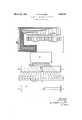
In the drawing which shows diagrammatically for the purpose'of illustration, merely, an embodiment of the invention, A designates the track-er bar of an automatic organ-playing mechanism which is provided with the usual perforations B. C designates the playerroll and D designates the spool on which said player roll is wound during playing of the organ. E designates switching mechanism, the elements of which are operated when predetermined perforations of the player roll D pass over certain perforations B in the tracker bar, such switching mechanism beingof the well known construct-ion common to automatic playing mechanism for organs. The reference character F designates tablets or other elements which are employed to controlregistration and expression during J playing of an organ, and G designates signal devices such as electric lamps, which are associated with the controlling elements F, there being'one ofsaid signaling devices associatedwith each controllmg device. lhe
tracker bar A is connected by suitable electric conductors H to the switching mechanism E and said switching mechanism is in turn connected by electric conductors J to the signaling devices G.
During the automatic playing of an organ in accordance with my improved method a player .roll is used which is of the type employed whenfull automatic playing of an organ is obtained; that is to say said player roll is provided with perforations which in the case of the full automatic operation of'an organ directly actuates the elements which control registration and expression during playing of the organ. However, in playing an organin accordance with this invention the perforations referred to do not actually operate the registration and expression controlling elements but instead these perforations, with the aid of the switching mechanism E, merely cause the proper signaling devices G to be actuated. The person who is to control registration and expression manually during playing of the organ is seatedat the console of the organ and as'the various signaling devices are actuated in the manner set forth this person will operate the controlling elements associated with theactuated signaling devices. The signaling devices remain in an actuated condition only during the period the controlling elements should be in operative positions and when said signaling devices cease to function this will be a signal to the person controlling re istration and expression to restore the controlling elements to their inoperative positions.
Thus it is obvious that the person controlling registration and expression during rendition of a musical composition played in accordance with this invention, need only operate the controlling elements when the signals to do so are automatically given, and restore said controlling elements when said signals cease tofunction, and when this is done registration and expression will be properly controlled.
While in this specification Irefer to the signaling devices as being electric lamps I do not wish to be limited to the use of these pre cise devices as various other signaling devices may be employed. Also in referrmg to organs 1 mean to include all musical 1nstruments of this general type including pipe organs and reed organs. Finally I wish to direct attention to the fact that the diagrammatical drawing shows only the elements to' which the presentmvention refers, all other 1 parts of the player mechanism and organ being eliminated.
I clann: i i V 1. In combination with an automatic organ-playing mechanism, an element for con trolling the actuation of said playing mechamsm in a manner to cause the operation of parts only of an organ with which the play- 2.111 combination with'an automatic organ-playing mechanism,.an element for con trolling the actuation of said playing mechanism in a manner to cause the operation of parts only of an organ with which the playmg mechanism is associated, and signaling .means apart from and controlled by said element for indicating when the'parts of the organ not controlled by said element should be manually actuated, said signaling means being correlated with the controlling ele- Inents of the organ parts which are manually operated on actuation of said signaling means.
8. In combination with an automatic organ-playing mechanism, a player roll for controlling actuation of said playing mechanism in a manner to cause the operation of parts only of an organ with which the playing mechanism is associated, and signaling means apart from said player roll and controlled thereby for indicating when parts of the organ not controlled by said player roll should be manually actuated.
4. In combination with an automatic organ-playing mechanism, an element for controlling the actuation of said playing mechanism in a manner to cause the operation of parts only of an organ with Which the playing mechanism is associated, and electrically operated signaling means apart from said element and actuated thereby for indicating when the parts of the organ not controlled by said element should be manually actuated.
5. In combination with an automatic organ-playing mechanism, an element for con trolling the actuation of said playing mechanism in a manner to cause the operation of parts only of an organ with which the playing mechanism is associated, and signal means apart from and controlled by said element for indicating when parts of the organ not controlled by said element should be manually actuated, said signaling means c0mprising electrically actuated signaling devices which are arranged adjacent to manually operated members for controlling actuation of parts of the organ notcontrolled by said element.
In testimony whereof, I have hereunto set my hand.
HARRY F. WATERS.
Priority Applications (1)
| Application Number | Priority Date | Filing Date | Title |
|---|---|---|---|
| US464477A US1850188A (en) | 1930-06-28 | 1930-06-28 | Method of producing organ music |
Applications Claiming Priority (1)
| Application Number | Priority Date | Filing Date | Title |
|---|---|---|---|
| US464477A US1850188A (en) | 1930-06-28 | 1930-06-28 | Method of producing organ music |
Publications (1)
| Publication Number | Publication Date |
|---|---|
| US1850188A true US1850188A (en) | 1932-03-22 |
Family
ID=23844090
Family Applications (1)
| Application Number | Title | Priority Date | Filing Date |
|---|---|---|---|
| US464477A Expired - Lifetime US1850188A (en) | 1930-06-28 | 1930-06-28 | Method of producing organ music |
Country Status (1)
| Country | Link |
|---|---|
| US (1) | US1850188A (en) |
-
1930
- 1930-06-28 US US464477A patent/US1850188A/en not_active Expired - Lifetime
Similar Documents
| Publication | Publication Date | Title |
|---|---|---|
| US1850188A (en) | Method of producing organ music | |
| US3554072A (en) | Wind instrument possessing at least three valves | |
| US2069447A (en) | Accordion | |
| US1783375A (en) | Program device for player musical instruments and program strip therefor | |
| US1728191A (en) | Instruction device for musical instruments | |
| US1622009A (en) | springhorn | |
| US1762274A (en) | Organ | |
| US1194517A (en) | lawton | |
| US1448560A (en) | Tune-sheet-perforating device | |
| US1481132A (en) | Method of and means for associating light and music | |
| US3278671A (en) | Electrified accordion | |
| US1570947A (en) | Automatic stringed instruments of the viol class | |
| US1194811A (en) | billin gs | |
| US1838328A (en) | Automatic musical instrument | |
| US1769184A (en) | Automatic musical instrument | |
| US1254684A (en) | Method and apparatus for synchronously producing sounds to accompany motion-pictures. | |
| US1104164A (en) | Range-extending device for pneumatic piano-player action. | |
| US1604844A (en) | Player piano | |
| US1152926A (en) | Music-sheet. | |
| US1109319A (en) | Musical instrument. | |
| US1597049A (en) | Electric tracker mechanism | |
| US1835360A (en) | Pipe organ | |
| US2039518A (en) | Pedal actuated means for pianos for operating simultaneously two keys | |
| US1827814A (en) | Automatic mttltirecobb expression mechanism | |
| US730517A (en) | Mechanical musical instrument. |