US12278223B2 - Method for manufacturing display device and display device manufacturing apparatus - Google Patents
Method for manufacturing display device and display device manufacturing apparatus Download PDFInfo
- Publication number
- US12278223B2 US12278223B2 US17/278,754 US201917278754A US12278223B2 US 12278223 B2 US12278223 B2 US 12278223B2 US 201917278754 A US201917278754 A US 201917278754A US 12278223 B2 US12278223 B2 US 12278223B2
- Authority
- US
- United States
- Prior art keywords
- light
- electrode
- layer
- transistor
- display device
- Prior art date
- Legal status (The legal status is an assumption and is not a legal conclusion. Google has not performed a legal analysis and makes no representation as to the accuracy of the status listed.)
- Active, expires
Links
Images



Classifications
-
- H—ELECTRICITY
- H10—SEMICONDUCTOR DEVICES; ELECTRIC SOLID-STATE DEVICES NOT OTHERWISE PROVIDED FOR
- H10H—INORGANIC LIGHT-EMITTING SEMICONDUCTOR DEVICES HAVING POTENTIAL BARRIERS
- H10H29/00—Integrated devices, or assemblies of multiple devices, comprising at least one light-emitting semiconductor element covered by group H10H20/00
- H10H29/01—Manufacture or treatment
- H10H29/012—Manufacture or treatment of active-matrix LED displays
-
- H—ELECTRICITY
- H01—ELECTRIC ELEMENTS
- H01L—SEMICONDUCTOR DEVICES NOT COVERED BY CLASS H10
- H01L25/00—Assemblies consisting of a plurality of semiconductor or other solid state devices
- H01L25/16—Assemblies consisting of a plurality of semiconductor or other solid state devices the devices being of types provided for in two or more different subclasses of H10B, H10D, H10F, H10H, H10K or H10N, e.g. forming hybrid circuits
- H01L25/167—Assemblies consisting of a plurality of semiconductor or other solid state devices the devices being of types provided for in two or more different subclasses of H10B, H10D, H10F, H10H, H10K or H10N, e.g. forming hybrid circuits comprising optoelectronic devices, e.g. LED, photodiodes
-
- G—PHYSICS
- G09—EDUCATION; CRYPTOGRAPHY; DISPLAY; ADVERTISING; SEALS
- G09F—DISPLAYING; ADVERTISING; SIGNS; LABELS OR NAME-PLATES; SEALS
- G09F9/00—Indicating arrangements for variable information in which the information is built-up on a support by selection or combination of individual elements
-
- G—PHYSICS
- G09—EDUCATION; CRYPTOGRAPHY; DISPLAY; ADVERTISING; SEALS
- G09F—DISPLAYING; ADVERTISING; SIGNS; LABELS OR NAME-PLATES; SEALS
- G09F9/00—Indicating arrangements for variable information in which the information is built-up on a support by selection or combination of individual elements
- G09F9/30—Indicating arrangements for variable information in which the information is built-up on a support by selection or combination of individual elements in which the desired character or characters are formed by combining individual elements
-
- G—PHYSICS
- G09—EDUCATION; CRYPTOGRAPHY; DISPLAY; ADVERTISING; SEALS
- G09F—DISPLAYING; ADVERTISING; SIGNS; LABELS OR NAME-PLATES; SEALS
- G09F9/00—Indicating arrangements for variable information in which the information is built-up on a support by selection or combination of individual elements
- G09F9/30—Indicating arrangements for variable information in which the information is built-up on a support by selection or combination of individual elements in which the desired character or characters are formed by combining individual elements
- G09F9/33—Indicating arrangements for variable information in which the information is built-up on a support by selection or combination of individual elements in which the desired character or characters are formed by combining individual elements being semiconductor devices, e.g. diodes
-
- G—PHYSICS
- G09—EDUCATION; CRYPTOGRAPHY; DISPLAY; ADVERTISING; SEALS
- G09F—DISPLAYING; ADVERTISING; SIGNS; LABELS OR NAME-PLATES; SEALS
- G09F9/00—Indicating arrangements for variable information in which the information is built-up on a support by selection or combination of individual elements
- G09F9/30—Indicating arrangements for variable information in which the information is built-up on a support by selection or combination of individual elements in which the desired character or characters are formed by combining individual elements
- G09F9/33—Indicating arrangements for variable information in which the information is built-up on a support by selection or combination of individual elements in which the desired character or characters are formed by combining individual elements being semiconductor devices, e.g. diodes
- G09F9/335—Indicating arrangements for variable information in which the information is built-up on a support by selection or combination of individual elements in which the desired character or characters are formed by combining individual elements being semiconductor devices, e.g. diodes being organic light emitting diodes [OLED]
-
- H—ELECTRICITY
- H01—ELECTRIC ELEMENTS
- H01L—SEMICONDUCTOR DEVICES NOT COVERED BY CLASS H10
- H01L21/00—Processes or apparatus adapted for the manufacture or treatment of semiconductor or solid state devices or of parts thereof
- H01L21/67—Apparatus specially adapted for handling semiconductor or electric solid state devices during manufacture or treatment thereof; Apparatus specially adapted for handling wafers during manufacture or treatment of semiconductor or electric solid state devices or components ; Apparatus not specifically provided for elsewhere
- H01L21/67005—Apparatus not specifically provided for elsewhere
- H01L21/67011—Apparatus for manufacture or treatment
- H01L21/67132—Apparatus for placing on an insulating substrate, e.g. tape
-
- H—ELECTRICITY
- H01—ELECTRIC ELEMENTS
- H01L—SEMICONDUCTOR DEVICES NOT COVERED BY CLASS H10
- H01L22/00—Testing or measuring during manufacture or treatment; Reliability measurements, i.e. testing of parts without further processing to modify the parts as such; Structural arrangements therefor
- H01L22/20—Sequence of activities consisting of a plurality of measurements, corrections, marking or sorting steps
- H01L22/22—Connection or disconnection of sub-entities or redundant parts of a device in response to a measurement
-
- H—ELECTRICITY
- H01—ELECTRIC ELEMENTS
- H01L—SEMICONDUCTOR DEVICES NOT COVERED BY CLASS H10
- H01L24/00—Arrangements for connecting or disconnecting semiconductor or solid-state bodies; Methods or apparatus related thereto
- H01L24/80—Methods for connecting semiconductor or other solid state bodies using means for bonding being attached to, or being formed on, the surface to be connected
-
- H—ELECTRICITY
- H01—ELECTRIC ELEMENTS
- H01L—SEMICONDUCTOR DEVICES NOT COVERED BY CLASS H10
- H01L24/00—Arrangements for connecting or disconnecting semiconductor or solid-state bodies; Methods or apparatus related thereto
- H01L24/93—Batch processes
- H01L24/95—Batch processes at chip-level, i.e. with connecting carried out on a plurality of singulated devices, i.e. on diced chips
-
- H—ELECTRICITY
- H10—SEMICONDUCTOR DEVICES; ELECTRIC SOLID-STATE DEVICES NOT OTHERWISE PROVIDED FOR
- H10D—INORGANIC ELECTRIC SEMICONDUCTOR DEVICES
- H10D86/00—Integrated devices formed in or on insulating or conducting substrates, e.g. formed in silicon-on-insulator [SOI] substrates or on stainless steel or glass substrates
- H10D86/40—Integrated devices formed in or on insulating or conducting substrates, e.g. formed in silicon-on-insulator [SOI] substrates or on stainless steel or glass substrates characterised by multiple TFTs
- H10D86/421—Integrated devices formed in or on insulating or conducting substrates, e.g. formed in silicon-on-insulator [SOI] substrates or on stainless steel or glass substrates characterised by multiple TFTs having a particular composition, shape or crystalline structure of the active layer
-
- H—ELECTRICITY
- H10—SEMICONDUCTOR DEVICES; ELECTRIC SOLID-STATE DEVICES NOT OTHERWISE PROVIDED FOR
- H10H—INORGANIC LIGHT-EMITTING SEMICONDUCTOR DEVICES HAVING POTENTIAL BARRIERS
- H10H29/00—Integrated devices, or assemblies of multiple devices, comprising at least one light-emitting semiconductor element covered by group H10H20/00
- H10H29/01—Manufacture or treatment
- H10H29/02—Manufacture or treatment using pick-and-place processes
-
- H—ELECTRICITY
- H10—SEMICONDUCTOR DEVICES; ELECTRIC SOLID-STATE DEVICES NOT OTHERWISE PROVIDED FOR
- H10H—INORGANIC LIGHT-EMITTING SEMICONDUCTOR DEVICES HAVING POTENTIAL BARRIERS
- H10H29/00—Integrated devices, or assemblies of multiple devices, comprising at least one light-emitting semiconductor element covered by group H10H20/00
- H10H29/01—Manufacture or treatment
- H10H29/036—Manufacture or treatment of packages
- H10H29/0363—Manufacture or treatment of packages of optical field-shaping means
-
- H—ELECTRICITY
- H10—SEMICONDUCTOR DEVICES; ELECTRIC SOLID-STATE DEVICES NOT OTHERWISE PROVIDED FOR
- H10H—INORGANIC LIGHT-EMITTING SEMICONDUCTOR DEVICES HAVING POTENTIAL BARRIERS
- H10H29/00—Integrated devices, or assemblies of multiple devices, comprising at least one light-emitting semiconductor element covered by group H10H20/00
- H10H29/01—Manufacture or treatment
- H10H29/036—Manufacture or treatment of packages
- H10H29/0364—Manufacture or treatment of packages of interconnections
-
- H—ELECTRICITY
- H10—SEMICONDUCTOR DEVICES; ELECTRIC SOLID-STATE DEVICES NOT OTHERWISE PROVIDED FOR
- H10H—INORGANIC LIGHT-EMITTING SEMICONDUCTOR DEVICES HAVING POTENTIAL BARRIERS
- H10H29/00—Integrated devices, or assemblies of multiple devices, comprising at least one light-emitting semiconductor element covered by group H10H20/00
- H10H29/30—Active-matrix LED displays
- H10H29/32—Active-matrix LED displays characterised by the geometry or arrangement of elements within a subpixel, e.g. arrangement of the transistor within its RGB subpixel
-
- H—ELECTRICITY
- H10—SEMICONDUCTOR DEVICES; ELECTRIC SOLID-STATE DEVICES NOT OTHERWISE PROVIDED FOR
- H10H—INORGANIC LIGHT-EMITTING SEMICONDUCTOR DEVICES HAVING POTENTIAL BARRIERS
- H10H29/00—Integrated devices, or assemblies of multiple devices, comprising at least one light-emitting semiconductor element covered by group H10H20/00
- H10H29/30—Active-matrix LED displays
- H10H29/39—Connection of the pixel electrodes to the driving transistors
-
- H—ELECTRICITY
- H10—SEMICONDUCTOR DEVICES; ELECTRIC SOLID-STATE DEVICES NOT OTHERWISE PROVIDED FOR
- H10H—INORGANIC LIGHT-EMITTING SEMICONDUCTOR DEVICES HAVING POTENTIAL BARRIERS
- H10H29/00—Integrated devices, or assemblies of multiple devices, comprising at least one light-emitting semiconductor element covered by group H10H20/00
- H10H29/30—Active-matrix LED displays
- H10H29/49—Interconnections, e.g. wiring lines or terminals
-
- H—ELECTRICITY
- H10—SEMICONDUCTOR DEVICES; ELECTRIC SOLID-STATE DEVICES NOT OTHERWISE PROVIDED FOR
- H10H—INORGANIC LIGHT-EMITTING SEMICONDUCTOR DEVICES HAVING POTENTIAL BARRIERS
- H10H29/00—Integrated devices, or assemblies of multiple devices, comprising at least one light-emitting semiconductor element covered by group H10H20/00
- H10H29/80—Constructional details
- H10H29/85—Packages
- H10H29/855—Optical field-shaping means, e.g. lenses
- H10H29/8552—Light absorbing arrangements, e.g. black matrix
-
- H10P72/0442—
-
- H10P72/0446—
-
- H10P74/232—
-
- H10W72/0198—
-
- H10W90/00—
-
- H—ELECTRICITY
- H01—ELECTRIC ELEMENTS
- H01L—SEMICONDUCTOR DEVICES NOT COVERED BY CLASS H10
- H01L2221/00—Processes or apparatus adapted for the manufacture or treatment of semiconductor or solid state devices or of parts thereof covered by H01L21/00
- H01L2221/67—Apparatus for handling semiconductor or electric solid state devices during manufacture or treatment thereof; Apparatus for handling wafers during manufacture or treatment of semiconductor or electric solid state devices or components; Apparatus not specifically provided for elsewhere
- H01L2221/683—Apparatus for handling semiconductor or electric solid state devices during manufacture or treatment thereof; Apparatus for handling wafers during manufacture or treatment of semiconductor or electric solid state devices or components; Apparatus not specifically provided for elsewhere for supporting or gripping
- H01L2221/68304—Apparatus for handling semiconductor or electric solid state devices during manufacture or treatment thereof; Apparatus for handling wafers during manufacture or treatment of semiconductor or electric solid state devices or components; Apparatus not specifically provided for elsewhere for supporting or gripping using temporarily an auxiliary support
- H01L2221/68318—Auxiliary support including means facilitating the separation of a device or wafer from the auxiliary support
- H01L2221/68322—Auxiliary support including means facilitating the selective separation of some of a plurality of devices from the auxiliary support
-
- H—ELECTRICITY
- H01—ELECTRIC ELEMENTS
- H01L—SEMICONDUCTOR DEVICES NOT COVERED BY CLASS H10
- H01L2221/00—Processes or apparatus adapted for the manufacture or treatment of semiconductor or solid state devices or of parts thereof covered by H01L21/00
- H01L2221/67—Apparatus for handling semiconductor or electric solid state devices during manufacture or treatment thereof; Apparatus for handling wafers during manufacture or treatment of semiconductor or electric solid state devices or components; Apparatus not specifically provided for elsewhere
- H01L2221/683—Apparatus for handling semiconductor or electric solid state devices during manufacture or treatment thereof; Apparatus for handling wafers during manufacture or treatment of semiconductor or electric solid state devices or components; Apparatus not specifically provided for elsewhere for supporting or gripping
- H01L2221/68304—Apparatus for handling semiconductor or electric solid state devices during manufacture or treatment thereof; Apparatus for handling wafers during manufacture or treatment of semiconductor or electric solid state devices or components; Apparatus not specifically provided for elsewhere for supporting or gripping using temporarily an auxiliary support
- H01L2221/68381—Details of chemical or physical process used for separating the auxiliary support from a device or wafer
- H01L2221/68386—Separation by peeling
-
- H—ELECTRICITY
- H01—ELECTRIC ELEMENTS
- H01L—SEMICONDUCTOR DEVICES NOT COVERED BY CLASS H10
- H01L2224/00—Indexing scheme for arrangements for connecting or disconnecting semiconductor or solid-state bodies and methods related thereto as covered by H01L24/00
- H01L2224/80—Methods for connecting semiconductor or other solid state bodies using means for bonding being attached to, or being formed on, the surface to be connected
- H01L2224/80001—Methods for connecting semiconductor or other solid state bodies using means for bonding being attached to, or being formed on, the surface to be connected by connecting a bonding area directly to another bonding area, i.e. connectorless bonding, e.g. bumpless bonding
- H01L2224/80003—Methods for connecting semiconductor or other solid state bodies using means for bonding being attached to, or being formed on, the surface to be connected by connecting a bonding area directly to another bonding area, i.e. connectorless bonding, e.g. bumpless bonding involving a temporary auxiliary member not forming part of the bonding apparatus
- H01L2224/80006—Methods for connecting semiconductor or other solid state bodies using means for bonding being attached to, or being formed on, the surface to be connected by connecting a bonding area directly to another bonding area, i.e. connectorless bonding, e.g. bumpless bonding involving a temporary auxiliary member not forming part of the bonding apparatus being a temporary or sacrificial substrate
-
- H—ELECTRICITY
- H01—ELECTRIC ELEMENTS
- H01L—SEMICONDUCTOR DEVICES NOT COVERED BY CLASS H10
- H01L2224/00—Indexing scheme for arrangements for connecting or disconnecting semiconductor or solid-state bodies and methods related thereto as covered by H01L24/00
- H01L2224/80—Methods for connecting semiconductor or other solid state bodies using means for bonding being attached to, or being formed on, the surface to be connected
- H01L2224/80001—Methods for connecting semiconductor or other solid state bodies using means for bonding being attached to, or being formed on, the surface to be connected by connecting a bonding area directly to another bonding area, i.e. connectorless bonding, e.g. bumpless bonding
- H01L2224/802—Applying energy for connecting
- H01L2224/80201—Compression bonding
- H01L2224/80205—Ultrasonic bonding
-
- H—ELECTRICITY
- H01—ELECTRIC ELEMENTS
- H01L—SEMICONDUCTOR DEVICES NOT COVERED BY CLASS H10
- H01L2224/00—Indexing scheme for arrangements for connecting or disconnecting semiconductor or solid-state bodies and methods related thereto as covered by H01L24/00
- H01L2224/93—Batch processes
- H01L2224/95—Batch processes at chip-level, i.e. with connecting carried out on a plurality of singulated devices, i.e. on diced chips
- H01L2224/95001—Batch processes at chip-level, i.e. with connecting carried out on a plurality of singulated devices, i.e. on diced chips involving a temporary auxiliary member not forming part of the bonding apparatus, e.g. removable or sacrificial coating, film or substrate
-
- H01L29/786—
-
- H—ELECTRICITY
- H01—ELECTRIC ELEMENTS
- H01L—SEMICONDUCTOR DEVICES NOT COVERED BY CLASS H10
- H01L2924/00—Indexing scheme for arrangements or methods for connecting or disconnecting semiconductor or solid-state bodies as covered by H01L24/00
- H01L2924/10—Details of semiconductor or other solid state devices to be connected
- H01L2924/11—Device type
- H01L2924/12—Passive devices, e.g. 2 terminal devices
- H01L2924/1204—Optical Diode
- H01L2924/12041—LED
-
- H—ELECTRICITY
- H10—SEMICONDUCTOR DEVICES; ELECTRIC SOLID-STATE DEVICES NOT OTHERWISE PROVIDED FOR
- H10D—INORGANIC ELECTRIC SEMICONDUCTOR DEVICES
- H10D30/00—Field-effect transistors [FET]
- H10D30/60—Insulated-gate field-effect transistors [IGFET]
- H10D30/67—Thin-film transistors [TFT]
-
- H—ELECTRICITY
- H10—SEMICONDUCTOR DEVICES; ELECTRIC SOLID-STATE DEVICES NOT OTHERWISE PROVIDED FOR
- H10H—INORGANIC LIGHT-EMITTING SEMICONDUCTOR DEVICES HAVING POTENTIAL BARRIERS
- H10H20/00—Individual inorganic light-emitting semiconductor devices having potential barriers, e.g. light-emitting diodes [LED]
- H10H20/01—Manufacture or treatment
- H10H20/036—Manufacture or treatment of packages
- H10H20/0364—Manufacture or treatment of packages of interconnections
-
- H10P72/7414—
-
- H10P72/7442—
-
- H10W72/07204—
-
- H10W72/07554—
-
- H10W72/536—
-
- H10W72/5363—
-
- H10W72/547—
-
- H10W72/5522—
-
- H10W72/5525—
-
- H10W72/884—
-
- H10W74/00—
-
- H10W80/211—
-
- H10W80/335—
-
- H10W90/724—
-
- Y—GENERAL TAGGING OF NEW TECHNOLOGICAL DEVELOPMENTS; GENERAL TAGGING OF CROSS-SECTIONAL TECHNOLOGIES SPANNING OVER SEVERAL SECTIONS OF THE IPC; TECHNICAL SUBJECTS COVERED BY FORMER USPC CROSS-REFERENCE ART COLLECTIONS [XRACs] AND DIGESTS
- Y10—TECHNICAL SUBJECTS COVERED BY FORMER USPC
- Y10S—TECHNICAL SUBJECTS COVERED BY FORMER USPC CROSS-REFERENCE ART COLLECTIONS [XRACs] AND DIGESTS
- Y10S156/00—Adhesive bonding and miscellaneous chemical manufacture
- Y10S156/934—Apparatus having delaminating means adapted for delaminating a specified article
- Y10S156/941—Means for delaminating semiconductive product
- Y10S156/943—Means for delaminating semiconductive product with poking delaminating means, e.g. jabbing means
Definitions
- a semiconductor device generally means a device that can function by utilizing semiconductor characteristics.
- a transistor, a semiconductor circuit, an arithmetic device, a memory device, and the like are each an embodiment of the semiconductor device.
- an imaging device, an electro-optical device, a power generation device (including a thin film solar cell, an organic thin film solar cell, and the like), and an electronic device may include a semiconductor device.
- the display device is used for a portable information terminal, a television device for home use (also referred to as a TV or a television receiver), digital signage, a PID (Public Information Display), and the like.
- the display device include, typically, a display device provided with a light-emitting element such as an organic EL (Electro Luminescence) element or a light-emitting diode (LED), a display device provided with a liquid crystal element, and electronic paper performing display by an electrophoretic method or the like.
- the display device is increasingly required to have high luminance for outdoor use.
- an active matrix micro LED display device that uses small LEDs (also referred to as micro LEDs) as light-emitting elements and uses transistors as switching elements connected to pixel electrodes (Patent Document 1).
- small LEDs also referred to as micro LEDs
- transistors as switching elements connected to pixel electrodes
- Patent Document 1 a metal oxide exhibiting semiconductor characteristics (hereinafter also referred to as an oxide semiconductor) is used in channel formation regions of transistors used as switching elements connected to pixel electrodes (Patent Document 2 and Patent Document 3).
- Patent Document 1 United States Patent Application Publication No. 2017/0179092
- an object of one embodiment of the present invention is to reduce the manufacturing cost of a display device using a micro LED as a display element. Another object of one embodiment of the present invention is to manufacture a display device using a micro LED as a display element in a high yield. Another object of one embodiment of the present invention is to provide a manufacturing apparatus for manufacturing a display device using a micro LED as a display element at low cost. Another object of one embodiment of the present invention is to provide a manufacturing apparatus for manufacturing a display device using a micro LED as a display element in a high yield.
- One embodiment of the present invention is a method for manufacturing a display device, including: forming a plurality of transistors in a matrix over a substrate, forming a conductor electrically connected to the transistors over the substrate, and forming a plurality of light-emitting elements in a matrix over a film.
- Each of the light-emitting elements includes an electrode on one surface and the other surface is in contact with the film.
- the conductor and the electrode are opposed to each other.
- An extrusion mechanism is pushed out from the film side to the substrate side so that the conductor and the electrode are in contact with each other, whereby the conductor and the electrode are electrically connected to each other.
- an ultrasonic wave is preferably applied to the conductor and the electrode through the extrusion mechanism, whereby the conductor and the electrode are pressure-bonded.
- One embodiment of the present invention is an apparatus for manufacturing a display device, including a stage, a grasping mechanism, and an extrusion mechanism.
- the stage has a function of holding a substrate over which a plurality of transistors are formed in a matrix.
- a conductor electrically connected to the transistors is formed over the substrate.
- the grasping mechanism has a function of grasping a film over which a plurality of light-emitting elements are formed in a matrix. Each of the light-emitting elements includes an electrode on one surface and the other surface is in contact with the film.
- the grasping mechanism has a function of opposing the conductor and the electrode to each other.
- the extrusion mechanism is pushed out from the film side to the substrate side so that the conductor and the electrode are in contact with each other, whereby the conductor and the electrode are electrically connected to each other.
- FIG. 2 A 1 and FIG. 2 B 1 are perspective views illustrating a method for manufacturing a display device.
- FIG. 2 A 2 and FIG. 2 B 2 are cross-sectional views illustrating a method for manufacturing a display device.
- FIG. 5 A 1 and FIG. 5 B 1 are perspective views illustrating a method for manufacturing a display device.
- FIG. 5 A 2 and FIG. 5 B 2 are cross-sectional views illustrating a method for manufacturing a display device.
- FIG. 6 A 1 and FIG. 6 B 1 are perspective views illustrating a method for manufacturing a display device.
- FIG. 6 A 2 and FIG. 6 B 2 are cross-sectional views illustrating a method for manufacturing a display device.
- FIG. 9 A , FIG. 9 B , and FIG. 9 C are cross-sectional views illustrating a method for manufacturing a display device.
- FIG. 10 A , FIG. 10 B , FIG. 10 C , and FIG. 10 D are cross-sectional views illustrating a method for manufacturing a display device.
- FIG. 13 A , FIG. 13 B , and FIG. 13 C illustrate structure examples of display devices.
- FIG. 14 A , FIG. 14 B , and FIG. 14 C illustrate a structure example of a light-emitting element.
- FIG. 17 A , FIG. 17 B , and FIG. 17 C are top views of display devices.
- FIG. 19 is a cross-sectional view of a display device.
- FIG. 20 A , FIG. 20 B , and FIG. 20 C are views illustrating a method for manufacturing a display device.
- FIG. 21 A and FIG. 21 B are views illustrating a method for manufacturing a display device.
- FIG. 24 is a cross-sectional view of a display device.
- FIG. 31 A is a block diagram of a display device.
- FIG. 31 B is a circuit diagram of a display device.
- FIG. 32 A , FIG. 32 B , and FIG. 32 C are circuit diagrams of display devices.
- FIG. 33 A , FIG. 33 C , and FIG. 33 D are circuit diagrams of display devices.
- FIG. 33 B is a timing chart of a display device.
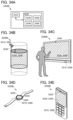
- FIG. 34 A , FIG. 34 B , FIG. 34 C , FIG. 34 D , and FIG. 34 E are views illustrating data processing devices.
- a transistor is a kind of semiconductor elements and can achieve amplification of current or voltage, switching operation for controlling conduction or non-conduction, or the like.
- An IGFET Insulated Gate Field Effect Transistor
- TFT thin film transistor
- a display panel which is one embodiment of a display device has a function of displaying (outputting) an image or the like on (to) a display surface. Therefore, the display panel is one embodiment of an output device.
- the substrate 800 is preferably provided with a circuit for driving the light-emitting element 17 .
- the circuit on the substrate 800 is composed of a transistor, a capacitor, a wiring, an electrode, and the like. It is further preferable to adopt an active matrix system by which each of the light-emitting elements 17 is connected to one or more transistors.
- the transistor is electrically connected to an electrode 21 and an electrode 23 .
- the electrode 21 and the electrode 23 are electrically connected to the light-emitting element 17 . That is, the pixel circuit is electrically connected to the light-emitting element 17 through the electrode 21 and the electrode 23 . Note that FIG.
- FIG. 2 to FIG. 11 are perspective views and cross-sectional views illustrating steps in the method for manufacturing the display device 700 .
- an LED chip is used as the light-emitting element 17 is described.
- the transistor included in the display device preferably includes a metal oxide in its channel formation region.
- the transistor using a metal oxide can have low power consumption.
- a combination with a micro LED can achieve a display device with significantly reduced power consumption.
- the substrate 71 A of the LED chip substrate 900 is ground to make the substrate 71 A thin to have a desired thickness (FIG. 2 B 1 and FIG. 2 B 2 ). By reducing the thickness of the substrate 71 A, separation into the LED chips becomes easy. Alternatively, the substrate 71 A may be removed from the LED chip substrate 900 .
- a surface of the substrate 71 is preferably planarized by polishing the ground surface with an abrasive (also referred to as slurry) (FIG. 3 A 1 and FIG. 3 A 2 ).
- an abrasive also referred to as slurry
- a film whose adhesion decreases when being irradiated with ultraviolet light can be preferably used as the first film 919 .
- a ring-like jig illustrated in FIG. 3 B 1 can be favorably used, for example.
- scribe lines 911 are formed along the LED chip compartments 51 A of the LED chip substrate 900 (FIG. 4 A 1 and FIG. 4 A 2 ).
- a machine scribing method can be used.
- a scribing tool is pressed against the substrate 71 , whereby a groove (also referred to as a scribe line or scribing) is mechanically formed on the substrate 71 .
- a scribing tool a diamond blade or the like can be used.
- the substrate 71 may be cut along the LED chip compartments 51 A by a blade dicing method.
- a blade is rotated at high speed to cut an object, and diamond can be used for the blade.
- half-cut in which the substrate 71 is cut to a predetermined depth in the thickness direction, may be employed, or full-cut, in which the substrate 71 and the semiconductor layer 81 are completely cut in the thickness direction, may be employed.
- a second film 927 is fixed to a second fixture 925 , and the second film 927 and the second fixture 925 are provided on the substrate 71 side (FIG. 6 A 1 and FIG. 6 A 2 ).
- manufacturing of the display device may be started from the steps illustrated in FIG. 6 A 1 and FIG. 6 A 2 .
- the separated LED chips 51 on the substrate 71 side are provided with the second film 927 and the second film 927 is fixed to the second fixture 925 , and then the process can go to the next step.
- the LED chips 51 are preferably apart from each other as illustrated in FIG. 6 A 1 and FIG. 6 A 2 , in which case the accuracy of the following mounting process is increased and thus the display device can be manufactured in a high yield.
- the manufacturing cost for the following mounting process can be reduced.
- the first film 919 and the first fixture 921 are separated from the LED chips 51 (FIG. 6 B 1 and FIG. 6 B 2 ).
- the first film 919 is lengthened to be warped in some cases.
- inspection of the LED chip 51 is preferably performed.
- an appearance inspection can be used.
- Voltage may be applied between the electrode 85 and the electrode 87 to examine a light-emitting state from the LED chip 51 .
- the LED chip 51 which has been determined as a defective by the inspection it is preferable to acquire location information in the second film 927 . By acquiring the location information of a defective, the defective can be removed from objects to be mounted in the following mounting process.
- the grasping mechanism 959 grasps the second fixture 925 that fixes the LED chip 51 and the second film 927 .
- the grasping mechanism 959 also has a function of transferring the second fixture 925 , which fixes the LED chip 51 and the second film 927 , to a given position.
- the apparatus 950 is preferably provided with an alignment mechanism such as a camera 957 .
- the position of the second fixture 925 is adjusted using, for example, an alignment marker provided on the substrate 800 as a reference.
- the camera 957 in FIG. 8 is disposed over the second film 927 , and detects the positions of the electrode 85 and the electrode 87 of the LED chip 51 from above the second film 927 , but one embodiment of the present invention is not limited thereto. Furthermore, a camera (not illustrated) may be provided under the substrate 800 to detect, from below the substrate 800 , the positions of the electrode 85 and the electrode 87 of the LED chip 51 and the positions of the electrode 21 and the electrode 23 over the substrate 800 .
- the LED chips 51 are mounted on the substrate 800 from a set of the second film 927 and the second fixture 925 , but one embodiment of the present invention is not limited thereto.
- the LED chips 51 may be mounted from a plurality of sets of the second film 927 and the second fixture 925 , as illustrated in FIG. 11 .
- Such a structure enables the display device 700 to be manufactured with high productivity.
- FIG. 11 illustrates an example in which the LED chips 51 are mounted from four sets of the second film 927 and the second fixture 925 , there is no limitation on the number of sets.
- a self-luminous light-emitting element such as an OLED (Organic Light Emitting Diode), an LED, a QLED (Quantum-dot Light Emitting Diode), or a semiconductor laser can be used.
- an LED which has a high luminance, a high contrast, and a high response speed, can be suitably used as the light-emitting element 17 , in which case the display device 10 with a high luminance, a high contrast, and a high response speed can be obtained. Since the LED is a self-luminous element and thus needs neither a backlight nor a polarizing plate, a high luminance and low power consumption display device can be achieved.
- a light-emitting layer of the LED is formed using an inorganic material, offering a display device that hardly deteriorates and has a long lifetime.
- the functional layer 15 is a layer including a circuit for driving the light-emitting element 17 .
- a pixel circuit in the functional layer 15 is composed of a transistor, a capacitor, a wiring, an electrode, and the like.
- the functional layer 15 is electrically connected to an electrode 21 and an electrode 23 . That is, the functional layer 15 is electrically connected to the light-emitting element 17 through the electrode 21 and the electrode 23 .
- the phosphor layer 35 is provided between the light-emitting element 17 and each of the coloring layer CFR, the coloring layer CFG, and the coloring layer CFB.
- As the phosphor layer 35 an organic resin layer or the like mixed with a phosphor can be used.
- a material capable of being used for the phosphor included in the phosphor layer 35 is excited by light emitted from the light-emitting element 17 and emits light of a complementary color of the emission color of the light-emitting element 17 . With such a structure, the light emitted from the light-emitting element 17 and the light emitted from the phosphor are combined, whereby the phosphor layer 35 can emit white light.
- the phosphor layer 35 includes a phosphor emitting yellow light and the light-emitting element 17 emits blue light
- white light is emitted from the phosphor layer 35 .
- light emitted from the light-emitting element 17 over which the coloring layer CFR is provided passes through the phosphor layer 35 and the coloring layer CFR and is emitted to the display surface side as red light 20 R.
- light emitted from the light-emitting element 17 over which the coloring layer CFG is provided is emitted as green light 20 G
- light emitted from the light-emitting element 17 over which the coloring layer CFB is provided is emitted as blue light 20 B.
- one embodiment of the present invention is not limited to the aforementioned structure in which one color is expressed by three subpixels of red (R), green (G), and blue (B).
- RGB red
- G green
- B blue
- RGB red
- Y yellow
- C cyan
- M magenta
- a light-blocking layer 33 is preferably provided so as to be adjacent to the light-emitting element 17 .
- the light-blocking layer 33 is preferably provided between adjacent light-emitting elements 17 .
- the light-blocking layer 33 provided between the adjacent light-emitting elements 17 can inhibit light leakage to an adjacent pixel and mixture of colors between pixels.
- a resin containing pigment, dye, carbon black, or the like can be used for the light-blocking layer 33 .
- a side surface of the light-emitting element 17 is preferably in contact with the light-blocking layer 33 .
- one embodiment of the present invention is not limited to the structure illustrated in FIG. 12 B in which the level of the top surface of the light-blocking layer 33 is approximately equal to the level of the top surface of the light-emitting element 17 .
- the level of the top surface of the light-blocking layer 33 may be lower than the level of the top surface of the light-emitting element 17 .
- the level may be higher than the level of the top surface of the light-emitting element 17 .
- the level of the top surface of the light-blocking layer 33 is approximately equal to or higher than the level of the top surface of the light-emitting element 17 , light leakage to an adjacent pixel and mixture of colors between pixels can be inhibited efficiently.
- a light-blocking layer 31 may be provided as in a display device 10 C shown in FIG. 13 A .
- the light-blocking layer 31 is provided between adjacent coloring layers.
- the light-blocking layer 31 includes an opening in a region overlapping with the light-emitting element 17 .
- the light-blocking layer 31 blocks light emitted from an adjacent light-emitting element 17 and inhibits mixture of colors between adjacent light-emitting elements 17 .
- light leakage can be inhibited when end portions of each of the coloring layer CFR, the coloring layer CFG, and the coloring layer CFB are provided so as to overlap with the light-blocking layer 31 .
- a material that blocks light emitted from the light-emitting element 17 can be used; for example, a metal material or a resin material containing pigment or dye can be used.
- a structure in which a pixel not including a coloring layer is further formed and white light 20 W is emitted from the pixel can be employed as in a display device 10 E shown in FIG. 13 C .
- one color can be expressed by four subpixels of R (red), G (green), B (blue), and W (white).
- R red
- G green
- B blue
- W white
- Such a structure allows a smaller amount of current to flow through the light-emitting element 17 than the structure in which one color is expressed by three subpixels of red (R), green (G), and blue (B), so that a display device with low power consumption can be achieved.
- the LED chip includes a light-emitting diode.
- a light-emitting diode There is no particular limitation on the structure of the light-emitting diode; an MIS (Metal Insulator Semiconductor) junction may be used or a homostructure, a heterostructure, a double-heterostructure, or the like having a PN junction or a PIN junction can be used. It is also possible to use a superlattice structure, or a single quantum well structure or a multi quantum well (MQW) structure where thin films producing a quantum effect are stacked. Alternatively, a nanocolumn LED chip may be used.
- MQW multi quantum well
- a light-reflecting material can be used for the electrode 83 ; for example, a metal such as silver, aluminum, or rhodium can be used.
- a metal such as silver, aluminum, or rhodium can be used.
- light is mainly emitted to the substrate 71 side.
- oxide single crystal such as sapphire single crystal (Al 2 O 3 ), spinel single crystal (MgAl 2 O 4 ), ZnO single crystal, LiAlO 2 single crystal, LiGaO 2 single crystal, or MgO single crystal, Si single crystal, SiC single crystal, GaAs single crystal, AlN single crystal, GaN single crystal, boride single crystal such as ZrB 2 , or the like can be used.
- a light-transmitting material is preferably used for the substrate 71 ; for example, sapphire single crystal or the like can be used.
- the phosphor layer 35 can include a phosphor such as an organic resin layer having a surface on which a phosphor is printed or which is coated with a phosphor, or an organic resin layer mixed with a phosphor.
- a phosphor such as an organic resin layer having a surface on which a phosphor is printed or which is coated with a phosphor, or an organic resin layer mixed with a phosphor.
- a material that is excited by light emitted from the LED chip 51 and emits light of a complementary color of the emission color of the LED chip 51 can be used. With such a structure, the light emitted from the light-emitting element 17 and the light emitted from the phosphor are combined; whereby the phosphor layer 35 can emit white light.
- a structure where white light is emitted from the phosphor layer 35 can be obtained with use of the LED chip 51 emitting blue-green light and a phosphor emitting red light, which is a complementary color of blue-green.
- the phosphor layer 35 may include a plurality of kinds of phosphors and each of the phosphors may emit light of a different color.
- a structure where white light is emitted from the phosphor layer 35 can be obtained with use of the LED chip 51 emitting blue light, a phosphor emitting red light, and a phosphor emitting green light.
- Typical examples of the phosphor that is excited by blue light and emits red light include (Ca,Sr)S:Eu and Sr 2 Si 7 Al 3 ON 13 :Eu.
- Typical examples of the phosphor that is excited by blue light and emits green light include SrGa 2 S 4 :Eu and Sr 3 Si 13 Al 3 O 2 N 21 :Eu.
- Typical examples of the phosphor that is excited by near-ultraviolet light or violet light and emits green light include SrGa 2 S 4 :Eu and Sr 3 Si 13 Al 3 O 2 N 21 :Eu.
- Typical examples of the phosphor that is excited by near-ultraviolet light or violet light and emits blue light include Sr 10 (PO 4 ) 6 Cl 2 :Eu and (Sr,Ba,Ca) 10 (PO 4 ) 6 Cl 2 :Eu.
- near-ultraviolet light has a maximum peak at a wavelength of 200 nm to 380 nm in an emission spectrum.
- Violet light has a maximum peak at a wavelength of 380 nm to 430 nm in an emission spectrum.
- Blue light has a maximum peak at a wavelength of 430 nm to 490 nm in an emission spectrum.
- Green light has a maximum peak at a wavelength of 490 nm to 550 nm in an emission spectrum.
- Yellow light has a maximum peak at a wavelength of 550 nm to 590 nm in an emission spectrum.
- Red light has a maximum peak at a wavelength of 640 nm to 770 nm in an emission spectrum.
- light emitted from the LED chip 51 preferably has a maximum peak at a wavelength of 330 nm to 500 nm in an emission spectrum, further preferably a maximum peak at a wavelength of 430 nm to 490 nm, and still further preferably a maximum peak at a wavelength of 450 nm to 480 nm.
- blue light that is excitation light and yellow light that is from the phosphor can be mixed to be white light.
- white with high purity can be obtained.
- optical members may be arranged on the outside of the substrate 11 .
- the optical members include a light diffusion layer (a diffusion film or the like), an anti-reflective layer, and a light-condensing film.
- an antistatic film preventing the attachment of dust, a water repellent film suppressing the attachment of stain, a hard coat film inhibiting generation of a scratch caused by the use, or the like may be arranged on the outside of the substrate 11 .
- An LED package can be used as the light-emitting element 17 included in the display device of one embodiment of the present invention.
- the LED package that can be used as the light-emitting element 17 is described.
- FIG. 15 A and FIG. 15 B show an example of the surface mount type LED package.
- FIG. 15 A shows a cross-sectional view of an LED package 50 and
- FIG. 15 B shows a top view of the LED package 50 .
- the LED package 50 includes the LED chip 51 over a substrate 52 , an electrode 55 , and an electrode 57 .
- the LED chip 51 is electrically connected to the electrode 55 and the electrode 57 through a wire 59 and a wire 61 .
- a phosphor 65 and a resin layer 63 having a light-transmitting property are provided over the LED chip 51 .
- the substrate 52 and the LED chip 51 are bonded with an adhesive layer 67 .
- a commercial LED package may be used as the light-emitting element 17 .
- the LED package that can be used as the light-emitting element 17 has a light emission area of 1 mm 2 or less, preferably 10000 ⁇ m 2 or less, further preferably 3000 ⁇ m 2 or less, and still further preferably 700 ⁇ m 2 or less. Note that in this specification and the like, an LED package with a light emission area of 10000 ⁇ m 2 or less is referred to as a micro LED in some cases.
- a glass epoxy resin substrate a polyimide substrate, a ceramic substrate, an alumina substrate, an aluminum nitride substrate, or the like can be used.
- the phosphor 65 an organic resin layer having a surface on which a phosphor is printed or which is coated with a phosphor, an organic resin layer mixed with a phosphor, or the like can be used.
- a material that is excited by light emitted from the LED chip 51 and emits light of a complementary color of the emission color of the LED chip 51 can be used.
- the phosphor 65 the above description of the phosphor included in the phosphor layer 35 can be referred to, and thus, detailed description of the phosphor 65 is omitted.
- a structure where white light is emitted from the LED package 50 can be obtained with use of the LED chip 51 emitting blue-green light and a phosphor emitting red light, which is a complementary color of blue-green.
- a structure where white light is emitted from the LED package 50 can be obtained with use of the LED chip 51 emitting near-ultraviolet light or violet light, a phosphor emitting red light, a phosphor emitting green light, and a phosphor emitting blue light.
- light emitted from the LED chip 51 preferably has a maximum peak at a wavelength of 330 nm to 500 nm in an emission spectrum, further preferably a maximum peak at a wavelength of 430 nm to 490 nm, and still further preferably a maximum peak at a wavelength of 450 nm to 480 nm.
- blue light that is excitation light and yellow light that is from the phosphor 65 can be mixed to be white light.
- white with high purity can be obtained.
- the resin layer 63 is formed using a light-transmitting organic resin.
- a light-transmitting organic resin There is no particular limitation on the kind of organic resin, and typically, an ultraviolet curable resin such as an epoxy resin or a silicone resin, a visible light curable resin, or the like can be used as appropriate.
- the resin layer 63 has a flat top surface shape in FIG. 15 A
- one embodiment of the present invention is not limited thereto.
- the top surface of the resin layer 63 may have a projecting shape.
- the shape can be selected as appropriate depending on desired directivity.
- a metal thin wire made of gold, an alloy containing gold, copper, or an alloy containing copper can be used.
- the electrode 55 and the electrode 57 are conductive layers electrically connected to the electrodes of the LED chip 51 , and are formed using an element selected from nickel, copper, silver, platinum, and gold or an alloy material including any of the elements at 50% or more.
- the electrode 55 and the electrode 57 are connected to the electrodes of the LED chip 51 by a wire bonding method using a thermocompression bonding method or an ultrasonic bonding method.
- a reflector 53 made of ceramic or the like is preferably arranged around the LED chip 51 so as to reflect part of light emitted from the LED chip 51 , in which case a larger amount of light can be released from the LED package 50 .
- the reflector 53 has an upwardly tapered shape in FIG. 15 A , one embodiment of the present invention is not limited thereto. The shape can be selected as appropriate depending on desired directivity.
- the LED package 50 shown in FIG. 15 A has a structure where a face-up type LED chip is used, i.e., light is emitted to the electrode side of the LED chip 51 ; however, there is no particular limitation on the structure of the LED package 50 that can be used in one embodiment of the present invention.
- FIG. 15 C shows another example of the LED package illustrated in FIG. 15 A .
- FIG. 15 C is a cross-sectional view of the LED package 50 .
- FIG. 15 B can be referred to for the top view.
- the LED package 50 shown in FIG. 15 C is a flip-chip type LED package where the electrodes of the LED chip 51 face the electrode 55 and the electrode 57 .
- the electrodes of the LED chip 51 are electrically connected to the electrode 55 and the electrode 57 through a conductive bump 90 .
- the LED package 50 shown in FIG. 15 C has a structure where a face-down type LED chip is used, i.e., light is emitted to the side opposite to the electrode side of the LED chip 51 .
- FIG. 15 A and FIG. 15 C show the LED chip 51 with a horizontal structure, one embodiment of the present invention is not limited thereto.
- the LED chip 51 included in the LED package 50 may have a vertical structure where the electrode 85 and the electrode 87 are arranged on opposite sides.
- FIG. 15 shows an example where the LED package 50 includes one LED chip 51 ; however, the structure of the LED package 50 that can be used in one embodiment of the present invention is not limited thereto.
- the LED package 50 may include a plurality of LED chips 51 .
- a structure without the phosphor 65 can also be employed.
- white light may be emitted from the LED package 50 with a structure that includes the LED chip 51 emitting red light, the LED chip 51 emitting green light, and the LED chip 51 emitting green light and does not include the phosphor 65 .
- FIG. 16 A shows an example of a cross-sectional structure of a display device of one embodiment of the present invention.
- a display device 10 F shown in FIG. 16 A includes, between the substrate 11 and the substrate 13 , the functional layer 15 , the light-emitting element 17 , the coloring layer CFR, the coloring layer CFG, the coloring layer CFB, and the like.
- the display device 10 F is different from the display devices shown in FIG. 12 A to FIG. 12 C and FIG. 13 A to FIG. 13 C in which an LED chip is used for the light-emitting element 17 , mainly in that the phosphor layer 35 and the light-blocking layer 33 are not included.
- the substrate 11 side corresponds to the display surface side of the display device 10 F.
- the LED package 50 includes the reflector 53 and thus has improved light directivity; thus, in the case where the LED package 50 is used as the light-emitting element 17 , light leakage to an adjacent pixel and mixture of colors between pixels can be inhibited even when the light-blocking layer 33 is not provided. In addition, when the LED package 50 emitting white light is used as the light-emitting element 17 , color display can be performed even when the phosphor layer 35 is not provided.
- FIG. 16 A shows the case where there is a gap between the light-emitting element 17 and each of the coloring layer CFR, the coloring layer CFG, and the coloring layer CFB; however, one embodiment of the present invention is not limited thereto.
- the coloring layer CFR, the coloring layer CFG, and the coloring layer CFB may be in contact with the light-emitting element 17 .
- Such a structure reduces the distance between the light-emitting element 17 and each of the coloring layer CFR, the coloring layer CFG, and the coloring layer CFB, thereby inhibiting light leakage to an adjacent pixel and mixture of colors between pixels.
- the light-blocking layer 31 may be provided as in a display device 10 G shown in FIG. 16 B .
- the light-blocking layer 31 is provided between adjacent coloring layers.
- the light-blocking layer 31 includes an opening in a region overlapping with the light-emitting element 17 .
- the light-blocking layer 31 blocks light emitted from an adjacent light-emitting element 17 and inhibits mixture of colors between adjacent light-emitting elements 17 .
- light leakage can be inhibited when end portions of each of the coloring layer CFR, the coloring layer CFG, and the coloring layer CFB are provided so as to overlap with the light-blocking layer 31 .
- a material that blocks light from the light-emitting element 17 can be used; for example, a metal material or a resin material containing pigment or dye can be used.
- each of the coloring layers may be configured to partly overlap with an adjacent coloring layer.
- a region where the coloring layers overlap functions as a light-blocking layer. Note that one embodiment of the present invention is not limited to the example shown in FIG. 16 C in which one end portion of the coloring layer CFR overlaps with one end portion of the coloring layer CFG, the other end portion of the coloring layer CFG overlaps with one end portion of the coloring layer CFB, and the other end portion of the coloring layer CFB overlaps with the other end portion of the coloring layer CFR.
- a structure in which a pixel not including a coloring layer is further formed and white light is emitted from the pixel can be employed.
- one color can be expressed by four subpixels of R (red), G (green), B (blue), and W (white).
- R red
- G green
- B blue
- W white
- Such a structure allows a smaller amount of current to flow through the light-emitting element 17 than the structure in which one color is expressed by three subpixels of red (R), green (G), and blue (B), so that a display device with low power consumption can be achieved.
- FIG. 17 A is a top view of a display device 700 .
- the display device 700 includes a first substrate 701 and a second substrate 705 that are bonded to each other with a sealant 712 .
- a pixel portion 702 In a region sealed with the first substrate 701 , the second substrate 705 , and the sealant 712 , a pixel portion 702 , a source driver circuit portion 704 , and a gate driver circuit portion 706 are provided over the first substrate 701 .
- a plurality of display elements are provided in the pixel portion 702 .
- An FPC terminal portion 708 to which an FPC 716 is connected is provided in a portion of the first substrate 701 that does not overlap with the second substrate 705 .
- the pixel portion 702 , the source driver circuit portion 704 , and the gate driver circuit portion 706 are each supplied with a variety of signals and the like from the FPC 716 through the FPC terminal portion 708 and a signal line 710 .
- a plurality of gate driver circuit portions 706 may be provided.
- the gate driver circuit portion 706 and the source driver circuit portion 704 may be formed separately on semiconductor substrates or the like to obtain packaged IC chips.
- the IC chips can each be mounted on the first substrate 701 or the FPC 716 .
- a transistor included in the pixel portion 702 , the source driver circuit portion 704 , and the gate driver circuit portion 706 there is no particular limitation on the structure of a transistor included in the pixel portion 702 , the source driver circuit portion 704 , and the gate driver circuit portion 706 .
- a semiconductor layer of the transistor a single crystal semiconductor, a polycrystalline semiconductor, a microcrystalline semiconductor, an amorphous semiconductor, or the like can be used alone or in combination.
- silicon, germanium, or the like can be used, for example.
- a compound semiconductor such as silicon germanium, silicon carbide, gallium arsenide, an oxide semiconductor, or a nitride semiconductor, an organic semiconductor, or the like can also be used.
- a low molecular organic material having an aromatic ring, a ⁇ -electron conjugated conductive high molecule, or the like can be used.
- a low molecular organic material having an aromatic ring, a ⁇ -electron conjugated conductive high molecule, or the like can be used.
- rubrene, tetracene, pentacene, perylenediimide, tetracyanoquinodimethane, polythiophene, polyacetylene, or polyparaphenylene vinylene can be used.
- the transistor used in this embodiment preferably includes a highly purified oxide semiconductor film in which formation of oxygen vacancies is inhibited.
- a transistor can have a low off-state current.
- an electrical signal such as an image signal can be held for a longer time, and the interval between writings can also be set longer in a power on state.
- the frequency of refresh operations can be reduced, resulting in an effect of reducing power consumption.
- the transistor used in this embodiment can have relatively high field-effect mobility and thus is capable of high-speed operation.
- a switching transistor in a pixel portion and a driver transistor used in a driver circuit portion can be formed over one substrate. That is, a structure without a driver circuit formed using a silicon wafer or the like can also be employed, in which case the number of components of the semiconductor device can be reduced.
- the transistors capable of high-speed operation are used also in the pixel portion, a high-quality image can be provided.
- a display device 700 A shown in FIG. 17 B is an example of a display device which includes a flexible resin layer 743 instead of the first substrate 701 and can be used as a flexible display.
- the pixel portion 702 does not have a rectangular shape but has arc-shaped corner portions.
- the display device 700 A includes a notch portion in which part of the pixel portion 702 and part of the resin layer 743 are cut as shown in a region P 1 in FIG. 17 B .
- a pair of gate driver circuit portions 706 is provided on the opposite sides with the pixel portion 702 therebetween.
- the gate driver circuit portions 706 are provided along a curved outline at the corners of the pixel portion 702 .
- the resin layer 743 has a protrusion where the FPC terminal portion 708 is provided. Furthermore, part of the resin layer 743 that includes the FPC terminal portion 708 can be bent backward in a region P 2 in FIG. 17 B . When part of the resin layer 743 is bent backward, the display device 700 A can be mounted on an electric device while the FPC 716 overlaps with the back side of the pixel portion 702 ; thus, an electronic device can be downsized.
- An IC 717 is mounted on the FPC 716 connected to the display device 700 A.
- the IC 717 functions as a source driver circuit, for example.
- the source driver circuit portion 704 in the display device 700 A can be configured to include at least one of a protection circuit, a buffer circuit, a demultiplexer circuit, and the like.
- a display device 700 B shown in FIG. 17 C is a display device that can be suitably used for an electronic device with a large screen.
- the display device 700 B can be suitably used for a television device, a monitor device, a personal computer (including a laptop type and a desktop type), a tablet terminal, digital signage, or the like.
- the display device 700 B includes a plurality of source driver ICs 721 and a pair of gate driver circuit portions 722 .
- the plurality of source driver ICs 721 are attached to the respective FPCs 723 .
- one of terminals is connected to the substrate 701 , and the other terminal is connected to a printed circuit board 724 .
- the printed circuit board 724 can be arranged on the back side of the pixel portion 702 so that the display device can be mounted on an electric device; thus, the electronic device can be downsized.
- the gate driver circuit portions 722 are provided over the substrate 701 .
- an electronic device with a narrow bezel can be achieved.
- a large-size and high-resolution display device can be achieved.
- use in a display device with a screen diagonal of 30 inches or more, 40 inches or more, 50 inches or more, or 60 inches or more can be achieved.
- a display device with extremely high resolution such as 4K2K or 8K4K can be achieved.
- FIG. 18 is a cross-sectional view taken along dashed-dotted line Q-R in FIG. 17 A .
- the display devices in FIG. 17 A and FIG. 18 each include a lead wiring portion 711 , the pixel portion 702 , the source driver circuit portion 704 , and the FPC terminal portion 708 .
- the lead wiring portion 711 includes the signal line 710 .
- the pixel portion 702 includes a transistor 750 and a capacitor 790 .
- the source driver circuit portion 704 includes a transistor 752 .
- the capacitor 790 shown in FIG. 18 includes a lower electrode formed by processing a film used for the first gate electrode of the transistor 750 and an upper electrode formed by processing a metal oxide film used for the semiconductor layer.
- the resistance of the upper electrode is reduced as those of a source region and a drain region of the transistor 750 .
- Part of an insulating film functioning as a first gate insulating layer of the transistor 750 is provided between the lower electrode and the upper electrode. That is, the capacitor 790 has a stacked-layer structure in which an insulating film functioning as a dielectric film is positioned between a pair of electrodes. A wiring obtained by processing a film used for a source electrode and a drain electrode of the transistor is connected to the upper electrode.
- An insulating layer 770 is provided over the transistor 750 , the transistor 752 , and the capacitor 790 .
- the insulating layer 770 functions as a planarization film, so that top surfaces of a conductive layer 772 and a conductive layer 774 provided over the insulating layer 770 can be made flat.
- the conductive layer 772 and the conductive layer 774 are positioned on the same plane and have the flat top surfaces, which facilitates electrical connection of the conductive layer 772 and the conductive layer 774 to a light-emitting element 782 .
- FIG. 18 shows a structure in which a cathode-side electrode and an anode-side electrode of the light-emitting element 782 have different heights and the bump 791 and the bump 793 have different heights accordingly. Note that in the case where the cathode-side electrode and the anode-side electrode of the light-emitting element 782 have the same height, the bump 791 and the bump 793 can have substantially the same height.
- the transistor 750 included in the pixel portion 702 is preferably provided under and overlapping with the conductive layer 772 .
- the transistor 750 particularly a channel formation region, has a region overlapping with the conductive layer 772 , light emitted from the light-emitting element 782 and external light can be inhibited from reaching the transistor 750 , so that a change in the electrical characteristics of the transistor 750 can be inhibited.
- the transistor 750 included in the pixel portion 702 and the transistor 752 included in the source driver circuit portion 704 may have different structures.
- a top-gate transistor may be used as one of the transistors and a bottom-gate transistor may be used as the other. Note that the same can be said for the gate driver circuit portion 706 , as the source driver circuit portion 704 .
- the signal line 710 is formed using the same conductive film as the source electrodes, the drain electrodes, and the like of the transistors 750 and 752 .
- a low-resistance material such as a material containing a copper element is preferably used because signal delay or the like due to the wiring resistance can be reduced and display on a large screen is possible.
- the FPC terminal portion 708 includes a wiring 760 part of which functions as a connection electrode, an anisotropic conductive film 780 , and the FPC 716 .
- the wiring 760 is electrically connected to a terminal included in the FPC 716 through the anisotropic conductive film 780 .
- the wiring 760 is formed using the same conductive film as the source electrodes, the drain electrodes, and the like of the transistors 750 and 752 .
- first substrate 701 and the second substrate 705 a glass substrate or a flexible substrate such as a plastic substrate can be used, for example.
- a flexible substrate is used as the first substrate 701
- an insulating layer having a barrier property against water or hydrogen is preferably provided between the first substrate 701 and the transistor 750 , for example.
- a light-blocking layer 738 On the second substrate 705 side, a light-blocking layer 738 , a coloring layer 736 , and a phosphor layer 797 are provided.
- the coloring layer 736 is provided over the light-emitting element 782 .
- the phosphor layer 797 is provided between the light-emitting element 782 and the coloring layer 736 .
- the phosphor layer 797 , the light-emitting element 782 , and the coloring layer 736 include a region in which they overlap with one another. It is preferable that, as shown in FIG.
- end portions of the phosphor layer 797 be positioned on outer sides than end portions of the light-emitting element 782 and end portions of the coloring layer 736 be positioned on outer sides than end portions of the phosphor layer 797 .
- end portions of the phosphor layer 797 be positioned on outer sides than end portions of the light-emitting element 782 and end portions of the coloring layer 736 be positioned on outer sides than end portions of the phosphor layer 797 .
- the phosphor layer 797 includes a phosphor emitting yellow light and the light-emitting element 782 emits blue light
- white light is emitted from the phosphor layer 797 .
- Light emitted from the light-emitting element 782 that is provided in a region overlapping with the coloring layer 736 transmitting red light passes through the phosphor layer 797 and the coloring layer 736 and is emitted to the display surface side as red light.
- light emitted from the light-emitting element 782 that is provided in a region overlapping with the coloring layer 736 transmitting green light is emitted as green light.
- Light emitted from the light-emitting element 782 that is provided in a region overlapping with the coloring layer 736 transmitting blue light is emitted as blue light.
- color display can be performed with a type of light-emitting element 782 .
- the display device using one type of light-emitting element 782 can be fabricated in a simple process. That is, according to one embodiment of the present invention, a display device with a high luminance, a high contrast, a high response speed, and low power consumption can be obtained at a low manufacturing cost.
- a structure in which white light is emitted from the phosphor layer 797 can be obtained when the phosphor layer 797 includes a phosphor emitting red light and the light-emitting element 782 emits blue-green light.
- a structure in which white light is emitted from the phosphor layer 797 can be obtained when the phosphor layer 797 includes a phosphor emitting red light, a phosphor emitting green light, and a phosphor emitting blue light and the light-emitting element 782 emits near-ultraviolet light or violet light.
- the display device 700 shown in FIG. 18 includes the light-emitting element 782 .
- the LED chip illustrated in FIG. 14 which has a horizontal structure and is of a face-down type, is preferably used.
- the coloring layer 736 is provided to overlap with the light-emitting element 782 , and the light-blocking layer 738 is provided in the lead wiring portion 711 , the source driver circuit portion 704 , and a position overlapping with the end portions of the coloring layer 736 .
- the space between the light-emitting element 782 and each of the phosphor layer 797 , the coloring layer 736 , and the light-blocking layer 738 is filled with a sealing film 732 .
- a light-blocking layer 795 is provided so as to be adjacent to the light-emitting element 782 .
- the light-blocking layer 795 is preferably provided between adjacent light-emitting elements 782 .
- the light-blocking layer 795 provided between the adjacent light-emitting elements 782 can inhibit light leakage to an adjacent pixel and mixture of colors between pixels.
- a resin containing pigment, dye, carbon black, or the like can be used for the light-blocking layer 795 .
- a side surface of the light-emitting element 782 is preferably in contact with the light-blocking layer 795 .
- one embodiment of the present invention is not limited to the structure shown in FIG. 18 in which the level of the top surface of the light-blocking layer 795 is approximately equal to the level of the top surface of the light-emitting element 782 .
- the level of the top surface of the light-blocking layer 795 may be lower than the level of the top surface of the light-emitting element 782 or higher than the level of the top surface of the light-emitting element 782 .
- the level of the top surface of the light-blocking layer 795 is approximately equal to or higher than the level of the top surface of the light-emitting element 782 , light leakage to an adjacent pixel and mixture of colors between pixels can be inhibited efficiently.
- FIG. 19 shows a structure of a display device suitably applicable to a flexible display.
- FIG. 19 is a cross-sectional view taken along the dashed-dotted line S-T in the display device 700 A shown in FIG. 17 B .
- the display device 700 A shown in FIG. 19 has a structure in which a support substrate 745 , an adhesive layer 742 , the resin layer 743 , and an insulating layer 744 are stacked instead of the substrate 701 shown in FIG. 18 .
- the transistor 750 , the capacitor 790 , and the like are provided over the insulating layer 744 over the resin layer 743 .
- the support substrate 745 includes an organic resin, glass, or the like and is thin enough to have flexibility.
- the resin layer 743 is a layer containing an organic resin such as polyimide or acrylic.
- the insulating layer 744 includes an inorganic insulating film of silicon oxide, silicon oxynitride, silicon nitride, or the like.
- the resin layer 743 and the support substrate 745 are bonded to each other with the adhesive layer 742 .
- the resin layer 743 is preferably thinner than the support substrate 745 .
- the display device 700 A shown in FIG. 19 includes a protective layer 740 instead of the substrate 705 shown in FIG. 18 .
- the protective layer 740 is bonded to the sealing film 732 .
- a glass substrate, a resin film, or the like can be used as the protective layer 740 .
- an optical member such as a scattering plate, an input device such as a touch sensor panel, or a structure in which two or more of the above are stacked may be employed.
- FIG. 19 shows the region P 2 that can be bent.
- the region P 2 includes a portion where the support substrate 745 , the adhesive layer 742 , and the inorganic insulating film such as the insulating layer 744 are not provided.
- a resin layer 746 is provided to cover the wiring 760 .
- FIG. 18 An example of a method for manufacturing the display device 700 shown in FIG. 18 will be described.
- FIG. 20 to FIG. 23 is a schematic cross-sectional view of each step in a process of the method for manufacturing the display device 700 .
- thin films that form the display device can be formed by a sputtering method, a chemical vapor deposition (CVD) method, a vacuum evaporation method, a pulsed laser deposition (PLD) method, an atomic layer deposition (ALD) method, or the like.
- CVD chemical vapor deposition
- PLA pulsed laser deposition
- ALD atomic layer deposition
- PECVD plasma-enhanced chemical vapor deposition
- thermal CVD method a metal organic chemical vapor deposition (MOCVD) method may be used.
- the thin films that form the display device can be formed by spin coating, dipping, spray coating, ink-jetting, dispensing, screen printing, or offset printing, or with a doctor knife, a slit coater, a roll coater, a curtain coater, or a knife coater.
- a photolithography method or the like can be used for the processing.
- island-shaped thin films may be formed by a film formation method using a blocking mask.
- a nanoimprinting method, a sandblasting method, a lift-off method, or the like may be used for the processing of the thin films.
- the following two examples of a photolithography method can be given.
- a photosensitive resist material is applied onto a thin film to be processed and exposed to light through a photomask; development is performed to form a resist mask; the thin film is processed by etching or the like; then, the resist mask is removed.
- exposure and development are performed, so that the thin film is processed into a desired shape.
- an i-line (with a wavelength of 365 nm), a g-line (with a wavelength of 436 nm), an h-line (with a wavelength of 405 nm), or combined light of any of them can be used.
- ultraviolet light, KrF laser light, ArF laser light, or the like can be used.
- Exposure may be performed by liquid immersion exposure technique.
- extreme ultra-violet (EUV) light or X-rays may be used.
- an electron beam can also be used. It is preferable to use extreme ultra-violet light, X-rays, or an electron beam because extremely minute processing can be performed. Note that in the case of performing exposure by scanning of a beam such as an electron beam, a photomask is not needed.
- etching of the thin film a dry etching method, a wet etching method, a sandblast method, or the like can be used.
- a conductive layer 301 , a conductive layer 303 , and a conductive layer 305 are formed over the substrate 701 .
- the conductive layer 301 , the conductive layer 303 , and the conductive layer 305 can be formed in such a manner that a conductive film is formed, a resist mask is formed, the conductive film is etched, and then the resist mask is removed.
- an insulating layer 311 is formed to cover the substrate 701 , the conductive layer 301 , the conductive layer 303 , and the conductive layer 305 .
- a semiconductor layer 321 , a semiconductor layer 323 , and a semiconductor layer 325 are formed ( FIG. 20 A ).
- the semiconductor layer 321 , the semiconductor layer 323 , and the semiconductor layer 325 can be formed in such a manner that a semiconductor film is formed, a resist mask is formed, the semiconductor film is etched, and then the resist mask is removed.
- an insulating layer 331 , a conductive layer 341 , a conductive layer 351 , an insulating layer 333 , a conductive layer 343 , and a conductive layer 353 are formed.
- the insulating layer 331 , the conductive layer 341 , the conductive layer 351 , the insulating layer 333 , the conductive layer 343 , and the conductive layer 353 can be formed in such a manner that an insulating film to be the insulating layer 331 and the insulating layer 333 , a conductive film to be the conductive layer 341 and the conductive layer 343 , and a conductive film to be the conductive layer 351 and the conductive layer 353 are formed, a resist mask is formed, the insulating film and the conductive films are etched, and then the resist mask is removed.
- an insulating layer 361 and an insulating layer 363 are formed ( FIG. 20 B ).
- openings are formed in the insulating layer 361 and the insulating layer 363 to form a conductive layer 371 , a conductive layer 373 a , a conductive layer 373 b , a conductive layer 375 , a conductive layer 377 , and the wiring 760 .
- the conductive layer 371 , the conductive layer 373 a , the conductive layer 373 b , the conductive layer 375 , the conductive layer 377 , and the wiring 760 can be formed in a manner similar to that for forming the conductive layer 301 or the like.
- the signal line 710 , the transistor 750 , the capacitor 790 , and the transistor 752 can be formed ( FIG. 20 C ). Then, an insulating layer 379 is formed.
- the insulating layer 379 functions as a protective film of the transistor 750 and the like.
- the insulating layer 770 is formed.
- a photosensitive material is used for the insulating layer 770
- an opening can be formed by a photolithography method or the like. Note that the opening may be formed in such a manner that an insulating film is formed as the insulating layer 770 and then part of the insulating film is etched with use of a resist mask.
- An organic insulating material is preferably used for the insulating layer 770 to improve the flatness of the top surface thereof.
- an inorganic insulating film may be used for the insulating layer 770 .
- the insulating layer 770 can be formed using a single layer or stacked layers of any of layers of inorganic insulating materials such as silicon nitride, silicon oxide, silicon oxynitride, silicon nitride oxide, aluminum oxide, aluminum nitride, aluminum oxynitride, and aluminum nitride oxide.
- the insulating layer 770 functions as a protective layer of the transistor 750 and the like.
- the insulating layer 770 may have a stacked-layer structure of an inorganic insulating film and an organic insulating film.
- part of the insulating layer 379 over the wiring 760 in the FPC terminal portion 708 is removed to expose the wiring 760 .
- the conductive layer 772 and the conductive layer 774 are formed over the insulating layer 770 ( FIG. 21 A ).
- the conductive layer 772 is electrically connected to the transistor 750 through the opening included in the insulating layer 770 .
- the conductive layer 772 and the conductive layer 774 can be formed in a manner similar to that for forming the conductive layer 301 or the like.
- a light-reflecting material is preferably used for the conductive layer 772 and the conductive layer 774 .
- a material containing an alloy of silver, palladium, and copper also referred to as APC
- aluminum, titanium, copper, or the like can be used for the conductive layer 772 and the conductive layer 774 .
- the bump 791 and the bump 793 each having conductivity are formed over the conductive layer 772 and the conductive layer 774 , respectively ( FIG. 21 B ).
- a metal such as gold, silver, or tin, an alloy containing any of these metals, an anisotropic conductive film made of a conductive resin or the like, or conductive paste can be used.
- gold can be favorably used for the bump 791 and the bump 793 .
- the bump 791 and the bump 793 can be formed by a printing method, a transfer method, a discharge method, or the like.
- the light-emitting element 782 is arranged over the bump 791 and the bump 793 .
- the face-down type LED chip having a horizontal structure illustrated in FIG. 14 is preferably used.
- the light-emitting element 782 is arranged so that the cathode-side electrode and the anode-side electrode of the light-emitting element 782 are in contact with the bump 791 and the bump 793 , respectively.
- the bump 791 , the bump 793 , the light-emitting element 782 , the conductive layer 772 , and the conductive layer 774 are subjected to pressure bonding, so that the light-emitting element 782 is fixed onto the conductive layer 772 and the conductive layer 774 .
- the conductive layer 772 and the conductive layer 774 are electrically connected to the light-emitting element 782 ( FIG. 22 ).
- the method for manufacturing a display device described in the above embodiments can be employed.
- a pick-and-place device which picks up and transfers the light-emitting element 782 from a predetermined position and places it in a predetermined position, can be used.
- an FSA (Fluidic Self Assembly) system may be used for the arrangement of the light-emitting element 782 .
- an insulating layer with a depression that fits the light-emitting element 782 is formed over the conductive layer 772 and in a region overlapping with the conductive layer 774 , and the light-emitting element 782 is arranged in a depression in liquid in a self-aligned manner. Since one type of LED chip is used as the light-emitting element 782 in one embodiment of the present invention, the light-emitting elements 782 can be arranged easily compared to the case where a plurality of kinds of LED chips are used.
- a light-blocking film to be the light-blocking layer 795 is formed over the insulating layer 770 and the light-emitting element 782 ( FIG. 22 ).
- the light-blocking film can be formed by a photolithography method or the like using a metal material or a resin containing pigment or dye. At this time, the thickness of the light-blocking film is adjusted so that the light-blocking film is also formed over the light-emitting element 782 .
- the light-blocking film to be the light-blocking layer 795 is partly removed to expose the top surface of the light-emitting element 782 ( FIG. 23 A ).
- the light-blocking film can be removed by a dry etching method or the like.
- one type of LED chip is used as the light-emitting element 782 and the levels of the light-emitting elements 782 can be uniform among subpixels, which facilitates uniform exposure of the top surface of each of the light-emitting elements 782 and reduces the manufacturing cost. That is, according to one embodiment of the present invention, a display device with a high luminance, a high contrast, a high response speed, and low power consumption can be obtained at a low manufacturing cost.
- the light-blocking layer 738 and the coloring layer 736 are formed over the substrate 705 .
- the light-blocking layer 738 a metal material or a resin material can be used.
- the light-blocking layer 738 can be formed in such a manner that a conductive film is formed and an unnecessary portion is removed by a photolithography method or the like.
- the light-blocking layer 738 can be formed by a photolithography method or the like.
- a photosensitive resin material is preferably used for the coloring layer 736 , for example.
- the coloring layer 736 can be formed in such a manner that a material is applied onto the substrate 705 and the light-blocking layer 738 and exposed to light through a photomask, and development and then heat treatment are performed.
- the phosphor layer 797 is formed over the coloring layer 736 ( FIG. 23 B ).
- the phosphor layer 797 can be formed by, for example, a screen printing method or a dispensing method using an organic resin layer including a phosphor.
- the adhesive layer is formed to surround a region where a pixel is arranged.
- the adhesive layer can be formed by a screen printing method, a dispensing method, or the like.
- a heat curable resin or an ultraviolet curable resin can be used for the adhesive layer. It is also possible to use a resin or the like that is cured when heated after pre-cured by ultraviolet light. Alternatively, a thermosetting and ultraviolet curable resin or the like may be used for the adhesive layer.
- the substrate 701 and the substrate 705 are bonded to each other, and the adhesive layer is cured to form the sealing film 732 .
- the bonding is preferably performed in a reduced-pressure atmosphere because air bubbles and the like can be prevented from entering a region between the substrate 701 and the substrate 705 .
- the anisotropic conductive film 780 is provided over the wiring 760 .
- the FPC 716 is arranged over the anisotropic conductive film 780 and thermocompression bonding is performed, whereby the wiring 760 and the FPC 716 are electrically connected to each other.
- the display device 700 can be formed ( FIG. 18 ).
- FIG. 24 shows another structure example of the display device 700 shown above.
- FIG. 24 is a cross-sectional view taken along dashed-dotted line Q-R in FIG. 17 A .
- a display device 700 A shown in FIG. 24 is different from the display device 700 shown in FIG. 18 mainly in that the LED package illustrated in FIG. 15 is included as the light-emitting element 782 and the light-blocking layer 795 and the phosphor layer 797 are not included.
- FIG. 25 and FIG. 26 An example of a method for manufacturing the display device 700 A shown in FIG. 24 will be described with reference to FIG. 25 and FIG. 26 .
- FIG. 25 and FIG. 26 is a schematic cross-sectional view of each step in a process of the method for manufacturing the display device 700 A.
- the above description of the method for manufacturing the display device 700 can be referred to, and thus, detailed description is omitted.
- the conductive layer 772 and the conductive layer 774 are formed over the insulating layer 770 ( FIG. 25 A ).
- the conductive layer 772 is electrically connected to the transistor 750 through the opening included in the insulating layer 770 .
- the conductive layer 772 and the conductive layer 774 can be formed in a manner similar to that for forming the conductive layer 301 or the like.
- the bump 791 and the bump 793 each having conductivity are formed over the conductive layer 772 and the conductive layer 774 , respectively ( FIG. 25 B ).
- a metal such as gold, silver, or tin, an alloy containing any of these metals, an anisotropic conductive film such as a conductive resin, or conductive paste can be used.
- the bump 791 and the bump 793 can be formed by a printing method, a transfer method, a discharge method, or the like.
- silver paste can be used for the bump 791 and the bump 793 , and any one of more of APC, aluminum, titanium, and copper can be used for the conductive layer 772 and the conductive layer 774 .
- APC aluminum, titanium, and copper
- Such a structure allows the light-emitting element 782 to be electrically connected to each of the conductive layer 772 and the conductive layer 774 favorably.
- the light-emitting element 782 is arranged over the bump 791 and the bump 793 .
- the surface mount type LED package illustrated in FIG. 15 is preferably used.
- the light-emitting element 782 is arranged so that the cathode-side electrode and the anode-side electrode of the light-emitting element 782 are in contact with the bump 791 and the bump 793 , respectively.
- the bump 791 , the bump 793 , the light-emitting element 782 , the conductive layer 772 , and the conductive layer 774 are subjected to pressure bonding, so that the light-emitting element 782 is fixed onto the conductive layer 772 and the conductive layer 774 .
- the conductive layer 772 and the conductive layer 774 are electrically connected to the light-emitting element 782 ( FIG. 26 A ).
- a pick-and-place device can be used for the arrangement of the light-emitting element 782 .
- an FSA system may be used for the arrangement of the light-emitting element 782 . Since one type of LED chip is used as the light-emitting element 782 in one embodiment of the present invention, a light-emitting element 782 can be arranged easily compared to the case where a plurality of kinds of LED chips are used.
- the light-blocking layer 738 and the coloring layer 736 are formed over the substrate 705 ( FIG. 26 B ).
- the above description of the method for manufacturing the display device 700 can be referred to, and thus, detailed description is omitted.
- one or both of the substrate 701 and substrate 705 is/are provided with an adhesive layer for bonding these substrates.
- the above description of the method for manufacturing the display device 700 can be referred to, and thus, detailed description is omitted.
- the anisotropic conductive film 780 is provided over the wiring 760 .
- the FPC 716 is arranged over the anisotropic conductive film 780 and thermocompression bonding is performed, whereby the wiring 760 and the FPC 716 are electrically connected to each other.
- the display device 700 A can be formed ( FIG. 24 ).
- An input device may be provided in the display device shown in FIG. 18 , FIG. 19 , and FIG. 24 .
- An example of the input device includes a touch sensor.
- a variety of types such as a capacitive type, a resistive type, a surface acoustic wave type, an infrared type, an optical type, and a pressure-sensitive type can be used as the sensor type, for example. Alternatively, two or more of these types may be combined and used.
- Examples of the touch panel structure include a so-called in-cell touch panel in which an input device is provided inside a pair of substrates, a so-called on-cell touch panel in which an input device is formed over the display device 700 , and a so-called out-cell touch panel in which an input device is attached to the display device 700 .
- the display device of one embodiment of the present invention can be fabricated using a transistor with any of various structures, such as a bottom-gate transistor or a top-gate transistor. Therefore, a material for a semiconductor layer or the structure of a transistor can be easily changed depending on the existing production line.
- FIG. 27 A 1 is a cross-sectional view in the channel length direction of a channel-protective transistor 1810 , which is a type of bottom-gate transistor.
- the transistor 1810 is formed over a substrate 1771 .
- the transistor 1810 includes an electrode 1746 over the substrate 1771 with an insulating layer 1772 therebetween.
- the transistor 1810 also includes a semiconductor layer 1742 over the electrode 1746 with an insulating layer 1726 therebetween.
- the electrode 1746 can function as a gate electrode.
- the insulating layer 1726 can function as a gate insulating layer.
- the insulating layer 1729 is preferably formed using a material that has a function of preventing or reducing diffusion of impurities into the transistor from the outside. Note that the insulating layer 1729 can be omitted as necessary.
- a back gate electrode is formed using a conductive layer and arranged so that a channel formation region in a semiconductor layer is positioned between the gate electrode and the back gate electrode.
- the back gate electrode can function in a manner similar to that of the gate electrode.
- the potential of the back gate electrode may be the same as the potential of the gate electrode or may be a ground potential (GND potential) or an arbitrary potential.
- GND potential ground potential
- the threshold voltage of the transistor can be changed.
- the other is referred to as a “back gate electrode”.
- the electrode 1746 is referred to as a “back gate electrode”.
- the transistor 1811 can be regarded as a kind of top-gate transistor.
- one of the electrode 1746 and the electrode 1723 is referred to as a “first gate electrode” and the other is referred to as a “second gate electrode”.
- the electrode 1746 and the electrode 1723 With the electrode 1746 and the electrode 1723 with the semiconductor layer 1742 therebetween and setting the potential of the electrode 1746 equal to the potential of the electrode 1723 , a region of the semiconductor layer 1742 through which carriers flow is enlarged in the film thickness direction; thus, the number of transferred carriers is increased. As a result, the on-state current of the transistor 1811 is increased and the field-effect mobility is increased.
- the transistor 1811 is a transistor having high on-state current for its occupation area. That is, the occupation area of the transistor 1811 can be small for required on-state current. According to one embodiment of the present invention, the occupation area of a transistor can be reduced. Therefore, according to one embodiment of the present invention, a semiconductor device having a high degree of integration can be provided.
- the gate electrode and the back gate electrode are formed using conductive layers and thus each have a function of preventing an electric field generated outside the transistor from influencing the semiconductor layer in which the channel is formed (in particular, an electric field blocking function against static electricity and the like). Note that when the back gate electrode is formed larger than the semiconductor layer such that the semiconductor layer is covered with the back gate electrode, the electric field blocking function can be enhanced.
- the back gate electrode is formed using a light-blocking conductive film, light can be prevented from entering the semiconductor layer from the back gate electrode side. Therefore, photodegradation of the semiconductor layer can be prevented, and deterioration in electrical characteristics of the transistor, such as a shift of the threshold voltage, can be prevented.
- a transistor with high reliability can be provided.
- a semiconductor device with high reliability can be provided.
- FIG. 27 B 1 is a cross-sectional view in the channel length direction of a channel-protective transistor 1820 , which has a structure different from the structure in FIG. 27 A 1 .
- the transistor 1820 has substantially the same structure as the transistor 1810 but is different from the transistor 1810 in that the insulating layer 1741 covers end portions of the semiconductor layer 1742 .
- the semiconductor layer 1742 is electrically connected to the electrode 1744 a in an opening portion formed by selectively removing part of the insulating layer 1741 that overlaps with the semiconductor layer 1742 .
- the semiconductor layer 1742 is electrically connected to the electrode 1744 b in another opening portion formed by selectively removing part of the insulating layer 1741 that overlaps with the semiconductor layer 1742 .
- a region of the insulating layer 1741 that overlaps with the channel formation region can function as a channel protective layer.
- a transistor 1821 shown in FIG. 27 B 2 is different from the transistor 1820 in that the electrode 1723 that can function as a back gate electrode is provided over the insulating layer 1729 .
- the distance between the electrode 1744 a and the electrode 1746 and the distance between the electrode 1744 b and the electrode 1746 in the transistor 1820 and the transistor 1821 are larger than those in the transistor 1810 and the transistor 1811 .
- parasitic capacitance generated between the electrode 1744 a and the electrode 1746 can be reduced.
- parasitic capacitance generated between the electrode 1744 b and the electrode 1746 can be reduced.
- a transistor with favorable electrical characteristics can be achieved.
- a transistor 1825 shown in FIG. 27 C 1 is a cross-sectional view in the channel length direction of a channel-etched transistor 1825 , which is a type of bottom-gate transistor.
- the electrode 1744 a and the electrode 1744 b are formed without providing the insulating layer 1741 .
- part of the semiconductor layer 1742 that is exposed at the time of forming the electrode 1744 a and the electrode 1744 b is etched in some cases. Meanwhile, since the insulating layer 1741 is not provided, the productivity of the transistor can be increased.
- a transistor 1826 shown in FIG. 27 C 2 is different from the transistor 1825 in that the electrode 1723 that can function as a back gate electrode is provided over the insulating layer 1729 .
- FIG. 28 A 1 to FIG. 28 C 2 illustrate cross-sectional views in the channel width direction of the transistors 1810 , 1811 , 1820 , 1821 , 1825 , and 1826 , respectively.
- the gate electrode is connected to the back gate electrode, and the gate electrode and the back gate electrode have the same potential.
- the semiconductor layer 1742 is interposed between the gate electrode and the back gate electrode.
- each of the gate electrode and the back gate electrode is longer than the length in the channel width direction of the semiconductor layer 1742 .
- the whole of the semiconductor layer 1742 is covered with the gate electrode or the back gate electrode with the insulating layers 1726 , 1741 , 1728 , and 1729 interposed therebetween.
- the semiconductor layer 1742 included in the transistor can be electrically surrounded by electric fields of the gate electrode and the back gate electrode.
- a device structure of a transistor, like that of the transistor 1821 or the transistor 1826 , in which electric fields of a gate electrode and a back gate electrode electrically surround the semiconductor layer 1742 where a channel formation region is formed can be referred to as a Surrounded channel (S-channel) structure.
- S-channel Surrounded channel
- an electric field for inducing a channel can be effectively applied to the semiconductor layer 1742 by one or both of the gate electrode and the back gate electrode, which enables improvement in the current drive capability of the transistor and high on-state current characteristics.
- the on-state current can be increased, it is possible to scale down the transistor.
- the mechanical strength of the transistor can be increased.
- a transistor 1842 illustrated in FIG. 29 A 1 is a type of top-gate transistor.
- the transistor 1842 is different from the transistor 1810 and the transistor 1820 in that the electrode 1744 a and the electrode 1744 b are formed after the insulating layer 1729 is formed.
- the electrode 1744 a and the electrode 1744 b are electrically connected to the semiconductor layer 1742 in opening portions formed in the insulating layer 1728 and the insulating layer 1729 .
- the transistor 1842 includes a region where the insulating layer 1726 extends beyond end portions of the electrode 1746 .
- the semiconductor layer 1742 in a region into which the impurity is introduced through the insulating layer 1726 has a lower impurity concentration than a region into which the impurity is introduced without through the insulating layer 1726 .
- an LDD (Lightly Doped Drain) region is formed in a region of the semiconductor layer 1742 that does not overlap with the electrode 1746 .
- a transistor 1843 shown in FIG. 29 A 2 is different from the transistor 1842 in that the electrode 1723 is included.
- the transistor 1843 includes the electrode 1723 formed over the substrate 1771 .
- the electrode 1723 has a region overlapping with the semiconductor layer 1742 with the insulating layer 1772 therebetween.
- the electrode 1723 can function as a back gate electrode.
- the insulating layer 1726 in a region that does not overlap with the electrode 1746 may be completely removed.
- the insulating layer 1726 may be left.
- the impurity is introduced into the semiconductor layer 1742 using the electrode 1746 as a mask after the formation of the electrode 1746 , so that an impurity region can be formed in the semiconductor layer 1742 in a self-aligned manner.
- a transistor with favorable electrical characteristics can be achieved.
- a semiconductor device having a high degree of integration can be achieved.
- FIG. 30 A 1 to FIG. 30 C 2 show cross-sectional views in the channel width direction of the transistors 1842 , 1843 , 1844 , 1845 , 1846 , and 1847 , respectively.
- the transistor 1843 , the transistor 1845 , and the transistor 1847 each have the above-described S-channel structure. However, one embodiment of the present invention is not limited to this, and the transistor 1843 , the transistor 1845 , and the transistor 1847 do not necessarily have the S-channel structure.
- a metal oxide whose energy gap is greater than or equal to 2 eV, preferably greater than or equal to 2.5 eV, further preferably greater than or equal to 3 eV can be used.
- a typical example thereof is a metal oxide containing indium, and for example, a CAC-OS described later or the like can be used.
- a transistor with a metal oxide having a larger band gap and a lower carrier concentration than silicon has a low off-state current; therefore, charges stored in a capacitor that is series-connected to the transistor can be held for a long time.
- the semiconductor layer can be, for example, a film represented by an In-M-Zn-based oxide that contains indium, zinc, and M (a metal such as aluminum, titanium, gallium, germanium, yttrium, zirconium, lanthanum, cerium, tin, neodymium, or hafnium).
- M a metal such as aluminum, titanium, gallium, germanium, yttrium, zirconium, lanthanum, cerium, tin, neodymium, or hafnium.
- hydrogen contained in a metal oxide reacts with oxygen bonded to a metal atom to be water, and thus forms oxygen vacancies in the metal oxide in some cases. If the channel formation region in the metal oxide includes oxygen vacancies, the transistor sometimes has normally-on characteristics in some cases. In some cases, a defect in which hydrogen has entered an oxygen vacancy functions as a donor and generates an electron serving as a carrier. In other cases, bonding of part of hydrogen to oxygen bonded to a metal atom generates electrons serving as carriers. Thus, a transistor using a metal oxide containing much hydrogen is likely to have normally-on characteristics.
- a defect in which hydrogen has entered an oxygen vacancy can function as a donor of the metal oxide.
- the metal oxide is sometimes evaluated by not its donor concentration but its carrier concentration. Therefore, in this specification and the like, the carrier concentration assuming the state where an electric field is not applied is sometimes used, instead of the donor concentration, as the parameter of the metal oxide. That is, “carrier concentration” in this specification and the like can be rephrased with “donor concentration” in some cases.
- the hydrogen concentration of the metal oxide is lower than 1 ⁇ 10 20 atoms/cm 3 , preferably lower than 1 ⁇ 10 19 atoms/cm 3 , further preferably lower than 5 ⁇ 10 18 atoms/cm 3 , still further preferably lower than 1 ⁇ 10 18 atoms/cm 3 .
- the transistor can have stable electrical characteristics.
- the carrier concentration of the metal oxide functioning as the channel formation region is preferably lower than or equal to 1 ⁇ 10 18 cm ⁇ 3 , further preferably lower than 1 ⁇ 10 17 cm ⁇ 3 , still further preferably lower than 1 ⁇ 10 16 cm ⁇ 3 , yet further preferably lower than 1 ⁇ 10 13 cm ⁇ 3 , and yet still further preferably lower than 1 ⁇ 10 12 cm ⁇ 3 .
- the minimum carrier concentration of the metal oxide in a region functioning as a channel formation region is not particularly limited and can be 1 ⁇ 10 ⁇ 9 cm ⁇ 3 , for example.
- the above-described metal oxide is referred to as a highly purified intrinsic or substantially highly purified intrinsic metal oxide.
- the metal oxide has a low density of defect states and can be regarded as a metal oxide having stable characteristics.
- the composition is not limited to those, and a metal oxide having an appropriate composition may be used depending on required semiconductor characteristics and electrical characteristics (field-effect mobility, threshold voltage, or the like) of the transistor.
- the carrier concentration, impurity concentration, defect density, atomic ratio between a metal element and oxygen, interatomic distance, density, and the like of the semiconductor layer be set to be appropriate.
- the concentration (concentration obtained by secondary ion mass spectrometry) of silicon or carbon in the semiconductor layer is set to lower than or equal to 2 ⁇ 10 18 atoms/cm 3 , preferably lower than or equal to 2 ⁇ 10 17 atoms/cm 3 .
- Alkali metal and alkaline earth metal might generate carriers when bonded to a metal oxide, in which case the off-state current of the transistor might be increased.
- the concentration of alkali metal or alkaline earth metal in the semiconductor layer is set to lower than or equal to 1 ⁇ 10 18 atoms/cm 3 , preferably lower than or equal to 2 ⁇ 10 16 atoms/cm 3 .
- the concentration of nitrogen in the semiconductor layer is preferably set to lower than or equal to 5 ⁇ 10 18 atoms/cm 3 .
- Oxide semiconductors are classified into a single crystal oxide semiconductor and a non-single-crystal oxide semiconductor.
- the non-single-crystal oxide semiconductor include a CAAC-OS (c-axis-aligned crystalline oxide semiconductor), a polycrystalline oxide semiconductor, an nc-OS (nanocrystalline oxide semiconductor), an amorphous-like oxide semiconductor (a-like OS), and an amorphous oxide semiconductor.
- a CAC-OS Cloud-Aligned Composite oxide semiconductor
- a CAC-OS Cloud-Aligned Composite oxide semiconductor
- non-single-crystal oxide semiconductor or CAC-OS can be suitably used for a semiconductor layer of a transistor disclosed in one embodiment of the present invention.
- the non-single-crystal oxide semiconductor the nc-OS or the CAAC-OS can be suitably used.
- a CAC-OS is preferably used for a semiconductor layer of a transistor.
- the use of the CAC-OS allows the transistor to have high electrical characteristics or high reliability.
- the semiconductor layer may be a mixed film including two or more of a region of a CAAC-OS, a region of a polycrystalline oxide semiconductor, a region of an nc-OS, a region of an a-like OS, and a region of an amorphous oxide semiconductor.
- the mixed film has, for example, a single-layer structure or a layered structure including two or more of the foregoing regions in some cases.
- composition of a CAC-OS that can be used in a transistor disclosed in one embodiment of the present invention is described below.
- a CAC-OS refers to one composition of a material in which elements constituting a metal oxide are unevenly distributed with a size greater than or equal to 0.5 nm and less than or equal to 10 nm, preferably greater than or equal to 1 nm and less than or equal to 2 nm, or a similar size, for example.
- a state in which one or more metal elements are unevenly distributed and regions including the metal element(s) are mixed with a size greater than or equal to 0.5 nm and less than or equal to 10 nm, preferably greater than or equal to 1 nm and less than or equal to 2 nm, or a similar size in a metal oxide is hereinafter referred to as a mosaic pattern or a patch-like pattern.
- a metal oxide preferably contains at least indium.
- indium and zinc are preferably contained.
- one or more of aluminum, gallium, yttrium, copper, vanadium, beryllium, boron, silicon, titanium, iron, nickel, germanium, zirconium, molybdenum, lanthanum, cerium, neodymium, hafnium, tantalum, tungsten, magnesium, and the like may be contained.
- CAC-OS in an In—Ga—Zn oxide (of the CAC-OS, an In—Ga—Zn oxide may be particularly referred to as CAC-IGZO) has a composition (hereinafter, referred to as cloud-like composition) in which materials are separated into indium oxide (hereinafter, InO X1 (X1 is a real number greater than 0)) or indium zinc oxide (hereinafter, In X2 Zn Y2 O Z2 (X2, Y2, and Z2 are real numbers greater than 0)), and gallium oxide (hereinafter, GaO X3 (X3 is a real number greater than 0)) or gallium zinc oxide (hereinafter, Ga X4 Zn Y4 O Z4 (X4, Y4, and Z4 are real numbers greater than 0)) to form a mosaic pattern, and InO X1 or In X2 Zn Y2 O Z2 forming the mosaic pattern is evenly distributed in the film.
- InO X1 InO X1
- the CAC-OS is a composite metal oxide having a composition in which a region including GaO X3 as a main component and a region including In X2 Zn Y2 O Z2 or InO X1 as a main component are mixed.
- the first region is described as having higher In concentration than the second region.
- IGZO is a common name, which may specify a compound containing In, Ga, Zn, and O.
- Typical examples of IGZO include a crystalline compound represented by InGaO 3 (ZnO) m1 (m1 is a natural number) and a crystalline compound represented by In (1+x0) Ga (1 ⁇ x0) O 3 (ZnO) m0 ( ⁇ 1 ⁇ x0 ⁇ 1; m0 is a given number).
- a stacked-layer structure including two or more kinds of films with different atomic compositions is not included.
- a two-layer structure of a film containing In as a main component and a film containing Ga as a main component is not included.
- nanoparticle regions containing the selected metal element(s) as a main component(s) are observed in part of a CAC-OS and nanoparticle regions containing In as a main component are observed in part of the CAC-OS, and these nanoparticle regions are randomly dispersed to form a mosaic pattern in the CAC-OS.
- the CAC-OS can be formed by a sputtering method under the condition where a substrate is not heated intentionally, for example.
- any one or more selected from an inert gas (typically, argon), an oxygen gas, and a nitrogen gas are used as a deposition gas.
- the flow rate of the oxygen gas to the total flow rate of the deposition gas in deposition is preferably as low as possible, for example, the flow rate of the oxygen gas is higher than or equal to 0% and lower than 30%, preferably higher than or equal to 0% and lower than or equal to 10%.
- the CAC-OS in the In—Ga—Zn oxide has a composition in which regions including GaO X3 as a main component and regions including In X2 Zn Y2 O Z2 or InO X1 as a main component are unevenly distributed and mixed.
- EDX energy dispersive X-ray spectroscopy
- the CAC-OS has a structure different from that of an IGZO compound in which metal elements are evenly distributed, and has characteristics different from those of the IGZO compound. That is, in the CAC-OS, regions containing GaO X3 or the like as a main component and regions containing In X2 Zn Y2 O Z2 or InO X1 as a main component are separated to form a mosaic pattern.
- the conductivity of a region containing In X2 Zn Y2 O Z2 or InO X1 as a main component is higher than that of a region containing GaO X3 or the like as a main component.
- the conductivity of a metal oxide is exhibited. Accordingly, when the regions including In X2 Zn Y2 O Z2 or InO X1 as a main component are distributed in a metal oxide like a cloud, high field-effect mobility ( ⁇ ) can be achieved.
- the insulating property of a region containing GaO X3 or the like as a main component is higher than that of a region containing In X2 Zn Y2 O Z2 or InO X1 as a main component.
- regions including GaO X3 or the like as a main component are distributed in a metal oxide, leakage current can be suppressed and favorable switching operation can be achieved.
- the insulating property derived from GaO X3 or the like and the conductivity derived from In X2 Zn Y2 O Z2 or InO X1 complement each other, whereby high on-state current (I on ) and high field-effect mobility ( ⁇ ) can be achieved.
- a semiconductor element using a CAC-OS has high reliability.
- the CAC-OS is suitably used in a variety of semiconductor devices typified by a display.
- a transistor including a CAC-OS in a semiconductor layer has high field-effect mobility and high driving capability
- the use of the transistor in a driver circuit typically a scan line driver circuit that generates a gate signal, enables a display device with a narrow frame width (also referred to as a narrow bezel) to be provided.
- a narrow frame width also referred to as a narrow bezel
- the use of the transistor in a signal line driver circuit that is included in a display device particularly in a demultiplexer connected to an output terminal of a shift register included in a signal line driver circuit
- the display device connected to less number of wirings can be provided.
- the transistor including a CAC-OS in the semiconductor layer does not need a laser crystallization step.
- the manufacturing cost of a display device can be reduced, even when the display device is formed using a large substrate.
- the transistor including a CAC-OS in the semiconductor layer is preferably used for a driver circuit and a display portion in a large display device having high resolution such as ultra-high definition (“4K resolution”, “4K2K”, and “4K”) or super high definition (“8K resolution”, “8K4K”, and “8K”), in which case writing can be performed in a short time and display defects can be reduced.
- silicon may be used for a semiconductor in which a channel of a transistor is formed.
- amorphous silicon may be used but silicon having crystallinity is preferably used.
- microcrystalline silicon, polycrystalline silicon, or single-crystal silicon are preferably used.
- polycrystalline silicon can be formed at a temperature lower than that for single crystal silicon and has higher field-effect mobility and higher reliability than amorphous silicon.
- a display device shown in FIG. 31 A includes a pixel portion 502 , a driver circuit portion 504 , protection circuits 506 , and a terminal portion 507 . Note that a structure in which the protection circuits 506 are not provided may be employed.
- the transistor of one embodiment of the present invention can be used as transistors included in the pixel portion 502 and the driver circuit portion 504 .
- the transistor of one embodiment of the present invention may also be used in the protection circuits 506 .
- the pixel portion 502 includes a plurality of pixel circuits 501 that drive a plurality of display elements arranged in X rows and Y columns (X and Y each independently represent a natural number of 2 or more).
- the terminal portion 507 refers to a portion provided with terminals for inputting power, control signals, image signals, and the like to the display device from external circuits.
- the protection circuit 506 is a circuit that, when a potential out of a certain range is applied to a wiring to which the protection circuit 506 is connected, establishes continuity between the wiring and another wiring.
- the protection circuit 506 shown in FIG. 31 A is connected to a variety of wirings such as the scan lines GL_ 1 to GL_X that are wirings between the gate driver 504 a and the pixel circuits 501 and the data lines DL_ 1 to DL_Y that are wirings between the source driver 504 b and the pixel circuits 501 , for example.
- the transistor described in the above embodiment which includes an oxide semiconductor in a channel formation region, can be used as each of the transistor 552 and the transistor 554 a .
- the area occupied by the transistors in pixels can be reduced, so that an extremely high-definition image can be displayed.
- FIG. 33 A is a circuit diagram of a pixel circuit 400 .
- the pixel circuit 400 includes a transistor M 1 , a transistor M 2 , a capacitor C 1 , and a circuit 401 .
- a wiring S 1 , a wiring S 2 , a wiring G 1 , and a wiring G 2 are connected to the pixel circuit 400 .
- a node connecting the transistor M 1 and the capacitor C 1 is denoted as N 1
- a node connecting the transistor M 2 and the circuit 401 is denoted as N 2 .
- one frame period is divided into a period T 1 and a period T 2 .
- the period T 1 is a period in which a potential is written to the node N 2
- the period T 2 is a period in which a potential is written to the node N 1 .
- a potential for turning on the transistor is supplied to both the wiring G 1 and the wiring G 2 .
- a potential V ref that is a fixed potential is supplied to the wiring S 1
- a first data potential V w is supplied to the wiring S 2 .
- the pixel circuit 400 can generate a potential to be supplied to the circuit 401 including the display element, by combining two kinds of data signals; hence, a gray level can be corrected in the pixel circuit 400 .
- a pixel circuit 400 EL shown FIG. 33 C includes a circuit 401 EL.
- the circuit 401 EL includes a light-emitting element EL, a transistor M 3 , and the capacitor C 2 .
- a gate is connected to the node N 2 and one electrode of the capacitor C 2 , one of a source and a drain is connected to a wiring supplied with a potential V L , and the other is connected to one electrode of the light-emitting element EL.
- the other electrode of the capacitor C 2 is connected to a wiring supplied with a potential V com .
- the other electrode of the light-emitting element EL is connected to a wiring supplied with a potential V H .
- the transistor M 3 has a function of controlling a current to be supplied to the light-emitting element EL.
- the capacitor C 2 functions as a storage capacitor. The capacitor C 2 can be omitted when not needed.
- a large amount of current can flow through the light-emitting element EL when a high potential is applied to the gate of the transistor M 3 , which enables HDR display, for example.
- a variation in the electrical characteristics of the transistor M 3 and the light-emitting element EL can be corrected by supply of a correction signal to the wiring S 1 or the wiring S 2 .
- FIG. 34 and FIG. 35 are views showing structures of the data processing device of one embodiment of the present invention.
- FIG. 34 A is a block diagram of the data processing device
- FIG. 34 B to FIG. 34 E are perspective views showing structures of the data processing device.
- FIG. 35 A to FIG. 35 E are perspective views showing structures of the data processing device.
- the arithmetic device 5210 has a function of being supplied with operation data and a function of supplying image data on the basis of the operation data.
- the display portion 5230 includes a display panel and has a function of displaying image data.
- the display device described in the above embodiment can be used for the display portion 5230 .
- the communication portion 5290 has a function of being supplied with communication data and a function of supplying communication data.
- the communication portion 5290 has a function of being connected to another electronic device or a communication network through wireless communication or wired communication.
- the communication portion 5290 has a function of wireless local area network communication, telephone communication, or near field communication, for example.
- the data processing device 5200 B has a function of generating image data on the basis of the path of a pointer used by a user (see FIG. 34 C ).
- the display panel with a diagonal size of 20 inches or longer, preferably 40 inches or longer, further preferably 55 inches or longer can be used.
- a plurality of display panels can be arranged and used as one display region.
- a plurality of display panels can be arranged and used as a multiscreen.
- the data processing device 5200 B can be used for an electronic blackboard, an electronic bulletin board, or digital signage, for example.
- the data processing device 5200 B includes the display portion 5230 and the like.
- the display portion 5230 has a surface gently curved along a side surface of a housing (see FIG. 34 E ).
- the display portion 5230 includes a display panel that has a function of displaying an image on the front surface, the side surfaces, and the top surface, for example.
- a mobile phone can display image data not only on its front surface but also on its side surfaces and top surface.
- the data processing device 5200 B has a function of changing its display method in accordance with the illuminance of a usage environment (see FIG. 35 A ).
- the power consumption of a smartphone can be reduced.
- a smartphone can display an image so as to be suitably used even in an environment under strong external light, e.g., outdoors in fine weather.
- the data processing device 5200 B has a function of changing its display method in accordance with the illuminance of a usage environment (see FIG. 35 C ).
- a tablet computer can display an image so as to be suitably used even in an environment under strong external light, e.g., outdoors in fine weather.
- the data processing device 5200 B has a function of changing its display method in accordance with the illuminance of a usage environment (see FIG. 35 E ).
- a personal computer can display an image so as to be suitably used even in an environment under strong external light, e.g., outdoors in fine weather.
Landscapes
- Engineering & Computer Science (AREA)
- Physics & Mathematics (AREA)
- General Physics & Mathematics (AREA)
- Theoretical Computer Science (AREA)
- Microelectronics & Electronic Packaging (AREA)
- Computer Hardware Design (AREA)
- Power Engineering (AREA)
- Optics & Photonics (AREA)
- Devices For Indicating Variable Information By Combining Individual Elements (AREA)
- Condensed Matter Physics & Semiconductors (AREA)
- Manufacturing & Machinery (AREA)
- Electroluminescent Light Sources (AREA)
- Led Device Packages (AREA)
- Led Devices (AREA)
- Supply And Installment Of Electrical Components (AREA)
- Mechanical Treatment Of Semiconductor (AREA)
- Container, Conveyance, Adherence, Positioning, Of Wafer (AREA)
Abstract
Description
Claims (5)
Applications Claiming Priority (3)
| Application Number | Priority Date | Filing Date | Title |
|---|---|---|---|
| JP2018-185029 | 2018-09-28 | ||
| JP2018185029 | 2018-09-28 | ||
| PCT/IB2019/057956 WO2020065472A1 (en) | 2018-09-28 | 2019-09-20 | Method for manufacturing display device, and device for manufacturing display device |
Related Parent Applications (1)
| Application Number | Title | Priority Date | Filing Date |
|---|---|---|---|
| PCT/IB2019/057956 A-371-Of-International WO2020065472A1 (en) | 2018-09-28 | 2019-09-20 | Method for manufacturing display device, and device for manufacturing display device |
Related Child Applications (1)
| Application Number | Title | Priority Date | Filing Date |
|---|---|---|---|
| US19/021,782 Continuation US20250158000A1 (en) | 2018-09-28 | 2025-01-15 | Method For Manufacturing Display Device and Display Device Manufacturing Apparatus |
Publications (2)
| Publication Number | Publication Date |
|---|---|
| US20220045039A1 US20220045039A1 (en) | 2022-02-10 |
| US12278223B2 true US12278223B2 (en) | 2025-04-15 |
Family
ID=69951344
Family Applications (2)
| Application Number | Title | Priority Date | Filing Date |
|---|---|---|---|
| US17/278,754 Active 2040-07-16 US12278223B2 (en) | 2018-09-28 | 2019-09-20 | Method for manufacturing display device and display device manufacturing apparatus |
| US19/021,782 Pending US20250158000A1 (en) | 2018-09-28 | 2025-01-15 | Method For Manufacturing Display Device and Display Device Manufacturing Apparatus |
Family Applications After (1)
| Application Number | Title | Priority Date | Filing Date |
|---|---|---|---|
| US19/021,782 Pending US20250158000A1 (en) | 2018-09-28 | 2025-01-15 | Method For Manufacturing Display Device and Display Device Manufacturing Apparatus |
Country Status (5)
| Country | Link |
|---|---|
| US (2) | US12278223B2 (en) |
| JP (3) | JPWO2020065472A1 (en) |
| KR (2) | KR20250143363A (en) |
| CN (1) | CN113196366A (en) |
| WO (1) | WO2020065472A1 (en) |
Families Citing this family (16)
| Publication number | Priority date | Publication date | Assignee | Title |
|---|---|---|---|---|
| US11710760B2 (en) | 2019-06-21 | 2023-07-25 | Semiconductor Energy Laboratory Co., Ltd. | Display device, display module, electronic device, and manufacturing method of display device |
| JP7609800B2 (en) | 2019-11-21 | 2025-01-07 | 株式会社半導体エネルギー研究所 | Method for manufacturing a display device |
| CN111540273B (en) * | 2020-05-26 | 2021-08-06 | Tcl华星光电技术有限公司 | Mini LED backlight structure and Mini LED backlight module |
| CN111710691B (en) * | 2020-06-05 | 2023-01-24 | 深圳市华星光电半导体显示技术有限公司 | Flexible Micro-LED display panel and manufacturing method thereof |
| US12437703B2 (en) | 2021-02-12 | 2025-10-07 | Semiconductor Energy Laboratory Co., Ltd. | Display apparatus having pixel sets including light-emitting devices |
| CN116848575A (en) * | 2021-03-16 | 2023-10-03 | 谷歌有限责任公司 | Display manufacturing method using micro-LEDs and groups of micro-LED arrays |
| US20240257671A1 (en) | 2021-05-13 | 2024-08-01 | Semiconductor Energy Laboratory Co., Ltd. | Electronic device |
| EP4102307A1 (en) | 2021-06-08 | 2022-12-14 | The Swatch Group Research and Development Ltd | Timepiece with localised illumination |
| JP7333965B2 (en) * | 2021-08-19 | 2023-08-28 | 三安ジャパンテクノロジー株式会社 | module |
| EP4425583A4 (en) * | 2021-10-26 | 2025-11-05 | Lg Electronics Inc | DISPLAY DEVICE WITH LIGHT-EMISSIVING SEMICONDUCTOR ELEMENT |
| KR20230064001A (en) | 2021-11-01 | 2023-05-10 | 삼성디스플레이 주식회사 | Display device and manufacturing method of the same |
| JP7640449B2 (en) * | 2021-12-28 | 2025-03-05 | 株式会社東海理化電機製作所 | Display device manufacturing jig, display device manufacturing method, display device manufactured using the display device manufacturing jig, and display device manufactured using the display device manufacturing method |
| CN114664968B (en) * | 2022-03-15 | 2023-11-14 | 中国科学院长春光学精密机械与物理研究所 | Visible-infrared dual-band photoelectric detector |
| CN119896068A (en) * | 2022-10-06 | 2025-04-25 | 维耶尔公司 | Phosphor protection in micro LED displays |
| TWI888761B (en) * | 2022-11-16 | 2025-07-01 | 友達光電股份有限公司 | Display panel packaging system and a packaging method |
| US20240304117A1 (en) * | 2023-03-07 | 2024-09-12 | Designled Technology Corp. | Easily Curved LED Display Module |
Citations (54)
| Publication number | Priority date | Publication date | Assignee | Title |
|---|---|---|---|---|
| EP1096571A2 (en) | 1999-10-29 | 2001-05-02 | Sel Semiconductor Energy Laboratory Co., Ltd. | Electronic device |
| JP2001195016A (en) | 1999-10-29 | 2001-07-19 | Semiconductor Energy Lab Co Ltd | Electronic equipment |
| US20050156828A1 (en) | 2001-12-14 | 2005-07-21 | Atsuhiro Yamashita | Display device of digital drive type |
| JP2007096055A (en) | 2005-09-29 | 2007-04-12 | Semiconductor Energy Lab Co Ltd | Semiconductor device and manufacturing method of semiconductor device |
| JP2007123861A (en) | 2005-09-29 | 2007-05-17 | Semiconductor Energy Lab Co Ltd | Semiconductor device and manufacturing method thereof |
| JP2009210719A (en) | 2008-03-03 | 2009-09-17 | Nishiyama Stainless Chemical Kk | Method of manufacturing flat panel display |
| US20100102752A1 (en) | 2008-10-28 | 2010-04-29 | Industrial Technology Research Institute | Control circuit and method for backlight sources, and image display apparatus and lighting apparatus using the same |
| US20120056537A1 (en) | 2010-09-08 | 2012-03-08 | Semiconductor Energy Laboratory Co., Ltd. | El display device and electronic device including the same |
| WO2012131817A1 (en) | 2011-03-28 | 2012-10-04 | パナソニック株式会社 | Method for mounting semiconductor element |
| JP2012204768A (en) | 2011-03-28 | 2012-10-22 | Panasonic Corp | Light-emitting device mounting board manufacturing method |
| WO2014066301A1 (en) | 2012-10-22 | 2014-05-01 | Sensor Electronic Technology, Inc. | Two terminal packaging |
| US20140168037A1 (en) | 2012-12-17 | 2014-06-19 | LuxVue Technology Corporation | Smart pixel lighting and display microcontroller |
| US20140292745A1 (en) | 2013-04-01 | 2014-10-02 | Sony Corporation | Display apparatus |
| US20140367705A1 (en) | 2013-06-17 | 2014-12-18 | LuxVue Technology Corporation | Reflective bank structure and method for integrating a light emitting device |
| US9105813B1 (en) | 2014-05-30 | 2015-08-11 | Mikro Mesa Technology Co., Ltd. | Micro-light-emitting diode |
| US20150349200A1 (en) | 2014-05-30 | 2015-12-03 | Mikro Mesa Technology Co., Ltd. | Micro-light-emitting diode |
| US20150349285A1 (en) | 2014-05-30 | 2015-12-03 | Semiconductor Energy Laboratory Co., Ltd. | Light-emitting device, display device, and electronic device |
| US9219197B1 (en) | 2014-05-30 | 2015-12-22 | Mikro Mesa Technology Co., Ltd. | Micro-light-emitting diode |
| US20160013170A1 (en) | 2012-12-10 | 2016-01-14 | LuxVue Technology Corporation | Active matrix emissive micro led display |
| WO2016060677A1 (en) | 2014-10-17 | 2016-04-21 | Intel Corporation | Micro pick and bond assembly |
| US20160268513A1 (en) | 2015-03-09 | 2016-09-15 | Semiconductor Energy Laboratory Co., Ltd. | Light-emitting element, display device, electronic device, and lighting device |
| US20160313848A1 (en) | 2013-11-18 | 2016-10-27 | Lg Electronics Inc. | Display apparatus using semiconductor light emitting device |
| WO2017014564A1 (en) | 2015-07-23 | 2017-01-26 | 서울반도체 주식회사 | Display device and method for manufacturing same |
| US20170062749A1 (en) | 2015-09-01 | 2017-03-02 | Semiconductor Energy Laboratory Co., Ltd. | Light-Emitting Element, Light-Emitting Device, Electronic Device, and Lighting Device |
| US9590137B2 (en) | 2014-05-30 | 2017-03-07 | Mikro Mesa Technology Co., Ltd. | Light-emitting diode |
| WO2017037475A1 (en) | 2015-09-02 | 2017-03-09 | Oculus Vr, Llc | Assembly of semiconductor devices |
| US20170090246A1 (en) | 2015-09-25 | 2017-03-30 | Semiconductor Energy Laboratory Co., Ltd. | Display device and manufacturing method thereof |
| US20170133550A1 (en) | 2014-10-31 | 2017-05-11 | eLux Inc. | Display with surface mount emissive elements |
| US20170170200A1 (en) | 2015-12-11 | 2017-06-15 | Semiconductor Energy Laboratory Co., Ltd. | Display device |
| US20170179092A1 (en) | 2014-10-31 | 2017-06-22 | eLux Inc. | Hybrid Display using Inorganic Micro Light Emitting Diodes (uLEDs) and Organic LEDs (OLEDs) |
| US20170186365A1 (en) | 2015-12-28 | 2017-06-29 | Semiconductor Energy Laboratory Co., Ltd. | Device, television system, and electronic device |
| US20170221801A1 (en) | 2012-10-22 | 2017-08-03 | Sensor Electronic Technology, Inc. | Multi-Terminal Device Packaging |
| US20170263828A1 (en) | 2016-03-14 | 2017-09-14 | Innolux Corporation | Display device |
| WO2017189578A2 (en) | 2016-04-26 | 2017-11-02 | Oculus Vr, Llc | A display with redundant light emitting devices |
| US20170358604A1 (en) | 2016-06-14 | 2017-12-14 | Innolux Corporation | Display apparatus |
| KR20170142022A (en) | 2016-06-16 | 2017-12-27 | 엘지이노텍 주식회사 | Display device and method of fabricating the same |
| US20180012949A1 (en) | 2016-07-06 | 2018-01-11 | Seoul Semiconductor Co., Ltd. | Display apparatus |
| JP2018005160A (en) | 2016-07-08 | 2018-01-11 | 株式会社ジャパンディスプレイ | Display device |
| US20180122836A1 (en) | 2016-10-28 | 2018-05-03 | Lg Display Co., Ltd. | Light emitting diode display device |
| JP2018081290A (en) | 2016-11-10 | 2018-05-24 | 株式会社半導体エネルギー研究所 | Display device |
| US20180144971A1 (en) * | 2016-11-23 | 2018-05-24 | Rohinni, LLC | Pattern array direct transfer apparatus and method therefor |
| WO2018163019A1 (en) | 2017-03-10 | 2018-09-13 | Semiconductor Energy Laboratory Co., Ltd. | Display system |
| JP2018142713A (en) | 2015-09-02 | 2018-09-13 | オキュラス ブイアール,エルエルシー | Assembly of semiconductor devices |
| US20180269234A1 (en) | 2015-09-02 | 2018-09-20 | Oculus Vr, Llc | Assembly of semiconductor devices |
| US10158043B2 (en) | 2014-05-30 | 2018-12-18 | Mikro Mesa Technolgy Co., Ltd. | Light-emitting diode and method for manufacturing the same |
| US10177196B2 (en) | 2015-11-17 | 2019-01-08 | Facebook Technologies, Llc | Redundancy in inorganic light emitting diode displays |
| US20190244937A1 (en) | 2016-03-02 | 2019-08-08 | Dexerials Corporation | Display device and method for manufacturing the same, and light-emitting device and method for manufacturing the same |
| US20190252219A1 (en) * | 2018-02-14 | 2019-08-15 | Toshiba Electronic Devices & Storage Corporation | Chip transfer member, chip transfer apparatus, and chip transfer method |
| US20200027388A1 (en) | 2017-03-24 | 2020-01-23 | Semiconductor Energy Laboratory Co., Ltd. | Semiconductor device, display system, and electronic device |
| US20200219854A1 (en) * | 2017-07-18 | 2020-07-09 | Lumens Co., Ltd. | Apparatus and method for manufacturing light-emitting diode module |
| US20200403028A1 (en) | 2019-06-21 | 2020-12-24 | Semiconductor Energy Laboratory Co., Ltd. | Display device, display module, electronic device, and manufacturing method of display device |
| US20210118855A1 (en) | 2018-05-17 | 2021-04-22 | Semiconductor Energy Laboratory Co., Ltd. | Display device |
| US20210174734A1 (en) | 2017-12-25 | 2021-06-10 | Semiconductor Energy Laboratory Co., Ltd. | Display and electronic device including the display |
| US20210217805A1 (en) | 2018-05-18 | 2021-07-15 | Semiconductor Energy Laboratory Co., Ltd. | Display device, display module, electronic device, and method for fabricating display device |
-
2019
- 2019-09-20 CN CN201980063963.7A patent/CN113196366A/en active Pending
- 2019-09-20 KR KR1020257032067A patent/KR20250143363A/en active Pending
- 2019-09-20 JP JP2020547475A patent/JPWO2020065472A1/en not_active Withdrawn
- 2019-09-20 US US17/278,754 patent/US12278223B2/en active Active
- 2019-09-20 KR KR1020217009540A patent/KR20210064238A/en not_active Ceased
- 2019-09-20 WO PCT/IB2019/057956 patent/WO2020065472A1/en not_active Ceased
-
2023
- 2023-12-05 JP JP2023205233A patent/JP7630595B2/en active Active
-
2025
- 2025-01-15 US US19/021,782 patent/US20250158000A1/en active Pending
- 2025-02-04 JP JP2025017050A patent/JP2025069360A/en active Pending
Patent Citations (109)
| Publication number | Priority date | Publication date | Assignee | Title |
|---|---|---|---|---|
| US7279752B2 (en) | 1999-10-29 | 2007-10-09 | Semiconductor Energy Laboratory Co., Ltd. | Display device using electroluminescence material |
| JP2001195016A (en) | 1999-10-29 | 2001-07-19 | Semiconductor Energy Lab Co Ltd | Electronic equipment |
| KR20010070173A (en) | 1999-10-29 | 2001-07-25 | 야마자끼 순페이 | Electronic device |
| US6580094B1 (en) | 1999-10-29 | 2003-06-17 | Semiconductor Energy Laboratory Co., Ltd. | Electro luminescence display device |
| US6809343B2 (en) | 1999-10-29 | 2004-10-26 | Semiconductor Energy Laboratory Co., Ltd. | Electro luminescence display device |
| EP1096571A2 (en) | 1999-10-29 | 2001-05-02 | Sel Semiconductor Energy Laboratory Co., Ltd. | Electronic device |
| US8017945B2 (en) | 1999-10-29 | 2011-09-13 | Semiconductor Energy Laboratory Co., Ltd. | Display device using light-emitting element |
| US8648345B2 (en) | 1999-10-29 | 2014-02-11 | Semiconductor Energy Laboratory Co., Ltd. | Electronic device |
| US7358935B2 (en) | 2001-12-14 | 2008-04-15 | Sanyo Electric Co., Ltd. | Display device of digital drive type |
| US20050156828A1 (en) | 2001-12-14 | 2005-07-21 | Atsuhiro Yamashita | Display device of digital drive type |
| JP2007123861A (en) | 2005-09-29 | 2007-05-17 | Semiconductor Energy Lab Co Ltd | Semiconductor device and manufacturing method thereof |
| JP2007096055A (en) | 2005-09-29 | 2007-04-12 | Semiconductor Energy Lab Co Ltd | Semiconductor device and manufacturing method of semiconductor device |
| JP2009210719A (en) | 2008-03-03 | 2009-09-17 | Nishiyama Stainless Chemical Kk | Method of manufacturing flat panel display |
| US20100102752A1 (en) | 2008-10-28 | 2010-04-29 | Industrial Technology Research Institute | Control circuit and method for backlight sources, and image display apparatus and lighting apparatus using the same |
| JP2012078798A (en) | 2010-09-08 | 2012-04-19 | Semiconductor Energy Lab Co Ltd | El display device and electronic appliance including the el display device |
| TW201214391A (en) | 2010-09-08 | 2012-04-01 | Semiconductor Energy Lab | EL display device and electronic device including the same |
| US20120056537A1 (en) | 2010-09-08 | 2012-03-08 | Semiconductor Energy Laboratory Co., Ltd. | El display device and electronic device including the same |
| US8487844B2 (en) | 2010-09-08 | 2013-07-16 | Semiconductor Energy Laboratory Co., Ltd. | EL display device and electronic device including the same |
| KR20120025980A (en) | 2010-09-08 | 2012-03-16 | 가부시키가이샤 한도오따이 에네루기 켄큐쇼 | El display device and electronic device including the same |
| WO2012131817A1 (en) | 2011-03-28 | 2012-10-04 | パナソニック株式会社 | Method for mounting semiconductor element |
| JP2012204768A (en) | 2011-03-28 | 2012-10-22 | Panasonic Corp | Light-emitting device mounting board manufacturing method |
| CN102822955A (en) | 2011-03-28 | 2012-12-12 | 松下电器产业株式会社 | Mounting method of semiconductor components |
| US20120329182A1 (en) | 2011-03-28 | 2012-12-27 | Teppei Kojio | Semiconductor device mounting method |
| WO2014066301A1 (en) | 2012-10-22 | 2014-05-01 | Sensor Electronic Technology, Inc. | Two terminal packaging |
| KR20150079790A (en) | 2012-10-22 | 2015-07-08 | 센서 일렉트로닉 테크놀로지, 인크 | Two terminal packaging |
| CN104838509A (en) | 2012-10-22 | 2015-08-12 | 传感器电子技术股份有限公司 | Two terminal packaging |
| US20170221801A1 (en) | 2012-10-22 | 2017-08-03 | Sensor Electronic Technology, Inc. | Multi-Terminal Device Packaging |
| US20160013170A1 (en) | 2012-12-10 | 2016-01-14 | LuxVue Technology Corporation | Active matrix emissive micro led display |
| US20140168037A1 (en) | 2012-12-17 | 2014-06-19 | LuxVue Technology Corporation | Smart pixel lighting and display microcontroller |
| US9153171B2 (en) | 2012-12-17 | 2015-10-06 | LuxVue Technology Corporation | Smart pixel lighting and display microcontroller |
| US20140292745A1 (en) | 2013-04-01 | 2014-10-02 | Sony Corporation | Display apparatus |
| US20150339979A1 (en) | 2013-04-01 | 2015-11-26 | Sony Corporation | Display apparatus |
| US20140367705A1 (en) | 2013-06-17 | 2014-12-18 | LuxVue Technology Corporation | Reflective bank structure and method for integrating a light emitting device |
| US20160313848A1 (en) | 2013-11-18 | 2016-10-27 | Lg Electronics Inc. | Display apparatus using semiconductor light emitting device |
| US20150349200A1 (en) | 2014-05-30 | 2015-12-03 | Mikro Mesa Technology Co., Ltd. | Micro-light-emitting diode |
| US9590137B2 (en) | 2014-05-30 | 2017-03-07 | Mikro Mesa Technology Co., Ltd. | Light-emitting diode |
| US9219197B1 (en) | 2014-05-30 | 2015-12-22 | Mikro Mesa Technology Co., Ltd. | Micro-light-emitting diode |
| US9231153B2 (en) | 2014-05-30 | 2016-01-05 | Mikro Mesa Technology Co., Ltd. | Micro-light-emitting diode |
| US20200006688A1 (en) | 2014-05-30 | 2020-01-02 | Semiconductor Energy Laboratory Co., Ltd. | Light-emitting device, display device, and electronic device with color conversion layers. |
| US20150349285A1 (en) | 2014-05-30 | 2015-12-03 | Semiconductor Energy Laboratory Co., Ltd. | Light-emitting device, display device, and electronic device |
| US10158043B2 (en) | 2014-05-30 | 2018-12-18 | Mikro Mesa Technolgy Co., Ltd. | Light-emitting diode and method for manufacturing the same |
| US9105813B1 (en) | 2014-05-30 | 2015-08-11 | Mikro Mesa Technology Co., Ltd. | Micro-light-emitting diode |
| US10242892B2 (en) | 2014-10-17 | 2019-03-26 | Intel Corporation | Micro pick and bond assembly |
| JP2017533453A (en) | 2014-10-17 | 2017-11-09 | インテル・コーポレーション | Micro lifting / joining assembly method |
| US10886153B2 (en) | 2014-10-17 | 2021-01-05 | Intel Corporation | Display including an LED element having a pressure sensitive adhesive (PSA) for micro pick and bond assembly of the display |
| KR20170041912A (en) | 2014-10-17 | 2017-04-17 | 인텔 코포레이션 | Micro pick and bond assembly |
| CN106716611A (en) | 2014-10-17 | 2017-05-24 | 英特尔公司 | Micro pick and bond assembly |
| WO2016060677A1 (en) | 2014-10-17 | 2016-04-21 | Intel Corporation | Micro pick and bond assembly |
| US20170278733A1 (en) | 2014-10-17 | 2017-09-28 | Peter L. Chang | Micro pick and bond assembly |
| US20170133550A1 (en) | 2014-10-31 | 2017-05-11 | eLux Inc. | Display with surface mount emissive elements |
| US20170179092A1 (en) | 2014-10-31 | 2017-06-22 | eLux Inc. | Hybrid Display using Inorganic Micro Light Emitting Diodes (uLEDs) and Organic LEDs (OLEDs) |
| US20160268513A1 (en) | 2015-03-09 | 2016-09-15 | Semiconductor Energy Laboratory Co., Ltd. | Light-emitting element, display device, electronic device, and lighting device |
| US10833057B2 (en) | 2015-07-23 | 2020-11-10 | Seoul Semiconductor Co., Ltd. | Display apparatus and manufacturing method thereof |
| CN107852794A (en) | 2015-07-23 | 2018-03-27 | 首尔半导体株式会社 | Display device and manufacturing method thereof |
| US20200328198A1 (en) | 2015-07-23 | 2020-10-15 | Seoul Semiconductor Co., Ltd. | Display apparatus and manufacturing method thereof |
| US10312225B2 (en) | 2015-07-23 | 2019-06-04 | Seoul Semiconductor Co., Ltd. | Display apparatus and manufacturing method thereof |
| EP3790361A1 (en) | 2015-07-23 | 2021-03-10 | Seoul Semiconductor Co., Ltd. | Display apparatus |
| US20170025399A1 (en) | 2015-07-23 | 2017-01-26 | Seoul Semiconductor Co., Ltd. | Display apparatus and manufacturing method thereof |
| WO2017014564A1 (en) | 2015-07-23 | 2017-01-26 | 서울반도체 주식회사 | Display device and method for manufacturing same |
| JP2018523848A (en) | 2015-07-23 | 2018-08-23 | ソウル セミコンダクター カンパニー リミテッド | Display device and manufacturing method thereof |
| EP3328162A1 (en) | 2015-07-23 | 2018-05-30 | Seoul Semiconductor Co., Ltd. | Display device and method for manufacturing same |
| US9887184B2 (en) | 2015-07-23 | 2018-02-06 | Seoul Semiconductor Co., Ltd. | Display apparatus and manufacturing method thereof |
| KR20180022683A (en) | 2015-07-23 | 2018-03-06 | 서울반도체 주식회사 | Display device and manufacturing method thereof |
| US20170062749A1 (en) | 2015-09-01 | 2017-03-02 | Semiconductor Energy Laboratory Co., Ltd. | Light-Emitting Element, Light-Emitting Device, Electronic Device, and Lighting Device |
| EP3425618A1 (en) | 2015-09-02 | 2019-01-09 | Facebook Technologies, LLC | Assembly of semiconductor devices |
| JP2018142713A (en) | 2015-09-02 | 2018-09-13 | オキュラス ブイアール,エルエルシー | Assembly of semiconductor devices |
| US20190027075A1 (en) * | 2015-09-02 | 2019-01-24 | Facebook Technologies, Llc | Assembly of semiconductor devices |
| KR20180048812A (en) | 2015-09-02 | 2018-05-10 | 아큘러스 브이알, 엘엘씨 | Assemblies of semiconductor devices |
| EP3996076A1 (en) | 2015-09-02 | 2022-05-11 | Facebook Technologies, LLC | Assembly of semiconductor devices |
| KR20180041772A (en) | 2015-09-02 | 2018-04-24 | 아큘러스 브이알, 엘엘씨 | Assembly of semiconductor devices |
| US10600823B2 (en) | 2015-09-02 | 2020-03-24 | Facebook Technologies, Llc | Assembly of semiconductor devices |
| CN108352143A (en) | 2015-09-02 | 2018-07-31 | 欧库勒斯虚拟现实有限责任公司 | Assembly of semiconductor devices |
| US10878733B2 (en) | 2015-09-02 | 2020-12-29 | Facebook Technologies, Llc | Assembly of semiconductor devices using multiple LED placement cycles |
| WO2017037475A1 (en) | 2015-09-02 | 2017-03-09 | Oculus Vr, Llc | Assembly of semiconductor devices |
| US20180269234A1 (en) | 2015-09-02 | 2018-09-20 | Oculus Vr, Llc | Assembly of semiconductor devices |
| US20170090246A1 (en) | 2015-09-25 | 2017-03-30 | Semiconductor Energy Laboratory Co., Ltd. | Display device and manufacturing method thereof |
| US10177196B2 (en) | 2015-11-17 | 2019-01-08 | Facebook Technologies, Llc | Redundancy in inorganic light emitting diode displays |
| US10720468B2 (en) | 2015-11-17 | 2020-07-21 | Facebook Technologies, Llc | Redundancy in inorganic light emitting diode displays |
| US20170170200A1 (en) | 2015-12-11 | 2017-06-15 | Semiconductor Energy Laboratory Co., Ltd. | Display device |
| US10559249B2 (en) | 2015-12-28 | 2020-02-11 | Semiconductor Energy Laboratory Co., Ltd. | Device, television system, and electronic device |
| US20170186365A1 (en) | 2015-12-28 | 2017-06-29 | Semiconductor Energy Laboratory Co., Ltd. | Device, television system, and electronic device |
| US20190244937A1 (en) | 2016-03-02 | 2019-08-08 | Dexerials Corporation | Display device and method for manufacturing the same, and light-emitting device and method for manufacturing the same |
| US20170263828A1 (en) | 2016-03-14 | 2017-09-14 | Innolux Corporation | Display device |
| US11727869B2 (en) | 2016-04-26 | 2023-08-15 | Meta Platforms Technologies, Llc | Display with redundant light emitting devices |
| WO2017189578A2 (en) | 2016-04-26 | 2017-11-02 | Oculus Vr, Llc | A display with redundant light emitting devices |
| US10157573B2 (en) | 2016-04-26 | 2018-12-18 | Facebook Technologies, Llc | Display with redundant light emitting devices |
| US10916192B2 (en) | 2016-04-26 | 2021-02-09 | Facebook Technologies, Llc | Display with redundant light emitting devices |
| US20170358604A1 (en) | 2016-06-14 | 2017-12-14 | Innolux Corporation | Display apparatus |
| KR20170142022A (en) | 2016-06-16 | 2017-12-27 | 엘지이노텍 주식회사 | Display device and method of fabricating the same |
| US20180012949A1 (en) | 2016-07-06 | 2018-01-11 | Seoul Semiconductor Co., Ltd. | Display apparatus |
| JP2018005160A (en) | 2016-07-08 | 2018-01-11 | 株式会社ジャパンディスプレイ | Display device |
| US10586838B2 (en) | 2016-07-08 | 2020-03-10 | Japan Display Inc. | Display device with trench |
| US20180012944A1 (en) | 2016-07-08 | 2018-01-11 | Japan Display Inc. | Display device |
| US20200168680A1 (en) | 2016-07-08 | 2020-05-28 | Japan Display Inc. | Display device |
| US10304914B2 (en) | 2016-07-08 | 2019-05-28 | Japan Display Inc. | Display device with trench passing through partition wall |
| US20180122836A1 (en) | 2016-10-28 | 2018-05-03 | Lg Display Co., Ltd. | Light emitting diode display device |
| JP2018081290A (en) | 2016-11-10 | 2018-05-24 | 株式会社半導体エネルギー研究所 | Display device |
| US20180144971A1 (en) * | 2016-11-23 | 2018-05-24 | Rohinni, LLC | Pattern array direct transfer apparatus and method therefor |
| JP2018151630A (en) | 2017-03-10 | 2018-09-27 | 株式会社半導体エネルギー研究所 | Display system |
| WO2018163019A1 (en) | 2017-03-10 | 2018-09-13 | Semiconductor Energy Laboratory Co., Ltd. | Display system |
| US20200027388A1 (en) | 2017-03-24 | 2020-01-23 | Semiconductor Energy Laboratory Co., Ltd. | Semiconductor device, display system, and electronic device |
| JP2020528660A (en) | 2017-07-18 | 2020-09-24 | ルーメンス カンパニー リミテッド | Light emitting diode module manufacturing equipment and method |
| US20200219854A1 (en) * | 2017-07-18 | 2020-07-09 | Lumens Co., Ltd. | Apparatus and method for manufacturing light-emitting diode module |
| US11289459B2 (en) | 2017-07-18 | 2022-03-29 | Lumens Co., Ltd. | Apparatus and method for manufacturing light-emitting diode module |
| US20210174734A1 (en) | 2017-12-25 | 2021-06-10 | Semiconductor Energy Laboratory Co., Ltd. | Display and electronic device including the display |
| US20190252219A1 (en) * | 2018-02-14 | 2019-08-15 | Toshiba Electronic Devices & Storage Corporation | Chip transfer member, chip transfer apparatus, and chip transfer method |
| US20210118855A1 (en) | 2018-05-17 | 2021-04-22 | Semiconductor Energy Laboratory Co., Ltd. | Display device |
| US20210217805A1 (en) | 2018-05-18 | 2021-07-15 | Semiconductor Energy Laboratory Co., Ltd. | Display device, display module, electronic device, and method for fabricating display device |
| US20200403028A1 (en) | 2019-06-21 | 2020-12-24 | Semiconductor Energy Laboratory Co., Ltd. | Display device, display module, electronic device, and manufacturing method of display device |
Non-Patent Citations (3)
| Title |
|---|
| International Search Report (Application No. PCT/IB2019/057956) Dated Dec. 24, 2019. |
| Written Opinion (Application No. PCT/IB2019/057956) Dated Dec. 24, 2019. |
| Z. Liu, P. Tang, Y. Huang and Z. Yin, "Experimental estimation of adhesive fracture energy of compliant adhesive tape," 2014 15th International Conference on Electronic Packaging Technology, Chengdu, China, 2014, pp. 842-846, doi: 10.1109/ICEPT.2014.6922779 (Year: 2014). * |
Also Published As
| Publication number | Publication date |
|---|---|
| CN113196366A (en) | 2021-07-30 |
| KR20210064238A (en) | 2021-06-02 |
| JP2024026275A (en) | 2024-02-28 |
| WO2020065472A1 (en) | 2020-04-02 |
| KR20250143363A (en) | 2025-10-01 |
| US20220045039A1 (en) | 2022-02-10 |
| JPWO2020065472A1 (en) | 2021-11-04 |
| JP7630595B2 (en) | 2025-02-17 |
| JP2025069360A (en) | 2025-04-30 |
| US20250158000A1 (en) | 2025-05-15 |
Similar Documents
| Publication | Publication Date | Title |
|---|---|---|
| US20250158000A1 (en) | Method For Manufacturing Display Device and Display Device Manufacturing Apparatus | |
| US20240162203A1 (en) | Display device | |
| CN112310151B (en) | Display device | |
| JP7653566B2 (en) | Display device | |
| US20240257671A1 (en) | Electronic device | |
| TWI906997B (en) | Display device and driving method for display device |
Legal Events
| Date | Code | Title | Description |
|---|---|---|---|
| AS | Assignment |
Owner name: SEMICONDUCTOR ENERGY LABORATORY CO., LTD., JAPAN Free format text: ASSIGNMENT OF ASSIGNORS INTEREST;ASSIGNORS:TSUKAMOTO, YOSUKE;NONAKA, TAIKI;YOSHIZUMI, KENSUKE;AND OTHERS;SIGNING DATES FROM 20210306 TO 20210316;REEL/FRAME:055683/0621 |
|
| FEPP | Fee payment procedure |
Free format text: ENTITY STATUS SET TO UNDISCOUNTED (ORIGINAL EVENT CODE: BIG.); ENTITY STATUS OF PATENT OWNER: LARGE ENTITY |
|
| STPP | Information on status: patent application and granting procedure in general |
Free format text: DOCKETED NEW CASE - READY FOR EXAMINATION |
|
| STPP | Information on status: patent application and granting procedure in general |
Free format text: NON FINAL ACTION MAILED |
|
| STPP | Information on status: patent application and granting procedure in general |
Free format text: RESPONSE TO NON-FINAL OFFICE ACTION ENTERED AND FORWARDED TO EXAMINER |
|
| STPP | Information on status: patent application and granting procedure in general |
Free format text: FINAL REJECTION MAILED |
|
| STPP | Information on status: patent application and granting procedure in general |
Free format text: ADVISORY ACTION MAILED |
|
| STPP | Information on status: patent application and granting procedure in general |
Free format text: DOCKETED NEW CASE - READY FOR EXAMINATION |
|
| STPP | Information on status: patent application and granting procedure in general |
Free format text: NON FINAL ACTION MAILED |
|
| STPP | Information on status: patent application and granting procedure in general |
Free format text: RESPONSE TO NON-FINAL OFFICE ACTION ENTERED AND FORWARDED TO EXAMINER |
|
| STPP | Information on status: patent application and granting procedure in general |
Free format text: NOTICE OF ALLOWANCE MAILED -- APPLICATION RECEIVED IN OFFICE OF PUBLICATIONS |
|
| STPP | Information on status: patent application and granting procedure in general |
Free format text: PUBLICATIONS -- ISSUE FEE PAYMENT VERIFIED |
|
| STCF | Information on status: patent grant |
Free format text: PATENTED CASE |