US11719643B2 - System and method for detection of dust mite antigens - Google Patents
System and method for detection of dust mite antigens Download PDFInfo
- Publication number
- US11719643B2 US11719643B2 US16/422,178 US201916422178A US11719643B2 US 11719643 B2 US11719643 B2 US 11719643B2 US 201916422178 A US201916422178 A US 201916422178A US 11719643 B2 US11719643 B2 US 11719643B2
- Authority
- US
- United States
- Prior art keywords
- dust mite
- dust
- standard
- raman
- mite antigen
- Prior art date
- Legal status (The legal status is an assumption and is not a legal conclusion. Google has not performed a legal analysis and makes no representation as to the accuracy of the status listed.)
- Active, expires
Links
- 239000000428 dust Substances 0.000 title claims abstract description 177
- 239000000427 antigen Substances 0.000 title claims abstract description 126
- 102000036639 antigens Human genes 0.000 title claims abstract description 126
- 108091007433 antigens Proteins 0.000 title claims abstract description 126
- 238000000034 method Methods 0.000 title abstract description 18
- 238000001514 detection method Methods 0.000 title abstract description 12
- 238000001069 Raman spectroscopy Methods 0.000 claims abstract description 38
- 238000004416 surface enhanced Raman spectroscopy Methods 0.000 claims abstract description 38
- 230000001900 immune effect Effects 0.000 claims abstract description 7
- 238000012986 modification Methods 0.000 claims abstract description 7
- 230000004048 modification Effects 0.000 claims abstract description 7
- 238000001237 Raman spectrum Methods 0.000 claims description 37
- 108010055622 Dermatophagoides farinae antigen f 1 Proteins 0.000 claims description 23
- 239000013566 allergen Substances 0.000 claims description 9
- 238000001228 spectrum Methods 0.000 claims description 8
- BQCADISMDOOEFD-UHFFFAOYSA-N Silver Chemical compound [Ag] BQCADISMDOOEFD-UHFFFAOYSA-N 0.000 claims description 4
- 229910052709 silver Inorganic materials 0.000 claims description 4
- 239000004332 silver Substances 0.000 claims description 4
- 239000000523 sample Substances 0.000 abstract description 45
- 239000012488 sample solution Substances 0.000 abstract description 20
- 238000000605 extraction Methods 0.000 abstract description 10
- 238000005259 measurement Methods 0.000 abstract description 2
- 239000011159 matrix material Substances 0.000 description 27
- 239000000872 buffer Substances 0.000 description 26
- 239000012086 standard solution Substances 0.000 description 26
- 241000238876 Acari Species 0.000 description 10
- 239000007853 buffer solution Substances 0.000 description 9
- 229920000742 Cotton Polymers 0.000 description 8
- FAPWRFPIFSIZLT-UHFFFAOYSA-M Sodium chloride Chemical compound [Na+].[Cl-] FAPWRFPIFSIZLT-UHFFFAOYSA-M 0.000 description 8
- 238000007781 pre-processing Methods 0.000 description 7
- 102000007056 Recombinant Fusion Proteins Human genes 0.000 description 6
- 108010008281 Recombinant Fusion Proteins Proteins 0.000 description 6
- 239000000243 solution Substances 0.000 description 6
- 238000004519 manufacturing process Methods 0.000 description 5
- IJGRMHOSHXDMSA-UHFFFAOYSA-N Atomic nitrogen Chemical compound N#N IJGRMHOSHXDMSA-UHFFFAOYSA-N 0.000 description 4
- 108090000790 Enzymes Proteins 0.000 description 4
- 102000004190 Enzymes Human genes 0.000 description 4
- 208000006673 asthma Diseases 0.000 description 4
- 238000000861 blow drying Methods 0.000 description 4
- 239000008367 deionised water Substances 0.000 description 4
- 229910021641 deionized water Inorganic materials 0.000 description 4
- 230000008569 process Effects 0.000 description 4
- 239000011780 sodium chloride Substances 0.000 description 4
- 239000000126 substance Substances 0.000 description 4
- 238000012360 testing method Methods 0.000 description 4
- XLYOFNOQVPJJNP-UHFFFAOYSA-N water Chemical compound O XLYOFNOQVPJJNP-UHFFFAOYSA-N 0.000 description 4
- BVKZGUZCCUSVTD-UHFFFAOYSA-M Bicarbonate Chemical compound OC([O-])=O BVKZGUZCCUSVTD-UHFFFAOYSA-M 0.000 description 3
- BTBUEUYNUDRHOZ-UHFFFAOYSA-N Borate Chemical compound [O-]B([O-])[O-] BTBUEUYNUDRHOZ-UHFFFAOYSA-N 0.000 description 3
- 229910019142 PO4 Inorganic materials 0.000 description 3
- 239000007983 Tris buffer Substances 0.000 description 3
- 238000004458 analytical method Methods 0.000 description 3
- 238000007796 conventional method Methods 0.000 description 3
- 238000001914 filtration Methods 0.000 description 3
- 239000011521 glass Substances 0.000 description 3
- NBIIXXVUZAFLBC-UHFFFAOYSA-K phosphate Chemical compound [O-]P([O-])([O-])=O NBIIXXVUZAFLBC-UHFFFAOYSA-K 0.000 description 3
- 239000010452 phosphate Substances 0.000 description 3
- 239000000758 substrate Substances 0.000 description 3
- 108010005843 Cysteine Proteases Proteins 0.000 description 2
- 102000005927 Cysteine Proteases Human genes 0.000 description 2
- 241000238740 Dermatophagoides pteronyssinus Species 0.000 description 2
- 108010061629 Dermatophagoides pteronyssinus antigen p 1 Proteins 0.000 description 2
- 238000002965 ELISA Methods 0.000 description 2
- NTYJJOPFIAHURM-UHFFFAOYSA-N Histamine Chemical compound NCCC1=CN=CN1 NTYJJOPFIAHURM-UHFFFAOYSA-N 0.000 description 2
- 239000002250 absorbent Substances 0.000 description 2
- 230000002745 absorbent Effects 0.000 description 2
- 230000000172 allergic effect Effects 0.000 description 2
- 150000001412 amines Chemical class 0.000 description 2
- 230000003321 amplification Effects 0.000 description 2
- 208000010668 atopic eczema Diseases 0.000 description 2
- 239000006229 carbon black Substances 0.000 description 2
- 239000003153 chemical reaction reagent Substances 0.000 description 2
- 238000009833 condensation Methods 0.000 description 2
- 230000005494 condensation Effects 0.000 description 2
- GPWDPLKISXZVIE-UHFFFAOYSA-N cyclo[18]carbon Chemical compound C1#CC#CC#CC#CC#CC#CC#CC#CC#C1 GPWDPLKISXZVIE-UHFFFAOYSA-N 0.000 description 2
- 230000008105 immune reaction Effects 0.000 description 2
- 230000028993 immune response Effects 0.000 description 2
- 239000012535 impurity Substances 0.000 description 2
- 229910052757 nitrogen Inorganic materials 0.000 description 2
- 238000003199 nucleic acid amplification method Methods 0.000 description 2
- -1 polytetrafluoroethylene Polymers 0.000 description 2
- 229920001343 polytetrafluoroethylene Polymers 0.000 description 2
- 239000004810 polytetrafluoroethylene Substances 0.000 description 2
- 238000005096 rolling process Methods 0.000 description 2
- QKNYBSVHEMOAJP-UHFFFAOYSA-N 2-amino-2-(hydroxymethyl)propane-1,3-diol;hydron;chloride Chemical compound Cl.OCC(N)(CO)CO QKNYBSVHEMOAJP-UHFFFAOYSA-N 0.000 description 1
- 241000238710 Dermatophagoides Species 0.000 description 1
- 241000238713 Dermatophagoides farinae Species 0.000 description 1
- 238000012286 ELISA Assay Methods 0.000 description 1
- 208000001718 Immediate Hypersensitivity Diseases 0.000 description 1
- 108060003951 Immunoglobulin Proteins 0.000 description 1
- 206010045240 Type I hypersensitivity Diseases 0.000 description 1
- XSQUKJJJFZCRTK-UHFFFAOYSA-N Urea Chemical compound NC(N)=O XSQUKJJJFZCRTK-UHFFFAOYSA-N 0.000 description 1
- 238000003556 assay Methods 0.000 description 1
- 208000010216 atopic IgE responsiveness Diseases 0.000 description 1
- 210000003719 b-lymphocyte Anatomy 0.000 description 1
- 210000004369 blood Anatomy 0.000 description 1
- 239000008280 blood Substances 0.000 description 1
- 238000004364 calculation method Methods 0.000 description 1
- 239000004202 carbamide Substances 0.000 description 1
- 238000004140 cleaning Methods 0.000 description 1
- 238000004040 coloring Methods 0.000 description 1
- 230000008021 deposition Effects 0.000 description 1
- 238000005516 engineering process Methods 0.000 description 1
- 210000003979 eosinophil Anatomy 0.000 description 1
- 239000000706 filtrate Substances 0.000 description 1
- 230000036541 health Effects 0.000 description 1
- 210000002443 helper t lymphocyte Anatomy 0.000 description 1
- 229960001340 histamine Drugs 0.000 description 1
- 210000003630 histaminocyte Anatomy 0.000 description 1
- 230000005965 immune activity Effects 0.000 description 1
- 210000000987 immune system Anatomy 0.000 description 1
- 102000018358 immunoglobulin Human genes 0.000 description 1
- 230000028709 inflammatory response Effects 0.000 description 1
- 238000007689 inspection Methods 0.000 description 1
- 230000010354 integration Effects 0.000 description 1
- 230000007246 mechanism Effects 0.000 description 1
- 239000000203 mixture Substances 0.000 description 1
- 238000012544 monitoring process Methods 0.000 description 1
- 239000004033 plastic Substances 0.000 description 1
- 230000002265 prevention Effects 0.000 description 1
- 238000012545 processing Methods 0.000 description 1
- 238000004445 quantitative analysis Methods 0.000 description 1
- 238000005070 sampling Methods 0.000 description 1
- 238000012216 screening Methods 0.000 description 1
- 239000007787 solid Substances 0.000 description 1
- 241000894007 species Species 0.000 description 1
- UNFWWIHTNXNPBV-WXKVUWSESA-N spectinomycin Chemical compound O([C@@H]1[C@@H](NC)[C@@H](O)[C@H]([C@@H]([C@H]1O1)O)NC)[C@]2(O)[C@H]1O[C@H](C)CC2=O UNFWWIHTNXNPBV-WXKVUWSESA-N 0.000 description 1
- 238000000479 surface-enhanced Raman spectrum Methods 0.000 description 1
- LENZDBCJOHFCAS-UHFFFAOYSA-N tris Chemical compound OCC(N)(CO)CO LENZDBCJOHFCAS-UHFFFAOYSA-N 0.000 description 1
Images




Classifications
-
- G—PHYSICS
- G01—MEASURING; TESTING
- G01N—INVESTIGATING OR ANALYSING MATERIALS BY DETERMINING THEIR CHEMICAL OR PHYSICAL PROPERTIES
- G01N21/00—Investigating or analysing materials by the use of optical means, i.e. using sub-millimetre waves, infrared, visible or ultraviolet light
- G01N21/62—Systems in which the material investigated is excited whereby it emits light or causes a change in wavelength of the incident light
- G01N21/63—Systems in which the material investigated is excited whereby it emits light or causes a change in wavelength of the incident light optically excited
- G01N21/65—Raman scattering
- G01N21/658—Raman scattering enhancement Raman, e.g. surface plasmons
-
- C—CHEMISTRY; METALLURGY
- C12—BIOCHEMISTRY; BEER; SPIRITS; WINE; VINEGAR; MICROBIOLOGY; ENZYMOLOGY; MUTATION OR GENETIC ENGINEERING
- C12Q—MEASURING OR TESTING PROCESSES INVOLVING ENZYMES, NUCLEIC ACIDS OR MICROORGANISMS; COMPOSITIONS OR TEST PAPERS THEREFOR; PROCESSES OF PREPARING SUCH COMPOSITIONS; CONDITION-RESPONSIVE CONTROL IN MICROBIOLOGICAL OR ENZYMOLOGICAL PROCESSES
- C12Q1/00—Measuring or testing processes involving enzymes, nucleic acids or microorganisms; Compositions therefor; Processes of preparing such compositions
- C12Q1/34—Measuring or testing processes involving enzymes, nucleic acids or microorganisms; Compositions therefor; Processes of preparing such compositions involving hydrolase
- C12Q1/37—Measuring or testing processes involving enzymes, nucleic acids or microorganisms; Compositions therefor; Processes of preparing such compositions involving hydrolase involving peptidase or proteinase
-
- G—PHYSICS
- G01—MEASURING; TESTING
- G01N—INVESTIGATING OR ANALYSING MATERIALS BY DETERMINING THEIR CHEMICAL OR PHYSICAL PROPERTIES
- G01N33/00—Investigating or analysing materials by specific methods not covered by groups G01N1/00 - G01N31/00
- G01N33/48—Biological material, e.g. blood, urine; Haemocytometers
- G01N33/50—Chemical analysis of biological material, e.g. blood, urine; Testing involving biospecific ligand binding methods; Immunological testing
- G01N33/53—Immunoassay; Biospecific binding assay; Materials therefor
- G01N33/5308—Immunoassay; Biospecific binding assay; Materials therefor for analytes not provided for elsewhere, e.g. nucleic acids, uric acid, worms, mites
-
- G—PHYSICS
- G01—MEASURING; TESTING
- G01N—INVESTIGATING OR ANALYSING MATERIALS BY DETERMINING THEIR CHEMICAL OR PHYSICAL PROPERTIES
- G01N33/00—Investigating or analysing materials by specific methods not covered by groups G01N1/00 - G01N31/00
- G01N33/48—Biological material, e.g. blood, urine; Haemocytometers
- G01N33/50—Chemical analysis of biological material, e.g. blood, urine; Testing involving biospecific ligand binding methods; Immunological testing
- G01N33/53—Immunoassay; Biospecific binding assay; Materials therefor
- G01N33/543—Immunoassay; Biospecific binding assay; Materials therefor with an insoluble carrier for immobilising immunochemicals
- G01N33/54366—Apparatus specially adapted for solid-phase testing
- G01N33/54373—Apparatus specially adapted for solid-phase testing involving physiochemical end-point determination, e.g. wave-guides, FETS, gratings
-
- G—PHYSICS
- G01—MEASURING; TESTING
- G01N—INVESTIGATING OR ANALYSING MATERIALS BY DETERMINING THEIR CHEMICAL OR PHYSICAL PROPERTIES
- G01N2333/00—Assays involving biological materials from specific organisms or of a specific nature
- G01N2333/435—Assays involving biological materials from specific organisms or of a specific nature from animals; from humans
- G01N2333/43504—Assays involving biological materials from specific organisms or of a specific nature from animals; from humans from invertebrates
- G01N2333/43552—Assays involving biological materials from specific organisms or of a specific nature from animals; from humans from invertebrates from insects
- G01N2333/43582—Assays involving biological materials from specific organisms or of a specific nature from animals; from humans from invertebrates from insects from mites
-
- G—PHYSICS
- G01—MEASURING; TESTING
- G01N—INVESTIGATING OR ANALYSING MATERIALS BY DETERMINING THEIR CHEMICAL OR PHYSICAL PROPERTIES
- G01N2333/00—Assays involving biological materials from specific organisms or of a specific nature
- G01N2333/90—Enzymes; Proenzymes
- G01N2333/914—Hydrolases (3)
- G01N2333/948—Hydrolases (3) acting on peptide bonds (3.4)
- G01N2333/95—Proteinases, i.e. endopeptidases (3.4.21-3.4.99)
- G01N2333/964—Proteinases, i.e. endopeptidases (3.4.21-3.4.99) derived from animal tissue
- G01N2333/96402—Proteinases, i.e. endopeptidases (3.4.21-3.4.99) derived from animal tissue from non-mammals
- G01N2333/96405—Proteinases, i.e. endopeptidases (3.4.21-3.4.99) derived from animal tissue from non-mammals in general
- G01N2333/96408—Proteinases, i.e. endopeptidases (3.4.21-3.4.99) derived from animal tissue from non-mammals in general with EC number
- G01N2333/96413—Cysteine endopeptidases (3.4.22)
-
- G—PHYSICS
- G01—MEASURING; TESTING
- G01N—INVESTIGATING OR ANALYSING MATERIALS BY DETERMINING THEIR CHEMICAL OR PHYSICAL PROPERTIES
- G01N2800/00—Detection or diagnosis of diseases
- G01N2800/24—Immunology or allergic disorders
Definitions
- the present invention relates to a system and method for detecting dust mite antigens and, more particularly, to a non-immune system and method for detecting dust mite antigens.
- Dust mite is one of the common biological allergens in indoor dust.
- Both of the European Dermatophagoides pteronyssinus (Der p) and the American Dermatophagoides farina (Der f) are the most common species of dust mites to affect human health.
- Previous studies have revealed that Dermatophagoides pteronyssinus group 1 allergen (Der p 1) carrying cysteine proteases can initiate a specifically allergic immune response in children to attack asthma when they are exposed to dust mites.
- Der p 1 in indoor dust has been used to be an index for assessing the probability and the risk of asthma occurrence. In general, inhalation of Der p1 at 2 ppm could induce asthma.
- Dermatophagoides farinae group 1 allergen Dermatophagoides farinae group 1 allergen (Der f 1) also carrying cysteine proteases. If the subjects are allergic to dust mites via inhaling dust corpses or excrement, the allergen also called antigen contained in the dust mites are detectable in their blood.
- human T helper cells detect foreign substances, they deliver messages to B cells to produce immunoglobulin E (IgE) that bonds with mast cells, antigens and eosinophiles to release chemical substances such as histamine, and cause an inflammatory response. The entire process is called immediate hypersensitivity. Nonetheless, there has not been any effective and rapid methods for detecting mite antigens in the dust till now.
- IgE immunoglobulin E
- a conventional method for detecting dust mite antigens is enzyme-linked immunosorbent assay (ELISA).
- ELISA assay uses the specificity of the binding of an antigen with an enzyme-linked antibody, and the subsequent reaction with an added enzyme substrate produces a detectable color or fluorescent signal.
- Antigens that are bonded with a solid carrier such as a plastic aperture plate still possess immune activity.
- a solid carrier such as a plastic aperture plate
- the shade of the color can be used for a quantitative analysis.
- there are problems with the search for highly specific and active antibodies because there are many variables in the production of the antibodies.
- using immune response to detect dust mite antigens in the environment is complicated and time-consuming, not suitable for rapid screening. In fact, due to procedural differences between collecting household dust to testing at an inspection center, the current method is unable to meet the needs of household inspection.
- Taiwanese Patent No. M523295 discloses an apparatus for catching dust mites.
- This apparatus traps actively dust mites in the environment, and thereby reduces the production of allergens.
- This conventional apparatus further provides a test kit for detecting the result of trapping so that the efficiency of trapping mites can be observed by the naked eyes directly.
- the color reagent is uniformly coated on a capture layer of the trapping apparatus, and then sandwiched it into a transparent substrate.
- the color reagent is heated at 50° C. to 70° C. for 10 minutes or laid at room temperature for 3 to 10 days.
- the trapped dust mites, if any, will be dyed, and the trapping efficiency can be observed with bare eyes.
- this method is merely used to evaluate roughly the amount of the dust mites in the environment, not calculate precisely.
- the present invention is therefore intended to obviate or at least alleviate the problems encountered in prior art.
- the method includes the steps of (a) collecting a dust sample, (b) extracting dust mite antigens from the dust sample and cleaning up the dust mite antigens, thereby providing a to-be-examined sample, and (c) placing the testing sample on a SERS chip without immunological modification, and using a Raman spectrometer to impose surface-enhanced Raman examination on the to-be-examined sample placed on the SERS chip, thereby determining whether certain dust mite antigens exist in the dust sample.
- the Raman spectrometer builds the spectrum database at least for one standard dust mite antigen.
- the information of the database includes Raman spectrums and corresponding standard curves for the relationship between the characteristic peak signals and the concentrations.
- the Raman spectrum of the to-be-examined sample is referred with the Raman spectrum of the standard dust mite antigen to determine whether any dust mite antigen identical to the standard dust mite antigen exists in the to-be-examined sample, and the standard curve is used to calculate the concentration of the dust mite antigens in the to-be-examined sample if there is dust mite antigens determined identically to the standard dust mite antigen in the to-be-examined sample.
- the step of (b) extracting dust mite antigens includes the step of using TBE extract buffer to extract dust mite antigens from the dust sample, and the TBE extract buffer includes tris borate buffer, bicarbonate, phosphate and NaCl.
- the at least one standard dust mite antigen includes a standard dust mite allergen Der p1 or a standard dust mite allergen Der f1.
- the system includes a SERS chip and Raman spectrometer.
- the SERS chip is not subjected to immunological modification and used to carry one to-be-examined sample.
- the Raman spectrometer is used to impose a surface-enhanced Raman determination on the dust sample on the SERS chip, wherein the Raman spectrometer builds the spectrum database at least for one standard dust mite antigen.
- the information of the database includes Raman spectrums and corresponding standard curves for the relationship between the characteristic peak signals and the concentrations.
- the Raman spectrum of the to-be-examined sample is referred with the Raman spectrum of the standard dust mite antigen to determine whether any dust mite antigen identical to the standard dust mite antigen exists in the to-be-examined sample, and the standard curve is used to calculate the concentration of the dust mite antigens in the to-be-examined sample if there is dust mite antigens determined identically to the standard dust mite antigen in the to-be-examined sample.
- the nanogold coated on an array structure of silver columns extending from a surface In another aspect, the nanogold coated on an array structure of silver columns extending from a surface.
- FIG. 1 is a flow chart of a process for producing the standard solution of dust mite antigens according to the preferred embodiment of the present invention
- FIGS. 2 A to 2 H are Raman spectrums of the standard solution of dust mite antigen Der f1 with different concentrations
- FIGS. 3 A to 3 H are Raman spectrums of the standard solution of dust mite antigen Der p1 with different concentrations
- FIG. 4 shows the correlation between the concentrations of the standard solutions of dust mite antigen Der f1 and the intensity of Raman signals
- FIG. 5 shows the correlation between the concentrations of the standard solutions of dust mite antigen Der p1 and the intensity of Raman signals
- FIG. 6 is a flow chart of a procedure for producing the blank matrix sample solution
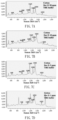
- FIGS. 7 A to 7 D are spectrums of dust mite antigen Der f1 extracted from a dust-simulating matrix (cotton wool) in dust mite antigen Der f1 standard solutions at different concentrations in TBE extract buffer;
- FIGS. 8 A to 8 D s are spectrums of dust mite antigen Der p1 extracted from a dust-simulating matrix (cotton wool) in dust mite antigen Der p1 standard solutions at different concentrations in TBE extract buffer;
- FIG. 9 A is a Raman spectrum of TBE extract buffer only
- FIG. 9 B is a Raman spectrum of the dust-simulating matrix processed by the TBE extract buffer
- FIG. 9 C is a Raman spectrum of the dust-simulating matrix added with the standard solution of dust mite antigen Der f1, and processed by the TBE extract buffer;
- FIG. 9 D is a Raman spectrum of the dust-simulating matrix added with the standard solution of dust mite antigen Der p1, and processed by the TBE extract buffer;
- FIG. 10 is a flow chart of a process for producing actual dust sample solution according to the preferred embodiment of the present invention.
- FIG. 11 A is a Raman spectrum of the actual dust sample processed by the TBE extract buffer
- FIG. 11 B is a Raman spectrum of the actual dust sample added with a dust mite antigen Der f1 internal label, and processed by the TBE extract buffer;
- FIG. 11 C is a Raman spectrum of the actual dust sample added with a dust mite antigen Der p1 internal label, and processed by the TBE extract buffer.
- a dust sample is collected, then, (b) dust mite antigens are extracted from the dust sample and cleaned up, and thereby (c) providing a to-be-examined sample.
- the to-be-examined sample is laid on a SERS chip without immunological modification, and a Raman spectrometer is used to impose SERS examination on the to-be-examined sample on the SERS chip to determine whether any certain dust mite antigens exist in the to-be-examined sample.
- the dust sample can be added with TBE extract buffer during the extraction of the to-be-examined sample from the dust sample to facilitate the determination of the to-be-examined sample.
- the Raman spectrometer builds the spectrum database at least for one standard dust mite antigen.
- the information of the database includes Raman spectrums and corresponding standard curves for the relationship between the characteristic peak signals and the concentrations.
- the Raman spectrum of the to-be-examined sample is referred with the Raman spectrum of the standard dust mite antigen to determine whether any dust mite antigen identical to the standard dust mite antigen exists in the to-be-examined sample, and the standard curve is used to calculate the concentration of the dust mite antigens in the to-be-examined sample if there is dust mite antigens determined identically to the standard dust mite antigen in the to-be-examined sample.
- nanogold is coated on an array structure of silver columns extending from a surface of the SERS chip.
- the system includes a SERS chip and a Raman spectrometer.
- the SERS chip is not subjected to immunological modification.
- the SERS chip is used to carry a to-be-examined sample.
- the Raman spectrometer is used to execute surface-enhanced Raman examination of the to-be-examined sample on the SERS chip.
- the Raman spectrometer builds the spectrum database at least for one standard dust mite antigen.
- the information of the database includes Raman spectrums and corresponding standard curves for the relationship between the characteristic peak signals and the concentrations.
- the Raman spectrum of the to-be-examined sample is referred with the Raman spectrum of the standard dust mite antigen to determine whether any dust mite antigen identical to the standard dust mite antigen exists in the to-be-examined sample, and the standard curve is used to calculate the concentration of the dust mite antigens in the to-be-examined sample if there is dust mite antigens determined identically to the standard dust mite antigen in the to-be-examined sample.
- standards of two common dust mite antigens Der p1 and Der f1 are used for the SERS determination and analysis to build the surface-enhanced Raman spectrum dataset and the standard curves for the relationship between the characteristic peak signals and the concentrations.
- concentrations of samples of the standard dust mite antigen are 1, 5, 10, 50, 100, 500 and 1000 ppm.
- cotton wool is used to simulate dust matrix and added with the standard dust mite antigen as an internal label. After preprocessing, i.e., using buffer solution and cleanup columns to soak and extract, the samples are dropped on the SERS chip without immunological modification, and the detection of the dust mite antigens can be executed and completed in 10 seconds.
- the Raman spectrometer is preferably Wasatch Photonics 785 L, with laser wavelength of 785 nm and a wave number of 350 to 2000 cm ⁇ 1 .
- the SERS chip used in the Raman spectrum determination includes nanogold coated on an array structure of silver columns extending from a surface of a glass film substrate made by glancing deposition. The thickness of the SERS chip is about 289 ⁇ 5 nm.
- the SERS examination is executed in the Raman system with a power of 100 mW, magnification of lens 4 ⁇ , integration time of 500 ms, spectrums overlapped for 16 times. Time for observation and recording is 15 seconds to 2 minutes.
- dust mite antigen standard solutions are produced.
- the amount of Der f1 recombinant protein (or Der p1 recombinant protein) is dissolved in dust mite antigen buffer solution, thereby providing a dust mite antigen standard.
- the dust mite antigen standard is diluted by deionized water, thereby the standard solutions of dust mite antigen at different concentrations are prepared.
- the Der f1 recombinant protein is ALR-004 provided by ProSpec, New Brunswick, N.J.
- the Der p1 recombinant protein is ALR-003 provided by the same company.
- the dust mite antigen buffer solution is mixture of 60 mM NaCl, 50 mM Tris-HCl, pH 8.0 and 1.2 M Urea with one another.
- the Der f1 recombinant protein (or Der p1 recombinant protein) is dissolved in the dust mite antigen buffer solution and diluted by deionized water to provide dust mite antigen standard solutions at 1 ppm, 5 ppm, 10 ppm, 50 ppm, 100 ppm, 500 ppm and 1000 ppm for example.
- FIGS. 2 A to 2 H and 3 A to 3 H Raman spectrums are made and used as benchmarks.
- FIGS. 2 A to 2 H show Raman shift of the standard solutions of dust mite antigen Der f1.
- FIGS. 3 A to 3 H show Raman shift of the standard solution of dust mite antigen Der p1.
- FIG. 4 or 5
- the strength of the Raman signal of the dust mite antigen reflects its concentration.
- blank-matrix sample solutions are produced.
- cotton wool is used as blank matrix to simulate an indoor dust sample referred to actual dust samples.
- FIG. 6 to produce the blank matrix samples, 0.01 gram of cotton wool is inserted in a glass bottle with a lining of 4 ml of brown polytetrafluoroethylene, and added with 1 ⁇ l of each of the standard solutions of dust mite antigen at different concentrations as internal labels, i.e., the blank matrix samples.
- the blank matrix samples are further subjected to preprocessing, and turned into blank matrix sample solutions to be used in the SERS determination.
- the processing of the blank matrix samples includes extraction, filtering, cleanup, blow-drying and condensation.
- each of the blank matrix samples is added with 500 ⁇ l of extract, and subjected to ultrasonic vibration for thorough extraction.
- the extract is TBE extract buffer that includes deionized water, tris borate buffer (pH 8.5), bicarbonate (pH 8.0), phosphate (pH 7.4) and NaCl.
- a syringe with an aperture of 0.22 ⁇ m in diameter is used to filter out impurities.
- cleanup columns are used to clean up the filtrate.
- the cleanup columns are filled with absorbents such as 1° or 2° amine (PSA), graphitized carbon black (GCB) and carbon-18 (C18) to effectively remove irrelevant substances and thoroughly clean up the solutions after the extraction.
- PSA 1° or 2° amine
- GCB graphitized carbon black
- C18 carbon-18
- FIGS. 7 A to 7 D are Raman spectrums of dust mite antigen Der f1 extracted from dust-simulating matrix (cotton wool) added with 1 ⁇ l of the standard solutions of dust mite antigen Der f1 at different concentrations (50 ppm, 10 ppm, 5 ppm and 1 ppm) and TBE extract buffer.
- FIGS. 8 A to 8 D are Raman spectrums of dust mite antigen Der p1 extracted from dust-simulating matrix (cotton wool) added with 1 ⁇ l of dust mite antigen Der p1 at different concentrations (50 ppm, 10 ppm, 5 ppm and 1 ppm) and TBE extract buffer.
- dust mite antigens can be detected even if the concentration of the standard solution of dust mite antigen is as low as 1 ppm, and this facilitates the monitoring of dust mites for asthma prevention.
- FIG. 9 A is a Raman spectrum of only TBE extract buffer, and this Raman spectrum is used as a background value.
- FIG. 9 B is a Raman spectrum of cotton wool added with TBE extract buffer without any internal label of dust mite antigen, and this Raman spectrum is used as a reference value.
- FIG. 9 C is a Raman spectrum of blank matrix sample solution added with 1 ⁇ l of the standard solution of dust mite antigen Der f1 (internal label) and TBE.
- FIG. 9 D is a Raman spectrum of blank matrix sample solution added with 1 ⁇ l of the standard solution of dust mite antigen Der f1 and TBE extract buffer.
- the TBE buffered extract does not affect the detection of the dust mite antigens in the dust-simulating matrix detection, and TBE extract buffer allows clear measurement of Raman signals of dust mite antigen Der f1 or dust mite antigen Der p1.
- actual dust is sampled, and the actual dust is used as matrix.
- 0.01 gram of dust is sampled, and filled in a glass bottle with a lining of 4 ml of brown polytetrafluoroethylene.
- the actual dust is further subjected to preprocessing to provide dust sample solution to be subjected to SERS detection.
- the preprocessing of the dust samples is substantially identical to the preprocessing of the blank matrix samples, and includes extraction, filtering, cleanup, blow-drying, and condensation. The preprocessing of the dust samples will be described as follows.
- the dust samples are added with 500 ⁇ l of TBE extract buffer, and subjected to ultrasonic vibration for thorough extraction.
- the TBE extract buffer includes deionized water, Tris borate buffer (pH 8.5), bicarbonate (pH 8.0), phosphate (pH 7.4) and NaCl.
- a syringe with an aperture of 0.22 ⁇ m in diameter is used for filtering out impurities.
- cleanup columns are used to clean up the filtered solution.
- the cleanup columns are filled with absorbents such as 1° or 2° amine (PSA), graphitized carbon black (GCB) and carbon-18 (C18) to effectively remove irrelevant substances and completely clean up the solutions after the extraction.
- PSA 1° or 2° amine
- GCB graphitized carbon black
- C18 carbon-18
- FIG. 11 A is a Raman spectrum of the dust sample solution added with the TBE.
- FIG. 11 B is a Raman spectrum of the dust sample solution added with an internal label of 1 ⁇ l of dust mite antigen Der f1 standard solution (1 ppm), and extracted with the TBE extract buffer.
- FIG. 11 C is a Raman spectrum of the dust sample solution added with an internal label of 1 ⁇ l of the standard solution of dust mite antigen Der p1 (1 ppm), and extracted with the TBE extract buffer.
- the Raman signals of dust mite antigen Der f1 or dust mite antigen Der p1 can clearly be detected, and the Raman signals of the dust mite in the dust are in compliance with the Raman signals of the internal label of dust mite antigen Der f1 or the Raman signals of the internal label of dust mite antigen Der p1.
Landscapes
- Health & Medical Sciences (AREA)
- Life Sciences & Earth Sciences (AREA)
- Immunology (AREA)
- Chemical & Material Sciences (AREA)
- Engineering & Computer Science (AREA)
- Molecular Biology (AREA)
- Physics & Mathematics (AREA)
- Biochemistry (AREA)
- Analytical Chemistry (AREA)
- General Health & Medical Sciences (AREA)
- Biomedical Technology (AREA)
- Hematology (AREA)
- Urology & Nephrology (AREA)
- Pathology (AREA)
- General Physics & Mathematics (AREA)
- Biotechnology (AREA)
- Microbiology (AREA)
- Organic Chemistry (AREA)
- Medicinal Chemistry (AREA)
- Food Science & Technology (AREA)
- Cell Biology (AREA)
- Proteomics, Peptides & Aminoacids (AREA)
- Wood Science & Technology (AREA)
- Zoology (AREA)
- Nuclear Medicine, Radiotherapy & Molecular Imaging (AREA)
- Tropical Medicine & Parasitology (AREA)
- Biophysics (AREA)
- Bioinformatics & Cheminformatics (AREA)
- General Engineering & Computer Science (AREA)
- Genetics & Genomics (AREA)
- Investigating, Analyzing Materials By Fluorescence Or Luminescence (AREA)
Abstract
Description
Claims (3)
Applications Claiming Priority (2)
| Application Number | Priority Date | Filing Date | Title |
|---|---|---|---|
| TW107117819A TWI686599B (en) | 2018-05-24 | 2018-05-24 | System and method for detection of dust mite antigens |
| TW107117819 | 2018-05-24 |
Publications (2)
| Publication Number | Publication Date |
|---|---|
| US20190360938A1 US20190360938A1 (en) | 2019-11-28 |
| US11719643B2 true US11719643B2 (en) | 2023-08-08 |
Family
ID=68614428
Family Applications (1)
| Application Number | Title | Priority Date | Filing Date |
|---|---|---|---|
| US16/422,178 Active 2042-06-08 US11719643B2 (en) | 2018-05-24 | 2019-05-24 | System and method for detection of dust mite antigens |
Country Status (2)
| Country | Link |
|---|---|
| US (1) | US11719643B2 (en) |
| TW (1) | TWI686599B (en) |
Families Citing this family (2)
| Publication number | Priority date | Publication date | Assignee | Title |
|---|---|---|---|---|
| CN113130008A (en) * | 2019-12-31 | 2021-07-16 | 科美诊断技术股份有限公司 | Test result determination method and device |
| CN113418905B (en) * | 2021-07-28 | 2023-04-21 | 中国药科大学 | Detection method of marine toxin GYM by surface-enhanced Raman spectroscopy based on cross-mesh silver nanowire AgNW |
Citations (4)
| Publication number | Priority date | Publication date | Assignee | Title |
|---|---|---|---|---|
| US7192703B2 (en) | 2003-02-14 | 2007-03-20 | Intel Corporation, Inc. | Biomolecule analysis by rolling circle amplification and SERS detection |
| US20110116089A1 (en) * | 2009-10-23 | 2011-05-19 | Michael Stenbaek Schmidt | Sers substrate and a method of providing a sers substrate |
| WO2013065016A1 (en) * | 2011-11-02 | 2013-05-10 | University Of Cape Town | A method of detecting and/or quantifying an analyte in a biological sample |
| TWM523295U (en) | 2015-09-04 | 2016-06-11 | Tanto Bio Co Ltd | Mite-trapping device |
Family Cites Families (4)
| Publication number | Priority date | Publication date | Assignee | Title |
|---|---|---|---|---|
| TWI409457B (en) * | 2008-06-16 | 2013-09-21 | Ind Tech Res Inst | Surface enhanced resonance raman scattering spectroscopy (serrs) nanoparticle probes and methods of use |
| EP2516995B1 (en) * | 2009-12-22 | 2016-10-26 | Agency For Science, Technology And Research | Sers-based analyte detection |
| CN104101591A (en) * | 2014-07-24 | 2014-10-15 | 江西农业大学 | Fast detection method for surface enhanced Raman scattering of trace pesticide residues in oranges |
| KR20170128342A (en) * | 2015-02-19 | 2017-11-22 | 이오니카 사이언시즈 | Reagents and methods for detecting infectious diseases |
-
2018
- 2018-05-24 TW TW107117819A patent/TWI686599B/en active
-
2019
- 2019-05-24 US US16/422,178 patent/US11719643B2/en active Active
Patent Citations (4)
| Publication number | Priority date | Publication date | Assignee | Title |
|---|---|---|---|---|
| US7192703B2 (en) | 2003-02-14 | 2007-03-20 | Intel Corporation, Inc. | Biomolecule analysis by rolling circle amplification and SERS detection |
| US20110116089A1 (en) * | 2009-10-23 | 2011-05-19 | Michael Stenbaek Schmidt | Sers substrate and a method of providing a sers substrate |
| WO2013065016A1 (en) * | 2011-11-02 | 2013-05-10 | University Of Cape Town | A method of detecting and/or quantifying an analyte in a biological sample |
| TWM523295U (en) | 2015-09-04 | 2016-06-11 | Tanto Bio Co Ltd | Mite-trapping device |
Non-Patent Citations (2)
| Title |
|---|
| Gartia et al ("Rigorous surface enhanced Raman spectral characterization of large-area high-uniformity silver-coted tapered silica nanopillar arrays", Nanotechnology, 21 (2010), 395701, p. 1-9) (Year: 2010). * |
| Shen et al ("Electrochemical aptasensor for detecting Der p2 allergen using polycarbonate-based double-generation gold nanoparticle chip", Sensing and Bio-Sensing Research 13 (2017), 75-80 (Year: 2017). * |
Also Published As
| Publication number | Publication date |
|---|---|
| TWI686599B (en) | 2020-03-01 |
| US20190360938A1 (en) | 2019-11-28 |
| TW202004167A (en) | 2020-01-16 |
Similar Documents
| Publication | Publication Date | Title |
|---|---|---|
| Obahiagbon et al. | A compact, low-cost, quantitative and multiplexed fluorescence detection platform for point-of-care applications | |
| JP4191051B2 (en) | Plasma or serum separator | |
| US12467915B2 (en) | Treated dried blood sample for detection of heavy metals in dried blood | |
| CA2442359A1 (en) | Optical biological measurement system using scraping means to collect the sample | |
| EA200801869A1 (en) | METHOD AND DEVICE OF BOTTOM SPECTROMETRY USING REJECTABLE OPTICAL FILTERS | |
| JP2005292112A (en) | Method and apparatus for detecting and imaging presence of biological material | |
| CN101036038A (en) | Multimodal method for identifying hazardous agents | |
| EP2233923A1 (en) | Method and apparatus for the characterisation of the coagulation dynamics or sedimentation of blood or blood serum | |
| US20190360938A1 (en) | System and method for detection of dust mite antigens | |
| CN112285090A (en) | Portable confocal unicellular Raman scattering detecting system | |
| WO2017016281A1 (en) | Method of detecting target molecule concentration | |
| JP2011152109A (en) | Method and apparatus for inspecting virus | |
| CN113281504A (en) | Novel immunochromatography detection device | |
| CN105628658A (en) | Optical detection system for bioaerosol and detection method | |
| US12188933B2 (en) | Tools for detecting cocoa swollen shoot virus coat protein antigen | |
| CN107505304A (en) | A kind of quick method for judging drug-resistant type Candida albicans | |
| EP0713089A2 (en) | Two-dimensional solid phase assay | |
| JP4714366B2 (en) | Specific microorganism weighing device | |
| JP4268358B2 (en) | Antibody and immunological assay | |
| CN112379089A (en) | New coronavirus detection method based on quantum dot microsphere immunochromatographic test strip | |
| JP4959330B2 (en) | Method and device for detecting very small amounts of particles | |
| JP2014178151A (en) | Microorganism detection method and apparatus using microsphere resonance sensor | |
| EP1350111A2 (en) | Detection of allergen-specific ige | |
| CN104020149A (en) | Establishment method for echinogorgia pseudossapo laser-Raman spectrum | |
| CN208140587U (en) | A kind of fiber Raman detection bacterium device based on SERS substrate |
Legal Events
| Date | Code | Title | Description |
|---|---|---|---|
| FEPP | Fee payment procedure |
Free format text: ENTITY STATUS SET TO UNDISCOUNTED (ORIGINAL EVENT CODE: BIG.); ENTITY STATUS OF PATENT OWNER: SMALL ENTITY |
|
| FEPP | Fee payment procedure |
Free format text: ENTITY STATUS SET TO SMALL (ORIGINAL EVENT CODE: SMAL); ENTITY STATUS OF PATENT OWNER: SMALL ENTITY |
|
| AS | Assignment |
Owner name: NATIONAL TSING HUA UNIVERSITY, TAIWAN Free format text: ASSIGNMENT OF ASSIGNORS INTEREST;ASSIGNORS:CHUANG, CHUN-YU;YEH, PIN-HSUAN;REEL/FRAME:049421/0266 Effective date: 20190515 |
|
| STPP | Information on status: patent application and granting procedure in general |
Free format text: DOCKETED NEW CASE - READY FOR EXAMINATION |
|
| AS | Assignment |
Owner name: NATIONAL TSING HUA UNIVERSITY, TAIWAN Free format text: CORRECTIVE ASSIGNMENT TO CORRECT THE LISTED ASSIGNOR'S NAMES AND ASSIGNMENT PAGES ATTACHED PREVIOUSLY RECORDED AT REEL: 049421 FRAME: 0266. ASSIGNOR(S) HEREBY CONFIRMS THE ASSIGNMENT;ASSIGNORS:CHUANG, CHUN-YU;YEH, PIN-HSUAN;TSEN, CHAO-MING;AND OTHERS;SIGNING DATES FROM 20190514 TO 20190520;REEL/FRAME:050229/0525 |
|
| AS | Assignment |
Owner name: NATIONAL TSING HUA UNIVERSITY, TAIWAN Free format text: ASSIGNMENT OF ASSIGNORS INTEREST;ASSIGNOR:PHANSCO;REEL/FRAME:050341/0651 Effective date: 20190730 |
|
| STPP | Information on status: patent application and granting procedure in general |
Free format text: NON FINAL ACTION MAILED |
|
| STPP | Information on status: patent application and granting procedure in general |
Free format text: RESPONSE TO NON-FINAL OFFICE ACTION ENTERED AND FORWARDED TO EXAMINER |
|
| STPP | Information on status: patent application and granting procedure in general |
Free format text: NON FINAL ACTION MAILED |
|
| STPP | Information on status: patent application and granting procedure in general |
Free format text: PUBLICATIONS -- ISSUE FEE PAYMENT VERIFIED |
|
| STCF | Information on status: patent grant |
Free format text: PATENTED CASE |