US11618784B2 - Anti-CD47 combination therapy - Google Patents
Anti-CD47 combination therapy Download PDFInfo
- Publication number
- US11618784B2 US11618784B2 US16/317,077 US201716317077A US11618784B2 US 11618784 B2 US11618784 B2 US 11618784B2 US 201716317077 A US201716317077 A US 201716317077A US 11618784 B2 US11618784 B2 US 11618784B2
- Authority
- US
- United States
- Prior art keywords
- antibody
- human
- synthetic
- attenuated
- tumor
- Prior art date
- Legal status (The legal status is an assumption and is not a legal conclusion. Google has not performed a legal analysis and makes no representation as to the accuracy of the status listed.)
- Active
Links
Images




Classifications
-
- A—HUMAN NECESSITIES
- A61—MEDICAL OR VETERINARY SCIENCE; HYGIENE
- A61P—SPECIFIC THERAPEUTIC ACTIVITY OF CHEMICAL COMPOUNDS OR MEDICINAL PREPARATIONS
- A61P39/00—General protective or antinoxious agents
-
- A—HUMAN NECESSITIES
- A61—MEDICAL OR VETERINARY SCIENCE; HYGIENE
- A61K—PREPARATIONS FOR MEDICAL, DENTAL OR TOILETRY PURPOSES
- A61K31/00—Medicinal preparations containing organic active ingredients
- A61K31/66—Phosphorus compounds
- A61K31/662—Phosphorus acids or esters thereof having P—C bonds, e.g. foscarnet, trichlorfon
- A61K31/663—Compounds having two or more phosphorus acid groups or esters thereof, e.g. clodronic acid, pamidronic acid
-
- A—HUMAN NECESSITIES
- A61—MEDICAL OR VETERINARY SCIENCE; HYGIENE
- A61K—PREPARATIONS FOR MEDICAL, DENTAL OR TOILETRY PURPOSES
- A61K38/00—Medicinal preparations containing peptides
- A61K38/16—Peptides having more than 20 amino acids; Gastrins; Somatostatins; Melanotropins; Derivatives thereof
- A61K38/17—Peptides having more than 20 amino acids; Gastrins; Somatostatins; Melanotropins; Derivatives thereof from animals; from humans
- A61K38/19—Cytokines; Lymphokines; Interferons
- A61K38/21—Interferons [IFN]
- A61K38/212—IFN-alpha
-
- A—HUMAN NECESSITIES
- A61—MEDICAL OR VETERINARY SCIENCE; HYGIENE
- A61K—PREPARATIONS FOR MEDICAL, DENTAL OR TOILETRY PURPOSES
- A61K39/00—Medicinal preparations containing antigens or antibodies
- A61K39/395—Antibodies; Immunoglobulins; Immune serum, e.g. antilymphocytic serum
- A61K39/39533—Antibodies; Immunoglobulins; Immune serum, e.g. antilymphocytic serum against materials from animals
- A61K39/39558—Antibodies; Immunoglobulins; Immune serum, e.g. antilymphocytic serum against materials from animals against tumor tissues, cells, antigens
-
- A—HUMAN NECESSITIES
- A61—MEDICAL OR VETERINARY SCIENCE; HYGIENE
- A61P—SPECIFIC THERAPEUTIC ACTIVITY OF CHEMICAL COMPOUNDS OR MEDICINAL PREPARATIONS
- A61P35/00—Antineoplastic agents
-
- A—HUMAN NECESSITIES
- A61—MEDICAL OR VETERINARY SCIENCE; HYGIENE
- A61P—SPECIFIC THERAPEUTIC ACTIVITY OF CHEMICAL COMPOUNDS OR MEDICINAL PREPARATIONS
- A61P35/00—Antineoplastic agents
- A61P35/02—Antineoplastic agents specific for leukemia
-
- C—CHEMISTRY; METALLURGY
- C07—ORGANIC CHEMISTRY
- C07K—PEPTIDES
- C07K14/00—Peptides having more than 20 amino acids; Gastrins; Somatostatins; Melanotropins; Derivatives thereof
- C07K14/435—Peptides having more than 20 amino acids; Gastrins; Somatostatins; Melanotropins; Derivatives thereof from animals; from humans
- C07K14/52—Cytokines; Lymphokines; Interferons
- C07K14/555—Interferons [IFN]
- C07K14/56—IFN-alpha
-
- C—CHEMISTRY; METALLURGY
- C07—ORGANIC CHEMISTRY
- C07K—PEPTIDES
- C07K16/00—Immunoglobulins [IGs], e.g. monoclonal or polyclonal antibodies
- C07K16/18—Immunoglobulins [IGs], e.g. monoclonal or polyclonal antibodies against material from animals or humans
- C07K16/28—Immunoglobulins [IGs], e.g. monoclonal or polyclonal antibodies against material from animals or humans against receptors, cell surface antigens or cell surface determinants
- C07K16/2803—Immunoglobulins [IGs], e.g. monoclonal or polyclonal antibodies against material from animals or humans against receptors, cell surface antigens or cell surface determinants against the immunoglobulin superfamily
-
- C—CHEMISTRY; METALLURGY
- C07—ORGANIC CHEMISTRY
- C07K—PEPTIDES
- C07K16/00—Immunoglobulins [IGs], e.g. monoclonal or polyclonal antibodies
- C07K16/18—Immunoglobulins [IGs], e.g. monoclonal or polyclonal antibodies against material from animals or humans
- C07K16/28—Immunoglobulins [IGs], e.g. monoclonal or polyclonal antibodies against material from animals or humans against receptors, cell surface antigens or cell surface determinants
- C07K16/2896—Immunoglobulins [IGs], e.g. monoclonal or polyclonal antibodies against material from animals or humans against receptors, cell surface antigens or cell surface determinants against molecules with a "CD"-designation, not provided for elsewhere
-
- A—HUMAN NECESSITIES
- A61—MEDICAL OR VETERINARY SCIENCE; HYGIENE
- A61K—PREPARATIONS FOR MEDICAL, DENTAL OR TOILETRY PURPOSES
- A61K39/00—Medicinal preparations containing antigens or antibodies
- A61K2039/505—Medicinal preparations containing antigens or antibodies comprising antibodies
-
- A—HUMAN NECESSITIES
- A61—MEDICAL OR VETERINARY SCIENCE; HYGIENE
- A61K—PREPARATIONS FOR MEDICAL, DENTAL OR TOILETRY PURPOSES
- A61K39/00—Medicinal preparations containing antigens or antibodies
- A61K2039/505—Medicinal preparations containing antigens or antibodies comprising antibodies
- A61K2039/507—Comprising a combination of two or more separate antibodies
-
- C—CHEMISTRY; METALLURGY
- C07—ORGANIC CHEMISTRY
- C07K—PEPTIDES
- C07K2317/00—Immunoglobulins specific features
- C07K2317/40—Immunoglobulins specific features characterized by post-translational modification
- C07K2317/41—Glycosylation, sialylation, or fucosylation
-
- C—CHEMISTRY; METALLURGY
- C07—ORGANIC CHEMISTRY
- C07K—PEPTIDES
- C07K2317/00—Immunoglobulins specific features
- C07K2317/70—Immunoglobulins specific features characterized by effect upon binding to a cell or to an antigen
- C07K2317/73—Inducing cell death, e.g. apoptosis, necrosis or inhibition of cell proliferation
- C07K2317/732—Antibody-dependent cellular cytotoxicity [ADCC]
-
- C—CHEMISTRY; METALLURGY
- C07—ORGANIC CHEMISTRY
- C07K—PEPTIDES
- C07K2317/00—Immunoglobulins specific features
- C07K2317/70—Immunoglobulins specific features characterized by effect upon binding to a cell or to an antigen
- C07K2317/76—Antagonist effect on antigen, e.g. neutralization or inhibition of binding
-
- C—CHEMISTRY; METALLURGY
- C07—ORGANIC CHEMISTRY
- C07K—PEPTIDES
- C07K2319/00—Fusion polypeptide
- C07K2319/70—Fusion polypeptide containing domain for protein-protein interaction
- C07K2319/74—Fusion polypeptide containing domain for protein-protein interaction containing a fusion for binding to a cell surface receptor
- C07K2319/75—Fusion polypeptide containing domain for protein-protein interaction containing a fusion for binding to a cell surface receptor containing a fusion for activation of a cell surface receptor, e.g. thrombopoeitin, NPY and other peptide hormones
Definitions
- the present invention relates to a combination therapy for the treatment of tumors.
- the combination comprises a first and second moiety where the two moieties function in conjunction to provide a heightened anti-tumor response.
- the first moiety is a polypeptide construct comprising an attenuated Type I interferon linked to an antibody which binds to a cell surface-associated antigen expressed on the tumor cell and the second moiety is an agent that reduces CD47 signaling.
- peptide and polypeptide molecules have been described to function by interacting with a receptor on a cell surface, and thereby stimulating, inhibiting, or otherwise modulating a biological response, usually involving signal transduction pathways inside the cell that bears the said receptor.
- Examples of such molecules include peptide and polypeptide hormones, cytokines, chemokines, growth factors, apoptosis-inducing factors and the like. These molecules can be either soluble or can be attached to the surface of another cell.
- peptide or polypeptide molecules have been approved by regulatory agencies as therapeutic products, including, for example, human growth hormone, insulin, interferon IFN ⁇ 2b, IFN ⁇ 2a, IFN ⁇ , IFN ⁇ , erythropoietin, G-CSF and GM-CSF. Many of these and other peptides have demonstrated potential in therapeutic applications, but have also exhibited toxicity when administered to human patients. One reason for toxicity is that most of these molecules trigger receptors on a variety of cells, including cells other than those that mediate the desired therapeutic effect.
- IFN ⁇ 2b when IFN ⁇ 2b is used to treat multiple myeloma its utility resides, at least in part, in its binding to type I interferon receptors on the myeloma cells, which in turn triggers reduced proliferation and hence limits disease progression.
- this IFN also binds to numerous other, normal cells within the body, triggering a variety of other cellular responses which are undesirable in the therapeutic setting, some of which are harmful (e.g. flu-like symptoms, neutropenia, depression).
- off target activity of peptides is that many peptides are not suitable as drug candidates.
- “off target activity” refers to activity on the peptide's natural receptor, but on the surface of cells other than those that mediate therapeutically beneficial effects.
- interferons in particular IFN ⁇
- IFN ⁇ interferons
- melanoma renal cell carcinoma
- B cell lymphoma multiple myeloma
- CML chronic myelogenous leukemia
- a “direct” effect of IFN ⁇ on the tumor cells is mediated by the IFN ⁇ binding directly to the type I IFN receptor on those cells and stimulating apoptosis, terminal differentiation or reduced proliferation.
- One “indirect” effect of IFN ⁇ on non-cancer cells is to stimulate the immune system, which may produce an additional anti-cancer effect by causing the immune system to reject the tumor.
- I interferon receptor is also present on most non-cancerous cells. Activation of this receptor on non-cancerous cells by an IFN ⁇ causes the expression of numerous pro-inflammatory cytokines and chemokines, leading to toxicity. Such toxicity prevents the dosing of IFN ⁇ to a subject at levels that exert the maximum anti-proliferative and pro-apoptotic activity on the cancer cells.
- Ozzello et al. (Breast Cancer Research and Treatment 25:265-76, 1993) described covalently attaching human IFN ⁇ to a tumor-targeting antibody, thereby localizing the direct inhibitory activity of IFN ⁇ to the tumor as a way of reducing tumor growth rates, and demonstrated that such conjugates have anti-tumor activity in a xenograft model of a human cancer.
- the mechanism of the observed anti-cancer activity was attributed to a direct effect of IFN ⁇ on the cancer cells, since the human IFN ⁇ used in the experiments did not interact appreciably with the murine type I IFN receptor, which could have led to an indirect anti-cancer effect. Because of this lack of binding of the human IFN ⁇ to the murine cells, however, the authors could not evaluate the toxicity of the antibody-IFN ⁇ conjugate relative to free IFN ⁇ . These authors used a chemical method to attach the IFN ⁇ to the antibody.
- IDEC discloses a direct fusion of human IFN ⁇ to the C terminus of the heavy chain of an IgG targeting the tumor antigen CD20.
- Other groups have disclosed the use of various linkers between the C-terminus of an IgG heavy chain and the IFN ⁇ . For example, U.S. Pat. No.
- 7,456,257 discloses that the C-terminus of an antibody heavy chain constant region may be connected to IFN ⁇ via an intervening serine-glycine rich (S/G) linker of the sequence (GGGGS) n , where n may be 1, 2 or 3 (SEQ ID NO: 539), and that there are no significant differences in the IFN ⁇ activity of the fusion protein construct regardless of linker length.
- S/G serine-glycine rich
- the decreased IFN activity of these fusion protein constructs was modest when compared to human non-fusion protein IFN ⁇ (free IFN ⁇ ) acting on human cells, but appeared to be more significant for murine IFN ⁇ on murine cells.
- the decrease in the activity of human IFN ⁇ that results from fusing it to the C-terminus of an antibody, as observed by Morrison et al, and in U.S. Pat. No. 7,456,257 is modest and is generally considered to be a disadvantage since it reduces potency of the IFN. This disadvantage was pointed out, for example, by Rossi et al (Blood vol. 114, No. 18, pp 3864-71), who used an alternative strategy of attaching the IFN ⁇ to a tumor targeting antibody in such a way that no loss in IFN ⁇ activity was observed.
- the prior art teaches to use a potent IFN and to target this IFN to cancer cells. While this approach results in an increase in activity of the IFN against cancer cells, it does not address the issue of activity of the IFN on normal “off-target” cells.
- the human IFN ⁇ portion of the antibody-IFN ⁇ fusion protein largely maintained the native IFN ⁇ activity when exposed to human cells that did not express the corresponding antigen on their cell surfaces. This maintenance of activity may lead to toxicity arising from the activation of non-cancerous, normal (“off target”) cells by the IFN ⁇ portion of the fusion protein.
- Macrophages are innate immune cells that reside in all tissues. In cancer, macrophages can promote or inhibit tumor growth depending on cellular signals. Characterization of subsets of macrophages has revealed at least 2 subsets; one subset, M2 macrophages, produces arginase and promotes tumor growth while another subset, M1 macrophages, produces nitrous oxide synthetase and mediates tumor killing. Macrophages can kill via antibody dependent mechanisms such as antibody-dependent cellular phagocytosis (ADCP) or antibody independent mechanisms.
- ADCP antibody-dependent cellular phagocytosis
- eat-me signals i.e. “altered self”, which can in turn be recognized by receptors on phagocytes such as neutrophils, monocytes and macrophages.
- Healthy cells may display “don't eat-me” signals that actively inhibit phagocytosis; these signals are either downregulated in the dying cells, are present in an altered conformation or they are superseded by the upregulation of “eat-me” or pro-phagocytic signals.
- SIRP ⁇ Signal Regulatory Protein ⁇
- CD47 is a broadly expressed transmembrane glycoprotein with a single Ig-like domain and five membrane spanning regions. CD47 functions as a cellular ligand for SIRP ⁇ , with binding mediated through the NH2-terminal V-like domain of SIRP ⁇ . SIRP ⁇ is expressed primarily on myeloid cells, including macrophages, granulocytes, myeloid dendritic cells (DCs), mast cells, and their precursors, including hematopoietic stem cells. Structural determinants on SIRP ⁇ that mediate CD47 binding are discussed by Lee et al. (2007) J. Immunol. 179:7741-7750; Hatherley et al. (2007) J.B.C.
- PCD Programmed cell death
- phagocytic cell removal are amongst the ways that an organism responds in order to remove damaged, precancerous, or infected cells.
- the cells that survive this organismal response e.g., cancerous cells, chronically infected cells, etc.
- CD47 the “don't eat me” signal, is constitutively upregulated on a wide variety of diseased cells, cancer cells, and infected cells, allowing these cells to evade phagocytosis.
- Anti-CD47 agents that block the interaction between CD47 on one cell e.g., a cancer cell, an infected cell, etc.
- SIRP ⁇ on another cell e.g., a phagocytic cell
- anti-CD47 agents can be used to treat and/or protect against a wide variety of conditions/disorders.
- the present invention provides a combination therapy for treating a tumor in a subject, the combination therapy comprising administration of (i) a polypeptide construct comprising an attenuated Type I interferon (IFN) linked to an antibody which binds to a cell surface-associated antigen expressed on the tumor cell and which comprises a functional Fc region and (ii) a CD47 antagonist which inhibits the interaction CD47 with the SIRP ⁇ receptor.
- a polypeptide construct comprising an attenuated Type I interferon (IFN) linked to an antibody which binds to a cell surface-associated antigen expressed on the tumor cell and which comprises a functional Fc region
- IFN attenuated Type I interferon
- components (i) and (ii) may be administered sequentially or simultaneously.
- the present invention provides a method of treating a tumor in a subject comprising using the combination therapy of the present invention.
- the present invention provides a composition comprising components (i) and (ii) of the combination therapy of the present invention in admixture.
- the present invention provides the use of components (i) and (ii) of the combination therapy of the present invention in the preparation of a medicament(s) for the treatment of a tumor.
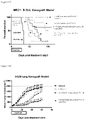
- FIG. 1 Graph of tumor volumes in an NCI-H929 myeloma xenograft model showing results of treatment with an anti-CD38-attenuated IFN ⁇ 2b fusion protein compared to an isotype control-attenuated IFN ⁇ 2b antibody (irrelevant antibody-attenuated IFN ⁇ 2b).
- Treatment with the anti-CD-38-IFN ⁇ 2b fusion protein eliminated the NCI-H929 tumors in 10 of 10 mice, while the activity of the control non-targeted attenuated IFN ⁇ 2b fusion protein showed little to no effect.
- FIG. 2 A Graph of tumor volumes in an NCI-H929 myeloma xenograft model showing results of treatment with an anti-CD38-attenuated IFN ⁇ 2b fusion protein compared to an isotype control-attenuated IFN ⁇ 2b antibody. Black arrows indicate the time points of treatments, and grey arrows indicate the time points for sampling of tumors for histological analysis.
- FIG. 2 B Graph of the scoring from histological analysis of tumor samples taken from the experiment shown in FIG. 2 A .
- NCI-H929 myeloma xenografts treated with anti-CD38-attenuated IFN ⁇ 2b fusion protein exhibited increased peripheral tumor CD45 + cell recruitment over time compared to controls.
- Each bar is a representative of a single mouse. Two mice were tested at each timepoint.
- FIG. 3 A Graph of tumor volumes in a 786-0 renal carcinoma xenograft model showing results of treatment with an anti-HLA-attenuated IFN ⁇ 2b fusion protein compared to vehicle administration. Black arrows indicate the time points of administration treatments, and grey arrows indicate the time points for sampling of tumors for histological analysis. Anti-HLA-attenuated IFN ⁇ 2b fusion protein showed no effect on tumor inhibition in this model.
- FIG. 3 B Graph of the scoring from histological analysis of tumor samples taken from the experiment shown in FIG. 3 A . Recruitment of CD45 + cells was much less pronounced in this model compared to the results obtained with anti-CD38-attenuated IFN ⁇ 2b fusion protein in the NCI-H929 myeloma xenograft model ( FIGS. 2 A and 2 B ). Each bar represents a single mouse.
- FIG. 4 Provides graphs with the results of experiments using these different immune-cell defective mouse strains in an NCI-H929 myeloma xenograft model.
- the graphs show NCI-H929 tumor volumes following treatment with anti-CD38-attenuated IFN ⁇ 2b fusion protein compared to vehicle.
- Treatments resulted in 10 of 10 animals cured in the SCID mouse strain, 2 of 10 animals cured in the NOD-SCID strain, and 0 of 10 in the NSG strain.
- FIG. 5 Graph of tumor volumes in an NCI-H929 myeloma xenograft model showing results of treatment with an anti-CD38-attenuated IFN ⁇ 2b fusion protein, or with an anti-CD38-attenuated IFN ⁇ 2b fusion protein in liposomal clodronate pre-treated animals compared to vehicle or liposomal clodronate pre-treatment alone.
- the addition of the macrophage-killing agent liposomal clodronate substantially inhibited tumor destruction by the anti-CD38-attenuated IFN ⁇ 2b fusion protein in this model.
- FIG. 6 Graph of tumor volumes in an NCI-H929 myeloma xenograft model showing results of treatment with an anti-CD38-attenuated IFN ⁇ 2b fusion protein compared to a non-glycosylated anti-CD38-attenuated IFN ⁇ 2b fusion protein in which the antibody Fc glycosylation site at N297 was removed by the substitution mutation N297A, compared to vehicle alone. Removal of the Fc glycosylation substantially reduced tumor destruction by the fusion protein in this model indicating the mechanism for tumor eradication likely includes a substantial contribution from antibody dependent cellular phagocytosis (ADCP).
- ADCP antibody dependent cellular phagocytosis
- FIG. 7 Graph of tumor volumes showing results of treatment with anti-CD38-attenuated IFN ⁇ 2b fusion protein alone (at a suboptimal dose), non-glycosylated anti-CD47 antibody alone, the combination of the two agents, or controls.
- Treatment with the combination of anti-CD38-attenuated IFN ⁇ 2b fusion protein (suboptimal dose) with non-glycosylated anti-CD47 antibody completely eliminated NCI-H929 tumors in 10 of 10 mice, while the activity of anti-CD38-attenuated IFN ⁇ 2b fusion protein alone at a suboptimal dose only moderately delayed tumor growth and was not curative.
- FIG. 8 Graph of tumor volumes in an RPMI 8226 multiple myeloma xenograft model showing results of treatment with an anti-CD38-attenuated IFN ⁇ 2b fusion protein (at a suboptimal dose), with CD47 blockade using a non-glycosylated anti-CD47 antibody, or a combination of anti-CD38-attenuated IFN ⁇ 2b fusion protein (suboptimal dose) and non-glycosylated anti-CD47 antibody, compared to vehicle or controls.
- FIG. 9 Graph of tumor volumes in an OPM-2 myeloma xenograft model showing results of treatment with an anti-CD38-attenuated IFN ⁇ 2b fusion protein, with CD47 blockade using a non-glycosylated anti-CD47 antibody, or a combination of anti-CD38-attenuated IFN ⁇ 2b fusion protein and non-glycosylated anti-CD47 antibody, compared to vehicle or controls.
- the combination of anti-CD38-attenuated IFN ⁇ 2b and CD47 blockade by non-glycosylated anti-CD47 antibody was more effective in ablating tumors (5 of 10 animals cured) than treatment with individual agents or combination of control agents.
- FIG. 10 Graph of tumor volumes in an A375 melanoma xenograft model showing results of treatment with an anti-HLA-attenuated IFN ⁇ 2b fusion protein, with CD47 blockade using a non-glycosylated anti-CD47 antibody, or a combination of the anti-HLA-attenuated IFN ⁇ 2b fusion protein and non-glycosylated anti-CD47 antibody, compared to vehicle.
- the combination of anti-HLA-attenuated IFN ⁇ 2b fusion protein and non-glycosylated anti-CD47 antibody was more effective in delaying growth of A375 tumors than treatment with individual agents.
- FIG. 11 Graph of tumor volumes in an ARP-1 refractory myeloma xenograft model showing results of treatment with an anti-CD38-attenuated IFN ⁇ 2b fusion protein, with CD47 blockade using a non-glycosylated anti-CD47 antibody, or a combination of anti-CD38-attenuated IFN ⁇ 2b fusion protein and non-glycosylated anti-CD47 antibody, compared to vehicle or controls.
- the combination of anti-CD38-attenuated IFN ⁇ 2b fusion protein and CD47 blockade by non-glycosylated anti-CD47 antibody was significantly more effective in ablating tumors (7 of 8 animals cured) than treatment with individual agents or combination of control agents.
- FIG. 12 Graph of tumor volumes in an ARP-1 refractory myeloma xenograft model with CD47 blockade provided by two different non-glycosylated anti-CD47 antibody clones (2A1 and 5F9) from the anti-CD47 antibody used in FIG. 11 .
- Results in this model show that treatment with an anti-CD38-attenuated IFN ⁇ 2b fusion protein combined with either of the two non-glycosylated anti-CD47 antibody clones (2A1 and 5F9) lead to complete tumor ablation in all animals (10 of 10 mice per group) compared to moderate or no effect on tumor growth by other treatments.
- FIG. 13 A Graph of tumor free survival (TFS) in a Hairy Cell (HC-1) leukemia xenograft model showing results of treatment with anti-CD38-attenuated IFN ⁇ 2b fusion protein, with anti-human HLA attenuated IFN ⁇ 2b fusion protein (universal target antibody), or with irrelevant antibody-attenuated IFN ⁇ 2b fusion protein.
- anti-CD38-attenuated IFN ⁇ 2b fusion protein (as a single agent) provided minimal impact on survival (10% TFS by day 33) compared to anti-HLA attenuated IFN ⁇ 2b fusion protein (100% TFS by day 33).
- FIG. 13 B Graph of tumor free survival (TFS) in a Hairy Cell (HC-1) leukemia xenograft model showing results of treatment with anti-CD38-attenuated IFN ⁇ 2b fusion protein in combination with non-glycosylated anti-CD47 antibody, compared to anti-human HLA attenuated IFN ⁇ 2b fusion protein (universal target antibody), anti-CD20 attenuated IFN ⁇ 2b fusion protein alone or in combination with non-glycosylated anti-CD47 antibody, or vehicle.
- TFS tumor free survival
- results in this model show that the combination of anti-CD38-attenuated IFN ⁇ 2b fusion protein with anti-CD47 antibody significantly improved survival (40% TFS by day 50) when compared to anti-CD38-attenuated IFN ⁇ 2b fusion protein alone in the previous experiment ( FIG. 13 A ).
- FIG. 14 Graph of tumor free survival (TFS) in a CCRF-CEM T ALL xenograft model showing results of treatment with anti-CD52-attenuated IFN ⁇ 2b fusion protein alone or in combination with non-glycosylated anti-CD47 antibody compared to treatments with control antibodies or vehicle. Results in this model show that the combination of anti-CD52-attenuated IFN ⁇ 2b fusion protein in combination with non-glycosylated anti-CD47 antibody lead to enhanced and prolonged survival (30% TFS by day 90) compared to individual agents or combination of control antibodies.
- TFS tumor free survival
- FIG. 15 Graph of tumor free survival (TFS) in a systemic B-cell chronic lymphocytic leukemia (B-CLL) tumor MEC1 B CLL xenograft model showing results of treatment with anti-HLA-attenuated IFN ⁇ 2b fusion protein alone or in combination with non-glycosylated anti-CD47 antibody, or anti-CD19 attenuated IFN ⁇ 2b fusion protein alone or with non-glycosylated anti-CD47 antibody compared to treatments with control antibodies or vehicle.
- B-CLL systemic B-cell chronic lymphocytic leukemia
- results in this model show that anti-HLA-attenuated IFN ⁇ 2b fusion protein therapy alone improved survival (50% TFS at day 90), however survival was greatly enhanced when anti-HLA-attenuated IFN ⁇ 2b fusion protein was combined with non-glycosylated anti-CD47 antibody (100% TFS at day 90). Survival was also moderately enhanced when anti-CD19 attenuated IFN ⁇ 2b fusion protein was combined with non-glycosylated anti-CD47 antibody compared to anti-CD19 attenuated IFN ⁇ 2b fusion protein alone.
- FIG. 16 Graph of tumor volumes in a NSCLC (H820) xenograft model showing results of treatment with anti-EpCAM-attenuated IFN ⁇ 2b fusion protein alone or in combination with non-glycosylated anti-CD47 antibody compared to anti-CD47 antibody alone or vehicle treatments.
- the combination of anti-EpCAM-attenuated IFN ⁇ 2b fusion protein with non-glycosylated anti-CD47 antibody provided enhanced tumor inhibition beyond that of human EpCAM-attenuated IFN ⁇ 2b fusion protein alone or anti-CD47 antibody alone.
- FIG. 17 A Graph of tumor volumes in an OPM2 myeloma xenograft model showing results of treatment with anti-CD38-attenuated IFN ⁇ 2b fusion protein alone or with non-glycosylated anti-CD47 antibody, non-glycosylated anti-CD47 antibody alone, or vehicle. Black arrows indicate the time points of treatments, and grey arrows indicate the time points for sampling of tumors for histological analysis. In this model, enhanced tumor inhibition was observed only in animals treated with the combined therapy of anti-CD38-attenuated IFN ⁇ 2b fusion protein with non-glycosylated anti-CD47 antibody.
- FIG. 17 B Graph of the scoring from histological analysis of tumor samples taken from the experiment shown in FIG. 17 A . Strong recruitment of CD45 + cells was observed in tumors treated with the combination of anti-CD38-attenuated IFN ⁇ 2b fusion protein with non-glycosylated anti-CD47 antibody compared to weak CD45 + cell recruitment by either agent alone or vehicle. Each bar is a representative of a single mouse.
- FIG. 18 A Graph of tumor volumes in an H929 myeloma xenograft model using NOD SCID mice showing results of treatment with anti-CD38-attenuated IFN ⁇ 2b fusion protein alone or with non-glycosylated anti-CD47 antibody, non-glycosylated anti-CD47 antibody alone, or vehicle. Black arrows indicate the time points of treatments, and grey arrows indicate the time points for sampling of tumors for histological analysis.
- FIG. 18 B Graph of the scoring from histological analysis of tumor samples taken from the experiment shown in FIG. 18 A . Strong recruitment of CD45 + cells was observed in tumors treated with the combination of anti-CD38-attenuated IFN ⁇ 2b fusion protein with non-glycosylated anti-CD47 antibody compared to weak CD45 + cell recruitment by either agent alone or vehicle. Each bar is a representative of a single mouse.
- an agent includes a single agent, as well as two or more agents
- reference to “a molecule” includes a single molecule, as well as two or more molecules; and so forth.
- components (i) and (ii) may be administered sequentially or simultaneously.
- the present invention provides a method of treating a tumor in a subject comprising using the combination therapy of the present invention.
- the attenuated Type I IFN is linked to the antibody via a peptide bond. This linkage may be direct or via a linker of 1 to 20 amino acids in length. Typically the attenuated Type I IFN will be linked to the C-terminus of the light chain or heavy chain constant region of the antibody.
- the attenuated IFN ⁇ may comprise an amino acid sequence selected from SEQ ID NOs 1 to 3, 80 to 90, 391 and 392. This sequence will also include at least one amino acid substitution or deletion which attenuates the IFN ⁇ activity.
- the attenuated IFN ⁇ 2b may also be aglycosylated attenuated IFN ⁇ 2b.
- the residue T106 of the aglycosylated attenuated IFN ⁇ 2b may be deleted or substituted with an amino acid other than T in order to remove a site of glycosylation when the IFN ⁇ 2b is produced in a mammalian cell.
- the cell surface-associated antigen is selected from the group consisting of CD38, CD138, RANK-Ligand, HM1.24, CD56, CS1, CD20, CD74, IL-6R, Blys (BAFF), BCMA, Kininogen, beta2 microglobulin, FGFR3, ICAM-1, matriptase, CD52, EGFR, GM2, alpha4-integrin, IFG-1R, KIR, CD3, CD4, CD8, CD24, CD30, CD37, CD44, CD69, CD71, CD79, CD83, CD86, CD96, HLA, PD-1, ICOS, CD33, CD115, CD11c, CD19, CD52, CD14, FSP1, FAP, PDGFR alpha, PDGFR beta, ASGR1, ASGR2, FSP1, LyPD3, RTI140/Ti-alpha, HTI56, VEGF receptor, CD241 the product of the RCHE gene, CD117 (c-kit), CD71 (transferrin receptor), CD24
- the cell surface-associated antigen is CD38.
- the V H sequence of the antibody is selected from the group consisting of SEQ ID Nos: 342, 344, 346, 504 and 511 and the V L sequence of the antibody is selected from the group consisting of SEQ ID Nos: 341, 343, 345, 505, 512 and 533; as well as related antibodies of any combination of the foregoing V H and V L sequences.
- An antibody that is a “related antibody” (which encompasses a “related antigen-binding fragment”) of a reference antibody encompasses antibodies (and antigen-binding fragments thereof) that: compete with the reference antibody for binding the target antigen (e.g., in some embodiments, competition for the same, overlapping, or adjacent epitopes), have the epitopic specificity of the reference antibody, comprise the complementarity determining regions (CDRs) of the reference antibody (in some embodiments, there may be up to 1, 2, 3, 4, or 5 conservative amino acid substitutions in the whole of the CDRs, or up to 1 or 2 conservative substitutions in each CDR), or comprise the variable heavy and variable light domains of the reference antibody (or may have at least 80, 85, 90, 95, 96, 97, 98, 99%, or more amino acid identity to the variable domains, where any amino acid changes are in the framework region and may be conservative or non-conservative).
- CDRs complementarity determining regions
- conservative substitutions are determined by BLASTp's default parameters, while, in other embodiments, conservative mutations are within class substitutions, where the classes are aliphatic (glycine, alanine, valine, leucine, isoleucine), hydroxyl or sulphur/selenium-containing (serine, cysteine, selenocysteine, threonine, methionine), cyclic (proline), armotaic (phenylalanine, tyrosine, tryptophan), basic (histidine, lysine, arginine), and acidic and amides (aspartate, glutamate, asparagine, glutamine).
- classes are aliphatic (glycine, alanine, valine, leucine, isoleucine), hydroxyl or sulphur/selenium-containing (serine, cysteine, selenocysteine, threonine, methionine), cyclic (
- V H sequence is SEQ ID NO:504 and the V L sequence is SEQ ID NO:535.
- sequence of the polypeptide construct is SEQ ID NO:532 and SEQ ID NO:533, or an amino acid sequence at least 80, 85, 90, 95, 96, 97, 98, 99%, or more identical to SEQ ID NO:532 and SEQ ID NO:533, preferably comprising the aforementioned mutations.
- the CD47 antagonist binds CD47 and inhibits its interaction with the SIRP ⁇ receptor.
- the CD47 antagonist may be an anti-CD47 antibody, preferably a human antibody or a humanized monoclonal antibody
- anti-CD47 antibodies include those disclosed in WO2017/053423, US 2013/0224188 and antibodies known as 5F9 (Wang et al, 2015, PLoS ONE 10(9): e0137345), ZF1 (Zeng et al, Oncotarget, 2016, Vol 7, 83040-8350), INBRX-103 (CC-90002) (Celgene), Hu5f9-G4 (Forty Seven Inc.), NI-1701 (Novimmune), NI-1801 (Novimmune), and SRF231 (Surface Oncology).
- sequence of the anti-CD47 antibody is provided in SEQ ID NO:509/510, 513/514, 515/516, 517/518, 519/520 and 509/534 and related antibodies.
- the CD47 antagonist may also be an anti-SIRP ⁇ antibody.
- Such an anti-SIRP ⁇ antibody may also be a human antibody or a humanized monoclonal antibody.
- An example of such an antibody is Effi-DEM (OSE Immunotherapeutics).
- the CD47 antagonist may be the extracellular domain of SIRP ⁇ .
- the extracellular domain of SIRP ⁇ may be attached to an Fc.
- An example of such a fusion protein is TTI-621 (Petrova et al, Clin Cancer Res, 2016; DOI: 10.1158/1078-0432.CCR-16-1700)
- Components (i) and (ii) of the combination therapy may be administered sequentially or simultaneously. If administration is sequential, either component (i) may be administered before component (ii), or component (ii) may be administered before component (i).
- the constructs of the present invention are antibody-attenuated aglycosylated IFN ⁇ 2b fusion constructs, which show an elevated antigen-selectivity index with respect to activating signaling pathways due to the action of both the antibody targeting to a cell surface receptor on a cell of interest and the attenuated IFN ⁇ 2b having reduced affinity to a cell surface IFN receptor.
- These constructs are based on the discovery outlined in WO 2013/059885 and are disclosed more fully in WO 2016/065409.
- the IFN portion is mutated in such a way that the IFN activity on antigen-negative cells is dramatically attenuated, while the IFN activity on antigen-positive cells is only modestly, if at all, attenuated.
- Such constructs display one, two, three, four or five orders of magnitude greater potency on antigen-positive cells compared to antigen negative cells.
- the antibody-attenuated IFN construct retains at least 1%, at least 10%, at least 20%, at least 30%, at least 40% or at least 50% of the potency on antigen-positive cells as the non-attenuated free (i.e. not attached to an antibody) IFN.
- the antibody-attenuated IFN construct retains at least 30%, at least 50%, at least 75% or at least 90% of the maximal activity of the non-attenuated free (i.e. not attached to an antibody) IFN; in this context, “maximal activity” should be understood as meaning the amount of signaling activity (or downstream effect thereof) at the high, plateau portion of a dose-response curve, where further increases in the agent does not further increase the amount of response).
- Type I interferons are IFN- ⁇ (alpha), which comes in various forms (IFN- ⁇ 1, IFN- ⁇ 2, IFN- ⁇ 4, IFN- ⁇ 5, IFN- ⁇ 6, IFN- ⁇ 7, IFN- ⁇ 8, IFN- ⁇ 10, IFN- ⁇ 13, IFN- ⁇ 14, IFN- ⁇ 16, IFN- ⁇ 17 and IFN- ⁇ 21), IFN- ⁇ (beta), IFN- ⁇ (kappa), IFN- ⁇ (delta), IFN- ⁇ (epsilon), IFN- ⁇ (tau), IFN- ⁇ (omega), and IFN- ⁇ (zeta, also known as limitin).
- the invention also contemplates the combination therapy of the present invention with other drugs and/or in addition to other treatment regimens or modalities such as radiation therapy or surgery.
- the constructs of the present invention are used in combination with known therapeutic agents the combination may be administered either in sequence (either continuously or broken up by periods of no treatment) or concurrently or as an admixture.
- anticancer agents that may be used in this context.
- Treatment in combination is also contemplated to encompass the treatment with either the construct of the invention followed by a known treatment, or treatment with a known agent followed by treatment with the construct of the invention, for example, as maintenance therapy.
- the constructs of the present invention may be administered in combination with an alkylating agent (such as mechlorethamine, cyclophosphamide, chlorambucil, ifosfamidecysplatin, or platinum-containing alkylating-like agents such as cysplatin, carboplatin and oxaliplatin), an antimetabolite (such as a purine or pyrimidine analogue or an antifolate agent, such as azathioprine and mercaptopurine), an anthracycline (such as Daunorubicin, Doxorubicin, Epirubicin Idarubicin, Valrubicin, Mitoxantrone, or anthracycline analog), a plant alkaloid (such as a vinca alkaloid or a taxane, such as Vincristine, Vinblastine, Vinorelbine, Vindesine, paclitaxel or Dosetaxel
- an alkylating agent such as mechlor
- anthracyclines are known to initiate an interferon response in breast tumor cells, inducing CXCL5 production and macrophage chemotaxis and activation.
- Tumor localized administration of IFN in combination with CD47 blockade is expected to increase the effectiveness of these agents.
- the combination of the present invention may be administered in combination with current therapies, such as steroids such as dexamethasone, proteasome inhibitors (such as bortezomib or carfilzomib), immunomodulatory drugs (such as thalidomide, lenalidomide or pomalidomide), with or without other chemotherapeutic agents such as Melphalan hydrochloride or the chemotherapeutic agents listed above.
- current therapies such as steroids such as dexamethasone, proteasome inhibitors (such as bortezomib or carfilzomib), immunomodulatory drugs (such as thalidomide, lenalidomide or pomalidomide), with or without other chemotherapeutic agents such as Melphalan hydrochloride or the chemotherapeutic agents listed above.
- non-Hodgkin's lymphoma or other lymphomas it is contemplated that the combination of the present invention may be administered in combination current therapeutic approaches.
- drugs approved for non-Hodgkin lymphoma include Abitrexate (Methotrexate), Adriamycin PFS (Doxorubicin Hydrochloride), Adriamycin RDF (Doxorubicin Hydrochloride), Ambochlorin (Chlorambucil), Amboclorin (Chlorambucil), Arranon (Nelarabine), Bendamustine Hydrochloride, Bexxar (Tositumomab and Iodine I 131 Tositumomab), Blenoxane (Bleomycin), Bleomycin, Bortezomib, Chlorambucil, Clafen (Cyclophosphamide), Cyclophosphamide, Cytoxan (Cyclophosphamide), Denileukin Diftitox, Dep
- Retinoids are a family of molecules that play a major role in many biological functions including growth, vision, reproduction, epithelial cell differentiation and immune function (Meyskens, F. et al. Crit Rev Oncol Hematol 3:75, 1987, Herold, M. et al. Acta Dermatovener 74:29 1975).
- ATRA retinol all-trans retinoic acid
- Mehta Mol Cancer Ther 3(3):345-52, 2004
- the enhanced efficacy of interferon plus the induced expression of the target CD38 would indicate a combination therapy of ATRA with our anti-CD38 antibody-attenuated IFN ⁇ in the treatment of IFN-sensitive cancers that express CD38 or may be induced by ATRA to express CD38.
- Examples of such cancers are multiple myeloma, non-Hodgkin's lymphoma, CML and AML.
- Type I IFNs can have anti-cancer activity based on a direct stimulation of the type I IFN receptor on cancer cells. This has been shown for numerous types of cancer including multiple myeloma, melanoma, B cell lymphoma, non-small cell lung cancer, renal cell carcinoma, hairy cell leukemia, chronic myelogenous leukemia, ovarian cancer, fibrosarcoma, cervical cancer, bladder cancer, astrocytoma, pancreatic cancer, etc (Borden, Cancer Research 42:4948-53, 1982; Chawla-Sarkar, Clinical Cancer Research 7: 1821-31, 2001; Morgensen, Int J.
- signaling ligands are also known in the art and may, as described in the non-limiting exemplary embodiments above, be attenuated and attached to an antibody that binds to an antigen on specific target cells, thereby allowing the ligand to generate its biological signal on those target cells to a much greater degree than it generates its signal on antigen-negative cells.
- ligands that have a tumorigenic macrophage induction or stimulation activity include TNF ⁇ , Fas Ligand, IFN ⁇ , IFN ⁇ or IFN ⁇ , which can be targeted to various tumor cell surface antigens as discussed above for IFN ⁇ and combined with CD47 blockade.
- antibody broadly refers to any immunoglobulin (Ig) molecule comprised of four polypeptide chains, two heavy (H) chains and two light (L) chains, or any functional fragment, mutant, variant, or derivation thereof, which retains the essential epitope-binding features of an Ig molecule.
- Ig immunoglobulin
- Such mutant, variant, or derivative antibody formats are known in the art, non-limiting embodiments of which are discussed below.
- each heavy chain is comprised of a heavy chain variable region (abbreviated herein as HCVR or V H ) and a heavy chain constant region.
- the heavy chain constant region is comprised of three domains, CH1, CH2 and CH3.
- Each light chain is comprised of a light chain variable region (abbreviated herein as LCVR or V L ) and a light chain constant region.
- the light chain constant region is comprised of one domain, CL, which in humans may be of either the ⁇ or ⁇ class.
- the V H and V L regions can be further subdivided into regions of hypervariability, termed complementarity determining regions (CDR), interspersed with regions that are more conserved, termed framework regions (FR).
- CDR complementarity determining regions
- Each V H and V L is composed of three CDRs and four FRs, arranged from amino-terminus to carboxy-terminus in the following order: FR1, CDR1, FR2, CDR2, FR3, CDR3, FR4.
- Immunoglobulin molecules can be of any type (e.g., IgG, IgE, IgM, IgD, IgA and IgY), class (e.g., IgG1, IgG2, IgG3, IgG4, IgA1 and IgA2) or subclass.
- antigen binding domain or “antigen binding portion” of an antibody, as used herein, refers to one or more fragments of an antibody or protein that retain the ability to specifically bind to an antigen (e.g., CD38). It has been shown that the antigen-binding function of an antibody can be performed by fragments of a full-length antibody. Such antibody embodiments may also be bispecific, dual specific, or multi-specific formats, specifically binding to two or more different antigens.
- binding fragments encompassed within the term “antigen-binding portion” of an antibody include (i) a Fab fragment, a monovalent fragment consisting of the V L , V H , C L and CH1 domains; (ii) a F(ab′)2 fragment, a bivalent fragment comprising two Fab fragments in addition to a portion of the hinge region, linked by a disulfide bridge at the hinge region; (iii) an Fd fragment consisting of the V H and CH1 domains; (iv) an Fv fragment consisting of the V L and V H domains of a single arm of an antibody, (v) a domain antibody (dAb) (Ward et al.
- V L and V H are coded for by separate genes, they can be joined, using recombinant methods, by a synthetic linker that enables them to be made as a single protein chain in which the V L and V H regions pair to form monovalent molecules (known as single chain Fv (scFv); see e.g., Bird et al. 1988 Science 242 423-6; Huston et al. 1988 Proc Natl Acad Sci USA 85 5879-83).
- scFv single chain Fv
- single chain antibodies are also intended to be encompassed within the term “antigen-binding portion” of an antibody.
- Other forms of single chain antibodies, such as diabodies, are also encompassed.
- Diabodies are bivalent, bispecific antibodies in which V H and V L domains are expressed on a single polypeptide chain, but using a linker that is too short to allow for pairing between the two domains on the same chain, thereby forcing the domains to pair with complementary domains of another chain and creating two antigen binding sites (see e.g., Holliger, P., et al., 1993, Proc. Natl. Acad. Sci. USA 90:6444-6448; Poljak, R. J., et al., 1994, Structure 2:1121-1123).
- Such antibody binding portions are known in the art (Kontermann and Dubel eds., Antibody Engineering 2001 Springer-Verlag. New York. 790 pp., ISBN 3-540-41354-5).
- the antibody binding portion is a
- the antibody described herein may be a humanized antibody.
- humanized antibody shall be understood to refer to a protein comprising a human-like variable region, which includes CDRs from an antibody from a non-human species (e.g., mouse or rat or non-human primate) grafted onto or inserted into FRs from a human antibody (this type of antibody is also referred to a “CDR-grafted antibody”).
- Humanized antibodies also include proteins in which one or more residues of the human protein are modified by one or more amino acid substitutions and/or one or more FR residues of the human protein are replaced by corresponding non-human residues. Humanized antibodies may also comprise residues which are found in neither the human antibody or in the non-human antibody.
- Any additional regions of the protein are generally human. Humanization can be performed using a method known in the art, e.g., U.S. Pat. Nos. 5,225,539, 6,054,297, 7,566,771 or U.S. Pat. No. 5,585,089.
- the term “humanized antibody” also encompasses a super-humanized antibody, e.g., as described in U.S. Pat. No. 7,732,578.
- the antibody described herein may be human.
- human antibody refers to proteins having variable and, optionally, constant antibody regions found in humans, e.g. in the human germline or somatic cells or from libraries produced using such regions.
- the “human” antibodies can include amino acid residues not encoded by human sequences, e.g. mutations introduced by random or site directed mutations in vitro (in particular mutations which involve conservative substitutions or mutations in a small number of residues of the protein, e.g. in 1, 2, 3, 4 or 5 of the residues of the protein).
- human antibodies do not necessarily need to be generated as a result of an immune response of a human, rather, they can be generated using recombinant means (e.g., screening a phage display library) and/or by a transgenic animal (e.g., a mouse) comprising nucleic acid encoding human antibody constant and/or variable regions and/or using guided selection (e.g., as described in or U.S. Pat. No. 5,565,332). This term also encompasses affinity matured forms of such antibodies.
- a human protein will also be considered to include a protein comprising FRs from a human antibody or FRs comprising sequences from a consensus sequence of human FRs and in which one or more of the CDRs are random or semi-random, e.g., as described in U.S. Pat. No. 6,300,064 and/or U.S. Pat. No. 6,248,516.
- the antibody portions of polypeptides of the present invention may be full length antibodies of any class, preferably IgG1, IgG2 or IgG4.
- the constant domains of such antibodies are preferably human.
- the variable regions of such antibodies may be of non-human origin or, preferably, be of human origin or be humanized.
- Antibody fragments may also be used in place of the full length antibodies.
- antibody also includes engineered antibodies. As will be appreciated there are many variations of engineered antibodies (e.g. mouse monoclonal, chimeric, humanized and human monoclonal antibodies, single chain variable antibody fragments (scFvs), minibodies, aptamers, as well as bispecific antibodies and diabodies as described above).
- engineered antibodies e.g. mouse monoclonal, chimeric, humanized and human monoclonal antibodies, single chain variable antibody fragments (scFvs), minibodies, aptamers, as well as bispecific antibodies and diabodies as described above).
- dAbs Single variable region domains
- Minibodies are small versions of whole antibodies, which encode in a single chain the essential elements of a whole antibody.
- the minibody is comprised of the VH and VL domains of a native antibody fused to the hinge region and CH3 domain of the immunoglobulin molecule as, for example, disclosed in U.S. Pat. No. 5,837,821.
- the antibody portion of a polypeptide construct provided by the invention may comprise non-immunoglobulin derived, protein frameworks.
- non-immunoglobulin derived, protein frameworks For example, reference may be made to (Ku & Schutz, 1995, Proc. Natl. Acad. Sci. USA 92: 6552-6556) which discloses a four-helix bundle protein cytochrome b562 having two loops randomized to create CDRs, which have been selected for antigen binding.
- Additional non-immunoglobulin scaffolds known in the art include small modular immunopharmaceuticals (see, e.g., U.S. Patent Application Publication Nos.
- Molecules based on non-immunoglobulin scaffolds are generally produced by in vitro selection of libraries by phage display, ribosome display, or other techniques known in the art to identify high-affinity binding sequences.
- ADCC antibody-dependent cell-mediated cytotoxicity
- CDC complement-dependent cytotoxicity
- ADCP antibody dependent cellular phagocytosis
- serum half-life biodistribution and binding to Fc receptors or the combination of any of these.
- This modulation can be achieved by protein-engineering, glyco-engineering or chemical methods. Depending on the therapeutic application required, it could be advantageous to either increase or decrease any of these activities.
- glyco-engineering uses the Potelligent® method as described in Shinkawa T. et al., 2003 (J Biol Chem 278: 3466-73).
- Mutagenesis is often performed at the DNA level, for example by error prone PCR (Thie, Voedisch et al. 2009, Methods Mol Biol 525: 309-322), by gene shuffling (Kolkman and Stemmer 2001, Nat Biotechnol. May; 19(5):423-8), by use of mutagenic chemicals or irradiation, by use of ‘mutator’ strains with error prone replication machinery (Greener 1996, In Vitro Mutagenesis Protocols.
- Mutagenesis can also be performed at the RNA level, for example by use of Q ⁇ replicase (Kopsidas, Roberts et al. 2006, Immunol Lett. 2006 Nov. 15; 107(2):163-8).
- Library-based methods allowing screening for improved variant proteins can be based on various display technologies such as phage, yeast, ribosome, bacterial or mammalian cells, and are well known in the art (Benhar 2007, Expert Opin Biol Ther. May; 7(5): 763-79).
- Affinity maturation can be achieved by more directed/predictive methods for example by site-directed mutagenesis or gene synthesis guided by findings from 3D protein modeling (see for example Queen, Schneider et al. 1989, PNAS, 86(24): 10029-33 or U.S. Pat. No. 6,180,370 or 5,225,539).
- Mutations may also be made in the Fc region that enhance binding to Fc ⁇ RIIa which enhance macrophage phagocytosis of tumor cells. These include S239D, I332E and G236A. (Richards, J. et al. 2008 Mol. Canc. Ther. Vol. 8, pp: 2517.)
- Petkova et al have described constant domain amino acid substitutions at positions 307, 380 and 434 that confer increased in vivo half-life (Petkova, Akilesh et al. 2006, Int Immunol; 18:1759-69). See also Shields et al 2001, J Biol Chem; 276:6591-604 and WO 2000/42072.
- PEG polyethylene glycol
- conservative amino acid substitutions are meant amino acids having similar properties.
- the following groups of amino acids are to be seen as conservative substitutions: H, R and K; D, E, N and Q; V, I and L; C and M; S, T, P, A and G; and F, Y and W. It is not intended, however, that substitutions other than those specifically recited are made at the sites of attenuation and/or glycosylation.
- the combination of the present invention comprises a CD47 antagonist.
- the CD 47 antagonist represses the binding of CD47 to SIRP ⁇ .
- SIRP ⁇ a number of molecules which are known to antagonise the binding of CD47 to SIRP ⁇ . A number of these molecules are disclosed in the following references which are included herein by cross reference:
- the CD47 antagonist is an antibody, preferably a monoclonal antibody. In some embodiments the anti-CD47 antibody lacks effector function.
- Non-glycosylated There are various ways known in the art to remove effector function.
- One is replacement of the N-linked glycosylation site on residue N297 to another residue, such as alanine (as shown in the examples and designated “non-glycosylated”).
- Other methods include making an antibody (which includes N297) in a cellular host that does not glycosylate N297 (e.g. in E. coli ).
- Another way is to use an antigen-binding antibody fragment (Fab, Fab′2, scFv, Fv, etc) in which relevant effector function portions of the Fc are removed.
- Another way is to remove the glycosylation on residue N297 with a glycosidase such as PNGase F.
- Other ways of removing effector function are inclusion of one or more of various known Fc mutations that obliterate binding to various Fc ⁇ receptors.
- the antibody comprises a heavy chain of SEQ ID NO:510 or 534 and a light chain of SEQ ID NO:509.
- the anti-CD47 antibody is non-glycosylated.
- An exemplary non-glycosylated antibody sequence is shown in SEQ ID NOS: 509 and 534.
- the combination or compositions of the present invention is used to treat patients with cancer.
- Cancers contemplated herein include: a group of diseases and disorders that are characterized by uncontrolled cellular growth (e.g. formation of tumor) without any differentiation of those cells into specialized and different cells.
- Such diseases and disorders include ABL1 protooncogene, AIDS related cancers, acoustic neuroma, acute lymphocytic leukaemia, acute myeloid leukaemia, adenocystic carcinoma, adrenocortical cancer, agnogenic myeloid metaplasia, alopecia, alveolar soft-part sarcoma, anal cancer, angiosarcoma, aplastic anaemia, astrocytoma, ataxia-telangiectasia, basal cell carcinoma (skin), bladder cancer, bone cancers, bowel cancer, brain stem glioma, brain and CNS tumors, breast cancer, carcinoid tumors, cervical cancer, childhood brain tumors, childhood cancer, childhood leukaemia, childhood soft tissue sarcoma, chondrosarcoma, choriocarcinoma, chronic lymphocytic leukaemia, chronic myeloid leukaemia, colorectal cancers, cutaneous T-Cell lymph
- the antibody portions of the polypeptide constructs of the combination of the present invention may bind to tumour-associated antigens, i.e., cell surface antigens that are selectively expressed by cancer cells or over-expressed in cancer cells relative to most normal cells.
- tumour-associated antigens i.e., cell surface antigens that are selectively expressed by cancer cells or over-expressed in cancer cells relative to most normal cells.
- TAAs tumour-associated antigens
- Non-limiting examples of TAAs include enzyme tyrosinase; melanoma antigen GM2; alphafetoprotein (AFP); carcinoembryonic antigen (CEA); Mucin 1 (MUC1); Human epidermal growth factor receptor (Her2/Neu); T-cell leukemia/lymphoma 1 (TCL1) oncoprotein.
- TAAs associated with a number of different cancers are telomerase (hTERT); prostate-specific membrane antigen (PSMA); urokinase plasminogen activator and its receptor (uPA/uPAR); vascular endothelial growth factor and its receptor (VEGF/VEGFR); extracellular matrix metalloproteinase inducer (EMMPRIN/CD147); epidermal growth factor (EGFR); platelet-derived growth factor and its receptor (PDGF/PDGFR) and c-kit (CD117).
- hTERT telomerase
- PSMA prostate-specific membrane antigen
- uPA/uPAR urokinase plasminogen activator and its receptor
- VEGF/VEGFR vascular endothelial growth factor and its receptor
- EMMPRIN/CD147 extracellular matrix metalloproteinase inducer
- EGFR epidermal growth factor
- PDGF/PDGFR platelet-derived growth factor and its receptor
- CD117 c-
- TAAs A list of other TAAs is provided in US 2010/0297076, the disclosure of which is included herein by reference.
- cell surface antigens associated with multiple myeloma leukemia or lymphoma cells including but not limited to CD38, CD138, CD79, CS1, and HM1.24.
- an antigen for ligand-attenuated IFN constructs for example, an antibody-attenuated interferon construct, is CD38.
- CD38 is a 46 kDa type II transmembrane glycoprotein. It has a short N-terminal cytoplasmic tail of 20 amino acids, a single transmembrane helix and a long extracellular domain of 256 amino acids (Bergsagel, P., Blood; 85:436, 1995 and Liu, Q., Structure, 13:1331, 2005). It is expressed on the surface of many immune cells including CD4 and CD8 positive T cells, B cells, NK cells, monocytes, plasma cells and on a significant proportion of normal bone marrow precursor cells (Malavasi, F., Hum. Immunol. 9:9, 1984). In lymphocytes, however, the expression appears to be dependent on the differentiation and activation state of the cell.
- CD38 is a multifunctional ectoenzyme that is involved in transmembrane signaling and cell adhesion. It is also known as cyclic ADP ribose hydrolase because it can transform NAD + and NADP + into cADPR, ADPR and NAADP, depending on extracellular pH. These products induce Ca 2+ -mobilization inside the cell which can lead to tyrosine phosphorylation and activation of the cell.
- CD38 is also a receptor that can interact with a ligand, CD31. Activation of receptor via CD31 leads to intracellular events including Ca 2+ mobilization, cell activation, proliferation, differentiation and migration (reviewed in Deaglio, S., Trends in Mol. Med. 14:210, 2008.)
- CD38 is expressed at high levels on multiple myeloma cells, in most cases of T- and B-lineage acute lymphoblastic leukemias, some acute myelocytic leukemias, follicular center cell lymphomas and T lymphoblastic lymphomas. (Malavasi, F., J. Clin Lab Res. 22:73, 1992). More recently, CD38 expression has become a reliable prognostic marker in B-lineage chronic lymphoblastic leukemia (B-CLL) (Ibrahim, S., Blood. 98:181, 2001 and Durig, J., Leuk. Res. 25:927, 2002).
- B-CLL B-lineage chronic lymphoblastic leukemia
- Examples of antibodies targeting CD38 are provided in U.S. Pat. No. 7,829,672, US2009/0123950, US2009/304710, WO 2012/092612, WO 2014/178820, and US2002/0164788.
- the disclosure of each these references is included herein by cross-reference.
- the present extends to the use of the anti-CD38 antibodies disclosed in these references, with or without an attenuated polypeptide signalling ligand, together with a CD47 antagonist in the treatment of tumors in a subject.
- Of particular interest are the range of anti-CD38 antibodies disclosed in WO 2014/178820.
- Antigens other than CD38 are well known in the art and non-protein examples of such antigens include, sphingolipids, ganglioside GD2 (Saleh et al., 1993, J. Immunol., 151, 3390-3398), ganglioside GD3 (Shitara et al., 1993, Cancer Immunol. Immunother. 36:373-380), ganglioside GM2 (Livingston et al., 1994, J. Clin. Oncol. 12:1036-1044), ganglioside GM3 (Hoon et al., 1993, Cancer Res.
- Lewis x , lewis y and lewis xy carbohydrate antigens that can be displayed on proteins or glycolipids.
- protein antigens are HER-2/neu, human papillomavirus-E6 or -E7, MUC-1; KS 1/4 pan-carcinoma antigen (Perez and Walker, 1990, J. Immunol. 142:3662-3667; Bumal, 1988, Hybridoma 7(4):407-415); ovarian carcinoma antigen CA125 (Yu et al., 1991, Cancer Res. 51(2):468-475); prostatic acid phosphate (Tailor et al., 1990, Nucl. Acids Res.
- prostate specific antigen Henttu and Vihko, 1989, Biochem. Biophys. Res. Comm. 160(2):903-910; Israeli et al., 1993, Cancer Res. 53:227-230; melanoma-associated antigen gp97 (Estin et al., 1989, J. Natl. Cancer Instit. 81(6):445-446); melanoma antigen gp75 (Vijayasardahl et al., 1990, J. Exp. Med. 171(4):1375-1380); prostate specific membrane antigen; carcinoembryonic antigen (CEA) (Foon et al., 1994, Proc. Am. Soc.
- CEA carcinoembryonic antigen
- MUC16 antibodies include MJ-170, MJ-171, MJ-172 and MJ-173 [U.S. Pat. No. 7,202,346], 3A5 [U.S. Pat. No. 7,723,485]).
- NMB U.S. Pat. No. 8,039,593
- malignant human lymphocyte antigen-APO-1 Bernhard et al., 1989, Science 245:301-304
- high molecular weight melanoma antigen HMW-MAA
- differentiation antigens such as human lung carcinoma antigen L6 or L20 (Hellstrom et al., 1986, Cancer Res. 46:3917-3923); antigens of fibrosarcoma; human leukemia T cell antigen-Gp37 (Bhattacharya-Chatterjee et al., 1988, J. Immunol.
- tumor-specific transplantation type of cell-surface antigen such as virally-induced tumor antigens including T-antigen, DNA tumor virus and envelope antigens of RNA tumor viruses; neoglycoproteins, breast cancer antigens such as EGFR (Epidermal growth factor receptor), polymorphic epithelial mucin (PEM) (Hilkens et al., 1992, Trends in Bio. Chem. Sci. 17:359); polymorphic epithelial mucin antigen; human milk fat globule antigen; colorectal tumor-associated antigens such as TAG-72 (Yokata et al., 1992, Cancer Res.
- TSTA tumor-specific transplantation type of cell-surface antigen
- virally-induced tumor antigens including T-antigen, DNA tumor virus and envelope antigens of RNA tumor viruses
- neoglycoproteins such as EGFR (Epidermal growth factor receptor), polymorphic epithelial mucin (PEM) (
- HMW-MAA (SEQ ID NO:390), also known as melanoma chondroitin sulfate proteoglycan, is a membrane-bound protein of 2322 residues which is overexpressed on over 90% of the surgically removed benign nevi and melanoma lesions (Camploi, et. al, Crit Rev Immunol.; 24:267, 2004). Accordingly it may be a potential target cell surface associated antigen.
- cancer antigens for targeting with fusion protein constructs of the combination of the present invention include (exemplary cancers are shown in parentheses): CD5 (T-cell leukemia/lymphoma), CA15-3 (carcinomas), CA19-9 (carcinomas), L6 (carcinomas), CA 242 (colorectal), placental alkaline phosphatase (carcinomas), prostatic acid phosphatase (prostate), MAGE-1 (carcinomas), MAGE-2 (carcinomas), MAGE-3 (carcinomas), MAGE-4 (carcinomas), transferrin receptor (carcinomas), p97 (melanoma), MUC1 (breast cancer), MARTI (melanoma), CD20 (non Hodgkin's lymphoma), CD52 (leukemia), CD33 (leukemia), human chorionic gonadotropin (carcinoma), CD38 (multiple myeloma), CD21 (B-cell lymphoma), CD22 (lymphoma), CD25
- Some specific, useful antibodies include, but are not limited to, BR64 (Trail et al., 1997, Cancer Research 57:100 105), BR96 mAb (Trail et al., 1993, Science 261:212-215), mAbs against the CD40 antigen, such as S2C6 mAb (Francisco et al., 2000, Cancer Res. 60:3225-3231) or other anti-CD40 antibodies, such as those disclosed in U.S. Patent Publication Nos. 2003-0211100 and 2002-0142358; mAbs against the CD30 antigen, such as AC10 (Bowen et al., 1993, J. Immunol. 151:5896-5906; Wahl et al., 2002 Cancer Res.
- mAbs against the CD70 antigen such as 1F6 mAb and 2F2 mAb (see, e.g., U.S. Patent Publication No. 2006-0083736) or antibodies 2H5, 10B4, 8B5, 18E7, 69A7 (U.S. Pat. No. 8,124,738).
- Other antibodies have been reviewed elsewhere (Franke et al., 2000, Cancer Biother. Radiopharm. 15:459 76; Murray, 2000, Semin. Oncol. 27:64 70; Breitling, F., and Dubel, S., Recombinant Antibodies, John Wiley, and Sons, New York, 1998).
- useful antibodies can bind to a receptor or a complex of receptors expressed on a target cell.
- the receptor or receptor complex can comprise an immunoglobulin gene superfamily member, a major histocompatibility protein, a cytokine receptor, a TNF receptor superfamily member, a chemokine receptor, an integrin, a lectin, a complement control protein, a growth factor receptor, a hormone receptor or a neuro-transmitter receptor.
- suitable immunoglobulin superfamily members are CD2, CD3, CD4, CD8, CD19, CD22, CD79, CD90, CD152/CTLA-4, PD-1, B7-H4, B7-H3, and ICOS.
- Non-limiting examples of suitable TNF receptor superfamily members are TACI, BCMA, CD27, CD40, CD95/Fas, CD134/0X40, CD137/4-1BB, TNFR1, TNFR2, RANK, osteoprotegerin, APO 3, Apo2/TRAIL R1, TRAIL R2, TRAIL R3, and TRAIL R4.
- Non-limiting examples of suitable integrins are CD11a, CD11b, CD11c, CD18, CD29, CD41, CD49a, CD49b, CD49c, CD49d, CD49e, CD49f, CD103 and CD104.
- Non-limiting examples of suitable lectins are S type, C type, and I type lectin. Examples of antibodies to CEA are shown in Table 1.
- Antibodies that bind the CD22 antigen expressed on human B cells include, for example, HD6, RFB4, UV22-2, To15, 4KB128 and a humanized anti-CD22 antibody (hLL2) (see, e.g., Li et al. (1989) Cell. Immunol. 111: 85-99; Mason et al. (1987) Blood 69: 836-40; Behr et al. (1999) Clin. Cancer Res. 5: 3304s-3314s; Bonardi et al. (1993) Cancer Res. 53: 3015-3021).
- hLL2 humanized anti-CD22 antibody
- Antibodies to CD33 include, for example, HuM195 (see, e.g., Kossman et al. (1999) Clin. Cancer Res. 5: 2748-2755; U.S. Pat. No. 5,693,761) and CMA-676 (see, e.g., Sievers et al., (1999) Blood 93: 3678-3684).
- Illustrative anti-MUC-1 antibodies include, but are not limited to Mc5 (see, e.g., Peterson et al. (1997) Cancer Res. 57: 1103-1108; Ozzello et al. (1993) Breast Cancer Res. Treat. 25: 265-276), and hCTMO1 (see, e.g., Van Hof et al. (1996) Cancer Res. 56: 5179-5185).
- Illustrative anti-TAG-72 antibodies include, but are not limited to CC49 (see, e.g., Pavlinkova et al. (1999) Clin. Cancer Res. 5: 2613-2619), B72.3 (see, e.g., Divgi et al. (1994) Nucl. Med. Biol. 21: 9-15), and those disclosed in U.S. Pat. No. 5,976,531.
- Illustrative anti-HM1.24 antibodies include, but are not limited to a mouse monoclonal anti-HM1.24 and a humanized anti-HM1.24 IgG1 kappa antibody (see, e.g., Ono et al. (1999) Mol. Immuno. 36: 387-395).
- the targeting moiety comprises an anti-Her2 antibody.
- the erBB 2 gene more commonly known as (Her-2/neu), is an oncogene encoding a transmembrane receptor.
- HERCEPTINTM e.g., HERCEPTINTM; Fornir et al. (1999) Oncology (Huntingt) 13: 647-58
- TAB-250 Rosenblum et al. (1999) Clin. Cancer Res. 5: 865-874
- BACH-250 Id.
- TA1 Maier et al. (1991) Cancer Res.
- C6 antibodies such as C6.5, DPL5, G98A, C6MH3-B1, B1D2, C6VLB, C6VLD, C6VLE, C6VLF, C6MH3-D7, C6MH3-D6, C6MH3-D5, C6MH3-D3, C6MH3-D2, C6MH3-D1, C6MH3-C4, C6MH3-C3, C6MH3-B9, C6MH3-B5, C6MH3-B48, C6MH3-B47, C6MH3-B46, C6MH3-B43, C6MH3-B41, C6MH3-B39, C6MH3-B34, C6MH3-B33, C6MH3-B31, C6MH3-B27, C6MH3-B25, C6MH3-B21, C6MH3-B20, C6MH
- antibodies directed to various members of the epidermal growth factor receptor family are well suited for use as targeting antibodies or antigen binding portions thereof in the constructs of the present invention.
- Such antibodies include, but are not limited to anti-EGFR antibodies as described in U.S. Pat. Nos. 5,844,093 and 5,558,864, and in European Patent No. 706,799A.
- anti-EGFR family antibodies include, but are not limited to antibodies such as C6.5, C6ML3-9, C6MH3-B1, C6-B1D2, F5, HER3.A5, HER3.F4, HER3.H1, HER3.H3, HER3.E12, HER3.B12, EGFR.E12, EGFR.C10, EGFR.B11, EGFR.E8, HER4.B4, HER4.G4, HER4.F4, HER4.A8, HER4.B6, HER4.D4, HER4.D7, HER4.D11, HER4.D12, HER4.E3, HER4.E7, HER4.F8 and HER4.C7 and the like (see, e.g., U.S. Patent publications US 2006/0099205 A1 and US 2004/0071696 A1 which are incorporated herein by reference).
- CD38 is of particular interest as an antibody target for fusion protein constructs of the present invention.
- Antibodies to CD38 include for example, Daratumumab, AT13/5 (see, e.g., Ellis et al. (1995) J. Immunol. 155: 925-937), HB7, antibodies disclosed in WO 2014/178820 (the disclosure of which is included herein by reference) and the like.
- the sequence of a preferred anti-CD38 antibody is provided as SEQ ID NOS 506 and 507.
- the present invention also provides one or more compositions comprising the combination of the present invention.
- These compositions can further comprise at least one of any suitable auxiliary, such as, but not limited to, diluent, binder, stabiliser, buffers, salts, lipophilic solvents, preservative, adjuvant or the like.
- Pharmaceutically acceptable auxiliaries are preferred.
- Non-limiting examples of, and methods of preparing such sterile solutions are well known in the art, such as, but not limited to, Gennaro, Ed., Remington's Pharmaceutical Sciences, 18th Edition, Mack Publishing Co. (Easton, Pa.) 1990.
- Pharmaceutically acceptable carriers can be routinely selected that are suitable for the mode of administration, solubility and/or stability of the antibody composition as well known in the art or as described herein.
- compositions include but are not limited to proteins, peptides, amino acids, lipids, and carbohydrates (e.g., sugars, including monosaccharides, di-, tri-, tetra-, and oligosaccharides; derivatised sugars such as alditols, aldonic acids, esterified sugars and the like; and polysaccharides or sugar polymers), which can be present singly or in combination, comprising alone or in combination 1-99.99% by weight or volume.
- Exemplary protein excipients include serum albumin, such as human serum albumin (HSA), recombinant human albumin (rHA), gelatin, casein, and the like.
- Representative amino acids which can also function in a buffering capacity include alanine, glycine, arginine, betaine, histidine, glutamic acid, aspartic acid, cysteine, lysine, leucine, isoleucine, valine, methionine, phenylalanine, aspartame, combinations thereof such as arginine-histidine buffers and the like.
- One preferred amino acid is histidine.
- a second preferred amino acid is arginine.
- Carbohydrate excipients suitable for use in the invention include, for example, monosaccharides, such as fructose, maltose, galactose, glucose, D-mannose, sorbose, and the like; disaccharides, such as lactose, sucrose, trehalose, cellobiose, and the like; polysaccharides, such as raffinose, melezitose, maltodextrins, dextrans, starches, and the like; and alditols, such as mannitol, xylitol, maltitol, lactitol, xylitol sorbitol (glucitol), myoinositol and the like.
- Preferred carbohydrate excipients for use in the present invention are mannitol, trehalose, and raffinose.
- Antibody compositions can also include a buffer or a pH adjusting agent; typically, the buffer is a salt prepared from an organic acid or base.
- Representative buffers include organic acid salts, such as salts of citric acid, ascorbic acid, gluconic acid, carbonic acid, tartaric acid, succinic acid, acetic acid, or phthalic acid; Tris, tromethamine hydrochloride, phosphate buffers or amino acid buffers.
- Preferred buffers for use in the present compositions are organic acid salts, such as citrate or amino acids.
- compositions of the invention can include polymeric excipients/additives, such as polyvinylpyrrolidones, ficolls (a polymeric sugar), dextrates (e.g., cyclodextrins, such as 2-hydroxypropyl- ⁇ -cyclodextrin), polyethylene glycols, flavoring agents, antimicrobial agents, sweeteners, antioxidants, antistatic agents, surfactants (e.g., polysorbates such as “TWEEN® 20” and “TWEEN® 80”), lipids (e.g., phospholipids, fatty acids), steroids (e.g., cholesterol), and chelating agents (e.g., EDTA).
- polymeric excipients/additives such as polyvinylpyrrolidones, ficolls (a polymeric sugar), dextrates (e.g., cyclodextrins, such as 2-hydroxypropyl- ⁇ -cyclodextrin), polyethylene glycols, flavoring
- compositions according to the invention are known in the art, e.g., as listed in “Remington: The Science & Practice of Pharmacy”, 19th ed., Williams & Williams, (1995), and in the “Physician's Desk Reference”, 52nd ed., Medical Economics, Montvale, N.J. (1998), the disclosures of which are entirely incorporated herein by reference.
- Preferred carrier or excipient materials are carbohydrates (e.g., saccharides and alditols) and buffers (e.g., citrate) or polymeric agents.
- NCI-H929 plasma cell myeloma cells were maintained as exponentially growing suspension cultures in standard growth media and conditions.
- the tumor cells used for implantation were harvested during log phase growth and resuspended at a concentration of 1 ⁇ 10 8 cells/mL in 50% Matrigel (BD Biosciences).
- 1 ⁇ 10 7 tumor cells (0.1 mL cell suspension) were implanted subcutaneously with into left flank of 8-9 week old female severe combined immunodeficient (SCID) mice.
- SCID severe combined immunodeficient mice.
- the CD38+ myeloma tumor cells grow as a vascularized subcutaneous mass. Tumors were allowed to grow to an average volume of 150 mm 3 before treatment began. Tumors were measured with calipers in two dimensions to monitor size.
- mice (10/cohort) were treated intraperitoneally, twice per week for 4 weeks with 5 mg/kg anti-CD38-attenuated IFN ⁇ 2b fusion protein (SEQ ID NOS 507/508) or an isotype control fusion protein consisting of an irrelevant antibody fused to attenuated IFN ⁇ 2b or vehicle at fixed volume of 0.2 mL. Tumor volumes were monitored. Mean (+/ ⁇ SEM) tumor volumes are are presented in FIG. 1 . The results indicated the robust anti-tumor activity of anti CD38-attenuated interferon ⁇ 2b fusion protein in this model, with 10 out of 10 mice showing disappearance of tumors and no subsequent reappearance after treatment cessation (a “curative” response). Non of the animals treated with irrelevant antibody fused to attenuated IFN ⁇ 2b or the vehicle control were cured.
- tumors from treated vs untreated or control treated mice were excised and evaluated by immunohistochemistry.
- Cells were grown, prepared and implanted into mice as described in Example 1. Tumors were allowed to grow to an average volume of 600-750 mm 3 before treatment began.
- mice (12/cohort) were treated intraperitoneally with PBS, 10 mg/kg anti CD38-attenuated IFN ⁇ 2b fusion protein (SEQ ID NOS: 507/508) or an isotype control consisting of an irrelevant antibody fused to attenuated IFN ⁇ 2b on days 1 and 4 (black arrows shown above x-axis in FIG. 2 A ).
- Tumor size was measured daily and mean (+/ ⁇ SEM) tumor volumes were plotted in FIG. 2 A .
- At selected time points (gray arrows) tumors were excised from 3 mice from each group and frozen for immunohistochemistry evaluation described below in detail. Cross sections of excised tumors (2 from each group) were mounted and stained with hematoxylin for tumor size comparison.
- Immunohistochemistry analysis ( FIG. 2 B ) was performed on excised tumor sections. Markers used were CD45 (rat anti-mouse CD45, abcam #ab25386, 5.0 ⁇ g/ml) for mouse leukocytes, F4/80 (rat anti-mouse F4/80, abcam #ab6640, 10.0 ⁇ g/ml) for mouse macrophages, a rat IgG2b isotype control (rat IgG2b, abcam #ab18531, 10 ⁇ g/ml), inducible nitric oxide synthetase (iNOS) (rabbit anti-mouse iNOS, novus #NBP1-33780, 1:1,000) as an M1 macrophage marker, and a rabbit IgG control (invitrogen #086199). Stained slides were examined under light microscopy, and quantification of CD45+, F4/80+, and iNOS+ infiltrate was performed.
- CD45 and F4/80 staining showed very similar patterns in all tumors indicating that the CD45+ infiltrating cells largely consist of mouse macrophages.
- the degree of macrophage infiltration and invasiveness was assessed visually and scored based on multiple criteria, including the percentage of the tumor circumference showing macrophage infiltration, the depth of macrophage penetration into the tumor from the tumor surface, and the degradation or loss of tumor cellular mass which was supplanted with macrophage infiltrate and stroma.
- Each bar is a representative of a single mouse.
- iNOS immunohistochemistry of the tumor sections indicated that the infiltrating macrophages were primarily of the M1 macrophage subtype which is known to exhibit tumoricidal activity. This suggests that macrophage infiltration was involved in the robust anti-tumor efficacy observed with the anti CD38-attenuated IFN ⁇ 2b fusion protein.
- the lack of anti-tumor response and lack of macrophage infiltration is consistent with an association between the degree of macrophage infiltration and the degree of an anti-tumor response following exposure of the tumor to a targeted antibody-attenuated IFN ⁇ 2b fusion protein.
- mice were used as hosts for the myeloma tumors, each strain possessing different immune system defects (summarized in Table 2).
- the SCID strain while missing T- and B-cell components of the adaptive immune system, still have dendritic cells, macrophages, NK cells and complement.
- the NOD-SCID strain is defective in dendritic cells, macrophages and NK cells, and is missing a functional complement system.
- the NSG cell line is defective in dendritic cells and macrophages and is missing both NK cells and a functional complement.
- Clodronate liposomes purchased from Encapsula Nano Sciences LLC at 5 mg/mL suspension
- 0.1 mL administered i.v on days ⁇ 2, 0, 1, 3, 6, 10 and 17 (relative to the commencement of administration of anti-CD38-attenuated IFN ⁇ 2b).
- Tumor volumes were monitored twice a week regularly and mean (+/ ⁇ SEM) tumor volumes plotted as shown in FIG. 5 .
- Macrophages are able to kill tumor cells either through a variety of antibody dependant mechanisms such as Antibody Dependant Cellular Phagocytosis (ADCP) or Antibody Dependant Cell-mediated Cytotoxicity (ADCC), or through antibody independent mechanisms (Int. J. Cancer; 46, 682-686, 1990).
- ADCP Antibody Dependant Cellular Phagocytosis
- ADCC Antibody Dependant Cell-mediated Cytotoxicity
- NCI-H929 myeloma cells were grown, prepared and implanted as previously described in Example 1.
- treatment began (twice per week for a total of four weeks).
- Groups were treated with either PBS or 5 mg/kg anti-CD38-attenuated IFN ⁇ 2b (h10A2-IgG4) fusion protein (SEQ ID NOS: 507/508) or 5 mg/kg of the non-glycosylated variant of anti-CD38-attenuated IFN ⁇ 2b (h10A2-IgG4) fusion protein (N297A) (SEQ ID NOS: 531 and 507).
- Tumor size was measured regularly and mean tumour volume was plotted in FIG. 6 .
- the CD47:SIRP ⁇ axis has been described to be involved in ADCP-mediated anti-tumor activity of macrophages.
- an anti-CD38-attenuated IFN ⁇ 2b (h10A2-IgG4) fusion protein a commercially-available anti-human CD47-blocking antibody (B6H12.2 Bio X cell, BE0019-1) was administered during the treatment phase of efficacy models as reported by others (Liu, et al., 2015, Nature Medicine), as described below.
- the glycosylated commercial antibody SEQ ID NOS 513/514
- a non-glycoylated variant SEQ ID NOS 515/516 was used.
- mice were treated intraperitoneally (i.p.) with either (a) vehicle (PBS) (b) 2 mg/kg anti-CD38-attenuated IFN ⁇ 2b (h10A2-hIgG4) fusion protein (SEQ ID NOS: 507/508), (c) 5 mg/kg non-glycosylated (to eliminate the effector function) anti-CD47 (B6H12-mIgG1) antibody (SEQ ID NOS: 515/516), (d) 2 mg/kg anti-CD38-attenuated IFN ⁇ 2b (h10A2-hIgG4) fusion protein plus 5 mg/kg non-glycosylated anti-CD47 (B6H12-mIgG1) antibody, or (e) 2 mg/kg anti-CD38 (h10A2-hIgG4) antibody plus 5 mg/kg non-glycosylated anti-CD47 (B6H12-mIgG1) antibody.
- PBS vehicle
- h10A2-hIgG4 2 mg/
- mice Ten million CD38-expressing RPMI-8226 cells were subcutaneously implanted into the flank of SCID mice. Treatment started when tumors reached an average size of 130-170 mm 3 . The mice were treated with i.p. injection of either (a) vehicle, (b) a suboptimal dose (3 mg/kg) of the anti-CD38-attenuated IFN ⁇ 2b (h10A2-IgG4) fusion protein (SEQ ID NOS: 507/508) twice a week for four weeks, or (c) a 5 mg/kg of non-glycosylated anti-CD47 antibody (B6H12, IgG1) (SEQ ID NOS: 515/516) every other day for fourteen days; or (d) a regimen of 3 mg/kg anti-CD38 antibody (h10A2-IgG4) (SEQ ID NOS: 506/507) and non-glycosylated anti-CD47 antibody administered separately with the same dosing regime as individual agents or (e) 3 mg/kg anti-CD38
- the combination of an anti-CD47 antibody and an anti-CD38-attenuated IFN ⁇ 2b (h10A2-IgG4) fusion protein induced a robust, synergistic response with 8/10 mice cured at the end of study.
- the CD38-expressing OPM2 myeloma cell line model of multiple myeloma was typically only weakly responsive to treatment with an anti-CD38-attenuated IFN ⁇ 2b (h10A2-IgG4) fusion protein.
- IFN ⁇ 2b h10A2-IgG4
- 1 ⁇ 10 7 OPM-2 cells were implanted subcutaneously into the flank of SCID mice. Treatment started when tumors reached an average size of 130-170 mm 3 . The mice were treated with i.p.
- mice None of the mice were cured by administration of only anti-CD38-attenuated IFN ⁇ 2b fusion protein, or anti-CD38 antibody alone or anti-CD47 antibody alone.
- the combination of anti-CD38-attenuated IFN ⁇ 2b fusion protein and anti-CD47 potentiated the activity of the anti-CD38-attenuated IFN ⁇ 2b fusion protein, with 5 of the 10 mice treated with the combination regimen remaining tumor free after treatment stopped.
- mice On the third passage, fragments were implanted into athymic nude mice. When tumors reached an average volume of 170-200 mm 3 , treatment was initiated (day 0). Mice were treated by i.p. administration of either (a) vehicle, or (b) 5 mg/kg anti-human HLA (HB95-IgG4) antibody targeted-attenuated IFN ⁇ 2b fusion protein (SEQ ID NOS: 567/568) twice a week for 4 weeks, or (c) anti-CD47 antibody (SEQ ID NOS 513/514) at 5 mg/kg every other day for 14 days, or (d) a combination of anti-human HLA-antibody targeted-attenuated IFN ⁇ 2b fusion protein and the anti-CD47 antibody or (e) a combination of an isotype control irrelevant antibody-attenuated interferon ⁇ 2b fusion protein construct and an anti-CD47 antibody.
- Tumor volumes (Mean+/ ⁇ SEM) were monitored twice a week and mean tumor volumes plotted as
- the human HLA-targeted antibody-attenuated IFN ⁇ 2b fusion protein is based on the HB95 antibody, which binds to human, but not murine, HLA (Barnstable et al., 1978, Cell 14:9-20) and therefore acts as a “universal” surrogate target for these studies.
- No activity in this xenograft model was seen with the anti-HLA antibody-attenuated IFN ⁇ 2b fusion protein treatment alone or with the anti-CD47 antibody alone. When the two treatments were combined, however, significant tumor growth delay was observed. No inhibition of tumor growth was observed using the isotype control irrelevant antibody-attenuated IFN ⁇ 2b fusion protein.
- ARP-1 plasma cell myeloma cells were maintained as exponentially growing suspension cultures in standard growth media and conditions.
- the tumor cells used for implantation were harvested during log phase growth.
- Five million ARP-1 cells in 50% Matrigel were inoculated s.c. into the flank of SCID mice. Treatment was started when tumors reached an average size of 150 mm 3 .
- the combination of anti-CD38-attenuated IFN ⁇ 2b fusion protein with two different anti-CD47 antibodies (clone 2A1 and clone 5F9) (SEQ ID NOS: 517/518 and SEQ ID NOS 519/520 respectively) was investigated in the refractory myeloma model ARP-1.
- All anti-CD38 antibody fusion protein were administered twice weekly for four weeks.
- the anti-CD47 antibodies were administered every other day for 14 days.
- Mean Tumor volumes were monitored twice a week and mean tumor volumes (+/ ⁇ SEM) plotted as shown in FIG. 12 .
- the combination treatment of anti-CD38-attenuated IFN ⁇ 2b (h10A2-hIgG4) fusion protein with either of the non-glycosylated anti-CD47 antibody clones 2A1 or 5F9 (mIgG1) was able to completely resolve the myeloma xenografts (10/10 animals cured) in this model.
- the anti-CD38-attenuated IFN ⁇ 2b fusion protein (as a single agent) provided minimal impact on survival (10% Tumor Free Survival (TFS) by day 33) when compared to a positive control anti-human HLA attenuated IFN ⁇ 2b antibody fusion protein (100% TFS by day 33).
- TFS Tumor Free Survival
- CD38 is expressed at a significantly lower level on this cell line than HLA, which may explain the modest activity of the anti-CD38-attenuated IFN ⁇ 2b fusion protein.
- the HC-1 Hairy Cell Leukemia model was investigated for impact of combined therapy of the anti-CD38-attenuated IFN ⁇ 2b fusion protein construct with a non-glycosylated anti-CD47 antibody.
- T cell Acute Lymphoblastoid Leukemia model based on cell line CCRF CEM.
- the anti-CD47 antibody in combination with either naked anti-CD52 antibody or anti-CD52-attenuated IFN ⁇ 2b fusion protein showed enhanced survival compared to vehicle or anti-CD52-attenuated IFN ⁇ 2b fusion protein alone.
- the anti-CD47 antibody combined with anti-CD52-attenuated IFN ⁇ 2b fusion protein provided enhanced survival (30% TFS) compared to anti-CD47 antibody combined with anti-CD52 antibody (no survival).
- MEC-1 Chronic B Cell Leukemia
- H820 lung non small cancer cells were maintained as exponentially growing suspension cultures in standard growth media and conditions.
- the combination therapy of the anti-EpCAM-attenuated IFN ⁇ 2b fusion protein with the anti-CD47 antibody provided enhanced inhibition of H820 tumor beyond that of the anti-EpCAM-attenuated IFN ⁇ 2b fusion protein alone.
- mice (12/cohort) were treated intraperitoneally with either (a) PBS vehicle, (b) 5 mg/kg anti CD38-attenuated IFN ⁇ 2b (h10A2-IgG4) fusion protein (SEQ ID NOS: 507/508) alone on days 1 and 4 (thick gray arrows shown above x-axis in FIG. 17 A ) or (c) 5 mg/kg anti CD38-attenuated IFN ⁇ 2b fusion protein plus 5 mg/kg anti-CD47 antibody (B6H12-mIgG1) (SEQ ID NOS 513/514) on days 1, 3, 5 and 7 (thin gray arrows shown above x-axis in FIG. 17 A ).
- Tumor size was measured daily and mean (+/ ⁇ SEM) tumor volumes were plotted in FIG. 17 A .
- tumors were excised from 3 mice from each group and frozen for immunohistochemistry evaluation, described below.
- Cross sections of excised tumors (2 from each group) were mounted and stained with hematoxylin for tumor size comparison.
- mice with these human tumors treated with the anti-CD38-attenuated IFN ⁇ 2b (h10A2-IgG4) fusion protein showed a small anti-tumor response with no increased infiltration of macrophages, as illustrated in FIG. 18 B .
- the lack of anti-tumor response and lack of macrophage infiltration is consistent with a relationship association between macrophage infiltration and an anti-tumor response following exposure of the tumor to a targeted antibody-attenuated IFN ⁇ 2b fusion protein.
- NOD SCID is a strain of mouse characterized as having defective macrophages (SIRP ⁇ axis), dendritic cells, NK cells and no complement system.
- mice that were treated with the anti-CD38-attenuated IFN ⁇ 2b fusion protein showed a limited anti-tumor response and, correspondingly, no increased infiltration of macrophages, as illustrated in FIG. 18 B .
- the combination treatment of the anti-CD38-attenuated IFN ⁇ 2b fusion protein with a non-glycosylated anti-CD47 antibody restored the anti-tumor activity, as well as the macrophage infiltration, to a level which was comparable to that observed in SCID mice ( FIG. 18 A ) treated with the anti-CD38-attenuated IFN ⁇ 2b fusion protein alone ( FIG. 18 B ).
- This further supports the role of macrophages in the mechanism of tumor eradication by tumor-targeting antibody-attenuated IFN ⁇ fusion proteins, and supports the utility of combining CD47 blockade with such fusion proteins.
Landscapes
- Health & Medical Sciences (AREA)
- Chemical & Material Sciences (AREA)
- Life Sciences & Earth Sciences (AREA)
- Organic Chemistry (AREA)
- Medicinal Chemistry (AREA)
- Immunology (AREA)
- General Health & Medical Sciences (AREA)
- Veterinary Medicine (AREA)
- Pharmacology & Pharmacy (AREA)
- Animal Behavior & Ethology (AREA)
- Public Health (AREA)
- Proteomics, Peptides & Aminoacids (AREA)
- Biochemistry (AREA)
- Molecular Biology (AREA)
- Biophysics (AREA)
- Genetics & Genomics (AREA)
- Nuclear Medicine, Radiotherapy & Molecular Imaging (AREA)
- Chemical Kinetics & Catalysis (AREA)
- Engineering & Computer Science (AREA)
- Epidemiology (AREA)
- General Chemical & Material Sciences (AREA)
- Gastroenterology & Hepatology (AREA)
- Bioinformatics & Cheminformatics (AREA)
- Zoology (AREA)
- Toxicology (AREA)
- Oncology (AREA)
- Hematology (AREA)
- Biomedical Technology (AREA)
- Microbiology (AREA)
- Mycology (AREA)
- Medicines Containing Antibodies Or Antigens For Use As Internal Diagnostic Agents (AREA)
- Medicines That Contain Protein Lipid Enzymes And Other Medicines (AREA)
- Peptides Or Proteins (AREA)
- Medicinal Preparation (AREA)
Priority Applications (1)
| Application Number | Priority Date | Filing Date | Title |
|---|---|---|---|
| US16/317,077 US11618784B2 (en) | 2016-07-19 | 2017-07-19 | Anti-CD47 combination therapy |
Applications Claiming Priority (3)
| Application Number | Priority Date | Filing Date | Title |
|---|---|---|---|
| US201662363982P | 2016-07-19 | 2016-07-19 | |
| US16/317,077 US11618784B2 (en) | 2016-07-19 | 2017-07-19 | Anti-CD47 combination therapy |
| PCT/AU2017/000150 WO2018014067A1 (en) | 2016-07-19 | 2017-07-19 | Anti-cd47 combination therapy |
Related Parent Applications (1)
| Application Number | Title | Priority Date | Filing Date |
|---|---|---|---|
| PCT/AU2017/000150 A-371-Of-International WO2018014067A1 (en) | 2016-07-19 | 2017-07-19 | Anti-cd47 combination therapy |
Related Child Applications (1)
| Application Number | Title | Priority Date | Filing Date |
|---|---|---|---|
| US17/733,378 Continuation US12258401B2 (en) | 2016-07-19 | 2022-04-29 | Anti-CD47 combination therapy |
Publications (2)
| Publication Number | Publication Date |
|---|---|
| US20200010544A1 US20200010544A1 (en) | 2020-01-09 |
| US11618784B2 true US11618784B2 (en) | 2023-04-04 |
Family
ID=60991761
Family Applications (2)
| Application Number | Title | Priority Date | Filing Date |
|---|---|---|---|
| US16/317,077 Active US11618784B2 (en) | 2016-07-19 | 2017-07-19 | Anti-CD47 combination therapy |
| US17/733,378 Active 2037-12-20 US12258401B2 (en) | 2016-07-19 | 2022-04-29 | Anti-CD47 combination therapy |
Family Applications After (1)
| Application Number | Title | Priority Date | Filing Date |
|---|---|---|---|
| US17/733,378 Active 2037-12-20 US12258401B2 (en) | 2016-07-19 | 2022-04-29 | Anti-CD47 combination therapy |
Country Status (6)
| Country | Link |
|---|---|
| US (2) | US11618784B2 (cg-RX-API-DMAC7.html) |
| EP (1) | EP3487522A4 (cg-RX-API-DMAC7.html) |
| JP (1) | JP7241677B2 (cg-RX-API-DMAC7.html) |
| CN (2) | CN110087673A (cg-RX-API-DMAC7.html) |
| CA (1) | CA3030926A1 (cg-RX-API-DMAC7.html) |
| WO (1) | WO2018014067A1 (cg-RX-API-DMAC7.html) |
Cited By (1)
| Publication number | Priority date | Publication date | Assignee | Title |
|---|---|---|---|---|
| US20220220184A1 (en) * | 2014-10-29 | 2022-07-14 | Teva Pharmaceuticals Australia Pty Ltd. | Interferon alpha 2b variants |
Families Citing this family (15)
| Publication number | Priority date | Publication date | Assignee | Title |
|---|---|---|---|---|
| CA3042583A1 (en) | 2016-11-03 | 2018-05-11 | Trillium Therapeutics Inc. | Improvements in cd47 blockade therapy by hdac inhibitors |
| WO2019012328A1 (en) * | 2017-07-09 | 2019-01-17 | Biosight Pharma | ANTICANCER POLY THERAPY |
| NZ761568A (en) | 2017-08-02 | 2022-11-25 | Phanes Therapeutics Inc | Anti-cd47 antibodies and uses thereof |
| US11180552B2 (en) | 2017-12-01 | 2021-11-23 | Seagen Inc. | CD47 antibodies and uses thereof for treating cancer |
| CN108484774B (zh) * | 2018-03-09 | 2021-11-05 | 上海高菲生物科技有限公司 | 一种SIRPα融合蛋白及其制备方法和用途 |
| CN111303293B (zh) | 2018-11-14 | 2022-08-30 | 杭州尚健生物技术有限公司 | 一种融合蛋白及其用途 |
| CN112661855B (zh) * | 2019-10-16 | 2022-09-13 | 尚健单抗(北京)生物技术有限公司 | 含SIRPa变体的融合蛋白 |
| IL293450A (en) | 2019-12-03 | 2022-07-01 | Evotec Int Gmbh | Interferon-associated antigen binding proteins and uses thereof |
| CN110981942B (zh) * | 2019-12-11 | 2022-07-08 | 中国药科大学 | 一种具有抗cd47免疫检查点拮抗活性的多肽rs-17及其应用 |
| EP4089114A1 (en) * | 2020-01-09 | 2022-11-16 | Innovent Biologics (Suzhou) Co., Ltd. | Application of combination of anti-cd47 antibody and anti-cd20 antibody in preparation of drugs for preventing or treating tumors |
| MX2023003192A (es) * | 2020-09-18 | 2023-06-09 | Ichnos Sciences SA | Anticuerpos biespecíficos cúmulo de diferenciación 47-cúmulo de diferenciación (cd47-cd38). |
| JP2025516856A (ja) | 2022-05-18 | 2025-05-30 | 武田薬品工業株式会社 | 抗cd38融合タンパク質製剤 |
| WO2023227949A1 (en) * | 2022-05-27 | 2023-11-30 | Takeda Pharmaceutical Company Limited | Dosing of cd38-binding fusion protein |
| WO2024015586A1 (en) * | 2022-07-15 | 2024-01-18 | Whitehead Institute For Biomedical Research | Compositions and methods for treating cancer with interferon-omega and analogs thereof |
| CN118591566A (zh) * | 2022-11-07 | 2024-09-03 | 北京伟德杰生物科技有限公司 | 双功能融合蛋白及其应用 |
Citations (74)
| Publication number | Priority date | Publication date | Assignee | Title |
|---|---|---|---|---|
| WO1990005144A1 (en) | 1988-11-11 | 1990-05-17 | Medical Research Council | Single domain ligands, receptors comprising said ligands, methods for their production, and use of said ligands and receptors |
| US5225539A (en) | 1986-03-27 | 1993-07-06 | Medical Research Council | Recombinant altered antibodies and methods of making altered antibodies |
| EP0706799A2 (en) | 1994-09-16 | 1996-04-17 | MERCK PATENT GmbH | Immunoconjugates II |
| US5558864A (en) | 1991-03-06 | 1996-09-24 | Merck Patent Gesellschaft Mit Beschrankter Haftung | Humanized and chimeric anti-epidermal growth factor receptor monoclonal antibodies |
| US5565332A (en) | 1991-09-23 | 1996-10-15 | Medical Research Council | Production of chimeric antibodies - a combinatorial approach |
| US5585089A (en) | 1988-12-28 | 1996-12-17 | Protein Design Labs, Inc. | Humanized immunoglobulins |
| WO1997000271A1 (en) | 1995-06-14 | 1997-01-03 | The Regents Of The University Of California | Novel high affinity human antibodies to tumor antigens |
| US5677171A (en) | 1988-01-12 | 1997-10-14 | Genentech, Inc. | Monoclonal antibodies directed to the HER2 receptor |
| US5837821A (en) | 1992-11-04 | 1998-11-17 | City Of Hope | Antibody construct |
| US5844093A (en) | 1994-03-17 | 1998-12-01 | Merck Patent Gesellschaft Mit Beschrankter Haftung | Anti-EGFR single-chain Fvs and anti-EGFR antibodies |
| US5976531A (en) | 1990-04-19 | 1999-11-02 | The Dow Chemical Company | Composite antibodies of human subgroup IV light chain capable of binding to tag-72 |
| US6054297A (en) | 1991-06-14 | 2000-04-25 | Genentech, Inc. | Humanized antibodies and methods for making them |
| WO2000042072A2 (en) | 1999-01-15 | 2000-07-20 | Genentech, Inc. | Polypeptide variants with altered effector function |
| US6277375B1 (en) | 1997-03-03 | 2001-08-21 | Board Of Regents, The University Of Texas System | Immunoglobulin-like domains with increased half-lives |
| US6300064B1 (en) | 1995-08-18 | 2001-10-09 | Morphosys Ag | Protein/(poly)peptide libraries |
| WO2001097844A1 (en) | 2000-06-22 | 2001-12-27 | Idec Pharmaceuticals Corporation | Bispecific fusion protein and method of use for enhancing effector cell killing of target cells |
| US6417337B1 (en) | 1996-10-31 | 2002-07-09 | The Dow Chemical Company | High affinity humanized anti-CEA monoclonal antibodies |
| US20020142358A1 (en) | 2000-04-28 | 2002-10-03 | Toshifumi Mikayama | Human anti-CD40 antibodies and methods of making and using same |
| US20020164788A1 (en) | 1994-12-02 | 2002-11-07 | The Wellcome Foundation Limited | Humanized antibodies to CD38 |
| US6602684B1 (en) | 1998-04-20 | 2003-08-05 | Glycart Biotechnology Ag | Glycosylation engineering of antibodies for improving antibody-dependent cellular cytotoxicity |
| US20030211100A1 (en) | 2001-11-09 | 2003-11-13 | Vahe Bedian | Antibodies to CD40 |
| US20040006215A1 (en) | 2002-01-09 | 2004-01-08 | Tibor Keler | Human monoclonal antibodies against CD30 |
| US20040071696A1 (en) | 2002-04-05 | 2004-04-15 | The Regents Of The University Of California | Bispecific single chain Fv antibody molecules and methods of use thereof |
| WO2004042072A2 (en) | 2002-11-01 | 2004-05-21 | The Regents Of The University Of Colorado, A Body Corporate | Quantitative analysis of protein isoforms using matrix-assisted laser desorption/ionization time of flight mass spectrometry |
| US6903203B2 (en) | 1996-05-04 | 2005-06-07 | Astrazeneca Uk Ltd. | Monoclonal antibody to CEA, conjugates comprising said antibody and their therapeutic use |
| US20060083736A1 (en) | 2004-10-15 | 2006-04-20 | Seattle Genetics, Inc. | Anti-CD70 antibody and its use for the treatment and prevention of cancer and immune disorders |
| US20060099205A1 (en) | 2002-04-05 | 2006-05-11 | The Regents Of The University Of California | Bispecific single chain FV antibody molecules and methods of use thereof |
| US7083784B2 (en) | 2000-12-12 | 2006-08-01 | Medimmune, Inc. | Molecules with extended half-lives, compositions and uses thereof |
| US7202346B2 (en) | 2002-07-03 | 2007-04-10 | Immunogen Inc. | Antibodies to non-shed Muc1 and Muc16, and uses thereof |
| US7217797B2 (en) | 2002-10-15 | 2007-05-15 | Pdl Biopharma, Inc. | Alteration of FcRn binding affinities or serum half-lives of antibodies by mutagenesis |
| US7282556B2 (en) | 2001-05-15 | 2007-10-16 | Emory University | Polynucleotides and polypeptides relating to the modulation of SIRPα-CD47 |
| WO2008006554A2 (en) | 2006-07-11 | 2008-01-17 | Greenovation Biotech Gmbh | Glyco-engineered antibodies |
| US7326681B2 (en) | 2000-06-28 | 2008-02-05 | Glycofi, Inc. | Methods for producing modified glycoproteins |
| US7388081B2 (en) | 1998-12-09 | 2008-06-17 | Dfb Biotech, Inc. | Method for manufacturing glycoproteins having human-type glycosylation |
| US20080181829A1 (en) | 2006-08-23 | 2008-07-31 | Matteo Joseph C | Modular and reconfigurable multi-stage high temperature microreactor cartridge apparatus and system for using same |
| US20080181892A1 (en) | 2004-08-11 | 2008-07-31 | Trubion Pharmaceuticals | Binding Domain Fusion Protein |
| US20080227958A1 (en) | 2006-04-14 | 2008-09-18 | Trubion Pharmaceuticals Inc. | Binding proteins comprising immunoglobulin hinge and fc regions having altered fc effector functions |
| US7456257B2 (en) | 2003-02-18 | 2008-11-25 | Merck Patent Gmbh | Fusion proteins of interferon alpha muteins with improved properties |
| US20090068175A1 (en) | 2002-03-01 | 2009-03-12 | Xencor, Inc. | Optimized FC Variants and Methods for Their Generation |
| US20090092599A1 (en) | 2002-09-27 | 2009-04-09 | Xencor, Inc. | Optimized Fc variants and methods for their generation |
| US20090123950A1 (en) | 2005-05-24 | 2009-05-14 | Morphosys Ag | Generation And Profiling Of Fully Human Hucal Gold®-Derived Therapeutic Antibodies Specific For Human CD38 |
| US7566771B1 (en) | 1989-12-21 | 2009-07-28 | Celltech R&D Limited | Humanised antibodies |
| US20090304710A1 (en) | 2006-10-19 | 2009-12-10 | Sanofi-Aventis | Novel anti-cd38 antibodies for the treatment of cancer |
| US7723485B2 (en) | 2007-05-08 | 2010-05-25 | Genentech, Inc. | Cysteine engineered anti-MUC16 antibodies and antibody drug conjugates |
| US7732578B2 (en) | 2001-07-12 | 2010-06-08 | Arrowsmith Technology Licensing Llc | Super humanized antibodies |
| US7776330B2 (en) | 2004-03-11 | 2010-08-17 | City Of Hope | Humanized anti-CEA T84.66 antibody and uses thereof |
| US7829672B2 (en) | 1998-01-29 | 2010-11-09 | Yale University | Modulation of sodium channels in dorsal root ganglia |
| US20100297076A1 (en) | 2007-09-21 | 2010-11-25 | The Regents Of The University Of California | Targeted interferon demonstrates potent apoptotic and anti-tumor activities |
| US8039593B2 (en) | 2005-10-31 | 2011-10-18 | Duke University | Antibodies and immunotoxins that target human glycoprotein NMB |
| WO2011143624A2 (en) | 2010-05-14 | 2011-11-17 | The Board Of Trustees Of The Leland Stanford Junior University | Humanized and chimeric monoclonal antibodies to cd47 |
| US8101719B2 (en) | 2003-11-11 | 2012-01-24 | Chugai Seiyaku Kabushiki Kaisha | Humanized anti-CD47 antibody |
| US8124738B2 (en) | 2005-09-26 | 2012-02-28 | Medarex, Inc. | Human monoclonal antibodies to CD70 |
| WO2012092612A1 (en) | 2010-12-30 | 2012-07-05 | Takeda Pharmaceutical Company Limited | Anti-cd38 antibodies |
| US20120189625A1 (en) | 2009-05-15 | 2012-07-26 | University Health Network | Compositions and Methods for Treating Hematological Cancers Targeting the SIRPA CD47 Interaction |
| US20120282174A1 (en) | 2009-09-15 | 2012-11-08 | Weissman Irving L | Synergistic Anti-CD47 Therapy for Hematologic Cancers |
| WO2013059885A2 (en) | 2011-10-28 | 2013-05-02 | Cephalon Australia Pty Ltd | Polypeptide constructs and uses thereof |
| US20130224188A1 (en) | 2012-02-06 | 2013-08-29 | Inhibrx Llc | CD47 Antibodies and Methods of Use Thereof |
| US8562997B2 (en) | 2008-01-15 | 2013-10-22 | The Board Of Trustees Of The Leland Stanford Junior University | Methods of treating acute myeloid leukemia by blocking CD47 |
| WO2014009535A2 (en) | 2012-07-12 | 2014-01-16 | INSERM (Institut National de la Santé et de la Recherche Médicale) | Methods for predicting the survival time and treatment responsiveness of a patient suffering from a solid cancer with a signature of at least 7 genes |
| US20140140989A1 (en) | 2012-02-06 | 2014-05-22 | Inhibrx Llc | Non-Platelet Depleting and Non-Red Blood Cell Depleting CD47 Antibodies and Methods of Use Thereof |
| US20140161805A1 (en) | 2005-09-29 | 2014-06-12 | The Board Of Trustees Of The Leland Stanford Junior University | Methods for Manipulating Phagocytosis Mediated by CD47 |
| US20140199308A1 (en) | 2008-04-23 | 2014-07-17 | Stichting Sanquin Bloedvoorziening | Compositions and methods to enhance the immune system |
| WO2014144357A1 (en) | 2013-03-15 | 2014-09-18 | Merck Patent Gmbh | Tetravalent bispecific antibodies |
| WO2014178820A1 (en) | 2013-04-29 | 2014-11-06 | Teva Pharmaceuticals Australia Pty Ltd. | Anti-cd38 antibodies and fusions to attenuated interferon alpha-2b |
| WO2015105995A2 (en) | 2014-01-08 | 2015-07-16 | The Board Of Trustees Of The Leland Stanford Junior University | Targeted therapy for small cell lung cancer |
| WO2015138600A2 (en) | 2014-03-11 | 2015-09-17 | The Board Of Trustees Of The Leland Stanford Junior University | Anti sirp-alpha antibodies and bi-specific macrophage enhancing antibodies |
| US20150274826A1 (en) | 2012-12-12 | 2015-10-01 | Vasculox Inc. | Therapeutic cd47 antibodies |
| US20150329616A1 (en) | 2012-12-17 | 2015-11-19 | Trillium Therapeutics Inc. | Treatment of CD47+ Disease Cells with SIRP Alpha-FC Fusions |
| US20150353642A1 (en) | 2013-01-31 | 2015-12-10 | Thomas Jefferson University | Fusion proteins that facilitate cancer cell destruction |
| US9221908B2 (en) | 2012-12-12 | 2015-12-29 | Vasculox, Inc. | Therapeutic CD47 antibodies |
| US20160008429A1 (en) | 2013-03-15 | 2016-01-14 | The Board Of Trustees Of The Leland Stanford Junior University | Methods for Achieving Therapeutically Effective Doses of anti-CD47 Agents |
| WO2016022971A1 (en) | 2014-08-08 | 2016-02-11 | The Board Of Trustees Of The Leland Stanford Junior University | Sirp alpha-antibody fusion proteins |
| WO2016065409A1 (en) | 2014-10-29 | 2016-05-06 | Teva Pharmaceuticals Australia Pty Ltd | INTERFERON α2B VARIANTS |
| WO2017053423A1 (en) | 2015-09-21 | 2017-03-30 | Erasmus University Medical Center | Anti-cd47 antibodies and methods of use |
Family Cites Families (1)
| Publication number | Priority date | Publication date | Assignee | Title |
|---|---|---|---|---|
| BR112013031762A2 (pt) * | 2011-06-16 | 2016-09-13 | Novartis Ag | proteínas solúveis para utilização como terapêuticos |
-
2017
- 2017-07-19 JP JP2019502689A patent/JP7241677B2/ja active Active
- 2017-07-19 CA CA3030926A patent/CA3030926A1/en active Pending
- 2017-07-19 WO PCT/AU2017/000150 patent/WO2018014067A1/en not_active Ceased
- 2017-07-19 CN CN201780055824.0A patent/CN110087673A/zh active Pending
- 2017-07-19 CN CN202311226685.7A patent/CN117717604A/zh active Pending
- 2017-07-19 EP EP17830099.2A patent/EP3487522A4/en not_active Withdrawn
- 2017-07-19 US US16/317,077 patent/US11618784B2/en active Active
-
2022
- 2022-04-29 US US17/733,378 patent/US12258401B2/en active Active
Patent Citations (91)
| Publication number | Priority date | Publication date | Assignee | Title |
|---|---|---|---|---|
| US5225539A (en) | 1986-03-27 | 1993-07-06 | Medical Research Council | Recombinant altered antibodies and methods of making altered antibodies |
| US5770195A (en) | 1988-01-12 | 1998-06-23 | Genentech, Inc. | Monoclonal antibodies directed to the her2 receptor |
| US5772997A (en) | 1988-01-12 | 1998-06-30 | Genentech, Inc. | Monoclonal antibodies directed to the HER2 receptor |
| US5677171A (en) | 1988-01-12 | 1997-10-14 | Genentech, Inc. | Monoclonal antibodies directed to the HER2 receptor |
| US6248516B1 (en) | 1988-11-11 | 2001-06-19 | Medical Research Council | Single domain ligands, receptors comprising said ligands methods for their production, and use of said ligands and receptors |
| WO1990005144A1 (en) | 1988-11-11 | 1990-05-17 | Medical Research Council | Single domain ligands, receptors comprising said ligands, methods for their production, and use of said ligands and receptors |
| US6180370B1 (en) | 1988-12-28 | 2001-01-30 | Protein Design Labs, Inc. | Humanized immunoglobulins and methods of making the same |
| US5585089A (en) | 1988-12-28 | 1996-12-17 | Protein Design Labs, Inc. | Humanized immunoglobulins |
| US5693761A (en) | 1988-12-28 | 1997-12-02 | Protein Design Labs, Inc. | Polynucleotides encoding improved humanized immunoglobulins |
| US7566771B1 (en) | 1989-12-21 | 2009-07-28 | Celltech R&D Limited | Humanised antibodies |
| US5976531A (en) | 1990-04-19 | 1999-11-02 | The Dow Chemical Company | Composite antibodies of human subgroup IV light chain capable of binding to tag-72 |
| US5558864A (en) | 1991-03-06 | 1996-09-24 | Merck Patent Gesellschaft Mit Beschrankter Haftung | Humanized and chimeric anti-epidermal growth factor receptor monoclonal antibodies |
| US6054297A (en) | 1991-06-14 | 2000-04-25 | Genentech, Inc. | Humanized antibodies and methods for making them |
| US5565332A (en) | 1991-09-23 | 1996-10-15 | Medical Research Council | Production of chimeric antibodies - a combinatorial approach |
| US5837821A (en) | 1992-11-04 | 1998-11-17 | City Of Hope | Antibody construct |
| US5844093A (en) | 1994-03-17 | 1998-12-01 | Merck Patent Gesellschaft Mit Beschrankter Haftung | Anti-EGFR single-chain Fvs and anti-EGFR antibodies |
| EP0706799A2 (en) | 1994-09-16 | 1996-04-17 | MERCK PATENT GmbH | Immunoconjugates II |
| US20020164788A1 (en) | 1994-12-02 | 2002-11-07 | The Wellcome Foundation Limited | Humanized antibodies to CD38 |
| US6512097B1 (en) | 1995-06-14 | 2003-01-28 | The Regents Of The University Of California | High affinity human antibodies to tumor antigens |
| WO1997000271A1 (en) | 1995-06-14 | 1997-01-03 | The Regents Of The University Of California | Novel high affinity human antibodies to tumor antigens |
| US5977322A (en) | 1995-06-14 | 1999-11-02 | The Regents Of The University Of California | High affinity human antibodies to tumor antigens |
| US6300064B1 (en) | 1995-08-18 | 2001-10-09 | Morphosys Ag | Protein/(poly)peptide libraries |
| US6903203B2 (en) | 1996-05-04 | 2005-06-07 | Astrazeneca Uk Ltd. | Monoclonal antibody to CEA, conjugates comprising said antibody and their therapeutic use |
| US6417337B1 (en) | 1996-10-31 | 2002-07-09 | The Dow Chemical Company | High affinity humanized anti-CEA monoclonal antibodies |
| US6277375B1 (en) | 1997-03-03 | 2001-08-21 | Board Of Regents, The University Of Texas System | Immunoglobulin-like domains with increased half-lives |
| US6821505B2 (en) | 1997-03-03 | 2004-11-23 | Board Of Regents, The University Of Texas System | Immunoglobin-like domains with increased half lives |
| US7829672B2 (en) | 1998-01-29 | 2010-11-09 | Yale University | Modulation of sodium channels in dorsal root ganglia |
| US6602684B1 (en) | 1998-04-20 | 2003-08-05 | Glycart Biotechnology Ag | Glycosylation engineering of antibodies for improving antibody-dependent cellular cytotoxicity |
| US7388081B2 (en) | 1998-12-09 | 2008-06-17 | Dfb Biotech, Inc. | Method for manufacturing glycoproteins having human-type glycosylation |
| WO2000042072A2 (en) | 1999-01-15 | 2000-07-20 | Genentech, Inc. | Polypeptide variants with altered effector function |
| US20020142358A1 (en) | 2000-04-28 | 2002-10-03 | Toshifumi Mikayama | Human anti-CD40 antibodies and methods of making and using same |
| WO2001097844A1 (en) | 2000-06-22 | 2001-12-27 | Idec Pharmaceuticals Corporation | Bispecific fusion protein and method of use for enhancing effector cell killing of target cells |
| US7326681B2 (en) | 2000-06-28 | 2008-02-05 | Glycofi, Inc. | Methods for producing modified glycoproteins |
| US7083784B2 (en) | 2000-12-12 | 2006-08-01 | Medimmune, Inc. | Molecules with extended half-lives, compositions and uses thereof |
| US7282556B2 (en) | 2001-05-15 | 2007-10-16 | Emory University | Polynucleotides and polypeptides relating to the modulation of SIRPα-CD47 |
| US7732578B2 (en) | 2001-07-12 | 2010-06-08 | Arrowsmith Technology Licensing Llc | Super humanized antibodies |
| US20030211100A1 (en) | 2001-11-09 | 2003-11-13 | Vahe Bedian | Antibodies to CD40 |
| US20040006215A1 (en) | 2002-01-09 | 2004-01-08 | Tibor Keler | Human monoclonal antibodies against CD30 |
| US20090142340A1 (en) | 2002-03-01 | 2009-06-04 | Xencor, Inc. | Optimized Fc Variants and Methods for Their Generation |
| US20090068175A1 (en) | 2002-03-01 | 2009-03-12 | Xencor, Inc. | Optimized FC Variants and Methods for Their Generation |
| US20040071696A1 (en) | 2002-04-05 | 2004-04-15 | The Regents Of The University Of California | Bispecific single chain Fv antibody molecules and methods of use thereof |
| US20060099205A1 (en) | 2002-04-05 | 2006-05-11 | The Regents Of The University Of California | Bispecific single chain FV antibody molecules and methods of use thereof |
| US7202346B2 (en) | 2002-07-03 | 2007-04-10 | Immunogen Inc. | Antibodies to non-shed Muc1 and Muc16, and uses thereof |
| US20090092599A1 (en) | 2002-09-27 | 2009-04-09 | Xencor, Inc. | Optimized Fc variants and methods for their generation |
| US7217797B2 (en) | 2002-10-15 | 2007-05-15 | Pdl Biopharma, Inc. | Alteration of FcRn binding affinities or serum half-lives of antibodies by mutagenesis |
| WO2004042072A2 (en) | 2002-11-01 | 2004-05-21 | The Regents Of The University Of Colorado, A Body Corporate | Quantitative analysis of protein isoforms using matrix-assisted laser desorption/ionization time of flight mass spectrometry |
| US7456257B2 (en) | 2003-02-18 | 2008-11-25 | Merck Patent Gmbh | Fusion proteins of interferon alpha muteins with improved properties |
| US8101719B2 (en) | 2003-11-11 | 2012-01-24 | Chugai Seiyaku Kabushiki Kaisha | Humanized anti-CD47 antibody |
| US7776330B2 (en) | 2004-03-11 | 2010-08-17 | City Of Hope | Humanized anti-CEA T84.66 antibody and uses thereof |
| US20080181892A1 (en) | 2004-08-11 | 2008-07-31 | Trubion Pharmaceuticals | Binding Domain Fusion Protein |
| US20060083736A1 (en) | 2004-10-15 | 2006-04-20 | Seattle Genetics, Inc. | Anti-CD70 antibody and its use for the treatment and prevention of cancer and immune disorders |
| US20090123950A1 (en) | 2005-05-24 | 2009-05-14 | Morphosys Ag | Generation And Profiling Of Fully Human Hucal Gold®-Derived Therapeutic Antibodies Specific For Human CD38 |
| US8124738B2 (en) | 2005-09-26 | 2012-02-28 | Medarex, Inc. | Human monoclonal antibodies to CD70 |
| US20140161805A1 (en) | 2005-09-29 | 2014-06-12 | The Board Of Trustees Of The Leland Stanford Junior University | Methods for Manipulating Phagocytosis Mediated by CD47 |
| US8039593B2 (en) | 2005-10-31 | 2011-10-18 | Duke University | Antibodies and immunotoxins that target human glycoprotein NMB |
| US20080227958A1 (en) | 2006-04-14 | 2008-09-18 | Trubion Pharmaceuticals Inc. | Binding proteins comprising immunoglobulin hinge and fc regions having altered fc effector functions |
| WO2008006554A2 (en) | 2006-07-11 | 2008-01-17 | Greenovation Biotech Gmbh | Glyco-engineered antibodies |
| US20080181829A1 (en) | 2006-08-23 | 2008-07-31 | Matteo Joseph C | Modular and reconfigurable multi-stage high temperature microreactor cartridge apparatus and system for using same |
| US20090304710A1 (en) | 2006-10-19 | 2009-12-10 | Sanofi-Aventis | Novel anti-cd38 antibodies for the treatment of cancer |
| US7723485B2 (en) | 2007-05-08 | 2010-05-25 | Genentech, Inc. | Cysteine engineered anti-MUC16 antibodies and antibody drug conjugates |
| US20100297076A1 (en) | 2007-09-21 | 2010-11-25 | The Regents Of The University Of California | Targeted interferon demonstrates potent apoptotic and anti-tumor activities |
| US8563692B2 (en) | 2007-09-21 | 2013-10-22 | The Regents Of The University Of California | Interferon-antibody fusion proteins demonstrating potent apoptotic and anti-tumor activities |
| US20160009815A1 (en) | 2008-01-15 | 2016-01-14 | The Board Of Trustees Of The Leland Stanford Junior University | Methods For Manipulating Phagocytosis Mediated By CD47 |
| US8562997B2 (en) | 2008-01-15 | 2013-10-22 | The Board Of Trustees Of The Leland Stanford Junior University | Methods of treating acute myeloid leukemia by blocking CD47 |
| US20160009814A1 (en) | 2008-01-15 | 2016-01-14 | The Board Of Trustees Of The Leland Stanford Junior University | Methods For Manipulating Phagocytosis Mediated By CD47 |
| US20140199308A1 (en) | 2008-04-23 | 2014-07-17 | Stichting Sanquin Bloedvoorziening | Compositions and methods to enhance the immune system |
| US20120189625A1 (en) | 2009-05-15 | 2012-07-26 | University Health Network | Compositions and Methods for Treating Hematological Cancers Targeting the SIRPA CD47 Interaction |
| US8758750B2 (en) | 2009-09-15 | 2014-06-24 | The Board Of Trustees Of The Leland Stanford Junior University | Synergistic anti-CD47 therapy for hematologic cancers |
| US20120282174A1 (en) | 2009-09-15 | 2012-11-08 | Weissman Irving L | Synergistic Anti-CD47 Therapy for Hematologic Cancers |
| US9017675B2 (en) | 2010-05-14 | 2015-04-28 | The Board Of Trustees Of The Leland Sanford Junior University | Humanized and chimeric monoclonal antibodies to CD47 |
| WO2011143624A2 (en) | 2010-05-14 | 2011-11-17 | The Board Of Trustees Of The Leland Stanford Junior University | Humanized and chimeric monoclonal antibodies to cd47 |
| WO2012092612A1 (en) | 2010-12-30 | 2012-07-05 | Takeda Pharmaceutical Company Limited | Anti-cd38 antibodies |
| WO2013059885A2 (en) | 2011-10-28 | 2013-05-02 | Cephalon Australia Pty Ltd | Polypeptide constructs and uses thereof |
| US20140140989A1 (en) | 2012-02-06 | 2014-05-22 | Inhibrx Llc | Non-Platelet Depleting and Non-Red Blood Cell Depleting CD47 Antibodies and Methods of Use Thereof |
| US20130224188A1 (en) | 2012-02-06 | 2013-08-29 | Inhibrx Llc | CD47 Antibodies and Methods of Use Thereof |
| US9045541B2 (en) | 2012-02-06 | 2015-06-02 | Inhibrx Llc | CD47 antibodies and methods of use thereof |
| WO2014009535A3 (en) | 2012-07-12 | 2014-04-17 | INSERM (Institut National de la Santé et de la Recherche Médicale) | Methods for predicting the survival time and treatment responsiveness of a patient suffering from a solid cancer with a signature of at least 7 genes |
| WO2014009535A2 (en) | 2012-07-12 | 2014-01-16 | INSERM (Institut National de la Santé et de la Recherche Médicale) | Methods for predicting the survival time and treatment responsiveness of a patient suffering from a solid cancer with a signature of at least 7 genes |
| JP2015528698A (ja) | 2012-07-12 | 2015-10-01 | アンスティチュ ナショナル ドゥ ラ サンテ エ ドゥ ラ ルシェルシュ メディカル | 少なくとも7個の遺伝子のサインを用いて、固形癌を患う患者の生存期間および処置に対する応答性を予測するための方法 |
| US20150274826A1 (en) | 2012-12-12 | 2015-10-01 | Vasculox Inc. | Therapeutic cd47 antibodies |
| US9221908B2 (en) | 2012-12-12 | 2015-12-29 | Vasculox, Inc. | Therapeutic CD47 antibodies |
| US20150329616A1 (en) | 2012-12-17 | 2015-11-19 | Trillium Therapeutics Inc. | Treatment of CD47+ Disease Cells with SIRP Alpha-FC Fusions |
| US20150353642A1 (en) | 2013-01-31 | 2015-12-10 | Thomas Jefferson University | Fusion proteins that facilitate cancer cell destruction |
| WO2014144357A1 (en) | 2013-03-15 | 2014-09-18 | Merck Patent Gmbh | Tetravalent bispecific antibodies |
| US20160008429A1 (en) | 2013-03-15 | 2016-01-14 | The Board Of Trustees Of The Leland Stanford Junior University | Methods for Achieving Therapeutically Effective Doses of anti-CD47 Agents |
| WO2014178820A1 (en) | 2013-04-29 | 2014-11-06 | Teva Pharmaceuticals Australia Pty Ltd. | Anti-cd38 antibodies and fusions to attenuated interferon alpha-2b |
| WO2015105995A2 (en) | 2014-01-08 | 2015-07-16 | The Board Of Trustees Of The Leland Stanford Junior University | Targeted therapy for small cell lung cancer |
| WO2015138600A2 (en) | 2014-03-11 | 2015-09-17 | The Board Of Trustees Of The Leland Stanford Junior University | Anti sirp-alpha antibodies and bi-specific macrophage enhancing antibodies |
| WO2016022971A1 (en) | 2014-08-08 | 2016-02-11 | The Board Of Trustees Of The Leland Stanford Junior University | Sirp alpha-antibody fusion proteins |
| WO2016065409A1 (en) | 2014-10-29 | 2016-05-06 | Teva Pharmaceuticals Australia Pty Ltd | INTERFERON α2B VARIANTS |
| WO2017053423A1 (en) | 2015-09-21 | 2017-03-30 | Erasmus University Medical Center | Anti-cd47 antibodies and methods of use |
Non-Patent Citations (136)
| Title |
|---|
| "Is there a difference in antibody production between interferon-alpha subtypes?," Journal of Clinical Experimental Medicine, vol. 151, Issue 7, 1989, p. 397. (2 pages of English Translation and 1 page of Original document). |
| "Latest Pharmacotherapy manual-Dosing Basics and Treatment Program," Japanese Journal of Clinical Medicine (Speical Edition) Latest Pharmacotherapy Manual (1st), vol. 49, Issue 622, 1991, p. 227. (2 pages of English Translation and 1 page of Original document). |
| Aass, N. et al. J. Clin. Oncol., 2005, 23, 4172-4178. |
| Alkan et al., Journal of Interferon Research, 1984, vol. 4, No. 3, p. 355-63. |
| Barnstable et al., Cell, 1978, 14, 9-20. |
| Behr et al., Clin. Cancer Res., 1999, 5, 3304s-3314s. |
| Benhar, Expert Opin Biol Ther., May 2007, 7(5), 763-779. |
| Bergsagel, P., Blood, 1995, 85,436-447. |
| Bhattacharya-Chatterjee et al., J. Immunol., 1988, 141, 1398-1403. |
| Bird et al., Science, 1988, 242, 423-426. |
| Bonardi et al., Cancer Res., 1993, 53, 3015-3021. |
| Borden, Cancer Research 42:4948-53, 1982. |
| Bowen et al., J. Immunol., 1993, 151, 5896-5906. |
| Braster, O'Toole et al., Methods, 2014, 65, 28-37. |
| Brekke, Bremnes et al., Mol. Immunol., 1993, 30, 1419-1425. |
| Bumol, Hybridoma, 1988, 7(4), 407-415. |
| Camploi et al., Crit. Rev. Immunol., 2004, 24, 267-296. |
| Caraglia, Cell Death and Differentiation, 1999, 6, 773-780. |
| Chao M.P. et al., "The CD47-SIRPa pathway in cancer immune evasion and potential therapeutic implications," Current Opinion in Immunology, vol. 24, Issue 2, Apr. 2012, pp. 225-232. |
| Chawla-Sarkar, Clinical Cancer Research 7: 1821-31, 2001. |
| Col, J. et al. Cancer Res. 72:1825, 2012. |
| Dall'Acqua et al., J. Biol. Chem, 2006, 281, 23514-23524. |
| Dall'Acqua, Woods et al., J. Immunol, 2002, 169, 5171-5180. |
| Davies & Riechmann, FEBS Letters, 1994, 339, 285-290. |
| Deaglio, S., Trends in Mol. Med., 2008, 14(5), 210-218. |
| Divgi et al., Nucl. Med. Biol., 1994, 21, 9-15. |
| Durig, J., Leuk. Res., 2002, 25, 927-932. |
| Ellis et al., J. Immunol., 1995, 155, 925-937. |
| Estin et al., J. Natl. Cancer Instit., 1989, 81(6), 445-446. |
| Feizi., Nature, 1985, 314, 53-57. |
| Ferrara et al., Biotechnol. Bioeng. 2006, 93, 851-861. |
| Fishburn, J. Pharm. Sci., 2008, 97, 4167-4183. |
| Foon et al., Proc. Am. Soc. Clin. Oncol., 1994, 13, 294. |
| Fornier et al., Update on the Management of Advanced Breast Cancer, Oncology Journal, 1999, 13, 647-658. |
| Francisco et al., Cancer Res., 2000, 60, 3225-3231. |
| Frankel et al., Cancer Biother. Radiopharm., 2000, 15, 459, 76. |
| Funaro., A., J. Immunol., 1990, 145, 2390-2396. |
| Ghetie et al., Blood, 1994, 83, 1329-1336. |
| Gul & Egmond, Cancer Research, 2015, 75, 5008-5013. |
| Hamers-Casterman et al., Nature, 1993, 363, 446-448. |
| Hatherley et al., 2007, J.B.C. 282:14567-75. |
| Hellstrom et al., Cancer Res., 1985, 45, 2210-2218. |
| Hellstrom et al., Cancer Res., 1986, 46, 3917-3923. |
| Henttu and Vihko, Biochem, Biophys, Res. Comm., 1989, 160(2), 903-910. |
| Herlyn et al., J. Clin. Immumol., 1982, 2, 135-140. |
| Herold, M. et al. Acta Dermatovener 74:29 1975. |
| Hilkens et al., Trends in Bio. Chem. Sci., 1992, 17, 359-363. |
| Hinton et al., J. Immunol, 2006, 176, 346-356. |
| Hinton, Johlfs et al., J. Biol. Chem. 2004, 279, 6213-6216. |
| Hollinger, et al., Proc. Natl. Acad. Sci. USA, 1993, 90, 6444-6448. |
| Hoon et al., Cancer Res., 1993, 53, 5244-5250. |
| Huston et al., Proc. Natl. Acad. Sci., USA, 1988, 85, 5879-5883. |
| Ibrahmin, S., Blood, 2001, 98, 181-186. |
| Idusogie et al., "Engineered Antibodies with Increased Activity to Recruit Complement", 2001, 166, 2571-2575. |
| Idusogie et al., Mapping of the C1q Binding Site on Rituxan, a chimeric Antibody with a Human IgG1 Fc, 2000, 164, 4178-4184. |
| Israeli et al., Cancer Res., 1993, 53, 227-230. |
| Jones, Papac et al., Glycobiology, 2007, 17, 529-540. |
| Kanda, Yamada et al., Glycobiology, 2007, 17, 104-118. |
| Kaneko, Nimmerjahn et al., Science, 2006, 313, 670-673. |
| Kast, R. Cancer Biology and Therapy, 2008, 7, 1515-1519. |
| Keller et al., Int. J. Cancer; 1990, 46, 682-686. |
| Koguma, T., Biochem, Biophys, Acta, 1994, 1223, 160-162. |
| Kolkman and Stemmer, Nat. Biotechnol., May 2001, 19(5), 423-428. |
| Kopsidas, Roberts et al., Immunol. Lett., Nov. 15, 2006, 107(2), 163-168. |
| Kossman et al., Clin. Cancer Research, 1999, 5, 2748-2755. |
| Ku & Schutz, Proc. Natl. Acad. Sci. USA, 1995, 92, 6552-6556. |
| Lee et al., 2007, J. Immunol. 179:7741-7750. |
| Lee et al., 2010, J.B.C. 285: 37953-63. |
| Li et al., Cell. Immunol., 1989, 111, 85-99. |
| Li, Sethuraman et al., Nat. Biotechnol., 2006, 24, 210-215. |
| Lindner, Journal of Interferon and Cytokine Research, 1997, 17, 681-693. |
| Liu et al., 2015, PLOS ONE 10(9): eOI 37345, 23 pages. |
| Liu, Q., Structure, 2005, 13, 1331-1339. |
| Livingston et al., J. Clin. Oncol., 1994, 12, 1036-1044. |
| Ma, World J. Gastroenterol., 2005, 11(10), 1521-1528. |
| Maier et al., Cancer Res., 1991, 51, 5361-5369. |
| Malavasl, F., J. Clin. Lab Res., 1992, 22, 73-80. |
| Mason et al., Blood, 1987, 69, 836-840. |
| McCracken, M. et al. 2015 "Molecular Pathways: Activating T Cells after Cancer Cell Phagocytosis from Blockade of CD4 7 "Don't Eat Me" Signals", Clin. Cancer. Res. Vol. 21, No. 16, pp. 3597-3601. |
| Mehta (Mol Cancer Ther 3(3):345-52, 2004. |
| Meyskens, F. et al. Grit Rev Oncol Hematol., 1987, 3, 75-101. |
| Michaelsen, Aase et al., Scand. J. Immunol., 1990, 32, 517-528. |
| Mittelman et al., J. Clin. Invest. 1990, 86, 2136-2144. |
| Mogensen, Int. J. Cancer, 1981, 28, 575-582. |
| Morabito, F., Haematologica., 2002, 87, 217-218. |
| Motzer, R. J. Clin. Oncol., 2000, 18, 2972-2980. |
| Murray, Semin. Oncol., 2000, 27, 64-70. |
| Natali et al., Cancer, 1987, 59, 55-63. |
| Natsume et al., Cancer Research, 2008, 68, 3863-3872. |
| Norderhaug, Brekke et al., Eur. J. Immunol., 1991, 21, 2379-2384. |
| Notice of Reason for Rejection received for Japanese Patent Application No. 2019502689, dated Feb. 7, 2022, 9 pages (5 pages of English Translation and 4 pages of Original Document). |
| Ono et al.. Mol. Immuno, 1999, 36, 387-395. |
| Otsuka, British Journal of Haematology, 1998, 103, 518-529. |
| Ozzello et al., Breast Cancer Research and Treatment, 1993, 25: 265-76. |
| Pavlinkova et al., Clin. Cancer Res., 1999, 5, 2613-2619. |
| Peled, Kuang et al., Annu Rev Immunol., 2008, 26, 481-511. |
| Perez and Walker, J. Immunol., 1990, 142, 3662-3667. |
| Peterson et al., Cancer Res., 1997, 57, 1103-1108. |
| Petkova, Akilesh etaL, Int. Immunol., 2006, 18, 1759-1769. |
| Petrova et al., Clin Cancer Res, 2016, 1068-1079. |
| Poljaketal, Structure, 1994, 2, 1121-1123. |
| Queen, Schneider et al., PNAS, 1989, 86(24), 10029-10033. |
| Ragnhammar et al., Int. J. Cancer, 1993, 53, 751-758. |
| Recchia, F. et al. J. Interferon Cytokine Res. 15, 1995, 605-610. |
| Reff et al., Blood, 1994, 83,435-445. |
| Richards J., et al., Mol. Can. Ther., 2008, vol. 8, 2517-2527. |
| Rosenblum et al., Clin. Cancer Res., 1999, 5, 865-874. |
| Rossi et al., Blood, 2009, vol. 114, No. 18, 3864-3871. |
| Saleh et al., J. Immunol., 1993, 151, 3390-3398. |
| Schier et al., J. Mol. Biol., 1996, 255, 28-43. |
| Schier et al., J. Mol. Biol., 1996, 263, 551-567. |
| Sgouros et al., J. Nucl. Med., 1993, 34, 422-430. |
| Shields, Namenuk et al., J. Biol. Chem., 2001, 276, 6591-6592. |
| Shinkawa et al., J. Biol. Chem., 2003, 278, 3466-3473. |
| Shitara et al., Cancer Immunol. Immunother. 1993, 36, 373-380. |
| Sick et al, Brit. J. of Pharmacology, 2012, 167, 1415-1430. |
| Sievers et al., Blood, 1999, 93, 3678-3684. |
| Smith, M. J. Clin. Oncol., 1992, 10, 839-864. |
| Sockolosky et al, PNAS, 2016, 10.1073, E2646-E2654. |
| Stavenhagen, Gorlatov et al., Cancer Res., 2007, 67, 8882-8890. |
| Tailor et al., Nucl. Acids Res., 1990, 18(16), 4928. |
| Tan et al., PNAS, 1990, 87, 162-166. |
| Thie et al. Methods Mol Biol, 2009, 525, 309-322. |
| Trail et al., Cancer Research, 1997, 57, 100-105. |
| Trail et al., Science, 1993, 261, 212-215. |
| Trauth et al., Science, 1989, 245, 301-304. |
| Van Rooijen et al., J. Immunol. Meth. 1996, 193, 93-99. |
| VanHof et al., Cancer Res., 1996, 56, 5179-5185. |
| Vijayasardahi et al., J. Exp. Med., 1990, 171(4), 1375-1380. |
| Wahl et al., Cancer Research, 2002, 62(13), 3736-3742. |
| Ward et al., Nature, 1989, 341, 544-546. |
| Weiskopf, European Journal of Cancer, 2017, 76:100-109. |
| Xuan, et al., Targeted delivery of interferon-a via fusion to anti-CD20 results in potent antitumor activity against B-cell lymphoma. Blood 2010;115:2864-2871. |
| Yokata et al., Cancer Res., 1992, 52, 3402-3408. |
| Yu et al., Cancer Res., 1991, 51(2), 468-475. |
| Zeng et al., Oncotarget, 2016, vol. 7, 83040-83050. |
Cited By (1)
| Publication number | Priority date | Publication date | Assignee | Title |
|---|---|---|---|---|
| US20220220184A1 (en) * | 2014-10-29 | 2022-07-14 | Teva Pharmaceuticals Australia Pty Ltd. | Interferon alpha 2b variants |
Also Published As
| Publication number | Publication date |
|---|---|
| JP2019521169A (ja) | 2019-07-25 |
| US20200010544A1 (en) | 2020-01-09 |
| WO2018014067A1 (en) | 2018-01-25 |
| US12258401B2 (en) | 2025-03-25 |
| EP3487522A4 (en) | 2020-04-01 |
| EP3487522A1 (en) | 2019-05-29 |
| WO2018014067A9 (en) | 2019-01-24 |
| US20220259311A1 (en) | 2022-08-18 |
| CN110087673A (zh) | 2019-08-02 |
| CA3030926A1 (en) | 2018-01-25 |
| CN117717604A (zh) | 2024-03-19 |
| JP7241677B2 (ja) | 2023-03-17 |
Similar Documents
| Publication | Publication Date | Title |
|---|---|---|
| US12258401B2 (en) | Anti-CD47 combination therapy | |
| US20220220184A1 (en) | Interferon alpha 2b variants | |
| TWI894270B (zh) | 用於治療多發性骨髓瘤之方法 | |
| WO2018014068A9 (en) | Attenuated type i ifn cd47 combination therapy | |
| CA3075399A1 (en) | Heavy chain antibodies binding to ectoenzymes | |
| US20260000760A1 (en) | Triple combination cancer therapy with anti-pvrig antibodies, anti-tigit antibodies, and pembrolizumab | |
| US20100111947A1 (en) | Pharmaceutical composition comprising antibody composition which specifically binds to ganglioside gm2 | |
| TW202506717A (zh) | Cd123 nk細胞接合器用於治療aml和相關障礙之用途 | |
| BR112017008880B1 (pt) | POLIPEPTÍDEO DE FUSÃO, COMPOSIÇÃO, USO DO POLIPEPTÍDEO DE FUSÃO E MÉTODO DE GERAÇÃO DE UM POLIPEPTÍDEO DE FUSÃO DE LIGANTE POLIPEPTÍDICO-IFNa2b ATENUADO EM CÉLULAS DE MAMÍFEROS |
Legal Events
| Date | Code | Title | Description |
|---|---|---|---|
| FEPP | Fee payment procedure |
Free format text: ENTITY STATUS SET TO UNDISCOUNTED (ORIGINAL EVENT CODE: BIG.); ENTITY STATUS OF PATENT OWNER: LARGE ENTITY |
|
| AS | Assignment |
Owner name: TEVA PHARMACEUTICALS AUSTRALIA PTY LTD., AUSTRALIA Free format text: ASSIGNMENT OF ASSIGNORS INTEREST;ASSIGNORS:POGUE, SARAH LEE;WILSON, DAVID SCOFIELD, JR.;TAURA, TETSUYA;SIGNING DATES FROM 20190312 TO 20190318;REEL/FRAME:048856/0212 |
|
| STPP | Information on status: patent application and granting procedure in general |
Free format text: DOCKETED NEW CASE - READY FOR EXAMINATION |
|
| STPP | Information on status: patent application and granting procedure in general |
Free format text: NON FINAL ACTION MAILED |
|
| STPP | Information on status: patent application and granting procedure in general |
Free format text: NON FINAL ACTION MAILED |
|
| STPP | Information on status: patent application and granting procedure in general |
Free format text: NON FINAL ACTION MAILED |
|
| STPP | Information on status: patent application and granting procedure in general |
Free format text: RESPONSE TO NON-FINAL OFFICE ACTION ENTERED AND FORWARDED TO EXAMINER |
|
| STPP | Information on status: patent application and granting procedure in general |
Free format text: NOTICE OF ALLOWANCE MAILED -- APPLICATION RECEIVED IN OFFICE OF PUBLICATIONS |
|
| STPP | Information on status: patent application and granting procedure in general |
Free format text: PUBLICATIONS -- ISSUE FEE PAYMENT VERIFIED |
|
| STPP | Information on status: patent application and granting procedure in general |
Free format text: AWAITING TC RESP., ISSUE FEE NOT PAID |
|
| STPP | Information on status: patent application and granting procedure in general |
Free format text: DOCKETED NEW CASE - READY FOR EXAMINATION |
|
| STCF | Information on status: patent grant |
Free format text: PATENTED CASE |