US11464786B2 - CXCR7 inhibitors for the treatment of cancer - Google Patents
CXCR7 inhibitors for the treatment of cancer Download PDFInfo
- Publication number
- US11464786B2 US11464786B2 US16/710,160 US201916710160A US11464786B2 US 11464786 B2 US11464786 B2 US 11464786B2 US 201916710160 A US201916710160 A US 201916710160A US 11464786 B2 US11464786 B2 US 11464786B2
- Authority
- US
- United States
- Prior art keywords
- frs2β
- cancer
- cells
- group
- pharmaceutically acceptable
- Prior art date
- Legal status (The legal status is an assumption and is not a legal conclusion. Google has not performed a legal analysis and makes no representation as to the accuracy of the status listed.)
- Active
Links
- 0 *C.C.CC.CC.[1*]N(C(C)=O)C1([3*])CCN(c2nccn3cccc23)C1.[2*]C([3*])(CC)N1CCCN(C)CC1 Chemical compound *C.C.CC.CC.[1*]N(C(C)=O)C1([3*])CCN(c2nccn3cccc23)C1.[2*]C([3*])(CC)N1CCCN(C)CC1 0.000 description 6
- QQBGUJPEUWMBRW-UHFFFAOYSA-N CC(C)c1cc(N2CCCN(Cc3coc(-c4ccccc4)n3)CC2)c2ncccc2c1 Chemical compound CC(C)c1cc(N2CCCN(Cc3coc(-c4ccccc4)n3)CC2)c2ncccc2c1 QQBGUJPEUWMBRW-UHFFFAOYSA-N 0.000 description 3
- FZQAFCULTYDVIQ-UHFFFAOYSA-N CC(C)c1cc(N2CCCN(Cc3csc(-c4ccccc4)n3)CC2)c2ncccc2c1 Chemical compound CC(C)c1cc(N2CCCN(Cc3csc(-c4ccccc4)n3)CC2)c2ncccc2c1 FZQAFCULTYDVIQ-UHFFFAOYSA-N 0.000 description 3
- CMIJCCYAHWNHMD-UHFFFAOYSA-N COc1ccc2cccnc2c1N1CCCN(Cc2ccn(-c3ccccc3)n2)CC1 Chemical compound COc1ccc2cccnc2c1N1CCCN(Cc2ccn(-c3ccccc3)n2)CC1 CMIJCCYAHWNHMD-UHFFFAOYSA-N 0.000 description 3
- JEIWXIPRKPROPH-UHFFFAOYSA-N COc1ccc2cccnc2c1N1CCCN(Cc2csc(-c3ccccc3)n2)CC1 Chemical compound COc1ccc2cccnc2c1N1CCCN(Cc2csc(-c3ccccc3)n2)CC1 JEIWXIPRKPROPH-UHFFFAOYSA-N 0.000 description 3
- OROWGUJESLHVQL-UHFFFAOYSA-N Cc1cc2cccnc2c(N2CCCN(Cc3csc(N4CCC(O)CC4)n3)CC2)c1OCCCC(=O)O Chemical compound Cc1cc2cccnc2c(N2CCCN(Cc3csc(N4CCC(O)CC4)n3)CC2)c1OCCCC(=O)O OROWGUJESLHVQL-UHFFFAOYSA-N 0.000 description 3
- SXJQAPCPGXBYMM-UHFFFAOYSA-N c1cnc2c(N3CCCN(Cc4csc(C5CCCCC5)n4)CC3)cccc2c1 Chemical compound c1cnc2c(N3CCCN(Cc4csc(C5CCCCC5)n4)CC3)cccc2c1 SXJQAPCPGXBYMM-UHFFFAOYSA-N 0.000 description 3
- VZFUAVIIDALKDV-UHFFFAOYSA-N CC(C)c1cc(N2CCCN(Cc3coc(-c4ccccc4)n3)CC2)c2ncccc2c1.CC(C)c1cc(N2CCCN(Cc3csc(-c4ccccc4)n3)CC2)c2ncccc2c1.COc1ccc2cccnc2c1N1CCCN(Cc2csc(-c3ccccc3)n2)CC1.Cc1cc2cccnc2c(N2CCCN(Cc3csc(N4CCC(O)CC4)n3)CC2)c1OCCCC(=O)O Chemical compound CC(C)c1cc(N2CCCN(Cc3coc(-c4ccccc4)n3)CC2)c2ncccc2c1.CC(C)c1cc(N2CCCN(Cc3csc(-c4ccccc4)n3)CC2)c2ncccc2c1.COc1ccc2cccnc2c1N1CCCN(Cc2csc(-c3ccccc3)n2)CC1.Cc1cc2cccnc2c(N2CCCN(Cc3csc(N4CCC(O)CC4)n3)CC2)c1OCCCC(=O)O VZFUAVIIDALKDV-UHFFFAOYSA-N 0.000 description 2
- MDEPQPNGXJIOOB-HNNXBMFYSA-N O=C(N[C@H]1CCN(c2nccn3cccc23)C1)c1ncn(-c2ccc(F)cc2)n1 Chemical compound O=C(N[C@H]1CCN(c2nccn3cccc23)C1)c1ncn(-c2ccc(F)cc2)n1 MDEPQPNGXJIOOB-HNNXBMFYSA-N 0.000 description 2
- MEHJDOLGVHPXRH-AWEZNQCLSA-N O=C(N[C@H]1CCN(c2nccn3ccnc23)C1)c1ncn(-c2ccc(F)cc2)n1 Chemical compound O=C(N[C@H]1CCN(c2nccn3ccnc23)C1)c1ncn(-c2ccc(F)cc2)n1 MEHJDOLGVHPXRH-AWEZNQCLSA-N 0.000 description 2
- NPWNJFJBLPEENP-IUVHBMLQSA-N C.CCc1cn2cccc2c(N2CC[C@H](NC(=O)c3ncn(-c4ccccc4)n3)C2)n1.COc1ccc2cccnc2c1N1CCCN(Cc2ccn(-c3ccccc3)n2)CC1.O=C(N[C@H]1CCN(c2nccn3cccc23)C1)c1ncn(-c2ccc(F)cc2)n1.O=C(N[C@H]1CCN(c2nccn3ccnc23)C1)c1ncn(-c2ccc(F)cc2)n1.c1cnc2c(N3CCCN(Cc4csc(C5CCCCC5)n4)CC3)cccc2c1 Chemical compound C.CCc1cn2cccc2c(N2CC[C@H](NC(=O)c3ncn(-c4ccccc4)n3)C2)n1.COc1ccc2cccnc2c1N1CCCN(Cc2ccn(-c3ccccc3)n2)CC1.O=C(N[C@H]1CCN(c2nccn3cccc23)C1)c1ncn(-c2ccc(F)cc2)n1.O=C(N[C@H]1CCN(c2nccn3ccnc23)C1)c1ncn(-c2ccc(F)cc2)n1.c1cnc2c(N3CCCN(Cc4csc(C5CCCCC5)n4)CC3)cccc2c1 NPWNJFJBLPEENP-IUVHBMLQSA-N 0.000 description 1
- BPJJFZWSUUONIX-UHFFFAOYSA-N CC(C)c1nccn2cccc12.CC(C)c1nccn2ccnc12 Chemical compound CC(C)c1nccn2cccc12.CC(C)c1nccn2ccnc12 BPJJFZWSUUONIX-UHFFFAOYSA-N 0.000 description 1
- XJCCAYOHDAFPIP-KRWDZBQOSA-N CCc1cn2cccc2c(N2CC[C@H](NC(=O)c3ncn(-c4ccccc4)n3)C2)n1 Chemical compound CCc1cn2cccc2c(N2CC[C@H](NC(=O)c3ncn(-c4ccccc4)n3)C2)n1 XJCCAYOHDAFPIP-KRWDZBQOSA-N 0.000 description 1
- LXXSAVYWHLSMKG-SAPPPNRVSA-N CCc1cn2cccc2c(N2CC[C@H](NC(=O)c3ncn(-c4ccccc4)n3)C2)n1.COc1ccc2cccnc2c1N1CCCN(Cc2ccn(-c3ccccc3)n2)CC1.O=C(N[C@H]1CCN(c2nccn3cccc23)C1)c1ncn(-c2ccc(F)cc2)n1.O=C(N[C@H]1CCN(c2nccn3ccnc23)C1)c1ncn(-c2ccc(F)cc2)n1.c1cnc2c(N3CCCN(Cc4csc(C5CCCCC5)n4)CC3)cccc2c1 Chemical compound CCc1cn2cccc2c(N2CC[C@H](NC(=O)c3ncn(-c4ccccc4)n3)C2)n1.COc1ccc2cccnc2c1N1CCCN(Cc2ccn(-c3ccccc3)n2)CC1.O=C(N[C@H]1CCN(c2nccn3cccc23)C1)c1ncn(-c2ccc(F)cc2)n1.O=C(N[C@H]1CCN(c2nccn3ccnc23)C1)c1ncn(-c2ccc(F)cc2)n1.c1cnc2c(N3CCCN(Cc4csc(C5CCCCC5)n4)CC3)cccc2c1 LXXSAVYWHLSMKG-SAPPPNRVSA-N 0.000 description 1
- DPAGCFIRFNXDSH-INIZCTEOSA-N CCc1cn2ccnc2c(N2CC[C@H](NC(=O)c3ncn(-c4ccccc4)n3)C2)n1 Chemical compound CCc1cn2ccnc2c(N2CC[C@H](NC(=O)c3ncn(-c4ccccc4)n3)C2)n1 DPAGCFIRFNXDSH-INIZCTEOSA-N 0.000 description 1
Images




Classifications
-
- A—HUMAN NECESSITIES
- A61—MEDICAL OR VETERINARY SCIENCE; HYGIENE
- A61K—PREPARATIONS FOR MEDICAL, DENTAL OR TOILETRY PURPOSES
- A61K31/00—Medicinal preparations containing organic active ingredients
- A61K31/33—Heterocyclic compounds
- A61K31/395—Heterocyclic compounds having nitrogen as a ring hetero atom, e.g. guanethidine or rifamycins
- A61K31/55—Heterocyclic compounds having nitrogen as a ring hetero atom, e.g. guanethidine or rifamycins having seven-membered rings, e.g. azelastine, pentylenetetrazole
- A61K31/551—Heterocyclic compounds having nitrogen as a ring hetero atom, e.g. guanethidine or rifamycins having seven-membered rings, e.g. azelastine, pentylenetetrazole having two nitrogen atoms, e.g. dilazep
-
- A—HUMAN NECESSITIES
- A61—MEDICAL OR VETERINARY SCIENCE; HYGIENE
- A61K—PREPARATIONS FOR MEDICAL, DENTAL OR TOILETRY PURPOSES
- A61K31/00—Medicinal preparations containing organic active ingredients
-
- A—HUMAN NECESSITIES
- A61—MEDICAL OR VETERINARY SCIENCE; HYGIENE
- A61K—PREPARATIONS FOR MEDICAL, DENTAL OR TOILETRY PURPOSES
- A61K31/00—Medicinal preparations containing organic active ingredients
- A61K31/33—Heterocyclic compounds
- A61K31/395—Heterocyclic compounds having nitrogen as a ring hetero atom, e.g. guanethidine or rifamycins
- A61K31/495—Heterocyclic compounds having nitrogen as a ring hetero atom, e.g. guanethidine or rifamycins having six-membered rings with two or more nitrogen atoms as the only ring heteroatoms, e.g. piperazine or tetrazines
- A61K31/4985—Pyrazines or piperazines ortho- or peri-condensed with heterocyclic ring systems
-
- A—HUMAN NECESSITIES
- A61—MEDICAL OR VETERINARY SCIENCE; HYGIENE
- A61K—PREPARATIONS FOR MEDICAL, DENTAL OR TOILETRY PURPOSES
- A61K31/00—Medicinal preparations containing organic active ingredients
- A61K31/33—Heterocyclic compounds
- A61K31/395—Heterocyclic compounds having nitrogen as a ring hetero atom, e.g. guanethidine or rifamycins
- A61K31/55—Heterocyclic compounds having nitrogen as a ring hetero atom, e.g. guanethidine or rifamycins having seven-membered rings, e.g. azelastine, pentylenetetrazole
- A61K31/551—Heterocyclic compounds having nitrogen as a ring hetero atom, e.g. guanethidine or rifamycins having seven-membered rings, e.g. azelastine, pentylenetetrazole having two nitrogen atoms, e.g. dilazep
- A61K31/5513—1,4-Benzodiazepines, e.g. diazepam or clozapine
-
- A—HUMAN NECESSITIES
- A61—MEDICAL OR VETERINARY SCIENCE; HYGIENE
- A61K—PREPARATIONS FOR MEDICAL, DENTAL OR TOILETRY PURPOSES
- A61K39/00—Medicinal preparations containing antigens or antibodies
- A61K39/395—Antibodies; Immunoglobulins; Immune serum, e.g. antilymphocytic serum
- A61K39/39533—Antibodies; Immunoglobulins; Immune serum, e.g. antilymphocytic serum against materials from animals
- A61K39/3955—Antibodies; Immunoglobulins; Immune serum, e.g. antilymphocytic serum against materials from animals against proteinaceous materials, e.g. enzymes, hormones, lymphokines
-
- A—HUMAN NECESSITIES
- A61—MEDICAL OR VETERINARY SCIENCE; HYGIENE
- A61K—PREPARATIONS FOR MEDICAL, DENTAL OR TOILETRY PURPOSES
- A61K45/00—Medicinal preparations containing active ingredients not provided for in groups A61K31/00 - A61K41/00
- A61K45/06—Mixtures of active ingredients without chemical characterisation, e.g. antiphlogistics and cardiaca
-
- A—HUMAN NECESSITIES
- A61—MEDICAL OR VETERINARY SCIENCE; HYGIENE
- A61P—SPECIFIC THERAPEUTIC ACTIVITY OF CHEMICAL COMPOUNDS OR MEDICINAL PREPARATIONS
- A61P35/00—Antineoplastic agents
-
- C—CHEMISTRY; METALLURGY
- C07—ORGANIC CHEMISTRY
- C07K—PEPTIDES
- C07K16/00—Immunoglobulins [IG], e.g. monoclonal or polyclonal antibodies
- C07K16/18—Immunoglobulins [IG], e.g. monoclonal or polyclonal antibodies against material from animals or humans
- C07K16/22—Immunoglobulins [IG], e.g. monoclonal or polyclonal antibodies against material from animals or humans against growth factors ; against growth regulators
-
- A—HUMAN NECESSITIES
- A61—MEDICAL OR VETERINARY SCIENCE; HYGIENE
- A61K—PREPARATIONS FOR MEDICAL, DENTAL OR TOILETRY PURPOSES
- A61K39/00—Medicinal preparations containing antigens or antibodies
- A61K2039/505—Medicinal preparations containing antigens or antibodies comprising antibodies
-
- A—HUMAN NECESSITIES
- A61—MEDICAL OR VETERINARY SCIENCE; HYGIENE
- A61K—PREPARATIONS FOR MEDICAL, DENTAL OR TOILETRY PURPOSES
- A61K2300/00—Mixtures or combinations of active ingredients, wherein at least one active ingredient is fully defined in groups A61K31/00 - A61K41/00
-
- C—CHEMISTRY; METALLURGY
- C07—ORGANIC CHEMISTRY
- C07K—PEPTIDES
- C07K2317/00—Immunoglobulins specific features
- C07K2317/70—Immunoglobulins specific features characterized by effect upon binding to a cell or to an antigen
- C07K2317/76—Antagonist effect on antigen, e.g. neutralization or inhibition of binding
Definitions
- Tumor tissues are composed of many heterogenous cell types; not only tumor cells but also other cell types including cancer-associated fibroblasts (CAFs), which are a major component of tumor stroma. Recently, much focus has been placed on the tumor microenvironment as a novel therapeutic target, since all these cells appear to support the survival and growth of tumor cells. Accumulating evidence indicates that the tumor cells themselves are heterogenous, including a small number of cancer stem-like cells (CSCs) which are cancer cells with stemness traits, and a large number of rapidly growing differentiated tumor cells. CSCs are thought to control the CSC niche, which is the microenvironment surrounding the CSCs, for their own survival and growth. Inflammatory cytokine-rich environment is thought to be involved in the CSC and tumor microenvironment.
- CSCs cancer stem-like cells
- NF ⁇ B nuclear factor- ⁇ B
- IGF insulin-like growth factor
- CXCL CXC chemokine ligand
- a part of breast cancer belong to the human epidermal growth factor receptor 2 (HER2)/ErbB2 positive subtype, in which HER2 gene amplification or/and HER2 protein overexpression are observed in the cancer cells.
- Herceptin a humanized antibody against HER2, is effective against HER2-positive cases; however, herceptin-resistance or recurrence still raises serious problems.
- Mouse mammary tumor virus (MMTV)-ErbB2 transgenic mice have ErbB2 overexpression in the mammary tissues, which causes tumorigenesis. Mammary tissues are comprised of many branching tubules that terminate in alveoli, and both of them expand in pregnancy.
- the epithelium is comprised of two major cell layers: the luminal cells that surround the inner lumen and the highly elongated myoepithelial on the other side.
- Luminal progenitor cells are thought to exist in the luminal cell layer.
- Evidence suggests that the luminal progenitor cells are cells of origin of mammary tumorigenesis in this model, and in human breast cancer. However, effective treatments to prevent or treat tumorigenesis of these cells remain active areas of study.
- ErbB2 homodimerizes or heterodimerizes with other ErbB family members and activates the extracellular-signal regulated protein kinase (ERK) and phosphoinositide 3-kinase (PI3K) signaling pathways, leading to many aspects of tumor biology.
- ERK extracellular-signal regulated protein kinase
- PI3K phosphoinositide 3-kinase
- the ErbB-ERK signaling increases cell proliferation and differentiation, depending on the cellular context.
- the ErbB-PI3K signaling activates NF ⁇ B.
- FRS2 ⁇ An adaptor protein FRS2 ⁇ , also called as SNT-2 or FRS3, is expressed abundantly in the brain, but only in a few areas in other tissues, whereas another FRS2 family member FRS2 ⁇ is expressed abundantly in most tissues. Further information on FRS2 ⁇ expression is discussed in Gotoh et al. FEBS Lett. 2004. 564(1-2):14-8. FRS2 ⁇ , but not FRS2 ⁇ , constitutively binds to the ErbB family members including ErbB2, which binds to activated ERK for feedback inhibition and fine-tunes the ErbB-ERK signaling. FRS2 ⁇ also induces ubiquitylation and degradation of ErbB1/2. However, the in vivo role of FRS2 ⁇ , especially in tumor development, remains unknown.
- provided herein are methods of treating cancer in an individual in need thereof, said method comprising administering to the individual a CXCR7 inhibitor, wherein the individual has aberrant expression of FRS2 ⁇ .
- methods of preventing precancerous cells expressing FRS2 ⁇ from developing into cancer comprising administering to an individual having precancerous cells expressing FRS2 ⁇ a CXCR7 inhibitor.
- the CXCR7 inhibitor has the structure of Formula I and/or II:
- the inhibitor of CXCR7 has the structure of Compound 1
- the inhibitor of CXCR7 has the structure of Compound 2
- the inhibitor of CXCR7 has the structure of Compound 3
- the inhibitor of CXCR7 has the structure of Compound 4
- the inhibitor of CXCR7 has the structure of Compound 5
- the inhibitor of CXCR7 has the structure of Compound 6
- the CXCR7 inhibitor has the structure of Compound 7
- the inhibitor of CXCR7 has the structure of Compound 8
- the inhibitor of CXCR7 has the structure of Compound 9
- the methods provided herein use one or more therapeutic agents.
- the one or more therapeutic agents are an IGF1 inhibitor and/or a CXCR4 inhibitor.
- the IGF1 inhibitor is an anti-IGF1 antibody.
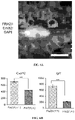
- FIG. 1A-H Deficiency of FRS2 ⁇ expressed in luminal cells greatly delays mammary tumorigenesis
- A Representative images of ⁇ -galactosidase staining for mature female mammary glands of heterozygote of the Frs2 ⁇ mutant allele. Red arrows indicate FRS2 ⁇ positive cells.
- B Schematic of the mammary glands. Many branching tubles are surrounded by an inner layer of luminal epithelial cells and an outer layer of myoepithelial epithelial cells.
- C Immunohistological staining for female mammary glands by anti-FRS2 ⁇ antibody and phospho-histone H3 antibody (upper panel) or DAPI (lower panel).
- (F) Tumor growth in MMTV-neu (+)/Frs2 ⁇ (+/+) and MMTV-neu (+)/Frs2 ⁇ ( ⁇ / ⁇ ) mice. Tumor sizes were measured once a week for 14 weeks (mean ⁇ SEM, n 15).
- G Representative Hematoxylin and eosin (HE) stained sections of mammary tumors.
- H Immunohistochemical staining for Frs2 ⁇ (+/+) and Frs2 ⁇ ( ⁇ / ⁇ ) mammary tumors using antibodies against ⁇ SMA. Scale bar: 100 ⁇ m.
- FIG. 2A-F FRS2 ⁇ expressed in luminal progenitor cells supports tumorigenesis derived from xenografted tumor cells
- A Frs2 ⁇ (+/+) tumor sphere cells cultured for 14 days as shown by the representative image were inoculated into Frs2 ⁇ (+/+) or Frs2 ⁇ ( ⁇ / ⁇ ) 8-weeks old virgin female mouse mammary fat pads.
- B Representative tumors were photographed at 30 days after transplantation, and
- C tumor volues of the removed tumors were measured.
- the numbers indicate the ratio of numbers of tumors to the numbers of the inoculated sites.
- E Immunohistochemial staining for MMTV-neu ( ⁇ ) or MMTV-neu (+) female mammary glands by anti-FRS2 ⁇ antibody and anti-ErbB2 antibody. Arrows indicate the FRS2 ⁇ -positive luminal cells.
- F Mammary epithelial cells were sorted by using the markers. Subpopulations of P1 (CD49f low /CD24 high ) luminal cells were further sorted by using CD61.
- Subpopulations of P2 (CD49f low /CD24 high /CD61+) luminal progenitor cells were further sorted by FRS2 ⁇ to obtain subpopulation of P3 (CD49f low /CD24 high /CD61+/FRS2 ⁇ +).
- FIG. 3A-F FRS2 ⁇ deficient luminal progenitor cells produce less amounts of cytokines
- A Representative images of mammospheres derived from Frs2 ⁇ (+/+) and Frs2 ⁇ ( ⁇ / ⁇ ) mammary epithelial cells cultured in sphere culture medium (SCM).
- GSEA Gene set enrichment analysis
- FIG. 4A-I CXCL12 produced from precancerous Frs2 ⁇ (+/+) mammary cells induce tumor spheres and migration of CAFs.
- A Schematic of co-culture of Frs2 ⁇ (+/+) tumor cells to form spheres in the lower chamber with Frs2 ⁇ (+/+) precancerous mammary epithelial cells in the upper chamber.
- B Representative images of tumor sphere formation in the presence of Frs2 ⁇ (+/+) mammary epithelial cells treated with control IgG (400 nM) or IGF1 neutralizing antibody (Nab) (400 nM). N.T., not treated (without co-culture with mammary epithelial cells). Scale bar: 100 ⁇ .
- A Schematic of DHMEQ treatment of cultured Frs2 ⁇ (+/+) precancerous mammary epithelial cells in vitro.
- mice Treatment of mice with a CXCR7 inhibitor and/or an IGF1 antibody reduces tumor volume.
- FIG. 6 A-G FRS2 ⁇ -expressing tumor cells produce IGF1 and CXCL12 and are associated with abundant stroma and poor prognosis
- A Immunohistochemical staining for Frs2 ⁇ (+/+) mammary tumors by anti-FRS2b and anti-ErbB2 antibodies. Scale bar, 25 ⁇ .
- C Immunohistochemical staining with anti-IGF1 and anti-CXCL12 antibodies. Scale bar, 200 ⁇ .
- (E) Tumor samples were classified into three groups according to the ratio of the tumor stroma area to the total tumor area (+: 0-10%, ++; 10-20%, +++; >20%). Median of FRS2b staining levels was used for cut-off values. n 30.
- FRS2b may trigger cytokine production in a subset of luminal cells, leading to creation of a cytokine-rich precancerous microenvironment (upper left panel).
- CSCs Once CSCs appear in the precancerous microenvironment, they may be able to self-renew in the presence of IGF1 and produce tumor cells with the help of CXCL12-mobilized stromal cells, which subsequently become CAFs.
- CSCs and tumor cells may produce IGF1 and CXCL12 on their own, leading to rapid growth and tumorigenesis (lower left panel).
- FRS2 ⁇ cytokines remain at low levels, and no appropriate precancerous microenvironment is created (upper right panel); even when CSCs appear, they cannot efficiently grow (lower right panel).
- the current disclosure demonstrates that aberrant FRS2 ⁇ expression maintains a suitable microenvironment condition for tumor growth and plays critical roles in creating the cytokine-rich CSC niche. Surprisingly, the deleterious effects of this expression can be effectively modulated by administering a CXCR7 inhibitor or a CXCR7 inhibitor in combination with another therapeutic agent.
- alkyl by itself or as part of another substituent, means, unless otherwise stated, a straight or branched chain hydrocarbon radical, having the number of carbon atoms designated (i.e. C 1-8 means one to eight carbons).
- alkyl groups include methyl, ethyl, n-propyl, isopropyl, n-butyl, t-butyl, isobutyl, sec-butyl, n-pentyl, n-hexyl, n-heptyl, n-octyl, and the like.
- alkenyl refers to an unsaturated alkyl group having one or more double bonds.
- alkynyl refers to an unsaturated alkyl group having one or more triple bonds.
- unsaturated alkyl groups include vinyl, 2-propenyl, crotyl, 2-isopentenyl, 2-(butadienyl), 2,4-pentadienyl, 3-(1,4-pentadienyl), ethynyl, 1- and 3-propynyl, 3-butynyl, and the higher homologs and isomers.
- cycloalkyl refers to hydrocarbon rings having the indicated number of ring atoms (e.g., C 3-6 cycloalkyl) and being fully saturated or having no more than one double bond between ring vertices.
- Cycloalkyl is also meant to refer to bicyclic and polycyclic hydrocarbon rings such as, for example, bicyclo[2.2.1]heptane, bicyclo[2.2.2]octane, etc.
- cycloalkenyl refers to a cycloalkyl group having at least one double bond between ring vertices. Examples of cycloalkenyl are cyclopentenyl and cyclohexenyl.
- spirocycloalkyl refers to a cycloalkyl group in which a single ring vertex is attached to two other non-hydrogen portions of the molecule.
- a spirocycloalkyl substituent is one in which two carbon atoms of an alkylene chain (typically the termini of the alkylene chain) are attached to the same carbon atom in the remainder of the molecule.
- the term “heterocycloalkyl” refers to a cycloalkyl group that contain from one to five heteroatoms selected from N, O, and S, wherein the nitrogen and sulfur atoms are optionally oxidized, and the nitrogen atom(s) are optionally quaternized.
- the heterocycloalkyl may be a monocyclic, a bicyclic or a polycylic ring system.
- heterocycloalkyl groups include pyrrolidine, imidazolidine, pyrazolidine, butyrolactam, valerolactam, imidazolidinone, hydantoin, dioxolane, phthalimide, piperidine, 1,4-dioxane, morpholine, thiomorpholine, thiomorpholine-S-oxide, thiomorpholine-S,S-oxide, piperazine, pyran, pyridone, 3-pyrroline, thiopyran, pyrone, tetrahydrofuran, tetrhydrothiophene, quinuclidine, and the like.
- a heterocycloalkyl group can be attached to the remainder of the molecule through a ring carbon or a heteroatom.
- alkylene by itself or as part of another substituent means a divalent radical derived from an alkane, as exemplified by —CH 2 CH 2 CH 2 CH 2 —.
- an alkyl (or alkylene) group will have from 1 to 24 carbon atoms, with those groups having 10 or fewer carbon atoms being preferred in the present invention.
- a “lower alkyl” or “lower alkylene” is a shorter chain alkyl or alkylene group, generally having four or fewer carbon atoms.
- alkenylene” and alkynylene refer to the unsaturated forms of “alkylene” having double or triple bonds, respectively.
- a wavy line, “ ”, that intersects a single, double or triple bond in any chemical structure depicted herein, represent the point attachment of the single, double, or triple bond to the remainder of the molecule.
- alkoxy alkylamino and “alkylthio” (or thioalkoxy) are used in their conventional sense, and refer to those alkyl groups attached to the remainder of the molecule via an oxygen atom, an amino group, or a sulfur atom, respectively. Additionally, for dialkylamino groups, the alkyl portions can be the same or different and can also be combined to form a 3-7 membered ring with the nitrogen atom to which each is attached. Accordingly, a group represented as —NR a R b is meant to include piperidinyl, pyrrolidinyl, morpholinyl, azetidinyl and the like.
- halo or “halogen,” by themselves or as part of another substituent, mean, unless otherwise stated, a fluorine, chlorine, bromine, or iodine atom. Additionally, terms such as “haloalkyl,” are meant to include monohaloalkyl and polyhaloalkyl.
- C 1-4 haloalkyl is mean to include trifluoromethyl, 2,2,2-trifluoroethyl, 4-chlorobutyl, 3-bromopropyl, and the like.
- aryl means, unless otherwise stated, a polyunsaturated, typically aromatic, hydrocarbon group which can be a single ring or multiple rings (up to three rings) which are fused together or linked covalently.
- heteroaryl refers to aryl groups (or rings) that contain from one to five heteroatoms selected from N, O, and S, wherein the nitrogen and sulfur atoms are optionally oxidized, and the nitrogen atom(s) are optionally quaternized.
- a heteroaryl group can be attached to the remainder of the molecule through a heteroatom.
- Non-limiting examples of aryl groups include phenyl, naphthyl and biphenyl, while non-limiting examples of heteroaryl groups include pyridyl, pyridazinyl, pyrazinyl, pyrimindinyl, triazinyl, quinolinyl, quinoxalinyl, quinazolinyl, cinnolinyl, phthalazinyl, benzotriazinyl, purinyl, benzimidazolyl, benzopyrazolyl, benzotriazolyl, benzisoxazolyl, isobenzofuryl, isoindolyl, indolizinyl, benzotriazinyl, thienopyridinyl, thienopyrimidinyl, pyrazolopyrimidinyl, imidazopyridines, benzothiaxolyl, benzofuranyl, benzothienyl, indolyl, quinolyl
- arylalkyl is meant to include those radicals in which an aryl group is attached to an alkyl group (e.g., benzyl, phenethyl, and the like).
- heteroaryl-alkyl is meant to include those radicals in which a heteroaryl group is attached to an alkyl group (e.g., pyridylmethyl, thiazolylethyl, and the like).
- Substituents for the alkyl radicals can be a variety of groups selected from: -halogen, —OR′, —NR′R′′, —SR′, —SiR′R′′R′′′, —OC(O)R′, —C(O)R′, —CO 2 R′, —CONR′R′′, —OC(O)NR′R′′, —NR′′C(O)R′, —NR′—C(O)NR′′R′′′, —NR′′C(O) 2 R′, —NH—C(NH 2 ) ⁇ NH, —NR′C(NH 2 ) ⁇ NH, —NH—C(NH 2 ) ⁇ NR′, —S(O)R′, —S(O) 2 R′, —S(O) 2 NR′R′′, —NR′S(O) 2 R′′, —NR′S(O) 2 R′′, —NR′S(O) 2 R′′, —NR′S(O
- R′, R′′ and R′′′ each independently refer to hydrogen, unsubstituted C 1-8 alkyl, unsubstituted aryl, aryl substituted with 1-3 halogens, unsubstituted C 1-8 alkyl, C 1-8 alkoxy or C 1-8 thioalkoxy groups, or unsubstituted aryl-C 1-4 alkyl groups.
- R′ and R′′ are attached to the same nitrogen atom, they can be combined with the nitrogen atom to form a 3-, 4-, 5-, 6-, or 7-membered ring.
- —NR′R′′ is meant to include 1-pyrrolidinyl and 4-morpholinyl.
- Two of the substituents on adjacent atoms of the aryl or heteroaryl ring may optionally be replaced with a substituent of the formula -T-C(O)—(CH 2 ) q —U—, wherein T and U are independently —NH—, —O—, —CH 2 — or a single bond, and q is an integer of from 0 to 2.
- two of the substituents on adjacent atoms of the aryl or heteroaryl ring may optionally be replaced with a substituent of the formula -A-(CH 2 ) r —B—, wherein A and B are independently —CH 2 —, —O—, —NH—, —S—, —S(O)—, —S(O) 2 —, —S(O) 2 NR′′ or a single bond, and r is an integer of from 1 to 3.
- One of the single bonds of the new ring so formed may optionally be replaced with a double bond.
- two of the substituents on adjacent atoms of the aryl or heteroaryl ring may optionally be replaced with a substituent of the formula —(CH 2 ) s —X—(CH 2 ) r , where s and t are independently integers of from 0 to 3, and X is —O—, —NR′—, —S—, —S(O)—, —S(O) 2 —, or —S(O) 2 NR′—.
- the substituent R′ in —NR′— and —S(O) 2 NR′— is selected from hydrogen or unsubstituted C 1-6 alkyl.
- heteroatom is meant to include oxygen (O), nitrogen (N), sulfur (S) and silicon (Si).
- progenitor cells and “stem cells” are used interchangeably. “Progenitor cells” and “stem cells” refer to cells that, in response to certain stimuli, can form differentiated cell lineages, including but not limited to hematopoietic, mesenchymal, epithelial, neuronal, renal or myeloid cells.
- progenitor/stem cells can be assessed by the ability of the cells in a sample to form colony-forming units of various types, including, for example, CFU-GM (colony-forming units, granulocyte-macrophage); CFU-GEMM (colony-forming units, multipotential); BFU-E (burst-forming units, erythroid); HPP-CFC (high proliferative potential colony-forming cells); or other types of differentiated colonies which can be obtained in culture using known protocols.
- CFU-GM colony-forming units, granulocyte-macrophage
- CFU-GEMM colony-forming units, multipotential
- BFU-E burst-forming units, erythroid
- HPP-CFC high proliferative potential colony-forming cells
- Hematopoetic progenitor/stem cells are often positive for CD34. Some stem cells do not contain this marker, however.
- CD34+ cells can be assayed using fluorescence activated cell sorting (FACS) and thus their presence can be assessed in a sample using this technique.
- FACS fluorescence activated cell sorting
- such cells can be assayed by FACS for the presence of c-kit receptor (CD117), absence of lineage specific markers (e.g., CD2, CD3, CD4, CD5, CD8, NK1.1, B220, TER-119, and Gr-1 in mice and CD3, CD14, CD16, CD19, CD20 and CD56 in humans).
- salts are meant to include salts of the active compounds which are prepared with relatively nontoxic acids or bases, depending on the particular substituents found on the compounds described herein.
- base addition salts can be obtained by contacting the neutral form of such compounds with a sufficient amount of the desired base, either neat or in a suitable inert solvent.
- salts derived from pharmaceutically-acceptable inorganic bases include aluminum, ammonium, calcium, copper, ferric, ferrous, lithium, magnesium, manganic, manganous, potassium, sodium, zinc and the like.
- Salts derived from pharmaceutically-acceptable organic bases include salts of primary, secondary and tertiary amines, including substituted amines, cyclic amines, naturally-occuring amines and the like, such as arginine, betaine, caffeine, choline, N,N′-dibenzylethylenediamine, diethylamine, 2-diethylaminoethanol, 2-dimethylaminoethanol, ethanolamine, ethylenediamine, N-ethylmorpholine, N-ethylpiperidine, glucamine, glucosamine, histidine, hydrabamine, isopropylamine, lysine, methylglucamine, morpholine, piperazine, piperidine, polyamine resins, procaine, purines, theobromine, triethylamine, trimethylamine, tripropylamine, tromethamine and the like.
- acid addition salts can be obtained by contacting the neutral form of such compounds with a sufficient amount of the desired acid, either neat or in a suitable inert solvent.
- pharmaceutically acceptable acid addition salts include those derived from inorganic acids like hydrochloric, hydrobromic, nitric, carbonic, monohydrogencarbonic, phosphoric, monohydrogenphosphoric, dihydrogenphosphoric, sulfuric, monohydrogensulfuric, hydriodic, or phosphorous acids and the like, as well as the salts derived from relatively nontoxic organic acids like acetic, propionic, isobutyric, malonic, benzoic, succinic, suberic, fumaric, mandelic, phthalic, benzenesulfonic, p-tolylsulfonic, citric, tartaric, methanesulfonic, and the like.
- salts of amino acids such as arginate and the like, and salts of organic acids like glucuronic or galactunoric acids and the like (see, for example, Berge, S. M., et al, “Pharmaceutical Salts”, Journal of Pharmaceutical Science, 1977, 66, 1-19).
- Certain specific compounds of the present invention contain both basic and acidic functionalities that allow the compounds to be converted into either base or acid addition salts.
- the neutral forms of the compounds may be regenerated by contacting the salt with a base or acid and isolating the parent compound in the conventional manner.
- the parent form of the compound differs from the various salt forms in certain physical properties, such as solubility in polar solvents, but otherwise the salts are equivalent to the parent form of the compound for the purposes of the present invention.
- the present invention provides compounds which are in a prodrug form.
- Prodrugs of the compounds described herein are those compounds that readily undergo chemical changes under physiological conditions to provide the compounds of the present invention.
- prodrugs can be converted to the compounds of the present invention by chemical or biochemical methods in an ex vivo environment. For example, prodrugs can be slowly converted to the compounds of the present invention when placed in a transdermal patch reservoir with a suitable enzyme or chemical reagent.
- Certain compounds of the present invention can exist in unsolvated forms as well as solvated forms, including hydrated forms. In general, the solvated forms are equivalent to unsolvated forms and are intended to be encompassed within the scope of the present invention. Certain compounds of the present invention may exist in multiple crystalline or amorphous forms. In general, all physical forms are equivalent for the uses contemplated by the present invention and are intended to be within the scope of the present invention.
- Certain compounds of the present invention possess asymmetric carbon atoms (optical centers) or double bonds; the racemates, diastereomers, geometric isomers, regioisomers and individual isomers (e.g., separate enantiomers) are all intended to be encompassed within the scope of the present invention.
- the compounds of the invention are present in an enantiomerically enriched form, wherein the amount of enantiomeric excess for a particular enantiomer is calculated by known methods.
- the preparation of enantiomerically enriched forms is also well known in the art and can be accomplished using, for example, chiral resolution via chromatography or via chiral salt formation.
- conformers are contemplated by the present invention, as well as distinct rotamers. Conformers are conformational isomers that can differ by rotations about one or more ⁇ bonds. Rotamers are conformers that differ by rotation about only a single ⁇ bond. Still further, the compounds of the present invention may also contain unnatural proportions of atomic isotopes at one or more of the atoms that constitute such compounds. Accordingly, in some embodiments, the compounds of the invention are present in isotopically enriched form. Unnatural proportions of an isotope may be defined as ranging from the amount found in nature to an amount consisting of 100% of the atom in question.
- the compounds may incorporate radioactive isotopes, such as for example tritium ( 3 H), iodine-125 ( 125 I) or carbon-14 ( 14 C), or non-radioactive isotopes, such as deuterium ( 2 H) or carbon-13 ( 13 C).
- radioactive isotopes such as for example tritium ( 3 H), iodine-125 ( 125 I) or carbon-14 ( 14 C), or non-radioactive isotopes, such as deuterium ( 2 H) or carbon-13 ( 13 C).
- isotopic variants of the compounds of the invention may find additional utility, including but not limited to, as diagnostic and/or imaging reagents, or as cytotoxic/radiotoxic therapeutic agents.
- isotopic variants of the compounds of the invention can have altered pharmacokinetic and pharmacodynamic characteristics which can contribute to enhanced safety, tolerability or efficacy during treatment. All isotopic variations of the compounds of the present invention, whether radioactive or not, are intended to be encompassed within
- CXCR7 also referred to as “RDC1” or “CCXCKR2” refers to a seven-transmembrane domain presumed G-protein coupled receptor (GPCR).
- GPCR G-protein coupled receptor
- the CXCR7 dog ortholog was originally identified in 1991. See, Libert et al. Science 244:569-572 (1989). The dog sequence is described in Libert et al., Nuc. Acids Res. 18(7):1917 (1990). The mouse sequence is described in, e.g., Heesen et al., Immunogenetics 47:364-370 (1998). The human sequence is described in, e.g., Sreedharan et al., Proc. Natl. Acad. Sci . USA 88:4986-4990 (1991), which mistakenly described the protein as a receptor of vasoactive intestinal peptide.
- terapéuticaally effective amount means the amount of the subject compound that will elicit the biological or medical response of a cell, tissue, system, or animal, such as a human, that is being sought by the researcher, veterinarian, medical doctor or other treatment provider.
- composition as used herein is intended to encompass a product comprising the specified ingredients in the specified amounts, as well as any product which results, directly or indirectly, from combination of the specified ingredients in the specified amounts.
- pharmaceutically acceptable it is meant the carrier, diluent or excipient must be compatible with the other ingredients of the formulation and not deleterious to the recipient thereof.
- provided herein are methods of treating cancer in an individual in need thereof, said method comprising administering to the individual a CXCR7 inhibitor, wherein the individual has aberrant expression of FRS2 ⁇ .
- methods of preventing precancerous cells expressing FRS2 ⁇ from developing into cancer comprising administering to an individual having precancerous cells expressing FRS2 ⁇ a CXCR7 inhibitor.
- FRS2 ⁇ is expressed abundantly in the brain, but only in a few areas in other tissues. Thus, many tissues do not naturally express FRS2 ⁇ . As shown herein, aberrant expression of FRS2 ⁇ in cells that otherwise do not express this protein can provide a CSC niche and lead to tumorgenesis.
- aberrant expression refers to expression of a protein in a cell, tissue, organ or body fluid of a patient that does not normally produce the protein in a healthy individual (inappropriate expression) or expression of higher levels of a protein in a cell, tissue, organ or body fluid of a subject than are detected in the same type of cell, tissue, organ or body fluid of a healthy individual (differential expression).
- aberrant expression of FRS2 ⁇ is at least about 3%, at least about 5%, least about 10%, at least about 15%, at least about 20%, at least about 25%, at least about 30%, at least about 35%, at least about 40%, at least about 45%, at least about 50% or greater FRS2 ⁇ expression than in a healthy individual.
- FRS2 ⁇ expression can determined using known methods in the art.
- FRS2 ⁇ expression can be detected as described in the disclosed methods.
- FRS2 ⁇ expression can be detected using immunohistochemistry.
- aberrant expression is detected in an ELISA assay.
- a preferred method of treating cancer includes administering a therapeutically effective amount of one or more of the previously mentioned compounds (or salts thereof) to a cancer patient for a time sufficient to treat the cancer.
- mammals including, but not limited to, cows, sheep, goats, horses, dogs, cats, guinea pigs, rats or other bovine, ovine, equine, canine, feline, rodent or murine species can be treated.
- the method can also be practiced in other species, such as avian species (e.g., chickens).
- CXCR7 inhibitors are administered to treat cancer, e.g., carcinomas, gliomas, mesotheliomas, melanomas, lymphomas, leukemias (including acute lymphocytic leukemias), adenocarcinomas, breast cancer, ovarian cancer, cervical cancer, glioblastoma, leukemia, lymphoma, prostate cancer, and Burkitt's lymphoma, colon cancer, colorectal cancer, cancer of the esophagus, stomach cancer, pancreatic cancer, hepatobiliary cancer, cancer of the gallbladder, cancer of the small intestine, rectal cancer, kidney cancer, renal cancer, bladder cancer, prostate cancer, penile cancer, urethral cancer, testicular cancer, cervical cancer, vaginal cancer, uterine cancer, ovarian cancer, thyroid cancer, parathyroid cancer, adrenal cancer, pancreatic endocrine cancer, carcinoid cancer, bone cancer, skin cancer, retinoblastomas,
- cancer
- the cancer treated herein is breast cancer.
- the individual has been diagnosed with having aberrant expression of FRS2 ⁇ prior to administration of a CXCR7 inhibitor or an additional therapeutic agent.
- inhibitors of CXCR7 has the structure of Formula I
- the inhibitor of CXCR7 has the structure of Compound 1
- the inhibitor of CXCR7 has the structure of Compound 2
- the inhibitor of CXCR7 has the structure of Compound 3
- the inhibitor of CXCR7 has the structure of Compound 4
- the inhibitor of CXCR7 has the structure of Compound 5
- the inhibitor of CXCR7 has the structure of Compound 6
- the CXCR7 inhibitor is selected from the compounds or pharmaceutical compositions disclosed in PCT publication No. WO2010/054006 stemming from PCT Application No. US2009/063298, filed Nov. 4, 2009 by ChemoCentryx, the content of which is incorporated herein for all purposes.
- inhibitors of CXCR7 has the structure of Formula II
- the CXCR7 inhibitor has the structure of Compound 7
- the CXCR7 inhibitor has the structure of Compound 8
- the inhibitor of CXCR7 has the structure of Compound 9
- the CXCR7 inhibitor is selected from the compounds or pharmaceutical compositions disclosed in PCT publication No. WO2014/085490 stemming from PCT Application No. US2013/072067, filed Nov. 26, 2013 by ChemoCentryx, the content of which is incorporated herein for all purposes.
- the methods of treating cancer disclosed herein can further include one or more additional therapeutic agents.
- CXCR7 modulators of the present invention can be administered in combination with a chemotherapeutic agents or radiation.
- therapeutic agents that may be combined with a compound or composition of the present invention, either administered separately or in the same pharmaceutical compositions, include, but are not limited to: an IGF1 inhibitor (e.g. an antibody or a small molecule), a CXCR4 inhibitor (e.g. AMD3100), an immunomodulatory agent, cisplatin, paclitaxel, methotrexate, cyclophosphamide, ifosfamide, chlorambucil, carmustine, carboplatin, vincristine, vinblastine, thiotepa, lomustine, semustine, 5-fluorouracil and cytarabine.
- an IGF1 inhibitor e.g. an antibody or a small molecule
- CXCR4 inhibitor e.g. AMD3100
- an immunomodulatory agent e.g. an immunomodulatory agent
- cisplatin paclitaxel
- methotrexate cyclophosphamide
- ifosfamide chloram
- the one or more additional therapeutic agent may be an anti-IGF1 antibody and/or a CXCR4 inhibitor. In some embodiments, the one or more additional therapeutic agent is a CXCR4 inhibitor. In some embodiments, the one or more additional therapeutic agent is an anti-IGF1 antibody.
- CXCR4 inhibitors There are a number of CXCR4 inhibitors known in the art including small molecules, peptides, and antibodies. Each of these are useful in the present disclosure.
- a few exemplary CXCR4 inhibitors include AMD3100, as well as the CXCR4 inhibitors provided in WO2007115232, WO2007115231, US20070275965, US20130289020, US20140286936, and US20170226106 the contents of each are incorporated herein for all purposes.
- inhibitors Like CXCR4, a number of small molecule inhibitors and antibodies are known to target IGF1.
- Exemplary inhibitors include AG538, AG1024, NVP-AEW541 and figitumumab as well as the inhibitors provided in US20090068110, US20140045832, US20050281812, US20050244408, US20120005767, US20140044720, and US20080161278 the contents of each are incorporated herein for all purposes.
- the weight ratio of the compound of the present invention to the second active ingredient may be varied and will depend upon the effective dose of each ingredient. Generally, an effective dose of each will be used. Thus, for example, when a compound of the present invention is combined with a second anticancer agent, the weight ratio of the compound of the present invention to the second agent will generally range from about 1000:1 to about 1:1000, preferably about 200:1 to about 1:200. Combinations of a compound of the present invention and other active ingredients will generally also be within the aforementioned range, but in each case, an effective dose of each active ingredient should be used.
- Such administration may be prior to, subsequent to or in unison with the second therapeutic agent, such that the therapeutic effects of the second agent are enhanced when compared to administration of the second agent in the absence of the CXCR7 modulator.
- Selection of the appropriate agents for use in combination therapy may be made by one of ordinary skill in the art, according to conventional pharmaceutical principles.
- the combination of therapeutic agents may act synergistically, and using this approach, one may be able to achieve therapeutic efficacy with lower dosages of each agent, thus reducing the potential for adverse side effects.
- treatment methods provided herein comprise administering to a patient an effective amount of one or more CXCR7 compounds provided herein.
- the compound(s) of the invention are preferably administered to a patient (e.g., a human) orally.
- Treatment regimens may vary depending on the compound used and the particular condition to be treated; for treatment of most disorders, a frequency of administration of 4 times daily or less is preferred. In general, a dosage regimen of 2 times daily is more preferred, with once a day dosing particularly preferred.
- the specific dose level and treatment regimen for any particular patient will depend upon a variety of factors including the activity of the specific compound employed, the age, body weight, general health, sex, diet, time of administration, route of administration, rate of excretion, drug combination (i.e., other drugs being administered to the patient) and the severity of the particular disease undergoing therapy, as well as the judgment of the prescribing medical practitioner. In general, the use of the minimum dose sufficient to provide effective therapy is preferred. Patients may generally be monitored for therapeutic effectiveness using medical or veterinary criteria suitable for the condition being treated or prevented.
- the compounds and compositions of the present invention may be administered by oral, parenteral (e.g., intramuscular, intraperitoneal, intravenous, ICV, intracisternal injection or infusion, subcutaneous injection, or implant), inhalation, nasal, vaginal, rectal, sublingual, or topical routes of administration and may be formulated, alone or together, in suitable dosage unit formulations containing conventional nontoxic pharmaceutically acceptable carriers, adjuvants and vehicles appropriate for each rouse of administration.
- the present invention also contemplates administration of the compounds and compositions of the present invention in a depot formulation.
- Dosage levels of the order of from about 0.1 mg to about 140 mg per kilogram of body weight per day are useful (about 0.5 mg to about 7 g per human patient per day).
- the amount of active ingredient that may be combined with the carrier materials to produce a single dosage form will vary depending upon the host treated and the particular mode of administration. Dosage unit forms will generally contain between from about 1 mg to about 500 mg of an active ingredient. A sufficient amount of compounds should be administered to achieve a serum concentration of 50 ng/ml-200 ng/ml.
- the compounds and compositions of the present invention can be combined with other compounds and compositions having related utilities to prevent and treat cancer.
- Such other drugs may be administered, by a route and in an amount commonly used therefor, contemporaneously or sequentially with a compound or composition of the present invention.
- a pharmaceutical composition containing such other drugs in addition to the CXCR7 inhibitor is preferred.
- the pharmaceutical compositions of the present invention also include those that also contain one or more other active ingredients or therapeutic agents, in addition to a CXCR7 inhibitor.
- the additional therapeutic agent used in the combination therapy—be it a compounds or an antibody antibody may be administered by oral, parenteral (e.g., intramuscular, intraperitoneal, intravenous, ICV, intracisternal injection or infusion, subcutaneous injection, or implant), inhalation, nasal, vaginal, rectal, sublingual, or topical routes of administration.
- parenteral e.g., intramuscular, intraperitoneal, intravenous, ICV, intracisternal injection or infusion, subcutaneous injection, or implant
- inhalation nasal, vaginal, rectal, sublingual, or topical routes of administration.
- the compounds and/or antibodies may be formulated, alone or together, in suitable dosage unit formulations containing conventional nontoxic pharmaceutically acceptable carriers, adjuvants and vehicles appropriate for each rouse of administration.
- the present disclosure also contemplates administration of the compounds and antibodies of the present disclosure in a depot formulation.
- the specific dose level and frequency of dosage for any particular patient may be varied and will depend upon a variety of factors including the activity of the specific compound(s) and/or antibodies employed, the metabolic stability and length of action of that compound, the age, body weight, hereditary characteristics, general health, sex, diet, mode and time of administration, rate of excretion, drug combination, the severity of the particular condition, and the host undergoing therapy.
- Combination therapy includes co-administration of the CXCR7 inhibitor and the one or more additional therapeutic agents, sequential administration of the CXCR7 inhibitor and the one or more additional therapeutic agents, or simultaneous administration of separate compositions such that one composition contains the CXCR7 inhibitor and one or more compositions containing the one or more additional therapeutic agents.
- Co-administration includes administering the CXCR7 inhibitor of the present disclosure within 0.5, 1, 2, 4, 6, 8, 10, 12, 16, 20, or 24 hours of the one or more administration of the one or more additional therapeutic agents.
- the CXCR7 inhibitor and one or more additional therapeutic agents can each be administered once a day, or two, three, or more times per day so as to provide the preferred dosage level per day.
- Example 1 FRS2 ⁇ Expressed in Luminal Progenitor Cells Creates the Microenvironment Favorable for Mammary Tumorigenesis
- FRS2 ⁇ -positive cells were negative for phospho-histone H3, a nucleus marker for dividing cells, indicating that they proliferate more slowly than others, consistent with the negative role of FRS2 ⁇ in cell proliferation ( FIG. 1C ).
- FRS2 ⁇ was expressed in a few cells which were positive for cytokeratin 18 (luminal cell marker), but not for cytokeratin 14 (myoepithelial cell marker) ( FIG. 1D ). These data indicate that a small number of luminal cells in mammary gland express FRS2 ⁇ . On the other hand, whole-mount staining of the mammary gland showed no gross structural abnormality in the mutant mice. This led us to examine the pathological role of FRS2 ⁇ in tumorigenesis.
- Frs2 ⁇ (+/+) mice We crossed the Frs2 ⁇ mutant mice with MMTV-neu (+) mice to generate the MMTV-neu (+)/Frs2 ⁇ (+/+) mice and MMTV-neu (+)/Frs2 ⁇ ( ⁇ / ⁇ ) mice, hereafter referred to as Frs2 ⁇ (+/+) and Frs2 ⁇ ( ⁇ / ⁇ ) mice, respectively.
- Frs2 ⁇ (+/+) tumors contained ample stroma, reminiscent of human breast cancer tissues (arrows in FIG. 1G ). By contrast, very little stroma was observed in Frs2 ⁇ ( ⁇ / ⁇ ) tumors. High levels of smooth muscle actin (SMA)-positive CAFs were present in the stroma of Frs2 ⁇ (+/+) tumors, but not in Frs2 ⁇ ( ⁇ / ⁇ ) tumors (arrows in FIG. 1H ). These results indicate that FRS2 ⁇ is required for formation of tumor stroma.
- SMA smooth muscle actin
- Frs2 ⁇ (+/+) tumor cells were inoculated into young virgin precancerous mammary tissues of Frs2 ⁇ (+/+) and Frs2 ⁇ ( ⁇ / ⁇ ) mice.
- Frs2 ⁇ (+/+) tumor cells were cultured Frs2 ⁇ (+/+) tumor cells in a serum-free suspension condition, as spheres to enrich for CSC S15,21 .
- the luminal cells are enriched in the CD49f low /CD24 high cell population 22 and that the luminal progenitor cells can be enriched by further fractionation with CD61 for the CD49f low /CD24 high /CD61 + population 23 .
- Significant expression of FRS2 ⁇ was observed in 23.6% cells among the CD49f low /CD24 + high/CD61+ luminal progenitor cell population ( FIG. 2F ).
- FRS2 ⁇ was lost in CD49flow/CD24high/CD61+ luminal progenitor cell population derived from Frs2 ⁇ ( ⁇ / ⁇ ) mammary cells.
- GSEA Gene set enrichment analysis
- Example 3 FRS2 ⁇ -Dependent Increase in Production of CXCL12 in Precancerous Mammary Cells Allows Tumorigenesis Treatment with a CXCR7 Inhibitor or a CXCR7 Inhibitor in Combination with Another Therapeutic Agent Modulates Tumor Growth
- Tumor sphere formation reflects the properties of CSCs, whose growth is dependent on cytokines in the culture.
- IGF1 derived from precancerous mammary epithelial cells plays a role in tumor sphere formation.
- FIG. 4A we cultured Frs2 ⁇ (+/+) tumor cells under serum-free suspension condition without the cytokine cocktail in the presence or absence of Frs2 ⁇ (+/+) precancerous mammary epithelial cells ( FIG. 4A ).
- FIG. 4A We observed tumor sphere formation by Frs2 ⁇ (+/+) tumor cells in the presence of Frs2 ⁇ (+/+) precancerous mammary epithelial cells, but not in their absence (compare control IgG vs. not treated [N.T.] in FIGS.
- IGF1 NAb IGF1 neutralizing antibody
- NFkB activation in precancerous luminal cells plays important roles in the expression of IGF1 and CXCL12 in precancerous mammary epithelial cells in vivo. It appears that FRS2 ⁇ triggers the AKT-NFkB axis in the precancerous luminal cells, thereby inducing production of cytokines including IGF1 and CXCL12, which in turn activate NFkB in an autocrine or paracrine manner to spread the effects of activation of NFkB to the surrounding mammary epithelial cells.
- FRS2 ⁇ protein is expressed in a subset of luminal cells and triggers production of cytokines, including IGF1 and CXCL12.
- FRS2 ⁇ may stimulate the AKT-NFkB axis to promote production of cytokines while inhibiting ERK signaling. It appears that these cytokines in turn activate NFkB in surrounding mammary luminal cells in an autocrine or paracrine manner, leading to creation of a cytokine-rich precancerous microenvironment that includes some amount of stroma prior to tumor onset ( FIG. 6G , upper left panel).
- CSCs may be able to self-renew in the presence of IGF1 and produce tumor cells with the help of CXCL12-mobilized stromal cells, which subsequently become CAFs.
- CSCs and tumor cells may produce IGF1 and CXCL12 on their own, leading to rapid growth and tumorigenesis ( FIG. 6G , lower left panel).
- FRS2 ⁇ cytokines remain at low levels, and no appropriate precancerous microenvironment is created ( FIG. 6G , upper right panel); even when CSCs appear, they cannot efficiently grow ( FIG. 6G , lower right panel).
- FRS2 ⁇ is a promising target for prevention of breast cancer.
- combination therapy targeting IGF1 and CXCL12 effectively prevents tumorigenesis at the early stage.
- the tumor microenvironment consists of various cell types: CAFs, mesenchymal stem cells, bone marrow-derived dendritic cells, immune cells, and newly formed blood vessels (3).
- CAFs CAFs
- mesenchymal stem cells mesenchymal stem cells
- bone marrow-derived dendritic cells immune cells
- newly formed blood vessels (3) newly formed blood vessels (3).
- luminal cells and luminal progenitor cells are an important cell type in the precancerous microenvironment, and that FRS2 ⁇ expressed in luminal cells and luminal progenitor cells plays critical roles in production of cytokines, leading to creation of the cytokine-rich precancerous microenvironment that is essential for tumor development.
Landscapes
- Health & Medical Sciences (AREA)
- Chemical & Material Sciences (AREA)
- Life Sciences & Earth Sciences (AREA)
- Medicinal Chemistry (AREA)
- General Health & Medical Sciences (AREA)
- Animal Behavior & Ethology (AREA)
- Public Health (AREA)
- Veterinary Medicine (AREA)
- Pharmacology & Pharmacy (AREA)
- Epidemiology (AREA)
- Organic Chemistry (AREA)
- Immunology (AREA)
- Nuclear Medicine, Radiotherapy & Molecular Imaging (AREA)
- General Chemical & Material Sciences (AREA)
- Chemical Kinetics & Catalysis (AREA)
- Engineering & Computer Science (AREA)
- Endocrinology (AREA)
- Mycology (AREA)
- Microbiology (AREA)
- Bioinformatics & Cheminformatics (AREA)
- Biophysics (AREA)
- Biochemistry (AREA)
- Proteomics, Peptides & Aminoacids (AREA)
- Genetics & Genomics (AREA)
- Molecular Biology (AREA)
- Pharmaceuticals Containing Other Organic And Inorganic Compounds (AREA)
- Medicines That Contain Protein Lipid Enzymes And Other Medicines (AREA)
- Medicines Containing Antibodies Or Antigens For Use As Internal Diagnostic Agents (AREA)
- Medicines Containing Material From Animals Or Micro-Organisms (AREA)
Abstract
Description

the definitions for each variable group are further detailed below.

or a pharmaceutically acceptable salt thereof.

or a pharmaceutically acceptable salt thereof.

or a pharmaceutically acceptable salt thereof.

or a pharmaceutically acceptable salt thereof.

or a pharmaceutically acceptable salt thereof.

or a pharmaceutically acceptable salt thereof.

or a pharmaceutically acceptable salt thereof.

or a pharmaceutically acceptable salt thereof.

or a pharmaceutically acceptable salt thereof.


or pharmaceutically acceptable salts, hydrates, N-oxides, isotopically enriched or enantiomerically enriched versions thereof, wherein
-
- the subscript n is an integer of from 0 to 2;
- each R′, when present, is independently selected from the group consisting of C1-4 alkyl, —CO2Ra, —X—CO2Ra, —CONRaRb and —X—CONRaRb;
- R2 and R3 are each members independently selected from the group consisting of H, —Ra, —XRa, —XNRaRb, —XNHCONRaRb, —XNHCORa, —X—O—CONRaRb, —XNHSO2Ra, —C O2Ra, —X—CO2Ra, —CONRaRb and —X—CONRaRb; or taken together are oxo;
- C1 is selected from the group consisting of monocyclic or fused-bicyclic aryl and heteroaryl, wherein the heteroaryl group has from 1-3 heteroatoms as ring members selected from N, O and S; and wherein said aryl and heteroaryl groups are optionally substituted with from 1 to 3 R4 substituents;
- C2 is monocyclic four-, five-, six- or seven-membered ring selected from the group consisting of benzene, heteroaromatic, cycloalkane, and heterocycloalkane, wherein the heteroaromatic and heterocycloalkane rings have from 1-3 heteroatoms as ring members selected from N, O and S; and wherein each of said monocyclic C2 rings are optionally substituted with from 1 to 3 R5 substituents;
- C3 is selected from the group consisting of hydrogen, C1-8 alkyl, C3-8 cycloalkyl, aryl, aryl-C1-4 alkyl, heteroaryl, heteroaryl-C1-4 alkyl, and four- to six-membered heterocycloalkyl, wherein the heterocycloalkyl group or portion has from 1-3 heteroatoms selected from N, O and S, and wherein the heteroaryl group has from 1-3 heteroatoms as ring members selected from N, O and S, and each C3 is optionally substituted with from 1-3 R6 substituents;
- each R4 is independently selected from the group consisting of halogen, —CN, —NO2, —Rc, —CO2Ra, —NRaRb, —ORa, —X—CO2Ra, —CONRaRb and —X—CONRaRb;
- wherein within each of R1, R2, R3 and R4, each Ra and Rb is independently selected from hydrogen, C1-8 alkyl, C3-7 cycloalkyl, C1-8 haloalkyl, and four- to six-membered heterocycloalkyl, or when attached to the same nitrogen atom can be combined with the nitrogen atom to form a four-, five- or six-membered ring having from 0 to 2 additional heteroatoms as ring members selected from N, O or S; within R4 each Rc is independently selected from the group consisting of C1-8 alkyl, C1-8 haloalkyl, C3-6 cycloalkyl, aryl and heteroaryl, and wherein the aliphatic and cyclic portions of Ra, Rb and Rc are optionally further substituted with from one to three halogen, hydroxy, methyl, alkoxy, amino, alkylamino, dialkylamino, carboxamide, carboxy alkyl ester, carboxylic acid, heteroaryl, and four- to six-membered heterocycloalkyl groups; and wherein the heterocycloalkyl portions of R2, R3 and R4 are optionally substituted with oxo; and optionally when two R4 substituents are on adjacent atoms, are combined to form a fused five or six-membered ring having carbon and oxygen atoms as ring members;
- each R5 is independently selected from the group consisting of halogen, —CN, —NO2, —Rf, —CO2Rd, —CORd, —NRdRe, —ORd, —X—CO2Rd, —CONRdRe and —X—CONRdRe; wherein each Rd and Re is independently selected from hydrogen, C1-8 alkyl, C1-8 haloalkyl, C3-6 cycloalkyl, C3-6 cycloalkylalkyl, and four- to six-membered heterocycloalkyl or when attached to the same nitrogen atom can be combined with the nitrogen atom to form a five or six-membered ring having from 0 to 2 additional heteroatoms as ring members selected from N, O or S; each Rf is independently selected from the group consisting of C1-8 alkyl, C1-8 haloalkyl, and C3-6 cycloalkyl, and wherein the aliphatic and cyclic portions of Rd, Re and Rf are optionally further substituted with from one to three halogen, hydroxy, methyl, alkoxy, amino, alkylamino, dialkylamino, carboxamide, carboxy alkyl ester, carboxylic acid, heteroaryl, four- to six-membered heterocycloalkyl groups;
- each R6 is independently selected from the group consisting of halogen, —CN, —NO2, —Ri, —CO2Rg, —CORg, —NRgRh, —ORg, —X—CO2Rg, —X—CORg, —CONRg Rh and —X—CONRgRh, wherein each Rg and Rh is independently selected from hydrogen, C1-8 alkyl and C1-8 haloalkyl; each Ri is independently selected from the group consisting of C1-8 alkyl and C1-8 haloalkyl; and
- each X is a linking group having the formula —(CH2)mO(CH2)p—, wherein the subscripts m and p are integer of from 0 to 5, and m+p is from 0 to 6, wherein the methylene groups are optionally substituted with one or two methyl groups.

or a pharmaceutically acceptable salt thereof.

or a pharmaceutically acceptable salt thereof.

or a pharmaceutically acceptable salt thereof.

or a pharmaceutically acceptable salt thereof.

or a pharmaceutically acceptable salt thereof.

or a pharmaceutically acceptable salt thereof.

or a pharmaceutically acceptable salt, hydrate, N-oxide, isotopically enriched or enantiomerically enriched version or a rotamer thereof, wherein
-
- each of ring vertices Xa, Xb and Xc is independently selected from the group consisting of N, NH, N(R2), O, CH and C(R2);
- the subscript n is 0, 1 or 2;
- Z is selected from the group consisting of
- (i) monocyclic or fused-bicyclic aryl and heteroaryl, wherein the heteroaryl group has from 1-4 heteroatoms as ring members selected from N, O and S; and wherein said aryl and heteroaryl groups are optionally substituted with from 1 to 5 R5 substituents;
- (ii) monocyclic four-, five-, six- or seven-membered ring selected from the group consisting of cycloalkane, and heterocycloalkane, wherein the heterocycloalkane rings have from 1-3 heteroatoms as ring members selected from N, O and S; and wherein each of said monocyclic Z rings are optionally substituted with from 1 to 3 R5 substituents;
- R1 is a member selected from the group consisting of H and C1-8 alkyl, wherein the alkyl portion is optionally substituted with halogen, —NRaRb, ORa, —CO2Ra, and —CONRaRb;
- each R2 is independently selected from the group consisting of H, halogen, CN, C1-8 alkyl, C1-8 haloalkyl, C1-8 hydroxyalkyl, —ORa, —CO2Ra, —X—CO2Ra, —NRaRb, —CONRaRb and —X—CONRaRb;
- R3 is a member selected from the group consisting of H, C1-8 alkyl, C1-8 haloalkyl, C1-8 hydroxyalkyl, —CO2Ra, —X—CO2Ra, —CONRaRb and —X—CONRaRb;
- each R4, when present, is a member independently selected from the group consisting of C1-8 alkyl, C1-8 haloalkyl, C1-8 hydroxyalkyl, —ORa, —CO2Ra, —X—CO2Ra, —CONRaRb and —X—CONRaRb;
- each R5 is a member independently selected from the group consisting of halogen, CN, —X—CN, C1-8 alkyl, C3-8 cycloalkyl, C3-8 cycloalkenyl, C3-5 spirocycloalkyl, C2-8 alkenyl, C2-8 alkynyl, C1-8 haloalkyl, C1-8 hydroxyalkyl, —ORa, —CO2Ra, —X—CO2Ra, —NRaRb, —CONRaRb, —X—CONRaRb, aryl, 5- or 6-membered heteroaryl, and 3-, 4-, 5- or 6-membered heterocyclic wherein the heteroatoms present as ring vertices of the heteroaryl and heterocyclic rings are selected from N, O and S, and wherein the aryl, heteroaryl and hetereocyclic portions of R5 are optionally further substituted with 1-3 Ra;
- each Ra and Rb is independently selected from the group consisting of hydrogen, hydroxyl, halogen, cyano, C1-8 alkyl, C1-8 alkoxy, C1-8 haloalkyl, C3-6 cycloalkyl, C3-6 cycloalkylalkyl, amino, C1-8 alkylamino, di C1-8 alkylamino, carboxamide, carboxy C1-4 alkyl ester, carboxylic acid, and —SO2— C1-8 alkyl;
- each X is a C1-4 alkylene linking group or a linking group having the formula —(CH2)mO(CH2)p—, wherein the subscripts m and p are integer of from 0 to 5, and m+p is from 0 to 6, wherein any of the methylene portions of X are optionally substituted with one or two methyl groups.

or a pharmaceutically acceptable salt thereof.

or a pharmaceutically acceptable salt thereof.

or a pharmaceutically acceptable salt thereof.
Claims (20)


Priority Applications (3)
| Application Number | Priority Date | Filing Date | Title |
|---|---|---|---|
| US16/710,160 US11464786B2 (en) | 2018-12-12 | 2019-12-11 | CXCR7 inhibitors for the treatment of cancer |
| US17/816,281 US20230100102A1 (en) | 2018-12-12 | 2022-07-29 | Cxcr7 inhibitors for the treatment of cancer |
| US18/885,326 US20250090543A1 (en) | 2018-12-12 | 2024-09-13 | Cxcr7 inhibitors for the treatment of cancer |
Applications Claiming Priority (2)
| Application Number | Priority Date | Filing Date | Title |
|---|---|---|---|
| US201862778605P | 2018-12-12 | 2018-12-12 | |
| US16/710,160 US11464786B2 (en) | 2018-12-12 | 2019-12-11 | CXCR7 inhibitors for the treatment of cancer |
Related Child Applications (1)
| Application Number | Title | Priority Date | Filing Date |
|---|---|---|---|
| US17/816,281 Continuation US20230100102A1 (en) | 2018-12-12 | 2022-07-29 | Cxcr7 inhibitors for the treatment of cancer |
Publications (2)
| Publication Number | Publication Date |
|---|---|
| US20200188410A1 US20200188410A1 (en) | 2020-06-18 |
| US11464786B2 true US11464786B2 (en) | 2022-10-11 |
Family
ID=71073777
Family Applications (3)
| Application Number | Title | Priority Date | Filing Date |
|---|---|---|---|
| US16/710,160 Active US11464786B2 (en) | 2018-12-12 | 2019-12-11 | CXCR7 inhibitors for the treatment of cancer |
| US17/816,281 Abandoned US20230100102A1 (en) | 2018-12-12 | 2022-07-29 | Cxcr7 inhibitors for the treatment of cancer |
| US18/885,326 Pending US20250090543A1 (en) | 2018-12-12 | 2024-09-13 | Cxcr7 inhibitors for the treatment of cancer |
Family Applications After (2)
| Application Number | Title | Priority Date | Filing Date |
|---|---|---|---|
| US17/816,281 Abandoned US20230100102A1 (en) | 2018-12-12 | 2022-07-29 | Cxcr7 inhibitors for the treatment of cancer |
| US18/885,326 Pending US20250090543A1 (en) | 2018-12-12 | 2024-09-13 | Cxcr7 inhibitors for the treatment of cancer |
Country Status (13)
| Country | Link |
|---|---|
| US (3) | US11464786B2 (en) |
| EP (1) | EP3893882B1 (en) |
| JP (1) | JP7590084B2 (en) |
| KR (1) | KR102897347B1 (en) |
| CN (1) | CN113194956A (en) |
| AU (1) | AU2019398198B2 (en) |
| BR (1) | BR112021011222A2 (en) |
| IL (1) | IL283885B2 (en) |
| MA (1) | MA54465A (en) |
| MX (1) | MX2021006915A (en) |
| SG (1) | SG11202105889YA (en) |
| WO (1) | WO2020123582A1 (en) |
| ZA (1) | ZA202103914B (en) |
Cited By (2)
| Publication number | Priority date | Publication date | Assignee | Title |
|---|---|---|---|---|
| US20230100102A1 (en) * | 2018-12-12 | 2023-03-30 | Chemocentryx, Inc. | Cxcr7 inhibitors for the treatment of cancer |
| US11834452B2 (en) | 2012-11-29 | 2023-12-05 | Chemocentryx, Inc. | CXCR7 antagonists |
Families Citing this family (1)
| Publication number | Priority date | Publication date | Assignee | Title |
|---|---|---|---|---|
| EP4267579A1 (en) * | 2020-12-22 | 2023-11-01 | Luxembourg Institute of Health (LIH) | Conolidine analogues as selective ackr3 modulators for the treatment of cancer and cardiovascular diseases |
Citations (44)
| Publication number | Priority date | Publication date | Assignee | Title |
|---|---|---|---|---|
| US3920636A (en) | 1972-10-30 | 1975-11-18 | Eisai Co Ltd | Quinazoline compounds |
| WO1997036893A1 (en) | 1996-03-29 | 1997-10-09 | Duphar International Research B.V. | Piperazine and piperidine compounds |
| WO2001002392A1 (en) | 1999-06-30 | 2001-01-11 | Bristol-Myers Squibb Company | Heterocyclic aminopyrrolidine derivatives as melatonergic agents |
| WO2002008221A2 (en) | 2000-07-20 | 2002-01-31 | Neurogen Corporation | Capsaicin receptor ligands |
| WO2002094799A2 (en) | 2001-05-22 | 2002-11-28 | Neurogen Corporation | Melanin concentrating hormone receptor ligands: substituted 1-benzyl-4-aryl piperazine analogues |
| WO2003076400A1 (en) | 2002-03-13 | 2003-09-18 | Janssen Pharmaceutica N.V. | New inhibitors of histone deacetylase |
| WO2004009587A1 (en) | 2002-07-22 | 2004-01-29 | Orchid Chemicals & Pharmaceuticals Ltd | Oxazolidinone derivatives as antibacterial agents |
| JP2004203871A (en) | 2002-12-13 | 2004-07-22 | Yamanouchi Pharmaceut Co Ltd | Pharmaceutical composition |
| US20050043367A1 (en) | 2001-07-31 | 2005-02-24 | Gary Bridger | Methods to mobilize progenitor/stem cells |
| US20050074826A1 (en) | 2001-11-30 | 2005-04-07 | Chemocentryx, Inc. | Compositions and methods for detecting and treating diseases and conditions related to chemokine receptors |
| WO2005074535A2 (en) | 2004-01-30 | 2005-08-18 | Eisai Co., Ltd. | Cholinesterase inhibitors for spinal cord disorders |
| US20050214287A1 (en) | 2004-02-03 | 2005-09-29 | Chemocentryx, Inc. | Methods and compositions for modulating angiogenesis |
| US20050244408A1 (en) | 2001-01-05 | 2005-11-03 | Cohen Bruce D | Antibodies to insulin-like growth factor I receptor |
| US20060069102A1 (en) | 2004-09-20 | 2006-03-30 | 4 Sc Ag | Novel heterocyclic NF-kB inhibitors |
| US20060074071A1 (en) | 2004-09-29 | 2006-04-06 | Chemocentryx, Inc. | Substituted arylamides |
| US20060247253A1 (en) | 2004-09-27 | 2006-11-02 | 4 Sc Ag | Novel heterocyclic NF-kB inhibitors |
| AU2006230674A1 (en) | 2004-03-18 | 2006-11-16 | The Brigham And Women's Hospital, Inc. | Methods for the Treatment of Synucleinopathies |
| US20070021484A1 (en) | 2005-06-29 | 2007-01-25 | Chemocentryx, Inc. | Substituted N-cinnamyl benzamides |
| US20070167443A1 (en) | 2005-11-10 | 2007-07-19 | Chemocentryx, Inc. | Substituted quinolones and methods of use |
| WO2007115232A2 (en) | 2006-03-30 | 2007-10-11 | Chemocentryx, Inc. | Cxcr4 modulators |
| WO2007115231A2 (en) | 2006-03-30 | 2007-10-11 | Chemocentryx, Inc. | Cxcr4 modulators |
| US20070254886A1 (en) | 2003-09-05 | 2007-11-01 | Hiromu Habashita | Chemokine Receptor Antagonist and Medical Use Thereof |
| WO2007126935A2 (en) | 2006-03-29 | 2007-11-08 | Merck & Co., Inc. | Diazepan orexin receptor antagonists |
| WO2008008518A1 (en) | 2006-07-14 | 2008-01-17 | Merck & Co., Inc. | Substituted diazepan orexin receptor antagonists |
| WO2008011611A2 (en) | 2006-07-21 | 2008-01-24 | Irm Llc | Compounds and compositions as itpkb inhibitors |
| WO2008020229A2 (en) | 2006-08-17 | 2008-02-21 | Astrazeneca Ab | Antibacterial pyrrolecarboxamides |
| WO2008069997A1 (en) | 2006-12-01 | 2008-06-12 | Merck & Co., Inc. | Substituted diazepan compounds as orexin receptor antagonists |
| WO2008073825A1 (en) | 2006-12-08 | 2008-06-19 | Exelixis, Inc. | Lxr and fxr modulators |
| US20080161278A1 (en) | 2005-03-23 | 2008-07-03 | Astrazeneca Ab | 2-Azetidinyl-4-(1H-Pyrazol-3-Ylamino) Pyrimidines as Inhibitors of Insulin-Like Growth Factor-1 Receptor Activity |
| WO2008112156A1 (en) | 2007-03-08 | 2008-09-18 | Altiris Therapeutics | Chemokine receptor modulators |
| US20090022717A1 (en) | 2006-10-18 | 2009-01-22 | Chemocentryx, Inc. | Antibodies that bind cxcr7 epitopes |
| US20090068110A1 (en) | 2006-12-22 | 2009-03-12 | Genentech, Inc. | Antibodies to insulin-like growth factor receptor |
| US20100062978A1 (en) | 2006-03-24 | 2010-03-11 | The University Of Tokyo | Method for inhibiting signal transduction, signal transduction inhibitor to be used therein and use thereof |
| WO2010054006A1 (en) | 2008-11-04 | 2010-05-14 | Chemocentryx, Inc. | Modulators of cxcr7 |
| WO2010069684A1 (en) | 2008-12-17 | 2010-06-24 | Biomarin Iga, Ltd. | Compounds for treatment of duchenne muscular dystrophy |
| US20110039832A1 (en) | 2008-02-08 | 2011-02-17 | N.V. Organon | Dihydro)pyrrolo[2,1-a]isoquinolines |
| WO2012022265A1 (en) | 2010-08-20 | 2012-02-23 | Hutchison Medipharma Limited | Pyrrolopyrimidine compounds and uses thereof |
| US20130289020A1 (en) | 2010-10-14 | 2013-10-31 | Proximagen Limited | CXCR4 Receptor Antagonists |
| US20140045832A1 (en) | 2011-04-21 | 2014-02-13 | Piramal Enterprises Limited | Insulin-Like Growth Factor-1 Receptor Inhibitors |
| US20140044720A1 (en) | 2011-04-12 | 2014-02-13 | Department Of Health And Human Service | Human monoclonal antibodies that bind insulin-like growth factor (igf) i and ii |
| WO2014085490A1 (en) | 2012-11-29 | 2014-06-05 | Chemocentryx, Inc. | Cxcr7 antagonists |
| US20140286936A1 (en) | 2013-03-15 | 2014-09-25 | Sdix, Llc | Anti-human cxcr4 antibodies |
| US8853202B2 (en) | 2008-11-04 | 2014-10-07 | Chemocentryx, Inc. | Modulators of CXCR7 |
| US9670212B2 (en) * | 2010-09-14 | 2017-06-06 | Exelixis, Inc. | Inhibitors of PI3K-delta and methods of their use and manufacture |
Family Cites Families (5)
| Publication number | Priority date | Publication date | Assignee | Title |
|---|---|---|---|---|
| PL1766098T3 (en) * | 2004-06-07 | 2014-10-31 | Grifols Worldwide Operations Ltd | Rabbit monoclonal antibodies to hepatitis b surface antigens and methods of using the same |
| CA2683016A1 (en) * | 2007-03-07 | 2008-09-12 | Boehringer Ingelheim International Gmbh | 9h- purine derivatives and their use in the treatment of proliferative diseases |
| EA035288B1 (en) * | 2010-07-27 | 2020-05-25 | Трастис Оф Бостон Юниверсити | MODULATORS OF ARILUGHEURIDE HYDROGEN RECEPTOR (AhR) AS A NEW ANTI-CANCER THERAPEUTIC AGENTS |
| KR102676629B1 (en) * | 2015-04-29 | 2024-06-18 | 래디어스 파마슈티컬스, 인코포레이티드 | How to Treat Cancer |
| MA54465A (en) * | 2018-12-12 | 2021-10-20 | Chemocentryx Inc | CXCR7 INHIBITORS FOR THE TREATMENT OF CANCER |
-
2019
- 2019-12-11 MA MA054465A patent/MA54465A/en unknown
- 2019-12-11 CN CN201980083136.4A patent/CN113194956A/en active Pending
- 2019-12-11 BR BR112021011222-7A patent/BR112021011222A2/en unknown
- 2019-12-11 EP EP19894634.5A patent/EP3893882B1/en active Active
- 2019-12-11 IL IL283885A patent/IL283885B2/en unknown
- 2019-12-11 JP JP2021533313A patent/JP7590084B2/en active Active
- 2019-12-11 US US16/710,160 patent/US11464786B2/en active Active
- 2019-12-11 KR KR1020217021338A patent/KR102897347B1/en active Active
- 2019-12-11 SG SG11202105889YA patent/SG11202105889YA/en unknown
- 2019-12-11 AU AU2019398198A patent/AU2019398198B2/en active Active
- 2019-12-11 MX MX2021006915A patent/MX2021006915A/en unknown
- 2019-12-11 WO PCT/US2019/065600 patent/WO2020123582A1/en not_active Ceased
-
2021
- 2021-06-07 ZA ZA2021/03914A patent/ZA202103914B/en unknown
-
2022
- 2022-07-29 US US17/816,281 patent/US20230100102A1/en not_active Abandoned
-
2024
- 2024-09-13 US US18/885,326 patent/US20250090543A1/en active Pending
Patent Citations (60)
| Publication number | Priority date | Publication date | Assignee | Title |
|---|---|---|---|---|
| US3920636A (en) | 1972-10-30 | 1975-11-18 | Eisai Co Ltd | Quinazoline compounds |
| WO1997036893A1 (en) | 1996-03-29 | 1997-10-09 | Duphar International Research B.V. | Piperazine and piperidine compounds |
| US6225312B1 (en) | 1996-03-29 | 2001-05-01 | Duphar International Research B.V. | Piperazine and piperidine compounds |
| WO2001002392A1 (en) | 1999-06-30 | 2001-01-11 | Bristol-Myers Squibb Company | Heterocyclic aminopyrrolidine derivatives as melatonergic agents |
| WO2002008221A2 (en) | 2000-07-20 | 2002-01-31 | Neurogen Corporation | Capsaicin receptor ligands |
| US20050244408A1 (en) | 2001-01-05 | 2005-11-03 | Cohen Bruce D | Antibodies to insulin-like growth factor I receptor |
| US20120005767A1 (en) | 2001-01-05 | 2012-01-05 | Pfizer Inc. | Antibodies to insulin-like growth factor i receptor |
| US20050281812A1 (en) | 2001-01-05 | 2005-12-22 | Pfizer Inc | Antibodies to insulin-like growth factor I receptor |
| WO2002094799A2 (en) | 2001-05-22 | 2002-11-28 | Neurogen Corporation | Melanin concentrating hormone receptor ligands: substituted 1-benzyl-4-aryl piperazine analogues |
| WO2002094799A3 (en) | 2001-05-22 | 2003-11-06 | Neurogen Corp | Melanin concentrating hormone receptor ligands: substituted 1-benzyl-4-aryl piperazine analogues |
| US20050043367A1 (en) | 2001-07-31 | 2005-02-24 | Gary Bridger | Methods to mobilize progenitor/stem cells |
| US20050074826A1 (en) | 2001-11-30 | 2005-04-07 | Chemocentryx, Inc. | Compositions and methods for detecting and treating diseases and conditions related to chemokine receptors |
| WO2003076400A1 (en) | 2002-03-13 | 2003-09-18 | Janssen Pharmaceutica N.V. | New inhibitors of histone deacetylase |
| WO2004009587A1 (en) | 2002-07-22 | 2004-01-29 | Orchid Chemicals & Pharmaceuticals Ltd | Oxazolidinone derivatives as antibacterial agents |
| JP2004203871A (en) | 2002-12-13 | 2004-07-22 | Yamanouchi Pharmaceut Co Ltd | Pharmaceutical composition |
| US20070254886A1 (en) | 2003-09-05 | 2007-11-01 | Hiromu Habashita | Chemokine Receptor Antagonist and Medical Use Thereof |
| WO2005074535A2 (en) | 2004-01-30 | 2005-08-18 | Eisai Co., Ltd. | Cholinesterase inhibitors for spinal cord disorders |
| US20050214287A1 (en) | 2004-02-03 | 2005-09-29 | Chemocentryx, Inc. | Methods and compositions for modulating angiogenesis |
| AU2006230674A1 (en) | 2004-03-18 | 2006-11-16 | The Brigham And Women's Hospital, Inc. | Methods for the Treatment of Synucleinopathies |
| US20060069102A1 (en) | 2004-09-20 | 2006-03-30 | 4 Sc Ag | Novel heterocyclic NF-kB inhibitors |
| US20060247253A1 (en) | 2004-09-27 | 2006-11-02 | 4 Sc Ag | Novel heterocyclic NF-kB inhibitors |
| US20060074071A1 (en) | 2004-09-29 | 2006-04-06 | Chemocentryx, Inc. | Substituted arylamides |
| US20080161278A1 (en) | 2005-03-23 | 2008-07-03 | Astrazeneca Ab | 2-Azetidinyl-4-(1H-Pyrazol-3-Ylamino) Pyrimidines as Inhibitors of Insulin-Like Growth Factor-1 Receptor Activity |
| US20070021484A1 (en) | 2005-06-29 | 2007-01-25 | Chemocentryx, Inc. | Substituted N-cinnamyl benzamides |
| US7557213B2 (en) | 2005-11-10 | 2009-07-07 | Chemocentryx, Inc. | Substituted quinolones and methods of use |
| US20070167443A1 (en) | 2005-11-10 | 2007-07-19 | Chemocentryx, Inc. | Substituted quinolones and methods of use |
| US20100062978A1 (en) | 2006-03-24 | 2010-03-11 | The University Of Tokyo | Method for inhibiting signal transduction, signal transduction inhibitor to be used therein and use thereof |
| WO2007126935A2 (en) | 2006-03-29 | 2007-11-08 | Merck & Co., Inc. | Diazepan orexin receptor antagonists |
| US20070275965A1 (en) | 2006-03-30 | 2007-11-29 | Chemocentryx, Inc. | CXCR4 modulators |
| WO2007115232A3 (en) | 2006-03-30 | 2008-07-24 | Chemocentryx Inc | Cxcr4 modulators |
| US20070254915A1 (en) | 2006-03-30 | 2007-11-01 | Chemocentryx, Inc. | Cxcr4 modulators |
| WO2007115231A2 (en) | 2006-03-30 | 2007-10-11 | Chemocentryx, Inc. | Cxcr4 modulators |
| WO2007115232A2 (en) | 2006-03-30 | 2007-10-11 | Chemocentryx, Inc. | Cxcr4 modulators |
| WO2007115231A3 (en) | 2006-03-30 | 2008-07-17 | Chemocentryx Inc | Cxcr4 modulators |
| WO2008008518A1 (en) | 2006-07-14 | 2008-01-17 | Merck & Co., Inc. | Substituted diazepan orexin receptor antagonists |
| WO2008011611A2 (en) | 2006-07-21 | 2008-01-24 | Irm Llc | Compounds and compositions as itpkb inhibitors |
| WO2008011611A3 (en) | 2006-07-21 | 2008-05-02 | Irm Llc | Compounds and compositions as itpkb inhibitors |
| WO2008020229A2 (en) | 2006-08-17 | 2008-02-21 | Astrazeneca Ab | Antibacterial pyrrolecarboxamides |
| WO2008020229A3 (en) | 2006-08-17 | 2008-04-03 | Astrazeneca Ab | Antibacterial pyrrolecarboxamides |
| US20090022717A1 (en) | 2006-10-18 | 2009-01-22 | Chemocentryx, Inc. | Antibodies that bind cxcr7 epitopes |
| WO2008069997A1 (en) | 2006-12-01 | 2008-06-12 | Merck & Co., Inc. | Substituted diazepan compounds as orexin receptor antagonists |
| WO2008073825A1 (en) | 2006-12-08 | 2008-06-19 | Exelixis, Inc. | Lxr and fxr modulators |
| US20090068110A1 (en) | 2006-12-22 | 2009-03-12 | Genentech, Inc. | Antibodies to insulin-like growth factor receptor |
| WO2008112156A1 (en) | 2007-03-08 | 2008-09-18 | Altiris Therapeutics | Chemokine receptor modulators |
| US20110039832A1 (en) | 2008-02-08 | 2011-02-17 | N.V. Organon | Dihydro)pyrrolo[2,1-a]isoquinolines |
| US8288373B2 (en) | 2008-11-04 | 2012-10-16 | Chemocentryx, Inc. | Modulators of CXCR7 |
| WO2010054006A1 (en) | 2008-11-04 | 2010-05-14 | Chemocentryx, Inc. | Modulators of cxcr7 |
| US8853202B2 (en) | 2008-11-04 | 2014-10-07 | Chemocentryx, Inc. | Modulators of CXCR7 |
| WO2010069684A1 (en) | 2008-12-17 | 2010-06-24 | Biomarin Iga, Ltd. | Compounds for treatment of duchenne muscular dystrophy |
| WO2012022265A1 (en) | 2010-08-20 | 2012-02-23 | Hutchison Medipharma Limited | Pyrrolopyrimidine compounds and uses thereof |
| US9670212B2 (en) * | 2010-09-14 | 2017-06-06 | Exelixis, Inc. | Inhibitors of PI3K-delta and methods of their use and manufacture |
| US20130289020A1 (en) | 2010-10-14 | 2013-10-31 | Proximagen Limited | CXCR4 Receptor Antagonists |
| US20170226106A1 (en) | 2010-10-14 | 2017-08-10 | Proximagen Limited | CXCR4 Receptor Antagonists |
| US20140044720A1 (en) | 2011-04-12 | 2014-02-13 | Department Of Health And Human Service | Human monoclonal antibodies that bind insulin-like growth factor (igf) i and ii |
| US20140045832A1 (en) | 2011-04-21 | 2014-02-13 | Piramal Enterprises Limited | Insulin-Like Growth Factor-1 Receptor Inhibitors |
| WO2014085490A1 (en) | 2012-11-29 | 2014-06-05 | Chemocentryx, Inc. | Cxcr7 antagonists |
| US9169261B2 (en) | 2012-11-29 | 2015-10-27 | Chemocentryx, Inc. | CXCR7 antagonists |
| US9783544B2 (en) | 2012-11-29 | 2017-10-10 | Chemocentryx, Inc. | CXCR7 antagonists |
| US11059825B2 (en) | 2012-11-29 | 2021-07-13 | Chemocentryx, Inc. | CXCR7 antagonists |
| US20140286936A1 (en) | 2013-03-15 | 2014-09-25 | Sdix, Llc | Anti-human cxcr4 antibodies |
Non-Patent Citations (18)
| Title |
|---|
| Brunn, Anna M. D. et al., "Differential Effects of CXCR4-CXCL12- and CXCR7-CXCL 12-mediated Immune Reactions on Murine P0106-125-induced Experimental Autoimmune Neuritis," British Neuropathological Society © 2013 (Accepted Article 2013), 40 pages. |
| Cruz-Orengo, Lillian et al., "CXCR7 antagonism prevents axonal injury during experimental autoimmune encephalomyelitis as revealed by in vivo axial diffusivity," Journal of Neuroinflammation (Dec. 6, 2011) 8:170, 39 pages. |
| Ding, Bi-Sen et al., "Divergent angiocrine signals from vascular niche balance liver regeneration and fibrosis," Nature (Nov. 20, 2013) 7 pages. |
| Extended European Search Report corresponding to EP Application No. 09825370 dated May 31, 2012; 4 pages. |
| Extended European Search Report corresponding to EP Application No. 13859147.4 dated May 17, 2016; 7 pages. |
| International Search Report and Written Opinion dated Apr. 4, 2014 corresponding to PCT Application No. PCT/US2013/072067; 12 pages. |
| International Search Report dated Jan. 27, 2010, corresponding to International Application No. PCT/US09/63298 filed Nov. 4, 2009; 7 pages. |
| International Search Report dated Mar. 30, 2020, corresponding to International Application No. PCT/US2019/065600 filed Dec. 14, 2019; 16 pages. |
| Konishi, Masayuki et al., "Syntheses and Antitrichomonal Activity of 1-(5-Nitro-2-thiazolyl)homopiperazine Deivatives," UDC (1973; Rec'd Aug. 24, 1972) 93(5):684-687. |
| Konishi, Masayuki et al., Res. Lab. Eisai Co., Ltd. , Tokyo, Japan, Yakugaku Zasshi, (1973), 93(5):684-7 CODEN: YKKZAJ; ISSN: 0031-6903 (abstract). |
| Li, Xiaofeng et al., Activation of CXCR7 Limits Atherosclerosis and Improves Hyperlipedemia by Increasing Cholesterol Uptake in Adipose Tissue, Circulation (2014; published online Dec. 27, 2013) 129:1244-1253. |
| Miao, Zhenhua et al., "CXCR7 (RDC1) promotes breast and lung tumor growth in vivo and is expressed on tumor-associated vasculature," PNAS (Oct. 2, 2007) 104(40):15735-15740. |
| Sartina, Ecaterina et al., "Antagonism of CXCR7 Attenuates Chronic Hypoxia-Induced Pulmonary Hypertension," Pediatric Research (Jun. 2012; advance online publication Mar. 28, 2011) 71(6):682-688. |
| U.S. Appl. No. 10/287,292, filed May 14, 2019, Fan et al.. |
| Walters, M. J. et al., "Inhibition of CXCR7 extends survival following irradiation of brain tumours in mice and rats," British Journal of Cancer (Jan. 14, 2014) 110:1179-1188. |
| Wang, Jianhua et al., "The Role of CXCR7/RDC1 as a Chemokine Receptor for CXCL12/SDF-1 in Prostate Cancer," Journal of Biological Chemistry (Feb. 15, 2008) 283(7):4283-4294. |
| Watanabe, Kaori et al., "Pathogenic Role of CXCR7 in Rheumatoid Arthritis," Arthritis & Rheumatism (Nov. 30, 2010) 62(11):3211-3220. |
| Zabel, Brian A. et al., "Elucidation of CXCR7-Mediated Signaling Events and Inhibition of CXCR4-Mediated Tumor Cell Transendothelial Migratoin by CXCR7 Ligands," The Journal of Immunology (Jul. 29, 2009) on-line version, 183:0000-0000; 8 pages. |
Cited By (2)
| Publication number | Priority date | Publication date | Assignee | Title |
|---|---|---|---|---|
| US11834452B2 (en) | 2012-11-29 | 2023-12-05 | Chemocentryx, Inc. | CXCR7 antagonists |
| US20230100102A1 (en) * | 2018-12-12 | 2023-03-30 | Chemocentryx, Inc. | Cxcr7 inhibitors for the treatment of cancer |
Also Published As
| Publication number | Publication date |
|---|---|
| EP3893882A1 (en) | 2021-10-20 |
| CN113194956A (en) | 2021-07-30 |
| CA3122100A1 (en) | 2020-06-18 |
| SG11202105889YA (en) | 2021-07-29 |
| US20250090543A1 (en) | 2025-03-20 |
| IL283885B1 (en) | 2025-10-01 |
| WO2020123582A1 (en) | 2020-06-18 |
| ZA202103914B (en) | 2024-11-27 |
| MA54465A (en) | 2021-10-20 |
| US20230100102A1 (en) | 2023-03-30 |
| IL283885A (en) | 2021-07-29 |
| KR20210102338A (en) | 2021-08-19 |
| BR112021011222A2 (en) | 2021-08-24 |
| EP3893882A4 (en) | 2022-08-31 |
| IL283885B2 (en) | 2026-02-01 |
| AU2019398198B2 (en) | 2025-08-07 |
| JP7590084B2 (en) | 2024-11-26 |
| KR102897347B1 (en) | 2025-12-05 |
| EP3893882B1 (en) | 2026-04-15 |
| AU2019398198A1 (en) | 2021-07-08 |
| MX2021006915A (en) | 2021-08-24 |
| US20200188410A1 (en) | 2020-06-18 |
| JP2022512367A (en) | 2022-02-03 |
Similar Documents
| Publication | Publication Date | Title |
|---|---|---|
| US20250090543A1 (en) | Cxcr7 inhibitors for the treatment of cancer | |
| JP6905075B2 (en) | Combination therapy for the treatment or prevention of tumors | |
| Dong et al. | Arylsulfonamide 64B inhibits hypoxia/HIF-induced expression of c-Met and CXCR4 and reduces primary tumor growth and metastasis of uveal melanoma | |
| US10959984B2 (en) | Methods for treating cancer with RORγ inhibitors | |
| KR20240017986A (en) | Compositions and methods for treating cancer | |
| KR20140008282A (en) | Treatment of blood cancer | |
| JP2015502366A (en) | Methods for improving drug therapy | |
| CN103635187A (en) | Drug therapy for suppressing side effects caused by chemotherapy and related pharmaceutical compositions, diagnostic reagents, screening techniques and kits | |
| US9682082B2 (en) | Combinations of AKT and MEK inhibitor compounds, and methods of use | |
| JP2020534289A (en) | Methods and compositions for the treatment of cancer | |
| CN114246864B (en) | CSF1R kinase inhibitors and uses thereof | |
| JP6608439B2 (en) | Methods for personalizing cancer treatment of patients with MDM2 antagonists | |
| KR20240051953A (en) | Compounds that inhibit PI3K isoform alpha and methods for treating cancer | |
| US20180221369A1 (en) | Compositions and methods for treating fibrosing disorders and cancer | |
| WO2021075536A1 (en) | Therapy for diabetes using stem cell migration agent | |
| CA3122100C (en) | Cxcr7 inhibitors for the treatment of cancer | |
| RU2808667C2 (en) | Cxcr7 inhibitors for cancer treatment | |
| JP7352248B1 (en) | Anti-cancer agent | |
| US20200129513A1 (en) | Compositions and methods for treating hematologic malignancies | |
| van den Elzen et al. | OS05. 7. A Absence of severe hematological toxicity during first line treatment predicts low chance on severe toxicity during second line alkylating chemotherapy in glioblastoma | |
| CN119212695A (en) | Methods of administering bryostatin for inducing tumor-associated antigens | |
| CHEN | Therapeutic targeting of OLIG2 in high grade glioma | |
| HK40029376B (en) | Drug therapy to inhibit chemotherapy-induced adverse effects and screening techniques and kits | |
| HK40073547A (en) | Therapy for diabetes using stem cell migration agent |
Legal Events
| Date | Code | Title | Description |
|---|---|---|---|
| FEPP | Fee payment procedure |
Free format text: ENTITY STATUS SET TO UNDISCOUNTED (ORIGINAL EVENT CODE: BIG.); ENTITY STATUS OF PATENT OWNER: SMALL ENTITY |
|
| FEPP | Fee payment procedure |
Free format text: ENTITY STATUS SET TO SMALL (ORIGINAL EVENT CODE: SMAL); ENTITY STATUS OF PATENT OWNER: SMALL ENTITY |
|
| STPP | Information on status: patent application and granting procedure in general |
Free format text: APPLICATION DISPATCHED FROM PREEXAM, NOT YET DOCKETED |
|
| STPP | Information on status: patent application and granting procedure in general |
Free format text: DOCKETED NEW CASE - READY FOR EXAMINATION |
|
| STPP | Information on status: patent application and granting procedure in general |
Free format text: NON FINAL ACTION MAILED |
|
| STPP | Information on status: patent application and granting procedure in general |
Free format text: RESPONSE TO NON-FINAL OFFICE ACTION ENTERED AND FORWARDED TO EXAMINER |
|
| AS | Assignment |
Owner name: CHEMOCENTRYX, INC., CALIFORNIA Free format text: ASSIGNMENT OF ASSIGNORS INTEREST;ASSIGNOR:KANAZAWA UNIVERSITY;REEL/FRAME:057722/0738 Effective date: 20200221 Owner name: KANAZAWA UNIVERSITY, JAPAN Free format text: ASSIGNMENT OF ASSIGNORS INTEREST;ASSIGNOR:GOTOH, NORIKO;REEL/FRAME:057708/0993 Effective date: 20200222 Owner name: CHEMOCENTRYX, INC., CALIFORNIA Free format text: ASSIGNMENT OF ASSIGNORS INTEREST;ASSIGNOR:CAMPBELL, JAMES J.;REEL/FRAME:057708/0955 Effective date: 20210820 |
|
| STPP | Information on status: patent application and granting procedure in general |
Free format text: NON FINAL ACTION MAILED |
|
| STPP | Information on status: patent application and granting procedure in general |
Free format text: NOTICE OF ALLOWANCE MAILED -- APPLICATION RECEIVED IN OFFICE OF PUBLICATIONS |
|
| STPP | Information on status: patent application and granting procedure in general |
Free format text: AWAITING TC RESP., ISSUE FEE NOT PAID |
|
| STPP | Information on status: patent application and granting procedure in general |
Free format text: PUBLICATIONS -- ISSUE FEE PAYMENT VERIFIED |
|
| STCF | Information on status: patent grant |
Free format text: PATENTED CASE |
|
| FEPP | Fee payment procedure |
Free format text: ENTITY STATUS SET TO UNDISCOUNTED (ORIGINAL EVENT CODE: BIG.); ENTITY STATUS OF PATENT OWNER: LARGE ENTITY |
|
| MAFP | Maintenance fee payment |
Free format text: PAYMENT OF MAINTENANCE FEE, 4TH YEAR, LARGE ENTITY (ORIGINAL EVENT CODE: M1551); ENTITY STATUS OF PATENT OWNER: LARGE ENTITY Year of fee payment: 4 |