US11094547B2 - Method for producing wiring structure - Google Patents
Method for producing wiring structure Download PDFInfo
- Publication number
- US11094547B2 US11094547B2 US15/765,528 US201615765528A US11094547B2 US 11094547 B2 US11094547 B2 US 11094547B2 US 201615765528 A US201615765528 A US 201615765528A US 11094547 B2 US11094547 B2 US 11094547B2
- Authority
- US
- United States
- Prior art keywords
- layer
- wiring pattern
- boron
- along
- producing
- Prior art date
- Legal status (The legal status is an assumption and is not a legal conclusion. Google has not performed a legal analysis and makes no representation as to the accuracy of the status listed.)
- Active
Links
Images




Classifications
-
- H01L21/288—
-
- H—ELECTRICITY
- H10—SEMICONDUCTOR DEVICES; ELECTRIC SOLID-STATE DEVICES NOT OTHERWISE PROVIDED FOR
- H10P—GENERIC PROCESSES OR APPARATUS FOR THE MANUFACTURE OR TREATMENT OF DEVICES COVERED BY CLASS H10
- H10P14/00—Formation of materials, e.g. in the shape of layers or pillars
- H10P14/40—Formation of materials, e.g. in the shape of layers or pillars of conductive or resistive materials
- H10P14/46—Formation of materials, e.g. in the shape of layers or pillars of conductive or resistive materials using a liquid
-
- C—CHEMISTRY; METALLURGY
- C23—COATING METALLIC MATERIAL; COATING MATERIAL WITH METALLIC MATERIAL; CHEMICAL SURFACE TREATMENT; DIFFUSION TREATMENT OF METALLIC MATERIAL; COATING BY VACUUM EVAPORATION, BY SPUTTERING, BY ION IMPLANTATION OR BY CHEMICAL VAPOUR DEPOSITION, IN GENERAL; INHIBITING CORROSION OF METALLIC MATERIAL OR INCRUSTATION IN GENERAL
- C23C—COATING METALLIC MATERIAL; COATING MATERIAL WITH METALLIC MATERIAL; SURFACE TREATMENT OF METALLIC MATERIAL BY DIFFUSION INTO THE SURFACE, BY CHEMICAL CONVERSION OR SUBSTITUTION; COATING BY VACUUM EVAPORATION, BY SPUTTERING, BY ION IMPLANTATION OR BY CHEMICAL VAPOUR DEPOSITION, IN GENERAL
- C23C18/00—Chemical coating by decomposition of either liquid compounds or solutions of the coating forming compounds, without leaving reaction products of surface material in the coating; Contact plating
- C23C18/16—Chemical coating by decomposition of either liquid compounds or solutions of the coating forming compounds, without leaving reaction products of surface material in the coating; Contact plating by reduction or substitution, e.g. electroless plating
-
- C—CHEMISTRY; METALLURGY
- C23—COATING METALLIC MATERIAL; COATING MATERIAL WITH METALLIC MATERIAL; CHEMICAL SURFACE TREATMENT; DIFFUSION TREATMENT OF METALLIC MATERIAL; COATING BY VACUUM EVAPORATION, BY SPUTTERING, BY ION IMPLANTATION OR BY CHEMICAL VAPOUR DEPOSITION, IN GENERAL; INHIBITING CORROSION OF METALLIC MATERIAL OR INCRUSTATION IN GENERAL
- C23C—COATING METALLIC MATERIAL; COATING MATERIAL WITH METALLIC MATERIAL; SURFACE TREATMENT OF METALLIC MATERIAL BY DIFFUSION INTO THE SURFACE, BY CHEMICAL CONVERSION OR SUBSTITUTION; COATING BY VACUUM EVAPORATION, BY SPUTTERING, BY ION IMPLANTATION OR BY CHEMICAL VAPOUR DEPOSITION, IN GENERAL
- C23C18/00—Chemical coating by decomposition of either liquid compounds or solutions of the coating forming compounds, without leaving reaction products of surface material in the coating; Contact plating
- C23C18/16—Chemical coating by decomposition of either liquid compounds or solutions of the coating forming compounds, without leaving reaction products of surface material in the coating; Contact plating by reduction or substitution, e.g. electroless plating
- C23C18/18—Pretreatment of the material to be coated
-
- H01L21/3205—
-
- H01L21/486—
-
- H01L21/76874—
-
- H01L21/76898—
-
- H01L23/12—
-
- H01L23/14—
-
- H01L23/147—
-
- H01L23/49805—
-
- H01L23/49827—
-
- H01L23/49866—
-
- H01L23/522—
-
- H—ELECTRICITY
- H10—SEMICONDUCTOR DEVICES; ELECTRIC SOLID-STATE DEVICES NOT OTHERWISE PROVIDED FOR
- H10P—GENERIC PROCESSES OR APPARATUS FOR THE MANUFACTURE OR TREATMENT OF DEVICES COVERED BY CLASS H10
- H10P14/00—Formation of materials, e.g. in the shape of layers or pillars
- H10P14/40—Formation of materials, e.g. in the shape of layers or pillars of conductive or resistive materials
-
- H—ELECTRICITY
- H10—SEMICONDUCTOR DEVICES; ELECTRIC SOLID-STATE DEVICES NOT OTHERWISE PROVIDED FOR
- H10W—GENERIC PACKAGES, INTERCONNECTIONS, CONNECTORS OR OTHER CONSTRUCTIONAL DETAILS OF DEVICES COVERED BY CLASS H10
- H10W20/00—Interconnections in chips, wafers or substrates
- H10W20/01—Manufacture or treatment
- H10W20/021—Manufacture or treatment of interconnections within wafers or substrates
- H10W20/023—Manufacture or treatment of interconnections within wafers or substrates the interconnections being through-semiconductor vias
-
- H—ELECTRICITY
- H10—SEMICONDUCTOR DEVICES; ELECTRIC SOLID-STATE DEVICES NOT OTHERWISE PROVIDED FOR
- H10W—GENERIC PACKAGES, INTERCONNECTIONS, CONNECTORS OR OTHER CONSTRUCTIONAL DETAILS OF DEVICES COVERED BY CLASS H10
- H10W20/00—Interconnections in chips, wafers or substrates
- H10W20/01—Manufacture or treatment
- H10W20/021—Manufacture or treatment of interconnections within wafers or substrates
- H10W20/023—Manufacture or treatment of interconnections within wafers or substrates the interconnections being through-semiconductor vias
- H10W20/0261—Manufacture or treatment of interconnections within wafers or substrates the interconnections being through-semiconductor vias characterised by the filling method or the material of the conductive fill
-
- H—ELECTRICITY
- H10—SEMICONDUCTOR DEVICES; ELECTRIC SOLID-STATE DEVICES NOT OTHERWISE PROVIDED FOR
- H10W—GENERIC PACKAGES, INTERCONNECTIONS, CONNECTORS OR OTHER CONSTRUCTIONAL DETAILS OF DEVICES COVERED BY CLASS H10
- H10W20/00—Interconnections in chips, wafers or substrates
- H10W20/01—Manufacture or treatment
- H10W20/031—Manufacture or treatment of conductive parts of the interconnections
- H10W20/032—Manufacture or treatment of conductive parts of the interconnections of conductive barrier, adhesion or liner layers
- H10W20/042—Manufacture or treatment of conductive parts of the interconnections of conductive barrier, adhesion or liner layers the barrier, adhesion or liner layers being seed or nucleation layers
- H10W20/044—Manufacture or treatment of conductive parts of the interconnections of conductive barrier, adhesion or liner layers the barrier, adhesion or liner layers being seed or nucleation layers for electroless plating
-
- H—ELECTRICITY
- H10—SEMICONDUCTOR DEVICES; ELECTRIC SOLID-STATE DEVICES NOT OTHERWISE PROVIDED FOR
- H10W—GENERIC PACKAGES, INTERCONNECTIONS, CONNECTORS OR OTHER CONSTRUCTIONAL DETAILS OF DEVICES COVERED BY CLASS H10
- H10W20/00—Interconnections in chips, wafers or substrates
- H10W20/40—Interconnections external to wafers or substrates, e.g. back-end-of-line [BEOL] metallisations or vias connecting to gate electrodes
-
- H—ELECTRICITY
- H10—SEMICONDUCTOR DEVICES; ELECTRIC SOLID-STATE DEVICES NOT OTHERWISE PROVIDED FOR
- H10W—GENERIC PACKAGES, INTERCONNECTIONS, CONNECTORS OR OTHER CONSTRUCTIONAL DETAILS OF DEVICES COVERED BY CLASS H10
- H10W70/00—Package substrates; Interposers; Redistribution layers [RDL]
- H10W70/01—Manufacture or treatment
- H10W70/05—Manufacture or treatment of insulating or insulated package substrates, or of interposers, or of redistribution layers
- H10W70/095—Manufacture or treatment of insulating or insulated package substrates, or of interposers, or of redistribution layers of vias therein
-
- H—ELECTRICITY
- H10—SEMICONDUCTOR DEVICES; ELECTRIC SOLID-STATE DEVICES NOT OTHERWISE PROVIDED FOR
- H10W—GENERIC PACKAGES, INTERCONNECTIONS, CONNECTORS OR OTHER CONSTRUCTIONAL DETAILS OF DEVICES COVERED BY CLASS H10
- H10W70/00—Package substrates; Interposers; Redistribution layers [RDL]
- H10W70/60—Insulating or insulated package substrates; Interposers; Redistribution layers
-
- H—ELECTRICITY
- H10—SEMICONDUCTOR DEVICES; ELECTRIC SOLID-STATE DEVICES NOT OTHERWISE PROVIDED FOR
- H10W—GENERIC PACKAGES, INTERCONNECTIONS, CONNECTORS OR OTHER CONSTRUCTIONAL DETAILS OF DEVICES COVERED BY CLASS H10
- H10W70/00—Package substrates; Interposers; Redistribution layers [RDL]
- H10W70/60—Insulating or insulated package substrates; Interposers; Redistribution layers
- H10W70/62—Insulating or insulated package substrates; Interposers; Redistribution layers characterised by their interconnections
- H10W70/63—Vias, e.g. via plugs
- H10W70/635—Through-vias
-
- H—ELECTRICITY
- H10—SEMICONDUCTOR DEVICES; ELECTRIC SOLID-STATE DEVICES NOT OTHERWISE PROVIDED FOR
- H10W—GENERIC PACKAGES, INTERCONNECTIONS, CONNECTORS OR OTHER CONSTRUCTIONAL DETAILS OF DEVICES COVERED BY CLASS H10
- H10W70/00—Package substrates; Interposers; Redistribution layers [RDL]
- H10W70/60—Insulating or insulated package substrates; Interposers; Redistribution layers
- H10W70/62—Insulating or insulated package substrates; Interposers; Redistribution layers characterised by their interconnections
- H10W70/65—Shapes or dispositions of interconnections
- H10W70/657—Shapes or dispositions of interconnections on sidewalls or bottom surfaces of the package substrates, interposers or redistribution layers
-
- H—ELECTRICITY
- H10—SEMICONDUCTOR DEVICES; ELECTRIC SOLID-STATE DEVICES NOT OTHERWISE PROVIDED FOR
- H10W—GENERIC PACKAGES, INTERCONNECTIONS, CONNECTORS OR OTHER CONSTRUCTIONAL DETAILS OF DEVICES COVERED BY CLASS H10
- H10W70/00—Package substrates; Interposers; Redistribution layers [RDL]
- H10W70/60—Insulating or insulated package substrates; Interposers; Redistribution layers
- H10W70/62—Insulating or insulated package substrates; Interposers; Redistribution layers characterised by their interconnections
- H10W70/66—Conductive materials thereof
-
- H—ELECTRICITY
- H10—SEMICONDUCTOR DEVICES; ELECTRIC SOLID-STATE DEVICES NOT OTHERWISE PROVIDED FOR
- H10W—GENERIC PACKAGES, INTERCONNECTIONS, CONNECTORS OR OTHER CONSTRUCTIONAL DETAILS OF DEVICES COVERED BY CLASS H10
- H10W70/00—Package substrates; Interposers; Redistribution layers [RDL]
- H10W70/60—Insulating or insulated package substrates; Interposers; Redistribution layers
- H10W70/67—Insulating or insulated package substrates; Interposers; Redistribution layers characterised by their insulating layers or insulating parts
- H10W70/69—Insulating materials thereof
-
- H—ELECTRICITY
- H10—SEMICONDUCTOR DEVICES; ELECTRIC SOLID-STATE DEVICES NOT OTHERWISE PROVIDED FOR
- H10W—GENERIC PACKAGES, INTERCONNECTIONS, CONNECTORS OR OTHER CONSTRUCTIONAL DETAILS OF DEVICES COVERED BY CLASS H10
- H10W70/00—Package substrates; Interposers; Redistribution layers [RDL]
- H10W70/60—Insulating or insulated package substrates; Interposers; Redistribution layers
- H10W70/67—Insulating or insulated package substrates; Interposers; Redistribution layers characterised by their insulating layers or insulating parts
- H10W70/69—Insulating materials thereof
- H10W70/698—Semiconductor materials that are electrically insulating, e.g. undoped silicon
Definitions
- the present disclosure relates to a method for producing a wiring structural body provided with a wiring pattern.
- Patent Literature 1 There is known a semiconductor device including a silicon substrate having a wiring pattern arranged on a surface thereof, an insulating layer provided on the surface of the silicon substrate along the wiring pattern, and a metal layer provided on the insulating layer (refer to, for example, Patent Literature 1).
- Patent Literature 1 Japanese Unexamined Patent Publication No. 2012-119381
- a wiring structural body provided with a wiring pattern like the above-described semiconductor device miniaturization of the wiring pattern is required for downsizing, high integration, and the like. On the other hand, reliability of electrical connection in the wiring pattern is also required.
- An object of an aspect of the present disclosure is to provide a method for producing a wiring structural body capable of achieving both miniaturization of a wiring pattern and reliability of electrical connection in the wiring pattern.
- a method for producing a wiring structural body provided with a wiring pattern including a first step of forming an insulating layer on a surface of a silicon substrate along at least a region for forming the wiring pattern, a second step of forming a boron layer on the insulating layer along the region, and a third step of forming a metal layer on the boron layer by plating.
- the boron layer is formed on the insulating layer along the region for forming the wiring pattern, and after that, the metal layer is formed on the boron layer by plating.
- This configuration is based on the findings that the present inventors have found that the metal layer is selectively and isotropically formed on the boron layer by plating. Therefore, by forming the boron layer accurately by, for example, patterning, a fine wiring pattern can be formed.
- the metal layer is formed on the boron layer.
- This configuration is based on the findings that the present inventors have found that the metal layer is stably formed on the boron layer. Therefore, reliability of electrical connection in the wiring pattern can be achieved. Accordingly, in the method for producing the wiring structural body, it is possible to achieve both miniaturization of the wiring pattern and reliability of electrical connection in the wiring pattern.
- the boron layer in the second step, may be isotropically formed on the insulating layer by a vapor deposition, and after that, the boron layer may be patterned along the region. According to this configuration, it is possible to accurately and easily form the boron layer along the region.
- a nickel layer may be formed on the boron layer by plating. According to this configuration, because the nickel layer is easily adhered to the boron layer, it is possible to reliably and easily form the nickel layer on the boron layer.
- FIG. 1 is a plan view of an interposer which is a wiring structural body produced by a method for producing the wiring structural body according to an embodiment of the present disclosure.
- FIG. 2 is a cross-sectional view taken along line II-II of the interposer of FIG. 1 .
- FIG. 3 is a view illustrating the method for producing the interposer of FIG. 1 .
- FIGS. 4( a ) and 4( b ) are views illustrating the method for producing the interposer of FIG. 1 .
- FIGS. 5( a ) and 5( b ) are views illustrating the method for producing the interposer of FIG. 1 .
- FIGS. 6( a ) and 6( b ) are views illustrating the method for producing the interposer of FIG. 1 .
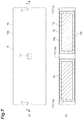
- FIGS. 7( a ) and 7( b ) are views illustrating the method for producing the interposer of FIG. 1 .
- FIGS. 8( a ) and 8( b ) are views illustrating the method for producing the interposer of FIG. 1 .
- FIGS. 9( a ) and 9( b ) are views illustrating the method for producing the interposer of FIG. 1 .
- An interposer (wiring structural body) 1 illustrated in FIGS. 1 and 2 is, for example, a relay substrate used for relaying electrical connection between electronic components having different terminal pitches.
- the interposer 1 includes a rectangular plate-shaped silicon substrate 10 made of a silicon (Si) crystal.
- a wiring pattern 3 having a predetermined shape is provided on the silicon substrate 10 .
- the wiring pattern 3 includes a surface wiring pattern 4 provided along a first principal surface 10 a and a second principal surface 10 b of the silicon substrate 10 and a through-wiring pattern 5 connecting the surface wiring pattern 4 on the first principal surface 10 a side and the surface wiring pattern 4 on the second principal surface 10 b side.
- the wiring pattern 3 is schematically illustrated in a simple shape, but actually, the wiring pattern 3 is formed accurately to have a complicated shape.
- the silicon substrate 10 is provided with a through hole 11 penetrating the silicon substrate 10 and being opened to the first principal surface 10 a and the second principal surface 10 b of the silicon substrate 10 .
- a through-wiring pattern 5 is disposed in the through hole 11 .
- the through hole 11 has a quadrangular prism shape extending along a thickness direction D of the silicon substrate 10 .
- a width of the through hole 11 is, for example, 10 ⁇ m or more and 100 ⁇ m or less.
- the width of the through hole 11 is a width in a direction perpendicular to a penetration direction, and herein, the width of the through hole is a distance between facing two sides.
- An inner surface 11 a of the through hole 11 is entirely along the thickness direction D and intersects the first principal surface 10 a and the second principal surface 10 b at right angles.
- FIGS. 1 and 2 also schematically illustrate the through hole 11 in a simple shape, but actually, a plurality of the through holes 11 are provided.
- the through holes 11 having various shapes such as inclined holes of which penetration directions are inclined with respect to the thickness direction D and bent holes having bent portions may be provided.
- the inner surface 11 a of the through hole 11 may have a portion along the thickness direction D as described above and a portion along the direction intersecting the thickness direction D and may have a tapered portion.
- the entire inner surface 11 a may be formed to have a tapered shape.
- the inner surface 11 a of the through hole 11 may be along a direction intersecting the thickness direction D.
- the entire inner surface 11 a of the through hole 11 may be along the direction intersecting the thickness direction D (inclined hole).
- the through hole 11 may have a first portion where the inner surface 11 a is along the first direction and a second portion where the inner surface 11 a is along the second direction which intersects the first direction and the thickness direction D (bent hole).
- each of a pair of side surfaces 10 c and 10 c that face each other is provided with a depression 12 .
- the depression 12 is formed by cutting a silicon wafer W (refer to FIG. 3 ) on which the through holes 11 are formed, along dicing lines L passing through the through holes 11 as described later.
- the depression 12 has a quadrangular prism shape that bisects the through hole 11 along a plane that passes through the center of the through hole 11 and is parallel to the side surface 10 c.
- an insulating layer 14 is provided on the first principal surface 10 a , the second principal surface 10 b , the inner surface 11 a of the through hole 11 , and the inner surface 12 a of the depression 12 .
- the insulating layer 14 is, for example, a silicon oxide film formed by performing thermal oxidation treatment on the surface of the silicon substrate 10 .
- the insulating layer 14 has a thickness of, for example, 1.0 ⁇ m or less.
- a boron layer 15 is provided on the insulating layer 14 .
- the boron layer 15 is formed along the wiring pattern 3 . That is, the boron layer 15 is formed on the insulating layer 14 on the first principal surface 10 a and the second principal surface 10 b along the surface wiring pattern 4 and is formed on the insulating layer 14 on the inner surface 11 a of the through hole 11 and the inner surface 12 a of the depression 12 along the through-wiring pattern 5 . In this example, the boron layer 15 is formed over the entire surface of the insulating layer 14 on the inner surface 11 a and the inner surface 12 a .
- the boron layer 15 formed on the insulating layer 14 on the inner surface 11 a and the inner surface 12 a is continuous with the boron layer 15 formed on the insulating layer 14 on the first principal surface 10 a and the second principal surface 10 b .
- the boron layer 15 is isotropically formed with a thickness of several nanometers to several tens of nanometers by a vapor deposition such as a chemical vapor deposition (CVD) epitaxial growth.
- CVD chemical vapor deposition
- a metal layer 16 is formed on the boron layer 15 .
- the metal layer 16 has a thickness of, for example, several micrometers to several tens of micrometers.
- the metal layer 16 is formed on the boron layer 15 on the first principal surface 10 a and the second principal surface 10 b along the surface wiring pattern 4 and is formed on the boron layer 15 on the inner surface 11 a of the through hole 11 and the inner surface 12 a of the depression 12 along the through-wiring pattern 5 .
- the metal layer 16 is buried in the through hole 11 and filled in the through hole 11 without a gap.
- the metal layer 16 is, for example, a plating layer isotropically formed on the boron layer 15 by plating.
- An example of plating, electroless metal plating may be exemplified.
- the metal layer 16 is configured by forming a gold layer 18 made of gold and having a thickness of about 0.05 ⁇ m on the nickel layer 17 made of nickel and having a thickness of about 5 ⁇ m or about 10 ⁇ m by, for example, electroless Ni/Au plating.
- the depression 12 is formed by cutting the through hole 11 , in the metal layer 16 in the depression 12 , the gold layer 18 is not formed on the nickel layer 17 , and the nickel layer 17 is exposed to the outer surface.
- the present inventors have found that the metal layer 16 is stably formed on the boron layer 15 and that the metal layer 16 is selectively and isotropically formed on the boron layer 15 by plating.
- FIGS. 4( a ) to 9( b ) FIGS. 4( a ), 5( a ), 6( a ), 7( a ), 8( a ), and 9( a ) are plan views, and FIGS. 4( b ), 5( b ), 6( b ), 7( b ), 8( b ), and 9( b ) are cross-sectional views taken along line B-B.
- a silicon wafer W for obtaining a plurality of interposers 1 by cutting along dicing lines L set in a grid shape is prepared.
- a portion indicated by a thick line in FIG. 3 is to be an interposer 1 .
- the method for producing the interposer 1 will be described focusing on the thick-line portion.
- a silicon substrate 10 (silicon wafer W) is prepared.
- a through hole 11 is formed in the silicon substrate 10 by reactive ion etching or the like.
- FIGS. 5( a ) and 5( b ) a through hole 11 is formed in the silicon substrate 10 by reactive ion etching or the like.
- an insulating layer 14 is formed on a first principal surface 10 a and a second principal surface 10 b of the silicon substrate 10 and an inner surface 11 a of the through hole 11 (including an inner surface 12 a of a depression 12 after cutting) (first step).
- a boron layer 15 is isotropically formed on the first principal surface 10 a and the second principal surface 10 b of the silicon substrate 10 and the inner surface 11 a of the through hole 11 by CVD epitaxial growth (second step).
- the boron layer 15 is patterned along a region R of a wiring pattern 3 by dry etching (second step).
- a metal layer 16 is selectively and isotropically formed on the boron layer 15 by plating (third step). More specifically, a nickel layer 17 is formed on the boron layer 15 by plating, and after that, a gold layer 18 is formed on the nickel layer 17 by plating. Accordingly, the wiring pattern 3 including a surface wiring pattern 4 and a through-wiring pattern 5 is formed. Finally, the silicon wafer W is cut along the dicing lines L to obtain the interposers 1 .
- the boron layer 15 is formed on the insulating layer 14 along the region R for forming the wiring pattern 3 , and after that, the metal layer 16 is formed on the boron layer 15 by plating.
- This configuration is based on the findings that the present inventors have found that the metal layer 16 is selectively and isotropically formed on the boron layer 15 by plating. Therefore, by forming the boron layer 15 accurately by, for example, patterning, the fine wiring pattern 3 can be formed.
- the metal layer 16 is formed on the boron layer 15 in the method for producing the interposer 1 .
- This configuration is based on the findings that the present inventors have found that the metal layer 16 is stably formed on the boron layer 15 . Therefore, reliability of electrical connection in the wiring pattern 3 can be achieved. Accordingly, in the method for producing the interposer 1 , it is possible to achieve both miniaturization of the wiring pattern 3 and reliability of electrical connection in the wiring pattern 3 .
- the boron layer 15 is isotropically formed on the insulating layer 14 by CVD epitaxial growth, and after that, the boron layer 15 is patterned along the region R. Therefore, it is possible to accurately and easily form the boron layer 15 along the region R.
- the nickel layer 17 is formed on the boron layer 15 by plating. Because the nickel layer 17 is easily adhered to the boron layer 15 , it is possible to reliably and easily form the nickel layer 17 on the boron layer 15 .
- the metal layer 16 is formed on the insulating layer 14 on the inner surface 11 a of the through hole 11 with the boron layer 15 interposed therebetween.
- This configuration is based on the findings that the present inventors have found that the metal layer 16 is stably formed on the boron layer 15 .
- electrical connection in the through-wiring pattern 5 is reliably achieved.
- the inner surface 11 a of the through hole 11 is along the thickness direction D.
- the inner surface 11 a of the through hole 11 is along a direction intersecting the thickness direction D.
- the inner surface 11 a is along a direction intersecting the thickness direction D.
- the metal layer 16 is formed on the insulating layer 14 on the inner surface 11 a with the boron layer 15 interposed therebetween, even in such a case, the metal layer 16 is stably formed on the inner surface 11 a , and electrical connection in the through-wiring pattern 5 is reliably achieved.
- the width of the through hole 11 is 10 ⁇ m or more and 100 ⁇ m or less. Because the metal layer 16 is formed on the insulating layer 14 on the inner surface 11 a of the through hole 11 with the boron layer 15 interposed therebetween, even in such a fine through hole 11 , the metal layer 16 is formed on the inner surface 11 a of the through hole 11 , and electrical connection in the through-wiring pattern 5 is reliably achieved.
- the metal layer 16 is a plating layer. This configuration is based on the findings that the present inventors have found that the metal layer 16 is selectively and isotropically formed on the boron layer 15 by plating. As a result, by forming the boron layer 15 on the insulating layer 14 on the inner surface 11 a of the through hole 11 , it is possible to reliably form the metal layer 16 on the insulating layer 14 on the inner surface 11 a of the through hole 11 with the boron layer 15 interposed therebetween without depending on the shape of the through hole 11 or the like. Therefore, electrical connection in the through-wiring pattern 5 is more reliably achieved.
- the silicon substrate 10 constitutes the interposer 1 . Therefore, it is possible to obtain the interposer 1 in which electrical connection in the through-wiring pattern 5 is reliably achieved.
- the metal layer 16 is formed on the insulating layer 14 by using, for example, a vapor deposition such as evaporation or sputtering, in order to facilitate formation of the metal layer 16 on the insulating layer 14 , it is necessary to form the inner surface 11 a of the through hole 11 in, for example, a tapered shape or the like.
- the method for producing the interposer 1 because the metal layer 16 can be selectively and isotropically formed on the boron layer 15 by plating, even in a case where the inner surface 11 a is along the thickness direction D, it is possible to stably form the metal layer 16 on the inner surface 11 a . As a result, it is not necessary to form the inner surface 11 a in a tapered shape, and it is possible to easily produce the interposer 1 having the finer through-wiring pattern 5 .
- the insulating layer 14 is a silicon oxide film formed by performing thermal oxidation treatment on the surface of the silicon substrate 10
- the insulating layer may be stacked on the surface of the silicon substrate 10 .
- the insulating layer 14 may be formed on the surface of the silicon substrate 10 including the inner surface 11 a of the through hole 11 along at least the wiring pattern 3 (region R).
- the insulating layer 14 may be formed only in the region along the wiring pattern 3 .
- the metal layer 16 may not be embedded in the through hole 11 and may be provided on the boron layer 15 on the inner surface 11 a of the through hole 11 so that a gap is formed in the through hole 11 .
- the metal layer 16 may be provided so as to form a gap that is opened to the first principal surface 10 a side and the second principal surface 10 b side of the silicon substrate 10 in the through hole 11 .
- the silicon substrate 10 constitutes the interposer 1 .
- the silicon substrate 10 may constitute a semiconductor device (for example, an optical semiconductor element such as an image sensor).
- the through-wiring pattern 5 electrically connects, for example, an electrode which is the surface wiring pattern 4 on the first principal surface 10 a side and a mounting pad which is the surface wiring pattern 4 on the second principal surface 10 b side.
- the boron layer 15 is disposed in the vicinity of a light receiving portion.
- the metal layer 16 is formed by electroless metal plating in order to avoid electric breakdown.
- the through hole 11 is provided in the silicon substrate 10 , and the through-wiring pattern 5 is included in the wiring pattern 3 .
- the through hole 11 may not be provided, and the through-wiring pattern 5 may not be included in the wiring pattern 3 .
- Irregularities may be provided on the surface of the silicon substrate 10 , and the wiring pattern 3 may be provided along the irregularities.
- the method for producing the interposer 1 according to the embodiment because the boron layer 15 is isotropically formed by a vapor deposition, even in a case where there are irregularities or the like in the region R, it is possible to reliably form the boron layer 15 along the region R.
Landscapes
- Chemical & Material Sciences (AREA)
- General Chemical & Material Sciences (AREA)
- Chemical Kinetics & Catalysis (AREA)
- Engineering & Computer Science (AREA)
- Materials Engineering (AREA)
- Mechanical Engineering (AREA)
- Metallurgy (AREA)
- Organic Chemistry (AREA)
- Internal Circuitry In Semiconductor Integrated Circuit Devices (AREA)
- Chemically Coating (AREA)
- Electrodes Of Semiconductors (AREA)
Abstract
Description
-
- 1: interposer (wiring structural body), 3: wiring pattern, 10: silicon substrate, 14: insulating layer, 15: boron layer, 16: metal layer, R: region for forming wiring pattern.
Claims (4)
Applications Claiming Priority (4)
| Application Number | Priority Date | Filing Date | Title |
|---|---|---|---|
| JP2015-197522 | 2015-10-05 | ||
| JP2015197522A JP6473405B2 (en) | 2015-10-05 | 2015-10-05 | Manufacturing method of wiring structure |
| JPJP2015-197522 | 2015-10-05 | ||
| PCT/JP2016/075680 WO2017061193A1 (en) | 2015-10-05 | 2016-09-01 | Method for producing wiring structure |
Publications (2)
| Publication Number | Publication Date |
|---|---|
| US20190080912A1 US20190080912A1 (en) | 2019-03-14 |
| US11094547B2 true US11094547B2 (en) | 2021-08-17 |
Family
ID=58487433
Family Applications (1)
| Application Number | Title | Priority Date | Filing Date |
|---|---|---|---|
| US15/765,528 Active US11094547B2 (en) | 2015-10-05 | 2016-09-01 | Method for producing wiring structure |
Country Status (6)
| Country | Link |
|---|---|
| US (1) | US11094547B2 (en) |
| EP (1) | EP3361494B1 (en) |
| JP (1) | JP6473405B2 (en) |
| CN (1) | CN108140565B (en) |
| TW (1) | TWI715625B (en) |
| WO (1) | WO2017061193A1 (en) |
Citations (15)
| Publication number | Priority date | Publication date | Assignee | Title |
|---|---|---|---|---|
| US5116589A (en) * | 1990-06-18 | 1992-05-26 | The United States Of America As Represented By The United States Department Of Energy | High density hexagonal boron nitride prepared by hot isostatic pressing in refractory metal containers |
| US5842387A (en) * | 1994-11-07 | 1998-12-01 | Marcus; Robert B. | Knife blades having ultra-sharp cutting edges and methods of fabrication |
| US20020048938A1 (en) | 1998-12-18 | 2002-04-25 | Hotaka Ishizuka | Tungsten film forming method |
| US20030186543A1 (en) * | 2002-03-27 | 2003-10-02 | Qing-Tang Jiang | Copper transition layer for improving copper interconnection reliability |
| US20030235991A1 (en) | 2002-06-21 | 2003-12-25 | Schulte Donald W. | Substrate etch method and device |
| US20040207049A1 (en) | 2003-02-27 | 2004-10-21 | Infineon Technologies Ag | Electronic component and semiconductor wafer, and method for producing the same |
| US20040259353A1 (en) | 2003-04-17 | 2004-12-23 | Engbrecht Edward R. | Methods of forming boron carbo-nitride layers for integrated circuit devices |
| JP2007113092A (en) | 2005-10-21 | 2007-05-10 | Seiko Epson Corp | Plating method |
| JP2008115448A (en) | 2006-11-07 | 2008-05-22 | Seiko Epson Corp | Electroless plating method |
| US20090014877A1 (en) * | 2007-07-09 | 2009-01-15 | Hui-Lin Chang | Selective Formation of Boron-Containing Metal Cap Pre-layer |
| US20100276572A1 (en) * | 2005-06-02 | 2010-11-04 | Sony Corporation | Semiconductor image sensor module and method of manufacturing the same |
| JP2012077342A (en) | 2010-09-30 | 2012-04-19 | Yamato Denki Kogyo Kk | Method for forming metal pattern |
| JP2012119381A (en) | 2010-11-29 | 2012-06-21 | Toshiba Corp | Semiconductor device and method of manufacturing semiconductor device |
| US20130075742A1 (en) * | 2011-09-22 | 2013-03-28 | Kabushiki Kaisha Toshiba | Nonvolatile semiconductor memory device |
| US20150056803A1 (en) | 2012-03-27 | 2015-02-26 | Novellus Systems, Inc. | Tungsten feature fill |
Family Cites Families (7)
| Publication number | Priority date | Publication date | Assignee | Title |
|---|---|---|---|---|
| TW411569B (en) * | 1999-01-05 | 2000-11-11 | Ind Tech Res Inst | Method of using the electroless plating technology to fabricate the copper/gold connections in integrated circuits |
| JP3327244B2 (en) * | 1999-03-12 | 2002-09-24 | 日本電気株式会社 | Semiconductor device |
| WO2006117884A1 (en) * | 2005-04-26 | 2006-11-09 | Mitsui Mining & Smelting Co., Ltd. | Al-Ni-B ALLOY WIRING MATERIAL AND DEVICE STRUCTURE USING SAME |
| KR20080061978A (en) * | 2006-12-28 | 2008-07-03 | 주식회사 하이닉스반도체 | Wiring Formation Method of Semiconductor Device |
| TWI529808B (en) * | 2010-06-10 | 2016-04-11 | Asm國際股份有限公司 | Method for selectively depositing a film on a substrate |
| US8461043B2 (en) * | 2011-04-11 | 2013-06-11 | Micron Technology, Inc. | Barrier layer for integrated circuit contacts |
| WO2013158986A2 (en) * | 2012-04-19 | 2013-10-24 | Carnegie Mellon University | A metal-semiconductor-metal (msm) heterojunction diode |
-
2015
- 2015-10-05 JP JP2015197522A patent/JP6473405B2/en active Active
-
2016
- 2016-09-01 US US15/765,528 patent/US11094547B2/en active Active
- 2016-09-01 WO PCT/JP2016/075680 patent/WO2017061193A1/en not_active Ceased
- 2016-09-01 CN CN201680058496.5A patent/CN108140565B/en active Active
- 2016-09-01 EP EP16853347.9A patent/EP3361494B1/en active Active
- 2016-09-08 TW TW105129031A patent/TWI715625B/en active
Patent Citations (15)
| Publication number | Priority date | Publication date | Assignee | Title |
|---|---|---|---|---|
| US5116589A (en) * | 1990-06-18 | 1992-05-26 | The United States Of America As Represented By The United States Department Of Energy | High density hexagonal boron nitride prepared by hot isostatic pressing in refractory metal containers |
| US5842387A (en) * | 1994-11-07 | 1998-12-01 | Marcus; Robert B. | Knife blades having ultra-sharp cutting edges and methods of fabrication |
| US20020048938A1 (en) | 1998-12-18 | 2002-04-25 | Hotaka Ishizuka | Tungsten film forming method |
| US20030186543A1 (en) * | 2002-03-27 | 2003-10-02 | Qing-Tang Jiang | Copper transition layer for improving copper interconnection reliability |
| US20030235991A1 (en) | 2002-06-21 | 2003-12-25 | Schulte Donald W. | Substrate etch method and device |
| US20040207049A1 (en) | 2003-02-27 | 2004-10-21 | Infineon Technologies Ag | Electronic component and semiconductor wafer, and method for producing the same |
| US20040259353A1 (en) | 2003-04-17 | 2004-12-23 | Engbrecht Edward R. | Methods of forming boron carbo-nitride layers for integrated circuit devices |
| US20100276572A1 (en) * | 2005-06-02 | 2010-11-04 | Sony Corporation | Semiconductor image sensor module and method of manufacturing the same |
| JP2007113092A (en) | 2005-10-21 | 2007-05-10 | Seiko Epson Corp | Plating method |
| JP2008115448A (en) | 2006-11-07 | 2008-05-22 | Seiko Epson Corp | Electroless plating method |
| US20090014877A1 (en) * | 2007-07-09 | 2009-01-15 | Hui-Lin Chang | Selective Formation of Boron-Containing Metal Cap Pre-layer |
| JP2012077342A (en) | 2010-09-30 | 2012-04-19 | Yamato Denki Kogyo Kk | Method for forming metal pattern |
| JP2012119381A (en) | 2010-11-29 | 2012-06-21 | Toshiba Corp | Semiconductor device and method of manufacturing semiconductor device |
| US20130075742A1 (en) * | 2011-09-22 | 2013-03-28 | Kabushiki Kaisha Toshiba | Nonvolatile semiconductor memory device |
| US20150056803A1 (en) | 2012-03-27 | 2015-02-26 | Novellus Systems, Inc. | Tungsten feature fill |
Non-Patent Citations (1)
| Title |
|---|
| International Preliminary Report on Patentability dated Apr. 19, 2018 for PCT/JP2016/075680. |
Also Published As
| Publication number | Publication date |
|---|---|
| CN108140565B (en) | 2022-08-05 |
| US20190080912A1 (en) | 2019-03-14 |
| CN108140565A (en) | 2018-06-08 |
| EP3361494A1 (en) | 2018-08-15 |
| TWI715625B (en) | 2021-01-11 |
| WO2017061193A1 (en) | 2017-04-13 |
| JP6473405B2 (en) | 2019-02-20 |
| EP3361494A4 (en) | 2019-05-22 |
| JP2017073417A (en) | 2017-04-13 |
| TW201724434A (en) | 2017-07-01 |
| EP3361494B1 (en) | 2020-06-17 |
Similar Documents
| Publication | Publication Date | Title |
|---|---|---|
| US9445503B2 (en) | Carrier device, electrical device having a carrier device and method for producing same | |
| US9585254B2 (en) | Electronic device | |
| TWI666737B (en) | Wiring substrate, method of manufacturing the same and electronic component device | |
| US9927499B2 (en) | Semiconductor device | |
| TWI508240B (en) | Laminated wiring board | |
| JP2012248754A (en) | Method of manufacturing semiconductor device and semiconductor device | |
| US10573556B2 (en) | Wiring structure and method for producing wiring structure | |
| US10163775B2 (en) | Electronic device | |
| US20190080912A1 (en) | Method for producing wiring structure | |
| JP2016125831A (en) | Magnetism detection device | |
| JP2016157901A (en) | Electronic device | |
| KR101411734B1 (en) | Fabricating method of semiconductor device having through silicon via and semiconductor device therof | |
| JP2015149314A (en) | Semiconductor device and manufacturing method thereof | |
| JP2009267098A (en) | Semiconductor apparatus and method of manufacturing the same | |
| US20140374853A1 (en) | Component including means for reducing assembly-related mechanical stresses and methods for manufacturing same | |
| WO2015124464A1 (en) | Method for manufactuirng an opto-electronic component | |
| JP2013004572A (en) | Semiconductor device manufacturing method | |
| US9786616B2 (en) | Semiconductor apparatus, method for manufacturing the same, electronic device, and moving body | |
| US11373958B2 (en) | Semiconductor device and semiconductor device manufacturing method for prevention of metallic diffusion into a semiconductor substrate | |
| JP2016100555A (en) | Electronic equipment | |
| JP2019197911A (en) | Electronic equipment | |
| JP2017135294A (en) | Semiconductor device substrate, semiconductor device substrate manufacturing method, semiconductor device, and semiconductor device manufacturing method | |
| JP2017135294A6 (en) | Semiconductor device substrate, semiconductor device substrate manufacturing method, semiconductor device, and semiconductor device manufacturing method |
Legal Events
| Date | Code | Title | Description |
|---|---|---|---|
| AS | Assignment |
Owner name: HAMAMATSU PHOTONICS K.K., JAPAN Free format text: ASSIGNMENT OF ASSIGNORS INTEREST;ASSIGNORS:MURAMATSU, MASAHARU;SUZUKI, HISANORI;YONETA, YASUHITO;AND OTHERS;SIGNING DATES FROM 20180131 TO 20180201;REEL/FRAME:045422/0870 |
|
| FEPP | Fee payment procedure |
Free format text: ENTITY STATUS SET TO UNDISCOUNTED (ORIGINAL EVENT CODE: BIG.); ENTITY STATUS OF PATENT OWNER: LARGE ENTITY |
|
| STPP | Information on status: patent application and granting procedure in general |
Free format text: DOCKETED NEW CASE - READY FOR EXAMINATION |
|
| STPP | Information on status: patent application and granting procedure in general |
Free format text: NON FINAL ACTION MAILED |
|
| STPP | Information on status: patent application and granting procedure in general |
Free format text: RESPONSE TO NON-FINAL OFFICE ACTION ENTERED AND FORWARDED TO EXAMINER |
|
| STPP | Information on status: patent application and granting procedure in general |
Free format text: FINAL REJECTION MAILED |
|
| STPP | Information on status: patent application and granting procedure in general |
Free format text: DOCKETED NEW CASE - READY FOR EXAMINATION |
|
| STPP | Information on status: patent application and granting procedure in general |
Free format text: RESPONSE TO NON-FINAL OFFICE ACTION ENTERED AND FORWARDED TO EXAMINER |
|
| STPP | Information on status: patent application and granting procedure in general |
Free format text: NOTICE OF ALLOWANCE MAILED -- APPLICATION RECEIVED IN OFFICE OF PUBLICATIONS |
|
| STPP | Information on status: patent application and granting procedure in general |
Free format text: PUBLICATIONS -- ISSUE FEE PAYMENT RECEIVED |
|
| STPP | Information on status: patent application and granting procedure in general |
Free format text: PUBLICATIONS -- ISSUE FEE PAYMENT VERIFIED |
|
| STCF | Information on status: patent grant |
Free format text: PATENTED CASE |
|
| MAFP | Maintenance fee payment |
Free format text: PAYMENT OF MAINTENANCE FEE, 4TH YEAR, LARGE ENTITY (ORIGINAL EVENT CODE: M1551); ENTITY STATUS OF PATENT OWNER: LARGE ENTITY Year of fee payment: 4 |