US10969134B2 - Air conditioner and method for self-cleaning air conditioner heat exchanger - Google Patents
Air conditioner and method for self-cleaning air conditioner heat exchanger Download PDFInfo
- Publication number
- US10969134B2 US10969134B2 US15/978,063 US201815978063A US10969134B2 US 10969134 B2 US10969134 B2 US 10969134B2 US 201815978063 A US201815978063 A US 201815978063A US 10969134 B2 US10969134 B2 US 10969134B2
- Authority
- US
- United States
- Prior art keywords
- heat exchanger
- evaporating temperature
- cleaned heat
- cleaned
- temperature
- Prior art date
- Legal status (The legal status is an assumption and is not a legal conclusion. Google has not performed a legal analysis and makes no representation as to the accuracy of the status listed.)
- Active, expires
Links
Images


Classifications
-
- F—MECHANICAL ENGINEERING; LIGHTING; HEATING; WEAPONS; BLASTING
- F24—HEATING; RANGES; VENTILATING
- F24F—AIR-CONDITIONING; AIR-HUMIDIFICATION; VENTILATION; USE OF AIR CURRENTS FOR SCREENING
- F24F11/00—Control or safety arrangements
- F24F11/62—Control or safety arrangements characterised by the type of control or by internal processing, e.g. using fuzzy logic, adaptive control or estimation of values
-
- F—MECHANICAL ENGINEERING; LIGHTING; HEATING; WEAPONS; BLASTING
- F24—HEATING; RANGES; VENTILATING
- F24F—AIR-CONDITIONING; AIR-HUMIDIFICATION; VENTILATION; USE OF AIR CURRENTS FOR SCREENING
- F24F11/00—Control or safety arrangements
- F24F11/62—Control or safety arrangements characterised by the type of control or by internal processing, e.g. using fuzzy logic, adaptive control or estimation of values
- F24F11/63—Electronic processing
- F24F11/65—Electronic processing for selecting an operating mode
-
- F—MECHANICAL ENGINEERING; LIGHTING; HEATING; WEAPONS; BLASTING
- F24—HEATING; RANGES; VENTILATING
- F24F—AIR-CONDITIONING; AIR-HUMIDIFICATION; VENTILATION; USE OF AIR CURRENTS FOR SCREENING
- F24F11/00—Control or safety arrangements
-
- F—MECHANICAL ENGINEERING; LIGHTING; HEATING; WEAPONS; BLASTING
- F24—HEATING; RANGES; VENTILATING
- F24F—AIR-CONDITIONING; AIR-HUMIDIFICATION; VENTILATION; USE OF AIR CURRENTS FOR SCREENING
- F24F11/00—Control or safety arrangements
- F24F11/30—Control or safety arrangements for purposes related to the operation of the system, e.g. for safety or monitoring
-
- F—MECHANICAL ENGINEERING; LIGHTING; HEATING; WEAPONS; BLASTING
- F24—HEATING; RANGES; VENTILATING
- F24F—AIR-CONDITIONING; AIR-HUMIDIFICATION; VENTILATION; USE OF AIR CURRENTS FOR SCREENING
- F24F11/00—Control or safety arrangements
- F24F11/62—Control or safety arrangements characterised by the type of control or by internal processing, e.g. using fuzzy logic, adaptive control or estimation of values
- F24F11/63—Electronic processing
- F24F11/64—Electronic processing using pre-stored data
-
- F—MECHANICAL ENGINEERING; LIGHTING; HEATING; WEAPONS; BLASTING
- F25—REFRIGERATION OR COOLING; COMBINED HEATING AND REFRIGERATION SYSTEMS; HEAT PUMP SYSTEMS; MANUFACTURE OR STORAGE OF ICE; LIQUEFACTION SOLIDIFICATION OF GASES
- F25B—REFRIGERATION MACHINES, PLANTS OR SYSTEMS; COMBINED HEATING AND REFRIGERATION SYSTEMS; HEAT PUMP SYSTEMS
- F25B47/00—Arrangements for preventing or removing deposits or corrosion, not provided for in another subclass
- F25B47/02—Defrosting cycles
- F25B47/022—Defrosting cycles hot gas defrosting
- F25B47/025—Defrosting cycles hot gas defrosting by reversing the cycle
-
- F—MECHANICAL ENGINEERING; LIGHTING; HEATING; WEAPONS; BLASTING
- F24—HEATING; RANGES; VENTILATING
- F24F—AIR-CONDITIONING; AIR-HUMIDIFICATION; VENTILATION; USE OF AIR CURRENTS FOR SCREENING
- F24F11/00—Control or safety arrangements
- F24F11/30—Control or safety arrangements for purposes related to the operation of the system, e.g. for safety or monitoring
- F24F11/41—Defrosting; Preventing freezing
-
- F—MECHANICAL ENGINEERING; LIGHTING; HEATING; WEAPONS; BLASTING
- F24—HEATING; RANGES; VENTILATING
- F24F—AIR-CONDITIONING; AIR-HUMIDIFICATION; VENTILATION; USE OF AIR CURRENTS FOR SCREENING
- F24F11/00—Control or safety arrangements
- F24F11/70—Control systems characterised by their outputs; Constructional details thereof
-
- F—MECHANICAL ENGINEERING; LIGHTING; HEATING; WEAPONS; BLASTING
- F24—HEATING; RANGES; VENTILATING
- F24F—AIR-CONDITIONING; AIR-HUMIDIFICATION; VENTILATION; USE OF AIR CURRENTS FOR SCREENING
- F24F2110/00—Control inputs relating to air properties
- F24F2110/10—Temperature
-
- F—MECHANICAL ENGINEERING; LIGHTING; HEATING; WEAPONS; BLASTING
- F24—HEATING; RANGES; VENTILATING
- F24F—AIR-CONDITIONING; AIR-HUMIDIFICATION; VENTILATION; USE OF AIR CURRENTS FOR SCREENING
- F24F2221/00—Details or features not otherwise provided for
- F24F2221/22—Cleaning ducts or apparatus
-
- F—MECHANICAL ENGINEERING; LIGHTING; HEATING; WEAPONS; BLASTING
- F25—REFRIGERATION OR COOLING; COMBINED HEATING AND REFRIGERATION SYSTEMS; HEAT PUMP SYSTEMS; MANUFACTURE OR STORAGE OF ICE; LIQUEFACTION SOLIDIFICATION OF GASES
- F25B—REFRIGERATION MACHINES, PLANTS OR SYSTEMS; COMBINED HEATING AND REFRIGERATION SYSTEMS; HEAT PUMP SYSTEMS
- F25B49/00—Arrangement or mounting of control or safety devices
- F25B49/02—Arrangement or mounting of control or safety devices for compression type machines, plants or systems
Definitions
- the present invention relates to the field of air-conditioner technologies, and specifically, to a self-cleaning method for an air-conditioner heat exchanger.
- a fin of an air-conditioner heat exchanger is designed into compact multi-layer pieces, and a gap between pieces is only 1-2 mm, and various press molds or cracks are added into the fin of the air-conditioner to enlarge a heat exchange area.
- a large amount of air circulates; the heat exchanger exchanges heat; various dust, impurities, and the like in air are attached to the heat exchanger, which not only affects the effect of the heat exchanger, but also easily causes bacteria breezing, and consequently, the air-conditioner generates peculiar smell and even user health is affected.
- the air-conditioner heat exchanger needs to be cleaned. However, because the shape of the heat exchanger is complex, cleaning on the heat exchanger is inconvenient.
- An objective of the present invention is to provide a self-cleaning method for an air-conditioner heat exchanger, so that self-cleaning can be performed on an air-conditioner heat exchanger conveniently.
- the self-cleaning effect is good, and the cleaning efficiency is high.
- a self-cleaning method for an air-conditioner heat exchanger comprising:
- k is a calculating coefficient, and a value thereof is 0.7-1; A is a temperature compensation value, and a value thereof is 4-25° C.; T is the ambient temperature of the to-be-cleaned heat exchanger; ⁇ 10° C. ⁇ T1 ⁇ 0° C.
- the step of adjusting, according to the target evaporating temperature and an actual evaporating temperature of the to-be-cleaned heat exchanger, an evaporating temperature of the to-be-cleaned heat exchanger, and controlling the to-be-cleaned heat exchanger to frost comprises:
- the step of adjusting an operating frequency of a compressor according to a comparison result comprises:
- the step of adjusting, according to the target evaporating temperature and an actual evaporating temperature of the to-be-cleaned heat exchanger, an evaporating temperature of the to-be-cleaned heat exchanger, and controlling the to-be-cleaned heat exchanger to frost comprises:
- the step of adjusting, according to a comparison result, a rotation speed of a fan corresponding to the to-be-cleaned heat exchanger comprises:
- the step of adjusting, according to the target evaporating temperature and an actual evaporating temperature of the to-be-cleaned heat exchanger, an evaporating temperature of the to-be-cleaned heat exchanger, and controlling the to-be-cleaned heat exchanger to frost comprises:
- the step of adjusting, according to a comparison result, a refrigerant flow that flows through the to-be-cleaned heat exchanger comprises:
- the step of controlling the to-be-cleaned heat exchanger to frost comprises:
- a fan corresponding to the to-be-cleaned heat exchanger is controlled to stop operation for time of t3, and the fan corresponding to the to-be-cleaned heat exchanger is restarted to enter the defrosting mode until Te ⁇ T0 and time of t4 is kept.
- an air-conditioner comprising a memory and one or more processors, a multiple temperature sensor, wherein the memory stores therein computer readable program codes, the temperature sensor detects an ambient temperature of a to-be-cleaned heat exchanger, and the one or more processors are configured to execute the computer readable program codes:
- a self-cleaning method for an air-conditioner heat exchanger comprising:
- the self-cleaning method for an air-conditioner heat exchanger of the present embodiments comprises: controlling an air-conditioner to enter a self-cleaning mode; detecting an ambient temperature of a to-be-cleaned heat exchanger, and determining, according to the detected ambient temperature, a target evaporating temperature of the to-be-cleaned heat exchanger; adjusting, according to the target evaporating temperature and an actual evaporating temperature of the to-be-cleaned heat exchanger, an evaporating temperature of the to-be-cleaned heat exchanger, and controlling the to-be-cleaned heat exchanger to frost; and after a surface of the to-be-cleaned heat exchanger is covered with a frost layer or an ice layer, controlling the air conditioner to enter a defrosting mode of the to-be-cleaned heat exchanger.
- an evaporating temperature of a to-be-cleaned heat exchanger can be adjusted according to a difference between a target evaporating temperature and an actual evaporating temperature of the to-be-cleaned heat exchanger, so that a surface of the to-be-cleaned heat exchanger can frost or freeze, and therefore dust, impurities, and the like on the surface of the to-be-cleaned heat exchanger are peeled off from the surface of the to-be-cleaned heat exchanger by a frost layer or an ice layer, and are removed from the to-be-cleaned heat exchanger after defrosting; the cleaning effect is good and the cleaning efficiency is high, and the self-cleaning method is not limited by a shape and a structure of the to-be-cleaned heat exchanger; the cleaning effect is more thorough and effective, and not only bacteria breeding can be prevented, but also the heat change efficiency of the to-be-cleaned heat exchanger can be improved.
- FIG. 1 is a flowchart of a self-cleaning method for an air-conditioner heat exchanger of an embodiment of the present invention.
- FIG. 2 is a structural illustration of an air conditioner according to an embodiment of the present invention.
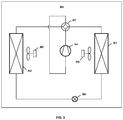
- FIG. 3 is a structural illustration of an air conditioner applied in a self-cleaning method for an air-conditioner heat exchanger of an embodiment of the present invention.
- relationship terms such as a first level and a second level are used merely to distinguish one entity or operation from another entity or operation, and are not intended to require or imply that any actual relationship or sequence exists belong the entities or operations.
- term “comprise”, “include”, or any other variant thereof aims to cover non-exclusive “include”, so that a process, method, or device that comprises a series of elements not only comprises the elements, but also comprises other elements that are not definitely listed, or further comprises inherent elements of the process, method, or device.
- an element defined by the sentence “comprise a . . . ” does not exclude the case in which other same elements further exist in a process, method, or device that comprises the element.
- an air-conditioner 300 adapted to a self-cleaning method of the present invention includes a compressor 301 , an indoor heat exchanger 302 , an outdoor heat exchanger 303 , a throttling device 304 , a first fan 305 and a second fan 306 .
- the first fan 305 is a fan corresponding to the indoor heat exchanger 302
- the second fan 306 is a fan corresponding to the outdoor heat exchanger 303
- the adapted air-conditioner may also comprise a four-way valve 307 , which is unnecessary.
- the air-conditioner may also comprise multiple temperature sensors, configured to detect an indoor heat exchanger temperature, an indoor ambient temperature, an outdoor heat exchanger temperature, and an outdoor ambient temperature.
- a self-cleaning method for an air-conditioner heat exchanger includes: controlling an air-conditioner to enter a self-cleaning mode; detecting an ambient temperature of a to-be-cleaned heat exchanger, and determining, according to the detected ambient temperature, a target evaporating temperature of the to-be-cleaned heat exchanger; adjusting, according to the target evaporating temperature and an actual evaporating temperature of the to-be-cleaned heat exchanger, an evaporating temperature of the to-be-cleaned heat exchanger, and controlling the to-be-cleaned heat exchanger to frost; and after a surface of the to-be-cleaned heat exchanger is covered with a frost layer or an ice layer, controlling the air conditioner to enter a defrosting mode of the to-be-cleaned heat exchanger.
- operating parameters of the air-conditioner for example, an operating frequency of a compressor, a rotation speed of a fan corresponding to the to-be-cleaned heat exchanger, and a refrigerant flow of the to-be-cleaned heat exchanger may be adjusted; the parameters may be individually adjusted, adjusted in pairs, or adjusted in a linkage manner together.
- a specific adjusting manner may be selected according to the detected evaporating temperature and the set target evaporating temperature.
- an evaporating temperature of a to-be-cleaned heat exchanger can be adjusted according to a difference between a target evaporating temperature and an actual evaporating temperature of the to-be-cleaned heat exchanger, so that a surface of the to-be-cleaned heat exchanger can frost or freeze, and therefore dust, impurities, and the like on the surface of the to-be-cleaned heat exchanger are peeled off from the surface of the to-be-cleaned heat exchanger by a frost layer or an ice layer, and are removed from the to-be-cleaned heat exchanger after defrosting; the cleaning effect is good and the cleaning efficiency is high, and the self-cleaning method is not limited by a shape and a structure of the to-be-cleaned heat exchanger; the cleaning effect is more thorough and effective, and not only bacteria breeding can be prevented, but also the heat change efficiency of the to-be-cleaned heat exchanger can be improved.
- k is a calculating coefficient, and a value thereof is 0.7-1; A is a temperature compensation value, and a value thereof is 4-25° C.; T is the ambient temperature of the to-be-cleaned heat exchanger; ⁇ 10° C. ⁇ T1 ⁇ 0° C.
- k is 0.9, A is 18° C., and T1 is ⁇ 5° C.
- a temperature value relevant with the ambient temperature may be selected when the ambient temperature is in a reasonable range; when the ambient temperature is excessively high, a temperature value that can satisfy a frosting requirement of the to-be-cleaned heat exchanger is selected, to ensure smooth process of self-cleaning of the to-be-cleaned heat exchanger, and the air-conditioner can select a reasonable evaporating temperature according to the ambient temperature when the ambient temperature is in a reasonable range, so as to ensure working efficiency of the air-conditioner.
- the target evaporating temperature may also be reasonably determined in other manners, to ensure smooth completion of self-cleaning of the to-be-cleaned heat exchanger.
- the step of adjusting, according to the target evaporating temperature and an actual evaporating temperature of the to-be-cleaned heat exchanger, an evaporating temperature of the to-be-cleaned heat exchanger, and controlling the to-be-cleaned heat exchanger to frost comprises: comparing a relationship between the target evaporating temperature and the actual evaporating temperature; and adjusting an operating frequency of a compressor according to a comparison result.
- the step of adjusting an operating frequency of a compressor according to a comparison result specifically comprises: when Te>T0+B2, improving the operating frequency of the compressor; when Te ⁇ T0 ⁇ B1, reducing the operating frequency of the compressor; and when T0 ⁇ B1 ⁇ Te ⁇ T0+B2, keeping current operating state, wherein a value of B1 is 1-20° C. and a value of B2 is 1-10° C.
- the evaporating temperature of the heat exchanger can be controlled to be in a suitable frosting temperature range, so that a surface of the heat exchanger can frost quickly and uniformly; dirt is peeled off the surface of the heat exchanger by means of an acting force of frosting solidification, and then the surface of the heat exchanger is cleaned in a defrosting manner, so as to effectively improve the cleaning effect of the surface of the heat exchanger.
- T0 ⁇ B1 ⁇ 30° C. and T0+B2 ⁇ 5° C. it should be generally ensured that T0 ⁇ B1 ⁇ 30° C. and T0+B2 ⁇ 5° C., so that the evaporating temperature of the to-be-cleaned heat exchanger is always kept within a suitable range, to ensure sufficient frosting or freezing on the surface of the to-be-cleaned heat exchanger, excessively high energy consumption of the air-conditioner may be prevented, to improve working efficiency of the air-conditioner.
- the step of improving the operating frequency of the compressor comprises: when T0+B2 ⁇ Te ⁇ T0+B3, improving the operating frequency of the compressor according to a rate of a Hz/s; and when Te>T0+B3, improving the operating frequency of the compressor according to a rate of b Hz/s, wherein B3>B2 and a ⁇ b.
- Te>T0+B2 it indicates that the current evaporating temperature of the to-be-cleaned heat exchanger is excessively high, which is not good for surface frosting of the to-be-cleaned heat exchanger, and the evaporating temperature of the to-be-cleaned heat exchanger needs to be reduced, and therefore, the operating frequency of the compressor needs to be improved, the heat exchange capability of the to-be-cleaned heat exchanger needs to be improved, and the evaporating temperature of the to-be-cleaned heat exchanger needs to be reduced.
- Te>T0+B3 it indicates that the evaporating temperature of the to-be-cleaned heat exchanger is higher than the target evaporating temperature by a large amplitude, and the operating frequency of the compressor needs to be improved at a high rate, so that the evaporating temperature of the to-be-cleaned heat exchanger reaches the target evaporating temperature quickly, so as to improve the surface frosting or freezing efficiency of the to-be-cleaned heat exchanger, thereby improving the self-cleaning efficiency of the air-conditioner.
- a suitable manner for adjusting the operating frequency of the compressor may be selected according to working conditions of the air-conditioner, so that not only quick adjustment on the evaporating temperature of the to-be-cleaned heat exchanger is ensured, but also excessively large fluctuation on the operation of the air-conditioner is avoided.
- the operating frequency of the compressor may also be improved in the following manner: when T0+B2 ⁇ Te ⁇ T0+B3, improving the operating frequency of the compressor according to a rate of (a ⁇ ct) Hz/s; and when Te>T0+B3, improving the operating frequency of the compressor according to a rate of (b ⁇ dt) Hz/s.
- variable rate adjustment may be performed on the operating frequency of the compressor in the foregoing manner, so as to ensure that the operating frequency of the compressor can match the operating frequency that needs to be adjusted of the compressor, so that the compressor can operate with high efficiency and power consumption of the compressor is reduced, thereby improving adjusting accuracy of the operating frequency of the compressor.
- the step of reducing the operating frequency of the compressor comprises: when T0 ⁇ B4 ⁇ Te ⁇ T0 ⁇ B1, reducing the operating frequency of the compressor according to a rate of a Hz/s; and when Te ⁇ T0 ⁇ B4, reducing the operating frequency of the compressor according to a rate of b Hz/s, wherein B4>B1 and a ⁇ b.
- Te ⁇ T0 ⁇ B1 it indicates that the current evaporating temperature of the to-be-cleaned heat exchanger is excessively low, which causes non-uniform surface frosting of the to-be-cleaned heat exchanger, and causes great reduction of working efficiency of the air-conditioner at the same time; the evaporating temperature of the to-be-cleaned heat exchanger needs to be improved, and therefore, the operating frequency of the compressor needs to be reduced, the heat exchange capability of the to-be-cleaned heat exchanger needs to be reduced, and the evaporating temperature of the to-be-cleaned heat exchanger needs to be improved.
- T0 ⁇ B4 ⁇ Te ⁇ T0 ⁇ B1 it indicates that a difference between the evaporating temperature of the to-be-cleaned heat exchanger and the target evaporating temperature is small, and therefore the operating frequency of the compressor may be reduced at a low rate.
- the evaporating temperature of the to-be-cleaned heat exchanger approaches to the target evaporating temperature, and on the other aspect, unstable operation of the air-conditioner caused by excessively quick adjustment of the operating frequency of the compressor can also be avoided to improve working efficiency of the air-conditioner.
- Te ⁇ T0 ⁇ B4 it indicates that the difference between the evaporating temperature of the to-be-cleaned heat exchanger and the target evaporating temperature is large, and the operating frequency of the compressor needs to be reduced at a high rate, so that the evaporating temperature of the to-be-cleaned heat exchanger reaches the target evaporating temperature quickly, so as to improve the surface frosting or freezing efficiency of the to-be-cleaned heat exchanger, thereby improving the self-cleaning efficiency of the air-conditioner.
- a suitable manner for adjusting the operating frequency of the compressor may be selected according to working conditions of the air-conditioner, so that not only quick adjustment on the evaporating temperature of the to-be-cleaned heat exchanger is ensured, but also excessively large fluctuation on the operation of the air-conditioner is avoided.
- the operating frequency of the compressor may also be reduced in the following manner: when T0 ⁇ B4 ⁇ Te ⁇ T0 ⁇ B1, reducing the operating frequency of the compressor according to a rate of (a ⁇ ct) Hz/s; and when Te ⁇ T0 ⁇ B4, reducing the operating frequency of the compressor according to a rate of (b ⁇ dt) Hz/s.
- variable rate adjustment may be performed on the operating frequency of the compressor in the foregoing manner, so as to ensure that the operating frequency of the compressor can match the operating frequency that needs to be adjusted of the compressor, so that the compressor can operate with high efficiency and power consumption of the compressor is reduced, thereby improving adjusting accuracy of the operating frequency of the compressor.
- a fan on a self-cleaning side is started, and continuously provides moist air to the heat exchanger, so that the surface of the heat exchanger is covered by a water film; at the moment, the fan on the self-cleaning side stops operation, the evaporating temperature (namely, a heat exchanger coil temperature) decreases quickly, the water film on the surface of the heat exchanger freezes, and water that condenses in air frosts, so as to peel off dirt on the heat exchanger.
- the evaporating temperature namely, a heat exchanger coil temperature
- the compressor needs to operate at a highest operating frequency within a reliability ensured range during operation; in a frosting process, a larger temperature difference indicates a quicker frosting speed, and therefore a higher frequency of the compressor indicates a better effect.
- a heat exchange amount of the heat exchanger is extremely small, and the evaporating temperature decreases quickly, the reliability of the compressor is affected. Therefore, to make the frosting speed of the heat exchanger and the operation reliability of the compressor reach a good balance, the evaporating temperature needs to be controlled within a particular range.
- the frosting effect and operation reliability of the entire machine can be well ensured within a temperature range of ⁇ 20° C. ⁇ Te ⁇ 15° C. Therefore, during frequency adjustment of the compressor, the evaporating temperature of the heat exchanger should be controlled within the evaporating temperature range.
- the compressor when it is detected that the evaporating temperature satisfies Te ⁇ 20° C., the compressor is controlled to reduce the frequency;
- the compressor when it is detected that the evaporating temperature satisfies ⁇ 15° C. ⁇ Te, the compressor is controlled to improve the frequency.
- the current evaporating temperature not only can ensure frosting efficiency of the surface of the heat exchanger, but also can ensure the reliability of operation of the compressor, and therefore the compressor can be made to keep the current operating frequency, so that the air-conditioner has a high energy efficiency ratio.
- the compressor When Te ⁇ 20° C., if it is detected that the evaporating temperature satisfies Te ⁇ 25° C., the compressor is controlled to quickly reduce the frequency at 1 Hz/s; and if it is detected that the evaporating temperature satisfies ⁇ 25° C. ⁇ Te ⁇ 20° C., the compressor is controlled to slowly reduce the frequency at 1 Hz/10 s. a is 1 Hz/10 s and b is 1 Hz/s.
- Te ⁇ 25° C. When it is detected that Te ⁇ 25° C., it indicates that a temperature difference between the evaporating temperature and the evaporating temperature that needs to be adjusted is large, and therefore the operating frequency of the compressor needs to be quickly reduced, so that the evaporating temperature is quickly improved, thereby preventing the compressor from operating in unreliable state.
- the foregoing frequency reduction rate may be another value, as long as it is ensured that b is greater than a.
- the compressor When it is detected that the evaporating temperature satisfies ⁇ 15° C. ⁇ Te ⁇ 10° C., the compressor is controlled to slowly improve the frequency at 1 Hz/10 s; and when it is detected that the evaporating temperature satisfies ⁇ 10° C. ⁇ Te, the compressor is controlled to quickly improve the frequency at 1 Hz/s, wherein a is 1 Hz/10 s and b is 1 Hz/s.
- the frequency adjustment of the compressor may also be performed in the following manner, for example:
- the compressor is controlled to slowly reduce the frequency at (1 ⁇ 0.1t)Hz/10 s;
- the compressor when it is detected that the evaporating temperature satisfies ⁇ 15° C. ⁇ Te ⁇ 10° C., the compressor is controlled to slowly improve the frequency at (1 ⁇ 0.1t)Hz/10 s;
- the compressor when it is detected that the evaporating temperature satisfies ⁇ 10° C. ⁇ Te, the compressor is controlled to quickly improve the frequency at (1 ⁇ 0.1t) Hz/s.
- A is 1 Hz/10 s
- b is 1 Hz/s
- c is 0.01 Hz/s
- d is 0.1 Hz/s
- t is the adjusting time of the operating frequency of the compressor and a unit thereof is s.
- the foregoing values may be set according to adjusting requirements of the compressor, so as to adjust a frequency adjusting speed of the compressor, so that the compressor can operate with high efficiency, and the reliability and stability of operation of the compressor can be ensured.
- the step of adjusting, according to the target evaporating temperature and an actual evaporating temperature of the to-be-cleaned heat exchanger, an evaporating temperature of the to-be-cleaned heat exchanger, and controlling the to-be-cleaned heat exchanger to frost comprises: comparing a relationship between the target evaporating temperature and the actual evaporating temperature; and adjusting, according to a comparison result, a rotation speed of a fan corresponding to the to-be-cleaned heat exchanger.
- the step of adjusting, according to a comparison result, a rotation speed of a fan corresponding to the to-be-cleaned heat exchanger specifically comprises: when Te>T0+B2, reducing the rotation speed of the fan; when Te ⁇ T0 ⁇ B1, improving the rotation speed of the fan; and when T0 ⁇ B1 ⁇ Te ⁇ T0+B2, keeping current operating state, wherein a value of B1 is 1-20° C. and a value of B2 is 1-10° C.
- the evaporating temperature of the heat exchanger can be controlled to be in a suitable frosting temperature range, so that a surface of the heat exchanger can frost quickly and uniformly; dirt is peeled off the surface of the heat exchanger by means of an acting force of frosting solidification, and then the surface of the heat exchanger is cleaned in a defrosting manner, so as to effectively improve the cleaning effect of the surface of the heat exchanger.
- the step of reducing the rotation speed of the fan comprises: when T0+B2 ⁇ Te ⁇ T0+B3, reducing the rotation speed of the fan according to a rate of a1 r/min; and when Te>T0+B3, reducing the rotation speed of the fan according to a rate of b1 r/min, wherein B3>B2 and a1 ⁇ b1.
- a1 herein, for example, is 50 r/min
- b1 for example, is 100 r/min.
- T0+B3 herein, for example, is ⁇ 10° C.
- T0+B2 for example, is ⁇ 15° C.
- Te>T0+B2 it indicates that the current evaporating temperature of the to-be-cleaned heat exchanger is excessively high, which is not good for surface frosting of the to-be-cleaned heat exchanger, and the evaporating temperature of the to-be-cleaned heat exchanger needs to be reduced, and therefore, the rotation speed of the fan needs to be reduced, the heat exchange capability of the surface of the to-be-cleaned heat exchanger needs to be reduced, so that an air flowing speed of the surface of the to-be-cleaned heat exchanger slows and cooling capacity can accumulate, so as to reduce the evaporating temperature of the to-be-cleaned heat exchanger.
- Te>T0+B3 it indicates that the evaporating temperature of the to-be-cleaned heat exchanger is higher than the target evaporating temperature by a large amplitude, and the rotation speed of the fan needs to be reduced at a high rate, so that the evaporating temperature of the to-be-cleaned heat exchanger reaches the target evaporating temperature quickly, so as to improve the surface frosting or freezing efficiency of the to-be-cleaned heat exchanger, thereby improving the self-cleaning efficiency of the air-conditioner.
- a suitable manner for adjusting the rotation speed of the fan may be selected according to working conditions of the air-conditioner, so that not only quick adjustment on the evaporating temperature of the to-be-cleaned heat exchanger is ensured, but also excessively large fluctuation on the operation of the air-conditioner is avoided.
- the rotation speed of the fan may also be reduced in the following manner: when T0+B2 ⁇ Te ⁇ T0+B3, reducing the rotation speed of the fan according to a rate of (a1 ⁇ c1t) r/min; and when Te>T0+B3, reducing the rotation speed of the fan according to a rate of (b1 ⁇ d1t) r/min.
- a1 for example, is 50 r/min;
- b1 for example, is 100 r/min;
- d1 for example, is 10 r/min, and
- t is the adjusting time of the rotation speed of the fan and a unit thereof is s.
- variable rate adjustment may be performed on the rotation speed of the fan in the foregoing manner, so as to ensure that the rotation speed of the fan can match the rotation speed that needs to be adjusted of the fan, so that the compressor can operate with high efficiency and power consumption of the compressor is reduced, thereby improving adjusting accuracy of the rotation speed of the fan.
- Te ⁇ T0 ⁇ B1 it indicates that the current evaporating temperature of the to-be-cleaned heat exchanger is excessively low, which causes non-uniform surface frosting of the to-be-cleaned heat exchanger, and causes great reduction of working efficiency of the air-conditioner at the same time; the evaporating temperature of the to-be-cleaned heat exchanger needs to be improved, and therefore, the rotation speed of the fan needs to be improved, so that the air flowing speed of the surface of the to-be-cleaned heat exchanger accelerates, and a speed for exchanging heat with indoor air accelerates, to improve exchange capability of the to-be-cleaned heat exchanger, and improve the evaporating temperature of the to-be-cleaned heat exchanger.
- Te ⁇ T0 ⁇ B4 it indicates that the difference between the evaporating temperature of the to-be-cleaned heat exchanger and the target evaporating temperature is large, and the rotation speed of the fan needs to be improved at a high rate, so that the evaporating temperature of the to-be-cleaned heat exchanger reaches the target evaporating temperature quickly, so as to improve the surface frosting or freezing efficiency of the to-be-cleaned heat exchanger, thereby improving the self-cleaning efficiency of the air-conditioner.
- a suitable manner for adjusting the rotation speed of the fan may be selected according to working conditions of the air-conditioner, so that not only quick adjustment on the evaporating temperature of the to-be-cleaned heat exchanger is ensured, but also excessively large fluctuation on the operation of the air-conditioner is avoided.
- the rotation speed of the fan may also be improved in the following manner: when T0 ⁇ B4 ⁇ Te ⁇ T0 ⁇ B1, improving the rotation speed of the fan according to a rate of (a1 ⁇ c1t) r/min; and when Te ⁇ T0 ⁇ B4, improving the rotation speed of the fan according to a rate of (b1 ⁇ d1t) r/min.
- a1 for example, is 50 r/min;
- b1 for example, is 100 r/min;
- d1 for example, is 10 r/min, and
- t is the adjusting time of the rotation speed of the fan and a unit thereof is s.
- variable rate adjustment may be performed on the rotation speed of the fan in the foregoing manner, so as to ensure that the rotation speed of the fan can match the rotation speed that needs to be adjusted of the fan, so that the compressor can operate with high efficiency and power consumption of the compressor is reduced, thereby improving adjusting accuracy of the rotation speed of the fan.
- the step of adjusting, according to the target evaporating temperature and an actual evaporating temperature of the to-be-cleaned heat exchanger, an evaporating temperature of the to-be-cleaned heat exchanger, and controlling the to-be-cleaned heat exchanger to frost comprises: comparing a relationship between the target evaporating temperature and the actual evaporating temperature; and adjusting, according to a comparison result, a refrigerant flow corresponding to the to-be-cleaned heat exchanger.
- the step of adjusting, according to a comparison result, a refrigerant flow corresponding to the to-be-cleaned heat exchanger specifically comprises: when Te>T0+B2, reducing the refrigerant flow; when Te ⁇ T0 ⁇ B1, increasing the refrigerant flow; and when T0 ⁇ B1 ⁇ Te ⁇ T0+B2, keeping current operating state, wherein a value of B1 is 1-20° C. and a value of B2 is 1-10° C.
- a manner of adjusting the refrigerant flow may be implemented by adjusting an opening of a throttling device, for example, an expansion valve.
- the evaporating temperature of the heat exchanger can be controlled to be in a suitable frosting temperature range, so that a surface of the heat exchanger can frost quickly and uniformly; dirt is peeled off the surface of the heat exchanger by means of an acting force of frosting solidification, and then the surface of the heat exchanger is cleaned in a defrosting manner, so as to effectively improve the cleaning effect of the surface of the heat exchanger.
- the throttling device is an expansion valve; during flow adjustment, the refrigerant flow is generally adjusted by adjusting a step count of the expansion valve.
- the step of reducing the refrigerant flow comprises: when T0+B2 ⁇ Te ⁇ T0+B3, reducing the refrigerant flow at a rate of a2 s/step; and when Te>T0+B3, reducing the refrigerant flow at a rate of b2 s/step, wherein B3>B2 and a1 ⁇ b1.
- a2 herein, for example, is 30, and b2, for example, is 10.
- T0+B3 herein, for example, is ⁇ 10° C.
- T0+B2, for example, is ⁇ 15° C.
- Te>T0+B2 it indicates that the current evaporating temperature of the to-be-cleaned heat exchanger is excessively high, which is not good for surface frosting of the to-be-cleaned heat exchanger, and the evaporating temperature of the to-be-cleaned heat exchanger needs to be reduced, and therefore, the refrigerant flow needs to be reduced so that evaporating pressure is reduced; the refrigerant boils to absorb heat; and a surface temperature of the to-be-cleaned heat exchanger is reduced, so as to reduce the evaporating temperature of the to-be-cleaned heat exchanger.
- Te>T0+B3 it indicates that the evaporating temperature of the to-be-cleaned heat exchanger is higher than the target evaporating temperature by a large amplitude, and the refrigerant flow needs to be reduced at a high rate, so that the evaporating temperature of the to-be-cleaned heat exchanger reaches the target evaporating temperature quickly, so as to improve the surface frosting or freezing efficiency of the to-be-cleaned heat exchanger, thereby improving the self-cleaning efficiency of the air-conditioner.
- a suitable manner for adjusting the refrigerant flow may be selected according to working conditions of the air-conditioner, so that not only quick adjustment on the evaporating temperature of the to-be-cleaned heat exchanger is ensured, but also excessively large fluctuation on the operation of the air-conditioner is avoided.
- the refrigerant flow may further be reduced in the following manner: when T0+B2 ⁇ Te ⁇ T0+B3, reducing the refrigerant flow at a rate of (a2 ⁇ c2t) S/step, and when Te>T0+B3, reducing the refrigerant flow at a rate of (b2 ⁇ d2t) S/step.
- a2 for example, is 30;
- b2, for example, is 10;
- variable rate adjustment may be performed on the refrigerant flow in the foregoing manner, so as to ensure that the refrigerant flow can match the refrigerant flow that needs to be adjusted, so that the compressor can operate with high efficiency and power consumption of the compressor is reduced, thereby improving adjusting accuracy of the refrigerant flow.
- Te ⁇ T0 ⁇ B1 it indicates that the current evaporating temperature of the to-be-cleaned heat exchanger is excessively low, which causes non-uniform surface frosting of the to-be-cleaned heat exchanger, and causes great reduction of working efficiency of the air-conditioner at the same time; the evaporating temperature of the to-be-cleaned heat exchanger needs to be improved, and therefore, the refrigerant flow needs to be increased, evaporating pressure in the to-be-cleaned heat exchanger needs to be improved, the cooling capacity of the to-be-cleaned heat exchanger needs to be reduced, and the evaporating temperature of the to-be-cleaned heat exchanger needs to be improved.
- Te ⁇ T0 ⁇ B4 it indicates that the difference between the evaporating temperature of the to-be-cleaned heat exchanger and the target evaporating temperature is large, and the refrigerant flow needs to be increased at a high rate, so that the evaporating temperature of the to-be-cleaned heat exchanger reaches the target evaporating temperature quickly, so as to improve the surface frosting or freezing efficiency of the to-be-cleaned heat exchanger, thereby improving the self-cleaning efficiency of the air-conditioner.
- a suitable manner for adjusting the refrigerant flow may be selected according to working conditions of the air-conditioner, so that not only quick adjustment on the evaporating temperature of the to-be-cleaned heat exchanger is ensured, but also excessively large fluctuation on the operation of the air-conditioner is avoided.
- the refrigerant flow may further be increased in the following manner: when T0 ⁇ B4 ⁇ Te ⁇ T0 ⁇ B1, increasing the refrigerant flow at a rate of (a2 ⁇ c2t) S/step, and when Te ⁇ T0 ⁇ B4, increasing the refrigerant flow at a rate of (b2 ⁇ d2t) S/step.
- a2 for example, is 30;
- variable rate adjustment may be performed on the refrigerant flow in the foregoing manner, so as to ensure that the refrigerant flow can match the refrigerant flow that needs to be adjusted, so that the compressor can operate with high efficiency and power consumption of the compressor is reduced, thereby improving adjusting accuracy of the refrigerant flow.
- the step of controlling the to-be-cleaned heat exchanger to frost comprises: when it is detected that Te ⁇ T0+C, controlling the to-be-cleaned heat exchanger to operate frosting for time of t1, and then controlling the to-be-cleaned heat exchanger to operate defrosting.
- Te ⁇ T0+C When it is detected that Te ⁇ T0+C, it indicates that the surface of the to-be-cleaned heat exchanger has reached a frosting temperature, and therefore surface freezing or frosting of the to-be-cleaned heat exchanger can be ensured only by making the to-be-cleaned heat exchanger keep the current evaporating temperate for time of t1, so as to defrost the surface of the heat exchanger, and dust and impurities can be peeled off the surface of the to-be-cleaned heat exchanger, and then flow away with condensate water from the surface of the to-be-cleaned heat exchanger after defrosting to take away dirt and are discharged from a drain pipe of the air-conditioner, so as to automatically clean the heat exchanger.
- a value of C herein is 0-10° C., preferably, C is 2° C.; t1 is 3-15 min, and preferably t is 8 min.
- suction super heat of the air-conditioner may be controlled between 0° C.
- a hairbrush may be correspondingly provided on the surface of the to-be-cleaned heat exchanger; when the to-be-cleaned heat exchanger enters the self-cleaning mode, or before the to-be-cleaned heat exchanger enters the self-cleaning mode, the hairbrush is first controlled to brush on the surface of the to-be-cleaned heat exchanger to enable the condensate water to be distributed uniformly on the surface of the to-be-cleaned heat exchanger, and in a process of frosting and defrosting, the hairbrush may also be always kept brushing, so as to further improve the surface cleaning effect of the to-be-cleaned heat exchanger.
- a fan corresponding to the to-be-cleaned heat exchanger is controlled to stop operation for time of t3, and the fan corresponding to the to-be-cleaned heat exchanger is restarted to enter the defrosting mode until Te ⁇ T0 and time of t4 is kept.
- Te ⁇ T0+C still cannot be satisfied after the to-be-cleaned heat exchanger operates frosting for time of t2
- the evaporating temperature of the surface of the to-be-cleaned heat exchanger needs to be further reduced
- the fan corresponding to the to-be-cleaned heat exchanger needs to be stopped to make air on the surface of the to-be-cleaned heat exchanger not circulate, and make cooling capacity accumulate on the surface of the to-be-cleaned heat exchanger, so that the evaporating temperature of the surface of the to-be-cleaned heat exchanger can quickly decrease to the frosting temperature.
- the time setting may also be correspondingly adjusted according to the type of the air-conditioner and the like.
- operation of the compressor may be stopped, and continuous operation of the fan is kept, so that the air-conditioner operates in energy-saving state to smoothly complete the defrosting operation.
- operating parameters of the air-conditioner can be controlled to be preset values, and the preset values may be obtained by the air-conditioner by means of a network or obtained by a database stored in the air-conditioner.
- suitable operating parameters can be selected by using optimized data of the network and optimized data of the air-conditioner itself, so as to improve the adjusting efficiency during self-cleaning of the air-conditioner.
- the operating parameters of the air-conditioner comprise the operating frequency of the compressor, the rotation speed of the fan, and the refrigerant flow.
- an air-conditioner comprising a memory 201 and one or more processors 202 , a temperature sensor 203 , wherein the memory 201 stores therein computer readable program codes, the temperature sensor 203 detects an ambient temperature of a to-be-cleaned heat exchanger, and the one or more processors 202 are configured to execute the computer readable program codes: to control the air-conditioner to enter a self-cleaning mode; to determine according to the detected ambient temperature, a target evaporating temperature of the to-be-cleaned heat exchanger; to adjust according to the target evaporating temperature and an actual evaporating temperature of the to-be-cleaned heat exchanger, an evaporating temperature of the to-be-cleaned heat exchanger, and controlling the to-be-cleaned heat exchanger to frost; and after a surface of the to-be-cleaned heat exchanger is covered with a frost layer or an ice layer, to control the air conditioner to
- a self-cleaning method for an air-conditioner heat exchanger comprising: controlling, by a processor of an air-conditioner, the air-conditioner to enter a self-cleaning mode; detecting, by a temperature sensor of the air-conditioner, an ambient temperature of a to-be-cleaned heat exchanger, and determining, by the processor, according to the detected ambient temperature, a target evaporating temperature of the to-be-cleaned heat exchanger; adjusting, by the processor, according to the target evaporating temperature and an actual evaporating temperature of the to-be-cleaned heat exchanger, an evaporating temperature of the to-be-cleaned heat exchanger, and controlling, by the processor, the to-be-cleaned heat exchanger to frost; and after a surface of the to-be-cleaned heat exchanger is covered with a frost layer or an ice layer, controlling, by the processor, the air conditioner to enter a defrosting mode of the to-be-cleaned
- k is a calculating coefficient, and a value thereof is 0.7-1; A is a temperature compensation value, and a value thereof is 4-25° C.; T is the ambient temperature of the to-be-cleaned heat exchanger; ⁇ 10° C. ⁇ T1 ⁇ 0° C.
- the step of adjusting, according to the target evaporating temperature and an actual evaporating temperature of the to-be-cleaned heat exchanger, an evaporating temperature of the to-be-cleaned heat exchanger, and controlling the to-be-cleaned heat exchanger to frost comprises: comparing a relationship between the target evaporating temperature and the actual evaporating temperature; and adjusting an operating frequency of a compressor according to a comparison result.
- the step of adjusting an operating frequency of a compressor according to a comparison result comprises:
- the step of adjusting, according to the target evaporating temperature and an actual evaporating temperature of the to-be-cleaned heat exchanger, an evaporating temperature of the to-be-cleaned heat exchanger, and controlling the to-be-cleaned heat exchanger to frost comprises: comparing a relationship between the target evaporating temperature and the actual evaporating temperature; and adjusting, according to a comparison result, a rotation speed of a fan corresponding to the to-be-cleaned heat exchanger.
- the step of adjusting, according to a comparison result, a rotation speed of a fan corresponding to the to-be-cleaned heat exchanger comprises:
- the step of adjusting, according to the target evaporating temperature and an actual evaporating temperature of the to-be-cleaned heat exchanger, an evaporating temperature of the to-be-cleaned heat exchanger, and controlling the to-be-cleaned heat exchanger to frost comprises: comparing a relationship between the target evaporating temperature and the actual evaporating temperature; and adjusting, according to a comparison result, a refrigerant flow that flows through the to-be-cleaned heat exchanger.
- the step of adjusting, according to a comparison result, a refrigerant flow that flows through the to-be-cleaned heat exchanger comprises:
- the step of controlling the to-be-cleaned heat exchanger to frost comprises:
- a fan corresponding to the to-be-cleaned heat exchanger is controlled to stop operation for time of t3, and the fan corresponding to the to-be-cleaned heat exchanger is restarted to enter the defrosting mode until Te ⁇ T0 and time of t4 is kept.
Landscapes
- Engineering & Computer Science (AREA)
- Mechanical Engineering (AREA)
- General Engineering & Computer Science (AREA)
- Chemical & Material Sciences (AREA)
- Combustion & Propulsion (AREA)
- Signal Processing (AREA)
- Physics & Mathematics (AREA)
- Fuzzy Systems (AREA)
- Mathematical Physics (AREA)
- Thermal Sciences (AREA)
- Life Sciences & Earth Sciences (AREA)
- Atmospheric Sciences (AREA)
- Air Conditioning Control Device (AREA)
- Compression-Type Refrigeration Machines With Reversible Cycles (AREA)
Abstract
Description
T0=k*T−A or T0=T1, taking a smaller one of them, wherein
T0=k*T−A or T0=T1, taking a smaller one of them, wherein
T0=k*T−A or T0=T1, taking a smaller one of them, wherein
Claims (9)
T0=k*T−A or T0=T1, taking a smaller one of them, wherein
T0=k*T−A or T0=T1, taking a smaller one of them, wherein
T0=k*T−A or T0=T1, taking a smaller one of them, wherein
Applications Claiming Priority (3)
| Application Number | Priority Date | Filing Date | Title |
|---|---|---|---|
| CN201611040895.7A CN106679067A (en) | 2016-11-11 | 2016-11-11 | Self-cleaning method for air conditioner heat exchanger |
| CN201611040895.7 | 2016-11-11 | ||
| PCT/CN2016/108395 WO2018086176A1 (en) | 2016-11-11 | 2016-12-02 | Self-cleaning method for heat exchanger of air conditioner |
Related Parent Applications (1)
| Application Number | Title | Priority Date | Filing Date |
|---|---|---|---|
| PCT/CN2016/108395 Continuation-In-Part WO2018086176A1 (en) | 2016-11-11 | 2016-12-02 | Self-cleaning method for heat exchanger of air conditioner |
Publications (2)
| Publication Number | Publication Date |
|---|---|
| US20180259216A1 US20180259216A1 (en) | 2018-09-13 |
| US10969134B2 true US10969134B2 (en) | 2021-04-06 |
Family
ID=58865928
Family Applications (1)
| Application Number | Title | Priority Date | Filing Date |
|---|---|---|---|
| US15/978,063 Active 2037-04-15 US10969134B2 (en) | 2016-11-11 | 2018-05-11 | Air conditioner and method for self-cleaning air conditioner heat exchanger |
Country Status (16)
| Country | Link |
|---|---|
| US (1) | US10969134B2 (en) |
| EP (1) | EP3346200B1 (en) |
| JP (1) | JP6762318B2 (en) |
| CN (1) | CN106679067A (en) |
| AU (1) | AU2016409528B2 (en) |
| CO (1) | CO2018005437A2 (en) |
| EC (1) | ECSP18040688A (en) |
| ES (1) | ES3012487T3 (en) |
| IL (1) | IL256425B (en) |
| JO (1) | JOP20170181B1 (en) |
| MX (1) | MX385201B (en) |
| NZ (1) | NZ738539A (en) |
| PL (1) | PL3346200T3 (en) |
| RU (1) | RU2683929C2 (en) |
| SA (1) | SA517390569B1 (en) |
| WO (1) | WO2018086176A1 (en) |
Cited By (2)
| Publication number | Priority date | Publication date | Assignee | Title |
|---|---|---|---|---|
| US11162700B2 (en) * | 2017-11-16 | 2021-11-02 | Qingdao Haier Air Conditioner General Corp., Ltd. | Method and apparatus for identifying air-conditioning circuit, and air conditioner |
| US12259149B2 (en) | 2020-01-02 | 2025-03-25 | Samsung Electronics Co., Ltd. | Air conditioner and method for controlling same |
Families Citing this family (31)
| Publication number | Priority date | Publication date | Assignee | Title |
|---|---|---|---|---|
| CN107525209A (en) * | 2017-07-13 | 2017-12-29 | 青岛海尔空调器有限总公司 | Air conditioner automatically cleaning control method and device |
| CN108253603B (en) * | 2017-12-11 | 2020-01-03 | 珠海格力电器股份有限公司 | Air conditioner control method, device and system and air conditioner |
| CN110873390B (en) * | 2018-08-31 | 2021-09-21 | 重庆海尔空调器有限公司 | Air conditioner and self-cleaning control method thereof |
| CN109140666A (en) * | 2018-09-03 | 2019-01-04 | 珠海格力电器股份有限公司 | Self-cleaning method for internal and external machines of air conditioner |
| CN111356881B (en) * | 2018-10-05 | 2022-03-04 | 日立江森自控空调有限公司 | Air conditioner and control method thereof |
| JP6498374B1 (en) * | 2018-10-05 | 2019-04-10 | 日立ジョンソンコントロールズ空調株式会社 | Air conditioner, control method and program for air conditioner |
| CN110230857B (en) * | 2019-06-10 | 2020-12-29 | 青岛海尔空调器有限总公司 | One-to-many air conditioner and its self-cleaning control method |
| WO2021029809A1 (en) * | 2019-08-12 | 2021-02-18 | Enjay Ab | A battery device for a ventilation system |
| KR102703182B1 (en) * | 2019-08-21 | 2024-09-04 | 현대자동차 주식회사 | Air conditioning system control method for vehicle |
| CN110529973B (en) * | 2019-09-10 | 2021-08-27 | 宁波奥克斯电气股份有限公司 | Self-cleaning control method and device of air conditioner and air conditioner |
| CN110553377B (en) * | 2019-10-08 | 2021-09-21 | 芜湖美智空调设备有限公司 | Filth blockage detection method and system for outdoor heat exchanger of air conditioner and air conditioner |
| CN110779142B (en) * | 2019-10-22 | 2020-12-01 | 珠海格力电器股份有限公司 | Air conditioner self-cleaning control method, controller, and air conditioner |
| CN110986247B (en) * | 2019-11-06 | 2021-10-29 | 青岛海尔空调器有限总公司 | Air conditioner, fan and self-cleaning control method of air duct |
| CN110887188A (en) * | 2019-11-08 | 2020-03-17 | 珠海格力电器股份有限公司 | Air conditioner control method and device and air conditioner |
| JP2021124227A (en) * | 2020-02-03 | 2021-08-30 | 東芝ライフスタイル株式会社 | Outdoor unit of air conditioner and air conditioner |
| CN111536657B (en) * | 2020-03-03 | 2022-04-19 | 青岛海尔空调器有限总公司 | Method for cleaning air conditioner and air conditioner |
| CN111442463B (en) * | 2020-04-07 | 2022-02-22 | 宁波奥克斯电气股份有限公司 | Air conditioner self-cleaning control method and device, air conditioner and storage medium |
| RU201930U1 (en) * | 2020-05-20 | 2021-01-21 | Федеральное государственное бюджетное образовательное учреждение высшего образования "Волгоградский государственный технический университет" (ВолгГТУ) | Device for automatic cleaning of industrial air conditioner |
| EP3929495B1 (en) * | 2020-06-26 | 2025-08-06 | Panasonic Intellectual Property Management Co., Ltd. | Humidifying device |
| CN111854047A (en) * | 2020-07-24 | 2020-10-30 | 广东美的暖通设备有限公司 | Self-cleaning method, device, air conditioner and electronic device for air conditioner |
| CN112178875B (en) * | 2020-09-28 | 2022-10-04 | Tcl空调器(中山)有限公司 | Air conditioner control method, air conditioner, storage medium and system |
| JP7545856B2 (en) * | 2020-10-08 | 2024-09-05 | 株式会社コロナ | Air conditioners |
| CN112303846B (en) * | 2020-10-19 | 2022-10-28 | 青岛海尔空调电子有限公司 | Air conditioner and self-cleaning control method and device thereof |
| CN113106713A (en) * | 2021-04-01 | 2021-07-13 | 江苏友奥电器有限公司 | Clothes dryer |
| CN115479373A (en) * | 2021-05-31 | 2022-12-16 | 广东美的制冷设备有限公司 | Self-cleaning control method and device for multi-split air conditioner and storage medium |
| CN113551372A (en) * | 2021-07-12 | 2021-10-26 | 广东Tcl智能暖通设备有限公司 | Air conditioner self-cleaning method and device, air conditioner and storage medium |
| CN114608136B (en) * | 2022-03-01 | 2024-01-16 | 青岛海尔空调器有限总公司 | Control method, control system, electronic equipment and storage medium for air conditioner self-cleaning |
| CN117515840A (en) * | 2022-07-29 | 2024-02-06 | 青岛海尔空调器有限总公司 | Control method and device for air conditioner, air conditioner, storage medium |
| KR20240075056A (en) * | 2022-11-18 | 2024-05-29 | 삼성전자주식회사 | Ventilation system and method for comtrolling thereof |
| CN116907021A (en) * | 2023-06-09 | 2023-10-20 | 青岛海尔空调器有限总公司 | Method and device for controlling air conditioner, air conditioner and storage medium |
| CN116989426B (en) * | 2023-08-11 | 2025-12-16 | 青岛海尔空调器有限总公司 | Confirmation method and device for self-cleaning of air conditioner and intelligent air conditioner |
Citations (23)
| Publication number | Priority date | Publication date | Assignee | Title |
|---|---|---|---|---|
| JPS5467252A (en) * | 1977-11-08 | 1979-05-30 | Daikin Ind Ltd | Refrigerating unit |
| DE4134282A1 (en) | 1991-10-17 | 1993-04-22 | Tischendorf Joachim Prof Dr In | Dirt removal system for induction air cooling appts. - uses temp. reduction for deposition of ice layer subsequently defrosted to rinse dirt off cooling fins |
| KR20010089909A (en) | 1998-12-07 | 2001-10-17 | 구자홍 | Defroster and defrosting method of air conditioner |
| CN1702406A (en) | 2004-05-24 | 2005-11-30 | 阮诚龙 | Method for cleaning heat exchanger in domestic air conditioner and air conditioner utilizing said method |
| JP2006275509A (en) | 2006-07-07 | 2006-10-12 | Mitsubishi Electric Corp | Control method of air conditioner |
| CN101256061A (en) | 2007-06-15 | 2008-09-03 | 宁波奥克斯空调有限公司 | Method for cleaning air conditioner evaporator |
| JP2009192164A (en) * | 2008-02-15 | 2009-08-27 | Mitsubishi Electric Corp | Refrigeration equipment |
| JP2010014288A (en) | 2008-07-01 | 2010-01-21 | Toshiba Carrier Corp | Air conditioner |
| CN104359188A (en) | 2014-10-28 | 2015-02-18 | 广东美的集团芜湖制冷设备有限公司 | Air conditioner control method and system and air conditioner |
| CN104406251A (en) | 2014-11-13 | 2015-03-11 | 广东美的制冷设备有限公司 | Dehumidification method for air conditioner and air conditioner |
| CN104833067A (en) * | 2015-04-30 | 2015-08-12 | 青岛海尔空调器有限总公司 | Method and device for controlling heat exchange temperature, collecting condensed water and cleaning air conditioner |
| CN104848738A (en) | 2015-04-22 | 2015-08-19 | 珠海格力电器股份有限公司 | Cleaning method and device for indoor heat exchanger of air conditioner |
| CN104848507A (en) | 2015-04-30 | 2015-08-19 | 青岛海尔空调器有限总公司 | Cleaning method and cleaning device of air conditioner |
| CN104848481A (en) | 2015-04-30 | 2015-08-19 | 青岛海尔空调器有限总公司 | Method and device for collecting condensed water to clean air conditioner based on rotation speed regulation of compressor |
| CN104930669A (en) | 2015-07-07 | 2015-09-23 | 珠海格力电器股份有限公司 | Air conditioner operation method |
| CN104949261A (en) | 2014-03-28 | 2015-09-30 | 美的集团股份有限公司 | Self-cleaning control method for air conditioners |
| JP2015190691A (en) | 2014-03-28 | 2015-11-02 | カルソニックカンセイ株式会社 | Control drive unit of electric compressor |
| CN105202724A (en) | 2015-10-21 | 2015-12-30 | Tcl空调器(中山)有限公司 | Air conditioner control method, air conditioner control device and air conditioner |
| CN105465979A (en) * | 2016-02-16 | 2016-04-06 | 珠海格力电器股份有限公司 | Control method and device for automatic cleaning of outdoor unit of air conditioner and air conditioning system |
| CN105486164A (en) | 2016-02-02 | 2016-04-13 | 广东美的制冷设备有限公司 | Cleaning control method for indoor heat exchanger of air conditioner and air conditioner |
| CN205261970U (en) | 2015-12-01 | 2016-05-25 | 李丹 | Adjust device of clean heat exchanger of comdenstion water for refrigerating system evaporating temperature |
| CN105605742A (en) | 2016-01-26 | 2016-05-25 | 广东美的制冷设备有限公司 | Cleaning method for heat exchanger of air conditioner |
| CN105783199A (en) | 2016-04-27 | 2016-07-20 | 青岛海尔空调器有限总公司 | Intelligent self-cleaning method for air conditioner |
Family Cites Families (5)
| Publication number | Priority date | Publication date | Assignee | Title |
|---|---|---|---|---|
| JP3410859B2 (en) * | 1995-06-28 | 2003-05-26 | 東芝キヤリア株式会社 | Air conditioner |
| CN101539151B (en) * | 2008-03-18 | 2013-06-12 | 海尔集团公司 | Method and device for controlling inverter compressor |
| JP2009243796A (en) * | 2008-03-31 | 2009-10-22 | Mitsubishi Electric Corp | Air conditioner |
| JP2009300030A (en) * | 2008-06-16 | 2009-12-24 | Daikin Ind Ltd | Air conditioner |
| CN103292417B (en) * | 2013-05-20 | 2015-12-23 | 四川长虹电器股份有限公司 | The method of air conditioning filter |
-
2016
- 2016-11-11 CN CN201611040895.7A patent/CN106679067A/en active Pending
- 2016-12-02 JP JP2017556729A patent/JP6762318B2/en active Active
- 2016-12-02 MX MX2018000581A patent/MX385201B/en unknown
- 2016-12-02 NZ NZ738539A patent/NZ738539A/en unknown
- 2016-12-02 WO PCT/CN2016/108395 patent/WO2018086176A1/en not_active Ceased
- 2016-12-02 EP EP16840288.1A patent/EP3346200B1/en active Active
- 2016-12-02 PL PL16840288.1T patent/PL3346200T3/en unknown
- 2016-12-02 ES ES16840288T patent/ES3012487T3/en active Active
- 2016-12-02 RU RU2017111509A patent/RU2683929C2/en active
- 2016-12-02 AU AU2016409528A patent/AU2016409528B2/en active Active
-
2017
- 2017-10-26 JO JOP/2017/0181A patent/JOP20170181B1/en active
- 2017-12-19 IL IL256425A patent/IL256425B/en active IP Right Grant
- 2017-12-19 SA SA517390569A patent/SA517390569B1/en unknown
-
2018
- 2018-05-11 US US15/978,063 patent/US10969134B2/en active Active
- 2018-05-24 CO CONC2018/0005437A patent/CO2018005437A2/en unknown
- 2018-05-29 EC ECIEPI201840688A patent/ECSP18040688A/en unknown
Patent Citations (23)
| Publication number | Priority date | Publication date | Assignee | Title |
|---|---|---|---|---|
| JPS5467252A (en) * | 1977-11-08 | 1979-05-30 | Daikin Ind Ltd | Refrigerating unit |
| DE4134282A1 (en) | 1991-10-17 | 1993-04-22 | Tischendorf Joachim Prof Dr In | Dirt removal system for induction air cooling appts. - uses temp. reduction for deposition of ice layer subsequently defrosted to rinse dirt off cooling fins |
| KR20010089909A (en) | 1998-12-07 | 2001-10-17 | 구자홍 | Defroster and defrosting method of air conditioner |
| CN1702406A (en) | 2004-05-24 | 2005-11-30 | 阮诚龙 | Method for cleaning heat exchanger in domestic air conditioner and air conditioner utilizing said method |
| JP2006275509A (en) | 2006-07-07 | 2006-10-12 | Mitsubishi Electric Corp | Control method of air conditioner |
| CN101256061A (en) | 2007-06-15 | 2008-09-03 | 宁波奥克斯空调有限公司 | Method for cleaning air conditioner evaporator |
| JP2009192164A (en) * | 2008-02-15 | 2009-08-27 | Mitsubishi Electric Corp | Refrigeration equipment |
| JP2010014288A (en) | 2008-07-01 | 2010-01-21 | Toshiba Carrier Corp | Air conditioner |
| CN104949261A (en) | 2014-03-28 | 2015-09-30 | 美的集团股份有限公司 | Self-cleaning control method for air conditioners |
| JP2015190691A (en) | 2014-03-28 | 2015-11-02 | カルソニックカンセイ株式会社 | Control drive unit of electric compressor |
| CN104359188A (en) | 2014-10-28 | 2015-02-18 | 广东美的集团芜湖制冷设备有限公司 | Air conditioner control method and system and air conditioner |
| CN104406251A (en) | 2014-11-13 | 2015-03-11 | 广东美的制冷设备有限公司 | Dehumidification method for air conditioner and air conditioner |
| CN104848738A (en) | 2015-04-22 | 2015-08-19 | 珠海格力电器股份有限公司 | Cleaning method and device for indoor heat exchanger of air conditioner |
| CN104848507A (en) | 2015-04-30 | 2015-08-19 | 青岛海尔空调器有限总公司 | Cleaning method and cleaning device of air conditioner |
| CN104848481A (en) | 2015-04-30 | 2015-08-19 | 青岛海尔空调器有限总公司 | Method and device for collecting condensed water to clean air conditioner based on rotation speed regulation of compressor |
| CN104833067A (en) * | 2015-04-30 | 2015-08-12 | 青岛海尔空调器有限总公司 | Method and device for controlling heat exchange temperature, collecting condensed water and cleaning air conditioner |
| CN104930669A (en) | 2015-07-07 | 2015-09-23 | 珠海格力电器股份有限公司 | Air conditioner operation method |
| CN105202724A (en) | 2015-10-21 | 2015-12-30 | Tcl空调器(中山)有限公司 | Air conditioner control method, air conditioner control device and air conditioner |
| CN205261970U (en) | 2015-12-01 | 2016-05-25 | 李丹 | Adjust device of clean heat exchanger of comdenstion water for refrigerating system evaporating temperature |
| CN105605742A (en) | 2016-01-26 | 2016-05-25 | 广东美的制冷设备有限公司 | Cleaning method for heat exchanger of air conditioner |
| CN105486164A (en) | 2016-02-02 | 2016-04-13 | 广东美的制冷设备有限公司 | Cleaning control method for indoor heat exchanger of air conditioner and air conditioner |
| CN105465979A (en) * | 2016-02-16 | 2016-04-06 | 珠海格力电器股份有限公司 | Control method and device for automatic cleaning of outdoor unit of air conditioner and air conditioning system |
| CN105783199A (en) | 2016-04-27 | 2016-07-20 | 青岛海尔空调器有限总公司 | Intelligent self-cleaning method for air conditioner |
Non-Patent Citations (28)
| Title |
|---|
| Examination report from Australian Application No. 2016409528 dated Nov. 15, 2019. |
| Examination Report from New Zealand Application No. 738539 dated Feb. 24, 2020. |
| Examination Report from New Zealand Application No. 738539 dated Jan. 21, 2020. |
| Examination Report from New Zealand Application No. 738539 dated Nov. 4, 2019. |
| Examination Report from Pakistan Application No. 550/2017 dated Mar. 28, 2019. |
| International search report and written opinion from PCT/CN2016/108395 dated Aug. 17, 2017. |
| Katayama, Refrigerating Unit, May 30, 1979, JPS5467252A, Whole Document (Year: 1979). * |
| Kibe et al., Refrigerating Apparatus, Aug. 27, 2009, JP2009192164A, Whole Document (Year: 2009). * |
| Office Action from Australian Application No. 2016409528 dated Jun. 26, 2019. |
| Office Action from Australian Application No. 2016409528 dated Oct. 8, 2019. |
| Office Action from Chinese Application No. 201611040895.7 dated Jul. 2, 2019. |
| Office Action from Chinese Application No. 201611040895.7 dated Nov. 5, 2018. |
| Office Action from Chinese Application No. 2016110408957 dated Jan. 15, 2020. |
| Office Action from Colombian Application No. NC2018/0005437 dated Jan. 12, 2020. |
| Office Action from European Application No. 16 840 288.1 dated May 8, 2020. |
| Office Action from European Application No. 16 840 288.1 dated Sep. 26, 2019. |
| Office Action from Indonesian Patent Application No. P00201709795 dated Apr. 1, 2020. |
| Office Action from Japanese Application No. 2017-556729 dated Aug. 29, 2019. |
| Office Action from Japanese Application No. 2017-556729 dated Dec. 7, 2018. |
| Office Action from Japanese Application No. 2017-556729 dated Mar. 26, 2020. |
| Office Action from Russian Application No. 2017111509/12 dated May 24, 2018. |
| Office Action from Russian Application No. 2017111509/12 dated Oct. 19, 2018. |
| Search Report from European Application No. 16840288.1 dated Sep. 26, 2018. |
| Search Report from Russian Application No. 2017111509/12 dated May 24, 2018. |
| Search Report from Russian Application No. 2017111509/12 dated Oct. 19, 2018. |
| Tian, Control Method and Device for Automatic Cleaning . . . Air Conditioning System, Apr. 4, 2016, CN105465979A, Whole Document (Year: 2016). * |
| Yongzhen et al., Cleaning Method for Heat Exchangerof Air Conditioner, May 25, 2016, CN105605742A, Whole Document (Year: 2016). * |
| Zhang et al., Method and Device for . . . Cleaning Air Conditioner, Aug. 12, 2015, CN1048833067A, Whole Document (Year: 2015). * |
Cited By (2)
| Publication number | Priority date | Publication date | Assignee | Title |
|---|---|---|---|---|
| US11162700B2 (en) * | 2017-11-16 | 2021-11-02 | Qingdao Haier Air Conditioner General Corp., Ltd. | Method and apparatus for identifying air-conditioning circuit, and air conditioner |
| US12259149B2 (en) | 2020-01-02 | 2025-03-25 | Samsung Electronics Co., Ltd. | Air conditioner and method for controlling same |
Also Published As
| Publication number | Publication date |
|---|---|
| MX385201B (en) | 2025-03-14 |
| JP6762318B2 (en) | 2020-09-30 |
| IL256425A (en) | 2018-04-30 |
| RU2017111509A (en) | 2018-10-05 |
| AU2016409528A1 (en) | 2018-05-31 |
| EP3346200B1 (en) | 2025-02-05 |
| JOP20170181B1 (en) | 2021-08-17 |
| EP3346200A1 (en) | 2018-07-11 |
| WO2018086176A1 (en) | 2018-05-17 |
| MX2018000581A (en) | 2018-07-06 |
| US20180259216A1 (en) | 2018-09-13 |
| PL3346200T3 (en) | 2025-05-26 |
| CN106679067A (en) | 2017-05-17 |
| ECSP18040688A (en) | 2018-06-30 |
| JOP20170181A1 (en) | 2019-01-30 |
| IL256425B (en) | 2020-03-31 |
| NZ738539A (en) | 2020-03-27 |
| RU2683929C2 (en) | 2019-04-02 |
| ES3012487T3 (en) | 2025-04-09 |
| RU2017111509A3 (en) | 2018-10-05 |
| SA517390569B1 (en) | 2021-04-15 |
| AU2016409528B2 (en) | 2020-01-16 |
| EP3346200A4 (en) | 2018-10-24 |
| JP2018537640A (en) | 2018-12-20 |
| CO2018005437A2 (en) | 2018-05-31 |
Similar Documents
| Publication | Publication Date | Title |
|---|---|---|
| US20180259216A1 (en) | Self-Cleaning Method for Air-Conditioner Heat Exchanger | |
| US10775062B2 (en) | Method for cleaning air conditioner indoor unit and outdoor unit | |
| TWI689688B (en) | Air conditioner, control method and program of air conditioner | |
| CN109469965B (en) | A kind of cleaning method of air conditioner | |
| CN106556107A (en) | Air-conditioning heat exchanger self cleaning method | |
| WO2020248414A1 (en) | Multi-split air conditioner and method for controlling self-cleaning of same | |
| CN106642540A (en) | Air-conditioning heat exchanger self-cleaning method | |
| CN106839325A (en) | Air-conditioner control method, device and air-conditioner | |
| WO2019148697A1 (en) | Self-cleaning control method and apparatus for air conditioner | |
| CN106765866A (en) | Air-conditioning heat exchanger self cleaning method | |
| CN114791153B (en) | Multi-split air conditioner and cleaning method, control device and readable storage medium thereof | |
| CN106765873A (en) | Air-conditioning heat exchanger self cleaning method | |
| WO2019148973A1 (en) | Method performing automatic cleaning operation to prevent generation of condensate water, and air conditioner | |
| CN110469999B (en) | Control method and device for defrosting of air conditioner and air conditioner | |
| CN118999018B (en) | Four-way valve linkage control method, device, equipment and storage medium | |
| JP7415750B2 (en) | heat pump cycle equipment | |
| CN112146234A (en) | Air conditioner and air conditioner control method, control device, and readable storage medium | |
| CN110469998A (en) | Control method and device for air conditioner defrosting and air conditioner | |
| CN115523543A (en) | Method and device for controlling refrigerant flow of air conditioner heat exchanger, air conditioner | |
| KR100525420B1 (en) | method for controlling defrosting in heat pump | |
| CN110469997B (en) | Control method and device for defrosting of air conditioner and air conditioner | |
| WO2018100729A1 (en) | Refrigeration cycle device | |
| CN121701986A (en) | Defrosting method and device for equipment, air conditioning equipment and storage medium | |
| WO2023173587A1 (en) | Air conditioner control method, air conditioner, and computer-readable storage medium | |
| CN118687242A (en) | Air conditioner control method, air conditioner and storage medium |
Legal Events
| Date | Code | Title | Description |
|---|---|---|---|
| FEPP | Fee payment procedure |
Free format text: ENTITY STATUS SET TO UNDISCOUNTED (ORIGINAL EVENT CODE: BIG.); ENTITY STATUS OF PATENT OWNER: LARGE ENTITY |
|
| AS | Assignment |
Owner name: QINGDAO HAIER AIR CONDITIONER GENERAL CORP., LTD., CHINA Free format text: ASSIGNMENT OF ASSIGNORS INTEREST;ASSIGNORS:ZHANG, MINGJIE;FU, YU;WU, HONGJIN;AND OTHERS;REEL/FRAME:046138/0499 Effective date: 20171127 Owner name: QINGDAO HAIER AIR CONDITIONER GENERAL CORP., LTD., Free format text: ASSIGNMENT OF ASSIGNORS INTEREST;ASSIGNORS:ZHANG, MINGJIE;FU, YU;WU, HONGJIN;AND OTHERS;REEL/FRAME:046138/0499 Effective date: 20171127 |
|
| STPP | Information on status: patent application and granting procedure in general |
Free format text: DOCKETED NEW CASE - READY FOR EXAMINATION |
|
| STPP | Information on status: patent application and granting procedure in general |
Free format text: NON FINAL ACTION MAILED |
|
| STPP | Information on status: patent application and granting procedure in general |
Free format text: RESPONSE TO NON-FINAL OFFICE ACTION ENTERED AND FORWARDED TO EXAMINER |
|
| STPP | Information on status: patent application and granting procedure in general |
Free format text: ADVISORY ACTION MAILED |
|
| STPP | Information on status: patent application and granting procedure in general |
Free format text: DOCKETED NEW CASE - READY FOR EXAMINATION |
|
| STPP | Information on status: patent application and granting procedure in general |
Free format text: RESPONSE TO NON-FINAL OFFICE ACTION ENTERED AND FORWARDED TO EXAMINER |
|
| STPP | Information on status: patent application and granting procedure in general |
Free format text: PUBLICATIONS -- ISSUE FEE PAYMENT RECEIVED |
|
| STPP | Information on status: patent application and granting procedure in general |
Free format text: PUBLICATIONS -- ISSUE FEE PAYMENT VERIFIED |
|
| STCF | Information on status: patent grant |
Free format text: PATENTED CASE |
|
| MAFP | Maintenance fee payment |
Free format text: PAYMENT OF MAINTENANCE FEE, 4TH YEAR, LARGE ENTITY (ORIGINAL EVENT CODE: M1551); ENTITY STATUS OF PATENT OWNER: LARGE ENTITY Year of fee payment: 4 |